Posts Tagged ‘BILL CLINTON’
2008 PRESIDENTIAL RACE, ABC NEWS, ABORTION, ADOLF HITLER, ALTERNET, AP, BARACK OBAMA, BILL CLINTON, BLACKLASH, BLACKS, BUZZFEED, CBS NEWS, CNN, COMMUNISM, CROOKS AND LIARS, DAILY KOZ, DEPARTMENT OF HOMELAND SECURITY, DWIGHT D. EISENHOWER, FACEBOOK, FIRST CHURCH OF CANNABIS, GAYS, GEORGE H.W. BUSH, GEORGE W. BUSH, HEALTH CODE VIOLATIONS, HOMOSEXUALITY, illegal immigration, INDIANA, INDIANA LEGISLATURE, IRVING WALLACE, ISLAM, JOSEPH MCCARTHY, JOSEPH STALIN, KIRSTJEN NIELSEN, LEE ATWATER, MAR-A-LAGO, MIKE PENCE, MOTHER JONES, MOVEON, MSNBC, MUSLIMS, NBC NEWS, NEWSWEEK, NPR, POLITICO, RACISM, RAW STORY, RELIGION, RELIGIOUS DISCRIMINATION, RELIGIOUS FREEDOM RESTORATION ACT, REPUBLICAN PARTY, REPUBLICANS, REUTERS, RICHARD NIXON, Ronald Reagan, SALON, SARAH HUCKABEE SANDERS, SEATTLE TIMES, SHARIA, SHINZO ABE, SLATE, SOUTHERN STRATEGY, SOVIET UNION, STEPHANIE WILKINSON, THE ATLANTIC, THE CHICAGO SUN-TIMES, THE CHICAGO TRIBUNE, THE DAILY BEAST, THE GUARDIAN, THE HILL, THE HUFFINGTON POST, THE LOS ANGELES TIMES, THE MAN, THE NATION, THE NEW YORK TIMES, THE RED HEN RESTAURANT, THE WASHINGTON POST, TIME, TRANSGENDERS, TREASON, TWITTER, U.S. NEWS & WORLD REPORT, UPI, USA TODAY, USA TODAY DONALD TRUMP, WILL BUNCH
In Bureaucracy, History, Law, Law Enforcement, Military, Politics, Social commentary on June 24, 2018 at 9:23 pm
On June 19, Kirstjen Nielsen, secretary of the Department of Homeland Security, was heckled by protesters while dining at a Mexican restaurant in Washington, D.C.
The reason: To protest the Trump administration’s separation of illegal alien parents from their children in detention centers.
Then, three nights later, on June 22, the owner of a Lexington, Virginia, restaurant asked White House Press Secretary Sarah Huckabee Sanders to leave.
The reason: To protest the Trump’s discrimination against transgenders’ entering the military.
Those verbally assailing Nielsen shouted:
- “Do you hear the babies crying?”
- “If kids don’t eat in peace, you don’t eat in peace.”
- “Shame! Shame! Shame!”
- “In a Mexican restaurant of all places. The fucking gall.”
- “No borders, no wall, sanctuaries for all.”
On June 23, Sanders tweeted her version of her requested exit: “Last night I was told by the owner of Red Hen in Lexington, VA to leave because I work for @POTUS and I politely left. Her actions say far more about her than about me. I always do my best to treat people, including those I disagree with, respectfully and will continue to do so.”

Sarah Huckabee Sanders
According to The Washington Post, the Red Hen’s co-owner, Stephanie Wilkinson, got a call from her staff, reporting that Sanders was at the restaurant. Several employees are gay and knew Sanders had defended Trump’s efforts to bar transgenders from the military.
She added that her restaurant has “certain standards that I feel it has to uphold, such as honesty, and compassion and cooperation.”
From her statement, Wilkinson clearly believed Sanders was dishonest, inhumane and uncooperative.
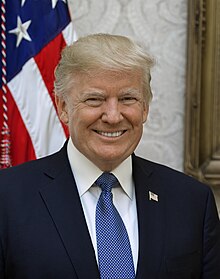
On June 25, President Trump tweeted: “The Red Hen Restaurant should focus more on cleaning its filthy canopies, doors and windows (badly needs a paint job) rather than refusing to serve a fine person like Sarah Huckabee Sanders. I always had a rule, if a restaurant is dirty on the outside, it is dirty on the inside!”
Donald Trump
[Trump’s charge that the Red Hen is “dirty on the inside” was—as usual for him—false.
[According to its most recent state health inspection in February, the Red Hen restaurant had zero violations.
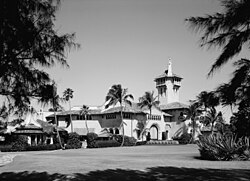
[On the other hand: Florida health inspectors cited Trump’s Mar-a-Lago resort in Palm Beach with 15 violations in late January, 2017, days before Trump hosted Japanese Prime Minister Shinzo Abe there for a diplomatic visit.
Nor was this an exception. From 2014-2017, records show the club was cited 78 times for such violations as:
- Chefs handling food without washing their hands
- Dirty cutting boards
- A slicer “soiled with old food debris” and
- The “accumulation of black/green mold-like substance” in the ice machine.]
Mar-a-Lago
Ironically, Trump and his followers are responsible for Nielsen’s and Sanders’ evictions. They have pushed legislation allowing businesses to discriminate against anyone they dislike on the basis of “religious freedom.”
On March 26, 2015, Mike Pence, then Governor of Indiana before accepting Trump’s invitation to become his Vice Presidential nominee, signed into law the “Religious Freedom Restoration Act.”
This allows any individual or corporation to cite its religious beliefs as a defense when sued by a private party.
Officially, its intent is to prevent the government from forcing business owners to act in ways contrary to strongly held religious beliefs. Unofficially, its intent is to appease the hatred of gays and lesbians by the religious Right, a key constituency of the Republican party.
In short, a bakery that doesn’t want to make a cake to be used at a gay wedding or a restaurant that doesn’t want to serve lesbian patrons can legally refuse to do so. Or a hospital can legally refuse to treat gay patients.
Although he praised the bill, Pence signed it in a ceremony closed to the public and the press.
On the eve of invading the Soviet Union, Adolf Hitler told an aide: “At the beginning of each campaign, one pushes a door into a dark, unseen room. One can never know what is hiding inside.”
Maybe Pence—like Hitler—sensed that he, too, was about to push open “a door into a dark, unseen room.”
On the day after Pence signed the Act, Bill Levin filed paperwork with the Indiana Secretary of State to register the First Church of Cannabis as a legitimate religious institution. The registration was approved.
By elevating religion above the law, Indiana’s legislators may have enabled Indiana’s Muslims to:
- Claim their right—guaranteed in Islamic religious law—to have as many as four wives.
- Demand a taxpayer-funded “halal” non-pork food shelf at free food pantries for the poor. (As happened among Somali refugees in Minnesota in 2015.)
- Demand that police departments cancel counter-terrorism courses by claiming that their materials are anti-Muslim. (As happened to several police departments in Illinois.)
And it was the Trump administration that supported the Supreme Court’s June 4 ruling 7-2 on behalf of a Colorado baker who refused to make a wedding cake for a gay couple. He had claimed that doing so would violate his religious beliefs against homosexuality.
By championing the rights of businesses to legally discriminate against anyone they dislike—under the guise of “religious freedom”—Trump and his followers have opened a door that they themselves may now be forced to walk through.
2016 PRESIDENTIAL RACE, ABC NEWS, ALTERNET, AP, BARACK OBAMA, BASKET OF DEPLORABLES SPEECH, BBC, BERNIE SANDERS, BILL CLINTON, BLACKS, BUZZFEED, CBS NEWS, CELINDA LAKE, CLINTON FUNDATION, CNN, COMMUNISM, DAILY KOS, DEBBIE WASSERMAN-SCHULTZ, DEMOCRATIC NATIONAL COMMITTEE, DONALD TRUMP, FACEBOOK, HILLARY CLINTON, HISPANICS, HOUSE OF REPRESENTATIVES, MICHELLE OBAMA, MOTHER JONES, MOVEON, NBC NEWS, NEWSWEEK, NPR, POLITICO, POPULISM, RACISM, RAW STORY, REPUBLICAN NATIONAL COMMITTEE, REUTERS, SALON, SEATTLE TIMES, SLATE, SOCIALISM, SUSAN BORDO, THE ATLANTIC, THE CHICAGO SUN-TIMES, THE CHICAGO TRIBUNE, THE DAILY BEAST, THE DESTRUCTION OF HILLARY CLINTON, THE GUARDIAN, THE HILL, THE HUFFINGTON POST, THE LOS ANGELES TIMES, THE NEW YORK TIMES, THE WALL STREET JOURNAL, THE WASHINGTON POST, TIME, TOM BROKAW, TWITTER, U.S. HOUSE OF REPRESENTATIVES, U.S. NEWS & WORLD REPORT, U.S. SENATE, UPI, USA TODAY, WHITES, WHITEWATER, WIKILEAKS, WOMEN, YOUTH
In History, Law Enforcement, Politics, Social commentary on April 18, 2018 at 12:02 am
May 9 will mark one year since James Comey was fired as FBI director by President Donald Trump.
On April 17, Comey’s memoirs, A Higher Loyalty, appeared in bookstores. The book has generated massive publicity for Comey. And it has also re-ignited the controversial charge that he cost Hillary Clinton the White House during the closing days of the 2016 election.
But is this true?
Actually, there were at least nine reasons for Clinton’s defeat. Part One of this series explored the first five. This part will explore the remaining four.
#6 The coalition that twice elected Barack Obama deserted Hillary Clinton.
Clinton did worse-than-expected among all the groups she was counting on to support her: Blacks, women, youth and Hispanics.
- In 2012, Obama got 93% of the black vote; in 2016, Clinton got 88%.
- In 2012, Obama got 55% of the women’s vote; in 2016, Clinton won 54%.
- In 2012, Obama got 60% of the vote of those under 30; in 2016, Clinton got 54%.
- In 2012, Obama got 71% of the Hispanic vote; in 2016, Clinton got 65%.
Clinton proved less popular even among whites than Obama: In 2012, Obama won 39% of their votes; in 2016, Clinton won 37%.
#7 Trump, adopting the role of a populist, appealed to blue-collar voters. Clinton offered a “love-your-CEO” economic plan—and suffered for it.
Trump visited “Rustbelt” states like Michigan and Pennsylvania and vowed to “bring back” jobs that had been lost to China, such as those in coal mining and manufacturing. Clinton didn’t deign to show up, assuming she had those states “locked up.”
Most economists agree that, in a globalized economy, such jobs are not coming back, no matter who becomes President.
Even so, voters backed the man who came to promise them a better future, and shunned the woman who didn’t come to promise them any future at all.
In May, 2016, Democratic pollster CeLinda Lake had warned Clinton to revamp her economic platform. Clinton ignored the advice.
“Democrats simply have to come up with a more robust economic frame and message,” Lake said after the election. “We’re never going to win those white, blue-collar voters if we’re not better on the economy. And 27 policy papers and a list of positions is not a frame. We can laugh about it all we want, but Trump had one.”
#8 Hillary Clinton gave only one memorable speech during the campaign.
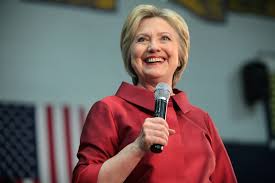
This was the “basket of deplorables” speech, delivered at a New York fundraiser on September 9. It was the only Clinton speech to be widely quoted by Democrats and Republicans.
She divided Donald Trump’s supporters into two groups. The first group were the “deplorables,” for whom she showed open contempt:
“You know, to just be grossly generalistic, you could put half of Trump’s supporters into what I call the basket of deplorables. Right? The racist, sexist, homophobic, xenophobic, Islamaphobic—you name it. And unfortunately there are people like that. And he has lifted them up.
“He has given voice to their websites that used to only have 11,000 people—now 11 million. He tweets and retweets their offensive hateful mean-spirited rhetoric. Now, some of those folks—they are irredeemable, but thankfully they are not America.”
Hillary Clinton (Gage Skidmore photo)
But the second group, she said, consisted of poor, alienated Americans who rightly felt abandoned by their employers and their government:
“But….that other basket of people are people who feel that the government has let them down, the economy has let them down, nobody cares about them, nobody worries about what happens to their lives and their futures, and they’re just desperate for change. It doesn’t really even matter where it comes from.
“They don’t buy everything [Trump] says, but he seems to hold out some hope that their lives will be different. They won’t wake up and see their jobs disappear, lose a kid to heroin, feel like they’re in a dead-end. Those are people we have to understand and empathize with as well.”
#9 After giving this speech, Clinton threw away the good it might well have done her.
First, the day after making the speech, she apologized for it: “Last night I was ‘grossly generalistic,’ and that’s never a good idea. I regret saying ‘half–that was wrong.”
Many of Trump’s followers were racists, sexists and xenophobes—who deserved condemnation, not apologies. By apologizing, she looked weak, indecisive, even cowardly.
Second, having eloquently reached out to many of the men and women who were a prime constituency for Trump, she failed to offer an economic package to quickly and effectively address their vital needs for jobs and medical care.
The reason: She had failed to put one together long ago.
And all she had to offer now was boilerplate rhetoric, such as: “Education is the answer.”
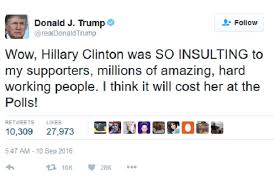
Worst of all, Trump turned her speech against her, tweeting: “Wow, Hillary Clinton was SO INSULTING to my supporters, millions of amazing, hard working people. I think it will cost her at the Polls!”
It did.
Blaming people like James Comey for her defeat only proves that Hillary Clinton has learned nothing from her failed campaigns of 2008 and 2016.
As long as Democrats and their supporters blame everyone else—and refuse to correct their own weaknesses—they will continue to remain a minority political party.
2016 PRESIDENTIAL RACE, ABC NEWS, ALTERNET, AP, BARACK OBAMA, BASKET OF DEPLORABLES SPEECH, BBC, BERNIE SANDERS, BILL CLINTON, BLACKS, BUZZFEED, CBS NEWS, CELINDA LAKE, CLINTON FUNDATION, CNN, COMMUNISM, DAILY KOS, DEBBIE WASSERMAN-SCHULTZ, DEMOCRATIC NATIONAL COMMITTEE, DONALD TRUMP, FACEBOOK, HILLARY CLINTON, HISPANICS, HOUSE OF REPRESENTATIVES, MICHELLE OBAMA, MOTHER JONES, MOVEON, NBC NEWS, NEWSWEEK, NPR, POLITICO, POPULISM, RACISM, RAW STORY, REPUBLICAN NATIONAL COMMITTEE, REUTERS, SALON, SEATTLE TIMES, SLATE, SOCIALISM, SUSAN BORDO, THE ATLANTIC, THE CHICAGO SUN-TIMES, THE CHICAGO TRIBUNE, THE DAILY BEAST, THE DESTRUCTION OF HILLARY CLINTON, THE GUARDIAN, THE HILL, THE HUFFINGTON POST, THE LOS ANGELES TIMES, THE NEW YORK TIMES, THE WALL STREET JOURNAL, THE WASHINGTON POST, TIME, TOM BROKAW, TWITTER, U.S. HOUSE OF REPRESENTATIVES, U.S. NEWS & WORLD REPORT, U.S. SENATE, UPI, USA TODAY, WHITES, WHITEWATER, WIKILEAKS, WOMEN, YOUTH
In History, Law Enforcement, Politics, Social commentary on April 17, 2018 at 12:10 am
“If the election had been on October 27, I would be your president,” Hillary Clinton told CNN in May, 2017.
“I was on the way to winning until a combination of Jim Comey’s letter on October 28 and Russian WikiLeaks raised doubts in the minds of people who were inclined to vote for me and got scared off.”
On October 28, 2016, then-FBI director James Comey announced that the bureau was reopening its investigation into Clinton’s use of a private email server while Secretary of State.
Comey wrote in a letter to Congress that the FBI has learned of the existence of emails that appear to be pertinent to the investigation “in connection with an unrelated case.”

James B. Comey
In national exit polls, Clinton’s use of a private email server troubled 63% of voters. Even so, 24% of those voted for her.
Up until then, Clinton had seemed on her way to winning the election. Even Comey believed she would become the first female President of the United States.
And Clinton did win the popular vote: 65,844,954 (48.2%) to Trump’s 62,979,879 (46.1%), beating him by almost 2.9 million votes.
But Trump emerged the victor in the Electoral College, which actually determines the Presidential winner—with 304 votes compared to Clinton’s 227.
Since November 8, 2016, Clinton and her infuriated allies have blamed Comey more than anyone for her loss. And Comey himself has said that the thought of him swinging the election made him “mildly nauseous.”
If Comey’s action played a role in Clinton’s loss, it was just one of several factors that sent Trump to the White House.
Among these:
#1 Hillary Clinton was an uninspiring candidate. When Barack Obama ran for President in 2008, NBC Anchor Tom Brokaw compared his rallies to Hannah Montana concerts. Audiences were excited by his charisma, eloquence, relative youth (47) and optimism (“Yes We Can!”).
Clinton radiated none of these qualities. She was 67 when she declared her candidacy for President—and looked it. Her speaking voice grated like the proverbial fingernail on a blackboard.
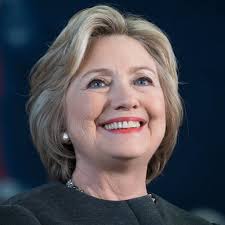
Hillary Clinton
She seemed to have been around forever—as First Lady (1993-2001), as Senator from New York (2001-2009) and as Secretary of State (2009-2013). Those born after 2000 thought of the Clinton Presidency as ancient history. She was offering a resume—and voters wanted an inspiration.
#2 Clinton brought a lot of baggage with her. In contrast to Obama, whose Presidency had been scandal-free, Clinton—rightly or wrongly—has always been dogged by charges of corruption.
During the Clinton Presidency, a failed land deal—Whitewater—while Bill Clinton was Governor of Arkansas triggered a seven-year investigation by a Republican special prosecutor. No criminality was uncovered, and no charge was brought against either Clinton.
After leaving the White House, she and her husband set up the Clinton Foundation, a public charity to bring government, businesses and social groups together to solve problems “faster, better, at lower cost.”
As Secretary of State, more than half of Clinton’s meetings with people outside government were with donors to the Clinton Foundation. If a “pay-to play” system wasn’t at work, one certainly seemed to be.
She cast further suspicion on herself by her unauthorized use of a private email server. This wasn’t revealed until March, 2015–after she was no longer Secretary of State.
She claimed she had used it to avoid carrying two cell-phones. But, as Secretary of State, she traveled with a huge entourage who carried everything she needed. Her critics believed she used a private email system to hide a “pay-for-pay” relationship with Clinton Foundation donors.
#3 As a candidate for President, she “secretly” worked with Debbie Wasserman-Schultz, the chair of the Democratic National Committee, to ensure that she would get the nomination.
As DNC chair, Wasserman-Schultz was expected to be impartial toward all Democratic candidates seeking the prize. This included Vermont U.S. Senator Bernie Sanders, Clinton’s chief competitor.
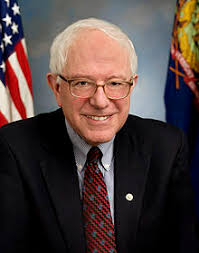
Bernie Sanders
So Sanders and his supporters were outraged when, on July 22, WikiLeaks released 19,252 emails and 8,034 attachments hacked from computers of the highest-ranking officials of the DNC.
The emails revealed a clear bias for Clinton and against Sanders. In one email, Brad Marshall, the chief financial officer of the DNC, suggested that Sanders, who is Jewish, could be portrayed as an atheist.
#4 The Obamas’ support proved a plus/minus for Clinton. Understandably, President Obama wanted to see his legacies continued—and she was the only candidate who could do it.
So he—and his wife, Michelle—stormed the country, giving eloquent, passionate speeches and firing up crowds on Clinton’s behalf.
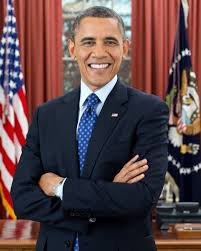
President Barack Obama
So long as either Obama stood before a crowd, the magic lasted. But once the event was over, the excitement vanished. Hillary simply didn’t arouse enough passion to keep it going.
Obama’s supporters found Clinton wanting—in attractiveness, grace, eloquence, trustworthiness and the ability to inspire.
#5 Democrats and liberals fell prey to hubris. They dismissed Donald Trump as a bad joke: Surely voters would reject a bombastic, thrice-married “reality show” host who had filed for corporate bankruptcy four times.
Many liberals believed Clinton would bury him at the polls: Blacks, women, youth and Hispanics will turn out huge for her. Democrats will retake the Senate, and maybe even retake the House.
They didn’t.
9/11, ABC NEWS, ALTERNET, AP, BILL CLINTON, BUREAUCRACY, BUZZFEED, CBS NEWS, CNN, COMMUNIST JOKES, CROOKS AND LIARS, DAILY KOZ, FACEBOOK, GERMANS, GULF WAR, HUMOR, ILLEGAL ALIENS, immigration, INVESTIGATIVE PROJECT ON TERRORISM, IRAQIS, ISLAMOFASCISM, ISRAEL, JAPANESE, JIHAD, JIHADIST, JIHIADI, KGB, LANGUAGE, MADELINE ALBRIGHT, MOTHER JONES, MOVEON, MUSLIMS, NBC NEWS, NEWSWEEK, NICCOLO MACHIAVELLI, NPR, POLITICAL CORRECTNESS, POLITICO, RAW STORY, REUTERS, SALON, SATIRE, SEATTLE TIMES, SLATE, STEVEN EMERSON, TERRORISM, THE, THE ATLANTIC, THE CHICAGO SUN-TIMES, THE CHICAGO TRIBUNE, THE DAILY BEAST, THE GUARDIAN, THE HILL, THE HUFFINGTON POST, THE LOS ANGELES TIMES, THE NATION, THE NEW YORK TIMES, THE PRINCE, THE WASHINGTON POST, TIME, TWITTER, U.S. NEWS & WORLD REPORT, U.S. STATE DEPARTMENT, UNDOCUMENTED IMMIGRANTS, UPI, USA TODAY, VIETNAM WAR, VIETNAMESE, WORLD WAR 11
In History, Humor, Politics, Social commentary, Uncategorized on January 1, 2018 at 12:10 am
On June 8, 2010, newspapers around the world headlined the latest triumph of Politically Correct language.
The Israeli government had apologized for circulating a video parodying the lyrics of Michael Jackson’s hit, “We Are the World.” Its purpose: To mock terrorists from the Gaza flotilla smuggling arms into Gaza.
In early June, 2010, six Hamas ships set out in defiance of the Israel’s blockade of Gaza. One of those ships, the Mavi Marmara, suffered nine casualties during a subsequent Israeli raid on the flotilla.
In the video, Israelis dressed up as terrorists offer their own take on the incident through song.

Among its lyrics:
We’ll make the world
Abandon reason.
We’ll make them all believe that the Hamas
Is Momma Theresa.
We are peaceful travelers
We’re waving our own knives.
The truth will never find its way to your TV.
Click here: The Flotilla Choir Presents We Con The World – YouTube
The Israeli Government Press Office distributed footage of the music video to foreign journalists on June 4, but then sent an apology to reporters just hours later, insisting it had been an accident.
“The contents of the video in no way represent the official policy of either the Government Press Office or of the State of Israel,” Israel’s Government Press Office later told CNN.
But the retraction did not stop “We Con the World” from becoming an Internet hit, getting over three million views in less than a week
By issuing such an apology the Israeli government forfeited a vital weapon in its ongoing struggle for not simply sovereignty but survival: Ridicule.
Every great tyrant has feared the laughter of his enemies. For that reason, the Roman Emperor Augustus banished the satirical poet, Ovid, from Rome and the KGB worked overtime to suppress anti-Communist jokes.

It’s clear that Israeli bureaucrats—like American ones—have caught the Political Correctness disease, where even the most criminally depraved are off-limits as targets for satire.
During most of the eight-year Presidency of Bill Clinton, the State Department applied the “rogue state” moniker to nations like Iran, Iraq and North Korea.
In a 1994 lecture, Madeleine Albright, then U.S. ambassador to the United Nations, defined a rogue state as one that actively tried to undermine the international system.
But in 2000, the State Department declared that it would no longer refer to such nations as “rogues.” Instead, they would now be referred to as “states of concern.”
“Rogue,” said a State Department spokesman, was “inflammatory,” and might hamper the efforts of the United States to reach agreements with its sworn enemies.
In short, it’s become Politically Incorrect to refer to even our sworn enemies as enemies.
As Steven Emerson, president of the Investigative Project on Terrorism (IPT) puts it: “If you can’t name your enemy, how can you defeat him?”
During World War 11, GIs—and their commanders—routinely referred to German soldiers as “Krauts.” Japanese soldiers were universally referred to as “Japs.”
Throughout the Vietnam war, North Vietnamese troops were called “gooks,” “dinks” and “Charlie.” During the 1991 Gulf War, American soldiers called Iraqi soldiers “ragheads.”
Admittedly, that’s not the sort of language to use in polite company.
But there is nothing polite about war, and it’s unrealistic to expect those whose lives could be snuffed out at any moment to be Politically Correct in talking about deadly enemies.
The United States has been at war with Islamic nations since September 11, 2001. But terms such as “jihadist,” “jihadi” and “mujahedeen” are now officially forbidden by the Pentagon.
So is “Islamofascism,” a term often used to describe Islamic aggression against other countries—especially non-Muslim ones.
Similarly, the American government now seeks to impose the same Political Correctness restrictions on how to refer to daily invasions of its sovereign borders.
“Illegal alien” is taboo—although totally accurate. An “alien” is defined as “a foreigner, especially one who is not a naturalized citizen of the country where they are living.”
And a foreigner who violates another country’s immigration laws is in that country illegally.
“Undocumented immigrant” is the new fashionable term to be used by all federal agents charged with enforcing Anmerica’s immigration laws.
Liberals feel that this sounds nicer, and won’t offend our “little brown brothers” south of the Rio Grande.
“Undocumented immigrant” makes it seem as though the mass violations of America’s national border are no big deal. You might even think the illegal alien simply lost his legal papers while sneaking across the border.
More than 500 years ago, Niccolo Machiavelli, the father of modern political science, laid out the guidelines for effective propaganda. In his notorious book, The Prince, he wrote:
…Men in general judge more by the eyes than by the hands, for every one can see, but very few have to feel. Everyone sees what you appear to be, few feel what you are….
Apparently, many people in government are now convinced: If you don’t admit there is a problem, the problem doesn’t exist.
1984 NOVEL, 9/11, ABC NEWS, ADOLF HITLER, BARACK OBAMA, BILL CLINTON, BIRTH CONTROL, BLACKS, CBS NEWS, CNN, COMMUNISM, DENNIS HASTERT, DISABLED, DISCRIMINATION, DWIGHT D. EISENHOWER, EDWARD R. MURROW, ENVIRONMENTALISTS, FACEBOOK, FAMILY RESEARCH COUNCIL, FRANKLIN D. ROOSEVELT, GAYS, GEORGE C. MARSHALL, GEORGE H.W. BUSH, GEORGE ORWELL, GOP, GREAT SOCIETY, HARRY S. TRUMAN, HISPANICS, HIV MEDICATION, HOUSE OF REPRESENTATIVES, J. ROBERT OPPENHEIMER, JOHN BIRCH SOCIETY, JOHN F. KENNEDY, JOHN STEINBECK, JOSEPH R. MCCARTHY, JOSEPH STALIN, JOSH DUGGAR, KGB, LEE ATWATER, LEON TROTSKY, LESBIANS, LIBERALS, LUCILLE BALL, LYNDON B. JOHNSON, MEDICAL CARE, MEIN KAMPF, MICHAEL DUKAKIS, MICHELLE BACHMANN, MITT ROMNEY, MUSLIMS, NBC NEWS, PETE SEEGER, PROPAGANDA, RELIGION, REPUBLICANS, RICHARD NIXON, RICK SANTORUM, ROBERT WELCH, RODNEY KING RIOTS, SCAPEGOATING, SHARIA LAW, SOCIALISTS, SOVIET UNION, THE LOS ANGELES TIMES, THE NEW YORK TIMES, THE RELIGIOUS FREEDOM RESTORATION ACT, THE WASHINGTON POST, TRANSGENDERS, TWITTER, WILLIAM L. SHIRER, WOMEN, WORLD WAR ii
In Bureaucracy, History, Politics, Social commentary on November 15, 2017 at 12:42 pm
Republicans and their Rightist allies have repeatedly compared President Barack Obama to Adolf Hitler. But their propaganda campaign draws heavily on the Nazi leader’s own advice.
In Mein Kampf, Hitler laid out his formula for successful propaganda: “All effective propaganda must be confined to a few bare essentials.
“Those must be expressed as far as possible in stereotypical formulas. These slogans should be persistently repeated until the very last individual has come to grasp the idea that has been put forward.”
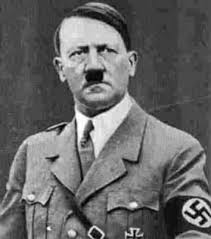
Adolf Hitler
Consider the vocabulary Right-wingers use to describe their political adversaries:
“Liberals,” “radicals, “bankrupting,” “treason,” subversion,” “slander,” “terrorism,” “betrayal,” “catastrophe,” “shattering the American dream,” “leftists,” “Communists,” “government takeover,” “socialism,” “power grab,” “secularism,” “environmentalism.”
In recent years, the GOP has targeted gays and lesbians as America’s subversive enemies.
These attacks have come as thinly disguised as efforts to “restore religious freedom.”
In December, 2014, Republicans in the Michigan House of Representatives passed “The Religious Freedom Restoration Act.”
The bill allows public agencies and private businesses to refuse service to anyone under the claim that their “religious beliefs” had been affronted.
And the State government is legally prevented from intervening if a person claimed that his/her “deeply-held religious beliefs” was the reason for acting—or not acting—in a certain way.
Thus:
- An emergency room doctor can refuse service to a gay or lesbian needing medical care.
- A pharmacist can refuse to fill a doctor’s prescription for birth control, or HIV medication.
- A DMV clerk can refuse to give a driver’s license to someone who’s divorced.
- An employer can deny equal pay to women.
The bill is modeled on a proposed law that the Republican House and Senate in Arizona sent to Governor Jan Brewer in 2014.
Under threat of a nationwide boycott of Arizona if the bill became law, Brewer vetoed it.
Republicans have introduced similar “right-to-discriminate” legislation in other states as well:
- On March 26, 2015, its governor, Mike Pence, signed into law the Religious Freedom Restoration Act. This will allow any individual or corporation to cite its religious beliefs as a defense when sued by a private party.
- In Kansas, lawmakers voted to exempt individuals from providing any service that was “contrary to their sincerely held religious beliefs.”
- That bill passed the state’s House chamber on February 11, 2014, triggering national backlash. It stalled in the Senate and didn’t advance beyond that body.
- In January, 2014, South Dakota Republicans introduced a bill to let businesses refuse to serve same-sex couples on the grounds that “businesses are private and that their views on sexual orientation are protected to the same extent as the views of private citizens.”
- The South Dakota bill—which was killed in February, 2014—would have made it illegal for a gay person to file a lawsuit charging discrimination.
Republicans claim they want to “get the government off the backs of the people.” But their fixation on regulating the sexual lives of Americans ensures government intrusions of the most intimate kind.
Since 9/11, Republicans have warned that Muslims are trying to impose Sharia (Islamic law) on America.
Ironically, Right-wing legislators, in elevating religion above the secular law, may have laid the legal foundations for making that possible.
What will happen when some Muslims claim their right–guaranteed in Islamic religious law–to have as many as four wives?
And when they claim that the “religious freedom” laws protect that right?
Republicans have defended such legislation by equating gays with child predators.
In fact, the Child Molestation Research & Prevention Institute states that 90% of child molesters target children in their network of family and friends, and the majority are men married to women.
Yet Republicans and their Rightist allies have refused to condemn such heterosexual—and Right-wing—child molesters as Dennis Hastert and Josh Duggar.
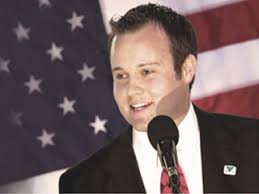
Josh Duggar, the “all-American” child molester
On May 21, 2015, responding to press leaks, Duggar resigned as director of the Family Research Council, a Right-wing organization dedicated to fighting sexually-oriented issues such as same-sex marriage, abortion and pornography.
In 2002-3, as a 14-15 year-old, Duggar had fondled the breasts and vaginas of five underage girls—four of whom were his own sisters.
And on October 28, 2015, Hastert—Speaker of the House of Representatives from 1999 to 2007–pleaded guilty to structuring money transactions in a way to avoid requirements to report where the money was going.

Dennis Hastert
The reason: To conceal the truth about his past as a child molester. Hastert had abused four young boys when he was their high school wrestling coach. One was only 14 years old.
Despite such setbacks, the politics of “smear and fear” have been good to Republicans—and their Right-wing allies.
The Republican “base” refuses to learn that those who portray themselves as morally superior are:
- Hypocrites, who are in effect saying: “Do as I say, not as I do,” or
- Fanatics, who intend to force their version of morality on others.
So long as millions of hate-filled Right-wingers support the endless succession of “two minute hates,” Republicans will continue to target an endless series of victims.
The good news: As blacks, Hispanics, women, gays and others become a significant political force, Republicans will stop attacking them and court them for votes.
The bad news: Republicans will move on to find other still-helpless scapegoats for America’s troubles.
1984 NOVEL, 9/11, ABC NEWS, ADOLF HITLER, ALTERNET, AP, BARACK OBAMA, BILL CLINTON, BIRTH CONTROL, BLACKS, BUZZFEED, CBS NEWS, CNN, COMMUNISM, CROOKS AND LIARS, DAILY KOZ, DENNIS HASTERT, DISABLED, DISCRIMINATION, DWIGHT D. EISENHOWER, EDWARD R. MURROW, ENVIRONMENTALISTS, FACEBOOK, FAMILY RESEARCH COUNCIL, FRANKLIN D. ROOSEVELT, GAYS, GEORGE C. MARSHALL, GEORGE H.W. BUSH, GEORGE ORWELL, GOP, GREAT SOCIETY, HARRY S. TRUMAN, HISPANICS, HIV MEDICATION, HOUSE OF REPRESENTATIVES, J. ROBERT OPPENHEIMER, JOHN BIRCH SOCIETY, JOHN F. KENNEDY, JOHN STEINBECK, JOSEPH R. MCCARTHY, JOSEPH STALIN, JOSH DUGGAR, KGB, LEE ATWATER, LEON TROTSKY, LESBIANS, LIBERALS, LUCILLE BALL, LYNDON B. JOHNSON, MEDICAL CARE, MEIN KAMPF, MICHAEL DUKAKIS, MICHELLE BACHMANN, MITT ROMNEY, MOTHER JONES, MOVEON, MUSLIMS, NBC NEWS, NEWSWEEK, NPR, PETE SEEGER, POLITICO, PROPAGANDA, RAW STORY, RELIGION, REPUBLICANS, REUTERS, RICHARD NIXON, RICK SANTORUM, ROBERT WELCH, RODNEY KING RIOTS, SALON, SCAPEGOATING, SEATTLE TIMES, SHARIA LAW, SLATE, SOCIALISTS, SOVIET UNION, THE ATLANTIC, THE CHICAGO SUN-TIMES, THE CHICAGO TRIBUNE, THE DAILY BEAST, THE GUARDIAN, THE HILL, THE HUFFINGTON POST, THE LOS ANGELES TIMES, THE NATION, THE NEW YORK TIMES, THE RELIGIOUS FREEDOM RESTORATION ACT, THE WASHINGTON POST, TIME, TRANSGENDERS, TWITTER, U.S. NEWS & WORLD REPORT, UP, UPI, USA TODAY, WILLIAM L. SHIRER, WOMEN, WORLD WAR ii
In Bureaucracy, History, Politics, Social commentary, Uncategorized on November 14, 2017 at 12:12 am
In 1953, Red-baiting Wisconsin United States Senator Joseph R. McCarthy finally overstepped himself.
He attacked the leadership of the United States Army as “a hotbed of traitors” and convened an inquiry through the Senate Permanent Subcommittee on Investigations.
But the hearings backfired, exposing McCarthy as the bullying demagogue he was. A Senate committee voted to condemn his behavior, charging that he had “acted contrary to senatorial ethics and tended to bring the Senate into dishonor and disrepute.”
Although McCarthy remained in the Senate another two and a half years, his political influence had ended.
Yet even without McCarthy, Republicans rode the issue of anti-Communism to victory from 1948 to 1992.
After holding the White House for eight years under Dwight D. Eisenhower, they lost it in 1960 to John F. Kennedy and again in 1964 to Lyndon B. Johnson.
By 1968, with the nation mired in Vietnam and convulsed by antiwar demonstrations and race riots, Americans turned once more to those who preyed upon their fears and hates.
They elected Richard Nixon, who promised to end the Vietnam war and crack down on “uppity” blacks and antiwar demonstrators.
The same strategy re-elected him in 1972.
After Jimmy Carter won the Presidency in 1976 and lost it in 1980 to Ronald Reagan, Republicans held the White House until 1992.
During the 1970s and 1980s, they continued to accuse their opponents of being devious agents—or at least unwitting pawns—of “the Communist conspiracy.”
Even as late as 1992, President George H.W. Bush and the Republican establishment charged that Arkansas Governor Bill Clinton might be a KGB plant.
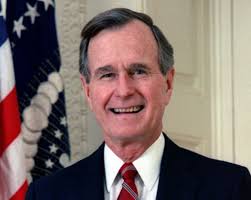
George H.W. Bush
Their evidence: During his tenure at Oxford University in 1969-70, Clinton had briefly visited Moscow.
Thus, the Republican charged that he might have been “programmed” as a real-life “Manchurian candidate” to become, first, Governor of Arkansas—one of America’s poorest states—and then President.
What made this charge all the more absurd: The Soviet Union had officially dissolved in December, 1991.
Republicans continued to accuse their opponents of being “Communists” and “traitors.” But these charges no longer carried the weight they had while the Soviet Union existed.
Right-wingers had to settle for attacking their opponents as “liberals” and “soft on crime.”
When riots flared in 1992 after the acquittal of LAPD officers who had savagely beaten Rodney King, President George H.W. Bush blamed the carnage on the “Great Society” programs of the 1960s.
Then, on September 11, 2001, Republicans—and their right-wing supporters—at last found a suitable replacement for the Red Menace.
Two highjacked jetliners slammed into the World Trade Center in New York and one struck the Pentagon in Washington, D.C.
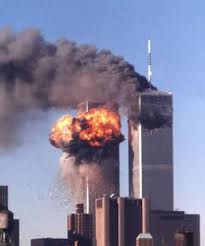
World Trade Center on September 11, 2001
Exit The Red Bogeyman. Enter The Maniacal Muslim.
Consider:
- Rep. Michelle Bachman (R-Minn.): On July 13, 2012, she sent letters to the Inspectors General of the Departments of Defense; State; Justice; and Homeland Security, demanding a “a multi-department investigation into potential Muslim Brotherhood infiltration into the United States Government.”
- Rick Santorum: On supporting the racial profiling of Muslims: “Obviously, Muslims would be someone you look at, absolutely.”
- Mitt Romney: “Based on the numbers of American Muslims in our population, I cannot see that a Cabinet position [for a Muslim] would be justified.”
The 2008 election of Barack Obama pushed the Republican “treason chorus” to new heights of infamy.
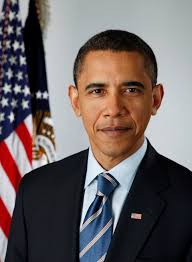
Barack Obama
Almost immediately after Obama took office, he came under attack by an industry of right-wing book authors such as Sean Hannity, Ann Coulter and Rush Limbaugh.
The following titles vividly reveal the hates, fears and ambitions of their authors–and audience:
- Conservative Victory: Defeating Obama’s Radical Agenda by Sean Hannity
- How Barack Obama is Bankrupting the U.S. Economy by Stephen Moore
- The Manchurian President: Barack Obama’s Ties to Communists, Socialists and Other Anti-American Extremists by Aaron Klein
- The Blueprint: Obama’s Plan to Subvert the Constitution and Build an Imperial Presidency by Ken Blackwell
- Culture of Corruption: Obama and His Team of Tax Cheats, Crooks, and Cronies by Michelle Malkin
- Why Obama’s Government Takeover of Health Care Will Be a Disaster by David Gratzer
- Power Grab: How Obama’s Green Policicies Will Steal Your Freedom and Bankrupt America by Christopher C. Horner
- America’s March to Socialism: Why We’re One Step Closer to Giant Missile Parades by Glenn Beck
- The War On Success: How the Obama Agenda Is Shattering the American Dream by Tommy Newberry
- Liberalism is a Mental Disorder: Savage Solutions by Michael Savage
- Treason: Liberal Treachery from the Cold War to the War on Terrorism by Ann Coulter
Yet despite Right-wingers’ slanderous and fear-mongering claims, the United States actually prospered during the Obama years.
- Thanks to government loans from President Obama, American capitalism was saved from its own excesses during the George W. Bush administration.
- Employment went up. CEOs did extremely well.
- In contrast to the corruption that had plagued the administration of Ronald Reagan—whom Republicans idolize—no such scandals haunted the Obama Presidency.
- There had been no major-scale terrorist attacks on American soil–as had occurred on 9/11 under President George W. Bush.
- Millions of Americans who had been unable to obtain healthcare did so under Obama’s Affordable Care Act.
- Obama actually stood up to Russian President Vladimir Putin—as opposed to his successor, Donald Trump, who constantly praised him.
1984 NOVEL, 9/11, ABC NEWS, ADOLF HITLER, ALTERNET, AP, BARACK OBAMA, BILL CLINTON, BIRTH CONTROL, BLACKS, BUZZFEED, CBS NEWS, CNN, COMMUNISM, CROOKS AND LIARS, DAILY KOZ, DENNIS HASTERT, DISABLED, DISCRIMINATION, DWIGHT D. EISENHOWER, EDWARD R. MURROW, ENVIRONMENTALISTS, FACEBOOK, FAMILY RESEARCH COUNCIL, FRANKLIN D. ROOSEVELT, GAYS, GEORGE C. MARSHALL, GEORGE H.W. BUSH, GEORGE ORWELL, GOP, GREAT SOCIETY, HARRY S. TRUMAN, HISPANICS, HIV MEDICATION, HOUSE OF REPRESENTATIVES, J. ROBERT OPPENHEIMER, JOHN BIRCH SOCIETY, JOHN F. KENNEDY, JOHN STEINBECK, JOSEPH R. MCCARTHY, JOSEPH STALIN, JOSH DUGGAR, KGB, LEE ATWATER, LEON TROTSKY, LESBIANS, LIBERALS, LUCILLE BALL, LYNDON B. JOHNSON, MEDICAL CARE, MEIN KAMPF, MICHAEL DUKAKIS, MICHELLE BACHMANN, MITT ROMNEY, MOTHER JONES, MOVEON, MUSLIMS, NBC NEWS, NEWSWEEK, NPR, PETE SEEGER, POLITICO, PROPAGANDA, RAW STORY, RELIGION, REPUBLICANS, REUTERS, RICHARD NIXON, RICK SANTORUM, ROBERT WELCH, RODNEY KING RIOTS, SALON, SCAPEGOATING, SEATTLE TIMES, SHARIA LAW, SLATE, SOCIALISTS, SOVIET UNION, THE ATLANTIC, THE CHICAGO SUN-TIMES, THE CHICAGO TRIBUNE, THE DAILY BEAST, THE GUARDIAN, THE HILL, THE HUFFINGTON POST, THE LOS ANGELES TIMES, THE NATION, THE NEW YORK TIMES, THE RELIGIOUS FREEDOM RESTORATION ACT, THE WASHINGTON POST, TIME, TRANSGENDERS, TWITTER, U.S. NEWS & WORLD REPORT, UPI, USA TODAY, WILLIAM L. SHIRER, WOMEN, WORLD WAR 11
In Bureaucracy, History, Politics, Social commentary on November 13, 2017 at 12:19 am
The Right’s fixation on transgender “dangers” is only the latest in a long string of “enemies” painted by the Republican party.
During the 1960s and 1970s, the “enemy” was blacks. The key to winning votes of racist whites without appearing racist lay in what Republicans called “the Southern Strategy.”
It was this that won Richard Nixon the Presidency in 1968 and 1972 and the White House for George H.W. Bush in 1988.
In a now-infamous 1981 interview, Right-wing political consultant Lee Atwater explained how this worked:
“You start out in 1954 by saying, ‘Nigger, nigger, nigger.’ By 1968 you can’t say ‘nigger’—that hurts you, backfires.
“So you say stuff like, uh, forced busing, states’ rights, and all that stuff, and you’re getting so abstract.
“Now, you’re talking about cutting taxes, and all these things you’re talking about are totally economic things and a byproduct of them is, blacks get hurt worse than whites….
“‘We want to cut this,’ is much more abstract than even the busing thing, uh, and a hell of a lot more abstract than ‘Nigger, nigger.’
“So anyway you look at it, race is coming on the back burner.”

Lee Atwater
At the end of his life, Atwater recognized the monster he had helped unleash.
Like Reinhard Heydrich—the designer of the “Final Solution” who, on his deathbed, begged forgiveness for his crimes—Atwater, in a 1991 article for Life, apologized to former Democratic Presidential nominee Michael Dukakis for the “naked cruelty” of the 1988 campaign.
But blacks have by no means been the only targets—and victims—of Republican hate campaigns. A partial list of these would include:
- Liberals
- Women
- Socialists
- Secularists
- Disabled
- Environmentalists
- Hispanics
- Gays
- Lesbians
And now transgenders.
George Orwell’s classic 1949 novel, 1984, serves as a better guide to Republican electioneering than any official statement of the GOP.

1984 is set in a futuristic dictatorship called Oceania, whose constantly alternating mortal enemies are Eurasia and Eastasia.
A daily fixture of life in Oceania is the “Two Minutes Hate.” During this, Party members must watch a film depicting the Party’s enemies and express their hatred for them in exactly two minutes.
Chief among these is Emmanuel Goldstein, who is obviously based on Leon Trotsky, the longtime antagonist of Joseph Stalin, dictator of the Soviet Union for almost 30 years.
The “Two Minutes Hate” serves as a form of brainwashing, whose purpose is to whip ordinary citizens into a frenzy of hatred and loathing for whoever the Party designates as it—and their—-mortal enemies.
Since the end of World War II, Republicans have regularly hurled the charge of “treason” against anyone who dared to run against them for office or think other than Republican-approved thoughts.
Republicans had been locked out of the White House from 1933 to 1952, during the administrations of Franklin D. Roosevelt and Harry S. Truman.
Determined to regain the Presidency by any means, they found that attacking the integrity of their fellow Americans a highly effective tactic.
During the 1950s, Wisconsin Senator Joseph R. McCarthy rode a wave of paranoia to national prominence–by attacking the patriotism of anyone who disagreed with him.
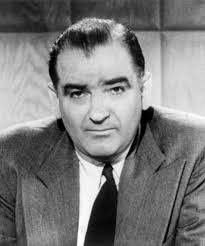
Joseph McCarthy
Elected to the Senate in 1946, he rose to national prominence on February 9, 1950, after giving a fiery speech in Wheeling, West Virginia:
“The State Department is infested with communists. I have here in my hand a list of 205—a list of names that were made known to the Secretary of State as being members of the Communist Party and who nevertheless are still working and shaping policy in the State Department.”
Americans were already growing increasingly fearful of Communism:
- Soviet dictator Joseph Stalin had not withdrawn the Red Army from the countries it had occupied in Eastern Europe during World War II.
- In 1948, the Soviet Union developed—and demonstrated—its own atomic bomb, an achievement U.S. scientists had claimed would not happen for at least a decade.
- In 1949, China fell to the triumphant armies of Mao Tse Tung.
But anti-communism as a lever to political advancement sharply accelerated following McCarthy’s speech. Republicans—resentful at being denied the White House since 1932—seized upon anti-communism as their passport to power.
No American—no matter how prominent—was safe from the accusation of being a Communist or a Communist sympathizer—”a Comsymp” or “fellow traveler” in the style of the era.
Among those accused:
- Secretary of State George C. Marshall, who had overseen America’s strategy for defeating Nazi Germany and Imperial Japan
- President Harry S. Truman
- Playwrights Lillian Hellman and Arthur Miller
- Actors Charlie Chaplin, Zero Mostel, Lloyd Bridges, Howard Da Silva, Edward G. Robinson and John Garfield
- Composers Arron Copland and Elmer Bernstein
- Physicist J. Robert Oppenheimer, who presided over the creation of America’s atomic bomb
- Actresses Lee Grant, Delores del Rio, Ruth Gordon and Lucille Ball
- Journalists Edward R. Murrow and William L. Shirer, who had chronicled the rise of Nazi Germany
- Folksinger Pete Seeger
- Writers Irwin Shaw, Howard Fast, John Steinbeck and Dashiell Hammett
Even “untouchable” Republicans became targets for such slander.
The most prominent of these was President Dwight D. Eisenhower–labeled ”a conscious, dedicated agent of the Communist Conspiracy” by Robert Welch, who founded the John Birch Society in 1958.
2016 PRESIDENTIAL ELECTION, A BRONX TALE, ABC NEWS, ADOLF HITLER, ALTERNET, AP, BILL CLINTON, BUZZFEED, CBS NEWS, CHAZZ PALMINTERI, CNN, CROOKS AND LIARS, DAILY KOZ, DONALD TRUMP, FACEBOOK, FBI, H.R. MCMASTER, HILLARY CLINTON, IRS, J. EDGAR HOOVER, JEFF SESSIONS, JOHN F. KENNEDY, JOHN KELLY, LYNDON B. JOHNSON, MOTHER JONES, MOVEON, NBC NEWS, NEWSWEEK, NICCOLO MACHIAVELLI, NPR, POLITICO, RAW STORY, REINCE PREBIUS, REPUBLICAN PARTY, REUTERS, RICHARD M. NIXON, ROBERT DE NIRO, ROBERT F. KENNEDY, Ronald Reagan, SALON, SEATTLE TIMES, SERGEI KISLYAK, SLATE, THE ATLANTIC, THE CHICAGO SUN-TIMES, THE CHICAGO TRIBUNE, THE DAILY BEAST, THE GUARDIAN, THE HILL, THE HUFFINGTON POST, THE LOS ANGELES TIMES, THE NATION, THE NEW YORK TIMES, THE PRINCE, THE WASHINGTON POST, TIME, TWITTER, U.S. NEWS & WORLD REPORT, UP, UPI, USA TODAY, WILLIAM RALPH INGE
In Bureaucracy, History, Law Enforcement, Politics, Social commentary on September 21, 2017 at 12:02 am
American Presidents—like politicians everywhere–strive to be loved. There are two primary reasons for this.
First, even the vilest dictators want to believe they are good people—and that their goodness is rewarded by the love of their subjects.
Second, it’s universally recognized that a leader who’s beloved has great clout than one who isn’t. In the United States, a Presidential candidate who wins by a landslide is presumed to have a mandate to pursue his agenda—at least, for the first two years of his administration.
But those—like Barack Obama—who strive to avoid conflict often get treated with contempt and hostility by their adversaries.
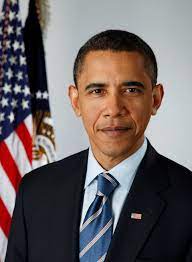
Barack Obama
In Renegade: The Making of a President, Richard Wolffe chronicled Obama’s successful 2008 bid for the White House. Among his revelations:
Obama, a believer in rationality and decency, felt more comfortable in responding to attacks on his character than in attacking the character of his enemies.
A graduate of Columbia University and Harvard Law School, Obama was one of the most academically gifted Presidents in United States history.
Yet he failed to grasp and apply this fundamental lesson taught by Niccolo Machiavelli, the father of modern political science:
A man who wishes to make a profession of goodness in everything must inevitably come to grief among so many who are not good. And therefore it is necessary for a prince, who wishes to maintain himself, to learn how not to be good, and to use this knowledge and not use it, according to the necessity of the case.
This explains why Obama found most of his legislative agenda stymied by Republicans.
For example: In 2014, Senator Rand Paul (R-Ky.) sought to block David Barron, Obama’s nominee to the First Circuit Court of Appeals.
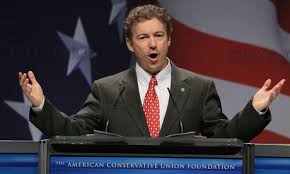
Rand Paul
Paul objected to Barron’s authoring memos that justified the killing of an American citizen by a drone in Yemen on September 30, 2011.
The target was Anwar al-Awlaki, a radical Muslim cleric notorious on the Internet for encouraging Muslims to attack the United States.
Paul demanded that the Justice Department release the memos Barron crafted justifying the drone policy.
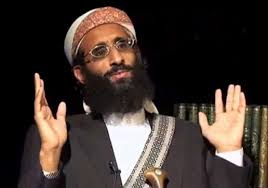
Anwar al-Awlaki
Imagine how Republicans would depict Paul—or any Democratic Senator—who did the same with a Republican President: “Rand Paul: A traitor who supports terrorists. He sides with America’s sworn enemies against its own lawfully elected President.”
But Obama did nothing of the kind.
(On May 22, 2014, the Senate voted 53–45 to confirm Barron to the First Circuit Court of Appeals.)
But Presidents who seek to rule primarily by fear can encounter their own limitations. Which immediately brings to mind Donald Trump.
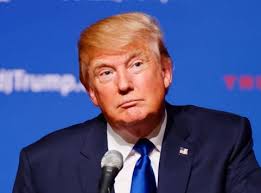
As both a Presidential candidate and President, Trump has repeatedly used Twitter to attack hundreds of real and imagined enemies in politics, journalism, TV and films.
From June 15, 2015, when he launched his Presidential campaign, until October 24, 2016, Trump fired almost 4,000 angry, insulting tweets at 281 people and institutions that had somehow offended him.
Donald Trump
The New York Times needed two full pages of its print edition to showcase them.
As a Presidential candidate and President, he has shown outright hatred for President Obama. For five years, he slandered Obama as a Kenyan-born alien who had no right to hold the Presidency.
Then, on March 4, 2017, in a series of unhinged tweets, Trump falsely accused Obama of committing an impeachable offense: Tapping his Trump Tower phones prior to the election.
As President, Trump has refused to reach beyond the narrow base of white, racist, ignorant, hate-filled, largely rural voters who elected him.
And he has bullied and insulted even White House officials and his own handpicked Cabinet officers:
- Trump has waged a Twitter-laced feud against Jeff Sessions, his Attorney General. Sessions’ “crime”? Recusing himself from investigations into well-established ties between Russian Intelligence agents and members of Trump’s Presidential campaign.
- Trump repeatedly humiliated Chief of Staff, Reince Priebus—at one point ordering him to kill a fly that was buzzing about. On July 28, Priebus resigned.
- Trump similarly tongue-lashed Priebus’ replacement, former Marine Corps General John Kelly. Trump has reportedly been angered by Kelly’s efforts to limit the number of advisers who have unrestricted access to him. Kelly told colleagues he had never been spoken to like that during 35 years of military service—and would not tolerate it again.
- After Trump gave sensitive Israeli intelligence to Russian ambassador Sergey Kislyak, his national security advisor, H.R. McMaster, denied this had happened. Trump then contradicted McMaster in a tweet: “As president, I wanted to share with Russia (at an openly scheduled WH meeting) which I have the absolute right to do, facts pertaining to terrorism and airline flight safety.”
If Trump ever read Niccolo Machiavelli’s The Prince, he’s clearly forgotten this passage:
Cruelties ill committed are those which, although at first few, increase rather than diminish with time….Whoever acts otherwise….is always obliged to stand with knife in hand, and can never depend on his subjects, because they, owing to continually fresh injuries, are unable to depend upon him.
And this one:
Still, a prince should make himself feared in such a way that if he does not gain love, he at any rate avoids hatred.
Or, as Cambridge Professor of Divinity William Ralph Inge put it: “A man may build himself a throne of bayonets, but he can’t sit on it.”
2016 PRESIDENTIAL ELECTION, A BRONX TALE, ABC NEWS, ADOLF HITLER, ALTERNET, AP, BILL CLINTON, BUZZFEED, CBS NEWS, CHAZZ PALMINTERI, CNN, CROOKS AND LIARS, DAILY KOZ, DONALD TRUMP, FACEBOOK, FBI, H.R. MCMASTER, HILLARY CLINTON, IRS, J. EDGAR HOOVER, JEFF SESSIONS, JOHN F. KENNEDY, JOHN KELLY, LYNDON B. JOHNSON, MOTHER JONES, MOVEON, NBC NEWS, NEWSWEEK, NICCOLO MACHIAVELLI, NPR, POLITICO, RAW STORY, REINCE PREBIUS, REPUBLICAN PARTY, REUTERS, RICHARD M. NIXON, ROBERT DE NIRO, ROBERT F. KENNEDY, Ronald Reagan, SALON, SEATTLE TIMES, SERGEI KISLYAK, SLATE, THE ATLANTIC, THE CHICAGO SUN-TIMES, THE CHICAGO TRIBUNE, THE DAILY BEAST, THE GUARDIAN, THE HILL, THE HUFFINGTON POST, THE LOS ANGELES TIMES, THE NATION, THE NEW YORK TIMES, THE PRINCE, THE WASHINGTON POST, TIME, TWITTER, U.S. NEWS & WORLD REPORT, UP, UPI, USA TODAY, WILLIAM RALPH INGE
In Bureaucracy, History, Law Enforcement, Politics, Social commentary on September 20, 2017 at 12:30 am
Is it better to be loved or feared?
That was the question Florentine statesman Niccolo Machiavelli raised more than 500 years ago.
Presidents have struggled to answer this question—and have come to different conclusions.
LOVE ME, FEAR MY BROTHER
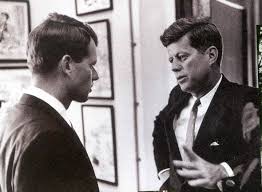
Most people felt irresistibly drawn to John F. Kennedy—even his political foes. Henry Luce, the conservative publisher of Time, once said, “He makes me feel like a whore.”
But JFK could afford to bask in the love of others—because his younger brother, Robert, was the one who inspired fear.
Robert F. Kennedy and John F. Kennedy
He had done so as Chief Counsel for the Senate Rackets Committee (1957-59), grilling Mafia bosses and corrupt union officials–most notably Teamsters President James Hoffa.
Appointed Attorney General by JFK, he unleashed the FBI on the Mafia. When the steel companies colluded in an inflationary rise in the price of steel in 1962, Bobby sicced the FBI on them.
In 1963, JFK’s cavorting with Ellen Rometsh threatened to destroy his Presidency. Rometsch, a Washington, D.C. call girl, was suspected by the FBI of being an East German spy.
With Republican Senators preparing to investigate the rumors, Bobby ordered Rometsch deported immediately (to which, as a German citizen, she was subject).
He also ordered FBI Director J. Edgar Hoover to deliver a warning to the Majority and Minority leaders of the Senate: The Bureau was fully aware of the extramarital trysts of most of its members. And an investigation into the President’s sex life could easily lead into revelations of Senatorial sleaze.
Plans for a Senatorial investigation were shelved.
BEING LOVED AND FEARED
In the 1993 movie, A Bronx Tale, 17-year-old Calogero (Lillo Brancato) asks his idol, the local Mafia capo, Sonny (Chazz Palminteri): “Is it better to be loved or feared?”

Sonny gives advice to his adopted son, Calogero
Sonny says if he had to choose, he would rather be feared. But he adds a warning straight out of Machiavelli: “The trick is not being hated. That’s why I treat my men good, but not too good.
“I give too much, then they don’t need me. I give them just enough where they need me, but they don’t hate me.”
Machiavelli, writing in The Prince, went further:
“Still a Prince should make himself feared in such a way that if he does not gain love, he at any rate avoids hatred, for fear and the absence of hatred may well go together. And [this] will always be attained by one who abstains from interfering with the property of his citizens and subjects or with their women.”
Many who quote Machiavelli in defense of being feared overlook this vital point: It’s essential to avoid becoming hated.
To establish a fearful reputation, a leader must act decisively and ruthlessly when the interests of the organization are threatened. Punitive action must be taken promptly and confidently.
One or two harsh actions of this kind can make a leader more feared than a reign of terror.
In fact, it’s actually dangerous to constantly employ cruelties or punishments. Whoever does so, warns Machiavelli, “is always obliged to stand with knife in hand, and can never depend on his subjects, because they, owing to continually fresh injuries, are unable to depend upon him.”
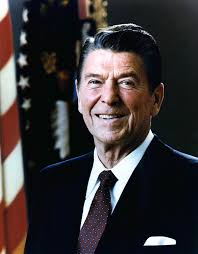
The 20th century President who came closest to realizing Machiavelli’s “loved and feared” prince in himself was Ronald Reagan.
Always smiling, quick with a one-liner (especially at press conferences), seemingly unflappable, he projected a constantly optimistic view of his country and its citizens.
Ronald Reagan
In his acceptance speech at the 1980 Republican National Convention he declared: “[The Democrats] say that the United States has had its days in the sun, that our nation has passed its zenith.… My fellow citizens, I utterly reject that view.”
And Americans enthusiastically responded to that view, twice electing him President (1980 and 1984).
But there was a steely, ruthless side to Reagan that appeared when he felt crossed.
On August 3, 1981, nearly 13,000 air traffic controllers walked out after contract talks with the Federal Aviation Administration collapsed. As a result, some 7,000 flights across the country were canceled on that day at the peak of the summer travel season.
Reagan branded the strike illegal. He threatened to fire any controller who failed to return to work within 48 hours.
On August 5, Reagan fired more than 11,000 air traffic controllers who hadn’t returned to work. The mass firing slowed commercial air travel, but it did not cripple the system as the strikers had forecast.
Reagan’s action stunned the American labor movement. Reagan was the only American President to have belonged to a union, the Screen Actors Guild. He had even been president of this–from 1947 to 1954.
There were no more strikes by Federal workers during Reagan’s tenure in office.
Similarly, Libya’s dictator, Moammar Kadaffi, learned that Reagan was not a man to cross.
On April 5, 1986, Libyan agents bombed a nightclub in West Berlin, killing three people, one a U.S. serviceman. The United States quickly learned that Libyan agents in East Germany were behind the attack.
On April 15, acting on Reagan’s orders, U.S. Air Force, Navy and Marine Corps bombers struck at several sites in Tripoli and Benghazi. Reportedly, Kaddafi himself narrowly missed becoming a casualty.
There were no more acts of Libyan terrorism against Americans for the rest of Reagan’s term.
2016 PRESIDENTIAL ELECTION, A BRONX TALE, ABC NEWS, ADOLF HITLER, ALTERNET, AP, BILL CLINTON, BUZZFEED, CBS NEWS, CHAZZ PALMINTERI, CNN, CROOKS AND LIARS, DAILY KOZ, DONALD TRUMP, FACEBOOK, FBI, H.R. MCMASTER, HILLARY CLINTON, IRS, J. EDGAR HOOVER, JEFF SESSIONS, JOHN F. KENNEDY, JOHN KELLY, LYNDON B. JOHNSON, MOTHER JONES, MOVEON, NBC NEWS, NEWSWEEK, NICCOLO MACHIAVELLI, NPR, POLITICO, RAW STORY, REINCE PREBIUS, REPUBLICAN PARTY, REUTERS, RICHARD M. NIXON, ROBERT DE NIRO, ROBERT F. KENNEDY, Ronald Reagan, SALON, SEATTLE TIMES, SERGEI KISLYAK, SLATE, THE ATLANTIC, THE CHICAGO SUN-TIMES, THE CHICAGO TRIBUNE, THE DAILY BEAST, THE GUARDIAN, THE HILL, THE HUFFINGTON POST, THE LOS ANGELES TIMES, THE NATION, THE NEW YORK TIMES, THE PRINCE, THE WASHINGTON POST, TIME, TWITTER, U.S. NEWS & WORLD REPORT, UP, UPI, USA TODAY, WILLIAM RALPH INGE
In Bureaucracy, History, Law Enforcement, Social commentary, Uncategorized on September 19, 2017 at 12:07 am
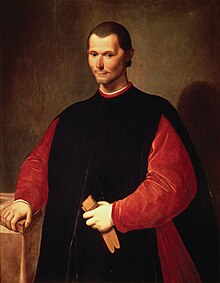
It’s probably the most-quoted passage of Niccolo Machiavelli’s infamous book, The Prince:
“From this arises the question whether it is better to be loved than feared, or feared more than loved. The reply is, that one ought to be both feared and loved, but as it is difficult for the two to go together, it is much safer to be feared than loved.
“For it may be said of men in general that they are ungrateful, voluble, dissemblers, anxious to avoid danger and covetous of gain. As long as you benefit them, they are entirely yours: they offer you their blood, their goods, their life and their children, when the necessity is remote, but when it approaches, they revolt.
“And the prince who has relied solely on their words, without making other preparations, is ruined. For the friendship which is gained by purchase and not through grandeur and nobility of spirit is bought but not secured, and at a pinch is not to be expended in your service.
“And men have less scruple in offending one who makes himself loved than one who makes himself feared. For love is held by a chain of obligations which, men being selfish, is broken whenever it serves their purpose. But fear is maintained by a dread of punishment which never fails.”
Niccolo Machiavelli
So—which is better: To be feared or loved?
In the 1993 film, A Bronx Tale, 17-year-old Calogero (Lillo Brancato) poses that question to his idol, the local Mafia capo, Sonny (Chazz Palminteri).
“That’s a good question,” Sonny replies. “It’s nice to be both, but it’s very difficult. But if I had my choice, I would rather be feared.
“Fear lasts longer than love. Friendships that are bought with money mean nothing. You see how it is around here. I make a joke, everybody laughs. I know I’m funny, but I’m not that funny. It’s fear that keeps them loyal to me.”
Presidents face the same dilemma as Mafia capos—and resolve it in their own ways.
LOVE ME BECAUSE I NEED TO BE LOVED
Bill Clinton believed that he could win over his self-appointed Republican enemies through his sheer charm.
Part of this lay in self-confidence: He had won the 1992 and 1996 elections by convincing voters that “I feel your pain.”
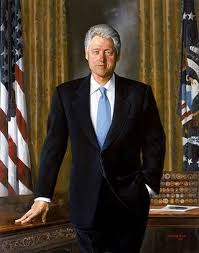
Bill Clinton
And part of it lay in his need to be loved. He once said that if he were in a room with 100 people and 99 of them liked him but one didn’t, he would spend all his time with that one person, trying to win him over.
But while he could charm voters, he could not bring himself to retaliate against his sworn Republican enemies.
On April 19, 1995, Right-wing terrorist Timothy McVeigh drove a truck–packed with 5,000 pounds of ammonium nitrate and nitromethane–to the front of the Alfred P. Murrah Federal Building in Oklahoma City.
The explosion killed 168 people, including 19 children in the day care center on the second floor, and injured 684 others.
Suddenly, Republicans were frightened. Since the end of World War II, they had vilified the very Federal Government they belonged to. They had deliberately courted the Right-wing militia groups responsible for the bombing.
So Republicans feared Clinton would now turn their decades of hate against them.
They need not have worried. On April 23, Clinton presided over a memorial service for the victims of the bombing. He gave a moving eulogy—without condemning the hate-filled Republican rhetoric that had at least indirectly led to the slaughter.
Clinton further sought to endear himself to Republicans by:
- Adopting NAFTA—the Republican-sponsored North American Free Trade Act, which later proved so devastating to American workers;
- Siding with Republicans against poor Americans on welfare; and
- Championing the gutting of the Depression-era Glass-Steagall law, which barred investment banks from commercial banking activities.
The result: Republicans believed Clinton was weak–and could be rolled.
In 1998, House Republicans moved to impeach him over a sex scandal with White House intern Monica Lewinsky. But his Presidency survived when the Senate refused to convict.
LOVE ME BECAUSE I’LL HURT YOU IF YOU DON’T
Lyndon Johnson wanted desperately to be loved.
Once, he complained to Dean Acheson, the former Secretary of State under Harry S. Truman, about the ingratitude of American voters. He had passed far more legislation than his predecessor, John F. Kennedy, and yet Kennedy remained beloved, while he, Johnson, was not.
Why was that? Johnson demanded.
“You are not a very likable man,” said Acheson truthfully.
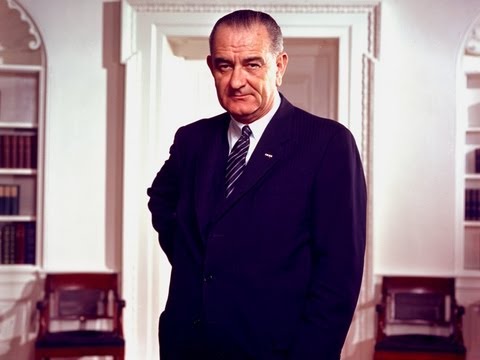
Lyndon B. Johnson
Johnson tried to make his subordinates love him. He would humiliate a man, then give him an expensive gift—such a Cadillac. It was his way of binding the man to him.
He was on a first-name basis with J. Edgar Hoover, the longtime director of the FBI. He didn’t hesitate to request—and get—raw FBI files on his political opponents.
On at least one occasion, he told members of his Cabinet: No one would dare walk out on his administration—because if they did, two men would follow their ass to the end of the earth: Mr. J. Edgar Hoover and the head of the Internal Revenue Service.


2008 PRESIDENTIAL RACE, ABC NEWS, ABORTION, ADOLF HITLER, ALTERNET, AP, BARACK OBAMA, BILL CLINTON, BLACKLASH, BLACKS, BUZZFEED, CBS NEWS, CNN, COMMUNISM, CROOKS AND LIARS, DAILY KOZ, DEPARTMENT OF HOMELAND SECURITY, DWIGHT D. EISENHOWER, FACEBOOK, FIRST CHURCH OF CANNABIS, GAYS, GEORGE H.W. BUSH, GEORGE W. BUSH, HEALTH CODE VIOLATIONS, HOMOSEXUALITY, illegal immigration, INDIANA, INDIANA LEGISLATURE, IRVING WALLACE, ISLAM, JOSEPH MCCARTHY, JOSEPH STALIN, KIRSTJEN NIELSEN, LEE ATWATER, MAR-A-LAGO, MIKE PENCE, MOTHER JONES, MOVEON, MSNBC, MUSLIMS, NBC NEWS, NEWSWEEK, NPR, POLITICO, RACISM, RAW STORY, RELIGION, RELIGIOUS DISCRIMINATION, RELIGIOUS FREEDOM RESTORATION ACT, REPUBLICAN PARTY, REPUBLICANS, REUTERS, RICHARD NIXON, Ronald Reagan, SALON, SARAH HUCKABEE SANDERS, SEATTLE TIMES, SHARIA, SHINZO ABE, SLATE, SOUTHERN STRATEGY, SOVIET UNION, STEPHANIE WILKINSON, THE ATLANTIC, THE CHICAGO SUN-TIMES, THE CHICAGO TRIBUNE, THE DAILY BEAST, THE GUARDIAN, THE HILL, THE HUFFINGTON POST, THE LOS ANGELES TIMES, THE MAN, THE NATION, THE NEW YORK TIMES, THE RED HEN RESTAURANT, THE WASHINGTON POST, TIME, TRANSGENDERS, TREASON, TWITTER, U.S. NEWS & WORLD REPORT, UPI, USA TODAY, USA TODAY DONALD TRUMP, WILL BUNCH
THE DISCRIMINATION DOOR SWINGS BOTH WAYS
In Bureaucracy, History, Law, Law Enforcement, Military, Politics, Social commentary on June 24, 2018 at 9:23 pmOn June 19, Kirstjen Nielsen, secretary of the Department of Homeland Security, was heckled by protesters while dining at a Mexican restaurant in Washington, D.C.
The reason: To protest the Trump administration’s separation of illegal alien parents from their children in detention centers.
Then, three nights later, on June 22, the owner of a Lexington, Virginia, restaurant asked White House Press Secretary Sarah Huckabee Sanders to leave.
The reason: To protest the Trump’s discrimination against transgenders’ entering the military.
Those verbally assailing Nielsen shouted:
On June 23, Sanders tweeted her version of her requested exit: “Last night I was told by the owner of Red Hen in Lexington, VA to leave because I work for @POTUS and I politely left. Her actions say far more about her than about me. I always do my best to treat people, including those I disagree with, respectfully and will continue to do so.”
Sarah Huckabee Sanders
According to The Washington Post, the Red Hen’s co-owner, Stephanie Wilkinson, got a call from her staff, reporting that Sanders was at the restaurant. Several employees are gay and knew Sanders had defended Trump’s efforts to bar transgenders from the military.
She added that her restaurant has “certain standards that I feel it has to uphold, such as honesty, and compassion and cooperation.”
From her statement, Wilkinson clearly believed Sanders was dishonest, inhumane and uncooperative.
On June 25, President Trump tweeted: “The Red Hen Restaurant should focus more on cleaning its filthy canopies, doors and windows (badly needs a paint job) rather than refusing to serve a fine person like Sarah Huckabee Sanders. I always had a rule, if a restaurant is dirty on the outside, it is dirty on the inside!”
Donald Trump
[Trump’s charge that the Red Hen is “dirty on the inside” was—as usual for him—false.
[According to its most recent state health inspection in February, the Red Hen restaurant had zero violations.
[On the other hand: Florida health inspectors cited Trump’s Mar-a-Lago resort in Palm Beach with 15 violations in late January, 2017, days before Trump hosted Japanese Prime Minister Shinzo Abe there for a diplomatic visit.
Nor was this an exception. From 2014-2017, records show the club was cited 78 times for such violations as:
Mar-a-Lago
Ironically, Trump and his followers are responsible for Nielsen’s and Sanders’ evictions. They have pushed legislation allowing businesses to discriminate against anyone they dislike on the basis of “religious freedom.”
On March 26, 2015, Mike Pence, then Governor of Indiana before accepting Trump’s invitation to become his Vice Presidential nominee, signed into law the “Religious Freedom Restoration Act.”
This allows any individual or corporation to cite its religious beliefs as a defense when sued by a private party.
Officially, its intent is to prevent the government from forcing business owners to act in ways contrary to strongly held religious beliefs. Unofficially, its intent is to appease the hatred of gays and lesbians by the religious Right, a key constituency of the Republican party.
In short, a bakery that doesn’t want to make a cake to be used at a gay wedding or a restaurant that doesn’t want to serve lesbian patrons can legally refuse to do so. Or a hospital can legally refuse to treat gay patients.
Although he praised the bill, Pence signed it in a ceremony closed to the public and the press.
On the eve of invading the Soviet Union, Adolf Hitler told an aide: “At the beginning of each campaign, one pushes a door into a dark, unseen room. One can never know what is hiding inside.”
Maybe Pence—like Hitler—sensed that he, too, was about to push open “a door into a dark, unseen room.”
On the day after Pence signed the Act, Bill Levin filed paperwork with the Indiana Secretary of State to register the First Church of Cannabis as a legitimate religious institution. The registration was approved.
By elevating religion above the law, Indiana’s legislators may have enabled Indiana’s Muslims to:
And it was the Trump administration that supported the Supreme Court’s June 4 ruling 7-2 on behalf of a Colorado baker who refused to make a wedding cake for a gay couple. He had claimed that doing so would violate his religious beliefs against homosexuality.
By championing the rights of businesses to legally discriminate against anyone they dislike—under the guise of “religious freedom”—Trump and his followers have opened a door that they themselves may now be forced to walk through.
Share this: