Posts Tagged ‘BAY OF PIGS’
2012 PRESIDENTIAL RACE, ALTERNET, AP, BARACK OBAMA, BAY OF PIGS, BBC, BERLIN WALL, BILL CLINTON, BRUCE GREENWOOD, BUZZFEED, CARLOS MARCELLO, CBS NEWS, CIA, CIVIL RIGHTS, CLIFF ROBERTSON, CNN, CUBAN MISSILE CRISIS, DAILY KOS, DAVID HALBERSTAM, DONALD J. TRUMP, FBI, FIDEL CASTRO, FRANK SINATRA, HERMAN CAIN, ICH BEN EIN BERLINNER SPEECH, INTERNET MOVIE DATABASE, J. EDGAR HOOVER, JAMES MARSDEN, JOHN F. KENNEDY, JOSEPH MCCARTHY, JOSEPH P. KENNEDY, LYNDON B. JOHNSON, MAFIA, MALCOM X, MARTIN LUTHER KING, MARTIN SHEEN, MOTHER JONES, MOVEON, MOVIES, NBC NEWS, NEWSWEEK, NEWT GINGRICH, NIKITA KHRUSHCHEV, NPR, NUCLEAR TEST BAN TREATY, POLITICO, PT-109, RAW STORY, REUTERS, RICK PERRY, ROBERT F. KENNEDY, ROBERT S. MCNAMARA, SALON, SAM GIANCANA, SANTOS TRAFFICANTE, Sarah Palin, SATURDAY NIGHT LIVE, SEATTLE TIMES, SLATE, SOVIET UNION, THE ATLANTIC, THE BEST AND THE BRIGHTEST, THE BUTLER, THE CHICAGO SUN-TIMES, THE CHICAGO TRIBUNE, THE DAILY BEAST, THE GUARDIAN, THE HILL, THE HUFFINGTON POST, THE LOS ANGELES TIMES, THE MISSILES OF OCTOBER, THE NEW YORK TIMES, THE RAT PACK, THE WALL STREET JOURNAL, THE WASHINGTON POST, THIRTEEN DAYS, TIME, TWILIGHT ZONE, TWITTER, U.S. NEWS & WORLD REPORT, UPI, USA TODAY, VIETNAM WAR, WILLIAM DEVANE, WILLIAM PETERSON
In Bureaucracy, Business, History, Law, Law Enforcement, Military, Politics, Social commentary on November 16, 2023 at 12:16 am
President Kennedy’s untimely death has since fueled arguments over how, if he had lived, he would have dealt with Vietnam.
In his memoirs, former Soviet Premier Nikita Khrushchev wrote: “Kennedy would have never let his country get bogged down in Vietnam.”
But David Halberstam, who covered the early years of the war for The New York Times, came to a different conclusion.
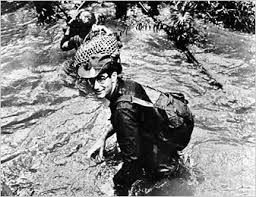
David Halberstam in Vietnam
In his bestselling 1972 book, The Best and the Brightest, he wrote that although Kennedy questioned the wisdom of a combat commitment, he had never shown those doubts in public.
In public, he had expressed doubts only about the Diem regime—whether it held enough support among the Vietnamese to win the war.
His successor had to deal with Kennedy’s public statements, all supportive of the importance of Vietnam.
And it was that successor, newly-elevated President Lyndon B. Johnson, who decided, in 1965, to commit heavy military forces to protecting “freedom-loving” South Vietnam.
In short: Even if Kennedy had intended to withdraw American forces after winning re-election in 1964, he made a fatal mistake: He assumed there would always be time for him to do so.
Historian Thurston Clarke, in his 2013 book JFK’s Last Hundred Days, reached a totally different conclusion: That Kennedy planned to quietly remove American military advisers regardless of the military situation.
Clarke believes that Kennedy intended to gradually withdraw troops from Vietnam—but felt he could not afford to inflame the Right during an election year.
Essentially, the question, “What would Kennedy have done?”—on Vietnam, civil rights, relations with the Soviet Union—lies at the heart of his continuing fascination among Americans.
For millions, the later turmoil of the 1960s remains such a traumatic memory that they assume: “America would have had to be better-off if Kennedy had lived.”
But much of Kennedy’s proposed legislation—such as his civil rights act—did not become law until President Johnson overcame conservative opposition to it.
Johnson had first been elected to the House of Representatives in 1937, where he gained influence as a protégé of its speaker, Sam Rayburn. In 1948, he was elected to the U.S. Senate and eventually became one of its most powerful members—especially after becoming its Majority Leader in 1954.
Johnson knew the strengths and weaknesses of his political colleagues, and he ruthlessly exploited this knowledge to ensure the passage of legislation he supported.
Kennedy had served in the House from 1946 to 1952, and from 1952 to 1961 in the Senate. But he had never been a major leader in either body.
It was as a Senator that he wrote his Pulitzer Prize-winning book, Profiles in Courage. But it was also as a Senator that he refused to vote on whether U.S. Senator Joseph R. McCarthy should be censured by his Senatorial colleagues.
In 1954, the Senate voted to condemn McCarthy, whose slanders of Communist subversion had bullied and frightened Americans for four years. McCarthy’s influence as a political figure died overnight.
Joseph P. Kennedy, the family patriarch, was a strong McCarthy supporters. And Robert F. Kennedy had briefly worked for McCarthy’s Red-baiting Senate subcommittee.
JFK’s refusal to say how he would have voted on censuring McCarthy damaged his support among liberals during the 1960 election.
Eleanor Roosevelt famously said that Kennedy should show “more courage and less profile.”
Although Lyndon Johnson’s legislative achievements as Senator and President remain unprecedented, he remains a pariah figure among Democrats.
His 1965 decision to wage all-out war in Vietnam ignited nationwide protests and elected Richard M. Nixon as President in 1968.
Like a doomed character in George Orwell’s novel, 1984, he has largely become an un-person.
Meanwhile, John F. Kennedy continues to endlessly fascinate Americans. In poll after poll they continue to rate him highly—even though he served less than three years in the White House.
Hundreds of books and thousands of articles have been written about JFK. On the big screen he’s been depicted by actors such as Cliff Robertson (PT-109), Bruce Greenwood (Thirteen Days) and James Marsden (The Butler).
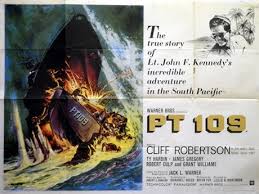
Movie poster for PT-109
On TV, he’s been portrayed by William Devane (The Missiles of October), William Petersen (The Rat Pack), Martin Sheen (Kennedy), James Franciscus (Jacqueline Bouvier Kennedy) and Cliff De Young (Robert Kennedy and His Times).
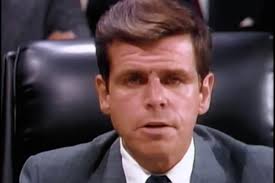
William Devane as John F. Kennedy in The Missiles of October
Kennedy has even appeared on Saturday Night Live (perhaps most famously in a sketch where he chides then-President Clinton for his tawdry choices as a womanizer).
He even figured in a 1986 episode of the revised Twilight Zone episode where a history professor travels back in time to prevent the JFK assassination. The result: JFK is saved but Soviet Premier Nikita Khrushchev is murdered and World War III erupts.
In 2013, the Internet Movie Database listed a total of 94 movies, mini-series. TV dramas and even comedies featuring the character of John F. Kennedy.
Roads, bridges, tunnels, highways, parks, playgrounds and schools have been named after him.
As Thurston Clarke wrote in JFK’s Last Hundred Days: “There is no test of literary merit except survival, which is in of itself an index of majority opinion. By that standard, Kennedy was a great President.”
2012 PRESIDENTIAL RACE, ALTERNET, AP, BARACK OBAMA, BAY OF PIGS, BBC, BERLIN WALL, BILL CLINTON, BRUCE GREENWOOD, BUZZFEED, CARLOS MARCELLO, CBS NEWS, CIA, CIVIL RIGHTS, CLIFF ROBERTSON, CNN, CUBAN MISSILE CRISIS, DAILY KOS, DAVID HALBERSTAM, DONALD J. TRUMP, FBI, FIDEL CASTRO, FRANK SINATRA, HERMAN CAIN, ICH BEN EIN BERLINNER SPEECH, INTERNET MOVIE DATABASE, J. EDGAR HOOVER, JAMES MARSDEN, JOHN F. KENNEDY, JOSEPH MCCARTHY, JOSEPH P. KENNEDY, LYNDON B. JOHNSON, MAFIA, MALCOM X, MARTIN LUTHER KING, MARTIN SHEEN, MOTHER JONES, MOVEON, MOVIES, NBC NEWS, NEWSWEEK, NEWT GINGRICH, NIKITA KHRUSHCHEV, NPR, NUCLEAR TEST BAN TREATY, POLITICO, PT-109, RAW STORY, REUTERS, RICK PERRY, ROBERT F. KENNEDY, ROBERT S. MCNAMARA, SALON, SAM GIANCANA, SANTOS TRAFFICANTE, Sarah Palin, SATURDAY NIGHT LIVE, SEATTLE TIMES, SLATE, SOVIET UNION, THE ATLANTIC, THE BEST AND THE BRIGHTEST, THE BUTLER, THE CHICAGO SUN-TIMES, THE CHICAGO TRIBUNE, THE DAILY BEAST, THE GUARDIAN, THE HILL, THE HUFFINGTON POST, THE LOS ANGELES TIMES, THE MISSILES OF OCTOBER, THE NEW YORK TIMES, THE RAT PACK, THE WALL STREET JOURNAL, THE WASHINGTON POST, THIRTEEN DAYS, TIME, TWILIGHT ZONE, TWITTER, U.S. NEWS & WORLD REPORT, UPI, USA TODAY, VIETNAM WAR, WILLIAM DEVANE, WILLILAM PETERSON
In Bureaucracy, Business, History, Law, Law Enforcement, Military, Politics, Social commentary on November 15, 2023 at 12:48 am
The Kennedy administration’s unprecedented attack on organized crime has led some law enforcement experts to believe the Mob engineered President Kennedy’s assassination.
One of these is G. Robert Blakey, father of the Racketeer Influenced Corrupt Organizations (RICO) Act. As the former Chief Counsel and Staff Director to the U.S. House Select Committee on Assassinations (1977–1979) he oversaw the second official inquiry into the Kennedy assassination.
As a result, he believes the Mob had ample means, motive and opportunity to arrange for a “nut” to kill the President.
In his 1980 book, The Plot to Kill the President, Blakey asserted:
- Lee Harvey Oswald shot and killed President Kennedy.
- An unknown confederate of Oswald’s, firing from the “grassy knoll,” also shot at Kennedy but missed.
- The conspiracy was rooted in organized crime and involved Mafia boss Santos Trafficante of Miami and/or Mafia boss Carlos Marcello of New Orleans.
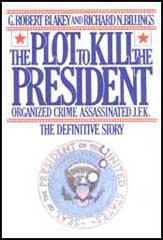
The 1983 TV mini-series, “Blood Feud,” clearly implied that the Mob was responsible. At its heart lay the 10-year conflict between Robert F. Kennedy and James R. Hoffa, then president of the International Brotherhood of Teamsters Union.
This was also the plot of American Tabloid, a 1995 novel by James Ellroy.
But investigative reporter Seymour Hersh wrote that during the five years he researched The Dark Side of Camelot, his expose of the hidden life of President Kennedy, he didn’t uncover any evidence of such a plot.
After Robert Kennedy left the Justice Department in 1964 to run for the post of U.S. Senator from New York, the Justice Department slacked off its push against the crime syndicates.
But the war was resurrected during the Nixon administration and has remained a top priority ever since.
Perhaps the most controversial legacy of the Kennedy administration remains the President’s dealings with the South Vietnamese regime of Ngo Dinh Diem.,
In 1954, the French—who had controlled Vietnam for 80 years—were forced to withdraw their military forces from the country. Their army had suffered a humiliating defeat at Dienbenphu and the French citizenry—still recovering from defeat and Nazi occupation during World War II—demanded an end to the disastrous conflict.
Into this political vacuum stepped the victorious North Vietnamese communist Ho Chi Minh.
Kennedy—then U.S. Senator from Massachusetts—had visited Vietnam while the French were still trying to hold onto one of their last colonial possessions. And he had urged them to withdraw and allow the Vietnamese to govern themselves.
But President Dwight D. Eisenhower was aware of Ho’s overwhelming popularity throughout Vietnam due to his battles against Japanese and French colonialists. In any nationwide election, Ho was certain to win the presidency.
But Eisenhower felt he couldn’t allow an avowed Communist to rule Vietnam. With the North under firm Communist control, America focused its attention on the South.
Searching for an acceptable alternative, Eisenhower found him in Ngo Dinh Diem—a mandarin in a nation swept by revolution, a Catholic in a nation with an 80% Buddhist population.
In 1954, America began backing Diem. Although his first years were marked by social progress, he later became increasingly oppressive toward the Buddhist majority. Corruption openly flourished among government and army officials.
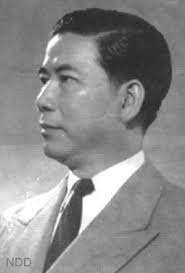
Ngo Dinh Diem
In 1960, North Vietnam launched an aggressive campaign of infiltration and assassination across South Vietnam.
In 1961, President Kennedy sent 400 Green Berets and 100 other military advisers to South Vietnam to offer support.
Diem requested American financing of a 100,000-man increase in his army. Kennedy agreed to an increase of 30,000. Meanwhile, the Joint Chiefs of Staff estimated that 40,000 U.S. troops would be needed to “clean up the Vietcong threat.”
Kennedy underestimated the reaction of North Vietnam, whose forces were fighting what they believed was a crusade. As American troop strength increased, the North escalated its own commitment.
From 1961 to 1963, the number of U.S. troops in Vietnam steadily rose from 685 to 16,732. American minesweepers patrolled the coasts while their aircraft engaged in surveillance.
For the first time, Americans became casualties of the war–especially those in helicopter combat-support missions.
Meanwhile, Diem—urged by his influential brother, Nhu, who ran the secret police—cracked down on the Buddhists.
Government troops fired on a peaceful demonstration in May, 1963. In protest, Buddhist monks burned themselves to death before TV cameras.
Nhu’s beautiful and powerful wife, Madame Nhu, fed growing world outrage by her ridicule of “monk barbecue shows.”
American efforts to stop Diem’s anti-Buddhist campaign failed. On August 21, 1963, Diem’s police shot their way into Buddhist pagodas, killing scores and arresting hundreds.
This finally convinced the Kennedy administration that Diem would never gain the popular support he needed to win the war against the Communist North.
As a result, the administration offered support to South Vietnamese military officers planning a coup against Diem.
On November 1, 1963, South Vietnamese army units stormed the presidential palace. Diem and Nhu fled, but were caught and shot. Madame Nhu, visiting the U.S. at the time, escaped death, accusing Kennedy of supporting the coup.
The administration issued a flat denial.
Diem’s assassination was followed 21 days later by Kennedy’s own.
2012 PRESIDENTIAL RACE, ALTERNET, AP, BARACK OBAMA, BAY OF PIGS, BBC, BERLIN WALL, BILL CLINTON, BRUCE GREENWOOD, BUZZFEED, CARLOS MARCELLO, CBS NEWS, CIA, CIVIL RIGHTS, CLIFF ROBERTSON, CNN, CUBAN MISSILE CRISIS, DAILY KOS, DAVID HALBERSTAM, DONALD J. TRUMP, FBI, FIDEL CASTRO, FRANK SINATRA, HERMAN CAIN, ICH BEN EIN BERLINNER SPEECH, INTERNET MOVIE DATABASE, J. EDGAR HOOVER, JAMES MARSDEN, JOHN F. KENNEDY, JOSEPH MCCARTHY, JOSEPH P. KENNEDY, LYNDON B. JOHNSON, MAFIA, MALCOM X, MARTIN LUTHER KING, MARTIN SHEEN, MOTHER JONES, MOVEON, MOVIES, NBC NEWS, NEWSWEEK, NEWT GINGRICH, NIKITA KHRUSHCHEV, NPR, NUCLEAR TEST BAN TREATY, POLITICO, PT-109, RAW STORY, REUTERS, RICK PERRY, ROBERT F. KENNEDY, ROBERT S. MCNAMARA, SALON, SAM GIANCANA, SANTOS TRAFFICANTE, Sarah Palin, SATURDAY NIGHT LIVE, SEATTLE TIMES, SLATE, SOVIET UNION, THE ATLANTIC, THE BEST AND THE BRIGHTEST, THE BUTLER, THE CHICAGO SUN-TIMES, THE CHICAGO TRIBUNE, THE DAILY BEAST, THE GUARDIAN, THE HILL, THE HUFFINGTON POST, THE LOS ANGELES TIMES, THE MISSILES OF OCTOBER, THE NEW YORK TIMES, THE RAT PACK, THE WALL STREET JOURNAL, THE WASHINGTON POST, THIRTEEN DAYS, TIME, TWILIGHT ZONE, TWITTER, U.S. NEWS & WORLD REPORT, UPI, USA TODAY, VIETNAM WAR, WILLIAM DEVANE, WILLIAM PETERSON
In Bureaucracy, Business, History, Law, Law Enforcement, Military, Politics, Social commentary on November 14, 2023 at 12:12 am
John F. Kennedy became President when civil rights suddenly became a burning issue throughout the Nation.
At Kennedy’s request, dozens of law firms sent lawyers South, so civil rights demonstrators would not lack counsel.
Prominent blacks such as Thurgood Marshall, Robert C. Weaver and George L.L. Weaver were appointed, respectively, to the Supreme Court, the Housing and House Finance Agency and the office of Assistant Secretary of Labor.
But Kennedy was highly reluctant to push for a civil rights bill addressing the overall issues of racial discrimination.
The reason: Most of the chairman of House and Senate committees were deeply conservative Southern racists–whether Republican or Democrat. They decided whether Kennedy’s foreign policy initiatives would be approved or opposed–especially his bills for increased foreign aid.
Kennedy believed he could not offend such men without jeopardizing the legacy he wanted to achieve in foreign policy.
This timidity, in turn, led many prominent blacks—such as Martin Luther King and Malcom X—to believe they would see no innovative moves on Kennedy’s part.

James Meredith
But events forced Kennedy’s hand.edn September 30, 1962, the President sent deputy U.S. marshals and National Guardsmen into Mississippi to restore order. Rioting had erupted when, by federal court order, James Meredith, a black, was enrolled at the state university.
Kennedy’s problems in winning support for his civil rights program arose in the folkways of the Nation. When laws run counter to a nation’s folkways, the laws lose.
In backing the admission of Meredith, the President chose an incident which would set off shockwaves for black rights.
Kennedy held mixed emotions about the demand for civil rights by blacks. On one hand, as an Irish Catholic, he grew up with stories about longtime discrimination against his ancestors (such as the “No Irish Need Apply” signs posted by numerous employers).
On the other hand, he had been born into a world of power and wealth, and he had to grope his way toward understanding the problems of the oppressed.
Another major confrontation broke out between Kennedy and the forces of segregation on June 11, 1963. Alabama Governor George C. Wallace personally blocked the entrance of two black pupils to the University of Tuscaloosa.
The President, watching on TV, federalized the Alabama National Guard, which Wallace had used to ring the school. Wallace withdrew and the students were admitted and enrolled.
That same day, Kennedy addressed the nation on the need for genuine equality for all Americans: “The question is whether we are going to treat our fellow Americans as we want to be treated.”
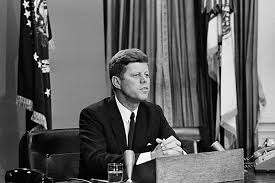
JFK addresses the nation on civil rights
And he called on Congress to pass his civil rights bill, which had been stalled by the legislators.
On August 28, 1963, 200,000 civil rights demonstrators flooded Washington, D.C., for a massive rally.
Fearing that violence would erupt—embarrassing his administration and setting back the cause of civil rights—Kennedy had sought to persuade Dr. Martin Luther King, the march’s chief figure, to cancel the proposed march.
But King and his fellow organizers were determined to go through with it. They had, they said, waited too long for justice to be satisfied with anything less.
The dignity and peacefulness of the rally–and, most especially, King’s soaring “I Have a Dream” speech–won tremendous sympathy throughout the country. Kennedy met with civil rights leaders afterward to offer his support.
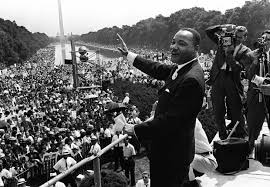
Martin Luther King during the March on Washington
But Kennedy’s civil rights bill remained stalled in Congress until 1964. President Lyndon B. Johnson used the assassinated Kennedy’s new status as a martyr to gain enough support for its passage.
Meanwhile, on yet another front, the Kennedy administration was waging an unprecedented war against organized crime.
This was primarily the work of Attorney General Robert F. Kennedy. As chief counsel for the Senate Permanent Subcommittee on Investigations (1957–59), he had interrogated about 800 mobsters who had been summoned by subpoena.
And he had learned, firsthand, how ineffective the FBI and Justice Department were at bringing such powerful criminals to justice. The FBI had long steered clear of organized crime investigations, largely because its director, J. Edgar Hoover, feared corruption of his agents.
Upon taking office as Attorney General, he greatly expanded the number of attorneys assigned to the Justice Department’s Organized Crime Section. And, more important, he used his status as brother to the President to jawbone FBI Director J. Edgar Hoover into attacking the Mob.
The FBI installed illegal microphones in Mob hangouts throughout the country and started building cases against such mobsters as Sam Giancana, Santos Trafficante and Carlos Marcello.
The administration’s attack on the Mob has led some historians to believe the assassination of President Kennedy was Mob-orchestrated.
The reasons:
- Joseph P. Kennedy, the family patriarch, solicited Mob money and influence for his son’s 1960 Presidential campaign.
- Through singer Frank Sinatra, the elder Kennedy assured Chicago Mafia boss Sam Giancana that the mob would get a free ride if his son were elected President.
- The CIA, seeking any way to topple Fidel Castro, enlisted the Mafia to assassinate him.
- But Robert Kennedy, as Attorney General, ignored the Mob’s “contributions” and pressed his war against the syndicates
- As a result, mobsters felt betrayed and lusted for vengeance.
2012 PRESIDENTIAL RACE, ALTERNET, AP, BARACK OBAMA, BAY OF PIGS, BBC, BERLIN WALL, BILL CLINTON, BRUCE GREENWOOD, BUZZFEED, CARLOS MARCELLO, CBS NEWS, CIA, CIVIL RIGHTS, CLIFF ROBERTSON, CNN, CUBAN MISSILE CRISIS, DAILY KOS, DAVID HALBERSTAM, DONALD J. TRUMP, FBI, FIDEL CASTRO, FRANK SINATRA, HERMAN CAIN, ICH BEN EIN BERLINNER SPEECH, INTERNET MOVIE DATABASE, J. EDGAR HOOVER, JAMES MARSDEN, JOHN F. KENNEDY, JOSEPH MCCARTHY, JOSEPH P. KENNEDY, LYNDON B. JOHNSON, MAFIA, MALCOM X, MARTIN LUTHER KING, MARTIN SHEEN, MOTHER JONES, MOVEON, MOVIES, NBC NEWS, NEWSWEEK, NEWT GINGRICH, NIKITA KHRUSHCHEV, NPR, NUCLEAR TEST BAN TREATY, POLITICO, PT-109, RAW STORY, REUTERS, RICK PERRY, ROBERT F. KENNEDY, ROBERT S. MCNAMARA, SALON, SAM GIANCANA, SANTOS TRAFFICANTE, Sarah Palin, SATURDAY NIGHT LIVE, SEATTLE TIMES, SLATE, SOVIET UNION, THE ATLANTIC, THE BEST AND THE BRIGHTEST, THE BUTLER, THE CHICAGO SUN-TIMES, THE CHICAGO TRIBUNE, THE DAILY BEAST, THE GUARDIAN, THE HILL, THE HUFFINGTON POST, THE LOS ANGELES TIMES, THE MISSILES OF OCTOBER, THE NEW YORK TIMES, THE RAT PACK, THE WALL STREET JOURNAL, THE WASHINGTON POST, THIRTEEN DAYS, TIME, TWILIGHT ZONE, TWITTER, U.S. NEWS & WORLD REPORT, UPI, USA TODAY, VIETNAM WAR, WILLIAM DEVANE, WILLIAM PETERSON
In Bureaucracy, Business, History, Law, Law Enforcement, Military, Politics, Social commentary on November 13, 2023 at 12:10 am
By October, 1962, Nikita Khrushchev, premier of the Soviet Union, had supplied Cuba with more than 40,000 soldiers, 1,300 field pieces, 700 anti-aircraft guns, 350 tanks and 150 jets.
The motive: To deter another Bay of Pigs-type invasion.
Khrushchev also began supplying Castro with nuclear-tipped ballistic missiles.
Their discovery, in October, 1962, ignited the single most dangerous confrontation of the Cold War.
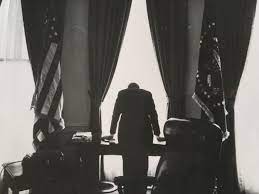


John F. Kennedy during the Cuban Missile Crisis
On October 16, Kennedy was shown photographs of nuclear missile sites under construction on the island. The pictures had been taken on the previous day by a high-altitude U-2 spy plane.
Suddenly, the two most powerful nuclear countries—the United States and the Soviet Union—appeared on the brink of nuclear war.
Kennedy officials claimed they couldn’t understand why Khrushchev had placed nuclear missiles in Cuba. “Maybe Khrushchev’s gone mad” was a typical musing.
The Kennedy administration never admitted that JFK had been waging a no-holds-barred campaign to overthrow the Cuban government and assassinate its leader.
Kennedy convened a group of his 12 most important advisers, which became known as Ex-Comm, for Executive Committee.
For seven days, Kennedy and his advisers intensely and privately debated their options. Some of the participants—such as Air Force General Curtis LeMay—urged an all-out air strike against the missile sites.
Robert Kennedy, the Attorney General (and the President’s brother) opposed initial calls for an air strike.
It would be, he said, “a Pearl Harbor in reverse.” And, he added: “I don’t want my brother to go down in history as the Tojo of the 1960s.”
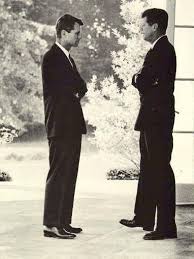
Robert F. and John F. Kennedy
Others—such as Adlai Stevenson, the United States delegate to the United Nations—urged a reliance on quiet diplomacy.
It was Secretary of Defense Robert S. McNamara who suggested a middle course: A naval blockade—a “quarantine” in Kennedy’s softened term—around Cuba. This would hopefully prevent the arrival of more Soviet offensive weapons on the island.
The President insisted that the missiles had to go—by peaceful means, if possible, but by the use of military force if necessary.
Kennedy finally settled on a naval blockade of Cuba. This would prevent additional missiles from coming in and give Khrushchev time to negotiate and save face.
On October 22, President Kennedy appeared on nationwide TV to denounce the presence of Russian nuclear missiles in Cuba.
He demanded their withdrawal, and warned that any missile launched against any nation in the Western hemisphere would be answered with “a full retaliatory response upon the Soviet Union.”
Kennedy ordered American military readiness raised to a level of Defcom-2—the step just short of total war.
The United States had about 27,000 nuclear weapons; the Soviets had about 3,000. In a first nuclear exchange, the United States could have launched about 3,000 nuclear weapons and the Soviets about 250.
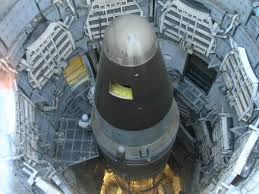
Nuclear missile in silo
On October 28, Khrushchev announced that the missile sites would be destroyed and the missiles crated and shipped back to the Soviet Union.
In return, Kennedy gave his promise—publicly—to lift the blockade and not invade Cuba
Privately, he also promised to remove obsolete Jupiter II nuclear missiles from Turkey, which bordered the Soviet Union. Those missiles were, in effect, the American version of the Russian missiles that had been shipped to Cuba.
The world escaped nuclear disaster by a hair’s-breath.
Khrushchev didn’t know that Kennedy had intended to order a full-scale invasion of Cuba in just another 24 hours if an agreement couldn’t be reached.
And Kennedy and his military advisors didn’t know that Russian soldiers defending Cuba had been armed with tactical nuclear weapons.
If warfare of any type had broken out, the temptation to go nuclear would have been overwhelming.
The Cuban Missile Crisis marked the only time the world came to the brink of nuclear war.
The Right attacked Kennedy for refusing to destroy Castro, thus allowing Cuba to remain a Communist bastion only 90 miles from Florida.
The Left believed it was a needless confrontation that risked the destruction of humanity.
For Kennedy, forcing the Soviets to remove their missiles from Cuba re-won the confidence he had lost among so many Americans following the Bay of Pigs fiasco.
It also made him face the brutal truth that a miscalculation during a nuclear crisis could destroy all life on Earth.
He felt he could now move—cautiously—toward better relations between the United States and the Soviet Union.
Ironically, the crisis had the same effects on Khrushchev—who had witnessed the horrors of Germany’s 1941 invasion of the Soviet Union and the subsequent loss of at least 22 million Soviet citizens.
Slowly and carefully, Kennedy and Khrushchev negotiated the details of what would become the Nuclear Test Ban Treaty, which banned nuclear testing in the atmosphere.
Underground tests would continue, but the amounts of deadly strontium-90 radiation polluting the atmosphere would be vastly reduced.
The treaty was signed between the United States and the Soviet Union on July 25, 1963.
Kennedy considered it his greatest achievement as President, saying in a speech: “According to a Chinese proverb, a journey of a thousand miles begins with a single step. My fellow Americans, let us take that first step.”
2012 PRESIDENTIAL RACE, ALTERNET, AP, BARACK OBAMA, BAY OF PIGS, BBC, BERLIN WALL, BILL CLINTON, BRUCE GREENWOOD, BUZZFEED, CARLOS MARCELLO, CBS NEWS, CIA, CIVIL RIGHTS, CLIFF ROBERTSON, CNN, CUBAN MISSILE CRISIS, DAILY KOS, DAVID HALBERSTAM, DONALD J. TRUMP, FBI, FIDEL CASTRO, FRANK SINATRA, HERMAN CAIN, ICH BEN EIN BERLINNER SPEECH, INTERNET MOVIE DATABASE, J. EDGAR HOOVER, JAMES MARSDEN, JOHN F. KENNEDY, JOSEPH MCCARTHY, JOSEPH P. KENNEDY, LYNDON B. JOHNSON, MAFIA, MALCOM X, MARTIN LUTHER KING, MARTIN SHEEN, MOTHER JONES, MOVEON, MOVIES, NBC NEWS, NEWSWEEK, NEWT GINGRICH, NIKITA KHRUSHCHEV, NPR, NUCLEAR TEST BAN TREATY, POLITICO, PT-109, RAW STORY, REUTERS, RICK PERRY, ROBERT F. KENNEDY, ROBERT S. MCNAMARA, SALON, SAM GIANCANA, SANTOS TRAFFICANTE, Sarah Palin, SATURDAY NIGHT LIVE, SEATTLE TIMES, SLATE, SOVIET UNION, THE ATLANTIC, THE BEST AND THE BRIGHTEST, THE BUTLER, THE CHICAGO SUN-TIMES, THE CHICAGO TRIBUNE, THE DAILY BEAST, THE GUARDIAN, THE HILL, THE HUFFINGTON POST, THE LOS ANGELES TIMES, THE MISSILES OF OCTOBER, THE NEW YORK TIMES, THE RAT PACK, THE WALL STREET JOURNAL, THE WASHINGTON POST, THIRTEEN DAYS, TIME, TWILIGHT ZONE, TWITTER, U.S. NEWS & WORLD REPORT, UPI, USA TODAY, VIETNAM WAR, WILLIAM DEVANE, WILLIAM PETERSON
In Bureaucracy, Business, History, Law, Law Enforcement, Military, Politics, Social commentary on November 10, 2023 at 12:10 am
During the 1960 Presidential campaign, then-Senator John F. Kennedy promised to build a Peace Corps to train people in underdeveloped nations to help themselves.
In March, 1961, the program went into effect, with the President’s brother-in-law, Sargent Shriver, as director.
Starvation, illiteracy and disease were the enemies of the Corps. Any nation wanting aid could request it. The first group of volunteers went to the Philippines, the second to Ecuador and the third to Tanganyika.
The problems of the underdeveloped world were too great for any single organization to solve. But the Corps lifted the spirits of many living in those countries. And it captured the imagination of millions of Americans—especially those of thousands of idealistic youths who entered its ranks.
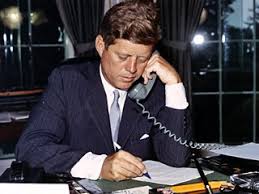
John F. Kennedy
To combat the growing Communist threat to Latin America, Kennedy established the Alliance for Progress. He defined the Alliance’s goal as providing “revolutionary progress through powerful, democratic means.”
Within two years he could report:
“Some 140,000 housing units have been constructed. Slum clearance projects have begun, and 3,000 classrooms have been built. More than 4,000,000 school books have been distributed.
“The Alliance has fired the imagination and kindled the hopes of millions of our good neighbors. Their drive toward modernization is gaining momentum as it unleashes the energies of these millions.
“The United States is becoming increasingly identified in the minds of the people with the goal they move toward: a better life with freedom,” said Kennedy.
Critics of the program, however, charged that the President was trying to “dress up the old policies” of Franklin D. Roosevelt in new rhetoric. Since FDR’s time, the United States has believed in giving economic aid to Latin America.
Much—if not most—of these billions of dollars wound up in the pockets of right-wing dictators, such as Anastasio Somoza and Rafael Trujillo.
Meanwhile, Kennedy was urging action on another front—that of outer space.
“This generation does not intend to founder in the backwash of the coming age of space,” declared the President. He committed the United States to putting a man on the moon by the end of the decade.
As indeed it happened less than six years after his death—on July 20, 1969.
Kennedy’s idealistic rhetoric masked his real reason for going to the moon: To score a propaganda victory over the Soviet Union.
Another of his anti-Communist goals: To remove Fidel Castro from power in Cuba at almost any cost.
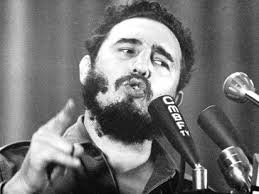
Fidel Castro
Immediately after the failed Bay of Pigs invasion, Kennedy appointed his brother, Robert–who was then the Attorney General—to oversee a CIA program to overthrow Castro.
The CIA and the Mafia entered into an unholy alliance to assassinate Castro—each for its own benefit:
- The CIA wanted to please Kennedy by overthrowing the Communist leader who had nationalized American corporate holdings.
- The Mafia wanted to regain its lucrative casino and brothel holdings that had made Cuba the playground of the rich in pre-Castro times.
The mobsters were authorized to offer $150,000 to anyone who would kill Castro and were promised any support the Agency could yield.
“We were hysterical about Castro at about the time of the Bay of Pigs and thereafter,” then-former Secretary of Defense Robert S. McNamara testified before Congress about these efforts. “And there was pressure from JFK and RFK to do something about Castro.”
Nor was everyone in the CIA enthusiastic about the “get Castro” effort.
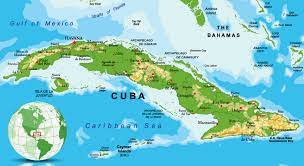
“Everyone at CIA was surprised at Kennedy’s obsession with Fidel,” recalled Sam Halpern, who was assigned to the Cuba Project. “They thought it was a waste of time. We all knew [Fidel] couldn’t hurt us. Most of us at CIA initially liked Kennedy, but why go after this little guy?
“One thing is for sure: Kennedy wasn’t doing it out of national security concerns. It was a personal thing. The Kennedy family felt personally burnt by the Bay of Pigs and sought revenge.”
It was all-out war. Among the tactics used:
- Hiring Cuban gangsters to murder Cuban police officials and Soviet technicians.
- Sabotaging mines.
- Paying up to $100,000 per “hit” for the murder or kidnapping of Cuban officials.
- Using biological and chemical warfare against the Cuban sugar industry.
- Planting colorful seashells rigged to explode at a site where Castro liked to go skindiving.
- Trying to arrange for his being presented with a wetsuit impregnated with noxious bacteria and mold spores, or with lethal chemical agents.
- Attempting to infect Castro’s scuba regulator with tuberculous bacilli.
- Trying to douse his handkerchiefs, cigars, tea and coffee with other lethal bacteria.
But all of these efforts failed to assassinate Castro—or overthrow the Cuban Revolution he was heading.
“Bobby (Kennedy) wanted boom and bang all over the island,” recalled Halpern. “It was stupid. The pressure from the White House was very great.”
Americans would rightly label such methods as ”terrorist” if another power used them against the United States today. And the Cuban government saw the situation exactly the same way.
So Castro appealed to Nikita Khrushchev, leader of the Soviet Union, for assistance.
Khrushchev was quick to comply: “We must not allow the Communist infant to be strangled in its crib,” he told members of his inner circle.
2012 PRESIDENTIAL RACE, ALTERNET, AP, BARACK OBAMA, BAY OF PIGS, BBC, BERLIN WALL, BILL CLINTON, BRUCE GREENWOOD, BUZZFEED, CARLOS MARCELLO, CBS NEWS, CIA, CIVIL RIGHTS, CLIFF ROBERTSON, CNN, CUBAN MISSILE CRISIS, DAILY KOS, DAVID HALBERSTAM, DONALD J. TRUMP, FBI, FIDEL CASTRO, FRANK SINATRA, ICH BEN EIN BERLINNER SPEECH, INTERNET MOVIE DATABASE, J. EDGAR HOOVER, JAMES MARSDEN, JOHN F. KENNEDY, JOSEPH MCCARTHY, JOSEPH P. KENNEDY, LYNDON B. JOHNSON, MAFIA, MALCOM X, MARTIN LUTHER KING, MARTIN SHEEN, MOTHER JONES, MOVEON, MOVIES, NBC NEWS, NEWSWEEK, NEWT GINGRICH, NIKITA KHRUSHCHEV, NPR, NUCLEAR TEST BAN TREATY, POLITICO, PT-109, RAW STORY, REUTERS, RICK PERRY, ROBERT F. KENNEDY, ROBERT S. MCNAMARA, SALON, SAM GIANCANA, SANTOS TRAFFICANTE, Sarah Palin, SATURDAY NIGHT LIVE, SEATTLE TIMES, SLATE, SOVIET UNION, THE ATLANTIC, THE BEST AND THE BRIGHTEST, THE BUTLER, THE CHICAGO SUN-TIMES, THE CHICAGO TRIBUNE, THE DAILY BEAST, THE GUARDIAN, THE HILL, THE HUFFINGTON POST, THE LOS ANGELES TIMES, THE MISSILES OF OCTOBER, THE NEW YORK TIMES, THE RAT PACK, THE WALL STREET JOURNAL, THE WASHINGTON POST, THIRTEEN DAYS, TIME, TWILIGHT ZONE, TWITTER, U.S. NEWS & WORLD REPORT, UPI, USA TODAY, VIETNAM WAR, WILLIAM DEVANE, WILLIAM PETERSON
In Bureaucracy, Business, History, Law, Law Enforcement, Military, Politics, Social commentary on November 9, 2023 at 12:10 am
November 22, 2023, will mark the 60th anniversary of the assassination of President John Fitzgerald Kennedy in Dallas, Texas.
Today—62 years after he took office—millions of Americans bitterly contrast his memory with the character of the most hated President in American history: Donald John Trump:
JFK – A decorated war hero
DJT – A five-times draft-dodger
JFK – Youthful (43 upon taking office) and handsome
DJT – Old (77) and overweight
JFK – A fervent anti-Communist
DJT – Elected with support from Russian Communist Intelligence
JFK – Witty, self-mocking
DJT – Humorless, self-bragging
JFK – Optimistic, well-informed, appealing to the best in Americans
DJT – Doom-saying, uninformed, appealing to the “darker side” of his Right-wing base
Some have called the Kennedy administration a golden era in American history. A time when touch football, lively White House parties, stimulus to the arts and the antics of the President’s children became national obsessions.
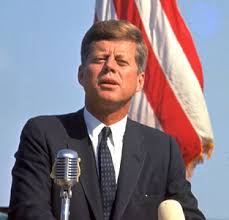
John F. Kennedy
Others have called the Kennedy Presidency a monument to the unchecked power of wealth and ambition. An administration staffed by young novices playing at statesmen, riddled with nepotism, whose legacy includes the Bay of Pigs, the Vietnam war and the world’s first nuclear confrontation.
The opening days of the Kennedy Presidency raised hopes for a dramatic change in relations between the United States and the Soviet Union.
But detente was not possible then. The Russians had not yet experienced their coming agricultural problems and the setback in Cuba during the Missile Crisis. And the United States had not suffered defeat in Vietnam.
Kennedy’s first brush with international Communism came on April 17, 1961, with the invasion of Cuba at the Bay of Pigs. This operation had been planned and directed by the Central Intelligence Agency during the final months of Dwight D. Eisenhower’s term as President.
The U.S. Navy was to land about 1,400 Cuban exiles on the island to overthrow the Communist government of Fidel Castro. They were supposed to head into the mountains—as Castro himself had done against the dictatorship of Fulgencio Batista in 1956—and raise the cry of revolution.
The invasion would occur after an American air strike had knocked out the Cuban air force. But the airstrike failed and Kennedy, under the pressure of world opinion, called off a second try.
Even so, the invasion went ahead. When the invaders surged onto the beaches, they found Castro’s army waiting for them. Many of the invaders were killed on the spot. Others were captured—to be ransomed by the United States in December, 1962, in return for medical supplies.
It was a major public relations setback for the newly-installed Kennedy administration, which had raised hopes for a change in American-Soviet relations.
Kennedy, trying to abort widespread criticism, publicly took the blame for the setback: “There’s an old saying that victory has a hundred fathers and defeat is an orphan….I’m the responsible officer of the Government.”
The Bay of Pigs convinced Kennedy that he had been misled by the CIA and the Joint Chiefs of Staff. Out of this came his decision to rely heavily on the counsel of his brother, Robert, whom he had installed as Attorney General.
The failed Cuban invasion—unfortunately for Kennedy—convinced Soviet Premier Nikita S. Khrushchev that the President was weak.
Khrushchev told an associate that he could understand if Kennedy had not decided to invade Cuba. But once he did, Kennedy should have pressed on and wiped out Castro.
Khrushchev attributed this to Kennedy’s youth, inexperience and timidity—and believed he could bully the President.
On June 4, 1961, Kennedy met with Khrushchev in Vienna to discuss world tensions. Khrushchev threatened to go to nuclear war over the American presence in West Berlin—the dividing line between Western Europe, protected by the United States, and Eastern Europe, controlled by the Soviet Union.
Kennedy, who prized rationality, was shaken by Khrushchev’s unexpected rage. After the conference, he told an associate: “It’s going to be a cold winter.”
Meanwhile, East Berliners felt they were about to be denied access to West Berlin. A flood of 3,000 refugees daily poured into West Germany.
Khrushchev was embarrassed at this clear showing of the unpopularity of the Communist regime. In August, he ordered that a concrete wall—backed up by barbed wire, searchlights and armed guards—be erected to seal off East Berlin.
As tensions mounted and a Soviet invasion of West Berlin seemed likely, Kennedy sent additional troops to the city in a massive demonstration of American will.
Two years later, on June 26, 1963, during a 10-day tour of Europe, Kennedy visited Berlin to deliver his “I am a Berliner” speech to a frenzied crowd of thousands.
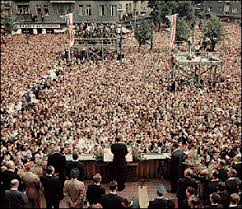
JFK addresses crowds at the Berlin Wall
“There are many people in the world who really don’t understand, or say they don’t, what is the great issue between the free world and the Communist world,” orated Kennedy. “Let them come to Berlin.”
Standing within gunshot of the Berlin wall, he lashed out at the Soviet Union and praised the citizens of West Berlin for being “on the front lines of freedom” for more than 20 years.
“All free men, wherever they may live,” said Kennedy, “are citizens of Berlin. And therefore, as a free man, I take pride in the words, ‘Ich ben ein Berliner.’”
"MISSION: IMPOSSIBLE", 2016 PRESIDENTIAL ELECTION, ABC NEWS, ALTERNET, AMERICABLOG, AP, AUGUSTO PINOCHET, AUGUSTO SANDINO, AYATOLLAH RUHOLLAH KHOMEINI, ” 9/11, BABY BOOMER RESISTANCE, BAY OF PIGS, BBC, BLOOMBERG NEWS, BUZZFEED, CBS NEWS, CHIANG KAI-SHEK, CHILE, CIA, CNN, CROOKS AND LIARS, CUBA, DAILY KOS, DAILY KOZ, DONALD TRUMP, DWIGHT D. EISENHOWER, FIDEL CASTRO, FIVETHIRTYEIGHT, FULGENCIO BATISTA, GEORGE W. BUSH, GUATEMALA, HAITI, HARPER’S MAGAZINE, HONODURAS, HUFFINGTON POST, IRAQ, JACOBO ARBENZ, JOHN F. KENNEDY, MAFIA, MAO TSE-TUNG, MEDIA MATTERS, MOHAMMAD MOSADDEGH, MOHAMMAD-REZA SHAH PHLAVI, MOTHER JONES, MOVEON, MSNBC, NATIONAL SECURITY AGENCY, NBC NEWS, NEW REPUBLIC, NEWSDAY, NEWSWEEK, NICARAGUA, NPR, OSAMA BIN LADEN, PBS NEWSHOUR, POLITICO, POLITICUSUSA, RAW STORY, REUTERS, RICHARD M. NIXON, ROBERT MUELLER, RUSSIA, SADDAM HUSSEIN, SALON, SALVADOR ALLENDE, SEATTLE TIMES, SLATE, SOVIET UNION, TALKING POINTS MEMO, THE ATLANTIC, THE CHICAGO SUN-TIMES, THE CHICAGO TRIBUNE, THE DAILY BEAST, THE DAILY BLOG, THE GUARDIAN, THE HILL, THE HUFFINGTON POST, THE INTERCEPT, THE LOS ANGELES TIMES, THE NATION, THE NEW REPUBLIC, THE NEW YORK TIMES, THE NEW YORKER, THE VILLAGE VOICE, THE WASHINGTON POST, THINKPROGRESS, TIME, TRUTHDIG, TRUTHOUT, TWITTER, U.S. NEWS & WORLD REPORT, UNITED FRUIT COMPANY, UPI, USA TODAY
In Bureaucracy, History, Military, Politics, Social commentary on November 3, 2023 at 12:13 am
The CIA, FBI and National Security Agency (which cracks codes and listens to the telephone conversation of foreign leaders) unanimously agree: Russian trolls and Intelligence agents played a major role in subverting the 2016 Presidential election.
Special Counsel Robert Mueller III, assigned in May, 2017, to investigate charges of Russian interference, believed there was collusion. He indicted or obtained guilty pleas from 34 people and three companies.
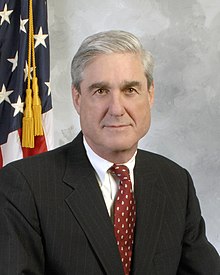
Robert Mueller
And about 58% of Americans believe that President Donald Trump tried to obstruct the investigation.
Apparently, most Americans don’t like having their elections subverted by enemy nations.
Subverting the governments of other countries is a right that Americans have long reserved for themselves. Among those regimes that have been toppled:
- Between 1898 and 1934, the United States repeatedly intervened with military force in Central America and the Caribbean.
- Americans staged invasions of Honduras in 1903, 1907, 1911, 1912, 1919, 1924 and 1925 to defend U.S. interests. These were defined as Standard Oil and the United Fruit Company.
- The United States occupied Nicaragua almost continuously from 1912 to 1933. Its legacy was the imposition of the tyrannical Somoza family, which ruled from 1936 to 1979.
- The United States occupied Haiti from 1915 to 1934. American banks had lent money to Haiti and requested American government intervention.
- In 1918, 13,000 American soldiers joined armies from Europe and Japan to overthrow the new Soviet government and restore the previous Czarist regime. By 1920, the invading forces proved unsuccessful and withdrew.
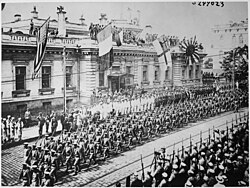
Allied troops parading in Vladivostok, 1918
- From 1946 to 1949, the United States provided military, logistical and other aid to the Right-wing Chinese Nationalist Party of Chiang Kai-shek. Its opponent: Communist forces led by Mao Tse-Tung, who ultimately proved victorious.
- In 1953, the Eisenhower administration ordered the CIA to overthrew the democratically-elected government of of Iranian Prime Minister Mohammad Mosaddegh. His crime: Nationalizing the Iranian oil industry, which had been under British control since 1913. He was succeeded by Mohammad-Reza Shah Phlavi.
- Whereas Mossadeddgh had ruled as a constitutional monarch, Phlavi was a dictator who depended on United States government support to retain power until he was overthrown in 1979 by the Ayatollah Ruhollah Khomeini.
- In 1954, the CIA overthrew the democratically-elected government of Guatemalan President Jacobo Arbenz. His crime: Installing a series of reforms that expanded the right to vote, allowed workers to organize, legitimized political parties and allowed public debate. Most infuriating to American Right-wingers: His agrarian reform law, which expropriated parts of large land-holdings and redistributed them to agricultural laborers.
- The United Fruit Company lobbied the United States government to overthrow him—and the CIA went into action. Arbenz was replaced by the first of a series of brutal Right-wing dictators.
- From 1959 until 1963, the United States government was obsessed with overthrowing the revolutionary Cuban government of Fidel Castro. Although not democratically elected, Castro was wildly popular in Cuba for overthrowing the dictatorial Fulgencio Batista.
- On April 17, 1961, over 1,400 CIA-trained Cuban exiles invaded Cuba at the Bay of Pigs. Cuban military forces crushed the invasion in three days.
- Infuriated with the failure of the Bay of Pigs invasion, President John F. Kennedy authorized “Operation Mongoose” to remove Castro through sabotage and assassination. The CIA, wanting to please Kennedy, teamed up with the Mafia, which wanted to resurrect its casinos on the island.
- Among the tactics used: Hiring Cuban gangsters to murder police officials and Soviet technicians; sabotaging mines; using biological and chemical warfare against the Cuban sugar industry. None of these proved successful in assassinating Castro nor overturning his regime.
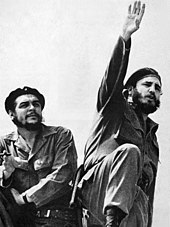
Ernesto “Che” Guevera and Fidel Castro
- In 1970, President Richard M. Nixon ordered the CIA to prevent Marxist Salvador Allende from being democratically elected as president of Chile. When that failed, he ordered the CIA to overthrow Allende. Allende’s crime: A series of liberal reforms, including nationalizing large-scale industries (notably copper mining and banking).
- In 1973, he was overthrown by Chilean army units and national police. He was followed by Right-wing dictator Augusto Pinochet, who slaughtered 3,200 political dissidents, imprisoned 30,000 and forced another 200,000 Chileans into exile.
And how did Americans react to all these attempts—successful and unsuccessful—at regime change?
Through indifference or outright support.
The popular 1960s TV series, “Mission: Impossible,” regularly depicted a CIA-type agency supporting regimes “we” liked or toppling those “we” didn’t.
Americans generally assume their Presidents and Congress know best who is a “friend” and who is an “enemy.” America’s friends usually turn out to be Right-wing dictators like Chiang Kai-Shek, Fulgencio Batista, Augusto Pinochet and Mohammad-Reza Shah Phlavi.
And its enemies often turn out to be liberal reformers like Augusto Sandino, Mohammad Mosaddegh and Salvador Allende.
Americans tend to favor intervention for the flimsiest of reasons. In 2003, President George W. Bush claimed Iraq’s dictator, Saddam Hussein, had plotted 9/11 with Osama bin Laden. There was absolutely no proof to substantiate this, yet Americans overwhelmingly supported Bush’s unprovoked invasion of Iraq.
But now the shoe is on the other foot.
Except for President Donald Trump and his fanatical supporters, Americans are furious that a foreign power has dared to install “regime change” on them.
Americans are now tasting the medicine they have dished out to so many other countries. And they find it as repugnant as those countries have found the American brand.
"MISSION: IMPOSSIBLE", 2016 PRESIDENTIAL ELECTION, ABC NEWS, ADAM SCHIFF, ALTERNET, AMERICABLOG, AP, AUGUSTO PINOCHET, AUGUSTO SANDINO, AYATOLLAH RUHOLLAH KHOMEINI, ” 9/11, BABY BOOMER RESISTANCE, BAY OF PIGS, BERNARD LAW MONTGOMERY, BUZZFEED, CBS NEWS, CHIANG KAI-SHEK, CHILE, CIA, CNN, CROOKS AND LIARS, CUBA, DAILY KOZ, DONALD TRUMP, DRUDGE RETORT, DWIGHT D. EISENHOWER, FBI, FIDEL CASTRO, FIVETHIRTYEIGHT, FULGENCIO BATISTA, GEORGE W. BUSH, GUATEMALA, HAITI, HARPER’S MAGAZINE, HONODURAS, HUNTER BIDEN, IRAQ, JACOBO ARBENZ, JOE BIDEN, JOHN F. KENNEDY, MAFIA, MAO TSE-TUNG, MEDIA MATTERS, MICK MULVANEY, MOHAMMAD MOSADDEGH, MOHAMMAD-REZA SHAH PHLAVI, MOTHER JONES, MOVEON, MSNBC, NANCY PELOSI, NATIONAL SECURITY AGENCY, NBC NEWS, NEWSWEEK, NICARAGUA, NPR, OSAMA BIN LADEN, PBS NEWSHOUR, POLITICO, POLITICUSUSA, RAW STORY, REUTERS, RICHARD M. NIXON, RUSSIA, SADDAM HUSSEIN, SALON, SALVADOR ALLENDE, SEATTLE TIMES, SLATE, SOVIET UNION, TALKING POINTS MEMO, THE ATLANTIC, THE CHICAGO SUN-TIMES, THE CHICAGO TRIBUNE, THE DAILY BEAST, THE DAILY BLOG, THE GUARDIAN, THE HILL, THE HUFFINGTON POST, THE LOS ANGELES TIMES, THE NATION, THE NEW REPUBLIC, THE NEW YORK TIMES, THE VILLAGE VOICE, THE WASHINGTON POST, THINKPROGRESS, TIME, TRUTHDIG, TRUTHOUT, TWITTER, TWO POLITICAL JUNKIES, U.S. NEWS & WORLD REPORT, UKRAINE, UNITED FRUIT COMPANY, UPI, USA TODAY, VOLODYMYR ZELENSKY, WINSTON CHURCHILL, WONKETTE, WORLD WAR 11
In Bureaucracy, History, Politics, Social commentary on September 22, 2023 at 12:18 am
“I have news for everybody: Get over it. There’s going to be political influence in foreign policy.”
The speaker was White House chief of staff Mick Mulvaney. And in an October 17, 2019 press conference, he was trying to put the best possible spin on President Donald Trump’s latest outrage: An attempt to extort a “favor” from the president of Ukraine.
In July, 2019, Trump told Mulvaney to withhold almost $400 million in promised military aid for Ukraine, which faces increasing aggression from Russia.
On July 25, Trump telephoned Ukrainian President Volodymyr Zelensky to “request” a “favor”: Investigate Democratic Presidential Candidate Joe Biden and his son, Hunter, who had had business dealings in Ukraine.The reason for such an investigation: To find embarrassing “dirt” on Biden.
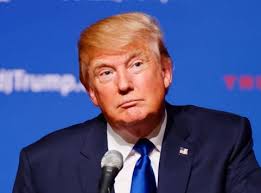
Donald Trump
But then a CIA whistleblower filed a complaint about the extortion attempt—and the media and Congress soon learned of it.
Rep. Adam Schiff, D-Calif., tweeted: “The transcript of the call reads like a classic mob shakedown: — We do a lot for Ukraine — There’s not much reciprocity — I have a favor to ask — Investigate my opponent — My people will be in touch — Nice country you got there. It would be a shame if something happened to her.”
On September 24, 2019, Nancy Pelosi, speaker to the House of Representatives, announced a formal impeachment inquiry into Trump.
During World War II, President Franklin D. Roosevelt didn’t hesitate to leverage the great economic and military power of the United States to gain concessions from Winston Churchill, the prime minister of Great Britain.
At Roosevelt’s insistence, for example, it was an American—General Dwight D. Eisenhower—who was appointed Supreme Allied Commander in Europe. Had the British gotten their way, the post would have almost certainly gone to British Field Marshal Bernard Law Montgomery.
Roosevelt’s insistence, however, had nothing to do with personally benefiting himself.
But the unpleasant truth remains that subverting the governments of other countries is a right that Americans have long reserved for themselves. For example:
- Between 1898 and 1934, the United States repeatedly intervened with military force in Central America and the Caribbean.
- Americans staged invasions of Honduras in 1903, 1907, 1911, 1912, 1919, 1924 and 1925 to defend U.S. interests. These were defined as Standard Oil and the United Fruit Company.
- The United States occupied Nicaragua almost continuously from 1912 to 1933. Its legacy was the imposition of the tyrannical Somoza family, which ruled from 1936 to 1979.
- The United States occupied Haiti from 1915 to 1934. American banks had lent money to Haiti and requested American government intervention.
- In 1918, 13,000 American soldiers joined armies from Europe and Japan to overthrow the new Soviet government and restore the previous Tsarist regime. By 1920, the invading forces proved unsuccessful and withdrew.
Allied troops parading in Vladivostok, 1918
- In 1953, President Dwight D. Eisenhower ordered the CIA to overthrew the democratically-elected government of of Iranian Prime Minister Mohammad Mosaddegh. His crime: Nationalizing the Iranian oil industry, which had been under British control since 1913.
- He was succeeded by Mohammad-Reza Shah Phlavi. Whereas Mossadeddgh had ruled as a constitutional monarch, Phlavi was a dictator who depended on United States government support to retain power until he was overthrown in 1979 by the Ayatollah Ruhollah Khomeini.
- In 1954, the CIA overthrew the democratically-elected government of Guatemalan President Jacobo Arbenz. His crime: Installing a series of reforms that expanded the right to vote, allowed workers to organize, legitimized political parties and allowed public debate.
- Most infuriating to American Right-wingers: His agrarian reform law, which expropriated parts of large land-holdings and redistributed them to agricultural laborers.
- From 1959 until 1963, the United States government was obsessed with overthrowing the revolutionary Cuban government of Fidel Castro. Although not democratically elected, Castro was wildly popular in Cuba for overthrowing the dictatorial Fulgencio Batista.
- On April 17, 1961, over 1,400 CIA-trained Cuban exiles invaded Cuba at the Bay of Pigs. Cuban military forces crushed the invasion in three days.
- Infuriated with the failure of the Bay of Pigs invasion, President John F. Kennedy authorized “Operation Mongoose” to remove Castro through sabotage and assassination. The CIA, wanting to please Kennedy, teamed up with the Mafia, which wanted to resurrect its casinos on the island.
Ernesto “Che” Guevera and Fidel Castro
- In 1970, President Richard M. Nixon ordered the CIA to prevent Marxist Salvador Allende from being democratically elected as president of Chile. When that failed, he ordered the CIA to overthrow Allende.
- Allende’s crime: A series of liberal reforms, including nationalizing large-scale industries (notably copper mining and banking). In 1973, he was overthrown by Chilean army units and national police.
- He was followed by Right-wing dictator Augusto Pinochet, who slaughtered 3,200 political dissidents, imprisoned 30,000 and forced another 200,000 Chileans into exile.
Americans reacted to all these attempts—successful and unsuccessful—with indifference or outright support.
The popular 1960s TV series, “Mission: Impossible,” regularly depicted a CIA-type agency supporting regimes “we” liked or toppling those “we” didn’t.
Americans generally assume their Presidents and Congress know best who is a “friend” and who is an “enemy.” America’s friends often turn out, for the most part, to be Right-wing dictators like Fulgencio Batista, Augusto Pinochet and Mohammad-Reza Shah Phlavi.
And its enemies often turn out to be liberal reformers like Augusto Sandino, Jacobo Arbenz, Mohammad Mosaddegh and Salvador Allende.
ABC NEWS, ADOLF HITLER, ADVICE, ALTERNET, AMERICABLOG, AP, BABY BOOMER RESISTANCE, BAY OF PIGS, BBC, BENITO MUSSOLINI, BLOOMBERG NEWS, BUZZFEED, CAESARE BORGIA, CBS NEWS, CNN, CORPORATIONS, CROOKS AND LIARS, CUBA, DAILY KOS, DAILY KOZ, FACEBOOK, FIDEL CASTRO, FIVETHIRTYEIGHT, FLORENCE, HARPER’S MAGAZINE, HUFFINGTON POST, JOHN F. KENNEDY, JOSEPH STALIN, KING PERSEUS OF MACEDON, MEDIA MATTERS, MOTHER JONES, MOVEON, MSNBC, NAZI-SOVIET "NON-AGGRESSION PACT", NBC NEWS, NEW REPUBLIC, NEWSDAY, NEWSWEEK, NICCOLO MACHIAVELLI, NPR, PBS NEWSHOUR, POLITICO, POLITICS, POLITICUSUSA, POPE JULIUS 11, RAW STORY, REUTERS, SALON, SEATTLE TIMES, SLATE, TALKING POINTS MEMO, THE ATLANTIC, THE CHICAGO SUN-TIMES, THE CHICAGO TRIBUNE, THE DAILY BEAST, THE DAILY BLOG, THE DISCOURSES, THE GUARDIAN, THE HILL, THE HUFFINGTON POST, THE INTERCEPT, THE LOS ANGELES TIMES, THE NATION, THE NEW REPUBLIC, THE NEW YORK TIMES, THE NEW YORKER, THE PRINCE, THE SS, THE VILLAGE VOICE, THE WASHINGTON POST, THINKPROGRESS, THIRD REICH, TIME, TRUTHDIG, TRUTHOUT, TWITTER, U.S. NEWS & WORLD REPORT, UKRAINE, UPI, USA TODAY, VLADIMIR PUTIN, VOLODYMYR ZELENSKY, WEHRMACHT, WORLD WAR 11
In Bureaucracy, Business, History, Military, Politics, Social commentary on October 28, 2022 at 12:11 am
Ask the average person, “What do you think of Niccolo Machiavelli?” and he’s likely to say: “The devil.”
In fact, “The Old Nick” became an English term used to describe Satan and slander Machiavelli at the same time.

Niccolo Machiavelli
The truth, however, is more complex. Machiavelli was a passionate Republican, who spent most of his adult life in the service of his beloved city-state, Florence.
The years he spent as a diplomat were tumultuous ones for Italy—with men like Pope Julius II and Caesare Borgia vying for power and plunging Italy into one bloodbath after another.
Florence, for all its wealth, lacked a strong army, and thus lay at the mercy of powerful enemies, such as Borgia. Machiavelli often had to use his wits to keep them at bay.
Machiavelli is best-known for his writing of The Prince, a pamphlet on the arts of gaining and holding power. Its admirers have included Benito Mussolini and Joseph Stalin.
But his longer and more thoughtful work is The Discourses, in which he offers advice on how to maintain liberty within a republic. Among its admirers were many of the men who framed the Constitution of the United States.
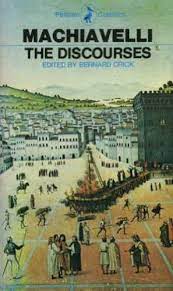

Most people believe that Machiavelli advocated evil for its own sake.
Not so. Rather, he recognized that sometimes there is no perfect—or perfectly good—solution to a problem.
Sometimes it’s necessary to take stern—even brutal—action to stop an evil (such as a riot) before it becomes widespread:
“A man who wishes to make a profession of goodness in everything must inevitably come to grief among so many who are not good. And therefore it is necessary for a prince, who wishes to maintain himself, to learn how not to be good, and to use this knowledge and not use it, according to the necessity of the case.”
His counsel remains as relevant today as it did during his lifetime (1469 – 1527). This is especially true for politicians—and students of political science.
But plenty of ordinary citizens can also benefit from the advice he has to offer—such as those in business who are asked to give advice to more powerful superiors.
Machiavelli warns there is danger in urging rulers to take a particular course of action: “For men only judge of matters by the result, all the blame of failure is charged upon him who first advised it, while in case of success he receives commendations. But the reward never equals the punishment.”
This puts would-be counselors in a difficult position: “If they do not advise what seems to them for the good of the republic or the prince, regardless of the consequences to themselves, then they fail to do their duty.
“And if they do advise it, then it is at the risk of their position and their lives, for all men are blind in thus, that they judge of good or evil counsels only by the results.”
Thus, Machiavelli warns that an adviser should “take things moderately, and not to undertake to advocate any enterprise with too much zeal, but to give one’s advice calmly and modestly.”
The person who asked for the advice may follow it, or not, as of his own choice, and not because he was led or forced into it by the adviser.
Above all, the adviser must avoid the danger of urging a course of action that runs “contrary to the wishes of the many.
“For the danger arises when your advice has caused the many to be contravened. In that case, when the result is unfortunate, they all concur in your destruction.”
Or, as President John F. Kennedy famously said after the disastrous invasion of Cuba at the Bay of Pigs in April, 1961: “Victory has a hundred fathers and defeat is an orphan.”
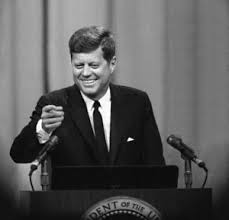
John F. Kennedy
By “not advocating any enterprise with too much zeal,” the adviser gains two advantages:
“The first is, you avoid all danger.
“And the second consists in the great credit which you will have if, after having modestly advised a certain course, your counsel is rejected, and the adoption of a different course results unfortunately.”
Finally, the time to give advice is before a catastrophe occurs, not after. Machiavelli gives a vivid example of what can happen if this rule is ignored.
King Perseus of Macedon had gone to war with Paulus Aemilius—and suffered a humiliating defeat. Fleeing the battlefield with a handful of his men, he later bewailed the disaster that had overtaken him.
Suddenly, one of his lieutenants began to lecture Perseus on the many errors he had committed, which had led to his ruin.
“Traitor,” raged the king, turning upon him, “you have waited until now to tell me all this, when there is no longer any time to remedy it—” And Perseus slew him with his own hands.
Niccolo Machiavelli sums up the lesson as this:
“Thus was this man punished for having been silent when he should have spoken, and for having spoken when he should have been silent.”
Be careful that you don’t make the same mistake.
ABC NEWS, ALTERNET, AMERICABLOG, AP, BABY BOOMER RESISTANCE, BARACK OBAMA, BAY OF PIGS, BUZZFEED, CBS NEWS, CNN, CORONAVIRUS, CROOKS AND LIARS, CUBA, DAILY KOZ, DAVID BROOKS, DONALD TRUMP, DRUDGE RETORT, DWIGHT D. EISENHOWER, EBOLA, FACEBOOK, FIDEL CASTRO, FIVETHIRTYEIGHT, FULGENCIO BATISTA, GALLUP POLL, GEORGE W. BUSH, HARPER’S MAGAZINE, JOHN F. KENNEDY, MEDIA MATTERS, MOTHER JONES, MOVEON, MSNBC, NBC NEWS, NEWSWEEK, NPR, PBS NEWSHOUR, POLITICO, POLITICUSUSA, RAW STORY, REUTERS, SALON, SEATTLE TIMES, SLATE, TALKING POINTS MEMO, THE ATLANTIC, THE CHICAGO SUN-TIMES, THE CHICAGO TRIBUNE, THE DAILY BEAST, THE DAILY BLOG, THE GUARDIAN, THE HILL, THE HUFFINGTON POST, THE LOS ANGELES TIMES, THE NATION, THE NEW REPUBLIC, THE NEW YORK TIMES, THE VILLAGE VOICE, THE WASHINGTON POST, THINKPROGRESS, TIM ZIEMER, TIME, TOLUSE OLORUNNIPA, TRUTHDIG, TRUTHOUT, TWITTER, TWO POLITICAL JUNKIES, U.S. NEWS & WORLD REPORT, UPI, USA TODAY, WASHINGTON WEEK IN REVIEW, WHITE HOUSE PANDEMIC OFFICE, WONKETTE, YAMICHE ALCINDOR
In Bureaucracy, History, Medical, Politics, Social commentary on September 8, 2022 at 12:53 am
On March 13, 2020, then-President Donald Trump addressed a subject he clearly resented being asked: His gutting of an early-warning medical system set up to confront pandemics.
In 2014, following the Ebola outbreak in West Africa, President Barack Obama created the White House Pandemic Office, run by the White House’s National Security Council (NSC).
Heading it was Rear Admiral Tim Ziemer. Under President George W. Bush, he had successfully fought malaria overseas. His topflight team of infectious disease and public health experts was creating a national bio-defense strategy.
Their goal: Coordinate agencies to make the United States more resilient to the threat of epidemics and biological warfare.
In May, 2018, Trump ordered the NSC’s global health security unit shut down. The reason: Trump’s pathological jealousy of and hatred for Obama.
On March 13, 2020, at a White House press conference, Yamiche Alcindor, the PBS Newshour’s White House Correspondent, dared to ask Trump:
“My first question is: You said that you don’t take responsibility, but you did disband the White House Pandemic Office and the officials that were working in that office left this administration abruptly. So, what responsibility do you take to that?
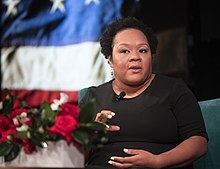
Yamiche Alcindor
“And the officials that worked in that office said that you—that the White House—lost valuable time because that office was disbanded. What do you make of that?”
Then followed this exchange:
TRUMP: Well, I just think it’s a nasty question, because what we’ve done is—and Tony had said numerous times that we saved thousands of lives because of the quick closing. And when you say me, I didn’t do it. We have a group of people.
ALCINDOR: It’s your administration.
TRUMP: I could ask, perhaps—my administration, but I could perhaps ask Tony about that, because I don’t know anything about it. I mean, you say we did that. I don’t know anything about it.
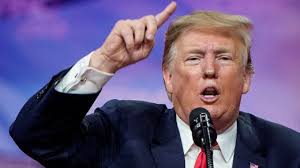
Donald Trump
ALCINDOR: You don’t know about the—
TRUMP: We’re spending—
ALCINDOR: — About the reorganization that happened in the National Security Council?
TRUMP: No, I don’t know. It’s the—it’s the administration, perhaps they do that. You know, people let people go. You know, you used to be with a different newspaper than you are now. You know, things like that happen.
Trump’s refusal to accept responsibility for the greatest crisis of his tenure as President flagrantly contrasts with how President John F. Kennedy responded to a similar crisis.
On April 17, 1961, the U.S. Navy landed 1,400 CIA-trained Cuban exiles on Cuba to overthrow the Communist government of Fidel Castro. Landing at the Bay of Pigs, they were supposed to head into the mountains—as Castro himself had done against the dictatorship of Fulgencio Batista in 1956—and raise the cry of revolution.
When the invaders surged onto the beaches, they found Castro’s army waiting for them. Many of the invaders were killed on the spot. Others were captured.
It was a major public relations setback for the newly-installed Kennedy administration, which had raised hopes for a change in American-Soviet relations.
Kennedy, trying to abort widespread criticism, publicly took the blame for the setback: “There’s an old saying that victory has a hundred fathers and defeat is an orphan….I’m the responsible officer of the Government.”
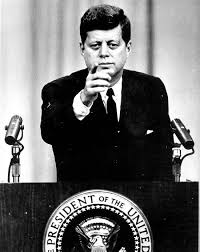
John F. Kennedy press conference
Ironically, the crisis—and his taking responsibility for it—hugely increased Kennedy’s popularity. The national Gallup Poll reported that 83 percent of Americans approved of the job he was doing as President.
To a White House aide, Kennedy half-joked: “It’s just like Eisenhower—the worse I do, the more popular I get.”
By contrast, Trump’s “handling” of the Coronavirus plague brought him the worst reviews of his Presidency.
Conservative New York Times columnist David Brooks attacked Trump in terms usually reserved for serial killers. On the March 13, 2020 edition of The PBS Newshour, he said:
“This is what happens when you elect a sociopath as president, who doesn’t care, who has treated this whole thing for the past month as if it’s about him. ‘How do people like me?’ Minimizing the risks. ‘Does the stock market reflect well on me?’ And he hasn’t done the things a normal human being would do, which was to, let’s take precautions….
“And he’s incapable of that. And he’s even created an information distortion field around him.”
And Toluse Olorunnipa, White House reporter for The Washington Post, said: “He likes having powerful people around him to praise what he’s done. He tried to get them all up to the podium to talk about how great of a response he has provided, and I think that’s—trying to get that co-signed from CEOs and powerful people is a key part of his presidency.”
Kimberly Atkins, senior Washington news correspondent for WBUR, Boston’s NPR News Station: “We have seen the president not only be all over the place but his instinct was to try to downplay it [Coronavirus] because he saw it as a political threat—to say that people would get better….
“Even today he’s saying, ‘We have everything under control. We have this website that people can go to and find out where they can get tested.’ The website isn’t even done yet.”

 Bureaucracybuster's Blog
2012 PRESIDENTIAL RACE, ALTERNET, AP, BARACK OBAMA, BAY OF PIGS, BBC, BERLIN WALL, BILL CLINTON, BRUCE GREENWOOD, BUZZFEED, CARLOS MARCELLO, CBS NEWS, CIA, CIVIL RIGHTS, CLIFF ROBERTSON, CNN, CUBAN MISSILE CRISIS, DAILY KOS, DAVID HALBERSTAM, DONALD J. TRUMP, FBI, FIDEL CASTRO, FRANK SINATRA, HERMAN CAIN, ICH BEN EIN BERLINNER SPEECH, INTERNET MOVIE DATABASE, J. EDGAR HOOVER, JAMES MARSDEN, JOHN F. KENNEDY, JOSEPH MCCARTHY, JOSEPH P. KENNEDY, LYNDON B. JOHNSON, MAFIA, MALCOM X, MARTIN LUTHER KING, MARTIN SHEEN, MOTHER JONES, MOVEON, MOVIES, NBC NEWS, NEWSWEEK, NEWT GINGRICH, NIKITA KHRUSHCHEV, NPR, NUCLEAR TEST BAN TREATY, POLITICO, PT-109, RAW STORY, REUTERS, RICK PERRY, ROBERT F. KENNEDY, ROBERT S. MCNAMARA, SALON, SAM GIANCANA, SANTOS TRAFFICANTE, Sarah Palin, SATURDAY NIGHT LIVE, SEATTLE TIMES, SLATE, SOVIET UNION, THE ATLANTIC, THE BEST AND THE BRIGHTEST, THE BUTLER, THE CHICAGO SUN-TIMES, THE CHICAGO TRIBUNE, THE DAILY BEAST, THE GUARDIAN, THE HILL, THE HUFFINGTON POST, THE LOS ANGELES TIMES, THE MISSILES OF OCTOBER, THE NEW YORK TIMES, THE RAT PACK, THE WALL STREET JOURNAL, THE WASHINGTON POST, THIRTEEN DAYS, TIME, TWILIGHT ZONE, TWITTER, U.S. NEWS & WORLD REPORT, UPI, USA TODAY, VIETNAM WAR, WILLIAM DEVANE, WILLIAM PETERSON
JFK: “CAMELOT” ENDED SIXTY YEARS AGO: PART SIX (OF TEN)
In Bureaucracy, Business, History, Law, Law Enforcement, Military, Politics, Social commentary on November 16, 2023 at 12:16 amPresident Kennedy’s untimely death has since fueled arguments over how, if he had lived, he would have dealt with Vietnam.
In his memoirs, former Soviet Premier Nikita Khrushchev wrote: “Kennedy would have never let his country get bogged down in Vietnam.”
But David Halberstam, who covered the early years of the war for The New York Times, came to a different conclusion.
David Halberstam in Vietnam
In his bestselling 1972 book, The Best and the Brightest, he wrote that although Kennedy questioned the wisdom of a combat commitment, he had never shown those doubts in public.
In public, he had expressed doubts only about the Diem regime—whether it held enough support among the Vietnamese to win the war.
His successor had to deal with Kennedy’s public statements, all supportive of the importance of Vietnam.
And it was that successor, newly-elevated President Lyndon B. Johnson, who decided, in 1965, to commit heavy military forces to protecting “freedom-loving” South Vietnam.
In short: Even if Kennedy had intended to withdraw American forces after winning re-election in 1964, he made a fatal mistake: He assumed there would always be time for him to do so.
Historian Thurston Clarke, in his 2013 book JFK’s Last Hundred Days, reached a totally different conclusion: That Kennedy planned to quietly remove American military advisers regardless of the military situation.
Clarke believes that Kennedy intended to gradually withdraw troops from Vietnam—but felt he could not afford to inflame the Right during an election year.
Essentially, the question, “What would Kennedy have done?”—on Vietnam, civil rights, relations with the Soviet Union—lies at the heart of his continuing fascination among Americans.
For millions, the later turmoil of the 1960s remains such a traumatic memory that they assume: “America would have had to be better-off if Kennedy had lived.”
But much of Kennedy’s proposed legislation—such as his civil rights act—did not become law until President Johnson overcame conservative opposition to it.
Johnson had first been elected to the House of Representatives in 1937, where he gained influence as a protégé of its speaker, Sam Rayburn. In 1948, he was elected to the U.S. Senate and eventually became one of its most powerful members—especially after becoming its Majority Leader in 1954.
Johnson knew the strengths and weaknesses of his political colleagues, and he ruthlessly exploited this knowledge to ensure the passage of legislation he supported.
Kennedy had served in the House from 1946 to 1952, and from 1952 to 1961 in the Senate. But he had never been a major leader in either body.
It was as a Senator that he wrote his Pulitzer Prize-winning book, Profiles in Courage. But it was also as a Senator that he refused to vote on whether U.S. Senator Joseph R. McCarthy should be censured by his Senatorial colleagues.
In 1954, the Senate voted to condemn McCarthy, whose slanders of Communist subversion had bullied and frightened Americans for four years. McCarthy’s influence as a political figure died overnight.
Joseph P. Kennedy, the family patriarch, was a strong McCarthy supporters. And Robert F. Kennedy had briefly worked for McCarthy’s Red-baiting Senate subcommittee.
JFK’s refusal to say how he would have voted on censuring McCarthy damaged his support among liberals during the 1960 election.
Eleanor Roosevelt famously said that Kennedy should show “more courage and less profile.”
Although Lyndon Johnson’s legislative achievements as Senator and President remain unprecedented, he remains a pariah figure among Democrats.
His 1965 decision to wage all-out war in Vietnam ignited nationwide protests and elected Richard M. Nixon as President in 1968.
Like a doomed character in George Orwell’s novel, 1984, he has largely become an un-person.
Meanwhile, John F. Kennedy continues to endlessly fascinate Americans. In poll after poll they continue to rate him highly—even though he served less than three years in the White House.
Hundreds of books and thousands of articles have been written about JFK. On the big screen he’s been depicted by actors such as Cliff Robertson (PT-109), Bruce Greenwood (Thirteen Days) and James Marsden (The Butler).
Movie poster for PT-109
On TV, he’s been portrayed by William Devane (The Missiles of October), William Petersen (The Rat Pack), Martin Sheen (Kennedy), James Franciscus (Jacqueline Bouvier Kennedy) and Cliff De Young (Robert Kennedy and His Times).
William Devane as John F. Kennedy in The Missiles of October
Kennedy has even appeared on Saturday Night Live (perhaps most famously in a sketch where he chides then-President Clinton for his tawdry choices as a womanizer).
He even figured in a 1986 episode of the revised Twilight Zone episode where a history professor travels back in time to prevent the JFK assassination. The result: JFK is saved but Soviet Premier Nikita Khrushchev is murdered and World War III erupts.
In 2013, the Internet Movie Database listed a total of 94 movies, mini-series. TV dramas and even comedies featuring the character of John F. Kennedy.
Roads, bridges, tunnels, highways, parks, playgrounds and schools have been named after him.
As Thurston Clarke wrote in JFK’s Last Hundred Days: “There is no test of literary merit except survival, which is in of itself an index of majority opinion. By that standard, Kennedy was a great President.”
Share this: