Posts Tagged ‘BARACK OBAMA’
2016 REPUBLICAN CONVENTION, ABC NEWS, AFFORDABLE CARE ACT, BARACK OBAMA, BILL CLINTON, CBS NEWS, CHRIS MATTHEWS, CNN, CUBAN MISSILE CRISIS, DEBT CEILING, DONALD TRUMP, EXTORTION, FACEBOOK, HARDBALL, JOHN F. KENNEDY, JUDGE MERRICK GARLAND, MSNBC, NBC NEWS, NEWT GINGRICH, NICCOLO MACHIAVELLI, OBAMACARE, Racketeer Influenced Corrupt Organizations (RICO) Act, REPUBLICANS, RICHARD WOLFFE, ROBERT PAYNE, THE CHICAGO SUN-TIMES, THE CHICAGO TRIBUNE, THE LIFE AND DEATH OF ADOLF HITLER, THE LOS ANGELES TIMES, THE NEW YORK TIMES, THE PRINCE, THE WALL STREET JOURNJAL, TWITTER, U.S. HOUSE OF REPRESENTATIVES, U.S. JUSTICE DEPARTMENT, U.S. SENATE, U.S. SENATOR MITCH MCCONNELL, U.S. SUPREME COURT, USA PATRIOT ACT, WARREN BUFFETT
In Bureaucracy, History, Law, Law Enforcement, Politics, Social commentary on March 24, 2016 at 12:30 am
On July 9, 2011, Republican extortionists threatened the Nation with financial ruin and international disgrace unless their demands were met.
President Barack Obama could have countered that danger with the Racketeer Influenced Corrupt Organizations (RICO) Act. Among the crimes it authorizes for prosecution: Extortion.
Extortion is defined as “a criminal offense which occurs when a person unlawfully obtains either money, property or services from a person(s), entity, or institution, through coercion.”
And if President Obama had believed that RICO was not sufficient to deal with extortionate behavior, he could have relied on the USA Patriot Act of 2001, passed in the wake of 9/11.
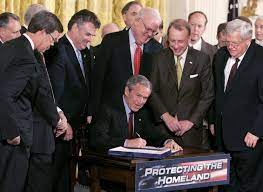
President George W. Bush signs the USA Patriot Act into law – October 26, 2001
In Section 802, the Act defines domestic terrorism. Among the behavior that is defined as criminal:
“Activities that…appear to be intended…to influence the policy of a government by intimidation or coercion [and]…occur primarily within the territorial jurisdiction of the United States.”
The remedies for punishing such criminal behavior were legally in place. President Obama needed only to direct the Justice Department to apply them.
Prosecuting members of Congress would not have violated the separation-of-powers principle. Congressmen have in the past been investigated, indicted and convicted for various criminal offenses.
Such prosecutions–and especially convictions–would have served notice on current and future members of Congress that the lives and fortunes of American citizens may not be held hostage as part of a negotiated settlement.
On August 1, Chris Matthews, host of MSNBC’s “Hardball,” wrapped up his program with a search for “options” to avoid another round of Republican extortion tactics.
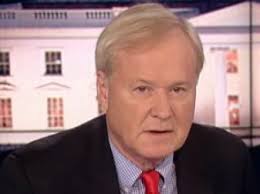
Chris Matthews
“I want to know what steps the president ‘could’ have taken to avoid this hostage-taking.
“…Is there another way than either buckling to the Republicans or letting the government and the country crash?
“How does he use the power of the presidency, the logic, emotion and basic patriotism of the people, to thwart those willing to threaten, disrupt, even possibly destroy to get their way?”
The answer to his questions–then and now–is: Replace the law of fear with the rule of law.
But there was another way Obama could have stood up to Republican extortionists: By urging his fellow Americans to rally to him in a moment of supreme national danger.
President John F. Kennedy did just that–successfully–during the most dangerous crisis of his administration.
Addressing the Nation on October 22, 1962, Kennedy shocked his fellow citizens by revealing that the Soviet Union had installed offensive nuclear missiles in Cuba.
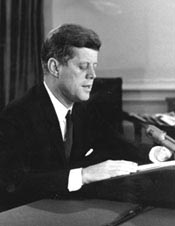
John F. Kennedy
After outlining a series of steps he had taken to end the crisis, Kennedy sought to reassure and inspire his audience. His words are worth remembering today:
“The path we have chosen for the present is full of hazards, as all paths are, but it is the one most consistent with our character and courage as a nation and our commitments around the world.
“The cost of freedom is always high, but Americans have always paid it. And one path we shall never choose, and that is the path of surrender or submission.”
President Obama could have sent that same message to the extortionists of the Republican Party.
Yet this was another option he failed to exploit. And he and the Nation have continued to pay the price for it.
In the fall of 2013, Republicans once again threatened to shut down the Federal Government unless the President agreed to defund the Affordable Care Act (ACA), better known as “Obamacare.
They were enraged that millions of uninsured Americans might receive medical care on a par with that given members of the House and Senate.
So on September 20, the House voted on a short-term government funding bill that included a provision to defund Obamacare.
That provision was a no-go for Senate Democrats and President Obama. If the House and Senate couldn’t reach a compromise, many functions of the federal government would be shut down indefinitely on October 1.
The official reason given by Republicans: They wanted to save the country from bankruptcy–although the Congressional Budget Office stated that the ACA would lower future deficits and Medicare spending.
After passing the House and Senate, the ACA had been signed into law by President Obama on March 23, 2010.
On June 28, 2012, the United States Supreme Court–whose Chief Justice, John Roberts, is a Republican–had upheld the constitutionality of the ACA.
Yet House Republicans continued searching for a way to stop the law from taking effect. By September, 2013, they had voted 42 times to repeal “Obamacare.”
But their efforts had failed; the Democratic-led Senate made it clear it would never go along with such legislation.
Finally, unable to legally overturn the Act or to legislatively repeal it, House Republicans fell back on something much simpler: Threats and fear.
Threats–of voting to shut down salaries paid to most Federal employees. Most, because they themselves would continue to draw hefty salaries while denying them to FBI agents, air traffic controllers and members of the military, among others.
And fear–that would be generated throughout the Federal government, the United States and America’s international allies.
On October 1, 2013, House Republicans made good on their threat. They “shut down the government.”
2016 REPUBLICAN CONVENTION, ABC NEWS, AFFORDABLE CARE ACT (ACA), BARACK OBAMA, BILL CLINTON, CBS NEWS, CHRIS MATTHEWS, CNN, CUBAN MISSILE CRISIS, DEBT CEILING, DONALD TRUMP, EXTORTION, FACEBOOK, HARDBALL, JOHN F. KENNEDY, JUDGE MERRICK GARLAND, MAFIA, MSNBC, NBC NEWS, NEWT GINGRICH, NICCOLO MACHIAVELLI, OBAMACARE, Racketeer Influenced Corrupt Organizations (RICO) Act, REPUBLICANS, RICHARD WOLFFE, ROBERT PAYNE, THE CHICAGO SUN-TIMES, THE CHICAGO TRIBUNE, THE LIFE AND DEATH OF ADOLF HITLER, THE LOS ANGELES TIMES, THE NEW YORK TIMES, THE PRINCE, THE WALL STREET JOURNAL, THE WASHINGTON POST, U.S. HOUSE OF REPRESENTATIVES, U.S. JUSTICE DEPARTMENT, U.S. SENATE, U.S. SENATOR MITCH MCCONNELL, U.S. SUPREME COURT, USA PATRIOT ACT, WARREN BUFFETT
In Bureaucracy, History, Law, Law Enforcement, Politics, Social commentary on March 23, 2016 at 12:01 am
On July 9, 2011, Republican extortionists threatened the Nation with financial ruin and international disgrace unless their demands were met. They refused to raise the debt ceiling unless Democrats agreed to massively cut social programs for the elderly, poor and disabled.
If Congress failed to raise the borrowing limit of the federal government by August 2, the date when the U.S. reached the limit of its borrowing abilities, it would begin defaulting on its loans.
As Warren Buffett, CEO of Berkshire Hathaway, explained the looming economic catastrophe: “If you don’t send out Social Security checks, I would hate to think about the credit meeting at S&P and Moody’s the next morning.
“If you’re not paying millions and millions and millions of people that range in age from 65 on up, money you promised them, you’re not a AAA,” said Buffett.

Warren Buffett
A triple-A credit rating is the highest possible rating that can be received.
And while Republicans demanded that the disadvantaged tighten their belts, they rejected any raising of taxes on their foremost constituency–the wealthiest 1%.
To raise taxes on the wealthy, they insisted, would be a “jobs-killer.” It would “discourage” corporate CEOs from creating tens of thousands of jobs they “want” to create.
Republicans knew this argument was a lie. And so did the editors of Time. The difference between them: The editors of Time were willing to reveal the truth.
In its June 20, 2011 cover-story on “What U.S. Economic Recovery? Five Destructive Myths,” Rana Foroohar, the magazine’s assistant managing editor in charge of economics and business, delivered this warning: Profit-seeking corporations can’t be relied on to ”make it all better.”
Wrote Foroohar:
“There is a fundamental disconnect between the fortunes of American companies, which are doing quite well, and American workers, most of whom are earning a lower hourly wage now than they did during the recession.
“The thing is, companies make plenty of money; they just don’t spend it on workers here.
“There may be $2 trillion sitting on the balance sheets of American corporations globally, but firms show no signs of wanting to spend it in order to hire workers at home.”
As the calendar moved ever closer to the fateful date of August 2, Republican leaders continued to insist: Any deal that includes taxes “can’t pass the House.”
One senior Republican said talks would go right up to–and maybe beyond–the brink of default.
“I think we’ll be here in August,” said Republican Rep. Pete Sessions, of Texas. “We are not going to leave town until a proper deal gets done.”
President Obama had previously insisted on extending the debt ceiling through 2012. But in mid-July, he simply asked congressional leaders to review three options with their members:
- The “Grand Bargain” choice—favored by Obama–would cut deficits by about $4 trillion, including spending cuts and new tax revenues.
- A medium-range plan would aim to reduce the deficit by about $2 trillion.
- The smallest option would cut between $1 trillion and $1.5 trillion, without increased tax revenue or any Medicare and Medicaid cuts.
And the Republican response?
Said Rep. Darrell Issa, chairman of the Oversight and Government Reform Committee: “Quite frankly, [Republican] members of Congress are getting tired of what the president won’t do and what the president wants.”
Noted political analyst Chris Matthews summed up the sheer criminality of what happened within the House of Representatives.
Speaking on MSNBC’s “Hardball,” on July 28–five days before Congress reached its August 2 deadline to raise the debt-ceiling–Matthews noted:
“The first people to bow to the demands of those threatening to blow up the economy were the Republicans in the House, the leaders. The leaders did what the followers told them to do: meet the demands, hold up the country to get their way.

Chris Matthews
“Those followers didn’t win the Senate, or the Presidency, just the House. But by using the House they were able to hold up the entire United States government. They threatened to blow things up economically and it worked.
“They said they were willing to do that–just to get their way–not by persuasion, not by politics, not by democratic government, but by threatening the destruction of the country’s finances.
“Right. So what’s next? The power grid? Will they next time threaten to close down the country’s electricity and communications systems?”

With the United States teetering on the brink of national bankruptcy, President Obama faced three choices:
- Counter Republican extortion attempts via RICO–the Racketeer Influenced Corrupt Organizations Act.
- Make a “Cuban Missile Crisis”-style address to the American people, seeking to rally them against a criminal threat to the financial security of the Nation.
- Cave in to Republican demands.
Unfortunately for Obama and the Nation, he chose Number Three.
But he could have countered that danger via the Racketeer Influenced Corrupt Organizations (RICO) Act.
In 1970, Congress passed RICO, Title 18, United States Code, Sections 1961-1968. Its goal: Destroy the Mafia.
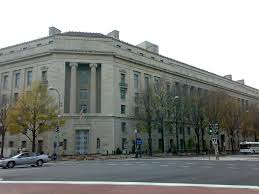
U.S. Department of Justice
RICO opens with a series of definitions of “racketeering activity” which can be prosecuted by Justice Department attorneys. Among those crimes: Extortion.
Extortion is defined as “a criminal offense which occurs when a person unlawfully obtains either money, property or services from a person(s), entity, or institution, through coercion.”
2016 REPUBLICAN CONVENTION, ABC NEWS, AFFORDABLE CARE ACT (ACA), BARACK OBAMA, BILL CLINTON, CBS NEWS, CHRIS MATTHEWS, CNN, CUBAN MISSILE CRISIS, DEBT CEILING, DONALD TRUMP, EXTORTION, FACEBOOK, HARDBALL, JOHN F. KENNEDY, JUDGE MERRICK GARLAND, MAFIA, MSNBC, NBC NEWS, NEWT GINGRICH, NICCOLO MACHIAVELLI, OBAMACARE, Racketeer Influenced Corrupt Organizations (RICO) Act, REPUBLICANS, RICHARD WOLFFE, ROBERT PAYNE, THE CHICAGO SUN-TIMES, THE CHICAGO TRIBUNE, THE LIFE AND DEATH OF ADOLF HITLER, THE LOS ANGELES TIMES, THE NEW YORK TIMES, THE PRINCE, THE WALL STREET JOURNAL, THE WASHINGTON POST, TWITTER, U.S. HOUSE OF REPRESENTATIVES, U.S. JUSTICE DEPARTMENT, U.S. SENATE, U.S. SENATOR MITCH MCCONNELL, U.S. SUPREME COURT, USA PATRIOT ACT, WARREN BUFFETT
In Bureaucracy, History, Law, Law Enforcement, Politics, Social commentary on March 22, 2016 at 12:01 am
On March 16, Donald Trump, the front-runner for the Republican Presidential nomination, issued a warning to his fellow Right-wingers: If he didn’t win the GOP nomination at the convention in July, his supporters would literally riot.
“I think we’ll win before getting to the convention. But I can tell you if we didn’t, if we’re 20 votes short or if we’re 100 short and we’re at 1,100 and somebody else is at 500 or 400…I don’t think you can say that we don’t get it automatically. I think you’d have riots.
“I think you would see problems like you’ve never seen before. I think bad things would happen. I really do. I wouldn’t lead it, but I think bad things would happen.”
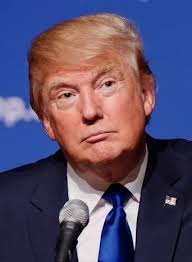
Donald Trump
An NBC reporter summed it up as follows: “As Trump indicated, there is a very real possibility he might lose the nomination if he wins only a plurality of delegates thanks to party rules that allow delegates to support different candidates after the initial ballot.
“In that context, the message to Republicans was clear on [March 16]: Nice convention you got there, shame if something happened to it.”
Anyone who’s ever watched a Mafia movie has heard similar threats: “You really ought to think about paying that protection money. Nice family you got–it would be a shame if anything happened to ’em.”
Paul Ryan, Republican Speaker of the House of Representatives, was quick to respond.
On March 17, he said that it was “unacceptable” for Trump to suggest there would be rioting if he was not chosen as the Republican nominee.
“Nobody should say such things in my opinion because to even address or hint to violence is unacceptable.”
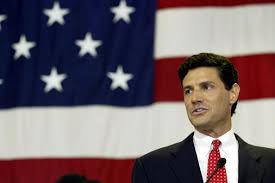
Paul Ryan
And Ohio governor and Republican presidential candidate John Kasich chinned in. “Leaders don’t imply violence,” Kasich told “Face the Nation” on March 20.
“When he says that there could be riots, that’s inappropriate. I think you understand that, okay? Secondly, while we have our differences and disagreements, we’re Americans. Americans don’t say, ‘Let’s take to the streets and have violence.’

John Kasich
“I don’t even want to use the word ‘riots’ or ‘violence.’ That’s inappropriate. Our kids are watching. Now…that doesn’t mean I’m not running a positive campaign, but those kind of comments are way out of bounds. Frankly, they’re outrageous,” said Kasich.”
Yet, for all their public outrage, Republicans are no strangers to the uses of extortion and threats. Their tactics are straight out of the playbook of Adolf Hitler.
Robert Payne, author of the bestselling biography, The Life and Death of Adolf Hitler (1973), described the “negotiating” style of the Nazi dictator thus:
“Although Hitler prized his own talents as a negotiator, a man always capable of striking a good bargain, he was totally lacking in finesse. He was incapable of bargaining. He was like a man who goes up to a fruit peddler and threatens to blow his brains out if he does not sell his applies at the lowest possible price.”
In 1994, Newt Gingrich, then Speaker of the House of Representatives, shut down the Federal Government. Officially, the reason was a budget impasse with President Bill Clinton.
Unofficially–and in reality–the reason was altogether different: Clinton had forced him to sit in the back of Air Force One on a trip to Israel for the funeral of former prime minister Yitzhak Rabin.
“This is petty,” Gingrich confessed to startled reporters. “I’m going to say up front it’s petty, But I think it’s human.
“When you land at Andrews [Air Force Base, in Washington, D.C.] and you’ve been on the plane for 25 hours and nobody has talked to you and they ask you to get off by the back ramp….You just wonder, where is their sense of manners, where is their sense of courtesy?”
Gingrich’s childish verbal tirade was a public relations disaster for the Republicans. “Cry Baby,” screamed the New York Daily News, next to a picture of Gingrich in a diaper.

When House Democrats brought a poster-sized image of the cartoon onto the floor, the Republican majority forced them to remove it.
But the damage was done, and Republicans paid a fearful price at the polls for the shutdown and Gingrich’s candor about the reason for it, losing heavily in the House and Senate.
Still, the Republicans continued their policy of my-way-or-else.
In April, 2011, the United States government almost shut down over Republican demands about subsidized pap smears.
During a late-night White House meeting with President Barack Obama and key Congressional leaders, Republican House Speaker John Boehner made this threat:
His conference would not approve funding for the government if any money were allowed to flow to Planned Parenthood through Title X legislation.
Facing an April 8 deadline, negotiators worked day and night to strike a compromise–and finally reached one.
Three months later–on July 9–Republican extortionists again threatened the Nation with financial ruin and international disgrace unless their demands were met.

Sign of The Black Hand
President Obama had offered to make historic cuts in the federal government and the social safety net–on which millions of Americans depend for their most basic needs.
But House Speaker John Boehner rejected that offer. He would not agree to the tax increases that Democrats wanted to impose on the wealthiest 1% as part of the bargain.

John Boehner
2016 PRESIDENTIAL RACE, ABC NEWS, ABRAHAM LINCOLN, ALTERNET, AMERICABLOG, AP, BABY BOOMER RESISTANCE, BARACK OBAMA, BBC, BLOOMBERG NEWS, BUZZFEED, CBS NEWS, CIVIL RIGHTS ACT OF 1964, CIVIL WAR, CNN, CROOKS AND LIARS, DAILY KOS, DANIEL DAY-LEWIS, DONALD TRUMP, EMANCIPATION PROCLAMATION, FACEBOOK, FIVETHIRTYEIGHT, HARPER’S MAGAZINE, HUFFINGTON POST, LYNDON B. JOHNSON, MEDIA MATTERS, MITT ROMNEY, MOTHER JONES, MOVEON, MOVIES, MSNBC, NBC NEWS, NEW REPUBLIC, NEWSDAY, NEWSWEEK, NPR, PBS NEWSHOUR, POLITICO, POLITICUSUSA, RAW STORY, REUTERS, SALON, SEATTLE TIMES, SLATE, SLAVERY, STEVEN SPIELBERG, TALKING POINTS MEMO, THE ATLANTIC, THE CHICAGO SUN-TIMES, THE CHICAGO TRIBUNE, THE DAILY BEAST, THE DAILY BLOG, THE GUARDIAN, THE HILL, THE HUFFINGTON POST, THE INTERCEPT, THE LOS ANGELES TIMES, THE NATION, THE NEW REPUBLIC, THE NEW YORK TIMES, THE NEW YORKER, THE VILLAGE VOICE, THE WASHINGTON POST, THINKPROGRESS, THIRTEENTH AMENDMENT, TIME, TRUTHDIG, TRUTHOUT, TWITTER, U.S. NEWS & WORLD REPORT, UPI, VOTER ID LAWS, VOTING RIGHTS ACT OF 1965
In Bureaucracy, Entertainment, History, Law, Military, Politics, Social commentary on March 17, 2016 at 12:36 pm
Steven Spielberg’s Lincoln is more than a mesmerizing history lesson.
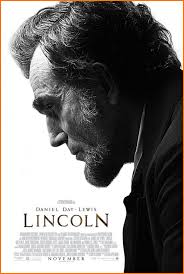
It’s a timely reminder that racism and repression are not confined to any one period or political party.
At the heart of the film: Abraham Lincoln (Daniel Day-Lewis) wants to win ratification of what will be the Thirteenth Amendment to the United States Constitution. An amendment that will forever ban slavery.
True, Lincoln, in 1862, had issued the Emancipation Proclamation. This—in theory—freed slaves held in the Confederate states that had seceded from the Union in 1861.
But Lincoln regards this as a temporary wartime measure. He fears that once the war ends, the Supreme Court may rule the Proclamation unconstitutional. This might allow Southerners to continue practicing slavery, even after losing the war.
To prevent this, Congress must pass an anti-slavery amendment.
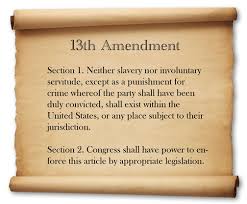
But winning Congressional passage of such an amendment won’t be easy.
The Senate had ratified its passage in 1864. But the amendment must secure approval from the House of Representatives to become law.
And the House is filled with men–there are no women menmbers during the 19th century–who seethe with hostility.
Some are hostile to Lincoln personally. One of them dubs him a dictator–Abraham Africanus.” Another accuses him of shifting his positions for the sake of expediency.
Other members–white men all–are hostile to the idea of “equality between the races.” To them, ending slavery means opening the door to interracial marriage–especially marriage between black men and white women.
Perhaps even worse, it means possibly giving blacks–or women–the the right to vote.
In fact, the possibility that blacks might win voting rights arises early in the movie. Lincoln is speaking to a couple of black Union soldiers, and one of them is unafraid to voice his discontent. He’s upset that black soldiers are paid less than white ones–and that they’re led only by white officers.
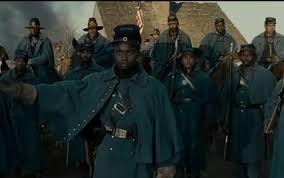
He says that, in time, maybe this will change. Maybe, in 100 years, he guesses, blacks will get the right to vote.
(To the shame of all Americans, that’s how long it will eventually take. Not until the passage of the Voting Rights Act of 1965 will blacks be guaranteed legal protection against discriminatory voting practices.)
To understand the Congressional debate over the Thirteenth Amendment, it’s necessary to remember this: In Lincoln’s time, the Republicans were the party of progressives.
The party was founded on an anti-slavery platform. Its members were thus reviled as “Black Republicans.” And until the 1960s, the South was solidly Democratic.
Democrats were the ones defending the status quo–slavery–and opposing freed blacks in the South of Reconstruction and long afterward.
In short, in the 18th century, Democrats in the South acted as Republicans do now. The South went Republican only after a Democratic President–Lyndon B. Johnson–rammed the Civil Rights Act of 1964 through Congress.
Watching this re-enactment of the 1865 debate in Lincoln is like watching the current Presidential campaign. The same mentalities are at work:
-
Those (in this case, slave-owners) who already have a great deal want to gain even more at the expense of others.
-
Those (slaves and freed blacks) who have little strive to gain more or at least hang onto what they have.
-
Those who defend the privileged wealthy refuse to allow their “social inferiors” to enjoy similar privileges (such as the right to vote).
During the 2012 Presidential race, Republicans tried to bar those likely to vote for President Barack Obama from getting into the voting booth. But their bogus “voter ID” restrictions were struck down in courts across the nation.
Listening to those opposing the amendment, one is reminded of Mitt Romney’s infamous comments about the “47%”:
“Well, there are 47% of the people who will vote for the president no matter what….
“Who are dependent upon government, who believe that–that they are victims, who believe that government has a responsibility to care for them, who believe that they’re entitled to healthcare, to food, to housing, to you name it. But that’s–it’s an entitlement. And the government should give it to them.”
Put another way: “Who says people have a right to obtain medical care, food and housing? If they can’t inherit unearned wealth the way I did, screw them.”
In the end, it’s Abraham Lincoln who has the final word–and leaves his nation the better for it. Through diplomacy and backroom dealings (trading political offices for votes) he wins passage of the anti-slavery amendment.
The ownership of human chattel is finally an ugly memory of the American past.
The movie closes with a historically-correct tribute to Lincoln’s generosity toward those who opposed him–in Congress and on the battlefield. It occurs during Lincoln’s Second Inaugural Address:
“With malice toward none, with charity for all….To bind up the nation’s wounds. To care for him who shall have bourne the battle, and for his widow and his orphan….”
This ending presents a vivid philosophical contrast with the increasingly mean-spirited rhetoric and policies of 2016’s Republican candidates for President–especially those of Donald Trump.
Watching Lincoln, you realize how incredibly lucky America was as a nation to have had such leadership when it was most urgently needed.
.
ABC NEWS, ASTROLOGY, BARACK OBAMA, BILL CLINTON, CBS NEWS, CNN, COMMUNIST CHINA, DONALD REGAN, EMPRESS ALEXANDRA, FACEBOOK, GEORGE W. BUSH, GERALD R. FORD, GRIGORY RASPUTIN, JIMMY CARTER, JOAN QUIGLEY, JODIE FOSTER, JOHN W. HINCKLEY, MERV GRIFFIN, MIKHAIL GORBACHEV, MITT ROMNEY, NANCY REAGAN, NBC NEWS, NICHOLAS II, Ronald Reagan, SOVIET UNION, SUPERSTITION, THE CHICAGO SUN-TIMES, THE CHICAGO TRIBUNE, THE LOS ANGELES TIMES, THE NEW YORK TIMES, THE WALL STREET JOURNAL, THE WASHINGTON POST, TWITTER, USA TODAY
In Bureaucracy, History, Politics, Social commentary on March 10, 2016 at 12:20 am
Nancy Reagan, widow of Ronald Reagan, the 40th President of the United States, died on March 6, at age 94, in Los Angeles, California.
She had survived her husband–who died of Alzheimer’s in 2004–by almost 12 years. Republicans–who have deified Ronald since he left the White House in 1989–rushed to pay tribute to her:
- Mitt Romney, 2012 Presidential candidate: “With the passing of Nancy Reagan, God and Ronnie have finally welcomed a choice soul home.”
- Former President George W. Bush: “Mrs Reagan was fiercely loyal to her beloved husband and that devotion was matched only by her devotion to our country. Her influence on the White House was complete and lasting.”
Democrats also pitched in:
- President Barack Obama: “We remain grateful for Nancy Reagan’s life.”
- Former President Bill Clinton: “Nancy was an extraordinary woman: a gracious first lady, proud mother and devoted wife to President Reagan – her Ronnie.”
The Presidency of Ronald W. Reagan consumed eight years of American history: 1981 – 1989. But its legacies continue to haunt us.
On October 21, 2014, Joan Quigley, the woman responsible for one of its most bizarre legacies–government by astrologer–passed away at age 87.
Quigley was the court astrologer to Ronald and Nancy Reagan.
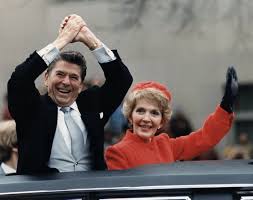
Ronald and Nancy Reagan
Nancy met Quigley on “The Merve Griffin Show” in 1973. Quigley gave Nancy–and through her, Reagan himself–astrological advice during the latter’s campaign for the Republican Presidential nomination in 1976.
That effort failed to unseat President Gerald Ford–who was defeated that November by Jimmy Carter. But four years later, in 1980, Reagan defeated Carter to become the 40th President of the United States.
On March 30, 1981, a mentally-disturbed loner named John W. Hinckley shot and critically wounded Reagan. Fixiated on actress Jodie Foster, he believed that by shooting the President he could gain her affection.
For Nancy, the assassination attempt proved a watershed.
Shortly after the shooting, Merv Griffin told her that Quigley had told him: If Nancy had called her on that fateful day, she–Quigley–could have warned that the President’s astrological charts had foretold a bad day.
From that moment on, Nancy made sure to regularly consult Quigley on virtually everything that she and the President intended to do.
When Reagan learned of Nancy’s consultations with Quigley, he warned her: Be careful, because it might look odd if it came out.
Many–if not most–of these calls from the White House to Quigley’s office in San Francisco were made on non-secure phone lines.

Joan Quigley
This meant that foreign powers–most notably the Soviet Union and Communist China–could have been privy to Reagan’s most secret intentions.
Nancy passed on Quigley’s suggestions as commands to Donald Regan, chief of the White House staff.
As a result, Regan kept a color-coded calendar on his desk to remember when the astrological signs were good for the President to speak, travel, or negotiate with foreign leaders: Green ink highlighted “good” days; red ink “bad” days; yellow ink “iffy” days.
Donald Regan, no fan of Nancy’s, chafed under such restrictions: “Obviously, this list of dangerous or forbidden dates left very little latitude for scheduling,” he later wrote.
Forced out of the White House in 1987 by Nancy, Regan struck back in a 1988 tell-all memoir: For the Record: From Wall Street to Washington.
In 1988, after her secret role in the Reagan White House was revealed, Quigley told the Associated Press that she was a “serious, scientific astrologer.”
Regan’s book revealed, for the first time, how Ronald Reagan had actually made his Presidential decisions.
All–including decisions to risk nuclear war with the Soviet Union–were based on a court astrologer’s horoscopes. Rationality and the best military intelligence available played a lesser, secondary role.
The last major world leader to turn to the supernatural for advice had been Russian Czar Nicholas II. His adviser had been Grigori Rasputin, a Siberian peasant whom Empress Alexandra believed was the only man who could save her hemophiliac son–and heir to the throne.
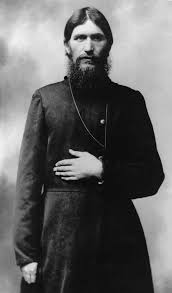
Grigori Rasputin
In 1990, Quigley confirmed the allegations in an autobiography, What Does Joan Say?: My Seven Years As White House Astrologer to Nancy and Ronald Reagan.
The title came from the question that Ronald Reagan asked Nancy before making important decisions–including those that could risk the destruction of the United States.
Among the successes Quigley took credit for:
- Strategies for winning the Presidential elections of 1980 and 1984;
- Helping Nancy Reagan overhaul her image as a spoiled rich girl;
- Defusing the controversy over Reagan’s visiting a graveyard for SS soldiers in Bitburg, Germany;
- Pursuing “Star Wars” as a major part of his strategy against the Soviet Union;
- The Intermediate-Range Nuclear Forces Treaty;
- Protecting Reagan from would-be assassins through timely warnings to Nancy; and
- Moving Reagan from seeing the Soviet Union as the “Evil Empire” to accepting Mikhail Gorbachev as a peace-seeking leader.
Thirty-five years after he became President, Ronald Reagan remains the most popular figure among Republicans. His name is constantly invoked by Right-wing candidates, while his deliberately-crafted myth is held up as the example of Presidential greatness.
Still, a number of precedents of the Reagan administration–like government by astrologer–might lend themselves to easy abuse. Thus, voters should consider this carefully before elevating “another Reagan” to the Presidency.
2000 PRESIDENTIAL RACE, 2012 PRESIDENTIAL RACE, 2016 PRESIDENTIAL RACE, ABC NEWS, AL GORE, BARACK OBAMA, CBS NEWS, CNN, DONALD TRUMP, ELECTORAL COLLEGE, FACEBOOK, GEORGE ORWELL, GEORGE W. BUSH, MARCO RUBIO, MEXICANS, MITT ROMNEY, MUSLIMS, NBC NEWS, NINETEEN-EIGHT-FOUR, POW'S, RAFAEL CRUZ, REPUBLICAN PARTY, THE CHICAGO SUN-TIMES, THE CHICAGO TRIBUNE, THE LOS ANGELES TIMES, THE WASHINGTON POST, TWITTER
In Bureaucracy, Business, History, Politics, Social commentary on March 9, 2016 at 2:14 pm
The Donald Trump-Mitt Romney bromance began with an insult, courtesy of Trump:
“He’d buy companies, he’d close companies. He’d get rid of jobs. I’ve built a great company. I’m a much bigger businessman and have a much, much bigger net worth. I mean, my net worth is many, many, many times Mitt Romney.”
Then Trump had a change of heart: “Mitt is tough. He’s smart. He’s sharp. He’s not going to allow bad things to continue to happen to this country that we all love. So, Governor Romney, go out and get ’em. You can do it.”
And Romney swooned with delight: “I’m so honored to have his endorsement. There are some things that you just can’t imagine in your life. This is one of them.”
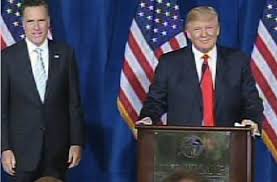
Mitt Romney and Donald Trump
But now the bromance is over, courtesy of a rousing, anti-Trump speech given by Romney at the University of Utah:
“Mr. Trump is directing our anger for less than noble purposes. He creates scapegoats of Muslims and Mexican immigrants, he calls for the use of torture and for killing the innocent children and family members of terrorists. He cheers assaults on protesters.
“He applauds the prospect of twisting the Constitution to limit First Amendment freedom of the press. This is the very brand of anger that has led other nations into the abyss.”
So how is Trump taking all this? “I don’t know what happened to him. You can see how loyal he is.
“He was begging for my endorsement. I could have said ‘Mitt, drop to your knees.’ He would have dropped to his knees.”
Fortunately for Trump, as his bromance with Romney has ended, another has emerged–with New Jersey Governor Chris Christie.
On February 26, Christie through his (political) weight behind Trump at a hastily-announced press conference in Fort Worth, Texas.
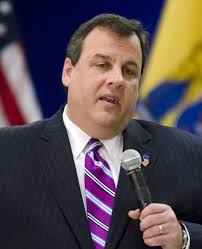
Chris Christie
Christie had not always been on such wonderful terms with the egocentric businessman. In fact, for months, the two had been rivals for the Presidency.
In a January speech before the New Hampshire primary, Christie said:
“Showtime is over. We are not electing an entertainer-in-chief. Showmanship is fun, but it is not the kind of leadership that will truly change America….
“If we are going to turn our frustration and anger with the D.C. insiders, the politicians of yesterday and the carnival barkers of today into something that will actually change American lives for the better, we must elect someone who has been tested.”
Then, without warning, Christie announced a sudden change of mind at a press conference in Fort Worth, Texas.
The previous night, Trump had been mauled by a surprisingly aggressive Marco Rubio during a CNN-hosted debate among the Presidential candidates. As a result, reporters gasped when Christie endorsed Trump and attacked Rubio:
“Part of his talking points now is to be entertaining and smile a lot now. Listen, it’s one act after another.”
Christie obviously felt it necessary to explain why he had gone from attacking Trump to promoting him:
“As a Republican I feel strongly about making sure that [Democratic front-runner] Hillary Clinton does not become president of the United states, and I believe Donald Trump is the best person–of those remaining–to do that.”
As for the attack made on Trump by former Massachusetts Governor Mitt Romney:
“I understand the things that Gov. Romney is saying, and he’s objected to. That’s his opinion, and I respect him as I always have, and he’s welcome to his view. I just happen to disagree with the conclusion that he comes to.”
By endorsing Trump, Christie became the first major establishment figure to validate the fitness of the former “reality TV star” to serve as President.
Considering Trump’s remaining opponents, it was not hard for Christie to reach that conclusion.
Texas United States Senator Rafael Cruz is an ideologue–and totally opposed to the pragmatic approach Christie brings to politics. And Christie genuinely dislikes Rubio.
In addition, Christie believed that Ohio Governor John Kasich–a moderate by Republican standards–could never secure his party’s Presidential nomination.
Ditto for neurosurgeon Ben Carson, who apparently believed his Right-wing party would elect another black man to succeed President Obama.
As for Trump: “This was an endorsement that really meant a lot. Chris is an outstanding man with an outstanding family, and this is the one endorsement that I’m really happy to get.”
While Christie and Trump share an innate aggressiveness and willingness to bully, that is not all they share.
In Never Enough, auhor Michael D’Antonio portrays Trump as a man with an insatiable appetite for wealth, attention, power, and conquest. The same can be said of Christie.
By taking on the role of Trump’s attack dog, Christie positions himself for the same role as vice presidential nominee. Or for a position such as Attorney General or Secretary of Homeland Security.
For those wishing to understand the realities of American political leaders, the best insight comes in a song popularized in George Orwell’s novel, 1984:
Under the spreading chestnut tree
I sold you and you sold me:
There lie they, and here lie we
Under the spreading chestnut tree.
2000 PRESIDENTIAL RACE, 2012 PRESIDENTIAL RACE, 2016 PRESIDENTIAL RACE, ABC NEWS, AL GORE, BARACK OBAMA, BLACKS, CBS NEWS, CHRIS CHRISTIE, CNN, DONALD TRUMP, ELECTORAL COLLEGE, FACEBOOK, GEORGE ORWELL, GEORGE W. BUSH, MARCO RUBIO, MEXICANS, MITT ROMNEY, MUSLIMS, NBC NEWS, NINETEEN-EIGHTY-0FOUR, POW'S, RAFAEL CRUZ, REPUBLICAN PARTY, THE CHICAGO SUN-TIMES, THE CHICAGO TRIBUNE, THE LOS ANGELES TIMES, THE NEW YORK TIMES, THE WASHINGTON POST, TWITTER
In Bureaucracy, Business, History, Politics, Social commentary on March 8, 2016 at 12:17 am
During the 2012 Presidential campaign, Donald Trump endorsed Mitt Romney as the Republican nominee to defeat President Barack Obama.
But that was before Trump decided to run for President in 2016. And the relationship between Trump and Romney has taken a considerably different turn.
On June 16, 2015, Trump declared his candidacy for the 2016 Republican Presidential nomination. Since then, he has been the first choice among the Republican base.
At first, he was dismissed as a bad joke–by Republican Presidential candidates as well as Democrats. Surely voters would reject a bombastic, thrice-married “reality show” host who had filed for corporate bankruptcy four times.
Yet from the outset Trump dominated the field–and a series of Republican debates. The other Republican candidates watched him with envy–and desperately tried to steal some of his limelight.
Donald Trump
Making one inflammatory statement after another, he offended one group of potential voters after another. These insults delighted his white, under-educated followers. But they alienated millions of other Americans who might have voted for him.
Among these:
- Mexicans: “They’re bringing drugs. They’re bringing crime. They’re rapists.” He’s also promised to “build a great, great wall on our southern border and I will have Mexico pay for that wall.”
- Blacks: Trump retweeted an image of a masked, dark-skinned man with a handgun and a series of alleged crime statistics, including: “Blacks killed by whites – 2%”; “Whites killed by blacks – 81%.” The image cites the “Crime Statistics Bureau – San Francisco”–an agency that doesn’t exist.
- Illegal Aliens: Trump has threatened to forcibly deport millions of mostly Mexican and Central American residents.
- Muslims: Trump has boasted he would ban them from entering the United States–and revive waterboarding of terrorist suspects. He would require Muslims to register with the Federal Government. And he would close “some mosques” if he felt they were being used by Islamic terrorists.
- POWs: Speaking of Arizona U.S. Senator John McCain: “He’s a war hero because he was captured. I like people who weren’t captured.” [Trump avoided military service–and Vietnam]
Many Republican members of Congress share–privately–Trump’s views on Hispanics, blacks and Muslims. But they realize that giving voice to such opinions can be politically suicidal.
Increasingly, the Republican party has become the bastion of aging white males. Even former President George W. Bush worked to win over Hispanics as Republican voters.
But the party’s increasingly strident anti-immigration rhetoric has alienated millions of Hispanics. And its open contempt for the nation’s first black President drove millions of blacks to the polls, where they handed Obama the White House–first in 2008, and again in 2012.
As a result, many Republicans now fear that Trump will gain their party’s Presidential nomination–and then lose in November, most likely to Hillary Clinton.
Even worse from their perspective: He might cost Republicans–who now dominate the House of Representatives and the Senate–one or both legislative bodies.
So many Republicans are now desperately trying to deny Trump the nomination. And one of these is Mitt Romney–the man Trump endorsed in 2012 as the best candidate to remove Obama from the White House.
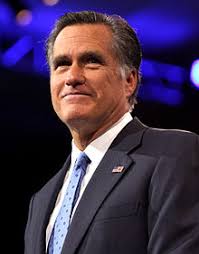
Mitt Romney
On March 3, in a speech at the University of Utah, Romney outlined why a Trump Presidency would be a disaster for the nation (not to mention the Republicans).
Among his comments:
“If we Republicans choose Donald Trump as our nominee, the prospects for a safe and prosperous future are greatly diminished….
“If Donald Trump’s plans were ever implemented, the country would sink into prolonged recession….
“Donald Trump is a phony, a fraud. His promises are as worthless as a degree from Trump University….
“But you say, wait, wait, wait, isn’t he a huge business success? Doesn’t he know what he’s talking about? No, he isn’t and no he doesn’t.
“Look, his bankruptcies have crushed small businesses and the men and women who work for them. He inherited his business, he didn’t create it.
“And whatever happened to Trump Airlines? How about Trump University? And then there’s Trump Magazine and Trump Vodka and Trump Steaks and Trump Mortgage. A business genius he is not….
“Now let me turn to national security and the safety of our homes and loved ones. Mr. Trump’s bombast is already alarming the allies and fueling the enmity of our enemies.
“Insulting all Muslims will keep many of them from fully engaging with us in the urgent fight against ISIS, and for what purpose? Muslim terrorists would only have to lie about their religion to enter the country….
“Now, I’m far from the first to conclude that Donald Trump lacks the temperament to be president.
“After all, this is an individual who mocked a disabled reporter, who attributed a reporter’s questions to her menstrual cycle, who mocked a brilliant rival who happened to be a woman due to her appearance, who bragged about his marital affairs, and who laces his public speeches with vulgarity.
“Donald Trump says he admires Vladimir Putin, at the same time he has called George W. Bush a liar. That is a twisted example of evil trumping good.”
Thus Mitt Romney on the man who once endorsed him for President. In the next column, we’ll see what Trump thinks of the man he once endorsed for President.
2000 PRESIDENTIAL RACE, 2012 PRESIDENTIAL ELECTION, 2016 PRESIDENTIAL RACE, ABC NEWS, AL GORE, BARACK OBAMA, BLACKS, CBS NEWS, CHRIS CHRISTIE, CNN, DONALD TRUMP, ELECTORAL COLLEGE, FACEBOOK, GEORGE ORWELL, GEORGE W. BUSH, MARCO RUBIO, MEXICANS, MITT ROMNEY, MUSLIMS, NBC NEWS, NINETEEN-EIGHTY-FOUR, POW'S, RAFAEL CRUZ, REPUBLICAN PARTY, THE CHICAGO SUN-TIMES, THE CHICAGO TRIBUNE, THE LOS ANGELES TIMES, THE NEW YORK TIMES, THE WASHINGTON POST, TWITTER
In Bureaucracy, Business, History, Politics, Social commentary on March 7, 2016 at 12:23 am
In 2011, Donald Trump, the egocentric businessman and “reality star” of NBC’s “The Apprentice,” was toying with the idea of running for President in 2012.
On April 17, 2011, Trump said this about Mitt Romney, a possible rival and the former Massachusetts governor and front-runner GOP candidate:
“He’d buy companies, he’d close companies. He’d get rid of jobs. I’ve built a great company. I’m a much bigger businessman and have a much, much bigger net worth. I mean, my net worth is many, many, many times Mitt Romney.
“Mitt Romney is a basically small-business guy, if you really think about it. He was a hedge fund. He was a funds guy. He walked away with some money from a very good company that he didn’t create. He worked there. He didn’t create it.”
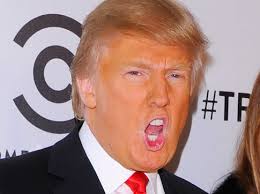
Donald Trump
Trump added that Bain Capital, the hedge fund where Romney made millions of dollars before running for governor, didn’t create any jobs. Whereas Trump claimed that he–Trump–had created “hundreds of thousands of jobs.”
So at least some observers must have been puzzled when Trump announced, on February 2, 2012: “It’s my honor, real honor and privilege, to endorse Mitt Romney” for President.
“Mitt is tough. He’s smart. He’s sharp. He’s not going to allow bad things to continue to happen to this country that we all love. So, Governor Romney, go out and get ’em. You can do it,” said Trump.
And Romney, in turn, had his own swooning-girl moment:
“I’m so honored to have his endorsement. There are some things that you just can’t imagine in your life. This is one of them.”
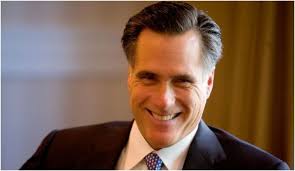
Mitt Romney
Throughout the 2012 Presidential race, Trump continued to “help” Romney–by repeatedly accusing President Barack Obama of not being an American citizen.
Had that been true, Obama would not have had the right to be President–since the Constitution says that only an American citizen can hold this position.
Of course, that was entirely what Trump wanted people to believe– that Obama was an illegitimate President, and deserved to be thrown out.
Come election night–and disaster for Romney–and Trump.
When it became clear that Romney was not going to be America’s 45th President, Trump went ballistic on Twitter.
Among his tweets:
- More votes equals a loss…revolution!
- Lets fight like hell and stop this great and disgusting injustice! The world is laughing at us.
- We can’t let this happen. We should march on Washington and stop this travesty. Our nation is totally divided!
- The phoney electoral college made a laughing stock out of our nation. The loser one!
- He lost the popular vote by a lot and won the election. We should have a revolution in this country!
To put Trump’s rants into real-world perspective:
According to Trump, the electoral process works when a Republican wins the Presidency. It only doesn’t work when a Democrat wins.
“We should march on Washington” conjures up images of another Fascist–Benito Mussolini–marching on Rome at the head of his Blackshirts to seize power.
“The phoney electoral college made a laughing stock out of our nation. The loser one!”
This is startling, on three counts:
First, the 2012 Republican Platform spoke lovingly about the need for preserving the Electoral College: “We oppose the National Popular Vote Interstate Compact or any other scheme to abolish or distort the procedures of the Electoral College.
“We recognize that an unconstitutional effort to impose ‘national popular vote’ would be a mortal threat to our federal system and a guarantee of corruption as every ballot box in every state would become a chance to steal the presidency.”
Second, the loser didn’t win: He lost. With votes still being counted (as of November 8) Obama got 60,652,238. Romney got 57,810,407.
Third, in 2000, Al Gore won the popular vote (50,999,897) to George W. Bush’s 50,456,002. But Bush trounced Gore in the Electoral College (271 to 266).
Still, that meant Bush–not Gore–would head the country for the next eight years. And that was perfectly OK with Right-wingers like Trump.
It was only when Obama won the Electoral College count by 332 to 206 that this was–according to Trump–a “travesty.”
And Trump’s solution if voters dare to elect someone other than Trump’s pet choice: “Revolution!”
This comes perilously close to advocating violent overthrow of the government. Otherwise known as treason–a crime traditionally punished by execution, or at least lengthy imprisonment.

Fast forward, to 2016–and the relationship between Trump and Romney looks considerably different.
On June 16, 2015, Trump declared his candidacy for the 2016 Republican Presidential nomination. Since then, he has been the first choice among the Republican base.
At first, he was dismissed as a bad joke–by Republican Presidential candidates as well as Democrats. Surely voters would reject a bombastic, thrice-married “reality show” host who had filed for corporate bankruptcy four times.
Yet from the outset Trump dominated the field–and a series of Republican debates. The other Republican candidates watched him with envy–and desperately tried to steal some of his limelight.
Making made one inflammatory statement after another, he offended one group of potential voters after another.
These insults delighted his white, under-educated followers. But they alienated millions of other Americans who might have voted for him.
2016 PRESIDENTIAL RACE, ABC NEWS, APOLLO MOON LANDING, BARACK OBAMA, BARBARA TUCHMAN, CBS NEWS, CNN, COLD WAR, DONALD TRUMP, DREAMS FROM MY FATHER, EDUCATION, HERMAN CAIN, IGNORANCE, JOHN F. KENNEDY, LITERACY, NBC NEWS, NEVADA PRIMARY, NUCLEAR TEST BAN TREATY, REPUBLICANS, RICK PERRY, Sarah Palin, SOVIET UNION, THE AUDACITY OF HOPE, THE CHICAGO SUN-TIMES, THE CHICAGO TRIBUNE, THE GUNS OF AUGUST, THE LOS ANGELES TIMES, THE NEW YORK TIMES, THE WASHINGTON POST, VIETNAM WAR
In Bureaucracy, History, Politics, Social commentary on February 25, 2016 at 9:55 am
After winning the Republican Nevada primary with over 44% of the votes on February 23, Republican Presidential candidate Donald Trump gave the expected victory speech.
But it came with an unexpected moment:
“So we won the evangelicals. We won with young. We won with old. We won with highly educated. We won with poorly educated. I love the poorly educated. We’re the smartest people, we’re the most loyal people.”
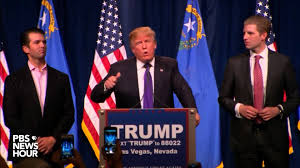
Donald Trump
“I love the poorly educated.”
As well he might: Polls have consistently shown that Trump relies on less-educated adults for his support.
Among Republicans, 71 percent of non-college graduates view Trump favorably, while 46 percent of college graduates support him.
In fact, appealing to the ignorant and uneducated has become a commonplace for politicians on the Right.
President John F. Kennedy speed-read several newspapers every morning. He nourished personal relationships with the press-–and not for altruistic reasons.
These journalistic relationships gave Kennedy additional sources of information and perspective on national and international issues.
But in 2012, Republican Presidential candidates celebrated their ignorance of both.
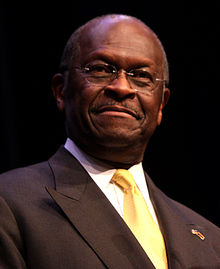
Herman Cain
Former Godfather’s Pizza CEO Herman Cain famously said, “We need a leader, not a reader.” In doing so, he stole this line from the fictionalized “President Schwarzenegger” in The Simpsons Movie.
Thus he excused his ignorance of the reasons for President Barack Obama’s intervention in Libya.
Then-Texas Governor Rick Perry showed similar pride in not knowing there are nine judges on the United States Supreme Court:
“Well, obviously, I know there are nine Supreme Court judges. I don’t know how eight came out my mouth. But the, uh, the fact is, I can tell you–I don’t have memorized all of those Supreme Court judges. And, uh, ah–
“Here’s what I do know. That when I put an individual on the Supreme Court, just like I done in Texas, ah, we got nine Supreme Court justices in Texas, ah, they will be strict constructionists….”
In short, it’s the media’s fault if they ask you a question and your answer reveals your own ignorance, stupidity or criminality.
Then there was Sarah Palin’s rewriting of history via “The Midnight Ride of Paul Revere”:
“He warned the British that they weren’t going to be taking away our arms by ringing those bells and, um, making sure as he’s riding his horse through town to send those warning shots and bells that, uh, we were going to be secure and we were going to be free.”
In fact, Revere wasn’t warning the British about anything. He was warning his fellow Americans about an impending British attack–as his celebrated catchphrase “The British are coming!” made clear.
Republicans have attacked President Obama for his Harvard education and articulate use of language. Among their taunts: “Hitler also gave good speeches.”
And they resent his having earned most of his income as a writer of two books: Dreams From My Father and The Audacity of Hope. As if being a writer is somehow subversive.
When President Kennedy was assassinated on November 22, 1963, it was said that he left three great legacies to his country:
- The Nuclear Test Ban Treaty;
- The Apollo moon landing; and
- The Vietnam War.
But there was a fourth legacy–and perhaps the most important of all: The belief that mankind could overcome its greatest challenges through rationality and perseverance.

White House painting of JFK
At American University on June 10, 1963, Kennedy called upon his fellow Americans to re-examine the events and attitudes that had led to the Cold War. And he declared that the search for peace was by no means absurd:
“Our problems are man-made; therefore, they can be solved by man. And man can be as big as he wants. No problem of human destiny is beyond human beings.
“Man’s reason and spirit have often solved the seemingly unsolvable, and we believe they can do it again.”
Today, politicians from both parties cannot agree on solutions to even the most vital national problems.
On November 21, 2011, the 12 members of the “Super-Committee” of Congress, tasked with finding $1.2 trillion in cuts in government spending, threw up their hands in defeat.
During the height of the Cuban Missile Crisis, Kennedy spoke with aides about a book he had just finished: Barbara Tuchman’s The Guns of August, on the events leading to World War 1.
He said that the book’s most important revelation was how European leaders had blindly rushed into war, without thought to the possible consequences.
Kennedy told his aides he did not intend to make the same mistake-–that, having read his history, he was determined to learn from it.
When knowledge and literacy are attacked as “highfalutin’” arrogance, and ignorance and incoherence are embraced as sincerity, national decline and collapse lie just around the corner.
2016 PRESIDENTIAL CAMPAIGN, ABC NEWS, ADOLF HITLER, ANNE FRANK, ANTONIN SCALIA, AUSCHWITZ, BARACK OBAMA, BERGEN-BELSEN, CBS NEWS, CNN, DONALD TRUMP, EVA SCHLOSS, FACEBOOK, HOLOCAUST, illegal immigration, ISIS, MEXICO, NAZI GERMANY, NBC NEWS, POPE FRANCIS, SUPREME COURT, SYRIAN REFUGEES, THE CHICAGO SUN-TIMES, THE CHICAGO TRIBUNE, THE LOS ANGELES TIMES, THE NEW YORK TIMES, THE WASHINGTON POST, TWITTER, VATICAN
In Bureaucracy, History, Politics, Social commentary on February 22, 2016 at 9:48 am
Ironically, Right-wingers, who support many of the same policies of Adolf Hitler, often attack liberals as Nazis–especially President Barack Obama.
But now a genuine authority on Fascism has come forward to assess the front-runner for the Republican Presidential nomination.
“If Donald Trump become[s] the next president of the US it would be a complete disaster. I think he is acting like another Hitler by inciting racism.”
So says Eva Schloss, the stepsister of Holocaust victim Anne Frank. As a survivor of Auschwitz, Schloss should know something about Nazis.

Eva Schloss
Now 86, Schloss met Anne in Amsterdam as a fellow refugee. Both their families had taken refuge there after fleeing Nazi Germany.
Anne Frank spent four years hiding in an attic and keeping a diary. But in 1944 she was discovered by the Nazis and sent to the Bergen-Belsen concentration camp.
She was 15 when she died there of typhus in March 1945. After the war, Eva Schloss’ mother, Fritzi, married Otto Frank, Anne’s father.

Anne Frank
Eva was detained at the same time as Anne and sent to Auschwitz. She survived when the camp was liberated on January 27,1945.
In a January 27th essay for Newsweek, Schloss warned of dire consequences if Donald Trump became President.
“During his U.S. presidential campaign he has suggested the ‘total and complete shutdown of Muslims entering the United States,’ as well as pledging to build a wall between the U.S. and Mexico to keep illegal immigrants out.”
She was 11 when her family immigrated to Belgium after Hitler forcibly Annexed Austria in 1938.
“We were treated as if we had come from the moon. I felt as if I wasn’t wanted and that I was different to everybody. It is even harder for today’s Syrian refugees who have a very different culture….
“I am very upset that today again so many countries are closing their borders,” said Schloss, who lives in London. “Fewer people would have died in the Holocaust if the world had accepted more Jewish refugees.”
And on February 18, Pope Francis also waded into the 2016 Presidential race with his own assessment of Trump.
The comment came in answer to a question by one of several reporters who were accompanying the Pope to Rome from a six-day trip to Mexico.
What, a reporter asked the Pontiff, did he think of Trump’s campaign pledge to build a wall along the entire length of the U.S.-Mexican border and expel millions of illegal aliens now living in the United States?
“A person who only thinks about building walls, wherever they are, and not in building bridges, is not Christian,” replied the Pope. “This is not the gospel.”
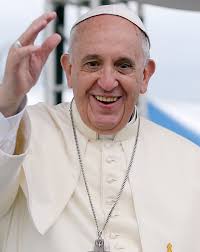
Pope Francis
Francis said he would “give the benefit of the doubt” to Trump because he had not heard Trump’s border plans independently.
But he added: “I say only that this man is not a Christian if he has said things like that.”
Trump, a Presbyterian, responded minutes later: “For a religious leader to question a person’s faith is disgraceful.”
Trump has repeatedly accused President Barack Obama–a self-described Christian–as a secret Muslim.
Donald Trump
On February 21, for example, he tweeted: “I wonder if President Obama would have attended the funeral of [Supreme Court] Justice [Antonin] Scalia if it were held in a mosque.”
Obama had paid tribute to Scalia at the Supreme Court on the day prior to the funeral. He declined to attend the service because his heavy security detail might disrupt the ceremony.
“I am proud to be a Christian,” added Trump, “and as president I will not allow Christianity to be consistently attacked and weakened.”
Nor did he stop there: “If and when the Vatican is attacked by the ISIS, which as everyone knows is ISIS’s ultimate trophy, I can promise you that the pope would have only wished and prayed that Donald Trump would have been president.
“ISIS would have been eradicated unlike what is happening now with our all talk, no action politicians.”
Trump thus implied that the Pope’s future security depended on the United States generally–and on Donald Trump in particular.
And he clearly ignored the fact that, since September, 2014, the United States Air Force has been bombing ISIS convoys in Iraq and Syria.
Trump has long been critical of the Pope’s stand on immigration.
As the Pope undertook his trip to Mexico, Trump told Fox Business Network that he didn’t think Francis understood “the danger of the open border we have with Mexico.
“I think Mexico got him to do it because they want to keep the border just the way it is,” he said. “They’re making a fortune, and we’re losing.”
A Vatican spokesman replied: “The pope always talks about migration problems all around the world, of the duties we have to solve these problems in a humane manner, of hosting those who come from other countries in search of a life of dignity and peace.”
For millions of Jews and Catholics, the election of 2016 may turn on how they answer the question: Am I serving the Lord–or the devil?


.jpg&imgrefurl=https%3A%2F%2Fen.wikipedia.org%2Fwiki%2FDonald_Trump&docid=oUQ97aEz8anNMM&tbnid=QsnpHu5vtl_y5M%3A&w=342&h=465&ved=0ahUKEwjN_t6ZzNDLAhUE0mMKHRRiAzcQxiAIAg&iact=c&ictx=1)


.jpg&imgrefurl=https%3A%2F%2Fen.wikipedia.org%2Fwiki%2FDonald_Trump&docid=oUQ97aEz8anNMM&tbnid=QsnpHu5vtl_y5M%3A&w=342&h=465&ved=0ahUKEwiz15vwz7DLAhVBWWMKHYU2CXkQxiAIAg&iact=c&ictx=1)


.jpg&imgrefurl=https%3A%2F%2Fen.wikipedia.org%2Fwiki%2FPope_Francis'_visit_to_the_Philippines&docid=MrlhHX0IDhYhuM&tbnid=wAeMK3JqWfBmtM%3A&w=1297&h=1638&ved=0ahUKEwjmqo7njIvLAhVL6WMKHf_xBUYQxiAIAg&iact=c&ictx=1)
 Bureaucracybuster's Blog
2016 REPUBLICAN CONVENTION, ABC NEWS, AFFORDABLE CARE ACT, BARACK OBAMA, BILL CLINTON, CBS NEWS, CHRIS MATTHEWS, CNN, CUBAN MISSILE CRISIS, DEBT CEILING, DONALD TRUMP, EXTORTION, FACEBOOK, HARDBALL, JOHN F. KENNEDY, JUDGE MERRICK GARLAND, MSNBC, NBC NEWS, NEWT GINGRICH, NICCOLO MACHIAVELLI, OBAMACARE, Racketeer Influenced Corrupt Organizations (RICO) Act, REPUBLICANS, RICHARD WOLFFE, ROBERT PAYNE, THE CHICAGO SUN-TIMES, THE CHICAGO TRIBUNE, THE LIFE AND DEATH OF ADOLF HITLER, THE LOS ANGELES TIMES, THE NEW YORK TIMES, THE PRINCE, THE WALL STREET JOURNJAL, TWITTER, U.S. HOUSE OF REPRESENTATIVES, U.S. JUSTICE DEPARTMENT, U.S. SENATE, U.S. SENATOR MITCH MCCONNELL, U.S. SUPREME COURT, USA PATRIOT ACT, WARREN BUFFETT
REPUBLICANS: EXTORTION IS US: PART THREE (OF FOUR)
In Bureaucracy, History, Law, Law Enforcement, Politics, Social commentary on March 24, 2016 at 12:30 amOn July 9, 2011, Republican extortionists threatened the Nation with financial ruin and international disgrace unless their demands were met.
President Barack Obama could have countered that danger with the Racketeer Influenced Corrupt Organizations (RICO) Act. Among the crimes it authorizes for prosecution: Extortion.
Extortion is defined as “a criminal offense which occurs when a person unlawfully obtains either money, property or services from a person(s), entity, or institution, through coercion.”
And if President Obama had believed that RICO was not sufficient to deal with extortionate behavior, he could have relied on the USA Patriot Act of 2001, passed in the wake of 9/11.
President George W. Bush signs the USA Patriot Act into law – October 26, 2001
In Section 802, the Act defines domestic terrorism. Among the behavior that is defined as criminal:
“Activities that…appear to be intended…to influence the policy of a government by intimidation or coercion [and]…occur primarily within the territorial jurisdiction of the United States.”
The remedies for punishing such criminal behavior were legally in place. President Obama needed only to direct the Justice Department to apply them.
Prosecuting members of Congress would not have violated the separation-of-powers principle. Congressmen have in the past been investigated, indicted and convicted for various criminal offenses.
Such prosecutions–and especially convictions–would have served notice on current and future members of Congress that the lives and fortunes of American citizens may not be held hostage as part of a negotiated settlement.
On August 1, Chris Matthews, host of MSNBC’s “Hardball,” wrapped up his program with a search for “options” to avoid another round of Republican extortion tactics.
Chris Matthews
“I want to know what steps the president ‘could’ have taken to avoid this hostage-taking.
“…Is there another way than either buckling to the Republicans or letting the government and the country crash?
“How does he use the power of the presidency, the logic, emotion and basic patriotism of the people, to thwart those willing to threaten, disrupt, even possibly destroy to get their way?”
The answer to his questions–then and now–is: Replace the law of fear with the rule of law.
But there was another way Obama could have stood up to Republican extortionists: By urging his fellow Americans to rally to him in a moment of supreme national danger.
President John F. Kennedy did just that–successfully–during the most dangerous crisis of his administration.
Addressing the Nation on October 22, 1962, Kennedy shocked his fellow citizens by revealing that the Soviet Union had installed offensive nuclear missiles in Cuba.
John F. Kennedy
After outlining a series of steps he had taken to end the crisis, Kennedy sought to reassure and inspire his audience. His words are worth remembering today:
“The path we have chosen for the present is full of hazards, as all paths are, but it is the one most consistent with our character and courage as a nation and our commitments around the world.
“The cost of freedom is always high, but Americans have always paid it. And one path we shall never choose, and that is the path of surrender or submission.”
President Obama could have sent that same message to the extortionists of the Republican Party.
Yet this was another option he failed to exploit. And he and the Nation have continued to pay the price for it.
In the fall of 2013, Republicans once again threatened to shut down the Federal Government unless the President agreed to defund the Affordable Care Act (ACA), better known as “Obamacare.
They were enraged that millions of uninsured Americans might receive medical care on a par with that given members of the House and Senate.
So on September 20, the House voted on a short-term government funding bill that included a provision to defund Obamacare.
That provision was a no-go for Senate Democrats and President Obama. If the House and Senate couldn’t reach a compromise, many functions of the federal government would be shut down indefinitely on October 1.
The official reason given by Republicans: They wanted to save the country from bankruptcy–although the Congressional Budget Office stated that the ACA would lower future deficits and Medicare spending.
After passing the House and Senate, the ACA had been signed into law by President Obama on March 23, 2010.
On June 28, 2012, the United States Supreme Court–whose Chief Justice, John Roberts, is a Republican–had upheld the constitutionality of the ACA.
Yet House Republicans continued searching for a way to stop the law from taking effect. By September, 2013, they had voted 42 times to repeal “Obamacare.”
But their efforts had failed; the Democratic-led Senate made it clear it would never go along with such legislation.
Finally, unable to legally overturn the Act or to legislatively repeal it, House Republicans fell back on something much simpler: Threats and fear.
Threats–of voting to shut down salaries paid to most Federal employees. Most, because they themselves would continue to draw hefty salaries while denying them to FBI agents, air traffic controllers and members of the military, among others.
And fear–that would be generated throughout the Federal government, the United States and America’s international allies.
On October 1, 2013, House Republicans made good on their threat. They “shut down the government.”
Share this: