Posts Tagged ‘ADOLF HITLER’
2016 PRESIDENTIAL CAMPAIGN, ABC NEWS, ADOLF HITLER, ALTERNET, AMERICABLOG, AP, BABY BOOMER RESISTANCE, BERNIE SANDERS, BUZZFEED, CARLY FIORINA, CBS NEWS, CNN, COMMUNISM, COVID-19, CROOKS AND LIARS, DAILY KOS, DAILY KOZ, DAVID BROOKS, DAVID HALBERSTAM, DEMOCRATIC PARTY, DEMOCRATS, DENNIS HASTERT, DONALD TRUMP, ELIZABETH WARREN, FACEBOOK, FIVETHIRTYEIGHT, HELEN GAHAGAN DOUGLAS, HILLARY CLINTON, JEB BUSH, JOHN KASICH, JOSEPH MCCARTHY, JOSEPH R. MCCARTHY, JOSH DUGGAR, LANGUAGE, LIBERALS, MARCO RUBIO, MARJORIE TAYOR GREENE, MARK SHIELDS, MAXINE WATERS, MEGYN KELLY, MICHELLE OBAMA, MOTHER JONES, MOVEON, MSNBC, NANCY PELOSI, NATO, NBC NEWS, NEWSWEEK, NEWT GINGRICH, NPR, PBS NEWSHOUR, POLITICO, POLITICUSUSA, RAW STORY, REPUBLICAN PARTY, REPUBLICANS, REUTERS, RICHARD NIXON, RICK PERRY, RUSSIA, SALON, SATIRE, SEATTLE TIMES, SLANDER, SLATE, TALKING POINTS MEMO, THE ATLANTIC, THE CHICAGO SUN-TIMES, THE CHICAGO TRIBUNE, THE DAILY BEAST, THE DAILY BLOG, THE GUARDIAN, THE HILL, THE HUFFINGTON POST, THE LOS ANGELES TIMES, THE NATION, THE NEW YORK TIMES, THE WASHINGTON POST, THINKPROGRESS, TIME, TRUTHDIG, TWITTER, U.S. NEWS & WORLD REPORT, UPI, USA TODAY, VLADIMIR PUTIN, YOUTUBE
In Bureaucracy, History, Politics, Social commentary on October 26, 2022 at 12:10 am
In 1996, Newt Gingrich, then Republican Speaker of the House of Representatives, wrote a memo that encouraged Republicans to “speak like Newt.”
Entitled “Language: A Key Mechanism of Control,” it urged Republicans to attack Democrats with such words as “corrupt,” “selfish,” “destructive,” “hypocrisy,” “liberal,” “sick,” and “traitors.”
Even worse, Gingrich encouraged the news media to disseminate such accusations. Among his suggestions:
- “Fights make news.”
- Create a “shield issue” to deflect criticism: “A shield issue is, just, you know, your opponent is going to attack you as lacking compassion. You better…show up in the local paper holding a baby in the neonatal center.”
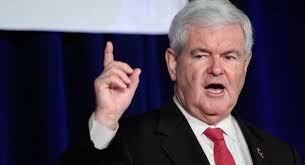
Newt Gingrich
In the memo, Gingrich advised:
“….In the video “We are a Majority,” Language is listed as a key mechanism of control used by a majority party, along with Agenda, Rules, Attitude and Learning.
“As the tapes have been used in training sessions across the country and mailed to candidates we have heard a plaintive plea: ‘I wish I could speak like Newt.’
“That takes years of practice. But, we believe that you could have a significant impact on your campaign and the way you communicate if we help a little. That is why we have created this list of words and phrases….
“This list is prepared so that you might have a directory of words to use in writing literature and mail, in preparing speeches, and in producing electronic media.
“The words and phrases are powerful. Read them. Memorize as many as possible. And remember that like any tool, these words will not help if they are not used.”
Here is the list of words Gingrich urged his followers to use in describing “the opponent, their record, proposals and their party”:
- abuse of power
- anti- (issue): flag, family, child, jobs
- betray
- bizarre
- bosses
- bureaucracy
- cheat
- coercion
- “compassion” is not enough
- collapse(ing)
- consequences
- corrupt
- corruption
- criminal rights
- crisis
- cynicism
- decay
- deeper
- destroy
- destructive
- devour
- disgrace
- endanger
- excuses
- failure (fail)
- greed
- hypocrisy
- ideological
- impose
- incompetent
- insecure
- insensitive
|
- intolerant
- liberal
- lie
- limit(s)
- machine
- mandate(s)
- obsolete
- pathetic
- patronage
- permissive attitude
- pessimistic
- punish (poor …)
- radical
- red tape
- self-serving
- selfish
- sensationalists
- shallow
- shame
- sick
- spend(ing)
- stagnation
- status quo
- steal
- taxes
- they/them
- threaten
- traitors
- unionized
- urgent (cy)
- waste
- welfare
|
Yes, speaking like Newt—or Adolf Hitler or Joseph R. McCarthy—“takes years of practice.”
And to the dismay of both Republicans and Democrats, Donald Trump has learned his lessons well.
On May 27, 2016, conservative New York Times columnist David Brooks analyzed the use of insults by Republican Presidential front-runner Donald Trump. He did so with his counterpart, liberal syndicated columnist, Mark Shields, on The PBS Newshour.
DAVID BROOKS: “Trump, for all his moral flaws, is a marketing genius. And you look at what he does. He just picks a word and he attaches it to a person. Little Marco [Rubio], Lyin’ Ted [Cruz], Crooked Hillary [Clinton].
“And that’s a word. And that’s how marketing works. It’s a simple, blunt message, but it gets under.
“It sticks, and it diminishes. And so it has been super effective for him, because he knows how to do that. And she [Hillary Clinton] just comes with, ‘Oh, he’s divisive.’
“These are words that are not exciting people. And her campaign style has gotten, if anything…a little more stagnant and more flat.”
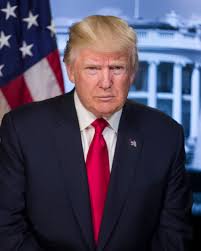
Donald Trump
MARK SHIELDS: “Donald Trump gratuitously slandered Ted Cruz’s wife. He libeled Ted Cruz’s father for being potentially part of Lee Harvey Oswald’s assassination of the president of the United States, suggesting that he was somehow a fellow traveler in that.
“This is a libel. You don’t get over it….”
Hillary Clinton wasn’t the only Presidential candidate who proved unable to cope with Trump’s gift for insult. His targets—and insults—included:
- Former Texas Governor Rick Perry: “Wears glasses to seem smart.”
- Former Florida Governor Jeb Bush: “Low Energy Jeb.”
- Vermont U.S. Senator Bernie Sanders: “Crazy Bernie.”
- Ohio Governor John Kasich: “Mathematically dead and totally desperate.”
Trump has reserved his most insulting words for women. For example:
- Carly Fiorina, his Republican primary competitor: “Look at that face. Would anyone vote for that?”
- Megyn Kelly, Fox News reporter: “You could see there was blood coming out of her eyes. Blood coming out of her wherever.”
- California Rep. Maxine Waters: “An extremely low IQ person.”
- Speaker of the House Nancy Pelosi: “MS-13 Lover Nancy Pelosi.”
Only one candidate has shown the ability to rattle Trump: Massachusetts Senator Elizabeth Warren.
As Mark Shields noted on The PBS Newshour.
“Elizabeth Warren gets under Donald Trunp’s skin. And I think she’s been the most effective adversary. I think she’s done more to unite the Democratic party than either Hillary Clinton or Bernie Sanders.
“I mean, she obviously—he can’t stay away from her. He is tweeting about her.”
And David Brooks offered: “And so the tactics…is either you do what Elizabeth Warren has done, like full-bore negativity, that kind of [get] under the skin, or try to ridicule him and use humor.”
A May 12, 2016 story on CNN—“Elizabeth Warren Gives Trump a Dose of His Own Medicine on Twitter”—noted: “Whenever Trump criticizes her, Warren fires right back at him, sometimes twice as hard.”
2016 PRESIDENTIAL ELECTION, ABC NEWS, ADOLF HITLER, ALTERNET, ANTI-COMMUNISM, AP, BILL MITCHELL, BUZZFEED, CBS NEWS, CNN, COMMUNISM, CROOKS AND LIARS, DAILY KOZ, DEMOCRATIC NATIONAL COMMITTEE, DIRECTOR OF NATIONAL INTELLIGENCE, DONALD TRUMP, FBI, HOUSE INTELLIGENCE COMMITTEE, JAMES COMEY, JAMES R. CLAPPER, JOSEPH R. MCCARTHY, JOSEPH STALIN, MOTHER JONES, MOVEON, NAZI GERMANY, NBC NEWS, NEWSWEEK, NORTH ATLANTIC TREATY ORGANIZATION, NPR, OFFICE OF NATIONAL INTELLIGENCE, POLAND, POLITICO, RAW STORY, REPUBLICANS, REUTERS, RICHARD M. NIXON, ROBERT MUELLER, RUSSIAN BOTS, SALON, SEATTLE TIMES, SENATE INTELLIGENCE COMMITTEE, SLATE, SOVIET UNION, THE ATLANTIC, THE CHICAGO SUN-TIMES, THE CHICAGO TRIBUNE, THE DAILY BEAST, THE GUARDIAN, THE HILL, THE HUFFINGTON POST, THE LOS ANGELES TIMES, THE NATION, THE NEW YORK TIMES, THE WASHINGTON POST, TIME, TREASON, TWITTER, U.S. NEWS & WORLD REPORT, UPI, USA TODAY, USA TODAY VLADIMIR PUTIN, WIKILEAKS, WORLD WAR 11
In Bureaucracy, History, Military, Politics, Social commentary on October 24, 2022 at 12:10 am
From the end of World War II to the collapse of the Soviet Union in 1991, it would have been unthinkable for a Republican Presidential candidate to find common cause with a Soviet dictator.
This was particularly true during the early 1950s—as illustrated by the career of Wisconsin United States Senator Joseph R. McCarthy.
Elected to the Senate in 1946, he rose to national prominence on February 9, 1950, after giving a fiery—and lie-filled—speech in Wheeling, West Virginia:
“The State Department is infested with communists. I have here in my hand a list of 205—a list of names that were made known to the Secretary of State as being members of the Communist Party and who nevertheless are still working and shaping policy in the State Department.”
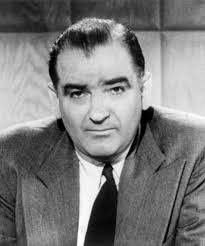
Joseph McCarthy
No American—no matter how prominent—was safe from the accusation of being a Communist or a Communist sympathizer—”a Comsymp” or “fellow traveler” in the style of the era.
But that utterly changed when Donald Trump won, first, the Republican Presidential nomination and, then, the White House. Trump lavishly praised Russian President Vladimir Putin—and even called on him to directly interfere in the 2016 Presidential race.
On July 22, 2016, Wikileaks released 19,252 emails and 8,034 attachments hacked from computers of the highest-ranking officials of the Democratic National Committee (DNC). Early reports traced the leak to Russian hackers.
“Russia, if you are listening,” Trump said at a press conference in Doral, Florida, “I hope you are able to find the 33,000 emails that are missing—I think you will probably be rewarded mightily by our press.”
This was nothing less than treason—calling upon a foreign power, hostile to the United States, to interfere in its Presidential election.
On December 16, 2016, then-FBI Director James B. Comey and Director of National Intelligence James R. Clapper Jr. agreed with a CIA assessment that Russia intervened in the 2016 election in part to help Donald Trump win the White House.

Trump, however, has steadfastly denied any such role by Russia: “I think it’s ridiculous,” he told “Fox News Sunday.” “I think it’s just another excuse. I don’t believe it….No, I don’t believe it at all.”
This embrace of a despotic Communist regime has “trickled down” to Right-wingers generally.
On February 20, 2018, a purge of Russian “bots” by Twitter sparked outrage by—yes!—Right-wingers.
Bots are fake accounts used to spread propaganda or advertising campaigns. Investigations by the House and Senate Intelligence Committees have uncovered massive efforts by Russia to throw the 2016 Presidential election to Donald Trump.
Their weapon of choice: Swamping “social media” sites like Facebook, Google and Twitter with genuinely fake news.
The Twitter purge came a week after then-Special Counsel Robert Mueller indicted 13 Russians and three Russian companies for interfering in that election. The indictments detailed an elaborate plot to wage “information warfare” against the United States.
Right-wingers suddenly found thousands of their Russian bot followers had disappeared—and accused Twitter of secretly deleting like-minded accounts.
“Twitter is currently purging the followers on conservative accounts only. I just lost 3000 followers in one minute,” tweeted Candace Owens, director of urban engagement for Turning Point USA. This is a student organization promoting limited government and free markets.
Bill Mitchell, a Right-winger known for his controversial tweets defending then-President Donald Trump, claimed that he lost roughly 4,000 followers overnight.
“This is a damn joke,” tweeted Mike Zollo. “Twitter is absolutely censoring conservative and right wing speech for no damn reason other than their disagreement with it. But, liberals can write vile comments and threaten us with no punishment.”
The last time dictator-worshiping Fascists found common cause with dictator-worshiping Communists was in August, 1939.
Germany’s Fuhrer Adolf Hitler and the Soviet Union’s Joseph Stalin agreed to end—at least temporarily—their years of violent rivalry and personal slander.
The reason: Hitler planned to invade Poland, and feared he would have to fight its allies, France and England, if he did. He didn’t want to have to fight the Soviet Union, too.
And Stalin saw Hitler’s warlike ambitions as useful to his own dreams of conquest: He wanted—and got—the eastern half of Poland, while Hitler’s legions occupied the western half.
So why would Donald Trump–––the arch capitalist––find common cause with Vladimir Putin––-the arch Communist?
Simple: Each had something the other wanted.
Putin wanted a President who would withdraw the United States from the North Atlantic Treaty Organization (NATO)—thus rendering that alliance worthless. And Trump had repeatedly accused NATO of being a financial drain on the United States.
Trump wanted to be President—to enrich himself and his family, to become the center of the world’s attention, and to destroy anyone who dared confront or contradict him.
And Putin could—and did—make that happen.
According to a January, 2017 report by the Office of National Intelligence:
“President Vladimir Putin ordered an influence campaign in 2016 aimed at the U.S. presidential election. Russia’s goals were to undermine public faith in the U.S. democratic process, denigrate Secretary Clinton, and harm her electability and potential presidency.”
For four years, Trump held the most powerful office in the Western world. And Putin had an ally who gladly did his bidding.
ABC NEWS, ABRAHAM LINCOLN BRIGADE, ADOLF HITLER, AFGHANISTAN, ALTERNET, AMERICABLOG, AMNESTY INTERNATIONAL, AP, ARTHUR CUMMINGS, BABY BOOMER RESISTANCE, BBC, BENITO MUSSOLINI, BLOOMBERG NEWS, BUZZFEED, CBS NEWS, CNN, CROOKS AND LIARS, DAILY KOZ, ERNEST HEMINGWAY, ETHIOPIA, EUROPEAN COMMISSION, EUROPEAN UNION, FACEBOOK, FBI, FIVETHIRTYEIGHT, GULF COOPERATION COUNCIL, HAILE SELASSIE, HARPER’S MAGAZINE, HUFFINGTON POST, IRAN, IRAQ, ISRAELI DEFENSE FORCES, JOHN DOS PASSOS, MEDIA MATTERS, MOTHER JONES, MOVEON, MSNBC, MUSLIMS, NBC NEWS, NEW REPUBLIC, NEWSDAY, NEWSWEEK, NPR, PALESTINIANS, PBS NEWSHOUR, POLITICO, POLITICUSUSA, RAW STORY, REFUGEES, REUTERS, RONALD KESSLER, SALON, SEATTLE TIMES, SHIITE MUSLIMS, SLATE, SPAIN, SPANISH CIVIL WAR, SUNNI MUSLIMS, SYRIA, TALKING POINTS MEMO, TERRORISM, THE ATLANTIC, THE CHICAGO SUN-TIMES, THE CHICAGO TRIBUNE, THE DAILY BEAST, THE DAILY BLOG, THE GUARDIAN, THE HILL, THE HUFFINGTON POST, THE INTERCEPT, THE LOS ANGELES TIMES, THE NATION, THE NEW REPUBLIC, THE NEW YORK TIMES, THE NEW YORKER, THE SECRETS OF THE FBI (BOOK), THE SYRIAN OBSERVATORY FOR HUMAN RIGHTS, THE VILLAGE VOICE, THE WASHINGTON POST, THE WORLD POST, THINKPROGRESS, TIME, TRUTHDIG, TRUTHOUT, TWITTER, TWO POLITICAL JUNKIES, U.S. NEWS & WORLD REPORT, UKRAINE, UPI, USA TODAY, VLADIMIR PUTIN, WONKETTE, WORLD WAR ii
In History, Military, Politics, Social commentary on October 14, 2022 at 12:12 am
On February 24, Russian President Vladimir Putin ordered a massive invasion of Ukraine.
To Ukrainians, it’s a matter of life-or-death.
To Americans, Europeans and Westerners generally, it’s a horrific, unfolding tragedy.
But to nonwhites—and especially Islamics—the sympathies of these nations is a sign of racism and Islamophobia.
One reason many Westerners feel greater sympathy for Ukrainians than Arabs: Islamics have routinely blamed the West—especially Americans—for their own internal conflicts.
According to the Syrian Observatory for Human Rights—which is safely located in Great Britain—the total number of dead from the Syrian civil war [in 2016] was more than 310,000.
The Observatory blamed the West for this Islamic self-slaughter:
“The silence of the International community for the war crimes and crimes against humanity committed in Syria encourages the criminals to kill more and more Syrian people because they have not found anyone that deter them from continuing their crimes that cause to wound more than 1,500,000 people; some of them with permanent disabilities, make hundreds of thousands children without parents, displace more than half of Syrian people and destroy infrastructure, private and public properties.”
In short: It’s the duty of non-Muslims to bring civilized behavior to Islamics.
And why are all these murderers eagerly slaughtering one another? Because of a Muslim religious dispute that traces back to the fourth century.
Yes, it’s Sunni Muslims, who make up a majority of Islamics, versus Shiite Muslims, who comprise a minority.
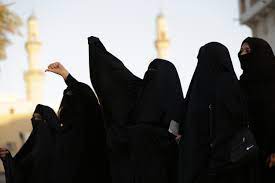
Shiite Muslim women
Each group considers the other takfirs—that is, “apostates.” And, in Islam, being labeled an apostate can easily get you murdered.
This is, in short, not a conflict that can be resolved by driving an aggressor country out of another. It will never end—because both Sunnis and Shiites believe “God is on our side” in an inner-religious war that dates back centuries.
“We are wondering, why were Ukrainians welcome in all countries while we, Syrian refugees, are still in tents and remain under the snow, facing death, and no one is looking to us?” asked Syrian refugee Ahmad al-Hariri, who fled the war in his country for nearby Lebanon 10 years ago.
In an ideal and rational world, factors like religion, economics and race would not matter when large numbers of people are threatened by war. But this is not a rational and ideal world, and human emotions and prejudices usually play a deciding role in people’s behavior.
People identify and feel comfortable with those who most resemble themselves. In prisons, black inmates sit with blacks; whites with with whites; Hispanics with Hispanics.
Most Ukrainian refugees are highly-skilled and -educated Christians—meaning they will easily meld into the populations that make up most of Europe. Many of them already have relatives scattered throughout such countries as Poland, Hungary and Romania. Which means they can call on those relatives for support while settling in.
Much has been made—by nonwhites—of the fact that Ukrainians are Caucasians. This is undoubtedly one factor that leads other Caucasians to identify with their plight. But when Syrians identify with Palestinians, no doubt their own shared skin color and religion apply just as much.
Another reason why this conflict has riveted the attention of the world: Millions believed that the collapse of the Soviet Union in 1991 ended the Cold War.

Vladimir Putin
Kremlin.ru, CC BY 4.0 <https://creativecommons.org/licenses/by/4.0>, via Wikimedia Commons
But Vladimir Putin has brutally notified the world that it’s on again. Europeans—and Americans—fear that Putin’s attack on Ukraine, like Adolf Hitler’s attack on Poland, is simply the first of a series of conquests to come.
In 1935, Italian dictator Benito Mussolini set out to create a second Roman Empire by invading Ethiopia. The conflict pitted poorly-armed Ethiopian forces against Italians armed with radio, bombers and even mustard gas. Even ambulances and hospitals became targets for Mussolini’s air force.
Ethiopia’s emperor, Haile Selassie, appealed in person to the League of Nations for aid in repelling the invasion. His plea was greeted by laughter from the Italian and German delegates—and ignored by the rest of the world.
The war ended in 1937 with an Italian victory.
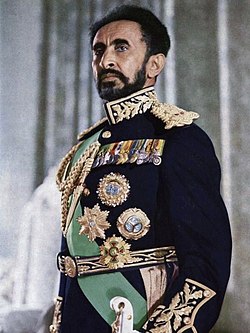
Haile Selassie
By contrast: The Spanish Civil War proved a magnet for international commitment. The conflict pitted Fascists under General Francisco Franco against the new Spanish Republic. Adolf Hitler and Mussolini sent troops and planes to aid Franco.
Tens of thousands of volunteers from about 50 countries poured into Spain to support the Republican cause—among them, the Abraham Lincoln Brigade from the United States.. Writers Ernest Hemingway and John Dos Passos lent their propaganda talents to the Republic.
American liberals sensed that this civil war was a testing ground for the weapons of Fascism—as it proved to be. By 1939, the superior numbers and weapons of Franco and his allies prevailed.
When Hemingway returned to the United States he tried to warn all who would listen that a far greater war was coming: World War II.
People see conflicts in the light of their own priorities. No two conflicts are the same—and will never be seen the same. What was true for the ones in Ethiopia and Spain remains true for the ones in Syria and Ukraine.
ABC NEWS, ABRAHAM LINCOLN BRIGADE, ADOLF HITLER, AFGHANISTAN, ALTERNET, AMERICABLOG, AMNESTY INTERNATIONAL, AP, ARTHUR CUMMINGS, BABY BOOMER RESISTANCE, BBC, BENITO MUSSOLINI, BLOOMBERG NEWS, BUZZFEED, CBS NEWS, CNN, CROOKS AND LIARS, DAILY KOZ, ERNEST HEMINGWAY, ETHIOPIA, EUROPEAN COMMISSION, EUROPEAN UNION, FACEBOOK, FBI, FIVETHIRTYEIGHT, GULF COOPERATION COUNCIL, HAILE SELASSIE, HARPER’S MAGAZINE, HUFFINGTON POST, IRAN, IRAQ, ISRAELI DEFENSE FORCES, JOHN DOS PASSOS, MEDIA MATTERS, MOTHER JONES, MOVEON, MSNBC, MUSLIMS, NBC NEWS, NEW REPUBLIC, NEWSDAY, NEWSWEEK, NPR, PALESTINIANS, PBS NEWSHOUR, POLITICO, POLITICUSUSA, RAW STORY, REFUGEES, REUTERS, RONALD KESSLER, SALON, SEATTLE TIMES, SHIITE MUSLIMS, SLATE, SPAIN, SPANISH CIVIL WAR, SUNNI MUSLIMS, SYRIA, TALKING POINTS MEMO, TERRORISM, THE ATLANTIC, THE CHICAGO SUN-TIMES, THE CHICAGO TRIBUNE, THE DAILY BEAST, THE DAILY BLOG, THE GUARDIAN, THE HILL, THE HUFFINGTON POST, THE INTERCEPT, THE LOS ANGELES TIMES, THE NATION, THE NEW REPUBLIC, THE NEW YORK TIMES, THE NEW YORKER, THE SECRETS OF THE FBI (BOOK), THE SYRIAN OBSERVATORY FOR HUMAN RIGHTS, THE VILLAGE VOICE, THE WASHINGTON POST, THE WORLD POST, THINKPROGRESS, TIME, TRUTHDIG, TRUTHOUT, TWITTER, TWO POLITICAL JUNKIES, U.S. NEWS & WORLD REPORT, UKRAINE, UPI, USA TODAY, VLADIMIR PUTIN, WONKETTE, WORLD WAR ii
In Bureaucracy, History, Military, Politics, Social commentary on October 13, 2022 at 12:16 am
On February 24, Russian President Vladimir Putin ordered a massive invasion of Ukraine.
To Ukrainians, it’s a matter of life-or-death.
To Americans, Europeans and Westerners in general, it’s a horrific, unfolding tragedy.
But to nonwhites—and especially Islamics—throughout the world, the sympathies of these nations is a sign of racism and Islamophobia.
The day after the invasion began, CBS News senior correspondent in Kyiv Charlie D’Agata said: “This isn’t a place, with all due respect, like Iraq or Afghanistan that has seen conflict raging for decades. This is a relatively civilised, relatively European – I have to choose those words carefully, too – city where you wouldn’t expect that, or hope that it’s going to happen.”

CBS
On social media, his comment was strongly criticized as dehumanizing non-white, non-European peoples.
One Twitter user wrote: “Atrocities start with words and dehumanization. Atrocities unleashed upon millions in the ME, fueled by dictators labeled as reformists in the west. The racist subtext: Afghans, Iraqi & Syrian lives don’t matter, for they are deemed inferior—’uncivilized.'”
In fact, conditions in Ukraine have been relatively peaceful. Afghanistan has never actually been a nation, simply a patchwork of feuding warlords. This has been true from the time of Alexander the Great to the Taliban today. Dictators have always been the rulers of Afghanistan, Iraq and Syria.
On February 25, Sky News broadcast a video of people in the central Ukrainian city of Dnipro making Molotov cocktails, explaining how grating Styrofoam makes the incendiary device stick to vehicles better.

A Twitter user wrote: “If this was done by Palestinians, Afghanistan or other nations resisting occupation, it would be terrorism. And during Mandela’s anti-apartheid era, it was also dubbed terrorism. For Europeans facing similar situations, it is resistance! Western duplicity knows no bounds.”
“Terrorism” is defined as “The unlawful use of violence and intimidation, especially against civilians, in the pursuit of political aims.”
Defending one’s country from attack by another country is not terrorism. In fact, from ancient times, it has been seen as the highest virtue, calling forth loyalty and courage.
Palestinians have repeatedly targeted civilians—not soldiers of the Israeli Defense Forces—for death. In Afghanistan, women and children have been routinely massacred by warring factions.
There are solid reasons for fears of Islamic terrorism.
In his 2011 book, The Secrets of the FBI, Ronald Kessler notes the refusal of the Islamic community to identify known or potential terrorists within its ranks.
Said Arthur M. Cummings, then the Bureau’s executive assistant director for national security: “I had this discussion with the director of a very prominent Muslim organization here in [Washington] D.C. And he said, ‘Why are you guys always looking at the Muslim community?’”
“I can name the homegrown cells, all of whom are Muslim, all of whom were seeking to kill Americans,” replied Cummings. “It’s not the Irish, it’s not the French, it’s not the Catholics, it’s not the Protestants. It’s the Muslims.”
On BFM TV, France’s most-watched cable news channel, journalist Philippe Corbe said: “We’re not talking here about Syrians fleeing the bombing of the Syrian regime backed by Putin, we’re talking about Europeans leaving in cars that look like ours to save their lives.”
This was heavily criticized: “This war is just revealing the western hypocrisy and racism at its peak.”
There is a difference between a Syrian dictator waging war against his own citizens, and a nuclear-armed country waging all-out war on a smaller, democratic nation. The skin color of the peoples involved has nothing to do with either action.
“These are not the refugees we are used to… these people are Europeans,” Bulgarian Prime Minister Kiril Petkov told journalists of the Ukrainians. “These people are intelligent, they are educated people…. This is not the refugee wave we have been used to, people we were not sure about their identity, people with unclear pasts, who could have been even terrorists…
“In other words,” he added, “there is not a single European country now which is afraid of he current wave of refugees.”
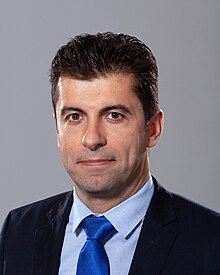
Kiril Petkov
President.bg, CC BY 2.5 BG <https://creativecommons.org/licenses/by/2.5/bg/deed.en>, via Wikimedia Commons
This was treated as racism by Islamics: “A refugee is a refugee, whether European, African or Asian,” Syrian journalist Okba Mohammad said.
In fact: By early 2021, 10 years after Syria’s civil war erupted, European Union states had taken in one million Syrian refugees and asylum seekers; Germany alone took more than half. In 2016, the European Union paid billions of euros for Turkey to continue hosting 3.7 million Syrians.
On February 6, 2016, The World Post carried this story: “Geneva III: The Stillborn Conference and the Endemic Failure of the International Community.”
The first paragraph read:
“While approaching the fifth anniversary of the Syrian civil war on March 15 — which claimed more than 300,000 lives, approximately 700,000 wounded, 4 million fled the country, and another 6 million displaced within Syria — the international community has failed to put an end to bloodshed in this war-torn country.”
According to the Syrian Observatory for Human Rights—which is safely located in Great Britain—the total number of dead [in 2016] was now more than 310,000.
And who did the Observatory—and The World Post-–blame for this Islamic self-slaughter?
The West, of course.
2003 IRAQ WAR, ABC NEWS, ADOLF HITLER, ALTERNET, AMERICABLOG, AP, BABY BOOMER RESISTANCE, BBC, BLOOMBERG NEWS, BUZZFEED, CBS NEWS, CHINA, CNN, CRIMEAN PENINSULA, CROOKS AND LIARS, DAILY KOZ, DONALD TRUMP, ECONOMIC SANCTIONS, EDOUARD DELADIER, ENGLAND, FACEBOOK, FIVETHIRTYEIGHT, FRANCE, GEORGE W. BUSH, HARPER’S MAGAZINE, HUFFINGTON POST, IRAN, JOACHIM VON RIBBENTROP, KIEV, MEDIA MATTERS, MOSKOVA (SHIP), MOTHER JONES, MOVEON, MSNBC, MUNICH CONFERENCE, NATO, NBC NEWS, NEVILLE CHAMBERLAIN, NEW REPUBLIC, NEWSDAY, NEWSWEEK, NPR, PBS NEWSHOUR, POLAND, POLITICO, POLITICUSUSA, RAW STORY, REPUBLIC OF GEORGIA, REUTERS, RUBLES, RUSSIA, SADDAM HUSSEIN, SALON, SEATTLE TIMES, SECOND CHECHEN WAR, SLATE, SOVIET UNION, TALKING POINTS MEMO, THE ATLANTIC, THE CHICAGO SUN-TIMES, THE CHICAGO TRIBUNE, THE DAILY BEAST, THE DAILY BLOG, THE GUARDIAN, THE HILL, THE HUFFINGTON POST, THE INTERCEPT, THE LOS ANGELES TIMES, THE NATION, THE NEW REPUBLIC, THE NEW YORK TIMES, THE NEW YORKER, THE VILLAGE VOICE, THE WASHINGTON POST, THINKPROGRESS, TIME, TRUTHDIG, TRUTHOUT, TWITTER, TWO POLITICAL JUNKIES, U.S. NEWS & WORLD REPORT, UKRAINE, UNITED STATES, UPI, USA TODAY, VLADIMIR PUTIN, WONKETTE
In Bureaucracy, Business, History, Military, Politics, Social commentary on October 12, 2022 at 12:10 am
On February 28, CNN’s website published the following headline: Russia faces financial meltdown as sanctions slam its economy.
The story opened:
“Russia was scrambling to prevent financial meltdown Monday as its economy was slammed by a broadside of crushing Western sanctions imposed over the weekend in response to the invasion of Ukraine.”
That unprovoked attack opened on February 24, with missile and artillery attacks, striking major Ukrainian cities, including Kiev.
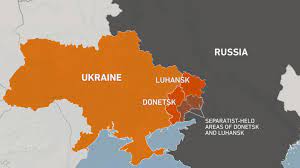
Ukraine vs. Russia
Russian President Vladimir Putin believed that the conquest of Ukraine would be a cakewalk. Intent on restoring the borders of the former Soviet Union, he had swept from one successful war to the next:
- In 1999-2000, he waged the Second Chechen War, restoring federal control of Chechnya.
- In 2008, he invaded the Republic of Georgia, which had declared its independence as the Soviet Union began to crumble. By war’s end, Russia occupied 20% of Georgia’s territory.
- In 2014, Putin invaded and annexed the Crimean Peninsula from Ukraine.
Meanwhile, the North Atlantic Treaty Organization (NATO) launched only verbal condemnations.
The reasons:
- Fear of igniting a nuclear war;
- Belief that Russia was simply acting within its own sphere of influence; and/or
- Then-President Donald Trump’s repeated attacks on NATO and displays of subservience to Putin.
NATO emblem
Russia had began massing troops on the Ukrainian border in 2021.
When the invasion came, the United States and its Western European allies retaliated with unprecedented economic sanctions.
Among the resulting casualties:
- The ruble crashed.
- Russia’s central bank more than doubled interest rates to 20%.
- Economists predicted the Russian economy could decline by five percent.
- The West—especially the United States—froze at least half of the $630 billion in international reserves that Putin had amassed to stave off tough sanctions.
Then the war bogged down for Russia:
- In late August, Ukraine, using missile systems supplied by the United States, destroyed Russian ammunition dumps and a Russian air base in Crimea.
- By September, Ukrainian forces recaptured much of the northeastern Kharkiv region, including the city of Izium, which the Russians had been using as a logistics hub.
- On September 21, Putin announced the partial mobilization of 300,000 military reservists. All male citizens below 60 are now eligible to be drafted.
- This, in turn, led at least 194,000 Russian men to such neighboring countries as Turkey, Georgia, Kazakhstan and Mongolia.
In short: The war is not going the way Putin assumed it would.

Vladimir Putin
Kremlin.ru, CC BY 4.0 <https://creativecommons.org/licenses/by/4.0>, via Wikimedia Commons
This is not the first time a dictator has guessed wrong about the results of his actions.
On September 1, 1939, German Fuhrer Adolf Hitler ordered his armies to invade Poland.
Almost a year earlier—on September 29, 1938—he had bullied British Prime Minister Neville Chamberlain and French Prime Minister Edouard Daladier into surrendering the northern, southwest and western regions of Czechoslovakia, inhabited mostly by ethnic Germans.
The Munich Agreement whetted Hitler’s appetite for greater conquests—and fueled his contempt for England and France: “Our enemies are little worms,” he said in a conference with his generals. “I saw them at Munich.”
He believed he could conquer Poland, and Chamberlain and Daladier would meekly ratify his latest acquisition.
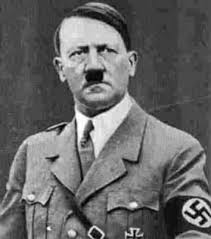
Adolf Hitler
So he was stunned when, on September 3, 1939, Britain and France—however reluctantly—honored their pledged word to Poland and declared war on Germany.
“What now?” Hitler furiously asked his Foreign Minister, Joachim von Ribbentrop.
Ribbentrop had no answer.
Knowing that Germany lacked the resources for a long war, Hitler had intended to fight a series of quick, small wars, gobbling up one country at a time. Now he found himself locked in an endless war with heavyweights France and England—and eventually the Soviet Union and the United States.
He stayed locked into that war until he committed suicide on April 30, 1945, and the Third Reich officially collapsed on May 7.
Fifty-eight years later, on March 21, 2003, President George W. Bush’s attacked Saddam Hussein’s Iraq.
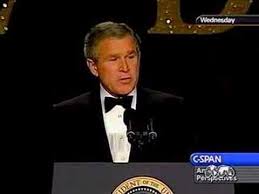
George W. Bush
The war started impressively, with 1,700 air sorties and 504 Cruise missiles.
Within two weeks, American ground forces entered Baghdad. After four days of intense fighting, the Iraqi regime fell. By April 14, the Pentagon reported that major military operations had ended.
On May 1, 2003, Bush declared that the war was won.
But then American forces became embroiled in an endless, nationwide guerrilla war. Eighteen years later, the United States was still fighting in Iraq.
The war that Bush had deliberately provoked:
- Took the lives of 4,484 Americans.
- Cost the United States Treasury at least $2 trillion.
- Allowed Iran—Iraq’s arch enemy—to eagerly fill it.
- Frightened and repelled even America’s closest allies.
- Killed at least 655,000 Iraqis.
- Frightened China and Russia into expanding the size of their militaries.
And Putin?
- A major reason for his attack: To prevent Ukraine from joining NATO.
- But it has frightened Sweden and Finland into joining NATO.
- After four years of the Putin-appeasing Trump administration, the United States, under President Joe Biden, has aggressively supplied sophisticated weapons to Ukraine.
- Through a series of humiliating battlefield defeats and by enraging millions of Russians with a draft, Putin has locked himself into a no-win position.
- And NATO is now fully revitalized to meet future Russian threats.
Thus do the worst intentions of hubristic dictators often come undone.
ABC NEWS, ADOLF HITLER, ALTERNET, AMERICABLOG, AMERICAN REVOLUTION, ANDREW JACKSON, AP, BABY BOOMER RESISTANCE, BBC, BLOOMBERG NEWS, BUZZFEED, CBS NEWS, CHECHENS, CNN, CROOKS AND LIARS, DAILY KOS, FIVETHIRTYEIGHT, FORT MIMS MASSACRE, GREAT BRITAIN, HARPER’S MAGAZINE, HUFFINGTON POST, MEDIA MATTERS, MERCENARIES, MOTHER JONES, MOVEON, MSNBC, NAZI-SOVIET "NON-AGGRESSION PACT", NBC NEWS, NEW REPUBLIC, NEWSDAY, NEWSWEEK, NICCOLO MACHIAVELLI, NPR, NUCLEAR WEAPONS, PBS NEWSHOUR, POLITICO, POLITICUSUSA, RAW STORY, REUTERS, SALON, SEATTLE TIMES, SLATE, TALKING POINTS MEMO, THE ATLANTIC, THE BLITZ, THE CHICAGO SUN-TIMES, THE CHICAGO TRIBUNE, THE DAILY BEAST, THE DAILY BLOG, THE DISCOURSES, THE GUARDIAN, THE HILL, THE HUFFINGTON POST, THE INTERCEPT, THE LOS ANGELES TIMES, THE NATION, THE NEW REPUBLIC, THE NEW YORK TIMES, THE NEW YORKER, THE PRINCE, THE SS, THE VILLAGE VOICE, THE WASHINGTON POST, THINKPROGRESS, THIRD REICH, TIME, TRUTHDIG, TRUTHOUT, TWITTER, U.S. NEWS & WORLD REPORT, UKRAINE, UPI, USA TODAY, VLADIMIR PUTIN, VOLODYMYR ZELENSKY, WAR OF 1812, WEHRMACHT, WORLD WAR 11
In Bureaucracy, History, Military, Politics, Social commentary on October 10, 2022 at 12:10 am
Vladimir Putin believes himself to be a serious student of history. If so, he has drawn the wrong lessons from the past.
During the American Revolution (1775-1783) and the War of 1812 (1812-1815) Great Britain encouraged Indian attacks on American settlers.
One of the worst of these attacks occurred on August 30, 1813, when over 700 Creek Indians destroyed Fort Mims, near Mobile, Alabama. About 500 militiamen, settlers, slaves and Creeks loyal to the Americans were slaughtered or captured.

Fort Mims massacre
Inflaming the Indians against settlers didn’t help the British on the battlefield—in the American Revolution or the War of 1812. But it did incite long-lasting hatred by the vast majority of Americans against the British—and even greater hatred of the Indians.
To cite one example: The Fort Mims massacre inspired General Andrew Jackson to take the field, eventually destroying the Creeks as a nation and wresting Florida from Spain for the United States.
The British lost their American colony. And the Indians were gradually driven from their dominance of the continent.
Similarly, Vladimir Putin has turned to Chechen mercenaries for help in conquering Ukraine. They are known as “Kadyrovtsy” or “Kadyrovites” after their leader, Ramzan Kadyrov, Chechnya’s pro-Kremlin strongman.
Human rights groups, witnesses and survivors have for decades accused them of murders, kidnappings and the torture of Kadyrov’s rivals and critics.
Just as the Indians hoped to use their alliance with the British to defeat their Anglo-American enemies, so, too, do Chechen mercenaries hope to ingratiate themselves with the Kremlin.
Vladimir Putin
Kremlin.ru, CC BY 4.0 <https://creativecommons.org/licenses/by/4.0>, via Wikimedia Commons
Yet that alliance has not advanced Russia’s fortunes on the battlefield, just as the British-Indian alliance did not gain victory for the British.
As Niccolo Machiavelli, writing more than 500 years ago in The Prince, warned: “[Mercenaries] have neither the fear of God nor fidelity to man, and destruction is deferred only as the attack is. For in peace one is robbed by them, and in war by the enemy.”
Moreover, the atrocities committed by Indians and Chechens only inflamed their enemies to seek revenge.
In his masterwork, The Discourses, Machiavelli offered a lesson on the power of mercy even in the midst of war.
“Marcus Furius Camillus, a Roman general, was besieging the city of the Faliscians, and had surrounded it. A teacher charged with the education of the children of some of the noblest families of that city decided to ingratiate himself with Camillus by leading those children into the Roman camp.
“Presenting them to Camillus the teacher said to him, ‘By means of these children as hostages, you will be able to compel the city to surrender.’
“Camillus not only declined the offer but had the teacher stripped and his hands tied behind his back. Then he had a rod put into the hands of each of the children and directed them to whip the teacher all the way back to the city.
“Upon learning this, the citizens of Faliscia were so much touched by the humanity and integrity of Camillus, that they surrendered the place to him without any further defense.”
Summing up the meaning of this, Machiavelli writes: “This example shows that an act of humanity and benevolence will at all times have more influence over the minds of men than violence and ferocity. It also proves that provinces and cities which no armies…could conquer, have yielded to an act of humanity, benevolence, chastity or generosity.
“…History also shows us how much the people desire to find such virtues in great men, and how much they are extolled by historians and biographers of princes….Amongst these, Xenophon takes great pains to show how many victories, how much honor and fame, Cyrus gained by his humanity and affability, and by his not having exhibited a single instance of pride, cruelty or luxuriousness, nor of any of the other vices that are apt to stain the lives of men.”

Niccolo Machiavelli
Then there has been Putin’s use of terror-attacks on Ukrainian cities.
Using bombers and long-range artillery, Putin has tried to compensate for losses on the battlefield by terrorizing Ukrainians into surrender.
Adolf Hitler applied the same tactic against an equally stubborn Great Britain during the Second World War. in 1940-41.
Unable to invade England because the British Navy controlled the sea, Hitler turned to terror-bombing.
He believed he could terrorize Britons into demanding that their government yield to German surrender demands.
From September 7, 1940 to May 21, 1941, the Luftwaffe subjected England—and especially London—to a ruthless bombing campaign that became known as The Blitz.
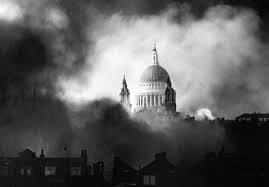
The undamaged St. Paul’s Cathredal, December, 1940
During 267 days—almost 37 weeks—between 40,000 and 43,000 British civilians were killed. About 139,000 others were wounded.
But the terror-bombing only inflamed Britons to fight Germany even more stubbornly.
Vladimir Putin has learned nothing from these historical lessons.
He has employed mercenaries and terror-bombing against patriotic Ukrainians—who continue to sweep Russian forces from their country.
If he employs even “small” tactical weapons, he risks triggering a fullscale NATO response—thus destroying the Russian empire he hopes to re-create.
Finally: Even if he conquers Ukraine, he will inherit a hate-filled population thirsting for revenge at every opportunity.
ABC NEWS, ADOLF HITLER, ALTERNET, AMERICABLOG, AP, BABY BOOMER RESISTANCE, BBC, BLOOMBERG NEWS, BUZZFEED, CBS NEWS, CNN, CROOKS AND LIARS, DAILY KOS, FIVETHIRTYEIGHT, HARPER’S MAGAZINE, HUFFINGTON POST, JOSEPH STALIN, MEDIA MATTERS, MOTHER JONES, MOVEON, MSNBC, NAZI-SOVIET "NON-AGGRESSION PACT", NBC NEWS, NEW REPUBLIC, NEWSDAY, NEWSWEEK, NPR, NUCLEAR WEAPONS, PBS NEWSHOUR, POLITICO, POLITICUSUSA, RAW STORY, REUTERS, SALON, SEATTLE TIMES, SLATE, TALKING POINTS MEMO, THE ATLANTIC, THE CHICAGO SUN-TIMES, THE CHICAGO TRIBUNE, THE DAILY BEAST, THE DAILY BLOG, THE GUARDIAN, THE HILL, THE HUFFINGTON POST, THE INTERCEPT, THE LOS ANGELES TIMES, THE NATION, THE NEW REPUBLIC, THE NEW YORK TIMES, THE NEW YORKER, THE SS, THE VILLAGE VOICE, THE WASHINGTON POST, THINKPROGRESS, THIRD REICH, TIME, TRUTHDIG, TRUTHOUT, TWITTER, U.S. NEWS & WORLD REPORT, UKRAINE, UPI, USA TODAY, VLADIMIR PUTIN, VOLODYMYR ZELENSKY, WEHRMACHT, WORLD WAR 11
In Bureaucracy, History, Military, Politics, Social commentary on October 6, 2022 at 12:29 am
In the United States, World War II—at least, that part of the war fought in Europe—used to be celebrated in movies and TV shows like “Combat!” and “The Rat Patrol.” Today, it’s largely forgotten, except by veterans groups and the conflict’s rapidly aging veterans.
But in the Soviet Union, “the Great Patriotic War” against Nazi Germany is still celebrated as the triumph of Soviet strength and determination against horrific odds and losses.
Russian President Vladimir Putin’s invasion of Ukraine is unlikely to be remembered so fondly.
On April 28, 2006, Putin publicly stated that the 1991 collapse of the Soviet Union was “the greatest geopolitical catastrophe of the century.
“As for the Russian people, it became a genuine tragedy. Tens of millions of our fellow citizens and countrymen found themselves beyond the fringes of Russian territory.”
Putin was sounding a warning: He saw himself as Russia’s savior who would restore its lost empire.
Vladimir Putin
His invasion of Ukraine—officially called a “special military operation”—was intended as an important step toward that restoration.
Begun on February 24, the invasion targeted the Ukrainian capital, Kyiv, in an attempt to overthrow the democratic government of President Volodymyr Zelensky.
Ukrainian troops were outgunned and outnumbered. As in the case of the Soviet Union in 1941, Western military analystss expected the attack to quickly succeed. The Biden administration offered to evacuate Zelensky to safety.
Zelensky refused: “The fight is here; I need ammunition, not a ride.”
But after weeks of combat, Russian forces retreated, stymied by ferocious Ukrainian resistance.
In July, the last city under Ukrainian control in Luhansk fell to Russia after weeks of artillery bombardment and street fighting. But the Russians made little progress as they tried to conquer the remainder of Donbas.
In late August, after weeks of buildup, Ukraine launched a counteroffensive in the southern region of Kherson. Ukraine deployed newly arrived missile systems supplied by the United States and other Western countries to destroy Russian ammunition dumps and a Russian air base in Crimea.
By September, Ukrainian forces launched a rapid offensive, recapturing much of the northeastern Kharkiv region, including the city of Izium. Previously, the Russians had been using this as a key logistics hub.

Volodymyr Zelensky
On September 21, with Russian forces bogged down or retreating, Vladimir Putin announced the partial mobilization of 300,000 military reservists. All male citizens below 60 are now eligible to be drafted.
There are exceptions: Employees in IT and telecommunications, finance, “systemically-important” mass media outlets and interdependent suppliers, including registered media and broadcasters.
Still, the announcement set off a massive exodus of at least 194,000 Russian men (and their wives or girlfriends) to such neighboring countries as Turkey, Georgia, Kazakhstan and Mongolia.
During World War II, this would have been unthinkable: Whether driven by patriotism or a desire for vengeance on their German tormentors, Russians at all levels threw themselves into the conflict.
On the same day Putin announced the mobilization, he threatened to use nuclear weapons to defend not simply Russia but the Ukrainian territory his forces had captured:
“Our country possesses various means of destruction. When the territorial integrity of our nation is threatened, we, of course, will use all the means at our disposal to protect Russia and our people.”
To underscore his threat, he added: “Those who try to blackmail us with nuclear weapons should know that the weathervane can turn and point towards them.”
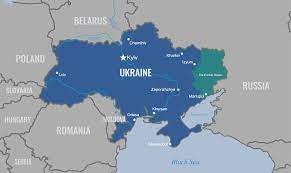
Putin’s threats have heightened world tensions and triggered speculation as to whether he would use nukes—against Ukraine or NATO countries, including the United States.
Volodymyr Zelensky thinks Putin is not bluffing.
President Joe Biden initially assured Americans there was no cause for concern. But since then the United States has stated that it has warned Putin that any use of nuclear weapons would trigger a catastrophic (non-specific) response against Russia.
Seen against the backdrop of Russia’s titanic victory in “the Great Patriotic War,” Putin’s repeated threats to use nuclear weapons actually underscore Russia’s weakness, not its strength.
Consider:
- “The Great Patriotic War” lasted almost four years—from June 22, 1941, to May 7, 1945.
- Russia’s opponent, Nazi Germany, was the most-feared military power in Europe.
- The war cost the Soviet Union at least 26 million lives before ending with the Red flag flying over Berlin.
- Almost the entire western half of the Soviet Union was devastated—first as the Germans overran territory from the Polish border to the gates of Moscow, and then again as the Soviets slowly pushed them back to Germany itself.
- For Russians, this was truly a “people’s war,” won through massive sacrifice and heroism—and without the use of nuclear weapons, which did not then exist.
Seventy-seven years after the end of World War II:
- Against the smaller and initially ill-equipped Ukrainian army, Russia has enjoyed a huge advantage in manpower and material.
- Yet so low is Russian morale that Putin has been forced to offer huge bribes to foreign mercenaries and even convicted criminals to refill his dispirited legions.
- Ukrainians, fueled by patriotism and a desire for vengeance, are fighting—and winning—their own version of “the Great Patriotic War.”
ABC NEWS, ADOLF HITLER, ALTERNET, AMERICABLOG, AP, BABY BOOMER RESISTANCE, BBC, BLOOMBERG NEWS, BUZZFEED, CBS NEWS, CNN, CROOKS AND LIARS, DAILY KOS, FIVETHIRTYEIGHT, HARPER’S MAGAZINE, HUFFINGTON POST, JOSEPH STALIN, MEDIA MATTERS, MOTHER JONES, MOVEON, MSNBC, NAZI-SOVIET "NON-AGGRESSION PACT", NBC NEWS, NEW REPUBLIC, NEWSDAY, NEWSWEEK, NPR, NUCLEAR WEAPONS, PBS NEWSHOUR, POLITICO, POLITICUSUSA, RAW STORY, REUTERS, SALON, SEATTLE TIMES, SLATE, TALKING POINTS MEMO, THE ATLANTIC, THE CHICAGO SUN-TIMES, THE CHICAGO TRIBUNE, THE DAILY BEAST, THE DAILY BLOG, THE GUARDIAN, THE HILL, THE HUFFINGTON POST, THE INTERCEPT, THE LOS ANGELES TIMES, THE NATION, THE NEW REPUBLIC, THE NEW YORK TIMES, THE NEW YORKER, THE SS, THE VILLAGE VOICE, THE WASHINGTON POST, THINKPROGRESS, THIRD REICH, TIME, TRUTHDIG, TRUTHOUT, TWITTER, U.S. NEWS & WORLD REPORT, UKRAINE, UPI, USA TODAY, VLADIMIR PUTIN, VOLODYMYR ZELENSKY, WEHRMACHT, WORLD WAR 11
In Bureaucracy, History, Military, Politics, Social commentary on October 5, 2022 at 12:21 am
On June 22, 1941, with 134 Divisions at full fighting strength and 73 more divisions for deployment behind the front, the German Wehrmacht invaded the Soviet Union.
Joseph Stalin, the longtime Soviet dictator, was stunned. The invasion had come less than two years after Germany had signed a non-aggression pact with the Soviet Union.
On August 23, 1939, Stalin had signed the German-Soviet Nonaggression Pact with German Fuhrer Adolf Hitler.
The reason: Each dictator got what he wanted—for the moment. Hitler was planning to invade Poland in a matter of days—and he wanted to avoid a war with the Soviet Union.
And Stalin got what he wanted: The eastern half of Poland.
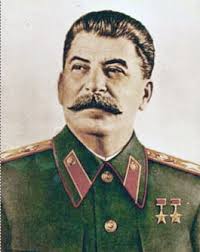
Joseph Stalin
The agreement stunned the world. Since 1919, Nazis and Communists had fought bitter battles against each other in the streets of Germany during the Weimar Republic.
When this was replaced in 1933 by the Third Reich, German Communists were rounded up and imprisoned, if not murdered, by Hitler’s ruthless secret police, the Schutzstaffel (“Protective Squads”).
For the moment, however, all of that was conveniently forgotten.
And, surprising as it might seem, each dictator harbored a secret respect for the other.
After Hitler launched a blood-purge of his own private Stormtroopers army on June 30, 1934, Stalin exclaimed: “Hitler, what a great man! That is the way to deal with your political opponents!”
And Hitler was equally admiring of Stalin’s notorious ruthlessness: “After the victory over Russia,” he told his intimates, “it would be a good idea to get Stalin to run the country, with German oversight, of course. He knows better than anyone how to handle the Russians.”
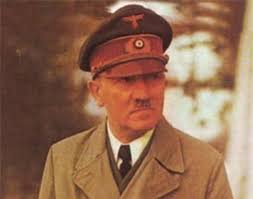
Adolf Hitler
But Hitler hadn’t forgotten his life’s ambition to conquer the Soviet Union and utterly destroy “the scourge of Jewish-Marxism.”
Stalin received numerous warnings from the United States and Great Britain about the coming invasion. But he dismissed them as efforts by the West to trick him into violating the pact and turning Nazi Germany into his mortal enemy.
When informed of the attack, Stalin at first believed it was being made by rogue German forces. He refused to order an immediate counterattack.
Upon being convinced that the Wehrmacht intended to wage all-out war, he went into a funk in his dacha and shut himself off from everyone. To his closest associates he wailed: “Lenin left us a great inheritance and we, his heirs, have fucked it all up!”
Meanwhile, the Red Air Force was destroyed on the ground by the awesome Luftwaffe. And the Wehrmacht was advancing at a rate of 25 miles a day.
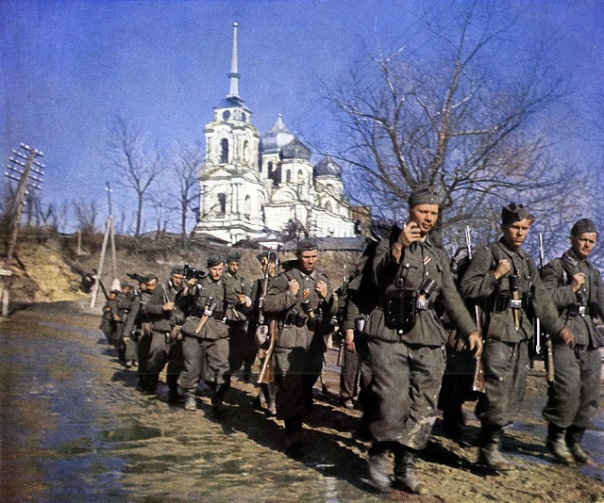
German soldiers marching through Russia
On July 3, after 10 days of brooding (and probably drinking heavily) in his dacha, Stalin finally took to the airways across the Soviet Union.
Never a spellbinding orator, Stalin spoke in slow and faltering tones. Nevertheless, his opening words were startling: “Comrades! Citizens! Brothers and sisters! Men of our army and navy! I am addressing you, my friends!”
Stalin had never addressed an audience this way, and he never would again.
He said the “peace loving” Soviet Union had been attacked by “fiends and cannibals” who wanted to restore the rule of the landlords and Czars. He claimed the non-aggression pact with Germany had given the army much-needed time to rearm and reorganize its forces.
This was accompanied by orders unprecedented in any other army: Those taken prisoner by the Germans were to be considered traitors—and shot or imprisoned. Those suspected of wounding themselves to avoid combat were also subject to summary execution. So were soldiers who had been legitimately wounded in battle but were suspected of inflicting those injuries.
The first two years of the war—1941 to 1943—proved disastrous for the Soviet Union.
During the first six months—June to December, 1941—German armies lured huge Soviet forces into gigantic “cauldron battles,” surrounding and exterminating them. An estimated 5.7 million prisoners of war (POWs) fell into German hands. Of these, at least 3.5 million died in custody.
But then the infamous Russian cold and snows of winter halted the Wehrmacht before Moscow.
In the summer of 1942 German forces once again mounted a ferocious offensive, driving all the way to the Volga—and Stalingrad.
But they became bogged down in bitter house-to-house fighting. With the arrival of winter, Soviet forces surrounded the Wehrmacht’s powerful Sixth Army. The besiegers became the besieged. On February 2, 1943, Field Marshal Friedrich von Paulus surrendered what remained of his army. The battle cost Germany 500,000 men, including 91,000 taken prisoner.
As the Red Army finally began to go over on the offensive, Stalin relaxed the iron controls that had long stifled creativity on the part of his commanders.
The infamous political commissars were removed from control over Russian generals. Gold braid and fancy uniforms were manufactured and rushed to the front as morale boosters.
The war would last another two years—costing the Soviet Union at least 26 million citizens—before it ended with the Red flag flying over Berlin.
Almost the entire western half of the Soviet Union was devastated—first as the Germans overran territory from the Polish border to the gates of Moscow, and then again as the Soviets slowly pushed them back to Germany itself.
2016 PRESIDENTIAL CAMPAIGN, ABC NEWS, ADOLF HITLER, ALTERNET, AMERICABLOG, ANTHONY FAUCI, AP, BABY BOOMER RESISTANCE, BLOOMBERG, BUZZFEED, CBS NEWS, CLIMATE CHANGE, CNN, CORONAVIRUS, CORONAVIRUS PARTIES, COVID-19, CROOKS AND LIARS, DAILY KOZ, DONALD TRUMP, DRUDGE RETORT, FACEBOOK, FIVETHIRTYEIGHT, HARPER’S MAGAZINE, HOAX, HOUE OF REPRESENTATIVES, IMPEACHMENT, JANE APPLBY, MARGARET LEVI, MEDIA MATTERS, METHODIST HOSPITAL, MOTHER JONES, MOVEON, MSNBC, NAZI GERMANY, NBC NEWS, NEWSWEEK, NPR, PBS NEWSHOUR, POLITICO, POLITICUSUSA, RAW STORY, REUTERS, RUSIA, RUSSIAN INTELLIGENCE AGENTS, SALON, SEATTLE TIMES, SLATE, STANFORD UNIVERSITY, TALKING POINTS MEMO, TEXAS, THE ATLANTIC, THE CHICAGO SUN-TIMES, THE CHICAGO TRIBUNE, THE DAILY BEAST, THE DAILY BLOG, THE GUARDIAN, THE HILL, THE HUFFINGTON POST, THE LOS ANGELES TIMES, THE NATION, THE NEW REPUBLIC, THE NEW YORK TIMES, THE VILLAGE VOICE, THE WASHINGTON POST, THINKPROGRESS, TIME, TRUTHDIG, TRUTHOUT, TWITTER, TWO POLITICAL JUNKIES, U.S. NEWS & WORLD REPORT, UPI, USA TODAY, WONKETTE, WORLD WAR ii
In Bureaucracy, History, Medical, Politics, Social commentary on September 30, 2022 at 12:12 am
Well, come on all of you Right-wing men
Donald Trump needs your help again.
He’s got himself in a terrible jam
He’s spread a virus throughout the land.
So throw off those masks, give a big cheer
Your Coronavirus-in-Chief is here!
“I think I made a mistake. I thought this was a hoax, but it’s not.”
So spoke a 30-year-old patient who died at Methodist Hospital in San Antonio, Texas. His last words came after attending a so-called “COVID party,” according to the hospital.
 Methodist Hospital
According to Dr. Jane Appleby, chief medical officer for Methodist Hospital and Methodist Children’s Hospital: “Someone will be diagnosed with the disease, and they’ll have a party to invite their friends over to see if they can beat the disease.
“One of the things that was heart-wrenching that he said to his nurse was, ‘You know, I think I made a mistake.’ And this young man went to a COVID party.. He didn’t really believe. He thought the disease was a hoax. He thought he was young and invincible and wouldn’t get affected by the disease.”
And it’s one-two-three
What are they dyin’ for?
Don’t ask em’, they don’t give a damn
Right here in COVID-land.
And it’s five-six-seven
Open up those graveyard gates
Well, there ain’t no time to wonder why
Whoopee! They’re all going to die.
It’s understandable that this patient believed COVID-19 was a hoax. He was, after all, from Texas, which overwhelmingly gave its votes to Donald J. Trump in 2016.
And it was President Trump who infamously said, on February 28, 2020: “Now the Democrats are politicizing the Coronavirus….We did one of the great jobs….One of my people came up to me and said, ‘Mr. President, they tried to beat you on Russia, Russia, Russia’….They couldn’t do it. They tried the impeachment hoax….It’s all turning, they lost….And this is their new hoax.”
“Hoax” is one of Trump’s favorite words.
He called the well-documented ties between Russian Intelligence agents and his 2016 Presidential campaign “a hoax.”
Ditto for the efforts of the House of Representatives to remove him for trying to extort Ukraine into smearing then-former Vice President Joe Biden: “The impeachment hoax.”
Climate change, for Trump, is “an expensive hoax.”
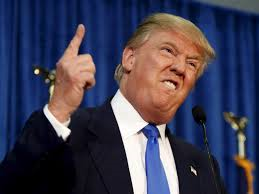
Donald Trump
“Trump is trying to undermine the trustworthiness of any source but himself,” said Margaret Levi, professor of political science at Stanford University. “The point is to make himself the only credible authority, to be fully trusted as a ‘war-time’ president.”
And in the case of the anonymous San Antonio patient—and untold numbers of his other supporters—he succeeded brilliantly. To their misfortune.
Well, grifters and traitors throughout the land
Pack yourselves off to COVID-land.
Don’t be shy, don’t hesitate
Satan is ready, so don’t make ‘em wait.
Just be glad that Donald Trump’s your man
As you’re dyin’ off as fast as you can.
By July 11, 2020, there were 8,332 new confirmed Coronavirus cases in Texas, according to a New York Times database. More than 258,000 cases and more than 3,200 deaths have been recorded in Texas so far.
Yet for those attending the Coronavirus party, such facts meant nothing compared to the assurances of Donald Trump—a proven serial liar—that there was nothing to fear.
“People will come in[to the hospital] initially, and they don’t look so bad,” said Appleby. “They don’t look really sick. But when you check their oxygen levels and their lab tests, they’re really sicker than they appear on the surface.”
Among the COVID-19 danger signs to look for, advised Appleby: If you’re not feeling well, have a high fever, cough and severe muscle aches.
Well, come on Republicans, let’s move fast,
Your big chance is here at last.
It doesn’t matter that Trump is Red
As he walks on the bodies of Americans dead.
Just be sure Vlad Putin knows your name
Treason’s just a part of your game.
Meanwhile, Trump was trying to discredit Dr. Anthony Fauci, the country’s leading infectious disease expert.
The reason: Fauci had not hesitated to warn about the dangers of COVID-19—and the failures of the Federal Government to effectively control it.


Anthony Fauci
Trump saw the virus not as a danger to Americans but to his chances for re-election. Among his “efforts” to “deal” with it:
- Denying the dangers of the virus
- Lying about the extent of its spread
- Pitting states against each other for scarce medical supplies
- Seizing medical supplies ordered by states
- Demanding an end to governors’ “stay-at-home” orders so the country can “reopen”—before proper safeguards can be installed.
For tyrants, truth is always the most dangerous enemy.
As World War II went increasingly against Nazi Germany, those who dared to say “The war is lost” were strung up with piano wire—often on lamp posts, as a warning to others.
Denying the truth didn’t save the dictatorship of Adolf Hitler. And it didn’t save the would-be dictatorship of Donald Trump
And it’s one-two-three
What are they dyin’ for?
Don’t ask em’, they don’t give a damn
Right here in COVID-land.
And it’s five-six-seven
Open up those graveyard gates
Well, there ain’t no time to wonder why
Whoopee! They’re all going to die.
ABC NEWS, ADOLF HITLER, ALTERNET, AMERICABLOG, AP, ASSASSINATION, BABY BOOMER RESISTANCE, BBC, BLOOMBERG NEWS, BUZZFEED, CBS NEWS, CNN, CONSPIRACIES, CROOKS AND LIARS, DAILY KOS, DAY OF THE JACKAL, DONALD TRUMP, FIVETHIRTYEIGHT, FREDERICK FORSYTHE, GAIUS CASSIUS, HARPER’S MAGAZINE, HUFFINGTON POST, JULIUS CAESAR, MAR-A-LAGO, MARCUS BRUTUS, MARK ANTHONY, MEDIA MATTERS, MOTHER JONES, MOVEON, MSNBC, NBC NEWS, NEW REPUBLIC, NEWSDAY, NEWSWEEK, NICCOLO MACHIAVELLI, NPR, PBS NEWSHOUR, PLOTS, POLITICO, POLITICUSUSA, RAW STORY, REUTERS, SALON, SEATTLE TIMES, Secret Service, SLATE, TALKING POINTS MEMO, THE ATLANTIC, THE CHICAGO SUN-TIMES, THE CHICAGO TRIBUNE, THE DAILY BEAST, THE DAILY BLOG, THE DISCOURSES, THE GUARDIAN, THE HILL, THE HUFFINGTON POST, THE INTERCEPT, THE LOS ANGELES TIMES, THE NATION, THE NEW REPUBLIC, THE NEW YORK TIMES, THE NEW YORKER, THE VILLAGE VOICE, THE WALL STREET JOURNAL, THE WASHINGTON POST, THINKPROGRESS, TIME, TRUTHDIG, TRUTHOUT, TWITTER, U.S. NEWS & WORLD REPORT, UPI, USA TODAY, WHITE HOUSE STAFFER
In Bureaucracy, History, Law, Law Enforcement, Military, Politics, Social commentary on September 23, 2022 at 12:22 am
Niccolo Machiavelli, the father of modern political science, wrote that there are three periods of danger in a conspiracy:
- Dangers in organizing the plot
- Dangers in executing the conspiracy
- Dangers following the execution of the plot.
The first two were covered in Part Two of this series. Now, as to the third:
Dangers following the Execution of the Conspiracy: There is really but one—someone is left who will avenge the murdered prince. These can be brothers, sons or other relatives, who have been spared by negligence or for other reasons.
But of all the perils that follow the execution of a conspiracy, the most certain and fearful is the attachment of the people to the murdered prince. There is no remedy against this, for the conspirators can never secure themselves against a whole people.
An example of this occurred in the case of Julius Caesar, who, being beloved by the people, was avenged by them.
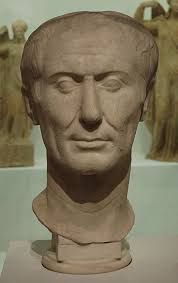
Julius Caesar
Machiavelli closes his chapter “Of Conspiracies” with advice to rulers on how they should act when they find a conspiracy has been formed against them.
If they discover that a conspiracy exists against them, they must, before punishing its authors, strive to learn its nature and extent. And they must measure the danger posed by the conspirators against their own strength.
And if they find it powerful and alarming, they must not expose it until they have amassed sufficient force to crush it. Otherwise, they will only speed their own destruction.
The foregoing was taken from Machiavelli’s masterwork, The Discourses on Livy, which was published posthumously in 1531. But elsewhere in this volume, he notes how important it is for rulers to make themselves loved–or at least respected—by their fellow citizens:


Niccolo Machiavelli
Note how much more praise those Emperors merited who, after Rome became an empire, conformed to her laws like good princes, than those who took the opposite course.
Titus, Nerva, Trajan, Hadrian, Antoninus and Marcus Auelius did not require the Praetorians nor the multitudinous legions to defend them, because they were protected by their own good conduct, the good will of the people, and by the love of the Senate.
On the other hand, neither the Eastern nor the Western armies saved Caligula, Nero, Vitellius and so many other wicked Emperors from the enemies which their bad conduct and evil lives had raised up against them.
In his better-known work, The Prince, he warns rulers who—like Donald Trump—are inclined to rule by fear:
A prince should make himself feared in such a way that if he does not gain love, he at any rate avoids hatred: for fear and the absence of hatred may well go together.
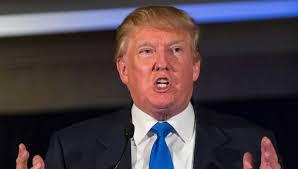
Donald Trump
Most Presidents try to seem friendly and caring toward their fellow Americans.
This held true even for Richard M. Nixon, when, on May 9, 1970, he made an impromptu visit to the Lincoln Memorial and engaged in a rambling dialogue with Vietnam war protesters.
As both a Presidential candidate and President, Trump repeatedly used Twitter to attack hundreds of real and imagined enemies in politics, journalism, TV and films.
Among his infuriating acts as President, he
- Allowed a deadly virus to ravage the country, killing 400,000 Americans by the end of his term.
- Attacked medical experts and governors who urged Americans to wear masks and socially distance to protect themselves from COVID-19.
- Attacked the integrity of the FBI and CIA for determining that Russia interfered in the 2016 Presidential election on his behalf.
- Attacked and alienated America’s oldest allies, such as Canada and Great Britain.
- Shut down the United States Government, imperiling the lives of 800,000 Federal employees, to extort money from Congress for a worthless wall on the U.S.-Mexico border.
- Attacked the free press as “the enemy of the people.”
Even as an ex-President, he poses a mortal threat to American democracy. On September 1, President Joe Biden outlined those dangers:
“The Republican Party today is dominated, driven, and intimidated by Donald Trump and the MAGA Republicans, and that is a threat to this country.
“MAGA Republicans do not respect the Constitution. They do not believe in the rule of law. They do not recognize the will of the people.
“They refuse to accept the results of a free election. And they’re working right now, as I speak, in state after state to give power to decide elections in America to partisans and cronies, empowering election deniers to undermine democracy itself.
“MAGA forces are determined to take this country backwards—backwards to an America where there is no right to choose, no right to privacy, no right to contraception, no right to marry who you love.
“They promote authoritarian leaders, and they fan the flames of political violence that are a threat to our personal rights, to the pursuit of justice, to the rule of law, to the very soul of this country.”
By Machiavelli’s standards, Trump has made himself the perfect target for a conspiracy: “When a prince becomes universally hated, it is likely that he’s harmed some individuals—who thus seek revenge. This desire is increased by seeing that the prince is widely loathed.”
.jpg&imgrefurl=https%3A%2F%2Fen.wikipedia.org%2Fwiki%2FJulius_Caesar&docid=i5zp8D4W-fCkiM&tbnid=pa1aoGEpET-OGM%3A&vet=1&w=1117&h=1769&bih=414&biw=745&ved=0ahUKEwjsvNnh8-rSAhULe7wKHWZBDxoQMwhQKBUwFQ&iact=c&ictx=1)
 Bureaucracybuster's Blog
2016 PRESIDENTIAL CAMPAIGN, ABC NEWS, ADOLF HITLER, ALTERNET, AMERICABLOG, AP, BABY BOOMER RESISTANCE, BERNIE SANDERS, BUZZFEED, CARLY FIORINA, CBS NEWS, CNN, COMMUNISM, COVID-19, CROOKS AND LIARS, DAILY KOS, DAILY KOZ, DAVID BROOKS, DAVID HALBERSTAM, DEMOCRATIC PARTY, DEMOCRATS, DENNIS HASTERT, DONALD TRUMP, ELIZABETH WARREN, FACEBOOK, FIVETHIRTYEIGHT, HELEN GAHAGAN DOUGLAS, HILLARY CLINTON, JEB BUSH, JOHN KASICH, JOSEPH MCCARTHY, JOSEPH R. MCCARTHY, JOSH DUGGAR, LANGUAGE, LIBERALS, MARCO RUBIO, MARJORIE TAYOR GREENE, MARK SHIELDS, MAXINE WATERS, MEGYN KELLY, MICHELLE OBAMA, MOTHER JONES, MOVEON, MSNBC, NANCY PELOSI, NATO, NBC NEWS, NEWSWEEK, NEWT GINGRICH, NPR, PBS NEWSHOUR, POLITICO, POLITICUSUSA, RAW STORY, REPUBLICAN PARTY, REPUBLICANS, REUTERS, RICHARD NIXON, RICK PERRY, RUSSIA, SALON, SATIRE, SEATTLE TIMES, SLANDER, SLATE, TALKING POINTS MEMO, THE ATLANTIC, THE CHICAGO SUN-TIMES, THE CHICAGO TRIBUNE, THE DAILY BEAST, THE DAILY BLOG, THE GUARDIAN, THE HILL, THE HUFFINGTON POST, THE LOS ANGELES TIMES, THE NATION, THE NEW YORK TIMES, THE WASHINGTON POST, THINKPROGRESS, TIME, TRUTHDIG, TWITTER, U.S. NEWS & WORLD REPORT, UPI, USA TODAY, VLADIMIR PUTIN, YOUTUBE
A LESSON FOR DEMOCRATS: WORDS ARE WEAPONS: PART ONE (OF TWO)
In Bureaucracy, History, Politics, Social commentary on October 26, 2022 at 12:10 amIn 1996, Newt Gingrich, then Republican Speaker of the House of Representatives, wrote a memo that encouraged Republicans to “speak like Newt.”
Entitled “Language: A Key Mechanism of Control,” it urged Republicans to attack Democrats with such words as “corrupt,” “selfish,” “destructive,” “hypocrisy,” “liberal,” “sick,” and “traitors.”
Even worse, Gingrich encouraged the news media to disseminate such accusations. Among his suggestions:
Newt Gingrich
In the memo, Gingrich advised:
“….In the video “We are a Majority,” Language is listed as a key mechanism of control used by a majority party, along with Agenda, Rules, Attitude and Learning.
“As the tapes have been used in training sessions across the country and mailed to candidates we have heard a plaintive plea: ‘I wish I could speak like Newt.’
“That takes years of practice. But, we believe that you could have a significant impact on your campaign and the way you communicate if we help a little. That is why we have created this list of words and phrases….
“This list is prepared so that you might have a directory of words to use in writing literature and mail, in preparing speeches, and in producing electronic media.
“The words and phrases are powerful. Read them. Memorize as many as possible. And remember that like any tool, these words will not help if they are not used.”
Here is the list of words Gingrich urged his followers to use in describing “the opponent, their record, proposals and their party”:
Yes, speaking like Newt—or Adolf Hitler or Joseph R. McCarthy—“takes years of practice.”
And to the dismay of both Republicans and Democrats, Donald Trump has learned his lessons well.
On May 27, 2016, conservative New York Times columnist David Brooks analyzed the use of insults by Republican Presidential front-runner Donald Trump. He did so with his counterpart, liberal syndicated columnist, Mark Shields, on The PBS Newshour.
DAVID BROOKS: “Trump, for all his moral flaws, is a marketing genius. And you look at what he does. He just picks a word and he attaches it to a person. Little Marco [Rubio], Lyin’ Ted [Cruz], Crooked Hillary [Clinton].
“And that’s a word. And that’s how marketing works. It’s a simple, blunt message, but it gets under.
“It sticks, and it diminishes. And so it has been super effective for him, because he knows how to do that. And she [Hillary Clinton] just comes with, ‘Oh, he’s divisive.’
“These are words that are not exciting people. And her campaign style has gotten, if anything…a little more stagnant and more flat.”
Donald Trump
MARK SHIELDS: “Donald Trump gratuitously slandered Ted Cruz’s wife. He libeled Ted Cruz’s father for being potentially part of Lee Harvey Oswald’s assassination of the president of the United States, suggesting that he was somehow a fellow traveler in that.
“This is a libel. You don’t get over it….”
Hillary Clinton wasn’t the only Presidential candidate who proved unable to cope with Trump’s gift for insult. His targets—and insults—included:
Trump has reserved his most insulting words for women. For example:
Only one candidate has shown the ability to rattle Trump: Massachusetts Senator Elizabeth Warren.
As Mark Shields noted on The PBS Newshour.
“Elizabeth Warren gets under Donald Trunp’s skin. And I think she’s been the most effective adversary. I think she’s done more to unite the Democratic party than either Hillary Clinton or Bernie Sanders.
“I mean, she obviously—he can’t stay away from her. He is tweeting about her.”
And David Brooks offered: “And so the tactics…is either you do what Elizabeth Warren has done, like full-bore negativity, that kind of [get] under the skin, or try to ridicule him and use humor.”
A May 12, 2016 story on CNN—“Elizabeth Warren Gives Trump a Dose of His Own Medicine on Twitter”—noted: “Whenever Trump criticizes her, Warren fires right back at him, sometimes twice as hard.”
Share this: