Archive for the ‘Military’ Category
2016 PRESIDENTIAL CAMPAIGN, ABC NEWS, ALTERNET, AP, BARACK OBAMA, BBC, BUZZFEED, CBS NEWS, CIA, CLINTON WATTS, CNN, CROOKS AND LIARS, CYBERWARFARE, DAILY KOS, DAILY KOZ, DEMOCRATIC NATIONAL COMMITTEE, DIRECTOR OF NATIONAL INTELLIGENCE, DONALD TRUMP, ESPIONAGE, EUROPEAN UNION (EU), FACEBOOK, FBI, FOX NEWS SUNDAY, HILLARY CLINTON, JAMES COMEY, JARED KUSHNER, MICHAEL FLYNN, MICHAEL T. FLYNN, MIKE PENCE, MOTHER JONES, MOVEON, NBC NEWS, NEWSWEEK, NORTH ATLANTIC TREATY ORGANIZATION (NATO), NPR, POLITICO, RAW STORY, REPUBLICAN NATIONAL CONVENTION, REUTERS, ROBERT MUELLER, RUSSIA, SALLY YATES, SALON, SEATTLE TIMES, SERGEY KISLYAK, SLATE, THE ATLANTIC, THE CHICAGO SUN-TIMES, THE CHICAGO TRIBUNE, THE DAILY BEAST, THE GUARDIAN, THE HILL, THE HUFFINGTON POST, THE LOS ANGELES TIMES, THE NATION, THE NEW YORK TIMES, THE WALL STREET JOURNAL, THE WASHINGTON POST, TIME, TWITTER, U.S. NEWS & WORLD REPORT, U.S. SENATE SELECT COMMITTEE ON INTELLIGENCE, UPI, USA TODAY, VLADIMIR PUTIN, WIKILEAKS
In Bureaucracy, History, Law, Law Enforcement, Military, Politics, Social commentary on December 4, 2017 at 12:02 am
Donald Trump was the star of the 2016 Republican National Convention. But not even he could fire up the delegates like Hillary Clinton, the former First Lady turned Democratic presidential nominee.
As chants of “Lock her up!” spread across the convention floor, Michael T. Flynn voiced his agreement. “Lock her up—that’s right.”
Movie-star handsome, the former United States Army lieutenant general and director of the Defense Intelligence Agency was clearly enjoying his moment as a keynote speaker.
Clapping his hands, he continued: “I’m gonna tell you what. It’s unbelievable—unbelievable.
“I have called on Hillary Clinton to drop out of the race, because she—she—put our nation’s security at extremely high risk for their careless use of a private email server.

Michael Flynn at the Republican convention
“Lock her up—lock her up. You guys [the audience] are good. Damn right—-that’s exactly right. There’s nothing wrong with that.
“You know why we’re saying that? We’re saying that because if I—a guy who knows this business—if I did a tenth of what she did, I would be in jail today.”
That was July 18, 2016.
Six months and two days later, he was riding even higher: On January 20—the day Donald J. Trump became President—Flynn took office as the nation’s 25th National Security Adviser.
Two days later, The Wall Street Journal reported that Flynn was under investigation by U.S. counterintelligence agents for his communications with Russian officials.
On February 8, Flynn flatly denied having spoken to Russian ambassador Sergey Kislyak in December, 2016, about removing the sanctions placed on Russia by the outgoing Obama administration.
The sanctions had been placed in retaliation for Russia’s efforts to manipulate the 2016 Presidential election.
On February 13, The Washington Post reported that Acting Attorney General Sally Yates had warned Trump in late January that Flynn had lied about his contacts with Kislyak—and that he could be blackmailed by Russian Intelligence.
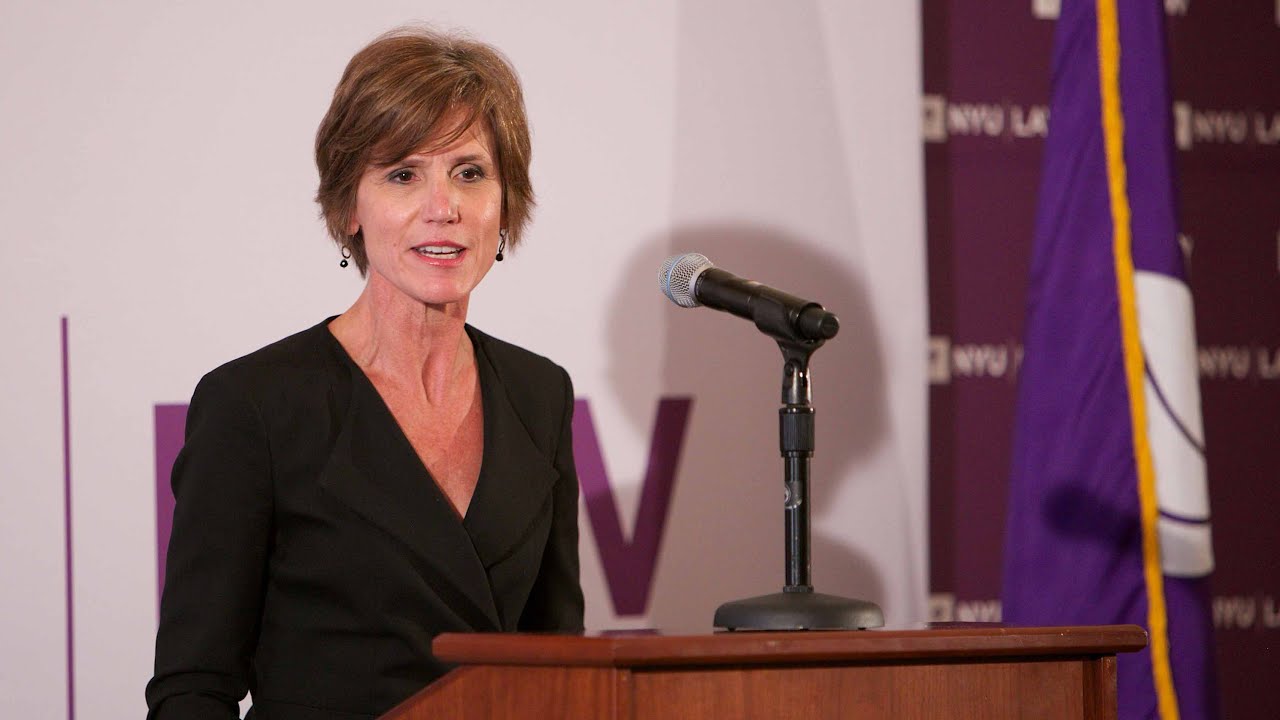
Sally Yates
Flynn was forced to resign that same day—after only 24 days as National Security Adviser.
Officially, the reason given was that he had misled Vice President Mike Pence. But Flynn’s deception had already been known—via the warning to Trump by Yates.
Only after Yates’ warning became known to the media was Flynn forced to resign.
Even worse for Flynn: The same Washington Post story reported that, in December, 2015, he had appeared on Russia Today, the news network that American Intelligence agencies consider “the Kremlin’s principal international propaganda outlet.”
He had also received more than $45,000 as a “speaking fee” from the network for a talk on world affairs. At the gala where Flynn received the fee, he sat next to Vladimir Putin for dinner.
Flynn had not filed the required paperwork for the trip. Nor had he reported the “fee” to the Pentagon.
Meanwhile, as a Presidential candidate and President, Donald Trump has steadfastly denied the revelations about collaboration between members of his 2016 Presidential campaign and Russian Intelligence agents.
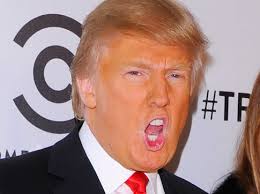
Donald Trump
He has repeatedly attacked the “fake news” media reporting these revelations. Chief among his targets: CNN, The New York Times and The Washington Post.
He has also derided the Intelligence agencies responsible for America’s security.
On December 16, 2016, then-FBI Director James B. Comey and Director of National Intelligence James R. Clapper Jr. agreed with a CIA assessment that Russia intervened in the 2016 election in part to help Donald Trump win the White House.

Trump, however, has steadfastly denied any such role by Russia: “I think it’s ridiculous,” he told “Fox News Sunday.” “I think it’s just another excuse. I don’t believe it….No, I don’t believe it at all.”
On December 1, 2017, Flynn went from “Lock her up!” to “Don’t lock me up.”
He pleaded guilty to lying to the FBI about conversations with then-Russian Ambassador Kislyak. And he revealed that he was cooperating with the office of Special Prosecutor Robert Mueller.
One of Flynn’s bosses was Jared Kushner, Trump’s son-in-law and senior adviser. It’s certain that Flynn is in a position to “roll over” on Kushner—who, if threatened with prison, might be induced to “roll over” on Trump.
For Donald Trump, the holiday season promises to be a very Mueller Christmas.
HAVE YOURSELF A ROBERT MUELLER CHRISTMAS
(To be sung to the tune, “Have Yourself a Merry Little Christmas”)
Have yourself a Robert Mueller Christmas
Let your hearts be light.
From now on the Fascists will be filled with fright.
Have yourself a Robert Mueller Christmas
Let your hearts be gay.
I can’t wait till all the traitors go away.
Here we are as in Watergate
Traitors filled with hate feel fear.
Faithless friends now are selling out
Let us give a shout—and cheer.
Soon we hope their Fuhrer will be history
Crying Fascist tears.
When the Traitor’s gone we’ll put away our fears.
And celebrate in Robert Mueller’s name for years.
Here we are as in Watergate
Traitors filled with hate feel fear.
Faithless friends now are selling out
Let us give a shout—and cheer.
Soon we hope their Fuhrer will be history
Crying Fascist tears.
When the Traitor’s gone we’ll put away our fears.
And celebrate in Robert Mueller’s name for years.
ABC NEWS, ADOLF HITLER, AFGHANISTAN, ALTERNET, AP, BARACK OBAMA, BUZZFEED, CBS NEWS, CNN, CROOKS AND LIARS, DAILY KOZ, DONALD TRUMP, EL ELAMEIN, ERWIN ROMMEL, FACEBOOK, FRIEDRICH VON PAULUS, GEORGE W. BUSH, GREAT BRITAIN, IRAQ, JAPAN, JOSEPH GOEBBELS, MOSCOW, MOTHER JONES, MOVEON, NAZI GERMANY, NBC NEWS, NEWSWEEK, NPR, PEARL HARBOR, POLITICO, RAW STORY, REUTERS, SALON, SEATTLE TIMES, SLATE, SOVIET UNION, STALINGRAD, THANKSGIVING MESSAGE TO U.S. TROOPS, THE ATLANTIC, THE CHICAGO SUN-TIMES, THE CHICAGO TRIBUNE, THE DAILY BEAST, THE GUARDIAN, THE HILL, THE HUFFINGTON POST, THE LOS ANGELES TIMES, THE NATION, THE NEW YORK TIMES, THE WASHINGTON POST, TIME, TOTAL WAR SPEECH, TWITTER, U.S. NEWS & WORLD REPORT, UNITED STATES, UPI, USA TODAY, WEHRMACHT, WINSTON CHURCHILL, WORLD WAR ii
In Bureaucracy, History, Military, Politics, Social commentary on November 27, 2017 at 1:50 am
By February, 1943, the tide of war had turned irrevocably for Nazi Germany.
The string of quick and easy victories that had started on September 1, 1939 was over:
- Poland
- Norway
- Denmark
- Holland
- Belgium
- Luxembourg
- Greece
- France.
All had fallen under the heel of the Nazi jackboot. The swastika flag still flew triumphantly over the capitols of these once-free nations.
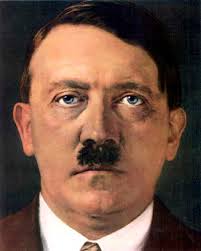
Adolf Hitler
And the word—and whim—of Germany’s Fuhrer, Adolf Hitler remained law for their populations.
But by March, 1943, all except the most fanatical Nazis could see that Germany was on a collision course with disaster.
- Under the unshakable leadership of Prime Minister Winston Churchill, Great Britain still remained a sworn enemy of the Third Reich.
- After six months of spectacular victories against the Soviet Union, the Wehrmacht had become hopelessly bogged down in the snow before Moscow.
- On December 11, 1941, following the attack on Pearl Harbor by his ally, Japan, Hitler declared war on the United States—thus pitting the Reich against the world’s two most powerful nations: America and Russia.
- In November, 1942, at El Alamein, the British Army halted the advance of General Erwin Rommel and his famed Afrika Korps across North Africa.
- On February 2, 1943, General Friedrich von Paulus surrendered the remains of the once-powerful Sixth Army at Stalingrad. The Reich suffered 730,000 total casualties, including nearly 91,000 German prisoners taken prisoner.
- On June 6, 1944, American, British and Canadian armies overwhelmed German’s “impregnable wall of death” on the Normandy beaches.
- In February, 1945, following the Vistula-Oder Offensive, the Red Army temporarily halted 37 miles east of Berlin.
So, by March, 1943, Germany desperately needed to hear some good news. And Propaganda Minister Joseph Goebbels was eager to supply it.
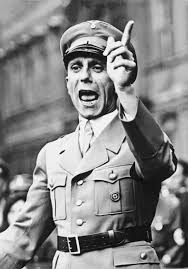
Joseph Goebbels
He did so in one of his last public addresses, delivered to a large but carefully selected audience in Gorlitz.
For Goebbels, the greatest challenge to the Reich lay in “the Bolshevist danger in the East.” And, for him, the solution was clear: “Total war is the demand of the hour.”
“Our soldiers, as soon as the great push on the Eastern Front gets under way, will ask no mercy and give no mercy.
“Already, our forces have begun softening up operations, and in the next weeks and months the big offensive will begin. They will go into battle with devotion like congregations going to a religious service.
“And when our men shoulder their weapons and climb into their tanks, there will be before their eyes the sight of their violated women and murdered children. A cry of vengeance will rise from their throats that will make the enemy tremble with fear!
“So, as the Fuhrer has overcome crises in the past, so will he triumph now.
“The other day he told me ‘I firmly believe that we shall overcome this crisis. I firmly believe that our army of millions will beat back our enemy and annihilate him. And some day our banners will be victorious. This is my life’s unshakable belief.'”
Thunderous applause repeatedly interrupted Goebbels’ address. Yet this could not replace the enormous losses Germany had suffered since 1939. Nor could it reverse the march of the Allied armies as they closed in on the Reich from East and West.
Now, fast-forward 74 years to November 23, 2017—Thanksgiving Day.
Donald Trump, President of the United States, speaks by video teleconference to American forces stationed in Iraq and Afghanistan.
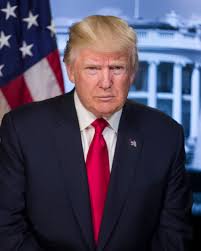
Donald Trump
President George W. Bush had flown into Baghdad in 2003 to spend Thanksgiving with American forces. He flew into Iraq once again to visit troops in June, 2006.
And President Barack Obama visited American soldiers in Iraq in 2009, in Afghanistan in 2010, 2012 and 2014.
Trump’s “visit” was unique—in that he addressed American troops from his Mar-a-Lago Club and Resort in Palm Beach, Florida.
The address started off predictably enough: “It’s an honor to speak with you all and to give God thanks for the blessings of freedom and for the heroes who really have this tremendous courage that you do to defend us and to defend freedom.”
But, being Trump, he could not resist paying homage to himself: “We’re being talked about again as an armed forces. We’re really winning. We know how to win, but we have to let you win. They weren’t letting you win before; they we’re letting you play even. We’re letting you win….
“They say we’ve made more progress against ISIS than they did in years of the previous administration, and that’s because I’m letting you do your job….”
In short: All those sacrifices you made under Presidents Bush and Obama went for nothing.
“A lot of things have happened with our country over the last very short period of time, and they’re really good — they’re really good. I especially like saying that companies are starting to come back.
“Now we’re working on tax cuts—big, fat, beautiful tax cuts. And hopefully we’ll get that and then you’re going to really see things happen.”
Or, put another way: Be grateful they elected me—because you’re about to see the 1% richest get even richer. Too bad you won’t be so lucky.
2016 PRESIDENTIAL CAMPAIGN, ABC NEWS, ALTERNET, AMERICAN UNIVERSITY, AP, APOLLO MOON LANDING, BARACK OBAMA, BARBARA TUCHMAN, BUZZFEED, CBS NEWS, CNN, COLD WAR, CROOKS AND LIARS, CUBAN MISSILE CRISIS, DAILY KOZ, DONALD TRUMP, DREAMS FROM MY FATHER, FACEBOOK, HERMAN CAIN, JOHN F. KENNEDY, KELLEYANNE CONWAY, LIBYA, LILTERACY, LYNDON B. JOHNSON, MOTHER JONES, MOVEON, NBC NEWS, NEWSWEEK, NPR, NUCLEAR TEST BAN TREATY, POLITICO, RATIONALITY, RAW STORY, REUTERS, RICHARD M. NIXON, RICK PERRY, SALON, SEAN SPICER, SEATTLE TIMES, SLATE, SUPER COMMITTEE OF CONGRESS, SUPREME COURT, THE ATLANTIC, THE AUDACITY OF HOPE, THE CHICAGO SUN-TIMES, THE CHICAGO TRIBUNE, THE DAILY BEAST, THE GUARDIAN, THE GUNS OF AUGUST, THE HILL, THE HUFFINGTON POST, THE LOS ANGELES TIMES, THE NATION, THE NEW YORK TIMES, THE WASHINGTON POST, TIME, TWITTER, U.S. NEWS & WORLD REPORT, UPI, USA TODAY, VIETNAM WAR, WORLD WAR 1
In Bureaucracy, History, Military, Politics, Social commentary on November 22, 2017 at 12:03 am
Fifty-four years ago, on November 22, 1963, two bullets slammed into the neck and head of President John Fitzgerald Kennedy.
It has been said that JFK left his country with three great legacies:
- The Nuclear Test Ban Treaty;
- The Apollo moon landing; and
- The Vietnam war.
Of these, the following can be said with certainty:
- The Test Ban Treaty has prevented atmosphereic testing—and poisoning—by almost all the world’s nuclear powers.
- After reaching the moon—in 1969—Americans quickly lost interest in space and have today largely abandoned plans for manned exploration. For America, as for JFK, beating the Russians to the moon was the end-goal.
- Under Presidents Lyndon Johnson and Richard Nixon, 58,000 Americans died in Vietnam; 153,303 were wounded; and billions of dollars were squandered in a hopeless effort to intervene in what was essentially a Vietnamese civil war. From 1965 to 1972, the war angrily divided Americas as had no event since the Civil War.
But there was a fourth legacy—and perhaps the most important of all: The belief that mankind could overcome its greatest challenges through rationality and perseverance.
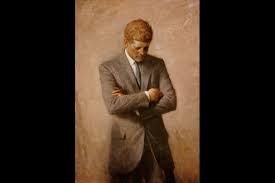
White House painting of JFK
At American University on June 10, 1963, Kennedy called upon his fellow Americans to re-examine the events and attitudes that had led to the Cold War. And he declared that the search for peace was by no means absurd:
“Our problems are man-made; therefore, they can be solved by man. And man can be as big as he wants. No problem of human destiny is beyond human beings.
“Man’s reason and spirit have often solved the seemingly unsolvable, and we believe they can do it again.”
Today, politicians from both parties cannot agree on solutions to even the most vital national problems.
On November 21, 2011, the 12 members of the “Super-Committee” of Congress, tasked with finding $1.2 trillion in cuts in government spending, threw up their hands in defeat.
President Kennedy insisted on being well-informed. He speed-read several newspapers every morning and nourished personal relationships with the press-–and not for altruistic reasons. These journalistic contacts gave Kennedy additional sources of information and perspectives on national and international issues.
During the 2012 Presidential campaign, Republican Presidential candidates celebrated their ignorance of both.
Former Godfather’s Pizza CEO Herman Cain famously said, “We need a leader, not a reader.” Thus he excused his ignorance for why President Barack Obama had intervened in Libya.
Texas Governor Rick Perry (and now Secretary of Energy) showed similar pride in not knowing there are nine judges on the United States Supreme Court:
“Well, obviously, I know there are nine Supreme Court judges. I don’t know how eight came out my mouth. But the, uh, the fact is, I can tell you—I don’t have memorized all of those Supreme Court judges. And, uh, ah—
“Here’s what I do know. That when I put an individual on the Supreme Court, just like I done in Texas, ah, we got nine Supreme Court justices in Texas, ah, they will be strict constructionists….”
In short, it’s the media’s fault if they ask you a question and your answer reveals your own ignorance, stupidity or criminality.
And President Donald Trump has gone even further—attacking the free press as “the enemy of America” for exposing his lies and criminality.
His senior adviser, Kelleyanne Conway, set the tone of his administration’s approach to the truth right at the outset. Asked why then-White House press secretary Sean Spicer had lied about the size of the crowd at Trump’s inauguration, Conway replied:
“You’re saying it’s a falsehood. And they’re giving—Sean Spicer, our press secretary—gave alternative facts.”
“Alternative facts aren’t facts, they are falsehoods,” Chuck Todd, the moderator on NBC’s “Meet the Press,” properly responded.
During the height of the Cuban Missile Crisis, Kennedy spoke with aides about a book he had just finished: Barbara Tuchman’s The Guns of August, about the events leading to World War 1.
He said that the book’s most important revelation was how European leaders had blindly rushed into war, without thought to the possible consequences. Kennedy told his aides he did not intend to make the same mistake–that, having read his history, he was determined to learn from it.
Republicans attacked President Obama for his Harvard education and articulate use of language. Among their taunts: “Hitler also gave good speeches.”
And they resented his having earned most of his income as a writer of two books: Dreams From My Father and The Audacity of Hope. As if being a writer is somehow subversive.
When knowledge and literacy are attacked as “highfalutin’” arrogance, and ignorance and incoherence are embraced as sincerity, national decline lies just around the corner.
During the 2016 Presidential campaign, Donald Trump infamously chortled after winning the Nevada Republican primary: “We won with poorly educated. I love the poorly educated.”
And, that November, “the poorly educated” elected him President.
In retrospect, the funeral for President Kennedy marked the death of more than a rational and optimistic human being.
It marked the death of Americans’ pride in choosing reasoning and educated citizens for their leaders.
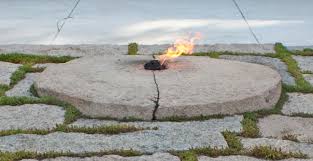
The Eternal Flame at the grave of President John F. Kennedy
2016 PRESIDENTIAL CAMPAIGN, ABC NEWS, ADOLF HITLER, ALTERNET, ANCIENT ROME, ANTONIN SCALIA, AP, BUZZFEED, CAMPAIGN CONTRIBUTIONS, CBS NEWS, CITIZENS UNITED, CLEOPATRA, CNN, CROOKS AND LIARS, DAILY KOZ, DONALD TRUMP, FACEBOOK, FORECLOSURES, GLADIATORS, JULIUS CAESAR, KIRK DOUGLAS, LAURENCE OLIVER, MARCUS CRASSUS, MEIN KAMPF, MITT ROMNEY, MOTHER JONES, MOVEON, NBC NEWS, NEWSWEEK, NEWT GINGRICH, NPR, POLITICO, RAW STORY, REUTERS, SALON, SEATTLE TIMES, SHELDON ADELSON, SLATE, SPARTACUS, SUPREME COURT, THE ATLANTIC, THE CHICAGO SUN-TIMES, THE CHICAGO TRIBUNE, THE DAILY BEAST, THE GUARDIAN, THE HILL, THE HUFFINGTON POST, THE LOS ANGELES TIMES, THE NATION, THE NEW YORK TIMES, THE WASHINGTON POST, TIME, TWITTER, U.S. NEWS & WORLD REPORT, UPI, USA TODAY
In Bureaucracy, History, Law, Military, Politics, Social commentary on November 17, 2017 at 12:07 am
The 1960 Kirk Douglas epic, Spartacus, may soon prove to be more than great entertainment. It may also turn out to be a prophecy of the end of the American Republic.
In the movie, Spartacus (Douglas), a Roman slave, entertains Marcus Crassus (Laurence Oliver) the richest man in Rome. He does so by fighting to the death as a gladiator.

Poster for Spartacus
While Spartacus and his fellow gladiator/friend, Draba, slash and stab at each other in the arena, Crassus idly chats with his crony, Marcus Glabrus.
Crassus has just secured Glabrus’ appointment as commander of the garrison of Rome. Glabrus is grateful, but curious as to how he did it.
After all, Gaius Gracchus, the leader of the Roman Senate, hates Crassus, and stands ever ready to oppose his every move.
“I fought fire with oil,” says Crassus. “I purchased the Senate behind his back.”
Draba defeats Spartacus in their gladiatorial bout, but refuses to kill him. Instead, he throws his spear at Crassus—and is immediately slaughtered by Roman guards.
Soon afterward, Spartacus leads 70 other gladiators against their Roman masters, forms an army of freed slaves, and marches against Rome.
Just as Crassus bought the Roman Senate in Spartacus, billionaires similarly bought the 2016 Presidential election.
In 2016, Newt Gingrich, former Speaker of the House of Representatives, ran as the pet candidate of casino billionaire Sheldon G. Adelson. Since 2007, Adelson had spent millions in support of Gingrich and his causes.
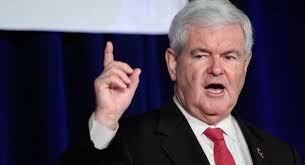
Newt Gingrich
Adelson put up seed money and, ultimately, $7.7 million between 2006 and 2010 for a nonprofit group that served as a precursor to Gingrich’s presidential campaign.
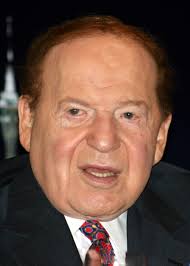
Sheldon Adelson
Such a contribution is no small amount to the average American. But Adelson is listed by Forbes as the eighth-wealthiest American, with a net worth of $21.5 billion.
Naturally, Adelson denied he had any selfish motives for shelling out so much money to a candidate for the most powerful office in the world:
“My motivation for helping Newt is simple and should not be mistaken for anything other than the fact that my wife Miriam and I hold our friendship with him very dear and are doing what we can as private citizens to support his candidacy.”
Unfortunately, Gingrich was not the only candidate of the rich, by the rich and for the rich seeking the Presidency.
Former Massachusetts Governor Mitt Romney relied heavily on a small group of millionaires and billionaires for support.
By February, 2012, a quarter of the money amassed by Romney’s campaign came from just 41 people. Each contributor gave more than $100,000, according to a Washington Post analysis of disclosure data. Nearly a dozen of the donors had contributed $1 million or more.
Some of Romney’s biggest supporters included executives at Bain Capital, his former firm; bankers at Goldman Sachs; and a hedge fund mogul who made billions betting on the housing crash.
Like Adelson, Bain has directly profited from the losses of others.
Fast forward to 2016:
In early May, Adelson met privately with Republican Presidential nominee-in-waiting Donald Trump. Nevertheless, at least this much has leaked:
Adelson promised to contribute more to secure Trump’s election than he had contributed to any previous campaign—up to and exceeding $100 million.
Meanwhile, Trump bragged that he was “not beholden” to any “special interests” because “I’m really rich.” This myth proved a main reason for his popularity as a candidate.
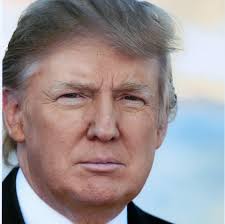
Donald Trump
All of this can be directly traced to the 2010 “Citizens United” decision by the U.S. Supreme Court that ended limits in corporate contributions to political campaigns. The decision is so named for the group that successfully sued over federal campaign finance laws.
The 5-4 decision led to the rise of Super PACs—outside groups affiliated with candidates that can take in unlimited contributions as long as they don’t directly coordinate with the candidate. The overwhelming majority of this money goes for negative ads—that slander opponents without saying anything about what a candidate proposes to do.
Former U.S. Supreme Court Justice Antonin Scalia brushed aside criticism of the corrupting role money played in politics: Change the channel or turn off the TV.
“I don’t care who is doing the speech—the more the merrier,” Scalia said. “People are not stupid. If they don’t like it, they’ll shut it off.”
On the contrary: A fundamental principle of propaganda holds that most people are stupid—or can be made to behave stupidly. If they are ceaselessly bombarded with mind-numbing lies, they will eventually substitute these for reality.
In Mein Kampf, Adolf Hitler laid out his formula for successful propaganda: “All effective propaganda must be confined to a few bare essentials.
“These must be expressed as far as possible in stereotypical formulas. These slogans should be persistently repeated until the very last individual has come to grasp the idea that has been put forward.”
During the early 1960s a series of movies about the Roman Empire—like Spartacus and Cleopatra—hit the big screen. In these, rich criminals like Marcus Crassus openly bought the favors of ambitious politicians like Julius Caesar.
No doubt millions of moviegoers thought, “Boy, I’m glad that couldn’t happen here.”
But it has happened here—and it’s happening right now.
ABC NEWS, ALTERNET, AP, BARACK OBAMA, BOB CORKER, BUZZFEED, CBS NEWS, CNN, CROOKS AND LIARS, DAILY KOZ, DONALD TRUMP, FACEBOOK, ISIS, MALI, MERCENARIES, MOTHER JONES, MOVEON, NATIONAL FOOTBALL LEAGUE, NBC NEWS, NEWSWEEK, NICCOLO MACHIAVELLI, NIGER, NORTH KOREA, NPR, POLITICO, PUERTO RICO, RAW STORY, REUTERS, SALON, SEATTLE TIMES, SLATE, STALINGRAD, THE ATLANTIC, THE CHICAGO SUN-TIMES, THE CHICAGO TRIBUNE, THE DAILY BEAST, THE GUARDIAN, THE HILL, THE HUFFINGTON POST, THE LOS ANGELES TIMES, THE NATION, THE NEW YORK TIMES, THE WASHINGTON POST, TIME, TWITTER, U.S. NEWS & WORLD REPORT, UP, UPI, USA TODAY
In Bureaucracy, History, Military, Politics, Social commentary on November 7, 2017 at 12:03 am
On October 4, four American Special Forces soldiers were ambushed and gunned down at the border of Niger and Mali.
For 12 days after the tragedy, President Donald Trump said nothing.
Then, during an October 16 press conference in the White House Rose Garden, a reporter asked him about his silence.

Donald Trump
So Trump claimed—falsely—that earlier Presidents—including Barack Obama—had never or rarely called or written family members of soldiers who died on duty.
But it was his call to Myeshia Johnson, the widow of Sergeant La David Johnson, that ignited a firestorm.
According to Florida Democratic Representative Frederica Wilson, Trump’s condolence call was brutally insensitive. Wilson was riding in a limousine with Johnson and heard the conversation on speakerphone.
“He knew what was signing up for, but I guess it hurts anyway,” Wilson quoted Trump as telling the grieving widow.
But maybe Sergeant Johnson didn’t know what he was signing up for.
On October 19, Pentagon officials said that a private contractor airlifted some of the troops from the scene.
Trump had sent a private aviation contractor—instead of the U.S. military—to retrieve the bodies of the four soldiers killed in Niger.
Robyn Mack, an official for U.S. Africa Command, said Texas-based Berry Aviation was “on alert during the incident and conducted casualty evacuation and transport for US and partner forces.”
Sergeant Johnson’s body was left behind when the bodies of his three fellow soldiers were evacuated. His remains were recovered two days after the extraction by Nigerien troops.
Even worse, his corpse had been so corrupted by heat that the Pentagon demanded a closed coffin for his burial service.
Contractor aircraft are typically not armed, though their crews may carry side-arms for personal protection.
It’s possible that lightly-armed private contractors were so eager to leave the danger area they did a slapdash search for bodies—and accidentally left Johnson’s behind.
Berry Aviation has also done Defense Department work in Afghanistan, Central African Republic and Burkina Faso.
Since the end of the Cold War, the American military and Intelligence communities have grown increasingly dependent on private contractors. In the past, such groups were called mercenaries.
In his 2007 bestseller, Legacy of Ashes: The History of the CIA, Tim Weiner writes:
“Patriotism for profit became a $50-billion-a-year business….The [CIA] began contracting out thousands of jobs to fill the perceived void by the budget cuts that began in 1992.
“A CIA officer could file his retirement papers, turn in his blue identification badge, go to work for a much better salary at a military contractor such as Lockheed Martin or Booz Allen Hamilton, then return to the CIA the next day, wearing a green badge….”
Much of the CIA became totally dependent on mercenaries. They appeared to work for the agency, but their loyalty was actually to their private companies. The CIA thus had two workforces-–but the private one was paid far better.
Wrote Weiner: “Legions of CIA veterans quit their posts to sell their services to the agency by writing analyses, creating cover for overseas officers, setting up communications networks, and running clandestine operations.”
One such company was Total Intelligence Solutions, founded in 2007 by Cofer Black, who had been the chief of the CIA’s counter-terrorism center on 9/11.
His partners were Robert Richer, formerly the associate deputy director of operations at the CIA, and Enrique Prado, who had been Black’s chief of counter-terror operations at the agency.
Future CIA hires followed suit: Sign up for five years, win that prized CIA “credential” and sign up for far more money with a private security company.
This situation met with full support from Right-wing “pro-business” members of Congress and Presidents like George W. Bush.
They had long championed the private sector as inherently superior to the public one. And they saw no danger that a man dedicated to enriching himself might put greed ahead of safeguarding his country.
One of Trump’s key military advisers is Erik Prince, the former head of Blackwater. Under President George W. Bush, the now-infamous mercenary company got $1 billion to provide security for American officials and soldiers in Iraq and Afghanistan.
Blackwater was also accused of abusing Iraqis and engaging in torture.
There were, however, others who could have offered a timely warning against this use of mercenaries-–had there been leaders willing to heed it.
One of these, reaching back more than 500 years ago, was the Florentine statesman, Niccolo Machiavelli, who famously warned of the dangers of relying on mercenaries.
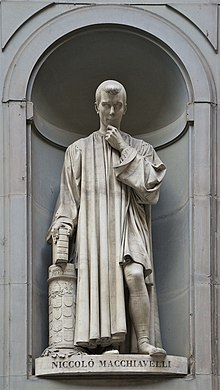
Niccolo Machiavelli
In The Prince, Machiavelli writes:
“Mercenaries…are useless and dangerous. And if a prince holds on to his state by means of mercenary armies, he will never be stable or secure. For they are disunited, ambitious, without discipline, disloyal. They are brave among friends; among enemies they are cowards.
“They have neither the fear of God nor fidelity to man, and destruction is deferred only as the attack is. For in peace one is robbed by them, and in war by the enemy.”
Centuries after Machiavelli’s warning, Americans are realizing the bitter truth of it firsthand.
9/11 ATTACKS, ABC NEWS, ALTERNET, AP, ARTHUR M. CUMMINGS, BOSTON GLOBE, BOSTON MARATHON, BOSTON MARATHON BOMBING, BOSTON PATCH, BRUSSELS BOMBINGS, BUZZFEED, CBS NEWS, CNN, CROOKS AND LIARS, DAILY KOZ, DONALD TRUMP, FACEBOOK, FBI, FIRST AMENDMENT, FRANKLIN D. ROOSEVELT, ISIS, ISLAM, ISLAMIC TERRORISM, JIHADIST, MOTHER JONES, MOVEON, NAZI GERMANY, NBC NEWS, NEWSWEEK, NPR, PARIS TERRORIST ATTACKS, POLITICAL CORRECTNESS, POLITICO, RADICAL ISLAM, RAW STORY, REUTERS, SALON, SAMUEL P. HUNTINGTON, SAN BERNARDINO MASSACRE, SEATTLE TIMES, SECURITY, SLATE, STEVEN EMERSON, THE ATLANTIC, THE CHICAGO SUN-TIMES, THE CHICAGO TRIBUNE, THE CLASH OF CIVILIZATIONS AND THE REMAKING OF WORLD ORDER, THE DAILY BEAST, THE GUARDIAN, THE HILL, THE HUFFINGTON POST, THE LOS ANGELES TIMES, THE NATION, THE NEW YORK TIMES, THE WASHINGTON POST, TIME, TWITTER, U.S. NEWS & WORLD REPORT, UP, UPI, US NEWS, USA TODAY, WORLD WAR 11
In Bureaucracy, Entertainment, History, Law, Law Enforcement, Military, Politics, Social commentary on November 3, 2017 at 12:13 am
Islamics are quick to assert that they, too, are Americans. But getting Islamics to point out the terrorists within their ranks is an entirely different matter.
According to author Ronald Kessler, this has caused serious problems for the FBI. In his 2011 book, The Secrets of the FBI, Kessler notes the refusal of the Islamic community to identify known or potential terrorists within its ranks.
Says Arthur M. Cummings, the Bureau’s executive assistant director for national security: “I had this discussion with the director of a very prominent Muslim organization here in [Washington] D.C. And he said, ‘Why are you guys always looking at the Muslim community?’”
“I can name the homegrown cells, all of whom are Muslim, all of whom were seeking to kill Americans,” replied Cummings. “It’s not the Irish, it’s not the French, it’s not the Catholics, it’s not the Protestants. It’s the Muslims.”
Occasionally, Muslims will condemn Al Qaeda. But “rarely do we have them coming to us and saying, ‘There are three guys in the community that we’re very concerned about.’” said Cummings.
“They don’t want anyone to know they have extremists in their community. Well, beautiful. Except do you read the newspapers? Everybody already knows it. The horse has left the barn.
“So there’s a lot of talk about engagement. But, realistically, we’ve got a long, long way to go.”
At one community meeting, an Islamic leader suggested to Cummings that then-FBI director Robert Meuller III should pose for a picture with his group’s members. The reason: To show that Islamics are partners in the “war on terror.”
“When you bring to my attention real extremists who are here to plan and do something, who are here supporting terrorism,” said Cummings, “then I promise you, I will have the director stand up on the stage with you.”
“That could never happen,” replied the Islamic leader. “We would lose our constituency. We could never admit to bringing someone to the FBI.”
Cummings has no use for such Politically Correct terms as “man-caused disasters” to refer to terrorism. Nor does he shy away from terms such as “jihadists” or “Islamists.”
“Of course Islamists dominate the terrorism of today,” he says bluntly.
In May, 2014, Steven Emerson, a nationally recognized expert on terrorism, posted an ad in The New York Times, warning about the dangers of PC-imposed censorship:
“Our nation’s security and its cherished value of free speech has been endangered by the bullying campaigns of radical Islamic groups, masquerading as ‘civil rights’ organizations, to remove any reference to the Islamist motivation behind Islamic terrorist attacks.
“These groups have pressured or otherwise colluded with Hollywood, the news media, museums, book publishers, law enforcement and the Obama Administration in censoring the words ‘Islamist’, ‘Islamic terrorism’, ‘radical Islam’ and ‘jihad’ in discussing or referencing the threat and danger of Islamic terrorism.
“This is the new form of the jihadist threat we face. It’s an attack on one of our most sacred freedoms—free speech—and it endangers our very national security. How can we win the war against radical Islam if we can’t even name the enemy?”
He has a point—and a highly legitimate one.
Imagine the United States fighting World War II—and President Franklin Roosevelt banning the use of “fascist” in referring to Nazi Germany or “imperialist” in describing Imperial Japan.
Imagine CNN-like coverage of the Nazi extermination camps, with their piles of rotting corpses and smoking gas ovens, while a commentator reminds us that “Nazism is an ideology of peace.”
Then try to imagine how the United States could have won that life-and-death struggle under such unrealistic and self-defeating restrictions.
It couldn’t have done so then. And it can’t do so now.
Then consider these Islamic terrorist outrages of our own time:
- The 9/11 attacks on the World Trade Center in New York City and the Pentagon in Washington, D.C., which snuffed out the lives of 3,000 Americans.
- The 2004 bombing of Madrid’s commuter train system.
- The attack on the London subway in 2005. The killing of 13 U.S. Army personnel at Fort Hood, Texas, by a Muslim army major in 2009.
- The bombing of the Boston Marathon in 2013.
- The kidnapping of 300 Nigerian school girls by Boko Haram in 2014.
- The slaughter of 12 people at a Paris satirical magazine that had published cartoons about the Prophet Mohammed in 2015.
- The slaughter of more than 100 people in ISIS attacks across Paris in 2015.
- A series of deadly terrorist attacks in Brussels, killing 31 and injuring 270 in 2016.
- The mashing of eight bicyclists and pedestrians by a truck-driving ISIS supporter in 2017.
In every one of these attacks, the perpetrators openly announced that their actions had been motivated by their Islamic beliefs.
In his groundbreaking book, The Clash of Civilizations (1996) Samuel Huntington, the late political scientist at Harvard University, noted:
“The fundamental problem for the West is not Islamic fundamentalism. It is Islam, a different civilisation whose people are convinced of the superiority of their culture and are obsessed with the inferiority of their power.”
The West may not be at war with Islam—as countless Western politicians repeatedly assert. But Islamics have no qualms about declaring that they are at war with the West.
9/11 ATTACKS, ABC NEWS, ALTERNET, AP, ARTHUR M. CUMMINGS, BOSTON GLOBE, BOSTON MARATHON, BOSTON MARATHON BOMBING, BOSTON PATCH, BRUSSELS BOMBINGS, BUZZFEED, CBS NEWS, CNN, CROOKS AND LIARS, DAILY KOZ, DONALD TRUMP, FACEBOOK, FBI, FIRST AMENDMENT, FRANKLIN D. ROOSEVELT, ISIS, ISLAM, ISLAMIC TERRORISM, JIHADIST, MOTHER JONES, MOVEON, NAZI GERMANY, NBC NEWS, NEWSWEEK, NPR, PARIS TERRORIST ATTACKS, POLITICAL CORRECTNESS, POLITICO, RADICAL ISLAM, RAW STORY, REUTERS, SALON, SAMUEL P. HUNTINGTON, SAN BERNARDINO MASSACRE, SEATTLE TIMES, SECURITY, SLATE, STEVEN EMERSON, THE ATLANTIC, THE CHICAGO SUN-TIMES, THE CHICAGO TRIBUNE, THE CLASH OF CIVILIZATIONS AND THE REMAKING OF WORLD ORDER, THE DAILY BEAST, THE GUARDIAN, THE HILL, THE HUFFINGTON POST, THE LOS ANGELES TIMES, THE NATION, THE NEW YORK TIMES, THE WASHINGTON POST, TIME, TWITTER, U.S. NEWS & WORLD REPORT, UP, UPI, US NEWS, USA TODAY, WORLD WAR 11
In Bureaucracy, Entertainment, History, Law, Law Enforcement, Military, Politics, Social commentary on November 2, 2017 at 12:12 am
The 2016 Boston Marathon was scheduled for April 18, 2016.
And local, State and Federal law enforcement authorities had been planning security for the event since October, 2015.
So it was only natural that these agencies wanted the public to know the Marathon would be as safe as more than 5,000 law enforcement officers could make it.

The Boston Marathon
“‘Leave the worrying to us’: Security Ramped Up for Boston Marathon,” read the headline of the April 16 issue of USA Today.
And it gave the reason for this: Three years earlier, on April 15, 2013, two bombers had wreaked havoc at the finish line of the race.
It also named the bombers—brothers Dzhokhar and Tamerlan Tsarnaev—whose terrorist act killed three people and injured about 264 others.

Tamerlan and Dzhokhar Tsarnaev
It further noted that Tamerlan had died in a shootout with police three days after the marathon–and police had captured Dzhohkar several hours later. (He was convicted by a jury and sentenced to death.)
But the story said nothing about their citing Islam as the reason for their murderous rampage.
Click here: ‘Leave the worrying to us’: Security ramped up for Boston Marathon
The April 16 edition of The Boston Patch carried this headline: “Boston Marathon 2016: Security Changes You Can’t See All Around You.”
The article stated that most of these precautions couldn’t be revealed. Then it added that even though law enforcement officials hadn’t identified a credible threat to this year’s Boston Marathon, “recent events make the world feel less safe today than in 2013.”
But the article said nothing about those “recent events,” such as:
- In 2013, two Muslims butchered and beheaded a British soldier on a busy London street.
- In 2014, an ax-wielding Muslim slashed two New York police officers before being shot by other cops.
- In 2015, Muslims slaughtered 12 people at a Paris satirical magazine for publishing cartoons about the Prophet Mohammed.
- In 2015, more than 100 people were murdered in ISIS attacks across Paris.
- In 2016, a series of Islamic terrorist bombings in Brussels killed 31 and injured more than 300.
Nor did the story say that all of these “recent events” were carried out by followers of the Islamic religion. Or that the perpetrators openly announced that their actions had been motivated by their Islamic beliefs.
Click here: Brussels attacks add urgency to Boston Marathon security | US News
On April 6, 2016, The Boston Globe announced: “Tight Security Planned for Upcoming Boston Marathon.”
The story noted that, in drawing up their security arrangements, “authorities analyzed terrorist attacks in Paris, San Bernardino, Calif., and Brussels in recent months.”
The San Bernardino attack had occurred on December 2, 2015.
The story said that Syed Rizwan Farook and Tashfeen Malik, had slaughtered 14 people and wounded 22 at a Department of Public Health training event and birthday party.
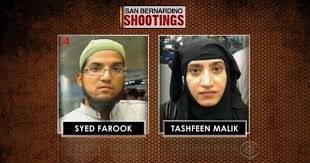
Tashfeen Malik and Syed Rizwan Farook
But the article did not inform readers that Farook and Malik were Muslims acting in the name of Islam.
The story quoted Harold Shaw, special agent in charge of the FBI’s Boston Field Office, as saying: “San Bernardino taught us something very significant. They [the killers] were not on the radar.”
But the article omitted “something very significant”: Farook and Malik had melded perfectly into American society before their outrage.
Thus, the only factor that could have put them “on the radar” as potential terrorists was their being Muslims.
And in an America driven by Political Correctness, noting that would have been verboten.
Click here: Tight security planned for upcoming Boston Marathon – The Boston Globe
NBC News carried a story on “How the Boston Marathon is Using Security Technology.”
The story then described how police used a high-tech partner, Esri, to track, in real-time, the progress of the morning’s race.
“When you look [at] security, there’s three legs to the stool: People, process and technology,” said Arnette Heintze, CEO and co-founder of Hillard Heintze, an investigation and security risk management company.
Click here: How the Boston Marathon is Using Security Technology – NBC News
Yet for all the gushing kudos leveled at the new uses of sophisticated technology for keeping people safe, one thing was conspicuously ignored.
The opening paragraph, “Three years after a deadly bombing at the Boston Marathon….” left unnamed those had made the use of this technology necessary–Tamerlan and Dzhokhar Tsarnaev.
Nor did it mention that Dzhokhar had laid out, in a note, his reason for attacking innocent men and women: “We Muslims are one body, you hurt one you hurt us all.
“Well at least that’s how Muhammed wanted it to be forever. The ummah [Islamic community] is beginning to rise.
“Know you are righting men who look into the barrel of your gun and see heaven, how how can you compete with that. We are promised victory and will surely get it.”
Click here: Text from Dzhokhar Tsarnaev’s note left in Watertown boat – The Boston Globe
Of all the Democratic and Republican Presidential candidates in 2016, only Donald Trump dared to say the politically un-sayable: Islam is at war with us.
And this candor—coupled with repeated Islamic atrocities—gained him both the Republican nomination and the White House.
ABC NEWS, ALTERNET, AMERICAN TABLOID, ANTI-CASTRO CUBANS, AP, ASSASSINATION, BAY OF PIGS, BUZZFEED, CBS NEWS, CIA, CLAY SHAW, CNN, COMMUNISM, CROOKS AND LIARS, CUBA, CUBAN MISSILE CRISIS, DAILY KOZ, DONALD TRUMP, FACEBOOK, FBI, FIDEL CASTRO, FLORIDA, GUS RUSSO, JACK RUBY, JFK (FILM), JFK ASSASSINATION RECORDS COLLECTION ACT, JIM GARRISON, JOHN F. KENNEDY, JOINT CHIEFS OF STAFF, KEVIN COSTNER, LEE HARVEY OSWALD, LIVE BY THE SWORD, LYNDON B. JOHNSON, MAFIA, MOTHER JONES, MOVEON, NBC NEWS, NEWSWEEK, NPR, OLIVER STONE, POLITICO, RAW STORY, REUTERS, ROBERT F. KENNEDY, SALON, SEATTLE TIMES, SLATE, THE ATLANTIC, THE CHICAGO SUN-TIMES, THE CHICAGO TRIBUNE, THE DAILY BEAST, THE GUARDIAN, THE HILL, THE HUFFINGTON POST, THE LOS ANGELES TIMES, THE NATION, THE NEW YORK TIMES, THE WASHINGTON POST, TIME, TWITTER, U.S. NEWS & WORLD REPORT, UP, UPI, USA TODAY, WARREN COMMISSION
In Bureaucracy, History, Law, Military, Politics, Social commentary on October 23, 2017 at 11:58 am
In 1991, director Oliver Stone ignited renewed controversy about the assassination of President John F. Kennedy on November 22, 1963.
His film, “JFK,” presented the murder as the result of a conspiracy involving almost everyone. It starred Kevin Costner as idealistic New Orleans District Attorney Jim Garrison.
By contrast, the real Garrison was reputedly linked to the Mafia. In 1973, Garrison was tried and found not guilty for accepting bribes to protect illegal pinball machine operations.
Garrison’s “search for the truth” targeted a businessman named Clay Shaw. On March 1, 1969, Shaw was unanimously acquitted less than one hour after the case went to the jury
To gauge historical accuracy of “JFK”: Stone gave Garrison an eloquent final speech to the jury—a speech he never delivered.
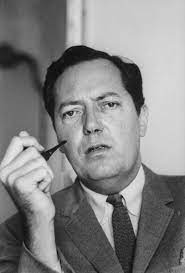
Jim Garrison
But the public hysteria triggered by the film led Congress to pass the JFK Assassination Records Collection Act in 1992. As a result, millions of pages of documents related to the assassination were made public in the 1990s—but not all.
About 3,100 never-before-seen documents—and the full text of more than 30,000 files previously released only in part—have been unavailable until now. Most of those documents were created inside the CIA, the FBI and the Justice Department. Under the law they must be released, in full, by October 26 unless President Donald Trump decides otherwise.
But for investigative reporter Gus Russo, the secrets behind Kennedy’s murder are no mystery.
Russo is the author of Live By the Sword: The Secret War Against Castro and the Death of JFK. Published in 1998, it is almost certainly the definitive account of the Kennedy assassination.
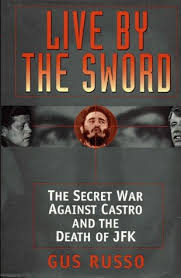
Russo reaches some startling—but highly documented—conclusions. Among these:
- “John and Robert Kennedy knew what they were doing. They waged a vicious war against Fidel Castro–a war someone had to lose.”
- The loser turned out to be John F. Kennedy.
- Their war began immediately after taking office on January 20, 1961.
- On April 17, 1961, more than 1,400 Cuban invaders–backed by American air power—landed JOINT at the Bay of Pigs. They were quickly overwhelmed, with hundreds of the men taken prisoner.
- Although it’s commonly believed that the Cuban Missile Crisis ended America’s efforts to overthrow Fidel Castro, this was not true.
- While continuing the campaign of sabotage throughout Cuba, the Kennedys were preparing a fullscale American invasion of the island—just one month before the November, 1964 Presidential election.
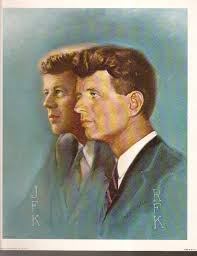
John F. and Robert F. Kennedy
- On October 4, 1963, the Joint Chiefs of Staff submitted its latest version of the invasion plan, known as OPLAN 380-63. Its timetable went:
- (1) January, 1964: Infiltration into Cuba by Cuban exiles. (2) July 15, 1964: U.S. conventional forces join the fray. (3) August 3, 1964: All-out U.S. air strikes on Cuba. (4) October 1, 1964: Full-scale invasion to install “a government friendly to the U.S.”
- Oswald, a former Marine, was a committed Marxist–whose hero was Castro.
- The CIA’s ongoing campaign to overthrow and/or assassinate Castro was an open secret throughout the Gulf.
- Oswald visited New Orleans in the spring of 1963.
- There he learned that Castro was in the crosshairs of the CIA.
- For this, he blamed John F. Kennedy.
- Oswald told his Russian-born wife, Marina: “Fidel Castro needs defenders. I’m going to join his army of volunteers.”
- Lee Harvey Oswald assassinated Kennedy.
- He did it alone.
- Jack Ruby, a Dallas nightclub owner, murdered Oswald because he was distraught over Kennedy’s death.
- Ruby was not part of a Mafia conspiracy to silence Oswald.
- Skeptics of the Warren Commission–which concluded that Oswald had acted alone–asked the wrong question: “Who killed Kennedy?”
- According to Gus Russo, they should have asked: “Why was he killed?”
- And his answer: “The Kennedys’ relentless pursuit of Castro and Cuba backfired in tragedy on that terrible day in November, 1963.”
- Following the JFK assassination, there was a cover-up.
- Its purpose: To protect the reputation of the United States Government—and that of its newly-martyred President.
- The CIA and FBI concealed the CIA-Mafia assassination plots against Castro from the Warren Commission assigned to investigate Kennedy’s murder.
- Other government officials participating in the cover-up included Attorney General Robert F. Kennedy and President Lyndon B. Johnson.
- Ironically, this secrecy ignited the widespread–and false–belief that the President had died at the hands of a government conspiracy.
- Robert Kennedy feared that his relentless pursuit of Castro might have led Castro to “take out” JFK first.
- Robert Kennedy’s fears and guilt were compounded by the fact that, while waging war on Castro, he had waged an equally ruthless crusade against organized crime.
- He knew that some of the mobsters he had tried to send to prison had played a major role in the CIA’s efforts to “hit” Castro. Had the Mafia–believing itself the victim of a double-cross–put out a “contract” on JFK instead?
- It was a question that haunted RFK until the day he died.
- Fearing his own assassination if he continued Kennedy’s efforts to murder Castro, President Johnson ordered the CIA to halt its campaign to overthrow and/or assassinate the Cuban leader.
Other legacies of America’s twisted obsession with Cuba
- The huge Cuban community throughout Florida–and especially Miami–continues to exert a blackmailing influence on American politics.
- Unwilling to risk their own lives, they hope that a Right-wing President will order the military to overthrow the Castro regime.
ABC NEWS, ADOLF HITLER, ALTERNET, AP, BARACK OBAMA, BOB CORKER, BUZZFEED, CBS NEWS, CIA, CNN, CROOKS AND LIARS, DAILY KOZ, DONALD TRUMP, FACEBOOK, FREDERICA WILSON, FRIEDRICH PAULUS, ISIS, JOHN MCCAIN, MALI, MOTHER JONES, MOVEON, NATIONAL FOOTBALL LEAGUE, NBC NEWS, NEWSWEEK, NIGER, NORTH KOREA, NPR, POLITICO, PUERTO RICO, RAW STORY, REUTERS, SALON, SEATTLE TIMES, SLATE, STALINGRAD, THE ATLANTIC, THE CHICAGO SUN-TIMES, THE CHICAGO TRIBUNE, THE DAILY BEAST, THE GUARDIAN, THE HILL, THE HUFFINGTON POST, THE LOS ANGELES TIMES, THE NATION, THE NEW YORK TIMES, THE WASHINGTON POST, TIME, TWITTER, U.S. NEWS & WORLD REPORT, UP, UPI, USA TODAY, WORLD WAR ii
In Bureaucracy, History, Military, Politics, Social commentary on October 19, 2017 at 12:21 pm
On October 4, four American Special Forces soldiers were ambushed and slain on the border of Niger and Mali. Their killers were members of an ISIS-affiliated guerrilla group.
The next day, President Donald Trump attacked one of his favorite targets—the free press—as “fake news.”
Over the weekend of October 7-8, Trump went golfing. Then he took to Twitter and let his venom flow. His victims included:
- The National Football League;
- Puerto Rico;
- North Korea;
- Bob Corker, Republican United States Senator from Tennessee and the chairman of the Senate Foreign Relations Committee.
For 12 days after the tragedy, Trump said nothing.
Then, during an October 16 press conference in the White House Rose Garden, a reporter asked him about his silence.
So Trump claimed—falsely—that earlier Presidents—including Barack Obama—had never or rarely called or written family members of soldiers who died on duty.
.jpg/220px-Donald_Trump_August_19,_2015_(cropped).jpg)
Donald Trump
But it was his call to Myeshia Johnson, the widow of Sergeant La David Johnson, that ignited a firestorm.
According to Florida Democratic Representative Frederica Wilson, Trump’s condolence call was brutally insensitive. Wilson was riding in a limousine with Johnson and heard the conversation on speakerphone.
“He knew what was signing up for, but I guess it hurts anyway,” Wilson quoted Trump as telling the grieving widow.
Cowanda Jones-Johnson, a family member who raised Johnson, told CNN that Wilson’s account of the call was “very accurate.”
Veterans such as Arizona United States Senator John McCain have expressed their outrage at Trump’s callousness. But this shouldn’t have come as a surprise to anyone.
On January 21, Donald Trump—on his first full day as President—visited CIA headquarters in Langley, Virginia.
Officially, he was there to pay tribute to the men and women who dedicate their lives to discovering when and where America’s enemies are planning to strike. And to countering those threats.
And now Trump was appearing before what, to CIA employees, was the agency’s most sacred site: The star-studded memorial wall honoring the 117 CIA officers who had fallen in the line of duty.
So Trump spent much of his time talking about himself.
Among the worst examples:
- Somebody said, are you young? I said, I think I’m young. You know, I was stopping—when we were in the final months of that campaign, four stops, five stops, seven stops. Speeches, speeches, in front of 25,000, 30,000 people, 15,000, 19,000 from stop to stop. I feel young….
- And I was explaining about the numbers. We did a thing yesterday at the speech. Did everybody like the speech? I’ve been given good reviews. But we had a massive field of people. You saw them. Packed. I get up this morning, I turn on one of the networks, and they show an empty field….
- And they said, Donald Trump did not draw well. I said, it was almost raining, the rain should have scared them away, but God looked down and he said, we’re not going to let it rain on your speech…..
- So a reporter for Time magazine—and I have been on their cover, like, 14 or 15 times. I think we have the all-time record in the history of Time magazine.
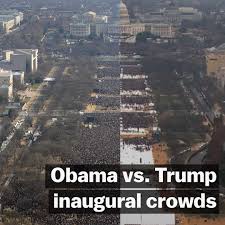
Crowds at Trump and Obama Inaugurals
In February, Trump approved and ordered a Special Forces raid in Yemen on an Al-Qaeda stronghold.
The assault resulted in the death of Navy SEAL Chief Petty Officer William “Ryan” Owens.
Disavowing any responsibility for the failure, Trump said:
“This was a mission that was started before I got here. This was something they wanted to do. They came to me, they explained what they wanted to do—the generals—who are very respected, my generals are the most respected that we’ve had in many decades, I believe. And they lost Ryan.”
* * * * *
Seventy-four years before Donald Trump took office as President of the United States, Adolf Hitler suffered a blow from which he never recovered: The surrender of his once-powerful Sixth Army at Stalingrad.
For five months, 330,000 of the German army’s finest troops had fought to capture that city on the Volga River. Then they had been surrounded by even larger Russian armies and became the besieged.
Finally, on February 2, 1943, their commanding general, Friedrich Paulus, surrendered.
Adolf Hitler flew into a rage.
- Not at the loss of 150,000 Germans who had been killed.
- Not at the agonies of the tens of thousands of others wounded.
- Not at the suffering of the 91,000 men taken prisoner.
No, what infuriated Hitler was the refusal of General Friedrich Paulus to commit suicide rather than surrender.
Knowing that no German field marshal had ever allowed himself to be taken prisoner, Hitler had, by wireless, promoted Paulus—shortly before he chose to do so.
“When the nerves break down, there is nothing left but to admit that one can’t handle the situation and to shoot oneself,” screamed Hitler.
“This hurts me so much because the heroism of so many soldiers is nullified by one single characterless weakling.”
In April, 1945, with Russian troops about to capture Berlin, Hitler, 50 feet below ground in a fortified bunker, blamed his defeat on the Germans who had given him their unconditional loyalty for 12 years.
For egomaniacal tyrants, blame always falls on others.
2016 PRESIDENTIAL ELECTION, ABC NEWS, ALTERNET, AP, ASIANS, BLACKS, BUZZFEED, CBS NEWS, CNN, CROOKS AND LIARS, DAILY KOZ, DONALD TRUMP, FACEBOOK, HUMAYUN KHAN, INSULTS, KHIZR KHAN, LATINOS, MOTHER JONES, MOVEON, MSNBC, MUSLIMS, NBC NEWS, NEWSWEEK, NICCOLO MACHIAVELLI, NPR, POLITICO, PRISONERS OF WAR, RAW STORY, REUTERS, SALON, SEATTLE TIMES, SLATE, THE ATLANTIC, THE CHICAGO SUN-TIMES, THE CHICAGO TRIBUNE, THE DAILY BEAST, THE GUARDIAN, THE HILL, THE HUFFINGTON POST, THE LAST WORD, THE LOS ANGELES TIMES, THE NATION, THE NEW YORK TIMES, THE PRINCE, THE WASHINGTON POST, TIME, TODAY SHOW, TWITTER, U.S. NEWS & WORLD REPORT, UP, UPI, USA TODAY, VETERANS OF FOREIGN WARS, WOMEN
In Bureaucracy, History, Military, Politics, Social commentary on October 13, 2017 at 2:37 am
On July 30, 2016, Republican Presidential nominee Donald Trump attacked the integrity of the parents of an Army captain who died heroically in Iraq in 2004.
For this, he took heavy fire from Democrats, veterans organizations and even his fellow Republicans.
But an even more damning assessment came from Niccolo Machiavelli, the 16th-century Florentine statesman whose two great works on politics—The Prince and The Discourses—remain textbooks for successful politicians more than 500 years later.
Niccolo Machiavelli
Throughout his campaign for President, Trump hurled insults at virtually every major segment of American society, including:
- Latinos
- Asians
- Muslims
- Blacks
- The Disabled
- Women
- Prisoners-of-War
These insults delighted his white, under-educated followers. But they alienated millions of other Americans who might have voted for him.
Donald Trump
Machiavelli, on the other hand, advised leaders to refrain from gratuitous insults:
- “I hold it to be a proof of great prudence for men to abstain from threats and insulting words towards any one.
- “For neither the one nor the other in any way diminishes the strength of the enemy–but the one makes him more cautious, and the other increases his hatred of you, and makes him more persevering in his efforts to injure you.”
And Trump’s reaction to the criticism he’s received?
“I can be Presidential, but if I was Presidential I would only have—about 20% of you would be here because it would be boring as hell, I will say,” Trump told supporters at a rally in Superior, Wisconsin.
For those who expected Trump to shed his propensity for constantly picking fights, Machiavelli had a stern warning:
- “…If it happens that time and circumstances are favorable to one who acts with caution and prudence he will be successful. But if time and circumstances change he will be ruined, because he does not change the mode of his procedure.
- “No man can be found so prudent as to be able to adopt himself to this, either because he cannot deviate from that to which his nature disposes him, or else because, having always prospered by walking in one path, he cannot persuade himself that it is well to leave it…
- “For if one could change one’s nature with time and circumstances, fortune would never change.”
Then there was Trump’s approach to consulting advisers:
Asked on MSNBC’s “Morning Joe” who he consults about foreign policy, Trump replied;
“I’m speaking with myself, number one, because I have a very good brain and I’ve said a lot of things.”
This totally contrasts with the advice given by Machiavelli:
- “A prudent prince must [choose] for his counsel wise men, and [give] them alone full liberty to speak the truth to him, but only of those things that he asks and of nothing else.
- “But he must be a great asker about everything and hear their opinions, and afterwards deliberate by himself in his own way, and in these counsels…comport himself so that every one may see that the more freely he speaks, the more he will be acceptable.”
And Machiavelli offered a related warning on the advising of rulers: Unwise princes cannot be wisely advised.
During the fifth GOP debate in the Presidential sweepstakes, host Hugh Hewitt asked Trump this question:
“Mr. Trump, Dr. [Ben] Carson just referenced the single most important job of the president, the command and the care of our nuclear forces. And he mentioned the triad.
“The B-52s are older than I am. The missiles are old. The submarines are aging out. It’s an executive order. It’s a commander-in-chief decision.
“What’s your priority among our nuclear triad?”
[The triad refers to America’s land-, sea- and air-based systems for delivering nuclear missiles and bombs.]
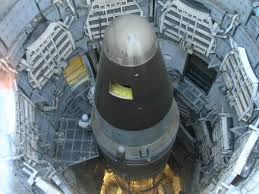
Nuclear missile in silo
Trump’s reply: “Well, first of all, I think we need somebody absolutely that we can trust, who is totally responsible, who really knows what he or she is doing. That is so powerful and so important.”
He then digressed to his having called the Iraq invasion a mistake in 2003 and 2004. Finally he came back on topic:
“But we have to be extremely vigilant and extremely careful when it comes to nuclear. Nuclear changes the whole ballgame.
“The biggest problem we have today is nuclear–nuclear proliferation and having some maniac, having some madman go out and get a nuclear weapon. I think to me, nuclear, is just the power, the devastation is very important to me.”
Which brings us back to Machiavelli:
- “…Some think that a prince who gains the reputation of being prudent [owes this to] the good counselors he has about him; they are undoubtedly deceived.
- “It is an infallible rule that a prince who is not wise himself cannot be well advised, unless by chance he leaves himself entirely in the hands of one man who rules him in everything, and happens to be a very prudent man. In this case, he may doubtless be well governed, but it would not last long, for the governor would in a short time deprive him of the state.”
All of which would lead Niccolo Machiavelli to warn, if he could witness American politics today: “This bodes ill for your Republic.”


2016 PRESIDENTIAL CAMPAIGN, ABC NEWS, ALTERNET, AP, BARACK OBAMA, BBC, BUZZFEED, CBS NEWS, CIA, CLINTON WATTS, CNN, CROOKS AND LIARS, CYBERWARFARE, DAILY KOS, DAILY KOZ, DEMOCRATIC NATIONAL COMMITTEE, DIRECTOR OF NATIONAL INTELLIGENCE, DONALD TRUMP, ESPIONAGE, EUROPEAN UNION (EU), FACEBOOK, FBI, FOX NEWS SUNDAY, HILLARY CLINTON, JAMES COMEY, JARED KUSHNER, MICHAEL FLYNN, MICHAEL T. FLYNN, MIKE PENCE, MOTHER JONES, MOVEON, NBC NEWS, NEWSWEEK, NORTH ATLANTIC TREATY ORGANIZATION (NATO), NPR, POLITICO, RAW STORY, REPUBLICAN NATIONAL CONVENTION, REUTERS, ROBERT MUELLER, RUSSIA, SALLY YATES, SALON, SEATTLE TIMES, SERGEY KISLYAK, SLATE, THE ATLANTIC, THE CHICAGO SUN-TIMES, THE CHICAGO TRIBUNE, THE DAILY BEAST, THE GUARDIAN, THE HILL, THE HUFFINGTON POST, THE LOS ANGELES TIMES, THE NATION, THE NEW YORK TIMES, THE WALL STREET JOURNAL, THE WASHINGTON POST, TIME, TWITTER, U.S. NEWS & WORLD REPORT, U.S. SENATE SELECT COMMITTEE ON INTELLIGENCE, UPI, USA TODAY, VLADIMIR PUTIN, WIKILEAKS
A VERY MUELLER CHRISTMAS
In Bureaucracy, History, Law, Law Enforcement, Military, Politics, Social commentary on December 4, 2017 at 12:02 amDonald Trump was the star of the 2016 Republican National Convention. But not even he could fire up the delegates like Hillary Clinton, the former First Lady turned Democratic presidential nominee.
As chants of “Lock her up!” spread across the convention floor, Michael T. Flynn voiced his agreement. “Lock her up—that’s right.”
Movie-star handsome, the former United States Army lieutenant general and director of the Defense Intelligence Agency was clearly enjoying his moment as a keynote speaker.
Clapping his hands, he continued: “I’m gonna tell you what. It’s unbelievable—unbelievable.
“I have called on Hillary Clinton to drop out of the race, because she—she—put our nation’s security at extremely high risk for their careless use of a private email server.
Michael Flynn at the Republican convention
“Lock her up—lock her up. You guys [the audience] are good. Damn right—-that’s exactly right. There’s nothing wrong with that.
“You know why we’re saying that? We’re saying that because if I—a guy who knows this business—if I did a tenth of what she did, I would be in jail today.”
That was July 18, 2016.
Six months and two days later, he was riding even higher: On January 20—the day Donald J. Trump became President—Flynn took office as the nation’s 25th National Security Adviser.
Two days later, The Wall Street Journal reported that Flynn was under investigation by U.S. counterintelligence agents for his communications with Russian officials.
On February 8, Flynn flatly denied having spoken to Russian ambassador Sergey Kislyak in December, 2016, about removing the sanctions placed on Russia by the outgoing Obama administration.
The sanctions had been placed in retaliation for Russia’s efforts to manipulate the 2016 Presidential election.
On February 13, The Washington Post reported that Acting Attorney General Sally Yates had warned Trump in late January that Flynn had lied about his contacts with Kislyak—and that he could be blackmailed by Russian Intelligence.
Sally Yates
Flynn was forced to resign that same day—after only 24 days as National Security Adviser.
Officially, the reason given was that he had misled Vice President Mike Pence. But Flynn’s deception had already been known—via the warning to Trump by Yates.
Only after Yates’ warning became known to the media was Flynn forced to resign.
Even worse for Flynn: The same Washington Post story reported that, in December, 2015, he had appeared on Russia Today, the news network that American Intelligence agencies consider “the Kremlin’s principal international propaganda outlet.”
He had also received more than $45,000 as a “speaking fee” from the network for a talk on world affairs. At the gala where Flynn received the fee, he sat next to Vladimir Putin for dinner.
Flynn had not filed the required paperwork for the trip. Nor had he reported the “fee” to the Pentagon.
Meanwhile, as a Presidential candidate and President, Donald Trump has steadfastly denied the revelations about collaboration between members of his 2016 Presidential campaign and Russian Intelligence agents.
Donald Trump
He has repeatedly attacked the “fake news” media reporting these revelations. Chief among his targets: CNN, The New York Times and The Washington Post.
He has also derided the Intelligence agencies responsible for America’s security.
On December 16, 2016, then-FBI Director James B. Comey and Director of National Intelligence James R. Clapper Jr. agreed with a CIA assessment that Russia intervened in the 2016 election in part to help Donald Trump win the White House.
Trump, however, has steadfastly denied any such role by Russia: “I think it’s ridiculous,” he told “Fox News Sunday.” “I think it’s just another excuse. I don’t believe it….No, I don’t believe it at all.”
On December 1, 2017, Flynn went from “Lock her up!” to “Don’t lock me up.”
He pleaded guilty to lying to the FBI about conversations with then-Russian Ambassador Kislyak. And he revealed that he was cooperating with the office of Special Prosecutor Robert Mueller.
One of Flynn’s bosses was Jared Kushner, Trump’s son-in-law and senior adviser. It’s certain that Flynn is in a position to “roll over” on Kushner—who, if threatened with prison, might be induced to “roll over” on Trump.
For Donald Trump, the holiday season promises to be a very Mueller Christmas.
HAVE YOURSELF A ROBERT MUELLER CHRISTMAS
(To be sung to the tune, “Have Yourself a Merry Little Christmas”)
Have yourself a Robert Mueller Christmas
Let your hearts be light.
From now on the Fascists will be filled with fright.
Have yourself a Robert Mueller Christmas
Let your hearts be gay.
I can’t wait till all the traitors go away.
Here we are as in Watergate
Traitors filled with hate feel fear.
Faithless friends now are selling out
Let us give a shout—and cheer.
Soon we hope their Fuhrer will be history
Crying Fascist tears.
When the Traitor’s gone we’ll put away our fears.
And celebrate in Robert Mueller’s name for years.
Here we are as in Watergate
Traitors filled with hate feel fear.
Faithless friends now are selling out
Let us give a shout—and cheer.
Soon we hope their Fuhrer will be history
Crying Fascist tears.
When the Traitor’s gone we’ll put away our fears.
And celebrate in Robert Mueller’s name for years.
Share this: