Archive for the ‘Military’ Category
2016 PRESIDENTIAL ELECTION, ABC NEWS, ADOLF HITLER, ALTERNET, AP, ARTICLE 48, BARACK OBAMA, BUZZFEED, CBS NEWS, CNN, CROOKS AND LIARS, DAILY KOZ, DAVID BROOKS, DONALD TRUMP, ENABLING ACT, FACEBOOK, FBI, FRANCE, FRANZ HALDER, FRANZ VON PAPEN, GUNTER MEISNER, HERMAN GORING, HERMAN WOUK, JAMES COMEY, MARK SHIELDS, MICHAEL FLYNN, MOTHER JONES, MOVEON, NAZI GERMANY, NBC NEWS, NEWSWEEK, NPR, PAUL VON HINDENBURG, PBS NEWSHOUR, POLITICO, PRUSSIA, RAW STORY, REICHSTAG, REUTERS, ROBERT MUELLER, RUSSIA, SALLY YATES, SALON, SEATTLE TIMES, SHIELDS AND BROOKS, SLATE, THE ATLANTIC, THE CHICAGO SUN-TIMES, THE CHICAGO TRIBUNE, THE DAILY BEAST, THE GUARDIAN, THE HILL, THE HUFFINGTON POST, THE LOS ANGELES TIMES, THE NATION, THE NEW YORK TIMES, THE WASHINGTON POST, THE WINDS OF WAR, TIME, TWITTER, U.S. NEWS & WORLD REPORT, UPI, USA TODAY, USA TODAY ADOLF HITLERR, VLADIMIR PUTIN, WALTER VON BRAUCHITSCH, WOLFGANG PREISS, WORLD WAR 11, WORLD WAR ii
In Bureaucracy, History, Law, Law Enforcement, Military, Politics, Social commentary on January 31, 2018 at 12:06 am
After Donald Trump won the 2016 election, many people feared he would embark on a radical Right-wing agenda. But others hoped that the Washington bureaucracy would “box him in.”
The same sentiments echoed throughout Germany after Adolf Hitler was appointed Chancellor of Germany on January 30, 1933.
The 1983 TV mini-series, The Winds of War, offered a dramatic example of how honorable men can be overwhelmed by a ruthless dictator.
Based on the bestselling 1971 historical novel by Herman Wouk, the mini-series factually re-created the major historical events of World War II.
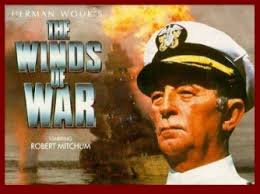
One of those events took place on November 5, 1939.
General Walther von Brauchitsch is summoned to the Chancellery in Berlin to meet with Adolf Hitler. He carries a memorandum signed by all the leaders of the German Wehrmacht asserting that Case Yellow—Hitler’s planned attack against France—is impossible.
Meanwhile, at the German army headquarters at Zossen, in Berlin, the Wehrmacht’s top command wait for word from von Brauchitsch.
CHANCELLERY:
Von Brauchitsch hands the memorandum to Hitler, who reads it.
ZOSSEN:
Brigadier General Armin von Roon: I must confide in you on a very serious matter. I have been approached by certain army personages of the loftiest rank and prestige with a frightening proposal.
Chief of the General Staff Franz Halder: What did you reply?
Von Roon: That they were talking high treason.
CHANCELLERY:
Adolf Hitler (slamming down the memorandum): So—what is new in all this?
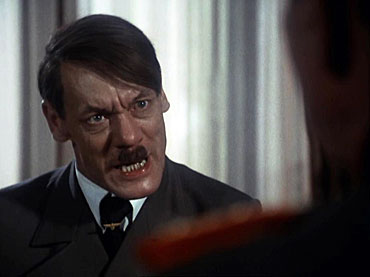
Gunter Meisner as Adolf Hitler in “The Winds of War”
Walther Von Brauchitsch: Fuhrer, it is the army’s final position that Case Yellow cannot proceed.
Hitler: Why not?
Von Brauchitsch: Because of the military fundamentals as stated.
Hitler: Such as?
Von Brauchitsch: The meteorologists predict continuous soaking rains for weeks.
Hitler: It rains on the enemy, too.
ZOSSEN:
Von Roon: The conspiracy has been going on that long—since Czechoslovakia [1938)?
Halder: If the British had not caved in at Munich [where France and Britain sold out their ally, Czechoslovakia]—perhaps. But they did. And ever then, ever since his big triumph, it has been hopeless. Hopeless.
Von Roon: Empty talk, talk, talk. I am staggered.
Halder: A hundred times I myself could have shot the man. I can still at any time. But what would be the result? Chaos. The people are for him. He has unified the country. We must stick to our posts and save him from making military mistakes.
Halder: But we really cannot proceed with Case Yellow.
Von Roon: Brauchitsch will get a postponement.
Halder: And if he does not?
CHANCELLERY:
Von Brauchitsch: Fuhrer, even the supply of artillery shells is totally inadequate.
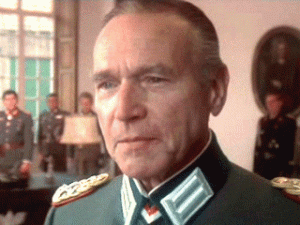
Wolfgang Preiss as Walter von Brauchitsch in “The Winds of War”
Hitler: Who says so?
Von Brauchitsch: General Thomas, my chief of economics and armament.
Hitler: Do you know how many artillery shells of all calibers we have in the staging areas—right this minute?
Von Brauchitsch: No.
Hitler: How many we have in the reserve dumps in the West?
Von Brauchitsch: No, it’s up to my staff—
Hitler: What the monthly annual production of shells is? What the projected rise in production of the next six months is, month by month?
Von Brauchitsch: Who keeps such figures in his head?
Hitler: I do! The supply is adequate. I tell you so. And I’m a field soldier who depended on artillery for four years to protect his life. [He hands von Brauchitsch a sheaf of armaments figures.] Check with your staff. if one of those figures is wrong, you can postpone Case Yellow. Otherwise—you march! And next time you come to see me, know what you’re talking about!
Von Brauchitsch: If we march unprepared as we are, defeatism will run rampant. It will destroy the Wehrmacht and the Fatherland. The morale of the army was low, even in the Polish campaign.
Hitler: You question to me—to me—the courage of the German soldier?
Von Brauchitsch: I’m talking facts!
Hitler: What facts? Back up this monstrous assertion! In what units was morale low? What action was taken? How many death sentences were handed out for cowardice? Speak up! I’ll fly to the front and pass the death sentences myself. One specific instance.
Von Brauchitsch: It was common knowledge—
Hitler: Common knowledge? What is common knowledge is that army headquarters at Zossen crawls with cowards. You opposed me in rearming the Rhineland. You opposed me on the [union] with Austria. You opposed me on Czechoslovakia, until the British came crawling to me. You dirtied in your trousers, you heroes at Zossen, at the idea of marching into Poland. Well, have I once been wrong? Have you once been right? Answer me!
Von Brauchitsch: Mein Fuhrer—
Hitler: Tell everyone who signed this insubordinate Zossen rubbish to beware! I will ruthlessly crush everybody up to the rank of a Field Marshal who dares to oppose me. You don’t have to understand. You only have to obey. The German people understand me. I am Germany.
Fast forward 79 years from Adolf Hitler’s stormy confrontation with Walter von Brauchitsch to January 26, 2018.
President Donald Trump—having fired FBI Director James Comey, attacked the integrity of the American Intelligence community and tried to fire Independent Counsel Robert Mueller—can equally say: I am the destiny of America.
ABC NEWS, ADOLF HITLER, ALTERNET, ASSASSINATION, BARACK OBAMA, BUZZFEED, CBS NEWS, CIA, CNN, CONSPIRACIES, DAILY KOS, DAY OF THE JACKAL, DONALD TRUMP, FACEBOOK, FBI, FREDERICK FORSYTHE, GAIUS CASSIUS, JAMES COMEY, JULIUS CAESAR, MAR-A-LAGO, MARCUS BRUTUS, MARK ANTHONY, MOTHER JONES, MOVEON, NBC NEWS, NEWSWEEK, NICCOLO MACHIAVELLI, NPR, PLOTS, POLITICO, RAW STORY, RICHARD NIXON, SALON, Secret Service, SLATE, THE CHICAGO SUN-TIMES, THE CHICAGO TRIBUNE, THE DAILY BEAST, THE DISCOURSES, THE HUFFINGTON POST, THE LOS ANGELES TIMES, THE NEW YORK TIMES, THE WALL STREET JOURNAL, THE WASHINGTON POST, TIME, TWITTER, U.S. NEWS & WORLD REPORT, USA TODAY
In Bureaucracy, History, Law Enforcement, Military, Politics, Social commentary on January 22, 2018 at 12:02 am
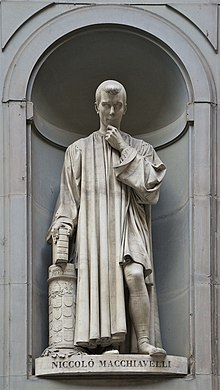
Niccolo Machiavelli, the father of modern political science, wrote that there are three periods of danger in a conspiracy:
- Dangers in organizing the plot
- Dangers in executing the conspiracy
- Dangers following the execution of the plot.
The first two dangers were covered in Part One of this series. Now, as to the third danger.
Dangers following the Execution of the Conspiracy: There is really but one—someone is left who will avenge the murdered prince. These can be brothers, sons or other relatives, who have been spared by negligence or for other reasons.
But of all the perils that follow the execution of a conspiracy, the most certain and fearful is the attachment of the people to the murdered prince. There is no remedy against this, for the conspirators can never secure themselves against a whole people.
An example of this occurred in the case of Julius Caesar, who, being beloved by the people, was avenged by them.
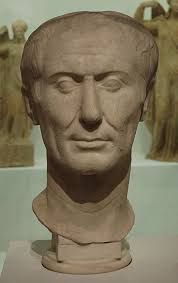
Julius Caesar
Machiavelli closes his chapter “Of Conspiracies” with advice to rulers on how they should act when they find a conspiracy has been formed against them.
If they discover that a conspiracy exists against them, they must, before punishing its authors, strive to learn its nature and extent. And they must measure the danger posed by the conspirators against their own strength.
And if they find it powerful and alarming, they must not expose it until they have amassed sufficient force to crush it. Otherwise, they will only speed their own destruction. They should try to pretend ignorance of it. If the conspirators find themselves discovered, they will be forced by necessity to act without consideration.
The foregoing was taken from Book Three, Chapter Six, of Machiavelli’s masterwork, The Discourses on Livy, which was published posthumously in 1531. But elsewhere in this volume, he notes how important it is for rulers to make themselves loved—or at least respected—by their fellow citizens:

Niccolo Machiavelli
Note how much more praise those Emperors merited who, after Rome became an empire, conformed to her laws like good princes, than those who took the opposite course.
Titus, Nerva, Trajan, Hadrian, Antoninus and Marcus Auelius did not require the Praetorians nor the multitudinous legions to defend them, because they were protected by their own good conduct, the good will of the people, and by the love of the Senate.
On the other hand, neither the Eastern nor the Western armies saved Caligula, Nero, Vitellius and so many other wicked Emperors from the enemies which their bad conduct and evil lives had raised up against them.
In his better-known work, The Prince, he warns rulers who—like Donald Trump—are inclined to rule by fear:
A prince should make himself feared in such a way that if he does not gain love, he at any rate avoids hatred: for fear and the absence of hatred may well go together.

Donald Trump
If Trump is aware of Machiavelli’s warnings, he has shown no signs of it.
Presidents have universally tried to seem friendly and caring toward their fellow Americans.
This held true even for Richard M. Nixon, when he made an impromptu visit to the Lincoln Memorial and engaged in a rambling dialogue with Vietnam war protesters.
The encounter happened around 4 a.m. on May 9, 1970, shortly after the invasion of Cambodia. Nationwide outrage had exploded on college campuses, climaxing in the killing of four students at Kent State University on May 4.
So young Vietnam antiwar protesters who had descended on Washington, D.C. were startled when Nixon suddenly appeared in their midst.
Nixon, in his awkward way of trying to establish rapport, asked some of the students where they were from. When they said they attended Syracuse University, Nixon replied that it had a great football team.
But Nixon and the protesters were separated by too many differences—in their views on sexuality, civil rights, dissent and war—to find common cause.
Still, Nixon at least made an effort to understand and reach an accommodation with his critics.
Since taking office on January 20, 2017, Donald Trump has made none.
Instead, he has:
- Defended white supremacists who sparked violence in Charlottesville, Virginia.
- Fired James Comey, the director of the FBI, for investigating ties between his 2016 Presidential campaign and Russian Intelligence agents.
- Attacked the integrity of Federal judges who struck down his travel ban on Muslims.
- Called the nation’s most prestigious news media “the enemy of the American people.”
- Rammed through Congress a massive tax cut for the wealthy, at the expense of ordinary Americans.
- Attacked the integrity of American Intelligence agencies, such as the FBI and CIA.
- Falsely accused his predecessor, President Barack Obama, of wiretapping him.
These and other infamous actions have led to only 36% of Americans approving of his performance—while 58% disapprove.
Trump’s approval rating is now lower than that of any other President at this point in modern polling at this point.
By Machiavelli’s standards, Trump has made himself the perfect target for a conspiracy: “When a prince becomes universally hated, it is likely that he’s harmed some individuals—who thus seek revenge. This desire is increased by seeing that the prince is widely loathed.”
ABC NEWS, ADOLF HITLER, ALTERNET, ASSASSINATION, BUZZFEED, CBS NEWS, CNN, CONSPIRACIES, DAILY KOS, DAY OF THE JACKAL, DONALD TRUMP, FACEBOOK, FREDERICK FORSYTHE, GAIUS CASSIUS, JULIUS CAESAR, MAR-A-LAGO, MARCUS BRUTUS, MARK ANTHONY, MOTHER JONES, MOVEON, NBC NEWS, NEWSWEEK, NICCOLO MACHIAVELLI, NPR, PLOTS, POLITICO, RAW STORY, SALON, Secret Service, SLATE, THE CHICAGO SUN-TIMES, THE CHICAGO TRIBUNE, THE DAILY BEAST, THE DISCOURSES, THE HUFFINGTON POST, THE LOS ANGELES TIMES, THE NEW YORK TIMES, THE WALL STREET JOURNAL, THE WASHINGTON POST, TIME, TWITTER, U.S. NEWS & WORLD REPORT, USA TODAY
In Bureaucracy, History, Law Enforcement, Military, Politics, Social commentary on January 19, 2018 at 1:50 am
More than 500 years ago, Niccolo Machiavelli, the Florentine statesman, authored The Discourses on Livy, a work of political history and philosophy. In it, he outlined how citizens of a republic can maintain their freedoms.
One of the longest chapters—Book Three, Chapter Six—covers “Of Conspiracies.” In it, those who wish to conspire against a ruler will find highly useful advice.
And so will those who wish to foil such a conspiracy.
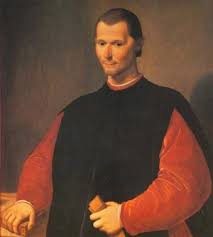

Niccolo Machiavelli
Writes Machiavelli:
For conspirators, there are three ways their efforts can be foiled:
- Discovery through denunciation;
- Discovery through incautiousness;
- Discovery through writings.
Discovery through Denunciation: This occurs through treachery or lack of prudence among one or more conspirators.
Treachery is so common that you can safely tell your plans to only your most trusted friends who are willing to risk their lives for your sake. You may find that you have only one or two of these.
But as you are bring more people into the conspiracy, the chances of discovery greatly increase. It’s impossible to find many who can be completely trusted: For their devotion to you must be greater than their sense of danger and fear of punishment.
Discovery through Carelessness: This happens when one of the conspirators speaks incautiously, so that a third person overhears it Or it may occur from thoughtlessness, when a conspirator tells the secret to his wife or child, or to some other indiscreet person.
When a conspiracy has more than three or four members, its discovery is almost certain, either through treason, imprudence or carelessness.
If more than one conspirator is arrested, the whole plot is discovered, for it will be impossible for any two to agree perfectly as to all their statements.
If only one is arrested, he may–through courage and stubbornness–be able to conceal the names of his accomplices. But then the others, to remain safe, must not panic and flee, since this is certain to be discovered.
If one of them becomes fearful—whether it’s the one who was arrested or is still at liberty—discovery of the conspiracy is certain.
The best way to avoid such detection is to confide your project to your intended fellow conspirators at the moment of execution—and not sooner.
A classic example of this occurred in ancient Persia: A group of nobles assembled to discuss overthrowing a usurper to the throne. The last one to arrive was Darius.
When one of the conspirators asked, “When should we strike?” Darius replied: “We must either go now at this very moment and carry it into execution, or I shall go and denounce you all. For I will not give any of you time to denounce me.”
At that, they went directly to the palace, assassinated the usurper and proclaimed Darius their new king.
Discovery through Writings: You may talk freely with anyone man about everything, for unless you have committed yourself in writing, the “Yes” of one man is worth as much as the “No” of another.
Thus, you should guard most carefully against writing, as against a dangerous rock, for nothing will convict you quicker than your own handwriting.
You may escape, then, from the accusation of a single individual, unless you are convicted by some writing or other pledge, which you should be careful never to give.
If you are denounced, there are means of escaping punishment:
- By denying the accusation and claiming that the person making it hates you; or
- Claiming that your accuser was tortured or coerced into giving false testimony against you.
But the most prudent course is to not tell your intentions to anyone, and to carry out the attempt yourself.
Even if you’re not discovered before you carry out your attack, there are still two dangers facing a conspirator:
Dangers in Execution: These result from:
- An unexpected change in the routine of the intended target;
- The lack of courage among the conspirators; or
- An error on their part, such as leaving some of those alive whom the conspirators intended to kill.
Adolf Hitler, who claimed to have a sixth-sense for danger, was famous for changing his routine at the last minute.
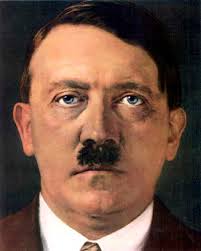
Adolf Hitler
On November 9, 1939, this instinct saved his life. He had been scheduled to give a long speech at a Munich beer hall before the “Old Fighters” of his storm troopers.
But that evening he cut short his speech and left the beer hall. Forty-five minutes later, a bomb exploded inside a pillar—before which Hitler had been speaking.
Conspirators can also be doomed by their good intentions.
In 44 B.C., Gaius Cassius, Marcus Brutus and other Roman senators decided to assassinate Julius Caesar, whose dictatorial ambitions they feared.
Cassius also intended to murder Mark Anthony, Caesar’s strongest ally. But Brutus objected, fearing the plotters would look like butchers, not saviors. Even worse, he allowed Anthony to deliver a eulogy at Caesar’s funeral.
This proved so inflammatory that the mourners rioted, driving the conspirators out of Rome. Soon afterward, they were defeated in a battle with the legions of Anthony and Octavian Caesar—and forced to commit suicide to avoid capture and execution.
ABC NEWS, ADOLF HITLER, ALBANIA, ALTERNET, ANDREI CHERNY, AP, BERLIN AIRLIFT, BULGARIA, BUZZFEED, CAMILLUS, CBS NEWS, CNN, CONTAINMENT, CROOKS AND LIARS, CZECHOSLOVAKIA, DAILY KOZ, EAST GERMANY, FACEBOOK, FALISCIA, FRANCE, FRANKLIN D. ROOSEVELT, GAIL “HAL” HALVORSEN, GREAT BRITAIN, HARRY S. TRUMAN, HUNGARY, IRON CURTAIN, JOSEPH STALIN, MOTHER JONES, MOVEON, NAZI GERMANY, NBC NEWS, NEWSWEEK, NICCOLO MACHIAVELLI, NPR, POLAND, POLITICO, RAW STORY, REUTERS, ROMANIA, ROME, SALON, SEATTLE TIMES, SLATE, SOVIET UNION, THE ATLANTIC, THE CANDY BOMBERS, THE CHICAGO SUN-TIMES, THE CHICAGO TRIBUNE, THE DAILY BEAST, THE DISCOURSES, THE GUARDIAN, THE HILL, THE HUFFINGTON POST, THE LOS ANGELES TIMES, THE NATION, THE NEW YORK TIMES, THE WASHINGTON POST, TIME, TWITTER, U.S. NEWS & WORLD REPORT, UNITED STATES, UPI, USA TODAY, WEST BERLIN, WILLIE "THE WHIP" TUNNER, WORLD WAR 11, YUGOSLAVIA
In Bureaucracy, History, Military, Politics, Social commentary on December 21, 2017 at 3:12 am
In June, 1948, Soviet dictator Joseph Stalin was determined to drive the Western occupying powers out of Berlin—and of West Germany.
On June 19, the Soviet Union blocked the Western Allies’ railway, road, and canal access to the sectors of Berlin under Western control.
At that time, West Berlin had only 36 days’ worth of food and 45 days’ worth of coal. And the United States had only 8,973 Americans stationed in Berlin. British forces totaled 7,606, and French forces 6,100.
Russian forces in Berlin and East Germany outnumbered them 62 to 1.
The United States seemed to face a choice between all-out war with the Soviet Union—or appeasing its growing aggression in Eastern Europe.
Fortunately, a third choice was found. It became known as the Berlin Airlift.
This was carried out primarily by the United States and Great Britain. Other Western powers taking part in this operation included France, Australia, Canada, New Zealand and South Africa.
Starting on June 24, 1948, the Berlin Airlift aimed to supply the city’s two and a half million residents with food and energy supplies.
There was no guarantee that such an operation could succeed–at least, not in the long run. Since 1903, airplanes had been used to carry out surveillance, engage in dogfights or bomb cities. But airlifts—flying supplies to stranded people—had proven dismal failures.
At first, the Berlin Airlift worked haphazardly. Pilots flew themselves to exhaustion to meet the needs of those they had relentlessly bombed just three years ago.
Then Major General William “Willie the Whip” Tunner took charge—and brought a totally mechanized approach to the drops:
- Pilots must fly strictly by instruments, even when visibility was excellent.
- Planes could no longer circle over Berlin. Each plane would have only one chance to land in Berlin—or must return to its base if it missed its approach.
- Every 90 seconds, a plane was to take off or land.
Just keeping Berliners alive demanded 4,000 tons of supplies each day. Each plane was thus overloaded by 10 tons. Pilots flew literally round the clock. When fog rolled in that winter, visibility was reduced to zero. Twenty-eight Americans died in crashes.
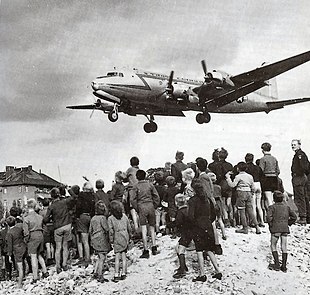
A Douglas C-54 Skymaster lands at Berlin’s Templehof Airport
Germans were impressed with American efficiency, but knew that, in the eyes of most of their American occupiers, they were pariahs. They had waged an aggressive war and exterminated millions of helpless men, women and children in concentration camps.
They were glad the Allies were keeping them alive, but felt they were pawns in a global chess game between the United States and the Soviet Union.
Then fate took a hand.
An Army Air Force pilot named Gail “Hal” Halvorsen impulsively decided to drop a series of small, hand-made parachutes of candies to Berlin’s children.
When General Tunner learned of this, he instantly realized its worth as a morale booster to Berliners. He ordered Halvorsen to continue the drops.

Gail “Hal” Halvorsen
Other pilots followed Halvorsen’s example. Soon Berlin’s children were lining up by the thousands, hoping to grab one of the candy-filled parachutes made from handkerchiefs or strips of clothing.
When the press learned of the drops, the story became a worldwide sensation. Back in the United States, Americans mailed literally tons of candy to Germany for distribution to Berlin’s children.
“The candy bombers” became the most beloved Americans in Berlin. And Halvorsen became the most beloved of them all. On October 3, 1948, when his plane landed in Berlin during a pouring storm, 700 children greeted him on the tarmac for “Lieutenant Gail Halvorsen Day.”
Among the letters he received from Berlin’s children:
Dear Uncle Wiggly Wings,
When yesterday I came from school, I had the happiness to get one of your sweet gifts….You cannot think how big the joy was….My brother and parents stood about me when I opened the strings and fetched out all the chocolate.
Dear Candy Bomber,
…How lucky I was last Sunday. I played at a ruin with some friends of mine opposite our house. Suddenly we saw about ten white parachutes coming out of the sky! One of them set down on the roof of our house. There were three stripes chocolate in the parachute….I want to thank you for your love to the German kids….
From 10-year-old Helma Lurch came this tribute:
Take care of yourself, and remember us children and we will remember you our whole life.
Adults as well as children responded emotionally to the candy drops—and “the candy bombers” responsible for them. When a plane crashed, killing two American lieutenants, residents of the neighborhood memorialized them with a plaque: “Once we were enemies yet you now gave your lives for us. We are doubly in your debt.”
The Airlift ended on May 12, 1949, when Stalin finally accepted defeat and ended the blockade.
“As [Halvorsen] came to represent the Airlift and America to the Berliners,” writes Andrei Cherney in his definitive book, The Candy Bombers, “through him America became a country that cared enough about the defeated Germans to…deliver candy to children, an act without any…ulterior motive, a gift of plain compassion.”
In 1948, that act forged a solid bond—which still exists—between Germany and the United States.
ABC NEWS, ADOLF HITLER, ALBANIA, ALTERNET, AP, BERLIN AIRLIFT, BULGARIA, BUZZFEED, CAMILLUS, CBS NEWS, CNN, CONTAINMENT, CROOKS AND LIARS, CZECHOSLOVAKIA, DAILY KOZ, EAST GERMANY, FACEBOOK, FALISCIA, FRANCE, FRANKLIN D. ROOSEVELT, GREAT BRITAIN, HARRY S. TRUMAN, HUNGARY, IRON CURTAIN, JOSEPH STALIN, MOTHER JONES, MOVEON, NAZI GERMANY, NBC NEWS, NEWSWEEK, NICCOLO MACHIAVELLI, NPR, POLAND, POLITICO, RAW STORY, REUTERS, ROMANIA, ROME, SALON, SEATTLE TIMES, SLATE, SOVIET UNION, THE ATLANTIC, THE CHICAGO SUN-TIMES, THE CHICAGO TRIBUNE, THE DAILY BEAST, THE DISCOURSES, THE GUARDIAN, THE HILL, THE HUFFINGTON POST, THE LOS ANGELES TIMES, THE NATION, THE NEW YORK TIMES, THE WASHINGTON POST, TIME, TWITTER, U.S. NEWS & WORLD REPORT, UNITED STATES, UPI, USA TODAY, WEST BERLIN, WORLD WAR ii, YUGOSLAVIA
In Bureaucracy, History, Military, Politics, Social commentary on December 20, 2017 at 12:40 am
Once again, it falls to Niccolo Machiavelli to reveal truths long forgotten—especially by those who subscribe only to the darkest arts.
In his most important book, The Discourses, he outlines the methods by which citizens of a republic can maintain their freedom.
In Book Three, Chapter 20, he offers this example of the power of humanity to win over even the most stubborn opponents:

Niccolo Machiavelli
“Camillus was besieging the city of the Faliscians, and had surrounded it….A teacher charged with the education of the children of some of the noblest families of that city [to ingratiate himself] with Camillus and the Romans, led these children…into the Roman camp.
“And presenting them to Camillus [the teacher] said to him, ‘By means of these children as hostages, you will be able to compel the city to surrender.’
“Camillus not only declined the offer but had the teacher stripped and his hands tied behind his back….[Then Camillus] had a rod put into the hands of each of the children…[and] directed them to whip [the teacher] all the way back to the city.
“Upon learning this fact, the citizens of Faliscia were so much touched by the humanity and integrity of Camillus, that they surrendered the place to him without any further defense.
“This example shows that an act of humanity and benevolence will at all times have more influence over the minds of men than violence and ferocity. It also proves that provinces and cities which no armies…could conquer, have yielded to an act of humanity, benevolence, chastity or generosity.”
Americans put this lesson to use in 1948 in the skies over Berlin.
When Nazi Germany fell to the Allies in May, 1945, the country was divided into four zones of occupation—one for each of the occupying powers: The United States, Great Britain, France and the Soviet Union.
Within the fledgling administration of President Harry S. Truman, many believed that a new era of peace had dawned between America and Russia.
But then grim reality intruded.
Adolf Hitler had invaded the Soviet Union in 1941. As a result, at least 20 million Soviet men, women and children died violently.
To expel the invasion and destroy Nazi Germany, Russian armies had advanced across a series of Eastern European countries. With the war over, Soviet dictator Joseph Stalin decided to protect the Soviet Union from a future German invasion.
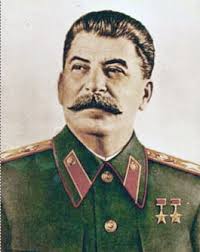
Joseph Stalin
His solution: Occupy Eastern Europe with Red Army units as a buffer between Germany and the Soviet Union. Poland, East Germany, Czechoslovakia, Romania, Bulgaria, Hungary, Albania and Yugoslavia.
Stalin had promised President Franklin Roosevelt that he would withdraw his armies from these countries once Germany was defeated. And he would allow them to choose whatever form of government they desired.
But Stalin had no intention of living up to his promises. And backing him up were 10 to 13 million Red Army soldiers. The entire United States Army had been reduced to 552,000 men by February 1948.
Liberating the captive nations of Eastern Europe—as General George S. Patton wanted to do—would have plunged the United States into full-scale war against its World War II ally.
And by 1945, the Red Army was a formidable enemy: Of the 4.3 million dead and missing casualties suffered by the Wehrmacht, 85% of them occurred on the dreaded “Eastern front.”
So there was nothing the United States could do—short of all-out war—to “roll back” the “Iron Curtain” that had swept over Eastern Europe.
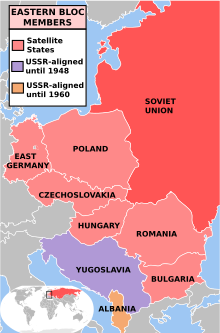
But Americans could—and did—draw a line in the sand. That line became known as the policy of “containment.”
And nowhere was the collision between the U.S.A and the U.S.S.R. more likely to ignite into full-scale war than in Berlin.
Between 1945 and 1948, the Soviets increased their pressure on Western forces occupying Berlin to leave the city. The Soviets already controlled East Germany; gaining control of the Western-held part of Berlin would likely be their first step toward overwhelming the rest of Germany.
And, after Germany, probably France—and as many other European countries as possible.
During the first two years of occupation the occupying powers of France, United Kingdom, United States, and the Soviet Union were not able to successfully negotiate a possible currency reform in Germany. Each of the Allies printed its own occupation currency.
Then, on June 20, 1948, the Bizonal Economic Council introduced the Deutsche mark to West Germany.
On June 24, 1945, the Soviet Union blocked the Western Allies’ railway, road, and canal access to the sectors of Berlin under Western control. This meant a cutoff of food and energy supplies to Berlin’s two and a half million residents.
The United States faced a monumental crisis:
- Should it abandon West Berlin—and thus tempt the Soviet Union into further aggression?
- Should it match the puny Western military forces—outnumbered 62 to 1—against the massive Soviet military presence?
- If it chose to fight in Berlin, would this lead to nuclear war?
Fortunately for the Allies—and West Germany—a third choice was available besides war and appeasement.
It became known as the Berlin Airlift.
9/11 ATTACKS, ABC NEWS, ADOLF HITLER, ALABAMA, ALABAMA SUPREME COURT, ALTERNET, AP, BUZZFEED, CBS NEWS, CHARLES SCHUMER, CNN, CONSTITUTIONAL AMENDMENTS, CROOKS AND LIARS, DAILY KOZ, DONALD TRUMP, DOUG JONES, FACEBOOK, IVANKA TRUMP, JOSEPH STALIN, LEON TROTSKY, LUTHER STRANGE, MOTHER JONES, MOVEON, NANCY PELOSI, NAZI GERMANY, NAZI-SOVIET "NON-AGGRESSION PACT", NBC NEWS, NEWSWEEK, NIKITA KHRUSHCHEV, NPR, POLAND, POLITICO, RAW STORY, RED ARMY, REUTERS, ROBOCALLS, ROY MOORE, RUSSIAN REVOLUTION, SALON, SEATTLE TIMES, SEXUAL PREDATION, SLATE, SOVIET PURGES, THE ATLANTIC, THE CHICAGO SUN-TIMES, THE CHICAGO TRIBUNE, THE DAILY BEAST, THE GUARDIAN, THE HILL, THE HUFFINGTON POST, THE LOS ANGELES TIMES, THE NATION, THE NEW YORK TIMES, THE WASHINGTON POST, TIME, TWITTER, U.S. NEWS & WORLD REPORT, UPI, USA TODAY, WORLD WAR 11
In Bureaucracy, History, Military, Politics, Social commentary on December 14, 2017 at 12:05 am
During the 1917 Russian Revolution, Leon Trotsky acted as a key lieutenant to Vladimir Lenin. Trotsky organized the Red Army and successfully resisted all attempts to overthrow the fledgling Communist government.
One of Trotsky’s bitterest enemies was Joseph Stalin, another intimate of Lenin’s. When Lenin died in 1924, Stalin outmaneuvered Trotsky for leadership of the Soviet Union.
Long before he ordered Trotsky’s assassination in 1940, Stalin turned his former rival into an official non-person. Trotsky was:
- Airbrushed from photos showing him sitting or standing close to Lenin.
- Written out of Soviet history textbooks.
- Depicted, in print and documentary films, as seeking to overturn the Revolution—and assassinate Stalin.
Stalin made certain his image in Soviet history was entirely different.
- In the 1930s, he was portrayed as the modest, all-wise, energetic builder of a new Communist world.
- After 1945, he was depicted as the architect of the Soviet victory over Nazi Germany during World War II.
No “historian” dared mention that:
- For almost 30 years, through purges and starvation caused by enforced collections of farmers’ crops, he had slaughtered 20 to 60 million people.
- His wholesale purges of the Red Army in the 1930s had made the country vulnerable to the German attack in 1941.
- His 1939 “nonaggression” pact with Germany had almost destroyed Russia. In this he and Hitler secretly divided Poland between them. The subsequent German invasion of Poland, on September 1, 1939, directly triggered World War II.
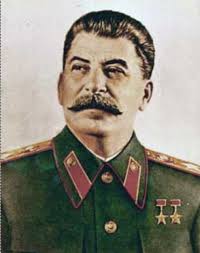
Joseph Stalin
After Stalin died on March 5, 1953, his status in Soviet history suddenly changed.
- Thousands of his portraits—displayed on streets and in buildings throughout the Soviet Union—suddenly came down.
- In 1956, his successor, Nikita Khrushchev, secretly denounced him as a psychotic butcher and bungler who had almost wrecked the country.
So those Americans with a sense of history were undoubtedly stunned at President Donald J. Trump’s reaction to the defeat of Republican Senatorial candidate Roy Moore on December 12.
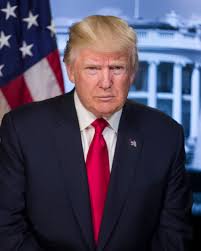
Donald Trump
Unfortunately for Trump, Moore carried heavy political baggage:
- He had twice been removed as a Justice from the Alabama Supreme Court.
- He had blamed 9/11 not on Islamic terrorists but on “America’s turning away from God.”
- He had said the United States should eliminate all but the first 10 Constitutional amendments. This would remove those amendments forbidding slavery and guaranteeing civil rights for blacks and women.
Worst of all, Moore was haunted by allegations that, as a prosecutor during his 30s, he had made sexual advances toward at least eight teenage girls.
Many Republicans openly urged Moore to withdraw. They saw him as a nightmarish embarrassment to their party should he win the election.

Roy Moore
Even the President’s favorite daughter, Ivanka Trump, said: “There is a special place in hell for people who prey on children.”
But that didn’t stop Trump supporting Moore full-tilt against his Democratic opponent, former United States Attorney Doug Jones. Jones had convicted Ku Klux Klan members for bombing a black church in 1963.
On December 4, Trump tweeted:
“Democrats refusal to give even one vote for massive Tax Cuts is why we need Republican Roy Moore to win in Alabama. We need his vote on stopping crime, illegal immigration, Border Wall, Military, Pro Life, V.A., Judges 2nd Amendment and more. No to Jones, a Pelosi/Schumer Puppet!”
During a December 8 campaign rally in Pensacola, Florida, near the state line with Alabama, Trump said:
- “Get out and vote for Roy Moore. Do it. Do it. We cannot afford, the future of this country cannot afford to lose the seat.”
- “We need somebody in that Senate seat who will vote for our Make America Great Again agenda, which involves tough on crime, strong on borders, strong on immigration.”
On December 8, Trump tweeted:
“LAST thing the Make America Great Again Agenda needs is a Liberal Democrat in Senate where we have so little margin for victory already. The Pelosi/Schumer Puppet Jones would vote against us 100% of the time. He’s bad on Crime, Life, Border, Vets, Guns & Military. VOTE ROY MOORE!”
As the December 12 election drew close, Trump made a robocall on Moore’s behalf:
“Hi, this is President Donald Trump and I need Alabama to go vote for Roy Moore. It is so important. We’re already making America great again. I’m going to make America safer, and stronger, and better than ever before, but we need that seat and we need Roy voting for us.”
Then—for Trump—the unthinkable happened: Moore lost. Jones received 49.9% of the vote; Moore got 48.4%.
Suddenly, Trump was rewriting history.
During the Republican Senatorial primary in August, Trump had backed Moore’s opponent, Luther Strange. Now he tweeted:
“The reason I originally endorsed Luther Strange (and his numbers went up mightily), is that I said Roy Moore will not be able to win the General Election. I was right! Roy worked hard but the deck was stacked against him!”
And, in another tweet, he stated: “Congratulations to Doug Jones on a hard fought victory. The write-in votes played a very big factor, but a win is a win. The people of Alabama are great, and the Republicans will have another shot at this seat in a very short period of time. It never ends!”
A joke Russians once shared now applies to Donald Trump: “The trouble with writing history in the Soviet Union is you never know what’s going to happen yesterday.”
ABC NEWS, ALTERNET, AP, BUZZFEED, CALIGUA, CBS NEWS, CNN, CROOKS AND LIARS, DAILY KOZ, DONALD TRUMP, FACEBOOK, GAIUS SUETONIUS TRANQUILLUS, KIM JON UN, KOREAN WAR, MOTHER JONES, MOVEON, NBC NEWS, NEWSWEEK, NORTH KOREA, NPR, PENTAGON, POLITICO, RAW STORY, REUTERS, SALON, SEATTLE TIMES, SLATE, THE ATLANTIC, THE CHICAGO SUN-TIMES, THE CHICAGO TRIBUNE, THE DAILY BEAST, THE GUARDIAN, THE HILL, THE HUFFINGTON POST, THE LOS ANGELES TIMES, THE NATION, THE NEW YORK TIMES, THE TWELVE CAESARS, THE WASHINGTON POST, TIME, TWITTER, U.S. DEPARTMENT OF STATE, U.S. NEWS & WORLD REPORT, UPI, USA TODAY
In Bureaucracy, History, Military, Politics, Social commentary on December 13, 2017 at 1:14 am
Kim Jong-Un: Secretive, ruthless, egomaniacal, erratic at best, certifiably insane at worst. Commanding the world’s fourth-largest army—and a growing arsenal of nuclear weapons.
Given a lack of CIA “assets” within North Korea, the United States government has been forced to accept any scraps of reliable information it can get on Kim’s regime.
As a result, the White House, Pentagon and State Department may be forced to turn to another source in predicting Kim Jong-Un’s coming moves—and fate.
His name: Gaius Suetonius Tranquillus—better known as Suetonius.
Suetonius, a historian and citizen of ancient Rome, chronicled the lives of the first twelve Caesars of imperial Rome: Julius Caesar, Augustus, Tiberius, Caligula, Claudius, Nero, Galba, Otho, Vitellius, Vespasian, Titus and Domitian.
His compilation of these biographies, The Twelve Caesars, is still available today.
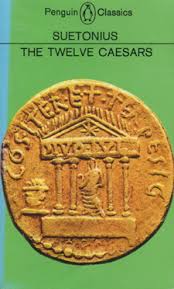
Gaius Caligula was the fourth Roman to assume the title of Emperor and Caesar. His reign began in 37 A.D. and ended—violently—four years later.

Gaius Caligula
His full name was Gaius Julius Caesar Augustus Germanicus. “Caligula”—“Little Boots”—was a nickname bestowed on him as a child by his father’s soldiers.
Accompanying his father, Germanicus, on military campaigns, Gaius often dressed up as a soldier to “drill” the troops, who loved his enthusiasm for military life.
Tiberius, the third Roman emperor, adopted Germanicus as his heir, and many Romans considered him as Rome’s Alexander the Great because of his virtuous character and military prowess. Many wanted him to succeed Tiberius when the emperor died.
But Germanicus died first, under mysterious circumstances. Some blamed illness, others believed he had been poisoned. Tiberius was widely suspected of having murdered a potential rival. And few mourned when Tiberius himself died in 19 A.D.
Upon Tiberius’ death, Caligula became emperor. The Romans welcomed his ascension due to their memory of his father, Germanicus.
His reign began well. He recalled those who had been banished from Rome by Tiberius, and publicly announced that “he had no ears for informers,” according to Suetonius.
He allowed judges unrestricted jurisdiction, without appeal to himself. To lighten the duties of jurors, he added a fifth division to the previous four. He also tried to restore the suffrage to the people by reviving the custom of elections.
He completed the public works which had been half-finished under Tiberius: the temple of Augustus and the theatre of Pompey.
But then Caligula underwent a change in character. Suetonius claimed that he suffered from an affliction that made him suddenly fall unconscious. The historian believed that Caligula knew that something was wrong with him.
He became increasingly egomaniacal. Among the titles he gave himself: “Child of the Camp,” “Father of the Armies,” and “Greatest and Best of Caesars.”
Eventually, he came to believe himself divine.
Without warning, he ordered one of his soldiers to execute his brother Tiberius. He drove his father-in‑law, Silanus, to commit suicide by cutting his throat with a razor.
Tiberius’ “crime” had been Caligula’s suspicion that he had taken an antidote against poison. “There is no antidote against Caesar!” Caligula is said to have raged.
In fact, Tiberius had taken medicine for a chronic cough.
Silanus died because he had not followed Caligula when he put to sea in stormy weather. Caligula believed he had remained behind hoping to take possession of Rome if he perished in the storm.
Actually, Silanus suffered from sea-sickness and wanted to avoid the discomforts of the voyage.
Caligula committed incest with all his sisters, and “at a large banquet he placed each of them in turn below him, while his wife reclined above.”
When his favorite sister, Drusilla, died, he announced a season of public mourning, making it a capital crime to laugh, bathe, or dine with one’s parents, wife, or children.
Having violated his sisters, he eagerly violated the wives of others.
At one wedding, he ordered that the bride be taken to his own house, and within a few days divorced her. Two years later he banished her, suspecting that she had returned to her former husband.
At gladiatorial games, he sometimes matched decrepit gladiators against wild beasts, and had sham fights between men who were “conspicuous for some bodily infirmity.”
Objecting to the expense of cattle to feed wild beasts for a gladiatorial show, he selected criminals to be devoured.
On other occasions, he shut up the storehouses for threshed grain and condemned the people to hunger.
“Let them hate me, so long as they fear me,” he often said. But hatred can override fear.
Just this happened among several members of his own security force, the Praetorian Guard. Caligula had repeatedly mocked Cassius Chaerea, one of its officers, for his weak voice, and assailed his masculinity.
On January 22, 41 A.D., Chaerea and other guardsmen attacked Caligula in an underground corridor of a gladiatorial arena and repeatedly stabbed him to death.
Upon hearing reports that Caligula was dead, Romans feared to rejoice: Had he started the rumor to discover who wanted him dead? Only when they were certain did they give themselves over to unbridled joy.
If history truly repeats itself, Kim Jong-Un has good reason to be afraid.
ABC NEWS, ALTERNET, AP, BUZZFEED, CALIGUA, CBS NEWS, CNN, CROOKS AND LIARS, DAILY KOZ, DONALD TRUMP, FACEBOOK, GAIUS SUETONIUS TRANQUILLUS, KIM JON UN, KOREAN WAR, MOTHER JONES, MOVEON, NBC NEWS, NEWSWEEK, NORTH KOREA, NPR, PENTAGON, POLITICO, RAW STORY, REUTERS, SALON, SEATTLE TIMES, SLATE, THE ATLANTIC, THE CHICAGO SUN-TIMES, THE CHICAGO TRIBUNE, THE DAILY BEAST, THE GUARDIAN, THE HILL, THE HUFFINGTON POST, THE LOS ANGELES TIMES, THE NATION, THE NEW YORK TIMES, THE TWELVE CAESARS, THE WASHINGTON POST, TIME, TWITTER, U.S. DEPARTMENT OF STATE, U.S. NEWS & WORLD REPORT, UPI, USA TODAY
In Bureaucracy, History, Military, Politics, Social commentary on December 12, 2017 at 1:30 am
Officials at the Pentagon and State Department constantly scramble for information that will enable them to penetrate the designs of North Korean dictator Kim Jong-Un.
And with good reason: His country possesses nuclear weapons, and is headed by a leader who’s erratic at best and certifiably insane at worst.
According to the Pentagon, North Korea had enough plutonium stored up to create a minimum of six nuclear weapons. Other estimates were as high as 10 to 16 nuclear weapons.
And since Donald Trump entered the White House, he has been engaged in an increasingly tense exchange of insults with the North Korean dictator.

Kim Jong-Un
Kim Jong-Un is the third Kim to rule North Korea since 1948. The first was his grandfather, Kim II-sung, who seized power and ruled absolutely until his death in 1994.
By ordering the invasion of South Korea in 1950, he provoked American intervention and ignited the Korean War (1950-1953), which ended in stalemate.
He was succeeded by his son, Kim Jong-il, who ruled from 1994 to 2011. That regime was marked by widespread famine, partially due to economic mismanagement, suppression of human rights and the export of state terrorism.
As was the case with his father, Kim Jong-il’s reign ended only with his death in 2011. He was immediately succeeded by his son, Kim Jong-Un.
At Kim Jong-il’s memorial service, the eulogy seemed as much for his son as for the departed “Dear Leader”:
“Respected Comrade Kim Jong-un is our party, military and country’s supreme leader who inherits great comrade Kim Jong-il’s ideology, leadership, character, virtues, grit and courage.”
Born on January 8, 1983, Kim Jong-Un owes everything to an act of genetics—his being the son of an absolute dictator.
This alone has enabled him to hold a series of exalted titles:
- First Secretary of the Workers’ party of Korea; the Chairman of the Central Military Commission;
- Chairman of the National Defense Commission;
- The Supreme Commander of the Korean People’s Army; and
- Presidium member of the Politburo of the Workers’ Party of Korea.
On December 30, 2011—only 13 days after his father died—Kim Jong-Un was formally appointed as the Supreme Commander of the Korean People’s Army.

North Korean military rally
In April, 2012, the Fourth Party Conference named him to the newly-created post of First Secretary of the Workers’ Party of Korea. He was promoted to the rank of Marshal in the army in July, 2012.
Given a lack of CIA “assets” within North Korea, the United States government has been forced to accept any scraps of reliable information it can get on Kim’s regime.
It’s known, for example, that he is a man of immense egomania. Following his father’s death, the cult of personality around Kim Jong-Un’s went into high gear.
He was hailed as the “great successor to the revolutionary cause of self-reliance,” “outstanding leader of the party, army and people” and “respected comrade who is identical to Supreme Commander Kim Jong-il.”
He was “a great person born of heaven,” declared the Korean Central News Agency. And, not to be outdone, the ruling Workers’ Party announced: “We vow with bleeding tears to call Kim Jong-Un our supreme commander, our leader.”
In November 2012, satellite photos revealed a half-mile-long propaganda message carved into a hillside in Ryanggang Province, reading, “Long Live General Kim Jong-Un, the Shining Sun!”
In 2013, Kim was named the world’s 46th most powerful person by the Forbes list of The World’s Most Powerful People. This derives from his commanding the fourth-largest standing army in the world–and an arsenal of nuclear weapons.
On March 7, 2013, North Korea threatened to launch a “pre-emptive nuclear attack” upon the United States. North Korea has outlined its plans for target American cities for nuclear strikes, including Washington, D.C., and Los Angeles.
Then there are the purges—the motive for which may be Kim’s desire to erase all traces of his father’s rule.
By the end of 2013, three defense ministers and four chiefs of the army’s general staff had been replaced. Among those purged was his uncle, Jang Sung-taek—who is thought to have been executed by machine gun.
Other victims of Kim’s regime reportedly include members of Jang’s family:
- His sister Jang Kye-sun;
- Her husband and ambassador to Cuba, Jon Yong-jin;
- Jang’s nephew and ambassador to Malaysia, Jang Yong-chol; and
- The nephew’s two sons, who were also reportedly murdered.
On May 13, 2015, South Korea’s National Intelligence Service reported that Kim had ordered the execution of North Korea’s Minister of Defense, Hyon Yong Chol.
The charge: Treason. And for “showing disrespect” to Kim by talking back to him and falling asleep at a military event.
Chol was killed by anti-aircraft gunfire with hundreds watching at a shooting range at Pyongyang’s Kang Kon Military Academy in late April.
Nor has this been the only major execution for 2015. Reports claim that earlier this year, Kim had ordered the execution of 15 senior officials for challenging his authority.
Penetrating the secrets of a ruthless dictatorship is extremely difficult. And any information obtained can often be considered no better than gossip.
Given these limitations, the White House, Pentagon and State Department may be forced to turn to another source in predicting Kim Jong-Un’s coming moves—and fate.
His name: Gaius Suetonius Tranquillus–better known as Suetonius.
ABC NEWS, ALAMO, ALTERNET, ANDREW JACKSON, AP, BUZZFEED, CAMERON JUDD, CBS NEWS, CNN, CROCKETT OF TENNESSEE, CROOKS AND LIARS, DAILY KOZ, DAVID CROCKETT, DAVY CROCKETT: KING OF THE WILD FRONTIER, DONALD TRUMP, FACEBOOK, INDIAN WARS, JAMES BOWIE, MITT ROMNEY, MOTHER JONES, MOVEON, NBC NEWS, NBCNEWS, NEWSWEEK, NPR, POLITICO, RAW STORY, REUTERS, SALON, SEATTLE TIMES, SLATE, TEXAS REVOLUTION, THE ATLANTIC, THE CHICAGO SUN-TIMES, THE CHICAGO TRIBUNE, THE DAILY BEAST, THE GUARDIAN, THE HILL, THE HUFFINGTON POST, THE LOS ANGELES TIMES, THE NATION, THE NEW YORK TIMES, THE WASHINGTON POST, TIME, TWITTER, U.S. NEWS & WORLD REPORT, UPI, USA TODAY, WALT DISNEY, WILLIAM BARRET
In Bureaucracy, History, Military, Politics, Social commentary on December 8, 2017 at 12:14 am
March 6, 2016, marked the 180th anniversary of the fall of the Alamo, a crumbling former Spanish mission in the heart of San Antonio, Texas.
It’s one of those battles like Thermopylae that have passed from history into legend.
It’s been the subject of novels, movies, biographies, histories and TV dramas (most notably Walt Disney’s 1955 “Davy Crockett: King of the Wild Frontier”).
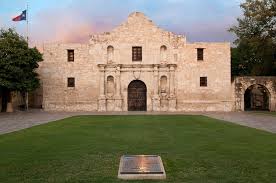
The Alamo
Perhaps the most extraordinary scene in any Alamo movie or book occurs in the 1993 novel, Crockett of Tennessee, by Cameron Judd.
And it is no less affecting for its being—so far as we know—entirely fictional.
It’s March 5, 1836—the last night of life for the Alamo garrison. The night before the 2,000 men of the Mexican Army hurl themselves at the former mission and slaughter its 200 “Texian” defenders.
The fort’s commander, William Barret Travis, has drawn his “line in the sand” and invited the garrison to choose: To surrender, to try to escape, or to stay and fight to the death.
And the garrison—except for one man—chooses to stay and fight.
For the garrison, immortality lies only hours away. Or does it?
An hour after deciding to stand and die in the Alamo, wrapped in the gloom of night, Crockett is seized with paralyzing fear.
“We’re going to die here,” he chokes out to his longtime friend, Persius Tarr. “You understand that, Persius? We’re going to die!” 
“I know, Davy. But there ain’t no news in that,” says Tarr. “We’re born to die. Every one of us. Only difference between us and most everybody else is we know when and where it’s going to be.”
“But I can’t be afraid—not me. I’m Crockett. I’m Canebrake Davy. I’m half-horse, half-alligator.”
“I know you are, Davy,” says Tarr. “So do all these men here. That’s why you’re going to get past this.
“You’re going to put that fear behind you and walk back out there and fight like the man you are. The fear’s come and now it’s gone. This is our time, Davy.”
“The glory-time,” says Crockett.
“That’s right, David. The glory-time.”
And then Tarr delivers a sentiment wholly alien to money-obsessed men like Mitt Romney and Donald Trump—who comprise the richest and most privileged 1% of today’s Americans.
“There’s men out there with their eyes on you. You’re the only thing keeping the fear away from them. You’re joking and grinning and fiddling—it gives them courage they wouldn’t have had without you.
“Maybe that’s why you’re here, Davy—to make the little men and the scared men into big and brave men. You’ve always cared about the little men, Davy. Remember who you are.
“You’re Crockett of Tennessee, and your glory-time has come. Don’t you miss a bit of it.”
The next morning, the Mexicans assault the Alamo. Crockett embraces his glory-time—and becomes a legend for all-time.
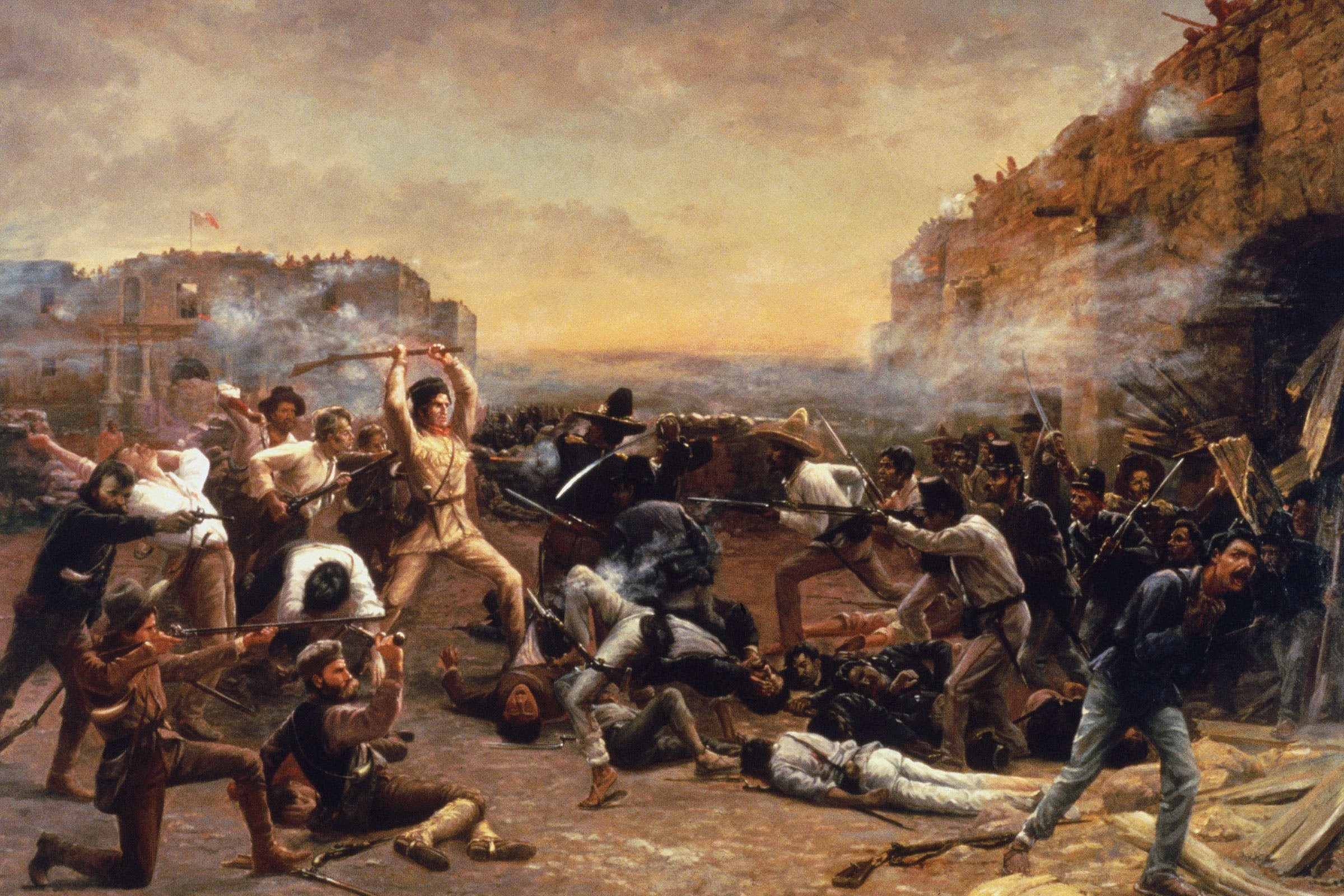
David Crockett (center) at the fall of the Alamo
David Crockett (1786-1836) lived—and died—a poor man. But this did not prevent him from trying to better the lives of his family and fellow citizens—and even his former enemies.

David Crockett
During the war of 1812, he served as a scout under Andrew Jackson. His foes were the Creek Indians, who had massacred 500 settlers at Fort Mims, Alabama—and threatened to do the same to Crockett’s family and neighbors in Tennessee.
As a Congressman from Tennessee, he championed the rights of poor whites. And he opposed then-President Jackson’s efforts to force the same defeated Indians to depart the lands guaranteed them by treaty.
To Crockett, a promise was sacred—whether given by a single man or the United States Government.
And his presence during the 13-day siege of the Alamo did cheer the spirits of the vastly outnumbered defenders. It’s a matter of historical record that he and a Scotsman named MacGregor often staged musical “duels” to see who could make the most noise.
It was MacGregor with his bagpipes against Crockett and his fiddle.
Contrast this devotion of Crockett to the rights of “the little men,” as Persius Tarr called them, with the attitude of Donald Trump, the 2016 Republican Presidential nominee.

Donald Trump
On June 16, 2015, while announcing his candidacy, Trump said:
- “…I don’t need anybody’s money. It’s nice. I don’t need anybody’s money. I’m using my own money. I’m not using lobbyists, I’m not using donors. I don’t care. I’m really rich.”
- “I did a lot of great deals and I did them early and young, and now I’m building all over the world….”
- “So I have a total net worth, and now with the increase, it’ll be well over $10 billion.”
- “But here, a total net worth of—net worth, not assets, not—a net worth, after all debt, after all expenses, the greatest assets—Trump Tower, 1290 Avenue of the Americas, Bank of America building in San Francisco, 40 Wall Street, sometimes referred to as the Trump building right opposite the New York—many other places all over the world. So the total is $8,737,540,000.”
Those who give their lives for others are rightly loved and remembered as heroes. Those who dedicate their lives solely to their wallets and egos are rightly soon forgotten.
ABC NEWS, ALTERNET, AP, AYATOLLAH RUHOLLAH KHOMEINI, BBC, BUZZFEED, CBS NEWS, CHRISTIAN RIGHT, CNN, COLD WAR, CZECHOSLOVAKIA, DAILY KOS, EGYPT, FACEBOOK, GLOBAL WARMING, HUNGARIAN UPRISING, HUNGARY, IRAN, IRAQ, ISLAM, ISRAEL, JESUS CHRIST, MIDDLE EAST, MOTHER JONES, MOVEON, NBC NEWS, NEWSWEEK, NPR, Oil, POLITICO, RAW STORY, REUTERS, SALON, SAND CURTAIN, SEATTLE TIMES, SECOND COMING, SHAH OF IRAN, SHIITE MUSLIMS, SLATE, SOVIET UNION, SUNNI MUSLIMS, TERRORISM, THE ATLANTIC, THE CHICAGO SUN-TIMES, THE CHICAGO TRIBUNE, THE DAILY BEAST, THE GUARDIAN, THE HILL, THE HUFFINGTON POST, THE LOS ANGELES TIMES, THE NEW YORK TIMES, THE WALL STREET JOURNAL, THE WASHINGTON POST, TIME, TWITTER, U.S. NEWS & WORLD REPORT, UNITED STATES, UPI, USA TODAY
In Bureaucracy, History, Military, Politics, Social commentary on December 6, 2017 at 1:01 am
The United States can attain peace in the Middle East—for itself.
But to do that, Americans must radically change their approach to that part of the world.
(1) The United States must embark on a crash program to develop alternatives to oil.
Oil consumption threatens the future of the world through global warming. And it keeps America tethered to dictatorial Islamic regimes that are fundamentally unstable and hostile to the West.
(2) Once freed from its dependency on oil, the United States can safely end its relationship with such regimes.
America will no longer have to spend billions of dollars every year propping up regimes like those in Iraq, Egypt and Saudi Arabia. Nor will it have to supply big-ticket military hardware (like fighter planes and missiles) to Islamic regimes.
When the Shah of Iran was overthrown in 1979, he was probably the best-armed Islamic leader in the Middle East. His army and air force bristled with sophisticated American weaponry he had bought with billions of dollars in oil revenues.
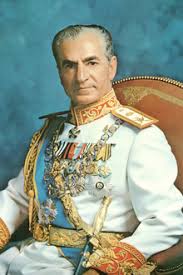
Shah of Iran
But he had thoroughly alienated his people. Liberals thought him a tyrant, and conservatives thought him a traitor to Islam. So when Ayatollah Ruhollah Khomeini flew to Iran from his self-exile in Paris, no one in the Shah’s army and air force raised a hand in his defense. The Shah fled the country in disgrace.
(3) The United States should end its “Permanent Bodyguard” relationship with Israel.
Every nation—including Israel—has the right to defend itself from aggression. But no nation—including Israel—should have the right to expect another nation to act as its permanent bodyguard.
Millions of Americans feel morally obligated to defend Israel owing to Nazi Germany’s slaughter of six million Jews during the Holocaust. But America was never a party to this, and has nothing to atone for.
A second reason why millions of Americans feel committed to Israel lies in the mythology of the Christian Right.
Many fundamentalist Christians believe that, for Jesus Christ to awaken from his 2,000-year slumber, Israel must first re-conquer every inch of territory it supposedly held during the reign of Kings David and Solomon.

Right-wing Christian fantasy: Dead man hovering
After Christ returns, they believe, the Jews will face a choice: Become Christians or go to hell. For evangelical Christians, Jews remain the eternal “Christ killers.”
And if Jews must assume temporary control of the Middle East to bring about the return of a man who died 2,000 years ago, so be it.
Many Right-wing members of the House of Representatives and Senate share this belief. That it is totally irrational and unsupported by any evidence means nothing to them. But this does not prevent these hundreds of men and women from holding high office.
That’s because such unbalanced views are shared by millions of equally irrational evangelical Christians.
(4) The United States and its European allies should erect a “Sand Curtain” around the Middle East.
For 44 years—1947 to 1991—the United States and the Soviet Union were locked in a Cold War. Essentially, the United States drew a ring around the Soviet Union—including those nations its armies had seized following the defeat of Nazi Germany in 1945.
The United States said, in effect: “We can’t liberate the Eastern European countries you’re now occupying”—because trying to do so would have triggered a nuclear World War III. “But we won’t allow you to occupy and enslave any other countries. And if you try to do so, it will mean total war.”
That’s why the United States did nothing to aid Hungarians when they rose up against their Soviet occupiers in 1956. That rebellion was quickly and brutally crushed.
And that’s why America stood by when Soviet tanks rolled into Prague in 1968 when Czechoslovakia dared to relax controls over its citizens.
On the other hand, the Soviet Union never seized any new countries.
(5) A “Sand Curtain” around the Middle East would work as follows:
America would withdraw all of its forces from the Middle East—but keep a good portion stationed in Europe.

It would then publicly announce: “From now on, you are the masters of your own destinies—so long as what you do affects only those of you living in the Middle East.
“We recognize that barbarism and violence have always been a part of life in the Middle East. And we don’t expect this to change.
“So go ahead and destroy as many of your own citizens as you wish—either because they’re Jewish or Christians, or because Sunni Muslims hate Shiite Muslims and Shiite Muslims hate Sunni Muslims.
“But Europe and the United States are strictly off-limits to you.
“And if you aim your aggression at either, we will consider this an act of war and use all the weapons at our disposal—including nuclear ones—to wipe you from the face of the Earth.“
The United States cannot enforce peace between Islamics and Israelis. Nor between Christians and Islamics. Nor between Islamics and Islamics.
But it can impose an embargo to confine such barbarism to only the Middle East.
.jpg&imgrefurl=https%3A%2F%2Fen.wikipedia.org%2Fwiki%2FJulius_Caesar&docid=i5zp8D4W-fCkiM&tbnid=pa1aoGEpET-OGM%3A&vet=1&w=1117&h=1769&bih=414&biw=745&ved=0ahUKEwjsvNnh8-rSAhULe7wKHWZBDxoQMwhQKBUwFQ&iact=c&ictx=1)


2016 PRESIDENTIAL ELECTION, ABC NEWS, ADOLF HITLER, ALTERNET, AP, ARTICLE 48, BARACK OBAMA, BUZZFEED, CBS NEWS, CNN, CROOKS AND LIARS, DAILY KOZ, DAVID BROOKS, DONALD TRUMP, ENABLING ACT, FACEBOOK, FBI, FRANCE, FRANZ HALDER, FRANZ VON PAPEN, GUNTER MEISNER, HERMAN GORING, HERMAN WOUK, JAMES COMEY, MARK SHIELDS, MICHAEL FLYNN, MOTHER JONES, MOVEON, NAZI GERMANY, NBC NEWS, NEWSWEEK, NPR, PAUL VON HINDENBURG, PBS NEWSHOUR, POLITICO, PRUSSIA, RAW STORY, REICHSTAG, REUTERS, ROBERT MUELLER, RUSSIA, SALLY YATES, SALON, SEATTLE TIMES, SHIELDS AND BROOKS, SLATE, THE ATLANTIC, THE CHICAGO SUN-TIMES, THE CHICAGO TRIBUNE, THE DAILY BEAST, THE GUARDIAN, THE HILL, THE HUFFINGTON POST, THE LOS ANGELES TIMES, THE NATION, THE NEW YORK TIMES, THE WASHINGTON POST, THE WINDS OF WAR, TIME, TWITTER, U.S. NEWS & WORLD REPORT, UPI, USA TODAY, USA TODAY ADOLF HITLERR, VLADIMIR PUTIN, WALTER VON BRAUCHITSCH, WOLFGANG PREISS, WORLD WAR 11, WORLD WAR ii
BELLICOSE EVIL TRUMPS TIMID MORALITY: PART ONE (OF TWO)
In Bureaucracy, History, Law, Law Enforcement, Military, Politics, Social commentary on January 31, 2018 at 12:06 amAfter Donald Trump won the 2016 election, many people feared he would embark on a radical Right-wing agenda. But others hoped that the Washington bureaucracy would “box him in.”
The same sentiments echoed throughout Germany after Adolf Hitler was appointed Chancellor of Germany on January 30, 1933.
The 1983 TV mini-series, The Winds of War, offered a dramatic example of how honorable men can be overwhelmed by a ruthless dictator.
Based on the bestselling 1971 historical novel by Herman Wouk, the mini-series factually re-created the major historical events of World War II.
One of those events took place on November 5, 1939.
General Walther von Brauchitsch is summoned to the Chancellery in Berlin to meet with Adolf Hitler. He carries a memorandum signed by all the leaders of the German Wehrmacht asserting that Case Yellow—Hitler’s planned attack against France—is impossible.
Meanwhile, at the German army headquarters at Zossen, in Berlin, the Wehrmacht’s top command wait for word from von Brauchitsch.
CHANCELLERY:
Von Brauchitsch hands the memorandum to Hitler, who reads it.
ZOSSEN:
Brigadier General Armin von Roon: I must confide in you on a very serious matter. I have been approached by certain army personages of the loftiest rank and prestige with a frightening proposal.
Chief of the General Staff Franz Halder: What did you reply?
Von Roon: That they were talking high treason.
CHANCELLERY:
Adolf Hitler (slamming down the memorandum): So—what is new in all this?
Gunter Meisner as Adolf Hitler in “The Winds of War”
Walther Von Brauchitsch: Fuhrer, it is the army’s final position that Case Yellow cannot proceed.
Hitler: Why not?
Von Brauchitsch: Because of the military fundamentals as stated.
Hitler: Such as?
Von Brauchitsch: The meteorologists predict continuous soaking rains for weeks.
Hitler: It rains on the enemy, too.
ZOSSEN:
Von Roon: The conspiracy has been going on that long—since Czechoslovakia [1938)?
Halder: If the British had not caved in at Munich [where France and Britain sold out their ally, Czechoslovakia]—perhaps. But they did. And ever then, ever since his big triumph, it has been hopeless. Hopeless.
Von Roon: Empty talk, talk, talk. I am staggered.
Halder: A hundred times I myself could have shot the man. I can still at any time. But what would be the result? Chaos. The people are for him. He has unified the country. We must stick to our posts and save him from making military mistakes.
Halder: But we really cannot proceed with Case Yellow.
Von Roon: Brauchitsch will get a postponement.
Halder: And if he does not?
CHANCELLERY:
Von Brauchitsch: Fuhrer, even the supply of artillery shells is totally inadequate.
Wolfgang Preiss as Walter von Brauchitsch in “The Winds of War”
Hitler: Who says so?
Von Brauchitsch: General Thomas, my chief of economics and armament.
Hitler: Do you know how many artillery shells of all calibers we have in the staging areas—right this minute?
Von Brauchitsch: No.
Hitler: How many we have in the reserve dumps in the West?
Von Brauchitsch: No, it’s up to my staff—
Hitler: What the monthly annual production of shells is? What the projected rise in production of the next six months is, month by month?
Von Brauchitsch: Who keeps such figures in his head?
Hitler: I do! The supply is adequate. I tell you so. And I’m a field soldier who depended on artillery for four years to protect his life. [He hands von Brauchitsch a sheaf of armaments figures.] Check with your staff. if one of those figures is wrong, you can postpone Case Yellow. Otherwise—you march! And next time you come to see me, know what you’re talking about!
Von Brauchitsch: If we march unprepared as we are, defeatism will run rampant. It will destroy the Wehrmacht and the Fatherland. The morale of the army was low, even in the Polish campaign.
Hitler: You question to me—to me—the courage of the German soldier?
Von Brauchitsch: I’m talking facts!
Hitler: What facts? Back up this monstrous assertion! In what units was morale low? What action was taken? How many death sentences were handed out for cowardice? Speak up! I’ll fly to the front and pass the death sentences myself. One specific instance.
Von Brauchitsch: It was common knowledge—
Hitler: Common knowledge? What is common knowledge is that army headquarters at Zossen crawls with cowards. You opposed me in rearming the Rhineland. You opposed me on the [union] with Austria. You opposed me on Czechoslovakia, until the British came crawling to me. You dirtied in your trousers, you heroes at Zossen, at the idea of marching into Poland. Well, have I once been wrong? Have you once been right? Answer me!
Von Brauchitsch: Mein Fuhrer—
Hitler: Tell everyone who signed this insubordinate Zossen rubbish to beware! I will ruthlessly crush everybody up to the rank of a Field Marshal who dares to oppose me. You don’t have to understand. You only have to obey. The German people understand me. I am Germany.
Fast forward 79 years from Adolf Hitler’s stormy confrontation with Walter von Brauchitsch to January 26, 2018.
President Donald Trump—having fired FBI Director James Comey, attacked the integrity of the American Intelligence community and tried to fire Independent Counsel Robert Mueller—can equally say: I am the destiny of America.
Share this: