Archive for the ‘Law Enforcement’ Category
ABC NEWS, ADOLF HITLER, ALTERNET, ANTHONY SCARAMUCCI, AP, BUZZFEED, CBS NEWS, CNN, CROOKS AND LIARS, DAILY KOZ, DONALD TRUMP, FACEBOOK, FBI, GENRIKH GRIGORYEVICH YAGODA, GRIGORI ZIMOVIEV, HEINRICH HIMMLER, HERMANN GOERING, HOPE HICKS, JAMES COMEY, JOACHIM VON RIBBONTROP, JOSEPH STALIN, JUSTICE DEPARTMENT, KGB, LAVENTI BERIA, LEON TROTSKY, LEV KAMENEV, LUFTWAFFE, MIKE FLYNN, MOTHER JONES, MOVEON, NAZI GERMANY, NBC NEWS, NEWSWEEK, NIKOLAI, NIKOLAI YEZHOV, NKVD, NPR, POLITICO, RAW STORY, REINCE PRIEBUS, REUTERS, ROBERT MEULLER, RUDOLF HESS, SALLY YATES, SALON, SEAN SPICER, SEATTLE TIMES, SEBASTIAN GORKA, SLATE, STEVE BANNON, THE ATLANTIC, THE CHICAGO SUN-TIMES, THE CHICAGO TRIBUNE, THE DAILY BEAST, THE GUARDIAN, THE HILL, THE HUFFINGTON POST, THE LOS ANGELES TIMES, THE NATION, THE NEW YORK TIMES, THE WASHINGTON POST, TIME, TWITTER, U.S. NEWS & WORLD REPORT, UP, UPI, USA TODAY
In Bureaucracy, History, Law Enforcement, Politics, Social commentary on September 25, 2017 at 2:06 am
Donald Trump—as both Presidential candidate and President—has often been compared to Adolf Hitler.
Yet, in at least one sense, this comparison is inaccurate. As Germany’s Fuhrer (1933-1945) Hitler kept on the members of his Cabinet for no less than 12 years.
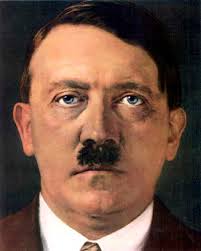
Adolf Hitler
Among these:
- Hermann Goering had repeatedly shown himself as the incompetent Reichsmarshall of the German air force, the Luftwaffe. Yet Hitler kept him on because Goering had been one of the “Old Fighters” who had supported Hitler long before the Nazis came to power. Only in April, 1945, when Hitler falsely believed that Goering was trying to supplant him as Fuhrer, did he expel him from the party and order his arrest.
- Rudolf Hess joined the Nazi party in 1920, and served as Deputy Fuhrer to Hitler from 1933 to 1941. That was when he flew to Scotland on a self-assigned mission to make peace with England. The British, believing him mad, locked him in the Tower of London until 1945. Afterward, he was convicted at Nuremberg for war crimes and sentenced to life imprisonment.
- Joachim von Ribbentrop had been a champagne salesman before Hitler appointed him Foreign Minister in 1938, and held that post until the Reich’s defeat in 1945. Although his arrogance and incompetence made him universally disliked by other high-ranking Nazi officials, Hitler never considered firing him.
- Heinrich Himmler, appointed Reichsfuhrer-SS in 1929, held that position throughout the 12 years (1933-1945) the Third Reich lasted. It was to Himmler that Hitler entrusted the most important project of his life: The destruction of European Jewry. Only after learning—in the final days of the Reich—that Himmler had sought to make peace with the Allies did Hitler expel him from the party and order his arrest.
Joseph Stalin, dictator of the Soviet Union (1928-1953) serves as a far better comparison figure for Trump.
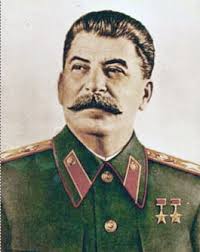
Joseph Stalin
In 1936, Stalin ordered the first of a series of purges—from high-ranking members of the Communist party to impoverished peasants. Among the most prominent of his victims:
- Grigory Zimoviev, former member of the Central Committee of the Communist party. He was arrested in 1934 on trumped-up charges of “moral complicity” in the assassination of Leniningrad party boss Sergei Kirov. He was executed in 1936.
- Leon Trotsky, onetime second-in-command only to Vladimir Lenin, clashed with Stalin before the November 7, 1917 Russian Revolution. They remained locked in combat until Lenin’s death of a cerebral hemorrhage in 1924. Stalin drove Trotsky out of the Communist party and even out of the Soviet Union. In 1940, on Stalin’s orders, he was assassinated while living under guard in Mexico.
- Genrikh Grigoryevich Yagoda served as director of the NKVD secret police (the precursor of the KGB) from 1934 to 1936. He supervised the arrest, show trial and execution of former Central Committee members Lev Kamenev and Grigory Zimoviev. Arrested in 1937, he was falsely charged with treason and conspiracy against the Soviet government. Yagoda was shot soon after the trial. His wife Ida Averbakh was also executed in 1938.
- Nikolai Yezhov became head of the NKVD secret police in 1936. He oversaw what historians have since named the Great Terror until 1939. Arrested in April, he was replaced by Lavrenty Beria. In 1940, Yezhov himself was executed by the executioners he had once commanded.
Like Joseph Stalin, Donald Trump has presided over a series of purges since reaching the White House.
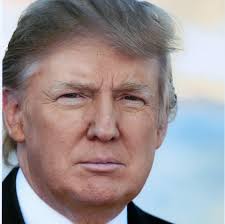
Donald Trump
Like Stalin, Trump demands unconditional loyalty from those who serve in his administration. And, also like Stalin, he does not believe that loyalty is a two-way street.
Moreover, it doesn’t take much to offend Trump’s fragile ego. When “Saturday Night Live” started doing skits showcasing his chief strategist, Steve Bannon, as a Rasputin-like figure who manipulated Trump, Bannon’s days were clearly numbered.
The same proved true for Anthony Scaramucci, who was to become White House communications director. All that it took to secure his dismissal was an expletive-ridden phone interview with The New Yorker‘s Ryan Lizza. It didn’t help Scaramucci that he bragged about purging the entire White House communications staff and even siccing the FBI on leakers.
Others have left the White House owing to its increasingly paranoid atmosphere. Reports have surfaced of staffers being ordered to turn over their cell phones for inspection. The reason: To ensure they weren’t communicating with reporters by text message or through encrypted apps.
Then there is the very real—and justified—fear of being caught up in Special Counsel Robert Mueller III’s ever-widening investigation into collusion between Russian Intelligence agents and members of Trump’s 2016 Presidential campaign.
One of those who has reportedly hired top-notch legal talent is Hope Hicks, interim White House communications director. According to Politico, the 28-year-old has retained the services of veteran criminal defense lawyer Robert Trout, who once worked for the Justice Department.
Even if a White House staffer is not ultimately indicted and convicted, the costs of hiring top-flight legal talent can prove ruinous.
During the 2016 campaign, Trump claimed a $9 billion fortune: “I’m really rich!” But he has shown no willingness to spend any of it defending those officials he has hired.
And for an administration already plagued with a shortage of desperately-needed talent, even worse may soon be to come.
2016 PRESIDENTIAL ELECTION, A BRONX TALE, ABC NEWS, ADOLF HITLER, ALTERNET, AP, BILL CLINTON, BUZZFEED, CBS NEWS, CHAZZ PALMINTERI, CNN, CROOKS AND LIARS, DAILY KOZ, DONALD TRUMP, FACEBOOK, FBI, H.R. MCMASTER, HILLARY CLINTON, IRS, J. EDGAR HOOVER, JEFF SESSIONS, JOHN F. KENNEDY, JOHN KELLY, LYNDON B. JOHNSON, MOTHER JONES, MOVEON, NBC NEWS, NEWSWEEK, NICCOLO MACHIAVELLI, NPR, POLITICO, RAW STORY, REINCE PREBIUS, REPUBLICAN PARTY, REUTERS, RICHARD M. NIXON, ROBERT DE NIRO, ROBERT F. KENNEDY, Ronald Reagan, SALON, SEATTLE TIMES, SERGEI KISLYAK, SLATE, THE ATLANTIC, THE CHICAGO SUN-TIMES, THE CHICAGO TRIBUNE, THE DAILY BEAST, THE GUARDIAN, THE HILL, THE HUFFINGTON POST, THE LOS ANGELES TIMES, THE NATION, THE NEW YORK TIMES, THE PRINCE, THE WASHINGTON POST, TIME, TWITTER, U.S. NEWS & WORLD REPORT, UP, UPI, USA TODAY, WILLIAM RALPH INGE
In Bureaucracy, History, Law Enforcement, Politics, Social commentary on September 21, 2017 at 12:02 am
American Presidents—like politicians everywhere–strive to be loved. There are two primary reasons for this.
First, even the vilest dictators want to believe they are good people—and that their goodness is rewarded by the love of their subjects.
Second, it’s universally recognized that a leader who’s beloved has great clout than one who isn’t. In the United States, a Presidential candidate who wins by a landslide is presumed to have a mandate to pursue his agenda—at least, for the first two years of his administration.
But those—like Barack Obama—who strive to avoid conflict often get treated with contempt and hostility by their adversaries.
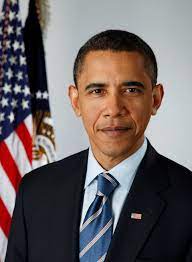
Barack Obama
In Renegade: The Making of a President, Richard Wolffe chronicled Obama’s successful 2008 bid for the White House. Among his revelations:
Obama, a believer in rationality and decency, felt more comfortable in responding to attacks on his character than in attacking the character of his enemies.
A graduate of Columbia University and Harvard Law School, Obama was one of the most academically gifted Presidents in United States history.
Yet he failed to grasp and apply this fundamental lesson taught by Niccolo Machiavelli, the father of modern political science:
A man who wishes to make a profession of goodness in everything must inevitably come to grief among so many who are not good. And therefore it is necessary for a prince, who wishes to maintain himself, to learn how not to be good, and to use this knowledge and not use it, according to the necessity of the case.
This explains why Obama found most of his legislative agenda stymied by Republicans.
For example: In 2014, Senator Rand Paul (R-Ky.) sought to block David Barron, Obama’s nominee to the First Circuit Court of Appeals.
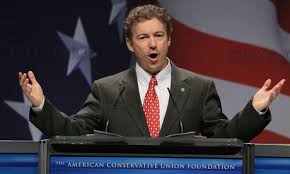
Rand Paul
Paul objected to Barron’s authoring memos that justified the killing of an American citizen by a drone in Yemen on September 30, 2011.
The target was Anwar al-Awlaki, a radical Muslim cleric notorious on the Internet for encouraging Muslims to attack the United States.
Paul demanded that the Justice Department release the memos Barron crafted justifying the drone policy.
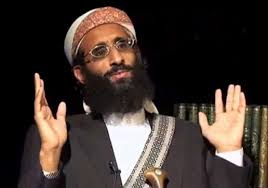
Anwar al-Awlaki
Imagine how Republicans would depict Paul—or any Democratic Senator—who did the same with a Republican President: “Rand Paul: A traitor who supports terrorists. He sides with America’s sworn enemies against its own lawfully elected President.”
But Obama did nothing of the kind.
(On May 22, 2014, the Senate voted 53–45 to confirm Barron to the First Circuit Court of Appeals.)
But Presidents who seek to rule primarily by fear can encounter their own limitations. Which immediately brings to mind Donald Trump.
As both a Presidential candidate and President, Trump has repeatedly used Twitter to attack hundreds of real and imagined enemies in politics, journalism, TV and films.
From June 15, 2015, when he launched his Presidential campaign, until October 24, 2016, Trump fired almost 4,000 angry, insulting tweets at 281 people and institutions that had somehow offended him.
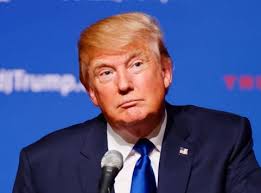
Donald Trump
The New York Times needed two full pages of its print edition to showcase them.
As a Presidential candidate and President, he has shown outright hatred for President Obama. For five years, he slandered Obama as a Kenyan-born alien who had no right to hold the Presidency.
Then, on March 4, 2017, in a series of unhinged tweets, Trump falsely accused Obama of committing an impeachable offense: Tapping his Trump Tower phones prior to the election.
As President, Trump has refused to reach beyond the narrow base of white, racist, ignorant, hate-filled, largely rural voters who elected him.
And he has bullied and insulted even White House officials and his own handpicked Cabinet officers:
- Trump has waged a Twitter-laced feud against Jeff Sessions, his Attorney General. Sessions’ “crime”? Recusing himself from investigations into well-established ties between Russian Intelligence agents and members of Trump’s Presidential campaign.
- Trump repeatedly humiliated Chief of Staff, Reince Priebus—at one point ordering him to kill a fly that was buzzing about. On July 28, Priebus resigned.
- Trump similarly tongue-lashed Priebus’ replacement, former Marine Corps General John Kelly. Trump has reportedly been angered by Kelly’s efforts to limit the number of advisers who have unrestricted access to him. Kelly told colleagues he had never been spoken to like that during 35 years of military service—and would not tolerate it again.
- After Trump gave sensitive Israeli intelligence to Russian ambassador Sergey Kislyak, his national security advisor, H.R. McMaster, denied this had happened. Trump then contradicted McMaster in a tweet: “As president, I wanted to share with Russia (at an openly scheduled WH meeting) which I have the absolute right to do, facts pertaining to terrorism and airline flight safety.”
If Trump ever read Niccolo Machiavelli’s The Prince, he’s clearly forgotten this passage:
Cruelties ill committed are those which, although at first few, increase rather than diminish with time….Whoever acts otherwise….is always obliged to stand with knife in hand, and can never depend on his subjects, because they, owing to continually fresh injuries, are unable to depend upon him.
And this one:
Still, a prince should make himself feared in such a way that if he does not gain love, he at any rate avoids hatred.
Or, as Cambridge Professor of Divinity William Ralph Inge put it: “A man may build himself a throne of bayonets, but he can’t sit on it.”
2016 PRESIDENTIAL ELECTION, A BRONX TALE, ABC NEWS, ADOLF HITLER, ALTERNET, AP, BILL CLINTON, BUZZFEED, CBS NEWS, CHAZZ PALMINTERI, CNN, CROOKS AND LIARS, DAILY KOZ, DONALD TRUMP, FACEBOOK, FBI, H.R. MCMASTER, HILLARY CLINTON, IRS, J. EDGAR HOOVER, JEFF SESSIONS, JOHN F. KENNEDY, JOHN KELLY, LYNDON B. JOHNSON, MOTHER JONES, MOVEON, NBC NEWS, NEWSWEEK, NICCOLO MACHIAVELLI, NPR, POLITICO, RAW STORY, REINCE PREBIUS, REPUBLICAN PARTY, REUTERS, RICHARD M. NIXON, ROBERT DE NIRO, ROBERT F. KENNEDY, Ronald Reagan, SALON, SEATTLE TIMES, SERGEI KISLYAK, SLATE, THE ATLANTIC, THE CHICAGO SUN-TIMES, THE CHICAGO TRIBUNE, THE DAILY BEAST, THE GUARDIAN, THE HILL, THE HUFFINGTON POST, THE LOS ANGELES TIMES, THE NATION, THE NEW YORK TIMES, THE PRINCE, THE WASHINGTON POST, TIME, TWITTER, U.S. NEWS & WORLD REPORT, UP, UPI, USA TODAY, WILLIAM RALPH INGE
In Bureaucracy, History, Law Enforcement, Politics, Social commentary on September 20, 2017 at 12:30 am
Is it better to be loved or feared?
That was the question Florentine statesman Niccolo Machiavelli raised more than 500 years ago.
Presidents have struggled to answer this question—and have come to different conclusions.
LOVE ME, FEAR MY BROTHER
Most people felt irresistibly drawn to John F. Kennedy—even his political foes. Henry Luce, the conservative publisher of Time, once said, “He makes me feel like a whore.”
But JFK could afford to bask in the love of others—because his younger brother, Robert, was the one who inspired fear.
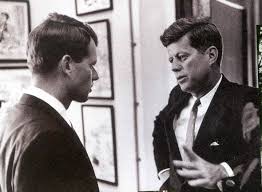
Robert F. Kennedy and John F. Kennedy
He had done so as Chief Counsel for the Senate Rackets Committee (1957-59), grilling Mafia bosses and corrupt union officials–most notably Teamsters President James Hoffa.
Appointed Attorney General by JFK, he unleashed the FBI on the Mafia. When the steel companies colluded in an inflationary rise in the price of steel in 1962, Bobby sicced the FBI on them.
In 1963, JFK’s cavorting with Ellen Rometsh threatened to destroy his Presidency. Rometsch, a Washington, D.C. call girl, was suspected by the FBI of being an East German spy.
With Republican Senators preparing to investigate the rumors, Bobby ordered Rometsch deported immediately (to which, as a German citizen, she was subject).
He also ordered FBI Director J. Edgar Hoover to deliver a warning to the Majority and Minority leaders of the Senate: The Bureau was fully aware of the extramarital trysts of most of its members. And an investigation into the President’s sex life could easily lead into revelations of Senatorial sleaze.
Plans for a Senatorial investigation were shelved.
BEING LOVED AND FEARED
In the 1993 movie, A Bronx Tale, 17-year-old Calogero (Lillo Brancato) asks his idol, the local Mafia capo, Sonny (Chazz Palminteri): “Is it better to be loved or feared?”
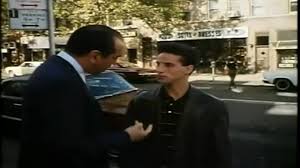
Sonny gives advice to his adopted son, Calogero
Sonny says if he had to choose, he would rather be feared. But he adds a warning straight out of Machiavelli: “The trick is not being hated. That’s why I treat my men good, but not too good.
“I give too much, then they don’t need me. I give them just enough where they need me, but they don’t hate me.”
Machiavelli, writing in The Prince, went further:
“Still a Prince should make himself feared in such a way that if he does not gain love, he at any rate avoids hatred, for fear and the absence of hatred may well go together. And [this] will always be attained by one who abstains from interfering with the property of his citizens and subjects or with their women.”
Many who quote Machiavelli in defense of being feared overlook this vital point: It’s essential to avoid becoming hated.
To establish a fearful reputation, a leader must act decisively and ruthlessly when the interests of the organization are threatened. Punitive action must be taken promptly and confidently.
One or two harsh actions of this kind can make a leader more feared than a reign of terror.
In fact, it’s actually dangerous to constantly employ cruelties or punishments. Whoever does so, warns Machiavelli, “is always obliged to stand with knife in hand, and can never depend on his subjects, because they, owing to continually fresh injuries, are unable to depend upon him.”
The 20th century President who came closest to realizing Machiavelli’s “loved and feared” prince in himself was Ronald Reagan.
Always smiling, quick with a one-liner (especially at press conferences), seemingly unflappable, he projected a constantly optimistic view of his country and its citizens.
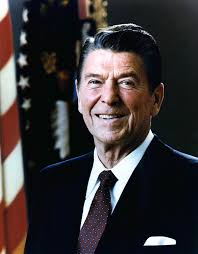
Ronald Reagan
In his acceptance speech at the 1980 Republican National Convention he declared: “[The Democrats] say that the United States has had its days in the sun, that our nation has passed its zenith.… My fellow citizens, I utterly reject that view.”
And Americans enthusiastically responded to that view, twice electing him President (1980 and 1984).
But there was a steely, ruthless side to Reagan that appeared when he felt crossed.
On August 3, 1981, nearly 13,000 air traffic controllers walked out after contract talks with the Federal Aviation Administration collapsed. As a result, some 7,000 flights across the country were canceled on that day at the peak of the summer travel season.
Reagan branded the strike illegal. He threatened to fire any controller who failed to return to work within 48 hours.
On August 5, Reagan fired more than 11,000 air traffic controllers who hadn’t returned to work. The mass firing slowed commercial air travel, but it did not cripple the system as the strikers had forecast.
Reagan’s action stunned the American labor movement. Reagan was the only American President to have belonged to a union, the Screen Actors Guild. He had even been president of this–from 1947 to 1954.
There were no more strikes by Federal workers during Reagan’s tenure in office.
Similarly, Libya’s dictator, Moammar Kadaffi, learned that Reagan was not a man to cross.
On April 5, 1986, Libyan agents bombed a nightclub in West Berlin, killing three people, one a U.S. serviceman. The United States quickly learned that Libyan agents in East Germany were behind the attack.
On April 15, acting on Reagan’s orders, U.S. Air Force, Navy and Marine Corps bombers struck at several sites in Tripoli and Benghazi. Reportedly, Kaddafi himself narrowly missed becoming a casualty.
There were no more acts of Libyan terrorism against Americans for the rest of Reagan’s term.
2016 PRESIDENTIAL ELECTION, A BRONX TALE, ABC NEWS, ADOLF HITLER, ALTERNET, AP, BILL CLINTON, BUZZFEED, CBS NEWS, CHAZZ PALMINTERI, CNN, CROOKS AND LIARS, DAILY KOZ, DONALD TRUMP, FACEBOOK, FBI, H.R. MCMASTER, HILLARY CLINTON, IRS, J. EDGAR HOOVER, JEFF SESSIONS, JOHN F. KENNEDY, JOHN KELLY, LYNDON B. JOHNSON, MOTHER JONES, MOVEON, NBC NEWS, NEWSWEEK, NICCOLO MACHIAVELLI, NPR, POLITICO, RAW STORY, REINCE PREBIUS, REPUBLICAN PARTY, REUTERS, RICHARD M. NIXON, ROBERT DE NIRO, ROBERT F. KENNEDY, Ronald Reagan, SALON, SEATTLE TIMES, SERGEI KISLYAK, SLATE, THE ATLANTIC, THE CHICAGO SUN-TIMES, THE CHICAGO TRIBUNE, THE DAILY BEAST, THE GUARDIAN, THE HILL, THE HUFFINGTON POST, THE LOS ANGELES TIMES, THE NATION, THE NEW YORK TIMES, THE PRINCE, THE WASHINGTON POST, TIME, TWITTER, U.S. NEWS & WORLD REPORT, UP, UPI, USA TODAY, WILLIAM RALPH INGE
In Bureaucracy, History, Law Enforcement, Social commentary, Uncategorized on September 19, 2017 at 12:07 am
It’s probably the most-quoted passage of Niccolo Machiavelli’s infamous book, The Prince:
“From this arises the question whether it is better to be loved than feared, or feared more than loved. The reply is, that one ought to be both feared and loved, but as it is difficult for the two to go together, it is much safer to be feared than loved.
“For it may be said of men in general that they are ungrateful, voluble, dissemblers, anxious to avoid danger and covetous of gain. As long as you benefit them, they are entirely yours: they offer you their blood, their goods, their life and their children, when the necessity is remote, but when it approaches, they revolt.
“And the prince who has relied solely on their words, without making other preparations, is ruined. For the friendship which is gained by purchase and not through grandeur and nobility of spirit is bought but not secured, and at a pinch is not to be expended in your service.
“And men have less scruple in offending one who makes himself loved than one who makes himself feared. For love is held by a chain of obligations which, men being selfish, is broken whenever it serves their purpose. But fear is maintained by a dread of punishment which never fails.”
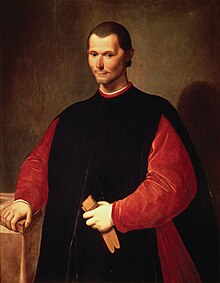
Niccolo Machiavelli
So—which is better: To be feared or loved?
In the 1993 film, A Bronx Tale, 17-year-old Calogero (Lillo Brancato) poses that question to his idol, the local Mafia capo, Sonny (Chazz Palminteri).
“That’s a good question,” Sonny replies. “It’s nice to be both, but it’s very difficult. But if I had my choice, I would rather be feared.
“Fear lasts longer than love. Friendships that are bought with money mean nothing. You see how it is around here. I make a joke, everybody laughs. I know I’m funny, but I’m not that funny. It’s fear that keeps them loyal to me.”
Presidents face the same dilemma as Mafia capos—and resolve it in their own ways.
LOVE ME BECAUSE I NEED TO BE LOVED
Bill Clinton believed that he could win over his self-appointed Republican enemies through his sheer charm.
Part of this lay in self-confidence: He had won the 1992 and 1996 elections by convincing voters that “I feel your pain.”
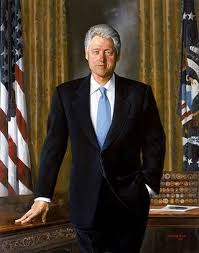
Bill Clinton
And part of it lay in his need to be loved. He once said that if he were in a room with 100 people and 99 of them liked him but one didn’t, he would spend all his time with that one person, trying to win him over.
But while he could charm voters, he could not bring himself to retaliate against his sworn Republican enemies.
On April 19, 1995, Right-wing terrorist Timothy McVeigh drove a truck–packed with 5,000 pounds of ammonium nitrate and nitromethane–to the front of the Alfred P. Murrah Federal Building in Oklahoma City.
The explosion killed 168 people, including 19 children in the day care center on the second floor, and injured 684 others.
Suddenly, Republicans were frightened. Since the end of World War II, they had vilified the very Federal Government they belonged to. They had deliberately courted the Right-wing militia groups responsible for the bombing.
So Republicans feared Clinton would now turn their decades of hate against them.
They need not have worried. On April 23, Clinton presided over a memorial service for the victims of the bombing. He gave a moving eulogy—without condemning the hate-filled Republican rhetoric that had at least indirectly led to the slaughter.
Clinton further sought to endear himself to Republicans by:
- Adopting NAFTA—the Republican-sponsored North American Free Trade Act, which later proved so devastating to American workers;
- Siding with Republicans against poor Americans on welfare; and
- Championing the gutting of the Depression-era Glass-Steagall law, which barred investment banks from commercial banking activities.
The result: Republicans believed Clinton was weak–and could be rolled.
In 1998, House Republicans moved to impeach him over a sex scandal with White House intern Monica Lewinsky. But his Presidency survived when the Senate refused to convict.
LOVE ME BECAUSE I’LL HURT YOU IF YOU DON’T
Lyndon Johnson wanted desperately to be loved.
Once, he complained to Dean Acheson, the former Secretary of State under Harry S. Truman, about the ingratitude of American voters. He had passed far more legislation than his predecessor, John F. Kennedy, and yet Kennedy remained beloved, while he, Johnson, was not.
Why was that? Johnson demanded.
“You are not a very likable man,” said Acheson truthfully.
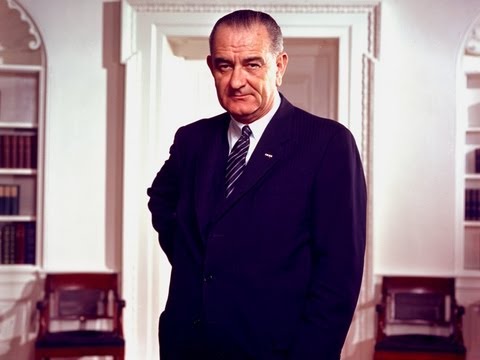
Lyndon B. Johnson
Johnson tried to make his subordinates love him. He would humiliate a man, then give him an expensive gift—such a Cadillac. It was his way of binding the man to him.
He was on a first-name basis with J. Edgar Hoover, the longtime director of the FBI. He didn’t hesitate to request—and get—raw FBI files on his political opponents.
On at least one occasion, he told members of his Cabinet: No one would dare walk out on his administration—because if they did, two men would follow their ass to the end of the earth: Mr. J. Edgar Hoover and the head of the Internal Revenue Service.
ABC NEWS, ALTERNET, ALVARO OBREGON, ANCHOR BABIES, AP, BUZZFEED, CALIFORNIA SUPREME COURT, CBS NEWS, CNN, CROOKS AND LIARS, DAILY KOZ, DREAM ACT, EMILIANO ZAPATA, FACEBOOK, FELIPE CALDERON, ILLEGAL ALIENS, illegal immigration, LA RAZA, MEXICAN REVOLUTION, MEXICO, MOTHER JONES, MOVEON, MSNBC, NBC NEWS, NEWSWEEK, NPR, PANCHO VILLA, POLITICO, RACIAL PROFILING, RAW STORY, REUTERS, SALON, SEATTLE TIMES, SERGIO GARCIA, SLATE, THE ATLANTIC, THE CHICAGO SUN-TIMES, THE CHICAGO TRIBUNE, THE DAILY BEAST, THE GUARDIAN, THE HILL, THE HUFFINGTON POST, THE LOS ANGELES TIMES, THE NATION, THE NEW YORK TIMES, THE WASHINGTON POST, TIME, TWITTER, U.S. NEWS & WORLD REPORT, UP, UPI, USA TODAY, VENUSTIANO CARRANZA
In Bureaucracy, History, Law, Law Enforcement, Politics, Social commentary on September 1, 2017 at 12:08 am
On January 2, 2014, the California Supreme Court granted a law license to a man illegally living in the United States.
The decision allowed Sergio Garcia to begin practicing law even though his mere presence was a blatant violation of American immigration laws.
Garcia arrived in the U.S. illegally in 1994 to pick almonds with his father and worked at a grocery store and in the fields while attending school.
He graduated from Cal Northern School of Law in 2009 and passed the bar exam.
Garcia was not a citizen, nor even a legal resident.
But that didn’t stop him from challenging a 1996 Federal law that forbids state agencies to extend public benefits—including professional licenses—to those who are illegally in the country.
The headline for this story in the liberal Huffington Post read: “California Supreme Court Grants Law License to Undocumented Immigrant Sergio Garcia.”

California Supreme Court
The headline could just have accurately read: “California Supreme Court Allows Illegal Alien to Legally Practice Law.”
But “illegal alien” is—for all its accuracy—Politically Incorrect. Instead, those who defend the wanton violating of American immigration laws prefer the term “undocumented immigrant.”
As though at one time these lawbreakers had valid citizenship documents but somehow lost them during their swim across the Rio Grande.
Of course, Mexican politicians are quick to accuse Americans of racism if they dare to enforce their own immigration laws.
Consider the lecture that then-Mexican President Felipe Calderon gave a joint session of Congress on May 20, 2010.
Calderon attacked the Arizona law that allowed law enforcement officials to detain anyone suspected of being in the country illegally.

Felipe Calderon
According to Calderon, the law “introduces a terrible idea: using racial profiling as a basis for law enforcement.”
Racial profiling? Consider the popular Latino phrase, “La Raza.”
This literally means “the race” or “the people.” In the United States, it’s sometimes used to describe people of Chicano and Mexican descent as well as other Latin American mestizos who share Native American heritage.
It rarely includes entirely European or African descended Hispanic peoples.
So when Latinos say, “The Race,” they’re not talking about “the human race.” They’re talking strictly about their own.
In his lecture, Calderon condemned the United States for doing what Mexico itself has long done: Strictly enforcing control of its borders.
The hypocrisy of Calderon’s words was staggering.
From a purely political viewpoint, it’s makes sense that Calderon didn’t say anything about this. From a viewpoint of fairness and common sense, his refusal to do so smacked of the vilest hypocrisy.
Mexico has a single, streamlined law that ensures that foreign visitors and immigrants are:
- in the country legally;
- have the means to sustain themselves economically;
- not destined to be burdens on society;
- of economic and social benefit to society;
- of good character and have no criminal records; and
- contribute to the general well-being of the nation.
The law also ensures that:
- immigration authorities have a record of each foreign visitor;
- foreign visitors do not violate their visa status;
- foreign visitors are banned from interfering in the country’s internal politics;
- foreign visitors who enter under ralse pretenses are imprisoned or deported;
- foreign visitors violating the terms of their entry are imprisoned are deported;
- those who aid in illegal immigration will be sent to prison.
Calderon also ignored a second, well-understood but equally unacknowledged truth: Mexico uses its American border to rid itself of those who might otherwise demand major reforms in the country’s political and economic institutions.
The Mexican Government still remembers the bloody upheaval known as the Mexican Revolution. This lasted ten years (1910-1920) and wiped out an estimated one to two million men, women and children.
Massacres were common on all sides, with men shot by the hundreds in bullrings or hung by the dozen on trees.
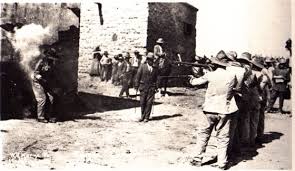
A Mexican Revolution firing squad
All of the major leaders of the Revolution—Francisco Madero, Emiliano Zapata, Venustiano Carranza, Francisco “Pancho” Villa, Alvaro Obregon—died in a hail of bullets.
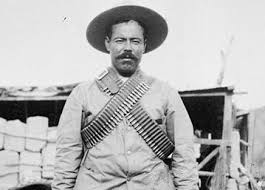
Francisco “Pancho” Villa
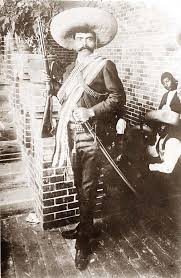
Emiliano Zapata
As a result, every successive Mexican Government has lived in the shadow of another such wholesale bloodletting. These officials have thus quietly decided to turn the United States border into a safety valve.
If potential revolutionaries leave Mexico to find a better life in the United States, the Government doesn’t have to fear the rise of another “Pancho” Villa.
If somehow the United States managed to seal its southern border, all those teeming millions of “undocumented workers” who just happened to lack any documents would have to stay in “Mexico lindo.”
They would be forced to live with the rampant corruption and poverty that have forever characterized this failed nation-state. Or they would have to demand substantial reforms.
There is no guarantee that such demands would not lead to a second–and equally bloody–Mexican revolution.
So Felipe Calderon and his successors in power find it easier–and safer—to turn the United States into a dumping ground for the Mexican citizens that the Mexican Government itself doesn’t want.
ABC NEWS, ALTERNET, AP, BUZZFEED, CBS NEWS, CNN, CROOKS AND LIARS, DAILY KOZ, DONALD TRUMP, FACEBOOK, FRED ZINNEMANN, GARY COOPER, GRACE KELLY, HIGH NOON, JOSEPH R. MCCARTHY, MOTHER JONES, MOVEON, NBC NEWS, NEWSWEEK, NPR, POLITICO, RAW STORY, REPUBLICANS, REUTERS, SALON, SEATTLE TIMES, SLATE, THE ATLANTIC, THE CHICAGO SUN-TIMES, THE CHICAGO TRIBUNE, THE DAILY BEAST, THE GUARDIAN, THE HILL, THE HUFFINGTON POST, THE LOS ANGELES TIMES, THE NATION, THE NEW YORK TIMES, THE WASHINGTON POST, TIME, TWITTER, U.S. NEWS & WORLD REPORT, UP, UPI, USA TODAY
In Bureaucracy, Entertainment, History, Law Enforcement, Politics, Social commentary on August 31, 2017 at 12:10 am
A Pew Research Center survey released on August 29 found that 36% of Americans approve of President Donald Trump. Most other polling rates his approval between 35 and 40%.
Other findings of the survey included:
- Just over two-thirds of Republicans agree with his positions;
- Among Democrats, 94% disagree with them;
- 15% of respondents agreed with Trump on all or nearly all issues;
- 18% agreed with him on many issues;
- 21% agreed on a few issues; and
- 45% didn’t agree with him on issues at all.
Asked what they thought of Trump’s conduct in office, Republicans were divided:
- 19% didn’t like his conduct;
- 46% said they had mixed feelings;
- 34% liked the way he behaved as President.
When asked what they liked most about Trump’s Presidency, those who approved of his performance cited his personality and conduct four times more often than his policies.
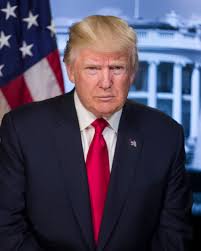
Donald Trump
On August 30, an article in Salon tackled this group head-on: “Most Americans Strongly Dislike Trump, But the Angry Minority That Adores Him Controls Our Politics.”
It described these voters as representing about one-third of the Republican party:
“These are older and more conservative white people, for the most part, who believe he should not listen to other Republicans and should follow his own instincts….
“They like Trump’s coarse personality, and approve of the fact that he treats women like his personal playthings. They enjoy it when he expresses sympathy for neo-Nazis and neo-Confederate white supremacists.
“They cheer when he declares his love for torture, tells the police to rough up suspects and vows to mandate the death penalty for certain crimes. (Which of course the president cannot do.)
“…This cohort of the Republican party didn’t vote for Trump because of his supposed policies on trade or his threat to withdraw from NATO. They voted for him because he said out loud what they were thinking. A petty, sophomoric, crude bully is apparently what they want as a leader.”
According to the Pew survey, they only comprise 16% of the population. That leaves 65% of Republicans who are revolted by Trump’s personality and behavior.
But they are being advised by GOP political consultants to vigorously support him.
“Your heart tells you that he’s bad for the country,” one anonymous consultant told the Salon reporter. “Your head looks at polling data among Republican primary voters and sees how popular he is.”
It’s precisely these hard-core Fascists who come out in mid-term elections—and they’re scaring the remaining 65% who make up the GOP establishment.
Their highest priority, after all, is to hold onto their privileged positions in the House and Senate. And anything that might jeopardize that—including what’s best for the country—can go hang.
Perhaps it’s time for Republicans to remember the lesson taught by High Noon, the classic 1952 Western starring Gary Cooper and Grace Kelly.

Town marshal Will Kane (Cooper) has just marred Amy Fowler (Kelly) a Quaker. It should be the happiest day of his life. But shortly after the ceremony, word comes that Frank Miller—a notorious murderer Kane once sent to prison—has been released.
Even worse, Miller and three other killers are coming into town on the noon train—to kill Kane.
Kane’s first instinct is to flee: He and his wife get into a buggy and dash out of town. But then his sense of duty takes over. He returns to town, intending to recruit a posse.
But this proves impossible—everyone is scared to death of Miller and his gang. And everyone Kane approaches has a reason for not backing him up.
Even Amy—a fervent believer in non-violence—threatens to leave him if he stands up to Miller. She will be on the noon train leaving town—with or without him.
When the clock strikes noon, the train arrives, and Kane—alone—faces his enemies. He shoots and kills two of them.
Then, as he’s pinned down by the third, he gets some unexpected help—from his wife: Amy shoots the would-be killer in the back—only to be taken hostage by Miller himself.
Miller tells Kane to leave his concealed position or he’ll kill Amy. Kane steps into the open—and Amy claws at Miller’s face, buying Kane the time he needs to shoot Miller down.
It’s over.
At that point, the townspeople rush to embrace Kane and congratulate him. But he’s now seen them for the cowards they are and holds them in total contempt.
Saying nothing, he drops the marshal’s star into the dirt. He and Amy then get into a buggy and leave town.
Fred Zinnemann, the film’s director, intended the movie as an attack on those frightened into silence by Joseph McCarthy, the infamous Red-baiting Senator from Wisconsin.
More than 50 years later, the movie remains a powerful indictment of civil cowardice—and a testament to the courage of a committed individual.
Gary Cooper won a Best Actor Academy Award for his performance.
Today’s Republicans would do well to find the same courage as Will Kane—and choose love of country over love of self.
Human nature being what it is, that is highly unlikely to happen.
ABC NEWS, AFFORDABLE CARE ACT, ALTERNET, AMERICAN NAZI PARTY, AP, BBC, BORDER WALL, BUZZFEED, CBS NEWS, CHARLOTTESVILLE VIOLENCE, CNN, DAILY KOS, DONALD TRUMP, EGOMANIA, ERIC SCHNEIDERMAN, FACEBOOK, FOX NEWS SUNDAY, GOLDEN SHOWERS REPORT, HILLARY CLINTON, JAMES R. CLAPPER, MORNING JOE, MOTHER JONES, MOVEON, NAFTA, NATO, NBC NEWS, NEWSWEEK, NPR, POLITICO, RAW STORY, REPUBLICAN NATIONAL CONVENTION, REPUBLICAN PARTY, REUTERS, Ronald Reagan, SALON, SEATTLE TIMES, SEXUAL HARASSMENT, SLATE, SOVIET UNION, TAX RETURNS, THE ATLANTIC, THE CHICAGO SUN-TIMES, THE CHICAGO TRIBUNE, THE DAILY BEAST, THE GUARDIAN, THE HILL, THE HUFFINGTON POST, THE LOS ANGELES TIMES, THE NEW YORK TIMES, THE WALL STREET JOURNAL, THE WASHINGTON POST, TIME, TREASON, TRUMP UNIVERSITY, TWITTER, U.S. NEWS & WORLD REPORT, UPI, USA TODAY, VLADIMIR PUTIN
In Bureaucracy, Business, History, Law, Law Enforcement, Politics, Social commentary on August 25, 2017 at 12:08 am
Former Director of National Intelligence James Clapper witnessed President Donald Trump’s 77-minute rant at a Phoenix campaign rally on August 22.
Trump angrily defended his refusal to condemn white supremacists for their intimidating and violent actions in Charlottesville, Virginia, on August 12-13. And he continued to slander the news media as unpatriotic.
He also attacked NAFTA and the Affordable Care Act (“Obamacare”) and threatened to shut down the government if Congress refused to pay for a border wall. (During his 2016 campaign, he had repeatedly promised that Mexico would pay for this.)
Afterward, Clapper told CNN: “I find this downright scary and disturbing….I really question his ability to be—his fitness to be—in this office, and I also am beginning to wonder about his motivation for it. Maybe he is looking for a way out.”
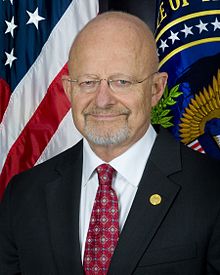
James Clapper
But the part of Clapper’s interview that most caught the attention of the media and Washington’s political establishment came when reporter Don Lemon asked: Is Trump a threat to national security?
“Well, he certainly could be,” Clapper replied.
“Again, having some understanding of the levers that a president can exercise, I worry about, frankly, you know, the access to nuclear codes,” Clapper answered.
And Clapper knows more about “the levers that a President can exercise” than most: He served no fewer than ten Presidents–from John F. Kennedy to Barack Obama.
He warned that “in a fit of pique,” Trump could order a nuclear strike against the regime of North Korean leader Kim Jong Un.
“There’s actually very little to stop him,” Clapper said. “The whole system’s built to ensure rapid response if necessary. So there’s very little in the way of controls over you know, exercising a nuclear option, which is pretty damn scary.”
But long before the Clapper interview, Americans had more than enough knowledge about Trump to judge him unfit for the Oval Office.
- He unknowingly admitted to being a sexual predator of women: “You know I’m automatically attracted to beautiful—I just start kissing them. It’s like a magnet. Just kiss. I don’t even wait. And when you’re a star they let you do it. You can do anything. Grab them by the pussy. You can do anything.”

Donald Trump
- He refused to release his tax returns—unlike every other Presidential candidate since Ronald Reagan in 1980.
- He said he was prepared to withdraw from NATO, the American-European alliance that held the Soviet Union at bay for a half-century.
- He often and publicly praised Russian President Vladimir Putin, the absolute dictator of a foreign power hostile to the United States.
- He publicly invited “Russia”—i.e., Putin—to interfere directly in an American Presidential election: “I will tell you this, Russia: If you’re listening, I hope you’re able to find the 30,000 [Hillary Clinton] emails that are missing. I think you will probably be rewarded mightily by our press.”
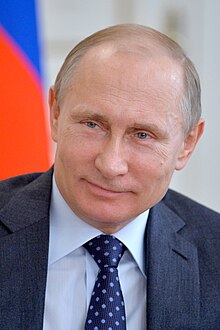
Vladimir Putin
- On November 18, Trump—rather than face trial—settled the Trump University case out of court for $25 million. “Today’s $25 million settlement agreement is a stunning reversal by Donald Trump,” said New York Attorney General Eric Schneiderman, “and a major victory for the over 6,000 victims of his fraudulent university.”
- On March 16, he warned Republicans that if he didn’t win the GOP nomination in July, his supporters would literally riot: “I think you’d have riots. I think you would see problems like you’ve never seen before. I think bad things would happen. I really do. I wouldn’t lead it, but I think bad things would happen.”
- On August 9, Trump issued a veiled solicitation for the assassination of Democratic Presidential candidate Hillary Clinton: “Hillary wants to abolish, essentially abolish, the Second Amendment. If she gets to pick her [Supreme Court] judges, nothing you can do folks. Although the Second Amendment people, maybe there is, I don’t know.”
- After slandering President Barack Obama for five years as “the President from Kenya,” he blatantly lied: “Hillary Clinton and her campaign of 2008 started the birther controversy. I finished it.”
The number of people, places and things Trump has insulted is so extensive The New York Times compiled a list of 273 of them.
Trump’s rampant egomania is literally stamped on his properties. Of the 515 entities he owns, 268 of them—52%—bear his last name. Among the references he’s made to himself:

- “My fingers are long and beautiful, as, it has been well documented, are various other parts of my body.”
- “I think the only difference between me and the other candidates is that I’m more honest and my women are more beautiful.”
- “My Twitter has become so powerful that I can actually make my enemies tell the truth.”
- “My IQ is one of the highest—and you all know it.”
- Asked on MSNBC’s “Morning Joe” who he consults about foreign policy, he replied: “I’m speaking with myself, number one, because I have a very good brain and I’ve said a lot of things.”
* * * * *
Those Americans who voted for Donald Trump knew the character of the man they were electing. They cannot claim ignorance of who he was and what he intended to do.
They enthusiastically supported him because he gave voice to their hatreds and prejudices. And because they believed he would humiliate and destroy those they wanted to see humiliated and destroyed.
They are as deserving of the contempt of their fellow Americans as Trump himself.
ABC NEWS, ALTERNET, AMERICAN NAZI PARTY, ANONYMOUS, AP, ASSOCIATED PRESS, BUZZFEED, CBS NEWS, CHARLOTTESVILLE, CNN, COINTELPRO, CROOKS AND LIARS, DAILY KOZ, DAVID DUKE, DONALD TRUMP, FACEBOOK, FBI, FERGUSON MISSOURI PROTESTS, J. EDGAR HOOVER, KU KLUX KLAN, MISSISSIPPI BURNING CASE, MOTHER JONES, MOVEON, NBC NEWS, NEWSWEEK, NPR, NYPD, POLITICO, PRESIDENT LYNDON B. JOHNSON, RAW STORY, REUTERS, SALON, SEATTLE TIMES, SLATE, TERRORISM, THE ATLANTIC, THE CHICAGO SUN-TIMES, THE CHICAGO TRIBUNE, THE DAILY BEAST, THE GUARDIAN, THE HILL, THE HUFFINGTON POST, THE LOS ANGELES TIMES, THE NATION, THE NEW YORK TIMES, THE WALL STREET JOURNAL, THE WASHINGTON POST, TIME, TWITTER, U.S. NEWS & WORLD REPORT, UP, UPI, USA TODAY, WILLIAM C. SULLIVAN
In Bureaucracy, History, Law Enforcement, Politics, Social commentary on August 18, 2017 at 12:15 am
On August 11-12, white supremacists from across the country gathered in Charlottesville, Virginia, for a “Unite the Right” rally. Among the organizations represented:
- The Ku Klux Klan (KKK);
- The Alt-Knights;
- The “Militia Movement”;
- The American Nazi Party;
- The Confederate League of the South;
Like Nazis in 1930s Germany, they marched through the streets carrying flaming torches, screaming racial epithets and frightening the local citizenry.
On August 13, a Nazi sympathizer rammed his car into a group of counter-protesters, killing a woman and injuring 19 other demonstrators.
President Donald Trump stated: “We condemn in the strongest possible terms this egregious display of hatred, bigotry and violence on many sides, on many sides.”
But he refused to specifically denounce the Fascistic demonstrators.
White supremacists were elated.
“He didn’t attack us. He just said the nation should come together. Nothing specific against us,” wrote Andrew Anglin, founder of the neo-Nazi website, The Daily Stormer.
“No condemnation at all. When asked to condemn, he just walked out of the room. Really, really good. God bless him.”
Another Trump admirer: Former Ku Klux Klan Imperial Wizard David Duke.
“Thank you President Trump for your honesty & courage to tell the truth about #Charlottesville & condemn the leftist terrorists in BLM/Antifa,” Duke tweeted after the news conference.
Fascistic groups make up a pivotal constituency for Trump. Without their support, he might not have become President. He can’t afford to alienate them.
But others who aren’t beholden to the Fascistic Right have taken a stand against its hate-mongering.
On October 30, 2015, the hacker group Anonymous released a prepared statement:
“Ku Klux Klan, We never stopped watching you. We know who you are. We know the dangerous extent to which you will go to cover your asses….
“We will release, to the global public, the identities of up to 1000 klan members, Ghoul Squad affiliates and other close associates of various factions of the Ku Klux Klan.” This included ages, phone numbers, addresses and even credit card numbers.
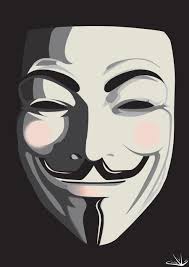
Anonymous mask
By November 5, Anonymous had released the names of about 1,000 alleged KKK members or sympathizers via a Twitter data dump.
Among those names released by Anonymous:
- U.S. Senator Thom Tillis (R-N.C.);
- U.S. Senator John Cornyn (R-TX.);
- U.S. Senator Dan Coats (R-IN.)
- U.S. Senator Johnny Isakson (R-GA.);
- Mayor Madeline Rogero, Knoxville, TN.;
- Mayor Jim Gray, Lexington, KY.;
- Mayor Paul D. Fraim, Norfolk, VA.;
- Mayor Kent Guinn, Ocala, FL.; and
- Mayor Tom Henry, Fort Wayne, IN.
All of these officials denied any affiliation with the Klan.
“I got the information from several KKK websites when I [hacked] them and was able to dump their database,” Amped Attacks, who released the information, stated online.
This mass leak was easily the worst assault on the KKK since the Justice Department waged an all-out attack on the Klan during the Presidency of Lyndon B. Johnson.
The reason: The murders of three civil rights workers in Philadelphia, Mississippi—Michael “Mickey” Schwerner, Andrew Goodman and James Chaney—-on June 21, 1964.
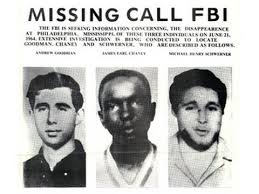
Poster for missing civil rights workers
Johnson ordered the FBI to find the missing activists. After their bodies were found buried near a dam, Johnson gave FBI Director J. Edgar Hoover a direct order: “I want you to have the same kind of intelligence [on the KKK] that you have on the communists.”
So the FBI launched a counterintelligence program—in Bureau-speak, a COINTELPRO—against the Ku Klux Klan.
Klansmen had shot, lynched and bombed their way across the Deep South, especially in Alabama and Mississippi. Many Southern sheriffs and police chiefs were Klan sympathizers, if not outright members and accomplices.

Ku Klux Klansmen in a meeting
The FBI’s covert action program aimed to “expose, disrupt and otherwise neutralize” KKK groups through a wide range of legal and extra-legal methods.
“My father fought the Klan in Massachusetts,” recalled William C. Sullivan, who headed the FBI’s Domestic Intelligence Division in the 1960s. “I always used to be frightened when I was a kid and I saw the fiery crosses burning in the hillside near our farm.

William C. Sullivan
“When the Klan reached 14,000 in the mid-sixties, I asked to take over the investigation of the Klan. When I left the Bureau in 1971, the Klan was down to a completely disorganized 4,300. It was broken.
“They were dirty, rough fellows. And we went after them with rough, tough methods.”
Among those methods:
- Planting electronic surveillance devices in Klan meeting places;
- Carrying out “black bag jobs”—burglaries—to steal Klan membership lists;
- Contacting the news media to publicize arrests and identify Klan leaders;
- Informing the employers of known Klansmen of their employees’ criminal activity, resulting in the firing of untold numbers of them;
- Developing informants within Klans and sewing a climate of distrust and fear among Klansmen;
- Breaking up the marriages of Klansmen by circulating rumors of their infidelity among their wives; and
- Beating and harassing Klansmen who threatened and harassed FBI agents.
The FBI’s counterintelligence war against the Klan ended in 1971.
Today, there are active Klan chapters in 41 states, with between 5,000 and 8,000 active members.
Only when America has a President who’s not beholden to the Fascistic Right can there be another COINTELPRO aimed at white hate groups.
ABC NEWS, ADOLF HITLER, ALTERNET, AMERICAN NAZI PARTY, ANTI-SEMITISIM, AP, BUZZFEED, CBS NEWS, CHARLOTTESVILLE, CNN, CONFEDERACY, CROOKS AND LIARS, DAILY KOZ, DONALD TRUMP, FACEBOOK, JEFF FLAKE, JOHN MCCAIN, KU KLUX KLAN, MOTHER JONES, MOVEON, NAZIS, NBC NEWS, NEWSWEEK, NPR, PAUL RYAN, POLITICO, RAW STORY, REPUBLICAN PARTY, REUTERS, SALON, SEATTLE TIMES, SLATE, SLAVERY, THE ATLANTIC, THE CHICAGO SUN-TIMES, THE CHICAGO TRIBUNE, THE DAILY BEAST, THE GUARDIAN, THE HILL, THE HUFFINGTON POST, THE LOS ANGELES TIMES, THE NATION, THE NEW YORK TIMES, THE WASHINGTON POST, THIRD REICH, TIME, TWITTER, U.S. NEWS & WORLD REPORT, UP, UPI, USA TODAY, WHITE HOUSE TALKING POINTS, WHITE SUPREMACY
In Bureaucracy, History, Law Enforcement, Politics, Social commentary on August 17, 2017 at 12:01 am
It was a memo that could have been written by Joseph Goebbels—Adolf Hitler’s brilliant and fanatical Minister of Propaganda.
The only difference: This memo was written in English, not German.
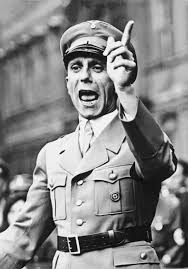
Joseph Goebbels
The memo was released by the White House on the evening of August 15. Earlier that day, President Donald Trump had given a fiery, impromptu press conference defending white extremist groups.
This, in turn, had been prompted by Ku Klux Klan and Nazi violence that exploded in Charlottesville, Virginia, over the weekend of August 12-13.
Trump’s incendiary remarks laying blame on both violent Fascists and non-violent protesters had ignited anger throughout the nation. And they caused many Republicans—in a rare show of claimed moral outrage—to publicly break with the President.
Republican Speaker of the House Paul Ryan of Wisconsin tweeted: “We must be clear. White supremacy is repulsive. This bigotry is counter to all this country stands for. There can be no moral ambiguity.”
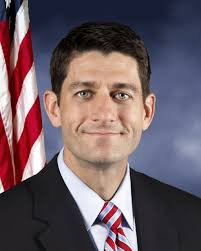
Paul Ryan
Arizona’s Republican United States Senator, Jeff Flake, released a statement on August 15: “We cannot accept excuses for white supremacy and acts of domestic terrorism. We must condemn them. Period.”
And John McCain, Arizona’s other Republican Senator, took to twitter on the same evening: “There is no moral equivalency between racists & Americans standing up to defy hate& bigotry. The President of the United States should say so.”
Faced with such overwhelming condemnation, Donald Trump did what he always does when faced with criticism: He leaned on others to defend him.
On the evening of August 15, the White House sent out official “talking points” to Republican members of Congress.
The memo urged them to say that Trump was “entirely correct” that “both sides of the violence in Charlottesville acted inappropriately, and bear some responsibility.”
With unintended irony, the memo claimed that Trump “has been a voice for unity and calm, encouraging the country to ‘rediscover the bonds of love and loyalty that brings us together as Americans.'”
Left out of this statement were the following truths:
Love has nothing to do with:
- Nazis and Ku Klux Klansmen who march down streets—as they did in Charlottesville—shouting: “Jews will not replace us!” and “Blood and soil!”
- Columns of angry-faced men strutting down streets, yelling, “Whose streets? Our streets!”
- Hordes of heavily armed men—carrying shields, clubs, pistols and even automatic rifles—terrorizing the local citizenry.
And loyalty does not have anything to do with:
- Those who proudly brandish Nazi swastika flags. Of the Nazis’ ultimate legacy, historian Klaus Fischer writes: “The Nazis’ New Order was little more than a slave empire, a vast system of organized oppression, exploitation, and extermination.”
- People who proudly carry flags of the Confederacy, which gave the United States its greatest case of mass treason. From 1861 to 1865, members of this group waged war against a legitimately-elected government. And the reason for that Confederacy: To maintain and expand a slave empire of millions of black men, women and children.
Here is the White House memo:
NEWS OF THE DAY
Charlottesville
- The President was entirely correct — both sides of the violence in Charlottesville acted inappropriately, and bear some responsibility.
- Despite the criticism, the President reaffirmed some of our most important Founding principles: We are equal in the eyes of our Creator, equal under the law, and equal under our Constitution.
- He has been a voice for unity and calm, encouraging the country to “rediscover the bonds of love and loyalty that brings us together as Americans.”
- He called for the end of violence on all sides so that no more innocent lives would be lost.
- The President condemned – with no ambiguity – the hate groups fueled by bigotry and racism over the weekend, and did so by name yesterday, but for the media that will never be enough.
- The media reacted with hysteria to the notion that counter-protesters showed up with clubs spoiling for a fight, a fact that reporters on the ground have repeatedly stated.
- Even a New York Times reporter tweeted that she “saw club-wielding “antifa” beating white nationalists being led out of the park.”
- The local ACLU chapter also tweeted that
- We should not overlook the facts just because the media finds them inconvenient:
- From cop killing and violence at political rallies, to shooting at Congressmen at a practice baseball game, extremists on the left have engaged in terrible acts of violence.
- The President is taking swift action to hold violent hate groups accountable.
- The DOJ has opened a civil rights investigation into this weekend’s deadly car attack.
- Last Thursday, Immigration and Customs Enforcement (ICE) announced it had completed the largest prosecution of white supremacists in the nation’s history.
- Leaders and the media in our country should join the president in trying to unite and heal our country rather than incite more division.
* * * * *
Many of those who oppose the goals of the Trump administration are now taking partial comfort in the sheer incompetence of the President.
He has always felt free to display his hatred, egomania and dictatorial nature. He has never been able to apologize or admit error.
As a real estate mogul, he could get away with such behavior in relative privacy. As President, these traits have turned into his worst enemies.
ABC NEWS, ALTERNET, AMERICAN TABLOID, AP, ASSASSINATION, BUZZFEED, CBS NEWS, CIA, CNN, COMMUNISM, CROOKS AND LIARS, CUBA, CUBAN MISSILE CRISIS, DAILY KOZ, DONALD TRUMP, DWIGHT D. EISENHOWER, FACEBOOK, FBI, FIDEL CASTRO, FLORIDA, FULGENCIO BATISTA, GUAM, GUS RUSSO, JAMES ELLROY, JOHN F. KENNEDY, JOHNNY ROSELLI, KIM JONG ON, LEE HARVEY OSWALD, LIVE BY THE SWORD, LYNDON B. JOHNSON, MAFIA, MOTHER JONES, MOVEON, NBC NEWS, NEWSWEEK, NEWT GINGRICH, NIKITA KHRUSHCHEV, NORTH KOREA, NPR, NUCLEAR WAR, POLITICO, RAW STORY, REUTERS, ROBERT F. KENNEDY, SALON, SAM GIANCANA, SEATTLE TIMES, SLATE, THE ATLANTIC, THE CHICAGO SUN-TIMES, THE CHICAGO TRIBUNE, THE DAILY BEAST, THE GUARDIAN, THE HILL, THE HUFFINGTON POST, THE LOS ANGELES TIMES, THE NATION, THE NEW YORK TIMES, THE WASHINGTON POST, TIME, TWITTER, U.S. NEWS & WORLD REPORT, UP, UPI, USA TODAY, WARREN COMMISSION
In Bureaucracy, History, Law, Law Enforcement, Military, Politics, Social commentary on August 16, 2017 at 12:05 am
“John and Robert Kennedy knew what they were doing. They waged a vicious war against Fidel Castro–a war someone had to lose.”
And the loser turned out to be John F. Kennedy.
So writes investigative reporter Gus Russo in Live By the Sword: The Secret War Against Castro and the Death of JFK, published in 1998.
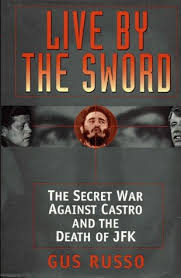
In what is almost certainly the definitive account of the assassination of President John F. Kennedy, Russo reaches some startling–but highly documented–conclusions:
- Lee Harvey Oswald assassinated Kennedy.
- He did it alone.
- Oswald, a former Marine, was a committed Marxist–whose hero was Castro.
- The CIA’s ongoing campaign to overthrow and/or assassinate Castro was an open secret throughout the Gulf.
- Oswald visited New Orleans in the spring of 1963.
- There he learned that Castro was in the crosshairs of the CIA.
- Oswald told his Russian-born wife, Marina: “Fidel Castro needs defenders. I’m going to join his army of volunteers.”
- Jack Ruby, a Dallas nightclub owner, murdered Oswald because he was distraught over Kennedy’s death.
- Ruby was not part of a Mafia conspiracy to silence Oswald.
- Skeptics of the Warren Commission–which concluded that Oswald had acted alone–asked the wrong question: “Who killed Kennedy?”
- They should have asked: “Why was he killed?”
- The answer–according to Russo: “The Kennedys’ relentless pursuit of Castro and Cuba backfired in tragedy on that terrible day in November, 1963.”
Another book well worth reading about America’s Cuban obsession during the early 1960s is American Tabloid, by James Ellroy.
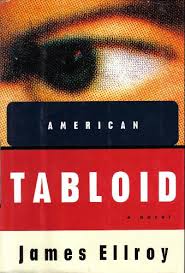
Although a novel, it vividly captures the atmosphere of intrigue, danger and sleaziness that permeated that era in a way that dry, historical documents never can.
“The 50’s are finished,” reads its paperback dust jacket. “Zealous young lawyer Robert Kennedy has a red-hot jones to nail Jimmy Hoffa. JFK has his eyes on the Oval Office.
“J. Edgar Hoover is swooping down on the Red Menace. Howard Hughes is dodging subpoenas and digging up Kennedy dirt. And Castro is mopping up the bloody aftermath of his new Communist nation….
“Mob bosses, politicos, snitches, psychos, fall guys and femmes fatale. They’re mixing up a Molotov cocktail guaranteed to end the country’s innocence with a bang.”
Among the legacies of America’s twisted romance with anti-Castro Cubans:
- Following the JFK assassination, there was a coverup.
- Its purposes: To protect the reputation of the United States government–and that of its newly-martyred President.
- Thus, the CIA and FBI concealed the CIA-Mafia assassination plots from the Warren Commission assigned to investigate Kennedy’s murder.
- Other government officials participating in the coverup included Attorney General Robert F. Kennedy and President Lyndon B. Johnson.
- Ironically, this secrecy ignited the widespread–and false–belief that the President had died at the hands of a government conspiracy.
- Robert Kennedy feared that his relentless pursuit of Castro might have led Castro to “take out” JFK first.
- Fearing his own assassination if he continued Kennedy’s efforts to murder Castro, President Johnson ordered the CIA to halt its campaign to overthrow and/or assassinate the Cuban leader.
- The huge Cuban community throughout Florida–and especially Miami–continues to exert a blackmailing influence on American politics.
- Right-wing politicians from Richard Nixon to Newt Gingrich have reaped electoral rewards by catering to the demands of this hate-obsessed voting block.
- As a result, the United States still refuses to open diplomatic relations with Cuba–even though it has done so with such former enemies as the Soviet Union, China and Vietnam.
- These Cuban ex-patriots hope that the United States will launch a full-scale military invasion of the island to remove Castro.
- Having grown rich and soft in the United States, they fear to risk their own lives by returning to Cuba to loverthrow Castro–as he did against Fulgencio Batista.
The Cuban Missile Crisis was the deadliest moment of the Cold War, when the world stood only minutes away from nuclear Armageddon.
That crisis stemmed from America’s twisted obsession with Cuba, an obsession that continues today.
So what are the lessons to be learned from that obsession?
- It is long past time to demand major changes in our foreign policy toward Cuba.
- It’s time to end the half-century contamination of American politics by those Cubans who live only for their hatred of Castro–and those political candidates who live to exploit it.
- A population of about 1,700,000 Cuban exiles should not be allowed to shape the domestic and foreign policy of a nation of 300 million.
- Those who continue to hate–or love–Castro should be left to their own private feud. But that is a feud they should settle on their own island, and not from the shores of the United States.
President Donald Trump and North Korean dictator Kim Jong On have traded salvos of insults and threats, like two demented schoolchildren.
Once again, the world wonders: Is nuclear war about to erupt?
Thus, two lessons of the Cuban Missile Crisis–above all others–should vividly remembered–before disaster erupts:
First, the highly provocative actions of the Kennedy Administration led directly to the installation of Soviet missiles in Cuba; and
Second, only the restraint exercised by John F. Kennedy and Nikita Khrushchev averted a nuclear holocaust.
No American can restrain the actions of the North Korean dictator. But there are Americans who can remove the dangers posed by a clearly unstable President.


ABC NEWS, ADOLF HITLER, ALTERNET, ANTHONY SCARAMUCCI, AP, BUZZFEED, CBS NEWS, CNN, CROOKS AND LIARS, DAILY KOZ, DONALD TRUMP, FACEBOOK, FBI, GENRIKH GRIGORYEVICH YAGODA, GRIGORI ZIMOVIEV, HEINRICH HIMMLER, HERMANN GOERING, HOPE HICKS, JAMES COMEY, JOACHIM VON RIBBONTROP, JOSEPH STALIN, JUSTICE DEPARTMENT, KGB, LAVENTI BERIA, LEON TROTSKY, LEV KAMENEV, LUFTWAFFE, MIKE FLYNN, MOTHER JONES, MOVEON, NAZI GERMANY, NBC NEWS, NEWSWEEK, NIKOLAI, NIKOLAI YEZHOV, NKVD, NPR, POLITICO, RAW STORY, REINCE PRIEBUS, REUTERS, ROBERT MEULLER, RUDOLF HESS, SALLY YATES, SALON, SEAN SPICER, SEATTLE TIMES, SEBASTIAN GORKA, SLATE, STEVE BANNON, THE ATLANTIC, THE CHICAGO SUN-TIMES, THE CHICAGO TRIBUNE, THE DAILY BEAST, THE GUARDIAN, THE HILL, THE HUFFINGTON POST, THE LOS ANGELES TIMES, THE NATION, THE NEW YORK TIMES, THE WASHINGTON POST, TIME, TWITTER, U.S. NEWS & WORLD REPORT, UP, UPI, USA TODAY
PURGE-TIME IN STALIN’S RUSSIA AND TRUMP’S AMERICA: PART ONE (OF TWO)
In Bureaucracy, History, Law Enforcement, Politics, Social commentary on September 25, 2017 at 2:06 amDonald Trump—as both Presidential candidate and President—has often been compared to Adolf Hitler.
Yet, in at least one sense, this comparison is inaccurate. As Germany’s Fuhrer (1933-1945) Hitler kept on the members of his Cabinet for no less than 12 years.
Adolf Hitler
Among these:
Joseph Stalin, dictator of the Soviet Union (1928-1953) serves as a far better comparison figure for Trump.
Joseph Stalin
In 1936, Stalin ordered the first of a series of purges—from high-ranking members of the Communist party to impoverished peasants. Among the most prominent of his victims:
Like Joseph Stalin, Donald Trump has presided over a series of purges since reaching the White House.
Donald Trump
Like Stalin, Trump demands unconditional loyalty from those who serve in his administration. And, also like Stalin, he does not believe that loyalty is a two-way street.
Moreover, it doesn’t take much to offend Trump’s fragile ego. When “Saturday Night Live” started doing skits showcasing his chief strategist, Steve Bannon, as a Rasputin-like figure who manipulated Trump, Bannon’s days were clearly numbered.
The same proved true for Anthony Scaramucci, who was to become White House communications director. All that it took to secure his dismissal was an expletive-ridden phone interview with The New Yorker‘s Ryan Lizza. It didn’t help Scaramucci that he bragged about purging the entire White House communications staff and even siccing the FBI on leakers.
Others have left the White House owing to its increasingly paranoid atmosphere. Reports have surfaced of staffers being ordered to turn over their cell phones for inspection. The reason: To ensure they weren’t communicating with reporters by text message or through encrypted apps.
Then there is the very real—and justified—fear of being caught up in Special Counsel Robert Mueller III’s ever-widening investigation into collusion between Russian Intelligence agents and members of Trump’s 2016 Presidential campaign.
One of those who has reportedly hired top-notch legal talent is Hope Hicks, interim White House communications director. According to Politico, the 28-year-old has retained the services of veteran criminal defense lawyer Robert Trout, who once worked for the Justice Department.
Even if a White House staffer is not ultimately indicted and convicted, the costs of hiring top-flight legal talent can prove ruinous.
During the 2016 campaign, Trump claimed a $9 billion fortune: “I’m really rich!” But he has shown no willingness to spend any of it defending those officials he has hired.
And for an administration already plagued with a shortage of desperately-needed talent, even worse may soon be to come.
Share this: