"MISSION: IMPOSSIBLE", 2016 PRESIDENTIAL ELECTION, 9/11, ABC NEWS, ADAM SCHIFF, ALTERNET, AMERICABLOG, AP, AUGUSTO PINOCHET, AUGUSTO SANDINO, AYATOLLAH RUHOLLAH KHOMEINI, BABY BOOMER RESISTANCE, BAY OF PIGS, BERNARD LAW MONTGOMERY, BUZZFEED, CBS NEWS, CHIANG KAI-SHEK, CHILE, CIA, CNN, CROOKS AND LIARS, CUBA, DAILY KOZ, DONALD TRUMP, DRUDGE RETORT, DWIGHT D. EISENHOWER, FACEBOOK, FBI, FIDEL CASTRO, FIVETHIRTYEIGHT, FULGENCIO BATISTA, GEORGE W. BUSH, GUATEMALA, HAITI, HARPER’S MAGAZINE, HONODURAS, HUNTER BIDEN, IRAQ, JACOBO ARBENZ, JOE BIDEN, JOHN F. KENNEDY, MAFIA, MAO TSE-TUNG, MEDIA MATTERS, MICK MULVANEY, MOHAMMAD MOSADDEGH, MOHAMMAD-REZA SHAH PHLAVI, MOTHER JONES, MOVEON, MSNBC, NANCY PELOSI, NATIONAL SECURITY AGENCY, NBC NEWS, NEWSWEEK, NICARAGUA, NPR, OSAMA BIN LADEN, PBS NEWSHOUR, POLITICO, POLITICUSUSA, RAW STORY, REUTERS, RICHARD M. NIXON, RUSSIA, SADDAM HUSSEIN, SALON, SALVADOR ALLENDE, SEATTLE TIMES, SLATE, SOVIET UNION, TALKING POINTS MEMO, THE ATLANTIC, THE CHICAGO SUN-TIMES, THE CHICAGO TRIBUNE, THE DAILY BEAST, THE DAILY BLOG, THE GUARDIAN, THE HILL, THE HUFFINGTON POST, THE LOS ANGELES TIMES, THE NATION, THE NEW REPUBLIC, THE NEW YORK TIMES, THE VILLAGE VOICE, THE WASHINGTON POST, THINKPROGRESS, TIME, TRUTHDIG, TRUTHOUT, TWITTER, TWO POLITICAL JUNKIES, U.S. NEWS & WORLD REPORT, UKRAINE, UNITED FRUIT COMPANY, UPI, USA TODAY, VOLODYMYR ZELENSKY, WINSTON CHURCHILL, WONKETTE, WORLD WAR 11
In Bureaucracy, History, Politics, Social commentary on January 3, 2020 at 12:03 am
“I have news for everybody: Get over it. There’s going to be political influence in foreign policy.”
The speaker was White House chief of staff Mick Mulvaney. And in an October 17 press conference, he was trying to put the best possible spin on President Donald Trump’s latest outrage: An attempt to extort a “favor” from the president of Ukraine.
In July, 2019, Trump told Mulvaney to withhold almost $400 million in promised military aid for Ukraine, which faces increasing aggression from Russia.
On July 25, Trump telephoned Ukrainian President Volodymyr Zelensky to “request” a “favor”: Investigate Democratic Presidential Candidate Joe Biden and his son, Hunter, who had had business dealings in Ukraine.The reason for such an investigation: To find embarrassing “dirt” on Biden.
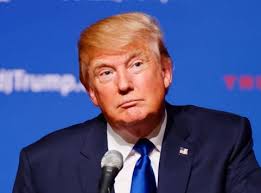
Donald Trump
But then a CIA whistleblower filed a complaint about the extortion attempt—and the media and Congress soon learned of it.
Rep. Adam Schiff, D-Calif., tweeted: “The transcript of the call reads like a classic mob shakedown: — We do a lot for Ukraine — There’s not much reciprocity — I have a favor to ask — Investigate my opponent — My people will be in touch — Nice country you got there. It would be a shame if something happened to her.”
On September 24, 2019, Nancy Pelosi, speaker to the House of Representatives, announced a formal impeachment inquiry into Trump.
As far as known, this marked a first in American foreign policy: Trying to extort a patently illegal favor from an ally.
During World War II, President Franklin D. Roosevelt didn’t hesitate to leverage the great economic and military power of the United States to gain concessions from Winston Churchill, the prime minister of Great Britain.
At Roosevelt’s insistence, for example, it was an American—General Dwight D. Eisenhower—who was appointed Supreme Allied Commander in Europe. Had the British gotten their way, the post would have almost certainly gone to British Field Marshal Bernard Law Montgomery.
Roosevelt’s insistence, however, had nothing to do with personally benefiting himself.
But the unpleasant truth remains that subverting the governments of other countries is a right that Americans have long reserved for themselves. For example:
- Between 1898 and 1934, the United States repeatedly intervened with military force in Central America and the Caribbean.
- Americans staged invasions of Honduras in 1903, 1907, 1911, 1912, 1919, 1924 and 1925 to defend U.S. interests. These were defined as Standard Oil and the United Fruit Company.
- The United States occupied Nicaragua almost continuously from 1912 to 1933. Its legacy was the imposition of the tyrannical Somoza family, which ruled from 1936 to 1979.
- The United States occupied Haiti from 1915 to 1934. American banks had lent money to Haiti and requested American government intervention.
- In 1918, 13,000 American soldiers joined armies from Europe and Japan to overthrow the new Soviet government and restore the previous Tsarist regime. By 1920, the invading forces proved unsuccessful and withdrew.
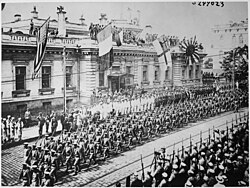
Allied troops parading in Vladivostok, 1918
- In 1953, the Eisenhower administration ordered the CIA to overthrew the democratically-elected government of of Iranian Prime Minister Mohammad Mosaddegh. His crime: Nationalizing the Iranian oil industry, which had been under British control since 1913.
- He was succeeded by Mohammad-Reza Shah Phlavi. Whereas Mossadeddgh had ruled as a constitutional monarch, Phlavi was a dictator who depended on United States government support to retain power until he was overthrown in 1979 by the Ayatollah Ruhollah Khomeini.
- In 1954, the CIA overthrew the democratically-elected government of Guatemalan President Jacobo Arbenz. His crime: Installing a series of reforms that expanded the right to vote, allowed workers to organize, legitimized political parties and allowed public debate. Most infuriating to American Right-wingers: His agrarian reform law, which expropriated parts of large land-holdings and redistributed them to agricultural laborers.
- From 1959 until 1963, the United States government was obsessed with overthrowing the revolutionary Cuban government of Fidel Castro. Although not democratically elected, Castro was wildly popular in Cuba for overthrowing the dictatorial Fulgencio Batista.
- On April 17, 1961, over 1,400 CIA-trained Cuban exiles invaded Cuba at the Bay of Pigs. Cuban military forces crushed the invasion in three days.
- Infuriated with the failure of the Bay of Pigs invasion, President John F. Kennedy authorized “Operation Mongoose” to remove Castro through sabotage and assassination. The CIA, wanting to please Kennedy, teamed up with the Mafia, which wanted to resurrect its casinos on the island.
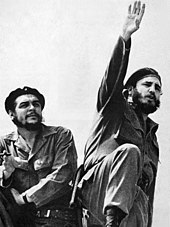
Ernesto “Che” Guevera and Fidel Castro
- In 1970, President Richard M. Nixon ordered the CIA to prevent Marxist Salvador Allende from being democratically elected as president of Chile. When that failed, he ordered the CIA to overthrow Allende.
- Allende’s crime: A series of liberal reforms, including nationalizing large-scale industries (notably copper mining and banking). In 1973, he was overthrown by Chilean army units and national police. He was followed by Right-wing dictator Augusto Pinochet, who slaughtered 3,200 political dissidents, imprisoned 30,000 and forced another 200,000 Chileans into exile.
Americans reacted to all these attempts—successful and unsuccessful—with indifference or outright support.
The popular 1960s TV series, “Mission: Impossible,” regularly depicted a CIA-type agency supporting regimes “we” liked or toppling those “we” didn’t.
Americans generally assume their Presidents and Congress know best who is a “friend” and who is an “enemy.” America’s friends often turn out, for the most part, to be Right-wing dictators like Fulgencio Batista, Augusto Pinochet and Mohammad-Reza Shah Phlavi.
And its enemies often turn out to be liberal reformers like Augusto Sandino, Jacobo Arbenz, Mohammad Mosaddegh and Salvador Allende.
2016 PRESIDENTIAL ELECTION, ABC NEWS, ALTERNET, AMERICABLOG, ANDREW JACKSON, AP, ARMY-MCCARTHY HEARINGS, BABY BOOMER RESISTANCE, BORDER WALL, BUZZFEED, CBS NEWS, CIA, CNN, COLLEGE FOOTBALL, CONSUMER PROTECTION, CONVERSATION WITH AN AMERICAN WRITER (POEM), CROOKS AND LIARS, DAILY KOZ, DONALD TRUMP, DREW PEARSON, DRUDGE RETORT, DWIGHT D. EISENHOWER, EDWARD R. MURROW, ENVIRONMENTAL PROTECTION, EXTORTION, FACEBOOK, FBI, FEDERAL GOVERNMENT SHUTDOWN, FIVETHIRTYEIGHT, FREEDOM OF THE PRESS, GARY SCHULTZ, GEORGE C. MARSHALL, GRAHAM SPANIER, HARPER’S MAGAZINE, HARRY S. TRUMAN, HUNTER BIDEN, JAMES COMEY, JEB BUSH, JEFF BUSH, JERRY SANDJSKY, JERRY SANDUSKY, JOE BIDEN, JOE PATERNO, JOE POTERNO, JOHN MCCAIN, JOSEPH BIDEN, JOSEPH MCCARTHY, JOSEPH WELCH, LOUIS FREEH, MEDIA MATTERS, MIKE MCQUEARY, MIKE MURPHY, MITT ROMNEY, MORAL COURAGE, MOTHER JONES, MOVEON, MSNBC, NATIONAL SECURITY AGENCY, NBC NEWS, NEWSWEEK, NIKE, NPR, PBS NEWSHOUR, PENN STATE NITTANY LIONS, PENN STATE UNIVERSITY, POLITICO, POLITICUSUSA, RAW STORY, REPUBLICANS, REUTERS, RUSSIA, SALON, SEATTLE TIMES, SLATE, SUBVERSION, TALKING POINTS MEMO, THE ATLANTIC, THE CHICAGO SUN-TIMES, THE CHICAGO TRIBUNE, THE DAILY BEAST, THE DAILY BLOG, THE GUARDIAN, THE HILL, THE HUFFINGTON POST, THE LOS ANGELES TIMES, THE NATION, THE NEW REPUBLIC, THE NEW YORK TIMES, THE SECOND MILE, THE VILLAGE VOICE, THE WASHINGTON POST, THINKPROGRESS, TIM CURLEY, TIME, TRUTHDIG, TRUTHOUT, TWITTER, TWO POLITICAL JUNKIES, U.S. NEWS & WORLD REPORT, UKRAINE, UP, UPI, USA TODAY, VLADIMIR PUTIN, VOLODYMYR ZELENSKY, WONKETTE, YEVGENEY YEVTUSHENKO
In Bureaucracy, History, Law, Law Enforcement, Politics, Social commentary on January 2, 2020 at 12:23 am
“One man with courage,” said frontier general Andrew Jackson, “makes a majority.”
Yet many “heroes” come out of the woodwork only after the danger is safely past.
On September 25, 2019, GOP consultant Mike Murphy said that a Republican senator had told him the majority of Republican senators “would vote to impeach” President Donald Trump if they could do so anonymously.
In short: If they didn’t have to face backlash from constituents or the media or Trump, they would gladly stand up for the Constitution. Which is like a fireman saying: “If i didn’t have to worry about getting burned to death, I’d gladly rush into a burning building and save whoever was in it.”
“One Republican senator told me if it was a secret vote, 30 Republican senators would vote to impeach Trump,” he claimed during an interview on MSNBC.
Murphy—who has advised Republican politicians such as Mitt Romney, John McCain and Jeb Bush—implied that the GOP lawmakers fear that voting against Trump could harm them politically.
Yes, a shining example of true moral courage at its finest—and just when it’s most needed: “If we just didn’t have to risk our skins, we’d be glad to do the right thing.”
Donald Trump
Throughout Trump’s nearly three years in office, Republicans have remained silent or vigorously supported him as he:
- Repeatedly and viciously attacked the nation’s free press for daring to report his growing list of crimes and disasters, calling it “the enemy of the American people.”
- Publicly siding with Russian dictator Vladimir Putin against American Intelligence agencies (FBI, CIA, National Security Agency) which unanimously agreed that Russia had subverted the 2016 Presidential election,
- Firing FBI Director James Comey for investigating that subversion.
- Allowing predatory corporations to subvert Federal regulatory protections for consumers and the environment.
- Shutting down the Federal Government for more than a month on December 22, 2018, because Democrats refused to fund his “border wall” between the United States and Mexico.
- Attempting to extort a “favor” from Ukrainian President Volodymyr Zelensky: Threatening to withhold military aid unless Zelensky agreed to slander Hunter Biden, the son of Democratic Presidential candidate Joseph Biden.
“I was never courageous,” the Russian poet, Yevgeney Yevtushenko, wrote in his famous poem, “Conversation With an American Writer.” “I simply felt it unbecoming to stoop to the cowardice of my colleagues.”
For Republicans “stooping to the cowardice” of their colleagues has long been a recipe for political survival.
Yet another Republican—Wisconsin Senator Joseph R. McCarthy—terrorized the nation from 1950 to 1954, accusing anyone who disagreed with him of being a Communist, and leaving only ruined lives in his wake.

Joseph R. McCarthy
Among those civilians and government officials he slandered as Communists were:
- President Harry S. Truman
- President Dwight D. Eisenhower
- Broadcast journalist Edward R. Murrow
- Secretary of State George C. Marshall
- Columnist Drew Pearson
Finally, in 1954, McCarthy overreached himself and accused the U.S. Army of being a hotbed of Communist traitors. Joseph Welch, counsel for the Army, destroyed McCarthy’s credibility in a now-famous retort:
“Senator, may we not drop this?….You’ve done enough. Have you no sense of decency, sir? At long last, have you left no sense of decency?”
Later that year, the Senate censured McCarthy, and he rapidly declined in power and health.
Senatorial colleagues who had courted his support now left the Senate when he rose to speak. Reporters who had once fawned on him for his latest sensational slander now ignored him.
But cowardice isn’t confined to politicians.
Fast-forward to July 12, 2012—and the release of former FBI Director Louie Freeh’s report on serial pedophile Jerry Sandusky. As the assistant football coach at Penn State University (PSU), he had used the football facilities to sexually attack numerous young boys.

Jerry Sandusky
But Sandusky was regarded as more than a second-banana. He received Assistant Coach of the Year awards in 1986 and 1999, and authored several books about his coaching experiences.
In 1977, Sandusky founded The Second Mile, a non-profit charity serving underprivileged, at-risk youth.
“Our most saddening and sobering finding is the total disregard for the safety and welfare of Sandusky’s child victims by the most senior leaders at Penn State,” Freeh stated.
College football is a $2.6 billion-a-year business. And Penn State is one of its premiere brands, with revenue of $70 million in 2010.
PSU’s seven-month internal investigation, headed by Freeh, revealed:
- Joe Paterno, head coach of the Penn State Nittany Lions, was aware of a 1998 criminal investigation of Sandusky.
- So were president Graham Spanier, athletic director Tim Curley and vice president Gary Schultz.
- In 2001, then-graduate assistant Mike McQueary reported to Paterno that he’d seen Sandusky attacking a boy in the shower.
- Paterno, Spanier, Curley and Schultz then conspired to cover up for Sandusky.
- The rapes of these boys occurred in the Lasch Building—where Paterno had his office.
- A janitor who had witnessed a rape in 2000 said he had feared losing his job if he told anyone about it. “It would be like going against the President of the United States,” Freeh said at a press conference.
In 2011, Sandusky was arrested and charged with sexually abusing young boys over a 15-year period. On June 22, 2012, he was convicted on 45 of the 48 charges. He will likely spend the rest of his life in prison.
On the day the Freeh report was released, Nike—a longtime sponsor for Penn State—announced that it would remove Paterno’s name from the child care center at its world headquarters in Beaverton, Oregon.
2016 PRESIDENTIAL RACE, ABC NEWS, ALEXANDRIA OCASIO-CORTEZ, ALTERNET, AMERICABLOG, AP, AYANNA PRESSLEY, BABY BOOMER RESISTANCE, BOB WOODWARD, BRIBERY, BUZZFEED, CBS NEWS, CNN, CROOKS AND LIARS, DAILY KOZ, DAVID BERLANGA, DRUDGE RETORT, ELLIOT NESS, ERIC SCHNEIDERMAN, FACEBOOK, FIVETHIRTYEIGHT, FRANCISCO "PANCHO" VILLA, GREG ABBOTT, HARPER’S MAGAZINE, ILHAN OMAR, INTIMIDATION, JAMES CARLOS BLAKE, JEFF SESSIONS, JOHN OWENS, KEN PAXTON, MEDIA MATTERS, MEXICAN REVOLUTION, MOTHER JONES, MOVEON, MSNBC, NBC NEWS, NEWSWEEK, NICCOLO MACHIAVELLI, NON-DISCLOSURE AGREEMENTS, NPR, PAM BONDI, PBS NEWSHOUR, POLITICO, POLITICUSUSA, RASHIDA TLAIB, RAW STORY, REPUBLICAN CONVENTION, REUTERS, ROBERT MUELLER, ROD ROSENSTEIN, RODOLFO FIERRO, SALON, SEATTLE TIMES, SLATE, TALKING POINTS MEMO, THE ATLANTIC, THE CHICAGO SUN-TIMES, THE CHICAGO TRIBUNE, THE DAILY BEAST, THE DAILY BLOG, THE DISCOURSES, THE FRIENDS OF PANCHO VILLA (BOOK), THE GUARDIAN, THE HILL, THE HUFFINGTON POST, THE LOS ANGELES TIMES, THE NATION, THE NEW REPUBLIC, THE NEW YORK TIMES, THE VILLAGE VOICE, THE WASHINGTON POST, THINKPROGRESS, TIME, TRUMP UNIVERSITY, TRUTHDIG, TRUTHOUT, TWITTER, TWO POLITICAL JUNKIES, U.S. NEWS & WORLD REPORT, UPI, USA TODAY, USA TODAY DONALD TRUMP, WONKETTE
In Bureaucracy, History, Law, Law Enforcement, Politics, Social commentary on January 1, 2020 at 12:18 am
…A truly great man is ever the same under all circumstances. And if his fortune varies, exalting him at one moment and oppressing him at another, he himself never varies, but always preserves a firm courage, which is so closely interwoven with his character that everyone can readily see that the fickleness of fortune has no power over him.
The conduct of weak men is very different. Made vain and intoxicated by good fortune, they attribute their success to merits which they do not possess. And this makes them odious and insupportable to all around them. And when they have afterwards to meet a reverse of fortune, they quickly fall into the other extreme, and become abject and vile.
—Niccolo Machiavelli, The Discourses
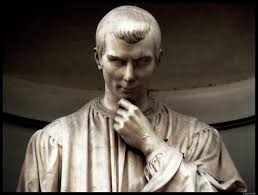
Niccolo Machiavelli
When Donald Trump—as a businessman and President—has been confronted by men and women who can’t be bribed or intimidated, he has reacted with rage and frustration.
- Trump boasted that he “never” settled cases out of court. But New York Attorney General Eric Schneiderman pressed fraud claims against the real estate mogul’s counterfeit Trump University—and Trump settled the case out of court rather than take the stand.
- “Today’s $25 million settlement agreement is a stunning reversal by Donald Trump,” said Schneiderman on November 18, 2016, “and a major victory for the over 6,000 victims of his fraudulent university.”
- On May 17, 2017, Deputy Attorney General Rod Rosenstein appointed former FBI Director Robert S. Mueller to investigate links between Russian Intelligence agents and the 2016 Trump Presidential campaign.
- Upon learning of his appointment, Trump wailed: “Oh my God. This is terrible. This is the end of my Presidency. I’m fucked.”
- “How could you let this happen, Jeff?” Trump demanded of Jeff Sessions, his Attorney General. “You were supposed to protect me. Everyone tells me if you get one of these independent counsels, it ruins your presidency. It takes years and years and I won’t be able to do anything. This is the worst thing that ever happened to me.”
- Throughout Mueller’s probe, Trump hurled repeated insults at him via Twitter and press conferences. He also called on his shills within Fox News and the Republican party to attack Mueller’s integrity and investigative methods.
- But aides convinced him that firing Mueller would be rightly seen as obstruction of justice—and thus grounds for impeachment. So he never dared go that far.
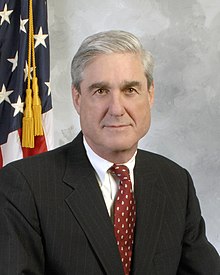
Robert Mueller
Perhaps the key to Trump’s innermost fear can be found in a work of fiction—in this case, the 1996 historical novel, The Friends of Pancho Villa, by James Carlos Blake.
The book depicts the Mexican Revolution (1910 – 1920) and its most famous revolutionary, Francisco “Pancho” Villa. it’s told from the viewpoint of Rodolfo Fierro, Villa’s most feared executioner. In one day, for example, Fierro—using two revolvers—executed 300 captured Federale soldiers.
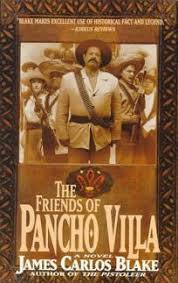
As in history, Blake’s Fierro presides over the execution of David Berlanga, a journalist who had dared criticize the often loutish behavior of Villa’s men.
On Villa’s command, Fierro approaches Berlanga in a Mexico City restaurant and orders: “Come with me.”
Standing against a barracks wall, Berlanga lights a cigar and requests permission to finish it. He then proceeds to smoke it with such a steady hand that its unbroken ash extends almost four inches.
The cigar finished, the ash still unbroken, Berlanga drops the butt to the ground and says calmly: “I’m ready.”
Then the assembled firing squad does its work.
Later, Fierro is so shaken by Berlanga’s sheer fearlessness that he seeks an explanation for it. Sitting in a cantina, he lights a cigar and tries to duplicate Berlanga’s four-inch length.
But the best he can do is less than three inches. He concludes that Berlanga used a trick—but he can’t figure it out.

Rodolfo Fierro
It had to be a trick, Fierro insists, because, if it wasn’t, there were only two other explanations for such a calm demeanor in the face of impending death.
The first was insanity. But Fierro rules this out: He had studied Berlanga’s eyes and found no madness there.
That leaves only one other explanation (other than a trick): Sheer courage.
And Fierro can’t accept this, either—because it’s disturbing.
“The power of men like me does not come solely from our ability to kill….No, the true source of our power is so obvious it sometimes goes unnoticed for what it is: our power comes from other men’s lack of courage.
“There is even less courage in this world than there is talent for killing. Men like me rule because most men are faint of heart in the shadow of death.
“But a man brave enough to control his fear of being killed, control it so well that no tremor reaches his fingers and no sign shows in his eyes…well. Such a man cannot be ruled, he can only be killed.”
Throughout his life, Trump has relied on bribery and intimidation. He well understands the power of greed and fear over most people.
What he doesn’t understand—and truly fears—is that some people cannot be bought or frightened.
People like Elliot Ness. Like Robert Mueller. And like Alexandria Ocasio-Cortez.

 Bureaucracybuster's Blog
"MISSION: IMPOSSIBLE", 2016 PRESIDENTIAL ELECTION, 9/11, ABC NEWS, ADAM SCHIFF, ALTERNET, AMERICABLOG, AP, AUGUSTO PINOCHET, AUGUSTO SANDINO, AYATOLLAH RUHOLLAH KHOMEINI, BABY BOOMER RESISTANCE, BAY OF PIGS, BERNARD LAW MONTGOMERY, BUZZFEED, CBS NEWS, CHIANG KAI-SHEK, CHILE, CIA, CNN, CROOKS AND LIARS, CUBA, DAILY KOZ, DONALD TRUMP, DRUDGE RETORT, DWIGHT D. EISENHOWER, FACEBOOK, FBI, FIDEL CASTRO, FIVETHIRTYEIGHT, FULGENCIO BATISTA, GEORGE W. BUSH, GUATEMALA, HAITI, HARPER’S MAGAZINE, HONODURAS, HUNTER BIDEN, IRAQ, JACOBO ARBENZ, JOE BIDEN, JOHN F. KENNEDY, MAFIA, MAO TSE-TUNG, MEDIA MATTERS, MICK MULVANEY, MOHAMMAD MOSADDEGH, MOHAMMAD-REZA SHAH PHLAVI, MOTHER JONES, MOVEON, MSNBC, NANCY PELOSI, NATIONAL SECURITY AGENCY, NBC NEWS, NEWSWEEK, NICARAGUA, NPR, OSAMA BIN LADEN, PBS NEWSHOUR, POLITICO, POLITICUSUSA, RAW STORY, REUTERS, RICHARD M. NIXON, RUSSIA, SADDAM HUSSEIN, SALON, SALVADOR ALLENDE, SEATTLE TIMES, SLATE, SOVIET UNION, TALKING POINTS MEMO, THE ATLANTIC, THE CHICAGO SUN-TIMES, THE CHICAGO TRIBUNE, THE DAILY BEAST, THE DAILY BLOG, THE GUARDIAN, THE HILL, THE HUFFINGTON POST, THE LOS ANGELES TIMES, THE NATION, THE NEW REPUBLIC, THE NEW YORK TIMES, THE VILLAGE VOICE, THE WASHINGTON POST, THINKPROGRESS, TIME, TRUTHDIG, TRUTHOUT, TWITTER, TWO POLITICAL JUNKIES, U.S. NEWS & WORLD REPORT, UKRAINE, UNITED FRUIT COMPANY, UPI, USA TODAY, VOLODYMYR ZELENSKY, WINSTON CHURCHILL, WONKETTE, WORLD WAR 11
SUBVERTING OTHER GOVERNMENTS? IT’S THE AMERICAN WAY
In Bureaucracy, History, Politics, Social commentary on January 3, 2020 at 12:03 am“I have news for everybody: Get over it. There’s going to be political influence in foreign policy.”
The speaker was White House chief of staff Mick Mulvaney. And in an October 17 press conference, he was trying to put the best possible spin on President Donald Trump’s latest outrage: An attempt to extort a “favor” from the president of Ukraine.
In July, 2019, Trump told Mulvaney to withhold almost $400 million in promised military aid for Ukraine, which faces increasing aggression from Russia.
On July 25, Trump telephoned Ukrainian President Volodymyr Zelensky to “request” a “favor”: Investigate Democratic Presidential Candidate Joe Biden and his son, Hunter, who had had business dealings in Ukraine.The reason for such an investigation: To find embarrassing “dirt” on Biden.
Donald Trump
But then a CIA whistleblower filed a complaint about the extortion attempt—and the media and Congress soon learned of it.
Rep. Adam Schiff, D-Calif., tweeted: “The transcript of the call reads like a classic mob shakedown: — We do a lot for Ukraine — There’s not much reciprocity — I have a favor to ask — Investigate my opponent — My people will be in touch — Nice country you got there. It would be a shame if something happened to her.”
On September 24, 2019, Nancy Pelosi, speaker to the House of Representatives, announced a formal impeachment inquiry into Trump.
As far as known, this marked a first in American foreign policy: Trying to extort a patently illegal favor from an ally.
During World War II, President Franklin D. Roosevelt didn’t hesitate to leverage the great economic and military power of the United States to gain concessions from Winston Churchill, the prime minister of Great Britain.
At Roosevelt’s insistence, for example, it was an American—General Dwight D. Eisenhower—who was appointed Supreme Allied Commander in Europe. Had the British gotten their way, the post would have almost certainly gone to British Field Marshal Bernard Law Montgomery.
Roosevelt’s insistence, however, had nothing to do with personally benefiting himself.
But the unpleasant truth remains that subverting the governments of other countries is a right that Americans have long reserved for themselves. For example:
Allied troops parading in Vladivostok, 1918
Ernesto “Che” Guevera and Fidel Castro
Americans reacted to all these attempts—successful and unsuccessful—with indifference or outright support.
The popular 1960s TV series, “Mission: Impossible,” regularly depicted a CIA-type agency supporting regimes “we” liked or toppling those “we” didn’t.
Americans generally assume their Presidents and Congress know best who is a “friend” and who is an “enemy.” America’s friends often turn out, for the most part, to be Right-wing dictators like Fulgencio Batista, Augusto Pinochet and Mohammad-Reza Shah Phlavi.
And its enemies often turn out to be liberal reformers like Augusto Sandino, Jacobo Arbenz, Mohammad Mosaddegh and Salvador Allende.
Share this: