Posts Tagged ‘WILBUR ROSS’
2016 PRESIDENTIAL CAMPAIGN, ABC NEWS, ADOLF HITLER, ALTERNET, ANN COULTER, AP, AUSTRIA, BARACK OBAMA, BILL CLINTON, BORDER WALL, BUZZFEED, CBS NEWS, CHARLES SCHUMER, CHRIS CILLIZZA, CNN, CONTRACTORS, COUNCIL OF ECONOMIC ADVISERS, CROOKS AND LIARS, CZECHOSLOVAKIA, DAILY KOZ, DAVID BROOKS, DEMOCRATS, DEPARTMENT OF COMMERCE, DEPARTMENT OF HOMELAND SECURITY, DICK CHENEY, DONALD TRUMP, EDOUARD DELADIER, FACEBOOK, FBI, FEDERAL AVIATION ADMINISTRATION (FAA), FOX NEWS, FRANCE, GEORGE W. BUSH, GOVERNMENT SHUTDOWN, HOUSE OF REPRESENTATIVES, JAPAN, JEDEDIAH BILA, JOSE ANDRES, JULIAN ZELITZER, KEVIN HASSETT, KURT VON SCHUSCHNIGG, MARIE ANTOINETTE, MARK SHIELDS, MIKE PENCE, MITCH MECONNELL, MOTHER JONES, MOVEON, MSNBC, MUNICH CONFERENCE, NANCY PELOSI, NAZI GERMANY, NBC NEWS, NEVILLE CHAMBERLAIN, NEWSWEEK, NICCOLO MACHIAVELLI, NPR, PBS NEWSHOUR, POLAND, POLITICO, RAW STORY, REPUBLICANS, REUTERS, ROBERT PAYNE, RUSH LIMBAUGH, SALON, SEATTLE TIMES, SLATE, SOUP KITCHENS, STATE OF THE UNION ADDRESS, SUPER BOWL, THE ATLANTIC, THE CHICAGO SUN-TIMES, THE CHICAGO TRIBUNE, THE DAILY BEAST, THE GUARDIAN, THE HILL, THE HUFFINGTON POST, THE LIFE AND DEATH OF ADOLF HITLER, THE LOS ANGELES TIMES, THE NATION, THE NEW YORK TIMES, THE PRINCE, THE WALL STREET JOURNAL, THE WASHINGTON POST, TIME, TRANSPORTATION SAFETY ADMINISTRATION (TSA), TWITTER, U.S. NEWS & WORLD REPORT, UBER, UNITED STATES HOUSE OF REPRESENTATIVES, UNITED STATES SECRET SERVICE, UNITED STATES SENATE, UPI, USA TODAY, WILBUR ROSS, WINSTON CHURCHILL, WORLD WAR 11
In Bureaucracy, History, Military, Politics, Social commentary on January 31, 2019 at 12:07 am
Billionaire Wilbur Ross—the Trump administration’s Secretary of Commerce—had a suggestion for the 800,000 Federal employees made destitute by the government shutdown: Take out a loan.
“So the 30 days of pay that some people will be out, there’s no real reason why they shouldn’t be able to get a loan against it, and we’ve seen a number of ads of financial institutions doing that.
“True, the people might have to pay a little bit of interest. But the idea that it’s ‘paycheck or zero’ is not a really valid idea.”
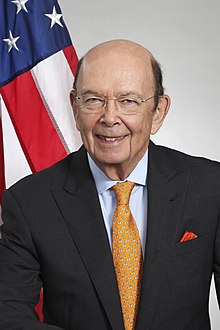
Wilbur Ross
It was a remark worthy of Marie Antoinette’s reported (but inaccurate) dismissal of the miseries of impoverished French citizens: “Let them eat cake.”
Meanwhile, the House of Representatives had undergone a massive sea-change in membership. Ending two years of Republican rule, Democrats had won 27 seats in that body during the November, 2018, elections.
And Nancy Pelosi had gone from being House Minority Leader to wielding the Speaker’s gavel as House Majority Leader on January 3.
Now she blasted Ross’ attitude during a press briefing:
“Is this the ‘Let them eat cake,’ kind of attitude? Or ‘Call your father for money?’ Or ’This is character-building for you; it’s all going to end up very well—just as long as you don’t get your paychecks?’”
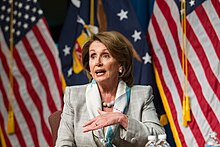
Nancy Pelosi
Thirty-five days passed, with each one bringing increasing stress and fear to the lives of 800,000 Federal employees—those forced to not work and those forced to work for no pay.
Pelosi, meanwhile, did what many of her Democratic colleagues had long refused to do: She dared to stand up against Republicans’ “my-way-or-else” demands.
“The impression you get from the president is he would like to not only close government, build a wall, but also abolish Congress, so the only voice that mattered was his own,” Pelosi said in an interview on “CBS Sunday Morning.”
Pelosi, unlike many Democrats, realized this was America’s version of the Munich Conference: Democrats must hold firm against a tyrant’s extortionate demands. Otherwise, every time Trump didn’t get his way, there would be no end to such shutdowns in the future.
From the start, Pelosi insisted that Democrats would not cooperate with threats to shut down the government if Trump didn’t get the $5.6 billion he wanted for a border wall. And Democrats held firm, refusing to make concessions on the wall.
Second, Pelosi publicly stated that she would not let Trump make his annual State of the Union speech in the House of Representatives until the government was re-opened.
Since both the House and Senate must jointly issue an invitation to the President to make such an address, Pelosi’s veto effectively scotched Trump’s appearance.
For the publicity-addicted Trump, who revels in pontificating to adoring crowds, this was a major blow.
Trump refused to take “No” for an answer and dared Pelosi to deny him access.
She took him up on his dare and issued a statement saying that the speech was off—until the government re-opened.
Soon afterward, Trump agreed that the State of the Union address would have to be postponed.
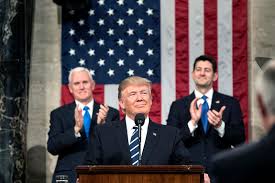
Donald Trump giving State of the Union address in 2018
As CNN political analyst Chris Cillizza saw it: “What Pelosi seems to understand better than past Trump political opponents is that giving ANY ground is a mistake. You have to not only stand firm, but be willing to go beyond all political norms—like canceling the SOTU—to win.”
And Julian Zelitzer, another CNN political analyst, agreed: “Pelosi did not hesitate to use her political power aggressively. From the start of this process, she has remained steadfast in her insistence that closing the government was not a legitimate way to make demands for new forms of spending.
“While sometimes Democrats become leery about seeming too partisan and not being civil enough, Pelosi and the Democrats stood their ground. She drew a line in the sand and stuck by it.”
As Pelosi and the Democrats held firm, Republicans began getting desperate.
- They were being depicted in the news as extortionists while 800,000 of their fellow Americans suffered.
- Those businesses that served Federal employees—such as grocery stores and auto repair shops—were being starved of revenue.
- There was legitimate fear that the entire airline industry might have to shut down for lack of enough air traffic controllers to regulate air traffic.
- Worst of all for Republicans, chaos at airports threatened the travel plans of hundreds of thousands of people traveling to and from the upcoming Super Bowl. Most Americans might not know the name of their Senator, but they take their sports fetish seriously.
By January 25, the 35th day of the shutdown, an ABC News/Washington Post poll showed that 53% of Americans blamed Trump for the shutdown. His popularity had fallen to a historic low of 37%. And 60% disapproved of how he was handling negotiations to re-open the government.
So, on that same date, Trump did what his Hispanic-hating base thought was impossible: He caved.
He walked into the White House Rose Garden and said he would sign a bill to re-open the government for three weeks.
2016 PRESIDENTIAL CAMPAIGN, ABC NEWS, ADOLF HITLER, ALTERNET, ANN COULTER, AP, AUSTRIA, BARACK OBAMA, BILL CLINTON, BORDER WALL, BUZZFEED, CBS NEWS, CHARLES SCHUMER, CHRIS CILLIZZA, CNN, CONTRACTORS, COUNCIL OF ECONOMIC ADVISERS, CROOKS AND LIARS, CZECHOSLOVAKIA, DAILY KOZ, DAVID BROOKS, DEMOCRATS, DEPARTMENT OF COMMERCE, DEPARTMENT OF HOMELAND SECURITY, DICK CHENEY, DONALD TRUMP, EDOUARD DELADIER, FACEBOOK, FBI, FEDERAL AVIATION ADMINISTRATION (FAA), FOX NEWS, FRANCE, GEORGE W. BUSH, GOVERNMENT SHUTDOWN, HOUSE OF REPRESENTATIVES, JAPAN, JEDEDIAH BILA, JOSE ANDRES, JULIAN ZELITZER, KEVIN HASSETT, KURT VON SCHUSCHNIGG, MARIE ANTOINETTE, MARK SHIELDS, MIKE PENCE, MITCH MECONNELL, MOTHER JONES, MOVEON, MSNBC, MUNICH CONFERENCE, NANCY PELOSI, NAZI GERMANY, NBC NEWS, NEVILLE CHAMBERLAIN, NEWSWEEK, NICCOLO MACHIAVELLI, NPR, PBS NEWSHOUR, POLAND, POLITICO, RAW STORY, REPUBLICANS, REUTERS, ROBERT PAYNE, RUSH LIMBAUGH, SALON, SEATTLE TIMES, SLATE, SOUP KITCHENS, STATE OF THE UNION ADDRESS, SUPER BOWL, THE ATLANTIC, THE CHICAGO SUN-TIMES, THE CHICAGO TRIBUNE, THE DAILY BEAST, THE GUARDIAN, THE HILL, THE HUFFINGTON POST, THE LIFE AND DEATH OF ADOLF HITLER, THE LOS ANGELES TIMES, THE NATION, THE NEW YORK TIMES, THE PRINCE, THE WALL STREET JOURNAL, THE WASHINGTON POST, TIME, TRANSPORTATION SAFETY ADMINISTRATION (TSA), TWITTER, U.S. NEWS & WORLD REPORT, UBER, UNITED STATES HOUSE OF REPRESENTATIVES, UNITED STATES SECRET SERVICE, UNITED STATES SENATE, UPI, USA TODAY, WILBUR ROSS, WINSTON CHURCHILL, WORLD WAR 11
In Bureaucracy, History, Military, Politics, Social commentary on January 30, 2019 at 12:08 am
“If we do not have these negotiations over border security with an open government, this president will continue to use this tool. And if we give in, if we pay the ransom now, what will happen the next time there’s a disagreement with this president and Congress?”
—Rep. Katherine Clark, D-Mass.
Republican leaders in Congress didn’t want to be blamed for shutting down the government. They seemed to persuade President Donald Trump to back away from his threat to do so if he didn’t get funding for his border wall.
The Senate passed a short-term funding measure without his wall money.
Vice President Mike Pence told lawmakers that Trump was open to approving it
Then the Fox News Network stepped in

“I think a lot of people who voted for President Trump counted on him on this particular issue,” Fox & Friends host Jedediah Bila said.
“I think their feet were to the fire. And you see a lot of people around the country saying: ‘Hold on a second. You told us that you weren’t afraid to shut down the government, that’s why we like you. What happened? You just gave in right away?’”
And Right-wing columnist Ann Coulter said: “Trump will just have been a joke presidency who scammed the American people, amused the populists for a while, but he’ll have no legacy whatsoever.
“Trump will very likely not finish his term and definitely not be elected to a second term.”
For a man who had “joked” that having a “President-for-Life” would be “great,” Coulter’s words were a nightmare.
On December 22, 2018, Trump shut down the government.
An estimated 380,000 government employees were furloughed and another 420,000 were ordered to work without pay.
And Trump told Congressional leaders the shutdown could last months or even years.
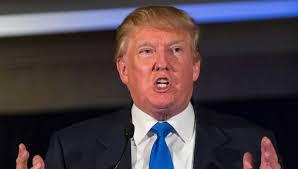
Donald Trump
For Trump, “the wall” was absolutely necessary—but not to keep illegal aliens out. They would go over, under or around it.
The real intent of the wall was to keep Trump in—the White House.
Trump’s fanatical base believed that a wall across the U.S.-Mexico border would stop all illegal immigration. And he knew that if he didn’t build it, they wouldn’t re-elect him.
Like Adolf Hitler, who ordered the complete destruction of Germany when he realized his dreams of conquest were over, Trump’s attitude was: “If I can’t rule America, there won’t be an America.”
Among the agencies directly affected by the shutdown: The Department of Homeland Security (DHS)—whose employees included Secret Service agents.
In short: The men and women guarding Trump were facing financial ruin—along with their families—because Trump didn’t get his way.
The effects of the shutdown quickly became evident:
- For weeks, hundreds of thousands of government workers missed paychecks.
- Smithsonian museums closed their doors.
- Trash piled up in national parks.
- Increasing numbers of employees of the Transportation Safety Administration (TSA)—which provides security against airline terrorism—began refusing to come to work, claiming to be sick.
- At the Federal Aviation Administration (FAA) many air traffic controllers called in “sick.” Those who showed up to work without pay grew increasingly frazzled as they feared being evicted for being unable to make rent or house payments.
- Due to the shortage of air traffic controllers, many planes weren’t able to land safely at places like New York’s LaGuardia Airport.
- Many Federal employees—such as FBI agents—were forced to rely on soup kitchens to feed their families.
- Celebrity chef Jose Andres launched ChefsForFeds, which offered free hot meals for government employees and their families at restaurants across the country.
- Many workers tried to bring in money by babysitting or driving for Uber,
Those employed by the government could at least expect to receive reimbursement for missed pay once the shutdown ended.
The question was: Would they be evicted, need medical care or be unable to pay for food before that happened?
For Federal contractors, the situation was far worse.
During the George W. Bush administration, Vice President Dick Cheney pushed to “outsource” many federal responsibilities to private contractors. This was hugely supported by Republicans and even many Democrats.
Now, in the wake of the shutdown, these employees faced a cruel reality: Since they were not Federal employees, they would not be reimbursed for the time they were forced to not work.
Adding insult to injury were the callous remarks of two Trump administration officials.
“A huge share of government workers were going to take vacation days, say, between Christmas and New Year’s,” said Kevin Hassett, chairman of the Council of Economic Advisers.

Kevin Hassett
“And then we have a shutdown, and so they can’t go to work, and so then they have the vacation, but they don’t have to use their vacation days. And then they come back, and then they get their back pay. Then they’re—in some sense, they’re better off.”
Another equally contemptuous remark was offered by Commerce Secretary Wilbur Ross—a billionaire. Asked on CNBC if he knew that many Federal employees had been reduced to going to food banks, Ross said yes, but he didn’t understand why.
His suggestion: They could just take out a loan.
2016 PRESIDENTIAL CAMPAIGN, ABC NEWS, ADOLF HITLER, ALTERNET, ANN COULTER, AP, AUSTRIA, BARACK OBAMA, BILL CLINTON, BORDER WALL, BUZZFEED, CBS NEWS, CHARLES SCHUMER, CHRIS CILLIZZA, CNN, CONTRACTORS, COUNCIL OF ECONOMIC ADVISERS, CROOKS AND LIARS, CZECHOSLOVAKIA, DAILY KOZ, DAVID BROOKS, DEMOCRATS, DEPARTMENT OF COMMERCE, DEPARTMENT OF HOMELAND SECURITY, DICK CHENEY, DONALD TRUMP, EDOUARD DELADIER, FACEBOOK, FBI, FEDERAL AVIATION ADMINISTRATION (FAA), FOX NEWS, FRANCE, GEORGE W. BUSH, GOVERNMENT SHUTDOWN, HOUSE OF REPRESENTATIVES, JAPAN, JEDEDIAH BILA, JOSE ANDRES, JULIAN ZELITZER, KEVIN HASSETT, KURT VON SCHUSCHNIGG, MARIE ANTOINETTE, MARK SHIELDS, MIKE PENCE, MITCH MECONNELL, MOTHER JONES, MOVEON, MSNBC, MUNICH CONFERENCE, NANCY PELOSI, NAZI GERMANY, NBC NEWS, NEVILLE CHAMBERLAIN, NEWSWEEK, NICCOLO MACHIAVELLI, NPR, PBS NEWSHOUR, POLAND, POLITICO, RAW STORY, REPUBLICANS, REUTERS, ROBERT PAYNE, RUSH LIMBAUGH, SALON, SEATTLE TIMES, SLATE, SOUP KITCHENS, STATE OF THE UNION ADDRESS, SUPER BOWL, THE ATLANTIC, THE CHICAGO SUN-TIMES, THE CHICAGO TRIBUNE, THE DAILY BEAST, THE GUARDIAN, THE HILL, THE HUFFINGTON POST, THE LIFE AND DEATH OF ADOLF HITLER, THE LOS ANGELES TIMES, THE NATION, THE NEW YORK TIMES, THE PRINCE, THE WALL STREET JOURNAL, THE WASHINGTON POST, TIME, TRANSPORTATION SAFETY ADMINISTRATION (TSA), TWITTER, U.S. NEWS & WORLD REPORT, UBER, UNITED STATES HOUSE OF REPRESENTATIVES, UNITED STATES SECRET SERVICE, UNITED STATES SENATE, UPI, USA TODAY, WILBUR ROSS, WINSTON CHURCHILL, WORLD WAR 11
In Bureaucracy, History, Military, Politics, Social commentary on January 29, 2019 at 12:51 am
After selling out Czechoslovakia, Prime Minister Neville Chamberlain returned to England a hero. Holding aloft a copy of the worthless agreement he had signed with Germany’s dictator, Adolf Hitler, he told cheering crowds in London: “I believe it is peace for our time.”
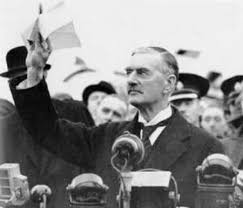
Neville Chamberlain
Winston Churchill knew better, predicting: “Britain and France had to choose between war and dishonor. They chose dishonor. They will have war.”
Hitler—still planning more conquests—also knew better. Speaking of the British and French leaders he had intimidated at Munich, he later asserted: “Our enemies are little worms. I saw them at Munich.”
In March, 1939, the German army occupied the rest of Czechoslovakia.
Chamberlain would soon be seen as a naive weakling—even before bombs started falling on London.
Hitler next turned his attention—and demands—to Poland. But, this time, France and Britain refused to be intimidated—and pledged to go to war if Hitler invaded Poland.
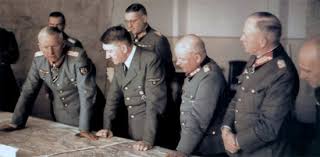
Adolf Hitler and his generals
Hitler ordered the invasion of Poland on September 1, 1939—unintentionally triggering World War II.
In time, historians and statesmen would regard Munich as an object lesson in the futility—and danger—in appeasing evil and aggression.
But for the postwar Republican party, Hitler’s my-way-or-else “negotiating” methods would become standard operating procedure.
President Donald J. Trump used precisely the same “negotiating” style during his December 11, 2018 Oval Office meeting with then-House Minority Leader Nancy Pelosi (D-CA) and Senate Minority Leader Charles Schumer (D-NY).
And, true to his love of publicity, Trump made sure the meeting was televised live.

Nancy Pelosi
Trump opened with on a positive note: “We’ve actually worked very hard on a couple of things that are happening. Criminal justice reform…[Republican Kentucky U.S. Senator] Mitch McConnell and the group, we’re going to be putting it up for a vote. We have great Democrat support, great Republican support.”
But he soon moved to the matter he truly cared about: Demanding $5.6 billion to create a wall along the U.S.-Mexican border: “And one way or the other, it’s going to get built. I’d like not to see a government closing, a shutdown. We will see what happens over the next short period of time.”
“One way or the other”—“so doer so”—was a favorite phrase of Adolf Hitler’s, meaning: If he couldn’t bully his opponents into surrendering, he would use violence.
PELOSI: “I think the American people recognize that we must keep government open, that a shutdown is not worth anything, and that you should not have a Trump shutdown. You have the Senate. You have the House of Representatives. You have the votes. You should pass it right now.”
Trump claimed he could get “Wall” legislation passed in the House but admitted he didn’t have the 60 votes he needed in the Senate.
PELOSI: “Well, the fact is you can get it started that way.”
Trump then contradicted himself: “The House we can get passed very easily, and we do.”
PELOSI: “Okay, then do it.”
Trump kept insisting that “the House would give me the vote if I wanted it.”
PELOSI: “Well, let’s take the vote and we’ll find out.”
SCHUMER: “We do not want to shut down the government. You have called 20 times to shut down the government….We want to come to an agreement. If we can’t come to an agreement, we have solutions that will pass the House and Senate right now, and will not shut down the government. And that’s what we’re urging you to do. Not threaten to shut down the government because you can’t get your way.”

Charles Schumer
TRUMP: “We need border security. And I think we all agree that we need border security.”
SCHUMER: “Yes, we do.”
TRUMP: “The wall is a part of border security. You can’t have very good border security without the wall.”
PELOSI: “That’s simply not true. That is a political promise. Border security is a way to effectively honor our responsibilities.”
By “political promise,” Pelosi meant this is was an appeal Trump had made to his hardcore base. which he expected to re-elect him.
SCHUMER: “And the experts say you can do border security without a wall, which is wasteful and doesn’t solve the problem.”
TRUMP: “It totally solves the problem.”
Schumer then goaded Trump into taking responsibility for closing down the government if he didn’t get funding for his border wall.
TRUMP: “I’ll take it. You know what I’ll say: Yes, if we don’t get what we want, one way or the other…I will shut down the government. Absolutely.”
Thus, Schumer guaranteed that any government shutdown during the Christmas season would be blamed on Trump.
But Republican leaders in Congress didn’t want to be blamed for shutting down the government. They seemed to persuade him to back away from his threat. The Senate passed a short-term funding measure without Trump’s wall money.
Vice President Mike Pence told lawmakers that Trump was open to approving it
Then the Fox News Network stepped in.
2016 PRESIDENTIAL CAMPAIGN, ABC NEWS, ADOLF HITLER, ALTERNET, ANN COULTER, AP, AUSTRIA, BARACK OBAMA, BILL CLINTON, BORDER WALL, BUZZFEED, CBS NEWS, CHARLES SCHUMER, CHRIS CILLIZZA, CNN, CONTRACTORS, COUNCIL OF ECONOMIC ADVISERS, CROOKS AND LIARS, CZECHOSLOVAKIA, DAILY KOZ, DAVID BROOKS, DEMOCRATS, DEPARTMENT OF COMMERCE, DEPARTMENT OF HOMELAND SECURITY, DICK CHENEY, DONALD TRUMP, EDOUARD DELADIER, FACEBOOK, FBI, FEDERAL AVIATION ADMINISTRATION (FAA), FOX NEWS, FRANCE, GEORGE W. BUSH, GOVERNMENT SHUTDOWN, HOUSE OF REPRESENTATIVES, JAPAN, JEDEDIAH BILA, JOSE ANDRES, JULIAN ZELITZER, KEVIN HASSETT, KURT VON SCHUSCHNIGG, MARIE ANTOINETTE, MARK SHIELDS, MIKE PENCE, MITCH MECONNELL, MOTHER JONES, MOVEON, MSNBC, MUNICH CONFERENCE, NANCY PELOSI, NAZI GERMANY, NBC NEWS, NEVILLE CHAMBERLAIN, NEWSWEEK, NICCOLO MACHIAVELLI, NPR, PBS NEWSHOUR, POLAND, POLITICO, RAW STORY, REPUBLICANS, REUTERS, ROBERT PAYNE, RUSH LIMBAUGH, SALON, SEATTLE TIMES, SLATE, SOUP KITCHENS, STATE OF THE UNION ADDRESS, SUPER BOWL, THE ATLANTIC, THE CHICAGO SUN-TIMES, THE CHICAGO TRIBUNE, THE DAILY BEAST, THE GUARDIAN, THE HILL, THE HUFFINGTON POST, THE LIFE AND DEATH OF ADOLF HITLER, THE LOS ANGELES TIMES, THE NATION, THE NEW YORK TIMES, THE PRINCE, THE WALL STREET JOURNAL, THE WASHINGTON POST, TIME, TRANSPORTATION SAFETY ADMINISTRATION (TSA), TWITTER, U.S. NEWS & WORLD REPORT, UBER, UNITED STATES HOUSE OF REPRESENTATIVES, UNITED STATES SECRET SERVICE, UNITED STATES SENATE, UPI, USA TODAY, WILBUR ROSS, WINSTON CHURCHILL, WORLD WAR 11
In Bureaucracy, History, Military, Politics, Social commentary on January 28, 2019 at 1:03 am
Robert Payne, author of the bestselling biography, The Life and Death of Adolf Hitler (1973), described Hitler’s “negotiating” style thus:
“Although Hitler prized his own talents as a negotiator, a man always capable of striking a good bargain, he was totally lacking in finesse.
“He was incapable of bargaining. He was like a man who goes up to a fruit peddler and threatens to blow his brains out if he does not sell his applies at the lowest possible price.”
By studying Hitler’s mindset and “negotiating” methods, we can learn much about the mindset and “negotiating” style of today’s Republican party.
A classic example of Hitler’s “negotiating style” came in September, 1938, when he focused his rage and aggression on Czechoslovakia.
Seven months earlier, he had absorbed Austria. He had done so by inviting its Chancellor, Kurt Shuschnigg, to Berlin. Then Hitler threatened Austria with invasion if Shuschnigg did not immediately agree to make his country a vassal-state of Germany.
This time, his threats were aimed at Neville Chamberlain, the prime minister of Great Britain, and Eduoard Deladier, the prime minister of France. Both countries had pledged to support Czechoslovakia against Hitler’s aggression.
Once again, he opened “negotiations” with a lie: The Czechoslovak government was trying to exterminate 3.5 million Germans living in the “Sudetenland.”
This consisted of the northern, southwest and western regions of Czechoslovakia, inhabited mostly by ethnic Germans.
Then he followed this up with the threat of war: Germany would protect its citizens and halt such “oppression.”
For British Prime Minister Neville Chamberlain, the thought of another European war erupting less than 20 years after the end of World War I was simply unthinkable.

The Cenotaph, in London, honoring the unknown British dead of World War 1
Something had to be done to prevent it. And he believed himself to be just the man to do it.
He quickly sent Hitler a telegram, offering to help resolve the crisis: “I could come to you by air and am ready to leave tomorrow. Please inform me of earliest time you can receive me, and tell me the place of the meeting. I should be grateful for a very early reply.”
Once again, another head-of-state was prepared to meet Hitler on his home ground. Again, Hitler took this concession as a sign of weakness. And Chamberlain’s use of such words as “please” and “grateful” only further convinced Hitler of another impending triumph.
Chamberlain was determined to grant his every demand—so long as this meant avoiding a second world war.
The two European leaders met in Berchtesgaden, Germany, on September 15, 1938.
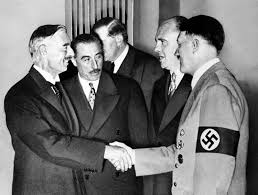
Neville Chamberlain and Adolf Hitler
During their talks, Chamberlain said he had come to discuss German grievances. But, he added, it was necessary in all circumstances to exclude the use of force.
Hitler appeared to be shocked that he could be accused of such intentions: “Force? Who speaks of force?“
Then, without warning, he switched to an aggressive mode. He accused the Czechs of having mobilized their army in May. They had mobilized—in response to the mobilization of the German army.
“I shall not put up with this any longer,” shouted Hitler. “I shall settle this question in one way or another. I shall take matters in my own hands!”
Suddenly, Chamberlain seemed alarmed—and possibly angry: “If I understood you right, you are determined to proceed against Czechoslovakia in any case. If this is so, why did you let me come to Berchtesgaden?
“In the circumstances, it is best for me to return at once. Anything else now seems pointless.”
Hitler was taken aback by the unexpected show of defiance. He realized he was about to lose his chance to bully the British into accepting his latest demands.
So he softened his tone and said they should consider the Sudetenland according to the principle of self-determination.
Chamberlain said he must immediately return to England to consult with his colleagues.
Hitler appeared uneasy. But then the German translator finished the sentence: “…and then meet you again.”
Hitler realized he still had a chance to attain victory without going to war.
Chamberlain agreed to the cession of the Sudetenland. Three days later, French Prime Minister Edouard Daladier did the same. No Czechoslovak representative was invited to these discussions.
Chamberlain met Hitler again in Godesberg, Germany, on September 22 to confirm the agreements. But Hitler aimed to use the crisis as a pretext for war.
He now demanded not only the annexation of the Sudetenland but the immediate military occupation of the territories. This would give the Czechoslovak army no time to adapt their defense measures to the new borders.
To achieve a solution, Italian dictator Benito Mussolini suggested a conference of the major powers in Munich.
On September 29, Hitler, Daladier and Chamberlain met and agreed to Mussolini’s proposal. They signed the Munich Agreement, which accepted the immediate occupation of the Sudetenland.
The Czechoslovak government had not been a party to the talks. Nevertheless, it promised to abide by the agreement on September 30.
It actually had no choice. It faced the threat of an immediate German invasion after being deserted by its pledged allies: Britain, France and the Soviet Union.
ABC NEWS, ADMIRAL IVAN ISAKOV, ADOLF HITLER, ALBERT SPEER, ALTERNET, ANDREW MCCABE, ANTHONY SCARAMUCCI, AP, BETTE DAVIS, BOB WOODWARD, BUZZFEED, CBS NEWS, CHEKA, CIA, CNN, COUNTER-SURVEILLANCE, CROOKS AND LIARS, DAILY KOZ, DAVID SHULKIN, DEMOCRATIC PARTY, DON MCGAHN, DONALD TRUMP, DR. BRENDA FITZGERALD, FACEBOOK, FBI, FSB, GARY COHN, GENRIKH YAGODA, GINA HASPEL, H.R. MCMASTER, HEINRICH HIMMLER, HERMANN GOERING, HOPE HICKS, HOUSE OF REPRESENTATIVES, JAMES COMEY, JEFF SESSIONS, JOE BIDEN, JOHN BOLTON, JOHN KELLY, JOHN MCCAIN, JOSEPH STALIN, KATIE WALSH, KELLY SADLER, KGB, LAVRENTY BERIA, LINDSEY GRAHAM, MICHAEL DUBKE, MICHAEL FLYNN, MIKE PENCE, MIKHAIL TUKHACHEVSKY, MOTHER JONES, MOVEON, MSNBC, NBC NEWS, NEWSWEEK, NICCOLO MACHIAVELLI, NICK AYERS, NIKKI HALEY, NIKOLAI YEZHOV, NKVD, NPR, OMAROSA MANIGAULT-NEWMAN, PAUL MANAFORT, PBS NEWSHOUR, POLITICO, PREET BHARARA, RAW STORY, REINCE PRIBUS, REPUBLICAN PARTY, REUTERS, REX TILLERSON, ROB PORTER, ROBERT S. MUELLER, SALLY YATES, SALON, SARAH SANDERS, SCOTT PRUITT, SEAN SPICER, SEATTLE TIMES, SEBASTIAN GORKA, SERGEY KISLYAK, SERGEY LAVROV, SLATE, SOVIET UNION, SS, STEVE BANNON, STORMY DANIELS, SURVEILLANCE, THE APPRENTICE, THE ATLANTIC, THE CHICAGO SUN-TIMES, THE CHICAGO TRIBUNE, THE DAILY BEAST, THE GUARDIAN, THE HILL, THE HUFFINGTON POST, THE LOS ANGELES TIMES, THE NATION, THE NEW YORK TIMES, THE PRINCE, THE WASHINGTON POST, TIME, TOM BOSSERT, TOM PRICE, TWITTER, U.S. NEWS & WORLD REPORT, UPI, USA TODAY, WALTER SHAUB, WILBUR ROSS
In Bureaucracy, History, Law, Law Enforcement, Military, Politics, Social commentary on December 18, 2018 at 1:16 am
The first year of Donald Trump’s White House has seen more firings, resignations, and reassignments of top staffers than any other first-year administration in modern history. His Cabinet turnover exceeds that of any other administration in the last 100 years.
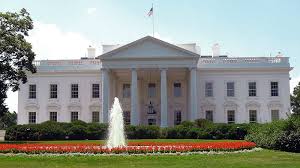
The White House
With the administration rapidly approaching its halfway pint—January 20, 2019—it’s time to size up its litany of casualties.
This listing, however, does not tell the full story. Among those who resigned from the Trump administration—and the real reasons why:
- Dr. Brenda Fitzgerald – Resigned as director of the Center of Disease Control after Politico reported that she had bought stock in Japan Tobacco while serving as CDC director.
- Omarosa Manigault-Newman – Met Trump as a contestant on “The Apprentice,” where he fired her on three different shows. She moved into the White House with him as Director of Communications for the White House Office of Public Liaison. She became disillusioned with him during 2017 and began taping her conversations with him and other government officials. When she learned she had been fired she reportedly had to be literally dragged from the White House.
- Tom Price – The Secretary of Health and Human Services ran up a $1 million cost to taxpayers for private planes and military jets for travel within the United States and trips to Asia, Africa and Europe.
- Commerce Secretary Wilbur Ross – Trump told him: “I don’t trust you. I don’t want you doing any more negotiations….You’re past your prime.”
- Sean Spicer – Resigned in anger after Trump chose Anthony Scaramucci as White House Communications Director. The reason: Trump kept him in the dark about events Spicer needed to know—such as an interview that Trump arranged with the New York Times—and which ended disastrously for Trump.
- Walter Shaub – Resigned as the director of the Office of Government Ethics in July after clashing with Trump over the President’s conflicts-of-interest vis-a-vis his financial holdings.
- Hope Hicks – White House Communications Director, resigned one day after testifying before the House Intelligence Committee. She claimed she had told “white lies” for Trump but hadn’t lied about anything important relating to the investigation of Russian subversion of the 2016 election.
- Chief of Staff Reince Priebus – Suffered repeated humiliations by Trump—such a being ordered to kill a fly that was buzzing about.
- On another occasion, Trump told an associate that Priebus was “like a little rat. He just scurries around.”
- On July 28, 2017, Priebus resigned.
- Chief of Staff John Kelly – Trump similarly ridiculed Priebus’ replacement, a former Marine Corps general. Kelly tried to limit the number of advisers who had unrestricted access to Trump—and thus bring discipline to his schedule.
- Instead of being grateful, Trump became furious. Kelly told colleagues: “He’s an idiot. It’s pointless to try to convince him of anything. He’s gone off the rails. We’re in Crazytown. I don’t even know why any of us are here. This is the worst job I’ve ever had.”
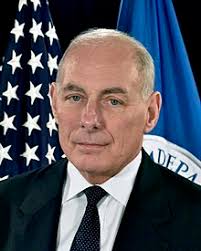
John Kelly
On December 8, 2018, Trump announced that: “John Kelly will be leaving at the end of the year, we will be announcing who will be taking John’s place, it may be on an interim basis, in the next day or two.”
This had been expected for months. Reportedly, Kelly and Trump were no longer on speaking terms.
Trump’s apparent first choice for Kelly’s replacement: Nick Ayers, who had served as Vice President Mike Pence’s chief of staff for more than a year.
Trump pushed Ayers to commit to two years, but he declined.
Ayers told Trump he had young children, and wanted to return to his home state of Georgia. He offered to temporarily serve as chief of staff, but Trump demanded a two-year commitment, and talks fell apart.
Finally, Trump found a replacement for Kelly: Mick Mulvaney, who has served as director of the Office of Management and Budget. He intends to keep his position at OMB while serving as Trump’s chief of staff.
As 2018 rapidly comes to an end, the Trump administration will come under increased pressure on two fronts:
- The Special Counsel’s investigation of Russian subversion of the 2016 Presidential election: Robert Mueller is slowly closing the net on the highest-ranking members of the Trump administration—such as Michael Flynn and Paul Manafort. These will almost certainly lead to Trump himself.
- On January 3, the House of Representatives will become a Democratically-controlled body. Trump will face unprecedented opposition—and major investigations of his past and current actions. It’s likely that the House Intelligence Committee will go after his long-hidden tax returns—which may well prove his longstanding financial ties to Russian oligarchs.
The White House is one of the most stressful places to work. Constant deadlines keep staffers working days on end. Travel is frequent. And anyone can be dismissed in an instant, since all employees work “at the pleasure of the President.”
These events will bring increased fear and stress to those who still remain in the White House. This, in turn, will ensure increased mass firings and/or resignations from the White House.
As aging stage actress Margo Channing (Bette Davis) warns in All About Eve: “Fasten your seatbelts, it’s going to be a bumpy ride.”
ABC NEWS, ADMIRAL IVAN ISAKOV, ADOLF HITLER, ALBERT SPEER, ALTERNET, ANDREW MCCABE, ANTHONY SCARAMUCCI, AP, BETTE DAVIS, BOB WOODWARD, BUZZFEED, CBS NEWS, CHEKA, CIA, CNN, COUNTER-SURVEILLANCE, CROOKS AND LIARS, DAILY KOZ, DAVID SHULKIN, DEMOCRATIC PARTY, DON MCGAHN, DONALD TRUMP, DR. BRENDA FITZGERALD, FACEBOOK, FBI, FSB, GARY COHN, GENRIKH YAGODA, GINA HASPEL, H.R. MCMASTER, HEINRICH HIMMLER, HERMANN GOERING, HOPE HICKS, HOUSE OF REPRESENTATIVES, JAMES COMEY, JEFF SESSIONS, JOE BIDEN, JOHN BOLTON, JOHN KELLY, JOHN MCCAIN, JOSEPH STALIN, KATIE WALSH, KELLY SADLER, KGB, LAVRENTY BERIA, LINDSEY GRAHAM, MICHAEL DUBKE, MICHAEL FLYNN, MIKE PENCE, MIKHAIL TUKHACHEVSKY, MOTHER JONES, MOVEON, MSNBC, NBC NEWS, NEWSWEEK, NICCOLO MACHIAVELLI, NICK AYERS, NIKKI HALEY, NIKOLAI YEZHOV, NKVD, NPR, OMAROSA MANIGAULT-NEWMAN, PAUL MANAFORT, PBS NEWSHOUR, POLITICO, PREET BHARARA, RAW STORY, REINCE PRIBUS, REPUBLICAN PARTY, REUTERS, REX TILLERSON, ROB PORTER, ROBERT S. MUELLER, SALLY YATES, SALON, SARAH SANDERS, SCOTT PRUITT, SEAN SPICER, SEATTLE TIMES, SEBASTIAN GORKA, SERGEY KISLYAK, SERGEY LAVROV, SLATE, SOVIET UNION, SS, STEVE BANNON, STORMY DANIELS, SURVEILLANCE, THE APPRENTICE, THE ATLANTIC, THE CHICAGO SUN-TIMES, THE CHICAGO TRIBUNE, THE DAILY BEAST, THE GUARDIAN, THE HILL, THE HUFFINGTON POST, THE LOS ANGELES TIMES, THE NATION, THE NEW YORK TIMES, THE PRINCE, THE WASHINGTON POST, TIME, TOM BOSSERT, TOM PRICE, TWITTER, U.S. NEWS & WORLD REPORT, UPI, USA TODAY, WALTER SHAUB, WILBUR ROSS
In Bureaucracy, History, Law, Law Enforcement, Military, Politics, Social commentary on December 17, 2018 at 12:26 am
The first year of Trump’s White House has seen more firings, resignations, and reassignments of top staffers than any other first-year administration in modern history. His Cabinet turnover exceeds that of any other administration in the last 100 years.
With the Trump administration rapidly approaching its halfway point—January 20, 2019—it’s time to size up its litany of casualties.
Among these:
FIRED:
- Preet Bharara – U.S. Attorney for the Southern District of New York
- Sally Yates – Assistant United States Attorney General
- James Comey – FBI Director
- Rex Tillerson – Secretary of State
- Andrew McCabe – FBI Deputy Director
- Jeff Sessions – United States Attorney General
RESIGNED:
- Katie Walsh – Deputy White House Chief of Staff
- Michael T. Flynn – National Security Adviser
- Walter Shaub – Office of Government Ethics Director
- Michael Dubke – Communications Director
- Sean Spicer – Press Secretary
- Reince Priebus – Chief of Staff
- Anthony Scaramucci – Communications Director
- Steve Bannon – Chief Strategist
- Sebastian Gorka – Deputy Assistant to the President
- Tom Price – Secretary of Health and Human Services
- Omarosa Manigault-Newman – Director of Communications for White House Office of Public Liaison
- Dr. Brenda Fitzgerald – Director of the Center for Disease Control and Prevention
- Rob Porter – White House Staff Secretary
- Hope Hicks – White House Communications Director
- Gary Cohn – Director of the National Economic Council
- H.R. McMaster – National Security Adviser
- Tom Bossert – Homeland Security Adviser
- Scott Pruitt – Director, Environmental Protection Agency
- Don McGahn – White House Counsel
- Nikki Haley – United States Ambassador to the United Nations
- David Shulkin – Secretary of the Veterans Administration
This listing, however, does not tell the full story.
Among those who were fired—and the real reasons why:
- Jeff Sessions – Fired as Attorney General because he refused to quash Special Counsel Robert S. Mueller’s probe into proven connections between Russian Intelligence agents and high-ranking members of Trump’s Presidential campaign.
- On the day after the November, 2018 mid-term elections, Trump fired him.
- James Comey – Fired as FBI Director because he refused to pledge his personal loyalty to Trump. Trump also hoped to end the FBI’s investigation of links between Russian Intelligence agents and members of his 2016 Presidential campaign.
- Trump later admitted to Russian Foreign Minister Sergey Lavrov and Russian Ambassador Sergey Kislyak: “I just fired the head of the FBI….I faced great pressure because of Russia. That’s taken off.”
- Don McGahn – Resigned as White House Counsel after repeatedly clashing with Trump about the best strategy for dealing with Mueller’s investigation.
- Tom Bossert – Trump’s Homeland Security Adviser, was fired by John Bolton, the new National Security Adviser.
- Sally Yates – Fired by Trump as Acting Attorney General for her aggressive pursuit of Michael Flynn’s treasonous contacts with Russian Intelligence officials during the 2016 Presidential campaign. She had also refused to uphold Trump’s executive order on immigration and denounced it as unlawful.
- Preet Bharara – Fired by Trump as United States Attorney for the Southern District of New York. Although an Obama appointee, Trump had initially asked him to stay on—and then abruptly fired him. The possible reason: He was known as one of Wall Street’s fiercest watchdogs and a widely respected prosecutor. Trump believes that corporations should be immune from their crimes—and, as President, has worked to confer such immunity upon them.
- Rex Tillerson – Trump’s Secretary of State, was fired without warning while on a trip to Africa. The reason: In 2017, word leaked to the press that Tillerson had called Trump “a moron.”
- Steve Bannon – Although he officially resigned, Trump fired his Fascistic chief strategist after Bannon heatedly clashed with other members of the White House.
- Anthony Scaramucci – Although he officially resigned, he was in fact fired by Trump at the urging of John Kelly. The reason: An obscenity-laced interview with The New Yorker, where he attacked members of the Trump administration—most notably Bannon.
Among those who resigned—and the real reasons why:
- Scott Pruitt – Although he technically resigned as head of the Environmental Protection Agency, he was in effect fired. He was under several federal ethics investigation for lavish spending, conflicts of interests with corporate lobbyists, and enlisting his official government staffers to run personal errands.
- Rob Porter – The White House Staff Secretary resigned after after two of his ex-wives accused him of physical and emotional abuse.
- Michael Flynn – Although he officially resigned, he was in fact fired as National Security Adviser. The reason: He had discussed, with Russian Ambassador Sergey Kislyak, ending the Obama administration’s sanctions against Russia. Then he lied about it to Vice President Mike Pence. When these facts became public, Flynn was sent packing.
ABC NEWS, ADMIRAL IVAN ISAKOV, ADOLF HITLER, ALBERT SPEER, ALTERNET, ANDREW MCCABE, ANTHONY SCARAMUCCI, AP, BETTE DAVIS, BOB WOODWARD, BUZZFEED, CBS NEWS, CHEKA, CIA, CNN, COUNTER-SURVEILLANCE, CROOKS AND LIARS, DAILY KOZ, DAVID SHULKIN, DEMOCRATIC PARTY, DON MCGAHN, DONALD TRUMP, DR. BRENDA FITZGERALD, FACEBOOK, FBI, FSB, GARY COHN, GENRIKH YAGODA, GINA HASPEL, H.R. MCMASTER, HEINRICH HIMMLER, HERMANN GOERING, HOPE HICKS, HOUSE OF REPRESENTATIVES, JAMES COMEY, JEFF SESSIONS, JOE BIDEN, JOHN BOLTON, JOHN KELLY, JOHN MCCAIN, JOSEPH STALIN, KATIE WALSH, KELLY SADLER, KGB, LAVRENTY BERIA, LINDSEY GRAHAM, MICHAEL DUBKE, MICHAEL FLYNN, MIKE PENCE, MIKHAIL TUKHACHEVSKY, MOTHER JONES, MOVEON, MSNBC, NBC NEWS, NEWSWEEK, NICCOLO MACHIAVELLI, NICK AYERS, NIKKI HALEY, NIKOLAI YEZHOV, NKVD, NPR, OMAROSA MANIGAULT-NEWMAN, PAUL MANAFORT, PBS NEWSHOUR, POLITICO, PREET BHARARA, RAW STORY, REINCE PRIBUS, REPUBLICAN PARTY, REUTERS, REX TILLERSON, ROB PORTER, ROBERT S. MUELLER, SALLY YATES, SALON, SARAH SANDERS, SCOTT PRUITT, SEAN SPICER, SEATTLE TIMES, SEBASTIAN GORKA, SERGEY KISLYAK, SERGEY LAVROV, SLATE, SOVIET UNION, SS, STEVE BANNON, STORMY DANIELS, SURVEILLANCE, THE APPRENTICE, THE ATLANTIC, THE CHICAGO SUN-TIMES, THE CHICAGO TRIBUNE, THE DAILY BEAST, THE GUARDIAN, THE HILL, THE HUFFINGTON POST, THE LOS ANGELES TIMES, THE NATION, THE NEW YORK TIMES, THE PRINCE, THE WASHINGTON POST, TIME, TOM BOSSERT, TOM PRICE, TWITTER, U.S. NEWS & WORLD REPORT, UPI, USA TODAY, WALTER SHAUB, WILBUR ROSS
In Bureaucracy, History, Law, Law Enforcement, Politics, Social commentary on December 14, 2018 at 12:06 am
In January, 2018, the White House banned the use of personal cell phones in the West Wing. The official reason: National security.
The real reason: To stop staffers from leaking to reporters.
More ominously, well-suited men roam the halls of the West Wing, carrying devices that pick up signals from phones that aren’t government-issued. “Did someone forget to put their phone away?” one of the men will ask if such a device is detected. If no one says they have a phone, the detection team start searching the room.

Phone detector
The devices can tell which type of phone is in the room.
This is the sort of behavior Americans have traditionally—and correctly—associated with dictatorships
In his memo outlining the policy, Chief of Staff John Kelly warned that anyone who violated the phone ban could be punished, including “being indefinitely prohibited from entering the White House complex.”
Yet even these draconian methods may not end White House leaks.
White House officials still speak with reporters throughout the day and often air their grievances, whether about annoying colleagues or competing policy priorities.
Aides with private offices sometimes call reporters on their desk phones. Others get their cell phones and call or text reporters during lunch breaks.
According to an anonymous White House source: “The cellphone ban is for when people are inside the West Wing, so it really doesn’t do all that much to prevent leaks. If they banned all personal cellphones from the entire [White House] grounds, all that would do is make reporters stay up later because they couldn’t talk to their sources until after 6:30 pm.”
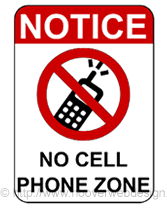
Other sources believe that leaks won’t end unless Trump starts firing staffers. But there is always the risk of firing the wrong people. Thus, to protect themselves, those who leak might well accuse tight-lipped co-workers.
Within the Soviet Union (especially during the reign of Joseph Stalin) fear of secret police surveillance was widespread—and absolutely justified.
Among the methods used to keep conversations secret:
- Turning on the TV or radio to full volume.
- Turning on a water faucet at full blast.
- Turning the dial of a rotary phone to the end—and sticking a pencil in one of the small holes for numbers.
- Standing six to nine feet away from the hung-up receiver.
- Going for “a walk in the woods.”
- Saying nothing sensitive on the phone.
The secret police (known as the Cheka, the NKVD, the MGB, the KGB, and now the FSB) operated on seven working principles:
- Your enemy is hiding.
- Start from the usual suspects.
- Study the young.
- Stop the laughing.
- Rebellion spreads like wildfire.
- Stamp out every spark.
- Order is created by appearance.
Trump has always ruled through bribery and fear. He’s bought off (or tried to) those who might cause him trouble—like porn actress Stormy Daniels. And he’s threatened or filed lawsuits against those he couldn’t or didn’t want to bribe—such as contractors who have worked on various Trump properties.
But Trump can’t buy the loyalty of employees working in an atmosphere of hostility—which breeds resentment and fear. And some of them are taking revenge by sharing with reporters the latest crimes and follies of the Trump administration.
The more Trump wages war on the “cowards and traitors” who work most closely with him, the more some of them will find opportunities to strike back. This will inflame Trump even more—and lead him to seek even more repressive methods against his own staffers.
This is a no-win situation for Trump.
The results will be twofold:
- Constant turnovers of staffers—with their replacements having to undergo lengthy background checks before coming on; and
- Continued leaking of embarrassing secrets by resentful employees who stay.
Trump became famous on “The Apprentice” for telling contestants: “You’re fired.”
Since taking office as President, he has bullied and insulted even White House officials and his own handpicked Cabinet officers. This has resulted in an avalanche of firings and resignations.
The first year of Trump’s White House has seen more firings, resignations, and reassignments of top staffers than any other first-year administration in modern history. His Cabinet turnover exceeds that of any other administration in the last 100 years.
With the Trump administration rapidly approaching its halfway point—January 20, 2019—it’s time to size up its litany of casualties.
The list is impressive—but only in a negative sense.
ABC NEWS, ADMIRAL IVAN ISAKOV, ADOLF HITLER, ALBERT SPEER, ALTERNET, ANDREW MCCABE, ANTHONY SCARAMUCCI, AP, BETTE DAVIS, BOB WOODWARD, BUZZFEED, CBS NEWS, CHEKA, CIA, CNN, COUNTER-SURVEILLANCE, CROOKS AND LIARS, DAILY KOZ, DAVID SHULKIN, DEMOCRATIC PARTY, DON MCGAHN, DONALD TRUMP, DR. BRENDA FITZGERALD, FACEBOOK, FBI, FSB, GARY COHN, GENRIKH YAGODA, GINA HASPEL, H.R. MCMASTER, HEINRICH HIMMLER, HERMANN GOERING, HOPE HICKS, HOUSE OF REPRESENTATIVES, JAMES COMEY, JEFF SESSIONS, JOE BIDEN, JOHN BOLTON, JOHN KELLY, JOHN MCCAIN, JOSEPH STALIN, KATIE WALSH, KELLY SADLER, KGB, LAVRENTY BERIA, LINDSEY GRAHAM, MICHAEL DUBKE, MICHAEL FLYNN, MIKE PENCE, MIKHAIL TUKHACHEVSKY, MOTHER JONES, MOVEON, MSNBC, NBC NEWS, NEWSWEEK, NICCOLO MACHIAVELLI, NICK AYERS, NIKKI HALEY, NIKOLAI YEZHOV, NKVD, NPR, OMAROSA MANIGAULT-NEWMAN, PAUL MANAFORT, PBS NEWSHOUR, POLITICO, PREET BHARARA, RAW STORY, REINCE PRIBUS, REPUBLICAN PARTY, REUTERS, REX TILLERSON, ROB PORTER, ROBERT S. MUELLER, SALLY YATES, SALON, SARAH SANDERS, SCOTT PRUITT, SEAN SPICER, SEATTLE TIMES, SEBASTIAN GORKA, SERGEY KISLYAK, SERGEY LAVROV, SLATE, SOVIET UNION, SS, STEVE BANNON, STORMY DANIELS, SURVEILLANCE, THE APPRENTICE, THE ATLANTIC, THE CHICAGO SUN-TIMES, THE CHICAGO TRIBUNE, THE DAILY BEAST, THE GUARDIAN, THE HILL, THE HUFFINGTON POST, THE LOS ANGELES TIMES, THE NATION, THE NEW YORK TIMES, THE PRINCE, THE WASHINGTON POST, TIME, TOM BOSSERT, TOM PRICE, TWITTER, U.S. NEWS & WORLD REPORT, UPI, USA TODAY, WALTER SHAUB, WILBUR ROSS
In Bureaucracy, History, Law, Law Enforcement, Politics, Social commentary on December 13, 2018 at 12:36 am
In his infamous treatise, The Prince, Niccolo Machiavelli warns that it is safer to be feared than loved. And he lays out his reason thusly:
“From this arises the question whether it is better to be loved than feared, or feared more than loved. The reply is, that one ought to be both feared and loved, but as it is difficult for the two to go together, it is much safer to be feared than loved….
“And men have less scruple in offending one who makes himself loved than one who makes himself feared; for love is held by a chain of obligations which, men being selfish, is broken whenever it serves their purpose; but fear is maintained by a dread of punishment which never fails.”
But Machiavelli immediately follows this up with a warning about the abuses of fear:
“Still, a prince should make himself feared in such a way that if he does not gain love, he at any rate avoids hatred: for fear and the absence of hatred may well go together….”
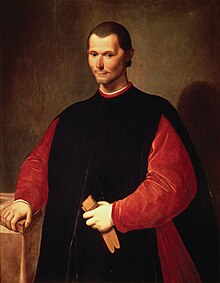

Niccolo Machiavelli
It’s a warning that someone should have given President Donald Trump long ago.
Not that he would have heeded it.
On May 10, 2018, The Hill reported that White House Special Assistant Kelly Sadler had joked derisively about Arizona United States Senator John McCain.
McCain, a Navy pilot during the Vietnam war, was shot down over Hanoi on October 26, 1967, and captured. He spent five and a half years as a POW in North Vietnam—and was often brutally tortured. He wasn’t released until March 14, 1973.
Recently, he had opposed the nomination of Gina Haspel as director of the CIA.
The reason: In 2002, Haspel had operated a “black” CIA site in Thailand where Islamic terrorists were often waterboarded to make them talk.
For John McCain, waterboarding was torture, even if it didn’t leave its victims permanently scarred and disabled.
Aware that the 81-year-old McCain was dying of brain cancer, Sadler joked to intimates about the Senator’s opposition to Haspel: “It doesn’t matter. He’s dying anyway.”
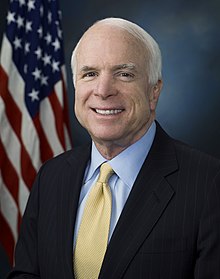
John McCain
Leaked to CNN by an anonymous White House official, Sadler’s remark sparked fierce criticism—and demands for her firing.
South Carolina Republican Senator Lindsey Graham, a close friend of McCain, said: “Ms. Sadler, may I remind you that John McCain has a lot of friends in the United States Senate on both sides of the aisle. Nobody is laughing in the Senate.”
“People have wondered when decency would hit rock bottom with this administration. It happened yesterday,” said former Vice President Joe Biden.
“John McCain makes America great. Father, grandfather, Navy pilot, POW hero bound by honor, an incomparable and irrepressible statesman. Those who mock such greatness only humiliate themselves and their silent accomplices,” tweeted former Massachusetts governor and 2012 Republican presidential candidate Mitt Romney.
Officially, White House Press Secretary Sarah Huckabee Sanders refused to confirm or deny Sadler’s joke: “I’m not going to get into a back and forth because people want to create issues of leaked staff meetings.”
Unofficially, Sanders was furious—not at the joke about a dying man, but that someone had leaked it. After assailing the White House communications team, she pouted: “I am sure this conversation is going to leak, too. And that’s just disgusting.”

Sarah Huckabee Sanders
No apology has been offered by any official at the White House—including President Trump.
In fact, Senior White House communications adviser Mercedes Schlapp reportedly expressed her support for Sadler: “I stand with Kelly Sadler.”
On May 11—the day after Sadler’s comment was reported—reporters asked Sanders if the tone set by Trump had caused Sadler to feel comfortable in telling such a joke.
“Certainly not!” predictably replied Sanders, adding: “We have a respect for all Americans, and that is what we try to put forward in everything we do, but in word and in action, focusing on doing things that help every American in this country every single day.”
On May 14 Trump revealed his “respect” for “all Americans”—especially those working in the White House.
“The so-called leaks coming out of the White House are a massive over exaggeration put out by the Fake News Media in order to make us look as bad as possible,” Trump tweeted.
“With that being said, leakers are traitors and cowards, and we will find out who they are!”
In a move that Joseph Stalin would have admired, Trump ordered an all-out investigation to find the joke-leaker.
In January, 2018, the White House had banned the use of personal cell phones in the West Wing. The official reason: National security.
The real reason: To stop staffers from leaking to reporters.
Officials now have two choices:
- Leave their cell phones in their cars, or,
- When they arrive for work, deposit them in lockers installed at West Wing entrances. They can reclaim their phones when they leave.
Several staffers huddle around the lockers throughout the day, checking messages they have missed. The lockers buzz and chirp constantly from 6 a.m. to 8 p.m. Monday through Friday.
ABC NEWS, ADMIRAL IVAN ISAKOV, ADOLF HITLER, ALBERT SPEER, ALTERNET, ANDREW MCCABE, ANTHONY SCARAMUCCI, AP, BETTE DAVIS, BOB WOODWARD, BUZZFEED, CBS NEWS, CHEKA, CIA, CNN, COUNTER-SURVEILLANCE, CROOKS AND LIARS, DAILY KOZ, DAVID SHULKIN, DEMOCRATIC PARTY, DON MCGAHN, DONALD TRUMP, DR. BRENDA FITZGERALD, FACEBOOK, FBI, FSB, GARY COHN, GENRIKH YAGODA, GINA HASPEL, H.R. MCMASTER, HEINRICH HIMMLER, HERMANN GOERING, HOPE HICKS, HOUSE OF REPRESENTATIVES, JAMES COMEY, JEFF SESSIONS, JOE BIDEN, JOHN BOLTON, JOHN KELLY, JOHN MCCAIN, JOSEPH STALIN, KATIE WALSH, KELLY SADLER, KGB, LAVRENTY BERIA, LINDSEY GRAHAM, MICHAEL DUBKE, MICHAEL FLYNN, MIKE PENCE, MIKHAIL TUKHACHEVSKY, MOTHER JONES, MOVEON, MSNBC, NBC NEWS, NEWSWEEK, NICCOLO MACHIAVELLI, NICK AYERS, NIKKI HALEY, NIKOLAI YEZHOV, NKVD, NPR, OMAROSA MANIGAULT-NEWMAN, PAUL MANAFORT, PBS NEWSHOUR, POLITICO, PREET BHARARA, RAW STORY, REINCE PRIBUS, REPUBLICAN PARTY, REUTERS, REX TILLERSON, ROB PORTER, ROBERT S. MUELLER, SALLY YATES, SALON, SARAH SANDERS, SCOTT PRUITT, SEAN SPICER, SEATTLE TIMES, SEBASTIAN GORKA, SERGEY KISLYAK, SERGEY LAVROV, SLATE, SOVIET UNION, SS, STEVE BANNON, STORMY DANIELS, SURVEILLANCE, THE APPRENTICE, THE ATLANTIC, THE CHICAGO SUN-TIMES, THE CHICAGO TRIBUNE, THE DAILY BEAST, THE GUARDIAN, THE HILL, THE HUFFINGTON POST, THE LOS ANGELES TIMES, THE NATION, THE NEW YORK TIMES, THE PRINCE, THE WASHINGTON POST, TIME, TOM BOSSERT, TOM PRICE, TWITTER, U.S. NEWS & WORLD REPORT, UPI, USA TODAY, WALTER SHAUB, WILBUR ROSS
In Bureaucracy, History, Law, Law Enforcement, Military, Politics, Social commentary on December 12, 2018 at 12:06 am
Donald Trump has often been compared to Adolf Hitler. But his reign bears far more resemblance to that of Joseph Stalin.
Germany’s Fuhrer, for all his brutality, maintained a relatively stable government by keeping the same men in office—from the day he took power on January 30, 1933, to the day he blew out his brains on April 30, 1945.
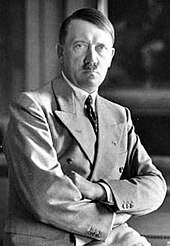
Adolf Hitler
Bundesarchiv, Bild 146-1990-048-29A / CC-BY-SA 3.0 [CC BY-SA 3.0 de (https://creativecommons.org/licenses/by-sa/3.0/de/deed.en)%5D
Heinrich Himmler, a former chicken farmer, remained head of the dreaded, black-uniformed Schutzstaffel, or Protection Squads, known as the SS, from 1929 until his suicide in 1945.
In April, 1934, Himmler was appointed assistant chief of the Gestapo (Secret State Police) in Prussia, and from that position he extended his control over the police forces of the whole Reich.
Hermann Goering, an ace fighter pilot in World War 1, served as Reich commissioner for aviation and head of the newly developed Luftwaffe, the German air force, from 1935 to 1945.
And Albert Speer, Hitler’s favorite architect, held that position from 1933 until 1942, when Hitler appointed him Reich Minister of Armaments and War Production. He held that position until the Third Reich collapsed in April, 1945.
Soviet Premier Joseph Stalin, by contrast, purged his ministers constantly. For example: From 1934 to 1953, Stalin had no fewer than three chiefs of his secret police, then named the NKVD:
- Genrikh Yagoda – (July 10, 1934 – September 26, 1936)
- Nikolai Yezhov (September 26, 1936 – November 25, 1938) and
- Lavrenty Beria (November, 1938 – March, 1953).
Stalin purged Yagoda and Yezhov, with both men executed after being arrested.
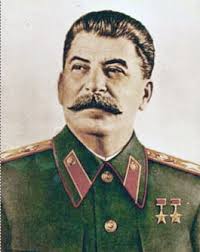
Joseph Stalin
He reportedly wanted to purge Beria, too, but the latter may have acted first. There has been speculation that Beria slipped warfarin, a blood-thinner often used to kill rats, into Stalin’s drink, causing him to die of a cerebral hemorrhage.
Nor were these the only casualties of Stalin’s reign.
For almost 30 years, through purges and starvation caused by enforced collections of farmers’ crops, Stalin slaughtered 20 to 60 million people.
The 1930s were a frightening and dangerous time to be alive in the Soviet Union. In 1934, Stalin, seeing imaginary enemies everywhere, ordered a series of purges that lasted right up to the German invasion.
An example of Stalin’s paranoia occurred one day while the dictator walked through the Kremlin corridors with Admiral Ivan Isakov. Officers of the NKVD (the predecessor to the KGB) stood guard at every corner.
“Every time I walk down the corridors,” said Stalin, “I think: Which one of them is it? If it’s this one, he will shoot me in the back. But if I turn the corner, the next one can shoot me in the face.”
In 1937-38, the Red Army fell prey to Stalin’s paranoia.
Its victims included:
- Three of five marshals (five-star generals);
- Thirteen of 15 army commanders (three- and four-star generals);
- Fifty of 57 army corps commanders; and
- One hundred fifty-four out of 186 division commanders.
And heading the list of those marked for death was Marshal Mikhail Tukhachevsky.
Arrested on May 22, 1937, he was interrogated and tortured. As a result, he “confessed” to being a German agent plotting to overthrow Stalin and seize power.
On his confession, which survives in the archives, his bloodstains can clearly be seen.
On June 11, the Soviet Supreme Court convened a special military tribunal to try Tukhachevsky and eight generals for treason.
It was a sham: The accused were denied defense attorneys, and could not appeal the verdict—-which was foregone: Death.
In a Russian version of poetic justice, five of the eight generals who served as Tukhachevsky’s judges were themselves later condemned and executed as traitors.
Since taking office as the nation’s 45th President, Donald Trump has sought to rule by fear.
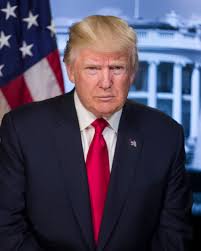
Donald Trump
In fact, he candidly shared his belief in this as a motivator to journalist Bob Woodward during the 2016 Presidential race: “Real power is—I don’t even want to use the word—fear.”
It is unknown if Trump ever read The Prince, Niccolo Machiavelli’s infamous treatise on attaining political power. If so, he doubtless is familiar with its most famous passage:
“From this arises the question whether it is better to be loved than feared, or feared more than loved. The reply is, that one ought to be both feared and loved, but as it is difficult for the two to go together, it is much safer to be feared than loved….
“For it may be said of men in general that they are ungrateful, voluble, dissemblers, anxious to avoid danger and covetous of gain; as long as you benefit them, they are entirely yours: they offer you their blood, their goods, their life and their children, when the necessity is remote, but when it approaches, they revolt.
“And the prince who has relied solely on their words, without making other preparations, is ruined; for the friendship which is gained by purchase and not through grandeur and nobility of spirit is bought but not secured, and at a pinch is not to be expended in your service.
“And men have less scruple in offending one who makes himself loved than one who makes himself feared; for love is held by a chain of obligations which, men being selfish, is broken whenever it serves their purpose; but fear is maintained by a dread of punishment which never fails.”


 Bureaucracybuster's Blog
2016 PRESIDENTIAL CAMPAIGN, ABC NEWS, ADOLF HITLER, ALTERNET, ANN COULTER, AP, AUSTRIA, BARACK OBAMA, BILL CLINTON, BORDER WALL, BUZZFEED, CBS NEWS, CHARLES SCHUMER, CHRIS CILLIZZA, CNN, CONTRACTORS, COUNCIL OF ECONOMIC ADVISERS, CROOKS AND LIARS, CZECHOSLOVAKIA, DAILY KOZ, DAVID BROOKS, DEMOCRATS, DEPARTMENT OF COMMERCE, DEPARTMENT OF HOMELAND SECURITY, DICK CHENEY, DONALD TRUMP, EDOUARD DELADIER, FACEBOOK, FBI, FEDERAL AVIATION ADMINISTRATION (FAA), FOX NEWS, FRANCE, GEORGE W. BUSH, GOVERNMENT SHUTDOWN, HOUSE OF REPRESENTATIVES, JAPAN, JEDEDIAH BILA, JOSE ANDRES, JULIAN ZELITZER, KEVIN HASSETT, KURT VON SCHUSCHNIGG, MARIE ANTOINETTE, MARK SHIELDS, MIKE PENCE, MITCH MECONNELL, MOTHER JONES, MOVEON, MSNBC, MUNICH CONFERENCE, NANCY PELOSI, NAZI GERMANY, NBC NEWS, NEVILLE CHAMBERLAIN, NEWSWEEK, NICCOLO MACHIAVELLI, NPR, PBS NEWSHOUR, POLAND, POLITICO, RAW STORY, REPUBLICANS, REUTERS, ROBERT PAYNE, RUSH LIMBAUGH, SALON, SEATTLE TIMES, SLATE, SOUP KITCHENS, STATE OF THE UNION ADDRESS, SUPER BOWL, THE ATLANTIC, THE CHICAGO SUN-TIMES, THE CHICAGO TRIBUNE, THE DAILY BEAST, THE GUARDIAN, THE HILL, THE HUFFINGTON POST, THE LIFE AND DEATH OF ADOLF HITLER, THE LOS ANGELES TIMES, THE NATION, THE NEW YORK TIMES, THE PRINCE, THE WALL STREET JOURNAL, THE WASHINGTON POST, TIME, TRANSPORTATION SAFETY ADMINISTRATION (TSA), TWITTER, U.S. NEWS & WORLD REPORT, UBER, UNITED STATES HOUSE OF REPRESENTATIVES, UNITED STATES SECRET SERVICE, UNITED STATES SENATE, UPI, USA TODAY, WILBUR ROSS, WINSTON CHURCHILL, WORLD WAR 11
LEARNING FROM THE MUNICH DISASTER: PART FOUR (OF FIVE)
In Bureaucracy, History, Military, Politics, Social commentary on January 31, 2019 at 12:07 amBillionaire Wilbur Ross—the Trump administration’s Secretary of Commerce—had a suggestion for the 800,000 Federal employees made destitute by the government shutdown: Take out a loan.
“So the 30 days of pay that some people will be out, there’s no real reason why they shouldn’t be able to get a loan against it, and we’ve seen a number of ads of financial institutions doing that.
“True, the people might have to pay a little bit of interest. But the idea that it’s ‘paycheck or zero’ is not a really valid idea.”
Wilbur Ross
It was a remark worthy of Marie Antoinette’s reported (but inaccurate) dismissal of the miseries of impoverished French citizens: “Let them eat cake.”
Meanwhile, the House of Representatives had undergone a massive sea-change in membership. Ending two years of Republican rule, Democrats had won 27 seats in that body during the November, 2018, elections.
And Nancy Pelosi had gone from being House Minority Leader to wielding the Speaker’s gavel as House Majority Leader on January 3.
Now she blasted Ross’ attitude during a press briefing:
“Is this the ‘Let them eat cake,’ kind of attitude? Or ‘Call your father for money?’ Or ’This is character-building for you; it’s all going to end up very well—just as long as you don’t get your paychecks?’”
Nancy Pelosi
Thirty-five days passed, with each one bringing increasing stress and fear to the lives of 800,000 Federal employees—those forced to not work and those forced to work for no pay.
Pelosi, meanwhile, did what many of her Democratic colleagues had long refused to do: She dared to stand up against Republicans’ “my-way-or-else” demands.
“The impression you get from the president is he would like to not only close government, build a wall, but also abolish Congress, so the only voice that mattered was his own,” Pelosi said in an interview on “CBS Sunday Morning.”
Pelosi, unlike many Democrats, realized this was America’s version of the Munich Conference: Democrats must hold firm against a tyrant’s extortionate demands. Otherwise, every time Trump didn’t get his way, there would be no end to such shutdowns in the future.
From the start, Pelosi insisted that Democrats would not cooperate with threats to shut down the government if Trump didn’t get the $5.6 billion he wanted for a border wall. And Democrats held firm, refusing to make concessions on the wall.
Second, Pelosi publicly stated that she would not let Trump make his annual State of the Union speech in the House of Representatives until the government was re-opened.
Since both the House and Senate must jointly issue an invitation to the President to make such an address, Pelosi’s veto effectively scotched Trump’s appearance.
For the publicity-addicted Trump, who revels in pontificating to adoring crowds, this was a major blow.
Trump refused to take “No” for an answer and dared Pelosi to deny him access.
She took him up on his dare and issued a statement saying that the speech was off—until the government re-opened.
Soon afterward, Trump agreed that the State of the Union address would have to be postponed.
Donald Trump giving State of the Union address in 2018
As CNN political analyst Chris Cillizza saw it: “What Pelosi seems to understand better than past Trump political opponents is that giving ANY ground is a mistake. You have to not only stand firm, but be willing to go beyond all political norms—like canceling the SOTU—to win.”
And Julian Zelitzer, another CNN political analyst, agreed: “Pelosi did not hesitate to use her political power aggressively. From the start of this process, she has remained steadfast in her insistence that closing the government was not a legitimate way to make demands for new forms of spending.
“While sometimes Democrats become leery about seeming too partisan and not being civil enough, Pelosi and the Democrats stood their ground. She drew a line in the sand and stuck by it.”
As Pelosi and the Democrats held firm, Republicans began getting desperate.
By January 25, the 35th day of the shutdown, an ABC News/Washington Post poll showed that 53% of Americans blamed Trump for the shutdown. His popularity had fallen to a historic low of 37%. And 60% disapproved of how he was handling negotiations to re-open the government.
So, on that same date, Trump did what his Hispanic-hating base thought was impossible: He caved.
He walked into the White House Rose Garden and said he would sign a bill to re-open the government for three weeks.
Share this: