Posts Tagged ‘WEALTH’
2020 PRESIDENTIAL ELECTION, ABC NEWS, ABRAHAM LINCOLN, ALTERNET, AMERICABLOG, AP, APOCALYPSE, ARMAGEDDON, BABY BOOMER RESISTANCE, BLOOMBERG, BOLDNESS, BUZZFEED, CAUTION, CBS NEWS, CHINA, CLIMATE CHANGE, CNN, COVID-19, CROOKS AND LIARS, DONALD TRUMP, FIVETHIRTYEIGHT, GAIUS CASSIUS, GAZA, HAMAS, HARPER’S MAGAZINE, HUFFINGTON POST, illegal immigration, IMAGE, ISRAEL, J.P. MORGAN, JESUS CHRIST, JULIUS CAESAR (PLAY), KEVIN MCCARTHY, MAFIA, MEDIA MATTERS, MOTHER JONES, MOVEON, MSNBC, NBC NEWS, NEW YEAR'S DAY, NEW YEAR'S EVE, NEW YORK, NEWSWEEK, NICCOLO MACHIAVELLI, NPR, PBS NEWSHOUR, POLITICO, POLITICUSUSA, RAW STORY, REALITY, REPUBLICANS, REUTERS, RUSSIA, SALON, SEATTLE TIMES, SLATE, SOREN KIERKEGAARD, TALKING POINTS MEMO, THE ATLANTIC, THE CHICAGO SUN-TIMES, THE CHICAGO TRIBUNE, THE DAILY BEAST, THE DAILY BLOG, THE GUARDIAN, THE HILL, THE HUFFINGTON POST, THE LOS ANGELES TIMES, THE MILLENNIUM, THE NATION, THE NEW REPUBLIC, THE NEW YORK TIMES, THE VILLAGE VOICE, THE WASHINGTON POST, THINKPROGRESS, TIME, TITLE 42, TRUTHDIG, TRUTHOUT, TWITTER, TWO POLITICAL JUNKIES, U.S. NEWS & WORLD REPORT, UKRAINE, UNITED STATES HOUSE OF REPRESENTATIVES, UPI, USA TODAY, VLADIMIR PUTIN, WEALTH, WILLIAM SHAESPEARE, WONKETTE
In Bureaucracy, Business, History, Medical, Military, RELIGION, Social commentary on January 1, 2024 at 12:49 am
New Year’s Eve, 2023, will soon lie behind us.
And for many people, saying “Goodbye” to 2023 can’t happen soon enough.
New Year’s Eve is traditionally a time for people to reflect on the major events of the previous 12 months. Some of these are highly personal. Others have been shared by the entire country.
Some of these remembrances inevitably bring pleasure. Others bring pain.
And 2023 has been a year of pain for millions.
- Russian President Vladimir Putin continued to violently assault Ukraine. Despite a series of military setbacks, he continued to hurl missiles at Russia’s “brother nation.” Many Ukrainians spent a second Christmas without electricity or running water.
- On October 7, the Hamas terrorist group launched an attack on Israel, slaughtering 1,400 men, women and children and kidnapping at least 250 others. Israel responded with massive airstrikes and ground assault on Gaza, killing upwards of 20,000.

Emblem of Hamas
- In the United States, Donald Trump continued to lie that he had been cheated of victory in the 2020 Presidential election. His lie resonated with millions of Fascistic Americans, including members of Congress.
- And he prepared to run again for President—even as he faced 91 felony counts in four criminal cases. Determined to make himself “President-for-Life,” he posed the single greatest threat to American democracy in its history.
But 2023 also brought reason for hope:
- Republicans remained lethal but divided, ousting Kevin McCarthy, their own Speaker of the House and threatening to cannibalize others in their quest for dictatorial power.
- The COVID-19 pandemic had been largely contained, although the virus posed a lethal threat to those refusing to get vaccinated.
- Conscious of the dangers of climate change, Americans made wind, solar and hydropower more than 20 percent of the power supply.
Every New Year’s Eve celebration brings the fantasy that you get to start fresh in a matter of hours. And with that fantasy comes hope—that, this time, you can put your sorrows and failures behind you.
And each new year comes with lessons to be learned—and applied.
Each year gives us the chance to learn from history—our own and that of others. Try to learn from your mistakes—and especially those of others. With luck, you won’t repeat your past ones—or those of others. But don’t expect to lead a mistake-free life.
There is a time to be bold—and a time to be cautious. As Niccolo Machiavelli put it: “A prince….must imitate the fox and the lion: For the lion cannot protect himself from traps, and the fox cannot defend himself from wolves.” Learn to tell when is the appropriate time to be which—and to play that role to the hilt.
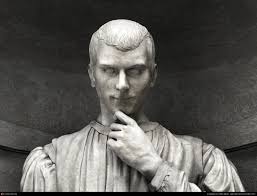
Niccolo Machiavelli
There is image—and there is reality. J.P. Morgan once said: “A man always has two reasons for doing anything: A good reason and the real reason.” This is never truer than when a corporation or politician is asking for your money / vote.
When trying to decide whether to commit yourself to either, ask yourself: Who benefits? For example: When studying a proposed law that claims to aid the environment, find out who supports it. That will usually tell you what you need to know.
Learn how to evaluate others. Once again, Niccolo Machiavelli supplies the answer: “The first impression that one gets of a ruler and his brains is from seeing the men that he has about him. When they are competent and loyal one can always consider him wise, as he has been able to recognize their ability and keep them faithful.
“But when they are the reverse, one can always form an unfavorable opinion of him, because the first mistake that he makes is in making this choice.”
Don’t confuse wealth with virtue. Too many Americans believe that God bestows wealth on the worthy. If this were true, every Mafia boss would be a candidate for sainthood.
Each year is a journey unto itself—filled with countless joys and sorrows. Many of these joys can’t be predicted. And many of these tragedies can’t be prevented.
Learn to tell real dangers from imaginary ones. Computers are real—and sometimes they crash. Men who died 2,000 years ago do not leap out of graveyards, no matter what their disciples predict.
Don’t expect any particular year to usher in the Apocalypse. In any given year there will be wars, famines, earthquakes, riots, floods and a host of other disasters. These have always been with us—and always will be. As Abraham Lincoln once said: “The best thing about the future is that it comes one day at a time.”

Don’t expect some Great Leader to lead you to success. As Gaius Cassius says in William Shakespeare’s “Julius Caesar”: “Men at some time are masters of their fate. The fault, dear Brutus, is not in our stars but in ourselves that we are underlings.”
Don’t expect any particular year or event to usher in your happiness. To again quote Lincoln: “Most people are about as happy as they make up their minds to be.”
If your life seems to make no sense to you, consider this: The philosopher Soren Kierkegaard once noted: “Life can only be understood backwards, but it must be lived forwards.”
ABC NEWS, ALTERNET, AMERICABLOG, AP, BABY BOOMER RESISTANCE, BBC, BLOOMBERG NEWS, BUSINESS, BUZZFEED, CBS NEWS, CNN, CROOKS AND LIARS, DAILY KOS, DAILY KOZ, DONALD TRUMP, FBI, FIVETHIRTYEIGHT, HARPER’S MAGAZINE, HUFFINGTON POST, INCOME INEQUALITY, MAFIA, MEDIA MATTERS, MOTHER JONES, MOVEON, MSNBC, NBC NEWS, NEW REPUBLIC, NEWSDAY, NEWSWEEK, NICCOLO MACHIAVELLI, NPR, PBS NEWSHOUR, POLITICO, POLITICS, POLITICUSUSA, RAW STORY, REUTERS, SALON, SEATTLE TIMES, SLATE, TALKING POINTS MEMO, TAX HAVENS, TAX JUSTICE NETWORK, THE ATLANTIC, THE CHICAGO SUN-TIMES, THE CHICAGO TRIBUNE, THE DAILY BEAST, THE DAILY BLOG, THE GUARDIAN, THE HILL, THE HUFFINGTON POST, THE INTERCEPT, THE LOS ANGELES TIMES, THE NATION, THE NEW REPUBLIC, THE NEW YORK TIMES, THE NEW YORKER, THE PRINCE, THE VILLAGE VOICE, THE WALL STREET JOURNAL, THE WASHINGTON POST, THINKPROGRESS, TIME, TRUTHDIG, TRUTHOUT, TWITTER, TWO POLITICAL JUNKIES, U.S. NEWS & WORLD REPORT, UPI, USA TODAY, WEALTH, WONKETTE
In Business, History, Law, Law Enforcement, Politics, Social commentary on January 6, 2023 at 12:14 am
For President Donald Trump and Congressional Republicans, the single greatest achievement of their time in office was to drastically cut taxes on the wealthy (including themselves).
It’s a view that Niccolo Machiavelli would dispute.
In 1513, Machiavelli, the Florentine statesman who has been called the father of modern political science, published his best-known work: The Prince.
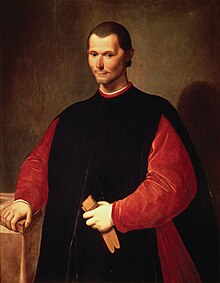

Niccolo Machiavelli
Among the issues he confronted was how to preserve liberty within a republic. And key to this was mediating the eternal struggle between the wealthy and the poor and middle class.
Machiavelli deeply distrusted the nobility because they stood above the law. He saw them as a major source of corruption because they could buy influence through patronage, favors or nepotism.
Successful political leaders must attain the support of the nobility or general populace. But since these groups have conflicting interests, the safest course is to choose the latter.
Writes Machiavelli:
….He who becomes prince by help of the [wealthy] has greater difficulty in maintaining his power than he who is raised by the populace. He is surrounded by those who think themselves his equals, and is thus unable to direct or command as he pleases.
But one who is raised to leadership by popular favor finds himself alone, and has no one, or very few, who are not ready to obey him. [And] it is impossible to satisfy the [wealthy] by fair dealing and without inflicting injury upon others, whereas it is very easy to satisfy the mass of the people in this way.

Machiavelli warns that the general populace is more honest than the nobility—i.e., wealthy. The wealthy seek to oppress, while the populace wants to simply avoid oppression.
A political leader cannot protect himself against a hostile population, owing to their numbers, but he can against the hostility of the great, as they are but few.
The worst that a prince has to expect from a hostile people is to be abandoned, but from hostile nobles he has to fear not only desertion but their active opposition. And as they are more far seeing and more cunning, they are always in time to save themselves and take sides with the one who they expect will conquer.
The prince is, moreover, obliged to live always with the same people, but he can easily do without the same nobility, being able to make and unmake them at any time, and improve their position or deprive them of it as he pleases.
Unfortunately, political leaders throughout the world—including the United States–have ignored this sage advice.
In 2012, Tax Justice Network, which campaigns to abolish tax havens, commissioned a study of their effect on the world’s economy.
The study was entitled, “The Price of Offshore Revisited: New Estimates for ‘Missing’ Global Private Wealth, Income, Inequality and Lost Taxes.”
http://www.taxjustice.net/cms/upload/pdf/Price_of_Offshore_Revisited_120722.pdf
The research was carried out by James Henry, former chief economist at consultants McKinsey & Co. Among its findings:
Summing up this situation, the report noted: “We are up against one of society’s most well-entrenched interest groups. After all, there’s no interest group more rich and powerful than the rich and powerful.”
Fortunately, Machiavelli has supplied timeless remedies to this increasingly dangerous situation:
- Assume evil among men—and most especially among those who possess the greatest concentration of wealth and power.
- Carefully monitor their activities—the way the FBI now regularly monitors those of the Mafia and major terrorist groups.
- Ruthlessly prosecute the treasonous crimes of the rich and powerful—and, upon their conviction, impose severe punishment.
2020 PRESIDENTIAL ELECTION, ABC NEWS, ABRAHAM LINCOLN, ALTERNET, AMERICABLOG, AP, APOCALYPSE, ARMAGEDDON, BABY BOOMER RESISTANCE, BLOOMBERG, BOLDNESS, BUZZFEED, CAUTION, CBS NEWS, CHINA, CNN, COVID-19, CROOKS AND LIARS, DONALD TRUMP, FIVETHIRTYEIGHT, GAIUS CASSIUS, HARPER’S MAGAZINE, HUFFINGTON POST, illegal immigration, IMAGE, J.P. MORGAN, JESUS CHRIST, JULIUS CAESAR (PLAY), MAFIA, MEDIA MATTERS, MOTHER JONES, MOVEON, MSNBC, NBC NEWS, NEW YEAR'S DAY, NEW YEAR'S EVE, NEW YORK, NEWSWEEK, NICCOLO MACHIAVELLI, NPR, PBS NEWSHOUR, POLITICO, POLITICUSUSA, RAW STORY, REALITY, REUTERS, RUSSIA, SALON, SEATTLE TIMES, SLATE, SOREN KIERKEGAARD, TALKING POINTS MEMO, THE ATLANTIC, THE CHICAGO SUN-TIMES, THE CHICAGO TRIBUNE, THE DAILY BEAST, THE DAILY BLOG, THE GUARDIAN, THE HILL, THE HUFFINGTON POST, THE LOS ANGELES TIMES, THE MILLENNIUM, THE NATION, THE NEW REPUBLIC, THE NEW YORK TIMES, THE VILLAGE VOICE, THE WASHINGTON POST, THINKPROGRESS, TIME, TITLE 42, TRUTHDIG, TRUTHOUT, TWITTER, TWO POLITICAL JUNKIES, U.S. NEWS & WORLD REPORT, UKRAINE, UNITED STATES HOUSE OF REPRESENTATIVES, UPI, USA TODAY, VLADIMIR PUTIN, WEALTH, WILLIAM SHAESPEARE, WONKETTE
In Bureaucracy, Business, History, Medical, RELIGION, Social commentary on December 30, 2022 at 1:01 am
New Year’s Eve, 2022, will soon lie behind us.
And for many people, saying “Goodbye” to 2022 can’t happen soon enough.
New Year’s Eve is traditionally a time for people to reflect on the major events of the previous 12 months. Some of these are highly personal. Others have been shared by the entire country.
Some of these remembrances inevitably bring pleasure. Others bring pain.
And 2022 has been a year of pain for millions.
Starting on February 24, Russian President Vladimir Putin unleashed a violent assault on Ukraine. Even after his forces were battered by Ukrainian armies, he continued to hurl missiles at Russia’s “brother nation.” As a result, many Ukrainians spent Christmas without electricity or running water.
The invasion was accompanied by Putin’s threats of nuclear war if the West didn’t stop supplying Ukraine with weaponry to repulse his unprovoked attack.
COVID-19 continued to sweep across the globe. Although largely under control in the United States, it remained a mortal threat. In China, that threat surged as the government dropped restrictions that had largely kept it at bay since 2020.
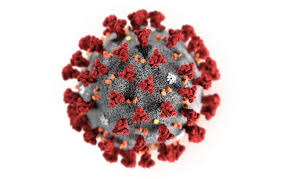
COVID-19
But, as the year ended, hope suddenly dawned: During mid-term elections, millions of Americans rejected Donald Trump’s continuing lies that he had been cheated of victory in 2020. As a result, Republicans won only the House, whereas they had been expected to win the Senate as well.
And as the United States braced itself for an onslaught of tens of thousands—if not millions—of illegal aliens, the Supreme Court upheld—at least temporarily—Title 42.
This policy, begun in 2020, during the early weeks of the COVID-19 pandemic, has allowed immigration agents to expel 2.4.million illegal aliens from the southern border.
At the heart of every New Year’s Eve celebration is the fantasy that you get to start fresh in a matter of hours. And with that fantasy comes hope—that, this time, you can put your sorrows and failures behind you.
And each new year comes with lessons to be learned—and applied.
Each year gives us the chance to learn from history—our own and that of others. Try to learn from your mistakes—and especially those of others. With luck, you won’t repeat your past ones—or those of others. But don’t expect to lead a mistake-free life.
There is a time to be bold—and a time to be cautious. As Niccolo Machiavelli put it: “A prince….must imitate the fox and the lion: For the lion cannot protect himself from traps, and the fox cannot defend himself from wolves.” Learn to tell when is the appropriate time to be which—and to play that role to the hilt.
Niccolo Machiavelli
There is image—and there is reality. J.P. Morgan once said: “A man always has two reasons for doing anything: A good reason and the real reason.” This is never truer than when a corporation or politician is asking for your money / vote. When trying to decide whether to commit yourself to either, ask yourself: Who benefits? For example: When studying a proposed law that claims to aid the environment, find out who supports it. That will usually tell you what you need to know.
Learn how to evaluate others. Once again, Niccolo Machiavelli supplies the answer: “The first impression that one gets of a ruler and his brains is from seeing the men that he has about him. When they are competent and loyal one can always consider him wise, as he has been able to recognize their ability and keep them faithful. But when they are the reverse, one can always form an unfavorable opinion of him, because the first mistake that he makes is in making this choice.”
Don’t confuse wealth with virtue. Too many Americans believe that wealth is a gift that God bestows on the worthy. If this were true, every Mafia boss would be a candidate for sainthood.
Each year is a journey unto itself—filled with countless joys and sorrows. Many of these joys can’t be predicted. And many of these tragedies can’t be prevented.
Learn to tell real dangers from imaginary ones. Computers are real—and sometimes they crash. Men who died 2,000 years ago do not leap out of graveyards, no matter what their disciples predict.
Don’t expect any particular year to usher in the Apocalypse. In any given year there will be wars, famines, earthquakes, riots, floods and a host of other disasters. These have always been with us—and always will be. As Abraham Lincoln once said: “The best thing about the future is that it comes one day at a time.”
Don’t expect some Great Leader to lead you to success. As Gaius Cassius says in William Shakespeare’s “Julius Caesar”: “Men at some time are masters of their fate. The fault, dear Brutus, is not in our stars but in ourselves that we are underlings.”
Don’t expect any particular year or event to usher in your happiness. To again quote Lincoln: “Most people are about as happy as they make up their minds to be.”
If your life seems to make no sense to you, consider this: The philosopher Soren Kierkegaard once noted: “Life can only be understood backwards, but it must be lived forwards.”
ABC NEWS, ALTERNET, AMERICABLOG, AP, BABY BOOMER RESISTANCE, BBC, BLOOMBERG NEWS, BUSINESS, BUZZFEED, CBS NEWS, CNN, CROOKS AND LIARS, DAILY KOS, DAILY KOZ, DONALD TRUMP, FACEBOOK, FBI, FIVETHIRTYEIGHT, HARPER’S MAGAZINE, HUFFINGTON POST, INCOME INEQUALITY, MAFIA, MEDIA MATTERS, MOTHER JONES, MOVEON, MSNBC, NBC NEWS, NEW REPUBLIC, NEWSDAY, NEWSWEEK, NICCOLO MACHIAVELLI, NPR, PBS NEWSHOUR, POLITICO, POLITICS, POLITICUSUSA, RAW STORY, REUTERS, SALON, SEATTLE TIMES, SLATE, TALKING POINTS MEMO, TAX HAVENS, TAX JUSTICE NETWORK, THE ATLANTIC, THE CHICAGO SUN-TIMES, THE CHICAGO TRIBUNE, THE DAILY BEAST, THE DAILY BLOG, THE GUARDIAN, THE HILL, THE HUFFINGTON POST, THE INTERCEPT, THE LOS ANGELES TIMES, THE NATION, THE NEW REPUBLIC, THE NEW YORK TIMES, THE NEW YORKER, THE PRINCE, THE VILLAGE VOICE, THE WALL STREET JOURNAL, THE WASHINGTON POST, THINKPROGRESS, TIME, TRUTHDIG, TRUTHOUT, TWITTER, TWO POLITICAL JUNKIES, U.S. NEWS & WORLD REPORT, UPI, USA TODAY, WEALTH, WONKETTE
In Business, History, Law, Law Enforcement, Politics, Social commentary on March 31, 2022 at 12:14 am
For President Donald Trump and Congressional Republicans, the single greatest achievement of their time in office was to drastically cut taxes on the wealthy (including themselves).
It’s a view that Niccolo Machiavelli would dispute.
In 1513, Machiavelli, the Florentine statesman who has been called the father of modern political science, published his best-known work: The Prince.

Niccolo Machiavelli
Among the issues he confronted was how to preserve liberty within a republic. And key to this was mediating the eternal struggle between the wealthy and the poor and middle class.
Machiavelli deeply distrusted the nobility because they stood above the law. He saw them as a major source of corruption because they could buy influence through patronage, favors or nepotism.
Successful political leaders must attain the support of the nobility or general populace. But since these groups have conflicting interests, the safest course is to choose the latter.
Writes Machiavelli:
….He who becomes prince by help of the [wealthy] has greater difficulty in maintaining his power than he who is raised by the populace. He is surrounded by those who think themselves his equals, and is thus unable to direct or command as he pleases.
But one who is raised to leadership by popular favor finds himself alone, and has no one, or very few, who are not ready to obey him. [And] it is impossible to satisfy the [wealthy] by fair dealing and without inflicting injury upon others, whereas it is very easy to satisfy the mass of the people in this way.
Machiavelli warns that the general populace is more honest than the nobility—i.e., wealthy. The wealthy seek to oppress, while the populace wants to simply avoid oppression.
A political leader cannot protect himself against a hostile population, owing to their numbers, but he can against the hostility of the great, as they are but few.
The worst that a prince has to expect from a hostile people is to be abandoned, but from hostile nobles he has to fear not only desertion but their active opposition. And as they are more far seeing and more cunning, they are always in time to save themselves and take sides with the one who they expect will conquer.
The prince is, moreover, obliged to live always with the same people, but he can easily do without the same nobility, being able to make and unmake them at any time, and improve their position or deprive them of it as he pleases.
Unfortunately, political leaders throughout the world—including the United States–have ignored this sage advice.
In 2012, Tax Justice Network, which campaigns to abolish tax havens, commissioned a study of their effect on the world’s economy.
The study was entitled, “The Price of Offshore Revisited: New Estimates for ‘Missing’ Global Private Wealth, Income, Inequality and Lost Taxes.”
http://www.taxjustice.net/cms/upload/pdf/Price_of_Offshore_Revisited_120722.pdf
The research was carried out by James Henry, former chief economist at consultants McKinsey & Co. Among its findings:
Summing up this situation, the report noted: “We are up against one of society’s most well-entrenched interest groups. After all, there’s no interest group more rich and powerful than the rich and powerful.”
Fortunately, Machiavelli has supplied timeless remedies to this increasingly dangerous situation:
- Assume evil among men—and most especially among those who possess the greatest concentration of wealth and power.
- Carefully monitor their activities—the way the FBI now regularly monitors those of the Mafia and major terrorist groups.
- Ruthlessly prosecute the treasonous crimes of the rich and powerful—and, upon their conviction, impose severe punishment.
ABC NEWS, ALTERNET, AMERICABLOG, AP, BABY BOOMER RESISTANCE, BBC, BLOOMBERG NEWS, BUSINESS, BUZZFEED, CBS NEWS, CNN, CROOKS AND LIARS, DAILY KOS, DAILY KOZ, DONALD TRUMP, FACEBOOK, FBI, FIVETHIRTYEIGHT, HARPER’S MAGAZINE, HUFFINGTON POST, INCOME INEQUALITY, MAFIA, MEDIA MATTERS, MOTHER JONES, MOVEON, MSNBC, NBC NEWS, NEW REPUBLIC, NEWSDAY, NEWSWEEK, NICCOLO MACHIAVELLI, NPR, PBS NEWSHOUR, POLITICO, POLITICS, POLITICUSUSA, RAW STORY, REUTERS, SALON, SEATTLE TIMES, SLATE, TALKING POINTS MEMO, TAX HAVENS, TAX JUSTICE NETWORK, THE ATLANTIC, THE CHICAGO SUN-TIMES, THE CHICAGO TRIBUNE, THE DAILY BEAST, THE DAILY BLOG, THE GUARDIAN, THE HILL, THE HUFFINGTON POST, THE LOS ANGELES TIMES, THE NATION, THE NEW REPUBLIC, THE NEW YORK TIMES, THE NEW YORKER, THE PRINCE, THE VILLAGE VOICE, THE WALL STREET JOURNAL, THE WASHINGTON POST, THINKPROGRESS, TIME, TRUTHDIG, TRUTHOUT, TWITTER, TWO POLITICAL JUNKIES, U.S. NEWS & WORLD REPORT, UPI, USA TODAY, WEALTH, WONKETTE
In Bureaucracy, Business, History, Law, Law Enforcement, Politics, Social commentary on May 14, 2021 at 12:55 am
In November, 2017, President Donald Trump and a Republican-dominated House and Senate rammed the Tax Cuts and Jobs Act of 2017 through Congress. It became law on December 22, 2017.
The law:
- Ignored the stagnation of working-class wages and exacerbated inequality;
- Weakened revenues when the nation needed to raise more;
- Encouraged rampant tax avoidance and gaming that will undermine the integrity of the tax code;
- Left behind low- and moderate-income Americans—and in many ways hurt them.
For American corporations, however, the law was a godsend:
- Cutting the corporate tax rate from 35 to 21 percent;
- Shifting toward a territorial tax system, where multinational corporations’ foreign profits go largely untaxed;
- Benefitting overwhelmingly wealthy shareholders and highly paid executives.
In 1513, Niccolo Machiavelli, the Florentine statesman who has been called the father of modern political science, published his best-known work: The Prince.
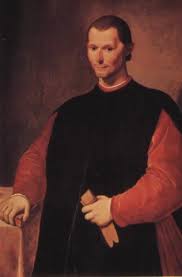
Niccolo Machiavelli
Among the issues he confronted was how to preserve liberty within a republic. And key to this was mediating the eternal struggle between the wealthy and the poor and middle class.
Machiavelli deeply distrusted the nobility because they stood above the law. He saw them as a major source of corruption because they could buy influence through patronage, favors or nepotism.
Successful political leaders must attain the support of the nobility or general populace. But since these groups have conflicting interests, the safest course is to choose the latter.
Writes Machiavelli:
….He who becomes prince by help of the [wealthy] has greater difficulty in maintaining his power than he who is raised by the populace. He is surrounded by those who think themselves his equals, and is thus unable to direct or command as he pleases.
But one who is raised to leadership by popular favor finds himself alone, and has no one, or very ew, who are not ready to obey him. [And] it is impossible to satisfy the [wealthy] by fair dealing and without inflicting injury upon others, whereas it is very easy to satisfy the mass of the people in this way.
Machiavelli warns that the general populace is more honest than the nobility–i-.e., wealthy. The wealthy seek to oppress, while the populace wants to simply avoid oppression.
A political leader cannot protect himself against a hostile population, owing to their numbers, but he can against the hostility of the great, as they are but few.
The worst that a prince has to expect from a hostile people is to be abandoned, but from hostile nobles he has to fear not only desertion but their active opposition. And as they are more far seeing and more cunning, they are always in time to save themselves and take sides with the one who they expect will conquer.
One…who becomes prince by favor of the populace, must maintain its friendship, which he will find easy, the people asking nothing but not to be oppressed.
But one who against the people’s wishes becomes prince by favor of the nobles, should above all endeavor to gain the favor of the people. This will be easy for him if he protects them.
In 2020, Tax Justice Network, which campaigns to abolish tax havens, commissioned a study of their effect on the world’s economy.
The study was entitled, “The State of Tax Justice 2020.”

The research was carried out by James Henry, former chief economist at consultants McKinsey & Co. Among its findings:
- Countries lose over $427 billion in tax each year to international corporate tax abuse and private tax evasion.
- More tax is lost to tax havens ever year due to corporate tax abuse by multinational corporations than by individuals.
- Multinational corporations short-change countries out of $245 billion in tax every year.
- People who move their wealth offshore short-change their governments out of $182 billion in taxes every year.
- Almost all responsibility for global tax losses falls on higher income countries.
- Higher income countries were responsible for 98 per cent of all the tax loss countries around the world lost.
The report recommended:
- Governments should introduce an excess profit tax on large multinational corporations which have profited during the pandemic while local businesses were forced into lockdown.
- Digital tech giants claim to have our best interests at heart but have been short-changing us out of billions in tax for years.
- Governments should introduce a wealth tax to reign in the billions in tax lost to tax havens every year.
- Establish a UN tax convention that makes sure robust international tax standards are set in a transparent and democratic way.
Fortunately, Machiavelli has supplied timeless remedies to this increasingly dangerous situation:
- Assume evil among men—and most especially among those who possess the greatest concentration of wealth and power.
- Carefully monitor their activities—the way the FBI now regularly monitors those of the Mafia and major terrorist groups.
- This means using bugs, wiretaps and informants—and, above all, assuming that powerful men dedicated to their own greed will inevitably become criminals.
- Ruthlessly prosecute the treasonous crimes of the rich and powerful—and, upon their conviction, impose severe punishment.
ABC NEWS, AFGHANISTAN, ALTERNET, ANWAR SADAT, AP, ARAB SPRING, BARACK OBAMA, BUZZFEED, CBS NEWS, CHINA, CLASS WARFARE, CNN, CONFRONT AND CONCEAL, CROOKS AND LIARS, CYBER WARFARE, DAILY KOZ, DAVID SANGER, DONALD TRUMP, DRONES, EGYPT, FACEBOOK, HOSNI MUBARAK, INCOME INEQUALITY, IRAN, KOREA, MITT ROMNEY, MOTHER JONES, MOVEON, MUSLIM BROTHERHOOD, NBC NEWS, NEWSWEEK, NPR, PAKISTAN, POLITICO, POVERTY, RAW STORY, REPUBLICAN PARTY, REUTERS, SALON, SEATTLE TIMES, SLATE, THE ATLANTIC, THE CHICAGO SUN-TIMES, THE CHICAGO TRIBUNE, THE DAILY BEAST, THE GUARDIAN, THE HILL, THE HUFFINGTON POST, THE LOS ANGELES TIMES, THE NATION, THE NEW YORK TIMES, THE TODAY SHOW, THE WASHINGTON POST, TIME, TWITTER, U.S. NEWS & WORLD REPORT, UPI, USA TODAY, WALL STREET, WEALTH
In Bureaucracy, Business, History, Military, Politics, Social commentary on April 26, 2018 at 12:07 am
A 2012 book offers timely advice for Republicans who believe that serving the interests of the wealthiest 1% will maintain their party in power.
It’s Confront and Conceal: Obama’s Secret Wars and Surprising use of American Power, by David E. Sanger, the chief Washington correspondent for The New York Times.
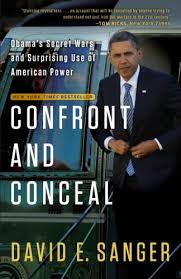
Divided into five sections, it dramatically covers the following subjects:
Afghanistan and Pakistan – How Obama sought to disengage from the former while readying plans to occupy the latter should its growing nuclear arsenal pose a threat to America.
Iran – To prevent the Iranians from building nuclear weapons, Obama authorized a malevolent virus to be inserted into that nation’s computer system.
Drones and Cyber – American drone attacks have wiped out much of Al Qaeda’s leadership—but increasingly strained U.S. relations with Pakistan. And while America has launched cyber attacks on Iran, it remains vulnerable to similar attacks—especially by China.
Arab Spring – America was totally surprised by the popular revolts sweeping the Arab world. And Obama had to balance showing support for the revolutionaries against jeopardizing America’s longtime Arab—and dictatorial—allies.
China and North Korea – The United States found itself financially strained to meet its worldwide military commitments. This forced Obama to use a both persuasion and containment against both these potential adversaries.
And in its section on the Arab Spring, there is an unintended warning to Republicans and their Right-wing followers.
David Sanger (Copyright, Creative Commons)
Sanger analyzes why the vast majority of Egyptians felt no solidarity with Hosni Mubarak, the general/dictator who ruled Egypt from 1981 ti 2911.
Mubarak came to power after Islamic fundamentalists assassinated President Anwar Sadat during a military review. They believed that Sadat had committed the unpardonable crime of signing a peace treaty with Israel.
Mubarack often warned Washington that only he could prevent Egypt from being dominated by fundamentalist, anti-American groups such as the Muslim Brotherhood.
But, writes Sanger, he achieved the very opposite:
“By leaving his citizens without a social safety net, by failing to invest in the country’s crumbling infastructure…he paved the way for the Brotherhood’s success….
“In a land where the state delivers so little, even the smallest [medical] clinic” as provided by the Brotherhood “will win respect and loyalty.
“So when it came time to vote, most Egyptians decided to cast their ballots for candidates they knew could provide something—Islamist or not, it almost didn’t matter….”

Hosni Mubarak (Copyright, Presidenza della Repubblica)
One such Brotherhood supporter, who grew up in the poor, agricultural region of Beni Suef, was quoted as saying:
“The Muslim Brotherhood came into my village, and brought lorries of fruits and vegetables,” selling them at discounted prices. “They supported medical clinics”–and thus won the hearts of the people they served.
Fast forward to Mitt Romney, the 2012 Republican Presidential nominee, and his vision for America.
As Romney saw it, questions about Wall Street scandals and income inequality were driven only by “envy.”
On January 11, 2012, after winning the New Hampshire primary, Romney appeared on NBC’s “The Today Show.” Host Matt Lauer noted that many Americans were concerned “about the distribution of wealth and power in this country.”
“I think it’s about envy,” replied Romney, whose own fortune has been conservatively estimated at $250 million. “I think it’s about class warfare.
“I think when you have a president encouraging the idea of dividing America based on 99 percent versus one percent… you’ve opened up a whole new wave of approach in this country which is entirely inconsistent with the concept of ‘one nation under God.’”
Romney added that it wasn’t necessary to have a public debate about the inequality of wealth distribution in this country.
“I think it’s fine to talk about those things in quiet rooms and discussions about tax policy and the like,” Romney said. “But the President has made this part of his campaign rally.
“Everywhere he goes we hear him talking about millionaires and billionaires and executives and Wall Street. It’s a very envy-oriented, attack-oriented approach and I think it’ll fail.”
Romney did not mention that, in 2007, the richest 1% of the American populace—of which he is a member—owned 34.6% of the country’s total wealth, and the next 19% owned 50.5%.
Thus, the top 20% of Americans owned 85% of the country’s wealth and the bottom 80% of the population owned 15%.
Romney claimed that Obama’s focus on this issue was just “part of his campaign rally.”
Clearly, now-ousted rulers like Mubarak and Muammar Quaddaffi believed “it’s fine to talk about these things” like vast differences in wealth “in quiet rooms.” That is, so long as they and their 1% rich supporters were doing the talking.
But over time their remoteness from the vast majority of their impoverished fellow citizens sealed their doom. When enough people broke into open revolt, even the military decided to change sides.
Mubarack was forced to resign, and Quaddaffi—after waging war against his own people—was captured and murdered.
If Romney’s—and now Donald Trump’s—vision of “everything for the 1%” is allowed to prevail, they and their ultra-privileged supporters may truly learn the lessons of class warfare.
2012 PRESIDENTIAL RACE, ABC NEWS, ALTERNET, AP, BARACK OBAMA, BBC, BUZZFEED, CBS NEWS, CNN, DAILY KOS, DONALD TRUMP, F. SCOTT FITZGERALD, FACEBOOK, JULIUS CAESAR, KIRK DOUGLAS, LAURENCE OLIVER, MARCUS CRASSUS, MITT ROMNEY, MOTHER JONES, MOVEON, NBC NEWS, NEWSWEEK, NPR, POLITICO, RAW STORY, REPUBLICAN PARTY, REPUBLICANS, REUTERS, SALON, SEATTLE TIMES, SLATE, SPARTACUS, THE ATLANTIC, THE CHICAGO SUN-TIMES, THE CHICAGO TRIBUNE, THE DAILY BEAST, THE GUARDIAN, THE HILL, THE HUFFINGTON POST, THE LOS ANGELES TIMES, THE NEW YORK TIMES, THE WALL STREET JOURNAL, THE WASHINGTON POST, TIME, TWITTER, U.S. NEWS & WORLD REPORT, UPI, USA TODAY, WEALTH
In Business, History, Law, Politics, Social commentary on April 28, 2017 at 12:05 am
Mitt Romney never had the chance to portray Marcus Licinius Crassus, once the wealthiest man in ancient Rome.
That part went to Laurence Oliver in the 1960 Kirk Douglas epic, Spartacus.
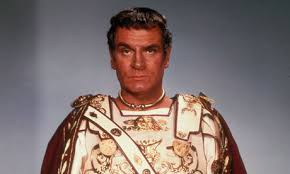
Laurence Oliver as Marcus Crassus in “Spartacus”
The film depicted a slave revolt led by an escaped Thracian gladiator named Spartacus (Douglas). A revolt that Crassus played a major role in destroying.
Still, Romney–whose wealth is estimated at $250 million–has had the opportunity to play the role of a patrician in real life. And nowhere was it on better display than during a May 17, 2012 private fund-raising event.

Mitt Romney
The event–closed to the press–was nevertheless surreptitiously recorded on video and leaked to Mother Jones magazine.
And Romney’s comments about those Americans who do not share his wealth-given privileges proved fatal to his Presidential campaign.
As F. Scott Fitzgerald said, the “very rich” are “different from you and me.”
To observe that difference, it’s necessary only to compare the attitude of Marcus Crassus–as depicted in Spartacus–with that of Mitt Romney.
SENATOR GAIUS GRACCHUS: The Senate’s been in session all day over this business of Spartacus. We’ve got eight legions to march against him and no one to lead them. The minute you offer the generals command…they start wheezing like winded mules….
CRASSUS: I take it the senate’s now offering command of the legions to me.
GRACCHUS: You’ve been expecting it.
CRASSUS: I have. But have you thought how costly my services might be?
GRACCHUS: We buy everything else these days. No reason why we shouldn’t be charged for patriotism. What’s your fee?
CRASSUS: My election as first consul, command of all the legions of ltaly, and the abolition of Senatorial authority over the courts.
GRACCHUS: Dictatorship.
CRASSUS: Order.
* * * * *
ROMNEY: The division of America, based on going after those who have been successful.
And then I quote Marco Rubio….I just said, Senator Rubio says–when he grew up here poor, that they looked at people that had a lot of wealth.
And his parents never once said, “We need some of what they have. They should give us some.”
Instead they said, “If we work hard and go to school, someday we might be able to have that.”
…And–and so my job is not to worry about those people [the 47% of Americans who allegedly don’t pay taxes and expect the government to assist the poor].
I’ll never convince them that they should take personal responsibility and care for for their lives.
* * * * *
In Spartacus, Crassus becomes dictator of Rome and brutally crushes the slave revolt. Then he aims his fury at his longtime political enemy, Gaius Gracchus, the democratic leader of the Roman Senate–and hero to the poor.
CRASSUS: Did you truly believe 500 years of Rome could so easily be delivered into the clutches of a mob? Already the bodies of 6,000 crucified slaves line the Appian Way….
As those slaves have died, so will your rabble if they falter one instant in loyalty to the new order of affairs. The enemies of the state are known. Arrests are in progress. The prisons begin to fill….
Yet upon you I have no desire for vengeance. Your property shall not be touched. You will retain the rank and title of Roman senator. A house, a farmhouse in Picenum has been provided for your exile. You may take your women with you.
GRACCHUS: Why am I to be left so conspicuously alive?
CRASSUS: Your followers are deluded enough to trust you. I intend that you shall speak to them tomorrow for their own good, their peaceful and profitable future.
From time to time thereafter, I may find it useful to bring you back to Rome to continue your duty to her to calm the envious spirit and the troubled mind. You will persuade them to accept destiny and order, and trust the gods!
* * * * *
ROMNEY: The 5 to 6 or 7 percent that we have to bring onto our side—they all voted for Barack Obama four years ago….And because they voted for him, they don’t want to be told that they were wrong, that he’s a bad guy, that he did bad things, that he’s corrupt.
Those people that we have to get, they want to believe they did the right thing, but he just wasn’t up to the task.
But…you and I, we spend our day with Republicans. We spend our days with people who agree with us. And these people are people who voted for him and don’t agree with us.
And so the things that animate us are not the things that animate them….
If it looks like I’m going to win, the markets will be happy. If it looks like the President’s going to win, the markets should not be terribly happy….
My own view is that if we win on November 6th, there will be a great deal of optimism about the future of this country. We’ll see capital come back and we’ll see—without actually doing anything—we’ll actually get a boost in the economy.
2012 PRESIDENTIAL RACE, ABC NEWS, ALTERNET, AP, BARACK OBAMA, BBC, BUZZFEED, CBS NEWS, CNN, DAILY KOS, DONALD TRUMP, F. SCOTT FITZGERALD, FACEBOOK, JULIUS CAESAR, KIRK DOUGLAS, LAURENCE OLIVER, MARCUS CRASSUS, MITT ROMNEY, MOTHER JONES, MOVEON, NBC NEWS, NEWSWEEK, NPR, POLITICO, RAW STORY, REPUBLICAN PARTY, REPUBLICANS, REUTERS, SALON, SEATTLE TIMES, SLATE, SPARTACUS, THE ATLANTIC, THE CHICAGO SUN-TIMES, THE CHICAGO TRIBUNE, THE DAILY BEAST, THE GUARDIAN, THE HILL, THE HUFFINGTON POST, THE LOS ANGELES TIMES, THE NEW YORK TIMES, THE WALL STREET JOURNAL, THE WASHINGTON POST, TIME, TWITTER, U.S. NEWS & WORLD REPORT, UPI, USA TODAY, WEALTH
In Business, History, Law, Politics, Social commentary on April 27, 2017 at 12:06 am
Let me tell you about the very rich. They are different from you and me. They possess and enjoy early, and it does something to them, makes them soft where we are hard, and cynical where we are trustful, in a way that, unless you were born rich, it is very difficult to understand.
They think, deep in their hearts, that they are better than we are because we had to discover the compensations and refuges of life for ourselves. Even when they enter deep into our world or sink below us, they still think that they are better than we are. They are different.
–F. Scott Fitzgerald
The 1960 Kirk Douglas epic, Spartacus, may soon prove to be more than great entertainment. It may also turn out to be a prophecy of the end of the American Republic.
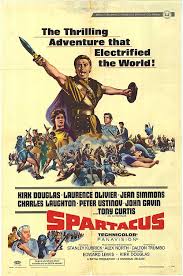
In the movie, Spartacus (Douglas), a Roman slave, entertains Marcus Crassus (Laurence Oliver) the richest man in Rome. He does so by fighting to the death as a gladiator.
While Spartacus and his fellow gladiator/friend, Draba, slash and stab at each other in the arena, Crassus idly chats with his fellow patrician crony, Marcus Glabrus.
Crassus has just secured Glabrus’ appointment as commander of the garrison of Rome. Glabrus is grateful, but curious as to how he did it.
After all, Gaius Gracchus, the democratic leader of the Roman Senate, hates Crassus, and eagerly opposes his every move.
“I fought fire with oil,” says Crassus. “I purchased the Senate behind his back.”
Just as Crassus bought the Roman Senate in Spartacus, so, too, did Mitt Romney and his billionaire supporters try to buy the 2012 Presidential election.
Anyone who doubts this need only examine the controversial video of Romney addressing a private fund-raiser on May 17, 2012. The location: The home of controversial private equity manager Marc Leder, in Boca Raton, Florida.
True, the Romney Presidential campaign ended in disaster. But that of Donald Trump ended in a victory for plutocrats–of which Trump is one.
Thus, the values exhibited by Mitt Romney and warned about by F. Scott Fitzgerald now find their champions in Trump and a wealth-worshiping Congress.
In fact, it’s fascinating to compare some of the remarks of Olivier’s Crassus with some of those by Romney. Doing so will offer useful insights into the values of the super wealthy.
It is the wealthy, after all, who essentially own Congress–and who belong to it. Of the 535 men and women who control the House of Representatives and the Senate, more than half are worth $1 million or more
For both men are truly spokesmen for the privileged moneyed class–of which they themselves are pre-eminent members.
CRASSUS [speaking of Gaius Gracchus, the democratic leader of the Roman Senate]: For Gracchus, hatred of the patrician class is a profession, and not such a bad one, either. How else can one become master of the mob, and first senator of Rome?
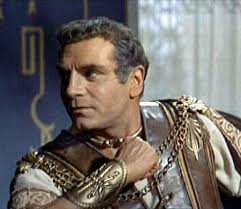
Laurence Oliver as Marcus Crassus in “Spartacus”
* * * * *
ROMNEY: What he’s [President Barack Obama] gonna do, by the way, is try and vilify me as someone who’s been successful. Or who’s– or who’s, you know, closed businesses or laid people off and this is an evil bad guy. And that may work.

Mitt Romney
* * * * *
CRASSUS [To Julius Caesar]: For years, your family and mine have been members of the Equestrian Order and the Patrician Party. servants and rulers of Rome. Why have you left us for Gracchus and the mob?
CAESAR: I’ve left no one, least of all Rome. This much I’ve learned from Gracchus: Rome is the mob.
CRASSUS: No! Rome is an eternal thought in the mind of God.
CAESAR: I had no idea you’d grown religious.
CRASSUS: That doesn’t matter. If there were no gods at all, I’d revere them. If there were no Rome, I’d dream of her…as I want you to do. I want you to come back to your own kind. I beg you to.
CAESAR: Is it me you want or is it the garrison [of Rome, which Caesar now commands]?
CRASSUS: Both. Tell me frankly. If you were l, would you take the field against Spartacus?
CAESAR: Of course.
CRASSUS: Why?
CAESAR: We have no other choice if we’re to save Rome.
CRASSUS: Ah, Caesar! Which Rome? Theirs…or ours?
* * * * *
ROMNEY: Well, there are 47% of the people who will vote for the president no matter what. All right? There are 47% who are with him.
Who are dependent upon government, who believe that–that they are victims, who believe that government has a responsibility to care for them, who believe that they’re entitled to healthcare, to food, to housing, to you name it.
But that’s–it’s an entitlement. And the government should give it to them. And they will vote for this president [Barack Obama] no matter what.
And–and–I mean the President starts off with 48%, 49%, 40–or he….starts off with a huge number. These are people who pay no income tax. 47% of Americans pay no income taxes. So our message of low taxes doesn’t connect. And he’ll be out there talking about tax cuts for the rich. I mean that’s what they sell every….four years.
ABC NEWS, ALTERNET, AMERICABLOG, AP, BABY BOOMER RESISTANCE, BBC, BLOOMBERG NEWS, BUSINESS, BUZZFEED, CBS NEWS, CNN, CROOKS AND LIARS, DAILY KOS, DAILY KOZ, DONALD TRUMP, FACEBOOK, FBI, FIVETHIRTYEIGHT, HARPER’S MAGAZINE, HUFFINGTON POST, INCOME INEQUALITY, MAFIA, MEDIA MATTERS, MOTHER JONES, MOVEON, MSNBC, NBC NEWS, NEW REPUBLIC, NEWSDAY, NEWSWEEK, NICCOLO MACHIAVELLI, NPR, PBS NEWSHOUR, POLITICO, POLITICS, POLITICUSUSA, RAW STORY, REUTERS, SALON, SEATTLE TIMES, SLATE, TALKING POINTS MEMO, TAX HAVENS, TAX JUSTICE NETWORK, THE ATLANTIC, THE CHICAGO SUN-TIMES, THE CHICAGO TRIBUNE, THE DAILY BEAST, THE DAILY BLOG, THE GUARDIAN, THE HILL, THE HUFFINGTON POST, THE INTERCEPT, THE LOS ANGELES TIMES, THE NATION, THE NEW REPUBLIC, THE NEW YORK TIMES, THE NEW YORKER, THE PRINCE, THE VILLAGE VOICE, THE WALL STREET JOURNAL, THE WASHINGTON POST, THINKPROGRESS, TIME, TRUTHDIG, TRUTHOUT, TWITTER, TWO POLITICAL JUNKIES, U.S. NEWS & WORLD REPORT, UPI, USA TODAY, WEALTH, WONKETTE
In Business, History, Law, Law Enforcement, Politics, Social commentary on April 26, 2017 at 12:05 am
As President Donald Trump prepares to drastically cut taxes on the wealthy (including himself) it’s well to remember the man whose name defines modern politics.
In 1513, Niccolo Machiavelli, the Florentine statesman who has been called the father of modern political science, published his best-known work: The Prince.
Niccolo Machiavelli
Among the issues he confronted was how to preserve liberty within a republic. And key to this was mediating the eternal struggle between the wealthy and the poor and middle class.
Machiavelli deeply distrusted the nobility because they stood above the law. He saw them as a major source of corruption because they could buy influence through patronage, favors or nepotism.
Successful political leaders must attain the support of the nobility or general populace. But since these groups have conflicting interests, the safest course is to choose the latter.
Writes Machiavelli:
….He who becomes prince by help of the [wealthy] has greater difficulty in maintaining his power than he who is raised by the populace. He is surrounded by those who think themselves his equals, and is thus unable to direct or command as he pleases.
But one who is raised to leadership by popular favor finds himself alone, and has no one, or very few, who are not ready to obey him. [And] it is impossible to satisfy the [wealthy] by fair dealing and without inflicting injury upon others, whereas it is very easy to satisfy the mass of the people in this way.
Machiavelli warns that the general populace is more honest than the nobility—i.e., wealthy. The wealthy seek to oppress, while the populace wants to simply avoid oppression.
A political leader cannot protect himself against a hostile population, owing to their numbers, but he can against the hostility of the great, as they are but few.
The worst that a prince has to expect from a hostile people is to be abandoned, but from hostile nobles he has to fear not only desertion but their active opposition. And as they are more far seeing and more cunning, they are always in time to save themselves and take sides with the one who they expect will conquer.
The prince is, moreover, obliged to live always with the same people, but he can easily do without the same nobility, being able to make and unmake them at any time, and improve their position or deprive them of it as he pleases.
Unfortunately, political leaders throughout the world—including the United States–have ignored this sage advice.
The results of this wholesale favoring of the wealthy and powerful have been brilliantly documented in an investigation of tax evasion by the world’s rich.
In 2012, Tax Justice Network, which campaigns to abolish tax havens, commissioned a study of their effect on the world’s economy.
The study was entitled, “The Price of Offshore Revisited: New Estimates for ‘Missing’ Global Private Wealth, Income, Inequality and Lost Taxes.”
http://www.taxjustice.net/cms/upload/pdf/Price_of_Offshore_Revisited_120722.pdf
The research was carried out by James Henry, former chief economist at consultants McKinsey & Co. Among its findings:
Summing up this situation, the report noted: “We are up against one of society’s most well-entrenched interest groups. After all, there’s no interest group more rich and powerful than the rich and powerful.”
Fortunately, Machiavelli has supplied timeless remedies to this increasingly dangerous situation:
- Assume evil among men—and most especially among those who possess the greatest concentration of wealth and power.
- Carefully monitor their activities—the way the FBI now regularly monitors those of the Mafia and major terrorist groups.
- Ruthlessly prosecute the treasonous crimes of the rich and powerful—and, upon their conviction, impose severe punishment.
2016 PRESIDENTIAL CAMPAIGN, ABC NEWS, ALAMO, ANDREW JACKSON, CAMERON JUDD, CBS NEWS, CNN, CROCKETT OF TENNESSEE, DAVID CROCKETT, DONALD TRUMP, FACEBOOK, INDIAN WARS, JOHN WAYNE, MITT ROMNEY, NBC NEWS, THE CHICAGO SUN-TIMES, THE CHICAGO TRIBUNE, THE LOS ANGELES TIMES, THE NEW YORK TIMES, THE WASHINGTON POST, TWITTER, USA TODAY, WEALTH
In History, Politics, Social commentary on November 26, 2015 at 8:58 am
It’s a scene you couldn’t imagine seeing in John Wayne’s 1960 film, “The Alamo.” Especially with The Duke playing a hard-drinking, two-fisted Davy Crockett.

John Wayne as Davy Crockett
But it occurs in the novel, Crockett of Tennessee, by Cameron Judd. And it is no less affecting for its being–so far as we know–entirely fictional.
It’s the last night of life for the Alamo garrison–the night before the 2,000 men of the Mexican Army hurl themselves at the former mission and slaughter its 200 Texian defenders.
The fort’s commander, William Barret Travis, has drawn his “line in the sand” and invited the garrison to choose: To surrender, to try to escape, or to stay and fight to the death.
And the garrison–except for one man–chooses to stay and fight. That man is Louis “Moses” Rose, a Frenchman who has served in Napoleon’s Grande Armee and survived the frightful retreat from Moscow.
He vaults a low wall of the improvised fort, flees into the moonless desert, and eventually makes his way to the home of a family who give him shelter.
But for the garrison, immortality lies only hours away. Or does it?
An hour after deciding to stand and die in the Alamo, wrapped in the dark of night, Crockett is seized with paralyzing fear.
“We’re going to die here,” he chokes out to his longtime friend, Persius Tarr. “You understand that, Persius? We’re going to die!”

“I know, Davy. But there ain’t no news in that,” says Tarr. “We’re born to die. Every one of us. Only difference between us and most everybody else is we know when and where it’s going to be.”
“But I can’t be afraid–not me. I’m Crockett. I’m Canebrake Davy. I’m half-horse, half-alligator.”
“I know you are, Davy,” says Tarr. ”So do all these men here. That’s why you’re going to get past this.
“You’re going to put that fear behind you and walk back out there and fight like the man you are. The fear’s come and now it’s gone. This is our time, Davy.”
“The glory-time,” says Crockett.
“That’s right, David. The glory-time.”
And then Tarr delivers a sentiment wholly alien to money-obsessed men like Mitt Romney and Donald Trump–who comprise the richest and most privileged 1% of today’s Americans.
“There’s men out there with their eyes on you. You’re the only thing keeping the fear away from them. You’re joking and grinning and fiddling-–it gives them courage they wouldn’t have had without you.
“Maybe that’s why you’re here, Davy–to make the little men and the scared men into big and brave men. You’ve always cared about the little men, Davy. Remember who you are.
“You’re Crockett of Tennessee, and your glory-time has come. Don’t you miss a bit of it.”
The next morning, the Mexicans assault the Alamo. Crockett embraces his glory-time-–and becomes a legend for all-time.

David Crockett (center) at the fall of the Alamo
David Crockett (1786-1836) lived–and died–a poor man. But this did not prevent him from trying to better the lives of his family and fellow citizens–and even his former enemies.

David Crockett
During the War of 1812, he served as a scout under Andrew Jackson. His foes were the Creek Indians, who had massacred 500 settlers at Fort Mims, Alabama–and threatened to do the same to Crockett’s neighbors in Tennessee.
As a Congressman from Tennessee, he championed the rights of poor whites. And he opposed then-President Jackson’s efforts to force the same defeated Indians to depart the lands guaranteed them by treaty.
To Crockett, a promise was sacred–whether given by a single man or the United States Government.
And his presence during the 13-day siege of the Alamo did cheer the spirits of the vastly outnumbered defenders.
It’s a matter of historical record that he and a Scotsman named MacGregor often staged musical “duels” to see who could make the most noise.
It was MacGregor with his bagpipes against Crockett and his fiddle.
Contrast this devotion of Crockett to the rights of “the little men,” as Persius Tarr called them, with the attitude of Donald Trump, the currently-favored Republican candidate for President in 2016.

Donald Trump
On June 16, while announcing his candidacy, Trump said:
- “…I don’t need anybody’s money. It’s nice. I don’t need anybody’s money. I’m using my own money. I’m not using lobbyists, I’m not using donors. I don’t care. I’m really rich.”
- “I did a lot of great deals and I did them early and young, and now I’m building all over the world….”
- “So I have a total net worth, and now with the increase, it’ll be well-over $10 billion.”
- “But here, a total net worth of–net worth, not assets, not–a net worth, after all debt, after all expenses, the greatest assets–Trump Tower, 1290 Avenue of the Americas, Bank of America building in San Francisco, 40 Wall Street, sometimes referred to as the Trump building right opposite the New York–many other places all over the world. So the total is $8,737,540,000.”
Those who give their lives for others are rightly loved as heroes. Those who dedicate their lives only to their wallets are rightly soon forgotten.


 Bureaucracybuster's Blog
2020 PRESIDENTIAL ELECTION, ABC NEWS, ABRAHAM LINCOLN, ALTERNET, AMERICABLOG, AP, APOCALYPSE, ARMAGEDDON, BABY BOOMER RESISTANCE, BLOOMBERG, BOLDNESS, BUZZFEED, CAUTION, CBS NEWS, CHINA, CLIMATE CHANGE, CNN, COVID-19, CROOKS AND LIARS, DONALD TRUMP, FIVETHIRTYEIGHT, GAIUS CASSIUS, GAZA, HAMAS, HARPER’S MAGAZINE, HUFFINGTON POST, illegal immigration, IMAGE, ISRAEL, J.P. MORGAN, JESUS CHRIST, JULIUS CAESAR (PLAY), KEVIN MCCARTHY, MAFIA, MEDIA MATTERS, MOTHER JONES, MOVEON, MSNBC, NBC NEWS, NEW YEAR'S DAY, NEW YEAR'S EVE, NEW YORK, NEWSWEEK, NICCOLO MACHIAVELLI, NPR, PBS NEWSHOUR, POLITICO, POLITICUSUSA, RAW STORY, REALITY, REPUBLICANS, REUTERS, RUSSIA, SALON, SEATTLE TIMES, SLATE, SOREN KIERKEGAARD, TALKING POINTS MEMO, THE ATLANTIC, THE CHICAGO SUN-TIMES, THE CHICAGO TRIBUNE, THE DAILY BEAST, THE DAILY BLOG, THE GUARDIAN, THE HILL, THE HUFFINGTON POST, THE LOS ANGELES TIMES, THE MILLENNIUM, THE NATION, THE NEW REPUBLIC, THE NEW YORK TIMES, THE VILLAGE VOICE, THE WASHINGTON POST, THINKPROGRESS, TIME, TITLE 42, TRUTHDIG, TRUTHOUT, TWITTER, TWO POLITICAL JUNKIES, U.S. NEWS & WORLD REPORT, UKRAINE, UNITED STATES HOUSE OF REPRESENTATIVES, UPI, USA TODAY, VLADIMIR PUTIN, WEALTH, WILLIAM SHAESPEARE, WONKETTE
LIFE LESSONS FOR 2024—AND EVERY NEW YEAR
In Bureaucracy, Business, History, Medical, Military, RELIGION, Social commentary on January 1, 2024 at 12:49 amNew Year’s Eve, 2023, will soon lie behind us.
And for many people, saying “Goodbye” to 2023 can’t happen soon enough.
New Year’s Eve is traditionally a time for people to reflect on the major events of the previous 12 months. Some of these are highly personal. Others have been shared by the entire country.
Some of these remembrances inevitably bring pleasure. Others bring pain.
And 2023 has been a year of pain for millions.
Emblem of Hamas
But 2023 also brought reason for hope:
Every New Year’s Eve celebration brings the fantasy that you get to start fresh in a matter of hours. And with that fantasy comes hope—that, this time, you can put your sorrows and failures behind you.
And each new year comes with lessons to be learned—and applied.
Each year gives us the chance to learn from history—our own and that of others. Try to learn from your mistakes—and especially those of others. With luck, you won’t repeat your past ones—or those of others. But don’t expect to lead a mistake-free life.
There is a time to be bold—and a time to be cautious. As Niccolo Machiavelli put it: “A prince….must imitate the fox and the lion: For the lion cannot protect himself from traps, and the fox cannot defend himself from wolves.” Learn to tell when is the appropriate time to be which—and to play that role to the hilt.
Niccolo Machiavelli
There is image—and there is reality. J.P. Morgan once said: “A man always has two reasons for doing anything: A good reason and the real reason.” This is never truer than when a corporation or politician is asking for your money / vote.
When trying to decide whether to commit yourself to either, ask yourself: Who benefits? For example: When studying a proposed law that claims to aid the environment, find out who supports it. That will usually tell you what you need to know.
Learn how to evaluate others. Once again, Niccolo Machiavelli supplies the answer: “The first impression that one gets of a ruler and his brains is from seeing the men that he has about him. When they are competent and loyal one can always consider him wise, as he has been able to recognize their ability and keep them faithful.
“But when they are the reverse, one can always form an unfavorable opinion of him, because the first mistake that he makes is in making this choice.”
Don’t confuse wealth with virtue. Too many Americans believe that God bestows wealth on the worthy. If this were true, every Mafia boss would be a candidate for sainthood.
Each year is a journey unto itself—filled with countless joys and sorrows. Many of these joys can’t be predicted. And many of these tragedies can’t be prevented.
Learn to tell real dangers from imaginary ones. Computers are real—and sometimes they crash. Men who died 2,000 years ago do not leap out of graveyards, no matter what their disciples predict.
Don’t expect any particular year to usher in the Apocalypse. In any given year there will be wars, famines, earthquakes, riots, floods and a host of other disasters. These have always been with us—and always will be. As Abraham Lincoln once said: “The best thing about the future is that it comes one day at a time.”
Don’t expect some Great Leader to lead you to success. As Gaius Cassius says in William Shakespeare’s “Julius Caesar”: “Men at some time are masters of their fate. The fault, dear Brutus, is not in our stars but in ourselves that we are underlings.”
Don’t expect any particular year or event to usher in your happiness. To again quote Lincoln: “Most people are about as happy as they make up their minds to be.”
If your life seems to make no sense to you, consider this: The philosopher Soren Kierkegaard once noted: “Life can only be understood backwards, but it must be lived forwards.”
Share this: