Posts Tagged ‘VLADIMIR PUTIN’
2016 ELECTION, ABC NEWS, BARACK OBAMA, BILL CLINTON, CBS NEWS, CHIANG KAI-SHEK, CHINA, CNN, CUBAN MISSILE CRISIS, DEMOCRATIC PARTY, DONALD TRUMP, DWIGHT D. EISENHOWER, FOX NEWS, GEORGE H.W. BUSH, GEORGE W. BUSH, HARRY S. TRUMAN, HILLARY CLINTON, JOHN F. KENNEDY, JOSEPH MCCARTHY, MAO TSE-TUNG, MITT ROMNEY, NAVY SEALS, NBC NEWS, NO EASY DAY, OSAMA BIN LADEN, PENTAGON, REPUBLICAN PARTY, RICHARD NIXON, Ronald Reagan, THE CHICAGO SUN-TIMES, THE CHICAGO TRIBUNE, THE LOS ANGELES TIMES, THE NEW YORK TIMES, THE NEW YORKER, THE WASHINGTONPOST, TREASON, U.S. NAVY SEALS, VLADIMIR PUTIN, WIKILEAKS
In Bureaucracy, History, Military, Politics, Social commentary on July 28, 2016 at 12:08 am
“Russia, if you’re listening, I hope you’re able to find the 30,000 emails that are missing. I think you will probably be rewarded mightily by our press.”
The speaker was Donald Trump, holding a July 27 press conference in Doral, Fla.
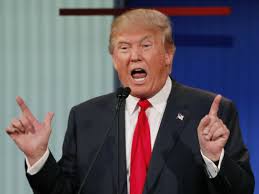
Donald Trump
And he was urging a foreign leader to hack into the private email server of his Presidential rival, Hillary Clinton.
Five days earlier, Wikileaks had released 19,252 emails and 8,034 attachments hacked from computers of the highest-ranking officials of the Democratic National Committee (DNC).
Cyber-security experts believe the hacking originated from Russia–and that Russian President Vladimir Putin may have authorized it.
Politicians on the Left and Right expressed outrage at Trump’s remarks.
But this is not the first time the Right has jeopardized American security.
During the 2012 Presidential campaign, supporters of Mitt Romney accused President Barack Obama of leaking top-secret details of the U.S. Navy SEALs raid on Osama bin Laden’s compound in Abbottabad, Pakistan.
The raid, launched on May 1, 2011, resulted in the death of the 9/11 mastermind and the capture of a treasury of highly sensitive Al Qaeda documents.
According to Right-wingers, Obama wanted to provide Hollywood screenwriters with material for a movie to glorify his role in authorizing the raid.
In August, 2012, the Right found its own secrets-leakers. And they operated under the name of the Fox News Network.
Their motive: To promote a book–No Easy Day: The Firsthand Account of the Mission That Killed Osama Bin Laden. It was slated to hit bookstores on September 11–the 11th anniversary of Al Qaeda’s attacks on the Pentagon and World Trade Center.
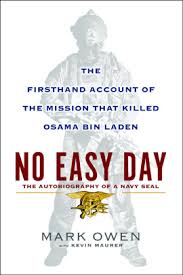
It had been penned under the pseudonym “Mark Owen.” But the real name of the author–a 36-year-old former Navy SEAL Team Six member who took part in the raid–was Matt Bissonnette, of Wrangell, Alaska.
Bissonnette’s real name became public after multiple sources leaked it to Fox News–who revealed it on August 23.
The Navy SEALs who killed bin Laden had previously been left unidentified.
Fox News had repeatedly accused President Obama and members of his administration of treasonously leaking military secrets to the media to glorify the President.
Many former and current SEAL members feared that the book would release information that could compromise future missions.
U.S. Navy SEALs insignia
One Navy SEAL told Fox News, “How do we tell our guys to stay quiet when this guy won’t?” Some SEALs called Bissonnette a “traitor.”
And Colonel Tim Nye, a Special Operations Command spokesman, said the author “put himself in danger” by writing the book.
“This individual came forward. He started the process. He had to have known where this would lead. He’s the one who started this, so he bears the ultimate responsibility for this.”
But Bissonnette placed more than his own life in jeopardy. He endangered the lives of every one of the men who participated in the bin Laden raid.
If Bissonnette fell into the hands of Al Qaeda terrorists or sympathizers, he could conceivably be tortured into revealing at least some of the names and locations of his former team members.
And Fox News not only revealed his true name but the town where he lived.
Even the liberal Nation magazine was appalled at the recklessness of this Right-wing propaganda outlet. Jeremy Scahill, a writer for Nation, tweeted:
“Why on earth would FOX News publish the alleged identity of one of the ST6 members who was in the OBL raid? Seriously.”
Millions of Right-wing Americans have been conditioned by decades of Fascistic propaganda to believe that:
- Democrats are all traitors–or at least potential traitors.
- Even those Democrats who aren’t traitors are too weak-kneed to protect the nation from its sworn enemies.
- Democrats (have betrayed) (are betraying) (intend to betray) national security secrets to the Soviet/Chinese Communists.
- Democrats have (betrayed/) (are betraying) (intend to betray) national security secrets to Islamic Jihadists.
- Only Republicans can be trusted to protect the nation.
Republicans blamed President Harry S. Truman for “losing China” to the forces of Mao Tse Tung in 1949. America could not have prevented a corrupt and incompetent Chiang Kai-Shek from being driven off the Chinese mainland by Mao’s overwhelmingly powerful armies.
Then, in 1950, Senator “Tail Gunner Joe” McCarthy charged that the State Department was infested by Communists–and that the Truman administration knew it but refused to take action. The charges were false.

Joseph R. McCarthy
During the 2008 Presidential campaign, Republicans charged that Barack Obama was really a Muslim non-citizen who intended to sell out America’s security to his Muslim “masters.”
Attacking the patriotism of their opponents has repeatedly elected Republicans:
- It elected Dwight Eisenhower President and turned Congress Republican in 1952 and 1956.
- It elected Richard Nixon President in 1968 and 1972.
- It elected Ronald Reagan President in 1980 and 1984.
- It elected George H.W. Bush President in 1988.
- It gave Republicans control of the Congress in 1994 (although Bill Clinton had been elected President in 1992).
- It elected George W. Bush President in 2000 and 2004.
- It gave control of the House to Republicans in 2010 and the Senate in 2014.
And now Republicans hope this appeal will elect a man who has openly called on Vladimir Putin to hack into American computers.
2016 PRESIDENTIAL RACE, ABC NEWS, ADOLF HITLER, BERNIE SANDERS, CBS NEWS, CNN, DEBBIE WASSERMAN-SCHULTZ, DEMOCRATIC CONVENTION, DEMOCRATIC NATIONAL COMMITTEE, DONALD TRUMP, FACEBOOK, HILLARY CLINTON, JOSEPH STALIN, NATO, NAZI-SOVIET "NON-AGGRESSION PACT", NBC NEWS, REPUBLICAN CONVENTION, REUTERS, RUSSIA, SOVIET UNION, THE CHICAGO SUN-TIMES, THE CHICAGO TRIBUNE, THE LOS ANGELES TIMES, THE NEW YORK TIMES, THE WASHINGTON POST, TWITTER, VLADIMIR PUTIN
In Bureaucracy, History, Military, Politics, Social commentary on July 27, 2016 at 12:10 am
As Melania Trump might “write” it: “It was the best of times, it was the worst of times”–for Donald Trump and Hillary Clinton.
The Best: For Trump, becoming the anointed Presidential choice of the Republican party marked the climax of a life studded with fame and riches.
The Worst: The televised proceedings showed Right-wingers luxuriating in hated, chanting “Lock her up!” at the mention of Hillary Clinton’s name. Trump’s speech was straight out of a Fascist playbook: “Everything’s terrible, so give me total power and I’ll make everything perfect.”
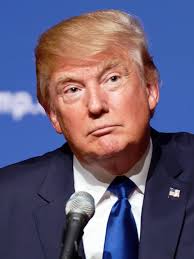
Donald Trump
The Best: For Clinton, being anointed as the Presidential choice of her party marked the highest achievement in a life already filled with them: Former First Lady, U.S. Senator from New York and Secretary of State under President Barack Obama.
The Worst: On the eve of what amounted to her coronation ceremony, Wikileaks released nearly 20,000 emails hacked from computers of the Democratic National Committee (DNC). These clearly revealed a bias for Clinton and against her lone challenger, Vermont U.S. Senator Bernie Sanders.
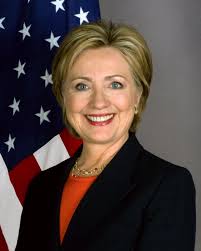
Hillary Clinton
One email revealed that Brad Marshall, the chief financial officer of the DNC, suggested that Sanders, who is Jewish, could be portrayed as an atheist.
Sanders’ supporters have long charged that the DNC and its chair, Debbie Wasserman-Schultz, were plotting to undercut his campaign. Now thousands of them have descended on the Democratic convention as furious protesters.
The convention opened on July 25 in Philadelphia, Pennsylvania, and will last until the 28th.
For Clinton, the release of the Wikileaks files could not have come at a worse time.
And it’s widely suspected that this is no accident. Cyber-security experts believe the hackers originated from Russia–and that Russian President Vladimir Putin may well have authorized it.
Why?
Putin has infamously voiced his admiration for Trump: “He is a bright personality, a talented person, no doubt about it. It is not up to us to appraise his positive sides, it is up to the U.S. voters. but, as we can see, he is an absolute leader in the presidential race.
“He is saying that he wants to move to a different level of relations with Russia, to a closer, deeper one. How can we not welcome that? Of course, we welcome that.”
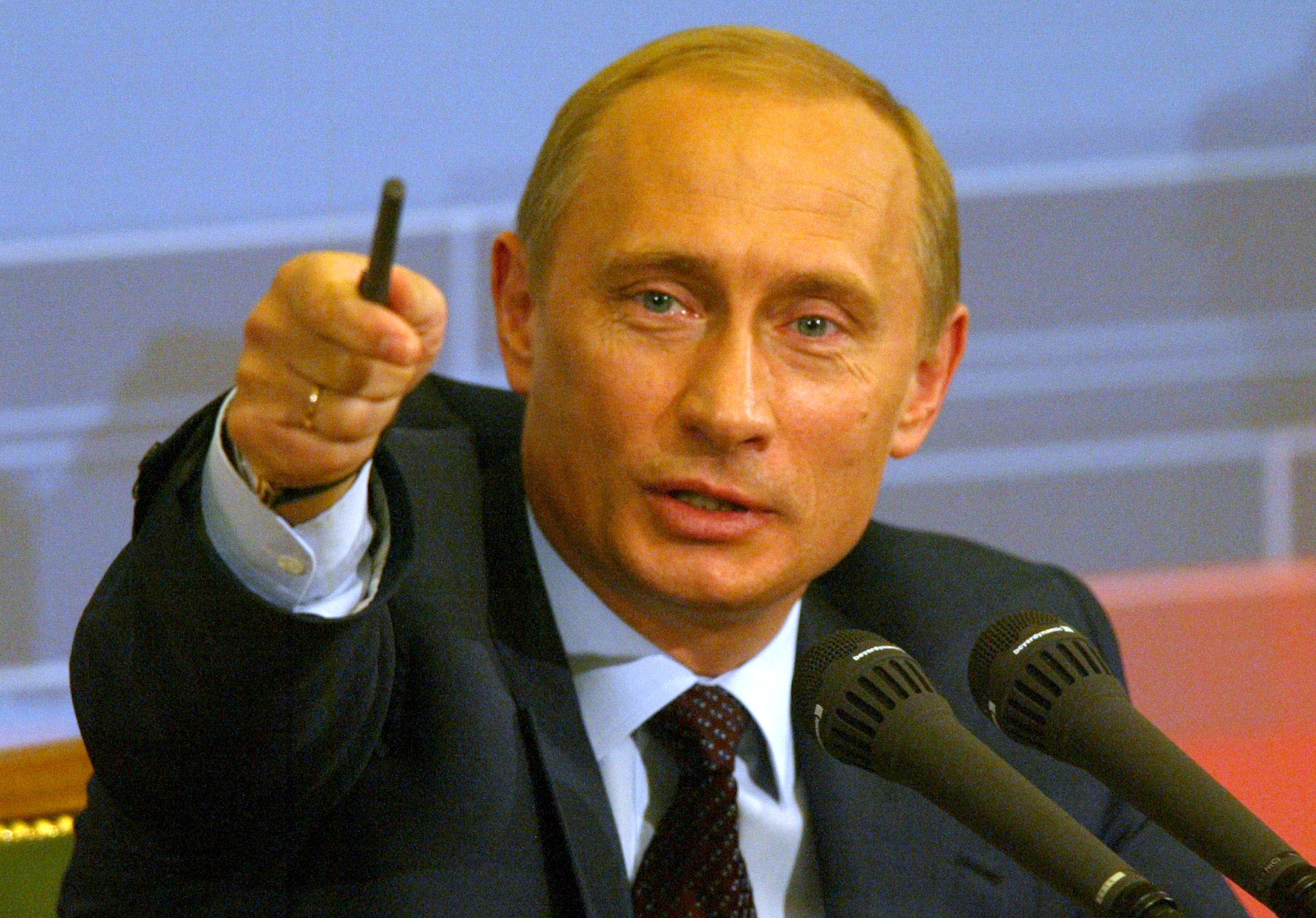
Vladimir Putin
But more than one dictator’s admiration for another potential dictator-President may be at work here.
Trump has repeatedly attacked United States’ membership in the North Atlantic Treaty Organization (NATO). He believes the United States is paying an unfairly large portion of the monies needed to maintain this alliance–and he wants other members to contribute far more.
He has also said that, if Russia attacked NATO members, he would decide whether to come to their aid only after determining whether those nations have “fulfilled their obligations to us.” If he believed that they had not done so, he would inform them: “Congratulations, you will be defending yourself.”
For Putin, this clearly signals a reason to prefer Trump to Clinton. Trump’s statement marked the first time that a major Presidential candidate placed conditions on the United States’ coming to the defense of its major allies.
The withdrawal of the United States from NATO would instantly render that alliance kaput. Its European members that have smugly hurled insults at the United States for decades would suddenly face extinction.
Even if their armed forces proved a match for Russia’s–which they would not–their governments would cower before the threat of Russia’s huge nuclear arsenal.
If, in fact, Putin lies behind the capture and leaking of highly embarrassing DNC files, he is not the first Communist dictator to find common cause with an avowed Right-winger.
In late August, 1939, Soviet dictator Joseph Stalin negotiated a “non-aggression pact” with Nazi Germany’s Fuehrer, Adolf Hitler.
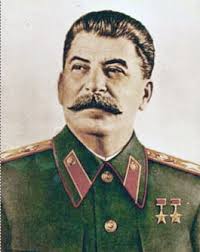
Joseph Stalin
The reason: Hitler intended to invade Poland–but feared going to war with the neighboring Soviet Union if he did so. By signing a non-aggression pact with Stalin, he avoided this danger–and gained “rights” to the western half of Poland.

Adolf Hitler
In addition, Nazi Germany began receiving huge shipments of raw materials from the Soviet Union, as Stalin’s effort to placate Hitler and avoid a Nazi-Soviet clash.
As for Stalin, he got something, too: The eastern half of Poland, which would be occupied by the Red Army.
But the Hitler-Stalin alliance lasted less than two years. Signed on August 23, 1939, it ended without warning on June 22, 1941.
With 134 Divisions at full fighting strength and 73 more divisions for deployment behind the front–a total of three million men–the German Wehrmacht invaded the Soviet Union.
If Putin did authorize the leak to discredit Clinton and enable Trump to become President, there are two ways he may yet come to regret it.
The first is if a vengeance-seeking Hillary Clinton becomes President–and inherits the resources to impose sanctions on Russia.
And the second is if Donald Trump becomes President–and decides, like Hitler, that he doesn’t owe his onetime benefactor anything.
ABC NEWS, ADOLF HITLER, BORIS YELTSIN, CBS NEWS, CNN, DONALD TRUMP, FACEBOOK, GEORGE W. BUSH, HILLARY CLINTON, JOE SCARBOROUGH, JOSEPH STALIN, KGB, KIM JONG-UN, MISS TEEN USA, MISS UNIVERSE, MISS USA, MORNING JOE, MSNBC, NAZI GERMANY, NAZI PARTY, NBC NEWS, RED ARMY, REPUBLICAN PARTY, SOVIET UNION, THE LOS ANGELES TIMES, THE NEW YORK TIMES, THE WASHINGTON POST, TWITTER, VLADIMIR PUTIN, WEHRMACHT, WORLD WAR ii
In Bureaucracy, History, Politics, Social commentary on June 3, 2016 at 12:01 am
“And I have to say, I don’t understand Donald [Trump’s] bizarre fascination with dictators and strongmen who have no love for America.”
The speaker was Democratic Presidential candidate Hillary Clinton, addressing an audience in San Diego, California, on June 2.
“He praised China for the Tiananmen Square massacre; he said it showed strength.
“He said, ‘You’ve got to give Kim Jong Un credit’ for taking over North Korea–something he did by murdering everyone he saw as a threat, including his own uncle, which Donald described gleefully, like he was recapping an action movie.
“And he said if he were grading Vladimir Putin as a leader, he’d give him an A. Now, I’ll leave it to the psychiatrists to explain his affection for tyrants,” said Clinton.
Yes, Donald Trump admires Vladimir Putin. And Vladimir Putin admires Donald Trump.
To many people, it’s the ultimate odd-couple: The lifelong Communist and former KGB officer (Putin) walking arm-in-arm with the billionaire, publicity-hungry capitalist.
What could be going on here?
First Putin:
“He is a bright personality, a talented person, no doubt about it. It is not up to us to appraise his positive sides, it is up to the U.S. voters. but, as we can see, he is an absolute leader in the presidential race.
“He is saying that he wants to move to a different level of relations with Russia, to a closer, deeper one. How can we not welcome that? Of course, we welcome that.”
Now Trump:
“It is always a great honor to be so nicely complimented by a man so highly respected within his own country and beyond.”
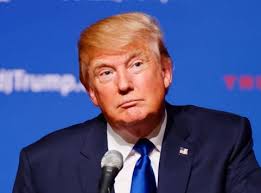
Donald Trump
Appearing on the December 18, 2015 edition of MSNBC’s “Morning Joe,” Trump said: “Sure, when people call you ‘brilliant,’ it’s always good. Especially when the person heads up Russia.”
The host, Joe Scarborough, was upset by Trump’s praise for Putin: “Well, I mean, [he’s] also a person who kills journalists, political opponents, and invades countries. obviously that would be a concern, would it not?”
TRUMP: He’s running his country, and at least he’s a leader. Unlike what we have in this country.
SCARBOROUGH: But again: He kills journalists that don’t agree with him.
TRUMP: I think our country does plenty of killing, also, Joe, so, you know. There’s a lot of stupidity going on in the world right now, Joe. A lot of killing going on. A lot of stupidity. And that’s the way it is.
SCARBOROUGH: I’m confused. So I mean, you obviously condemn Vladimir Putin killing journalists and political opponents, right?
TRUMP: Oh sure, absolutely.
When Trump praised Putin as a leader–“unlike what we have in this country”–he no doubt meant President Barack Obama.
Ironically, it is Obama–not Trump–who has repeatedly been named in Gallup polls as the most admired man in America in each of the last seven years, beginning with 2008, the year he was elected president.
Although Trump didn’t mention former President George W. Bush, his insult applies–unintentionally but accurately–to Obama’s predecessor.
In June 2001, Bush and Vladimir Putin met in Slovenia. During the meeting a truly startling exchange occurred.
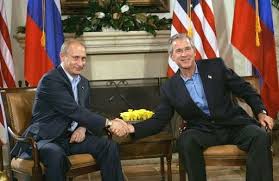
Vladimir Putin and George W. Bush
Putin, a former KGB Intelligence officer, had clearly done his homework on Bush. When he mentioned that one of the sports Bush had played was rugby, Bush was highly impressed.
“I did play rugby,” said Bush. “Very good briefing.”
Bush knew that Putin had worked for Soviet intelligence. So he should not have been surprised that the KGB had amassed a lengthy dossier on him.
But more was to come.
BUSH: Let me say something about what caught my attention, Mr. President, was that your mother gave you a cross which you had blessed in Israel, the Holy Land.
PUTIN: It’s true.
BUSH: That amazes me, that here you were a Communist, KGB operative, and yet you were willing to wear a cross. That speaks volumes to me, Mr. President. May I call you Vladimir?
Putin instantly sensed that Bush judged others–even world leaders–through the lens of his own fundamentalist Christian theology.
Falling back on his KGB training, Putin seized on this apparent point of commonality to build a bond. He told Bush that his dacha had once burned to the ground, and the only item that had been saved was that cross.
“Well, that’s the story of the cross as far as I’m concerned,” said Bush, clearly impressed. “Things are meant to be.”
Afterward, Bush and Putin gave an outdoor news conference.
“Is this a man that Americans can trust?” Associated Press correspondent Ron Fournier asked Bush.
“Yes,” said Bush. “I looked the man in the eye. I found him to be very straightforward and trustworthy. We had a very good dialogue.
“I was able to get a sense of his soul, a man deeply committed to his country and the best interests of his country. I wouldn’t have invited him to my ranch if I didn’t trust him.”
Of course, no one from the Right–including Trump–is now recalling such embarrassing words.
It’s far more politically profitable to pretend that all of America’s tensions with Russia began with the election of Barack Obama.
And that those tensions will vanish once another Rightist–and non-black–President enters the White House.
ABC NEWS, ABORTION, ADOLF HITLER, ALTERNET, AMERICABLOG, AP, BABY BOOMER RESISTANCE, BBC, BLOOMBERG NEWS, BUZZFEED, CBS NEWS, CNN, CROOKS AND LIARS, DAILY KOS, DAILY KOZ, FACEBOOK, FIVETHIRTYEIGHT, GAYS, HARPER’S MAGAZINE, HOMOSEXUALITY, HUFFINGTON POST, INDIANA, ISLAM, JOSEPH STALIN, MEDIA MATTERS, MIKE PENCE, MOTHER JONES, MOVEON, MSNBC, NAZI-SOVIET NON-AGGRESSION PACT, NBC NEWS, NEW REPUBLIC, NEWSDAY, NEWSWEEK, NPR, PBS NEWSHOUR, POLITICO, POLITICUSUSA, RAW STORY, RELIGION, RELIGIOUS FREEDOM RESTORATION ACT, REPUBLICAN PARTY, REUTERS, SALON, SCIENCE, SEATTLE TIMES, SHARIA, SLATE, SOVIET UNION, TALKING POINTS MEMO, THE ATLANTIC, THE CHICAGO SUN-TIMES, THE CHICAGO TRIBUNE, THE DAILY BEAST, THE DAILY BLOG, THE GUARDIAN, THE HILL, THE HUFFINGTON POST, THE INTERCEPT, THE LOS ANGELES TIMES, THE NATION, THE NEW REPUBLIC, THE NEW YORK TIMES, THE NEW YORKER, THE SS, THE VILLAGE VOICE, THE WASHINGTON POST, THINKPROGRESS, THIRD REICH, TIME, TRUTHDIG, TRUTHOUT, TWITTER, U.S. NEWS & WORLD REPORT, UKRAINE, UPI, USA TODAY, VLADIMIR PUTIN, VOLODYMYR ZELENSKY, WEHRMACHT, WOMEN'S RIGHTS, WORLD WAR 11
In Bureaucracy, History, Law, Politics, Social commentary on May 24, 2016 at 3:08 am
Adolf Hitler had a warning for the Indiana legislators who passed the Religious Freedom Restoration Act.
A warning they should have heeded–but didn’t.
It all started on June 22, 1941.
On that date, Hitler ordered his powerful Wehrmacht to invade the Soviet Union.
Less than two years earlier, in August, 1939, he had signed a “non-aggression” pact with his longtime arch-enemy, Joseph Stalin.
Since then, his army had conquered Poland, Norway, Denmark, Holland, Belgium and France.
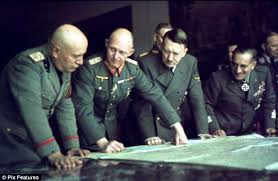
Adolf Hitler with his generals
Now, he believed, it was time to “settle accounts” with the Soviet Union.
Only there could Germany obtain the “living space” it “needed” for its expanding population.
So at 3 a.m. on June 22, 1941, Hitler once again launched an invasion.
At first, Hitler–no doubt like the Indiana legislators–felt giddy with excitement.
Turning to Alfred Jodl, his chief of operations of the Wehrmacht, he said: “We have only to kick in the door and the whole rotten structure will come crashing down.”
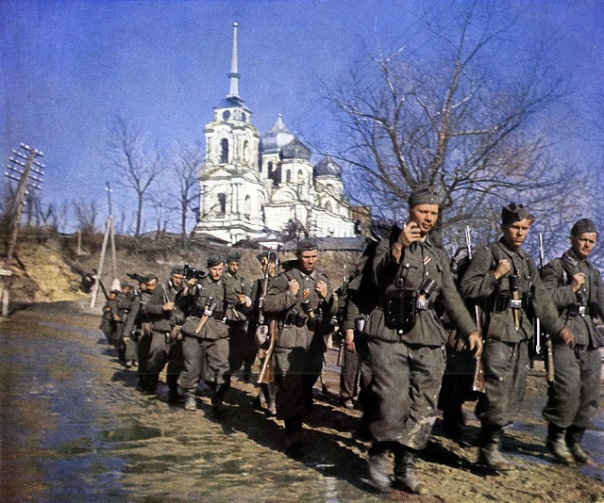
German soldiers marching through Russia
But soon afterward–almost as if he had just looked into the future and seen that he had none–he told an aide: “At the beginning of each campaign, one pushes a door into a dark, unseen room. One can never know what is hiding inside.”
That certainly proved true for Hitler.
Within four years, he was dead and the Red Army occupied Berlin.
And now the law of unintended consequences may be coming true for Indiana.
On March 26, 2015, its governor, Mike Pence, signed into law the Religious Freedom Restoration Act.
This will allow any individual or corporation to cite its religious beliefs as a defense when sued by a private party.
Officially, its intent is to prevent the government from forcing business owners to act in ways contrary to strongly held religious beliefs.
Unofficially, its intent is to appease the hatred of gays and lesbians by the religious Right, a key constituency of the Republican party.
In short, a bakery that doesn’t want to make a cake to be used at a gay wedding or a restaurant that doesn’t want to serve lesbian patrons can legally refuse to do so.
The bill was passed overwhelmingly by both chambers of the Republican-controlled state legislature. And signed into law by a Republican governor.
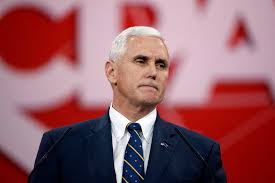
Indiana Governor Mike Pence
“Today I signed the Religious Freedom Restoration Act, because I support the freedom of religion for every Hoosier of every faith,” Mike Pence said in a statement on the day he signed the bill.
“The Constitution of the United States and the Indiana Constitution both provide strong recognition of the freedom of religion but today, many people of faith feel their religious liberty is under attack by government action.”
Bill-signing ceremonies are usually highly public events. Governors–and presidents–normally want their constituents to see them creating new legislation.
Yet for all his praise for the bill, Pence signed it in a ceremony closed to the public and the press. The media were asked to leave even the waiting area of the governor’s office.
It’s almost as if Pence sensed–like Hitler–that he was about to push open “a door into a dark, unseen room.” And this may well be the case.
Through that door may soon march the First Church of Cannabis.
The day after Pence signed the Act, church founder Bill Levin announced on his Facebook page that he had filed paperwork with the office of the Indiana Secretary of State.
Its registration had been approved–and Levin was ecstatic: “Now we begin to accomplish our goals of Love, Understanding, and Good Health.
“Donate $100 or more and become a GREEN ANGEL.
“Donate $500 or more and become a GOLD ANGEL.
“Donate $1000 or more and become a CHURCH POOHBA.”
Click here: Whoops: Indiana’s Anti-Gay ‘Religious Freedom’ Act Opens the Door For the First Church of Cannabis | Alternet
And Levin had a personal comment for the governor who had made it all possible:
“Dear Mikey Pence…
“DUDE!.. keep crapping all over the state.. and I will plant a seed of LOVE, UNDERSTANDING and COMPASSION in each pile you leave.. and it will grow into a big skunky cannabis tree. Crap away Mikey.. Crap Away…”
No doubt many Indiana legislators are furious that their effort to attack gays may have brought legal marijuana to their highly conservative state.
But worse may yet come.
Since 9/11, Right-wingers such as Rush Limbaugh and Sean Hannity have warned that Muslims are trying to impose Sharia (Islamic law) on America.
And now Indiana’s legislators, in elevating religion above the law, may have pushed upon that door “into a dark, unseen room.”
What will happen when:
- Muslims in Indiana claim their right–guaranteed in Islamic religious law–to have as many as four wives?
- Muslims demand a taxpayer-funded “halal” non-pork food shelf at free food pantries for the poor? (Exactly this happened among Somali refugees in Minnesota in 2015.)
- Muslims demand that police departments cancel counter-terrorism courses by claiming that their materials are anti-Muslim? (Exactly this happened to several police departments in Illinois.)
And when they cite the Religious Freedom Restoration Act as the basis for their demands?
Fasten your seatbelts. It’s going to be a bumpy nightmare.
9/11 ATTACKS, ABC NEWS, ADOLF HITLER, AFGHANISTAN, AL QAEDA, BARACK OBAMA, BASHAR AL-ASSAD, CARLOS THE JACKAL, CBS NEWS, CHEMICAL WARFARE, CHINA, CNN, CONGRESS, FACEBOOK, GEORGE H.W. BUSH, GEORGE W. BUSH, HARRY S. TRUMAN, HIZBOLLAH, IRAN, IRAQ, ISLAM, ISRAEL, NAZI GERMANY, NBC NEWS, OSAMA BIN LADEN, RELIGION, RUSSIA, SADDAM UISSEIN, SHIITE MUSLIMS, SUNNI MUSLIMS, SYRIA, SYRIAN OBSERVATORY FOR HUMAN RIGHTS, TERRORISM, THE CHICAGO SUN-TIMES, THE CHICAGO TRIBUNE, THE LOS ANGELES TIMES, THE NEW YORK TIMES, THE SYRIAN OBSERVATORY FOR HUMAN RIGHTS, THE WASHINGTON POST, THE WORLD POST, TWITTER, VLADIMIR PUTIN, WORLD WAR 1
In Bureaucracy, History, Military, Politics on February 11, 2016 at 12:01 am
Sometimes your worst enemies aid you unintentionally–and in ways you could never help yourself. That’s what America’s Islamic enemies are now doing throughout the Middle East.
Contrary to the propaganda of Republican militarists and Democratic do-gooders, Americans should be thrilled at the mutual destruction of their most dedicated enemies.
In the first installment of this series, three reasons were given for why the United States should not intervene in the Syrian conflict. This will offer the remaining seven.
Fourth: Since 1979, Syria has been listed by the U.S. State Department as a sponsor of terrorism.
Among the terrorist groups it supports: Hizbollah and Hamas. For many years, Syria provided a safe-house in Damascus for Illich Ramirez Sanchez–the notorious international terrorist known as Carlos the Jackal.
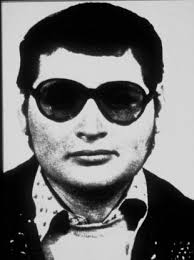
Ilich Ramírez Sánchez–“Carlos the Jackal”
Fifth: The United States had no part in creating or supporting the decades-long dictatorship of the Assad regime–which has long been hostile to America.
After a long series of political maneuverings, Hafez al-Assad seized power in 1970 and was proclaimed “president” next year. With aid from the Soviet Union, he built up the Syrian army. Using arrest, torture and execution, he ruled Syria as a dictator until he died in 2000.
His son, Bashar, then took command of Syria. Like his father, he has supported Palestinian and Lebanese militant groups. And, like his father, he continues to receive financial and military support from the successor to the Soviet Union, the Russian Federation.
Thus, America has no moral obligation of any kind to Syria–or Syrians.
Sixth: Intervening in Syria could lead to Syrian attacks against Israel.
An American military strike on Syrian government forces could lead the country’s dictator, Bashar al-Assad, to attack Israel–perhaps even with chemical weapons. Assad could do this simply because he hates Jews–or to lure Israel into attacking Syria.
If that happened, the Islamic world–which lusts to destroy Israelis even more than “apostate” Muslims–would rally to Syria against the United States, Israel’s chief ally.
Seventh: Committing American ground forces to Syria or just continuing to bomb targets there could lead to Islamic terrorism against the United States–at home or abroad.
This has already happened with Russia, which, on September 30, 2015, began bombing airstrikes on forces trying to overthrow Assad.
On October 31, Airbus A321, a Russian airliner, broke up in mid-air, then crashed in Egypt’s Sinai Peninsula, killing all 224 people on board.
In Egypt, a militant group affiliated to the Islamic State of Iraq and Syria (ISIS) claimed it had brought down the plane “in response to Russian airstrikes that killed hundreds of Muslims on Syrian land.”
The same fate could well befall American civilians and/or soldiers.
Eighth: China and Russia are supporting the Assad dictatorship–and the brutalities it commits against its own citizens.
This reflects badly on them–not the United States. And any move by the United States to directly attack the Assad regime could ignite an all-out war with Russia and/or China.
What happens if Russian and American forces start trading salvos? Or if Russian President Vladimir Putin orders an attack on America’s ally, Israel, in return for America’s attack on Russia’s ally, Syria?
It was exactly that scenario–Great Powers going to war over conflicts between their small-state allies–that triggered World War I.
Ninth: The United States cannot defeat ISIS through air power alone–thus making commitment of ground troops inevitable.
President Barack Obama authorized airstrikes against ISIS in September, 2014. The United States Air Force has since dropped thousands of bombs on ISIS convoys.
This has not destroyed ISIS. And its failure to do so has only led to demands by hawkish Republicans and Democrats for “boots on the ground.”
Tenth–and most importantly: While Islamic nations like Syria, Iraq and Egypt wage war within their own borders, they will lack the resources–and incentive–to attack the United States.
Every dead Hizbollah and Al-Qaeda and ISIS member makes the United States that much safer. So does the death of every sympathizer of Hizbollah, Al-Qaeda and ISIS.
The peoples of the Middle East have long memories for those who commit brutalities against them. In their veins, the cult of the blood feud runs deep.
When Al-Qaeda blows up civilians in Beirut, their relatives will urge Hizbollah to take brutal revenge. And Hizbollah will do so. Similarly, when Hizbollah does, those who support Al-Qaeda will demand even more brutal reprisals against Hizbollah.

Al-Qaeda terrorists–now taking aim at Hezbollah terrorists
No American could instill such hatred in Al-Qaeda for Hizbollah–or vice versa. This is entirely a war of religious and sectarian hatred.
In fact, this conflict could easily become the Islamic equivalent of “the Hundred Years War” that raged from 1337 to 1453 between England and France.
When Adolf Hitler invaded the Soviet Union in 1941, then-Senator Harry S. Truman said: “I hope the Russians kill lots of Nazis–and vice versa.”
That should be America’s position whenever its sworn enemies start killing off each other. Americans should welcome such self-slaughters, not become entrapped in them.
9/11 ATTACKS, ABC NEWS, ADOLF HITLER, AFGHANISTAN, AL QAEDA, BARACK OBAMA, BASHAR AL-ASSAD, CARLOS THE JACKAL, CBS NEWS, CHEMICAL WEAPONS, CHINA, CNN, CONGRESS, FACEBOOK, GEORGE H.W. BUSH, GEORGE W. BUSH, HARRY S. TRUMAN, HIZBOLLAH, IRAQ, ISLAM, ISRAEL, NAZI GERMANY, NBC NEWS, OSAMA BIN LADEN, RELIGION, RUSSIA, SADDAM HUSSEIN, SHIITE MUSLIMS, SUNNI MUSLIMS, SYRIA, TERRORISM, THE CHICAGO SUN-TIMES, THE CHICAGO TRIBUNE, THE LOS ANGELES TIMES, THE NEW YORK TIMES, THE SYRIAN OBSERVATORY FOR HUMAN RIGHTS, THE WASHINGTON POST, THE WORLD POST, TWITTER, VLADIMIR PUTIN, WORLD WAR 1
In Bureaucracy, History, Military, Politics on February 10, 2016 at 12:01 am
The headline in the February 6, 2016 edition of The World Post said it all: “Geneva III: The Stillborn Conference and the Endemic Failure of the International Community.”
And just what was it that the international community had failed to achieve?
“While approaching the fifth anniversary of the Syrian civil war on March 15 — which claimed more than 300,000 lives, approximately 700,000 wounded, 4 million fled the country, and another 6 million displaced within Syria — the international community has failed to put an end to bloodshed in this war-torn country.”
Put another way: More than 300,000 potential or actual Islamic terrorists will never pose a threat to the United States or Western Europe.
The Syrian conflict began on March 15, 2011, triggered by protests demanding political reforms and the ouster of dictator Bashar al-Assad.
According to the Syrian Observatory for Human Rights–which is safely located in Great Britain–the total number of dead is now more than 310,000.

And who does the Observatory–and The World Post–blame for this Islamic self-slaughter?
Why, the West, of course.
According to the Observatory:
“The silence of the International community for the war crimes and crimes against humanity committed in Syria encourages the criminals to kill more and more Syrian people because they have not found anyone that deter them from continuing their crimes that cause to wound more than 1500000 people; some of them with permanent disabilities, make hundreds of thousands children without parents, displace more than half of Syrian people and destroy infrastructure, private and public properties.”
And according to the Post:
“It is disgraceful that the international community has successfully concluded an agreement with the regime in a very short period of time to remove its chemical weapons while completely failed to save the lives of millions of innocent children, women, and elderly people throughout Syria in the past five years!”
Got that? It’s the duty of non-Muslims to bring civilized behavior to Islamics.
And why are all these murderers eagerly slaughtering one another?
Because of a Muslim religious dispute that traces back to the fourth century.
Yes, it’s Sunni Muslims, who make up a majority of Islamics, versus Shiite Muslims, who comprise a minority. Each group considers the other takfirs–that is, “apostates.”
And, in Islam, being labeled an apostate can easily get you murdered.
There is, however, an optimistic way to view this conflict:
- At least 310,000 actual or potential enemies of Western civilization–and especially the United States–have chosen to slaughter one another.
- Additional thousands are certain to follow their example.
- And the United States cannot be held in any way responsible for it.
Yet, Left-wing do-gooders and Right-wing militarists demand that the United States thrust itself into a conflict that doesn’t threaten America in any way.
In fact, it’s in America’s best interests that this conflict last as long as possible and spread as widely as possible throughout the Islamic community.
Here’s why:
First: In Syria, two of America’s most deadly enemies are waging war on each other.
Yes, it’s Hizbollah (Party of God) vs. Al-Qaeda (The Base).
Hizbollah is comprised of Shiite Muslims. A sworn enemy of Israel, it has kidnapped scores of Americans suicidal enough to visit Lebanon and truck-bombed the Marine barracks in Beirut in 1983, killing 299 Americans.
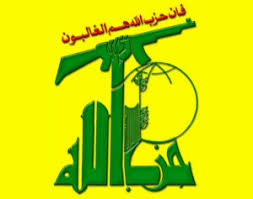
Flag of Hezbollah
Al Qaeda, on the other hand, is made up of Sunni Muslims. It is intolerant of Shiites and has instigated violence against them. It denounces them as takfirs–“apostates”–and thus worthy of extermination.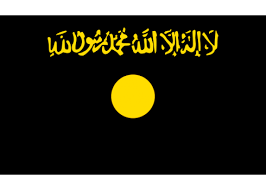
Flag of Al-Qaeda
Al Qaeda has attacked the mosques and gatherings of liberal Muslims, Shiites, Suffis and other non-Sunnis. Examples of sectarian attacks include the Sadr City bombings, the 2004 Ashoura massacre and the April, 2007 Baghdad bombings.
On one side of this conflict is the Ba’ath regime of Bashar al-Assad, whose allies include Russia, Iran, Hizbollah and elements of the Iraqi government.
On the other side are a host of Syrians and thousands of foreign Sunni fighters, some of whom are affiliated with Al-Qaeda.
Second: The United States has been at war in the Middle East for 14 years–since the terror attacks of September 11, 2001.
In October, 2011, America first committed its forces to Afghanistan, in pursuit of Osama bin Laden, the 9/11 mastermind. Failing to find him, its forces nevertheless stayed on in that country, hoping–and failing–to bring civilization to its barbaric population.
Then, in March, 2003, President George W. Bush invaded Iraq to settle a personal score with its dictator, Saddam Hussein.
After Bush’s father, George H.W. Bush, launched the 1991 Gulf War, Hussein had had the bad grace to not topple from power. When the elder Bush lost a second term as President to Bill Clinton in 1992, his son blamed Hussein.
Third, the United States is still fighting a brutal war in Afghanistan.
America originally intended to withdraw all but a small embassy-based force of 1,000 troops by the end of 2016.
But as the Taliban re-emerged as a threat, President Barack Obama announced he would maintain 9,800 troops there for most of 2016. About 5,500 troops will still be in Afghanistan by 2017.
ABC NEWS, ADOLF HITLER, BORIS YELTSIN, CBS NEWS, CNN, DONALD TRUMP, FACEBOOK, GEORGE W. BUSH, JOE SCARBOROUGH, JOSEPH STALIN, KGB, MISS TEEN USA, MISS UNIVERSE, MISS USA, MORNING JOE, MSNBC, NAZI GERMANY, NAZI PARTY, NBC NEWS, RED ARMY, REPUBLICAN PARTY, SOVIET UNION, THE LOS ANGELES TIMES, THE NEW YORK TIMES, THE WASHINGTON POST, TWITTER, VLADIMIR PUTIN, WEHRMACHT, WORLD WAR ii
In Bureaucracy, History, Politics, Social commentary, Uncategorized on December 22, 2015 at 12:06 am
Vladimir Putin admires Donald Trump. And Donald Trump admires Vladimir Putin.
To many people, it’s the ultimate odd-couple: The lifelong Communist and former KGB officer (Putin) walking arm-in-arm with the billionaire, publicity-hungry capitalist.
What could be going on here?
First Putin:
“He is a bright personality, a talented person, no doubt about it. It is not up to us to appraise his positive sides, it is up to the U.S. voters. but, as we can see, he is an absolute leader in the presidential race.
“He is saying that he wants to move to a different level of relations with Russia, to a closer, deeper one. How can we not welcome that? Of course, we welcome that.”
Now Trump:
“It is always a great honor to be so nicely complimented by a man so highly respected within his own country and beyond.”
Donald Trump
Appearing on MSNBC’s “Morning Joe,” Trump said: “Sure, when people call you ‘brilliant,’ it’s always good. Especially when the person heads up Russia.”
The host, Joe Scarborough, was upset by Trump’s praise for Putin: “Well, I mean, [he’s] also a person who kills journalists, political opponents, and invades countries. obviously that would be a concern, would it not?”
TRUMP: He’s running his country, and at least he’s a leader. Unlike what we have in this country.
SCARBOROUGH: But again: He kills journalists that don’t agree with him.
TRUMP: I think our country does plenty of killing, also, Joe, so, you know. There’s a lot of stupidity going on in the world right now, Joe. A lot of killing going on. A lot of stupidity. And that’s the way it is.
SCARBOROUGH: I’m confused. So I mean, you obviously condemn Vladimir Putin killing journalists and political opponents, right?
TRUMP: “Oh sure, absolutely.
When Trump praised Putin as a leader–“unlike what we have in this country”–he no doubt meant President Barack Obama.
Ironically, it is Obama–not Trump–who has repeatedly been named in Gallup polls as the most admired man in America in each of the last seven years, beginning with 2008, the year he was elected president.
Although Trump didn’t mention former President George W. Bush, his insult applies–unintentionally but accurately–to Obama’s predecessor.
In June 2001, Bush and Vladimir Putin met in Slovenia. During the meeting a truly startling exchange occurred.
Vladimir Putin and George W. Bush
Putin, a former KGB Intelligence officer, had clearly done his homework on Bush. When he mentioned that one of the sports Bush had played was rugby, Bush was highly impressed.
“I did play rugby,” said Bush. “Very good briefing.”
Bush knew that Putin had worked for Soviet intelligence. So he should not have been surprised that the KGB had amassed a lengthy dossier on him.
But more was to come.
BUSH: Let me say something about what caught my attention, Mr. President, was that your mother gave you a cross which you had blessed in Israel, the Holy Land.
PUTIN: It’s true.
BUSH: That amazes me, that here you were a Communist, KGB operative, and yet you were willing to wear a cross. That speaks volumes to me, Mr. President. May I call you Vladimir?
Putin instantly sensed that Bush judged others–even world leaders–through the lens of his own fundamentalist Christian theology.
Falling back on his KGB training, Putin seized on this apparent point of commonality to build a bond. He told Bush that his dacha had once burned to the ground, and the only item that had been saved was that cross.
“Well, that’s the story of the cross as far as I’m concerned,” said Bush, clearly impressed. “Things are meant to be.”
Afterward, Bush and Putin gave an outdoor news conference.
“Is this a man that Americans can trust?” Associated Press correspondent Ron Fournier asked Bush.
“Yes,” said Bush. “I looked the man in the eye. I found him to be very straightforward and trustworthy. We had a very good dialogue.
“I was able to get a sense of his soul, a man deeply committed to his country and the best interests of his country. I wouldn’t have invited him to my ranch if I didn’t trust him.”
Of course, no one from the Right–including Trump–is now recalling such embarrasing words.
It’s far more politically profitable to pretend that all of America’s tensions with Russia began with the election of Barack Obama.
And that those tensions will vanish once another Rightist–and non-black–President enters the White House.
ABC NEWS, ADOLF HITLER, BORIS YELTSIN, CBS NEWS, CNN, DONALD TRUMP, FACEBOOK, JOE SCARBOROUGH, JOSEPH GOEBBELS, JOSEPH STALIN, KGB, MISS TEEN USA, MISS UNIVERSE, MISS USA, MORNING JOE, MSNBC, NAZI GERMANY, NAZI PARTY, NBC NEWS, RED ARMY, REPUBLICAN PARTY, SOVIET UNION, THE LOS ANGELES TIMES, THE NEW YORK TIMES, THE WASHINGTON POST, TWITTER, VLADIMIR PUTIN, WEHRMACHT, WORLD WAR ii
In Bureaucracy, Business, History, Military, Politics, Social commentary on December 21, 2015 at 12:21 am
Donald Trump and Vladimir Putin have been getting a lot of publicity lately–for how much they admire each other.
On the surface, this might seem surprising. Putin spent most of his adult life as a fervent member of the Communist Party, which swore eternal warfare against capitalism.
After joining the KGB in 1975, he served as one of its officers for 16 years, eventually rising to the level of Lieutenant Colonel. In 1991, he retired to enter politics in his native St. Petersburg (formerly Leningrad).

Vladimir Putin
This, in turn, brought him to the attention of Russian President Boris Yeltsin, who groomed Putin as his successor. When Yeltsin unexpectedly resigned on December 31, 1999, Putin became Acting President.
In 2000, he was elected President in his own right, despite widespread accusations of vote-rigging. He won re-election in 2004, but could not run for a third term in 2008 because of constitutionally-mandated term limits.
So Putin ran his handpicked successor, Dimitry Medvedev, as president. When Medvedev won, he appointed Putin as prime minister. In 2012, Putin again ran for president and won.
Trump, on the other hand, is the personification of capitalistic excess. He has been an author, investor, real estate mogul and television personality as former host of NBC’s “The Apprentice.”
The Trump Organization sponsors the Miss Universe, Miss USA and Miss Teen USA pageants.
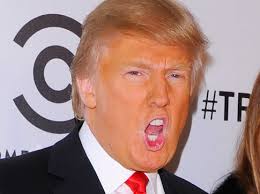
Donald Trump
He is notorious for stamping “Trump” on everything he acquires, most notably Trump Tower, a 58-story skyscraper at 725 Fifth Avenue in New York City.
On June 16, he declared himself a candidate for the Presidency in the 2016 election. Since July, he has consistently been the front-runner in public opinion polls for the Republican Party nomination.
So it came as a surprise to many in the United States when, on December 17, Putin described Trump as “a bright and talented person without any doubt,” adding that Trump is “an outstanding and talented personality.”
And he called Trump “the absolute leader of the presidential race.”
Trump, in turn, was quick to respond: “It is always a great honor to be so nicely complimented by a man so highly respected within his own country and beyond.”
Two months earlier, in October, Trump had said of Putin: “I think that I would probably get along with him very well.”
Appearing on MSNBC’s “Morning Joe,” Trump said: “Sure, when people call you ‘brilliant’ it’s always good. Especially when the person heads up Russia.”
The host, Joe Scarborough, was upset by Trump’s praise for Putin: “Well, I mean, it’s also a person who kills journalists, political opponents, and invades countries. Obviously that would be a concern, would it not?”
Trump: “He’s running his country, and at least he’s a leader. Unlike what we have in this country.”
Scarborough: “But again: He kills journalists that don’t agree with him.”
Trump: “Well, I think our country does plenty of killing also, Joe. You know. there’s a lot of stuff going on in the world right now, Joe. A lot of killing going on and a lot of stupidity…”
Absolute dictators like Vladimir Putin and would-be dictators like Donald Trump often gravitate toward each other. At least temporarily.
On January 30, 1933, anti-Communist Adolf Hitler became Chancellor of Germany. For the next six years, the Nazi press hurled insults at the Soviet Union.
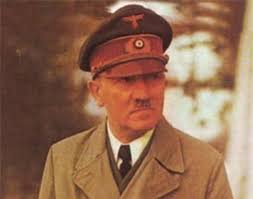
Adolf Hitler
And the Soviet press hurled insults at Nazi Germany.
Then, on August 23, 1939, Hitler’s foreign minister, Joachim von Ribbentrop, signed the Treaty of Non-aggression between Nazi Germany and the Union of Soviet Socialist Republics (U.S.S.R). Signing for the Soviet Union was its own foreign minister, Vyachelsav Molotov.
The reason: Hitler planned to invade Poland on September 1. He needed to neutralize the military might of the U.S.S.R. And only Soviet dictator Joseph Stalin could do that.
Democratic nations like France, Great Britain and the United States were stunned. But there had long been a grudging respect between the two brutal dictators.
On June 30, 1934, Hitler had ordered a bloody purge throughout Germany. Privately, Stalin offered praise: “Hitler, what a great man! This is the way to deal with your political opponents.”
Joseph Stalin
Hitler was–privately–equally admiring of the series of purges Stalin inflicted on the Soviet Union. Even after he broke the non-aggression pact by invading the U.S.S.R. on June 22, 1941, he said:
“After the victory over Russia, it would be a good idea to get Stalin to run the country, with German oversight, of course. He knows better than anyone how to handle the Russians.”
In April, 1945, as he waited for victorious Russian armies to reach his underground bunker, Hitler confided to Joseph Goebbels, his propaganda minister, his major regret:
He should have brutally purged the officer corps of the Wehrmacht, as Stalin had that of the Red Army. Stalin’s purges had cleaned “deadwood” from the Russian ranks, and a purge of the German army would have done the same.
For Adolf Hitler, the lesson was clear: “Afterward, you rue the fact that you’ve been so kind.”
It’s the sort of sentiment that both Vladimir Putin and Donald Trump can appreciate.
ABC NEWS, AFGHANISTAN, AIRBUS A321, AL QAEDA, BARACK OBAMA, BASHAR AL-ASSAD, CBS NEWS, CNN, FACEBOOK, IRAQ, ISLAM, ISLAMIC STATE OF IRAQ AND SYRIA, JOHN F. KENNEDY, MALAYSIA FLIGHT 17, MUSLIMS, NATO, NBC NEWS, ROBERT FROST, RUSSIA, SOVIET UNION, STINGER MISSILES, SYRIA, TERRORISM, THE CHICAGO TIMES, THE CHICAGO TRIBUNE, THE LOS ANGELES TIMES, THE NEW YORK TIMES, THE WASHINGTON POST, TURKEY, TWITTER, USA TODAY, VLADIMIR PUTIN
In Bureaucracy, History, Military, Politics on November 25, 2015 at 12:17 pm
Russian President Vladimir Putin is no admirer of President John F. Kennedy.
Yet he would no doubt agree with the spirit of the poem that Robert Frost intended to read at Kennedy’s 1961 inaugural.
Entitled “Dedication,” the poem went unread because the sunlight reflecting off snow blinded the elderly poet. So Frost relied on memory to recite an earlier creation: “The Gift Outright.”
“Dedication,” however, was far more in keeping with the upcoming aggressive hubris of the Kennedy years:
It makes the prophet in us all presage
The glory of a next Augustan age
Of a power leading from its strength and pride,
Of young ambition eager to be tried,
Firm in our free beliefs without dismay
In any game the nations want to play.
On September 30, Putin embarked on a game of big-power politics. He started launching airstrikes against Syria.
The objective: To bolster the dictatorship of Russia’s ally, Syrian President Bashar al-Assad, who is now caught up in civil war.
This began on March 15, 2011, triggered by protests demanding political reforms and the ouster of al-Assad. More than 310,000 people have been killed in the fighting.
The Obama administration is worried about Russian intentions. And Republicans are furious, demanding that American military forces directly confront those of Russia.
Yet despite Right-wing fears about Russia, there is no reason for alarm–by Americans.
Putin’s intervention in Syria’s civil war offers three possible outcomes for the United States. And they’re all positive.
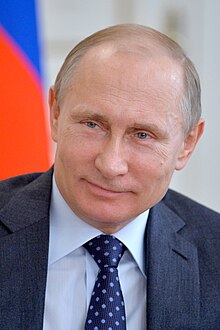
Vladimir Putin
First, the Russians will kill thousands of America’s sworn enemies.
Russians are well-known for their disregard for human life. During their invasion of Germany in 1945, Russian soldiers literally nailed civilians to barn doors, squashed them under their tanks, and raped countless women of all ages.
In Syria, they will slaughter everyone who gets in their way. Thus, they will kill far more of America’s Islamic enemies than even our own military–hamstrung by do-gooder “rules of engagement”–could possibly eliminate.
Second, Russia will replace the United States as “The Great Satan” in the eyes of most Islamics.
The Soviet Union waged a ruthless war against Afghanistan from 1979 to 1989. Out of that war grew Al-Qaeda. Millions of Islamics still hate Russians for their brutalities.
From 1999 to 2009, Russia fought a brutal war against Islamics in Chechnya. Chechens responded with terrorism across Russia.
Russia’s intervention in Syria will only harden its image as an enemy of Islam–even if it’s supporting one group of Islamics (the Assad regime) against others.
If Islamic terrorism starts raging throughout Russia, Putin may be forced to back down from his military moves against Syria and Ukraine.
Third, if Russian planes get shot down or Russian soldiers killed, Russia will suffer the casualties–not the United States.
The Soviet Union never fully recovered from its losses in Afghanistan–13,310 soldiers killed, 35,478 wounded.
If Russia starts taking heavy losses in Syria or at home through terrorism, this could lead to widespread unrest. Even Vladimir Putin could find himself in danger of being replaced.
And for Russia, the chicken Kiev has already come home to roost.
On October 31, Airbus A321, a Russian airliner, broke up in mid-air, then crashed in Egypt’s Sinai Peninsula, killing all 224 people on board.
The plane was carrying holidaymakers from the Red Sea resort of Sharm el-Sheikh to St Petersburg when it crashed into a mountainous area of central Sinai.
In Egypt, a militant group affiliated to the Islamic State of Iraq and Syria (ISIS) claimed that it had brought down the plane “in response to Russian airstrikes that killed hundreds of Muslims on Syrian land.”
On November 19, ISIS published an online photo of a soft drink can and two components–a detonator and a switch–that it claimed brought down the plane.
The crash has proved emotionally wrenching for Russians.
Flags across Russia flew at half-staff and Russian Orthodox priests conducted services to pray for the victims.
President Putin declared a nationwide day of mourning. In St. Petersburg, home to most of the victims, authorities ordered the mourning to last for three days.

Flag of ISIS
And, on November 24, another such loss occurred: A Russian fighter was shot down on the Turkish-Syrian border by two Turkish F-16s.
Turkish officials claimed that it had violated Turkish airspace 10 times within a five-minute period.
This marked the first time in a half-century that a member of NATO–in this case, Turkey–has downed a Russian plane.
Vladimir Putin quickly called the shootdown a “stab in the back committed by accomplices of terrorists.”
And he warned: “The tragic event will have serious consequences for Russian-Turkish relations.”
With the armed forces of so many Great Powers–France, Russia, Britain and America–now crowding into Syria, such an outcome was probably inevitable.
It was exactly that scenario–Great Powers going to war over conflicts involving their small-state allies/clients–that triggered World War I.
A conflict between Russia and Turkey–a member of NATO–could easily trigger World War III.
60 MINUTES, 9/11 ATTACKS, ABC NEWS, ADOLF HITLER, AFGHANISTAN, AL QAEDA, AYATOLLAH RUHOLLAH KHOMEINI, BARACK OBAMA, BASHAR AL-ASSAD, CARL VON CLAUSEWITZ, CARLOS THE JACKAL, CBS NEWS, CIA, CNN, FACEBOOK, HARRY TRUMAN, IMPERIAL HUBRIS, IRAN, ISLAM, ISLAMIC STATE OF IRAQ AND THE LEVANT, ISRAEL, MARCHING TOWARD HELL, MICHAEL SCHEUER, MUSLIMS, NAZI GERMANY, NBC NEWS, OSAMA BIN LADEN, RUSSIA, SHAH OF IRAN, SOVIET UNION, SYRIA, TERRORISM, THE CHICAGO TIMES, THE CHICAGO TRIBUNE, THE LOS ANGELES TIMES, THE NEW YORK TIMES, THE WASHINGTON POST, TWITTER, USA TODAY, VIETNAM WAR, VLADIMIR PUTIN, WORLD WAR 1
In Bureaucracy, History, Military, Politics, Social commentary, Uncategorized on November 19, 2015 at 12:14 am
According to Micheal Scheuer, America needs to end its role as Israel’s permanent bodyguard.
Scheuer is a 20-year CIA veteran–as well as an author, historian, foreign policy critic and political analyst.
Testifying before the House Committee on Homeland Security on October 9, 2013, Scheuer warned:
“If it was up to me, I’d dump the Israelis tomorrow. All I worry about is that continuing preaching of American politicians to the American people that our relationship with the Israelis doesn’t cause us to have dead Americans and extraordinary expenses in fighting the Muslim world.”
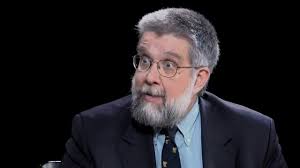
Michael Scheuer
For decades, the United States has pursued two policies in the Middle East, one based on relations with the Arab world and the other based on relations with Israel.
Policy 1: Maintaining access to vast amounts of Arab oil at low prices.
Policy 2: Maintaining the security of Israel.
Since the Arabs and Israelis hate each other, each side constantly tries to sway American support in its direction.
Every step the United States takes to defend Israel–diplomatically or militarily–ignites hatred of Americans among Islamics.
And every step–diplomatically or militarily–the United States takes to improve its relations with Islamic countries convinces Israelis that they’re being “sold out.”
President George W. Bush tilted strongly toward Israel. That convinced Israelis to go on building settlements in occupied Arab territory–and alienated the Arabs.
President Barack Obama, seeking a balanced approach, leaned heavily on Israel to stop building settlements. Israel has continued doing so–thus alienating the Israelis while leaving the Arabs enraged.
In short: The United States is like a giant who has one foot stuck in Israel and the other stuck in any Islamic country–leaving his private parts fully exposed to whichever side wants to take a shot at them.
This is not to deny that Israel has a right to exist. Every nation--including Israel–has the absolute right to defend itself from aggression.
But no nation–including Israel–should have the right to expect another nation to act as its permanent bodyguard.
Millions of Americans believe they are morally obligated to defend Israel owing to the barbarism of the Holocaust. America, however, was never a party to this, and has nothing to atone for.
But there is another reason many Americans feel committed to Israel. And it has nothing to do with concern for the fates of Israelis.
It lies in the mythology of the Christian Right: Many fundamentalist Christians believe that, for Jesus Christ to awaken from his 2,000-year slumber, Israel must first re-conquer every inch of territory it supposedly held during the reign of Kings David and Solomon.
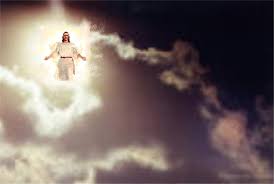
Right-wing Christian fantasy: Dead man hovering
After Christ returns, they believe, the Jews will face a choice: Become Christians or go to hell. For evangelical Christians, Jews remain the eternal “Christ killers.”
And if Jews must assume temporary control of the Middle East to bring about the return of a man who died 2,000 years ago, so be it.
This is also the view of many Right-wing members of the House of Representatives and Senate. Clearly, people who hold such totally irrational views shouldn’t be allowed to hold public office.
Unfortunately, such unbalanced views are shared by millions of equally irrational evangelical Christians.
During his appearance before the House Committee on Homeland Security, Michael Scheuer absolutely rejected the conservatives’ assertion that jihadists wage war on us because they “hate us for our freedoms.”
SCHEUER: These people are fighting for something substantive, for something religious. ….They are not going to fight us because we have women in the workplace.
That is an insanity. What they are fighting us about is what we do.
…I would draw your attention to the reality that, to the best of my knowledge, neither we nor any of our NATO partners have yet to capture a Western Islamist fighter whose words or documents have shown a motivation to attack based on hatred for liberty, elections or gender equality.
Invariably, they attribute their motivation to U.S. and Western military intervention and support for Israel and Muslim tyrannies.
Scheuer’s take on Israel brought him into direct conflict with Rep. Peter T. King (R-New York).
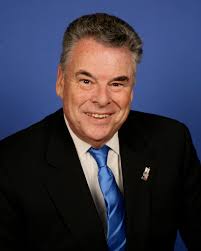
Congressman Peter T. King
KING: I would just say we would have more dead Americans if we didn’t stand by our allies in the Middle East. We would just be encourage al-Qaeda to take advantage of us.
SCHEUER: You know, you are presiding over a bankruptcy. What can be worse? What has been the goal of al-Qaeda since it was formed? To bankrupt the United States.
Who is winning today, sir? We are done like dinner.
KING: We are winning and we will continue to win unless we take the advice of people like you.
SCHEUER: Sir, you are exactly wrong. We are losing. Two U.S. field armies were defeated by men in the field with weapons from the Korean War.
KING: The fact is we have not been successfully attacked since September 11.
SCHEUER: The fact is, sir, we have had two military defeats overseas, which is far more important.
And, warns Scheuer, more defeats–domestic and international–lie ahead unless the United States radically changes its policies toward the Middle East.
.jpg&imgrefurl=https%3A%2F%2Fen.wikipedia.org%2Fwiki%2FFile%3ADonald_Trump_August_19%2C_2015_(cropped).jpg&docid=Dff45V_1eqDRRM&tbnid=vjNU906xBiejUM%3A&vet=1&w=1500&h=2000&bih=469&biw=819&ved=0ahUKEwi65N2HoKjSAhVCzmMKHbddDTIQMwg9KAwwDA&iact=c&ictx=1)


 Bureaucracybuster's Blog
2016 ELECTION, ABC NEWS, BARACK OBAMA, BILL CLINTON, CBS NEWS, CHIANG KAI-SHEK, CHINA, CNN, CUBAN MISSILE CRISIS, DEMOCRATIC PARTY, DONALD TRUMP, DWIGHT D. EISENHOWER, FOX NEWS, GEORGE H.W. BUSH, GEORGE W. BUSH, HARRY S. TRUMAN, HILLARY CLINTON, JOHN F. KENNEDY, JOSEPH MCCARTHY, MAO TSE-TUNG, MITT ROMNEY, NAVY SEALS, NBC NEWS, NO EASY DAY, OSAMA BIN LADEN, PENTAGON, REPUBLICAN PARTY, RICHARD NIXON, Ronald Reagan, THE CHICAGO SUN-TIMES, THE CHICAGO TRIBUNE, THE LOS ANGELES TIMES, THE NEW YORK TIMES, THE NEW YORKER, THE WASHINGTONPOST, TREASON, U.S. NAVY SEALS, VLADIMIR PUTIN, WIKILEAKS
RIGHT-WING TREASON: FIRST FOX, NOW TRUMP
In Bureaucracy, History, Military, Politics, Social commentary on July 28, 2016 at 12:08 am“Russia, if you’re listening, I hope you’re able to find the 30,000 emails that are missing. I think you will probably be rewarded mightily by our press.”
The speaker was Donald Trump, holding a July 27 press conference in Doral, Fla.
Donald Trump
And he was urging a foreign leader to hack into the private email server of his Presidential rival, Hillary Clinton.
Five days earlier, Wikileaks had released 19,252 emails and 8,034 attachments hacked from computers of the highest-ranking officials of the Democratic National Committee (DNC).
Cyber-security experts believe the hacking originated from Russia–and that Russian President Vladimir Putin may have authorized it.
Politicians on the Left and Right expressed outrage at Trump’s remarks.
But this is not the first time the Right has jeopardized American security.
During the 2012 Presidential campaign, supporters of Mitt Romney accused President Barack Obama of leaking top-secret details of the U.S. Navy SEALs raid on Osama bin Laden’s compound in Abbottabad, Pakistan.
The raid, launched on May 1, 2011, resulted in the death of the 9/11 mastermind and the capture of a treasury of highly sensitive Al Qaeda documents.
According to Right-wingers, Obama wanted to provide Hollywood screenwriters with material for a movie to glorify his role in authorizing the raid.
In August, 2012, the Right found its own secrets-leakers. And they operated under the name of the Fox News Network.
Their motive: To promote a book–No Easy Day: The Firsthand Account of the Mission That Killed Osama Bin Laden. It was slated to hit bookstores on September 11–the 11th anniversary of Al Qaeda’s attacks on the Pentagon and World Trade Center.
It had been penned under the pseudonym “Mark Owen.” But the real name of the author–a 36-year-old former Navy SEAL Team Six member who took part in the raid–was Matt Bissonnette, of Wrangell, Alaska.
Bissonnette’s real name became public after multiple sources leaked it to Fox News–who revealed it on August 23.
The Navy SEALs who killed bin Laden had previously been left unidentified.
Fox News had repeatedly accused President Obama and members of his administration of treasonously leaking military secrets to the media to glorify the President.
Many former and current SEAL members feared that the book would release information that could compromise future missions.
U.S. Navy SEALs insignia
One Navy SEAL told Fox News, “How do we tell our guys to stay quiet when this guy won’t?” Some SEALs called Bissonnette a “traitor.”
And Colonel Tim Nye, a Special Operations Command spokesman, said the author “put himself in danger” by writing the book.
“This individual came forward. He started the process. He had to have known where this would lead. He’s the one who started this, so he bears the ultimate responsibility for this.”
But Bissonnette placed more than his own life in jeopardy. He endangered the lives of every one of the men who participated in the bin Laden raid.
If Bissonnette fell into the hands of Al Qaeda terrorists or sympathizers, he could conceivably be tortured into revealing at least some of the names and locations of his former team members.
And Fox News not only revealed his true name but the town where he lived.
Even the liberal Nation magazine was appalled at the recklessness of this Right-wing propaganda outlet. Jeremy Scahill, a writer for Nation, tweeted:
“Why on earth would FOX News publish the alleged identity of one of the ST6 members who was in the OBL raid? Seriously.”
Millions of Right-wing Americans have been conditioned by decades of Fascistic propaganda to believe that:
Republicans blamed President Harry S. Truman for “losing China” to the forces of Mao Tse Tung in 1949. America could not have prevented a corrupt and incompetent Chiang Kai-Shek from being driven off the Chinese mainland by Mao’s overwhelmingly powerful armies.
Then, in 1950, Senator “Tail Gunner Joe” McCarthy charged that the State Department was infested by Communists–and that the Truman administration knew it but refused to take action. The charges were false.
Joseph R. McCarthy
During the 2008 Presidential campaign, Republicans charged that Barack Obama was really a Muslim non-citizen who intended to sell out America’s security to his Muslim “masters.”
Attacking the patriotism of their opponents has repeatedly elected Republicans:
And now Republicans hope this appeal will elect a man who has openly called on Vladimir Putin to hack into American computers.
Share this: