Posts Tagged ‘VIETNAM WAR’
9/11 ATTACKS, ABC NEWS, ABORTION, ADOLF HITLER, AL-QAEDA, ALTERNET, AMERICABLOG, ANDREW CUOMO, ANTHONY FAUCI, AP, BABY BOOMER RESISTANCE, BLOOMBERG, BOB WOODWARD, BUZZFEED, CARL BERNSTEIN, CBS NEWS, CENTERS FOR DISEASE CONTROL AND PREVENTION (CDC), CHICAGO, CHINA, CIA, CLOROX BLEACH, CNN, CORONAVIRUS, COVID-19, COVID-19 TEST KITS, CROOKS AND LIARS, DAILY KOZ, DAVID BROOKS, DEBORAH BIRX, DEMOCRATIC NATIONAL CONVENTION, DEPARTMENT OF HOMELAND SECURITY, DONALD RUMSFELD, DONALD TRUMP, DRUDGE REPORT, FACEBOOK, FBI, FEDERAL EMERGENCY MANAGEMENT AGENCY (FEMA), FIVETHIRTYEIGHT, FLORIDA, FORBES, FOX NEWS, FRANKLIN D. ROOSEVELT, GRETCHEN WHITMER, HARPER’S MAGAZINE, HUFFINGTON POST, JARED KUSHNER, JAY INSLEE, KOREAN WAR, KRISTI NOEM, KRISTIN URQUIZA, LARRY HOGAN, LOS ANGELES, MARK ANTHONY URQUIZA, MARK SHIELDS, MARYLAND, MASSACHUSSETS, MEDIA MATTERS, MICHIGAN, MICK MULVANEY, MIKE PENCE, MOLOCH, MOTHER JONES, MOVEON, MSNBC, N95 MASKS, NAVY SEALS, NBC NEWS, NEW YORK, NEW YORK CITY, NEWSWEEK, NPR, OSAMA BIN LADEN, PAULA REID, PBS NEWSHOUR, PERSONAL PROTECTIVE EQUIPMENT (PPE), PHOENIX RALLY, POLITICO, POLITICUSUSA, RAW STORY, REPUBLICANS, REUTERS, RICHARD NIXON, ROBERT MUELLER, RUDOLPH GIULIANI, SALON, SCHOOLS, SEAN HANNITY, SEAN HANNITY SHOW, SEATTLE TIMES, SLATE, SOUTH DAKOTA, STEVEN PRESSFIELD, TALKING POINTS MEMO, THE ATLANTIC, THE CHICAGO SUN-TIMES, THE CHICAGO TRIBUNE, THE DAILY BEAST, THE DAILY BLOG, THE GUARDIAN, THE HILL, THE HUFFINGTON POST, THE LOS ANGELES TIMES, THE NATION, THE NEW REPUBLIC, THE NEW YORK TIMES, THE PENTAGON, THE VILLAGE VOICE, THE WASHINGTON POST, THINKPROGRESS, TIME, TRUTHDIG, TRUTHOUT, TULSA OAKAHOMA RALLY, TWITTER, TWO POLITICAL JUNKIES, U.S. NEWS & WORLD REPORT, UPI, USA TODAY, UV LIGHT, VEIL: THE SECRET WARS OF THE CIA (BOOK), VIETNAM WAR, WALTER SHAUB, WASHINGTON, WASHINGTON D.C., WASHINGTON MONTHLY, WASHINGTON WEEK IN REVIEW, WATERGATE, WILLIAM J. CASEY, WONKETTE, WORLD TRADE CENTER
In Bureaucracy, History, Law Enforcement, Medical, Military, Politics, Social commentary on September 14, 2020 at 12:15 am
On September 11, 2001, 19 Islamic terrorists snuffed out the lives of 3,000 Americans in New York, Washington, D.C. and Pennsylvania.
They did so by turning four commercial jetliners into fuel-bombs—and crashing them into, respectively, the Twin Towers of the World Trade Center in New York City; the Pentagon, in Washington, D.C.; and—unintentionally—a field in Somerset County, Pennsylvania.
(Its destination had been the White House or the Capitol Building. But its passengers, alerted by radio broadcasts of the doom awaiting them, resolved to take over the plane instead. The hijackers slammed the jet into the ground to avoid capture.)
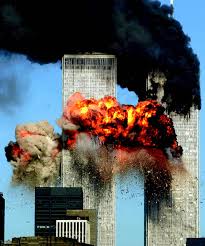
World Trade Center – September 11, 2001
But within less than a month, American warplanes began carpet-bombing Afghanistan, whose rogue Islamic “government” refused to surrender Osama bin Laden, the had of Al-Qaeda who had masterminded the attacks.
By December, 2001, the power of the Taliban was broken—and bin Laden was driven into hiding in Pakistan.
For more than 16 years, the United States—through its global military and espionage networks—relentlessly hunted down most of those responsible for that September carnage.
On May 1, 2011, U.S. Navy SEALS invaded bin Laden’s fortified mansion in Abbottabad, Pakistan—and shot him dead.
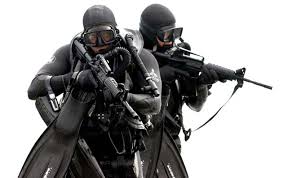
U.S. Navy SEALs
OSAMA BIN LADEN’S BOASTING
On December 13, 2001, the Pentagon released a videotape of Osama bin Laden discussing the attacks in Arabic with another man who appears to be a cleric.
The videotape had been discovered by American forces in a private home in Jalalabad, Afghanistan.
On the tape, bin Laden says he was pleasantly surprised by the amount of destruction caused at the World Trade Center. He had only expected the top portion of the Twin Towers to collapse:
“We calculated in advance the number of casualties from the enemy, who would be killed based on the position of the tower. We calculated that the floors that would be hit would be three or four floors. I was the most optimistic of them all.
“Due to my experience in this field [he had graduated from King Abdul Aziz University with a civil engineering degree in 1979] I was thinking that the fire from the gas in the plane would melt the iron structure of the building and collapse the area where the plane hit and all the floors above it only.
“This is all that we had hoped for.”
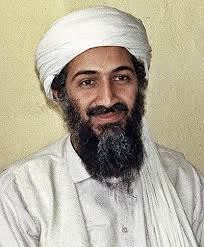
Osama bin Laden
9/11 VS. COVID-19
Now, consider this:
It’s September 11, 2020. Nineteen years to the day since the United States suffered its worst terrorist attack in history—a loss of 3,000 Americans.
And, in less than a year, the United States is nearing a death-toll of 200,000 from an enemy just as deadly and unrelenting as Al Qaeda.
That enemy is Coronavirus, also known as COVID-19.
The September 11 attacks jolted Americans out of their complacency toward Islamic terrorism. Since the 1980s, the United States had responded to terrorism via its legal system. After 9/11, Americans opted for a military response against Middle Eastern terror cells.
For months afterward, America feared the worst—that other cities would soon become targets for massive terror attacks. But, for all the death and destruction wrought that day, this didn’t happen.
There were two major reasons for this:
First, under its new director, Robert Mueller, the FBI completely refocused its mission from investigating crimes to preventing them. This resulted in a proactive rather than reactive mindset and approach. Even terrorists who felt safe abroad found themselves arrested by FBI agents employing the sort of techniques previously used against foreign spies.
Second, the attacks led to the creation of a huge new agency—the Department of Homeland Security. Massive sums of money were doled out to local police departments across the country, arming them with new hires and more sophisticated anti-crime technologies.
And for the first time since the dawning of the age of flight, the Federal Government took responsibility for preventing airline terrorism. Previously, this had fallen to individual airlines—which, seeing it as a financial drain, had assigned it a low priority.
The attacks also led to a complete restructuring of the United States military.
In the past, Americans had excelled in set-piece battles and wars. But when fighting enemies where guerrilla warfare negated overwhelming military power, the United States had done poorly—first in Korea (1950-1953) and then in Vietnam (1960-1975).
As a result, Secretary of Defense Donald Rumsfield reorganized the Pentagon’s bureaucracy, assigning highest priority to building unconventional military units such as the Army’s Green Berets and Delta Force, and the Navy’s SEALs.
These were all major changes resulting from the 9/11 attacks. They cost billions of dollars and got huge publicity. But they didn’t affect the lives of everyday Americans as intimately as has the advent of COVID-19, also known as Coronavirus.
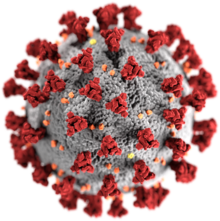
Coronavirus
The 9/11 terror attacks frightened Americans more than any event since the Japanese attack on Pearl Harbor in 1941.. But they slaughtered only a fraction of Americans, as compared with the 194,000 who have died from COVID-19, in less than a year..
Osama bin Laden deservedly gained infamy for plotting 9/11. But Donald Trump, who repeatedly lied about the dangers of COVID-19, remains beloved by about 40% of Americans.
1968 PRESIDENTIAL CAMPAIGN, 2020 PRESIDENTIAL CAMPAIGN, ABC NEWS, ALTERNET, AMERICABLOG, AMERICAN INDIANS, AP, BABY BOOMER RESISTANCE, BARBARA GARSON, BLACK LIVES MATTER, BLOOMBERG, BUZZFEED, CBS NEWS, CIVIL RIGHTS, CNN, COMING APART: AMERICA IN THE 1960S (BOOK), CROOKS AND LIARS, DAILY KOZ, DEMOCRATS, DRUDGE REPORT, EUGENE MCCARTHY, FACEBOOK, FIVETHIRTYEIGHT, GEORGE BERNARD SHAW, GROSS NATIONAL PRODUCT, HARPER’S MAGAZINE, JIM SLATTERY, JOHN F. KENNEDY, Kamala Harris, KANSAS STATE UNIVERSITY, LOOK MAGAZINE, LYNDON B. JOHNSON, MCBIRD!, MEDIA MATTERS, MISSISSIPPI, MOTHER JONES, MOVEON, MSNBC, NBC NEWS, NEWSWEEK, NPR, PBS NEWSHOUR, POLITICO, POLITICUSUSA, RAW STORY, REPUBLICANS, REUTERS, ROBERT F. KENNEDY, SALON, SEATTLE TIMES, SIRHAN SIRHAN, SLATE, SOPHOCLES, STANLEY TRETICK, TALKING POINTS MEMO, TET OFFENSIVE, THE ATLANTIC, THE CHICAGO SUN-TIMES, THE CHICAGO TRIBUNE, THE DAILY BEAST, THE DAILY BLOG, THE GUARDIAN, THE HILL, THE HUFFINGTON POST, THE LOS ANGELES TIMES, THE NATION, THE NEW REPUBLIC, THE NEW YORK TIMES, THE VILLAGE VOICE, THE WASHINGTON POST, THINKPROGRESS, TIME, TIME MAGAZINE, TRUTHDIG, TRUTHOUT, TWITTER, TWO POLITICAL JUNKIES, U.S. NEWS & WORLD REPORT, UNIVERSITY OF KANSAS, UPI, USA TODAY, VIETNAM WAR, WILLIAM L. O'NEIL, WONKETTE
In Bureaucracy, History, Law, Law Enforcement, Military, Politics, Social commentary on August 12, 2020 at 1:26 am
On March 18, 1968, Presidential candidate Robert F. Kennedy, speaking at the University of Kansas, called on his fellow citizens to show compassion for those less fortunate and in need of relief through the Federal Government.
“If we believe that we, as Americans, are bound together by a common concern for each other, then an urgent national priority is upon us. We must begin to end the disgrace of this other America.”
Finally, Kennedy did something almost no other politician—in his time or since—has ever done: He dared to attack that holy-of-holies, the Gross Domestic Product (then called the Gross National Product).
“If we believe that we, as Americans, are bound together by a common concern for each other, then an urgent national priority is upon us. We must begin to end the disgrace of this other America.
“Too much and for too long, we seemed to have surrendered personal excellence and community values in the mere accumulation of material things. Our Gross National Product, now, is over $800 billion dollars a year, but that Gross National Product….counts air pollution and cigarette advertising, and ambulances to clear our highways of carnage.
“It counts special locks for our doors and the jails for the people who break them. It counts the destruction of the redwood and the loss of our natural wonder in chaotic sprawl. It counts napalm and counts nuclear warheads and armored cars for the police to fight the riots in our cities. It counts Whitman’s rifle and Speck’s knife, and the television programs which glorify violence in order to sell toys to our children.
“Yet the Gross National Product does not allow for the health of our children, the quality of their education or the joy of their play. It does not include the beauty of our poetry or the strength of our marriages, the intelligence of our public debate or the integrity of our public officials.
“It measures neither our wit nor our courage, neither our wisdom nor our learning, neither our compassion nor our devotion to our country. It measures everything in short, except that which makes life worthwhile. And it can tell us everything about America except why we are proud that we are Americans….

Senator Robert F. Kennedy campaigning for President
“George Bernard Shaw once wrote, ‘Some people see things as they are and say why? I dream things that never were and say, why not?’
“So I come here to Kansas to ask for your help. In the difficult five months ahead, before the convention in Chicago. I ask for your help and for your assistance.
“If you believe that the United States can do better. If you believe that we should change our course of action. If you believe that the United States stands for something here internally as well as elsewhere around the globe, I ask for your help and your assistance and your hand over the period of the next five months.
“And when we win in November….and we begin a new period of time for the United States of America, I want the next generation of Americans to look back upon this period and say as they said of Plato: ‘Joy was in those days, but to live.’ Thank you very much.”
At the end of Kennedy’s wildly popular speech at Kansas State University, photographer Stanley Tretick, of Look magazine, shouted, “This is Kansas, fucking Kansas! He’s going all the fucking way!”
But he didn’t go all the way. On June 5, 1968—82 days after announcing his Presidential candidacy—an assassin’s bullet suddenly halted his short-lived campaign—and his life.

Robert Kennedy’s funeral train
Historian William L. O’Neil delivered a poignant summary of Robert Kennedy’s legacy in his 1971 book, Coming Apart: An Informal History of America in the 1960′s:
“He aimed so high that he must be judged for what he meant to do, and through error and tragic accident, failed at…..He will also be remembered as an extraordinary human being who, though hated by some, was perhaps more deeply loved by his countrymen than any man of his time.
“That, too, must be entered into the final account, and it is no small thing. With his death, something precious vanished from public life.”
As United States Attorney General (1961-1964) Robert F. Kennedy had the courage to wage all-out war on the Mafia. As a United States Senator (1964-1968) he had the compassion to champion aid to impoverished Americans.
Even in his own era—a half-century ago—Robert Kennedy stood out as the only major Presidential candidate who could legitimately make both claims.
Today, most Democrats—battered by decades of Republican charges that they’re “big spenders”—fear supporting big-ticket items to help the poor.
And the Black Lives Matter movement has made any connection to law enforcement a disqualification for higher office—as former California Attorney General Kamala Harris found out as a 2020 Presidential candidate.
America may never again see a Presidential candidate who can combine a strong stand against crime with an equally strong commitment to helping the poor and disadvantaged.
1968 PRESIDENTIAL CAMPAIGN, 2020 PRESIDENTIAL CAMPAIGN, ABC NEWS, ALTERNET, AMERICABLOG, AMERICAN INDIANS, AP, BABY BOOMER RESISTANCE, BARBARA GARSON, BLACK LIVES MATTER, BLOOMBERG, BUZZFEED, CBS NEWS, CIVIL RIGHTS, CNN, COMING APART: AMERICA IN THE 1960S (BOOK), CROOKS AND LIARS, DAILY KOZ, DEMOCRATS, DRUDGE REPORT, EUGENE MCCARTHY, FACEBOOK, FIVETHIRTYEIGHT, GEORGE BERNARD SHAW, GROSS NATIONAL PRODUCT, HARPER’S MAGAZINE, JIM SLATTERY, JOHN F. KENNEDY, Kamala Harris, KANSAS STATE UNIVERSITY, LOOK MAGAZINE, LYNDON B. JOHNSON, MCBIRD!, MEDIA MATTERS, MISSISSIPPI, MOTHER JONES, MOVEON, MSNBC, NBC NEWS, NEWSWEEK, NPR, PBS NEWSHOUR, POLITICO, POLITICUSUSA, RAW STORY, REPUBLICANS, REUTERS, ROBERT F. KENNEDY, SALON, SEATTLE TIMES, SIRHAN SIRHAN, SLATE, SOPHOCLES, STANLEY TRETICK, TALKING POINTS MEMO, TET OFFENSIVE, THE ATLANTIC, THE CHICAGO SUN-TIMES, THE CHICAGO TRIBUNE, THE DAILY BEAST, THE DAILY BLOG, THE GUARDIAN, THE HILL, THE HUFFINGTON POST, THE LOS ANGELES TIMES, THE NATION, THE NEW REPUBLIC, THE NEW YORK TIMES, THE VILLAGE VOICE, THE WASHINGTON POST, THINKPROGRESS, TIME, TIME MAGAZINE, TRUTHDIG, TRUTHOUT, TWITTER, TWO POLITICAL JUNKIES, U.S. NEWS & WORLD REPORT, UNIVERSITY OF KANSAS, UPI, USA TODAY, VIETNAM WAR, WILLIAM L. O'NEIL, WONKETTE
In Bureaucracy, History, Law, Law Enforcement, Military, Politics, Social commentary on August 11, 2020 at 12:07 am
On March 18, 1968, Presidential candidate Robert F. Kennedy did what few politicians have ever done: He accepted public responsibility for a war that had since become a national disaster—the Vietnam war.
Addressing a packed audience of students and faculty at Kansas State University, he said:
“Let me begin this discussion with a note both personal and public. I was involved in many of the early decisions on Vietnam, decisions that helped set us on our present path.
“It may be that the effort was doomed from the start; that it was never really possible to bring all the people of South Vietnam under the rule of the successive governments we supported—governments, one after another, riddled with corruption, inefficiency, and greed; governments which did not and could not successfully capture and energize the national feeling of their people.
“If that is the case, as it well may be, then I am willing to bear my share of the responsibility, before history and before my fellow citizens. But past error is no excuse for its own perpetuation. Tragedy is a tool for the living to gain wisdom, not a guide by which to live.
“Now as ever, we do ourselves best justice when we measure ourselves against ancient tests, as in the Antigone of Sophocles: ‘All men make mistakes, but a good man yields when he knows his course is wrong, and repairs the evil. The only sin is pride.’
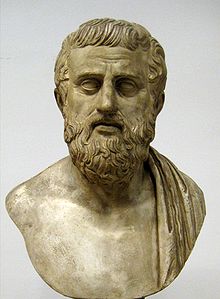
Sophocles
And he dared to attack the war as more than a military and political disaster: He saw it as a stain on America’s moral fiber:
“Can we ordain to ourselves the awful majesty of God—to decide what cities and villages are to be destroyed, who will live and who will die, and who will join the refugees wandering in a desert of our own creation?
“If it is true that we have a commitment to the South Vietnamese people, we must ask, are they being consulted—in Hue, or Ben Tre, or in the villages from which the three million refugees have fled?
“If they believe all the death and destruction are a lesser evil than the Wet Cong, why did they not warn us when the Viet Cong came into Hue, and the dozens of other cities, before the Tet Offensive? Why did they not join the fight?
“Will it be said of us, as Tacitus said of Rome: ‘They made a desert and called it peace?'”
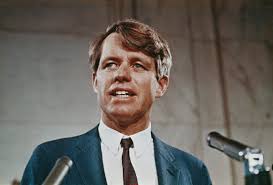
Robert F. Kennedy
The students gave him an ovation worthy of a rock star.
Time correspondent Hays Gorey said the electricity between Kennedy and the K.S.U. students was “real and rare.” “A good part of it is John F. Kennedy’s, of course, but John Kennedy …himself couldn’t be so passionate, and couldn’t set off such sparks.”
Jim Slattery, who would later be elected to Congress from Kansas, reread the K.S.U. speech during the second Iraq war and decided it was so powerful “because Kennedy was talking about what was right!”
As Kennedy started to leave, students rushed the platform where he stood, knocking over chairs and grabbing at him. They stroked his hair and ripped his shirtsleeves.
Later that day, Kennedy addressed another wildly enthusiastic audience—at the University of Kansas, in Lawrence, Kansas.
Then he addressed the glaring disparities between rich and poor Americans—a topic now generally ignored by Democrats and turned into an attack line by Republicans:
“All around us, all around us….men have lost confidence in themselves, in each other. It is confidence which has sustained us so much in the past. Rather than answer the cries of deprivation and despair….hundreds of communities and millions of citizens are looking for their answers, to force and repression and private gun stocks— so that we confront our fellow citizen across impossible barriers of hostility and mistrust.
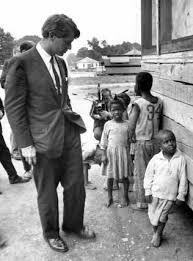
Robert F. Kennedy talking with black children
“And again, I don’t believe that we have to accept that. I don’t believe that it’s necessary in the United States of America. I think that we can work together. I don’t think that we have to shoot at each other, to beat each other, to curse each other and criticize each other, I think that we can do better in this country. And that is why I run for President of the United States….
“I have seen children in Mississippi starving, their bodies so crippled from hunger and their minds have been so destroyed for their whole life that they will have no future. I have seen children in Mississippi—here in the United States—with a gross national product of $800 billion dollars.
“I have seen children in the Delta area of Mississippi with distended stomachs, whose faces are covered with sores from starvation, and we haven’t developed a policy so we can get enough food so that they can live, so that their children, so that their lives are not destroyed, I don’t think that’s acceptable in the United States of America and I think we need a change.”
1968 PRESIDENTIAL CAMPAIGN, 2020 PRESIDENTIAL CAMPAIGN, ABC NEWS, ALTERNET, AMERICABLOG, AMERICAN INDIANS, AP, BABY BOOMER RESISTANCE, BARBARA GARSON, BLACK LIVES MATTER, BLOOMBERG, BUZZFEED, CBS NEWS, CIVIL RIGHTS, CNN, COMING APART: AMERICA IN THE 1960S (BOOK), CROOKS AND LIARS, DAILY KOZ, DEMOCRATS, DRUDGE REPORT, EUGENE MCCARTHY, FACEBOOK, FIVETHIRTYEIGHT, GEORGE BERNARD SHAW, GROSS NATIONAL PRODUCT, HARPER’S MAGAZINE, JIM SLATTERY, JOHN F. KENNEDY, Kamala Harris, KANSAS STATE UNIVERSITY, LOOK MAGAZINE, LYNDON B. JOHNSON, MCBIRD!, MEDIA MATTERS, MISSISSIPPI, MOTHER JONES, MOVEON, MSNBC, NBC NEWS, NEWSWEEK, NPR, PBS NEWSHOUR, POLITICO, POLITICUSUSA, RAW STORY, REPUBLICANS, REUTERS, ROBERT F. KENNEDY, SALON, SEATTLE TIMES, SIRHAN SIRHAN, SLATE, SOPHOCLES, STANLEY TRETICK, TALKING POINTS MEMO, TET OFFENSIVE, THE ATLANTIC, THE CHICAGO SUN-TIMES, THE CHICAGO TRIBUNE, THE DAILY BEAST, THE DAILY BLOG, THE GUARDIAN, THE HILL, THE HUFFINGTON POST, THE LOS ANGELES TIMES, THE NATION, THE NEW REPUBLIC, THE NEW YORK TIMES, THE VILLAGE VOICE, THE WASHINGTON POST, THINKPROGRESS, TIME, TIME MAGAZINE, TRUTHDIG, TRUTHOUT, TWITTER, TWO POLITICAL JUNKIES, U.S. NEWS & WORLD REPORT, UNIVERSITY OF KANSAS, UPI, USA TODAY, VIETNAM WAR, WILLIAM L. O'NEIL, WONKETTE
In Bureaucracy, History, Law, Law Enforcement, Military, Politics, Social commentary, Uncategorized on August 10, 2020 at 1:37 am
He remains forever frozen in time—young, vigorous, with tousled hair and a high-pitched voice calling on Americans to do better for those less fortunate.
It’s been 52 years since his life was brutally cut short—yet he remains forever the age at which he died: 42. Born in 1925, he would turn 95 on November 20 if he were alive today.
And he exuded an idealism which seems totally out of place with today’s “I’ve-got-mine-so-screw-you” politics.
On March 16, 1968, from the Caucus Room of the Old Senate Office building, New York Senator Robert F. Kennedy declared his candidacy for President of the United States.
Eight years earlier, on January 2, 1960, his brother, Massachusetts Senator John F. Kennedy had announced his own candidacy for the Democratic presidential nomination from the same place.
Ten months later, on November 8, that campaign had ended in victory with his election. And that victory, in turn, ended in bitter sorrow with his assassination two years, 10 months and two days later on November 22, 1963.
Robert F. Kennedy’s presidential campaign would not last as long as his late brother’s. Nor would it end in the victory he and his supporters yearned for.
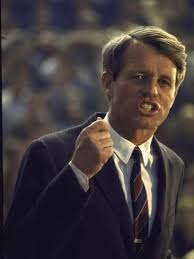
Robert F. Kennedy
Eighty-two days later, he was dead—shot in the back of the head by Sirhan Sirhan, a Palestinian Arab furious at Kennedy’s avowed support for Israel.
For Kennedy, making up his mind to run for the Presidency was no easy task.
Since the assassination of his brother, millions of Americans had assumed—as his admirers or detractors—that he would one day become President.
For his admirers, there was an element of “the once and future king” about this young, intense man with tousled hair and a high-pitched voice.He—they believed—was the man who would somehow avenge his martyred brother by restoring “Camelot” and returning youth, energy and idealism to the White House.
A playwright—Barbara Garson—had even written a 1967 satire depicting then-President Lyndon B. Johnson as the MacBeth-like murderer of John Ken O-Dunc. In the end, he was confronted and killed by Robert Ken O’Dunc.

His detractors saw him as a ruthless upstart who wanted to foist too-liberal policies on the United States. They distrusted his sympathy for the downtrodden—especially blacks and Hispanics. Worse, they saw the Kennedy family as trying to found a dynasty of Presidents that could last until the mid-1980s.
But the real Robert Kennedy was long torn between running against Johnson—whom he had long personally loathed—and letting someone else do so.
Kennedy’s hatred of Johnson—and his irrational belief that LBJ was somehow responsible for his brother’s death—was well-known. And Kennedy feared that if he ran against Johnson, his many enemies would charge he was doing so out of personal animosity.
And there was another reason: Johnson, who had won the Presidency in a landslide in 1964, was certain to seek re-election in 1968. If Kennedy challenged him for the nomination, it might well split the party and result in the election of a Republican that November. And he—Kennedy—would be blamed for it.
Throughout 1966-7, Kennedy was urged to run against Johnson. Still, he dithered.
Then, on March 12, Minnesota United States Senator Eugene McCarthy entered the New Hampshire Democratic primary against Johnson—and won a surprising 42.2% of the vote to Johnson’s 49.4%. Four days later, Robert Kennedy announced his own candidacy.
McCarthy’s supporters were outraged: Their candidate had dared to do what Kennedy had not—directly take on Johnson. And now that he had shown it could be done, the opportunistic Kennedy had jumped in.
On March 18—two days after announcing his candidacy—Kennedy gave his first campaign speech at Kansas State University in Manhattan, Kansas. This was the heart of conservative country, and Kennedy didn’t know how his audience would accept many of his decidedly liberal proposals.
“Do you think they’ll boo him?” his wife, Ethel, asked a friend before the speech. “Will they hate him?”
Arriving at the university, Kennedy ate breakfast at the student union—and told a group of university officials and student leaders: “Some of you may not like what you’re going to hear in a few minutes, but it’s what I believe; and if I’m elected President, it’s what I’m going to do.”

Kansas State University
As events unfolded, he—and Ethel—had no reason to worry.
Kennedy had served as United States Attorney General from 1961 to 1964. Yet he had not limited himself to simply fighting organized crime and enforcing civil rights. He had aggressively urged his brother, the President, to take a hard line on fighting the Communist forces in Vietnam.
But now he did something almost no other politician had—or has—ever done: He publicly accepted responsibly for the disaster the war had become since 1965:
“Let me begin this discussion with a note both personal and public. I was involved in many of the early decisions on Vietnam, decisions that helped set us on our present path.
“It may be that the effort was doomed from the start; that it was never really possible to bring all the people of South Vietnam under the rule of the successive governments we supported.”
2016 PRESIDENTIAL CAMPAIGN, ABC NEWS, ACADEMY AWARDS, ALEXANDER SHUSTOROVICH, ALTERNET, AMERICABLOG, ANDREW INTRATER, AP, ARCHIBALD COX, BABY BOOMER RESISTANCE, BARACK OBAMA, BEST ACTOR OSCAR, BLOOMBERG, BUZZFEED, CBS NEWS, CIA, CNN, CROOKS AND LIARS, DAILY KOZ, DAVID BROOKS, DEPARTMENT OF HOMELAND SECURITY, DONALD TRUMP, DONALD TRUMP JR., DONALD TRUMP’S INAUGURAL COMMITTEE, DRUDGE RETORT, FACEBOOK, FBI, FEDERAL ELECTIONS COMMISSION, FIVETHIRTYEIGHT, FOX NEWS, FRED ZINNEMANN, FRED ZINNENANN, GARY COOPER, GEORGE W. BUSH, GRACE KELLY, HARPER’S MAGAZINE, HIGH NOON, HILLARY CLINTON, HOUSE INTELLIGENCE COMMITTEE, JAMES COMEY, JARED KUSHNER, JEFF SESSIONS, JENNIFER TAUB, JOHN KASICH, JOHN MCCAIN, JOSEPH R. MCCARTHY, LEN BLAVATNIK, LESTER HOLT, LINDSEY GRAHAM, MARCO RUBIO, MARK SHIELDS, MEDIA MATTERS, MICHAEL FLYNN, MITCH MCCONNELL, MOTHER JONES, MOVEON, MSNBC, NATIONAL SECURITY AGENCY, NBC NEWS, NEWSWEEK, NPR, OFFICE OF THE DIRECTOR OF NATIONAL INTELLIGENCE, PAUL MANAFORT, PAUL RYAN, PBS NEWSHOUR, PEW RESEARCH SURVEY, POLITICAL ACTION COMMITTEES (PACS), POLITICAL CONSULTANTS, POLITICO, POLITICUSUSA, PRINCETON UNIVERSITY, RAW STORY, REPUBLICAN PARTY, REPUBLICANS, REUTERS, RICHARD M. NIXON, ROBERT MUELLER III, ROD ROSENSTEIN, RUDOLPH GIULIANI, RUSSIA, RUSSIAN OLIGARCHS, SALON, SCOTT WALKER, SEATTLE TIMES, SENATE INTELLIGENCE COMMITTEE, SENATE LEADERSHIP FUND, SERGEY KISLYAK, SERGEY LAVROV, SIMON KUKES, SLATE, SOVIET UNION, TALKING POINTS MEMO, TEX RITTER, THE ATLANTIC, THE CHICAGO SUN-TIMES, THE CHICAGO TRIBUNE, THE DAILY BEAST, THE DAILY BLOG, THE GUARDIAN, THE HILL, THE HUFFINGTON POST, THE LOS ANGELES TIMES, THE NATION, THE NEW REPUBLIC, THE NEW YORK TIMES, THE VILLAGE VOICE, THE WASHINGTON POST, THINKPROGRESS, TIME, TRUMP INAUGURAL COMMITTEE, TRUMP TOWER, TRUTHDIG, TRUTHOUT, TWITTER, TWO POLITICAL JUNKIES, U.S. NEWS & WORLD REPORT, UNITED STATES DEPARTMENT OF JUSTICE, UNITED STATES DEPARTMENT OF STATE, UNITED STATES HOUSE OF REPRESENTATIVES, UNITED STATES MARINE CORPS, UNITED STATES SENATE, UNIVERSITY OF VIRGINIA LAW SCHOOL, UPI, USA TODAY, VIETNAM WAR, VLADIMIR PUTIN, WILL KANE, WILLIAM BARR, WONKETTE
In Bureaucracy, History, Law, Law Enforcement, Military, Politics, Social commentary on July 17, 2020 at 12:15 am
Special Counsel Robert Mueller III submitted his findings to Attorney General William Barr on March 22, 2019. A redacted version of the 448-page report was publicly released by the Department of Justice on April 18.
By that date, Mueller had:
- Indicted 34 people—including four former Trump campaign advisers.
- Indicted three Russian companies.
- Obtained eight guilty pleas to felonies or convictions—including five Trump associates and campaign officials.
- Unveiled Russians’ determination to elect Trump over Hillary Clinton.
- Revealed that former National Security Adviser Michael Flynn discussed removing sanctions against Russia with then-Russian ambassador, Sergey Kislyak, during the transition period.
- Discovered that Trump associates knew about Russian outreach efforts during the campaign.
On July 24, 2019, Mueller testified before the House Judiciary Committee. There he revealed that Donald Trump, the President of the United States, had:
- Sought Russian interference during the 2016 Presidential campaign.
- Benefited from that intervention.
- Concealed his close personal economic ties to Vladimir Putin by lying to the public about his hidden attempts to secure a construction project in Moscow.
- Lied to the special prosecutor.
- Directed subordinates to falsify records.
- Tried to exert “undue influence” on law enforcement in order to protect himself and his allies.
While appearing before Congress, Mueller was forced to:
- Testify for seven hours before the House Judiciary Committee and the House Intelligence Committee.
- Endure powerful, hot klieg lights needed by television cameras.
- Patiently take questions that were at times self-serving
- Respectfully answer questions meant to attack his personal and professional integrity.
- Simplify complex legal scenarios for men and women who have the attention span of a gnat.
Although Mueller was joined by former deputy special counsel Aaron Zebley, Zebley was forbidden to give testimony. He could only serve as Mueller’s counsel, giving quiet advice.
So the entire seven hours of public testimony fell on the shoulders of a 74-year-old man. No wonder he appeared tired by the end of the day.
And what was his reward?
A July 26, 2019 article in The Atlantic—entitled “The Press Has Adopted Trump’s Reality-Show Standards”—sums up the general reaction of the nation’s press to these bombshell revelations:
“In any other administration, in any other time, a special prosecutor, former FBI director, and decorated Marine testifying that the president of the United States was an unprosecuted felon who encouraged and then benefited from an attack on American democracy in pursuit of personal and political gain would bring the country to a grinding halt.
“But the American political press found Mueller insufficiently dazzling.”
Among those media:
- The New York Times: “Mueller’s Performance Was a Departure From His Much-Fabled Stamina.”
- The Washington Post: “On Mueller’s Final Day on the National Stage, a Halting, Faltering Performance.” And another reporter dubbed him a “weary old man.”
- The Hill: “Muller’s ‘Blockbuster’ Appearance Turned into ‘Bomb’ of Performance.”
- Politico: “Bob Mueller Is Struggling.”
- Right-wing media openly questioned Mueller’s health. These same media never mentioned that Trump is grotesquely overweight, never walks when he can ride, and eats a diet high in fats and calories.
In short: The nation’s most influential news media—on which citizens depend for their understanding of national and international personalities and events—has adopted the standards of teenagers.
* * * * *
Americans like their heroes young and powerful—preferably invincible. They want their heroes to be handsome and their villains to be ugly. They want to see lots of explosions and collapsing buildings.
And if a superhero can deliver a zinger of a line while throwing a KO punch, so much the better.
Lacking a sense of history—or concern for it—most Americans remain ignorant of the men, women and events that have shaped the era in which they live.
Most of those who watched Robert Mueller testify before Congress knew nothing of the sacrifices he had made for his country:
- As a Marine Vietnam veteran decorated for heroism (1968-1971);
- As a United States Attorney (1986-1987 and 1998-2001);
- As a United States Assistant Attorney General (1990-1993 and 2001); and
- As director of the FBI (2001-2013).
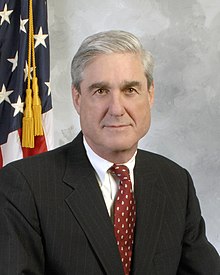
Robert Mueller
A news media that prizes glitz over substance has abdicated the role intended for it by the Founding Fathers: To act as a watchdog over the nation’s leaders.
That does not, however, diminish the legacy of Robert Mueller’s achievements—as Special Counsel and every other position he has held.
Revered within the law enforcement community, he will forever rank among the giants who personify courage and integrity
As a soldier, prosecutor, FBI director and Special Counsel, Robert Mueller took an oath to “support and defend the Constitution of the United States against all enemies, foreign and domestic.”
So did Donald Trump when he was inaugurated the nation’s 45th President. And so did every Republican member of the House of Representatives and the Senate.
The difference between Robert Mueller and Trump—and the overwhelming majority of Republican Congressional members—is this: Mueller, like a compass pointing True North, has always stayed faithful to that oath.
In doing so, he carried on his shoulders the burdens created when millions of racist, hate-filled Americans deliberately sent a corrupt, Russian-backed egomaniac and would-be dictator to the White House.
2016 PRESIDENTIAL CAMPAIGN, ABC NEWS, ACADEMY AWARDS, ALEXANDER SHUSTOROVICH, ALTERNET, AMERICABLOG, ANDREW INTRATER, AP, ARCHIBALD COX, BABY BOOMER RESISTANCE, BARACK OBAMA, BEST ACTOR OSCAR, BLOOMBERG, BUZZFEED, CBS NEWS, CIA, CNN, CROOKS AND LIARS, DAILY KOZ, DAVID BROOKS, DEPARTMENT OF HOMELAND SECURITY, DONALD TRUMP, DONALD TRUMP JR., DONALD TRUMP’S INAUGURAL COMMITTEE, DRUDGE RETORT, FACEBOOK, FBI, FEDERAL ELECTIONS COMMISSION, FIVETHIRTYEIGHT, FOX NEWS, FRED ZINNEMANN, FRED ZINNENANN, GARY COOPER, GEORGE W. BUSH, GRACE KELLY, HARPER’S MAGAZINE, HIGH NOON, HILLARY CLINTON, HOUSE INTELLIGENCE COMMITTEE, JAMES COMEY, JARED KUSHNER, JEFF SESSIONS, JENNIFER TAUB, JOHN KASICH, JOHN MCCAIN, JOSEPH R. MCCARTHY, LEN BLAVATNIK, LESTER HOLT, LINDSEY GRAHAM, MARCO RUBIO, MARK SHIELDS, MEDIA MATTERS, MICHAEL FLYNN, MITCH MCCONNELL, MOTHER JONES, MOVEON, MSNBC, NATIONAL SECURITY AGENCY, NBC NEWS, NEWSWEEK, NPR, OFFICE OF THE DIRECTOR OF NATIONAL INTELLIGENCE, PAUL MANAFORT, PAUL RYAN, PBS NEWSHOUR, PEW RESEARCH SURVEY, POLITICAL ACTION COMMITTEES (PACS), POLITICAL CONSULTANTS, POLITICO, POLITICUSUSA, PRINCETON UNIVERSITY, RAW STORY, REPUBLICAN PARTY, REPUBLICANS, REUTERS, RICHARD M. NIXON, ROBERT MUELLER III, ROD ROSENSTEIN, RUDOLPH GIULIANI, RUSSIA, RUSSIAN OLIGARCHS, SALON, SCOTT WALKER, SEATTLE TIMES, SENATE INTELLIGENCE COMMITTEE, SENATE LEADERSHIP FUND, SERGEY KISLYAK, SERGEY LAVROV, SIMON KUKES, SLATE, SOVIET UNION, TALKING POINTS MEMO, TEX RITTER, THE ATLANTIC, THE CHICAGO SUN-TIMES, THE CHICAGO TRIBUNE, THE DAILY BEAST, THE DAILY BLOG, THE GUARDIAN, THE HILL, THE HUFFINGTON POST, THE LOS ANGELES TIMES, THE NATION, THE NEW REPUBLIC, THE NEW YORK TIMES, THE VILLAGE VOICE, THE WASHINGTON POST, THINKPROGRESS, TIME, TRUMP INAUGURAL COMMITTEE, TRUMP TOWER, TRUTHDIG, TRUTHOUT, TWITTER, TWO POLITICAL JUNKIES, U.S. NEWS & WORLD REPORT, UNITED STATES DEPARTMENT OF JUSTICE, UNITED STATES DEPARTMENT OF STATE, UNITED STATES HOUSE OF REPRESENTATIVES, UNITED STATES MARINE CORPS, UNITED STATES SENATE, UNIVERSITY OF VIRGINIA LAW SCHOOL, UPI, USA TODAY, VIETNAM WAR, VLADIMIR PUTIN, WILL KANE, WILLIAM BARR, WONKETTE
In Bureaucracy, History, Law, Law Enforcement, Military, Politics, Social commentary on July 16, 2020 at 12:30 am
Altogether, four Russian oligarchs—Len Blavatnik, Alexander Shustorovich, Andrew Intrater and Simon Kukes––contributed $10.4 million from the start of the 2015-16 election cycle through September 2017. Of this, 99% went to Republicans.
As Senate Majority Leader, Kentucky United States Senator Mitch McConnell participated in high-level intelligence briefings in 2016. From agencies such as the FBI, CIA and the code-cracking National Security Agency, he learned that the Russians were trying to subvert the electoral process.

In October, 2016, the Department of Homeland Security (DHS) and the Office of the Director of National Intelligence (DNI) issued a joint statement: The Russian government had directed the effort to subvert the 2016 Presidential election.
Two weeks later, McConnell’s PAC accepted a $1 million donation from Blavatnik.
On March 30, 2017, McConnell’s PAC accepted another $1 million from Blavatnik. This was just 10 days after former FBI Director James Comey testified before the House Intelligence Committee about Russia’s efforts to subvert the 2016 election.
Billionaires don’t give huge sums to politicians without expecting to get something in return. And this is especially true—and frightening—when the contributors are linked to a former KGB agent like Vladimir Putin, whose aggressive intentions are increasingly on display.
Special Counsel Robert Mueller thus faced increased hostility from Republicans who no doubt feared their own ownership by Moscow would become a focus of his investigation.
But there was another powerful reason why so many Republicans closed ranks with President Donald Trump against him:
#2: Republicans feared enraging Trump’s fanatical base.
On August 30, 2017, an article in Salon sought to explain why Trump was so popular among his supporters.
Its headline ran: “Most Americans Strongly Dislike Trump, But the Angry Minority That Adores Him Controls Our Politics.”
It described these voters as representing about one-third of the Republican party:
“These are older and more conservative white people, for the most part, who believe he should not listen to other Republicans and should follow his own instincts….
“They like Trump’s coarse personality, and approve of the fact that he treats women like his personal playthings. They enjoy it when he expresses sympathy for neo-Nazis and neo-Confederate white supremacists.
“They cheer when he declares his love for torture, tells the police to rough up suspects and vows to mandate the death penalty for certain crimes. (Which of course the president cannot do.)
“…This cohort of the Republican party didn’t vote for Trump because of his supposed policies on trade or his threat to withdraw from NATO. They voted for him because he said out loud what they were thinking. A petty, sophomoric, crude bully is apparently what they want as a leader.”
And keeping that cohort constantly stirred up was the Right-wing Fox News Network. This was not a source of legitimate news but the propaganda arm of the Fascistic Right and the Republican party.
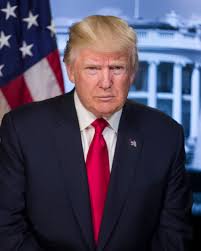
Donald Trump
On May 18, 2018, conservative New York Times columnist David Brooks offered this political commentary on The PBS Newshour: “I would just say, I observe politically, I do think if Trump fired Mueller tomorrow, the Republican Party would back him.
“Because I think Fox News has created a predicate. They have done thousands of surveys and investigations about Mueller as a political operative.”
And Brooks’ fellow political commentator, liberal syndicated columnist Mark Shields, echoed those sentiments: “At the same time, I think what we learned is that the defense of Donald Trump, led by himself and [his attorney] Rudy Giuliani, is to savage and torment, denigrate, vilify and libel Bob Mueller.
“Bob Mueller happens to be an American who turned down an eight-figure income to be a major corporate lawyer, instead became a public servant. He’s a man who volunteered and carries the wounds of battle from having been a Marine platoon leader in Vietnam.
“He is a public servant. He has not said a word. He has not given an interview. He has not leaked to anybody. And he stands vilified by Trump and Giuliani and their cohorts and their outriders. It is indefensible.
“And they are trying to exact the same damage upon the Justice Department of the country, the FBI and this country that Joe McCarthy did on the State Department, which has never fully recovered from his libelous attacks.”
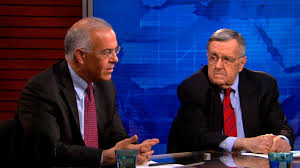
David Brooks and Mark Shields
According to a Pew Research Center survey, that one-third of Republicans who fanatically supported Trump comprised only 16% of the population. That left 65% of Republicans who were revolted by Trump’s personality and behavior.
But that 65% of Republicans were being advised by GOP political consultants to vigorously support him.
“Your heart tells you that he’s bad for the country,” one anonymous consultant told the Salon reporter. “Your head looks at polling data among Republican primary voters and sees how popular he is.”
It’s precisely these hard-core Fascists who come out in mid-term elections—and they’re scaring the remaining 65% who make up the GOP establishment.
The highest priority of that establishment, after all, is to hold onto their privileged positions in the House and Senate. And anything that might jeopardize that—including what’s best for the country—can go hang.
2016 PRESIDENTIAL CAMPAIGN, ABC NEWS, ACADEMY AWARDS, ALEXANDER SHUSTOROVICH, ALTERNET, AMERICABLOG, ANDREW INTRATER, AP, ARCHIBALD COX, BABY BOOMER RESISTANCE, BARACK OBAMA, BEST ACTOR OSCAR, BLOOMBERG, BUZZFEED, CBS NEWS, CIA, CNN, CROOKS AND LIARS, DAILY KOZ, DAVID BROOKS, DEPARTMENT OF HOMELAND SECURITY, DONALD TRUMP, DONALD TRUMP JR., DONALD TRUMP’S INAUGURAL COMMITTEE, DRUDGE RETORT, FACEBOOK, FBI, FEDERAL ELECTIONS COMMISSION, FIVETHIRTYEIGHT, FOX NEWS, FRED ZINNEMANN, FRED ZINNENANN, GARY COOPER, GEORGE W. BUSH, GRACE KELLY, HARPER’S MAGAZINE, HIGH NOON, HILLARY CLINTON, HOUSE INTELLIGENCE COMMITTEE, JAMES COMEY, JARED KUSHNER, JEFF SESSIONS, JENNIFER TAUB, JOHN KASICH, JOHN MCCAIN, JOSEPH R. MCCARTHY, LEN BLAVATNIK, LESTER HOLT, LINDSEY GRAHAM, MARCO RUBIO, MARK SHIELDS, MEDIA MATTERS, MICHAEL FLYNN, MITCH MCCONNELL, MOTHER JONES, MOVEON, MSNBC, NATIONAL SECURITY AGENCY, NBC NEWS, NEWSWEEK, NPR, OFFICE OF THE DIRECTOR OF NATIONAL INTELLIGENCE, PAUL MANAFORT, PAUL RYAN, PBS NEWSHOUR, PEW RESEARCH SURVEY, POLITICAL ACTION COMMITTEES (PACS), POLITICAL CONSULTANTS, POLITICO, POLITICUSUSA, PRINCETON UNIVERSITY, RAW STORY, REPUBLICAN PARTY, REPUBLICANS, REUTERS, RICHARD M. NIXON, ROBERT MUELLER III, ROD ROSENSTEIN, RUDOLPH GIULIANI, RUSSIA, RUSSIAN OLIGARCHS, SALON, SCOTT WALKER, SEATTLE TIMES, SENATE INTELLIGENCE COMMITTEE, SENATE LEADERSHIP FUND, SERGEY KISLYAK, SERGEY LAVROV, SIMON KUKES, SLATE, SOVIET UNION, TALKING POINTS MEMO, TEX RITTER, THE ATLANTIC, THE CHICAGO SUN-TIMES, THE CHICAGO TRIBUNE, THE DAILY BEAST, THE DAILY BLOG, THE GUARDIAN, THE HILL, THE HUFFINGTON POST, THE LOS ANGELES TIMES, THE NATION, THE NEW REPUBLIC, THE NEW YORK TIMES, THE VILLAGE VOICE, THE WASHINGTON POST, THINKPROGRESS, TIME, TRUMP INAUGURAL COMMITTEE, TRUMP TOWER, TRUTHDIG, TRUTHOUT, TWITTER, TWO POLITICAL JUNKIES, U.S. NEWS & WORLD REPORT, UNITED STATES DEPARTMENT OF JUSTICE, UNITED STATES DEPARTMENT OF STATE, UNITED STATES HOUSE OF REPRESENTATIVES, UNITED STATES MARINE CORPS, UNITED STATES SENATE, UNIVERSITY OF VIRGINIA LAW SCHOOL, UPI, USA TODAY, VIETNAM WAR, VLADIMIR PUTIN, WILL KANE, WILLIAM BARR, WONKETTE
In Bureaucracy, History, Law, Law Enforcement, Politics, Social commentary on July 15, 2020 at 12:12 am
On November 8, 2016, millions of racist, hate-filled Americans took “revenge” on the nation’s first black President—by deliberately voting a Russian-backed egomaniac and would-be dictator into the White House.
By doing so, they set in motion events that would lead Robert S. Mueller III to assume the consequences—and burdens—of their brutal, Fascistic desires.
On May 9, 2017, President Donald Trump abruptly fired FBI Director James Comey.
By doing so, he hoped to derail the Bureau’s investigation of documented ties between Russian Intelligence agents and high-ranking officials of the 2016 Trump Presidential campaign.
A national firestorm erupted—unprecedented since President Richard M. Nixon had fired Watergate Special Prosecutor Archibald Cox on October 20, 1973.
To squelch it, Deputy Attorney General Rod Rosenstein moved quickly.
On May 17, 2017, he appointed Robert S. Mueller 111 to serve as Special Counsel for the United States Department of Justice.
Rosenstein charged Mueller to investigate “any links and/or coordination between the Russian government and individuals associated with the campaign of President Donald Trump, and any matters that arose or may arise directly from the investigation.”
Trump claimed from the outset that there was “no collusion” between him and members of Russia’s Intelligence community. But he acted like a guilty man desperate to stop the investigation before it uncovers the full extent of his criminality.
Since then, Trump, his shills in Congress and Right-wing Fox News relentlessly attacked Mueller’s integrity and investigative methods.
From the outset of that investigation, there were widespread fears that Trump would fire Mueller, just as he did Comey. Those fears increased over the weekend of March 17-18, 2018, when Trump spewed a series of angry tweets on Twitter:
- “The Mueller probe should never have been started in that there was no collusion and there was no crime. It was based on fraudulent activities and a Fake Dossier paid for by Crooked Hillary and the DNC, and improperly used in FISA COURT for surveillance of my campaign. WITCH HUNT!”
- “Why does the Mueller team have 13 hardened Democrats, some big Crooked Hillary supporters, and Zero Republicans? Another Dem recently added…does anyone think this is fair? And yet, there is NO COLLUSION!”
- “A total WITCH HUNT with massive conflicts of interest!”
On October 30, details emerged about a Right-wing plot to discredit the probe by falsely accusing Mueller of sexually abusing or harassing women.
Jennifer Taub, a law professor at Vermont Law School, told The Atlantic that a man working for Surefire Intelligence, a private investigative agency, had offered to pay her if she could provide dirt on Mueller. She didn’t respond and forwarded the information to the Special Counsel’s office.
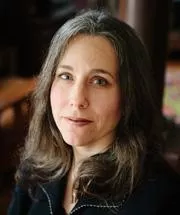
Jennifer Taub
House and Senate Republicans almost universally refused to speak out against threats by Trump to fire deputy Attorney General Rod Rosenstein and/or Special Counsel Robert Mueller.
Or, more importantly, to take action to prevent or punish him for doing so.
On April 17, 2018, Republican Senate Majority Leader Mitch McConnell said he would not allow legislation to protect Robert Mueller’s independent investigation into Russian subversion of the 2016 Presidential election to reach the Senate floor.

Mitch McConnell
“I’m the one who decides what we take to the floor. That’s my responsibility as majority leader. We’ll not be having this on the floor of the Senate,” the Kntucky Republican said in an interview on Fox News.
Earlier that day, another Republican, Speaker of the House Paul Ryan, claimed that legislation to protect Mueller was “unnecessary.”
“It would not be in the President’s interest to [fire Mueller] and I think he knows that,” said the Wisconsin Congressman.
Why have so few Republicans dared to stand against Trump?
Two major reasons:
#1: Because many House and Senate Republicans received millions of dollars in “campaign contributions” from Russian oligarchs who are answerable to Russian dictator Vladimir Putin.
In short: Bribe monies.
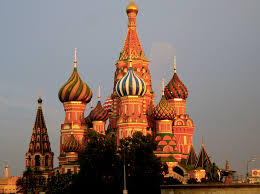
The Kremlin
The following data comes from the Federal Elections Commission.
One major Russian contributor is Len Blavatnik. During the 2015-16 election cycle, he proved one of the largest donors to GOP Political Action Committees (PACs).
Blavatnik’s net worth is estimated at $20 billion. In 2016, he gave $6.35 million to GOP PACs.
In 2017, he gave millions of dollars to top Republican leaders—such as Senators Mitch McConnell, Marco Rubio (Florida) and Lindsey Graham (South Carolina).
Specifically, Blavatnik contributed:
- A total of $1.5 million to PACs associated with Rubio.
- $1 million to Trump’s Inaugural Committee.
- $1 million to McConnell’s Senate Leadership Fund.
- $3.5 million to a PAC associated with McConnell.
- $1.1 million to Unintimidated PAC, associated with Wisconsin Governor Scott Walker.
- $200,000 to the Arizona Grassroots Action PAC, associated with Arizona Senator John McCain.
- $250,000 to New Day for America PAC, associated with Ohio Governor John Kasich.
- $800,000 went to the Security is Strength PAC, associated with Senator Lindsey Graham.
Another Russian oligarch, Alexander Shustorovich, contributed $1 million to Trump’s Inaugural Committee.
A third oligarch, Andrew Intrater, contributed $250,000 to Trump’s Inaugural Committee.
And a fourth, Simon Kukes, contributed a total of $283,000, much of it to the Trump Victory Fund.
2016 PRESIDENTIAL CAMPAIGN, ABC NEWS, ACADEMY AWARDS, ALEXANDER SHUSTOROVICH, ALTERNET, AMERICABLOG, ANDREW INTRATER, AP, ARCHIBALD COX, BABY BOOMER RESISTANCE, BARACK OBAMA, BLOOMBERG, BUZZFEED, CBS NEWS, CIA, CNN, CROOKS AND LIARS, DAILY KOZ, DAVID BROOKS, DEPARTMENT OF HOMELAND SECURITY, DONALD TRUMP, DONALD TRUMP JR., DONALD TRUMP’S INAUGURAL COMMITTEE, DRUDGE RETORT, FACEBOOK, FBI, FEDERAL ELECTIONS COMMISSION, FIVETHIRTYEIGHT, FOX NEWS, FRED ZINNEMANN, GARY COOPER, GEORGE W. BUSH, GRACE KELLY, HARPER’S MAGAZINE, HIGH NOON, HILLARY CLINTON, HOUSE INTELLIGENCE COMMITTEE, JAMES COMEY, JARED KUSHNER, JEFF SESSIONS, JENNIFER TAUB, JOHN KASICH, JOHN MCCAIN, JOSEPH R. MCCARTHY, LEN BLAVATNIK, LESTER HOLT, LINDSEY GRAHAM, MARCO RUBIO, MARK SHIELDS, MEDIA MATTERS, MICHAEL FLYNN, MITCH MCCONNELL, MOTHER JONES, MOVEON, MSNBC, NATIONAL SECURITY AGENCY, NBC NEWS, NEWSWEEK, NPR, OFFICE OF THE DIRECTOR OF NATIONAL INTELLIGENCE, PAUL MANAFORT, PAUL RYAN, PBS NEWSHOUR, PEW RESEARCH SURVEY, POLITICAL ACTION COMMITTEES (PACS), POLITICAL CONSULTANTS, POLITICO, POLITICUSUSA, PRINCETON UNIVERSITY, RAW STORY, REPUBLICAN PARTY, REPUBLICANS, REUTERS, RICHARD M. NIXON, ROBERT MUELLER III, ROBERT S. MUELLER 111, ROD ROSENSTEIN, RUDOLPH GIULIANI, RUSSIA, RUSSIAN OLIGARCHS, SALON, SCOTT WALKER, SEATTLE TIMES, SENATE INTELLIGENCE COMMITTEE, SENATE LEADERSHIP FUND, SERGEY KISLYAK, SERGEY LAVROV, SIMON KUKES, SLATE, SOVIET UNION, SUPREME COURT, TALKING POINTS MEMO, TEX RITTER, THE ATLANTIC, THE CHICAGO SUN-TIMES, THE CHICAGO TRIBUNE, THE DAILY BEAST, THE DAILY BLOG, THE GUARDIAN, THE HILL, THE HUFFINGTON POST, THE LOS ANGELES TIMES, THE NATION, THE NEW REPUBLIC, THE NEW YORK TIMES, THE VILLAGE VOICE, THE WASHINGTON POST, THINKPROGRESS, TIME, TRUMP INAUGURAL COMMITTEE, TRUMP TOWER, TRUTHDIG, TRUTHOUT, TWITTER, TWO POLITICAL JUNKIES, U.S. NEWS & WORLD REPORT, UNITED STATES DEPARTMENT OF JUSTICE, UNITED STATES DEPARTMENT OF STATE, UNITED STATES HOUSE OF REPRESENTATIVES, UNITED STATES MARINE CORPS, UNITED STATES SENATE, UNIVERSITY OF VIRGINIA LAW SCHOOL, UPI, USA TODAY, VIETNAM WAR, VLADIMIR PUTIN, WILL KANE, WILLIAM BARR, WONKETTE
In Bureaucracy, History, Law, Law Enforcement, Military, Politics, Social commentary on July 14, 2020 at 1:01 am
His face is lined and his gray hair is topped with a black hat. This is clearly not a young man. If he’s seen his share of violence, he doesn’t talk about it.
His name: Will Kane, as played by Gary Cooper. And he’s the local marshal of an anonymous Western town.
He’s about to face four armed and vicious criminals who intend to murder him. And he’s going to do it without support from the very citizens he’s sworn to defend.
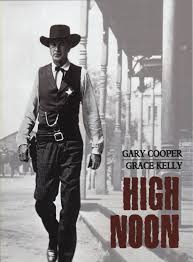
“High Noon,” the 1952 movie in which this story takes place, won a Best Actor Academy Award for its star, Cooper. It was nominated for another six Academy Awards and won four (Actor, Editing, Music-Score, and Music-Song).
Its opening tune, “Do Not Forsake Me, Oh My Darling,” played incessantly on radios throughout the United States. President Dwight D. Eisenhower added his kudos to the movie, and often hummed its theme in the White House.
Fast forward to an America 66 years later.
A similar morality play opened—-in real life, not on a movie set. At stake wasn’t simply the life of one man but perhaps the future of American democracy.
Carrying that burden was Robert Swan Mueller III.
Like the Gary Cooper character in “High Noon,” he was not a young man—born on August 7, 1944. And, like Cooper’s Will Kane, he is tall, gray-haired and tight-lipped.
But while Cooper never saw military service, Mueller did. A 1966 graduate of Princeton University, he served as a Marine Corps infantry platoon commander during the Vietnam War.
Wounded in combat, among the military awards he received were:
- The Bronze Star Medal with Combat “V” for heroism (for saving a wounded Marine while under enemy fire).
- The Purple Heart Medal (awarded for wounds in combat).
- Two Navy and Marine Corps Commendation Medals with Combat “V”.
- Combat Action Ribbon.
- National Defense Service Medal.
Having given three years of his life (1968-1971) to the Marines, Mueller devoted the rest of his life to law enforcement.
Robert Mueller
A 1973 graduate of the University of Virginia Law School, Mueller served as:
- United States Attorney for the District of Massachusetts (1986-1987);
- United States Assistant Attorney General for the Criminal Division (1990-1993);
- United States Attorney for the Northern District of California (1998-2001);
- United States Deputy Attorney General (January 20, 2001– May 10, 2001).
On September 4, 2001—seven days before Al-Qaeda’s monstrous 9/11 attacks on Washington and New York—President George W. Bush appointed him director of the Federal Bureau of Investigation (FBI).
Widely praised for his integrity and effectiveness, he served his full 10-year term—the legal maximum.
But when President Barack Obama took office in 2009, he asked Mueller—a lifelong Republican—to stay on for an additional two years until a suitable replacement could be found.
Mueller agreed—and was succeeded by a fellow Justice Department colleague named James Comey.
Retiring from the FBI in 2013 at age 69, Mueller’s 27-year career as a dedicated law enforcer seemed at last to be over.
Then, on May 9, 2017, President Donald Trump fired Comey as FBI director. There were five reasons for this:
- Comey had refused to pledge his personal loyalty to Trump. Trump had made the “request” during a private dinner at the White House in January.
- Comey told Trump that he would always be honest with him. But that didn’t satisfy Trump’s demand that the head of the FBI act as his personal secret police chief—as was the case in the former Soviet Union.
- Trump had tried to coerce Comey into dropping the FBI’s investigation into former National Security Adviser Michael Flynn, for his secret ties to Russia and Turkey. Comey had similarly resisted that demand.
- Comey had recently asked the Justice Department to fund an expanded FBI investigation into well-documented contacts between Trump’s 2016 Presidential campaign and Russian Intelligence agents.
- The goal of that collaboration: To elect Trump over Hillary Clinton, a longtime foe of Russian President Vladimir Putin.

James Comey
On May 10—the day after firing Comey—Trump met in the Oval Office with Russian Foreign Minister Sergey Lavrov and Russian Ambassador Sergey Kislyak.
Kislyak was reportedly a top recruiter for Russia’s SVR foreign intelligence agency. He had been closely linked with Jeff Sessions, now Attorney General, and fired National Security Adviser Mike Flynn.
“I just fired the head of the F.B.I.,” Trump told the two dignitaries. “He was crazy, a real nut job. I faced great pressure because of Russia. That’s taken off.”
And on May 11, Trump, interviewed on NBC News by reporter Lester Holt, said: “And in fact when I decided to just do it, I said to myself, I said ‘you know, this Russia thing with Trump and Russia is a made-up story, it’s an excuse by the Democrats for having lost an election that they should have won.'”
ABC NEWS, ADOLF HITLER, ALTERNET, AMERICABLOG, AP, BABY BOOMER RESISTANCE, BATTLE OF OMDURMAN, BLOOMBERG, BONE SPURS, BRITISH ARMY, BUZZFEED, CBS NEWS, CNN, CROOKS AND LIARS, DAILY KOZ, DEMOCRATS, DONALD TRUMP, DRAFT DODGING, DRUDGE RETORT, EGYPT, FACEBOOK, FIVETHIRTYEIGHT, FOUR QUEEN’S OWN HUSSARS REGIMENT, GEORGE FLOYD, HARPER’S MAGAZINE, IMPEACHMENT, INDIA, KAYLEIGH MCENANY, KIM JONG-UN, LAFAYETTE PARK, LOS ANGELES, MEDIA MATTERS, MOTHER JONES, MOVEON, MSNBC, MURIEL BOWSER, NATIONAL GUARD, NAZI GERMANY, NBC NEWS, NEW YORK CITY, NEWSWEEK, NORTH KOREA, NPR, PBS NEWSHOUR, POLITICO, POLITICUSUSA, RAW STORY, REPUBLICANS, REUTERS, RUSSIA, SALON, SAN FRANCISCO, SCOTLAND YARD’S SPECIAL BRANCH, SEATTLE TIMES, Secret Service, SLATE, ST. JOHN’S CHURCH, TALKING POINTS MEMO, TEAR GAS, THE ATLANTIC, THE CHICAGO SUN-TIMES, THE CHICAGO TRIBUNE, THE DAILY BEAST, THE DAILY BLOG, THE GUARDIAN, THE HILL, THE HUFFINGTON POST, THE LOS ANGELES TIMES, THE NATION, THE NEW REPUBLIC, THE NEW YORK TIMES, THE VILLAGE VOICE, THE WASHINGTON POST, THINKPROGRESS, TIME, TRUTHDIG, TRUTHOUT, TWENTY-FIRST LANCERS, TWITTER, TWO POLITICAL JUNKIES, U.S. NEWS & WORLD REPORT, U.S. PARK POLICE, UPI, USA TODAY, VIETNAM WAR, VLADIMIR PUTIN, WALTER THOMPSON, WHITE HOUSE, WINSTON CHURCHILL, WONKETTE, WORLD WAR ii
In Bureaucracy, History, Law Enforcement, Military, Politics, Social commentary on June 9, 2020 at 12:07 am
On May 25, 2020, George Floyd, a black unemployed restaurant security guard, was murdered by Derek Chauvin, a white Minneapolis police officer. While Floyd was handcuffed and lying face down on a city street during an arrest, Chauvin kept his knee on the right side of Floyd’s neck for eight minutes and 46 seconds.
Cities across the United States erupted in mass protests over Floyd’s death—and police killings of black victims generally. Most of these demonstrations proved peaceful.
But cities such as Los Angeles, San Francisco and New York City saw stores looted, vandalized and/or burned. In response, President Donald Trump called for harsh policing, telling governors in a nationwide conference call that they must “dominate” protesters or be seen as “weak.”
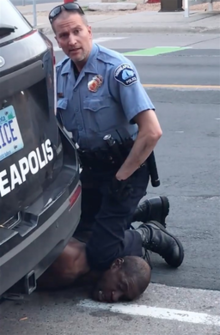
Death of George Floyd
To drive home his point, on June 1, Trump ordered police, Secret Service agents and National Guard troops to violently remove peaceful protesters from Lafayette Square, which borders St. John’s Church near the White House.
The purpose of the removal: To allow Trump to have a photo opportunity outside the church.
“I imposed a curfew at 7pm,” tweeted Washington, D.C. Mayor Muriel Bowser. “A full 25 minutes before the curfew & w/o provocation, federal police used munitions on peaceful protestors in front of the White House, an act that will make the job of @DCPoliceDept officers more difficult. Shameful!”
Video of the assault spread quickly on social media and news outlets, sparking outrage. The next day, the US Park Police (USPP) responded to the criticisms: “No tear gas was used by USPP officers or other assisting law enforcement partners to close the area at Lafayette Park.”
But the agency admitted that, while it hadn’t used tear gas, it had used smoke canisters and pepper balls. In addition, police used horses, shields and batons to beat back the demonstrators.

While the protesters were being cleared from the area, Trump appeared in the White House Rose Garden and said: “I will fight to protect you—I am your president of law and order and an ally of all peaceful protesters.”
This from the man who had been impeached by the House of Representatives in December, 2019, for abuse of power and obstruction of Congress. Only a majority-Republican Senate—fearful of losing their seats if they convicted Trump on the overwhelming evidence presented against him—had saved him from ouster.
On June 3, White House Press Secretary Kayleigh McEnany compared Trump’s photo-op in front of St. John’s Episcopal Church to former British Prime Minister Winston Churchill’s visits to bombed British cities during World War II:
“Through all of time, we have seen presidents and leaders across the world who have had leadership moments and very powerful symbols that were important for a nation to see at any given time to show a message of resilience and determination.
“Like Churchill, we saw him inspecting the bombing damage. It sent a powerful message of leadership to the British people.”

Kayleigh McEnany
Comparing Trump to Churchill proved a huge leap of imagination on McEnany’s part.
For starters, Churchill was an avowed and relentless opponent of Fascism—and especially its most infamous exponent, German Chancellor Adolf Hitler.
During the 1930s, as Europe’s democracies ignored or quailed before Nazi threats, Churchill demanded that England arm for the coming war against Nazi Germany.
Trump, a Fascistic dictator by nature, tries to rule by fiat and identifies with dictators—most notably Communist ones, such as Russia’s Vladimir Putin and North Korea’s Kim Jong-Un.
Second, throughout World War II, Churchill had only one bodyguard—Inspector Walter Thompson, of Scotland Yard’s Special Branch.

Winston Churchill (testing a submachinegun); Walter Thompson (in black fedora)
During bombing raids, Churchill often climbed atop London buildings to watch the bombardment—or raced to cities he had just learned were under attack.
Trump, on the other hand, is regularly protected by hundreds of Secret Service agents who are supplemented by hundreds of local police.
Moreover, Trump has turned the normally well-protected White House into an armed fortress. Block after block of tall, black reinforced fencing has been erected in recent days. Tan military vehicles roll along Pennsylvania Avenue and camo-clad troops patrol the corner where tourists used to buy red, white and blue USA sweatshirts.
Lafayette Square, across from the White House—normally full of selfie-taking tourists—is now behind the steel fence perimeter and filled with heavily-armed National Guard troops and Secret Service agents.
Third, as a young man, Churchill had served his country as a second lieutenant in the Fourth Queen’s Own Hussars regiment of the British Army. He volunteered to campaign against Islamic rebels in the Swat Valley of north-west India. In Egypt, he joined the 21st Lancers and subsequently saw action in the Battle of Omdurman.
Trump, on the other hand, used his father’s influence to win five draft deferments during the Vietnam war—four allowing him to complete college and one for “bone spurs.”
There is a lesson here for Kayleigh McEnany—and all future Trump apologists: Do your homework before you make easily-debunked claims on his behalf.
60 MINUTES, ABC NEWS, ALTERNET, AMERICABLOG, AP, BABY BOOMER RESISTANCE, BARACK OBAMA, BLOOMBERG, BUZZFEED, CARL MUELLER, CBS NEWS, CIA, CNN, CROOKS AND LIARS, DAILY KOS, DAILY KOZ, DRUDGE RETORT, FACEBOK, FACEBOOK, FIVETHIRTYEIGHT, HARPER’S MAGAZINE, IMPERIAL HUBRIS, ISLAM, ISLAMIC STATE OF IRAQ AND THE LEVANT, KAYLA MUELLER, MARCHING TOWARD HELL, MEDIA MATTERS, MICHAEL SCHEUER, MOTHER JONES, MOVEON, MSNBC, MUSLIMS, NBC NEWS, NEWSWEEK, NPR, OSAMA BIN LADEN, PBS NEWSHOUR, POLITICO, POLITICUSUSA, RAW STORY, REUTERS, SALON, SEATTLE TIMES, SLATE, SYRIA, TALKING POINTS MEMO, THE ATLANTIC, THE CHICAGO SUN-TIMES, THE CHICAGO TRIBUNE, THE DAILY BEAST, THE DAILY BLOG, THE GUARDIAN, THE HILL, THE HUFFINGTON POST, THE LOS ANGELES TIMES, THE NATION, THE NEW REPUBLIC, THE NEW YORK TIMES, THE VILLAGE VOICE, THE WALL STREET JOURNAL, THE WASHINGTON POST, THINKPROGRESS, TIME, TRUTHDIG, TRUTHOUT, TWITTER, TWO POLITICAL JUNKIES, U.S. NEWS & WORLD REPORT, UPI, USA TODAY, VIETNAM WAR, WONKETTE
In Bureaucracy, History, Military, Politics, Social commentary on April 3, 2020 at 12:05 am
“When trouble comes up anywhere in the world, they don’t call Beijing. They don’t call Moscow. They call us.”
So spoke President Barack Obama on the September 28, 2014 edition of 60 Minutes.
And, according to former CIA agent Michael Scheuer, that’s the problem: America can’t learn to mind its own business.
Scheuer is a 20-year CIA veteran—as well as an author, historian, foreign policy critic and political analyst.
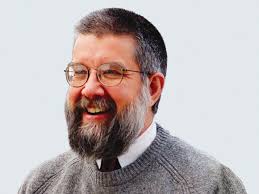
Michael Scheuer
From 1996 to 1999 he headed Alec Station, the CIA’s unit assigned to track Osama bin Laden at the agency’s Counterterrorism Center.
He has served as an adjunct professor at Georgetown University’s Center for Peace and Security Studies.
He is best-known as the author of two seminal works on America’s fight against terrorism: Imperial Hubris: Why the West is Losing the War on Terror (2003) and Marching Toward Hell: America and Islam after Iraq (2008).
Scheuer says that Islamics don’t hate Americans because of “our way of life”—with its—freedoms of speech and worship and its highly secular, commercialized culture.
Instead, Islamic hatred toward the United States stems from America’s six longstanding policies in the Middle East:
- U.S. support for apostate, corrupt, and tyrannical Muslim governments
- U.S. and other Western troops on the Arabian Peninsula
- U.S. support for Israel that keeps Palestinians in the Israelis’ thrall
- U.S. pressure on Arab energy producers to keep oil prices low
- U.S. occupation of Iraq and Afghanistan
- U.S. support for Russia, India, and China against their Muslim militants
Scheuer contends that no amount of American propaganda will win “the hearts and minds” of Islamics who can “see, hear, experience, and hate” these policies firsthand.
But there is another danger facing America, says Scheuer, one that threatens “the core of our social and civil institutions.”
And in Marching Toward Hell he bluntly indicts that threat: The “profound and willful ignorance” of America’s “bipartisan governing elite.”
Scheuer defines this elite as “the inbred set of individuals who have influenced…drafted and conducted U.S. foreign policy” since 1973.
Within that group are:
- politicians
- journalists
- academics
- preachers
- civil servants
- military officers
- philanthropists.
“Some are Republicans, others Democrats; some are evangelicals, others atheists; some are militarists, others pacifists; some are purveyors of Western civilization, others are multiculturalists,” writes Scheuer.
But for all their political and/or philosophical differences, the members of this governing elite share one belief in common.
According to Scheuer, that belief is “an unquenchable ardor to have the United States intervene in all places, situations and times.”
And he warns that this “bipartisan governing elite” must radically change its policies–such as unconditional support for Israel and corrupt, tyrannical Muslim governments.
Otherwise, Americans will be locked in an endless “hot war” with the Islamic world.
During his September 28, 2014 appearance on 60 Minutes, President Obama admitted that the mostly Sunni-Muslim Iraqi army had refused to combat the Sunni army of ISIS.
Then followed this exchange:
Steve Kroft: What happens if the Iraqis don’t fight or can’t fight?
President Obama: Well….
Steve Kroft: What’s the end game?
President Obama: I’m not going to speculate on failure at the moment. We’re just getting started. Let’s see how they do.
It was precisely such a mindset that led the United States, step by step, into the Vietnam quagmire.
As in the case of Vietnam, the United States lacks:
- Real or worthwhile allies in Iraq or Syria;
- A working knowledge of the peoples it wants to influence in either country;
- Clearly-defined goals that it seeks to accomplish in that region.
America rushed to disaster in Vietnam because its foreign policy elite felt it had to “do something” to fight Communism anywhere in the world.
In December, 2012, Kayla Mueller, an idealistic 24-year-old American woman, arrived in Syria to assist Syrians caught up in their own civil war. And on August 4, 2013, she had been kidnapped and held for ransom. In 2015, she had been killed—whether by her terrorist kidnappers or Jordanian airstrikes remains unclear.
On February 23, 2015, Carl Mueller appeared on the “Today” show, Carl Mueller to protest the refusal of the United States Government to pay ransom demands to terrorist kidnappers.
“How many mistakes have we all made in life that were naïve and didn’t get caught at? Kayla was just in a place that was more dangerous than most. And she couldn’t help herself. She had to go in there and had to help.”
But did she?
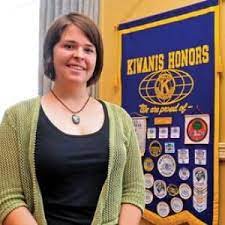
Kayla Mueller
There were thousands of communities within the United States desperate for the help of a caring social activist. And thousands of organizations—such as Volunteers in Service to America (VISTA), Habitat for Humanity and Catholic Relief Services—that would have been thrilled to enlist her services.
And she could have made lives better without constantly facing the dangers of kidnapping by Islamics determined to humiliate and slaughter Americans.
Michael Sheuer is right: The United States should learn to mind its own business and quit intervening in the affairs of Middle Eastern governments and peoples.
Kayla Mueller is proof of the rightness of that assertion.


 Bureaucracybuster's Blog
9/11 ATTACKS, ABC NEWS, ABORTION, ADOLF HITLER, AL-QAEDA, ALTERNET, AMERICABLOG, ANDREW CUOMO, ANTHONY FAUCI, AP, BABY BOOMER RESISTANCE, BLOOMBERG, BOB WOODWARD, BUZZFEED, CARL BERNSTEIN, CBS NEWS, CENTERS FOR DISEASE CONTROL AND PREVENTION (CDC), CHICAGO, CHINA, CIA, CLOROX BLEACH, CNN, CORONAVIRUS, COVID-19, COVID-19 TEST KITS, CROOKS AND LIARS, DAILY KOZ, DAVID BROOKS, DEBORAH BIRX, DEMOCRATIC NATIONAL CONVENTION, DEPARTMENT OF HOMELAND SECURITY, DONALD RUMSFELD, DONALD TRUMP, DRUDGE REPORT, FACEBOOK, FBI, FEDERAL EMERGENCY MANAGEMENT AGENCY (FEMA), FIVETHIRTYEIGHT, FLORIDA, FORBES, FOX NEWS, FRANKLIN D. ROOSEVELT, GRETCHEN WHITMER, HARPER’S MAGAZINE, HUFFINGTON POST, JARED KUSHNER, JAY INSLEE, KOREAN WAR, KRISTI NOEM, KRISTIN URQUIZA, LARRY HOGAN, LOS ANGELES, MARK ANTHONY URQUIZA, MARK SHIELDS, MARYLAND, MASSACHUSSETS, MEDIA MATTERS, MICHIGAN, MICK MULVANEY, MIKE PENCE, MOLOCH, MOTHER JONES, MOVEON, MSNBC, N95 MASKS, NAVY SEALS, NBC NEWS, NEW YORK, NEW YORK CITY, NEWSWEEK, NPR, OSAMA BIN LADEN, PAULA REID, PBS NEWSHOUR, PERSONAL PROTECTIVE EQUIPMENT (PPE), PHOENIX RALLY, POLITICO, POLITICUSUSA, RAW STORY, REPUBLICANS, REUTERS, RICHARD NIXON, ROBERT MUELLER, RUDOLPH GIULIANI, SALON, SCHOOLS, SEAN HANNITY, SEAN HANNITY SHOW, SEATTLE TIMES, SLATE, SOUTH DAKOTA, STEVEN PRESSFIELD, TALKING POINTS MEMO, THE ATLANTIC, THE CHICAGO SUN-TIMES, THE CHICAGO TRIBUNE, THE DAILY BEAST, THE DAILY BLOG, THE GUARDIAN, THE HILL, THE HUFFINGTON POST, THE LOS ANGELES TIMES, THE NATION, THE NEW REPUBLIC, THE NEW YORK TIMES, THE PENTAGON, THE VILLAGE VOICE, THE WASHINGTON POST, THINKPROGRESS, TIME, TRUTHDIG, TRUTHOUT, TULSA OAKAHOMA RALLY, TWITTER, TWO POLITICAL JUNKIES, U.S. NEWS & WORLD REPORT, UPI, USA TODAY, UV LIGHT, VEIL: THE SECRET WARS OF THE CIA (BOOK), VIETNAM WAR, WALTER SHAUB, WASHINGTON, WASHINGTON D.C., WASHINGTON MONTHLY, WASHINGTON WEEK IN REVIEW, WATERGATE, WILLIAM J. CASEY, WONKETTE, WORLD TRADE CENTER
DONALD TRUMP: KILLING MORE AMERICANS THAN OSAMA BIN LADEN: PART ONE (OF EIGHT)
In Bureaucracy, History, Law Enforcement, Medical, Military, Politics, Social commentary on September 14, 2020 at 12:15 amOn September 11, 2001, 19 Islamic terrorists snuffed out the lives of 3,000 Americans in New York, Washington, D.C. and Pennsylvania.
They did so by turning four commercial jetliners into fuel-bombs—and crashing them into, respectively, the Twin Towers of the World Trade Center in New York City; the Pentagon, in Washington, D.C.; and—unintentionally—a field in Somerset County, Pennsylvania.
(Its destination had been the White House or the Capitol Building. But its passengers, alerted by radio broadcasts of the doom awaiting them, resolved to take over the plane instead. The hijackers slammed the jet into the ground to avoid capture.)
World Trade Center – September 11, 2001
But within less than a month, American warplanes began carpet-bombing Afghanistan, whose rogue Islamic “government” refused to surrender Osama bin Laden, the had of Al-Qaeda who had masterminded the attacks.
By December, 2001, the power of the Taliban was broken—and bin Laden was driven into hiding in Pakistan.
For more than 16 years, the United States—through its global military and espionage networks—relentlessly hunted down most of those responsible for that September carnage.
On May 1, 2011, U.S. Navy SEALS invaded bin Laden’s fortified mansion in Abbottabad, Pakistan—and shot him dead.
U.S. Navy SEALs
OSAMA BIN LADEN’S BOASTING
On December 13, 2001, the Pentagon released a videotape of Osama bin Laden discussing the attacks in Arabic with another man who appears to be a cleric.
The videotape had been discovered by American forces in a private home in Jalalabad, Afghanistan.
On the tape, bin Laden says he was pleasantly surprised by the amount of destruction caused at the World Trade Center. He had only expected the top portion of the Twin Towers to collapse:
“We calculated in advance the number of casualties from the enemy, who would be killed based on the position of the tower. We calculated that the floors that would be hit would be three or four floors. I was the most optimistic of them all.
“Due to my experience in this field [he had graduated from King Abdul Aziz University with a civil engineering degree in 1979] I was thinking that the fire from the gas in the plane would melt the iron structure of the building and collapse the area where the plane hit and all the floors above it only.
“This is all that we had hoped for.”
Osama bin Laden
9/11 VS. COVID-19
Now, consider this:
It’s September 11, 2020. Nineteen years to the day since the United States suffered its worst terrorist attack in history—a loss of 3,000 Americans.
And, in less than a year, the United States is nearing a death-toll of 200,000 from an enemy just as deadly and unrelenting as Al Qaeda.
That enemy is Coronavirus, also known as COVID-19.
The September 11 attacks jolted Americans out of their complacency toward Islamic terrorism. Since the 1980s, the United States had responded to terrorism via its legal system. After 9/11, Americans opted for a military response against Middle Eastern terror cells.
For months afterward, America feared the worst—that other cities would soon become targets for massive terror attacks. But, for all the death and destruction wrought that day, this didn’t happen.
There were two major reasons for this:
First, under its new director, Robert Mueller, the FBI completely refocused its mission from investigating crimes to preventing them. This resulted in a proactive rather than reactive mindset and approach. Even terrorists who felt safe abroad found themselves arrested by FBI agents employing the sort of techniques previously used against foreign spies.
Second, the attacks led to the creation of a huge new agency—the Department of Homeland Security. Massive sums of money were doled out to local police departments across the country, arming them with new hires and more sophisticated anti-crime technologies.
And for the first time since the dawning of the age of flight, the Federal Government took responsibility for preventing airline terrorism. Previously, this had fallen to individual airlines—which, seeing it as a financial drain, had assigned it a low priority.
The attacks also led to a complete restructuring of the United States military.
In the past, Americans had excelled in set-piece battles and wars. But when fighting enemies where guerrilla warfare negated overwhelming military power, the United States had done poorly—first in Korea (1950-1953) and then in Vietnam (1960-1975).
As a result, Secretary of Defense Donald Rumsfield reorganized the Pentagon’s bureaucracy, assigning highest priority to building unconventional military units such as the Army’s Green Berets and Delta Force, and the Navy’s SEALs.
These were all major changes resulting from the 9/11 attacks. They cost billions of dollars and got huge publicity. But they didn’t affect the lives of everyday Americans as intimately as has the advent of COVID-19, also known as Coronavirus.
Coronavirus
The 9/11 terror attacks frightened Americans more than any event since the Japanese attack on Pearl Harbor in 1941.. But they slaughtered only a fraction of Americans, as compared with the 194,000 who have died from COVID-19, in less than a year..
Osama bin Laden deservedly gained infamy for plotting 9/11. But Donald Trump, who repeatedly lied about the dangers of COVID-19, remains beloved by about 40% of Americans.
Share this: