Posts Tagged ‘USA TODAY’
9/11, ABC NEWS, ALASKA AIRLINES, ALDRICH AMES, ALTERNET, AMERICAN AIRLINES, AP, BBC, BUZZFEED, CBS NEWS, CIA, CNN, DAILY KOS, DELTA AIRLINES, FACEBOOK, FBI, IDENTOGO, JETBLUE AIRLINES, JOHN F. KENNEDY, JOHN W. HINCKLEY, LYNETTE "SQUEAKY" FROMME, MOTHER JONES, MOVEON, NBC NEWS, NEWSWEEK, NPR, POLITICO, PRESIDENT GERALD FORD, PRESIDENT RONALD REAGAN, RALPH NADER, RAW STORY, REUTERS, RICHARD REID, ROBERT HANSSEN, SALON, SARAH JANE MOORE, SEATTLE TIMES, Secret Service, SECURITY, SHOE-BOMBER, SLATE, SOUTHWEST AIRLINES, TERRORISM, THE ATLANTIC, THE CHICAGO SUN-TIMES, THE CHICAGO TRIBUNE, THE DAILY BEAST, THE GUARDIAN, THE HILL, THE HUFFINGTON POST, THE LOS ANGELES TIMES, THE NEW YORK TIMES, THE PENTAGON, THE WALL STREET JOURNAL, THE WASHINGTON POST, TIME, TRANSPORTATION SECURITY ADMINISTRATION, TSA PRECHECK, TWITTER, U.S. NEWS & WORLD REPORT, UNITED AIRLINES, UNITED FLIGHT 93, UPI, USA TODAY, USAIRWAYS, VIRGIN AMERICAN AIRLINES, WEALTH GAP, WORLD TRADE CENTER
In Bureaucracy, Business, History, Law Enforcement, Politics, Social commentary on May 31, 2017 at 12:01 am
Almost 16 years after 9/11, America is now selling its Islamic enemies access to the very weapons—jet-fueled airplanes—they need to wage jihad against its citizens.
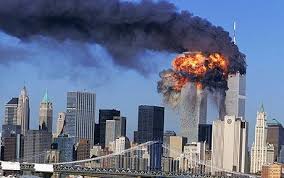
World Trade Center on September 11, 2001
This danger is brought to you by IdentoGO, the private security company chosen by the Transportation Safety Administration (TSA) to screen airline passengers.
Consider this ad it posts:
“How many times have you stood in line at the airport watching others breeze through security with no hassle? By enrolling in TSA Pre✓® , you too can breeze through security.
“Keep your shoes, jacket and belt on; your laptop in its case; 3-1-1 compliant liquids in your bag; and enjoy a better overall travel experience.
“TSA Pre✓® allows low-risk travelers to experience faster, more efficient screening at participating U.S. airport checkpoints for domestic and international travel.”
Yes, for a one-time payment of $85, you, too, can apply to receive such preferential treatment. Even if it means putting the Nation’s security at risk. Travelers that are eligible for TSA Pre✓® include:
- U.S. citizens of frequent flyer programs who meet TSA-mandated criteria and who have been invited by a participating airline;
- U.S. citizen, U.S. national or Lawful Permanent Residents who are members of the TSA Pre✓® Application Program;
- U.S. citizens who are members of a U.S. Customs and Border Protection Trusted Traveler program, such as Global Entry, SENTRI, and NEXUS and Canadian citizens who are members of NEXUS; and
- Members of the U.S. Armed Forces.
- Find an IdentoGO Center near you, including a growing number of airport locations, offering TSA Pre✓® and pre-enroll online.
- Schedule an appointment to come in for fingerprinting.
- Pay the $85 applications fee and show your proof-of-identity documents from the approved list of valid government IDs.
- A Known Traveler Number (KTN) will be mailed to you or can be obtained online.
- Once enrolled, your KTN is used when booking travel and your TSA Pre✓® approval is printed on your boarding passes.
- Be sure to update your airline member profile to have the number automatically sent to the TSA when making reservations.
Among the credit cards that will buy you such preferential treatment:
If you’re accepted, you don’t need to undergo another background check for the next five years.
In April 2017, 97% of TSA Pre’s more than four million passengers waited less than five minutes to board.
So what difference does it make that some passengers must submit to close inspection while others do not?
- If you’re trying to carry a metallic firearm aboard a plane, the magnetometer will likely pick it up. But if you’ve filled your computer with plastic explosive, the magnetometer won’t pick it up.

Advanced imaging technology
- Or maybe you want to be a shoe-bomber like Richard Reid, who tried to blow up an American Airlines flight in 2001. Being allowed to skip the requirement to remove your shoes will certainly take you a long way toward reaching your goal.
Why is America being placed at such risk? Three reasons:
- The greed of American airline corporations and the TSA.
- Wealthy, self-entitled Americans hate waiting in long airport security lines—like ordinary citizens.
- The Calvinistic belief—shared by most Americans—that wealth is a sign of God’s favor, and thus proof that its holder is worthy of deference, if not awe.
On September 11, 2001, 2,996 people were killed and more than 6,000 others wounded as three highjacked airliners slammed into:
- The North Tower of the World Trade Center;
- The South Tower of the World Trade Center;
- The Pentagon; and
- A field in Somerset County, Pennsylvania, after passengers and crew on United Flight 93 tried to regain control.
The attacks inflicted the worst shock and grief on America since the 1963 assassination of President John F. Kennedy.
So think about how easy it is to qualify as a TSA Pre-Check passenger the next time you board an airliner.
According to Yelp! reviews of thoroughly satisfied IdentoGO customers:
- “My TSA precheck appointment was done in 10 minutes! Plenty of free parking in their parking lot. The staff was friendly and courteous. I made an appointment thru the TSA precheck website. When I arrived, there was no wait. The office was clean, and the staff member who I met was friendly and courteous. Be sure to bring in your proper documents. $85 fee collected at the end of appointment. TSA precheck works for domestic flights only.”
- “The friendly agent took me in right away and he proceeded to go through my application with me, just to double check that all the information in the application is correct. He took my fingerprints (all fingers) and I was pretty much done in about 10 minutes.”
- “Going here for TSA precheck is a no-brainer. Super easy to get an appointment, free parking, and no waiting. Staff was friendly and efficient, explained what to expect after they submitted my information, and within less than 10 minutes I was on my way. Went in on a Friday afternoon and by Monday evening (ok, late evening really), I had my KTN. So, so easy.”
ABC NEWS, ALTERNET, AP, BBC, BILL MAULDIN, BUZZFEED, CBS NEWS, CNN, DAILY KOS, DONALD TRUMP, FACEBOOK, GENERAL LUCIAN K. TRUSCOTT, GEORGE W. BUSH, IRAQ WAR, JEB BUSH, MEMORIAL DAY, MOTHER JONES, MOVEON, NATIONAL CONSERVATIVE POLITICAL ACTION CONFERENCE (CPAC), NBC NEWS, NEWSWEEK, NPR, OLD GLORY, POLITICO, RAW STORY, REUTERS, SADDAM HUSSEIN, SALON, SAVING PRIVATE RYAN, SCOTT WALKER, SEATTLE TIMES, SLATE, STEVEN SPIELBERG, THE ATLANTIC, THE CHICAGO SUN-TIMES, THE CHICAGO TRIBUNE, THE DAILY BEAST, THE GUARDIAN, THE HILL, THE HUFFINGTON POST, THE LOS ANGELES TIMES, THE NEW YORK TIMES, THE WALL STREET JOURNAL, THE WASHINGTON POST, TIME, TWITTER, U.S. NEWS & WORLD REPORT, UPI, USA TODAY, WEAPONS OF MASS DESTRUCTION, WHITE HOUSE CORRESPONDENTS DINNER, WORLD WAR ii
In Bureaucracy, History, Military, Politics, Social commentary on May 30, 2017 at 12:23 am
Donald Trump repeatedly boasted that, if elected President, he would “make America great again.”
He would do well to re-watch Saving Private Ryan, Steven Spielberg’s 1998 World War II epic.
This opens with a scene of an American flag snapping in the wind. Except that the brilliant colors of Old Glory have been washed out, leaving only black-and-white stripes and black stars.
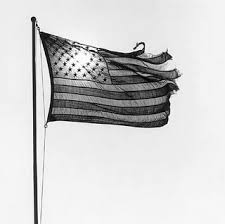
And then the movie opens–not during World war II but the present day.
Did Spielberg know something that his audience could only sense? Such as that the United States, for all its military power, has become a pale shadow of its former glory?
May 30, 1945, marked the first Memorial Day after World War II ended in Europe. On that day, the Sicily-Rome American Cemetery, near the town of Nettuno, held about 20,000 graves.
Most were soldiers who had died in Sicily, at Salerno, or at Anzio. One of the speakers at the ceremony was Lieutenant General Lucian K. Truscott, Jr., the U.S. Fifth Army Commander.
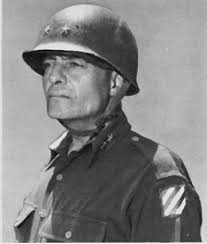
Lieutenant General Lucian K. Truscott, Jr.
Unlike many other generals, Truscott had shared in the dangers of combat, pouring over maps on the hood of his jeep with company commanders as bullets or shells whizzed about him.
When it came his turn to speak, Truscott moved to the podium. Then he turned his back on the assembled visitors–which included several Congressmen.
The audience he now faced were the graves of his fellow soldiers.
Among those who heard Truscott’s speech was Bill Mauldin, the famous cartoonist for the Army newspaper, Stars and Stripes. Mauldin had created Willie and Joe, the unshaven, slovenly-looking “dogfaces” who came to symbolize the GI.
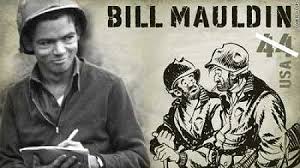
Bill Mauldin and “Willie and Joe,” the characters he made famous
It’s from Mauldin that we have the fullest account of Truscott’s speech that day.
“He apologized to the dead men for their presence there. He said that everybody tells leaders that it is not their fault that men get killed in war, but that every leader knows in his heart that this is not altogether true.
“He said he hoped anybody here through any mistake of his would forgive him, but he realized that he was asking a hell of a lot under the circumstances….
“Truscott said he would not speak of the ‘glorious’ dead because he didn’t see much glory in getting killed in your teens or early twenties.
“He promised that if in the future he ran into anybody, especially old men, who thought death in battle was glorious, he would straighten them out. He said he thought it was the least he could do.
“It was the most moving gesture I ever saw,” wrote Mauldin.
Then Truscott walked away, without acknowledging his audience of celebrities.
Fast forward 61 years later–to March 24, 2004.
At a White House Correspondents dinner in Washington, D.C., President George W. Bush joked publicly about the absence of Weapons of Mass Destruction (WMDs) in Iraq.
One year earlier, he had ordered the invasion of Iraq, claiming that its dictator, Saddam Hussein, possessed WMDs he intended to use against the United States.
To Bush, the non-existent WMDs were simply the butt of a joke that night. While an overhead projector displayed photos of a puzzled-looking Bush searching around the Oval Office, Bush recited a comedy routine.
“Those Weapons of Mass Destruction have gotta be here somewhere,” Bush laughed, while a photo showed him poking around the corners of the Oval Office.
“Nope–no weapons over there! Maybe there’s under here,” he said, as a photo showed him looking under a desk.
In a scene that could have occurred under the Roman emperor Nero, an assembly of wealthy, pampered men and women–the elite of America’s media and political classes–laughed heartily during Bush’s performance.
Only later did the criticism come, from Democrats and Iraqi war veterans–especially those veterans who had lost comrades or suffered horrific wounds to protect America from a threat that had never existed.
Then fast forward another 11 years–to February 27, 2015.
The Republican party’s leading Presidential contenders for 2016 gathered at the Conservative Political Action Conference (CPAC) in National Harbor, Maryland.
Although each candidate tried to stake his own claim to the Oval Office, all of them agreed on two points:
First, President Barack Obama had been dangerously timid in his conduct of foreign policy; and
Second, they would pursue aggressive military action in the Middle East.
Neither Bush nor Walker had seen fit to enter the ranks of the military he wished to plunge into further combat. And Donald Trump, who would win the Republican nomination and the Presidency, was a five-time draft dodger while the Vietnam war raged.
Bush, Walker and Trump are typical of those who make up the United States Congress:
Of those members elected to the House and Senate in November, 2016, only 102–less than 19%–have served in the U.S. military.
Small wonder then, that, for many people, Old Glory has taken on a darker, washed-out appearance, in real-life as in film.
ABC NEWS, ADOLF HITLER, ALTERNET, AP, BAVARIA, BBC, BEER HALL PUTSCH, BREITBART NEWS, BUZZFEED, CBS NEWS, CHRISTOPHER S. MURPHY, CIA, CNN, DAILY KOS, DEMOCRATIC NATIONAL COMMITTEE, DEMOCRATIC PARTY, DONALD TRUMP, EDMUND BURKE, EXTORTION, FACE THE NATION, FACEBOOK, FERGUS CULLEN, FOX NEWS SUNDAY, GREG ABBOTT, HACKING, HILLARY CLINTON, HITLER: ASCENT, IRS, JAMES B. COMEY, JAMES R. CLAPPER, JEWS, JOHN KASICH, JUSTICE DEPARTMENT, KEN PAXTON, LEON PANETTA, MEIN KAMPF, MICHAEL ROGERS, MIKE PENCE, MOTHER JONES, MOVEON, MUNICH, NATIONAL SECURITY AGENCY, NAZI PARTY, NBC NEWS, NEW HAMPSHIRE REPUBLICAN PARTY, NEWSWEEK, NPR, PAM BONDI, PAUL RYAN, PHILIP KLEIN, POLITICO, Racketeer Influenced Corrupt Organizations (RICO) Act, RAW STORY, REPUBLICAN NATIONAL COMMITTEE, REPUBLICAN NATIONAL CONVENTION, REPUBLICAN PARTY, REUTERS, ROGER STONE, SALON, SEATTLE TIMES, SLATE, SOVIET UNION, THE ATLANTIC, THE CHICAGO SUN-TIMES, THE CHICAGO TRIBUNE, THE DAILY BEAST, THE GUARDIAN, THE HILL, THE HUFFINGTON POST, THE LOS ANGELES TIMES, THE NEW YORK TIMES, THE WALL STREET JOURNAL, THE WASHINGTON EXAMINER, THE WASHINGTON POST, THREATS, TIME, TREASON, TRUMP UNIVERSITY, TWITTER, U.S. NEWS & WORLD REPORT, U.S. SECRET SERVICE, UPI, USA PATRIOT ACT, USA TODAY, VLADIMIR PUTIN, VOLKER ULLRICH, WEIMAR REPUBLIC
In Bureaucracy, History, Law, Law Enforcement, Politics, Social commentary on May 29, 2017 at 12:01 am
Future historians may one day write that it’s what didn’t happen that played at least as great a role in electing Donald Trump President as what actually did.
There were at least four instances where intervention by Federal law enforcement authorities could have utterly changed the outcome of the 2016 election.
Two of these dealt with purely domestic issues–the Trump University scandal and Trump’s repeated threats of violence against Republican and Democratic opponents.
The third and fourth ones dealt with events directly affecting the security of the United States.
It is unprecedented for an American Presidential candidate to repeatedly bestow fulsome praise on the leader of a foreign power hostile to the United States. And to receive equally fawning compliments in return from that leader.
Yet that is precisely what has happened between Donald Trump and Vladimir Putin.
Thus Putin on Trump: “He is a bright personality, a talented person, no doubt about it. It is not up to us to appraise his positive sides, it is up to the U.S. voters. but, as we can see, he is an absolute leader in the presidential race.”

Vladimir Putin
And Trump on Putin: “It is always a great honor to be so nicely complimented by a man so highly respected within his own country and beyond. He’s running his country, and at least he’s a leader. Unlike what we have in this country”–a clear attack on President Barack Obama.
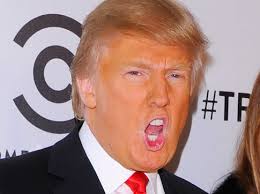
Donald Trump
Case #3: The Justice Department did not invalidate the results of the 2016 election, despite overwhelming evidence that Russia intervened to elect Trump as Vladimir Putin’s chosen candidate.
- Admiral Michael Rogers, director of the National Security Agency (NSA) and US Cyber Command, said in mid-November that Russia made “a conscious effort” to sway the results of the Presidential election by the hacking of 20,000 emails from the Democratic National Committee.
- “There shouldn’t be any doubt in anybody’s mind,” said Rogers. “This was not something that was done casually. This was not something that was done by chance. This was not a target that was selected purely arbitrarily. This was a conscious effort by a nation-state to attempt to achieve a specific effect.”

- The Russians hacked the Democratic committee’s servers–but not those of the Republican National Committee.
- On December 16, FBI Director James B. Comey and Director of National Intelligence James R. Clapper Jr. agreed with a CIA assessment that Russia intervened in the 2016 election in part to help Donald Trump win the White House.

Trump, however, has steadfastly denied any such role by Russia: “I think it’s ridiculous,” he told “Fox News Sunday.” “I think it’s just another excuse. I don’t believe it. No, I don’t believe it at all.”
Case #4: The Justice Department did not prosecute Trump for treason, even though he solicited aid from Russia, a nation hostile to the United States. And no major official of the government–including President Obama–publicly condemned him as a traitor.
At a news conference in Doral, Florida, on July 27, 2016, Trump publicly exhorted “Russia”–i.e., Vladimir Putin–to hack Hillary Clinton’s emails: “I will tell you this, Russia: If you’re listening, I hope you’re able to find the 30,000 emails that are missing. I think you will probably be rewarded mightily by our press.”
This was essentially treason–calling on a hostile foreign power to interfere directly in an American Presidential election. And it was seen as such by both Democrats and even some Republicans.
- “This has to be the first time that a major presidential candidate has actively encouraged a foreign power to conduct espionage against his political opponent,” Hillary for America policy adviser Jake Sullivan said in a statement. “That’s not hyperbole, those are just the facts. This has gone from being a matter of curiosity, and a matter of politics, to being a national security issue.”
- “I find those kinds of statements to be totally outrageous because you’ve got now a presidential candidate who is, in fact, asking the Russians to engage in American politics,” said former CIA Director Leon Panetta, a Clinton surrogate. “I just think that’s beyond the pale.”
- Brendan Buck, a spokesman for House Speaker Paul Ryan, said: “Russia is a global menace led by a devious thug. Putin should stay out of this election.”
- Trump’s Vice Presidential running mate, Mike Pence, said: “If it is Russia and they are interfering in our elections, I can assure you both parties and the United States government will ensure there are serious consequences.”
FBI Director James Comey believed that Hillary Clinton’s emails on a private server were so dangerous to national security that he announced–11 days before the election–that he was re-opening an investigation he had closed.
That announcement erased widespread outrage over Trump’s unintended admissions of predatory behavior toward women–“Grab them by the pussy”–and reversed Clinton’s growing lead in the polls.
Yet the Bureau did not issue any such statements about the continuing reports of close ties between Trump and Putin, and Trump’s possible investments in Russia.
To their shame, the federal agencies charged with safeguarding America failed to take action against these abuses. And, to their shame, the news media, to date, has failed to indict them for their negligence.
ABC NEWS, ADOLF HITLER, ALTERNET, AP, BAVARIA, BBC, BEER HALL PUTSCH, BREITBART NEWS, BUZZFEED, CBS NEWS, CHRISTOPHER S. MURPHY, CIA, CNN, DAILY KOS, DEMOCRATIC NATIONAL COMMITTEE, DEMOCRATIC PARTY, DONALD TRUMP, EDMUND BURKE, EXTORTION, FACE THE NATION, FACEBOOK, FERGUS CULLEN, FOX NEWS SUNDAY, GREG ABBOTT, HACKING, HILLARY CLINTON, HITLER: ASCENT, IRS, JAMES B. COMEY, JAMES R. CLAPPER, JEWS, JOHN KASICH, JUSTICE DEPARTMENT, KEN PAXTON, LEON PANETTA, MEIN KAMPF, MICHAEL ROGERS, MIKE PENCE, MOTHER JONES, MOVEON, MUNICH, NATIONAL SECURITY AGENCY, NAZI PARTY, NBC NEWS, NEW HAMPSHIRE REPUBLICAN PARTY, NEWSWEEK, NPR, PAM BONDI, PAUL RYAN, PHILIP KLEIN, POLITICO, Racketeer Influenced Corrupt Organizations (RICO) Act, RAW STORY, REPUBLICAN NATIONAL COMMITTEE, REPUBLICAN NATIONAL CONVENTION, REPUBLICAN PARTY, REUTERS, ROGER STONE, SALON, SEATTLE TIMES, SLATE, SOVIET UNION, THE ATLANTIC, THE CHICAGO SUN-TIMES, THE CHICAGO TRIBUNE, THE DAILY BEAST, THE GUARDIAN, THE HILL, THE HUFFINGTON POST, THE LOS ANGELES TIMES, THE NEW YORK TIMES, THE WALL STREET JOURNAL, THE WASHINGTON EXAMINER, THE WASHINGTON POST, THREATS, TIME, TREASON, TRUMP UNIVERSITY, TWITTER, U.S. NEWS & WORLD REPORT, U.S. SECRET SERVICE, UPI, USA PATRIOT ACT, USA TODAY, VLADIMIR PUTIN, VOLKER ULLRICH, WEIMAR REPUBLIC
In Bureaucracy, History, Law, Law Enforcement, Politics, Social commentary on May 26, 2017 at 12:36 am
Threatening his Republican and Democratic opponents with violence played a major role in Donald Trump’s campaign for President.
No other candidate–Republican or Democrat–had ever made such repeated and brutal use of threats of physical assault in pursuing the Presidency.
- Philip Klein, the managing editor of the Washington Examiner, wrote on the eve of the Republican National Convention in July: “Political commentators now routinely talk about the riots that would break out in Cleveland if Trump were denied the nomination, about how his supporters have guns and all hell could break loose, that they would burn everything to the ground. It works to Trump’s advantage to not try too hard to dispel these notions.”
- On August 9, Trump told a rally in Wilmington, North Carolina: “Hillary [Clinton] wants to abolish, essentially abolish, the Second Amendment. If she gets to pick her [Supreme Court] judges, nothing you can do folks. Although the Second Amendment people, maybe there is, I don’t know.”
- “Don’t treat this as a political misstep,” Senator Christopher S. Murphy of Connecticut, who has called for stiffer gun laws, wrote on Twitter. “It’s an assassination threat, seriously upping the possibility of a national tragedy & crisis.”
- “Well, let me say if someone else said that outside of the hall, he’d be in the back of a police wagon now, with the Secret Service questioning him,” said Michael Hayden, former head of the CIA and National Security Agency (NSA).
Making threats against anyone under protection by the U.S. Secret Service is a felony. Yet Donald Trump was never held legally accountable by the Justice Department.

Michael Hayden
Threats of this type continued to be made by Trump supporters right up to the day of the election.
- On July 29, Roger Stone, a notorious Right-wing political consultant acting as a Trump strategist, told Breitbart News: “The first thing Trump needs to do is begin talking about [voter fraud] constantly. If there’s voter fraud, this election will be illegitimate, the election of the winner will be illegitimate, we will have a constitutional crisis, widespread civil disobedience, and the government will no longer be the government.”
- At a town hall meeting where Trump’s Vice Presidential nominee Mike Pence appeared, a woman named Rhonda said: “For me personally, if Hillary Clinton gets in, I myself am ready for a revolution.”
- In Cincinnati, a Trump supporter threatened to forcibly remove Clinton from the White House if she won the race: “If she’s in office, I hope we can start a coup. She should be in prison or shot. That’s how I feel about it,” Dan Bowman, a 50-year-old contractor, said of Hillary Clinton, the Democratic nominee. “We’re going to have a revolution and take them out of office if that’s what it takes. There’s going to be a lot of bloodshed. But that’s what it’s going to take….I would do whatever I can for my country.”
Even Fergus Cullen, former chairman of the New Hampshire GOP, expressed fear of what might happen if Trump lost the election:

Fergus Cullen
“That’s really scary,” Cullen said, recounting the violence at Trump rallies around the country leading up to the Republican National Convention. “In this country, we’ve always had recriminations after one side loses. But we haven’t had riots. We haven’t had mobs that act out with violence against supporters of the other side.
“There’s no telling what his supporters would be willing to do at the slightest encouragement from their candidate,” he said.
Trump even began encouraging his mostly white supporters to sign up online to be “election observers” to stop “Crooked Hillary from rigging this election.” He urged them to act as poll watchers in “other” [non-white] communities to ensure that things are “on the up and up.”
Many of his supporters promised to do so.
“Trump said to watch your precincts. I’m going to go, for sure,” said Steve Webb, a 61-year-old carpenter from Fairfield, Ohio.
“I’ll look for…well, it’s called racial profiling. Mexicans. Syrians. People who can’t speak American,” he said. “I’m going to go right up behind them. I’ll do everything legally. I want to see if they are accountable. I’m not going to do anything illegal. I’m going to make them a little bit nervous.”
Knowing that large numbers of angry–and possibly armed–Right-wingers planned to descend on polling places could only have had a chilling effect on untold numbers of Democratic voters. And this would have been especially true in heavily conservative states.
Both the USA Patriot Act and the Racketeer Influenced Corrupt Organizations (RICO) Act have statutes dealing with making terrorist threats against government institutions to influence their members.
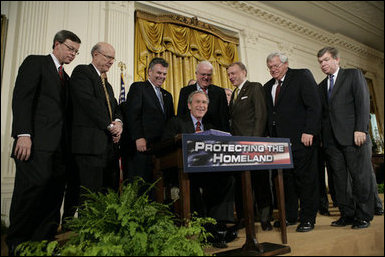
President George W. Bush signing the USA Patriot Reauthorization Act of 2005
Thus, the Justice Department could have cited the Patriot Act in indicting Trump and/or any number of his followers for “activities that…appear to be intended…to influence the policy of a government by intimidation or coercion [and]…occur primarily within the territorial jurisdiction of the United States.”
The Justice Department could have also demanded that the results of the election be invalidated on the basis that widespread voter and candidate intimidation played a massive role in it.
But of course this did not happen.
ABC NEWS, ADOLF HITLER, ALTERNET, AP, BAVARIA, BBC, BEER HALL PUTSCH, BREITBART NEWS, BUZZFEED, CBS NEWS, CHRISTOPHER S. MURPHY, CIA, CNN, DAILY KOS, DEMOCRATIC NATIONAL COMMITTEE, DEMOCRATIC PARTY, DONALD TRUMP, EDMUNC BURKE, EXTORTION, FACE THE NATION, FACEBOOK, FERGUS CULLEN, FOX NEWS SUNDAY, GREG ABBOTT, HACKING, HILLARY CLINTON, HITLER: ASCENT, IRS, JAMES B. COMEY, JAMES R. CLAPPER, JEWS, JOHN KASICH, JUSTICE DEPARTMENT, KEN PAXTON, LEON PANETTA, MEIN KAMPF, MICHAEL ROGERS, MIKE PENCE, MOTHER JONES, MOVEON, MUNICH, NATIONAL SECURITY AGENCY, NAZI PARTY, NBC NEWS, NEW HAMPSHIRE REPUBLICAN PARTY, NEWSWEEK, NPR, PAM BONDI, PAUL RYAN, PHILIP KLEIN, POLITICO, Racketeer Influenced Corrupt Organizations (RICO) Act, RAW STORY, REPUBLICAN NATIONAL COMMITTEE, REPUBLICAN NATIONAL CONVENTION, REPUBLICAN PARTY, REUTERS, ROGER STONE, SALON, SEATTLE TIMES, SLATE, SOVIET UNION, THE ATLANTIC, THE CHICAGO SUN-TIMES, THE CHICAGO TRIBUNE, THE DAILY BEAST, THE GUARDIAN, THE HILL, THE HUFFINGTON POST, THE LOS ANGELES TIMES, THE NEW YORK TIMES, THE WALL STREET JOURNAL, THE WASHINGTON EXAMINER, THE WASHINGTON POST, THREATS, TIME, TREASON, TRUMP UNIVERSITY, TWITTER, U.S. NEWS & WORLD REPORT, U.S. SECRET SERVICE, UPI, USA PATRIOT ACT, USA TODAY, VLADIMIR PUTIN, VOLKER ULLRICH, WEIMAR REPUBLIC
In Bureaucracy, History, Law, Law Enforcement, Politics, Social commentary on May 25, 2017 at 12:06 am
“The only thing necessary for the triumph of evil is for good men to do nothing.”
So wrote Edmund Burke (1729-1797) the Irish statesman, author, orator, political theorist and philosopher. And history has repeatedly proved him right.
One such example was the rise of Adolf Hitler as Germany’s Fuhrer.
Writes historian Volker Ullrich, in his monumental new biography, Hitler: Ascent 1889–1939: “Historians have perennially tried to answer the question of whether Hitler’s rise to power could have been halted….
“There were repeated opportunities to end Hitler’s run of triumphs. The most obvious one was after the failed Putsch of November 1923. Had the Munich rabble-rouser been forced to serve his full five-year term of imprisonment in Landsberg, it is extremely unlikely that he would have been able to restart his political career.”
But that didn’t happen.

Tried for and convicted of treason, he was sentenced to five years’ imprisonment.
At Landsberg Prison, in Bavaria. he was given a huge cell, allowed to receive unlimited visitors and gifts, and treated with deference by guards and inmates.
Nine months later, he was released on parole–by authorities loyal to the authoritarian Right instead of the newly-created Weimar Republic.
Hitler immediately began rebuilding the shattered Nazi party–and deciding on a new strategy to gain power. Disdaining armed force, he would win office by election–or intrigue.
On January 30, 1933, those intrigues bore fruit: Adolf Hitler was appointed Chancellor of Germany.
A second example: The ascent of Donald Trump to the Presidency of the United States.
Future historians may one day write that what didn’t happen played at least as great a role in electing Donald Trump President as what actually did.
There were at least four instances where intervention by Federal law enforcement authorities could have utterly changed the outcome of the 2016 election. Yet, for reasons still unknown, they chose to do nothing.
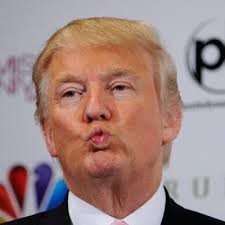
Donald Trump
Case #1: The Justice Department did not indict Trump and/or the Attorney Generals of Texas and/or Florida for their roles in the Trump University scandal.
- Florida Attorney General Pam Bondi personally solicited a political contribution from Donald Trump around the same time her office deliberated joining an investigation of alleged fraud at Trump University and its affiliates.
- After Bondi dropped the Trump University case against Trump, he wrote her a check $25,000 for her re-election campaign. The money came from the Donald J. Trump Foundation.
- Republican Texas Attorney General Ken Paxton moved to muzzle a former state regulator who says he was ordered in 2010 to drop a fraud investigation into Trump University for political reasons.
- Paxton’s office issued a cease and desist letter to former Deputy Chief of Consumer Protection John Owens after he made public copies of a 14-page internal summary of the state’s case against Donald Trump for scamming millions from students of his now-defunct real estate seminar.
- After the Texas case was dropped, Trump cut a $35,000 check to the gubernatorial campaign of then attorney general and now Texas Governor Greg Abbott.
One attorney general who refused to accept money from Trump was New York’s Eric Schneiderman. His decision to press fraud claims against Trump forced the real estate mogul to settle the case out of court for $25 million.
“Today’s $25 million settlement agreement is a stunning reversal by Donald Trump,” said Schneiderman on November 18, “and a major victory for the over 6,000 victims of his fraudulent university.”
There have been no press reports that the Justice Department investigated these cases to determine if Trump violated the Racketeer Influenced Corrupt Organizations (RICO) Act statutes.

If the Justice Department did not investigate these cases, it should have. And if he did violate the RICO statutes, he should have been indicted, even as a Presidential candidate or President-elect.
Even if an indictment had not produced a conviction, the mere bringing of one would have cast an unprecedented cloud over his candidacy–let alone his being sworn in as President.
Case #2: The Justice Department did not indict Trump for his series of threats he made–directly or indirectly–against his Republican and Democratic opponents throughout the 2016 campaign.
- On March 16, he warned Republicans that if he didn’t win the GOP nomination in July, his supporters would literally riot: “I think you’d have riots. I think you would see problems like you’ve never seen before. I think bad things would happen. I really do. I wouldn’t lead it, but I think bad things would happen.”
- An NBC reporter summed it up as: “The message to Republicans was clear on [March 16]: ‘Nice convention you got there, shame if something happened to it.’”
- That Republicans clearly saw this as a threat is undeniable. Paul Ryan, their Speaker of the House, said on March 17: “Nobody should say such things in my opinion because to even address or hint to violence is unacceptable.”
- And Ohio governor and Republican presidential candidate John Kasich chinned in. “Leaders don’t imply violence,” Kasich told “Face the Nation” on March 20. “When he says that there could be riots, that’s inappropriate. I think you understand that, okay? Secondly, while we have our differences and disagreements, we’re Americans. Americans don’t say, ‘Let’s take to the streets and have violence.’”
ABC NEWS, ALTERNET, ANGELA MERKEL, AP, BASHAR AL-ASSAD, BBC, BUZZFEED, CBS NEWS, CNN, COLOGNE, COLORADO, COUNCIL ON AMERICAN-ISLAMIC RELATIONS (CAIR), DAILY KOS, FACEBOOK, FBI, GERMANY, HAMAS, HANNOVER, ISLAM, ISLAMICS, JAMES COMEY, MEAT-PACKING INDUSTRY, MOTHER JONES, MOTHER JONES MAGAZINE, MOVEON, MSNBC, MUNICH, NBC NEWS, NEW YEAR'S EVE 2016, NEWSWEEK, NPR, POLITICO, RAW STORY, REUTERS, SALON, SEATTLE TIMES, SHARIA LAW, SLATE, SYRIAN REFUGEES, TERRORISM, THE ATLANTIC, THE CHICAGO SUN-TIMES, THE CHICAGO TRIBUNE, THE DAILY BEAST, THE GUARDIAN, THE HILL, THE HUFFINGTON POST, THE LOS ANGELES TIMES, THE NEW YORK TIMES, THE WALL STREET JOURNAL, THE WASHINGTON POST, TIME, TWITTER, U.S. NEWS & WORLD REPORT, UPI, USA TODAY
In Bureaucracy, History, Law, Law Enforcement, Military, Politics, Social commentary on May 24, 2017 at 12:02 am
On April 16, 2015, the Syrian Observatory for Human Rights announced that more than 310,000 people had been killed in Syria’s uprising-turned-civil war.

The Syrian conflict began on March 15, 2011, triggered by protests demanding political reforms and the ouster of dictator Bashar al-Assad.
And who did the Syrian Observatory for Human Rights–safely based in England–blame for this Islamic self-slaughter? Why, the West, of course.
According to its website:
“The silence of the International community for the war crimes and crimes against humanity committed in Syria encourages the criminals to kill more and more Syrian people because they have not found anyone that deter them from continuing their crimes that cause to wound more than 1500000 people; some of them with permanent disabilities, make hundreds of thousands children without parents, displace more than half of Syrian people and destroy infrastructure, private and public properties.”
Got that?
“They have not found anyone that deter them from continuing their crimes”–as if it’s the duty of non-Muslims to bring civilized behavior to Islamics.
And why are all these murderers “continuing their crimes”? Because of an inner-religious dispute within Islam that traces back to the fourth century.
Yes, it’s Sunni Muslims, who make up a majority of Islamics, versus Shiite Muslims, who comprise a minority.
Each group considers the other takfirs–that is, “apostates.” And, in Islam, being labeled an apostate can easily get you murdered.
But, according to the Syrian Observatory, it’s the duty of the West to convince these murderers to stop slaughtering one another.
There is, however, another perspective to consider–that of the late political scientist Samuel Huntington. In his bestselling 1996 book, The Clash of Civilizations and the Remaking of World Order, he warned:
“The fundamental problem for the West is not Islamic fundamentalism. It is Islam, a different civilization whose people are convinced of the superiority of their culture and are obsessed with the inferiority of their power.”
This is starkly outlined in the 2009 book, Slavery, Terrorism and Islam: The Historical Roots and Contemporary Threat, by Dr. Peter Hammond.
Hammond explores the impact of an increasing Muslim population on non-Muslim society–and the changes that can be expected to occur within that society.

Dr. Peter Hammond
According to Hammond:
Islam is not a religion nor a cult. It’s a complete system of religious, legal, political, economic and military components. The religious component encompasses all the others.
“Islamization” occurs when there are enough Muslims in a country to agitate for their “religious rights.”
The Pew Research Center estimates there are 2.5 million Islamics in the United States. The Council on American-Islamic Relations (CAIR) puts the figure at seven million.
In December, 2015, almost 150 Muslims in Fort Morgan, Colorado, gave a demonstration of what happens when the number of Islamics rises within a non-Islamic society.
Cargill Meat Solutions, headquartered in Wichita, Kansas, is a division of Cargill Inc., which employees 155,000 people in 68 countries.

On December 18, 2015, 11 workers at Cargill’s beef processing plant in Fort Morgan wanted to go pray at the same time in a room in the plant that is set aside for prayer and reflection. A supervisor told the employees they could go pray, but only three at a time, so production would not be affected.
The workers complied with the supervisor’s request and went in smaller groups to pray. But after their shift ended, 10 of the 11 workers resigned, turning in their badges and hard hats.
The following Monday, about 150 employees from the Somali Muslim community didn’t show up to work for three consecutive days. The company fired them all.
Cargill is now hiring to replace those who walked out.
Areas have been set up at Cargill since 2009 to accommodate anyone who requested time to pray.
“There are times when accommodation is not possible,” Michael Martin, a Cargill spokesman, told CBS News. “But in an overwhelming majority of instances, we do everything we can to ensure that we do accommodate employees.”
Tony Aden, one of the fired employees, explained the situation thus: “It don’t matter if I don’t have a job, my religion is more important.”
Negotiating on behalf of the striking–and then fired–employees was the Council on American-Islamic Relations (CAIR).
In 2007, CAIR was named as an unindicted co-conspirator in the Hamas-support trial of the Holy Land Foundation for Relief and Development (HLFRD). The defendants were charged with giving more than $12 million to support Hamas.
Hamas is designated as a terrorist organization by the European Union, Egypt, Japan, Canada, Israel and the United States.
On November 24, 2008, the government obtained guilty verdicts on all counts against HLFRD and the five individual defendants in the retrial.
As the Islamic population rises within the United States, non-Islamics can expect increasing demands for “Islamic rights.” According to Dr. Hammond:
At five percent of the population, Islamics try to get the ruling government to let them rule themselves under Sharia (Islamic) law.
At 10%, they use lawlessness to complain about their conditions.
At 20%, Islamics riot, form jihad militias and burn Christian churches and Jewish synagogues.
At 40%, nations experience widespread massacres, chronic terror attacks and ongoing militia warfare.
Their ultimate goal: To extend Sharia throughout the world–enforcing it on Muslims and non-Muslims alike.
ABC NEWS, ALTERNET, ANGELA MERKEL, AP, BASHAR AL-ASSAD, BBC, BUZZFEED, CBS NEWS, CNN, COLOGNE, COLORADO, COUNCIL ON AMERICAN-ISLAMIC RELATIONS (CAIR), DAILY KOS, FACEBOOK, FBI, GERMANY, HAMAS, HANNOVER, ISLAM, ISLAMICS, JAMES COMEY, MEAT-PACKING INDUSTRY, MOTHER JONES, MOTHER JONES MAGAZINE, MOVEON, MSNBC, MUNICH, NBC NEWS, NEW YEAR'S EVE 2016, NEWSWEEK, NPR, POLITICO, RAW STORY, REUTERS, SALON, SEATTLE TIMES, SHARIA LAW, SLATE, SYRIAN REFUGEES, TERRORISM, THE ATLANTIC, THE CHICAGO SUN-TIMES, THE CHICAGO TRIBUNE, THE DAILY BEAST, THE GUARDIAN, THE HILL, THE HUFFINGTON POST, THE LOS ANGELES TIMES, THE NEW YORK TIMES, THE WALL STREET JOURNAL, THE WASHINGTON POST, TIME, TWITTER, U.S. NEWS & WORLD REPORT, UPI, USA TODAY
In Bureaucracy, History, Law, Law Enforcement, Military, Politics, Social commentary on May 23, 2017 at 12:02 am
[Editor’s Note: As this goes to press, at least 19 people are reported dead and almost 60 injured at Manchester Arena, Manchester, England where pop singer Ariana Grande was performing. Authorities suspect an Islamic suicide bomber to be responsible.]
The headline in the December 7, 2015 issue of the British newspaper, The Guardian, read:
GERMANY ON COURSE TO ACCEPT ONE MILLION REFUGEES IN 2015
It may turn out to be Germany’s epitaph.
Germany registered 964,574 Islamic asylum-seekers in the first 11 months of 2015.
The Islamic world is at war with itself–in Iraq, Syria and Afghanistan. And while Islamics generally slander the West as Satan’s lair, that’s where Islamic refugees are heading.
The vast majority of these come from Syria, which is locked in a brutal civil war. This began on March 15, 2011, when protesters demanded political reforms and the ouster of dictator Bashar al-Assad.
By April 16, 2015, the Syrian Observatory for Human Rights announced that more than 310,000 people had been killed in Syria’s ongoing conflict.
European countries soon began opening their doors to asylum-seeking Islamics.
- United Kingdom: Pledged to accept 20,000 Syrians by 2020.
- Greece: By September, 2015, nearly a quarter of a million Syrians had illegally landed on Greek shores.
- Sweden: 64,685 Islamics admitted.
- France: Agreed, by the fall of 2015, to accept 30,000 Syrian refugees over the next two years.
- Italy: By the fall of 2015, more than 110 refugees had arrived there.
Germany has been–and remains–the main destination for many Islamic immigrants, legal and illegal.

Flag of Germany
According to Germany’s interior ministry, 206,101 Islamics entered the country in November, 2015, setting a new monthly record. The previous high had been 181,166 in October.
Each immigrant has an estimated four to eight family members who could be legally allowed to enter. That could bring the number of Islamics resettled in Germany to more than seven million.
And the cost to Germany?
Germany has an aging population and one of the lowest birthrates in the world. Of the refugees it has absorbed, only one in 10 is immediately employable. The rest will have to be carried on welfare for months, and possibly years.
Behind this unchecked flood stands Chancellor Angela Merkel, who insisted that Germany admit tens of thousands of men, women and children of an alien faith and culture.
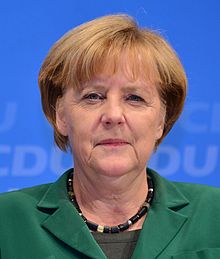
Angela Merkel
And, so far, Germans have responded to Merkel’s call with money, food, clothes and even making spare rooms available for immigrants.
And how have many of these refugees thanked their German benefactors for their well-meaning goodwill?
On January 1, 2016, the The New York Times published a story under this headline:
MUNICH ON HIGH ALERT AFTER NEW YEAR’S EVE TERRORISM THREAT
Hundreds of police officers were posted throughout Munich after the Islamic State threatened a suicide bombing attack. Two train stations were evacuated.
Police believed that five to seven people were involved in the threat.
And, in Cologne, Germany, about 1,000 men congregated at Cologne’s central train station, then broke off into small groups to sexually molest and rob women. Asylum-seekers and illegal migrants from North Africa comprise the majority of suspects.
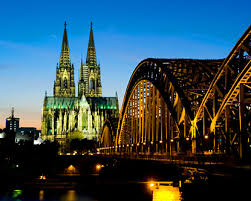
Cologne, Germany
Similar attacks were reported in Hamburg and Stuttgart on New Year’s Eve.
Earlier, in May, 2015, German authorities had called off the popular Eschborn-to-Frankfurt bike race after receiving a tip about a possible attack. Police arrested a German-Turkish couple who had been storing weapons in their home.
In November, a game in Hanover between Germany and the Netherlands was called off hours before kickoff when a suspicious package was found.
Meanwhile, uber-liberals such as those who staff Mother Jones magazine whine that the United States hasn’t followed Germany’s example.
On September 3, 2015, the publication ran a story on the plight of Syrian refugees, under the headline:
GERMANY HAS TAKEN IN 800,000 REFUGEES. GUESS HOW MANY THE US HAS TAKEN IN?
Quoting The Guardian, the Mother Jones writer gives the answer: “The US has admitted approximately 1,500 Syrian refugees since the beginning of the civil war there in 2011, mostly within the last fiscal year.”
Seven days after this article appeared, on September 10, the Obama administration announced that it would take in at least 10,000 displaced Syrians over the next year.
That is on top of the 2,000 Islamic refugees the United States has already accepted.
According to U.S. Census data, America welcomes about 100,000 Muslim immigrants legally each year. This represents the fastest growing segment of immigrants coming to the United States.
The Pew Research Center estimates there are 2.5 million Islamics in the United States. The Council on American-Islamic Relations (CAIR) puts the figure at seven million.
The Troubling Math of Muslim Migration | National Review Online
And while all this is happening, the FBI is being overwhelmed by the demands of countering Islamic terrorism against the United States.
On July 8, 2015, FBI director James Comey testified before Congress about the increasing burdens his agency faces in combating terrorism.
“We are stopping these things [Islamic terror plots] so far through tremendous hard work, the use of sources, the use of online undercovers.
“But it is incredibly difficult. I cannot see my stopping these indefinitely.”
Consider the math: The FBI has only 35,000 agents and analysts–against seven million potential suspects.
And only a portion of those agents and analysts are charged with investigating terrorism.
How did all of this begin? And where is it ultimately leading?
Those questions will be answered in Part Two of this series.
2016 PRESIDENTIAL CAMPAIGN, ABC NEWS, ALTERNET, AMERICABLOG, AP, ATTORNEY GENERAL, BABY BOOMER RESISTANCE, BBC, BLOOMBERG NEWS, BUZZFEED, CARTER PAGE, CBS NEWS, CNN, COAST GUARD ACADEMY, CROOKS AND LIARS, DAILY KOS, DONALD TRUMP, DRAFT DODGING, FACEBOOK, FBI, FIVETHIRTYEIGHT, HARPER’S MAGAZINE, HUFFINGTON POST, INTELLIGENCE, ISRAEL, JAMES COMEY, JEFF SESSONS, JOE SCARBOROUGH, JOHN MCCAIN, MEDIA MATTERS, MIKE FLYNN, MORNING JOE, MOTHER JONES, MOVEON, MSNBC, NATIONAL SECURITY ADVISER, NBC NEWS, NEW REPUBLIC, NEWSDAY, NEWSWEEK, NPR, PBS NEWSHOUR, POLITICO, POLITICUSUSA, RAW STORY, REUTERS, RUSSIA, RUSSIAN INTELLIGENCE AGENCIES, SALON, SEATTLE TIMES, SERGEI KISLYAK, SERGEY LAVOV, SLATE, TALKING POINTS MEMO, THE ATLANTIC, THE CHICAGO SUN-TIMES, THE CHICAGO TRIBUNE, THE DAILY BEAST, THE DAILY BLOG, THE GUARDIAN, THE HILL, THE HUFFINGTON POST, THE INTERCEPT, THE LOS ANGELES TIMES, THE NATION, THE NEW REPUBLIC, THE NEW YORK TIMES, THE NEW YORKER, THE VILLAGE VOICE, THE WALL STREET JOURNAL, THE WASHINGTON POST, THINKPROGRESS, TIME, TRUTHDIG, TRUTHOUT, TWITTER, U.S. NEWS & WORLD REPORT, UPI, USA TODAY, VIETNAM WAR
In Bureaucracy, History, Law Enforcement, Military, Politics, Social commentary on May 22, 2017 at 12:10 am
On May 17, President Donald J. Trump appeared at the United States Coast Guard Academy in New London, Connecticut.
He was there go give the commencement remarks to a graduating class of Coast Guard cadets.
The Coast Guard Academy website explains what it seeks in candidates: “The Coast Guard needs officers who are intellectually curious, who seek continuous improvement, and who are committed to service above self. At the Academy, our academic programs provide the intellectual foundation for developing officers with these qualities.”
It also spells out what the Academy offers: “The Coast Guard Academy is ranked among the nation’s top undergraduate colleges. Our academic program, which awards a Bachelor of Science and a commission as an Ensign in the U.S. Coast Guard, must be completed in four years.
“It is designed to provide a superb academic foundation in a military environment. The result: future leaders of America.”
The Academy’s core requirements could not be more at odds with the realities of Donald Trump’s life:
- “Intellectually curious”–Trump’s attention span is notoriously short, limited to about four minutes on a topic. And he regularly confines his “writings” to the 140-character count on Twitter.
- “Who seek continuous improvement”–asked on MSNBC’s “Morning Joe” who he consults about foreign policy, Trump replied; “I’m speaking with myself, number one, because I have a very good brain and I’ve said a lot of things.”
- “Committed to service above self”–Trump dodged the draft during the Vietnam war by getting five deferments. As a Presidential candidate, he said of Arizona U.S. Senator John McCain, who spent seven years as a Vietnam POW: “He’s not a war hero. He was a war hero because he was captured. I like people who weren’t captured.”
Trump’s official reason for appearing at the Academy was to pay tribute to the 195 cadets graduating that day.
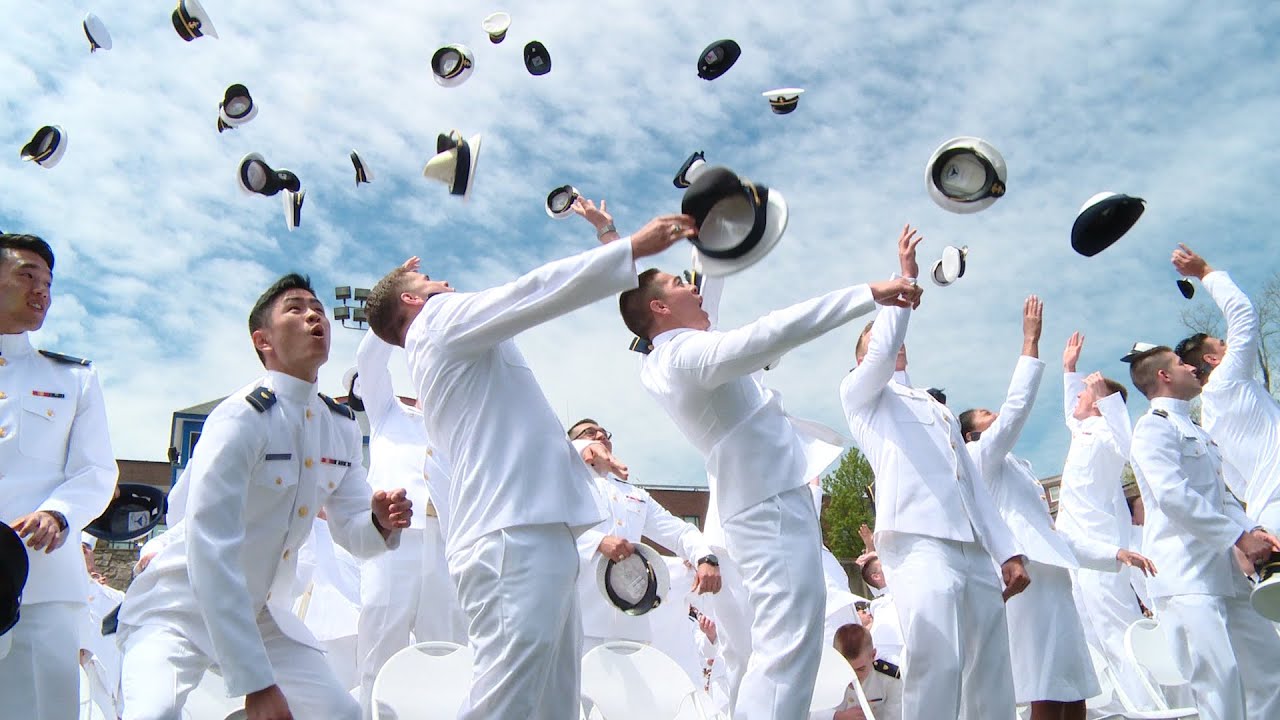
Coast Guard Academy graduating students celebrate
And, momentarily, he did: “These fine young cadets are about to take their rightful place on the front line of defense for the United States of America.
“Cadets, you deserve not only the congratulations, but the gratitude of each and every American. And we all salute you, a proud nation.”
But, being Trump, he couldn’t praise others without also praising himself: “I won’t talk about how much I saved you on the F-35 fighter jet. I won’t even talk about it. Or how much we’re about to save you on the Gerald Ford, the aircraft carrier….
“I’ve accomplished a tremendous amount in a very short time as president….”
Donald Trump
Then he went on to pay further tribute to himself: “Jobs are pouring back into our country; a brand-new Supreme Court justice, who’s going to be fantastic for 45 years; a historic investment in our military; border crossings….”
Finally, he reached the climax of his address: “Now, I want to take this opportunity to give you some advice. Over the course of your life, you will find that things are not always fair.
“You will find that things happen to you that you do not deserve and that are not always warranted. But you have to put your head down and fight, fight, fight. Never, ever, ever give up. Things will work out just fine.
“Look at the way I’ve been treated lately, especially by the media. No politician in history–and I say this with great surety–has been treated worse or more unfairly. You can’t let them get you down. You can’t let the critics and the naysayers get in the way of your dreams.”
Trump was referring to the avalanche of criticism he had received for:
- His May 9 firing of FBI Director James Comey. Comey had refused to pledge his personal loyalty to Trump. And he had recently asked the Justice Department to fund an expanded FBI investigation into contacts between Trump’s 2016 Presidential campaign and Russian Intelligence agents;
- His meeting, the very next day in the Oval Office, with Russian Foreign Minister Sergey Lavov and Russian Ambassador Sergey Kislyak. During that meeting he gave the Russians sensitive Intelligence on ISIS that had been supplied by Israel; and
- On May 12, Trump tweeted a threat to the fired FBI director: “James Comey better hope that there are no ‘tapes’ of our conversations before he starts leaking to the press.”
James Comey
Kislyak is reportedly a top recruiter for Russia’s SVR foreign intelligence agency. He has been closely linked with Jeff Sessions, now Attorney General, and fired National Security Adviser Mike Flynn. A third Kislyak contact: Carter Page.
All three served as members of Trump’s Presidential campaign.
“I guess that’s why I won–thank you. I guess that’s why we won,” continued Trump.
“Adversity makes you stronger. Don’t give in, don’t back down, and never stop doing what you know is right. Nothing worth doing ever, ever, ever came easy, and the more righteous your fight, the more opposition that you will face.”
Trump, who has never shown a sense of irony, unintentionally displayed one now.
His self-tribute could have served as an epitaph for James Comey–a former United States Attorney, Deputy Attorney General and seventh director of the FBI.
2016 PRESIDENTIAL RACE, ABC NEWS, ALEXANDER BUTTERFIELD, ALTERNET, AP, ARNOLD SCHWARTZENEGGER, BARACK OBAMA, BBC, BUZZFEED, CBS NEWS, CNN, DAILY KOS, DONALD TRUMP, FACEBOOK, FBI, HILLARY CLINTON, JAMES COMEY, JOHN OLIVER, JOHN W. DEAN, MERYL STREEP, MOTHER JONES, MOVEON, NBC NEWS, NEWSWEEK, NPR, OBAMACARE, POLITICO, RAW STORY, REUTERS, RICHARD NIXON, SALON, SEATTLE TIMES, SENATE WATERGATE COMMITTEE, SLATE, THE ATLANTIC, THE CHICAGO SUN-TIMES, THE CHICAGO TRIBUNE, THE DAILY BEAST, THE GUARDIAN, THE HILL, THE HUFFINGTON POST, THE LOS ANGELES TIMES, THE NEW YORK TIMES, THE WALL STREET JOURNAL, THE WASHINGTON POST, TIME, TWITTER, UPI, USA TODAY, WATERGATE, WIRETAPPING
In Bureaucracy, History, Law, Law Enforcement, Politics, Social commentary on May 19, 2017 at 12:05 am
When the Senate Watergate Committee learned that President Richard M. Nixon had installed a secret taping system in the White House, they immediately subpoenaed all of his tapes.
So did Watergate Special Prosecutor Archibald Cox.
Nixon fired Cox in the infamous “Saturday Night Massacre” on October 20, 1973. But Cox was succeeded by another Special Prosecutor, Leon Jaworski–who also pursued the tapes.
The case went to the U.S. Supreme Court–which ruled, 8-0, that Nixon must give up the tapes.
One of the tapes revealed that Nixon had ordered the FBI to abandon its investigation of the Watergate break-in. When news leaked of this, Nixon resigned to avoid the disgrace of impeachment in the House and certain conviction in the Senate.
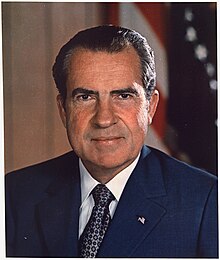
Richard M. Nixon
Now it appears that history is about to repeat itself–in the case of President Donald J. Trump.
And it has been touched off by his repeated use of Twitter as both a Presidential candidate and President.
When it was launched on July 16, 2006, Twitter was intended to be, according to Wikipedia, “an online news and social networking service where users post and interact with messages, ‘tweets,’ restricted to 140 characters.”
It was never intended as a weapon of slander and intimidation. Yet, as both a Presidential candidate and President, Trump has repeatedly used Twitter to attack hundreds of real and imagined enemies in politics, journalism, TV and films.
Even before taking office as President, Trump was haunted by charges that members of his 2016 Presidential campaign colluded with Russian Intelligence agents to secure his election.
Trump has furiously and repeatedly denied this.
Yet, on May 11, no fewer than six top American intelligence officials testified before Congress that Russia acted to influence last year’s election.
These officials were:
- Dan Coats, director of National Intelligence;
- Michael Pompeo, CIA director;
- Michael S. Rogers, director of the National Security Agency;
- Lieutenant-General Vincent Stewart (USMC), director of the Defense Intelligence Agency;
- Robert Cardillo, director of the National Geospatial-Intelligence Agency; and
- Andrew McCabe, acting FBI director, installed after Trump fired the agency’s appointed director, James Comey.
Comey had been spearheading the FBI’s investigation into Trump’s “Russian connection.” In early May, 2017, he had asked the Justice Department to provide increased resources for the FBI’s investigation.

FBI Headquarters
During a private White House dinner in January, Trump asked Comey to pledge his personal loyalty to him. Comey refused to do so.
On May 9, Trump fired him.
Instead of doing so quietly and with dignity, Trump dispatched his longtime personal bodyguard, Keith Schiller, to FBI headquarters with the message: “You’re fired.” Comey was in the FBI’s Los Angeles field office speaking with agents when he learned of his dismissal in a TV news broadcast.
Not content with humiliating and dismissing Comey, Trump then threatened him in a May 12 tweet: “James Comey better hope that there are no “tapes” of our conversations before he starts leaking to the press!”
Having implied that he had secretly taped his conversation with Comey, Trump found himself besieged with the question: “Did you install a White House taping system similar to the one installed by President Richard Nixon?”
Trump has refused to answer–and so have his spokesmen and women.
Ironically, his latest use of a weaponized Twitter account may have doomed his Presidency. His threat to Comey has boxed him in with a series of dead-end scenarios.
Dead-end #1: If Trump taped the conversation without Comey’s consent, he broke the law. (This has been explored in Part One of this series.)
Dead-end #2: If Trump admits he taped Comey, he provides Democrats–and even some Republicans–with reason to subpoena all existing White House tapes.
The House and Senate have competing investigative committees probing “the Russian connection.” And no doubt they will soon issue subpoenas for any secret tapes Trump may have made.
And so will newly-appointed Special Counsel Robert Meuller, III, who served for 12 years as FBI director under Presidents George W. Bush and Barack Obama.
Deputy Attorney General Rod Rosenstein made the appointment on May 17, citing “the unique circumstances [of] the public interest.”
(Attorney General Jeff Sessions has supposedly recused himself from involvement in the Russian investigation–because he lied to Congress about his past contacts with Russian Ambassador Sergei Kislyak during 2016.)
If he refuses to release them, Trump will touch off another Watergate-style conflict between the White House and Congress.
Dead-end #3: If he claims that he didn’t tape Comey, many people will believe he’s lying.
Dead-end #4: If he claims that he didn’t tape Comey, many people will believe he is a punk–for trying to intimidate the former FBI director with a baseless threat.
Dead-end #5: It’s impossible to prove a negative. So if Trump doesn’t have secret tapes to turn over, it will be impossible for him to prove he isn’t stonewalling in defiance of the law.
Dead-end #6: Trump’s brutal and unwarranted firing of James Comey on May 9 has infuriated the FBI’s 35,664 employees, of which 13,778 are Special Agents.
By earning the hatred of the most powerful investigative agency in the Federal Government, Trump has all-but-guaranteed his removal from office.
What began for the Bureau as a professional investigation into Russian sabotage has become a personal vendetta.
2016 PRESIDENTIAL RACE, ABC NEWS, ALEXANDER BUTTERFIELD, ALTERNET, AP, ARNOLD SCHWARTZENEGGER, BARACK OBAMA, BBC, BUZZFEED, CBS NEWS, CNN, DAILY KOS, DONALD TRUMP, FACEBOOK, FBI, HILLARY CLINTON, JAMES COMEY, JOHN OLIVER, JOHN W. DEAN, MERYL STREEP, MOTHER JONES, MOVEON, NBC NEWS, NEWSWEEK, NPR, OBAMACARE, POLITICO, RAW STORY, REUTERS, RICHARD NIXON, SALON, SEATTLE TIMES, SENATE WATERGATE COMMITTEE, SLATE, THE ATLANTIC, THE CHICAGO SUN-TIMES, THE CHICAGO TRIBUNE, THE DAILY BEAST, THE GUARDIAN, THE HILL, THE HUFFINGTON POST, THE LOS ANGELES TIMES, THE NEW YORK TIMES, THE WALL STREET JOURNAL, THE WASHINGTON POST, TIME, TWITTER, UPI, USA TODAY, WATERGATE, WIRETAPPING
In Bureaucracy, History, Law, Law Enforcement, Politics, Social commentary on May 18, 2017 at 12:15 am
Donald Trump’s tweet-first-and-never-mind-the-consequences approach to life has been thoroughly documented.
From June 15, 2015, when he launched his Presidential campaign, until October 24, 2016, he fired nearly 4,000 angry, insulting tweets at 281 people and institutions. The New York Times needed two full pages of its print edition to showcase them.
Donald Trump
Among these targets were:
- His Democratic rival, Hillary Clinton
- His fellow Republican Presidential candidates
- Actress Meryl Streep
- News organizations
- President Barack Obama
- Comedian John Oliver
- Obamacare
- Singer Neil Young
- The state of New Jersey
- Actor Arnold Schwarzenegger.
And during his first two weeks as President, Trump attacked 22 people, places and things on his @realDonaldTrump account.
Then, on March 4, 2017, in a series of unhinged tweets, Trump accused former President Barack Obama of tapping his Trump Tower phones prior to the election:
“Terrible! Just found out that Obama had my ‘wires tapped’ in Trump Tower just before the victory. Nothing found. This is McCarthyism!”
“Is it legal for a sitting President to be ‘wire tapping’ a race for president prior to an election? Turned down by court earlier. A NEW LOW!”
“I’d bet a good lawyer could make a great case out of the fact that President Obama was tapping my phones in October, just prior to Election!”
“How low has President Obama gone to tapp my phones during the very sacred election process. This is Nixon/Watergate. Bad (or sick) guy!”
Thus, without offering a shred of evidence to back it up, Trump accused his predecessor of committing an impeachable offense.
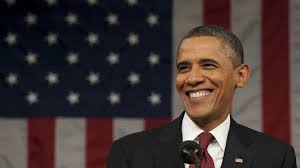
President Barack Obama
On May 9, Trump abruptly fired FBI Director James Comey.
Reports soon surfaced that his reason for doing so was that Comey had refused to pledge his personal loyalty to Trump.
Trump had made this “request” during a private dinner at the White House in January.
After refusing to make that pledge, Comey told Trump that he would always be honest with him.
But that didn’t satisfy Trump’s demand that the head of the FBI act as his personal secret police chief.

James B. Comey
Just 72 hours after firing Comey, Trump issued a threat to him via Twitter:
“James Comey better hope that there are no ‘tapes’ of our conversations before he starts leaking to the press!”
This last tweet may have proved fatal to the man who has weaponized Twitter.
Trump’s implication that he taped his conversation with Comey immediately led White House reporters to ask if he, in fact, taped conversations in the Executive Mansion.
Trump’s response: No comment.
At a White House press conference, Sean Spicer, Trump’s press secretary, was asked three times: Was tape recording occurring in the White House?
Spicer replied: “I’ve talked to the President. The President had nothing further to add on that.”
Asked on Right-wing Fox News–the only major network Trump willingly appears on–if he taped the Comey conversation, the President said: “That I can’t talk about. I won’t talk about that. All I want is for Comey to be honest. And I hope he will be. And I’m sure he will be – I hope.”
By implying on Twitter that he had illegally taped his conversation with Comey–and then refusing to say if this was true–Trump has boxed himself into a no-win situation.
Dead-end #1: If he taped the conversation without Comey’s consent, Trump broke the law.
According to a 2003 Congressional report, “Privacy: An Overview of Federal Statutes Governing Wiretapping and Electronic Eavesdropping”:
“It is a federal crime to wiretap or to use a machine to capture the communications of others without court approval, unless one of the parties has given their prior consent.
“It is likewise a federal crime to use or disclose any information acquired by illegal wiretapping or electronic eavesdropping. Violations can result in imprisonment for not more than 5 years; fines up to $250,000 (up to $500,000 for organizations); in civil liability for damages, attorneys fees and possibly punitive damages; in disciplinary action against any attorneys involved; and in suppression of any derivative evidence.”
Dead-end #2: If Trump admits he taped Comey, he provides Democrats–and even some Republicans–with reason to subpoena all existing White House tapes.
In the summer of 1973, the Senate was investigating the bugging of Democratic headquarters at the Watergate Hotel during the 1972 Presidential campaign.
In June, 1973, John W. Dean III testified before the Senate Watergate Committee. He had served as White House Counsel for Nixon from 1970 to 1973. And now he outlined a litany of crimes ordered by President Richard Nixon.
The White House adamantly denied these charges by attacking Dean as a malcontent. (He had been fired by Nixon in April.)
So–who was telling the truth: Dean or Nixon? It was a classic case of He said/he said.
Then–unexpectedly–a way appeared to answer the question: “Who is telling the truth?”
Alexander Butterfield, who had served as the Deputy Assistant to Nixon from 1969 to 1973, was called as a witness before the Committee.
In a private meeting with Senate investigators, he unintentionally blurted out that Nixon had installed a secret taping system to record all conversations between him and Oval Office visitors.
Suddenly, the Watergate investigation took an entirely new direction–one that would prove fatal to Nixon’s Presidency.


9/11, ABC NEWS, ALASKA AIRLINES, ALDRICH AMES, ALTERNET, AMERICAN AIRLINES, AP, BBC, BUZZFEED, CBS NEWS, CIA, CNN, DAILY KOS, DELTA AIRLINES, FACEBOOK, FBI, IDENTOGO, JETBLUE AIRLINES, JOHN F. KENNEDY, JOHN W. HINCKLEY, LYNETTE "SQUEAKY" FROMME, MOTHER JONES, MOVEON, NBC NEWS, NEWSWEEK, NPR, POLITICO, PRESIDENT GERALD FORD, PRESIDENT RONALD REAGAN, RALPH NADER, RAW STORY, REUTERS, RICHARD REID, ROBERT HANSSEN, SALON, SARAH JANE MOORE, SEATTLE TIMES, Secret Service, SECURITY, SHOE-BOMBER, SLATE, SOUTHWEST AIRLINES, TERRORISM, THE ATLANTIC, THE CHICAGO SUN-TIMES, THE CHICAGO TRIBUNE, THE DAILY BEAST, THE GUARDIAN, THE HILL, THE HUFFINGTON POST, THE LOS ANGELES TIMES, THE NEW YORK TIMES, THE PENTAGON, THE WALL STREET JOURNAL, THE WASHINGTON POST, TIME, TRANSPORTATION SECURITY ADMINISTRATION, TSA PRECHECK, TWITTER, U.S. NEWS & WORLD REPORT, UNITED AIRLINES, UNITED FLIGHT 93, UPI, USA TODAY, USAIRWAYS, VIRGIN AMERICAN AIRLINES, WEALTH GAP, WORLD TRADE CENTER
THE NEXT 9/11: TSA WILL MAKE IT HAPPEN: PART ONE (OF TWO)
In Bureaucracy, Business, History, Law Enforcement, Politics, Social commentary on May 31, 2017 at 12:01 amAlmost 16 years after 9/11, America is now selling its Islamic enemies access to the very weapons—jet-fueled airplanes—they need to wage jihad against its citizens.
World Trade Center on September 11, 2001
This danger is brought to you by IdentoGO, the private security company chosen by the Transportation Safety Administration (TSA) to screen airline passengers.
Consider this ad it posts:
“How many times have you stood in line at the airport watching others breeze through security with no hassle? By enrolling in TSA Pre✓® , you too can breeze through security.
“Keep your shoes, jacket and belt on; your laptop in its case; 3-1-1 compliant liquids in your bag; and enjoy a better overall travel experience.
“TSA Pre✓® allows low-risk travelers to experience faster, more efficient screening at participating U.S. airport checkpoints for domestic and international travel.”
Yes, for a one-time payment of $85, you, too, can apply to receive such preferential treatment. Even if it means putting the Nation’s security at risk. Travelers that are eligible for TSA Pre✓® include:
To apply for TSA Pre✓®:
Among the credit cards that will buy you such preferential treatment:
If you’re accepted, you don’t need to undergo another background check for the next five years.
In April 2017, 97% of TSA Pre’s more than four million passengers waited less than five minutes to board.
So what difference does it make that some passengers must submit to close inspection while others do not?
Advanced imaging technology
Why is America being placed at such risk? Three reasons:
On September 11, 2001, 2,996 people were killed and more than 6,000 others wounded as three highjacked airliners slammed into:
The attacks inflicted the worst shock and grief on America since the 1963 assassination of President John F. Kennedy.
So think about how easy it is to qualify as a TSA Pre-Check passenger the next time you board an airliner.
According to Yelp! reviews of thoroughly satisfied IdentoGO customers:
Share this: