Posts Tagged ‘TWITTER’
ABC NEWS, CBS NEWS, CNN, CRIME, ELLIOT ROGER, FACEBOOK, GAYS, GUN CONTROL, MARTIN LUTHER KING, MENTAL ILLNESS, NATIONAL RIFLE ASSOCIATION, NBC NEWS, PULSE NIGHTCLUB, ROBERT F. KENNEDY, SECOND AMENDMENT, SELF-DEFENSE, STAND-YOUR-GROUND LAWS, THE CHICAGO SUN-TIMES, THE CHICAGO TRIBUNE, THE LOS ANGELES TIMES, THE NEW YORK TIMES, THE WASHINGTON POST, TOBACCO INDUSTRY, TWITTER, U.S. CONSTITUTION, WRONGFUL-DEATH LAWSUITS
In History, Law, Law Enforcement, Politics, Social commentary on June 13, 2016 at 12:02 am
The victims of the violence are black and white, rich and poor, young and old, famous and unknown. They are, most important of all, human beings whom other human beings loved and needed. No one – no matter where he lives or what he does – can be certain who will suffer from some senseless act of bloodshed. And yet it goes on and on.
–Robert F. Kennedy, April 4, 1968

Senator Robert F. Kennedy announcing the murder of Dr. Martin Luther King, Jr.
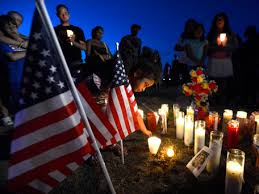
What should the surviving victims of the Pulse nightclub massacre in Orlando, Florida, do to seek redress?
And how can the relatives and friends of those who didn’t survive seek justice for those they loved?
First, don’t count on politicians to support a ban on assault weapons.
Politicians–with rare exceptions–have only two goals:
- Get elected to office, and
- Stay in office.
And most of them fear the economic and voting clout of the National Rifle Association (NRA) to risk its wrath. Those that don’t greedily accept its bribes–i.e., “campaign contributions.”
Second, don’t expect the mental health profession to prevent such future tragedies.
There is simply no definitive way to predict who is likely to commit mass murder.
And even if such a method were developed, it would likely be ruled unconstitutional. A person can’t be jailed or hospitalized for fear of what he might do.
Third, those who survived the Pulse nightclub rampage–and the relatives and friends of those who didn’t–should file wrongful death, class-action lawsuits against the NRA.
There is sound, legal precedent for this.
For decades, the American tobacco industry peddled death and disability to millions and reaped billions of dollars in profits.
- The industry vigorously claimed there was no evidence that smoking caused cancer, heart disease, emphysema or any other ailment.
- Tobacco companies spent billions on slick advertising campaigns to win new smokers and attack medical warnings about the dangers of smoking.
- Tobacco companies spent millions to elect compliant politicians and block anti-smoking legislation.
- From 1954 to 1994, over 800 private lawsuits were filed against tobacco companies in state courts. But only two plaintiffs prevailed, and both of those decisions were reversed on appeal.
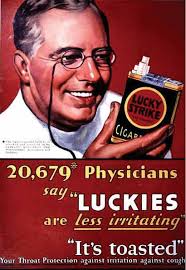
- In 1994, amidst great pessimism, Mississippi Attorney General Mike Moore filed a lawsuit against the tobacco industry. But other states soon followed, ultimately growing to 46.
- Their goal: To seek monetary, equitable and injunctive relief under various consumer-protection and anti-trust laws.
- The theory underlying these lawsuits was: Cigarettes produced by the tobacco industry created health problems among the population, which badly strained the states’ public healthcare systems.
- In 1998, the states settled their Medicaid lawsuits against the tobacco industry for recovery of their tobacco-related, health-care costs. In return, they exempted the companies from private lawsuits for tobacco-related injuries.
- The companies agreed to curtail or cease certain marketing practices. They also agreed to pay, forever, annual payments to the states to compensate some of the medical costs for patients with smoking-related illnesses.
The parallels with the NRA are obvious:
- For decades, the NRA has peddled deadly weapons to millions, reaped billions of dollars in profits and refused to admit the carnage those weapons have produced: “Guns don’t kill people. People kill people.” With guns.
- The NRA has steadfastly defended the right to own Teflon-coated “cop killer” bullets,” whose only purpose is to penetrate bullet-resistant vests worn by law enforcement officers.
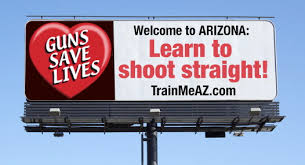
- The NRA has bitterly fought background checks on gun-buyers, in effect granting even criminals and the mentally ill the right to own arsenals of death-dealing weaponry.
- The NRA has spent millions on slick advertising campaigns to win new members and frighten them into buying guns.
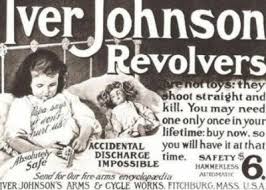
- The NRA has spent millions on political contributions to block gun-control legislation.
- The NRA has spent millions attacking political candidates and elected officials who warned about the dangers of unrestricted access to assault and/or concealed weapons.

- The NRA has spent millions pushing “Stand Your Ground” laws in more than half the states, which potentially give every citizen a “license to kill.”
- The NRA receives millions of dollars from online sales of ammunition, high-capacity ammunition magazines, and other accessories through its point-of-sale Round-Up Program–thus directly profiting by selling a product that kills about 30,288 people a year.
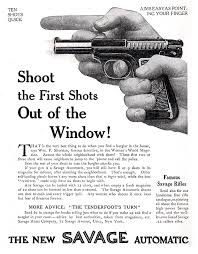
- Firearms made indiscriminately available through NRA lobbying have filled hospitals–such as those in Orlando–with casualties, and have thus badly strained the states’ public healthcare systems.
It will take a series of highly expensive and well-publicized lawsuits to significantly weaken the NRA, financially and politically.
The first ones will have to be brought by the surviving victims of gun violence–and by the friends and families of those who did not survive it. Only they will have the courage and motivation to take such a risk.
As with the cases first brought against tobacco companies, there will be losses. And the NRA will rejoice with each one.
But, in time, state Attorneys General will see the clear parallels between lawsuits filed against those who peddle death by cigarette and those who peddle death by armor-piercing bullet.
And then the NRA–like the tobacco industry–will face an adversary wealthy enough to stand up for the rights of the gun industry’s own victims.
Only then will those politicians supporting reasonable gun controls dare to stand up for the victims of such needless tragedies as the one in Orlando, Florida.
ABC NEWS, AIRLINE PASSENGER RIGHTS, AIRLINES, AIRTRAN, AMERICAN AIRLINES, AMERICAN CUSTOMER SATISFACTION INDEX, BUSINESS INSIDER, CBS NEWS, CNN, COMPLAINT LETTERS, CONSUMER RIGHTS, DAVE CARROLL, DELTA AIRLINES, FACEBOOK, ITUNES, JETBLUE AIRWAYS, KGB, LEISHA HAILEY, NBC NEWS, NICCOLO MACHIAVELLI, SOUTHWEST AIRLINES, THE CHICAGO SUN-TIMES, THE CHICAGO TRIBUNE, THE LOS ANGELES TIMES, THE NEW YORK TIMES, THE PRINCE, THE WASHINGTON POST, TWITTER, U.S. AIRWAYS, UNITED BREAKS GUITARS, US AIRWAYS, YOUTUBE
In Bureaucracy, Business, History, Law, Self-Help, Social commentary on June 10, 2016 at 12:21 am
The concept of “consumer rights” has not yet reached the airline industry.
Under Federal law, as enforced by the Federal Aviation Administration, airline passengers have only the following guaranteed rights:
If your flight is delayed (such as by bad weather) and you’re stuck on the tarnac:
- Tarnac delays cannot exceed three hours. You can leave the plane if you choose after that.
- Food and water must be available after the plane has been stuck on the tarnac for two hours.
- The airline must service toilets, keep air conditioning on, and keep trash cans clean.
In addition, the U.S. government mandates these “rights” for air travelers:
- Compensation when you’re bumped due to overbooking –and for no other reason.
- An airline must accept lost/damaged baggage liability up to $3,000 in depreciated value per passenger for a domestic flight (limits on international flights are either about $1,700 or $635, depending on which rule applies).
Beyond those, all you can claim is what’s in each airline’s “contract of carriage.” Those contracts are–naturally–heavily biased toward airlines, not customers.
Unfortunately, the law–and the Congressmen who create it–is still largely owned by the airlines. Thus you, as a customer, are forced to make do with the weapons at hand.
These essentially boil down to two:
- Threatening the airlines with bad publicity; and
- Threatening the airlines with a private or class-action lawsuit.
In both cases, it’s best to first contact the highest-ranking officials in the airline company.
There are two reasons for this:
- They have the most to lose, and
- They have the power to redress your complaint.
You can try to reach the CEO or one of his assistants during the time of the incident. But, most likely, this will happen afterwards.
If a mini-Hitler of an airline steward decides to eject you because s/he doesn’t like your clothes or request for help, there’s nothing you can do about it.
If you physically resist, you will almost certainly be arrested and charged with some version of domestic terrorism. You’ll be shipped off to jail and forced to defend yourself against the bogus charge.
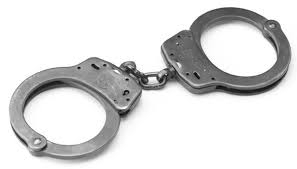
Even if the authorities decide to not prosecute, you’ll have to spend at least several hundred dollars on legal representation.
And, of course, the airlines won’t care. They won’t be spending a dime on your prosecution–that will be paid for by the local U.S. Attorney’s (federal prosecutor’s) office.
Niccolo Machiavelli, the father of political science, wisely advised in The Prince:
“A prince…must imitate the fox and the lion, for the lion cannot protect himself from traps, and the fox cannot defend himself from wolves. One must therefore be a fox to avoid traps, and a lion to frighten wolves.”
This is definitely the time to take on the trappings of a fox. However painful it is to swallow the insult at the time it’s given, don’t give the airlines an excuse to have you arrested.
Take your revenge afterward. That’s what musician Dave Carroll did.
Carroll alleged that, in 2008, he and fellow passengers saw United Airlines’ baggage-handling crew throwing guitars on the tarmac in Chicago O’Hare. He arrived at Omaha, Nebraska, his destination to discover that the neck of his $3,500 Taylor guitar had been broken.
Carroll complained to three United employees, but they proved indifferent. He filed a claim with the airline–but was told he was ineligible for compensation.
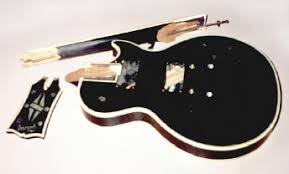
The reason? He had not filed the claim within the company’s stipulated “standard 24-hour timeframe.”
Carroll turned to his musical roots for a remedy. He wrote a song, “United Breaks Guitars,” and turned it into a music video which he posted on YouTube and iTunes in July, 2009.
Click here: United Breaks Guitars – YouTube
The song went viral, and became a public relations nightmare for the airline.
The Sunday Times reported that, four days after the video’s posting, United Airlines’ stock price fell 10% costing stockholders about $180 million in value.
Most customers, admittedly, aren’t musicians. For them–short of suing–the weapons of choice will be:
- The phone
- Letters
- The Internet
- Consumer protection organizations that can be enlisted
Let’s start with the first: The phone.
Most customers assume the place to take their anger is the airline Customer Service desk. And the airlines encourage people to do just that.
Don’t do it.
Customer Service is staffed by people who may ooze compassion but who aren’t authorized to do anything on your behalf. And of course they’ll be well-versed in the standard airline excuses for why your request is denied.
(Think of Dave Carroll and the excuse United’s reps offered him: You didn’t file your claim within 24 hours.)
Even if they truly want to help you, they’ll find themselves outranked at every level.
So take your complaint to someone who has the authority to resolve it. This means, preferably, the CEO of the airline, or at least one of his executive colleagues.
The other above-mentioned remedies will be discussed in my coming series, “KGB Airways: Fighting Airline Arrogance.”
ABC NEWS, AIRLINE PASSENGER RIGHTS, AIRLINES, AIRTRAN, AMERICAN AIRLINES, AMERICAN CUSTOMER SATISFACTION INDEX, BUSINESS INSIDER, CBS NEWS, CNN, COMPLAINT LETTERS, CONSUMER RIGHTS, DAVE CARROLL, DELTA AIRLINES, FACEBOOK, ITUNES, JETBLUE AIRWAYS, KGB, LEISHA HAILEY, NBC NEWS, NICCOLO MACHIAVELLI, SOUTHWEST AIRLINES, THE CHICAGO SUN-TIMES, THE CHICAGO TRIBUNE, THE LOS ANGELES TIMES, THE NEW YORK TIMES, THE PRINCE, THE WASHINGTON POST, TWITTER, U.S. AIRWAYS, UNITED BREAKS GUITARS, US AIRWAYS, YOUTUBE
In Bureaucracy, Business, Law, Self-Help, Social commentary on June 9, 2016 at 12:07 am
When Leisha Hailey and her girlfriend kissed aboard a Southwest Airlines flight to Los Angeles, they quickly found themselves in trouble.

Leisha Hailey
A flight attendant told them that Southwest was “a family airline.” When they argued they were targets of homophobia, the attendant ejected them from the plane.
Hailey–the star of Showtime’s The L-Word (and a lesbian)–posted her experience on Twitter. Calling for a boycott of Southwest, she tweeted:
“I want to know what Southwest Airlines considers as ‘family.’ I know plenty of wonderful same-sex families I would like to introduce them to. Boycott @SouthwestAir if you are gay. They don’t like us.”
Naturally, Southwest had its own explanation for what had happened:
“…We received several passenger complaints characterizing the behavior as excessive. Our crew, responsible for the comfort of all Customers on board, approached the passengers based solely on behavior and not gender. The conversation escalated to a level that was better resolved on the ground, as opposed to in flight.”
In short, the situation was “better resolved on the ground” by forcing two unarmed, non-threatening women to leave the plane rather than having the airline honor their high-priced tickets.
Now, a quick question: When does a camera become a dangerous weapon?
When you snap a picture of an especially rude airline employee.
- A Miami photographer was escorted off a US Airways plane and deemed a “security risk” after she did this at Philadelphia International Airport in July, 2011.
Sandy DeWitt believed the employee, Tonialla G., was being rude to several passengers in the boarding area of the flight to Miami.
So DeWitt, a professional photographer, used her iPhone to snap a picture of G.’s nametag. She intended to file a complaint with US Airways and wanted the picture as evidence.
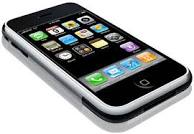
As DeWitt settled into her seat, preparing for take-off, G. entered the plane and confronted her.
She ordered DeWitt to delete the photo.
DeWitt had already turned off her iPhone, as required before take-off. She turned the phone back on to prove that the photo hadn’t come out. Even so, she deleted the too-dark picture.
G. then walked into the cockpit to inform the pilot that DeWitt was a “security risk.”
Suddenly, DeWitt found herself being escorted off the plane by two flight attendants. Her husband followed.
Speaking with Michael Lofton, a US Airways manager at Philadelphia International Airport, she learned that she would not be allowed back on the plane.
The reason: She was a “security risk.”
But that didn’t keep Lofton from directing her to American Airlines for a flight back to Miami.
But that flight had already departed and it was already after 7 p.m. And there were no other flights back to Miami until the following morning.
“We were expecting to spend the night at the airport,” she said.
They eventually boarded a Southwest Airlines flight to Fort Lauderdale at 11 p.m.
Apparently, Southwest didn’t consider her to be a “security risk.”
Naturally, US Airways had a cover-story to explain what had happened.
Todd Lehmacher, a spokesman for US Airways, told msnbc.com that DeWitt was removed for being “disruptive.”
“Once onboard, she was using foul and explicit language,” Lehmacher said. “She was removed at the request of the captain.”
Apparently, “disruptive” means whatever an airline official claims it to mean.
Business Insider ranked US Airways sixth in a list of the 19 Most Hated Companies in America.
The American Customer Satisfaction Index (ACSI) is an economic indicator that measures the satisfaction of consumers across the United States. It is produced by the American Customer Satisfaction Index, a private company based in Ann Arbor, Michigan.
The ACSI interviews about 80,000 Americans annually and asks about their satisfaction with the goods and services they have consumed. And Americans’ most-hated companies include large banks, airlines, power and telecom companies.
David VanAmburg, managing director at ACSI, offered a critical insight into why these companies are so detested.
“These are not terribly competitive industries, as the switching barriers for most of them are quite high,” he told Business Insider in June, 2011.
“In other industries, like the food or clothing sector, the competition is huge. They bend over backwards to make customers happy, because they have to.”
That certainly does not apply to applies to airlines–whose numbers are limited and continue to shrink due to mergers and the occasionally rising cost of fuel.
For the airline industry generally, the former slogan of United Airlines–”Fly the Friendly Skies–has unofficially been replaced with: “We don’t care. We don’t have to.”
So–when you’re facing a would-be KGB agent masquerading as an airline employee–what do you do?
First, you recognize that the concept of “consumer rights” has not yet reached the airline industry.
Then you do what you can to see that it does.
ABC NEWS, AIRLINE PASSENGER RIGHTS, AIRLINES, AIRTRAN, AMERICAN AIRLINES, AMERICAN CUSTOMER SATISFACTION INDEX, BUSINESS INSIDER, CBS NEWS, CNN, COMPLAINT LETTERS, CONSUMER RIGHTS, DAVE CARROLL, DELTA AIRLINES, FACEBOOK, ITUNES, JETBLUE AIRWAYS, KGB, LEISHA HAILEY, NBC NEWS, NICCOLO MACHIAVELLI, SOUTHWEST AIRLINES, THE CHICAGO SUN-TIMES, THE CHICAGO TRIBUNE, THE LOS ANGELES TIMES, THE NEW YORK TIMES, THE PRINCE, THE WASHINGTON POST, TWITTER, U.S. AIRWAYS, UNITED BREAKS GUITARS, US AIRWAYS, YOUTUBE
In Bureaucracy, Business, History, Law, Self-Help, Social commentary on June 8, 2016 at 12:14 am
The First Amendment of the American Constitution guarantees freedom of speech.
But some airline employees haven’t gotten the word.
Click here: 3 Easy Ways to Tell If a Business Puts Its Customers First – DailyFinance
Yes, what you say can get you thrown off an airplane–or worse. And it doesn’t have to be anything even remotely like a threat.
- In May, 2011, a US Airways flight was due to depart San Francisco International Airport for Charlotte, North Carolina at 1:20 p.m. But due to bad weather, passengers boarded the plane after 2 p.m.
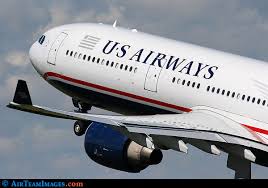
Once on the plane, a flight attendant told customers over the intercom to hurry up and put their carry-ons in bins so they could take off and make their connecting flight in Charlotte.
One of the passengers, Luke Hazlewood, turned to the person next to him and said it was the airline’s fault they were late, “so don’t get mad at us.”
The flight attendant rushed out of the galley demanding to know who had said that. Once she determined it was Hazlewood, she told him he would have to leave for being disruptive and a threat to the plane.
Sandra Kraus, a former flight attendant, came to Hazlewood’s defense–and the flight attendant told her to get off the plane as well.
Both passengers asked to speak with the captain but he refused to speak with them.
Kraus was put on another flight. Hazlewood and his accompanying girlfriend (who had left the plane with him) found that US Airways wouldn’t compensate them for a hotel room.
The airline refused to answer questions about the matter. Its written statement said “The passengers interfered with the flight crew and in the interest of safety they had to be removed.”
It’s a truism in both journalism and police work: When people refuse to answer questions, it’s nearly always because they know they have something to hide.
And the airline’s response came in the classic voice of the all-powerful dictator: “They refused to treat me like God and so they had to be eliminated.”
Business Insider ranked US Airways #6 on a list of Click here: The 19 Most Hated Companies In America – Business Insider
- In December, 2011, three middle-aged women were thrown off an AirTran flight at Palm Beach International Airport after a steward began roughly handling the luggage of one of them.
Marilyn Miller, a lawyer, was buckled in for takeoff when the attendant mishandled her overhead luggage. “I have breakables in that,” she said.
The attendant ignored her and kept shoving other bags into hers.

Another passenger, Carol Gray, a retired travel agent, asked the same attendant for help, saying that her seat was broken.
“I’m not talking to you,” said the attendant, and poked her in the arm. He then threatened to throw Miller and Gray off the plane.
“You’ve got to be kidding me,” said Miller.
“Well, you’re getting off,” said the attendant.
Two sheriff’s deputies and airline staff arrived to remove them.
A third passenger, a therapist named Karyn Schoor, spoke up in their defense: “This is crazy, they didn’t do anything. Why are you doing this to them?”
“Throw her off too,”’ ordered the attendant.
All three women were marched off the plane and back into the terminal.
The women were offered flights on other airlines paid for by AirTran.
And the official explanation given by AirTran?
“Our employees are responsible for the safety and comfort of everyone onboard a flight. Our goal is always to mitigate any uncomfortable situation prior to departure.”
Uncomfortable for whom–the passenger who doesn’t want her luggage roughly treated? Or the attendant whose ego gets bent out of shape at the slightest objection?
- In July, 2010, Southwest Airlines removed a slender, five-foot-four woman from a plane to accomodate an obese passenger.
The woman was flying standby from Las Vegas to Sacramento. She had paid full fare for the last available seat, boarded and stowed her bags–and was told she must deplane immediately.
The reason: A late-arriving, 14-year-old passenger required two seats because of her girth.
When the woman asked Southwest personnel why she was being removed her from the flight, they berated her for daring to question their decision.
The temporarily stranded passenger managed to catch the next flight out to Sacramento.
- You don’t have to assault someone to be thrown off an airplane. Even kissing your partner will do.
Southwest Airlines kicked Leisha Hailey–who not only played a lesbian in Showtime’s The L-Word series but is one–and her girlfriend off a flight to Los Angeles.
Their crime? Kissing.
A flight attendant told them that Southwest was “a family airline.” When they argued they were targets of homophobia, the attendant ejected them from the plane.
ABC NEWS, AIRLINE PASSENGER RIGHTS, AIRLINES, AIRTRAN, AMERICAN AIRLINES, AMERICAN CUSTOMER SATISFACTION INDEX, BUSINESS INSIDER, CBS NEWS, CNN, COMPLAINT LETTERS, CONSUMER RIGHTS, DAVE CARROLL, DELTA AIRLINES, FACEBOOK, ITUNES, JETBLUE AIRWAYS, KGB, LEISHA HAILEY, NBC NEWS, NICCOLO MACHIAVELLI, SOUTHWEST AIRLINES, THE CHICAGO SUN-TIMES, THE CHICAGO TRIBUNE, THE LOS ANGELES TIMES, THE NEW YORK TIMES, THE PRINCE, THE WASHINGTON POST, TWITTER, U.S. AIRWAYS, UNITED BREAKS GUITARS, US AIRWAYS, YOUTUBE
In Bureaucracy, Business, Law, Self-Help, Social commentary on June 7, 2016 at 12:02 am
With the summer tourism season now on, tens of thousands of Americans will be flying across the country to visit with loved ones.
And many of them will become the victims of KGB Airways.
In truth, many airline personnel treat passengers the way KGB agents once treated Soviet citizens–with the arrogance that comes from holding near-absolute power over the lives of others.

Consider the following:
- From the website of American Airlines:
ESSENTIAL NEEDS DURING EXTRAORDINARY DELAYS
In the case of extraordinary events that result in very lengthy onboard delays, American will make every reasonable effort to ensure that essential needs of food (snack bar such as Nutri-Grain®), water, restroom facilities, and basic medical assistance are met.
We are not responsible for any special, incidental or consequential damages if we do not meet this commitment.
Translation: On one hand, American promises that it will try to ensure that “essential needs of food, water, restroom facilities and basic medical assistance are met” during “very lengthy onboard delays.” On the other hand, if they “do not meet this commitment,” that’s just the passengers’ tough luck.

ACCEPTANCE OF PASSENGERS
American may refuse to transport you, or may remove you from your flight at any point, for one or several reasons, including but not limited to:
- Compliance with government requisition of space.
- Action necessary or advisable due to weather, or other conditions beyond American’s control.
- Refusal to permit a search of person or property for explosives or for deadly, controlled, or dangerous weapons, articles or substances.
- Refusal to produce positive identification upon request.
- Your physical or mental condition is such that in American’s sole opinion, you are rendered or likely to be rendered incapable of comprehending or complying with safety instructions without the assistance of an attendant.
- Your conduct is disorderly, abusive or violent.
- Appear to be intoxicated or under the influence of drugs.
- Attempt to interfere with any member of the flight crew.
- Have a communicable disease that has been determined by a federal public health authority to be transmissible to other persons in the normal course of flight.
- Refuse to obey instructions from any flight crew member.
- Have an offensive odor not caused by a disability or illness.
- Are clothed in a manner that would cause discomfort or offense to other passengers or are barefoot.
- Engage in any action, voluntary or involuntary, that might jeopardize the safety of the aircraft or any of its occupants.
Translation: “American may refuse to transport you, or may remove you from your flight at any point” for just about any reason it wants to give.
Click here: Conditions of carriage – Contract of transportation – American Airlines
DELAYS, CANCELLATIONS AND DIVERSIONS
American Airlines will provide customers at the airport and onboard an affected aircraft with timely and frequent updates regarding known delays, cancellations and diversions and will strive to provide the best available information concerning the duration of delays and to the extent available, the flight’s anticipated departure time.
We are not responsible for any special, incidental or consequential damages if we do not meet this commitment.
Translation: On one hand, American promises to give customers “timely and frequent updates regarding known delays, cancellations and diversions.” On the other hand, American absolves itself from any damages “if we do not meet this commitment.”
And how does all this translate into action?
- In late March, 2012, a woman was barred from boarding an American Airlines flight because its staff disliked her choice of clothing. She was wearing a T-shirt bearing the words: “IF I WANTED THE GOVERNMENT IN MY WOMB, I’D F— A SENATOR.”
After taking a seat she was told by a flight attendant that she needed to speak with the captain, who found the T-shirt “offensive.” He said she would have to change before she could re-board the plane.
The passenger claims this interaction caused her to miss her connection: Her luggage was checked and “changing shirts without spending money wasn’t an option.”
Business Insider ranked American Airlines 8th on a list of The 19 Most Hated Companies In America.
- In July, 2011, Malinda Knowles, a 27-year-old financial consultant, was kicked off a JetBlue flight at JFK Airport in New York because of her attire–a baggy blue T-shirt and denim shorts.

A male JetBlue employee walking down the aisle noticed Knowles. He told her he didn’t think she was wearing enough clothing. An argument erupted when the employee put his walkie-talkie between her legs to see if she was wearing shorts underneath. When Knowles objected, the JetBlue worker brought her off the plane and to a hangar.
There she modeled for the employees, showing that she was wearing shorts. She returned to the plane, but the same employee once again approached her and said: “The captain is refusing to fly you today. We need to remove you from the flight.”
After waiting four hours for another flight, she arrived in Florida. Apparently the crew of that plane didn’t have any problem with her attire.
Knowles has since filed a lawsuit against JetBlue.
2016 PRESIDENTIAL RACE, ABC NEWS, BLACKS, BOEING, CBS NEWS, CNN, DONALD TRUMP, FACEBOOK, GEORGE C. WALLACE, HILLARY CLINTON, JOHN F. KENNEDY, JOHN MCCAIN, JUSTICE DEPARTMENT, MAFIA, MEXICANS, NBC NEWS, PRISONERS OF WAR, ROBERT F. KENNEDY, SAUDI ARABIA, STATE DEPARTMENT, THE CHICAGO SUN-TIMES, THE CHICAGO TRIBUNE, THE KENNEDYS, THE LOS ANGELES TIMES, THE NEW YORK TIMES, THE WALL STREET JOURNAL, THE WASHINGTON POST, TWITTER, WOMEN
In History, Law Enforcement, Politics, Social commentary, Uncategorized on June 6, 2016 at 12:01 am
Today, America has two major candidates running for President: Donald Trump and Hillary Clinton.
Trump is a billionaire businessman. Clinton is a former First Lady, U.S. Senator and Secretary of State.
Despite the great differences in their backgrounds, they both share one thing in common: Extremely high negatives among voters.
Trump’s hate-filled rhetoric has deliberately or unintentionally offended almost every major American voting group, including:
- Mexicans: “They’re bringing drugs.They’re bringing crime. They’re rapists.” He’s also promised to “build a great, great wall on our southern border and I will have Mexico pay for that wall.”
- Prisoners-of-War: Speaking of Arizona U.S. Senator John McCain, a Vietnam POW for seven years: “He’s not a war hero. He’s a war hero because he was captured. I like people that weren’t captured.”
- Women: “If Hillary Clinton can’t satisfy her husband, what makes her think she can satisfy America?”
These insults delight his white, uneducated followers. But they have alienated millions of other Americans who might have voted for him.
As for Clinton: She continues to be dogged by charges that she used her position as Secretary of State (2009-2013) to enrich herself.
Countries that made large contributions to the Clinton Foundation got an increase in State Department-approved arms sales.
For example: In 2011, the State Department green-lighted a $29 billion arms deal to Saudi Arabia, despite its dismal record on human rights.
Years before Clinton became Secretary of State, Saudi Arabia donated $10 million to the Clinton Foundation. And Boeing, the biggest defense contractor involved, donated $900,000 to the Clinton Foundation just two months before the deal was finalized.
But 48 years ago, Senator Robert Francis Kennedy aroused passions of an altogether different sort.
Kennedy had been a United States Attorney General (1961-1964) and Senator (1964-1968). But it was his connection to his beloved and assassinated brother, President John F. Kennedy, for which he was best known.

Robert F. Kennedy campaigning for President
Millions saw RFK as the only candidate who could make life better for America’s impoverished–while standing firmly against those who threatened the Nation’s safety.
As television correspondent Charles Quinn observed: “I talked to a girl in Hawaii who was for [George] Wallace [the segregationist governor of Alabama]. And I said ‘Really?’ [She said] ‘Yeah, but my real candidate is dead.’
“You know what I think it was? All these whites, all these blue collar people who supported Kennedy…all of these people felt that Kennedy would really do what he thought best for the black people, but, at the same time, would not tolerate lawlessness and violence.
“They were willing to gamble…because they knew in their hearts that the country was not right. They were willing to gamble on this man who would try to keep things within reasonable order; and at the same time do some of the things they knew really should be done.”
Campaigning for the Presidency in 1968, RFK had just won the crucial California primary on June 4–when he was shot in the back of the head. His killer: Sirhan Sirhan, a young Palestinian furious at Kennedy’s support for Israel. He died at 1:44 a.m. on June 6.
On June 8, 1,200 men and women boarded a specially-reserved passenger train at New York’s Pennsylvania Station. They were accompanying Kennedy’s body to its final resting place at Arlington National Cemetery.
As the train slowly moved along 225 miles of track, throngs of men, women and children lined the rails to pay their final respects to a man they considered a genuine hero.
Little Leaguers clutched their baseball caps across their chests. Uniformed firemen and policemen saluted. Burly men in shirtsleeves held hardhats over their hearts. Black men in overalls waved small American flags. Women from all levels of society stood and cried.

A nation says goodbye to Robert Kennedy
Commenting on RFK’s legacy, historian William L. O’Neil wrote in Coming Apart: An Informal History of America in the 1960′s:
“…He aimed so high that he must be judged for what he meant to do, and, through error and tragic accident, failed at….He will also be remembered as an extraordinary human being who, though hated by some, was perhaps more deeply loved by his countrymen than any man of his time.
“That too must be entered into the final account, and it is no small thing. With his death something precious disappeared from public life.”
The Kennedy family never again roused the same passions among voters as it did during RFK’s short-lived run for the Presidency.
And America has never again since seen a Presidential candidate who combined toughness on crime and compassion for the poor.
Republican candidates have waged war on crime–and the poor. And Democratic candidates have moved to the Right in eliminating anti-poverty programs.
RFK had the courage to fight the Mafia–and the compassion to fight poverty. At a time of rising rates of income inequality and corporate crime, his kind of politics are sorely missed.
ABC NEWS, ADOLF HITLER, BORIS YELTSIN, CBS NEWS, CNN, DONALD TRUMP, FACEBOOK, GEORGE W. BUSH, HILLARY CLINTON, JOE SCARBOROUGH, JOSEPH STALIN, KGB, KIM JONG-UN, MISS TEEN USA, MISS UNIVERSE, MISS USA, MORNING JOE, MSNBC, NAZI GERMANY, NAZI PARTY, NBC NEWS, RED ARMY, REPUBLICAN PARTY, SOVIET UNION, THE LOS ANGELES TIMES, THE NEW YORK TIMES, THE WASHINGTON POST, TWITTER, VLADIMIR PUTIN, WEHRMACHT, WORLD WAR ii
In Bureaucracy, History, Politics, Social commentary on June 3, 2016 at 12:01 am
“And I have to say, I don’t understand Donald [Trump’s] bizarre fascination with dictators and strongmen who have no love for America.”
The speaker was Democratic Presidential candidate Hillary Clinton, addressing an audience in San Diego, California, on June 2.
“He praised China for the Tiananmen Square massacre; he said it showed strength.
“He said, ‘You’ve got to give Kim Jong Un credit’ for taking over North Korea–something he did by murdering everyone he saw as a threat, including his own uncle, which Donald described gleefully, like he was recapping an action movie.
“And he said if he were grading Vladimir Putin as a leader, he’d give him an A. Now, I’ll leave it to the psychiatrists to explain his affection for tyrants,” said Clinton.
Yes, Donald Trump admires Vladimir Putin. And Vladimir Putin admires Donald Trump.
To many people, it’s the ultimate odd-couple: The lifelong Communist and former KGB officer (Putin) walking arm-in-arm with the billionaire, publicity-hungry capitalist.
What could be going on here?
First Putin:
“He is a bright personality, a talented person, no doubt about it. It is not up to us to appraise his positive sides, it is up to the U.S. voters. but, as we can see, he is an absolute leader in the presidential race.
“He is saying that he wants to move to a different level of relations with Russia, to a closer, deeper one. How can we not welcome that? Of course, we welcome that.”
Now Trump:
“It is always a great honor to be so nicely complimented by a man so highly respected within his own country and beyond.”
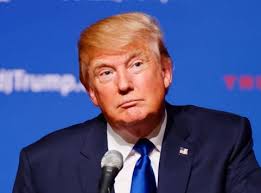
Donald Trump
Appearing on the December 18, 2015 edition of MSNBC’s “Morning Joe,” Trump said: “Sure, when people call you ‘brilliant,’ it’s always good. Especially when the person heads up Russia.”
The host, Joe Scarborough, was upset by Trump’s praise for Putin: “Well, I mean, [he’s] also a person who kills journalists, political opponents, and invades countries. obviously that would be a concern, would it not?”
TRUMP: He’s running his country, and at least he’s a leader. Unlike what we have in this country.
SCARBOROUGH: But again: He kills journalists that don’t agree with him.
TRUMP: I think our country does plenty of killing, also, Joe, so, you know. There’s a lot of stupidity going on in the world right now, Joe. A lot of killing going on. A lot of stupidity. And that’s the way it is.
SCARBOROUGH: I’m confused. So I mean, you obviously condemn Vladimir Putin killing journalists and political opponents, right?
TRUMP: Oh sure, absolutely.
When Trump praised Putin as a leader–“unlike what we have in this country”–he no doubt meant President Barack Obama.
Ironically, it is Obama–not Trump–who has repeatedly been named in Gallup polls as the most admired man in America in each of the last seven years, beginning with 2008, the year he was elected president.
Although Trump didn’t mention former President George W. Bush, his insult applies–unintentionally but accurately–to Obama’s predecessor.
In June 2001, Bush and Vladimir Putin met in Slovenia. During the meeting a truly startling exchange occurred.
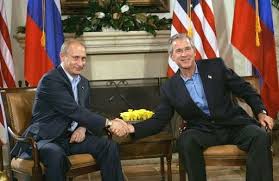
Vladimir Putin and George W. Bush
Putin, a former KGB Intelligence officer, had clearly done his homework on Bush. When he mentioned that one of the sports Bush had played was rugby, Bush was highly impressed.
“I did play rugby,” said Bush. “Very good briefing.”
Bush knew that Putin had worked for Soviet intelligence. So he should not have been surprised that the KGB had amassed a lengthy dossier on him.
But more was to come.
BUSH: Let me say something about what caught my attention, Mr. President, was that your mother gave you a cross which you had blessed in Israel, the Holy Land.
PUTIN: It’s true.
BUSH: That amazes me, that here you were a Communist, KGB operative, and yet you were willing to wear a cross. That speaks volumes to me, Mr. President. May I call you Vladimir?
Putin instantly sensed that Bush judged others–even world leaders–through the lens of his own fundamentalist Christian theology.
Falling back on his KGB training, Putin seized on this apparent point of commonality to build a bond. He told Bush that his dacha had once burned to the ground, and the only item that had been saved was that cross.
“Well, that’s the story of the cross as far as I’m concerned,” said Bush, clearly impressed. “Things are meant to be.”
Afterward, Bush and Putin gave an outdoor news conference.
“Is this a man that Americans can trust?” Associated Press correspondent Ron Fournier asked Bush.
“Yes,” said Bush. “I looked the man in the eye. I found him to be very straightforward and trustworthy. We had a very good dialogue.
“I was able to get a sense of his soul, a man deeply committed to his country and the best interests of his country. I wouldn’t have invited him to my ranch if I didn’t trust him.”
Of course, no one from the Right–including Trump–is now recalling such embarrassing words.
It’s far more politically profitable to pretend that all of America’s tensions with Russia began with the election of Barack Obama.
And that those tensions will vanish once another Rightist–and non-black–President enters the White House.
2016 PRESIDENTIAL CAMPAIGN, ABC NEWS, ADOLF HITLER, ALTERNET, AMERICABLOG, AP, BABY BOOMER RESISTANCE, BARACK OBAMA, BBC, BERNIE SANDERS, BLOOMBERG NEWS, BUZZFEED, CBS NEWS, CNN, CROOKS AND LIARS, D-DAY, DAILY KOZ, DAVID BROOKS, DEMOCRATIC PARTY, DONALD TRUMP, ELIZABETH WARREN, FACEBOOK, FIVETHIRTYEIGHT, GEORGE S. PATTON, HARPER’S MAGAZINE, HEINZ GUERIAN, HILLARY CLINTON, HUFFINGTON POST, JOSEPH MCCARTHY, LIBERALS, MARCO RUBIO, MARK SHIELDS, MEDIA MATTERS, MOTHER JONES, MOVEON, MSNBC, NAZI GERMANY, NBC NEWS, NEW REPUBLIC, NEWSDAY, NEWSWEEK, NEWT GINGRICH, NOCCOLO MACHIAVELLI, NPR, PBS NEWSHOUR, POLITICO, POLITICUSUSA, RAW STORY, REPUBLICAN PARTY, REPUBLICANS, REUTERS, SALON, SEATTLE TIMES, SLANDER, SLATE, STALINGRAD, TALKING POINTS MEMO, TED CRUZ, THE ATLANTIC, THE CHICAGO SUN-TIMES, THE CHICAGO TRIBUNE, THE DAILY BEAST, THE DAILY BLOG, THE GUARDIAN, THE HILL, THE HUFFINGTON POST, THE LOS ANGELES TIMES, THE NATION, THE NEW REPUBLIC, THE NEW YORK TIMES, THE NEW YORKER, THE PRINCE, THE VILLAGE VOICE, THE WASHINGTON POST, THINKPROGRESS, TIME, TRUTHDIG, TRUTHOUT, TWITTER, TWO POLITICAL JUNKIES, U.S. NEWS & WORLD REPORT, UPI, USA TODAY, WAFFEN-SS
In Bureaucracy, History, Politics, Social commentary on June 2, 2016 at 12:13 am
Massachusetts U.S. Senator Elizabeth Warren seems to know something that most of her fellow Democrats don’t–or choose to ignore.
Nazi Germany wasn’t defeated because “we were the Good Guys and they were the Bad Guys.”
On the contrary: It was defeated because the Allies waged war as brutally as the Germans.
For example:
- From D-Day to the fall of Berlin, captured Waffen-SS soldiers were often shot out of hand.
- When American troops came under fire in the German city of Aachen, Lt. Col. Derrill Daniel brought in a self-propelled 155mm artillery piece and opened up on a theater housing German soldiers. After the city surrendered, a German colonel labeled the use of the 155 “barbarous” and demanded that it be outlawed.
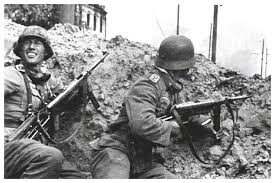
German soldiers at Stalingrad
- The United States and Great Britain carpet-bombed about 150 German cities by day and night, killing 305,000 to 600,000 civilians.
- During the battle of Stalingrad in 1942, Wilhelm Hoffman, a young German soldier and diarist, was appalled that the Russians refused to surrender. He wrote: “You don’t see them at all, they have established themselves in houses and cellars and are firing on all sides, including from our rear! Barbarians! They use gangster methods….”
In short: The Allies won because they dared to meet the brutality of a Heinz Guderian with that of a George S. Patton.
This is a lesson that has been totally lost on the liberals of the Democratic Party. Which explains why they lost most of the Presidential elections of the 20th century.
To Republicans, “lawfully elected” applies only to Republican Presidents. A Democrat who runs against a Republican is automatically considered a traitor.
And a Democrat who defeats a Republican is automatically considered a usurper, and thus deserves to be slandered and obstructed, if not impeached.
Unable to defeat Bill Clinton in 1992 and 1996, Republicans tried in 1998 to impeach him for getting oral sex in the White House.
Similarly, 2012 Presidential candidate Herman Cain, asked in a conference call with bloggers why Republicans couldn’t just impeach President Barack Obama, replied:
“That’s a great question and it is a great–it would be a great thing to do but because the Senate is controlled by Democrats we would never be able to get the Senate first to take up that action.”
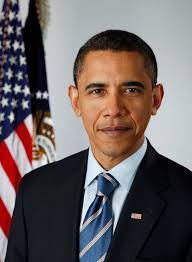
Barack Obama
In Renegade: The Making of a President, Richard Wolffe chronicled Obama’s successful 2008 bid for the White House. Among his revelations:
Obama, a believer in rationality and decency, felt more comfortable in responding to attacks on his character than in making them on the character of his enemies.
A graduate of Columbia University and Harvard Law School, Obama is easily one of the most academically gifted Presidents in United States history.
But for all this, he failed–from the onset of his Presidency–to grasp and apply this fundamental lesson taught by Niccolo Machiavelli, the father of modern political science.

Niccolo Machiavelli
In The Prince, Machiavelli warns:
From this arises the question whether it is better to be more loved than feared, or feared more than loved.
The reply is, that one ought to be both feared and loved, but as it is difficult for the two to go together, it is much safer to be feared than loved….
And men have less scruple in offending one who makes himself loved than one who makes himself feared; for love is held by a chain of obligations which, men being selfish, is broken whenever it serves their purpose; but fear is maintained by a dread of punishment which never fails.
Just as they have blithely disregarded the lessons of history, liberals have ignored the Realpolitik of Machiavelli–with catastrophic results.
On Facebook and Twitter, liberals are already celebrating the “certain” Presidency of Vermont U.S. Senator Bernie Sanders or former First Lady Hillary Clinton in 2017.
They forget–or ignore–that liberals couldn’t believe America would elect, respectively, Richard Nixon (1968 and 1972), Ronald Reagan (1980 and 1984), George H.W. Bush (1988) and George W. Bush (2000 and 2004).
But Elizabeth Warren clearly hasn’t forgotten those Republican victories. Nor does she take for granted that Republican Presidential nominee Donald Trump is certain to lose in November.

Elizabeth Warren
Instead, Warren has dared to do what no other Democrat–or Republican–has: Attack Trump head-on, with the kind of blunt, insulting language he has lavished on his opponents.
On March 31, she appeared on The Late Show, with Stephen Colbert. Her take on the egotistical billionaire:
“Donald Trump is looking out for exactly one guy, and that guy’s name is Donald Trump. He smells that there’s change in the air and what he wants to do is make sure that that change works really, really well for Donald Trump.
“The truth is, he inherited a fortune from his father, he kept it going by cheating and defrauding people, and then he takes his creditors through Chapter 11.”
When Colbert said that Trump had never broken the law, Warren replied that he had never broken the law “and been caught.”
For Democrats to win elective victories and enact their agenda, they must find their own George Patton to take on the Waffen-SS generals among Republican ranks.
Only Elizabeth Warren has so far grasped this truth. And only she seems determined to act on it.
2016 PRESIDENTIAL CAMPAIGN, ABC NEWS, ADOLF HITLER, ALTERNET, AMERICABLOG, AP, BABY BOOMER RESISTANCE, BARACK OBAMA, BBC, BERNIE SANDERS, BLOOMBERG NEWS, BUZZFEED, CBS NEWS, CNN, CROOKS AND LIARS, D-DAY, DAILY KOZ, DAVID BROOKS, DEMOCRATIC PARTY, DONALD TRUMP, ELIZABETH WARREN, FACEBOOK, FIVETHIRTYEIGHT, GEORGE S. PATTON, HARPER’S MAGAZINE, HEINZ GUERIAN, HILLARY CLINTON, HUFFINGTON POST, JOSEPH MCCARTHY, LIBERALS, MARCO RUBIO, MARK SHIELDS, MEDIA MATTERS, MOTHER JONES, MOVEON, MSNBC, NAZI GERMANY, NBC NEWS, NEW REPUBLIC, NEWSDAY, NEWSWEEK, NEWT GINGRICH, NOCCOLO MACHIAVELLI, NPR, PBS NEWSHOUR, POLITICO, POLITICUSUSA, RAND PAUL, RAW STORY, REPUBLICAN PARTY, REPUBLICANS, REUTERS, SALON, SEATTLE TIMES, SLANDER, SLATE, STALINGRAD, TALKING POINTS MEMO, TED CRUZ, THE ATLANTIC, THE CHICAGO SUN-TIMES, THE CHICAGO TRIBUNE, THE DAILY BEAST, THE DAILY BLOG, THE GUARDIAN, THE HILL, THE HUFFINGTON POST, THE LOS ANGELES TIMES, THE NATION, THE NEW REPUBLIC, THE NEW YORK TIMES, THE NEW YORKER, THE PRINCE, THE VILLAGE VOICE, THE WASHINGTON POST, THINKPROGRESS, TIME, TRUTHDIG, TRUTHOUT, TWITTER, TWO POLITICAL JUNKIES, U.S. NEWS & WORLD REPORT, UPI, USA TODAY, WAFFEN-SS
In Bureaucracy, History, Politics, Social commentary on June 1, 2016 at 12:04 am
Donald Trump, “for all his moral flaws, is a marketing genius.”
So stated New York Times columnist David Brooks on the May 27 edition of the PBS Newshour.
“And you look at what he does. He just picks a word and he attaches it to a person. Little Marco {Rubio], Lyin’ Ted [Cruz], Crooked Hillary [Clinton].

Donald Trump
“And that’s a word. And that’s how marketing works. It’s a simple, blunt message, but it gets under. It sticks, and it diminishes. And so it has been super effective for him, because he knows how to do that. And [Hillary] just comes with ‘Oh, he’s divisive.’
“These are words that are not exciting people. And her campaign style has gotten, if anything…a little more stagnant and more flat.”
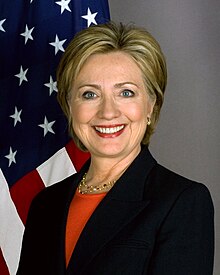
Hillary Clinton
Hillary Clinton isn’t the only Presidential candidate who has proven unable to cope with Trump’s gifts for insult. His targets–and insults–have included:
-
Former Texas Governor Rick Perry: “Wears glasses to seem smart.”
-
Former Florida Governor Jeb Bush: “Low Energy Jeb.”
-
Vermont U.S. Senator Bernie Sanders: “Crazy Bernie.”
-
Ohio Governor John Kasich: “Mathematically dead and totally desperate.”
So far, only one opponent has managed to stand up to Trump: Massachusetts U.S. Senator Elizabeth Warren, whom Trump has called “goofy.”
Florida U.S. Senator Marco Rubio tried to out-insult Trump at the Republican Presidential candidates’ debate on March 3.
“I call him Little Marco. Little Marco. Hello, Marco,” said Trump.
And so Rubio retaliated with “Big Donald.” Since Americans generally believe that “bigger is better,” this was a poor choice of insult.
On the May 27 edition of the PBS Newshour, syndicated columnist Mark Shields noted the ability of Elizabeth Warren to rattle Trump:
“Elizabeth Warren gets under Donald Trunp’s skin. And I think she’s been the most effective adversary. I think she’s done more to unite the Democratic party than either Hillary Clinton or Bernie Sanders.
“I mean, she obviously–he can’t stay away from her. He is tweeting about her.”

Elizabeth Warren
JUDY WOODRUFF (moderator): “But whether it’s Elizabeth Warren or not, doesn’t Hillary Clinton need to come up with some approach that works, that is as effective comeback?”
DAVID BROOKS: “Yes. Well, I think she does, not that anybody else has managed to do this….
“And so the tactics…is either you do what Elizabeth Warren has done, like full-bore negativity, that kind of [get] under the skin, or try to ridicule him and use humor. Humor is not Hillary Clinton’s strongest point.”
But sharp-edged humor clearly works for Warren.
A May 12 story on CNN–“Elizabeth Warren Gives Trump a Dose of His Own Medicine on Twitter”–notes:
“In the past week the Massachusetts Democrat has refined an aggressive anti-Trump message through a series of so-called tweetstorms.
“Whenever Trump criticizes her, Warren fires right back at him, sometimes twice as hard.”
Warren’s tweets, according to the article, appear to have two goals:
- Challenge Trump on social media, which he has so far dominated; and
- Use attention-catching words like “bully” and “loser.”
Among her tweets:
- “But here’s the thing. You can beat a bully–not by tucking tail and running, but by holding your ground.”
- When Trump boasted “I’m driving her nuts” Warren tweeted: “No, @realDonaldTrump – your racism, sexism & xenophobia doesn’t drive me nuts. It makes me sick. And I’m not alone.”
- “You care so much about struggling American workers, @realDonaldTrump, that you want to abolish the federal minimum wage?”
- “@realDonaldTrump: Your policies are dangerous. Your words are reckless. Your record is embarrassing. And your free ride is over.”
Nor has Warren restricted herself to battling Trump on Twitter.
On May 24, Warren unleashed perhaps her most devastating attack on Trump at an event hosted by the Center for Popular Democracy:
“Just yesterday, it came out that Donald Trump had said back in 2007 that he was ‘excited’ for the real estate market to crash because, quote, ‘I’ve always made more money in bad markets than in good markets.’
“That’s right. The rest of us were horrified by the 2008 financial crisis, by what happened to the millions of families…that were forced out of their homes.
“But Donald Trump was drooling over the idea of a housing meltdown–because it meant he could buy up a bunch more property on the cheap.
“What kind of a man does that? Root for people to get thrown out on the street? Root for people to lose their jobs? Root for people to lose their pensions?
“What kind of a man does that? I’ll tell you exactly what kind—a man who cares about no one but himself. A small, insecure moneygrubber who doesn’t care who gets hurt, so long as he makes some money off it….
“Sometimes Trump claims he is tough on Wall Street–tough on the guys who cheated people….. But now he’s singing a very different song.
“Last week, he said that the new Dodd-Frank financial regulations have…’made it impossible for bankers to function’ and he will put out a new plan soon that ‘will be close to dismantling Dodd-Frank.’
“Donald Trump is worried about helping poor little Wall Street? Let me find the world’s smallest violin to play a sad, sad song.”
2016 PRESIDENTIAL CAMPAIGN, ABC NEWS, ADOLF HITLER, ALTERNET, AMERICABLOG, AP, BABY BOOMER RESISTANCE, BARACK OBAMA, BBC, BERNIE SANDERS, BLOOMBERG NEWS, BUZZFEED, CBS NEWS, CNN, CROOKS AND LIARS, D-DAY, DAILY KOZ, DAVID BROOKS, DEMOCRATIC PARTY, DONALD TRUMP, ELIZABETH WARREN, FACEBOOK, FIVETHIRTYEIGHT, GEORGE S. PATTON, HARPER’S MAGAZINE, HEINZ GUERIAN, HILLARY CLINTON, HUFFINGTON POST, JOSEPH MCCARTHY, LIBERALS, MARCO RUBIO, MARK SHIELDS, MEDIA MATTERS, MOTHER JONES, MOVEON, MSNBC, NAZI GERMANY, NBC NEWS, NEW REPUBLIC, NEWSDAY, NEWSWEEK, NEWT GINGRICH, NOCCOLO MACHIAVELLI, NPR, PBS NEWSHOUR, POLITICO, POLITICUSUSA, RAND PAUL, RAW STORY, REPUBLICAN PARTY, REPUBLICANS, REUTERS, SALON, SEATTLE TIMES, SLANDER, SLATE, STALINGRAD, TALKING POINTS MEMO, TED CRUZ, THE ATLANTIC, THE CHICAGO SUN-TIMES, THE CHICAGO TRIBUNE, THE DAILY BEAST, THE DAILY BLOG, THE GUARDIAN, THE HILL, THE HUFFINGTON POST, THE LOS ANGELES TIMES, THE NATION, THE NEW REPUBLIC, THE NEW YORK TIMES, THE NEW YORKER, THE PRINCE, THE VILLAGE VOICE, THE WASHINGTON POST, THINKPROGRESS, TIME, TRUTHDIG, TRUTHOUT, TWITTER, TWO POLITICAL JUNKIES, U.S. NEWS & WORLD REPORT, UPI, USA TODAY, WAFFEN-SS
In Bureaucracy, History, Politics, Social commentary on May 31, 2016 at 12:05 am
Syndicated columnist Mark Shields and New York Times columnist David Brooks appear every Friday on the PBS Newshour to review the week’s major political events.
On May 27, Shields–a liberal, and Brooks, a conservative–came to some disturbingly similar conclusions about the character of Republican Presidential front-runner Donald Trump.
With the business magnate having won the 2016 Republican Presidential nomination, both columnists appeared increasingly dismayed.
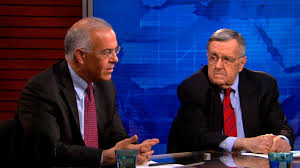
David Brooks and Mark Shields
MARK SHIELDS: “Donald Trump gratuitously slandered Ted Cruz’s wife. He libeled Ted Cruz’s father for being potentially part of Lee Harvey Oswald’s assassination of the president of the United States, suggesting that he was somehow a fellow traveler in that.
“This is a libel. You don’t get over it….
“I cannot figure out any possible advantage to Donald Trump when he’s got a problem with Latinos and with women to go into New Mexico, where the nation’s only Latina woman Republican governor sits, who has not said anything negative about him, who endorsed one of his opponents, but has not been an attack dog on Donald Trump, and absolutely goes after her and is abusive to her.
“And I’m just saying to myself, what is the advantage to this?
“…I think this man may be addicted to the roar of the grease paint and the sound of the crowd, or however it goes, smell of the crowd.
“And those rallies bring out something in him, and he just feels that he has to–and it’s all personal….I mean, it’s not a philosophical difference. It’s not a political difference. It’s all personal.”
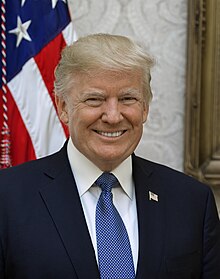
Donald Trump
Ironically, Rand Paul, Republican U.S. Senator from Kentucky, has reached a similar conclusion about Trump:
“I think there is a sophomore quality that is entertaining with Mr. Trump, but I am worried. I’m very concerned of having him in charge of his nuclear weapons because his visceral response to attack people on their appearance–short, tall, fat, ugly–my goodness that happened in junior high.”
DAVID BROOKS: “Trump, for all his moral flaws, is a marketing genius. And you look at what he does. He just picks a word and he attaches it to a person. Little Marco [Rubio], Lyin’ Ted [Cruz], Crooked Hillary [Clinton].
“And that’s a word. And that’s how marketing works. It’s a simple, blunt message, but it gets under.
“It sticks, and it diminishes. And so it has been super effective for him, because he knows how to do that. And she [Hillary Clinton] just comes with, ‘Oh, he’s divisive.’
“These are words that are not exciting people. And her campaign style has gotten, if anything…a little more stagnant and more flat.”
How did American politics reach this state of affairs?
In 1996, Newt Gingrich, then Republican Speaker of the House of Representatives, wrote a memo that encouraged Republicans to “speak like Newt.”
Entitled “Language: A Key Mechanism of Control,” it urged Republicans to attack Democrats with such words as “corrupt,” “selfish,” “destructive,” “hypocrisy,” “liberal,” “sick,” and “traitors.”
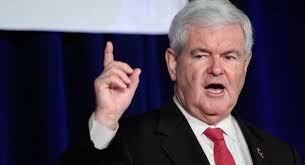
Newt Gingrich
Even worse, Gingrich encouraged the news media to disseminate such accusations. Among his suggestions:
- “Fights make news.”
- Create a “shield issue” to deflect criticism: “A shield issue is, just, you know, your opponent is going to attack you as lacking compassion. You better…show up in the local paper holding a baby in the neonatal center.”
In the memo, Gingrich advised:
“….In the video “We are a Majority,” Language is listed as a key mechanism of control used by a majority party, along with Agenda, Rules, Attitude and Learning.
As the tapes have been used in training sessions across the country and mailed to candidates we have heard a plaintive plea: ‘I wish I could speak like Newt.’
“That takes years of practice. But, we believe that you could have a significant impact on your campaign and the way you communicate if we help a little. That is why we have created this list of words and phrases….
“This list is prepared so that you might have a directory of words to use in writing literature and mail, in preparing speeches, and in producing electronic media.
“The words and phrases are powerful. Read them. Memorize as many as possible. And remember that like any tool, these words will not help if they are not used.”
Here is the list of words Gingrich urged his followers to use in describing “the opponent, their record, proposals and their party”:
- abuse of power
- anti- (issue): flag, family, child, jobs
- betray
- bizarre
- bosses
- bureaucracy
- cheat
- coercion
- “compassion” is not enough
- collapse(ing)
- consequences
- corrupt
- corruption
- criminal rights
- crisis
- cynicism
- decay
- deeper
- destroy
- destructive
- devour
- disgrace
- endanger
- excuses
- failure (fail)
- greed
- hypocrisy
- ideological
- impose
- incompetent
- insecure
- insensitive
|
- intolerant
- liberal
- lie
- limit(s)
- machine
- mandate(s)
- obsolete
- pathetic
- patronage
- permissive attitude
- pessimistic
- punish (poor …)
- radical
- red tape
- self-serving
- selfish
- sensationalists
- shallow
- shame
- sick
- spend(ing)
- stagnation
- status quo
- steal
- taxes
- they/them
- threaten
- traitors
- unionized
- urgent (cy)
- waste
- welfare
|
Yes, speaking like Newt–or Adolf Hitler or Joseph McCarthy–“takes years of practice.”
And to the dismay of both Republicans and Democrats, Donald Trump has learned his lessons well.


ABC NEWS, CBS NEWS, CNN, CRIME, ELLIOT ROGER, FACEBOOK, GAYS, GUN CONTROL, MARTIN LUTHER KING, MENTAL ILLNESS, NATIONAL RIFLE ASSOCIATION, NBC NEWS, PULSE NIGHTCLUB, ROBERT F. KENNEDY, SECOND AMENDMENT, SELF-DEFENSE, STAND-YOUR-GROUND LAWS, THE CHICAGO SUN-TIMES, THE CHICAGO TRIBUNE, THE LOS ANGELES TIMES, THE NEW YORK TIMES, THE WASHINGTON POST, TOBACCO INDUSTRY, TWITTER, U.S. CONSTITUTION, WRONGFUL-DEATH LAWSUITS
CURBING THE ASSASSINS’ LOBBY
In History, Law, Law Enforcement, Politics, Social commentary on June 13, 2016 at 12:02 amThe victims of the violence are black and white, rich and poor, young and old, famous and unknown. They are, most important of all, human beings whom other human beings loved and needed. No one – no matter where he lives or what he does – can be certain who will suffer from some senseless act of bloodshed. And yet it goes on and on.
–Robert F. Kennedy, April 4, 1968
Senator Robert F. Kennedy announcing the murder of Dr. Martin Luther King, Jr.
What should the surviving victims of the Pulse nightclub massacre in Orlando, Florida, do to seek redress?
And how can the relatives and friends of those who didn’t survive seek justice for those they loved?
First, don’t count on politicians to support a ban on assault weapons.
Politicians–with rare exceptions–have only two goals:
And most of them fear the economic and voting clout of the National Rifle Association (NRA) to risk its wrath. Those that don’t greedily accept its bribes–i.e., “campaign contributions.”
Second, don’t expect the mental health profession to prevent such future tragedies.
There is simply no definitive way to predict who is likely to commit mass murder.
And even if such a method were developed, it would likely be ruled unconstitutional. A person can’t be jailed or hospitalized for fear of what he might do.
Third, those who survived the Pulse nightclub rampage–and the relatives and friends of those who didn’t–should file wrongful death, class-action lawsuits against the NRA.
There is sound, legal precedent for this.
For decades, the American tobacco industry peddled death and disability to millions and reaped billions of dollars in profits.
The parallels with the NRA are obvious:
It will take a series of highly expensive and well-publicized lawsuits to significantly weaken the NRA, financially and politically.
The first ones will have to be brought by the surviving victims of gun violence–and by the friends and families of those who did not survive it. Only they will have the courage and motivation to take such a risk.
As with the cases first brought against tobacco companies, there will be losses. And the NRA will rejoice with each one.
But, in time, state Attorneys General will see the clear parallels between lawsuits filed against those who peddle death by cigarette and those who peddle death by armor-piercing bullet.
And then the NRA–like the tobacco industry–will face an adversary wealthy enough to stand up for the rights of the gun industry’s own victims.
Only then will those politicians supporting reasonable gun controls dare to stand up for the victims of such needless tragedies as the one in Orlando, Florida.
Share this: