Posts Tagged ‘THERMOPYLAE’
ABC NEWS, ALAMO, ALTERNET, AMERICABLOG, ANDREW JACKSON, ANTONIO LOPEZ DE SANTA ANNA, AP, BABY BOOMER RESISTANCE, BUZZFEED, CBS NEWS, CNN, CROOKS AND LIARS, DAILY KOS, DAVID CROCKETT, DRUDGE RETORT, FIVETHIRTYEIGHT, HARPER’S MAGAZINE, JAMES BOWIE, MEDIA MATTERS, MEXICO, MOTHER JONES, MOVEON, MSNBC, NBC NEWS, NEWSWEEK, NPR, PBS NEWSHOUR, POLITICO, POLITICUSUSA, RAW STORY, REUTERS, SALON, SAM HOUSTON, SAN ANTONIO, SEATTLE TIMES, SLATE, STEPHEN F. AUSTIN, TALKING POINTS MEMO, TEXAS, TEXAS DECLARATION OF INDEPENDENCE, TEXAS REVOLUTION, THE ATLANTIC, THE CHICAGO SUN-TIMES, THE CHICAGO TRIBUNE, THE DAILY BEAST, THE DAILY BLOG, THE GUARDIAN, THE HILL, THE HUFFINGTON POST, THE LOS ANGELES TIMES, THE NATION, THE NEW REPUBLIC, THE NEW YORK TIMES, THE VILLAGE VOICE, THE WASHINGTON POST, THERMOPYLAE, THINKPROGRESS, THREE HUNDRED SPARTANS, TIME, TRUTHDIG, TRUTHOUT, TWO POLITICAL JUNKIES, U.S. NEWS & WORLD REPORT, UPI, USA TODAY, WILLIAM BARRET TRAVIS, WONKETTE, X
In History, Military, Politics, Social commentary on March 6, 2026 at 12:11 am
On the night before the final Mexican assault, one man escaped the Alamo to testify to the defenders’ courage. Or so goes the most famous story of the 13-day siege.
He was Louis Rose, a veteran of the Napoleonic wars and the dreadful 1812 retreat from Moscow. Unwilling to die in a hopeless battle, he slipped over a wall and sneaked through Mexican siege lines.
At Grimes County, he found shelter at the homestead of Abraham and Mary Ann Zuber. Their son, William, later claimed that his parents told him of Rose’s visit–and his story of Travis’ “line in the sand” speech.
In 1873, he published the tale in the Texas Almanac.
But many historians believe it is a fabrication. The story comes to us third-hand—from Rose to the Zubers to their son. And it was published 37 years after the Alamo fell.
Even if Travis didn’t draw a line in the sand, every member of the garrison, by remaining to stay, had crossed over his own line.
After a 12-day siege, Santa Anna decided to overwhelm the Alamo.
The first assault came at about 5 a.m. on Sunday, March 6, 1836.
The fort’s riflemen—aided by 14 cannons–repulsed it. And the second assault as well.
But the third assault proved unstoppable. The Alamo covered three acres, and held at most 250 defenders—against 2,000 Mexican soldiers.
When the Mexicans reached the fort, they mounted scaling ladders and poured over the walls.
Travis was among the first defenders to fall—shot through the forehead after firing a shotgun into the Mexican soldiery below.
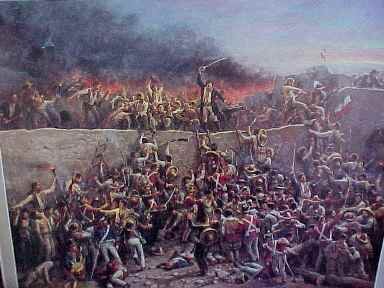
Death of William Barrett Travis (waving sword)
Mexicans broke into the room where the ailing James Bowie lay.
In Three Roads to the Alamo, historian William C. Davis writes that Bowie may have been unconscious or delirious. Mistaking him for a coward, the soldiers bayoneted him and blew out his brains.
But some accounts claim that Bowie died fighting—shooting two Mexicans with pistols, then plunging his famous knife into a third before being bayoneted. Nearly every Alamo movie depicts Bowie’s death this way.
As the Mexicans poured into the fort, at least 60 Texans tried to escape over the walls into the surrounding prairie. But they were quickly dispatched by lance-bearing Mexican cavalry.
The death of David Crockett remains highly controversial.
Baby boomers usually opt for the Walt Disney version: Davy swinging “Old Betsy” as Mexicans surround him. Almost every Alamo movie depicts him fighting to the death.

David Crockett’s Death
But Mexican Lieutenant Colonel Jose Enrique de la Pena claimed Crockett was one of seven Texans who surrendered or were captured and brought before Santa Anna after the battle. Santa Anna ordered their immediate execution, and they were hacked to death with sabers.
Only the 2004 remake of The Alamo has dared to depict this version. Although this version is now accepted by most historians, some still believe the de la Pena diary from which it comes is a forgery.
An hour after the battle erupted, it was over.
That afternoon, Santa Anna ordered the bodies of the slain defenders stacked and burned in three pyres.
Contrary to popular belief, some of the garrison survived:
- Joe, a black slave who had belonged to William B. Travis, the Alamo’s commander;
- Susanah Dickinson, the wife of a lieutenant killed in the Alamo, and her baby, Angelina;
- Several Mexican women and their children.
Also contrary to legend, the bravery of the Alamo defenders did not buy time for Texas to raise an army against Santa Anna. This didn’t happen until after the battle.
But their sacrifice proved crucial in securing Texas’ independence:
- The Alamo’s destruction warned those Texans who had not supported the revolution that they had no choice: They must win, die or flee their homes to the safety of the United States.
- It stirred increasing numbers of Americans to enter Texas and enlist in Sam Houston’s growing army.
- Santa Anna’s army was greatly weakened, losing 600 killed and wounded—a casualty rate of 33%.
- The nearly two-week siege bought time for the Texas convention to meet at Washington-on-the-Brazos and declare independence from Mexico.
On April 21, 1836, Santa Anna made a crucial mistake: During his army’s afternoon siesta, he failed to post sentries around his camp.
That afternoon, Sam Houston’s 900-man army struck the 1,400-man Mexican force at San Jacinto. In 18 minutes, the Texans—shouting “Remember the Alamo!”—killed about 700 Mexican soldiers and wounded 200 others.
The next day, a Texas patrol captured Santa Anna–wearing the uniform of a Mexican private. Resisting angry demands to hang the Mexican dictator, Houston forced Santa Anna to surrender control of Texas in return for his life.
The victory at San Jacinto won the independence of Texas. But the 13-day siege and fall of the Alamo remains the most famous and celebrated part of that conflict.
In 480 B.C., 300 Spartans won immortality at Thermopylae, a narrow mountain pass in ancient Greece, by briefly holding back an invading Persian army of thousands.
Although they died to the last man, their sacrifice inspired the rest of Greece to defeat its invaders.
Like Thermopylae, the battle of the Alamo proved both a defeat—and a victory.
ABC NEWS, ALAMO, ALTERNET, AMERICABLOG, ANDREW JACKSON, ANTONIO LOPEZ DE SANTA ANNA, AP, BABY BOOMER RESISTANCE, BUZZFEED, CBS NEWS, CNN, CROOKS AND LIARS, DAILY KOS, DAVID CROCKETT, DRUDGE RETORT, FIVETHIRTYEIGHT, HARPER’S MAGAZINE, JAMES BOWIE, MEDIA MATTERS, MEXICO, MOTHER JONES, MOVEON, MSNBC, NBC NEWS, NEWSWEEK, NPR, PBS NEWSHOUR, POLITICO, POLITICUSUSA, RAW STORY, REUTERS, SALON, SAM HOUSTON, SAN ANTONIO, SEATTLE TIMES, SLATE, STEPHEN F. AUSTIN, TALKING POINTS MEMO, TEXAS, TEXAS DECLARATION OF INDEPENDENCE, TEXAS REVOLUTION, THE ATLANTIC, THE CHICAGO SUN-TIMES, THE CHICAGO TRIBUNE, THE DAILY BEAST, THE DAILY BLOG, THE GUARDIAN, THE HILL, THE HUFFINGTON POST, THE LOS ANGELES TIMES, THE NATION, THE NEW REPUBLIC, THE NEW YORK TIMES, THE VILLAGE VOICE, THE WASHINGTON POST, THERMOPYLAE, THINKPROGRESS, THREE HUNDRED SPARTANS, TIME, TRUTHDIG, TRUTHOUT, TWO POLITICAL JUNKIES, U.S. NEWS & WORLD REPORT, UPI, USA TODAY, WILLIAM BARRET TRAVIS, WONKETTE, X
In History, Law Enforcement, Politics, Social commentary on March 5, 2026 at 12:10 am
Friday, March 6, 2026, marks the 190th anniversary of the most famous event in Texas history: The fall of the Alamo, a crumbling former Spanish mission in the heart of San Antonio.
After a 12-day siege, 180 to 250 Texans were overwhelmed by 2,000 Mexican soldiers.
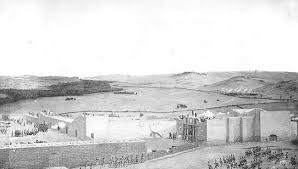
Mexican troops advancing on the Alamo
Americans “remember the Alamo”—but usually for the wrong reasons.
Some historians believe the battle should have never been fought.
The Alamo was not Thermopylae—a narrow mountain pass blocking the Persian march into ancient Greece. Santa Anna could have simply bypassed it.
In fact, several of Santa Anna’s generals urged the Mexican dictator to do just that—leave a small guard to hold down the fort’s defenders and wipe out the undefended, widely-separated Texas settlements.
But pride held Santa Anna fast to the Alamo. His brother-in-law, General Perfecto de Cos, had been forced to surrender the old mission to revolting Texans in December, 1835.
Santa Anna meant to redeem the fort—and his family honor—by force.
In virtually every Alamo movie, its two co-commanders, James Bowie and William Barret Travis, are portrayed as on the verge of all-out war—with each other.
In John Wayne’s heavily fictionalized 1960 film, The Alamo, Bowie and Travis agree to fight a duel as soon as they’ve whipped the Mexicans besieging them.
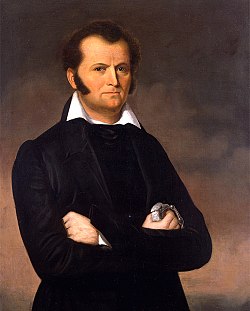
James Bowie

William B. Travis
In fact, the frictions between the two lasted only a short while. Just before the siege, some of Bowie’s volunteers—a far larger group than Travis’ regulars—got drunk.
Travis ordered them jailed—and Bowie ordered his men to release them. Bowie then went on a roaring drunk. The next day, a sober Bowie apologized to Travis and agreed they should share command.
This proved a wise decision, for just as the siege started, Bowie was felled by worsening illness—typhoid-pneumonia or tuberculosis.
In almost every Alamo movie, Bowie repeatedly leaves the fort to ambush unsuspecting Mexicans.
In reality, he stayed bed-ridden and lay close to death throughout the 13-day siege.
The Texans intended to make a suicidal stand.
False.
From the first day of the siege-–February 23, almost to the last, March 6, 1836—messengers rode out of the Alamo seeking help. The defenders believed that if they could cram enough men into the three-acre former mission, they could hold Santa Anna at bay.
No reinforcements reached the Alamo.
False.
On March 1, 32 men from Gonzalez—the only ones to answer Travis’ call—sneaked through the Mexican lines to enter the Alamo.
Meanwhile, the largest Texan force lay at Fort Defiance in Goliad, 85 miles away. This consisted of 500 men commanded by James Walker Fannin, a West Point dropout.
Fannin was better-suited for the role of Hamlet than military commander.
Upon receiving a plea of help from Travis, he set out in a halfhearted attempt to reach the mission. But when a supply wagon broke down, he returned to Fort Defiance and sat out the rest of the siege.
When the Mexican army approached Fort Defiance, Fannin and 400 of his men panicked and fled into the desert. They were surrounded, forced to surrender, and massacred on March 27
The Alamo garrison was fully prepared to confront the Mexican army.
False.
When the Mexicans suddenly arrived in San Antonio on the morning of February 23, 1836, they caught the Texans completely by surprise.
The previous night, they had been celebrating the birthday of George Washington. The Texans rushed headlong into the Alamo, hauling all the supplies they could hastily scrounge.
Santa Anna sent a courier under a flag of truce to the Alamo, demanding unconditional surrender. In effect, the Texans were being given the choice of later execution.
Travis replied with a shot from the fort’s biggest cannon, the 18-pounder (so named for the weight of its cannonball).
Santa Anna ordered the hoisting of a blood-red flag and the opening of an artillery salvo. The siege of the Alamo was on.
San Houston, who was elected general of the non-existent army of Texas, desperately tried to relieve the siege.
False.
At Washington-on-the-Brazos, 169 miles east of San Antonio, Texan delegates assembled to form a new government. When news reached the delegates that Travis desperately needed reinforcements, many of them wanted to rush to his defense.
But Houston and others declared they must first declare Texas’ independence. On March 2, 1836, they did just that. Meanwhile, Houston spent a good deal of that time drunk.

Did Travis draw a line?
Easily the most famous Alamo story is that of “the line in the sand.”
On the night of March 5—just prior to the final assault—there was a lull in the near-constant Mexican bombardment. Travis assembled his men and gave them a choice:
They could try to surrender and hope that Santa Anna would be merciful. They could try to escape. Or they could stay and fight.
With his sword, Travis drew a line in the dirt and invited those who would stay to cross over to him.
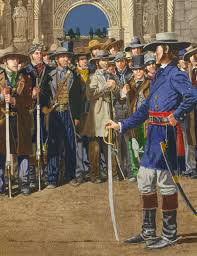
Travis draws the line
The entire garrison did—except for two men.
One of these was bed-ridden James Bowie. He asked that his sick-bed be carried over to Travis. The other was a veteran of the Napoleonic wars—Louis Rose.
ABC NEWS, ALAMO, ALTERNET, AMERICABLOG, ANDREW JACKSON, ANTONIO LOPEZ DE SANTA ANNA, AP, BABY BOOMER RESISTANCE, BUZZFEED, CBS NEWS, CNN, CROOKS AND LIARS, DAILY KOS, DAVID CROCKETT, DRUDGE RETORT, FIVETHIRTYEIGHT, HARPER’S MAGAZINE, JAMES BOWIE, MEDIA MATTERS, MEXICO, MOTHER JONES, MOVEON, MSNBC, NBC NEWS, NEWSWEEK, NPR, PBS NEWSHOUR, POLITICO, POLITICUSUSA, RAW STORY, REUTERS, SALON, SAM HOUSTON, SAN ANTONIO, SEATTLE TIMES, SLATE, STEPHEN F. AUSTIN, TALKING POINTS MEMO, TEXAS, TEXAS DECLARATION OF INDEPENDENCE, TEXAS REVOLUTION, THE ATLANTIC, THE CHICAGO SUN-TIMES, THE CHICAGO TRIBUNE, THE DAILY BEAST, THE DAILY BLOG, THE GUARDIAN, THE HILL, THE HUFFINGTON POST, THE LOS ANGELES TIMES, THE NATION, THE NEW REPUBLIC, THE NEW YORK TIMES, THE VILLAGE VOICE, THE WASHINGTON POST, THERMOPYLAE, THINKPROGRESS, THREE HUNDRED SPARTANS, TIME, TRUTHDIG, TRUTHOUT, TWO POLITICAL JUNKIES, U.S. NEWS & WORLD REPORT, UPI, USA TODAY, WILLIAM BARRET TRAVIS, WONKETTE, X
In History, Military, Politics, Social commentary on March 4, 2026 at 12:12 am
On March 2, 1836–190 years ago this year—Texas formally declared its independence from Mexico, of which it was then a province.
Sixty-one delegates took part in the convention held at Washington-on-the-Brazos.
Their signed statement proclaimed that the Mexican government had “ceased to protect the lives, liberty, and property of the people, from whom its legitimate powers are derived.”
Meanwhile, 169 miles away, the siege of the Alamo—a crumbling former Spanish mission in the heart of San Antonio—had entered its ninth day.
The mission that became a fortress has since become a shrine.

The Alamo Chapel
By Daniel Schwen – Own work, CC BY-SA 4.0
The combatants: 180 to 250 Texans (or “Texians,” as many of them preferred to be called) vs. 2,000 Mexican soldiers.
On the Texan side three names predominate: David Crockett, James Bowie and William Barret Travis. “The Holy Trinity,” as some historians ironically refer to them.
Crockett, at 49, was the most famous man in the Alamo. He had been a bear hunter, Indian fighter and Congressman. Rare among the men of his time, he sympathized with the Indian tribes he had helped subdue in the War of 1812.
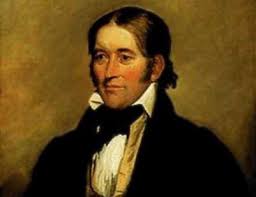
David Crockett
He believed Congress should honor the treaties made with the former hostiles and opposed President Andrew Jackson’s effort to move the tribes further West. Largely because of this, his constituents turned him out of office in November, 1835. He told them they could go to hell; he would go to Texas.
James Bowie, at 40, had been a slave trader with pirate Jean Lafitte and a land swindler. But his claim to fame lay in his skill as a knife-fighter.
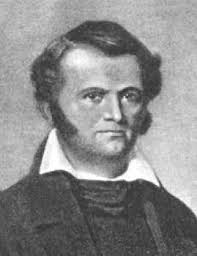
James Bowie
This grew out of his participating in an 1827 duel on a sandbar in Natchez, Mississippi. Bowie was acting as a second to one of the duelists who had arranged the event.
After the two duelists exchanged pistol shots without injury, they called it a draw. But those who had come as their seconds had scores to settle among themselves—and decided to do so. A bloody melee erupted.
Bowie was shot in the hip and then impaled on a sword cane wielded by Major Norris Wright, a longtime enemy. Drawing a large butcher knife he wore at his belt, he gutted Wright, who died instantly.
The brawl became famous as the Sandbar Fight, and cemented Bowie’s reputation across the South as a deadly knife fighter.
William Barret Travis, 26, had been an attorney and militia member. Burdened by debts and pursued by creditors, he fled Alabama in 1831 to start over in Texas. Behind him he left a wife, son, and unborn daughter.
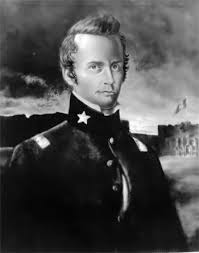
William Barret Travis
From the first, Travis burned to free Texas from Mexico and see it become a part of the United States.
In January, 1836, he was sent by the American provisional governor of Texas to San Antonio, to fortify the Alamo. He arrived there with a small party of regular soldiers and the title of lieutenant colonel in the state militia.
On the Mexican side, only one name matters: Antonio Lopez de Santa Anna, president (i.e., absolute dictator) of Mexico. After backing first one general and would-be “president” after another, Santa Anna maneuvered himself into the office in 1833.
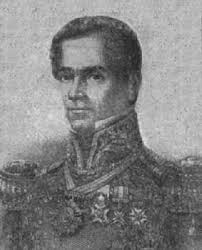
Antonio Lopez de Santa Anna
Texas was then legally a part of Mexico. Stephen F. Austin, “the father of Texas,” had received a grant from Spain—which ruled Mexico until 1821—to bring in 300 American families to settle there.
The Spaniards wanted to establish a buffer between themselves and warring Indian tribes like the Comanches. This immigration continued after Mexico threw off Spanish rule and obtained its independence.
But as Americans kept flooding into Texas, the character of its population changed, alarming its Mexican rulers.
The new arrivals did not see themselves as Mexican citizens but as transplanted Americans. They were largely Protestant, as opposed to the Catholic Mexicans. And many of them not only owned slaves but demanded the expansion of slavery—a practice illegal under Mexican law.
In October, 1835, fighting erupted between American settlers and Mexican soldiers.
In November, Mexican forces took shelter in the Alamo, which had been built in 1718 as a mission to convert Indians to Christianity. Since then it had been used as a fort—by Spanish and then Mexican troops.
Texans lay siege to the Alamo from October 16 to December 10, 1835. With his men exhausted, and facing certain defeat, General Perfecto de Cos, Santa Anna’s brother-in-law, surrendered. He gave his word to leave Texas and never take up arms again against its settlers.
Most Texans rejoiced. They believed they had won their “war” against Mexico. But others knew better.
One was Bowie. Another was Sam Houston, a former Indian fighter, Congressman and protégé of Andrew Jackson.
Still another was Santa Anna, who styled himself “The Napoleon of the West.” In January, 1836, he set out from Mexico City at the head of an army totaling about 7,000.
He planned the 18th century version of a blitzkrieg, intending to arrive in Texas and take its “rebellious foreigners” by surprise.
His forced march proved costly in lives, but met his objective. He arrived in San Antonio with several hundred soldiers on February 23, 1836.
The siege of the Alamo—the most famous event in Texas history—was about to begin.
ABC NEWS, ALEXANDER THE GREAT, ALTERNET, AMERICABLOG, AP, BABY BOOMER RESISTANCE, BBC, BLOOMBERG NEWS, BUZZFEED, CBS NEWS, CNN, CROOKS AND LIARS, DAILY KOS, DONALD TRUMP, DOUGLAS MACARTHUR, FEDERAL SECURITY SERVICE, FIVETHIRTYEIGHT, GATES OF FIRE (BOOK), HARPER’S MAGAZINE, HUFFINGTON POST, IRAN, IRAQ, KGB, MEDIA MATTERS, MERCENARIES, MOTHER JONES, MOVEON, MSNBC, NBC NEWS, NEW REPUBLIC, NEWSDAY, NEWSWEEK, NICCOLO MACHIAVELLI, NICHOLAS MADURO, NPR, Oil, PBS NEWSHOUR, POLITICO, POLITICUSUSA, RAW STORY, REUTERS, SALON, SAUDI ARABIA, SEATTLE TIMES, SLATE, SPARTA, STANLEY MCCRYSTAL, STEVEN PRESSFIELD, TALKING POINTS MEMO, THE ATLANTIC, THE CHICAGO SUN-TIMES, THE CHICAGO TRIBUNE, THE DAILY BEAST, THE DAILY BLOG, THE GUARDIAN, THE HILL, THE HUFFINGTON POST, THE INTERCEPT, THE LOS ANGELES TIMES, THE NATION, THE NEW REPUBLIC, THE NEW YORK TIMES, THE NEW YORKER, THE PROFESSION (BOOK), THE VILLAGE VOICE, THE VIRTUES OF WAR (BOOK), THE WASHINGTON POST, THERMOPYLAE, THINKPROGRESS, TIME, TRUTHDIG, TRUTHOUT, U.S. NEWS & WORLD REPORT, UPI, USA TODAY, VENEZUELA, X
In Bureaucracy, Business, History, Military, Politics, Social commentary on January 6, 2026 at 12:10 am
During a January 3 news conference, President Donald Trump told reporters the real reason why the United States had just attacked Venezuela and captured its president—actually dictator—Nicholas Maduro and his wife:
“We’re going to have our very large United States oil companies—the biggest anywhere in the world—go in, spend billions of dollars, fix the badly broken infrastructure, the oil infrastructure.”
Forget months of accusing Venezuela of being a major supplier of illicit drugs to the United States.
Venezuela has the world’s largest proven oil reserves, with over 303 billion barrels. That’s more than Saudi Arabia (second-largest) and Iran (third-largest). But after President Hugo Chávez nationalized much of the industry in 2007, its oil production sharply declined.
By 2018, Venezuela was producing 1.3 million barrels of oil each day, from a high of more than 3 million barrels each day in the late 1990s.
Trump intends to change that.
On September 7, 2016, at a forum hosted by NBC, Trump had flatly stated that seizing Iraqi oil fields could have paid for the 2003 Iraq war:
“We go in, we spend $3 trillion, we lose thousands and thousands of lives, and then … what happens is we get nothing. You know, it used to be to the victor belong the spoils.
“You’re not stealing anything. We’re reimbursing ourselves … at a minimum, and I say more. We’re taking back $1.5 trillion to reimburse ourselves.”
Unable to steal Iraqi oil, Trump has chosen to steal that of Venezuela—by turning the Armed Services into mercenary gangsters.
In 2011, bestselling author Steven Pressfield had made the seizing of Saudi Arabian oil fields the premise of his novel The Profession.

Pressfield made his literary reputation with a series of classic novels about ancient Greece.
In Gates of Fire (1998) he explored the rigors and heroism of Spartan society—and the famous last stand of its 300 picked warriors at Thermopylae.
In The Virtues of War (2004) he entered the mind of Alexander the Great, whose armies swept across the known world, destroying all who dared oppose them.
But in The Profession, Pressfield created a plausible world set into the future of 2032. The book’s dust jacket summarizes its plot-line:
“Everywhere military force is for hire. Oil companies, multi-national corporations and banks employ powerful, cutting-edge mercenary armies to control global chaos and protect their riches.
“Force Insertion is the world’s merc [mercenary] monopoly. Its leader is the disgraced former United States Marine General James Salter, stripped of his command by the president for nuclear saber-rattling with the Chinese and banished to the Far East.”
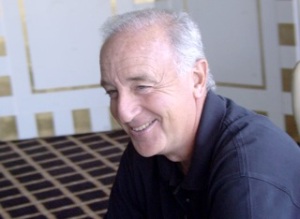
Steven Pressfield
Salter appears as a hybrid of World War II General Douglas MacArthur and Iraqi War General Stanley McCrystal.
Like MacArthur, Salter has butted heads with his President—and paid dearly for it. Now his ambition is no less than to become President himself—by popular acclaim. And like McCrystal, he is a pure warrior who leads from the front and is revered by his men.
Salter seizes Saudi Arabian oil fields, then offers them as a gift to America. By doing so, he makes himself the most popular man in the country—and a guaranteed occupant of the White House.
Douglas MacArthur

Stanley McCrystal
“The United States is an empire…but the American people lack the imperial temperament,” asserts Salter. “We’re not legionaries, we’re mechanics. In the end the American Dream boils down to what? ‘I’m getting mine and the hell with you.’”
Americans, says Salter, have come to like mercenaries: “They’ve had enough of sacrificing their sons and daughters in the name of some illusory world order. They want someone else’s sons and daughters to bear the burden….
“They want their problems to go away. They want me to to make them go away.”
Returning to the United States, he is acclaimed as a hero—and the next President.
He knows that his country is on a downward spiral toward oblivion: “Any time that you have the rise of mercenaries…society has entered a twilight era, a time past the zenith of its arc.”
And he doesn’t believe that his Presidency will arrest that decline: “But maybe in the short run, it’s better that my hand be on the wheel…rather than some other self-aggrandizing sonofabitch whose motives might not be as well intentioned….”
More than 500 years ago, Niccolo Machiavelli warned of the dangers of relying on mercenaries:
“Mercenaries…are useless and dangerous. And if a prince holds on to his state by means of mercenary armies, he will never be stable or secure; for they are disunited, ambitious, without discipline, disloyal; they are brave among friends; among enemies they are cowards.
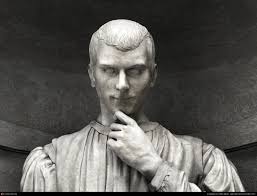
Niccolo Machiavelli
“They have neither the fear of God nor fidelity to men, and destruction is deferred only so long as the attack is. For in peace one is robbed by them, and in war by the enemy.”
Centuries ago, Niccolo Machiavelli issued a warning against relying on men whose first love is their own enrichment.
Steven Pressfield, in a work of fiction, has given us a nightmarish vision of a not-so-distant America where “Name your price” has become the byward for an age.
Both warnings are well worth heeding.
ABC NEWS, ALEXANDER THE GREAT, ALTERNET, AMERICABLOG, AP, BABY BOOMER RESISTANCE, BBC, BLOOMBERG NEWS, BUZZFEED, CBS NEWS, CNN, CROOKS AND LIARS, DAILY KOS, DOUGLAS MACARTHUR, FEDERAL SECURITY SERVICE, FIVETHIRTYEIGHT, GATES OF FIRE (BOOK), HARPER’S MAGAZINE, HUFFINGTON POST, KGB, MEDIA MATTERS, MERCENARIES, MOTHER JONES, MOVEON, MSNBC, NBC NEWS, NEW REPUBLIC, NEWSDAY, NEWSWEEK, NICCOLO MACHIAVELLI, NPR, PBS NEWSHOUR, POLITICO, POLITICUSUSA, RAW STORY, REUTERS, SALON, SEATTLE TIMES, SLATE, SPARTA, STANLEY MCCRYSTAL, STEVEN PRESSFIELD, TALKING POINTS MEMO, THE ATLANTIC, THE CHICAGO SUN-TIMES, THE CHICAGO TRIBUNE, THE DAILY BEAST, THE DAILY BLOG, THE GUARDIAN, THE HILL, THE HUFFINGTON POST, THE INTERCEPT, THE LOS ANGELES TIMES, THE NATION, THE NEW REPUBLIC, THE NEW YORK TIMES, THE NEW YORKER, THE PROFESSION (BOOK), THE VILLAGE VOICE, THE VIRTUES OF WAR (BOOK), THE WASHINGTON POST, THERMOPYLAE, THINKPROGRESS, TIME, TRUTHDIG, TRUTHOUT, U.S. NEWS & WORLD REPORT, UKRAINE, UPI, USA TODAY, VLADIMIR PUTIN, WAGNER GROUP, X, YEGENEY PRIGOZHIN
In Bureaucracy, Business, History, Military, Politics, Social commentary on September 15, 2025 at 12:08 am
In May, 2014, Yevgeny Prigozhin founded the Kremlin-affiliated mercenary army Wagner Group.
Since Russian President Vladimir Putin ordered a “special military operation” against Ukraine on February 24, 2022, Wagner has played a major role in the fighting.
Prigozhin had repeatedly clashed with Russian Defense Minister Sergei Shoigu, blaming him for a lack of ammunition to his embattled fighters—resulting in thousands of casualties.

Yevgeney Prigozhin
Government of the Russian Federation, CC BY 3.0 <https://creativecommons.org/licenses/by/3.0>, via Wikimedia Commons
On June 23, 2023, Prigozhin claimed that regular Russian armed forces had launched missile strikes against Wagner forces, killing a “huge” number.
He announced: “The council of commanders of PMC Wagner has made a decision—the evil that the military leadership of the country brings must be stopped.”
In response, criminal charges were filed against Prigozhin by the Russian Federal Security Service—the renamed KGB—for inciting an armed rebellion.
Wagner withdrew from Ukraine, occupied the Russian city of Rostov-on-Don and headed for Moscow. While doing so, Wagner shot down a Russian fighter plane and several military helicopters.
Putin decried the action as treason, and vowed to quash the uprising.
Talks between Prigozhin and Belarussian president Alexander Lukashenko resulted in charges being dropped. Wagner ceased its march on Moscow. Prigozhin would move to Belarus but remain under investigation for treason. Wagner troops would return to Ukraine.
On August 23, 2023, Prigozhin was killed along with nine other people when a business jet crashed in Tyer Oblast, north of Moscow.
American military sources believe the crash was likely caused by a bomb on board or sabotage.
The danger of relying on mercenaries forms the plot of The Profession, a 2011 novel by bestselling author Steven Pressfield.
Pressfield made his literary reputation with a series of classic novels about ancient Greece.
In Gates of Fire (1998) he explored the rigors and heroism of Spartan society—and the famous last stand of its 300 picked warriors at Thermopylae.
In The Virtues of War (2004) he entered the mind of Alexander the Great, whose armies swept across the known world, destroying all who dared oppose them.
But in The Profession, Pressfield created a plausible world set into the future of 2032. The book’s own dust jacket offers the best summary of its plot-line:
“Everywhere military force is for hire. Oil companies, multi-national corporations and banks employ powerful, cutting-edge mercenary armies to control global chaos and protect their riches.
“Force Insertion is the world’s merc monopoly. Its leader is the disgraced former United States Marine General James Salter, stripped of his command by the president for nuclear saber-rattling with the Chinese and banished to the Far East.”
Steven Pressfield
Salter appears as a hybrid of World War II General Douglas MacArthur and Iraqi War General Stanley McCrystal.
Like MacArthur, Salter has butted heads with his President—and paid dearly for it. Now his ambition is no less than to become President himself—by popular acclaim. And like McCrystal, he is a pure warrior who leads from the front and is revered by his men.
Salter seizes Saudi Arabian oil fields, then offers them as a gift to America. By doing so, he makes himself the most popular man in the country—and a guaranteed occupant of the White House.
Douglas MacArthur
Stanley McCrystal
“The United States is an empire…but the American people lack the imperial temperament,” asserts Salter. “We’re not legionaries, we’re mechanics. In the end the American Dream boils down to what? ‘I’m getting mine and the hell with you.’”
Americans, says Salter, have come to like mercenaries: “They’ve had enough of sacrificing their sons and daughters in the name of some illusory world order. They want someone else’s sons and daughters to bear the burden….
“They want their problems to go away. They want me to to make them go away.”
Returning to the United States, he is acclaimed as a hero—and the next President.
He knows that his country is on a downward spiral toward oblivion: “Any time that you have the rise of mercenaries…society has entered a twilight era, a time past the zenith of its arc.”
And he doesn’t believe that his Presidency will arrest that decline: “But maybe in the short run, it’s better that my hand be on the wheel…rather than some other self-aggrandizing sonofabitch whose motives might not be as well intentioned….”
More than 500 years ago, Niccolo Machiavelli warned of the dangers of relying on mercenaries:
“Mercenaries…are useless and dangerous. And if a prince holds on to his state by means of mercenary armies, he will never be stable or secure; for they are disunited, ambitious, without discipline, disloyal; they are brave among friends; among enemies they are cowards.
Niccolo Machiavelli
“They have neither the fear of God nor fidelity to men, and destruction is deferred only so long as the attack is. For in peace one is robbed by them, and in war by the enemy.”
Centuries ago, Niccolo Machiavelli issued a warning against relying on men whose first love is their own enrichment.
Steven Pressfield, in a work of fiction, has given us a nightmarish vision of a not-so-distant America where “Name your price” has become the byward for an age.
Both warnings are well worth heeding.
ABC NEWS, ABRAHAM LINCOLN, AFGHANISTAN, ALEXANDER THE GREAT, ALTERNET, AMERICABLOG, ANDREW JACKSON, AP, BABY BOOMER RESISTANCE, BBC, BLOOMBERG, BUZZFEED, CBS NEWS, CHARLIE KIRK, CIVIL WAR, CNN, CROOKS AND LIARS, DAILY KOS, FIVETHIRTYEIGHT, FOX NEWS CHANNEL, GATES OF FIRE (BOOK), HARPER’S MAGAZINE, HUFFINGTON POST, JACK SMITH, JOHN C. CALHOUN, JOSEPH BIDEN, LIZ CHENEY, MEDIA MATTERS, MERCENARIES, MERRICK GARLAND, MOTHER JONES, MOVEON, MSNBC, NBC NEWS, NEW REPUBLIC, NEWSDAY, NEWSWEEK, NPR, ORGANIZED CRIME, PBS NEWSHOUR, POLITICO, POLITICUSUSA, PROJECT 2025, RAW STORY, REPUBLICANS, REUTERS, SALON, SEATTLE TIMES, SLATE, SPARTA, STEVEN PRESSFIELD, STORMY DANIELS, TALKING POINTS MEMO, THE AFGHAN CAMPAIGN (BOOK), THE ATLANTIC, THE CHICAGO SUN-TIMES, THE CHICAGO TRIBUNE, THE DAILY BEAST, THE DAILY BLOG, THE GUARDIAN, THE HILL, THE HUFFINGTON POST, THE INTERCEPT, THE LOS ANGELES TIMES, THE NATION, THE NEW REPUBLIC, THE NEW YORK TIMES, THE NEW YORKER, THE PROFESSION (BOOK), THE VILLAGE VOICE, THE VIRTUES OF WAR (BOOK), THE WASHINGTON POST, THERMOPYLAE, THINKPROGRESS, TIME, TREASON, TRUTHDIG, TRUTHOUT, TWO POLITICAL JUNKIES, U.S. NEWS & WORLD REPORT, UNITED STATES SUPREME COURT, UPI, USA TODAY, X
In Bureaucracy, History, Law, Law Enforcement, Military, Politics, Social commentary on July 10, 2024 at 12:10 am
President Joseph Biden now faces the most monumental decision of his life. And no matter what choice he makes, his name will live in infamy for millions of Americans—whether they lean Right or Left.
Thanks entirely to the Supreme Court’s July 1 ruling giving almost unlimited immunity to former President Donald Trump, Biden can go down in history as the man who saved—at least temporarily—the American republic.

Joseph Biden
Or he can go down in history as the man who presided over the end of the American republic.
To save it, he must
- Purge, through arrests and trials, almost the entire treason-conspiring Republican party, starting with Trump, its Fuhrer-in-waiting.
- Do this officially, because the Court has ruled that he (and future Presidents) can only be prosecuted for unofficial acts.
- Do this while he still commands the full resources of the military and Justice Department.

- Sweep clean the Federal courts of all Right-wing, treason-supporting judges—such as Aileen Cannon, who has repeatedly thwarted efforts to try Trump for stealing and hiding almost 300 highly classified government documents at his Mar-a-Lago estate.
- This includes the six Right-wing Supreme Court Justices who have given future Presidents the legal authority to assassinate rivals, take bribes and/or foment coups.
If Biden does this, he will damned as the first President since Abraham Lincoln to brutally crush political opposition.
But he will also be hailed for having—at least temporarily—prevented a wholesale Right-wing takeover and dictatorship under Project 2025. Its’ goal: Replace existing federal civil service workers with tens of thousands of radical Right-wingers.

To preside over the end of the American republic, all Biden need do is what he’s done for the last three years: Nothing.
Example #1: Only on November 18, 2022, did Attorney General Merrick Garland appoint Jack Smith Special Counsel to investigate Trump’s attempt to overturn the legitimate results of the 2020 Presidential election and become “President-for-Life.”
This was clearly treason—and Garland should have appointed Smith, at the latest, by mid-2021.

Merrick Garland
Example #2: Trump’s accomplices included 147 members of Congress who voted to invalidate the 2020 Electoral College vote count. A total of 139 served in the House of Representatives, and eight served in the Senate.
To date, not one of these accessories has even been indicted, let alone convicted, for treason.
Arguably, Biden’s worst appointment has been Merrick Garland as Attorney General.
In 1961, when Robert F. Kennedy became Attorney General, he moved quickly and forcefully to wage war on America’s organized crime syndicates. Unprecedented numbers of mobsters found themselves facing vigorous FBI investigations, indictments and/or convictions.
By contrast, Garland’s timidity in prosecuting the crimes of Right-wing Republicans serves as not only a national embarrassment but a threat to national security.
On May 30, a Manhattan jury convicted Donald Trump of 34 felonies for falsifying New York business records in 2016. He had done so to conceal his hush money payoff to porn “star” Stormy Daniels for his extramarital tryst with her.
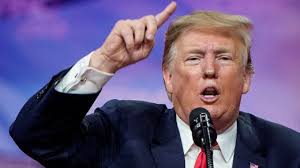
Donald Trump
Even though the Biden administration had nothing to do with the case, Republicans immediately blamed the President—and demanded wholesale prosecutions of the Left.
Right-wing activist Charlie Kirk urged Republican prosecutors to get “creative” in bringing charges: “Indict the left, or lose America,” he said on X.
And Trump quickly issued his own calls for “vengeance”:
“Wouldn’t it be terrible to throw the president’s wife and the former secretary of state, think of it, the former secretary of state, but the president’s wife, into jail? Wouldn’t that be a terrible thing? But they want to do it,” Trump said in an interview on Newsmax.
“It’s a terrible, terrible path that they’re leading us to. And it’s very possible that it’s going to have to happen to them.”
Nor has Trump forgotten former Republican Representative Liz Cheney, who chaired the House 1/6 Committee investigating the Trump-inspired attack on Congress.
“ELIZABETH LYNNE CHENEY IS GUILTY OF TREASON,” Trump posted on his social media website Truth Social. “RETRUTH IF YOU WANT TELEVISED MILITARY TRIBUNALS.”
There can be absolutely no doubt that Trump will pursue “vengeance” against everyone who has ever opposed him if he is re-elected President.
There can also be no doubt that he will remain in office until he dies as “President-for-Life.”
When Andrew Jackson, seventh President of the United States from 1829 to 1837, was close to death, he asked his doctor: “What act of my administration will be most severely condemned by future Americans?”
“Perhaps the removal of the bank deposits,” said the doctor—referring to Jackson’s withdrawal of U.S. Government monies from the first Bank of the United States.
“Oh, no,” said Jackson, his eyes blazing. “I can tell you. Posterity will condemn me more because I was persuaded not to hang John C. Calhoun as a traitor than for any other act in my life!”
John C. Calhoun had once been Vice President under Jackson and later a United States Senator from South Carolina. His fiery, pro-slavery rhetoric and radical theories of “nullification” of Federal laws played a major role in bringing on the Civil War (1861-1865).
Whether Biden moves to prevent a Trump/Republican dictatorship or allows it to become reality, he will be simultaneously praised and damned by future generations of Americans.
ABC NEWS, ABRAHAM LINCOLN, AFGHANISTAN, ALEXANDER THE GREAT, ALTERNET, AMERICABLOG, ANDREW JACKSON, AP, BABY BOOMER RESISTANCE, BBC, BLOOMBERG, BUZZFEED, CBS NEWS, CHARLIE KIRK, CIVIL WAR, CNN, CROOKS AND LIARS, DAILY KOS, FIVETHIRTYEIGHT, FOX NEWS CHANNEL, GATES OF FIRE (BOOK), HARPER’S MAGAZINE, HUFFINGTON POST, JACK SMITH, JOHN C. CALHOUN, JOSEPH BIDEN, LIZ CHENEY, MEDIA MATTERS, MERCENARIES, MERRICK GARLAND, MOTHER JONES, MOVEON, MSNBC, NBC NEWS, NEW REPUBLIC, NEWSDAY, NEWSWEEK, NPR, ORGANIZED CRIME, PBS NEWSHOUR, POLITICO, POLITICUSUSA, PROJECT 2025, RAW STORY, REPUBLICANS, REUTERS, SALON, SEATTLE TIMES, SLATE, SPARTA, STEVEN PRESSFIELD, STORMY DANIELS, TALKING POINTS MEMO, THE AFGHAN CAMPAIGN (BOOK), THE ATLANTIC, THE CHICAGO SUN-TIMES, THE CHICAGO TRIBUNE, THE DAILY BEAST, THE DAILY BLOG, THE GUARDIAN, THE HILL, THE HUFFINGTON POST, THE INTERCEPT, THE LOS ANGELES TIMES, THE NATION, THE NEW REPUBLIC, THE NEW YORK TIMES, THE NEW YORKER, THE PROFESSION (BOOK), THE VILLAGE VOICE, THE VIRTUES OF WAR (BOOK), THE WASHINGTON POST, THERMOPYLAE, THINKPROGRESS, TIME, TREASON, TRUTHDIG, TRUTHOUT, TWO POLITICAL JUNKIES, U.S. NEWS & WORLD REPORT, UNITED STATES SUPREME COURT, UPI, USA TODAY, X
In Bureaucracy, Business, History, Law, Law Enforcement, Military, Politics, Social commentary on July 9, 2024 at 12:10 am
The Supreme Court has spoken. And Donald Trump, who tried to treasonously overturn the 2020 Presidential election and make himself “President-for-Life,” is now armed with the almost total immunity he has long sought.
As Trump and his entrenched Right-wing allies move ever closer to establishing an absolute dictatorship, this is an apt time to discover—or rediscover—the frighteningly real world of The Profession, a 2011 futuristic novel by bestselling author Steven Pressfield.
Steven Pressfield
Pressfield had previously made his mark as an author of historical novels—primarily set in ancient Greece.
In Gates of Fire (1998) he explored the rigors and heroism of Spartan society—and the famous last stand of its 300 picked warriors at Thermopylae.
In The Virtues of War (2004) Pressfield adopted the identity of Alexander the Great, explaining what it was like to command invincible armies that swept across the known world.
Finally, in The Afghan Campaign (2006) he chronicled—from the viewpoint of a lowly Greek soldier—Alexander’s brutal, three-year anti-guerrilla campaign in Afghanistan.
But in The Profession, Pressfield created a seemingly plausible world set in the future. The book’s dust jacket offers an excellent summary of its plot-line:
“The year is 2032. Everywhere military force is for hire. Oil companies, multi-national corporations and banks employ powerful, cutting-edge mercenary armies to control global chaos and protect their riches.
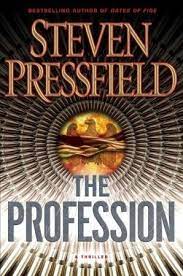
“Even nation states enlist mercenary forces to suppress internal insurrections, hunt terrorists, and do the black bag jobs necessary to maintain the new New World Order.
“Force Insertion is the world’s merc monopoly. Its leader is the disgraced former United States Marine General James Salter, stripped of his command by the president for nuclear saber-rattling with the Chinese and banished to the Far East.
“A grandmaster military and political strategist, Salter plans to take vengeance on those responsible for his exile and then come home…as Commander in Chief.”
Salter appears as a hybrid of World War II General Douglas MacArthur and Iraqi War General Stanley McCrystal. Like MacArthur, Salter has butted heads with his President—and paid dearly for it. Now his ambition—like MacArthur—is to become President himself by popular acclaim.

Douglas MacArthur
And like McCrystal, he is a pure warrior who leads from the front and is revered by his men. Salter seizes Saudi oil fields and strategically rigs them with explosives to be used if threatened.
Then he offers them as a gift to America. By doing so, he makes himself the most popular man in the country—and a guaranteed occupant of the White House.

Stanley McCrystal
And in 2032 the United States is a far different nation from the one its Founding Fathers created in 1776.
“Any time that you have the rise of mercenaries…society has entered a twilight era, a time past the zenith of its arc,” says Salter. “The United States is an empire…but the American people lack the imperial temperament. We’re not legionaries, we’re mechanics. In the end the American Dream boils down to what? ‘I’m getting mine and the hell with you.'”
Americans, asserts Salter, have come to like mercenaries: “They’ve had enough of sacrificing their sons and daughters in the name of some illusory world order. They want someone else’s sons and daughters to bear the burden….
“They want their problems to go away. They want me to make them go away.”
Yet unlike Donald Trump, who infamously shouted, “I love the poorly educated!” Salter is a highly intellectual man. He feels himself a tragic figure, lamenting that the United States has abandoned its longstanding political values even as he prepares to extinguish the most basic one by becoming dictator.
“The moment compels me to seize it. If I don’t someone or something worse will step in. But if I perform the bidding of Necessity, I violate the code of the republic to which all of us have sworn allegiance. I cross a line, beyond which there can be no return.
“But what, I ask, is the alternative? The nation has lost its way and is struggling desperately, merely to hang on. The nation can’t go on as it is, and everyone knows it. If not me, who? If not me, what?
“So, yes, I will go home. And yes, I will accept whatever crown, of paper or gold, that my country wants to press upon me. Not because I believe such a coronation will make any difference in the long run.
“But maybe in the short run, it’s better that my hand be on the wheel rather than some other self-aggrandizing sonofabitch whose motives might not be as well-intentioned or whose consciousness so painfully evolved.”
At a nationally televised press conference, Salter hands a loaded pistol to a longtime friend and disciple who now fears his dictatorial ambitions.
“Go ahead,” says Salter. “You’ll be saving the republic. And me, too.”
But the former disciple cannot bring himself to kill his longtime idol: “Now I’m guilty with you,” he says.
Steven Pressfield, in a work of fiction, has given us a nightmarish vision of a futuristic America.
Donald Trump and his Right-wing disciples may soon make that vision a reality.
ABC NEWS, AFGHANISTAN, ALCIBIADES, ALEXANDER THE GREAT, ALTERNET, AMERICABLOG, AP, BABY BOOMER RESISTANCE, BBC, BILL O'REILLY, BLOOMBERG, BUZZFEED, CBS NEWS, CNN, CROOKS AND LIARS, DAILY KOS, FIVETHIRTYEIGHT, FOX NEWS CHANNEL, GATES OF FIRE (BOOK), HARPER’S MAGAZINE, HUFFINGTON POST, MEDIA MATTERS, MERCENARIES, MOTHER JONES, MOVEON, MSNBC, NBC NEWS, NEW REPUBLIC, NEWSDAY, NEWSWEEK, NICCOLO MACHIAVELLI, NPR, PBS NEWSHOUR, POLITICO, POLITICUSUSA, RAW STORY, REUTERS, SALON, SEATTLE TIMES, SLATE, SPARTA, STEVEN PRESSFIELD, TALKING POINTS MEMO, THE AFGHAN CAMPAIGN (BOOK), THE ATLANTIC, THE CHICAGO SUN-TIMES, THE CHICAGO TRIBUNE, THE DAILY BEAST, THE DAILY BLOG, THE GUARDIAN, THE HILL, THE HUFFINGTON POST, THE INTERCEPT, THE LOS ANGELES TIMES, THE NATION, THE NEW REPUBLIC, THE NEW YORK TIMES, THE NEW YORKER, THE O'REILLY FACTOR, THE PROFESSION (BOOK), THE VILLAGE VOICE, THE VIRTUES OF WAR, THE VIRTUES OF WAR (BOOK), THE WASHINGTON POST, THERMOPYLAE, THINKPROGRESS, TIDES OF WAR (BOOK), TIME, TRUTHDIG, TRUTHOUT, TWO POLITICAL JUNKIES, U.S. NEWS & WORLD REPORT, UPI, USA TODAY, X
In Business, History, Military, Politics, Social commentary on May 6, 2024 at 12:12 am
Bill O’Reilly, the former host of the Fox News Channel program The O’Reilly Factor, has offered his own solution to fighting terrorism: A multinational mercenary army, based on a NATO coalition and trained by the United States.
“We would select them, special forces would train them—a 25,000-man force to be deployed to fight on the ground against worldwide terrorism. Not just ISIS,” O’Reilly said on “CBS This Morning” on September 24, 2014.
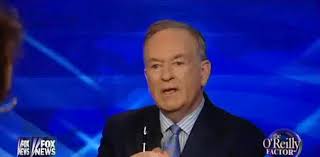
Bill O’Reilly
Actually, O’Reilly’s idea is the subject of The Profession, a 2011 novel by bestselling author Steven Pressfield.
Pressfield made his literary reputation with four classic novels about classical Greece.
In Gates of Fire (1998) he explored the rigors and heroism of Spartan society—and the famous last stand of its 300 picked warriors at Thermopylae.
In Tides of War (2000) Pressfield depicted the rise and fall of Alcibiades, Athens’ greatest general, as he shifted his loyalties from that city to its arch-enemy, Sparta, and then to Persia, the enemy of both.
In The Virtues of War (2004) he took on the identity of Alexander the Great, explaining to his readers what it was like to command armies that swept across the known world, destroying all who dared oppose them.
Finally, in The Afghan Campaign (2006) Pressfield—this time from the viewpoint of a lowly Greek soldier—refought Alexander’s brutal, three-year anti-guerrilla campaign in Afghanistan.
Steven Pressfield
But in The Profession, Pressfield created a seemingly plausible world set into the future of 2032. The book’s own dust jacket offers the best summary of its plot-line:
“The year is 2032. The third Iran-Iraq war is over. The 11/11 dirty bomb attack on the port of Long Beach, California is receding into memory. Saudi Arabia has recently quelled a coup. Russians and Turks are clashing in the Caspian Basin.
“Iranian armored units, supported by the satellite and drone power of their Chinese allies, have emerged from their enclaves in Tehran and are sweeping south attempting to recapture the resource rich territory that had been stolen from them, in their view, by Lukoil, BP, and ExxonMobil and their privately-funded armies.
“Everywhere military force is for hire. Oil companies, multi-national corporations and banks employ powerful, cutting-edge mercenary armies to control global chaos and protect their riches.
“Even nation states enlist mercenary forces to suppress internal insurrections, hunt terrorists, and do the black bag jobs necessary to maintain the new New World Order.
“Force Insertion is the world’s merc monopoly. Its leader is the disgraced former United States Marine General James Salter, stripped of his command by the president for nuclear saber-rattling with the Chinese and banished to the Far East.”
Salter appears as a hybrid of World War II General Douglas MacArthur and Iraqi War General Stanley McCrystal. Like MacArthur, Salter has butted heads with his President—and paid dearly for it. Now his ambition is no less than to become President himself—by popular acclaim.
And like McCrystal, he is a pure warrior who leads from the front and is revered by his men. Salter seizes Saudi oil fields, then offers them as a gift to America. By doing so, he makes himself the most popular man in the country—and a guaranteed occupant of the White House.
And in 2032 the United States is a far different nation from the one its Founding Fathers created in 1776.
“Any time that you have the rise of mercenaries…society has entered a twilight era, a time past the zenith of its arc,” says Salter.”The United States is an empire…but the American people lack the imperial temperament. We’re not legionaries, we’re mechanics. In the end the American Dream boils down to what? ‘I’m getting mine and the hell with you.'”
Americans, asserts Salter, have come to like mercenaries: “They’ve had enough of sacrificing their sons and daughters in the name of some illusory world order. They want someone else’s sons and daughters to bear the burden….
“They want their problems to go away. They want me to to make them go away.”
And so Salter will “accept whatever crown, of paper or gold, that my country wants to press upon me.”
More than 500 years ago, Niccolo Machiavelli warned of the dangers of relying on mercenaries:
“Mercenaries…are useless and dangerous. And if a prince holds on to his state by means of mercenary armies, he will never be stable or secure; for they are disunited, ambitious, without discipline, disloyal; they are brave among friends; among enemies they are cowards.
Niccolo Machiavelli
“They have neither the fear of God nor fidelity to men, and destruction is deferred only so long as the attack is. For in peace one is robbed by them, and in war by the enemy.”
Centuries ago, Niccolo Machiavelli issued a warning against relying on men whose first love is their own enrichment.
Steven Pressfield, in a work of fiction, has given us a nightmarish vision of a not-so-distant America where “Name your price” has become the byword for an age.
Both warnings are well worth heeding.
2016 PRESIDENTIAL CAMPAIGN, ABC NEWS, ALEXANDER THE GREAT, ALTERNET, AMERICABLOG, AP, BABY BOOMER RESISTANCE, BBC, BLOOMBERG NEWS, BUZZFEED, CBS NEWS, CNN, CROOKS AND LIARS, DAILY KOS, DONALD TRUMP, FEDERAL SECURITY SERVICE, FIVETHIRTYEIGHT, GATES OF FIRE, HARPER’S MAGAZINE, HUFFINGTON POST, KGB, MEDIA MATTERS, MERCENARIES, MOTHER JONES, MOVEON, MSNBC, NBC NEWS, NEW REPUBLIC, NEWSDAY, NEWSWEEK, NICCOLO MACHIAVELLI, NPR, PBS NEWSHOUR, POLITICO, POLITICUSUSA, RAW STORY, REUTERS, SALON, SEATTLE TIMES, SLATE, SPARTA, STEVEN PRESSFIELD, TALKING POINTS MEMO, THE ATLANTIC, THE CHICAGO SUN-TIMES, THE CHICAGO TRIBUNE, THE DAILY BEAST, THE DAILY BLOG, THE GUARDIAN, THE HILL, THE HUFFINGTON POST, THE INTERCEPT, THE LOS ANGELES TIMES, THE NATION, THE NEW REPUBLIC, THE NEW YORK TIMES, THE NEW YORKER, THE PROFESSION, THE VILLAGE VOICE, THE VIRTUES OF WAR, THE WASHINGTON POST, THERMOPYLAE, THINKPROGRESS, TIME, TRUTHDIG, TRUTHOUT, TWITTER, U.S. NEWS & WORLD REPORT, UKRAINE, UPI, USA TODAY, VLADIMIR PUTIN, WAGNER GROUP, YEGENEY PRIGOZHIN
In Bureaucracy, Business, History, Military, Politics, Social commentary on June 27, 2023 at 12:36 am
In May, 2014, Yevgeny Prigozhin founded the Kremlin-affiliated mercenary army Wagner Group.
Since Russian President Vladimir Putin ordered a “special military operation” against Ukraine on February 24, 2022, Wagner has played a major role in the fighting.
Prigozhin has repeatedly clashed with Russian Defense Minister Sergei Shoigu, blaming him for a lack of ammunition to his embattled fighters—resulting in thousands of casualties.
Yevgeney Prigozhin
Government of the Russian Federation, CC BY 3.0 <https://creativecommons.org/licenses/by/3.0>, via Wikimedia Commons
On June 23, 2023, Prigozhin claimed that regular Russian armed forces had launched missile strikes against Wagner forces, killing a “huge” number.
He announced: “The council of commanders of PMC Wagner has made a decision—the evil that the military leadership of the country brings must be stopped.”
In response, criminal charges were filed against Prigozhin by the Russian Federal Security Service —the renamed KGB—for inciting an armed rebellion.
Wagner withdrew from Ukraine, occupied the Russian city of Rostov-on-Don and headed for Moscow. While doing so, Wagner shot down a Russian fighter plane and several military helicopters.
Putin decried the action as treason, and vowed to quash the uprising.
Talks between Prigozhin and Belarussian president Alexander Lukashenko resulted in charges being dropped. Wagner ceased its march on Moscow. Prigozhin will move to Belarus but remain under investigation for treason. Wagner troops will return to Ukraine.
The danger of relying on mercenaries forms the plot of The Profession, a 2011 novel by bestselling author Steven Pressfield.
Pressfield made his literary reputation with a series of classic novels about ancient Greece.
In Gates of Fire (1998) he explored the rigors and heroism of Spartan society—and the famous last stand of its 300 picked warriors at Thermopylae.
In The Virtues of War (2004) he entered the mind of Alexander the Great, whose armies swept across the known world, destroying all who dared oppose them.
But in The Profession, Pressfield created a plausible world set into the future of 2032. The book’s own dust jacket offers the best summary of its plot-line:
“Everywhere military force is for hire. Oil companies, multi-national corporations and banks employ powerful, cutting-edge mercenary armies to control global chaos and protect their riches.
“Force Insertion is the world’s merc monopoly. Its leader is the disgraced former United States Marine General James Salter, stripped of his command by the president for nuclear saber-rattling with the Chinese and banished to the Far East.’
Steven Pressfield
Salter appears as a hybrid of World War II General Douglas MacArthur and Iraqi War General Stanley McCrystal.
Like MacArthur, Salter has butted heads with his President—and paid dearly for it. Now his ambition is no less than to become President himself—by popular acclaim. And like McCrystal, he is a pure warrior who leads from the front and is revered by his men.
Salter seizes Saudi Arabian oil fields, then offers them as a gift to America. By doing so, he makes himself the most popular man in the country—and a guaranteed occupant of the White House.
And in 2032 the United States is a far different nation from the one its Founding Fathers created in 1776.
Douglas MacArthur (left), Stanley McCrystal (right)
“The United States is an empire…but the American people lack the imperial temperament,” asserts Salter. “We’re not legionaries, we’re mechanics. In the end the American Dream boils down to what? ‘I’m getting mine and the hell with you.’”
Americans, says Salter, have come to like mercenaries: “They’ve had enough of sacrificing their sons and daughters in the name of some illusory world order. They want someone else’s sons and daughters to bear the burden….
“They want their problems to go away. They want me to to make them go away.”
And so Salter will “accept whatever crown, of paper or gold, that my country wants to press upon me.”
Returning to the United States, he is acclaimed as a hero—and the next President.
He is under no delusion that his country is on a downward spiral toward oblivion: “Any time that you have the rise of mercenaries…society has entered a twilight era, a time past the zenith of its arc.”
Nor does he believe that his Presidency will arrest that decline: “But maybe in the short run, it’s better that my hand be on the wheel…rather than some other self-aggrandizing sonofabitch whose motives might not be as well intentioned….”
More than 500 years ago, Niccolo Machiavelli warned of the dangers of relying on mercenaries:
“Mercenaries…are useless and dangerous. And if a prince holds on to his state by means of mercenary armies, he will never be stable or secure; for they are disunited, ambitious, without discipline, disloyal; they are brave among friends; among enemies they are cowards.
Niccolo Machiavelli
“They have neither the fear of God nor fidelity to men, and destruction is deferred only so long as the attack is. For in peace one is robbed by them, and in war by the enemy.”
Centuries ago, Niccolo Machiavelli issued a warning against relying on men whose first love is their own enrichment.
Steven Pressfield, in a work of fiction, has given us a nightmarish vision of a not-so-distant America where “Name your price” has become the byward for an age.
Both warnings are well worth heeding.
ABC NEWS, AFGHANISTAN, ALCIBIADES, ALESANDER THE GREAT, ALTERNET, AMERICABLOG, AP, ATHENS, BABY BOOMER RESISTANCE, BBC, BLOOMBERG NEWS, BUZZFEED, CBS NEWS, CNN, CROOKS AND LIARS, DAILY KOZ, EXCALIBUR (MOVIE), FACEBOOK, FIVETHIRTYEIGHT, GATES OF FIRE (BOOK), HARPER’S MAGAZINE, HUFFINGTON POST, JOHN BOORMAN, MEDIA MATTERS, MOTHER JONES, MOVEON, MSNBC, NBC NEWS, NEW REPUBLIC, NEWSDAY, NEWSWEEK, NPR, PBS NEWSHOUR, PERSIAN EMPIRE, POLITICO, POLITICUSUSA, RAW STORY, REUTERS, SALON, SEATTLE TIMES, SLATE, SPARTA, STEVEN PRESSFIELD, TALKING POINTS MEMO, THE AFGHAN WAR (BOOK), THE ATLANTIC, THE CHICAGO SUN-TIMES, THE CHICAGO TRIBUNE, THE DAILY BEAST, THE DAILY BLOG, THE GUARDIAN, THE HILL, THE HUFFINGTON POST, THE LOS ANGELES TIMES, THE NATION, THE NEW REPUBLIC, THE NEW YORK TIMES, THE NEW YORKER, THE VILLAGE VOICE, THE VIRTUES OF WAR (BOOK), THE WASHINGTON POST, THERMOPYLAE, THINKPROGRESS, TIDES OF WAR (BOOK), TIME, TRUTHDIG, TRUTHOUT, TWITTER, TWO POLITICAL JUNKIES, U.S. NEWS & WORLD REPORT, UPI, USA TODAY, WAR PROPAGANDA, WONKETTE
In History, Military, Social commentary on August 24, 2021 at 12:14 am
In the 1981 epic medieval fantasy “Excalibur,” director John Boorman warns us through King Arthur’s court magician, Merlin: “For it is the doom of men that they forget.”
But that isn’t true for fiction and nonfiction writer Steven Pressfield, who repeatedly holds up the past as a mirror to our present.
In his 1998 novel, Gates of Fire, he depicted the heroic last stand of “The Three Hundred Spartans” at Thermopylae.
In Tides of War (2000), he recreated the later conflict between ancient Athens and Sparta through the life of Alcibiades, the infamous Athenian statesman and general.
And in The Virtues of War (2004), he showcased the brilliant and luminous (if increasingly dark and explosive) personality of Alexander the Great, whose soaring rhetoric inspired men to hurl themselves into countless battles on his behalf.
But it is his 2006 novel, The Afghan Campaign, that today holds special relevance for Americans obsessed with the end of their 20-year war in Afghanistan.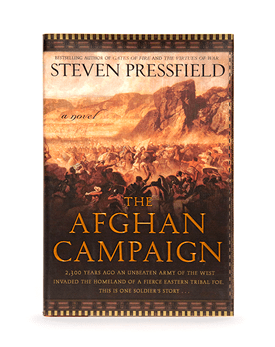
The novel opens with Matthias, a young Greek seeking glory and opportunity, signing up with the army of Alexander the Great. But Alexander has conquered the Persian Empire, and with it have passed those conventional, set-piece battles where everyone can instantly tell friend from foe.
Alexander next plans to conquer India. But first he must pacify its gateway—Afghanistan. It is here, for the first time, that the Macedonians meet an enemy unlike any other.
“Here the foe does not meet us in pitched battle,” warns Alexander. “Even when we defeat him, he will no accept our dominion. He comes back again and again. He hates us with a passion whose depth is exceeded only by his patience and his capacity for suffering.”
Matthias learns this early. In his first raid on an Afghan village, he’s ordered to execute a helpless prisoner. When he refuses, he’s brutalized until he strikes out with his sword—and then botches the job.
But, soon, exposed to an unending series of atrocities—committed by himself and his comrades, as well as the enemy—he finds himself transformed.
It is not a transformation he expected—or relishes. He agonizes over the gap between the ideals he meant to embrace when he became a soldier—and the brutalities that have drained him of everything but a grim determination to survive at any cost.
Pressfield, a former Marine himself, repeatedly contrasts how noncombatants see war as a kind of “glorious” child’s-play with how those who must fight it actually experience it.
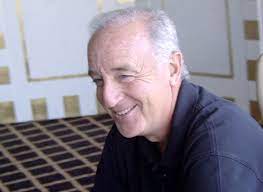
Steven Pressfield
He creates an extraordinary exchange between Costas, an ancient-world version of a CNN war correspondent, and Lucas, a soldier whose morality is outraged at how Costas and his ilk routinely prettify the indescribable.
The phrase Lucas hates most: “Put to death.”
“Language matters, Costas. Look at my feet. That black isn’t dirt. I can scour my flesh with lye and caustic. That man-blood never comes out.
“I hate the Afghan. He is a beast and a coward. But what I hate most is that he has dragged us down to his level.”
And we know the truth of this exchange immediately. For there are brutalities inflicted by our troops on the enemy—and atrocities inflicted by the enemy upon our soldiers—that never make the headlines, let alone the TV cameras.
We know, though we don’t wish to admit, that, decades from now, thousands of these men will carry horrific memories to their graves. These memories will remain sealed from public view, allowing their fellow but unblooded Americans to sleep peacefully, unaware of the price that others have paid on their behalf.
Like the Macedonians (who call themselves “Macks”), our own soldiers found themselves serving in an all-but-forgotten land among a populace whose values could not be more alien from our own if they came from Mars.
Instinctively, they turned to one another–not only for physical security but to preserve their last vestiges of humanity. Pressfield is never more eloquent than when he puts into the words of his war-weary veteran, Lucas, the following:
“Never tell anyone except your mates. Only you don’t need to tell them. They know. They know you. Better than a man knows his wife, better than he knows himself. They’re bound to you and you to them, like wolves in a pack. It’s not you and them. You are them. The unit is indivisible. One dies, we all die.”
Put conversely: One lives, we all live.
Pressfield has reached into the past to reveal fundamental truths about the present that most of us could probably not accept if contained in a modern-day memoir. These truths take on an immediate poignancy owing to our recent wars in Afghanistan and Iraq. But they will remain just as relevant decades from now, when our young soldiers of today are old and retired.
The Afghan Campaign thrusts us directly into the flesh-and-blood horrors created by political rhetoric: The horrors of men traumatized by an often unseen and always menacing enemy, and the horrors they must inflict in return if they are to survive in a hostile and alien world.


 Bureaucracybuster's Blog
ABC NEWS, ALAMO, ALTERNET, AMERICABLOG, ANDREW JACKSON, ANTONIO LOPEZ DE SANTA ANNA, AP, BABY BOOMER RESISTANCE, BUZZFEED, CBS NEWS, CNN, CROOKS AND LIARS, DAILY KOS, DAVID CROCKETT, DRUDGE RETORT, FIVETHIRTYEIGHT, HARPER’S MAGAZINE, JAMES BOWIE, MEDIA MATTERS, MEXICO, MOTHER JONES, MOVEON, MSNBC, NBC NEWS, NEWSWEEK, NPR, PBS NEWSHOUR, POLITICO, POLITICUSUSA, RAW STORY, REUTERS, SALON, SAM HOUSTON, SAN ANTONIO, SEATTLE TIMES, SLATE, STEPHEN F. AUSTIN, TALKING POINTS MEMO, TEXAS, TEXAS DECLARATION OF INDEPENDENCE, TEXAS REVOLUTION, THE ATLANTIC, THE CHICAGO SUN-TIMES, THE CHICAGO TRIBUNE, THE DAILY BEAST, THE DAILY BLOG, THE GUARDIAN, THE HILL, THE HUFFINGTON POST, THE LOS ANGELES TIMES, THE NATION, THE NEW REPUBLIC, THE NEW YORK TIMES, THE VILLAGE VOICE, THE WASHINGTON POST, THERMOPYLAE, THINKPROGRESS, THREE HUNDRED SPARTANS, TIME, TRUTHDIG, TRUTHOUT, TWO POLITICAL JUNKIES, U.S. NEWS & WORLD REPORT, UPI, USA TODAY, WILLIAM BARRET TRAVIS, WONKETTE, X
THE ALAMO: TRAGEDY AND GLORY: PART THREE (END)
In History, Military, Politics, Social commentary on March 6, 2026 at 12:11 amOn the night before the final Mexican assault, one man escaped the Alamo to testify to the defenders’ courage. Or so goes the most famous story of the 13-day siege.
He was Louis Rose, a veteran of the Napoleonic wars and the dreadful 1812 retreat from Moscow. Unwilling to die in a hopeless battle, he slipped over a wall and sneaked through Mexican siege lines.
At Grimes County, he found shelter at the homestead of Abraham and Mary Ann Zuber. Their son, William, later claimed that his parents told him of Rose’s visit–and his story of Travis’ “line in the sand” speech.
In 1873, he published the tale in the Texas Almanac.
But many historians believe it is a fabrication. The story comes to us third-hand—from Rose to the Zubers to their son. And it was published 37 years after the Alamo fell.
Even if Travis didn’t draw a line in the sand, every member of the garrison, by remaining to stay, had crossed over his own line.
After a 12-day siege, Santa Anna decided to overwhelm the Alamo.
The first assault came at about 5 a.m. on Sunday, March 6, 1836.
The fort’s riflemen—aided by 14 cannons–repulsed it. And the second assault as well.
But the third assault proved unstoppable. The Alamo covered three acres, and held at most 250 defenders—against 2,000 Mexican soldiers.
When the Mexicans reached the fort, they mounted scaling ladders and poured over the walls.
Travis was among the first defenders to fall—shot through the forehead after firing a shotgun into the Mexican soldiery below.
Death of William Barrett Travis (waving sword)
Mexicans broke into the room where the ailing James Bowie lay.
In Three Roads to the Alamo, historian William C. Davis writes that Bowie may have been unconscious or delirious. Mistaking him for a coward, the soldiers bayoneted him and blew out his brains.
But some accounts claim that Bowie died fighting—shooting two Mexicans with pistols, then plunging his famous knife into a third before being bayoneted. Nearly every Alamo movie depicts Bowie’s death this way.
As the Mexicans poured into the fort, at least 60 Texans tried to escape over the walls into the surrounding prairie. But they were quickly dispatched by lance-bearing Mexican cavalry.
The death of David Crockett remains highly controversial.
Baby boomers usually opt for the Walt Disney version: Davy swinging “Old Betsy” as Mexicans surround him. Almost every Alamo movie depicts him fighting to the death.
David Crockett’s Death
But Mexican Lieutenant Colonel Jose Enrique de la Pena claimed Crockett was one of seven Texans who surrendered or were captured and brought before Santa Anna after the battle. Santa Anna ordered their immediate execution, and they were hacked to death with sabers.
Only the 2004 remake of The Alamo has dared to depict this version. Although this version is now accepted by most historians, some still believe the de la Pena diary from which it comes is a forgery.
An hour after the battle erupted, it was over.
That afternoon, Santa Anna ordered the bodies of the slain defenders stacked and burned in three pyres.
Contrary to popular belief, some of the garrison survived:
Also contrary to legend, the bravery of the Alamo defenders did not buy time for Texas to raise an army against Santa Anna. This didn’t happen until after the battle.
But their sacrifice proved crucial in securing Texas’ independence:
On April 21, 1836, Santa Anna made a crucial mistake: During his army’s afternoon siesta, he failed to post sentries around his camp.
That afternoon, Sam Houston’s 900-man army struck the 1,400-man Mexican force at San Jacinto. In 18 minutes, the Texans—shouting “Remember the Alamo!”—killed about 700 Mexican soldiers and wounded 200 others.
The next day, a Texas patrol captured Santa Anna–wearing the uniform of a Mexican private. Resisting angry demands to hang the Mexican dictator, Houston forced Santa Anna to surrender control of Texas in return for his life.
The victory at San Jacinto won the independence of Texas. But the 13-day siege and fall of the Alamo remains the most famous and celebrated part of that conflict.
In 480 B.C., 300 Spartans won immortality at Thermopylae, a narrow mountain pass in ancient Greece, by briefly holding back an invading Persian army of thousands.
Although they died to the last man, their sacrifice inspired the rest of Greece to defeat its invaders.
Like Thermopylae, the battle of the Alamo proved both a defeat—and a victory.
Share this: