Posts Tagged ‘THE WALL STREET JOURNAL’
ABC NEWS, ALTERNET, AMERICABLOG, AP, BABY BOOMER RESISTANCE, BARACK OBAMA, BBC, BLOOMBERG NEWS, BUZZFEED, CBS NEWS, CHRIS MATHEWS, CIVIL WAR, CNN, CROOKS AND LIARS, DAILY KOZ, FACEBOOK, FIVETHIRTYEIGHT, FOOD STAMPS, HARPER’S MAGAZINE, HUFFINGTON POST, MEDIA MATTERS, MEDICARE, MOTHER JONES, MOVEON, MSNBC, NBC NEWS, NEW REPUBLIC, NEWSDAY, NEWSWEEK, NPR, PBS NEWSHOUR, POLITICO, POLITICUSUSA, PROPAGANDA, RAW STORY, REPUBLICAN PARTY, REPUBLICANS, REUTERS, Ronald Reagan, SALON, SEATTLE TIMES, SLATE, SOCIAL SECURITY, TALKING POINTS MEMO, THE ATLANTIC, THE CHICAGO SUN-TIMES, THE CHICAGO TRIBUNE, THE DAILY BEAST, THE DAILY BLOG, THE GUARDIAN, THE HILL, THE HUFFINGTON POST, THE INTERCEPT, THE LOS ANGELES TIMES, THE NATION, THE NEW REPUBLIC, THE NEW YORK TIMES, THE NEW YORKER, THE VILLAGE VOICE, THE WALL STREET JOURNAL, THE WASHINGTON POST, THINKPROGRESS, TIME, TIME MAGAZINE, TRUTHDIG, TRUTHOUT, TWITTER, TWO POLITICAL JUNKIES, U.S. NEWS & WORLD REPORT, UPI, USA TODAY, WILLIAM TECUMSEH SHERMAN
In Bureaucracy, History, Politics, Social commentary on September 23, 2016 at 8:12 am
On July 22, 2011, ABC News carried the following story:
The Pew Foundation, analyzing voter identification, found “the electorate’s partisan affiliations have shifted significantly” since Barack Obama won office in 2008.
The GOP had gained strength among white voters, most specifically “the young and poor.”
A seven-point Democratic advantage among whites under age 30 three years ago had turned into an 11-point GOP advantage. And a 15-point Democratic advantage among whites earning less than $30,000 annually had swung to a slim four-point Republican edge by 2011.

In addition:
- The GOP gains had occurred only among white voters.
- Republicans had made sizable gains among white voters since 2008. Fifty-two percent of white voters called themselves Republicans or leaned to the GOP, compared with 39% who affiliated with the Democratic Party or leaned Democratic.
- Democrats had lost their edge among lower income white voters.
- In 2008, Democrats had a 15 point lead among white voters with family incomes less than $30,000. By 2011, Republicans had a four-point edge among this group.
- The GOP’s lead among middle income white voters had grown since 2008, and Republicans held a substantial advantage with higher income white voters.
- Republicans have made gains among whites with a high school education or less. The GOP’s advantage over Democrats had grown from one point in 2008 to 17 points in 2011 among less educated whites.
- Republicans had made smaller gains among whites voters who had college degrees.
What is fascinating about these findings is this: The Republicans have, since 1980, pursued a policy of gutting programs aimed at helping the poor—while repeatedly creating tax-breaks for the wealthiest 1% of the population.
For Republicans, the patron saint of this “love-the-rich-screw-the-poor” ideology remains Ronald Reagan–two-time governor of California and twice-elected President of the United States (1981-1989)
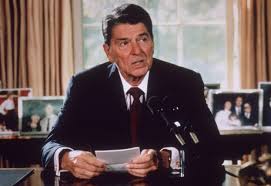
Ronald Reagan, who taught Americans to worship the wealthy
Among those charting Reagan’s legacy as President was former CBS Correspondent David Shoenbrum.
In his bestselling autobiography, America Inside Out: At Home and Abroad from Roosevelt to Reagan, he noted:

- On January 28, 1981, keeping a pledge to his financial backers in the oil industry, Reagan abolished Federal controls on the price of oil.
- Within a week, Exxon, Texaco and Shell raised gasoline prices and prices of home heating oil.
- Reagan saw it as his duty to put a floor under prices, not a ceiling above them.

- Reagan believed that when government helped business it wasn’t interfering. Loaning money to bail out a financially incompetent Chrysler was “supporting the free enterprise system.”
- But putting a high-profits tax on price-gouging corporations or filing anti-trust suits against them was “Communistic” and therefore intolerable.
- Tax-breaks for wealthy businesses meant helping America become stronger.
- But welfare for the poor or the victims of a predatory marketplace economy weakened America by sapping its morale.
“In short, welfare for the rich is good for America. But welfare for the poor is bad for America, even for the poor themselves, for it encourages them to be shiftless and lazy.
“Somehow, loans to the inefficient management of American corporations would not similarly encourage them in their inefficient methods,” wrote Shoenbrun.
Republicans have sought to dismantle Social Security ever since that program began in 1935. And Republicans have furiously opposed other programs aiding the poor and middle-class—such as Medicare, food stamps and WIC (Women, Infants, Children).
In short, this is not a political party with a history of rushing to the defense of those most in need.
So the question remains: Why are so many poor Americans flocking to its banner?
The answer lies in the history of the American South—and slavery.
ABC NEWS, AL QAEDA, AMERICAN EXCEPTIONALISM, BARACK OBAMA, BASHIR AL-ASSAD, CBS NEWS, CNN, FACEBOOK, HOUSE UN-AMERICAN ACTIVITIES COMMITTEE, HUMAN RIGHTS, JOHN BOEHNER, JOHN MCCAIN, NBC NEWS, RUSSIA, SYRIA, THE CHICAGO SUN-TIMES, THE CHICAGO TRIBUNE, THE HUFFINGTON POST, THE LOS ANGELES TIMES, THE NEW YORK TIMES, THE WALL STREET JOURNAL, THE WASHINGTON POST, TWITTER, USA TODAY, VLADIMIR PUTIN
In Bureaucracy, History, Military, Politics, Social commentary on September 16, 2016 at 12:19 am
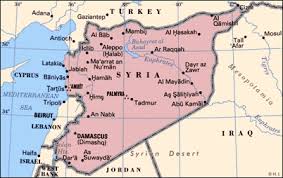
On September 11, 2013, the New York Times published an Op-Ed (guest editorial) from Russian President Vladimir Putin, entitled: “A Plea for Caution from Russia: What Putin Has to Say to Americans About Syria.”
No one should be surprised that Putin came out strongly against an American air strike on Syria.
Its “President” (i.e., dictator) Bashir al-Assad, is, after all, a close ally of Russia. Just as his late father and dictator, Hafez al-Assad, was a close ally of the Soviet Union until its collapse in 1991.
Putin, of course, is a former member of the KGB, the infamous secret police which (under various other names) ruled the Soviet Union from its birth in 1917 to its collapse in 1991.
He grew up under a Communist dictatorship and clearly wishes to return to that era, saying publicly: “First and foremost it is worth acknowledging that the demise of the Soviet Union was the greatest geopolitical catastrophe of the century.”
So it would be unrealistic to expect him to view the current “Syria crisis” the same way that President Barack Obama does.
(A “crisis” for politicians and news media is any event they believe can be exploited for their own purposes.
(In the case of media like CNN–which has devoted enormous coverage to the use of poison gas in Syria–the motive is higher ratings. “If it bleeds, it leads,” goes the saying in the news business.
(In the case of politicians–like Obama and Putin–the motive is to further their own status. And thus power.
(Few politicians really care about the “human rights” of other nations–unless promoting this issue can empower themselves and/or their own nations.
(President Ronald Reagan, for example, often wailed about the Soviets’ oppression of the Polish union, Solidarity–while firing hundreds of unionized air traffic controllers who went on strike.)
In his September 11 guest editorial in the New York Times, Putin offered the expected Russian take on Syria:
- Yes, poison gas was used in Syria.
- No, it wasn’t used by the Syrian Army.
- It was used by “opposition forces, to provoke intervention by their powerful foreign patrons.”
- “There are few champions of democracy in Syria. But there are more than enough [al] Qaeda fighters and extremists of all stripes battling the government.”
But it’s the concluding paragraph that has enraged American politicians the most–especially right-wing ones. In it, Putin takes exception with American “exceptionalism.”

Vladimir Putin
Referring to President Obama, Putin wrote:
“And I would rather disagree with a case he made on American exceptionalism, stating that the United States’ policy is ‘what makes America different. It’s what makes us exceptional.’
“It is extremely dangerous to encourage people to see themselves as exceptional, whatever the motivation.
“There are big countries and small countries, rich and poor, those with long democratic traditions and those still finding their way to democracy. Their policies differ, too.
“We are all different, but when we ask for the Lord’s blessings, we must not forget that God created us equal.”
Putin has never publicly shown any interest in religion. But by invoking “the Lord,” he was able to turn the Christian beliefs of his Western audience into a useful weapon.
“I was insulted,” then-House Speaker John Boehner (R-Ohio) told reporters when asked for his blunt reaction to the editorial.
“I have to be honest with you, I was at dinner, and I almost wanted to vomit,” said U.S. Senator Bob Menendez (D-New Jersey).
Putin had dared to question the self-righteousness of American foreign policy–and those who make it.
Making his case for war with Syria, Obama had said: “America is not the world’s policeman….
“But when, with modest effort and risk, we can stop children from being gassed to death, and thereby make our own children safer over the long run, I believe we should act.
“That’s what makes America different. That’s what makes us exceptional. With humility, but with resolve, let us never lose sight of that essential truth.”
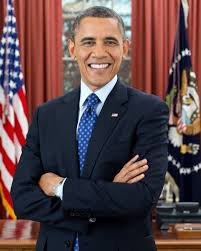
President Barack Obama
In short: Because we consider ourselves “exceptional,” we have the divine right to do whatever we want.
It’s not necessary to see Putin as a champion of democracy (he isn’t) to see the truth in this part of his editorial: “It is extremely dangerous to encourage people to see themselves as exceptional, whatever the motivation.”
From 1938 to 1969, the House Un-American Activities Committee sought to define what was “American” and what was “Un-American.” As if “American” stood for all things virtuous.
Whoever heard of an “Un-French Activities Committee”? Or an “Un-German” or “Un-British” one?
The late S.I. Hayakawa once made an obersation that clearly applies to this situation.
Hayakawa was a professor of semantics (the study of meaning, focusing on the relation between words and what they stand for).
In his bestselling book, Language in Thought and Action, he observed that when a person hears a message, he has four ways of responding to it:
- Accept the speaker and his message.
- Accept the speaker but reject the message.
- Accept the message but reject the speaker.
- Reject the message and the speaker.
Americans might want to consider #3 in the recent case of Russian President Vladimir Putin.
2012 PRESIDENTIAL ELECTION, 2016 PRESIDENTIAL RACE, ABC NEWS, AL GORE, ALTERNET, AMERICABLOG, ANDREW JACKSON, AP, BABY BOOMER RESISTANCE, BARACK OBAMA, BBC, BC NEWS, BLOOMBERG, BLUESKY, BUZZFEED, CBS NEWS, CNN, CROOKS AND LIARS, DAILY KOS, DONALD TRUMP, ELECTORAL COLLEGE, FACEBOOK, FIVETHIRTYEIGHT, GEORGE W. BUSH, HARPER’S MAGAZINE, HUFFINGTON POST, JOHN C. CALHOUN, MEDIA MATTERS, MITT ROMNEY, MOTHER JONES, MOVEON, MSNBC, NBC NEWS, NEW REPUBLIC, NEWSDAY, NEWSWEEK, NPR, PBS NEWSHOUR, POLITICO, POLITICUSUSA, RAW STORY, REPUBLICANS, REUTERS, SALON, SEATTLE TIMES, SLATE, TALKING POINTS MEMO, THE ATLANTIC, THE CHICAGO SUN-TIMES, THE CHICAGO TRIBUNE, THE DAILY BEAST, THE DAILY BLOG, THE GUARDIAN, THE HILL, THE HUFFINGTON POST, THE INTERCEPT, THE LOS ANGELES TIMES, THE NATION, THE NEW REPUBLIC, THE NEW YORK TIMES, THE NEW YORKER, THE VILLAGE VOICE, THE WALL STREET JOURNAL, THE WASHINGTON POST, THINKPROGRESS, TIME, TREASON, TRUTHDIG, TRUTHOUT, TWITTER, TWO POLITICAL JUNKIES, U.S. NEWS & WORLD REPORT, UPI, USA TODAY, X
In Bureaucracy, History, Law, Military, Politics, Social commentary on September 1, 2016 at 12:07 am
As the 2016 Presidential race gets ever closer to the finish, it’s well to consider Donald Trump’s ideas about democracy.
In 2011, as the 2012 Presidential race began heating up, Trump didn’t have a very high opinion of Mitt Romney, the man who then seemed the likely Republican nominee for President.
On April 17, 2011, toying with the idea of entering the Presidential race himself, the always self-promoting Trump said this about Romney, the former Massachusetts governor and GOP candidate:
“He’d buy companies. He’d close companies. He’d get rid of jobs. I’ve built a great company. I’m a much bigger businessman and have a much, much bigger net worth. I mean my net worth is many, many, many times Mitt Romney.
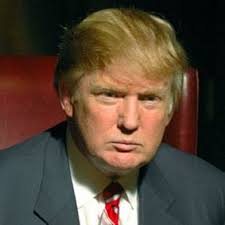
Donald Trump
“Mitt Romney is a basically small-business guy, if you really think about it. He was a hedge fund. He was a funds guy. He walked away with some money from a very good company that he didn’t create. He worked there. He didn’t create it.”
Trump added that Bain Capital, the hedge fund where Romney made millions of dollars before running for governor, didn’t create any jobs. Whereas Trump claimed that he—Trump—had created “hundreds of thousands of jobs.”
So Romney himself may have been puzzled when Trump announced, on February 2, 2012: “It’s my honor, real honor, and privilege to endorse Mitt Romney” for President.
“Mitt is tough, he’s smart, he’s sharp, he’s not going to allow bad things to continue to happen to this country that we all love. So, Governor Romney, go out and get ‘em. You can do it,” said Trump.
And Romney, in turn, had his own swooning-girl moment: “I’m so honored to have his endorsement….There are some things that you just can’t imagine in your life. This is one of them.”
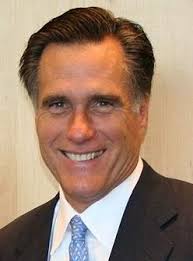
Mitt Romney
Throughout the 2012 Presidential race, Trump continued to “help” Romney—by repeatedly accusing President Barack Obama of not being an American citizen.
Had that been true, Obama would not have had the right to be President—since the Constitution says that only an American citizen can hold this position.
Of course, that was entirely what Trump wanted people to believe—that Obama was an illegitimate President, and deserved to be thrown out.
Come election night—and disaster for Romney. And Trump.
When it became clear that Romney was not going to be America’s 45th President, Trump went ballistic on Twitter. Among his tweets:
- More votes equals a loss…revolution!
- Lets fight like hell and stop this great and disgusting injustice! The world is laughing at us.
- We can’t let this happen. We should march on Washington and stop this travesty. Our nation is totally divided!
- The phoney electoral college made a laughing stock out of our nation. The loser one!
- He lost the popular vote by a lot and won the election. We should have a revolution in this country!
To put Trump’s rants into real-world perspective:
- According to Trump, the electoral process works when a Republican wins the Presidency. It only doesn’t work when a Democrat wins.
- “We should march on Washington” conjures up images of another Fascist–Benito Mussolini–marching on Rome at the head of his Blackshirts to seize power. Which, in a democracy, is treason.
- “The phoney electoral college made a laughing stock out of our nation. The loser one!”
This last is startling, on three counts:
First, the 2012 Republican Platform spoke lovingly about the need for preserving the Electoral College:
“We oppose the National Popular Vote Interstate Compact or any other scheme to abolish or distort the procedures of the Electoral College.
“We recognize that an unconstitutional effort to impose ‘national popular vote’ would be a mortal threat to our federal system and a guarantee of corruption as every ballot box in every state would become a chance to steal the presidency.”
Second, the loser didn’t win: He lost. With votes still being counted (as of November 8) Obama got 60,652,238. Romney got 57,810,407.
Third, in 2000, Al Gore won the popular vote (50,999,897) to George W. Bush’s 50,456,002. But Bush trounced Gore in the Electoral College (271 to 266).
Still, that meant Bush—not Gore—would head the country for the next eight years. And that was perfectly OK with right-wingers like Trump.
It was only when Obama won the Electoral College count by 332 to 206 that this was—according to Trump–a “travesty.”
And Trump’s solution if voters dare to elect someone other than Trump’s pet choice: “Revolution!”
This comes perilously close to advocating violent overthrow of the government. Otherwise known as treason–a crime traditionally punished by execution, or at least lengthy imprisonment.
When former President Andrew Jackson was close to death, he asked his doctor: What act of my administration will be most severely condemned by future Americans?

Andrew Jackson
The doctor threw out a couple of guesses.
“Not at all!” replied Jackson. “Posterity will condemn me more because I was persuaded not to hang John C. Calhoun [the South Carolina Senator who created the doctrine of “secession” that ultimately led to the Civil War] as a traitor than for any other act in my life!”
If Donald Trump inherits control of America’s nuclear weapons, future historians—if there are any—may feel that Barack Obama should have done the same for Trump.
ABC NEWS, ALTERNET, AP, BUZZFEED, CBS NEWS, CNN, COMPUTER FRAUD, CROOKS AND LIARS, CYBERCRIME, DAILY KOZ, EMAIL, EMAILS, FACEBOOK, FBI, INTERNET, MOTHER JONES, MOVEON, NBC NEWS, NEWSWEEK, NIGERIA, NIGERIAN SCAMS, NPR, PASSWORDS, POLITICO, RAW STORY, REUTERS, SALON, SCAMS, SEATTLE TIMES, SLATE, THE ATLANTIC, THE CHICAGO SUN-TIMES, THE CHICAGO TRIBUNE, THE DAILY BEAST, THE GUARDIAN, THE HILL, THE HUFFINGTON POST, THE LOS ANGELES TIMES, THE NATION, THE NEW YORK TIMES, THE WALL STREET JOURNAL, THE WASHINGTON POST, THE WASHINGTONPOST, TIME, TWITTER, U.S. NEWS & WORLD REPORT, UPI, USA TODAY, VIRUSES
In Business, Law Enforcement, Self-Help, Social commentary on August 26, 2016 at 12:01 am
Receiving unsolicited, get-rich-quick emails has become a regular headache for millions of Internet users.
All too often, the result is fraud for their recipients. In 2013, losses from Nigerian scams alone totaled $12.7 billion.
Here’s how to spot the warning signs of fraud:
- Addressed Generally: “Attention!” “Dear Friend,” “Attention the owner of this email,” “Hello, Dear.” Your name is not mentioned, because this email has been mass-mailed to thousands of intended victims.
- Unsolicited: You’re told that you’ve won a lottery you never entered, or have inherited a fortune from someone you never knew existed.
- Appeals to religion: Appeals to Religion: “Hello Beloved in the Lord” or “Yours in Christ” seeks to create a bond with those who deeply believe in God.
- Misuse of English: Misuse of English: Mis-spellings and faulty grammar usually denote someone–probably a foreigner–using English as a second language. Examples: Run-on sentences; “you’re” for “your”; “except” instead of “accept”; “Dear Beneficial” instead of “Dear Beneficiary.”
- Appeals to Sympathy: Appeals to Sympathy: “My husband just died” or “I am dying of cancer.” This is to make you feel sorry for the sender and lower your guard as an intended victim.
- Use of Important Titles/Organizations: “Director,” ‘Barrister,” “Secretary General of the United Nations,” “Police Inspector.” This is to impress recipients and convince them that the email comes from a trusted and legitimate organization.
- Request for Personal Information: This includes some combination of: Name / Address / Telephone Number / Bank Name / Bank Account Number / Fax Number / Driver’s License Number / Occupation / Sex / Beneficiary / Passport Number
- Claims of Deposit: “We have deposited the check of your fund to your account” is a typical line to instantly grab your attention. Someone you’ve never heard of claims he has just put a huge amount of money into an account you know nothing about. Nor can you access it unless you first pay a “contact fee.”
- The “Bank” is in Africa: Unless you know you have relatives there, this should be a dead giveaway to a scam. Africa is a continent kept alive by the charity of other nations. It’s not in the business of doling out large sums of money to Westerners.

- Overseas Phone Numbers: If you call these, you’ll have a huge bill. So many people skip calling and just send the money “required” to receive their “cash prize.”
- Highly Personal Requests: Asking you–someone they’ve never met–to assume the burden of acting as the executor of their “Last Will and Testament.”
- Love Scams: The scammer poses as a man or woman–usually outside the United States–seeking love. A series of emails flows back and forth for days/weeks, until the scammer says s/he will be glad to fly to the United States to be yours. All you have to do is put up the money for the flight cost.
- “Make Money From Home”: With most employers refusing to hire, “work from home” scams promise a way to support yourself and your family. You’re required to provide bank information or pay an up-front “registration fee.” Then you wait for job orders–that never come.
- Debt Relief: Scammers promise to relieve most or all of your debt–for a large up-front fee. You pay the fee–and are not only out of that money but still in debt.
- Home Repair Schemes: Huge down payments are required for home repairs that never happen.
- “Free” Trial Offers: The service or product is free for awhile, but you must opt out later to avoid monthly billings.
- The Email Claims to Be From the FBI: Often the “address” includes “Anti-Terrorist and Monetary Crime Division.” One such email was addressed: “Dear Beneficiary” and offered help in obtaining a “fund.” The FBI is an investigative agency responsible to the U.S. Department of Justice. It does not resolve financial disputes or secure monies for “deserving” recipients. If the FBI wants to contact you, it will do so by letter or by sending agents to your address. The FBI’s own website states: “At this time we do not have a national e-mail address for sending or forwarding investigative information.”
- “I Need Help”: You get an email claiming to be from someone you know–who’s “in jail here in Mexico” or some other foreign country. S/he begs you to send money for bail or bribes to win his/her freedom. If you get such an email, call the person to make certain. Don’t rush to send money–chances are it will go directly to a scammer.
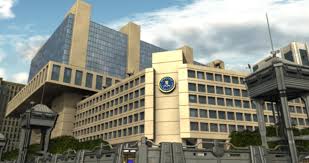
FBI Headquarters: Where stopping cybercrime is now a top priority.
There are several commonsense rules to follow in protecting yourself from online scammers:
- Don’t trust people you’ve never met to want to give you money.
- Shop online only with well-known merchants who have a good reputation.
- Don’t click on unknown links–especially those in emails from unknown senders.
- If you’re required to pay an advance fee–“on faith”–to receive a big amount of money, the odds are it’s a scam.
- If you can’t find any solid information on a company, chances are it doesn’t exist.
- For additional information on how to protect yourself from cybercrime, check out the FBI’s page at http://www.fbi.gov/about-us/investigate/cyber.
- If it sounds too good to be true, the odds are: It is untrue.
ABC NEWS, ALTERNET, AP, BEDBUGS, BUILDING INSPECTION, BUSINESS, BUZZFEED, CBS NEWS, CHRIS MATHEWS, CNN, CROOKS AND LIARS, DAILY KOZ, FACEBOOK, FEDERAL ASSET FORFEITURE STATUTES, KIP MACY, LANDLORDS, MOTHER JONES, MOVEON, MSNBC, NBC NEWS, NEWSWEEK, NICCOLO MACHIAVELLI, NICOLE MACY, NPR, POLITICO, RAW STORY, RENT CONTROL, RENTERS, REUTERS, ROBERT F. KENNEDY, SALON, SAN FRANCISCO, SAN FRANCISCO DEPARTMENT OF BUILDING INSPECTION, SAN FRANCISCO DEPARTMENT OF PUBLIC HEALTH, SEATTLE TIMES, SLATE, SLUMLORDS, THE ATLANTIC, THE CHICAGO SUN-TIMES, THE CHICAGO TRIBUNE, THE DAILY BEAST, THE GUARDIAN, THE HILL, THE HUFFINGTON POST, THE LOS ANGELES TIMES, THE NATION, THE NEW YORK TIMES, THE WALL STREET JOURNAL, THE WASHINGTON POST, TIME, TWITTER, U.S. NEWS & WORLD REPORT, UPI, USA TODAY, WILLIAM TECUMSEH SHERMAN
In Bureaucracy, History, Law, Law Enforcement, Politics, Social commentary on August 25, 2016 at 1:53 am
City agencies need to see landlords for what they truly are–as, at best, potential predators, if not actual ones. And to act on that knowledge.
As Niccolo Machiavelli warned:
“All those who have written upon civil institutions demonstrate…that whoever desires to found a state and give it laws, must start with assuming that all men are bad and ever ready to display their vicious nature, whenever they may find occasion for it.
“If their evil disposition remains concealed for a time, it must be attributed to some unknown reason; and we must assume that it lacked occasion to show itself. But time, which has been said to be the father of all truth, does not fail to bring it to light.”

Niccolo Machiavelli
The power of slumlords calls to mind the scene in 1987’s The Untouchables, where Sean Connery’s veteran cop tells Eliot Ness: “Everybody knows where the liquor is. It’s just a question of: Who wants to cross Capone?”
Many tenants have lived with rotting floors, bedbugs, nonworking toilets, mice/rats, chipping lead-based paint and other outrages for not simply months but years.
This holds true across the United States. But it also holds true in San Francisco–the “renters’ paradise” where the District Attorney’s Office hasn’t prosecuted a slumlord in decades.

Part Two of this series presented a series of badly-needed, long-overdue reforms for the San Francisco Department of Building Inspection (DBI). This is the agency charged to ensuring safe housing conditions for San Francisco residents.
This concluding part will cover the remainder of those needed reforms.
- Landlords should be required to bring all the units in a building up to existing building codes, and not just those in need of immediate repair.
- Landlords should be legally required to hire a certified-expert contractor to perform building repairs. To save money–that they can well afford to spend–many landlords insist on making such repairs despite their not being trained or experienced in doing so. They thereby risk the health and/or safety of their tenants.
- DBI should not view itself as a “mediation” agency between landlords and tenants. Most landlords hate DBI and will always do so. They believe they should be allowed to treat their tenants like serfs, if not slaves, raise extortionate rents anytime they desire, and maintain their buildings in whatever state they wish. And no efforts by DBI to persuade them of its good intentions will ever change their minds.
- Above all, DBI must stop viewing itself as a regulatory agency and start seeing itself as a law enforcement one. The FBI doesn’t ask criminals to comply with the law. It applies whatever amount of pressure is needed to force their compliance. William Tecumseh Sherman, speaking of the rebellious Southern states, said it best: “They cannot be made to love us, but they may be made to fear us.”
- The San Francisco District Attorney’s Office should create a special unit to investigate and prosecute slumlords. Prosecutors should offer rewards to citizens who provide tips on major outrages by the city’s slumlords.
- Install Rent Control protections for tenants on fixed incomes. San Francisco is notorious for having the highest rents in the nation. A one-bedroom apartment runs $3,448 a month. Even those in the vaunted high-tech industry spend most of their income on rent.
- For tenants on fixed incomes–seniors, disabled, students–the predatory greed of landlords amounts to a staged-in eviction notice. Social Security recipients did not get a cost-of-living increase in 2016 because there had not been a rise in the price of gasoline. But the fact that many of them do not own cars doesn’t mean that the price of everything else–such as groceries–hasn’t sharply risen.
- Allowing landlords to jack up rents to the fullest extent possible every year will eventually drive out all tenants who are not multimillionaires. In fact, an unknown portion of this City’s homeless population doubtless stems from the ability of landlords to gradually raise rents above tenants’ ability to afford them.
- In 1979, San Franciscans passed a Rent Control law to protect tenants against predatory rent hikes and unfair evictions. As a result, a landlord can only raise a tenant’s rent a certain percentage every year. This is set by the set by the Rent Stabilization and Arbitration Board, more popularly known as the “Rent Board.”
- But there is a gaping hole in the law: Once a tenant moves out, the landlord can jack up the rent as high as he wants. This is why the average rent in San Francisco is priced beyond most middle-class wage-earners.
- In addition, landlords are allowed to charge tenants yearly fees to maintain the existence of the Rent Board. This is both unfair and insulting, since the Board was created to protect tenants from predatory landlords. Most tenants have far less money to pay such fees than do landlords, who are free to raise rents every year. And landlords–unlike tenants–can and do write off Rent Board fees on their taxes every year. Thus, landlords–not tenants–should be paying the fees.
As Robert F. Kennedy wrote: “Every society gets the kind of criminal it deserves. What is equally true is that every community gets the kind of law enforcement it insists on.”
ABC NEWS, ALTERNET, AP, BEDBUGS, BUILDING INSPECTION, BUSINESS, BUZZFEED, CBS NEWS, CHRIS MATHEWS, CNN, CROOKS AND LIARS, DAILY KOZ, FACEBOOK, FEDERAL ASSET FORFEITURE STATUTES, KIP MACY, LANDLORDS, MOTHER JONES, MOVEON, MSNBC, NBC NEWS, NEWSWEEK, NICCOLO MACHIAVELLI, NICOLE MACY, NPR, POLITICO, RAW STORY, RENT BOARD, RENT CONTROL, RENTERS, REUTERS, ROBERT F. KENNEDY, SALON, SAN FRANCISCO, SAN FRANCISCO DEPARTMENT OF BUILDING INSPECTION, SAN FRANCISCO DEPARTMENT OF PUBLIC HEALTH, SEATTLE TIMES, SLATE, SLUMLORDS, THE ATLANTIC, THE CHICAGO SUN-TIMES, THE CHICAGO TRIBUNE, THE DAILY BEAST, THE GUARDIAN, THE HILL, THE HUFFINGTON POST, THE LOS ANGELES TIMES, THE NATION, THE NEW YORK TIMES, THE WALL STREET JOURNAL, THE WASHINGTON POST, TIME, TWITTER, U.S. NEWS & WORLD REPORT, UPI, USA TODAY, WILLIAM TECUMSEH SHERMAN
In Bureaucracy, History, Law, Law Enforcement, Politics, Social commentary on August 24, 2016 at 12:28 am
The San Francisco Department of Building Inspection (DBI) has long been outmaneuvered by predatory, law-breaking landlords.
And San Francisco renters–many of them elderly, poor and/or disabled–have been the victims of landlord greed, neglect and/or harassment.

Among the reforms that DBI should immediately enact:
- Hit slumlord violators with a fine–payable immediately–for at least $2,000 to $5,000 for each health/safety-code violation.The slumlord would be told he could reclaim 75-80% of the money only if he fully corrected the violation within 30 days. The remaining portion of the levied fine would go into the City coffers, to be shared among DBI and other City agencies.
- This would put the onus on the slumlord, not DBI. Appealing to his greed would ensure his willingness to comply with the ordered actions. As matters now stand, it is DBI who must repeatedly check with the slumlord to find out if its orders have been complied with.
- If the landlord failed to comply with the actions ordered within 30 days, the entire fine would go into the City’s coffers–to be divided among DBI and other agencies charged with protecting San Francisco residents.
- In addition. he would be hit again with a fine at least twice the amount of the first one.
- Inspectors for DBI should be allowed to cite landlords for violations that fall under the jurisdiction of the Department of Public Health (DPH). They could then pass the information to DPH for its own investigation.
- If the DBI inspector later discovered that the landlord had not corrected the DPH violation within a designated time-period, DBI should be allowed to levy its own fine for his failure to do so.
- If DPH objects to this, DBI should propose that DPH’s own inspectors be armed with similar cross-jurisdictional authority. Each agency would thus have increased motivation for spotting and correcting health/safety violations that threaten the lives of San Francisco residents.
- This would instantly turn DBI and DPH into allies, not competitors. And it would mean that whether a citizen called DBI or DPH, s/he could be assured of getting the necessary assistance. As matters now stand, many residents are confused by the conflicting jurisdictions of both agencies.
- DBI should insist that its Inspectors Division be greatly expanded. DBI can attain this by arguing that reducing the number of Inspectors cuts (1) protection for San Francisco renters–and (2) monies that could go to the general City welfare.
- The Inspection Division should operate independently of DBI. Currently, too many high-ranking DBI officials tilt toward landlords because they are landlords themselves.
- DBI should create a Special Research Unit to compile records on the worst slumlord offenders. Thus, a slumlord with a repeat history of defying DBI Notices of Violation could be treated more harshly than a landlord who was a first-time offender.
- Turning DBI into a revenue-producing agency would enable the City to raise desperately-needed revenues–in a highly popular way. Fining delinquent slumlords would be as unpopular as raising taxes on tobacco companies. Only slumlords and their hired lackey allies would object.
- DBI should legally require landlords to rehabilitate a unit every time a new tenant moves in, or have it examined by a DBI inspector every two years. A tenant can occupy a unit for ten or more years, then die or move out, and the landlord immediately rents the unit to the first person who comes along, without making any repairs or upgrades whatsoever.
- Slumlords, unlike drug-dealers, can’t move their buildings from one street or city to another. If they want to make money in San Francisco, they will have to submit to the jurisdiction of landlord-regulating agencies.
- DBI should require landlords to post their Notices of Violation in public areas of their buildings–on pain of serious financial penalties for failing to do so. When DBI orders a slumlord to take corrective action, s/he is the only one who is notified. If that slumlord refuses to comply with that directive, s/he is the only one who knows it. Given the pressing demands on DBI, weeks or months will pass before the agency learns about this violation of its orders. Tenants have a right to know if their landlord is complying with the law–so they can promptly notify inform DBI if a violation is occurring.

- Landlords should be legally required to give each tenant a list of the major city agencies (such as DBI, the Rent Board and the Department of Public Health) that exist to help tenants solve problems with their housing.
- DBI should launch–and maintain–a citywide advertising campaign to alert residents about its services. Everyone knows the FBI pursues bank robbers. But too many San Franciscans don’t even know that DBI exists, let alone what laws it enforces. This should be an in-your-face campaign: “Do you have bedbugs in your apartment? Has your stove stopped working? Are you afraid to ride in your building elevator because it’s always malfunctioning? Have you complained to your landlord and gotten the runaround? Then call DBI at—- Or drop us an email at_____.”
ABC NEWS, ALTERNET, AP, BEDBUGS, BUILDING INSPECTION, BUSINESS, BUZZFEED, CBS NEWS, CHRIS MATHEWS, CNN, CROOKS AND LIARS, DAILY KOZ, FACEBOOK, FEDERAL ASSET FORFEITURE STATUTES, KIP MACY, LANDLORDS, MOTHER JONES, MOVEON, MSNBC, NBC NEWS, NEWSWEEK, NICCOLO MACHIAVELLI, NICOLE MACY, NPR, POLITICO, RAW STORY, RENT BOARD, RENT CONTROL, RENTERS, REUTERS, ROBERT F. KENNEDY, SALON, SAN FRANCISCO, SAN FRANCISCO DEPARTMENT OF BUILDING INSPECTION, SAN FRANCISCO DEPARTMENT OF PUBLIC HEALTH, SEATTLE TIMES, SLATE, SLUMLORDS, THE ATLANTIC, THE CHICAGO SUN-TIMES, THE CHICAGO TRIBUNE, THE DAILY BEAST, THE GUARDIAN, THE HILL, THE HUFFINGTON POST, THE LOS ANGELES TIMES, THE NATION, THE NEW YORK TIMES, THE WALL STREET JOURNAL, THE WASHINGTON POST, TIME, TWITTER, U.S. NEWS & WORLD REPORT, UPI, USA TODAY, WILLIAM TECUMSEH SHERMAN
In Bureaucracy, History, Law, Law Enforcement, Politics, Social commentary on August 23, 2016 at 12:04 am
To hear slumlords tell it, San Francisco is a “renters’ paradise,” where obnoxious, lazy, rent-evading tenants constantly take advantage of hard-working, put-upon landlords.
Don’t believe it.
And in case you’re inclined to anyway, consider the story of Kip and Nicole Macy, two San Francisco slumlords who recently pled guilty to felony charges of residential burglary, stalking and attempted grand theft.

Nicole and Kip Macy
Determined to evict rent control-protected tenants from their apartment building in the South of Market district, they unleashed a reign of terror in 2006:
- Cut holes in the floor of one tenant’s living room with a power saw–while he was inside his unit.
- Cut out sections of the floor joists to make the building collapse.
- Threatened to shoot Ricardo Cartagena, their property manager, after he refused to make the cuts himself.
- Changed the locks to Cartagena’s apartment, removed all of his belongings and destroyed them.
- Created fictitious email accounts to appear as a tenant who had filed a civil suit against the Macys–and used these to fire the tenant’s attorney.
- Cut the tenants’ telephone lines and shut off their electricity, gas and water.
- Changed the locks on all the apartments without warning.
- Mailed death threats.
- Kicked one of their tenants in the ribs.
- Hired workers to board up a tenant’s windows from the outside while he still lived there.
- Falsely reported trespassers in a tenant’s apartment, leading police to hold him and a friend at gunpoint.
- Broke into the units of three tenants and removed all their belongings.
- Again broke into the units of the same three victims and soaked their beds, clothes and electronics with amonia.
The Macys were arrested in April, 2008, posted a combined total of $500,000 bail and then fled the country after being indicted in early 2009.
In May, 2012, Italian police arrested and deported them back to America a year later.
Having pled guilty, they were sentenced in September, 2013, to a prison term of four years and four months.
How could such a campaign of terror go on for two years against law-abiding San Francisco tenants?
Simple.
Even in the city misnamed as a “renter’s paradise,” slumlords are treated like gods by the very agencies that are supposed to protect tenants against their abuses.

The power of slumlords calls to mind the scene in 1987’s The Untouchables, where Sean Connery’s veteran cop tells Eliot Ness: “Everybody knows where the liquor is. It’s just a question of: Who wants to cross Capone?”
Everybody in San Francisco knows who the slumlords are. But the District Attorney’s Office hasn’t criminally prosecuted a slumlord in decades.
Many tenants have lived with rotting floors, bedbugs, nonworking toilets, mice/rats, chipping lead-based paint and other outrages for not simply months but years.
Consider the situation at the San Francisco Department of Building Inspection (DBI), which is charged with ensuring that apartment buildings are in habitable condition.
Under San Francisco law:
- A landlord is automatically given 30 days to correct a health/safety violation. If he drags his feet on the matter, the tenant must live with that problem until it’s resolved.
- If the landlord claims for any reason that he can’t fix the problem within one month, DBI doesn’t demand that he prove this. Instead, it automatically gives him another month.
- A slumlord has to work at being hit with a fine—by letting a problem go uncorrected for three to six months.
- And even then, repeat slumlord offenders often avoid the fine by pleading for leniency.
- That’s because many DBI officials are themselves landlords.
But the situation doesn’t have to remain this way.
How could it be changed?
By learning some valuable lessons from the “war on drugs” and applying them to regulating slumlords.
Consider:
- At least 400,000 rape kits containing critical DNA evidence that could convict rapists sit untested in labs around the country.
- But illegal drug kits are automatically rushed to the had of the line.
It isn’t simply because local/state/Federal lawmen universally believe that illicit drugs pose a deadly threat to the Nation’s security.
It’s because:
- Federal asset forfeiture laws allow the Justice Department to seize properties used to “facilitate” violations of Federal anti-drug laws.
- Local and State law enforcement agencies are allowed to keep some of the proceeds once the property has been sold.
- Thus, financially-strapped police agencies have found that pursuing drug-law crimes is a great way to fill their own coffers.
- Prosecutors and lawmen view the seizing of drug-related properties as crucial to eliminating the financial clout of drug-dealing operations.
It’s long past time for San Francisco agencies to apply the same attitude–and methods–toward slumlords. 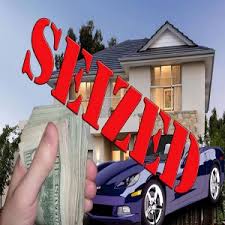
DBI should become not merely a law enforcing agency but a revenue-creating one. And those revenues should come from predatory slumlords who routinely violate the City’s laws protecting tenants.
By doing so, DBI could vastly:
- Enhance its own prestige and authority;
- Improve living conditions for thousands of San Francisco renters; and
- Bring millions of desperately-needed dollars into the City’s cash-strapped coffers.
2008 PRESIDENTIAL RACE, 9/11, ABC NEWS, ADOLF HITLER, ANDERSON COOPER, ANTI-COMMUNISM, BARACK OBAMA, BILL CLINTON, BIRTHERS, CBS NEWS, CITIZENSHIP, CNN, DONALD TRUMP, FACEBOOK, JOSEPH ARPAIO, LAURENCE TRIBE, MSNBC, MUSLIMS, NAZI GERMANY, NAZI PARTY, NBC NEWS, RAFAEL "TED" CRUZ, REPUBLICAN PARTY, REPUBLICANS, SS, THE BOSTON GLOBE, THE CHICAGO SUN-TIMES, THE CHICAGO TRIBUNE, THE HUFFINGTON POST, THE LOS ANGELES TIMES, THE NEW YORK TIMES, THE WALL STREET JOURNAL, THE WASHINGTON POST, TREASON, TWITTER, UNITED STATES SUPREME COURT, USA TODAY
In Bureaucracy, History, Law, Politics, Social commentary on August 16, 2016 at 12:42 am
“All revolutions,” said Ernst Rohem, leader of Adolf Hitler’s brown-shirted thugs, the S.A., “devour their own children.”
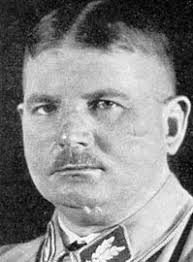
Ernst Rohem
Fittingly, he said this as he sat inside a prison cell awaiting his own execution.
On June 30, 1934, Hitler had ordered a massive purge of his private army, the S.A., or Stormtroopers. The purge was carried out by Hitler’s elite army-within-an-army, the Schutzstaffel, or Protective Squads, better known as the SS.
The S.A. Brownshirts had been instrumental in securing Hitler’s rise to Chancellor of Germany on January 30, 1933. They had intimidated political opponents and organized mass rallies for the Nazi Party.
But after Hitler reached the pinnacle of power, they became a liability.
Ernst Rohem, their commander, urged Hitler to disband the regular German army, the Reichswehr, and replace it with his own legions as the nation’s defense force.
Frightened by Rohem’s ambitions, the generals of the Reichswehr gave Hitler an ultimatum: Get rid of Rohem–or they would get rid of him.
So Rohem died in a hail of SS bullets–as did several hundred of his longtime S.A. cronies.
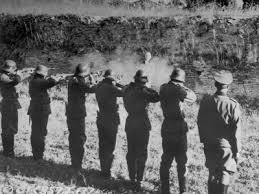
SS firing squad
At least one member of the Republican Party has now learned that an apparently useful weapon can become a liability.
Ever since Barack Obama became a Presidential candidate in 2008, Republicans have accused him of being ineligible to hold office.
Without a political scandal (such as Bill Clinton’s affair with Monica Lewinsky) to fasten on, the Republican Party opted for slander: Obama had been born in Kenya–and thus was not an American citizen.
From this there could be only one conclusion: That he would be an illegitimate President–and should be removed from office if elected.
And this smear campaign continued after he won the election. Right-wingers like real estate billionaire Donald Trump insisted that Obama had been born in Kenya, not Honolulu.
During his first two years in office, Obama tried to ignore the charge.
But polls repeatedly showed that large segments of the country believed it. Finally, even Obama’s closest advisers warned him: You must address this and put it to rest.
So, on April 27, 2011, the President released the long-form of his Hawaii birth certificate.
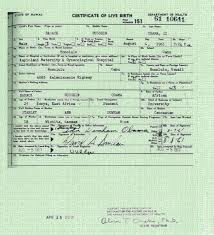
The long-form version of President Obama’s birth certificate
For the vast majority of Americans, this settled the issue. In 2012, they re-elected Obama to a second, four-year term.
Nevertheless, for many Right-wingers, even the release of Obama’s long-form birth certificate meant nothing.
Joseph Arpaio, the Right-wing sheriff of Maricopa County, Arizona, claimed that his “investigators” were certain that Obama’s birth certificate was fraudulent.
Responding to Arpaio’s claims, Joshua A. Wisch, a special assistant to Hawaii’s attorney general, said: “President Obama was born in Honolulu, and his birth certificate is valid. Regarding the latest allegations from a sheriff in Arizona, they are untrue, misinformed and misconstrue Hawaii law.”
Fast forward to 2015.
Donald Trump, who had threatened to run for President in 2012, announced his candidacy on June 16. He quickly became–and remained–the front-runner for Republican voters.
But then Texas’ United States Senator Rafael “Ted” Cruz entered the race. As radical and ruthless as Trump, he quickly became the billionaire’s most dangerous competitor.
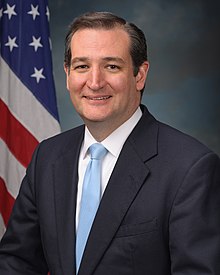
Rafael “Ted” Cruz
What to do?
Then Trump–or someone in his campaign–had an inspiration. Why not use against Cruz the same “he’s-not-an-American” charge that had been used against Obama?
Cruz, born in Calgary, Alberta, Canada, was not a natural-born American citizen–and was thus ineligible to be President. His mother was an American, but his father was Cuban.
The U.S. Constitution states specifically that “No person except a natural born Citizen …shall be eligible to the Office of President.”
Cruz argued that because his mother was an American, he became an American citizen at birth.
But courts have never ruled on the issue of what constitutes a “natural-born” citizen.
At first, the issue seemed confined to Republican politicians and those likely to vote for them. But then others outside the Right began investigating it.
Mary McManamon, a constitutional law professor at Widener University’s Delaware Law School, concluded in an Open Editorial for The Washington Post:
“Sen. Ted Cruz (R-Tex.) is not a natural-born citizen and therefore is not eligible to be president or vice president of the United States.”
Cruz got an even bigger slap in the face from Laurence Tribe, the celebrated professor of Constitutional law at Harvard University. He has argued before the United States Supreme Court 36 times.
Writing in The Boston Globe, Tribe stated:
“…The kind of judge Cruz says he admires and would appoint to the Supreme Court is an ‘originalist,’ one who claims to be bound by the narrowly historical meaning of the Constitution’s terms at the time of their adoption.
“To his kind of judge, Cruz ironically wouldn’t be eligible, because the legal principles that prevailed in the 1780s and ’90s required that someone actually be born on US soil to be a “natural born” citizen.” [Italics added.]
So long as Cruz stayed in the race, Trump continued to use the “birther” charge against him. And it continued to dog him, as it did Obama.
Thus, the evil that politicians do lives after them.
ABC NEWS, ALTERNET, AMERICABLOG, AP, BABY BOOMER RESISTANCE, BBC, BC NEWS, BLOOMBERG, BLUESKY, BRIAN L. ROBERTS, BUSINESS MANAGEMENT, BUZZFEED, CABLE TV COMPANIES, CBS NEWS, CEOS, CNN, COMCAST, COMMUNICATIONS, CONSUMER COMPLAINT WEBSITES, CONSUMER PROTECTION, CROOKS AND LIARS, CUSTOMER SERVICE, DAILY KOS, FACEBOOK, FEDERAL COMMUNICATIONS COMMISSION, FIVETHIRTYEIGHT, HARPER’S MAGAZINE, HUFFINGTON POST, LOS ANGELES TIMES, MANAGEMENT, MEDIA MATTERS, MOTHER JONES, MOVEON, MSNBC, NBC NEWS, NEWSDAY, NEWSWEEK, NPR, PBS NEWSHOUR, POLITICO, POLITICUSUSA, PUBLIC UTILITIES COMMISSION, RAW STORY, REUTERS, ROBERT TOWNSEND, SALON, SEATTLE TIMES, SELF-HELP, SLATE, TALKING POINTS MEMO, THE ATLANTIC, THE CHICAGO SUN-TIMES, THE CHICAGO TRIBUNE, THE DAILY BEAST, THE DAILY BLOG, THE GUARDIAN, THE HILL, THE HUFFINGTON POST, THE INTERCEPT, THE LOS ANGELES TIMES, THE NATION, THE NEW REPUBLIC, THE NEW YORK TIMES, THE NEW YORKER, THE VILLAGE VOICE, THE WALL STREET JOURNAL, THE WASHINGTON POST, THINKPROGRESS, TIME, TRUTHDIG, TRUTHOUT, TWITTER, TWO POLITICAL JUNKIES, U.S. NEWS & WORLD REPORT, UP THE ORGANIZATION, UPI, USA TODAY, X, YELP!
In Bureaucracy, Business, History, Politics, Self-Help, Social commentary on July 29, 2016 at 12:17 am
In 1970, Robert Townsend, the CEO who had turned around a failing rent-a-car company called Avis, published what is arguably the best book written on business management.
It’s Up the Organization: How to Stop the Corporation From Stiffling People and Strangling Profits.
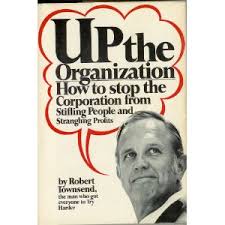
Though published 46 years ago, it should be required reading–for CEOs and consumers.
Don’t fear getting bogged down in a sea of boring, theory-ridden material. As Townsend writes:
“This book is in alphabetical order. Using the table of contents, which doubles as the Index, you can locate any subject on the list in 13 seconds. And you can read all I have to say about it in five minutes or less.
“This is not a book about how organizations work. What should happen in organizations and what does happen are two different things and about as far apart as they can get. THIS BOOK IS ABOUT HOW TO GET THEM TO RUN THREE TIMES AS WELL AS THEY DO.”
Comcast is the majority owner of NBC and the largest cable operator in the United States. It provides cable TV, Internet and phone service to more than 50 million customers.
So you would think that, with so many customers to serve, Comcast would create an efficient way for them to attain help when they face a problem with billing or service.
Think again.
Consider the merits of Townsend’s short chapter on “Call Yourself Up.”
Townsend advises CEOs:“Pretend you’re a customer. Telephone some part of your organization and ask for help. You’ll run into some real horror shows.”
Now, imagine what would happen if Brian L. Roberts, the CEO of Comcast, did just that.
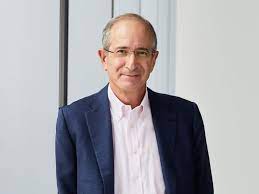

Brian L. Roberts
First, he would find that, at Comcast, nobody actually answers the phone when a customer calls. After all, it’s so much easier to fob off customers with pre-recorded messages than to have operators directly serve their needs.
And customers simply aren’t that important–except when they’re paying their ever-inflated bills for phone, cable TV and/or Internet service.
Comcast’s revenues stood at $19.25 billion for the fourth quarter of 2015.
In 2015, Roberts earned $36.2 million in salary, options and other compensation, a 10% increase from 2014.
So it isn’t as though the company can’t afford hiring a few operators and instructing them to answer phones directly when people phone in.
But instead of being directly connected to someone able to answer his question or resolve his problem, Roberts would hear:
“Welcome to Comcast–home of Xfinity.”

Then he would hear an annoying clucking sound–followed by the same message in Spanish.
“Your call may be recorded for quality assurance.
“To make a payment now, Press 1. To continue this call, Press 2.”
Then he would hear: “For technical help, press 1, for billing, press 2. For more options, press 3.”
Assuming he pressed 2 for “billing,” he would hear:
“For payment, press 1 For balance information, press 2. For payment locations, press 3. For all other billing questions, press 4.”
Then he would be told: “Please enter the last four digits of the primary account holder’s Social Security Number.”
Then, as if he hadn’t waited long enough to talk to someone, he would get this message: “Press 1 if you would like to take a short survey after your call.”
By the time he heard that, he would almost certainly not be in a mood to take a survey. He would simply want someone to come onto the phone and answer his question or resolve his problem.
Then he would hear: “At the present time, all agents are busy”–and be electronically given an estimate by when someone might deign to answer the phone.
“Please hold for the next customer account executive.”
If he wanted to immediately reach a Comcast rep, Roberts would press the number for “sales.” A sales rep would gladly sign him up for more costly products–even if he couldn’t solve whatever problem Roberts needed addressed.
Assuming that someone actually came on, Roberts couldn’t fail to notice the unmistakable Indian accent of the rep he was now speaking with.
Not Indian as in American Indian-because that would mean his company had actually hired Americans who must be paid at least a minimum American wage for their services.
No, Comcast, like many other supposedly patriotic corporations, “outsources” its “customer service support team” to the nation, India.
After all, if the “outsourced” employees are getting paid a pittance, the CEO and his top associates can rake in all the more.
Of course, the above scenario is totally outlandish–and is meant to be.
Who would expect the wealthy CEO of a major American corporation to actually wait in a telephone queue like an ordinary American Joe or Jane?
That would be like expecting the chief of any major police department to put up with hookers or panhandlers on his own doorstep.
For the wealthy and the powerful, there are always underlings ready and willing to ensure that their masters do not suffer the same indignities as ordinary mortals.
Such as the ones who sign up for Comcast TV, cable or Internet services.
ABC NEWS, ASSAULT, BLACK LIBERATION ARMY, BLACKS, BURGLARY, CBS NEWS, CNN, CRIME, DRUGS, FACEBOOK, GRAND LARCENY, HISPANICS, MANSLAUGHTER, MURDER, NBC NEWS, NEW YORK POLICE DEPARTMENT, RAPE, ROBBERY, ROBERT DALEY, SEX CRIMES, TARGET BLUE, THE CHICAGO SUN-TIMES, THE CHICAGO TRIBUNE, THE LOS ANGELES TIMES, THE NEW YORK TIMES, THE WALL STREET JOURNAL, THE WASHINGTON POST, TWITTER
In Bureaucracy, History, Law Enforcement, Social commentary on July 8, 2016 at 12:10 am
Blacks make up 13% of the American population, according to the 2010 census of the United States.
But they committed 52% of homicides between 1980 and 2008, according to the Bureau of Justice Statistics. Only 45% of whites were offenders in such cases.
Blacks were disproportionately likely to commit homicide and to be the victims. In 2008 blacks were seven times more likely than whites to commit homicide. And they were six times more likely than whites to be homicide victims.
According to the FBI, blacks were responsible for 38% of murders, compared to 31.1% for whites, in 2013.
From 2011 to 2013, 38.5% of people arrested for murder, manslaughter, rape, robbery, and aggravated assault were black.
Click here: FactCheck: do black Americans commit more crime?
In 1971, Robert Daley, a reporter for the New York Times, became a deputy police commissioner for the New York Police Department (NYPD).
In that capacity, he saw the NYPD from the highest levels to the lowest–from the ornate, awe-inspiring office of Police Commissioner Patrick Murphy to the gritty, sometimes blood-soaked streets of New York.
He spent one year on the job before resigning–later admitting that when he agreed to take the job, he got more than he bargained for.
It proved to be a tumultuous year in the NYPD’s history: Among those challenges Daley and his fellow NYPD members faced were the murders of several police officers, committed by members of the militant Black Liberation Army.
Two of those murdered officers were Waverly Jones and Joseph Piagentini. Jones was black, Piagentini white; both were partners. Both were shot in the back without a chance to defend themselves.
Writing about these murders in a bestselling 1973 book–Target Blue: An Inside’s View of the N.Y.P.D.–Daley noted:

- Jones and Piagentini were the sixth and seventh policemen–of ten–murdered in 1971.
- About 18 men were involved in these murders. All were black.
- The city’s politicians knew this–and so did Commissioner Murphy. None dared say so publicly.
“But the fact remained,” wrote Daley, “that approximately 65% of the city’s arrested murderers, muggers, armed robbers, proved to be black men; about 15% were of Hispanic origin; and about 20% were white [my Italics].”
The overall racial breakdown of the city was approximately:
- Whites, 63%;
- Blacks, 20%;
- Hispanics 17%.
Stated another way: Blacks, who made up 20% of the city’s population, were responsible for 65% of the city’s major crimes.
Or, as Daley himself put it: “So the dangerous precincts, any cop would tell you, were the black precincts.”
That was 43 years ago.
Now, consider the following statistics released by the NYPD for “Crime and Enforcement Activity in New York City” in 2012. Its introduction states:
“This report presents statistics on race/ethnicity compiled from the New York City Police Department’s records management system.”
Then follows this chart:
Misdemeanor Criminal Mischief
Victim, Suspect, Arrestee Race/Ethnicity
American Indians: Victims: 0.7% Suspects: 0.3% Arrestees: 0.3%
Asian/Pacific Islanders: Victims: 8.4% Suspects: 3.2% Arrestees: 3.9%
Blacks: Victims: 36.5% Suspects: 49.6% Arrestees: 36.5%
Whites: Victims: 28.9% Suspects: 17.0% Arrestees: 22.9%
Hispanics: Victims: 25.4% Suspects: 29.8% Arrestees: 36.4%
Total Victims: 40,985
Total Suspects: 11,356
Total Arrests: 7,825
Then come the guts of the report:
Murder and Non-Negligent Manslaughter Victims:
- Black (60.1)
- Hispanic (28.7%)
- White victims (872%)
- Asian/Pacific Islander (4.2%)
Murder and Non-Negligent Manslaughter Arrestees:
- Black (51.4%)
- Hispanic (36.7%)
- White (9.2%)
- Asian/Pacific Islander (2.6%)
Rape Victims:
Rape Arrestees:
Other Felony Sex Crimes Victims:
Known Other Felony Sex Crime Arrestees:
- Black (42.3%)
- Hispanic (39.8%)
- White (12.6%)
- Asian /Pacific Islander (5.1%)
Robbery Victims:
Robbery Arrestees:
- Black (62.1%)
- Hispanic (29.0%)
- White (6.2%)
- Asian/Pacific Islander (2.5%)
Felonious Assault Victims:
Felonious Assault Arrestees:
- Black (52.3%)
- Hispanic (33.6%)
- White (9.4%)
- Asian/Pacific Islanders (4.5%)
Grand Larceny Victims:
Grand Larceny Arrestees:
- Black (52.0%)
- Hispanic (28.5%)
- White (14.6%)
- Asian/Pacific Islanders (4.8%)
Shooting Victims:
Shooting Arrestees:
- Black (75.0%)
- Hispanic (22.0%)
- White (2.4%)
- Asian/Pacific Islander (0.6%)
Drug Felony Arrest Population:
- Black (45.3)
- Hispanic (40.0%)
- White (12.7%)
- Asian Pacific Islanders (1.9%)
The Drug Misdemeanor Arrest Population
- Black (49.9%)
- Hispanic (34.5%)
- White (13.3%)
- Asian Pacific Islanders (2.1%)
The Felony Stolen Property Arrest Population:
- Black (52.5%)
- Hispanic (28.9%)
- White (14.5%)
- Asian/Pacific Islanders (4.0%)
The Misdemeanor Stolen Property Arrest Population:
- Black (47.1%)
- Hispanic (30.2%)
- White (16.9%)
- Asian/Pacific Islanders (5.4%)
Violent Crime Suspects:
- Black (66.0%)
- Hispanic (26.1%)
- White (5.8%)
- Asian/Pacific Islanders (1.9%)
Reported Crime Complaint Juvenile Victims:
Juvenile Crime Complaint Arrestees:
- Black (58.6%)
- Hispanic (32.6%)
- White (5.8%)
- Asian/Pacific Islander (2.8%)
Appendix B of the report offers a breakdown of New York City’s racial makeup:
% of the City’s Population Total Numbers
- White 2,722,904 (33.3%)
- Black (22.8% 1,861,295
- Hispanic 2,336,076 (28.6%)
- Asian/Pacific Islanders 1,030,914 (12.6%)
Thus, while Blacks make up 22.8% of New York City’s population, they comprise
- 51.4% of its murder and non-negligent manslaughter arrests;
- 48.6% of its rape arrests;
- 42.3% of its known other felony sex crime arrests;
- 62.1% of its robbery arrests;
- 52.3% of its felonious assault arrests;
- 52.0% of its grand larceny arrests;
- 75.0% of its shooting arrests;
- 45.3% of its drug felony arrests;
- 49.9% of its drug misdemeanor arrests;
- 52.5% of its felony stolen property arrests;
- 47.1% of its misdemeanor stolen property arrests;
- 66.0% of its violent crime suspects;
- 58.6% of its juvenile crime complaint arrests.
Police, like most people, learn from their experiences. And if the majority of their experiences with blacks continue to be with the perpetrators of crime, they will continue to associate blacks as a whole with criminals.
This is admittedly unfair to those blacks who are not involved in any way with crime. But it will continue until crime rates among blacks start falling dramatically.


ABC NEWS, ALTERNET, AMERICABLOG, AP, BABY BOOMER RESISTANCE, BARACK OBAMA, BBC, BLOOMBERG NEWS, BUZZFEED, CBS NEWS, CHRIS MATHEWS, CIVIL WAR, CNN, CROOKS AND LIARS, DAILY KOZ, FACEBOOK, FIVETHIRTYEIGHT, FOOD STAMPS, HARPER’S MAGAZINE, HUFFINGTON POST, MEDIA MATTERS, MEDICARE, MOTHER JONES, MOVEON, MSNBC, NBC NEWS, NEW REPUBLIC, NEWSDAY, NEWSWEEK, NPR, PBS NEWSHOUR, POLITICO, POLITICUSUSA, PROPAGANDA, RAW STORY, REPUBLICAN PARTY, REPUBLICANS, REUTERS, Ronald Reagan, SALON, SEATTLE TIMES, SLATE, SOCIAL SECURITY, TALKING POINTS MEMO, THE ATLANTIC, THE CHICAGO SUN-TIMES, THE CHICAGO TRIBUNE, THE DAILY BEAST, THE DAILY BLOG, THE GUARDIAN, THE HILL, THE HUFFINGTON POST, THE INTERCEPT, THE LOS ANGELES TIMES, THE NATION, THE NEW REPUBLIC, THE NEW YORK TIMES, THE NEW YORKER, THE VILLAGE VOICE, THE WALL STREET JOURNAL, THE WASHINGTON POST, THINKPROGRESS, TIME, TIME MAGAZINE, TRUTHDIG, TRUTHOUT, TWITTER, TWO POLITICAL JUNKIES, U.S. NEWS & WORLD REPORT, UPI, USA TODAY, WILLIAM TECUMSEH SHERMAN
WHY THE POOR VOTE REPUBLICAN: PART ONE (OF TWO)
In Bureaucracy, History, Politics, Social commentary on September 23, 2016 at 8:12 amOn July 22, 2011, ABC News carried the following story:
The Pew Foundation, analyzing voter identification, found “the electorate’s partisan affiliations have shifted significantly” since Barack Obama won office in 2008.
The GOP had gained strength among white voters, most specifically “the young and poor.”
A seven-point Democratic advantage among whites under age 30 three years ago had turned into an 11-point GOP advantage. And a 15-point Democratic advantage among whites earning less than $30,000 annually had swung to a slim four-point Republican edge by 2011.
In addition:
What is fascinating about these findings is this: The Republicans have, since 1980, pursued a policy of gutting programs aimed at helping the poor—while repeatedly creating tax-breaks for the wealthiest 1% of the population.
For Republicans, the patron saint of this “love-the-rich-screw-the-poor” ideology remains Ronald Reagan–two-time governor of California and twice-elected President of the United States (1981-1989)
Ronald Reagan, who taught Americans to worship the wealthy
Among those charting Reagan’s legacy as President was former CBS Correspondent David Shoenbrum.
In his bestselling autobiography, America Inside Out: At Home and Abroad from Roosevelt to Reagan, he noted:
“In short, welfare for the rich is good for America. But welfare for the poor is bad for America, even for the poor themselves, for it encourages them to be shiftless and lazy.
“Somehow, loans to the inefficient management of American corporations would not similarly encourage them in their inefficient methods,” wrote Shoenbrun.
Republicans have sought to dismantle Social Security ever since that program began in 1935. And Republicans have furiously opposed other programs aiding the poor and middle-class—such as Medicare, food stamps and WIC (Women, Infants, Children).
In short, this is not a political party with a history of rushing to the defense of those most in need.
So the question remains: Why are so many poor Americans flocking to its banner?
The answer lies in the history of the American South—and slavery.
Share this: