Posts Tagged ‘THE WALL STREET JOURNAL’
2016 PRESIDENTIAL ELECTION, 9/11 ATTACKS, ABC NEWS, ALTERNET, AP, ASSOCIATED PRESS, BARACK OBAMA, BIRTHERS, BUZZFEED, CBS NEWS, CENSORSHIP, CIA, CNN, CROOKS AND LIARS, DAILY KOZ, DAVID BROOKS, DONALD TRUMP, DONALD TRUMP JUNIOR, FACEBOOK, FBI, FOX NEWS SUNDAY, HILLARY CLINTON, JAMES COMEY, JAY SEKULOW, LESTER HOLT, MOTHER JONES, MOVEON, NATIONAL SECURITY AGENCY, NBC NEWS, NEWSWEEK, NPR, PBS NEWSHOUR, POLITICO, RAW STORY, REUTERS, ROBERT MUELLER, RUSSIA, SALON, SARAH HUCKABEE SANDERS, SEATTLE TIMES, SLATE, THE ATLANTIC, THE CHICAGO SUN-TIMES, THE CHICAGO TRIBUNE, THE DAILY BEAST, THE GUARDIAN, THE HILL, THE HUFFINGTON POST, THE LOS ANGELES TIMES, THE NATION, THE NEW YORK TIMES, THE WALL STREET JOURNAL, THE WASHINGTON POST, TIME, TWITTER, U.S. NEWS & WORLD REPORT, UP, UPI, USA TODAY, VIETNAM WAR, VLADIMIR PUTIN, WATERGATE
In Bureaucracy, History, Law Enforcement, Politics, Social commentary on August 8, 2017 at 12:23 am
For five years, Donald Trump, more than anyone, popularized the fiction that President Barack Obama was born in Kenya—and was therefore ineligible to be President.
Now Trump finds himself haunted by something far worse than a slander: The truth.
Since taking office on January 20, Trump has been ensnared in a series of revelations about collaboration between members of his 2016 Presidential campaign and Russian Intelligence agents.
The FBI, CIA and National Security Agency have unequivocally stated that Russian Intelligence played a major role in trying to sway the election for Trump.

During the 2016 race, Trump furiously disagreed with this finding. “They have no idea if it’s Russia or China or somebody. It could be somebody sitting in a bed some place. I mean, they have no idea,” Trump told “Fox News Sunday” on Dec. 11.
And as late as August 3, 2017, addressing a rally of his Right-wing followers in West Virginia, Trump said: “Most people know there were no Russians in our campaign; there never were. We didn’t win because of Russia; we won because of you,”
But Trump’s denials contradict the revelations that have emerged about his behavior.
TRUMP’S DENIALS
July 27, 2016, in Doral, Florida: Trump told a local CBS news channel: “I mean I have nothing to do with Russia. I don’t have any jobs in Russia. I’m all over the world but we’re not involved in Russia.”
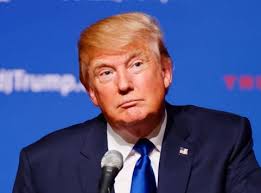
Donald Trump
October 24, 2016 at a Florida campaign rally: Trump said, “I have nothing to do with Russia, folks, I’ll give you a written statement.”
January 11, 2017: Trump launched the first in a series of tweets denying any ties between Russian Intelligence and his campaign: “Russia has never tried to use leverage over me. I HAVE NOTHING TO DO WITH RUSSIA – NO DEALS, NO LOANS, NO NOTHING!”
February 7, 2017: “I don’t know [Russian President Vladimir] Putin, have no deals in Russia, and the haters are going crazy – yet Obama can make a deal with Iran, #1 in terror, no problem!”
February 16, 2017: “The Democrats had to come up with a story as to why they lost the election, and so badly (306), so they made up a story – RUSSIA. Fake news!”
May 8, 2017: “The Russia-Trump collusion story is a total hoax, when will this taxpayer funded charade end?”
TRUMP’S BEHAVIOR
May 9, 2017: Trump fired FBI Director James Comey. Comey had been leading an investigation into alleged collusion between Trump advisers and Russian officials when he was fired.
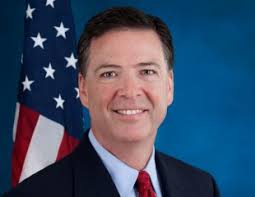
James Comey
At first, Trump claimed that he fired Comey for mishandling the FBI’s investigation into Hillary Clinton’s use of a private email server.
May 10, 2017: But, in a meeting at the White House, Trump told Russian Foreign Minister Sergey Lavrov and Russian Ambassador Sergey Kislyak: “I faced great pressure because of Russia. That’s taken off.”
May 11, 2017: And in an interview with NBC reporter Lester Holt, Trump admitted the real reason:
“And, in fact, when I decided to just do it, I said to myself, I said: ‘You know, this Russia thing with Trump and Russia is a made up story, it’s an excuse by the Democrats for having lost an election that they should’ve won.’”
July 8, 2017: The New York Times reported that Donald Trump Junior met at Trump Tower on June 9, 2016, with a Kremlin-connected Russian lawyer who promised to offer damaging information about Clinton.
Trump Junior released a statement: “We primarily discussed a program about the adoption of Russian children that was active and popular with American families years ago and was since ended by the Russian government, but it was not a campaign issue at the time and there was no follow up.”
July 12 and July 16, 2017: Trump’s lawyer, Jay Sekulow, denied that the President was involved in drafting his son’s statement about the Trump Tower meeting.
July 19, 2017: In an interview with The New York Times, Trump warned Special Counsel and former FBI Director Robert Mueller to avoid looking into his personal finances. Asked if he would fire Mueller over an examination of his finances, Trump made it clear that he might.
July 20, 2017: The Washington Post reported that Trump was consulting with advisers “about his power to pardon aides, family members and even himself” in connection to the probe led by Mueller.
July 31, 2017: The Washington Post reported that, to conceal the purpose of the Trump Tower meeting, President Trump dictated a misleading statement for his son. In this, the reason for the meeting was given as a discussion about the adoption of Russian children—and not to obtain damaging information on Clinton from Russian Intelligence agents.
August 1, 2017: White House press secretary Sarah Huckabee Sanders said President Trump was involved in drafting the false statement that Trump Junior released about the Trump Tower meeting. Sanders called the matter “of no consequence.”
August 3, 2017: The Wall Street Journal reported that Mueller had convened a grand jury in Washington, D.C. to investigate Russia’s interference in the 2016 election. This gives Mueller broad authority to subpoena documents and compel witnesses to testify under oath.
As the late New York Times reporter Harrison E. Salisbury warned: “The truth, I was ultimately to learn, is the most dangerous thing. There are no ends to which men of power will not go to put out its eyes.”
2016 PRESIDENTIAL ELECTION, 9/11 ATTACKS, ABC NEWS, ALTERNET, AP, ASSOCIATED PRESS, BARACK OBAMA, BIRTHERS, BUZZFEED, CBS NEWS, CENSORSHIP, CIA, CNN, CROOKS AND LIARS, DAILY KOZ, DAVID BROOKS, DONALD TRUMP, DONALD TRUMP JUNIOR, FACEBOOK, FBI, FOX NEWS SUNDAY, HILLARY CLINTON, JAMES COMEY, JAY SEKULOW, LESTER HOLT, MOTHER JONES, MOVEON, NATIONAL SECURITY AGENCY, NBC NEWS, NEWSWEEK, NPR, PBS NEWSHOUR, POLITICO, RAW STORY, REUTERS, ROBERT MUELLER, RUSSIA, SALON, SARAH HUCKABEE SANDERS, SEATTLE TIMES, SLATE, THE ATLANTIC, THE CHICAGO SUN-TIMES, THE CHICAGO TRIBUNE, THE DAILY BEAST, THE GUARDIAN, THE HILL, THE HUFFINGTON POST, THE LOS ANGELES TIMES, THE NATION, THE NEW YORK TIMES, THE WALL STREET JOURNAL, THE WASHINGTON POST, TIME, TWITTER, U.S. NEWS & WORLD REPORT, UP, UPI, USA TODAY, VIETNAM WAR, VLADIMIR PUTIN, WATERGATE
In Bureaucracy, History, Law Enforcement, Politics, Social commentary on August 7, 2017 at 12:12 am
In 2011, Donald Trump, host of NBC’s “The Apprentice,” was thinking of running for President against the incumbent, Barack Obama.
To gain popularity among America’s Right-wing, Trump almost singlehandedly created the popular fiction that the President was born in Kenya—and was not an American citizen.
His motive: To convince Americans that Obama was an illegitimate President.
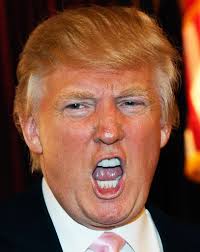
Donald Trump
Among the statements Trump made:
February 10, 2011: “Our current president came out of nowhere. Came out of nowhere. In fact, I’ll go a step further: The people that went to school with him, they never saw him, they don’t know who he is. It’s crazy.”
March 23, 2011: “I want him to show his birth certificate.…There’s something on that birth certificate that he doesn’t like.”
March 30, 2011: “If you are going to be president of the United States you have to be born in this country. And there is a doubt as to whether or not he was. …He doesn’t have a birth certificate. He may have one, but there’s something on that, maybe religion, maybe it says he is a Muslim. I don’t know. Maybe he doesn’t want that. Or he may not have one. But I will tell you this. If he wasn’t born in this country, it’s one of the great scams of all time.”
April 7, 2011: “I have people that have been studying it, and they cannot believe what they’re finding. You are not allowed to be a president if you’re not born in this country. Right now I have real doubts.”
April 25, 2011: “I’ve been told very recently…that the birth certificate is missing. I’ve been told that it’s not there or it doesn’t exist. And if that’s the case, it’s a big problem.”
On April 27, President Obama released his original, long-form Hawaiian birth certificate.
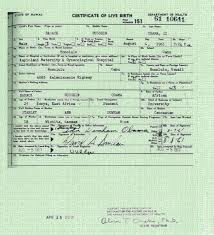
The long-form version of President Obama’s birth certificate
“We do not have time for this kind of silliness,” said Obama at a press conference. “We have better stuff to do. I have got better stuff to do. We have got big problems to solve.”
Still, Trump pursued his campaign of slander on Twitter:
May 18, 2012: “Let’s take a closer look at that birth certificate.@BarackObama was described in 2003 as being “born in Kenya.” http://bit.ly/Klc9Uu
August 6, 2012: “An ‘extremely credible source’ has called my office and told me that @BarackObama‘s birth certificate is a fraud.”
August 27, 2012: “Why do the Republicans keep apologizing on the so called “birther” issue? No more apologies—take the offensive!”
September 13, 2012: “Wake Up America! See article: “Israeli Science: Obama Birth Certificate is a Fake”
June 30, 2013: “@davidrhythmguit: @realDonaldTrump @Chuffman48 Mark Cuban accepts the fact that the President of the United States was born here. Doubt it”
August 22, 2013: “Why are people upset w/ me over Pres Obama’s birth certificate? I got him to release it, or whatever it was, when nobody else could!”
December 12, 2013: “How amazing, the State Health Director who verified copies of Obama’s “birth certificate” died in plane crash today. All others lived”
November 23, 2014: “@futureicon: @pinksugar61 Obama also fabricated his own birth certificate after being pressured to produce one by @realDonaldTrump“
Eventually, Trump decided not to run in 2012.
But he did declare his candidacy for President on June 16, 2015. And he continued to insist that Obama was an illegitimate President.
Meanwhile, Trump’s popularity among blacks steadily fell. In June, 2016, a Quinnipiac poll revealed that Trump had 1% of support from black voters—while 91% backed Hillary Clinton.
Even the managers of Trump’s campaign urged him to put the “birther” issue behind him.
And so, on September 16, 2016—10 days before his scheduled first debate with Democratic Presidential nominee Hillary Clinton—Trump made his version of a reversal.
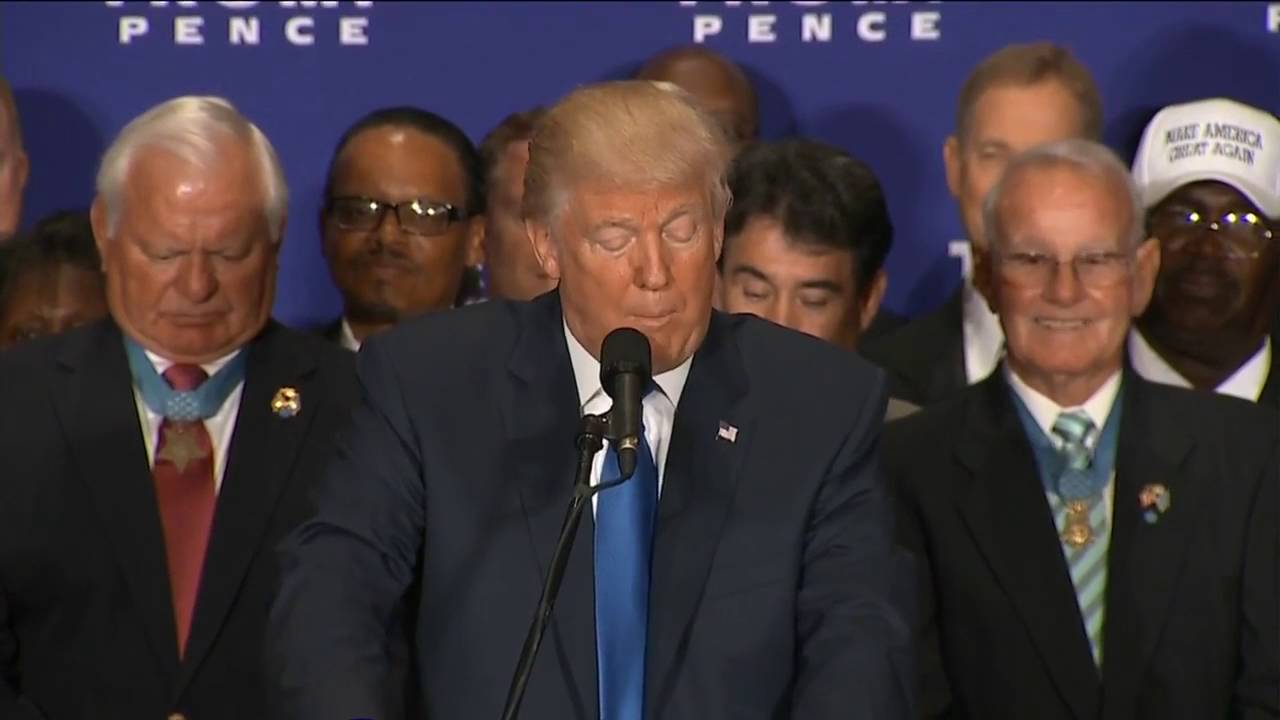
Donald Trump: “President Barack Obama was born in the United States.”
He did so in about seven seconds and 40 words—after spending a half hour paying tribute to the military and promoting his new upscale hotel in Washington, D.C.:
“Now, not to mention her in the same breath, but Hillary Clinton and her campaign of 2008 started the birther controversy.
“I finished it. I finished it. You know what I mean.
“President Barack Obama was born in the United States, period. Now we all want to get back to making America strong and great again.”
His tone made it clear that he felt uneasy making that statement—and wanted to get it over with as fast as possible.
He refused to take questions from reporters covering the event. Nor did he apologize for his five-year campaign of slander.
Eight months after winning the 2016 election, Trump finds himself pursued by a charge as deadly as the one he hurled at Barack Obama: That he colluded with Russian Intelligence agents to sabotage the electoral chances of Hillary Clinton.
Even worse for Trump: It’s backed up with evidence by America’s premier domestic and foreign Intelligence agencies: The FBI, CIA and National Security Agency.
The discovery of numerous contacts between Trump campaign officials and Russian Intelligence agents led the FBI to launch an investigation into Russia’s efforts to influence the outcome of the 2016 Presidential election.
That investigation is still ongoing.
And the House and Senate Intelligence Committees have launched their own investigations into the same.
ABC NEWS, ADOLF HITLER, AFFORDABLE CARE ACT, ALBERT SPEER, ALTERNET, BARACK OBAMA, BUZZFEED, CBS NEWS, CNN, DAILY KOS, DEBT CEILING, DEPARTMENT OF HOMELAND SECURITY, DONALD TRUMP, EXTORTION, FACEBOOK, FASCISM, HOUSE SPEAKER JOHN BOEHNER, MOTHER JONES, MOVEON, NAZI GERMANY, NBC NEWS, NEGOTIATING, NEWSWEEK, NPR, OBAMACARE, PAP SMEARS, PLANNED PARENTHOOD, POLITICO, RAW STORY, REPUBLICAN PARTY, REPUBLICANS, SALON, SLATE, THE CHICAGO SUN-TIMES, THE CHICAGO TRIBUNE, THE DAILY BEAST, THE HUFFINGTON POST, THE LOS ANGELES TIMES, THE NEW YORK TIMES, THE WALL STREET JOURNAL, THE WASHINGTON POST, TIME, TRICKLE-DOWN ECONOMICS, TWITTER, U.S. NEWS & WORLD REPORT, USA TODAY, WARREN BUFFET, WORLD WAR 11
In Bureaucracy, History, Law, Military, Politics, Social commentary on July 21, 2017 at 12:21 am
On March 6, 2017, House Republican leaders unveiled the American Health Care Act (AHCA) as their replacement for “Obamacare.”
Conservative Republicans immediately declared that it didn’t repeal and replace Obamacare. And “moderates” complained that it would leave too many people uninsured.
Democrats, meanwhile, stayed silent. They had pushed hard in 2009-10 to provide all Americans with access to healthcare. And they weren’t going to participate in dismantling their signature legislation.
On March 13, the non-partisan Congressional Budget Office released its report estimating that about 18 million people would be uninsured in 2018 if the AHCA were enacted. The number of uninsured people would reach 19 million in 2020 and 24 million in 2026.
Still, Republicans plunged forward, with House leaders tweaking it slightly to win conservative and “moderate” votes.
Still, conservatives felt the bill helped too many people. And “moderates” feared that the millions of voters who would lose their insurance would vote them out of office at the next election.
On March 24, President Donald Trump, knowing the AHCA couldn’t pass the House, asked Speaker Paul Ryan to pull it off the floor.
And Ryan did so, only moments before a scheduled vote.
Finally, on May 4, House Republicans were ready to vote to pass the AHCA.
The vote was preceded by a pep rally, which featured beer, the “Rocky” theme song, the “Taking Care of Business” song, a prayer and the reciting of the Pledge of Allegiance.
Some Republicans, asked whether they had read the bill they supported, refused to answer.
That up to 24 million Americans would lose their medical insurance meant nothing to Right-wingers.
What did matter to them was:
- Destroying the legacy of Barack Obama, the nation’s first black President; and
- Initiating a huge transfer of wealth from the poor and middle-class to the 1% wealthiest.
On May 4, House Republicans passed the AHCA and sent it the Senate. There it was expected to be significantly revised.
But this, too, didn’t matter to House Republicans. They had “kept faith” with their hate-filled. Right-wing constituents—and assured their own re-elections.
Speaking in front of nearly 100 GOP lawmakers in the White House Rose Garden, Trump boasted that the AHCA would “finish off” the “catastrophe” of Obamacare.

Donald Trump
At a White House celebration, Trump boasted: “This has brought the Republican Party together.”
But then came disaster—for Republicans—in the Senate.
With Democrats abstaining, Republicans found themselves fighting each other.
Some wanted to gut “Obamacare” entirely, whatever the consequences for the 24 million Americans who would be left without insurance.
Others feared that slashing more than $700 billion from Medicaid—the Federal medical insurance program for the poor—would lead to millions of angry voters turning out Republicans at the polls.
(And slashing Medicaid—as opposed to expanding it, as President Obama had sought to do—was a major reason why Republicans wanted to overturn “Obamacare.”)
Senate Majority Leader Mitch McConnell (R-KY) desperately tried to hammer out a compromise between the two opposing sides. When this proved impossible, it was clear the “repeal and replace” bill wouldn’t pass the Senate.
At that point, President Trump tweeted his own solution: “Republicans should just ‘REPEAL’ failing ObamaCare now & work on a new Healthcare Plan that will start from a clean slate. Dems will join in!”
But this proved too politically risky for some Republicans.
On July 18, Republican Senators’ efforts to replace the ACA without a ready replacement collapsed.
As usual, Donald Trump had a ready “solution” to offer. Like Adolf Hitler issuing his “scorched earth” order in a doomed Berlin in 1945, the President said:
“Let Obamacare fail; it’ll be a lot easier. And I think we’re probably in that position where we’ll just let Obamacare fail.
“We’re not going to own it. I’m not going to own it. I can tell you the Republicans are not going to own it. We’ll let Obamacare fail, and then the Democrats are going to come to us and they’re going to say, ‘How do we fix it? How do we fix it?’ Or, ‘How do we come up with a new plan?’”
* * * * *
Allowing Obamacare to fail would deprive millions of Americans of healthcare. But that meant nothing to Donald Trump.
Just as destroying everything still remaining in Germany had meant nothing to Adolf Hitler.
Fortunately for Germany, one man—Albert Speer—finally broke ranks with his Fuhrer.
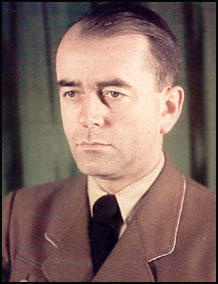
Albert Speer
Risking death, he refused to carry out Hitler’s “scorched earth” order. Even more important, he mounted a successful effort to block such destruction and persuade influential military and civilian leaders to disobey the order as well.
As a result, those targets slated for destruction were spared.
Since the election of America’s first black President, Republicans have waged a similar “scorched earth” campaign.
Acting as extortionists, they repeatedly threatened to shut down the government if they didn’t get their way in legislative matters. And they repeatedly blocked legislation to help the poor, the unemployed, the sick, women, the elderly, the disabled and the middle-class.
Like Adolf Hitler, their attitude has been: “If I can’t rule America, there won’t be an America.”
The country is still waiting for a Republican Albert Speer to step forward and save America from the self-destructive brutalities of its own Right-wing fanatics.
ABC NEWS, ADOLF HITLER, AFFORDABLE CARE ACT, ALBERT SPEER, ALTERNET, BARACK OBAMA, BUZZFEED, CBS NEWS, CNN, DAILY KOS, DEBT CEILING, DEPARTMENT OF HOMELAND SECURITY, DONALD TRUMP, EXTORTION, FACEBOOK, FASCISM, HOUSE SPEAKER JOHN BOEHNER, MOTHER JONES, MOVEON, NAZI GERMANY, NBC NEWS, NEGOTIATING, NEWSWEEK, NPR, OBAMACARE, PAP SMEARS, PLANNED PARENTHOOD, POLITICO, RAW STORY, REPUBLICAN PARTY, REPUBLICANS, SALON, SLATE, THE CHICAGO SUN-TIMES, THE CHICAGO TRIBUNE, THE DAILY BEAST, THE HUFFINGTON POST, THE LOS ANGELES TIMES, THE NEW YORK TIMES, THE WALL STREET JOURNAL, THE WASHINGTON POST, TIME, TRICKLE-DOWN ECONOMICS, TWITTER, U.S. NEWS & WORLD REPORT, USA TODAY, WARREN BUFFET, WORLD WAR 11
In Bureaucracy, History, Law, Military, Politics, Social commentary on July 20, 2017 at 12:50 am
Albert Speer, Minister of Armaments for the Third Reich, was appalled.
His Fuhrer, Adolf Hitler—the man he had idolized for 14 years—had just passed a death sentence on Germany, the nation he claimed to love above all others.
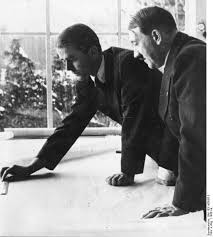
Albert Speer and Adolf Hitler pouring over architectural plans
On March 19, 1945, facing certain defeat, Hitler had ordered a massive “scorched-earth” campaign throughout Germany.
All German agriculture, industry, ships, communications, roads, food stuffs, mines, bridges, stores and utility plants were to be destroyed.
If implemented, it would deprive the entire German population of even the barest necessities after the war.
Now living in a bunker 50 feet below bomb-shattered Berlin, Hitler gave full vent to his most destructive impulses.
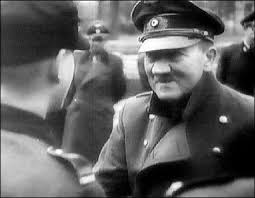
Adolf Hitler addressing boy soldiers as the Third Reich crumbles
“If the war is lost,” Hitler told Speer, “the nation will also perish. This fate is inevitable. There is no necessity to take into consideration the basis which the people will need to continue even a most primitive existence.
“On the contrary, it will be better to destroy these things ourselves, because this nation will have proved to be the weaker one and the future will belong solely to the stronger eastern nation.
“Besides, those who will remain after the battle are only the inferior ones, for the good ones have all been killed.”
Speer argued in vain that there must be a future for the German people. But Hitler refused to back down. He gave Speer 24 hours to reconsider his opposition to the order.
The next day, Speer told Hitler: “My Fuhrer, I stand unconditionally behind you!”
“Then all is well,” said Hitler, suddenly with tears in his eyes.
“If I stand unreservedly behind you,” said Speer, “then you must entrust me rather than the Gauleiters [district Party leaders serving as provincial governors] with the implementation of your decree.”
Filled with gratitude, Hitler signed the decree Speer had thoughtfully prepared before their fateful meeting.
By doing so, Hitler unintentionally gave Speer the power to thwart his “scorched earth” decree.
Speer had been the closest thing to a friend in Hitler’s life. Trained as an architect, he had joined the Nazi Party in 1931.
He met Hitler in 1933, when he presented the Fuhrer with architectural designs for the Nuremberg Rally scheduled for that year.
From then on, Speer became Hitler’s “genius architect” assigned to create buildings meant to last for a thousand years.
In 1943, Hitler appointed him Minister of Armaments, charged with revitalizing the German war effort.
Nevertheless, Speer now crisscrossed Germany, persuading military leaders and district governors to not destroy the vital facilities that would be needed after the war.
“No other senior National Socialist could have done the job,” writes Randall Hanson, author of Disobeying Hitler: German Resistance After Valkyrie.
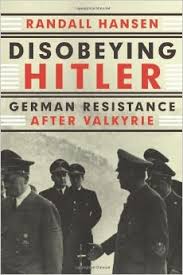
“Speer was one of the very few people in the Reich—perhaps even the only one—with such power to influence actors’ willingness/unwillingness to destroy.”
Despite his later conviction for war crimes at Nuremberg, Speer never regretted his efforts to save Germany from total destruction at the hands of Adolf Hitler.
Fast-forward to the United States and the 2008 election of the nation’s first black President.
On March 23, 2010, President Barack Obama signed into law the Affordable Care Act (ACA), nicknamed Obamacare. Its purpose: To provide access to healthcare for millions of poor and middle-class Americans who had heretofore been unable to obtain it.
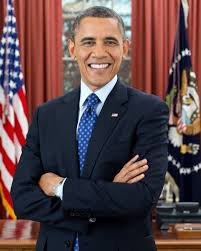
President Barack Obama
It became—and remains—Obama’s signature legislative accomplishment.
Republicans immediately declared “Obamacare” Public Enemy Number One and set out to repeal it. By March 2014 they had already voted against it 54 times, trying to undo or substantially change it.
In October, 2013, they shut down the Federal Government for 15 days. They hoped to extort Obama into de-funding the ACA: If he did, they would re-open Federal agencies.
But, facing pressure from voters unable to obtain basic government services, Republicans backed down.
During the 2016 Presidential campaign, every Republican candidate pledged to repeal Obamacare if s/he were elected.
Donald Trump—who won the Republican nomination and then the election—repeatedly made this the centerpiece of his campaign.
On October 25, he promised: “My first day in office, I am going to ask Congress to put a bill on my desk getting rid of this disastrous law and replacing it with reforms that expand choice, freedom, affordability.
“You’re going to have such great health care at a tiny fraction of the cost. And it’s going to be so easy.”
But after taking office on January 20, he found that replacing the ACA wasn’t so easy.
On March 6, 2017, House Republicans unveiled the American Health Care Act (AHCA). This was attacked by conservatives because it didn’t repeal and replace Obamacare. And “moderate” Republicans complained that it would leave too many people uninsured.
On March 13, 2017, the Congressional Budget Committee released its report estimating that about 18 million people would be uninsured in 2018 if the AHCA were enacted. The number of uninsured people would reach 19 million in 2020 and 23 million in 2026.
Still, Republicans plunged forward, with House leaders making slight changes to win conservative and moderate votes.
ABC NEWS, AIRLINES, ALTERNET, ANTHEM INC., AP, BUSINESS, BUZZFEED, CBS NEWS, CHINA, CNN, COMPUTER SECURITY, CREDIT CARDS, CROOKS AND LIARS, CYBERSECURITY, DAILY KOZ, DAIRY QUEEN, FACEBOOK, HACKING, JOHN HERING, JPMORGAN/CHASE, LILY TOMLIN, LOOKOUT, LUGGAGE THEFTS, MA BELL, MOTHER JONES, MOVEON, NBC NEWS, NEWSWEEK, NPR, POLITICO, RAW STORY, REUTERS, ROWAN & MARTIN'S LAUGH-IN, SALON, SEATTLE TIMES, SLATE, SOCIAL SECURITY, STAPLES, TARGET, THE ATLANTIC, THE CHICAGO SUN-TIMES, THE CHICAGO TRIBUNE, THE DAILY BEAST, THE GUARDIAN, THE HILL, THE HUFFINGTON POST, THE LOS ANGELES TIMES, THE NATION, THE NEW YORK TIMES, THE WALL STREET JOURNAL, THE WASHINGTON POST, TIME, TWITTER, U.S. NEWS & WORLD REPORT, UP, UPI, USA TODAY
In Bureaucracy, Business, History, Law, Law Enforcement, Politics, Social commentary on July 14, 2017 at 1:15 am
Comedian Lily Tomlin rose to fame on the 1960s comedy hit, Rowan & Martin’s Laugh-In, as Ernestine, the rude, sarcastic switchboard operator for Ma Bell.
She would tap into customers’ calls, interrupt them, make snide remarks about their personal lives. And her victims included celebrities as much as run-of-the-mill customers.
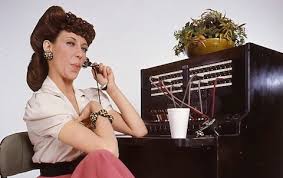
Lily Tomlin as Ernestine
She introduced herself as working for “the phone company, serving everyone from presidents and kings to the scum of the earth.”
But perhaps the line for which her character is best remembered was: “We don’t care. We don’t have to. We’re the phone company.”
Watching Ernestine on Laugh-In was a blast for millions of TV viewers. But facing such corporate arrogance in real-life is no laughing matter.
Clearly, too many companies take the same attitude as Ernestine: “We don’t care. We don’t have to.”
This is especially true for companies that are supposed to safeguard their customers’ most sensitive information—such as their credit card numbers, addresses, emails and phone numbers.
An October 22, 2014 “commentary” published in Forbes magazine raised the highly disturbing question: “Cybersecurity: Does Corporate America Really Care?”
And the answer is clearly: No.
Its author is John Hering, co-founder and executive director of Lookout, which bills itself as “the world leader in mobile security for consumers and enterprises alike.”
Click here: Cybersecurity: Does corporate America really care?
October, 2014 proved a bad month for credit card-using customers of Kmart, Staples and Dairy Queen.
All these corporations reported data breeches involving the theft of credit card numbers of countless numbers of customers.
Earlier breaches had hit Target, Home Depot and JPMorgan/Chase.
And on February 5, 2015, health insurance giant Anthem Inc. announced that hackers had breached its computer system and accessed the medical records of tens of millions of its customers and employees.

Anthem, the nation’s second-largest health insurer, said the infiltrated database held records on up to 80 million people.
Among the customers’ information accessed:
- Names
- Birthdates
- Social Security numbers
- Member ID numbers
- Addresses
- Phone numbers
- Email addresses and
- Employment information.
Some of the customer data may also include details on their income.
Click here: Anthem hack exposes data on 80 million; experts warn of identity theft – LA Times
Bad as that news was, worse was to come.
A February 5 story by the Wall Street Journal revealed that Anthem stored the Social Security numbers of 80 million customers without encrypting them.
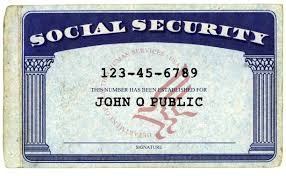
The company believes that hackers used a stolen employee password to access the database
Anthem’s alleged reason for refusing to encrypt such sensitive data: Doing so would have made it harder for the company’s employees to track health care trends or share data with state and Federal health providers.
Anthem spokeswoman Kristin Binns blamed the data breach on employers and government agencies who “require us to maintain a member’s Social Security number in our systems so that their systems can uniquely identify their members.”
She said that Anthem encrypts personal data when it moves in or out of its database–but not where it is stored.
This is a commonplace practice in the healthcare industry.
The FBI launched an investigation into the hack.
According to an anonymous source, the hackers used malware that has been used almost exclusively by Chinese cyberspies.
Naturally, China has denied any wrongdoing. With a completely straight face, Chinese Foreign Ministry spokesman Hong Lei said:
“We maintain a cooperative, open and secure cyberspace, and we hope that countries around the world will make concerted efforts to that end.”
He also said that the charge that the hackers were Chinese was “groundless.”
Click here: Health Insurer Anthem Didn’t Encrypt Stolen Data – WSJ
Meanwhile, John Hering’s complaints remain as valid today as they did last October.
“One thing is clear,” writes Hering. “CEOs need to put security on their strategic agendas alongside revenue growth and other issues given priority in boardrooms.”
Hering warns that “CEOs don’t seem to be making security a priority.” And he offers several reasons for this:
- The sheer number of data compromises;
- Relatively little consumer outcry;
- Almost no impact on the companies’ standing on Wall Street;
- Executives may consider such breaches part of the cost of doing business.
“There’s a short-term mindset and denial of convenience in board rooms,” writes Hering.
“Top executives don’t realize their systems are vulnerable and don’t understand the risks. Sales figures and new products are top of mind; shoring up IT systems aren’t.”
There are three ways corporations can be forced to start behaving responsibly on this issue.
- Smart attorneys need to start filing class-action lawsuits against companies that refuse to take steps to protect their customers’ private information. There is a name for such behavior: Criminal negligence. And there are laws carrying serious penalties for it.
- There must be Federal legislation to ensure that multi-million-dollar fines are levied against such companies—and especially their CEOs—when such data breaches occur.
- Congress should enact legislation allowing for the prosecution of CEOs whose companies’ negligence leads to such massive data breaches. They should be considered as accessories to crime, and, if convicted, sentenced to lengthy prison terms.
Only then will the CEO mindset of “We don’t care, we don’t have to” be replaced with: “We care, because we’ll lose our money and/or freedom if we don’t.”
ABC NEWS, ABCNEWS, ABILENE, ALTERNET, AP, BBC, BUFFALO BILL, BUZZFEED, CBS NEWS, CNN, DAILY KOS, FACEBOOK, GUNFIGHTERS, JACK MCCALL, MOTHER JONES, MOVEON, NATIONAL RIFLE ASSOCIATION, NBC NEWS, NEWSWEEK, NPR, POLITICO, RAW STORY, REUTERS, SALON, SEATTLE TIMES, SLATE, THE ATLANTIC, THE CHICAGO SUN-TIMES, THE CHICAGO TRIBUNE, THE DAILY BEAST, THE GUARDIAN, THE HILL, THE HUFFINGTON POST, THE LOS ANGELES TIMES, THE NEW YORK TIMES, THE WALL STREET JOURNAL, THE WASHINGTON POST, TIME, TWITTER, U.S. NEWS & WORLD REPORT, UPI, USA TODAY, WILD BILL HICKOK
In History, Law, Law Enforcement, Politics, Social commentary on July 7, 2017 at 12:16 am
After being fired as town marshal of Abilene, Kansas, James Butler “Wild Bill” Hickok lived another five years. But they weren’t good ones.
Unlike William F. Cody, Hickok couldn’t adjust to the changing West.
It was becoming less wild. His scouting days were over—the Indian wars were rapidly coming to an end.
(In June, 1876, barely two months before his own death, the Sioux and Cheyenne would wipe out the other famous “Long Hair” of the plains–George Armstrong Custer—at the battle of Little Bighorn.)
And most towns, like Abilene, increasingly had little use for lead-slinging lawmen like Hickok.
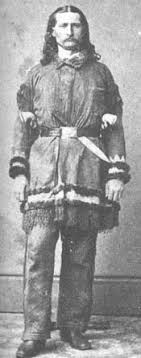
James Butler “Wild Bill” Hickok
Worst of all, he was going blind—either from a venereal disease he had contracted or from the glare of too many prairie sunrises.
In 1873, Hickok tried his hand as an actor in Buffalo Bill’s Wild West Show. But he was a terrible performer—and knew it.
The fault, however, did not lie entirely with him. Even Laurence Oliver would have rebelled at spouting lines like: “Fear not, fair maiden, for you are ever safe with Will Bill, who has sworn to defend to the death your maidenly virtue.”
Not that the audiences cared. They had come to see legendary plainsmen—such as Hickok and Cody—in the flesh, not great theater.
Hickok asked Cody to release him from his contract. Cody refused. So Hickok once again turned to his guns for a solution.
In this case, it meant shooting blanks into the legs and buttocks of “dead” Indians who suddenly sprang to life and rushed off the stage. And one night, Hickok put a real bullet through a stage light that was hurting his already sensitive eyes.
That, finally, convinced Cody that Hickok’s acting days were over.
In March, 1876, he married Agnes Lake Thatcher, a circus acrobat several years his senior.
In April, he told Agnes he was heading for the gold rush country of Deadwood, South Dakota. After he made his fortune, he would send for her.
But she never saw him again.
Deadwood was the sort of town the National Rifle Association wants to see replicated across modern-day America. Everyone wore a gun, and there was no town ordinance against doing so. Nor were there any law-enforcers like Hickok to protect the public from the kill-crazy antics of liquored-up gunmen.

Grave of “Wild Bill” Hickok
Worse for Hickok, he had two strikes against him: His reputation as a matchless gunfighter had preceded him—and his failing vision put him at a disadvantage in backing it up.
Arriving in Deadwood, he quickly decided that the strenuous life of a gold-miner was not for him. Instead, he would seek his fortune as he often had—in saloons as a gambler.
And, as he had so often, he spent more of his time losing money than making it.
On August 2, 1876, his long trail of bad luck finally ran out.
He had always sat with his back to a wall, as a precaution against ambush. On this afternoon, he found his preferred seat taken by another gambler named Charles Rich. Hickok asked Rich to trade places with him, but when the latter refused, Hickok didn’t press the matter.
It was a sign that Hickok’s reputation had sharply fallen. Ten years earlier, had he made such a request, the other gambler would have rushed to swap chairs.
Hickok paid no attention as a whiskey bum named Jack McCall walked around to the corner of the saloon to where the ex-lawman was playing.

Jack McCall
The previous night, Hickok had won considerable money from McCall in a poker game—and had generously given him back enough to buy something to eat.
(The 1995 movie, Wild Bill, depicted McCall as Hickok’s illegitimate son seeking vengeance on the father who had abandoned him. But this was completely false, as the two were completely unrelated. The one saving grace to this otherwise absurd film was Jeff Bridges’ gritty performance as Hickok.)
Suddenly, McCall pulled a double-action .45 from under his coat, shouted “Take that!” and shot Hickok in the back of the head.
Hickok died instantly. He was 39.
As he slid from the table, he dropped the cards he had been holding—a pair of eights and another pair of Aces, which has ever since been known as “the dead man’s hand.”
McCall was “tried” by a mining court. He claimed that Hickok had murdered his brother and he had sought revenge. He was acquitted.
He headed for Wyoming, where he incessantly bragged that he had killed the famous “Wild Bill” Hickok.
McCall was arrested in Laramie and charged with murder. The trial in Deadwood was found to have been invalid—owing to the town’s being in Indian territory and outside the reach of United States law.
Once again forced to stand trial, McCall found himself convicted. On March 1, 1877, he was hanged. Later, it was discovered that McCall had never had a brother.
ABC NEWS, ABCNEWS, ABILENE, ALTERNET, AP, BBC, BUFFALO BILL, BUZZFEED, CBS NEWS, CNN, DAILY KOS, FACEBOOK, GUNFIGHTERS, JACK MCCALL, MOTHER JONES, MOVEON, NATIONAL RIFLE ASSOCIATION, NBC NEWS, NEWSWEEK, NPR, POLITICO, RAW STORY, REUTERS, SALON, SEATTLE TIMES, SLATE, THE ATLANTIC, THE CHICAGO SUN-TIMES, THE CHICAGO TRIBUNE, THE DAILY BEAST, THE GUARDIAN, THE HILL, THE HUFFINGTON POST, THE LOS ANGELES TIMES, THE NEW YORK TIMES, THE WALL STREET JOURNAL, THE WASHINGTON POST, TIME, TWITTER, U.S. NEWS & WORLD REPORT, UPI, USA TODAY, WILD BILL HICKOK
In History, Law, Law Enforcement, Politics, Social commentary on July 6, 2017 at 12:33 am
Almost everyone has heard of “Wild Bill” Hickok—the legendary Western scout, Indian fighter, two-gun lawman and crack shot.
And the legend, not the man, is often invoked–inaccurately—by “gun rights” advocates who seek to reduce the entire Constitution to a single amendment: The Second Amendment.
But there is a vast difference between Hickok the legend–and Hickok the actual man.
For one thing, his real name wasn’t “Bill”—or even “William.” It was James Butler Hickok.
He supposedly got the name “Wild Bill” after thwarting an attempted lynching—and a woman applauded his bravery with: “Good for you, Wild Bill!”
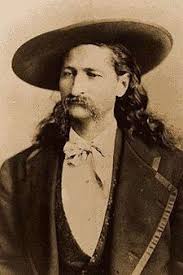
James Butler “Wild Bill” Hickok
For another, Hickok didn’t spend most of his life as a town marshal. His gunslinging days as a lawman lasted just two years—1869 to 1871.
And they ended badly. His first stint as a lawman came at Hays City, Kansas. As sheriff, he shot and killed at least two men.
According to legend, one of these shootings occurred when Hickok, looking in a bar mirror, saw a ruffian named Strawhan pull a pistol to shoot him in the back.
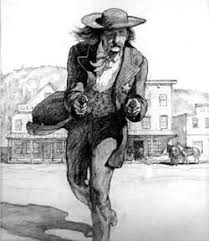
Hickok, looking into the mirror, threw a “trick shot” over his shoulder–and nailed Strawhan dead.
Then Hickok’s luck ran out. On July 17, 1870, several members of the 7th U.S. Cavalry attacked him in Drum’s Saloon. Knocked to the floor and repeatedly kicked, Hickok had reason to fear death.
Drawing his pistols, he killed one private and wounded another. Although he had acted in self-defense and the shootings were entirely justifiable, Hickok now faced even greater danger from other, enraged members of the same regiment.
He decided to leave Hays before they could take their revenge.
His next posting as town marshal came in Abilene, Kansas. This stint lasted from April to December, 1871.
And, like his last one as a “town-tamer,” it ended with a deadly shootout.
A major portion of his duties lay in enforcing the “no firearms worn or used in town” edict.
Abilene was a cattle town, the end of the line for many outfits seeking a major railhead where their hundreds of beeves could be dropped off and shipped eastward.
When cowboys—most of them in their teens or early 20s—reached Abilene, they wanted to celebrate. Their long drive was over, and now they could finally get paid. And there were plenty of bars and whores waiting to pick up their newly-issued monies.
This combination of randy men and ready supplies of alcohol and women often led to trouble. One cowboy might make a pass at another’s “lady” for the night. Or an argument might erupt over a card game.
It was Hickok’s duty to make sure that such arguments were settled only with fists. And that meant demanding that all cowboys’ guns be checked at the marshal’s office until the “boys” were ready to leave Abilene.

Replica of Hickok’s 1851 Navy Colt
This, of course, contradicts the “open carry” demands of the National Rifle Association. And most of its members—if transported to the Old West—would find themselves on the wrong side of Hickok.
And that wasn’t a good place to be—as Texas gambler Phil Coe learned to his dismay. Coe and Hickok had clashed before.
As co-owner of the Bull’s head Saloon, Coe had advertised its wares with a sign depicting a bull with oversized sexual organs. A number of citizens raged that this was obscene and demanded that the animal’s sexuality be greatly reduced.
The city fathers agreed. Hickok stood nearby with a shotgun while a painter made the necessary deletions.
On October 5, cowboys were flooding into Abilene, looking for a good time. Coe, feeling in high spirits, decided to celebrate by firing his pistol into the air several times.
The shots quickly brought Hickok to the scene.
“Did you fire that shot?” Hickok demanded.
Coe supposedly replied: “I shot at a dog—and I’ll shoot at another.”
Coe threw a shot at Hickok—which missed.
Hickok whipped out his two revolvers and put two bullets into Coe’s stomach, mortally wounding the Texan, who died three days later.
With Coe’s Texas buddies surrounding him, Hickok suddenly heard someone rushing at him from behind. Hickok whirled and fired twice more—into the chest of his own deputy, Mike Williams, who had been running to his aid.
Hickok, aghast at his mistake, gently carried Williams into a saloon and placed his body onto a billiard table. Then he raged through Abilene, ordering an end to the festivities and knocking down any cowboys foolish enough to resist.
Owing to this latest explosion in violence, the city fathers quickly reached two decision: First, they put an end to Abilene’s years as a major cattle shipping point. From now on, cattlemen were no longer welcome there.
And then they fired Hickok as city marshal in December, 1871.
ABC NEWS, ALTERNET, AP, BBC, BUZZFEED, CBS NEWS, CHICAGO SUN-TIMES, CNN, DAILY KOS, FACEBOOK, INTERROGATION, MIRANDA VS. ARIZONA, MOTHER JONES, MOVEON, NBC NEWS, NEWSWEEK, NPR, POLICE, POLITICO, RAW STORY, REUTERS, SALON, SEATTLE TIMES, SLATE, THE ATLANTIC, THE CHICAGO SUN-TIMES, THE CHICAGO TRIBUNE, THE DAILY BEAST, THE DENVER POST, THE GUARDIAN, THE HILL, THE HUFFINGTON POST, THE LOS ANGELES TIMES, THE NEW YORK TIMES, THE WALL STREET JOURNAL, THE WASHINGTON POST, TIME, TWITTER, U.S. NEWS & WORLD REPORT, UPI, USA TODAY
In Bureaucracy, History, Law, Law Enforcement, Politics, Social commentary on July 5, 2017 at 12:18 am
Ever heard of “polygraph by copier”?
If you haven’t, here’s how it works:
A detective loads three sheets of paper into a Xerox machine.
“Truth” has been typed onto the first sheet.
“Truth” has been typed onto the second sheet.
“Lie” has been typed onto the third sheet.
Then a criminal suspect is led into the room and told to put his hand against the side of the machine.
 “What is your name?” asks the detective.
The suspect gives it.
The detective hits the copy button, and a page comes out: “Truth.”
“Where do you live?” asks the detective.
The suspect gives an address, the detective again hits the copy button, and a second page appears: “Truth.”
Then comes the bonus question: “Did you or did you not kill Big Jim Tate on the evening of….?”
The suspect answers. The detective presses the copy button one last time, and the sheet appears: “Lie.”
“Well, well, well, you lying little bastard,” says the detective.
Convinced that the police have found some mysterious way to peer into the darkest recesses of his criminality, the suspect “gives it up” and makes a full confession.
Yes, contrary to what many believe, police can legally use deceit to obtain a confession.
In 1973, the Supreme Court ruled, in United States v. Russell: “Nor will the mere fact of deceit defeat a prosecution, for there are circumstances when the use of deceit is the only practicable law enforcement technique available.”
In that case, the Court narrowly upheld a conviction for methamphetamine production even though the defendant had argued entrapment.
So what types of interrogative deceit might a police officer use to develop admissible evidence of a suspect’s guilt?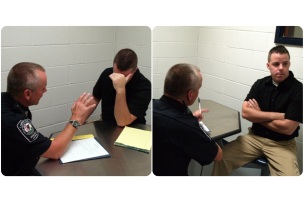
Police interrogation
The general rule is that deception can be used so long as it’s not likely to cause an innocent person to commit a crime or confess to a crime that s/he didn’t commit.
Click here: The Lawful Use of Deception – Article – POLICE Magazine
Consider the following examples:
- A detective is interviewing a suspect in a rape case. “Oh, that girl,” he says, thus implying that the victim was a slut and had it coming. The suspect, thinking he’s dealing with a sympathetic listener, starts bragging about his latest conquest—only to learn, too late, that his listener isn’t so simpatico after all.
- “We found your prints on the gun—or on any number of other surfaces. Actually, there are few good places on a pistol to leave prints. And those that are left can be smeared. The same goes for other surfaces. But if a suspect can be led to believe the cops have his prints, a confession is often forthcoming.
- A police officer is interrogating a suspect in a murder case. “He came at you, didn’t he?” asks the cop. The suspect, who murdered the victim in cold blood, thinks he has an escape route. “Yeah, he came at me”—this confirming that, yes, he did kill the deceased.
- “Your partner just gave you up” is a favorite police stratagen when there is more than one suspect involved. If one suspect can be made to “flip—turn–against the other, the case is essentially wrapped up.
- Interrogating a bank robbery suspect, a cop might say: “We know you didn’t do the shooting, that you were only the wheelman.” This implies that the penalty for driving the getaway car is far less than that for killing someone during a robbery. In fact, criminal law allows every member of the conspiracy to be charged as a principal.
- “I don’t give a damn what you did,” says the detective. “Just tell me why you did it.” For some suspects, this offers a cathartic release, a chance to justify their guilt.
- The “good cop/bad cop” routine is known to everyone who has ever seen a police drama. Yet it continues to yield results so often it continues to be routinely used. “Look, I believe you,” says the “good” cop, “but my partner’s a real asshole. Just tell me what happened so we can clear this up and you can go.”
- “So,” says the detective, “why do you think the police believe you did it?” “I have no idea,” says the suspect, confident that he isn’t giving up anything that might come back to haunt him. “Well,” says the cop, “I guess you’ll just have to make something up.” Make something up sounds easy, but is actually a trap. The suspect may end up giving away details that could incriminate him—or lying so brazenly that his lies can be used against him.
So is there a best way for a suspect to deal with an invitation to waive his Miranda right to remain silent?
Yes, there is. It’s to refuse to say anything and to ask for permission to call a lawyer.
That’s the preferred method for Mafia hitmen—and accused police officers.
Any cop who finds himself under investigation by his department’s Internal Affairs unit automatically shuts up—and calls his lawyer.
Any other respons—no matter how well-intentioned—may well result in a lengthy prison sentence.
ABC NEWS, ALTERNET, AP, BBC, BUZZFEED, CBS NEWS, CNN, COMMODUS, DAILY KOS, DONALD TRUMP, FACEBOOK, MIKA BRZEZINSKI, MORNING JOE, MOTHER JONES, MOVEON, NBC NEWS, NEWSWEEK, NICCOLO MACHIAVELLI, NPR, POLITICO, QATER, RAW STORY, REPORTERS COMMITTEE FOR FREEDOM OF THE PRESS, REUTERS, REX TILLERSON, SALON, SARAH HUCKABEE SANDERS, SAUDI ARABIA, SEATTLE TIMES, SLATE, THE ATLANTIC, THE CHICAGO SUN-TIMES, THE CHICAGO TRIBUNE, THE DAILY BEAST, THE GUARDIAN, THE HILL, THE HUFFINGTON POST, THE LOS ANGELES TIMES, THE NEW YORK TIMES, THE PRINCE, THE WALL STREET JOURNAL, THE WASHINGTON POST, TIME, TWITTER, U.S. NEWS & WORLD REPORT, UPI, USA TODAY
In Bureaucracy, History, Politics, Social commentary on July 4, 2017 at 12:30 am
If Donald Trump ever read The Prince, by Niccolo Machiavelli, the Florentine statesman, he’s decided he doesn’t need it. And his ever-falling popularity among Americans clearly proves his mistake.
First published in 1532, The Prince lays bare the qualities needed by a successful political leader. At the top of this list must be creating and preserving a sense of his own dignity. Thus, he must appear to be a combination of mercy, faith, integrity, humanity and religion.
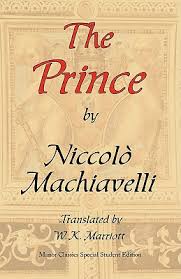
As Machiavelli puts it:
A prince must take great care that nothing goes out of his mouth which is not full of the above-named five qualities, and he should seem to be all mercy, faith, integrity, humanity and religion.
Since taking office on January 20, Trump has violated Machiavelli’s injunction on integrity with a vengeance. He has been caught in repeated falsehoods–so many, in fact, that the New York Times gave over its June 23 front page to a story headlined: “Trump’s Lies.”
According to the Times, Trump “told public falsehoods or lies every day for his first 40 days.”
“There is simply no precedent,” went the Times‘ opinion piece, “for an American president to spend so much time telling untruths. Every president has shaded the truth or told occasional whoppers.
“No other president—of either party—has behaved as Trump is behaving. He is trying to create an atmosphere in which reality is irrelevant.”

Donald Trump
Machiavelli also advises:
[He] must contrive that his actions show grandeur, spirit, gravity and fortitude….
It’s hard to convey those qualities in a series of 140-character rants on Twitter. Yet, from the start of his Presidency, Trump has put his ambitions, excuses and rants on social media.
As CNN Political Analyst Julian Zelizer outlined in a July 3 article:
“Putting aside the specific content of the recent blasts from the Oval smart phone, the President’s ongoing Twitter storms make all leaders uneasy. The heads of government in most nations prefer a certain amount of predictability and decorum from other heads of state.
“To have one of the most powerful people in the room being someone who is willing to send out explosive and controversial statements through social media, including nasty personal attacks or an edited video of him physically assaulting the media, does not make others….feel very confident about how he will handle deliberations with them.”
Trump’s apologists have fiercely defended his tweetstorms, claiming they allow him to bypass the media and “communicate directly with the American people.”
On June 29, Trump attacked the physical appearance of Mika Brzezinski, a frequent journalistic critic on MSNBC’s “Morning Joe.”
Sarah Huckabee-Sanders, his deputy press secretary, excused it: “The president has been attacked mercilessly on personal accounts by members on that program. And I think he’s been very clear that when he gets attacked he’s going to hit back.”
On July 2, Trump tweeted a video showing him punching a wrestler–with a CNN logo imposed over his face.
The tweet brought Trump widespread criticism. Bruce Brown, executive director of the Reporters Committee for Freedom of the Press, said the video was a “threat of physical violence against journalists” and “beneath the office of the presidency.”
Trump’s mania for tweeting has often led him to contradict statements by his administration’s highest officials.
In early June, Saudi Arabia cut off diplomatic ties with Qater because of its alleged support for terrorism in the Persian Gulf. Secretary of State Rex Tillerson publicly said that the United States hoped to mediate an end to the dispute.
But the next day, Trump tweeted: “During my recent trip to the Middle East, I stated that there can no longer be funding of Radical Ideology. Leaders pointed to Qatar—look!”
Machiavelli urged rulers to safeguard their reputations:
…A prince must show himself a lover of merit, give preferment to the able, and honor those who excel in every art.
Besides this, he ought, at convenient seasons of the year, to keep the people occupied with festivals and shows….mingle with them from time to time, and give them an example of his humanity and munificence, always upholding, however, the majesty of his dignity, which must never be allowed to fail in anything whatever.
Rulers who disregard this advice do so at their peril:
A prince need trouble little about conspiracies when the people are well disposed. But when they are hostile and hold him in hatred, then he must fear everything and everybody….
…[The Roman Emperor Commodus], being of a cruel and bestial disposition, in order to…exercise his rapacity on the people, he sought to favor the soldiers and render them licentious.
On the other hand, by not maintaining his dignity, by often descending into the theater to fight with gladiators and committing other contemptible actions…he became despicable in the eyes of the soldiers. And being hated on the one hand and despised on the other, he was conspired against and killed.
Donald Trump has repeatedly violated these lessons. It remains to be seen if he will pay a price for doing so.
AP, BBC, BLACKMAIL, BUZZFEED, CBS NEWS, CNN, DAILY KOS, DONALD TRUMP, EDWARD M. KENNEDY, FACEBOOK, J. EDGAR HOOVER, JARED KUSHNER, JOE SCARBOROUGH, JOHN F. KENNEDY, MIKA BRZEZINSKI, MORNING JOE, MOTHER JONES, MOVEON, NATIONAL ENQUIRER, NBC NEWS, NEWSWEEK, NPR, POLITICO, RAW STORY, REUTERS, RICHARD NIXON, SALON, SEATTLE TIMES, SLATE, THE ATLANTIC, THE CHICAGO SUN-TIMES, THE CHICAGO TRIBUNE, THE DAILY BEAST, THE GUARDIAN, THE HILL, THE HUFFINGTON POST, THE LOS ANGELES TIMES, THE NEW YORK TIMES, THE WALL STREET JOURNAL, THE WASHINGTON POST, TIME, TWITTER, U.S. NEWS & WORLD REPORT, UPI, USA TODAY, WILLIAM L. SULLIVAN
In Bureaucracy, History, Law, Law Enforcement, Politics, Social commentary on July 3, 2017 at 12:10 am
J. Edgar Hoover, the legendary FBI director, was notorious in his own lifetime as a blackmailer.
“Boy, the dirt he has on those Senators,” President John F. Kennedy told his friend, Benjamin C. Bradlee, who was then head of Newsweek’s Washington bureau.
As President, Kennedy could call on Hoover to give him limited access to the private files the FBI director kept on real and potential enemies. But Kennedy had known about Hoover’s incriminating dossiers long before he reached the White House.

J. Edgar Hoover
During 1941-42, he had enjoyed a delicious affair with Inga Arvad, a Danish journalist and notorious fan of Germany’s Fuhrer, Adolf Hitler.
Suspected of being a Nazi spy, “Inga Binga,” as JFK jokingly referred to her, came under heavy FBI surveillance—including phone taps and room bugs. These picked up Kennedy’s trysts with her.
When the Kennedy patriarch, Joseph P., learned of the affair, he demanded that his son break it off. He had political ambitious for all his sons, and he didn’t want them spoiled by Jack’s owing to an uncontrollable libido.
Richard Nixon—Kennedy’s future rival for the White House—felt the same way about Hoover: “He’s got files on everybody.”
And this was virtually true—even if those files didn’t hold secretly-obtained information. Nixon learned this as President when he wanted “dirt” on Senator Edward M. Kennedy. In this case, the “file” turned out to be nothing more than newspaper clippings.
As William C. Sullivan, the onetime director of the FBI’s Domestic Intelligence Division, revealed after Hoover’s death in 1972:
“The moment [Hoover] would get something on a senator, he’d send one of the errand boys up and advise the senator that ‘we’re in the course of an investigation, and we by chance happened to come up with this data on your daughter.
“‘But we wanted you to know this. We realize you’d want to know it.’ Well, Jesus, what does that tell the senator? From that time on, the senator’s right in his pocket.”
There is a lesson to be learned here: Giving in to blackmail only empowers the blackmailer even more.
The only effective way to handle blackmail was demonstrated by Joe Scarborough and Mika Brzezinski, hosts of MSNBC’s “Morning Joe,” a weekday news and talk show.

Mika Brzezinski
Both have been highly critical of President Donald Trump since he took office on January 20. And Trump—through his friendship with David Pecker, the publisher of the tabloid, The National Enquirer—thought he had the ideal way of shutting them up.

Joe Scarborough
On the June 30 edition of “Morning Joe,” Scarborough and Brezezinski offered their version of events.
Scarborough: “We got a call: ‘Hey, the National Enquirer is going to run a negative story against you guys, and Donald is friends with …the president is friends with the guy that runs National Enquirer.’ And they said: ‘If you call the president up and you apologize for your coverage, then he will pick up the phone and basically spike the story.’
“I had, I will just say, three people at the very top of the administration calling me. The calls kept coming, and kept coming, and they were like: ‘Come on, Joe, just pick up the phone and call him.’”
Donald Trump
One of the callers was reportedly Jared Kushner, Trump’s son-in-law.
In short: Grovel before the dictator and he will bestow clemency on you.
Trump denied being a party to blackmail, but he confirmed that there had been calls between the TV journalists and members of his staff. In a June 30 tweet, Trump wrote: “He called me to stop a National Enquirer article. I said no! Bad show”.
Scarborough and Brzezinski provided further details in a June 30 Washington Post column: “This year, top White House staff members warned that the National Enquirer was planning to publish a negative article about us unless we begged the president to have the story spiked. We ignored their desperate pleas.”
The story, which appeared on June 5, alleged that the two, previously married, had cheated on their former spouses. The story was entitled: “Joe & Mika: TV Couple’s Sleazy Cheating Scandal: ‘Morning’ lovebirds vow to make it legal. THE ENQUIRER asks questions!”
By rejecting Trump’s blackmail threat, Scarborough and Brzezinski accomplished what they could not have by groveling:
First, they put Trump on notice that they can’t be cowed. This can only encourage future targets of such blackmail to stand up against abuse.
Second, they deprived him of a potent weapon. Had they caved in to his demand for an unearned apology, they would have made themselves targets for future blackmail.
Third, they turned the tables by making Trump the target of ugly publicity. Blackmailers are universally reviled, and branding Trump as one detracts from his dignity and influence as President.
Fourth, they forced Trump and the Enquirer on the defensive—with both denying that they ever tried to blackmail Scarborough and Brzezinski.
Considering Trump’s well-earned reputation for lying and vindictiveness, Scarborough and Brzezinski are certain to be more widely believed than the President.


2016 PRESIDENTIAL ELECTION, 9/11 ATTACKS, ABC NEWS, ALTERNET, AP, ASSOCIATED PRESS, BARACK OBAMA, BIRTHERS, BUZZFEED, CBS NEWS, CENSORSHIP, CIA, CNN, CROOKS AND LIARS, DAILY KOZ, DAVID BROOKS, DONALD TRUMP, DONALD TRUMP JUNIOR, FACEBOOK, FBI, FOX NEWS SUNDAY, HILLARY CLINTON, JAMES COMEY, JAY SEKULOW, LESTER HOLT, MOTHER JONES, MOVEON, NATIONAL SECURITY AGENCY, NBC NEWS, NEWSWEEK, NPR, PBS NEWSHOUR, POLITICO, RAW STORY, REUTERS, ROBERT MUELLER, RUSSIA, SALON, SARAH HUCKABEE SANDERS, SEATTLE TIMES, SLATE, THE ATLANTIC, THE CHICAGO SUN-TIMES, THE CHICAGO TRIBUNE, THE DAILY BEAST, THE GUARDIAN, THE HILL, THE HUFFINGTON POST, THE LOS ANGELES TIMES, THE NATION, THE NEW YORK TIMES, THE WALL STREET JOURNAL, THE WASHINGTON POST, TIME, TWITTER, U.S. NEWS & WORLD REPORT, UP, UPI, USA TODAY, VIETNAM WAR, VLADIMIR PUTIN, WATERGATE
TRUMP AND TRUTH–TWO IRRECONCILABLE OPPOSITES: PART TWO (END)
In Bureaucracy, History, Law Enforcement, Politics, Social commentary on August 8, 2017 at 12:23 amFor five years, Donald Trump, more than anyone, popularized the fiction that President Barack Obama was born in Kenya—and was therefore ineligible to be President.
Now Trump finds himself haunted by something far worse than a slander: The truth.
Since taking office on January 20, Trump has been ensnared in a series of revelations about collaboration between members of his 2016 Presidential campaign and Russian Intelligence agents.
The FBI, CIA and National Security Agency have unequivocally stated that Russian Intelligence played a major role in trying to sway the election for Trump.
During the 2016 race, Trump furiously disagreed with this finding. “They have no idea if it’s Russia or China or somebody. It could be somebody sitting in a bed some place. I mean, they have no idea,” Trump told “Fox News Sunday” on Dec. 11.
And as late as August 3, 2017, addressing a rally of his Right-wing followers in West Virginia, Trump said: “Most people know there were no Russians in our campaign; there never were. We didn’t win because of Russia; we won because of you,”
But Trump’s denials contradict the revelations that have emerged about his behavior.
TRUMP’S DENIALS
July 27, 2016, in Doral, Florida: Trump told a local CBS news channel: “I mean I have nothing to do with Russia. I don’t have any jobs in Russia. I’m all over the world but we’re not involved in Russia.”
Donald Trump
October 24, 2016 at a Florida campaign rally: Trump said, “I have nothing to do with Russia, folks, I’ll give you a written statement.”
January 11, 2017: Trump launched the first in a series of tweets denying any ties between Russian Intelligence and his campaign: “Russia has never tried to use leverage over me. I HAVE NOTHING TO DO WITH RUSSIA – NO DEALS, NO LOANS, NO NOTHING!”
February 7, 2017: “I don’t know [Russian President Vladimir] Putin, have no deals in Russia, and the haters are going crazy – yet Obama can make a deal with Iran, #1 in terror, no problem!”
February 16, 2017: “The Democrats had to come up with a story as to why they lost the election, and so badly (306), so they made up a story – RUSSIA. Fake news!”
May 8, 2017: “The Russia-Trump collusion story is a total hoax, when will this taxpayer funded charade end?”
TRUMP’S BEHAVIOR
May 9, 2017: Trump fired FBI Director James Comey. Comey had been leading an investigation into alleged collusion between Trump advisers and Russian officials when he was fired.
James Comey
At first, Trump claimed that he fired Comey for mishandling the FBI’s investigation into Hillary Clinton’s use of a private email server.
May 10, 2017: But, in a meeting at the White House, Trump told Russian Foreign Minister Sergey Lavrov and Russian Ambassador Sergey Kislyak: “I faced great pressure because of Russia. That’s taken off.”
May 11, 2017: And in an interview with NBC reporter Lester Holt, Trump admitted the real reason:
“And, in fact, when I decided to just do it, I said to myself, I said: ‘You know, this Russia thing with Trump and Russia is a made up story, it’s an excuse by the Democrats for having lost an election that they should’ve won.’”
July 8, 2017: The New York Times reported that Donald Trump Junior met at Trump Tower on June 9, 2016, with a Kremlin-connected Russian lawyer who promised to offer damaging information about Clinton.
Trump Junior released a statement: “We primarily discussed a program about the adoption of Russian children that was active and popular with American families years ago and was since ended by the Russian government, but it was not a campaign issue at the time and there was no follow up.”
July 12 and July 16, 2017: Trump’s lawyer, Jay Sekulow, denied that the President was involved in drafting his son’s statement about the Trump Tower meeting.
July 19, 2017: In an interview with The New York Times, Trump warned Special Counsel and former FBI Director Robert Mueller to avoid looking into his personal finances. Asked if he would fire Mueller over an examination of his finances, Trump made it clear that he might.
July 20, 2017: The Washington Post reported that Trump was consulting with advisers “about his power to pardon aides, family members and even himself” in connection to the probe led by Mueller.
July 31, 2017: The Washington Post reported that, to conceal the purpose of the Trump Tower meeting, President Trump dictated a misleading statement for his son. In this, the reason for the meeting was given as a discussion about the adoption of Russian children—and not to obtain damaging information on Clinton from Russian Intelligence agents.
August 1, 2017: White House press secretary Sarah Huckabee Sanders said President Trump was involved in drafting the false statement that Trump Junior released about the Trump Tower meeting. Sanders called the matter “of no consequence.”
August 3, 2017: The Wall Street Journal reported that Mueller had convened a grand jury in Washington, D.C. to investigate Russia’s interference in the 2016 election. This gives Mueller broad authority to subpoena documents and compel witnesses to testify under oath.
As the late New York Times reporter Harrison E. Salisbury warned: “The truth, I was ultimately to learn, is the most dangerous thing. There are no ends to which men of power will not go to put out its eyes.”
Share this: