Posts Tagged ‘THE WALL STREET JOURNAL’
ABC NEWS, ALTERNET, AP, BARACK OBAMA, BBC, BP, BUZZFEED, CBS NEWS, CHILDREN'S BOOKS, CLEAN POWER PLAN, CNN, COAL, DAILY KOS, DEMOCRATIC PARTY, DONALD TRUMP, DR. SEUSS, ENERGY POLICY, ENVIRONMENTAL PROTECTION, ENVIRONMENTAL PROTECTION AGENCY, FACEBOOK, GLOBAL WARMING, LOUISIANA, MOTHER JONES, MOVEON, MSNBC, NBC NEWS, NEWSWEEK, NPR, OIL SPILL, POLITICO, POLLUTION, RAW STORY, REUTERS, SALON, Sarah Palin, SEATTLE TIMES, SLATE, SOLAR POWER, THE ATLANTIC, THE CHICAGO SUN-TIMES, THE CHICAGO TRIBUNE, THE DAILY BEAST, THE GUARDIAN, THE HILL, THE HUFFINGTON POST, THE LOS ANGELES TIMES, THE NEW YORK TIMES, THE WALL STREET JOURNAL, THE WASHINGTON POST, TIME, TWITTER, U.S. NEWS & WORLD REPORT, UPI, USA TODAY, WIND POWER, X
In Bureaucracy, Business, History, Politics, Social commentary on March 3, 2026 at 12:13 am
Dr. Seuss (Theodor Geisel) published over 60 children’s books, which were often filled with imaginative characters and rhyme.
Among his most famous books were Green Eggs and Ham, The Cat in the Hat, and One Fish Two Fish Red Fish Blue Fish.
Honored in his lifetime (1904-1991) for the joy he brought to countless children, Dr. Seuss may well prove one of the unsung prophets of our environmentally-threatened age.
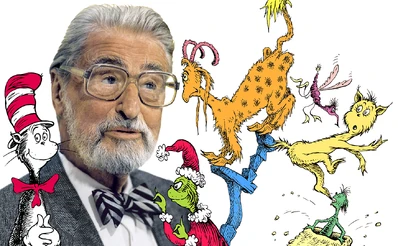
Dr. Seuss
In 1949, he penned Bartholomew and the Oobleck, the story of a young page who must rescue his kingdom from a terrifying, man-made substance called Oobleck.
The story is quickly told:
Derwin, the King of Didd, announces he’s bored with sunshine, rain, fog and snow. So he calls in his black magicians and orders them to create a new kind of weather.
The magicians assure him they can create it.
“What will you call it?” asks the king.
“We’ll call it Oobleck,” says one of the magicians.

“What will it be like?” asks King Didd.
“We don’t know, Sire,” the magician replies. “We’ve never created Oobleck before.”
The next morning, Oobleck—a greenish, glue-like substance—starts raining.
The king orders Bartholomew, the royal page, to tell the Bell Ringer that today will be a holiday. But the bell doesn’t ring—because it’s filled with Oobleck.
The Oobleck rain intensifies.
The falling blobs—now as big as buckets full of broccoli—break into the palace, immobilizing the servants and guards.
Bartholomew warns the Royal Trumpeter about the Oobleck, but the trumpet gets stopped up with the goo.
The Captain of the Guards thinks the Oobleck is pretty and sees no danger in it—until he eats some. Instantly, his mouth is glued shut.

At the climax of the story, Bartholomew confronts King Derwin for giving such a rash order: “If you can’t do anything else,” says Bartholomew, “at least you can say you’re sorry.”
King Derwin refuses, and Bartholomew says, “If you can look at all the horror you’ve caused and not say you’re sorry, you’re no sort of king at all.”
In real-life, such a king would have instantly ordered Bartholomew’s execution. But this is a children’s story.
So, overcome with guilt, King Derwin utters the magic words: “You’re right, this is all my fault, and I am sorry.”
Suddenly the Oobleck stops raining and the sun melts away the rest.
With life returning to normal, King Derwin mounts the bell tower and rings the bell. He proclaims a holiday dedicated not to Oobleck, but to rain, sun, fog, and snow, the four elements of Nature—of which Man is but a part.
* * * * *
Flash forward to the following Donald Trump tweets:
November 6, 2012: “The concept of global warming was created by and for the Chinese in order to make U.S. manufacturing non-competitive.”
December 6, 2013: “Ice storm rolls from Texas to Tennessee – I’m in Los Angeles and it’s freezing. Global warming is a total, and very expensive, hoax!”
January 1, 2014: “This very expensive GLOBAL WARMING bullshit has got to stop. Our planet is freezing, record low temps, and our GW scientists are stuck in ice.”

Donald Trump
Upon taking office in 2017, Trump
- Released a budget proposal to eliminate $100 million in funding for the Environmental Protection Agency’s climate work, including scientific research;
- Ordered his administration to rewrite the Clean Power Plan. His objective: To gut former President Barack Obama’s landmark restrictions on power plant emissions;
- Announced that he would withdraw the United States from the Paris climate-change agreement deal.
Upon taking office again in 2025, Trump:
- Repealed the EPA’s 2009 Endangerment Finding, which officially determines that greenhouse gases threaten public health;
- Increased oil and gas exploration on federal land, rolled back methane emission requirements for oil and gas companies, and directed the Department of Defense to buy coal-fired electricity;
- Halted, paused, or cut funding for offshore/onshore wind and solar projects, and ended federal tax incentives for electric vehicles (EVs);
- Reduced the authority of the EPA to regulate pollutants from power plants, cut climate-preparedness grants, and remoed or altered climate data from federal websites.
There are forces in Nature far more powerful than anything Man and his puny strength can defy—or harness. And we invoke the wrath of those forces at our own peril.
In the world of children’s stories, it’s possible for a king to undo the terrible damage he’s unleashed by finding the courage to say: “I’m sorry.”
In real-life, tyrants almost never say “I’m sorry,” no matter how enormous their mistakes and/or crimes.
From 1936 to 1938, Soviet dictator Joseph Stalin slaughtered the cream of his own Army and Air Force. When Nazi Germany invaded the Soviet Union in 1941, Stalin blamed his remaining generals for the massive defeats inflicted by the Wehrmacht.
And as Soviet forces finally closed on Berlin in April, 1945, and Adolf Hitler prepared to commit suicide in his underground bunker, he blamed the German people for losing the war he had started.
Saying “I’m sorry” cannot reverse decades of rampant environmental abuse. To believe that it can is as ridiculous as believing that self-righteous tyrants will ever take responsibility for their own crimes and follies.
1991 IRAQ WAR, 2003 IRAQ WAR, 2026 IRAN WAR, ABC NEWS, ALTERNET, AMERICABLOG, AP, BABY BOOMER RESISTANCE, BARACK OBAMA, BBC, BLOOMBERG, BLUESKY, BOMBING, BUZZFEED, CBS NEWS, CNN, CROOKS AND LIARS, D-DAY, DAILY KOS, DONALD TRUMP, FIVETHIRTYEIGHT, FLAMETHROWERS, GEORGE H.W. BUSH, GEORGE W. BUSH, HARPER’S MAGAZINE, HUFFINGTON POST, ISLAMIC STATE OF IRAQ AND SYRIA, MEDIA MATTERS, MOTHER JONES, MOVEON, MSNBC, NAVY SEALS, NAZI GERMANY, NBC NEWS, NEWSDAY, NEWSWEEK, NPR, PBS NEWSHOUR, POLITICO, POLITICUSUSA, PREDATOR DRONES, RAW STORY, REPUBLICANS, REUTERS, SALON, SEATTLE TIMES, SLATE, TALKING POINTS MEMO, THE ATLANTIC, THE CHICAGO SUN-TIMES, THE CHICAGO TRIBUNE, THE DAILY BEAST, THE DAILY BLOG, THE GUARDIAN, THE HILL, THE HUFFINGTON POST, THE INTERCEPT, THE LOS ANGELES TIMES, THE NATION, THE NEW REPUBLIC, THE NEW YORK TIMES, THE NEW YORKER, THE VILLAGE VOICE, THE WALL STREET JOURNAL, THE WASHINGTON POST, THINKPROGRESS, TIME, TRUTHDIG, TRUTHOUT, TWO POLITICAL JUNKIES, U.S. AIR FORCE, U.S. NEWS & WORLD REPORT, UPI, USA TODAY, VICTORY THROUGH AIR POWER, VIETNAM WAR, WALT DISNEY, WORLD WAR 11, X
In Bureaucracy, History, Military, Politics, Social commentary on March 2, 2026 at 12:18 am
Victory Through Air Power is a 1943 Walt Disney animated Technicolor feature film released during World War II. It’s based on the book—of the same title––by Alexander P. de Seversky.
Its thesis: By using bombers and fighter aircraft, the United States can attain swift, stunning victory over its Axis enemies: Germany, Italy and Japan.
Although not explicitly stated, the clear impression given is: By using air power, America can defeat its enemies without deploying millions of ground troops.

The movie has long since been forgotten except by film buffs, but its message has not. Especially by the highest officials within the U.S. Air Force.
The Air Force regularly boasted of the tonnage of bombs its planes dropped over Nazi Germany. But it failed to attain its primary goal: Break the will of the Germans to resist.
Just as the German bombings of England had solidified the will of the British people to resist, so, too, did Allied bombing increase the determination of the Germans to fight on.
Nor did the failure of air power end there.
On June 6, 1944—D-Day—the Allies launched their invasion of Nazi-occupied France.
It opened shortly after midnight, with an airborne assault of 24,000 American, British, Canadian and Free French troops. This was followed at 6:30 a.m. by an amphibious landing of Allied infantry and armored divisions on the French coast.
The operation was the largest amphibious invasion in history. More than 160,000 troops landed—73,000 Americans, 61,715 British and 21,400 Canadians.
Allied air power bombed and strafed German troops out in the open. But it couldn’t dislodge soldiers barricaded in steel-and-concrete-reinforced bunkers or pillboxes.
Those had to be dislodged, one group at a time, by Allied soldiers armed with rifles, dynamite and flamethrowers.
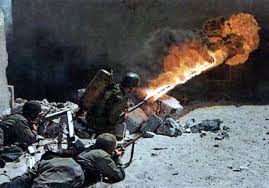
American soldier using flamethrower
This situation proved true throughout the rest of the war.
Then, starting in 1964, the theory of “Victory Through Air Power” once again proved a dud—in Vietnam.
From 1964 to 1975, seven million tons of bombs were dropped on Vietnam, Laos, and Cambodia—more than twice the amount of bombs dropped on Europe and Asia in World War II.
Yet the result proved the same as it had in World War II: The bombing enraged the North Vietnamese and steeled their resolve to fight on to the end.

American bomber dropping its cargo over North Vietnam
The belief that victory could be achieved primarily—if not entirely—through air power had another unforeseen result during the Vietnam war.
To bomb North Vietnam, the United States needed air force bases in South Vietnam. This required that those bombers and fighters be protected.
So a force to provide round-the-clock security had to be maintained. But there weren’t enough guards to defend themselves against a major attack by North Vietnamese forces.
So more American troops were needed—to guard the guards.
North Vietnam continued to press greater numbers of its soldiers into attacks on American bases. This forced America to provide greater numbers of its own soldiers to defend against such attacks.
Eventually, the United States had more than 500,000 ground troops fighting in Vietnam—with no end in sight to the conflict.
Nor did it work for America in the 1991 and 2003 wars against Iraq.
Both wars opened with massive barrages of American missiles and bombs. The 1991 war—launched by President George H.W. Bush—saw the first use of the vaunted “stealth bomber,” which could avoid detection by enemy radar.
The 2003 war—launched by President George W. Bush—opened with an even greater bombardment intended to “shock and awe” the Iraqis into surrendering.
They didn’t.
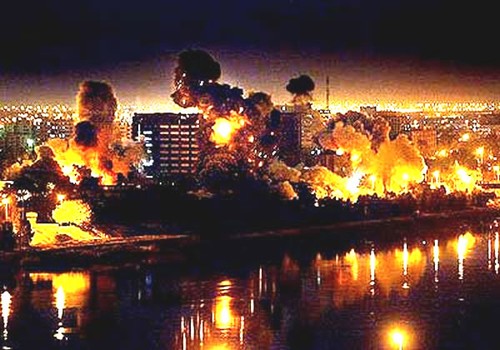
Baghdad under “shock and awe” bombardment
Nor did air power prove effective on the Iraqi insurgency that erupted after American forces occupied Baghdad and much of the rest of the country.
That war had to be fought by U.S. Army regulars and Special Operations soldiers—especially Navy SEALS. It was a dirty and private effort, marked by nightly kidnappings and torture of suspected Iraqi insurgents.
The war devolved into a long, violent insurgency, occupation and sectarian civil war that lasted until 2011, when American troops were withdrawn. The United States failed to achieve control of Iraqi oil and unite the country under American control.
Then, in 2014, with forces of the Islamic State of Iraq and Syria (ISIS) launching a blitzkrieg throughout Iraq, President Barack Obama caught the “Victory Through Airpower” disease.
ISIS had thrown the American-trained Iraqi Army into a panic, with soldiers dropping their rifles and running for their lives.
This led Republicans to accuse the President of being about to “lose” Iraq.
As a result, he shipped at least 300 American “advisors” to Iraq, to provide support and security for U.S. personnel and the American Embassy in Baghdad.
And he authorized American Predator drones to traverse Iraq, keeping tabs on the advancing ISIS forces. Then, in September, 2014, Obama ordered airstrikes against ISIS in Syria.
Yet that didn’t alter the balance of power in Iraq.
Finally, on February 11, 2015, Obama called on Congress to formally authorize the use of ground forces against ISIS. This would include supporting and training Iraqi forces and Syrian insurgents on the ground.
On February 28, 2026, President Donald Trump ordered a massive bombardment of Iran
The rerun of the Vietnam/Iraq experience will begin showing in the months ahead.
2012 PRESIDENTIAL RACE, 2016 PRESIDENTIAL RACE, ABC NEWS, ADULTERY, ALTERNET, AMERICABLOG, AP, ATHEISTS, BABY BOOMER RESISTANCE, BARACK OBAMA, BBC, BIBLE, BILL MAHER, BIRTH CONTROL, BLOOMBERG NEWS, BUZZFEED, CATHOLICS, CBS NEWS, CIVIL LIBERTIES, CNN, CROOKS AND LIARS, DAILY KOS, DONALD TRUMP, ELEANOR ROOSEVELT, FIVETHIRTYEIGHT, FRANKLIN GRAHAM, HARPER’S MAGAZINE, HOMOSEXUALITY, HOMOSEXUALS, HUFFINGTON POST, ISLAM, JERRY FALWELL JR., JESUS CHRIST, JEWS, LESBIANS, LIBERALS, MEDIA MATTERS, MIKE PENCE, MITT ROMNEY, MOTHER JONES, MOVEON, MSNBC, MUSLIMS, NBC NEWS, NEW REPUBLIC, NEWSDAY, NEWSWEEK, NEWT GINGRICH, NON-CHRISTIANS, NPR, PBS NEWSHOUR, POLITICO, POLITICUSUSA, RAW STORY, RELIGION, RELIGIOUS FREEDOM RESTORATION ACT, REPUBLICAN PARTY, REUTERS, RICHARD FEYNMAN, RICK SANTORUM, SALON, SAUDI ARABIA, SCIENCE, SEATTLE TIMES, SLATE, SLAVERY, SPANISH INQUISITION, STORMY DANIELS, SUPREME COURT, TALKING POINTS MEMO, TEA PARTY, THE ATLANTIC, THE CHICAGO SUN-TIMES, THE CHICAGO TRIBUNE, THE DAILY BEAST, THE DAILY BLOG, THE GUARDIAN, THE HILL, THE HUFFINGTON POST, THE LOS ANGELES TIMES, THE NATION, THE NEW REPUBLIC, THE NEW YORK TIMES, THE NEW YORKER, THE VILLAGE VOICE, THE WALL STREET JOURNAL, THE WASHINGTON POST, THEOLOGY, THINKPROGRESS, TIME, TOMAS DE TORQUEMADA, TRUTHDIG, TRUTHOUT, TWO POLITICAL JUNKIES, U.S. NEWS & WORLD REPORT, UPI, USA TODAY, WAR, WOMEN, WONKETTE, X
In Bureaucracy, History, Law, Law Enforcement, Military, Politics, RELIGION, Social commentary on February 25, 2026 at 12:10 am
Bernardo Gui was the chief inquisitor of the Dominican Order during the Medieval Inquisition (1184 – 1230s).
Gui closely studied the best methods for interrogating “heretics.” He set forth his findings in his most important and famous work, Practica Inquisitionis Heretice Pravitatis. or “Conduct of the Inquisition into Heretical Wickedness.”

Here’s how such an interrogation might go:
When a heretic is first brought up for examination, he assumes a confident air, as though secure in his innocence. I ask him why he has been brought before me. He replies, smiling and courteous, “Sir, I would be glad to learn the cause from you.”
Interrogator: You are accused as a heretic, and that you believe and teach otherwise than Holy Church believes.
Accused Heretic: (Raising his eyes to heaven, with an air of the greatest faith) Lord, thou knowest that I am innocent of this, and that I never held any faith other than that of true Christianity.
Interrogator: You call your faith Christian, for you consider ours as false and heretical. But I ask whether you have ever believed as true another faith than that which the Roman Church holds to be true?
Accused Heretic: I believe the true faith which the Roman Church believes, and which you openly preach to us.
Interrogator: Perhaps you have some of your sect at Rome whom you call the Roman Church. I, when I preach, say many things, some of which are common to us both, as that God liveth, and you believe some of what I preach. Nevertheless you may be a heretic in not believing other matters which are to be believed.
Accused Heretic: I believe all things that a Christian should believe.
Interrogator: I know your tricks….But we waste time in this fencing. Say simply, Do you believe in one God the Father, and the Son, and the Holy Ghost?
Accused Heretic: I believe.
Interrogator: Do you believe in Christ born of the Virgin, suffered, risen, and ascended to heaven?
Accused Heretic: (Briskly) I believe.
Interrogator: Do you believe the bread and wine in the mass performed by the priests to be changed into the body and blood of Christ by divine virtue?
Accused Heretic: Ought I not to believe this?
Interrogator: I don’t ask if you ought to believe, but if you do believe.
Accused Heretic: I believe whatever you and other good doctors order me to believe.
Inquisitor: Those good doctors are the masters of your sect; if I accord with them you believe with me; if not, not.
Accused Heretic: I willingly believe with you if you teach what is good to me.
Inquisitor: You consider it good to you if I teach what your other masters teach. Say, then, do you believe the body of our Lord, Jesus Christ to be in the altar?
Accused Heretic: (Promptly) I believe that a body is there, and that all bodies are of our Lord.
Interrogator: I ask whether the body there is of the Lord who was born of the Virgin, hung on the cross, arose from the dead, ascended, etc.
Accused Heretic: And you, sir, do you not believe it?
Interrogator: I believe it wholly.
Accused Heretic: I believe likewise.
Men like Bernard Gui—and Franklin Graham—do not seek a golden future. They crave to return to a “golden” past—which includes the power Christians once held to forcibly impose their religious beliefs on others.
Among those slated for forced conversions by the Religious Right:
- Atheists
- Jews
- Women
- Homosexuals
- Lesbians
- Non-Christians
- Liberals
To gain absolute secular power over the lives of their fellow Americans, the Religious Right will support any candidate, no matter how morally despicable.
During the 2016 Presidential race, evangelicals—and their leaders such as Franklin Graham and Jerry Falwell, Jr.—fervently supported Donald Trump, despite his:
- Being twice divorced;
- Multiple affairs (including one with porn star Stormy Daniels);
- Documented ties to Russian oligarchs and Mafia chieftains;
- Being a 34-times convicted felon;
- Viciousness, greed, lying and egomania.
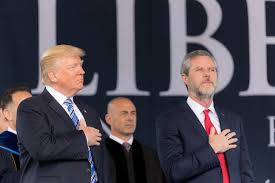
Donald Trump and Jerry Falwell, Jr., at Liberty University
And they continue to fervently support him.
They expect Trump to sponsor legislation that will—-by force of law—make their brand of Christianity supreme above all other religions.
Legislation such as The Religious Freedom Restoration Act.
This was signed into law on March 26, 2015, by Mike Pence, then Governor of Indiana.
This allows any individual or corporation to cite its religious beliefs as a defense when sued by a private party.
Officially, its intent is to prevent the government from forcing business owners to violate their religious beliefs.
Unofficially, its intent is to appease the hatred of gays and lesbians by the religious Right, a key constituency of the Republican party.
Thus, a bakery that doesn’t want to make a cake for a gay wedding or a restaurant that doesn’t want to serve lesbian patrons now has the legal right to refuse to do so.
And a hospital can legally turn away a gay patient if it wants to.
Islamic countries are notorious for their persecution of non-Muslims. Now the Religious Right wants to impose its own version of sharia law on American citizens.
2012 PRESIDENTIAL RACE, 2016 PRESIDENTIAL RACE, ABC NEWS, ADULTERY, ALTERNET, AMERICABLOG, AP, ATHEISTS, BABY BOOMER RESISTANCE, BARACK OBAMA, BBC, BIBLE, BILL MAHER, BIRTH CONTROL, BLOOMBERG NEWS, BUZZFEED, CATHOLICS, CBS NEWS, CIVIL LIBERTIES, CNN, CROOKS AND LIARS, DAILY KOS, DONALD TRUMP, ELEANOR ROOSEVELT, FIVETHIRTYEIGHT, FRANKLIN GRAHAM, HARPER’S MAGAZINE, HOMOSEXUALITY, HOMOSEXUALS, HUFFINGTON POST, ISLAM, JERRY FALWELL JR., JESUS CHRIST, JEWS, LESBIANS, LIBERALS, MEDIA MATTERS, MIKE PENCE, MITT ROMNEY, MOTHER JONES, MOVEON, MSNBC, MUSLIMS, NBC NEWS, NEW REPUBLIC, NEWSDAY, NEWSWEEK, NEWT GINGRICH, NON-CHRISTIANS, NPR, PBS NEWSHOUR, POLITICO, POLITICUSUSA, RAW STORY, RELIGION, RELIGIOUS FREEDOM RESTORATION ACT, REPUBLICAN PARTY, REUTERS, RICHARD FEYNMAN, RICK SANTORUM, SALON, SAUDI ARABIA, SCIENCE, SEATTLE TIMES, SLATE, SLAVERY, SPANISH INQUISITION, STORMY DANIELS, SUPREME COURT, TALKING POINTS MEMO, TEA PARTY, THE ATLANTIC, THE CHICAGO SUN-TIMES, THE CHICAGO TRIBUNE, THE DAILY BEAST, THE DAILY BLOG, THE GUARDIAN, THE HILL, THE HUFFINGTON POST, THE LOS ANGELES TIMES, THE NATION, THE NEW REPUBLIC, THE NEW YORK TIMES, THE NEW YORKER, THE VILLAGE VOICE, THE WALL STREET JOURNAL, THE WASHINGTON POST, THEOLOGY, THINKPROGRESS, TIME, TOMAS DE TORQUEMADA, TRUTHDIG, TRUTHOUT, TWO POLITICAL JUNKIES, U.S. NEWS & WORLD REPORT, UPI, USA TODAY, WAR, WOMEN, WONKETTE, X
In Bureaucracy, History, Law, Law Enforcement, Military, Politics, RELIGION, Social commentary on February 24, 2026 at 12:17 am
American Right-wing elements relentlessly claimed that President Barack Obama was waging “a war on religion.”
GOP candidates like Rick Santorum, Newt Gingrich and Mitt Romney intended to make this a major theme of their respective campaigns for President.
Obama supported a woman’s right to obtain
- Abortion—including in cases of rape and incest;
- Birth control; and
- Amniocentesis (pre-natal testing).
By promoting women’s rights, Obama was “waging a war against religion”-–according to American fascists.
Since access to such medical procedures as birth control and pre-natal testing has long been entirely legal, what’s all the fuss about?
It’s simple: The Right is not waging a “war for religious liberty.”
It’s waging a bitter struggle to establish a government that uses force or the threat of it to impose reactionary religious beliefs on religionists who do not share such religious beliefs.
And on atheists or agnostics, who share none at all.
These Rightists and their theocratic allies have less in common with Jesus Christ than with Tomas de Torquemada (1420 – 1498), the infamous Grand Inquisitor of the Spanish Inquisition.
Christ never ordered the torture or death of anyone. Torquemada—claiming to act in “defense” of the Roman Catholic Church—presided over the deaths of at least 2,000 “heretics.”

Tomas de Torquemada
Nor did these unfortunate victims of religious fanaticism meet their death quickly or painlessly. They died by perhaps the cruelest means possible—by being burned alive at the stake.
Torquemada didn’t hesitate to pronounce someone a heretic. He “knew” who such people were. They were Jews, Muslims, atheists. They were “lapsed Catholics” who, in his view, failed to show fervent devotion to the religious authorities—like himself—who tyrannically ruled their lives.
For such people, Torquemada believed, the only road to salvation lay in being “cleansed” of their sins. And nothing burns away impurities like fire.
But before the fire-stakes came the fire-mindset: The arrogance of “knowing” who qualified as “saved” and who would be forever “damned.”
Unless, of course, his or her soul had been “purified” by fire.
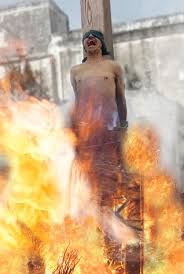
“Heretic” burned at the stake
Fundamentalist Christians can no longer sentence “heretics” to the stake.
But the mindset that ruled the Spanish Inquisition has not disappeared. It has been vividly displayed by no less a religious authority than Franklin Graham, son of America’s most famous preacher, Billy Graham.
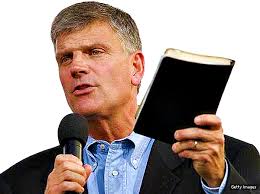
Franklin Graham
Appearing on the MSNBC program, “Morning Joe,” on February 21, 2012, Graham was asked if he thought that Barack Obama, Rick Santorum, Newt Gingrich and Mitt Romney qualified as Christians.
On Obama: “Islam sees him as a son of Islam… I can’t say categorically that [Obama is not Muslim] because Islam has gotten a free pass under Obama.”
On Santorum: “I think so. His values are so clear on moral issues. No question about it… I think he’s a man of faith.”
On Gingrich: “I think Newt Gingrich is a Christian, at least he told me he is.”
On Romney: “Most Christians would not recognize Mormons as part of the Christian faith. They believe in Jesus Christ. They have a lot of other things they believe in too, that we don’t accept, theologically.”
Thus, Graham pronounced as “saved” a notorious multiple-adulterer like Gingrich. He also gave a pass to Santorum, who married a woman who had lived “in sin” with an abortionist for six years.
But he unhesitatingly damned a longtime churchgoer like Obama or a devout Mormon like Romney (whose faith, most evangelicals like Graham believe, is actually a non-Christian cult).
Six years later, in 2018, Graham defended President Donald Trump, a notorious womanizer and multiple-adulterer, against charges that, in 2006, he had slept with porn star Stormy Daniels.
“I believe at 70 years of age the president is a much different person today than he was four years ago, five years ago, 10 years ago. He is not President Perfect.”
This differs greatly from his position on President Bill Clinton’s affair with Monica Lewinsky: “If he will lie to or mislead his wife and daughter, those with whom he is most intimate, what will prevent him from doing the same to the American public?”
It’s easy to imagine Graham transported to the French city of Toulouse in the 14th century. And to imagine him wearing the robes of Bernardo Gui, the chief inquisitor of the Dominican Order during the Medieval Inquisition (1184 – 1230s).
Gui closely studied the best methods for interrogating “heretics.” He set forth his findings in his most important and famous work, Practica Inquisitionis Heretice Pravitatis. or “Conduct of the Inquisition into Heretical Wickedness.”
In this, he offered a vivid example of how such an interrogation might go. The following is taken from that manual:
When a heretic is first brought up for examination, he assumes a confident air, as though secure in his innocence. I ask him why he has been brought before me. He replies, smiling and courteous, “Sir, I would be glad to learn the cause from you.”
This is not a dialogue between equals. The Inquisitor literally holds the power of life or agonizing death over the man or woman he is interrogating.
2012 PRESIDENTIAL RACE, 2016 PRESIDENTIAL RACE, ABC NEWS, ADULTERY, ALTERNET, AMERICABLOG, AP, ATHEISTS, BABY BOOMER RESISTANCE, BARACK OBAMA, BBC, BIBLE, BILL MAHER, BIRTH CONTROL, BLOOMBERG NEWS, BUZZFEED, CATHOLICS, CBS NEWS, CIVIL LIBERTIES, CNN, CROOKS AND LIARS, DAILY KOS, DONALD TRUMP, ELEANOR ROOSEVELT, FIVETHIRTYEIGHT, FRANKLIN GRAHAM, HARPER’S MAGAZINE, HOMOSEXUALITY, HOMOSEXUALS, HUFFINGTON POST, ISLAM, JERRY FALWELL JR., JESUS CHRIST, JEWS, LESBIANS, LIBERALS, MEDIA MATTERS, MIKE PENCE, MITT ROMNEY, MOTHER JONES, MOVEON, MSNBC, MUSLIMS, NBC NEWS, NEW REPUBLIC, NEWSDAY, NEWSWEEK, NEWT GINGRICH, NON-CHRISTIANS, NPR, PBS NEWSHOUR, POLITICO, POLITICUSUSA, RAW STORY, RELIGION, RELIGIOUS FREEDOM RESTORATION ACT, REPUBLICAN PARTY, REUTERS, RICHARD FEYNMAN, RICK SANTORUM, SALON, SAUDI ARABIA, SCIENCE, SEATTLE TIMES, SLATE, SLAVERY, SPANISH INQUISITION, STORMY DANIELS, SUPREME COURT, TALKING POINTS MEMO, TEA PARTY, THE ATLANTIC, THE CHICAGO SUN-TIMES, THE CHICAGO TRIBUNE, THE DAILY BEAST, THE DAILY BLOG, THE GUARDIAN, THE HILL, THE HUFFINGTON POST, THE LOS ANGELES TIMES, THE NATION, THE NEW REPUBLIC, THE NEW YORK TIMES, THE NEW YORKER, THE VILLAGE VOICE, THE WALL STREET JOURNAL, THE WASHINGTON POST, THEOLOGY, THINKPROGRESS, TIME, TOMAS DE TORQUEMADA, TRUTHDIG, TRUTHOUT, TWO POLITICAL JUNKIES, U.S. NEWS & WORLD REPORT, UPI, USA TODAY, WAR, WOMEN, WONKETTE, X
In Bureaucracy, History, Law, Law Enforcement, Military, Politics, RELIGION, Social commentary on February 23, 2026 at 12:05 am
Hamza Kashgari, a 23-year-old columnist in Saudi Arabia, decided to celebrate the birthday of the Islamic prophet Muhammed in a truly unique way.

Hamza Kashgar
In early February, 2012, he posted on Twitter a series of mock conversations between himself and Muhammad:
“On your birthday, I will say that I have loved the rebel in you, that you’ve always been a source of inspiration to me, and that I do not like the halos of divinity around you. I shall not pray for you.”
“On your birthday, I find you wherever I turn. I will say that I have loved aspects of you, hated others, and could not understand many more.”
“On your birthday, I shall not bow to you. I shall not kiss your hand. Rather, I shall shake it as equals do, and smile at you as you smile at me. I shall speak to you as a friend, no more.”
“No Saudi women will go to hell, because it’s impossible to go there twice.”
The tweets sparked some 30,000 infuriated responses. Many Islamic clerics demanded that he face execution for blasphemy.
Kashgari posted an apology tweet: “I deleted my previous tweets because…I realized that they may have been offensive to the Prophet and I don’t want anyone to misunderstand.”
Soon afterward, Abdullah bin Abdulaziz Al Saud, then King of Saudi Arabia, ordered his arrest.
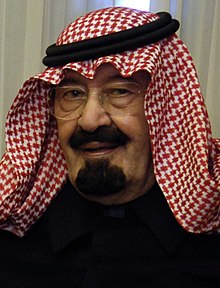
Saudi King King Abdullah
Kashgari fled to Malaysia, another majority-Muslim country. He was quickly arrested by police as he passed through Kuala Lumpur international airport. Three days later, he was deported to Saudi Arabia.
Human rights groups feared that he would be executed for blasphemy, a capitol offense in Saudi Arabia.
After nearly two years in prison, Kashgari was freed on October 29, 2013. Kashgari used Twitter to inform his supporters of his release.
Outrageous? By Western standards, absolutely.
Clearly there is no tolerance in Saudi Arabia for the freedoms of thought and expression that Americans take for granted.
Meanwhile, Right-wing American ayatollahs are working overtime to create just that sort of society—where theocratic despotism rules the most intimate aspects of our lives.
One of these is the former GOP Presidential candidate and U.S. Senator Rick Santorum. In early January, 2012, he said that states should have the right to outlaw birth control without the interference of the Supreme Court.
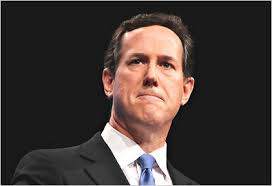
Rick Santorum
In an interview with ABC News, Santorum said he opposed the Supreme Court’s ruling that made birth control legal:
“The state has a right to do that [ban contraception]. I have never questioned that the state has a right to do that. It is not a Constitutional right. The state has the right to pass whatever statutes they have.
“That’s the thing I have said about the activism of the Supreme Court—they are creating rights, and it should be left up to the people to decide.”
In the landmark 1965 decision, Griswold v. Connecticut, the Court struck down a law that made it a crime to sell contraceptives to married couples. The Constitution, ruled the Justices, protected a right to privacy.
Two years later, in Eisenstadt v. Baird, the Court extended Griswold by striking down a law banning the sale of contraceptives to unmarried couples.
Santorum has left no doubt as to where he stands on contraception. On October 19, 2011, he said:
“One of the things I will talk about that no President has talked about before is I think the dangers of contraception in this country, the whole sexual libertine idea. Many in the Christian faith have said, ‘“Well, that’s okay. Contraception’s okay.’
“It’s not okay because it’s a license to do things in the sexual realm that is counter to how things are supposed to be. They’re supposed to be within marriage, they are supposed to be for purposes that are, yes, conjugal, but also…procreative.
“That’s the perfect way that a sexual union should happen. We take any part of that out, we diminish the act….And all of a sudden, it becomes deconstructed to the point where it’s simply pleasure.”
“How things are supposed to be”—according to Right-wing fanatics like Santorum and the evangelicals who support them.
Like the Saudi religious religious zealots who demand the death of a “blasphemer,” they demand that their religious views should govern everyone. That means Jews, Catholics, Islamics, atheists and agnostics.
American Christian fundamentalists and Islamic fundamentalists fervently agree on the following:
- Women should have fewer rights than men.
- Abortion should be illegal.
- There should be no separation between church and state.
- Religion should be taught in school.
- Religious doctrine trumps science.
- Government should be based on religious doctrine.
- Homosexuality should be outlawed.
The important difference—for Americans who value their freedom—is this:
The United States has a Supreme Court that can—and does—overturn laws that threaten civil liberties. Laws that GOP Presidential candidates clearly want to revive and force on those who don’t share their peculiar religious views.
Eleanor Roosevelt once said: “No one can make you feel inferior without your consent.”
The same holds true—in a democracy—for citizens who resist dictatorial politicians seeking power over them.
ABC NEWS, ALTERNET, AMERICABLOG, AP, BABY BOOMER RESISTANCE, BBC, BLOOMBERG, BLOOMBERG NEWS, BLUESKY, BUZZFEED, CBS NEWS, CHRISTOPHER DORNER, CNN, CROOKS AND LIARS, DAILY KOS, DEATH THREATS, FACEBOOK, FIVETHIRTYEIGHT, GEORGE ZIMMERMAN, HARPER’S MAGAZINE, HAWAII FIVE-O, HUFFINGTON POST, JACK LORD, LORI TANKEL, LOS ANGELES POLICE DEPARTMENT, MEDIA MATTERS, MOTHER JONES, MOVEON, MSNBC, NBC NEWS, NEW REPUBLIC, NEWSDAY, NEWSWEEK, NPR, PBS NEWSHOUR, POLICE, POLITICO, POLITICUSUSA, RAW STORY, REUTERS, ROBERT DALEY, SALON, SEATTLE TIMES, SLATE, SWAT TEAMS, TALKING POINTS MEMO, TARGET BLUE, THE ATLANTIC, THE CHICAGO SUN-TIMES, THE CHICAGO TRIBUNE, THE DAILY BEAST, THE DAILY BLOG, THE GUARDIAN, THE HILL, THE HUFFINGTON POST, THE INTERCEPT, THE LOS ANGELES TIMES, THE NATION, THE NEW REPUBLIC, THE NEW YORK TIMES, THE NEW YORKER, THE UNTOUCHABLES, THE VILLAGE VOICE, THE WALL STREET JOURNAL, THE WASHINGTON POST, THINKPROGRESS, TIME, TRAYVON MARTIN, TRUTHDIG, TRUTHOUT, TWO POLITICAL JUNKIES, U.S. NEWS & WORLD REPORT, UPI, USA TODAY, X
In Bureaucracy, History, Law, Law Enforcement, Politics, Social commentary on February 13, 2026 at 12:10 am
Lori Tankel had a problem: A lot of angry people thought she was George Zimmerman.
She began getting death threats on her
Unfortunately for Tankel, her number was one digit away from the number Zimmerman used to make his call to police just before he fatally shot Martin.
That phone number had been shown throughout the trial. And, believing the number was Zimmerman’s, someone posted Tankel’s number online.
Just minutes after the verdict, Tankel began getting death threats. “We’re going to kill you. We’re going to get you. Watch your back,” threatened a typical call.
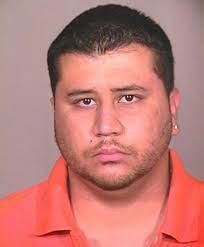
George Zimmerman
Tankel worked as a sales representative for several horse companies. She had grown used to relying on her phone to keep her business going.
But, almost as soon as the Zimmerman verdict came in, “My phone just started to blow up. Phone call after phone call, multiple phone
So she did what any ordinary citizen, faced with multiple death threats, would do: She called the police.
According to her, the Seminole County Sheriff’s Office told her the department itself receives around 400 death threats a minute on social media sites.
In short: Unless you’re wealthy, a politician or—best of all, a cop—don’t expect the police to protect you if your life is threatened.
First, above everyone else, police look out for each other.
Robert Daley bluntly revealed this truth in his 1971 bestseller, Target Blue: An Insider’s View of the N.Y.P.D. A police reporter for the New York Times, he served for one year as a deputy police commissioner.
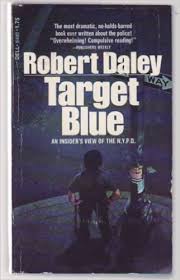
“A great many solvable crimes in the city were never solved, because not enough men were assigned to the case, or because those assigned were lazy or hardly cared or got sidetracked,” wrote Daley.
“But when a cop got killed, no other cop got sidetracked. Detectives worked on the case night and day….
“In effect, the citizen who murdered his wife’s lover was sought by a team of detectives, two men. But he who killed a cop was sought by 32,000.”
That’s why the Mafia tried to bribe cops, but never killed them.
Second, don’t expect the police to do for you what they’ll do for one another.
In February, 2013, Christopher Dorner declared war on his former fellow officers of the Los Angeles Police Department.
The LAPD assigned security and surveillance details to at least 50 threatened officers and their families. A typical detail consists of two to five or more guards. And those guards must be changed every eight to 12 hours.

Those details stayed in place long after Dorner was killed in a firefight on February 12, 2013.
But if your bullying neighbor threatens to kill you, don’t expect the police to send a guard detail over. They’ll claim: ”We can’t do anything until the guy does something. If he does, give us a call.”
Third, the more status and wealth you command, the more likely the police are to address your complaint or solve your case.
If you’re rich, your complaint will likely get top priority and the best service the agency can provide. In Boston, such cases are known as “Red balls.”
But if you’re poor or even middle-class without high-level political or police connections, you’ll be told: “We just don’t have the resources to protect everybody.”
Fourth, don’t expect your police department to operate with the vigor or efficiency of TV police agencies.
“I want this rock [Hawaii] sealed off,” Steve McGarrett (Jack Lord) routinely ordered when pursuing criminals on “Hawaii Five-O.”
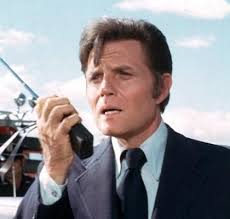
Jack Lord as Steve McGarrett
Real-life police departments, on the other hand:
- Often lack state-of-the-art crime labs to analyze evidence.
- Often lose or accidentally destroy important files.
- Are—like all bureaucracies—staffed by those who are lazy, indifferent or incompetent.
- Are notoriously competitive, generally refusing to share information with other police departments-–thus making it easier for criminals to run amok.
Even when police ”solve” a crime, that simply means making an arrest. After that, there are at least three possible outcomes:
- The District Attorney may decide not to file charges.
- The perpetrator may plead to a lesser offense and serve only a token sentence—or none at all.
- He might be found not guilty by a judge or jury.
Fifth, the result of all this can only be increased disrespect for law enforcement from a deservedly—and increasingly—cynical public.
It is the witnessing of blatant inequities and hypocrisies such as those displayed in the Christopher Dorner case that most damages public support for police at all levels.
When citizens believe police lack the ability—or even the will—to protect them or avenge their victimization, that is a deadly blow to law enforcement.
Police depend on citizens for more than crime tips.
They depend upon them to support hiring more cops and buying state-of-the-art police equipment.
When public support vanishes, so does much of that public funding.
The result can only be a return to the days of the lawless West, where citizens—as individuals or members of vigilante committees—look only to themselves for protection.
ABC NEWS, ALTERNET, AMERICABLOG, AP, BABY BOOMER RESISTANCE, BBC, BLOOMBERG NEWS, BUZZFEED, CBS NEWS, CHICAGO SUN-TIMES, CNN, CROOKS AND LIARS, DAILY KOS, DECEIT, DETECTIVES, FACEBOOK, FIVETHIRTYEIGHT, HARPER’S MAGAZINE, HUFFINGTON POST, INTERROGATION, INTERVIEWING, LIE DETECTORS, MEDIA MATTERS, MIRANDA VS. ARIZONA, MOTHER JONES, MOVEON, MSNBC, NBC NEWS, NEW REPUBLIC, NEWSDAY, NEWSWEEK, NPR, PBS NEWSHOUR, POLICE, POLITICO, POLITICUSUSA, POLYGRAPH, PROSECUTION, RAW STORY, REUTERS, SALON, SEATTLE TIMES, SLATE, SUPREME COURT, TALKING POINTS MEMO, THE ATLANTIC, THE CHICAGO SUN-TIMES, THE CHICAGO TRIBUNE, THE DAILY BEAST, THE DAILY BLOG, THE DENVER POST, THE GUARDIAN, THE HILL, THE HUFFINGTON POST, THE INTERCEPT, THE LOS ANGELES TIMES, THE NATION, THE NEW REPUBLIC, THE NEW YORK TIMES, THE NEW YORKER, THE VILLAGE VOICE, THE WALL STREET JOURNAL, THE WASHINGTON POST, THINKPROGRESS, TIME, TRUTHDIG, TRUTHOUT, U.S. NEWS & WORLD REPORT, UPI, USA TODAY, X
In Bureaucracy, History, Law, Law Enforcement, Politics, Social commentary on February 12, 2026 at 12:10 am
Ever heard of “polygraph by copier”?
If you haven’t, here’s how it works:
A detective loads three sheets of paper into a Xerox machine.
“Truth” has been typed onto the first sheet.
“Truth” has been typed onto the second sheet.
“Lie” has been typed onto the third sheet.

Then a criminal suspect is led into the room and told to put his hand against the side of the machine.
“What is your name?” asks the detective.
The suspect gives it.
The detective hits the copy button, and a page comes out: “Truth.”
“Where do you live?” asks the detective.
The suspect gives an address, the detective again hits the copy button, and a second page appears: “Truth.”
Then comes the important question: “Did you kill Big Jim Tate on the evening of….?”
The suspect answers. The detective presses the copy button one last time, and the sheet appears: “Lie.”
“Well, well, well, you lying little bastard,” says the detective.
Convinced that the police have found some mysterious way to peer into the darkest recesses of his criminality, the suspect “gives it up” and makes a full confession.
Yes, contrary to what many believe, police can legally use deceit to obtain a confession.
In 1973, the Supreme Court ruled, in United States v. Russell: “Nor will the mere fact of deceit defeat a prosecution, for there are circumstances when the use of deceit is the only practicable law enforcement technique available.”
In that case, the Court narrowly upheld a conviction for methamphetamine production even though the defendant had argued entrapment.
So what types of interrogative deceit might a police officer use to develop admissible evidence of a suspect’s guilt?

Police interrogation
The general rule is that deception can be used so long as it’s not likely to cause an innocent person to commit a crime or confess to a crime that s/he didn’t commit.
Consider the following examples:
- A detective is interviewing a suspect in a rape case. “Oh, that girl,” he says, thus implying that the victim was a slut and had it coming. The suspect, thinking he’s dealing with a sympathetic listener, starts bragging about his latest conquest—only to learn, too late, that his listener isn’t so simpatico after all.
- “We found your prints on the gun”—or on any number of other surfaces. Actually, there are few good places on a pistol to leave prints. And those that are left can be smeared. The same goes for other surfaces. But if a suspect can be led to believe the cops have his prints, a confession is often forthcoming.
- A police officer is interrogating a suspect in a murder case. “He came at you, didn’t he?” asks the cop. The suspect, who murdered the victim in cold blood, thinks he has an escape route. “Yeah, he came at me”—this confirming that, yes, he did kill the deceased.
- “Your partner just gave you up” is a favorite police strategy when there is more than one suspect involved. If one suspect can be made to “flip”—turn–-against the other, the case is essentially wrapped up.
- Interrogating a bank robbery suspect, a cop might say: “We know you didn’t do the shooting, that you were only the wheelman.” This implies that the penalty for driving the getaway car is far less than that for killing someone during a robbery. In fact, criminal law allows every member of the conspiracy to be charged as a principal.
- “I don’t give a damn what you did,” says the detective. “Just tell me why you did it.” For some suspects, this offers a cathartic release, a chance to justify their guilt.
- The “good cop/bad cop” routine is known to everyone who has ever seen a police drama. Yet it continues to yield results so often it continues to be routinely used. “Look, I believe you,” says the “good” cop, “but my partner’s a real asshole. Just tell me what happened so we can clear this up and you can go.”
- “So,” says the detective, “why do you think the police believe you did it?” “I have no idea,” says the suspect, confident that he isn’t giving up anything that might come back to haunt him. “Well,” says the cop, “I guess you’ll just have to make something up.” Make something up sounds easy, but it’s actually a trap. The suspect may end up giving away details that could incriminate him—or lying so brazenly that his lies can be used against him.
So is there a best way for a suspect to deal with an invitation to waive his Miranda right to remain silent?
Yes, there is. It’s to refuse to say anything and to ask for permission to call a lawyer.
That’s the preferred method for Mafia hitmen—and accused police officers.
Any cop who finds himself under investigation by his department’s Internal Affairs unit automatically shuts up—and calls his lawyer.
Contrary to popular belief, an arrestee is allowed to make more than one phone call in most states.
Any other reason—no matter how well-intentioned—may well result in a lengthy prison sentence.
2016 PRESIDENTIAL ELECTION, 2020 PRESIDENTIAL ELECTION, 2024 PRESIDENTIAL ELECTION, ABC NEWS, ABUSE OF POWER, ADOLF HITLER, AFFORDABLE CARE ACT (ACA), AILEEN CANNON, AIR TRAFFIC CONTROLLERS, AIR TRAFFICK CONTROLLERS, ALTERNET, AMERICABLOG, AP, ARTIFICIAL INTELLIGENCE, AUSTRIA, AXIOS, BABY BOOMER RESISTANCE, BBC, BERLIN, BIRD FLU, BLACKS, BLOOMBERG, BLUESKY, BORDER WALL, BRIAN KEMP, BUZZFEED, CBS NEWS, CENTERS FOR DISEASE CONTROL AND PREVENTION (CDC) CHINA, CHINA, CIA, CLASSIFIED DOCUMENTS, CLAUS VON STAUFFENBERG, CLIMATE CHANGE, CNN, COVID-19, CROOKS AND LIARS, CZECHOSLOVAKIA, DAILY KOS, DANIEL CASSINO, DAVID BROOKS, DEMOCRACY, DEMOCRATS, DIVERSITY, DIVERSITY EQUITY AND INCLUSION (DEI) PROGRAMS, DONALD TRUMP, ELECTORAL COLLEGE, EMILY MURPHY, ENGLAND, EQUITY AND INCLUSION (DEI), FBI, FEDERAL AVIATION ADMINISTRATION (FAA), FEDERAL EMERGENCY MANAGEMENT ADMINISTRATION (FEMA), FEDERAL EMERGENCY MANAGEMENT AGENCY, FEDERAL GOVERNMENT SHUTDOWN, FIVETHIRTYEIGHT, FRANCE, FRATERNAL ORDER OF POLICE, FUEL PRICES, GAIUS CALIGULA, GALLUP POLL, GAZA, GENERAL SERVICES ADMINISTRATION, GEORGE FLOYD, GLOBAL CONFLICT, GOVERNMENT SHUTDOWN, GROCERY PRICES, GULF OF MEXICO, HARPER’S MAGAZINE, HILLARY CLINTON, HISPANICS, HUFFINGTON POST, HUNTER BIDEN, illegal immigration, IMMIGRATION AND CUSTOMS ENFORCEMENT (ICE), IMPEACHMENT, INFLATION, INSPECTORS GENERAL, INSURRECTION ACT, INTERNATIONAL ASSOCIATION OF CHIEFS OF POLICE, INTERNATIONAL BROTHERHOOD OF TEAMSTERS, ISRAEL, JACK SMITH, JAMES COMEY, JANUARY 6 COUP ATTEMPT, JARED KUSHNER, JEFF SESSIONS, JEROME POWELL, JIMMY HOFFA, JOE BIDEN, JOHN ADAMS, JOHN F. KENNEDY CENTER FOR THE PERFORMING ARTS, JONATHAN ROSS, JOSEPH BIDEN, JOSEPH STALIN, JUAN ORLANDO HERNANDEZ, Kamala Harris, KEVIN MCCARTHY, KIM JONG-UN, LAMAR ALEXANDER, LATINOS, LETITIA JAMES, MACHISMO, MAR-A-LAGO, MARJORIE TAYLOR GREENE, MARK MEADOWS, MARTIN GUGINO, MASCULINITY, MEASLES, MEDIA MATTERS, MEDICAID, MEDICARE, MERRICK GARLAND, MIKE PENCE, MISOGYNY, MITCH MCCONNELL, MOHAMMED BIN SALMAN, MOTHER JONES, MOVEON, MSNBC, MUNICH CONFERENCE, MUSLIMS, NANCY PELOSI, NATIONAL GUARD, NATIONAL SECURITY AGENCY, NATIONAL SECURITY AGENCY (NSA), NAVAHO CODE TALKERS, NAVAJO COLDE TALKERS, NAZI GERMANY, NBC NEWS, NEW REPUBLIC, NEWSDAY, NEWSWEEK, NIHILISM, NORTH ATLANTIC TREATY ORGANIZATION (NATO), NORTH KOREA, NORTH KORREA, NPR, OBSTRUCTION OF CONGRESS, PARDONS, PBS NEWSHOUR, POLAND, POLITICO, POLITICUSUSA, RAFAEL EDUARDO "TED" CRUZ, RAW STORY, RENEE NICOLE GOOD, REPUBLICAN PARTY, REPUBLICANS, REUTERS, ROBERT F. KENNEDY, ROBERT F. KENNEDY JR., RODNEY KING, ROME, RON JOHNSON, RUDY GIULIANI, RUSSIA, SALON, SAUDI ARABIA, SEATTLE TIMES, Secret Service, SERGEY KISLYAK, SERGEY LAVROV, SLATE, SUPPLEMENTAL NUTRITION ASSISTANCE PROGRAM (SNAP), TALKING POINTS MEMO, TERRORISM, THE ATLANTIC, THE CHICAGO SUN-TIMES, THE CHICAGO TRIBUNE, THE DAILY BEAST, THE DAILY BLOG, THE DISCOURSES, THE GUARDIAN, THE HILL, THE HUFFINGTON POST, THE INTERCEPT, THE LOS ANGELES TIMES, THE NATION, THE NEW REPUBLIC, THE NEW YORK TIMES, THE NEW YORKER, THE PRESS, THE RISE AND FALL OF THE THIRD REICH (BOOK), THE VILLAGE VOICE, THE WALL STREET JOURNAL, THE WASHINGTON POST, THINKPROGRESS, THIRD REICH, THOMAS MATTHEW CROOKS, TIM WALZ, TIME, TRANSPORTATION COSTS, TREASON, TRUTHDIG, TRUTHOUT, TUSKEEE AIRMEN, TUSKEGEE AIRMEN, TWENTY-FIFTH AMENDMENT, TWO POLITICAL JUNKIES, TY COBB, U.S. BORDER PATROL, U.S. NEWS & WORLD REPORT, UKRAINE, UNITED STATES DEPARTMENT OF DEFENSE (DOD), UNITED STATES DEPARTMENT OF JUSTICE, UNITED STATES DEPARTMENT OF JUSTICE (DOJ), UNITED STATES HOUSE OF REPRESENTATIVES, UNITED STATES SECRET SERVICE, UNITED STATES SENATE, UPI, USA TODAY, VLADIMIR PUTIN, VOLODMYR ZELENSKY, VOTER SUPPRESSION, VOX, WILLIAM L. SHIRER, WOMEN, WONKETTE, WORLD WAR 11, X, XI JINPING
In Bureaucracy, History, Law, Law Enforcement, Politics, Social commentary on February 6, 2026 at 12:58 am
Of all the threats that President Donald Trump poses to American democracy, none may be more deadly than his repeated threats to invoke the Insurrection Act.
This is an 1807 law that empowers the President to deploy the Armed Forces to individual states in specific circumstances, such as the suppression of civil disorder, insurrection, and armed rebellion against the federal government.
What is arousing Trump’s fury is the civil unrest he’s ignited in Minneapolis, Minnesota—especially following the January 7 shooting of Renee Nicole Good, a 37-year-old writer and poet, by Immigration and Customs Enforcement (ICE) agent Jonathan Ross.

Renee Good
He’s ordered the Justice Department to criminally investigate Minnesota Governor Tim Walz and Minneapolis Mayor Jacob Frey for allegedly conspiring to impede federal immigration agents.
Their “crime”: Daring to criticize the aggressive behavior of thousands of ICE and Border Patrol agents deployed in Minnesota.
Walz said in a statement: “Weaponizing the justice system and threatening political opponents is a dangerous, authoritarian tactic. The only person not being investigated for the shooting of Renee Good is the federal agent who shot her.”
“This is an obvious attempt to intimidate me for standing up for Minneapolis, our local law enforcement, and our residents against the chaos and danger this Administration has brought to our streets,” Frey said in a statement to CBS News.
“I will not be intimidated. My focus will remain where it’s always been: keeping our city safe.”

Jacob Frey
Czbik, CC0, via Wikimedia Commons
Attorney Ty Cobb—who served as a White House lawyer in the first Trump Administration but is now a scathing critic of the president—warns that the tensions in Minneapolis could go from bad to worse if Trump invokes the Insurrection Act.
“During the first Trump administration, there were guardrails back then. There were people who could say ‘no’ to the president. And now, he’s surrounded by sycophants and enablers and people who don’t say no.
“I mean, it’s just stunning the number of people that have signed on for what’s going on in Minnesota and what’s going on in Greenland—you know, things that would have never been tolerated in the first 250 years of our democracy.

Ty Cobb
John Mathew Smith & http://www.celebrity-photos.com from Laurel Maryland, USA, CC BY-SA 2.0 <https://creativecommons.org/licenses/by-sa/2.0>, via Wikimedia Commons
“But I do think he wants—desperately wants—to invoke the Insurrection Act….I think martial law is definitely in the cards. And it’s a way that he’ll be able to control the elections.”
* * * * *
Countless historians have tried to answer the question: “Was the rise of Adolf Hitler—and the catastrophe he unleashed—inevitable?”
William L. Shirer, author of the monumental The Rise and Fall of the Third Reich, apportioned German guilt as follows:
“The cardinal error of the Germans who opposed Nazism was their failure to unite against it. At the crest of their popular strength, in July 1932, the National Socialists had attained but 37 percent of the vote. But the 63 percent of [Germans] who expressed their opposition to Hitler were much too divided and shortsighted to combine against a common danger which they must have known would overwhelm them unless they united, however temporarily, to stamp it out.”
Competent future historians may reach the same conclusion about American voters in 2024.
- Republicans: Who feared that Trump’s Fascistic supporters would deprive them of political office if they didn’t abase themselves to a lifelong criminal and would-be dictator.
- Republican judges: Who bent and/or broke the law to enable Trump to escape justice.
- Justice Department prosecutors: Whose awe of the Presidency allowed Trump to slander and threaten federal prosecutors and judges.
- Attorney General Merrick Garland: Whose cowardice prevented him from appointing Jack Smith Special Counsel until November 18, 2022—giving Trump time to delay justice and again win the Presidency.
- Democrats: Whose cowardice toward Trump encouraged Republicans to ever more extreme measures.
- Police officers: The International Association of Chiefs of Police and the Fraternal Order of Police issued a joint statement condemning clemency for criminals who assault law enforcement officers—but did not explicitly indict the January 6 actions. The Fraternal Order of Police endorsed Donald Trump in 2024.
- History illiterate voters: Who were eager to scrap alliances—such as NATO—that had checked Soviet aggression since the end of World War II.
- Nihilists: With nothing positive to contribute, their attitude was to destroy American institutions that had created prosperity and security for decades.
- Blacks: Voted for a racist in hopes of a bigger paycheck.
- Muslims: Refused to vote for Kamala Harris because Joe Biden wouldn’t stop Israel’s military campaign to free Hamas-captured hostages.
- Hispanics: Like the Jews in Hitler’s Germany, who couldn’t believe that Trump would carry out his threats to imprison and/or deport them.
- The Biden administration: Which refused to stem the tide of illegal aliens invading America—and thus enraged millions of law-abiding Americans into supporting Trump.
- Toxic masculinity voters: Whose misogynistic attitudes toward women led them to reject a former local and state prosecutor for a 34-times convicted felon.
- American voters: Whose hatred of Hispanic illegal aliens and inflationary grocery prices led them to ignore overwhelming evidence of Trump’s intent to overturn the democratic process and make himself absolute dictator.
In short: Those opposed to Donald Trump’s evil were too divided and shortsighted to combine against a common danger.
2016 PRESIDENTIAL ELECTION, 2020 PRESIDENTIAL ELECTION, 2024 PRESIDENTIAL ELECTION, ABC NEWS, ABUSE OF POWER, ADOLF HITLER, AFFORDABLE CARE ACT (ACA), AILEEN CANNON, AIR TRAFFIC CONTROLLERS, AIR TRAFFICK CONTROLLERS, ALTERNET, AMERICABLOG, AP, ARTIFICIAL INTELLIGENCE, AUSTRIA, AXIOS, BABY BOOMER RESISTANCE, BBC, BERLIN, BIRD FLU, BLACKS, BLOOMBERG, BLUESKY, BORDER WALL, BRIAN KEMP, BUZZFEED, CBS NEWS, CENTERS FOR DISEASE CONTROL AND PREVENTION (CDC) CHINA, CHINA, CIA, CLASSIFIED DOCUMENTS, CLAUS VON STAUFFENBERG, CLIMATE CHANGE, CNN, COVID-19, CROOKS AND LIARS, CZECHOSLOVAKIA, DAILY KOS, DANIEL CASSINO, DAVID BROOKS, DEMOCRACY, DEMOCRATS, DIVERSITY, DIVERSITY EQUITY AND INCLUSION (DEI) PROGRAMS, DONALD TRUMP, ELECTORAL COLLEGE, EMILY MURPHY, ENGLAND, EQUITY AND INCLUSION (DEI), FBI, FEDERAL AVIATION ADMINISTRATION (FAA), FEDERAL EMERGENCY MANAGEMENT ADMINISTRATION (FEMA), FEDERAL EMERGENCY MANAGEMENT AGENCY, FEDERAL GOVERNMENT SHUTDOWN, FIVETHIRTYEIGHT, FRANCE, FRATERNAL ORDER OF POLICE, FUEL PRICES, GAIUS CALIGULA, GALLUP POLL, GAZA, GENERAL SERVICES ADMINISTRATION, GEORGE FLOYD, GLOBAL CONFLICT, GOVERNMENT SHUTDOWN, GROCERY PRICES, GULF OF MEXICO, HARPER’S MAGAZINE, HILLARY CLINTON, HISPANICS, HUFFINGTON POST, HUNTER BIDEN, illegal immigration, IMMIGRATION AND CUSTOMS ENFORCEMENT (ICE), IMPEACHMENT, INFLATION, INSPECTORS GENERAL, INSURRECTION ACT, INTERNATIONAL ASSOCIATION OF CHIEFS OF POLICE, INTERNATIONAL BROTHERHOOD OF TEAMSTERS, ISRAEL, JACK SMITH, JAMES COMEY, JANUARY 6 COUP ATTEMPT, JARED KUSHNER, JEFF SESSIONS, JEROME POWELL, JIMMY HOFFA, JOE BIDEN, JOHN ADAMS, JOHN F. KENNEDY CENTER FOR THE PERFORMING ARTS, JONATHAN ROSS, JOSEPH BIDEN, JOSEPH STALIN, JUAN ORLANDO HERNANDEZ, Kamala Harris, KEVIN MCCARTHY, KIM JONG-UN, LAMAR ALEXANDER, LATINOS, LETITIA JAMES, MACHISMO, MAR-A-LAGO, MARJORIE TAYLOR GREENE, MARK MEADOWS, MARTIN GUGINO, MASCULINITY, MEASLES, MEDIA MATTERS, MEDICAID, MEDICARE, MERRICK GARLAND, MIKE PENCE, MISOGYNY, MITCH MCCONNELL, MOHAMMED BIN SALMAN, MOTHER JONES, MOVEON, MSNBC, MUNICH CONFERENCE, MUSLIMS, NANCY PELOSI, NATIONAL GUARD, NATIONAL SECURITY AGENCY, NATIONAL SECURITY AGENCY (NSA), NAVAHO CODE TALKERS, NAVAJO COLDE TALKERS, NAZI GERMANY, NBC NEWS, NEW REPUBLIC, NEWSDAY, NEWSWEEK, NIHILISM, NORTH ATLANTIC TREATY ORGANIZATION (NATO), NORTH KOREA, NORTH KORREA, NPR, OBSTRUCTION OF CONGRESS, PARDONS, PBS NEWSHOUR, POLAND, POLITICO, POLITICUSUSA, RAFAEL EDUARDO "TED" CRUZ, RAW STORY, RENEE NICOLE GOOD, REPUBLICAN PARTY, REPUBLICANS, REUTERS, ROBERT F. KENNEDY, ROBERT F. KENNEDY JR., RODNEY KING, ROME, RON JOHNSON, RUDY GIULIANI, RUSSIA, SALON, SAUDI ARABIA, SEATTLE TIMES, Secret Service, SERGEY KISLYAK, SERGEY LAVROV, SLATE, SUPPLEMENTAL NUTRITION ASSISTANCE PROGRAM (SNAP), TALKING POINTS MEMO, TERRORISM, THE ATLANTIC, THE CHICAGO SUN-TIMES, THE CHICAGO TRIBUNE, THE DAILY BEAST, THE DAILY BLOG, THE DISCOURSES, THE GUARDIAN, THE HILL, THE HUFFINGTON POST, THE INTERCEPT, THE LOS ANGELES TIMES, THE NATION, THE NEW REPUBLIC, THE NEW YORK TIMES, THE NEW YORKER, THE PRESS, THE RISE AND FALL OF THE THIRD REICH (BOOK), THE VILLAGE VOICE, THE WALL STREET JOURNAL, THE WASHINGTON POST, THINKPROGRESS, THIRD REICH, THOMAS MATTHEW CROOKS, TIM WALZ, TIME, TRANSPORTATION COSTS, TREASON, TRUTHDIG, TRUTHOUT, TUSKEEE AIRMEN, TUSKEGEE AIRMEN, TWENTY-FIFTH AMENDMENT, TWO POLITICAL JUNKIES, TY COBB, U.S. BORDER PATROL, U.S. NEWS & WORLD REPORT, UKRAINE, UNITED STATES DEPARTMENT OF DEFENSE (DOD), UNITED STATES DEPARTMENT OF JUSTICE, UNITED STATES DEPARTMENT OF JUSTICE (DOJ), UNITED STATES HOUSE OF REPRESENTATIVES, UNITED STATES SECRET SERVICE, UNITED STATES SENATE, UPI, USA TODAY, VLADIMIR PUTIN, VOLODMYR ZELENSKY, VOTER SUPPRESSION, VOX, WILLIAM L. SHIRER, WOMEN, WONKETTE, WORLD WAR 11, X, XI JINPING
In Bureaucracy, History, Law, Law Enforcement, Politics, Social commentary on February 5, 2026 at 12:10 am
In 2024, nihilism—and its adherents—played a key role in reelecting Donald Trump President of the United States.
During the 2024 Presidential campaign Trump promised to appoint Robert F. Kennedy, Jr., as Secretary of Health and Human Services.
On October 27, 2024, Trump told a rally in Madison Square Garden: “I’m going to let him go wild on health. I’m going to let him go wild on the food. I’m going to let him go wild on the medicines.”
Kennedy, the son of the late Senator Robert F. Kennedy, is a self-admitted former 14-year heroin addict, which he has said began at age 15. In a 2012 deposition he claimed that doctors found a dead parasitic worm in his brain, which he believed caused significant memory loss and brain fog around 2010.

Robert F. Kennedy, Jr.
Since 2005, Kennedy has peddled vaccine misinformation and public health conspiracy theories. Among these:
- Vaccines cause autism.
- The COVID-19 vaccine—which has saved countless lives—is “the deadliest vaccine ever made.”
- There is no comprehensive system for monitoring vaccine safety.
Since Kennedy took office on February 13, 2025:
- February 14, 2025: Around 1,300 employees of the Centers for Disease Control and Prevention (CDC) were laid off by the administration, including all first-year officers of the Epidemic Intelligence Service.
- August: Over 600 CDC employees were laid off. Among programs completely dismantled: Maternal and child health services, oral health, and the Violence Against Children and Youth Surveys.
- By July 7, 2025, 1,281 measles cases had been reported, more than the 1,274 measles cases reported in all of 2019. This was the highest level of cases since the disease had been declared eliminated in 2000.
- Roughly 93% of infections in 2025 and 95% so far in January, 2026, were among unvaccinated people or those with an unknown vaccination status. And this can be directly traced to the influence of anti-vaccine conspiracy-spreaders like Kennedy.

Measles virus
Since becoming President again on January 20, 2025, Donald J. Trump has aggressively committed a series of outrages against his fellow Americans, including:
- Granting clemency to more than 1,500 people convicted of offenses related to the January 6, 2021 United States Capitol attack.
- Signing 26 executive orders reversing climate change initiatives, eliminating DEI programs, changing the federal designation for the Gulf of Mexico to the “Gulf of America” and initiating a federal hiring freeze.
- Revoking an executive order on Artificial Intelligence safety signed by former President Joseph Biden, to establish safeguards for the rapidly advancing AI technology.
- Firing the inspectors general—who are charged with protecting the government from waste and corruption—from more than a dozen federal agencies.
- Purging about a half-dozen executive assistant directors at the FBI. These were some of the bureau’s top managers overseeing criminal, national security and cyber investigations. Their “crime”: Investigating Trump’s inciting the January 6, 2021 coup attempt and illegally holding highly sensitive national security documents after leaving office.
- Following Trump’s anti-DEI executive order, the Department of Defense deleted content that included the achievements of nonwhites—such as Navajo code talkers, black Tuskegee Airmen, Medal of Honor winners and women veterans.
- Firing the board members at the John F. Kennedy Center for the Performing Arts and appointing himself as chairman—just as Joseph Stalin made himself arbiter of what was permissible for artists in the Soviet Union.
- Ordering the Justice Department to indict his critics such as New York Attorney General Letitia James and former FBI Director James Comey.
- James had convicted him on 34 felony counts of falsifying business records. Comey had sought to investigate Russia’s subversion of the 2016 Presidential campaign to ensure Trump’s election.
- Shutting down the Federal Government on October 1, when Democrats refused to agree to his gutting Medicaid, Medicare and the Affordable Care Act (ACA), causing 10-15 million Americans to lose health insurance coverage.
- Among those not getting paid: Air traffic controllers for the Federal Aviation Administration (FAA). Owing to many controllers refusing to work, the FAA reduced air traffic by 10% at many airports.
- Shutting off the Supplemental Nutrition Assistance Program (SNAP) for the poor to pressure Democrats to support his gutting of healthcare programs.
- Flooding the streets of Los Angeles, Washington, D.C., Chicago with federalized National Guard troops against state governors’ wishes during immigration crackdowns and civil unrest.
- Flooding Minneapolis and St. Paul, Minnesota, with 3,000 Immigration and Customs Enforcement (ICE) agents who are terrorizing (and in one case murdering) both American citizens and illegal aliens.
- Governors have requested the deployment of federal troops—such as in Arkansas in 1957 for school desegregation and in California in 1992 during the Los Angeles riots following the Rodney King verdict. But Trump is the first President to deploy troops against the wishes of states’ governors.
- Pardoning favored political allies and loyalists. Among these: Seventy-seven people associated with the Trump fake electors plot to overturn the results of the 2020 U.S. presidential election, including Trump’s personal attorney Rudy Giuliani and former chief of staff Mark Meadows.
- Others included: Former Honduras president Juan Orlando Hernández, sentenced to 45 years’ imprisonment for moving tons of cocaine to the United States.
- Threatening to invade Greenland, a self-governing, autonomous part of the Kingdom of Denmark. The United States has recognized Denmark’s ties to Greenland since 1917 and signed a joint defense agreement in 1951.
- As Denmark is a member of NATO, an attack on Greenland would ignite a war between the United States and its NATO allies.
2016 PRESIDENTIAL ELECTION, 2020 PRESIDENTIAL ELECTION, 2024 PRESIDENTIAL ELECTION, ABC NEWS, ABUSE OF POWER, ADOLF HITLER, AFFORDABLE CARE ACT (ACA), AILEEN CANNON, AIR TRAFFIC CONTROLLERS, AIR TRAFFICK CONTROLLERS, ALTERNET, AMERICABLOG, AP, ARTIFICIAL INTELLIGENCE, AUSTRIA, AXIOS, BABY BOOMER RESISTANCE, BBC, BERLIN, BIRD FLU, BLACKS, BLOOMBERG, BLUESKY, BORDER WALL, BRIAN KEMP, BUZZFEED, CBS NEWS, CENTERS FOR DISEASE CONTROL AND PREVENTION (CDC) CHINA, CHINA, CIA, CLASSIFIED DOCUMENTS, CLAUS VON STAUFFENBERG, CLIMATE CHANGE, CNN, COVID-19, CROOKS AND LIARS, CZECHOSLOVAKIA, DAILY KOS, DANIEL CASSINO, DAVID BROOKS, DEMOCRACY, DEMOCRATS, DIVERSITY, DIVERSITY EQUITY AND INCLUSION (DEI) PROGRAMS, DONALD TRUMP, ELECTORAL COLLEGE, EMILY MURPHY, ENGLAND, EQUITY AND INCLUSION (DEI), FBI, FEDERAL AVIATION ADMINISTRATION (FAA), FEDERAL EMERGENCY MANAGEMENT ADMINISTRATION (FEMA), FEDERAL EMERGENCY MANAGEMENT AGENCY, FEDERAL GOVERNMENT SHUTDOWN, FIVETHIRTYEIGHT, FRANCE, FRATERNAL ORDER OF POLICE, FUEL PRICES, GAIUS CALIGULA, GALLUP POLL, GAZA, GENERAL SERVICES ADMINISTRATION, GEORGE FLOYD, GLOBAL CONFLICT, GOVERNMENT SHUTDOWN, GROCERY PRICES, GULF OF MEXICO, HARPER’S MAGAZINE, HILLARY CLINTON, HISPANICS, HUFFINGTON POST, HUNTER BIDEN, illegal immigration, IMMIGRATION AND CUSTOMS ENFORCEMENT (ICE), IMPEACHMENT, INFLATION, INSPECTORS GENERAL, INSURRECTION ACT, INTERNATIONAL ASSOCIATION OF CHIEFS OF POLICE, INTERNATIONAL BROTHERHOOD OF TEAMSTERS, ISRAEL, JACK SMITH, JAMES COMEY, JANUARY 6 COUP ATTEMPT, JARED KUSHNER, JEFF SESSIONS, JEROME POWELL, JIMMY HOFFA, JOE BIDEN, JOHN ADAMS, JOHN F. KENNEDY CENTER FOR THE PERFORMING ARTS, JONATHAN ROSS, JOSEPH BIDEN, JOSEPH STALIN, JUAN ORLANDO HERNANDEZ, Kamala Harris, KEVIN MCCARTHY, KIM JONG-UN, LAMAR ALEXANDER, LATINOS, LETITIA JAMES, MACHISMO, MAR-A-LAGO, MARJORIE TAYLOR GREENE, MARK MEADOWS, MARTIN GUGINO, MASCULINITY, MEASLES, MEDIA MATTERS, MEDICAID, MEDICARE, MERRICK GARLAND, MIKE PENCE, MISOGYNY, MITCH MCCONNELL, MOHAMMED BIN SALMAN, MOTHER JONES, MOVEON, MSNBC, MUNICH CONFERENCE, MUSLIMS, NANCY PELOSI, NATIONAL GUARD, NATIONAL SECURITY AGENCY, NATIONAL SECURITY AGENCY (NSA), NAVAHO CODE TALKERS, NAVAJO COLDE TALKERS, NAZI GERMANY, NBC NEWS, NEW REPUBLIC, NEWSDAY, NEWSWEEK, NIHILISM, NORTH ATLANTIC TREATY ORGANIZATION (NATO), NORTH KOREA, NORTH KORREA, NPR, OBSTRUCTION OF CONGRESS, PARDONS, PBS NEWSHOUR, POLAND, POLITICO, POLITICUSUSA, RAFAEL EDUARDO "TED" CRUZ, RAW STORY, RENEE NICOLE GOOD, REPUBLICAN PARTY, REPUBLICANS, REUTERS, ROBERT F. KENNEDY, ROBERT F. KENNEDY JR., RODNEY KING, ROME, RON JOHNSON, RUDY GIULIANI, RUSSIA, SALON, SAUDI ARABIA, SEATTLE TIMES, Secret Service, SERGEY KISLYAK, SERGEY LAVROV, SLATE, SUPPLEMENTAL NUTRITION ASSISTANCE PROGRAM (SNAP), TALKING POINTS MEMO, TERRORISM, THE ATLANTIC, THE CHICAGO SUN-TIMES, THE CHICAGO TRIBUNE, THE DAILY BEAST, THE DAILY BLOG, THE DISCOURSES, THE GUARDIAN, THE HILL, THE HUFFINGTON POST, THE INTERCEPT, THE LOS ANGELES TIMES, THE NATION, THE NEW REPUBLIC, THE NEW YORK TIMES, THE NEW YORKER, THE PRESS, THE RISE AND FALL OF THE THIRD REICH (BOOK), THE VILLAGE VOICE, THE WALL STREET JOURNAL, THE WASHINGTON POST, THINKPROGRESS, THIRD REICH, THOMAS MATTHEW CROOKS, TIM WALZ, TIME, TRANSPORTATION COSTS, TREASON, TRUTHDIG, TRUTHOUT, TUSKEEE AIRMEN, TUSKEGEE AIRMEN, TWENTY-FIFTH AMENDMENT, TWO POLITICAL JUNKIES, TY COBB, U.S. BORDER PATROL, U.S. NEWS & WORLD REPORT, UKRAINE, UNITED STATES DEPARTMENT OF DEFENSE (DOD), UNITED STATES DEPARTMENT OF JUSTICE, UNITED STATES DEPARTMENT OF JUSTICE (DOJ), UNITED STATES HOUSE OF REPRESENTATIVES, UNITED STATES SECRET SERVICE, UNITED STATES SENATE, UPI, USA TODAY, VLADIMIR PUTIN, VOLODMYR ZELENSKY, VOTER SUPPRESSION, VOX, WILLIAM L. SHIRER, WOMEN, WONKETTE, WORLD WAR 11, X, XI JINPING
In Bureaucracy, History, Law, Law Enforcement, Medical, Politics, Social commentary on February 4, 2026 at 12:10 am
Throughout 2024, Democrats expected to receive support from their traditional allies—such as blacks and Hispanics. But that didn’t happen.
During the eight-year tenure of Barack Obama, America’s first black President, Donald Trump attacked him as a foreign-born citizen who was thus ineligible for that office.
Trump also had a history of supporting—and being supported by—racist white groups like the Proud Boys and the Oath Keepers.
Nevertheless, blacks deserted Vice President Kamala Harris in droves. About three in 10 back men under age 45 went for Trump, roughly double the share he got in 2020. A clear majority of young black voters described the economy as “not so good” or “poor,” compared with about half of older black voters.
Despite Trump’s demands for “mass deportations,” numerous Hispanics, when interviewed, said they didn’t feel threatened. They felt certain that Trump would deport “only the bad people.”
Young Latinos, particularly young Latino men, were more supportive of Trump than in 2020. Roughly half of young Latino men voted for Harris, compared with about six in 10 who went for Trump.
Majorities of black and Latino voters said the economy was in bad shape. They wanted a bigger paycheck. And they were willing to re-elect a man who despised them in hopes of getting it.
Muslims—especially those living in Dearborn, Michigan—made their own contribution to Trump’s re-election: They played a losing blackmail game with the Biden administration.
On October 7, 2023, under the cover of thousands of rockets fired from Gaza, Hamas terrorists slaughtered an estimated 1,139 men, women and children in Israeli streets, houses, kibbutz communities and at a rave music festival.
About 250 others were kidnapped and taken into Gaza. Israel responded by declaring a state of war—pounding Gaza with bombs, missiles. tanks and soldiers.

Palestinians celebrating the attack on Israel
Terrorism-sympathizing Islamics—especially in Michigan—demanded that the Biden administration stop sending military equipment to Israel—and force Israelis to stop their military campaign to free the hostages. They threatened: “If you don’t do what we want, we won’t vote for Kamala Harris.”
Biden and Harris rejected their demands—and Islamics voted for Trump or didn’t vote at all.
The result: A reelected Trump launched an aggressive campaign to restrict immigration from Islamic nations and deport Islamic immigrants accused of sympathizing with Hamas.
Ignorance of and/or contempt for history played a major role in reelecting Trump.
“Low information voters” is a euphemism for people dangerously ignorant of and/or indifferent to the issues affecting their lives.
After World War II ended in 1945, the United States proved a force for worldwide stability. Its “nuclear umbrella” prevented a Russian takeover of Europe and a Chinese takeover of Asia.
But voters ignored Trump’s “bromance” with Communist dictators Vladimir Putin (Russia), Xi Jinping (China) and Kim Jong-Un (North Korea). They also ignored his proven disdain for the leaders of democratic nations—such as Canada and Great Britain.

A strong isolationist sentiment motivated many of these voters—the belief that the United States didn’t need alliances with other nations, especially European ones. They ignored—or were ignorant of—that the defeat of Nazi Germany had required the unlikely alliance of the United States, Great Britain and the Soviet Union.
Also ignored—deliberately or through ignorance—the vital role the North Atlantic Treaty Organization (NATO) had played since World War II in maintaining peace throughout Europe—and deterring the Soviet Union from aggression.
Many Right-wing voters believe that the United States had been too active in international affairs since the end of World War II and had gotten little or nothing in return.
Nihilists made their own significant contribution to Trump’s return to power.
On August 21, 2025, conservative New York Times columnist David Brooks outlined the fundamental change that had occurred in conservatism since 1983:
“When I was emerging from college, we conservatives thought we were conserving something — a group of cultural, intellectual and political traditions — from the postmodern assault.
“But decades later, with the postmodern takeover fully institutionalized, [Right-wingers] don’t seem to think there’s anything to conserve. They are radical deconstructors….This is a key difference between old-style conservatism and Trumpism.
“But there’s another, even more radical reaction to [liberalism]: nihilism. You start with the premise that progressive ideas are false and then conclude that all ideas are false.
“Faith in God has been on the decline for decades; so has social trust, faith in one another; so has faith in a dependable career path. A recent Gallup poll showed that faith in major American institutions is now near its lowest point in the 46 years Gallup has been measuring these things. But the core of nihilism is even more acidic; it is the loss of faith in the values your culture tells you to believe in.”
Nothing better illustrated this nihilistic streak—and Trump’s willingness to play to it—than his promise, during the 2024 Presidential campaign, that he planned to decimate the American healthcare system: His Secretary of Health and Human Services would be Robert F. Kennedy, Jr.


 Bureaucracybuster's Blog
ABC NEWS, ALTERNET, AP, BARACK OBAMA, BBC, BP, BUZZFEED, CBS NEWS, CHILDREN'S BOOKS, CLEAN POWER PLAN, CNN, COAL, DAILY KOS, DEMOCRATIC PARTY, DONALD TRUMP, DR. SEUSS, ENERGY POLICY, ENVIRONMENTAL PROTECTION, ENVIRONMENTAL PROTECTION AGENCY, FACEBOOK, GLOBAL WARMING, LOUISIANA, MOTHER JONES, MOVEON, MSNBC, NBC NEWS, NEWSWEEK, NPR, OIL SPILL, POLITICO, POLLUTION, RAW STORY, REUTERS, SALON, Sarah Palin, SEATTLE TIMES, SLATE, SOLAR POWER, THE ATLANTIC, THE CHICAGO SUN-TIMES, THE CHICAGO TRIBUNE, THE DAILY BEAST, THE GUARDIAN, THE HILL, THE HUFFINGTON POST, THE LOS ANGELES TIMES, THE NEW YORK TIMES, THE WALL STREET JOURNAL, THE WASHINGTON POST, TIME, TWITTER, U.S. NEWS & WORLD REPORT, UPI, USA TODAY, WIND POWER, X
DONALD TRUMP AND THE OOBLECK
In Bureaucracy, Business, History, Politics, Social commentary on March 3, 2026 at 12:13 amDr. Seuss (Theodor Geisel) published over 60 children’s books, which were often filled with imaginative characters and rhyme.
Among his most famous books were Green Eggs and Ham, The Cat in the Hat, and One Fish Two Fish Red Fish Blue Fish.
Honored in his lifetime (1904-1991) for the joy he brought to countless children, Dr. Seuss may well prove one of the unsung prophets of our environmentally-threatened age.
Dr. Seuss
In 1949, he penned Bartholomew and the Oobleck, the story of a young page who must rescue his kingdom from a terrifying, man-made substance called Oobleck.
The story is quickly told:
Derwin, the King of Didd, announces he’s bored with sunshine, rain, fog and snow. So he calls in his black magicians and orders them to create a new kind of weather.
The magicians assure him they can create it.
“What will you call it?” asks the king.
“We’ll call it Oobleck,” says one of the magicians.
“What will it be like?” asks King Didd.
“We don’t know, Sire,” the magician replies. “We’ve never created Oobleck before.”
The next morning, Oobleck—a greenish, glue-like substance—starts raining.
The king orders Bartholomew, the royal page, to tell the Bell Ringer that today will be a holiday. But the bell doesn’t ring—because it’s filled with Oobleck.
The Oobleck rain intensifies.
The falling blobs—now as big as buckets full of broccoli—break into the palace, immobilizing the servants and guards.
Bartholomew warns the Royal Trumpeter about the Oobleck, but the trumpet gets stopped up with the goo.
The Captain of the Guards thinks the Oobleck is pretty and sees no danger in it—until he eats some. Instantly, his mouth is glued shut.
At the climax of the story, Bartholomew confronts King Derwin for giving such a rash order: “If you can’t do anything else,” says Bartholomew, “at least you can say you’re sorry.”
King Derwin refuses, and Bartholomew says, “If you can look at all the horror you’ve caused and not say you’re sorry, you’re no sort of king at all.”
In real-life, such a king would have instantly ordered Bartholomew’s execution. But this is a children’s story.
So, overcome with guilt, King Derwin utters the magic words: “You’re right, this is all my fault, and I am sorry.”
Suddenly the Oobleck stops raining and the sun melts away the rest.
With life returning to normal, King Derwin mounts the bell tower and rings the bell. He proclaims a holiday dedicated not to Oobleck, but to rain, sun, fog, and snow, the four elements of Nature—of which Man is but a part.
* * * * *
Flash forward to the following Donald Trump tweets:
November 6, 2012: “The concept of global warming was created by and for the Chinese in order to make U.S. manufacturing non-competitive.”
December 6, 2013: “Ice storm rolls from Texas to Tennessee – I’m in Los Angeles and it’s freezing. Global warming is a total, and very expensive, hoax!”
January 1, 2014: “This very expensive GLOBAL WARMING bullshit has got to stop. Our planet is freezing, record low temps, and our GW scientists are stuck in ice.”
Donald Trump
Upon taking office in 2017, Trump
Upon taking office again in 2025, Trump:
There are forces in Nature far more powerful than anything Man and his puny strength can defy—or harness. And we invoke the wrath of those forces at our own peril.
In the world of children’s stories, it’s possible for a king to undo the terrible damage he’s unleashed by finding the courage to say: “I’m sorry.”
In real-life, tyrants almost never say “I’m sorry,” no matter how enormous their mistakes and/or crimes.
From 1936 to 1938, Soviet dictator Joseph Stalin slaughtered the cream of his own Army and Air Force. When Nazi Germany invaded the Soviet Union in 1941, Stalin blamed his remaining generals for the massive defeats inflicted by the Wehrmacht.
And as Soviet forces finally closed on Berlin in April, 1945, and Adolf Hitler prepared to commit suicide in his underground bunker, he blamed the German people for losing the war he had started.
Saying “I’m sorry” cannot reverse decades of rampant environmental abuse. To believe that it can is as ridiculous as believing that self-righteous tyrants will ever take responsibility for their own crimes and follies.
Share this: