Posts Tagged ‘THE PRINCE’
ABC NEWS, ABU GARIB PRISON, ALTERNET, AMERICAN CAESARS, BUZZFEED, CBS NEWS, CNN, DAILY KOS, DICK CHENEY, FACEBOOK, GEORGE W. BUSH, GUANTANAMO, JOSEPH STALIN, MOTHER JONES, MOVEON, NBC NEWS, NEWSWEEK, NICCOLO MACHIAVELLI, NIGEL HAMILTON, NPR, POLAND, POLITICO, POPE JOHN PAUL II, RAW STORY, SALON, SLATE, SOVIET UNION, THE CHICAGO SUN-TIMES, THE CHICAGO TRIBUNE, THE DAILY BEAST, THE HUFFINGTON POST, THE LOS ANGELES TIMES, THE NEW YORK TIMES, THE PRINCE, THE WALL STREET JOURNAL, THE WASHINGTON POST, TIME, TORTURE, TWITTER, TWITTER CNN, U.S. NEWS & WORLD REPORT, USA TODAY
In Bureaucracy, History, Politics, Social commentary on March 10, 2017 at 10:38 am
Dick Cheney left office as co-President of the United States on January 20, 2009. During the last four years, he has had time to write his memoirs and reflect on the legacies of the George W. Bush Presidency.
His book, In My Time, was published in 2012. And, in March, 2013, Cheney appeared in the Showtime-produced documentary, “The World According to Dick Cheney.”
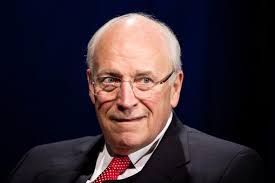
Dick Cheney
Throughout the program, Cheney showed no interest in introspection.
“I don’t go around thinking, ‘Gee, I wish we’d done this, or I wish I’d done that,’” said Cheney. “The world is as you find it, and you’ve got to deal with that….You don’t get do-overs.
“I did what I did, and it’s all part of the public record and I feel very good about it. If I had it to do over again, I’d do it in a minute.”
When the interviewer, R.J. Cutler, raised how the administration altered privacy rights, tortured detainees and pushed for an unnecessary war in Iraq, Cheney replied:
“Tell me what terrorist acts you would let go forward because you didn’t want to be a mean and nasty fella?”
Perhaps the most telling moment came when Cheney outlined his overall views on Realpolitick:
“Are you going to trade the lives of a number of people because you want to preserve your honor?” asked Cheney. “This was a wartime situation and it was more important to be successful than it was to be loved.”
Perhaps Cheney was thinking of Niccolo Machiavelli’s famous quote about love versus fear in The Prince, his primer on how to attain political power:
From this arises the question whether it is better to be loved than feared, or feared more than loved. The reply is, that one ought to be both feared and loved, but as it is difficult for the two to go together, it is much safer to be feared than loved.
For it may be said of men in general that they are ungrateful, voluble, dissemblers, anxious to avoid danger and covetous of gain; as long as you benefit them, they are entirely yours: they offer you their blood, their goods, their life and their children, when the necessity is remote, but when it approaches, they revolt….
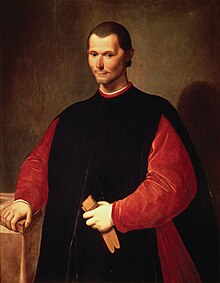
Niccolo Machiavelli
And men have less scruple in offending one who makes himself loved than one who makes himself feared; for love is held by a chain of obligations which, men being selfish, is broken whenever it serves their purpose; but fear is maintained by a dread of punishment which never fails.
Cheney appears to belileve that it’s better to be feared than loved.
In that, he has plenty of company among his fellow politicians–in the United States and elsewhere. But there is more to Machiavelli’s teaching, and this is usually overlooked–as it most certainly was by Cheney:
Still, a prince should make himself feared in such a way that if he does not gain love, he at any rate avoids hatred: for fear and the absence of hatred may well go together….
If Cheney considers himself a student of Machiavelli, then he utterly ignored this last offering of cautionary advice.
By authorizing the use of torture, the administration made itself–in the eyes of its Western European allies as well as its Islamic enemies–an epicenter of evil. “Guantanamo”–the Marine base in Cuba that had been largely forgotten over the decades–became a synonym for Auschwitz.
And after photographs emerged of the tortures and humiliations of detainees at Abu Garib Prison in Iraq, the United States sank even lower in the world’s estimation.
Among the human rights violations committed upon prisoners held by U.S. Army military police and assorted CIA agents:
- physical abuse
- psychological abuse
- torture
- rape
- sodomy
- homicide.
Of the ultimate legacy of George W. Bush and Dick Cheney, historian Nigel Hamilton wrote in his 2010 book, American Caesars: Lives of the Presidents from Franklin D. Roosevelt to George W. Bush:
“…arguably the worst of all the American Caesars, who willfully and recklessly destroyed so much of the moral basis of American leadership in the modern world.”
Soviet dictator Joseph Stalin believed, above all, in the brutal use of force–whether applied by prison torturers or legions of soldiers unrestrained by the Geneva Convention.
Once, when told that a certain policy he wanted to pursue would be heavily criticized by the Pope, he famously asked: “How many divisions does the Pope have?”
Stalin died in 1953. Had he lived on into the 1980s, he would have found out.
It was then that Pope John Paul II showed the power of an aroused spirituality.
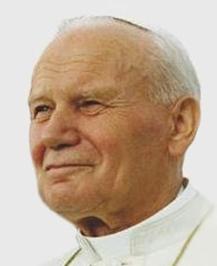
 John Paul II
When the Soviet Union seemed about to invade his native Poland as it had Hungary in 1956 and Czechoslovakia in 1968, the Pope reportedly sent the Kremlin a message: He would fly to Warsaw and place himself directly in the line of fire.
The Soviets never dared launch their planned invasion.
It is a lesson utterly lost on the likes of men like Dick Cheney.
9/11, ABC NEWS, ALTERNET, BOOZ ALLEN HAMILTON, BUZZFEED, CBS NEWS, CIA, CNN, CONTRACTORS, DAILY KOS, DONALD TRUMP, EDWARD SNOWDEN, FACEBOOK, GEORGE W. BUSH, HILLARY CLINTON, LEGACY OF ASHES: THE HISTORY OF THE CIA, LOCKHEED MARTIN, MERCENARIES, MOTHER JONES, MOVEON, NATIONAL SECURITY AGENCY, NBC NEWS, NEWSWEEK, NICCOLO MACHIAVELLI, NPR, POLITICO, RAW STORY, SALON, SLATE, THE CHICAGO SUN-TIMES, THE CHICAGO TRIBUNE, THE DAILY BEAST, THE HUFFINGTON POST, THE LOS ANGELES TIMES, THE NEW YORK TIMES, THE PRINCE, THE WALL STREET JOURNAL, THE WASHINGTON POST, TIM WEINER, TIME, TWITTER, U.S. NEWS & WORLD REPORT, USA TODAY, WIKILEAKS
In Bureaucracy, History, Law Enforcement, Military, Politics, Social commentary on March 9, 2017 at 4:37 pm
On March 7, WikiLeaks published a “data dump” of 8,761 documents codenamed “Vault 7.”
According to WikiLeaks, it represents “the majority of [the CIA’s] hacking arsenal, including malware, viruses, trojans, weaponized ‘zero day’ exploits, malware remote control systems and associated documentation.”
The documents expose that the CIA found security flaws in software operating systems such as Microsoft Windows, Android and Apple iOS. These allow an intruder–such as the CIA–to seize control of a computer or smartphone.
The owner could then be photographed through his iPhone camera and have his text messages intercepted.
Through a program called Weeping Angel, CIA operatives could–and did–spy on targets through their Samsung F8000 Smart TV sets. Even when these were turned off, they could be transformed into a 1984-type “telescreen.”![]()
The published documents covered CIA hacking techniques used between 2013 and 2016.
“This is CIA’s Edward Snowden,” former CIA acting director Michael Morrell told CBS News, referring to the former National Security Agency (NSA) contractor who leaked millions of documents in 2013.
“This is huge, in terms of what it will tell the adversaries,” Morrell said. “We’ll have to essentially start over in building tools to get information from our adversaries, just like we did with Snowden.”
So who made it possible for WikiLeaks to so thoroughly compromise United States security?
According to anonymous U.S. Intelligence and law enforcement sources, the culprits were CIA contractors. Contractors are suspected because there is no evidence that Russian Intelligence agencies tried to exploit any of the leaked material before it was published.
Companies that work with the CIA are checking their records for evidence of who might have had access to the leaked information. They will then scour those employees’ computer logs, emails and other communications for incriminating evidence.
In his 2007 bestseller, Legacy of Ashes: The History of the CIA, Tim Weiner outlined the dangers of the agency’s increasing dependence on outside contractors.
“Patriotism for profit became a $50-billion-a-year business….After the cold war, the agency began contracting out thousands of jobs to fill the perceived void by the budget cuts that began in 1992.
“A CIA officer could file his retirement papers, turn in his blue identification badge, go to work for a much better salary at a military contractor such as Lockheed Martin or Booz Allen Hamilton, then return to the CIA the next day, wearing a green badge….”
(Edward Snowden deliberately became a Booz Allen Hamilton contract employee to secure a job as a computer systems administrator at the National Security Agency (NSA). This gave him access to thousands of highly classified documents–which, in 2013, he began publicly leaking to a wide range of news organizations.
(His motive, he has claimed, was to alert his fellow Americans to the privacy-invading dangers posed by their own Intelligence agencies.)
Continues Weiner: “Great chunks of the clandestine service became wholly dependent on contractors who looked like they were in the CIA’s chain of command, but who worked for their corporate masters. In effect, the agency had two workforces–and the private one was paid far better….
“Legions of CIA veterans quit their posts to sell their services to the agency by writing analyses, creating cover for overseas officers, setting up communications networks, and running clandestine operations.”
One such company was Total Intelligence Solutions, founded in 2007 by Cofer Black, who had been the chief of the CIA’s counterrorism center on 9/11. His partners were Robert Richer, formerly the associate deputy director of operations at the CIA, and Enrique Prado, who had been Black’s chief of counterterror operations at the agency.
“Following their example,” writes Weiner, “new CIA hires adopted their own five-year plan: get in, get out, and get paid. A top secret security clearance and a green badge were golden tickets for a new breed of Beltway bandits.”
This situation met with full support from Right-wing “pro-business” members of Congress and Presidents like George W. Bush. They had long championed the private sector as inherently superior to the public one. And they saw no danger that a man dedicated to enriching himself might put greed ahead of safeguarding his country.
There were, however, others who could have offered a timely warning against this–had there been leaders willing to heed it.
One of these, reaching back more than 500 years ago, was the Florentine statesman, Niccolo Machiavelli, who famously warned of the dangers of relying on mercenaries.
Niccolo Machiavelli
In The Prince, Machiavelli writes:
“Mercenaries…are useless and dangerous. And if a prince holds on to his state by means of mercenary armies, he will never be stable or secure. For they are disunited, ambitious, without discipline, disloyal. They are brave among friends; among enemies they are cowards.
“They have neither the fear of God nor fidelity to man, and destruction is deferred only as the attack is. For in peace one is robbed by them, and in war by the enemy.”
Centuries after Machiavelli’s warning, Americans are realizing the bitter truth of it firsthand.
ABC NEWS, AFFORDABLE CARE ACT, AIR TRAFFIC CONTROLLERS STRIKE, ALTERNET, BARCK OBAMA, BUZZFEED, CBS NEWS, CNN, COLUMBIA UNIVERSITY, DAILY KOS, EXTORTION, FACEBOOK, GEORGE W. BUSH, HARVARD LAW SCHOOL, HILLARY CLINTON, JOHN SCHNATTER, JON STEWART, JONATHAN ALTER, JUSTICE DEPARTMENT, MEDICAL CARE, MOTHER JONES, MOVEON, NBC NESS, NBC NEWS, NEWSWEEK, NICCOLO MACHIAVELLI, NPR, OBAMACARE, PAPA JOHN'S PIZZA, PATRIOT ACT, POLITICO, RACKETEER INFLUENCED CORRUPT ORGANIZATIONS ACT, RAW STORY, REFORM, REPUBLICAN PARTY, RICHARD WOLFFE, SALON, SLATE, TERRORISM, THE CHICAGO SUN-TIMES, THE CHICAGO TRIBUNE, THE DAILY BEAST, THE DAILY SHOW, THE HUFFINGTON POST, THE LOS ANGELES TIMES, THE NEW YORK TIMES, THE PRINCE, THE WALL STREET JOURNAL, THE WASHINGTON POST, TIME, TWITTER, U.S. NEWS & WORLD REPORT, USA TODAY
In Bureaucracy, History, Law, Medical, Politics, Social commentary on March 2, 2017 at 12:11 am
President Barack Obama was often accused of playing ruthless “Chicago politics” by his Republican enemies. But Obama’s biggest mistake lay not in cynicism but misplaced idealism.
Obama Mistake No. 5: Believing that public and private employers would voluntarily comply with the law.
The Affordable Care Act (ACA) requires employers to provide insurance for part-time employees who work more than 30 hours per week. Yet many employers claimed–without having to offer proof–that they couldn’t afford it.
So they limited part-time workers’ hours to 29 per week instead.
Obama was clearly surprised at this. But he shouldn’t have been.
Greed-fueled businessmen always try to avoid complying with the law–or achieve minimum compliance with it.
The Act doesn’t penalize companies for not providing health insurance coverage for part-time employees who work fewer than 30 hours.
Predictably, employers:
- Moved fulltime workers into part-time positions;
- Refused to provide their employees with medical insurance; and
- Avoided fines for non-compliance with the law.
Some employers openly showed their contempt for President Obama–and the idea that employers have any obligation to those who make their profits a reality.
One was John Schnatter, CEO of Papa John’s Pizza, who said:
- The prices of his pizzas would go up–by 11 to 14 cents per pizza, or 15 to 20 cents per order; and
- He would pass along these costs to his customers.
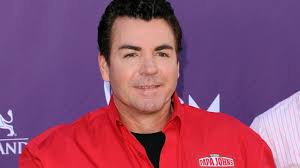
John Schnatter
“If Obamacare is in fact not repealed,” he told Politico, “we will find tactics to shallow out any Obamacare costs and core strategies to pass that cost onto consumers in order to protect our shareholders’ best interests.”
Thus, President Obama should have required all employers to provide insurance coverage for all of their employees, regardless of their fulltime or part-time status.
This would have produced two substantial benefits:
- All employees would have been able to obtain medical coverage; and
- Employers would have been encouraged to provide fulltime positions rather than part-time ones.
Employers would thus feel: “I’m paying for fulltime insurance coverage, so I should be getting fulltime work in return.”
If Obama considered this option, he decided against pressing for it.
Obama Mistake No. 6: Failing to closely study his proposed legislation.
Throughout his campaign to win support for the ACA, Obama had repeatedly promised: “If you like your health insurance plan, you can keep your plan. If you like your doctor, you can keep your doctor. Period.”
But the 906 pages of the law held a fatal catch for the President’s own credibility.
The law stated that those who already had medical insurance could keep their plans–so long as those plans met the requirements of the new healthcare law.
If their plans didn’t meet those requirements, they would have to obtain coverage that did.
But many Americans wanted to keep their current plan–even if it did not provide the fullest possible coverage.
Suddenly, the President found himself facing a PR nightmare–charged and ridiculed as a liar.
Even Jon Stewart, who on “The Daily Show,” had supported the implementation of “Obamacare,” ran footage of Obama’s “you can keep your doctor” promise.
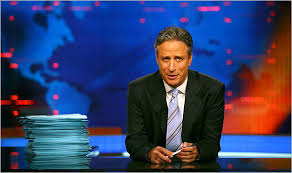
Jon Stewart
The implication: You said we could keep our plan/doctor. Since we can’t, you must be a liar.
All of which points to a final warning offered by Niccolo Machiavelli: Whence it may be seen that hatred is gained as much by good works as by evil….
Former Democratic Presidential nominee Hillary Clinton said that, if she were elected, she would seek incremental changes in the ACA. That possibility became moot when she lost the 2016 election to Donald Trump.
Vermont U.S. Senator Bernie Sanders, on the other hand, wants a single-payer plan.
A single-payer plan would prove simpler and more comprehensive than the ACA. But the chances of its passing a Republican-dominated Congress are absolutely zero.
The election of Donald Trump seems to have finally doomed the ACA–except for one thing: Since it became law, in 2010, 22 million Americans who had never before obtained healthcare insurance now have it.
This includes even Republicans who voted for Trump–without realizing they would be losing their only tie to medical care. And now many of them are finally realizing this truth.
Thus, Republicans in the House and Senate now find themselves besieged by angry constituents at town hall meetings.
These Republicans care nothing for Americans who would be left without medical care. But they do care about their own futures–as members of Congress.
This has led to three schisms among Republicans:
- Those who still demand the complete repeal of “Obamacare.”
- Those who want the Act repealed and then replaced with an entirely different healthcare plan–which Republicans have yet to agree on. Developing this could literally take years–during which time former ACA members would have no insurance.
- Those who want Republicans to first create an alternative healthcare plan, win its Congressional approval, and then repeal the Act.
Republicans expect Democrats to sign on with their “Obamacare replacement plan.” But Democrats have made it clear: “You repeal it, you’re on your own in replacing it.”
Republicans spent eight years demanding the repeal of “Obamacare.” But now they fear that its repeal will lead to the repeal of their own political ambitions.
ABC NEWS, AFFORDABLE CARE ACT, AIR TRAFFIC CONTROLLERS STRIKE, ALTERNET, BARCK OBAMA, BUZZFEED, CBS NEWS, CNN, COLUMBIA UNIVERSITY, DAILY KOS, EXTORTION, FACEBOOK, GEORGE W. BUSH, HARVARD LAW SCHOOL, HILLARY CLINTON, JOHN SCHNATTER, JON STEWART, JONATHAN ALTER, JUSTICE DEPARTMENT, MEDICAL CARE, MOTHER JONES, MOVEON, NBC NESS, NBC NEWS, NEWSWEEK, NICCOLO MACHIAVELLI, NPR, OBAMACARE, PAPA JOHN'S PIZZA, PATRIOT ACT, POLITICO, RACKETEER INFLUENCED CORRUPT ORGANIZATIONS ACT, RAW STORY, REFORM, REPUBLICAN PARTY, RICHARD WOLFFE, SALON, SLATE, TERRORISM, THE CHICAGO SUN-TIMES, THE CHICAGO TRIBUNE, THE DAILY BEAST, THE DAILY SHOW, THE HUFFINGTON POST, THE LOS ANGELES TIMES, THE NEW YORK TIMES, THE PRINCE, THE WALL STREET JOURNAL, THE WASHINGTON POST, TIME, TWITTER, U.S. NEWS & WORLD REPORT, USA TODAY
In Bureaucracy, History, Law, Medical, Politics, Social commentary on March 1, 2017 at 12:26 am
President Barack Obama came into office determined to find common ground with Republicans.
But they quickly made it clear to him that they only wanted his political destruction. At that point, he should have put aside his hopes for a “Kumbaya moment” and re-read what Niccolo Machiavelli said in The Prince on the matter of love versus fear:
From this arises the question whether it is better to be loved or feared, or feared more than love. The reply is, that one ought to be both feared and loved, but as it is difficult for the two to go together, it is much safer to be feared than loved….
And men have less scruple in offending one who makes himself loved than one who makes himself feared; for love is held by a chain of obligations which, men being selfish, is broken whenever it serves their purpose; but fear is maintained by a dread of punishment which never fails.
Finally, warns Machiavelli, a leader should not allow a threat to go unchecked. The motive for this is usually the hope of avoiding conflict And the result is usually catastrophe.
A man who wishes to make a profession of goodness in everything must inevitably come to grief among so many who are not good. And therefore it is necessary, for a prince who wishes to maintain himself, to learn how not to be good, and to use this knowledge and not use it, according to the necessity of the case.
For Obama, such a moment came in 2011, when House Republicans threatened to to destroy the credit rating of the United States unless the President agreed to scrap Obamacare.
Obama, a former attorney, heatedly denounced House Republicans for “extortion” and “blackmail.”
Unless he was exaggerating, both of these are felony offenses that are punishable under the 2001 USA Patriot Act and the Racketeer Influenced Corrupt Organizations (RICO) Act of 1970.
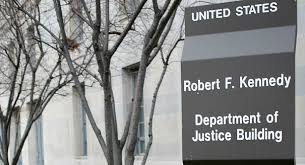
Among the crimes that can be prosecuted by Justice Department attorneys under RICO: Extortion.
Extortion is defined as “a criminal offense which occurs when a person unlawfully obtains either money, property or services from a person(s), entity, or institution, through coercion.”
And if President Obama didn’t believe that RICO was sufficient to deal with extortionate behavior, he could have ordered the Justice Department to cite the USA Patriot Act, passed in the wake of 9/11.
In Section 802, among the behaviors that are defined as domestic terrorism: “Activities that…appear to be intended…to influence the policy of a government by intimidation or coercion [and]…occur primarily within the territorial jurisdiction of the United States.”
Activities such as threatening to destroy the financial stability of the United States.
The remedies for punishing such criminal behavior were legally in place. President Obama could have directed the Justice Department to apply them.
If violations had been discovered, indictments could have quickly followed–and then prosecutions. The results of such action could be easily predicted:
- Facing lengthy prison terms, those indicted Republicans would have first had to lawyer-up.
- This would have imposed huge monetary costs on them, since good criminal attorneys don’t come cheap.
- Obsessed with their personal survival, they would have had little time to engage in more of the same thuggish behavior that got them indicted. In fact, doing so would have only made their convictions more likely.
- Those Republicans who hadn’t (yet) been indicted would have feared; “I could be next.” This would have produced a chilling effect on their willingness to engage in further acts of subversion and extortion.
- The effect on Right-wing Republicans would have been the same as that of President Ronald Reagan’s firing of striking air traffic controllers: “You cross me and threaten the security of this nation at your own peril.”
It would no doubt have been a long time before Republicans dared to engage in such behavior–at least, while Obama held office.
So: Why didn’t President Obama act to punish such criminal conduct?
Obama Mistake No. 4: He allowed himself to be cowed by his enemies.
In The Prince, Machiavelli laid out the qualities that a successful ruler should avoid–
He is rendered despicable by being thought changeable, frivolous, effeminate, timid and irresolute–which a prince must guard against as a rock of danger….
–and possess:
As to the government of his subjects, let his sentence be irrevocable, and let him adhere to his decisions so that no one may think of deceiving or cozening him.
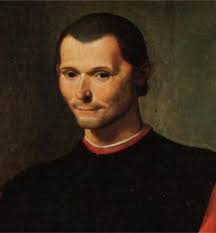
Niccolo Machiavelli
On July 2, 2013, the Treasury Department announced a major change in the application of the Affordable Care Act:
“We have heard concerns about the complexity of the requirements and the need for more time to implement them effectively…We have listened to your feedback. And we are taking action.
“The Administration is announcing that it will provide an additional year before the ACA mandatory employer and insurer reporting requirements begin.”
And the Republican response?
On July 30, 2013, House Republicans voted to sue the President for failing to enforce the Affordable Care Act–which they had voted 54 times to repeal, delay or change.
As Machiavelli warned: Timidity invites contempt–and aggression.
ABC NEWS, AFFORDABLE CARE ACT, AIR TRAFFIC CONTROLLERS STRIKE, ALTERNET, BARCK OBAMA, BUZZFEED, CBS NEWS, CNN, COLUMBIA UNIVERSITY, DAILY KOS, EXTORTION, FACEBOOK, GEORGE W. BUSH, HARVARD LAW SCHOOL, HILLARY CLINTON, JOHN SCHNATTER, JON STEWART, JONATHAN ALTER, JUSTICE DEPARTMENT, MEDICAL CARE, MOTHER JONES, MOVEON, NBC NESS, NBC NEWS, NEWSWEEK, NICCOLO MACHIAVELLI, NPR, OBAMACARE, PAPA JOHN'S PIZZA, PATRIOT ACT, POLITICO, RACKETEER INFLUENCED CORRUPT ORGANIZATIONS ACT, RAW STORY, REFORM, REPUBLICAN PARTY, RICHARD WOLFFE, SALON, SLATE, TERRORISM, THE CHICAGO SUN-TIMES, THE CHICAGO TRIBUNE, THE DAILY BEAST, THE DAILY SHOW, THE HUFFINGTON POST, THE LOS ANGELES TIMES, THE NEW YORK TIMES, THE PRINCE, THE WALL STREET JOURNAL, THE WASHINGTON POST, TIME, TWITTER, U.S. NEWS & WORLD REPORT, USA TODAY
In Bureaucracy, History, Law, Medical, Politics, Social commentary on February 28, 2017 at 12:13 am
Barack Obama was easily one of the most highly educated Presidents in United States history. He is a graduate of Columbia University (B.A. in political science in 1983).
In 1988, he entered Harvard Law School, graduating magna cum laude–“with great honor”–in 1991.
He was selected as an editor of the Harvard Law Review at the end of his first year, and president of the journal in his second year.
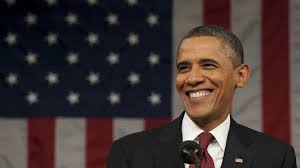
President Barack Obama
He then taught Constitutional law at the University of Chicago Law School for 12 years–as a Lecturer from 1992 to 1996, and as a Senior Lecturer from 1996 to 2004.
Yet, his signature plan to give every American access to healthcare, the Affordable Care Act–universally known as “Obamacare”–remains stricken with dangerous flaws.
So where did he go wrong?
Several ways–in all, at least six.
Obama Mistake No. 1: Putting off what people wanted while concentrating on what they didn’t.
Obama started off well when he took office. Americans had high expectations of him. This was partly due to his being the first black to be elected President.
And it was partly due to the disastrous legacies of needless war and financial catastrophe left by his predecessor, George W. Bush.
Obama entered office intending to reform the American healthcare system, to make medical care available to all citizens, and not just the richest. But that was not what the vast majority of Americans wanted him to concentrate his energies on.
With the lost of 2.6 million jobs in 2008, Americans wanted Obama to find new ways to create jobs. This was especially true for the 11.1 million unemployed, or those employed only part-time.
Jonathan Alter, who writes sympathetically about the President in The Center Holds: Obama and His Enemies, candidly states this.
But Obama chose to spend most of his first year as President pushing the Affordable Care Act (ACA)–which would soon become known as Obamacare–through Congress.
The results were:
- Those desperately seeking employment felt the President didn’t care about them.
- The reform effort became a lightning rod for Right-wing groups like the Koch-brothers-financed Tea Party.
- In 2010, a massive Rightist turnout cost the Democrats the House of Representatives, and threatened Democratic control of the Senate.
Obama Mistake No. 2: He underestimated the amount of opposition he would face to the ACA.
For all of Obama’s academic brilliance and supposed ruthlessness as a “Chicago politician,” he displayed an incredible naivety in dealing with his political opposition.
Niccolo Machiavelli (1469-1527), the Florentine statesman and father of modern politics, could have warned him of the consequences of this–through the pages of The Prince, his infamous treatise on the realities of politics.
Niccolo Machiavelli
And either Obama skipped those chapters or ignored their timeless advice for political leaders.
He should have started with Chapter Six: “Of New Dominions Which Have Been Acquired By One’s Own Arms and Ability”:
…There is nothing more difficult to carry out, nor more doubtful of success, nor more dangerous to handle than to initiate a new order of things.
For the reformer has enemies in all those who profit by the old order, and only lukewarm defenders in all those who would profit by the new order, this lukewarmness arising partly from fear of their adversaries, who have the laws in their favor, and partly from the incredulity of mankind, who do not truly believe in anything new until they have had actual experience of it.
This proved exactly the case with the proposed Affordable Care Act.
Its supporters–even when they comprised a majority of the Congress–have always shown far less fervor than its opponents.
This was true before the Act became effective on March 23, 2010. And it has remained true since, with House Republicans voting more than 60 times to repeal, delay or revise the law.
So before President Obama launched his signature effort to reform the American medical system, he should have taken this truism into account.
Obama Mistake No. 3: Failing to consider–and punish–the venom of his political enemies.
The ancient Greeks used to say: “A man’s character is his fate.” It was Obama’s character–and America’s fate–that he was by nature a man of conciliation, not conflict.
Richard Wolffe chronicled Obama’s winning of the White House in his 2009 book, Renegade: The Making of a President. He noted that Obama was always more comfortable when responding to Republican attacks on his character than he was in making attacks on his enemies.
President Obama came into office determined to find common ground with Republicans.
But they quickly made it clear to him that they only wanted his political destruction. At that point, he should have put aside his hopes for a “Kumbaya moment” and re-read what Niccolo Machiavelli said in The Prince on the matter of love versus fear:
From this arises the question whether it is better to be loved or feared, or feared more than love. The reply is, that one ought to be both feared and loved, but as it is difficult for the two to go together, it is much safer to be feared than loved.
2016 PRESIDENTIAL ELECTION, A BRONX TALE, ABC NEWS, ADOLF HITLER, ALTERNET, AMERICABLOG, AP, BABY BOOMER RESISTANCE, BBC, BILL CLINTON, BLOOMBERG NEWS, BUZZFEED, CBS NEWS, CHAZZ PALMINTERI, CNN, CROOKS AND LIARS, DAILY KOS, DONALD TRUMP, FACEBOOK, FBI, FIVETHIRTYEIGHT, HARPER’S MAGAZINE, HILLARY CLINTON, HUFFINGTON POST, IRS, J. EDGAR HOOVER, JOHN F. KENNEDY, LYNDON B. JOHNSON, MEDIA MATTERS, MOTHER JONES, MOVEON, MSNBC, NBC NEWS, NEW REPUBLIC, NEWSDAY, NEWSWEEK, NICCOLO MACHIAVELLI, NPR, PBS NEWSHOUR, POLITICO, POLITICUSUSA, RAW STORY, REPUBLICAN PARTY, REUTERS, RICHARD M. NIXON, ROBERT DE NIRO, ROBERT F. KENNEDY, Ronald Reagan, SALON, SEATTLE TIMES, SLATE, TALKING POINTS MEMO, THE ATLANTIC, THE CHICAGO SUN-TIMES, THE CHICAGO TRIBUNE, THE DAILY BEAST, THE DAILY BLOG, THE GUARDIAN, THE HILL, THE HUFFINGTON POST, THE INTERCEPT, THE LOS ANGELES TIMES, THE NATION, THE NEW REPUBLIC, THE NEW YORK TIMES, THE NEW YORKER, THE PRINCE, THE VILLAGE VOICE, THE WASHINGTON POST, THINKPROGRESS, TIME, TRUTHDIG, TRUTHOUT, TWITTER, U.S. NEWS & WORLD REPORT, UPI
In Bureaucracy, History, Law Enforcement, Military, Politics, Social commentary on December 22, 2016 at 12:18 am
Is it better to be loved or feared?
That was the question Florentine statesman Niccolo Machiavelli raised more than 500 years ago.
Presidents have struggled to answer this question—and have come to different conclusions.
LOVE ME, FEAR MY BROTHER
Most people felt irresistibly drawn to John F. Kennedy—even his political foes. Henry Luce, the conservative publisher of Time, once said, “He makes me feel like a whore.”
But JFK could afford to bask in the love of others—because his younger brother, Robert, was the one who inspired fear.
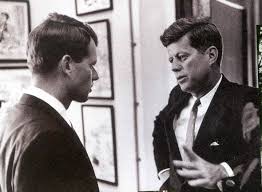
Robert F. Kennedy and John F. Kennedy
He had done so as Chief Counsel for the Senate Rackets Committee (1957-59), grilling Mafia bosses and corrupt union officials—most notably Teamsters President James Hoffa.
Appointed Attorney General by JFK, he unleashed the FBI on the Mafia. When the steel companies colluded in an inflationary rise in the price of steel in 1962, Bobby sicced the FBI on them.
In 1963, JFK’s cavorting with Ellen Rometsh threatened to destroy his Presidency. Rometsch, a Washington, D.C. call girl, was suspected by the FBI of being an East German spy.
With Republican Senators preparing to investigate the rumors, Bobby ordered Rometsch deported immediately (to which, as a German citizen, she was subject).
He also ordered FBI Director J. Edgar Hoover to deliver a warning to the Majority and Minority leaders of the Senate: The Bureau was fully aware of the extramarital trysts of most of its members. And an investigation into the President’s sex life could easily lead into revelations of Senatorial sleaze.
Plans for a Senatorial investigation were shelved.
BEING LOVED AND FEARED
In the 1993 movie, A Bronx Tale, 17-year-old Calogero (Lillo Brancato) asks his idol, the local Mafia capo, Sonny (Chazz Palminteri): “Is it better to be loved or feared?”
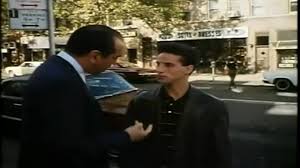
Sonny gives advice to his adopted son, Calogero
Sonny says if he had to choose, he would rather be feared. But he adds a warning straight out of Machiavelli: “The trick is not being hated. That’s why I treat my men good, but not too good.
“I give too much, then they don’t need me. I give them just enough where they need me, but they don’t hate me.”
Machiavelli, writing in The Prince, went further:
“Still a Prince should make himself feared in such a way that if he does not gain love, he at any rate avoids hatred, for fear and the absence of hatred may well go together. And [this] will always be attained by one who abstains from interfering with the property of his citizens and subjects or with their women.”
Many who quote Machiavelli in defense of being feared overlook this vital point: It’s essential to avoid becoming hated.
To establish a fearful reputation, a leader must act decisively and ruthlessly when the interests of the organization are threatened. Punitive action must be taken promptly and confidently.
One or two harsh actions of this kind can make a leader more feared than a reign of terror.
In fact, it’s actually dangerous to constantly employ cruelties or punishments. Whoever does so, warns Machiavelli, “is always obliged to stand with knife in hand, and can never depend on his subjects, because they, owing to continually fresh injuries, are unable to depend upon him.”
The 20th century President who came closest to realizing Machiavelli’s “loved and feared” prince was Ronald Reagan.
Always smiling, quick with a one-liner (especially at press conferences), seemingly unflappable, he projected a constantly optimistic view of his country and its citizens.
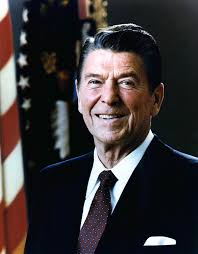
Ronald Reagan
In his acceptance speech at the 1980 Republican National Convention he declared: “[The Democrats] say that the United States has had its days in the sun, that our nation has passed its zenith.… My fellow citizens, I utterly reject that view.”
And Americans enthusiastically responded to that view, twice electing him President (1980 and 1984).
But there was a steely, ruthless side to Reagan that appeared when he felt crossed.
On August 3, 1981, nearly 13,000 air traffic controllers walked out after contract talks with the Federal Aviation Administration collapsed. As a result, some 7,000 flights across the country were canceled on that day at the peak of the summer travel season.
Reagan branded the strike illegal. He threatened to fire any controller who failed to return to work within 48 hours.
On August 5, Reagan fired more than 11,000 air traffic controllers who hadn’t returned to work. The mass firing slowed commercial air travel, but it did not cripple the system as the strikers had forecast.
Reagan’s action stunned the American labor movement. Reagan was the only American President to have belonged to a union, the Screen Actors Guild. He had even been president of this–from 1947 to 1954.
There were no more strikes by Federal workers during Reagan’s tenure in office.
Similarly, Libya’s dictator, Moammar Kadaffi, learned that Reagan was not a man to cross.
On April 5, 1986, Libyan agents bombed a nightclub in West Berlin, killing three people, one a U.S. serviceman. The United States quickly learned that Libyan agents in East Germany were behind the attack.
On April 15, acting on Reagan’s orders, U.S. Air Force, Navy and Marine Corps bombers struck at several sites in Tripoli and Benghazi. Reportedly, Kaddafi himself narrowly missed becoming a casualty.
There were no more acts of Libyan terrorism against Americans for the rest of Reagan’s term.
2016 PRESIDENTIAL ELECTION, A BRONX TALE, ABC NEWS, ADOLF HITLER, ALTERNET, AMERICABLOG, AP, BABY BOOMER RESISTANCE, BBC, BILL CLINTON, BLOOMBERG NEWS, BUZZFEED, CBS NEWS, CHAZZ PALMINTERI, CNN, CROOKS AND LIARS, DAILY KOS, DONALD TRUMP, FACEBOOK, FBI, FIVETHIRTYEIGHT, HARPER’S MAGAZINE, HILLARY CLINTON, HUFFINGTON POST, IRS, J. EDGAR HOOVER, JOHN F. KENNEDY, LYNDON B. JOHNSON, MEDIA MATTERS, MOTHER JONES, MOVEON, MSNBC, NBC NEWS, NEW REPUBLIC, NEWSDAY, NEWSWEEK, NICCOLO MACHIAVELLI, NPR, PBS NEWSHOUR, POLITICO, POLITICUSUSA, RAW STORY, REPUBLICAN PARTY, REUTERS, RICHARD M. NIXON, ROBERT DE NIRO, ROBERT F. KENNEDY, Ronald Reagan, SALON, SEATTLE TIMES, SLATE, TALKING POINTS MEMO, THE ATLANTIC, THE CHICAGO SUN-TIMES, THE CHICAGO TRIBUNE, THE DAILY BEAST, THE DAILY BLOG, THE GUARDIAN, THE HILL, THE HUFFINGTON POST, THE INTERCEPT, THE LOS ANGELES TIMES, THE NATION, THE NEW REPUBLIC, THE NEW YORK TIMES, THE NEW YORKER, THE PRINCE, THE VILLAGE VOICE, THE WASHINGTON POST, THINKPROGRESS, TIME, TRUTHDIG, TRUTHOUT, TWITTER, U.S. NEWS & WORLD REPORT, UPI
In Bureaucracy, History, Law Enforcement, Military, Politics, Social commentary on December 21, 2016 at 12:03 am
It’s probably the most-quoted passage of Niccolo Machiavelli’s infamous book, The Prince:
“From this arises the question whether it is better to be loved than feared, or feared more than loved. The reply is, that one ought to be both feared and loved, but as it is difficult for the two to go together, it is much safer to be feared than loved.
“For it may be said of men in general that they are ungrateful, voluble, dissemblers, anxious to avoid danger and covetous of gain. As long as you benefit them, they are entirely yours: they offer you their blood, their goods, their life and their children, when the necessity is remote, but when it approaches, they revolt.
“And the prince who has relied solely on their words, without making other preparations, is ruined. For the friendship which is gained by purchase and not through grandeur and nobility of spirit is bought but not secured, and at a pinch is not to be expended in your service.
“And men have less scruple in offending one who makes himself loved than one who makes himself feared. For love is held by a chain of obligations which, men being selfish, is broken whenever it serves their purpose. But fear is maintained by a dread of punishment which never fails.”
Niccolo Machiavelli
So—which is better: To be feared or loved?
In the 1993 film, A Bronx Tale, 17-year-old Calogero (Lillo Brancato) poses that question to his idol, the local Mafia capo, Sonny (Chazz Palminteri).
“That’s a good question,” Sonny replies. “It’s nice to be both, but it’s very difficult. But if I had my choice, I would rather be feared.
“Fear lasts longer than love. Friendships that are bought with money mean nothing. You see how it is around here. I make a joke, everybody laughs. I know I’m funny, but I’m not that funny. It’s fear that keeps them loyal to me.”
Presidents face the same dilemma as Mafia capos—and resolve it in their own ways.
LOVE ME BECAUSE I NEED TO BE LOVED
Bill Clinton believed that he could win over his self-appointed Republican enemies through his sheer charm.
Part of this lay in self-confidence: He had won the 1992 and 1996 elections by convincing voters that “I feel your pain.”
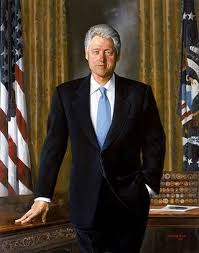
Bill Clinton
And part of it lay in his need to be loved. He once said that if he were in a room with 100 people and 99 of them liked him but one didn’t, he would spend all his time with that one person, trying to win him over.
But while he could charm voters, he could not bring himself to retaliate against his sworn Republican enemies.
On April 19, 1995, Right-wing terrorist Timothy McVeigh drove a truck—packed with 5,000 pounds of ammonium nitrate and nitromethane—to the front of the Alfred P. Murrah Federal Building in Oklahoma City.
The explosion killed 168 people, including 19 children in the day care center on the second floor, and injured 684 others.
Suddenly, Republicans were frightened. Since the end of World War II, they had vilified the very Federal Government they belonged to. They had even courted the Right-wing militia groups responsible for the bombing.
So Republicans feared Clinton would now turn their decades of hate against them.
They need not have worried. On April 23, Clinton presided over a memorial service for the victims of the bombing. He gave a moving eulogy–without condemning the hate-filled Republican rhetoric that had at least indirectly led to the slaughter.
Clinton further sought to endear himself to Republicans by:
- Adopting NAFTA—the Republican-sponsored North American Free Trade Act, which later proved so devastating to American workers;
- Siding with Republicans against poor Americans on welfare; and
- Championing the gutting of the Depression-era Glass-Steagall law, which barred investment banks from commercial banking activities.
In 1998, emboldened by Clinton’s refusal to stand up to them, House Republicans moved to impeach him over a sex scandal with White House intern Monica Lewinsky. But his Presidency survived when the Senate refused to convict.
LOVE ME BECAUSE I’LL HURT YOU IF YOU DON’T
Lyndon Johnson wanted desperately to be loved.
Once, he complained to Dean Acheson, the former Secretary of State under Harry S. Truman, about the ingratitude of American voters. He had passed far more legislation than his predecessor, John F. Kennedy, and yet Kennedy remained beloved, while he, Johnson, was not.
Why was that? Johnson demanded.
“You are not a very likable man,” said Acheson truthfully.
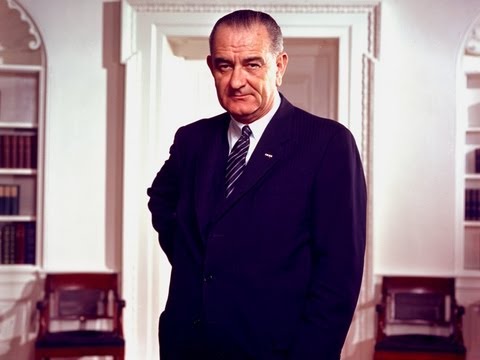
Lyndon B. Johnson
Johnson tried to make his subordinates love him. He would humiliate a man, then give him an expensive gift–such a Cadillac. It was his way of binding the man to him.
He was on a first-name basis with J. Edgar Hoover, the longtime director of the FBI. He didn’t hesitate to request–and get–raw FBI files on his political opponents.
On at least one occasion, he told members of his Cabinet: No one would dare walk out on his administration–because if they did, two men would follow their ass to the end of the earth: Mr. J. Edgar Hoover and the head of the Internal Revenue Service.
2003 IRAQ WAR, ABC NEWS, ASIANS, BARACK OBAMA, BIRTH CONTROL, BLACKS, CBS NEWS, CNN, DISABLED, DONALD TRUMP, ED MARTIN, FACEBOOK, HILLARY CLINTON, HUMAYUN KHAN, KATRINA PIERSON, LATINOS, MARCO GUTIERREZ, MEDICAID, MEDICARE, MSNBC, MUSLIMS, NBC NEWS, NICCOLO MACHIAVELLI, OBAMACARE, PRISONERS OF WAR, SOCIAL SECURITY, TEA PARTY, THE CHICAGO SUN-TIMES, THE CHICAGO TRIBUNE, THE DISCOURSES, THE LOS ANGELES TIMES, THE NEW YORK TIMES, THE PRINCE, THE WASHINGTON POST, TWITTER, WAYNE ROOT, WOMEN
In Bureaucracy, History, Military, Politics, Social commentary on November 8, 2016 at 9:41 am
No shortage of pundits have sized up Donald Trump as a man and Presidential candidate.
But how does Trump measure up in the estimate of Niccolo Machiavelli, the 16th-century Florentine statesman?
It is Machiavelli whose two great works on politics–The Prince and The Discourses–remain textbooks for successful politicians more than 500 years later.
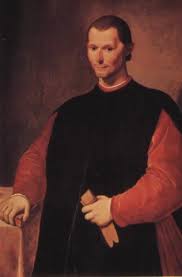
Niccolo Machiavelli
Let’s start with Trump’s notoriety for hurling insults at virtually everyone, including:
- Latinos
- Asians
- Muslims
- Blacks
- The Disabled
- Women
- Prisoners-of-War
These insults delight his white, under-educated followers. But they have alienated millions of other Americans who might have voted for him.
Now consider Machiavelli’s advice on gratuitously handing out insults and threats:
-
“I hold it to be a proof of great prudence for men to abstain from threats and insulting words towards any one.
-
“For neither the one nor the other in any way diminishes the strength of the enemy–but the one makes him more cautious, and the other increases his hatred of you, and makes him more persevering in his efforts to injure you.”
For those who expect Trump to shed his propensity for constantly picking fights, Machiavelli has a stern warning:
-
“…If it happens that time and circumstances are favorable to one who acts with caution and prudence he will be successful. But if time and circumstances change he will be ruined, because he does not change the mode of his procedure.
-
“No man can be found so prudent as to be able to adopt himself to this, either because he cannot deviate from that to which his nature disposes him, or else because, having always prospered by walking in one path, he cannot persuade himself that it is well to leave it…
-
“For if one could change one’s nature with time and circumstances, fortune would never change.”
Then there is Trump’s approach to consulting advisers:
Asked on MSNBC’s “Morning Joe” who he consults about foreign policy, Trump replied; “I’m speaking with myself, number one, because I have a very good brain and I’ve said a lot of things.”
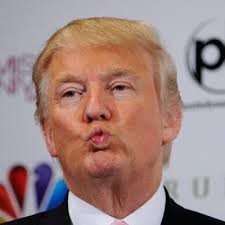
Donald Trump
This totally contrasts the advice given by Machiavelli:
-
“A prudent prince must [choose] for his counsel wise men, and [give] them alone full liberty to speak the truth to him, but only of those things that he asks and of nothing else.
-
“But he must be a great asker about everything and hear their opinions, and afterwards deliberate by himself in his own way, and in these counsels…comport himself so that every one may see that the more freely he speaks, the more he will be acceptable.”
And Machiavelli has potent advice on the selection of advisers:
- “The first impression that one gets of a ruler and his brains is from seeing the men that he has about him.
- “When they are competent and loyal one can always consider him wise, as he has been able to recognize their ability and keep them faithful.
- “But when they are the reverse, one can always form an unfavorable opinion of him, because the first mistake that he makes is in making this choice.”
Consider some of the advisers Trump has relied on in his campaign for President:
- Founder of Latinos for Trump Marco Gutierrez told MSNBC’s Joy Reid: “My culture is a very dominant culture. And it’s imposing, and it’s causing problems. If you don’t do something about it, you’re gonna have taco trucks every corner.”
- At a Tea Party for Trump rally at a Harley-Davidson dealership in Festus, Missouri, former Missouri Republican Party director Ed Martin reassured the crowd that they’re not racist for hating Mexicans.
From the outset of his Presidential campaign, Trump has polled extremely poorly among Hispanic voters. Comments such as these guaranteed his poll figures wouldn’t improve.
- Wayne Root, opening speaker and master of ceremonies at many Trump events, told Virginia radio host Rob Schilling that people on public assistance and women who get their birth control through Obamacare should not be allowed to vote.
Comments like this didn’t increase Trump’s popularity with the the 70% of women who have an unfavorable opinion of him. Nor with anyone who receives Medicaid, Medicare or Social Security.
- Trump’s spokeswoman, Katrina Pierson, claimed that Barack Obama and Hillary Clinton were responsible for the death of Captain Humayun Khan–who was killed by a truck-bomb in Iraq in 2004.
Obama became President in 2009–almost five years after Khan’s death. And Clinton became Secretary of State the same year.
When your spokeswoman becomes a nationwide laughingstock, your own credibility goes down the toilet as well.
Finally, Machiavelli offers a related warning that especially applies to Trump: Unwise princes cannot be wisely advised.
-
“It is an infallible rule that a prince who is not wise himself cannot be well advised, unless by chance he leaves himself entirely in the hands of one man who rules him in everything, and happens to be a very prudent man. In this case, he may doubtless be well governed, but it would not last long, for the governor would in a short time deprive him of the state.”
All of which would lead Niccolo Machiavelli to warn, if he could witness American politics today: “This bodes ill for your Republic.”
ABC NEWS, BARACK OBAMA, CBS NEWS, CNN, COLIN POWELL, CONDOLEEZA RICE, D-DAY, EMAIL SERVER, FACEBOOK, GEORGE S. PATTON, GEORGE W. BUSH, GREAT BRITAIN, HEINZ GUDERIAN, HILLARY CLINTON, NAZI GERMANY, NBC NEWS, NICCOLO MACHIAVELLI, REPUBLICANS, STALINGRAD, THE CHICAGO SUN-TIMES, THE CHICAGO TRIBUNE, THE LOS ANGELES TIMES, THE NEW YORK TIMES, THE PRINCE, THE WASHINGTON POST, TWITTER, U.S. STATE DEPARTMENT, WAFFEN-SS, WORLD WAR 11
In Bureaucracy, History, Military, Politics, Social commentary on November 2, 2016 at 12:04 am
Most Americans believe that Nazi Germany was defeated because “we were the Good Guys and they were the Bad Guys.”
Not so.
The United States–and its allies, Great Britain and the Soviet Union–won the war for reasons that had nothing to do with the righteousness of their cause. These included:
- Nazi Germany–i.e, its Fuehrer, Adolf Hitler–made a series of disastrous decisions. Chief among these: Attacking its ally, the Soviet Union, and declaring war on the United States;
- The greater material resources of the Soviet Union and the United States; and
- The Allies waged war as brutally as the Germans.
On this last point:
- From D-Day to the fall of Berlin, Americans often shot captured Waffen-SS soldiers out of hand.
- When American troops came under fire in the German city of Aachen, Lt. Col. Derrill Daniel brought in a self-propelled 155mm artillery piece and opened up on a theater housing German soldiers. After the city surrendered, a German colonel labeled the use of the 155 “barbarous” and demanded that it be outlawed.
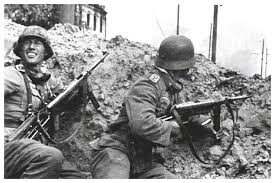
German soldiers at Stalingrad
- During the battle of Stalingrad in 1942, Wilhelm Hoffman, a young German soldier and diarist, was appalled that the Russians refused to surrender. He wrote: “You don’t see them at all, they have established themselves in houses and cellars and are firing on all sides, including from our rear–barbarians, they used gangster methods….”
In short: The Allies won because they dared to meet the brutality of a Heinz Guderian with that of a George S. Patton or a Georgi Zhukov.
This is a lesson that has been totally lost on the liberals of the Democratic Party.
Which explains why they lost most of the Presidential elections of the 20th century.
It also explains why Hillary Clinton finds herself on the defensive in the last week of the 2016 Presidential race.
Throughout her campaign, the Democratic Presidential nominee has been stalked by her use of a private email server at her home in Chappaqua, New York, while Secretary of State (2009-2013).
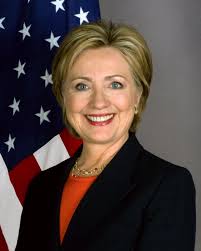
Hillary Clinton
She did not use, or even activate, a State Department email account, which would have been hosted on servers owned and managed by the United States government.
Republicans have portrayed this as a criminal act–and their Presidential candidate, Donald Trump, has threatened to send her to prison for it if he’s elected.
It wasn’t.
When she became Secretary of State, the 1950 Federal Records Act mandated that officials using personal email accounts turn over their official correspondence to the government.
Clinton maintains that most of her emails went to, or were forwarded to, people with government accounts, so they were automatically archived.
In November 2014, President Barack Obama signed the Presidential and Federal Records Act Amendments, which require government officials to forward any official correspondence to the government within 20 days. But even under this new law, the penalties are only administrative, not criminal.
In May, 2016, the State Department’s Inspector General found that:
- Clinton’s email system violated government policy;
- She did not receive permission in setting it up; and
- The agency wouldn’t have granted approval had she asked.
Nevertheless, her behavior did not constitute criminal conduct.
Clinton’s use of a private email system became a major political issue when The New York Times broke the story in March, 2015.
Since then, Republicans have attacked her as having endangered national security as a result.
In doing so, they have totally ignored two embarrassing facts:
First: During the George W. Bush Presidency, Clinton’s two Republican predecessors as Secretary of State–Colin Powell and Condoleeza Rice–also used private email accounts; and
Second: Government computer systems are not secure–and have been repeatedly hacked. Among the agencies attacked:
- The White House (2014)
- Federal Aviation Administration (2015)
- Department of Defense (2015)
- Internal Revenue Service (2015)
- Pentagon (2015)
- Department of State (2014)
- Department of Homeland Security
As soon as Republicans began attacking Clinton’s use of a private server, Democrats should have threatened to convene hearings spotlighting similar behavior by Powell and Rice.

Colin Powell and Condoleeza Rice
Powell and Rice–both still highly influential figures within the Republican party–would have pressured their fellow Republicans: Knock this off–now.
Even if Republicans had continued to hound Clinton on her email server, Democrats could have summoned and publicly grilled Powell and Rice.
This would have served Republicans a lesson on Realpolitik straight out of Niccolo Machiavelli’s primer, The Prince:
From this arises the question whether it is better to be loved than feared, or feared more than loved.
The reply is, that one ought to be both feared and loved, but as it is difficult for the two to go together, it is much safer to be feared than loved….
And men have less scruple in offending one who makes himself loved than one who makes himself feared; for love is held by a chain of obligations which, men being selfish, is broken whenever it serves their purpose; but fear is maintained by a dread of punishment which never fails.
For Democrats to win elective victories and enact their agenda, they must find their own George Pattons to take on the Waffen-SS generals among Republican ranks.
ADOLF HITLER, BARACK OBAMA, BILL CLINTON, CHRIS MATTHEWS, CNN'S "STARTING POINT", CZECHOSLAVAKIA, DARRELL ISSA, DEBT CEILING, EXECUTIVE ORDERS, EXTORTION, FACEBOOK, GEORGE W. BUSH, HOUSE SPEAKER JOHN BOEHNER, immigration reform, JIMMY CARTER, MSNBC'S "HARDBALL", NAZI GERMANY, NEGOTIATING, NEVILLE CHAMBERLAIN, NEWT GINGRICH, NICCOLO MACHIAVELLI, PAP SMEARS, PLANNED PARENTHOOD, POLAND, R.I.CO. ACT, REPUBLICAN PARTY, REPUBLICANS, Ronald Reagan, THE CHICAGO SUN-TIMES, THE CHICAGO TRIBUNE, THE LOS ANGELES TIMES, THE NEW YORK TIMES, THE PRINCE, THE WASHINGTON POST, TITLE X, TWITTER, WARREN BUFFET, WINSTON CHURCHILL, WORLD WAR 11
In Bureaucracy, History, Law, Law Enforcement, Military, Politics, Social commentary on October 19, 2016 at 12:02 am
In 2011, Republicans threatened to destroy the Nation’s credit rating unless their budgetary demands were met.
As Ernst Casier, chairman of philosophy at Hamburg University once warned:
“Those who are willing to risk everything, even death and destruction, to attain their ends will prevail over more responsible and prudent men who have more to lose and are rational, not suicidal.”
Yet President Barack Obama could have ended that threat via the Racketeer Influenced Corrupt Organizations (RICO) Act.
Passed by Congress in 1970, as Title 18, United States Code, Sections 1961-1968, its goal was to destroy the Mafia.
Originally, RICO was aimed at the Mafia and other organized crime syndicates. But in United States v. Turkette, 452 U.S. 576 (1981), the Supreme Court held that RICO applied as well to legitimate enterprises being operated in a criminal manner.
After Turkette, RICO could also be used against corporations, political protest groups, labor unions and loosely knit-groups of people.
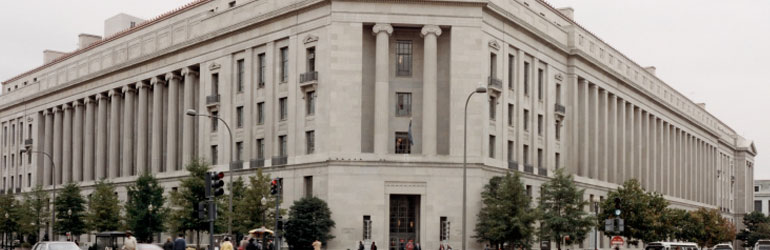
Department of Justice
RICO opens with a series of definitions of “racketeering activity” which can be prosecuted by Justice Department attorneys. Among those crimes: Extortion.
Extortion is defined as “a criminal offense which occurs when a person unlawfully obtains either money, property or services from a person(s), entity, or institution, through coercion.”

The RICO Act defines “a pattern of racketeering activity” as “at least two acts of racketeering activity, one of which occurred after the effective date of this chapter and the last of which occurred within ten years…after the commission of a prior act of racketeering activity.”
And if President Obama had believed that RICO was not sufficient to deal with Republicans’ extortion attempts, he could have relied on the USA Patriot Act of 2001, passed in the wake of 9/11.
In Section 802, the Act defines domestic terrorism. Among the behavior that is defined as criminal:
“Activities that…appear to be intended…to influence the policy of a government by intimidation or coercion [and]…occur primarily within the territorial jurisdiction of the United States.”
The remedies for punishing such criminal behavior were now legally in place. President Obama needed only to direct the Justice Department to apply them.
- President Obama could have directed Attorney General Eric Holder to investigate whether actions by Republican Congressman–and their Tea Party cohorts–broke Federal anti-racketeering and/or anti-terrorism laws.
- Holder, in turn, could have ordered the FBI to conduct that investigation.
- If the FBI found sufficient evidence that these laws had been violated, Holder could have convened criminal grand juries to indict those violators.
Criminally investigating and possibly indicting members of Congress would not violate the separation-of-powers principle. Congressmen have in the past been investigated, indicted and convicted for various criminal offenses.
Such indictments and prosecutions–and especially convictions–would have served notice on current and future members of Congress: The lives and fortunes of American citizens may not be held hostage to gain leverage in a political settlement.
In short: Obama could have replaced the law of fear with the rule of law.
But Obama could have stood up to Republican extortionists in another way: By urging his fellow Americans to rally to him in a moment of supreme national danger.
President John F. Kennedy did just that–successfully–during the most dangerous crisis of his administration.
Addressing the Nation on October 22, 1962, Kennedy shocked his fellow citizens by revealing that the Soviet Union had installed offensive nuclear missiles in Cuba.
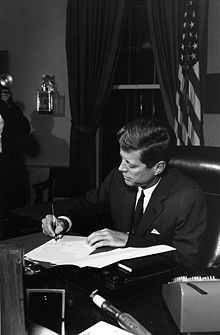
John F. Kennedy
Kennedy outlined a series of steps he had taken to end the crisis–most notably, a blockade of Cuba. Then he sought to reassure and inspire his audience:
“The cost of freedom is always high, but Americans have always paid it. And one path we shall never choose, and that is the path of surrender or submission.”
President Obama could have sent that same message to the extortionists of the Republican Party–by explaining to the American people:
- Republicans have adopted the same my-way-or-else “negotiating” stance as Adolf Hitler.
- Like the Nazis, they are determined to gain absolute power–or destroy the Nation they claim to love.
- They raised the debt ceiling seven times during the eight-year Presidency of George W. Bush.
- But now that a Democrat holds the White House, raising the debt ceiling is unacceptable.
- Despite Republican lies, we cannot revitalize the economy by slashing taxes on the wealthy and on cash-hoarding corporations while cutting benefits for millions of average Americans.
- We will need both tax increases and sensible entitlement cuts to regain our economic strength.
And he could have ended his speech with a direct call for action by the American people:
“We stand on the edge of economic disaster. Therefore, I am asking each of you to stand up for America tonight–by demanding the recall of the entire membership of the Republican Party.
“This is the moment when each of us must decide–whether we will survive as a Republic, or allow ruthless political fanatics to destroy what has lasted and thrived for more than 200 years.”
To paraphrase Winston Churchill: President Obama had to choose between timidity and confrontation.
He chose timidity.
He would get contempt and obstruction at every turn.




ABC NEWS, ABU GARIB PRISON, ALTERNET, AMERICAN CAESARS, BUZZFEED, CBS NEWS, CNN, DAILY KOS, DICK CHENEY, FACEBOOK, GEORGE W. BUSH, GUANTANAMO, JOSEPH STALIN, MOTHER JONES, MOVEON, NBC NEWS, NEWSWEEK, NICCOLO MACHIAVELLI, NIGEL HAMILTON, NPR, POLAND, POLITICO, POPE JOHN PAUL II, RAW STORY, SALON, SLATE, SOVIET UNION, THE CHICAGO SUN-TIMES, THE CHICAGO TRIBUNE, THE DAILY BEAST, THE HUFFINGTON POST, THE LOS ANGELES TIMES, THE NEW YORK TIMES, THE PRINCE, THE WALL STREET JOURNAL, THE WASHINGTON POST, TIME, TORTURE, TWITTER, TWITTER CNN, U.S. NEWS & WORLD REPORT, USA TODAY
FEAR–AND ITS POLITICAL LEGACY
In Bureaucracy, History, Politics, Social commentary on March 10, 2017 at 10:38 amDick Cheney left office as co-President of the United States on January 20, 2009. During the last four years, he has had time to write his memoirs and reflect on the legacies of the George W. Bush Presidency.
His book, In My Time, was published in 2012. And, in March, 2013, Cheney appeared in the Showtime-produced documentary, “The World According to Dick Cheney.”
Dick Cheney
Throughout the program, Cheney showed no interest in introspection.
“I don’t go around thinking, ‘Gee, I wish we’d done this, or I wish I’d done that,’” said Cheney. “The world is as you find it, and you’ve got to deal with that….You don’t get do-overs.
“I did what I did, and it’s all part of the public record and I feel very good about it. If I had it to do over again, I’d do it in a minute.”
When the interviewer, R.J. Cutler, raised how the administration altered privacy rights, tortured detainees and pushed for an unnecessary war in Iraq, Cheney replied:
“Tell me what terrorist acts you would let go forward because you didn’t want to be a mean and nasty fella?”
Perhaps the most telling moment came when Cheney outlined his overall views on Realpolitick:
“Are you going to trade the lives of a number of people because you want to preserve your honor?” asked Cheney. “This was a wartime situation and it was more important to be successful than it was to be loved.”
Perhaps Cheney was thinking of Niccolo Machiavelli’s famous quote about love versus fear in The Prince, his primer on how to attain political power:
From this arises the question whether it is better to be loved than feared, or feared more than loved. The reply is, that one ought to be both feared and loved, but as it is difficult for the two to go together, it is much safer to be feared than loved.
For it may be said of men in general that they are ungrateful, voluble, dissemblers, anxious to avoid danger and covetous of gain; as long as you benefit them, they are entirely yours: they offer you their blood, their goods, their life and their children, when the necessity is remote, but when it approaches, they revolt….
Niccolo Machiavelli
And men have less scruple in offending one who makes himself loved than one who makes himself feared; for love is held by a chain of obligations which, men being selfish, is broken whenever it serves their purpose; but fear is maintained by a dread of punishment which never fails.
Cheney appears to belileve that it’s better to be feared than loved.
In that, he has plenty of company among his fellow politicians–in the United States and elsewhere. But there is more to Machiavelli’s teaching, and this is usually overlooked–as it most certainly was by Cheney:
Still, a prince should make himself feared in such a way that if he does not gain love, he at any rate avoids hatred: for fear and the absence of hatred may well go together….
If Cheney considers himself a student of Machiavelli, then he utterly ignored this last offering of cautionary advice.
By authorizing the use of torture, the administration made itself–in the eyes of its Western European allies as well as its Islamic enemies–an epicenter of evil. “Guantanamo”–the Marine base in Cuba that had been largely forgotten over the decades–became a synonym for Auschwitz.
And after photographs emerged of the tortures and humiliations of detainees at Abu Garib Prison in Iraq, the United States sank even lower in the world’s estimation.
Among the human rights violations committed upon prisoners held by U.S. Army military police and assorted CIA agents:
Of the ultimate legacy of George W. Bush and Dick Cheney, historian Nigel Hamilton wrote in his 2010 book, American Caesars: Lives of the Presidents from Franklin D. Roosevelt to George W. Bush:
“…arguably the worst of all the American Caesars, who willfully and recklessly destroyed so much of the moral basis of American leadership in the modern world.”
Soviet dictator Joseph Stalin believed, above all, in the brutal use of force–whether applied by prison torturers or legions of soldiers unrestrained by the Geneva Convention.
Once, when told that a certain policy he wanted to pursue would be heavily criticized by the Pope, he famously asked: “How many divisions does the Pope have?”
Stalin died in 1953. Had he lived on into the 1980s, he would have found out.
It was then that Pope John Paul II showed the power of an aroused spirituality.
When the Soviet Union seemed about to invade his native Poland as it had Hungary in 1956 and Czechoslovakia in 1968, the Pope reportedly sent the Kremlin a message: He would fly to Warsaw and place himself directly in the line of fire.
The Soviets never dared launch their planned invasion.
It is a lesson utterly lost on the likes of men like Dick Cheney.
Share this: