Posts Tagged ‘THE NEW YORK TIMES’
60 MINUTES, 9/11 ATTACKS, ABC NEWS, ADOLF HITLER, AFGHANISTAN, AL QAEDA, BARACK OBAMA, BARCK OBAMA, BASHAR AL-ASSAD, CARL VON CLAUSEWITZ, CARLOS THE JACKAL, CBS NEWS, CHEMICAL WEAPONS, CHINA, CIA, CNN, DAVID BROOKS, DAVID CORN, FACEBOK, FACEBOOK, HARRY TRUMAN, IMPERIAL HUBRIS, IRAN, ISLAM, ISLAMIC STATE OF IRAQ AND THE LEVANT, ISRAEL, MARCHING TOWARD HELL, MICHAEL SCHEUER, MOTHER JONES MAGAZINE, MUSLIMS, NAZI GERMANY, NBC NEWS, OSAMA BIN LADEN, RUSSIA, SOVIET UNION, SYRIA, TERRORISM, THE CHICAGO TIMES, THE CHICAGO TRIBUNE, THE LOS ANGELES TIMES, THE NEW YORK TIMES, THE WASHINGTON POST, TWITTER, USA TODAY, VIETNAM WAR, VLADIMIR PUTIN, WORLD WAR 1
In Bureaucracy, History, Military, Politics, Social commentary on August 19, 2015 at 12:07 am
On April 16, the Syrian Observatory for Human Rights released some encouraging news for potential victims of Islamic terrorism–and those fighting it.

More than 310,000 people have been killed in Syria’s uprising-turned-civil war.
Put another way: More than 310,000 potential or actual Islamic terrorists will never again pose a threat to the United States or Western Europe.
The Syrian conflict began on March 15, 2011, triggered by protests demanding political reforms and the ouster of dictator Bashar al-Assad.
According to the Observatory, which is safely based in Britain:
- The total number of dead is now at 310,000.
- More than 37,000 rebels have been killed and over 46,000 from pro-Assad forces.
- At least 682 Hizbollah fighters.
- The true toll on both sides was likely much higher–by perhaps more than 60,000.
And who does the Syrian Observatory for Human Rights blame for this Islamic self-slaughter? Why, the West, of course.
According to its website:
“The silence of the International community for the war crimes and crimes against humanity committed in Syria encourages the criminals to kill more and more Syrian people because they have not found anyone that deter them from continuing their crimes that cause to wound more than 1500000 people; some of them with permanent disabilities, make hundreds of thousands children without parents, displace more than half of Syrian people and destroy infrastructure, private and public properties.”
310,000 people killed since the beginning of the Syrian Revolution | Syrian Observatory For Human Rights
Got that? “They have not found anyone that deter them from continuing their crimes”–as if it’s the duty of non-Muslims to bring civilized behavior to Islamics.
And why are all these murderers “continuing their crimes”? Because of a religious dispute within Islam that traces back to the fourth century.
Yes, it’s Sunni Muslims, who make up a majority of Islamics, versus Shiite Muslims, who comprise a minority.
Each group considers the other takfirs–that is, “apostates.” And, in Islam, being labeled an apostate can easily get you murdered.
But, according to the Syrian Observatory, it’s the duty of the infidel West to convince these murderers to stop slaughtering one another.
Think of it:
- In three years, 310,000 actual or potential enemies of Western Civilization have chosen to kill each other off.
- Additional thousands are certain to follow their example.
- And the United States cannot be held in any way responsible for it.
Meanwhile, Right-wing Republicans demand that the United States thrust itself into a conflict that doesn’t threaten or concern Americans in any way.
On August 14, conservative columnist David Brooks appeared on the “Week’s Roundup” segment of The PBS Newshour.
Speaking of the current Islamic self-slaughter in Iraq, he said:
“I do think that we abandoned Iraq too quickly, left too quickly, left a void in the Sunni areas, which ISIS was completely happy to fill.

David Brooks
“But more important–and this is a bigger indictment of the Obama administration–we did nothing about the Syrian civil war. And that created the biggest void.
“And that’s not necessarily [Senator] Hillary Clinton’s fault because she was arguing for a more aggressive policy. Nonetheless, we did nothing.
“Even today, our attacks on ISIS are paltry, and we have continue to do nothing. And there are strategic issues. There are just moral issues.
“Today, my newspaper [The New York Times] had a front-page story on just rape academies, this institutionalized rape.
“And the fact that we can stand by and do nothing while this is happening, to me, that’s an indictment of the sitting administration.”
David Corn, the Washington bureau chief for Mother Jones magazine, appeared on that Newshour segment. And he had a totally different take on the matter:
“…It wasn’t until after [President George W. Bush’s] invasion of Iraq that you had something called al-Qaida in Iraq. And that was the group that morphed into ISIS. So ISIS is a direct result of the war in Iraq right there….
“But then [Presidential candidate Jeb Bush] said what happened was that [President Barack] Obama and [then-Secretary of State] Hillary Clinton orchestrated this quick withdrawal after everything was secure.

David Corn
“Nothing was really secure in 2009-2010….But it was George W. Bush in December 2008 who created the agreement with [Iraqi] Prime Minister [Nouri] Maliki that said that U.S. troops had to be out by 2011.
“And then Obama didn’t renegotiate that. And there is a lot of question as to whether he could even have, given the political situation in Baghdad itself. So…Jeb Bush is totally rewriting this. And my question is, why is he even talking about Iraq?”
To which Brooks replied: “He wants to have an anti-terror foreign policy.”
According to Micheal Scheuer, for all their ideological differences, Republicans and Democrats share one belief in common: “An unquenchable ardor to have the United States intervene abroad in all places, situations and times.”
Scheuer is a 20-year CIA veteran–as well as an author, historian, foreign policy critic and political analyst.
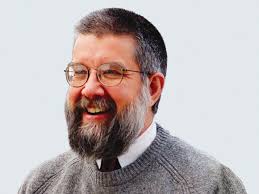
Michael Scheuer
From 1996 to 1999 he headed Alec Station, the CIA’s unit assigned to track Osama bin Laden at the agency’s Counterterrorism Center.
And he’s convinced that if America wants peace, it must learn to mind its own business.
2016 PRESIDENTIAL RACE, ABC NEWS, ABRAHAM LINCOLN, ALAMO, CENSORSHIP, CHRISTIAN RIGHT, CIVIL WAR, CNN, COUNTDOWN, DAVY CROCKETT, EDWARD R. MURROW, FACEBOOK, GEORGE ORWELL, GEORGE W. BUSH, GETTYSBURG ADDRESS, HISPANICS, HISTORY, IRAQ WAR, JEB BUSH, JEFFERSON DAVIS, JIM BOWIE, JOSEPH STALIN, LAVRENTI BERIA, MARTIN LUTHER KING, MSNBC, RACHEL MADDOW, RELIGION, SCHOOLS, SLAVERY, SOVIET UNION, TEXAS, TEXTBOOKS, THE CHICAGO SUN-TIMES, THE CHICAGO TRIBUNE, THE HUFFINGTON POST, THE LOS ANGELES TIMES, THE NEW YORK TIMES, THE WASHINGTON POST, THOMAS JEFFERSON, TWITTER, USA TODAY
In Bureaucracy, History, Politics, Social commentary on August 18, 2015 at 12:54 am
At one time, Americans believed that wholesale rewriting of history could happen only in the Soviet Union.
“The problem with writing about history in the Soviet Union,” went the joke, “is that you never know what’s going to happen yesterday.”
A classic example of this occurred within the Great Soviet Encyclopedia.
Lavrenti Beria had been head of the NKVD, the dreaded secret police, from 1938 to 1953. In 1953, following the death of Soviet dictator Joseph Stalin, Beria was arrested and executed on orders of his fellow Communist Party leaders.
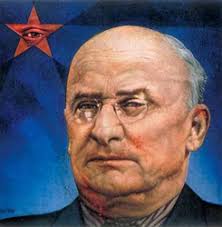
Lavrenti Beria
But the Great Soviet Encyclopedia had just gone to press with a long article singing Beria’s praises.
What to do?
The editors of the Encyclopedia wrote an equally long article about “the Berring Straits,” which was to be pasted over the article about Beria, and sent this off to its subscribers. An unknown number of them decided it was safer to paste accordingly.
In the 1981 film, “Excalibur,” Merlin warns the newly-minted knights of the Round Table: “For it is the doom of men that they forget.”
Forgetting our past is dangerous, but so is “understanding” it incorrectly.
In Texas, state-mandated “history” textbooks omit selected events and persons from the historical record–such as Thomas Jefferson and Martin Luther King.
This can be as lethal to the truth as outright lying.

Joseph Stalin, for example, ordered that school textbooks omit all references to the major role played by Leon Trotsky, his arch-rival for power, during the Russian Revolution.
Similarly, in Texas students are required to study Confederate President Jefferson Davis’ inaugural address alongside President Lincoln’s Gettysburg Address.
Such “teaching” should be seen for what it is: A thinly-veiled attempt to legitimize the most massive case of treason in United States history.
(The Civil War started on April 12, 1861, when Confederate artillery opened fire on Fort Sumter, a United States fort in Charleston Harbor. Fort Sumter surrendered 34 hours later.
(At least 800,000 Southerners took up arms against the legally elected government of the United States.)
The late broadcast journalist, Edward R. Murrow, would have referred to this practice as “giving Jesus and Judas equal time.”
Recently, Jeb Bush has entered the “Rewriting History for Americans” contest.
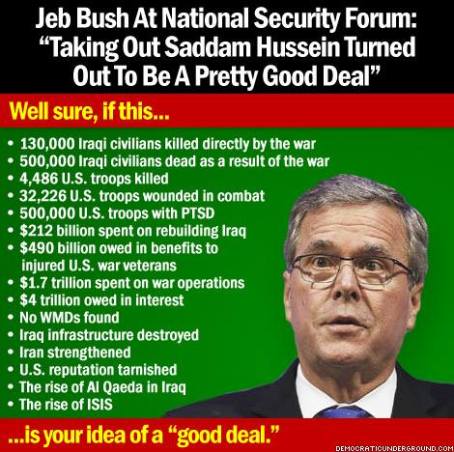
On August 13, speaking at a national security forum in Davenport, Iowa, he defended the unprovoked 2003 invasion of Iraq by his brother, President George W. Bush:
“I’ll tell you though, that taking out Saddam Hussein turned out to be a pretty good deal.”
And he went on to defend the 2007 troop “surge”, calling it “a great success that made Iraq safer.
“I’ve been critical and I think people have every right to be critical of decisions that were made. In 2009, Iraq was fragile but secure. It was–its mission was accomplished in a way that there was security there.”
(Ironically, the phrase, “its mission was accomplished” proved an embarrassing reminder for the Bush family.
(A banner titled “Mission Accomplished” was displayed on the aircraft carrier USS Abraham Lincoln as George W. Bush announced–wrongly–that the war was over on May 1, 2003.)
Jeb Bush claimed that President Barack Obama had prematurely withdrawn troops from Iraq during his first term, thus allowing ISIS to “fill the void.”
One dissenter to Jeb Bush’s effort to rewrite his brother’s history is David Corn, Washington bureau chief for Mother Jones magazine.
Addressing Bush’s claims on the August 15 edition of The PBS Newshour, he said:
“I mean, I have to laugh a little bit, because I think he was setting a record for chutzpah.
“…It wasn’t until after his brother’s invasion of Iraq that you had something called al-Qaida in Iraq. And that was the group that morphed into ISIS.
“So ISIS is a direct result of the war in Iraq right there. And so he’s wrong on the history.
“But then he said what happened was that Obama and Hillary Clinton orchestrated this quick withdrawal after everything was secure. Nothing was really secure in 2009-2010.
“…But it was George W. Bush in December 2008 who created the agreement with [Iraqi] Prime Minister [Nouri] [al-]Maliki that said that U.S. troops had to be out by 2011.
“And then Obama didn’t renegotiate that. And there is a lot of question as to whether he could even have, given the political situation in Baghdad itself.
“So Bush is totally–Jeb Bush is totally rewriting this.”
Click here: Brooks and Corn on Cuba as campaign issue
This is no small matter. George W. Bush’s needless and unprovoked war on Iraq:
- Cost the lives of 4,486 American soldiers.
- Wounded another 32,226 troops.
- Resulted in the deaths of an estimated 655,000 Iraqis.
- Cost the American treasury at least $2 trillion.
- Turned up no Weapons of Mass Destruction–Bush’s pretext for going to war.
- Led to the rise of Al-Qaeda–and later ISIS–in Iraq.
- Strengthened theocratic Iran by removing its major secularist opponent.
All of which simply proves, once again, that the past is never truly dead. It simply waits to be re-interpreted by each new generation–with some interpretations winding up closer to the truth than others.
Or, in this case, each new Presidential candidate of the Bush family.
ABC NEWS, CHRIS WALLACE, CNN, DEBATE, EVASION, FACEBOOK, FOX NEWS NETWORK, GOP DEBATE, JOHN KASICH, LYING, MEGYN KELLY, NBC NEWS, NICCOLO MACHIAVELLI, REPUBLICAN PARTY, SCOTT WALKER, THE CHICAGO SUN-TIMES, THE CHICAGO TRIBUNE, THE LOS ANGELES TIMES, THE NEW YORK TIMES, THE PRINCE, THE WALL STREET JOURNAL, THE WASHINGTON POST, TWITTER, USA TODAY
In Bureaucracy, History, Politics, Social commentary on August 17, 2015 at 12:05 am
As the August 6 Republican debate wore on, so did the evasive answers.
Chris Wallace, Fox News Commentator to Businessman Donald Trump: “In 2011, you told Forbes magazine that ‘I’ve used the laws of the country to advantage.’ But at the same time, financial experts involved in those bankruptcies say that lenders to your companies lost billions of dollars.
“…With that record, why should we trust you to run the nation’s business?”
TRUMP: “Because I have used the laws of this country just like the greatest people that you read about every day in business have used the laws of this country, the chapter laws, to do a great job for my company, for myself, for my employees, for my family, et cetra. I have never gone bankrupt, by the way.”
[Trump totally ignored the charge that “lenders to your companies lost billions of dollars.” He bragged that he had “used the laws” to “do a great job for my company….” He seemed to be saying that as long as he made a killing, it didn’t matter if his lenders got nothing.]

Donald Trump
Chris Wallace persisted in his questioning: “Well, sir, let’s just talk about the latest example, which is Trump Entertainment Resorts, which went bankrupt in 2009.
“In that case alone, lenders to your company lost over $1 billion and more than $1,100 people were laid off. Is that the way that you’d run the country?”
TRUMP: “…First of al, these lenders aren’t babies. These are total killers….And I had the good sense to leave Atlantic City….Every company virtually in Atlantic City went bankrupt.
“…Seven years ago I left Atlantic City before it totally cratered, and I made a lot of money in Atlantic City, and I’m very proud of it….”
WALLACE: “So….”
TRUMP: “And by the way, this country right now owes $19 trillion. And they need somebody like me to straighten out that mess.”
[Trump bragged about making “a lot of money” in Atlantic City while ignoring the jobs lost by his employees and the monies lost by his lenders. He said that America needed “somebody like me” to straighten out its financial mess.
[But there is a difference between making a profit for yourself as a businessman and ensuring a just society for all Americans as President.]
Fox News Moderator Megyn Kelly to former Florida Governor Jeb Bush: “…A story appeared today quoting an anonymous GOP donor who said you called Mr. Trump a clown, a buffoon….”
BUSH: “None of which is true.”
Then, after saying “I want to win,” he attacked President Barack Obama:
“We’re not going to win by doing what Barack Obama and Hillary Clinton do each and every day. Dividing the country. Saying, creating a grievance kind of environment.”
[From literally the first day Obama’s Presidency, Republicans tried to block every piece of legislation he proposed. This was especially true of his efforts to provide healthcare for all Americans.
[Thus, Bush slandered the President and distorted history while denying that he had slandered Trump.]
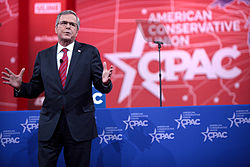
Jeb Bush
Sometimes it is the moderator who raises non-issues, as Megyn Kelly did with Senator Rand Paul:
“In the wake of the Supreme Court’s ruling on same sex marriage…what will you do to ensure Christians are not prosecuted for speaking out against gay marriage….?”
[Christians are not being “prosecuted for speaking out against gay marriage.” The First Amendment guarantees freedom of speech, especially on controversial issues.]
Fox News Moderator Brett Baier asked Dr. Benjamin Carson: “As President, would you have used military force [in Syria, when its dictator, Bashir al-Assad, was found to have used chemical weapons against his own citizens]?”
CARSON: “…I would shore up our military first, because if you don’t get the military right, nothing else is going to work.”
[In short, Carson didn’t say whether he would have used military force in Syria.]
* * * * *
So how do you tell when a politician is evading?
First, educate yourself on the issues. If you know that President George W. Bush intended to go to war with Iraq when he took office in 2001, you won’t buy the line that he was the victim of poor intelligence two years later.
Second, pay attention to the question being asked. If it seeks a specific answer, the failure of a candidate to give one will alert you that s/he’s evading. Be especially alert to the unwillingness of candidates to directly answer “Yes” or “No” questions.
Third, look for contradictions in the candidates’ statements. If he describes himself as “pro-life” but calls for huge increases in the nuclear arsenal, it means: He’s anti-abortion but pro-slaughter–so long as the victims aren’t fetuses.
Fourth, beware of meaningless babble. A favorite trick of highly-polished debators–such as President John F. Kennedy–is to throw out impressive-sounding statistics which seem to answer the question but don’t.
Fifth, beware the emotion-charged story. To inflame Americans against Saddam Hussein in 1991, President George H.W. Bush clamed that Iraqi soldiers had ripped Kuwaiti babies from incubators. Only after the Gulf (oil) war did the story prove to be false.
ABC NEWS, CHRIS WALLACE, CNN, DEBATE, EVASION, FACEBOOK, FOX NEWS NETWORK, GOP DEBATE, JOHN KASICH, LYING, MEGYN KELLY, NBC NEWS, NICCOLO MACHIAVELLI, REPUBLICAN PARTY, SCOTT WALKER, THE CHICAGO SUN-TIMES, THE CHICAGO TRIBUNE, THE LOS ANGELES TIMES, THE NEW YORK TIMES, THE PRINCE, THE WALL STREET JOURNAL, THE WASHINGTON POST, TWITTER, USA TODAY
In Bureaucracy, History, Politics, Social commentary on August 14, 2015 at 12:30 am
Most politicians are masters at evading questions they don’t want to answer. And they are equally adept at giving answers that seem to be candid but in fact say nothing.
These skills were on full display during the August 6 GOP debate hosted by the Fox News Network.
For example:
Business Executive Donald Trump had just slammed the Federal Government’s failure to control illegal immigration.
And Fox News Moderator Chris Wallace wanted to know if Ohio Governor John Kasich agreed with him:
“When you say that the American government is stupid, that the Mexican government is sending criminals, that we’re being bamboozled, is that an adequate response to the question of illegal immigration?”
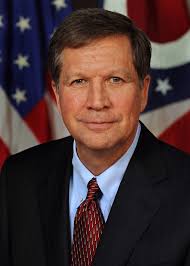
John Kasich
KASICH: “Now, he’s got his solutions. Some of us have other solutions. You know, look, I balanced the federal budget as one of the chief architects when I was in Washington. Hasn’t been done since.
“I was a military reformer. I took the state of Ohio from an $8 billion hole and a 350,000 job loss to a $2 billion surplus and a gain of 350,000 jobs.”
[Kasich, more liberal-minded than his fellow Republicans, didn’t want to condemn Trump’s hawkish views. If he did, he would lose support from the anti-immigrant Republican base. So he changed the subject to his economic policies as governor of Ohio.]
WALLACE: “Respectfully, can we talk about illegal immigration?”
KASICH: “But the point is that we all have solutions. Mr. Trump is touching a nerve because people want the wall to be built. They want to see an end to illegal immigration.
“They want to see it, and we all do. But we all have different ways of getting there. And you’re going to hear from all of us tonight about what our ideas are.”
[Kasich totally evaded the question. He said that “we all have solutions” to illegal immigration. But he never offered his.]
Fox News Moderator Megyn Kelly to Florida Governor Jeb Bush: “…For days on end in this campaign, you struggled to answer a question about whether knowing what we know now…we would’ve invaded Iraq….
“You finally said ‘No.'”
“To the families of those who died in that war who say they liberated and deposed a ruthless dictator, how do you look at them now and say that your brothers war was a mistake?”
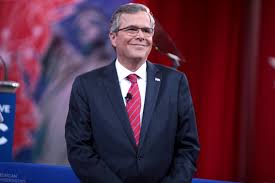
Jeb Bush
BUSH: “Knowing what we know now, with faulty intelligence, and not having security be the first priority when — when we invaded, it was a mistake. I wouldn’t have gone in.”
[Bush’s reply totally ignored that his brother, President George W. Bush, deliberately ignored all evidence that Saddam Hussein did not pose a threat to the United States.
[He also ignored the fact that his brother provoked a needless, bloody and financially ruinous war in Iraq.]
BUSH: “…As governor of the state of Florida, I called every one of [the families who had lost members in Iraq and expressed his condolences].
“…And, every one of them said that their child did not die in vain, or their wife, of their husband did not die in vain. So, why it was difficult for me to do it was based on that.”
[This sounded plausible. But then Bush moved to shift the blame from his brother to President Barack Obama.]
BUSH: “Here’s the lesson that we should take from this, which relates to this whole subject, Barack Obama became president, and he abandoned Iraq.
“He left, and when he left Al Qaida was done for. ISIS was created because of the void that we left, and that void now exists as a caliphate the size of Indiana.”
[In fact, “ISIS was created because of the void” that emerged when Bush toppled Saddam Hussein. Hussein’s dictatorial rule had suppressed religious-based terror organizations like Al Qaeda and ISIS.]
For News Moderator Megyn Kelly asked Dr. Benjamin Carson: “Your critics say that your [foreign policy] inexperience shows.
“You’ve suggested that the Baltic States are not a part of NATO, just months ago you were unfamiliar with the major political parties and government in Israel, and domestically, you thought Alan Greenspan had been treasury secretary instead of federal reserve chair.
“Aren’t these basic mistakes, and don’t they raise legitimate questions about whether you are ready to be president?”
CARSON: “So, you know, experience comes from a large number of different arenas, and America became a great nation early on not because it was flooded with politicians, but because it was flooded with people who understood the value of personal responsibility, hard work, creativity, innovation, and that’s what will get us on the right track now, as well.”
[Carson totally evaded the question. He implied that other qualities–such as “hard work, creativity, innovation”–would make up for his lack of foreign policy experience and knowledge.]
ABC NEWS, CHRIS WALLACE, CNN, DEBATE, EVASION, FACEBOOK, FOX NEWS NETWORK, GOP DEBATE, JOHN KASICH, LYING, MEGYN KELLY, NBC NEWS, NICCOLO MACHIAVELLI, REPUBLICAN PARTY, SCOTT WALKER, THE CHICAGO SUN-TIMES, THE CHICAGO TRIBUNE, THE LOS ANGELES TIMES, THE NEW YORK TIMES, THE PRINCE, THE WALL STREET JOURNAL, THE WASHINGTON POST, TWITTER, USA TODAY
In Bureaucracy, History, Politics, Social commentary on August 13, 2015 at 12:58 am
“For men in general judge more by the eyes than by the hands, for every one can see, but very few have to feel. Everyone sees what you appear to be, few feel what you are.”
So wrote Niccolo Machiavelli, the father of modern politics, in his infamous book, The Prince.
It’s a sentment that voters should constantly keep in mind–especially when watching televised debates between opposing candidates.
The August 6 GOP debate offered many examples of men appearing to address questions put to them. In fact, they generally refused to directly address the issues raised by the three Fox News Network commentators.
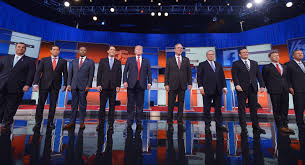
The candidates of the Fox News GOP debate
The evasions began early.
Fox News Moderator Megyn Kelly to Media Mogul Donald Trump: “Mr. Trump…you’ve called women you don’t like “fat pigs, dogs, slobs, and disgusting animals.”
“Your Twitter account has several disparaging comments about women’s looks. You once told a contestant on Celebrity Apprentice it would be a pretty picture to see her on her knees.
“Does that sound to you like the temperament of a man we should elect as president, and how will you answer the charge from Hillary Clinton, who was likely to be the Democratic nominee, that you are part of the war on women?
TRUMP: “I think the big problem this country has is being politically correct.”

Donald Trump
[Trump did not refute that he had made insulting remarks about women. He simply claimed that he was the victim of Political Correctness. And Kelly did not call him on his evasiveness.]
Then Kelly moved on to the subject of abortion–and Wisconsin Governor Scott Walker.
KELLY: “Governor Walker, you’ve consistently said that you want to make abortion illegal even in cases of rape, incest, or to save the life of the mother.
“You recently signed an abortion law in Wisconsin that does have an exception for the mother’s life, but you’re on the record as having objected to it.
“Would you really let a mother die rather than have an abortion, and with 83% of the American public in favor of a life exception, are you too out of the mainstream on this issue to win the general election?
WALKER: “Well, I’m pro-life, I’ve always been pro-life, and I’ve got a position that I think is consistent with many Americans out there in that…
“…in that I believe that that is an unborn child that’s in need of protection out there, and I’ve said many a time that that unborn child can be protected, and there are many other alternatives that can also protect the life of that mother. That’s been consistently proven.”

Scott Walker
[Clearly, Walker did not want to admit that he would allow a woman to die rather than have an abortion. Nor did he want to admit that he would force a victim of rape or incest to carry to full term the fetus of that victimizer.
[So he simply claimed that “there are many other alternatives that can also protect the life of that mother” without offering any evidence to prove it.]
Fox News Moderator Chris Wallace to Donald Trump:
“…You have repeatedly said that you have evidence that the Mexican government is doing this, but you have evidence you have refused or declined to share.
“Why not use this first Republican presidential debate to share your proof with the American people?”
TRUMP: “Border Patrol, I was at the border last week. Border Patrol, people that I deal with, that I talk to, they say this is what’s happening….”
[Trump’s “evidence” was strictly anecdotal. He cited unmamed “Border Patrol” sources for his general statement and offered nothing more.]
Fox News Moderator Chris Wallace to Ohio Governor John Kasich on illegal immigration:
WALLACE: “Governor Kasich, I know you don’t like to talk about Donald Trump. But I do want to ask you about the merit of what he just said.
“When you say that the American government is stupid, that the Mexican government is sending criminals, that we’re being bamboozled, is that an adequate response to the question of illegal immigration?
KASICH: “Chris, first of all, I was just saying to Chris Christie, they say we’re outspoken, we need to take lessons from Donald Trump if we’re really going to learn it. Here is the thing about Donald Trump.
“Donald Trump is hitting a nerve in this country. He is. He’s hitting a nerve. People are frustrated. They’re fed up. They don’t think the government is working for them. And for people who want to just tune him out, they’re making a mistake.
[Kasich was avoiding giving a direct answer. More liberal-minded than most Republicans, he didn’t want to alienate their Right-wing base by opposing his party’s “deport them all” position.
[He needed time to think of a response that wouldn’t cost him votes–and bought it by throwing cheap flattery at Trump.]
ABC NEWS, ARSON, CBS NEWS, CNN, DARREN WILSON, FACEBOOK, FERGUSON, LOOTING, LOUIS HEAD, MICHAEL BROWN, NBC NEWS, RIOTING, THE CHICAGO SUN-TIMES, THE CHICAGO TRIBUNE, THE LOS ANGELES TIMES, THE NEW YORK TIMES, THE WALL STREET JOURNAL, THE WASHINGTON POST, TWITTER, USA TODAY
In Bureaucracy, History, Law Enforcement, Social commentary on August 12, 2015 at 1:31 pm
On April 23, the family of teen thug Michael Brown filed a wrongful death lawsuit against the city of Ferguson, Missouri.
Brown, 18, was shot by a Ferguson police officer on August 9, 2014. Brown was unarmed, but the officer–Darren Wilson, who has since left the police department–claimed self-defense. According to him, Brown tried to seize his weapon.
The lawsuit claims that:
- Brown, 18, was unarmed and walking in the street with a friend when Wilson told them to get on the sidewalk.
- Wilson said: “Get the [expletive] out of the street.”
- Without the “unnecessary and unwarranted profane language,” the encounter would have been “uneventful.”
Attorneys for Brown’s parents promised the case would reveal new forensic evidence and raise doubts about the police version of events. Some of that evidence, they said, had been overlooked in previous investigations.

Seal of the Ferguson Police Department
If it comes to trial, the lawsuit could force a full review of all the evidence in the shooting and bring key witnesses to be questioned in open court.
Civil cases generally require a lower standard of proof than criminal cases. Jurors must base their decision on a preponderance of evidence, not proof beyond a reasonable doubt, which is the standard needed to convict in a criminal trial.
The reason for this is that, in a criminal trial, the freedom of the accused is at stake. In a civil trial, only money is.
The lawsuit could prove embarrassing to the Ferguson Police Department, which has already been heavily criticized in a Justice Department investigation.
The report of those findings, released on March 4, stated:
“The Justice Department found that the Ferguson Police Department (FPD) engaged in a pattern or practice of conduct that violates the First, Fourth, and 14th Amendments of the Constitution….
Seal of the U.S. Department of Justice
“Our investigation showed that Ferguson police officers routinely violate the Fourth Amendment in stopping people without reasonable suspicion, arresting them without probable cause, and using unreasonable force against them….”
Federal investigators found that the FPD had a pattern or practice of:
- Conducting stops without reasonable suspicion and arrests without probable cause in violation of the Fourth Amendment;
- Interfering with the right to free expression in violation of the First Amendment; and
- Using unreasonable force in violation of the Fourth Amendment.
Click here: Justice Department Announces Findings of Two Civil Rights Investigations in Ferguson, Missouri | OPA | Department
So there will be many opportunities for the Brown family to reveal highly damaging truths about the FPD.
But the trial promises to be highly embarrassing for the Brown family as well.
Consider the following:
Michael Brown (left) roughing up a store owner
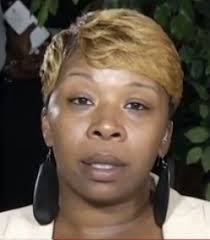
Lesley Mcspadden

Louis Head calls for arson in Ferguson
No doubt the Ferguson police will be working overtime to turn up even more embarrassing truths–or at least charges–against the Brown family.
In the end, the outcome of the lawsuit may well turn on who can dig up more dirt on whom.
ABC NEWS, ARSON, CBS NEWS, CNN, DARREN WILSON, FACEBOOK, FERGUSON, LOOTING, LOUIS HEAD, MICHAEL BROWN, NBC NEWS, RIOTING, THE CHICAGO SUN-TIMES, THE CHICAGO TRIBUNE, THE LOS ANGELES TIMES, THE NEW YORK TIMES, THE WALL STREET JOURNAL, TWITTER, USA TODAY
In History, Law Enforcement, Social commentary on August 11, 2015 at 12:39 am
In the last moments of his life, Michael Brown, an 18-year-old black in Ferguson, Missouri, robbed a grocery store. Then he slugged it out with a white police officer.
The second action proved a fatal mistake–with Brown being shot dead by that officer, Darren Wilson, on August 9, 2014.
During a subsequent grand jury investigation of the shooting, Wilson testified that:
- Brown reached for Wilson’s pistol.
- A struggle for the gun followed.
- Fearing for his life, Wilson fired two shots, striking Brown.
- Brown fled, and Wilson pursued him.
- Brown turned and charged Wilson.
- The officer fired several more shots, kiling Brown.
According to the Ferguson County Medical Examiner, the physical evidence supports Wilson’s testimony.

Darren Wilson
The physical evidence in the Michael Brown case supported the officer [updated with DNA evidence] – The Washington Post
On the night of Brown’s shooting, blacks–who make up 67.4% of the Ferguson population–found an appropriate way to honor a dead thug. They erupted in rioting, looting and arson.
Their victimized stores were not responsible for Brown’s killing. And most of their owners were blacks–not white police officers. But unarmed store owners were more tempting targets than armed police.
And gorcery, electronics and liquor stores offered a treasury of goodies not found at police stations.
A state of emergency was declared.
On August 9, 2015, Ferguson blacks observed the one-year “anniversary” of Brown’s shooting the same way–with more rioting, looting and arson.
Once again, a state of emergency was declared by Missouri authorities.
With protesters intent on canonizing Brown, it’s long past time to set the record straight.
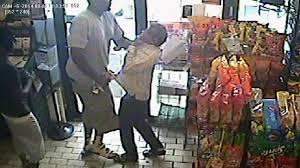
Shortly after the killing of Michael Brown, police released a video showing him robbing a grocery store and manhandling its owner.
SURVEILLANCE VIDEO: Police say Michael Brown was suspect in Ferguson store robbery – YouTube
FACT: Blacks were outraged–not because they believed it wasn’t Michael on the videotape, but because it showed their anointed hero as a robbing thug.
Michael Brown (left) roughing up a store owner
Following the shooting of Brown on August 9, 2014, police deployed massive force to prevent rioting–which erupted anyway. Ferguson’s blacks charged that it was militarized overkill.

Riot police deploying in Ferguson, Missouri
FACT: When the grand jury released its findings on November 24, Ferguson blacks once again started looting and burning stores.
Then blacks raged that the police should have had a massive presence to keep their brethren in line.
Many Ferguson blacks complained that the grand jury was taking too long (three months) interviewing scores of witnesses before reaching its verdict.
FACT: When the verdict was released, Ferguson blacks said the grand jurors should have examined less evidence, so they wouldn’t have been confused by conflicting statements.
Ferguson blacks generally and the Brown family in particular have repeatedly called Michael Brown “a child.”
FACT: Michael Brown was 18–legally an adult who could obtain a credit card, enter the armed forces and drive a car. He also stood 6’3″ and weighed 300 pounds.
The Brown family has claimed that Michael didn’t have a criminal record as an adult.
FACT: But he may have had a juvenile one.
The citizen journalism website GotNews has filed a lawsuit against St. Louis authorities seeking the release of Brown’s juvenile record. The suit alleges that Brown was a gang member and faced a second-degree murder charge.
Lawsuit seeking release of Michael Brown’s juvenile records claims slain teen was a murder suspect – AOL.com
Michael’s mother, Lesley Mcspadden, has claimed that “My son was running for his life.”
FACT: The autopsy of Michael Brown demonstrates that he was facing Darren Wilson when he was hit by police bullets.
FACT: Lesley Mcspadden herself could face felony armed robbery charges.
On Octiber 18, 2014, she allegedly led a group of 20 to 30 people to beat and rob vendors in a Ferguson parking lot for selling “Justice for Mike Brown” T-shirts. Among the victims: Her former mother-in-law.
One person was hospitalized and another unidentified victim was reportedly beaten with a pipe.
The Ferguson Police Department is investigating.
Michael Brown’s mom may face robbery charges: report – NY Daily News
Michael Brown’s stepfather, Louis Head, may stand trial for incing arson.
FACT: When the grand jury released its findings on November 24, 2014, Louis Head, standing atop a platform surrounded by hundreds of frenzied protesters, screamed at least 10 times: “Burn this motherfucker [Ferguson] down!” and “Burn this bitch down!”
Louis Head calling for arson in Ferguson
Head may well find himself the target of criminal prosecution and civil lawsuits.
Missouri Lieutenant Governor Peter Kinder called for Head’s arrest for inciting to riot.
And those whose stores were burned and/or looted could file civil lawsuits against Head as being liable for their losses.
In honoring this family of thugdom, the residents of Ferguson dishonor themselves.
ABC NEWS, ABORTION, ADOLF HITLER, ALTERNET, AMERICABLOG, ANDREW JACKSON, AP, BABY BOOMER RESISTANCE, BARACK OBAMA, BBC, BLOOMBERG NEWS, BUZZFEED, CBS NEWS, CHRIS MATTHEWS, CNN, CNN'S "STARTING POINT", CROOKS AND LIARS, CUBAN MISSILE CRISIS, DAILY KOS, DEBT CEILING, EXTORTION, FACEBOOK, FIVETHIRTYEIGHT, GEORGE W. BUSH, HARPER’S MAGAZINE, HOUSE SPEAKER JOHN BOEHNER, HUFFINGTON POST, JOHN F. KENNEDY, MAFIA, MEDIA MATTERS, MOTHER JONES, MOVEON, MSNBC, MSNBC'S "HARDBALL", MUNICH CONFERENCE, NBC NEWS, NEGOTIATING, NEVILLE CHAMBERLAIN, NEW REPUBLIC, NEWSDAY, NEWSWEEK, NICCOLO MACHIAVELLI, NPR, OBAMACARE, PAP SMEARS, PATRIOT ACT, PBS NEWSHOUR, PLANNED PARENTHOOD, POLITICO, POLITICUSUSA, R.I.CO. ACT, RAW STORY, REPUBLICAN PARTY, REPUBLICANS, REUTERS, SALON, SEATTLE TIMES, SLATE, TALKING POINTS MEMO, TED CRUZ, THE AFFORDABLE CARE ACT, THE ATLANTIC, THE CHICAGO SUN-TIMES, THE CHICAGO TRIBUNE, THE DAILY BEAST, THE DAILY BLOG, THE GUARDIAN, THE HILL, THE HUFFINGTON POST, THE INTERCEPT, THE LOS ANGELES TIMES, THE NATION, THE NEW REPUBLIC, THE NEW YORK TIMES, THE NEW YORK TIMES THE WASHINGTON POST, THE NEW YORKER, THE PRINCE, THE VILLAGE VOICE, THE WASHINGTON POST, THINKPROGRESS, TIME, TRUTHDIG, TRUTHOUT, TWITTER, TWO POLITICAL JUNKIES, U.S. NEWS & WORLD REPORT, UPI, USA TODAY, WINSTON CHURCHILL, WORLD WAR 11, X
In Bureaucracy, History, Law, Politics, Social commentary on August 10, 2015 at 12:41 am
On August 1, 2011, Chris Matthews, host of MSNBC’s “Hardball,” wrapped up his program with a search for “options” to avoid another round of Republican extortion tactics:
“I want to know what steps the president [Barack Obama] ‘could’ have taken to avoid this hostage-taking [over raising the debt-ceiling].
“…Is there another way than either buckling to the Republicans or letting the government and the country crash?
“How does he use the power of the presidency, the logic, emotion and basic patriotism of the people to thwart those willing to threaten, disrupt, even possibly destroy to get their way?”
And the answer to his questions–then and now–is: Replace the law of fear with the rule of law.
As Niccolo Machiavelli, the father of modern politics, instructed future leaders in The Prince:
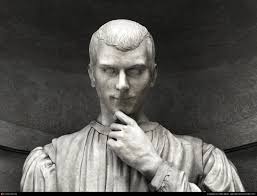
Niccolo Machiavelli
“And men have less scruple in offending one who makes himself loved than one who makes himself feared; for love is held by a chain of obligations which, men being selfish, is broken whenever it serves their purpose; but fear is maintained by a dread of punishment which never fails….
“I conclude, therefore, with regard to being loved and feared, that men love at their own free will, but fear at the will of the prince, and that a wise prince must rely on what is in his power and not on what is in the power of others….”
Instead, in 2011, President Barack Obama surrendered to Republican extortion demands. As a result, the United States suffered a massive loss to its international credit rating.
But there were two other ways Obama could have stood up to Republican extortionists:
- Invoke the Racketeer Influenced Corrupt Organizations Act (RICO) and/or the USA Patriot Act;
- Rally the American people against this criminal threat to the security of the Nation.
And these remain available to him now–if only he has the courage to act.
Second Option: Calling upon the American people for their support
President John F. Kennedy did just that–successfully–during the most deadly crisis of his administration.
Addressing the Nation on October 22, 1962, Kennedy shocked his fellow citizens by revealing that the Soviet Union had placed offensive nuclear missiles in Cuba.
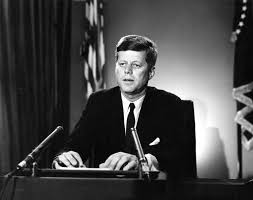
President John F. Kennedy
After outlining a series of steps he had taken to end the crisis, Kennedy sought to reassure and inspire his audience. His words are worth remembering today:
“The cost of freedom is always high, but Americans have always paid it. And one path we shall never choose, and that is the path of surrender or submission.”
Just as President Kennedy called on his fellow Americans for support against a foreign enemy, President Obama could rally his countrymen against an equally ruthless domestic enemy.
During such a national address, President Obama could reveal such blunt truths as:
- Republicans have adopted the same my-way-or-else “negotiating” stance as Adolf Hitler.
- Like the Nazis, they are determined to gain absolute power–or destroy the Nation they claim to love.
- And, once again, they are threatening to shut down the government–and deny essential services to millions of Americans–unless they get their way.
Finally, President Obama could end his speech by directly calling for the active support of his fellow Americans. Something like this:
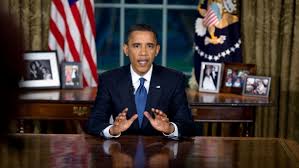
President Barack Obama
“My fellow Americans, I have taken an oath to ‘preserve, protect and defend the Constitution of the United States.’
“But I cannot do this on my own. As citizens of a Republic, each of us carries that burden. We must each do our part to protect the land and the liberties we love.
“Tonight, I’m asking for your help.
“We stand on the edge of economic and social disaster. Therefore, I am asking each of you to stand up for America tonight–by demanding the recall of the entire membership of the Republican Party.”
* * * * *
The 1938 Munich Conference taught an invaluable lesson in foreign affairs: Caving in to the demands of insatiable thugs leads to only more demands.
That was what British Prime Minister Neville Chamberlain learned when he sought to appease Adolf Hitler, Germany’s war-intent Fuehrer.
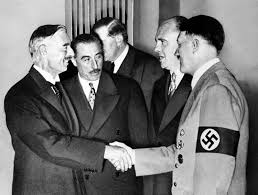
Neville Chamberlain greets Adolf Hitler
Chamberlain believed that by giving in to Hitler’s demands for the “German part” of Czechoslovakia known as the Sudetenland he could avoid war.
On September 29, Chamberlain and French Prime Minister Edouard Daladier met with Hitler and signed the Munich Agreement, resulting in the immediate German occupation of part of Czechoslovakia.
The Czechoslovakian government had not been a party to the talks. Their “allies” had sold them out.
In a matter of weeks, Hitler turned his attention–and demands–to Poland.
When his generals balked, warning that invading Poland would trigger a war with France and Britain, Hitler brushed aside their fears: “Our enemies are little worms. I saw them at Munich.”
Chamberlain returned to England a hero. Holding aloft a copy of the worthless agreement he had signed with Hitler, he told cheering crowds in London: “I believe it is peace for our time.”
Winston Churchill knew better, predicting: “Britain and France had to choose between war and dishonor. They chose dishonor. They will have war.”
And so they did.
It is not too late for President Barack Obama to apply this lesson from history.
ABC NEWS, ABORTION, ADOLF HITLER, ALTERNET, AMERICABLOG, ANDREW JACKSON, AP, BABY BOOMER RESISTANCE, BARACK OBAMA, BBC, BLOOMBERG NEWS, BUZZFEED, CBS NEWS, CHRIS MATTHEWS, CNN, CNN'S "STARTING POINT", CROOKS AND LIARS, CUBAN MISSILE CRISIS, DAILY KOS, DEBT CEILING, EXTORTION, FIVETHIRTYEIGHT, GEORGE W. BUSH, HARPER’S MAGAZINE, HOUSE SPEAKER JOHN BOEHNER, HUFFINGTON POST, JOHN F. KENNEDY, MAFIA, MEDIA MATTERS, MOTHER JONES, MOVEON, MSNBC, MSNBC'S "HARDBALL", MUNICH CONFERENCE, NBC NEWS, NEGOTIATING, NEVILLE CHAMBERLAIN, NEW REPUBLIC, NEWSDAY, NEWSWEEK, NICCOLO MACHIAVELLI, NPR, OBAMACARE, PAP SMEARS, PATRIOT ACT, PBS NEWSHOUR, PLANNED PARENTHOOD, POLITICO, POLITICUSUSA, R.I.CO. ACT, RAW STORY, REPUBLICAN PARTY, REPUBLICANS, REUTERS, SALON, SEATTLE TIMES, SLATE, TALKING POINTS MEMO, TED CRUZ, THE AFFORDABLE CARE ACT, THE ATLANTIC, THE CHICAGO SUN-TIMES, THE CHICAGO TRIBUNE, THE DAILY BEAST, THE DAILY BLOG, THE GUARDIAN, THE HILL, THE HUFFINGTON POST, THE INTERCEPT, THE LOS ANGELES TIMES, THE NATION, THE NEW REPUBLIC, THE NEW YORK TIMES, THE NEW YORK TIMES THE WASHINGTON POST, THE NEW YORKER, THE PRINCE, THE VILLAGE VOICE, THE WASHINGTON POST, THINKPROGRESS, TIME, TRUTHDIG, TRUTHOUT, TWITTER, TWO POLITICAL JUNKIES, U.S. NEWS & WORLD REPORT, UPI, USA TODAY, WINSTON CHURCHILL, WORLD WAR 11, X
In Bureaucracy, History, Law, Politics, Social commentary on August 7, 2015 at 8:58 am
On July 9, 2011-–Republican extortionists again threatened the Nation with financial ruin and international disgrace unless their demands were met.
President Obama had offered to make historic cuts in the Federal Government and the social safety net–on which millions of Americans depend for their most basic needs.
And the Republican response?
Said Rep. Darrell Issa, chairman of the Oversight and Government Reform Committee:“Quite frankly, [Republican] members of Congress are getting tired of what the president won’t do and what the president wants.”
Noted political analyst Chris Matthews summed up the sheer criminality of what happened within the House of Representatives.
Speaking on MSNBC’s “Hardball,” on July 28–five days before Congress reached its August 2 deadline to raise the debt-ceiling–Matthews noted:
“The first people to bow to the demands of those threatening to blow up the economy were the Republicans in the House, the leaders. The leaders did what the followers told them to do: meet the demands, hold up the country to get their way.
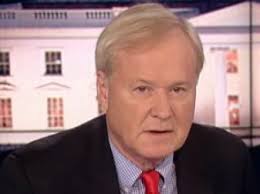
Chris Matthews
“Those followers didn’t win the Senate, or the Presidency, just the House.
“But by using the House they were able to hold up the entire United States government. They threatened to blow things up economically and it worked.
“They said they were willing to do that–just to get their way–not by persuasion, not by politics, not by democratic government, but by threatening the destruction of the country’s finances.
“Right. So what’s next? The power grid? Will they next time threaten to close down the country’s electricity and communications systems?”
With the United States teetering on the brink of national bankruptcy, President Obama faced three choices:
- Counter Republican extortion attempts via RICO–the Racketeer Influenced Corrupt Organizations Act.
- Make a “Cuban Missile Crisis”-style address to the American people, seeking to rally them against a criminal threat to the financial security of the Nation.
- Cave in to Republican demands.
Unfortunately for Obama and the Nation, he chose Number Three.
The results were easily predictable: Emboldened by success, the extortionists continue to make even greater demands.
Such as those now being made: De-fund Planned Parenthood or we’ll destroy the country.
But this is a nightmare that doesn’t have to be.
There are, in fact, two ways to avoid it.
Assuming that President Obama doesn’t once again surrender to Republican extortion demands, he has two formidable weapons he can deploy:
First Option: RICO to the rescue
The Racketeer Influenced Corrupt Organizations (RICO) Act is a provision of the Organized Crime Control Act of 1970. It authorizes prosecution for acts performed as part of an ongoing criminal organization.
It has been applied to not only the Mafia but to individuals, businesses, political protest groups, and terrorist organizations. In short, a RICO claim can arise in almost any context.
Such as the one President Barack Obama faced in 2011 when Republicans threatened to destroy the credit rating of the United States unless their budgetary demands were met.
And such as the present case when Republicans are again threatening the security of the Nation with extortionate demands.
RICO opens with a series of definitions of “racketeering activity” which can be prosecuted by Justice Department attorneys. Among those crimes: Extortion.
Extortion is defined as “a criminal offense which occurs when a person unlawfully obtains either money, property or services from a person(s), entity, or institution, through coercion.”
The RICO Act defines “a pattern of racketeering activity” as “at least two acts of racketeering activity, one of which occurred after the effective date of this chapter and the last of which occurred within ten years…after the commission of a prior act of racketeering activity.”
And if President Obama believes that RICO is not sufficient to deal with extortionate behavior, he can rely on the USA Patriot Act of 2001, passed in the wake of 9/11.
In Section 802, the Act defines domestic terrorism. Among the behavior that is defined as criminal:
“Activities that…appear to be intended…to influence the policy of a government by intimidation or coercion [and]…occur primarily within the territorial jurisdiction of the United States.”
Republicans are now demanding that Democrats de-fund Planned Parenthood or be forced to shut down essential services needed by millions of Americans.
That clearly falls within the legal definition of “activities…intended…to influence the policy of a government by intimidation or coercion.”
The remedies for punishing such criminal behavior are now legally in place. President Obama need only direct the Justice Department to apply them.
President Obama can direct Attorney General Loretta E. Lynch to investigate whether Republican Congressman—and their Tea Party cohorts—have violated Federal anti-racketeering and/or anti-terrorism laws.
- Lynch can order the FBI to conduct such an investigation.
- If the FBI finds sufficient evidence that these laws had been violated, Holder can empanel criminal grand juries to indict those violators.
Criminally investigating and indicting members of Congress would not violate the separation-of-powers principle. Congressmen have in the past been investigated, indicted and convicted for various criminal offenses.
Such indictments and prosecutions–and especially convictions–would serve a truly cleansing function.
They would serve notice on current and future members of Congress that the safety and fortunes of American citizens may not be held hostage as part of a negotiated settlement.
ABC NEWS, ABORTION, ADOLF HITLER, ALTERNET, AMERICABLOG, ANDREW JACKSON, AP, BABY BOOMER RESISTANCE, BARACK OBAMA, BBC, BLOOMBERG NEWS, BUZZFEED, CBS NEWS, CHRIS MATTHEWS, CNN, CNN'S "STARTING POINT", CROOKS AND LIARS, CUBAN MISSILE CRISIS, DAILY KOS, DEBT CEILING, EXTORTION, FACEBOOK, FIVETHIRTYEIGHT, GEORGE W. BUSH, HARPER’S MAGAZINE, HOUSE SPEAKER JOHN BOEHNER, HUFFINGTON POST, JOHN F. KENNEDY, MAFIA, MEDIA MATTERS, MOTHER JONES, MOVEON, MSNBC, MSNBC'S "HARDBALL", MUNICH CONFERENCE, NBC NEWS, NEGOTIATING, NEVILLE CHAMBERLAIN, NEW REPUBLIC, NEWSDAY, NEWSWEEK, NICCOLO MACHIAVELLI, NPR, OBAMACARE, PAP SMEARS, PATRIOT ACT, PBS NEWSHOUR, PLANNED PARENTHOOD, POLITICO, POLITICUSUSA, R.I.CO. ACT, RAW STORY, REPUBLICAN PARTY, REPUBLICANS, REUTERS, SALON, SEATTLE TIMES, SLATE, TALKING POINTS MEMO, TED CRUZ, THE AFFORDABLE CARE ACT, THE ATLANTIC, THE CHICAGO SUN-TIMES, THE CHICAGO TRIBUNE, THE DAILY BEAST, THE DAILY BLOG, THE GUARDIAN, THE HILL, THE HUFFINGTON POST, THE INTERCEPT, THE LOS ANGELES TIMES, THE NATION, THE NEW REPUBLIC, THE NEW YORK TIMES, THE NEW YORK TIMES THE WASHINGTON POST, THE NEW YORKER, THE PRINCE, THE VILLAGE VOICE, THE WASHINGTON POST, THINKPROGRESS, TIME, TRUTHDIG, TRUTHOUT, TWITTER, TWO POLITICAL JUNKIES, U.S. NEWS & WORLD REPORT, UPI, USA TODAY, WINSTON CHURCHILL, WORLD WAR 11
In History, Law, Law Enforcement, Politics, Social commentary on August 6, 2015 at 2:04 pm
Republicans love fetuses.
In fact, they love them so much they’re willing to shut down the Federal Government and deny vital public services to millions of their fellow Americans.
That shutdown could be coming as early as September, when Congress returns from its summer break.
The reasons are two-fold:
First, the fast-approaching 2016 Presidential election; and
Second, Republicans’ long-standing desire to de-fund Planned Parenthood (PP).

This upcoming effort will be fueled by a highly emotional charge: That PP sells fetal tissue and organs.
Anti-abortion organizations Operation Rescue and the Center for Medical Progress recently released videos purporting to show PP officials discussing such sales.
In response, PP said that they may donate fetal tissue at the request of a patient, but that fetal organs and tissues are never sold.
Three Congressional committees are now making inquiries into PP practices.
On August 3, 2015, a Republican bill to defund PP failed to pass in the Senate. Currently, the organization receives $528 million in Federal funding each year.
Since the 1980s, Congressional Republicans have tried to de-fund PP. Their efforts almost led to a government shutdown in 2011.
PP has consistently claimed that it does not use its Federal funding to pay for abortion services. But anti-abortionists argue that Federal monies free up other resources that are used to provide abortions.
Abortions represent three percent of total services provided by PP, and are provided to about 10% of its clients.

The other 97% of services are for contraception, treatment and tests for sexually transmitted diseases, cancer screenings, and other women’s health services.
Click here: Planned Parenthood
PP estimates that its contraceptive services prevent approximately 612,000 unintended pregnancies–and 291,000 abortions–annually.
According to Politico, Republican Senators plan to attach a provision to the current omnibus spending bill–which funds all Federal agencies for 2015-2016.
The provision will ban funding for all Federal agencies–unless PP’s funding is cut.
Leading the call for a government shutdown is Texas Senator Ted Cruz, who tried to de-fund PP in 2013. That attempt led to a two-week government shutdown.
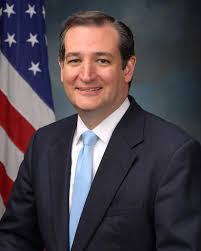
Senator Ted Cruz
Joining Cruz are Republicans in the House and Senate—not enough to defund PP, but enough to deny vitally-needed services to millions of Americans.
The reason for the 2013 government shutdown? Republicans were enraged that millions of uninsured Americans might receive medical care on a par with that given members of the House and Senate.
It was, in short, yet another Right-wing effort to eliminate the Affordable Care Act, better-known as “Obamacare.”
So on September 20, 2013, the House of Representatives voted on a short-term government funding bill that included a provision to de-fund Obamacare.
That provision was a no-go for Senate Democrats and President Barack Obama. When the House and Senate couldn’t reach a compromise, many functions of the Federal government shut down on Oct. 1.
The shutdown lasted for 16 days and cost the United States economy $2 to $6 billion in economic output, according to the Office of Management and Budget.
It ended when President Obama and Senate Democrats refused to submit to Republican blackmail. Medical care still remained available to millions of poor and middle-class Americans.
Republicans have repeatedly threatened to shut down the government unless their constantly escalating demands were met.
In November, 1995, Newt Gingrich, then Speaker of the House of Representatives, carried out this threat.
The official reason: Republicans objected to Democratic President Bill Clinton’s budgetary requests for funding Medicare, education, the environment and public health in the 1996 Federal budget.
The real reason: Gingrich unwisely admitted that he was angry because Clinton had put him in the back of Air Force One during a recent trip to Israel.
The shutdown proved a disaster for Republicans. Clinton was handily re-elected in 1996 and Gingrich suddenly resigned from Congress in 1998.
In April, 2011, the United States government almost shut down again over Republican demands about subsidized pap smears.
During a late-night White House meeting with President Obama and key Congressional leaders, Republican House Speaker John Boehner made this threat:
His conference would not approve funding for the government if any money were allowed to flow to Planned Parenthood through Title X legislation.
Facing an April 8 deadline, negotiators worked day and night to strike a compromise–and finally reached one.
Three months later–-on July 9, 2011-–Republican extortionists again threatened the Nation with financial ruin and international disgrace unless their demands were met.

Sign of The Black Hand extortion group
President Obama had offered to make historic cuts in the Federal Government and the social safety net–on which millions of Americans depend for their most basic needs.
But House Speaker John Boehner rejected that offer. He could not agree to the tax increases that Democrats wanted to impose on the wealthiest 1% as part of the bargain.
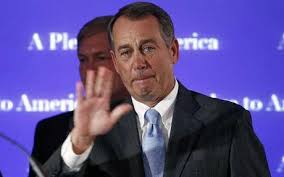
John Boehner
As the calendar moved ever closer to the fateful date of August 2, Republican leaders continued to insist: Any deal that includes taxes “can’t pass the House.”
President Obama had previously insisted on extending the debt ceiling through 2012. But in mid-July, he simply asked congressional leaders to review three options with their members:
- The “Grand Bargain” choice—favored by Obama–would cut deficits by about $4 trillion, including spending cuts and new tax revenues.
- A medium-range plan would aim to reduce the deficit by about $2 trillion.
- The smallest option would cut between $1 trillion and $1.5 trillion, without increased tax revenue or any Medicare and Medicaid cuts.
And the Republican response?


60 MINUTES, 9/11 ATTACKS, ABC NEWS, ADOLF HITLER, AFGHANISTAN, AL QAEDA, BARACK OBAMA, BARCK OBAMA, BASHAR AL-ASSAD, CARL VON CLAUSEWITZ, CARLOS THE JACKAL, CBS NEWS, CHEMICAL WEAPONS, CHINA, CIA, CNN, DAVID BROOKS, DAVID CORN, FACEBOK, FACEBOOK, HARRY TRUMAN, IMPERIAL HUBRIS, IRAN, ISLAM, ISLAMIC STATE OF IRAQ AND THE LEVANT, ISRAEL, MARCHING TOWARD HELL, MICHAEL SCHEUER, MOTHER JONES MAGAZINE, MUSLIMS, NAZI GERMANY, NBC NEWS, OSAMA BIN LADEN, RUSSIA, SOVIET UNION, SYRIA, TERRORISM, THE CHICAGO TIMES, THE CHICAGO TRIBUNE, THE LOS ANGELES TIMES, THE NEW YORK TIMES, THE WASHINGTON POST, TWITTER, USA TODAY, VIETNAM WAR, VLADIMIR PUTIN, WORLD WAR 1
LET KILLERS BE KILLERS: PART ONE (OF THREE)
In Bureaucracy, History, Military, Politics, Social commentary on August 19, 2015 at 12:07 amOn April 16, the Syrian Observatory for Human Rights released some encouraging news for potential victims of Islamic terrorism–and those fighting it.
More than 310,000 people have been killed in Syria’s uprising-turned-civil war.
Put another way: More than 310,000 potential or actual Islamic terrorists will never again pose a threat to the United States or Western Europe.
The Syrian conflict began on March 15, 2011, triggered by protests demanding political reforms and the ouster of dictator Bashar al-Assad.
According to the Observatory, which is safely based in Britain:
And who does the Syrian Observatory for Human Rights blame for this Islamic self-slaughter? Why, the West, of course.
According to its website:
“The silence of the International community for the war crimes and crimes against humanity committed in Syria encourages the criminals to kill more and more Syrian people because they have not found anyone that deter them from continuing their crimes that cause to wound more than 1500000 people; some of them with permanent disabilities, make hundreds of thousands children without parents, displace more than half of Syrian people and destroy infrastructure, private and public properties.”
310,000 people killed since the beginning of the Syrian Revolution | Syrian Observatory For Human Rights
Got that? “They have not found anyone that deter them from continuing their crimes”–as if it’s the duty of non-Muslims to bring civilized behavior to Islamics.
And why are all these murderers “continuing their crimes”? Because of a religious dispute within Islam that traces back to the fourth century.
Yes, it’s Sunni Muslims, who make up a majority of Islamics, versus Shiite Muslims, who comprise a minority.
Each group considers the other takfirs–that is, “apostates.” And, in Islam, being labeled an apostate can easily get you murdered.
But, according to the Syrian Observatory, it’s the duty of the infidel West to convince these murderers to stop slaughtering one another.
Think of it:
Meanwhile, Right-wing Republicans demand that the United States thrust itself into a conflict that doesn’t threaten or concern Americans in any way.
On August 14, conservative columnist David Brooks appeared on the “Week’s Roundup” segment of The PBS Newshour.
Speaking of the current Islamic self-slaughter in Iraq, he said:
“I do think that we abandoned Iraq too quickly, left too quickly, left a void in the Sunni areas, which ISIS was completely happy to fill.
David Brooks
“But more important–and this is a bigger indictment of the Obama administration–we did nothing about the Syrian civil war. And that created the biggest void.
“And that’s not necessarily [Senator] Hillary Clinton’s fault because she was arguing for a more aggressive policy. Nonetheless, we did nothing.
“Even today, our attacks on ISIS are paltry, and we have continue to do nothing. And there are strategic issues. There are just moral issues.
“Today, my newspaper [The New York Times] had a front-page story on just rape academies, this institutionalized rape.
“And the fact that we can stand by and do nothing while this is happening, to me, that’s an indictment of the sitting administration.”
David Corn, the Washington bureau chief for Mother Jones magazine, appeared on that Newshour segment. And he had a totally different take on the matter:
“…It wasn’t until after [President George W. Bush’s] invasion of Iraq that you had something called al-Qaida in Iraq. And that was the group that morphed into ISIS. So ISIS is a direct result of the war in Iraq right there….
“But then [Presidential candidate Jeb Bush] said what happened was that [President Barack] Obama and [then-Secretary of State] Hillary Clinton orchestrated this quick withdrawal after everything was secure.
David Corn
“Nothing was really secure in 2009-2010….But it was George W. Bush in December 2008 who created the agreement with [Iraqi] Prime Minister [Nouri] Maliki that said that U.S. troops had to be out by 2011.
“And then Obama didn’t renegotiate that. And there is a lot of question as to whether he could even have, given the political situation in Baghdad itself. So…Jeb Bush is totally rewriting this. And my question is, why is he even talking about Iraq?”
To which Brooks replied: “He wants to have an anti-terror foreign policy.”
According to Micheal Scheuer, for all their ideological differences, Republicans and Democrats share one belief in common: “An unquenchable ardor to have the United States intervene abroad in all places, situations and times.”
Scheuer is a 20-year CIA veteran–as well as an author, historian, foreign policy critic and political analyst.
Michael Scheuer
From 1996 to 1999 he headed Alec Station, the CIA’s unit assigned to track Osama bin Laden at the agency’s Counterterrorism Center.
And he’s convinced that if America wants peace, it must learn to mind its own business.
Share this: