Posts Tagged ‘THE NEW YORK TIMES’
ABC NEWS, ADOLF HITLER, ALBERT SPEER, BARACK OBAMA, CBS NEWS, CNN, DEBT CEILING, EXTORTION, FACEBOOK, FASCISM, HOUSE SPEAKER JOHN BOEHNER, NAZI GERMANY, NBC NEWS, NEGOTIATING, PAP SMEARS, PLANNED PARENTHOOD, REPUBLICAN PARTY, REPUBLICANS, THE CHICAGO SUN-TIMES, THE CHICAGO TRIBUNE, THE LOS ANGELES TIMES, THE NEW YORK TIMES, THE WASHINGTON POST, TRICKLE-DOWN ECONOMICS, TWITTER, USA TODAY, WARREN BUFFET, WORLD WAR ii
In Bureaucracy, History, Law Enforcement, Military, Politics, Social commentary on September 22, 2016 at 9:23 am
With more than 240,000 employees, the Department of Homeland Security (DHS) is the third largest Cabinet department, after the Departments of Defense and Veterans Affairs.
The Defense Department is charged with military actions abroad. DHS is responsible for protecting the United States inside and outside its borders.
Its goal is to prepare for, prevent and–if prevention fails–respond to man-made accidents, natural disasters and terrorism.

Among the agencies now operating under its mandate:
- U.S. Citizenship and Immigration Services
- U.S. Customs and Border Protection
- U.S. Coast Guard
- Federal Emergency Management Agency (FEMA)
- Federal Law Enforcement Training Center
- U.S. Immigration and Customs Enforcement (ICE)
- Transportation and Safety Administration (TSA)
- U.S. Secret Service
- Science and Technology Directorate
- Domestic Nuclear Detection Office
- Office of Intelligence and Analysis
- Office of Operations Coordination and Planning
Some of DHS’s agencies–like FEMA and the Secret Service–are well-known. Others–such as the Federal Law Enforcement Training Center and the Domestic Nuclear Detection Office–are not.
Click here: Department Components | Homeland Security
Yet each has a vital role to play in protecting the nation. A nation whose security Republicans were willing to threaten to get their way on a matter of domestic policy.
Consider the implications if there is no
- Secret Service to protect the President;
- TSA to ensure the safety of airline passengers;
- FEMA to respond to national emergencies (such as Hurricanes Katrina and Sandy);
- Domestic Nuclear Detection Office to prevent nuclear terrorism;
- Coast Guard to save those in ocean peril and defend our maritime borders.
Right-wing Republicans argued that even if DHS’s funding were stopped, most of its employees would stay on the job.
That’s because they perform work considered necessary to protect human life and property. But while those employees were safeguarding the country, they wouldn’t be paid until the shutdown ended.
It’s hard to give your full attention to protecting the lives of others when you have to worry about paying a mortgage or feeding your family.
Of course, the Republicans responsible for this shutdown would continue to receive their hefty paychecks.
And there was something else to consider.
DHS is best-known for its mission to prevent terrorist attacks on America. And America seemed to be in the crosshairs of North Korean terrorism at that very moment.
On November 14, 2014, Sony Pictures came under relentless attack by cyberterrorists, who the FBI has linked to North Korea.
The reason? Sony’s production of “The Interview,” a comedy depicting the assassination of North Korean dictator Kim Jong Un.
Calling themselves “Guardians of Peace,” or GOP, they shut down the company’s computer system and revealed employees’ personal information such as salaries, addresses, and Social Security numbers.
(Ironically, “Guardians of Peace” appropriated the same abbreviation–GOP–used by the Republicans for “Grand Old Party.”)
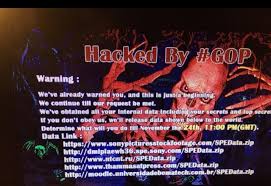
Warning issued by “Guardians of Peace” (GOP)
On December 17, 2014, Sony Pictures cancelled the Christmas Day premier of “The Interview” after the nation’s five largest movie chains refused to show the movie, following a terror threat posted online.
And then on February 5, 2015, Anthem Insurance announced that its database had been hacked–and sensitive medical information on up to 80 million customers and employees accessed.
According to an anonymous source, the hackers used malware that had been used almost exclusively by Chinese cyberspies.
* * * * *
As the Third Reich came to its fiery end, Adolf Hitler sought to punish the German people for being “unworthy” of his “genius” and losing the war he had started.
His attitude was: “If I can’t rule Germany, then there won’t be a Germany.”
In his infamous “Nero Order,” he decreed the destruction of everything still remaining–industries, ships, harbors, communications, roads, mines, bridges, stores, utility plants, food stuffs.
Fortunately for Germany, one man–Albert Speer–finally broke ranks with his Fuehrer.
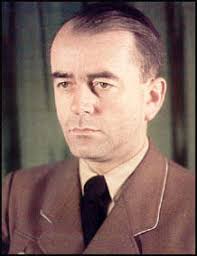
Albert Speer
Risking death, he refused to carry out Hitler’s “scorched earth” order. Even more important, he mounted a successful effort to block such destruction or persuade influential military and civilian leaders to disobey the order as well.
As a result, those targets slated for destruction were spared.
Since the election of America’s first black President, Republicans have waged a similar “scorched earth” campaign.
Their avowed goal–as stated openly by Kentucky’s U.S. Senator Mitch McConnell–was “to make Barack Obama a one-term President.”
Literally during his first Inauguration, Republicans, in a secret meeting, agreed to block every effort he made to repair the economy.
Acting as extortionists, they repeatedly threatened to shut down the government if they didn’t get their way in legislative matters.
And just as repeatedly, they blocked legislation that would have helped the poor, unemployed, women, elderly, disabled or middle-class.
At the center of their fury has been the Affordable Care Act, providing medical care to all citizens. Even after Congress passed it and the Supreme Court affirmed it, House Republicans shut down the government in October, 2013.
By doing so, they hoped to pressure Obama into killing his signature piece of legislation. The effort failed.
Like Adolf Hitler, their attitude has been: “If I can’t rule America, there won’t be an America.”
As the Obama administration nears its end, no Republican Albert Speer has come forward to save America from the self-destructive excesses of this Nation’s own fanatics.
ABC NEWS, ADOLF HITLER, ALBERT SPEER, BARACK OBAMA, CBS NEWS, CNN, DEBT CEILING, EXTORTION, FACEBOOK, FASCISM, HOUSE SPEAKER JOHN BOEHNER, NAZI GERMANY, NBC NEWS, NEGOTIATING, PAP SMEARS, PLANNED PARENTHOOD, REPUBLICAN PARTY, REPUBLICANS, THE CHICAGO SUN-TIMES, THE CHICAGO TRIBUNE, THE LOS ANGELES TIMES, THE NEW YORK TIMES, THE WASHINGTON POST, TRICKLE-DOWN ECONOMICS, TWITTER, USA TODAY, WARREN BUFFET, WORLD WAR ii
In Bureaucracy, History, Law Enforcement, Politics, Social commentary on September 21, 2016 at 6:06 pm
During the summer of 2011, Republicans refused to raise the debt ceiling unless Democrats agreed to massively cut social programs for the elderly, poor and disabled.
If Congress failed to raise the borrowing limit of the federal government by August 2, the date when the U.S. reached the limit of its borrowing abilities, America would begin defaulting on its loans.
As Warren Buffett, CEO of Berkshire Hathaway, explained the looming economic catastrophe:
“If you don’t send out Social Security checks, I would hate to think about the credit meeting at S&P and Moody’s the next morning.
“If you’re not paying millions and millions and millions of people that range in age from 65 on up, money you promised them, you’re not a AAA,” said Buffett.
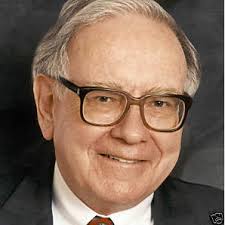
Warren Buffett
A triple-A credit rating is the highest possible rating that can be achieved.
And while Republicans demanded that the disadvantaged tighten their belts, they rejected any raising of taxes on their foremost constituency–the wealthiest 1%.
As the calendar moved ever closer to the fateful date of August 2, Republican leaders continued to insist: Any deal that includes taxes “can’t pass the House.
”To prevent the government from defaulting on its loans, President Barack Obama agreed to sign the Republican-crafted Budget Control Act (BCA) of 2011.
The Act provided for a Joint Select Committee on Deficit Reduction to produce legislation by late November to decrease the deficit by $1.2 trillion over ten years.
When the so-called “Super Committee” failed to reach agreement, the second part of the BCA went into effect. This directed automatic across-the-board cuts (known as “sequestrations”) split evenly between defense and domestic spending, beginning on January 2, 2013.
A major casualty of sequestration has been the Centers for Disease Control and Prevention (CDC). And this has threatened the safety of the Nation Republicans claim to love.
In 2013, the CDC was forced to cut 5%, or more than $285 million, from its budget.
The sequester cut $195 million from the National Centers for Emerging and Zoonotic Infectious Diseases, a CDC program that tries to prevent illness and death from infectious disease.
For fiscal 2014, CDC’s budget was $5.9 billion, down from the $6.5 billion allotted in 2010.
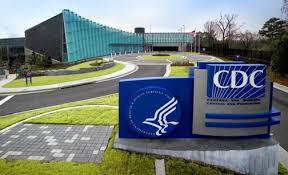
Centers for Disease Control and Prevention
In October, 2014, for the first time in United States history, the CDC faced an unexpected outbreak of the dreaded Ebola virus.
To Americans’ horror, the agency initially seemed unable to deal effectively with the threat.
Moreover, the Nation was confronting the Ebola crisis without a Surgeon General–thanks to NRA-funded Republican Senators.
President Obama had nominated Dr. Vivek Murthy for the spot in November, 2013, when the previous surgeon general left the position.But the Senate still hadn’t approved Murthy.
And support for him declined since he tweeted on October 16, 2002, that “guns are a health care issue.”
At the same time, Republicans rushed to blame President Obama for the continuing Ebola menace in West Africa–and the danger it posed to Americans.
“I think this Ebola outbreak in Africa is a serious problem,” said House Speaker John Boehner. “And I’m a bit surprised the administration hasn’t acted more quickly to address what is a serious threat, not only to Africans but to others around the world.”
“The President made a lot of commitments to combat Ebola, actions which I supported,” said North Carolina U.S. Senator Richard Burr. “But it has become clear that the administration’s capacity to fulfill these promises in a timeline that sufficiently addresses this crisis does not exist.”
But then a new Republican-inspired crisis threatened America.
On December 13, 2014, the U.S. Senate passed a $1.1 trillion spending bill to fund almost the entire government through the September 30 end of the fiscal year.
But one Federal agency was pointedly exempted from full funding: The Department of Homeland Security (DHS).
President George W. Bush had created this agency to safeguard the nation against terrorism. But he didn’t imagine that his fellow Republicans might willingly jeopardize the security of the Nation.
President Obama had requested $38.2 billion to fund DHS through fiscal year 2015. But Republicans ensured that its funding would end on February 27.
Why?
Republicans had gained control of the House of Representatives after the 2010 elections. And then they gained control of the Senate with the 2014 elections.
With their newfound majorities in both houses of Congress, they intended to hold the security of the United States as a hostage.
Their goal: To force Obama to rescind the changes he had made in American immigration policy.
Homeland Security was charged with implementing those changes. And Republicans intended to strip it of funding to do so.
And if that meant allowing DHS to “twist slowly, slowly in the wind” (to use a phrase made infamous by the Nixon administration) while Republicans played out their latest power-game, so be it.
This was no small matter.
With more than 240,000 employees, DHS is the third largest Cabinet department, after the Departments of Defense and Veterans Affairs.
The Defense Department is charged with protecting the United States through military action abroad.
DHS is responsible for safeguarding the Nation inside and outside its borders. Its goal is to prepare for, prevent and–if prevention fails–respond to man-made accidents, natural disasters and terrorism.
ABC NEWS, ADOLF HITLER, ALBERT SPEER, BARACK OBAMA, CBS NEWS, CNN, DEBT CEILING, EXTORTION, FACEBOOK, FASCISM, HOUSE SPEAKER JOHN BOEHNER, NAZI GERMANY, NBC NEWS, NEGOTIATING, PAP SMEARS, PLANNED PARENTHOOD, REPUBLICAN PARTY, REPUBLICANS, THE CHICAGO SUN-TIMES, THE CHICAGO TRIBUNE, THE LOS ANGELES TIMES, THE NEW YORK TIMES, THE WASHINGTON POST, TRICKLE-DOWN ECONOMICS, TWITTER, USA TODAY, WARREN BUFFET, WORLD WAR ii
In Bureaucracy, History, Law Enforcement, Politics, Social commentary, Uncategorized on September 19, 2016 at 12:41 am
Albert Speer, Minister of Armaments for the Third Reich, was appalled.
His Fuhrer, Adolf Hitler–the man he had idolized for 14 years–had just passed a death sentence on Germany, the nation he claimed to love above all others.
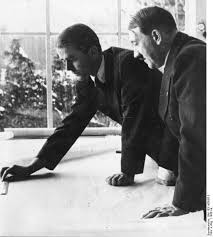
Albert Speer and Adolf Hitler pouring over architectural plans
On March 19, 1945, facing certain defeat, Hitler had ordered a massive “scorched-earth” campaign throughout Germany.
All German agriculture, industry, ships, communications, roads, food stuffs, mines, bridges, stores and utility plants were to be destroyed.
If implemented, it would deprive the entire German population of even the barest necessities after the war.
Click here: Hitler’s “Scorched Earth” Decree and Albert Speer’s Response
Now living in a bunker 50 feet below bomb-shattered Berlin, Hitler gave full vent to his most destructive impulses.
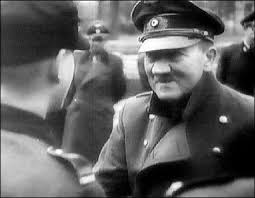
Adolf Hitler addressing boy soldiers as the Third Reich crumbles
“If the war is lost,” Hitler told Speer, “the nation will also perish. This fate is inevitable. There is no necessity to take into consideration the basis which the people will need to continue even a most primitive existence.
“On the contrary, it will be better to destroy these things ourselves, because this nation will have proved to be the weaker one and the future will belong solely to the stronger eastern nation.
“Besides, those who will remain after the battle are only the inferior ones, for the good ones have all been killed.”
Speer argued in vain that there must be a future for the German people. But Hitler refused to back down. He gave Speer 24 hours to reconsider his opposition to the order.
The next day, Speer told Hitler: “My Fuhrer, I stand unconditionally behind you!”
“Then all is well,” said Hitler, suddenly with tears in his eyes.
“If I stand unreservedly behind you,” said Speer, “then you must entrust me rather than the Gauleiters [district Party leaders serving as provincial governors] with the implementation of your decree.”
Filled with gratitude, Hitler signed the decree Speer had thoughtfully prepared before their fateful meeting.
By doing so, Hitler unintentionally gave Speer the power to thwart his “scorched earth” decree.
Speer had been the closest thing to a friend in Hitler’s life. Trained as an architect, he had joined the Nazi Party in 1931.
He met Hitler in 1933, when he presented the Fuhrer with architectural designs for the Nuremberg Rally scheduled for that year.
From then on, Speer became Hitler’s “genius architect” assigned to create buildings meant to last for a thousand years.
In 1943, Hitler appointed him Minister of Armaments, charged with revitalizing the German war effort.
Nevertheless, Speer now crisscrossed Germany, persuading military leaders and district governors to not destroy the vital facilities that wound be needed after the war.
“No other senior National Socialist could have done the job,” writes Randall Hanson, author of Disobeying Hitler: German Resistance After Valkyrie.
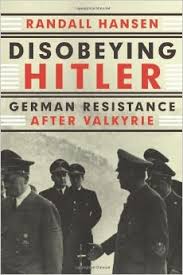
“Speer was one of the very few people in the Reich–perhaps even the only one–with such power to influence actors willingness/unwillingness to destroy.”
Despite his later conviction for war crimes at Nuremberg, Speer never regretted his efforts to save Germany from total destruction at the hands of Adolf Hitler.
Fast-forward to the United States since the 2008 election of President Barack Obama.
Republicans have adopted the same my-way-or-else “negotiating” stance as Adolf Hitler. Like him, they are determined to gain absolute power–or destroy the Nation they claim to love.
Ronald Reagan presided over a tripling of the national debt–and raised the debt limit 17 times–during his eight years in the White House.
President George W. Bush nearly doubled it again.
But that didn’t become an issue for Republicans–so long as one of them held the White House.
Republicans in Congress raised the debt ceiling seven times during the George W. Bush Presidency–when the national debt grew to $10.627 trillion due to tax cuts and wars in Afghanistan and Iraq.
Only when a Democrat–and a black one at that–became President did Congressional Republicans consider this a danger.
Suddenly, “fiscal integrity” became the byword of Republicans. And in its name, they repeatedly threatened to shut down the government if their legislative demands weren’t met.
In April, 2011, the United States government almost shut down over Republican demands about subsidized pap smears.
During a late-night White House meeting with President Barack Obama and key Congressional leaders, Republican House Speaker John Boehner made this threat:
His conference would not approve funding for the government if any money were allowed to flow to Planned Parenthood through Title X legislation.
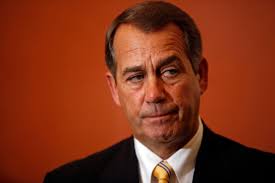
John Boehner
Facing an April 8 deadline, negotiators worked day and night to strike a compromise–and finally reached one.
Three months later–on July 9–Republican extortionists again threatened the Nation with financial ruin and international disgrace unless their demands were met.
By refusing to raise the debt ceiling, they would force the government to default on paying the bills it owed.
President Obama had offered to make historic cuts in the federal government and the social safety net–on which millions of Americans depend for their most basic needs.
But Boehner rejected that offer. He would not agree to the tax increases that Democrats wanted to impose on the wealthiest 1% as part of the bargain.
ABC NEWS, AL QAEDA, AMERICAN EXCEPTIONALISM, BARACK OBAMA, BASHIR AL-ASSAD, CBS NEWS, CNN, FACEBOOK, HOUSE UN-AMERICAN ACTIVITIES COMMITTEE, HUMAN RIGHTS, JOHN BOEHNER, JOHN MCCAIN, NBC NEWS, RUSSIA, SYRIA, THE CHICAGO SUN-TIMES, THE CHICAGO TRIBUNE, THE HUFFINGTON POST, THE LOS ANGELES TIMES, THE NEW YORK TIMES, THE WALL STREET JOURNAL, THE WASHINGTON POST, TWITTER, USA TODAY, VLADIMIR PUTIN
In Bureaucracy, History, Military, Politics, Social commentary on September 16, 2016 at 12:19 am
On September 11, 2013, the New York Times published an Op-Ed (guest editorial) from Russian President Vladimir Putin, entitled: “A Plea for Caution from Russia: What Putin Has to Say to Americans About Syria.”
No one should be surprised that Putin came out strongly against an American air strike on Syria.
Its “President” (i.e., dictator) Bashir al-Assad, is, after all, a close ally of Russia. Just as his late father and dictator, Hafez al-Assad, was a close ally of the Soviet Union until its collapse in 1991.
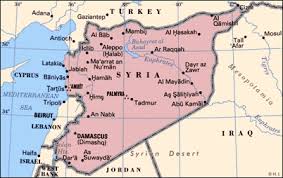
Putin, of course, is a former member of the KGB, the infamous secret police which (under various other names) ruled the Soviet Union from its birth in 1917 to its collapse in 1991.
He grew up under a Communist dictatorship and clearly wishes to return to that era, saying publicly: “First and foremost it is worth acknowledging that the demise of the Soviet Union was the greatest geopolitical catastrophe of the century.”
So it would be unrealistic to expect him to view the current “Syria crisis” the same way that President Barack Obama does.
(A “crisis” for politicians and news media is any event they believe can be exploited for their own purposes.
(In the case of media like CNN–which has devoted enormous coverage to the use of poison gas in Syria–the motive is higher ratings. “If it bleeds, it leads,” goes the saying in the news business.
(In the case of politicians–like Obama and Putin–the motive is to further their own status. And thus power.
(Few politicians really care about the “human rights” of other nations–unless promoting this issue can empower themselves and/or their own nations.
(President Ronald Reagan, for example, often wailed about the Soviets’ oppression of the Polish union, Solidarity–while firing hundreds of unionized air traffic controllers who went on strike.)
In his September 11 guest editorial in the New York Times, Putin offered the expected Russian take on Syria:
- Yes, poison gas was used in Syria.
- No, it wasn’t used by the Syrian Army.
- It was used by “opposition forces, to provoke intervention by their powerful foreign patrons.”
- “There are few champions of democracy in Syria. But there are more than enough [al] Qaeda fighters and extremists of all stripes battling the government.”
But it’s the concluding paragraph that has enraged American politicians the most–especially right-wing ones. In it, Putin takes exception with American “exceptionalism.”
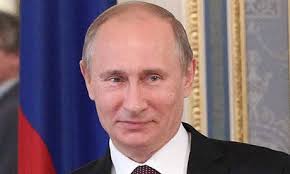
Vladimir Putin
Referring to President Obama, Putin wrote:
“And I would rather disagree with a case he made on American exceptionalism, stating that the United States’ policy is ‘what makes America different. It’s what makes us exceptional.’
“It is extremely dangerous to encourage people to see themselves as exceptional, whatever the motivation.
“There are big countries and small countries, rich and poor, those with long democratic traditions and those still finding their way to democracy. Their policies differ, too.
“We are all different, but when we ask for the Lord’s blessings, we must not forget that God created us equal.”
Putin has never publicly shown any interest in religion. But by invoking “the Lord,” he was able to turn the Christian beliefs of his Western audience into a useful weapon.
“I was insulted,” then-House Speaker John Boehner (R-Ohio) told reporters when asked for his blunt reaction to the editorial.
“I have to be honest with you, I was at dinner, and I almost wanted to vomit,” said U.S. Senator Bob Menendez (D-New Jersey).
Putin had dared to question the self-righteousness of American foreign policy–and those who make it.
Making his case for war with Syria, Obama had said: “America is not the world’s policeman….
“But when, with modest effort and risk, we can stop children from being gassed to death, and thereby make our own children safer over the long run, I believe we should act.
“That’s what makes America different. That’s what makes us exceptional. With humility, but with resolve, let us never lose sight of that essential truth.”
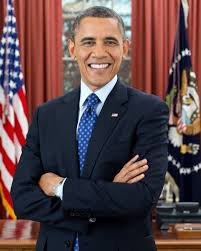
President Barack Obama
In short: Because we consider ourselves “exceptional,” we have the divine right to do whatever we want.
It’s not necessary to see Putin as a champion of democracy (he isn’t) to see the truth in this part of his editorial: “It is extremely dangerous to encourage people to see themselves as exceptional, whatever the motivation.”
From 1938 to 1969, the House Un-American Activities Committee sought to define what was “American” and what was “Un-American.” As if “American” stood for all things virtuous.
Whoever heard of an “Un-French Activities Committee”? Or an “Un-German” or “Un-British” one?
The late S.I. Hayakawa once made an obersation that clearly applies to this situation.
Hayakawa was a professor of semantics (the study of meaning, focusing on the relation between words and what they stand for).
In his bestselling book, Language in Thought and Action, he observed that when a person hears a message, he has four ways of responding to it:
- Accept the speaker and his message.
- Accept the speaker but reject the message.
- Accept the message but reject the speaker.
- Reject the message and the speaker.
Americans might want to consider #3 in the recent case of Russian President Vladimir Putin.
2016 PRESIDENTIAL RACE, 9/11 ATTACKS, ABC NEWS, ALEKSANDR LITVINENKO, ASSASSINATION, BARACK OBAMA, BENNET IFEAKANDU OMALU, BERNIE SANDERS, BORIS NEMTSOV, BRAIN CANCER, CBS NEWS, CHRONIC TRAUMATIC ENCEPHALOPATHY (CTE), CNN, CONCUSSON, DONALD TRUMP, FACEBOOK, FOOTBALL, FOX & FRIENDS, FOX AND FRIENDS, FOX NEWS, HANNITY, HILLARY CLINTON, ILLNESS, INFOWARS, KGB, MULTIPLE SCLEROSIS, NATIONAL ENQUIRER, NATIONAL FOOTBALL LEAGUE, NATO, NBC NEWS, NFL, NORTH ATLANTIC TREATY ORGANIZATION (NATO), PARKINSON’S DISEASE, PAUL MANAFORT, PENTAGON, POISONING, POST-CONCUSSION SYNDROME, REPUBLICAN PARTY, Ronald Reagan, RUSSIA, SEAN HANNITY, STROKE, THE CHICAGO SUN-TIMES, THE CHICAGO TRIBUNE, THE LOS ANGELES TIMES, THE NATIONAL ENQUIRER, THE NEW YORK TIMES, THE SOVIET UNION, THE WASHINGTON POST, TIM KAINE, TWITTER, UKRAINE, VICTOR YUSHCHENKO, VLADIMIR PUTIN, WORLD TRADE CENTER
In Bureaucracy, History, Law Enforcement, Military, Politics on September 15, 2016 at 12:10 am
Right-wing websites and networks are gleefully buzzing with theories about the state of Hillary Clinton’s health.
The former First Lady, New York U.S. Senator and Secretary of State collapsed after briefly attending a memorial ceremony on the 15th anniversary of the 9/11 attacks.
The unsubstantiated theories include stroke, brain damage, Multiple sclerosis and Parkinson’s disease.
But there’s one theory Right-wingers scrupulously refuse to offer: That Clinton might be a victim of poisoning by Donald Trump’s well-known admirer, Vladimir Putin.
It’s a theory that has been offered by no less than Bennet Ifeakandu Omalu, the Nigerian-American physician, forensic pathologist and neuropathologist who was the first to discover and publish findings of chronic traumatic encephalopathy (CTE) in American football players.

Bennet Ifeakandu Omalu
His struggle to alert the National Football League to that danger met with hostility and derision. Finally, amid growing scrutiny from Congress, the NFL was forced to take the concussion issue more seriously.
NFL owners banned players from striking opponents with the crowns of their helmets. Meanwhile, the NFL is facing concussion lawsuits from nearly 4,000 former players.
On September 11, a Clinton rep stated that she was suffering from pneumonia–and Omalu warned on Twitter: “I must advice the Clinton campaign to perform toxicologic analysis of Mrs. Clinton’s blood. It is possible she is being poisoned.”
And he followed this up with a second tweet: “I do not trust Mr. Putin and Mr. Trump. With those two all things are possible.”
At this point, there is no evidence that Hillary Clinton is the victim of KGB “wet” methods. And it would take lengthy, sophisticated toxicology tests to hopefully learn the truth.
But there is plenty of evidence that Vladimir Putin has used murder–especially poison–to eliminate his opponents.
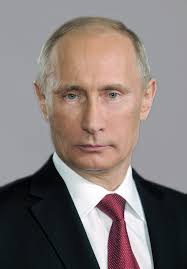
Vladimir Putin
Putin came to power in 2000. Since then, at least 34 journalists have been murdered in Russia, according to the Moscow-based Glasnost Defense Foundation. Many of the suspected killers are military officials, government officials or political groups.
Being a political opponent of Vladimir Putin can also be dangerous. Among the casualties:
Viktor Yushchenko: In 2004, he was running for president of the Ukraine against Putin’s chosen candidate, Victor Yanukovych.
As the campaign neared its climax, Yushchenko suddenly fell ill–with dioxin poisoning. Flown to Vienna’s Rudolfinerhaus clinic for treatment, he survived, but his face was left greatly disfigured. He went on to win the election, serving as Ukraine’s president from 2005 to 2010.
Aleksandr Litvinenko: A former KGB officer, he had accused Putin of wholesale corruption. Even worse, he charged that–as a pretext for a second war with Chechnya–Putin ordered the bombings of Moscow apartment buildings, resulting in the deaths of hundreds of people.

Aleksandr Litvinenko
Litvinenko died on November 23, 2006 in London from a dose of Polonium-210 in his tea. At the time, he was meeting with two Moscow agents, one of whom is now a member of the State Duma.
Boris Nemtsov: An official with a liberal opposition group, he had been arrested several times for speaking against Putin’s government.
Nemtsov had been scheduled to lead an opposition rally in Moscow. But on February 27, 2015, two days before the event, he was shot dead as he walked home from dinner. The killing happened a short distance from the Kremlin.
If Hillary Clinton proved to have a serious medical condition such as Parkinson’s or Multiple sclerosis, the results would be tragic but strictly national.
Mounting pressure within and outside the Democratic party would force her to drop out of the race.
There would be a brief, furious struggle within the Democratic party for the nomination–most likely between Vermont U.S. Senator Bernie Sanders and Tim Kaine, Clinton’s choice for Vice President. The winner would face Donald Trump in the coming debates and fall election.
And the Clintons–a force in American politics since 1992–would finally leave the national stage.
But if Hillary is a victim of a KGB assassination attempt, as Dr. Bennet Omalu suspects, then the consequences would be national and international.
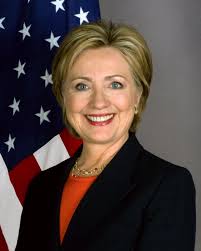
Hillary Clinton
Nationally, such a discovery would almost certainly generate huge sympathy for Clinton–a woman singularly unable to arouse sympathy among voters. That alone could ensure her election as President.
And even Americans who hate Clinton would never forgive Russia for daring to interfere with an American Presidential election. They would demand severe retaliation–even all-out war.
For Trump, it would prove a nightmare. He’s made too many admiring statements about Putin to disavow them now and be believed.
National outrage followed in July when Trump invited Putin to “find the 30,000 emails that are missing” on the private server that Clinton used as Secretary of State.
If Clinton died–or was simply injured–because of a KGB plot, few would believe Trump wasn’t a party to it.
And several of Trump’s closest associates have had ties to Putin, such as his former campaign manager Paul Manafort.
Even many Republicans have already declared they can’t support Trump in abandoning NATO–much less his clear admiration for Putin, a dictator who got his start as a KGB agent.
At his first press conference upon becoming President, Ronald Reagan harshly denounced Soviet leaders: “They reserve unto themselves the right to commit any crime, to lie, to cheat.”
A KGB plot against Hillary Clinton would convince many Americans that Republican leaders have become as corrupt as those in the Kremlin.
2016 PRESIDENTIAL RACE, 9/11 ATTACKS, ABC NEWS, ALEKSANDR LITVINENKO, ASSASSINATION, BARACK OBAMA, BENNET IFEAKANDU OMALU, BERNIE SANDERS, BORIS NEMTSOV, BRAIN CANCER, CBS NEWS, CHRONIC TRAUMATIC ENCEPHALOPATHY (CTE), CNN, CONCUSSON, DONALD TRUMP, FACEBOOK, FOOTBALL, FOX & FRIENDS, FOX AND FRIENDS, FOX NEWS, HANNITY, HILLARY CLINTON, ILLNESS, INFOWARS, KGB, MULTIPLE SCLEROSIS, NATIONAL ENQUIRER, NATIONAL FOOTBALL LEAGUE, NATO, NBC NEWS, NFL, NORTH ATLANTIC TREATY ORGANIZATION (NATO), PARKINSON’S DISEASE, PAUL MANAFORT, PENTAGON, POISONING, POST-CONCUSSION SYNDROME, REPUBLICAN PARTY, Ronald Reagan, RUSSIA, SEAN HANNITY, STROKE, THE CHICAGO SUN-TIMES, THE CHICAGO TRIBUNE, THE LOS ANGELES TIMES, THE NATIONAL ENQUIRER, THE NEW YORK TIMES, THE SOVIET UNION, THE WASHINGTON POST, TIM KAINE, TWITTER, UKRAINE, VICTOR YUSHCHENKO, VLADIMIR PUTIN, WORLD TRADE CENTER
In Bureaucracy, History, Law Enforcement, Military, Politics on September 14, 2016 at 12:09 am
September 11 marked the 15th anniversary of the worst terrorist attack in American history.
The date when, in 2001, two highjacked, fuel-laden jetliners slammed into the “twin towers” of the World Trade Center in New York City and a third crashed into the Pentagon in Washington, D.C.
A fourth, intended for the White House or Capitol Building, was prevented from doing so by the heroic resistance of its passengers. The highjackers crashed it into a field in Pennsylvania.
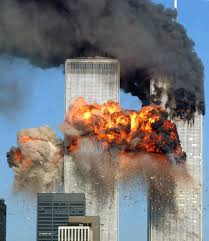
World Trade Center on September 11, 2001
For Hillary Clinton, former First Lady and Secretary of State, and now the Democratic party’s Presidential nominee, this was to be a day of memorial events.
Instead, it turned out to be her worst nightmare as a Presidential candidate.
Scheduled to attend a 9/11 ceremony in New York City, she cut short her appearance around 9:30 a.m. because she felt “overheated,” according to campaign spokesman Nick Merrill.
Amateur video captured Clinton struggling to stand and needing help to enter her Secret Service van. A woman held Clinton’s left arm as the van approached. Then two men grabbed both of her arms as her knees buckled.
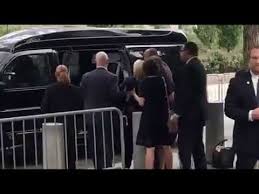
Hillary Clinton being helped into her van
Shortly before noon, Clinton left the apartment of her daughter, Chelsea. Wearing sunglasses, she waved to diners at a nearby restaurant.
“I’m feeling great, it’s a beautiful day in New York,” she said. Then she headed to her home in Chappaqua.
The official statement given by her campaign went:
“Secretary Clinton attended the September 11th Commemoration Ceremony for just an hour and thirty minutes this morning to pay her respects and greet some of the families of the fallen. During the ceremony, she felt overheated so departed to go to her daughter’s apartment, and is feeling much better.”
Several hours later, her doctor announced that Clinton was suffering from pneumonia.
Throughout the campaign, Republican Presidential nominee Donald Trump has attacked her mental and physical and fitness to be President.
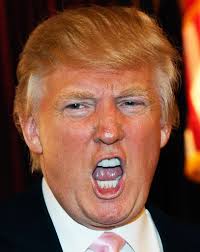
Donald Trump
The 9/11 incident has hugely amplified those questions–and concerns. She not only abruptly left the ceremony, but nobody in her campaign told reporters traveling with her about her condition or whereabouts for 90 minutes after she left the ceremony.
In 2015, Clinton, then 67, released a two-page letter from her doctor stating that she was in good health despite a blood clot and a 2012 concussion.
But that hasn’t prevented conspiracy theorists from flooding the Internet that she is stricken with a vast array of unsubstantiated ailments, such as:
-
Multiple sclerosis
-
Parkinson’s disease
-
Brain damage
-
Stroke
-
Brain cancer
-
Post-Concussion Syndrome
The Right has salivated over the prospect of its longtime rival being yanked off the political stage, as it were, by a shepherd’s crook of deteriorating health.
Among these celebrations:
The National Enquirer: “Failing health and a deadly thirst for power are driving Hillary Clinton to an early grave.” The article–dated September 30, 2015–claimed she would be dead in six months.
Fox & Friends: Hosts Brian Kilmeade and Steve Doocy claimed that Clinton’s glasses proved “a sign of brain damage and other things.”
InfoWars: “Coughing can be a symptom of so many different illnesses…it is interesting to note that it happens to be one of the symptoms of Parkinson’s Disease.”
Hannity: Fox News Medical Correspondent Dr. Marc Siegel said that a video showing Clinton laughing with reporters suggested that she might be having a “mini-seizure.” Siegel added that Clinton might still suffer from “post-concussion syndrome”–after a 2012 concussion–which could affect balance, impair memory and cause dizziness.
Yet there is one conspiracy theory that is conspicuously absent from Right-wing websites and networks.
And this is because it points to a connection that Republicans–and especially Donald Trump–want to ignore.
The ties between Trump and Russian dictator Vladimir Putin.
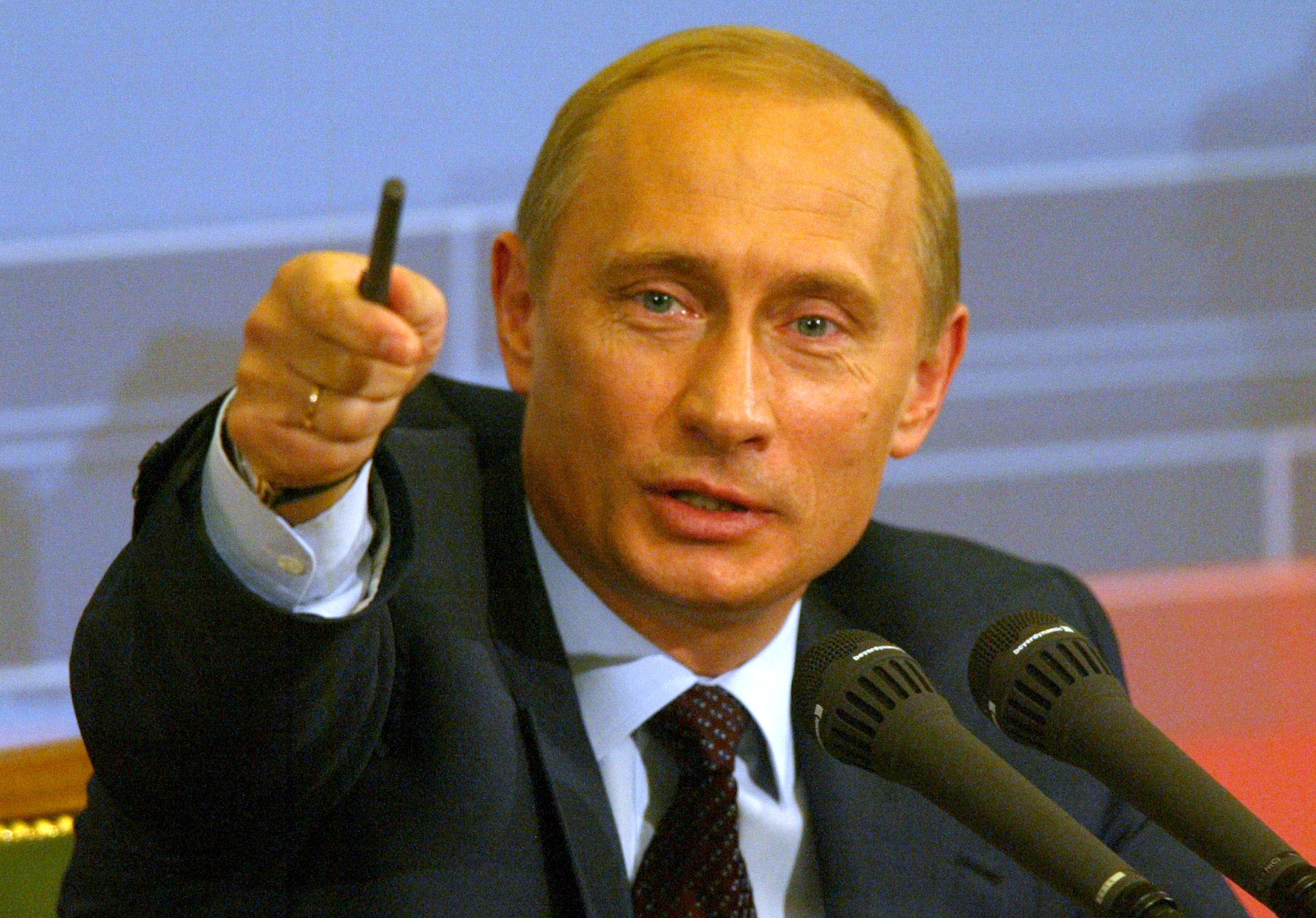
Vladimir Putin
Putin’s admiration for Trump is no secret.
“He is a bright personality, a talented person, no doubt about it. It is not up to us to appraise his positive sides, it is up to the U.S. voters. but, as we can see, he is an absolute leader in the presidential race.
“He is saying that he wants to move to a different level of relations with Russia, to a closer, deeper one. How can we not welcome that? Of course, we welcome that.”
Nor is Trump’s admiration for Putin.
“It is always a great honor to be so nicely complimented by a man so highly respected within his own country and beyond.”
Appearing on the December 18, 2015 edition of MSNBC’s “Morning Joe,” Trump said of Putin: “He’s running his country, and at least he’s a leader. Unlike what we have in this country.”
When Trump praised Putin as a leader–“unlike what we have in this country”–he meant President Barack Obama.
But Putin may have serious reasons for flattering Trump.
Trump believes the United States is paying too much of the money needed to maintain the North Atlantic Treaty Organization (NATO) alliance. He wants other members to contribute far more. He has said that, unless they do, under a Trump Presidency, they would be on their own if attacked by Russia.
The withdrawal of the United States from NATO would instantly render that alliance kaput.
For Putin, this clearly signals a reason to prefer Trump to Clinton.
9/11, ABC NEWS, AL QAEDA, ALTERNET, AMERICABLOG, AMERICAN CAESARS: THE LIVES OF THE PRESIDENTS FROM FRANKLIN D. ROOSEVELT TO GEORGE W. BUSH, AMERICAN EMPIRE, AP, BABY BOOMER RESISTANCE, BASHAR AL-ASSAD, BILL CLINTON, BLOOMBERG, BUREAUCRACY, BUZZFEED, CBS NEWS, CHRIS MATHEWS, CNN, CONDOLEEZA RICE, CROOKS AND LIARS, DAILY KOZ, DONALD TRUMP, DRUDGE REPORT, DWIGHT EISENHOWER, FACEBOOK, FBI, FIVETHIRTYEIGHT, FRANKLIN D. ROOSEVELT, GEORGE H.W. BUSH, GEORGE W. BUSH, GERALD R. FORD, HARPER’S MAGAZINE, HARRY S. TRUMAN, HUFFINGTON POST, JIMMY CARTER, JOHN F. KENNEDY, LYNDON B. JOHNSON, MEDIA MATTERS, MOTHER JONES, MOVEON, MSNBC, NBC NEWS, NEWSWEEK, NIGEL HAMILTON, NPR, OSAMA BIN LADEN, PBS NEWSHOUR, POLITICO, POLITICUSUSA, RAW STORY, REPUBLICAN PARTY, REUTERS, RICHARD CLARKE, RICHARD NIXON, ROMAN EMPIRE, SALON, SEATTLE TIMES, SEPTEMBER 11, SLATE, SUETONIUS, SYRIA, TALKING POINTS MEMO, TERRORISM, THE ATLANTIC, THE CHICAGO SUN-TIMES, THE CHICAGO TRIBUNE, THE DAILY BEAST, THE DAILY BLOG, THE GUARDIAN, THE HILL, THE HUFFINGTON POST, THE LOS ANGELES TIMES, THE NATION, THE NEW REPUBLIC, THE NEW YORK TIMES, THE TWELVE CAESARS, THE VILLAGE VOICE, THE WASHINGTON POST, THINKPROGRESS, TIME, TRUTHDIG, TRUTHOUT, TWITTER, TWO POLITICAL JUNKIES, U.S. NEWS & WORLD REPORT, UPI, USA TODAY
In Bureaucracy, History, Military, Politics, Social commentary on September 13, 2016 at 12:30 am
Colonel Brandt: “I wonder what we’ll do after we lose the war.”
Captain Kiesel: “Prepare for the next one.”
–-“The Cross of Iron,” film by Sam Peckinpah
On September 12, 2001, President George W. Bush attended a meeting of the National Security Council.
“Why shouldn’t we go against Iraq, not just Al-Qaeda?” demanded Donald Rumsfeld, the Secretary of Defense.
Vice President Dick Cheney enthusiastically agreed.
Secretary of State Colin Powell then pointed out there was absolutely no evidence that Iraq had had anything to do with 9/11 or Al-Qaeda. And he added: “The American people want us to do something about Al-Qaeda”–not Iraq.
On November 21, 2001, only 10 weeks after 9/11, Bush told Rumsfeld: It’s time to turn to Iraq.
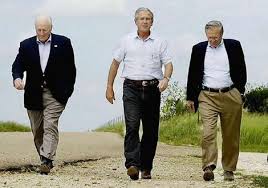
Liars Club: Condoleeza Rice, Dick Cheney, George Bush, Donald Rumsfeld
Bush and his war-hungry Cabinet officials knew that Americans demanded vengeance on AlQaeda’s mastermind, Osama bin Laden, and not Iraqi dictator Saddam Hussein. So they repeatedly fabricated “links” between the two:
- Saddam had worked hand-in-glove with Bin Laden to plan 9/11.
- Saddam was harboring and supporting Al-Qaeda throughout Iraq.
- Saddam, with help from Al-Qaeda, was scheming to build a nuclear bomb.
Yet as early as September 22, 2001, Bush had received a classified President’s Daily Brief intelligence report, which stated that there was no evidence linking Saddam Hussein to 9/11.
The report added that there was scant credible evidence that Iraq had any significant collaborative ties with Al-Qaeda.
Even more important: Saddam had tried to monitor Al Qaeda through his intelligence service–because he saw Al-Qaeda and other theocratic radical Islamist organizations as a potential threat to his secular regime.
Bush administration officials repeatedly claimed that Iraq possessed huge quantities of chemical and biological weapons, in violation of UN resolutions. And they further claimed that US intelligence agencies had determined:
- the precise locations where these weapons were stored;
- the identities of those involved in their production; and
- the military orders issued by Saddam Hussein for their use in the event of war.
Among other lies stated as fact by members of the Bush administration:
- Iraq had sought uranium from Niger, in west Africa.
- Thousands of aluminum tubes imported by Iraq could be used in centrifuges to create enriched uranium.
- Iraq had up to 20 long-range Scud missiles, prohibited under UN sanctions.
- Iraq had massive stockpiles of chemical and biological agents, including nerve gas, anthrax and botulinum toxin.
- Saddam Hussein had issued chemical weapons to front-line troops who would use them when US forces crossed into Iraq.
Consider the following:
August 26, 2002: Cheney told the Veterans of Foreign Wars, “There is no doubt that Saddam Hussein now has weapons of mass destruction. There is no doubt he is amassing them to use against our friends, against our allies and against us.”
September 8, 2002: National Security Advisor Condoleeza Rice said on CNN: ”There is certainly evidence that Al-Qaeda people have been in Iraq. There is certainly evidence that Saddam Hussein cavorts with terrorists.”
September 18, 2002: Rumsfeld told the House Armed Services Committee, “We do know that the Iraqi regime has chemical and biological weapons. His regime has amassed large, clandestine stockpiles of chemical weapons–including VX, sarin, cyclosarin and mustard gas.”
October 7, 2002: Bush declared in a nationally televised speech in Cincinnati that Iraq “possesses and produces chemical and biological weapons. It is seeking nuclear weapons.”
March 16, 2003: Cheney declared on NBC’s “Meet the Press”: “We believe [Saddam Hussein] has, in fact, reconstituted nuclear weapons.”
March 30, 2003: On ABC’s “This Week” program, 10 days into the war, Rumsfeld said: “We know where they [weapons of mass destruction] are.”
Bush never regretted his decision to invade Iraq, which occurred on March 20, 2003.
Even as American occupying forces repeatedly failed to turn up any evidence of “weapons of mass destruction” (WMDs), Bush and his minions claimed the invasion a good thing.
In fact, Bush–who hid out the Vietnam war in the Texas Air National Guard–even joked publicly about the absence of WMDs.
He did so at a White House Correspondents dinner on March 24, 2004–one year after he had started the war.
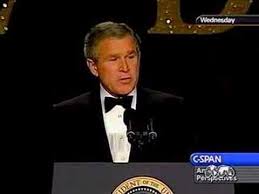
George W. Bush at the 2004 White House Correspondents’ dinner
To Bush, the non-existent WMDs were nothing more than the butt of a joke that night. While an overhead projector displayed photos of a puzzled-looking Bush searching around the Oval Office, Bush recited a comedy routine.
Click here: Bush laughs at no WMD in Iraq – YouTube
“Those weapons of mass destruction have gotta be somewhere,” Bush laughed, while a photo showed him poking around the corners in the Oval Office.
“Nope–no weapons over there! Maybe they’re under here,” he said, as a photo showed him looking under a desk.
Meanwhile, an assembly of wealthy, pampered men and women–the elite of America’s media and political classes–laughed heartily during Bush’s performance. It was a scene worthy of the court of the ancient Caesars, complete with royal flunkies.
Ultimately, the war that Bush had deliberately provoked
- Took the lives of 4,484 Americans.
- Cost the United States Treasury at least $2 trillion.
- Created a Middle East power vacumn.
- Allowed Iran–Iraq’s arch enemy–to eagerly fill it.
- Killed at least 655,000 Iraqis.
- Bush retired from office with a lavish pension and full Secret Service protection.
- He wrote his memoirs and was paid $7 for the first 1.5 million copies.
- Cheney, Rumsfeld, Rice retired to private business, wrote their own memoirs, and lived in comfort as respected elder statesmen.
9/11, ABC NEWS, AL QAEDA, ALTERNET, AMERICABLOG, AMERICAN CAESARS: THE LIVES OF THE PRESIDENTS FROM FRANKLIN D. ROOSEVELT TO GEORGE W. BUSH, AMERICAN EMPIRE, AP, BABY BOOMER RESISTANCE, BASHAR AL-ASSAD, BILL CLINTON, BLOOMBERG, BUREAUCRACY, BUZZFEED, CBS NEWS, CHRIS MATHEWS, CNN, CONDOLEEZA RICE, CROOKS AND LIARS, DAILY KOZ, DONALD TRUMP, DRUDGE REPORT, DWIGHT EISENHOWER, FACEBOOK, FBI, FIVETHIRTYEIGHT, FRANKLIN D. ROOSEVELT, GEORGE H.W. BUSH, GEORGE W. BUSH, GERALD R. FORD, HARPER’S MAGAZINE, HARRY S. TRUMAN, HUFFINGTON POST, JIMMY CARTER, JOHN F. KENNEDY, LYNDON B. JOHNSON, MEDIA MATTERS, MOTHER JONES, MOVEON, MSNBC, NBC NEWS, NEWSWEEK, NIGEL HAMILTON, NPR, OSAMA BIN LADEN, PBS NEWSHOUR, POLITICO, POLITICUSUSA, RAW STORY, REPUBLICAN PARTY, REUTERS, RICHARD CLARKE, RICHARD NIXON, ROMAN EMPIRE, SALON, SEATTLE TIMES, SEPTEMBER 11, SLATE, SUETONIUS, SYRIA, TALKING POINTS MEMO, TERRORISM, THE ATLANTIC, THE CHICAGO SUN-TIMES, THE CHICAGO TRIBUNE, THE DAILY BEAST, THE DAILY BLOG, THE GUARDIAN, THE HILL, THE HUFFINGTON POST, THE LOS ANGELES TIMES, THE NATION, THE NEW REPUBLIC, THE NEW YORK TIMES, THE TWELVE CAESARS, THE VILLAGE VOICE, THE WASHINGTON POST, THINKPROGRESS, TIME, TRUTHDIG, TRUTHOUT, TWITTER, TWO POLITICAL JUNKIES, U.S. NEWS & WORLD REPORT, UPI, USA TODAY
In Bureaucracy, History, Military, Politics, Social commentary on September 12, 2016 at 12:23 am
September 11, 2016, marks the 15th anniversary of the worst terrorist attack on United States soil. Inevitably, this is a time to remember all those whose lives were so cruelly snuffed out.
But it should also be a time to remember those who made this atrocity inevitable–by refusing to acknowledge and address the impending threat from Al-Qaeda.
British historian Nigel Hamilton has chronicled their arrogance and indifference in his 2010 biography: American Caesars: Lives of the Presidents from Franklin D. Roosevelt to George W. Bush.
Hamilton noted that Richard Clarke, the national security advisor on terrorism, was certain that Osama bin Laden had arranged the [USS.] Cole bombing in Aden on October 12, 2000.
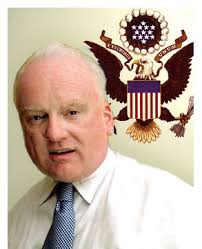
Richard Clarke
For months, Clarke tried to convince others in the Bush Administration that Bin Laden was plotting another attack against the United States–either abroad or at home.
But Clarke could not prevail against the know-it-all arrogance of such higher-ranking Bush officials as Vice President Dick Cheney; Secretary of Defense Donald Rumsfeld; Rumsfeld’s deputy, Paul Wolfowitz; and National Security Advisor Condoleeza Rice.
Rice initially refused to hold a cabinet-level meeting on the subject. Then she “insisted the matter be handled only by a more junior Deputy Principals meeting” in April, 2001, writes Hamilton.
Wolfowitz, the number-two man at the Department of Defense, said: “I don’t understand why we are beginning by talking about this one man, bin Laden.”
Even after Clarke outlined the threat posed by Al-Qaeda, Wolfowitz–whose real target was Saddam Hussein–said: “You give bin Laden too much credit.”
Wolfowitz insisted that bin Laden couldn’t carry out his terrorist acts without the aid of a state sponsor–namely, Iraq.
Wolfowitz, in fact, blamed Iraq for the 1993 bombing of the World Trade Center. Clarke was stunned, since there was absolutely no evidence of Iraqi involvement in this.
“Al-Qaeda plans major acts of terrorism against the United States,” Clarke warned his colleagues. He pointed out that, like Adolf Hitler, bin Laden had actually published his plans for future destruction.
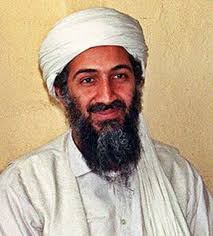
Osama bin Laden
And he added: “Sometimes, as with Hitler in Mein Kampf, you have to believe that these people will actually do what they say they will do.”
Wolfowitz heatedly traded on his Jewish heritage to bring Clarke’s unwelcome arguments to a halt: “I resent any comparison between the Holocaust and this little terrorist in Afghanistan.”
Writing in outraged fury, Hamilton sums up Clarke’s agonizing frustrations:
- Bush’s senior advisors treated their colleagues who had served in the Clinton administration with contempt.
- President Bush, Vice President Dick Cheney, National Security Advisor Condoleeza Rice, Secretary of Defense Donald Rumsfeld and Deputy Defense Secretary Paul Wolfowitz seemed content to ignore the danger signals of an impending al-Qaeda attack.
- This left only Secretary of State Colin Powell, his deputy Richard Armitage, Richard Clarke and a skeptical Treasury Secretary, Paul O’Neill, to wage “a lonely battle to waken a seemingly deranged new administration.”
Clarke alerted Federal Intelligence agencies that “Al-Qaeda is planning a major attack on us.” He asked the FBI and CIA to report to his office all they could learn about suspicious persons or activities at home and abroad.
Finally, at a meeting with Rice on September 4, 2001, Clarke challenged her to “picture yourself at a moment when in the very near future Al-Qaeda has killed hundreds of Americans, and imagine asking yourself what you wish then that you had already done.”
Seven days later, Al-Qaeda struck, and 3,000 Americans died horrifically–and needlessly.
Neither Bush, Cheney, Rice, Rumsfeld nor Wolowitz ever admitted their negligence. Nor would any of them be brought to account.
Disgustingly, these were the same officials who, afterward, posed as the Nation’s saviors–and branded anyone who disagreed with them as a traitor, practices the Right continues to exploit to this day.
Only Richard Clarke–who had vainly argued for stepped-up security precautions and taking the fight to Al-Qaeda–gave that apology.
On March 24, 2004, Clarke testified at the public 9/11 Commission hearings. Addressing relatives of victims in the audience, he said: “Your government failed you, those entrusted with protecting you failed you, and I failed you.”
Yet even worse was to come.
On the evening after the September 11 attacks, Bush took Clarke aside during a meeting in the White House Situation Room:
“I want you, as soon as you can, to go back over everything, everything. See if Saddam [Hussein, the dictator of Iraq] did this. See if he’s linked in any way.”
Clarke was stunned: “But, Mr. President, Al-Qaeda did this.”
“I know, I know,” said Bush. “But see if Saddam was involved. I want to know.”
Hussein had not plotted the attack–and there was no evidence proving that he did. But the attack gave “W” the excuse he wanted to remove the man he blamed for the 1992 defeat of his father, President George H.W. Bush.
Bush believed that his father would have been re-elected if he had “gone all the way” into Baghdad during the 1991 Gulf War.
He would finish the job that his father had started but failed to compete.
On September 12, 2001, Bush attended a meeting of the National Security Council.
“Why shouldn’t we go against Iraq, not just Al-Qaeda?” demanded Donald Rumsfeld, the Secretary of Defense.
Vice President Dick Cheney enthusiastically agreed.
9/11, ABC NEWS, AL QAEDA, ALTERNET, AMERICABLOG, AMERICAN CAESARS: THE LIVES OF THE PRESIDENTS FROM FRANKLIN D. ROOSEVELT TO GEORGE W. BUSH, AMERICAN EMPIRE, AP, BABY BOOMER RESISTANCE, BASHAR AL-ASSAD, BILL CLINTON, BLOOMBERG, BUREAUCRACY, BUZZFEED, CBS NEWS, CHRIS MATHEWS, CNN, CONDOLEEZA RICE, CROOKS AND LIARS, DAILY KOZ, DONALD TRUMP, DRUDGE REPORT, DWIGHT EISENHOWER, FACEBOOK, FBI, FIVETHIRTYEIGHT, FRANKLIN D. ROOSEVELT, GEORGE H.W. BUSH, GEORGE W. BUSH, GERALD R. FORD, HARPER’S MAGAZINE, HARRY S. TRUMAN, HUFFINGTON POST, JIMMY CARTER, JOHN F. KENNEDY, LYNDON B. JOHNSON, MEDIA MATTERS, MOTHER JONES, MOVEON, MSNBC, NBC NEWS, NEWSWEEK, NIGEL HAMILTON, NPR, OSAMA BIN LADEN, PBS NEWSHOUR, POLITICO, POLITICUSUSA, RAW STORY, REPUBLICAN PARTY, REUTERS, RICHARD CLARKE, RICHARD NIXON, ROMAN EMPIRE, SALON, SEATTLE TIMES, SEPTEMBER 11, SLATE, SUETONIUS, SYRIA, TALKING POINTS MEMO, TERRORISM, THE ATLANTIC, THE CHICAGO SUN-TIMES, THE CHICAGO TRIBUNE, THE DAILY BEAST, THE DAILY BLOG, THE GUARDIAN, THE HILL, THE HUFFINGTON POST, THE LOS ANGELES TIMES, THE NATION, THE NEW REPUBLIC, THE NEW YORK TIMES, THE TWELVE CAESARS, THE VILLAGE VOICE, THE WASHINGTON POST, THINKPROGRESS, TIME, TRUTHDIG, TRUTHOUT, TWITTER, TWO POLITICAL JUNKIES, U.S. NEWS & WORLD REPORT, UPI, USA TODAY
In Bureaucracy, History, Military, Politics, Social commentary on September 9, 2016 at 12:01 am
It’s that time of year again–yet another anniversary celebration of September 11, 2001.
The day when Islamic terrorists slammed two jetliners into the World Trade Center and a third into the Pentagon.
They would have crashed a fourth jetliner into the White House or Capitol Building except for the heroic resistance of passengers aboard United Airlines Flight 93.
In the years immediately following 9/11, politicians of both parties used this anniversary to wave flags and make self-serving patriotic speeches.
This was especially true for officials of the administration of President George W. Bush–which, even as the rubble was being cleared at the Pentagon and World Trade Center, was preparing to use the attack as an excuse to topple Iraqi dictator Saddam Hussein.
Hussein had not plotted 9/11, and there was no evidence that he did. But that didn’t matter to Bush and those planning the invasion and conquest of Iraq.
World Trade Center on September 11, 2001
So here it is, 15 years later, and, once again, politicians are using 9/11 as a prop to advance their careers.
Donald Trump, the Republican Presidential nominee, claims that only he can protect America from Al Qaeda, ISIS and any other Islamic terrorist groups. And if that means using nuclear weapons in the Middle East, so be it.
And Hillary Clinton, the Democratic nominee for President, seeks to out-hawk Trump by promising to escalate the fight against ISIS and overthrow Syrian dictator Bashar al-Assad.
As on past commemorations of 9/11, those who died will be remembered by friends and relatives of those who knew and loved them.
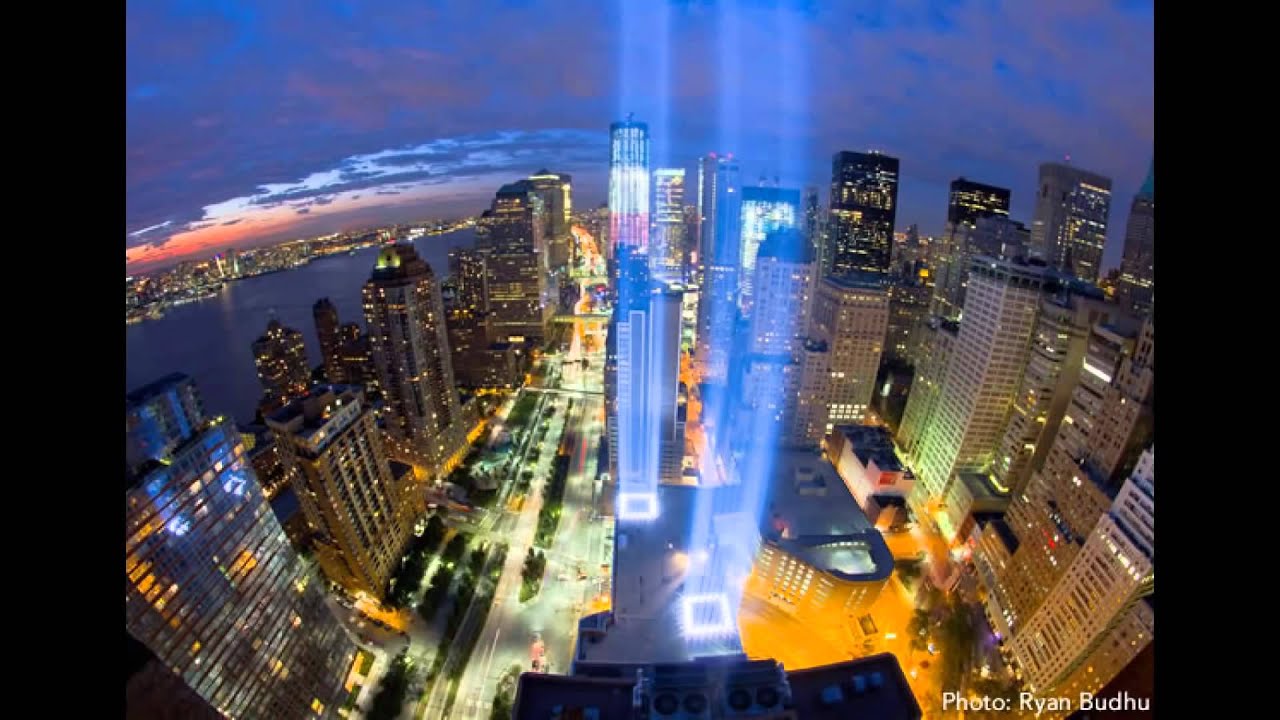
Tribute to 9/11 World Trade Center Victims
It is in fact appropriate to remember the innocents who died on that day–and the heroism of the police and firefighters who died trying to save them.
But it’s equally important to remember those who made 9/11 not simply possible but inevitable.
And that does not mean only the 19 highjackers who turned those planes into fuel-bombs. It means the officials at the highest levels of the administration of President George W. Bush.
Officials who, to this day, have never been held accountable in any way for the resulting death and destruction.
And who have been allowed to blatantly lie that they “kept us safe” from terrorism.
Obviously, such an indictment is not going to be presented by TV commentators today–not even on such liberal networks as CNN and MSNBC. And most definitely not on the right-wing Fox network.
Fortunately, British historian Nigel Hamilton has dared to lay bare the facts of this disgrace. Hamilton is the author of several acclaimed political biographies, including JFK: Reckless Youth and Bill Clinton: Mastering the Presidency.
In 2007, he began research on his latest book: American Caesars: The Lives of the Presidents From Franklin D. Roosevelt to George W. Bush.


Nigel Hamilton
By Nigel Hamilton (Nigel Hamilton picture)
The inspiration for this came from a classic work of ancient biography: The Twelve Caesars, by Gaius Suetonius Tranquillus–known as Suetonius.
Suetonius, a Roman citizen and historian, had chronicled the lives of the first twelve Caesars of imperial Rome: Julius Caesar, Augustus, Tiberius, Caligula, Claudius, Nero, Galba, Otho, Vitellius, Vespasian, Titus and Domitian.
Hamilton wanted to examine post-World War II United States history as Suetonius had examined that of ancient Rome: Through the lives of the 12 “emperors” who had held the power of life and death over their fellow citizens–and those of other nations.
For Hamilton, the “greatest of American emperors, the Caesar Augustus of his time,” was Franklin D. Roosevelt, who led his country through the Great Depression and World War II.
His “”great successors” were Harry S. Truman, Dwight D. Eisenhower and John F. Kennedy–who, in turn, contained the Soviet Union abroad and presided over sustained economic prosperity at home.
By contrast, “arguably the worst of all the American Caesars” was “George W. Bush, and his deputy, Dick Cheney, who willfully and recklessly destroyed so much of the moral basis of American leadership in the modern world.”
Among the most lethal of Bush’s offenses: The appointing of officials who refused to take seriously the threat posed by Al-Qaeda.
And this arrogance and indifference continued–right up to September 11, 2001, when the World Trade Center and Pentagon became targets for destruction.
Among the few administration officials who did take Al-Qaeda seriously was Richard Clarke, the chief counter-terrorism adviser on the National Security Council.
Clarke had been thus appointed in 1998 by President Bill Clinton. He continued in the same role under President Bush–but the position was no longer given cabinet-level access.
This put him at a severe disadvantage when dealing with other, higher-ranking Bush officials–such as Vice President Dick Cheney, Secretary of Defense Donald Rumsfeld, Rumsfeld’s deputy, Paul Wolfowitz and National Security Advisor Condoleeza Rice.
These turned out to be the very officials who refused to believe that Al-Qaeda posed a lethal threat to the United States.
“Indeed,” writes Hamilton, “in the entire first eight months of the Bush Presidency, Clarke was not permitted to brief President Bush a single time, despite mounting evidence of plans for a new al-Qaeda outrage.” [Italics added]
Nor did it help that, during his first eight months in office before September 11, Bush was on vacation, according to the Washington Post, 42% of the time.
2012 PRESIDENTIAL RACE, ABC NEWS, AFFORDABLE CARE ACT, BARACK OBAMA, CBS NEWS, CNN, EMPLOYERS RESPONSIBILITY ACT, FACEBOOK, FUNDRAISING, GODFATHER'S PIZZA, HERMAN CAIN, LABOR DAY, MITT ROMNEY, NBC NEWS, OBAMACARE, PAPA JOHN'S PIZZA, THE CHICAGO SUN-TIMES, THE CHICAGO TRIBUNE, THE LOS ANGELES TIMES, THE NEW YORK TIMES, THE WASHINGTON POST, TWITTER, USA TODAY
In Bureaucracy, Business, History, Law, Law Enforcement, Politics, Social commentary on September 5, 2016 at 12:00 am
John Schnatter, the CEO of Papa John’s Pizza, doesn’t like the Affordable Care Act (ACA), better known as Obamacare.
And Schnatter bluntly warned his employees: When the Act took effect, Papa John’s Pizza would change in two ways.
First, it would be forced to do something it hadn’t done since its founding in 1984: Offer healthcare coverage to its 16,5000 employees or pay a penalty to the government.
Second, it would raise the prices of its pizzas.
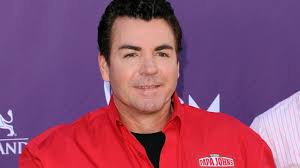
John Schnatter
How high would they go up?
By as much as eleven to fourteen cents price increase per pizza, or fifteen to twenty cents per order!

And Schnatter made it clear: He wasn’t going to take this lying down. He was determined to pass along those costs to his customers.
“If Obamacare is in fact not repealed,” Schnatter told Politico, “we will find tactics to shallow out any Obamacare costs and core strategies to pass that cost onto consumers in order to protect our shareholders’ best interests.”
After all, why should a multi-million-dollar company show any concern for those who make its profits a reality?
Consider:
- Papa John’s is the third-largest pizza takeout and delivery chain in the United States.
- Its full year 2014 revenues were $1.60 billion, an increase of 11.1% from 2013 revenues of $1.44 billion.
- Its full year 2014 net income was $73.3 million, compared to 2013 net income of $69.5 million.
Click here: Papa John’s Announces Fourth Quarter and Full Year 2014 Results (NASDAQ:PZZA)
Nor should anyone expect Schnatter to take a pay cut, just so his employees can obtain medical care when they need it.
Schnatter’s total calculated compensation for 2014 came to $3,456,146.
Click here: John H. Schnatter: Executive Profile & Biography – Businessweek
“We’re not supportive of Obamacare, like most businesses in our industry,” Schnatter–a supporter of Republican Presidential candidate Mitt Romney–admitted in a 2012 interview with Politico.
To demonstrate his opposition to providing medical insurance for all Americans, Schnatter hosted a fundraising event for Mitt Romney at his own Louisville, Kentucky mansion in May, 2012.
The luxurious setting for the fundraiser gave Romney a rush of pure, plutocratic ecstasy.
“What a home this is,” gushed Romney. “What grounds these are, the pool, the golf course.
“You know, if a Democrat were here he’d look around and say no one should live like this. Republicans come here and say everyone should live like this.”

John Schnatter’s estate
Of course, Romney conveniently ignored a brutally ugly fact:
For the vast majority of Papa John’s minimum-wage-earning employees–many of them working only part-time–the odds of their owning a comparable estate are non-existant.
In a typical demonstration of corporate thinking, Judy Nichols, a Papa John’s franchise owner in Beaumont, Texas, said:
“I have two options, I can stop offering coverage and pay the $2,000 fine, or I could keep my number of staff under 50 so the mandate doesn’t apply,” she told Legal Newsline.
In short: Defy the law, and employee healthcare needs be damned.
In fact, that’s exactly what Schnatter announced he would do: Reduce his workers’ hours–since Obamacare mandates that only employees working more than 30 hours per week are covered under their employers’ health insurance plan.
Nichols claimed that the the law might cost her $20,000 to $30,000 in taxes: “Obamacare is making me think about cutting jobs instead,” she said.
Translation: If you force me to behave responsibly, I’ll just have to take it it out on thousands of willing-to-work Americans.
So how can America cope with behavior that destroys not only lives but the economy as well?
By passing–and vigorously enforcing–a nationwide Employers Responsibility Act.
Among its provisions:
Employers would be required to provide full medical and pension benefits for all employees, regardless of their full-time or part-time status.
Increasingly, employers are replacing full-time workers with part-time ones–solely to avoid paying medical and pension benefits.
Requiring employers to act humanely and responsibly toward all their employees would encourage them to provide full-time positions–and hasten the death of this greed-based practice.
The seeking of “economic incentives” by companies in return for moving to or remaining in cities/states would be strictly forbidden.
Such “economic incentives” usually:
- allow employers to ignore existing laws protecting employees from unsafe working conditions;
- allow employers to ignore existing laws protecting the environment;
- allow employers to pay their employees the lowest acceptable wages, in return for the “privilege” of working at these companies; and/or
- allow employers to pay little or no business taxes, at the expense of communities who are required to make up for lost tax revenues.
Employers who continue to make such overtures would be prosecuted for attempted bribery or extortion:
- Bribery, if they offered to move to a city/state in return for “economic incentives,” or
- Extortion, if they threatened to move their companies from a city/state if they did not receive such “economic incentives.”
This would
- protect employees against artificially-depressed wages and unsafe working conditions;
- protect the environment in which these employees live; and
- protect cities/states from being pitted against one another at the expense of their economic prosperity.
It’s past time for America to protect employees who work for a living from CEOs who simply take credit for the work those employees do.


ABC NEWS, ADOLF HITLER, ALBERT SPEER, BARACK OBAMA, CBS NEWS, CNN, DEBT CEILING, EXTORTION, FACEBOOK, FASCISM, HOUSE SPEAKER JOHN BOEHNER, NAZI GERMANY, NBC NEWS, NEGOTIATING, PAP SMEARS, PLANNED PARENTHOOD, REPUBLICAN PARTY, REPUBLICANS, THE CHICAGO SUN-TIMES, THE CHICAGO TRIBUNE, THE LOS ANGELES TIMES, THE NEW YORK TIMES, THE WASHINGTON POST, TRICKLE-DOWN ECONOMICS, TWITTER, USA TODAY, WARREN BUFFET, WORLD WAR ii
HITLER, THE GOP AND SCORCHED EARTH: PART THREE (END)
In Bureaucracy, History, Law Enforcement, Military, Politics, Social commentary on September 22, 2016 at 9:23 amWith more than 240,000 employees, the Department of Homeland Security (DHS) is the third largest Cabinet department, after the Departments of Defense and Veterans Affairs.
The Defense Department is charged with military actions abroad. DHS is responsible for protecting the United States inside and outside its borders.
Its goal is to prepare for, prevent and–if prevention fails–respond to man-made accidents, natural disasters and terrorism.
Among the agencies now operating under its mandate:
Some of DHS’s agencies–like FEMA and the Secret Service–are well-known. Others–such as the Federal Law Enforcement Training Center and the Domestic Nuclear Detection Office–are not.
Click here: Department Components | Homeland Security
Yet each has a vital role to play in protecting the nation. A nation whose security Republicans were willing to threaten to get their way on a matter of domestic policy.
Consider the implications if there is no
Right-wing Republicans argued that even if DHS’s funding were stopped, most of its employees would stay on the job.
That’s because they perform work considered necessary to protect human life and property. But while those employees were safeguarding the country, they wouldn’t be paid until the shutdown ended.
It’s hard to give your full attention to protecting the lives of others when you have to worry about paying a mortgage or feeding your family.
Of course, the Republicans responsible for this shutdown would continue to receive their hefty paychecks.
And there was something else to consider.
DHS is best-known for its mission to prevent terrorist attacks on America. And America seemed to be in the crosshairs of North Korean terrorism at that very moment.
On November 14, 2014, Sony Pictures came under relentless attack by cyberterrorists, who the FBI has linked to North Korea.
The reason? Sony’s production of “The Interview,” a comedy depicting the assassination of North Korean dictator Kim Jong Un.
Calling themselves “Guardians of Peace,” or GOP, they shut down the company’s computer system and revealed employees’ personal information such as salaries, addresses, and Social Security numbers.
(Ironically, “Guardians of Peace” appropriated the same abbreviation–GOP–used by the Republicans for “Grand Old Party.”)
Warning issued by “Guardians of Peace” (GOP)
On December 17, 2014, Sony Pictures cancelled the Christmas Day premier of “The Interview” after the nation’s five largest movie chains refused to show the movie, following a terror threat posted online.
And then on February 5, 2015, Anthem Insurance announced that its database had been hacked–and sensitive medical information on up to 80 million customers and employees accessed.
According to an anonymous source, the hackers used malware that had been used almost exclusively by Chinese cyberspies.
* * * * *
As the Third Reich came to its fiery end, Adolf Hitler sought to punish the German people for being “unworthy” of his “genius” and losing the war he had started.
His attitude was: “If I can’t rule Germany, then there won’t be a Germany.”
In his infamous “Nero Order,” he decreed the destruction of everything still remaining–industries, ships, harbors, communications, roads, mines, bridges, stores, utility plants, food stuffs.
Fortunately for Germany, one man–Albert Speer–finally broke ranks with his Fuehrer.
Albert Speer
Risking death, he refused to carry out Hitler’s “scorched earth” order. Even more important, he mounted a successful effort to block such destruction or persuade influential military and civilian leaders to disobey the order as well.
As a result, those targets slated for destruction were spared.
Since the election of America’s first black President, Republicans have waged a similar “scorched earth” campaign.
Their avowed goal–as stated openly by Kentucky’s U.S. Senator Mitch McConnell–was “to make Barack Obama a one-term President.”
Literally during his first Inauguration, Republicans, in a secret meeting, agreed to block every effort he made to repair the economy.
Acting as extortionists, they repeatedly threatened to shut down the government if they didn’t get their way in legislative matters.
And just as repeatedly, they blocked legislation that would have helped the poor, unemployed, women, elderly, disabled or middle-class.
At the center of their fury has been the Affordable Care Act, providing medical care to all citizens. Even after Congress passed it and the Supreme Court affirmed it, House Republicans shut down the government in October, 2013.
By doing so, they hoped to pressure Obama into killing his signature piece of legislation. The effort failed.
Like Adolf Hitler, their attitude has been: “If I can’t rule America, there won’t be an America.”
As the Obama administration nears its end, no Republican Albert Speer has come forward to save America from the self-destructive excesses of this Nation’s own fanatics.
Share this: