Posts Tagged ‘THE NEW REPUBLIC’
ABC NEWS, ALTERNET, AMERICABLOG, AMERICAN TABLOID (BOOK), ANTI-CASTRO CUBANS, AP, ASSASSINATION, BABY BOOMER RESISTANCE, BBC, BLOOMBERG NEWS, BUZZFEED, CBS NEWS, CIA, CNN, COMMUNISM, CROOKS AND LIARS, CUBA, CUBAN MISSILE CRISIS, DAILY KOZ, DONALD TRUMP, DWIGHT D. EISENHOWER, FACEBOOK, FBI, FIDEL CASTRO, FIVETHIRTYEIGHT, FLORIDA, FULGENCIO BATISTA, GUS RUSSO, HARPER’S MAGAZINE, HUFFINGTON POST, JACK RUBY, JAMES ELLROY, JOHN F. KENNEDY, JOHNNY ROSELLI, LEE HARVEY OSWALD, LIVE BY THE SWORD (BOOK), LYNDON B. JOHNSON, MAFIA, MARCO RUBIO, MARINA OSWALD, MARTIN SHEEN, MEDIA MATTERS, MIAMI, MOTHER JONES, MOVEON, MSNBC, NBC NEWS, NEW REPUBLIC, NEWSDAY, NEWSWEEK, NIKITA KHRUSHCHEV, NPR, PBS NEWSHOUR, POLITICO, POLITICUSUSA, RAW STORY, REUTERS, RICHARD NIXON, ROBERT F. KENNEDY, ROBERT MCNAMARA, SALON, SAM GIANCANA, SEATTLE TIMES, SLATE, TALKING POINTS MEMO, THE ATLANTIC, THE CHICAGO SUN-TIMES, THE CHICAGO TRIBUNE, THE DAILY BEAST, THE DAILY BLOG, THE GUARDIAN, THE HILL, THE HUFFINGTON POST, THE LOS ANGELES TIMES, THE MISSILES OF OCTOBER (MOVIE), THE NATION, THE NEW REPUBLIC, THE NEW YORK TIMES, THE NEW YORKER, THE VILLAGE VOICE, THE WASHINGTON POST, THINKPROGRESS, THIRTEEN DAYS (BOOK), TIME, TRUTHDIG, TRUTHOUT, TWITTER, TWO POLITICAL JUNKIES, U.S. NEWS & WORLD REPORT, UPI, USA TODAY, WARREN COMMISSION, WILLIAM DEVANE, WONKETTE
In Bureaucracy, History, Military, Politics, Social commentary on August 17, 2021 at 12:12 am
On November 25, 2016, Fidel Castro, Cuba’s longtime “Maximum Leader,” died at the age of 90.
Old age and disease had finally achieved what years of CIA plotting and Mafia assassins could not.
To his supporters he was a tireless champion of the poor and a foe of American imperialism. To his enemies he was a ruthless dictator who drove his country to economic ruin in the name of a failed ideology—communism.
His reign began on January 1, 1959, when he swept triumphantly into Havana after a two-year guerrilla campaign against Cuban dictator Fulgencio Batista.
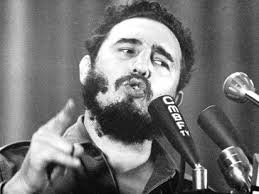
Fidel Castro
Almost immediately, hundreds of thousands of Cubans began fleeing to America. The first émigrés were more than 215,000 Batista followers. The exodus increased, peaking at approximately 78,000 in 1962.
In October, 1962, Castro stopped regularly scheduled travel between the two countries, and asylum seekers began sailing from Cuba to Florida.
Between 1962 and 1979, hundreds of thousands of Cubans entered the United States under the Attorney General’s parole authority.
By 2017, more than 1.53 million Cubans were living in Florida, where the population of Miami was about one-third Cuban. Their sheer numbers transformed the state’s political, economic and cultural life. And not entirely for the better.
Many of these Cubans viewed themselves as political exiles, rather than immigrants, hoping to eventually return to Cuba after its Communist regime fell from power.
With so many discontented immigrants concentrated in Florida, they became a potential force for politicians to court.
And the issue guaranteed to sway their votes was unrelenting hostility to Castro. Unsurprisingly, most of their votes went to Right-wing Republicans.
John F. Kennedy was the first President to face this dilemma.
During the closing months of the administration of President Dwight D. Eisenhower, the CIA had begun training Cuban exiles for an invasion of their former homeland.
The exiles’ goal: To do what Castro had done–seek refuge in the mountains and launch a successful anti-Castro revolution.
But word of the coming invasion quickly leaked: The exiles were terrible secret-keepers. (A joke at the CIA went: “A Cuban thinks a secret is something you tell to only 300 people.”)
Kennedy insisted the invasion must appear to be an entirely Cuban enterprise. He refused to commit U.S. Marines and Air Force bombers.
More than 1,400 invaders landed on April 17, 1961 at the Bay of Pigs—and were quickly overwhelmed, with hundreds of the men taken prisoner.
Kennedy publicly took the blame for its failure: “Victory has a hundred fathers but defeat is an orphan.” But privately he seethed, and ordered the CIA to redouble its efforts to remove Castro at all costs.
To make certain his order was carried out, he appointed his brother, Robert—then Attorney General—to oversee the CIA’s “Castro removal” program.
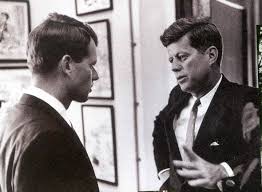
Robert F. Kennedy and John F. Kennedy
It’s here that America’s obsession with Cuba entered its darkest and most disgraceful period.
The CIA and the Mafia entered into an unholy alliance to assassinate Castro—each for its own benefit:
- The CIA wanted to please Kennedy;
- The mobsters wanted to regain their casino and brothel holdings that had made Cuba their private playground in pre-Castro times; and
- They also hoped to use their pose as patriots to win immunity from future prosecution.
The CIA supplied poisons and explosives to various members of the Mafia. It was then up to the mobsters to assassinate Castro.
The CIA asked Johnny Roselli, a mobster linked to the Chicago syndicate, to go to Florida in 1961 and 1962 to organize assassination teams of Cuban exiles. They were to infiltrate their homeland and assassinate Castro.
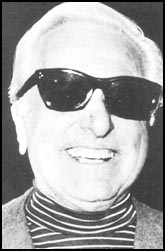
Johnny Roselli
Roselli called upon two other crime figures: Chicago Mafia boss Sam Giancana and Santos Trafficante, the Cosa Nostra chieftain for Tampa, for assistance.
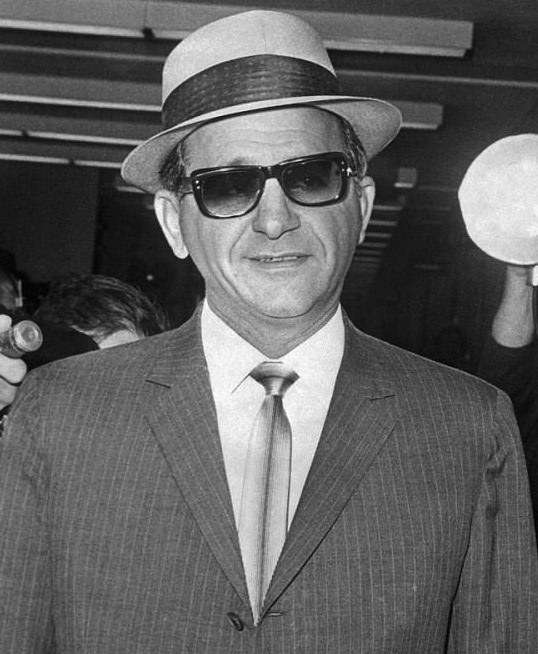
Sam Giancana
Giancana, using the name “Sam Gold” in his dealings with the CIA, was meanwhile being hounded by the FBI on direct orders of Attorney General Robert Kennedy.
The mobsters were authorized to offer $150,000 to anyone who would kill Castro and were promised any support the Agency could yield.
Giancana was to locate someone who was close enough to Castro to be able to drop pills into his food. Trafficante would serve as courier to Cuba, helping to make arrangements for the murder on the island.
Roselli was to be the main link between all of the participants in the plot.
The available sources disagree on what actually happened. Some believe that the Mob made a genuine effort to “whack” Fidel.
Others are convinced the mobsters simply ran a scam on the government. They pretended to carry out their “patriotic duty” while in fact making no effort at all to penetrate Castro’s security.
The CIA’s war against Castro was known as Operation Mongoose—the mongoose being a traditional enemy of the cobra. And those entrusted with this assignment were known as the Special Group.
“We were hysterical about Castro at about the time of the Bay of Pigs and thereafter,” Secretary of Defense Robert S. McNamara later testified before Congress about these efforts. “And there was pressure from JFK and RFK to do something about Castro.”
9/11, ABC NEWS, AFGHANISTAN, AL-QUAEDA, ALTERNET, AMERICABLOG, ANDREW M. CUOMO, AP, BABY BOOMER RESISTANCE, BARACK OBAMA, BBC, BLOOMBERG NEWS, BUZZFEED, CBS NEWS, CNN, CROOKS AND LIARS, DAILY KOS, DAILY KOZ, FACEBOOK, FIVETHIRTYEIGHT, GEORGE W. BUSH, HAMID KARZAI, HARPER’S MAGAZINE, HUFFINGTON POST, JOSEPH BIDEN, JOSEPH LEMM, MEDIA MATTERS, MOTHER JONES, MOVEON, MSNBC, NBC NEWS, NEW REPUBLIC, NEW YORK AIR NATIONAL GUARD, NEW YORK POLICE DEPARTMENT, NEWSDAY, NEWSWEEK, NORTH VIETNAMESE ARMY, NPR, OSAMA BIN LADEN, PBS NEWSHOUR, POLITICO, POLITICUSUSA, RAW STORY, REUTERS, ROLLING STONE MAGAZINE, SALON, SEATTLE TIMES, SLATE, TALKING POINTS MEMO, THE ATLANTIC, THE CHICAGO SUN-TIMES, THE CHICAGO TRIBUNE, THE DAILY BEAST, THE DAILY BLOG, THE GUARDIAN, THE HILL, THE HUFFINGTON POST, THE LOS ANGELES TIMES, THE NATION, THE NEW REPUBLIC, THE NEW YORK TIMES, THE NEW YORKER, THE PENTAGON, THE VILLAGE VOICE, THE WALL STREET JOURNAL, THE WASHINGTON POST, THINKPROGRESS, TIME, TRUTHDIG, TRUTHOUT, TWITTER, TWO POLITICAL JUNKIES, U.S. NEWS & WORLD REPORT, UPI, USA TODAY, VIETCONG, VIETNAM, VIETNAM WAR, WONKETTE, WORLD TRADE CENTER
In Bureaucracy, History, Military, Politics, Social commentary on August 16, 2021 at 12:07 am
On July 8, President Joseph Biden said that America would withdraw its armed forces from Afghanistan by August 31, thus ending the nearly 20-year war.
“How many more, how many more thousands of American daughters and sons are you willing to risk?” Biden said to those calling for the United States to extend the military operation.
To put the consequences of this effort into human terms:
On December 21, 2015, a suicide-bomber rammed an explosives-laden motorcycle into a joint NATO-Afghan patrol. Six American troops and an Afghan were killed.
One of the dead was Joseph Lemm, 45, a detective and 15-year veteran of the New York Police Department. A technical sergeant in the New York Air National Guard, he had been deployed three times—once to Iraq and twice to Afghanistan.
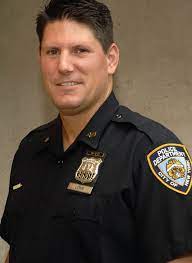
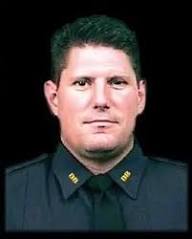
Joseph Lemm
Lemm left behind a daughter, Brook, 16, a son, Ryan, four, and his wife, Christine.
New York Governor Andrew M. Cuomo ordered that flags on all state government buildings be flown at half-staff on December 23 in Lemm’s honor.
“Staff Sergeant Joe Lemm served this nation with the selflessness and bravery that embodies the U.S. Armed Forces and the NYPD,” Cuomo said in a statement.
Lemm’s death was a double tragedy—that of a dedicated man who should not have died so needlessly.
A total of 2,312 US military personnel in Afghanistan have died and 20,066 have been wounded since 2001. The cost of military operations is put at $824 billion.
The history of American conflict in Afghanistan began on September 11, 2001.
On that date, 19 Islamic hijackers slammed two jetliners into the World Trade Center in New York and one into the Pentagon in Washington, D.C.
A fourth plane, headed for the White House or Capitol Building, failed to reach its target when its passengers rioted—and the hijackers dove it into a Pennsylvania field.
The mastermind of the attacks was Osama bin Laden, a Saudi millionaire then living in Afghanistan, under protection by its ruling thugocracy, the Taliban.
The administration of President George W. Bush demanded his immediate surrender to American justice.
The Taliban refused.
So, on October 7, 2011—less than one month from the 9/11 attacks—American bombers began pounding Taliban positions.
The whole point of the campaign was to pressure the Taliban to surrender Bin Laden.
But the Taliban refused. Bin Laden holed up in the mountains of Tora Bora, and then ultimately escaped into Pakistan.
After December, 2001, American Intelligence completely lost track of Bin Laden. CIA officials repeatedly said he was likely living in the “no-man’s-land” between Afghanistan and Pakistan.
Thus, there was no longer any point in pressuring the Taliban to surrender Bin Laden.
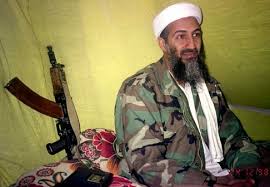
Osama bin Laden
Still, the United States continued to commit forces to Afghanistan—to turn a primitive, warlord-ruled country into a modern-day democracy.
There was, admittedly, a great deal to detest about the Taliban:
- When the Taliban ruled Afghanistan, they turned soccer stadiums into execution plazas for mass beheadings or shootings.
- Taliban “fighters” have proven their “courage” by throwing acid into the faces of women who dared to attend school.
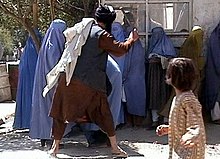
Taliban religious police beating a woman
- On August 8, 1989, the Taliban attacked Mazar-i-Sharif. Talibanists began shooting people in the street, then moved on to mass rapes of women. Thousands of people were locked in containers and left to suffocate.
- The Taliban forbade women to leave their homes unless accompanied by a male relative and wearing the burqa—a traditional dress covering the entire body. Those who disobeyed were publicly beaten.
Yet, as horrific as such atrocities were, these did not obligate the United States to spend eternity trying to bring civilization to this barbaric country.
And, in pursuing that goal, both the Bush and Obama administrations repeatedly overlooked the following realities:
- Hamid Karzai, the “president” of Afghanistan (2001-2014) didn’t believe in democracy—despite American claims to support his efforts to bring this to Afghanistan.
- His authority didn’t extend beyond Kabul, and he was viewed by most Afghans as an illegitimate ruler, imposed by America.
- The same can be said for his successor, Mohammad Ashraf Ghani.
- American soldiers in Afghanistan felt surrounded by enemies and hamstrung by unrealistic orders to win “hearts and minds” at the risk of their own lives.
- The Taliban poses no threat to the security of the United States.
- Afghan “insurgents” are fighting American forces because (1) they are in a civil war; and (2) they believe their country has once again been occupied by foreigners.
- Counterinsurgency was preached as the key to defeating the Taliban in Afghanistan—where it hasn’t worked.
- Americans entered Afghanistan without an exit strategy.
All these truths applied just as firmly to America’s failed misadventure in Vietnam.
Almost 50 years ago, American “grunts” felt about their so-called South Vietnamese allies as American troops now feel about their Afghan “allies.”
Dr. Dennis Greenbaum, a former army medic, summed up how Americans had really felt about their supposed South Vietnamese allies.
“The highest [priority for medical treatment] was any U.S. person. The second highest was a U.S. dog from the canine corps. The third was NVA [North Vietnamese Army].
“The fourth was VC [Viet Cong]. And the fifth was ARVIN [Army of the Republic of South Vietnam], because they had no particular value. The only thing below them was the civilians,” said Greenbaum.
When you despise the “ally” you’re spending lives and treasure to defend, it’s time to pack up.
2020 PRESIDENTIAL ELECTION, ABC NEWS, ADOLF HITLER, ALTERNET, AMERICABLOG, AP, ASHLI BABBITT, BABY BOOMER RESISTANCE, BBC, BLOOMBERG NEWS, BUZZFEED, CBS NEWS, CNN, CROOKS AND LIARS, DAILY KOZ, DONALD TRUMP, ELECTORAL COLLEGE, FACEBOOK, FIVETHIRTYEIGHT, FOX NEWS, HARPER’S MAGAZINE, HORST WESSEL, HORST WESSEL LIED (SONG), HUFFINGTON POST, JOSEPH BIDEN, JOSEPH GOEBBELS, MARIA BARTIROMO, MEDIA MATTERS, MOTHER JONES, MOVEON, MSNBC, NAZI PARTY, NAZIS, NBC NEWS, NEW REPUBLIC, NEWSDAY, NEWSWEEK, NPR, PAUL GOSAR, PBS NEWSHOUR, POLITICO, POLITICUSUSA, RAW STORY, REPUBLICAN PARTY, REPUBLICANS, REUTERS, SALON, SEATTLE TIMES, SLATE, TALKING POINTS MEMO, THE ATLANTIC, THE CHICAGO SUN-TIMES, THE CHICAGO TRIBUNE, THE DAILY BEAST, THE DAILY BLOG, THE GUARDIAN, THE HILL, THE HUFFINGTON POST, THE LOS ANGELES TIMES, THE NATION, THE NEW REPUBLIC, THE NEW YORK TIMES, THE NEW YORKER, THE VILLAGE VOICE, THE WASHINGTON POST, THINKPROGRESS, TIME, TRUTHDIG, TRUTHOUT, TUCKER CARLSON, TWITTER, TWO POLITICAL JUNKIES, U.S. NEWS & WORLD REPORT, UNITED STATES CAPITOL BUILDING, UNITED STATES HOUSE OF REPRESENTATIVES, UNITED STATES SENATE, UPI, USA TODAY, WEIMAR REPUBLIC, WONKETTE
In Bureaucracy, History, Law, Law Enforcement, Politics, Social commentary on August 11, 2021 at 12:12 am
Republicans—including those who pursue a Fascistic agenda—are quick to accuse their opponents of being “Nazis.”
Yet similarities abound between the tactics—and often the goals—between yesterday’s Nazis and today’s Republicans.
One of these is the need for martyrs by both parties.
The Nazis found theirs in Horst Wessel.
As a teenager growing up in the Weimar Republic of Germany, he joined the Viking Liga (“Viking League”), a Right-wing paramilitary group. Its goal, wrote Wessel, was “the “establishment of a national dictatorship.”
He soon became a local leader, engaging in street battles with rival Leftist groups such as the Social Democratic Party (SPD) and the Communist Party (KPD). In 1926, he joined the paramilitary Sturmabteilung (“Storm Detachment” or SA) of Adolf Hitler’s National Socialist German Workers Party (Nazi Party).

Horst Wessel
Bundesarchiv, Bild 146-1978-043-14 / Heinrich Hoffmann / CC-BY-SA 3.0, CC BY-SA 3.0 DE <https://creativecommons.org/licenses/by-sa/3.0/de/deed.en>, via Wikimedia Commons
His unit had a reputation as “a band of thugs, a brutal squad.” One of his men described the way they fought against the Communists: “Horst made Adolf Hitler’s principle his own: Terror can be destroyed only by counterterror.”
In September 1929, Wessel met Erna Jänicke, a 23-year-old ex-prostitute, in a tavern. Some sources claim Wessel acted as Jänicke’s pimp. She soon moved into his room.
Wessel’s landlady, Elisabeth Salm, wanted Jänicke to leave. But Jänicke refused to do so.
Salm appealed to Communist friends of her late husband to evict Jänicke, They agreed to beat Wessel up and evict him from Salm’s flat. They recruited Albrecht Höhler, an armed pimp, perjurer and petty criminal, to handle the evicting.
On February 23, 1930, Höhler knocked at the front door of the room where Wessel and Jänicke lived. When Wessel opened the door, Höhler shot him at point-blank range.
He was 22 when he died.
Nazi propagandist Joseph Goebbels quickly turned Wessel into a Nazi martyr. Wessel had written the lyrics for a new Nazi fight song: “The Unknown SA-Man.” It later became known as “Raise the Flag” and finally the “Horst Wessel Lied.”
Its opening stanza.
Raise the flag! The ranks tightly closed!
The SA marches with calm, steady step.
Comrades shot by the Red Front and reactionaries
March in spirit within our ranks.
“The Horst Wessel Lied” became the official anthem of the Nazi Party from 1930 to 1945.
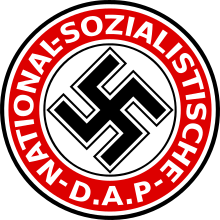
Fast forward to January 6, 2021—when the Republican Party got its own martyr: Ashli Babbitt.
A veteran of the United States Air Force, she served two tours in Afghanistan and Iraq before later deploying with the National Guard to Kuwait and Qatar.
Originally from San Diego, California, by 2020 she had recently remarried and was working at a pool service company.
On social media, she described herself as a libertarian and a patriot. She often expressed ardent support for President Donald Trump.
On November 3, 2020, Trump lost the Presidential election to former Vice President Joseph Biden.
Biden won the popular vote—81,268,924 to 74,216,154 for Trump—and, more importantly, in the Electoral College: 306 to 232.
But Babbitt accepted wholesale Trump’s lie that the election had been stolen from him by massive voter fraud.
On January 6, 2021, members of the United States Senate and House of Representatives would meet in the United States Capitol Building. They would count the Electoral College votes received by Trump and Biden—and pronounce Biden the President-elect.
Babbitt was determined to “Stop the Steal” by assaulting the Capitol Building on January 6.
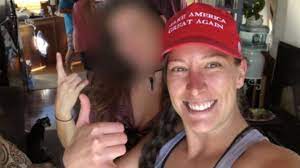
Ashli Babbitt
On January 5, she posted on social media: “Nothing will stop us. They can try and try and try but the storm is here and it is descending upon DC in less than 24 hours.”
On January 6, she was among hundreds of Right-wing men and women who breached the Capitol. She was also the mob’s only casualty.
As lawmakers were being evacuated by Capitol Police, Babbitt tried to climb through a shattered window in a barricaded door. She was warned to back off several times by a policeman standing on the other side.
Babbitt defied the orders—and was shot in the neck/shoulder. She died of the wound—at age 35,
The shooting was later ruled justified by the Justice Department.
Almost a century ago Nazis extolled Horst Wessel as a virtuous martyr. Today, members of Right-wing groups—and even Congressional Republicans—portray Ashli Babbitt as a fallen Joan of Arc.
During a hearing with former acting Attorney General Jeffrey Rosen in April, Rep. Paul Gosar (R-AZ.) claimed Babbitt was “executed.”
Fox News host Tucker Carlson has made the same charge.
And, not to be outdone, so has Donald Trump himself.
“Who was the person who shot an innocent, wonderful, incredible woman?” Trump asked Fox Business anchor Maria Bartiromo on July 11. “I will tell you, they know who shot Ashley Babbitt. They’re protecting that person. I’ve heard also that it was the head of security for a certain high official—a Democrat.”
The Nazis found in Horst Wessel a hero to inspire their followers. So, too, have Republicans generally and Trump enthusiasts specifically found the same in Ashli Babbitt.
The only question remaining to be answered: Will an “Ashli Babbitt Lied” culminate in a similar tyranny for the United States?
ABC NEWS, ALABAMA, ALTERNET, AMAZON, AMERICABLOG, ANTHONY FAUCI, AP, ASCENSION HEALTH, BABY BOOMER RESISTANCE, BBC, BEER, BLOOMBERG NEWS, BUZZFEED, CBS NEWS, CENTERS FOR DISEASE CONTROL AND PREVENTION (CDC), CNN, CORONAVIRUS, COVID-19, CROOKS AND LIARS, CVS PHARMACIES, DAILY KOZ, DAVID BROOKS, DELTA AIRLINES, DELTA VARIANT, DISNEY, DONALD TRUMP, DOORDASH, FACEBOOK, FIVETHIRTYEIGHT, FLORIDA, FRONTIER AIRLINES, GEORGE WASHINGTON UNIVERSITY, GOOGLE, HARPER’S MAGAZINE, HUFFINGTON POST, JACKPOTS, JOHNSON & JOHNSON, JONATHAN CAPEHART, JOSEPH BIDEN, JOSH DAWSEY, KATHERINE WU, KAY IVEY, KROGER, LEANA WEN, LISA LERER, LYFT, MAJOR LEAGUE BASEBALL, MARIJUANA, MARJORIE TAYLOR GREENE, MASKS, MEDIA MATTERS, MODERNA, MORGAN STANLEY, MOTHER JONES, MOVEON, MSNBC, NANCY PELOSI, NBC NEWS, NETFLIX, NEW REPUBLIC, NEWSDAY, NEWSWEEK, NPR, PBS NEWSHOUR, PFIZER, POLITICO, POLITICUSUSA, RALPH NORMAN, RAW STORY, REUTERS, RON DESANTIS, SAKS FIFTH AVENUE, SALON, SCHOLARSHIPS, SEATTLE TIMES, SLATE, TALKING POINTS MEMO, TEXAS, THE ATLANTIC, THE CHICAGO SUN-TIMES, THE CHICAGO TRIBUNE, THE DAILY BEAST, THE DAILY BLOG, THE GUARDIAN, THE HILL, THE HUFFINGTON POST, THE LOS ANGELES TIMES, THE NATION, THE NEW REPUBLIC, THE NEW YORK TIMES, THE NEW YORKER, THE VILLAGE VOICE, THE WASHINGTON POST, THINKPROGRESS, TIME, TRUTHDIG, TRUTHOUT, TWITTER, TWO POLITICAL JUNKIES, TYSON FOODS, U.S. NEWS & WORLD REPORT, UBER, UNITED AIRLINES, UNITED STATES HOUSE OF REPRESENTATIVES, UPI, USA TODAY, VACCINES, WALGREENS, WALMART, WASHINGTON WEEK, WONKETTE
In Bureaucracy, History, Medical, Politics, Social commentary on August 10, 2021 at 12:11 am
Since COVID-19 entered the United States in January, 2020, Republicans have turned it into a “culture war” issue.
President Donald Trump made wearing a mask a referendum on himself. If you were a “manly man”—and supported him-–you didn’t wear one. Even if it cost you your life.
He—and his followers—fiercely opposed “stay-at-home” orders by governors intent on suppressing rising COVID outbreaks in their states.
And when three vaccines appeared in early 2021, Republicans—again led by Trump—refused to say whether they were vaccinated. Some—like Georgia Representative Marjorie Taylor Greene—publicly celebrated low vaccination rates among their own constituents.
Others—like Florida Governor Ron DeSantis—threatened to withhold funds from public schools that required students to wear masks. (Only children 12 and older can be vaccinated.)
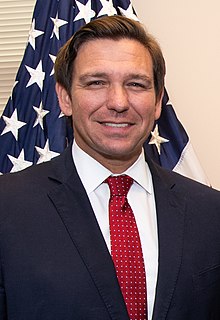
Ron DeSantis
So it was, ironically, a Republican who fired the first salvo at irresponsible public behavior.
“Folks are supposed to have common sense. But it’s time to start blaming the unvaccinated folks, not the regular folks. It’s the unvaccinated folks that are letting us down. We’ve got to get folks to take the shot. It’s the greatest weapon we have to fight COVID,” Alabama Governor Kay Ivey told reporters in Birmingham on July 22.
Alabama is one of the least vaccinated states in the country, with roughly 34% of residents fully vaccinated, according to the Centers for Disease Control and Prevention (CDC).
The CDC had announced in May that fully vaccinated people no longer had to wear masks
But now the even more contagious Delta variant was spreading. Experts warned that vaccinated and unvaccinated people should wear masks indoors where COVID-19 cases were high but vaccination rates were low.

Meanwhile, some of the most prominent corporations in America weren’t waiting for them to do so.
- In May, Delta Airlines began requiring requiring newly-hired employees to show proof of vaccination.
- On August 6, United Airlines announced that it would require its 67,000 U.S. employees to get vaccinated by October 25—or risk termination.
- Hours later, Frontier Airlines announced that its employees must be vaccinated by October 1—or be frequently tested for COVID-19.
- On August 4, Facebook announced that all of its employees would have to prove that they had been vaccinated to return to the office.
- That same day, Google CEO Sundar Pichai sent a similar email to his staffers.
- Disney is requiring all its salaried and non-union hourly employees in America to be vaccinated.
- Uber announced that its U.S.-based office staff needs to be vaccinated to return to the office. It isn’t requiring the same for drivers.
- Walgreens is requiring vaccinations for all of its corporate employees in the United States.
- Netflix will require COVID-19 vaccinations for the casts of all its American productions, including those who come in contact with them.
- Saks Fifth Avenue is requiring that all employees be vaccinated.
- Walmart CEO Doug McMillon announced in a July 30 memo that all of its American-based corporate employees must be vaccinated by October 4.
- Tyson Foods will require that its 120,000 U.S. employees be fully vaccinated. According to the company, about 56,000 already are.
- Ascension Health will require Covid-19 vaccinations for all of its employees.
- On August 4, Twitter closed its offices in New York and San Francisco and paused further office reopenings. It was already requiring employees to show proof of vaccination.
- Lyft is requiring all employees working in its offices to be vaccinated.
- The Washington Post will require all current employees and new hires to show proof of full COVID-19 vaccinations.
- Morgan Stanley is barring all unvaccinated staff and clients from entering its New York headquarters office
More companies will undoubtedly follow suit.
There are two reasons for this:
First, across the country, hospitals are struggling to cope with the Delta variant—the most contagious strain of Coronavirus yet.
Second, it’s clear that simply offering incentives for behaving responsibly isn’t working.
This week, New York City became the first major city to require proof of vaccination to enter restaurants and gyms.
“I do think it may be time for this to happen,” said Katherine Wu, science writer for The Atlantic, on the August 6 edition of Washington Week.

Katherine Wu
“I’ve seen more and more experts come out in support of mandates and requirements like these. You know, it’s sort of a combination of carrot and stick. If you want to keep having these privileges going out into society and being able to lead a normal life, it is probably a really good idea to [get] vaccinated to ensure not only your health but the people that you’re interacting with.”
* * * * *
A policy only of incentives is a policy of bribery. And a policy only of deterrents is a policy of coercion.
Some people can’t be bought and some can’t be coerced. But history shows that a policy employing both carrots and sticks usually proves highly effective in motivating behavior.
As the school season begins in September, children will be increasingly exposed to the dangers of contracting COVID. Many of them will undoubtedly die.
And as their casualties mount, there will be increased demands for punitive measures against those who put their arrogance above the public good.
ABC NEWS, ALABAMA, ALTERNET, AMAZON, AMERICABLOG, ANTHONY FAUCI, AP, ASCENSION HEALTH, BABY BOOMER RESISTANCE, BBC, BEER, BLOOMBERG NEWS, BUZZFEED, CBS NEWS, CENTERS FOR DISEASE CONTROL AND PREVENTION (CDC), CNN, CORONAVIRUS, COVID-19, CROOKS AND LIARS, CVS PHARMACIES, DAILY KOZ, DAVID BROOKS, DELTA AIRLINES, DELTA VARIANT, DISNEY, DONALD TRUMP, DOORDASH, FACEBOOK, FIVETHIRTYEIGHT, FLORIDA, FRONTIER AIRLINES, GEORGE WASHINGTON UNIVERSITY, GOOGLE, HARPER’S MAGAZINE, HUFFINGTON POST, JACKPOTS, JOHNSON & JOHNSON, JONATHAN CAPEHART, JOSEPH BIDEN, JOSH DAWSEY, KATHERINE WU, KAY IVEY, KROGER, LEANA WEN, LISA LERER, LYFT, MAJOR LEAGUE BASEBALL, MARIJUANA, MASKS, MEDIA MATTERS, MODERNA, MORGAN STANLEY, MOTHER JONES, MOVEON, MSNBC, NANCY PELOSI, NBC NEWS, NETFLIX, NEW REPUBLIC, NEWSDAY, NEWSWEEK, NPR, PBS NEWSHOUR, PFIZER, POLITICO, POLITICUSUSA, RALPH NORMAN, RAW STORY, REUTERS, RON DESANTIS, SAKS FIFTH AVENUE, SALON, SCHOLARSHIPS, SEATTLE TIMES, SLATE, TALKING POINTS MEMO, TEXAS, THE ATLANTIC, THE CHICAGO SUN-TIMES, THE CHICAGO TRIBUNE, THE DAILY BEAST, THE DAILY BLOG, THE GUARDIAN, THE HILL, THE HUFFINGTON POST, THE LOS ANGELES TIMES, THE NATION, THE NEW REPUBLIC, THE NEW YORK TIMES, THE NEW YORKER, THE VILLAGE VOICE, THE WASHINGTON POST, THINKPROGRESS, TIME, TRUTHDIG, TRUTHOUT, TWITTER, TWO POLITICAL JUNKIES, TYSON FOODS, U.S. NEWS & WORLD REPORT, UBER, UNITED AIRLINES, UNITED STATES HOUSE OF REPRESENTATIVES, UPI, USA TODAY, VACCINES, WALGREENS, WALMART, WASHINGTON WEEK, WONKETTE
In Bureaucracy, History, Law, Law Enforcement, Medical, Politics, Social commentary on August 9, 2021 at 12:10 am
When a deadly, air-borne plague is sweeping a nation, it’s medically smart to don a face mask until a vaccine is developed.
And, when it is, it’s just as medically smart to take that vaccine.
Yet, since March, 2020, millions of science-denying, government-hating Fascistic Republicans have refused to mask up in public against COVID-19. And now that not one but three vaccines have been developed, millions more have refused to get them.
Most of them are followers of former President Donald Trump. But many others have long believed that the Federal Government had a diabolical plan to enslave them.
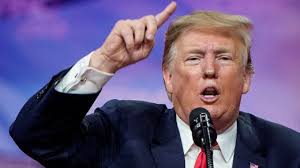
Donald Trump
They distrust the scientists who developed the anti-COVID vaccines. They distrust the established news media, which has chronicled the destructive fury of COVID for more than a year.
Yet they put their faith in Trump, a man who
- Derided COVID as a hoax;
- Told 30,573 lies during his four years as President;
- Attacked reputable medical authorities such as Dr. Anthony Fauci, the country’s foremost expert on infectious disease;
- Promoted drinking bleach as a preventative or cure for COVID;
- Ordered his millions of fanatical followers to disobey the “shelter-in-place” orders of governors who were trying to stem the rising tide of COVID in their states; and
- Staged scores of super-spreader political rallies to promote his re-election in 2020, where tens of thousands of unmasked men and women stood shoulder-to-shoulder.
When Joseph Biden took office as President on January 20, 2021, he made eliminating COVID-19 his top priority. He publicized the launching of three new anti-COVID vaccines—by Pfizer, Moderna and Johnson & Johnson. He encouraged Americans to get vaccinated as soon as possible.
And he set a deadline by which 70% of Americans would be at least partially vaccinated—by July 4: Independence Day.
At first, there was a mad rush as millions of Americans flocked to vaccination sites. But, by June, there was a marked increase in the numbers of those refusing to get vaccinated.
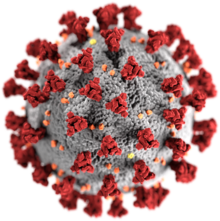
COVID-19
On June 7, the online edition of U.S. News & World Report published a story under the headline: “Declining Vaccination Rates Threaten Biden’s July 4 Goal.”
“Plunging vaccination rates are imperiling President Joe Biden’s goal of getting COVID shots into the arms of at least 70% of American adults by July 4, while public health experts worry that Southern states, where immunization numbers are the lowest, could see a spike in cases over the summer.”
That is exactly what has happened.
The story continued: “The steep decline began in mid-April, coinciding with the temporary suspension of the Johnson & Johnson vaccine while health officials investigated rare blood-clotting reactions. That drop has continued, with only 2.4 million adults getting their first shot last week. Officials must get a first dose to 4.2 million adults per week to meet Biden’s July 4 goal, the [Washington] Post reported.”
By August 2, 168.4 million Americans had been fully vaccinated, or 49.6% of the country’s population.
The population of the United States stands at 328.2 million.

Cities and states have offered a series of incentives to get vaccinated—as if doing so just to save your own life and the lives of those you love isn’t enough of an incentive.
Among those incentives:
- Free beer.
- Free marijuana joints.
- Free childcare coverage while getting shots or assistance while recovering from side effects.
- Extended hours for pharmacies in June.
- Thousands of pharmacies remaining open overnight on Fridays.
- Million-dollar jackpots.
- Full-ride scholarships.
- A $2 million commitment from DoorDash to provide gift cards to community health centers for those who get vaccinated.
- CVS Pharmacies launched a sweepstakes with prizes including free cruises and Super Bowl tickets.
- Major League Baseball hosting on-site vaccine clinics and ticket giveaways at games.
- Kroger gave $1 million to a vaccinated person each week in June and free groceries to dozens of people for the year.
Countless Americans were appalled at the selfishly irresponsible behavior of their fellow citizens.
One of these was President Biden: “All over the world people are desperate to get a shot that every American can get at their neighborhood drugstore.”
Another was Dr. Leana Wen, an emergency physician and public health professor at George Washington University and former Baltimore health commissioner.
“It’s the height of American exceptionalism that we are having to beg people to get a life-saving vaccine, when healthcare workers and vulnerable people around the world are dying because they can’t get access to it,” said Wen.
Yet the time may be fast approaching when the juicy carrot is replaced by the big stick.
From the coming of the virus to the United States in January, 2020, Republicans have encouraged Americans to defy health warnings by the Centers for Disease Control and Prevention (CDC).
They have opposed wearing masks and stay-at-home orders. They have staged indoor political rallies of hundreds—or thousands—of unmasked men and women
So it’s ironic that it was a Republican who fired the first salvo at irresponsible public behavior.
“Folks are supposed to have common sense. But it’s time to start blaming the unvaccinated folks, not the regular folks. It’s the unvaccinated folks that are letting us down,” Alabama Governor Kay Ivey told reporters in Birmingham on July 22.
Alabama is one of the least vaccinated states in the country, with roughly 34% of residents fully vaccinated, according to the CDC.
ABC NEWS, ALTERNET, AMERICABLOG, AP, BABY BOOMER RESISTANCE, BARACK OBAMA, BAY OF PIGS, BUZZFEED, CBS NEWS, CNN, CORONAVIRUS, CROOKS AND LIARS, CUBA, DAILY KOZ, DAVID BROOKS, DONALD TRUMP, DRUDGE RETORT, DWIGHT D. EISENHOWER, EBOLA, FACEBOOK, FIDEL CASTRO, FIVETHIRTYEIGHT, FULGENCIO BATISTA, GALLUP POLL, GEORGE W. BUSH, HARPER’S MAGAZINE, JOHN F. KENNEDY, MEDIA MATTERS, MOTHER JONES, MOVEON, MSNBC, NBC NEWS, NEWSWEEK, NPR, PBS NEWSHOUR, POLITICO, POLITICUSUSA, RAW STORY, REUTERS, SALON, SEATTLE TIMES, SLATE, TALKING POINTS MEMO, THE ATLANTIC, THE CHICAGO SUN-TIMES, THE CHICAGO TRIBUNE, THE DAILY BEAST, THE DAILY BLOG, THE GUARDIAN, THE HILL, THE HUFFINGTON POST, THE LOS ANGELES TIMES, THE NATION, THE NEW REPUBLIC, THE NEW YORK TIMES, THE VILLAGE VOICE, THE WASHINGTON POST, THINKPROGRESS, TIM ZIEMER, TIME, TOLUSE OLORUNNIPA, TRUTHDIG, TRUTHOUT, TWITTER, TWO POLITICAL JUNKIES, U.S. NEWS & WORLD REPORT, UPI, USA TODAY, WASHINGTON WEEK IN REVIEW, WHITE HOUSE PANDEMIC OFFICE, WONKETTE, YAMICHE ALCINDOR
In Bureaucracy, History, Medical, Politics, Social commentary on August 6, 2021 at 12:10 am
On March 13, 2020, President Donald Trump addressed a subject he clearly resented being asked about: His gutting of an early-warning medical system set up to confront pandemics.
In 2014, following the Ebola outbreak in West Africa, President Barack Obama created the White House Pandemic Office, run by the White House’s National Security Council (NSC).
Heading it was Rear Admiral Tim Ziemer. Under President George W. Bush, he had successfully fought malaria overseas. His topflight team of infectious disease and public health experts was creating a national bio-defense strategy. Their goal: Coordinate agencies to make the United States more resilient to the threat of epidemics and biological warfare.
In May, 2018, Trump ordered the NSC’s global health security unit shut down. The reason: Trump’s pathological jealousy of and hatred for Obama.
On March 13, at a White House press conference, Yamiche Alcindor, the PBS Newshour’s White House Correspondent, dared to ask Trump: “My first question is: You said that you don’t take responsibility, but you did disband the White House Pandemic Office and the officials that were working in that office left this administration abruptly. So, what responsibility do you take to that?
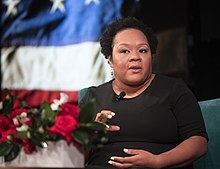
Yamiche Alcindor
“And the officials that worked in that office said that you—that the White House lost valuable time because that office was disbanded. What do you make of that?”
Then followed this exchange:
TRUMP: Well, I just think it’s a nasty question, because what we’ve done is—and Tony had said numerous times that we saved thousands of lives because of the quick closing. And when you say me, I didn’t do it. We have a group of people.
ALCINDOR: It’s your administration.
TRUMP: I could ask, perhaps—my administration, but I could perhaps ask Tony about that, because I don’t know anything about it. I mean, you say we did that. I don’t know anything about it.
ALCINDOR: You don’t know about the—
TRUMP: We’re spending—
ALCINDOR: — About the reorganization that happened in the National Security Council?
TRUMP: No, I don’t know. It’s the—it’s the administration, perhaps they do that. You know, people let people go. You know, you used to be with a different newspaper than you are now. You know, things like that happen.
Trump’s refusal to accept responsibility for the greatest crisis of his tenure as President flagrantly contrasts with how President John F. Kennedy responded to a similar crisis.
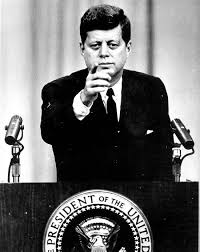
John F. Kennedy press conference
On April 17, 1961, the U.S. Navy landed 1,400 CIA-trained Cuban exiles on Cuba to overthrow the Communist government of Fidel Castro. Landing at the Bay of Pigs, they were supposed to head into the mountains—as Castro himself had done against the dictatorship of Fulgencio Batista in 1956—and raise the cry of revolution.
When the invaders surged onto the beaches, they found Castro’s army waiting for them. Many of the invaders were killed on the spot. Others were captured.
It was a major public relations setback for the newly-installed Kennedy administration, which had raised hopes for a change in American-Soviet relations.
Kennedy, trying to abort widespread criticism, publicly took the blame for the setback: “There’s an old saying that victory has a hundred fathers and defeat is an orphan….I’m the responsible officer of the Government.”
Ironically, the crisis—and his taking responsibility for it—hugely increased Kennedy’s popularity. The national Gallup Poll reported that 83 percent of Americans approved of the job he was doing as President.
To a White House aide, Kennedy half-joked: “It’s just like Eisenhower—the worse I do, the more popular I get.”
By contrast, Trump’s “handling” of the Coronavirus plague brought him the worst reviews of his Presidency.
Conservative New York Times columnist David Brooks attacked Trump in terms usually reserved for serial killers. On the March 13, 2020 edition of The PBS Newshour, he said:
“This is what happens when you elect a sociopath as president, who doesn’t care, who has treated this whole thing for the past month as if it’s about him. ‘How do people like me?’ Minimizing the risks. ‘Does the stock market reflect well on me?’ And he hasn’t done the things a normal human being would do, which was to, let’s take precautions….
“And he’s incapable of that. And he’s even created an information distortion field around him.”
And Toluse Olorunnipa, White House reporter for The Washington Post, said: “He likes having powerful people around him to praise what he’s done. He tried to get them all up to the podium to talk about how great of a response he has provided, and I think that’s—trying to get that co-signed from CEOs and powerful people is a key part of his presidency.”
Kimberly Atkins, senior Washington news correspondent for WBUR, Boston’s NPR News Station: “We have seen the president not only be all over the place but his instinct was to try to downplay it [Coronavirus] because he saw it as a political threat—to say that people would get better….
“Even today he’s saying, ‘We have everything under control. We have this website that people can go to and find out where they can get tested.’ The website isn’t even done yet.”
2016 PRESIDENTIAL ELECTION, 2020 PRESIDENTIAL ELECTION, ABC NEWS, ALTERNET, AMERICABLOG, AP, BABY BOOMER RESISTANCE, BBC, BLOOMBERG NEWS, BUZZFEED, CAPITOL ATTACK, CBS NEWS, CNN, CROOKS AND LIARS, DACHAU, DAILY KOZ, DONALD TRUMP, ELAINE LURIA, ELECTORAL COLLEGE, FACEBOOK, FIVETHIRTYEIGHT, HARPER’S MAGAZINE, HUFFINGTON POST, JOSEPH BIDEN, MATT GAETZ, MEDIA MATTERS, MICHAEL T. FLYNN, MOTHER JONES, MOVEON, MSNBC, NAZI GERMANY, NBC NEWS, NEW REPUBLIC, NEWSDAY, NEWSWEEK, NPR, PBS NEWSHOUR, POLITICO, POLITICUSUSA, POPULAR VOTE, QANON, RAW STORY, REPUBLICANS, REUTERS, ROD SERLING, RUSSIA, SALON, SEATTLE TIMES, SERGEI KISLYAK, SLATE, TALKING POINTS MEMO, THE ATLANTIC, THE CHICAGO SUN-TIMES, THE CHICAGO TRIBUNE, THE DAILY BEAST, THE DAILY BLOG, THE GUARDIAN, THE HILL, THE HUFFINGTON POST, THE LOS ANGELES TIMES, THE NATION, THE NEW REPUBLIC, THE NEW YORK TIMES, THE NEW YORKER, THE PBS NEWSHOUR, THE VILLAGE VOICE, THE WASHINGTON POST, THINKPROGRESS, TIME, TREASON, TRUTHDIG, TRUTHOUT, TWILIGHT ZONE, TWITTER, TWO POLITICAL JUNKIES, U.S. NEWS & WORLD REPORT, UPI, USA TODAY, VOTER SUPPRESSION, WONKETTE
In Bureaucracy, History, Law, Politics, Social commentary on August 5, 2021 at 12:10 am
As Republican Senators in Washington, D.C., prepared to block the creation of a bipartisan investigation into the January 6 insurrection, another event was taking place.
In Dalton, Georgia, Representative Matt Gaetz (R – FL) gave an impassioned speech to a crowd. His topic: The Second Amendment.
“It’s not about hunting. It’s not about recreation. It’s not about sports. The Second Amendment is about maintaining within the citizenry the ability to maintain an armed rebellion against the government, if that becomes necessary. I hope it never does.”
In short: It’s about treason.
On the May 28 edition of The PBS Newshour, correspondent Lisa Desjardins explained:
“There, you heard—it’s about maintaining an armed insurrection. He said he doesn’t hope that it comes to pass. But this is different than traditional conservative thought about protecting liberty, individuals’ homes.
“This is an obvious statement about making government itself the enemy. I should note, of course, that Representative Gaetz is under federal investigation, over accusations involving prostitution and corruption that he denies.
“But we wanted to highlight this clip, because we—the crowd’s reaction, and Representative Gaetz pointedly talking about government as the potential enemy.”
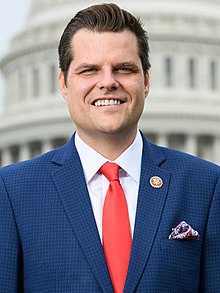
Matt Gaetz
Anyone who still doubts that the Right generally and the followers of Donald Trump in particular aren’t bent on establishing a dictatorship need only consider this.
On May 31, QAnon hosted a conference called the For God and Country Patriot Roundup in Dallas. The event was attended by conspiracy theorists and peddlers of Donald Trump’s lie that the 2020 Presidential election was “stolen” from him by massive vote fraud.
One of Its keynote speakers was retired Army General Michael T. Flynn. Flynn had been Trump’s first national security advisor—until he was forced to resign for lying about his past meetings with Russian ambassador Sergey Kislyak.
In December, 2016, Flynn had talked with Kislyak about removing the sanctions placed on Russia by the outgoing Obama administration. The sanctions had been placed in retaliation for Russia’s efforts to manipulate the 2016 Presidential election.

“I want to know why what happened in Myanmar can’t happen here?” a member of the audience, who identified himself as a Marine, asked Flynn.
“No reason, I mean, it should happen here. No reason. That’s right,” Flynn responded.
From his remarks, it was clear that Flynn supported a similar overthrow of the government of the United States.
Later, when this was made clear to him, Flynn denied it.
In a message posted to a Parler account, Flynn claimed that his words had been twisted: “Let me be VERY CLEAR – There is NO reason whatsoever for any coup in America, and I do not and have not at any time called for any action of that sort.”
But Flynn’s behavior in the closing weeks of the Trump administration confirm that he has advocated the use of military force to install—or maintain—a dictatorship.
After losing the 2020 Presidential election to former Vice President Joseph Biden, Trump was desperate to remain in office. Flynn was present at an Oval Office meeting where he suggested that Trump could invoke martial law to overturn the results.
It wasn’t clear whether Trump endorsed the idea, but others in the room forcefully shot it down.
“Flynn’s remarks border on sedition,” said Rep. Elaine Luria (D-VA), a retired Navy commander who vice-chairs the House Armed Services Committee, about Flynn’s comments at the QAnon conference.
“There’s certainly conduct unbecoming an officer. Those are both things that can be tried under the Uniform Code of Military Justice and I think that as a retiree of the military, it should certainly be a path that we consider to have consequences for these types of words.”

Elaine Luria
At the same event in Dallas, Flynn also claimed—falsely: “Trump won. He won the popular vote, and he won the Electoral College vote.”
As a matter of fact, Trump won neither.
Biden won 81,268,924 popular votes to Trump’s 74,216,154. And in the Electoral College, Biden won 306 votes to Trump’s 232.
* * * * *
History teaches us that republics that tolerate treason soon become former republics.
For Republicans, gaining—and retaining—absolute power has become their foremost reason for existence.
It isn’t enough for them to create voter suppression laws to prevent their opponents from voting. They now insist on the right to violently overthrow any Democrat who somehow manages to win the Presidency against them.
Rod Serling’s “Twilight Zone” episode, “Death’s Head Revisited,” reveals how Republicans react when confronted with overwhelming evidence of their evil.
In that episode, a former Nazi concentration camp captain returns to Dachau, to savor the torments he once inflicted on helpless men and women. To his horror, he’s greeted by the ghosts of those victims.
To one of them—Becker—he says: “That was such a long time ago. Let’s forget about all that—unpleasantness—and move on.”
Thus have Republicans reacted when confronted with overwhelming evidence that President Donald J. Trump, having lost the 2020 Presidential election, incited violence against the Government of the United States.
And just as most of the Original Nazis were forced to confront their past “unpleasantness”—and were punished for it—today’s Republicans must face punishment for their own.
ABC NEWS, ABUSE OF POWER, ADAM SCHIFF, ADOLF HITLER, ALTERNET, AMERICABLOG, AP, ARTICLES OF IMPEACHMENT, BABY BOOMER RESISTANCE, BAVARIA, BBC, BEER HALL PUTSCH, BLOOMBERG NEWS, BUZZFEED, CBS NEWS, CIA, CNN, CROOKS AND LIARS, DAILY KOZ, DONALD TRUMP, DONALD TRUMP JUNIOR, ELECTORAL COLLEGE, FACEBOOK, FIVETHIRTYEIGHT, GOVERNMENT ACCOUNTABILITY OFFICE (GAO), HARPER’S MAGAZINE, HITLER: ASCENT: 1889 – 1933 (BOOK), HUFFINGTON POST, HUNITED STATES OUSE OF REPRESENTATIVES, HUNTER BIDEN, IMPEACHMENT, JOSEPH BIDEN, MEDIA MATTERS, MEIN KAMPF, MICK MULVANEY, MIKE PENCE, MITT ROMNEY, MO BROOKS, MOTHER JONES, MOVEON, MSNBC, MUNICH, NANCY PELOSI, NAZI GERMANY, NBC NEWS, NEW REPUBLIC, NEWSDAY, NEWSWEEK, NPR, OBSTRUCTION OF CONGRESS, PBS NEWSHOUR, POLITICO, POLITICUSUSA, RAW STORY, REUTERS, RUDY GIULIANI, SALON, SEATTLE TIMES, SLATE, TALKING POINTS MEMO, THE ATLANTIC, THE CHICAGO SUN-TIMES, THE CHICAGO TRIBUNE, THE DAILY BEAST, THE DAILY BLOG, THE GUARDIAN, THE HILL, THE HUFFINGTON POST, THE LOS ANGELES TIMES, THE NATION, THE NEW REPUBLIC, THE NEW YORK TIMES, THE NEW YORKER, THE VILLAGE VOICE, THE WASHINGTON POST, THINKPROGRESS, TIME, TRUTHDIG, TRUTHOUT, TWITTER, TWO POLITICAL JUNKIES, U.S. NEWS & WORLD REPORT, UKRAINE, UNITED STAITES SENATE, UNITED STATES CAPITOL, UNITED STATES DEPARTMENT OF JUSTICE, UPI, USA TODAY, VOLKER ULRICH, VOLODMYR ZELENSKY, WONKETTE
In Bureaucracy, History, Law, Law Enforcement, Politics, Social commentary on August 4, 2021 at 12:07 am
On January 6, 2021, members of the United States Senate and House of Representatives met to count the Electoral Votes cast for then-President Donald Trump and former Vice President Joseph R. Biden.
Trump knew that Biden has received more Electoral College votes than he had—306 to 232.
And he wanted that vote-count stopped—thus allowing him to remain in office as “President-for-Life.”
For weeks Trump had ordered his legions of Right-wing Stormtrumpers to descend on Washington, D.C. on January 6.
On December 20, 2020, he had tweeted: “Statistically impossible to have lost the 2020 Election. Big protest in DC on January 6th. Be there, will be wild!”
In tweets, he promoted the rally again on December 27 and 30, and January 1.
Thus, through his lies, he had aroused the fury of his Right-wing supporters.
It would take only his command to send it hurtling at his perceived enemies: Those who would dare elect Joe Biden in his place.
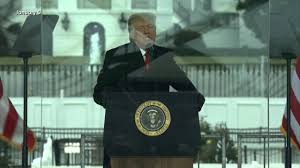
Donald Trump addresses his Stormtrumpers
On January 6, Trump appeared at the Ellipse, a 52-acre park south of the White House fence and north of Constitution Avenue and the National Mall in Washington, D.C.
A stage had been set up for him to address tens of thousands of his supporters, who eagerly awaited him.
Trump ordered them to march on the Capitol building to express their anger at the voting process and to intimidate their elected officials to reject the results:
“And after this, we’re going to walk down and I’ll be there with you. We’re going to walk down to the Capitol. And we’re going to cheer on our brave Senators and Congressmen and women and we’re probably not going to be cheering so much for some of them.
“Because you’ll never take back our country with weakness. You have to show strength and you have to be strong. We have come to demand that Congress do the right thing and only count the electors who have been lawfully slated.”
The Stormtrumpers marched to the United States Capitol—and quickly overwhelmed Capitol Police.

Tyler Merbler from USA, CC BY 2.0 <https://creativecommons.org/licenses/by/2.0>, via Wikimedia Commons
- Members of the mob attacked police with chemical agents or lead pipes.
- Many of the lawmakers’ office buildings were occupied and vandalized—including that of House Speaker Nancy Pelosi, a favorite Right-wing target.
- Shouts of “Hang Pence!” and “Hang Pelosi!” often rang out.
- According to CBS News, more than 150 officers were injured in the attack.
- Several rioters carried plastic handcuffs, possibly intending to take hostages.
- Others carried treasonous Confederate flags.
After more than three hours, police—using riot gear, shields and batons—retook control of the Capitol.
And Trump? After giving his inflammatory speech, he didn’t march with his followers to the Capitol.
Like the draft-dodger he had been during the Vietnam war, he kept himself out of harm’s way and returned to the White House.
There he watched his handiwork on television—and initially rebuffed requests to mobilize the National Guard.
Six months later—by July 30—599 Stormtrumpers had been arrested and charged.
- At least 27 defendants have pleaded guilty.
- At least 22 have pleaded guilty to misdemeanors.
- Six have pleaded guilty to felonies.
- Three defendants have been sentenced: One drew a sentence of eight months for a felony. Two were sentenced for misdemeanor charges.
- Another was sentenced to three years probation and no jail time.
- Another was sentenced to six months imprisonment, but was credited for the time he had already spent in jail awaiting trial.
Yet no major Trump supporter has been arrested, let alone indicted.
- NOT Trump’s attorney, Rudy Giuliani, who cried to the demonstrators, “Let’s have trial by combat!”
- NOT Donald Trump, Jr., who, just hours before the Trump mob stormed Congress, threatened Republican lawmakers at a large rally outside the White House: “These guys better fight for Trump. Because if they’re not, guess what? I’m going to be in your backyard in a couple of months!”
- NOT Rep, Mo Brooks (R-Ala.) who incited the Trump crowd with: “Today is the day American patriots start taking down names and kicking ass!”
- And, above all, NOT Donald Trump. He not only incited his followers to attack the Capitol, he has spent the last six months spreading poisonous lies that the 2020 election was “stolen” from him through “massive” voter fraud. As a result, he continues to undermine the democratic process as he terrorizes the Republican party to stand behind him.
For attempting to overthrow the government of Bavaria in 1923, Adolf Hitler could have spent five years in prison. Instead, a sympathetic Right-leaning judge gave him only nine months.
Had he served out his full sentence, he might not have been able to revive his political career. But once he emerged from prison, he reorganized the Nazi party and began a series of campaigns for the presidency.
By January 30, 1933, he had become Chancellor of Germany. By August, 1934, he had become absolute dictator.
At the battle of the Alamo, 200 Texans killed 600 Mexican soldiers before being overwhelmed. During the Capitol battle, hundreds of police killed one Stormtrumper, thus sending the message: You can commit treason with impunity.
The Justice Department must soon indict, prosecute and—hopefully—convict Donald Trump—to both punish his treason and warn his potential imitators of treason’s penalties.
ABC NEWS, ABUSE OF POWER, ADAM SCHIFF, ADOLF HITLER, ALTERNET, AMERICABLOG, AP, ARTICLES OF IMPEACHMENT, BABY BOOMER RESISTANCE, BAVARIA, BBC, BEER HALL PUTSCH, BLOOMBERG NEWS, BUZZFEED, CBS NEWS, CIA, CNN, CROOKS AND LIARS, DAILY KOZ, DONALD TRUMP, DONALD TRUMP JUNIOR, ELECTORAL COLLEGE, FACEBOOK, FIVETHIRTYEIGHT, GOVERNMENT ACCOUNTABILITY OFFICE (GAO), HARPER’S MAGAZINE, HITLER: ASCENT: 1889 – 1933 (BOOK), HUFFINGTON POST, HUNITED STATES OUSE OF REPRESENTATIVES, HUNTER BIDEN, IMPEACHMENT, JOSEPH BIDEN, MEDIA MATTERS, MEIN KAMPF, MICK MULVANEY, MIKE PENCE, MITT ROMNEY, MO BROOKS, MOTHER JONES, MOVEON, MSNBC, MUNICH, NANCY PELOSI, NAZI GERMANY, NBC NEWS, NEW REPUBLIC, NEWSDAY, NEWSWEEK, NPR, OBSTRUCTION OF CONGRESS, PBS NEWSHOUR, POLITICO, POLITICUSUSA, RAW STORY, REUTERS, RUDY GIULIANI, SALON, SEATTLE TIMES, SLATE, TALKING POINTS MEMO, THE ATLANTIC, THE CHICAGO SUN-TIMES, THE CHICAGO TRIBUNE, THE DAILY BEAST, THE DAILY BLOG, THE GUARDIAN, THE HILL, THE HUFFINGTON POST, THE LOS ANGELES TIMES, THE NATION, THE NEW REPUBLIC, THE NEW YORK TIMES, THE NEW YORKER, THE VILLAGE VOICE, THE WASHINGTON POST, THINKPROGRESS, TIME, TRUTHDIG, TRUTHOUT, TWITTER, TWO POLITICAL JUNKIES, U.S. NEWS & WORLD REPORT, UKRAINE, UNITED STAITES SENATE, UNITED STATES CAPITOL, UNITED STATES DEPARTMENT OF JUSTICE, UPI, USA TODAY, VOLKER ULRICH, VOLODMYR ZELENSKY, WONKETTE
In Bureaucracy, History, Law, Law Enforcement, Politics, Social commentary on August 3, 2021 at 12:13 am
On November 9, 1923, Nazi Party Fuhrer Adolf Hitler tried to overthrow the government in Munich, Bavaria.
About 2,500-3,000 Nazis marched to the center of Munich, where they confronted heavily-armed police. A shootout erupted, killing 16 Nazis and four policemen.
Hitler was injured during the clash, but managed to escape. Two days later, he was arrested and charged with treason.
Put on trial, he found himself treated as a celebrity by a judge sympathetic to Right-wing groups. He was allowed to brutally cross-examine witnesses and even make inflammatory speeches. As a result, he emerged a national figure, popular in Right-wing circles.
At the end of the trial, he was convicted of treason and sentenced to nine months’ imprisonment—by a Right-wing judge hostile to the the newly-created Weimar Republic.
Serving time in Landsberg Prison, in Bavaria. he was given a huge cell, allowed to receive unlimited visitors and gifts, and treated with deference by guards and inmates.
Hitler used his time in prison to write his infamous book, Mein Kampf-–“My Struggle.” Part autobiography, part political treatise, it laid out his future plans—including the extermination of the Jews and the conquest of the Soviet Union.

Adolf Hitler leaving Landsberg Prison, December, 20, 1924
Nine months later, he was released on parole.
Hitler immediately began rebuilding the shattered Nazi party—and deciding on a new strategy to gain power. Never again would he resort to armed force. He would win office by election—or intrigue.
In less than 10 years—on January 30, 1933—he had done so. By August 2, 1934, he had become absolute dictator of Germany.
Writes historian Volker Ullrich, in his monumental 2016 biography, Hitler: Ascent 1889 – 1939: “Historians have perennially tried to answer the question of whether Hitler’s rise to power could have been halted….
“There were repeated opportunities to end Hitler’s run of triumphs. The most obvious one was after the failed Putsch of November 1923. Had the Munich rabble-rouser been forced to serve his full five-year term of imprisonment in Landsberg, it is extremely unlikely that he would have been able to restart his political career.”

Thus, it isn’t just what happens that can influence the course of history. Often, it’s what doesn’t happen that has at least as great a result.
Consider the case of America’s own would-be Fuhrer: Donald Trump.
On December 18, 2019, the House of Representatives had approved two Articles of Impeachment against Trump for:
Article 1: Abuse of Power: For pressuring Ukraine to assist him in his re-election campaign by smearing a potential rival for the White House.
Article 2: Obstruction of Congress: For obstructing Congress by blocking testimony of subpoenaed witnesses and refusing to provide documents in response to House subpoenas in the impeachment inquiry.
On September 9, 2019, the House Foreign Affairs, Intelligence and Oversight and Reform committees began investigating his attempted extortion of Ukraine President Volodymyr Zelensky.
On July 25, 2019, Trump had “asked” Zelensky to do him a “favor”: Find embarrassing “dirt” on former Vice President Joseph Biden and his son, Hunter.
Hunter had had business dealings in Ukraine. And Joseph Biden might be Trump’s Democratic opponent for the White House in 2020.
To underline the seriousness of his “request,” earlier in July Trump had told Mick Mulvaney, his White House chief of staff, to withhold $400 million in military aid that Congress had approved for Ukraine, which faced an increasingly aggressive Russia.
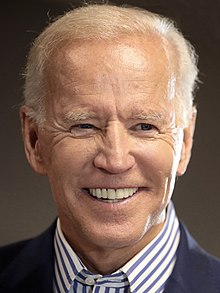
Joseph Biden
Gage Skidmore from Peoria, AZ, United States of America / CC BY-SA (https://creativecommons.org/licenses/by-sa/2.0)
But then a CIA whistleblower filed a complaint about the extortion attempt—and the media and Congress soon learned of it. And ever since, the evidence linking Trump to impeachable offenses had mushroomed.
On January 16, 2020, the Government Accountability Office (GAO) announced that the Trump administration broke the law when it withheld security aid to Ukraine.
As trial proceedings unfolded in the 2020 impeachment of Trump, the majority Republican Senators consistently put their own partisan interests over those of their country.
Among their actions:
- Refusing to hear from eyewitnesses who could prove that Trump had committed impeachable offenses,
- Refusing to provide evidence on Trump’s behalf—but attacking witnesses who had testified against him in the House.
- Attacking Joseph and Hunter Biden as if they were on trial—instead of having been the targets of Trump’s smear-attempt.
As Lead Impeachment Manager, Representative Adam Schiff (D-CA) held the role of a prosecutor.
Faced with the unwillingness of Trump’s Senatorial defenders to accept any evidence—no matter how damning—against him, Schiff warned: “Donald Trump must be convicted and removed from office. Because he will always choose his own personal interest over our national interest. Because in America, right matters. Truth matters. If not, no Constitution can protect us. If not, we are lost.”

Adam Schiff
On February 5, 2020, the Republican-dominated Senate—as expected—absolved him from trying to extort Ukraine into smearing a possible rival for the White House.
Only one Republican—Utah Senator Mitt Romney—had the moral courage to vote for conviction.
On January 6, 2021, Schiff’s prophecy came true.
ABC NEWS, ALTERNET, AMERICABLOG, AP, BABY BOOMER RESISTANCE, BAY AREA RAPID TRANSIT DISTRICT (BART), BBC, BLOOMBERG NEWS, BUZZFEED, CARS, CBS NEWS, CNN, CORONAVIRUS, COVID-19, CROOKS AND LIARS, DAILY KOZ, DRUDGE REPORT, FACEBOOK, FIVETHIRTYEIGHT, HARPER’S MAGAZINE, HUFFINGTON POST, MEDIA MATTERS, MOTHER JONES, MOVEON, MSNBC, NBC NEWS, NEW REPUBLIC, NEWSDAY, NEWSWEEK, NPR, PARKING PLACES, PBS NEWSHOUR, POLITICO, POLITICUSUSA, PUBLIC TRANSPORTATION, RAW STORY, RESTAURANTS, REUTERS, SALON, SAN FRANCISCO, SAN FRANCISCO BOARD OF SUPERVISORS, SAN FRANCISCO MAYOR'S OFFICE, SAN FRANCISCO MUNICIPAL RAILWAY (MUNI), SEATTLE TIMES, SLATE, TALKING POINTS MEMO, THE ATLANTIC, THE CHICAGO SUN-TIMES, THE CHICAGO TRIBUNE, THE DAILY BEAST, THE DAILY BLOG, THE GUARDIAN, THE HILL, THE HUFFINGTON POST, THE LOS ANGELES TIMES, THE NATION, THE NEW REPUBLIC, THE NEW YORK TIMES, THE NEW YORKER, THE VILLAGE VOICE, THE WASHINGTON POST, THINKPROGRESS, TIME, TRUTHDIG, TRUTHOUT, TWITTER, TWO POLITICAL JUNKIES, U.S. NEWS & WORLD REPORT, UPI, USA TODAY, WONKETTE
In Bureaucracy, Business, History, Medical, Politics, Social commentary on August 2, 2021 at 12:57 am
The San Francisco Municipal Railway (MUNI) is the public transit system for the city and county of San Francisco, California.
In 2018, MUNI, with a budget of about $1.2 billion, served 46.7 square miles. It is the seventh largest transit system—in terms of ridership—in the nation.
Its drivers are the highest-paid bus drivers in the nation—making on average $79,617. That’s 51% above the national average bus driver salary of $52,730.

So what are San Francisco residents getting for all those expenses?
Far less than they deserve.
Since the Coronavirus plague hit San Francisco in early March, 2020, MUNI has:
- Offered fewer bus routes
- Made it impossible to guess when and where a bus will stop
- Drastically reduced the number of buses and
- Scrapped its underground lines altogether.
What does all this mean?
Of MUNI’s 89 routes, all but 17 were eliminated.
MUNI claimed that the cuts were made to allow for increased social distancing on the most vital routes. How riders were supposed to increase social distancing on fewer buses was not explained.
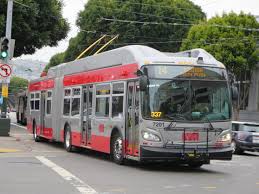
A MUNI bus
The 38 Geary bus line—which travels east and west—is the most heavily-traveled route in the city. In pre-COVID times, these buses were packed, often with passengers standing close together in the aisles after all available seats were taken.
Loudspeakers aboard MUNI buses regularly tell passengers to socially distance from each other—that is, put at least six feet between themselves and their fellows.
But with far fewer buses running, MUNI passengers can’t be sure when—or if—the next one will arrive when they need to catch it.
So residents scramble aboard, en masse, the first bus that shows up.
This makes social distancing impossible on most rides.
Cooronavirus
MUNI loudspeakers also tell passengers “You must wear a mask to board MUNI.” And most passengers do wear a mask when they board.
But not all of them do—especially those who board through the rear doors, out of sight of the driver far up in front.
Even when passengers wear masks, they often do so just under their nose or chin—meaning they can sneeze or cough potentially lethal germs on anyone sitting near them.
Another drawback to riding MUNI: Buses don’t always stop when you pull the “Stop” cord.
Suppose you’re a senior, or disabled, or have a couple of bags of groceries you need to lug up to your apartment. Suppose you board the 49 Van Ness at Sutter Street.
The 49 boards at Sutter, but it stops only at Jackson Street.
So you pass
- Bush,
- Pine,
- California,
- Sacramento,
- Washington and
- Clay
before you reach Jackson.
And if your apartment lies somewhere between Sutter and Jackson, you’re going to have to forego MUNI and walk north to it, or get off at Jackson and walk south to it.
As if all this wasn’t confusing enough, MUNI has changed many of its bus stops. The 27 Bryant which used to stop at 9th and Bryant no stops at 9th and Folsom—two blocks north. Naturally, there is no sign posted at the former stop to warn passengers of this change.
Besides making its above-ground routes needlessly complicated and even dangerous, MUNI eliminated its underground routes.
These featured fewer stops over longer distances, thus reducing the amount of time you had to be on board.
MUNI’s official reason for this: To protect its drivers from the dangers of COVID-19.
Meanwhile, the Bay Area Transit System (BART) which serves cities well beyond San Francisco, continued to use its network of underground and above-ground stations.
No one at MUNI has explained why its drivers couldn’t do what BART’s did for the last year.
Meanwhile, city officials—specifically, the Mayor and Board of Supervisors—are relentlessly pushing to make San Francisco “car-unfriendly.”

San Francisco City Hall
Sanfranman59, CC BY-SA 3.0 <https://creativecommons.org/licenses/by-sa/3.0>, via Wikimedia Commons
This has long been their goal. And COVID-19 has made it possible for city leaders to aggressively pursue it under the guise of helping restaurants.
Countless spots that once were reserved for parking have been turned into outdoor dining sites. This seems to makes sense for restaurants, which have taken a beating since indoor dining was banned due to COVID.
But outdoor dining isn’t as safe as many people think.
Sure, you and the person(s) you’re eating with may not be COVID-infected. But what about the people at the packed table just a couple of feet away from you?
And what about the pedestrians who often must walk between unmasked diners on either side of a sidewalk?
Finally: There is the constant danger of a car crashing into one of these outdoor sites—which usually protrude from the sidewalk.
Offering a mixture of incentives and deterrents has long been a preferred method for winning compliance. In Mexico, this has been famously termed “Pan o palo” (“bread or the stick”).
San Francisco has chosen to offer a sticks-only policy:
- Allow its bus service to treat its patrons with infuriating contempt; and
- Make it ever harder for residents and tourists to use private automobiles to reach their destinations.
It’s a recipe guaranteed to cost the city dearly—in both residents and tourists.


 Bureaucracybuster's Blog
ABC NEWS, ALTERNET, AMERICABLOG, AMERICAN TABLOID (BOOK), ANTI-CASTRO CUBANS, AP, ASSASSINATION, BABY BOOMER RESISTANCE, BBC, BLOOMBERG NEWS, BUZZFEED, CBS NEWS, CIA, CNN, COMMUNISM, CROOKS AND LIARS, CUBA, CUBAN MISSILE CRISIS, DAILY KOZ, DONALD TRUMP, DWIGHT D. EISENHOWER, FACEBOOK, FBI, FIDEL CASTRO, FIVETHIRTYEIGHT, FLORIDA, FULGENCIO BATISTA, GUS RUSSO, HARPER’S MAGAZINE, HUFFINGTON POST, JACK RUBY, JAMES ELLROY, JOHN F. KENNEDY, JOHNNY ROSELLI, LEE HARVEY OSWALD, LIVE BY THE SWORD (BOOK), LYNDON B. JOHNSON, MAFIA, MARCO RUBIO, MARINA OSWALD, MARTIN SHEEN, MEDIA MATTERS, MIAMI, MOTHER JONES, MOVEON, MSNBC, NBC NEWS, NEW REPUBLIC, NEWSDAY, NEWSWEEK, NIKITA KHRUSHCHEV, NPR, PBS NEWSHOUR, POLITICO, POLITICUSUSA, RAW STORY, REUTERS, RICHARD NIXON, ROBERT F. KENNEDY, ROBERT MCNAMARA, SALON, SAM GIANCANA, SEATTLE TIMES, SLATE, TALKING POINTS MEMO, THE ATLANTIC, THE CHICAGO SUN-TIMES, THE CHICAGO TRIBUNE, THE DAILY BEAST, THE DAILY BLOG, THE GUARDIAN, THE HILL, THE HUFFINGTON POST, THE LOS ANGELES TIMES, THE MISSILES OF OCTOBER (MOVIE), THE NATION, THE NEW REPUBLIC, THE NEW YORK TIMES, THE NEW YORKER, THE VILLAGE VOICE, THE WASHINGTON POST, THINKPROGRESS, THIRTEEN DAYS (BOOK), TIME, TRUTHDIG, TRUTHOUT, TWITTER, TWO POLITICAL JUNKIES, U.S. NEWS & WORLD REPORT, UPI, USA TODAY, WARREN COMMISSION, WILLIAM DEVANE, WONKETTE
AMERICA’S POISONED CUBAN LEGACY STILL HAUNTS US: PART ONE (OF FOUR)
In Bureaucracy, History, Military, Politics, Social commentary on August 17, 2021 at 12:12 amOn November 25, 2016, Fidel Castro, Cuba’s longtime “Maximum Leader,” died at the age of 90.
Old age and disease had finally achieved what years of CIA plotting and Mafia assassins could not.
To his supporters he was a tireless champion of the poor and a foe of American imperialism. To his enemies he was a ruthless dictator who drove his country to economic ruin in the name of a failed ideology—communism.
His reign began on January 1, 1959, when he swept triumphantly into Havana after a two-year guerrilla campaign against Cuban dictator Fulgencio Batista.
Fidel Castro
Almost immediately, hundreds of thousands of Cubans began fleeing to America. The first émigrés were more than 215,000 Batista followers. The exodus increased, peaking at approximately 78,000 in 1962.
In October, 1962, Castro stopped regularly scheduled travel between the two countries, and asylum seekers began sailing from Cuba to Florida.
Between 1962 and 1979, hundreds of thousands of Cubans entered the United States under the Attorney General’s parole authority.
By 2017, more than 1.53 million Cubans were living in Florida, where the population of Miami was about one-third Cuban. Their sheer numbers transformed the state’s political, economic and cultural life. And not entirely for the better.
Many of these Cubans viewed themselves as political exiles, rather than immigrants, hoping to eventually return to Cuba after its Communist regime fell from power.
With so many discontented immigrants concentrated in Florida, they became a potential force for politicians to court.
And the issue guaranteed to sway their votes was unrelenting hostility to Castro. Unsurprisingly, most of their votes went to Right-wing Republicans.
John F. Kennedy was the first President to face this dilemma.
During the closing months of the administration of President Dwight D. Eisenhower, the CIA had begun training Cuban exiles for an invasion of their former homeland.
The exiles’ goal: To do what Castro had done–seek refuge in the mountains and launch a successful anti-Castro revolution.
But word of the coming invasion quickly leaked: The exiles were terrible secret-keepers. (A joke at the CIA went: “A Cuban thinks a secret is something you tell to only 300 people.”)
Kennedy insisted the invasion must appear to be an entirely Cuban enterprise. He refused to commit U.S. Marines and Air Force bombers.
More than 1,400 invaders landed on April 17, 1961 at the Bay of Pigs—and were quickly overwhelmed, with hundreds of the men taken prisoner.
Kennedy publicly took the blame for its failure: “Victory has a hundred fathers but defeat is an orphan.” But privately he seethed, and ordered the CIA to redouble its efforts to remove Castro at all costs.
To make certain his order was carried out, he appointed his brother, Robert—then Attorney General—to oversee the CIA’s “Castro removal” program.
Robert F. Kennedy and John F. Kennedy
It’s here that America’s obsession with Cuba entered its darkest and most disgraceful period.
The CIA and the Mafia entered into an unholy alliance to assassinate Castro—each for its own benefit:
The CIA supplied poisons and explosives to various members of the Mafia. It was then up to the mobsters to assassinate Castro.
The CIA asked Johnny Roselli, a mobster linked to the Chicago syndicate, to go to Florida in 1961 and 1962 to organize assassination teams of Cuban exiles. They were to infiltrate their homeland and assassinate Castro.
Johnny Roselli
Roselli called upon two other crime figures: Chicago Mafia boss Sam Giancana and Santos Trafficante, the Cosa Nostra chieftain for Tampa, for assistance.
Sam Giancana
Giancana, using the name “Sam Gold” in his dealings with the CIA, was meanwhile being hounded by the FBI on direct orders of Attorney General Robert Kennedy.
The mobsters were authorized to offer $150,000 to anyone who would kill Castro and were promised any support the Agency could yield.
Giancana was to locate someone who was close enough to Castro to be able to drop pills into his food. Trafficante would serve as courier to Cuba, helping to make arrangements for the murder on the island.
Roselli was to be the main link between all of the participants in the plot.
The available sources disagree on what actually happened. Some believe that the Mob made a genuine effort to “whack” Fidel.
Others are convinced the mobsters simply ran a scam on the government. They pretended to carry out their “patriotic duty” while in fact making no effort at all to penetrate Castro’s security.
The CIA’s war against Castro was known as Operation Mongoose—the mongoose being a traditional enemy of the cobra. And those entrusted with this assignment were known as the Special Group.
“We were hysterical about Castro at about the time of the Bay of Pigs and thereafter,” Secretary of Defense Robert S. McNamara later testified before Congress about these efforts. “And there was pressure from JFK and RFK to do something about Castro.”
Share this: