As both a Presidential candidate and President, Donald Trump has repeatedly used Twitter to attack hundreds of real and imagined enemies in politics, journalism, TV and films.
From June 15, 2015, when he launched his Presidential campaign, until October 24, 2016, Trump fired almost 4,000 angry, insulting tweets at 281 people and institutions that had somehow offended him.
Donald Trump
The New York Times needed two full pages of its print edition to showcase them.
Among his targets:
Former Secretary of State and Presidential candidate Hillary Clinton
President Barack Obama
Actress Meryl Streep
Singer Neil Young
Actor Arnold Schwarzenegger
Comedian John Oliver
News organizations
The State of New Jersey
Beauty pageant contestants
Others he clearly delighted in insulting during the campaign included:
Women
Blacks
Hispanics
Asians
Muslims
The disabled
Prisoners-of-war
As a Presidential candidate and President, he has shown outright hatred for President Barack Obama. For five years, he slandered Obama as a Kenyan-born alien who had no right to hold the Presidency.
Barack Obama
Only on the eve of the first Presidential debate with Hillary Clinton—in September, 2016—did he finally admit that Obama had been born in the United States after all.
Then, on March 4, 2017, in a series of unhinged tweets, Trump accused Obama of illegally tapping his Trump Tower phones prior to the election:
“Terrible! Just found out that Obama had my ‘wires tapped’ in Trump Tower just before the victory. Nothing found. This is McCarthyism!”
Thus, without offering a shred of evidence to back it up, Trump accused his predecessor of committing an impeachable offense.
Both the FBI and Justice Department vigorously refuted this slander.
Trump’s all-out effort to destroy the Affordable Care Act—nicknamed “Obamacare”—has been driven by his mania to erase every vestige of the Obama Presidency.
Even attending a Boy Scout jamboree became, for Trump, a way to attack the former President.
“By the way, just a question. Did President Obama ever come to a jamboree?” Trump asked the crowd of 40,000, encouraging them to boo Obama. And many of them did.
As President, he has bullied and insulted even his own handpicked Cabinet officers and White House officials.
His press secretary, Sean Spicer, quit on July 21, 2017. The reason: He believed—correctly—that his loyalty to Trump had become a one-way street. Trump kept him in the dark about events Spicer needed to know—such as an interview that Trump arranged with the New York Times—and which ended disastrously for Trump.
Trump waged a Twitter-laced feud against Jeff Sessions, his Attorney General. Sessions’ “crime”? Recusing himself from any decisions involving investigations into well-established ties between Russian Intelligence agents and members of Trump’s Presidential campaign. A day after Republicans lost the House of Representatives in November, 2018, Trump fired him.
Trump repeatedly humiliated his chief of staff, Reince Priebus—at one point ordering him to kill a fly that was buzzing about. On July 28, 2017, Priebus resigned.
**********
Americans have watched Trump’s behavior with morbid fascination, many of them asking: “What makes him do the things he does?”
It’s a question asked—and answered—in the 1993 Western, Tombstone. And the answer given in that movie may just hold the key to the question so many Americans are now asking about Trump.
Tombstone recounts the legendary blood feud between the Ike Clanton outlaw gang and the Earp brothers—Wyatt, Morgan and Virgil—in the famous gold-mining town in 1880s Arizona.
Wyatt Earp has been challenged to a gunfight by quick-trigger gunman Johnny Ringo. Although he impulsively accepted the challenge, Wyatt now realizes he’s certain to be killed. Then follows this exchange with his longtime friend, the pistol-packing dentist, John H. “Doc” Holliday:
WYATT EARP: What makes a man like Ringo, Doc? What makes him do the things he does?
JOHN H. “DOC” HOLLIDAY: A man like Ringo….got a great empty hole right through the middle of him. He can never kill enough or steal enough….or inflict enough pain to ever fill it.
EARP: What does he need?
HOLLIDAY: Revenge.
EARP: For what?
HOLLIDAY: Bein’ born.
Donald Trump was born into a world of wealth and privilege. His father gave him $200 million, which he channeled into a real estate empire. He has claimed to be worth a billion dollars.
He has been linked—often by his own boasts—to some of the most beautiful women in the world. He has been a major force on TV through his “reality show,” The Apprentice. He has literally stamped his name on hundreds of buildings.
And now he holds the Presidency of the United States, the most powerful office in the Western world.
Yet he remains filled with a poisonous hatred that encompasses almost everyone. Since taking office, he has offered nothing positive in his agenda.
Instead, he has focused his efforts on what he can take from others. At the top of his list: The Affordable Health Act, which provides access to medical care for millions who previously could not obtain it.
As first-mate Starbuck says of Captain Ahab in Herman Melville’s classic novel, Moby Dick: “He is a champion of darkness.”
On January 18, 2016, Daniel Shaver crawled on his hands and knees and begged for his life while facing six armed Arizona police officers.
It didn’t save him.
One of the officers, Philip Brailsford, was carrying an AR-15 rifle with the phrase “You’re Fucked” etched into the weapon.
Shaver couldn’t see the etching. But the humiliating and fear-inspiring commands of Sergeant Charles Langley—captured on a police body camera—were clearly audible.
Shaver, 26, on a work-related trip to Mesa from Granbury, Texas, had been doing rum shots with a woman he had met earlier that day. He had also been showing off a pellet gun he used to take out rodents in his work in pest control.
Daniel Shaver
At some point, a caller informed the Mesa Police Department that a man was pointing a rifle out of a fifth-floor window at a La Quinta Inn.
When officers arrived at the Inn, they ordered Shaver and the woman to come out of the hotel room. They did so and immediately complied with commands from Sergeant Langley.
LANGLEY:Stop right there! Stop! Stop! Get on the ground both of you! Lay down on the ground. Lay down on the ground.
If you make a mistake, another mistake, there is a very severe possibility that you’re both going to get shot. Do you understand? Who else is in the room?
SHAVER: Nobody.
Philip Brailsford
[Langley then asked if they were sober enough to understand his commands. Both Shaver and the woman said they were.]
SHAVER: What—?
LANGLEY: Shut up. I’m not here to be tactful or diplomatic with you. You listen, you obey. For one thing: Did I tell you to move young man?
SHAVER: No.
LANGLEY:Put both hands on the top of your head and interlace your fingers. Take your feet and cross your left foot over your right foot.
Young man, you’re not to move. You’re to put your eyes down and look down at the carpet. You’re to keep your fingers interlaced behind your head. You’re to keep your legs crossed.
If you move we’re going to consider that a threat and we’re going to deal with it and you may not survive.
[Langley ordered the woman to crawl toward him. She did so and was handcuffed off-camera.]
LANGLEY: Young man listen to my instructions and do not make a mistake. You are to keep your legs crossed. Do you understand me?
SHAVER: Yes, sir.
LANGLEY:You are to put both of your hands palms down straight out in front of you, push yourself up to a kneeling position. I said keep your legs crossed! I didn’t say this as a conversation.
[Shaver put his hands behind his back.]
LANGLEY (shouting): I said put your hands up hands in the air! You do that again, we’re shooting you, do you understand?
SHAVER: Please do not shoot me.
LANGLEY: Then listen to my instructions!
SHAVER: I’m trying to do what you say—
LANGLEY:Don’t talk! Listen! Hands straight up in the air! Do not put your hands down for any reason. You think you’re gonna fall, you better fall on your face. Your hands go back into the small of your back or down we are going to shoot you. Do you understand me?
SHAVER: Yes, sir.
LANGLEY: Crawl towards me, crawl towards me.
Shaver started crawling toward Langley and Brailsford, sobbing. At one point, he reached back toward his pants leg—possibly to pull up his shorts.
Suddenly Brailsford opened fire so quickly it sounded like a single shot—although Shaver was struck five times.
Brailsford later claimed he believed that Shaver was reaching for a gun.
The video makes clear that Shaver was thoroughly covered by the officers. Any of them could have approached Shaver while he was prone and handcuffed him.
No gun was found on Shaver’s body. Two pellet rifles used in Shaver’s pest-control job were later found in the hotel room.
In May, 2016, Brailsford was charged with second-degree murder.
On December 7, 2017, after a six week trial, a jury deliberated for less than six hours over two days and acquitted Brailsford of second degree murder as well as of a lesser charge of reckless manslaughter.
“The justice system miserably failed Daniel (Shaver) and his family,” said Mark Geragos, an attorney for Shaver’s widow, Laney Sweet.
The Mesa Police Department fired Brailsford two months after the shooting. In August 2018, he was reinstated, staying for a further 42 days in what the department described as a “budget position”.
The department reimbursed Brailsford for medical expenses related to his claim of post-traumatic stress disorder (PTSD) over the shooting of Shaver and the resultant criminal trial. The reinstatement allowed Brailsford to apply for “accidental disability” suffered during the course of work. Brailsford was also given a monthly pension of $2,500.
The fact that Brailsford was ultimately medically retired instead of remaining fired was only revealed to the public in July 2019.
Langley retired as a police officer and moved to the Philippines—where police death squads operate under orders from the country’s president, Rodrigo Duterte.
According to a Washington Post database, there were at least 963 fatal police shootings in 2016.
Donald Trump believes himself to be a genius at public relations and salesmanship. And Julie Talenfeld, an award-winning and highly respected marketing communications professional, agrees with him.
Calling Trump “our generation’s greatest salesman,” the president of BoardroomPR writes: “…In Trump we have a true master marketer. He tore through the U.S. presidential election process and, without spending much – if any – of his own money, and cast aside an impressive line-up of Republican contenders on his way to beating Hillary Clinton.”
Julie Talenfeld
How did he do it?
Talenfeld lays out four reasons:
He captured the news headlines from the very start.
He mastered wordplay.
He’s all about image and stagecraft.
He’s a master of the media.
But on June 1, Trump’s mastery of the media failed him.
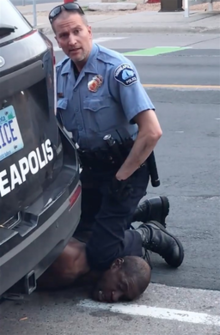
On May 25, 2020, George Floyd, a black unemployed restaurant security guard, had been murdered by Derek Chauvin, a white Minneapolis police officer. While Floyd was handcuffed and lying face down on a city street during an arrest, Chauvin kept his knee on the right side of Floyd’s neck for eight minutes and 46 seconds.
Cities across the United States erupted in mass protests over Floyd’s death—and police killings of black victims generally. Most of these demonstrations proved peaceful.
But cities such as Los Angeles, San Francisco and New York City saw stores looted, vandalized and/or burned.
On June 1, President Trump ordered police, Secret Service agents and National Guard troops to violently remove peaceful protesters from Lafayette Square, which borders St. John’s Church near the White House.
The reason: To allow Trump to have a photo opportunity outside the church.
“We have a great country,” said Trump. “We have the best country in the world…we will make it even greater. And it won’t take long….It’s coming back strong. It’ll be greater than ever before.”
Donald Trump at St. John’s Church
“I imposed a curfew at 7pm,” tweeted Washington, D.C. Mayor Muriel Bowser. “A full 25 minutes before the curfew & w/o provocation, federal police used munitions on peaceful protestors in front of the White House, an act that will make the job of @DCPoliceDept officers more difficult. Shameful!”
Video of the assault spread quickly on social media and news outlets, sparking nationwide outrage.
In addition, Trump turned the normally well-protected White House into an armed fortress. Blocks of tall, black reinforced fencing were erected. Military vehicles patrolled Pennsylvania Avenue.
Lafayette Square, across from the White House—normally occupied by selfie-taking tourists—was fenced off and filled with heavily-armed National Guard troops and Secret Service agents.
Even worse: on the night of May 29, Trump was briefly taken to the White House underground bunker as protesters gathered outside the Executive Mansion following George Floyd’s death. He was there for a little under an hour.
But the PR damage was done. For millions, he would now be “The Bunker Bitch.”
Contrast that with the example of Sheriff Christopher Swanson of Genesee County, Michigan.
Sheriff Christopher Swanson
Confronting a mass of aroused demonstrators in Flint Township on May 30, Swanson responded: “We want to be with you all for real.”
Swanson removed his helmet. His deputies laid their batons down.
“I want to make this a parade, not a protest. So, you tell us what you need to do.”
“Walk with us!” the protesters shouted.
“Let’s walk, let’s walk,” said Swanson.
Cheering and applause resounded.
“Let’s go, let’s go,” Swanson said as he and the cheering crowd proceeded. “Where do you want to walk? We’ll walk all night.”
And Swanson and his fellow officers walked in sympathy with the protesters.
No rioting followed.
Appearing on The PBS Newshour on June 1, Swanson said:
“I can tell you that that night on May 30 made history on how to handle protests in a way that was honorable. Our city is already under enough oppression. We are already dealing with economic issues, a water crisis, and a pandemic.
“And it was just the right thing to do. As a veteran police officer who knows the community, I saw acts of kindness with fist bump, a small hug. And I went to my right, and I saw that. And I said, I’m taking the helmet off. We’re putting our batons down and I’m walking in the crowd.
“And when I did that, that act of vulnerability, probably wasn’t the best tactical move, by any means. It sent a message. And that message was that I need to say, we don’t agree, that’s not who we are, what happened to Mr. Floyd.
“And when I said that to the crowd, the second question, what do we need to do now is to walk with us, that changed everything, because now they had a voice. And they wanted somebody to listen to, and that’s what was the change agent.
“I love my people. I love the people of the community. I have served them for my entire adult life. I felt comfortable, although not the best tactical decision, as I mentioned. But I knew that, if I laid down my weapons and I walked in, in a position of vulnerability, they would see this as an action, not just words.”
On May 25, 2020, George Floyd, a black unemployed restaurant security guard, was murdered by Derek Chauvin, a white Minneapolis police officer. While Floyd was handcuffed and lying face down on a city street during an arrest, Chauvin kept his knee on the right side of Floyd’s neck for eight minutes and 46 seconds.
Cities across the United States erupted in mass protests over Floyd’s death—and police killings of black victims generally. Most of these demonstrations proved peaceful.
But cities such as Los Angeles, San Francisco and New York City saw stores looted, vandalized and/or burned. In response, President Donald Trump called for harsh policing, telling governors in a nationwide conference call that they must “dominate” protesters or be seen as “weak.”
Death of George Floyd
To drive home his point, on June 1, Trump ordered police, Secret Service agents and National Guard troops to violently remove peaceful protesters from Lafayette Square, which borders St. John’s Church near the White House.
The purpose of the removal: To allow Trump to have a photo opportunity outside the church.
“I imposed a curfew at 7pm,” tweeted Washington, D.C. Mayor Muriel Bowser. “A full 25 minutes before the curfew & w/o provocation, federal police used munitions on peaceful protestors in front of the White House, an act that will make the job of @DCPoliceDept officers more difficult. Shameful!”
Video of the assault spread quickly on social media and news outlets, sparking outrage. The next day, the US Park Police (USPP) responded to the criticisms: “No tear gas was used by USPP officers or other assisting law enforcement partners to close the area at Lafayette Park.”
But the agency admitted that, while it hadn’t used tear gas, it had used smoke canisters and pepper balls. In addition, police used horses, shields and batons to beat back the demonstrators.
While the protesters were being cleared from the area, Trump appeared in the White House Rose Garden and said: “I will fight to protect you—I am your president of law and order and an ally of all peaceful protesters.”
This from the man who had been impeached by the House of Representatives in December, 2019, for abuse of power and obstruction of Congress. Only a majority-Republican Senate—fearful of losing their seats if they convicted Trump on the overwhelming evidence presented against him—had saved him from ouster.
On June 3, White House Press Secretary Kayleigh McEnany compared Trump’s photo-op in front of St. John’s Episcopal Church to former British Prime Minister Winston Churchill’s visits to bombed British cities during World War II:
“Through all of time, we have seen presidents and leaders across the world who have had leadership moments and very powerful symbols that were important for a nation to see at any given time to show a message of resilience and determination.
“Like Churchill, we saw him inspecting the bombing damage. It sent a powerful message of leadership to the British people.”
Kayleigh McEnany
Comparing Trump to Churchill proved a huge leap of imagination on McEnany’s part.
For starters, Churchill was an avowed and relentless opponent of Fascism—and especially its most infamous exponent, German Chancellor Adolf Hitler.
During the 1930s, as Europe’s democracies ignored or quailed before Nazi threats, Churchill demanded that England arm for the coming war against Nazi Germany.
Trump, a Fascistic dictator by nature, tries to rule by fiat and identifies with dictators—most notably Communist ones, such as Russia’s Vladimir Putin and North Korea’s Kim Jong-Un.
Second, throughout World War II, Churchill had only one bodyguard—Inspector Walter Thompson, of Scotland Yard’s Special Branch.
Winston Churchill (testing a submachinegun); Walter Thompson (in black fedora)
During bombing raids, Churchill often climbed atop London buildings to watch the bombardment—or raced to cities he had just learned were under attack.
Trump, on the other hand, is regularly protected by hundreds of Secret Service agents who are supplemented by hundreds of local police.
Moreover, Trump has turned the normally well-protected White House into an armed fortress. Block after block of tall, black reinforced fencing has been erected in recent days. Tan military vehicles roll along Pennsylvania Avenue and camo-clad troops patrol the corner where tourists used to buy red, white and blue USA sweatshirts.
Lafayette Square, across from the White House—normally full of selfie-taking tourists—is now behind the steel fence perimeter and filled with heavily-armed National Guard troops and Secret Service agents.
Third, as a young man, Churchill had served his country as a second lieutenant in the Fourth Queen’s Own Hussars regiment of the British Army. He volunteered to campaign against Islamic rebels in the Swat Valley of north-west India. In Egypt, he joined the 21st Lancers and subsequently saw action in the Battle of Omdurman.
Trump, on the other hand, used his father’s influence to win five draft deferments during the Vietnam war—four allowing him to complete college and one for “bone spurs.”
There is a lesson here for Kayleigh McEnany—and all future Trump apologists: Do your homework before you make easily-debunked claims on his behalf.
I must not omit an important subject….And this is with regard to flatterers, of which courts are full, because men take such pleasure in their own things and deceive themselves about them that they can with difficulty guard against this plague….
Because there is no other way of guarding oneself against flattery than by letting men understand that they will not offend you by speaking the truth.
—Niccolo Machiavelli, The Discourses
On October 10, 2019, President Donald Trump took aim at Joe Biden, his potential Democratic rival for the White House in 2020.
Speaking at a campaign rally in Minneapolis, Minnesota, Trump spoke as if Biden’s son, Hunter, was present: “Your father was never considered smart. He was never considered a good senator. He was only a good vice president because he understood how to kiss Barack Obama’s ass.”
Trump no doubt believed he had scored a two-in-one insult—at both former President Barack Obama and his then-Vice President.
But Obama, as depicted in the memoirs of those who worked closely with him, did not demand sickeningly worshipful praise. He was, in fact, wary of sycophants, insisting on being well and honestly briefed.
It was this quality that led him to authorize—and oversee—the successful takedown of 9/11 mastermind Osama Bin Laden on May 1, 2011 by U.S. Navy SEALs.
It is actually Trump who demands not simply loyalty but constant flattery.
In this—as in his vindictiveness and coarseness—he closely resembles Joseph Stalin, the infamous dictator of the Soviet Union from 1924 to 1953.
Joseph Stalin
A third similarity unites Trump and the late Soviet premier: Raging egomania.
On December 21, 1949, Stalin turned 70. And millions of Russians feverishly competed to out-do one another in singing his praises.
These celebrations weren’t prompted by love—but fear.
He had lived up to his pseudonym: “Man of Steel.” For almost 30 years, through purges and starvation caused by enforced collections of farmers’ crops, he had slaughtered 20 to 60 million of his fellow citizens.
The British historian, Robert Payne, described these rapturous events in his classic 1965 biography, The Rise and Fall of Stalin:
“From all over the country came gifts of embroidered cloth, tapestries and carpets bearing his name or his features….Poets extolled him in verses, He was the sun, the splendor, the lord of creation.
“The novelist Leonid Lenov…foretold the day when all the peoples of the earth would celebrate his birthday; the new calendar would begin with the birth of Stalin rather than with the birth of Christ.”
Lavrenti P. Beria, Stalin’s sinister and feared secret police chief:“Millions of fighters for peace and democracy in all countries of the world are closing their ranks still firmer around Comrade Stalin.”
Foreign Minister Vyacheslav Molotov:“The gigantic Soviet army created during [World War II] was under the direct leadership of Comrade Stalin and built on the basis of the principles of Stalinist military science.”
Defense Commissar Kliment Voroshilov: “The mighty voice of the Great Stalin, defending the peace of the world, has penetrated into all corners of the globe.”
Central Committee Secretary Georgi Malenkov: “With a feeling of great gratitude, turning their eyes to Stalin, the peoples of the Soviet Union, and hundreds of millions of peoples in all countries of the world, and all progressive mankind see in Comrade Stalin their beloved leader and teacher….”
Now, fast forward to June 12, 2017.
That was when President Donald J. Trump—also 70—convened his first full Cabinet meeting since taking office on January 20.
Donald Trump
On June 12, polls showed that only 36% of Americans approved of his conduct. But from his Cabinet members, Trump got praise traditionally lavished on dictators like Stalin and North Korea’s Kim Jong On.
While the Cabinet members sat around a mahogany table in the West Wing of the White House, Trump instructed each one to say a few words about the good work his administration was doing.
Vice President Mike Pence:“It is the greatest privilege of my life to serve as the vice president to a president who is keeping his word to the American people.”
Mike Pence
Secretary of Agriculture Sonny Perdue: “I just got back from Mississippi. They love you there.”
Secretary of Health and Human Services Tom Price: “What an incredible honor it is to lead the Department of Health and Human Services at this pivotal time under your leadership. I can’t thank you enough for the privilege that you’ve given me, and the leadership you’ve shown.”
Chief of Staff Reince Priebus: “On behalf of the entire senior staff around you, Mr. President, we thank you for the opportunity and the blessing you’ve given us to serve your agenda and the American people.”
Secretary of Transportation Elaine Chao:“Thank you for coming over to the Department of Transportation. I want to thank you for getting this country moving again, and also working again.”
Politicians—both domestic and foreign—have quickly learned that the quickest way to get on Trump’s “good side” is to shamelessly and constantly praise him.
Some historians believe that Stalin was poisoned by one of his fawning yes-men—most likely Lavrenti Beria.
The time may come when Trump learns that outrageous flattery can hide murderous hatred.
Fifty-two years ago, the Reverend Martin Luther King was shot to death as he stood on a balcony in Memphis, Tennessee. He had come there to lead a march of striking garbage workers.
New York United States Senator—and now Presidential candidate—Robert Francis Kennedy had been scheduled to give a speech in Indianapolis, Indiana, before a black audience.
Just before he drove into the city to deliver his address, he learned of King’s assassination. There was a real danger that rioting would erupt. Police who had been assigned to protect him said they wouldn’t accompany him into the inner city.
Kennedy drove off anyway, leaving behind his police escort.
Standing on a podium mounted on a flatbed truck, Kennedy spoke for just four minutes and 57 seconds.
His waiting audience hadn’t yet learned of King’s death. Kennedy broke the news to gasps, and then gave an impromptu speech eulogizing the slain civil rights leader.
For the first time since the assassination of his brother, President John F. Kennedy, in 1963, he spoke publicly of that killing. He noted that JFK—like King—had also been killed by a white man.
And he called upon the crowd to “dedicate ourselves to what the Greeks wrote so many years ago: to tame the savageness of man and to make gentle the life of this world.”
Riots erupted in 60 cities following King’s death—but not in Indianapolis.
During the mid- and late 1960s, Robert Kennedy aroused passions of an altogether different sort from those aroused by Donald Trump.
Kennedy had been a United States Attorney General (1961-1964) and Senator from New York (1964-1968). But it was his connection to his beloved and assassinated brother, President John F. Kennedy, for which he was best known.
In October, 1962, during the Cuban Missile Crisis, his wise counsel helped steer America from the brink of nuclear war with the Soviet Union. As a U.S Senator he championed civil rights and greater Federal efforts to fight poverty.
Robert F. Kennedy campaigning for President
Millions saw RFK as the only candidate who could make life better for America’s impoverished—while standing firmly against those who threatened the Nation’s safety.
As television correspondent Charles Quinn observed: “I talked to a girl in Hawaii who was for [George] Wallace [the segregationist governor of Alabama]. And I said ‘Really?’ [She said] ‘Yeah, but my real candidate is dead.’
“You know what I think it was? All these whites, all these blue collar people who supported Kennedy…all of these people felt that Kennedy would really do what he thought best for the black people, but, at the same time, would not tolerate lawlessness and violence.
“They were willing to gamble…because they knew in their hearts that the country was not right. They were willing to gamble on this man who would try to keep things within reasonable order; and at the same time do some of the things they knew really should be done.”
Campaigning for the Presidency in 1968, RFK had just won the crucial California primary on June 4—when he was shot in the back of the head.
His killer: Sirhan Sirhan, a young Palestinian furious at Kennedy’s support for Israel.
Kennedy died at 1:44 a.m. on June 6. He was 42.
On June 8, 1,200 men and women boarded a specially-reserved passenger train at New York’s Pennsylvania Station. They were accompanying Kennedy’s body to its final resting place at Arlington National Cemetery.
As the train slowly moved along 225 miles of track, throngs of men, women and children lined the rails to pay their final respects to a man they considered a genuine hero.
Little Leaguers clutched baseball caps across their chests. Uniformed firemen and policemen saluted. Burly men in shirtsleeves held hardhats over their hearts. Black men in overalls waved small American flags. Women from all levels of society stood and cried.
A nation says goodbye to Robert Kennedy
Commenting on RFK’s legacy, historian William L. O’Neil wrote in Coming Apart: An Informal History of America in the 1960′s:
“…He aimed so high that he must be judged for what he meant to do, and, through error and tragic accident, failed at….He will also be remembered as an extraordinary human being who, though hated by some, was perhaps more deeply loved by his countrymen than any man of his time.
“That too must be entered into the final account, and it is no small thing. With his death something precious disappeared from public life.”
America has never again seen a Presidential candidate who combined toughness on crime and compassion for the poor.
Republican candidates have waged war on crime—and the poor. And Democratic candidates have moved to the Right in eliminating anti-poverty programs.
RFK had the courage to fight the Mafia—and the compassion to fight poverty. At a time when Americans long for candidates to give them positive reasons for voting, his kind of politics are sorely missed.
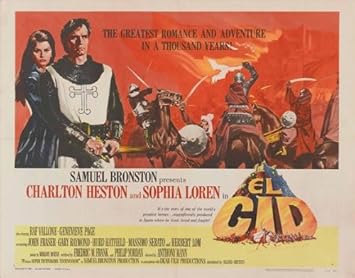
Story #1: In the 1961 historical epic, “El Cid,” Rodrigo Diaz de Vivar, known as “The Lord,” besieges the Spanish city of Valencia, which has been captured by the Moors.
Months have passed. The city’s population is starving and without hope.
Then, one day, El Cid (Charlton Heston) calls out over the city’s walls: “Soldiers and citizens of Valencia We are not your enemy! Ben Yusof [the powerful emir who plans to conquer Spain with an invading army] is your enemy!
“Join us! We bring you peace! We bring you freedom! We bring you bread!”
Suddenly El Cid’s Spanish catapults spring into action—loaded not with stones but loaves of bread. The loaves land in the city’s streets, where starving citizens and soldiers greedily devour them.
Then those citizens attack the bodyguards of the emir ruling Valencia—and throw the emir himself from a high wall.
The army of El Cid marches peacefully into the city.
Story #2: In Book Three, Chapter 22 of his classic masterwork, The Discourses, Niccolo Machiavelli offers the following: “An Act of Humanity Prevailed More With the Falacians Than All the Power of Rome.”
Marcus Furius Camillus, a Roman general, was besieging the city of the Faliscians, and had surrounded it. A teacher charged with the education of the children of some of the noblest families of that city decided to ingratiate himself with Camillus by leading those children into the Roman camp.
Presenting them to Camillus the teacher said to him, “By means of these children as hostages, you will be able to compel the city to surrender.”
Camillus not only declined the offer but went one step further. He ordered the teacher stripped and his hands tied behind his back. Then Camillus had a rod put into the hands of each of the children and directed them to whip the teacher all the way back to the city.
Upon learning this, the citizens of Faliscia were so much touched by the humanity and integrity of Camillus, that they surrendered the place to him without any further defense.
Summing up the meaning of this, Machiavelli writes: “This example shows that an act of humanity and benevolence will at all times have more influence over the minds of men than violence and ferocity. It also proves that provinces and cities which no armies…could conquer, have yielded to an act of humanity, benevolence, chastity or generosity.
“…History also shows us how much the people desire to find such virtues in great men, and how much they are extolled by historians and biographers of princes….Amongst these, Xenophon takes great pains to show how many victories, how much honor and fame, Cyrus gained by his humanity and affability, and by his not having exhibited a single instance of pride, cruelty or luxuriousness, nor of any of the other vices that are apt to stain the lives of men.”
Niccolo Machiavelli
These stories—the first the product of a movie screenwriter’s imagination, the second recorded by a master political scientist and historian—remain highly relevant today.
On May 25, 2020, George Floyd, a black unemployed restaurant security guard, was murdered by Derek Chauvin, a white Minneapolis police officer. While Floyd was handcuffed and lying face down on a city street during an arrest, Chauvin kept his knee on the right side of Floyd’s neck for eight minutes and 46 seconds.
Cities across the United States erupted in mass protests over Floyd’s death—and police killings of black victims generally. Most of these demonstrations proved peaceful.
But cities such as Los Angeles, San Francisco and New York City saw stores looted, vandalized and/or burned. In response, President Donald Trump called for harsh policing, telling governors in a nationwide conference call that they must “dominate” protesters or be seen as “weak.”
To drive home his point, Trump ordered police and National Guard troops to violently remove peaceful protesters from Lafayette Square, which borders St. John’s Church near the White House.
The purpose of the removal: To allow Trump to have a photo opportunity outside the church.
“I imposed a curfew at 7pm,” tweeted Washington, D.C. Mayor Muriel Bowser. “A full 25 minutes before the curfew & w/o provocation, federal police used munitions on peaceful protestors in front of the White House, an act that will make the job of @DCPoliceDept officers more difficult. Shameful!”
Contrast that with the example of Sheriff Christopher Swanson of Genesee County, Michigan.
Sheriff Christopher Swanson
Confronting a mass of aroused demonstrators in Flint Township on May 30, Swanson responded: “We want to be with you all for real.”
So Swanson took his helmet off. His deputies laid their batons down.
“I want to make this a parade, not a protest. So, you tell us what you need to do.”
“Walk with us!” the protesters shouted.
“Let’s walk, let’s walk,” said Swanson.
Cheering and applause resounded.
“Let’s go, let’s go,” Swanson said as he and the cheering crowd proceeded. “Where do you want to walk? We’ll walk all night.”
And Swanson and his fellow officers walked in sympathy with the protesters.
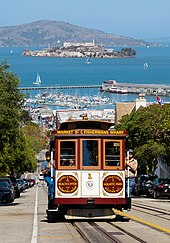
San Francisco has long been one of the most-loved cities in the United States.
Millions of tourists—from both other parts of the United States as well as around the world—visit this city every year to ride its famous cable cars and dine in its magnificent restaurants.
To visit the ruins of its infamous prison, Alcatraz, eat Ghiradelli ice cream in Ghiradelli Square and buy souveniers at nearby Fisherman’s Wharf.
But San Francisco today is not the city it has long been renowned for.
Its major tourist spots are deserted. Its sidewalks are largely free of pedestrians. Many of its best-known stores have been shuttered since mid-March—and many of them may never reopen owing to the financial losses they have incurred.
Its world-famous restaurants no longer offer in-house dining—only take-out or home delivery.
Many of its bus routes have been eliminated. With so many people “sheltering-in-place” in their apartments or houses, the passengers that once carried those routes have largely disappeared.
On March 16, the San Francisco Department of Public Health imposed a shelter-in-place order on city residents. This required them to stay home except for essential needs such as shopping for groceries, getting medications, caring for others and exercising.
The goal of the order: To halt—or at least diminish—the spread of COVID-19.
Coronavirus
The order banned activities considered non-essential: Going to bars, barbers and dinner parties.
Many restaurants offer their fare via Grubhub, Doordash, Caviar or Uber Eats. Some restaurants—notably pizza parlors—use their own employees to deliver food.
This, in turn, demands that potential customers have not only a computer but Internet access. It also demands that they be willing to pay a higher price for food than would be the case if they could dine in.
Another drawback: Choosing what items to order from many restaurants is like choosing what to order in the military: You either accept what they offer—or you do without. Forget about substitutions or additions.
Outdoor exercise is allowed, but gyms are closed.
Some businesses were deemed essential. Among these: Grocery stores, hardware stores, hospitals, drugstores, laundromats, funeral parlors, gas stations, airlines, taxis, rental car companies, childcare facilities, rideshare services.
The effect of the shutdown order on businesses has been devastating.
Walk along Market Street—the city’s best-known site for marches and storefronts—and you’ll find store after store not only closed but boarded up. The same for Powell Street, a major tourist magnet.
The city’s internationally famous cable car lines have all been shut down. With “social distancing” the new Golden Rule, cramming people onto small cable cars is no longer an option.
Taxis are still available—but cab drivers have found business difficult to come by, with so many people staying indoors.
The order allowed most marijuana dispensaries to remain open. Bookstores, on the other hand, were ordered closed—and remain so more than two months later.
So businesses selling toxic “medical marijuana” are considered essential. But if you want to buy a copy of Moby Dick at your local bookstore, you’ll have to do it online.
Many businesses started boarding up in April. The reason: Fears that Coronavirus-inspired shortages of items like toilet paper, meat and hand sanitizer might lead to wholesale looting.
Then, on May 25, as if facing a deadly pandemic wasn’t enough of a threat, a new and unexpected reason for fear emerged: The killing of George Floyd, a former black security guard, in Minneapolis, Minnesota.
While Floyd was handcuffed and lying face down on a city street during an arrest, Derek Chauvin, a white Minneapolis police officer, kept his knee on the right side of Floyd’s neck for eight minutes and 46 seconds.
The death of George Floyd
Across the nation, cities were convulsed by protests—including those in the San Francisco Bay Area. Among these: Oakland, San Jose, Emeryville, Walnut Creek and San Francisco itself.
On May 30, an initially peaceful protest march exploded into looting shortly before 9 p.m. as looters broke off and began smashing shop windows and ransacking stores in Union Square and on Market Street.
Among stores looted: A Sak’s Off Fifth Avenue, Old Navy clothing store, a Cartier Boutique, a Coach store. Looters especially targeted CVS and Walgreens drugstores. Liquor stores and a BevMo were also hit.
“Thirty businesses were looted or destroyed,” said David Perry, from Union Square Business Improvement District. A total of 33 arrests were made for “criminal activity.”
That night, San Francisco Mayor London Breed announced that she would impose a citywide curfew beginning May 31, running from 8:00 p.m to 5 a.m.
On the night of May 31, 87 people were arrested for violating the city’s curfew.
Left unstated by city authorities—within San Francisco and across the nation—was this: With so many people massing in streets, many of them unmasked, would this spread COVID-19 even further?
Northern California—and San Francisco in particular—have closely cooperated with “stay-at-home” orders. As a result, COVID-19 cases have remained relatively stable in those areas.
But the street demonstrations may well reverse the results of those months of self-discipline. The truth will be known only weeks from now.
Want to play a new game? Come to San Francisco and play “Count the Stupids.”
Just walk down any major street during a pandemic that’s killed more than 100,000 Americans and count:
The people who refuse to wear face masks;
The people wearing face masks below their noses;
The people wearing face masks around their necks like bandannas.
On some days—depending on how far you walk—you might spot 10 to 60 or more such people.
Those who wear masks below their nose negate the purpose of wearing a mask. If they have COVID-19 and sneeze on someone else who’s not wearing a mask, that person is going to be stricken. And if someone who’s also not wearing a mask sneezes or coughs on them,they will be infected.
Face masks
Many of those wearing masks as bandannas are smoking. Clearly they value getting their intake of cancer as more important than protecting themselves against a deadly virus. Many mask-less men sport heavy beards—which would make a mask impossible to seal properly.
And as for complying with social distancing requirements that put at least six feet between people: Countless people casually pass others only inches away without any apparent concern—for their own safety or that of others.
On May 28, San Francisco Mayor London Breed announced that a new policy would take effect the next day:
San Francisco will enforce the wearing of masks or face coverings when people leave their home and are within 30 feet of anyone that doesn’t live in their household.
That includes when you’re waiting in line to go into a store and when you’re inside shopping. A mask or face covering will not be needed when:
You’re in a car by yourself;
You’re with people you live with;
You’re picnicking with members of your own household and are more than six feet from other groups;
You’re walking, hiking, running or biking alone or with people you live with.
Even then, you should still have a mask or face covering on hand.
Of course, that will require police to enforce the new ordinance. This in a city where police have refused to crack down on “homeless” encampments—and their piles of feces, hypodermic needles and trash.
For all the kudos offered city residents by Mayor Breed for complying with social distancing, the blunt truth remains that many of them do not. And the fact that Breed felt forced to legally require citizens to wear face masks is a telling point in its own right.
But to return to life in San Francisco in the Age of COVID-19:
Civic Center—which lies directly across from City Hall—might better be renamed COVID-19 Center. Once it housed farmers markets and offered easy access to the Civic Center BART (Bay Area Rapid Transit) station.
Today it is fenced off and serves as shelter for countless “homeless” tents—and all the drugs, trash, alcohol, feces and hypodermic needles that come with this population.
Tent “city” in San Francisco
Of course, Civic Center isn’t the only place in San Francisco where you’ll find huge tents occupied by DDMB’s—Druggies, Drunks, Mentally Ill and Bums.
Walk down almost any major sidewalk and odds are you’ll find your path blocked by one or more huge tents able to house two to four people.
If you’re in a wheelchair or elderly or on crutches, you’ll likely be forced to step into the street or cross the street to continue your journey.
If you call the police on your cell phone, expecting them to remove the tents, you’re in for a big surprise. In bum-loving San Francisco, that sort of action is no longer handled by police.
Instead, they’ll refer you to a “help-the-homeless” agency that specializes in defending the rights of DDMBs over those of law-abiding, tax-paying San Francisco residents.
The “homeless problem” has become so outrageous in San Francisco that Hastings College of the Law—one of the foremost law schools in the nation—recently filed a lawsuit against the city “to end dangerous and illegal conditions in the Tenderloin neighborhood.”
Among its goals: To compel the City
To clear sidewalks to allow unfettered safe passage for neighborhood residents and workers; and
To provide healthy and safe solutions for “homeless” people who now use sidewalk encampments as their residence.
And when it comes to public transit: Forget about using the underground stations of the Municipal Railway (MUNI) bus system. Those have been closed since March—allegedly to protect riders and drivers from COVID-19.
MUNI, which serves only San Francisco, has 4,800 employees and an annual budget of $1.28 billion.
The Bay Area Rapid Transit (BART) system serves 33 cities and has an annual budget of $2.3 billion.
Yet BART, which uses many of the same stations is still providing railway service throughout northern California.
MUNI refuses to say why BART has managed to provide service for its passengers—while MUNI has made transit far more complex and time-consuming for its own.
From October 10 to 12, 2019, attendees of the American Priority Conference at the Trump National Doral Miami resort got a treat that was supposed to be kept secret.
They got to watch a series of Right-wing videos featuring graphic acts of violence against those President Donald Trump hates. One of these, “The Trumpsman,” featured a digitized Trump shooting, stabbing and setting fire to such liberals as:
Former President Bill Clinton
Former Vice President Joe Biden
Former Democratic Presidential candidate Hillary Clinton
Democratic Speaker of the House Nancy Pelosi
Former President Barack Obama
Vermont United States Senator Bernie Sanders
Even Republicans who have dared to disagree with Trump—such as Utah Senator Mitt Romney and the late Arizona Senator John McCain—met a brutal end.
Legitimate news media—such as CBS, BBC, ABC, CNN, The New York Times and The Washington Post—were also depicted as among Trump’s victims.
The New York Times broke the news of the video’s showing. Since then, the American Priority Conference has rushed to disavow it—and the firestorm of outrage it set off.
So has the Trump White House.
And America’s major news media have demanded that Trump strongly condemn the video.
If Donald Trump had a history of truthfulness and humanity, his denouncing the video would prove highly believable. But he has neither.
He is a serial liar—TheWashington Post noted on August 12, 2019 that, since taking office on January 20, 2017, Trump had made more than 12,000 false or misleading claims.
As for his reputation as a humanitarian:
As a Presidential candidate, Trump repeatedly used Twitter to attack hundreds of real and imagined enemies in politics, journalism, TV and films.
From June 15, 2015, when he launched his Presidential campaign, until October 24, 2016, Trump fired almost 4,000 angry, insulting tweets at 281 people and institutions that had somehow offended him.
And he has continued to do so. Since taking office on January 20, 2017, Trump had insulted hundreds of people (including private citizens), places, and institutions on Twitter, ranging from politicians to journalists and news outlets to entire countries.
Donald Trump
Summing up Trump’s legacy of hatred, longtime Republican Presidential adviser David Gergen said:
“Trump unleashed the dogs of hatred in this country from the day he declared he was running for president, and they’ve been snarling and barking at each other ever since. It’s just inevitable there are going to be acts of violence that grow out of that.”
So any Trump statement claiming that he strongly condemns the video should rightly be discounted as mere propaganda.
The video was first uploaded on YouTube in 2018 by a account named TheGeekzTeam. The GeekzTeam is a frequent contributor to MemeWorld, a pro-Trump website. Its creator was prominent Twitter user Carpe Donktum.
MemeWorld, embarrassed that its Right-wing porn has become a national scandal, now claims:
“The Kingsman video is CLEARLY satirical and the violence depicted is metaphoric. No reasonable person would believe that this video was a call to action or an endorsement of violence towards the media. The only person that could potentially be ‘incited’ by this video is Donald Trump himself, as the main character of the video is him. THERE IS NO CALL TO ACTION.”
Of course, that was not how the Right reacted in 2017 when comedian Kathy Griffin posed for a photograph holding up what was meant to look like Trump’s bloody, severed head.
A furious Right-wing backlash cost her gigs as a comedian and made her the target of a Secret Service investigation into whether she was a credible threat. She even had to buy metal detectors to post at her appearances at comedy clubs: “There were all kinds of incidents. A guy came at me with a knife in Houston.”
Cindy McCain, widow of Senator John McCain, wasn’t buying the Right’s disavowals, tweeting: “Reports describing a violent video played at a Trump Campaign event in which images of reporters & @John McCain are being slain by Pres Trump violate every norm our society expects from its leaders & the institutions that bare their names. I stand w/ @whca in registering my outrage”.
Nor was Democratic Presidential candidate Beto O’Rourke: “This video isn’t funny. It will get people killed.”
* * * * *
The video was produced by Rightists who believed it reflected what Donald Trump would do to his enemies if only he could get away with it. And given his near-constant calls for violence against his critics, they were absolutely correct.
But the video’s critics are wrong to call for its suppression.
On the contrary—it should be seen for what it is: The Mein Kampf of Donald Trump and his fanatical followers, in and outside the Republican party.
Like Adolf Hitler’s autobiography, it depicts the future America can expect if the Right gains the power to live out its murderous fantasies.
And the fantasy Right-wingers prize most: The brutal extermination of everyone who refuses to submit to their Fascistic tyranny.
The hour is late and the clock is ticking as the Right conspires to give Trump this power as “President-for-Life.”
It now remains to be seen if enough Americans are willing to stand fast against the brutal intentions of these specialists in evil.
Steffen White’s Email: Sparta480@aol.com Former reporter, legal investigator and troubleshooter. Columnist at Bureaucracybuster.com. Fighting political and bureaucratic arrogance, incompetence and/or indifference.
When making complaints in writing, carefully review your email or letter before sending it. Remove any words that are vulgar or profane. Don't make sweeping accusations: "Your agency is a waste."
Don't attribute motives to people you've had problems with, such as: "The postal clerk refused to help me because he's a drunk." If the person actually appeared to be drunk, then be precise in your description: "As he leaned over the counter I could smell beer on his breath. Behind him, in a waste basket, I saw an empty bottle of Coors beer."
Show how the failure of the official to address your problem reflects badly on the company or agency: "This is not the level of service your ads would lead potential customers to expect."
If necessary, note any regulatory agencies that can make life rough for the company or agency if your complaint isn't resolved. For the phone company, for example, cite the FCC or the PUC. But do this only after you have stated you hope your complaint can be settled amicably and privately within the company.





 Bureaucracybuster's Blog
"TOMBSTONE", ABC NEWS, AFFORDABLE CARE ACT, ALTERNET, AMERICABLOG, AP, ARNOLD SCHWARTZNEGGER, ASIANS, “BIRTHER” CAMPAIGN, BABY BOOMER RESISTANCE, BARACK OBAMA, BLACKS, BLOOMBERG, BOY SCOUT JAMBOREE, BUZZFEED, CBS NEWS, CNN, CROOKS AND LIARS, DAILY KOZ, DISABLED, DONALD TRUMP, DRUDGE RETORT, FACEBOOK, FBI, FIVETHIRTYEIGHT, HARPER’S MAGAZINE, HILLARY CLINTON, HISPANICS, IKE CLANTON, JEFF SESSIONS, JOHN H. "DOC" HOLLIDAY, JOHN OLIVER, JOHNNY RINGO, JUSTICE DEPARTMENT, MEDIA MATTERS, MERYL STREEP, MORGAN EARP, MOTHER JONES, MOVEON, MSNBC, MUSLIMS, NBC NEWS, NEIL YOUNG, NEWSWEEK, NPR, OBAMACARE, PBS NEWSHOUR, POLITICO, POLITICUSUSA, PRISONERS OF WAR, RAW STORY, REINCE PRIEBUS, REUTERS, ROSIE O’DONNELL, SALON, SEAN SPICER, SEATTLE TIMES, SLATE, TALKING POINTS MEMO, THE ATLANTIC, THE CHICAGO SUN-TIMES, THE CHICAGO TRIBUNE, THE DAILY BEAST, THE DAILY BLOG, THE GUARDIAN, THE HILL, THE HUFFINGTON POST, THE LOS ANGELES TIMES, THE NATION, THE NEW REPUBLIC, THE NEW YORK TIMES, THE POPE, THE VILLAGE VOICE, THE WASHINGTON POST, THINKPROGRESS, TIME, TRUTHDIG, TRUTHOUT, TWITTER, TWO POLITICAL JUNKIES, U.S. NEWS & WORLD REPORT, UP, UPI, USA TODAY, VIRGIL EARP, WOMEN, WONKETTE, WYATT EARP
AMERICA’S HATER-IN-CHIEF
In Bureaucracy, History, MOVIES, Politics, Social commentary on June 12, 2020 at 12:07 amAs both a Presidential candidate and President, Donald Trump has repeatedly used Twitter to attack hundreds of real and imagined enemies in politics, journalism, TV and films.
From June 15, 2015, when he launched his Presidential campaign, until October 24, 2016, Trump fired almost 4,000 angry, insulting tweets at 281 people and institutions that had somehow offended him.
Donald Trump
The New York Times needed two full pages of its print edition to showcase them.
Among his targets:
Others he clearly delighted in insulting during the campaign included:
As a Presidential candidate and President, he has shown outright hatred for President Barack Obama. For five years, he slandered Obama as a Kenyan-born alien who had no right to hold the Presidency.
Barack Obama
Only on the eve of the first Presidential debate with Hillary Clinton—in September, 2016—did he finally admit that Obama had been born in the United States after all.
Then, on March 4, 2017, in a series of unhinged tweets, Trump accused Obama of illegally tapping his Trump Tower phones prior to the election:
“Terrible! Just found out that Obama had my ‘wires tapped’ in Trump Tower just before the victory. Nothing found. This is McCarthyism!”
Thus, without offering a shred of evidence to back it up, Trump accused his predecessor of committing an impeachable offense.
Both the FBI and Justice Department vigorously refuted this slander.
Trump’s all-out effort to destroy the Affordable Care Act—nicknamed “Obamacare”—has been driven by his mania to erase every vestige of the Obama Presidency.
Even attending a Boy Scout jamboree became, for Trump, a way to attack the former President.
“By the way, just a question. Did President Obama ever come to a jamboree?” Trump asked the crowd of 40,000, encouraging them to boo Obama. And many of them did.
As President, he has bullied and insulted even his own handpicked Cabinet officers and White House officials.
**********
Americans have watched Trump’s behavior with morbid fascination, many of them asking: “What makes him do the things he does?”
It’s a question asked—and answered—in the 1993 Western, Tombstone. And the answer given in that movie may just hold the key to the question so many Americans are now asking about Trump.
Tombstone recounts the legendary blood feud between the Ike Clanton outlaw gang and the Earp brothers—Wyatt, Morgan and Virgil—in the famous gold-mining town in 1880s Arizona.
Wyatt Earp has been challenged to a gunfight by quick-trigger gunman Johnny Ringo. Although he impulsively accepted the challenge, Wyatt now realizes he’s certain to be killed. Then follows this exchange with his longtime friend, the pistol-packing dentist, John H. “Doc” Holliday:
WYATT EARP: What makes a man like Ringo, Doc? What makes him do the things he does?
JOHN H. “DOC” HOLLIDAY: A man like Ringo….got a great empty hole right through the middle of him. He can never kill enough or steal enough….or inflict enough pain to ever fill it.
EARP: What does he need?
HOLLIDAY: Revenge.
EARP: For what?
HOLLIDAY: Bein’ born.
Donald Trump was born into a world of wealth and privilege. His father gave him $200 million, which he channeled into a real estate empire. He has claimed to be worth a billion dollars.
He has been linked—often by his own boasts—to some of the most beautiful women in the world. He has been a major force on TV through his “reality show,” The Apprentice. He has literally stamped his name on hundreds of buildings.
And now he holds the Presidency of the United States, the most powerful office in the Western world.
Yet he remains filled with a poisonous hatred that encompasses almost everyone. Since taking office, he has offered nothing positive in his agenda.
Instead, he has focused his efforts on what he can take from others. At the top of his list: The Affordable Health Act, which provides access to medical care for millions who previously could not obtain it.
As first-mate Starbuck says of Captain Ahab in Herman Melville’s classic novel, Moby Dick: “He is a champion of darkness.”
Share this: