Posts Tagged ‘TEXAS’
ABC NEWS, ALAMO, ALTERNET, AMERICABLOG, ANDREW JACKSON, ANTONIO LOPEZ DE SANTA ANNA, AP, BABY BOOMER RESISTANCE, BUZZFEED, CBS NEWS, CNN, CROOKS AND LIARS, DAILY KOZ, DAVID CROCKETT, DRUDGE RETORT, FACEBOOK, FIVETHIRTYEIGHT, HARPER’S MAGAZINE, JAMES BOWIE, MEDIA MATTERS, MEXICO, MOTHER JONES, MOVEON, MSNBC, NBC NEWS, NEWSWEEK, NPR, PBS NEWSHOUR, POLITICO, POLITICUSUSA, RAW STORY, REUTERS, SALON, SAM HOUSTON, SAN ANTONIO, SEATTLE TIMES, SLATE, STEPHEN F. AUSTIN, TALKING POINTS MEMO, TEXAS, TEXAS DECLARATION OF INDEPENDENCE, TEXAS REVOLUTION, THE ATLANTIC, THE CHICAGO SUN-TIMES, THE CHICAGO TRIBUNE, THE DAILY BEAST, THE DAILY BLOG, THE GUARDIAN, THE HILL, THE HUFFINGTON POST, THE LOS ANGELES TIMES, THE NATION, THE NEW REPUBLIC, THE NEW YORK TIMES, THE VILLAGE VOICE, THE WASHINGTON POST, THERMOPYLAE, THINKPROGRESS, THREE HUNDRED SPARTANS, TIME, TRUTHDIG, TRUTHOUT, TWITTER, TWO POLITICAL JUNKIES, U.S. NEWS & WORLD REPORT, UPI, USA TODAY, WILLIAM BARRET TRAVIS, WONKETTE
In History, Law Enforcement, Politics, Social commentary on March 5, 2020 at 12:26 am
Friday, March 6, 2020, marks the 184h anniversary of the most famous event in Texas history: The fall of the Alamo, a crumbling former Spanish mission in the heart of San Antonio.
After a 12-day siege, 180 to 250 Texans were overwhelmed by 2,000 Mexican soldiers.
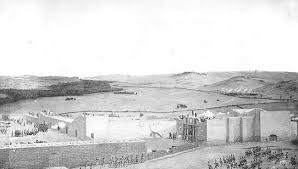
Mexican troops advancing on the Alamo
Americans “remember the Alamo”–but usually for the wrong reasons.
Some historians believe the battle should have never been fought.
The Alamo was not Thermopylae—a narrow mountain pass blocking the Persian march into ancient Greece. Santa Anna could have simply bypassed it.
In fact, several of Santa Anna’s generals urged the Mexican dictator to do just that—leave a small guard to hold down the fort’s defenders and wipe out the undefended, widely-separated Texas settlements.
But pride held Santa Anna fast to the Alamo. His brother-in-law, General Perfecto de Cos, had been forced to surrender the old mission to revolting Texans in December, 1835.
Santa Anna meant to redeem the fort—and his family honor—by force.
In virtually every Alamo movie, its two co-commanders, James Bowie and William Barret Travis, are portrayed as on the verge of all-out war—with each other.
In John Wayne’s heavily fictionalized 1960 film, The Alamo, Bowie and Travis agree to fight a duel as soon as they’ve whipped the Mexicans besieging them.

James Bowie

William B. Travis
In fact, the frictions between the two lasted only a short while. Just before the siege, some of Bowie’s volunteers—a far larger group than Travis’ regulars—got drunk.
Travis ordered them jailed—and Bowie ordered his men to release them. Bowie then went on a roaring drunk. The next day, a sober Bowie apologized to Travis and agreed they should share command.
This proved a wise decision, for just as the siege started, Bowie was felled by worsening illness—typhoid-pneumonia or tuberculosis.
In almost every Alamo movie, Bowie repeatedly leaves the fort to ambush unsuspecting Mexicans.
In reality, he stayed bed-ridden and lay close to death throughout the 13-day siege.
The Texans intended to make a suicidal stand.
False.
From the first day of the siege-–February 23, almost to the last, March 6, 1836—messengers rode out of the Alamo seeking help. The defenders believed that if they could cram enough men into the three-acre former mission, they could hold Santa Anna at bay.
No reinforcements reached the Alamo.
False. On March 1, 32 men from Gonzalez—the only ones to answer Travis’ call—sneaked through the Mexican lines to enter the Alamo.
Meanwhile, the largest Texan force lay at Fort Deviance in Goliad, 85 miles away. This consisted of 500 men commanded by James Walker Fannin, a West Point dropout.
Fannin was better-suited for the role of Hamlet than military commander.
Upon receiving a plea of help from Travis, he set out in a halfhearted attempt to reach the mission. But when a supply wagon broke down, he returned to Fort Defiance and sat out the rest of the siege.
When the Mexican army approached Fort Defiance, Fannin and 400 of his men panicked and fled into the desert. They were surrounded, forced to surrender, and massacred on March 27
The Alamo garrison was fully prepared to confront the Mexican army.
False. When the Mexicans suddenly arrived in San Antonio on the morning of February 23, 1836, they caught the Texans completely by surprise.
The previous night, they had been celebrating the birthday of George Washington. The Texans rushed headlong into the Alamo, hauling all the supplies they could hastily scrounge.
Santa Anna sent a courier under a flag of truce to the Alamo, demanding unconditional surrender. In effect, the Texans were being given the choice of later execution.
Travis replied with a shot from the fort’s biggest cannon, the 18-pounder (so named for the weight of its cannonball).
Santa Anna ordered the hoisting of a blood-red flag and the opening of an artillery salvo. The siege of the Alamo was on.
San Houston, who was elected general of the non-existent army of Texas, desperately tried to relieve the siege.
False.
At Washington-on-the-Brazos, 169 miles east of San Antonio, Texan delegates assembled to form a new government. When news reached the delegates that Travis desperately needed reinforcements, many of them wanted to rush to his defense.
But Houston and others declared they must first declare Texas’ independence. On March 2, 1836, they did just that. Houston spent a good deal of the time drunk.

Did Travis draw a line?
Easily the most famous Alamo story is that of “the line in the sand.”
On the night of March 5—just prior to the final assault—there was a lull in the near-constant Mexican bombardment. Travis assembled his men and gave them a choice:
They could try to surrender and hope that Santa Anna would be merciful. They could try to escape. Or they could stay and fight.
With his sword, Travis drew a line in the dirt and invited those who would stay to cross over to him.
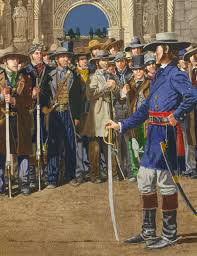
The entire garrison did—except for two men.
One of these was bed-ridden James Bowie. He asked that his sick-bed be carried over to Travis. The other was a veteran of the Napoleonic wars–Louis Rose.
ABC NEWS, ALAMO, ALTERNET, AMERICABLOG, ANDREW JACKSON, ANTONIO LOPEZ DE SANTA ANNA, AP, BABY BOOMER RESISTANCE, BUZZFEED, CBS NEWS, CNN, CROOKS AND LIARS, DAILY KOZ, DAVID CROCKETT, DRUDGE RETORT, FACEBOOK, FIVETHIRTYEIGHT, HARPER’S MAGAZINE, JAMES BOWIE, MEDIA MATTERS, MEXICO, MOTHER JONES, MOVEON, MSNBC, NBC NEWS, NEWSWEEK, NPR, PBS NEWSHOUR, POLITICO, POLITICUSUSA, RAW STORY, REUTERS, SALON, SAM HOUSTON, SAN ANTONIO, SEATTLE TIMES, SLATE, STEPHEN F. AUSTIN, TALKING POINTS MEMO, TEXAS, TEXAS DECLARATION OF INDEPENDENCE, TEXAS REVOLUTION, THE ATLANTIC, THE CHICAGO SUN-TIMES, THE CHICAGO TRIBUNE, THE DAILY BEAST, THE DAILY BLOG, THE GUARDIAN, THE HILL, THE HUFFINGTON POST, THE LOS ANGELES TIMES, THE NATION, THE NEW REPUBLIC, THE NEW YORK TIMES, THE VILLAGE VOICE, THE WASHINGTON POST, THERMOPYLAE, THINKPROGRESS, THREE HUNDRED SPARTANS, TIME, TRUTHDIG, TRUTHOUT, TWITTER, TWO POLITICAL JUNKIES, U.S. NEWS & WORLD REPORT, UPI, USA TODAY, WILLIAM BARRET TRAVIS, WONKETTE
In History, Military, Politics, Social commentary on March 4, 2020 at 12:22 am
On March 2, 1836–184 years ago this year—Texas formally declared its independence from Mexico, of which it was then a province.-
Sixty-one delegates took part in the convention held at Washington-on-the-Brazos.
Their signed statement proclaimed that the Mexican government had “ceased to protect the lives, liberty, and property of the people, from whom its legitimate powers are derived.”
Meanwhile, 169 miles away, the siege of the Alamo–a crumbling former Spanish mission in the heart of San Antonio–had entered its ninth day. The Alamo.
The mission that became a fortress. The fortress that has since become a shrine.

By Daniel Schwen – Own work, CC BY-SA 4.0
The Alamo Chapel
The combatants: 180 to 250 Texans (or “Texians,” as many of them preferred to be called) vs. 2,000 Mexican soldiers.
On the Texan side three names predominate: David Crockett, James Bowie and William Barret Travis. “The Holy Trinity,” as some historians ironically refer to them.
Crockett, at 49, was the most famous man in the Alamo. He had been a bear hunter, Indian fighter and Congressman. Rare among the men of his time, he sympathized with the Indian tribes he had helped subdue in the War of 1812.
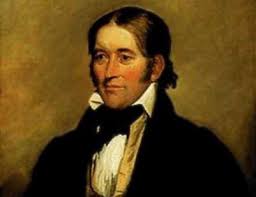
David Crockett
He believed Congress should honor the treaties made with the former hostiles and opposed President Andrew Jackson’s effort to move the tribes further West.Largely because of this, his constituents turned him out of office in November, 1835. He told them they could go to hell; he would go to Texas.
James Bowie, at 40, had been a slave trader with pirate Jean Lafitte and a land swindler. But his claim to fame lay in his skill as a knife-fighter.
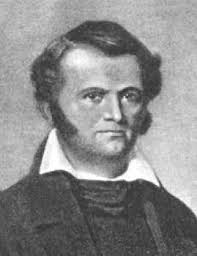
James Bowie
This grew out of his participating in an 1827 duel on a sandbar in Natchez, Mississippi. Bowie was acting as a second to one of the duelists who had arranged the event.
After the two duelists exchanged pistol shots without injury, they called it a draw. But those who had come as their seconds had scores to settle among themselves–and decided to do so. A bloody melee erupted.
Bowie was shot in the hip and then impaled on a sword cane wielded by Major Norris Wright, a longtime enemy. Drawing a large butcher knife he wore at his belt, he gutted Wright, who died instantly.
The brawl became famous as the Sandbar Fight, and cemented Bowie’s reputation across the South as a deadly knife fighter.
William Barret Travis had been an attorney and militia member. Burdened by debts and pursued by creditors, he fled Alabama in 1831 to start over in Texas. Behind him he left a wife, son, and unborn daughter.
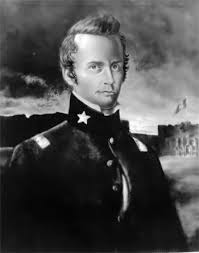
William Barret Travis
From the first, Travis burned to free Texas from Mexico and see it become a part of the United States.
In January, 1836, he was sent by the American provisional governor of Texas to San Antonio, to fortify the Alamo. He arrived there with a small party of regular soldiers and the title of lieutenant colonel in the state militia.
On the Mexican side, only one name matters: Antonio Lopez de Santa Anna, president (i.e., absolute dictator) of Mexico. After backing first one general and would-be “president” after another, Santa Anna maneuvered himself into the office in 1833.
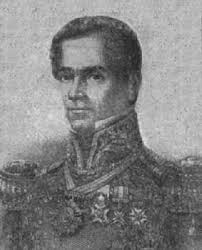
Antonio Lopez de Santa Anna
Texas was then legally a part of Mexico. Stephen F. Austin, “the father of Texas,” had received a grant from Spain—which ruled Mexico until 1821–to bring in 300 American families to settle there.
The Spaniards wanted to establish a buffer between themselves and warring Indian tribes like the Comanches. This immigration continued after Mexico threw off Spanish rule and obtained its independence.
But as Americans kept flooding into Texas, the character of its population changed, alarming its Mexican rulers.
The new arrivals did not see themselves as Mexican citizens but as transplanted Americans. They were largely Protestant, as opposed to the Catholic Mexicans. And many of them not only owned slaves but demanded the expansion of slavery—a practice illegal under Mexican law.
In October, 1835, fighting erupted between American settlers and Mexican soldiers.
In November, Mexican forces took shelter in the Alamo, which had been built in 1718 as a mission to convert Indians to Christianity. Since then it had been used as a fort—by Spanish and then Mexican troops.
Texans lay siege to the Alamo from October 16 to December 10, 1835. With his men exhausted, and facing certain defeat, General Perfecto de Cos, Santa Anna’s brother-in-law, surrendered. He gave his word to leave Texas and never take up arms again against its settlers.
Most Texans rejoiced. They believed they had won their “war” against Mexico. But others knew better.
One was Bowie. Another was Sam Houston, a former Indian fighter, Congressman and protégé of Andrew Jackson.
Still another was Santa Anna, who styled himself “The Napoleon of the West.” In January, 1836, he set out from Mexico City at the head of an army totaling about 7,000.
He planned the 18th century version of a blitzkrieg, intending to arrive in Texas and take its “rebellious foreigners” by surprise.
His forced march proved costly in lives, but met his objective. He arrived in San Antonio with several hundred soldiers on February 23, 1836.
The siege of the Alamo—the most famous event in Texas history—was about to begin.
ABC NEWS, ALAMO, ALIEN-SMUGGLING RINGS, ALTERNET, AMNEXTY INTERNATIONAL, ANTONIO LOPEZ DE SANTA ANNA, AP, ARIZONA, BUZZFEED, CALIFORNIA, CBS NEWS, CNN, COLORADO, CROOKS AND LIARS, DAILY KOZ, DAVID CROCKETT, DONALD TRUMP, FACEBOOK, GOLIAD MASSACRE, illegal immigration, IMMIGRATIONS AND CUSTOMS ENFORCEMENT (ICE), JAMES BOWIE, JEFF SESSIONS, MEXICAN WAR, MEXICO CITY, MOSES AUSTIN, MOTHER JONES, MOVEON, MSNBC, NBC NEWS, NEVADA, NEW MEXICO, NEWSWEEK, NPR, POLITICO, RAW STORY, REUTERS, SALON, SAM HOUSTON, SAN JACINTO, SEATTLE TIMES, SLATE, SLAVERY, STEPHEN AUSTIN, TEXAS, THE ATLANTIC, THE CHICAGO SUN-TIMES, THE CHICAGO TRIBUNE, THE DAILY BEAST, THE GUARDIAN, THE HILL, THE HUFFINGTON POST, THE LOS ANGELES TIMES, THE NATION, THE NEW YORK TIMES, THE WASHINGTON POST, THOMAS HOMAN, TIME, TWITTER, U.S. NEWS & WORLD REPORT, UNITED STATES DEPARTMENT OF JUSTICE, UNITED STATES HEALTH AND HUMAN SERVICES DEPARTMENT, UPI, USA TODAY, USA TODAY MEXICO, UTAH
In Bureaucracy, History, Law, Law Enforcement, Military, Politics, Social commentary on May 30, 2018 at 12:09 am
On May 8, 2018, United States Attorney General Jeff Sessions announced that a “zero-tolerance” policy toward people illegally entering the United States might separate families while parents are prosecuted.
“We don’t want to separate families, but we don’t want families to come to the border illegally and attempt to enter into this country improperly,” Sessions said. “The parents are subject to prosecution while children may not be. So, if we do our duty and prosecute those cases, then children inevitably for a period of time might be in different conditions.”
Children who are separated from their parents would be put under supervision of the U.S. Health and Human Services Department, Sessions said.
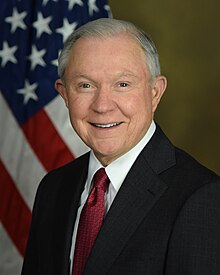
Jeff Sessions
Thomas Homan, U.S. Immigration and Customs Enforcement’s acting director, backed up Sessions’ “get tough” policy change: “Every law enforcement agency in this country separates parents from children when they’re arrested for a crime. There is no new policy. This has always been the policy.”
Since then, that policy has gone into effect. And it has generated widespread outrage by
- Civil liberties organizations; and
- Those who believe the United States should not have—or enforce—its immigration laws.
“Criminalizing and stigmatizing parents who are only trying to keep their children from harm and give them a safe upbringing will cause untold damage to thousands of traumatized families who have already given up everything to flee terrible circumstances in their home countries,” said Erika Guevara-Rosas, Amnesty International’s Americas director.
In fact, alien-smugglers have increasingly used children as a wedge against American immigration laws. Their strategy: “Surely, Americans won’t arrest innocent children—or the adults who bring children with them.“
The Trump administration is proving them wrong.
This is typical behavior for law enforcement agencies: When criminals devise new ways to defeat existing police measures, the police devise new ways to counter those methods.
Meanwhile, those who believe the United States should throw open its doors to everyone who wants to enter are missing—or ignoring—a vital historical lesson.
Ironically, Mexico knows even better than the United States the perils of unchecked illegal immigration.
In 1821, Moses Austin sought a grant from Mexico to settle Texas. After he died in 1821, his son, Stephen, won recognition of the grant by Mexico.
The Mexican government had been unable to persuade large numbers of its own citizens to move to Texas, owing largely to raiding by such fierce Indian tribes as the Comanches.
The government saw the Anglo settlement of Texas as its best hope to tame an otherwise untamable frontier.

Stephen Austin
Austin convinced numerous American settlers to move to Texas, and by 1825 he had brought the first 300 American families into the territory.
Throughout the 1820s, Austin helped ensure the introduction of slavery into Texas, even though, under Mexican law, this was illegal. Tensions developed between unchecked numbers of Anglo settlers flooding into Texas and the Mexican authorities in charge there.
(“GTT”—“Gone to Texas”—was often carved on cabin doors by debt-ridden settlers who decided to seek their fortune in Texas. And some of the most notorious criminals on the frontier—such as land swindler and knife-fighter James Bowie—joined them.)

James Bowie
Eventually, the irresistible force of unlimited Anglo illegal immigration rebelled against the immovable object of Mexican legal/military authority.
The result:
- The battle of the Alamo: From February 23 to March 6, 1836, about 200 rebellious Texans withstood a 13-day siege in a former San Antonio mission, only to be slaughtered to the last man by an army of 2,000 Mexican soldiers commanded by President (actually, dictator) Antonio Lopez de Santa Anna. Among the victims: James Bowie and former Congressman David Crockett.
- The massacre at Goliad: On March 27, 1836, 425-445 Texans captured after the battle of Coleto were shot en masse by Mexican soldiers.
- The battle of San Jacinto: On April 21, 1836, Texans led by General Sam Houston won a surprise Texas victory over Mexican forces who were caught in a mid-afternoon siesta. Santa Anna—who had fled—was captured the next day.
Mexico was forced to give up all rights to Texas—which, nine years after winning its independence, became a state.
But ongoing conflicts between Mexico and the United States over Texas led to the Mexican war in 1846.
This, in turn, led to a series of devastating American victories over the Mexican army, and the capture of Mexico City itself.

Territory (in brown) that Mexico lost after the Mexican War
Mexico suffered the humiliation of both military defeat and the loss of its land holdings within the American Southwest—which, up to 1848, it had controlled.
This territory later became the states of California, New Mexico, Utah, Nevada, Arizona, Texas, and western Colorado.
And the United States finally spread “from sea to shining sea.”
So Mexico knows what it’s doing when it unloads millions of its own citizens—and those of other Latin and Central American countries—on the United States.
Mexico, in short, is a textbook case of what happens to a country that is unable to enforce its own immigration laws.
ABC NEWS, ALTERNET, AP, BUREAUCRACY, BUSINESS REGULATION, BUZZFEED, CBS NEWS, CNN, CONGRESS, CORPORATIONS, CROOKS AND LIARS, DAILY KOZ, DEPARTMENT OF HOMELAND SECURITY, DISASTER RELIEF, FACEBOOK, FEDERAL EMERGENCY MANAGEMENT AGENCY, FERTILIZER PLANT EXPLOSION, HURRICANE SANDY, MOTHER JONES, MOVEON, NBC NEWS, NEWSWEEK, NPR, OCCUPATIONAL SAFETY AND HEALTH ADMINISTRATION (OSHA), POLITICO, RAW STORY, REUTERS, SALON, SEATTLE TIMES, SLATE, TEXAS, THE ATLANTIC, THE CHICAGO SUN-TIMES, THE CHICAGO TRIBUNE, THE DAILY BEAST, THE GUARDIAN, THE HILL, THE HUFFINGTON POST, THE LOS ANGELES TIMES, THE NATION, THE NEW YORK TIMES, THE WASHINGTON POST, TIME, TWITTER, U.S. NEWS & WORLD REPORT, UP, UPI, USA TODAY
In Business, History, Politics, Social commentary on August 30, 2017 at 1:54 am
On August 25, Hurricane Harvey smashed into Texas with torrential rain and winds of 130 mph.
Within three days, thousands of homes were flooded and hundreds had to be rescued from rising flood waters.

Rain-flooded streets in South Texas
And Texas United States Senator Rafael Edward “Ted” Cruz quickly requested full-fledged Federal relief for his state.
But in 2012, Cruz voted three times against federal aid for victims of Hurricane Sandy.
Then he reversed himself in 2013, by seeking “all available resources” for victims of the April 17 explosion at a fertilizer plant in West, McLennan County, Texas.
The blast killed 13 people, wounded about 200 others, and caused extensive damages to surrounding homes.
In October, 2012, Hurricane Sandy had killed about 150 people and caused an estimated $75 billion in damage across the Northeast.
The Republican legislator stood foursquare against the Sandy Aid Relief bill, claiming that it was loaded with “pork”:
“Hurricane Sandy inflicted devastating damage on the East Coast, and Congress appropriately responded with hurricane relief,” said Cruz.
“Unfortunately, cynical politicians in Washington could not resist loading up this relief bill with billions in new spending utterly unrelated to Sandy.
“Emergency relief for the families who are suffering from this natural disaster should not be used as a Christmas tree for billions in unrelated spending, including projects such as Smithsonian repairs, upgrades to National Oceanic and Atmospheric Administration airplanes, and more funding for Head Start.”
Another Republican, Rep. Bill Flores, who represented West, McLennan County, also voted against the Sandy relief package. But this didn’t stop him from requesting federal aid for the disaster in his home district.
U.S. Senator Ted Cruz (R-Texas)
According to PolitiFact, “A big portion of the $17 billion in ‘immediate’ assistance, more than $5 billion, went to replenish FEMA’s disaster relief fund, which may fund relief from future disasters.”
Furthermore, Rick Ungar, writing at Forbes, pointed out that the “pork” came from having to bribe red state Republicans-–including Texas—to get the package passed over their filibuster:
“However, as it turns out, the pork portions of the Senate bill were not earmarked to benefit Democratic members of the upper chamber of Congress….
“The answer can be found in a quick review of the states that are set to benefit from the Senate’s extra-special benevolence—states including Alabama, Mississippi, Texas and Louisiana.” All of these have solid Republican constituencies.
In fact, Texas had the most FEMA-declared disasters since the start of 2009, according to a September 29, 2011 article in iWatch News
“Eleven Republican U.S. senators who represent the states with the most FEMA-declared disasters since the start of 2009 voted against a bill designed to keep the agency’s disaster relief fund from running out of cash.”
“The top two states, Texas and Oklahoma, combined for more than a quarter of the Federal Emergency Management Agency’s declared disasters since Jan. 1, 2009.”
Yet the hypocrisy didn’t end there.
“The nation’s number one resource is its workers,” said Keith Wrightson, safety expert at Public Citizen, a nonprofit consumer advocacy group. “But the agency that’s charged with protecting them is not given the resources to do it. I think it’s worrisome for the nation.”
The West Fertilizer Company facility hadn’t been inspected by the Labor Department’s Occupational Safety and Health Administration (OSHA) since 1985, when the company was fined $30. Why did the facility go for almost 30 years without further inspections from OSHA?
As a small employer, the fertilizer facility may have been exempt from some forms of OSHA scrutiny. Years ago, Congress attached a rider to agency funding that forbids OSHA to perform inspections of workplaces with 10 or fewer employees and whose industries have low injury rates.
Lawmakers reasoned that small businesses shouldn’t have to shoulder the same costs of compliance as larger ones.
But smaller worksites aren’t necessarily less dangerous. According to safety advocates, small companies often have fewer resources to invest in worker safety and, with less government oversight, even less incentive.
On April 20, 2013, the damning news broke in a Reuters story:
“The fertilizer plant that exploded on Wednesday, obliterating part of a small Texas town and killing at least 14 people, had last year been storing 1,350 times the amount of ammonium nitrate that would normally trigger safety oversight by the U.S. Department of Homeland Security (DHS).”
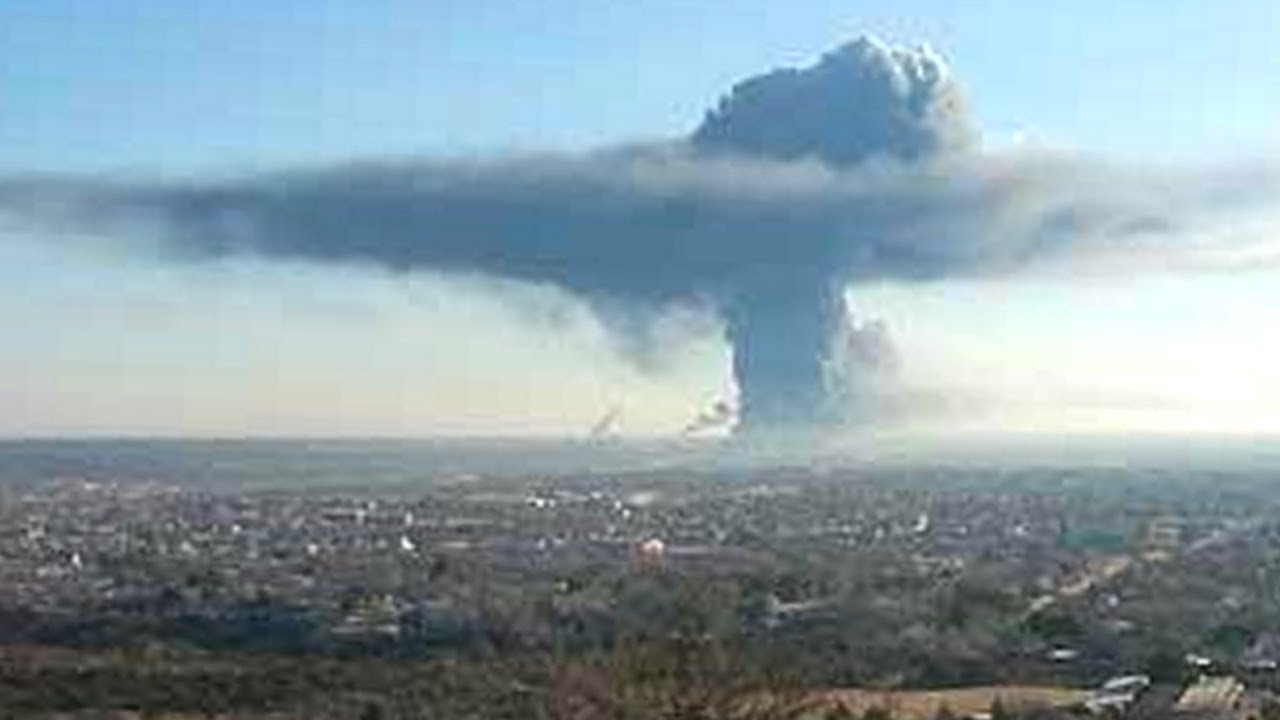
Explosion at a fertilizer plant in West, McLennan County, Texas
According to Reuters, West Fertilizer, the company that owned the plant, did not tell DHS about the potentially explosive fertilizer as it was required to do.
The DHS is a major regulator of ammonium nitrate-–which can also be used in bomb making. Thus, it was left totally unaware of the potential danger posed by the plant..
Fertilizer plants and depots must report to the DHS when they hold 400 lb or more of the substance. Filings this year with the Texas Department of State Health Services, which weren’t shared with DHS, show the plant had 270 tons of it on hand in 2012.
Recently called out for his efforts to deny aid to Hurricane Sandy victims, Cruz replied: “Well, you know, look. There’s time for political sniping later. I think our focus needs to be on this crisis.”
In short, it’s a crisis when it happens in his state, not when it happens elsewhere.
ABC NEWS, ALAMO, ALTERNET, ANTONIO LOPEZ DE SANTA ANNA, AP, BUZZFEED, CBS NEWS, CNN, CROOKS AND LIARS, DAILY KOZ, DAVID CROCKETT, FACEBOOK, JAMES BOWIE, MEXICO, MOTHER JONES, MOVEON, MSNBC, NBC NEWS, NEWSWEEK, NPR, PBS NEWSHOUR, POLITICO, RAW STORY, REUTERS, SALON, SAM HOUSTON, SAN ANTONIO, SEATTLE TIMES, SLATE, SLAVERY, STEPHEN F. AUSTIN, TEXAS, TEXAS DECLARATION OF INDEPENDENCE, TEXAS REVOLUTION, THE ATLANTIC, THE CHICAGO SUN-TIMES, THE CHICAGO TRIBUNE, THE DAILY BEAST, THE GUARDIAN, THE HILL, THE HUFFINGTON POST, THE LOS ANGELES TIMES, THE NATION, THE NEW YORK TIMES, THE WASHINGTON POST, THERMOPYLAE, THREE HUNDRED SPARTANS, TIME, TWITTER, U.S. NEWS & WORLD REPORT, UPI, USA TODAY, WILLIAM BARRET TRAVIS
In Bureaucracy, History, Military, Politics on March 6, 2016 at 12:01 am
On the night before the final Mexican assault, one man escaped the Alamo to testify to the defenders’ courage. Or so goes the most famous story of the 13-day siege.
He was Louis Rose, a veteran of the Napoleonic wars and the dreadful 1812 retreat from Moscow. Unwilling to die in a hopeless battle, he slipped over a wall and sneaked through Mexican siege lines.
At Grimes County, he found shelter at the homestead of Abraham and Mary Ann Zuber. Their son, William, later claimed that his parents told him of Rose’s visit–and his story of Travis’ “line in the sand” speech.
In 1873, he published the tale in the Texas Almanac.
But many historians believe it is a fabrication. The story comes to us third-hand–from Rose to the Zubers to their son. And it was published 37 years after the Alamo fell.
Even if Travis didn’t draw a line in the sand, every member of the garrison, by remaining to stay, had crossed over his own line.
After a 12-day siege, Santa Anna decided to overwhelm the Alamo.
Some of his officers objected. They wanted to wait for bigger siege cannon to arrive–to knock down the Alamo’s three-feet-thick adobe walls. Without shelter, the defenders would be forced to surrender.
But Santa Anna insisted on an all-out assault: “Without blood and tears, there is no glory.”
The first assault came at about 5 a.m. on Sunday, March 6, 1836.
The fort’s riflemen–aided by 14 cannons–repulsed it. And the second assault as well.
But the third assault proved unstoppable. The Alamo covered three acres, and held at most 250 defenders–against 2,000 Mexican soldiers.
When the Mexicans reached the fort, they mounted scaling ladders and poured over the walls.
Travis was one of the first defenders to fall–shot through the forehead after firing a shotgun into the Mexican soldiery below.

Death of William Barrett Travis (waving sword)
Mexicans broke into the room where the ailing James Bowie lay.
In Three Roads to the Alamo, historian William C. Davis writes that Bowie may have been unconscious or delirious. Mistaking him for a coward, the soldiers bayoneted him and blew out his brains.
But some accounts claim that Bowie died fighting–shooting two Mexicans with pistols, then plunging his famous knife into a third before being bayoneted. Nearly every Alamo movie depicts Bowie’s death this way.

James Bowie’s death
As the Mexicans poured into the fort, at least 60 Texans tried to escape over the walls into the surrounding prairie. But they were quickly dispatched by lance-bearing Mexican cavalry.
The death of David Crockett remains highly controversial.
Baby boomers usually opt for the Walt Disney version: Davy swinging “Old Betsy” as Mexicans surround him. Almost every Alamo movie depicts him fighting to the death.

David Crockett’s Death
But Mexican Lieutenant Colonel Jose Enrique de la Pena claimed Crockett was one of seven Texans who surrendered or were captured and brought before Santa Anna after the battle. Santa Anna ordered their immediate execution, and they were hacked to death with sabers.
Only the 2004 remake of The Alamo has dared to depict this version. Although this version is now accepted by most historians, some still believe the de la Pena diary from which it comes is a forgery.
An hour after the battle erupted, it was over.
That afternoon, Santa Anna ordered the bodies of the slain defenders stacked and burned in three pyres.
Contrary to popular belief, some of the garrison survived:
- Joe, a black slave who had belonged to William B. Travis, the Alamo’s commander;
- Susanah Dickinson, the wife of a lieutenant killed in the Alamo, and her baby, Angelina;
- Several Mexican women and their children.
Also contrary to legend, the bravery of the Alamo defenders did not buy time for Texas to raise an army against Santa Anna. This didn’t happen until after the battle.
But their sacrifice proved crucial in securing Texas’ independence:
- The Alamo’s destruction warned those Texans who had not supported the revolution that they had no choice: They must win, die or flee their homes to the safety of the United States.
- It stirred increasing numbers of Americans to enter Texas and enlist in Sam Houston’s growing army.
- Santa Anna’s army was greatly weakened, losing 600 killed and wounded–a casualty rate of 33%.
- The nearly two-week siege bought time for the Texas convention to meet at Washington-on-the-Brazos and declare independence from Mexico.
On April 21, 1836, Santa Anna made a crucial mistake: During his army’s afternoon siesta, he failed to post sentries around his camp.
That afternoon, Sam Houston’s 900-man army struck the 1,400-man Mexican force at San Jacinto. In 18 minutes, the Texans–shouting “Remember the Alamo!”–killed about 700 Mexican soldiers and wounded 200 others.
The next day, a Texas patrol captured Santa Anna–wearing the uniform of a Mexican private. Resisting angry demands to hang the Mexican dictator, Houston forced Santa Anna to surrender control of Texas in return for his life.
The victory at San Jacinto won the independence of Texas. But the 13-day siege and fall of the Alamo remains the most famous and celebrated part of that conflict.
In 480 B.C., 300 Spartans won immortality at Thermopylae, a narrow mountain pass in ancient Greece, by briefly holding back an invading Persian army of thousands.
Although they died to the last man, their sacrifice inspired the rest of Greece to defeat its invaders.
Like Thermopylae, the battle of the Alamo proved both a defeat–and a victory.
ABC NEWS, ALAMO, ALTERNET, ANTONIO LOPEZ DE SANTA ANNA, AP, BUZZFEED, CBS NEWS, CNN, CROOKS AND LIARS, DAILY KOZ, DAVID CROCKETT, FACEBOOK, JAMES BOWIE, MEXICO, MOTHER JONES, MOVEON, MSNBC, NBC NEWS, NEWSWEEK, NPR, PBS NEWSHOUR, POLITICO, RAW STORY, REUTERS, SALON, SAM HOUSTON, SAN ANTONIO, SEATTLE TIMES, SLATE, SLAVERY, STEPHEN F. AUSTIN, TEXAS, TEXAS DECLARATION OF INDEPENDENCE, TEXAS REVOLUTION, THE ATLANTIC, THE CHICAGO SUN-TIMES, THE CHICAGO TRIBUNE, THE DAILY BEAST, THE GUARDIAN, THE HILL, THE HUFFINGTON POST, THE LOS ANGELES TIMES, THE NATION, THE NEW YORK TIMES, THE WASHINGTON POST, THERMOPYLAE, THREE HUNDRED SPARTANS, TIME, TWITTER, U.S. NEWS & WORLD REPORT, UPI, USA TODAY, WILLIAM B. TRAVIS
In Bureaucracy, History, Military on March 4, 2016 at 12:28 am
Sunday, March 6, 2016, marks the 180th anniversary of the most famous event in Texas history: The fall of the Alamo, a crumbling former Spanish mission in the heart of San Antonio.
After a 12-day siege, 180 to 250 Texans were overwhelmed by 2,000 Mexican soldiers.
Mexican troops advancing on the Alamo
Americans “remember the Alamo”–but usually for the wrong reasons.
Some historians believe the battle should have never been fought.
The Alamo was not Thermopylae–a narrow mountain pass blocking the Persian march into ancient Greece. Santa Anna could have simply bypassed it.
In fact, several of Santa Anna’s generals urged the Mexican dictator to do just that–leave a small guard to hold down the fort’s defenders and wipe out the undefended, widely-separated Texas settlements.
But pride held Santa Anna fast to the Alamo. His brother-in-law, General Perfecto de Cos, had been forced to surrender the old mission to revolting Texans in December, 1835.
Santa Anna meant to redeem the fort–and his family honor–by force.
In virtually every Alamo movie, its two co-commanders, James Bowie and William Barret Travis, are portrayed as on the verge of all-out war–with each other.
In John Wayne’s heavily fictionalized 1960 film, The Alamo, Bowie and Travis agree to fight a duel as soon as they’ve whipped the Mexicans besieging them.
James Bowie
William B. Travis
In fact, the frictions between the two lasted only a short while. Just before the siege, some of Bowie’s volunteers–a far larger group than Travis’ regulars–got drunk.
Travis ordered them jailed–and Bowie ordered his men to release them. Bowie then went on a roaring drunk. The next day, a sober Bowie apologized to Travis and agreed they should share command.
This proved a wise decision, for just as the siege started, Bowie was felled by worsening illness–typhoid-pneumonia or tuberculosis.
In almost every Alamo movie, Bowie repeatedly leaves the fort to ambush unsuspecting Mexicans.
In reality, he stayed bed-ridden and lay close to death throughout the 13-day siege.
The Texans intended to make a suicidal stand.
Not true.
From the first day of the siege–February 23–almost to the last–March 6, 1836–messengers rode out of the Alamo seeking help. The defenders believed that if they could cram enough men into the three-acre former mission, they could hold Santa Anna at bay.
No reinforcements reached the Alamo.
Not so. On March 1, 32 men from Gonzalez–the only ones to answer Travis’ call–sneaked through the Mexican lines to enter the Alamo.
Meanwhile, the largest Texan force lay at Fort Deviance in Goliad, 85 miles away. This consisted of 500 men commanded by James Walker Fannin, a West Point dropout.
Fannin was better-suited for the role of Hamlet than military commander.
Upon receiving a plea of help from Travis, he set out in a halfhearted attempt to reach the mission. But when a supply wagon broke down, he returned to Fort Defiance and sat out the rest of the siege.
When the Mexican army approached Fort Defiance, Fannin and 400 of his men panicked and fled into the desert. They were surrounded, forced to surrender, and massacred on March 27
The Alamo garrison was fully prepared to confront the Mexican army.
False. When the Mexicans suddenly arrived in San Antonio on the morning of February 23, 1836, they caught the Texans completely by surprise.
The previous night, they had been celebrating the birthday of George Washington. The Texans rushed headlong into the Alamo, hauling all the supplies they could hastily scrounge.
Santa Anna sent a courier under a flag of truce to the Alamo, demanding unconditional surrender. In effect, the Texans were being given the choice of later execution.
Travis replied with a shot from the fort’s biggest cannon, the 18-pounder (so named for the weight of its cannonball).
Santa Anna ordered the hoisting of a blood-red flag and the opening of an artillery salvo. The siege of the Alamo was on.
San Houston, who was elected general of the non-existent army of Texas, desperately tried to relieve the siege.
Not so.
At Washington-on-the-Brazos, 169 miles east of San Antonio, Texan delegates assembled to form a new government. When news reached the delegates that Travis desperately needed reinforcements, many of them wanted to rush to his defense.
But Houston and others declared they must first declare Texas’ independence. On March 2, 1836, they did just that. Houston spent a good deal of the time drunk.

Sam Houston
Did Travis draw a line?
Easily the most famous Alamo story is that of “the line in the sand.”
On the night of March 5–just prior to the final assault–there was a lull in the near-constant Mexican bombardment. Travis assembled his men and gave them a choice:
They could try to surrender and hope that Santa Anna would be merciful. They could try to escape. Or they could stay and fight.
With his sword, Travis drew a line in the dirt and invited those who would stay to cross over to him.
The entire garrison did–except for two men.
One of these was bed-ridden James Bowie. He asked that his sick-bed be carried over to Travis. The other was a veteran of the Napoleonic wars–Louis Rose.
ABC NEWS, ALAMO, ALTERNET, ANDREW JACKSON, ANTONIO LOPEZ DE SANTA ANNA, AP, BUZZFEED, CBS NEWS, CNN, CROOKS AND LIARS, DAILY KOZ, DAVID CROCKETT, FACEBOOK, JAMES BOWIE, MEXICO, MOTHER JONES, MOVEON, MSNBC, NBC NEWS, NEWSWEEK, NPR, PBS NEWSHOUR, POLITICO, RAW STORY, REUTERS, SALON, SAM HOUSTON, SAN ANTONIO, SEATTLE TIMES, SLATE, STEPHEN F. AUSTIN, TEXAS, TEXAS DECLARATION OF INDEPENDENCE, TEXAS REVOLUTION, THE ATLANTIC, THE CHICAGO SUN-TIMES, THE CHICAGO TRIBUNE, THE DAILY BEAST, THE GUARDIAN, THE HILL, THE HUFFINGTON POST, THE LOS ANGELES TIMES, THE NATION, THE NEW YORK TIMES, THE WASHINGTON POST, THERMOPYLAE, THREE HUNDRED SPARTANS, TIME, TWITTER, U.S. NEWS & WORLD REPORT, UPI, USA TODAY, WILLIAM BARRET TRAVIS
In Bureaucracy, History, Military on March 3, 2016 at 12:05 am
On March 2, 1836–180 years ago this year–Texas formally declared its independence from Mexico, of which it was then a province.
Sixty-one delegates took part in the convention held at Washington-on-the-Brazos.
Their signed statement proclaimed that the Mexican government had “ceased to protect the lives, liberty, and property of the people, from whom its legitimate powers are derived.”
Meanwhile, 169 miles away, the siege of the Alamo–a crumbling former Spanish mission in the heart of San Antonio–had entered its ninth day. The Alamo.
The mission that became a fortress. The fortress that has since become a shrine.
By Daniel Schwen – Own work, CC BY-SA 4.0
The Alamo Chapel
The combatants: 180 to 250 Texans (or “Texians,” as many of them preferred to be called) vs. 2,000 Mexican soldiers.
On the Texan side three names predominate: David Crockett, James Bowie and William Barret Travis. “The Holy Trinity,” as some historians ironically refer to them.
Crockett, at 49, was the most famous man in the Alamo. He had been a bear hunter, Indian fighter and Congressman. Rare among the men of his time, he sympathized with the Indian tribes he had helped subdue in the War of 1812.
David Crockett
He believed Congress should honor the treaties made with the former hostiles and opposed President Andrew Jackson’s effort to move the tribes further West.Largely because of this, his constituents turned him out of office in November, 1835. He told them they could go to hell; he would go to Texas.
James Bowie, at 40, had been a slave trader with pirate Jean Lafitte and a land swindler. But his claim to fame lay in his skill as a knife-fighter.
James Bowie
This grew out of his participating in an 1827 duel on a sandbar in Natchez, Mississippi. Bowie was acting as a second to one of the duelists who had arranged the event.
After the two duelists exchanged pistol shots without injury, they called it a draw. But those who had come as their seconds had scores to settle among themselves–and decided to do so. A bloody melee erupted.
Bowie was shot in the hip and then impaled on a sword cane wielded by Major Norris Wright, a longtime enemy. Drawing a large butcher knife he wore at his belt, he gutted Wright, who died instantly.
The brawl became famous as the Sandbar Fight, and cemented Bowie’s reputation across the South as a deadly knife fighter.
William Barret Travis had been an attorney and militia member. Burdened by debts and pursued by creditors, he fled Alabama in 1831 to start over in Texas. Behind him he left a wife, son, and unborn daughter.
William Barret Travis
From the first, Travis burned to free Texas from Mexico and see it become a part of the United States.
In January, 1836, he was sent by the American provisional governor of Texas to San Antonio, to fortify the Alamo. He arrived there with a small party of regular soldiers and the title of lieutenant colonel in the state militia.
On the Mexican side, only one name matters: Antonio Lopez de Santa Anna, president (i.e., absolute dictator) of Mexico. After backing first one general and would-be “president” after another, Santa Anna maneuvered himself into the office in 1833.
Antonio Lopez de Santa Anna
Texas was then legally a part of Mexico. Stephen F. Austin, “the father of Texas,” had received a grant from Spain–which ruled Mexico until 1821–to bring in 300 American families to settle there.
The Spaniards wanted to establish a buffer between themselves and warring Indian tribes like the Comanches. These imigrations continued after Mexico threw off Spanish rule and obtained its independence.
But as Americans kept flooding into Texas, the character of its population changed, alarming its Mexican rulers.
The new arrivals did not see themselves as Mexican citizens but as transplanted Americans. They were largely Protestant, as opposed to the Catholic Mexicans. And many of them not only owned slaves but demanded the expansion of slavery–a practice illegal under Mexican law.
In October, 1835, fighting erupted between American settlers and Mexican soldiers.
In November, Mexican forces took shelter in the Alamo, which had been built in 1718 as a mission to convert Indians to Christianity. Since then it had been used as a fort–by Spanish and then Mexican troops.
Texans lay siege to the Alamo from October 16 to December 10, 1835. With his men exhausted, and facing certain defeat, General Perfecto de Cos, Santa Anna’s brother-in-law, surrendered. He gave his word to leave Texas and never take up arms again against its settlers.
Most Texans rejoiced. They believed they had won their “war” against Mexico. But others knew better.
One was Bowie. Another was Sam Houston, a former Indian fighter, Congressman and protégé of Andrew Jackson.
Still another was Santa Anna, who styled himself “The Napoleon of the West.” In January, 1836, he set out from Mexico City at the head of an army totaling about 7,000.
He planned the 18th century version of a blitzkrieg, intending to arrive in Texas and take its “rebellious foreigners” by surprise.
His forced march proved costly in lives, but met his objective. He arrived in San Antonio with several hundred soldiers on February 23, 1836.
The siege of the Alamo–the most famous event in Texas history–was about to begin.
2016 PRESIDENTIAL RACE, ABC NEWS, ABRAHAM LINCOLN, ALAMO, CENSORSHIP, CHRISTIAN RIGHT, CIVIL WAR, CNN, COUNTDOWN, DAVY CROCKETT, EDWARD R. MURROW, FACEBOOK, GEORGE ORWELL, GEORGE W. BUSH, GETTYSBURG ADDRESS, HISPANICS, HISTORY, IRAQ WAR, JEB BUSH, JEFFERSON DAVIS, JIM BOWIE, JOSEPH STALIN, LAVRENTI BERIA, MARTIN LUTHER KING, MSNBC, RACHEL MADDOW, RELIGION, SCHOOLS, SLAVERY, SOVIET UNION, TEXAS, TEXTBOOKS, THE CHICAGO SUN-TIMES, THE CHICAGO TRIBUNE, THE HUFFINGTON POST, THE LOS ANGELES TIMES, THE NEW YORK TIMES, THE WASHINGTON POST, THOMAS JEFFERSON, TWITTER, USA TODAY
In Bureaucracy, History, Politics, Social commentary on August 18, 2015 at 12:54 am
At one time, Americans believed that wholesale rewriting of history could happen only in the Soviet Union.
“The problem with writing about history in the Soviet Union,” went the joke, “is that you never know what’s going to happen yesterday.”
A classic example of this occurred within the Great Soviet Encyclopedia.
Lavrenti Beria had been head of the NKVD, the dreaded secret police, from 1938 to 1953. In 1953, following the death of Soviet dictator Joseph Stalin, Beria was arrested and executed on orders of his fellow Communist Party leaders.
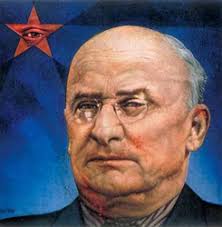
Lavrenti Beria
But the Great Soviet Encyclopedia had just gone to press with a long article singing Beria’s praises.
What to do?
The editors of the Encyclopedia wrote an equally long article about “the Berring Straits,” which was to be pasted over the article about Beria, and sent this off to its subscribers. An unknown number of them decided it was safer to paste accordingly.
In the 1981 film, “Excalibur,” Merlin warns the newly-minted knights of the Round Table: “For it is the doom of men that they forget.”
Forgetting our past is dangerous, but so is “understanding” it incorrectly.
In Texas, state-mandated “history” textbooks omit selected events and persons from the historical record–such as Thomas Jefferson and Martin Luther King.
This can be as lethal to the truth as outright lying.

Joseph Stalin, for example, ordered that school textbooks omit all references to the major role played by Leon Trotsky, his arch-rival for power, during the Russian Revolution.
Similarly, in Texas students are required to study Confederate President Jefferson Davis’ inaugural address alongside President Lincoln’s Gettysburg Address.
Such “teaching” should be seen for what it is: A thinly-veiled attempt to legitimize the most massive case of treason in United States history.
(The Civil War started on April 12, 1861, when Confederate artillery opened fire on Fort Sumter, a United States fort in Charleston Harbor. Fort Sumter surrendered 34 hours later.
(At least 800,000 Southerners took up arms against the legally elected government of the United States.)
The late broadcast journalist, Edward R. Murrow, would have referred to this practice as “giving Jesus and Judas equal time.”
Recently, Jeb Bush has entered the “Rewriting History for Americans” contest.
On August 13, speaking at a national security forum in Davenport, Iowa, he defended the unprovoked 2003 invasion of Iraq by his brother, President George W. Bush:
“I’ll tell you though, that taking out Saddam Hussein turned out to be a pretty good deal.”
And he went on to defend the 2007 troop “surge”, calling it “a great success that made Iraq safer.

“I’ve been critical and I think people have every right to be critical of decisions that were made. In 2009, Iraq was fragile but secure. It was–its mission was accomplished in a way that there was security there.”
(Ironically, the phrase, “its mission was accomplished” proved an embarrassing reminder for the Bush family.
(A banner titled “Mission Accomplished” was displayed on the aircraft carrier USS Abraham Lincoln as George W. Bush announced–wrongly–that the war was over on May 1, 2003.)
Jeb Bush claimed that President Barack Obama had prematurely withdrawn troops from Iraq during his first term, thus allowing ISIS to “fill the void.”
One dissenter to Jeb Bush’s effort to rewrite his brother’s history is David Corn, Washington bureau chief for Mother Jones magazine.
Addressing Bush’s claims on the August 15 edition of The PBS Newshour, he said:
“I mean, I have to laugh a little bit, because I think he was setting a record for chutzpah.
“…It wasn’t until after his brother’s invasion of Iraq that you had something called al-Qaida in Iraq. And that was the group that morphed into ISIS.
“So ISIS is a direct result of the war in Iraq right there. And so he’s wrong on the history.
“But then he said what happened was that Obama and Hillary Clinton orchestrated this quick withdrawal after everything was secure. Nothing was really secure in 2009-2010.
“…But it was George W. Bush in December 2008 who created the agreement with [Iraqi] Prime Minister [Nouri] [al-]Maliki that said that U.S. troops had to be out by 2011.
“And then Obama didn’t renegotiate that. And there is a lot of question as to whether he could even have, given the political situation in Baghdad itself.
“So Bush is totally–Jeb Bush is totally rewriting this.”
Click here: Brooks and Corn on Cuba as campaign issue
This is no small matter. George W. Bush’s needless and unprovoked war on Iraq:
- Cost the lives of 4,486 American soldiers.
- Wounded another 32,226 troops.
- Resulted in the deaths of an estimated 655,000 Iraqis.
- Cost the American treasury at least $2 trillion.
- Turned up no Weapons of Mass Destruction–Bush’s pretext for going to war.
- Led to the rise of Al-Qaeda–and later ISIS–in Iraq.
- Strengthened theocratic Iran by removing its major secularist opponent.
All of which simply proves, once again, that the past is never truly dead. It simply waits to be re-interpreted by each new generation–with some interpretations winding up closer to the truth than others.
Or, in this case, each new Presidential candidate of the Bush family.
ABC NEWS, ABORTION, BARACK OBAMA, BIBLE, CALIFORNIA DROUGHT, CALIFORNIA STATE ASSEMBLY, CBS NEWS, CNN, EVOLUTION, FACEBOOK, GLOBAL WARMING, GOVERNOR RICK PERRY, HURRICANE KATRINA, NBC NEWS, PAT ROBERTSON, SCIENCE VS. SUPERSTITION, SHANNON GROVE, TEXAS, THE CHICAGO SUN-TIMES, THE CHICAGO TRIBUNE, THE NEW YORK TIMES, THE WASHINGTON POST, TWITTER, USA TODAY
In Bureaucracy, History, Law, Politics, Social commentary on July 1, 2015 at 1:03 pm
Bureaucracies are not made up of robot-like machines. They are comprised of flesh-and-blood men and women.
That includes even the most important bureaucracies–such as those of the House, Senate and White House.
And as much as Americans like to believe their elected leaders always behave rationally and intelligently, they don’t. In fact, they can’t.
In a democracy, those who hold public office reflect the values of those who sent them there.
The issue of climate change/global warming vividly illustrates this truth.
From 2012 to 2014, more than 9,000 scientists published research about climate change. Each report reached the same conclusion: Climate change was manmade.
Yet during that same period, 23% of Americans–one in four–said they didn’t believe in climate change, according from the Yale Project on Climate Change Communications in January, 2013.
Meanwhile, the winter of 2014-15 was the warmest on record worldwide, according to a report released by the National Oceanic Atmospheric Administration (NOAA) on March 18.
For meteorological record-keeping purposes, NOAA defines winter as lasting from December through February in the Northern Hemisphere.
During those months of 2014-15, the temperature was 1.42 degrees Fahrenheit above the 20th-century average for all land and ocean areas. This topped the previous warmest winter of 2007 by 0.05 degrees Fahrenheit.
Global temperature records are available for the period 1880-2015.

California, for example, is now entering its fourth year of extreme drought–its worst in a generation.
The state’s Save Our Water’s campaign is urging Californians to “Let It Go” by limiting outdoor water use and letting lawns turn brown during the summer, while saving water for trees and other important landscapes.
Click here: California Drought
And when people reject science, they usually fall back on superstition for their “solutions” to life’s problems.
One of these is Republican Assemblywoman Shannon Grove, who represents Kern County in Central California.

Shannon Grove
Grove has a unique explanation for California’s worsening drought: Climate change/global warming has nothing to do with it. It’s God’s wrath over legalized abortion.
Speaking before the California ProLife Legislative Banquet held in Sacramento on June 8, Grove said:
“Texas was in a long period of drought until Governor Perry signed the fetal pain bill,” she told the audience. “It rained that night. Now God has his hold on California.”
Grove was referring to House Bill 2, a Texas bill banning abortions 20 weeks after fertilization, four weeks earlier than the standard set by Roe v. Wade. It’s based on the unproven assertion that fetuses can feel pain after 20 weeks.
In addition, the bill:
- Requires all clinics to become ambulatory surgical centers, even if they do not provide surgical abortions;
- Mandates that abortion clinics have admitting privileges at a hospital within 30 miles of the facility; and
- Requires abortion providers to administer the abortion-inducing medication RU-486 in person, rather than allow women to take it at home.
“This is the infallible word of God,” Grove said, holding a Bible above her head as attendees clapped. “I fear Him more than I fear anyone.”
Among her audience at the Grand Hotel were anti-abortion activists and clergy, including Catholic Bishops for Life, Pray California, Californians for Life and the California Republican Assembly.
Grove serves on the Agriculture Committee in the California State Assembly.
And in a June 11 post on her Facebook page, she wrote:
“I believe–and most Americans believe–that God’s hand is in the affairs of man, and certainly was in the formation of this country.
“The Founders put God in the center of this nation by recognizing Him as a giver of our rights.
“Is this drought caused by God? Nobody knows.
“But biblical history shows a consequence to man’s actions; we do know for sure that California’s water shortage crisis has been compounded by liberal politicians’ poor decisions – not properly managing our water resources and refusing to build water storage for decades.”
But not all anti-abortion activists don’t agree with Grove’s theory.
“We are huge fans of Shannon Grove and all her efforts in Sacramento on behalf of life,” Marylee Shrider, executive director of Right to Life of Kern County, told The Bakersfield Californian.
“That being said, we have not made a connection between the drought and abortion here in California.”
Pro-Choice Kern County called her comments “absolute lunacy” and created a mock-up of a T-shirt: “I made a desert with my abortion and all I got was this lousy t-shirt.”
Grove isn’t alone in believing that God’s displeasure lies behind the drought.
Another is Bill Koenig, the conservative editor of World Watch Daily. God, he asserts, is righteously enraged at California’s acceptance of same-sex marriage and abortion.
“We’ve got a state that over and over again will go against the word of God, that will continually take positions on marriage and abortion and on a lot of things that are just completely opposed to the scriptures.”
Abortion is a ready culprit for natural disasters–in the sermons of fundamentalist preachers.
Evenaglist Pat Roberts blamed abortion for Hurricane Katrina in 2005.
And Steve Lefamine, the director of Columbia Christians for Life in South Carolina, agreed with Robertson that abortion caused Hurricane Katrina.
In an interview with the Washington Post, he claimed that when he viewed the full-color satellite map of the hurricane, he saw an 8-week-old fetus in the image
.
ABC NEWS, ABORTION, ANTI-ABORTIONISTS, CBS NEWS, CNN, FACEBOOK, MATT SCHAFER, MITT ROMNEY, NBC NEWS, PAUL RYAN, RUSH LIMBAUGH, SCOTT WALKER, TEXAS, TEXAS HOUSE OF REPRESENTATIVES, THE CHICAGO SUN-TIMES, THE CHICAGO TRIBUNE, THE LOS ANGELES TIMES, THE NEW YORK TIMES, THE WASHINGTON POST, TWITTER, U.S. SUPREME COURT, USA TODAY, WAR ON WOMEN
In Bureaucracy, Law, Politics, Social commentary on May 11, 2015 at 11:57 am
Republicans love fetuses.
In fact, they love them so much they’re willing to jeopardize the lives of pregnant women on their behalf.
On April 23, a Republican lawmaker in the Texas State House of Representatives offered an amendment that would force pregnant women to carry to term fetuses that can’t survive outside the womb.
The debate had started on a completely different subject–how to retool the State’s social safety net for the poor. But as usually happens when Republicans hold a majority in a legislature, the subject quickly turned to abortion–and how to ban it.
Rep. Matt Schafer (R-Tyler) proposed an amendment that would make it illegal for a woman to have an abortion after 20 weeks–even if a fetus has “a severe and irrevsersible abnormality.”

Matt Schafer
This would force a woman to carry a dead fetus to term, even if a doctor warned that this could endanger her life.
Schafer justified his proposal on the grounds that suffering has been “part of the human condition, since sin entered the world.”
A highly probable consequence of that suffering could be the death of a woman from sepsis–a whole-body inflammation caused by an infection–by carrying a nonviable fetus.
Schaefer’s amendment actually passed, but he removed it for full committee review after Trey Martinez Fischer, the House Democrat from San Antonio, filed a legislative point of order.
Rep. Jessica Farrar (D-Houston) had an entirely different take on the proposal.
She called this year’s state legislature the most misogynistic she’s seen in her 21 years as a state representative,
“Women are leaders of their families, whether some men in this room do not recognize that,” she said after her male Republican colleagues refused to support a bill that would expand access to breastfeeding.
Click here: Texas House Proposal Would Force People to Carry to Term Non-Viable Fetuses
Schafer’s is just the latest Republican to try to insert government into the vaginas of American women.
An earlier one was Scott Walker–the current governor of Wisconsin and a Koch brothers favorite for donations as a 2016 Presidential candidate.
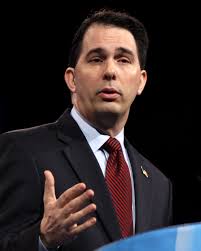
Scott Walker
As a member of the Wisconsin State Assembly, Walker introduced AB 538 in September, 1997.
This would have allowed doctors to withhold from a woman information about a fetal disability while abortion was still an available option.
In short, doctors would have been allowed to lie to her.
At the time, if a health care provider withheld information about a fetal disability while abortion was still an available option, s/he could be liable for the child’s future medical expenses. But AB 538 would have changed that.
According to the proposed bill:
“This bill creates an immunity from a wrongful birth or wrongful life action for a person who commits an act or fails to commit an act and that act or omission results in the birth of a child because a woman did not undergo an abortion that she would have undergone had the person not committed the act or not failed to commit the act.”
AB 538 was not passed, ultimately dying in April 1998 without receiving a floor vote.
So Walker and 28 colleagues tried again in 2001.
They re-introduced the same legislation as AB 360. Although approved by the Orwellian-named “Family Law Committee,” it similarly failed to receive a floor vote.
In 1998, Walker introduced “conscience clause” legislation that would have allowed medical professionals to cite religious reasons in denying patients medical services such as contraception.
The bill failed to pass, so he introduced it again in 1999. This attempt also failed. In 2001, he introduced it a third time–when it similarly failed.
During the 2012 Presidential race, Right-wing broadcaster Rush Limbaugh furiously denied that Republicans were waging a “war on women,” as charged by Democrats.
On November 5, 2012, Limbaugh said on his program:
“Now, this War on Women. You know, it’s been fascinating to watch this in one regard, maddening, too.
“But supposedly [Former Massachusetts Governor Mitt] Romney and [Wisconsin Representative Paul] Ryan are gonna reverse Roe v. Wade and they’re gonna take contraception away from you, and that’s the essence of the War on Women.
“Romney, Ryan, Republicans are gonna take abortion away from you and they’re going to make sure that you don’t get contraception so that you have to get pregnant and you can’t get an abortion and therefore you have to stay home, stay in the kitchen.
“….Well, just as I said, reversing Roe v. Wade is nothing a president can do. A president cannot touch it. A president has no role in constitutional amendments.”
Click here: The Left’s War on Women Lies – The Rush Limbaugh Show
Limbaugh neglected to mention, however, that a President can appoint Justices to the United States Supreme Court–who could overrule Roe v. Wade.
He also failed to note that overturning Roe v. Wade–which legalized abortion in 1973–has been a top Republican goal for the last 42 years.
The coming 2016 race for President will doubtless see banning abortion take center stage in Republican agendas.


ABC NEWS, ALAMO, ALTERNET, AMERICABLOG, ANDREW JACKSON, ANTONIO LOPEZ DE SANTA ANNA, AP, BABY BOOMER RESISTANCE, BUZZFEED, CBS NEWS, CNN, CROOKS AND LIARS, DAILY KOZ, DAVID CROCKETT, DRUDGE RETORT, FACEBOOK, FIVETHIRTYEIGHT, HARPER’S MAGAZINE, JAMES BOWIE, MEDIA MATTERS, MEXICO, MOTHER JONES, MOVEON, MSNBC, NBC NEWS, NEWSWEEK, NPR, PBS NEWSHOUR, POLITICO, POLITICUSUSA, RAW STORY, REUTERS, SALON, SAM HOUSTON, SAN ANTONIO, SEATTLE TIMES, SLATE, STEPHEN F. AUSTIN, TALKING POINTS MEMO, TEXAS, TEXAS DECLARATION OF INDEPENDENCE, TEXAS REVOLUTION, THE ATLANTIC, THE CHICAGO SUN-TIMES, THE CHICAGO TRIBUNE, THE DAILY BEAST, THE DAILY BLOG, THE GUARDIAN, THE HILL, THE HUFFINGTON POST, THE LOS ANGELES TIMES, THE NATION, THE NEW REPUBLIC, THE NEW YORK TIMES, THE VILLAGE VOICE, THE WASHINGTON POST, THERMOPYLAE, THINKPROGRESS, THREE HUNDRED SPARTANS, TIME, TRUTHDIG, TRUTHOUT, TWITTER, TWO POLITICAL JUNKIES, U.S. NEWS & WORLD REPORT, UPI, USA TODAY, WILLIAM BARRET TRAVIS, WONKETTE
THE ALAMO: TRAGEDY AND GLORY: PART TWO (OF THREE)
In History, Law Enforcement, Politics, Social commentary on March 5, 2020 at 12:26 amFriday, March 6, 2020, marks the 184h anniversary of the most famous event in Texas history: The fall of the Alamo, a crumbling former Spanish mission in the heart of San Antonio.
After a 12-day siege, 180 to 250 Texans were overwhelmed by 2,000 Mexican soldiers.
Mexican troops advancing on the Alamo
Americans “remember the Alamo”–but usually for the wrong reasons.
Some historians believe the battle should have never been fought.
The Alamo was not Thermopylae—a narrow mountain pass blocking the Persian march into ancient Greece. Santa Anna could have simply bypassed it.
In fact, several of Santa Anna’s generals urged the Mexican dictator to do just that—leave a small guard to hold down the fort’s defenders and wipe out the undefended, widely-separated Texas settlements.
But pride held Santa Anna fast to the Alamo. His brother-in-law, General Perfecto de Cos, had been forced to surrender the old mission to revolting Texans in December, 1835.
Santa Anna meant to redeem the fort—and his family honor—by force.
In virtually every Alamo movie, its two co-commanders, James Bowie and William Barret Travis, are portrayed as on the verge of all-out war—with each other.
In John Wayne’s heavily fictionalized 1960 film, The Alamo, Bowie and Travis agree to fight a duel as soon as they’ve whipped the Mexicans besieging them.
James Bowie
William B. Travis
In fact, the frictions between the two lasted only a short while. Just before the siege, some of Bowie’s volunteers—a far larger group than Travis’ regulars—got drunk.
Travis ordered them jailed—and Bowie ordered his men to release them. Bowie then went on a roaring drunk. The next day, a sober Bowie apologized to Travis and agreed they should share command.
This proved a wise decision, for just as the siege started, Bowie was felled by worsening illness—typhoid-pneumonia or tuberculosis.
In almost every Alamo movie, Bowie repeatedly leaves the fort to ambush unsuspecting Mexicans.
In reality, he stayed bed-ridden and lay close to death throughout the 13-day siege.
The Texans intended to make a suicidal stand.
False.
From the first day of the siege-–February 23, almost to the last, March 6, 1836—messengers rode out of the Alamo seeking help. The defenders believed that if they could cram enough men into the three-acre former mission, they could hold Santa Anna at bay.
No reinforcements reached the Alamo.
False. On March 1, 32 men from Gonzalez—the only ones to answer Travis’ call—sneaked through the Mexican lines to enter the Alamo.
Meanwhile, the largest Texan force lay at Fort Deviance in Goliad, 85 miles away. This consisted of 500 men commanded by James Walker Fannin, a West Point dropout.
Fannin was better-suited for the role of Hamlet than military commander.
Upon receiving a plea of help from Travis, he set out in a halfhearted attempt to reach the mission. But when a supply wagon broke down, he returned to Fort Defiance and sat out the rest of the siege.
When the Mexican army approached Fort Defiance, Fannin and 400 of his men panicked and fled into the desert. They were surrounded, forced to surrender, and massacred on March 27
The Alamo garrison was fully prepared to confront the Mexican army.
False. When the Mexicans suddenly arrived in San Antonio on the morning of February 23, 1836, they caught the Texans completely by surprise.
The previous night, they had been celebrating the birthday of George Washington. The Texans rushed headlong into the Alamo, hauling all the supplies they could hastily scrounge.
Santa Anna sent a courier under a flag of truce to the Alamo, demanding unconditional surrender. In effect, the Texans were being given the choice of later execution.
Travis replied with a shot from the fort’s biggest cannon, the 18-pounder (so named for the weight of its cannonball).
Santa Anna ordered the hoisting of a blood-red flag and the opening of an artillery salvo. The siege of the Alamo was on.
San Houston, who was elected general of the non-existent army of Texas, desperately tried to relieve the siege.
False.
At Washington-on-the-Brazos, 169 miles east of San Antonio, Texan delegates assembled to form a new government. When news reached the delegates that Travis desperately needed reinforcements, many of them wanted to rush to his defense.
But Houston and others declared they must first declare Texas’ independence. On March 2, 1836, they did just that. Houston spent a good deal of the time drunk.
Sam Houston
Did Travis draw a line?
Easily the most famous Alamo story is that of “the line in the sand.”
On the night of March 5—just prior to the final assault—there was a lull in the near-constant Mexican bombardment. Travis assembled his men and gave them a choice:
They could try to surrender and hope that Santa Anna would be merciful. They could try to escape. Or they could stay and fight.
With his sword, Travis drew a line in the dirt and invited those who would stay to cross over to him.
The entire garrison did—except for two men.
One of these was bed-ridden James Bowie. He asked that his sick-bed be carried over to Travis. The other was a veteran of the Napoleonic wars–Louis Rose.
Share this: