Posts Tagged ‘SYRIA’
60 MINUTES, ABC NEWS, ALTERNET, AMERICABLOG, AP, BABY BOOMER RESISTANCE, BARACK OBAMA, BLOOMBERG, BUZZFEED, CARL MUELLER, CBS NEWS, CIA, CNN, CROOKS AND LIARS, DAILY KOS, DAILY KOZ, DRUDGE RETORT, FACEBOK, FACEBOOK, FIVETHIRTYEIGHT, HARPER’S MAGAZINE, IMPERIAL HUBRIS, ISLAM, ISLAMIC STATE OF IRAQ AND THE LEVANT, KAYLA MUELLER, MARCHING TOWARD HELL, MEDIA MATTERS, MICHAEL SCHEUER, MOTHER JONES, MOVEON, MSNBC, MUSLIMS, NBC NEWS, NEWSWEEK, NPR, OSAMA BIN LADEN, PBS NEWSHOUR, POLITICO, POLITICUSUSA, RAW STORY, REUTERS, SALON, SEATTLE TIMES, SLATE, SYRIA, TALKING POINTS MEMO, THE ATLANTIC, THE CHICAGO SUN-TIMES, THE CHICAGO TRIBUNE, THE DAILY BEAST, THE DAILY BLOG, THE GUARDIAN, THE HILL, THE HUFFINGTON POST, THE LOS ANGELES TIMES, THE NATION, THE NEW REPUBLIC, THE NEW YORK TIMES, THE VILLAGE VOICE, THE WALL STREET JOURNAL, THE WASHINGTON POST, THINKPROGRESS, TIME, TRUTHDIG, TRUTHOUT, TWITTER, TWO POLITICAL JUNKIES, U.S. NEWS & WORLD REPORT, UPI, USA TODAY, VIETNAM WAR, WONKETTE
In Bureaucracy, History, Military, Politics, Social commentary on August 1, 2022 at 12:10 am
“When trouble comes up anywhere in the world, they don’t call Beijing. They don’t call Moscow. They call us.”
So spoke President Barack Obama on the September 28, 2014 edition of 60 Minutes.
And, according to former CIA agent Michael Scheuer, that’s the problem: America can’t learn to mind its own business.
Scheuer is a 20-year CIA veteran—as well as an author, historian, foreign policy critic and political analyst.
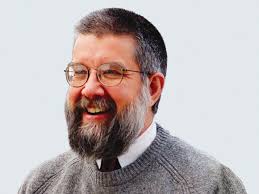
Michael Scheuer
From 1996 to 1999 he headed Alec Station, the CIA’s unit assigned to track Osama bin Laden at the agency’s Counterterrorism Center.
He has served as an adjunct professor at Georgetown University’s Center for Peace and Security Studies.
He is best-known as the author of two seminal works on America’s fight against terrorism: Imperial Hubris: Why the West is Losing the War on Terror (2003) and Marching Toward Hell: America and Islam after Iraq (2008).
Scheuer says that Islamics don’t hate Americans because of “our way of life”—with its freedoms of speech and worship and its highly secular, commercialized culture.
Instead, Islamic hatred toward the United States stems from America’s six longstanding policies in the Middle East:
- U.S. support for apostate, corrupt, and tyrannical Muslim governments
- U.S. and other Western troops on the Arabian Peninsula
- U.S. support for Israel that keeps Palestinians in the Israelis’ thrall
- U.S. pressure on Arab energy producers to keep oil prices low
- U.S. occupation of Iraq and Afghanistan
- U.S. support for Russia, India, and China against their Muslim militants
Scheuer contends that no amount of American propaganda will win “the hearts and minds” of Islamics who can “see, hear, experience, and hate” these policies firsthand.
But there is another danger facing America, says Scheuer, one that threatens “the core of our social and civil institutions.”
And in Marching Toward Hell he bluntly indicts that threat: The “profound and willful ignorance” of America’s “bipartisan governing elite.”
Scheuer defines this elite as “the inbred set of individuals who have influenced…drafted and conducted U.S. foreign policy” since 1973.
Within that group are:
- politicians
- journalists
- academics
- preachers
- civil servants
- military officers
- philanthropists.
“Some are Republicans, others Democrats; some are evangelicals, others atheists; some are militarists, others pacifists; some are purveyors of Western civilization, others are multiculturalists,” writes Scheuer.
But for all their political and/or philosophical differences, the members of this governing elite share one belief in common.
According to Scheuer, that belief is “an unquenchable ardor to have the United States intervene in all places, situations and times.”
And he warns that this “bipartisan governing elite” must radically change its policies—such as unconditional support for Israel and corrupt, tyrannical Muslim governments.
Otherwise, Americans will be locked in an endless “hot war” with the Islamic world.
During his September 28, 2014 appearance on 60 Minutes, President Obama admitted that the mostly Sunni-Muslim Iraqi army had refused to combat the Sunni army of ISIS.
Then followed this exchange:
Steve Kroft: What happens if the Iraqis don’t fight or can’t fight?
President Obama: Well….
Steve Kroft: What’s the end game?
President Obama: I’m not going to speculate on failure at the moment. We’re just getting started. Let’s see how they do.
It was precisely such a mindset that led the United States, step by step, into the Vietnam quagmire.
In the Middle East, as in Vietnam, the United States lacked:
- Real or worthwhile allies in Iraq or Syria;
- A working knowledge of the peoples it wants to influence in either country;
- Clearly-defined goals that it seeks to accomplish in that region.
America rushed to disaster in Vietnam because its foreign policy elite felt it had to “do something” to fight Communism anywhere in the world.
Now Americans—in and out of government—feel they must “do something” to stop the routine carnage that is life throughout the Middle East.
In December, 2012, Kayla Mueller, an idealistic 24-year-old American woman, arrived in Syria to assist Syrians caught up in their own civil war. And on August 4, 2013, she was kidnapped and held for ransom.
In 2015, she was killed—whether by her terrorist kidnappers or Jordanian airstrikes remains unclear.
On February 23, 2015, Carl Mueller appeared on the “Today” show, to protest the refusal of the United States Government to pay ransom demands to her terrorist kidnappers.
“How many mistakes have we all made in life that were naïve and didn’t get caught at? Kayla was just in a place that was more dangerous than most. And she couldn’t help herself. She had to go in there and had to help.”
But did she?
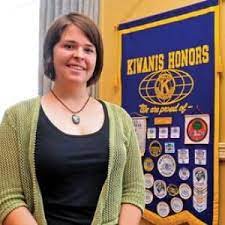

Kayla Mueller
There were thousands of communities within the United States desperate for the help of a caring social activist. And thousands of organizations—such as Volunteers in Service to America (VISTA), Habitat for Humanity and Catholic Relief Services—that would have been thrilled to enlist her services.
And she could have made lives better without constantly facing the dangers of kidnapping by Islamics determined to humiliate and slaughter Americans.
Michael Sheuer is right: The United States should learn to mind its own business and quit intervening in the affairs of Middle Eastern governments and peoples.
Kayla Mueller is proof of the rightness of that assertion.
ABC NEWS, ABRAHAM LINCOLN BRIGADE, ADOLF HITLER, AFGHANISTAN, ALTERNET, AMERICABLOG, AMNESTY INTERNATIONAL, AP, ARTHUR CUMMINGS, BABY BOOMER RESISTANCE, BBC, BENITO MUSSOLINI, BLOOMBERG NEWS, BUZZFEED, CBS NEWS, CNN, CROOKS AND LIARS, DAILY KOZ, ERNEST HEMINGWAY, ETHIOPIA, EUROPEAN COMMISSION, EUROPEAN UNION, FACEBOOK, FBI, FIVETHIRTYEIGHT, GULF COOPERATION COUNCIL, HAILE SELASSIE, HARPER’S MAGAZINE, HUFFINGTON POST, IRAN, IRAQ, ISRAELI DEFENSE FORCES, JOHN DOS PASSOS, MEDIA MATTERS, MOTHER JONES, MOVEON, MSNBC, MUSLIMS, NBC NEWS, NEW REPUBLIC, NEWSDAY, NEWSWEEK, NPR, PALESTINIANS, PBS NEWSHOUR, POLITICO, POLITICUSUSA, RAW STORY, REFUGEES, REUTERS, RONALD KESSLER, SALON, SEATTLE TIMES, SHIITE MUSLIMS, SLATE, SPAIN, SPANISH CIVIL WAR, SUNNI MUSLIMS, SYRIA, TALKING POINTS MEMO, TERRORISM, THE ATLANTIC, THE CHICAGO SUN-TIMES, THE CHICAGO TRIBUNE, THE DAILY BEAST, THE DAILY BLOG, THE GUARDIAN, THE HILL, THE HUFFINGTON POST, THE INTERCEPT, THE LOS ANGELES TIMES, THE NATION, THE NEW REPUBLIC, THE NEW YORK TIMES, THE NEW YORKER, THE SECRETS OF THE FBI (BOOK), THE SYRIAN OBSERVATORY FOR HUMAN RIGHTS, THE VILLAGE VOICE, THE WASHINGTON POST, THE WORLD POST, THINKPROGRESS, TIME, TRUTHDIG, TRUTHOUT, TWITTER, TWO POLITICAL JUNKIES, U.S. NEWS & WORLD REPORT, UKRAINE, UPI, USA TODAY, VLADIMIR PUTIN, WONKETTE, WORLD WAR ii
In History, Military, Politics, Social commentary on March 8, 2022 at 12:21 am
On February 24, Russian President Vladimir Putin ordered a massive invasion of Ukraine.
To Ukrainians, it’s a matter of life-or-death.
To Americans, Europeans and Westerners in general, it’s a horrific, unfolding tragedy.
But to nonwhites—and especially Islamics—the sympathies of these nations is a sign of racism and Islamophobia.
One reason many Westerners feel greater sympathy for Ukrainians than Arabs: Islamics have routinely blamed the West—especially Americans—for their own internal conflicts.
According to the Syrian Observatory for Human Rights—which is safely located in Great Britain—the total number of dead from the Syrian civil war [in 2016] was more than 310,000.
The Observatory blamed the West for this Islamic self-slaughter.
“The silence of the International community for the war crimes and crimes against humanity committed in Syria encourages the criminals to kill more and more Syrian people because they have not found anyone that deter them from continuing their crimes that cause to wound more than 1,500,000 people; some of them with permanent disabilities, make hundreds of thousands children without parents, displace more than half of Syrian people and destroy infrastructure, private and public properties.”
In short: It’s the duty of non-Muslims to bring civilized behavior to Islamics.
And why are all these murderers eagerly slaughtering one another? Because of a Muslim religious dispute that traces back to the fourth century.
Yes, it’s Sunni Muslims, who make up a majority of Islamics, versus Shiite Muslims, who comprise a minority.
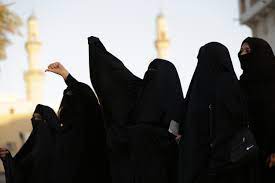
Shiite Muslim women
Each group considers the other takfirs—that is, “apostates.” And, in Islam, being labeled an apostate can easily get you murdered.
This is, in short, not a conflict that can be resolved by driving an aggressor country out of another. It will never end—because both Sunnis and Shiites believe “God is on our side” in an inner-religious war that dates back centuries.
“We are wondering, why were Ukrainians welcome in all countries while we, Syrian refugees, are still in tents and remain under the snow, facing death, and no one is looking to us?” asked Syrian refugee Ahmad al-Hariri, who fled the war in his country for nearby Lebanon 10 years ago.
In an ideal and rational world, factors like religion, economics and race would not matter when large numbers of people are threatened by war. But this is not a rational and ideal world, and human emotions and prejudices usually play a deciding role in people’s behavior.
People identify and feel comfortable with those who most resemble themselves. In prisons, black inmates sit with blacks; whites with with whites; Hispanics with fellow Hispanics.
The vast majority of Ukrainian refugees are highly-skilled and -educated Christians—meaning they will easily meld into the populations that make up most of Europe. Many of them already have relatives scattered throughout such countries as Poland, Hungary and Romania. Which means they can call on those relatives for support while settling in.
Much has been made—by nonwhites—of the fact that Ukrainians are Caucasians. This is undoubtedly one factor that leads other Caucasians to identify with their plight. But when Syrians identify with Palestinians, no doubt their own shared skin color and religion apply just as much.
Another reason why this conflict has riveted the attention of the world: Millions believed that the collapse of the Soviet Union in 1991 ended the Cold War.

Vladimir Putin
Kremlin.ru, CC BY 4.0 <https://creativecommons.org/licenses/by/4.0>, via Wikimedia Commons
But Vladimir Putin has brutally notified the world that it’s on again. Europeans—and Americans—fear that Putin’s attack on Ukraine, like Adolf Hitler’s attack on Poland, is simply the first of a series of conquests to come.
In 1935, Italian dictator Benito Mussolini set out to create a second Roman Empire by invading Ethiopia. The conflict pitted poorly-armed Ethiopian forces against Italians armed with radio, bombers and even mustard gas. Even ambulances and hospitals became targets for Mussolini’s air force.
Ethiopia’s emperor, Haile Selassie, appealed in person to the League of Nations for aid in repelling the invasion. His plea was greeted by laughter from the Italian and German delegates—and ignored by the rest of the world.
The war ended in 1937 with an Italian victory.
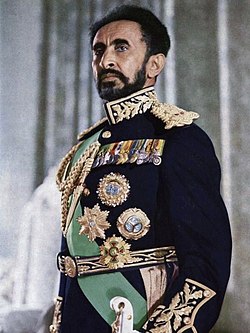
Haile Selassie
By contrast: The Spanish Civil War proved a magnet for international commitment. The conflict pitted Fascists under General Francisco Franco against the new Spanish Republic. Adolf Hitler and Mussolini sent troops and planes to aid Franco.
Tens of thousands of volunteers from about 50 countries poured into Spain to support the Republican cause—among them, the Abraham Lincoln Brigade from the United States.. Writers Ernest Hemingway and John Dos Passos lent their propaganda talents to the Republic.
American liberals sensed that this civil war was a testing ground for the weapons of Fascism—as it proved to be. By 1939, the superior numbers and weapons of Franco and his allies prevailed.
When Hemingway returned to the United States he tried to warn all who would listen that a far greater war was coming: World War II.
People see conflicts in the light of their own priorities. No two conflicts are the same—and will never be seen the same. What was true for the ones in Ethiopia and Spain remains true for the ones in Syria and Ukraine.
ABC NEWS, ABRAHAM LINCOLN BRIGADE, ADOLF HITLER, AFGHANISTAN, ALTERNET, AMERICABLOG, AMNESTY INTERNATIONAL, AP, ARTHUR CUMMINGS, BABY BOOMER RESISTANCE, BBC, BENITO MUSSOLINI, BLOOMBERG NEWS, BUZZFEED, CBS NEWS, CNN, CROOKS AND LIARS, DAILY KOZ, ERNEST HEMINGWAY, ETHIOPIA, EUROPEAN COMMISSION, EUROPEAN UNION, FACEBOOK, FBI, FIVETHIRTYEIGHT, GULF COOPERATION COUNCIL, HAILE SELASSIE, HARPER’S MAGAZINE, HUFFINGTON POST, IRAN, IRAQ, ISRAELI DEFENSE FORCES, JOHN DOS PASSOS, MEDIA MATTERS, MOTHER JONES, MOVEON, MSNBC, MUSLIMS, NBC NEWS, NEW REPUBLIC, NEWSDAY, NEWSWEEK, NPR, PALESTINIANS, PBS NEWSHOUR, POLITICO, POLITICUSUSA, RAW STORY, REFUGEES, REUTERS, RONALD KESSLER, SALON, SEATTLE TIMES, SHIITE MUSLIMS, SLATE, SPAIN, SPANISH CIVIL WAR, SUNNI MUSLIMS, SYRIA, TALKING POINTS MEMO, TERRORISM, THE ATLANTIC, THE CHICAGO SUN-TIMES, THE CHICAGO TRIBUNE, THE DAILY BEAST, THE DAILY BLOG, THE GUARDIAN, THE HILL, THE HUFFINGTON POST, THE INTERCEPT, THE LOS ANGELES TIMES, THE NATION, THE NEW REPUBLIC, THE NEW YORK TIMES, THE NEW YORKER, THE SECRETS OF THE FBI (BOOK), THE SYRIAN OBSERVATORY FOR HUMAN RIGHTS, THE VILLAGE VOICE, THE WASHINGTON POST, THE WORLD POST, THINKPROGRESS, TIME, TRUTHDIG, TRUTHOUT, TWITTER, TWO POLITICAL JUNKIES, U.S. NEWS & WORLD REPORT, UKRAINE, UPI, USA TODAY, VLADIMIR PUTIN, WONKETTE, WORLD WAR ii
In Bureaucracy, History, Military, Politics, Social commentary on March 7, 2022 at 12:10 am
On February 24, Russian President Vladimir Putin ordered a massive invasion of Ukraine.
To Ukrainians, it’s a matter of life-or-death.
To Americans, Europeans and Westerners in general, it’s a horrific, unfolding tragedy.
But to nonwhites—and especially Islamics—throughout the world, the sympathies of these nations is a sign of racism and Islamophobia.
The day after the invasion began, CBS News senior correspondent in Kyiv Charlie D’Agata said: “This isn’t a place, with all due respect, like Iraq or Afghanistan that has seen conflict raging for decades. This is a relatively civilised, relatively European – I have to choose those words carefully, too – city where you wouldn’t expect that, or hope that it’s going to happen.”

CBS
On social media, his comment was strongly criticized as dehumanizing non-white, non-European peoples.
One Twitter user wrote: “Atrocities start with words and dehumanization. Atrocities unleashed upon millions in the ME, fueled by dictators labeled as reformists in the west. The racist subtext: Afghans, Iraqi & Syrian lives don’t matter, for they are deemed inferior—’uncivilized.'”
In fact, conditions in Ukraine have been relatively peaceful. Afghanistan has never actually been a nation, simply a patchwork of feuding warlords. This has been true from the time of Alexander the Great to the Taliban today. Dictators have always been the rulers of Afghanistan, Iraq and Syria.
On February 25, Sky News broadcast a video of people in the central Ukrainian city of Dnipro making Molotov cocktails, explaining how grating Styrofoam makes the incendiary device stick to vehicles better.

A Twitter user wrote: “If this was done by Palestinians, Afghanistan or other nations resisting occupation, it would be terrorism. And during Mandela’s anti-apartheid era, it was also dubbed terrorism. For Europeans facing similar situations, it is resistance! Western duplicity knows no bounds.”
“Terrorism” is defined as “The unlawful use of violence and intimidation, especially against civilians, in the pursuit of political aims.”
Defending one’s country from attack by another country is not terrorism. In fact, from ancient times, it has been seen as the highest virtue, calling forth loyalty and courage.
Palestinians have repeatedly targeted civilians—not soldiers of the Israeli Defense Forces—for death. In Afghanistan, women and children have been routinely massacred by warring factions.
There are solid reasons for fears of Islamic terrorism.
In his 2011 book, The Secrets of the FBI, Ronald Kessler notes the refusal of the Islamic community to identify known or potential terrorists within its ranks.
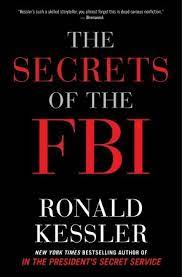
Said Arthur M. Cummings, then the Bureau’s executive assistant director for national security: “I had this discussion with the director of a very prominent Muslim organization here in [Washington] D.C. And he said, ‘Why are you guys always looking at the Muslim community?’”
“I can name the homegrown cells, all of whom are Muslim, all of whom were seeking to kill Americans,” replied Cummings. “It’s not the Irish, it’s not the French, it’s not the Catholics, it’s not the Protestants. It’s the Muslims.”
On BFM TV, France’s most-watched cable news channel, journalist Philippe Corbe said: “We’re not talking here about Syrians fleeing the bombing of the Syrian regime backed by Putin, we’re talking about Europeans leaving in cars that look like ours to save their lives.”
This was heavily criticized: “This war is just revealing the western hypocrisy and racism at its peak.”
There is a difference between a Syrian dictator waging war against his own citizens, and a nuclear-armed country waging all-out war on a smaller, democratic nation. The skin color of the peoples involved has nothing to do with either action.
“These are not the refugees we are used to… these people are Europeans,” Bulgarian Prime Minister Kiril Petkov told journalists of the Ukrainians. “These people are intelligent, they are educated people…. This is not the refugee wave we have been used to, people we were not sure about their identity, people with unclear pasts, who could have been even terrorists…
“In other words,” he added, “there is not a single European country now which is afraid of he current wave of refugees.”
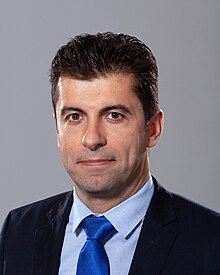
Kiril Petkov
President.bg, CC BY 2.5 BG <https://creativecommons.org/licenses/by/2.5/bg/deed.en>, via Wikimedia Commons
This was treated as racism by Islamics: “A refugee is a refugee, whether European, African or Asian,” Syrian journalist Okba Mohammad said.
In fact: By early 2021, 10 years after Syria’s civil war erupted, European Union states had taken in one million Syrian refugees and asylum seekers; Germany alone took more than half. In 2016, the European Union paid billions of euros for Turkey to continue hosting 3.7 million Syrians.
On February 6, 2016, The World Post carried this story: “Geneva III: The Stillborn Conference and the Endemic Failure of the International Community.”
The first paragraph read:
“While approaching the fifth anniversary of the Syrian civil war on March 15 — which claimed more than 300,000 lives, approximately 700,000 wounded, 4 million fled the country, and another 6 million displaced within Syria — the international community has failed to put an end to bloodshed in this war-torn country.”
According to the Syrian Observatory for Human Rights—which is safely located in Great Britain—the total number of dead [in 2016] was now more than 310,000.
And who did the Observatory—and The World Post-–blame for this Islamic self-slaughter?
The West, of course.
ABC NEWS, AFRIKA KORPS, ALTERNET, AMERICABLOG, AP, BABY BOOMER RESISTANCE, BARACK OBAMA, BASHAR AL-ASAD, BBC, BERNARD MONTGOMERY, BILL KRISTOL, BLOOMBERG, BLOOMBERG NEWS, BUZZFEED, CBS NEWS, CNN, CONDOLEEZA RICE, CROOKS AND LIARS, DAILY KOS, DAILY KOZ, FACEBOOK, FIVETHIRTYEIGHT, FOOD STAMPS, GEORGE C. SCOTT, GEORGE S. PATTON, HARPER’S MAGAZINE, HUFFINGTON POST, IRAN, IRAQ, IRAQ WAR, JOHN MCCAIN, LINDSEY GRAHAM, MEDIA MATTERS, MOTHER JONES, MOVEON, MSNBC, NBC NEWS, NEW REPUBLIC, NEWSDAY, NEWSWEEK, NPR, OSAMA BIN LADEN, PATTON (MOVIE), PBS NEWSHOUR, PENTAGON, POLITICO, POLITICUSUSA, RAW STORY, REPUBLICANS, REUTERS, SALON, SEATTLE TIMES, SLATE, SYRIA, TALKING POINTS MEMO, THE ATLANTIC, THE CHICAGO SUN-TIMES, THE CHICAGO TRIBUNE, THE DAILY BEAST, THE DAILY BLOG, THE GUARDIAN, THE HILL, THE HUFFINGTON POST, THE INTERCEPT, THE LOS ANGELES TIMES, THE NATION, THE NEW REPUBLIC, THE NEW YORK TIMES, THE NEW YORKER, THE VILLAGE VOICE, THE WASHINGTON POST, THINKPROGRESS, TIME, TOMAHAWK CRUISE MISSILES, TRUTHDIG, TRUTHOUT, TWO POLITICAL JUNKIES, U.S. NEWS & WORLD REPORT, UPI, USA TODAY, WORLD WAR ii, X
In Bureaucracy, History, Military, Politics, Social commentary on October 25, 2021 at 12:33 am
In the 1970 film, Patton, General George S. Patton is a man driven by his obsession to be the best field commander in the war—and to be recognized for it.
And he views similarly egotistical British General Bernard Montgomery as a rival for that latter achievement.
So, in Algeria, he conjures up a plan that will sideline “Monty” while he, Patton, defeats the Germans–and bags the glory.
The trick lies in throwing a sumptuous dinner—in the middle of the North African desert—for a visiting British general: Harold Alexander.
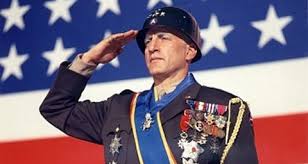
George C. Scott as George S. Patton
As Patton (George C. Scott, in an Oscar-winning performance) tells his aide: “I want to give a dinner for General Alexander. I want to get to him before Montgomery does. I want the finest food and the best wine available. Everything.”
The aide pulls off the dinner–where, indeed, “the finest food and the best wine” are on full display, along with attentive waiters and a candelabra.
So think about it:
- In the middle of the desert
- while American and British forces are forced to subsist on C-rations
- and are under repeated air attack by the Luftwaffe
- and tank attack by the Afrika Korps
a handful of ultra-pampered American and British military officers find the time—and luxuries—to throw themselves a fine party.
Now, fast-forward from Algeria in 1943 to Washington, D.C. in 2016.
Returning to Congress after their traditional summer recess, House Republicans planned to cut $23 billion in food stamps for the poor. This would include include ending waivers that allow some adults to get temporary assistance, while they are in school or training for a job.
The cuts included drug tests of applicants and tougher work rules. As Republicans see it: There’s no point in “helping” the poor if you can’t humiliate them.
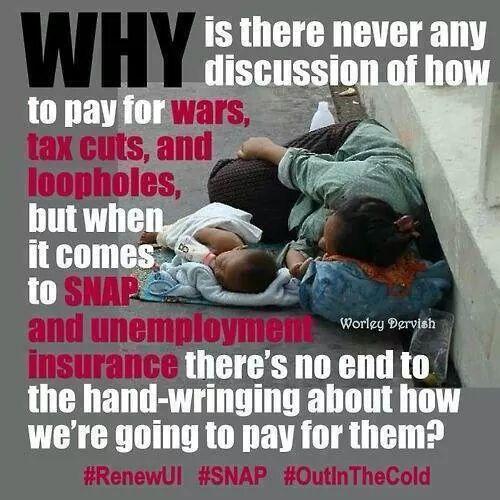
The food stamp program, now called the Supplemental Nutrition Assistance Program, or SNAP, served more than 46 million Americans and cost $74 billion in 2015.
Republicans claimed the program was unbearably expensive at $74.1 billion a year.
Meanwhile, Republicans were eager to spend billions of dollars for another project: An unnecessary war with Syria.
One of these right-wingers was Bill Kristol, editor of the Weekly Standard—and one of the leading instigators of the 2003 war with Iraq.
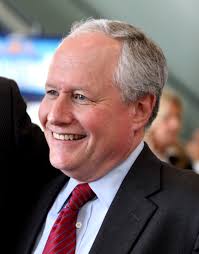
Bill Kristol
He—like senior officials on the George W. Bush administration—falsely claimed that Iraqi dictator Saddam Hussein had weapons of mass destruction and planned to use them against the United States.
Another Kristol lie: Hussein planned 9/11 with Osama bin Laden.
He has never apologized for either lie—or the resulting war that killed 4,487 American soldiers and wounded another 32,226.
In a September, 2013 column, Kristol called for a return to slaughter—not only in Syria but Iran as well:
“…Soon after voting to authorize the use of force against the Assad regime, Republicans might consider moving an authorization for the use of force against the Iranian nuclear weapons program.
“They can explain that Obama’s dithering in the case of Syria shows the utility of unequivocally giving him the authority to act early with respect to Iran.”
Former Secretary of State Condoleeza Rice—who also lied the nation into the needless 2003 Iraq war—was another big promoter of “give war a chance:”
“My fellow Americans, we do not have a choice. We cannot be reluctant to lead–and one cannot lead from behind.”
Among Republican U.S. Senators calling for war were John McCain (Arizona) and Lindsey Graman (South Carolina), who issued a joint statement:
“Using stand-off weapons, without boots on the ground, and at minimal risk to our men and women in uniform, we can significantly degrade Assad’s air power and ballistic missile capabilities and help to establish and defend safe areas on the ground.
“In addition, we must begin a large-scale effort to train and equip moderate, vetted elements of the Syrian opposition with the game-changing weapons they need to shift the military balance against [Syrian dictator Bashar] Assad’s forces.”
Except that there were no “moderate, vetted elements” of the Syrian opposition. The opposition was just as murderous as the Assad regime—and eager to replace one dictator with another.
In addition: A major weapon for “degrading Assad’s air power” would be Tomahawk Cruise missiles. A single one of these costs $1,410,000.
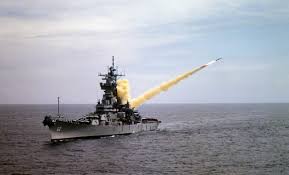
Firing of a Tomahawk Cruise missile
A protracted missile strike would have rained literally billions of dollars’ worth of American missiles on Syria.
Meanwhile, the Pentagon was spending about $27 million a week to maintain the increased U.S. Navy presence in the Mediterranean Sea and Middle East region to keep watch over Syria and be prepared to strike.
Navy officials said it cost about $25 million a week for the carrier group and $2 million a week for each destroyer.
* * * * *
Is there a lesson to be learned from all this?
Yes.
Powerful people—whether generals, politicians or the wealthy—will always find abundant money and resources available for projects they consider important.
It’s only when it comes to projects that other people actually need that the powerful will claim there is, unfortunately, a cash shortage.
ABC NEWS, AL QAEDA, ALTERNET, AMERICABLOG, AMERICAN EXCEPTIONALISM, AP, BABY BOOMER RESISTANCE, BARACK OBAMA, BASHIR AL-ASSAD, BBC, BLOOMBERG NEWS, BUZZFEED, CBS NEWS, CHILE, CNN, CROOKS AND LIARS, DAILY KOZ, FACEBOOK, FIVETHIRTYEIGHT, HARPER’S MAGAZINE, HOUSE UN-AMERICAN ACTIVITIES COMMITTEE, HUFFINGTON POST, HUMAN RIGHTS, IRAN, JOHN BOEHNER, JOHN MCCAIN, MEDIA MATTERS, MOTHER JONES, MOVEON, MSNBC, NBC NEWS, NEW REPUBLIC, NEWSDAY, NEWSWEEK, NICARAGUA, NPR, PBS NEWSHOUR, POLITICO, POLITICUSUSA, RAW STORY, REUTERS, RUSSIA, S.I. HAYAKAWA, SALON, SEATTLE TIMES, SLATE, SYRIA, TALKING POINTS MEMO, THE ATLANTIC, THE CHICAGO SUN-TIMES, THE CHICAGO TRIBUNE, THE DAILY BEAST, THE DAILY BLOG, THE GUARDIAN, THE HILL, THE HUFFINGTON POST, THE LOS ANGELES TIMES, THE NATION, THE NEW REPUBLIC, THE NEW YORK TIMES, THE NEW YORKER, THE VILLAGE VOICE, THE WALL STREET JOURNAL, THE WASHINGTON POST, THINKPROGRESS, TIME, TRUTHDIG, TRUTHOUT, TWITTER, TWO POLITICAL JUNKIES, U.S. NEWS & WORLD REPORT, UPI, USA TODAY, VLADIMIR PUTIN, WONKETTE
In Bureaucracy, History, Military, Politics, Social commentary on October 1, 2021 at 12:10 am
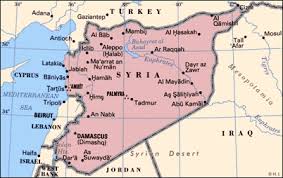
On September 11, 2013, the New York Times published an Op-Ed (guest editorial) from Russian President Vladimir Putin, entitled: “A Plea for Caution from Russia: What Putin Has to Say to Americans About Syria.”
No one should be surprised that Putin came out strongly against an American air strike on Syria.
Its “President” (i.e., dictator) Bashir al-Assad, is, after all, a close ally of Russia. Just as his late father and dictator, Hafez al-Assad, was a close ally of the Soviet Union until its collapse in 1991.
Putin, of course, is a former member of the KGB, the infamous secret police which ruled the Soviet Union from its birth in 1917 to its collapse in 1991.
He grew up under a Communist dictatorship and clearly wishes to return to that era, saying publicly: “First and foremost it is worth acknowledging that the demise of the Soviet Union was the greatest geopolitical catastrophe of the century.”
So it would have been unrealistic to expect him to view the “Syria crisis” the same way that President Barack Obama did.
(A “crisis” for politicians is any event that can be exploited to increase their own status—and thus power. Few politicians really care about the “human rights” of other nations—unless promoting this issue can empower themselves and/or their own nation.
(President Ronald Reagan, for example, often wailed about the Soviets’ oppression of the Polish union, Solidarity—while firing hundreds of unionized air traffic controllers who went on strike.)
(A “crisis” for the media is any event that can be exploited for higher ratings.)
In his September 11, 2013 guest editorial in the New York Times, Putin offered the expected Russian take on Syria:
- Poison gas was used in Syria.
- It wasn’t used by the Syrian Army.
- It was used by “opposition forces, to provoke intervention by their powerful foreign patrons.”
But it was the concluding paragraph that enraged American politicians the most—especially Right-wing ones. In it, Putin took exception with American “exceptionalism.”
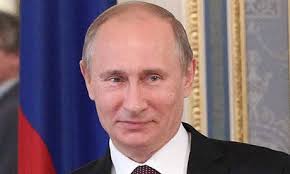
Vladimir Putin
This is the belief that the United States is unlike other nations in its innocence and steadfast dedication to human rights above all else.
Citizens of nations whose governments have been overthrown by the United States—such as Chile, Iran and Nicaragua—and replaced with brutal dictatorships would strongly disagree.
Referring to then-President Obama, Putin wrote:
“And I would rather disagree with a case he made on American exceptionalism, stating that the United States’ policy is ‘what makes America different. It’s what makes us exceptional.’
“It is extremely dangerous to encourage people to see themselves as exceptional, whatever the motivation.
“There are big countries and small countries, rich and poor, those with long democratic traditions and those still finding their way to democracy. Their policies differ, too.
“We are all different, but when we ask for the Lord’s blessings, we must not forget that God created us equal.”
Putin had never publicly shown any interest in religion. But by invoking “the Lord,” he was able to turn the Christian beliefs of his Western audience into a useful weapon.
“I was insulted,” then-House Speaker John Boehner (R-Ohio) told reporters when asked for his blunt reaction to the editorial.
“I have to be honest with you, I was at dinner, and I almost wanted to vomit,” said U.S. Senator Bob Menendez (D-New Jersey).
Putin had dared to question the self-righteousness of American foreign policy—and those who make it.
Making his case for war with Syria, Obama had said: “America is not the world’s policeman….
“But when, with modest effort and risk, we can stop children from being gassed to death, and thereby make our own children safer over the long run, I believe we should act.
“That’s what makes America different. That’s what makes us exceptional. With humility, but with resolve, let us never lose sight of that essential truth.”
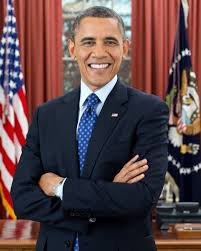
President Barack Obama
* * * * *
In short: Because we consider ourselves “exceptional,” we have the divine right to do whatever we want.
It’s not necessary to see Putin as a champion of democracy (he isn’t) to see the truth in this part of his editorial: “It is extremely dangerous to encourage people to see themselves as exceptional, whatever the motivation.”
From 1938 to 1969, the House Un-American Activities Committee sought to define what was “American” and what was “Un-American.” As if “American” stood for all things virtuous.
Whoever heard of an “Un-French Activities Committee”? Or an “Un-German” or “Un-British” one?
The late S.I. Hayakawa once made an observation that clearly applies to this situation.
Hayakawa was a professor of semantics (the study of meaning, focusing on the relation between words and what they stand for).
In his bestselling book, Language in Thought and Action, he observed that when a person hears a message, he has four ways of responding to it:
- Accept the speaker and his message.
- Accept the speaker but reject the message.
- Accept the message but reject the speaker.
- Reject the message and the speaker.
Americans might want to consider #3 in the recent case of Russian President Vladimir Putin.
9/11, ABC NEWS, AL QAEDA, ALTERNET, AMERICABLOG, AMERICAN CAESARS: THE LIVES OF THE PRESIDENTS FROM FRANKLIN D. ROOSEVELT TO GEORGE W. BUSH, AMERICAN EMPIRE, AP, BABY BOOMER RESISTANCE, BARACK OBAMA, BASHAR AL-ASSAD, BBC, BEN RHODES, BILL CLINTON, BLOOMBERG NEWS, BUREAUCRACY, BUZZFEED, CBS NEWS, CHRIS MATHEWS, CNN, CONDOLEEZA RICE, CROOKS AND LIARS, DAILY KOZ, DONALD TRUMP, DWIGHT EISENHOWER, FACEBOOK, FBI, FIVETHIRTYEIGHT, FRANKLIN D. ROOSEVELT, GEORGE H.W. BUSH, GEORGE W. BUSH, GERALD R. FORD, HARPER’S MAGAZINE, HARRY S. TRUMAN, HUFFINGTON POST, JIMMY CARTER, JOHN F. KENNEDY, LYNDON B. JOHNSON, MEDIA MATTERS, MOTHER JONES, MOVEON, MSNBC, NBC NEWS, NEW REPUBLIC, NEWSDAY, NEWSWEEK, NIGEL HAMILTON, NPR, OSAMA BIN LADEN, PBS NEWSHOUR, POLITICO, POLITICUSUSA, RAW STORY, REPUBLICAN PARTY, REUTERS, RICHARD CLARKE, RICHARD NIXON, ROMAN EMPIRE, SALON, SEATTLE TIMES, SEPTEMBER 11, SLATE, SUETONIUS, SYRIA, TALKING POINTS MEMO, TERRORISM, THE ATLANTIC, THE CHICAGO SUN-TIMES, THE CHICAGO TRIBUNE, THE DAILY BEAST, THE DAILY BLOG, THE GUARDIAN, THE HILL, THE HUFFINGTON POST, THE LOS ANGELES TIMES, THE NATION, THE NEW REPUBLIC, THE NEW YORK TIMES, THE NEW YORKER, THE TWELVE CAESARS, THE VILLAGE VOICE, THE WASHINGTON POST, THINKPROGRESS, TIME, TRUTHDIG, TRUTHOUT, TWITTER, TWO POLITICAL JUNKIES, U.S. NEWS & WORLD REPORT, UPI, USA TODAY, WONKETTE
In Bureaucracy, History, Military, Politics, Social commentary on August 27, 2021 at 12:05 am
On September 12, 2001, President George W. Bush attended a meeting of the National Security Council.
“Why shouldn’t we go against Iraq, not just Al-Qaeda?” demanded Donald Rumsfeld, the Secretary of Defense.
Vice President Dick Cheney enthusiastically agreed.
Secretary of State Colin Powell then pointed out there was absolutely no evidence that Iraq had had anything to do with 9/11 or Al-Qaeda. And he added: “The American people want us to do something about Al-Qaeda”—not Iraq.
On November 21, 2001, only 10 weeks after 9/11, Bush told Rumsfeld: It’s time to turn to Iraq.
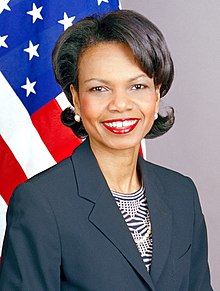

Condoleeza Rice
Bush and his war-hungry Cabinet officials knew that Americans demanded vengeance on AlQaeda’s mastermind, Osama bin Laden, and not Iraqi dictator Saddam Hussein. So they repeatedly fabricated “links” between the two:
- Saddam had worked hand-in-glove with Bin Laden to plan 9/11.
- Saddam was harboring and supporting Al-Qaeda throughout Iraq.
- Saddam, with help from Al-Qaeda, was scheming to build a nuclear bomb.
Yet as early as September 22, 2001, Bush had received a classified President’s Daily Brief intelligence report, which stated that there was no evidence linking Saddam Hussein to 9/11.
The report added that there was scant credible evidence that Iraq had any significant collaborative ties with Al-Qaeda.
Even more important: Saddam had tried to monitor Al Qaeda through his intelligence service—because he saw Al-Qaeda and other theocratic radical Islamist organizations as a potential threat to his secular regime.

Dick Cheney
Bush administration officials repeatedly claimed that Iraq possessed huge quantities of chemical and biological weapons, in violation of UN resolutions. And they further claimed that US intelligence agencies had determined:
- the precise locations where these weapons were stored;
- the identities of those involved in their production; and
- the military orders issued by Saddam Hussein for their use in the event of war.
Among other lies stated as fact by members of the Bush administration:
- Iraq had sought uranium from Niger, in west Africa.
- Thousands of aluminum tubes imported by Iraq could be used in centrifuges to create enriched uranium.
- Iraq had up to 20 long-range Scud missiles, prohibited under UN sanctions.
- Iraq had massive stockpiles of chemical and biological agents, including nerve gas, anthrax and botulinum toxin.
- Saddam Hussein had issued chemical weapons to front-line troops who would use them when US forces crossed into Iraq.

Donald Rumsfeld
Consider the following:
August 26, 2002: Cheney told the Veterans of Foreign Wars, “There is no doubt that Saddam Hussein now has weapons of mass destruction. There is no doubt he is amassing them to use against our friends, against our allies and against us.”
September 8, 2002: National Security Advisor Condoleeza Rice said on CNN: ”There is certainly evidence that Al-Qaeda people have been in Iraq. There is certainly evidence that Saddam Hussein cavorts with terrorists.”
September 18, 2002: Rumsfeld told the House Armed Services Committee, “We do know that the Iraqi regime has chemical and biological weapons. His regime has amassed large, clandestine stockpiles of chemical weapons—including VX, sarin, cyclosarin and mustard gas.”
October 7, 2002: Bush declared in a nationally televised speech in Cincinnati that Iraq “possesses and produces chemical and biological weapons. It is seeking nuclear weapons.”
March 16, 2003: Cheney declared on NBC’s “Meet the Press”: “We believe [Saddam Hussein] has, in fact, reconstituted nuclear weapons.”
Bush never regretted his decision to invade Iraq—on March 20, 2003.
Even as American occupying forces repeatedly failed to turn up any evidence of “weapons of mass destruction” (WMDs), Bush and his minions claimed the invasion a good thing.
In fact, Bush—who hid out the Vietnam war in the Texas Air National Guard—even joked publicly about the absence of WMDs.
He did so at a White House Correspondents dinner on March 24, 2004—one year after he had started the war.
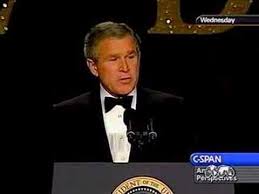
George W. Bush at the 2004 White House Correspondents’ dinner
To Bush, the non-existent WMDs were nothing more than the butt of a joke that night. While an overhead projector displayed photos of a puzzled-looking Bush searching around the Oval Office, Bush recited a comedy routine.
“Those weapons of mass destruction have gotta be somewhere,” Bush laughed, while a photo showed him poking around the corners in the Oval Office.
“Nope—no weapons over there! Maybe they’re under here,” he said, as a photo showed him looking under a desk.
Meanwhile, an assembly of wealthy, pampered men and women—-the elite of America’s media and political classes—laughed heartily during Bush’s performance.
It was a scene worthy of the court of the ancient Caesars, complete with royal flunkies: “Hey! The country we just destroyed wasn’t a threat to us after all! Isn’t that a gas?”
The war that Bush had deliberately provoked:
- Took the lives of 4,484 Americans.
- Cost the United States Treasury at least $2 trillion.
- Created a Middle East power vacumn.
- Allowed Iran—Iraq’s arch enemy—to eagerly fill it.
- Frightened and repelled even America’s closest allies.
- Killed at least 655,000 Iraqis.
- Bush retired from office with a lavish pension and full Secret Service protection.
- He wrote his memoirs and was paid $7 million for the first 1.5 million copies.
- Cheney, Rumsfeld, Rice retired to private business, wrote their own memoirs, and lived in comfort as respected elder statesmen.
9/11, ABC NEWS, AL QAEDA, ALTERNET, AMERICABLOG, AMERICAN CAESARS: THE LIVES OF THE PRESIDENTS FROM FRANKLIN D. ROOSEVELT TO GEORGE W. BUSH, AMERICAN EMPIRE, AP, BABY BOOMER RESISTANCE, BARACK OBAMA, BASHAR AL-ASSAD, BBC, BEN RHODES, BILL CLINTON, BLOOMBERG NEWS, BUREAUCRACY, BUZZFEED, CBS NEWS, CHRIS MATHEWS, CNN, CONDOLEEZA RICE, CROOKS AND LIARS, DAILY KOZ, DONALD TRUMP, DWIGHT EISENHOWER, FACEBOOK, FBI, FIVETHIRTYEIGHT, FRANKLIN D. ROOSEVELT, GEORGE H.W. BUSH, GEORGE W. BUSH, GERALD R. FORD, HARPER’S MAGAZINE, HARRY S. TRUMAN, HUFFINGTON POST, JIMMY CARTER, JOHN F. KENNEDY, LYNDON B. JOHNSON, MEDIA MATTERS, MOTHER JONES, MOVEON, MSNBC, NBC NEWS, NEW REPUBLIC, NEWSDAY, NEWSWEEK, NIGEL HAMILTON, NPR, OSAMA BIN LADEN, PBS NEWSHOUR, POLITICO, POLITICUSUSA, RAW STORY, REPUBLICAN PARTY, REUTERS, RICHARD CLARKE, RICHARD NIXON, ROMAN EMPIRE, SALON, SEATTLE TIMES, SEPTEMBER 11, SLATE, SUETONIUS, SYRIA, TALKING POINTS MEMO, TERRORISM, THE ATLANTIC, THE CHICAGO SUN-TIMES, THE CHICAGO TRIBUNE, THE DAILY BEAST, THE DAILY BLOG, THE GUARDIAN, THE HILL, THE HUFFINGTON POST, THE LOS ANGELES TIMES, THE NATION, THE NEW REPUBLIC, THE NEW YORK TIMES, THE NEW YORKER, THE TWELVE CAESARS, THE VILLAGE VOICE, THE WASHINGTON POST, THINKPROGRESS, TIME, TRUTHDIG, TRUTHOUT, TWITTER, TWO POLITICAL JUNKIES, U.S. NEWS & WORLD REPORT, UPI, USA TODAY, WONKETTE
In Bureaucracy, History, Military, Politics, Social commentary on August 26, 2021 at 12:14 am
September 11, 2018, will mark the 20th anniversary of the worst terrorist attack on United States soil. Inevitably, this is a time to remember all those whose lives were so cruelly snuffed out.
But it is also a time to remember those Americans who made this atrocity—and the Iraq war that followed—inevitable.
British historian Nigel Hamilton has chronicled their arrogance and indifference in his 2010 biography: American Caesars: Lives of the Presidents from Franklin D. Roosevelt to George W. Bush.

Hamilton noted that Richard Clarke, the national security advisor on terrorism, was certain that Osama bin Laden had arranged the USS Cole bombing in Aden on October 12, 2000.
For months, Clarke tried to convince others in the Bush Administration that Bin Laden was plotting another attack against the United States—either abroad or at home.
But Clarke could not prevail against the know-it-all arrogance of such higher-ranking Bush officials as Vice President Dick Cheney; Secretary of Defense Donald Rumsfeld; Rumsfeld’s deputy, Paul Wolfowitz; and National Security Advisor Condoleeza Rice.
Rice initially refused to hold a cabinet-level meeting on the subject. Then she “insisted the matter be handled only by a more junior Deputy Principals meeting” in April, 2001, writes Hamilton.
Wolfowitz, the number-two man at the Department of Defense, said: “I don’t understand why we are beginning by talking about this one man, bin Laden.”
Even after Clarke outlined the threat posed by Al-Qaeda, Wolfowitz—whose real target was Saddam Hussein—said: “You give bin Laden too much credit.”
Wolfowitz insisted that bin Laden couldn’t carry out his terrorist acts without the aid of a state sponsor—namely, Iraq.
Wolfowitz, in fact, blamed Iraq for the 1993 bombing of the World Trade Center. Clarke was stunned, since there was absolutely no evidence of Iraqi involvement in this.
“Al-Qaeda plans major acts of terrorism against the United States,” Clarke warned his colleagues. He pointed out that, like Adolf Hitler, bin Laden had actually published his plans for future destruction.
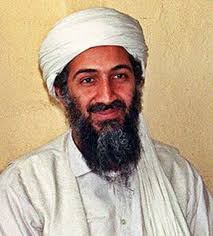
Osama bin Laden
And he added: “Sometimes, as with Hitler in Mein Kampf, you have to believe that these people will actually do what they say they will do.”
Wolfowitz heatedly traded on his Jewish heritage to bring Clarke’s unwelcome arguments to a halt: “I resent any comparison between the Holocaust and this little terrorist in Afghanistan.”
Writing in outraged fury, Hamilton sums up Clarke’s agonizing frustrations:
- Bush’s senior advisors treated their colleagues who had served in the Clinton administration with contempt.
- President Bush, Vice President Dick Cheney, National Security Advisor Condoleeza Rice, Secretary of Defense Donald Rumsfeld and Deputy Defense Secretary Paul Wolfowitz seemed content to ignore the danger signals of an impending al-Qaeda attack.
- This left only Secretary of State Colin Powell, his deputy Richard Armitage, Richard Clarke and a skeptical Treasury Secretary, Paul O’Neill, to wage “a lonely battle to waken a seemingly deranged new administration.”
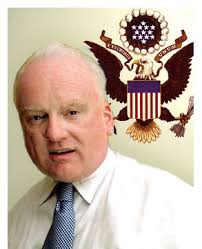
Richard Clarke
Clarke alerted Federal Intelligence agencies that “Al-Qaeda is planning a major attack on us.” He asked the FBI and CIA to report to his office all they could learn about suspicious persons or activities at home and abroad.
Finally, at a meeting with Rice on September 4, 2001, Clarke challenged her to “picture yourself at a moment when in the very near future Al-Qaeda has killed hundreds of Americans, and imagine asking yourself what you wish then that you had already done.”
Seven days later, Al-Qaeda struck, and 3,000 Americans died horrifically—and needlessly.
Neither Bush, Cheney, Rice, Rumsfeld nor Wolfowitz ever admitted their negligence. Nor would any of them be brought to account.
Disgustingly, these were the same officials who, afterward, posed as the Nation’s saviors—and branded anyone who disagreed with them as a traitor, practices the Right continues to exploit to this day.
Only Richard Clarke—who had vainly argued for stepped-up security precautions and taking the fight to Al-Qaeda—gave that apology.
On March 24, 2004, Clarke testified at the public 9/11 Commission hearings. Addressing relatives of victims in the audience, he said: “Your government failed you, those entrusted with protecting you failed you, and I failed you.”
Yet even worse was to come.
On the evening after the September 11 attacks, Bush took Clarke aside during a meeting in the White House Situation Room:
“I want you, as soon as you can, to go back over everything, everything. See if Saddam [Hussein, the dictator of Iraq] did this. See if he’s linked in any way.”
Clarke was stunned: “But, Mr. President, Al-Qaeda did this.”
“I know, I know,” said Bush. “But see if Saddam was involved. I want to know.”
Hussein had not plotted the attack–and there was no evidence proving that he did. But the attack gave “W” the excuse he wanted to remove the man he blamed for the 1992 defeat of his father, President George H.W. Bush.
Bush believed that his father would have been re-elected if he had “gone all the way” into Baghdad during the 1991 Gulf War.
He would finish the job that his father had started but failed to compete.
On September 12, 2001, Bush attended a meeting of the National Security Council.
“Why shouldn’t we go against Iraq, not just Al-Qaeda?” demanded Donald Rumsfeld, the Secretary of Defense.
Vice President Dick Cheney enthusiastically agreed.
9/11, ABC NEWS, AL QAEDA, ALTERNET, AMERICABLOG, AMERICAN CAESARS: THE LIVES OF THE PRESIDENTS FROM FRANKLIN D. ROOSEVELT TO GEORGE W. BUSH, AMERICAN EMPIRE, AP, BABY BOOMER RESISTANCE, BARACK OBAMA, BASHAR AL-ASSAD, BBC, BEN RHODES, BILL CLINTON, BLOOMBERG NEWS, BUREAUCRACY, BUZZFEED, CBS NEWS, CHRIS MATHEWS, CNN, CONDOLEEZA RICE, CROOKS AND LIARS, DAILY KOZ, DONALD TRUMP, DWIGHT EISENHOWER, FACEBOOK, FBI, FIVETHIRTYEIGHT, FRANKLIN D. ROOSEVELT, GEORGE H.W. BUSH, GEORGE W. BUSH, GERALD R. FORD, HARPER’S MAGAZINE, HARRY S. TRUMAN, HUFFINGTON POST, JIMMY CARTER, JOHN F. KENNEDY, LYNDON B. JOHNSON, MEDIA MATTERS, MOTHER JONES, MOVEON, MSNBC, NBC NEWS, NEW REPUBLIC, NEWSDAY, NEWSWEEK, NIGEL HAMILTON, NPR, OSAMA BIN LADEN, PBS NEWSHOUR, POLITICO, POLITICUSUSA, RAW STORY, REPUBLICAN PARTY, REUTERS, RICHARD CLARKE, RICHARD NIXON, ROMAN EMPIRE, SALON, SEATTLE TIMES, SEPTEMBER 11, SLATE, SUETONIUS, SYRIA, TALKING POINTS MEMO, TERRORISM, THE ATLANTIC, THE CHICAGO SUN-TIMES, THE CHICAGO TRIBUNE, THE DAILY BEAST, THE DAILY BLOG, THE GUARDIAN, THE HILL, THE HUFFINGTON POST, THE LOS ANGELES TIMES, THE NATION, THE NEW REPUBLIC, THE NEW YORK TIMES, THE NEW YORKER, THE TWELVE CAESARS, THE VILLAGE VOICE, THE WASHINGTON POST, THINKPROGRESS, TIME, TRUTHDIG, TRUTHOUT, TWITTER, TWO POLITICAL JUNKIES, U.S. NEWS & WORLD REPORT, UPI, USA TODAY, WONKETTE
In History, Military, Politics, Social commentary on August 25, 2021 at 12:05 am
“Many of the people who work in American foreign policy today were shaped by the experience of the 1990s, when the United States was ascendant. The Berlin Wall came down. Democracy was spreading across Europe, Latin America and East Asia.
“Russia was on its back foot, and China had not yet risen. We really could shape events in much of the world. NATO could expand into the former Soviet Union without fear that Russia would invade one of those countries. We could bring together the whole world to kick Saddam Hussein out of Kuwait.”
So wrote Ben Rhodes, author of The World As It Is: A Memoir of the Obama White House (2018).
For eight years, Rhodes saw Barack Obama up close as few others did. He served as, first, a speechwriter, then deputy national security adviser, and finally as all-around aide and diplomat-without-portfolio.
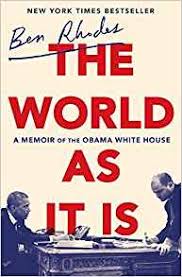
Rhodes noted that Obama sometimes warned that America’s post-Cold War moment in the sun wouldn’t last: “Shock and awe. Regime change. A trillion dollars later, we couldn’t keep the electricity running in Baghdad.
“The Iraq war disturbed other countries—including U.S. allies—in its illogic and destruction, and accelerated a realignment of power and influence that was further advanced by the global financial crisis.
“By the time Obama took office, a global correction had already taken place. Russia was resisting American influence. China was throwing its weight around. Europeans were untangling a crisis in the Euro-zone.”
To begin at the beginning:
Even as the rubble was being cleared at the Pentagon and World Trade Center following the September 11, 2001 attacks, President George W. Bush was preparing to use the attacks as an excuse to topple Iraqi dictator Saddam Hussein.
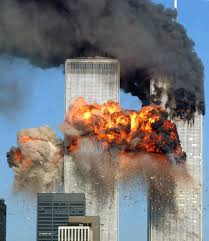
World Trade Center on September 11, 2001
Hussein had not plotted 9/11, and there was no evidence that he did. But that didn’t matter to Bush and those planning the invasion and conquest of Iraq.
British historian Nigel Hamilton has dared to lay bare the facts of this disgrace. Hamilton is the author of several acclaimed political biographies, including JFK: Reckless Youth and Bill Clinton: Mastering the Presidency.
In 2007, he began research on his latest book: American Caesars: The Lives of the Presidents From Franklin D. Roosevelt to George W. Bush.

Nigel Hamilton
By Nigel Hamilton (Nigel Hamilton picture)
The inspiration for this came from a classic work of ancient biography: The Twelve Caesars, by Gaius Suetonius Tranquillus—known as Suetonius.
Suetonius, a Roman citizen and historian, had chronicled the lives of the first twelve Caesars of imperial Rome: Julius Caesar, Augustus, Tiberius, Caligula, Claudius, Nero, Galba, Otho, Vitellius, Vespasian, Titus and Domitian.
Hamilton wanted to examine post-World War II United States history as Suetonius had examined that of ancient Rome: Through the lives of the 12 “emperors” who had held the power of life and death over their fellow citizens—and those of other nations.
For Hamilton, the “greatest of American emperors, the Caesar Augustus of his time,” was Franklin D. Roosevelt, who led his country through the Great Depression and World War II.
His “”great successors” were Harry S. Truman, Dwight D. Eisenhower and John F. Kennedy—who, in turn, contained the Soviet Union abroad and presided over sustained economic prosperity at home.
By contrast, “arguably the worst of all the American Caesars” was “George W. Bush, and his deputy, Dick Cheney, who willfully and recklessly destroyed so much of the moral basis of American leadership in the modern world.”
Among the most lethal of Bush’s offenses: The appointing of officials who refused to take seriously the threat posed by Al-Qaeda.
And this arrogance and indifference continued—right up to September 11, 2001, when the World Trade Center and Pentagon became targets for destruction.
Among the few administration officials who did take Al-Qaeda seriously was Richard Clarke, the chief counter-terrorism adviser on the National Security Council.
Clarke had been thus appointed in 1998 by President Bill Clinton. He continued in the same role under President Bush—but the position was no longer given cabinet-level access.
This put him at a severe disadvantage when dealing with other, higher-ranking Bush officials—such as Vice President Dick Cheney, Secretary of Defense Donald Rumsfeld, Rumsfeld’s deputy, Paul Wolfowitz and National Security Advisor Condoleeza Rice.
These turned out to be the very officials who refused to believe that Al-Qaeda posed a lethal threat to the United States.
“Indeed,” writes Hamilton, “in the entire first eight months of the Bush Presidency, Clarke was not permitted to brief President Bush a single time, despite mounting evidence of plans for a new al-Qaeda outrage.” [Italics added]
Nor did it help that, during his first eight months in office before September 11, Bush was on vacation, according to the Washington Post, 42% of the time.
For months, Clarke tried to convince others in the Bush Administration that Bin Laden was plotting another attack against the United States–either abroad or at home.
But Clarke could not prevail against the know-it-all arrogance of such higher-ranking Bush officials as Vice President Dick Cheney; Secretary of Defense Donald Rumsfeld; Rumsfeld’s deputy, Paul Wolfowitz; and National Security Advisor Condoleeza Rice.
2003 IRAQ WAR, 2020 PRESIDENTIAL ELECTION, 9/11 ATTACKS, ABC NEWS, ADOLF HITLER, ALTERNET, AMERICABLOG, AP, BABY BOOMER RESISTANCE, BATTLE OF BRITAIN, BILL KRISTOL, BLOOMBERG, BUZZFEED, CAROL LEONNIG, CBS NEWS, CHAIRMAN OF THE JOINT CHIEFS OF STAFF, CIA, CNN, COUP, CROOKS AND LIARS, DAILY KOZ, DEPARTMENT OF DEFENSE, DONALD TRUMP, DRUDGE RETORT, FACEBOOK, FBI, FIVETHIRTYEIGHT, FOREIGN POLICY MAGAZINE, HARPER’S MAGAZINE, HERMANN GORING, HITLER OATH, I ALONE CAN FIX IT (BOOK), JAMES MATTIS, MARK MILLEY, MEDIA MATTERS, MICHAEL CUTRONE, MIKE PENCE, MOTHER JONES, MOVEON, MSNBC, NBC NEWS, NEWSWEEK, NPR, OSAMA BIN LADEN, PAUL VON HINDENBURG, PBS NEWSHOUR, PENTAGON, PHILIP RUCKER, POLITICO, POLITICUSUSA, RAW STORY, REICHSTAG FIRE, REPUBLICANS, REUTERS, SALON, SEATTLE TIMES, SLATE, SYRIA, TALKING POINTS MEMO, THE ATLANTIC, THE CHICAGO SUN-TIMES, THE CHICAGO TRIBUNE, THE DAILY BEAST, THE DAILY BLOG, THE GUARDIAN, THE HILL, THE HUFFINGTON POST, THE LOS ANGELES TIMES, THE NATION, THE NEW REPUBLIC, THE NEW YORK TIMES, THE PENTAGON, THE VILLAGE VOICE, THE WASHINGTON POST, THE WEEKLY STANDARD, THINKPROGRESS, THIRD REICH, TIME, TRUTHDIG, TRUTHOUT, TWITTER, TWO POLITICAL JUNKIES, U.S. NEWS & WORLD REPORT, UPI, USA TODAY, WEEKLY STANDARD, WEHRMACHT, WILLIAM KRISTOL, WONKETTE
In Bureaucracy, History, Military, Politics, Social commentary on July 20, 2021 at 12:06 am
On August 2, 1934, German President Paul von Hindenburg died.
Adolf Hitler was then serving as Reich Chancellor—the equivalent of prime minister. Within hours, the Nazi Reichstag [parliament] announced the following law, back-dated to August 1st:
“The office of Reich President will be combined with that of Reich Chancellor. The existing authority of the Reich President will consequently be transferred to the Führer and Reich Chancellor, Adolf Hitler.”
Immediately following the announcement of the new Führer law, the German officer corps and every individual soldier in the German Army [Wehrmacht] was made to swear a new oath of allegiance:
“I swear by God this holy oath, that I will render to Adolf Hitler, Führer of the German Reich and People, Supreme Commander of the Armed Forces, unconditional obedience, and that I am ready, as a brave soldier, to risk my life at any time for this oath.”
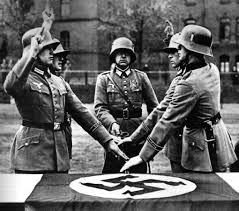
Soldiers swearing the Fuhrer Oath
For Germans—especially officers of the Wehrmacht—taking an oath was a holy act. Previously they had sworn obedience to the German state. Now they swore personal allegiance to Adolf Hitler.
President Donald Trump wanted to resurrect “the German experiment.”
On February 5, 2020, Republicans refused to impeach Trump for abuse of power and obstruction of Congress. Trump quickly began purging independent officials throughout government—and appointing political loyalists in their places.
On May 6, 2000, Foreign Policy magazine carried an alarming story under the headline: “Trump Taps Point Man to Remove Pentagon Officials Seen as Disloyal.”
Specifically: “Michael Cutrone, who has been detailed as Vice President Mike Pence’s top national security aide for South Asia, is set to arrive at the Pentagon to serve in a behind-the-scenes role vetting Defense Department officials for loyalty to the president, according to two current administration officials.”
Veteran Pentagon officials feared that the few remaining professional appointees who could resist illegal or irrational policy ideas would be removed from their posts or undermined. This would ensure far tighter White House control than had been the case under Defense Secretary James Mattis.
Their fears reached a crescendo during the months after Trump lost the 2020 Presidential election—from November 3, 2020 to January 20, 2021.
Chairman of the Joint Chiefs of Staff General Mark Milley feared that Trump and his allies might attempt a coup or take other dangerous or illegal measures. He and the other Joint Chiefs planned to resign, one-by-one, rather than carry out orders from Trump that they considered to be illegal, dangerous or ill-advised.

Mark Milley
Milley shared his fears of a coup with friends, lawmakers and colleagues.
“They may try, but they’re not going to fucking succeed,” Milley told his deputies. “You can’t do this without the military. You can’t do this without the CIA and the FBI. We’re the guys with the guns.”
In the days leading up to the January 6 attack on the Capitol Building, Milley told his staff that he believed Trump was stoking unrest, possibly in hopes of an excuse to invoke the Insurrection Act and call out the military.
Milley saw Trump as the classic authoritarian leader with nothing to lose.
“This is a Reichstag moment,” Milley told aides—referring to the February 27, 1933 arson of Germany’s parliament building which enabled Adolf Hitler to assume dictatorial powers.
The military’s plans to thwart a Trump coup are revealed in the new book I Alone Can Fix It: Donald J. Trump’s Catastrophic Final Year, by Carol Leonnig and Philip Rucker.
In a July 15 statement, Trump attacked Milley: “I never threatened, or spoke about, to anyone, a coup of our Government. So ridiculous!
“Sorry to inform you, but an Election is my form of ‘coup,’ and if I was going to do a coup, one of the last people I would want to do it with is General Mark Milley.”
Which implies he would choose some other general to plot a coup.
William Kristol—a Right-wing political analyst—has been dubbed “the godfather of neoconservatism.” And with good reason.
Immediately following the 9/11 attacks, Kristol, the editor of the Weekly Standard, was one of the leading instigators of the 2003 war with Iraq.
Bill Kristol
But on February 15, 2019, Kristol posted on Twitter:
“Members of Congress take this oath of office (see Title 5, Section 3331 of the United States Code): ‘I do solemnly swear (or affirm) that I will support and defend the Constitution of the United States against all enemies, foreign and domestic; that I will bear true faith and allegiance to the same; that I take this obligation freely, without any mental reservation or purpose of evasion, and that I will well and faithfully discharge the duties of the office on which I am about to enter. So help me God.'”
On May 7, 2019, he posted “the new GOP Congressional oath”:
“I do solemnly swear that I will support and defend Donald Trump against all oversight; that I will bear true faith and allegiance to him; that I take this obligation despite mental reservation and in the spirit of evasion of duty. So help me God.”
No doubt Kristol, who considers himself a dyed-in-the-wool conservative, remembers all too well the fate of those who took a similar oath to Adolf Hitler.
60 MINUTES, 9/11 ATTACKS, ABC NEWS, ADOLF HITLER, AFGHANISTAN, AL QAEDA, ALTERNET, AMERICABLOG, AP, AYATOLLAH RUHOLLAH KHOMEINI, BABY BOOMER RESISTANCE, BARACK OBAMA, BASHAR AL-ASSAD, BBC, BLOOMBERG NEWS, BUZZFEED, CARL VON CLAUSEWITZ, CARLOS THE JACKAL, CBS NEWS, CIA, CNN, CROOKS AND LIARS, DAILY KOZ, DAVID BROOKS, FACEBOOK, FIVETHIRTYEIGHT, HAITI, HARPER’S MAGAZINE, HARRY TRUMAN, HUFFINGTON POST, IMPERIAL HUBRIS, IRAN, ISLAM, ISLAMIC STATE OF IRAQ AND THE LEVANT, ISRAEL, JOSEPH BIDEN, MARCHING TOWARD HELL, MEDIA MATTERS, MICHAEL SCHEUER, MOTHER JONES, MOVEON, MSNBC, MUSLIMS, NAZI GERMANY, NBC NEWS, NEW REPUBLIC, NEWSDAY, NEWSWEEK, NPR, OSAMA BIN LADEN, PBS NEWSHOUR, PETER KING, PETER KINIG, POLITICO, POLITICUSUSA, RAW STORY, REUTERS, RUSSIA, SALON, SEATTLE TIMES, SHAH OF IRAN, SLATE, SOVIET UNION, SYRIA, TALKING POINTS MEMO, TERRORISM, THE ATLANTIC, THE CHICAGO SUN-TIMES, THE CHICAGO TIMES, THE CHICAGO TRIBUNE, THE DAILY BEAST, THE DAILY BLOG, THE GUARDIAN, THE HILL, THE HUFFINGTON POST, THE LOS ANGELES TIMES, THE NATION, THE NEW REPUBLIC, THE NEW YORK TIMES, THE NEW YORKER, THE VILLAGE VOICE, THE WASHINGTON POST, THINKPROGRESS, TIME, TRUTHDIG, TRUTHOUT, TWITTER, TWO POLITICAL JUNKIES, U.S. NEWS & WORLD REPORT, UPI, USA TODAY, VIETNAM WAR, VLADIMIR PUTIN, WONKETTE
In Bureaucracy, History, Military, Politics, Social commentary on July 14, 2021 at 12:11 am
For America to avoid permanent military entanglements in the Middle East, it must learn to mind its own business.
Perhaps the most important reason for doing so: America’s past efforts in that region have usually gone horribly awry.
Two examples should suffice:
Iran: Mohammad Mosaddegh was the democratically elected prime minister of Iran from 1951 until 1953. His decision to nationalize the Iranian oil industry led to his overthrow in a CIA coup.
He was replaced by Shah Mohammad Reza Pahlavi, who ruled until 1979 when a national upheaval forced him to flee. Iranians have never forgiven the United States for subjecting them to the 25-year reign of a brutal despot.
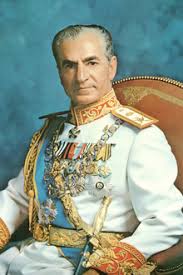
Shah of Iran
Afghanistan: In 1979, the Soviet Union invaded Afghanistan. America began supplying shoulder-fired Stinger anti-aircraft missiles to the Afghan Mujahideen fighters. These shifted the balance of the war to the Afghans, who brought down countless Soviet airplanes and helicopters.
Deprived of air supremacy, the Soviet Army lost 14,453 killed and 53,753 wounded, and withdrew by 1989.
Americans congratulated themselves on their Realpolitic. But many of the Stingers remained in the hands of jihadists—who decided that America was now “The Great Satan.”
One of those jihadists: Osama bin Laden.
According to Michael Scheuer, a primary step for disengaging from the Middle East is for America to its role as Israel’s permanent bodyguard.
Scheuer is a 20-year CIA veteran—as well as an author, historian, foreign policy critic and political analyst.
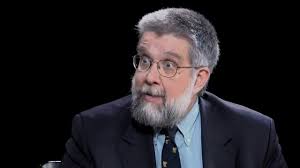
Michael Scheuer
For decades, the United States has pursued two policies in the Middle East—one based on relations with the Arab world and the other based on relations with Israel.
Policy 1: Maintaining access to vast amounts of Arab oil at low prices.
Policy 2: Maintaining the security of Israel.
Since the Arabs and Israelis hate each other, each side constantly tries to sway American support in its direction.
Every step the United States takes to defend Israel—diplomatically or militarily—ignites hatred of Americans among Islamics.
And every step—diplomatically or militarily—the United States takes to improve its relations with Islamic countries convinces Israelis that they’re being “sold out.”
In short: The United States is like a giant with one foot stuck in Israel and the other stuck in the Islamic world—leaving his private parts fully exposed to both.
This is not to deny that Israel has a right to exist. Every nation—including Israel—has the absolute right to defend itself from aggression.
But no nation—including Israel—has the right to expect another nation to act as its permanent bodyguard.
Millions of Americans believe they are morally obligated to defend Israel owing to the barbarism of the Holocaust. America, however, was never a party to this, and has nothing to atone for.
Another reason many Americans feel committed to Israel: Many fundamentalist Christians believe that, for Jesus Christ to awaken from his 2,000-year slumber, Israel must first re-conquer every inch of territory it supposedly held during the reign of Kings David and Solomon.
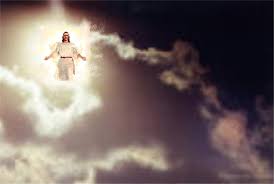
Right-wing Christian fantasy: Dead man hovering
After Christ returns, they believe, the Jews will face a choice: Become Christians or go to hell. For evangelical Christians, Jews remain the eternal “Christ killers.”
And if Jews must assume temporary control of the Middle East to bring about the return of a man who died 2,000 years ago, so be it.
This is also the view of many Right-wing members of the House of Representatives and Senate.
Unfortunately, such unbalanced views are shared by millions of equally irrational evangelical Christians.
During his October 9, 2013 appearance before the House Committee on Homeland Security, Michael Scheuer absolutely rejected the conservatives’ assertion that jihadists wage war on America because they “hate us for our freedoms.”
SCHEUER: These people are fighting for something substantive, for something religious….They are not going to fight us because we have women in the workplace.
That is an insanity. What they are fighting us about is what we do.…Invariably, they attribute their motivation to U.S. and Western military intervention and support for Israel and Muslim tyrannies.
Scheuer’s take on Israel brought him into direct conflict with Rep. Peter T. King (R-New York).
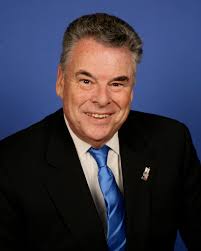
Congressman Peter T. King
KING: I would just say we would have more dead Americans if we didn’t stand by our allies in the Middle East. We would just encourage al-Qaeda to take advantage of us.
SCHEUER: You know, you are presiding over a bankruptcy. What can be worse? What has been the goal of al-Qaeda since it was formed? To bankrupt the United States. Who is winning today, sir? We are done like dinner.
KING: We are winning and we will continue to win unless we take the advice of people like you.
SCHEUER: Sir, you are exactly wrong. We are losing. Two U.S. field armies were defeated by men in the field with weapons from the Korean War.
KING: The fact is we have not been successfully attacked since September 11.
SCHEUER: The fact is, sir, we have had two military defeats overseas, which is far more important.
And, warns Scheuer, more defeats—domestic and international—lie ahead unless the United States radically changes its policies toward the Middle East.


 Bureaucracybuster's Blog
60 MINUTES, ABC NEWS, ALTERNET, AMERICABLOG, AP, BABY BOOMER RESISTANCE, BARACK OBAMA, BLOOMBERG, BUZZFEED, CARL MUELLER, CBS NEWS, CIA, CNN, CROOKS AND LIARS, DAILY KOS, DAILY KOZ, DRUDGE RETORT, FACEBOK, FACEBOOK, FIVETHIRTYEIGHT, HARPER’S MAGAZINE, IMPERIAL HUBRIS, ISLAM, ISLAMIC STATE OF IRAQ AND THE LEVANT, KAYLA MUELLER, MARCHING TOWARD HELL, MEDIA MATTERS, MICHAEL SCHEUER, MOTHER JONES, MOVEON, MSNBC, MUSLIMS, NBC NEWS, NEWSWEEK, NPR, OSAMA BIN LADEN, PBS NEWSHOUR, POLITICO, POLITICUSUSA, RAW STORY, REUTERS, SALON, SEATTLE TIMES, SLATE, SYRIA, TALKING POINTS MEMO, THE ATLANTIC, THE CHICAGO SUN-TIMES, THE CHICAGO TRIBUNE, THE DAILY BEAST, THE DAILY BLOG, THE GUARDIAN, THE HILL, THE HUFFINGTON POST, THE LOS ANGELES TIMES, THE NATION, THE NEW REPUBLIC, THE NEW YORK TIMES, THE VILLAGE VOICE, THE WALL STREET JOURNAL, THE WASHINGTON POST, THINKPROGRESS, TIME, TRUTHDIG, TRUTHOUT, TWITTER, TWO POLITICAL JUNKIES, U.S. NEWS & WORLD REPORT, UPI, USA TODAY, VIETNAM WAR, WONKETTE
AMERICA NEEDS TO MIND ITS OWN BUSINESS
In Bureaucracy, History, Military, Politics, Social commentary on August 1, 2022 at 12:10 am“When trouble comes up anywhere in the world, they don’t call Beijing. They don’t call Moscow. They call us.”
So spoke President Barack Obama on the September 28, 2014 edition of 60 Minutes.
And, according to former CIA agent Michael Scheuer, that’s the problem: America can’t learn to mind its own business.
Scheuer is a 20-year CIA veteran—as well as an author, historian, foreign policy critic and political analyst.
Michael Scheuer
From 1996 to 1999 he headed Alec Station, the CIA’s unit assigned to track Osama bin Laden at the agency’s Counterterrorism Center.
He has served as an adjunct professor at Georgetown University’s Center for Peace and Security Studies.
He is best-known as the author of two seminal works on America’s fight against terrorism: Imperial Hubris: Why the West is Losing the War on Terror (2003) and Marching Toward Hell: America and Islam after Iraq (2008).
Scheuer says that Islamics don’t hate Americans because of “our way of life”—with its freedoms of speech and worship and its highly secular, commercialized culture.
Instead, Islamic hatred toward the United States stems from America’s six longstanding policies in the Middle East:
Scheuer contends that no amount of American propaganda will win “the hearts and minds” of Islamics who can “see, hear, experience, and hate” these policies firsthand.
But there is another danger facing America, says Scheuer, one that threatens “the core of our social and civil institutions.”
And in Marching Toward Hell he bluntly indicts that threat: The “profound and willful ignorance” of America’s “bipartisan governing elite.”
Scheuer defines this elite as “the inbred set of individuals who have influenced…drafted and conducted U.S. foreign policy” since 1973.
Within that group are:
“Some are Republicans, others Democrats; some are evangelicals, others atheists; some are militarists, others pacifists; some are purveyors of Western civilization, others are multiculturalists,” writes Scheuer.
But for all their political and/or philosophical differences, the members of this governing elite share one belief in common.
According to Scheuer, that belief is “an unquenchable ardor to have the United States intervene in all places, situations and times.”
And he warns that this “bipartisan governing elite” must radically change its policies—such as unconditional support for Israel and corrupt, tyrannical Muslim governments.
Otherwise, Americans will be locked in an endless “hot war” with the Islamic world.
During his September 28, 2014 appearance on 60 Minutes, President Obama admitted that the mostly Sunni-Muslim Iraqi army had refused to combat the Sunni army of ISIS.
Then followed this exchange:
Steve Kroft: What happens if the Iraqis don’t fight or can’t fight?
President Obama: Well….
Steve Kroft: What’s the end game?
President Obama: I’m not going to speculate on failure at the moment. We’re just getting started. Let’s see how they do.
It was precisely such a mindset that led the United States, step by step, into the Vietnam quagmire.
In the Middle East, as in Vietnam, the United States lacked:
America rushed to disaster in Vietnam because its foreign policy elite felt it had to “do something” to fight Communism anywhere in the world.
Now Americans—in and out of government—feel they must “do something” to stop the routine carnage that is life throughout the Middle East.
In December, 2012, Kayla Mueller, an idealistic 24-year-old American woman, arrived in Syria to assist Syrians caught up in their own civil war. And on August 4, 2013, she was kidnapped and held for ransom.
In 2015, she was killed—whether by her terrorist kidnappers or Jordanian airstrikes remains unclear.
On February 23, 2015, Carl Mueller appeared on the “Today” show, to protest the refusal of the United States Government to pay ransom demands to her terrorist kidnappers.
“How many mistakes have we all made in life that were naïve and didn’t get caught at? Kayla was just in a place that was more dangerous than most. And she couldn’t help herself. She had to go in there and had to help.”
But did she?
Kayla Mueller
There were thousands of communities within the United States desperate for the help of a caring social activist. And thousands of organizations—such as Volunteers in Service to America (VISTA), Habitat for Humanity and Catholic Relief Services—that would have been thrilled to enlist her services.
And she could have made lives better without constantly facing the dangers of kidnapping by Islamics determined to humiliate and slaughter Americans.
Michael Sheuer is right: The United States should learn to mind its own business and quit intervening in the affairs of Middle Eastern governments and peoples.
Kayla Mueller is proof of the rightness of that assertion.
Share this: