Posts Tagged ‘SLATE’
2016 PRESIDENTIAL RACE, ABC NEWS, ADOLF HITLER, ALEC BALDWIN, ALTERNET, BARACK OBAMA, BERNIE SANDERS, BUZZFEED, CBS NEWS, CNN, DAILY KOS, DEMOCRATIC CONVENTION, DEMOCRATIC NATIONAL COMMITTEE, DONALD TRUMP, FACEBOOK, FSB, HILLARY CLINTON, JOE SCARBOROUGH, JOSEPH STALIN, KGB, MICHAEL COHEN, MORNING JOE, MOTHER JONES, MOVEON, NATO, NAZI GERMANY, NAZI-SOVIET "NON-AGGRESSION PACT", NBC NEWS, NEWSWEEK, NPR, POLAND, POLITICO, RAW STORY, REPUBLICAN CONVENTION, REUTERS, RUSSIA, SALON, SATURDAY NIGHT LIVE, SLATE, SOVIET UNION, THE CHICAGO SUN-TIMES, THE CHICAGO TRIBUNE, THE DAILY BEAST, THE HUFFINGTON POST, THE LOS ANGELES TIMES, THE NEW YORK TIMES, THE WALL STREET JOURNAL, THE WASHINGTON POST, TIME, TWITTER, U.S. NEWS & WORLD REPORT, USA TODAY, VLADIMIR PUTIN, WEHRMACHT, WIKILEAKS
In Bureaucracy, History, Military, Politics, Social commentary on December 5, 2018 at 12:33 am
The love-fest between Vladimir Putin and Donald Trump certainly got off to a great start.
No doubt well-informed on Trump’s notorious egomania, Russian President Putin called a press conference on December 17, 2015, to announce: “He is a bright personality, a talented person, no doubt about it. It is not up to us to appraise his positive sides, it is up to the U.S. voters. But, as we can see, he is an absolute leader in the Presidential race.”
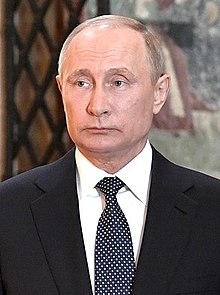
Vladimir Putin
kremlin.ru [CC BY 4.0 (https://creativecommons.org/licenses/by/4.0)%5D
Trump quickly responded. On the December 18, 2015 edition of MSNBC’s “Morning Joe,” he said: “Sure, when people call you ‘brilliant,’ it’s always good. Especially when the person heads up Russia.
“He’s running his country, and at least he’s a leader. Unlike what we have in this country”—an insult aimed at President Barack Obama.
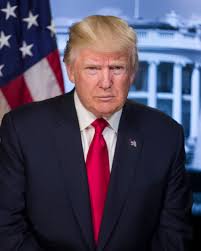
Donald Trump
Both Putin and Trump are well-known for their authoritarian characteristics. But more than one dictator’s admiration for another might explain their notorious “bromance.”
Trump has repeatedly attacked United States’ membership in the North Atlantic Treaty Organization (NATO). He believes the United States is paying an unfairly large portion of the monies needed to maintain this alliance—and he wants other members to contribute far more.
He has also said that, if Russia attacked NATO members, he would decide whether to come to their aid only after determining whether those nations have “fulfilled their obligations to us.”
If he believed that they had not done so, he would tell them: “Congratulations, you will be defending yourself.”
This clearly gave Putin a reason to prefer Trump over his 2016 rival, Hillary Clinton. Trump’s statement marked the first time that a major Presidential candidate placed conditions on the United States’ coming to the defense of its major allies.
The withdrawal of the United States from NATO would instantly render that alliance kaput. Its European members that have long hurled insults at the United States would suddenly face extinction.
Even if their armed forces proved a match for Russia’s—which they wouldn’t—their governments would cower before the threat of Russia’s huge nuclear arsenal.
Trump’s motives for his “bromance” with Putin have been more difficult to decipher.
Some believe that Trump—a notorious egomaniac—is simply responding to overdoses of Putin flattery.
Others think that, while visiting Moscow, Trump made himself vulnerable to Russian blackmail.
There are unconfirmed Intelligence reports that he paid—and watched—several Russian prostitutes urinate on a bed once slept on by President Obama and his wife at Moscow’s Ritz-Carlton Hotel. The alleged incident was reportedly captured by hidden microphones and cameras operated by the FSB, the successor to the KGB.
Then, on November 29, Trump’s longtime attorney and “fixer,” Michael Cohen, cast new light over the Trump-Putin relationship.
Cohen pleaded guilty in federal court in Manhattan to lying to Congress about the Russia investigation.
Cohen admitted that he lied about the “Moscow Project”—the Trump Organization’s efforts to “pursue a branded property in Moscow.” To sweeten the deal, Trump planned to offer a $50 million penthouse suite to Putin.
According to Cohen, Trump hid his business dealings with Russia throughout the campaign—while Moscow intervened to elect him.
Shortly after this news broke, Trump canceled his scheduled meeting with Putin at the December 1 G20 summit in Buenos Aires.
Even so, Putin is not the first Communist dictator to find common cause with an avowed Right-winger.
On August 23, 1939, Soviet dictator Joseph Stalin signed a “non-aggression pact” with Nazi Germany’s Fuhrer, Adolf Hitler.
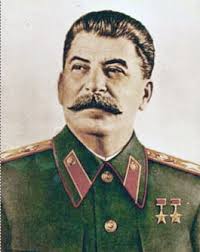
Joseph Stalin
The reason: Hitler intended to invade Poland—but feared going to war with the neighboring Soviet Union if he did so. By signing a non-aggression pact with Stalin, he avoided this danger—and gained “rights” to the western half of Poland.

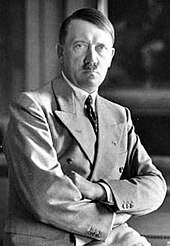
Adolf Hitler
Bundesarchiv, Bild 146-1990-048-29A / CC-BY-SA 3.0 [CC BY-SA 3.0 de (https://creativecommons.org/licenses/by-sa/3.0/de/deed.en)%5D
In addition, Nazi Germany began receiving huge shipments of raw materials from the Soviet Union—as part of Stalin’s effort to placate Hitler and avoid a Nazi-Soviet clash.
And Stalin got something, too: The eastern half of Poland, which would be occupied by the Red Army.
But the Hitler-Stalin alliance lasted less than two years. It ended without warning—on June 22, 1941.
With 134 divisions at full fighting strength and 73 more for deployment behind the front—a total of three million men—the German Wehrmacht invaded the Soviet Union.
There are four ways Putin may now regret his “bromance” with Trump.
First: Trump has not been able to lift the sanctions imposed on Russia by President Obama for subverting the 2016 election.
Second: Democrats and even some Republicans have taken a more aggressive stance toward Russia because of that subversion. They have pressured European allies to impose tougher sanctions against Russia.
Third: Putin must be dismayed that his subversion of the 2016 election became known—and, even worse, is the subject of an all-out investigation. That investigation has proven highly embarrassing to Trump—and Russia.
Fourth: Trump is known for his egomania, not his loyalty. He may take offense at some future perceived Putin slight. In such case, he may well decide he doesn’t owe anything to the man he once called “a leader.”
2016 PRESIDENTIAL CAMPAIGN, ABC NEWS, ALTERNET, AP, BUZZFEED, CBS NEWS, CNN, CROOKS AND LIARS, DAILY KOZ, DONALD TRUMP, ESQUIRE, FACEBOOK, FBI, FRANKIE LOCASCIO, GAMBINO MAFIA FAMILY, GEORGE STEPHANOPOULOS, IVANA TRUMP, JEFF SESSIONS, JOHN GOTTI, LOUIS DIBONO, LOUIS MILITO, MAFIA, MICHAEL COHEN, MOTHER JONES, MOVEON, MSNBC, NBC NEWS, NEWSWEEK, NPR, PAM BONDI, PAUL CASTELLANO, PLAYBOY MAGAZINE, POLITICO, RACKETEER INFLUENCED CORRUPT ORGANIZATIONS ACT (RICO), RAW STORY, REINCE PRIEBUS, REPUBLICANS, REUTERS, ROBERT “DEEBEE” DIBERNARDO, ROBERT MUELLER, SALON, SAMMY "THE BULL" GRAVANO, SEATTLE TIMES, SLATE, STORMY DANIELS, THE ATLANTIC, THE CHICAGO SUN-TIMES, THE CHICAGO TRIBUNE, THE DAILY BEAST, THE GUARDIAN, THE HILL, THE HUFFINGTON POST, THE LOS ANGELES TIMES, THE NATION, THE NEW YORK TIMES, THE WASHINGTON POST, TIME, TRUMP ORGANIZATION, TWITTER, U.S. NEWS & WORLD REPORT, UPI, USA TODAY, VLADIMIR PUTIN
In Bureaucracy, History, Law, Law Enforcement, Politics, Social commentary on December 4, 2018 at 12:06 am
Donald Trump resembles his fellow New Yorker, Mafia “Boss of all Bosses” John Gotti, in more ways than he would like to admit. Among these:
- He craves publicity like a drug.
- His egomania long ago reached psychotic heights: In a 1990 interview with Playboy magazine, he offered his worldview: “The show is Trump, and it is sold-out performances everywhere.”
- He impulsively and brutally badmouths virtually everyone—in press conferences and on Twitter.
- He brags constantly—about his wealth, his intelligence, his sexual prowess, his achievements: “My fingers are long and beautiful, as, it has been well documented, are various other parts of my body.”
- He has bought his way out of legal trouble: Florida Attorney General Pam Bondi personally solicited a political contribution from him while her office deliberated joining an investigation of alleged fraud at Trump University and its affiliates. After Bondi dropped the case against Trump, he wrote her a $25,000 check for her re-election campaign.
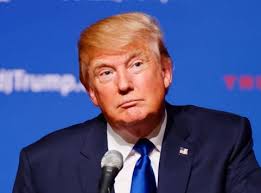
Donald Trump
- He repeatedly threatens violence against his opponents: On March 16, 2016, he warned Republicans that if he didn’t win the GOP nomination in July, “I think you’d have riots….I think bad things would happen.”
- Although not a member of the Mafia, he has often been linked—directly or indirectly—to men who are, such as “Fat Tony” Salerno and Paul Castellano.
- He prizes being seen as a tough guy: “I could stand in the middle of Fifth Avenue and shoot somebody and I wouldn’t lose voters.” At a Las Vegas rally in 2016, he said about a protester: “I’d like to punch him in the face.”
- He has no loyalty to anyone. He has badmouthed—and fired—such ardent supporters as his ex-Chief of Staff Reince Priebus and former Attorney General Jeff Sessions
It is this last characteristic—his complete lack of loyalty—that may well undo him.
Consider his treatment of Michael Cohen, his personal attorney for more than 10 years.
On April 9, 2018, the FBI, executing a federal search warrant, raided Cohen’s office at the law firm of Squire Patton Boggs, as well as his home and his hotel room in the Loews Regency Hotel in New York City.
And Trump’s response: “Michael Cohen only handled a tiny, tiny fraction of my legal work.
“Michael is in business—he is really a businessman, a fairly big business, as I understand it. I don’t know his business, but [the investigation] doesn’t have to do with me.”
Thus Trump undermined the argument of Cohen’s lawyers that he was the President’s personal attorney—and therefore everything Cohen did was protected by attorney-client privilege.
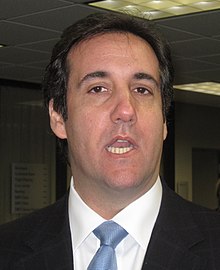
Michael Cohen
IowaPolitics.com [CC BY-SA 2.0 (https://creativecommons.org/licenses/by-sa/2.0)%5D, via Wikimedia Commons
An April 19, 2018 headline in Esquire magazine warned: “If the Water is Rising, Donald Trump Will Throw You Overboard.”
The article read in part:
“No matter how long or how intimately you’ve known Donald Trump, you’re one news cycle away from being tossed overboard….
“An old friend becomes a needy acquaintance; a campaign chairman becomes someone you got from the temp agency; a national security adviser becomes a ‘volunteer.'”
But Michael Cohen wasn’t just Trump’s lawyer. He was his fixer, a man who made problems “go away” with threats and bribes. He knows many—if not most—of Trump’s darkest secrets.
And he has since made it clear he is willing to reveal them.
In an off-camera interview with ABC’s George Stephanopoulos, Cohen warned: “I will not be a punching bag as part of anyone’s defense strategy” if Trump or his attorneys try to discredit him.
And unlike Trump—who has repeatedly asserted that Russia didn’t interfere with the 2016 Presidential election—Cohen said he believed it did.
Moreover, on November 29, Cohen pleaded guilty in federal court in Manhattan to lying to Congress about the Russia investigation. It’s part of a new deal reached with Special Counsel Robert S. Mueller III.
Cohen admitted that he lied about the “Moscow Project”—the Trump Organization’s efforts to “pursue a branded property in Moscow.”
He did so in an August 2017 letter to the House and Senate intelligence committees, which were investigating alleged collusion between Trump’s campaign and Russian Intelligence agents to subvert the 2016 Presidential election.
Now Cohen has revealed why, throughout the campaign, Trump hid his business dealings with Russia—while Moscow intervened to elect him.
Cohen has spent more than 70 hours in interviews with Mueller’s team. There is no telling how many of Trump’s secrets he has revealed.
Mueller—unlike Trump—doesn’t vent his temper in semi-literate tweets. In a rarity for Washington institutions, there have been almost no leaks from the Office of the Special Counsel since Mueller was empowered on May 17, 2017.
Mueller has also spoken with other federal prosecutors and the New York State Attorney General’s Office.
Shortly after news broke that Cohen had pleaded guilty to lying to Congress, Trump attacked his onetime fixer: “He’s a liar. He’s a weak person and what he’s trying to do is get a reduced sentence.”
But shortly after news broke that Cohen had revealed Trump’s business dealings with Russia, the President canceled his scheduled meeting with Russian President Vladimir Putin at the December 1 G20 summit in Buenos Aires.
2016 PRESIDENTIAL CAMPAIGN, ABC NEWS, ALTERNET, AP, BUZZFEED, CBS NEWS, CNN, CROOKS AND LIARS, DAILY KOZ, DONALD TRUMP, ESQUIRE, FACEBOOK, FBI, FRANKIE LOCASCIO, GAMBINO MAFIA FAMILY, GEORGE STEPHANOPOULOS, IVANA TRUMP, JEFF SESSIONS, JOHN GOTTI, LOUIS DIBONO, LOUIS MILITO, MAFIA, MICHAEL COHEN, MOTHER JONES, MOVEON, MSNBC, NBC NEWS, NEWSWEEK, NPR, PAM BONDI, PAUL CASTELLANO, PLAYBOY MAGAZINE, POLITICO, RACKETEER INFLUENCED CORRUPT ORGANIZATIONS ACT (RICO), RAW STORY, REINCE PRIEBUS, REPUBLICANS, REUTERS, ROBERT “DEEBEE” DIBERNARDO, ROBERT MUELLER, SALON, SAMMY "THE BULL" GRAVANO, SEATTLE TIMES, SLATE, STORMY DANIELS, THE ATLANTIC, THE CHICAGO SUN-TIMES, THE CHICAGO TRIBUNE, THE DAILY BEAST, THE GUARDIAN, THE HILL, THE HUFFINGTON POST, THE LOS ANGELES TIMES, THE NATION, THE NEW YORK TIMES, THE WASHINGTON POST, TIME, TRUMP ORGANIZATION, TWITTER, U.S. NEWS & WORLD REPORT, UPI, USA TODAY, VLADIMIR PUTIN
In Bureaucracy, History, Law, Law Enforcement, Politics, Social commentary on December 3, 2018 at 12:23 am
President Donald Trump shares many similarities with John Gotti, who, for five years, ruled as the boss of the most powerful Mafia family in the United States: The Gambino Family.
Among those similarities: A complete lack of loyalty to anyone.
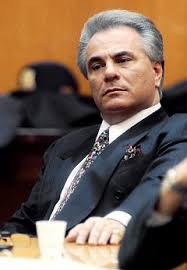
John Gotti
On December 12, 1989, Gotti became a victim of his own disloyalty.
Unknowingly speaking into an FBI electronic bug, Gotti charged that Sammy “The Bull” Gravano, his underboss, or second-in command, was too greedy. He also blamed him for the murders of three Mafiosi whom Gotti had ordered hit: Robert “Deebee” DiBernardo, Louis Milito and Louis DiBono.
“Deebee, did he ever talk subversive to you?” asked Gotti.
“Never,” replied his Consigliere, or adviser, Frankie Locascio.
“Never talked it to Angelo, never talked it to [Joseph Armone] either,” said Gotti. “I took Sammy’s word that he talked about me behind my back….I was in jail when I whacked him. I knew why it was being done. I done it anyway. I allowed it to be done anyway.”
Gotti was determined to blame Gravano for the murders of Milito and DiBono. He claimed that both men had been killed because Gravano had asked for permission to remove his business partners.
In fact, Milito had been “whacked” for questioning Gotti’s judgment. And DiBono had been hit because he refused to answer a Gotti summons.
And there was more: Gotti accused Gravano of excessive greed—and hoarding money for himself at the expense of the Family:
“That’s Sammy….Every fucking time I turn around there’s a new company poppin’ up. Building. Consulting. Concrete. Where the hell did all these new companies come from? Where did five new companies come from?
“Paul [Castellano, the Gambino Family’s previous boss] sold the Family out for a fucking construction company. And that’s what Sammy’s doing now. Three, four guys will wind up with every fuckin’ thing. And the rest of the Family looks like waste.”
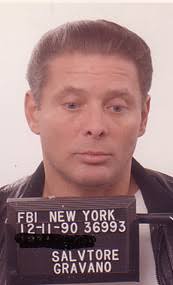
Sammy “The Bull” Gravano
He accused Gravano of creating “a fuckin’ army inside an army,” adding: “You know what I’m saying, Frankie? I saw that shit and I don’t need that shit.”
Gotti’s effort to rewrite history soon came back to haunt him.
At a 1991 pretrial hearing following the arrests of Gotti, Gravano and Locascio, prosecutors played the FBI’s tapes of Gotti’s unintended confessions—including his badmouthing of Gravano.
Gravano suddenly realized that his future in the Mafia was nil.
Gravano, Gotti and Locascio were all facing life imprisonment as targets of RICO—the Racketeer Influenced Corrupt Organizations Act.
And if the Feds didn’t send him to prison, mob gunmen—sent by Gotti—would eventually get him. Gotti clearly planned to make him the fall guy—in court or in a coffin—for murders that Gotti himself had ordered.
Only John Gotti was shocked when Gravano agreed to testify against him—and other Mafiosi—in exchange for a five-year prison sentence.
Gravano, as Gotti’s second-in-command, had literally been at the seat of power for five years. He knew the secrets of the Gambino Family—and the other four Mafia families who ruled New York.
On April 2, 1992, a jury convicted Gotti of five murders, conspiracy to murder, loansharking, illegal gambling, obstruction of justice, bribery and tax evasion. He drew a life sentence, without possibility of parole.
Gotti was incarcerated at the United States Penitentiary at Marion, Illinois, in virtual solitary confinement. He died of throat cancer on June 10, 2002, at the age of 61.
And just as Gotti’s disloyalty ultimately destroyed him, the same may yet prove true for Donald Trump.
Consider the case of attorney Michael Cohen.
- An executive of the Trump Organization, Cohen acted as “Trump’s pit bull.” “If somebody does something Mr. Trump doesn’t like,” he told ABC News in 2011, “I do everything in my power to resolve it to Mr. Trump’s benefit.”
- In 2015, a reporter for The Daily Beast asked Cohen about Ivana Trump’s charge (later recanted) that Trump had raped her while they were married. Cohen: “I’m warning you, tread very fucking lightly, because what I’m going to do to you is going to be fucking disgusting.”
- In 2016, while Trump was running for President, Cohen acted as the go-between for a $130,000 hush-money payoff to porn star Stormy Daniels. The reason: To prevent her from revealing a 2006 tryst she had had with Trump.
In April 2018, the United States Attorney for the Southern District of New York began investigating Cohen. Charges reportedly included bank fraud, wire fraud and violations of campaign finance law.

Michael Cohen
By IowaPolitics.com (Trump executive Michael Cohen 012) [CC BY-SA 2.0 (https://creativecommons.org/licenses/by-sa/2.0)%5D, via Wikimedia Commons
On April 9, 2018, the FBI, executing a federal search warrant, raided Cohen’s office at the law firm of Squire Patton Boggs, as well as his home and his hotel room in the Loews Regency Hotel in New York City. Agents seized emails, tax and business records and recordings of phone conversations that Cohen had made.
Trump’s response: “Michael Cohen only handled a tiny, tiny fraction of my legal work.”
Thus Trump undermined the argument of Cohen’s lawyers that he was the President’s personal attorney—and therefore everything Cohen did was protected by attorney-client privilege.
ABC NEWS, ALTERNET, ALVARO OBREGON, ANCHOR BABIES, BUZZFEED, CBS NEWS, CNN, CORRUPTION, DAILY KOS, DONALD TRUMP, EMILIANO ZAPATA, FACEBOOK, FELIPE CALDERON, ILLEGAL ALIENS, illegal immigration, MEXICAN REVOLUTION, MEXICO, MIGRANT CARRAVAN, MOTHER JONES, MOVEON, MSNBC, NBC NEWS, NEWSWEEK, NPR, PANCHO VILLA, POLITICO, RACIAL PROFILING, RAW STORY, SALON, SLATE, THE CHICAGO SUN-TIMES, THE CHICAGO TRIBUNE, THE DAILY BEAST, THE HUFFINGTON POST, THE LOS ANGELES TIMES, THE NEW YORK TIMES, THE WALL STREET JOURNAL, THE WASHINGTON POST, TIJUANA, TIME, TWITTER, U.S. NEWS & WORLD REPORT, USA TODAY, VENUSTIANO CARRANZA
In Bureaucracy, History, Law, Law Enforcement, Politics, Social commentary on November 30, 2018 at 12:07 am
On May 20, 2010, Mexico’s then-President Felipe Calderon addressed a joint session of the United States Congress—and attacked a recently-enacted Arizona law that allowed law enforcement officials to detain anyone suspected of being in the country illegally.
According to Calderon, the law “introduces a terrible idea: using racial profiling as a basis for law enforcement.”
And to make certain his audience got the point, he offered: “I have said that Mexico does not stop at its border, that wherever there is a Mexican, there is Mexico.”
The hypocrisy of Calderon’s words was staggering. He was condemning the United States for doing what Mexico itself has long done: Strictly enforcing control of its own borders.

Felipe Calderon
World Economic ForumCopyright by World Economic Forum / Photo by Remy Steinegger
From a purely political viewpoint, it made sense that Calderon didn’t say anything about this.
Mexico has a single, streamlined law that ensures that foreign visitors and immigrants are:
- In the country legally;
- Have the means to sustain themselves economically;
- Not destined to be burdens on society;
- Of economic and social benefit to society;
- Of good character and have no criminal records; and
- Contribute to the general well-being of the nation.
The law also ensures that:
- Immigration authorities have a record of each foreign visitor;
- Foreign visitors do not violate their visa status;
- Foreign visitors are banned from interfering in the country’s internal politics;
- Foreign visitors who enter under false pretenses are imprisoned or deported;
- Foreign visitors violating the terms of their entry are imprisoned or deported;
- Those who aid in illegal immigration are sent to prison.
But Mexico doesn’t mind when millions of its own citizens routinely violate America’s immigration laws.
Then, only eight years after Calderon’s self-righteous demand that Americans repeal their immigration laws, irony struck.
Mexicans suddenly discovered that “illegal alien” was no longer a dirty phrase.
On October 13, a caravan of at least 5,000 men, women and children from El Salvador, Guatemala and Honduras set out for the United States.
On October 18, President Donald Trump threatened to deploy the United States military and close the U.S.-Mexico border to keep the caravan from entering the country.
And then Trump did just that.
By November 19, migrants had begun piling up in Tijuana, which borders San Diego.
And that’s when Tijuana residents began carrying signs reading “No illegals,” “No to the invasion” and “Mexico First.” And marching in the streets wearing Mexico’s red, white and green national soccer jersey and vigorously waving Mexican flags.
“We want the caravan to go; they are invading us,” said Patricia Reyes, a 62-year-old protester. “They should have come into Mexico correctly, legally, but they came in like animals.”
And the situation will only worsen in the months ahead.
Trump has ordered Immigration and Customs Enforcement (ICE) to draft new rules to limit the number of asylum-seekers.
As increasing numbers of migrants pour into Tijuana, access to housing, schools, hospitals and other social services will become increasingly strained. Violent clashes between Tijuana’s 1.6 million residents and its thousands of uninvited arrivals will almost certainly be the result.
The Tijuana city government—aided by nonprofit humanitarian groups—is providing a stadium as a migrant shelter, as well as blankets, sleeping pads, food and basic medical care.
But Tijuana’s mayor, Juan Manuel Gastélum, says Tijuana lacks the funds to continue supporting the migrants. He believes they will be there for more than six months as they are processed through the American asylum system. He has requested support from Mexico’s federal authorities.
So why has the Mexican Government refused to halt illegal immigration to the United States?
Because it still remembers the bloody upheaval known as the Mexican Revolution. This lasted 10 years (1910-1920) and wiped out an estimated one to two million men, women and children.
Massacres were common on all sides, with men shot by the hundreds in bullrings or hung by the dozen on trees.
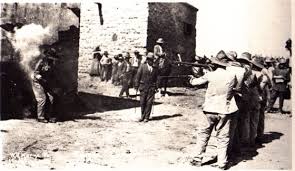
A Mexican Revolution firing squad
All of the major leaders of the Revolution—Francisco Madero, Emiliano Zapata, Venustiano Carranza, Francisco “Pancho” Villa, Alvaro Obregon—died in a hail of bullets.
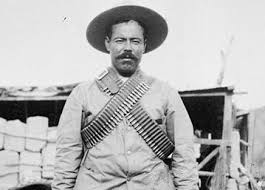
Francisco “Pancho” Villa
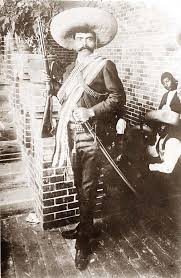
Emiliano Zapata
As a result, every successive Mexican Government has lived in the shadow of another such wholesale bloodletting. These officials have thus quietly decided to turn the United States border into a safety valve.
If potential revolutionaries leave Mexico to find a better life in the United States, the Government doesn’t have to fear the rise of another “Pancho” Villa.
If somehow the United States managed to seal its southern border, all those teeming millions of “undocumented workers” who completely lack documents would have to stay in “Mexico bonita.”
They would be forced to live with the rampant corruption and poverty that have forever characterized this failed nation-state. Or they would have to demand substantial reforms.
There is no guarantee that such demands would not lead to a second—and equally bloody—Mexican revolution.
So Felipe Calderon and his successors in power have found it easier—and safer—to turn the United States into a dumping ground for citizens that the Mexican Government itself doesn’t want.
Now with Trump determined to shut off that safety valve, another Mexican Revolution may be just around the corner.
ABC NEWS, ADOLF HITLER, ALTERNET, AP, BILL CLINTON, BUZZFEED, CALIFORNIA ENERGY CRISIS, CBS NEWS, CHEVRON, CNN, COAL INDUSTRY, CROOKS AND LIARS, DAILY KOZ, DE-REGULATION, DEMOCRATS, ENRON, FACEBOOK, FBI, GEORGE W. BUSH, GRAY DAVIS, HEINRICH HIMMLER, HOLOCAUST, MAFIA, MOTHER JONES, MOVEON, MSNBC, NBC NEWS, NEWSWEEK, NICCOLO MACHIAVELLI, NPR, PACIFIC GAS AND ELECTRIC, PBS NEWSHOUR, PETE WILSON, POLITICO, RAW STORY, REPUBLICANS, REUTERS, RICO ACT, SALON, SEATTLE TIMES, SLATE, SS, THE ATLANTIC, THE CHICAGO SUN-TIMES, THE CHICAGO TRIBUNE, THE DAILY BEAST, THE GUARDIAN, THE HILL, THE HUFFINGTON POST, THE LOS ANGELES TIMES, THE NATION, THE NEW YORK TIMES, THE SS, THE WALL STREET JOURNAL, THE WASHINGTON POST, TIME, TWITTER, U.S. DEPARTMENT OF JUSTICE, U.S. NEWS & WORLD REPORT, UPI, USA TODAY
In Bureaucracy, History, Law, Law Enforcement, Politics, Social commentary on November 29, 2018 at 12:05 am
A forgotten anniversary is fast approaching: This December 2 will mark the 17th anniversary of the collapse of Enron Corporation.
Based in Houston, Texas, Enron had employed 22,000 staffers and was one of the world’s leading electricity, natural gas, communications and paper companies.
In 2000, it claimed revenues of nearly $101 billion. Fortune had named Enron “America’s Most Innovative Company” for six consecutive years.
But then the truth emerged in 2001: Enron’s reported profitability was based not on brilliance and innovation but on systematic and creative accounting fraud.
And, on December 2, 2001, Enron filed for bankruptcy under Chapter 11 of the United States Bankruptcy Code.
Enron’s $63.4 billion in assets made it the largest corporate bankruptcy in U.S. history—until WorldCom’s bankruptcy in 2002.

The California electricity crisis (2000-2001) was caused by market manipulations and illegal shutdowns of pipelines by Texas energy companies.
The state suffered from multiple large-scale blackouts. Pacific Gas & Electric, one of the state’s largest energy companies, collapsed, and the economic fall-out greatly harmed Governor Gray Davis’ standing.
The crisis was made possible by Governor Pete Wilson, who had forced the passage of partial de-regulation legislation in 1996.
Enron seized its opportunity to inflate prices and manipulate energy output in California’s spot markets. The crisis cost the state $40 to $45 billion.
The true scandal of Enron was not that it was eventually destroyed by its own greed.
The true scandal was that its leaders were never Federally prosecuted for almost driving California—and the entire Western United States—into bankruptcy.
Under the pro-oil company administration of George W. Bush, no such prosecutions ever occurred. But Americans had a right to expect such redress under “liberal” President Bill Clinton.
Once the news broke that Enron had filed for bankruptcy, commentators almost universally oozed compassion for its thousands of employees who would lose their salaries and pensions.
No one, however, condemned the “profits at any cost” dedication of those same employees for pushing California to the brink of ruin.
To put this in historical perspective:
- Imagine a historian writing about the destruction of Hitler’s Schutzstaffel (Guard Detachment), or SS, as a human interest tragedy.
- Imagine its Reichsfuehrer, Heinrich Himmler, being blamed for failing to prevent its collapse—as CEO Kenneth Lay was blamed for Enron’s demise.
- Imagine that same historian completely ignoring the horrific role the SS had played throughout Nazi-occupied countries—and its primary role in slaughtering six million Jews in the Holocaust.
Nor did anyone in the media or government declare that the solution to such extortionate activity lay within the United States Department of Justice via RICO—the Federal Racketeer Influenced Corrupt Organizations Act.

Passed by Congress in 1970, this was originally aimed at the kingpins of the Mafia. Since the mid-1980s, however, RICO has been successfully applied against both terrorist groups and legitimate businesses engaged in criminal activity.
Under RICO, people financially injured by a pattern of criminal activity can bring a claim in State or Federal court, and obtain damages at three times the amount of their actual claim, plus reimbursement for their attorneys’ fees and costs.
Such prosecutions would have pitted energy-extortionists against the full investigative might of the FBI and the sweeping legal authority of the Justice Department.
Consider this selection from the opening of the Act:
(1) “racketeering activity” means (A) any act or threat involving…extortion; (B) any act which is indictable under any of the following provisions of title 18, United States Code: sections 891-894 (relating to extortionate credit transactions), section 1343 (relating to wire fraud)Section 1344 (relating to financial institution fraud), section 1951 (relating to interference with commerce, robbery, or extortion), section 1952 (relating to racketeering)….
With the 17th anniversary of Enron’s demise coming up, the mantra of “de-regulation” should be ruthlessly turned against those who have most ardently championed it.
Republicans have ingeniously dubbed the estate tax—which affects only a tiny minority of ultra-rich—“the death tax.” This makes it appear to affect everyone.
Democrats should thus recast de-regulation in terms that will prove equally popular. For example:
“Greed Relief”
“Greed Protection”
“Legalized Extortion”
And here are some possible slogans:
“The Energy Industry: Giving You the Best Congress Money Can Buy.”
“De-regulation: Let Criminals Be Criminals.”
Today the coal industry is pumping millions into TV ads touting the non-existent wonders of “clean coal.” And Chevron spends millions assuring us that “all those profits” go strictly toward making the world a better place for others. (Presumably not a penny is left for its altruistic executives.)
When faced with such outright lying by the most vested of financial interests, it’s well to recall the warning given by Niccolo Machiavelli more than 500 years ago:
All those who have written upon civil institutions demonstrate…that whoever desires to found a state and give it laws, must start with assuming that all men are bad and ever ready to display their vicious nature, whenever they may find occasion for it.
If their evil disposition remains concealed for a time, it must be attributed to some unknown reason; and we must assume that it lacked occasion to show itself. But time, which has been said to be the father of all truth, does not fail to bring it to light.
ABC NEWS, ALTERNET, AP, BARACK OBAMA, BOBBY JINDAL, BUZZFEED, CBS NEWS, CNN, CROOKS AND LIARS, DAILY KOZ, DR. BENJAMIN CARSON, DYLANN ROOF, FACEBOOK, GUN VIOLENCE, HILLARY CLINTON, JEB BUSH, KELLEYANNE CONWAY, MILWAUKEE POLICE DEPARTMENT, MOTHER JONES, MOVEON, MSNBC, NATIONAL RIFLE ASSOCIATION, NBC NEWS, NEWSWEEK, NPR, PBS NEWSHOUR, PBS NEWSHUR, POLICE CHIEF EDWARD FLYNN, POLICE CHIEF SAMUEL DOTSON, POLITICO, RAW STORY, RELIGION, REUTERS, RICK SANTORUM, ROBERT BOWERS, SALON, SEATTLE TIMES, SLATE, ST. LOUIS METROPOLITAN POLICE DEPARTMENT, THE ATLANTIC, THE CHICAGO SUN-TIMES, THE CHICAGO TRIBUNE, THE DAILY BEAST, THE GUARDIAN, THE HILL, THE HUFFINGTON POST, THE LOS ANGELES TIMES, THE NATION, THE NEW YORK TIMES, THE WASHINGTON POST, TIME, TREE OF LIFE SYNAGOGUE, TWITTER, U.S. NEWS & WORLD REPORT, UPI, USA TODAY
In Bureaucracy, History, Law Enforcement, Politics, Social commentary on November 28, 2018 at 12:07 am
Barack Obama was right.
As a 2008 Presidential candidate, he famously (or infamously) said about small-town Right-wing voters across the Midwest:
“You go into these small towns in Pennsylvania and, like a lot of small towns in the Midwest, the jobs have been gone now for 25 years and nothing’s replaced them.
“And they fell through the Clinton Administration, and the Bush Administration, and each successive administration has said that somehow these communities are gonna regenerate and they have not.
“And it’s not surprising then they get bitter, they cling to guns or religion or antipathy to people who aren’t like them or anti-immigrant sentiment or anti-trade sentiment as a way to explain their frustrations.”
At the time that Obama made that remark, he was seeking the 2008 Democratic nomination for President.
His opponents—both Democratic and Republican—quickly attacked him as elitist and anti-Second Amendment.
Democratic New York United States Senator Hillary Clinton—his chief rival for the nomination—said: “I was taken aback by the demeaning remarks Senator Obama made about people in small-town America. His remarks are elitist and out of touch.”
Obama survived the firestorm and won the Democratic nomination—and the Presidency.
Since then, the truth of his widely-criticized remarks has been repeatedly proven by his Republican adversaries.
On June 17, 2015, Dylann Roof, a white high school dropout, gunned down three black men and six black women at Emanuel African Methodist Episcopal Church in Charleston, South Carolina.
At 21, Roof was unemployed, dividing his time between playing video games and taking drugs.
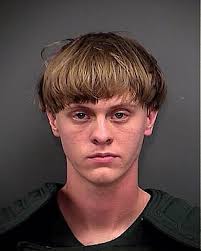
Dylann Roof
The signs of Roof’s malignant racism were evident long before he turned mass murderer:
- He had posed for a photo sitting on the hood of his parents’ car—whose license plate bore a Confederate flag.
- He had posed for pictures wearing a jacket sporting the white supremacist flags of Rhodesia and apartheid South Africa.
- He told a friend that he hoped “to start a civil war” between the black and white races.
- Roof reportedly told friends and neighbors of his plans to kill people.
- In the midst of his massacre of unarmed worshipers, he told one of his victims: “You’ve raped our women, and you are taking over the country.” Then Roof shot him.
The evidence makes clear that Roof’s slaughter was racially motivated. Yet no 2016 Republican Presidential candidate dared acknowledge it:
- Jeb Bush, former governor of Florida: “I don’t know what was on the mind or the heart of the man who committed these atrocious crimes.”
- Rick Santorum, former United States Senator from Pennsylvania: “You talk about the importance of prayer in this time and we’re now seeing assaults on our religious liberty we’ve never seen before. It’s a time for deeper reflection beyond this horrible situation.”
- Bobby Jindal, former governor of Louisiana: “I don’t think we’ll ever know what was going on in his mind.”
On October 27, 2018, another worship-services slaughter occurred. The target was the Tree of Life Synagogue in Pittsburgh, Pennsylvania.
Eleven people died in a hail of bullets fired by anti-Semetic Robert Bowers, 46.
Two days later, on October 29, White House Counselor Kelleyanne Conway offered a unique reason for the massacre:
“The anti-religiosity in this country that is somehow in vogue and funny to make fun of anybody of faith, to constantly be making fun of people that express religion—the late-night comedians, the unfunny people on TV shows—it’s always anti-religious.
“These people were gunned down in their place of worship, as were the people in South Carolina several years ago. And they were there because they’re people of faith, and it’s that faith that needs to bring us together. This is no time to be driving God out of the public square.”
No Republican in 2015 dared to blame the shooting on Right-wing hatred and/or ready access to high-powered firearms by the mentally disturbed. And, three years later, the situation remained the same.
Someone who has dared to tell the truth about guns and the carnage inflict is Chief Edward Flynn of the Milwaukee Police Department.

Chief Edward Flynn
On the August 4, 2015 edition of The PBS Newshour, Flynn said: Certainly, one of the things we have seen is a dramatic increase in the use of firearms, particularly semiautomatic pistols, in our violent deaths.
We have seen that our shootings are up significantly, our homicides are up dramatically. Over 85% of our homicides are committed with firearms, and, of those, over 85% are committed with semiautomatic pistols.
Another truth-teller is Colonel Sam Dotson, Chief of the St. Louis Metropolitan Police Department. Interviewed on the same Newshour program, he said:
I’m seeing exactly the same thing that they’re seeing in Milwaukee, the availability of guns. I’m seeing exactly the same thing, high-capacity magazines, a willingness to use the guns, and a judiciary that sometimes doesn’t follow through on the prosecution.
Police Chiefs Edward Flynn and Samuel Dotson bluntly stated the devastating results of unrestricted access to high-powered firearms. And they offered a concrete solution: Drastically restrict that access.
The “solution” offered by Kelleyanne Conway comes down to: “America needs to pray.” It’s a “solution” that appeases the religious Right—and doesn’t infuriate the National Rifle Association.
And it won’t prevent a single murder.
2016 PRESIDENTIAL ELECTION, ABC NEWS, ADOLF HITLER, ALTERNET, AP, BUZZFEED, CBS NEWS, CNN, CROOKS AND LIARS, DAILY KOZ, ERNA GRUHN, ERNST ROHEM, FACEBOOK, FBI, HANS BERND GISEVIUS, HERMANN GORING, HILLARY CLINTON, JAMES COMEY, JEFF SESSIONS, KGB, MOTHER JONES, MOVEON, MSNBC, NAZI GERMANY, NBC NEWS, NEWSWEEK, NPR, NUREMBERG TRIALS, OFFICE OF STRATEGIC SERVICES, PAUL VON HINDENBURG, PBS NEWSHOUR, POLITICO, RAW STORY, REICHSTAG FIRE, REUTERS, ROBERT S. MUELLER, ROD ROSENSTEIN, SALON, SEATTLE TIMES, SLATE, SS, STORMTROOPERS, THE ATLANTIC, THE CHICAGO SUN-TIMES, THE CHICAGO TRIBUNE, THE DAILY BEAST, THE GUARDIAN, THE HILL, THE HUFFINGTON POST, THE LOS ANGELES TIMES, THE NATION, THE NEW YORK TIMES, THE PRESS, THE WASHINGTON POST, THIRD REICH, TIME, TO THE BITTER END (BOOK), TWITTER, U.S. NEWS & WORLD REPORT, UPI, USA TODAY, WERNER VON BLOMBERG, WERNER VON FRITSCH
In Bureaucracy, History, Law, Law Enforcement, Military, Politics, Social commentary on November 27, 2018 at 12:01 am
Hans Bernd Gisevius holds a unique position in the history of the Third Reich.
He was one of the few plotters of the July 20, 1944 bomb attack on Adolf Hitler to survive the wave of arrests that followed.
A covert opponent of the Nazi regime, he served as a liaison in Zurich between the American Office of Strategic Services (OSS) and German resistance forces in Germany.
Not only did he outlive the Reich, he took revenge on it at the Nuremberg trials. In April, 1946, for three days he gave damning evidence against former Reichsmarshall Hermann Goring and his accomplices.

Hans Bernd Gisevius at Nuremberg
In 1946, he published his autobiography, To the Bitter End, sharply indicting the Reich and its leaders—many of whom Gisevius had known personally. He also condemned the German people, charging that they pretended ignorance of the atrocities being committed.
In his introduction, Gisevius notes: “This book is not intended as a history of the Third Reich. The author has selected a few prominent incidents out of the confusion of contemporaneous events and has attempted to use these as points through which to trace the broad curves of the historical process.”
To the Bitter End opens with the February 27, 1933 arson attack on the Reichstag building, home of the German parliament. By the time the fire was put out, most of the building was gutted.
On January 30, 1933, Adolf Hitler had been appointed Chancellor of Germany. Now he used the fire to gain unprecedented control over the country.

Reichstag fire
The next day, at Hitler’s request, President Paul von Hindenburg signed the Reichstag Fire Decree into law. This suspended most civil liberties in Germany, including:
- Freedom of speech, press, association and public assembly
- Habeas corpus and
- Secrecy of the mails and telephone.
The next major event Gisevius chronicled has since become known as “The Night of the Long Knives.”
On June 30, 1934, Hitler ordered a massive purge of his private army, the S.A., or Stormtroopers. This was carried out by Hitler’s elite army-within-an-army, the Schutzstaffel, or Protective Squads, better known as the SS.
The S.A. Brownshirts had been instrumental in securing Hitler’s rise to Chancellor of Germany. They had intimidated political opponents and organized mass rallies for the Nazi Party.
Ernst Rohem, their commander, urged Hitler to disband the regular German army, the Reichswehr, and replace it with his own legions as the nation’s defense force.
Frightened by Rohem’s ambitions, the generals of the Reichswehr warned Hitler: Get rid of Rohem—or we’ll get rid of you.
So Rohem died in a hail of SS bullets—along with several hundred of his longtime S.A. cronies.
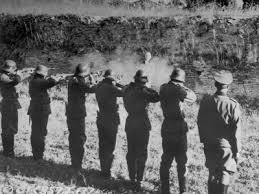
SS firing squad
A third crisis that paved the way for Hitler’s assuming supremacy over the German armed forces came in early 1938.
Hitler had been wanting to replace two high-ranking military officials: General Werner von Fritsch and Colonel General Werner von Blomberg. He intended to go to war—and despised their hesitation to do so.
On January 12, 1938, Blomberg married Erna Gruhn, with Hitler and Reichsmarshall Hermann Goring attending as witnesses. Soon afterward, Berlin police discovered that Gruhn had a criminal record as a prostitute and had posed for pornographic photographs.
Marrying a woman with such a background violated the standard of conduct expected of officers. Hitler was infuriated at having served as a witness, but he also saw the scandal as an opportunity to dispose of Blomberg.
Shortly after Blomberg was forced to resign in disgrace, the SS presented Hitler with a file that falsely accused Werner von Fritsch of homosexuality. Fritsch angrily denied the accusation but resigned on February 4, 1938.
From that point on, Hitler was in de facto command of the German Armed Services.
To the Bitter End vividly depicts how, step by step, Hitler gained total control of Germany—and plunged it headlong into World War II.
None of these steps, by itself, was fatal. But, taken together, they led to the deaths of 60 million men, women and children, the utter destruction of Germany and the domination of Eastern Europe (including East Germany) for 44 years after the Reich collapsed.
Since Donald Trump took office as the 45th President of the United States, Americans have seen him move, step by step, toward his goal of absolute power. Among these moves:
- Firing FBI Director James Comey for pursuing an investigation into Russian subversion of the 2016 election.
- Repeatedly attacking his own Attorney General, Jeff Sessions, for not “protecting” him from investigators pursuing the Russia investigation.
- Firing Sessions and replacing him with Matthew Whittaker, who had loudly criticized the probe led by Special Counsel Robert S. Mueller.
- Relentlessly attacking the free press as “the enemy of the American people.”
- Brutally attacking Federal judges whose rulings displease him.
- On multiple occasions, urging Deputy Attorney General Rod Rosenstein to vengefully prosecute Hillary Clinton, his 2016 rival for the Presidency.
The United States may yet fall victim to a nuclear war triggered by an insult-happy Trump, or a dictatorship where he turns the Justice Department into his personal SS.
If so, a future American chronicler may, like Hans Bernd Gisevius, leave behind a record of a nation betrayed by lost opportunities and a brutal tyrant.
2016 PRESIDENTIAL CAMPAIGN, 2018, ABC NEWS, AL QAEDA, ALEXANDER THE GREAT, ALTERNET, ANDREW G. MCCABE, BARACK OBAMA, BUZZFEED, CBS NEWS, CHIEF JUSTICE JOHN ROBERTS, CHINA, CIA, CNN, CONSERVATIVE POLITICAL ACTION CONFERENCE, DAILY KOS, DONALD TRUMP, FACEBOOK, FBI, FEDERAL JUDICIARY, FOX NEWS SUNDAY, GEORGE W. BUSH, INTELLIGENCE AGENCIES, JAMAL KHASHOGGI, JAMES COMEY, JAMES ROBART, JEFF SESSIONS, MATTHEW WHITTAKER, MOHAMMED BIN SALMAN, MOTHER JONES, MOVEON, NAVY SEALS, NBC NEWS, NEW YORK TIMES, NEWSWEEK, NINTH CIRCUIT COURT OF APPEALS, NPR, NSA, PLUTARCH, POLITICO, RAW STORY, REPUBLICAN DONORS, ROBERT MUELLER, ROD J. ROSENSTEIN, RUSSIA, RUSSIAN INTELLIGENCE, SALON, SLATE, SUPREME COURT, THE CHICAGO SUN-TIMES, THE CHICAGO TRIBUNE, THE DAILY BEAST, THE HUFFINGTON POST, THE LOS ANGELES TIMES, THE NEW YORK TIMES, THE PRESS, THE WALL STREET JOURNAL, THE WASHINGTON POST, TIME, TRUMP TOWER, TWITTER, U.S. NEWS & WORLD REPORT, USA TODAY, WILLIAM “RYAN” OWENS, WIRETAPPING, XI JINPING, YEMEN
In Bureaucracy, History, Law, Law Enforcement, Military, Politics, Social commentary on November 26, 2018 at 12:06 am
Since taking office as the Nation’s 45th President, Donald Trump has attacked or undermined one public or private institution after another. Among these:
- American Intelligence: Even before taking office, Trump refused to accept the findings of the FBI, CIA and NSA that Russian Intelligence agents had intervened in the 2016 election to ensure his victory.
- “I think it’s ridiculous,” he told “Fox News Sunday.” “I think it’s just another excuse. I don’t believe it….No, I don’t believe it at all.”
- And when FBI Director James Comey dared to pursue a probe into “the Russia thing,” Trump fired him without warning.
- On Thanksgiving Day, 2018, Trump said that the CIA hadn’t concluded that Saudi Crown Prince Mohammed bin Salman’s had ordered the murder of Washington Post journalist Jamal Khashoggi,
- This was a lie—the agency has reached such a conclusion, based on a recording provided by the Turkish government and American intelligence.
- American law enforcement agencies: Trump repeatedly attacked his own Attorney General, Jeff Sessions, for not “protecting” him from agents pursuing the Russia investigation.
- On November 7, the day after Democrats won a majority of House seats, Trump fired Sessions.
- He threatened to fire Rod J. Rosenstein, the deputy attorney general, who oversaw Special Counsel Robert Mueller’s investigation into Russian subversion of the 2016 election.
- He bypassed Rosenstein to appoint Matthew Whittaker acting Attorney General—thus giving him authority over the Mueller investigation. Whittaker had often—and publicly—criticized Mueller’s probe, calling for its termination.
- Trump intended to fire Mueller during the summer of 2017, but was talked out of it by aides fearful that it would set off calls for his impeachment.
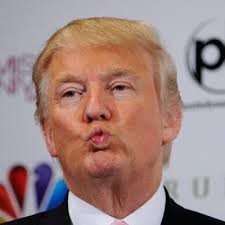
Donald Trump
- American military agencies: In February, 2017, Trump approved and ordered a Special Forces raid in Yemen on an Al Qaeda stronghold. The assault cost the life of Navy SEAL Chief Petty Officer William “Ryan” Owens.
- Disavowing any responsibility for the failure, Trump said: “This was a mission that was started before I got here. This was something they wanted to do. They came to me, they explained what they wanted to do—the generals—who are very respected, my generals are the most respected that we’ve had in many decades, I believe. And they lost Ryan.”
- The press: On February 17, 2017, Trump tweeted: “The FAKE NEWS media (failing @nytimes, @NBCNews, @ABC, @CBS, @CNN) is not my enemy, it is the enemy of the American People!”
- Seven days later, appearing before the Conservative Political Action Conference on February 24, Trump said: “I want you all to know that we are fighting the fake news. It’s fake, phony, fake….I’m against the people that make up stories and make up sources. They shouldn’t be allowed to use sources unless they use somebody’s name. Let their name be put out there.”

- The judiciary: On October 20, 2018, Trump attacked U.S. District Judge Jon S. Tigar as an “Obama judge.” Tigar had ruled that the administration must consider asylum claims no matter where migrants cross the U.S. border.
- On October 21, Supreme Court Chief Justice John Roberts told the Associated Press: “We do not have Obama judges or Trump judges, Bush judges or Clinton judges. What we have is an extraordinary group of dedicated judges doing their level best to do equal right to those appearing before them.”
- On Thanksgiving Day, 2018, Trump attacked Roberts—appointed by Republican President George W. Bush—on Twitter: “Sorry Chief Justice John Roberts, but you do indeed have ‘Obama judges,’ and they have a much different point of view than the people who are charged with the safety of our country.”
- Trump has repeatedly attacked Seattle US District Judge James Robart, who halted Trump’s first travel ban: “Just cannot believe a judge would put our country in such peril. If something happens blame him and court system. People pouring in. Bad!”
- President Barack Obama: For five years, Trump, more than anyone else, popularized the slander that President Barack Obama was born in Kenya—and was therefore not an American citizen.
- Even after Obama released the long-form version of his birth certificate—on April 27, 2011—Trump tweeted, on August 6, 2012: “An ‘extremely credible source’ has called my office and told me that @BarackObama‘s birth certificate is a fraud.”
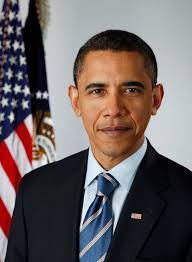
Barack Obama
- On March 4, 2017, in a series of unhinged tweets, Trump accused former President Obama of tapping his Trump Tower phones prior to the election: “Terrible! Just found out that Obama had my ‘wires tapped’ in Trump Tower just before the victory. Nothing found. This is McCarthyism!”
Trump was later forced to admit he had no evidence to back up his slanderous claims.
* * * * *
Donald Trump isn’t crazy, as many of his critics charge. He knows what he’s doing—and why.
He intends to strip every potential challenger to his authority—or his version of reality—of legitimacy with the public. If he succeeds, there will be:
- No independent press to reveal his failures and crimes.
- No independent law enforcement agencies to investigate his abuses of office.
- No independent judiciary to hold him accountable.
- No independent military to dissent as he recklessly hurtles toward a nuclear disaster.
- No candidate—Democrat or Republican—to challenge him for re-election in 2020.
- No candidate—Democrat or Republican—to challenge his remaining in office as “President-for-Life.”
2016 PRESIDENTIAL RACE, ABC NEWS, ALTERNET, AP, BARACK OBAMA'S INAUGURAL, BUZZFEED, CBS NEWS, CIA, CNN, CROOKS AND LIARS, DAILY KOZ, DONALD TRUMP, EGOMANIA, FACEBOOK, INTELLIGENCE, IRAQ WAR, ISIS, JOHN BRENNAN, MOTHER JONES, MOVEON, MSNBC, NBC NEWS, NEWSWEEK, NPR, PBS NEWSHOUR, POLITICO, RAW STORY, REUTERS, SALON, SEATTLE TIMES, SLATE, SUPER BOWL, THANKSGIVING, THE ATLANTIC, THE CHICAGO SUN-TIMES, THE CHICAGO TRIBUNE, THE DAILY BEAST, THE GUARDIAN, THE HILL, THE HUFFINGTON POST, THE LOS ANGELES TIMES, THE NATION, THE NEW YORK TIMES, THE WASHINGTON POST, TIME, TOM BRADY, TWITTER, U.S. NEWS & WORLD REPORT, UPI, USA TODAY
In Bureaucracy, History, Politics, Social commentary on November 23, 2018 at 12:09 am
Thanksgiving Day is defined by Merriam-Webster as “a legal holiday for people to be thankful for what they have.”
So what did President Donald Trump give thanks for on November 22, 2018?
“For having a great family and for having made a tremendous difference in this country. I’ve made a tremendous difference in the country. This country is so much stronger now than it was when I took office that you wouldn’t believe it.
“And I mean, you see, but so much stronger people can’t even believe it. When I see foreign leaders they say we cannot believe the difference in strength between the United States now and the United States two years ago. Made a lot of progress.”
Anyone expecting Trump to show even the slightest humility on this occasion had only to recall his first appearance at CIA headquarters in Langley, Virginia.
This occurred on January 21, 2017—his first full day as President.
Officially, he was there to pay tribute to the men and women who serve on the front lines of America’s Intelligence community. Who dedicate their lives to finding out when and where America’s enemies are planning to strike—and to countering those threats.
And now Trump was appearing before what, to CIA employees, was the agency’s most sacred site: The star-studded memorial wall honoring the 117 CIA officers who had fallen in the line of duty.
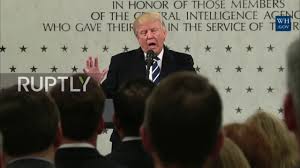
Donald Trump at the CIA
So what did Trump spend much of his time talking about?
Himself, of course.
Here are the major excerpts:
“….You know, when I was young and when I was — of course, I feel young. I feel like I’m 30, 35, 39. Somebody said, are you young? I said, I think I’m young. You know, I was stopping — when we were in the final month of that campaign, four stops, five stops, seven stops. Speeches, speeches, in front of 25,000, 30,000 people, 15,000, 19,000 from stop to stop. I feel young….
“When I was young, we were always winning things in this country. We’d win with trade. We’d win with wars….We don’t win anymore. The old expression, “to the victor belong the spoils” — you remember.
“I always used to say, keep the oil. I wasn’t a fan of Iraq. I didn’t want to go into Iraq. But I will tell you, when we were in, we got out wrong. And I always said, in addition to that, keep the oil….
“Now, I said it for economic reasons. But if you think about it….if we kept the oil you probably wouldn’t have ISIS because that’s where they made their money in the first place. So we should have kept the oil. But okay. Maybe you’ll have another chance….
“And the reason you’re my first stop is that, as you know, I have a running war with the media. They are among the most dishonest human beings on Earth.
“And they sort of made it sound like I had a feud with the intelligence community. And I just want to let you know, the reason you’re the number-one stop is exactly the opposite — exactly. And they understand that, too.
“And I was explaining about the numbers. We did a thing yesterday at the speech. Did everybody like the speech? I’ve been given good reviews. But we had a massive field of people. You saw them. Packed. I get up this morning, I turn on one of the networks, and they show an empty field.
“I say, wait a minute, I made a speech. I looked out, the field was — it looked like a million, million and a half people….
“And they said, Donald Trump did not draw well. I said, it was almost raining, the rain should have scared them away, but God looked down and he said, we’re not going to let it rain on your speech….
“But, you know, we have something that’s amazing because we had — it looked — honestly, it looked like a million and a half people. Whatever it was, it was….

Crowds at Trump and Obama Inaugurals
“We had 250,000 people literally around — you know, in the little bowl that we constructed. That was 250,000 people. The rest of the 20-block area, all the way back to the Washington Monument, was packed. So we caught them, and we caught them in a beauty. And I think they’re going to pay a big price.
“So a reporter for Time magazine — and I have been on their cover, like, 14 or 15 times. I think we have the all-time record in the history of Time magazine. Like, if Tom Brady is on the cover, it’s one time, because he won the Super Bowl or something, right?
“I’ve been on it for 15 times this year. I don’t think that’s a record….that can ever be broken. Do you agree with that? What do you think?”
* * * * *
At least one former CIA director thought that Trump’s remarks were “despicable.” In a tweeted statement, Nick Shapiro, John Brennan’s former deputy chief of staff, said:
“Former CIA Director Brennan is deeply saddened and angered at Donald Trump’s despicable display of self-aggrandizement in front of CIA’s Memorial Wall of Agency heroes. Brennan says that Trump should be ashamed of himself.”
2003 IRAQ WAR, ABC NEWS, ALTERNET, ASIANS, BARACK OBAMA, BIRTH CONTROL, BLACKS, BUZZFEED, CBS NEWS, CNN, DAILY KOS, DISABLED, DONALD TRUMP, ED MARTIN, FACEBOOK, HILLARY CLINTON, HUMAYUN KHAN, KATRINA PIERSON, LATINOS, MARCO GUTIERREZ, MEDICAID, MEDICARE, MOTHER JONES, MOVEON, MSNBC, MUSLIMS, NBC NEWS, NEWSWEEK, NICCOLO MACHIAVELLI, NPR, OBAMACARE, POLITICO, PRISONERS OF WAR, RAW STORY, SALON, SLATE, SOCIAL SECURITY, TEA PARTY, THE CHICAGO SUN-TIMES, THE CHICAGO TRIBUNE, THE DAILY BEAST, THE DISCOURSES, THE HUFFINGTON POST, THE LOS ANGELES TIMES, THE NEW YORK TIMES, THE PRINCE, THE WALL STREET JOURNAL, THE WASHINGTON POST, TIME, TWITTER, U.S. NEWS & WORLD REPORT, USA TODAY, WAYNE ROOT, WOMEN
In Bureaucracy, History, Military, Politics, Social commentary on November 22, 2018 at 12:06 am
No shortage of pundits have sized up Donald Trump—first as a Presidential candidate, and now as the nation’s 45th President.
But how does Trump measure up in the estimate of Niccolo Machiavelli, the 16th-century Florentine statesman?
It is Machiavelli whose two great works on politics—The Prince and The Discourses—remain textbooks for successful politicians more than 500 years later.
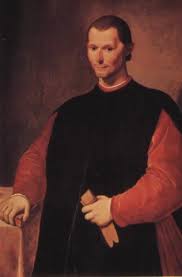

Niccolo Machiavelli
Let’s start with Trump’s notoriety for hurling insults at virtually everyone, including:
- Latinos
- Asians
- Muslims
- Blacks
- The Disabled
- Women
- Prisoners-of-War
These insults delight his white, under-educated followers. But they have alienated millions of other Americans who might have voted for him.
Now consider Machiavelli’s advice on gratuitously handing out insults and threats:
-
“I hold it to be a proof of great prudence for men to abstain from threats and insulting words towards any one.
-
“For neither the one nor the other in any way diminishes the strength of the enemy—but the one makes him more cautious, and the other increases his hatred of you, and makes him more persevering in his efforts to injure you.”
For those who expected Trump to shed his propensity for constantly picking fights, Machiavelli had a stern warning:
-
“…If it happens that time and circumstances are favorable to one who acts with caution and prudence he will be successful. But if time and circumstances change he will be ruined, because he does not change the mode of his procedure.
-
“No man can be found so prudent as to be able to adopt himself to this, either because he cannot deviate from that to which his nature disposes him, or else because, having always prospered by walking in one path, he cannot persuade himself that it is well to leave it…
-
“For if one could change one’s nature with time and circumstances, fortune would never change.”
Then there is Trump’s approach to consulting advisers:
Asked on MSNBC’s “Morning Joe” who he consults about foreign policy, Trump replied; “I’m speaking with myself, number one, because I have a very good brain and I’ve said a lot of things.”
Donald Trump
This totally contrasts with the advice given by Machiavelli:
-
“A prudent prince must [choose] for his counsel wise men, and [give] them alone full liberty to speak the truth to him, but only of those things that he asks and of nothing else.
-
“But he must be a great asker about everything and hear their opinions, and afterwards deliberate by himself in his own way, and in these counsels…comport himself so that every one may see that the more freely he speaks, the more he will be acceptable.”
And Machiavelli has potent advice on the selection of advisers:
- “The first impression that one gets of a ruler and his brains is from seeing the men that he has about him.
- “When they are competent and loyal one can always consider him wise, as he has been able to recognize their ability and keep them faithful.
- “But when they are the reverse, one can always form an unfavorable opinion of him, because the first mistake that he makes is in making this choice.”
Consider some of the advisers Trump relied on in his campaign for President:
- Founder of Latinos for Trump Marco Gutierrez told MSNBC’s Joy Reid: “My culture is a very dominant culture. And it’s imposing, and it’s causing problems. If you don’t do something about it, you’re gonna have taco trucks every corner.”
- At a Tea Party for Trump rally at a Harley-Davidson dealership in Festus, Missouri, former Missouri Republican Party director Ed Martin reassured the crowd that they weren’t racist for hating Mexicans.
From the outset of his Presidential campaign, Trump polled extremely poorly among Hispanic voters. Comments like these didn’t increase his popularity.
- Wayne Root, opening speaker and master of ceremonies at many Trump campaign events, told Virginia radio host Rob Schilling: People on public assistance and women getting birth control through Obamacare should not be allowed to vote.
Comments like this are a big turn-off among the 70% of women who have an unfavorable opinion of him—and anyone who receives Medicaid, Medicare or Social Security.
- Trump’s spokeswoman, Katrina Pierson, claimed that Barack Obama and Hillary Clinton were responsible for the death of Captain Humayun Khan—who was killed by a truck-bomb in Iraq in 2004.
Obama became President in 2009—-almost five years after Khan’s death. And Clinton became Secretary of State the same year.
When your spokeswoman becomes a nationwide laughingstock, your own credibility goes down the toilet as well.
Finally, Machiavelli offers a related warning that especially applies to Trump: Unwise princes cannot be wisely advised.
-
“It is an infallible rule that a prince who is not wise himself cannot be well advised, unless by chance he leaves himself entirely in the hands of one man who rules him in everything, and happens to be a very prudent man. In this case, he may doubtless be well governed, but it would not last long, for the governor would in a short time deprive him of the state.”
All of which would lead Niccolo Machiavelli to warn, if he could witness American politics today: “This bodes ill for your Republic.”


 Bureaucracybuster's Blog
2016 PRESIDENTIAL RACE, ABC NEWS, ADOLF HITLER, ALEC BALDWIN, ALTERNET, BARACK OBAMA, BERNIE SANDERS, BUZZFEED, CBS NEWS, CNN, DAILY KOS, DEMOCRATIC CONVENTION, DEMOCRATIC NATIONAL COMMITTEE, DONALD TRUMP, FACEBOOK, FSB, HILLARY CLINTON, JOE SCARBOROUGH, JOSEPH STALIN, KGB, MICHAEL COHEN, MORNING JOE, MOTHER JONES, MOVEON, NATO, NAZI GERMANY, NAZI-SOVIET "NON-AGGRESSION PACT", NBC NEWS, NEWSWEEK, NPR, POLAND, POLITICO, RAW STORY, REPUBLICAN CONVENTION, REUTERS, RUSSIA, SALON, SATURDAY NIGHT LIVE, SLATE, SOVIET UNION, THE CHICAGO SUN-TIMES, THE CHICAGO TRIBUNE, THE DAILY BEAST, THE HUFFINGTON POST, THE LOS ANGELES TIMES, THE NEW YORK TIMES, THE WALL STREET JOURNAL, THE WASHINGTON POST, TIME, TWITTER, U.S. NEWS & WORLD REPORT, USA TODAY, VLADIMIR PUTIN, WEHRMACHT, WIKILEAKS
IS THE TRUMP-PUTIN “BROMANCE” OVER?
In Bureaucracy, History, Military, Politics, Social commentary on December 5, 2018 at 12:33 amThe love-fest between Vladimir Putin and Donald Trump certainly got off to a great start.
No doubt well-informed on Trump’s notorious egomania, Russian President Putin called a press conference on December 17, 2015, to announce: “He is a bright personality, a talented person, no doubt about it. It is not up to us to appraise his positive sides, it is up to the U.S. voters. But, as we can see, he is an absolute leader in the Presidential race.”
Vladimir Putin
kremlin.ru [CC BY 4.0 (https://creativecommons.org/licenses/by/4.0)%5D
Trump quickly responded. On the December 18, 2015 edition of MSNBC’s “Morning Joe,” he said: “Sure, when people call you ‘brilliant,’ it’s always good. Especially when the person heads up Russia.
“He’s running his country, and at least he’s a leader. Unlike what we have in this country”—an insult aimed at President Barack Obama.
Donald Trump
Both Putin and Trump are well-known for their authoritarian characteristics. But more than one dictator’s admiration for another might explain their notorious “bromance.”
Trump has repeatedly attacked United States’ membership in the North Atlantic Treaty Organization (NATO). He believes the United States is paying an unfairly large portion of the monies needed to maintain this alliance—and he wants other members to contribute far more.
He has also said that, if Russia attacked NATO members, he would decide whether to come to their aid only after determining whether those nations have “fulfilled their obligations to us.”
If he believed that they had not done so, he would tell them: “Congratulations, you will be defending yourself.”
This clearly gave Putin a reason to prefer Trump over his 2016 rival, Hillary Clinton. Trump’s statement marked the first time that a major Presidential candidate placed conditions on the United States’ coming to the defense of its major allies.
The withdrawal of the United States from NATO would instantly render that alliance kaput. Its European members that have long hurled insults at the United States would suddenly face extinction.
Even if their armed forces proved a match for Russia’s—which they wouldn’t—their governments would cower before the threat of Russia’s huge nuclear arsenal.
Trump’s motives for his “bromance” with Putin have been more difficult to decipher.
Some believe that Trump—a notorious egomaniac—is simply responding to overdoses of Putin flattery.
Others think that, while visiting Moscow, Trump made himself vulnerable to Russian blackmail.
There are unconfirmed Intelligence reports that he paid—and watched—several Russian prostitutes urinate on a bed once slept on by President Obama and his wife at Moscow’s Ritz-Carlton Hotel. The alleged incident was reportedly captured by hidden microphones and cameras operated by the FSB, the successor to the KGB.
Then, on November 29, Trump’s longtime attorney and “fixer,” Michael Cohen, cast new light over the Trump-Putin relationship.
Cohen pleaded guilty in federal court in Manhattan to lying to Congress about the Russia investigation.
Cohen admitted that he lied about the “Moscow Project”—the Trump Organization’s efforts to “pursue a branded property in Moscow.” To sweeten the deal, Trump planned to offer a $50 million penthouse suite to Putin.
According to Cohen, Trump hid his business dealings with Russia throughout the campaign—while Moscow intervened to elect him.
Shortly after this news broke, Trump canceled his scheduled meeting with Putin at the December 1 G20 summit in Buenos Aires.
Even so, Putin is not the first Communist dictator to find common cause with an avowed Right-winger.
On August 23, 1939, Soviet dictator Joseph Stalin signed a “non-aggression pact” with Nazi Germany’s Fuhrer, Adolf Hitler.
Joseph Stalin
The reason: Hitler intended to invade Poland—but feared going to war with the neighboring Soviet Union if he did so. By signing a non-aggression pact with Stalin, he avoided this danger—and gained “rights” to the western half of Poland.
Adolf Hitler
Bundesarchiv, Bild 146-1990-048-29A / CC-BY-SA 3.0 [CC BY-SA 3.0 de (https://creativecommons.org/licenses/by-sa/3.0/de/deed.en)%5D
In addition, Nazi Germany began receiving huge shipments of raw materials from the Soviet Union—as part of Stalin’s effort to placate Hitler and avoid a Nazi-Soviet clash.
And Stalin got something, too: The eastern half of Poland, which would be occupied by the Red Army.
But the Hitler-Stalin alliance lasted less than two years. It ended without warning—on June 22, 1941.
With 134 divisions at full fighting strength and 73 more for deployment behind the front—a total of three million men—the German Wehrmacht invaded the Soviet Union.
There are four ways Putin may now regret his “bromance” with Trump.
First: Trump has not been able to lift the sanctions imposed on Russia by President Obama for subverting the 2016 election.
Second: Democrats and even some Republicans have taken a more aggressive stance toward Russia because of that subversion. They have pressured European allies to impose tougher sanctions against Russia.
Third: Putin must be dismayed that his subversion of the 2016 election became known—and, even worse, is the subject of an all-out investigation. That investigation has proven highly embarrassing to Trump—and Russia.
Fourth: Trump is known for his egomania, not his loyalty. He may take offense at some future perceived Putin slight. In such case, he may well decide he doesn’t owe anything to the man he once called “a leader.”
Share this: