Posts Tagged ‘SALON’
ABC NEWS, ABORTION, ADOLF HITLER, ALTERNET, AMERICABLOG, ANTHONY FAUCI, ANTI-SCIENCE, AP, BABY BOOMER RESISTANCE, BLOOMBERG, BUZZFEED, CBS NEWS, CNN, COLUMBIA UNIVERSITY MEDICAL CENTER, CORONAVIRUS, COVID-19, CROOKS AND LIARS, DAILY KOZ, DAVID ABRAMS, DEMOCRATS, DONALD TRUMP, DRUDGE RETORT, FACEBOOK, FASCISM, FIVETHIRTYEIGHT, FLORIDA ATLANTIC UNIVERSITY, HARPER’S MAGAZINE, HYPOCRISY, JOE BIDEN, KN95 MASKS, MASKS, MEDIA MATTERS, MOTHER JONES, MOVEON, MSNBC, N95 MASKS, NAZI GERMANY, NBC NEWS, NEWSWEEK, NICCOLO MACHIAVELLI, NPR, NYU SCHOOL OF GLOBAL PUBLIC HEALTH, PBS NEWSHOUR, POLITICO, POLITICUSUSA, RAW STORY, RELIGIOUS FANATICISM, REPUBLICANS, REUTERS, SALON, SCIENCE, SCIENTIFIC AMERICAN, SEATTLE TIMES, SLATE, SOCIAL DISTANCING, SUPREME COURT, TALKING POINTS MEMO, THE ATLANTIC, THE CHICAGO SUN-TIMES, THE CHICAGO TRIBUNE, THE DAILY BEAST, THE DAILY BLOG, THE DISCOURSES, THE GUARDIAN, THE HILL, THE HUFFINGTON POST, THE LOS ANGELES TIMES, THE NATION, THE NEW REPUBLIC, THE NEW YORK TIMES, THE VILLAGE VOICE, THE WASHINGTON POST, THINKPROGRESS, TIME, TRUTHDIG, TRUTHOUT, TWITTER, TWO POLITICAL JUNKIES, TYPHOID MARY MALLON, U.S. NEWS & WORLD REPORT, UPI, USA TODAY, WEIMAR REPUBLIC, WONKETTE
In Bureaucracy, History, Law, Law Enforcement, Medical, Politics, Social commentary on February 2, 2021 at 12:12 am
With the swearing in of Joseph R. Biden as the 46th President of the United States, a new—and desperately needed—chapter in the saga of COVID-19 has finally begun.
President Donald Trump had made the wearing of masks a divisive political issue. Wearing a mask, according to him, made you a wimp and a liberal Never-Trumper. Not wearing a mask showed you’re a macho man or woman—and in solidarity with him.
In effect, he was egotistically demanding that his followers risk death to prove their loyalty to him.
Biden, from the first, has seen COVID-19 as a plague—and not as a test of personal loyalty.
During a June 26, 2020 television interview he said that, if he were elected President, he would require wearing face masks in public to prevent the spread of Coronavirus: “The one thing we do know—these masks make a gigantic difference. I would insist that everybody out in public be wearing that mask.”
Since becoming President, he has:
- Issued a national mask mandate on federal property, airlines, trains and other public transit systems.
- Created an office of White House COVID-19 response. Its goals: Secure more protective equipment for workers, increase testing and vaccinations and reopen schools.
- Restored science to its rightful place in fighting the plague. “You’re going to be hearing a lot from [Infectious disease expert] Dr. [Anthony] Fauci again,” Biden promised, saying that public health officials would be “free from political interference.”
- Promised to push for a $1.9 trillion economic relief and COVID response package. Although he has repeatedly said he wants to pass this with bipartisan support, he has also warned that he will try to do so without Republican agreement if necessary.
- Promised to level with the country on both the progress and setbacks in his war on COVID-19. He has predicted that 100,000 Americans will die from COVID-19 during his first six weeks in office.

President Joseph Biden
Biden’s mask rules come as close to a national mask mandate as his federal powers allow. Only states and municipalities can require residents to wear masks at a local level.
And even in states that require wearing a mask in public, many people refuse to do so. Fights have erupted between mask-less and mask-wearing customers—and sometimes store employees—who asked them to put on a mask before entering. Even store security guards have been assaulted.
So: How should those who refuse to wear a mask—and thus threaten the lives of others—be dealt with?
Governors, mayors and business owners need to fill the leadership void. They should issue emergency orders mandating the wearing of masks in public. And these orders should be forcibly backed up by the following:
- Stop stressing that wearing a mask will protect others from “you.” Most people don’t care about strangers. Emphasize that wearing a mask will protect “you and your family” from others.
- Don’t hand out tickets to mask-evaders. They will simply ignore them—or write them off as a cheap price for going without a mask.
- Major retailers should hire professional guards to handle mask-evaders—who should be turned over to police.
- Police should arrest everyone not wearing a mask in public and jail them—without bond—until the plague is over or a vaccine is found.
- These inmates should be lodged together—and away from those who are not infected with COVID-19.
- Police should create tip hotlines for reporting mask-evaders—and offer rewards for tips that lead to arrests.
- The media should publicize these arrests and jailings—to warn other potential mask-evaders.
- Right-wingers who openly carry firearms and threaten violence should be arrested and imprisoned under State and Federal anti-terrorism laws.
It was the failure of German police and courts to abort Right-wing violence during the Weimar Republic that led to even greater violence through the rise of Adolf Hitler and his Nazi party.
Laws are useless if citizens believe they are unfairly or unpredictably enforced. As Niccolo Machiavelli warns in his classic work, The Discourses:
…Whoever desires to found a state and give it laws, must start with assuming that all men are bad and ever ready to display their vicious nature, whenever they may find occasion for it. If their evil disposition remains concealed for a time, it must be attributed to some unknown reason; and we must assume that it lacked occasion to show itself.
This is how United States authorities dealt with “Typhoid Mary” Mallon (September 23, 1869 – November 11, 1938).

Mary Mallon
An Irish-born cook, she was an asymptomatic carrier of typhoid fever and is believed to have infected 53 people, three of whom died. Because she persisted in working as a cook, she exposed others to the disease.
As a result, she was twice forcibly quarantined by authorities, and died after a total of nearly 30 years in isolation at Riverside Hospital on North Brother Island, in New York City.
It’s long past time for responsible Federal, state and local officials to get tough on those who, through sheer egotism or allegiance to a medically discredited American traitor, place others at risk of a deadly plague.
ABC NEWS, ABORTION, ADOLF HITLER, ALTERNET, AMERICABLOG, ANTHONY FAUCI, ANTI-SCIENCE, AP, BABY BOOMER RESISTANCE, BLOOMBERG, BUZZFEED, CBS NEWS, CNN, COLUMBIA UNIVERSITY MEDICAL CENTER, CORONAVIRUS, COVID-19, CROOKS AND LIARS, DAILY KOZ, DAVID ABRAMS, DEMOCRATS, DONALD TRUMP, DRUDGE RETORT, FACEBOOK, FASCISM, FIVETHIRTYEIGHT, FLORIDA ATLANTIC UNIVERSITY, HARPER’S MAGAZINE, HYPOCRISY, JOE BIDEN, KN95 MASKS, MASKS, MEDIA MATTERS, MOTHER JONES, MOVEON, MSNBC, N95 MASKS, NAZI GERMANY, NBC NEWS, NEWSWEEK, NICCOLO MACHIAVELLI, NPR, NYU SCHOOL OF GLOBAL PUBLIC HEALTH, PBS NEWSHOUR, POLITICO, POLITICUSUSA, RAW STORY, RELIGIOUS FANATICISM, REPUBLICANS, REUTERS, SALON, SCIENCE, SCIENTIFIC AMERICAN, SEATTLE TIMES, SLATE, SOCIAL DISTANCING, SUPREME COURT, TALKING POINTS MEMO, THE ATLANTIC, THE CHICAGO SUN-TIMES, THE CHICAGO TRIBUNE, THE DAILY BEAST, THE DAILY BLOG, THE DISCOURSES, THE GUARDIAN, THE HILL, THE HUFFINGTON POST, THE LOS ANGELES TIMES, THE NATION, THE NEW REPUBLIC, THE NEW YORK TIMES, THE VILLAGE VOICE, THE WASHINGTON POST, THINKPROGRESS, TIME, TRUTHDIG, TRUTHOUT, TWITTER, TWO POLITICAL JUNKIES, TYPHOID MARY MALLON, U.S. NEWS & WORLD REPORT, UPI, USA TODAY, WEIMAR REPUBLIC, WONKETTE
In Bureaucracy, History, Law, Law Enforcement, Medical, Politics, Social commentary on February 1, 2021 at 12:21 am
Here’s a new game you can play the next time you take a walk: Count the Stupids!
These are the people who, during a deadly pandemic:
- Don’t wear a mask.
- Don’t wear a mask—and suck on a cigarette.
- Wear a mask—just under their nose.
- Wear a mask—around their neck like a bandanna.
The number of people who fall into these categories will vary each day.
But they all constitute a clear and present danger to those who want to stay clear of COVID-19. Here’s why:
- NOT WEARING A MASK exposes the non-wearer and anyone else not wearing one to the possibility of COVID-19. You can sneeze or cough into someone’s face—or someone can sneeze or cough into yours.
- NOT WEARING A MASK WHILE SMOKING exposes the smoker to both the probability of getting COVID-19 and the almost certainty of getting lung cancer, heart disease and/or emphysema.
- WEARING A MASK JUST UNDER THE NOSE means you can sneeze COVID-19 into someone’s face—or someone with COVID-19 can sneeze into your nose.
- WEARING A MASK AROUND THE NECK may make you feel like a range-roving cowboy, but it offers the same degree of protection as NOT WEARING A MASK: Zero.

N95 mask
The Coronavirus, also known as COVID-19, emerged in China in December, 2019, and has since spread throughout the world.
By February 1, 2021, it had infected 102,659,554 people worldwide. Of these, 2,221,640 have died.
In the United States, case totals have reached 26,075,932. Of these, 439,536 have died.

Coronavirus
For the first three months of the plague, masks were hard to come by. Top-of-the-line masks such as the N95 were quickly snapped up by hospitals filling with COVID cases. This forced many families to sew their own masks. Many of these were made of porous material, allowing the wearer to become easily infected.
But today masks are advertised—and sold—everywhere.
Wearing a mask and “social distancing”—keeping at least six feet between yourself and others while in public—have been the Golden Rules urged by public health officials for months.
Scientists have learned, for example, that COVID-19 can be spread by those who show no symptom of the disease. And mounting evidence has proven that masks are essential for protecting people from the virus.
Coronavirus is spread by respiratory droplets when an infected person coughs, sneezes or talks—especially if large numbers of people are packed indoors. The danger goes up if the talker is shouting or singing loudly.
If not blocked by a face covering, the droplets can travel six to 13 feet.
Researchers at Florida Atlantic University found that some masks were more effective than others. One study showed that well-fitted homemade masks with multiple layers of fabric, as well as off-the-shelf cone style masks, were the most effective in reducing droplet dispersal.
The N95 mask—made by the 3M Company—has been rated the best. Its Chinese counterpart—the KN95—has been rated its equivalent.
Bandannas turned out to be the least effective in reducing transmission.
There are at least seven reasons why so many Americans refuse to wear a mask—even in the midst of a deadly pandemic.
First: A feeling of solidarity. According to David Abrams, a professor of social and behavioral sciences at NYU School of Global Public Health: People who don’t wear masks may see it as a sign of solidarity, as if they are taking a stand against authority.
Second: “If liberals do it, it’s fascistic.” Many mask protesters accuse those who wear masks of being fascists. This is a hallmark of Right-wing politics—accusing their opponents of being what they are themselves.
Third: They have utterly rejected the rising death-toll caused by the virus. They claim stories of such deaths are mere “fake news”—the term Donald Trump uses to dismiss any news stories that highlight his mistakes and criminality.
Fourth: Republicans disdain education in general—and science in particular. In March, an NBC News poll found that only 30% of Republicans said that they would actually listen to the advice of doctors to stay away from large, crowded areas to avoid Coronavirus.
Fifth: Religious Fanaticism: Many fundamentalist Christians believe that their faith in Jesus will protect them against COVID-19. They continue to attend services indoors in defiance of warnings by the Centers for Disease Control and Prevention that such meetings are dangerous.
A female member of the Solid Red Rock Church in Monroe, Ohio, told CNN: “I wouldn’t be anywhere else. I’m covered in Jesus’ blood. I’m covered in Jesus’ blood.”
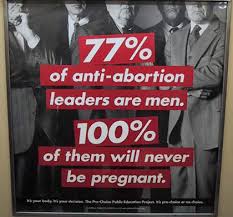
Sixth: Hypocrisy. Since the Supreme Court legalized abortion in 1973, the Right has demanded that even women who are pregnant due to rape or incest carry the fetus to term.
Yet now that Right-wingers are being asked to wear masks in public—to protect themselves and others from a deadly plague—they’ve suddenly discovered the mantra: “It’s my body!”
Seventh: Identifying with Donald Trump. The former President made it clear that his followers don’t wear masks. And they have fallen into line, refusing to mask up even in crowded, indoor arenas where infection is most likely.
2020 PRESIDENTIAL CAMPAIGN, ABC NEWS, ADAM SCHIFF, ALTERNET, AMERICABLOG, AP, ARTICLES OF IMPEACHMENT, BABY BOOMER RESISTANCE, BUZZFEED, CBS NEWS, CIA, CNN, CONVERSATION WITH AN AMERICAN WRITER (POEM), CROOKS AND LIARS, DAILY KOZ, DEMOCRATS, DONALD TRUMP, DRUDGE RETORT, EXTORTION, FACEBOOK, FIVETHIRTYEIGHT, GOVERNMENT ACCOUNTABILITY OFFICE, HARPER’S MAGAZINE, HOUSE FOREIGN AFFAIRS COMMITTEE, HOUSE INTELLIGENCE COMMITTEE, HOUSE OVERSIGHT AND REFORM COMMITTEE, HUNTER BIDEN, IMPEACHMENT, IMPOUNDMENT CONTROL ACT, JOHN ROBERTS, JOSEPH BIDEN, Kamala Harris, MEDIA MATTERS, MICK MULVANEY, MIKE PENCE, MOTHER JONES, MOVEON, MSNBC, NANCY PELOSI, NBC NEWS, NEWSWEEK, NPR, PATRICK LEAHY, PBS NEWSHOUR, POLITICO, POLITICUSUSA, RAND PAUL, RAW STORY, REPUBLICANS, REUTERS, ROBERT PAYNE, RUSSIA, SALON, SEATTLE TIMES, SLATE, TALKING POINTS MEMO, THE ATLANTIC, THE CHICAGO SUN-TIMES, THE CHICAGO TRIBUNE, THE DAILY BEAST, THE DAILY BLOG, THE GUARDIAN, THE HILL, THE HUFFINGTON POST, THE JUDICIARY, THE LIFE AND DEATH OF ADOLF HITLER (BOOK), THE LOS ANGELES TIMES, THE NATION, THE NEW REPUBLIC, THE NEW YORK TIMES, THE PRESS, THE VILLAGE VOICE, THE WASHINGTON POST, THINKPROGRESS, TIME, TREASON, TRUTHDIG, TRUTHOUT, TWITTER, TWO POLITICAL JUNKIES, U.S. NEWS & WORLD REPORT, UKRAINE, UNITED STATES HOUSE OF REPRESENTATIVES, UNITED STATES SENATE, UPI, USA TODAY, VLADIMIR PUTIN, VOLODYMYR ZELENSKY, WHISTLEBLOWER, WHITE HOUSE BUDGET OFFICE, WONKETTE, YEVGENEY YEVTUSHENKO
In Bureaucracy, History, Law, Law Enforcement, Politics, Social commentary on January 29, 2021 at 12:06 am
On November 3, 2020, 81,255,933 Democratic voters elected former Vice President Joseph Biden the 46th President of the United States. Donald Trump, running for a second term, got 74,196,153 votes.
On January 6, 2021, Trump ordered thousands of his Stormtrumper followers to “stop the steal”—by stopping the count of Electoral College votes that would make Biden President.
Tens of thousands of Stormtrumpers attacked and breached the United States Capitol. Many of the lawmakers’ offices were occupied and vandalized. One Capitol police officer was killed and more than 50 others were injured. Meanwhile, terrified legislators huddled behind locked doors.
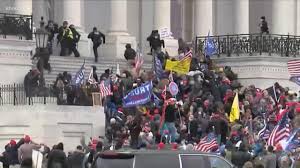
Stormtrumpers attacking the Capitol
On February 8, 2021, Trump—although no longer President—will be impeached for a second time.
And, once again, Republican United States Senators are refusing to act on evidence that almost engulfed them—that of the January 6 mob that Trump sent to attack the United States Capitol.
A January 22 story in The Hill reports: “Only five or six Republican senators at the most seem likely to vote for impeachment, far fewer than the number needed, GOP sources say.”
And Senator Rand Paul (R-Kentucky) claims that 45 Senate Republicans doubt the constitutionality of Trump’s impeachment trial.
A two-thirds majority vote would be necessary for a conviction, requiring at least 17 GOP votes if every Democrat votes to convict Trump.
Among the GO’s excuses for this:
- Trump didn’t pardon any of the insurrectionists. Said one anonymous GOP Senator: “If he pardoned people who had been part of this invasion of the Capitol…that would have said, ‘These are my guys,’”
- “He’s out of office and impeachment is a remedy to remove somebody from office,” said another Republican Senator.
- If Supreme Court Chief Justice John Roberts refuses to preside, and the chair is instead occupied by Vice President Kamala Harris or Senate President Pro Tempore Patrick Leahy (D-Vermont.), the process will appear like a partisan exercise.
- “It’s freedom of speech!” Said Senator Rand Paul: “Are we going to put every politician in jail—are we going to impeach every politician who has used the words ‘fight’ figuratively in a speech? Shame!”
![Image]Never let fear conquer you : GetMotivated](https://encrypted-tbn0.gstatic.com/images?q=tbn:ANd9GcSP5lnqsMt8F3Zq6hlDEaN5uqYT2c2mUezksA&usqp=CAU)
In answer to these excuses:
- It doesn’t matter that Trump didn’t pardon any of the seditionists. His lying tweets brought them to Washington, and his fiery, lie-studded rhetoric launched the attack.
- If a retired Senator or Supreme Court Justice was found to have violated the law, s/he could still be tried—so long as the statute hadn’t expired. The President should not be held above the law.
- Supreme Court Justice John Roberts has said he doesn’t want to preside over Trump’s second impeachment trial. So what? The Constitution dictates: “When the President of the United States is tried, the Chief Justice shall preside.” He should be required to live up to his assigned duty—or resign his position.
- The “freedom of speech” defense ignores a fundamental truth: Even the First Amendment doesn’t allow speech that incites deadly violence. When Trump proclaimed “Because you’ll never take back our country with weakness. You have to show strength and you have to be strong” his supporters—many of whom had come with firearms, scaling devices and twist-ties for taking hostages—knew exactly what he wanted them to do.
* * * * * * * * * *
So why have Republicans almost unanimously stood by Donald Trump despite his having sent a mob to attack the Capitol—and threaten their own safety?
During the six-hour siege, they feared for their lives. But now they fear they will lose their powerful positions—and the privileges that go with them—to Trump’s angry supporters at the next election.
For them, that counts far more than protecting the country from a ruthless tyrant who nearly destroyed America’s most cherished democratic institutions:
- A free press.
- An apolitical Justice Department.
- The peaceful transfer of power from one administration to another.
In his bestselling 1973 biography, The Life and Death of Adolf Hitler, British historian Robert Payne harshly condemned the German people for the rise of the Nazi dictator:
“[They] allowed themselves to be seduced by him and came to enjoy the experience….[They] followed him with joy and enthusiasm because he gave them license to pillage and murder to their hearts’ content. They were his servile accomplices, his willing victims. Germany will rule the world, our enemies will be our slaves….”

Like Hitler, Trump offered his Republican voters and Congressional allies intoxicating dreams: “I will enrich all of you. And I will humiliate and destroy those Americans you most hate.”
And, again like Hitler, his audience had always possessed those desires. Trump offered them nothing new. But as a lifelong opportunist, he realized that he could use those desires to catapult himself into a position of supreme power.
He despised his followers—both as voters and Congressional allies—for they were merely the instruments of his will.
In 1960, the Russian poet, Yevgeney Yevtushenko, published “Conversation With an American Writer”—a stinging indictment of the cowardly opportunists who had supported the brutal tyranny of Joseph Stalin:
I was never courageous.
I simply felt it unbecoming to stoop to the cowardice of my colleagues.
Too many Republicans know all-too-well how it feels to stoop to the cowardice of their colleagues for a transitory goal.
2020 PRESIDENTIAL CAMPAIGN, ABC NEWS, ADAM SCHIFF, ALTERNET, AMERICABLOG, AP, ARTICLES OF IMPEACHMENT, BABY BOOMER RESISTANCE, BUZZFEED, CBS NEWS, CIA, CNN, CONVERSATION WITH AN AMERICAN WRITER (POEM), CROOKS AND LIARS, DAILY KOZ, DEMOCRATS, DONALD TRUMP, DRUDGE RETORT, EXTORTION, FACEBOOK, FIVETHIRTYEIGHT, GOVERNMENT ACCOUNTABILITY OFFICE, HARPER’S MAGAZINE, HOUSE FOREIGN AFFAIRS COMMITTEE, HOUSE INTELLIGENCE COMMITTEE, HOUSE OVERSIGHT AND REFORM COMMITTEE, HUNTER BIDEN, IMPEACHMENT, IMPOUNDMENT CONTROL ACT, JOHN ROBERTS, JOSEPH BIDEN, Kamala Harris, MEDIA MATTERS, MICK MULVANEY, MIKE PENCE, MOTHER JONES, MOVEON, MSNBC, NANCY PELOSI, NBC NEWS, NEWSWEEK, NPR, PATRICK LEAHY, PBS NEWSHOUR, POLITICO, POLITICUSUSA, RAND PAUL, RAW STORY, REPUBLICANS, REUTERS, ROBERT PAYNE, RUSSIA, SALON, SEATTLE TIMES, SLATE, TALKING POINTS MEMO, THE ATLANTIC, THE CHICAGO SUN-TIMES, THE CHICAGO TRIBUNE, THE DAILY BEAST, THE DAILY BLOG, THE GUARDIAN, THE HILL, THE HUFFINGTON POST, THE JUDICIARY, THE LIFE AND DEATH OF ADOLF HITLER (BOOK), THE LOS ANGELES TIMES, THE NATION, THE NEW REPUBLIC, THE NEW YORK TIMES, THE PRESS, THE VILLAGE VOICE, THE WASHINGTON POST, THINKPROGRESS, TIME, TREASON, TRUTHDIG, TRUTHOUT, TWITTER, TWO POLITICAL JUNKIES, U.S. NEWS & WORLD REPORT, UKRAINE, UNITED STATES HOUSE OF REPRESENTATIVES, UNITED STATES SENATE, UPI, USA TODAY, VLADIMIR PUTIN, VOLODYMYR ZELENSKY, WHISTLEBLOWER, WHITE HOUSE BUDGET OFFICE, WONKETTE, YEVGENEY YEVTUSHENKO
In Bureaucracy, History, Law, Law Enforcement, Politics, Social commentary on January 28, 2021 at 12:19 am
As trial proceedings unfolded in the 2020 impeachment of President Donald J. Trump, the majority Republican Senators consistently put their own partisan interests over those of their country.
Trump was facing charges of:
Article 1: Abuse of Power: For pressuring Ukraine to assist him in his re-election campaign by smearing a potential rival for the White House.
Article 2: Obstruction of Congress: For obstructing Congress by blocking testimony of subpoenaed witnesses and refusing to provide documents in response to House subpoenas in the impeachment inquiry.
Yet Republican Senators repeatedly made clear their determination to fully support him.
Among their actions:
- Refusing to hear from eyewitnesses who could prove that Trump had committed impeachable offenses,
- Refusing to provide evidence on Trump’s behalf—but attacking witnesses who had testified against him in the House.
- Attacking Joseph and Hunter Biden as if they were on trial—instead of having been the targets of Trump’s smear-attempt.
As Lead Impeachment Manager, Representative Adam Schiff (D-CA) held the role of a prosecutor.
Faced with the unwillingness of Trump’s Senatorial defenders to accept any evidence—no matter how damning—against him, Schiff warned: “Donald Trump must be convicted and removed from office. Because he will always choose his own personal interest over our national interest. Because in America, right matters. Truth matters. If not, no Constitution can protect us. If not, we are lost.”

Adam Schiff
On February 5, 2020, the Republican-dominated Senate—as expected—absolved him from trying to extort Ukraine into smearing a possible rival for the White House.
Only one Republican—Utah Senator Mitt Romney—had the moral courage to vote for conviction.
On January 6, 2021, Schiff’s prophecy came true.
On that date, members of the United States Senate and House of Representatives were meeting to count the Electoral Votes cast for then-President Trump and former Vice President Joseph R. Biden.
For weeks Trump had ordered his legions of Right-wing Stormtrumpers to descend on Washington, D.C. on January 6.
On December 20, he had tweeted: “Statistically impossible to have lost the 2020 Election. Big protest in DC on January 6th. Be there, will be wild!”
In tweets, he promoted the rally again on December 27 and 30, and January 1.
And, as the House of Representatives would soon note: “In the months preceding the Joint Session, President Trump repeatedly issued false statements asserting that the Presidential election results were the product of widespread fraud and should not be accepted by the American people or certified by State or Federal officials.”
Thus, through his lies, he had aroused the fury of his Right-wing supporters.
It would take only his command to send it hurtling at his perceived enemies: Those who would dare elect Joe Biden in his place.

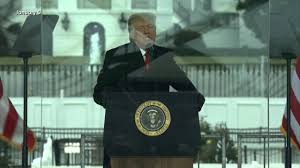
Donald Trump addresses his Stormtrumpers
On January 6, Trump appeared at the Ellipse, a 52-acre park south of the White House fence and north of Constitution Avenue and the National Mall in Washington, D.C.
A stage had been set up for him to address tens of thousands of his supporters, who eagerly awaited him.
Trump ordered them to march on the Capitol building to express their anger at the voting process and to intimidate their elected officials to reject the results:
“And after this, we’re going to walk down and I’ll be there with you. We’re going to walk down to the Capitol. And we’re going to cheer on our brave Senators and Congressmen and women and we’re probably not going to be cheering so much for some of them.
“Because you’ll never take back our country with weakness. You have to show strength and you have to be strong. We have come to demand that Congress do the right thing and only count the electors who have been lawfully slated.”
The Stormtrumpers marched to the United States Capitol—and quickly brushed aside Capitol Police, who made little effort to arrest or shoot them.
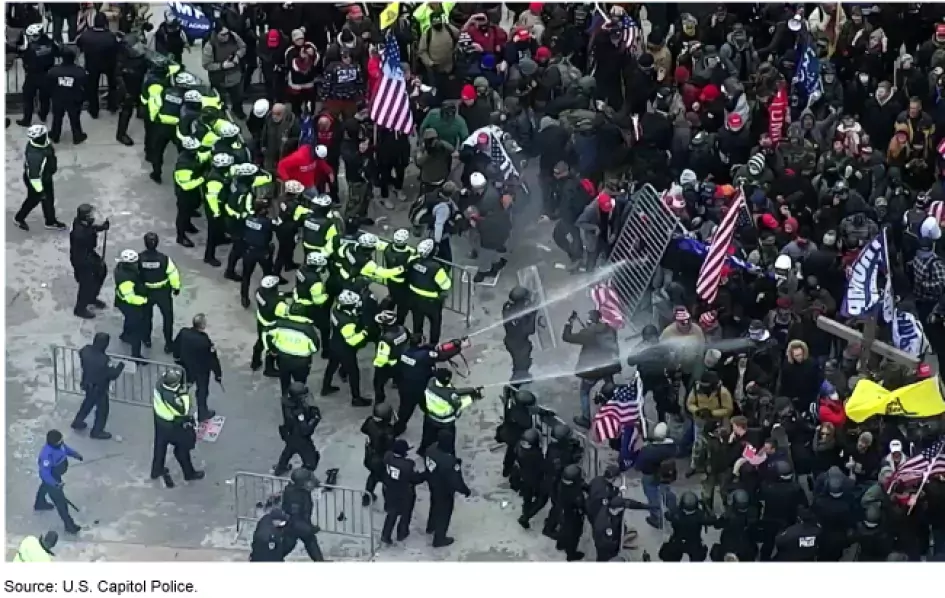
- One attacker was shot as protesters forced their way toward the House Chamber where members of Congress were sheltering in place.
- Members of the mob attacked police with chemical agents or lead pipes.
- A Capitol Hill police officer was knocked off his feet, dragged into the mob surging toward the building, and beaten with the pole of an American flag.
- Several rioters carried plastic handcuffs, possibly intending to take hostages.
- Others carried treasonous Confederate flags.
- Shouts of “Hang Pence!” often rang out.
- Improvised explosive devices were found in several locations in Washington, D.C.
- Many of the lawmakers’ office buildings were occupied and vandalized—including that of House Speaker Nancy Pelosi, a favorite Right-wing target.
More than three hours passed before police—using riot gear, shields and batons—retook control of the Capitol.
And Trump? After giving his inflammatory speech, he didn’t march with his followers to the Capitol.
Like the draft-dodger he had been during the Vietnam war, he kept himself out of harm’s way and returned to the White House.
There he watched his handiwork on television—and initially rebuffed requests to mobilize the National Guard.
This required intervention by Pat A. Cipollone, the White House Counsel, among other officials.
2020 PRESIDENTIAL CAMPAIGN, ABC NEWS, ADAM SCHIFF, ALTERNET, AMERICABLOG, AP, ARTICLES OF IMPEACHMENT, BABY BOOMER RESISTANCE, BUZZFEED, CBS NEWS, CIA, CNN, CONVERSATION WITH AN AMERICAN WRITER (POEM), CROOKS AND LIARS, DAILY KOZ, DEMOCRATS, DONALD TRUMP, DRUDGE RETORT, EXTORTION, FACEBOOK, FIVETHIRTYEIGHT, GOVERNMENT ACCOUNTABILITY OFFICE, HARPER’S MAGAZINE, HOUSE FOREIGN AFFAIRS COMMITTEE, HOUSE INTELLIGENCE COMMITTEE, HOUSE OVERSIGHT AND REFORM COMMITTEE, HUNTER BIDEN, IMPEACHMENT, IMPOUNDMENT CONTROL ACT, JOHN ROBERTS, JOSEPH BIDEN, Kamala Harris, MEDIA MATTERS, MICK MULVANEY, MIKE PENCE, MOTHER JONES, MOVEON, MSNBC, NANCY PELOSI, NBC NEWS, NEWSWEEK, NPR, PATRICK LEAHY, PBS NEWSHOUR, POLITICO, POLITICUSUSA, RAND PAUL, RAW STORY, REPUBLICANS, REUTERS, ROBERT PAYNE, RUSSIA, SALON, SEATTLE TIMES, SLATE, TALKING POINTS MEMO, THE ATLANTIC, THE CHICAGO SUN-TIMES, THE CHICAGO TRIBUNE, THE DAILY BEAST, THE DAILY BLOG, THE GUARDIAN, THE HILL, THE HUFFINGTON POST, THE JUDICIARY, THE LIFE AND DEATH OF ADOLF HITLER (BOOK), THE LOS ANGELES TIMES, THE NATION, THE NEW REPUBLIC, THE NEW YORK TIMES, THE PRESS, THE VILLAGE VOICE, THE WASHINGTON POST, THINKPROGRESS, TIME, TREASON, TRUTHDIG, TRUTHOUT, TWITTER, TWO POLITICAL JUNKIES, U.S. NEWS & WORLD REPORT, UKRAINE, UNITED STATES HOUSE OF REPRESENTATIVES, UNITED STATES SENATE, UPI, USA TODAY, VLADIMIR PUTIN, VOLODYMYR ZELENSKY, WHISTLEBLOWER, WHITE HOUSE BUDGET OFFICE, WONKETTE, YEVGENEY YEVTUSHENKO
In Bureaucracy, History, Law, Law Enforcement, Politics, Social commentary on January 27, 2021 at 12:18 am
On February 8, Donald J. Trump will face trial for impeachment for a second time—when he is no longer President of the United States.
He faces trial on one count—Incitement of Insurrection: “Donald John Trump engaged in high Crimes and Misdemeanors by inciting violence against the Government of the United States.”
Specifically:
On January 6, 2021, the House of Representatives and the Senate met in the United States Capitol to count the Electoral College votes received by both Trump and his Democratic opponent, former Vice President Joseph R. Biden, in the November 3 Presidential election.
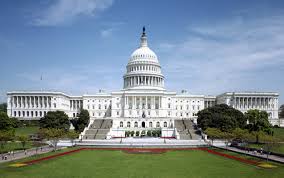
United States Capitol
According to the Article of Impeachment: “President Trump repeatedly issued false statements asserting that the Presidential election results were the product of widespread fraud and should not be accepted by the American people or certified by State or Federal officials.
“Shortly before the Joint Session commenced, President Trump addressed a crowd at the Ellipse in Washington, DC. There he reiterated false claims that ‘we won this election, and we won it by a landslide.’
“He also willfully made statements that, in context, encouraged—and foreseeably resulted in—lawless action at the Capitol, such as: ‘If you don’t fight like hell, you’re not going to have a country anymore.’
“Thus incited by President Trump, members of the crowd he had addressed, in an attempt to….interfere with the Joint Session’s solemn constitutional duty to certify the results of the 2020 election, unlawfully breached and vandalized the Capitol, injured and killed law enforcement personnel, menaced Members of Congress, the Vice President, and Congressional personnel, and engaged in other violent, deadly, destructive, and seditious acts.”
Trump wanted his followers to stop that ballot counting, since he knew the final tally would give the victory to Biden. And his followers intended to give him another—and illegal—four years in office.

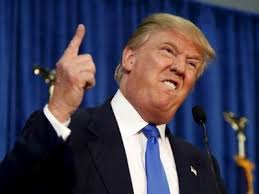
Donald Trump
The Article of Impeachment further cites that, on January 2, Trump called Georgia Secretary of State Brad Raffensperger and “urged” him to “find” enough votes to overturn the Georgia Presidential election results. And he threatened Raffsnsperger with prosecution if he failed to do so.
Summing up its case against Trump, the Article states: “In all this, President Trump gravely endangered the security of the United States and its institutions of Government. He threatened the integrity of the democratic system, interfered with the peaceful transition of power, and imperiled a coequal branch of Government. He thereby betrayed his trust as President, to the manifest injury of the people of the United States.
“Wherefore, Donald John Trump, by such conduct, has demonstrated that he will remain a threat to national security, democracy, and the Constitution if allowed to remain in office, and has acted in a manner grossly incompatible with self-governance and the rule of law. Donald John Trump thus warrants impeachment and trial, removal from office, and disqualification to hold and enjoy any office of honor, trust or profit under the United States.”
One year ago, Trump—as President—faced such trial on two counts: “Abuse of Power” and “Obstruction of Congress.”
On December 18, 2019, the House of Representatives had approved two Articles of Impeachment against Trump for:
Article 1: Abuse of Power: For pressuring Ukraine to assist him in his re-election campaign by smearing a potential rival for the White House.
Article 2: Obstruction of Congress: For obstructing Congress by blocking testimony of subpoenaed witnesses and refusing to provide documents in response to House subpoenas in the impeachment inquiry.
On September 9, 2019, the House Foreign Affairs, Intelligence and Oversight and Reform committees began investigating his attempted extortion of Ukraine President Volodymyr Zelensky.
On July 25, 2019, Trump had “asked” Zelensky to do him a “favor”: Find embarrassing “dirt” on former Vice President Joseph Biden and his son, Hunter.
Hunter had had business dealings in Ukraine. And Joseph Biden might be Trump’s Democratic opponent for the White House in 2020.
To underline the seriousness of his “request,” earlier in July Trump had told Mick Mulvaney, his White House chief of staff, to withhold $400 million in military aid that Congress had approved for Ukraine, which faced an increasingly aggressive Russia.
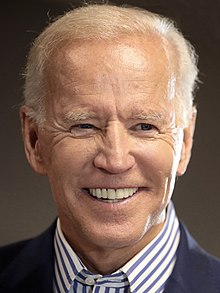
Joseph Biden
Gage Skidmore from Peoria, AZ, United States of America / CC BY-SA (https://creativecommons.org/licenses/by-sa/2.0)
But then a CIA whistleblower filed a complaint about the extortion attempt—and the media and Congress soon learned of it. And ever since, the evidence linking Trump to impeachable offenses had mushroomed.
On January 16, 2020, the Government Accountability Office (GAO) announced that the Trump administration broke the law when it withheld security aid to Ukraine.
The GAO, a nonpartisan congressional watchdog, declared that the White House Budget Office violated the Impoundment Control Act, a 1974 law that limits the White House from withholding funds that Congress has appropriated.
“Faithful execution of the law does not permit the President to substitute his own policy priorities for those that Congress has enacted into law,” the GAO auditors wrote.
On October 3, 2019, while being investigated for trying to extort Ukraine to investigate Biden, Trump said on the White House lawn: “China should start an investigation into the Bidens.”
And he warned: “I have a lot of options on China, but if they don’t do what we want, we have tremendous power.”
ABC NEWS, ADOLF HITLER, ALTERNET, AMERICABLOG, AP, BABY BOOMER RESISTANCE, BAVARIA, BEER HALL PUTSCH, BLOOMBERG, BUZZFEED, CAPITOL ATTACK, CBS NEWS, CNN, CROOKS AND LIARS, DAILY KOZ, DAILY MAIL, DEMOCRATIC PARTY, DONALD TRUMP, DRUDGE REPORT, EXTORTION, FACEBOOK, FBI, FIVETHIRTYEIGHT, HARPER’S MAGAZINE, HITLERR: ASCENT (BOOK), HUFFINGTON POST, IMPEACHMENT, JEWS, JUSTICE DEPARTMENT, MEDIA MATTERS, MEIN KAMPF, MOTHER JONES, MOVEON, MSNBC, MUNICH, NAZI PARTY, NBC NEWS, NEWSWEEK, NICCOLO MACHIAVELLI, NPR, PBS NEWSHOUR, POLITICO, POLITICUSUSA, RAW STORY, REPUBLICAN PARTY, REUTERS, SALON, SEATTLE TIMES, SLATE, SOVIET UNION, TALKING POINTS MEMO, THE ATLANTIC, THE CHICAGO SUN-TIMES, THE CHICAGO TRIBUNE, THE DAILY BEAST, THE DAILY BLOG, THE GUARDIAN, THE HILL, THE HUFFINGTON POST, THE LOS ANGELES TIMES, THE NATION, THE NEW REPUBLIC, THE NEW YORK TIMES, THE VILLAGE VOICE, THE WASHINGTON EXAMINER, THE WASHINGTON POST, THINKPROGRESS, THREATS, TIME, TREASON, TRUTHDIG, TRUTHOUT, TWITTER, TWO POLITICAL JUNKIES, U.S. NEWS & WORLD REPORT, U.S. SECRET SERVICE, UPI, USA PATRIOT ACT, USA TODAY, VOLKER ULLRICH, WEIMAR REPUBLIC, WONKETTE
In Bureaucracy, History, Law, Law Enforcement, Politics, Social commentary on January 26, 2021 at 12:09 am
On November 9, 1923, Nazi Party Fuhrer Adolf Hitler tried to overthrow the government in Munich, Bavaria.
About 2,000 Nazis marched to the center of Munich, where they confronted heavily-armed police. A shootout erupted, killing 16 Nazis and four policemen.
Hitler was injured during the clash, but managed to escape. Two days later, he was arrested and charged with treason.
Put on trial, he found himself treated as a celebrity by a judge sympathetic to Right-wing groups. He was allowed to brutally cross-examine witnesses and even make inflammatory speeches.
At the end of the trial, he was convicted of treason and sentenced to five years’ imprisonment.
Serving time in Landsberg Prison, in Bavaria. he was given a huge cell, allowed to receive unlimited visitors and gifts, and treated with deference by guards and inmates.
Hitler used his time in prison to write his infamous book, Mein Kampf-–“My Struggle.” Part autobiography, part political treatise, it laid out his future plans—including the extermination of the Jews and the conquest of the Soviet Union.

Adolf Hitler leaving Landsberg Prison, December, 20, 1924
Nine months later, he was released on parole—by authorities loyal to the authoritarian Right instead of the newly-created Weimar Republic.
Hitler immediately began rebuilding the shattered Nazi party—and deciding on a new strategy to gain power. Never again would he resort to armed force. He would win office by election—or intrigue.
On January 30, 1933, those intrigues made him Chancellor of Germany.
Writes historian Volker Ullrich, in his monumental 2016 biography, Hitler: Ascent 1889 – 1939: “Historians have perennially tried to answer the question of whether Hitler’s rise to power could have been halted….
“There were repeated opportunities to end Hitler’s run of triumphs. The most obvious one was after the failed Putsch of November 1923. Had the Munich rabble-rouser been forced to serve his full five-year term of imprisonment in Landsberg, it is extremely unlikely that he would have been able to restart his political career.”

The United States Senate—and Justice Department—now face the same dilemma faced by the judges of the Weimar Republic.
On January 6, thousands of Donald Trump’s supporters—incited by the then-President—attacked the United States Capitol. Stormtrumpers ransacked the building while legislators—protected by only a small cadre of police—huddled fearfully. Five people—including a Capitol Hill policeman—were killed.
The Stormtrumpers’ goal: To illegally overturn Trump’s defeat in the November 3 Presidential election.

The storming of the United States Capitol
TapTheForwardAssist, CC BY-SA 4.0 <https://creativecommons.org/licenses/by-sa/4.0>, via Wikimedia Commons
On January 23, the Daily Mail carried a story under the headline: “Justice Department Debate NOT Charging Up to 800 MAGA Rioters at Capitol”:
“The FBI and prosecutors at the Justice Department are debating whether to decline to charge some of the MAGA rioters who stormed the United States Capitol on January 6 in an attempt to derail President Joe Biden’s certification.
“There is concern among DOJ officials that bringing charges against all of the estimated 800 rioters who ransacked the Capitol building could flood the local federal courthouse in Washington, DC, with cases.
“There have been internal discussions about forgoing charges against those who were not involved in any violence or vandalism but were simply trespassing or ‘going along with the crowd,’ The Washington Post reported.”
Meanwhile, many Republicans are strongly opposing Trump’s second impeachment trial—which is set to open on February 8.
Some claim that the only way to “heal” the country after four divisive years of Trump is to forgive his every crime.
This amounts to Right-wing hypocrisy, since Trump himself wanted his Attorney General to “lock up” those who had not broken the law—former FBI Director James Comey, former President Barack Obama and former First Lady and Senator Hillary Clinton.
Other Republicans are asserting that since Trump has left office, his crimes cannot be prosecuted.
Yet no other United States official has ever been granted such immunity. If an ex-Senator is found to have taken bribes, he can be tried for bribery—so long as the statute hasn’t expired
More than 500 years ago, the father of political science, Niccolo Machiavelli, examined the issue of rewards and punishments. He concluded:
“…No well-ordered republic should ever cancel the crimes of its citizens by their merits. But having established rewards for good actions and penalties for evil ones, and having rewarded a citizen for conduct who afterwards commits a wrong, he should be chastised for that without regard to his previous merits. And a state that properly observes this principle will long enjoy its liberty, but if otherwise, it will speedily come to ruin.
“For if a citizen who has rendered some eminent service to the state should add to the reputation and influence which he has thereby acquired the confident audacity of being able to commit any wrong without fear of punishment, he will in a little while become so insolent and overbearing as to put an end to all power of the law.”
For those who require more contemporary advice, the example of the Weimar Republic offers a continuing warning.
Right-wing judges and police, sympathizing with men like Adolf Hitler—who had publicly sworn to destroy the fledging Republic—ultimately made that a reality.
They must not be allowed to do the same to the American Republic.
ABC NEWS, ABRAHAM LINCOLN, ALTERNET, AMERICABLOG, AP, BABY BOOMER RESISTANCE, BLOOMBERG, BUZZFEED, CBS NEWS, CIVIL WAR, CLARK GABLE, CNN, CONFEDERATE FLAG, CROOKS AND LIARS, DAILY KOZ, DANIEL DAY-LEWIS, DRUDGE REPORT, FACEBOOK, FIVETHIRTYEIGHT, GONE WITH THE WIND, HARPER’S MAGAZINE, HATTIE MCDANIEL, HUFFINGTON POST, MARGARET MITCHELL, MEDIA MATTERS, MOTHER JONES, MOVEON, MSNBC, NAZI GERMANY, NBC NEWS, NEWSWEEK, NPR, PBS NEWSHOUR, POLITICO, POLITICUSUSA, RACISM, RAW STORY, REUTERS, SALON, SEATTLE TIMES, SLATE, SLAVERY, STEVEN SPIELBERG, TALKING POINTS MEMO, THE ATLANTIC, THE CHICAGO SUN-TIMES, THE CHICAGO TRIBUNE, THE DAILY BEAST, THE DAILY BLOG, THE GUARDIAN, THE HILL, THE HUFFINGTON POST, THE LOS ANGELES TIMES, THE NATION, THE NEW REPUBLIC, THE NEW YORK TIMES, THE VILLAGE VOICE, THE WASHINGTON POST, THINKPROGRESS, THIRTEENTH AMENDMENT, TIME, TRUTHDIG, TRUTHOUT, TWITTER, TWO POLITICAL JUNKIES, U.S. NEWS & WORLD REPORT, UPI, USA TODAY, WONKETTE
In Bureaucracy, History, Law, Military, Politics, Social commentary on January 25, 2021 at 12:05 am
Steven Spielberg’s Lincoln serves up a timely reminder that has long been obscured by past and current Southern lies that the Civil War was not about slavery.
From first to last, the cause of the Civil War was slavery.
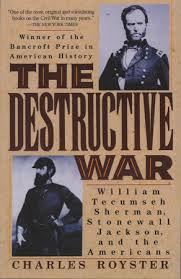
According to The Destructive War, by Charles Royster, arguments over “states’ rights” or economic conflict between North and South didn’t lead 13 Southern states to withdraw from the Union in 1860-61. It was their demand for “respect” of their “peculiar institution”—i.e., slavery.
“The respect Southerners demanded did not consist simply of the states’ sovereignty or of the equal rights of Northern and Southern citizens, including slaveholders’ right to take their chattels into Northern territory.
“It entailed, too, respect for their assertion of the moral superiority of slaveholding society over free society,” writes Royster.
“It was not enough for Southerners to claim equal standing with Northerners; Northerners must acknowledge it. But this was something that the North was increasingly unwilling to do.”
Finally, its citizens dared to elect Abraham Lincoln as President in 1860. Lincoln and his new Republican party damned slavery—and slaveholders—as morally evil, obsolete and ultimately doomed. And they were determined to prevent slavery from spreading any further throughout the country.
Southerners found all of this intolerable.
The British author, Anthony Trollope, explained to his readers:
“It is no light thing to be told daily, by our fellow citizens…that you are guilty of the one damning sin that cannot be forgiven. All this [Southerners] could partly moderate, partly rebuke and partly bear as long as political power remained in their hands.”
It is to Spielberg’s credit that he forces his audience to look directly at the real cause of the bloodiest conflict on the North American continent.
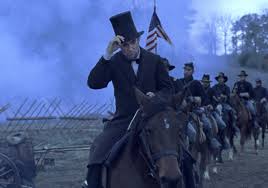
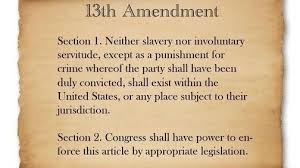
At the heart of Spielberg’s film: Abraham Lincoln (Daniel Day-Lewis) wants to win ratification of what will be the Thirteenth Amendment to the United States Constitution. An amendment that will forever ban slavery.
But, almost four years into the war, slavery still has powerful friends—-in both the North and South.
Many of those friends belong to the House of Representatives, which must ratify the amendment for it to become law. Some are hostile to Lincoln personally. One of them dubs him a dictator: “Abraham Africanus.” Another accuses him of shifting his positions for the sake of expediency.
Other members—white men all—are hostile to the idea of “equality between the races.
”To them, ending slavery means opening the door to interracial marriage—especially marriage between black men and white women. Perhaps even worse, it means possibly giving blacks—or women—the right to vote.
Members of Lincoln’s own Cabinet—such as Secretary of State William Seward—warn him: You can negotiate the end of the war immediately—if you’ll just let Southerners keep their slaves.
After the amendment wins ratification, Lincoln agrees to meet with a “peace delegation” from the Confederate States of America.
At the top of their list of concerns: If they persuade the seceded states to return to the Union, will those states be allowed to nullify the amendment?
No, says Lincoln. He’s willing to make peace with the South, and on highly generous terms. But not at the cost of allowing slavery to live on.
Too many men—North and South—have died in a conflict whose root cause is slavery. Those lives must count for more than simply reuniting the Union.
The South has lost thousands of men (260,000 is the generally accepted figure for its total casualties) and the war is clearly lost. But for its die-hard leaders, parting with slavery is simply unthinkable.
Like Nazi Germany 80 years into the future, the high command of the South won’t surrender until their armies are too beaten down to fight any more.
The major difference between the defeated South of 1865 and the defeated Germany of 1945, is this: The South was allowed to build a beautiful myth of a glorious “Lost Cause,” epitomized by the Margaret Mitchell novel, Gone With the Wind.
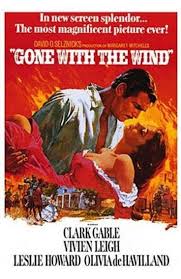
In that telling, dutiful slaves were well-treated by kindly masters. Southern aristocrats wore white suits and their slender-waisted ladies wore long dresses, carried parasols and said “fiddle-dee-dee” to young, handsome suitors.
One million people attended the premier of the movie version in Atlanta on December 15, 1939. The celebration featured stars from the film, receptions, thousands of Confederate flags, false antebellum fronts on stores and homes, and a costume ball.
In keeping with Southern racial tradition, Hattie McDaniel and the other black actors from the film were barred from attending the premiere. Upon learning this, Clark Gable threatened to boycott the event. McDaniel convinced him to attend.
When today’s Southerners fly Confederate flags and speak of “preserving our traditions,” they are actually celebrating their long-banned “peculiar institution.”
By contrast, post-World War II Germany outlawed symbols from the Nazi-era, such as the swastika and the “Heil Hitler” salute, and made Holocaust denial punishable by imprisonment.
America has refused to confront its own shameful past so directly. But Americans can be grateful that Steven Spielberg has had the courage to serve up a long-overdue and much needed lesson in past–and still current–history.
2012 PRESIDENTIAL CAMPAIGN, ABC NEWS, ABRAHAM LINCOLN, ALTERNET, AMERICABLOG, AP, BABY BOOMER RESISTANCE, BARACK OBAMA, BLOOMBERG, BUZZFEED, CBS NEWS, CIVIL RIGHTS ACT OF 1964, CIVIL WAR, CNN, CROOKS AND LIARS, DAILY KOZ, DANIEL DAY-LEWIS, DRUDGE REPORT, EMANCIPATION PROCLAMATION, FACEBOOK, FIVETHIRTYEIGHT, HARPER’S MAGAZINE, HUFFINGTON POST, LYNDON B. JOHNSON, MEDIA MATTERS, MITT ROMNEY, MOTHER JONES, MOVEON, MOVIES, MSNBC, NBC NEWS, NEWSWEEK, NPR, PBS NEWSHOUR, POLITICO, POLITICUSUSA, RAW STORY, REUTERS, SALON, SEATTLE TIMES, SLATE, SLAVERY, STEVEN SPIELBERG, TALKING POINTS MEMO, THE ATLANTIC, THE CHICAGO SUN-TIMES, THE CHICAGO TRIBUNE, THE DAILY BEAST, THE DAILY BLOG, THE GUARDIAN, THE HILL, THE HUFFINGTON POST, THE LOS ANGELES TIMES, THE NATION, THE NEW REPUBLIC, THE NEW YORK TIMES, THE VILLAGE VOICE, THE WASHINGTON POST, THINKPROGRESS, THIRTEENTH AMENDMENT, TIME, TRUTHDIG, TRUTHOUT, TWITTER, TWO POLITICAL JUNKIES, U.S. NEWS & WORLD REPORT, UPI, USA TODAY, VOTER ID LAWS, VOTING RIGHTS ACT OF 1965, WONKETTE
In Bureaucracy, History, Law, Law Enforcement, Military, Politics, Social commentary on January 22, 2021 at 12:10 am
Steven Spielberg’s Lincoln is more than a mesmerizing history lesson. It’s a timely reminder that racism and repression are not confined to any one period or political party.
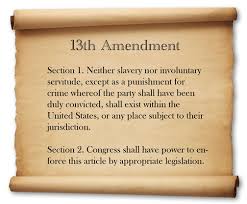
At the heart of the film: Abraham Lincoln (Daniel Day-Lewis) wants to win ratification of what will be the Thirteenth Amendment to the United States Constitution. An amendment that will forever ban slavery.
True, Lincoln, in 1862, had issued the Emancipation Proclamation. This—in theory—freed slaves held in the Confederate states that had seceded from the Union in 1861.
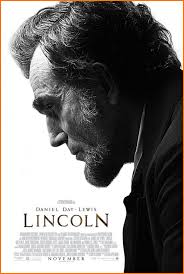
But Lincoln regards this as a temporary wartime measure. He fears that once the war is over, the Supreme Court may rule the Proclamation unconstitutional. This might allow Southerners to continue practicing slavery, even after losing the war.
To prevent this, Congress must pass an anti-slavery amendment. But winning Congressional passage of such an amendment won’t be easy.
The Senate had ratified its passage in 1864. But the amendment must secure approval from the House of Representatives to become law.
And the House is filled with men—there are no women members during the 19th century—who seethe with hostility.
Some are hostile to Lincoln personally. One of them dubs him a dictator—“Abraham Africanus.” Another accuses him of shifting his positions for the sake of expediency.
Other members—white men all—are hostile to the idea of “equality between the races.” To them, ending slavery means opening the door to interracial marriage—especially marriage between black men and white women.
Perhaps even worse, it means possibly giving blacks—or women—the the right to vote.
In fact, the possibility that blacks might win voting rights arises early in the movie. Lincoln is speaking to a couple of black Union soldiers, and one of them is unafraid to voice his discontent. He’s upset that black soldiers are paid less than white ones—and that they’re led only by white officers.
He says that, in time, maybe this will change. Maybe, in 100 years, he guesses, blacks will get the right to vote.
(To the shame of all Americans, that’s how long it will eventually take. Not until the passage of the Voting Rights Act of 1965 will blacks be guaranteed legal protection against discriminatory voting practices.)
To understand the Congressional debate over the Thirteenth Amendment, it’s necessary to remember this: In Lincoln’s time, the Republicans were the party of progressives.
The party was founded on an anti-slavery platform. Its members were thus reviled as “Black Republicans.” And until the 1960s, the South was solidly Democratic.
Democrats were the ones defending the status quo—slavery—and opposing freed blacks in the South of Reconstruction and long afterward.
In short, in the 18th century, Democrats in the South acted as Republicans do now. The South went Republican only after a Democratic President—Lyndon B. Johnson—rammed the Civil Rights Act of 1964 through Congress.
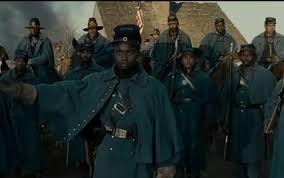
Thus, the re-enactment of the 1865 debate in Lincoln casts an embarrassing light on the racial conflicts of our own time. The same mentalities are at work:
-
Those (in this case, slave-owners) who already have a great deal want to gain even more at the expense of others.
-
Those (slaves and freed blacks) who have little strive to gain more or at least hang onto what they have.
-
Those who defend the privileged wealthy refuse to allow their “social inferiors” to enjoy similar privileges (such as the right to vote).
During the 2012 Presidential race, Republicans tried to bar those likely to vote for President Barack Obama from getting into the voting booth. But their bogus “voter ID” restrictions were struck down in courts across the nation.
Listening to those opposing the amendment, one is reminded of Mitt Romney’s infamous comments about the “47%”:
“Well, there are 47% of the people who will vote for the president no matter what….
“Who are dependent upon government, who believe that—that they are victims, who believe that government has a responsibility to care for them, who believe that they’re entitled to healthcare, to food, to housing, to you name it. But that’s—it’s an entitlement. And the government should give it to them.”
Put another way: “Who says people have a right to obtain medical care, food and housing? If they can’t inherit unearned wealth the way I did, screw them.”
In the end, it’s Abraham Lincoln who has the final word—and leaves his nation the better for it. Through diplomacy and backroom dealings (trading political offices for votes) he wins passage of the anti-slavery amendment.
The ownership of human chattel is finally an ugly memory of the American past.
The movie closes with a historically-correct tribute to Lincoln’s generosity toward those who opposed him—in Congress and on the battlefield. It occurs during Lincoln’s Second Inaugural Address:
“With malice toward none, with charity for all….To bind up the nation’s wounds. To care for him who shall have bourne the battle, and for his widow and his orphan….”
This ending presents a vivid philosophical contrast with the increasingly mean-spirited rhetoric and policies of today’s Republican Presidential candidates—and Presidents.
Watching Lincoln, you realize how incredibly lucky America was as a nation to have had such leadership when it was most urgently needed.
ABC NEWS, ABRAHAM LINCOLN, ALTERNET, AMERICABLOG, AP, ASHLEY PRATTE, BABY BOOMER RESISTANCE, BLACKS, BLOOMBERG, BUZZFEED, C-SPAN, CBS NEWS, CIVIL WAR, CNN, CORONAVIRUS, CROOKS AND LIARS, DAILY KOZ, DEMOCRATS, DONALD TRUMP, DRUDGE RETORT, FACEBOOK, FIVETHIRTYEIGHT, HARPER’S MAGAZINE, HISTORIANS, IMPEACHMENT, INDEPENDENTS, JARED KUSHNER, MEDIA MATTERS, MOTHER JONES, MOVEON, MSNBC, NBC NEWS, NEPOTISM, NEWSWEEK, NPR, PBS NEWSHOUR, POLITICO, POLITICUSUSA, RACISM, RAW STORY, REPUBLICANS, REUTERS, RUSSIA, SALON, SCANDAL, SEATTLE TIMES, SLATE, STROM THURMOND, TALKING POINTS MEMO, THE ATLANTIC, THE CHICAGO SUN-TIMES, THE CHICAGO TRIBUNE, THE DAILY BEAST, THE DAILY BLOG, THE GUARDIAN, THE HILL, THE HUFFINGTON POST, THE LOS ANGELES TIMES, THE NATION, THE NEW REPUBLIC, THE NEW YORK TIMES, THE VILLAGE VOICE, THE WASHINGTON POST, THINKPROGRESS, TIME, TRENT LOTT, TRUTHDIG, TRUTHOUT, TWITTER, TWO POLITICAL JUNKIES, U.S. NEWS & WORLD REPORT, UKRAINE, UPI, USA TODAY, VOLODYMR ZELENSKI, WONKETTE, YOUGOV/ECONOMIST SURVEY
In Bureaucracy, History, Military, Politics, Social commentary on January 21, 2021 at 12:05 am
During the week of November 24 – 26, 2019, The Economist and YouGov conducted a poll of 1,500 American adults. The purpose of that poll: To compare President Donald Trump with President Abraham Lincoln—and find out who was more popular within the Republican party.
Lincoln served as President from 1861 to 1865, steering the United States through the Civil War and the abolition of slavery.
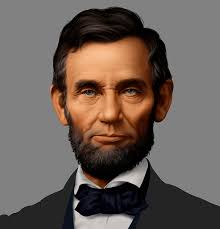
Abraham Lincoln
Trump, by contrast, has largely made the United States a pariah nation throughout the world—and is now presiding over a pandemic which has killed more than 25,000 Americans.
So what was the result of the poll?
Fifty-three percent of Republicans believe that Trump is a better President than Lincoln.
This starkly contrasts with the verdict of both Democratic and independent voters. Ninety-four percent of Democrats preferred Lincoln—and so did 78% of independents.
Overall, 75% of poll respondents picked Lincoln; only 25% picked Trump.
Some Twitter users found this sardonically hilarious.
One of these was Billy Baldwin, the brother of Alec Baldwin, who portrays Trump as a befuddled tyrant on Saturday Night Live: “53% of Republicans apparently don’t even know who Abraham Lincoln was.”
Baldwin also posted an animated photo of the Lincoln Memorial with the Great Emancipator giving The Finger to Trump and First Lady Melania.
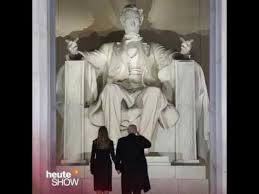
“Economist/YouGov Poll: 53% of Republicans believe Donald Trump is a better president than Abraham Lincoln was while 47% believe the president that got this country through the Civil War was better,” wrote Josh Jordan. “If you were wondering what segment of the population can not be swayed by facts.”
Political commentator Ashley Pratte took a more serious view of the matter.
Describing herself in a December 9, 2019 column as “a lifelong Republican before 2016,” she wrote: “According to a 2017 C-Span survey of the nation’s top presidential historians, Lincoln sits above all other presidents as the greatest of all time.
“The Republican party has strayed far since the days of Lincoln; it’s shameful to see how Trumpism has hijacked it. It’s truly shocking how Republicans are allowing him to carry the mantle of conservatism too with little-to-no hesitation.
“Trump’s years in office have been full of nepotism, scandal, profiting from his position as President and now he is about to become the third-ever president to be impeached.”
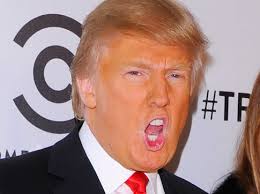
Donald Trump
Specifically:
- He gave unprecedented access to the Oval Office to unqualified members of his family and personal friends.
- When his son-in-law Jared Kushner was denied a security clearance, Trump pushed it through anyway.
- Republicans refused to accept the conclusion of the Mueller Report that Trump campaign officials colluded with Russian Intelligence agents to win the Presidency in 2016.
- They also acquitted him—against overwhelming evidence—of trying to extort Ukrainian President Volodymyr Zelensky to run a smear campaign against former Vice President Joe Biden.
- Trump personally profited from his role as President. At least 250 officials in the executive branch made 630 visits to Trump properties, and 90 members of Congress have made 180 visits.
For Pratte, Trump’s worst offense is this: “Trump has also been the most divisive president in our nation’s history….. From his Twitter rants and off-color statements to his pursuit of a travel ban and destruction of Obamacare, he’s not even bothered to try to get support for his policies.
“Instead, he’s forged ahead, continually pressed to build an impossible wall on the U.S.-Mexico border, withdrawn from the Paris Climate Agreement and threatened to withdraw from NAFTA as a way to negotiate a slightly new version of it.
“…Republican officials should be eager to uphold the ideals of accountability, no matter which political party controls the White House. The problem is that these so-called morals are just a sham, and abandoning them is the only way to defend the occupant of 1600 Pennsylvania Avenue.”
There are two major reasons why Republicans regard Trump more highly than Lincoln.
First: In 2002, Republican Senate Majority Leader Trent Lott gave away the game at the 100th birthday party for racist South Carolina Republican Senator Strom Thurmond:
”I want to say this about my state: When Strom Thurmond ran for president, we voted for him. We’re proud of it. And if the rest of the country had followed our lead, we wouldn’t have had all these problems over all these years, either.”
In short: If America had elected Thurmond—who ran ran for president in 1948 as the Dixiecrat candidate on a States Rights platform supporting racial segregation—we wouldn’t be having all these problems now with “uppity” blacks.
Thus, Lincoln—who freed blacks from slavery—is for Republican voters the root cause of “all these problems over all these years.”
Second, Lincoln waged a civil war to restore the Union—which meant sending Federal armies into the rebellious South.
Under the banner of “States’ rights,” today’s Republicans openly court millions of voters in the South who still wish the Civil War had ended differently: With a triumphant South still running its slave empire—and millions of blacks still held in bondage.
While these voters secretly regret that those “good old days” will never return, they can at least show their support for “States’ rights” by backing Trump—whose racism toward non-whites is universally known and applauded by white supremacist groups.
2016 PRESIDENTIAL ELECTION, 2020 PRESIDENTIAL ELECTION, ABC NEWS, ABRAHAM LINCOLN, ADOLF HITLER, ALTERNET, AMERICABLOG, AP, ATTACK ON CAPITOL BUILDING, BABY BOOMER RESISTANCE, BLACKS, BLOOMBERG, BRIBERY, BUZZFEED, CBS NEWS, CIA, CIVIL WAR, CNN, COLD WAR, CORONAVIRUS, CROOKS AND LIARS, DAILY KOZ, DONALD TRUMP, DRUDGE REPORT, ELECTORAL COLLEGE, FACEBOOK, FBI, FIVETHIRTYEIGHT, FOX NEWS, FRANKLIN D. ROOSEVELT, GREAT DEPRESSION, HARPER’S MAGAZINE, HERBERT HOOVER, HISPANICS, HITLER (BOOK), HUFFINGTON POST, JOACHIM C. FEST, JOHN F. KENNEDY, JOSEPH R. BIDEN, LYNDON B. JOHNSON, MEDIA MATTERS, MOTHER JONES, MOVEON, MSNBC, NAZI GERMANY, NBC NEWS, NEWSWEEK, NPR, OTTO VON BISMARCK, PBS NEWSHOUR, POLITICO, POLITICUSUSA, RAW STORY, REPUBLICANS, REUTERS, RICHARD M. NIXON, SALON, SEATTLE TIMES, SEXUAL ABUSE, SLATE, TALKING POINTS MEMO, THE ATLANTIC, THE CHICAGO SUN-TIMES, THE CHICAGO TRIBUNE, THE DAILY BEAST, THE DAILY BLOG, THE DISABLED, THE GUARDIAN, THE HILL, THE HUFFINGTON POST, THE LOS ANGELES TIMES, THE NATION, THE NEW REPUBLIC, THE NEW YORK TIMES, THE PRESS, THE VILLAGE VOICE, THE WASHINGTON POST, THEODORE ROOSEVELT, THINKPROGRESS, TIME, TRUTHDIG, TRUTHOUT, TWITTER, TWO POLITICAL JUNKIES, U.S. NEWS & WORLD REPORT, UPI, USA TODAY, VIETNAM WAR, VLADIMIR PUTIN, WATERGATE, WOMEN, WONKETTE, WORLD WAR ii
In Bureaucracy, History, Law, Law Enforcement, Military, Politics, Social commentary on January 20, 2021 at 12:08 am
Why are some Presidents remembered with affection, while others are detested—or forgotten altogether?
Generally, Presidents who are warmly remembered are seen as making positive contributions to the lives of their fellow Americans and being “people-oriented.”
Among these:
- Abraham Lincoln
- Theodore Roosevelt
- Franklin Roosevelt
- John F. Kennedy
Among the reasons they are held in such high regard:
- Abraham Lincoln ended slavery and restored the Union. Although he ruthlessly prosecuted the Civil War, his humanity remains engraved in stories such as his pardoning a soldier condemned to be shot for cowardice: “If Almighty God gives a man a cowardly pair of legs, how can he help their running away with him?”
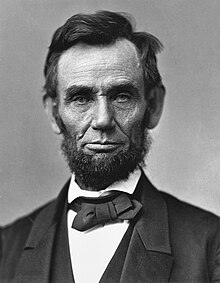
Abraham Lincoln
- Theodore Roosevelt championed an era of reform, such as creating the Food and Drug Administration and five National Parks. Popularly known as “Teddy,” he even had a toy bear—the teddy bear—named after him.
- Franklin D. Roosevelt successfully led America through the Great Depression and World War II. He was the first President to insist that government existed to directly better the lives of its citizens: “The test of our progress is not whether we add more to the abundance of those who have much; it is whether we provide enough for those who have too little.”
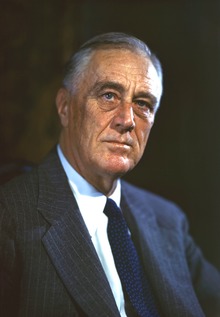
Franklin D. Roosevelt
- John F. Kennedy supported civil rights and called for an end to the Cold War. He challenged Americans to “ask what you can do for your country” and made government service respectable, even chic. His youth, charisma, intelligence and handsomeness led millions to mourn for “what might have been” had he lived to win a second term.
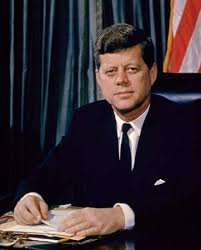
John F. Kennedy
Presidents who remain unpopular among Americans are seen as unlikable and responsible (directly or not) for mass suffering.
Among these:
- Herbert Hoover
- Lyndon B. Johnson
- Richard M. Nixon
Among the reasons they are held in such low regard:
- Herbert Hoover is still blamed for the 1929 Great Depression. He didn’t create it, but his conservative, “small-government” philosophy led him to refuse to aid its victims. An engineer by profession, he saw the Depression as a machine that needed repair, not as a catastrophe for human beings. This lack of “emotional intelligence” cost him heavily with voters.
- Lyndon B. Johnson is still blamed as the President “who got us into Vietnam.” John F. Kennedy had laid the groundwork by placing 16,000 American troops there by the time he died in 1963. But it was Johnson who greatly expanded the war in 1965 and kept it going—with hugely expanding casualties—for the next three years. Unlike Kennedy, whom he followed, he looked and sounded terrible on TV. Voters compared LBJ’s Texas drawl and false piety with JFK’s wit and good looks—and found him wanting.
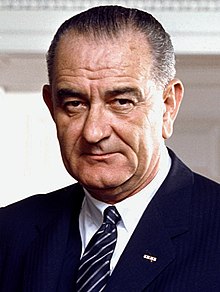
Lyndon B. Johnson
- Richard M. Nixon will be remembered foremost as the President who was forced to resign under threat of impeachment and removal from office. Like Herbert Hoover, he was not a “people person” and seemed remote to even his closest associates. Although he took office on a pledge to “bring us together” and end the Vietnam war, he attacked war protesters as traitors and kept the war going another four years. His paranoid fears of losing the 1972 election led to his creating an illegal “Plumbers” unit which bugged the Democratic offices at the Watergate Hotel. And his attempted cover-up of their illegal actions led to his being forced to resign from office in disgrace.
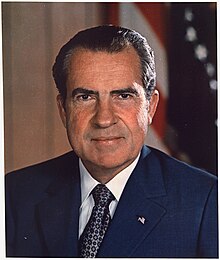
Richard M. Nixon
Which brings us to the question: How is President Donald J. Trump likely to be remembered?
Historian Joachim C. Fest offers an unintended answer to this question in his 1973 bestselling biography Hitler:
“An ancient tenet of aesthetics holds that one who for all his remarkable traits is a repulsive human being, is unfit to be a hero.”
Among the reasons for Hitler’s being “a repulsive human being,” Fest cites the Fuhrer’s
- “intolerance and vindictiveness”;
- “lack of generosity”; and
- “banal and naked materialism—power was the only motive he would recognize.”
Fest then quotes German chancellor Otto von Bismarck on what constitutes greatness: “Impressiveness in this world is always akin to the fallen angel who is beautiful but without peace, great in his plans and efforts, but without success, proud but sad.”
And Fest concludes: “If this is true greatness, Hitler’s distance from it is immeasurable.”
What Fest writes about Adolf Hitler applies just as brutally to Donald Trump.
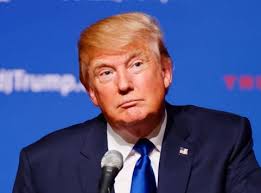
Donald Trump
He has:
- Boasted about the politicians he’s bought and the women he’s bedded—and forced himself on.
- Slandered entire segments of Americans—blacks, Hispanics, women, journalists, Asians, the disabled.
- Attacked the FBI and CIA for accurately reporting that Russian President Vladimir Putin had intervened in the 2016 Presidential election to ensure Trump’s victory.
- Refused to effectively attack the Coronavirus pandemic, leaving 400,000 dead by the end of his Presidency.
- Refused to accept that Democratic nominee Joseph Biden legitimately won the 2020 Presidential election.
- Ordered a mob of his Fascistic followers to attack the Capitol Building and stop the certifying of Biden as the winner of Electoral College votes.
At this stage, it’s hard to imagine Trump joining that select number of Presidents Americans remember with awe and reverence.


 Bureaucracybuster's Blog
ABC NEWS, ABORTION, ADOLF HITLER, ALTERNET, AMERICABLOG, ANTHONY FAUCI, ANTI-SCIENCE, AP, BABY BOOMER RESISTANCE, BLOOMBERG, BUZZFEED, CBS NEWS, CNN, COLUMBIA UNIVERSITY MEDICAL CENTER, CORONAVIRUS, COVID-19, CROOKS AND LIARS, DAILY KOZ, DAVID ABRAMS, DEMOCRATS, DONALD TRUMP, DRUDGE RETORT, FACEBOOK, FASCISM, FIVETHIRTYEIGHT, FLORIDA ATLANTIC UNIVERSITY, HARPER’S MAGAZINE, HYPOCRISY, JOE BIDEN, KN95 MASKS, MASKS, MEDIA MATTERS, MOTHER JONES, MOVEON, MSNBC, N95 MASKS, NAZI GERMANY, NBC NEWS, NEWSWEEK, NICCOLO MACHIAVELLI, NPR, NYU SCHOOL OF GLOBAL PUBLIC HEALTH, PBS NEWSHOUR, POLITICO, POLITICUSUSA, RAW STORY, RELIGIOUS FANATICISM, REPUBLICANS, REUTERS, SALON, SCIENCE, SCIENTIFIC AMERICAN, SEATTLE TIMES, SLATE, SOCIAL DISTANCING, SUPREME COURT, TALKING POINTS MEMO, THE ATLANTIC, THE CHICAGO SUN-TIMES, THE CHICAGO TRIBUNE, THE DAILY BEAST, THE DAILY BLOG, THE DISCOURSES, THE GUARDIAN, THE HILL, THE HUFFINGTON POST, THE LOS ANGELES TIMES, THE NATION, THE NEW REPUBLIC, THE NEW YORK TIMES, THE VILLAGE VOICE, THE WASHINGTON POST, THINKPROGRESS, TIME, TRUTHDIG, TRUTHOUT, TWITTER, TWO POLITICAL JUNKIES, TYPHOID MARY MALLON, U.S. NEWS & WORLD REPORT, UPI, USA TODAY, WEIMAR REPUBLIC, WONKETTE
STILL COUNTING THE STUPIDS: PART TWO (END)
In Bureaucracy, History, Law, Law Enforcement, Medical, Politics, Social commentary on February 2, 2021 at 12:12 amWith the swearing in of Joseph R. Biden as the 46th President of the United States, a new—and desperately needed—chapter in the saga of COVID-19 has finally begun.
President Donald Trump had made the wearing of masks a divisive political issue. Wearing a mask, according to him, made you a wimp and a liberal Never-Trumper. Not wearing a mask showed you’re a macho man or woman—and in solidarity with him.
In effect, he was egotistically demanding that his followers risk death to prove their loyalty to him.
Biden, from the first, has seen COVID-19 as a plague—and not as a test of personal loyalty.
During a June 26, 2020 television interview he said that, if he were elected President, he would require wearing face masks in public to prevent the spread of Coronavirus: “The one thing we do know—these masks make a gigantic difference. I would insist that everybody out in public be wearing that mask.”
Since becoming President, he has:
President Joseph Biden
Biden’s mask rules come as close to a national mask mandate as his federal powers allow. Only states and municipalities can require residents to wear masks at a local level.
And even in states that require wearing a mask in public, many people refuse to do so. Fights have erupted between mask-less and mask-wearing customers—and sometimes store employees—who asked them to put on a mask before entering. Even store security guards have been assaulted.
So: How should those who refuse to wear a mask—and thus threaten the lives of others—be dealt with?
Governors, mayors and business owners need to fill the leadership void. They should issue emergency orders mandating the wearing of masks in public. And these orders should be forcibly backed up by the following:
It was the failure of German police and courts to abort Right-wing violence during the Weimar Republic that led to even greater violence through the rise of Adolf Hitler and his Nazi party.
Laws are useless if citizens believe they are unfairly or unpredictably enforced. As Niccolo Machiavelli warns in his classic work, The Discourses:
…Whoever desires to found a state and give it laws, must start with assuming that all men are bad and ever ready to display their vicious nature, whenever they may find occasion for it. If their evil disposition remains concealed for a time, it must be attributed to some unknown reason; and we must assume that it lacked occasion to show itself.
This is how United States authorities dealt with “Typhoid Mary” Mallon (September 23, 1869 – November 11, 1938).
Mary Mallon
An Irish-born cook, she was an asymptomatic carrier of typhoid fever and is believed to have infected 53 people, three of whom died. Because she persisted in working as a cook, she exposed others to the disease.
As a result, she was twice forcibly quarantined by authorities, and died after a total of nearly 30 years in isolation at Riverside Hospital on North Brother Island, in New York City.
It’s long past time for responsible Federal, state and local officials to get tough on those who, through sheer egotism or allegiance to a medically discredited American traitor, place others at risk of a deadly plague.
Share this: