Posts Tagged ‘RACISM’
2016 PRESIDENTIAL RACE, ABC NEWS, BARACK OBAMA, BASKET OF DEPLORABLES SPEECH, BENGHAZI HEARINGS, BERNIE SANDERS, BILL CLINTON, BLACKS, CBS NEWS, CELINDA LAKE, CLINTON FUNDATION, CNN, COLIN POWELL, COMMUNISM, CONDOLEEZA RICE, DEBBIE WASSERMAN-SCHULTZ, DEMOCRATIC NATIONAL COMMITTEE, DONALD TRUMP, ELIZABETH WARREN, EMAIL SERVER, FACEBOOK, GEORGE W. BUSH, HILLARY CLINTON, HISPANICS, HOUSE OF REPRESENTATIVES, JAMES WEBB, JOSEPH STALIN, KARL MARX, KEVIN MCCARTHY, LIBYA, MAO ZEDONG, MICHELLE OBAMA, NBC NEWS, POPULISM, RACISM, REPUBLICAN NATIONAL COMMITTEE, Ronald Reagan, SATURDAY NIGHT LIVE, SOCIALISM, THE CHICAGO SUN-TIMES, THE CHICAGO TRIBUNE, THE LOS ANGELES TIMES, THE NEW YORK TIMES, THE WASHINGTON POST, TOM BROKAW, TONIGHT SHOW, TWITTER, U.S. HOUSE OF REPRESENTATIVES, U.S. SENATE, Vladimir Lenin, WHITES, WHITEWATER, WIKILEAKS, WOMEN, YOUTH
In Bureaucracy, Business, History, Politics, Social commentary on November 18, 2016 at 10:22 am
Donald Trump owes his victory to a wide range of circumstances. Among these:
#10 Hillary Clinton gave only one memorable speech during the campaign–and then she quashed any benefits that might have come from it.
This was the “basket of deplorables” speech, delivered at a New York fundraiser on September 9. It was the only Clinton speech to be widely quoted by Democrats and Republicans.
She divided Donald Trump’s supporters into two groups. The first group were the “deplorables,” for whom she showed open contempt:
“You know, to just be grossly generalistic, you could put half of Trump’s supporters into what I call the basket of deplorables. Right? The racist, sexist, homophobic, xenophobic, Islamaphobic –you name it. And unfortunately there are people like that. And he has lifted them up.
“He has given voice to their websites that used to only have 11,000 people–now 11 million. He tweets and retweets their offensive hateful mean-spirited rhetoric. Now, some of those folks—they are irredeemable, but thankfully they are not America.”
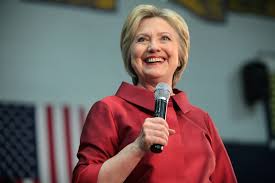
Hillary Clinton (Gage Skidmore photo)
But the second group, she said, consisted of poor, alienated Americans who rightly felt abandoned by their employers and their government:
“But the other basket–and I know this because I see friends from all over America here….but that other basket of people are people who feel that the government has let them down, the economy has let them down, nobody cares about them, nobody worries about what happens to their lives and their futures, and they’re just desperate for change. It doesn’t really even matter where it comes from.
“They don’t buy everything [Trump] says, but he seems to hold out some hope that their lives will be different. They won’t wake up and see their jobs disappear, lose a kid to heroin, feel like they’re in a dead-end. Those are people we have to understand and empathize with as well.”
After giving this speech, Clinton threw away the good it might well have done her.
First, the day after making the speech, she apologized for it: “Last night I was ‘grossly generalistic,’ and that’s never a good idea. I regret saying ‘half’–that was wrong.”
Many of Trump’s followers were racists, sexists and xenophobes–who deserved condemnation, not apologies. By apologizing, she looked weak, indecisive.
Second, having eloquently reached out to many of the men and women who were a prime constituency for Donald Trump, she made no effort to follow up.
She could have used this moment to offer an economic package that would quickly and effectively address their vital needs for jobs and medical care.
But that would have required her to put one together long ago. And all she had to offer now was boilerplate rhetoric, such as: “Education is the answer.”
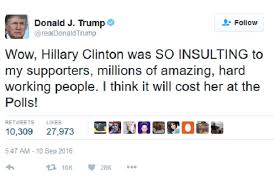
Worst of all, Trump turned her speech against her, tweeting: “Wow, Hillary Clinton was SO INSULTING to my supporters, millions of amazing, hard working people. I think it will cost her at the Polls!”
It did.
#11 Neither the Democrats nor the TV networks dared reveal the full intensity of hatred and violence that were hallmarks of Trump’s rallies–and campaign.
Three New York Times reporters who covered Trump’s rallies for over one year routinely witnessed his supporters hurl vulgar taunts such as:
At Hillary Clinton: “Trump that bitch!” “Kill her!” “Lock her up!” “Hillary is a whore!” “Hang the bitch!”
At protesters: “Get out of here, you fag!” “Get him!” “Get the fuck out of here!”
At Latinos: “Build a wall–kill them all!” “Fuck those dirty beaners!” “Send them bastards back. I’m sure that paperwork comes in Spanish.”
At Muslims: “Fuck Islam!” “Islam is not a religion, partner. It’s an ideology.” “You don’t come and talk about America when you’re supporting Muslims.”
At President Barack Obama: “Fuck that nigger!”
H. Allen Scott, a reporter for Fusion, attended a Trump rally and overheard conversations that startled him.
In one, a man marked Arabs as the enemy: “Those sand niggers are out to get us. We need to bomb the hell out of them.”
In the other, the supposed threat came from a different source: “The Donald will get all those Jews out of Washington.”
When protesters were ejected, Trump supporters went wild–and usually turned violent. Protesters were beaten and kicked–often with Trump’s encouragement.
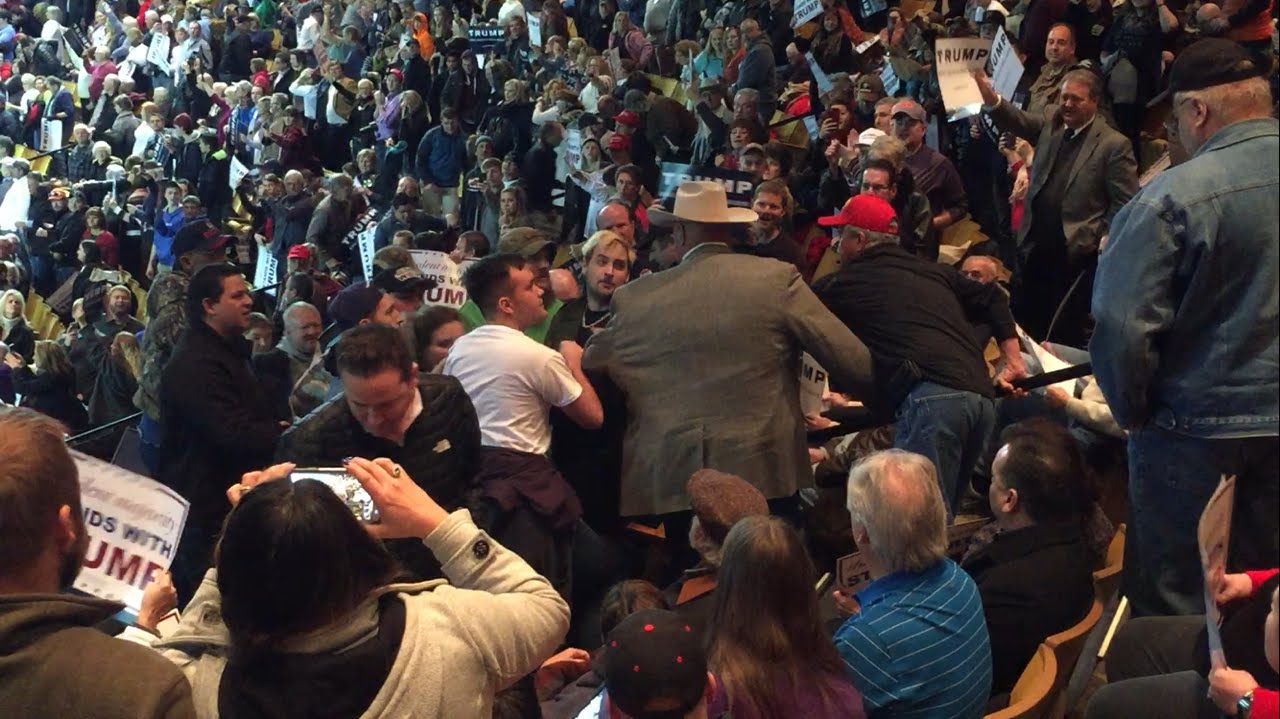
Protesters and supporters duke it out at a Donald Trump rally
Audiences at Trump rallies were overwhelmingly white. Not all were racists, but many of those who were advertised it on T-shirts: “MAKE AMERICA WHITE AGAIN.” Confederate flags were commonly displayed.
TV news networks and the Hillary Clinton campaign could have aired–repeatedly–such footage. Had they done so, Americans would have gotten a brutal, firsthand look at the anger and racism inherent in Trump’s candidacy–and followers.
Instead, Trump was allowed to appear on late-night shows like Saturday Night Live and The Tonight Show where he was treated with kid gloves for fun and laughs.
Thus, it is pointless to blame any one person (such as Hillary Clinton) or group (such as those who voted for third-party candidates) for Clinton’s loss. Many factors played a part–including some that, to keep this series at a reasonable length, could not be mentioned.
2016 PRESIDENTIAL RACE, ABC NEWS, BARACK OBAMA, BASKET OF DEPLORABLES SPEECH, BENGHAZI HEARINGS, BERNIE SANDERS, BILL CLINTON, BLACKS, CBS NEWS, CELINDA LAKE, CLINTON FUNDATION, CNN, COLIN POWELL, COMMUNISM, CONDOLEEZA RICE, DEBBIE WASSERMAN-SCHULTZ, DEMOCRATIC NATIONAL COMMITTEE, DONALD TRUMP, ELIZABETH WARREN, EMAIL SERVER, FACEBOOK, GEORGE W. BUSH, HILLARY CLINTON, HISPANICS, HOUSE OF REPRESENTATIVES, JAMES WEBB, JOSEPH STALIN, KARL MARX, KEVIN MCCARTHY, LIBYA, MAO ZEDONG, MICHELLE OBAMA, NBC NEWS, POPULISM, RACISM, REPUBLICAN NATIONAL COMMITTEE, Ronald Reagan, SATURDAY NIGHT LIVE, SOCIALISM, THE CHICAGO SUN-TIMES, THE CHICAGO TRIBUNE, THE LOS ANGELES TIMES, THE NEW YORK TIMES, THE WASHINGTON POST, TOM BROKAW, TONIGHT SHOW, TWITTER, U.S. HOUSE OF REPRESENTATIVES, U.S. SENATE, Vladimir Lenin, WHITES, WHITEWATER, WIKILEAKS, WOMEN, YOUTH
In Bureaucracy, Business, History, Politics, Social commentary on November 17, 2016 at 12:05 am
Fans of Vermont U.S. Senator Bernie Sanders have loudly claimed that if he had gotten the Democratic Presidential nomination, he would have crushed Donald Trump at the polls.
Since he didn’t get the nomination, we will never know.
But Sanders would have carried his own negatives–which the Republicans would have gleefully exploited. Among the issues he championed:
- Make college tuition free and debt-free.
- Medicare for all.
- Strengthen and expand Social Security.
Although worthy positions, they would have allowed Republicans to label him a “big-spending liberal.”
In addition, Sanders had labeled himself a “democratic Socialist.” For millions of proudly ignorant Americans, “socialist” means “Communist.” And Fox News and the Republican party would have gladly assured them they were correct.
Liberty Maniacs, a Minnesota-based brand that designs and sells political and satirical apparel, literally cashed in on this image with an eye-catching T-shirt.
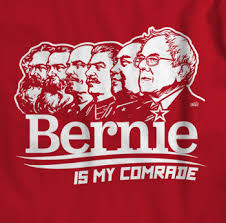
It depicted Sanders’ face alongside those of Karl Marx, Freidrich Engels, Vladimir Lenin, Joseph Stalin and Mao Zedong. And underneath were the words: “Bernie IS MY COMRADE.”
No doubt Republicans would have flooded the airways with similar images.
Sanders’ partisans continue to insist he was “cheated” out of the nomination by Hillary Clinton. But this still leaves unanswered the question:
If Sanders couldn’t prevail against the alleged ruthlessness of Clinton in the primaries, how could he have done so against Trump in the general election?
As the saying goes: “Politics ain’t beanbag.”
#5 Democrats and liberals fell prey to hubris. They dismissed Donald Trump as a bad joke: Surely voters would reject a bombastic, thrice-married “reality show” host who had filed for corporate bankruptcy four times.

If comments on Facebook are any guide, many liberals believed Clinton would bury him at the polls: Blacks, women, youth and Hispanics will turn out huge for her. Democrats will retake the Senate, and maybe even retake the House.
If many Democrats/liberals didn’t vote, one reason may be that they expected others to do it for them.
#6 The coalition that twice elected Barack Obama deserted Hillary Clinton.
Clinton did worse-than-expected among all the groups she was counting on to support her: Blacks, women, youth and Hispanics.
- In 2012, Obama got 93% of the black vote; in 2016, Clinton got 88%.
- In 2012, Obama got 55% of the women’s vote; in 2016, Clinton won 54%.
- In 2012, Obama got 60% of the vote of those under 30; in 2016, Clinton got 54%.
- In 2012, Obama got 71% of the Hispanic vote; in 2016, Clinton got 65%.
Clinton proved less popular even among whites than Obama: In 2012, Obama won 39% of their votes; in 2016, Clinton won 37%.
#7 For years, Republicans had waged a vicious campaign to demonize Hillary Clinton.
This included even falsely accusing her of conspiring to murder American diplomats in Benghazi, Libya.
Kevin McCarthy, a Republican member of the House of Representatives unintentionally admitted this on Fox News on September 30, 2015:
“Everybody thought Hillary Clinton was unbeatable, right? But we put together a Benghazi special committee. A select committee. What are her [poll] numbers today?
“Her numbers are dropping. Why? Because she’s untrustable. But no one would have known that any of that had happened had we not fought to make that happen.”
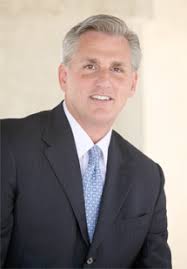
Kevin McCarthy
Thus, McCarthy revealed that:
- The House Select Committee on Benghazi was not a legitimate investigative body.
- Its true purpose was not to investigate the killings of four American diplomats during a 2012 terrorist attack in Benghazi, Libya.
- It’s actual purpose: To destroy the Presidential candidacy of Hillary Clinton.
#8 Republicans attacked Clinton for using a personal email account–while ignoring that her two Republican predecessors had done the same.
General Colin Powell served as Secretary of State under President George W. Bush from 2001 to 2005. He not only used a private email account but advised Clinton to do so as she was about to move into the same job in 2009.
Powell’s successor as Secretary of State, Condoleeza Rice, similarly used a private email account during her tenure (2005-2009).
Yet while Republicans hounded Clinton, accusing her of recklessly endangering national security, they totally ignored Powell’s and Rice’s uses of private email accounts.
#9 Trump, adopting the role of a populist, appealed to blue-collar voters. Clinton offered a “love-your-CEO” economic plan–and suffered for it.
Trump visited “Rustbelt” states like Michigan and Pennsylvania and vowed to “bring back” jobs that had been lost to China, such as those in coal mining and manufacturing. Clinton didn’t deign to show up, assuming she had those states “locked up.”
Most economists agree that, in a globalized economy, such jobs are not coming back, no matter who becomes President.
Even so, voters went for the man who promised them a better future, and shunned the woman who didn’t come to promise them any future at all.
In May, Democratic pollster CeLinda Lake had warned Clinton to revamp her economic platform.
“Democrats simply have to come up with a more robust economic frame and message,” Lake said after the election. “We’re never going to win those white, blue-collar voters if we’re not better on the economy. And 27 policy papers and a list of positions is not a frame. We can laugh about it all we want, but Trump had one.”
2016 PRESIDENTIAL RACE, ABC NEWS, BARACK OBAMA, BASKET OF DEPLORABLES SPEECH, BENGHAZI HEARINGS, BERNIE SANDERS, BILL CLINTON, BLACKS, CBS NEWS, CELINDA LAKE, CLINTON FUNDATION, CNN, COLIN POWELL, COMMUNISM, CONDOLEEZA RICE, DEBBIE WASSERMAN-SCHULTZ, DEMOCRATIC NATIONAL COMMITTEE, DONALD TRUMP, ELIZABETH WARREN, EMAIL SERVER, FACEBOOK, GEORGE W. BUSH, HILLARY CLINTON, HISPANICS, HOUSE OF REPRESENTATIVES, JAMES WEBB, JOSEPH STALIN, KARL MARX, KEVIN MCCARTHY, LIBYA, MAO ZEDONG, MICHELLE OBAMA, NBC NEWS, POPULISM, RACISM, REPUBLICAN NATIONAL COMMITTEE, Ronald Reagan, SATURDAY NIGHT LIVE, SOCIALISM, THE CHICAGO SUN-TIMES, THE CHICAGO TRIBUNE, THE LOS ANGELES TIMES, THE NEW YORK TIMES, THE WASHINGTON POST, TOM BROKAW, TONIGHT SHOW, TWITTER, U.S. HOUSE OF REPRESENTATIVES, U.S. SENATE, Vladimir Lenin, WHITES, WHITEWATER, WIKILEAKS, WOMEN, YOUTH
In Bureaucracy, Business, History, Politics, Social commentary on November 16, 2016 at 12:13 am
Since November 8, Democrats and liberals (the two are not always the same) have been in shock.
“How could this happen?” they keep asking–themselves and others. “How could the country go from electing a brilliant, sophisticated, humane man like Barack Obama to electing an ignorant, coarse, brutal man like Donald Trump?”
Efforts have been made to blame one person/group or another. But the truth is that many factors were involved, and the fallout will be felt for months–if not years–to come.
#1 Hillary Clinton was an uninspiring candidate. When Barack Obama ran for President in 2008, NBC Anchor Tom Brokaw compared his rallies to Hannah Montana concerts. Audiences were excited by his charisma, eloquence, relative youth (47) and optimism (“Yes We Can!”).
Clinton radiated none of these qualities. She was 67 when she declared her candidacy for President–and looked it. Her speaking voice grated like the proverbial fingernail on a blackboard.
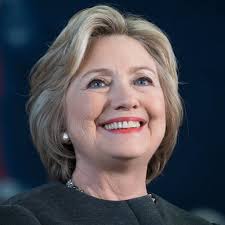
Hillary Clinton
She seemed to have been around forever–as First Lady (1993-2001), as Senator from New York (2001-2009) and as Secretary of State (2009-2013). Those born after 2000 thought of the Clinton Presidency as ancient history. She was offering a resume–and voters wanted an inspiration.
#2 Clinton brought a lot of baggage with her. In contrast to Obama, whose Presidency had been scandal-free, Clinton–rightly or wrongly–has always been dogged by charges of corruption.
During the Clinton Presidency, a failed land deal–Whitewater–while Bill Clinton was Governor of Arkansas triggered a seven-year investigation by a Republican special prosecutor. No criminality was uncovered, and no charge was brought against either Clinton.
After leaving the White House, she and her husband set up the Clinton Foundation, a public charity to bring government, businesses and social groups together to solve problems “faster, better, at lower cost.”
As Secretary of State, more than half of Clinton’s meetings with people outside government were with donors to the Clinton Foundation. If a “pay-to play” system wasn’t at work, one certainly seemed to be.
She cast further suspicion on herself by her unauthorized use of a private email server. This wasn’t revealed until March, 2015–after she was no longer Secretary of State.
She claimed she had used it to avoid carrying two cell-phones. But, as Secretary of State, she traveled with a huge entourage who carried everything she needed. Her critics believed she used a private email system to hide a “pay-for-pay” relationship with Clinton Foundation donors.
Finally, as a candidate for President, she “secretly” worked with Debbie Wasserman-Schultz, the chair of the Democratic National Committee, to ensure that she would get the nomination.
As DNC chair, Wasserman-Schultz was expected to be impartial toward all Democratic candidates seeking the prize. This included Vermont U.S. Senator Bernie Sanders, Clinton’s chief competitor.
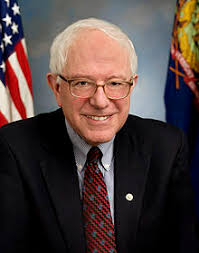
Bernie Sanders
So Sanders and his supporters were outraged when WikiLeaks released 19,252 emails and 8,034 attachments hacked from computers of the highest-ranking officials of the DNC.
The emails revealed a clear bias for Clinton and against Sanders. In one email, Brad Marshall, the chief financial officer of the DNC, suggested that Sanders, who is Jewish, could be portrayed as an atheist.
#3 The Obamas’ support proved a plus/minus for Clinton. Understandably, President Obama wanted to see his legacies continued–and she was the only candidate who could do it.
So he–and his wife, Michelle–stormed the country, giving eloquent, passionate speeches and firing up crowds on Clinton’s behalf.
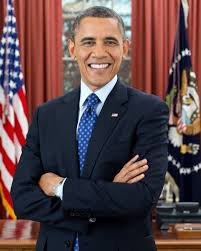
President Barack Obama
So long as either Obama stood before a crowd, the magic lasted. But once the event was over, the excitement vanished. Hillary simply didn’t arouse enough passion to keep it going.
And when Obama supporters compared the President and First Lady with Clinton, they found her wanting–in attractiveness, grace, eloquence, trustworthiness and the ability to inspire.
#4 Not enough Democrats entered the Presidential race. Among those few who did:
- Martin O’Malley, former governor of Maryland;
- Lincoln Chaffee, former governor of Rhode Island;
- James Webb, former U.S. Senator from Virginia;
- Lawrence Lessig, professor at Harvard Law School;
- Vermont U.S. Senator Bernie Sanders;
- and former First Lady/U.S. Senator/Secretary of State Hillary Clinton.
Of these candidates, it’s worth noting that O’Malley withdrew during the primaries. Chaffee, Webb and Lessig withdrew before the primaries started.
Many liberals wanted Massachusetts U.S. Senator Elizabeth Warren to run. As a specialist in consumer protection, she had become a leading figure in the Democratic party and a favorite among progressives.
But, without giving a reason, she declined to do so.
Thus, at least on the Democratic side, the stage was already set at the outset of the race.
No matter who the Republican nominee would be, the Democratic one would be Hillary Clinton or Bernie Sanders.
Sanders fans have loudly claimed that if only he had gotten the Democratic Presidential nomination, he would have crushed Trump at the polls.
But Sanders would have carried big negatives as well–which the Republicans would have gleefully exploited.
These will be explored in Part Two of this continuing series.
2016 PRESIDENTIAL ELECTION, 9/11, ABC NEWS, ADOLF HITLER, AFGHANISTAN, ALTERNET, AMERICABLOG, AP, ASIANS, BABY BOOMER RESISTANCE, BARACK OBAMA, BBC, BLACKS, BLOOMBERG, BULLYING, BUZZFEED, CBS NEWS, CNN, COMMUNISM, CROOKS AND LIARS, DAILY KOS, DAILY KOZ, DONALD TRUMP, FACEBOOK, FASCISM, FIVETHIRTYEIGHT, GEORGE W. BUSH, GREAT DEPRESSION, HARPER’S MAGAZINE, HILLARY CLINTON, HISPANICS, HUFFINGTON POST, IRAQ, JEWS, MEDIA MATTERS, MOTHER JONES, MOVEON, MSNBC, MUSLIMS, NAZI GERMANY, NAZI PARTY, NBC NEWS, NEW REPUBLIC, NEWSDAY, NEWSWEEK, NPR, PAUL VON HINDENBURG, PBS NEWSHOUR, POLITICO, POLITICUSUSA, RACISM, RAW STORY, REPUBLICANS, REUTERS, ROBERT PAYNE, Ronald Reagan, SALON, SEATTLE TIMES, SLATE, TALKING POINTS MEMO, THE ATLANTIC, THE CHICAGO SUN-TIMES, THE CHICAGO TRIBUNE, THE DAILY BEAST, THE DAILY BLOG, THE GUARDIAN, THE HILL, THE HUFFINGTON POST, THE INTERCEPT, THE LIFE AND DEATH OF ADOLF HITLER, THE LOS ANGELES TIMES, THE LOS ANGELS TIMES, THE NATION, THE NEW REPUBLIC, THE NEW YORK TIMES, THE NEW YORKER, THE VILLAGE VOICE, THE WASHINGTON POST, THINKPROGRESS, TIME, TRUMP EFFECT, TRUTHDIG, TRUTHOUT, TWITTER, TWO POLITICAL JUNKIES, U.S. NEWS & WORLD REPORT, UP, UPI, USA TODAY, WORLD WAR 11
In Bureaucracy, History, Politics, Social commentary on November 14, 2016 at 12:05 am
In his bestselling 1973 biography, The Life and Death of Adolf Hitler, British historian Robert Payne harshly condemned the German people for the rise of the Nazi dictator.
“[They] allowed themselves to be seduced by him and came to enjoy the experience….[They] followed him with joy and enthusiasm because he gave them license to pillage and murder to their hearts’ content. They were his servile accomplices, his willing victims….
“If he answered their suppressed desires, it was not because he shared them, but because he could make use of them. He despised the German people, for they were merely the instruments of his will.”
On November 8, millions of ignorant, hate-filled, Right-wing Americans elected Donald Trump—a man reflecting their own hate and ignorance—to the Presidency.
Yet, in some ways, Americans have fewer excuses for turning to a Fascistic style of government than the Germans did.
Adolf Hitler, joined the National Socialist German Workers (Nazi) Party in 1919—the year after World War 1 ended.
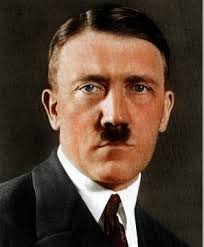
Adolf Hitler
It took him 14 years to win appointment to Chancellor (the equivalent of Attorney General) of Germany in 1933.
In 1923, he staged a coup attempt in Bavaria—which was quickly and brutally put down by police. He was arrested and sentenced to less than a year in prison.
After that, Hitler decided that winning power through violence was no longer an option. He must win it through election—or appointment.
He repeatedly ran for the highest office in Germany—President—but never got a clear majority in a free election.
When the 1929 Depression struck Germany, the fortunes of Hitler’s Nazi party rose as the life savings of ordinary Germans fell. Streets echoed with bloody clashes between members of Hitler’s Nazi Stormtroopers and those of the German Communist Party.
Germany seemed on the verge of collapsing.
Germans desperately looked for a leader—a Fuhrer–who could somehow deliver them from the threat of financial ruin and Communist takeover.
In early 1933, members of his own cabinet persuaded aging German president, Paul von Hindenburg, that only Hitler’s appointment as Chancellor could do this.
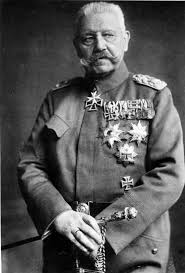
Paul von Hindenburg
Hindenburg was reluctant to do so. He considered Hitler a dangerous radical. But he allowed himself to be convinced that, by putting Hitler in the Cabinet, he could be “boxed in” and thus controlled.
So, on January 30, 1933, he appointed Adolf Hitler Chancellor of Germany.
On August 2, 1934, Hindenberg died, and Hitler immediately assumed the titles—and duties—of the offices of Chancellor and President. His rise to total power was now complete.
It had taken him 14 years to do so.
In 2015, Donald Trump declared his candidacy for President.
Now, consider this:
- The country was technically at war in the Middle East—but the fate of the United States was not truly threatened, as it had been during the Civil War.
- There was no draft; if you didn’t know someone in the military, you didn’t care about the casualties taking place.
- Nor were these conflicts—in Iraq and Afghanistan–imposing domestic shortages on Americans, as World War II had.
- Thanks to government loans from President Barack Obama, American capitalism had been saved from its own excesses during the George W. Bush administration.
- Employment was up. CEOs were doing extremely well.
- In contrast to the corruption that had plagued the administration of Ronald Reagan, whom Republicans idolize, there had been no such scandals during the Obama Presidency.
- Nor had there been any large-scale terrorist attacks on American soil—as there had on 9/11 under President George W. Bush.
Yet—not 17 months after announcing his candidacy for President—enough Americans fervently embraced Donald Trump to give him the most powerful position in the country and the world.
.jpg/220px-Donald_Trump_August_19,_2015_(cropped).jpg)
Donald Trump
The message of Barack Obama’s 2008 campaign had been one of hope—“Yes, We Can!”
That of Donald Trump’s campaign was one of hatred toward everyone who was not an avid Trump supporter: “No, You Can’t!”
Whites comprised the overwhelming majority of the audiences at Trump rallies. Not all were racists, but many of those who were advertised it on T-shirts: “MAKE AMERICA WHITE AGAIN.”
They knew that demographics were steadily working against them. Birthrates among non-whites were rising. By 2045, whites would make up less than 50 percent of the American population.
The 2008 election of the first black President had shocked whites. His 2012 re-election had deprived them of the hope that 2008 had been an accident.
Then came 2016—and the possibility that a black President might actually be followed by a woman: Hillary Clinton.
And the idea of a woman dictating to men was strictly too much to bear.
Since Trump’s election, educators have reported a surge in bullying among students of all ages, from elementary- to high-school. Those doing the bullying are mostly whites, and the victims are mostly blacks, Muslims, Jews, Hispanics, Asians.
It even has a name: “The Trump Effect.”
And this is where matters stand more than two months before Trump takes the oath as President.
All of this should be remembered the next time an American blames Germans for their embrace of Adolf Hitler.
ABC NEWS, ALTERNET, AMERICABLOG, AMERICAN NZAI PARTY, AP, BABY BOOMER RESISTANCE, BARACK OBAMA, BBC, BLOOMBERG NEWS, BUZZFEED, CBS NEWS, CHRIS MATHEWS, CIVIL WAR, CNN, CROOKS AND LIARS, DAILY KOZ, DONALD TRUMP, FACEBOOK, FIVETHIRTYEIGHT, FOOD STAMPS, HARPER’S MAGAZINE, HUFFINGTON POST, KU KLUX KLAN, MEDIA MATTERS, MEDICARE, MOTHER JONES, MOVEON, MSNBC, NBC NEWS, NEW REPUBLIC, NEWSDAY, NEWSWEEK, NPR, PBS NEWSHOUR, POLITICO, POLITICUSUSA, PROPAGANDA, RACISM, RAW STORY, REPUBLICAN PARTY, REPUBLICANS, REUTERS, Ronald Reagan, SALON, SEATTLE TIMES, SLATE, SOCIAL SECURITY, TALKING POINTS MEMO, THE ATLANTIC, THE CHICAGO SUN-TIMES, THE CHICAGO TRIBUNE, THE DAILY BEAST, THE DAILY BLOG, THE GUARDIAN, THE HILL, THE HUFFINGTON POST, THE INTERCEPT, THE LOS ANGELES TIMES, THE NATION, THE NEW REPUBLIC, THE NEW YORK TIMES, THE NEW YORKER, THE VILLAGE VOICE, THE WALL STREET JOURNAL, THE WASHINGTON POST, THINKPROGRESS, TIME, TIME MAGAZINE, TRUTHDIG, TRUTHOUT, TWITTER, TWO POLITICAL JUNKIES, U.S. NEWS & WORLD REPORT, UPI, USA TODAY, WILLIAM TECUMSEH SHERMAN
In Bureaucracy, History, Politics, Social commentary on September 26, 2016 at 12:10 am
Republicans have long tried to prevent or eliminate programs that aid the poor and middle-class, including:
- Social Security (since it began in 1935)
- Medicare
- National health insurance
- Food stamps
- WIC (Women, Infants, Children).
So why are so many poor Americans now flocking to this party’s banner?
Two reasons: Racism and greed. There are historical parallels for both.
First, race:
In 1999, historian Victor Davis Hanson noted the huge gap in wealth between the aristocratic, slave-owning minority of the pre-Civil War South and the vast majority of poor white Southerners.

Victor Davis Hanson
“Before the war in the counties Sherman would later ruin, the top 10% of the landowners controlled 40% of the assessed wealth.”
In contrast, “more than half of those who were lucky enough to own any property at all still possessed less than 15% of the area’s valuation.”
So Hanson asked: “Why did the millions of poor whites of the Confederacy fight at all?”
He supplied the answer in his brilliant work on military history, The Soul of Battle: From Ancient Times to the Present Day, How Three Great Liberators Vanquished Tyranny.
One of those liberators was General William Tecumseh Sherman, who led 62,000 Union troops in a victorious “March to the Sea” through the Confederacy in 1864.
So why did so many poor Southern whites literally lay down their lives for the wealthy planter class, which despised them?
According to Hanson: “Behind the entire social fabric of the South lay slavery.
“If slavery eroded the economic position of the poor free citizens, if slavery encouraged a society of haves and have-nots…then it alone offered one promise to the free white man–poor, ignorant and dispirited–that he was at least not black and not a slave.”
And the planter class and its allies in government easily fobbed off their poor white countrymen with cheap flattery. Said Georgia Governor Joseph Brown:
“Among us the poor white laborer is respected as an equal. His family is treated with kindness, consideration, and respect. He does not belong to the menial class. The negro is in no sense his equal. He belongs to the only true aristocracy, the race of white men.”

Arlington House and plantation, former home of Robert E. Lee
Similarly, poor whites now flock to the Republican Party–which holds them in equal contempt– in large part to protest the 2008 election of the first black President of the United States.
According to a Pew Research Center study released on July 22, 2011: “Notably, the GOP gains have occurred only among white voters; a 2-point Republican edge among whites in 2008 (46% to 44%) has widened to a 13-point lead today (52% to 39%).”
Since the 1960s, Republicans have pursued a campaign policy of “divide and rule”–divide the nation along racial lines and reap the benefits at election time.
- Republicans opposed the Civil Rights Act of 1964.
- Republicans opposed the Voting Rights Act of 1965.
- Republicans, with Richard Nixon as their Presidential candidate in 1968 and 1972, pursued what they called a “Southern strategy”: Use “code language” to stoke fear and hatred of blacks among whites.
- Republicans have falsely identified welfare programs exclusively with non-whites. (Of the six million Americans receiving food stamps, about 42% are white, 32% are black, and 22% are Latino–with the growth fastest among whites during the recession.)
Thus, in voting Republican, many of these poor whites believe they are “striking a blow for the white race.”
And they can do so in a more socially acceptable way than joining a certified hate group such as the American Nazi Party or Ku Klux Klan.
Since 2015, openly racist groups such as the Klan and the American Nazi Party have flocked to the banner of Presidential candidate mogul Donald Trump. By enthusiastically courting their support, the real estate mogul has made it possible for Republican candidates to openly display their own racism.
Now greed:
In the hit play, 1776, on the creation and signing of the Declaration of Independence, there is a telling exchange between John Dickinson and John Hancock. It comes during the song, “Cool, Cool, Considerate Men.”
Dickinson, the delegate from Pennsylvania, urges Hancock, president of the Second Continental Congress, “to join us in our minuet.”
By “us” he means his fellow conservatives who fear losing their property and exalted status by supporting American independence from Great Britain.
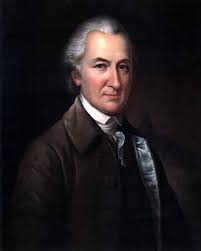
John Dickinson
Hancock declines, saying: “Fortunately, there are not enough men of property in America to dictate policy.”
To which Dickinson replies: “Perhaps not. But don’t forget that most men with nothing would rather protect the possibility of becoming rich than face the reality of being poor. And that is why they will follow us.”
Today, poor whites generally identify with the CEOs of powerful corporations. They believe the Republican gospel that they can attain such wealth–if only the government will “get out of my way.”
They forget–or ignore–the truth that government, for all its imperfections, is sometimes all that stands between them and a wide range of predators.
In return, the CEOs despise them as the privileged have always despised their social and economic “inferiors.”
Unless the Democratic Party can find ways to directly address these bitter, Politically Incorrect truths, it will continue its decline into insignificance.
ABC NEWS, ABRAHAM LINCOLN, ACADEMY AWARDS, ARGO, CBS NEWS, CIVIL WAR, CLARK GABLE, CNN, CONFEDERATE FLAG, DANIEL DAY-LEWIS, FACEBOOK, GONE WITH THE WIND, HATTIE MCDANIEL, MARGARET MITCHELL, MOVIES, NAZI GERMANY, NBC NEWS, OSCARS, RACISM, SAVING PRIVATE RYAN, SHAKESPEARE IN LOVE, SLAVERY, STEVEN SPIELBERG, THE LOS ANGELES TIMES, THE NEW YORK TIMES, THE WASHINGTON POST, THIRTEENTH AMENDMENT, TWITTER
In Bureaucracy, History, Law, Politics, Social commentary on October 22, 2015 at 12:04 am
Argo was selected as Best Picture at the 2013 Academy Awards. But it is Steven Spielberg’s Lincoln that will be cherished far longer.
Among the reasons for this:
- Daniel Day-Lewis’ brilliant portrayal as Abraham Lincoln; and
- Its timely depiction of a truth that has long been obscured by past and current Southern lies.
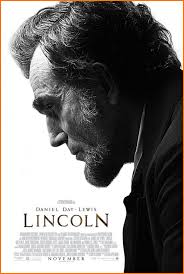
And that truth: From first to last, the cause of the Civil War was slavery.
According to The Destructive War, by Charles Royster, arguments over “states’ rights” or economic conflict between North and South didn’t lead 13 Southern states to withdraw from the Union in 1860-61.
It was their demand for “respect” of their “peculiar institution”–i.e., slavery.
“The respect Southerners demanded did not consist simply of the states’ sovereignty or of the equal rights of Northern and Southern citizens, including slaveholders’ right to take their chattels into Northern territory.
“It entailed, too, respect for their assertion of the moral superiority of slaveholding society over free society,” writes Royster.
It was not enough for Southerners to claim equal standing with Northerners; Northerners must acknowledge it.
But this was something that the North was increasingly unwilling to do. Finally, its citizens dared to elect Abraham Lincoln as President in 1860.
Lincoln and his new Republican party damned slavery-–and slaveholders-–as morally evil, obsolete and ultimately doomed. And they were determined to prevent slavery from spreading any further throughout the country.
Southerners found all of this intolerable.
The British author, Anthony Trollope, explained to his readers:
“It is no light thing to be told daily, by our fellow citizens…that you are guilty of the one damning sin that cannot be forgiven.
“All this [Southerners] could partly moderate, partly rebuke and partly bear as long as political power remained in their hands.” [Italics added]
It is to Spielberg’s credit that he forces his audience to look directly at the real cause of the bloodiest conflict on the North American continent.
At the heart of Spielberg’s film: Abraham Lincoln (Daniel Day-Lewis) wants to win ratification of what will be the Thirteenth Amendment to the United States Constitution. An amendment that will forever ban slavery.
But, almost four years into the war, slavery still has powerful friends–in both the North and South.
Many of those friends belong to the House of Representatives, which must ratify the amendment for it to become law.
Other members–white men all–are hostile to the idea of “equality between the races.”
To them, ending slavery means opening the door to interracial marriage–especially marriage between black men and white women. Perhaps even worse, it means possibly giving blacks–or women–the right to vote.
After the amendment wins ratification, Lincoln agrees to meet with a “peace delegation” from the Confederate States of America.
At the top of their list of concerns: If they persuade the seceded states to return to the Union, will those states be allowed to nullify the amendment?
No, says Lincoln. He’s willing to make peace with the South, and on highly generous terms. But not at the cost of allowing slavery to live on.
Too many men–North and South–have died in a conflict whose root cause is slavery. Those lives must count for more than simply reuniting the Union.
For the Southern “peace commissioners,” this is totally unacceptable.
The South has lost thousands of men (260,000 is the generally accepted figure for its total casualties) and the war is clearly lost. But for its die-hard leaders, parting with slavery is simply unthinkable.
Like Nazi Germany 80 years into the future, the high command of the South won’t surrender until their armies are too beaten down to fight any more.
The major difference between the defeated South of 1865 and the defeated Germany of 1945 is this: The South was allowed to build a beautiful myth of a glorious “Lost Cause,” epitomized by the Margaret Mitchell novel, Gone With the Wind.
In that telling, dutiful slaves are well-treated by kindly masters. Southern aristocrats wear white suits and their slender-waisted ladies wear long dresses, carry parisols and say “fiddle-dee-dee” to young, handsome suitors.
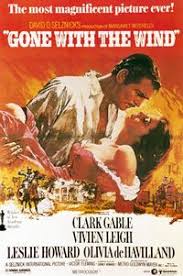
One million people attended the premier of the movie version in Atlanta on December 15, 1939.
The celebration featured stars from the film, receptions, thousands of Confederate flags, false antebellum fronts on stores and homes, and a costume ball.
In keeping with Southern racial tradition, Hattie McDaniel and the other black actors from the film were barred from attending the premiere. Upon learning this, Clark Gable threatened to boycott the event. McDaniel convinced him to attend.
When today’s Southerners fly Confederate flags and speak of “preserving our traditions,” they are actually celebrating their long-banned peculiar” institution.”
By contrast, post-World War II Germany outlawed symbols from the Nazi-era, such as the swastika and the “Heil Hitler” salute, and made Holocaust denial punishable by imprisonment.
America has refused to confront its own shameful past so directly. But Americans can be grateful that Steven Spielberg has had the courage to serve up a long-overdue and much needed lesson in past–and still current–history.
ABC NEWS, ABRAHAM LINCOLN, ACADEMY AWARDS, ARGO, CBS NEWS, CIVIL WAR, CLARK GABLE, CNN, CONFEDERATE FLAG, DANIEL DAY-LEWIS, FACEBOOK, GONE WITH THE WIND, HATTIE MCDANIEL, MARGARET MITCHELL, MOVIES, NAZI GERMANY, NBC NEWS, OSCARS, RACISM, SAVING PRIVATE RYAN, SHAKESPEARE IN LOVE, SLAVERY, STEVEN SPIELBERG, THE LOS ANGELES TIMES, THE NEW YORK TIMES, THE WASHINGTON POST, THIRTEENTH AMENDMENT, TWITTER
In Bureaucracy, History, Law, Politics, Social commentary on October 21, 2015 at 1:12 am
Argo won for Best Picture at the 2013 Academy Awards ceremony. But, in the long run, it will be Lincoln who is deservingly remembered–and loved.
Argo focuses on a humiliating episode that most Americans would like to forget. On November 4, 1979, at the climax of the Iranian revolution, militants stormed the U.S. embassy in Tehran, taking 52 Americans hostage.
But, in the midst of the chaos, six Americans managed to slip away and find refuge in the home of the Canadian ambassador. Knowing it was only a matter of time before the six were found and likely killed, a CIA “exfiltration” specialist offered a risky–and ultimately successful–plan to smuggle them out of the country.
While Argo wrings cheers from American audiences for the winning of this small victory, it cannot erase the blunt truth of the Iranian hostage crisis: For more than 14 months, American diplomats waited helplessly for release–while America proved unable to effect it.
By contrast, Steven Spielberg’s Lincoln celebrates a far greater victory: the final defeat of human slavery in the United States.
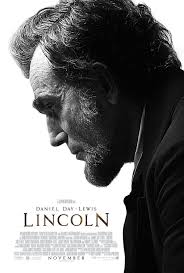
And it teaches lessons about the past that remain equally valide today–such as that racism and repression are not confined to any one period or political party.
At the heart of the film: Abraham Lincoln (Daniel Day-Lewis) wants to win ratification of what will be the Thirteenth Amendment to the United States Constitution. An amendment that will forever ban slavery.
True, Lincoln, in 1862, had issued the Emancipation Proclamation. This-–in theory-–freed slaves held in the Confederate states that were in rebellion against the United States Government.
But Lincoln regards this as a temporary wartime measure.
He fears that, once the war is over, the Supreme Court may rule the Proclamation unconstitutional. This might allow Southerners to continue practicing slavery, even after losing the war.
To prevent this, Congress must pass an anti-slavery amendment.
But winning Congressional passage of such an amendment won’t be easy.
The Senate had ratified its passage in 1864. But the amendment must secure approval from the House of Representatives to become law.
And the House is filled with men-–there are no women members during the 19th century-–who seethe with hostility.
Some are hostile to Lincoln personally. One of them dubs him a dictator-–”Abraham Africanus.” Another accuses him of shifting his positions for the sake of expediency.
Other members–-white men all-–are hostile to the idea of “equality between the races.”
To them, ending slavery means opening the door to interracial marriage–especially marriage between black men and white women. Perhaps even worse, it means possibly giving blacks-–or women–-the right to vote.
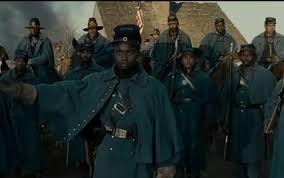
Black soldiers in the Union Army
To understand the Congressional debate over the Thirteenth Amendment, it’s necessary to remember this: In Lincoln’s time, the Republicans were the party of progressives.
The party was founded on an anti-slavery platform. Its members were thus reviled as “Black Republicans.”
And until the 1960s, the South was solidly Democratic. Democrats were the ones defending the status quo–slavery–and opposing freed blacks in the South of Reconstruction and long afterward.
In short, in the 18th century, Democrats in the South acted as Republicans do now.
The South went Republican only after a Democratic President–Lyndon B. Johnson–rammed the Civil Rights Act of 1964 through Congress.
Watching this re-enactment of the 1865 debate in Lincoln is like watching a rerun of the 2012 Presidential campaign. The same mentalities are at work:
- Those (in this case, slave-owners) who already have a great deal want to gain even more at the expense of others.
- Those (slaves and freed blacks) who have little strive to gain more or at least hang onto what they still have.
- Those who defend the privileged wealthy refuse to allow their “social inferiors” to enjoy similar privileges (such as the right to vote).
During the 2012 Presidential race, the Republicans tried to bar those likely to vote for President Barack Obama from getting into the voting booth. But their bogus “voter ID” restrictions were struck down in courts across the nation.
In the end, however, it is Abraham Lincoln who has the final word. Through diplomacy and backroom dealings (trading political offices for votes) he wins passage of the anti-slavery amendment.
The movie closes with a historically-correct tribute to Lincoln’s generosity toward those who opposed him–in Congress and on the battlefield.
It occurs during Lincoln’s Second Inaugural Address: “With malice toward none, with charity for all….To bind up the nation’s wounds. To care for him who shall have bourne the battle, and for his widow and his orphan….”
Listening to those words, one is reminded of Mitt Romney’s infamous comments about the “47%: “
Well, there are 47% of the people who…are dependent upon government, who believe that–-that they are victims, who believe that government has a responsibility to care for them, who believe that they’re entitled to healthcare, to food, to housing, to you name it.”
Watching Lincoln, you realize how incredibly lucky we were as a nation to have had such leadership when it was most needed.
ABC NEWS, CBS NEWS, CNN, CRIMINAL JUSTICE SYSTEM, FACEBOOK, LAWSUITS, NBC NEWS, NEW YORK POLICE DEPARTMENT, NYPD, POLICE BRUTALITY, RACISM, THE CHICAGO SUN-TIMES, THE CHICAGO TRIBUNE, THE LOS ANGELES TIMES, THE NEW YORK TIMES, THE WALL STREET JOURNAL, TWITTER, USA TODAY
In Bureaucracy, Law, Law Enforcement, Social commentary on March 24, 2015 at 3:21 pm
As the stage line goes: It seemed like a good idea at the time.
A mother finds that her nine-year-old son has stolen money from her purse. So she decides to have someone who commands respect teach him that stealing is wrong.
So she calls the police–and things go horribly wrong.
Here’s what happened.
Tyeesha Mobley, 29, caught her nine-year-old son stealing $10 from her purse.
So she called the called the New York Police Department (NYPD)
Can you please send over an officer to explain to my kids that stealing is wrong? she asked.
The police department agreed, and sent over not one but four officers to meet Mobley and her two boys at a nearby gas station.

Tyeesha Mobley
The meeting started off well.
“Three officers was joking around with [the nine-year-old who had stolen the $10], telling him, ‘You can’t be stealing; you’ll wind up going in the police car,’” Mobley testified at a court hearing in October, 2014.
But the fourth officer apparently resented the assignment.
According to a lawsuit subsequently filed by Mobley, the following happened:
“You black bitches don’t know how to take care of your kids,” said the fourth officer. “Why are you wasting our time? Why don’t you take your fucking kid and leave?”
Mobley decided that was a good time to leave. But before she could do so, the cop told her she was under arrest.
“What for?” she asked.
“If you’re going to say another fucking word,” the lawsuit alleges the cop warned her, “I’m going to knock your teeth down your throat.”
He then shoved her up against a car, kicked her legs, and handcuffed her.
Mobley’s two sons–ages four and nine–could only watch in horror as their mother was being manhandled.
“Stop, you’re hurting mommy,” they cried, according to the complaint filed in the lawsuit.
Yet worse was to come.
Mobley spent a night in jail. Her two boys were taken away and placed in foster care for four months–with a family that spoke no English.
Finally, a judge threw out the case against her.
Mobley has since filed a lawsuit against New York City, the NYPD and the Administration for Children’s Services.
“She was simply trying to make sure her son stayed on the right path,” said her attorney, Philip Sporn. “This shouldn’t happen to anyone, let alone to a good mom with her kids.”
The lawsuit highlights a fundamental weakness of the American justice system.
Americans almost universally believe that any wrong can be rectified if enough money is paid out as punishment.
Thus, car makers who knowingly keep dangerous vehicles on the road instead of issuing a recall settle up in civil lawsuits.
As a rule, they refuse to admit wrongdoing–and the amount of money they’re forced to pay out to victims isn’t disclosed.
Nearly always, this means the victim–or his survivors–is forbidden to publicly say why the company paid out a huge settlement, such as: “They admitted they knew the brakes were faulty but they didn’t want to spend the money fixing them.”
And if the victims disclose this admission–or how much money they got from Car Maker X–that money can legally be taken from them.
Never, however, is a CEO criminally prosecuted for ordering his company to conceal wrongdoing or dangerous products.
Thus, corporate predators are allowed to escape the criminality of their actions–and go on to prey on other victims.
The same holds true with lawsuits against the police.
Even if Mobley wins a huge settlement, the officer who victimized her will almost certainly remain on the NYPD.
And he will be able to victimize others who have the bad luck to encounter him.
Handing out big chunks of money is not enough to establish justice for outrageous violations of people’s civil rights.
It’s as if former Reichsmarshall Hermann Goring, charged with war crimes, were allowed to fork over a big sum of money and then comfortably retire to his estate.
Until Americans realize that some crimes demand more than financial payment, this country’s “criminal justice system” will fail to live up to its name.
ABC NEWS, ABRAHAM LINCOLN, CBS NEWS, CIVIL WAR, CLARK GABLE, CNN, CONFEDERATE FLAG, DANIEL DAY-LEWIS, FACEBOOK, GONE WITH THE WIND, HATTIE MCDANIEL, HOLOCAUST DENIAL, MARGARET MITCHELL, NAZI GERMANY, NBC NEWS, POSTWAR GERMANY, RACISM, SLAVERY, STEVEN SPIELBERG, THE CHICAGO SUN-TIMES, THE CHICAGO TRIBTUNE, THE LOS ANGELES TIMES, THE NEW YORK TIMES, THE WALL STREET JOURNAL, THE WASHINGTON POST, THIRTEENTH AMENDMENT, TWITTER
In Bureaucracy, History, Politics, Social commentary on December 5, 2014 at 12:00 am
Steven Spielberg’s 2012 movie Lincoln serves up a timely reminder that has long been obscured by past and current Southern lies.
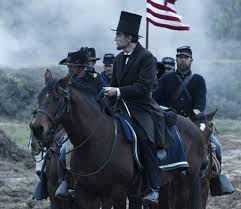
Abraham Lincoln (Daniel Day-Lewis) tours a Civil War battlefield
From first to last, the cause of the Civil War was slavery.
According to The Destructive War, by Charles Royster, arguments over “states’ rights” or economic conflict between North and South didn’t lead 13 Southern states to withdraw from the Union in 1860-61.
It was their demand for “respect” of their “peculiar institution”–i.e., slavery.
“The respect Southerners demanded did not consist simply of the states’ sovereignty or of the equal rights of Northern and Southern citizens, including slaveholders’ right to take their chattels into Northern territory.
“It entailed, too, respect for their assertion of the moral superiority of slaveholding society over free society,” writes Royster.
It was not enough for Southerners to claim equal standing with Northerners; Northerners must acknowledge it.
But this was something that the North was increasingly unwilling to do. Finally, its citizens dared to elect Abraham Lincoln as President in 1860.
Lincoln and his new Republican party damned slavery-–and slaveholders-–as morally evil, obsolete and ultimately doomed. And they were determined to prevent slavery from spreading any further throughout the country.
Southerners found all of this intolerable.
The British author, Anthony Trollope, explained to his readers:
“It is no light thing to be told daily, by our fellow citizens…that you are guilty of the one damning sin that cannot be forgiven.
“All this [Southerners] could partly moderate, partly rebuke and partly bear as long as political power remained in their hands.”
It is to Spielberg’s credit that he forces his audience to look directly at the real cause of the bloodiest conflict on the North American continent.
At the heart of Spielberg’s film: Abraham Lincoln (Daniel Day-Lewis) wants to win ratification of what will be the Thirteenth Amendment to the United States Constitution. An amendment that will forever ban slavery.
But, almost four years into the war, slavery still has powerful friends–in both the North and South.
Many of those friends belong to the House of Representatives, which must ratify the amendment for it to become law.
Some are hostile to Lincoln personally. One of them dubs him a dictator: “Abraham Africanus.” Another accuses him of shifting his positions for the sake of expediency.
Other members–white men all–are hostile to the idea of “equality between the races.”
To them, ending slavery means opening the door to interracial marriage–especially marriage between black men and white women. Perhaps even worse, it means possibly giving blacks–or women–the right to vote.
Members of Lincoln’s own Cabinet–such as Secretary of State William Seward–warn him: You can negotiate the end of the war immediately–if you’ll just let Southerners keep their slaves.
After the amendment wins ratification, Lincoln agrees to meet with a “peace delegation” from the Confederate States of America.
At the top of their list of concerns: If they persude the seceded states to return to the Union, will those states be allowed to nullify the amdnement?
No, says Lincoln. He’s willing to make peace with the South, and on highly generous terms. But not at the cost of allowing slavery to live on.
Too many men–North and South–have died in a conflict whose root cause is slavery. Those lives must count for more than simply reuniting the Union.
For the Southern “peace commissioners,” this is totally unacceptable.
The South has lost thousands of men (260,000 is the generally accepted figure for its total casualties) and the war is clearly lost. But for its die-hard leaders, parting with slavery is simply unthinkable.
Like Nazi Germany 80 years into the future, the high command of the South won’t surrender until their armies are too beaten down to fight any more.
The major difference between the defeated South of 1865 and the defeated Germany of 1945, is this: The South was allowed to build a beautiful myth of a glorious “Lost Cause,” epitomized by Margaret Mitchell’s 1936 novel, Gone With the Wind.
In that telling, dutiful slaves were well-treated by kindly masters. Southern aristocrats wore white suits and their slender-waisted ladies wore long dresses, carried parisols and said “fiddle-dee-dee” to young, handsome suitors.

One million people attended the premier of the movie version in Atlanta on December 15, 1939.
The celebration featured stars from the film, receptions, thousands of Confederate flags, false antebellum fronts on stores and homes, and a costume ball.
In keeping with Southern racist tradition, Hattie McDaniel and the other black actors from the film were barred from attending the premiere. Upon learning this, an enraged Clark Gable threatened to boycott the event. McDaniel convinced him to attend.
When today’s Southerners fly Confederate flags and speak of “preserving our traditions,” they are actually celebrating their long-banned “peculiar institution.”
By contrast, post-World War II Germany outlawed symbols from the Nazi-era, such as the swastika and the “Heil Hitler” salute, and made Holocaust denial punishable by imprisonment.
America’s Southern states have refused to confront their own shameful past so directly.
But Americans can be grateful that Steven Spielberg has had the courage to serve up a long-overdue and much needed lesson in past–and still current–history.
A FEW GOOD MEN, ABC NEWS, BIRTH CONTROL, CBS NEWS, CENSORSHIP, CNN, EARL BUTZ, ESPN, FACEBOOK, FOSTER FRIESS, JACK NICHOLSON, JEREMY LIN, NBC NEWS, NEWS MEDIA, RACISM, RICK SANTORUM, THE LOS ANGELES TIMES, THE NEW YORK TIMES, TOM CRUISE, TWITTER
In Business, Entertainment, History, Politics, Social commentary on March 28, 2014 at 12:05 am
The 1992 military courtroom drama, “A Few Good Men,” climaxes with a brutal exchange that has since become famous.

Jack Nicolson vs. Tom Cruise in “A Few Good Men”
The legal combatants are Lieutenant Daniel Kaffee (Tom Cruise) and Marine Colonel Nathan R. Jessup (Jack Nicholson).
COLONEL JESSUP: You want answers?
KAFFEE: I want the truth!
COLONEL JESSUP: You can’t handle the truth!
Apparently, many of those who work in the television news business feel the same way about their audiences.
[WARNING: This column contains some words that some readers may find offensive. Read on at your own risk.]
On February 18, 2012, editor Anthony Federico posted this headline on ESPN’s mobile website: “Chink in the Armor: Jeremy Lin’s 9 Turnovers Cost Knicks in Streak-Snapping Loss to Hornets.”
The headline was posted at 2:30 a.m. and quickly removed when someone realized that it might be seen as offensive. By Sunday afternoon, Federico had been fired from ESPN.

Jeremy Lin
It’s true that “Chink” is seen by Asians as a derogatory word. It’s equally true that ESPN has the right to discipline its employees when they violate its journalistic standards.
But ESPN should not have the right to treat its audience like so many school children who must be protected, at all costs, from life’s unpleasantness.
Consider ESPN’s apology:
“Last night, ESPN.com’s mobile web site posted an offensive headline referencing Jeremy Lin at 2:30 am ET. The headline was removed at 3:05 am ET.
“We are conducting a complete review of our cross-platform editorial procedures and are determining appropriate disciplinary action to ensure this does not happen again. We regret and apologize for this mistake.”
Note the words “posted an offensive headline.” If you didn’t already know what the headline had said, ESPN wasn’t going to enlighten you.
And other news networks–such as ABC and NBC–have acted similarly, referring to the “c-word” without telling viewers just what was actually posted.
Since the “c-word” is often used as a euphemism for “cunt,” it’s easy to see how many viewers could imagine the writer had used a very different expression.
The official reason given for refraining from actually saying the word that lies at the center of the story is to offending some members of the audience.
But when the use of certain words becomes central to a news story, editors and reporters should have the courage to reveal just what was said–and let the audience decide for itself.
The evening news is–supposedly–aimed at voting-age adults. And adults need–and deserve–the hard truth about the world they live in. Only then do they have a chance to reform it–if, in fact, they decide it needs reforming.
Examples of such censorship are legion. For instance:
In 1976, entertainer Pat Boone asked Earl Butz, then Secretary of Agriculture: Why was the party of Lincoln having so much trouble winning black votes for its candidates?
“I’ll tell you what the coloreds want,” said Butz. “It’s three things: first, a tight pussy; second, loose shoes; and third, a warm place to shit.”
Unknown to Butz, a Rolling Stone reporter was standing nearby. When his comments became public, Butz was forced to resign.
Meanwhile, most TV and print media struggled to protect their audiences from the truth of Butz’ racism.
Many newspapers simply reported that Butz had said something too obscene to print. Some invited their readers to contact the editors if they wanted more information.
TV newsmen generally described Butz’ firing as stemming from “a racially-offensive remark,” which they refused to explain.
In short: A high-ranking government official had been fired, but audiences were not allowed to judge whether his language justified that termination.
Nor is there any guarantee that such censorship will not occur again.
On February 16, 2012, Foster Friess, offered his views about the importance of legalized birth control. Friess was the wealthy investor bankrolling a super PAC for GOP presidential candidate Rick Santorum.

Foster Friess
“This contraceptive thing, my gosh it’s such inexpensive,” said Friess. “Back in my days, they used Bayer Aspirin for contraception. The gals put it between their knees and it wasn’t that costly.”
It’s understandable that women would be highly offended by this remark.
But shielding them from the women-hating mindset of those who support right-wing candidates like Santorum would ill serve their interests.
Censoring the truth has always been a hallmark of dictatorships. It has no place in a democracy–no matter how well-intentioned the motives of those doing the censoring.
Some words will always be hateful–to blacks, whites, Hispanics, Asians, women, men. In short, everybody. Refusing to acknowledge their use will not cause them to vanish.
The truth is the truth. If you can’t handle it, that’s your problem.
But those of us who can deserve the opportunity to learn it. And, when necessary, to act on it.

&docid=EPok_ZIEc87UzM&tbnid=Mz_XfR6ARm69rM%3A&vet=1&w=215&h=309&bih=469&biw=819&ved=0ahUKEwj-7_me_6zQAhXrwlQKHXAtCcIQxiAIAg&iact=c&ictx=1)


%23!031915-national-Tyeesha-Mobley&docid=JHk4KstsAEHWfM&tbnid=O-hToga7ZXEKgM%3A&w=1200&h=675&ei=undefined&ved=undefined&iact=c "https://www.google.com/imgres?imgurl=http://www.bet.com/content/dam/betcom/images/2015/03/National/031915-national-Tyeesha-Mobley.jpg.custom1200x675x20.dimg&imgrefurl=http://www.bet.com/news/national/photos/bring-that-week-back/2015/03/bring-that-week-back-parents-says-daughter-not-allowed-at-black-friend-s-sleepover.html?utm_source=feedburner&utm_medium=feed&utm_campaign=Feed%3A+Betcom-LatestPhotos+(BET.com+-+Latest+Photos)#!031915-national-Tyeesha-Mobley&docid=JHk4KstsAEHWfM&tbnid=O-hToga7ZXEKgM:&w=1200&h=675&ei=undefined&ved=undefined&iact=c")

 Bureaucracybuster's Blog
2016 PRESIDENTIAL RACE, ABC NEWS, BARACK OBAMA, BASKET OF DEPLORABLES SPEECH, BENGHAZI HEARINGS, BERNIE SANDERS, BILL CLINTON, BLACKS, CBS NEWS, CELINDA LAKE, CLINTON FUNDATION, CNN, COLIN POWELL, COMMUNISM, CONDOLEEZA RICE, DEBBIE WASSERMAN-SCHULTZ, DEMOCRATIC NATIONAL COMMITTEE, DONALD TRUMP, ELIZABETH WARREN, EMAIL SERVER, FACEBOOK, GEORGE W. BUSH, HILLARY CLINTON, HISPANICS, HOUSE OF REPRESENTATIVES, JAMES WEBB, JOSEPH STALIN, KARL MARX, KEVIN MCCARTHY, LIBYA, MAO ZEDONG, MICHELLE OBAMA, NBC NEWS, POPULISM, RACISM, REPUBLICAN NATIONAL COMMITTEE, Ronald Reagan, SATURDAY NIGHT LIVE, SOCIALISM, THE CHICAGO SUN-TIMES, THE CHICAGO TRIBUNE, THE LOS ANGELES TIMES, THE NEW YORK TIMES, THE WASHINGTON POST, TOM BROKAW, TONIGHT SHOW, TWITTER, U.S. HOUSE OF REPRESENTATIVES, U.S. SENATE, Vladimir Lenin, WHITES, WHITEWATER, WIKILEAKS, WOMEN, YOUTH
WHY TRUMP WON: PART THREE (END)
In Bureaucracy, Business, History, Politics, Social commentary on November 18, 2016 at 10:22 amDonald Trump owes his victory to a wide range of circumstances. Among these:
#10 Hillary Clinton gave only one memorable speech during the campaign–and then she quashed any benefits that might have come from it.
This was the “basket of deplorables” speech, delivered at a New York fundraiser on September 9. It was the only Clinton speech to be widely quoted by Democrats and Republicans.
She divided Donald Trump’s supporters into two groups. The first group were the “deplorables,” for whom she showed open contempt:
“You know, to just be grossly generalistic, you could put half of Trump’s supporters into what I call the basket of deplorables. Right? The racist, sexist, homophobic, xenophobic, Islamaphobic –you name it. And unfortunately there are people like that. And he has lifted them up.
“He has given voice to their websites that used to only have 11,000 people–now 11 million. He tweets and retweets their offensive hateful mean-spirited rhetoric. Now, some of those folks—they are irredeemable, but thankfully they are not America.”
Hillary Clinton (Gage Skidmore photo)
But the second group, she said, consisted of poor, alienated Americans who rightly felt abandoned by their employers and their government:
“But the other basket–and I know this because I see friends from all over America here….but that other basket of people are people who feel that the government has let them down, the economy has let them down, nobody cares about them, nobody worries about what happens to their lives and their futures, and they’re just desperate for change. It doesn’t really even matter where it comes from.
“They don’t buy everything [Trump] says, but he seems to hold out some hope that their lives will be different. They won’t wake up and see their jobs disappear, lose a kid to heroin, feel like they’re in a dead-end. Those are people we have to understand and empathize with as well.”
After giving this speech, Clinton threw away the good it might well have done her.
First, the day after making the speech, she apologized for it: “Last night I was ‘grossly generalistic,’ and that’s never a good idea. I regret saying ‘half’–that was wrong.”
Many of Trump’s followers were racists, sexists and xenophobes–who deserved condemnation, not apologies. By apologizing, she looked weak, indecisive.
Second, having eloquently reached out to many of the men and women who were a prime constituency for Donald Trump, she made no effort to follow up.
She could have used this moment to offer an economic package that would quickly and effectively address their vital needs for jobs and medical care.
But that would have required her to put one together long ago. And all she had to offer now was boilerplate rhetoric, such as: “Education is the answer.”
Worst of all, Trump turned her speech against her, tweeting: “Wow, Hillary Clinton was SO INSULTING to my supporters, millions of amazing, hard working people. I think it will cost her at the Polls!”
It did.
#11 Neither the Democrats nor the TV networks dared reveal the full intensity of hatred and violence that were hallmarks of Trump’s rallies–and campaign.
Three New York Times reporters who covered Trump’s rallies for over one year routinely witnessed his supporters hurl vulgar taunts such as:
At Hillary Clinton: “Trump that bitch!” “Kill her!” “Lock her up!” “Hillary is a whore!” “Hang the bitch!”
At protesters: “Get out of here, you fag!” “Get him!” “Get the fuck out of here!”
At Latinos: “Build a wall–kill them all!” “Fuck those dirty beaners!” “Send them bastards back. I’m sure that paperwork comes in Spanish.”
At Muslims: “Fuck Islam!” “Islam is not a religion, partner. It’s an ideology.” “You don’t come and talk about America when you’re supporting Muslims.”
At President Barack Obama: “Fuck that nigger!”
H. Allen Scott, a reporter for Fusion, attended a Trump rally and overheard conversations that startled him.
In one, a man marked Arabs as the enemy: “Those sand niggers are out to get us. We need to bomb the hell out of them.”
In the other, the supposed threat came from a different source: “The Donald will get all those Jews out of Washington.”
When protesters were ejected, Trump supporters went wild–and usually turned violent. Protesters were beaten and kicked–often with Trump’s encouragement.
Protesters and supporters duke it out at a Donald Trump rally
Audiences at Trump rallies were overwhelmingly white. Not all were racists, but many of those who were advertised it on T-shirts: “MAKE AMERICA WHITE AGAIN.” Confederate flags were commonly displayed.
TV news networks and the Hillary Clinton campaign could have aired–repeatedly–such footage. Had they done so, Americans would have gotten a brutal, firsthand look at the anger and racism inherent in Trump’s candidacy–and followers.
Instead, Trump was allowed to appear on late-night shows like Saturday Night Live and The Tonight Show where he was treated with kid gloves for fun and laughs.
Thus, it is pointless to blame any one person (such as Hillary Clinton) or group (such as those who voted for third-party candidates) for Clinton’s loss. Many factors played a part–including some that, to keep this series at a reasonable length, could not be mentioned.
Share this: