Posts Tagged ‘POLITICS’
ABC NEWS, ALTERNET, AP, BARACK OBAMA, BUSINESS, BUZZFEED, CBS NEWS, CHANNING DUNGEY, CNN, CROOKS AND LIARS, DAILY KOZ, EMARKETER, Entertainment, FACEBOOK, FORTUNE, HISTORY, INC.COM, INSTAGRAM, KU KLUX KLAN, Law, MARK ZUCKERBERG, MOTHER JONES, MOVEON, MSNBC, NBC NEWS, NEWSWEEK, NPR, PEW RESEARCH CENTER, POLITICO, POLITICS, RAW STORY, REUTERS, ROBERT TOWNSEND, ROSEANNE BARR, SALON, SEATTLE TIMES, SLATE, SNAPCHAT, TEENAGERS, THE ATLANTIC, THE CHICAGO SUN-TIMES, THE CHICAGO TRIBUNE, THE DAILY BEAST, THE GUARDIAN, THE HILL, THE HUFFINGTON POST, THE LOS ANGELES TIMES, THE NATION, THE NEW YORK TIMES, THE WASHINGTON POST, TIME, TWITTER, U.S. NEWS & WORLD REPORT, UP THE ORGANIZATION, UPI, USA TODAY, YOUTUBE
In Bureaucracy, Business, Entertainment, History, Law, Politics, Social commentary, Uncategorized on June 7, 2018 at 12:18 am
Facebook is still the most-used social media platform in the world—with more than 2 billion users and a net worth of $500 billion.
But all is not well in Mark Zuckerberg’s Internet kingdom. And while he has chosen to ignore those evils plaguing Facebook, many of its users are infuriated by them.
So infuriated that many of them are threatening to move to other social media sites—such as Snapchat and Instagram.
Here is a sampling of complaints made directly to Facebook by its thoroughly enraged users. [NOTE: The spellings are those of the complainants.]
- Stop soliciting me for boosts and adds. It is annoying spam, the kind you encourage people to block. But, of course, we can’t block it since it’s you. Trust me, if I was ever inclined in the least to give you additiobnal money for anything, you effectively killed that urge thousands of unwelcome posts and reminders ago. You make Instagram look better every day.
- Same exact thing I went threw. 25 times they pulled my ad and 25 times I appealed it, not one time did I get a response. My ad was for dog training they said it didn’t meet Facebook policy because of animal sales, but in all 25 appeals, I explained, I’m not selling animals I’m selling a service. And I was even paying my own money to run the same ad on boost promo. They approved my ad for that and took my money, but can’t get my ad to run on a free market place.
- I keep getting my post that I am selling fabric rejected and it won’t let me appeal it because there are no posts listed.. Says I violated a commerce policy. What does fabric violate? I got a message from FB today and all it shows it was closed. NO EXPLANATION
- Hello, How do i reply to a message from you I have just had about a picture that I originally got off Facebook that is apparently now not allowed. I can’t delete it and if I try to answer it just buffers and is never sent.
- I voiced my opinion on gaffneynites and just because the republicans can say what they want I was taken off that group, they said nothing to the people who were harassing me, and they could say what they wanted, I don’t think facebook is fair when it lets one side say whatever they want to and you can’t, this is discrimination in my opinion, I thought this was suppose to be America free speech
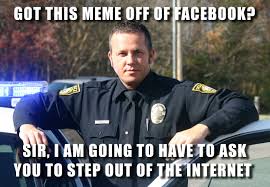
- Facebook must get their act together, People do have an opinion, and if you get in so called “facebook jail” for having that opinion, what is the point of having a social media site???? Come on Facebook, get with the 21st century..
- I’m just trying to ask a question to a human and actually get a response. Not a list of 6 possible answers and asking if any of them were close enough to shut you up.
- No way to contact Facebook – times outs, no connection, all sort of excuses when you are posting a claim, or a request for contact!!Facebook is charging me for something I didn’t authorized to run, an add. Many months ago I stopped running all adds I had posted – mainly because of the difficulty (impossibility?) of reaching you managers, or whomever is responsible for billings!!! YOU JUST HIDE YOUR SELVES, AND AFTER STARTING AN ADD, one has no way of stopping it, changing it, no feed back at all!! I will never post a add on Facebook again!!
- Tried to contact fb to try and stop all these “friends requests” from all foreign people. Could not do, after all this bad publicity you would think they would be very wary.
- I just tried to contact Facebook concerning my account with a number provided on the Website. The service representative was very helpful until I turned down the $49.00 fee to fix my problem. When I said that was not acceptable, he hung up on me ….

- Contacting them is impossible. They want you gone, and you are gone. No explanation, and I have never giving them these five stars;; they made that up.
- it is very hard to find this contact method. it is totally impersonal. it allows for no dialogue. it seems to confirm that FB is too big for its own britches.
- is there a way to contact facebook as getting a little peeved with the service and will not pay for any more ads while i am unable to contact them.
- Never have a direct Help Desk to call…it appears as if You all are invisible.
- you cannot contact facebook to report a fault! what good is that?
- I CALLED 2 TIMES AND THEY WANT $100 SAY IT IS MY COMPUTER AND IT ISNT……..I Cant share and in jail almost 24/7. i was to be out at 12;20 yesterday…last time they did this and they restriction is over but still 3 more days!!!! idiots work here!!!!! never reply back either.
- this is terrible, i have to use someone else account to even contact support.
ABC NEWS, ALTERNET, AP, BARACK OBAMA, BUSINESS, BUZZFEED, CBS NEWS, CHANNING DUNGEY, CNN, CROOKS AND LIARS, DAILY KOZ, EMARKETER, Entertainment, FACEBOOK, FORTUNE, HISTORY, INC.COM, INSTAGRAM, KU KLUX KLAN, Law, MARK ZUCKERBERG, MOTHER JONES, MOVEON, MSNBC, NBC NEWS, NEWSWEEK, NPR, PEW RESEARCH CENTER, POLITICO, POLITICS, RAW STORY, REUTERS, ROBERT TOWNSEND, ROSEANNE BARR, SALON, SEATTLE TIMES, SLATE, SNAPCHAT, TEENAGERS, THE ATLANTIC, THE CHICAGO SUN-TIMES, THE CHICAGO TRIBUNE, THE DAILY BEAST, THE GUARDIAN, THE HILL, THE HUFFINGTON POST, THE LOS ANGELES TIMES, THE NATION, THE NEW YORK TIMES, THE WASHINGTON POST, TIME, TWITTER, U.S. NEWS & WORLD REPORT, UP THE ORGANIZATION, UPI, USA TODAY, YOUTUBE
In Bureaucracy, Business, Entertainment, History, Law, Politics, Social commentary on June 6, 2018 at 12:29 am
Facebook is in big trouble. And much of it stems from its own greed and arrogance toward its customers.
An email recently sent to Winnie Liu, director of Facebook & Instagram Research, offers several telling truths.
The recipient—a friend of mine named Dan—had just been put in “Facebook Jail” for somehow offending its “Community Standards” (i.e., censorship) department.
The actual offense, of course, was not outlined. It never is.
When he tried to post something on Facebook, Dan got an automatic message: “You may have used Facebook in a way that our systems consider unusual, even if you didn’t mean to. You can post again in 24 hours.”
Notice the phrase: “You may have used Facebook in a way that our systems consider unusual.”
Well, did he or didn’t he commit an offense? If he didn’t, he shouldn’t have been banned from posting on Facebook. If he did, then he should have the right to know, specifically, what it was he posted that “may have” been considered “unusual”.
And what it is that “our systems consider unusual”? Did he defame someone? Post an obscene photo? Tell a joke that someone found offensive?
America’s criminal and civil justice systems are founded on specificity. If the police accuse you of robbing a bank, they need to have specific proof that you robbed it. Their merely saying “I think he’s a bank robber” isn’t evidence—and shouldn’t be counted as such.
Finally, if he “didn’t mean to” post something that Facebook’s “systems consider unusual,” then that should be a mitigating factor in itself.
Even in criminal law, room is made to distinguish intentional acts from unintentional ones, even when harm is caused.
So when Dan got an email from Facebook, inviting him to take part in an upcoming research survey, he decided to share his disgust with its blatant disregard for fairness:
- “Although Facebook users like me have made its founder, Mark Zuckerberg, worth $52 billion, he’s unwilling to make it possible for those users to directly contact Facebook’s censorship department when they find themselves booted off Facebook. Or when they can’t log onto it. Or when they’re being billed for ads they never posted.
- “Ideally, this should be done by phone. Certainly, with all the billions of advertising dollars Facebook rakes in, a comparatively small portion could be set aside to hire banks of phone operators to deal with situations like this.

By aflcio2008 (NM: Jewell Hall, AFT and Martin Heinrich) [CC BY 2.0 (https://creativecommons.org/licenses/by/2.0)%5D, via Wikimedia Commons
- “But if you’re not willing to do that, you could at least make it possible for frustrated users to contact Facebook via Instant Messaging.
- “As it is, Facebook’s censorship department operates as prosecutor, jury and judge. Its decisions come out of the blue, and whoever is accused of violating your ‘Community Standards’ is automatically found guilty, with no right to appeal or even explain the situation as s/he saw it.
- “These are the methods of a Star Chamber in a dictatorship. They are reprehensible to citizens of any free society. And Facebook should consider them equally reprehensible as affronts to free speech.
- “There have been numerous reports that Facebook’s censorship department has been manipulated by Right-wing Trump supporters to remove posts they don’t like, even of those posts don’t actually violate Facebook’s “community standards.” I feel reasonably certain this is what happened in my case.
- “Since Zuckerberg recently spent two days in Washington testifying before outraged Democrats, it isn’t in his—or Facebook’s—best interest that he be forced to account for such disgraceful manipulation.
- “I have seen numerous complaints by Facebook members about being put in ‘Facebook Jail’ for even the most trivial ‘offenses.’ One of these is ‘liking’ too many posts.
- “Others like myself have simply re-posted images or stories already posted on Facebook—and found themselves kicked off as a result.
“Last December I wrote Mark Zuckerman about these problems—and the dangers they represent for Facebook. Naturally, I didn’t receive even the courtesy of a reply. And it’s clear to me that he has no intention of making such reforms.
“So there’s really no point in your offering test respondents $75 apiece in Amazon gift cards. Since Facebook clearly refuses to address the issue that’s most outraging so many of its users—at least the ones I know—it can expect to see its audience continue to shrink.
“When I first got a computer in 1999, AOL was the ‘big dog on the block.’ No more. When a comedian now references AOL, it’s as a joke, to mock its now antiquated status.
“It’s unfortunate that some people—like those in charge of Facebook—stubbornly refuse to learn from history.”
Dan’s experience, however, is by no means rare. Nor is his high level of disgust with Facebook.
For some unknown reason, Facebook has chosen to publish many of its users’ opinions on their “Facebook experience.”
All that’s needed to access these opinions—which are almost entirely complaints—is to type “Contact Facebook” in the white subject bar in the upper left-hand corner of the page.
Parts Three and Four of this series will focus on those expressed views—and outrage.
ABC NEWS, ALTERNET, AP, BARACK OBAMA, BUSINESS, BUZZFEED, CBS NEWS, CHANNING DUNGEY, CNN, CROOKS AND LIARS, DAILY KOZ, EMARKETER, Entertainment, FACEBOOK, FORTUNE, HISTORY, INC.COM, INSTAGRAM, KU KLUX KLAN, Law, MARK ZUCKERBERG, MOTHER JONES, MOVEON, MSNBC, NBC NEWS, NEWSWEEK, NPR, PEW RESEARCH CENTER, POLITICO, POLITICS, RAW STORY, REUTERS, ROBERT TOWNSEND, ROSEANNE BARR, SALON, SEATTLE TIMES, SLATE, SNAPCHAT, TEENAGERS, THE ATLANTIC, THE CHICAGO SUN-TIMES, THE CHICAGO TRIBUNE, THE DAILY BEAST, THE GUARDIAN, THE HILL, THE HUFFINGTON POST, THE LOS ANGELES TIMES, THE NATION, THE NEW YORK TIMES, THE WASHINGTON POST, TIME, TWITTER, U.S. NEWS & WORLD REPORT, UP THE ORGANIZATION, UPI, USA TODAY, YOUTUBE
In Bureaucracy, Business, Entertainment, History, Politics, Social commentary on June 5, 2018 at 12:09 am
Fortune has some bad news for Facebook: “Facebook is losing U.S. teenagers to services like YouTube, Instagram, and Snapchat.”
On May 31, The Pew Research Center released its survey of 743 teens and 1,058 parents with children ages 13 to 17. The subject: Which social networking sites are most popular with teenagers.
The survey found:
- 85% of American teenagers say they use the video-streaming service YouTube.
- 72% of teens use photo-sharing Instagram.
- 69% of teens use Snapchat.
- 51% of teens use Facebook, which came in fourth place.
- This is a decline of 20% in usage; when Pew Research surveyed teenagers’ use of social networking sites in 2015, 71% of them said they used Facebook.
And worse news may be coming.
According to the research firm eMarketer, in 2018, Facebook will lose two million users under the age of 25. And less than half of Americans between 12 and 17 will use Facebook at least once a month.

According to the website, Inc.com, a major reason lies in the increasing use of Facebook by adults: “What kid wants to hang out in the same place as their parents and grandparents?” On the other hand, Snapchat will gain 1.9 million new users and Instagram will add 1.6 million in the 24-and-under age range coveted by advertisers.
“In general terms we expect social network users under age 24 to show declining interest in Facebook as time goes on,” Karin von Abrams, principal analyst at eMarketer, told The Independent.
“Younger consumers in particular are looking for something beyond utility.
“They want novelty and exclusivity too; the search for the latest buzz in social media will continue to lead them away from Facebook.”
A headline in The Guardian put Facebook’s dilemma in the bluntest terms: “Is Facebook for old people? Over-55s flock as the young leave”.
In a March 12, 2018 story, Guardian reporter Mark Sweeney notes:
“It’s official: Facebook is for old(er) people. Teens and young adults are ditching Mark Zuckerberg’s social network as popularity among the over-55s surges, according to a report.
“…A surge in older users means over-55s will become the second-biggest demographic of Facebook users this year.”
Facebook is by no means in danger yet. As of the first quarter of 2018, it had 2.19 billion monthly active users.
Its creator and CEO, Mark Zuckerberg, at 33, is now worth more than $69 billion, according to Forbes. And Facebook’s market value is now $500 billion, although it’s been public for five years. It generates the vast majority of its money from mobile phones.

President Barack Obama speaking with Mark Zuckerberg (right)
But a desire by teens to avoid a social network used by their parents and grandparents isn’t the only reason for widespread dissatisfaction with Facebook.
To cite what should be the Bible among corporate CEOs: Up the Organization: How to Stop the Corporation From Stifling People and Strangling Profits, by Robert Townsend.
First published in 1970, its writing is brisk and its tone is no-nonsense. According to the dust jacket of the paperback edition:
“This is not a book about how organizations work. What should happen in organizations and what does happen are two different things and about as far apart as they can get.
“THIS BOOK IS ABOUT HOW TO GET THEM TO RUN THREE TIMES AS WELL AS THEY DO. The keys that will accomplish this are JUSTICE…FUN…EXCELLENCE.”
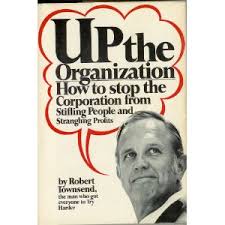
One chapter in particular—“Call Yourself Up”—runs only a short paragraph. Yet it is a paragrah that Mark Zuckerberg should tape to his bathroom mirror and re-read every day:
“When you’re off on a business trip or a vacation, pretend you’re a customer. Telephone some part of your organization and ask for help. You’ll run into some real horror shows.”
If Zuckerberg were a Facebook customer, instead of its CEO, he would face “some real horror shows.”
A friend of mine named Dan recently had this experience on Facebook:
“On May 31, I was placed in what Facebook’s users commonly refer to as ‘Facebook Jail’ for 24 hours. My crime: Posting a commentary on the firing of Roseanne Barr for her racist tweet on May 29.
“Specifically: Another Facebook user had already posted a picture of a white woman using a cell phone to call police–and report that a black woman had just wiped out her favorite TV show. (This was clearly a reference to Channing Dungey, entertainment president of the American Broadcasting Company, who made the decision to dump Roseanne after Barr’s racist tweet.)
“Under that photo I had posted a picture of a Ku Klux Klan rally, with a caption to the effect: “Hey, ABC, you can’t fire Roseanne! She’s one of us!”
“Perhaps two hours later I was kicked off Facebook and sent a message that I had violated its “Community Standards.” The picture I had posted of the Klan rally was given, but not the caption I had posted with it.
“Anyone with half a brain should have realized that this was not an expression of support for the Klan but an attack on it—and on Barr for her Fascistic racism.”
Apparently, no one at Facebook had any understanding of irony. Nor could they tell the difference between a post attacking the racism of the Ku Klux Klan and celebrating it.
ABC NEWS, ALTERNET, AMERICABLOG, AP, BABY BOOMER RESISTANCE, BBC, BLOOMBERG NEWS, BUSINESS, BUZZFEED, CBS NEWS, CNN, CROOKS AND LIARS, DAILY KOS, DAILY KOZ, DONALD TRUMP, FACEBOOK, FBI, FIVETHIRTYEIGHT, HARPER’S MAGAZINE, HUFFINGTON POST, INCOME INEQUALITY, MAFIA, MEDIA MATTERS, MOTHER JONES, MOVEON, MSNBC, NBC NEWS, NEW REPUBLIC, NEWSDAY, NEWSWEEK, NICCOLO MACHIAVELLI, NPR, PBS NEWSHOUR, POLITICO, POLITICS, POLITICUSUSA, RAW STORY, REUTERS, SALON, SEATTLE TIMES, SLATE, TALKING POINTS MEMO, TAX HAVENS, TAX JUSTICE NETWORK, THE ATLANTIC, THE CHICAGO SUN-TIMES, THE CHICAGO TRIBUNE, THE DAILY BEAST, THE DAILY BLOG, THE GUARDIAN, THE HILL, THE HUFFINGTON POST, THE INTERCEPT, THE LOS ANGELES TIMES, THE NATION, THE NEW REPUBLIC, THE NEW YORK TIMES, THE NEW YORKER, THE PRINCE, THE VILLAGE VOICE, THE WALL STREET JOURNAL, THE WASHINGTON POST, THINKPROGRESS, TIME, TRUTHDIG, TRUTHOUT, TWITTER, TWO POLITICAL JUNKIES, U.S. NEWS & WORLD REPORT, UPI, USA TODAY, WEALTH, WONKETTE
In Business, History, Law, Law Enforcement, Politics, Social commentary on April 26, 2017 at 12:05 am
As President Donald Trump prepares to drastically cut taxes on the wealthy (including himself) it’s well to remember the man whose name defines modern politics.
In 1513, Niccolo Machiavelli, the Florentine statesman who has been called the father of modern political science, published his best-known work: The Prince.


Niccolo Machiavelli
Among the issues he confronted was how to preserve liberty within a republic. And key to this was mediating the eternal struggle between the wealthy and the poor and middle class.
Machiavelli deeply distrusted the nobility because they stood above the law. He saw them as a major source of corruption because they could buy influence through patronage, favors or nepotism.
Successful political leaders must attain the support of the nobility or general populace. But since these groups have conflicting interests, the safest course is to choose the latter.
Writes Machiavelli:
….He who becomes prince by help of the [wealthy] has greater difficulty in maintaining his power than he who is raised by the populace. He is surrounded by those who think themselves his equals, and is thus unable to direct or command as he pleases.
But one who is raised to leadership by popular favor finds himself alone, and has no one, or very few, who are not ready to obey him. [And] it is impossible to satisfy the [wealthy] by fair dealing and without inflicting injury upon others, whereas it is very easy to satisfy the mass of the people in this way.

Machiavelli warns that the general populace is more honest than the nobility—i.e., wealthy. The wealthy seek to oppress, while the populace wants to simply avoid oppression.
A political leader cannot protect himself against a hostile population, owing to their numbers, but he can against the hostility of the great, as they are but few.
The worst that a prince has to expect from a hostile people is to be abandoned, but from hostile nobles he has to fear not only desertion but their active opposition. And as they are more far seeing and more cunning, they are always in time to save themselves and take sides with the one who they expect will conquer.
The prince is, moreover, obliged to live always with the same people, but he can easily do without the same nobility, being able to make and unmake them at any time, and improve their position or deprive them of it as he pleases.
Unfortunately, political leaders throughout the world—including the United States–have ignored this sage advice.
The results of this wholesale favoring of the wealthy and powerful have been brilliantly documented in an investigation of tax evasion by the world’s rich.
In 2012, Tax Justice Network, which campaigns to abolish tax havens, commissioned a study of their effect on the world’s economy.
The study was entitled, “The Price of Offshore Revisited: New Estimates for ‘Missing’ Global Private Wealth, Income, Inequality and Lost Taxes.”
http://www.taxjustice.net/cms/upload/pdf/Price_of_Offshore_Revisited_120722.pdf
The research was carried out by James Henry, former chief economist at consultants McKinsey & Co. Among its findings:
Summing up this situation, the report noted: “We are up against one of society’s most well-entrenched interest groups. After all, there’s no interest group more rich and powerful than the rich and powerful.”
Fortunately, Machiavelli has supplied timeless remedies to this increasingly dangerous situation:
- Assume evil among men—and most especially among those who possess the greatest concentration of wealth and power.
- Carefully monitor their activities—the way the FBI now regularly monitors those of the Mafia and major terrorist groups.
- Ruthlessly prosecute the treasonous crimes of the rich and powerful—and, upon their conviction, impose severe punishment.
ABC NEWS, ADVICE, BAY OF PIGS, CBS NEWS, CNN, CORPORATIONS, CUBA, FACEBOOK, FIDEL CASTRO, JOHN F. KENNEDY, NBC NEWS, NICCOLO MACHIAVELLI, POLITICS, THE CHICAGO SUN-TIMES, THE CHICAGO TRIBUNE, THE DISCOURSES, THE LOS ANGELES TIMES, THE NEW YORK TIMES, THE PRINCE, THE WASHINGTON POST, TWITTER
In Bureaucracy, Business, History, Military, Politics on June 23, 2016 at 1:14 am
On the rare occasion when most people think of Niccolo Machiavelli, the image of the devil comes to mind.

Niccolo Machiavelli
In fact, “The Old Nick” became an English term used to describe Satan and slander Machiavelli at the same time.
The truth, however, is more complex. Machiavelli was a passionate Republican, who spent most of his adult life in the service of his beloved city-state, Florence.
The years he spent as a diplomat were tumultuous ones for Italy–with men like Pope Julius II and Caesare Borgia vying for power and plunging Italy into one bloodbath after another.
Machiavelli is best-known for his writing of The Prince, a pamphlet on the arts of gaining and holding power. Its admirers have included Benito Mussolini and Joseph Stalin.

But his longer and more thoughtful work is The Discourses, in which he offers advice on how to maintain liberty within a republic. Among its admirers were many of the men who framed the Constitution of the United States.

Also contrary to what most people believe about Machiavelli, he did not advocate evil for its own sake. Rather, he recognized that sometimes there is no perfect–or perfectly good–solution to a problem.
Sometimes it’s necessary to take stern–even brutal–action to stop an evil (such as a riot) before it becomes widespread.
His counsel remains as relevant today as it did during his lifetime (1469 – 1527)–especially for politicians.
But plenty of ordinary citizens can also benefit from the advice he has to offer–such as those who are asked to give advice to more powerful superiors.
Machiavelli warns there is danger in urging rulers to take a particular course of action:
“For men only judge of matters by the result, all the blame of failure is charged upon him who first advised it, while in case of success he receives commendations. But the reward never equals the punishment.”
This puts would-be counselors in a difficult position: “If they do not advise what seems to them for the good of the republic or the prince, regardless of the consequences to themselves, then they fail to do their duty.
“And if they do advise it, then it is at the risk of their position and their lives, for all men are blind in thus, that they judge of good or evil counsels only by the results.”
Thus, Machiavelli warns that an adviser should “take things moderately, and not to undertake to advocate any enterprise with too much zeal, but to give one’s advice calmly and modestly.”
The person who asked for the advice may follow it, or not, as of his own choice, and not because he was led or forced into it by the adviser.
Above all, the adviser must avoid the danger of urging a course of action that runs “contrary to the wishes of the many.
“For the danger arises when your advice has caused the many to be contravened. In that case, when the result is unfortunate, they all concur in your destruction.”
Or, as President John F. Kennedy famously said after the disastrous invasion of Cuba at the Bay of Pigs in April, 1961: “Victory has a hundred fathers and defeat is an orphan.”

John F. Kennedy
By “not advocating any enterprise with too much zeal,” the adviser gains two advantages:
“The first is, you avoid all danger.
“And the second consists in the great credit which you will have if, after having modestly advised a certain course, your counsel is rejected, and the adoption of a different course results unfortunately.”
Finally, the time to give advice is before a catastrophe occurs, not after. Machiavelli gives a vivid example of what can happen if this rule is ignored.
King Perseus of Macedon had gone to war with Paulus Aemilius–and suffered a humiliating defeat. Fleeing the battlefield with a handful of his men, he later bewailed the disaster that had overtaken him.
Suddenly, one of his lieutenants began to lecture Perseus on the many errors he had committed, which had led to his ruin.
“Traitor,” raged the king, turning upon him, “you have waited until now to tell me all this, when there is no longer any time to remedy it–” And Perseus slew him with his own hands.
Niccolo Machiavelli sums up the lesson as this:
“Thus was this man punished for having been silent when he should have spoken, and for having spoken when he should have been silent.”
Be careful that you don’t make the same mistake.
ABC NEWS, BUSINESS, CBS NEWS, CNN, FACEBOOK, FBI, INCOME INEQUALITY, MAFIA, NBC NEWS, NICCOLO MACHIAVELLI, POLITICS, TAX HAVENS, TAX JUSTICE NETWORK, THE CHICAGO SUN-TIMES, THE CHICAGO TRIBUNE, THE LOS ANGELES TIMES, THE NEW YORK TIMES, THE PRINCE, THE WALL STREET JOURNAL, THE WASHINGTON POST, TWITTER, USA TODAY, WEALTH
In Business, History, Law, Law Enforcement, Politics, Social commentary on February 16, 2015 at 2:04 am
As Americans vacation their way through yet another observance of Presidents’ Day, it’s well to remember the man whose name defines modern politics.
In 1513, Niccolo Machiavelli, the Florentine statesman who has been called the father of modern political science, published his best-known work: The Prince.
Niccolo Machiavelli
Among the issues he confronted was how to preserve liberty within a republic. And key to this was mediating the eternal struggle between the wealthy and the poor and middle class.
Machiavelli deeply distrusted the nobility because they stood above the law. He saw them as a major source of corruption because they could buy influence through patronage, favors or nepotism.
Successful political leaders must attain the support of the nobility or general populace. But since these groups have conflicting interests, the safest course is to choose the latter.
….He who becomes prince by help of the [wealthy] has greater difficulty in maintaining his power than he who is raised by the populace. He is surrounded by those who think themselves his equals, and is thus unable to direct or command as he pleases.
But one who is raised to leadership by popular favor finds himself alone, and has no one, or very few, who are not ready to obey him. [And] it is impossible to satisfy the [wealthy] by fair dealing and without inflicting injury upon others, whereas it is very easy to satisfy the mass of the people in this way.
For the aim of the people is more honest than that of the [wealthy], the latter desiring to oppress, and the former merely to avoid oppression. [And] the prince can never insure himself against a hostile population on account of their numbers, but he can against the hostility of the great, as they are but few.
The worst that a prince has to expect from a hostile people is to be abandoned, but from hostile nobles he has to fear not only desertion but their active opposition. And as they are more far seeing and more cunning, they are always in time to save themselves and take sides with the one who they expect will conquer.
The prince is, moreover, obliged to live always with the same people, but he can easily do without the same nobility, being able to make and unmake them at any time, and improve their position or deprive them of it as he pleases.
Unfortunately, political leaders throughout the world–including the United States–have ignored this sage advice.
The results of this wholesale favoring of the wealth and powerful have been brilliantly documented in a recent investigation of tax evasion by the world’s rich.
In 2012, Tax Justice Network, which campaigns to abolish tax havens, commissioned a study of their effect on the world’s economy.
The study was entitled, “The Price of Offshore Revisited: New Estimates for ‘Missing’ Global Private Wealth, Income, Inequality and Lost Taxes.”
http://www.taxjustice.net/cms/upload/pdf/Price_of_Offshore_Revisited_120722.pdf
The research was carried out by James Henry, former chief economist at consultants McKinsey & Co. Among its findings:
Summing up this situation, the report notes: “We are up against one of society’s most well-entrenched interest groups. After all, there’s no interest group more rich and powerful than the rich and powerful.”
Fortunately, Machiavelli has supplied a timeless remedy to this increasingly dangerous situation:
- Assume evil among men–and most especially among those who possess the greatest concentration of wealth and power.
- Carefully monitor their activities–the way the FBI now regularly monitors those of the Mafia and major terrorist groups.
- Ruthlessly prosecute the treasonous crimes of the rich and powerful–and, upon their conviction, impose severe punishment.
ABC NEWS, ADVICE, CBS NEWS, CNN, CORPORATIONS, FACEBOOK, JOHN F. KENNEDY, NBC NEWS, NICCOLO MACHIAVELLI, POLITICS, THE DISCOURSES, THE LOS ANGELES TIMES, THE NEW YORK TIMES, THE PRINCE, THE WASHINGTON POST, TWITTER
In History, Politics, Self-Help on May 10, 2013 at 12:12 am
On the rare occasion when most people think of Niccolo Machiavelli, the image of the devil comes to mind.
Niccolo Machiavelli
In fact, “The Old Nick” became an English term used to describe Satan and slander Machiavelli at the same time.
The truth, however, is more complex. Machiavelli was a passionate Republican, who spent most of his adult life in the service of his beloved city-state, Florence.
The years he spent as a diplomat were tumultuous ones for Italy–with men like Pope Julius II and Caesare Borgia vying for power and plunging Italy into one bloodbath after another.
Machiavelli is best-known for his writing of The Prince, a pamphlet on the arts of gaining and holding power. Its admirers have included Benito Mussolini and Joseph Stalin.
But his longer and more thoughtful work is The Discourses, in which he offers advice on how to maintain liberty within a republic. Among its admirers were many of the men who framed the Constitution of the United States.
Also contrary to what most people believe about Machiavelli, he did not advocate evil for its own sake. Rather, he recognized that sometimes there is no perfect–or perfectly good–solution to a problem.
Sometimes it’s necessary to take stern–even brutal–action to stop an evil (such as a riot) before it becomes widespread.
His counsel remains as relevant today as it did during his lifetime (1469 – 1527)–especially for politicians.
But plenty of ordinary citizens can also benefit from the advice he has to offer–such as those who are asked to give advice to more powerful superiors.
Machiavelli warns there is danger in urging rulers to take a particular course of action:
“For men only judge of matters by the result, all the blame of failure is charged upon him who first advised it, while in case of success he receives commendations. But the reward never equals the punishment.”
This puts would-be counselors in a difficult position: “If they do not advise what seems to them for the good of the republic or the prince, regardless of the consequences to themselves, then they fail of their duty.
“And if they do advise it, then it is at the risk of their position and their lives, for all men are blind in this, that they judge of good or evil counsels only by the results.”
Thus, Machiavelli warns that an advisor should “take things moderately, and not to undertake to advocate any enterprise with too much zeal, but to give one’s advice calmly and modestly.”
The person who asked for the advice may follow it, or not, as of his own choice, and not because he was led or forced into it by the advisor.
Above all, the advisor must avoid the danger of urging a course of action that runs “contrary to the wishes of the many.”
“For the danger arises when your advice has caused the many to be contravened. In that case, when the result is unfortunate, they all concur in your destruction.”
Or, as President John F. Kennedy famously said after the disastrous invasion of Cuba at the Bay of Pigs in April, 1961: “Victory has a hundred fathers and defeat is an orphan.”

By “not advocating any enterprise with too much zeal,” the advisor gains two advantages:
“The first is, you avoid all danger.
“And the second consists in the great credit which you will have if, after having modestly advised a certain course, your counsel is rejected, and the adoption of a different course results unfortunately.”
Finally, the time to give advice is before a catastrophe occurs, not after. Machiavelli gives a vivid example of what can happen if this rule is ignored.
King Perseus of Macedon had gone to war with Paulus Aemilius–and suffered a humiliating defeat. Fleeing the battlefield with a handful of his men, he later bewailed the disaster that had overtaken him.
Suddenly, one of his lieutenants began to lecture Perseus on the many errors he had committed, which had led to his ruin.
“Traitor,” raged the king, turning upon him, “you have waited until now to tell me all this, when there is no longer any time to remedy it—” And Perseus slew him with his own hands.

Niccolo Machiavelli sums up the lesson as this:
“Thus was this man punished for having been silent when he should have spoken, and for having spoken when he should have been silent.”
Be careful that you don’t make the same mistake.
ABC NEWS, BUSINESS, CBS NEWS, CNN, FACEBOOK, NBC NEWS, NICCOLO MACHIAVELLI, POLITICS, TAX HAVENS, TAX JUSTICE NETWORK, THE LOS ANGELES TIMES, THE NEW YORK TIMES, THE PRINCE, THE WALL STREET JOURNAL, TWITTER, WEALTH
In Business, History, Law, Social commentary on March 1, 2013 at 12:37 am
In 1513, Niccolo Machiavelli, the Florentine statesman who has been called the father of modern political science, published his best-known work: The Prince.
Niccolo Machiavelli
Among the issues he confronted was how to preserve liberty within a republic. And key to this was mediating the eternal struggle between the wealthy and the poor and middle class.
Machiavelli deeply distrusted the nobility because they stood above the law. He saw them as a major source of corruption because they could buy influence through patronage, favors or nepotism.
Successful political leaders must attain the support of the nobility or general populace. But since these groups have conflicting interests, the safest course is to choose the latter.
…He who becomes prince by help of the [wealthy] has greater difficulty in maintaining his power than he who is raised by the populace. He is surrounded by those who think themselves his equals, and is thus unable to direct or command as he pleases.
But one who is raised to leadership by popular favor finds himself alone, and has no one, or very few, who are not ready to obey him. [And] it is impossible to satisfy the [wealthy] by fair dealing and without inflicting injury upon others, whereas it is very easy to satisfy the mass of the people in this way.
For the aim of the people is more honest than that of the [wealthy], the latter desiring to oppress, and the former merely to avoid oppression. [And] the prince can never insure himself against a hostile population on account of their numbers, but he can against the hostility of the great, as they are but few.
The worst that a prince has to expect from a hostile people is to be abandoned, but from hostile nobles he has to fear not only desertion but their active opposition. And as they are more far seeing and more cunning, they are always in time to save themselves and take sides with the one who they expect will conquer.
The prince is, moreover, obliged to live always with the same people, but he can easily do without the same nobility, being able to make and unmake them at any time, and improve their position or deprive them of it as he pleases.
Unfortunately, political leaders throughout the world–including the United States–have ignored this sage advice.
The results of this wholesale favoring of the wealth and powerful have been brilliantly documented in a recent investigation of tax evasion by the world’s rich.
In 2012, Tax Justice Network, which campaigns to abolish tax havens, commissioned a study of their effect on the world’s economy.
The study was entitled, “The Price of Offshore Revisited: New Estimates for ‘Missing’ Global Private Wealth, Income, Inequality and Lost Taxes.”
http://www.taxjustice.net/cms/upload/pdf/Price_of_Offshore_Revisited_120722.pdf
The research was carried out by James Henry, former chief economist at consultants McKinsey & Co. Among its findings:
Summing up this situation, the report notes: “We are up against one of society’s most well-entrenched interest groups. After all, there’s no interest group more rich and powerful than the rich and powerful.”
Fortunately, Machiavelli has supplied a timeless remedy to this increasingly dangerous situation:
- Assume evil among men–and most especially among those who possess the greatest concentration of wealth and power.
- Carefully monitor their activities–the way the FBI now regularly monitors those of the Mafia and major terrorist groups.
- Ruthlessly prosecute the treasonous crimes of the rich and powerful–and, upon their conviction, impose severe punishment.

.svg)


ABC NEWS, ALTERNET, AP, BARACK OBAMA, BUSINESS, BUZZFEED, CBS NEWS, CHANNING DUNGEY, CNN, CROOKS AND LIARS, DAILY KOZ, EMARKETER, Entertainment, FACEBOOK, FORTUNE, HISTORY, INC.COM, INSTAGRAM, KU KLUX KLAN, Law, MARK ZUCKERBERG, MOTHER JONES, MOVEON, MSNBC, NBC NEWS, NEWSWEEK, NPR, PEW RESEARCH CENTER, POLITICO, POLITICS, RAW STORY, REUTERS, ROBERT TOWNSEND, ROSEANNE BARR, SALON, SEATTLE TIMES, SLATE, SNAPCHAT, TEENAGERS, THE ATLANTIC, THE CHICAGO SUN-TIMES, THE CHICAGO TRIBUNE, THE DAILY BEAST, THE GUARDIAN, THE HILL, THE HUFFINGTON POST, THE LOS ANGELES TIMES, THE NATION, THE NEW YORK TIMES, THE WASHINGTON POST, TIME, TWITTER, U.S. NEWS & WORLD REPORT, UP THE ORGANIZATION, UPI, USA TODAY, YOUTUBE
FACEBOOK, WE’RE GLAD TO LEAVE YE: PART THREE (OF FOUR)
In Bureaucracy, Business, Entertainment, History, Law, Politics, Social commentary, Uncategorized on June 7, 2018 at 12:18 amFacebook is still the most-used social media platform in the world—with more than 2 billion users and a net worth of $500 billion.
But all is not well in Mark Zuckerberg’s Internet kingdom. And while he has chosen to ignore those evils plaguing Facebook, many of its users are infuriated by them.
So infuriated that many of them are threatening to move to other social media sites—such as Snapchat and Instagram.
Here is a sampling of complaints made directly to Facebook by its thoroughly enraged users. [NOTE: The spellings are those of the complainants.]
Share this: