bureaucracybusters

Posts Tagged ‘PETE HEGSETH’

HITLER / TRUMP: “HOW DARE YOU ATTACK ME IN RETURN!”–PART TWO (END)

In Bureaucracy, Business, History, Military, Politics, Social commentary on March 27, 2025 at 12:06 am

On March 12, President Donald Trump halts imposing double tariffs on imports of Canadian steel and metal to 50%, just hours after announcing them. But he announces that he will raise duties on steel and aluminum imports from the European Union (EU) by 25%.      

In response:     

  • Canada says it will place 25% reciprocal tariffs on steel products and raise taxes on tools, computers, servers, display monitors, sports equipment, and cast-iron products.
  • The EU announces it will raise tariffs on American beef, poultry, bourbon and motorcycles, peanut butter and jeans.
  • Tariffs on bourbon will aim a deadly blow at the American liquor industry—especially that which produces Kentucky bourbon.

Then, on March 13, Trump, like Adolf Hitler,  justifies his attacks on peaceful nations. It is only when his victims dare counterattack that he feels wronged.

Bypassing the normal channels of diplomacy, Trump reverts to form on his own website, Truth Social:

“If this tariff is not removed immediately, the US will shortly place a 200% tariff on all WINES, CHAMPAGNES, & ALCOHOLIC PRODUCTS COMING OUT OF FRANCE AND OTHER EU REPRESENTED COUNTRIES. This will be great for the Wine and Champagne businesses in the US.” 

On March 20, the EU announces that it will delay its planned tariffs on American goods, which are set to go into effect at the start of April, until mid-April instead. The decision gives the bloc more time to negotiate with Washington and review the list of products that would be affected by the tariffs.

Trump’s threat to raise tariffs even further echoes Adolf Hitler’s self-righteous indignation at the refusal of Yugoslavians to submit to his tyranny.

On October 28, 1940, his ally, Italian dictator Benito Mussolini—jealous of Hitler and desperate to create his own empire—attacked Greece. And his armies had taken a severe beating by the descendants of Alexander the Great. 

So Hitler, reluctantly, decided to rush troops to Greece to save Mussolini from the embarrassment of losing his new war.

Adolf Hitler

At the time Yugoslavia was a monarchy ruled by the regent Prince Paul on behalf of the young King Peter II. On March 25, 1941, under threat of German invasion, Yugoslavia joined the Axis and agreed to permit transit through its territory to German troops headed for Greece. 

When Yugoslavia’s nonaggression treaty with Germany was announced the next day in the Yugoslav capital of Belgrade, regent Prince Paul and the government were promptly overthrown in a popular uprising led by Yugoslav Air Force officers with the support of the Yugoslav Army.

On March 27, King Peter II was officially installed as king, ending the regency.  

Hitler quickly learned the news. At first he thought it was a joke—and then he exploded in one of the wildest rages of his life.

Shouting that he had been “personally insulted,” Hitler demanded that Yugoslavia be crushed with “unmerciful harshness and that the military destruction be done in Blitzkrieg style. Now I intend to make a clean sweep of the Balkans—it is time people got to know me better!”

The invasion of Yugoslavia opened on April 6, 1941, with an overwhelming bombardment of Belgrade and facilities of the Royal Yugoslav Air Force by the the German air force, the Luftwaffe. The Wehrmacht attacked from southwestern Bulgaria, Romania, Hungary and Austria. 

On April 17, after only 11 days of fighting, representatives for Yugoslavia signed the armistice and unconditionally surrendered all Yugoslav troops. Yugoslavia was subsequently divided amongst Germany, Hungary, Italy and Bulgaria.

Hitler was ecstatic: He had “avenged” his “betrayal,” and given the world another lesson on the power of his army and air force. 

But his victory had come at a cost: The attack on Yugoslavia forced him to postpone his planned invasion of the Soviet Union by five weeks. And the Wehrmacht would suffer horribly when the bitterly cold Russian winter arrived.

As journalist and historian William L. Shirer wrote in his monumental study, The Rise and Fall of the Third Reich: “This postponement of the attack on Russia in order that the Nazi warlord might vent his personal spite against a small Balkan country which had dared to defy him was probably the most catastrophic single decision in Hitler’s career.

“It is hardly too much to say that by making it that March afternoon in the Chancellery in Berlin during a moment of convulsive rage he tossed away his last golden opportunity to win the war and to make of the Third Reich, which he had created with such stunning if barbarous genius, the greatest empire in German history and himself the master of Europe.”

It’s still too early to foresee if Trump will make such a single catastrophic decision. But he has clearly planted the seeds for this. Among these:

  • Wholesale purgings of the federal workforce—especially in agencies responsible for national security and health;
  • Turning America’s longtime allies—like Canada, Mexico, Greenland, Panama and the EU—into mortal enemies;
  • Appointing incompetents to office—like alcoholic Pete Hegseth Secretary of Defense and 14-year heroin addict Robert F. Kennedy Jr. Secretretary of Health and Human Services.

As historian Barbara W. Tuchman warned in her book, The March of Folly: “A great empire and little minds go ill together.”

HITLER / TRUMP: “HOW DARE YOU ATTACK ME IN RETURN!”–PART ONE (OF TWO)

In Bureaucracy, Business, History, Military, Politics, Social commentary on March 26, 2025 at 12:05 am

The 1969 classic, Battle of Britain, features a scene that could today be filmed—live—at the next Conservative Political Action Conference (CPAC).        

The movie dramatizes the heroic struggle of vastly outnumbered Royal Air Force (RAF) pilots against the numerically superior German air force, the Luftwaffe, during World War II.

Adolf Hitler, Germany’s Fuhrer, knew that to launch a successful naval invasion of Britain, he first must wipe the RAF from the skies. 

The aerial combat began during the summer of 1940 and climaxed that September.

Battle of Britain (1969) - IMDb

The turning point in the Battle—and the movie—occurs when a squadron of German bombers lost in bad weather at night accidentally bombs London. Attacks on London had been specifically forbidden by Hitler—for fear that they might bring the United States into the war.

An enraged British Prime Minister Winston Churchill orders a retaliatory attack on Berlin. 

Since the eruption of World War II on September 1, 1939, with Hitler’s invasion of Poland. this is the first time that Berlin has been attacked. In fact, Hermann Goring, chief of the Luftwaffe, has said: “If ever a bomb falls on Berlin, you can call me Meyer.”

Now Hitler—who has ravaged Poland and France, and repeatedly bombed Britain, is enraged.

It’s perfectly OK for him to ravage other countries. It’s just not fair for his enemies to strike back.

He orders his faithful to assemble at the Reichstag, the German parliament, where he will outline his plans for knocking Britain out of the war.

Only then can he move on to his ultimate goal: Destroying his supposed ally, the Soviet Union.

In the movie, Battle of Britain, Hitler’s address is brilliantly—if briefly—staged, complete with rows of diehard Nazi women screaming their allegiance to their Fuhrer.

Hitler (played by Rolf Stiefel) starts his speech slowly, just as the real Hitler normally did to build to a shattering climax: “Last night, bombs were dropped on Berlin. 

“So be it. Two can play at that game.

“If the RAF drops 200, 300, 400 bombs, then in one night we shall drop 2,000, 3,000, 4,000 bombs!”

His speech is interrupted by cheers from the Nazi faithful.

Adolf Hitler | Battle of Britain movie Wiki | Fandom

Adolf Hitler addressing the faithful in Battle of Britain

“If they attack our cities, then we will wipe theirs out!

“The hour will come when one of us must break. And it will never be National Socialist Germany!”

“NEVER! NEVER! NEVER!” screams the frenzied crowd.

“The English are filled with curiosity. They keep asking ‘Why doesn’t he come?’ Be patient. We are coming! We are coming!”

The Reichstag explodes with cheers of expected victory.

Britain went on to repulse the Luftwaffe’s attacks on its cities—and celebrate its victory at the end of the war.

That speech—in the movie and history—happened in 1940.

Fast forward to February 1, 2025: Newly re-elected President Donald Trump orders 25% tariffs on goods from Mexico and Canada, as well as 10% tariffs on imports from China.

  • The White House says the tariffs will take effect on February 4. 

On February 3, Trump announces a one-month pause of tariffs on Canada and Mexico after reaching agreements with each country that includes commitments to bolster border enforcement against drug smuggling.

Related image

Donald Trump

On February 4, the United States imposes 10% tariffs on goods from China.

On February 27, Trump affirms plans to impose 25% tariffs on Canada and Mexico when the one-month delay expires on March 4.

  • He also announces that an additional 10% tariff on goods from China will also take effect the same day. 

On March 3, Trump reiterates plans to move forward with a fresh round of tariffs the following day. 

On March 4, Trump’s tariffs on goods from Canada, Mexico and China take effect at 12:01 a.m. ET.

  • China and Canada each respond with retaliatory tariffs, vowing additional measures.
  • Mexican President Claudia Sheinbaum Pardo slamms Trump’s tariffs but says she will hold off on retaliatory measures until after a conversation with him. 

On March 5,  Trump orders a one-month delay of auto tariffs after a request from the “Big 3” U.S. automakers: Ford, General Motors and Stellantis, the parent company of Jeep and Chrysler.

On March 6, Trump temporarily pauses tariffs on Canadian and Mexican goods who are compliant with the United States-Mexico-Canada Agreement. 

  • Canadian Prime Minister Justin Trudeau says he will continue to impose tariffs on U.S. imports into the country until Trump cancels levies on Canadian products.

Justin Trudeau

Justin Trudeau – Prime Minister of Canada, CC BY 3.0 <https://creativecommons.org/licenses/by/3.0&gt;, via Wikimedia Commons

On March 7, Trump says he is “strongly considering” large-scale banking sanctions, tariffs, and other sanctions on Russia until a cease fire and final settlement agreement is reached in the Russia-Ukraine war.

  • He also suggests that Canada might soon be hit with reciprocal tariffs on its lumber and dairy products.

On March 11, Trump announces that he will impose an additional 25% tariff on all Canadian steel and aluminum imports effective March 12. 

  • He says the move was in retaliation to the Ontario government’s implementation of a 25% surcharge on all electricity exports to the U.S. 
  • Following this, Ontario says it will suspend its 25% surcharge on electricity exports to the U.S. after agreeing to discuss a renewed trade agreement.   

AMERICA’S WAR ON DRUGS–THE ENEMY IS US: PART TWO (END)

In Bureaucracy, History, Law, Law Enforcement, Medical, Politics, Social commentary on February 5, 2025 at 12:05 am

It’s definitely time to seriously reexamine America’s decades-long war on drugs.     

On February 1, a White House “fact sheet” stated: “PRESIDENT DONALD J. TRUMP IMPOSES TARIFFS ON IMPORTS FROM CANADA, MEXICO AND CHINA”:  

“The extraordinary threat posed by illegal aliens and drugs, including deadly fentanyl, constitutes a national emergency under the International Emergency Economic Powers Act (IEEPA).

“Until the crisis is alleviated, President Donald J. Trump is implementing a 25% additional tariff on imports from Canada and Mexico and a 10% additional tariff on imports from China. Energy resources from Canada will have a lower 10% tariff.”

According to a November 27 story in The New Republic, “Trump Team is Having a Terrifying Debate on How to Invade Mexico.” Specifically:

“Trump has reportedly been gathering “battle plans” to attack drug cartels in Mexico since early 2023, with or without Mexico’s permission….

“One source close to Trump told Rolling Stone about a plan for a ‘soft’ invasion of the country, in which U.S. special forces would assassinate cartel leaders covertly, an idea Trump was in favor of earlier this year.”

Among the weapons Trump could hurl at Mexico:

  • Drone strikes and bombings against drug labs;
  • Sending military advisers to train the Mexican police and military;
  • Sending “kill teams” after drug lords;
  • Waging cyberwarfare against drug cartels. 

Donald Trump

Yet, no matter what the Trump administration does, America’s drug epidemic will remain an entirely American creation. 

Today, the dangers of drug-abuse are available to anyone who wants to discover them. Yet people continue to play Russian Roulette by taking “recreational” drugs that can leave them sickened or dead. 

One “recreational” drug is Fentanyl, a potent synthetic opioid approved by the Food and Drug Administration to relieve pain. It’s approximately 100% more potent than morphine and 50% more potent than heroin.

“One pill. One time. It can kill you,” said Brian Clark, Special Agent in Charge of the Drug Enforcement Administration’s San Francisco office. “Fentanyl is without a doubt the deadliest threat that we’ve ever faced in this country.” 

Another such drug is Krokodil (pronounced “crocodile”), an injectable opioid derivative. It’s made from over-the-counter codeine medicine mixed with ethanol, gasoline, red phosphorus, iodine, hydrochloric acid and paint thinner. 

It can produce gangrenous inflammations at the injection site, which resemble the scales of a crocodile. The skin can deteriorate so severely that flesh can fall from bone, producing a “zombie-like” appearance.

KROKODIL - THE 'POOR MAN'S HEROIN' - GRAPHIC IMAGES

Effects of Krokodil

Yet drug dealers face no shortage of customers lining up to buy it.

In short: No amount of publicity about the dangers of illicit drug-abuse will stop those looking for a quick “high” from thumbing their nose at the law—and their own safety.

And no matter how many low-level drug dealers are arrested, others quickly take their places. The profits are simply too great—especially for those who lack education or incentive to attain professional employment.

And no sooner does a cartel kingpin get imprisoned or killed than his place is taken by one or more successors.

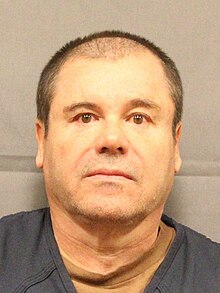
A classic example of this: Joaquín Archivaldo Guzmán Loera, better known as “El Chapo.” As the head of the Sinaloa drug cartel, he reigned as one of the most powerful criminal kingpins in Mexico. His enterprise spanned continents and triggered waves of bloodshed throughout Mexico.

Booking photo of Joaquin “El Chapo“ Guzman (front).jpg

Joaquín Archivaldo “El Chapo” Guzmán

In 2016, Mexican authorities arrested him. With a history of two escapes from Mexican prisons, Guzmán was extradited to the United States the following year.

On February 12, 2019, a jury found him guilty on 12 counts, including engaging in a continuing criminal enterprise, conspiracy to launder narcotics proceeds, international distribution of cocaine, heroin, marijuana and other drugs, and use of firearms.

He was subsequently sentenced to life imprisonment plus 30 years.

As of 2025, the Sinaloa Cartel remains Mexico’s most dominant drug cartel. It’s now headed by Ismael Zambada García and Guzmán’s sons, Jesús Alfredo Guzmán and Ivan Archivaldo Guzmán Salazar.

So: What to do? 

Aim to protect drug-avoiding people from druggies.

  • Recognize that America’s drug epidemic is caused by Americans’ insatiable demand for drugs.  
  • Recognize that so long as demand persists, suppliers will be eager to fill it. 
  • Allow druggies to endanger themselves but not others—the way smokers are allowed to get cancer and emphysema but not give it to nonsmokers.
  • Limit the types of places where druggies are allowed to drug up—such as their own homes.
  • Druggies involved in auto accidents should be presumed guilty unless they can prove otherwise.
  • Druggies should be banned from employment in transportation industries—as cab drivers, pilots, bus drivers.
  • If convicted of causing accidents, they should face lengthy mandatory prison terms.
  • Ban open-air drug markets.
  • Don’t allow druggies who are charged with crimes like burglary or robbery to cite their addiction as a defense.

Quit trying to protect self-destructive people from themselves. 

  • Stop providing Naloxone to opioid addicts when they overdose.
  • Stop providing free needles to heroin users.
  • Stop providing welfare and free housing to known drug addicts.
  • Parents should tell their teenagers: “If you get arrested for drugs, don’t expect me to bail you out or pay for treatment. We can’t afford it.”
  • If their teens are arrested as druggies, parents should say: “You’re on your own.”

AMERICA’S WAR ON DRUGS–THE ENEMY IS US: PART ONE (OF TWO)

In Bureaucracy, History, Law, Law Enforcement, Medical, Politics, Social commentary on February 4, 2025 at 12:11 am

It’s time to seriously reexamine America’s decades-long “War on Drugs” from a fresh perspective.     

And an excellent starting point is three gripping novels about that war—and the horrific violence it has spawned in Mexico.                                        

The author is Don Winslow, a former private investigator. And he has grounded his works in solid research among addicts, narcotics traffickers and the law enforcement agents who pursue them.

His first novel, The Power of the Dog, introduces readers to Art Keller, a dedicated agent of the Federal Drug Enforcement Administration (DEA). Although a Vietnam vet, this is his first outing into Mexico—and he’s an innocent in the ways of Mexican drug traffickers.

Drug Enforcement Administration - Wikipedia

When Miguel Angel Barrera, a high-ranking Mexican police official, seemingly befriends him, Keller enthusiastically signs on for the ride. Only to discover—later—that he’s been used.

When the “Mr. Big” dealer he’s pursuing is shot to pieces by corrupt Mexican police, the man waiting to take his place is none other than Barrera. 

For the next 40 years, Keller wages all-out war on Barrera—and his nephew, Adán, who succeeds him as the godfather of the powerful Sinaloa Cartel.

Two more novels follow: The Cartel and The Border. All three vividly portray the violent costs of an unwinnable conflict. 

In Dog, Winslow explains how America’s “War on Drugs” has actually made the crime cartels that produce them ever richer. He does so from the viewpoint of Adán Barrera:

Winslow in 2015

Don Winslow 

Malarrama, CC BY-SA 4.0 <https://creativecommons.org/licenses/by-sa/4.0&gt;, via Wikimedia Commons

“…While Keller’s revenge obsession might cost me money in the short run, in the long run it makes me money. And that is what the Americans cannot seem to understand—that all they do is drive up the price and make us rich.

“Without their help, any bobo with an old truck or a leaky boat with an outboard motor could run drugs into El Norte. But as it is, it takes millions of dollars to move the drugs, and the prices are accordingly sky-high.

“The Americans take a product that literally grows on trees and turn it into a valuable commodity. Without them, cocaine and marijuana would be like oranges, and instead of making billions smuggling it, I’d be making pennies doing stoop labor in some California field, picking it. 

Power of the Dog Book Series

“And the truly funny thing is that Keller is himself another product because I make millions selling protection against him, charging the independent contractors who want to move their product through La Plaza thousands of dollars for the use of our cops, soldiers, Customs agents, Coast Guard, surveillance equipment, communications….

“This is what Mexican cops appreciate that American cops don’t. We are partners…in the same enterprise.”

Looking at the “War on Drugs” from DEA agent Keller’s obsessive viewpoint, Winslow writes: 

“I’ve fought it my whole goddamn life, and for what? Billions of dollars, trying unsuccessfully to keep drugs out of the world’s most porous border? One-tenth of the anti-drug budget going into education and treatment; nine-tenths of those billions into interdiction?

“And not enough money from anywhere going into the root causes of the drug problem itself. And the billions spent keeping drug offenders locked up in prison, the cells now so crowded we have to give early release to murderers. Not to mention the fact that two-thirds of ‘non-drug’ offenses in America are committed by people high on dope or alcohol.

“And our solutions are the same futile non-solutions: Build more prisons, hire more police, spend more and more billions of dollars not curing the symptoms while we ignore the disease. Most people in my area who want to kick drugs can’t afford to get into a treatment program unless they have blue-chip health insurance, which most of them don’t.

“And there’s a six-month-to-two-year waiting list to get a bed in a subsidized treatment program. We’re spending almost $2 billion poisoning cocaine crops over here [Mexico] while there’s no money at home to help someone who wants to get off drugs. It’s insanity.”

In short: For all their differences, police and traffickers share one thing in common: The conclusion that the “War on Drugs” is a futile waste of time and resources.

In a February 18, 2019 interview with Rolling Stone, Winslow underscored his comments:

“Addiction will always be with us, albeit not at this rate, right? Criminality will always be with us. But the first thing we can do to fix it is [to] legalize drugs. Period. Across the board. Take the enormous profit out of the drug.

“That would be the first absolute major step. We’ve done that with marijuana. The problem is, of course, the balloon effect. It’s a theory in criminology: if you squeeze the balloon in one place the air goes to another. And so we squeezed the balloon in the marijuana place and the air went to heroin.” 

Winslow sees the drug problem not as one being inflicted on Americans by outsiders—such as the Mexican drug cartels—but as one that Americans are inflicting on themselves

No matter how many drug dealers are imprisoned, Americans’ insatiable demand for illicit drugs will keep the supplies flowing.