Posts Tagged ‘PBS NEWSHOUR’
2016 PRESIDENTIAL CAMPAIGN, ABC NEWS, ADAM SCHIFF, ALTERNET, AP, BUZZFEED, CBS NEWS, CNN, CROOKS AND LIARS, DAILY KOZ, DONALD TRUMP, DONALD TRUMP JUNIOR, FACEBOOK, FBI, GRU (RUSSIAN MILITARY INTELLIGENCE), HILLARY CLINTON, HOUSE INTELLIGENCE COMMITTEE, HOUSE OF REPRESENTATIVES, HOUSE PERMANENT SELECT COMMITTEE ON INTELLIGENCE, JARED KUSHNER, JULIUS CAESAR, JULIUS CAESAR (PLAY), KELLEYANNE CONWAY, KEVIN MCCARTHY, LINDSEY GRAHAM, MARCUS BRUTUS, MARK ANTONY, MIKE CONAWAY, MOTHER JONES, MOVEON, MSNBC, MUELLER REPORT, NBC NEWS, NEWSWEEK, NPR, PAUL MANAFORT, PBS NEWSHOUR, POLITICO, RAW STORY, REPUBLICANS, REUTERS, ROBERT MUELLER, RONNA MCDANIEL, RUSSIA, SALON, SEATTLE TIMES, SLATE, SUBVERSION, THE ATLANTIC, THE CHICAGO SUN-TIMES, THE CHICAGO TRIBUNE, THE DAILY BEAST, THE GUARDIAN, THE HILL, THE HUFFINGTON POST, THE LOS ANGELES TIMES, THE NATION, THE NEW YORK TIMES, THE WASHINGTON POST, TIME, TREASON, TWITTER, U.S. NEWS & WORLD REPORT, UPI, USA TODAY, WIKILEAKS, WILLIAM BAR, WILLIAM SHAKESPEARE
In Bureaucracy, Entertainment, History, Law, Politics, Social commentary on April 2, 2019 at 12:10 am
On March 24, 2019, Attorney General William Barr received the long-awaited report by Special Counsel Robert Mueller about Russian efforts to subvert the 2016 Presidential election.
According to Barr, the report—which no one else in the government has seen—showed no evidence that President Donald Trump had colluded with Russian Intelligence agents.
And now House Republicans—acting entirely on that claim—suddenly went on the offensive.
On March 28, all nine Republicans on the House Permanent Select Committee on Intelligence demanded in a letter that Representative Adam Schiff (D-California) resign as its chairman.
On the same day, President Donald Trump tweeted: “Congressman Adam Schiff, who spent two years knowingly and unlawfully lying and leaking, should be forced to resign from Congress!”
Other Republicans quickly joined the chorus:
- House Minority Leader Kevin McCarthy (R-California): Schiff owes “an apology to the American public” and should step down from his post as head of the Intelligence committee.
- Republican National Committee Chairwoman Ronna McDaniel: “They [Schiff and House Judiciary Chairman Jerry Nadler, D-New York] should be removed from their chairmanships. They owe the American people an apology. They owe this President an apology, and they have work to do to heal this democracy because this is our country we are talking about.”
- South Carolina Senator Lindsey Graham: “He’s getting into conspiracy land and he’s acting like an Oliver Stone type figure. That to me is not helpful to him but I’m not going to ask him to resign from Congress.”
- White House Adviser Kelleyanne Conway: “He’s been on every TV show 50 times a day for practically the last two years, promising Americans that this President would either be impeached or indicted. He has no right, as somebody who has been peddling a lie, day after day after day, unchallenged. Unchallenged and not under oath. Somebody should have put him under oath and said, ‘You have evidence, where is it?’”
On March 28, Schiff—speaking in a firm and controlled voice—addressed his critics in the House and beyond.
It was a speech worthy of that given by Mark Antony at the funeral of Julius Caesar.

Adam Schiff
“My colleagues may think it’s okay that the Russians offered dirt on the Democratic candidate for President as part of what was described as ‘the Russian government’s effort to help the Trump campaign.’ You might think that’s okay.
“My colleagues might think it’s okay that when that was offered to the son of the President, who had a pivotal role in the campaign, that the President’s son did not call the FBI, he did not adamantly refuse that foreign help. No, instead that son said that he would ‘love’ the help of the Russians. You might think it’s okay that he took that meeting.
“You might think it’s okay that Paul Manafort, the campaign chair, someone with great experience running campaigns, also took that meeting.
“You might think it’s okay that the President’s son-in-law also took that meeting.
“You might think it’s okay that they concealed it from the public.
“You might think it’s okay that their only disappointment after that meeting was that the dirt they received on Hillary Clinton wasn’t better. You might think that’s okay.![]()
![]()
![]()
“You might think it’s okay that when it was discovered a year later that they’d lied about that meeting and said it was about adoptions, you might think it’s okay that the President is reported to have helped dictate that lie. You might think that’s okay. I don’t.
![]()
“You might think it’s okay that the Presidential chairman of a campaign would offer information about that campaign to a Russian in exchange for money or debt forgiveness. You might think that’s okay. I don’t.
“You might think it’s okay that campaign chairman offered polling data, campaign polling data to someone linked to Russian intelligence. I don’t think that’s okay.
“You might think it’s okay that the President himself called on Russia to hack his opponent’s emails, ‘if they were listening.’
“You might think it’s okay that later that day, in fact, the Russians attempted to hack a server affiliated with that campaign. I don’t think that’s okay.
“You might think that it’s okay that the President’s son-in-law sought to establish a secret back channel of communications with the Russians through a Russian diplomatic facility. I don’t think that’s okay.
“You might think it’s okay that an associate of the President made direct contact with the GRU [the Russian military Intelligence agency] through Guccifer 2 and Wikileaks, that is considered a hostile Intelligence agency.
“You might think that it’s okay that a senior campaign official was instructed to reach that associate and find out what that hostile Intelligence agency had to say, in terms of dirt on his opponent.
“You might think it’s okay that the National Security Adviser-Designate [Mike Flynn] secretly conferred with the Russian ambassador about undermining U.S. sanctions, and you might think it’s okay he lied about it to the FBI. You might say that’s all okay.
“You might say that’s just what you need to do to win, but I don’t think it’s okay. I think it’s immoral. I think it’s unethical. I think it’s unpatriotic. And yes, I think it’s corrupt and evidence of collusion.”
Not one Republican dared challenge even one accusation Schiff had made.
2016 PRESIDENTIAL CAMPAIGN, ABC NEWS, ADAM SCHIFF, ALTERNET, AP, BUZZFEED, CBS NEWS, CNN, CROOKS AND LIARS, DAILY KOZ, DONALD TRUMP, FACEBOOK, HOUSE INTELLIGENCE COMMITTEE, HOUSE OF REPRESENTATIVES, HOUSE PERMANENT SELECT COMMITTEE ON INTELLIGENCE, JULIUS CAESAR, JULIUS CAESAR (PLAY), MARCUS BRUTUS, MARK ANTONY, MIKE CONAWAY, MOTHER JONES, MOVEON, MSNBC, MUELLER REPORT, NBC NEWS, NEWSWEEK, NPR, PBS NEWSHOUR, POLITICO, RAW STORY, REPUBLICANS, REUTERS, ROBERT MUELLER, RUSSIA, SALON, SEATTLE TIMES, SLATE, SUBVERSION, THE ATLANTIC, THE CHICAGO SUN-TIMES, THE CHICAGO TRIBUNE, THE DAILY BEAST, THE GUARDIAN, THE HILL, THE HUFFINGTON POST, THE LOS ANGELES TIMES, THE NATION, THE NEW YORK TIMES, THE WASHINGTON POST, TIME, TWITTER, U.S. NEWS & WORLD REPORT, UPI, USA TODAY, WILLIAM BAR, WILLIAM SHAKESPEARE
In Bureaucracy, Entertainment, History, Law, Politics, Social commentary on April 1, 2019 at 12:07 am
“Friends, Romans, countrymen—lend me your ears!”
It’s the opening line of a speech once widely memorized by schoolboys in English literature classes. It’s from William Shakespeare’s “Julius Caesar,” and it’s a far more sophisticated piece of writing than most people realize.
Mark Antony, addressing a crowd of Romans at the funeral of his former patron, Julius Caesar, faces a serious problem.
Caesar has been murdered by a band of conspirators who feared he intended to make himself king. The chief conspirator, Marcus Brutus, is one of the most honored men in ancient Rome. And he has just addressed the same crowd.
As a result, they are now convinced that the assassination was fully justified. They assume that Antony intends to attack the conspirators. And they are ready to attack him—maybe physically—if he does.
But Antony is too smart to do that—at least initially.
Instead, he assures the crowd: “I come to bury Caesar, not to praise him.”
And he praises the chief conspirator: “The noble Brutus hath told you Caesar was ambitious. If so, it was a grievous fault—and grievously hath Caesar answered it.”
Then he introduces a line he will repeat with great effectiveness throughout the rest of his speech: “For Brutus is an honorable man—so are they all, all honorable men.”

The “Death of Julius Caesar,” as depicted by Vincenzo Camuccini.
For Antony, the line is ironic. But it serves his purpose to appease the crowd. Later, he will wield it like a sword against the same conspirators.
“He was my friend, faithful and just to me.” And then: “But Brutus says he was ambitious, and Brutus is an honorable man.”
Antony then goes on to extol Caesar as the foremost Roman of his time:
- As a military victor: “You all do know this mantle. I remember the first time ever Caesar put it on. ‘Twas on…that day he overcame the Nervii.”
- As a humanitarian: “When that the poor hath cried, Caesar hath wept.”
And then, as if against his better judgment, he says: “But here’s a parchment with the seal of Caesar. I found it in his closet—’tis his will. Let but the commons hear this testament—which, pardon me, I do not mean to read—and they would go and kiss dead Caesar’s wounds.”
This inflames the crowd’s curiosity and greed: What has Caesar left them? And Antony’s refusing to read the alleged will only makes them determined to hear it.
Now the crowd is entirely at Antony’s disposal. They hurl abuse at the conspirators: “They were traitors!” “They were villains, murderers!”
So Antony, claiming to read Caesar’s will, pronounces: “To every Roman citizen he gives…seventy-five drachmas.”
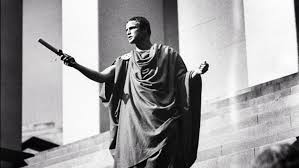
Marlon Brando as Mark Antony in the 1953 film, “Julius Caesar”
Is this truly Caesar’s will? And, if so, does it really make this bequest? No one knows.
In addition, claims Antony, Caesar has left his fellow citizens “his private arbours and new-planted orchards on this side Tiber. He hath left them you, and to your heirs forever, common pleasures, to walk abroad, and recreate yourselves.”
By now the crowd is fired up—against the conspirators.
“Here was a Caesar!” cries Antony. “When comes such another?”
A citizen shouts: “We’ll burn [Caesar’s] body in the holy place. And with the brands fire the traitors’ houses.”
The crowd disperses—to pay fiery homage to Caesar and burn the houses of Brutus and the other conspirators.
Caesar’s assassins flee Rome for their lives. In time, they will face the legions of Antony and Octavian, the young nephew of Caesar—and choose suicide over capture and execution.
Apparently Rep. Adam Schiff (D-California) is familiar with Shakespeare’s play.
Because, on March 28, he used the same repetitive technique in addressing his “Republican colleagues” on the House Permanent Select Committee on Intelligence.
Days earlier, Attorney General William Barr had claimed to summarize the long-awaited report by Special Counsel Robert Mueller about Russian efforts to subvert the 2016 Presidential election.
According to Barr, the report—which no one else in the government has seen—showed no evidence that President Donald Trump had colluded with Russian Intelligence agents.
And now House Republicans—acting entirely on that claim—were going on the offensive.
On March 28, Rep. Mike Conaway (R-Texas) and all other eight Republicans on the Committee demanded in a letter that Schiff resign as its chairman.
“Mr. Chairman,” the letter read, “since prior to the inauguration of President Trump in January 2017, you’ve been at the center of a well-orchestrated media campaign claiming, among other things, that the Trump campaign colluded with the Russian government.
“On March 24, 2019, the special counsel delivered his findings to the Department of Justice….The special counsel’s investigation did not find that the Trump campaign or anyone associated with it conspired or coordinated with Russia in its efforts to influence the 2016 election….
“Despite these findings, you continue to proclaim to the media that there is ‘significant evidence of collusion.’
“The findings of the Special Counsel conclusively refute your past and present conclusions and have exposed you as having abused your position to knowingly promote false information, having damaged the integrity of this Committee, and undermined faith in U.S. Government institutions.”
101 CALIFORNIA SHOOTINGS, ABC NEWS, ADAM LANZA, ADAM WINKLER, ALTERNET, AP, BUZZFEED, CBS NEWS, CENTURY 16 THEATER SHOOTINGS, CNN, COLUMBINE SCHOOL SHOOTINGS, CONNECTICUT SUPREME COURT, CONSUMER PROTECTION LAWS, CRIME, CROOKS AND LIARS, DAILY KOZ, FACEBOOK, GUN CONTROL, JOSH KOSKOFF, M1-16 ASSAULT RIFLE, MARTIN LUTHER KING, MEDICAID, MENTAL ILLNESS, MIKE MOORE, MOTHER JONES, MOVEON, MSNBC, NANCY LANZA, NATIONAL RIFLE ASSOCIATION, NBC NEWS, NEWSWEEK, NPR, PBS NEWSHOUR, POLITICO, PROTECTION OF LAWFUL COMMERCE IN ARMS ACT, RAW STORY, REMINGTON AR-15 BUSHMASTER RIFLE, REMINGTON OUTDOOR COMPANY, REP. GABRIELLE GIFFORDS SHOOTING, REPUBLICANS, REUTERS, ROBERT F. KENNEDY, SALON, SAN YASIDRO MACDONALD’S SHOOTINGS, SANDY HOOK ELEMENTARY SCHOOL MASSACRE, SEATTLE TIMES, SECOND AMENDMENT, SELF-DEFENSE, SLATE, STAND-YOUR-GROUND LAWS, THE ATLANTIC, THE CHICAGO SUN-TIMES, THE CHICAGO TRIBUNE, THE DAILY BEAST, THE GUARDIAN, THE HILL, THE HUFFINGTON POST, THE LOS ANGELES TIMES, THE NATION, THE NEW YORK TIMES, THE WASHINGTON POST, TIME, TOBACCO COMPANY LAWSUITS, TWITTER, U.S. CONSTITUTION, U.S. NEWS & WORLD REPORT, UCLA LAW SCHOOL, UNITED STATES SUPREME COURT, UPI, USA TODAY, VIRGINIA TECH SHOOTINGS, WRONGFUL-DEATH LAWSUITS
In Bureaucracy, History, Law, Law Enforcement, Military, Politics, Social commentary on March 27, 2019 at 12:13 am
“The victims of the violence are black and white, rich and poor, young and old, famous and unknown. They are, most important of all, human beings whom other human beings loved and needed. No one—no matter where he lives or what he does— can be certain who will suffer from some senseless act of bloodshed. And yet it goes on and on.”
–Robert F. Kennedy, April 4, 1968

Senator Robert F. Kennedy announcing the murder of Dr. Martin Luther King, Jr.
What should the surviving victims of gun massacres do to seek redress?
And how can the relatives and friends of those who didn’t survive seek justice for those they loved?
As far back as 2012, this writer posed those questions. And offered the following solution.
But only now has a court—the Connecticut Supreme Court—made this remedy possible.
First, don’t count on politicians to support a ban on assault weapons.
Politicians—with rare exceptions—have only two goals:
- Get elected to office, and
- Stay in office.
And too many of them fear the economic and voting clout of the National Rifle Association (NRA) to risk its wrath.
Consider Republican Presidential Nominee Mitt Romney and then-President Barack Obama.
Both rushed to offer condolences to the surviving victims of the massacre at the Century 16 Theater in Aurora, Colorado, on July 20, 2012.
And both steadfastly refused to even discuss gun control—let alone support a ban on the type of assault weapons used by James Holmes, leaving 12 dead and 58 wounded.
Second, those who survived the massacre—and the relatives and friends of those who didn’t—should file wrongful death, class-action lawsuits against the NRA.
There is sound, legal precedent for this.
- For decades, the American tobacco industry peddled death and disability to millions and reaped billions of dollars in profits.
- The industry vigorously claimed there was no evidence that smoking caused cancer, heart disease, emphysema or any other ailment.
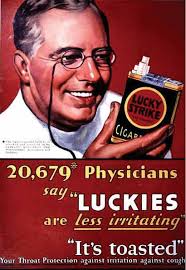
- Tobacco companies spent billions on slick advertising campaigns to win new smokers and attack medical warnings about the dangers of smoking.
- Tobacco companies spent millions to elect compliant politicians and block anti-smoking legislation.
- From 1954 to 1994, over 800 private lawsuits were filed against tobacco companies in state courts. But only two plaintiffs prevailed, and both of those decisions were reversed on appeal.
- In 1994, amidst great pessimism, Mississippi Attorney General Mike Moore filed a lawsuit against the tobacco industry. But other states soon followed, ultimately growing to 46.
- Their goal: To seek monetary, equitable and injunctive relief under various consumer-protection and anti-trust laws.
- The theory underlying these lawsuits was: Cigarettes produced by the tobacco industry created health problems among the population, which badly strained the states’ public healthcare systems.
- In 1998, the states settled their Medicaid lawsuits against the tobacco industry for recovery of their tobacco-related, health-care costs. In return, they exempted the companies from private lawsuits for tobacco-related injuries.
- The companies agreed to curtail or cease certain marketing practices. They also agreed to pay, forever, annual payments to the states to compensate some of the medical costs for patients with smoking-related illnesses.
The parallels with the NRA are obvious:
- For decades, the NRA has peddled deadly weapons to millions, reaped billions of dollars in profits and refused to admit the carnage those weapons have produced: “Guns don’t kill people. People kill people.” With guns.
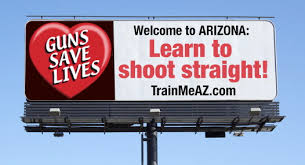
- The NRA has bitterly fought background checks on gun-buyers, in effect granting even criminals and the mentally ill the right to own arsenals of death-dealing weaponry.
- The NRA has spent millions on slick advertising campaigns to win new members and frighten them into buying guns.
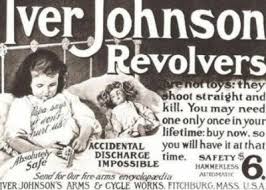
- The NRA has spent millions on political contributions to block gun-control legislation.
- The NRA has spent millions attacking political candidates and elected officials who warned about the dangers of unrestricted access to assault and/or concealed weapons.

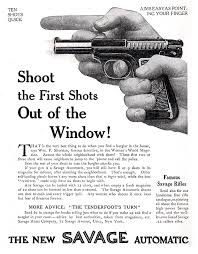
- The NRA has spent millions pushing “Stand Your Ground” laws in more than half the states, which potentially give every citizen a “license to kill.”
- The NRA receives millions of dollars from online sales of ammunition, high-capacity ammunition magazines, and other accessories through its point-of-sale Round-Up Program—thus directly profiting by selling a product that kills about 30,288 people a year.
- Firearms made indiscriminately available through NRA lobbying have filled hospitals with casualties, and have thus badly strained the states’ public healthcare systems.
It will take a series of highly expensive and well-publicized lawsuits to significantly weaken the NRA, financially and politically.
The first ones will have to be brought by the surviving victims of gun violence—and by the friends and families of those who did not survive it. Only they will have the courage and motivation to take such a risk.
As with the cases first brought against tobacco companies, there will be losses. And the NRA will rejoice with each one.
But, in time, state Attorneys General will see the clear parallels between lawsuits filed against those who peddle death by cigarette and those who peddle death by armor-piercing bullet.
And then the NRA—like the tobacco industry—will face an adversary wealthy enough to stand up for the rights of the gun industry’s own victims.
Only then will those politicians supporting reasonable gun controls dare to stand up for the victims of these needless tragedies.
101 CALIFORNIA SHOOTINGS, ABC NEWS, ADAM LANZA, ADAM WINKLER, ALTERNET, AP, BUZZFEED, CBS NEWS, CENTURY 16 THEATER SHOOTINGS, CNN, COLUMBINE SCHOOL SHOOTINGS, CONNECTICUT SUPREME COURT, CONSUMER PROTECTION LAWS, CRIME, CROOKS AND LIARS, DAILY KOZ, FACEBOOK, GUN CONTROL, JOSH KOSKOFF, M1-16 ASSAULT RIFLE, MARTIN LUTHER KING, MEDICAID, MENTAL ILLNESS, MIKE MOORE, MOTHER JONES, MOVEON, MSNBC, NANCY LANZA, NATIONAL RIFLE ASSOCIATION, NBC NEWS, NEWSWEEK, NPR, PBS NEWSHOUR, POLITICO, PROTECTION OF LAWFUL COMMERCE IN ARMS ACT, RAW STORY, REMINGTON AR-15 BUSHMASTER RIFLE, REMINGTON OUTDOOR COMPANY, REP. GABRIELLE GIFFORDS SHOOTING, REPUBLICANS, REUTERS, ROBERT F. KENNEDY, SALON, SAN YASIDRO MACDONALD’S SHOOTINGS, SANDY HOOK ELEMENTARY SCHOOL MASSACRE, SEATTLE TIMES, SECOND AMENDMENT, SELF-DEFENSE, SLATE, STAND-YOUR-GROUND LAWS, THE ATLANTIC, THE CHICAGO SUN-TIMES, THE CHICAGO TRIBUNE, THE DAILY BEAST, THE GUARDIAN, THE HILL, THE HUFFINGTON POST, THE LOS ANGELES TIMES, THE NATION, THE NEW YORK TIMES, THE WASHINGTON POST, TIME, TOBACCO COMPANY LAWSUITS, TWITTER, U.S. CONSTITUTION, U.S. NEWS & WORLD REPORT, UCLA LAW SCHOOL, UNITED STATES SUPREME COURT, UPI, USA TODAY, VIRGINIA TECH SHOOTINGS, WRONGFUL-DEATH LAWSUITS
In Bureaucracy, History, Law, Military, Politics, Social commentary on March 26, 2019 at 12:11 am
Weapons manufacturers are the only companies in the United States that cannot be sued for the deaths and injuries their products cause.
This is because The Protection of Lawful Commerce in Arms Act, or PLCAA, immunizes the American firearms industry against lawsuits by victims of mass shootings and gun violence.
Rammed through a Republican-dominated Congress in 2005 by the National Rifle Association (NRA), it was signed into law by President George W. Bush.
But on March 15, 2019, the Supreme Court of Connecticut ruled that families of schoolchildren gunned down in the 2012 Sandy Hook Elementary School massacre could sue Remington Outdoor Co Inc., over its marketing of military-style Bushmaster weapons to civilians.
The Court ruled that the victims’ families had the right to sue Remington under the Connecticut Unfair Trade Practices Act (CUTPA).
Among the ads that Remington ran to promote its military-style AR-15 Bushmaster rifle:
- “Truly the most versatile and adaptive rifle ever conceived, it was born of a collaborative effort between Bushmaster, Magpul and Remington to create the ultimate military combat weapons system.”
- A photo of a Bushmaster with its barrel facing the reader, with the caption: “CONSIDER YOUR MAN CARD REISSUED.”
- A photo of a Bushmaster, alongside the slogan: “Forces of opposition, bow down. You are single-handedly outnumbered.”
- “ONE RIFLE. MANY MISSIONS. THE REVOLUTIONARY, FULLY MODULAR REMINGTON ACR (ADAPTIVE COMBAT RIFLE).”
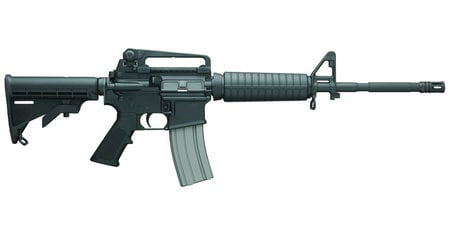
Remington AR-15 Bushmaster
“The defendants knowingly marketed, advertised, and promoted the XM15-E2S for civilians to use to carry out offensive, military style combat missions against their perceived enemies,” alleges the Newtown lawsuit.
And the Justices ruled that, “such use of the XM15-E2S, or any weapon for that matter, would be illegal, and Connecticut law does not permit advertisements that promote or encourage violent, criminal behavior.
“We are confident… that, if there were credible allegations that a firearms seller had run explicit advertisements depicting and glorifying school shootings, and promoted its products in video games, such as ‘School Shooting,’ that glorify and reward such unlawful conduct, and if a troubled young man who watched those advertisements and played those games were inspired thereby to commit a terrible crime like the ones involved in the Sandy Hook massacre, then even the most ardent sponsors of PLCAA would not have wanted to bar a consumer protection lawsuit seeking to hold the supplier accountable for the injuries wrought by such unscrupulous marketing practices.”

Connecticut Supreme Court Building
Said David Wheeler, father of a Sandy Hook victim: “There is a reason why this particular consumer product is the one that is used by people who want to inflict the most damage, and we have seen it time and time again since my son and his classmates were killed. That reason very likely potentially resides in the documents that we have been unable to look at until now.”
“The families’ goal has always been to shed light on Remington’s calculated and profit-driven strategy to expand the AR-15 market and court high-risk users, all at the expense of Americans’ safety,” said Josh Koskoff, one of the lawyers for the victims’ families, “Today’s decision is a critical step toward achieving that goal.”
“This is a landmark and potentially historic ruling,” said Adam Winkler, a UCLA Law School professor who specializes in constitutional law. “While all this decision does is allow a case to go forward, in broader terms it really opens up a new avenue for holding gunmakers responsible.”
More importantly, the ruling could spur similar suits in other states. “This could prompt further such suits not only for cases of mass shootings, but individual ones as well,” Winkler said.
The decision by the Connecticut Supreme Court wasn’t unanimous. Three of its seven justices dissented.
The case now goes back to the lower court for further proceedings and a possible trial.
Opinion remains divided over its chances for success.
According to National Public Radio: “The suit is a high-stakes challenge to gun companies, which have rarely been held liable for crimes committed with their products, and could mark a new front in the battle over gun regulations and corporate accountability.
“An eventual ruling against Remington could establish legal precedent, opening doors for more lawsuits against gun manufacturers, and expose the company’s communications about its marketing plans.”
Noted The Root: “While federal judges remain split on which laws apply to firearm manufacturers, Connecticut judges have drawn a line in the sand. While U.S. Supreme Court intervention on behalf of Remington is a distinct possibility, Connecticut’s decision could inspire lawmakers and lawyers to take a hard look at PLCAA.”
“The larger implications of this are that the Connecticut Supreme Court has just blown a giant hole in the PLCAA and in federal immunity for firearms manufacturers,” said Timothy Lytton, a law professor at Georgia State University.
Lytton predicted that the United States Supreme Court would be likely to take up the case: “What we’re talking about here is the interpretation of a federal statute and that falls squarely in the jurisdiction of the [United States] Supreme Court.”
A spokeswoman for the National Rifle Association declined to comment.
101 CALIFORNIA SHOOTINGS, ABC NEWS, ADAM LANZA, ADAM WINKLER, ALTERNET, AP, BUZZFEED, CBS NEWS, CENTURY 16 THEATER SHOOTINGS, CNN, COLUMBINE SCHOOL SHOOTINGS, CONNECTICUT SUPREME COURT, CONSUMER PROTECTION LAWS, CRIME, CROOKS AND LIARS, DAILY KOZ, FACEBOOK, GUN CONTROL, JOSH KOSKOFF, M1-16 ASSAULT RIFLE, MARTIN LUTHER KING, MEDICAID, MENTAL ILLNESS, MIKE MOORE, MOTHER JONES, MOVEON, MSNBC, NANCY LANZA, NATIONAL RIFLE ASSOCIATION, NBC NEWS, NEWSWEEK, NPR, PBS NEWSHOUR, POLITICO, PROTECTION OF LAWFUL COMMERCE IN ARMS ACT, RAW STORY, REMINGTON AR-15 BUSHMASTER RIFLE, REMINGTON OUTDOOR COMPANY, REP. GABRIELLE GIFFORDS SHOOTING, REPUBLICANS, REUTERS, ROBERT F. KENNEDY, SALON, SAN YASIDRO MACDONALD’S SHOOTINGS, SANDY HOOK ELEMENTARY SCHOOL MASSACRE, SEATTLE TIMES, SECOND AMENDMENT, SELF-DEFENSE, SLATE, STAND-YOUR-GROUND LAWS, THE ATLANTIC, THE CHICAGO SUN-TIMES, THE CHICAGO TRIBUNE, THE DAILY BEAST, THE GUARDIAN, THE HILL, THE HUFFINGTON POST, THE LOS ANGELES TIMES, THE NATION, THE NEW YORK TIMES, THE WASHINGTON POST, TIME, TOBACCO COMPANY LAWSUITS, TWITTER, U.S. CONSTITUTION, U.S. NEWS & WORLD REPORT, UCLA LAW SCHOOL, UNITED STATES SUPREME COURT, UPI, USA TODAY, VIRGINIA TECH SHOOTINGS, WRONGFUL-DEATH LAWSUITS
In Bureaucracy, History, Law, Law Enforcement, Military, Politics, Social commentary on March 25, 2019 at 1:38 am
It had happened before—all too often before:
- Midnight vigils for the victims of yet another spree-killer.
- Makeshift memorials of flowers, candles and teddy bears.
- Grief counselors for students at elementary, junior high and high schools.
- And, of course, the inevitable question: “Why?”
Americans had seen it all before—too many times before:
- After the San Ysidro McDonald’s shootings, 1984: 21 dead, 19 wounded.
- After the 101 California Street shootings in San Francisco, 1993: 9 dead, 6 injured.
- After the Columbine High School shootings in Colorado, 1999: 15 dead, 21 wounded.
- After the Virginia Tech shootings, 2007: 32 dead, 23 wounded.
- After the Tucson shooting of Rep. Gabrielle Giffords, 2011: 6 dead, 13 wounded.
- After the massacre at the Century 16 Theater in Aurora, Colorado, 2012: 12 dead, 58 wounded.
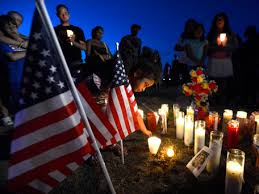
And then, on December 14, 2012, Adam Lanza, a mentally unstable, 20-year-old gunman, shot and killed his sleeping mother, Nancy, as she lay in bed at home.
Then he drove his mother’s car to Sandy Hook Elementary School, in Newtown, Connecticut, and slaughtered 20 school children aged six and seven and six adult staff.
His weapon of choice: A Remington AR-15 Bushmaster rifle, a semi-automatic civilian version of the U.S. military’s M-16.
A fanatical gun collector, Nancy Lanza had turned the house she shared with her son into a virtual arsenal:
- Izhmash Saiga 12-gauge semiautomatic shotgun
- Bushmaster Model XM15-E2S .223-caliber semiautomatic rifle
- Glock 20 10mm semiautomatic handgun
- Sig Sauer P226 9mm semiautomatic handgun
- Savage Mark II bolt-action .22-caliber rifle
- Enfield Albian bolt-action .323-caliber rifle
- Volcanic .22-caliber starter pistol.
Of the firearms listed above, Lanza used the first four (italicized) to carry out the Sandy Hook massacre.
Stockpiles of ammunition for all of these weapons were later found by police as they searched the house.

Adam Lanza
Yet Adam Lanza’s mentally unbalanced condition should have barred him from possessing even a single firearm.
A report issued by the Office of the Child Advocate in November, 2014, noted that Lanza had Asperger’s syndrome. As a teenager he had suffered from anxiety, depression and obsessive-compulsive disorder.
The report concluded: “His severe and deteriorating internalized mental health problems…. combined with an atypical preoccupation with violence….(and) access to deadly weapons…. proved a recipe for mass murder.”
On the day of the massacre, Adam Lanza chose his firearms with care.
He shot his defenseless mother four times in the head with a Savage Mark II .22-caliber rifle, a bolt-action firearm that can accept a 10-round magazine. But for his planned massacre at Sandy Hook, he chose semiautomatic weapons with detachable ammunition magazines.
Of all the weapons Lanza carried to Sandy Hook, the Bushmaster XM15-E2S proved the most lethal: A semiautomatic rifle that can be equipped with 30-round magazines, which allows the shooter to cut down on the number of times he has to reload.
In the past, countless Americans had responded to the latest gun outrage with “sending thoughts and prayers.”
But, this time, there would be a different response to this latest slaughter.
In February, 2014, nine families of the victims in the Sandy Hook massacre filed a lawsuit against the gun manufacturer, Remington Outdoor Co Inc., over its marketing of military-style Bushmaster weapons.
In October, 2016, the Connecticut Superior Court dismissed the case based on a federal law that protects the gun industry from liability.
Rammed through a Republican-dominated Congress by the National Rifle Association (NRA), the Protection of Lawful Commerce in Arms Act, or PLCAA, was signed into law by President George W. Bush in 2005. Since then, it has armed the American firearms industry with immunity against lawsuits by victims of mass shootings and gun violence.
But on March 15, 2019, the Connecticut Supreme Court ruled that families of Sandy Hook victims could sue Remington Outdoor Co Inc.
The families asserted that Remington, along with a gun wholesaler and local retailer, were partially responsible for the carnage because they marketed the weapon based on its militaristic appeal.
For the first time in American history, victims of gun violence have won the legal right to hold gun makers accountable for the devastation caused by their products.
“The perception for the gun industry is: ‘We can’t get sued,’” said Josh Koskoff, a Connecticut attorney representing families of the Newtown massacre. “‘We can be as unethical and as wild and aggressive in the marketing as we want.’”
The families had sued Remington by citing the legal doctrine of negligent entrustment. This has been used in such cases as when someone lends a car to a high-risk driver who then causes an accident.
But the Supreme Court rejected that theory. Instead, it ruled that the families could bring their claims under the consumer protection statute.
The court said that state unfair-trade-practices law allows anyone who’s suffered a financial loss from such activities to sue “regardless of whether they had a business relationship with the person or entity that engaged in the prohibited practice.”
“Once we accept the premise that Congress did not intend to immunize firearms suppliers who engage in truly unethical and irresponsible marketing practices promoting criminal conduct … it falls to a jury to decide whether the promotional schemes alleged in the present case rise to the level of illegal trade practices and whether fault for the tragedy can be laid at their feet,” the judges said.
ABC NEWS, ALTERNET, AP, BUZZFEED, CBS NEWS, CNN, COMPUTER FRAUD, CROOKS AND LIARS, CYBERCRIME, DAILY KOZ, EMAIL, EMAILS, FACEBOOK, FBI, INTERNET, MOTHER JONES, MOVEON, MSNBC, NBC NEWS, NEWSWEEK, NIGERIA, NIGERIAN SCAMS, NPR, PASSWORDS, PBS NEWSHOUR, POLITICO, RAW STORY, REUTERS, SALON, SCAMS, SEATTLE TIMES, SLATE, THE ATLANTIC, THE CHICAGO SUN-TIMES, THE CHICAGO TRIBUNE, THE DAILY BEAST, THE GUARDIAN, THE HILL, THE HUFFINGTON POST, THE LOS ANGELES TIMES, THE NATION, THE NEW YORK TIMES, THE WALL STREET JOURNAL, THE WASHINGTON POST, THE WASHINGTONPOST, TIME, TWITTER, U.S. NEWS & WORLD REPORT, UPI, USA TODAY, VIRUSES
In Business, History, Law, Law Enforcement, Self-Help, Social commentary on March 21, 2019 at 12:08 am
According to the FBI, Internet scams cost victims more than $1.4 billion in 2017. Among the most popular types of fraud:
- Email phishing scams
- Credit card scams
- Bank loan scams
- Lottery fee scams
- Online dating scams
- “Nigerian Prince” scams
But you can protect yourself. Here’s how to spot the warning signs of fraud.

- Addressed Generally: “Attention!” “Dear Friend,” “Attention the owner of this email,” “Hello, Dear.” Your name is not mentioned, because this email has been mass-mailed to thousands of intended victims.
- Unsolicited: You’re told that you’ve won a lottery you never entered, or have inherited a fortune from someone you never knew existed.
- Appeals to Religion: “Hello Beloved in the Lord” or “Yours in Christ” seeks to create a bond with those who deeply believe in God.
- Misuse of English: Mis-spellings and faulty grammar usually denote someone—probably a foreigner—using English as a second language. Examples: Run-on sentences; “you’re” for “your”; “except” instead of “accept”; “Dear Beneficial” instead of “Dear Beneficiary.”
- Appeals to Sympathy: “My husband just died” or “I am dying of cancer.” This is to make you feel sorry for the sender and lower your guard as an intended victim.
- Use of Important Titles/Organizations: “Director,” ‘Barrister,” “Secretary General of the United Nations,” “Police Inspector.” This is to impress recipients and convince them that the email comes from a trusted and legitimate organization.
- Request for Personal Information: This includes some combination of: Name / Address / Telephone Number / Bank Name / Bank Account Number / Fax Number / Driver’s License Number / Occupation / Sex / Beneficiary / Passport Number
- Claims of Deposit: “We have deposited the check of your fund to your account” is a typical line to instantly grab your attention. Someone you’ve never heard of claims he has just put a huge amount of money into an account you know nothing about. Nor can you access it unless you first pay a “contact fee.”
- The “Bank” is in Africa: Unless you know you have relatives there, this should be a dead giveaway to a scam. Africa is a continent kept alive by the charity of other nations. It’s not in the business of doling out large sums of money to Westerners.
- Overseas Phone Numbers: If you call these, you’ll have a huge bill. So many people skip calling and just send the money “required” to receive their “cash prize.”
- Highly Personal Requests: Asking you—someone they’ve never met—to assume the burden of acting as the executor of their “Last Will and Testament.”
- Love Scams: The scammer poses as a man or woman—usually outside the United States—seeking love. A series of emails flows back and forth for days/weeks, until the scammer says s/he will be glad to fly to the United States to be yours. All you have to do is put up the money for the flight cost.
- “Make Money From Home”: With most employers refusing to hire, “work from home” scams promise a way to support yourself and your family. You’re required to provide bank information or pay an up-front “registration fee.” Then you wait for job orders—that never come.
- Debt Relief: Scammers promise to relieve most or all of your debt—for a large up-front fee. You pay the fee—and are not only out of that money but still in debt.
- Home Repair Schemes: Huge down payments are required for home repairs that never happen.
- “Free” Trial Offers: The service or product is free for awhile, but you must opt out later to avoid monthly billings.
- The Email Claims to Be From the FBI: Often the “address” includes “Anti-Terrorist and Monetary Crime Division.” One such email was addressed: “Dear Beneficiary” and offered help in obtaining a “fund.” The FBI is an investigative agency responsible to the U.S. Department of Justice. It does not resolve financial disputes or secure monies for “deserving” recipients. If the FBI wants to contact you, it will do so by letter or by sending agents to your address. The FBI’s own website states: “At this time we do not have a national e-mail address for sending or forwarding investigative information.”
- “I Need Help”: You get an email claiming to be from someone you know—who’s “in jail here in Mexico” or some other foreign country. S/he begs you to send money for bail or bribes to win his/her freedom. If you get such an email, call the person to make certain. Don’t rush to send money—chances are it will go directly to a scammer.
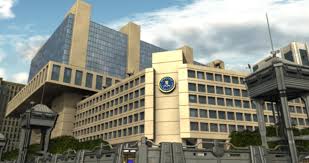
FBI Headquarters
There are several commonsense rules to follow in protecting yourself from online scammers:
- Don’t trust people you’ve never met to want to give you money.
- Shop online only with well-known merchants who have a good reputation.
- Don’t click on unknown links—especially those in emails from unknown senders.
- If you’re required to pay an advance fee—“on faith”—to receive a big amount of money, the odds are it’s a scam.
- If you can’t find any solid information on a company, chances are it doesn’t exist.
- For additional information on how to protect yourself from cybercrime, check out the FBI’s page at https://www.fbi.gov/investigate/cyber.
- If it sounds too good to be true, the odds are: It is untrue.
ABC NEWS, ABRAHAM LINCOLN, ALTERNET, AP, BAY OF PIGS, BERLIN CRISIS, BUZZFEED, CBS NEWS, CIA, CIVIL WAR, CNN, CROOKS AND LIARS, CUBAN MISSILE CRISIS, DAILY KOZ, EGO, FACEBOOK, JOHN F. KENNEDY, MOTHER JONES, MOVEON, MSNBC, NBC NEWS, NEWSWEEK, NIKITA KHRUSHCHEV, NPR, NUCLEAR WAR, PBS NEWSHOUR, POLITICO, RAW STORY, REUTERS, ROBERT E. LEE, SALON, SAM HOUSTON, SEATTLE TIMES, SLATE, SLAVERY, THE ATLANTIC, THE CHICAGO SUN-TIMES, THE CHICAGO TRIBUNE, THE DAILY BEAST, THE GUARDIAN, THE HILL, THE HUFFINGTON POST, THE LOS ANGELES TIMES, THE NATION, THE NEW YORK TIMES, THE WASHINGTON POST, TIME, TWITTER, U.S. NEWS & WORLD REPORT, ULYSSES S. GRANT, UPI, USA TODAY
In History, Military, Politics, Social commentary on March 14, 2019 at 12:37 am
It’s commonplace to read about the role sex plays in motivating behavior. But the power of ego to determine history is often ignored.
Consider the role that ego played in igniting the American Civil War (1861 – 1865).
According to The Destructive War, by Charles Royster, it wasn’t the cause of “states’ rights” that led 13 Southern states to withdraw from the Union in 1960-61. It was their demand for “respect,” which, in reality, translates into “e-g-o.”
“The respect Southerners demanded did not consist simply of the states’ sovereignty or of the equal rights of Northern and Southern citizens, including slaveholders’ right to take their chattels into Northern territory.
“It entailed, too, respect for their assertion of the moral superiority of slaveholding society over free society,” writes Royster.
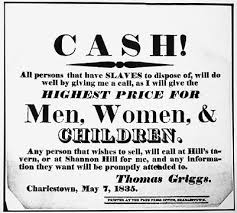
It was not enough for Southerners to claim equal standing with Northerners; Northerners must acknowledge it. But this was something that the North was less and less willing to do.
Finally, its citizens dared to elect Abraham Lincoln in 1860.
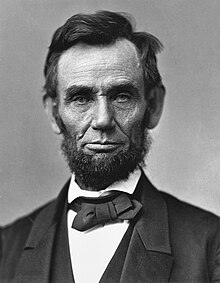
Abraham Lincoln
Lincoln and his new Republican party damned slavery—and slaveholders—as morally evil, obsolete and ultimately doomed. And they were determined to prevent slavery from spreading any further throughout the country.
Southerners found all of this intolerable.
The British author, Anthony Trollope, explained to his readers: “It is no light thing to be told daily, by our fellow citizens…that you are guilty of the one damning sin that cannot be forgiven.
“All this [Southerners] could partly moderate, partly rebuke and partly bear as long as political power remained in their hands. But they have gradually felt that this was going, and were prepared to cut the rope and run as soon as it was gone.”
Only 10% of Southerners owned slaves. The other 90% of the population “had no dog in this fight,” as Southerners liked to say.
Yet they so admired and aspired to be like their “gentleman betters” that they threw in their lot with them.
There were some Southerners who could see what was coming—and vainly warned their fellow citizens against it.
One of these was Sam Houston, the man who had won Texas independence at the 1836 battle of San Jacinto and later served as that state’s governor.
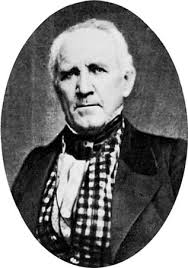
Sam Houston
On April 19, 1860, addressing a crowd in Galveston, he said: “Let me tell you what is coming. After the sacrifice of countless millions of treasure and hundreds of thousands of lives, you may win Southern independence if God be not against you.
“But I doubt it. I tell you that, while I believe with you in the doctrine of states’ rights, the North is determined to preserve this Union. They are not a fiery, impulsive people as you are, for they live in colder climates.
“But when they begin to move in a given direction, they move with the steady momentum and perseverance of a mighty avalanche; and what I fear is, they will overwhelm the South.”
Four years later, on April 9, 1865, Houston’s warning became history.
Confederate General Robert E. Lee surrendered the Army of Northern Virginia to Union General Ulysses S. Grant at Appomattox Courthouse.
Huge sections of the South had been laid waste by Union troops and more than 258,000 Southerners had been killed.
And slavery, the mainstay of Southern plantation life, had been ended forever.
The South had paid an expensive price for its fixation on ego.
Even more proved at risk a century later, when President John F. Kennedy faced off with Soviet Premier Nikita Khrushchev.
That August, faced with the embarrassment of East Berliners fleeing by the thousands into West Germany, the Soviet leader backed off from his threat.In its place, he erected the infamous Berlin Wall, sealing off East and West Berlin.
Khrushchev pressed his advantage, threatening Kennedy with nuclear war unless the Americans abandoned their protection of West Berlin.In April, Kennedy had been humiliated at the Bay of Pigs when a CIA-sponsored invasion failed to overthrow the Cuba’s Fidel Castro. So he was already on the defensive when he and Khrushchev met in Vienna.
Kennedy’s reaction: “That son of a bitch won’t pay any attention to words. He has to see you move.”
Then, most ominously: “If Khrushchev wants to rub my nose in the dirt, it’s all over.”
In short: Kennedy was prepared to incinerate the planet if he felt his almighty ego was about to get smacked.
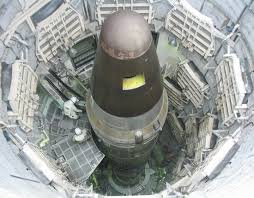
Nuclear missile in silo
What has proved true for states and nations proves equally true for those leading every other type of institution.
Although most people like to believe they are guided by rationality and morality, all-too-often, what truly decides the course of events is their ego.
For pre-Civil War Southerners, it meant demanding that “Yankees” show respect for slave-owning society. Otherwise, they would leave the Union.
For Kennedy, it meant playing a game of “chicken,” backed up with nuclear missiles, to show Khrushchev who Numero Uno really was. And during the Cuban Missile Crisis, in October, 1962, humankind almost disappeared as Kennedy set out to make Khrushchev “blink.”
It is well to keep these lessons from history in mind when making our own major decisions.
2016 PRESIDENTIAL CAMPAIGN, ABC NEWS, AFFORDABLE CARE ACT, ALTERNET, AP, ARNOLD SCHWARTNEGGER, BANDY X. LEE, BARACK OBAMA, BUZZFEED, CBS NEWS, CIA, CNN, CONSERVATIVE POLITICLA ACTION CONFERENCE (CPAC), CRAIG MALKIN, CROOKS AND LIARS, DAILY KOZ, DEMOCRATS, DONALD TRUMP, FACEBOOK, FBI, FIRST AMENDMENT, FLETCHER KNEBEL, GAVIN NEWSOM, HARVARD MEDICAL SCHOOL, HILLARY CLINTON, HOUSE OF REPRESENTATIVES, IMMIGRATION AND CUSTOMS ENFORCEMENT (ICE), IVANKA TRUMP, JOHN T. GARNER, JOSEPH STALIN, KIM JONG-UN, LANCE DODES, LIBEL, MERYL STREEP, MICHAEL COHEN, MOTHER JONES, MOVEON, MSNBC, NARCISSISM, NBC NEWS, NEIL YOUNG, NEWSWEEK, NIGHT AT CAMP DAVID, NPR, NUCLEAR WEAPONS, OBAMACARE, PARANOIA, PBS NEWSHOUR, POLITICO, PSYCHOSIS, RAW STORY, REPUBLICANS, REUTERS, ROBERT S. MUELLER, ROD ROSENSTEIN, RUSSIA, SALON, SEATTLE TIMES, SLATE, SOCIOPATHY, THE ATLANTIC, THE CHICAGO SUN-TIMES, THE CHICAGO TRIBUNE, THE DAILY BEAST, THE DANGEROUS CASE OF DONALD TRUMP (BOOK), THE GUARDIAN, THE HILL, THE HUFFINGTON POST, THE LOS ANGELES TIMES, THE MEDIA, THE NATION, THE NEW YORK TIMES, THE WASHINGTON POST, TIME, TWITTER, U.S. NEWS & WORLD REPORT, UPI, USA TODAY, VIETNAM, VLADIMIR PUTIN, WIRETAPPING
In Bureaucracy, History, Politics, Social commentary on March 8, 2019 at 12:59 pm
Donald Trump’s appearance at the Conservative Political Action Conference on March 2, 2019 was an occasion for rejoicing among his supporters.
But for those who prize rationality and decency in a President, it was a dismaying and frightening experience.
For two hours, Trump gave free reign to his anger and egomania.
Among his unhinged commentaries:
“We have people in Congress that hate our country.”
If you don’t agree 100% with Trump on everything, you’re a traitor.
“He called me up. He said, ‘You’re a great President. You’re doing a great job.’ He said, ‘I just want to tell you you’re a great President and you’re one of the smartest people I’ve ever met.'”
Trump attributed these remarks to California’s liberal governor, Gavin Newsom. On February 11, 2019, Newsom announced the withdrawal of several hundred National Guardsmen from the state’s southern border with Mexico—defying Trump’s request for support from border states.
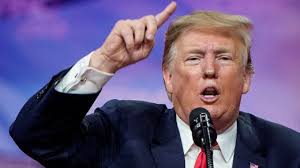
Donald Trump at CPAC
“You know if you remember my first major speech—you know the dishonest media they’ll say, ‘He didn’t get a standing ovation.’ You know why? Because everybody stood and nobody sat. They are the worst. They leave that out.”
Once again, he’s the persecuted victim of an unfair and totally unappreciative news media.
“And I love the First Amendment; nobody loves it better than me. Nobody. I mean, who use its more than I do? But the First Amendment gives all of us—it gives it to me, it gives it to you, it gives it to all Americans, the right to speak our minds freely. It gives you the right and me the right to criticize fake news and criticize it strongly.”
Trump has repeatedly called the nation’s free press “the enemy of the people”—a slander popularized by Soviet dictator Joseph Stalin. And while Trump brags about his usage of the First Amendment, he’s used Non-Disclosure agreements and threats of lawsuits to deny that right to others.
“For too long, we’ve traded away our jobs to other countries. So terrible.”
While this remark—like virtually every remark Trump made at CPAC—got rousing applause, he failed to mention that his own products are made overseas:
- Ties: Made in China
- Suits: Made in Indonesia
- Trump Vodka: Made in the Netherlands, and later in Germany
- Crystal glasses, decanters: Made in Slovenia
- And the clothing and accessories line of his daughter, Ivanka, is produced entirely in factories in Bangladesh, Indonesia and China.
“By the way, you folks are in here—this place is packed, there are lines that go back six blocks and I tell you that because you won’t read about it, OK.”
He’s obsessed with fear that the media won’t make him look popular.
“So we’re all part of this very historic movement, a movement the likes of which, actually, the world has never seen before. There’s never been anything like this. There’s been some movements, but there’s never been anything like this.”
Trump sees himself as the single greatest figure in history. So anything he’s involved with must be unprecedented.
“But I always say, Obamacare doesn’t work. And these same people two years ago and a year ago were complaining about Obamacare.”
In 2010, 48 million Americans lacked health insurance. By 2016, that number had been reduced to 28.6 million. So 20 million Americans now have access to medical care they previously couldn’t get.
“But we’re taking a firm, bold and decisive measure, we have to, to turn things around. The era of empty talk is over, it’s over.”
- Trump has boasted that he and North Korean dictator Kim Jong-Un “fell in love.” Then he met with Kim in Vietnam—and got stiffed on a deal for North Korea to give up its nuclear weapons.
- On July 16, 2018, Trump attended a press conference in Helsinki, Finland, with Russian President Vladimir Putin. There he blamed American Intelligence agencies—such as the FBI, CIA—instead of Putin for Russia’s subversion of the 2016 Presidential election.
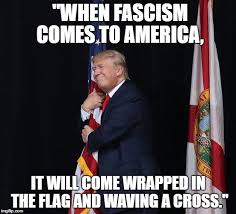
“I’ll tell you what they [agents of Immigration and Customs Enforcement] do, they came and endorsed me, ICE came and endorsed me. They never endorsed a presidential candidate before, they might not even be allowed to.”
Trump can’t stop boasting about how popular he is.
“These are hard-working, great, great Americans. These are unbelievable people who have not been treated fairly. Hillary called them deplorable. They’re not deplorable.”
On the contrary: “Deplorable” is exactly the word for those who vote their racism, ignorance, superstition and hatred of their fellow citizens.
A FINAL NOTE: Trump held himself up for adoration just three days after Michael Cohen, his longtime fixer:
- Damned him as a racist, a conman and a cheat.
- Revealed that Trump had cheated on his taxes and bought the silence of a porn “star” to prevent her revealing a 2006 tryst before the 2016 election.
- Estimated he had stiffed, on Trump’s behalf, hundreds of workers Trump owed money to.
And, only two days earlier, Trump had returned from a much-ballyhooed meeting in Vietnam with North Korean dictator Kim Jong-Un. Trump hoped to get a Nobel Peace Prize by persuading Kim to give up his nuclear arsenal.
Instead, Trump got stiffed—and returned empty-handed.
2016 PRESIDENTIAL CAMPAIGN, ABC NEWS, AFFORDABLE CARE ACT, ALTERNET, AP, ARNOLD SCHWARTNEGGER, BANDY X. LEE, BARACK OBAMA, BUZZFEED, CBS NEWS, CIA, CNN, CONSERVATIVE POLITICLA ACTION CONFERENCE (CPAC), CRAIG MALKIN, CROOKS AND LIARS, DAILY KOZ, DEMOCRATS, DONALD TRUMP, FACEBOOK, FBI, FIRST AMENDMENT, FLETCHER KNEBEL, GAVIN NEWSOM, HARVARD MEDICAL SCHOOL, HILLARY CLINTON, HOUSE OF REPRESENTATIVES, IMMIGRATION AND CUSTOMS ENFORCEMENT (ICE), IVANKA TRUMP, JOHN T. GARNER, JOSEPH STALIN, KIM JONG-UN, LANCE DODES, LIBEL, MERYL STREEP, MICHAEL COHEN, MOTHER JONES, MOVEON, MSNBC, NARCISSISM, NBC NEWS, NEIL YOUNG, NEWSWEEK, NIGHT AT CAMP DAVID, NPR, NUCLEAR WEAPONS, OBAMACARE, PARANOIA, PBS NEWSHOUR, POLITICO, PSYCHOSIS, RAW STORY, REPUBLICANS, REUTERS, ROBERT S. MUELLER, ROD ROSENSTEIN, RUSSIA, SALON, SEATTLE TIMES, SLATE, SOCIOPATHY, THE ATLANTIC, THE CHICAGO SUN-TIMES, THE CHICAGO TRIBUNE, THE DAILY BEAST, THE DANGEROUS CASE OF DONALD TRUMP (BOOK), THE GUARDIAN, THE HILL, THE HUFFINGTON POST, THE LOS ANGELES TIMES, THE MEDIA, THE NATION, THE NEW YORK TIMES, THE WASHINGTON POST, TIME, TWITTER, U.S. NEWS & WORLD REPORT, UPI, USA TODAY, VIETNAM, VLADIMIR PUTIN, WIRETAPPING
In Bureaucracy, History, Politics, Social commentary on March 7, 2019 at 12:10 am
“Is this man simply crazy, or is he crazy like a fox?”
That was the question that Bandy X. Lee, an assistant clinical psychiatry professor at the Yale School of Medicine, wanted to answer.
And she tried to do so as the editor of The Dangerous Case of Donald Trump: 27 Psychiatrists and Mental Health Experts Assess a President.
“It doesn’t take a psychiatrist to notice that our president is mentally compromised,” she and colleague Judith Lewis Herman asserted in the book’s prologue.
According to Dr. Craig Malkin, a Lecturer in Psychology for Harvard Medical School and a licensed psychologist, Trump is a pathological narcissist:
“Pathological narcissism begins,” Malkin writes, “when people become so addicted to feeling special that, just like with any drug, they’ll do anything to get their ‘high,’ including lie, steal, cheat, betray and even hurt those closest to them.
“When they can’t let go of their need to be admired or recognized, they have to bend or invent a reality in which they remain special despite all messages to the contrary. In point of fact, they become dangerously psychotic. It’s just not always obvious until it’s too late.”
Lance Dodes, a retired psychiatry professor at Harvard Medical School, believes that Trump is a sociopath: “The failure of normal empathy is central to sociopathy, which is marked by an absence of guilt, intentional manipulation and controlling or even sadistically harming others for personal power or gratification.”
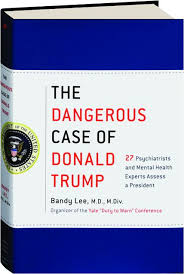
But an observer didn’t need to be a psychiatrist to feel frightened by Trump’s behavior at the Conservative Political Action Conference (CPAC) on March 2.
For two hours, in National Harbor, Maryland, Trump delivered the longest address (so far) of his Presidency—and of any American President.
“You know, I’m totally off script right now,” Trump said early on. “This is how I got elected, by being off script.”
And from the moment he embraced an American flag as though he wanted to hump it, it was clear: He was “totally off script.”
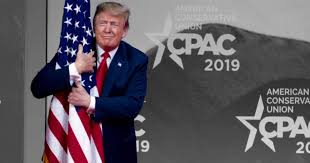
“How many times did you hear, for months and months, ‘There is no way to 270?’ You know what that means, right? ‘There is no way to 270.'”
Once again, Trump reveales his obsession with his win in 2016—as if no one else had ever been elected President.
“If you tell a joke, if you’re sarcastic, if you’re having fun with the audience, if you’re on live television with millions of people and 25,000 people in an arena, and if you say something like, ‘Russia, please, if you can, get us Hillary Clinton’s emails. Please, Russia, please.'”
Here he’s trying to “spin” his infamous invitation to hackers in Vladimir Putin’s Russia to intervene in an American Presidential election by obtaining the emails of his campaign rival. Which they did that same day.
“So now we’re waiting for a report, and we’ll find out whether or not, and who we’re dealing with. We’re waiting for a report by people that weren’t elected.”
It doesn’t matter to Trump that America’s foremost enemy—Russia—tried to influence a Presidential election. What matters to him is that the report may end his Presidency.
“Those red hats—and white ones. The key is in the color. The key is what it says. ‘Make America Great Again’ is what it says. Right? Right?”
Color matters. Words, ideas don’t.
“Now, Robert Mueller never received a vote, and neither did the person that appointed him. And as you know, the attorney general says, ‘I’m going to recuse myself.'”
Special Counsel Robert S. Mueller and Assistant Attorney General Rod Rosenstein are career Justice Department officials. They weren’t voted into office.
“Number one, I’m in love, and you’re in love. We’re all in love together. There’s so much love in this room, it’s easy to talk. You can talk your heart out. You really could. There’s love in this room. You can talk your heart out. It’s easy. It’s easy. It’s easy.”
Trump apparently finds it easy to fall in love—with Right-wing audiences and Communist dictators such as Kim Jong-Un.
“And from the day we came down the escalator, I really don’t believe we’ve had an empty seat at any arena, at any stadium. They did the same thing at our big inauguration speech. You take a look at those crowds.”
Once again, he must brag about how popular he is and how many people want to listen to him.
“A few days ago I called the fake news the enemy of the people. And they are. They are the enemy of the people. Because they have no sources, they just make ’em up when there are none.”
By January 21, 2019, The Washington Post found that Trump had made “7,645 ‘false or misleading claims.” He is in no position to talk about integrity.
“But we’re going to have regulation. It’s going to be really strong and really good and we’re going to protect our environment and we’re going to protect the safety of our people and our workers, OK?”
To “protect our environment,” Trump appointed Andrew R. Wheeler, a former coal company lobbyist, to head the Environmental Protection Agency.
2016 PRESIDENTIAL CAMPAIGN, ABC NEWS, AFFORDABLE CARE ACT, ALTERNET, AP, ARNOLD SCHWARTNEGGER, BANDY X. LEE, BARACK OBAMA, BUZZFEED, CBS NEWS, CIA, CNN, CONSERVATIVE POLITICLA ACTION CONFERENCE (CPAC), CRAIG MALKIN, CROOKS AND LIARS, DAILY KOZ, DEMOCRATS, DONALD TRUMP, FACEBOOK, FBI, FIRST AMENDMENT, FLETCHER KNEBEL, GAVIN NEWSOM, HARVARD MEDICAL SCHOOL, HILLARY CLINTON, HOUSE OF REPRESENTATIVES, IMMIGRATION AND CUSTOMS ENFORCEMENT (ICE), IVANKA TRUMP, JOHN T. GARNER, JOSEPH STALIN, KIM JONG-UN, LANCE DODES, LIBEL, MERYL STREEP, MICHAEL COHEN, MOTHER JONES, MOVEON, MSNBC, NARCISSISM, NBC NEWS, NEIL YOUNG, NEWSWEEK, NIGHT AT CAMP DAVID, NPR, NUCLEAR WEAPONS, OBAMACARE, PARANOIA, PBS NEWSHOUR, POLITICO, PSYCHOSIS, RAW STORY, REPUBLICANS, REUTERS, ROBERT S. MUELLER, ROD ROSENSTEIN, RUSSIA, SALON, SEATTLE TIMES, SLATE, SOCIOPATHY, THE ATLANTIC, THE CHICAGO SUN-TIMES, THE CHICAGO TRIBUNE, THE DAILY BEAST, THE DANGEROUS CASE OF DONALD TRUMP (BOOK), THE GUARDIAN, THE HILL, THE HUFFINGTON POST, THE LOS ANGELES TIMES, THE MEDIA, THE NATION, THE NEW YORK TIMES, THE WASHINGTON POST, TIME, TWITTER, U.S. NEWS & WORLD REPORT, UPI, USA TODAY, VIETNAM, VLADIMIR PUTIN, WIRETAPPING
In Bureaucracy, History, Politics, Social commentary on March 6, 2019 at 1:10 pm
“One man in the free world has the power to launch a nuclear war that might destroy civilization: the President of the United States. What if that man were mentally unbalanced?”
That is the premise of the 1965 novel, Night at Camp David, by Fletcher Knebel.
At the time of its release, its plot was considered so over-the-top as to be worthy of science fiction:
Iowa Democratic Senator Jim MacVeagh is summoned to Camp David, the Presidential retreat, by President Mark Hollenbach. MacVeagh is expected to become Hollenbach’s next Vice President. But he becomes alarmed that Hollenbach is clearly suffering from intense paranoia.
He wants to develop a closer relationship between the United States and Russia—while cutting ties with American allies in Europe. Moreover, Hollenbach believes the American news media are conspiring against him with his political enemies.
Only one person possesses evidence that Hollenbach is losing his grip on sanity—his mistress, Rita. Desperate to retain his power, Hollenbach orders the FBI to investigate both MacVeagh and Rita.
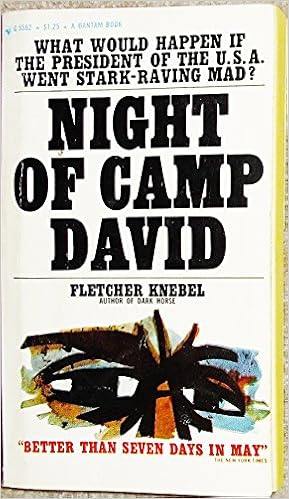
So why was a 53-year-old novel released in 2018? The answer lies in two words: Donald Trump.
In a November 30, 2018 review of Night at Camp David, Tom McCarthy, national affairs correspondent for the British newspaper, The Guardian, writes:
“The current president has seen crowds where none exist, deployed troops to answer no threat, attacked national institutions – the military, the justice department, the judiciary, the vote, the rule of law, the press – tried to prosecute his political enemies, elevated bigots, oppressed minorities, praised despots while insulting global allies and wreaked diplomatic havoc from North Korea to Canada.
“He stays up half the night watching TV and tweeting about it, then wakes up early to tweet some more, in what must be the most remarkable public diary of insecurity, petty vindictiveness, duplicity and scattershot focus by a major head of state in history.”
From the beginning of his Presidency, Trump aroused fear—based not only of what he might do, but that he might be mentally unbalanced. Consider:
On March 4, 2017, in a series of unhinged tweets, he accused former President Barack Obama of tapping his Trump Tower phones prior to the election:
“Terrible! Just found out that Obama had my ‘wires tapped’ in Trump Tower just before the victory. Nothing found. This is McCarthyism!”
“Is it legal for a sitting President to be ‘wire tapping’ a race for president prior to an election? Turned down by court earlier. A NEW LOW!”
“I’d bet a good lawyer could make a great case out of the fact that President Obama was tapping my phones in October, just prior to Election!”
“How low has President Obama gone to tapp my phones during the very sacred election process. This is Nixon/Watergate. Bad (or sick) guy!”
A subsequent investigation by the Justice Department turned up no evidence to substantiate Trump’s foray into Presidential libel.
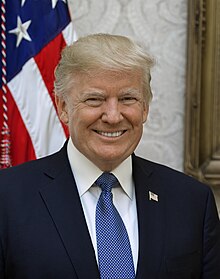
Donald Trump
Trump’s shoot-first-and-never-mind-the-consequences approach to life has been thoroughly documented.
From June 15, 2015, when he launched his Presidential campaign, until October 24, 2016, he fired nearly 4,000 angry, insulting tweets at 281 people and institutions. The New York Times needed two full pages of its print edition to showcase them.
Among these targets were:
- His Democratic rival, Hillary Clinton
- His fellow Republican Presidential candidates
- Actress Meryl Streep
- News organizations
- President Barack Obama
- Comedian John Oliver
- The Affordable Care Act (Obamacare)
- Singer Neil Young
- The state of New Jersey
- Actor Arnold Schwarzenegger.
And during his first two weeks as President, Trump attacked 22 people, places and things on his @realDonaldTrump Twitter account.
Trump’s vindictiveness, his narcissism, his compulsive aggression, his complaints that his “enemies” in government and the press are trying to destroy him, have caused many to ask: Could the President of the United States be suffering from mental illness?
One who has dared to answer this question is John D. Gartner, a practicing psychotherapist.
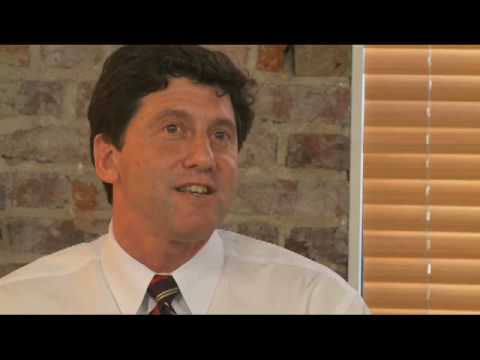
John D. Gartner
Gartner graduated magna cum laude from Princeton University, received his Ph.D in clinical psychology from the University of Massachusetts, and served as a part-time assistant professor of psychiatry at Johns Hopkins University Medical School for 28 years.
During an interview by U.S. News & World Report (published on January 27, 2017), Gartner said: “Donald Trump is dangerously mentally ill and temperamentally incapable of being president.”
Gartner said that Trump suffers from “malignant narcissism,” whose symptoms include:
- anti-social behavior
- sadism
- aggressiveness
- paranoia
- and grandiosity.
“We’ve seen enough public behavior by Donald Trump now that we can make this diagnosis indisputably,” says Gartner, who admits he has not personally examined Trump.
More of that behavior was on full display on March 2, 2019 at the annual Conservative Political Action Conference (CPAC), held at the Gaylord National Resort & Convention Center, National Harbor, Maryland.
For more than two hours, Trump delivered the longest speech (so far) of his Presidency to his fanatically Right-wing audience.
Facing a hostile Democratic House of Representatives and a potentially explosive report by Special Counsel Robert Mueller, Trump threw down the gauntlet.


2016 PRESIDENTIAL CAMPAIGN, ABC NEWS, ADAM SCHIFF, ALTERNET, AP, BUZZFEED, CBS NEWS, CNN, CROOKS AND LIARS, DAILY KOZ, DONALD TRUMP, DONALD TRUMP JUNIOR, FACEBOOK, FBI, GRU (RUSSIAN MILITARY INTELLIGENCE), HILLARY CLINTON, HOUSE INTELLIGENCE COMMITTEE, HOUSE OF REPRESENTATIVES, HOUSE PERMANENT SELECT COMMITTEE ON INTELLIGENCE, JARED KUSHNER, JULIUS CAESAR, JULIUS CAESAR (PLAY), KELLEYANNE CONWAY, KEVIN MCCARTHY, LINDSEY GRAHAM, MARCUS BRUTUS, MARK ANTONY, MIKE CONAWAY, MOTHER JONES, MOVEON, MSNBC, MUELLER REPORT, NBC NEWS, NEWSWEEK, NPR, PAUL MANAFORT, PBS NEWSHOUR, POLITICO, RAW STORY, REPUBLICANS, REUTERS, ROBERT MUELLER, RONNA MCDANIEL, RUSSIA, SALON, SEATTLE TIMES, SLATE, SUBVERSION, THE ATLANTIC, THE CHICAGO SUN-TIMES, THE CHICAGO TRIBUNE, THE DAILY BEAST, THE GUARDIAN, THE HILL, THE HUFFINGTON POST, THE LOS ANGELES TIMES, THE NATION, THE NEW YORK TIMES, THE WASHINGTON POST, TIME, TREASON, TWITTER, U.S. NEWS & WORLD REPORT, UPI, USA TODAY, WIKILEAKS, WILLIAM BAR, WILLIAM SHAKESPEARE
ADAM SCHIFF CHANNELS MARK ANTONY: PART TWO (END)
In Bureaucracy, Entertainment, History, Law, Politics, Social commentary on April 2, 2019 at 12:10 amOn March 24, 2019, Attorney General William Barr received the long-awaited report by Special Counsel Robert Mueller about Russian efforts to subvert the 2016 Presidential election.
According to Barr, the report—which no one else in the government has seen—showed no evidence that President Donald Trump had colluded with Russian Intelligence agents.
And now House Republicans—acting entirely on that claim—suddenly went on the offensive.
On March 28, all nine Republicans on the House Permanent Select Committee on Intelligence demanded in a letter that Representative Adam Schiff (D-California) resign as its chairman.
On the same day, President Donald Trump tweeted: “Congressman Adam Schiff, who spent two years knowingly and unlawfully lying and leaking, should be forced to resign from Congress!”
Other Republicans quickly joined the chorus:
On March 28, Schiff—speaking in a firm and controlled voice—addressed his critics in the House and beyond.
It was a speech worthy of that given by Mark Antony at the funeral of Julius Caesar.
Adam Schiff
“My colleagues may think it’s okay that the Russians offered dirt on the Democratic candidate for President as part of what was described as ‘the Russian government’s effort to help the Trump campaign.’ You might think that’s okay.
“My colleagues might think it’s okay that when that was offered to the son of the President, who had a pivotal role in the campaign, that the President’s son did not call the FBI, he did not adamantly refuse that foreign help. No, instead that son said that he would ‘love’ the help of the Russians. You might think it’s okay that he took that meeting.
“You might think it’s okay that Paul Manafort, the campaign chair, someone with great experience running campaigns, also took that meeting.
“You might think it’s okay that the President’s son-in-law also took that meeting.
“You might think it’s okay that they concealed it from the public.
“You might think it’s okay that their only disappointment after that meeting was that the dirt they received on Hillary Clinton wasn’t better. You might think that’s okay.![]()
![]()
![]()
“You might think it’s okay that when it was discovered a year later that they’d lied about that meeting and said it was about adoptions, you might think it’s okay that the President is reported to have helped dictate that lie. You might think that’s okay. I don’t.
“You might think it’s okay that the Presidential chairman of a campaign would offer information about that campaign to a Russian in exchange for money or debt forgiveness. You might think that’s okay. I don’t.
“You might think it’s okay that campaign chairman offered polling data, campaign polling data to someone linked to Russian intelligence. I don’t think that’s okay.
“You might think it’s okay that the President himself called on Russia to hack his opponent’s emails, ‘if they were listening.’
“You might think it’s okay that later that day, in fact, the Russians attempted to hack a server affiliated with that campaign. I don’t think that’s okay.
“You might think that it’s okay that the President’s son-in-law sought to establish a secret back channel of communications with the Russians through a Russian diplomatic facility. I don’t think that’s okay.
“You might think it’s okay that an associate of the President made direct contact with the GRU [the Russian military Intelligence agency] through Guccifer 2 and Wikileaks, that is considered a hostile Intelligence agency.
“You might think that it’s okay that a senior campaign official was instructed to reach that associate and find out what that hostile Intelligence agency had to say, in terms of dirt on his opponent.
“You might think it’s okay that the National Security Adviser-Designate [Mike Flynn] secretly conferred with the Russian ambassador about undermining U.S. sanctions, and you might think it’s okay he lied about it to the FBI. You might say that’s all okay.
“You might say that’s just what you need to do to win, but I don’t think it’s okay. I think it’s immoral. I think it’s unethical. I think it’s unpatriotic. And yes, I think it’s corrupt and evidence of collusion.”
Not one Republican dared challenge even one accusation Schiff had made.
Share this: