Posts Tagged ‘OBAMACARE’
"TOMBSTONE", ABC NEWS, AFFORDABLE CARE ACT, ALTERNET, AMERICABLOG, AP, ARNOLD SCHWARTZNEGGER, ASIANS, “BIRTHER” CAMPAIGN, BABY BOOMER RESISTANCE, BARACK OBAMA, BBC, BLACKS, BLOOMBERG NEWS, BOY SCOUT JAMBOREE, BUZZFEED, CBS NEWS, CNN, CROOKS AND LIARS, DAILY KOS, DAILY KOZ, DISABLED, DONALD TRUMP, FACEBOOK, FBI, FIVETHIRTYEIGHT, HARPER’S MAGAZINE, HILLARY CLINTON, HISPANICS, HUFFINGTON POST, IKE CLANTON, JEFF SESSIONS, JOHN H. "DOC" HOLLIDAY, JOHN OLIVER, JOHNNY RINGO, JUSTICE DEPARTMENT, MEDIA MATTERS, MERYL STREEP, MORGAN EARP, MOTHER JONES, MOVEON, MSNBC, MUSLIMS, NBC NEWS, NEIL YOUNG, NEW REPUBLIC, NEWSDAY, NEWSWEEK, NPR, OBAMACARE, PBS NEWSHOUR, POLITICO, POLITICUSUSA, PRISONERS OF WAR, RAW STORY, REINCE PRIEBUS, REUTERS, ROSIE O’DONNELL, SALON, SEAN SPICER, SEATTLE TIMES, SLATE, TALKING POINTS MEMO, THE ATLANTIC, THE CHICAGO SUN-TIMES, THE CHICAGO TRIBUNE, THE DAILY BEAST, THE DAILY BLOG, THE GUARDIAN, THE HILL, THE HUFFINGTON POST, THE INTERCEPT, THE LOS ANGELES TIMES, THE NATION, THE NEW REPUBLIC, THE NEW YORK TIMES, THE NEW YORKER, THE POPE, THE VILLAGE VOICE, THE WASHINGTON POST, THINKPROGRESS, TIME, TRUTHDIG, TRUTHOUT, TWITTER, U.S. NEWS & WORLD REPORT, UP, UPI, USA TODAY, VIRGIL EARP, WOMEN, WYATT EARP
In Bureaucracy, Entertainment, History, Politics, Social commentary on July 31, 2017 at 12:56 am
As both a Presidential candidate and President, Donald Trump has repeatedly used Twitter to attack hundreds of real and imagined enemies in politics, journalism, TV and films.
From June 15, 2015, when he launched his Presidential campaign, until October 24, 2016, Trump fired almost 4,000 angry, insulting tweets at 281 people and institutions that had somehow offended him.
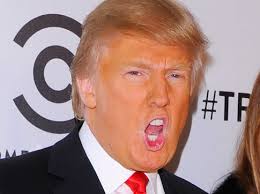
Donald Trump
The New York Times needed two full pages of its print edition to showcase them.
Among his targets:
- Hillary Clinton
- President Barack Obama
- Actress Meryl Streep
- Singer Neil Young
- Actor Arnold Schwarzenegger
- Comedian John Oliver
- News organizations
- The State of New Jersey
- Beauty pageant contestants
Others he clearly delighted in insulting during the campaign included:
- Women
- Blacks
- Hispanics
- Asians
- Muslims
- The disabled
- Prisoners-of-war
As a Presidential candidate and President, he has shown outright hatred for President Barack Obama. For five years, he slandered Obama as a Kenyan-born alien who had no right to hold the Presidency.
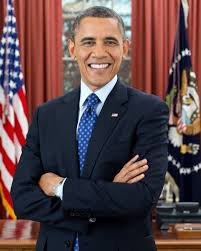
Barack Obama
Only on the eve of the first Presidential debate with Hillary Clinton—in September, 2016—did he finally admit that Obama had been born in the United States.
Then, on March 4, 2017, in a series of unhinged tweets, Trump accused Obama of tapping his Trump Tower phones prior to the election:
“Terrible! Just found out that Obama had my ‘wires tapped’ in Trump Tower just before the victory. Nothing found. This is McCarthyism!”
Thus, without offering a shred of evidence to back it up, Trump accused his predecessor of committing an impeachable offense.
Both the FBI and Justice Department have vigorously refuted this slander.
Trump’s all-out effort to destroy the Affordable Care Act—nicknamed “Obamacare”—has been driven by his mania to erase every vestige of the Obama Presidency.
Even attending a Boy Scout Jamboree became, for Trump, a way to attack the former President.
“By the way, just a question. Did President Obama ever come to a jamboree?” Trump asked the crowd of 40,000, encouraging them to boo Obama. And many of them did.
As President, he has bullied and insulted even his own handpicked Cabinet officers and White House officials.
- His press secretary, Sean Spicer, quit on July 21. The reason: He believed—correctly—that his loyalty to Trump had become a one-way street. Trump kept him in the dark about events Spicer needed to know—such as an interview that Trump arranged with the New York Times—and which ended disastrously for Trump.
- Trump has waged a Twitter-laced feud against Jeff Sessions, his Attorney General. Sessions’ “crime”? Recusing himself from any decisions involving investigations into well-established ties between Russian Intelligence agents and members of Trump’s Presidential campaign.
- Trump has publicly said that if he had known Sessions would recuse himself—because of his past contacts with Russian officials—he would have picked someone else for Attorney General.
- Trump repeatedly humiliated his chief of staff, Reince Priebus—at one point ordering him to kill a fly that was buzzing about. On July 28, Priebus resigned.
As Americans have watched Trump’s behavior with morbid fascination, many of them have asked: “What makes him do the things he does?”
It’s a question asked–and answered—in the 1993 Western, Tombstone. And the answer given in that movie may be just hold the answer to the question so many Americans are now asking about Trump.
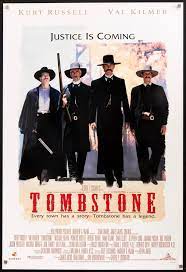
Tombstone recounts the legendary blood feud between the Ike Clanton outlaw gang and the Earp brothers—Wyatt, Morgan and Virgil—in the famous gold-mining town in 1880s Arizona.
Wyatt Earp has been challenged to a gunfight by quick-trigger gunman Johnny Ringo. Although he impulsively accepted the challenge, Wyatt now realizes he’s certain to be killed. Thus follows this exchange with his longtime friend, the pistol-packing dentist, John H. “Doc” Holliday:
WYATT EARP: What makes a man like Ringo, Doc? What makes him do the things he does?
JOHN H. “DOC” HOLLIDAY: A man like Ringo….got a great empty hole right through the middle of him. He can never kill enough or steal enough….or inflict enough pain to ever fill it.
EARP: What does he need?
HOLLIDAY: Revenge.
EARP: For what?
HOLLIDAY: Bein’ born.
Donald Trump was born into a world of wealth and privilege. His father gave him $200 million, which he channeled into a real estate empire. He has claimed to be worth a billion dollars.
He has been linked—often by his own boasts—to some of the most beautiful women in the world. He has been a major force on TV through his “reality show,” The Apprentice. He has literally stamped his name on hundreds of buildings.
And now he holds the Presidency of the United States, the most powerful office in the Western world.
Yet he remains filled with a poisonous hatred that encompasses almost everyone. Since taking office, he has offered nothing positive in his agenda.
Instead, he has focused his efforts on what he can take from others. At the top of his list: The Affordable Health Act, which provides access to medical care for millions who previously could not obtain it.
As first-mate Starbuck says of Captain Ahab in Herman Melville’s classic novel, Moby Dick: “He is a champion of darkness.”
ABC NEWS, AFFORDABLE CARE ACT, ALTERNET, AMERICABLOG, AP, BABY BOOMER RESISTANCE, BARACK OBAMA, BBC, BLOOMBERG, BUZZFEED, CBS NEWS, CHILDRENS HEALTH INSURANCE PROGRAM, CNN, CROOKS AND LIARS, DAILY KOS, DAILY KOZ, DAVID BROOKS, DONALD TRUMP, FIVETHIRTYEIGHT, HARPER’S MAGAZINE, HEALTHCARE AND RECONCILIATION ACT OF 2010, HUFFINGTON POST, JOHN MCCAIN, MARK SHIELDS, MEDIA MATTERS, MOTHER JONES, MOVEON, MSNBC, NBC NEWS, NEW REPUBLIC, NEWSDAY, NEWSWEEK, NPR, OBAMACARE, PBS NEWSHOUR, POLITICO, POLITICUSUSA, RAW STORY, RESTORING AMERICANS HEALTHCARE FREEDOM RECONCILIATION ACT OF 2015, REUTERS, SALON, SEATTLE TIMES, SLATE, TALKING POINTS MEMO, TAX POLICY CENTER, THE ATLANTIC, THE CHICAGO SUN-TIMES, THE CHICAGO TRIBUNE, THE DAILY BEAST, THE DAILY BLOG, THE GUARDIAN, THE HILL, THE HUFFINGTON POST, THE INTERCEPT, THE LOS ANGELES TIMES, THE NATION, THE NEW REPUBLIC, THE NEW YORK TIMES, THE NEW YORKER, THE VILLAGE VOICE, THE WASHINGTON POST, THINKPROGRESS, TIME, TRUTHDIG, TRUTHOUT, TWO POLITICAL JUNKIES, U.S. NEWS & WORLD REPORT, UP, UPI, USA TODAY, WARREN BUFFETT, X
In Bureaucracy, Business, History, Law, Politics, Social commentary on July 24, 2017 at 2:44 pm
On July 14, Arizona’s United States Senator John McCain underwent a “minimally invasive” medical procedure at Mayo Clinic Hospital in Phoenix to remove a blood clot from above his left eye.
Soon afterward, his Senate office announced:
“Senator McCain received excellent treatment at Mayo Clinic Hospital in Phoenix, and appreciates the tremendous professionalism and care by its doctors and staff.
“He is in good spirits and recovering comfortably at home with his family. On the advice of his doctors, Senator McCain will be recovering in Arizona next week.”
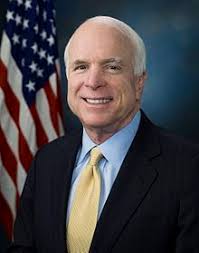
John McCain
McCain, who has a fair complexion, has repeatedly battled melanoma, a sometimes-deadly form of skin cancer. In 2000, the year he ran for President against George W. Bush, he had a particularly serious episode.
When he ran again for President in 2008, he told reporters: “Like most Americans, I go to see my doctor fairly frequently.”
He has had at least four documented cases of melanoma.
Lost in the massive publicity of McCain’s latest brush with melanoma was the sheer irony of the situation.
McCain had “received excellent treatment at Mayo Clinic Hospital” at a time when he and his fellow Republicans were vigorously trying to repeal President Barack Obama’s Affordable Care Act (ACA).
Barack Obama
The Act—nicknamed “Obamacare”—has provided access to healthcare to millions of poor and middle-class Americans who had previously been unable to afford it.
Since its becoming law on March 23, 2010, Republicans have declared it Public Enemy Number One and set out to repeal it. By March 2014 they had voted against it 54 times, trying to undo or substantially change it.
In October, 2013, they shut down the Federal Government for 15 days. They hoped to extort Obama into de-funding the ACA: If he did, they would re-open Federal agencies.
But, facing pressure from voters unable to obtain basic government services, Republicans backed down.
During the 2016 Presidential campaign, every Republican candidate pledged to repeal Obamacare if s/he were elected.
Donald Trump—who won the Republican nomination and then the election—repeatedly made this the centerpiece of his campaign.
On October 25, he promised: “My first day in office, I am going to ask Congress to put a bill on my desk getting rid of this disastrous law and replacing it with reforms that expand choice, freedom, affordability.”
McCain himself has repeatedly tried to restrict access to healthcare by ordinary Americans.
On January 29, 2009, he voted against the Childrens Health Insurance Program Reauthorization and Expansion.
This expanded State Children’s Health Insurance Program coverage from 6.6 million children to about 11 million children.
On December 24, 2009, he voted against the ACA.
On February 2, 2011, McCain voted to repeal the ACA.
On July 26, 2015, McCain voted to repeal the ACA and the Health Care and Education Reconciliation Act of 2010.
On December 3, 2015, he voted for the “Restoring Americans’ Healthcare Freedom Reconciliation Act of 2015.”
This would have gutted “Obamacare” by repealing the individual mandate, the employer mandate, the medical device excise tax, and the “Cadillac tax”” on expensive employee health insurance premiums.
It also included a measure to eliminate federal Medicaid funding for Planned Parenthood for one year.
And what lay behind Republican efforts to “repeal and replace” the ACA?
Americans earning $5 million or more—those in the top 0.1%—would receive an average tax cut of nearly $250,000 in 2026, according to an analysis by the Tax Policy Center. Those earning $875,000 and more—those in the top 1%—would save $45,500 in taxes a year.
Appearing on the June 23 edition of the PBS Newshour, syndicated columnist Mark Shields said: “And what it is, the only thing that the House and the Senate are consistently faithful on is that it’s a major tax cut, It is a redistribution.
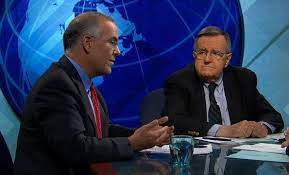
David Brooks and Mark Shields
“Obama, who was, you know, if anything, overly moderate for many tastes, did, in fact, lay it on the most advantaged among us to pay, to cover people who couldn’t afford it in his plan. And a 3.8 percent tax on unearned income for those earning over a quarter of a million dollars became the rallying cry, the organizing principle for the opposition.
“And that’s the one constant that has been through it all. Warren Buffett, to his everlasting credit, pointed out that he will get a tax cut under the Republican plan this year of $630,000. That’s the redistribution.
“And, you know, in the richest nation in the history of the world, it is a terrible indictment, a sad commentary that the most vulnerable among us, the least—the least among us are really tossed off as a political statement.”
Speaking on the same program, David Brooks, conservative columnist for the New York Times, said: “What it does—you ought to start with, what kind of country are we in? We’re in a country where—widening inequality.
“And so I think it’s possible to be a conservative and to support market mechanisms basically to redistribute wealth down to those who are suffering.
“This bill doesn’t do that. It goes the other way. So, I think, fundamentally, it doesn’t solve the basic problem our country has, which is a lot of people are extremely vulnerable.”
ABC NEWS, ADOLF HITLER, AFFORDABLE CARE ACT, ALBERT SPEER, ALTERNET, BARACK OBAMA, BUZZFEED, CBS NEWS, CNN, DAILY KOS, DEBT CEILING, DEPARTMENT OF HOMELAND SECURITY, DONALD TRUMP, EXTORTION, FACEBOOK, FASCISM, HOUSE SPEAKER JOHN BOEHNER, MOTHER JONES, MOVEON, NAZI GERMANY, NBC NEWS, NEGOTIATING, NEWSWEEK, NPR, OBAMACARE, PAP SMEARS, PLANNED PARENTHOOD, POLITICO, RAW STORY, REPUBLICAN PARTY, REPUBLICANS, SALON, SLATE, THE CHICAGO SUN-TIMES, THE CHICAGO TRIBUNE, THE DAILY BEAST, THE HUFFINGTON POST, THE LOS ANGELES TIMES, THE NEW YORK TIMES, THE WALL STREET JOURNAL, THE WASHINGTON POST, TIME, TRICKLE-DOWN ECONOMICS, TWITTER, U.S. NEWS & WORLD REPORT, USA TODAY, WARREN BUFFET, WORLD WAR 11
In Bureaucracy, History, Law, Military, Politics, Social commentary on July 21, 2017 at 12:21 am
On March 6, 2017, House Republican leaders unveiled the American Health Care Act (AHCA) as their replacement for “Obamacare.”
Conservative Republicans immediately declared that it didn’t repeal and replace Obamacare. And “moderates” complained that it would leave too many people uninsured.
Democrats, meanwhile, stayed silent. They had pushed hard in 2009-10 to provide all Americans with access to healthcare. And they weren’t going to participate in dismantling their signature legislation.
On March 13, the non-partisan Congressional Budget Office released its report estimating that about 18 million people would be uninsured in 2018 if the AHCA were enacted. The number of uninsured people would reach 19 million in 2020 and 24 million in 2026.
Still, Republicans plunged forward, with House leaders tweaking it slightly to win conservative and “moderate” votes.
Still, conservatives felt the bill helped too many people. And “moderates” feared that the millions of voters who would lose their insurance would vote them out of office at the next election.
On March 24, President Donald Trump, knowing the AHCA couldn’t pass the House, asked Speaker Paul Ryan to pull it off the floor.
And Ryan did so, only moments before a scheduled vote.
Finally, on May 4, House Republicans were ready to vote to pass the AHCA.
The vote was preceded by a pep rally, which featured beer, the “Rocky” theme song, the “Taking Care of Business” song, a prayer and the reciting of the Pledge of Allegiance.
Some Republicans, asked whether they had read the bill they supported, refused to answer.
That up to 24 million Americans would lose their medical insurance meant nothing to Right-wingers.
What did matter to them was:
- Destroying the legacy of Barack Obama, the nation’s first black President; and
- Initiating a huge transfer of wealth from the poor and middle-class to the 1% wealthiest.
On May 4, House Republicans passed the AHCA and sent it the Senate. There it was expected to be significantly revised.
But this, too, didn’t matter to House Republicans. They had “kept faith” with their hate-filled. Right-wing constituents—and assured their own re-elections.
Speaking in front of nearly 100 GOP lawmakers in the White House Rose Garden, Trump boasted that the AHCA would “finish off” the “catastrophe” of Obamacare.

Donald Trump
At a White House celebration, Trump boasted: “This has brought the Republican Party together.”
But then came disaster—for Republicans—in the Senate.
With Democrats abstaining, Republicans found themselves fighting each other.
Some wanted to gut “Obamacare” entirely, whatever the consequences for the 24 million Americans who would be left without insurance.
Others feared that slashing more than $700 billion from Medicaid—the Federal medical insurance program for the poor—would lead to millions of angry voters turning out Republicans at the polls.
(And slashing Medicaid—as opposed to expanding it, as President Obama had sought to do—was a major reason why Republicans wanted to overturn “Obamacare.”)
Senate Majority Leader Mitch McConnell (R-KY) desperately tried to hammer out a compromise between the two opposing sides. When this proved impossible, it was clear the “repeal and replace” bill wouldn’t pass the Senate.
At that point, President Trump tweeted his own solution: “Republicans should just ‘REPEAL’ failing ObamaCare now & work on a new Healthcare Plan that will start from a clean slate. Dems will join in!”
But this proved too politically risky for some Republicans.
On July 18, Republican Senators’ efforts to replace the ACA without a ready replacement collapsed.
As usual, Donald Trump had a ready “solution” to offer. Like Adolf Hitler issuing his “scorched earth” order in a doomed Berlin in 1945, the President said:
“Let Obamacare fail; it’ll be a lot easier. And I think we’re probably in that position where we’ll just let Obamacare fail.
“We’re not going to own it. I’m not going to own it. I can tell you the Republicans are not going to own it. We’ll let Obamacare fail, and then the Democrats are going to come to us and they’re going to say, ‘How do we fix it? How do we fix it?’ Or, ‘How do we come up with a new plan?’”
* * * * *
Allowing Obamacare to fail would deprive millions of Americans of healthcare. But that meant nothing to Donald Trump.
Just as destroying everything still remaining in Germany had meant nothing to Adolf Hitler.
Fortunately for Germany, one man—Albert Speer—finally broke ranks with his Fuhrer.
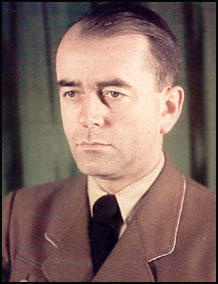
Albert Speer
Risking death, he refused to carry out Hitler’s “scorched earth” order. Even more important, he mounted a successful effort to block such destruction and persuade influential military and civilian leaders to disobey the order as well.
As a result, those targets slated for destruction were spared.
Since the election of America’s first black President, Republicans have waged a similar “scorched earth” campaign.
Acting as extortionists, they repeatedly threatened to shut down the government if they didn’t get their way in legislative matters. And they repeatedly blocked legislation to help the poor, the unemployed, the sick, women, the elderly, the disabled and the middle-class.
Like Adolf Hitler, their attitude has been: “If I can’t rule America, there won’t be an America.”
The country is still waiting for a Republican Albert Speer to step forward and save America from the self-destructive brutalities of its own Right-wing fanatics.
ABC NEWS, ADOLF HITLER, AFFORDABLE CARE ACT, ALBERT SPEER, ALTERNET, BARACK OBAMA, BUZZFEED, CBS NEWS, CNN, DAILY KOS, DEBT CEILING, DEPARTMENT OF HOMELAND SECURITY, DONALD TRUMP, EXTORTION, FACEBOOK, FASCISM, HOUSE SPEAKER JOHN BOEHNER, MOTHER JONES, MOVEON, NAZI GERMANY, NBC NEWS, NEGOTIATING, NEWSWEEK, NPR, OBAMACARE, PAP SMEARS, PLANNED PARENTHOOD, POLITICO, RAW STORY, REPUBLICAN PARTY, REPUBLICANS, SALON, SLATE, THE CHICAGO SUN-TIMES, THE CHICAGO TRIBUNE, THE DAILY BEAST, THE HUFFINGTON POST, THE LOS ANGELES TIMES, THE NEW YORK TIMES, THE WALL STREET JOURNAL, THE WASHINGTON POST, TIME, TRICKLE-DOWN ECONOMICS, TWITTER, U.S. NEWS & WORLD REPORT, USA TODAY, WARREN BUFFET, WORLD WAR 11
In Bureaucracy, History, Law, Military, Politics, Social commentary on July 20, 2017 at 12:50 am
Albert Speer, Minister of Armaments for the Third Reich, was appalled.
His Fuhrer, Adolf Hitler—the man he had idolized for 14 years—had just passed a death sentence on Germany, the nation he claimed to love above all others.
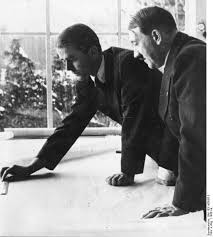
Albert Speer and Adolf Hitler pouring over architectural plans
On March 19, 1945, facing certain defeat, Hitler had ordered a massive “scorched-earth” campaign throughout Germany.
All German agriculture, industry, ships, communications, roads, food stuffs, mines, bridges, stores and utility plants were to be destroyed.
If implemented, it would deprive the entire German population of even the barest necessities after the war.
Now living in a bunker 50 feet below bomb-shattered Berlin, Hitler gave full vent to his most destructive impulses.
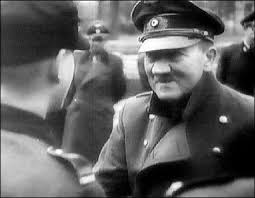
Adolf Hitler addressing boy soldiers as the Third Reich crumbles
“If the war is lost,” Hitler told Speer, “the nation will also perish. This fate is inevitable. There is no necessity to take into consideration the basis which the people will need to continue even a most primitive existence.
“On the contrary, it will be better to destroy these things ourselves, because this nation will have proved to be the weaker one and the future will belong solely to the stronger eastern nation.
“Besides, those who will remain after the battle are only the inferior ones, for the good ones have all been killed.”
Speer argued in vain that there must be a future for the German people. But Hitler refused to back down. He gave Speer 24 hours to reconsider his opposition to the order.
The next day, Speer told Hitler: “My Fuhrer, I stand unconditionally behind you!”
“Then all is well,” said Hitler, suddenly with tears in his eyes.
“If I stand unreservedly behind you,” said Speer, “then you must entrust me rather than the Gauleiters [district Party leaders serving as provincial governors] with the implementation of your decree.”
Filled with gratitude, Hitler signed the decree Speer had thoughtfully prepared before their fateful meeting.
By doing so, Hitler unintentionally gave Speer the power to thwart his “scorched earth” decree.
Speer had been the closest thing to a friend in Hitler’s life. Trained as an architect, he had joined the Nazi Party in 1931.
He met Hitler in 1933, when he presented the Fuhrer with architectural designs for the Nuremberg Rally scheduled for that year.
From then on, Speer became Hitler’s “genius architect” assigned to create buildings meant to last for a thousand years.
In 1943, Hitler appointed him Minister of Armaments, charged with revitalizing the German war effort.
Nevertheless, Speer now crisscrossed Germany, persuading military leaders and district governors to not destroy the vital facilities that would be needed after the war.
“No other senior National Socialist could have done the job,” writes Randall Hanson, author of Disobeying Hitler: German Resistance After Valkyrie.
“Speer was one of the very few people in the Reich—perhaps even the only one—with such power to influence actors’ willingness/unwillingness to destroy.”
Despite his later conviction for war crimes at Nuremberg, Speer never regretted his efforts to save Germany from total destruction at the hands of Adolf Hitler.
Fast-forward to the United States and the 2008 election of the nation’s first black President.
On March 23, 2010, President Barack Obama signed into law the Affordable Care Act (ACA), nicknamed Obamacare. Its purpose: To provide access to healthcare for millions of poor and middle-class Americans who had heretofore been unable to obtain it.
President Barack Obama
It became—and remains—Obama’s signature legislative accomplishment.
Republicans immediately declared “Obamacare” Public Enemy Number One and set out to repeal it. By March 2014 they had already voted against it 54 times, trying to undo or substantially change it.
In October, 2013, they shut down the Federal Government for 15 days. They hoped to extort Obama into de-funding the ACA: If he did, they would re-open Federal agencies.
But, facing pressure from voters unable to obtain basic government services, Republicans backed down.
During the 2016 Presidential campaign, every Republican candidate pledged to repeal Obamacare if s/he were elected.
Donald Trump—who won the Republican nomination and then the election—repeatedly made this the centerpiece of his campaign.
On October 25, he promised: “My first day in office, I am going to ask Congress to put a bill on my desk getting rid of this disastrous law and replacing it with reforms that expand choice, freedom, affordability.
“You’re going to have such great health care at a tiny fraction of the cost. And it’s going to be so easy.”
But after taking office on January 20, he found that replacing the ACA wasn’t so easy.
On March 6, 2017, House Republicans unveiled the American Health Care Act (AHCA). This was attacked by conservatives because it didn’t repeal and replace Obamacare. And “moderate” Republicans complained that it would leave too many people uninsured.
On March 13, 2017, the Congressional Budget Committee released its report estimating that about 18 million people would be uninsured in 2018 if the AHCA were enacted. The number of uninsured people would reach 19 million in 2020 and 23 million in 2026.
Still, Republicans plunged forward, with House leaders making slight changes to win conservative and moderate votes.
2016 PRESIDENTIAL RACE, ABC NEWS, ALEXANDER BUTTERFIELD, ALTERNET, AP, ARNOLD SCHWARTZENEGGER, BARACK OBAMA, BBC, BUZZFEED, CBS NEWS, CNN, DAILY KOS, DONALD TRUMP, FACEBOOK, FBI, HILLARY CLINTON, JAMES COMEY, JOHN OLIVER, JOHN W. DEAN, MERYL STREEP, MOTHER JONES, MOVEON, NBC NEWS, NEWSWEEK, NPR, OBAMACARE, POLITICO, RAW STORY, REUTERS, RICHARD NIXON, SALON, SEATTLE TIMES, SENATE WATERGATE COMMITTEE, SLATE, THE ATLANTIC, THE CHICAGO SUN-TIMES, THE CHICAGO TRIBUNE, THE DAILY BEAST, THE GUARDIAN, THE HILL, THE HUFFINGTON POST, THE LOS ANGELES TIMES, THE NEW YORK TIMES, THE WALL STREET JOURNAL, THE WASHINGTON POST, TIME, TWITTER, UPI, USA TODAY, WATERGATE, WIRETAPPING
In Bureaucracy, History, Law, Law Enforcement, Politics, Social commentary on May 19, 2017 at 12:05 am
When the Senate Watergate Committee learned that President Richard M. Nixon had installed a secret taping system in the White House, they immediately subpoenaed all of his tapes.
So did Watergate Special Prosecutor Archibald Cox.
Nixon fired Cox in the infamous “Saturday Night Massacre” on October 20, 1973. But Cox was succeeded by another Special Prosecutor, Leon Jaworski–who also pursued the tapes.
The case went to the U.S. Supreme Court–which ruled, 8-0, that Nixon must give up the tapes.
One of the tapes revealed that Nixon had ordered the FBI to abandon its investigation of the Watergate break-in. When news leaked of this, Nixon resigned to avoid the disgrace of impeachment in the House and certain conviction in the Senate.
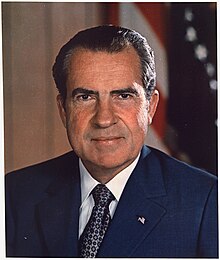
Richard M. Nixon
Now it appears that history is about to repeat itself–in the case of President Donald J. Trump.
And it has been touched off by his repeated use of Twitter as both a Presidential candidate and President.
When it was launched on July 16, 2006, Twitter was intended to be, according to Wikipedia, “an online news and social networking service where users post and interact with messages, ‘tweets,’ restricted to 140 characters.”
It was never intended as a weapon of slander and intimidation. Yet, as both a Presidential candidate and President, Trump has repeatedly used Twitter to attack hundreds of real and imagined enemies in politics, journalism, TV and films.
Even before taking office as President, Trump was haunted by charges that members of his 2016 Presidential campaign colluded with Russian Intelligence agents to secure his election.
Trump has furiously and repeatedly denied this.
Yet, on May 11, no fewer than six top American intelligence officials testified before Congress that Russia acted to influence last year’s election.
These officials were:
- Dan Coats, director of National Intelligence;
- Michael Pompeo, CIA director;
- Michael S. Rogers, director of the National Security Agency;
- Lieutenant-General Vincent Stewart (USMC), director of the Defense Intelligence Agency;
- Robert Cardillo, director of the National Geospatial-Intelligence Agency; and
- Andrew McCabe, acting FBI director, installed after Trump fired the agency’s appointed director, James Comey.
Comey had been spearheading the FBI’s investigation into Trump’s “Russian connection.” In early May, 2017, he had asked the Justice Department to provide increased resources for the FBI’s investigation.

FBI Headquarters
During a private White House dinner in January, Trump asked Comey to pledge his personal loyalty to him. Comey refused to do so.
On May 9, Trump fired him.
Instead of doing so quietly and with dignity, Trump dispatched his longtime personal bodyguard, Keith Schiller, to FBI headquarters with the message: “You’re fired.” Comey was in the FBI’s Los Angeles field office speaking with agents when he learned of his dismissal in a TV news broadcast.
Not content with humiliating and dismissing Comey, Trump then threatened him in a May 12 tweet: “James Comey better hope that there are no “tapes” of our conversations before he starts leaking to the press!”
Having implied that he had secretly taped his conversation with Comey, Trump found himself besieged with the question: “Did you install a White House taping system similar to the one installed by President Richard Nixon?”
Trump has refused to answer–and so have his spokesmen and women.
Ironically, his latest use of a weaponized Twitter account may have doomed his Presidency. His threat to Comey has boxed him in with a series of dead-end scenarios.
Dead-end #1: If Trump taped the conversation without Comey’s consent, he broke the law. (This has been explored in Part One of this series.)
Dead-end #2: If Trump admits he taped Comey, he provides Democrats–and even some Republicans–with reason to subpoena all existing White House tapes.
The House and Senate have competing investigative committees probing “the Russian connection.” And no doubt they will soon issue subpoenas for any secret tapes Trump may have made.
And so will newly-appointed Special Counsel Robert Meuller, III, who served for 12 years as FBI director under Presidents George W. Bush and Barack Obama.
Deputy Attorney General Rod Rosenstein made the appointment on May 17, citing “the unique circumstances [of] the public interest.”
(Attorney General Jeff Sessions has supposedly recused himself from involvement in the Russian investigation–because he lied to Congress about his past contacts with Russian Ambassador Sergei Kislyak during 2016.)
If he refuses to release them, Trump will touch off another Watergate-style conflict between the White House and Congress.
Dead-end #3: If he claims that he didn’t tape Comey, many people will believe he’s lying.
Dead-end #4: If he claims that he didn’t tape Comey, many people will believe he is a punk–for trying to intimidate the former FBI director with a baseless threat.
Dead-end #5: It’s impossible to prove a negative. So if Trump doesn’t have secret tapes to turn over, it will be impossible for him to prove he isn’t stonewalling in defiance of the law.
Dead-end #6: Trump’s brutal and unwarranted firing of James Comey on May 9 has infuriated the FBI’s 35,664 employees, of which 13,778 are Special Agents.
By earning the hatred of the most powerful investigative agency in the Federal Government, Trump has all-but-guaranteed his removal from office.
What began for the Bureau as a professional investigation into Russian sabotage has become a personal vendetta.
2016 PRESIDENTIAL RACE, ABC NEWS, ALEXANDER BUTTERFIELD, ALTERNET, AP, ARNOLD SCHWARTZENEGGER, BARACK OBAMA, BBC, BUZZFEED, CBS NEWS, CNN, DAILY KOS, DONALD TRUMP, FACEBOOK, FBI, HILLARY CLINTON, JAMES COMEY, JOHN OLIVER, JOHN W. DEAN, MERYL STREEP, MOTHER JONES, MOVEON, NBC NEWS, NEWSWEEK, NPR, OBAMACARE, POLITICO, RAW STORY, REUTERS, RICHARD NIXON, SALON, SEATTLE TIMES, SENATE WATERGATE COMMITTEE, SLATE, THE ATLANTIC, THE CHICAGO SUN-TIMES, THE CHICAGO TRIBUNE, THE DAILY BEAST, THE GUARDIAN, THE HILL, THE HUFFINGTON POST, THE LOS ANGELES TIMES, THE NEW YORK TIMES, THE WALL STREET JOURNAL, THE WASHINGTON POST, TIME, TWITTER, UPI, USA TODAY, WATERGATE, WIRETAPPING
In Bureaucracy, History, Law, Law Enforcement, Politics, Social commentary on May 18, 2017 at 12:15 am
Donald Trump’s tweet-first-and-never-mind-the-consequences approach to life has been thoroughly documented.
From June 15, 2015, when he launched his Presidential campaign, until October 24, 2016, he fired nearly 4,000 angry, insulting tweets at 281 people and institutions. The New York Times needed two full pages of its print edition to showcase them.
Donald Trump
Among these targets were:
- His Democratic rival, Hillary Clinton
- His fellow Republican Presidential candidates
- Actress Meryl Streep
- News organizations
- President Barack Obama
- Comedian John Oliver
- Obamacare
- Singer Neil Young
- The state of New Jersey
- Actor Arnold Schwarzenegger.
And during his first two weeks as President, Trump attacked 22 people, places and things on his @realDonaldTrump account.
Then, on March 4, 2017, in a series of unhinged tweets, Trump accused former President Barack Obama of tapping his Trump Tower phones prior to the election:
“Terrible! Just found out that Obama had my ‘wires tapped’ in Trump Tower just before the victory. Nothing found. This is McCarthyism!”
“Is it legal for a sitting President to be ‘wire tapping’ a race for president prior to an election? Turned down by court earlier. A NEW LOW!”
“I’d bet a good lawyer could make a great case out of the fact that President Obama was tapping my phones in October, just prior to Election!”
“How low has President Obama gone to tapp my phones during the very sacred election process. This is Nixon/Watergate. Bad (or sick) guy!”
Thus, without offering a shred of evidence to back it up, Trump accused his predecessor of committing an impeachable offense.
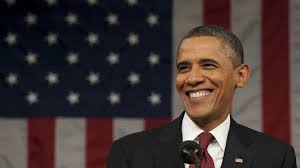
President Barack Obama
On May 9, Trump abruptly fired FBI Director James Comey.
Reports soon surfaced that his reason for doing so was that Comey had refused to pledge his personal loyalty to Trump.
Trump had made this “request” during a private dinner at the White House in January.
After refusing to make that pledge, Comey told Trump that he would always be honest with him.
But that didn’t satisfy Trump’s demand that the head of the FBI act as his personal secret police chief.

James B. Comey
Just 72 hours after firing Comey, Trump issued a threat to him via Twitter:
“James Comey better hope that there are no ‘tapes’ of our conversations before he starts leaking to the press!”
This last tweet may have proved fatal to the man who has weaponized Twitter.
Trump’s implication that he taped his conversation with Comey immediately led White House reporters to ask if he, in fact, taped conversations in the Executive Mansion.
Trump’s response: No comment.
At a White House press conference, Sean Spicer, Trump’s press secretary, was asked three times: Was tape recording occurring in the White House?
Spicer replied: “I’ve talked to the President. The President had nothing further to add on that.”
Asked on Right-wing Fox News–the only major network Trump willingly appears on–if he taped the Comey conversation, the President said: “That I can’t talk about. I won’t talk about that. All I want is for Comey to be honest. And I hope he will be. And I’m sure he will be – I hope.”
By implying on Twitter that he had illegally taped his conversation with Comey–and then refusing to say if this was true–Trump has boxed himself into a no-win situation.
Dead-end #1: If he taped the conversation without Comey’s consent, Trump broke the law.
According to a 2003 Congressional report, “Privacy: An Overview of Federal Statutes Governing Wiretapping and Electronic Eavesdropping”:
“It is a federal crime to wiretap or to use a machine to capture the communications of others without court approval, unless one of the parties has given their prior consent.
“It is likewise a federal crime to use or disclose any information acquired by illegal wiretapping or electronic eavesdropping. Violations can result in imprisonment for not more than 5 years; fines up to $250,000 (up to $500,000 for organizations); in civil liability for damages, attorneys fees and possibly punitive damages; in disciplinary action against any attorneys involved; and in suppression of any derivative evidence.”
Dead-end #2: If Trump admits he taped Comey, he provides Democrats–and even some Republicans–with reason to subpoena all existing White House tapes.
In the summer of 1973, the Senate was investigating the bugging of Democratic headquarters at the Watergate Hotel during the 1972 Presidential campaign.
In June, 1973, John W. Dean III testified before the Senate Watergate Committee. He had served as White House Counsel for Nixon from 1970 to 1973. And now he outlined a litany of crimes ordered by President Richard Nixon.
The White House adamantly denied these charges by attacking Dean as a malcontent. (He had been fired by Nixon in April.)
So–who was telling the truth: Dean or Nixon? It was a classic case of He said/he said.
Then–unexpectedly–a way appeared to answer the question: “Who is telling the truth?”
Alexander Butterfield, who had served as the Deputy Assistant to Nixon from 1969 to 1973, was called as a witness before the Committee.
In a private meeting with Senate investigators, he unintentionally blurted out that Nixon had installed a secret taping system to record all conversations between him and Oval Office visitors.
Suddenly, the Watergate investigation took an entirely new direction–one that would prove fatal to Nixon’s Presidency.
2003 IRAQ WAR, ABC NEWS, ALTERNET, ASIANS, BARACK OBAMA, BIRTH CONTROL, BLACKS, BUZZFEED, CBS NEWS, CNN, DAILY KOS, DISABLED, DONALD TRUMP, ED MARTIN, FACEBOOK, HILLARY CLINTON, HUMAYUN KHAN, KATRINA PIERSON, LATINOS, MARCO GUTIERREZ, MEDICAID, MEDICARE, MOTHER JONES, MOVEON, MSNBC, MUSLIMS, NBC NEWS, NEWSWEEK, NICCOLO MACHIAVELLI, NPR, OBAMACARE, POLITICO, PRISONERS OF WAR, RAW STORY, SALON, SLATE, SOCIAL SECURITY, TEA PARTY, THE CHICAGO SUN-TIMES, THE CHICAGO TRIBUNE, THE DAILY BEAST, THE DISCOURSES, THE HUFFINGTON POST, THE LOS ANGELES TIMES, THE NEW YORK TIMES, THE PRINCE, THE WALL STREET JOURNAL, THE WASHINGTON POST, TIME, TWITTER, U.S. NEWS & WORLD REPORT, USA TODAY, WAYNE ROOT, WOMEN
In Bureaucracy, History, Military, Politics, Social commentary on March 27, 2017 at 12:28 am
No shortage of pundits have sized up Donald Trump–first as a Presidential candidate, and now as the nation’s 45th President.
But how does Trump measure up in the estimate of Niccolo Machiavelli, the 16th-century Florentine statesman?
It is Machiavelli whose two great works on politics–The Prince and The Discourses–remain textbooks for successful politicians more than 500 years later.
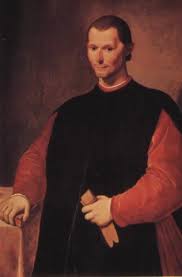

Niccolo Machiavelli
Let’s start with Trump’s notoriety for hurling insults at virtually everyone, including:
- Latinos
- Asians
- Muslims
- Blacks
- The Disabled
- Women
- Prisoners-of-War
These insults delight his white, under-educated followers. But they have alienated millions of other Americans who might have voted for him.
Now consider Machiavelli’s advice on gratuitously handing out insults and threats:
-
“I hold it to be a proof of great prudence for men to abstain from threats and insulting words towards any one.
-
“For neither the one nor the other in any way diminishes the strength of the enemy–but the one makes him more cautious, and the other increases his hatred of you, and makes him more persevering in his efforts to injure you.”
For those who expect Trump to shed his propensity for constantly picking fights, Machiavelli has a stern warning:
-
“…If it happens that time and circumstances are favorable to one who acts with caution and prudence he will be successful. But if time and circumstances change he will be ruined, because he does not change the mode of his procedure.
-
“No man can be found so prudent as to be able to adopt himself to this, either because he cannot deviate from that to which his nature disposes him, or else because, having always prospered by walking in one path, he cannot persuade himself that it is well to leave it…
-
“For if one could change one’s nature with time and circumstances, fortune would never change.”
Then there is Trump’s approach to consulting advisers:
Asked on MSNBC’s “Morning Joe” who he consults about foreign policy, Trump replied; “I’m speaking with myself, number one, because I have a very good brain and I’ve said a lot of things.”
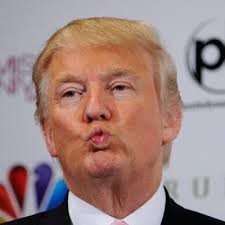
Donald Trump
This totally contrasts the advice given by Machiavelli:
-
“A prudent prince must [choose] for his counsel wise men, and [give] them alone full liberty to speak the truth to him, but only of those things that he asks and of nothing else.
-
“But he must be a great asker about everything and hear their opinions, and afterwards deliberate by himself in his own way, and in these counsels…comport himself so that every one may see that the more freely he speaks, the more he will be acceptable.”
And Machiavelli has potent advice on the selection of advisers:
- “The first impression that one gets of a ruler and his brains is from seeing the men that he has about him.
- “When they are competent and loyal one can always consider him wise, as he has been able to recognize their ability and keep them faithful.
- “But when they are the reverse, one can always form an unfavorable opinion of him, because the first mistake that he makes is in making this choice.”
Consider some of the advisers Trump has relied on in his campaign for President:
- Founder of Latinos for Trump Marco Gutierrez told MSNBC’s Joy Reid: “My culture is a very dominant culture. And it’s imposing, and it’s causing problems. If you don’t do something about it, you’re gonna have taco trucks every corner.”
- At a Tea Party for Trump rally at a Harley-Davidson dealership in Festus, Missouri, former Missouri Republican Party director Ed Martin reassured the crowd that they weren’t racist for hating Mexicans.
From the outset of his Presidential campaign, Trump polled extremely poorly among Hispanic voters. Comments like these didn’t increase his popularity.
- Wayne Root, opening speaker and master of ceremonies at many Trump campaign events, told Virginia radio host Rob Schilling: People on public assistance and women getting birth control through Obamacare should not be allowed to vote.
Comments like this are a big turn-off among the 70% of women who have an unfavorable opinion of him–and anyone who receives Medicaid, Medicare or Social Security.
- Trump’s spokeswoman, Katrina Pierson, claimed that Barack Obama and Hillary Clinton were responsible for the death of Captain Humayun Khan–who was killed by a truck-bomb in Iraq in 2004.
Obama became President in 2009–almost five years after Khan’s death. And Clinton became Secretary of State the same year.
When your spokeswoman becomes a nationwide laughingstock, your own credibility goes down the toilet as well.
Finally, Machiavelli offers a related warning that especially applies to Trump: Unwise princes cannot be wisely advised.
-
“It is an infallible rule that a prince who is not wise himself cannot be well advised, unless by chance he leaves himself entirely in the hands of one man who rules him in everything, and happens to be a very prudent man. In this case, he may doubtless be well governed, but it would not last long, for the governor would in a short time deprive him of the state.”
All of which would lead Niccolo Machiavelli to warn, if he could witness American politics today: “This bodes ill for your Republic.”
ABC NEWS, ALTERNET, ANN ROMNEY, BAIN CAPITOL, BARACK OBAMA, BUZZFEED, CBS NEWS, CNN, DAILY KOS, DEATH SQUADS, DEATHPANELS, EL SALVADOR, FACEBOOK, MITT ROMNEY, MOTHER JONES, MOVEON, NBC NEWS, NEWSWEEK, NPR, OBAMACARE, OSCAR ROMERO, POLITICO, RAW STORY, SALON, Sarah Palin, SLATE, THE BOSTON BLOBE, THE CHICAGO SUN-TIMES, THE CHICAGO TRIBUNE, THE DAILY BEAST, THE HUFFINGTON POST, THE LOS ANGELES TIMES, THE NEW YORK TIMES, THE SALT LAKE TRIBUNE, THE WALL STREET JOURNAL, THE WASHINGTON POST, THE WASHINGTONPOST, TIME, TWITTER, U.S. NEWS & WORLD REPORT, USA TODAY
In Bureaucracy, Business, History, Politics, Social commentary on March 24, 2017 at 12:47 am
During the 2008 Presidential race, Republican Vice Presidential candidate Sarah Palin turned slander into an art form.
Her most poisonous charge: That Democratic Presidential nominee Barack Obama would make “death panels” a part of his proposed healthcare program.
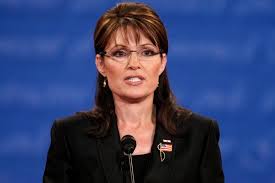
Sarah Palin
But in 2012, she supported a candidate–Mitt Romney–who made his fortune through the “death panels” of his investors.
In 1983, Bill Bain, a management consultant, gave Romney a risky assignment: Launch Bain Capital, a private equity offshoot of his profitable consulting firm Bain & Company.
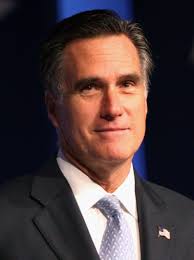
Mitt Romney
But there was a catch: Romney couldn’t raise money from Bain’s current clients. If the private equity venture failed, the consulting firm mustn’t disappear with it.
Romney and his partners considered a wide range of options.
Finally, they settled on one: A group of oligarchs from El Salvador were seeking new investment opportunities.
Romney decided to meet with them.
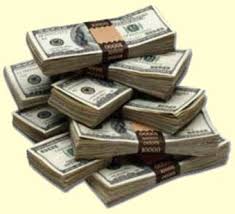
He flew to Miami in mid-1984 and met with the Salvadorans at a local bank. Both sides left happy with their arrangement.
The Salvadorans invested about $9 million–40% of Bain Capital’s initial outside funding.
Among those investors: Ricardo Poma, Miguel Dueñas, Pancho Soler, Frank Kardonski, and Diego Ribadeneira.
Two other wealthy and powerful El Salvadoran families–those of de Sola and Salaverria–also became founding investors in Bain Capital.
Determined to retain their privileged status, members of these families were directly or indirectly funding right-wing death squads in El Salvador.
The squads’ targets were reformers and left-wing guerrillas. According to a United Nations study, at least 75,000 were killed in the Salvadoran civil war between 1979 and 1992.
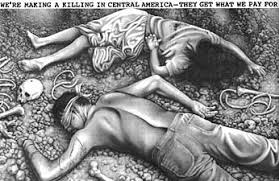
Death squad victims
By 1982, 35,000 civilians had been murdered–with right-wing death squads responsible for most of the killings, stated El Salvador’s independent Human Rights Commission.
Much of this carnage happened during the Reagan Administration (1981-1989), when right-wingers in Washington found common cause with those in Central America.
Romney’s highly lucrative dealings with men linked to Central American death squads have been verified by such publications as the Huffington Post, the Los Angeles Times, the Boston Globe and the Salt Lake Tribune.
A major reason why Romney refused to release more than two years’ worth of his tax returns could have been this: He had more to hide than just how little in taxes he had paid.
Some of those financial disclosures might lead–literally–to hundreds or even thousands of bodies dumped into unmarked graves throughout El Salvador.
The most prominent victim of those right-wing death squads was Oscar Romero, the archbishop of San Salvador. A longtime champion of the poor, he was celebrating Mass on March 24, 1980, when he was shot to death before his horrified congregation.

Oscar Romero
The murder was ordered by Major Roberto D’Aubuisson, founder of the right-wing Nationalist Republican Alliance (ARENA) party.
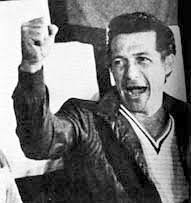
Roberto D’Aubuisson
After Obama’s election as President in 2008, Republicans bitterly opposed his efforts to provide all Americans–and not simply the richest 1%–with healthcare insurance.
Those efforts ultimately bore fruit as the Affordable Care Act–otherwise known as Obamacare.
As one of those Republican opponents, Sarah Palin repeatedly claimed that Obama intended to create government “death panels” to murder elderly and disabled patients.
Although she never offered a shred of evidence for this allegation, millions of American right-wingers eagerly believed it.
On the other hand, multiple and reputable sources demonstrated how Mitt Romney made money through men who either commanded death squads or were linked to others who did.
But Palin never had a single word of criticism for the man who would become the Republican nominee for President.
Little is reliably known about the full extent of Romney’s complex financial dealings. That’s why his refusal to release more than two years’ tax returns became an issue that wouldn’t go away.
Romney released only his 2010 returns and an estimate for his 2011 returns. But his own father, Michigan Governor George Romney, released 12 years of tax returns during his 1968 run for the presidency.
Perhaps Romney had nothing to hide and refused to release his tax returns out of sheer stubbornness.
But if he were truly innocent of any wrongdoing–financial or otherwise–then it would have been in his own best interests to make the returns public. And as quickly as possible.
This is, after all, a longstanding tradition among candidates for President. And doing so would have instantly squelched rumors and accusations that he had something sinister or embarrassing to hide.
Instead, Romney and his wife, Ann, acted as though the White House belonged to them by divine right. And that no one had the right to ask them any questions they didn’t want to answer.
During an interview with NBC News, Romney said: “We have been very transparent to what’s legally required of us. There’s going to be no more tax releases given.”
Romney could have followed the sterling example set by his father–whom he clearly admires–anytime he wished to.
But he didn’t.
Americans may never know if “the man from Bain” has the blood of Archbishop Romero–or other El Salvadoran death squad victim––on his hands.
And if Romney does know, he isn’t saying.
ABC NEWS, ALTERNET, ARNOLD SCHWARXENEGGER, BARACK OBAMA, BREITBART NEWS, BUZZFEED, CBS NEWS, CIA, CNN, DAILY KOS, DONALD TRUMP, FACEBOOK, FBI, FLETCHER KNEBEL, HILLARY LINTON, JEFF SESSIONS, JOHN OLIVER, JOSH EARNEST, MARK LEVIN, MENTAL ILLNESS, MERYL STREETP, MOTHER JONES, MOVEON, NATIONAL SECURITY AGENCY, NBC NEWS, NEIL YOUNG, NEW JERSEY, NEWSWEEK, NIGHT AT CAMP DAVID, NPR, OBAMACARE, POLITICO, RAW STORY, RUSSIA, SALON, SEVEN DAYS IN MAY, SLATE, THE CHICAGO SUN-TIMES, THE CHICAGO TRIBUNE, THE DAILY BEAST, THE HUFFINGTON POST, THE LOS ANGELES TIMES, THE NEW YORK TIMES, THE WALL STREET JOURNAL, THE WASHINGTON POST, THIS WEEK, TIME, TWITTER, U.S. NEWS & WORLD REPORT, USA TODAY, WATERGATE, WIRETAPPING
In Bureaucracy, History, Medical, Politics, Social commentary on March 20, 2017 at 12:53 am
On March 4, in a series of unhinged tweets, President Donald J. Trump accused former President Barack Obama of tapping his Trump Tower phones prior to the election:
“Terrible! Just found out that Obama had my ‘wires tapped’ in Trump Tower just before the victory. Nothing found. This is McCarthyism!”
“Is it legal for a sitting President to be ‘wire tapping’ a race for president prior to an election? Turned down by court earlier. A NEW LOW!”
“I’d bet a good lawyer could make a great case out of the fact that President Obama was tapping my phones in October, just prior to Election!”
“How low has President Obama gone to tapp my phones during the very sacred election process. This is Nixon/Watergate. Bad (or sick) guy!”
President Barack Obama
Trump offered no proof to substantiate his libelous claims.
There are three plausible theories about what prompted Trump’s accusations.
Theory #1: They were prompted by Right-wing media outlets that had been pushing wiretapping claims in recent days.
On March 2, Right-wing radio host Mark Levin claimed that Obama had used “powers of the federal government to surveil members of the Trump campaign.”
Referring to Attorney General Jeff Sessions and his newly disclosed meetings with Russia’s ambassador in 2016, Levin asked: “Today’s reporting on Sessions having a chance meeting with the ambassador–where did that information come from? Look at the timing of it. Was Obama surveilling top Trump campaign officials during the election?”
On March 3, the Fascist media site Breitbart News echoed that charge. Its story was based on Levin’s show and offered no evidence to back up its accusations.
Trump could have first contacted the directors of the FBI, CIA and National Security Agency–the agencies which are authorized to conduct such an operation. He could have asked them, “Did you wiretap me?”
They could have quickly and confidentially given him an answer. And if it was “Yes,” they would have been able to provide him with the records to document it.
That would have been the action of a rational President. But Trump chose to act like a child–or, worse, an unbalanced adult.
After reading the Breitbart story, Trump impulsively chose to go on Twitter and make libelous accusations.
Theory #2: Trump, under scrutiny for ties between his campaign and Russia, sought to deflect attention by making an outrageous accusation.
Donald Trump
Former White House Press Secretary Josh Earnest has his own take on Trump’s motivation. Appearing on the March 5 edition of ABC’s “This Week”, he said: “We know exactly why President Trump tweeted what he tweeted.
“Because there is one page in the Trump White House crisis management playbook. And that is simply to tweet or say something outrageous to distract from the scandal, and the bigger the scandal, the more outrageous the tweet.”
Earnest served as White House Press Secretary under President Obama from 2014 to 2017.
He added: Obama could not have legally ordered a wiretap: “The President of the United States does not have the authority to unilaterally order the wiretapping of an American citizen.”
Theory #3: Trump is too mentally unbalanced to hold the Presidency–and command of America’s nuclear arsenal.
Trump’s shoot-first-and-never-mind-the-consequences approach to life has been thoroughly documented.
From June 15, 2015, when he launched his Presidential campaign, until October 24, 2016, he fired nearly 4,000 angry, insulting tweets at 281 people and institutions. The New York Times needed two full pages of its print edition to showcase them.
Among these targets were:
- His Democratic rival, Hillary Clinton
- His fellow Republican Presidential candidates
- Actress Meryl Streep
- News organizations
- President Barack Obama
- Comedian John Oliver
- Obamacare
- Singer Neil Young
- The state of New Jersey
- Actor Arnold Schwarzenegger.
And during his first two weeks as President, Trump attacked 22 people, places and things on his @realDonaldTrump account.
Trump’s vindictiveness, his narcissism, his compulsive aggression, his complaints that his “enemies” in government and the press are trying to destroy him, have caused many to ask: Could the President of the United States be suffering from mental illness?
One who has dared to answer this question is John D. Gartner, a practicing psychotherapist.
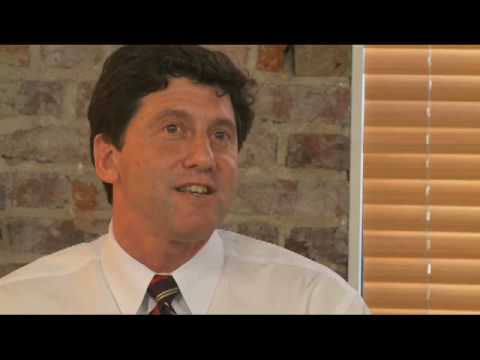
John D. Gartner
Gartner graduated magna cum laude from Princeton University, received his Ph.D in clinical psychology from the University of Massachusetts, and served as a part time assistant professor of psychiatry at Johns Hopkins University Medical School for 28 years.
During an interview by U.S. News & World Report (published on January 27), Gartner said: “Donald Trump is dangerously mentally ill and temperamentally incapable of being president.”
Gartner said that Trump suffers from “malignant narcissism,” whose symptoms include anti-social behavior, sadism, aggressiveness, paranoia and grandiosity.
“We’ve seen enough public behavior by Donald Trump now that we can make this diagnosis indisputably,” says Gartner, who admits he has not personally examined Trump.
In 1965, Fletcher Knebel, the best-selling author of Seven Days in May, raised the then-unthinkable question: “What would happen if the President of the U.S.A. went stark-raving mad?”
He did so in his novel, Night of Camp David.
In 1965, the idea that an American President might become insane was thought so outlandish it could only appear in a novel.
Fifty-two years later, it’s no longer unthinkable. For millions, it’s a terrifying reality.
ABC NEWS, ADOLF HITLER, AFFORDABLE CARE ACT, ALBERT SPEER, ALTERNET, AMERICABLOG, AP, BABY BOOMER RESISTANCE, BARACK OBAMA, BLOOMBERG, BUZZFEED, CBS NEWS, CNN, CROOKS AND LIARS, DAILY KOS, DAILY KOZ, DEBT CEILING, DEPARTMENT OF HOMELAND SECURITY, DONALD TRUMP, DRUDGE REPORT, EXTORTION, FACEBOOK, FASCISM, FIVETHIRTYEIGHT, HARPER’S MAGAZINE, HOUSE SPEAKER JOHN BOEHNER, HUFFINGTON POST, MEDIA MATTERS, MOTHER JONES, MOVEON, MSNBC, NAZI GERMANY, NBC NEWS, NEGOTIATING, NEWSWEEK, NPR, OBAMACARE, PAP SMEARS, PBS NEWSHOUR, PLANNED PARENTHOOD, POLITICO, POLITICUSUSA, RAW STORY, REPUBLICAN PARTY, REPUBLICANS, REUTERS, SALON, SEATTLE TIMES, SLATE, TALKING POINTS MEMO, THE ATLANTIC, THE CHICAGO SUN-TIMES, THE CHICAGO TRIBUNE, THE DAILY BEAST, THE DAILY BLOG, THE GUARDIAN, THE HILL, THE HUFFINGTON POST, THE LOS ANGELES TIMES, THE NATION, THE NEW REPUBLIC, THE NEW YORK TIMES, THE VILLAGE VOICE, THE WALL STREET JOURNAL, THE WASHINGTON POST, THINKPROGRESS, TIME, TRICKLE-DOWN ECONOMICS, TRUTHDIG, TRUTHOUT, TWITTER, TWO POLITICAL JUNKIES, U.S. NEWS & WORLD REPORT, UPI, USA TODAY, WARREN BUFFET, WORLD WAR 11
In Bureaucracy, History, Law, Politics, Social commentary on March 15, 2017 at 12:22 am
On December 13, 2014, the U.S. Senate passed a $1.1 trillion spending bill to fund almost the entire government through the September 30 end of the fiscal year.
But one Federal agency was pointedly exempted from full funding: The Department of Homeland Security (DHS). Its funding would expire on February 27, 2015.
With their new-found majorities in both houses of Congress, Republicans intended to hold the security of the United States as a hostage.
Their goal: To force President Barack Obama to rescind the changes he had made in American immigration policy.
Finally, just as DHS’ funding was about to expire, House Republicans capitulated. They approved a bill the Senate passed to fund DHS without any added conditions.
In 2009, the top goal of the Republican party became to block passage of the Affordable Care Act (ACA)–informally known as “Obamacare.” Its purpose: To provide all Americans–and not simply the richest 1%–with healthcare insurance.
Despite this opposition, the ACA passed the House and Senate–and was signed into law by President Obama on March 23, 2010.
And from then on, Republicans’ foremost goal was to repeal “Obamacare”–which they damned as “fiscally irresponsible.”
In 2003, President George W. Bush had lied the United States into a needless, bloody war in Iraq–which has cost the nation more than $2 trillion.
But Republicans fully supported that expense–and still do.
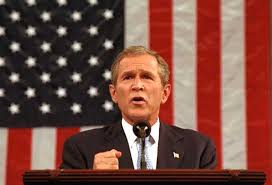
George W. Bush
Even after the Supreme Court affirmed its Constitutionality in 2012, House Republicans voted–unsuccessfully–more than 60 times to repeal or alter “Obamacare.”
In October, 2013, they shut down the Federal Government for 15 days. They hoped to pressure Obama into de-funding his signature piece of legislation, in return for their re-opening the government.
Facing pressure from voters unable to receive basic government services, Republicans backed down.
Their attempted putsch had failed.
Fast forward to 2017.
Republicans still hold the House and Senate–and now the Presidency under Donald J. Trump.
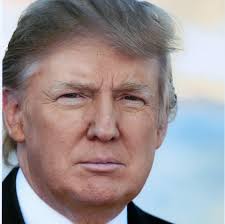
Donald J. Trump
And they are mounting an all-out effort to strip millions of poor Americans of their only access to medical care.
On March 9, Trump met at the White House with leaders of conservative groups to push his own plan to “repeal and replace” the Affordable Care Act.
A major provision of this plan will allow insurance companies to adhere only to the regulations of the state they’re located in. The predictable result: The majority of companies will relocate to the state with the most lax regulations.
Intriguingly, Trump–who has put his name on 268 of the 515 entities he owns–has said he does not want the “Obamacare” replacement plan named after him.
It’s possible he fears it will prove highly unpopular–and that he will be stained by its infamy.
Nevertheless, the press has already started to call it “Trumpcare.”
At the White House meeting, Trump attacked groups–such as the Heritage Foundation and Tea Party Patriots–for calling the House GOP proposal “Obamacare lite.” And he warned: “You are helping the other side.”
And he made it clear to conservative leaders that he had a fallback plan: If “Trumpcare” proves a failure–that is, fails to pass Congress–he will allow the ACA to fail and blame the Democrats.
Thus, Trump admitted that he is prepared to allow the American healthcare system to collapse and let millions die for lack of medical care–all for his own political gain.
As William Henry Harrison put it: “There is nothing more corrupting, nothing more destructive of the noblest and finest feelings of our nature, than the exercise of unlimited power.”
* * * * *
As the Third Reich came to its fiery end, Adolf Hitler sought to punish the German people for being “unworthy” of his “genius” and losing the war he had started.
His attitude was: “If I can’t rule Germany, then there won’t be a Germany.”
In his infamous “Nero Order,” he decreed the destruction of everything still remaining–industries, ships, harbors, communications, roads, mines, bridges, stores, utility plants, food stuffs.
Fortunately for Germany, one man–Albert Speer–finally broke ranks with his Fuhrer.

Albert Speer
Risking death, he refused to carry out Hitler’s “scorched earth” order. Even more important, he mounted a successful effort to block such destruction and persuade influential military and civilian leaders to disobey the order as well.
As a result, those targets slated for destruction were spared.
Since the election of America’s first black President, Republicans have waged a similar “scorched earth” campaign.
Their avowed goal–as stated openly by Kentucky’s U.S. Senator Mitch McConnell–was “to make Barack Obama a one-term President.”
Literally during Obama’s first Inauguration, they agreed, in a secret meeting, to block every effort he made to repair the economy ruined under the George W. Bush administration.
Acting as extortionists, they repeatedly threatened to shut down the government if they didn’t get their way in legislative matters.
And they repeatedly blocked legislation to help the poor, the unemployed, the sick, women, the elderly, the disabled and the middle-class.
Like Adolf Hitler, their attitude has been: “If I can’t rule America, there won’t be an America.”
The country is still waiting for a Republican Albert Speer to step forward and save America from the self-destructive brutalities of its own Right-wing fanatics.


 Bureaucracybuster's Blog
"TOMBSTONE", ABC NEWS, AFFORDABLE CARE ACT, ALTERNET, AMERICABLOG, AP, ARNOLD SCHWARTZNEGGER, ASIANS, “BIRTHER” CAMPAIGN, BABY BOOMER RESISTANCE, BARACK OBAMA, BBC, BLACKS, BLOOMBERG NEWS, BOY SCOUT JAMBOREE, BUZZFEED, CBS NEWS, CNN, CROOKS AND LIARS, DAILY KOS, DAILY KOZ, DISABLED, DONALD TRUMP, FACEBOOK, FBI, FIVETHIRTYEIGHT, HARPER’S MAGAZINE, HILLARY CLINTON, HISPANICS, HUFFINGTON POST, IKE CLANTON, JEFF SESSIONS, JOHN H. "DOC" HOLLIDAY, JOHN OLIVER, JOHNNY RINGO, JUSTICE DEPARTMENT, MEDIA MATTERS, MERYL STREEP, MORGAN EARP, MOTHER JONES, MOVEON, MSNBC, MUSLIMS, NBC NEWS, NEIL YOUNG, NEW REPUBLIC, NEWSDAY, NEWSWEEK, NPR, OBAMACARE, PBS NEWSHOUR, POLITICO, POLITICUSUSA, PRISONERS OF WAR, RAW STORY, REINCE PRIEBUS, REUTERS, ROSIE O’DONNELL, SALON, SEAN SPICER, SEATTLE TIMES, SLATE, TALKING POINTS MEMO, THE ATLANTIC, THE CHICAGO SUN-TIMES, THE CHICAGO TRIBUNE, THE DAILY BEAST, THE DAILY BLOG, THE GUARDIAN, THE HILL, THE HUFFINGTON POST, THE INTERCEPT, THE LOS ANGELES TIMES, THE NATION, THE NEW REPUBLIC, THE NEW YORK TIMES, THE NEW YORKER, THE POPE, THE VILLAGE VOICE, THE WASHINGTON POST, THINKPROGRESS, TIME, TRUTHDIG, TRUTHOUT, TWITTER, U.S. NEWS & WORLD REPORT, UP, UPI, USA TODAY, VIRGIL EARP, WOMEN, WYATT EARP
FILLING A HOLE WITH HATE
In Bureaucracy, Entertainment, History, Politics, Social commentary on July 31, 2017 at 12:56 amAs both a Presidential candidate and President, Donald Trump has repeatedly used Twitter to attack hundreds of real and imagined enemies in politics, journalism, TV and films.
From June 15, 2015, when he launched his Presidential campaign, until October 24, 2016, Trump fired almost 4,000 angry, insulting tweets at 281 people and institutions that had somehow offended him.
Donald Trump
The New York Times needed two full pages of its print edition to showcase them.
Among his targets:
Others he clearly delighted in insulting during the campaign included:
As a Presidential candidate and President, he has shown outright hatred for President Barack Obama. For five years, he slandered Obama as a Kenyan-born alien who had no right to hold the Presidency.
Barack Obama
Only on the eve of the first Presidential debate with Hillary Clinton—in September, 2016—did he finally admit that Obama had been born in the United States.
Then, on March 4, 2017, in a series of unhinged tweets, Trump accused Obama of tapping his Trump Tower phones prior to the election:
“Terrible! Just found out that Obama had my ‘wires tapped’ in Trump Tower just before the victory. Nothing found. This is McCarthyism!”
Thus, without offering a shred of evidence to back it up, Trump accused his predecessor of committing an impeachable offense.
Both the FBI and Justice Department have vigorously refuted this slander.
Trump’s all-out effort to destroy the Affordable Care Act—nicknamed “Obamacare”—has been driven by his mania to erase every vestige of the Obama Presidency.
Even attending a Boy Scout Jamboree became, for Trump, a way to attack the former President.
“By the way, just a question. Did President Obama ever come to a jamboree?” Trump asked the crowd of 40,000, encouraging them to boo Obama. And many of them did.
As President, he has bullied and insulted even his own handpicked Cabinet officers and White House officials.
As Americans have watched Trump’s behavior with morbid fascination, many of them have asked: “What makes him do the things he does?”
It’s a question asked–and answered—in the 1993 Western, Tombstone. And the answer given in that movie may be just hold the answer to the question so many Americans are now asking about Trump.
Tombstone recounts the legendary blood feud between the Ike Clanton outlaw gang and the Earp brothers—Wyatt, Morgan and Virgil—in the famous gold-mining town in 1880s Arizona.
Wyatt Earp has been challenged to a gunfight by quick-trigger gunman Johnny Ringo. Although he impulsively accepted the challenge, Wyatt now realizes he’s certain to be killed. Thus follows this exchange with his longtime friend, the pistol-packing dentist, John H. “Doc” Holliday:
WYATT EARP: What makes a man like Ringo, Doc? What makes him do the things he does?
JOHN H. “DOC” HOLLIDAY: A man like Ringo….got a great empty hole right through the middle of him. He can never kill enough or steal enough….or inflict enough pain to ever fill it.
EARP: What does he need?
HOLLIDAY: Revenge.
EARP: For what?
HOLLIDAY: Bein’ born.
Donald Trump was born into a world of wealth and privilege. His father gave him $200 million, which he channeled into a real estate empire. He has claimed to be worth a billion dollars.
He has been linked—often by his own boasts—to some of the most beautiful women in the world. He has been a major force on TV through his “reality show,” The Apprentice. He has literally stamped his name on hundreds of buildings.
And now he holds the Presidency of the United States, the most powerful office in the Western world.
Yet he remains filled with a poisonous hatred that encompasses almost everyone. Since taking office, he has offered nothing positive in his agenda.
Instead, he has focused his efforts on what he can take from others. At the top of his list: The Affordable Health Act, which provides access to medical care for millions who previously could not obtain it.
As first-mate Starbuck says of Captain Ahab in Herman Melville’s classic novel, Moby Dick: “He is a champion of darkness.”
Share this: