Posts Tagged ‘NICCOLO MACHIAVELLI’
ABC NEWS, ALTERNET, AP, BBC, BOB CORKER, BUZZFEED, CBS NEWS, CNN, COMMODUS, DAILY KOS, DONALD TRUMP, FACEBOOK, MIKA BRZEZINSKI, MORNING JOE, MOTHER JONES, MOVEON, NBC NEWS, NEWSWEEK, NICCOLO MACHIAVELLI, NPR, POLITICO, QATER, RAW STORY, REPORTERS COMMITTEE FOR FREEDOM OF THE PRESS, REUTERS, REX TILLERSON, SALON, SARAH HUCKABEE SANDERS, SAUDI ARABIA, SEATTLE TIMES, SLATE, THE ATLANTIC, THE CHICAGO SUN-TIMES, THE CHICAGO TRIBUNE, THE DAILY BEAST, THE GUARDIAN, THE HILL, THE HUFFINGTON POST, THE LOS ANGELES TIMES, THE NEW YORK TIMES, THE PRINCE, THE WALL STREET JOURNAL, THE WASHINGTON POST, TIME, TODD WOMACK, TWITTER, U.S. NEWS & WORLD REPORT, UPI, USA TODAY
In Bureaucracy, History, Politics, Social commentary on October 9, 2017 at 12:04 am
If Donald Trump ever read The Prince, by Niccolo Machiavelli, the Florentine statesman, he’s decided he doesn’t need it. And his ever-falling popularity among Americans clearly proves his mistake.
First published in 1532, The Prince lays bare the qualities needed by a successful political leader. At the top of this list must be creating and preserving a sense of his own dignity. Thus, he must appear to be a combination of mercy, faith, integrity, humanity and religion.
As Machiavelli puts it:
A prince must take great care that nothing goes out of his mouth which is not full of the above-named five qualities, and he should seem to be all mercy, faith, integrity, humanity and religion.
Since taking office on January 20, Trump has violated Machiavelli’s injunction on integrity with a vengeance. He has been caught in repeated falsehoods–so many, in fact, that the New York Times gave over its June 23 front page to a story headlined: “Trump’s Lies.”
According to the Times, Trump “told public falsehoods or lies every day for his first 40 days.”
“There is simply no precedent,” went the Times‘ opinion piece, “for an American president to spend so much time telling untruths. Every president has shaded the truth or told occasional whoppers.
“No other president—of either party—has behaved as Trump is behaving. He is trying to create an atmosphere in which reality is irrelevant.”

Donald Trump
Machiavelli also advises:
[He] must contrive that his actions show grandeur, spirit, gravity and fortitude….
It’s hard to convey those qualities in a series of 140-character rants on Twitter. Yet, from the start of his Presidency, Trump has put his ambitions, excuses and rants on social media.
As CNN Political Analyst Julian Zelizer outlined in a July 3 article:
“Putting aside the specific content of the recent blasts from the Oval smart phone, the President’s ongoing Twitter storms make all leaders uneasy. The heads of government in most nations prefer a certain amount of predictability and decorum from other heads of state.
“To have one of the most powerful people in the room being someone who is willing to send out explosive and controversial statements through social media, including nasty personal attacks or an edited video of him physically assaulting the media, does not make others….feel very confident about how he will handle deliberations with them.”
Trump’s apologists have fiercely defended his tweetstorms, claiming they allow him to bypass the media and “communicate directly with the American people.”
On October 8, Trump attacked retiring Tennessee United States Senator Bob Corker on Twitter:
“Senator Bob Corker ‘begged’ me to endorse him for re-election in Tennessee. I said ‘NO’ and he dropped out (said he could not win without…”
“..my endorsement). He also wanted to be Secretary of State, I said “NO THANKS.” He is also largely responsible for the horrendous Iran Deal!”
“…Hence, I would fully expect Corker to be a negative voice and stand in the way of our great agenda. Didn’t have the guts to run!”
Corker decided to give Trump a taste of his own Twitter medicine: “It’s a shame the White House has become an adult day care center. Someone obviously missed their shift this morning.”
Later that day, Corker told The New York Times: “He concerns me. He would have to concern anyone who cares about our nation.
“I know for a fact that every single day at the White House, it’s a situation of trying to contain him,”
And Todd Womack, Corker’s chief of staff, flatly called Trump a liar: “The president called Senator Corker on Monday afternoon and asked him to reconsider his decision not to seek reelection and reaffirmed that he would have endorsed him, as he has said many times.”
Machiavelli urged rulers to safeguard their reputations:

Niccolo Machiavelli
…A prince must show himself a lover of merit, give preferment to the able, and honor those who excel in every art.
Besides this, he ought, at convenient seasons of the year, to keep the people occupied with festivals and shows….mingle with them from time to time, and give them an example of his humanity and munificence, always upholding, however, the majesty of his dignity, which must never be allowed to fail in anything whatever.
Rulers who disregard this advice do so at their peril:
A prince need trouble little about conspiracies when the people are well disposed. But when they are hostile and hold him in hatred, then he must fear everything and everybody….
…[The Roman Emperor Commodus], being of a cruel and bestial disposition, in order to…exercise his rapacity on the people, he sought to favor the soldiers and render them licentious.
On the other hand, by not maintaining his dignity, by often descending into the theater to fight with gladiators and committing other contemptible actions…he became despicable in the eyes of the soldiers. And being hated on the one hand and despised on the other, he was conspired against and killed.
Donald Trump has repeatedly violated these lessons. It remains to be seen if he will pay a price for doing so.
2016 PRESIDENTIAL ELECTION, A BRONX TALE, ABC NEWS, ADOLF HITLER, ALTERNET, AP, BILL CLINTON, BUZZFEED, CBS NEWS, CHAZZ PALMINTERI, CNN, CROOKS AND LIARS, DAILY KOZ, DONALD TRUMP, FACEBOOK, FBI, H.R. MCMASTER, HILLARY CLINTON, IRS, J. EDGAR HOOVER, JEFF SESSIONS, JOHN F. KENNEDY, JOHN KELLY, LYNDON B. JOHNSON, MOTHER JONES, MOVEON, NBC NEWS, NEWSWEEK, NICCOLO MACHIAVELLI, NPR, POLITICO, RAW STORY, REINCE PREBIUS, REPUBLICAN PARTY, REUTERS, RICHARD M. NIXON, ROBERT DE NIRO, ROBERT F. KENNEDY, Ronald Reagan, SALON, SEATTLE TIMES, SERGEI KISLYAK, SLATE, THE ATLANTIC, THE CHICAGO SUN-TIMES, THE CHICAGO TRIBUNE, THE DAILY BEAST, THE GUARDIAN, THE HILL, THE HUFFINGTON POST, THE LOS ANGELES TIMES, THE NATION, THE NEW YORK TIMES, THE PRINCE, THE WASHINGTON POST, TIME, TWITTER, U.S. NEWS & WORLD REPORT, UP, UPI, USA TODAY, WILLIAM RALPH INGE
In Bureaucracy, History, Law Enforcement, Politics, Social commentary on September 21, 2017 at 12:02 am
American Presidents—like politicians everywhere–strive to be loved. There are two primary reasons for this.
First, even the vilest dictators want to believe they are good people—and that their goodness is rewarded by the love of their subjects.
Second, it’s universally recognized that a leader who’s beloved has great clout than one who isn’t. In the United States, a Presidential candidate who wins by a landslide is presumed to have a mandate to pursue his agenda—at least, for the first two years of his administration.
But those—like Barack Obama—who strive to avoid conflict often get treated with contempt and hostility by their adversaries.
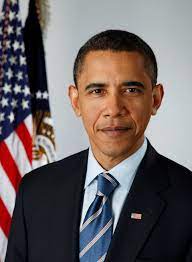
Barack Obama
In Renegade: The Making of a President, Richard Wolffe chronicled Obama’s successful 2008 bid for the White House. Among his revelations:
Obama, a believer in rationality and decency, felt more comfortable in responding to attacks on his character than in attacking the character of his enemies.
A graduate of Columbia University and Harvard Law School, Obama was one of the most academically gifted Presidents in United States history.
Yet he failed to grasp and apply this fundamental lesson taught by Niccolo Machiavelli, the father of modern political science:
A man who wishes to make a profession of goodness in everything must inevitably come to grief among so many who are not good. And therefore it is necessary for a prince, who wishes to maintain himself, to learn how not to be good, and to use this knowledge and not use it, according to the necessity of the case.
This explains why Obama found most of his legislative agenda stymied by Republicans.
For example: In 2014, Senator Rand Paul (R-Ky.) sought to block David Barron, Obama’s nominee to the First Circuit Court of Appeals.
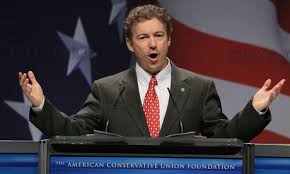
Rand Paul
Paul objected to Barron’s authoring memos that justified the killing of an American citizen by a drone in Yemen on September 30, 2011.
The target was Anwar al-Awlaki, a radical Muslim cleric notorious on the Internet for encouraging Muslims to attack the United States.
Paul demanded that the Justice Department release the memos Barron crafted justifying the drone policy.
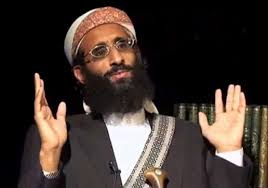
Anwar al-Awlaki
Imagine how Republicans would depict Paul—or any Democratic Senator—who did the same with a Republican President: “Rand Paul: A traitor who supports terrorists. He sides with America’s sworn enemies against its own lawfully elected President.”
But Obama did nothing of the kind.
(On May 22, 2014, the Senate voted 53–45 to confirm Barron to the First Circuit Court of Appeals.)
But Presidents who seek to rule primarily by fear can encounter their own limitations. Which immediately brings to mind Donald Trump.
As both a Presidential candidate and President, Trump has repeatedly used Twitter to attack hundreds of real and imagined enemies in politics, journalism, TV and films.
From June 15, 2015, when he launched his Presidential campaign, until October 24, 2016, Trump fired almost 4,000 angry, insulting tweets at 281 people and institutions that had somehow offended him.
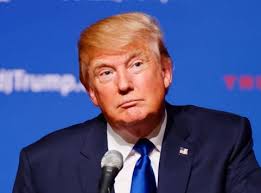
Donald Trump
The New York Times needed two full pages of its print edition to showcase them.
As a Presidential candidate and President, he has shown outright hatred for President Obama. For five years, he slandered Obama as a Kenyan-born alien who had no right to hold the Presidency.
Then, on March 4, 2017, in a series of unhinged tweets, Trump falsely accused Obama of committing an impeachable offense: Tapping his Trump Tower phones prior to the election.
As President, Trump has refused to reach beyond the narrow base of white, racist, ignorant, hate-filled, largely rural voters who elected him.
And he has bullied and insulted even White House officials and his own handpicked Cabinet officers:
- Trump has waged a Twitter-laced feud against Jeff Sessions, his Attorney General. Sessions’ “crime”? Recusing himself from investigations into well-established ties between Russian Intelligence agents and members of Trump’s Presidential campaign.
- Trump repeatedly humiliated Chief of Staff, Reince Priebus—at one point ordering him to kill a fly that was buzzing about. On July 28, Priebus resigned.
- Trump similarly tongue-lashed Priebus’ replacement, former Marine Corps General John Kelly. Trump has reportedly been angered by Kelly’s efforts to limit the number of advisers who have unrestricted access to him. Kelly told colleagues he had never been spoken to like that during 35 years of military service—and would not tolerate it again.
- After Trump gave sensitive Israeli intelligence to Russian ambassador Sergey Kislyak, his national security advisor, H.R. McMaster, denied this had happened. Trump then contradicted McMaster in a tweet: “As president, I wanted to share with Russia (at an openly scheduled WH meeting) which I have the absolute right to do, facts pertaining to terrorism and airline flight safety.”
If Trump ever read Niccolo Machiavelli’s The Prince, he’s clearly forgotten this passage:
Cruelties ill committed are those which, although at first few, increase rather than diminish with time….Whoever acts otherwise….is always obliged to stand with knife in hand, and can never depend on his subjects, because they, owing to continually fresh injuries, are unable to depend upon him.
And this one:
Still, a prince should make himself feared in such a way that if he does not gain love, he at any rate avoids hatred.
Or, as Cambridge Professor of Divinity William Ralph Inge put it: “A man may build himself a throne of bayonets, but he can’t sit on it.”
2016 PRESIDENTIAL ELECTION, A BRONX TALE, ABC NEWS, ADOLF HITLER, ALTERNET, AP, BILL CLINTON, BUZZFEED, CBS NEWS, CHAZZ PALMINTERI, CNN, CROOKS AND LIARS, DAILY KOZ, DONALD TRUMP, FACEBOOK, FBI, H.R. MCMASTER, HILLARY CLINTON, IRS, J. EDGAR HOOVER, JEFF SESSIONS, JOHN F. KENNEDY, JOHN KELLY, LYNDON B. JOHNSON, MOTHER JONES, MOVEON, NBC NEWS, NEWSWEEK, NICCOLO MACHIAVELLI, NPR, POLITICO, RAW STORY, REINCE PREBIUS, REPUBLICAN PARTY, REUTERS, RICHARD M. NIXON, ROBERT DE NIRO, ROBERT F. KENNEDY, Ronald Reagan, SALON, SEATTLE TIMES, SERGEI KISLYAK, SLATE, THE ATLANTIC, THE CHICAGO SUN-TIMES, THE CHICAGO TRIBUNE, THE DAILY BEAST, THE GUARDIAN, THE HILL, THE HUFFINGTON POST, THE LOS ANGELES TIMES, THE NATION, THE NEW YORK TIMES, THE PRINCE, THE WASHINGTON POST, TIME, TWITTER, U.S. NEWS & WORLD REPORT, UP, UPI, USA TODAY, WILLIAM RALPH INGE
In Bureaucracy, History, Law Enforcement, Politics, Social commentary on September 20, 2017 at 12:30 am
Is it better to be loved or feared?
That was the question Florentine statesman Niccolo Machiavelli raised more than 500 years ago.
Presidents have struggled to answer this question—and have come to different conclusions.
LOVE ME, FEAR MY BROTHER
Most people felt irresistibly drawn to John F. Kennedy—even his political foes. Henry Luce, the conservative publisher of Time, once said, “He makes me feel like a whore.”
But JFK could afford to bask in the love of others—because his younger brother, Robert, was the one who inspired fear.
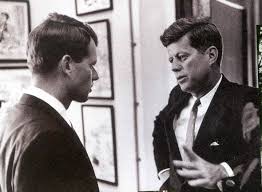
Robert F. Kennedy and John F. Kennedy
He had done so as Chief Counsel for the Senate Rackets Committee (1957-59), grilling Mafia bosses and corrupt union officials–most notably Teamsters President James Hoffa.
Appointed Attorney General by JFK, he unleashed the FBI on the Mafia. When the steel companies colluded in an inflationary rise in the price of steel in 1962, Bobby sicced the FBI on them.
In 1963, JFK’s cavorting with Ellen Rometsh threatened to destroy his Presidency. Rometsch, a Washington, D.C. call girl, was suspected by the FBI of being an East German spy.
With Republican Senators preparing to investigate the rumors, Bobby ordered Rometsch deported immediately (to which, as a German citizen, she was subject).
He also ordered FBI Director J. Edgar Hoover to deliver a warning to the Majority and Minority leaders of the Senate: The Bureau was fully aware of the extramarital trysts of most of its members. And an investigation into the President’s sex life could easily lead into revelations of Senatorial sleaze.
Plans for a Senatorial investigation were shelved.
BEING LOVED AND FEARED
In the 1993 movie, A Bronx Tale, 17-year-old Calogero (Lillo Brancato) asks his idol, the local Mafia capo, Sonny (Chazz Palminteri): “Is it better to be loved or feared?”
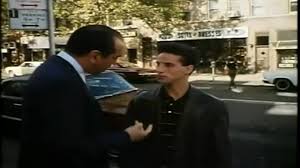
Sonny gives advice to his adopted son, Calogero
Sonny says if he had to choose, he would rather be feared. But he adds a warning straight out of Machiavelli: “The trick is not being hated. That’s why I treat my men good, but not too good.
“I give too much, then they don’t need me. I give them just enough where they need me, but they don’t hate me.”
Machiavelli, writing in The Prince, went further:
“Still a Prince should make himself feared in such a way that if he does not gain love, he at any rate avoids hatred, for fear and the absence of hatred may well go together. And [this] will always be attained by one who abstains from interfering with the property of his citizens and subjects or with their women.”
Many who quote Machiavelli in defense of being feared overlook this vital point: It’s essential to avoid becoming hated.
To establish a fearful reputation, a leader must act decisively and ruthlessly when the interests of the organization are threatened. Punitive action must be taken promptly and confidently.
One or two harsh actions of this kind can make a leader more feared than a reign of terror.
In fact, it’s actually dangerous to constantly employ cruelties or punishments. Whoever does so, warns Machiavelli, “is always obliged to stand with knife in hand, and can never depend on his subjects, because they, owing to continually fresh injuries, are unable to depend upon him.”
The 20th century President who came closest to realizing Machiavelli’s “loved and feared” prince in himself was Ronald Reagan.
Always smiling, quick with a one-liner (especially at press conferences), seemingly unflappable, he projected a constantly optimistic view of his country and its citizens.
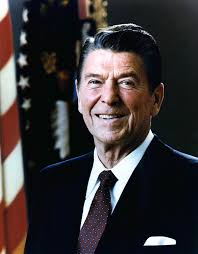
Ronald Reagan
In his acceptance speech at the 1980 Republican National Convention he declared: “[The Democrats] say that the United States has had its days in the sun, that our nation has passed its zenith.… My fellow citizens, I utterly reject that view.”
And Americans enthusiastically responded to that view, twice electing him President (1980 and 1984).
But there was a steely, ruthless side to Reagan that appeared when he felt crossed.
On August 3, 1981, nearly 13,000 air traffic controllers walked out after contract talks with the Federal Aviation Administration collapsed. As a result, some 7,000 flights across the country were canceled on that day at the peak of the summer travel season.
Reagan branded the strike illegal. He threatened to fire any controller who failed to return to work within 48 hours.
On August 5, Reagan fired more than 11,000 air traffic controllers who hadn’t returned to work. The mass firing slowed commercial air travel, but it did not cripple the system as the strikers had forecast.
Reagan’s action stunned the American labor movement. Reagan was the only American President to have belonged to a union, the Screen Actors Guild. He had even been president of this–from 1947 to 1954.
There were no more strikes by Federal workers during Reagan’s tenure in office.
Similarly, Libya’s dictator, Moammar Kadaffi, learned that Reagan was not a man to cross.
On April 5, 1986, Libyan agents bombed a nightclub in West Berlin, killing three people, one a U.S. serviceman. The United States quickly learned that Libyan agents in East Germany were behind the attack.
On April 15, acting on Reagan’s orders, U.S. Air Force, Navy and Marine Corps bombers struck at several sites in Tripoli and Benghazi. Reportedly, Kaddafi himself narrowly missed becoming a casualty.
There were no more acts of Libyan terrorism against Americans for the rest of Reagan’s term.
2016 PRESIDENTIAL ELECTION, A BRONX TALE, ABC NEWS, ADOLF HITLER, ALTERNET, AP, BILL CLINTON, BUZZFEED, CBS NEWS, CHAZZ PALMINTERI, CNN, CROOKS AND LIARS, DAILY KOZ, DONALD TRUMP, FACEBOOK, FBI, H.R. MCMASTER, HILLARY CLINTON, IRS, J. EDGAR HOOVER, JEFF SESSIONS, JOHN F. KENNEDY, JOHN KELLY, LYNDON B. JOHNSON, MOTHER JONES, MOVEON, NBC NEWS, NEWSWEEK, NICCOLO MACHIAVELLI, NPR, POLITICO, RAW STORY, REINCE PREBIUS, REPUBLICAN PARTY, REUTERS, RICHARD M. NIXON, ROBERT DE NIRO, ROBERT F. KENNEDY, Ronald Reagan, SALON, SEATTLE TIMES, SERGEI KISLYAK, SLATE, THE ATLANTIC, THE CHICAGO SUN-TIMES, THE CHICAGO TRIBUNE, THE DAILY BEAST, THE GUARDIAN, THE HILL, THE HUFFINGTON POST, THE LOS ANGELES TIMES, THE NATION, THE NEW YORK TIMES, THE PRINCE, THE WASHINGTON POST, TIME, TWITTER, U.S. NEWS & WORLD REPORT, UP, UPI, USA TODAY, WILLIAM RALPH INGE
In Bureaucracy, History, Law Enforcement, Social commentary, Uncategorized on September 19, 2017 at 12:07 am
It’s probably the most-quoted passage of Niccolo Machiavelli’s infamous book, The Prince:
“From this arises the question whether it is better to be loved than feared, or feared more than loved. The reply is, that one ought to be both feared and loved, but as it is difficult for the two to go together, it is much safer to be feared than loved.
“For it may be said of men in general that they are ungrateful, voluble, dissemblers, anxious to avoid danger and covetous of gain. As long as you benefit them, they are entirely yours: they offer you their blood, their goods, their life and their children, when the necessity is remote, but when it approaches, they revolt.
“And the prince who has relied solely on their words, without making other preparations, is ruined. For the friendship which is gained by purchase and not through grandeur and nobility of spirit is bought but not secured, and at a pinch is not to be expended in your service.
“And men have less scruple in offending one who makes himself loved than one who makes himself feared. For love is held by a chain of obligations which, men being selfish, is broken whenever it serves their purpose. But fear is maintained by a dread of punishment which never fails.”
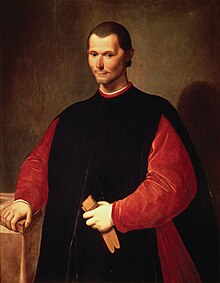
Niccolo Machiavelli
So—which is better: To be feared or loved?
In the 1993 film, A Bronx Tale, 17-year-old Calogero (Lillo Brancato) poses that question to his idol, the local Mafia capo, Sonny (Chazz Palminteri).
“That’s a good question,” Sonny replies. “It’s nice to be both, but it’s very difficult. But if I had my choice, I would rather be feared.
“Fear lasts longer than love. Friendships that are bought with money mean nothing. You see how it is around here. I make a joke, everybody laughs. I know I’m funny, but I’m not that funny. It’s fear that keeps them loyal to me.”
Presidents face the same dilemma as Mafia capos—and resolve it in their own ways.
LOVE ME BECAUSE I NEED TO BE LOVED
Bill Clinton believed that he could win over his self-appointed Republican enemies through his sheer charm.
Part of this lay in self-confidence: He had won the 1992 and 1996 elections by convincing voters that “I feel your pain.”
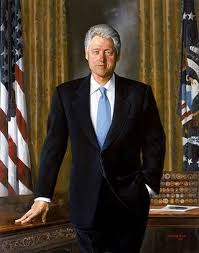
Bill Clinton
And part of it lay in his need to be loved. He once said that if he were in a room with 100 people and 99 of them liked him but one didn’t, he would spend all his time with that one person, trying to win him over.
But while he could charm voters, he could not bring himself to retaliate against his sworn Republican enemies.
On April 19, 1995, Right-wing terrorist Timothy McVeigh drove a truck–packed with 5,000 pounds of ammonium nitrate and nitromethane–to the front of the Alfred P. Murrah Federal Building in Oklahoma City.
The explosion killed 168 people, including 19 children in the day care center on the second floor, and injured 684 others.
Suddenly, Republicans were frightened. Since the end of World War II, they had vilified the very Federal Government they belonged to. They had deliberately courted the Right-wing militia groups responsible for the bombing.
So Republicans feared Clinton would now turn their decades of hate against them.
They need not have worried. On April 23, Clinton presided over a memorial service for the victims of the bombing. He gave a moving eulogy—without condemning the hate-filled Republican rhetoric that had at least indirectly led to the slaughter.
Clinton further sought to endear himself to Republicans by:
- Adopting NAFTA—the Republican-sponsored North American Free Trade Act, which later proved so devastating to American workers;
- Siding with Republicans against poor Americans on welfare; and
- Championing the gutting of the Depression-era Glass-Steagall law, which barred investment banks from commercial banking activities.
The result: Republicans believed Clinton was weak–and could be rolled.
In 1998, House Republicans moved to impeach him over a sex scandal with White House intern Monica Lewinsky. But his Presidency survived when the Senate refused to convict.
LOVE ME BECAUSE I’LL HURT YOU IF YOU DON’T
Lyndon Johnson wanted desperately to be loved.
Once, he complained to Dean Acheson, the former Secretary of State under Harry S. Truman, about the ingratitude of American voters. He had passed far more legislation than his predecessor, John F. Kennedy, and yet Kennedy remained beloved, while he, Johnson, was not.
Why was that? Johnson demanded.
“You are not a very likable man,” said Acheson truthfully.
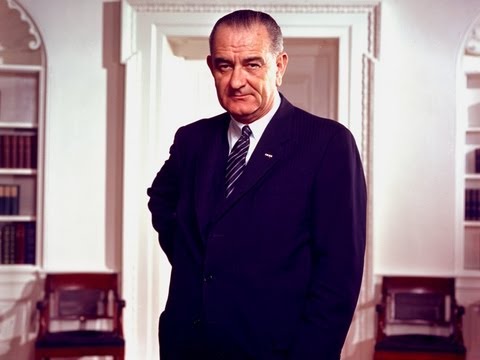
Lyndon B. Johnson
Johnson tried to make his subordinates love him. He would humiliate a man, then give him an expensive gift—such a Cadillac. It was his way of binding the man to him.
He was on a first-name basis with J. Edgar Hoover, the longtime director of the FBI. He didn’t hesitate to request—and get—raw FBI files on his political opponents.
On at least one occasion, he told members of his Cabinet: No one would dare walk out on his administration—because if they did, two men would follow their ass to the end of the earth: Mr. J. Edgar Hoover and the head of the Internal Revenue Service.
ABC NEWS, ALTERNET, AP, BBC, BUZZFEED, CBS NEWS, CNN, COMMODUS, DAILY KOS, DONALD TRUMP, FACEBOOK, MIKA BRZEZINSKI, MORNING JOE, MOTHER JONES, MOVEON, NBC NEWS, NEWSWEEK, NICCOLO MACHIAVELLI, NPR, POLITICO, QATER, RAW STORY, REPORTERS COMMITTEE FOR FREEDOM OF THE PRESS, REUTERS, REX TILLERSON, SALON, SARAH HUCKABEE SANDERS, SAUDI ARABIA, SEATTLE TIMES, SLATE, THE ATLANTIC, THE CHICAGO SUN-TIMES, THE CHICAGO TRIBUNE, THE DAILY BEAST, THE GUARDIAN, THE HILL, THE HUFFINGTON POST, THE LOS ANGELES TIMES, THE NEW YORK TIMES, THE PRINCE, THE WALL STREET JOURNAL, THE WASHINGTON POST, TIME, TWITTER, U.S. NEWS & WORLD REPORT, UPI, USA TODAY
In Bureaucracy, History, Politics, Social commentary on July 4, 2017 at 12:30 am
If Donald Trump ever read The Prince, by Niccolo Machiavelli, the Florentine statesman, he’s decided he doesn’t need it. And his ever-falling popularity among Americans clearly proves his mistake.
First published in 1532, The Prince lays bare the qualities needed by a successful political leader. At the top of this list must be creating and preserving a sense of his own dignity. Thus, he must appear to be a combination of mercy, faith, integrity, humanity and religion.
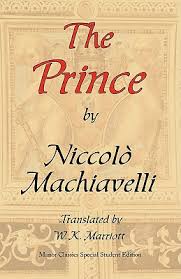
As Machiavelli puts it:
A prince must take great care that nothing goes out of his mouth which is not full of the above-named five qualities, and he should seem to be all mercy, faith, integrity, humanity and religion.
Since taking office on January 20, Trump has violated Machiavelli’s injunction on integrity with a vengeance. He has been caught in repeated falsehoods–so many, in fact, that the New York Times gave over its June 23 front page to a story headlined: “Trump’s Lies.”
According to the Times, Trump “told public falsehoods or lies every day for his first 40 days.”
“There is simply no precedent,” went the Times‘ opinion piece, “for an American president to spend so much time telling untruths. Every president has shaded the truth or told occasional whoppers.
“No other president—of either party—has behaved as Trump is behaving. He is trying to create an atmosphere in which reality is irrelevant.”
Donald Trump
Machiavelli also advises:
[He] must contrive that his actions show grandeur, spirit, gravity and fortitude….
It’s hard to convey those qualities in a series of 140-character rants on Twitter. Yet, from the start of his Presidency, Trump has put his ambitions, excuses and rants on social media.
As CNN Political Analyst Julian Zelizer outlined in a July 3 article:
“Putting aside the specific content of the recent blasts from the Oval smart phone, the President’s ongoing Twitter storms make all leaders uneasy. The heads of government in most nations prefer a certain amount of predictability and decorum from other heads of state.
“To have one of the most powerful people in the room being someone who is willing to send out explosive and controversial statements through social media, including nasty personal attacks or an edited video of him physically assaulting the media, does not make others….feel very confident about how he will handle deliberations with them.”
Trump’s apologists have fiercely defended his tweetstorms, claiming they allow him to bypass the media and “communicate directly with the American people.”
On June 29, Trump attacked the physical appearance of Mika Brzezinski, a frequent journalistic critic on MSNBC’s “Morning Joe.”
Sarah Huckabee-Sanders, his deputy press secretary, excused it: “The president has been attacked mercilessly on personal accounts by members on that program. And I think he’s been very clear that when he gets attacked he’s going to hit back.”
On July 2, Trump tweeted a video showing him punching a wrestler–with a CNN logo imposed over his face.
The tweet brought Trump widespread criticism. Bruce Brown, executive director of the Reporters Committee for Freedom of the Press, said the video was a “threat of physical violence against journalists” and “beneath the office of the presidency.”
Trump’s mania for tweeting has often led him to contradict statements by his administration’s highest officials.
In early June, Saudi Arabia cut off diplomatic ties with Qater because of its alleged support for terrorism in the Persian Gulf. Secretary of State Rex Tillerson publicly said that the United States hoped to mediate an end to the dispute.
But the next day, Trump tweeted: “During my recent trip to the Middle East, I stated that there can no longer be funding of Radical Ideology. Leaders pointed to Qatar—look!”
Machiavelli urged rulers to safeguard their reputations:
…A prince must show himself a lover of merit, give preferment to the able, and honor those who excel in every art.
Besides this, he ought, at convenient seasons of the year, to keep the people occupied with festivals and shows….mingle with them from time to time, and give them an example of his humanity and munificence, always upholding, however, the majesty of his dignity, which must never be allowed to fail in anything whatever.
Rulers who disregard this advice do so at their peril:
A prince need trouble little about conspiracies when the people are well disposed. But when they are hostile and hold him in hatred, then he must fear everything and everybody….
…[The Roman Emperor Commodus], being of a cruel and bestial disposition, in order to…exercise his rapacity on the people, he sought to favor the soldiers and render them licentious.
On the other hand, by not maintaining his dignity, by often descending into the theater to fight with gladiators and committing other contemptible actions…he became despicable in the eyes of the soldiers. And being hated on the one hand and despised on the other, he was conspired against and killed.
Donald Trump has repeatedly violated these lessons. It remains to be seen if he will pay a price for doing so.
ABC NEWS, ADOLF HITLER, ALTERNET, AP, BARACK OBAMA, BBC, BUZZFEED, CBS NEWS, CIA, CNN, CZECHOSLOVAKIA, DAILY KOS, DEBT CEILING, DONALD TRUMP, EDUARD DELADIER, EXTORTION, FACEBOOK, FBI, HOUSE SPEAKER JOHN BOEHNER, JAY PARINI, MOTHER JONES, MOVEON, MUNICH CONFERENCE, NATIONAL SECURITY AGENCY, NBC NEWS, NEGOTIATING, NEVILLE CHAMBERLAIN, NEWSWEEK, NICCOLO MACHIAVELLI, NPR, POLITICO, RAW STORY, REPUBLICAN PARTY, REPUBLICANS, REUTERS, RICO ACT, RUSSIA, SALON, SEATTLE TIMES, SLATE, THE ATLANTIC, THE CHICAGO SUN-TIMES, THE CHICAGO TRIBUNE, THE DAILY BEAST, THE GUARDIAN, THE HILL, THE HUFFINGTON POST, THE LOS ANGELES TIMES, THE NEW YORK TIMES, THE WALL STREET JOURNAL, THE WASHINGTON POST, TIME, TWITTER, U.S. NEWS & WORLD REPORT, UPI, USA PATRIOT ACT, USA TODAY, WINSTON CHURCHILL
In Bureaucracy, History, Law, Law Enforcement, Military, Politics, Social commentary on June 30, 2017 at 12:03 am
During the summer of 2011, Republicans threatened to destroy the Nation’s credit rating unless Democrats agreed to massively cut social programs for the elderly, poor and disabled.
President Barack Obama could have countered this extortion through the Racketeer Influenced Corrupt Organization (RICO) Act.
RICO opens with a series of definitions of “racketeering activity” which can be prosecuted by Justice Department attorneys. Among those crimes: Extortion.
Extortion is defined as “a criminal offense which occurs when a person unlawfully obtains either money, property or services from a person(s), entity, or institution, through coercion.”
The RICO Act defines “a pattern of racketeering activity” as “at least two acts of racketeering activity, one of which occurred after the effective date of this chapter and the last of which occurred within ten years…after the commission of a prior act of racketeering activity.”
And if President Obama had believed that RICO was not sufficient to counter Republicans’ extortion attempts, he could have relied on the USA Patriot Act of 2001, passed in the wake of 9’11.
In Section 802, the Act defines domestic terrorism. Among the behavior so defined: “Activities that…appear to be intended…to influence the policy of a government by intimidation or coercion [and]…occur primarily within the territorial jurisdiction of the United States.”
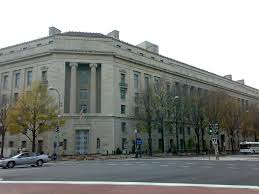
U.S. Department of Justice
The remedies for punishing such criminal behavior were now legally in place. President Obama needed only to direct the Justice Department to apply them.
Criminally investigating and possibly indicting members of Congress would not violate the separation-of-powers principle. Congressmen have in the past been investigated, indicted and convicted for various criminal offenses.
The indictment of large numbers of Republican extortionists would have substantially changed the course of American history while Obama held office.
Instead of raising huge sums of money for re-election battles, those Representatives and Senators would have been forced to raise monies for their legal defense. And while some might have been convicted, others almost certainly would have been.
This would have substantially depleted the ranks of Obama’s sworn enemies—and given him far greater opportunities to enact his legislative agenda.
Such indictments and prosecutions—and especially convictions—would have served notice on current and future members of Congress: The lives and fortunes of American citizens may not be held hostage to gain leverage in a political settlement.
A Cuban Missile Crisis Speech
But Obama could have stood up to Republican extortionists in another way: By urging his fellow Americans to rally to him in a moment of supreme national danger.
President John F. Kennedy did just that—successfully—during the most dangerous crisis of his administration. Addressing the Nation on October 22, 1962, Kennedy shocked his fellow citizens by revealing that the Soviet Union had installed offensive nuclear missiles in Cuba.

John F. Kennedy
Kennedy outlined a series of steps he had taken to end the crisis—most notably, a blockade of Cuba.
Then he sought to reassure and inspire his audience: “The cost of freedom is always high, but Americans have always paid it. And one path we shall never choose, and that is the path of surrender or submission.”
President Obama could have sent that same message to the extortionists of the Republican Party—by explaining to the American people:
- Republicans have adopted the same my-way-or-else “negotiating” stance as Adolf Hitler.
- Like the Nazis, they are determined to gain absolute power—or destroy the Nation they claim to love.
- They raised the debt ceiling seven times during the eight-year Presidency of George W. Bush.
- But now that a Democrat holds the White House, raising the debt ceiling is unacceptable.
- Despite Republican lies, we cannot revitalize the economy by slashing taxes on the wealthy and on cash-hoarding corporations while cutting benefits for millions of average Americans.
- We will need both tax increases and sensible entitlement cuts to regain our economic strength.
And he could have ended his speech with a direct call to action by the American people:

President Barack Obama addressing the Nation
“We stand on the edge of economic disaster. Therefore, I am asking each of you to stand up for America tonight–by demanding the recall of the entire membership of the Republican Party.
“This is the moment when each of us must decide—whether we will survive as a Republic, or allow ruthless political fanatics to destroy what has lasted and thrived for more than 200 years.”
Instead, Obama caved in to Republican extortion demands.
In September, 1939, British Prime Minister Neville Chamberlain and French Prime Minister Edouard Daladier sold out their ally, Czechoslovakia, to Adolf Hitler at the infamous Munich Conference.
As Winston Churchill aptly predicted: “Britain and France had to choose between war and dishonor. They chose dishonor. They will have war.”
To paraphrase Churchill: President Obama had to choose between confrontation and timidity. He chose timidity. He got contempt and obstruction in return.
Five years later, the FBI, CIA and National Security Agency informed Obama that Russian Intelligence agents were actively working to ensure Donald Trump’s election as President.
Obama did not publicly release this information–nor indict Trump campaign staffers who were colluding with those agents.
Thus, Trump won the election–and gained the power to destroy Obama’s Presidential legacy.
2016 PRESIDENTIAL CAMPAIGN, ABC NEWS, ALTERNET, AP, BBC, BILL CLINTON, BUZZFEED, CBS NEWS, CNN, DAILY KOS, DONALD TRUMP, FACEBOOK, FBI, HILLARY CLINTON, HOUSE OF REPRESENTATIVES, IMPEACHMENT, JAMES COMEY, JOSEPH STALIN, KEITH SCHILLER, KENNETH STARR, MIKE FLYNN, MONICA LEWINSKY, MOTHER JONES, MOVEON, NBC NEWS, NEWSWEEK, NICCOLO MACHIAVELLI, NPR, POLITICO, RAW STORY, REUTERS, ROBERT MEULLER 111, ROD ROSENSTEIN, RUSSIA, SALON, SEATTLE TIMES, SERGEY KISLYAK, SERGEY LAVOV, SLATE, SPECIAL PROSECUTOR, TAPES, THE ATLANTIC, THE CHICAGO SUN-TIMES, THE CHICAGO TRIBUNE, THE DAILY BEAST, THE DISCOURSES, THE GUARDIAN, THE HILL, THE HUFFINGTON POST, THE LOS ANGELES TIMES, THE NEW YORK TIMES, THE PRINCE, THE WALL STREET JOURNAL, THE WASHINGTON POST, TIME, TWITTER, U.S. NEWS & WORLD REPORT, UNITED STATES SENATE, UPI, USA TODAY, WHITEWATER
In Bureaucracy, History, Law, Law Enforcement, Politics, Social commentary on June 13, 2017 at 12:20 am
Hear that sound?
It’s the sound of Niccolo Machiavelli laughing at President Donald J. Trump.
Machiavelli (1469 – 1527) was an Italian Renaissance historian, diplomat and writer. Two of his books continue to profoundly influence modern politics: The Prince and The Discourses on the First Ten Books of Titus Livy.
The Prince has often been damned as a dictator’s guide on how to gain and hold power. But The Discourses outlines how citizens in a republic can maintain their liberty.
Niccolo Machiavelli
In Chapter 26 of The Discourses, he advises:
I hold it to be a proof of great prudence for men to abstain from threats and insulting words towards any one, for neither the one nor the other in any way diminishes the strength of the enemy—but the one makes him more cautious, and the other increases his hatred of you, and makes him more persevering in his efforts to injure you.
If Trump has read Machiavelli, he’s utterly forgotten the Florentine statesman’s advice. Or he decided long ago that it simply didn’t apply to him.
Consider his treatment of James Comey, the former FBI director whom the President fired on May 9.

James B. Comey (By Federal Bureau of Investigation)
In a move that Joseph Stalin would have admired, Trump gave no warning of his intentions.
Instead, he sent Keith Schiller, his longtime bodyguard and henchman, to the FBI with a letter announcing Comey’s dismissal.
Trump had three reasons for firing Comey:
- Comey had refused to pledge his personal loyalty to Trump. Trump had made this “request” during a private dinner at the White House in January. After refusing to make that pledge, Comey told Trump that he would always be honest with him. But that didn’t satisfy Trump’s demand that the head of the FBI act as his personal secret police chief.
- Trump had tried to coerce him into dropping the FBI’s investigation into former National Security Adviser Mike Flynn, for his secret ties to Russia and Turkey. Comey had similarly resisted that demand.
- Comey had recently asked the Justice Department to fund an expanded FBI investigation into contacts between Trump’s 2016 Presidential campaign and Russian Intelligence agents.
On May 10–the day after firing Comey–Trump met in the Oval Office with Russian Foreign Minister Sergey Lavov and Russian Ambassador Sergey Kislyak.
Donald Trump
Kislyak is reportedly a top recruiter for Russia’s SVR foreign intelligence agency. He has been closely linked with Jeff Sessions, now Attorney General, and fired National Security Adviser Mike Flynn.
“I just fired the head of the FBI,” Trump told the two dignitaries. “He was crazy, a real nut job. I faced great pressure because of Russia. That’s taken off.”
Two days later, on May 12, Trump tweeted a threat to the fired FBI director: “James Comey better hope that there are no ‘tapes’ of our conversations before he starts leaking to the press.”
It clearly didn’t occur to Trump that Comey might have created his own record of their exchanges. Or that he might choose to publicly release it.
But shortly afterward, that’s exactly what he did.
News stories surfaced that Comey had written memos to himself immediately after his private meetings with Trump. He had also told close aides that Trump was trying to pressure him into dropping the Russia investigation.
The news stories led to another result Trump had not anticipated: Acting Attorney General Rod Rosenstein yielded to demands from Democrats and appointed former FBI Director Robert Meuller III as a Special Prosecutor to investigate Trump’s Russian ties.
A Special Prosecutor (now euphemistically called an “Independent Counsel”) holds virtually unlimited power and discretion.
In 1993, Kenneth Starr was appointed Special Prosecutor to investigate Bill and Hillary Clinton’s involvement in “Whitewater.” This was a failed Arkansas land deal that had happened while Clinton was still governor there. It had nothing to do with his role as President.
Starr never turned up anything incriminating about Whitewater. But he discovered that Clinton had gotten oral sex in the Oval Office from a lust-hungry intern named Monica Lewinsky.
Clinton’s lying about these incidents before a Federal grand jury led to his impeachment by a Republican-dominated House of Representatives. But he avoided removal when the Senate refused to convict him by a vote of 55 to 45.
Finally, Trump’s implying that he had illegally taped his conversations with Comey was yet another dangerous mistake, with four possible outcomes:
- If Trump has such tapes, they can and will be subpoenaed by the Special Prosecutor and the House and Senate committees investigating Russia’s meddling in the 2016 election.
- If Trump has such tapes and refuses to turn them over, he can be charged with obstruction of justice–and impeached for that reason alone.
- If he has burned or erased such tapes, that, too, counts as obstruction of justice.
- If he doesn’t have such tapes, he will be revealed as a maker of empty threats.
This last outcome wouldn’t get him impeached. But it would make him a national laughingstock.
As Machiavelli also warns: Unwise princes cannot be wisely advised.
ABC NEWS, ADOLF HITLER, ALTERNET, AP, BBC, BUZZFEED, CBS NEWS, CNN, DAILY KOS, DIMITRI SHOSTAKOVICH, DONALD TRUMP, FACEBOOK, FBI, GREAT TERROR, JAMES COMEY, JEFF SESSIONS, JOSEPH STALIN, KEITH SCHILLER, MIKE FLYNN, MIKHAIL TUKHACHEVESKY, MOTHER JONES, MOVEON, NAZI GERMANY, NBC NEWS, NEWSWEEK, NICCOLO MACHIAVELLI, NIKITA KHRUSHCHEV, NIKOLAI ZHILAYEV, NPR, POLITICO, RAW STORY, REUTERS, ROBERT MEULLER 111, ROD ROSENSTEIN, RUSSIAN ESPIONAGEky, SALON, SEATTLE TIMES, SENATE INTELLIGENCE COMMITTEE, SERGEY KISLYAK, SERGEY LAVOV, SLATE, SOVIET UNION, THE ATLANTIC, THE CHICAGO SUN-TIMES, THE CHICAGO TRIBUNE, THE DAILY BEAST, THE DISCOURSES, THE GUARDIAN, THE HILL, THE HUFFINGTON POST, THE LOS ANGELES TIMES, THE NEW YORK TIMES, THE WALL STREET JOURNAL, THE WASHINGTON POST, TIME, TWITTER, U.S. NEWS & WORLD REPORT, UPI, USA TODAY, WEHRMACHT, WORLD WAR 11
In Bureaucracy, History, Law, Law Enforcement, Military, Politics, Social commentary, Uncategorized on June 7, 2017 at 12:15 am
Nikolai Sergeyvich Zhilayev (pronounced Zill-lay-ev) was a Russian musicologist and the teacher of several 20th-century Russian composers.
Among these: Dimitri Shostakovich.
Among his friends–to his ultimate misfortune–was Mikhail Tukhachevsky, the former military hero now falsely condemned and executed as a traitor by Soviet dictator Joseph Stalin.
In 1938, Zhilayev, too, became a casualty of what has become known as The Great Terror.
In his posthumously-published memoirs, Testimony, Shostakovich, his pupil and friend, described how Zhilayev faced his end with a calmness that awed even the NKVD (the predecessor to the KGB) secret police sent to arrest him.
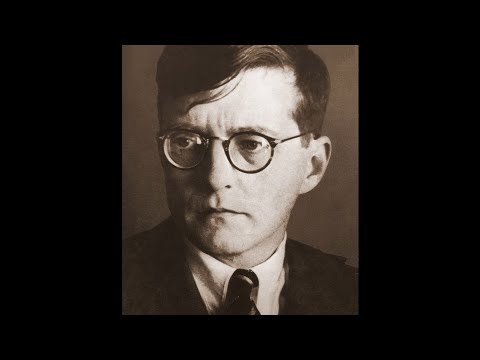
Dimitri Shostakovich
“He had a large picture of Tukhachevsky in his room, and after the announcement that Tukhachevsky had been shot as a traitor to the homeland, Zhilayev did not take the picture down.
“I don’t know if I can explain how heroic a deed that was….As soon as the next poor soul was declared an enemy of the people, everyone destroyed in a panic everything connected with that person.
“If the enemy of the people wrote books, they threw away his books. If they had letters from him, they burned the letters. The mind can’t grasp the number of letters and papers burned in that period…
“And naturally, photographs flew into the fire first, because if someone informed on you, reported that you had a picture of an enemy of the people, it meant certain death.
“Zhilayev wasn’t afraid. When they came for him, Tukhachevsky’s prominently hung portrait amazed even the executioners.”
“What, it’s still up?” one of the secret police asked.
“The time will come,” Zhilayev replied, “when they’ll erect a monument to him.”
As, in fact, has happened.

Mikhail Tukhachevsky appears on a 1963 Soviet Union postage stamp
Third hero–James Brien Comey (December 14, 1960)
Comey served as United States Attorney (federal prosecutor) for the Southern District of New York (2002-2003).
As United States Deputy Attorney General (2003-2005), he opposed the warrantless wiretapping program of the George W. Bush administration. He also argued against the use of water boarding as an interrogation method.
In 2005, he entered the private sector as General Counsel and Senior Vice President for Lockheed Martin, the biggest contractor for the Department of Defense.
On July 29, 2013, the United States Senate voted 93 -1 to confirm Comey as director of the FBI, the seventh in its history.
James B. Comey
He directed the FBI from his appointment in 2013 by President Barack Obama until his firing on May 9 by President Donald Trump.
In a move that Joseph Stalin would have admired, Trump gave no warning of his intentions. Instead, he sent Keith Schiller, his longtime bodyguard, to the FBI with a letter announcing Comey’s dismissal.
Trump had three reasons for firing Comey:
- Comey had refused to pledge his personal loyalty to Trump. Trump had made this “request” during a private dinner at the White House in January. After refusing to make that pledge, Comey told Trump that he would always be honest with him. But that didn’t satisfy Trump’s demand that the head of the FBI act as his personal secret police chief.
- Trump had tried to coerce him into dropping the FBI’s investigation into former National Security Adviser Mike Flynn, for his secret ties to Russia and Turkey. Comey had similarly resisted that demand.
- Comey had recently asked the Justice Department to fund an expanded FBI investigation into contacts between Trump’s 2016 Presidential campaign and Russian Intelligence agents.
As a Presidential candidate and President, Trump has:
- Steadfastly denied those revelations;
- Repeatedly attacked the “fake news” media reporting these revelations. Chief among his targets: CNN, The New York Times and The Washington Post; and
- Attacked the Intelligence agencies responsible for America’s security.
On May 10–the day after firing Comey–Trump met in the Oval Office with Russian Foreign Minister Sergey Lavov and Russian Ambassador Sergey Kislyak.
Kislyak is reportedly a top recruiter for Russia’s SVR foreign intelligence agency. He has been closely linked with Jeff Sessions, now Attorney General, and fired National Security Adviser Mike Flynn.
“I just fired the head of the F.B.I.,” Trump told the two dignitaries. “He was crazy, a real nut job. I faced great pressure because of Russia. That’s taken off.”
During that meeting he gave the Russians sensitive Intelligence on ISIS that had been supplied by Israel.
Two days later, on May 12, Trump tweeted a threat to the fired FBI director: “James Comey better hope that there are no ‘tapes’ of our conversations before he starts leaking to the press.”
But shortly afterward, it appeared Trump was the one who should worry: Reports surfaced that Comey had written memos to himself immediately after his private meetings with Trump.
He had also told close aides that Trump was trying to pressure him into dropping the investigation into close ties between Russian Intelligence agents and Trump campaign staffers.
The firing led directly to a result Trump did not anticipate: Acting Attorney General Rod Rosenstein yielded to demands from Democrats and appointed former FBI Director Robert Meuller III as a special prosecutor to investigate those ties.
And, on June 8, James Comey was scheduled to give his much-anticipated version of events before the United States Senate Intelligence Committee.
ABC NEWS, ADOLF HITLER, ALTERNET, AP, BBC, BUZZFEED, CBS NEWS, CNN, DAILY KOS, DIMITRI SHOSTAKOVICH, DONALD TRUMP, FACEBOOK, FBI, GREAT TERROR, JAMES COMEY, JEFF SESSIONS, JOSEPH STALIN, KEITH SCHILLER, MIKE FLYNN, MIKHAIL TUKHACHEVESKY, MOTHER JONES, MOVEON, NAZI GERMANY, NBC NEWS, NEWSWEEK, NICCOLO MACHIAVELLI, NIKITA KHRUSHCHEV, NIKOLAI ZHILAYEV, NPR, POLITICO, RAW STORY, REUTERS, ROBERT MEULLER 111, ROD ROSENSTEIN, RUSSIAN ESPIONAGEky, SALON, SEATTLE TIMES, SENATE INTELLIGENCE COMMITTEE, SERGEY KISLYAK, SERGEY LAVOV, SLATE, SOVIET UNION, THE ATLANTIC, THE CHICAGO SUN-TIMES, THE CHICAGO TRIBUNE, THE DAILY BEAST, THE DISCOURSES, THE GUARDIAN, THE HILL, THE HUFFINGTON POST, THE LOS ANGELES TIMES, THE NEW YORK TIMES, THE WALL STREET JOURNAL, THE WASHINGTON POST, TIME, TWITTER, U.S. NEWS & WORLD REPORT, UPI, USA TODAY, WEHRMACHT, WORLD WAR 11, WORLD WAR ii
In Bureaucracy, History, Law, Law Enforcement, Military, Politics, Social commentary on June 6, 2017 at 12:02 am
…A truly great man is ever the same under all circumstances. And if his fortune varies, exalting him at one moment and oppressing him at another, he himself never varies, but always preserves a firm courage, which is so closely interwoven with his character that everyone can readily see that the fickleness of fortune has no power over him.
The conduct of weak men is very different. Made vain and intoxicated by good fortune, they attribute their success to merits which they do not possess. And this makes them odious and insupportable to all around them. And when they have afterwards to meet a reverse of fortune, they quickly fall into the other extreme, and become abject and vile.
–Niccolo Machiavelli, The Discourses
Three heroes, two villains.
Two of the heroes are Russian; the third is an American.
The villains: One Russian (actually, Georgian); one American.
First up–in order of disappearance: Mikhail Nikolayevich Tukhachevsky (pronounced too-ka-chev-sky)
Tukhachevsky (February 4, 1893 – June 12, 1937) was a leading Soviet military leader and theoretician from 1918 to 1937.
He commanded the Soviet Western Front during the Russian-Polish War (1920-21) and served as Chief of Staff of the Red Army (1925-1928).
He fought to modernize Soviet armament, as well as develop airborne, aviation and mechanized forces. Almost singlehandedly, he created the theory of deep operations for Soviet forces.

Mikhail Tukhachevsky
All of these innovations would reap huge dividends when the Soviet Union faced the lethal fury of Adolf Hitler’s Wehrmacht.
In 1936, Tukhachevsky warned Soviet dictator Joseph Stalin that Nazi Germany might attack without warning–and ignite a long and murderous war.
Stalin–the son of a Georgian cobbler–resented Tukhachevsky’s coming from a noble family. A monumental egomaniac, he also hated that Tukhachevesky’s fame rivaled his own.
Warned of the approaching German danger, Stalin shouted: “What are you trying to do–frighten Soviet authority?”
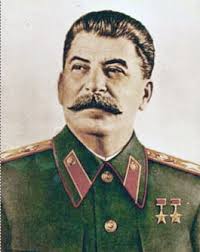
Joseph Stalin
The attack that Tukhachevsky warned against came five years later on June 22, 1941, leaving at least 20 million Russians dead.
But Tukhachevsky wasn’t alive to command a defense.
The 1930s were a frightening and dangerous time to be alive in the Soviet Union. In 1934, Stalin, seeing imaginary enemies everywhere, ordered a series of purges that lasted right up to the German invasion.
In 1937-38, the Red Army fell prey to Stalin’s paranoia.
Its victims included:
- Three of five marshals (five-star generals);
- Thirteen of 15 army commanders (three- and four-star generals);
- Fifty of 57 army corps commanders; and
- One hundred fifty-four out of 186 division commanders.
And heading the list of those marked for death was Marshal Mikhail Tukhachevsky.
Arrested on May 22, 1937, he was interrogated and tortured. As a result, he “confessed” to being a German agent plotting to overthrow Stalin and seize power.
On his confession, which survives in the archives, his bloodstains can clearly be seen.
On June 11, the Soviet Supreme Court convened a special military tribunal to try Tukhachevsky and eight generals for treason.
It was a sham: The accused were denied defense attorneys, and could not appeal the verdict–which was foregone: Death.
In a Russian version of poetic justice, five of the eight generals who served as Tukhachevsky’s judges were themselves later condemned and executed as traitors.
Within hours of the verdict, Tukhachevsky was summoned from his cell and shot once in the back of the head.
From 1937 until 1956, Tukhachevsky was officially declared a traitor and fifth-columnist.
Then, on February 25, 1957, Soviet Premier Nikita Khrushchev delivered his bombshell “Secret Speech” to the 20th Congress of the Communist Party of the Soviet Union.
In this, he denounced Stalin (who had died in 1953) as a ruthless tyrant responsible for the slaughter of millions of innocent men, women and children. He condemned Stalin for creating a “personality cult” around himself, and for so weakening the Red Army that Nazi Germany was able to easily overrun half of the Soviet Union from 1941 to 1943.
On January 31, 1957, Tukhachevsky and his co-defendants were declared innocent of all charges and were “rehabilitated.”
Today, he is once again considered a Russian hero and military genius.
Next hero: Nikolai Sergeyvich Zhilayev (pronounced Zill-lay-ev)
Zhilayev (November 18, 1881 – January 20, 1938) was a Russian musicologist and the teacher of several 20th-century Russian composers. Among these: Dimitri Shostakovich.
Zhilayev, a member of the Russian Academy of Art-Sciences, taught at the Moscow Conservatory. Among his friends–to his ultimate misfortune–was Mikhail Tukhachevsky.
In 1938, he, too, became a casualty of what has become known as The Great Terror.
In his posthumously-published memoirs, Testimony, Shostakovich, his pupil and friend, described how Zhilayev faced his end with a calmness that awed even the NKVD (the predecessor to the KGB) secret police sent to arrest him.
ABC NEWS, ALTERNET, AMERICABLOG, AP, BABY BOOMER RESISTANCE, BBC, BLOOMBERG NEWS, BUSINESS, BUZZFEED, CBS NEWS, CNN, CROOKS AND LIARS, DAILY KOS, DAILY KOZ, DONALD TRUMP, FACEBOOK, FBI, FIVETHIRTYEIGHT, HARPER’S MAGAZINE, HUFFINGTON POST, INCOME INEQUALITY, MAFIA, MEDIA MATTERS, MOTHER JONES, MOVEON, MSNBC, NBC NEWS, NEW REPUBLIC, NEWSDAY, NEWSWEEK, NICCOLO MACHIAVELLI, NPR, PBS NEWSHOUR, POLITICO, POLITICS, POLITICUSUSA, RAW STORY, REUTERS, SALON, SEATTLE TIMES, SLATE, TALKING POINTS MEMO, TAX HAVENS, TAX JUSTICE NETWORK, THE ATLANTIC, THE CHICAGO SUN-TIMES, THE CHICAGO TRIBUNE, THE DAILY BEAST, THE DAILY BLOG, THE GUARDIAN, THE HILL, THE HUFFINGTON POST, THE INTERCEPT, THE LOS ANGELES TIMES, THE NATION, THE NEW REPUBLIC, THE NEW YORK TIMES, THE NEW YORKER, THE PRINCE, THE VILLAGE VOICE, THE WALL STREET JOURNAL, THE WASHINGTON POST, THINKPROGRESS, TIME, TRUTHDIG, TRUTHOUT, TWITTER, TWO POLITICAL JUNKIES, U.S. NEWS & WORLD REPORT, UPI, USA TODAY, WEALTH, WONKETTE
In Business, History, Law, Law Enforcement, Politics, Social commentary on April 26, 2017 at 12:05 am
As President Donald Trump prepares to drastically cut taxes on the wealthy (including himself) it’s well to remember the man whose name defines modern politics.
In 1513, Niccolo Machiavelli, the Florentine statesman who has been called the father of modern political science, published his best-known work: The Prince.


Niccolo Machiavelli
Among the issues he confronted was how to preserve liberty within a republic. And key to this was mediating the eternal struggle between the wealthy and the poor and middle class.
Machiavelli deeply distrusted the nobility because they stood above the law. He saw them as a major source of corruption because they could buy influence through patronage, favors or nepotism.
Successful political leaders must attain the support of the nobility or general populace. But since these groups have conflicting interests, the safest course is to choose the latter.
Writes Machiavelli:
….He who becomes prince by help of the [wealthy] has greater difficulty in maintaining his power than he who is raised by the populace. He is surrounded by those who think themselves his equals, and is thus unable to direct or command as he pleases.
But one who is raised to leadership by popular favor finds himself alone, and has no one, or very few, who are not ready to obey him. [And] it is impossible to satisfy the [wealthy] by fair dealing and without inflicting injury upon others, whereas it is very easy to satisfy the mass of the people in this way.
Machiavelli warns that the general populace is more honest than the nobility—i.e., wealthy. The wealthy seek to oppress, while the populace wants to simply avoid oppression.
A political leader cannot protect himself against a hostile population, owing to their numbers, but he can against the hostility of the great, as they are but few.
The worst that a prince has to expect from a hostile people is to be abandoned, but from hostile nobles he has to fear not only desertion but their active opposition. And as they are more far seeing and more cunning, they are always in time to save themselves and take sides with the one who they expect will conquer.
The prince is, moreover, obliged to live always with the same people, but he can easily do without the same nobility, being able to make and unmake them at any time, and improve their position or deprive them of it as he pleases.
Unfortunately, political leaders throughout the world—including the United States–have ignored this sage advice.
The results of this wholesale favoring of the wealthy and powerful have been brilliantly documented in an investigation of tax evasion by the world’s rich.
In 2012, Tax Justice Network, which campaigns to abolish tax havens, commissioned a study of their effect on the world’s economy.
The study was entitled, “The Price of Offshore Revisited: New Estimates for ‘Missing’ Global Private Wealth, Income, Inequality and Lost Taxes.”
http://www.taxjustice.net/cms/upload/pdf/Price_of_Offshore_Revisited_120722.pdf
The research was carried out by James Henry, former chief economist at consultants McKinsey & Co. Among its findings:
Summing up this situation, the report noted: “We are up against one of society’s most well-entrenched interest groups. After all, there’s no interest group more rich and powerful than the rich and powerful.”
Fortunately, Machiavelli has supplied timeless remedies to this increasingly dangerous situation:
- Assume evil among men—and most especially among those who possess the greatest concentration of wealth and power.
- Carefully monitor their activities—the way the FBI now regularly monitors those of the Mafia and major terrorist groups.
- Ruthlessly prosecute the treasonous crimes of the rich and powerful—and, upon their conviction, impose severe punishment.


 Bureaucracybuster's Blog
ABC NEWS, ALTERNET, AP, BBC, BOB CORKER, BUZZFEED, CBS NEWS, CNN, COMMODUS, DAILY KOS, DONALD TRUMP, FACEBOOK, MIKA BRZEZINSKI, MORNING JOE, MOTHER JONES, MOVEON, NBC NEWS, NEWSWEEK, NICCOLO MACHIAVELLI, NPR, POLITICO, QATER, RAW STORY, REPORTERS COMMITTEE FOR FREEDOM OF THE PRESS, REUTERS, REX TILLERSON, SALON, SARAH HUCKABEE SANDERS, SAUDI ARABIA, SEATTLE TIMES, SLATE, THE ATLANTIC, THE CHICAGO SUN-TIMES, THE CHICAGO TRIBUNE, THE DAILY BEAST, THE GUARDIAN, THE HILL, THE HUFFINGTON POST, THE LOS ANGELES TIMES, THE NEW YORK TIMES, THE PRINCE, THE WALL STREET JOURNAL, THE WASHINGTON POST, TIME, TODD WOMACK, TWITTER, U.S. NEWS & WORLD REPORT, UPI, USA TODAY
THE PERILS OF TWITTERING
In Bureaucracy, History, Politics, Social commentary on October 9, 2017 at 12:04 amFirst published in 1532, The Prince lays bare the qualities needed by a successful political leader. At the top of this list must be creating and preserving a sense of his own dignity. Thus, he must appear to be a combination of mercy, faith, integrity, humanity and religion.
As Machiavelli puts it:
A prince must take great care that nothing goes out of his mouth which is not full of the above-named five qualities, and he should seem to be all mercy, faith, integrity, humanity and religion.
Since taking office on January 20, Trump has violated Machiavelli’s injunction on integrity with a vengeance. He has been caught in repeated falsehoods–so many, in fact, that the New York Times gave over its June 23 front page to a story headlined: “Trump’s Lies.”
According to the Times, Trump “told public falsehoods or lies every day for his first 40 days.”
“There is simply no precedent,” went the Times‘ opinion piece, “for an American president to spend so much time telling untruths. Every president has shaded the truth or told occasional whoppers.
“No other president—of either party—has behaved as Trump is behaving. He is trying to create an atmosphere in which reality is irrelevant.”
Donald Trump
Machiavelli also advises:
[He] must contrive that his actions show grandeur, spirit, gravity and fortitude….
It’s hard to convey those qualities in a series of 140-character rants on Twitter. Yet, from the start of his Presidency, Trump has put his ambitions, excuses and rants on social media.
As CNN Political Analyst Julian Zelizer outlined in a July 3 article:
“Putting aside the specific content of the recent blasts from the Oval smart phone, the President’s ongoing Twitter storms make all leaders uneasy. The heads of government in most nations prefer a certain amount of predictability and decorum from other heads of state.
“To have one of the most powerful people in the room being someone who is willing to send out explosive and controversial statements through social media, including nasty personal attacks or an edited video of him physically assaulting the media, does not make others….feel very confident about how he will handle deliberations with them.”
Trump’s apologists have fiercely defended his tweetstorms, claiming they allow him to bypass the media and “communicate directly with the American people.”
On October 8, Trump attacked retiring Tennessee United States Senator Bob Corker on Twitter:
“Senator Bob Corker ‘begged’ me to endorse him for re-election in Tennessee. I said ‘NO’ and he dropped out (said he could not win without…”
“..my endorsement). He also wanted to be Secretary of State, I said “NO THANKS.” He is also largely responsible for the horrendous Iran Deal!”
“…Hence, I would fully expect Corker to be a negative voice and stand in the way of our great agenda. Didn’t have the guts to run!”
Corker decided to give Trump a taste of his own Twitter medicine: “It’s a shame the White House has become an adult day care center. Someone obviously missed their shift this morning.”
Later that day, Corker told The New York Times: “He concerns me. He would have to concern anyone who cares about our nation.
“I know for a fact that every single day at the White House, it’s a situation of trying to contain him,”
And Todd Womack, Corker’s chief of staff, flatly called Trump a liar: “The president called Senator Corker on Monday afternoon and asked him to reconsider his decision not to seek reelection and reaffirmed that he would have endorsed him, as he has said many times.”
Machiavelli urged rulers to safeguard their reputations:
Niccolo Machiavelli
…A prince must show himself a lover of merit, give preferment to the able, and honor those who excel in every art.
Besides this, he ought, at convenient seasons of the year, to keep the people occupied with festivals and shows….mingle with them from time to time, and give them an example of his humanity and munificence, always upholding, however, the majesty of his dignity, which must never be allowed to fail in anything whatever.
Rulers who disregard this advice do so at their peril:
A prince need trouble little about conspiracies when the people are well disposed. But when they are hostile and hold him in hatred, then he must fear everything and everybody….
…[The Roman Emperor Commodus], being of a cruel and bestial disposition, in order to…exercise his rapacity on the people, he sought to favor the soldiers and render them licentious.
On the other hand, by not maintaining his dignity, by often descending into the theater to fight with gladiators and committing other contemptible actions…he became despicable in the eyes of the soldiers. And being hated on the one hand and despised on the other, he was conspired against and killed.
Donald Trump has repeatedly violated these lessons. It remains to be seen if he will pay a price for doing so.
Share this: