Posts Tagged ‘NAZI GERMANY’
ABC NEWS, ALTERNET, AP, BUZZFEED, CBS NEWS, CNN, CROOKS AND LIARS, D-DAY, D-DAY ANNIVERSARY CEREMONY, DAILY KOZ, DONALD TRUMP, EMMANUEL MACRON, ERWIN ROMMEL, FACEBOOK, FOX NEWS NETWORK, FRANKLIN D. ROOSEVELT, illegal immigration, JOHN F. KENNEDY, JUDY WOODRUFF, LAURA INGRAHAM, MARK SHIELDS, MEXICO, MOTHER JONES, MOVEON, MSNBC, NANCY PELOSI, NAZI GERMANY, NBC NEWS, NEWSWEEK, NORMAN COTA, NPR, PBS NEWSHOUR, PETER WEHNER, POLITICO, QUEEN ELIZABETH 11, RAW STORY, REUTERS, ROBERT MUELLER, SALON, SEATTLE TIMES, SLATE, TARIFFS, THE ATLANTIC, THE CHICAGO SUN-TIMES, THE CHICAGO TRIBUNE, THE DAILY BEAST, THE GUARDIAN, THE HILL, THE HUFFINGTON POST, THE LOS ANGELES TIMES, THE NATION, THE NEW YORK TIMES, THE WASHINGTON POST, TIME, TWITTER, U.S. NEWS & WORLD REPORT, UPI, USA TODAY, WORLD WAR 11
In Bureaucracy, History, Military, Politics, Social commentary on June 13, 2019 at 12:27 am
For most Americans, June 6th marked the 75th anniversary of D-Day. A time to remember and celebrate the more than 160,000 troops—73,000 of them Americans—who liberated France from Nazi slavery.
But for President Donald Trump, D-Day was simply another opportunity to slander men and women he considered “enemies of the people.”
On that day, President Donald Trump was to join European leaders—such as England’s Queen Elizabeth II and France’s President Emmanuel Macron—in celebratory observance.
But for Trump, honoring the dead—and a handful of D-Day survivors present at the ceremony—was a distant priority.

Normandy American Cemetery and Memorial
First must come a soft-ball “interview” with Right-wing Fox News Network—even if it meant postponing the opening of D-Day ceremonies until he deigned to show up.
And conducting that interview was Right-wing Fox News host Laura Ingraham—who gave a stiff-armed Nazi salute at the 2016 Republican National Convention that nominated Trump for President.
Laura Ingraham: What could you do to unite the country at a time of great polarization, what else could you do?
Donald Trump: So, I think success should unite the country but I will tell you the more successful we’ve come the more angry people like Nancy Pelosi, who don’t have what it takes, if they don’t know what’s going on they get angry. They should — an example is Mexico, I said we’re going to put tariffs on because we want you to help us because they won’t pass any legislation in Congress and I have Senators and others and Pelosi coming out saying how horrible.
What they’re doing is they’re hurting a deal, they should be saying we’re with the President, we’ll do whatever he wants to do and Mexico would fold like an umbrella. Now, I have these people and I’m saying there’s some republicans too,
[NOTE: Since becoming President, Trump has repeatedly tried—and failed—to curb illegal immigration from Central and South America. In May, he threatened to slap tariffs on goods from Mexico unless its government imposed strict controls over would-be immigrants traveling through its borders.]
On June 7, 2019, syndicated columnist Mark Shields and New York Times columnist Peter Wehners appeared on the PBS Newshour to review the week’s major political events.
Shields—a liberal, and Wehner, a conservative—reached disturbingly similar conclusions about the behavior of President Donald Trump on the 75th anniversary celebration of the D-Day landings.

Peter Wehner and Mark Shields
Peter Wehner: in terms of watching it, it reminded me of why it was the Greatest Generation. It’s been called the Greatest Generation.The more you find out about what happened 75 years ago on Normandy Beach, the more extraordinary is, the courage and the valor and selflessness…
But, for me, what was, well, frankly, sickening was this interview that Donald Trump did with Laura Ingraham on Fox News, not just what he said, but where he said it. He had thousands and thousands of gravestones behind him, these people who had been cut down in the prime of their life. And he was attacking Nancy Pelosi and Robert Mueller, who himself was a—was a war hero, in petty terms.
And to have done it then was, in my mind, a desecration at a sacred place. And it was another window into the bonfire of anger and resentments and grievances that is Donald Trump.
Mark Shields: I would just add this….that the 9,388 Americans, husbands, fathers, sons, brothers, sweethearts are buried there who either died at Normandy or in the liberation of France. And it was a time in this country, it was a we generation, not a me generation.
I mean, we had 20 million victory gardens that civilians built that provided 40 percent of the vegetables for the whole country. We rationed everything from gasoline, to liquor, to cigarettes, to butter, to meat….
And all Americans were part of the collective effort, the collective sacrifice, and it was led by those at the top….The president of the United States had four sons. Every one of them served in combat. Every one of them was awarded in combat. You take the…sickly son of a multimillionaire, who asked his father to use his contacts to get him into combat, John Kennedy, rather than stay out….
One out of four American males served in World War II. And now we have one-third—one-percent of Americans serving. And they are serving over and over and over again.
Judy Woodruff (moderator): It’s been 75 years, Peter Wehner. What remains in the American psyche from that?
Wehner: Well, we’re an angry country, a more divided country, and a more tribalistic country than we were then. It’s important to say that, in many ways, we’re a better country too, if you’re a minority or a woman, all sorts of things where we have made progress….
The thing is that the American capacity for self-renewal can be great. And sometimes, when virtues are taken from the life of the nation and an individual, you remember why they matter to begin with. And, hopefully, commemorations like this can—can remind us that there are things that are worth fighting for and worth living for.
ABC NEWS, ALTERNET, AP, BUZZFEED, CBS NEWS, CNN, CROOKS AND LIARS, D-DAY, D-DAY 75TH ANNIVERSARY CEREMONY, DAILY KOZ, DONALD TRUMP, EMMANUEL MACRON, ERWIN ROMMEL, FACEBOOK, FOX NEWS NETWORK, LAURA INGRAHAM, MARK SHIELDS, MEXICO, MOTHER JONES, MOVEON, MSNBC, NANCY PELOSI, NAZI GERMANY, NBC NEWS, NEWSWEEK, NORMAN COTA, NPR, PBS NEWSHOUR, PETER WEHNER, POLITICO, QUEEN ELIZABETH 11, RAW STORY, REUTERS, ROBERT MUELLER, SALON, SEATTLE TIMES, SLATE, TARIFFS, THE ATLANTIC, THE CHICAGO SUN-TIMES, THE CHICAGO TRIBUNE, THE DAILY BEAST, THE GUARDIAN, THE HILL, THE HUFFINGTON POST, THE LOS ANGELES TIMES, THE NATION, THE NEW YORK TIMES, THE WASHINGTON POST, TIME, TWITTER, U.S. NEWS & WORLD REPORT, UPI, USA TODAY, WORLD WAR 11
In Bureaucracy, History, Military, Politics, Social commentary on June 12, 2019 at 12:07 am
June 6, 2019, marked the 75th anniversary of D-Day—the Allied invasion to liberate France from Nazi Germany, which proved one of the pivotal actions of World War II.
Shortly after midnight, on June 6, 1944, 24,000 American, British, Canadian and Free French troops launched an airborne assault on German positions. This was followed at 6:30 a.m. by an amphibious landing of Allied infantry and armored divisions on the French coast.
The operation was the largest amphibious invasion in history. More than 160,000 troops landed—73,000 Americans, 61,715 British and 21,400 Canadians.
Field Marshal Erwin Rommel—the legendary “Desert Fox”—commanded the German forces. For him—and the Germans—the first 24 hours of the battle would be decisive.
Initially, the Allied assault seemed likely to be stopped at the water’s edge—where Rommel had insisted it must be.
German machine-gunners and mortarmen wreaked a fearful toll on Allied soldiers. But commanders like United States Army General Norman Cota led their men to victory through a storm of bullets and shells.

Omaha Beach – June 6, 1944
The allied casualty figures for D-Day have been estimated at 10,000, including 4,414 dead. By nationality, the D-Day casualty figures were about
- 2,700 British
- 946 Canadians
- and 6,603 Americans.
The total number of German casualties on D-Day isn’t known, but is estimated at 4,000 to 9,000.
One of those who traveled to Normandy, France, to commemorate that Allied sacrifice was President Donald J. Trump. Others included England’s Queen Elizabeth II and French President Emmanuel Macron.
On June 6, 2019, Trump granted an interview with Right-wing Fox News host Laura Ingraham.
With the crosses of fallen World War II heroes visible over his shoulder and aging veterans waiting for the D-Day commemoration ceremony to begin, Trump kept everyone waiting for him to show up.

Donald Trump’s D-Day love-fest
In fact, he bragged about it on camera: “Listen to those incredible people back there,” Trump said, motioning towards the ceremony stage. “These people are so amazing, and what they don’t realize is that, I’m holding them up because of this interview. But that’s because it’s you.”
Although Trump had admitted—on air—that he was holding up the D-Day ceremony for this interview, Ingraham later told Fox viewers: “By the way, some of you may have heard or read that President Trump supposedly held up the entire D-Day ceremony in order to do this interview with me. That is patently false. Fake news.”
Ingraham opened by asking about D-Day—whose honoring ceremonies her interview was preempting. Then she moved on to topics guaranteed to arouse Trump’s bile.
Laura Ingraham: We passed Nancy Pelosi as we were walking up to the stage earlier, she said some pretty harsh things over the last 24 hours, leaked out from her caucus, she said I don’t want to impeachment, I want him in prison, meaning you. How do you work with someone like that?
Donald Trump: I think she’s a disgrace. I actually don’t think she’s a talented person, I’ve tried to be nice to her because I would have liked to have gotten some deals done. She’s incapable of doing deals, she’s a nasty, vindictive, horrible person, the Mueller report came out, it was a disaster for them.
They thought their good friend Bobby Mueller was going to give them a great report and he came out with a report with 13 horrible, angry Democrats who are totally biased against me. A couple of them worked for Hillary Clinton, they then added five more, also Democrats, with all of that two and a half years think of it, from before I even got elected they’ve been going after me and they have nothing.
[NOTE: On a day for honoring the sacrifices of America’s soldiers. Trump savaged Special Counsel Robert Mueller, who had served as a Marine Corps infantry platoon commander during the Vietnam War.
Among the military awards he received were:
- The Bronze Star Medal with Combat “V” for heroism (for saving a wounded Marine while under enemy fire).
- The Purple Heart Medal (awarded for wounds in combat).
- Two Navy and Marine Corps Commendation Medals with Combat “V”.
Trump, on the other hand, is a five-time Vietnam war draft-dodger who falsely claimed he suffered from “bone spurs” in his heels.]
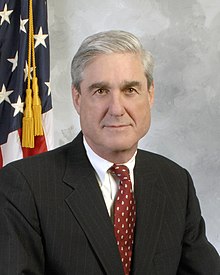
Robert Mueller
Ingraham: Do you mind if he testifies still, before you said you didn’t care if Mueller testified.
Trump: Let me tell you, he made such a fool out of himself the last time she—because what people don’t report is the letter he had to do to straighten out his testimony because his testimony was wrong but Nancy Pelosi, I call her nervous Nancy, Nancy Pelosi doesn’t talk about it. Nancy Pelosi’s a disaster, OK, she’s a disaster and let her do what she wants, you know what?
[NOTE: There is a longtime tradition in American politics that no criticism is aimed at a President when he’s traveling overseas.
Nancy Pelosi, as Speaker of the House of Representatives, held to that tradition while she attended the D-Day ceremonies. Asked to respond to Trump’s attacks on her, she said: “I don’t talk about the president while I’m out of the country. That’s my principle.”
Trump, however, did not adhere to the same principle.]
2003, 2016 PRESIDENTIAL ELECTION, ABC NEWS, ABC’S THE WEEK, ADOLF HITLER, AFGHAN WAR, ALTERNET, AP, AUSTRIA, BUZZFEED, CBS NEWS, CHIEF OF STAFF, CHRIS WALLACE, CIA, CNN, CROOKS AND LIARS, CZECHOSLOVAKIA, DAILY KOZ, DEPARTMENT OF HOMELAND SECURITY, DONALD TRUMP, EDUARD DALADIER, FACEBOOK, FBI, FOX NEWS, FUHRER OATH, H.R. MCMASTER, HERMAN GORING, IRAQ WAR, JAMES COMEY, JAMES MATTIS, JAMES ROBART, JOHN KELLY, JOINT OPERATIONS COMMAND, MICHAEL FLYNN, MOTHER JONES, MOVEON, MSNBC, MUSLIM TRAVEL BAN, NATIONAL SECURITY AGENCY, NAZI GERMANY, NBC NEWS, NEVILLE CHAMBERLAIN, NEWSWEEK, NPR, OSAMA BIN LADEN, PALMER REPORT, PAUL VON HINDENBURG, PBS NEWSHOUR, POLAND, POLITICIZING THE MILITARY, POLITICO, RAW STORY, REUTERS, RHINELAND, ROBERT MUELLER, ROLLING STONE, RUSSIA, SALON, SEATTLE TIMES, SECRETARY OF DEFENSE, SLATE, SPECIAL WARFARE, STANLEY MCCHRYSTAL, SUDENTENLAND, THE ATLANTIC, THE CHICAGO SUN-TIMES, THE CHICAGO TRIBUNE, THE DAILY BEAST, THE GUARDIAN, THE HILL, THE HUFFINGTON POST, THE LOS ANGELES TIMES, THE NATION, THE NEW YORK TIMES, THE WASHINGTON POST, TIME, TWITTER, U.S. NEWS & WORLD REPORT, UPI, USA TODAY, VLADIMIR PUTIN, WERNER VON BLOMBERG, WERNER VON FRITSCH, WILLIAM MCRAVEN, WORLD WAR 11
In Bureaucracy, History, Military, Politics, Social commentary on June 11, 2019 at 12:02 am
Nazi Germany’s Fuhrer, Adolf Hitler wasn’t crazy, as many of his critics charged. He knew what he wanted to achieve—and why.
He intended to strip every potential challenger to his authority—or his version of reality—of legitimacy with the public. After he succeeded, Germany became a nation where there was:
- No independent press to reveal his failures and crimes.
- No independent law enforcement agencies to investigate his abuses of office.
- No independent judiciary to hold him accountable.
- No independent military to dissent as he recklessly hurtled toward a disastrous war that would leave Germany in ruins.
Those are exactly the priorities of President Donald J. Trump.
He has already assaulted the integrity of:
- American Intelligence agencies: By publicly blaming the FBI, CIA and National Security Agency—instead of Russian President Vladimir Putin—for Russia’s subversion of the 2016 Presidential elections.
- American law enforcement agencies: By firing FBI Director James Comey for pursuing ties between his 2016 Presidential campaign and Russian Intelligence agents.
- The press: By tweeting, on February 17, 2017: “The FAKE NEWS media (failing @nytimes, @NBCNews, @ABC, @CBS, @CNN) is not my enemy, it is the enemy of the American People!”
- The Judiciary: By repeatedly attacking Seattle U.S. District Judge James Robart, who halted Trump’s first anti-Muslim travel ban.
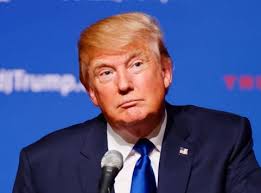
Donald Trump
Now he’s turning his attention to the American military.
- Trump appointed former Marine General James Mattis as Secretary of Defense. But when Trump announced his intention to withdraw American military forces from Syria, Mattis resigned in December, 2018.
- Mattis offered to stay in office until February, 2019, to ensure a smooth transition for his successor. But Trump, his ego outraged, forced Mattis to leave by the end of December.
- The military sees foreign commitments as essential to American security—whether against ISIS or the former Soviet Union.
- But Trump believes that alliances like NATO are “ripping off” the United States. And he believes he was elected to end foreign entanglements.
- Trump appointed Lieutenant General H.R. McMaster as National Security Adviser. But after Special Counsel Robert Mueller indicted 13 Russian nationals for interfering in the 2016 Presidential election, McMaster said: “With the FBI indictment, the evidence is now incontrovertible” of Russia cyber-meddling.
- This publicly contradicted Trump’s claim that reports of Russian subversion of the 2016 Presidential election were “a hoax.”
- Six weeks later, McMaster was forced out of the administration.

H.R. McMaster
- In November, 2018, Fox News Anchor Chris Wallace, during an interview with Trump, noted that retired Adm. William McRaven had said: “The President’s attack on the media is the greatest threat to our democracy in my lifetime.”
- Trump then dismissed McRaven—who had spearheaded the operation that killed Al-Qaedar leader Osama bin Laden—as a “Hillary fan.”
- “He was a Navy SEAL 37 years,” said Wallace. Trump, refusing to give McRaven—one of the most highly respected men in the United States military—any credit, said: “Wouldn’t it have been nice if we got Osama bin Laden a lot sooner than that?”
Some members of the military are responding favorably to Trump.
During his 2019 trip to Japan, Trump gave a Memorial Day address aboard the USS Wasp in Yokosuka. Many of the American service attending were photographed wearing patches inspired by his campaign slogan, “Make America Great Again.”
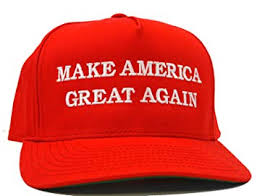
The matching patches showed the face of a man that’s presumably Trump (though notably more handsome) along with the text, “Make Aircrew Great Again.”
This may have violated the Pentagon’s strict rules barring soldiers from showing political preferences.
“All military personnel will avoid the inference that their political activities imply or appear to imply DoD sponsorship, approval or endorsement of a political candidate, campaign or cause,” the policy states.
Retired Army General Stanley McChrystal, during a December 30, 2018 interview on “This Week,” warned: “If the U.S. military becomes politicized, it will be something we’re not happy with.”
The incident on Memorial Day was not the first time active-duty service members displayed Trump-affiliated apparel.
In December, 2018, Trump engaged in campaign activities by by signing “Make America Great Again” caps for during an unannounced visit to Iraq. Dozens of troops were photographed bringing MAGA hats to the event for the president to sign.
Other members of the military are responding—carefully—to Trump’s savage attacks on its members and his erratic style of government.
According to a December 24, 2018 edition of the Palmer Report, military leaders are now going out of their way to avoid “interacting directly” with Trump. They fear that he might issue an impulsive and destructive order—which they would be legally obligated to follow.
More startling: Departing Secretary of Defense Mattis ordered them to, for the safety of the nation.
Mattis believed that Trump was dishonorable—and deranged enough to give destructive or incoherent military orders at any moment.
Columnist Bill Palmer warned that this amounted to a “soft coup.”
But then he asked: “Then again, when the ‘President’ of the United States is merely a guy who treasonously conspired with a foreign enemy to rig the election in his favor, and was not legitimately elected to anything, can you even have a coup against him?”
2003, 2016 PRESIDENTIAL ELECTION, ABC NEWS, ABC’S THE WEEK, ADOLF HITLER, AFGHAN WAR, ALTERNET, AP, AUSTRIA, BUZZFEED, CBS NEWS, CHIEF OF STAFF, CHRIS WALLACE, CIA, CNN, CROOKS AND LIARS, CZECHOSLOVAKIA, DAILY KOZ, DEPARTMENT OF HOMELAND SECURITY, DONALD TRUMP, EDUARD DALADIER, FACEBOOK, FBI, FOX NEWS, FUHRER OATH, H.R. MCMASTER, HERMAN GORING, IRAQ WAR, JAMES COMEY, JAMES MATTIS, JAMES ROBART, JOHN KELLY, JOINT OPERATIONS COMMAND, MICHAEL FLYNN, MOTHER JONES, MOVEON, MSNBC, MUSLIM TRAVEL BAN, NATIONAL SECURITY AGENCY, NAZI GERMANY, NBC NEWS, NEVILLE CHAMBERLAIN, NEWSWEEK, NPR, OSAMA BIN LADEN, PALMER REPORT, PAUL VON HINDENBURG, PBS NEWSHOUR, POLAND, POLITICIZING THE MILITARY, POLITICO, RAW STORY, REUTERS, RHINELAND, ROBERT MUELLER, ROLLING STONE, RUSSIA, SALON, SEATTLE TIMES, SECRETARY OF DEFENSE, SLATE, SPECIAL WARFARE, STANLEY MCCHRYSTAL, SUDENTENLAND, THE ATLANTIC, THE CHICAGO SUN-TIMES, THE CHICAGO TRIBUNE, THE DAILY BEAST, THE GUARDIAN, THE HILL, THE HUFFINGTON POST, THE LOS ANGELES TIMES, THE NATION, THE NEW YORK TIMES, THE WASHINGTON POST, TIME, TWITTER, U.S. NEWS & WORLD REPORT, UPI, USA TODAY, VLADIMIR PUTIN, WERNER VON BLOMBERG, WERNER VON FRITSCH, WILLIAM MCRAVEN, WORLD WAR 11
In Bureaucracy, History, Military, Politics, Social commentary on June 10, 2019 at 12:05 am
President Donald Trump is notorious as a non-reader. Nevertheless, he seems poised to re-enact one of the most fateful events in 20th century history.
First, that event: On August 2, 1934, the aged German President Paul von Hindenburg died.
Adolf Hitler had been serving as Reich Chancellor—the equivalent of attorney general—since January 30, 1933. Within hours, the Nazi Reichstag [parliament] announced the following law, back-dated to August 1st:
“The office of Reich President will be combined with that of Reich Chancellor. The existing authority of the Reich President will consequently be transferred to the Führer and Reich Chancellor, Adolf Hitler.”
Immediately following the announcement of the new Führer law, the German Officer Corps and every individual soldier in the German Army was made to swear a brand new oath of allegiance:
“I swear by God this holy oath, that I will render to Adolf Hitler, Führer of the German Reich and People, Supreme Commander of the Armed Forces, unconditional obedience, and that I am ready, as a brave soldier, to risk my life at any time for this oath.”
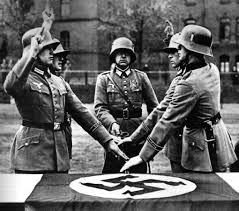
Soldiers swearing the Fuhrer Oath
In the past, German soldiers had sworn loyalty to Germany. Now they had sworn it to a single man.
For men of honor in uniform, conspiracy against the Führer now meant betrayal of the Fatherland itself. They considered this oath sacred, overriding all others. And the vast majority would fanatically obey it right to the end of the disastrous war Hitler was leading them into.
Yet even that didn’t give Hitler the absolute control over the Armed Forces that he sought.
Since taking command of Germany in the summer of 1934, Hitler wanted to replace two high-ranking military officials: General Werner von Fritsch and Colonel General Werner von Blomberg. Both were convinced that Hitler’s increasingly aggressive foreign policy was putting Germany on a collision course with war—a war the Fatherland could not win.
Hitler, in fact, meant to go to war—and despised Fritsch’s and Blomberg’s hesitation to do so. He decided to rid himself of both men. But how?
Accident played a part in the case of Blomberg.
On January 12, 1938, Blomberg married Erna Gruhn, with Hitler and Reichsmarshall Hermann Goring attending as witnesses. Soon afterward, Berlin police discovered that Gruhn had a criminal record as a prostitute and had posed for pornographic photographs.
Marrying a woman with such a background violated the standard of conduct expected of German officers. Hitler was infuriated at having served as a witness to the ceremony.
But he also saw the scandal as an opportunity to dispose of Blomberg—who was forced to resign.
Shortly after Blomberg was forced out in disgrace, the SS—Hitler’s private police force—presented Hitler with a file that falsely accused Werner von Fritsch of homosexuality. Fritsch angrily denied the accusation but resigned on February 4, 1938.
From that point on, Hitler was in de facto command of the German Armed Services.
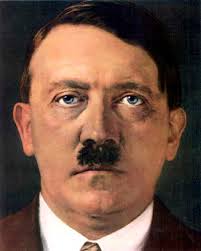
Adolf Hitler
Hitler had a timetable of conquest:
- On March 7, 1936, he seized the Rhineland, the demilitarized zone between Germany and its arch-enemy, France.
- On March 12, 1838, he “unified” Austria with Germany by annexing it.
- In September, 1938, he seized a large portion of western Czechoslovakia after that nation’s British and French “allies” sold it out at the infamous Munich Conference.
- On March 15, 1939, he ordered the Wehrmacht to occupy the rest of Czechoslovakia.
- On September 1, 1939, he ordered the invasion of Poland—unintentionally igniting World War II and the eventual destruction of Nazi Germany.
No one yet knows if Donald Trump has a plan of conquest outside the United States. But he seems intent on attacking the top command of its armed services—and its sacred traditions.
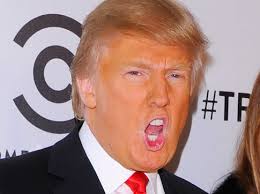
Donald Trump
On January 1, 2019, Trump—in a tweet—declared war on retired Army General Stanley McCrystal: “‘General’ McChrystal got fired like a dog by Obama. Last assignment a total bust. Known for big, dumb mouth. Hillary lover!”
The reason for Trump’s ire: McCrystal had given a December 30, 2018 interview on ABC’s “This Week,” Asked if he thought Trump was “a liar,” he replied: “I don’t think he tells the truth.” Asked: “Is Trump immoral, in your view?” McCrystal replied: “I think he is.”
McChrystal had become a legend among Special Warfare soldiers during the 2003 Iraq War. He had turned Joint Special Operations Command into one of the most efficient killing machines in history.
In 2010, McChrystal resigned as the commander of the Afghan War. Some officers on his staff made disparaging remarks about top officials working for President Barack Obama. Even worse, they made them to a Rolling Stone reporter.
Trump took office with strong support by military brass. Among his appointees:
- Retired four-star Marine General James Mattis as Secretary of Defense.
- Retired four-star Marine General John Kelly as, first, Secretary of Homeland Security and then Chief of Staff.
- Retired three-star Army Lieutenant General Michael Flynn for National Security Adviser.
- Lieutenant General H.R. McMaster succeeded Flynn as National Security Adviser after Flynn was forced out of the White House for lying about his ties to Russian oligarchs.
But now Trump is eager to tear down the generals.
1968 PRESIDENTIAL RACE, ABC NEWS, ADOLF HITLER, ALTERNET, AP, BERNARD LAW MONTGOMERY, BUZZFEED, CBS NEWS, CNN, COMING APART: AMERICA IN THE 1960S (BOOK), CROOKS AND LIARS, D-DAY, DAILY KOZ, DWIGHT D. EISENHOWER, ERWIN ROMMEL, EUGENE MCCARTHY, FACEBOOK, HUBERT HUMPHERY, JOHN F. KENNEDY, LYNDON B. JOHNSON, MOTHER JONES, MOVEON, MSNBC, NAZI GERMANY, NBC NEWS, NEWSWEEK, NORMAN COTA, NPR, POLITICO, RAW STORY, REUTERS, ROBERT F. KENNEDY, SALON, SEATTLE TIMES, SIRHAN SIRHAN, SLATE, THE ATLANTIC, THE CHICAGO SUN-TIMES, THE CHICAGO TRIBUNE, THE DAILY BEAST, THE GUARDIAN, THE HILL, THE HUFFINGTON POST, THE LOS ANGELES TIMES, THE NATION, THE NEW YORK TIMES, THE WASHINGTON POST, THIRD REICH, TIME, TWITTER, U.S. ARMY RANGERS, U.S. NEWS & WORLD REPORT, UPI, USA TODAY, VIETNAM WAR, WILLIAM L. O'NEILL, WORLD WAR 11
In Bureaucracy, History, Military, Politics, Social commentary on June 6, 2019 at 12:16 am
“For it is the doom of men that they forget.”
—Merlin, in “Excalibur”
June 6—a day of glory and tragedy.
The glory came 75 years ago—on Tuesday, June 6, 1944.
On that morning, Americans awoke to learn—from radio and newspapers—that their soldiers had landed on the French coast of Normandy.
In Supreme Command of the Allied Expeditionary Force: American General Dwight D. Eisenhower. Overall command of ground forces rested with British General Bernard Law Montgomery.
Operation Overlord, the Allied invasion to liberate France from Nazi Germany, proved one of the pivotal actions of World War II.
Shortly after midnight, 24,000 American, British, Canadian and Free French troops launched an airborne assault. This was followed at 6:30 a.m. by an amphibious landing of Allied infantry and armored divisions on the French coast.
Field Marshal Erwin Rommel—the legendary “Desert Fox”—commanded the German forces. For him, the first 24 hours of the battle would be decisive.
“For the Allies as well as the Germans,” he warned his staff, “it will be the longest day.”
The operation was the largest amphibious invasion in history. More than 160,000 troops landed—73,000 Americans, 61,715 British and 21,400 Canadians.
Omaha Beach – June 6, 1944
Initially, the Allied assault seemed likely to be stopped at the water’s edge—where Rommel had insisted it must be. He had warned that if the Allies established a beachhead, their overwhelming numbers and airpower would eventually prove irresistible.
German machine-gunners and mortarmen wreaked a fearful toll on Allied soldiers. But commanders like U.S. General Norman Cota led their men to victory through a storm of bullets and shells.
Coming upon a group of U.S. Army Rangers taking cover behind sand dunes, Cota demanded: “What outfit is this?”
“Rangers!” yelled one of the soldiers.
“Well, Goddamnit, then, Rangers, lead the way!” shouted Cota, inspiring the soldiers to rise and charge into the enemy.
The command also gave the Rangers the motto they carry to this day.
The allied casualty figures for D-Day have been estimated at 10,000, including 4,414 dead. By nationality, the D-Day casualty figures are about
- 2,700 British
- 946 Canadians
- and 6,603 Americans.
The total number of German casualties on D-Day isn’t known, but is estimated at 4,000 to 9,000.
Allied and German armies continued to clash throughout France, Belgium and Germany until May 7, 1945, when Germany finally surrendered.
But Americans who had taken part in D-Day could be proud of having dealt a fatal blow to the evil ambitions of Adolf Hitler’s Third Reich.
So much for the glory of June 6. Now for the tragedy—which occurred 51 years ago, on Thursday, June 6, 1968.
Twenty-four years after D-Day, Americans awoke to learn—mostly from TV—that New York Senator Robert F. Kennedy had died at 1:44 a.m. of an assassin’s bullet.
He had been campaigning for the Democratic Presidential nomination, and had just won the California primary on June 4.
This had been a make-or-break event for Kennedy, a fierce critic of the seemingly endless Vietnam war.
He had won the Democratic primaries in Indiana and Nebraska, but had lost the Oregon primary to Minnesota Senator Eugene McCarthy.
If he defeated McCarthy in California, Kennedy could force his rival to quit the race. That would lead to a showdown between him and Vice President Hubert Humphrey for the nomination.
(President Lyndon B. Johnson had withdrawn from the race on March 31—just 15 days after Kennedy announced his candidacy on March 16.)
After winning the California and South Dakota primaries, Kennedy gave a magnanimous victory speech in the ballroom of the Ambassador Hotel in Los Angeles:

Robert F. Kennedy, only moments from death
“I think we can end the divisions within the United States….We are a great country, an unselfish country, and a compassionate country. And I intend to make that my basis for running over the period of the next few months.”
Then he entered the hotel kitchen—where Sirhan Sirhan, a 24-year-old Palestinian from Jordan, opened fire with a .22 revolver.
Kennedy was hit three times—once fatally in the back of the head. Five other people were also wounded.
Kennedy’s last-known words were: “Is everybody all right?” and “Jack, Jack”—the latter clearly a reference to his beloved older brother, John Fitzgerald Kennedy.
Almost five years earlier, that brother—then President of the United States—had been assassinated in Dallas on November 22, 1963.
Then Robert Kennedy lost consciousness—forever, dying in a hospital bed 24 hours later.
Kennedy had been a U.S. Attorney General (1961-1964) and Senator (1964-1968). But it was his connection to President Kennedy for which he was best-known.
His assassination—coming so soon after that of JFK—convinced many Americans there was something “sick” about the nation’s culture.
Historian William L. O’Neil delivered a poignant summary of Robert Kennedy’s legacy in Coming Apart: An Informal History of America in the 1960′s.

“He aimed so high that he must be judged for what he meant to do, and through error and tragic accident, failed at…..He will also be remembered as an extraordinary human being who, though hated by some, was perhaps more deeply loved by his countrymen than any man of his time.
“That, too, must be entered into the final account, and it is no small thing. With his death, something precious vanished from public life.”
2016 PRESIDENTIAL CAMPAIGN, ABC NEWS, ADOLF HITLER, ALTERNET, ANNE FRANK, ANTONIN SCALIA, AP, AUSCHWITZ, BARACK OBAMA, BERGEN-BELSEN, BUZZFEED, CBS NEWS, CNN, CROOKS AND LIARS, DAILY KOZ, DONALD TRUMP, EVA SCHLOSS, FACEBOOK, HOLOCAUST, illegal immigration, ISIS, MEXICO, MOTHER JONES, MOVEON, MSNBC, NAZI GERMANY, NBC NEWS, NEWSWEEK, NPR, PBS NEWSHOUR, POLITICO, POPE FRANCIS, RAW STORY, REUTERS, SALON, SEATTLE TIMES, SLATE, SRI LANKA EASTER BOMBINGS, SUPREME COURT, SYRIAN REFUGEES, TERRORISM, THE ATLANTIC, THE CHICAGO SUN-TIMES, THE CHICAGO TRIBUNE, THE DAILY BEAST, THE GUARDIAN, THE HILL, THE HUFFINGTON POST, THE LOS ANGELES TIMES, THE NATION, THE NEW YORK TIMES, THE WASHINGTON POST, TIME, TWITTER, U.S. NEWS & WORLD REPORT, UPI, USA TODAY, VATICAN
In History, Law, Military, Politics, Social commentary on May 17, 2019 at 12:06 am
Right-wingers, who support many of the same policies of Adolf Hitler, often attack liberals as Nazis.
This was especially true when President Barack Obama held office.
But in 2016 a genuine authority on Fascism came forward to assess the front-runner for the Republican Presidential nomination.
“If Donald Trump become[s] the next president of the United States it would be a complete disaster. I think he is acting like another Hitler by inciting racism.”
So said Eva Schloss, the stepsister of Holocaust victim Anne Frank. As a survivor of Auschwitz, Schloss knows something about Nazis.

Eva Schloss
Then 86, Schloss met Anne in Amsterdam as a fellow refugee. Both their families had taken refuge there after fleeing Nazi Germany.
Anne Frank spent four years hiding in an attic and keeping a diary. But in 1944 she was discovered by the Nazis and sent to the Bergen-Belsen concentration camp.
She was 15 when she died there of typhus in March, 1945. After the war, Eva Schloss’ mother, Fritzi, married Otto Frank, Anne’s father.

Anne Frank
Eva was detained at the same time as Anne and sent to Auschwitz. She survived when the camp was liberated on January 27,1945.
In a January 27, 2016 essay for Newsweek, Schloss warned of dire consequences if Donald Trump became President:
“During his U.S. presidential campaign he has suggested the ‘total and complete shutdown of Muslims entering the United States,’ as well as pledging to build a wall between the U.S. and Mexico to keep illegal immigrants out.”
She was 11 when her family immigrated to Belgium after Hitler forcibly annexed Austria in 1938.
“We were treated as if we had come from the moon. I felt as if I wasn’t wanted and that I was different to everybody. It is even harder for today’s Syrian refugees who have a very different culture….
“I am very upset that today again so many countries are closing their borders,” said Schloss, who lives in London. “Fewer people would have died in the Holocaust if the world had accepted more Jewish refugees.”
And on February 18, 2016, Pope Francis also waded into the 2016 Presidential race with his own assessment of Trump.
During a six-day trip to Mexico, a reporter asked the Pontiff: What did he think of Trump’s campaign pledge to build a wall along the entire length of the U.S.-Mexican border and expel millions of illegal aliens now living in the United States?
“A person who only thinks about building walls, wherever they are, and not in building bridges, is not Christian,” replied the Pope. “This is not the gospel.”
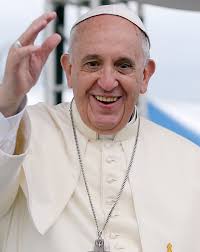
Pope Francis
Francis said he would “give the benefit of the doubt” to Trump because he had not heard Trump’s border plans independently.
But he added: “I say only that this man is not a Christian if he has said things like that.”
Trump, a Presbyterian, responded minutes later: “For a religious leader to question a person’s faith is disgraceful.”
Trump has repeatedly accused President Barack Obama—a self-described Christian—as a secret Muslim.
Donald Trump
On February 21, 2016, for example, he tweeted: “I wonder if President Obama would have attended the funeral of [Supreme Court] Justice [Antonin] Scalia if it were held in a mosque.”
Obama had paid tribute to Scalia at the Supreme Court on the day prior to the funeral. He declined to attend the service because his heavy security detail might disrupt the ceremony.
“I am proud to be a Christian,” added Trump, “and as president I will not allow Christianity to be consistently attacked and weakened.”
Nor did he stop there: “If and when the Vatican is attacked by the ISIS [Islamic State of Iraq and Syria], which as everyone knows is ISIS’s ultimate trophy, I can promise you that the pope would have only wished and prayed that Donald Trump would have been president.
“ISIS would have been eradicated, unlike what is happening now with our all talk, no action politicians.”
Trump thus implied that the Pope’s future security depended on the United States generally—and on Trump in particular.
And he ignored the fact that, since September, 2014, the United States Air Force had been bombing ISIS convoys in Iraq and Syria.
On Easter Sunday, 2019—more than two years into Trump’s Presidency—ISIS bombed a series of churches and hotels in Sri Lanka, killing at least 321 people.
Trump has long been critical of the Pope’s stand on immigration.
As the Pope undertook his trip to Mexico, Trump told Fox Business Network that he didn’t think Francis understood “the danger of the open border we have with Mexico.
“I think Mexico got him to do it because they want to keep the border just the way it is,” he said. “They’re making a fortune, and we’re losing.”
A Vatican spokesman replied: “The pope always talks about migration problems all around the world, of the duties we have to solve these problems in a humane manner, of hosting those who come from other countries in search of a life of dignity and peace.”
For millions of Jews and Christians, the election of 2016 has turned into a referendum: Am I serving the Lord—or Satan?
ABC NEWS, ADOLF HITLER, ALT-RIGHT, ALTERNET, AMERICAN NAZI PARTY, ANDREW ANGLIN, ANTI-DEFAMATION LEAGUE, ANTIFA, AP, BENITO MUSSOLINI, BLACK LIVES MATTER, BUZZFEED, CBS NEWS, CHARLOTTESVILLE PROTESTS, CNN, COINTELPRO, COUNTER-TERRORISM, CROOKS AND LIARS, DAILY KOZ, DAVID DUKE, DOMESTIC TERRORISM, DONALD TRUMP, ENGLAND, FACEBOOK, FASCISM, FASCIST ITALY, FBI, ISLAMIC TERRORISM, J. EDGAR HOOVER, KU KLUX KLAN, LYNDON B. JOHNSON, MARJORY STONEMAN DOUGLAS HIGH SCHOOL, MISSISSIPPI BURNING CASE, MOTHER JONES, MOVEON, MSNBC, NAZI GERMANY, NBC NEWS, NEO-NAZIS, NEW AMERICA THINK TANK, NEWSWEEK, NPR, OAKLAHOMA CITY BOMBING, P.W. SINGER, PBS NEWSHOUR, POLITICO, RAW STORY, REUTERS, RIGHT-WING EXTREMISM, SALON, SEATTLE TIMES, SLATE, SOVIET UNION, TERRORISM, THE ATLANTIC, THE CHICAGO SUN-TIMES, THE CHICAGO TRIBUNE, THE DAILY BEAST, THE DAILY STORMER, THE GUARDIAN, THE HILL, THE HUFFINGTON POST, THE LOS ANGELES TIMES, THE NATION, THE NEW YORK TIMES, THE WASHINGTON POST, TIME, TIMOTHY MCVEIGH, TREE OF LIFE SYNAGOGUE, TWITTER, U.S. NEWS & WORLD REPORT, UNITE THE RIGHT RALLY, UNITED STATES HOLOCAUST MUSEUM, UPI, USA TODAY, WAFFLE HOUSE, WHITE SUPREMACY, WILLIAM C. SULLIVAN, WILLIAM FEARS, WORLD WAR 11
In Bureaucracy, History, Law, Law Enforcement, Politics, Social commentary on May 16, 2019 at 12:02 am
On August 11-12, 2017, white supremacists from across the country gathered in Charlottesville, Virginia, for a “Unite the Right” rally. Among the organizations represented:
- The Ku Klux Klan (KKK);
- The Alt-Knights;
- The “Militia Movement”;
- The American Nazi Party;
- The Confederate League of the South.
They marched through the streets carrying flaming tiki torches, screaming racial epithets and frightening the local citizenry. Echoing Nazis in 1930s Germany, they shouted: “Blood and Soil!” and “Jews will not replace us!”
On August 13, a Nazi sympathizer rammed his car into a group of counter-protesters, killing a woman and injuring 19 other demonstrators.
President Donald Trump stated: “We condemn in the strongest possible terms this egregious display of hatred, bigotry and violence on many sides, on many sides.”
But he refused to specifically denounce the Fascistic demonstrators.
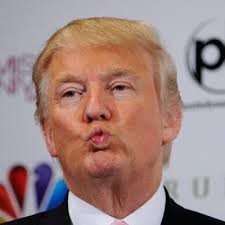
Donald Trump
White supremacists were elated.
“He didn’t attack us. He just said the nation should come together. Nothing specific against us,” wrote Andrew Anglin, founder of the neo-Nazi website, The Daily Stormer.
“No condemnation at all. When asked to condemn, he just walked out of the room. Really, really good. God bless him.”
Another Trump admirer: Former Ku Klux Klan Imperial Wizard David Duke.
“Thank you President Trump for your honesty & courage to tell the truth about #Charlottesville & condemn the leftist terrorists in BLM/Antifa,” Duke tweeted after the news conference.
Fascistic groups make up a pivotal constituency for Trump. Without their support, he might not have become President. He can’t afford to alienate them.
But more than 50 years ago, another President was willing to declare all-out war against white supremacists: Lyndon B. Johnson.
The reason: The murders of three civil rights workers in Philadelphia, Mississippi—Michael “Mickey” Schwerner, Andrew Goodman and James Chaney—-on June 21, 1964.
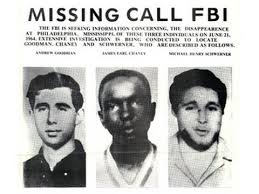
Poster for missing civil rights workers
Johnson ordered the FBI to find the missing activists.
Two hundred FBI agents interrogated 480 Klansmen. After the civil rights workers’ bodies were found buried near a dam, Johnson gave FBI Director J. Edgar Hoover a direct order: “I want you to have the same kind of intelligence [on the Klan] that you have on the communists.”
For decades, Hoover had refused to tackle white hate groups. And, in truth, there had not been any President willing to give him the order to do so.
But now a President had given him such an order. And Hoover was approaching the mandatory retirement age of 70—which could be waived by a sympathetic President. If he wanted to stay on as director of the agency he loved, he had no choice.
So the FBI launched a counterintelligence program—in Bureau-speak, a COINTELPRO—against the Ku Klux Klan.
Klansmen had shot, lynched and bombed their way across the Deep South, especially in Alabama and Mississippi. Many Southern sheriffs and police chiefs were Klan sympathizers, if not outright members and accomplices.

Ku Klux Klansmen in a meeting
The FBI’s covert action program aimed to “expose, disrupt and otherwise neutralize” KKK groups through a wide range of legal and extra-legal methods. Seventeen KKK groups were targeted, So were nine others, including the American Nazi and National States Rights parties.
After the Klan murdered Lemuel Penn, a black army reserve lieutenant, the FBI targeted every major Klan group in Mississippi, Alabama and Georgia.
“My father fought the Klan in Massachusetts,” recalled William C. Sullivan, who headed the FBI’s Domestic Intelligence Division in the 1960s. “I always used to be frightened when I was a kid and I saw the fiery crosses burning in the hillside near our farm.
“When the Klan reached 14,000 in the mid-sixties, I asked to take over the investigation of the Klan. When I left the Bureau in 1971, the Klan was down to a completely disorganized 4,300. It was broken.

William C. Sullivan
“They were dirty, rough fellows. And we went after them with rough, tough methods.”
Among those methods:
- Developing informants within Klans—usually by paying small fortunes for information. (“There would be a meeting of 10 Klansmen, and six of them would be reporting back to us the next day,” recalled an FBI agent.)
- Planting electronic surveillance devices in Klan meeting places.
- Carrying out “black bag jobs”—burglaries—to steal Klan membership lists.
- Contacting the news media to publicize arrests and identify Klan leaders.
- Informing the employers of known Klansmen of their employees’ criminal activity, resulting in the firing of untold numbers of them.
- Illegally obtaining Klansmen’s tax returns.
- Sending anonymous letters/postcards to Klansmen warning: “Someone KNOWS who you are!”
- Falsely accusing other Klansmen of being FBI informants.
- Breaking up the marriages of Klansmen by circulating rumors of their infidelity among their wives.
- Beating and harassing Klansmen who threatened and harassed FBI agents.
The FBI’s counterintelligence war against the Klan ended in 1971.
Over the next 40 years, Klan membership steadily rose again. In 2017, its membership rose sharply.
By June, 2017, an estimated 3,000 Klan members belonged to 42 different Klan groups in 22 states. And the Anti-Defamation League (ADL) tracked Klan activity to 11 other states, including liberal ones like California.
Only when America has a President who’s not beholden to the Fascistic Right can there be another COINTELPRO aimed at white hate groups.
ABC NEWS, ADOLF HITLER, ALT-RIGHT, ALTERNET, AMERICAN NAZI PARTY, ANDREW ANGLIN, ANTI-DEFAMATION LEAGUE, ANTIFA, AP, BENITO MUSSOLINI, BLACK LIVES MATTER, BUZZFEED, CBS NEWS, CHARLOTTESVILLE PROTESTS, CNN, COINTELPRO, COUNTER-TERRORISM, CROOKS AND LIARS, DAILY KOZ, DAVID DUKE, DOMESTIC TERRORISM, DONALD TRUMP, ENGLAND, FACEBOOK, FASCISM, FASCIST ITALY, FBI, ISLAMIC TERRORISM, J. EDGAR HOOVER, KU KLUX KLAN, LYNDON B. JOHNSON, MARJORY STONEMAN DOUGLAS HIGH SCHOOL, MISSISSIPPI BURNING CASE, MOTHER JONES, MOVEON, MSNBC, NAZI GERMANY, NBC NEWS, NEO-NAZIS, NEW AMERICA THINK TANK, NEWSWEEK, NPR, OAKLAHOMA CITY BOMBING, P.W. SINGER, PBS NEWSHOUR, POLITICO, RAW STORY, REUTERS, RIGHT-WING EXTREMISM, SALON, SEATTLE TIMES, SLATE, SOVIET UNION, TERRORISM, THE ATLANTIC, THE CHICAGO SUN-TIMES, THE CHICAGO TRIBUNE, THE DAILY BEAST, THE DAILY STORMER, THE GUARDIAN, THE HILL, THE HUFFINGTON POST, THE LOS ANGELES TIMES, THE NATION, THE NEW YORK TIMES, THE WASHINGTON POST, TIME, TIMOTHY MCVEIGH, TREE OF LIFE SYNAGOGUE, TWITTER, U.S. NEWS & WORLD REPORT, UNITE THE RIGHT RALLY, UNITED STATES HOLOCAUST MUSEUM, UPI, USA TODAY, WAFFLE HOUSE, WHITE SUPREMACY, WILLIAM C. SULLIVAN, WILLIAM FEARS, WORLD WAR 11
In Bureaucracy, History, Law, Law Enforcement, Politics, Social commentary on May 15, 2019 at 12:22 am
At the United States Holocaust Museum in Washington, D.C., the following sign is prominently displayed: WARNING SIGNS OF FASCISM.
Beneath that are listed the signs to beware of an approaching Fascistic dictatorship:
- Powerful and continuing nationalism
- Disdain for human rights
- Identification of enemies as a unifying cause
- Supremacy of the military
- Rampant sexism
- Controlled mass media
- Obsession with national security
- Religion and government intertwined
- Labor power suppressed
- Disdain for intellectuals and the arts
- Obsession with crime and punishment
- Rampant cronyism and corruption
- Fraudulent elections
During the 1930s and 1940s, Fascism was clearly on the rise, and Western democracies seemed unable to cope with it.
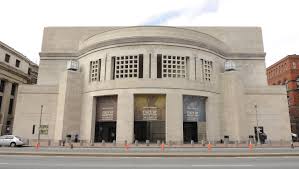
U.S. Holocaust Museum and Memorial
But by April, 1945, Adolf Hitler’s Germany and Benito Mussolini’s Italy were on the ash-heap of history.
After a run of quick victories, they had out-stretched their limited resources—and found themselves overwhelmingly defeated by the combined might of England, the United States and the Soviet Union.
And at the Nuremberg war crimes trials, the infamy of Nazi extermination camps was fully revealed.
And that—believed millions of anti-Fascists throughout the world—was the end of Fascism.
But it wasn’t.
By the time Donald J. Trump took office as President of the United States, Fascism was very much alive and dangerously well.
Specifically: In January, 2019, the Anti-Defamation League (ADL) found that Right-wing extremists were linked to every 2018 extremist murder—at least 50—in the United States.

In 2017, there had been 37 such killings by Right-wing extremists.
That same year, the FBI concluded that white supremacists killed more Americans from 2000 to 2016 than “any other domestic extremist movement.”
In 2018, Right-wing extremists killed more people than in any year since 1995, the year that Timothy McVeigh’s blew up the Oklahoma City federal building.
According to the ADL’s Center on Extremism:
- Every perpetrator had ties to at least one Right-wing extremist movement.
- Firearms were used overwhelmingly in Right-wing attacks.
- Forty-two of the 50 deaths in 2018 were caused by guns. Knives or edged weapons accounted for the rest.
- Five of the 17 incidents involved shooting sprees that caused 38 deaths and injured 33 others.
- Five shooting sprees resulted in 38 deaths and left 33 people injured.
Among the five major Right-wing shooting sprees in 2018:
- Tree of Life Synagogue, Pittsburgh, PA: 11 dead;
- Marjory Stoneman Douglas High School, Parkland, FL: 17 dead;
- Waffle House, Nashville, TN: four dead.
For nearly two decades, United States counter-terrorism strategy has focused almost exclusively on American and foreign-born jihadists, overshadowing Right-wing extremism as a legitimate national-security threat.
Between 2002 and 2017, the United States spent $2.8 trillion—15% of discretionary spending—on counter-terrorism. Between 2008 and 2017, domestic extremists killed 387 people in the United States, according to the 2019 ADL report.
“We’re actually seeing all the same phenomena of what was happening with groups like ISIS, same tactics, but no one talks about it because it’s far-Right extremism,” says P. W. Singer, a national security strategist at the New America think tank.
In 2017, Singer met with senior Trump administration officials to discuss creating a counter-terrorism strategy that encompassed a wider range of threats.
“They only wanted to talk about Muslim extremism,” said Singer. But even before the Trump administration, “we willingly turned the other way on white supremacy because there were real political costs to talking about white supremacy.”

P. W. Singer
Catiline17 [CC BY-SA 4.0 (https://creativecommons.org/licenses/by-sa/4.0)%5D
Among those costs:
- Arousing the ire of Southern states, where Right-wing terrorism organizations like the Ku Klux Klan have long been tolerated, if not outright supported.
- About 22 million Americans say it’s “acceptable” to hold neo-Nazi or white-supremacist views, according to an ABC News/Washington Post poll taken in the wake of the Charlottesville “Unite the Right” rally in August 2017.
- About 10% of Americans said they supported the “alt-right.”
- Many police officers don’t see white supremacist groups as a threat. One domestic-terrorism expert who conducts hate-crimes training for police has often been asked by officers: ‘Why aren’t you calling Black Lives Matter or Antifa a hate group?’ The answer is, because they’re not hate groups! But they didn’t see it that way.”
- According to William Fears, one of the most dedicated foot soldiers of the alt-right: Police were far less forgiving of Antifa, whose members consist of anti-fascists, anarchists, Socialists, animal rights activists, immigration rights activists, members of the local Socialist movement and environmental protesters.
- Another white nationalist activist recalled a rally where police posed for pictures with members of the alt-right: “Very buddy-buddy.”
Since taking office as President, Donald Trump has consistently shown his support for Right-wing terrorist groups.
On August 11-12, 2017, white supremacists from across the country gathered in Charlottesville, Virginia, for a “Unite the Right” rally. Among the organizations represented:
- The Ku Klux Klan (KKK);
- The Alt-Knights;
- The “Militia Movement”;
- The American Nazi Party;
- The Confederate League of the South.
Like the Nazis in 1930s Germany, they marched through the streets carrying flaming torches, screaming racial epithets and frightening the local citizenry.
On August 13, a Nazi sympathizer rammed his car into a group of counter-protesters, killing a woman and injuring 19 other demonstrators.
2003 IRAQ WAR, ABC NEWS, ADOLF HITLER, ALTERNET, AP, BARACK OBAMA, BILL KRISTOL, BUZZFEED, CBS NEWS, CNN, CONSTITUTION OF THE UNITED STATES, CROOKS AND LIARS, DAILY KOZ, DEMOCRATIC PARTY, DEMOCRATS, DONALD TRUMP, ELIZABETH WARREN, FACEBOOK, FUHRER OATH, GEORGE W. BUSH, IMPEACHMENT, MEET THE PRESS, MOTHER JONES, MOVEON, MSNBC, MUELLER REPORT, NAZI GERMANY, NBC NEWS, NEWSWEEK, NPR, PAUL VON HINDENBURG, PBS NEWSHOUR, POLITICO, RAW STORY, REPUBLICAN PARTY, REPUBLICANS, REUTERS, ROBERT MUELLER, SADDAM HUSSEIN, SALON, SEATTLE TIMES, SLATE, SYRIA, THE ATLANTIC, THE CHICAGO SUN-TIMES, THE CHICAGO TRIBUNE, THE DAILY BEAST, THE GUARDIAN, THE HILL, THE HUFFINGTON POST, THE LOS ANGELES TIMES, THE NATION, THE NEW YORK TIMES, THE WASHINGTON POST, TIME, TWITTER, U.S. NEWS & WORLD REPORT, UNITED STATES HOUSE OF REPRESENTATIVES, UNITED STATES SENATE, UPI, USA TODAY
In Bureaucracy, History, Law, Law Enforcement, Military, Politics, Social commentary on May 14, 2019 at 12:05 am
William Kristol—a Right-wing political analyst—has been dubbed “the godfather of neoconservatism.” And with good reason.
During the first two years of the George W. Bush administration, as the editor of the Weekly Standard, he was one of the leading instigators of the 2003 war with Iraq.
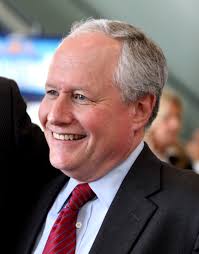
Bill Kristol
He—like senior officials on the George W. Bush administration—falsely claimed that Iraqi dictator Saddam Hussein had weapons of mass destruction and planned to use them against the United States.
Another Kristol lie: Hussein planned 9/11 with Osama bin Laden.
He has never apologized for either lie—or the resulting war that killed 4,487 American soldiers and wounded another 32,226.
But even after the disaster of the 2003 war against Iraq, Kristol wasn’t through urging the United States into another murderous quagmire.
In a September, 2013 column, Kristol called for a return to war—not only in Syria but Iran as well:
“…Soon after voting to authorize the use of force against the [Bashar al-] Assad regime, Republicans might consider moving an authorization for the use of force against the Iranian nuclear weapons program.
“They can explain that [President Barack] Obama’s dithering in the case of Syria shows the utility of unequivocally giving him the authority to act early with respect to Iran.”
So it’s no small thing that Kristol has found himself agreeing with Democratic Massachusetts United States Senator and 2020 Presidential candidate Elizabeth Warren that Democrats should begin impeachment proceedings against President Donald Trump.
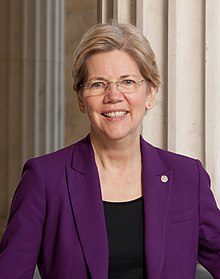
Elizabeth Warren
He did so on a segment of MSNBC’s “Meet the Press” on May 7, 2019.
Earlier in the day, Elizabeth Warren had stated on the Senate floor:
“More than 600 federal prosecutors have now said that what’s laid out in the Mueller Report would constitute obstruction of justice, and would trigger a prosecution for any human being in this country other than the President of the United States.
“Robert Mueller put all of the facts together for us, put all of the information together for us, and abided by the Trump administration declaration under the Office of Legal Counsel that a sitting president cannot be indicted for his crimes.
“We took an oath not to try and protect Donald Trump, we took an oath to protect and serve the Constitution of the United States of America, and the way we do that is we begin impeachment proceedings now against this president.”
On February 15, 2019, Kristol had posted this tweet on Twitter:
“Members of Congress take this oath of office (see Title 5, Section 3331 of the United States Code): “I do solemnly swear (or affirm) that I will support and defend the Constitution of the United States against all enemies, foreign and domestic; that I will bear true faith and allegiance to the same; that I take this obligation freely, without any mental reservation or purpose of evasion, and that I will well and faithfully discharge the duties of the office on which I am about to enter. So help me God.”
On May 7, in a blistering attack on his fellow Republicans, he posted “the new GOP Congressional oath”:
“I do solemnly swear that I will support and defend Donald Trump against all oversight; that I will bear true faith and allegiance to him; that I take this obligation despite mental reservation and in the spirit of evasion of duty. So help me God.”
Hours later, Kristol appeared before a “Meet the Press” panel and attacked Democrats for being “so terrified about the word impeachment that we can’t even have hearings….I must say I agree with Elizabeth Warren. I never thought I would say this.
“Robert Mueller’s report… invited Congress to take a look for itself at the obstruction of justice charges. They have an obligation to do it. They don’t have to impeach him. They may take a look and decide there aren’t grounds for impeachment. Maybe they wanna censure him…I think Elizabeth Warren’s right. Begin the hearings.”
Kristol’s “new GOP Congressional oath” is a deadly reminder of another oath that had fatal consequences for Nazi Germany—and the world.
Soldiers swearing the Fuhrer Oath
On August 2, 1934, President Paul von Hindenburg died. Adolf Hitler was then serving as Reich Chancellor—the equivalent of attorney general. Within hours, the Nazi Reichstag [parliament] announced the following law, back-dated to August 1st:
“The office of Reich President will be combined with that of Reich Chancellor. The existing authority of the Reich President will consequently be transferred to the Führer and Reich Chancellor, Adolf Hitler.”
Immediately following the announcement of the new Führer law, the German Officer Corps and every individual soldier in the German Army was made to swear a brand new oath of allegiance:
“I swear by God this holy oath, that I will render to Adolf Hitler, Führer of the German Reich and People, Supreme Commander of the Armed Forces, unconditional obedience, and that I am ready, as a brave soldier, to risk my life at any time for this oath.”
No doubt Kristol, who considers himself a dyed-in-the-wool conservative, remembers all too well the fate of those old-time conservatives who dared oppose Hitler.
The lucky ones were sent to concentration camps. The unlucky ones wound up on meat hooks.
9/11 ATTACKS, ABC NEWS, ADOLF HITLER, ALABAMA, ALABAMA SUPREME COURT, ALTERNET, AP, BUZZFEED, CBS NEWS, CHARLES SCHUMER, CNN, CONSTITUTIONAL AMENDMENTS, CROOKS AND LIARS, DAILY KOZ, DONALD TRUMP, DOUG JONES, FACEBOOK, IVANKA TRUMP, JOSEPH STALIN, LEON TROTSKY, LUTHER STRANGE, MOTHER JONES, MOVEON, NANCY PELOSI, NAZI GERMANY, NAZI-SOVIET "NON-AGGRESSION PACT", NBC NEWS, NEWSWEEK, NIKITA KHRUSHCHEV, NPR, POLAND, POLITICO, RAW STORY, RED ARMY, REUTERS, ROBOCALLS, ROY MOORE, RUSSIAN REVOLUTION, SALON, SEATTLE TIMES, SEXUAL PREDATION, SLATE, SOVIET PURGES, THE ATLANTIC, THE CHICAGO SUN-TIMES, THE CHICAGO TRIBUNE, THE DAILY BEAST, THE GUARDIAN, THE HILL, THE HUFFINGTON POST, THE LOS ANGELES TIMES, THE NATION, THE NEW YORK TIMES, THE WASHINGTON POST, TIME, TWITTER, U.S. NEWS & WORLD REPORT, UPI, USA TODAY, WORLD WAR 11
In Bureaucracy, History, Politics, Social commentary on May 6, 2019 at 12:02 am
During the 1917 Russian Revolution, Leon Trotsky acted as a key lieutenant to Vladimir Lenin. Trotsky organized the Red Army and successfully resisted all attempts to overthrow the fledgling Communist government.
One of Trotsky’s bitterest enemies was Joseph Stalin, another intimate of Lenin’s. When Lenin died in 1924, Stalin outmaneuvered Trotsky for leadership of the Soviet Union.
Long before he ordered Trotsky’s assassination in 1940, Stalin turned his former rival into an official non-person.
Trotsky was:
- Airbrushed from photos showing him sitting or standing close to Lenin.
- Written out of Soviet history textbooks.
- Depicted, in print and documentary films, as seeking to overturn the Revolution—and assassinate Stalin.
Stalin made certain his image in Soviet history was entirely different.
- In the 1930s, he was portrayed as the modest, all-wise, energetic builder of a new Communist world.
- After 1945, he was depicted as the architect of the Soviet victory over Nazi Germany during World War II.
No “historian” dared mention that:
- For almost 30 years, through purges and starvation caused by enforced collections of farmers’ crops, he had slaughtered 20 to 60 million people.
- His wholesale purges of the Red Army in the 1930s had made the country vulnerable to the German attack in 1941.
- His 1939 “nonaggression” pact with Germany had almost destroyed Russia. In this he and Hitler secretly divided Poland between them. The subsequent German invasion of Poland, on September 1, 1939, directly triggered World War II.
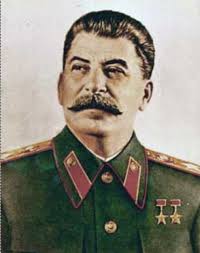
Joseph Stalin
After Stalin died on March 5, 1953, his status in Soviet history suddenly changed.
- Thousands of his portraits—displayed on streets and in buildings throughout the Soviet Union—suddenly came down.
- In 1956, his successor, Nikita Khrushchev, secretly denounced him as a psychotic butcher and bungler who had almost wrecked the country.
So those Americans with a sense of history were undoubtedly stunned at President Donald J. Trump’s reaction to the defeat of Republican Senatorial candidate Roy Moore on December 12, 2017.
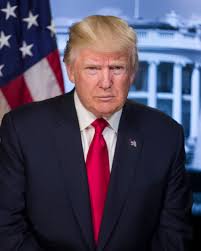
Donald Trump
Unfortunately for Trump, Moore carried heavy political baggage:
- He had twice been removed as a Justice from the Alabama Supreme Court.
- He had blamed 9/11 not on Islamic terrorists but on “America’s turning away from God.”
- He had said the United States should eliminate all but the first 10 Constitutional amendments. This would remove those amendments forbidding slavery and guaranteeing civil rights for blacks and women.
Worst of all, Moore was haunted by allegations that, as a prosecutor during his 30s, he had made sexual advances toward at least eight teenage girls.
Many Republicans openly urged Moore to withdraw. They saw him as a nightmarish embarrassment to their party should he win the election.
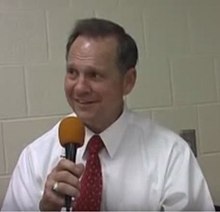
Roy Moore
Even the President’s favorite daughter, Ivanka Trump, said: “There is a special place in hell for people who prey on children.”
But that didn’t stop Trump supporting Moore full-tilt against his Democratic opponent, former United States Attorney Doug Jones. Jones had convicted Ku Klux Klan members for bombing a black church in 1963.
On December 4, Trump tweeted:
“Democrats refusal to give even one vote for massive Tax Cuts is why we need Republican Roy Moore to win in Alabama. We need his vote on stopping crime, illegal immigration, Border Wall, Military, Pro Life, V.A., Judges 2nd Amendment and more. No to Jones, a Pelosi/Schumer Puppet!”
During a December 8 campaign rally in Pensacola, Florida, near the state line with Alabama, Trump said:
“Get out and vote for Roy Moore. Do it. Do it. We cannot afford, the future of this country cannot afford to lose the seat.”
On December 8, Trump tweeted:
“LAST thing the Make America Great Again Agenda needs is a Liberal Democrat in Senate where we have so little margin for victory already. The Pelosi/Schumer Puppet Jones would vote against us 100% of the time. He’s bad on Crime, Life, Border, Vets, Guns & Military. VOTE ROY MOORE!”
As the December 12 election drew close, Trump made a robocall on Moore’s behalf:
“Hi, this is President Donald Trump and I need Alabama to go vote for Roy Moore. It is so important. We’re already making America great again. I’m going to make America safer, and stronger, and better than ever before, but we need that seat and we need Roy voting for us.”
Then—for Trump—the unthinkable happened: Moore lost. Jones received 49.9% of the vote; Moore got 48.4%.
Suddenly, Trump was rewriting history.
During the Republican Senatorial primary in August, Trump had backed Moore’s opponent, Luther Strange. Now he tweeted:
“The reason I originally endorsed Luther Strange (and his numbers went up mightily), is that I said Roy Moore will not be able to win the General Election. I was right! Roy worked hard but the deck was stacked against him!”
And, in another tweet, he stated: “Congratulations to Doug Jones on a hard fought victory. The write-in votes played a very big factor, but a win is a win. The people of Alabama are great, and the Republicans will have another shot at this seat in a very short period of time. It never ends!”
A joke Russians once shared now applies to Donald Trump: “The trouble with writing history in the Soviet Union is you never know what’s going to happen yesterday.”


.jpg&imgrefurl=https%3A%2F%2Fen.wikipedia.org%2Fwiki%2FPope_Francis'_visit_to_the_Philippines&docid=MrlhHX0IDhYhuM&tbnid=wAeMK3JqWfBmtM%3A&w=1297&h=1638&ved=0ahUKEwjmqo7njIvLAhVL6WMKHf_xBUYQxiAIAg&iact=c&ictx=1)


ABC NEWS, ALTERNET, AP, BUZZFEED, CBS NEWS, CNN, CROOKS AND LIARS, D-DAY, D-DAY ANNIVERSARY CEREMONY, DAILY KOZ, DONALD TRUMP, EMMANUEL MACRON, ERWIN ROMMEL, FACEBOOK, FOX NEWS NETWORK, FRANKLIN D. ROOSEVELT, illegal immigration, JOHN F. KENNEDY, JUDY WOODRUFF, LAURA INGRAHAM, MARK SHIELDS, MEXICO, MOTHER JONES, MOVEON, MSNBC, NANCY PELOSI, NAZI GERMANY, NBC NEWS, NEWSWEEK, NORMAN COTA, NPR, PBS NEWSHOUR, PETER WEHNER, POLITICO, QUEEN ELIZABETH 11, RAW STORY, REUTERS, ROBERT MUELLER, SALON, SEATTLE TIMES, SLATE, TARIFFS, THE ATLANTIC, THE CHICAGO SUN-TIMES, THE CHICAGO TRIBUNE, THE DAILY BEAST, THE GUARDIAN, THE HILL, THE HUFFINGTON POST, THE LOS ANGELES TIMES, THE NATION, THE NEW YORK TIMES, THE WASHINGTON POST, TIME, TWITTER, U.S. NEWS & WORLD REPORT, UPI, USA TODAY, WORLD WAR 11
D-DAY BECOMES T- (TRUMP) DAY: PART TWO (END)
In Bureaucracy, History, Military, Politics, Social commentary on June 13, 2019 at 12:27 amFor most Americans, June 6th marked the 75th anniversary of D-Day. A time to remember and celebrate the more than 160,000 troops—73,000 of them Americans—who liberated France from Nazi slavery.
But for President Donald Trump, D-Day was simply another opportunity to slander men and women he considered “enemies of the people.”
On that day, President Donald Trump was to join European leaders—such as England’s Queen Elizabeth II and France’s President Emmanuel Macron—in celebratory observance.
But for Trump, honoring the dead—and a handful of D-Day survivors present at the ceremony—was a distant priority.
Normandy American Cemetery and Memorial
First must come a soft-ball “interview” with Right-wing Fox News Network—even if it meant postponing the opening of D-Day ceremonies until he deigned to show up.
And conducting that interview was Right-wing Fox News host Laura Ingraham—who gave a stiff-armed Nazi salute at the 2016 Republican National Convention that nominated Trump for President.
Laura Ingraham: What could you do to unite the country at a time of great polarization, what else could you do?
Donald Trump: So, I think success should unite the country but I will tell you the more successful we’ve come the more angry people like Nancy Pelosi, who don’t have what it takes, if they don’t know what’s going on they get angry. They should — an example is Mexico, I said we’re going to put tariffs on because we want you to help us because they won’t pass any legislation in Congress and I have Senators and others and Pelosi coming out saying how horrible.
What they’re doing is they’re hurting a deal, they should be saying we’re with the President, we’ll do whatever he wants to do and Mexico would fold like an umbrella. Now, I have these people and I’m saying there’s some republicans too,
[NOTE: Since becoming President, Trump has repeatedly tried—and failed—to curb illegal immigration from Central and South America. In May, he threatened to slap tariffs on goods from Mexico unless its government imposed strict controls over would-be immigrants traveling through its borders.]
On June 7, 2019, syndicated columnist Mark Shields and New York Times columnist Peter Wehners appeared on the PBS Newshour to review the week’s major political events.
Shields—a liberal, and Wehner, a conservative—reached disturbingly similar conclusions about the behavior of President Donald Trump on the 75th anniversary celebration of the D-Day landings.
Peter Wehner and Mark Shields
Peter Wehner: in terms of watching it, it reminded me of why it was the Greatest Generation. It’s been called the Greatest Generation.The more you find out about what happened 75 years ago on Normandy Beach, the more extraordinary is, the courage and the valor and selflessness…
But, for me, what was, well, frankly, sickening was this interview that Donald Trump did with Laura Ingraham on Fox News, not just what he said, but where he said it. He had thousands and thousands of gravestones behind him, these people who had been cut down in the prime of their life. And he was attacking Nancy Pelosi and Robert Mueller, who himself was a—was a war hero, in petty terms.
And to have done it then was, in my mind, a desecration at a sacred place. And it was another window into the bonfire of anger and resentments and grievances that is Donald Trump.
Mark Shields: I would just add this….that the 9,388 Americans, husbands, fathers, sons, brothers, sweethearts are buried there who either died at Normandy or in the liberation of France. And it was a time in this country, it was a we generation, not a me generation.
I mean, we had 20 million victory gardens that civilians built that provided 40 percent of the vegetables for the whole country. We rationed everything from gasoline, to liquor, to cigarettes, to butter, to meat….
And all Americans were part of the collective effort, the collective sacrifice, and it was led by those at the top….The president of the United States had four sons. Every one of them served in combat. Every one of them was awarded in combat. You take the…sickly son of a multimillionaire, who asked his father to use his contacts to get him into combat, John Kennedy, rather than stay out….
One out of four American males served in World War II. And now we have one-third—one-percent of Americans serving. And they are serving over and over and over again.
Judy Woodruff (moderator): It’s been 75 years, Peter Wehner. What remains in the American psyche from that?
Wehner: Well, we’re an angry country, a more divided country, and a more tribalistic country than we were then. It’s important to say that, in many ways, we’re a better country too, if you’re a minority or a woman, all sorts of things where we have made progress….
The thing is that the American capacity for self-renewal can be great. And sometimes, when virtues are taken from the life of the nation and an individual, you remember why they matter to begin with. And, hopefully, commemorations like this can—can remind us that there are things that are worth fighting for and worth living for.
Share this: