Posts Tagged ‘NAZI GERMANY’
ABC NEWS, ABORTION, AIR RAGE INCIDENTS, ALTERNET, AMERICABLOG, ANTHONY FAUCI, ANTI-SCIENCE, AP, BABY BOOMER RESISTANCE, BLOOMBERG, BRIGHAM AND WOMEN’S HOUSPITAL, BUZZFEED, CBS NEWS, CENTERS FOR DISEASE CONTROL AND PREVENTION, CNN, COLUMBIA UNIVERSITY MEDICAL CENTER, CORONAVIRUS, COSTCO, COVID-19, CRAIG SPENCER, CROOKS AND LIARS, DAILY KOZ, DAVID ABRAMS, DEMOCRATS, DONALD TRUMP, DRUDGE RETORT, EDUCATION, FACEBOOK, FASCISM, FIVETHIRTYEIGHT, FLORIDA ATLANTIC UNIVERSITY, HARPER’S MAGAZINE, HYPOCRISY, JENNY FAUST, JOE BIDEN, KRISTI NOEM, MASKS, MEDIA MATTERS, MIKE PENCE, MOTHER JONES, MOUNT RUSHMORE, MOVEON, MSNBC, NANCY PELOSI, NAZI GERMANY, NBC NEWS, NEWSWEEK, NICCOLO MACHIAVELLI, NPR, NYU SCHOOL OF GLOBAL PUBLIC HEALTH, PBS NEWSHOUR, PETER GLICK, POLITICO, POLITICUSUSA, RAW STORY, RELIGIOUS FANATICISM, REPUBLICANS, REUTERS, RUSH LIMBAUGH, SALON, SCIENCE, SCIENTIFIC AMERICAN, SEATTLE TIMES, SLATE, SOCIAL DISTANCING, STUDENTS FOR TRUMP RALLY, SUPREME COURT, TALKING POINTS MEMO, TARGET, THE ATLANTIC, THE CHICAGO SUN-TIMES, THE CHICAGO TRIBUNE, THE DAILY BEAST, THE DAILY BLOG, THE DISCOURSES, THE GUARDIAN, THE HILL, THE HUFFINGTON POST, THE LOS ANGELES TIMES, THE NATION, THE NEW REPUBLIC, THE NEW YORK TIMES, THE VILLAGE VOICE, THE WASHINGTON POST, THINKPROGRESS, TIME, TRANSPORTATION SAFETY ADMINISTRATION (TSA), TRUTHDIG, TRUTHOUT, TULSA RALLY, TWITTER, TWO POLITICAL JUNKIES, TYPHOID MARY MALLON, U.S. NEWS & WORLD REPORT, UPI, USA TODAY, WONKETTE, WORLD HEALTH ORGANIZATION
In Bureaucracy, History, Law, Law Enforcement, Medical, Politics, Social commentary on December 14, 2022 at 12:21 am
The United States is now entering its third year of COVID-19. As of December 7, 2022, the number of cases stood at 99 million. More than one million Americans have died.
Wearing a mask and “social distancing”—keeping at least six feet between yourself and others while in public—have been the Golden Rules urged by public health officials from the pandemic’s start.
And yet vast numbers of Americans still refuse to do either. Just as they refuse to get vaccinated, despite three vaccines now widely available.


Surgical mask
In the early weeks and months of the pandemic, cloth face masks weren’t universally endorsed, even by public health experts.
“One, we didn’t know whether they were actually helpful, and two, there was a lot of concern that if people were using medical masks then people like myself, were not going to have access to them,” said Dr. Craig Spencer, director of global health in emergency medicine at Columbia University Medical Center.
No less an authority than Dr. Anthony Fauci, the country’s leading infectious disease expert, said in March, 2020, that “people should not be walking around with masks.”
Only in early June, 2020, did the World Health Organization (WHO) urge non-healthcare workers to mask up. The WHO advised people to don masks when social distancing was not possible, such as when visiting stores and using public transportation.

According to Dr. Jeremy Faust, the change in attitudes toward masks should be seen as the nature of science, and not as a flaw.
“That is what experts, in fact, do. They don’t just have an opinion and stick to it,” said Faust, an emergency physician at Brigham and Women’s Hospital, in Boston, Massachusetts. “They actually let their opinions develop and evolve as better information becomes available.”
Only in January, 2022, did the Centers for Disease Control and Prevention (CDC) urge Americans to wear N95 masks—the most effective ones available.
In 2020, the CDC had urged Americans to not use N95s. The reason: They feared this would create a shortage of these masks for doctors, nurses and paramedics working closely with COVID patients.
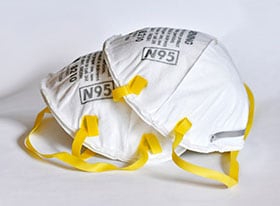
N95 mask
Scientists have learned, for example, that COVID-19 can be spread by those who show no symptom of the disease. And mounting evidence has proven that masks are essential for protecting people from the virus.
Coronavirus is spread by respiratory droplets when an infected person coughs, sneezes or talks—especially if large numbers of people are packed indoors. The danger goes up if the talker is shouting or singing loudly.
If not blocked by a face covering, the droplets can travel six to 13 feet, and can remain airborne for hours in some cases.
Researchers at Florida Atlantic University found that some masks were more effective than others. One study showed that well-fitted homemade masks with multiple layers of fabric, as well as off-the-shelf cone style masks, were the most effective in reducing droplet dispersal.
Bandannas turned out to be the least effective in reducing transmission.

Coronavirus
So why do so many Americans refuse to wear a mask?
Start at the top: With Donald Trump, the former President of the United States.
From the outset, Trump refused to wear a mask in public.
A colossal egotist, Trump is orange-skinned, morbidly obese and lacking a neck. Yet he still thinks of himself as dangerously handsome. And he feared that covering his face would diminish his power and appeal.
“Appearing to play it safe contradicts a core principle of masculinity: show no weakness,” wrote social sciences professor Peter Glick at Scientific American magazine. “Defying experts’ warnings about personal danger signals ‘I’m a tough guy, bring it on.’”
On May 21, 2020, Trump refused to wear a face mask as he toured a Ford facility in Michigan that was manufacturing ventilators and personal protective equipment. This violated the policies of the facility, the governor’s executive order and warnings from the state’s attorney general.
After a three-month nationwide “lockdown,” states began “reopening.” So Trump scheduled his first 2020 re-election rally in Tulsa, Oklahoma.
It was held on June 20 at the BOK Center. Scientists had learned that Coronavirus is more likely to be transmitted indoors than outdoors, when masses of people are packed together, and when people are loudly talking—or, worse, shouting.
Masks were available for those who wanted them. But Trump made it clear that his supporters shouldn’t wear masks, as a sign of support for him. Photos of the rally show men and women densely packed together, with none of them wearing masks.
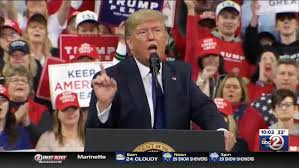
A Trump rally
The Tulsa event was followed by another indoor rally in Phoenix on June 23. “Students for Trump” featured a packed crowd, with almost no one wearing masks.
After staging COVID-spreading rallies at Tulsa, Oklahoma, and Phoenix, Arizona, Trump scheduled another one for July 3 at Mount Rushmore, in Keystone, South Dakota.
Such rallies had been put on hold since March, due to the issuing of stay-at-home orders across the country by states’ mayors and governors.
Health experts expressed fears about a large gathering during the Coronavirus pandemic. But South Dakota Governor Kristi Noem said people would “not be social distancing” during the celebration—nor required to wear masks.
ABC NEWS, ALTERNET, AMERICABLOG, AP, BABY BOOMER RESISTANCE, BBC, BLOOMBERG NEWS, BUZZFEED, CBS NEWS, CNN, CROOKS AND LIARS, DAILY KOS, DRONES, FIVETHIRTYEIGHT, HARPER’S MAGAZINE, HUFFINGTON POST, JOHN STEINBECK, KHERSON, KIEV, MEDIA MATTERS, MOTHER JONES, MOVEON, MSNBC, NAZI GERMANY, NBC NEWS, NEW REPUBLIC, NEWSDAY, NEWSWEEK, NORWAY, NPR, PBS NEWSHOUR, POLITICO, POLITICUSUSA, RAW STORY, REUTERS, RUSSIA, SALON, SEATTLE TIMES, SLATE, SOCRATES, SPARTACUS, TALKING POINTS MEMO, TERRORISM, THE ATLANTIC, THE CHICAGO SUN-TIMES, THE CHICAGO TRIBUNE, THE DAILY BEAST, THE DAILY BLOG, THE GUARDIAN, THE HILL, THE HUFFINGTON POST, THE INTERCEPT, THE LOS ANGELES TIMES, THE MOON IS DOWN (BOOK), THE NATION, THE NEW REPUBLIC, THE NEW YORK TIMES, THE NEW YORKER, THE VILLAGE VOICE, THE WASHINGTON POST, THINKPROGRESS, TIME, TRUTHDIG, TRUTHOUT, TWITTER, U.S. NEWS & WORLD REPORT, UKRAINE, UPI, USA TODAY, VLADIMIR PUTIN, WORLD WAR ii
In History, Military, Politics, Social commentary on December 13, 2022 at 12:10 am
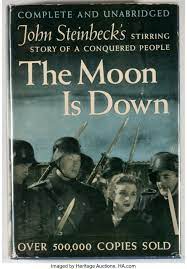
If John Steinbeck’s 1942 novel, The Moon Is Down, were available in Russia, this would be an appropriate time for Russians to plunge into it.
Written to inspire resistance movements in occupied countries, it has appeared in at least 92 editions across the world
It tells the story of a Norwegian village occupied by Germans in World War II.
At first the invasion goes swiftly. Wehrmacht Colonel Lanser establishes his headquarters in the house of the democratically-elected Mayor Orden.
Lanser, a veteran of World War I, considers himself a man of civility and law. But in his heart he knows that “there are no peaceful people” whose freedom has forcibly violated.
After an alderman named Alex Morden is executed for killing a German officer, the townspeople settle into “a slow, silent waiting revenge.”
Any soldier who relaxes his guard, drinks or goes out with a woman, is murdered. Sections of the railroad linking the port with the local mine are routinely sabotaged and the electricity generators are short-circuited.
Between the winter cold and the hostility of the townspeople, the Germans become fearful and disillusioned. One night, a frustrated Lieutenant Tonder asks: “Captain, is this place conquered?”
“Of course.”
“Conquered and we’re afraid; conquered and we’re surrounded,” replies Tonder, hysterically. “Flies conquer the flypaper. Flies capture two hundred miles of new flypaper!”
A few nights later, Tonder knocks at the door of Molly Morden. He doesn’t realize that she nurses a deep hatred of Germans for the execution of her husband, Alex. Tonder desperately wants to escape the fury and loneliness of war. Molly agrees to talk with him, but insists that he leave and return another time.
When he returns the next evening, Molly invites him in—and then kills him with a pair of scissors.
A British plane flies over the town and drops packages of dynamite, which the townspeople hurriedly collect.
Soon afterward, the Germans learn about the droppings. Colonel Lanser arrests Mayor Orden and Doctor Albert Winter. As the two await their uncertain future, Orden tries to remember the speech Socrates delivered before he was put to death:
“Do you remember in school, in the Apology? Socrates says, ‘Someone will say, ‘And are you not ashamed, Socrates, of a course of life which is likely to bring you to an untimely end?’ To him I may fairly answer, ‘There you are mistaken: a man who is good for anything ought not to calculate the chance of living or dying; he ought only to consider whether he is doing right or wrong.’”
Colonel Lanser enters the room and warns Orden: “If you don’t urge your people to not use the dynamite, you will be executed.”
To which Orden replies: “Nothing can change it. You will be destroyed and driven out. The people don’t like to be conquered, sir, and so they will not be. Free men cannot start a war, but once it is started, they can fight on in defeat.
“Herd men, followers of a leader, cannot do that, and so it is always the herd men who win battles and the free men who win wars. You will find that it is so, sir.”
Lanser says that even if Orden doesn’t tell the townspeople to submit, the Germans can put out the story that he did.
“They would know,” Orden says angrily. “You don’t keep secrets. One of your men said that ‘flies have conquered the flypaper’ and now everyone knows. It’s become a song of resistance.”
Explosions begin erupting throughout the town.
As Orden is led outside—to his execution—he tells Winter, quoting Socrates: “’Crito, I owe a cock to Asclepius. Will you remember to pay the debt?’”
“The debt shall be paid,” replies Winter—meaning that resistance will continue.
When Russian President Vladimir Putin attacked Ukraine with 200,000 soldiers on February 24, he had every reason to believe that his unprovoked war would be a cakewalk.
The assault opened with missiles and artillery, striking major Ukrainian cities, including its capitol, Kiev.
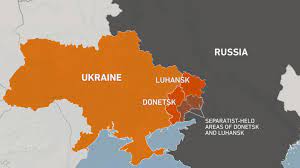
Ukraine vs. Russia
But on the battlefield, fierce Ukrainian resistance staggered the Russians:
- Kiev remained unconquered.
- In late August, using missile systems supplied by the United States, Ukrainian forces destroyed Russian ammunition dumps and a Russian air base in Crimea.
- In September, Ukraine reclaimed 3,090 square miles of northeastern territory from Russian forces.
- On September 21, with Russian forces bogged down or retreating, Putin announced the partial mobilization of 300,000 military reservists. All male citizens below 60 are now eligible to be drafted.
- Ukrainian forces retook the key city of Kherson in November; Russian forces, which had occupied the city since March, withdrew.
- On December 11, Putin’s infamous mercenary army, the Wagner militia, suffered “significant losses” after its Luhansk headquarters was hit during a Ukraine artillery strike.
Unable to win on the battlefield, Putin has turned to terroristic bombings and drone attacks on Ukrainian infrastructure to break the will of the populace.
Defiant Ukrainians continue to hunker down in makeshift shelters against cold and hunger.
Even if he conquers Ukraine, Putin will inherit a hate-filled population thirsting for revenge at every opportunity.
And the Ukrainians—like Spartacus, who resisted the tyranny of Rome—will live on in heroic memory.
ABC NEWS, ALTERNET, AMERICABLOG, AP, BABY BOOMER RESISTANCE, BBC, BLOOMBERG, BLOOMBERG NEWS, BLUESKY, BUZZFEED, CAILY KOS, CBS NEWS, CENSORSHIP, CNN, COVID-19, CROOKS AND LIARS, DAILY KOS, DAVID MCCULLOUGH, DEMOCRATS, DISNEY, FACEBOOK, FIRST AMENDMENT, FIVETHIRTYEIGHT, HARPER’S MAGAZINE, HISTORICAL ILLITERACY, HISTORY, HUFFINGTON POST, JAY LENO, JOE BIDEN, MARK ZUCKERBERG, MEDIA MATTERS, MOTHER JONES, MOVEON, MSNBC, NAZI GERMANY, NBC NEWS, NEW REPUBLIC, NEWSDAY, NEWSWEEK, NPR, PBS NEWSHOUR, POLITICO, POLITICUSUSA, RAW STORY, REPUBLICANS, REUTERS, SALON, SEATTLE TIMES, SHERYL SANDBERG, SLATE, TALKING POINTS MEMO, THE ATLANTIC, THE CHICAGO SUN-TIMES, THE CHICAGO TRIBUNE, THE DAILY BEAST, THE DAILY BLOG, THE GUARDIAN, THE HILL, THE HUFFINGTON POST, THE INTERCEPT, THE LOS ANGELES TIMES, THE NATION, THE NEW REPUBLIC, THE NEW YORK TIMES, THE NEW YORKER, THE VILLAGE VOICE, THE WASHINGTON POST, THINKPROGRESS, TIME, TONIGHT SHOW, TRUTHDIG, TRUTHOUT, TWO POLITICAL JUNKIES, U.S. NEWS & WORLD REPORT, UPI, USA TODAY, WONKETTE, X
In Bureaucracy, Business, Entertainment, History, Politics, Social commentary on November 30, 2022 at 12:15 am
As it now operates, Facebook poses a direct threat to the First Amendment, the privacy of its users and democratic elections.
Facebook is the world’s largest social media company. Its social and political influence on the United States is enormous. According to its profile on Wikipedia:
“The subject of numerous controversies, Facebook has often been criticized over issues such as user privacy (as with the Cambridge Analytica data scandal), political manipulation (as with the 2016 U.S. elections) and mass surveillance.
“Facebook has also been subject to criticism over psychological effects such as addiction and low self-esteem, and various controversies over content such as fake news, conspiracy theories, copyright infringement, and hate speech. Commentators have accused Facebook of willingly facilitating the spread of such content as well as exaggerating its number of users to appeal to advertisers.”
To which can be added the following:
- I was sentenced to “Facebook Jail” for two posts. The first of these stated: “Americans are historical illiterates.” This was labeled “hate speech and inferiority.” The fact that the distinguished historian David McCullough had said exactly the same meant nothing to Facebook.
- A second post deleted showed a group of heavily-armed Proud Boys standing around a cross. Above this I had posted the caption: “Proud Boys posing with their latest victim.” This was labeled as “hate speech.”
- Since this post was bluntly critical of the Proud Boys, the question emerges: Does criticizing the Proud Boys—Fascists who played a major role during the January 6 attempted coup against the Capitol Building—constitute “hate speech”?

Proud Boys
Anthony Crider, CC BY 2.0 <https://creativecommons.org/licenses/by/2.0>, via Wikimedia Commons
- I am currently banned from Facebook for posting the following: A Facebook member had posted this solution for achieving universal peace: All enlisted members of all the world’s militaries should refuse to serve. In 2002-3, I had watched President George W. Bush lie the country into a needless, bloody, budget-busting war in Iraq. Thus, I felt the poster’s “solution” required a serious dose of realism.
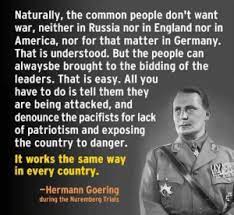
- So I posted a meme below that contained an image of Herman Goring—chief of the German Luftwaffe (air force) during World War II. As a convicted war criminal, he should, I felt, have insight into how easy it is to lead a nation into war.
- And he did: “Naturally, the common people don’t want war, neither in Russia nor in England nor in America, nor for that matter in Germany. That is understood. But the people can always be brought to the bidding of the leaders. That is easy. All you have to do is tell them they are being attacked, and denounce the pacifists for lack of patriotism and exposing the country to danger. It works the same way in every country.”
- No sooner had I posted this than I found myself once again accused of violating Facebook’s “Community Standards.” As in past cases, Facebook did not deign to state, specifically, what standards I had violated, or how the post endangered other Facebook members. I simply found myself blocked from Facebook.
- Facebook has made its founder, Mark Zuckerberg, worth $40.7 billion. Yet he refuses to provide Facebook users with an 800 number—or even an Instant Messaging service—so they can appeal directly to the Censorship Committee and share their reasons for posting the comments they did.
- And there’s absolutely no point in writing to Zuckerberg or any of his thralls at the corporate address of 1 Hacker Way, Menlo Park, California 94025. With the sheer arrogance only a true billionaire can exude, Zuckerberg refuses to answer (or even open) his mail.
- Frances Haugen, a former Facebook employee, disclosed tens of thousands of Facebook’s internal documents to the Securities and Exchange Commission and the Wall Street Journal in 2021. She testified before Congress that Facebook promotes conflict to increase its readership and keep them reading—and buying. So the comment I made fell exactly into that category of exciting controversy.
People who libel and/or harass others should be banned from social media. It’s precisely because Twitter refuses to do so that its reputation is fatally tainted.
But posting a comment that is based on accurate history should not qualify as hate speech. And none of the examples I have cited fits that definition.
Through its worldwide membership, Facebook exerts an influence that rivals—if not exceeds—that of most government institutions. Its greatest infamy: Allowing Russian trolls to play a lethal role in electing Donald Trump President in 2016. And no doubt they are preparing to do so again in 2024.
In a highly polarized political environment, Mark Zuckerberg holds the unique distinction of having infuriated both Democrats and Republicans during his appearances before Congress. His secret: The overweening arrogance he routinely displays to those he considers lesser mortals. His motto is: ““Move fast and break things. Unless you are breaking stuff, you are not moving fast enough.”
It’s long past time for those at the legislative level to show him that some things—such as the First Amendment, the right to privacy and elections free of foreign influence—should not be broken. And that there is a high price to pay for those who do.
ABC NEWS, ALTERNET, AMERICABLOG, AP, BABY BOOMER RESISTANCE, BBC, BLOOMBERG, BLOOMBERG NEWS, BLUESKY, BUZZFEED, CBS NEWS, CENSORSHIP, CNN, COVID-19, CROOKS AND LIARS, DAILY KOS, DAVID MCCULLOUGH, DEMOCRATS, DISNEY, FACEBOOK, FIRST AMENDMENT, FIVETHIRTYEIGHT, HARPER’S MAGAZINE, HISTORICAL ILLITERACY, HISTORY, HUFFINGTON POST, JAY LENO, JOE BIDEN, MARK ZUCKERBERG, MEDIA MATTERS, MOTHER JONES, MOVEON, MSNBC, NAZI GERMANY, NBC NEWS, NEW REPUBLIC, NEWSDAY, NEWSWEEK, NPR, PBS NEWSHOUR, POLITICO, POLITICUSUSA, RAW STORY, REPUBLICANS, REUTERS, SALON, SEATTLE TIMES, SHERYL SANDBERG, SLATE, TALKING POINTS MEMO, THE ATLANTIC, THE CHICAGO SUN-TIMES, THE CHICAGO TRIBUNE, THE DAILY BEAST, THE DAILY BLOG, THE GUARDIAN, THE HILL, THE HUFFINGTON POST, THE INTERCEPT, THE LOS ANGELES TIMES, THE NATION, THE NEW REPUBLIC, THE NEW YORK TIMES, THE NEW YORKER, THE VILLAGE VOICE, THE WASHINGTON POST, THINKPROGRESS, TIME, TONIGHT SHOW, TRUTHDIG, TRUTHOUT, TWO POLITICAL JUNKIES, U.S. NEWS & WORLD REPORT, UPI, USA TODAY, WONKETTE, X
In Bureaucracy, Business, History, Politics, Social commentary on November 29, 2022 at 12:14 am
There is an urgent need for states—and especially the Federal government—to impose serious regulatory controls on Facebook.
Facebook is the world’s largest social media company, with 2.934 billion users by July, 2022. Its social and political influence on the United States is enormous. According to its profile on Wikipedia:
“The subject of numerous controversies, Facebook has often been criticized over issues such as user privacy (as with the Cambridge Analytica data scandal), political manipulation (as with the 2016 U.S. elections) and mass surveillance.
“Posts originating from the Facebook page of Breitbart News, a media organization previously affiliated with Cambridge Analytica, are currently among the most widely shared political content on Facebook.
“Facebook has also been subject to criticism over psychological effects such as addiction and low self-esteem, and various controversies over content such as fake news, conspiracy theories, copyright infringement, and hate speech. Commentators have accused Facebook of willingly facilitating the spread of such content as well as exaggerating its number of users to appeal to advertisers.”

Facebook / Meta headquarters in Menlo Park, California
LPS.1, CC0, via Wikimedia Commons
To which should be added the following:
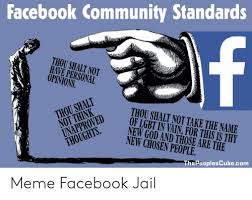
- Facebook operates as virtually a law unto itself, arbitrarily deciding which posts violate its “Community Standards” and deleting them (and their posters) without warning and right to appeal.
- No details are ever given as to what about the post, specifically, posed a threat to other Facebook members.
- Facebook claims that its users have the right to appeal: “You can disagree with the decision if you think we got it wrong.”
- But then Facebook declares: “We usually offer the chance to request a review and follow up if we got the decision wrong. We have fewer reviewers available right now because of the coronavirus (COVID-19) outbreak. We’re trying hard to priorities reviewing content with the most potential for harm. This means we may not be able to follow up with you, though your feedback helps us do better in the future.”
- Using COVID as an excuse to avoid responsible behavior is despicable. If Facebook is going to ban people for supposedly violating its “Community Standards,” there is a moral obligation—if not a legal one—to give them a chance to share their side of the story.
- Facebook revenues have made its CEO, Mark Zuckerberg, worth $71.5 billion. But Facebook refuses to provide its users with an 800 number so they can appeal directly to the Censorship Committee and share their reasons for posting the comments they did.
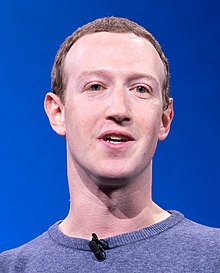
Mark Zuckerberg
Anthony Quintano from Westminster, United States, CC BY 2.0 <https://creativecommons.org/licenses/by/2.0>, via Wikimedia Commons
- Nor does Facebook provide even an Instant Messaging capability, so members can do so.
- Facebook’s refusal to provide a contact number for its members exposes them to potential fraud. National Public Radio published a January 31, 2017 article on “Searching for ‘Facebook Customer Service’ Can Lead To a Scam.”
- According to Google data: “‘Facebook customer service’ gets searched, on average, about 27,000 times a month in the U.S.” Yet on its own “Help Community” page, Facebook admits: “Facebook doesn’t offer a phone number for support.”
- Nor do Facebook’s executives deign to respond to letters sent to them. I have sent letters to its CEO, Mark Zuckerberg, and to Sheryl Sandberg, a member of its board of directors. Neither had the courtesy to reply.
- Many of those I know on Facebook have been censored for posts that criticize Donald Trump. Apparently, “freedom of expression” exists only for those who support a man who staged an illegal coup to overturn a totally legitimate election.
- Members can be banned from Facebook for posting entirely legitimate news stories. One such story described how Texas Congressman Joe Burton had sent a series of smarmy emails to numerous women—while posing as a paragon of “family values.”
- The post was removed and its poster was sent the following message: “We removed content you posted. We removed this content because it doesn’t follow the Facebook Community Standards.” Then the member who posted it found himself blocked from Facebook.
- One Facebook member posted an innocuous anti-Trump cartoon: A group of children are lined up at a house on Halloween. A woman at the door says: “Oh, look. We have a pirate, a witch and a Trump supporter [a boy wearing a white sheet as a ghost].” The post was removed and the poster blocked from Facebook:
- Many Facebook users have found themselves punished after Facebook’s star chamber censors found a post they didn’t like from four years earlier.
- Facebook’s arbitrary and punitive actions are so notorious they have become grist for countless memes—some of which are hilarious: “Warning: You have violated a rule we haven’t made up yet. Because you’re a known troublemaker you’ve been banned for 30 days. Thank you for using Facebook, have a nice day.”
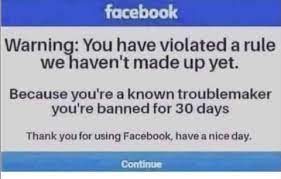
- I was sentenced to “Facebook Jail” for two posts. The first of these stated: “Americans are historical illiterates.” This was labeled “hate speech and inferiority.” The fact that the distinguished historian David McCullough had said exactly the same meant nothing to Facebook.
- Taken to its logical conclusion, only comments celebrating the ignorance of ignorant people will be considered acceptable on Facebook.
1912 PRESIDENTIAL ELECTION, 2016 PRESIDENTIAL ELECTION, 2020 PRESIDENTIAL ELECTION, 2024 PRESIDENTIAL ELECTION, ABC NEWS, ADOLF HITLER, ALBERT SPEER, ALTERNET, AMERICABLOG, AP, BABY BOOMER RESISTANCE, BBC, BLACKS, BLOOMBERG NEWS, BORDER WALL, BUZZFEED, CASEY DESANTIS, CBS NEWS, CIA, CNN, COVID-19, CROOKS AND LIARS, DAILY KOS, DEMOCRATS, DONALD TRUMP, ELECTORAL COLLEGE, FBI, FIVETHIRTYEIGHT, FOX NEWS, GAYS, GOVERNMENT SHUTDOWN, HARPER’S MAGAZINE, HARRY S. TRUMAN, HUFFINGTON POST, ILLEGAL ALIENS, JAMES COMEY, JANUARY 6 COUP ATTEMPT, JOE BIDEN, JOSEPH STALIN, MAGGIE HABERMAN, MASKS, MEDIA MATTERS, MOTHER JONES, MOVEON, MSNBC, NATIONAL SECURITY AGENCY, NAZI GERMANY, NBC NEWS, NEW REPUBLIC, NEW YORK POST, NEWSDAY, NEWSWEEK, NICHOLE HEMMER, NPR, PBS NEWSHOUR, POLITICO, POLITICUSUSA, PROTESTERS, PUBLIC HEALTH WORKERS, RACISM, RAW STORY, REPUBLICANS, REUTERS, ROGER STONE, RON DESANTIS, SALON, SCHOOLS, SEATTLE TIMES, SERGEY KISLYAK, SERGEY LAVROV, SEXUALITY, SLATE, SOVIET UNION, TALKING POINTS MEMO, THE ATLANTIC, THE CHICAGO SUN-TIMES, THE CHICAGO TRIBUNE, THE DAILY BEAST, THE DAILY BLOG, THE GUARDIAN, THE HILL, THE HUFFINGTON POST, THE INTERCEPT, THE LOS ANGELES TIMES, THE NATION, THE NEW REPUBLIC, THE NEW YORK TIMES, THE NEW YORKER, THE PRESS, THE VILLAGE VOICE, THE WASHINGTON POST, THEODORE ROOSEVELT, THINKPROGRESS, TIME, TRUTH SOCIAL, TRUTHDIG, TRUTHOUT, TWITTER, U.S. NEWS & WORLD REPORT, UKRAINE, UPI, USA TODAY, VACCINATIONS, VANDERBILT UNIVERSITY, VLADIMIR PUTIN, VOLODYMYR ZELENSKY, WALL STREET JOURNAL, WALT DISNEY CORPORATION, WILLIMAM HOWWARD TAFT, WOODROW WILSON
In Bureaucracy, History, Law, Law Enforcement, Politics, Social commentary, Uncategorized on November 16, 2022 at 12:10 am
In his coming war against Florida Governor Ron DeSantis, Donald Trump may have the last word.
The former President has warned that if he can’t be the Republican Presidential nominee in 2024, “he’s willing to burn it all down.”
New York Times reporter Maggie Haberman, who has intimately covered Trump for years, has tweeted:
“Yes, Trump is more vulnerable than he’s been in a long time. But that has happened before and he’s survived.”

Maggie Haberman
Andrew Lih, CC BY-SA 4.0 <https://creativecommons.org/licenses/by-sa/4.0>, via Wikimedia Commons
“Trump has extremely few major donors who want to do anything for him right now and a number of them are having active conversations about the best way to stop him. But. Again….sound familiar?
“Trump has made clear he’s willing to burn it all down if he doesn’t get what he wants, which is maintaining his grip on the product line he’s been developing for six years: the Republican party. So a lot of electeds will have to make a choice they’ve not had to before.”
There is precedent for this. After serving two terms in the White House (1901-1909) Theodore Roosevelt became increasingly disillusioned with his handpicked successor: William Howard Taft.

Theodore Roosevelt
By 1912, he decided to run for a third term as a third-party candidate. His candidacy split the Republican vote—and enabled Democrats to elect Woodrow Wilson President.
No doubt many Democrats are now salivating at the possibility of the same occurring in 2024.
And even more of them are looking forward to seeing two would-be tyrants—Donald Trump and Ron DeSantis—trading lethal blows for most of the Presidential year.
Their reaction would be similar to that expressed by then-Senator Harry S. Truman when Nazi Germany invaded the Soviet Union on June 22, 1941: “If we see that Germany is winning the war, we ought to help Russia; and if that Russia is winning, we ought to help Germany, and in that way let them kill as many as possible.”
* * * * *
As the Third Reich came to its fiery end, its dictator, Adolf Hitler, sought to punish the German people for being “unworthy” of his “genius” and losing the war he had started.
His attitude was: “If I can’t rule Germany, then there won’t be a Germany.”
In his infamous “Nero Order,” he decreed the destruction of everything still remaining–industries, ships, harbors, communications, roads, mines, bridges, stores, utility plants, food stuffs.
Fortunately for Germany, one man–Albert Speer–finally broke ranks with his Fuhrer.

Albert Speer
Risking death, he refused to carry out Hitler’s “scorched earth” order. Even more important, he mounted a successful effort to block such destruction and persuade influential military and civilian leaders to disobey the order as well.
As a result, those targets slated for destruction were spared.
Throughout his four years in office, President Donald Trump made it clear that America faced a stark choice: It could remain a constitutional democracy—or allow him to become an all-powerful “President-for-Life.”
Among his outrages:
- Repeatedly attacking the nation’s free press for daring to report his growing list of crimes and disasters, calling it “the enemy of the American people.”
- Siding with Russian dictator Vladimir Putin against the FBI, CIA and National Security Agency which unanimously agreed that Russia had subverted the 2016 Presidential election.
- Firing FBI Director James Comey for investigating that subversion.
- Giving Russian Foreign Minister Sergey Lavrov and Russian Ambassador Sergey Kislyak highly classified CIA Intelligence about an Islamic State plot to turn laptops into concealable bombs.
- Shutting down the Federal Government for 35 days in 2018-19 because Democrats refused to fund his ineffective “border wall” between the United States and Mexico.
- An estimated 380,000 government employees were furloughed and another 420,000 were ordered to work without pay. The shutdown ended due to public outrage—without Trump getting the funding amount he had demanded.
- Trying to coerce Ukrainian President Volodymyr Zelensky to smear former Vice President Joe Biden, who was likely to be his Democratic opponent in the 2020 Presidential election.
- Repeatedly lying about the dangers posed by the COVID-19 virus, and thus enabling it to ravage the country and ultimately kill 400,000 by the time Trump left office.
- Attacking medical experts and governors who urged Americans to wear masks and socially distance to protect themselves from COVID-19.
Trump’s ultimate act of criminality and treason came on January 6, 2021, when he incited his followers to violently attack the United States Capitol Building. Their goal: To prevent Republicans and Democrats from counting the Electoral Votes cast in the 2020 Presidential election.
Trump fully understood that an accurate count of those votes would reveal his loss to Joe Biden: 306 votes for Biden, compared with 232 for Trump.
Fortunately for American democracy, there were enough patriots determined to prevent Trump from becoming the absolute dictator he clearly intended to be.
Like Adolf Hitler, Donald Trump’s attitude was: “If I can’t rule America, there won’t be an America.”
Deprived of his chance to destroy the country he claimed to love, Trump now threatens to destroy the political party that brought him to near-absolute power in 2016.
And Ron DeSantis stands ready to establish himself as an equally Trumpian dictator.
Their party is still waiting for a Republican Albert Speer to step forward and save America from the self-destructive brutalities of its own Right-wing fanatics.
1912 PRESIDENTIAL ELECTION, 2016 PRESIDENTIAL ELECTION, 2020 PRESIDENTIAL ELECTION, 2024 PRESIDENTIAL ELECTION, ABC NEWS, ADOLF HITLER, ALBERT SPEER, ALTERNET, AMERICABLOG, AP, BABY BOOMER RESISTANCE, BBC, BLACKS, BLOOMBERG NEWS, BORDER WALL, BUZZFEED, CASEY DESANTIS, CBS NEWS, CIA, CNN, COVID-19, CROOKS AND LIARS, DAILY KOS, DEMOCRATS, DONALD TRUMP, ELECTORAL COLLEGE, FBI, FIVETHIRTYEIGHT, FOX NEWS, GAYS, GOVERNMENT SHUTDOWN, HARPER’S MAGAZINE, HARRY S. TRUMAN, HUFFINGTON POST, ILLEGAL ALIENS, JAMES COMEY, JANUARY 6 COUP ATTEMPT, JOE BIDEN, JOSEPH STALIN, MAGGIE HABERMAN, MASKS, MEDIA MATTERS, MOTHER JONES, MOVEON, MSNBC, NATIONAL SECURITY AGENCY, NAZI GERMANY, NBC NEWS, NEW REPUBLIC, NEW YORK POST, NEWSDAY, NEWSWEEK, NICHOLE HEMMER, NPR, PBS NEWSHOUR, POLITICO, POLITICUSUSA, PROTESTERS, PUBLIC HEALTH WORKERS, RACISM, RAW STORY, REPUBLICANS, REUTERS, ROGER STONE, RON DESANTIS, SALON, SCHOOLS, SEATTLE TIMES, SERGEY KISLYAK, SERGEY LAVROV, SEXUALITY, SLATE, SOVIET UNION, TALKING POINTS MEMO, THE ATLANTIC, THE CHICAGO SUN-TIMES, THE CHICAGO TRIBUNE, THE DAILY BEAST, THE DAILY BLOG, THE GUARDIAN, THE HILL, THE HUFFINGTON POST, THE INTERCEPT, THE LOS ANGELES TIMES, THE NATION, THE NEW REPUBLIC, THE NEW YORK TIMES, THE NEW YORKER, THE PRESS, THE VILLAGE VOICE, THE WASHINGTON POST, THEODORE ROOSEVELT, THINKPROGRESS, TIME, TRUTH SOCIAL, TRUTHDIG, TRUTHOUT, TWITTER, U.S. NEWS & WORLD REPORT, UKRAINE, UPI, USA TODAY, VACCINATIONS, VANDERBILT UNIVERSITY, VLADIMIR PUTIN, VOLODYMYR ZELENSKY, WALL STREET JOURNAL, WALT DISNEY CORPORATION, WILLIMAM HOWWARD TAFT, WOODROW WILSON
In Bureaucracy, History, Law, Law Enforcement, Politics, Social commentary on November 15, 2022 at 12:10 am
Having been defeated in 2020 for a second term by former Vice President Joe Biden, Donald Trump has convinced himself—and millions of his fanatical followers—that he was cheated by vote fraud.
He is convinced that the 2024 GOP Presidential nomination rightfully belongs to him. And that anyone who stands in his way must be mercilessly crushed.
Florida Governor Ron DeSantis, on the other hand, is equally convinced that it’s now the turn of a younger, more vigorous and equally ruthless man to hold the White House.
Not only does Trump believe DeSantis owes him absolute loyalty, but so do many of his supporters.
“Sadly, everything President Trump says is true. Ron DeSantis owes his governorship to Donald Trump and challenging him in 2024 would be a treacherous act of disloyalty,” said Roger Stone, a long-time Trump adviser.
That assumes that Trump has been ordained as the official Republican Presidential nominee for 2024.
He has not.
Donald Trump
Moreover, Trump has never allowed a sense of loyalty to stand in the way of his ambitions—in business or politics.
In DeSantis, Trump faces an opponent every bit as ruthless as himself—and endowed with several built-in advantages.
On November 11, the CNN website carried an opinion piece by Nichole Hemmer, an associate professor of history at Vanderbilt University.
Entitled “Even the DeSantis bubble may burst,” it noted:
“On paper, DeSantis looks like Trump’s natural heir. Since winning the governorship by a whisper-thin margin in 2018, he has consciously molded himself after Trump, picking up everything from Trump’s hand gestures and speech cadence to his media-bashing and calculated viciousness….
“He has married that political style with a strongman persona. As governor, he has targeted protesters, universities, public health workers and corporations for opposing his policies.
“He has sent police to round up voters with felony convictions who, confused by the state’s efforts to strip their voting rights after voters reinstated them a few years ago, mistakenly voted in recent elections.
“He has bent the Florida legislature to his will, whipping up support for anti-gay laws, a new redistricting map and punitive legislation targeting Disney after the company criticized the state’s infamous ‘don’t say gay” bill.'”

Nichole Hemmer
Thus, in DeSantis, Trump faces an opponent every bit as ruthless as himself—and endowed with several built-in advantages.
First, DeSantis, at 44, is 32 years younger than the 76-year-old Trump.
Second, DeSantis, unlike Trump, has an existing power-base: The Governorship of a pivotal swing state: Florida.
Trump, an ex-President, lives at his Mar-a-Lago estate in Palm Beach, Florida.
Third, DeSantis doesn’t carry the baggage of scandals and notoriety that Trump has acquired as a businessman and President.
Fourth, DeSantis can reach far greater numbers of people through his Twitter account than Trump has been able to do through his failing website, Truth Social.
That’s because Trump’s Twitter account was closed—by Twitter—after he incited a mob of his followers to attack the United States Capitol Building on January 6, 2021.
The object of that attack: To stop the counting of Electoral College votes certain to find former Vice President Joe Biden the legitimate winner of the 2020 Presidential election.

Ron DeSantis
Fifth, many Republicans are blaming Trump for their failure to sweep Democrats from state and Federal offices in a widely heralded “Red wave” in the 2022 midterm elections.
“Trump Is the Republican Party’s Biggest Loser,” read the Wall Street Journal Editorial Board’s headline. Fox News and right-wing podcasts and radio shows repeated the charge in the days after the elections.
Sixth, DeSantis has gained huge popularity within Florida by molding himself after Trump by tapping into the politics of resentment. Among the targets of his attacks:
Protesters: DeSantis enacted a 2021 “anti-riot” bill that:
- Grants civil legal immunity to people who drive through protesters blocking a road;
- Creates a broad category for misdemeanor arrest during protests;
- Anyone charged will be denied bail until their first court appearance;
- Creates a new felony crime of “aggravated rioting” that carries a sentence of up to 15 years in prison and a new crime of “mob intimidation.”
Schools:
- Installed GOP allies in top university posts;
- Successfully pushed legislation that could change tenure and limit how university professors can teach lessons on race.
Blacks: Pushed through the legislature a new congressional map that will dilute the voting power of black Floridians.
COVID-19: Attacked wearing masks and getting vaccinated as threats to “American freedom”—to support a family, attend school, run a business.
Gays: Signed legislation prohibiting classroom discussions about sexual orientation and gender identity with younger students—a measure critics dubbed the “Don’t Say Gay” law.
Walt Disney Corporation: Disney CEO Bob Chapek criticized DeSantis’ “don’t say gay” bill. DeSantis rammed through the legislature a bill eliminating the decades-long status Disney had held to operate as an independent government around its Orlando-area theme parks.
Asylum-seekers: Sent two planeloads of illegal aliens—at Florida’s expense—to the island of Martha’s Vineyard as a pre-election publicity stunt.
Nor has DeSantis neglected to make himself appear as a true “man of the people.”
A month before the election, he declared a gas tax holiday. He also suspended campaigning and focused on effective hurricane relief after Hurricane Ian.
1912 PRESIDENTIAL ELECTION, 2016 PRESIDENTIAL ELECTION, 2020 PRESIDENTIAL ELECTION, 2024 PRESIDENTIAL ELECTION, ABC NEWS, ADOLF HITLER, ALBERT SPEER, ALTERNET, AMERICABLOG, AP, BABY BOOMER RESISTANCE, BBC, BLACKS, BLOOMBERG NEWS, BORDER WALL, BUZZFEED, CASEY DESANTIS, CBS NEWS, CIA, CNN, COVID-19, CROOKS AND LIARS, DAILY KOS, DEMOCRATS, DONALD TRUMP, ELECTORAL COLLEGE, FBI, FIVETHIRTYEIGHT, FOX NEWS, GAYS, GOVERNMENT SHUTDOWN, HARPER’S MAGAZINE, HARRY S. TRUMAN, HUFFINGTON POST, ILLEGAL ALIENS, JAMES COMEY, JANUARY 6 COUP ATTEMPT, JOE BIDEN, JOSEPH STALIN, MAGGIE HABERMAN, MASKS, MEDIA MATTERS, MOTHER JONES, MOVEON, MSNBC, NATIONAL SECURITY AGENCY, NAZI GERMANY, NBC NEWS, NEW REPUBLIC, NEW YORK POST, NEWSDAY, NEWSWEEK, NICHOLE HEMMER, NPR, PBS NEWSHOUR, POLITICO, POLITICUSUSA, PROTESTERS, RACISM, RAW STORY, REPUBLICANS, REUTERS, ROGER STONE, RON DESANTIS, SALON, SCHOOLS, SEATTLE TIMES, SERGEY KISLYAK, SERGEY LAVROV, SEXUALITY, SLATE, SOVIET UNION, TALKING POINTS MEMO, THE ATLANTIC, THE CHICAGO SUN-TIMES, THE CHICAGO TRIBUNE, THE DAILY BEAST, THE DAILY BLOG, THE GUARDIAN, THE HILL, THE HUFFINGTON POST, THE INTERCEPT, THE LOS ANGELES TIMES, THE NATION, THE NEW REPUBLIC, THE NEW YORK TIMES, THE NEW YORKER, THE PRESS, THE VILLAGE VOICE, THE WASHINGTON POST, THEODORE ROOSEVELT, THINKPROGRESS, TIME, TRUTH SOCIAL, TRUTHDIG, TRUTHOUT, TWITTER, U.S. NEWS & WORLD REPORT, UKRAINE, UPI, USA TODAY, VACCINATIONS, VANDERBILT UNIVERSITY, VLADIMIR PUTIN, VOLODYMYR ZELENSKY, WALL STREET JOURNAL, WALT DISNEY CORPORATION, WILLIMAM HOWWARD TAFT, WOODROW WILSON
In Bureaucracy, History, Law, Law Enforcement, Politics, Social commentary on November 14, 2022 at 12:10 am
For Americans, it may turn out to be the equivalent of the deathmatch between German Fuhrer Adolf Hitler and Soviet Premier Joseph Stalin.
At the very least, it promises to be the Right-wing heavyweight championship of the decade, if not the century: An all-out slugfest between former President Donald J. Trump and Florida Governor Ron D. DeSantis.
On November 10, Trump publicly attacked DeSantis as “Ron DeSanctimonious” and took credit for DeSantis’ success after endorsing him in 2018.
This was only two days after DeSantis was soundly re-elected Governor—and the much-hyped “Red wave” failed to sweep Democrats out of state and federal offices in the 2022 midterm elections.
On his website, Truth Social, Trump posted that DeSantis had been a political lightweight who had come to him “in desperate shape” when running for his first term in office in 2017.
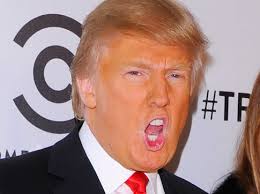
Donald Trump
“Ron had low approval, bad polls, and no money, but he said that if I would Endorse [sic] him, he could win. also fixed his campaign, which had completely fallen apart.”
For Trump, DeSantis’ worst sin was refusing to say whether he would run for President in 2024.
Having been defeated for a second term by Joe Biden in 2020, Trump believes he has an absolute right to regain that office in another two years.
“Ron DeSanctimonious is playing games! The Fake News asks him if he’s going to run if President Trump runs, and he says, ‘I’m only focused on the Governor’s race, I’m not looking into the future.’ Well, in terms of loyalty and class, that’s really not the right answer.”
By “loyalty” Trump meant: Loyalty to himself.
For Trump, there was only one “right” answer DeSantis could have given: “I will not be a candidate for President in 2024 and I will totally support President Trump for that office.”
And that was not the response that DeSantis gave.
Even worse for Trump: Several of his loudly-supported candidates across the country lost their electoral bids.
To add to his rage and sense of betrayal: Conservative media sided with DeSantis—such as Fox News and the New York Post, which ran a front page headline calling DeSantis “DeFuture” the day after the election.

New York Post, Public domain, via Wikimedia Commons
Responded Trump: “NewsCorp, which is Fox, the Wall Street Journal, and the no longer great New York Post, is all in for Governor Ron DeSanctimonious.”
A Trump advisor, speaking off-the-record, told Politico: “Obviously he is escalating. It is total shots fired. It is not what I would have done if it were totally up to me, but you can’t argue with Donald Trump’s tactics. They work. He is savage but effective. He was never going to stay restrained for long.”
“He is obviously threatened by a DeSantis presidential run,” said a longtime Florida Republican consultant speaking of Trump. “And by doing this, I think he will lose a lot of his base support.”
Trump’s advisors are trying to persuade him to soften his image. They fear that his angry and divisive rhetoric is turning off many voters who like his policies but desire some normalcy.
They are also trying to persuade Trump to focus less on his 2020 election loss and offer solutions to voters’ problems.
At the DeSantis victory rally, chants resounded: “Two more years!”—meaning that his supporters want him to run for President in 2024.
DeSantis has not responded to the attacks Trump has made on him.
Two Florida Republicans close to DeSantis told Yahoo News that the governor would be wary of attacking Trump. He wants to focus on policy issues and Florida’s recovery from Hurricane Ian.
By doing so, they said, DeSantis will highlight how his governing style differs from Trump’s more combative and less policy-focused approach.
It also prevents him from getting sucked into an endless tit-for-tat war of insults with the insult-happy ex-President.
The Donald Trump-Ron DeSantis relationship wasn’t always so hostile.
Trump’s endorsement played a huge role in DeSantis’ winning the 2018 GOP primary against former Florida Agriculture Commissioner Adam Putnam, who was an early favorite.
And DeSantis quickly showed his gratitude with a campaign video that was a naked Valentine to Trump’s ego—and the base that worshiped him.
Released on July 30, 2018, the ad was narrated by DeSantis’ wife, Casey.
CASEY DESANTIS: Everyone knows my husband, Ron DeSantis, is endorsed by President Trump. But he’s also an amazing dad. Ron loves playing with the kids.
DESANTIS: “Build the wall” [as his son uses colored plastic bricks to build a wall. This was a line right out of Trump’s repeated demands for a wall separating the United States from Mexico.]

CASEY: He reads stories.
DESANTIS: “Then Mr. Trump said ‘You’re fired.’ I love that part'” [as he reads a book to his son].
CASEY: He’s teaching Madison to talk.
DESANTIS: “Make America great again” [as he holds up a “Trump” sign that says exactly that].
CASEY: People say Ron’s all Trump, but he’s so much more.
DESANTIS: “Bigly. So good” [as he’s looking at his son in a crib].
CASEY: I just thought you should know.
2016 PRESIDENTIAL ELECTION, 2020 PRESIDENTIAL ELECTION, ABC NEWS, ADOLF HITLER, AFGHANISTAN, ALTERNET, AMERICABLOG, AP, ASIANS, ” 9/11, BABY BOOMER RESISTANCE, BARACK OBAMA, BLACKS, BLOOMBERG, BULLYING, BUZZFEED, CBS NEWS, CNN, COMMUNISM, COVID-19, CROOKS AND LIARS, DAILY KOZ, DONALD TRUMP, DRUDGE REPORT, FACEBOOK, FASCISM, FBI, FIVETHIRTYEIGHT, FREE PRESS, GEORGE W. BUSH, GREAT DEPRESSION, HARPER’S MAGAZINE, HILLARY CLINTON, HISPANICS, HUFFINGTON POST, IRAQ, JEWS, MEDIA MATTERS, MOTHER JONES, MOVEON, MSNBC, MUSLIMS, NAZI GERMANY, NAZI PARTY, NBC NEWS, NEWSWEEK, NPR, PAUL VON HINDENBURG, PBS NEWSHOUR, POLITICO, POLITICUSUSA, RACISM, RAW STORY, REPUBLICANS, REUTERS, ROBERT PAYNE, Ronald Reagan, SALON, SEATTLE TIMES, SLATE, TALKING POINTS MEMO, THE ATLANTIC, THE CHICAGO SUN-TIMES, THE CHICAGO TRIBUNE, THE DAILY BEAST, THE DAILY BLOG, THE GUARDIAN, THE HILL, THE HUFFINGTON POST, THE LIFE AND DEATHOF ADOLF HITLER (BOOK), THE LOS ANGELES TIMES, THE LOS ANGELS TIMES, THE NATION, THE NEW REPUBLIC, THE NEW YORK TIMES, THE VILLAGE VOICE, THE WASHINGTON POST, THINKPROGRESS, TIME, TRUMP EFFECT, TRUTHDIG, TRUTHOUT, TWITTER, TWO POLITICAL JUNKIES, U.S. NEWS & WORLD REPORT, UP, UPI, USA TODAY, VLADIMIR PUTIN, WONKETTE, WORLD WAR 11
In Bureaucracy, History, Medical, Politics, Social commentary on November 11, 2022 at 12:16 am
In his bestselling 1973 biography, The Life and Death of Adolf Hitler, British historian Robert Payne harshly condemned the German people for the rise of the Nazi dictator.
“[They] allowed themselves to be seduced by him and came to enjoy the experience….[They] followed him with joy and enthusiasm because he gave them license to pillage and murder to their hearts’ content. They were his servile accomplices, his willing victims….
“If he answered their suppressed desires, it was not because he shared them, but because he could make use of them. He despised the German people, for they were merely the instruments of his will.”
What Payne wrote about pro-Hitler Germans holds equally true for the supporters of Donald Trump.
On November 8, 2016, millions of ignorant, hate-filled, Right-wing Americans elected a man reflecting their own hate and ignorance to the Presidency.
Yet Americans had fewer excuses for turning to a Fascistic style of government than the Germans did.
Adolf Hitler joined the National Socialist German Workers (Nazi) Party in 1919—the year after World War 1 ended.
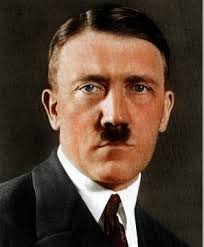
Adolf Hitler
In 1923, he staged a coup attempt in Bavaria—which was quickly and brutally put down by police. He was arrested and sentenced to less than a year in prison.
After that, Hitler decided that winning power through violence was no longer an option. He must win it through election—or appointment.
When the 1929 Depression struck Germany, the fortunes of Hitler’s Nazi party rose as the life savings of ordinary Germans fell. Streets echoed with bloody clashes between members of Hitler’s Nazi Stormtroopers and those of the German Communist Party.
Germans desperately looked for a leader—a Fuhrer—who could somehow deliver them from the threat of financial ruin and Communist takeover.
In early 1933, members of his own cabinet persuaded aging German president, Paul von Hindenburg, that only Hitler’s appointment as Chancellor could do this.
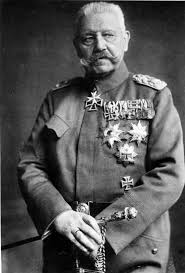
Paul von Hindenburg
Hindenburg was reluctant to do so. He considered Hitler a dangerous radical. But he let himself be convinced that he could “box in” and control Hitler by putting him in the Cabinet.
So, on January 30, 1933, Hindenburg appointed Adolf Hitler Chancellor (the equivalent of Attorney General) of Germany.
On August 2, 1934, Hindenburg died. Hitler immediately assumed the titles—and duties—of the offices of Chancellor and President. His rise to total power was complete.
It had taken him 14 years to do so.
In 2015, when Donald Trump declared his candidacy for President:
- The country was technically at war in the Middle East—but the fate of the United States was not truly threatened, as it had been during the Civil War.
- There was no draft; if you didn’t know someone in the military, you didn’t care about the casualties taking place.
- Thanks to government loans from President Barack Obama, American capitalism had been saved from its own excesses during the George W. Bush administration.
- Employment was up. CEOs were doing extremely well.
- In contrast to the corruption that had plagued the administration of Ronald Reagan, whom Republicans idolize, there had been no such scandals during the Obama Presidency.
- Nor had there been any large-scale terrorist attacks on American soil—as there had on 9/11 under President George W. Bush.
Yet—not 17 months after announcing his candidacy for President—enough Americans fervently embraced Donald Trump to give him the most powerful position in the country and the world.
.jpg/220px-Donald_Trump_August_19,_2015_(cropped).jpg)
Donald Trump
The message of Barack Obama’s 2008 campaign had been one of hope: “Yes, We Can!”
The message of Donald Trump’s campaign reflected hatred toward everyone who was not an avid Trump supporter: “No, You Can’t!”
Older whites comprised the majority of those at Trump rallies. Not all were racists, but many of those who were advertised it on T-shirts: “MAKE AMERICA WHITE AGAIN.”
Birthrates among non-whites were rising. By 2045, whites would make up less than 50 percent of the American population.
The 2008 election of the first black President had shocked whites. His 2012 re-election had deprived them of the hope that 2008 had been an accident.
Then came 2016—and the possibility that a black President might actually be followed by a woman: Hillary Clinton.
Since Trump became President, he:
- Allowed a deadly virus to ravage the country, infecting (to date) 9.2 million Americans and killing 230,000.
- Attacked medical experts and governors who urged Americans to wear masks and socially distance to protect themselves from COVID-19.
- Urged his followers to illegally vote twice for him in the 2020 Presidential election.
- Fired an FBI director for investigating Russia’s subversion of the 2016 Presidential election.
- Repeatedly and enthusiastically defended Vladimir Putin, the dictator of Russia, America’s mortal enemy.
- Attacked and alienated America’s oldest allies, such as Canada and Great Britain.
- Praised Nazis and Ku Klux Klansmen.
- Shut down the United States Government, imperiling the lives of 800,000 Federal employees, to extort money from Congress for a worthless wall on the U.S.-Mexico border.
- “Joked” that the United States—like China—should have a “President-for-Life.”
- Attacked the free press as “the enemy of the people.”
- Used his position as President to further enrich himself, in violation of the Emoluments Clause of the Constitution.
On November 3, 2020, Americans decided to repudiate this despicable legacy—and reclaim their nation’s status as a democracy.
2016 PRESIDENTIAL ELECT, ABC NEWS, ADOLF HITLER, ALTERNET, AMERICABLOG, ANTONIN SCALIA, AP, BABY BOOMER RESISTANCE, BARACK OBAMA, BBC, BERNIE SANDERS, BLOOMBERG NEWS, BUZZFEED, CBS NEWS, CNN, CROOKS AND LIARS, D-DAY, DAILY KOZ, DONALD TRUMP, FACEBOOK, FIVETHIRTYEIGHT, GEORGE S. PATTON, GREAT BRITAIN, HARPER’S MAGAZINE, HEINZ GUDERIAN, HILLARY CLINTON, HUFFINGTON POST, ION, JIMMY CARTER, MEDIA MATTERS, MOTHER JONES, MOVEON, MSNBC, NAZI GERMANY, NBC NEWS, NEW REPUBLIC, NEWSDAY, NEWSWEEK, NICCOLO MACHIAVELLI, NPR, PBS NEWSHOUR, POLITICO, POLITICUSUSA, RAW STORY, REPUBLICANS, REUTERS, SALON, SEATTLE TIMES, SLATE, SOVIET UNION, STALINGRAD, TALKING POINTS MEMO, TERRORISM, THE ATLANTIC, THE CHICAGO SUN-TIMES, THE CHICAGO TRIBUNE, THE DAILY BEAST, THE DAILY BLOG, THE GUARDIAN, THE HILL, THE HUFFINGTON POST, THE INTERCEPT, THE LOS ANGELES TIMES, THE NATION, THE NEW REPUBLIC, THE NEW YORK TIMES, THE NEW YORKER, THE PRINCE, THE VILLAGE VOICE, THE WASHINGTON POST, THINKPROGRESS, TIME, TRUTHDIG, TRUTHOUT, TWITTER, TWO POLITICAL JUNKIES, U.S. NEWS & WORLD REPORT, UPI, USA TODAY, WAFFEN-SS, WORLD WAR 11
In Bureaucracy, History, Law, Politics, Social commentary on November 4, 2022 at 12:17 am
Most Americans believe that Nazi Germany was defeated because “we were the Good Guys and they were the Bad Guys.”
Not so.
The United States—and its allies, Great Britain and the Soviet Union—won the war for reasons that had nothing to do with the righteousness of their cause. These included:
- Nazi Germany—–i.e, its Fuehrer, Adolf Hitler—made a series of disastrous decisions. Chief among these: Attacking its ally, the Soviet Union, and declaring war on the United States;
- The greater material resources of the Soviet Union and the United States; and
- The Allies waged war as brutally as the Germans.
On this last point:
- From D-Day to the fall of Berlin, captured Waffen-SS soldiers were often shot out of hand.
- When American troops came under fire in the German city of Aachen, Lt. Col. Derrill Daniel brought in a self-propelled 155mm artillery piece and opened up on a theater housing German soldiers. After the city surrendered, a German colonel labeled the use of the 155 “barbarous” and demanded that it be outlawed.
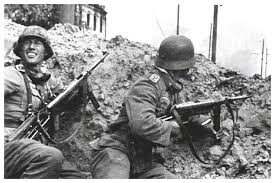
German soldiers at Stalingrad
- During the battle of Stalingrad in 1942, Wilhelm Hoffman, a young German soldier and diarist, was appalled that the Russians refused to surrender. He wrote: “You don’t see them at all, they have established themselves in houses and cellars and are firing on all sides, including from our rear—barbarians, they used gangster methods….”
In short: The Allies won because they dared to meet the brutality of a Heinz Guderian with that of a George S. Patton.
This is a lesson long ignored by the liberals of the Democratic Party. As a result, Republicans now may capture both houses of Congress and—in 2024—the Presidency.
An example of this occurred on March 25, 2018.
On CBS’ “Sunday Morning,” former President Jimmy Carter said that even if Special Counsel Robert Mueller found evidence that President Donald Trump had broken the law, “my own preference would be that he not be impeached.”
Instead, Carter would want Trump to “be able to serve out his term, because I think he wants to do a good job. And I’m willing to help him, if I can help him, and give him the benefit of the doubt.
“You know, I have confidence in the American system of government. I think ultimately the restraints on a president from the Congress and from the Supreme Court will be adequate to protect our nation, if he serves a full term.”
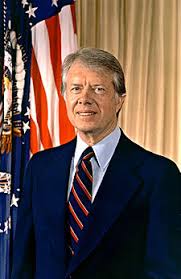
Jimmy Carter
By March 25, 2018, Trump—having held office for little more than a year—had:
- Fired FBI Director James Comey for refusing to pledge his personal loyalty—and for investigating documented ties between Russian Intelligence agents and the 2016 Trump Presidential campaign;
- Threatened to fire Special Counsel Robert Mueller, who was assigned to take over that investigation after the Comey firing;
- Repeatedly attacked the nation’s press as “fake news” and “the enemy of the American people”;
- Contemptuously dismissed the warnings of American Intelligence agencies that Russia subverted the 2016 Presidential campaign—and planned to do the same for the upcoming mid-term elections in November, 2018.
- Repeatedly praised Russian dictator Vladimir Putin—and refused to enforce Congressionally-mandated sanctions against Russia for its subversion of the 2016 Presidential election.
Trump, in short, had only contempt for the humility of a Jimmy Carter.
Barack Obama, like Carter, believes in rationality and decency. He feels more comfortable responding to attacks on his character than attacking the character of his enemies.
As a graduate of Columbia University and Harvard Law School, Obama was one of the most academically gifted Presidents in American history.
Yet he failed—like Carter—to grasp and apply this fundamental lesson taught by Niccolo Machiavelli, the father of modern political science.
In The Prince, Machiavelli warns:
From this arises the question whether it is better to be loved than feared, or feared more than loved.
The reply is, that one ought to be both feared and loved, but as it is difficult for the two to go together, it is much safer to be feared than loved….
And men have less scruple in offending one who makes himself loved than one who makes himself feared; for love is held by a chain of obligations which, men being selfish, is broken whenever it serves their purpose; but fear is maintained by a dread of punishment which never fails.
Obama’s failure to recognize the truth of Machiavelli’s lesson allowed Republicans to thwart many of his Presidential ambitions—such as picking a replacement for deceased Supreme Court Justice Antonin Scalia.
Throughout 2016, liberals celebrated on Facebook and Twitter the “certain” Presidency of Vermont U.S. Senator Bernie Sanders or former First Lady Hillary Clinton.
They fully expected to win the White House again, and thought they might retake the Senate—and maybe even the House of Representatives.
Michelle Obama’s mantra of “When they go low, we go high” proved no match for Trump’s millions of Russian trolls flooding the Internet with legitimately fake news.
For Democrats to win elective victories and enact their agenda, they must find their own George Pattons to take on the Waffen-SS generals among Republican ranks.
2016 PRESIDENTIAL CAMPAIGN, ABC NEWS, ADOLF HITLER, AL CAPONE, ALTERNET, AMERICABLOG, AP, BABY BOOMER RESISTANCE, BARACK OBAMA, BBC, BLOOMBERG NEWS, BUZZFEED, CBS NEWS, CNN, COVID-19, CROOKS AND LIARS, DAILY KOS, DONALD TRUMP, FBI, FIFTH AMENDMENT, FIVETHIRTYEIGHT, HARPER’S MAGAZINE, HILLARY CLINTON, HUFFINGTON POST, JAMES COMEY, JOSEPH STALIN, LETITIA JAMES, LIBEL, MEDIA MATTERS, MOTHER JONES, MOVEON, MSNBC, NAZI GERMANY, NAZI-SOVIET NON-AGGRESSION PACT, NBC NEWS, NEW REPUBLIC, NEW YORK ATTORNEY GENERAL'S OFFICE, NEW YORK TIMES V. SULLIVAN, NEWSDAY, NEWSWEEK, NPR, NUCLEAR WEAPONS, PBS NEWSHOUR, POLITICO, POLITICUSUSA, RAW STORY, REUTERS, RUSSIA, SALON, SEATTLE TIMES, SLATE, TALKING POINTS MEMO, THE ATLANTIC, THE CHICAGO SUN-TIMES, THE CHICAGO TRIBUNE, THE DAILY BEAST, THE DAILY BLOG, THE GUARDIAN, THE HILL, THE HUFFINGTON POST, THE INTERCEPT, THE LOS ANGELES TIMES, THE NATION, THE NEW REPUBLIC, THE NEW YORK TIMES, THE NEW YORKER, THE SS, THE VILLAGE VOICE, THE WASHINGTON POST, THINKPROGRESS, THIRD REICH, TIME, TREASON, TRUMP FOUNDATION, TRUMP TOWER MEETING, TRUMP UNIVERSITY, TRUTHDIG, TRUTHOUT, TWITTER, U.S. NEWS & WORLD REPORT, UKRAINE, UNITED STATES SUPREME COURT, UPI, USA TODAY, VLADIMIR PUTIN, VOLODYMYR ZELENSKY, WEHRMACHT, WORLD WAR 11
In Business, History, Law, Medical, Politics, Social commentary on November 2, 2022 at 12:14 am
On October 3, former President Donald Trump filed a lawsuit against CNN for defamation.
Seeking $475 million in punitive damages, he charged the network with conducting a “campaign of libel and slander” against him.
Trump is claiming that CNN had used its influence to defeat him politically.
“As a part of its concerted effort to tilt the political balance to the left, CNN has tried to taint the Plaintiff with a series of ever-more scandalous, false, and defamatory labels of ‘racist,’ ‘Russian lackey,’ ‘insurrectionist,’ and ultimately ‘Hitler,'” the lawsuit claims.
The lawsuit focuses largely on CNN’s use of the term, “The Big Lie,” to describe Trump’s false claims that widespread voter fraud cost him the 2020 Presidential election.
The phrase dates from Adolf Hitler’s use of it in his autobiography, Mein Kampf: People “more readily fall victims to the big lie than the small lie, since they themselves often tell small lies in little matters but would be ashamed to resort to large-scale falsehoods.”
Trump’s lawsuit claims “The Big Lie” has been used in referring to him more than 7,700 times on CNN since January, 2021.
In addition, the lawsuit cites instances where CNN compared Trump to Hitler. In a January, 2022 report, Fareed Zakaria provided footage of Germany’s dictator.

So what are his odds of winning? Far less than your own of finding loose change in sofa cushions.
First: Donald Trump is a public figure—arguably the most public figure in the world. Plaintiffs who are public figures or government officials must prove themselves victims of actual malice to collect damages.
In the landmark case, New York Times v. Sullivan (1964) the Supreme Court declared that actual malice occurs when a statement is made “with knowledge that it was false or with reckless disregard of whether it was false or not.”
This is a more stringent standard than private citizens have to meet, which is negligence.
Second: Truth is an absolute defense against libel (unless the plaintiff is suing for invasion of privacy). And Trump’s history as a liar, criminal and traitor has been thoroughly established.
Liar:
- He created the lie that Barack Obama—whose birth certificate states unequivocally that he was born in Hawaii—was not an American citizen. The reason: To de-legitimize Obama as a Presidential candidate and President.
- Throughout 2020, he repeatedly lied about the dangers of COVID-19—attacking medical experts who urged citizens to mask up and social distance. As a result, by the time he left office, 400,000 Americans had died of COVID.
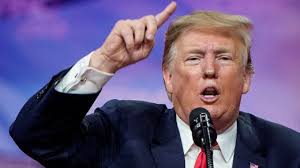
Donald Trump
Criminal:
- He has been forced to shut down his Trump Foundation and forced to pay more than $2 million in court-ordered damages to eight different charities for illegally misusing charitable funds at the Foundation for political purposes.
- He was also forced to close his unaccredited Trump University for scamming its students. He had promised to teach them “the secrets of success” in the real estate industry—then delivered nothing. In 2016, a federal court approved a $25 million settlement with many of those students.
Traitor:
- On July 9, 2016, high-ranking members of his Presidential campaign met at Trump Tower with at least two lobbyists who had ties to Russian dictator Vladimir Putin. The reason: To obtain “dirt” on Democratic candidate Hillary Clinton.
- On July 27, 2016, Trump said at a press conference in Doral, Florida: “Russia, if you’re listening, I hope you are able to find the 30,000 emails that are missing [from Democratic Presidential candidate Hillary Clinton’s computer]. I think you will probably be rewarded mightily by our press.”
These incidents were nothing less than treason—inviting a foreign power, hostile to the United States, to interfere in its Presidential election.
Third—and perhaps the most important of all: In a libel suit, the plaintiff must answer—under oath—all questions put to him by the defendant’s attorneys.
Trump, better than anyone, knows the depths of his own criminality. Just as Al Capone knew his notoriety for evil would make it impossible for him to win a libel suit, so does Trump.
On August 10, he invoked his Fifth Amendment privilege against self-incrimination nearly 450 times during a deposition at the office of New York Attorney General Letitia James, in its probe into the Trump Organization’s business practices.
He would not be allowed to do so as a litigant in a libel suit.
Moreover, he has a history of threatening to file lawsuits—and then failing to do so.
During the 2016 Presidential campaign, at least 12 women publicly accused him of sexually inappropriate behavior—if not assault.
Trump’s reaction: “All of these liars will be sued after the election is over.”
Six years later, he has not filed a single lawsuit for defamation.
So why has he filed a defamation suit against CNN?
Money—not by winning an impossible lawsuit, but by raising it from his gullible and Fascistic followers.
He will claim—once again—that he’s being persecuted and that “they’re not coming after me, they’re coming after you.”
And his millions of media-hating followers will gladly pony up money they will never see again.
If he loses the lawsuit—or pulls out of it—he will claim he’s the victim of “the deep-state establishment.”
And ask his followers for even more money—which they’ll cough up.


ABC NEWS, ABORTION, AIR RAGE INCIDENTS, ALTERNET, AMERICABLOG, ANTHONY FAUCI, ANTI-SCIENCE, AP, BABY BOOMER RESISTANCE, BLOOMBERG, BRIGHAM AND WOMEN’S HOUSPITAL, BUZZFEED, CBS NEWS, CENTERS FOR DISEASE CONTROL AND PREVENTION, CNN, COLUMBIA UNIVERSITY MEDICAL CENTER, CORONAVIRUS, COSTCO, COVID-19, CRAIG SPENCER, CROOKS AND LIARS, DAILY KOZ, DAVID ABRAMS, DEMOCRATS, DONALD TRUMP, DRUDGE RETORT, EDUCATION, FACEBOOK, FASCISM, FIVETHIRTYEIGHT, FLORIDA ATLANTIC UNIVERSITY, HARPER’S MAGAZINE, HYPOCRISY, JENNY FAUST, JOE BIDEN, KRISTI NOEM, MASKS, MEDIA MATTERS, MIKE PENCE, MOTHER JONES, MOUNT RUSHMORE, MOVEON, MSNBC, NANCY PELOSI, NAZI GERMANY, NBC NEWS, NEWSWEEK, NICCOLO MACHIAVELLI, NPR, NYU SCHOOL OF GLOBAL PUBLIC HEALTH, PBS NEWSHOUR, PETER GLICK, POLITICO, POLITICUSUSA, RAW STORY, RELIGIOUS FANATICISM, REPUBLICANS, REUTERS, RUSH LIMBAUGH, SALON, SCIENCE, SCIENTIFIC AMERICAN, SEATTLE TIMES, SLATE, SOCIAL DISTANCING, STUDENTS FOR TRUMP RALLY, SUPREME COURT, TALKING POINTS MEMO, TARGET, THE ATLANTIC, THE CHICAGO SUN-TIMES, THE CHICAGO TRIBUNE, THE DAILY BEAST, THE DAILY BLOG, THE DISCOURSES, THE GUARDIAN, THE HILL, THE HUFFINGTON POST, THE LOS ANGELES TIMES, THE NATION, THE NEW REPUBLIC, THE NEW YORK TIMES, THE VILLAGE VOICE, THE WASHINGTON POST, THINKPROGRESS, TIME, TRANSPORTATION SAFETY ADMINISTRATION (TSA), TRUTHDIG, TRUTHOUT, TULSA RALLY, TWITTER, TWO POLITICAL JUNKIES, TYPHOID MARY MALLON, U.S. NEWS & WORLD REPORT, UPI, USA TODAY, WONKETTE, WORLD HEALTH ORGANIZATION
WHY SOME PEOPLE WON’T WEAR MASKS: PART ONE (OF THREE)
In Bureaucracy, History, Law, Law Enforcement, Medical, Politics, Social commentary on December 14, 2022 at 12:21 amThe United States is now entering its third year of COVID-19. As of December 7, 2022, the number of cases stood at 99 million. More than one million Americans have died.
Wearing a mask and “social distancing”—keeping at least six feet between yourself and others while in public—have been the Golden Rules urged by public health officials from the pandemic’s start.
And yet vast numbers of Americans still refuse to do either. Just as they refuse to get vaccinated, despite three vaccines now widely available.
Surgical mask
In the early weeks and months of the pandemic, cloth face masks weren’t universally endorsed, even by public health experts.
“One, we didn’t know whether they were actually helpful, and two, there was a lot of concern that if people were using medical masks then people like myself, were not going to have access to them,” said Dr. Craig Spencer, director of global health in emergency medicine at Columbia University Medical Center.
No less an authority than Dr. Anthony Fauci, the country’s leading infectious disease expert, said in March, 2020, that “people should not be walking around with masks.”
Only in early June, 2020, did the World Health Organization (WHO) urge non-healthcare workers to mask up. The WHO advised people to don masks when social distancing was not possible, such as when visiting stores and using public transportation.
According to Dr. Jeremy Faust, the change in attitudes toward masks should be seen as the nature of science, and not as a flaw.
“That is what experts, in fact, do. They don’t just have an opinion and stick to it,” said Faust, an emergency physician at Brigham and Women’s Hospital, in Boston, Massachusetts. “They actually let their opinions develop and evolve as better information becomes available.”
Only in January, 2022, did the Centers for Disease Control and Prevention (CDC) urge Americans to wear N95 masks—the most effective ones available.
In 2020, the CDC had urged Americans to not use N95s. The reason: They feared this would create a shortage of these masks for doctors, nurses and paramedics working closely with COVID patients.
N95 mask
Scientists have learned, for example, that COVID-19 can be spread by those who show no symptom of the disease. And mounting evidence has proven that masks are essential for protecting people from the virus.
Coronavirus is spread by respiratory droplets when an infected person coughs, sneezes or talks—especially if large numbers of people are packed indoors. The danger goes up if the talker is shouting or singing loudly.
If not blocked by a face covering, the droplets can travel six to 13 feet, and can remain airborne for hours in some cases.
Researchers at Florida Atlantic University found that some masks were more effective than others. One study showed that well-fitted homemade masks with multiple layers of fabric, as well as off-the-shelf cone style masks, were the most effective in reducing droplet dispersal.
Bandannas turned out to be the least effective in reducing transmission.
Coronavirus
So why do so many Americans refuse to wear a mask?
Start at the top: With Donald Trump, the former President of the United States.
From the outset, Trump refused to wear a mask in public.
A colossal egotist, Trump is orange-skinned, morbidly obese and lacking a neck. Yet he still thinks of himself as dangerously handsome. And he feared that covering his face would diminish his power and appeal.
“Appearing to play it safe contradicts a core principle of masculinity: show no weakness,” wrote social sciences professor Peter Glick at Scientific American magazine. “Defying experts’ warnings about personal danger signals ‘I’m a tough guy, bring it on.’”
On May 21, 2020, Trump refused to wear a face mask as he toured a Ford facility in Michigan that was manufacturing ventilators and personal protective equipment. This violated the policies of the facility, the governor’s executive order and warnings from the state’s attorney general.
After a three-month nationwide “lockdown,” states began “reopening.” So Trump scheduled his first 2020 re-election rally in Tulsa, Oklahoma.
It was held on June 20 at the BOK Center. Scientists had learned that Coronavirus is more likely to be transmitted indoors than outdoors, when masses of people are packed together, and when people are loudly talking—or, worse, shouting.
Masks were available for those who wanted them. But Trump made it clear that his supporters shouldn’t wear masks, as a sign of support for him. Photos of the rally show men and women densely packed together, with none of them wearing masks.
A Trump rally
The Tulsa event was followed by another indoor rally in Phoenix on June 23. “Students for Trump” featured a packed crowd, with almost no one wearing masks.
After staging COVID-spreading rallies at Tulsa, Oklahoma, and Phoenix, Arizona, Trump scheduled another one for July 3 at Mount Rushmore, in Keystone, South Dakota.
Such rallies had been put on hold since March, due to the issuing of stay-at-home orders across the country by states’ mayors and governors.
Health experts expressed fears about a large gathering during the Coronavirus pandemic. But South Dakota Governor Kristi Noem said people would “not be social distancing” during the celebration—nor required to wear masks.
Share this: