Posts Tagged ‘NAZI GERMANY’
2016 PRESIDENTIAL CAMPAIGN, ABC NEWS, ADOLF HITLER, ALTERNET, AMERICABLOG, ANTHONY FAUCI, AP, BABY BOOMER RESISTANCE, BLOOMBERG, BUZZFEED, CBS NEWS, CLIMATE CHANGE, CNN, CORONAVIRUS, CORONAVIRUS PARTIES, COVID-19, CROOKS AND LIARS, DAILY KOZ, DONALD TRUMP, DRUDGE RETORT, FACEBOOK, FIVETHIRTYEIGHT, HARPER’S MAGAZINE, HOAX, HOUE OF REPRESENTATIVES, IMPEACHMENT, JANE APPLBY, MARGARET LEVI, MEDIA MATTERS, METHODIST HOSPITAL, MOTHER JONES, MOVEON, MSNBC, NAZI GERMANY, NBC NEWS, NEWSWEEK, NPR, PBS NEWSHOUR, POLITICO, POLITICUSUSA, RAW STORY, REUTERS, RUSIA, RUSSIAN INTELLIGENCE AGENTS, SALON, SEATTLE TIMES, SLATE, STANFORD UNIVERSITY, TALKING POINTS MEMO, TEXAS, THE ATLANTIC, THE CHICAGO SUN-TIMES, THE CHICAGO TRIBUNE, THE DAILY BEAST, THE DAILY BLOG, THE GUARDIAN, THE HILL, THE HUFFINGTON POST, THE LOS ANGELES TIMES, THE NATION, THE NEW REPUBLIC, THE NEW YORK TIMES, THE VILLAGE VOICE, THE WASHINGTON POST, THINKPROGRESS, TIME, TRUTHDIG, TRUTHOUT, TWITTER, TWO POLITICAL JUNKIES, U.S. NEWS & WORLD REPORT, UPI, USA TODAY, WONKETTE, WORLD WAR ii
In Bureaucracy, History, Medical, Politics, Social commentary on September 30, 2022 at 12:12 am
Well, come on all of you Right-wing men
Donald Trump needs your help again.
He’s got himself in a terrible jam
He’s spread a virus throughout the land.
So throw off those masks, give a big cheer
Your Coronavirus-in-Chief is here!
“I think I made a mistake. I thought this was a hoax, but it’s not.”
So spoke a 30-year-old patient who died at Methodist Hospital in San Antonio, Texas. His last words came after attending a so-called “COVID party,” according to the hospital.
 Methodist Hospital
According to Dr. Jane Appleby, chief medical officer for Methodist Hospital and Methodist Children’s Hospital: “Someone will be diagnosed with the disease, and they’ll have a party to invite their friends over to see if they can beat the disease.
“One of the things that was heart-wrenching that he said to his nurse was, ‘You know, I think I made a mistake.’ And this young man went to a COVID party.. He didn’t really believe. He thought the disease was a hoax. He thought he was young and invincible and wouldn’t get affected by the disease.”
And it’s one-two-three
What are they dyin’ for?
Don’t ask em’, they don’t give a damn
Right here in COVID-land.
And it’s five-six-seven
Open up those graveyard gates
Well, there ain’t no time to wonder why
Whoopee! They’re all going to die.
It’s understandable that this patient believed COVID-19 was a hoax. He was, after all, from Texas, which overwhelmingly gave its votes to Donald J. Trump in 2016.
And it was President Trump who infamously said, on February 28, 2020: “Now the Democrats are politicizing the Coronavirus….We did one of the great jobs….One of my people came up to me and said, ‘Mr. President, they tried to beat you on Russia, Russia, Russia’….They couldn’t do it. They tried the impeachment hoax….It’s all turning, they lost….And this is their new hoax.”
“Hoax” is one of Trump’s favorite words.
He called the well-documented ties between Russian Intelligence agents and his 2016 Presidential campaign “a hoax.”
Ditto for the efforts of the House of Representatives to remove him for trying to extort Ukraine into smearing then-former Vice President Joe Biden: “The impeachment hoax.”
Climate change, for Trump, is “an expensive hoax.”

Donald Trump
“Trump is trying to undermine the trustworthiness of any source but himself,” said Margaret Levi, professor of political science at Stanford University. “The point is to make himself the only credible authority, to be fully trusted as a ‘war-time’ president.”
And in the case of the anonymous San Antonio patient—and untold numbers of his other supporters—he succeeded brilliantly. To their misfortune.
Well, grifters and traitors throughout the land
Pack yourselves off to COVID-land.
Don’t be shy, don’t hesitate
Satan is ready, so don’t make ‘em wait.
Just be glad that Donald Trump’s your man
As you’re dyin’ off as fast as you can.
By July 11, 2020, there were 8,332 new confirmed Coronavirus cases in Texas, according to a New York Times database. More than 258,000 cases and more than 3,200 deaths have been recorded in Texas so far.
Yet for those attending the Coronavirus party, such facts meant nothing compared to the assurances of Donald Trump—a proven serial liar—that there was nothing to fear.
“People will come in[to the hospital] initially, and they don’t look so bad,” said Appleby. “They don’t look really sick. But when you check their oxygen levels and their lab tests, they’re really sicker than they appear on the surface.”
Among the COVID-19 danger signs to look for, advised Appleby: If you’re not feeling well, have a high fever, cough and severe muscle aches.
Well, come on Republicans, let’s move fast,
Your big chance is here at last.
It doesn’t matter that Trump is Red
As he walks on the bodies of Americans dead.
Just be sure Vlad Putin knows your name
Treason’s just a part of your game.
Meanwhile, Trump was trying to discredit Dr. Anthony Fauci, the country’s leading infectious disease expert.
The reason: Fauci had not hesitated to warn about the dangers of COVID-19—and the failures of the Federal Government to effectively control it.


Anthony Fauci
Trump saw the virus not as a danger to Americans but to his chances for re-election. Among his “efforts” to “deal” with it:
- Denying the dangers of the virus
- Lying about the extent of its spread
- Pitting states against each other for scarce medical supplies
- Seizing medical supplies ordered by states
- Demanding an end to governors’ “stay-at-home” orders so the country can “reopen”—before proper safeguards can be installed.
For tyrants, truth is always the most dangerous enemy.
As World War II went increasingly against Nazi Germany, those who dared to say “The war is lost” were strung up with piano wire—often on lamp posts, as a warning to others.
Denying the truth didn’t save the dictatorship of Adolf Hitler. And it didn’t save the would-be dictatorship of Donald Trump
And it’s one-two-three
What are they dyin’ for?
Don’t ask em’, they don’t give a damn
Right here in COVID-land.
And it’s five-six-seven
Open up those graveyard gates
Well, there ain’t no time to wonder why
Whoopee! They’re all going to die.
2016 PRESIDENTIAL CAMPAIGN, 2016 PRESIDENTIAL ELECTION, 2020 PRESIDENTIAL ELECTION, ABC NEWS, ADOLF HITLER, ALTERNET, AMERICABLOG, AP, ARMED SERVICES, ARTICLES OF IMPEACHMENT, BABY BOOMER RESISTANCE, BARACK OBAMA, BLOOMBERG, BUZZFEED, CBS NEWS, CIA, CLAUS VON STAUFFENBERG, CNN, CROOKS AND LIARS, DAILY KOZ, DONALD TRUMP, FACEBOOK, FBI, FIDEL CASTRO, FIVETHIRTYEIGHT, GESTAPO, HARPER’S MAGAZINE, IMPEACHMENT, JACOBO ARBENZ, JAMES B. COMEY, JAMES MATTIS, JOHN KASICH, JOHN MCCAIN, JOSEPH BIDEN, JUSTICE DEPARTMENT, KIM JONG ON, MARK ESPER, MARTIN NIEMOELLER, MEDIA MATTERS, MOHAMMED MOSADDEGH, MOTHER JONES, MOVEON, MSNBC, MUSLIMS, NATIONAL SECURITY AGENCY, NAZI GERMANY, NBC NEWS, NEWSWEEK, NPR, PBS NEWSHOUR, POLITICO, POLITICUSUSA, RAW STORY, REPUBLICANS, REUTERS, SALON, SEATTLE TIMES, SERGEY KISLYAK, SERGEY LAVROV, SLATE, TALKING POINTS MEMO, THE ATLANTIC, THE CHICAGO SUN-TIMES, THE CHICAGO TRIBUNE, THE DAILY BEAST, THE DAILY BLOG, THE GUARDIAN, THE HILL, THE HOLOCAUST, THE HUFFINGTON POST, THE LOS ANGELES TIMES, THE NATION, THE NEW REPUBLIC, THE NEW YORK TIMES, THE PENTAGON, THE PRESS, THE SS, THE VILLAGE VOICE, THE WASHINGTON POST, THINKPROGRESS, THIRD REICH, TIME, TRUTHDIG, TRUTHOUT, TWENTY-FIFTH AMENDMENT, TWILIGHT ZONE, TWITTER, TWO POLITICAL JUNKIES, U.S. NEWS & WORLD REPORT, UNITED STATES CONSTITUTION, UNITED STATES HOUSE OF REPRESENTATIVES, UNITED STATES SECRET SERVICE, UNITED STATES SENATE, UPI, USA TODAY, VLADIMIR PUTIN, VOTER FRAUD, WHERMACHT, WONKETTE, WORLD WAR 11
In History, Military, Politics, Social commentary on August 25, 2022 at 12:15 am
On July 20, 1944, members of the Wehrmacht high command failed to assassinate Adolf Hitler with a bomb hidden in a briefcase.
Mass arrests quickly followed.
Among the first victims discovered and executed was the conspiracy’s leader, Colonel Claus von Stauffenberg. Standing before a makeshift firing squad at midnight, he cried: “Long live our sacred Germany!”
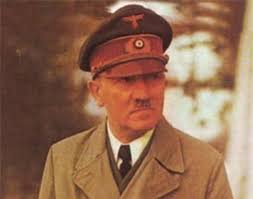
Adolf Hitler
At least 7,000 persons were arrested by the Gestapo. According to records of the Fuehrer Conferences on Naval Affairs, 4,980 were executed.
Had the conspiracy succeeded, history would have turned out differently:
Thus, history can be altered by the appearance—or disappearance—of a single individual.
Which brings us back to Donald Trump.
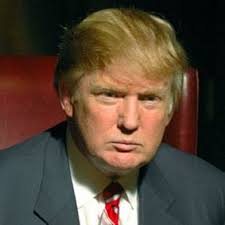
Donald Trump
Just as Germans did nothing to stop Adolf Hitler’s inexorable march toward war—and the destruction of millions of lives and Germany itself—so, too, did Americans seem paralyzed to put an end to the equally self-destructive reign of the man often dubbed “Carrot Caligula.”
- Trump’ could have been non-violently removed via the Twenty-Fifth Amendment to the United States Constitution. This allows the Vice President and a majority of the Cabinet to recommend the removal of the President when he is “unable to discharge the powers and duties of his office.” The Vice President then becomes President.
- No Cabinet members dared to invoke this.
- When Trump praised North Korea’s dictator Kim Jong-On or attacked Vietnam POW John McCain, House and Senate Republicans stayed silent. When he falsely charged massive voter fraud, they stayed silent or loudly parroted his lies.
- On February 5, 2020, the Republican-dominated Senate—ignoring the overwhelming evidence against him—acquitted Trump on both impeachment articles: Obstruction of Congress and abuse of power.
- Pentagon generals stood mute as Trump repeatedly sided with Russian dictator Vladimir Putin against the FBI, CIA and National Security Agency—and even gave classified CIA Intelligence to Russian Foreign Minister Sergey Lavrov and Ambassador Sergey Kislyak.
- High-ranking field marshals in Hitler’s Wehrmacht held their tongues when he insulted them. So did American generals when Trump belittled their intelligence and even patriotism.
- The CIA overthrew Iranian prime minister Mohammad Mosaddegh, in 1953 and Guatemalan president Jacobo Árbenz in 1954. It repeatedly tried—unsuccessfully—to assassinate and/or overthrow Cuban dictator Fidel Castro. But it made no effort to halt the ongoing treachery of Donald Trump.
- When Trump arbitrarily decided to remove American forces from Syria and Afghanistan, Secretary of Defense James Mattis resigned in protest in 2018. But then he was simply replaced by Mark Esper.
- Despite the fact that many of these men regularly came into contact with Trump, not one of them apparently plotted his removal.
- Similarly, Trump repeatedly attacked the integrity of the men and women of the FBI—even firing its director, James Comey, for daring to investigate Russia’s subversion of the 2016 election. If its armed agents—steeped in Federal criminal law—built a case for Trump’s indictment and prosecution, it has never come to light.
- Neither did any of his armed Secret Service agents register the slightest protest, despite his arrogant behavior toward them. He forced them to work without pay during his 35-day government shutdown in 2018. They also had to accompany him to COVID-infected states—both during the Presidential campaign and afterward. Many of them became stricken with this often fatal disease as a result.
On November 3, 2020, 81,255,933 Democratic voters elected former Vice President Joseph Biden the 46th President of the United States. Trump, running for a second term, got 74,196,153 votes.
Yet almost two months after the election, Trump refused to concede, insisting that he won—and repeatedly claiming falsely that he was the victim of massive vote fraud.
This toxic lie has been feverishly embraced by millions of Right-wingers, robbing the Biden administration of its deserved legitimacy.
This refusal to acknowledge the outcome initially denied Biden access to the money, information-sharing and machinery traditionally accorded the President-elect. Trump himself was the beneficiary of such assistance in 2016, after his win over Democratic nominee Hillary Clinton.
Only on November 23 was Biden acknowledged as the winner by the General Services Administration, as the Trump administration finally began the formal transition process.
Trump’s refusal to accept reality posed an unprecedented danger to democracy: No presidential candidate had ever refused to concede defeat once all the votes were counted and legal challenges resolved.
By refusing to commit to a peaceful transfer of power, Trump took on the classic mantle of of a dictator.
Historians have uncovered at least 42 assassination plots against Adolf Hitler. That resistance movement has earned honor for its members, many of whom died heroically for standing firm against a brutal tyrant.
To its eternal shame, the same cannot be said of America during the reign of Donald Trump.
2016 PRESIDENTIAL CAMPAIGN, 2016 PRESIDENTIAL ELECTION, 2020 PRESIDENTIAL ELECTION, ABC NEWS, ADOLF HITLER, ALTERNET, AMERICABLOG, AP, ARMED SERVICES, ARTICLES OF IMPEACHMENT, BABY BOOMER RESISTANCE, BARACK OBAMA, BLOOMBERG, BUZZFEED, CBS NEWS, CIA, CLAUS VON STAUFFENBERG, CNN, CROOKS AND LIARS, DAILY KOZ, DONALD TRUMP, FACEBOOK, FBI, FIDEL CASTRO, FIVETHIRTYEIGHT, GESTAPO, HARPER’S MAGAZINE, IMPEACHMENT, JACOBO ARBENZ, JAMES B. COMEY, JAMES MATTIS, JOHN KASICH, JOHN MCCAIN, JOSEPH BIDEN, JUSTICE DEPARTMENT, KIM JONG ON, MARK ESPER, MARTIN NIEMOELLER, MEDIA MATTERS, MOHAMMED MOSADDEGH, MOTHER JONES, MOVEON, MSNBC, MUSLIMS, NATIONAL SECURITY AGENCY, NAZI GERMANY, NBC NEWS, NEWSWEEK, NPR, PBS NEWSHOUR, POLITICO, POLITICUSUSA, RAW STORY, REPUBLICANS, REUTERS, SALON, SEATTLE TIMES, SERGEY KISLYAK, SERGEY LAVROV, SLATE, TALKING POINTS MEMO, THE ATLANTIC, THE CHICAGO SUN-TIMES, THE CHICAGO TRIBUNE, THE DAILY BEAST, THE DAILY BLOG, THE GUARDIAN, THE HILL, THE HOLOCAUST, THE HUFFINGTON POST, THE LOS ANGELES TIMES, THE NATION, THE NEW REPUBLIC, THE NEW YORK TIMES, THE PENTAGON, THE PRESS, THE SS, THE VILLAGE VOICE, THE WASHINGTON POST, THINKPROGRESS, THIRD REICH, TIME, TRUTHDIG, TRUTHOUT, TWENTY-FIFTH AMENDMENT, TWILIGHT ZONE, TWITTER, TWO POLITICAL JUNKIES, U.S. NEWS & WORLD REPORT, UNITED STATES CONSTITUTION, UNITED STATES HOUSE OF REPRESENTATIVES, UNITED STATES SECRET SERVICE, UNITED STATES SENATE, UPI, USA TODAY, VLADIMIR PUTIN, VOTER FRAUD, WHERMACHT, WONKETTE, WORLD WAR 11
In Bureaucracy, History, Military, Politics, Social commentary on August 24, 2022 at 12:10 am
On July 20, 1944, Colonel Claus Schenk von Stuaffenberg tried to assassinate Adolf Hitler.
He had served with the Wehrmacht in Poland (1939), France (1940) and the Soviet Union (1941).
While serving in Tunisa, he was seriously wounded on April 7, 1943, when Allied fighters strafed his vehicle. He lost his left eye, right hand and two fingers of his left hand after surgery.
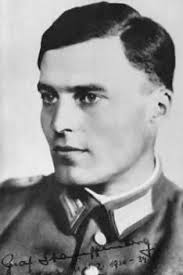
Colonel Claus Schenk von Stuaffenberg
Nevertheless, he now acted as the prime mover for the conspiracy among a growing number of German high command officers to arrest or assassinate Germany’s Fuehrer.
For most of these officers, the motive was craven: The “happy time’ of German victories was over. Germany was losing the war it had launched on the world in 1939–and now they feared the worst.
This was especially true now that the numerically superior forces of the Soviet Union had gone onto the offensive.
For Stauffenberg, there was another reason: His disgust at the horrors he had seen committed by his fellow Wehrmacht soldiers upon defenseless POW’s and civilians in Russia.
Thus, Stauffenberg—more than many Germans—knew firsthand the vengeance his country could expect if the “Thousand-Year Reich” fell.
Something must be done, he believed, to prove to the world that not all Germans—even members of the Wehrmacht—were criminals.
Most of the conspirators wanted to arrest Hitler and surrender to British and American forces—well before the much-feared Russians gained a toehold in Germany.
Stauffenberg didn’t want to arrest Hitler; he wanted to kill him. A live Hitler might eventually be rescued by his Nazi colleagues.
But Hitler was a closely-guarded target. He was surrounded by fanatical bodyguards who were expert marksmen. He often wore a bulletproof vest and a cap lined with three pounds of laminated steel.
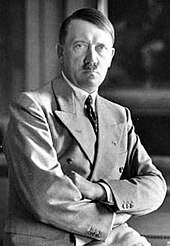
Adolf Hitler
Bundesarchiv, Bild 146-1990-048-29A / CC-BY-SA 3.0 [CC BY-SA 3.0 de (https://creativecommons.org/licenses/by-sa/3.0/de/deed.en)%5D
But his single greatest protection–he claimed—was an instinct for danger. He would suddenly change his schedule—to drop in where he was least expected. Or suddenly depart an event where he was expected to stay a long time.
On November 9, 1939, this instinct saved his life. He was expected to give a long speech at a Munich beer hall before the “old Fighters” of his brown-shirted storm troopers.
Instead, he suddenly cut short his speech and left the beer hall. Forty-five minutes later, a bomb exploded inside a pillar—before which Hitler had been speaking.
Since then, a series of other assassination attempts had been made against Hitler. All of them involved time-bombs. And all of the would-be assassins were members of the German General Staff.
In one case, a bomb secretly stashed aboard Hitler’s plane failed to explode. In another, an officer who had a bomb strapped to himself unexpectedly found his scheduled meeting with Hitler called off. He had to rush into a bathroom to defuse the bomb before it went off.
So now it was the turn of von Stauffenberg. He would carry his bomb—hidden in a briefcase—into a “Hitler conference” packed with military officers.
But Stauffenberg didn’t intend to be a suicide bomber. He meant to direct the government that would replace that of the Nazis.
His bomb—also rigged with a time-fuse—would be left in the conference room while he found an excuse to leave. After the explosion, he would phone one of his fellow conspirators with the news.
Then, the coup—“Operation Valkyrie”—would be on.
Anti-Nazi conspirators would seize control of key posts of the government. The British and Americans would then be informed of Germany’s willingness to surrender. Provided, of course, that the vengeance-seeking Russians did not have a say in its postwar future.
The Wehrmacht and Schutzstaffel (SS) had killed millions of Russians. Many had died in combat. Others had been murdered as captives. Still more had been allowed to die by starvation and exposure to the notorious Russian winter.
So the Germans—both Nazi and anti-Nazi—knew what they could expect if soldiers of the Soviet Union reached German soil.
On July 20, 1944, Stauffenberg appeared at Hitler’s well-guarded military headquarters in East Prussia. Like all his other outposts, Hitler had named it—appropriately enough—“Wolf’s Lair.”

“Wolf’s Lair”
Stauffenberg entered the large, concrete building while the conference was in session. He placed his yellow briefcase next to Hitler—who was standing with his generals at a heavy oaken table. Then he excused himself to take an “urgent” phone call.
After Stauffenberg left the room, Colonel Heinz Brandt, standing next to Hitler, found the briefcase blocking his legs. So he moved it—to the other side of the heavy oaken support, partially shielding Hitler from the blast..
At 12:42 p.m. on July 20, 1944, Stauffenberg’s briefcase bomb erupted.
Brandt died, as did two other officers and a stenographer.
Hitler not only survived, but the plotters failed to seize the key broadcast facilities of the Reich.
This allowed Hitler to make a late-night speech to the nation, revealing the failed plot and assuring Germans that he was alive. And he swore to flush out the “traitorous swine” who had tried to kill him.
He soon proved as bad as his word.
2016 PRESIDENTIAL CAMPAIGN, 2016 PRESIDENTIAL ELECTION, 2020 PRESIDENTIAL ELECTION, ABC NEWS, ADOLF HITLER, ALTERNET, AMERICABLOG, AP, ARMED SERVICES, ARTICLES OF IMPEACHMENT, BABY BOOMER RESISTANCE, BARACK OBAMA, BLOOMBERG, BUZZFEED, CBS NEWS, CIA, CLAUS VON STAUFFENBERG, CNN, CROOKS AND LIARS, DAILY KOZ, DANA ANDREWS, DONALD TRUMP, FACEBOOK, FBI, FIDEL CASTRO, FIVETHIRTYEIGHT, GESTAPO, HARPER’S MAGAZINE, IMPEACHMENT, JACOBO ARBENZ, JAMES B. COMEY, JAMES MATTIS, JOHN KASICH, JOHN MCCAIN, JOSEPH BIDEN, JUSTICE DEPARTMENT, KIM JONG ON, MARK ESPER, MARTIN NIEMOELLER, MEDIA MATTERS, MOHAMMED MOSADDEGH, MOTHER JONES, MOVEON, MSNBC, MUSLIMS, NATIONAL SECURITY AGENCY, NAZI GERMANY, NBC NEWS, NEWSWEEK, NPR, PBS NEWSHOUR, POLITICO, POLITICUSUSA, RAW STORY, REPUBLICANS, REUTERS, SALON, SEATTLE TIMES, SERGEY KISLYAK, SERGEY LAVROV, SLATE, SUPREME COURT, TALKING POINTS MEMO, THE ATLANTIC, THE CHICAGO SUN-TIMES, THE CHICAGO TRIBUNE, THE DAILY BEAST, THE DAILY BLOG, THE GUARDIAN, THE HILL, THE HOLOCAUST, THE HUFFINGTON POST, THE JUDICIARY, THE LOS ANGELES TIMES, THE NATION, THE NEW REPUBLIC, THE NEW YORK TIMES, THE PENTAGON, THE PRESS, THE SS, THE VILLAGE VOICE, THE WASHINGTON POST, THINKPROGRESS, THIRD REICH, TIME, TRUTHDIG, TRUTHOUT, TWENTY-FIFTH AMENDMENT, TWILIGHT ZONE, TWITTER, TWO POLITICAL JUNKIES, U.S. NEWS & WORLD REPORT, UNITED STATES CONSTITUTION, UNITED STATES HOUSE OF REPRESENTATIVES, UNITED STATES SECRET SERVICE, UNITED STATES SENATE, UPI, USA TODAY, VLADIMIR PUTIN, VOTER FRAUD, WHERMACHT, WONKETTE, WORLD WAR 11
In Bureaucracy, History, Military, Politics, Social commentary on August 23, 2022 at 12:10 am
In the Twilight Zone episode, “No Time Like the Past,” Paul Driscoll (Dana Andrews), a scientist in early 1960s America, uses a time machine to visit Nazi Germany on the eve of World War II.
He’s rented a motel room overlooking the balcony from where the Fuehrer, Adolf Hitler will soon make a speech. And he’s eager to watch that speech—through the lens of a telescopic-sighted rifle.
Just as he’s about to pull the trigger, there’s a knock at his door–by the maid. Driscoll hustles her out as soon as possible, then once again picks up his rifle. He—and viewers—can once again see Hitler through the cross-hairs of his weapon.

Paul Driscoll prepares to shoot Adolf Hitler
But instead of the anticipated shot, there’s another knock at his door—his time by the black-uniformed secret police, the SS. Driscoll knows the game is up, and disappears into the present just as the thugs break down his door.
And the audience is left to ponder how different the world would have been if Driscoll—or someone in Nazi Germany—had succeeded in assassinating the man whose wars would wipe out the lives of 50 million men, women and children around the globe.
One 2016 Republican candidate for President dared to invoke the menace of Nazi Germany in warning of the dangers of a Donald Trump Presidency. And to argue that Americans could prevent that past from returning.
In November, 2015, John Kasich, the governor of Ohio, was peddling a message of creating jobs, balancing the Federal budget and disdain for Washington, D.C.
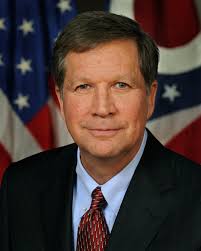
John Kasich
But he remained far behind in the polls, dropping 50% in support in just one month—from September to October. Meanwhile, Trump, the New York billionaire developer, was being backed by 25% of Republican primary voters.
So, with nothing to lose, Kasich decided to take off the gloves. He invoked the “N” word for Republicans: Nazi.
He authorized the creation of a TV ad that opened with ominous music—and the face of a snarling Donald Trump.
“I would like anyone who is listening to consider some thoughts that I’ve paraphrased from the words of German pastor Martin Niemoeller.”
The voice belonged to Tom Moe, a retired colonel in the U.S. Air Force—and a former Vietnam prisoner-of-war.
“You might not care if Donald Trump says Muslims must register with the government, because you’re not one,” continued Moe.
“And you might not care if Donald Trump says he’s going to round up all the Hispanic immigrants, because you’re not one.

Donald Trump
“And you might not care if Donald Trump says it’s OK to rough up black protesters, because you’re not one.
“And you might not care of Donald Trump wants to suppress journalists, because you’re not one.
“But think about this:
“If he keeps going, and he actually becomes President, he might just get around to you. And you’d better hope that there’s someone left to help you.”
Martin Niemoeller (1892–1984) was a prominent Protestant pastor who had commanded a U-boat during World War 1. He became a bitter public foe of Adolf Hitler.
A staunch anti-Communist, he had initially supported the Nazis as Germany’s only hope of salvation against the Soviet Union.
But when the Nazis made the church subordinate to State authority, Niemoeller created the Pastors’ Emergency League to defend religious freedom.
For his opposition to the Third Reich, Niemoeller spent seven years in concentration camps.
With the collapse of the Reich in 1945, he was freed—and elected President of the Protestant church in Hesse and Nassau in 1947. During the 1960s, he was a president of the World Council of Churches.
He is best remembered for his powerful condemnation of the failure of Germans to protest the increasing oppression of the Nazis:
First they came for the Communists, but I was not a Communist, so I did not speak out.
Then they came for the Socialists, but I was not a Socialist, so I did not speak out.
Then they came for the trade unionists, but I was not a trade unionist, so I did not speak out.
Then they came for the Jews, but I was not a Jew, so I did not speak out.
And when they came for me, there was no one left to speak out for me.
Neither “Adolf Hitler” nor “Nazi Party” was mentioned during the one-minute Kassich video. But a furious Trump threatened to sue Kasich if he could find find anything “not truthful” within the ad.
Apparently he couldn’t find anything “not truthful,” because he never sued.
So threatened the man who had called Mexican immigrants “rapists” and accused President Barack Obama of being a Muslim and an illegal alien.
The Kasich ad was the darkest attack made against Trump by any candidate—Republican or Democrat. And it raised a disturbing question:
If Donald Trump proved to be America’s Adolf Hitler, would there be an American Claus von Stauffenberg?
Colonel Claus Schenk von Stuaffenberg was the German army officer who, on July 20, 1944, tried to assassinate Adolf Hitler.
ABC NEWS, ALTERNET, AMERICABLOG, AP, BABY BOOMER RESISTANCE, BBC, BLOOMBERG NEWS, BUZZFEED, CBS NEWS, CENSORSHIP, CNN, COVID-19, CROOKS AND LIARS, DAILY KOZ, DAVID MCCULLOUGH, DEMOCRATS, DISNEY, FACEBOOK, FIRST AMENDMENT, FIVETHIRTYEIGHT, HARPER’S MAGAZINE, HISTORICAL ILLITERACY, HISTORY, HUFFINGTON POST, JAY LENO, JOE BIDEN, MARK ZUCKERBERG, MEDIA MATTERS, MOTHER JONES, MOVEON, MSNBC, NAZI GERMANY, NBC NEWS, NEW REPUBLIC, NEWSDAY, NEWSWEEK, NPR, PBS NEWSHOUR, POLITICO, POLITICUSUSA, RAW STORY, REPUBLICANS, REUTERS, SALON, SEATTLE TIMES, SHERYL SANDBERG, SLATE, TALKING POINTS MEMO, THE ATLANTIC, THE CHICAGO SUN-TIMES, THE CHICAGO TRIBUNE, THE DAILY BEAST, THE DAILY BLOG, THE GUARDIAN, THE HILL, THE HUFFINGTON POST, THE INTERCEPT, THE LOS ANGELES TIMES, THE NATION, THE NEW REPUBLIC, THE NEW YORK TIMES, THE NEW YORKER, THE VILLAGE VOICE, THE WASHINGTON POST, THINKPROGRESS, TIME, TONIGHT SHOW, TRUTHDIG, TRUTHOUT, TWITTER, TWO POLITICAL JUNKIES, U.S. NEWS & WORLD REPORT, UPI, USA TODAY, WONKETTE
In Bureaucracy, Business, Entertainment, History, Politics, Social commentary on August 17, 2022 at 12:10 am
As it now operates, Facebook poses a direct threat to the First Amendment, the privacy of its users and democratic elections.
Facebook is the world’s largest social media company, with 2.936 billion users by April, 2022. Its social and political influence on the United States is enormous. According to its profile on Wikipedia:
“The subject of numerous controversies, Facebook has often been criticized over issues such as user privacy (as with the Cambridge Analytica data scandal), political manipulation (as with the 2016 U.S. elections) and mass surveillance.
“Posts originating from the Facebook page of Breitbart News, a media organization previously affiliated with Cambridge Analytica, are currently among the most widely shared political content on Facebook.
“Facebook has also been subject to criticism over psychological effects such as addiction and low self-esteem, and various controversies over content such as fake news, conspiracy theories, copyright infringement, and hate speech. Commentators have accused Facebook of willingly facilitating the spread of such content as well as exaggerating its number of users to appeal to advertisers.”
To which can be added the following:
- I was sentenced to “Facebook Jail” for two posts. The first of these stated: “Americans are historical illiterates.” This was labeled “hate speech and inferiority.” The fact that the distinguished historian David McCullough had said exactly the same meant nothing to Facebook.
- Comedians have long gained laughs at Americans’ historical illiteracy: When Jay Leno hosted The Tonight Show, he often did “Jaywalking Tours” where he asked people about seemingly well-known historical events. It was common to see people say the Civil War happened in the 1940s (instead of 1861-1865) or to believe that the Texans won at the battle of the Alamo.
- A second post deleted showed a group of heavily-armed Proud Boys standing around a cross. Above this I had posted the caption: “Proud Boys posing with their latest victim.” This was labeled as “hate speech.”
- Since this post was bluntly critical of the Proud Boys, the question emerges: Does criticizing the Proud Boys—Fascists who played a major role during the January 6 attempted coup against the Capitol Building—constitute “hate speech”?

Proud Boys
Anthony Crider, CC BY 2.0 <https://creativecommons.org/licenses/by/2.0>, via Wikimedia Commons
- I am currently banned from Facebook for posting the following: A Facebook member had posted this solution for achieving universal peace: All enlisted members of all the world’s militaries should refuse to serve. In 2002-3, I had watched President George W. Bush lie the country into a needless, bloody, budget-busting war in Iraq. Thus, I felt the poster’s “solution” required a serious dose of realism.
- So I posted a meme below it that contained an image of Herman Goring—chief of the German Luftwaffe (air force) during World War II. As a convicted war criminal, he should, I felt, have insight into how easy it is to lead a nation into war. And he did: “Naturally, the common people don’t want war, neither in Russia nor in England nor in America, nor for that matter in Germany. That is understood. But the people can always be brought to the bidding of the leaders. That is easy. All you have to do is tell them they are being attacked, and denounce the pacifists for lack of patriotism and exposing the country to danger. It works the same way in every country.”
- No sooner had I posted this than I found myself once again accused of violating Facebook’s “Community Standards.” As in past cases, Facebook did not deign to state, specifically, what standards I had violated, or how the post endangered other Facebook members. I simply found myself blocked from Facebook.
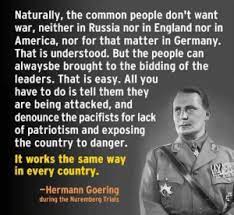
- Frances Haugen, a former Facebook employee, disclosed tens of thousands of Facebook’s internal documents to the Securities and Exchange Commission and the Wall Street Journal in 2021. She testified before Congress that Facebook promotes conflict to increase its readership and keep them reading—and buying. So the comment I made fell exactly into that category of exciting controversy.
People who libel and/or harass others should be banned from social media. It’s precisely because Twitter refuses to do so that its reputation is fatally tainted.
But posting a comment that is based on accurate history should not qualify as hate speech. And none of the examples I have cited fit that definition.
Through its worldwide membership, Facebook exerts an influence that rivals—if not exceeds—that of most government institutions. Its greatest infamy: Allowing Russian trolls to play a lethal role in electing Donald Trump President in 2016. And no doubt they are preparing to do so again in 2024.
In a highly polarized political environment, Mark Zuckerberg holds the unique distinction of having infuriated both Democrats and Republicans during his appearances before Congress. His secret: The overweening arrogance he routinely displays to those he considers lesser mortals. His motto is: ““Move fast and break things. Unless you are breaking stuff, you are not moving fast enough.”
It’s long past time for those at the legislative level to show him that some things—such as the First Amendment, the right to privacy and elections free of foreign influence—should not be broken. And that there is a high price to pay for those who do.
ABC NEWS, ALTERNET, AMERICABLOG, AP, BABY BOOMER RESISTANCE, BBC, BLOOMBERG NEWS, BUZZFEED, CBS NEWS, CENSORSHIP, CNN, COVID-19, CROOKS AND LIARS, DAILY KOZ, DAVID MCCULLOUGH, DEMOCRATS, DISNEY, FACEBOOK, FIRST AMENDMENT, FIVETHIRTYEIGHT, HARPER’S MAGAZINE, HISTORICAL ILLITERACY, HISTORY, HUFFINGTON POST, JAY LENO, JOE BIDEN, MARK ZUCKERBERG, MEDIA MATTERS, MOTHER JONES, MOVEON, MSNBC, NAZI GERMANY, NBC NEWS, NEW REPUBLIC, NEWSDAY, NEWSWEEK, NPR, PBS NEWSHOUR, POLITICO, POLITICUSUSA, RAW STORY, REPUBLICANS, REUTERS, SALON, SEATTLE TIMES, SHERYL SANDBERG, SLATE, TALKING POINTS MEMO, THE ATLANTIC, THE CHICAGO SUN-TIMES, THE CHICAGO TRIBUNE, THE DAILY BEAST, THE DAILY BLOG, THE GUARDIAN, THE HILL, THE HUFFINGTON POST, THE INTERCEPT, THE LOS ANGELES TIMES, THE NATION, THE NEW REPUBLIC, THE NEW YORK TIMES, THE NEW YORKER, THE VILLAGE VOICE, THE WASHINGTON POST, THINKPROGRESS, TIME, TONIGHT SHOW, TRUTHDIG, TRUTHOUT, TWITTER, TWO POLITICAL JUNKIES, U.S. NEWS & WORLD REPORT, UPI, USA TODAY, WONKETTE
In Bureaucracy, Business, History, Politics, Social commentary on August 16, 2022 at 12:10 am
There is an urgent need for states—and especially the Federal government—to impose serious regulatory controls on Facebook.
Facebook is the world’s largest social media company, with 2.936 billion users by April, 2022. Its social and political influence on the United States is enormous. According to its profile on Wikipedia:
“The subject of numerous controversies, Facebook has often been criticized over issues such as user privacy (as with the Cambridge Analytica data scandal), political manipulation (as with the 2016 U.S. elections) and mass surveillance.
“Posts originating from the Facebook page of Breitbart News, a media organization previously affiliated with Cambridge Analytica, are currently among the most widely shared political content on Facebook.
“Facebook has also been subject to criticism over psychological effects such as addiction and low self-esteem, and various controversies over content such as fake news, conspiracy theories, copyright infringement, and hate speech. Commentators have accused Facebook of willingly facilitating the spread of such content as well as exaggerating its number of users to appeal to advertisers.”

Facebook / Meta headquarters in Menlo Park, California
LPS.1, CC0, via Wikimedia Commons
To which should be added the following:
- Facebook operates as virtually a law unto itself, arbitrarily deciding which posts violate its “Community Standards” and deleting them (and their posters) without warning and right to appeal.
- No details are ever given as to what about the post, specifically, posed a threat to other Facebook members.
- Facebook claims that its users have the right to appeal: “You can disagree with the decision if you think we got it wrong.”
- But then Facebook declares: “We usually offer the chance to request a review and follow up if we got the decision wrong. We have fewer reviewers available right now because of the coronavirus (COVID-19) outbreak. We’re trying hard to priorities reviewing content with the most potential for harm. This means we may not be able to follow up with you, though your feedback helps us do better in the future.”
- Using COVID as an excuse to avoid responsible behavior is despicable. If Facebook is going to ban people for supposedly violating its “Community Standards,” there is a moral obligation—if not a legal one—to give them a chance to share their side of the story.
- Facebook revenues have made its CEO, Mark Zuckerberg, worth $71.5 billion. But Facebook refuses to provide its users with an 800 number so they can appeal directly to the Censorship Committee and share their reasons for posting the comments they did.
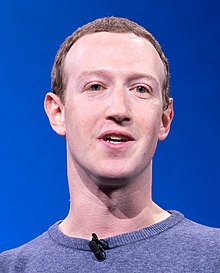
Mark Zuckerberg
Anthony Quintano from Westminster, United States, CC BY 2.0 <https://creativecommons.org/licenses/by/2.0>, via Wikimedia Commons
- Nor does Facebook provide even an Instant Messaging capability, so members can do so.
- Facebook’s refusal to provide a contact number for its members exposes them to potential fraud. National Public Radio published a January 31, 2017 article on “Searching for ‘Facebook Customer Service’ Can Lead To a Scam.”
- “According to Google data: “‘Facebook customer service’ gets searched, on average, about 27,000 times a month in the U.S.” Yet on its own “Help Community” page, Facebook admits: “Facebook doesn’t offer a phone number for support.”
- Nor do Facebook’s executives deign to respond to letters sent to them. I have sent letters to its CEO, Mark Zuckerberg, and to Sheryl Sandberg, a member of its board of directors. Neither had the courtesy to reply.
- Many of those I know on Facebook have been censored for posts that criticize Donald Trump. Apparently, “freedom of expression” exists only for those who support a man who staged an illegal coup to overturn a totally legitimate election.
- Members can be banned from Facebook for posting entirely legitimate news stories. One such story described how Texas Congressman Joe Burton had sent a series of smarmy emails to numerous women—while posing as a paragon of “family values.”
- The post was removed and its poster was sent the following message: “We removed content you posted. We removed this content because it doesn’t follow the Facebook Community Standards.” Then the member who posted it found himself blocked from Facebook.
- One Facebook member posted an innocuous anti-Trump cartoon: A group of children are lined up at a house on Halloween. A woman at the door says: “Oh, look. We have a pirate, a witch and a Trump supporter [a boy wearing a white sheet as a ghost].” The post was removed and the poster blocked from Facebook:
- Many Facebook users have found themselves punished after Facebook’s star chamber censors found a post they didn’t like from four years earlier.
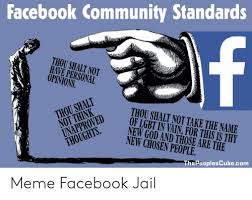
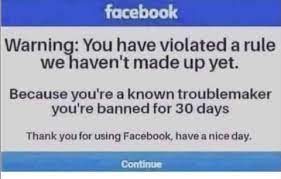
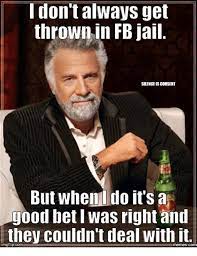
- Facebook’s arbitrary and punitive actions are so notorious they have become grist for countless memes—some of which are hilarious: “Warning: You have violated a rule we haven’t made up yet. Because you’re a known troublemaker you’ve been banned for 30 days. Thank you for using Facebook, have a nice day.”
- I was sentenced to “Facebook Jail” for two posts. The first of these stated: “Americans are historical illiterates.” This was labeled “hate speech and inferiority.” The fact that the distinguished historian David McCullough had said exactly the same meant nothing to Facebook.
- Taken to its logical conclusion, only comments celebrating the ignorance of ignorant people will be considered acceptable on Facebook.
ABC NEWS, ADOLF HITLER, AFGHANISTAN, ALTERNET, AMERICABLOG, AP, BABY BOOMER RESISTANCE, BBC, BLOOMBERG NEWS, BUZZFEED, CBS NEWS, CHARLES SCHUMER, CNN, CROOKS AND LIARS, CZECHOSLOVAKIA, DAILY KOZ, DAVID BROOKS, DEMOCRATS, FACEBOOK, FIVETHIRTYEIGHT, HARPER’S MAGAZINE, HUFFINGTON POST, IRAQ, JON STEWART, JONATHAN CAPEHART, JOSEPH BIDEN, JOSEPH MANCHIN, JUDY WOODRUFF, MEDIA MATTERS, MITCH MCCONNELL, MOTHER JONES, MOVEON, MSNBC, NAZI GERMANY, NBC NEWS, NEVILLE CHAMBVERLAIN, NEW REPUBLIC, NEWSDAY, NEWSWEEK, NPR, PACT ACT, PAT TOOMEY, PBS NEWSHOUR, POLITICO, POLITICUSUSA, RAW STORY, REPUBLICANS, REUTERS, SALON, SEATTLE TIMES, SLATE, TALKING POINTS MEMO, THE ATLANTIC, THE CHICAGO SUN-TIMES, THE CHICAGO TRIBUNE, THE DAILY BEAST, THE DAILY BLOG, THE GUARDIAN, THE HILL, THE HUFFINGTON POST, THE INTERCEPT, THE LOS ANGELES TIMES, THE NATION, THE NEW REPUBLIC, THE NEW YORK TIMES, THE NEW YORKER, THE VILLAGE VOICE, THE WASHINGTON POST, THINKPROGRESS, TIME, TOXIC BURN PITS, TRUTHDIG, TRUTHOUT, TWITTER, TWO POLITICAL JUNKIES, U.S. NEWS & WORLD REPORT, UNITED STATES SENATE, UPI, USA TODAY, VETERANS, WONKETTE
In Bureaucracy, History, Law, Law Enforcement, Medical, Politics, Social commentary on August 4, 2022 at 12:10 am
The July 29 edition of The PBS Newshour offered a clear lesson on why so many liberals are unable to cope with a weaponized—and Fascistic—Republican party.
It came during an exchange between conservative New York Times columnist David Brooks and Washington Post associate editor Jonathan Capehart .
Judy Woodruff, moderating the weekly “Politics Friday” segment, opened:
“Well, one of the measures that has hit a bump in the road after this deal emerged was a piece of — it’s called the PACT Act. It’s all about providing government aid to American military veterans who were exposed to toxic substances, toxic chemicals in the war in Iraq and wounded, and eventually — I mean, these are — these were veterans who came home with serious medical problems.
“This looked like it was on the way to passage. It’s now Republicans in the Senate in particular saying, wait a minute. And it’s caused a lot of reaction. Jon Stewart, the former late-night talk show host — he’s now an activist — this is what he had to say just outside the Capitol yesterday”:
Jon Stewart, Comedian/Activist: “These people thought they could finally breathe. You think their struggles end because the PACT Act passes? All it means is, they don’t have to decide between their cancer drugs and their house. Their struggle continues. These people will not give up, they will not give in and they will not relent.

Jon Stewart
“This is an embarrassment to the Senate, to the country, to the founders, and all that they profess to hold dear. “
Judy Woodruff: “He….used much stronger language than that in going after the Republicans, Pat Toomey and others, who are — who he says are holding this up.
“What about this argument he’s making, that, essentially, they said yes, and now they’re saying no, and it’s just….”
David Brooks: “Yes. Well, it’s — let’s say, at best, it’s a mystery. At worst, it’s mind-boggling. The mystery is, just a month ago, the vast majority of Republican senators voted for this thing. And then I think 25 or some large, significant numbers shift and now, suddenly, they’re against it. Is it payback for what Manchin — for what Manchin and Schumer did?”
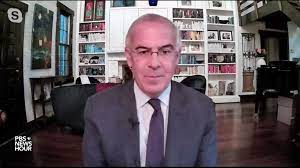
David Brooks
And what was it that Democratic West Virginia Senator Joseph Manchin and Democratic New York Senator Charles Schumer did?
As summed up by Woodruff: “When we were last together last Friday, we all thought that the President’s budget was dead, the package with climate and health care in it. Little did we know that Joe Manchin was having these secret talks with Chuck Schumer.”
But then Manchin decided—for still-unclosed reasons—to back the Democrats’ budgetary bill. And that’s when Republicans decided that helping wounded veterans would be helping President Joseph Biden. And that’s when 25 Republicans who had previously backed the PACT Act changed their minds—and votes.
David Brooks couldn’t imagine that Republicans could be so cruel: “It — that would be mind-boggling. You have got men and women who served this country suffering from cancer and other ailments, and we’re going to take away benefits because of a legislative pique? Who does that?
“[Republican Pennsylvania United States Senator] Pat Toomey, I think, has some principal reasons having to do with budget policy and what we can afford. That’s one thing.
“But if the votes were changed because Mitch McConnell said, we need to screw somebody, that would just be appalling.”
Jonathan Caphart: “And Senator Toomey’s arcane problem was that funding was being moved from discretionary within the bill to mandatory. And he was calling it a budget gimmick.
“But you know who doesn’t care whether it’s a budget gimmick? It’s those families that Jon Stewart was talking about. It’s the….veterans who worked in those burn pits and are suffering with the ailments. It’s the families of those veterans who are sick and/or have died.”
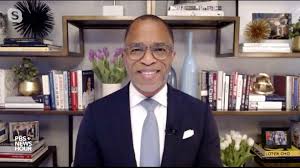
Jonathan Capehart
But on August 2, Republicans caved, in a vote of 86-11.
The reason: Jon Stewart kept the public pressure on. And so did more than 60 veterans groups. Many of the veterans had camped on the Senate steps, braving heat, humidity and thunderstorms.
As a result, veterans will receive expanded lifesaving health care benefits for those exposed to toxic burn pits in Iraq and Afghanistan.
From this Democratic liberals—and Americans generally—should draw two lessons:
Lesson #1: Republicans are evil. They will viciously hurt anyone—including those constituents (such as veterans) they claim to care about if they believe it will hurt Democrats. What they do care about is gaining—and maintaining—absolute power over Americans.
Lesson #2: Trying to compromise with Republicans is not only useless but dangerous. They regard any effort at compromise as a sign of weakness. The same was true for the Nazis during the reign of Adolf Hitler (1933 – 1945).
The appeasement efforts of British Prime Minister Neville Chamberlain to prevent World War II not only led to the destruction of Czechoslovakia but whetted Hitler’s appetite for further conquest—resulting in World War II.
In short: Standing up to Fascism saved the United States during World War II. It can do the same for the United States today.
ABC NEWS, ABORTION, ABRAHAM LINCOLN, ADOLF HITLER, AFFORDABLE CARE ACT, ALTERNET, AMERICABLOG, AP, BABY BOOMER RESISTANCE, BARACK OBAMA, BBC, BIRTH CONTROL, BLOOMBERG NEWS, BUZZFEED, CBS NEWS, CIVIL RIGHTS ACT, CIVIL WAR, CLARENCE THOMAS, CNN, CROOKS AND LIARS, DAILY KOZ, DEMOCRATS, DRED SCOTT, FACEBOOK, FASCISM, FIVETHIRTYEIGHT, HARPER’S MAGAZINE, HUFFINGTON POST, INFLATION, JULIUS CAESAR, KENJI YOSHINO, MARK ANTONY, MEDIA MATTERS, MEDICARE, MOTHER JONES, MOVEON, MSNBC, NAZI GERMANY, NBC NEWS, NEW REPUBLIC, NEW YORK UNIVERSITY SCHOOL OF LAW, NEWSDAY, NEWSWEEK, NIGHT OF THE LONG KNIVES, NINTH AMENDMENT, NPR, PBS NEWSHOUR, POLITICO, POLITICUSUSA, PRIVACY, RAPE, RAW STORY, RELIGIOUS RIGHT, REPUBLICANS, REUTERS, ROE V. WADE, ROGER B. TANEY, SALON, SEATTLE TIMES, SLATE, SOCIAL SECURITY, TALKING POINTS MEMO, THE ATLANTIC, THE CHICAGO SUN-TIMES, THE CHICAGO TRIBUNE, THE DAILY BEAST, THE DAILY BLOG, THE GUARDIAN, THE HILL, THE HUFFINGTON POST, THE INTERCEPT, THE LOS ANGELES TIMES, THE NATION, THE NEW REPUBLIC, THE NEW YORK TIMES, THE NEW YORKER, THE VILLAGE VOICE, THE WASHINGTON POST, THINKPROGRESS, TIME, TRUTHDIG, TRUTHOUT, TWITTER, TWO POLITICAL JUNKIES, U.S. NEWS & WORLD REPORT, UNITED STATES CONSTITUTION, UNITED STATES SUPREME COURT, UPI, USA TODAY, WILLIAM SHAKESPEARE, WONKETTE
In Bureaucracy, History, Law, Law Enforcement, Medical, Politics, Social commentary on June 29, 2022 at 12:12 am
“If anyone reproaches me and asks why I did not resort to the regular courts of justice, then all I can say is this: In this hour I was responsible for the fate of the German people, and thereby I became the Supreme Judge of the German people!”
That was how Chancellor—not yet Fuhrer-–Adolf Hitler justified his June 30, 1934 purge of his private army, the brown-shirted S.A. It has gone down in history as “The Night of the Long Knives.”
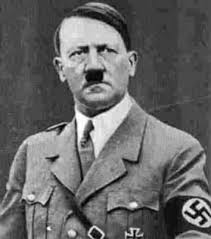
Adolf Hitler
It took five “Supreme Judges” of the American people to purge the right to abortion for millions of American women—including victims of rape and incest.
Hitler’s “blood purge” carried Germany yet another step closer to Nazi dictatorship. Similarly, the Supreme Court has carried the United States yet another step closer to a Republican dictatorship.
In the past, the Supreme Court has made decisions that have blackened its reputation in the eyes of historians.
One of these occurred in 1857, in what has become known as the “Dred Scott decision.” The Court decided 7–2 that neither Scott nor any other person of African ancestry could claim citizenship in the United States.
The case centered on slaves Dred and Harriet Scott and their children, Eliza and Lizzie. The Scotts claimed that they should be granted their freedom because Dred had lived in Illinois and the Wisconsin Territory for four years. Slavery was illegal in those jurisdictions, and their laws said that slaveholders gave up their rights to slaves if they stayed for an extended period.
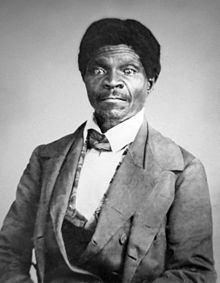
Dred Scott
Chief Justice Roger B. Taney ruled that freeing Scott and his family would “improperly deprive Scott’s owner of his legal property.”
As despicable as the Dred Scott decision was, it nevertheless lay grounded in the existing laws of that time. The Court did not reverse an earlier ruling. Millions who were already enslaved were kept enslaved. But it did not extend slavery throughout the country.
The Court’s reversal of Roe v. Wade set a huge and dangerous legal precedent.
On January 22, 1973, the Court had struck down virtually every anti-abortion law in the country. On June 24, 2022, it overturned that decision.
It went, in effect, from having expanded freedom of choice to suddenly abolishing it. And the Justices did so in the single most intimate aspect of a woman’s life.
Once people have tasted a benefit, they expect it to continue. When President Barack Obama fought to secure passage of the Affordable Care Amendment (ACA) Republicans repeatedly and savagely tried to prevent its becoming law.
And once it became law, Republicans continued to try to overturn it. They knew that if millions of poor and middle-class Americans finally won the right to obtain medical care, they would support it as wholeheartedly as they did Medicare, Social Security and the Civil Rights Act.
For 49 years, Republicans made ending the right to abortion their key issue for gaining and holding elective office. It won them cheers, votes and monies from the Religious Right and powerful Right-wing forces such as Fox News.
Now, suddenly, they have attained their objective. Millions of women will no longer be able to obtain an abortion in cases of rape or incest—let alone because of a failed condom or birth control pill.
Nor is that the only right the Justices intend to revoke.
In his concurring opinion, Justice Clarence Thomas said that the Roe decision should prompt the Court to reconsider all of this Court’s substantive due process precedents. And he named the three landmark decisions that established those rights.

Clarence Thomas
According to Kenji Yoshino, Professor of Constitutional Law at the New York University School of Law:
“The Ninth Amendment says that there are unenumerated [implied] rights in the Constitution. And those include things that we take for granted every day, like the right to vote, the right to marry, the right to travel.
“These are all rights that are nowhere enumerated explicitly in the constitution but that we nonetheless take for granted as Americans.
“One of the most shocking things about [the Court’s] opinion was that these unenumerated rights will only be respected if they are deeply rooted in this nation’s history and traditions. And so it essentially said that if the framers of the 14th Amendment in 1868 didn’t recognize the right and question that the right didn’t have constitutional existence.
“And so that’s what leads Justice Thomas and that concurrence, to see an opening to say, ‘Well, maybe we’ll get rid of not just the right to abortion, but also the right to same-sex marriage, the right to sexual intimacy and the privacy of your home, and even the right to contraception.'”
Thomas, says Yoshino, is inviting lower courts to reach that conclusion. He is also inviting Right-wing litigants to bring cases which can eventually reach the Supreme Court.
Thomas is in effect saying that once this happens, the right to same-sex marriage, contraception and privacy can be struck down by the Court—just as it has struck down the right to abortion.
Mark Antony, speaking in William Shakespeare’s “Julius Caesar,” had it right: “The evil that men do lives after them.”
ABC NEWS, ADOLF HITLER, ALTERNET, AMERICABLOG, AP, BABY BOOMER RESISTANCE, BBC, BLOOMBERG NEWS, BUZZFEED, CBS NEWS, CNN, CROOKS AND LIARS, DAILY KOZ, FACEBOOK, FIVETHIRTYEIGHT, GREG ABBOTT, HARPER’S MAGAZINE, HUFFINGTON POST, KEN PAXTON, MEDIA MATTERS, MOTHER JONES, MOVEON, MSNBC, NAZI GERMANY, NBC NEWS, NEW REPUBLIC, NEWSDAY, NEWSWEEK, NPR, PBS NEWSHOUR, POLITICO, POLITICUSUSA, RAW STORY, REUTERS, ROBB ELEMENTARY SCHOOL, ROBERT FRANCIS “BETO” O’ROURKE, ROLAND FREISLER, SALON, SALVATOR RAMOS, SEATTLE TIMES, SLATE, TALKING POINTS MEMO, TED CRUZ, TEXS, THE ATLANTIC, THE CHICAGO SUN-TIMES, THE CHICAGO TRIBUNE, THE DAILY BEAST, THE DAILY BLOG, THE GUARDIAN, THE HILL, THE HUFFINGTON POST, THE INTERCEPT, THE LOS ANGELES TIMES, THE NATION, THE NEW REPUBLIC, THE NEW YORK TIMES, THE NEW YORKER, THE VILLAGE VOICE, THE WASHINGTON POST, THINKPROGRESS, TIME, TRUTHDIG, TRUTHOUT, TWITTER, TWO POLITICAL JUNKIES, U.S. NEWS & WORLD REPORT, UPI, USA TODAY, UVALDE, WONKETTE, WORLD WAR 11
In Bureaucracy, History, Law, Law Enforcement, Politics, Social commentary on June 27, 2022 at 12:10 am
You can’t appreciate the ordeal—and the heroism—of Robert Francis “Beto” O’Rourke on May 25 if you know nothing about Roland Freisler.
Not that O’Rourke and Freisler have anything in common.
O’Rourke, 49, represented the Texas 16th Congressional district from 2013 to 2019. A Democrat, he ran for the United States Senate in 2018 and for the Democratic presidential nomination in 2020. He is now the Democratic nominee for the 2022 Texas governorship.
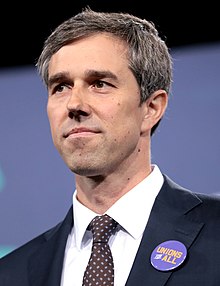
Robert “Beto” O’Rourke
Gage Skidmore, CC BY-SA 2.0 <https://creativecommons.org/licenses/by-sa/2.0>, via Wikimedia Commons
Freisler (October 30, 1893 – February 3, 1945) was a German Nazi jurist, judge and politician who served as the State Secretary of the Reich Ministry of Justice from 1934 to 1942 and President of the People’s Court from 1942 to 1945.
His mastery of legal texts, verbal force and fanatical commitment to Nazi ideology made him the most-feared judge in Nazi Germany. He was an admirer of Andrei Vyshinsky, the chief prosecutor of the Stalinist purge trials, and reportedly copied his demeanor.
Friesler demanded strict penalties against “race defilement”—sexual relations between “Aryans” and “inferior races”—designating this as “racial treason.”
Between 1942 and 1945, Freisler ordered 5,000 people executed. These included approximately 200 people hanged for alleged involvement in the July 20, 1944, plot to assassinate Adolf Hitler. Ninety per cent of all cases brought before him resulted in death or life imprisonment.
Freisler’s treatment of these defendants was especially brutal and humiliating. During the trial of Erwin von Witzleben, the former field marshal tried to hold up his trousers because he had been given oversized and beltless clothing. Freisler yelled at him: “You dirty old man, why do you keep fiddling with your trousers?”
On February 3, 1945, an American bombing raid on Berlin forced Freisler to adjourn proceedings and order the prisoners before him be taken to an air raid shelter. But he stayed behind to gather files before leaving.
A bomb struck the court building, and while Freisler hurriedly gathered his documents, a masonry column crushed him. He died instantly, and his flattened remains were found beneath the rubble.

Roland Freisler
Bundesarchiv, Bild 183-J03238 / CC-BY-SA 3.0, CC BY-SA 3.0 DE <https://creativecommons.org/licenses/by-sa/3.0/de/deed.en>, via Wikimedia Commons
Among the files he clutched was that of Fabian von Schlabrendorff, a member of the July 20 plot who faced execution. Because Freisler died, Schlabrendorff, survived the war.
When Freisler was brought to Lützow Hospital, a worker commented: “It is God’s verdict.”
Now, fast forward 77 years to a different country—but the same Fascistic mentality.
On May 24, 2022, 18-year-old Salvador Ramos, armed with an AR-15 assault rifle, entered Robb Elementary School in Uvalde, Texas. He shut himself inside two adjoining classrooms and fatally shot 19 students and two teachers and wounded 17 other people.
He remained in the school for more than an hour before members of the United States Border Patrol Tactical Unit fatally shot him.
The next day, Republican Texas Governor Greg Abbott staged a press conference in Uvalde. Joining him were Lieutenant Governor Dan Patrick, House Speaker Dade Phelan, Texas Attorney General Ken Paxton and Texas United States Senators John Cormyn and Ted Cruz.
As always happens after a gun massacre, the assembled Republicans blamed it on everything but the ready availability of military-style firearms to virtually anyone—including criminals, terrorists and the mentally ill.
“Inevitably when there’s a murder of this kind, you see politicians try to politicize it, you see Democrats and a lot of folks in the media whose immediate solution is to try to restrict the constitutional rights of law-abiding citizens,” Ted Cruz told reporters. “That doesn’t work. It’s not effective. It doesn’t prevent crime.”
Paxton similarly rejected any effort at gun control: “I’d much rather have law-abiding citizens armed and trained so that they can respond when something like this happens because it’s not going to be the last time.”
This totally ignored the fact that armed Texas police, knowing they were facing a man armed with an AR-15 assault rifle, waited more than an hour to enter the school.
O’Rourke was having none of it. He had become outraged about gun violence after a 2019 mass shooting in his hometown, El Paso, killed 23 people.
About 15 minutes after Abbott began speaking to the media and fellow Republicans onstage, O’Rourke moved to the third row of the Uvalde High School auditorium. When Abbott concluded his comments and introduced Patrick, O’Rourke rose and walked to the stage and spoke directly to Abbott.
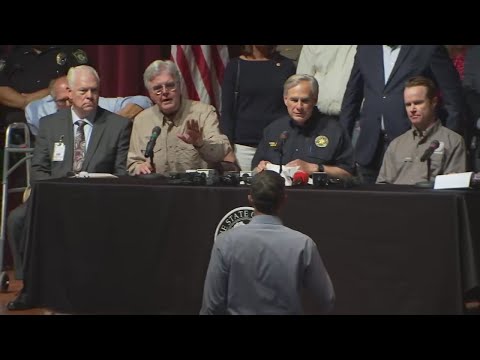
“The time to stop the next shooting is right now, and you are doing nothing,” O’Rourke said. “You are offering up nothing. You said this was not predictable. This was totally predictable when you choose not to do anything.”
Republicans onstage furiously reacted.
Cruz: “Sit down and don’t play this stunt.”
Patrick: “You’re out of line and an embarrassment.”
Uvalde Mayor Don McLaughlin: “I can’t believe that you’re a sick son of a bitch that would come to a deal like this to make a political issue.”
Police escorted O’Rourke out of the room. Just as some defendants had dared to warn Freisler he would face trial for war crimes, O’Rourke had a similar warning for Abbott:
“This is on you until you choose to do something different,” O’Rourke said, as he was escorted out of the room.
“This will continue to happen. Somebody needs to stand up for the children of this state or they will be continue to be killed just like they were killed in Uvalde yesterday.”
It remains to be seen whether history will hold Greg Abbott as accountable for mass deaths as it has Roland Freisler.
ABC NEWS, ADOLF HITLER, ALEXI KOSYGIN, ALTERNET, AMERICABLOG, AP, BABY BOOMER RESISTANCE, BBC, BLOOMBERG NEWS, BUZZFEED, CBS NEWS, CENSORSHIP, CNN, COVID-19, CROOKS AND LIARS, DAILY KOZ, DAVID MCCULLOUGH, DEMOCRATS, DISNEY, FACEBOOK, FIRST AMENDMENT, FIVETHIRTYEIGHT, HARPER’S MAGAZINE, HISTORICAL ILLITERACY, HISTORY, HUFFINGTON POST, JAY LENO, JOE BIDEN, LEONID BREZHNEV, MARK ZUCKERBERG, MEDIA MATTERS, MOTHER JONES, MOVEON, MSNBC, NAZI GERMANY, NBC NEWS, NEVILLE CHAMBERLAIN, NEW REPUBLIC, NEWSDAY, NEWSWEEK, NPR, PAUL VON HINDENBURG, PBS NEWSHOUR, POLITICO, POLITICUSUSA, RAW STORY, REPUBLICANS, REUTERS, SALON, SEATTLE TIMES, SHERYL SANDBERG, SLATE, SMITHSONIAN INSTITUTE, TALKING POINTS MEMO, THE ATLANTIC, THE CHICAGO SUN-TIMES, THE CHICAGO TRIBUNE, THE DAILY BEAST, THE DAILY BLOG, THE GUARDIAN, THE HILL, THE HUFFINGTON POST, THE INTERCEPT, THE LOS ANGELES TIMES, THE NATION, THE NEW REPUBLIC, THE NEW YORK TIMES, THE NEW YORKER, THE VILLAGE VOICE, THE WASHINGTON POST, THINKPROGRESS, TIME, TONIGHT SHOW, TRUTHDIG, TRUTHOUT, TWITTER, TWO POLITICAL JUNKIES, U.S. NEWS & WORLD REPORT, UPI, USA TODAY, WEIMAR REPUBLIC, WONKETTE, YEVGENEY YEVTUSHENKO
In Bureaucracy, Business, Entertainment, History, Politics, Social commentary on June 16, 2022 at 12:10 am
Facebook likes to promote itself as a place for “more than three billion people around the world to share ideas, offer support and make a difference.”
But there are limits to the ideas that can be shared on Facebook. And while Facebook likes to boast about its “Community Standards,” these are enforced in a totally arbitrary way.
There is simply no predicting what will trigger Facebook’s ire and land a post—and its poster—in “Facebook Jail.”
Facebook doesn’t restrict itself to banning posts that are libelous and/or harassing. Its definition of “Hate speech” is so all-encompassing it can be stretched to cover anything—including historically valid statements.
In Part One I laid out the reason for my sending a letter of protest to Sheryl Sandberg, Facebook’s longtime Chief Operating Officer.
In this part, I will offer specific steps Facebook can take to keep faith with its stated mission to be a place where people can “share ideas.”
Noting that I had been banned from Facebook for seven days for posting “Americans are historical illiterates,” I cited the noted historian, David McCullough, and an article from the Smithsonian Institute to support my statement.

David McCullough
fourandsixty, CC BY-SA 3.0 <https://creativecommons.org/licenses/by-sa/3.0>, via Wikimedia Commons
I then quoted my offending paragraph in full:
“Tyrants cannot be appeased by giving into their demands–it just convinces them that they can demand even more from their victims. British Prime Minister Neville Chamberlain tried that approach at Munich in September, 1938, giving Adolf Hitler a big chunk of Czechoslovakia. The reason: To prevent a war with Nazi Germany. Less than a year later, war broke out anyway.”
This referred to yet another act of cowardice by Democrats in refusing to stand up to the aggression of the Republican Right.
There are serious historical parallels between the closing days of the German Weimar Republic and the rise of Adolf Hitler—and what is happening today in the United States.
Example: In the Weimar Republic, all that stood between Hitler and total power was a frail old man—President Paul von Hindenburg. In the United States, all that stands between Donald Trump and absolute power is a frail old man: President Joe Biden.
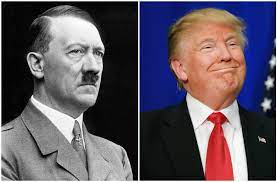
Adolf Hitler and Donald Trump
Too many Americans remain ignorant of their own history—not to mention that of other countries.
That was the point of my post. But on Facebook, it’s “Hate speech” to point out the ignorance of criminally ignorant people.
Then came my third and last point.
Third: Facebook claimed: “You can disagree with the decision if you think we got it wrong.” That implied that I would be given the opportunity to state why I believed the decision was wrong and have that objection carefully reviewed.
But, immediately afterward, Facebook stated: “We usually offer the chance to request a review and follow up if we got decisions wrong.
“We have fewer reviewers available right now because of the coronavirus (COVID-19) outbreak. We’re trying hard to prioritize reviewing content with the most potential for harm. This means we may not be able to follow up with you, though your feedback helps us do better in the future.”
Using COVID as an excuse to avoid responsible behavior is despicable. If Facebook is going to ban people for supposedly violating its “Community Standards,” it has a moral obligation—if not a legal one—-to give them a chance to share their side of the story.
That is how a court in a democracy behaves. Making a decision based on whim and secrecy, with no appeal possible, is the behavior of a star chamber.
I then noted two ways by which Facebook could avoid such disgraceful episodes in the future:
- Providing its users with an 800 number whereby they can interact directly with the Censorship Committee and share their reasons for posting the comment(s) they did;
- Providing its users with at least an Instant Messaging capability, so they can do so.
My letter to Sheryl Sandberg closed as follows:
I‘m aware that Facebook is a private company and thus can do whatever it likes. But it is also—supposedly—a market for the airing of competing ideas. And to behave in the despicable manner I have described is as much a disservice to the reputation Facebook wishes to have as to those who are negatively affected by its censorship decisions.
Frankly, I don’t expect to get an answer from Sandberg, any more than I expected one from Facebook CEO Mark Zuckerberg.
Still, there is this:
On August 23, 1968, Russian poet Yevgeney Yevtushenko sent a telegram to Communist Party Boss Leonid Brezhnev and Premier Aleksei Kosygin, protesting their invasion of Czechoslovakia.
No doubt, Yevtushenko didn’t expect his protest to change Soviet policy—just as I don’t expect any major changes—for the good—from Facebook.
These will come about only if:
- Enough Facebook users get so fed up with arbitrary bullying that they seek another social media format to speak their minds; and/or
- Enough members of Congress demand major changes in the way Facebook regularly makes a mockery of the First Amendment.
Neither of these is likely to happen anytime soon.


 Bureaucracybuster's Blog
2016 PRESIDENTIAL CAMPAIGN, ABC NEWS, ADOLF HITLER, ALTERNET, AMERICABLOG, ANTHONY FAUCI, AP, BABY BOOMER RESISTANCE, BLOOMBERG, BUZZFEED, CBS NEWS, CLIMATE CHANGE, CNN, CORONAVIRUS, CORONAVIRUS PARTIES, COVID-19, CROOKS AND LIARS, DAILY KOZ, DONALD TRUMP, DRUDGE RETORT, FACEBOOK, FIVETHIRTYEIGHT, HARPER’S MAGAZINE, HOAX, HOUE OF REPRESENTATIVES, IMPEACHMENT, JANE APPLBY, MARGARET LEVI, MEDIA MATTERS, METHODIST HOSPITAL, MOTHER JONES, MOVEON, MSNBC, NAZI GERMANY, NBC NEWS, NEWSWEEK, NPR, PBS NEWSHOUR, POLITICO, POLITICUSUSA, RAW STORY, REUTERS, RUSIA, RUSSIAN INTELLIGENCE AGENTS, SALON, SEATTLE TIMES, SLATE, STANFORD UNIVERSITY, TALKING POINTS MEMO, TEXAS, THE ATLANTIC, THE CHICAGO SUN-TIMES, THE CHICAGO TRIBUNE, THE DAILY BEAST, THE DAILY BLOG, THE GUARDIAN, THE HILL, THE HUFFINGTON POST, THE LOS ANGELES TIMES, THE NATION, THE NEW REPUBLIC, THE NEW YORK TIMES, THE VILLAGE VOICE, THE WASHINGTON POST, THINKPROGRESS, TIME, TRUTHDIG, TRUTHOUT, TWITTER, TWO POLITICAL JUNKIES, U.S. NEWS & WORLD REPORT, UPI, USA TODAY, WONKETTE, WORLD WAR ii
DYING FOR A HOAX THAT WASN’T
In Bureaucracy, History, Medical, Politics, Social commentary on September 30, 2022 at 12:12 amWell, come on all of you Right-wing men
Donald Trump needs your help again.
He’s got himself in a terrible jam
He’s spread a virus throughout the land.
So throw off those masks, give a big cheer
Your Coronavirus-in-Chief is here!
“I think I made a mistake. I thought this was a hoax, but it’s not.”
So spoke a 30-year-old patient who died at Methodist Hospital in San Antonio, Texas. His last words came after attending a so-called “COVID party,” according to the hospital.
According to Dr. Jane Appleby, chief medical officer for Methodist Hospital and Methodist Children’s Hospital: “Someone will be diagnosed with the disease, and they’ll have a party to invite their friends over to see if they can beat the disease.
“One of the things that was heart-wrenching that he said to his nurse was, ‘You know, I think I made a mistake.’ And this young man went to a COVID party.. He didn’t really believe. He thought the disease was a hoax. He thought he was young and invincible and wouldn’t get affected by the disease.”
And it’s one-two-three
What are they dyin’ for?
Don’t ask em’, they don’t give a damn
Right here in COVID-land.
And it’s five-six-seven
Open up those graveyard gates
Well, there ain’t no time to wonder why
Whoopee! They’re all going to die.
It’s understandable that this patient believed COVID-19 was a hoax. He was, after all, from Texas, which overwhelmingly gave its votes to Donald J. Trump in 2016.
And it was President Trump who infamously said, on February 28, 2020: “Now the Democrats are politicizing the Coronavirus….We did one of the great jobs….One of my people came up to me and said, ‘Mr. President, they tried to beat you on Russia, Russia, Russia’….They couldn’t do it. They tried the impeachment hoax….It’s all turning, they lost….And this is their new hoax.”
“Hoax” is one of Trump’s favorite words.
He called the well-documented ties between Russian Intelligence agents and his 2016 Presidential campaign “a hoax.”
Ditto for the efforts of the House of Representatives to remove him for trying to extort Ukraine into smearing then-former Vice President Joe Biden: “The impeachment hoax.”
Climate change, for Trump, is “an expensive hoax.”
Donald Trump
“Trump is trying to undermine the trustworthiness of any source but himself,” said Margaret Levi, professor of political science at Stanford University. “The point is to make himself the only credible authority, to be fully trusted as a ‘war-time’ president.”
And in the case of the anonymous San Antonio patient—and untold numbers of his other supporters—he succeeded brilliantly. To their misfortune.
Well, grifters and traitors throughout the land
Pack yourselves off to COVID-land.
Don’t be shy, don’t hesitate
Satan is ready, so don’t make ‘em wait.
Just be glad that Donald Trump’s your man
As you’re dyin’ off as fast as you can.
By July 11, 2020, there were 8,332 new confirmed Coronavirus cases in Texas, according to a New York Times database. More than 258,000 cases and more than 3,200 deaths have been recorded in Texas so far.
Yet for those attending the Coronavirus party, such facts meant nothing compared to the assurances of Donald Trump—a proven serial liar—that there was nothing to fear.
“People will come in[to the hospital] initially, and they don’t look so bad,” said Appleby. “They don’t look really sick. But when you check their oxygen levels and their lab tests, they’re really sicker than they appear on the surface.”
Among the COVID-19 danger signs to look for, advised Appleby: If you’re not feeling well, have a high fever, cough and severe muscle aches.
Well, come on Republicans, let’s move fast,
Your big chance is here at last.
It doesn’t matter that Trump is Red
As he walks on the bodies of Americans dead.
Just be sure Vlad Putin knows your name
Treason’s just a part of your game.
Meanwhile, Trump was trying to discredit Dr. Anthony Fauci, the country’s leading infectious disease expert.
The reason: Fauci had not hesitated to warn about the dangers of COVID-19—and the failures of the Federal Government to effectively control it.
Anthony Fauci
Trump saw the virus not as a danger to Americans but to his chances for re-election. Among his “efforts” to “deal” with it:
For tyrants, truth is always the most dangerous enemy.
As World War II went increasingly against Nazi Germany, those who dared to say “The war is lost” were strung up with piano wire—often on lamp posts, as a warning to others.
Denying the truth didn’t save the dictatorship of Adolf Hitler. And it didn’t save the would-be dictatorship of Donald Trump
And it’s one-two-three
What are they dyin’ for?
Don’t ask em’, they don’t give a damn
Right here in COVID-land.
And it’s five-six-seven
Open up those graveyard gates
Well, there ain’t no time to wonder why
Whoopee! They’re all going to die.
Share this: