On March 2, 1836–180 years ago this year–Texas formally declared its independence from Mexico, of which it was then a province.
Sixty-one delegates took part in the convention held at Washington-on-the-Brazos.
Their signed statement proclaimed that the Mexican government had “ceased to protect the lives, liberty, and property of the people, from whom its legitimate powers are derived.”
Meanwhile, 169 miles away, the siege of the Alamo–a crumbling former Spanish mission in the heart of San Antonio–had entered its ninth day. The Alamo.
The mission that became a fortress. The fortress that has since become a shrine.

By Daniel Schwen – Own work, CC BY-SA 4.0
The Alamo Chapel
The combatants: 180 to 250 Texans (or “Texians,” as many of them preferred to be called) vs. 2,000 Mexican soldiers.
On the Texan side three names predominate: David Crockett, James Bowie and William Barret Travis. “The Holy Trinity,” as some historians ironically refer to them.
Crockett, at 49, was the most famous man in the Alamo. He had been a bear hunter, Indian fighter and Congressman. Rare among the men of his time, he sympathized with the Indian tribes he had helped subdue in the War of 1812.
David Crockett
He believed Congress should honor the treaties made with the former hostiles and opposed President Andrew Jackson’s effort to move the tribes further West.Largely because of this, his constituents turned him out of office in November, 1835. He told them they could go to hell; he would go to Texas.
James Bowie, at 40, had been a slave trader with pirate Jean Lafitte and a land swindler. But his claim to fame lay in his skill as a knife-fighter.
James Bowie
This grew out of his participating in an 1827 duel on a sandbar in Natchez, Mississippi. Bowie was acting as a second to one of the duelists who had arranged the event.
After the two duelists exchanged pistol shots without injury, they called it a draw. But those who had come as their seconds had scores to settle among themselves–and decided to do so. A bloody melee erupted.
Bowie was shot in the hip and then impaled on a sword cane wielded by Major Norris Wright, a longtime enemy. Drawing a large butcher knife he wore at his belt, he gutted Wright, who died instantly.
The brawl became famous as the Sandbar Fight, and cemented Bowie’s reputation across the South as a deadly knife fighter.
William Barret Travis had been an attorney and militia member. Burdened by debts and pursued by creditors, he fled Alabama in 1831 to start over in Texas. Behind him he left a wife, son, and unborn daughter.
William Barret Travis
From the first, Travis burned to free Texas from Mexico and see it become a part of the United States.
In January, 1836, he was sent by the American provisional governor of Texas to San Antonio, to fortify the Alamo. He arrived there with a small party of regular soldiers and the title of lieutenant colonel in the state militia.
On the Mexican side, only one name matters: Antonio Lopez de Santa Anna, president (i.e., absolute dictator) of Mexico. After backing first one general and would-be “president” after another, Santa Anna maneuvered himself into the office in 1833.
Antonio Lopez de Santa Anna
Texas was then legally a part of Mexico. Stephen F. Austin, “the father of Texas,” had received a grant from Spain–which ruled Mexico until 1821–to bring in 300 American families to settle there.
The Spaniards wanted to establish a buffer between themselves and warring Indian tribes like the Comanches. These imigrations continued after Mexico threw off Spanish rule and obtained its independence.
But as Americans kept flooding into Texas, the character of its population changed, alarming its Mexican rulers.
The new arrivals did not see themselves as Mexican citizens but as transplanted Americans. They were largely Protestant, as opposed to the Catholic Mexicans. And many of them not only owned slaves but demanded the expansion of slavery–a practice illegal under Mexican law.
In October, 1835, fighting erupted between American settlers and Mexican soldiers.
In November, Mexican forces took shelter in the Alamo, which had been built in 1718 as a mission to convert Indians to Christianity. Since then it had been used as a fort–by Spanish and then Mexican troops.
Texans lay siege to the Alamo from October 16 to December 10, 1835. With his men exhausted, and facing certain defeat, General Perfecto de Cos, Santa Anna’s brother-in-law, surrendered. He gave his word to leave Texas and never take up arms again against its settlers.
Most Texans rejoiced. They believed they had won their “war” against Mexico. But others knew better.
One was Bowie. Another was Sam Houston, a former Indian fighter, Congressman and protégé of Andrew Jackson.
Still another was Santa Anna, who styled himself “The Napoleon of the West.” In January, 1836, he set out from Mexico City at the head of an army totaling about 7,000.
He planned the 18th century version of a blitzkrieg, intending to arrive in Texas and take its “rebellious foreigners” by surprise.
His forced march proved costly in lives, but met his objective. He arrived in San Antonio with several hundred soldiers on February 23, 1836.
The siege of the Alamo–the most famous event in Texas history–was about to begin.


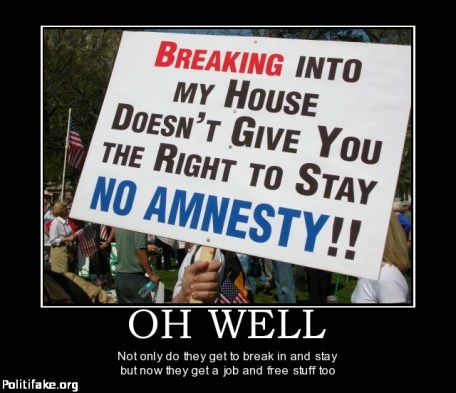
(3)(1)(1).jpg&imgrefurl=http%3A%2F%2Fsilkroadsandsiamesesmiles.com%2F2011%2F01%2F26%2Froot-causes-illegal-immigration%2F&docid=undefined&tbnid=MpAe36i-e_f-BM%3A&w=576&h=421&ei=uJyeVZa6D4PwoAT3_Z2wBg&ved=0CAIQxiAwAA&iact=c)


2016 PRESIDENTIAL CAMPAIGN, ABC NEWS, ADOLF HITLER, ANNE FRANK, ANTONIN SCALIA, AUSCHWITZ, BARACK OBAMA, BERGEN-BELSEN, CBS NEWS, CNN, DONALD TRUMP, EVA SCHLOSS, FACEBOOK, HOLOCAUST, illegal immigration, ISIS, MEXICO, NAZI GERMANY, NBC NEWS, POPE FRANCIS, SUPREME COURT, SYRIAN REFUGEES, THE CHICAGO SUN-TIMES, THE CHICAGO TRIBUNE, THE LOS ANGELES TIMES, THE NEW YORK TIMES, THE WASHINGTON POST, TWITTER, VATICAN
TRUMP: THE LORD OR THE DEVIL?
In Bureaucracy, History, Politics, Social commentary on February 22, 2016 at 9:48 amIronically, Right-wingers, who support many of the same policies of Adolf Hitler, often attack liberals as Nazis–especially President Barack Obama.
But now a genuine authority on Fascism has come forward to assess the front-runner for the Republican Presidential nomination.
“If Donald Trump become[s] the next president of the US it would be a complete disaster. I think he is acting like another Hitler by inciting racism.”
So says Eva Schloss, the stepsister of Holocaust victim Anne Frank. As a survivor of Auschwitz, Schloss should know something about Nazis.
Eva Schloss
Now 86, Schloss met Anne in Amsterdam as a fellow refugee. Both their families had taken refuge there after fleeing Nazi Germany.
Anne Frank spent four years hiding in an attic and keeping a diary. But in 1944 she was discovered by the Nazis and sent to the Bergen-Belsen concentration camp.
She was 15 when she died there of typhus in March 1945. After the war, Eva Schloss’ mother, Fritzi, married Otto Frank, Anne’s father.
Anne Frank
Eva was detained at the same time as Anne and sent to Auschwitz. She survived when the camp was liberated on January 27,1945.
In a January 27th essay for Newsweek, Schloss warned of dire consequences if Donald Trump became President.
“During his U.S. presidential campaign he has suggested the ‘total and complete shutdown of Muslims entering the United States,’ as well as pledging to build a wall between the U.S. and Mexico to keep illegal immigrants out.”
She was 11 when her family immigrated to Belgium after Hitler forcibly Annexed Austria in 1938.
“We were treated as if we had come from the moon. I felt as if I wasn’t wanted and that I was different to everybody. It is even harder for today’s Syrian refugees who have a very different culture….
“I am very upset that today again so many countries are closing their borders,” said Schloss, who lives in London. “Fewer people would have died in the Holocaust if the world had accepted more Jewish refugees.”
And on February 18, Pope Francis also waded into the 2016 Presidential race with his own assessment of Trump.
The comment came in answer to a question by one of several reporters who were accompanying the Pope to Rome from a six-day trip to Mexico.
What, a reporter asked the Pontiff, did he think of Trump’s campaign pledge to build a wall along the entire length of the U.S.-Mexican border and expel millions of illegal aliens now living in the United States?
“A person who only thinks about building walls, wherever they are, and not in building bridges, is not Christian,” replied the Pope. “This is not the gospel.”
Pope Francis
Francis said he would “give the benefit of the doubt” to Trump because he had not heard Trump’s border plans independently.
But he added: “I say only that this man is not a Christian if he has said things like that.”
Trump, a Presbyterian, responded minutes later: “For a religious leader to question a person’s faith is disgraceful.”
Trump has repeatedly accused President Barack Obama–a self-described Christian–as a secret Muslim.
Donald Trump
On February 21, for example, he tweeted: “I wonder if President Obama would have attended the funeral of [Supreme Court] Justice [Antonin] Scalia if it were held in a mosque.”
Obama had paid tribute to Scalia at the Supreme Court on the day prior to the funeral. He declined to attend the service because his heavy security detail might disrupt the ceremony.
“I am proud to be a Christian,” added Trump, “and as president I will not allow Christianity to be consistently attacked and weakened.”
Nor did he stop there: “If and when the Vatican is attacked by the ISIS, which as everyone knows is ISIS’s ultimate trophy, I can promise you that the pope would have only wished and prayed that Donald Trump would have been president.
“ISIS would have been eradicated unlike what is happening now with our all talk, no action politicians.”
Trump thus implied that the Pope’s future security depended on the United States generally–and on Donald Trump in particular.
And he clearly ignored the fact that, since September, 2014, the United States Air Force has been bombing ISIS convoys in Iraq and Syria.
Trump has long been critical of the Pope’s stand on immigration.
As the Pope undertook his trip to Mexico, Trump told Fox Business Network that he didn’t think Francis understood “the danger of the open border we have with Mexico.
“I think Mexico got him to do it because they want to keep the border just the way it is,” he said. “They’re making a fortune, and we’re losing.”
A Vatican spokesman replied: “The pope always talks about migration problems all around the world, of the duties we have to solve these problems in a humane manner, of hosting those who come from other countries in search of a life of dignity and peace.”
For millions of Jews and Catholics, the election of 2016 may turn on how they answer the question: Am I serving the Lord–or the devil?
Share this: