Posts Tagged ‘MERCENARIES’
ABC NEWS, ALEXANDER THE GREAT, ALTERNET, AMERICABLOG, AP, BABY BOOMER RESISTANCE, BBC, BLOOMBERG NEWS, BUZZFEED, CBS NEWS, CNN, CROOKS AND LIARS, DAILY KOS, DONALD TRUMP, DOUGLAS MACARTHUR, FEDERAL SECURITY SERVICE, FIVETHIRTYEIGHT, GATES OF FIRE (BOOK), HARPER’S MAGAZINE, HUFFINGTON POST, IRAN, IRAQ, KGB, MEDIA MATTERS, MERCENARIES, MOTHER JONES, MOVEON, MSNBC, NBC NEWS, NEW REPUBLIC, NEWSDAY, NEWSWEEK, NICCOLO MACHIAVELLI, NICHOLAS MADURO, NPR, Oil, PBS NEWSHOUR, POLITICO, POLITICUSUSA, RAW STORY, REUTERS, SALON, SAUDI ARABIA, SEATTLE TIMES, SLATE, SPARTA, STANLEY MCCRYSTAL, STEVEN PRESSFIELD, TALKING POINTS MEMO, THE ATLANTIC, THE CHICAGO SUN-TIMES, THE CHICAGO TRIBUNE, THE DAILY BEAST, THE DAILY BLOG, THE GUARDIAN, THE HILL, THE HUFFINGTON POST, THE INTERCEPT, THE LOS ANGELES TIMES, THE NATION, THE NEW REPUBLIC, THE NEW YORK TIMES, THE NEW YORKER, THE PROFESSION (BOOK), THE VILLAGE VOICE, THE VIRTUES OF WAR (BOOK), THE WASHINGTON POST, THERMOPYLAE, THINKPROGRESS, TIME, TRUTHDIG, TRUTHOUT, U.S. NEWS & WORLD REPORT, UPI, USA TODAY, VENEZUELA, X
In Bureaucracy, Business, History, Military, Politics, Social commentary on January 6, 2026 at 12:10 am
During a January 3 news conference, President Donald Trump told reporters the real reason why the United States had just attacked Venezuela and captured its president—actually dictator—Nicholas Maduro and his wife:
“We’re going to have our very large United States oil companies—the biggest anywhere in the world—go in, spend billions of dollars, fix the badly broken infrastructure, the oil infrastructure.”
Forget months of accusing Venezuela of being a major supplier of illicit drugs to the United States.
Venezuela has the world’s largest proven oil reserves, with over 303 billion barrels. That’s more than Saudi Arabia (second-largest) and Iran (third-largest). But after President Hugo Chávez nationalized much of the industry in 2007, its oil production sharply declined.
By 2018, Venezuela was producing 1.3 million barrels of oil each day, from a high of more than 3 million barrels each day in the late 1990s.
Trump intends to change that.
On September 7, 2016, at a forum hosted by NBC, Trump had flatly stated that seizing Iraqi oil fields could have paid for the 2003 Iraq war:
“We go in, we spend $3 trillion, we lose thousands and thousands of lives, and then … what happens is we get nothing. You know, it used to be to the victor belong the spoils.
“You’re not stealing anything. We’re reimbursing ourselves … at a minimum, and I say more. We’re taking back $1.5 trillion to reimburse ourselves.”
Unable to steal Iraqi oil, Trump has chosen to steal that of Venezuela—by turning the Armed Services into mercenary gangsters.
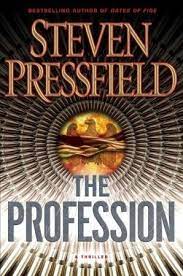
In 2011, bestselling author Steven Pressfield had made the seizing of Saudi Arabian oil fields the premise of his novel The Profession.

Pressfield made his literary reputation with a series of classic novels about ancient Greece.
In Gates of Fire (1998) he explored the rigors and heroism of Spartan society—and the famous last stand of its 300 picked warriors at Thermopylae.
In The Virtues of War (2004) he entered the mind of Alexander the Great, whose armies swept across the known world, destroying all who dared oppose them.
But in The Profession, Pressfield created a plausible world set into the future of 2032. The book’s dust jacket summarizes its plot-line:
“Everywhere military force is for hire. Oil companies, multi-national corporations and banks employ powerful, cutting-edge mercenary armies to control global chaos and protect their riches.
“Force Insertion is the world’s merc [mercenary] monopoly. Its leader is the disgraced former United States Marine General James Salter, stripped of his command by the president for nuclear saber-rattling with the Chinese and banished to the Far East.”
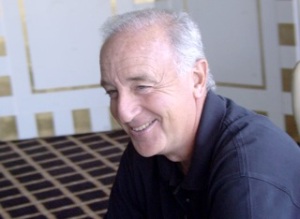
Steven Pressfield
Salter appears as a hybrid of World War II General Douglas MacArthur and Iraqi War General Stanley McCrystal.
Like MacArthur, Salter has butted heads with his President—and paid dearly for it. Now his ambition is no less than to become President himself—by popular acclaim. And like McCrystal, he is a pure warrior who leads from the front and is revered by his men.
Salter seizes Saudi Arabian oil fields, then offers them as a gift to America. By doing so, he makes himself the most popular man in the country—and a guaranteed occupant of the White House.
Douglas MacArthur

Stanley McCrystal
“The United States is an empire…but the American people lack the imperial temperament,” asserts Salter. “We’re not legionaries, we’re mechanics. In the end the American Dream boils down to what? ‘I’m getting mine and the hell with you.’”
Americans, says Salter, have come to like mercenaries: “They’ve had enough of sacrificing their sons and daughters in the name of some illusory world order. They want someone else’s sons and daughters to bear the burden….
“They want their problems to go away. They want me to to make them go away.”
Returning to the United States, he is acclaimed as a hero—and the next President.
He knows that his country is on a downward spiral toward oblivion: “Any time that you have the rise of mercenaries…society has entered a twilight era, a time past the zenith of its arc.”
And he doesn’t believe that his Presidency will arrest that decline: “But maybe in the short run, it’s better that my hand be on the wheel…rather than some other self-aggrandizing sonofabitch whose motives might not be as well intentioned….”
More than 500 years ago, Niccolo Machiavelli warned of the dangers of relying on mercenaries:
“Mercenaries…are useless and dangerous. And if a prince holds on to his state by means of mercenary armies, he will never be stable or secure; for they are disunited, ambitious, without discipline, disloyal; they are brave among friends; among enemies they are cowards.
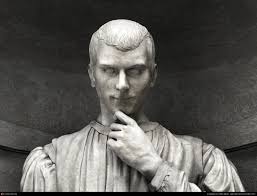
Niccolo Machiavelli
“They have neither the fear of God nor fidelity to men, and destruction is deferred only so long as the attack is. For in peace one is robbed by them, and in war by the enemy.”
Centuries ago, Niccolo Machiavelli issued a warning against relying on men whose first love is their own enrichment.
Steven Pressfield, in a work of fiction, has given us a nightmarish vision of a not-so-distant America where “Name your price” has become the byward for an age.
Both warnings are well worth heeding.
ABC NEWS, ALEXANDER THE GREAT, ALTERNET, AMERICABLOG, AP, BABY BOOMER RESISTANCE, BBC, BLOOMBERG NEWS, BUZZFEED, CBS NEWS, CNN, CROOKS AND LIARS, DAILY KOS, DOUGLAS MACARTHUR, FEDERAL SECURITY SERVICE, FIVETHIRTYEIGHT, GATES OF FIRE (BOOK), HARPER’S MAGAZINE, HUFFINGTON POST, KGB, MEDIA MATTERS, MERCENARIES, MOTHER JONES, MOVEON, MSNBC, NBC NEWS, NEW REPUBLIC, NEWSDAY, NEWSWEEK, NICCOLO MACHIAVELLI, NPR, PBS NEWSHOUR, POLITICO, POLITICUSUSA, RAW STORY, REUTERS, SALON, SEATTLE TIMES, SLATE, SPARTA, STANLEY MCCRYSTAL, STEVEN PRESSFIELD, TALKING POINTS MEMO, THE ATLANTIC, THE CHICAGO SUN-TIMES, THE CHICAGO TRIBUNE, THE DAILY BEAST, THE DAILY BLOG, THE GUARDIAN, THE HILL, THE HUFFINGTON POST, THE INTERCEPT, THE LOS ANGELES TIMES, THE NATION, THE NEW REPUBLIC, THE NEW YORK TIMES, THE NEW YORKER, THE PROFESSION (BOOK), THE VILLAGE VOICE, THE VIRTUES OF WAR (BOOK), THE WASHINGTON POST, THERMOPYLAE, THINKPROGRESS, TIME, TRUTHDIG, TRUTHOUT, U.S. NEWS & WORLD REPORT, UKRAINE, UPI, USA TODAY, VLADIMIR PUTIN, WAGNER GROUP, X, YEGENEY PRIGOZHIN
In Bureaucracy, Business, History, Military, Politics, Social commentary on September 15, 2025 at 12:08 am
In May, 2014, Yevgeny Prigozhin founded the Kremlin-affiliated mercenary army Wagner Group.
Since Russian President Vladimir Putin ordered a “special military operation” against Ukraine on February 24, 2022, Wagner has played a major role in the fighting.
Prigozhin had repeatedly clashed with Russian Defense Minister Sergei Shoigu, blaming him for a lack of ammunition to his embattled fighters—resulting in thousands of casualties.

Yevgeney Prigozhin
Government of the Russian Federation, CC BY 3.0 <https://creativecommons.org/licenses/by/3.0>, via Wikimedia Commons
On June 23, 2023, Prigozhin claimed that regular Russian armed forces had launched missile strikes against Wagner forces, killing a “huge” number.
He announced: “The council of commanders of PMC Wagner has made a decision—the evil that the military leadership of the country brings must be stopped.”
In response, criminal charges were filed against Prigozhin by the Russian Federal Security Service—the renamed KGB—for inciting an armed rebellion.
Wagner withdrew from Ukraine, occupied the Russian city of Rostov-on-Don and headed for Moscow. While doing so, Wagner shot down a Russian fighter plane and several military helicopters.
Putin decried the action as treason, and vowed to quash the uprising.
Talks between Prigozhin and Belarussian president Alexander Lukashenko resulted in charges being dropped. Wagner ceased its march on Moscow. Prigozhin would move to Belarus but remain under investigation for treason. Wagner troops would return to Ukraine.
On August 23, 2023, Prigozhin was killed along with nine other people when a business jet crashed in Tyer Oblast, north of Moscow.
American military sources believe the crash was likely caused by a bomb on board or sabotage.
The danger of relying on mercenaries forms the plot of The Profession, a 2011 novel by bestselling author Steven Pressfield.
Pressfield made his literary reputation with a series of classic novels about ancient Greece.
In Gates of Fire (1998) he explored the rigors and heroism of Spartan society—and the famous last stand of its 300 picked warriors at Thermopylae.
In The Virtues of War (2004) he entered the mind of Alexander the Great, whose armies swept across the known world, destroying all who dared oppose them.
But in The Profession, Pressfield created a plausible world set into the future of 2032. The book’s own dust jacket offers the best summary of its plot-line:
“Everywhere military force is for hire. Oil companies, multi-national corporations and banks employ powerful, cutting-edge mercenary armies to control global chaos and protect their riches.
“Force Insertion is the world’s merc monopoly. Its leader is the disgraced former United States Marine General James Salter, stripped of his command by the president for nuclear saber-rattling with the Chinese and banished to the Far East.”
Steven Pressfield
Salter appears as a hybrid of World War II General Douglas MacArthur and Iraqi War General Stanley McCrystal.
Like MacArthur, Salter has butted heads with his President—and paid dearly for it. Now his ambition is no less than to become President himself—by popular acclaim. And like McCrystal, he is a pure warrior who leads from the front and is revered by his men.
Salter seizes Saudi Arabian oil fields, then offers them as a gift to America. By doing so, he makes himself the most popular man in the country—and a guaranteed occupant of the White House.
Douglas MacArthur
Stanley McCrystal
“The United States is an empire…but the American people lack the imperial temperament,” asserts Salter. “We’re not legionaries, we’re mechanics. In the end the American Dream boils down to what? ‘I’m getting mine and the hell with you.’”
Americans, says Salter, have come to like mercenaries: “They’ve had enough of sacrificing their sons and daughters in the name of some illusory world order. They want someone else’s sons and daughters to bear the burden….
“They want their problems to go away. They want me to to make them go away.”
Returning to the United States, he is acclaimed as a hero—and the next President.
He knows that his country is on a downward spiral toward oblivion: “Any time that you have the rise of mercenaries…society has entered a twilight era, a time past the zenith of its arc.”
And he doesn’t believe that his Presidency will arrest that decline: “But maybe in the short run, it’s better that my hand be on the wheel…rather than some other self-aggrandizing sonofabitch whose motives might not be as well intentioned….”
More than 500 years ago, Niccolo Machiavelli warned of the dangers of relying on mercenaries:
“Mercenaries…are useless and dangerous. And if a prince holds on to his state by means of mercenary armies, he will never be stable or secure; for they are disunited, ambitious, without discipline, disloyal; they are brave among friends; among enemies they are cowards.
Niccolo Machiavelli
“They have neither the fear of God nor fidelity to men, and destruction is deferred only so long as the attack is. For in peace one is robbed by them, and in war by the enemy.”
Centuries ago, Niccolo Machiavelli issued a warning against relying on men whose first love is their own enrichment.
Steven Pressfield, in a work of fiction, has given us a nightmarish vision of a not-so-distant America where “Name your price” has become the byward for an age.
Both warnings are well worth heeding.
ABC NEWS, ABRAHAM LINCOLN, AFGHANISTAN, ALEXANDER THE GREAT, ALTERNET, AMERICABLOG, ANDREW JACKSON, AP, BABY BOOMER RESISTANCE, BBC, BLOOMBERG, BUZZFEED, CBS NEWS, CHARLIE KIRK, CIVIL WAR, CNN, CROOKS AND LIARS, DAILY KOS, FIVETHIRTYEIGHT, FOX NEWS CHANNEL, GATES OF FIRE (BOOK), HARPER’S MAGAZINE, HUFFINGTON POST, JACK SMITH, JOHN C. CALHOUN, JOSEPH BIDEN, LIZ CHENEY, MEDIA MATTERS, MERCENARIES, MERRICK GARLAND, MOTHER JONES, MOVEON, MSNBC, NBC NEWS, NEW REPUBLIC, NEWSDAY, NEWSWEEK, NPR, ORGANIZED CRIME, PBS NEWSHOUR, POLITICO, POLITICUSUSA, PROJECT 2025, RAW STORY, REPUBLICANS, REUTERS, SALON, SEATTLE TIMES, SLATE, SPARTA, STEVEN PRESSFIELD, STORMY DANIELS, TALKING POINTS MEMO, THE AFGHAN CAMPAIGN (BOOK), THE ATLANTIC, THE CHICAGO SUN-TIMES, THE CHICAGO TRIBUNE, THE DAILY BEAST, THE DAILY BLOG, THE GUARDIAN, THE HILL, THE HUFFINGTON POST, THE INTERCEPT, THE LOS ANGELES TIMES, THE NATION, THE NEW REPUBLIC, THE NEW YORK TIMES, THE NEW YORKER, THE PROFESSION (BOOK), THE VILLAGE VOICE, THE VIRTUES OF WAR (BOOK), THE WASHINGTON POST, THERMOPYLAE, THINKPROGRESS, TIME, TREASON, TRUTHDIG, TRUTHOUT, TWO POLITICAL JUNKIES, U.S. NEWS & WORLD REPORT, UNITED STATES SUPREME COURT, UPI, USA TODAY, X
In Bureaucracy, History, Law, Law Enforcement, Military, Politics, Social commentary on July 10, 2024 at 12:10 am
President Joseph Biden now faces the most monumental decision of his life. And no matter what choice he makes, his name will live in infamy for millions of Americans—whether they lean Right or Left.
Thanks entirely to the Supreme Court’s July 1 ruling giving almost unlimited immunity to former President Donald Trump, Biden can go down in history as the man who saved—at least temporarily—the American republic.

Joseph Biden
Or he can go down in history as the man who presided over the end of the American republic.
To save it, he must
- Purge, through arrests and trials, almost the entire treason-conspiring Republican party, starting with Trump, its Fuhrer-in-waiting.
- Do this officially, because the Court has ruled that he (and future Presidents) can only be prosecuted for unofficial acts.
- Do this while he still commands the full resources of the military and Justice Department.

- Sweep clean the Federal courts of all Right-wing, treason-supporting judges—such as Aileen Cannon, who has repeatedly thwarted efforts to try Trump for stealing and hiding almost 300 highly classified government documents at his Mar-a-Lago estate.
- This includes the six Right-wing Supreme Court Justices who have given future Presidents the legal authority to assassinate rivals, take bribes and/or foment coups.
If Biden does this, he will damned as the first President since Abraham Lincoln to brutally crush political opposition.
But he will also be hailed for having—at least temporarily—prevented a wholesale Right-wing takeover and dictatorship under Project 2025. Its’ goal: Replace existing federal civil service workers with tens of thousands of radical Right-wingers.

To preside over the end of the American republic, all Biden need do is what he’s done for the last three years: Nothing.
Example #1: Only on November 18, 2022, did Attorney General Merrick Garland appoint Jack Smith Special Counsel to investigate Trump’s attempt to overturn the legitimate results of the 2020 Presidential election and become “President-for-Life.”
This was clearly treason—and Garland should have appointed Smith, at the latest, by mid-2021.

Merrick Garland
Example #2: Trump’s accomplices included 147 members of Congress who voted to invalidate the 2020 Electoral College vote count. A total of 139 served in the House of Representatives, and eight served in the Senate.
To date, not one of these accessories has even been indicted, let alone convicted, for treason.
Arguably, Biden’s worst appointment has been Merrick Garland as Attorney General.
In 1961, when Robert F. Kennedy became Attorney General, he moved quickly and forcefully to wage war on America’s organized crime syndicates. Unprecedented numbers of mobsters found themselves facing vigorous FBI investigations, indictments and/or convictions.
By contrast, Garland’s timidity in prosecuting the crimes of Right-wing Republicans serves as not only a national embarrassment but a threat to national security.
On May 30, a Manhattan jury convicted Donald Trump of 34 felonies for falsifying New York business records in 2016. He had done so to conceal his hush money payoff to porn “star” Stormy Daniels for his extramarital tryst with her.
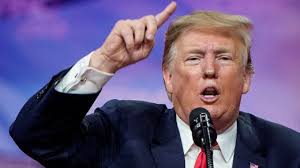
Donald Trump
Even though the Biden administration had nothing to do with the case, Republicans immediately blamed the President—and demanded wholesale prosecutions of the Left.
Right-wing activist Charlie Kirk urged Republican prosecutors to get “creative” in bringing charges: “Indict the left, or lose America,” he said on X.
And Trump quickly issued his own calls for “vengeance”:
“Wouldn’t it be terrible to throw the president’s wife and the former secretary of state, think of it, the former secretary of state, but the president’s wife, into jail? Wouldn’t that be a terrible thing? But they want to do it,” Trump said in an interview on Newsmax.
“It’s a terrible, terrible path that they’re leading us to. And it’s very possible that it’s going to have to happen to them.”
Nor has Trump forgotten former Republican Representative Liz Cheney, who chaired the House 1/6 Committee investigating the Trump-inspired attack on Congress.
“ELIZABETH LYNNE CHENEY IS GUILTY OF TREASON,” Trump posted on his social media website Truth Social. “RETRUTH IF YOU WANT TELEVISED MILITARY TRIBUNALS.”
There can be absolutely no doubt that Trump will pursue “vengeance” against everyone who has ever opposed him if he is re-elected President.
There can also be no doubt that he will remain in office until he dies as “President-for-Life.”
When Andrew Jackson, seventh President of the United States from 1829 to 1837, was close to death, he asked his doctor: “What act of my administration will be most severely condemned by future Americans?”
“Perhaps the removal of the bank deposits,” said the doctor—referring to Jackson’s withdrawal of U.S. Government monies from the first Bank of the United States.
“Oh, no,” said Jackson, his eyes blazing. “I can tell you. Posterity will condemn me more because I was persuaded not to hang John C. Calhoun as a traitor than for any other act in my life!”
John C. Calhoun had once been Vice President under Jackson and later a United States Senator from South Carolina. His fiery, pro-slavery rhetoric and radical theories of “nullification” of Federal laws played a major role in bringing on the Civil War (1861-1865).
Whether Biden moves to prevent a Trump/Republican dictatorship or allows it to become reality, he will be simultaneously praised and damned by future generations of Americans.
ABC NEWS, ABRAHAM LINCOLN, AFGHANISTAN, ALEXANDER THE GREAT, ALTERNET, AMERICABLOG, ANDREW JACKSON, AP, BABY BOOMER RESISTANCE, BBC, BLOOMBERG, BUZZFEED, CBS NEWS, CHARLIE KIRK, CIVIL WAR, CNN, CROOKS AND LIARS, DAILY KOS, FIVETHIRTYEIGHT, FOX NEWS CHANNEL, GATES OF FIRE (BOOK), HARPER’S MAGAZINE, HUFFINGTON POST, JACK SMITH, JOHN C. CALHOUN, JOSEPH BIDEN, LIZ CHENEY, MEDIA MATTERS, MERCENARIES, MERRICK GARLAND, MOTHER JONES, MOVEON, MSNBC, NBC NEWS, NEW REPUBLIC, NEWSDAY, NEWSWEEK, NPR, ORGANIZED CRIME, PBS NEWSHOUR, POLITICO, POLITICUSUSA, PROJECT 2025, RAW STORY, REPUBLICANS, REUTERS, SALON, SEATTLE TIMES, SLATE, SPARTA, STEVEN PRESSFIELD, STORMY DANIELS, TALKING POINTS MEMO, THE AFGHAN CAMPAIGN (BOOK), THE ATLANTIC, THE CHICAGO SUN-TIMES, THE CHICAGO TRIBUNE, THE DAILY BEAST, THE DAILY BLOG, THE GUARDIAN, THE HILL, THE HUFFINGTON POST, THE INTERCEPT, THE LOS ANGELES TIMES, THE NATION, THE NEW REPUBLIC, THE NEW YORK TIMES, THE NEW YORKER, THE PROFESSION (BOOK), THE VILLAGE VOICE, THE VIRTUES OF WAR (BOOK), THE WASHINGTON POST, THERMOPYLAE, THINKPROGRESS, TIME, TREASON, TRUTHDIG, TRUTHOUT, TWO POLITICAL JUNKIES, U.S. NEWS & WORLD REPORT, UNITED STATES SUPREME COURT, UPI, USA TODAY, X
In Bureaucracy, Business, History, Law, Law Enforcement, Military, Politics, Social commentary on July 9, 2024 at 12:10 am
The Supreme Court has spoken. And Donald Trump, who tried to treasonously overturn the 2020 Presidential election and make himself “President-for-Life,” is now armed with the almost total immunity he has long sought.
As Trump and his entrenched Right-wing allies move ever closer to establishing an absolute dictatorship, this is an apt time to discover—or rediscover—the frighteningly real world of The Profession, a 2011 futuristic novel by bestselling author Steven Pressfield.
Steven Pressfield
Pressfield had previously made his mark as an author of historical novels—primarily set in ancient Greece.
In Gates of Fire (1998) he explored the rigors and heroism of Spartan society—and the famous last stand of its 300 picked warriors at Thermopylae.
In The Virtues of War (2004) Pressfield adopted the identity of Alexander the Great, explaining what it was like to command invincible armies that swept across the known world.
Finally, in The Afghan Campaign (2006) he chronicled—from the viewpoint of a lowly Greek soldier—Alexander’s brutal, three-year anti-guerrilla campaign in Afghanistan.
But in The Profession, Pressfield created a seemingly plausible world set in the future. The book’s dust jacket offers an excellent summary of its plot-line:
“The year is 2032. Everywhere military force is for hire. Oil companies, multi-national corporations and banks employ powerful, cutting-edge mercenary armies to control global chaos and protect their riches.
“Even nation states enlist mercenary forces to suppress internal insurrections, hunt terrorists, and do the black bag jobs necessary to maintain the new New World Order.
“Force Insertion is the world’s merc monopoly. Its leader is the disgraced former United States Marine General James Salter, stripped of his command by the president for nuclear saber-rattling with the Chinese and banished to the Far East.
“A grandmaster military and political strategist, Salter plans to take vengeance on those responsible for his exile and then come home…as Commander in Chief.”
Salter appears as a hybrid of World War II General Douglas MacArthur and Iraqi War General Stanley McCrystal. Like MacArthur, Salter has butted heads with his President—and paid dearly for it. Now his ambition—like MacArthur—is to become President himself by popular acclaim.

Douglas MacArthur
And like McCrystal, he is a pure warrior who leads from the front and is revered by his men. Salter seizes Saudi oil fields and strategically rigs them with explosives to be used if threatened.
Then he offers them as a gift to America. By doing so, he makes himself the most popular man in the country—and a guaranteed occupant of the White House.

Stanley McCrystal
And in 2032 the United States is a far different nation from the one its Founding Fathers created in 1776.
“Any time that you have the rise of mercenaries…society has entered a twilight era, a time past the zenith of its arc,” says Salter. “The United States is an empire…but the American people lack the imperial temperament. We’re not legionaries, we’re mechanics. In the end the American Dream boils down to what? ‘I’m getting mine and the hell with you.'”
Americans, asserts Salter, have come to like mercenaries: “They’ve had enough of sacrificing their sons and daughters in the name of some illusory world order. They want someone else’s sons and daughters to bear the burden….
“They want their problems to go away. They want me to make them go away.”
Yet unlike Donald Trump, who infamously shouted, “I love the poorly educated!” Salter is a highly intellectual man. He feels himself a tragic figure, lamenting that the United States has abandoned its longstanding political values even as he prepares to extinguish the most basic one by becoming dictator.
“The moment compels me to seize it. If I don’t someone or something worse will step in. But if I perform the bidding of Necessity, I violate the code of the republic to which all of us have sworn allegiance. I cross a line, beyond which there can be no return.
“But what, I ask, is the alternative? The nation has lost its way and is struggling desperately, merely to hang on. The nation can’t go on as it is, and everyone knows it. If not me, who? If not me, what?
“So, yes, I will go home. And yes, I will accept whatever crown, of paper or gold, that my country wants to press upon me. Not because I believe such a coronation will make any difference in the long run.
“But maybe in the short run, it’s better that my hand be on the wheel rather than some other self-aggrandizing sonofabitch whose motives might not be as well-intentioned or whose consciousness so painfully evolved.”
At a nationally televised press conference, Salter hands a loaded pistol to a longtime friend and disciple who now fears his dictatorial ambitions.
“Go ahead,” says Salter. “You’ll be saving the republic. And me, too.”
But the former disciple cannot bring himself to kill his longtime idol: “Now I’m guilty with you,” he says.
Steven Pressfield, in a work of fiction, has given us a nightmarish vision of a futuristic America.
Donald Trump and his Right-wing disciples may soon make that vision a reality.
ABC NEWS, AFGHANISTAN, ALCIBIADES, ALEXANDER THE GREAT, ALTERNET, AMERICABLOG, AP, BABY BOOMER RESISTANCE, BBC, BILL O'REILLY, BLOOMBERG, BUZZFEED, CBS NEWS, CNN, CROOKS AND LIARS, DAILY KOS, FIVETHIRTYEIGHT, FOX NEWS CHANNEL, GATES OF FIRE (BOOK), HARPER’S MAGAZINE, HUFFINGTON POST, MEDIA MATTERS, MERCENARIES, MOTHER JONES, MOVEON, MSNBC, NBC NEWS, NEW REPUBLIC, NEWSDAY, NEWSWEEK, NICCOLO MACHIAVELLI, NPR, PBS NEWSHOUR, POLITICO, POLITICUSUSA, RAW STORY, REUTERS, SALON, SEATTLE TIMES, SLATE, SPARTA, STEVEN PRESSFIELD, TALKING POINTS MEMO, THE AFGHAN CAMPAIGN (BOOK), THE ATLANTIC, THE CHICAGO SUN-TIMES, THE CHICAGO TRIBUNE, THE DAILY BEAST, THE DAILY BLOG, THE GUARDIAN, THE HILL, THE HUFFINGTON POST, THE INTERCEPT, THE LOS ANGELES TIMES, THE NATION, THE NEW REPUBLIC, THE NEW YORK TIMES, THE NEW YORKER, THE O'REILLY FACTOR, THE PROFESSION (BOOK), THE VILLAGE VOICE, THE VIRTUES OF WAR, THE VIRTUES OF WAR (BOOK), THE WASHINGTON POST, THERMOPYLAE, THINKPROGRESS, TIDES OF WAR (BOOK), TIME, TRUTHDIG, TRUTHOUT, TWO POLITICAL JUNKIES, U.S. NEWS & WORLD REPORT, UPI, USA TODAY, X
In Business, History, Military, Politics, Social commentary on May 6, 2024 at 12:12 am
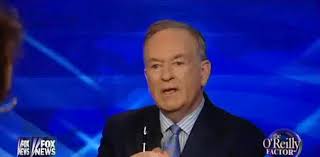
Bill O’Reilly, the former host of the Fox News Channel program The O’Reilly Factor, has offered his own solution to fighting terrorism: A multinational mercenary army, based on a NATO coalition and trained by the United States.
“We would select them, special forces would train them—a 25,000-man force to be deployed to fight on the ground against worldwide terrorism. Not just ISIS,” O’Reilly said on “CBS This Morning” on September 24, 2014.
Bill O’Reilly
Actually, O’Reilly’s idea is the subject of The Profession, a 2011 novel by bestselling author Steven Pressfield.
Pressfield made his literary reputation with four classic novels about classical Greece.
In Gates of Fire (1998) he explored the rigors and heroism of Spartan society—and the famous last stand of its 300 picked warriors at Thermopylae.
In Tides of War (2000) Pressfield depicted the rise and fall of Alcibiades, Athens’ greatest general, as he shifted his loyalties from that city to its arch-enemy, Sparta, and then to Persia, the enemy of both.
In The Virtues of War (2004) he took on the identity of Alexander the Great, explaining to his readers what it was like to command armies that swept across the known world, destroying all who dared oppose them.
Finally, in The Afghan Campaign (2006) Pressfield—this time from the viewpoint of a lowly Greek soldier—refought Alexander’s brutal, three-year anti-guerrilla campaign in Afghanistan.
Steven Pressfield
But in The Profession, Pressfield created a seemingly plausible world set into the future of 2032. The book’s own dust jacket offers the best summary of its plot-line:
“The year is 2032. The third Iran-Iraq war is over. The 11/11 dirty bomb attack on the port of Long Beach, California is receding into memory. Saudi Arabia has recently quelled a coup. Russians and Turks are clashing in the Caspian Basin.
“Iranian armored units, supported by the satellite and drone power of their Chinese allies, have emerged from their enclaves in Tehran and are sweeping south attempting to recapture the resource rich territory that had been stolen from them, in their view, by Lukoil, BP, and ExxonMobil and their privately-funded armies.
“Everywhere military force is for hire. Oil companies, multi-national corporations and banks employ powerful, cutting-edge mercenary armies to control global chaos and protect their riches.
“Even nation states enlist mercenary forces to suppress internal insurrections, hunt terrorists, and do the black bag jobs necessary to maintain the new New World Order.
“Force Insertion is the world’s merc monopoly. Its leader is the disgraced former United States Marine General James Salter, stripped of his command by the president for nuclear saber-rattling with the Chinese and banished to the Far East.”
Salter appears as a hybrid of World War II General Douglas MacArthur and Iraqi War General Stanley McCrystal. Like MacArthur, Salter has butted heads with his President—and paid dearly for it. Now his ambition is no less than to become President himself—by popular acclaim.
And like McCrystal, he is a pure warrior who leads from the front and is revered by his men. Salter seizes Saudi oil fields, then offers them as a gift to America. By doing so, he makes himself the most popular man in the country—and a guaranteed occupant of the White House.
And in 2032 the United States is a far different nation from the one its Founding Fathers created in 1776.
“Any time that you have the rise of mercenaries…society has entered a twilight era, a time past the zenith of its arc,” says Salter.”The United States is an empire…but the American people lack the imperial temperament. We’re not legionaries, we’re mechanics. In the end the American Dream boils down to what? ‘I’m getting mine and the hell with you.'”
Americans, asserts Salter, have come to like mercenaries: “They’ve had enough of sacrificing their sons and daughters in the name of some illusory world order. They want someone else’s sons and daughters to bear the burden….
“They want their problems to go away. They want me to to make them go away.”
And so Salter will “accept whatever crown, of paper or gold, that my country wants to press upon me.”
More than 500 years ago, Niccolo Machiavelli warned of the dangers of relying on mercenaries:
“Mercenaries…are useless and dangerous. And if a prince holds on to his state by means of mercenary armies, he will never be stable or secure; for they are disunited, ambitious, without discipline, disloyal; they are brave among friends; among enemies they are cowards.
Niccolo Machiavelli
“They have neither the fear of God nor fidelity to men, and destruction is deferred only so long as the attack is. For in peace one is robbed by them, and in war by the enemy.”
Centuries ago, Niccolo Machiavelli issued a warning against relying on men whose first love is their own enrichment.
Steven Pressfield, in a work of fiction, has given us a nightmarish vision of a not-so-distant America where “Name your price” has become the byword for an age.
Both warnings are well worth heeding.
ABC NEWS, ACADEMI, AFGHANISTAN, ALTERNET, ANDROID, AP, APPLE IOS, ” 9/11, BARACK OBAMA, BLACKWATER, BOOZ ALLEN HAMILTON, BUZZFEED, CBS NEWS, CENTRAL INTELLIGENCE AGENCY, CNN, COFER BLACK, COLD WAR, CONTRACT EMPLOYEES, CROOKS AND LIARS, DAILY KOZ, DONALD TRUMP, EDWARD SNOWDEN, ENRIQUE PRADO, ERIK PRINCE, GEORGE W. BUSH, GREEN BERETS, IRAQ, LEGACY OF ASHES (BOOK), LOCKHEED MARTIN, MERCENARIES, MICROSOFT WINDOWS, MOTHER JONES, MOVEON, NATIONAL SECURITY AGENCY, NAVY SEALS, NBC NEWS, NEWSWEEK, NICCOLO MACHIAVELLI, NPR, PAUL BREMER, POLITICO, RAW STORY, REUTERS, ROBERT RICHER, SALON, SEATTLE TIMES, SLATE, SMARTPHONES, THE ATLANTIC, THE CHICAGO SUN-TIMES, THE CHICAGO TRIBUNE, THE DAILY BEAST, THE GUARDIAN, THE HILL, THE HUFFINGTON POST, THE LOS ANGELES TIMES, THE NATION, THE NEW YORK TIMES, THE PENTAGON, THE WASHINGTON POST, TIM WEINER, TIME, TORTURE, TOTAL INTELLIGENCE SOLUTIONS, TWITTER, U.S. NEWS & WORLD REPORT, UNITED STATES AIR FORCE, UNITED STATES ARMY, UPI, USA TODAY, WIKILEAKS, XE SERVICES
In Bureaucracy, Business, History, Military, Politics, Social commentary on June 30, 2023 at 12:05 am
The United States had been fighting in Afghanistan for almost 16 years—and between 2001 and 2017 had spent an estimated $714 billion.
Still, there was no end in sight.
Then Erik Prince suggested a remedy: Mercenaries—via his private company, Academi.
For $3.5 billion in taxpayer monies, he claimed that he could vin a victory that had eluded the United States Air Force, Army (including Green Berets) and Navy SEALs.

Erik Prince
By Miller Center [CC BY 2.0 (https://creativecommons.org/licenses/by/2.0)%5D, via Wikimedia Commons
In 1997, Prince created Blackwater, a private security company providing support to military and police agencies.
In August, 2003, Blackwater got the first of a series of Federal contracts to deploy its forces in Iraq. For $21 million, it safeguarded Paul Bremer, America’s proconsul running the occupation.
Ultimately, Blackwater got $1 billion to provide security for American officials and soldiers in Iraq and Afghanistan.
According to human rights organizations, Blackwater abused Iraqis and engaged in torture to obtain information.
In September, 2007, Blackwater guards killed 17 Iraqi civilians and injured 20 more in a Baghdad traffic circle.
Owing to its highly controversial activities in Iraq, Prince renamed the company Xe Services in 2009 and then Academi in 2011.
By 2018, against opposition by the Pentagon, Prince lobbied President Donald Trump to let Academi privatize the war in Afghanistan.
Ultimately, his company did not become the sole American military force in Afghanistan—despite his sister, Betsy Devos, being the Secretary of Education.
Since the end of the Cold War, the American military and Intelligence communities have grown increasingly dependent on private contractors.
In his 2007 bestseller, Legacy of Ashes: The History of the CIA, Tim Weiner writes:
“Patriotism for profit became a $50-billion-a-year business….The [CIA] began contracting out thousands of jobs to fill the perceived void by the budget cuts that began in 1992.
“A CIA officer could file his retirement papers, turn in his blue identification badge, go to work for a much better salary at a military contractor such as Lockheed Martin or Booz Allen Hamilton, then return to the CIA the next day, wearing a green badge….”
Much of the CIA became totally dependent on mercenaries. They appeared to work for the agency, but their loyalty was actually to their private–and higher-paying—companies.
Writes Weiner: “Legions of CIA veterans quit their posts to sell their services to the agency by writing analyses, creating cover for overseas officers, setting up communications networks, and running clandestine operations.”
One such company was Total Intelligence Solutions, founded in 2007 by Cofer Black, who had been the chief of the CIA’s counter-terrorism center on 9/11. His partners were Robert Richer, formerly the associate deputy director of operations at the CIA, and Enrique Prado, who had been Black’s chief of counter-terror operations at the agency.
Future CIA hires followed suit: Serve for five years, win that prized CIA “credential” and sign up with a private security company to enrich yourself.
This situation met with full support from Right-wing “pro-business” members of Congress and President George W. Bush.
They had long championed the private sector as inherently superior to the public one. And they saw no danger that a man dedicated to enriching himself might put greed ahead of safeguarding his country.
But there are dangers to hiring men whose first love is profit. Recent examples include:
- Edward Snowden deliberately joined Booz Allen Hamilton to secure a job as a computer systems administrator at the National Security Agency (NSA). This gave him access to thousands of highly classified documents—which, in 2013, he began publicly leaking to a wide range of news organizations.
- His motive, he claimed, was to warn Americans of the privacy-invading dangers posed by their own Intelligence agencies.
- On March 7, 2017, WikiLeaks published a “data dump” of 8,761 documents codenamed “Vault 7.”
- The documents exposed that the CIA had found security flaws in software operating systems such as Microsoft Windows, Android and Apple iOS. These allowed an intruder—such as the CIA—to seize control of a computer or smartphone. The owner could then be photographed through his iPhone camera and have his text messages intercepted.
- According to anonymous U.S. Intelligence and law enforcement sources, the culprits were CIA contract employees.
But there are others who have offered a timely warning against the use of mercenaries. One of these is Niccolo Machiavelli, the Florentine statesman of the Renaissance.
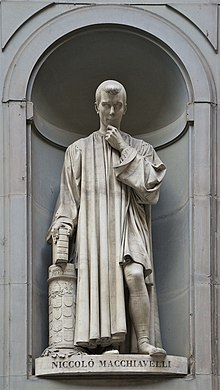
Niccolo Machiavelli
In The Prince, Machiavelli writes:
“Mercenaries…are useless and dangerous. And if a prince holds on to his state by means of mercenary armies, he will never be stable or secure. For they are disunited, ambitious, without discipline, disloyal. They are brave among friends; among enemies they are cowards.
“They have neither the fear of God nor fidelity to man, and destruction is deferred only as the attack is. For in peace one is robbed by them, and in war by the enemy.
“The cause of this is that they have no love or other motive to keep them in the field beyond a trifling wage, which is not enough to make them ready to die for you.”
Centuries after Machiavelli’s warning, Americans are realizing the bitter truth of it firsthand.
ABC NEWS, ADOLF HITLER, ALTERNET, AMERICABLOG, AMERICAN REVOLUTION, ANDREW JACKSON, AP, BABY BOOMER RESISTANCE, BBC, BLOOMBERG NEWS, BUZZFEED, CBS NEWS, CHECHENS, CNN, CROOKS AND LIARS, DAILY KOS, FIVETHIRTYEIGHT, FORT MIMS MASSACRE, GREAT BRITAIN, HARPER’S MAGAZINE, HUFFINGTON POST, MEDIA MATTERS, MERCENARIES, MOTHER JONES, MOVEON, MSNBC, NAZI-SOVIET "NON-AGGRESSION PACT", NBC NEWS, NEW REPUBLIC, NEWSDAY, NEWSWEEK, NICCOLO MACHIAVELLI, NPR, NUCLEAR WEAPONS, PBS NEWSHOUR, POLITICO, POLITICUSUSA, RAW STORY, REUTERS, SALON, SEATTLE TIMES, SLATE, TALKING POINTS MEMO, THE ATLANTIC, THE BLITZ, THE CHICAGO SUN-TIMES, THE CHICAGO TRIBUNE, THE DAILY BEAST, THE DAILY BLOG, THE DISCOURSES, THE GUARDIAN, THE HILL, THE HUFFINGTON POST, THE INTERCEPT, THE LOS ANGELES TIMES, THE NATION, THE NEW REPUBLIC, THE NEW YORK TIMES, THE NEW YORKER, THE PRINCE, THE SS, THE VILLAGE VOICE, THE WASHINGTON POST, THINKPROGRESS, THIRD REICH, TIME, TRUTHDIG, TRUTHOUT, TWITTER, U.S. NEWS & WORLD REPORT, UKRAINE, UPI, USA TODAY, VLADIMIR PUTIN, VOLODYMYR ZELENSKY, WAR OF 1812, WEHRMACHT, WORLD WAR 11
In Bureaucracy, History, Military, Politics, Social commentary on June 28, 2023 at 12:12 am
Vladimir Putin believes himself to be a serious student of history. But he has drawn the wrong lessons from the past.
During the American Revolution (1775-1783) and the War of 1812 (1812-1815) Great Britain encouraged Indian attacks on American settlers.
One of the worst of these attacks occurred on August 30, 1813, when over 700 Creek Indians destroyed Fort Mims, near Mobile, Alabama. About 500 militiamen, settlers, slaves and Creeks loyal to the Americans were slaughtered or captured.

Fort Mims massacre
Inflaming the Indians against settlers didn’t help the British on the battlefield—in the American Revolution or the War of 1812. But it did incite long-lasting hatred by the vast majority of Americans against the British—and even greater hatred of the Indians.
To cite one example: The Fort Mims massacre inspired General Andrew Jackson to take the field, eventually destroying the Creeks as a nation and wresting Florida from Spain for the United States.
The British lost their American colony. And the Indians were gradually driven from their dominance of the continent.
Similarly, Vladimir Putin has turned to Chechen mercenaries for help in conquering Ukraine. They are known as “Kadyrovtsy” or “Kadyrovites” after their leader, Ramzan Kadyrov, Chechnya’s pro-Kremlin strongman.
Human rights groups, witnesses and survivors have for decades accused them of murders, kidnappings and the torture of Kadyrov’s rivals and critics.
Just as the Indians hoped to use their alliance with the British to defeat their Anglo-American enemies, so, too, do Chechen mercenaries hope to ingratiate themselves with the Kremlin.

Vladimir Putin
Kremlin.ru, CC BY 4.0 <https://creativecommons.org/licenses/by/4.0>, via Wikimedia Commons
Yet that alliance has not advanced Russia’s fortunes on the battlefield, just as the British-Indian alliance did not gain victory for the British.
As Niccolo Machiavelli, writing more than 500 years ago in The Prince, warned: “[Mercenaries] have neither the fear of God nor fidelity to man, and destruction is deferred only as the attack is. For in peace one is robbed by them, and in war by the enemy.”
Moreover, the atrocities committed by Indians and Chechens only inflamed their enemies to seek revenge.
In his masterwork, The Discourses, Machiavelli offered a lesson on the power of mercy even in the midst of war.
“Marcus Furius Camillus, a Roman general, was besieging the city of the Faliscians, and had surrounded it. A teacher charged with the education of the children of some of the noblest families of that city decided to ingratiate himself with Camillus by leading those children into the Roman camp.
“Presenting them to Camillus the teacher said to him, ‘By means of these children as hostages, you will be able to compel the city to surrender.’
“Camillus not only declined the offer but had the teacher stripped and his hands tied behind his back. Then he had a rod put into the hands of each of the children and directed them to whip the teacher all the way back to the city.
“Upon learning this, the citizens of Faliscia were so much touched by the humanity and integrity of Camillus, that they surrendered the place to him without any further defense.”
Summing up the meaning of this, Machiavelli writes: “This example shows that an act of humanity and benevolence will at all times have more influence over the minds of men than violence and ferocity. It also proves that provinces and cities which no armies…could conquer, have yielded to an act of humanity, benevolence, chastity or generosity.
“…History also shows us how much the people desire to find such virtues in great men, and how much they are extolled by historians and biographers of princes….Amongst these, Xenophon takes great pains to show how many victories, how much honor and fame, Cyrus gained by his humanity and affability, and by his not having exhibited a single instance of pride, cruelty or luxuriousness, nor of any of the other vices that are apt to stain the lives of men.”

Niccolo Machiavelli
Then there has been Putin’s use of terror-attacks on Ukrainian cities.
Using bombers and long-range artillery, Putin has tried to compensate for losses on the battlefield by terrorizing Ukrainians into surrender.
Adolf Hitler applied the same tactic against an equally stubborn Great Britain during the Second World War. in 1940-41.
Unable to invade England because the British Navy controlled the sea, Hitler turned to terror-bombing.
He believed he could terrorize Britons into demanding that their government yield to German surrender demands.
From September 7, 1940 to May 21, 1941, the Luftwaffe subjected England—and especially London—to a ruthless bombing campaign that became known as The Blitz.
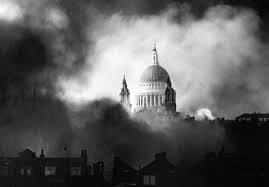
The undamaged St. Paul’s Cathredal, December, 1940
During 267 days—almost 37 weeks—between 40,000 and 43,000 British civilians were killed. About 139,000 others were wounded.
But the terror-bombing only inflamed Britons to fight Germany even more stubbornly.
Vladimir Putin has learned nothing from these historical lessons.
He has employed mercenaries and terror-bombing against patriotic Ukrainians—who continue to sweep Russian forces from their country.
If he employs even “small” tactical weapons, he risks triggering a fullscale NATO response—thus destroying the Russian empire he hopes to re-create.
Finally: Even if he conquers Ukraine, he will inherit a hate-filled population thirsting for revenge at every opportunity.
2016 PRESIDENTIAL CAMPAIGN, ABC NEWS, ALEXANDER THE GREAT, ALTERNET, AMERICABLOG, AP, BABY BOOMER RESISTANCE, BBC, BLOOMBERG NEWS, BUZZFEED, CBS NEWS, CNN, CROOKS AND LIARS, DAILY KOS, DONALD TRUMP, FEDERAL SECURITY SERVICE, FIVETHIRTYEIGHT, GATES OF FIRE, HARPER’S MAGAZINE, HUFFINGTON POST, KGB, MEDIA MATTERS, MERCENARIES, MOTHER JONES, MOVEON, MSNBC, NBC NEWS, NEW REPUBLIC, NEWSDAY, NEWSWEEK, NICCOLO MACHIAVELLI, NPR, PBS NEWSHOUR, POLITICO, POLITICUSUSA, RAW STORY, REUTERS, SALON, SEATTLE TIMES, SLATE, SPARTA, STEVEN PRESSFIELD, TALKING POINTS MEMO, THE ATLANTIC, THE CHICAGO SUN-TIMES, THE CHICAGO TRIBUNE, THE DAILY BEAST, THE DAILY BLOG, THE GUARDIAN, THE HILL, THE HUFFINGTON POST, THE INTERCEPT, THE LOS ANGELES TIMES, THE NATION, THE NEW REPUBLIC, THE NEW YORK TIMES, THE NEW YORKER, THE PROFESSION, THE VILLAGE VOICE, THE VIRTUES OF WAR, THE WASHINGTON POST, THERMOPYLAE, THINKPROGRESS, TIME, TRUTHDIG, TRUTHOUT, TWITTER, U.S. NEWS & WORLD REPORT, UKRAINE, UPI, USA TODAY, VLADIMIR PUTIN, WAGNER GROUP, YEGENEY PRIGOZHIN
In Bureaucracy, Business, History, Military, Politics, Social commentary on June 27, 2023 at 12:36 am
In May, 2014, Yevgeny Prigozhin founded the Kremlin-affiliated mercenary army Wagner Group.
Since Russian President Vladimir Putin ordered a “special military operation” against Ukraine on February 24, 2022, Wagner has played a major role in the fighting.
Prigozhin has repeatedly clashed with Russian Defense Minister Sergei Shoigu, blaming him for a lack of ammunition to his embattled fighters—resulting in thousands of casualties.
Yevgeney Prigozhin
Government of the Russian Federation, CC BY 3.0 <https://creativecommons.org/licenses/by/3.0>, via Wikimedia Commons
On June 23, 2023, Prigozhin claimed that regular Russian armed forces had launched missile strikes against Wagner forces, killing a “huge” number.
He announced: “The council of commanders of PMC Wagner has made a decision—the evil that the military leadership of the country brings must be stopped.”
In response, criminal charges were filed against Prigozhin by the Russian Federal Security Service —the renamed KGB—for inciting an armed rebellion.
Wagner withdrew from Ukraine, occupied the Russian city of Rostov-on-Don and headed for Moscow. While doing so, Wagner shot down a Russian fighter plane and several military helicopters.
Putin decried the action as treason, and vowed to quash the uprising.
Talks between Prigozhin and Belarussian president Alexander Lukashenko resulted in charges being dropped. Wagner ceased its march on Moscow. Prigozhin will move to Belarus but remain under investigation for treason. Wagner troops will return to Ukraine.
The danger of relying on mercenaries forms the plot of The Profession, a 2011 novel by bestselling author Steven Pressfield.
Pressfield made his literary reputation with a series of classic novels about ancient Greece.
In Gates of Fire (1998) he explored the rigors and heroism of Spartan society—and the famous last stand of its 300 picked warriors at Thermopylae.
In The Virtues of War (2004) he entered the mind of Alexander the Great, whose armies swept across the known world, destroying all who dared oppose them.
But in The Profession, Pressfield created a plausible world set into the future of 2032. The book’s own dust jacket offers the best summary of its plot-line:
“Everywhere military force is for hire. Oil companies, multi-national corporations and banks employ powerful, cutting-edge mercenary armies to control global chaos and protect their riches.
“Force Insertion is the world’s merc monopoly. Its leader is the disgraced former United States Marine General James Salter, stripped of his command by the president for nuclear saber-rattling with the Chinese and banished to the Far East.’
Steven Pressfield
Salter appears as a hybrid of World War II General Douglas MacArthur and Iraqi War General Stanley McCrystal.
Like MacArthur, Salter has butted heads with his President—and paid dearly for it. Now his ambition is no less than to become President himself—by popular acclaim. And like McCrystal, he is a pure warrior who leads from the front and is revered by his men.
Salter seizes Saudi Arabian oil fields, then offers them as a gift to America. By doing so, he makes himself the most popular man in the country—and a guaranteed occupant of the White House.
And in 2032 the United States is a far different nation from the one its Founding Fathers created in 1776.
Douglas MacArthur (left), Stanley McCrystal (right)
“The United States is an empire…but the American people lack the imperial temperament,” asserts Salter. “We’re not legionaries, we’re mechanics. In the end the American Dream boils down to what? ‘I’m getting mine and the hell with you.’”
Americans, says Salter, have come to like mercenaries: “They’ve had enough of sacrificing their sons and daughters in the name of some illusory world order. They want someone else’s sons and daughters to bear the burden….
“They want their problems to go away. They want me to to make them go away.”
And so Salter will “accept whatever crown, of paper or gold, that my country wants to press upon me.”
Returning to the United States, he is acclaimed as a hero—and the next President.
He is under no delusion that his country is on a downward spiral toward oblivion: “Any time that you have the rise of mercenaries…society has entered a twilight era, a time past the zenith of its arc.”
Nor does he believe that his Presidency will arrest that decline: “But maybe in the short run, it’s better that my hand be on the wheel…rather than some other self-aggrandizing sonofabitch whose motives might not be as well intentioned….”
More than 500 years ago, Niccolo Machiavelli warned of the dangers of relying on mercenaries:
“Mercenaries…are useless and dangerous. And if a prince holds on to his state by means of mercenary armies, he will never be stable or secure; for they are disunited, ambitious, without discipline, disloyal; they are brave among friends; among enemies they are cowards.
Niccolo Machiavelli
“They have neither the fear of God nor fidelity to men, and destruction is deferred only so long as the attack is. For in peace one is robbed by them, and in war by the enemy.”
Centuries ago, Niccolo Machiavelli issued a warning against relying on men whose first love is their own enrichment.
Steven Pressfield, in a work of fiction, has given us a nightmarish vision of a not-so-distant America where “Name your price” has become the byward for an age.
Both warnings are well worth heeding.
ABC NEWS, ADOLF HITLER, ALTERNET, AMERICABLOG, AMERICAN REVOLUTION, ANDREW JACKSON, AP, BABY BOOMER RESISTANCE, BBC, BLOOMBERG NEWS, BUZZFEED, CBS NEWS, CHECHENS, CNN, CROOKS AND LIARS, DAILY KOS, FIVETHIRTYEIGHT, FORT MIMS MASSACRE, GREAT BRITAIN, HARPER’S MAGAZINE, HUFFINGTON POST, MEDIA MATTERS, MERCENARIES, MOTHER JONES, MOVEON, MSNBC, NAZI-SOVIET "NON-AGGRESSION PACT", NBC NEWS, NEW REPUBLIC, NEWSDAY, NEWSWEEK, NICCOLO MACHIAVELLI, NPR, NUCLEAR WEAPONS, PBS NEWSHOUR, POLITICO, POLITICUSUSA, RAW STORY, REUTERS, SALON, SEATTLE TIMES, SLATE, TALKING POINTS MEMO, THE ATLANTIC, THE BLITZ, THE CHICAGO SUN-TIMES, THE CHICAGO TRIBUNE, THE DAILY BEAST, THE DAILY BLOG, THE DISCOURSES, THE GUARDIAN, THE HILL, THE HUFFINGTON POST, THE INTERCEPT, THE LOS ANGELES TIMES, THE NATION, THE NEW REPUBLIC, THE NEW YORK TIMES, THE NEW YORKER, THE PRINCE, THE SS, THE VILLAGE VOICE, THE WASHINGTON POST, THINKPROGRESS, THIRD REICH, TIME, TRUTHDIG, TRUTHOUT, TWITTER, U.S. NEWS & WORLD REPORT, UKRAINE, UPI, USA TODAY, VLADIMIR PUTIN, VOLODYMYR ZELENSKY, WAR OF 1812, WEHRMACHT, WORLD WAR 11
In Bureaucracy, History, Military, Politics, Social commentary on October 10, 2022 at 12:10 am
Vladimir Putin believes himself to be a serious student of history. If so, he has drawn the wrong lessons from the past.
During the American Revolution (1775-1783) and the War of 1812 (1812-1815) Great Britain encouraged Indian attacks on American settlers.
One of the worst of these attacks occurred on August 30, 1813, when over 700 Creek Indians destroyed Fort Mims, near Mobile, Alabama. About 500 militiamen, settlers, slaves and Creeks loyal to the Americans were slaughtered or captured.
Fort Mims massacre
Inflaming the Indians against settlers didn’t help the British on the battlefield—in the American Revolution or the War of 1812. But it did incite long-lasting hatred by the vast majority of Americans against the British—and even greater hatred of the Indians.
To cite one example: The Fort Mims massacre inspired General Andrew Jackson to take the field, eventually destroying the Creeks as a nation and wresting Florida from Spain for the United States.
The British lost their American colony. And the Indians were gradually driven from their dominance of the continent.
Similarly, Vladimir Putin has turned to Chechen mercenaries for help in conquering Ukraine. They are known as “Kadyrovtsy” or “Kadyrovites” after their leader, Ramzan Kadyrov, Chechnya’s pro-Kremlin strongman.
Human rights groups, witnesses and survivors have for decades accused them of murders, kidnappings and the torture of Kadyrov’s rivals and critics.
Just as the Indians hoped to use their alliance with the British to defeat their Anglo-American enemies, so, too, do Chechen mercenaries hope to ingratiate themselves with the Kremlin.
Vladimir Putin
Kremlin.ru, CC BY 4.0 <https://creativecommons.org/licenses/by/4.0>, via Wikimedia Commons
Yet that alliance has not advanced Russia’s fortunes on the battlefield, just as the British-Indian alliance did not gain victory for the British.
As Niccolo Machiavelli, writing more than 500 years ago in The Prince, warned: “[Mercenaries] have neither the fear of God nor fidelity to man, and destruction is deferred only as the attack is. For in peace one is robbed by them, and in war by the enemy.”
Moreover, the atrocities committed by Indians and Chechens only inflamed their enemies to seek revenge.
In his masterwork, The Discourses, Machiavelli offered a lesson on the power of mercy even in the midst of war.
“Marcus Furius Camillus, a Roman general, was besieging the city of the Faliscians, and had surrounded it. A teacher charged with the education of the children of some of the noblest families of that city decided to ingratiate himself with Camillus by leading those children into the Roman camp.
“Presenting them to Camillus the teacher said to him, ‘By means of these children as hostages, you will be able to compel the city to surrender.’
“Camillus not only declined the offer but had the teacher stripped and his hands tied behind his back. Then he had a rod put into the hands of each of the children and directed them to whip the teacher all the way back to the city.
“Upon learning this, the citizens of Faliscia were so much touched by the humanity and integrity of Camillus, that they surrendered the place to him without any further defense.”
Summing up the meaning of this, Machiavelli writes: “This example shows that an act of humanity and benevolence will at all times have more influence over the minds of men than violence and ferocity. It also proves that provinces and cities which no armies…could conquer, have yielded to an act of humanity, benevolence, chastity or generosity.
“…History also shows us how much the people desire to find such virtues in great men, and how much they are extolled by historians and biographers of princes….Amongst these, Xenophon takes great pains to show how many victories, how much honor and fame, Cyrus gained by his humanity and affability, and by his not having exhibited a single instance of pride, cruelty or luxuriousness, nor of any of the other vices that are apt to stain the lives of men.”
Niccolo Machiavelli
Then there has been Putin’s use of terror-attacks on Ukrainian cities.
Using bombers and long-range artillery, Putin has tried to compensate for losses on the battlefield by terrorizing Ukrainians into surrender.
Adolf Hitler applied the same tactic against an equally stubborn Great Britain during the Second World War. in 1940-41.
Unable to invade England because the British Navy controlled the sea, Hitler turned to terror-bombing.
He believed he could terrorize Britons into demanding that their government yield to German surrender demands.
From September 7, 1940 to May 21, 1941, the Luftwaffe subjected England—and especially London—to a ruthless bombing campaign that became known as The Blitz.
The undamaged St. Paul’s Cathredal, December, 1940
During 267 days—almost 37 weeks—between 40,000 and 43,000 British civilians were killed. About 139,000 others were wounded.
But the terror-bombing only inflamed Britons to fight Germany even more stubbornly.
Vladimir Putin has learned nothing from these historical lessons.
He has employed mercenaries and terror-bombing against patriotic Ukrainians—who continue to sweep Russian forces from their country.
If he employs even “small” tactical weapons, he risks triggering a fullscale NATO response—thus destroying the Russian empire he hopes to re-create.
Finally: Even if he conquers Ukraine, he will inherit a hate-filled population thirsting for revenge at every opportunity.
9/11, ABC NEWS, ACADEMI, AFGHANISTAN, ALTERNET, ANDROID, AP, APPLE IOS, BARACK OBAMA, BLACKWATER, BOOZ ALLEN HAMILTON, BUZZFEED, CBS NEWS, CENTRAL INTELLIGENCE AGENCY, CNN, COFER BLACK, COLD WAR, CONTRACT EMPLOYEES, CROOKS AND LIARS, DAILY KOZ, DONALD TRUMP, EDWARD SNOWDEN, ENRIQUE PRADO, ERIK PRINCE, FACEBOOK, GEORGE W. BUSH, GREEN BERETS, IRAQ, LEGACY OF ASHES (BOOK), LOCKHEED MARTIN, MERCENARIES, MICROSOFT WINDOWS, MOTHER JONES, MOVEON, NATIONAL SECURITY AGENCY, NAVY SEALS, NBC NEWS, NEWSWEEK, NICCOLO MACHIAVELLI, NPR, PAUL BREMER, POLITICO, RAW STORY, REUTERS, ROBERT RICHER, SALON, SEATTLE TIMES, SLATE, SMARTPHONES, THE ATLANTIC, THE CHICAGO SUN-TIMES, THE CHICAGO TRIBUNE, THE DAILY BEAST, THE GUARDIAN, THE HILL, THE HUFFINGTON POST, THE LOS ANGELES TIMES, THE NATION, THE NEW YORK TIMES, THE PENTAGON, THE WASHINGTON POST, TIM WEINER, TIME, TORTURE, TOTAL INTELLIGENCE SOLUTIONS, TWITTER, U.S. NEWS & WORLD REPORT, UNITED STATES AIR FORCE, UNITED STATES ARMY, UPI, USA TODAY, WIKILEAKS, XE SERVICES
In Bureaucracy, Business, History, Military, Politics, Social commentary on August 30, 2021 at 12:05 am
The United States had been fighting in Afghanistan for almost 16 years—and between 2001 and 2017 had spent an estimated $714 billion.
Still, there was no end in sight.
Then Erik Prince suggested a remedy: Mercenaries—via his private company, Academi.
For $3.5 billion in taxpayer monies, he claimed that he could vin a victory that had eluded the United States Air Force, Army (including Green Berets) and Navy SEALs.
Erik Prince
By Miller Center [CC BY 2.0 (https://creativecommons.org/licenses/by/2.0)%5D, via Wikimedia Commons
In 1997, Prince created Blackwater, a private security company providing support to military and police agencies.
In August, 2003, Blackwater got the first of a series of Federal contracts to deploy its forces in Iraq. For $21 million, it safeguarded Paul Bremer, America’s proconsul running the occupation.
Ultimately, Blackwater got $1 billion to provide security for American officials and soldiers in Iraq and Afghanistan.
According to human rights organizations, Blackwater abused Iraqis and engaged in torture to obtain information.
In September, 2007, Blackwater guards killed 17 Iraqi civilians and injured 20 more in a Baghdad traffic circle.
Five guards were charged with murder. Three were convicted in October, 2014, of 14 manslaughter charges and in April 2015 sentenced to 30 years in prison. These sentences were deemed unfair upon appeal and await re-sentencing.
Owing to its highly controversial activities in Iraq, Prince renamed the company Xe Services in 2009 and then Academi in 2011.
By 2018, against opposition by the Pentagon, Prince lobbied President Donald Trump to let Academi privatize the war in Afghanistan.
Ultimately, his company did not become the sole American military force in Afghanistan—despite his sister, Betsy Devos, being the Secretary of Education.
Since the end of the Cold War, the American military and Intelligence communities have grown increasingly dependent on private contractors.
In his 2007 bestseller, Legacy of Ashes: The History of the CIA, Tim Weiner writes:
“Patriotism for profit became a $50-billion-a-year business….The [CIA] began contracting out thousands of jobs to fill the perceived void by the budget cuts that began in 1992.
“A CIA officer could file his retirement papers, turn in his blue identification badge, go to work for a much better salary at a military contractor such as Lockheed Martin or Booz Allen Hamilton, then return to the CIA the next day, wearing a green badge….”
Much of the CIA became totally dependent on mercenaries. They appeared to work for the agency, but their loyalty was actually to their private–and higher-paying—companies.
Writes Weiner: “Legions of CIA veterans quit their posts to sell their services to the agency by writing analyses, creating cover for overseas officers, setting up communications networks, and running clandestine operations.”
One such company was Total Intelligence Solutions, founded in 2007 by Cofer Black, who had been the chief of the CIA’s counter-terrorism center on 9/11. His partners were Robert Richer, formerly the associate deputy director of operations at the CIA, and Enrique Prado, who had been Black’s chief of counter-terror operations at the agency.
Future CIA hires followed suit: Serve for five years, win that prized CIA “credential” and sign up with a private security company to enrich yourself.
This situation met with full support from Right-wing “pro-business” members of Congress and President George W. Bush.
They had long championed the private sector as inherently superior to the public one. And they saw no danger that a man dedicated to enriching himself might put greed ahead of safeguarding his country.
But there are dangers to hiring men whose first love is profit. Recent examples include:
- Edward Snowden deliberately joined Booz Allen Hamilton to secure a job as a computer systems administrator at the National Security Agency (NSA). This gave him access to thousands of highly classified documents—which, in 2013, he began publicly leaking to a wide range of news organizations.
- His motive, he claimed, was to warn Americans of the privacy-invading dangers posed by their own Intelligence agencies.
- On March 7, 2017, WikiLeaks published a “data dump” of 8,761 documents codenamed “Vault 7.”
- The documents exposed that the CIA had found security flaws in software operating systems such as Microsoft Windows, Android and Apple iOS. These allowed an intruder—such as the CIA—to seize control of a computer or smartphone. The owner could then be photographed through his iPhone camera and have his text messages intercepted.
- According to anonymous U.S. Intelligence and law enforcement sources, the culprits were CIA contract employees.
But there are others who have offered a timely warning against the use of mercenaries. One of these is Niccolo Machiavelli, the Florentine statesman of the Renaissance.
Niccolo Machiavelli
In The Prince, Machiavelli writes:
“Mercenaries…are useless and dangerous. And if a prince holds on to his state by means of mercenary armies, he will never be stable or secure. For they are disunited, ambitious, without discipline, disloyal. They are brave among friends; among enemies they are cowards.
“They have neither the fear of God nor fidelity to man, and destruction is deferred only as the attack is. For in peace one is robbed by them, and in war by the enemy.
“The cause of this is that they have no love or other motive to keep them in the field beyond a trifling wage, which is not enough to make them ready to die for you.”
Centuries after Machiavelli’s warning, Americans are realizing the bitter truth of it firsthand.


 Bureaucracybuster's Blog
ABC NEWS, ALEXANDER THE GREAT, ALTERNET, AMERICABLOG, AP, BABY BOOMER RESISTANCE, BBC, BLOOMBERG NEWS, BUZZFEED, CBS NEWS, CNN, CROOKS AND LIARS, DAILY KOS, DONALD TRUMP, DOUGLAS MACARTHUR, FEDERAL SECURITY SERVICE, FIVETHIRTYEIGHT, GATES OF FIRE (BOOK), HARPER’S MAGAZINE, HUFFINGTON POST, IRAN, IRAQ, KGB, MEDIA MATTERS, MERCENARIES, MOTHER JONES, MOVEON, MSNBC, NBC NEWS, NEW REPUBLIC, NEWSDAY, NEWSWEEK, NICCOLO MACHIAVELLI, NICHOLAS MADURO, NPR, Oil, PBS NEWSHOUR, POLITICO, POLITICUSUSA, RAW STORY, REUTERS, SALON, SAUDI ARABIA, SEATTLE TIMES, SLATE, SPARTA, STANLEY MCCRYSTAL, STEVEN PRESSFIELD, TALKING POINTS MEMO, THE ATLANTIC, THE CHICAGO SUN-TIMES, THE CHICAGO TRIBUNE, THE DAILY BEAST, THE DAILY BLOG, THE GUARDIAN, THE HILL, THE HUFFINGTON POST, THE INTERCEPT, THE LOS ANGELES TIMES, THE NATION, THE NEW REPUBLIC, THE NEW YORK TIMES, THE NEW YORKER, THE PROFESSION (BOOK), THE VILLAGE VOICE, THE VIRTUES OF WAR (BOOK), THE WASHINGTON POST, THERMOPYLAE, THINKPROGRESS, TIME, TRUTHDIG, TRUTHOUT, U.S. NEWS & WORLD REPORT, UPI, USA TODAY, VENEZUELA, X
FOR LOVE OF OIL–IN REALITY AND FICTION
In Bureaucracy, Business, History, Military, Politics, Social commentary on January 6, 2026 at 12:10 amDuring a January 3 news conference, President Donald Trump told reporters the real reason why the United States had just attacked Venezuela and captured its president—actually dictator—Nicholas Maduro and his wife:
“We’re going to have our very large United States oil companies—the biggest anywhere in the world—go in, spend billions of dollars, fix the badly broken infrastructure, the oil infrastructure.”
Forget months of accusing Venezuela of being a major supplier of illicit drugs to the United States.
Venezuela has the world’s largest proven oil reserves, with over 303 billion barrels. That’s more than Saudi Arabia (second-largest) and Iran (third-largest). But after President Hugo Chávez nationalized much of the industry in 2007, its oil production sharply declined.
By 2018, Venezuela was producing 1.3 million barrels of oil each day, from a high of more than 3 million barrels each day in the late 1990s.
Trump intends to change that.
On September 7, 2016, at a forum hosted by NBC, Trump had flatly stated that seizing Iraqi oil fields could have paid for the 2003 Iraq war:
“We go in, we spend $3 trillion, we lose thousands and thousands of lives, and then … what happens is we get nothing. You know, it used to be to the victor belong the spoils.
“You’re not stealing anything. We’re reimbursing ourselves … at a minimum, and I say more. We’re taking back $1.5 trillion to reimburse ourselves.”
Unable to steal Iraqi oil, Trump has chosen to steal that of Venezuela—by turning the Armed Services into mercenary gangsters.
In 2011, bestselling author Steven Pressfield had made the seizing of Saudi Arabian oil fields the premise of his novel The Profession.
Pressfield made his literary reputation with a series of classic novels about ancient Greece.
In Gates of Fire (1998) he explored the rigors and heroism of Spartan society—and the famous last stand of its 300 picked warriors at Thermopylae.
In The Virtues of War (2004) he entered the mind of Alexander the Great, whose armies swept across the known world, destroying all who dared oppose them.
But in The Profession, Pressfield created a plausible world set into the future of 2032. The book’s dust jacket summarizes its plot-line:
“Everywhere military force is for hire. Oil companies, multi-national corporations and banks employ powerful, cutting-edge mercenary armies to control global chaos and protect their riches.
“Force Insertion is the world’s merc [mercenary] monopoly. Its leader is the disgraced former United States Marine General James Salter, stripped of his command by the president for nuclear saber-rattling with the Chinese and banished to the Far East.”
Steven Pressfield
Salter appears as a hybrid of World War II General Douglas MacArthur and Iraqi War General Stanley McCrystal.
Like MacArthur, Salter has butted heads with his President—and paid dearly for it. Now his ambition is no less than to become President himself—by popular acclaim. And like McCrystal, he is a pure warrior who leads from the front and is revered by his men.
Salter seizes Saudi Arabian oil fields, then offers them as a gift to America. By doing so, he makes himself the most popular man in the country—and a guaranteed occupant of the White House.
Douglas MacArthur
Stanley McCrystal
“The United States is an empire…but the American people lack the imperial temperament,” asserts Salter. “We’re not legionaries, we’re mechanics. In the end the American Dream boils down to what? ‘I’m getting mine and the hell with you.’”
Americans, says Salter, have come to like mercenaries: “They’ve had enough of sacrificing their sons and daughters in the name of some illusory world order. They want someone else’s sons and daughters to bear the burden….
“They want their problems to go away. They want me to to make them go away.”
Returning to the United States, he is acclaimed as a hero—and the next President.
He knows that his country is on a downward spiral toward oblivion: “Any time that you have the rise of mercenaries…society has entered a twilight era, a time past the zenith of its arc.”
And he doesn’t believe that his Presidency will arrest that decline: “But maybe in the short run, it’s better that my hand be on the wheel…rather than some other self-aggrandizing sonofabitch whose motives might not be as well intentioned….”
More than 500 years ago, Niccolo Machiavelli warned of the dangers of relying on mercenaries:
“Mercenaries…are useless and dangerous. And if a prince holds on to his state by means of mercenary armies, he will never be stable or secure; for they are disunited, ambitious, without discipline, disloyal; they are brave among friends; among enemies they are cowards.
Niccolo Machiavelli
“They have neither the fear of God nor fidelity to men, and destruction is deferred only so long as the attack is. For in peace one is robbed by them, and in war by the enemy.”
Centuries ago, Niccolo Machiavelli issued a warning against relying on men whose first love is their own enrichment.
Steven Pressfield, in a work of fiction, has given us a nightmarish vision of a not-so-distant America where “Name your price” has become the byward for an age.
Both warnings are well worth heeding.
Share this: