Posts Tagged ‘MAFIA’
2020 PRESIDENTIAL ELECTION, 2022 MIDTERM ELECTIONS, ABC NEWS, ADAM LAXALT, ALEXANDER SHUSTOROVICH, ALTERNET, AMERICABLOG, AP, AUDREY MURAVIEV, BABY BOOMER RESISTANCE, BBC, BLOOMBERG NEWS, BUZZFEED, CARL VON CLAUSEWITZ, CBS NEWS, CHRIS CILLIZZA, CIA, CNN, CROOKS AND LIARS, DAILY KOS, DEBT CEILING, DEFENSE INTELLIGENCE AGENCY, DONALD TRUMP, DONALD TRUMP JR., EMOLUMENTS CLAUSE, ERIC TRUMP, FASCISM, FBI, FEDERAL ELECTIONS COMMISSION, FIVETHIRTYEIGHT, FOX NETWORK, FRANKLIN GRAHAM, GEORGE W. BUSH, HARPER’S MAGAZINE, HUFFINGTON POST, HUNTER BIDEN, INTERNATIONAL BROTHERHOOD OF TEAMSTERS UNION, JAMES KIRCHICK, JANUARY 6 COUP ATTEMPT, JESSE BENTON, JOE BIDEN, JOHN KASICH, JOHN MCCAIN, JOSEPH MCCARTHY, KEVIN MCCARTHY, LEN BLAVATNIK, LIBERALISM, LINDSEY GRAHAM, MAFIA, MARCO RUBIO, MEDIA MATTERS, MICHELLE OBAMA, MOTHER JONES, MOVEON, MSNBC, NANCY PELOSI, NBC NEWS, NEW REPUBLIC, NEWSDAY, NEWSWEEK, NICCOLO MACHIAVELLI, NPR, OLIGARCHS, PBS NEWSHOUR, POLITICO, POLITICUSUSA, RAW STORY, REPUBLICANS, REUTERS, RICHARD NIXON, ROBERT F. KENNEDY, Ronald Reagan, RUSSIA, RUSSIA TODAY, SALON, SCOTT WALKER, SEATTLE TIMES, SLATE, SPIRO AGNEW, TALKING POINTS MEMO, THE ATLANTIC, THE CHICAGO SUN-TIMES, THE CHICAGO TRIBUNE, THE DAILY BEAST, THE DAILY BLOG, THE GUARDIAN, THE HILL, THE HUFFINGTON POST, THE INTERCEPT, THE LOS ANGELES TIMES, THE NATION, THE NEW REPUBLIC, THE NEW YORK TIMES, THE NEW YORKER, THE PRINCE, THE VILLAGE VOICE, THE WASHINGTON POST, THINKPROGRESS, TIME, TRUTHDIG, TRUTHOUT, TWITTER, U.S. NEWS & WORLD REPORT, UKRAINE, UNITED STATES CAPITOL BUILDING, UNITED STATES CONSTITUTION, UNITED STATES HOUSE OF REPRESENTATIVES, UNITED STATES JUSTICE DEPARTMENT, UNITED STATES SENATE, UPI, USA TODAY, VLADIMIR PUTIN, VOLODYMYR ZELENSKY, WORLD WAR 11
In Bureaucracy, Business, History, Law, Law Enforcement, Politics, Social commentary on January 17, 2023 at 12:10 am
It took 15 votes—and a series of humiliating concessions—for Kevin McCarthy (R-CA) to become Speaker of the House of Representatives.
All of the concessions he made were to the most Right-wing members of the House. And all of those members are fanatically dedicated to destroying whatever legacy President Joseph R. Biden hopes to leave.
At the top of their list: Impeaching Biden.
Republicans refused to impeach and convict Donald Trump after he incited a deadly riot against the United States Capitol Building. But they’re eager to remove Biden for what they consider the most impeachable offense of all.
He defeated a Republican candidate for President.

President Joseph Biden
And not just any Republican candidate: The candidate who had made no secret of his desire to be “President-for-Life.”
During the mid-term elections, Republicans had expected to sweep both the House and Senate. This would have given them virtual control of the government.
For the House is the body that initiates revenue bills and impeaches federal officials. And the Senate holds the power to confirm Presidential appointments that require consent, and to provide advice and consent to ratify treaties.
But Democrats went on a rare offensive and rightly attacked Republicans as intending to gain absolute control over the lives of their fellow Americans. And voters rejected the candidates favored by Trump for local and federal offices.
Thus, Republicans had to settle for controlling the House.
Even so, they intend to abuse their new-found powers to the utmost. Among their topmost goals:
- Bringing false impeachment charges against President Biden;
- Investigating FBI officials who rightly investigated evidence of Donald Trump’s collaboration with Russia;
- Investigating the President’s son, Hunter, for unspecified offenses, to damage his father’s credibility; and
- Holding America’s economy hostage by refusing to raise the debt ceiling unless Biden makes cuts in taxes and aid programs for the poor and middle class.
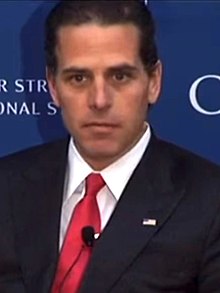
Hunter Biden
Center for Strategic & International Studies, CC BY 3.0 <https://creativecommons.org/licenses/by/3.0>, via Wikimedia Commons
If Democrats follow their usual mantra of “When they go low, we go high,” they will cower before Republican aggression and sacrifice their legislative agenda.
Yet they can snatch victory from the jaws of impending defeat—providing they are willing to follow the advice Robert F. Kennedy offered for combating the Mafia: “If we do not attack organized criminals with weapons and techniques as effective as their own, they will destroy us.”
Counterattack Strategy #1: Attack Republicans as traitors selling out the country to Vladimir Putin
Numerous Republicans have taken “campaign contributions”—i.e., bribes—from Russian oligarchs linked to Putin.
One Russian oligarch—Len Blavatnik—has given millions of dollars to top Republican leaders—such as Senators Mitch McConnell (Kentucky), Marco Rubio (Florida) and Lindsey Graham (South Carolina).
In just 2017, Blavatnik contributed the following to GOP Political Action Committees (PACs):
- $1.5 million to PACs associated with Rubio.
- $1 million to Trump’s Inaugural Committee.
- $1 million to McConnell’s Senate Leadership Fund.
- $3.5 million to a PAC associated with McConnell.
- $1.1 million to Unintimidated PAC, associated with Wisconsin Governor Scott Walker.
- $250,000 to New Day for America PAC, associated with Ohio Governor John Kasich.
- $800,000 to the Security is Strength PAC, associated with Senator Lindsey Graham.
The Biden administration need not ask the CIA or FBI to unearth these contributions. They can be easily found within the files of the Federal Election Commission (FEC).
Putin’s monies have been well-spent: About 90 House Republicans—out of a total of 213—attended Volodymyr Zelensky’s address to Congress on December 21, according to CQ Roll Call. Some who did spent much of the speech on their phones.
Many Republicans—such as House Speaker Kevin McCarthy, who in 2021 received about $255,000 from Blavatnik—have openly threatened to end all funding for Ukraine’s heroic struggle against Russian aggression.
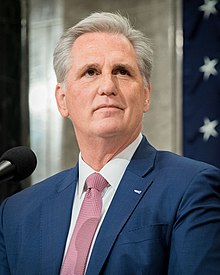
Kevin McCarthy
This would prove an effective technique. From the end of World War II to the collapse of the Soviet Union in 1991, Republicans successfully attacked Democrats as at least potential sellouts, if not actual traitors.
The advantage of attacking Russian-bribed Republicans today is that even some “Reagan Republicans”—such as James Kirchick, a conservative reporter, foreign correspondent, author, and columnist—have openly denounced this treason.
Thus, the White House could ignite an internal conflict within the Right by pitting Republicans against each other.
Counterattack Strategy #2: Concede NOTHING to Republicans
Donald Trump shut down the Federal Government on December 22, 2018, because Democrats refused to finance his useless border wall against Mexico.
So Speaker of the House Nancy Pelosi shut down his State of the Union appearance.
As CNN political analyst Chris Cillizza noted: “What Pelosi seems to understand better than past Trump political opponents is that giving ANY ground is a mistake. You have to not only stand firm, but be willing to go beyond all political norms—like canceling the SOTU—to win.”
His ego strung, Trump reopened the government.
And with Republicans threatening to not raise the debt ceiling unless their extortionate demands are met, the White House can effectively counter this danger:
Deduct from the budget every dollar directed toward Republican states. This would vastly reduce the size of the Federal budget, since subsidizing these failed economies accounts for a substantial portion of the budget.
ABC NEWS, ALTERNET, AMERICABLOG, AP, BABY BOOMER RESISTANCE, BBC, BLOOMBERG NEWS, BUSINESS, BUZZFEED, CBS NEWS, CNN, CROOKS AND LIARS, DAILY KOS, DAILY KOZ, DONALD TRUMP, FBI, FIVETHIRTYEIGHT, HARPER’S MAGAZINE, HUFFINGTON POST, INCOME INEQUALITY, MAFIA, MEDIA MATTERS, MOTHER JONES, MOVEON, MSNBC, NBC NEWS, NEW REPUBLIC, NEWSDAY, NEWSWEEK, NICCOLO MACHIAVELLI, NPR, PBS NEWSHOUR, POLITICO, POLITICS, POLITICUSUSA, RAW STORY, REUTERS, SALON, SEATTLE TIMES, SLATE, TALKING POINTS MEMO, TAX HAVENS, TAX JUSTICE NETWORK, THE ATLANTIC, THE CHICAGO SUN-TIMES, THE CHICAGO TRIBUNE, THE DAILY BEAST, THE DAILY BLOG, THE GUARDIAN, THE HILL, THE HUFFINGTON POST, THE INTERCEPT, THE LOS ANGELES TIMES, THE NATION, THE NEW REPUBLIC, THE NEW YORK TIMES, THE NEW YORKER, THE PRINCE, THE VILLAGE VOICE, THE WALL STREET JOURNAL, THE WASHINGTON POST, THINKPROGRESS, TIME, TRUTHDIG, TRUTHOUT, TWITTER, TWO POLITICAL JUNKIES, U.S. NEWS & WORLD REPORT, UPI, USA TODAY, WEALTH, WONKETTE
In Business, History, Law, Law Enforcement, Politics, Social commentary on January 6, 2023 at 12:14 am
For President Donald Trump and Congressional Republicans, the single greatest achievement of their time in office was to drastically cut taxes on the wealthy (including themselves).
It’s a view that Niccolo Machiavelli would dispute.
In 1513, Machiavelli, the Florentine statesman who has been called the father of modern political science, published his best-known work: The Prince.
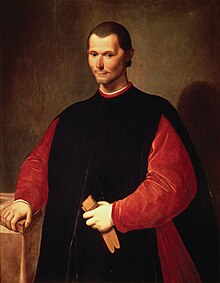

Niccolo Machiavelli
Among the issues he confronted was how to preserve liberty within a republic. And key to this was mediating the eternal struggle between the wealthy and the poor and middle class.
Machiavelli deeply distrusted the nobility because they stood above the law. He saw them as a major source of corruption because they could buy influence through patronage, favors or nepotism.
Successful political leaders must attain the support of the nobility or general populace. But since these groups have conflicting interests, the safest course is to choose the latter.
Writes Machiavelli:
….He who becomes prince by help of the [wealthy] has greater difficulty in maintaining his power than he who is raised by the populace. He is surrounded by those who think themselves his equals, and is thus unable to direct or command as he pleases.
But one who is raised to leadership by popular favor finds himself alone, and has no one, or very few, who are not ready to obey him. [And] it is impossible to satisfy the [wealthy] by fair dealing and without inflicting injury upon others, whereas it is very easy to satisfy the mass of the people in this way.

Machiavelli warns that the general populace is more honest than the nobility—i.e., wealthy. The wealthy seek to oppress, while the populace wants to simply avoid oppression.
A political leader cannot protect himself against a hostile population, owing to their numbers, but he can against the hostility of the great, as they are but few.
The worst that a prince has to expect from a hostile people is to be abandoned, but from hostile nobles he has to fear not only desertion but their active opposition. And as they are more far seeing and more cunning, they are always in time to save themselves and take sides with the one who they expect will conquer.
The prince is, moreover, obliged to live always with the same people, but he can easily do without the same nobility, being able to make and unmake them at any time, and improve their position or deprive them of it as he pleases.
Unfortunately, political leaders throughout the world—including the United States–have ignored this sage advice.
In 2012, Tax Justice Network, which campaigns to abolish tax havens, commissioned a study of their effect on the world’s economy.
The study was entitled, “The Price of Offshore Revisited: New Estimates for ‘Missing’ Global Private Wealth, Income, Inequality and Lost Taxes.”
http://www.taxjustice.net/cms/upload/pdf/Price_of_Offshore_Revisited_120722.pdf
The research was carried out by James Henry, former chief economist at consultants McKinsey & Co. Among its findings:
Summing up this situation, the report noted: “We are up against one of society’s most well-entrenched interest groups. After all, there’s no interest group more rich and powerful than the rich and powerful.”
Fortunately, Machiavelli has supplied timeless remedies to this increasingly dangerous situation:
- Assume evil among men—and most especially among those who possess the greatest concentration of wealth and power.
- Carefully monitor their activities—the way the FBI now regularly monitors those of the Mafia and major terrorist groups.
- Ruthlessly prosecute the treasonous crimes of the rich and powerful—and, upon their conviction, impose severe punishment.
2020 PRESIDENTIAL ELECTION, ABC NEWS, ABRAHAM LINCOLN, ALTERNET, AMERICABLOG, AP, APOCALYPSE, ARMAGEDDON, BABY BOOMER RESISTANCE, BLOOMBERG, BOLDNESS, BUZZFEED, CAUTION, CBS NEWS, CHINA, CNN, COVID-19, CROOKS AND LIARS, DONALD TRUMP, FIVETHIRTYEIGHT, GAIUS CASSIUS, HARPER’S MAGAZINE, HUFFINGTON POST, illegal immigration, IMAGE, J.P. MORGAN, JESUS CHRIST, JULIUS CAESAR (PLAY), MAFIA, MEDIA MATTERS, MOTHER JONES, MOVEON, MSNBC, NBC NEWS, NEW YEAR'S DAY, NEW YEAR'S EVE, NEW YORK, NEWSWEEK, NICCOLO MACHIAVELLI, NPR, PBS NEWSHOUR, POLITICO, POLITICUSUSA, RAW STORY, REALITY, REUTERS, RUSSIA, SALON, SEATTLE TIMES, SLATE, SOREN KIERKEGAARD, TALKING POINTS MEMO, THE ATLANTIC, THE CHICAGO SUN-TIMES, THE CHICAGO TRIBUNE, THE DAILY BEAST, THE DAILY BLOG, THE GUARDIAN, THE HILL, THE HUFFINGTON POST, THE LOS ANGELES TIMES, THE MILLENNIUM, THE NATION, THE NEW REPUBLIC, THE NEW YORK TIMES, THE VILLAGE VOICE, THE WASHINGTON POST, THINKPROGRESS, TIME, TITLE 42, TRUTHDIG, TRUTHOUT, TWITTER, TWO POLITICAL JUNKIES, U.S. NEWS & WORLD REPORT, UKRAINE, UNITED STATES HOUSE OF REPRESENTATIVES, UPI, USA TODAY, VLADIMIR PUTIN, WEALTH, WILLIAM SHAESPEARE, WONKETTE
In Bureaucracy, Business, History, Medical, RELIGION, Social commentary on December 30, 2022 at 1:01 am
New Year’s Eve, 2022, will soon lie behind us.
And for many people, saying “Goodbye” to 2022 can’t happen soon enough.
New Year’s Eve is traditionally a time for people to reflect on the major events of the previous 12 months. Some of these are highly personal. Others have been shared by the entire country.
Some of these remembrances inevitably bring pleasure. Others bring pain.
And 2022 has been a year of pain for millions.
Starting on February 24, Russian President Vladimir Putin unleashed a violent assault on Ukraine. Even after his forces were battered by Ukrainian armies, he continued to hurl missiles at Russia’s “brother nation.” As a result, many Ukrainians spent Christmas without electricity or running water.
The invasion was accompanied by Putin’s threats of nuclear war if the West didn’t stop supplying Ukraine with weaponry to repulse his unprovoked attack.
COVID-19 continued to sweep across the globe. Although largely under control in the United States, it remained a mortal threat. In China, that threat surged as the government dropped restrictions that had largely kept it at bay since 2020.
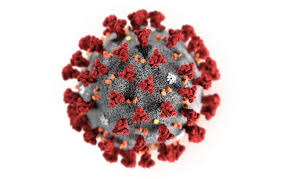
COVID-19
But, as the year ended, hope suddenly dawned: During mid-term elections, millions of Americans rejected Donald Trump’s continuing lies that he had been cheated of victory in 2020. As a result, Republicans won only the House, whereas they had been expected to win the Senate as well.
And as the United States braced itself for an onslaught of tens of thousands—if not millions—of illegal aliens, the Supreme Court upheld—at least temporarily—Title 42.
This policy, begun in 2020, during the early weeks of the COVID-19 pandemic, has allowed immigration agents to expel 2.4.million illegal aliens from the southern border.
At the heart of every New Year’s Eve celebration is the fantasy that you get to start fresh in a matter of hours. And with that fantasy comes hope—that, this time, you can put your sorrows and failures behind you.
And each new year comes with lessons to be learned—and applied.
Each year gives us the chance to learn from history—our own and that of others. Try to learn from your mistakes—and especially those of others. With luck, you won’t repeat your past ones—or those of others. But don’t expect to lead a mistake-free life.
There is a time to be bold—and a time to be cautious. As Niccolo Machiavelli put it: “A prince….must imitate the fox and the lion: For the lion cannot protect himself from traps, and the fox cannot defend himself from wolves.” Learn to tell when is the appropriate time to be which—and to play that role to the hilt.
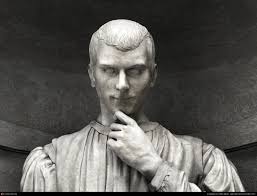
Niccolo Machiavelli
There is image—and there is reality. J.P. Morgan once said: “A man always has two reasons for doing anything: A good reason and the real reason.” This is never truer than when a corporation or politician is asking for your money / vote. When trying to decide whether to commit yourself to either, ask yourself: Who benefits? For example: When studying a proposed law that claims to aid the environment, find out who supports it. That will usually tell you what you need to know.
Learn how to evaluate others. Once again, Niccolo Machiavelli supplies the answer: “The first impression that one gets of a ruler and his brains is from seeing the men that he has about him. When they are competent and loyal one can always consider him wise, as he has been able to recognize their ability and keep them faithful. But when they are the reverse, one can always form an unfavorable opinion of him, because the first mistake that he makes is in making this choice.”
Don’t confuse wealth with virtue. Too many Americans believe that wealth is a gift that God bestows on the worthy. If this were true, every Mafia boss would be a candidate for sainthood.
Each year is a journey unto itself—filled with countless joys and sorrows. Many of these joys can’t be predicted. And many of these tragedies can’t be prevented.
Learn to tell real dangers from imaginary ones. Computers are real—and sometimes they crash. Men who died 2,000 years ago do not leap out of graveyards, no matter what their disciples predict.
Don’t expect any particular year to usher in the Apocalypse. In any given year there will be wars, famines, earthquakes, riots, floods and a host of other disasters. These have always been with us—and always will be. As Abraham Lincoln once said: “The best thing about the future is that it comes one day at a time.”

Don’t expect some Great Leader to lead you to success. As Gaius Cassius says in William Shakespeare’s “Julius Caesar”: “Men at some time are masters of their fate. The fault, dear Brutus, is not in our stars but in ourselves that we are underlings.”
Don’t expect any particular year or event to usher in your happiness. To again quote Lincoln: “Most people are about as happy as they make up their minds to be.”
If your life seems to make no sense to you, consider this: The philosopher Soren Kierkegaard once noted: “Life can only be understood backwards, but it must be lived forwards.”
ABC NEWS, ALTERNET, AMERICABLOG, AP, APALACHIN RAID, APPLEBEE'S, BABY BOOMER RESISTANCE, BBC, BLOOMBERG NEWS, BUGGING, BUZZFEED, CBS NEWS, CLYDE TYOLSON, CNN, CROOKS AND LIARS, DAILY KOS, ELECTRONIC SURVEILLANCE, FACEBOOK, FBI, FIVETHIRTYEIGHT, HARPER’S MAGAZINE, HARRY ANSLINGER, HUFFINGTON POST, J. EDGAR HOOVER, MAFIA, MEDIA MATTERS, MEYER LANSKY, MOTHER JONES, MOVEON, MSNBC, NBC NEWS, NEW REPUBLIC, NEWSDAY, NEWSWEEK, NPR, ORGANIZED CRIME, PBS NEWSHOUR, POLITICO, POLITICUSUSA, RAW STORY, REUTERS, ROBERT F. KENNEDY, SALON, SEATTLE TIMES, SLATE, TALKING POINTS MEMO, THE ATLANTIC, THE CHICAGO SUN-TIMES, THE CHICAGO TRIBUNE, THE DAILY BEAST, THE DAILY BLOG, THE GUARDIAN, THE HILL, THE HUFFINGTON POST, THE LOS ANGELES TIMES, THE NATION, THE NEW REPUBLIC, THE NEW YORK TIMES, THE NEW YORKER, THE VILLAGE VOICE, THE WASHINGTON POST, THINKPROGRESS, TIME, TOP HOODLUM PROGRAM, TRUTHDIG, TRUTHOUT, TWITTER, TWO POLITICAL JUNKIES, U.S. NEWS & WORLD REPORT, UPI, USA TODAY, WAYNE PANKRATZ, WILLIAM ROEMER, WIRETAPPING, WONKETTE
In Bureaucracy, Business, History, Law, Law Enforcement, Politics, Social commentary on December 19, 2022 at 1:13 am
J. Edgar Hoover, the legendary director of the FBI, has been dead for 50 years. But his rule—“Don’t embarrass the Bureau”—is very much alive and well in corporate America.
In 1959, Hoover—against his will—declared war on the Mafia.
On November 14, 1957, 70 top Mafia leaders from across the country had gathered at the estate of a fellow gangster, Joseph Barbara, in Appalachin, a small village in upstate New York.
The presence of so many cars with out-of-state license plates converging on an isolated mansion caught the attention of Sergeant Edgar Crosswell of the New York State Police.
Crosswell assembled an army of state troopers, set up roadblocks, and swooped down on the estate.
The mobsters panicked and fled—many into the surrounding woods. Even so, more than 60 underworld bosses were arrested and indicted following the raid.
Hoover had vigorously and vocally denied the existence of a nationwide Mafia. He had carefully kept the FBI well out of the war on organized crime. Among the theories advanced for this:
- Hoover feared that his agents—-long renowned for their incorruptibility—would fall prey to Mafia bribes.
- Hoover feared that his allegedly homosexual relationship with his longtime associate director, Clyde Tolson, would be exposed by the Mob. Rumors still persist that mobster Meyer Lansky came into possession of a compromising photo of Hoover and Tolson engaged in flagrante delicto.
- Hoover preferred flashy, easily-solved cases to those requiring huge investments of manpower and money.
Suddenly, however, ignoring the Mob was no longer possible.
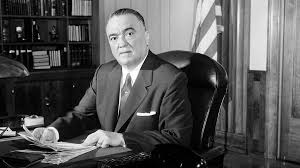
J. Edgar Hoover
He set up a Top Hoodlum Program and encouraged his agents to use wiretapping and electronic surveillance (“bugging”) to make up for lost time and Intelligence.
But planting “bugs” demanded illegal trespass into mob hangouts.
Making this even more hazardous: Hoover imposed restrictions on these assignments that could destroy an agent’s professional and personal life.
William E. Roemer, Jr., assigned to the FBI’s Chicago field office, was one of the first agents to volunteer for such duty.
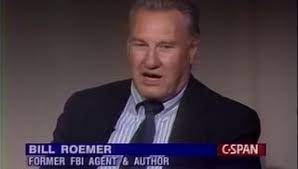
William Roemer
In his memoirs, Man Against the Mob, published in 1989, Roemer laid out the dangers that went with such work:
- If confronted by police or mobsters, agents were to try to escape without being identified.
- If caught by police, agents were not to identify themselves as FBI employees.
- They were to carry no badges, credentials or guns—or anything else connecting themselves with the FBI.
- If they were arrested by police and the truth emerged about their FBI employment, the Bureau would claim they were “rogue agents” acting on their own.
- Such agents were not to refute the FBI’s portrayal of them as “rogues.”
As summed up by Roemer, Hoover’s greatest concern was always: ‘Do the job, by God, but don’t ever let anything happen that might embarrass the Bureau.”
In the business sector, Hoover’s rule still forcefully apples. Anyone who doubts this need only examine the public scandal involving Applebee’s International, Inc.

Applebees Restaurant LLC, CC BY-SA 4.0 <https://creativecommons.org/licenses/by-sa/4.0>, via Wikimedia Commons
On March 9, 2022, Wayne Pankratz, an executive with Apple Central, a Kansas City-based company that operates Applebee’s restaurants, sent an email to managers saying high gas prices could help them cut employees’ wages.
He noted that most Applebee’s employees live “paycheck to paycheck.” But instead of suggesting a pay raise, he advocated the opposite:
“Any increase in gas price cuts into their disposable income. As inflation continues to climb and gas prices continue to go up that means more hours employees will need to work to maintain their current level of living.”
Because workers were no longer supported by government stimulus, desperate workers would be forced back into the workforce regardless of wages, giving the company the upper hand when it came to compensation.
Pankratz said competing restaurants had been raising wages to attract more workers, leaving Applebee’s struggling to keep up.
“We all saw businesses hiring team members at $18-$20 an hour. They will no longer be able to afford to do this,” the memo said.
Pankratz predicted that the labor market was “about to turn in our favor.”
The memo was posted to an r/antiwork forum on Reddit and then picked up on social media. At that point, it took on a life of its own.
Twitter users expressed outrage at the memo. Some said they would spend their money at other restaurants.
At least three managers quit their jobs at a Kansas Applebee’s over the memo, CBS News reported.
Suddenly, it was Pankratz who was desperate for employment—he was fired.
In line with Hoover’s dictum of disavowing anyone who caused embarrassment for the organization, Kevin Carroll, Dine Brands’ chief operations officer for Applebee’s, rushed to repair the damage:
“This is the opinion of an individual, not Applebee’s. We understand that the franchisee who owns and operates the restaurants in this market has placed the individual on leave.
“Our team members are the lifeblood of our restaurants, and our franchisees are always looking to reward and incentivize team members, new and current, to remain within the Applebee’s family.”
ABC NEWS, ALTERNET, AP, BILL CLINTON, BUZZFEED, CALIFORNIA ENERGY CRISIS, CBS NEWS, CNN, COVID-19, CROOKS AND LIARS, DE-REGULATION, DEMOCRATS, DONALD TRUMP, ENRON, FACEBOOK, FBI, FEDERAL COMMUNICATIONS COMMISSION, FEDERAL TRADE COMMISSION, GRAY DAVIS, HEINRICH HIMMLER, HOLOCAUST, MAFIA, MOTHER JONES, MOVEON, MSNBC, NBC NEWS, NEWSWEEK, NICCOLO MACHIAVELLI, NPR, PACIFIC GAS AND ELECTRIC, PBS NEWSHOUR, PETE WILSON, POLITICO, RAW STORY, REPUBLICANS, REUTERS, RICO ACT, SALON, SEATTLE TIMES, SLATE, SS, THE ATLANTIC, THE CHICAGO SUN-TIMES, THE CHICAGO TRIBUNE, THE DAILY BEAST, THE GUARDIAN, THE HILL, THE HUFFINGTON POST, THE LOS ANGELES TIMES, THE NATION, THE NEW YORK TIMES, THE SS, THE WALL STREET JOURNAL, THE WASHINGTON POST, TIME, TWITTER, U.S. NEWS & WORLD REPORT, UNITED STATES DEPARTMENT OF JUSTICE, USA TODAY
In Bureaucracy, History, Law, Law Enforcement, Politics, Social commentary on November 10, 2022 at 12:12 am
This December 2 will mark the 21st anniversary of the collapse of Enron Corporation.
Based in Houston, Texas, Enron had employed 22,000 staffers and was one of the world’s leading electricity, natural gas, communications and paper companies.
In 2000, it claimed revenues of nearly $101 billion. Fortune had named Enron “America’s Most Innovative Company” for six consecutive years.
But then the truth emerged in 2001: Enron’s reported profitability was based not on brilliance and innovation but on systematic and creative accounting fraud.
And, on December 2, 2001, Enron filed for bankruptcy under Chapter 11 of the United States Bankruptcy Code.
Enron’s $63.4 billion in assets made it the largest corporate bankruptcy in U.S. history—until WorldCom’s bankruptcy in 2002.
The California electricity crisis (2000-2001) was caused by market manipulations and illegal shutdowns of pipelines by Texas energy companies.
The state suffered from multiple large-scale blackouts. Pacific Gas & Electric, one of the state’s largest energy companies, collapsed, and the economic fall-out greatly harmed Governor Gray Davis’ standing.
The crisis was made possible by Governor Pete Wilson, who had forced the passage of partial de-regulation legislation in 1996.
Enron seized its opportunity to inflate prices and manipulate energy output in California’s spot markets. The crisis cost the state $40 to $45 billion.
The true scandal of Enron was not that it was eventually destroyed by its own greed.
The true scandal was that its leaders were never Federally prosecuted for almost driving California—and the entire Western United States—into bankruptcy.
And it happened during the “liberal” administration of President Bill Clinton.
Once the news broke that Enron had filed for bankruptcy, commentators almost universally oozed compassion for its thousands of employees who would lose their salaries and pensions.
No one, however, condemned the “profits at any cost” dedication of those same employees for pushing California to the brink of ruin.
To put this in historical perspective:
- Imagine a historian writing about the destruction of Hitler’s Schutzstaffel (Guard Detachment), or SS, as a human interest tragedy.
- Imagine its Reichsfuhrer, Heinrich Himmler, being blamed for failing to prevent its collapse—as CEO Kenneth Lay was blamed for Enron’s demise.
- Imagine that same historian completely ignoring the horrific role the SS had played throughout Nazi-occupied countries—and its primary role in slaughtering six million Jews in the Holocaust.
Nor did the media urge the United States Department of Justice to end the extortion via RICO—the Federal Racketeer Influenced Corrupt Organizations Act.

Passed by Congress in 1970, this was originally aimed at the kingpins of the Mafia. Since the mid-1980s, however, RICO has been successfully applied against both terrorist groups and legitimate businesses engaged in criminal activity.
Under RICO, people financially injured by a pattern of criminal activity can bring a claim in State or Federal court, and obtain damages at three times the amount of their actual claim, plus reimbursement for their attorneys’ fees and costs.
Such prosecutions would have pitted energy-extortionists against the full investigative might of the FBI and the sweeping legal authority of the Justice Department.
Consider this selection from the opening of the Act:
(1) “racketeering activity” means (A) any act or threat involving…extortion; (B) any act which is indictable under any of the following provisions of title 18, United States Code: sections 891-894 (relating to extortionate credit transactions), section 1343 (relating to wire fraud)Section 1344 (relating to financial institution fraud), section 1951 (relating to interference with commerce, robbery, or extortion), section 1952 (relating to racketeering)….
Today, two powerful social media companies—Facebook and Twitter—play pivotal and potentially dangerous roles in the lives of millions of men, women and children.
Facebook has invaded its users’ privacy (such as via the Cambridge Analytica data scandal), manipulated elections (such as the 2016 Presidential one) and subjected its users to mass surveillance.
Twitter has allowed trolls to abuse its followers and spread dangerous lies to millions. For five years, its chief troll was Donald Trump, who libeled hundreds while falsely claiming that COVID-19 was a hoax and that he won re-election in 2020 but was cheated by fraud.
Such lies resulted in the deaths of tens of thousands of Americans from COVID—and poisoned the American electoral system for future races.
Yet in both cases, the Federal Government has stood by and allowed such abuses to continue unpunished. Yet it commands a wide range of agencies capable of addressing such abuses—such as the Federal Trade Commission, the Federal Communications Commission and—not least importantly, the Justice Department.
Powerful, life-altering companies require powerful oversight—through the prism of the warning given by Niccolo Machiavelli more than 500 years ago:
All those who have written upon civil institutions demonstrate…that whoever desires to found a state and give it laws, must start with assuming that all men are bad and ever ready to display their vicious nature, whenever they may find occasion for it.
If their evil disposition remains concealed for a time, it must be attributed to some unknown reason; and we must assume that it lacked occasion to show itself. But time, which has been said to be the father of all truth, does not fail to bring it to light.
ABC NEWS, ALTERNET, AMERICAN TABLOID, AP, ASSASSINATION, BUZZFEED, CBS NEWS, CIA, CNN, COMMUNISM, CROOKS AND LIARS, CUBA, CUBAN MISSILE CRISIS, DAILY KOZ, DWIGHT D. EISENHOWER, FACEBOOK, FBI, FIDEL CASTRO, FLORIDA, FULGENCIO BATISTA, GUAM, GUS RUSSO, JAMES ELLROY, JOE BIDEN, JOHN F. KENNEDY, JOHNNY ROSELLI, LEE HARVEY OSWALD, LIVE BY THE SWORD, LYNDON B. JOHNSON, MAFIA, MOTHER JONES, MOVEON, NBC NEWS, NEWSWEEK, NEWT GINGRICH, NIKITA KHRUSHCHEV, NORTH KOREA, NPR, NUCLEAR WAR, POLITICO, RAW STORY, REUTERS, ROBERT F. KENNEDY, SALON, SAM GIANCANA, SEATTLE TIMES, SLATE, THE ATLANTIC, THE CHICAGO SUN-TIMES, THE CHICAGO TRIBUNE, THE DAILY BEAST, THE GUARDIAN, THE HILL, THE HUFFINGTON POST, THE LOS ANGELES TIMES, THE NATION, THE NEW YORK TIMES, THE WASHINGTON POST, TIME, TWITTER, U.S. NEWS & WORLD REPORT, UKRAINE, UP, UPI, USA TODAY, VLADIMIR PUTIN, WARREN COMMISSION
In Bureaucracy, History, Law, Law Enforcement, Military, Politics, Social commentary on October 21, 2022 at 12:10 am
“John and Robert Kennedy knew what they were doing. They waged a vicious war against Fidel Castro—a war someone had to lose.”
And the loser turned out to be John F. Kennedy.
So writes investigative reporter Gus Russo in Live By the Sword: The Secret War Against Castro and the Death of JFK, published in 1998.
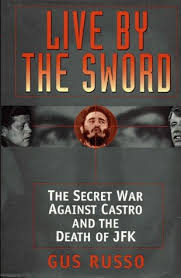
In what is almost certainly the definitive account of the assassination of President John F. Kennedy, Russo reaches some startling—but highly documented—conclusions:
- Lee Harvey Oswald assassinated Kennedy.
- He did it alone.
- Oswald, a former Marine, was a committed Marxist–whose hero was Castro.
- The CIA’s ongoing campaign to overthrow and/or assassinate Castro was an open secret throughout the Gulf.
- Oswald visited New Orleans in the spring of 1963.
- There he learned that Castro was in the crosshairs of the CIA.
- Oswald told his Russian-born wife, Marina: “Fidel Castro needs defenders. I’m going to join his army of volunteers.”
- Jack Ruby, a Dallas nightclub owner, murdered Oswald because he was distraught over Kennedy’s death.
- Ruby was not part of a Mafia conspiracy to silence Oswald.
- Skeptics of the Warren Commission—which concluded that Oswald had acted alone—asked the wrong question: “Who killed Kennedy?”
- They should have asked: “Why was he killed?”
- The answer–according to Russo: “The Kennedys’ relentless pursuit of Castro and Cuba backfired in tragedy on that terrible day in November, 1963.”
Another book well worth reading about America’s Cuban obsession during the early 1960s is American Tabloid, by James Ellroy.
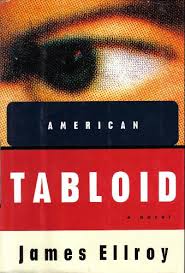
Although a novel, it vividly captures the atmosphere of intrigue, danger and sleaziness that permeated that era in a way that dry, historical documents never can.
“The 50’s are finished,” reads its paperback dust jacket. “Zealous young lawyer Robert Kennedy has a red-hot jones to nail Jimmy Hoffa. JFK has his eyes on the Oval Office.
“J. Edgar Hoover is swooping down on the Red Menace. Howard Hughes is dodging subpoenas and digging up Kennedy dirt. And Castro is mopping up the bloody aftermath of his new Communist nation….
“Mob bosses, politicos, snitches, psychos, fall guys and femmes fatale. They’re mixing up a Molotov cocktail guaranteed to end the country’s innocence with a bang.”
Among the legacies of America’s twisted romance with anti-Castro Cubans:
- Following the JFK assassination, there was a coverup.
- Its purposes: To protect the reputation of the United States government–and that of its newly-martyred President.
- Thus, the CIA and FBI concealed the CIA-Mafia assassination plots from the Warren Commission assigned to investigate Kennedy’s murder.
- Other government officials participating in the coverup included Attorney General Robert F. Kennedy and President Lyndon B. Johnson.
- Ironically, this secrecy ignited the widespread—and false—belief that the President had died at the hands of a government conspiracy.
- Robert Kennedy feared that his relentless pursuit of Castro might have led Castro to “take out” JFK first.
- Fearing his own assassination if he continued Kennedy’s efforts to murder Castro, President Johnson ordered the CIA to halt its campaign to overthrow and/or assassinate the Cuban leader.
- The huge Cuban community throughout Florida—and especially Miami—continues to exert a blackmailing influence on American politics.
- Right-wing politicians from Richard Nixon to Donald Trump have reaped electoral rewards by catering to the demands of this hate-obsessed voting block.
- These Cuban ex-patriots hope that the United States will launch a full-scale military invasion of the island to remove Castro.
The Cuban Missile Crisis was the deadliest moment of the Cold War, when the world stood only minutes away from nuclear Armageddon.
That crisis stemmed from America’s twisted obsession with Cuba, an obsession that continues today.
Sixty years after that crisis, the world wonders: Is nuclear war about to erupt?
And, once again, that decision lies in the hands of two men—Vladimir Putin and Joe Biden—out of a world population of more than seven billion.
Since launching a war on Ukraine on February 24, Putin has seen his initial victories turn sour.
By July, after five months of fierce Ukrainian resistance, the Russians were stymied as they tried to conquer the remainder of Donbas. In late August, Ukraine launched a counteroffensive in the southern region of Kherson.
By September, Ukrainian forces recaptured much of the northeastern Kharkiv region, including the city of Izium, which the Russians had been using as a logistics hub.
On September 21, Putin announced the partial mobilization of 300,000 military reservists. All male citizens below 60 are now eligible to be drafted. This led at least 194,000 Russian men to seek refuge in such neighboring countries as Turkey, Georgia, Kazakhstan and Mongolia.
That same day, Putin warned that Russia commands a nuclear arsenal. He did not say whether he would turn it against Ukraine or NATO countries, including the United States.
Even if nukes were used only against Ukraine, the final result could be a full-scale nuclear war.
Interviewed on CNN, President Joe Biden described Putin thus: “I think he is a rational actor who has miscalculated significantly.”
Nikita Khrushchev, facing a choice of humiliation or Armageddon during the Cuban Missile Crisis, chose humiliation—so his country could live another day.
It remains to be seen if Vladimir Putin is willing to make the same decision.
ABC NEWS, ALTERNET, AMERICAN TABLOID, AP, ASSASSINATION, BUZZFEED, CBS NEWS, CIA, CNN, COMMUNISM, CROOKS AND LIARS, CUBA, CUBAN MISSILE CRISIS, DAILY KOZ, DONALD TRUMP, DWIGHT D. EISENHOWER, FACEBOOK, FBI, FIDEL CASTRO, FLORIDA, FULGENCIO BATISTA, GUAM, GUS RUSSO, JAMES ELLROY, JOE BIDEN, JOHN F. KENNEDY, JOHNNY ROSELLI, LEE HARVEY OSWALD, LIVE BY THE SWORD, LYNDON B. JOHNSON, MAFIA, MOTHER JONES, MOVEON, NBC NEWS, NEWSWEEK, NIKITA KHRUSHCHEV, NORTH KOREA, NPR, NUCLEAR WAR, POLITICO, RAW STORY, REUTERS, ROBERT F. KENNEDY, SALON, SAM GIANCANA, SEATTLE TIMES, SLATE, THE ATLANTIC, THE CHICAGO SUN-TIMES, THE CHICAGO TRIBUNE, THE DAILY BEAST, THE GUARDIAN, THE HILL, THE HUFFINGTON POST, THE LOS ANGELES TIMES, THE NATION, THE NEW YORK TIMES, THE WASHINGTON POST, TIME, TWITTER, U.S. NEWS & WORLD REPORT, UKRAINE, UP, UPI, USA TODAY, VLADIMIR PUTIN, WARREN COMMISSION
In Bureaucracy, History, Law, Law Enforcement, Military, Politics, Social commentary on October 20, 2022 at 12:10 am
On October 22, 1962, President John F. Kennedy went on nationwide TV to announce the discovery of the missiles and his blockade of Cuba.
He warned that any nuclear missile launched from Cuba against any nation would be regarded as an attack on the United States by the Soviet Union—and would trigger “a full retaliatory response” upon the U.S.S.R.
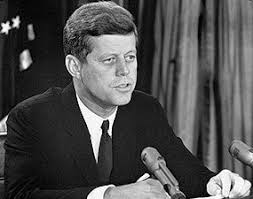
John F. Kennedy address the nation
And he demanded that the Soviets remove all of their offensive weapons from Cuba: “The cost of freedom is always high, but Americans have always paid it. And one path we shall never choose, and that is the path of surrender or submission.”
On October 26, the United States raised the readiness level of SAC forces to DEFCON 2—the step just short of war. For the only time in U.S. history, B-52 bombers were dispersed to various locations and made ready to take off, fully equipped, on 15 minutes’ notice.
Other measures taken included:
- One-eighth of America’s 1,436 bombers were on airborne alert.
- About 145 intercontinental ballistic missiles stood on ready alert.
- Air Defense Command redeployed 161 nuclear-armed interceptors to 16 dispersal fields within nine hours with one-third maintaining 15-minute alert status.
- Twenty-three nuclear-armed B-52 were sent to orbit points within striking distance of the Soviet Union.
An invasion date was set for October 29. But the Kennedy Administration—and the American military—didn’t know that the Russian soldiers guarding the missiles had been armed with tactical nuclear weapons.
Had the Marines gone in, those mini-nukes would have been used. And a fullscale nuclear exchange between the United States and the Soviet Union would have almost certainly followed.
At the height of the crisis, Attorney General Robert F. Kennedy offered a solution.
Khrushchev had sent two teletypes to Kennedy. The first had agreed to remove the missiles, but the second had demanded that the United States remove its own missiles from Turkey, which bordered the Soviet Union.
Robert Kennedy’s solution: The administration should ignore the second message—and announce that it had accepted Khrushchev’s offer to remove the missiles.
After this announcement was made, President Kennedy said to his advisors: “It can go either way now.”
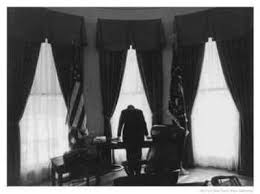
John F. Kennedy
The crisis ended on October 28. Under enormous pressure, Khrushchev agreed to remove the missiles from Cuba.
Behind his decision lay a secret promise by the Kennedy administration to remove its obsolete nuclear missiles from Turkey. And a public pledge to not invade Cuba.
On the night the crisis ended, there occurred a prophetic exchange between the two Kennedy brothers.
JFK: “Maybe this is the night I should go to the theater”—a reference to Abraham Lincoln’s fatal attendance of Ford’s Theater at the end of the Civil War.
RFK: “If you go, I want to go with you.”
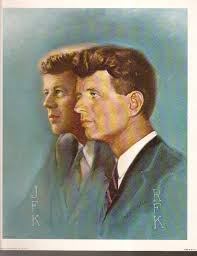
John F. and Robert F. Kennedy
But President Kennedy was not finished with Castro. While continuing the campaign of sabotage throughout Cuba, the Kennedys were preparing something far bigger: A fullscale American invasion of the island.
On October 4, 1963, the Joint Chiefs of Staff submitted its latest version of the invasion plan, known as OPLAN 380-63. Its timetable went:
- January, 1964: Infiltration into Cuba by Cuban exiles.
- July 15, 1964: U.S. conventional forces join the fray.
- August 3, 1964: All-out U.S. air strikes on Cuba.
- October 1, 1964: Full-scale invasion to install “a government friendly to the U.S.”
During the Cuban Missile Crisis, Robert Kennedy—referring to the 1941 Japanese attack on Pearl Harbor—had resisted demands for a “sneak attack” on Cuba by saying: “I don’t want my brother to be the Tojo of the 1960s.”
Now the Kennedys planned such an attack on Cuba just one month before the November, 1964 Presidential election.
Then fate—in the unlikely figure of Lee Harvey Oswald—intervened.
On November 22, 1963, while the President rode through Dallas in an open-air automobile, a rifle-wielding assassin opened fire. He scored two hits on Kennedy—in the back of the neck and head. The second wound proved instantly fatal.
The nation and the world were shocked—and plunged into deep mourning.
But for some of those who had waged a secret, lethal war against Fidel Castro for the previous two years, Kennedy’s death—at least in retrospect—didn’t come as a surprise.
Robert Kennedy, in particular, spent the remaining years of his life agonizing over the possibility that his highly personal war against Castro had backfired.
That Castro, fed up with the CIA’s assassination plots against him, had retaliated with one of his own.
Robert Kennedy’s fears and guilt were compounded by the fact that, while waging war on Castro, he had waged an equally ruthless crusade against organized crime.
And some of the mobsters he had done his best to put into prison had played a major role in the CIA’s efforts to “hit” Castro. Had the Mafia—believing itself the victim of a double-cross—put out a “contract” on JFK instead?
“John and Robert Kennedy knew what they were doing. They waged a vicious war against Fidel Castro—a war someone had to lose.”
And the loser turned out to be John F. Kennedy.
So writes investigative reporter Gus Russo in Live By the Sword: The Secret War Against Castro and the Death of JFK, published in 1998.
ABC NEWS, ALTERNET, AMERICAN TABLOID, AP, ASSASSINATION, BUZZFEED, CBS NEWS, CIA, CNN, COMMUNISM, CROOKS AND LIARS, CUBA, CUBAN MISSILE CRISIS, DAILY KOZ, DONALD TRUMP, DWIGHT D. EISENHOWER, FACEBOOK, FBI, FIDEL CASTRO, FLORIDA, FULGENCIO BATISTA, GUAM, GUS RUSSO, JAMES ELLROY, JOE BIDEN, JOHN F. KENNEDY, JOHNNY ROSELLI, LEE HARVEY OSWALD, LIVE BY THE SWORD, LYNDON B. JOHNSON, MAFIA, MOTHER JONES, MOVEON, NBC NEWS, NEWSWEEK, NIKITA KHRUSHCHEV, NORTH KOREA, NPR, NUCLEAR WAR, POLITICO, RAW STORY, REUTERS, ROBERT F. KENNEDY, SALON, SAM GIANCANA, SEATTLE TIMES, SLATE, THE ATLANTIC, THE CHICAGO SUN-TIMES, THE CHICAGO TRIBUNE, THE DAILY BEAST, THE GUARDIAN, THE HILL, THE HUFFINGTON POST, THE LOS ANGELES TIMES, THE NATION, THE NEW YORK TIMES, THE WASHINGTON POST, TIME, TWITTER, U.S. NEWS & WORLD REPORT, UKRAINE, UP, UPI, USA TODAY, VLADIMIR PUTIN, WARREN COMMISSION
In Bureaucracy, History, Law, Law Enforcement, Military, Politics, Social commentary on October 19, 2022 at 12:10 am
In April, 1961, the CIA tried to overthrow the Communist regime of Cuba’s “Maximum Leader,” Fidel Castro, at the Bay of Pigs.
When that failed, President John F. Kennedy ordered Castro’s removal through a campaign of sabotage and assassination.
These covert operatives became known within the CIA as the Special Group, and were ultimately supervised by Robert F. Kennedy, the President’s brother and Attorney General.
The war against Castro became known within the CIA as Operation Mongoose.
But not everyone in the CIA was enthusiastic about the “get Castro” effort.
“Everyone at CIA was surprised at Kennedy’s obsession with Fidel,” recalled Sam Halpern, who was assigned to the Cuba Project. “They thought it was a waste of time. We all knew [Fidel] couldn’t hurt us. Most of us at CIA initially liked Kennedy, but why go after this little guy?

“One thing is for sure: Kennedy wasn’t doing it out of national security concerns. It was a personal thing. The Kennedy family felt personally burnt by the Bay of Pigs and sought revenge.”
It was all-out war. Among the tactics used:
- Hiring Cuban gangsters to murder Cuban police officials and Soviet technicians.
- Sabotaging mines.
- Paying up to $100,000 per “hit” for the murder or kidnapping of Cuban officials.
- Using biological and chemical warfare against the Cuban sugar industry.
“Bobby (Kennedy) wanted boom and bang all over the island,” recalled Halpern. “It was stupid. The pressure from the White House was very great.”
Among that “boom and bang” were a series of assassination plots against Castro, in which the Mafia was to be a key player.
Chicago Mobster Johnny Rosselli proposed a simple plan: Through its underworld connections in Cuba, the Mafia would recruit a Cuban in Castro’s entourage, such as a waiter or bodyguard, who would poison him.
The CIA’s Technical Services division produced a botulinus toxin which was then injected into Castro’s favorite brand of cigars. The CIA also produced simpler botulinus toxin pills that could be dissolved in his food or drink.
But the deputized Mafia contacts failed to deliver any of the poisons to Castro.
Rosselli told the CIA that the first poisoner had been discharged from Castro’s employ before he could kill him, and the back-up agent got “cold feet.”
Other proposals or attempts included:
- Planting colorful seashells rigged to explode at a site where Castro liked to go skindiving.
- Trying to arrange for his being presented with a wetsuit impregnated with noxious bacteria and mold spores, or with lethal chemical agents.
- Attempting to infect Castro’s scuba regulator with tuberculous bacilli.
- Trying to douse his handkerchiefs, tea and coffee with other lethal bacteria.
Americans would rightly label such methods as ”terrorist” if another power used them against the United States today. And that was how the Cuban government saw the situation.
So Castro appealed to Nikita Khrushchev, leader of the Soviet Union, for assistance.

Fidel Castro

Nikita Khrushchev
Khrushchev was quick to comply: “We must not allow the communist infant to be strangled in its crib,” he told members of his inner circle.
By October, 1962, the Soviet Union had sent more than
- 40,000 soldiers,
- 1,300 field pieces,
- 700 anti-aircraft guns,
- 350 tanks and
- 150 jets
to Cuba to deter another invasion.
Most importantly, Khrushchev began supplying Castro with nuclear-tipped ballistic missiles.
Their discovery, on October 15, 1962, ignited the single most dangerous confrontation of the 50-year Cold War.
Suddenly, the United States and the Soviet Union—bristling with nuclear weapons—found themselves on the brink of nuclear war.
At the time, Kennedy officials claimed they couldn’t understand why Khrushchev had placed nuclear missiles in Cuba. “Maybe Khrushchev’s gone mad” was a typical public musing.
None of these officials admitted that JFK had been waging a no-holds-barred campaign to overthrow the Cuban government and assassinate its leader.
On October 16, the next day, President Kennedy was informed of the missile installations. He immediately convened a group of his 12 most important advisors, which became known as Ex-Comm, for Executive Committee.
Then followed seven days of guarded and intense debate by Kennedy and his advisors. Some of the participants—such as Air Force General Curtis LeMay—urged an all-out air strike against the missile sites.
Others—such as Adlai Stevenson, the United States delegate to the United Nations—urged a reliance on quiet diplomacy.
It was Secretary of Defense Robert S. McNamara who suggested a middle course: A naval blockade—a “quarantine” in Kennedy’s softened term—around Cuba. This would hopefully prevent the arrival of more Soviet offensive weapons on the island.
Finally, the President decided to to impose a naval blockade.
On October 22, Kennedy went on nationwide TV to announce the discovery of the missiles and his blockade of Cuba.
He warned that any nuclear missile launched from Cuba against any nation would be regarded as an attack on the United States by the Soviet Union—and would trigger “a full retaliatory response” upon the U.S.S.R.
John F. Kennedy address the nation
And he demanded that the Soviets remove all of their offensive weapons from Cuba:
“The path we have chosen for the present is full of hazards, as all paths are, but it is the one most consistent with our character and courage as a nation and our commitments around the world.”
ABC NEWS, ALTERNET, AMERICAN TABLOID, AP, ASSASSINATION, BUZZFEED, CBS NEWS, CIA, CNN, COMMUNISM, CROOKS AND LIARS, CUBA, CUBAN MISSILE CRISIS, DAILY KOZ, DONALD TRUMP, DWIGHT D. EISENHOWER, FACEBOOK, FBI, FIDEL CASTRO, FLORIDA, FULGENCIO BATISTA, GUAM, GUS RUSSO, JAMES ELLROY, JOE BIDEN, JOHN F. KENNEDY, JOHNNY ROSELLI, LEE HARVEY OSWALD, LIVE BY THE SWORD, LYNDON B. JOHNSON, MAFIA, MOTHER JONES, MOVEON, NBC NEWS, NEWSWEEK, NIKITA KHRUSHCHEV, NORTH KOREA, NPR, NUCLEAR WAR, POLITICO, RAW STORY, REUTERS, ROBERT F. KENNEDY, SALON, SAM GIANCANA, SEATTLE TIMES, SLATE, THE ATLANTIC, THE CHICAGO SUN-TIMES, THE CHICAGO TRIBUNE, THE DAILY BEAST, THE GUARDIAN, THE HILL, THE HUFFINGTON POST, THE LOS ANGELES TIMES, THE NATION, THE NEW YORK TIMES, THE WASHINGTON POST, TIME, TWITTER, U.S. NEWS & WORLD REPORT, UKRAINE, UP, UPI, USA TODAY, VLADIMIR PUTIN, WARREN COMMISSION
In Bureaucracy, History, Law, Law Enforcement, Military, Politics, Social commentary on October 18, 2022 at 12:10 am
On September 21, his troops facing disaster on Ukrainian battlefields, Russian President Vladimir Putin threatened to use nuclear weapons to resolve the conflict.
Whether he would use them strictly against Ukraine—or NATO countries, including the United States—he didn’t say.
Privately, President Joe Biden responded: “We have not faced the prospect of Armageddon since Kennedy and the Cuban missile crisis.”
Interviewed by CNN, Biden said: “I think he is a rational actor who has miscalculated significantly.”
The Cuban Missile Crisis occurred 60 years ago, during the Presidency of John F. Kennedy.
On January 1, 1959, Fidel Castro swept triumphantly into Havana after a two-year guerrilla campaign against Cuban dictator Fulgencio Batista.
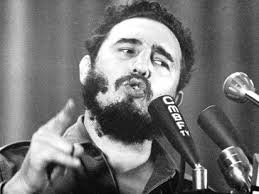
Fidel Castro
Almost immediately, hundreds of thousands of Cubans began fleeing to America. The first émigrés were more than 215,000 Batista followers. The exodus escalated, peaking at approximately 78,000 in 1962.
Between 1962 and 1979, hundreds of thousands of Cubans entered the United States under the Attorney General’s parole authority.
By 2008, more than 1.24 million Cubans were living in the United States, mostly in South Florida, where the population of Miami was about one-third Cuban. Their sheer numbers transformed the state’s political, economic and cultural life. And not entirely for the better.
Many of these Cubans viewed themselves as political exiles, rather than immigrants, hoping to eventually return to Cuba after its Communist regime fell from power.
The large number of Cubans in South Florida, particularly in Miami’s “Little Havana,” allowed them to preserve their culture and customs to a degree rare for immigrant groups.
With so many discontented immigrants concentrated in Florida, they became a potential force for politicians to court.
And the issue guaranteed to sway their votes was unrelenting hostility to Castro. Unsurprisingly, most of their votes went to right-wing Republicans.
John F. Kennedy was the first President to face this dilemma.
During the closing months of the administration of President Dwight D. Eisenhower, the CIA had begun training Cuban exiles for an invasion of their former homeland.
The exiles’ goal: To do what Castro had done—seek refuge in the mountains and launch a successful anti-Castro revolution.
But word of the coming invasion quickly leaked: The exiles were terrible secret-keepers. (A joke at the CIA went: “A Cuban thinks a secret is something you tell to only 300 people.”)
Kennedy insisted the invasion must appear to be an entirely Cuban enterprise. He refused to commit U.S. Marines and Air Force bombers.
The invaders landed on April 17, 1961 at the Bay of Pigs—and were quickly overwhelmed, with hundreds of the men taken prisoner.
Kennedy publicly took the blame for its failure: “Victory has a hundred fathers but defeat is an orphan.” But privately he seethed, and ordered the CIA to redouble its efforts to remove Castro at all costs.
To make certain his order was carried out, he appointed his brother, Robert—then Attorney General—to oversee the CIA’s “Castro removal” program.
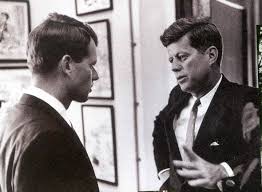
Robert F. Kennedy and John F. Kennedy
It’s here that America’s obsession with Cuba entered its darkest and most disgraceful period.
The CIA and the Mafia entered into an unholy alliance to assassinate Castro—each for its own benefit:
The CIA wanted to please Kennedy.
The mobsters wanted to regain its casino and brothel holdings that had made Cuba their private playground in pre-Castro times. They also hoped to use their pose as patriots to win immunity from future prosecution.
The CIA supplied poisons and explosives to various members of the Mafia. It was then up to the mobsters to assassinate Castro.
The CIA asked Johnny Roselli, a mobster linked to the Chicago syndicate, to go to Florida in 1961 and 1962 to organize assassination teams of Cuban exiles. They were to infiltrate their homeland and assassinate Castro.
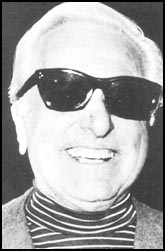
Johnny Roselli
Rosselli called upon two other crime figures: Chicago Mafia boss Sam Giancana and Santos Trafficante, the Costra Nostra chieftain for Tampa, for assistance.

Sam Giancana
Giancana, using the name “Sam Gold” in his dealings with the CIA, was meanwhile being hounded by the FBI on direct orders of Attorney General Robert Kennedy.
The mobsters were authorized to offer $150,000 to anyone who would kill Castro and were promised any support the Agency could yield.
Giancana was to locate someone who was close enough to Castro to be able to drop pills into his food. Trafficante would serve as courier to Cuba, helping to make arrangements for the murder on the island.
Rosselli was to be the main link between all of the participants in the plot.
The available sources disagree on what actually happened. Some believe that the Mob made a genuine effort to “whack” Fidel.
Others are convinced the mobsters simply ran a scam on the government. They would pretend to carry out their “patriotic duty” while in fact making no effort at all to penetrate Castro’s security.
The CIA’s war against Castro was known as Operation Mongoose–the mongoose being a traditional enemy of the cobra. And those entrusted with this assignment were known as the Special Group.
“We were hysterical about Castro at about the time of the Bay of Pigs and thereafter,” Secretary of Defense Robert S. McNamara later testified before Congress about these efforts. “And there was pressure from JFK and RFK to do something about Castro.”
2016 PRESIDENTIAL RACE, ABC NEWS, ALL THE KING’S MEN, ALL THE KINIG’S MEN (BOOK), ALTERNET, AMERICABLOG, ANDREW GOODMAN, ANGELO BRUNO, AP, BABY BOOMER RESISTANCE, BBC, BLOOMBERG NEWS, BLUE BLOODS, BUZZFEED, CAPITOL ATTACK, CARLO GAMBINO, CBS, CBS NEWS, CIVIL WAR, CNN, COINTELPRO, COUPS, CROOKS AND LIARS, DAILY KOS, DAILY KOZ, DEMOCRATS, DEPARTMENT OF HOMELAND SECURITY, DONALD TRUMP, ELECTORAL COLLEGE, ERIC SCHNEIDERMAN, FACEBOOK, FBI, FIVETHIRTYEIGHT, FRANK REAGAN, GAMBINO FAMILY, HARPER’S MAGAZINE, HUFFINGTON POST, INDEPENDENT COUNSEL, INSIDE HOOVER'S FBI (BOOK), J. EDGAR HOOVER, JAMES CHANEY, JAMES COMEY, JEFF SESSIONS, JOSEPH BIDEN, jOSH HAWLEY, JUSTICE DEPARTMENT, KU KLUX KLAN, LYNDON B. JOHNSON, MAFIA, MARJORIE TAYLOR GREENE, MEDIA MATTERS, MERRICK GARLAND, MICHAEL SCHWERNER, MILITIA GROUPS, MO BROOKS, MOTHER JONES, MOVEON, MSNBC, NBC NEWS, NEIL J. WELCH, NEW REPUBLIC, NEW YORK POLICE DEPARTMENT, NEWSDAY, NEWSWEEK, NPR, OBSTRUCTING CONGRESSIONAL PROCEEDINGS, PBS NEWSHOUR, POLITICO, POLITICUSUSA, RAW STORY, REPUBLICANS, REUTERS, RIGHT-WING TERRORISM, ROBERT MUELLER, ROBERT PENN WARREN, RUSSIA, SALON, SEATTLE TIMES, SERGEI KISLYAK, SEXUAL ASSAULT, SLANDER, SLATE, SWAT TEAMS, TALKING POINTS MEMO, TERRORISM, TERRORIST FINANCE TRACKING PROJECT, THE ATLANTIC, THE CHICAGO SUN-TIMES, THE CHICAGO TRIBUNE, THE DAILY BEAST, THE DAILY BLOG, THE GUARDIAN, THE HILL, THE HUFFINGTON POST, THE LOS ANGELES TIMES, THE NATION, THE NEW REPUBLIC, THE NEW YORK TIMES, THE NEW YORKER, THE VILLAGE VOICE, THE WASHINGTON POST, THINKPROGRESS, TIM WEINER, TIME, TOM SELLECK, TREASON, TRUMP UNIVERSITY, TRUTHDIG, TRUTHOUT, TWITTER, TWO POLITICAL JUNKIES, U.S. NEWS & WORLD REPORT, UNITED STATES DEPARTMENT OF JUSTICE, UNITED STATES DEPARTMENT OF THE TREASURY, UNITED STATES HOUSE OF REPRESENTATIVES, UNITED STATES PARK POLICE, UNITED STATES SECRET SERVICE, UNITED STATES SENATE, UNITED STATES SUPREME COURT, UPI, USA PATRIOT ACT, USA TODAY, USA TODAY DONALD TRUMP, VLADIMIR PUTIN, WILLIAM C. SULLIVAN, WILLIE STARK, WONKETTE
In Bureaucracy, History, Law, Law Enforcement, Politics, Social commentary on August 31, 2022 at 12:12 am
On September 2, 1964, the FBI launched a full-blown counterintelligence program against the Ku Klux Klan—COINTELPRO—WHITE HATE in FBI-speak.
Tim Weiner, author of Enemies: A History of the FBI, chronicles the methods used by the Bureau:
“WHITE-HATE intensified in the fall of 1964. It involved all the techniques in the FBI’s long-running attack on the Left. Once a week….FBI agents interrogated all known members of the White Knights of the KKK, blaming other Klansmen for being snitches and naming names, sowing deep suspicion among Klan members. Few knew who was an informer and who was not.

A Ku Klux Klan meeting
“The FBI dangled small fortunes before potential Klan informers, offered outright bribes to Klansmen who could serve as double agents inside state and local police forces, planted bugs and wiretaps in Klaverns, carried out black bag jobs to steal membership lists….”
Other tactics included:
- Contacting the news media to publicize arrests and identify Klan leaders;
- Informing the employers of known Klansmen of their employees’ criminal activity, resulting in the firing of untold numbers of them;
- Breaking up the marriages of Klansmen by circulating rumors of their infidelity among their wives.
“When the Klan reached 14,000 in the mid-sixties, I asked to take over the investigation of the Klan,” recalled William C. Sullivan, who headed the FBI’s Domestic Intelligence Division in the 1960s. “When I left the Bureau in 1971, the Klan was down to a completely disorganized 4,300. It was broken.”

William C. Sullivan
According to Neil J. Welch, the retired Special Agent in Charge (SAC) of the FBI’s Buffalo, New York office:
“A Klan Bureau of Investigation (KBI) was created to counter the FBI, and its members placed the wives and children of agents under surveillance, harassing them with taunts and anonymous phone calls,” wrote Welch in his memoir, Inside Hoover’s FBI.
“It was a serious miscalculation. The most dangerous members of the KBI were systematically identified and assigned to agents selected solely because they were comparatively dangerous. The agents had full discretion.
“During the next few months, a number of men previously involved in Klan violence around the state seemed, by remarkable coincidence, to experience misfortune. Some disappeared from the area. Some were forced to leave Mississippi for health reasons. A few took unplanned trips to places like Mexico and seemed to lose all interest in the Klan upon their return.”
A similar effort, focusing on Right-wing terrorism, could include the following:
- The FBI’s designating Right-wing political and terrorist groups as the Nation’s #1 enemy.
- Reviving the FBI’s legendary COINTELPRO (“Counterintelligence Program”) that destroyed the Ku Klux Klan in the late 1960s. Among the methods that can be used:
- Turning the Bureau’s powerful arsenal—bugs, wiretaps, informants, SWAT teams—on them.
- Buying the cooperation of informants within Right-wing organizations.
- Conducting “black bag jobs” to steal membership lists of of Right-wing organizations.
- Breaking up the marriages of prominent Right-wingers by circulating rumors of their infidelity among their wives.
- Informing the employers of known Right-wing terrorists of their employees’ criminal activity, resulting in the firing of untold numbers of them.
- Contacting the news media to publicize the arrests of prominent Right-wing leaders.
- When Right-wing terrorists target Federal law enforcement agents and/or their families for harassment or worse, they can be targeted for similar intimidation or removal.

FBI SWAT member
A revised COINTELPRO could be supplemented by the following:
- Creating tip hotlines for reporting illegal Right-wing activities—and offering rewards for information that leads to arrests.
- Prosecuting militia groups for violating Federal firearms laws.
- Treating calls for the murder of members of Congress—as Georgia Representative Marjorie Taylor Greene has done-–as felonies punishable by lengthy imprisonment.
- Prosecuting Right-wing leaders involved in the treasonous assault on the United States Capitol Building.
- Prosecuting as “accessories to treason” all those Republican members of Congress who stoked Right-wing anger by lying that the 2020 Presidential election had been stolen from Donald Trump, although every objective news source proved he had lost.
- Directing the Treasury Department’s Terrorist Finance Tracking Program (TFTP) at fundamentalist Christian churches that finance Right-wing terrorism—just as it halts the financing of Islamic terrorist groups by Islamic organizations.
- Using drones, planes and/or helicopters to provide security against similar Right-wing terror demonstrations—especially in Washington, D.C.
- Using the Federal Communications Commission to ban Fox News—the Nation’s #1 Right-wing propaganda network—from representing itself as a legitimate news network, and requiring that its stories carry labels warning viewers: “This is Right-wing propaganda, NOT news.”
- Encouraging victims of Right-wing hate-speech to file libel/slander lawsuits against their abusers—such as the parents of murdered children at Sandy Hook Elementary School successfully did against Alex Jones.
- Using Federal anti-terrorist laws to arrest, prosecute and imprison Right-wingers who openly carry firearms and threaten violence, even if states allow such display of firearms.
- Seizing the assets of individuals and organizations found guilty of Right-wing terrorism offenses.
When you are constantly looking over your shoulder, your enemies are winning. When your enemies are constantly looking over their shoulder, you are winning.


 Bureaucracybuster's Blog
2020 PRESIDENTIAL ELECTION, 2022 MIDTERM ELECTIONS, ABC NEWS, ADAM LAXALT, ALEXANDER SHUSTOROVICH, ALTERNET, AMERICABLOG, AP, AUDREY MURAVIEV, BABY BOOMER RESISTANCE, BBC, BLOOMBERG NEWS, BUZZFEED, CARL VON CLAUSEWITZ, CBS NEWS, CHRIS CILLIZZA, CIA, CNN, CROOKS AND LIARS, DAILY KOS, DEBT CEILING, DEFENSE INTELLIGENCE AGENCY, DONALD TRUMP, DONALD TRUMP JR., EMOLUMENTS CLAUSE, ERIC TRUMP, FASCISM, FBI, FEDERAL ELECTIONS COMMISSION, FIVETHIRTYEIGHT, FOX NETWORK, FRANKLIN GRAHAM, GEORGE W. BUSH, HARPER’S MAGAZINE, HUFFINGTON POST, HUNTER BIDEN, INTERNATIONAL BROTHERHOOD OF TEAMSTERS UNION, JAMES KIRCHICK, JANUARY 6 COUP ATTEMPT, JESSE BENTON, JOE BIDEN, JOHN KASICH, JOHN MCCAIN, JOSEPH MCCARTHY, KEVIN MCCARTHY, LEN BLAVATNIK, LIBERALISM, LINDSEY GRAHAM, MAFIA, MARCO RUBIO, MEDIA MATTERS, MICHELLE OBAMA, MOTHER JONES, MOVEON, MSNBC, NANCY PELOSI, NBC NEWS, NEW REPUBLIC, NEWSDAY, NEWSWEEK, NICCOLO MACHIAVELLI, NPR, OLIGARCHS, PBS NEWSHOUR, POLITICO, POLITICUSUSA, RAW STORY, REPUBLICANS, REUTERS, RICHARD NIXON, ROBERT F. KENNEDY, Ronald Reagan, RUSSIA, RUSSIA TODAY, SALON, SCOTT WALKER, SEATTLE TIMES, SLATE, SPIRO AGNEW, TALKING POINTS MEMO, THE ATLANTIC, THE CHICAGO SUN-TIMES, THE CHICAGO TRIBUNE, THE DAILY BEAST, THE DAILY BLOG, THE GUARDIAN, THE HILL, THE HUFFINGTON POST, THE INTERCEPT, THE LOS ANGELES TIMES, THE NATION, THE NEW REPUBLIC, THE NEW YORK TIMES, THE NEW YORKER, THE PRINCE, THE VILLAGE VOICE, THE WASHINGTON POST, THINKPROGRESS, TIME, TRUTHDIG, TRUTHOUT, TWITTER, U.S. NEWS & WORLD REPORT, UKRAINE, UNITED STATES CAPITOL BUILDING, UNITED STATES CONSTITUTION, UNITED STATES HOUSE OF REPRESENTATIVES, UNITED STATES JUSTICE DEPARTMENT, UNITED STATES SENATE, UPI, USA TODAY, VLADIMIR PUTIN, VOLODYMYR ZELENSKY, WORLD WAR 11
HOW DEMOCRATS CAN DEFEAT EXTORTION: PART ONE (OF TWO)
In Bureaucracy, Business, History, Law, Law Enforcement, Politics, Social commentary on January 17, 2023 at 12:10 amIt took 15 votes—and a series of humiliating concessions—for Kevin McCarthy (R-CA) to become Speaker of the House of Representatives.
All of the concessions he made were to the most Right-wing members of the House. And all of those members are fanatically dedicated to destroying whatever legacy President Joseph R. Biden hopes to leave.
At the top of their list: Impeaching Biden.
Republicans refused to impeach and convict Donald Trump after he incited a deadly riot against the United States Capitol Building. But they’re eager to remove Biden for what they consider the most impeachable offense of all.
He defeated a Republican candidate for President.
President Joseph Biden
And not just any Republican candidate: The candidate who had made no secret of his desire to be “President-for-Life.”
During the mid-term elections, Republicans had expected to sweep both the House and Senate. This would have given them virtual control of the government.
For the House is the body that initiates revenue bills and impeaches federal officials. And the Senate holds the power to confirm Presidential appointments that require consent, and to provide advice and consent to ratify treaties.
But Democrats went on a rare offensive and rightly attacked Republicans as intending to gain absolute control over the lives of their fellow Americans. And voters rejected the candidates favored by Trump for local and federal offices.
Thus, Republicans had to settle for controlling the House.
Even so, they intend to abuse their new-found powers to the utmost. Among their topmost goals:
Hunter Biden
Center for Strategic & International Studies, CC BY 3.0 <https://creativecommons.org/licenses/by/3.0>, via Wikimedia Commons
If Democrats follow their usual mantra of “When they go low, we go high,” they will cower before Republican aggression and sacrifice their legislative agenda.
Yet they can snatch victory from the jaws of impending defeat—providing they are willing to follow the advice Robert F. Kennedy offered for combating the Mafia: “If we do not attack organized criminals with weapons and techniques as effective as their own, they will destroy us.”
Counterattack Strategy #1: Attack Republicans as traitors selling out the country to Vladimir Putin
Numerous Republicans have taken “campaign contributions”—i.e., bribes—from Russian oligarchs linked to Putin.
One Russian oligarch—Len Blavatnik—has given millions of dollars to top Republican leaders—such as Senators Mitch McConnell (Kentucky), Marco Rubio (Florida) and Lindsey Graham (South Carolina).
In just 2017, Blavatnik contributed the following to GOP Political Action Committees (PACs):
The Biden administration need not ask the CIA or FBI to unearth these contributions. They can be easily found within the files of the Federal Election Commission (FEC).
Putin’s monies have been well-spent: About 90 House Republicans—out of a total of 213—attended Volodymyr Zelensky’s address to Congress on December 21, according to CQ Roll Call. Some who did spent much of the speech on their phones.
Many Republicans—such as House Speaker Kevin McCarthy, who in 2021 received about $255,000 from Blavatnik—have openly threatened to end all funding for Ukraine’s heroic struggle against Russian aggression.
Kevin McCarthy
This would prove an effective technique. From the end of World War II to the collapse of the Soviet Union in 1991, Republicans successfully attacked Democrats as at least potential sellouts, if not actual traitors.
The advantage of attacking Russian-bribed Republicans today is that even some “Reagan Republicans”—such as James Kirchick, a conservative reporter, foreign correspondent, author, and columnist—have openly denounced this treason.
Thus, the White House could ignite an internal conflict within the Right by pitting Republicans against each other.
Counterattack Strategy #2: Concede NOTHING to Republicans
Donald Trump shut down the Federal Government on December 22, 2018, because Democrats refused to finance his useless border wall against Mexico.
So Speaker of the House Nancy Pelosi shut down his State of the Union appearance.
As CNN political analyst Chris Cillizza noted: “What Pelosi seems to understand better than past Trump political opponents is that giving ANY ground is a mistake. You have to not only stand firm, but be willing to go beyond all political norms—like canceling the SOTU—to win.”
His ego strung, Trump reopened the government.
And with Republicans threatening to not raise the debt ceiling unless their extortionate demands are met, the White House can effectively counter this danger:
Deduct from the budget every dollar directed toward Republican states. This would vastly reduce the size of the Federal budget, since subsidizing these failed economies accounts for a substantial portion of the budget.
Share this: