Posts Tagged ‘LYNDON B. JOHNSON’
ABC NEWS, ALTERNET, AMERICAN TABLOID, ANTI-CASTRO CUBANS, AP, ASSASSINATION, BUZZFEED, CBS NEWS, CIA, CNN, COMMUNISM, CROOKS AND LIARS, CUBA, CUBA TRAVEL BAN, CUBAN MISSILE CRISIS, DAILY KOZ, DONALD TRUMP, DWIGHT D. EISENHOWER, FACEBOOK, FBI, FIDEL CASTRO, FLORIDA, FULGENCIO BATISTA, GUS RUSSO, JACK RUBY, JAMES ELLROY, JOHN F. KENNEDY, JOHNNY ROSELLI, LEE HARVEY OSWALD, LIVE BY THE SWORD, LYNDON B. JOHNSON, MAFIA, MARCO RUBIO, MOTHER JONES, MOVEON, MSNBC, NBC NEWS, NEWSWEEK, NIKITA KHRUSHCHEV, NPR, PBS NEWSHOUR, POLITICO, RAW STORY, REUTERS, ROBERT F. KENNEDY, SALON, SAM GIANCANA, SEATTLE TIMES, SLATE, THE ATLANTIC, THE CHICAGO SUN-TIMES, THE CHICAGO TRIBUNE, THE DAILY BEAST, THE GUARDIAN, THE HILL, THE HUFFINGTON POST, THE LOS ANGELES TIMES, THE NATION, THE NEW YORK TIMES, THE WASHINGTON POST, TIME, TWITTER, U.S. NEWS & WORLD REPORT, UPI, USA TODAY, WARREN COMMISSION
In Bureaucracy, History, Law Enforcement, Military, Politics, Social commentary on June 19, 2019 at 12:22 am
On October 22, 1962, President John F. Kennedy went on nationwide TV to announce that Russian nuclear missiles had been installed in Cuba—and his blockade of that island.
He warned that any nuclear missile launched from Cuba against any nation would be regarded as an attack on the United States by the Soviet Union—and would trigger “a full retaliatory response” upon the U.S.S.R.
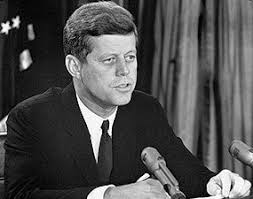
President John F. Kennedy addresses the nation
And he demanded that the Soviets remove all of their offensive weapons from Cuba:
“The path we have chosen for the present is full of hazards, as all paths are, but it is the one most consistent with our character and courage as a nation and our commitments around the world.
“The cost of freedom is always high, but Americans have always paid it. And one path we shall never choose, and that is the path of surrender or submission.”
On October 26, the United States raised the readiness level of SAC forces to DEFCON 2—the step just short of war. For the only time in U.S. history, B-52 bombers were dispersed to various locations and made ready to take off, fully equipped, on 15 minutes’ notice.
Other measures taken included:
- One-eighth of America’s 1,436 bombers were on airborne alert.
- About 145 intercontinental ballistic missiles stood on ready alert.
- Air Defense Command redeployed 161 nuclear-armed interceptors to 16 dispersal fields within nine hours with one-third maintaining 15-minute alert status.
- Twenty-three nuclear-armed B-52s were sent to orbit points within striking distance of the Soviet Union.
An invasion date of Cuba was set for October 29. But the Kennedy Administration—and the American military—didn’t know that Russian soldiers guarding the missiles had been armed with tactical nuclear weapons.
Had the Marines gone in, those mini-nukes would have been used. And a fullscale nuclear exchange between the United States and the Soviet Union would have almost certainly followed.
At the height of the crisis, Attorney General Robert F. Kennedy offered a solution.
Khrushchev had sent two teletypes to Kennedy. The first had agreed to remove the missiles, but the second had demanded that the United States remove its own nuclear missiles from Turkey, which bordered the Soviet Union.
Robert Kennedy’s solution: Ignore the second message—and announce that President Kennedy had accepted Khrushchev’s offer to remove the missiles.
After this announcement was made, President Kennedy said: “It can go either way now.”
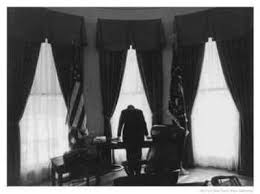
John F. Kennedy in the Oval Office
The crisis ended on October 28. Under enormous pressure, Khrushchev agreed to remove the missiles from Cuba.
Behind his decision lay a secret promise by the Kennedy administration to remove its obsolete nuclear missiles from Turkey, which bordered the Soviet Union. And a public pledge to not invade Cuba.
On the night the crisis ended, there occurred a prophetic exchange between the two Kennedy brothers.
JFK: “Maybe this is the night I should go to the theater”–a reference to Abraham Lincoln’s fatal attendance of Ford’s Theater at the end of the Civil War.
RFK: “If you go, I want to go with you.”
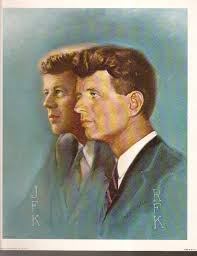
John F. and Robert F. Kennedy
But the Kennedys continued their campaign of sabotage throughout Cuba. And they were preparing something far bigger: A fullscale American invasion of the island.
On October 4, 1963, the Joint Chiefs of Staff submitted its latest version of the invasion plan, known as OPLAN 380-63. Its timetable went:
- January, 1964: Infiltration into Cuba by Cuban exiles.
- July 15, 1964: U.S. conventional forces join the fray.
- August 3, 1964: All-out U.S. air strikes on Cuba.
- October 1, 1964: Full-scale invasion to install “a government friendly to the U.S.”
During the Cuban Missile Crisis, Robert Kennedy—referring to the 1941 Japanese attack on Pearl Harbor—had resisted demands for a “sneak attack” on Cuba by saying: “I don’t want my brother to be the Tojo of the 1960s.”
Now the Kennedys planned such an attack on Cuba just one month before the November, 1964 Presidential election.
Then fate—in the unlikely figure of Lee Harvey Oswald—intervened.
On November 22, 1963, while the President rode through Dallas in an open-air automobile, a rifle-wielding assassin opened fire. He scored two hits on Kennedy—in the back of the neck and head. The second wound proved instantly fatal.
The nation and the world were shocked—and plunged into deep mourning.
But for some of those who had waged a secret, lethal war against Fidel Castro for the previous two years, Kennedy’s death—at least in retrospect—didn’t come as a surprise.
Robert Kennedy, in particular, spent the remaining years of his life agonizing over the possibility that his highly personal war against Castro had backfired.
That Castro, fed up with the CIA’s assassination plots against him, had retaliated with one of his own.
Robert Kennedy’s fears and guilt were compounded by the fact that, while waging war on Castro, he had waged an equally ruthless crusade against organized crime.
He knew that some of the mobsters he had tried to send to prison had played a major role in the CIA’s efforts to “hit” Castro. Had the Mafia—believing itself the victim of a double-cross—put out a “contract” on JFK instead?
It was a question that haunted him until the day he died.
ABC NEWS, ALTERNET, AMERICAN TABLOID, ANTI-CASTRO CUBANS, AP, ASSASSINATION, BUZZFEED, CBS NEWS, CIA, CNN, COMMUNISM, CROOKS AND LIARS, CUBA, CUBA TRAVEL BAN, CUBAN MISSILE CRISIS, DAILY KOZ, DONALD TRUMP, DWIGHT D. EISENHOWER, FACEBOOK, FBI, FIDEL CASTRO, FLORIDA, FULGENCIO BATISTA, GUS RUSSO, JACK RUBY, JAMES ELLROY, JOHN F. KENNEDY, JOHNNY ROSELLI, LEE HARVEY OSWALD, LIVE BY THE SWORD, LYNDON B. JOHNSON, MAFIA, MARCO RUBIO, MOTHER JONES, MOVEON, MSNBC, NBC NEWS, NEWSWEEK, NIKITA KHRUSHCHEV, NPR, PBS NEWSHOUR, POLITICO, RAW STORY, REUTERS, ROBERT F. KENNEDY, SALON, SAM GIANCANA, SEATTLE TIMES, SLATE, THE ATLANTIC, THE CHICAGO SUN-TIMES, THE CHICAGO TRIBUNE, THE DAILY BEAST, THE GUARDIAN, THE HILL, THE HUFFINGTON POST, THE LOS ANGELES TIMES, THE NATION, THE NEW YORK TIMES, THE WASHINGTON POST, TIME, TWITTER, U.S. NEWS & WORLD REPORT, UPI, USA TODAY, WARREN COMMISSION
In Bureaucracy, History, Law Enforcement, Military, Politics, Social commentary on June 18, 2019 at 12:20 am
The war that John and Robert Kennedy waged against Fidel Castro became known within the CIA as Operation Mongoose.
But not everyone in the CIA was enthusiastic about the “get Castro” effort.
“Everyone at CIA was surprised at Kennedy’s obsession with Fidel,” recalled Sam Halpern, who was assigned to the Cuba Project. “They thought it was a waste of time. We all knew [Fidel] couldn’t hurt us. Most of us at CIA initially liked Kennedy, but why go after this little guy?
“One thing is for sure: Kennedy wasn’t doing it out of national security concerns. It was a personal thing. The Kennedy family felt personally burnt by the Bay of Pigs and sought revenge.”
It was all-out war. Among the tactics used:
- Hiring Cuban gangsters to murder Cuban police officials and Soviet technicians.
- Sabotaging mines.
- Paying up to $100,000 per “hit” for the murder or kidnapping of Cuban officials.
- Using biological and chemical warfare against the Cuban sugar industry.
“Bobby (Kennedy) wanted boom and bang all over the island,” recalled Halpern. “It was stupid. The pressure from the White House was very great.”
Attorney General Robert Kennedy
Attorney General Robert Kennedy had been appointed to supervise the CIA’s “get Castro” effort.
Among that “boom and bang” were a series of assassination plots against Castro, in which the Mafia was to be a key player.
Chicago Mobster Johnny Rosselli proposed a simple plan: Through its underworld connections in Cuba, the Mafia would recruit a Cuban in Castro’s entourage, such as a waiter or bodyguard, who would poison him.
The CIA’s Technical Services division produced a botulinus toxin which was then injected into Castro’s favorite brand of cigars. The CIA also produced simpler botulinus toxin pills that could be dissolved in his food or drink.
But the deputized Mafia contacts failed to deliver any of the poisons to Castro.
Rosselli told the CIA that the first poisoner had been discharged from Castro’s employ before he could kill him, and the back-up agent got “cold feet.”
Other proposals or attempts included:
- Planting colorful seashells rigged to explode at a site where Castro liked to go skindiving.
- Trying to arrange for his being presented with a wetsuit impregnated with noxious bacteria and mold spores, or with lethal chemical agents.
- Attempting to infect Castro’s scuba regulator with tuberculous bacilli.
- Trying to douse his handkerchiefs, tea and coffee with other lethal bacteria.
Former members of the Kennedy Administration later insisted that neither John nor Robert Kennedy knew or approved of these assassination plots. But the sheer weight of available evidence indicates otherwise.
Bobby, in particular, was constantly pressing the CIA to “do something” about Castro. In the world of covert action, words like “Kill Castro” aren’t committed to paper. Or even spoken.
Castro, rightly seeing his life and regime threatened, appealed to Nikita Khrushchev, leader of the Soviet Union, for assistance.
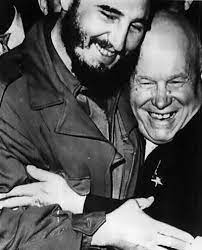
Fidel Castro and Nikita Khrushchev
Keizers [CC BY-SA 3.0 (https://creativecommons.org/licenses/by-sa/3.0)%5D
Khrushchev was quick to comply: “We must not allow the communist infant to be strangled in its crib,” he told members of his inner circle.
By October, 1962, the Soviet Union had sent more than
- 40,000 soldiers,
- 1,300 field pieces,
- 700 anti-aircraft guns,
- 350 tanks and
- 150 jets
to Cuba to deter another invasion.
Most importantly, Khrushchev began supplying Castro with nuclear-tipped ballistic missiles.
Their discovery, on October 15, 1962, ignited the single most dangerous confrontation of the 50-year Cold War.
Suddenly, the United States and the Soviet Union—both bristling with nuclear weapons—found themselves on the brink of nuclear war.
At the time, Kennedy officials claimed they couldn’t understand why Khrushchev had placed nuclear missiles in Cuba. “Maybe Khrushchev’s gone mad” was a typical public musing.
This remained the official American view for years afterward—as depicted in Robert Kennedy’s memoir, Thirteen Days: A Memoir of the Cuban Missile Crisis, published in 1969, the year after his death.
No admission was made that JFK had been waging a no-holds-barred campaign to overthrow the Cuban government and assassinate its leader.
The same proved true for the 1974 doc-u-drama, The Missiles of October, starring William Devane as John F. Kennedy and Martin Sheen as Robert Kennedy.
On October 16, President Kennedy was informed of the missile installations. He immediately convened a group of his 12 most important advisers, which became known as Ex-Comm, for Executive Committee.
Then followed seven days of guarded and intense debate by Kennedy and his advisers. Some of the participants—such as Air Force General Curtis LeMay—urged an all-out air strike against the missile sites.
Others—such as Adlai Stevenson, the United States delegate to the United Nations—urged a reliance on quiet diplomacy.
It was Secretary of Defense Robert S. McNamara who suggested a middle course: A naval blockade—a “quarantine” in Kennedy’s softened term—around Cuba. This would hopefully prevent the arrival of more Soviet offensive weapons on the island.
Finally, the President decided to to impose a naval blockade.
On October 22, Kennedy went on nationwide TV to announce the discovery of the missiles and his decision to blockade Cuba.
ABC NEWS, ALTERNET, AMERICAN TABLOID, ANTI-CASTRO CUBANS, AP, ASSASSINATION, BUZZFEED, CBS NEWS, CIA, CNN, COMMUNISM, CROOKS AND LIARS, CUBA, CUBAN MISSILE CRISIS, DAILY KOZ, DONALD TRUMP, DWIGHT D. EISENHOWER, FACEBOOK, FBI, FIDEL CASTRO, FLORIDA, FULGENCIO BATISTA, GUS RUSSO, JACK RUBY, JAMES ELLROY, JOHN F. KENNEDY, JOHNNY ROSELLI, LEE HARVEY OSWALD, LIVE BY THE SWORD, LYNDON B. JOHNSON, MAFIA, MARCO RUBIO, MOTHER JONES, MOVEON, MSNBC, NBC NEWS, NEWSWEEK, NIKITA KHRUSHCHEV, NPR, PBS NEWSHOUR, POLITICO, RAW STORY, REUTERS, ROBERT F. KENNEDY, SALON, SAM GIANCANA, SEATTLE TIMES, SLATE, THE ATLANTIC, THE CHICAGO SUN-TIMES, THE CHICAGO TRIBUNE, THE DAILY BEAST, THE GUARDIAN, THE HILL, THE HUFFINGTON POST, THE LOS ANGELES TIMES, THE NATION, THE NEW YORK TIMES, THE WASHINGTON POST, TIME, TWITTER, U.S. NEWS & WORLD REPORT, UPI, USA TODAY, WARREN COMMISSION
In Bureaucracy, History, Law Enforcement, Military, Politics, Social commentary on June 17, 2019 at 12:11 am
On June 5, President Donald Trump banned cruise ships from the United States to visit Cuba and “people-to-people” educational travel there for Americans.
Officially, the reason was to keep American dollars “out of the hands” of the communist government.
Unofficially, the reason was to curry electoral favor with the huge Cuban exile community living in Florida, especially in Miami.
That community owes its existence to Fidel Castro (1926-2016).
To his supporters he was a tireless champion of the poor and a foe of American imperialism. To his enemies he was a ruthless dictator who drove his country to economic ruin in the name of a failed ideology—communism.
His reign began on January 1, 1959, when he swept triumphantly into Havana after a two-year guerrilla campaign against Cuban dictator Fulgencio Batista.
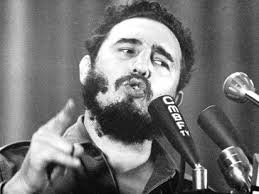
Fidel Castro
Almost immediately, hundreds of thousands of Cubans began fleeing to America. The first émigrés were more than 215,000 Batista followers. The exodus increased, peaking at approximately 78,000 in 1962.
In October, 1962, Castro stopped regularly scheduled travel between the two countries, and asylum seekers began sailing from Cuba to Florida.
Between 1962 and 1979, hundreds of thousands of Cubans entered the United States under the Attorney General’s parole authority.
By 2008, more than 1.24 million Cubans were living in the United States, mostly in South Florida, where the population of Miami was about one-third Cuban. Their sheer numbers transformed the state’s political, economic and cultural life. And not entirely for the better.
Many of these Cubans viewed themselves as political exiles, rather than immigrants, hoping to eventually return to Cuba after its Communist regime fell from power.
The large number of Cubans in South Florida, particularly in Miami’s “Little Havana,” allowed them to preserve their culture and customs to a degree rare for immigrant groups.
With so many discontented immigrants concentrated in Florida, they became a potential force for politicians to court.
And the issue guaranteed to sway their votes was unrelenting hostility to Castro. Unsurprisingly, most of their votes went to Right-wing Republicans.
John F. Kennedy was the first President to face this dilemma.
During the closing months of the administration of President Dwight D. Eisenhower, the CIA had begun training Cuban exiles for an invasion of their former homeland.
The exiles’ goal: To do what Castro had done—seek refuge in the mountains and launch a successful anti-Castro revolution.
But word of the coming invasion quickly leaked: The exiles were terrible secret-keepers. (A joke at the CIA went: “A Cuban thinks a secret is something you tell to only 300 people.”)
Kennedy insisted the invasion must appear to be an entirely Cuban enterprise. He refused to commit U.S. Marines and Air Force bombers.
More than 1,400 invaders landed on April 17, 1961 at the Bay of Pigs—and were quickly overwhelmed, with hundreds of the men taken prisoner.
Kennedy publicly took the blame for its failure: “Victory has a hundred fathers but defeat is an orphan.” Privately he seethed, and ordered the CIA to redouble its efforts to remove Castro at all costs.
To guarantee success, he appointed his brother, Robert—then Attorney General—to oversee the CIA’s “Castro removal” program.
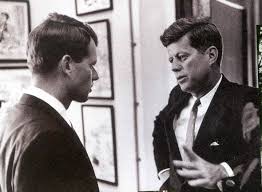
Robert F. Kennedy and John F. Kennedy
It’s here that America’s obsession with Cuba entered its darkest and most disgraceful period.
The CIA and the Mafia entered into an unholy alliance to assassinate Castro—each for its own benefit:
- The CIA wanted to please Kennedy.
- The mobsters wanted to regain their casino and brothel holdings that had made Cuba their private playground in pre-Castro times. They also hoped to use their pose as patriots to win immunity from future prosecution.
The CIA supplied poisons and explosives to various members of the Mafia. It was then up to the mobsters to assassinate Castro.
The CIA asked Johnny Roselli, a mobster linked to the Chicago syndicate, to go to Florida in 1961 and 1962 to organize assassination teams of Cuban exiles. They were to infiltrate their homeland and assassinate Castro.
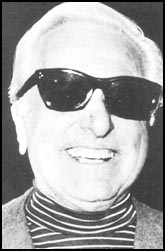
Johnny Roselli
Rosselli called upon two other crime figures: Chicago Mafia boss Sam Giancana and Santos Trafficante, the Costra Nostra chieftain for Tampa, for assistance.

Sam Giancana
Giancana, using the name “Sam Gold” in his dealings with the CIA, was meanwhile being hounded by the FBI on direct orders of Attorney General Robert Kennedy.
The mobsters were authorized to offer $150,000 to anyone who would kill Castro and were promised any support the Agency could yield.
Giancana was to locate someone who was close enough to Castro to be able to drop pills into his food. Trafficante would serve as courier to Cuba, helping to make arrangements for the murder on the island.
Rosselli was to be the main link between all of the participants in the plot.
Some historians believe that the Mob made a genuine effort to “whack” Fidel.
Others are convinced the mobsters simply ran a scam on the government. They pretended to carry out their “patriotic duty” while in fact making no effort at all to penetrate Castro’s security.
The CIA’s war against Castro was known as Operation Mongoose—the mongoose being a traditional enemy of the cobra. And those entrusted with this assignment were known as the Special Group.
1968 PRESIDENTIAL RACE, ABC NEWS, ADOLF HITLER, ALTERNET, AP, BERNARD LAW MONTGOMERY, BUZZFEED, CBS NEWS, CNN, COMING APART: AMERICA IN THE 1960S (BOOK), CROOKS AND LIARS, D-DAY, DAILY KOZ, DWIGHT D. EISENHOWER, ERWIN ROMMEL, EUGENE MCCARTHY, FACEBOOK, HUBERT HUMPHERY, JOHN F. KENNEDY, LYNDON B. JOHNSON, MOTHER JONES, MOVEON, MSNBC, NAZI GERMANY, NBC NEWS, NEWSWEEK, NORMAN COTA, NPR, POLITICO, RAW STORY, REUTERS, ROBERT F. KENNEDY, SALON, SEATTLE TIMES, SIRHAN SIRHAN, SLATE, THE ATLANTIC, THE CHICAGO SUN-TIMES, THE CHICAGO TRIBUNE, THE DAILY BEAST, THE GUARDIAN, THE HILL, THE HUFFINGTON POST, THE LOS ANGELES TIMES, THE NATION, THE NEW YORK TIMES, THE WASHINGTON POST, THIRD REICH, TIME, TWITTER, U.S. ARMY RANGERS, U.S. NEWS & WORLD REPORT, UPI, USA TODAY, VIETNAM WAR, WILLIAM L. O'NEILL, WORLD WAR 11
In Bureaucracy, History, Military, Politics, Social commentary on June 6, 2019 at 12:16 am
“For it is the doom of men that they forget.”
—Merlin, in “Excalibur”
June 6—a day of glory and tragedy.
The glory came 75 years ago—on Tuesday, June 6, 1944.
On that morning, Americans awoke to learn—from radio and newspapers—that their soldiers had landed on the French coast of Normandy.
In Supreme Command of the Allied Expeditionary Force: American General Dwight D. Eisenhower. Overall command of ground forces rested with British General Bernard Law Montgomery.
Operation Overlord, the Allied invasion to liberate France from Nazi Germany, proved one of the pivotal actions of World War II.
Shortly after midnight, 24,000 American, British, Canadian and Free French troops launched an airborne assault. This was followed at 6:30 a.m. by an amphibious landing of Allied infantry and armored divisions on the French coast.
Field Marshal Erwin Rommel—the legendary “Desert Fox”—commanded the German forces. For him, the first 24 hours of the battle would be decisive.
“For the Allies as well as the Germans,” he warned his staff, “it will be the longest day.”
The operation was the largest amphibious invasion in history. More than 160,000 troops landed—73,000 Americans, 61,715 British and 21,400 Canadians.

Omaha Beach – June 6, 1944
Initially, the Allied assault seemed likely to be stopped at the water’s edge—where Rommel had insisted it must be. He had warned that if the Allies established a beachhead, their overwhelming numbers and airpower would eventually prove irresistible.
German machine-gunners and mortarmen wreaked a fearful toll on Allied soldiers. But commanders like U.S. General Norman Cota led their men to victory through a storm of bullets and shells.
Coming upon a group of U.S. Army Rangers taking cover behind sand dunes, Cota demanded: “What outfit is this?”
“Rangers!” yelled one of the soldiers.
“Well, Goddamnit, then, Rangers, lead the way!” shouted Cota, inspiring the soldiers to rise and charge into the enemy.
The command also gave the Rangers the motto they carry to this day.
The allied casualty figures for D-Day have been estimated at 10,000, including 4,414 dead. By nationality, the D-Day casualty figures are about
- 2,700 British
- 946 Canadians
- and 6,603 Americans.
The total number of German casualties on D-Day isn’t known, but is estimated at 4,000 to 9,000.
Allied and German armies continued to clash throughout France, Belgium and Germany until May 7, 1945, when Germany finally surrendered.
But Americans who had taken part in D-Day could be proud of having dealt a fatal blow to the evil ambitions of Adolf Hitler’s Third Reich.
So much for the glory of June 6. Now for the tragedy—which occurred 51 years ago, on Thursday, June 6, 1968.
Twenty-four years after D-Day, Americans awoke to learn—mostly from TV—that New York Senator Robert F. Kennedy had died at 1:44 a.m. of an assassin’s bullet.
He had been campaigning for the Democratic Presidential nomination, and had just won the California primary on June 4.
This had been a make-or-break event for Kennedy, a fierce critic of the seemingly endless Vietnam war.
He had won the Democratic primaries in Indiana and Nebraska, but had lost the Oregon primary to Minnesota Senator Eugene McCarthy.
If he defeated McCarthy in California, Kennedy could force his rival to quit the race. That would lead to a showdown between him and Vice President Hubert Humphrey for the nomination.
(President Lyndon B. Johnson had withdrawn from the race on March 31—just 15 days after Kennedy announced his candidacy on March 16.)
After winning the California and South Dakota primaries, Kennedy gave a magnanimous victory speech in the ballroom of the Ambassador Hotel in Los Angeles:

Robert F. Kennedy, only moments from death
“I think we can end the divisions within the United States….We are a great country, an unselfish country, and a compassionate country. And I intend to make that my basis for running over the period of the next few months.”
Then he entered the hotel kitchen—where Sirhan Sirhan, a 24-year-old Palestinian from Jordan, opened fire with a .22 revolver.
Kennedy was hit three times—once fatally in the back of the head. Five other people were also wounded.
Kennedy’s last-known words were: “Is everybody all right?” and “Jack, Jack”—the latter clearly a reference to his beloved older brother, John Fitzgerald Kennedy.
Almost five years earlier, that brother—then President of the United States—had been assassinated in Dallas on November 22, 1963.
Then Robert Kennedy lost consciousness—forever, dying in a hospital bed 24 hours later.
Kennedy had been a U.S. Attorney General (1961-1964) and Senator (1964-1968). But it was his connection to President Kennedy for which he was best-known.
His assassination—coming so soon after that of JFK—convinced many Americans there was something “sick” about the nation’s culture.
Historian William L. O’Neil delivered a poignant summary of Robert Kennedy’s legacy in Coming Apart: An Informal History of America in the 1960′s.

“He aimed so high that he must be judged for what he meant to do, and through error and tragic accident, failed at…..He will also be remembered as an extraordinary human being who, though hated by some, was perhaps more deeply loved by his countrymen than any man of his time.
“That, too, must be entered into the final account, and it is no small thing. With his death, something precious vanished from public life.”
9/11, ABC NEWS, AL QAEDA, ALTERNET, AMERICAN CAESARS: THE LIVES OF THE PRESIDENTS FROM FRANKLIN D. ROOSEVELT TO GEORGE W. BUSH, AMERICAN EMPIRE, AP, BARACK OBAMA, BASHAR AL-ASSAD, BEN RHODES, BILL CLINTON, BUREAUCRACY, BUZZFEED, CBS NEWS, CHRIS MATHEWS, CNN, CONDOLEEZA RICE, CROOKS AND LIARS, DAILY KOZ, DONALD TRUMP, DWIGHT EISENHOWER, FACEBOOK, FBI, FRANKLIN D. ROOSEVELT, GEORGE H.W. BUSH, GEORGE W. BUSH, GERALD R. FORD, HARRY S. TRUMAN, IRAN, JIMMY CARTER, JOHN F. KENNEDY, LYNDON B. JOHNSON, MOTHER JONES, MOVEON, MSNBC, NBC NEWS, NEWSWEEK, NIGEL HAMILTON, NPR, NUCLEAR WEAPONS, OSAMA BIN LADEN, POLITICO, RAW STORY, REPUBLICAN PARTY, REUTERS, RICHARD CLARKE, RICHARD NIXON, ROMAN EMPIRE, SALON, SEATTLE TIMES, SEPTEMBER 11, SLATE, SUETONIUS, SYRIA, TERRORISM, THE ATLANTIC, THE CHICAGO SUN-TIMES, THE CHICAGO TRIBUNE, THE DAILY BEAST, THE GUARDIAN, THE HILL, THE HUFFINGTON POST, THE LOS ANGELES TIMES, THE NATION, THE NEW YORK TIMES, THE TWELVE CAESARS, THE WASHINGTON POST, TIME, TWITTER, U.S. NEWS & WORLD REPORT, UPI, USA TODAY
In Bureaucracy, History, Military, Politics, Social commentary on May 27, 2019 at 12:04 am
On September 12, 2001, President George W. Bush attended a meeting of the National Security Council.
“Why shouldn’t we go against Iraq, not just Al-Qaeda?” demanded Donald Rumsfeld, the Secretary of Defense.
Vice President Dick Cheney enthusiastically agreed.
Secretary of State Colin Powell then pointed out there was absolutely no evidence that Iraq had had anything to do with 9/11 or Al-Qaeda. And he added: “The American people want us to do something about Al-Qaeda”—not Iraq.
On November 21, 2001, only 10 weeks after 9/11, Bush told Rumsfeld: It’s time to turn to Iraq.

Liars Club: Condoleeza Rice, Dick Cheney, George Bush, Donald Rumsfeld
Bush and his war-hungry Cabinet officials knew that Americans demanded vengeance on AlQaeda’s mastermind, Osama bin Laden, and not Iraqi dictator Saddam Hussein. So they repeatedly fabricated “links” between the two:
- Saddam had worked hand-in-glove with Bin Laden to plan 9/11.
- Saddam was harboring and supporting Al-Qaeda throughout Iraq.
- Saddam, with help from Al-Qaeda, was scheming to build a nuclear bomb.
Yet as early as September 22, 2001, Bush had received a classified President’s Daily Brief intelligence report, which stated that
- There was no evidence linking Saddam Hussein to 9/11.
- There was scant evidence that Iraq had any significant collaborative ties with Al-Qaeda.
- Saddam had tried to monitor Al Qaeda through his intelligence service—because he saw it and other theocratic radical Islamist organizations as potential threats to his secular regime.
Bush administration officials repeatedly claimed that Iraq possessed huge quantities of chemical and biological weapons, in violation of UN resolutions. And they further claimed that US intelligence agencies had determined:
- The precise locations where these weapons were stored,
- The identities of those involved in their production.
- The military orders issued by Saddam Hussein for their use in the event of war.
Among other lies stated as fact by members of the Bush administration:
- Iraq had sought uranium from Niger, in west Africa.
- Thousands of aluminum tubes imported by Iraq could be used in centrifuges to create enriched uranium.
- Iraq had up to 20 long-range Scud missiles, prohibited under UN sanctions.
- Iraq had massive stockpiles of chemical and biological agents, including nerve gas, anthrax and botulinum toxin.
- Saddam Hussein had issued chemical weapons to front-line troops who would use them when US forces crossed into Iraq.
August 26, 2002: Cheney told the Veterans of Foreign Wars, “There is no doubt that Saddam Hussein now has weapons of mass destruction. There is no doubt he is amassing them to use against our friends, against our allies and against us.”
September 8, 2002: National Security Advisor Condoleeza Rice said on CNN: ”There is certainly evidence that Al-Qaeda people have been in Iraq. There is certainly evidence that Saddam Hussein cavorts with terrorists.”
September 18, 2002: Rumsfeld told the House Armed Services Committee, “We do know that the Iraqi regime has chemical and biological weapons. His regime has amassed large, clandestine stockpiles of chemical weapons—including VX, sarin, cyclosarin and mustard gas.”
October 7, 2002: Bush declared in a nationally televised speech in Cincinnati that Iraq “possesses and produces chemical and biological weapons. It is seeking nuclear weapons.”
March 16, 2003: Cheney declared on NBC’s “Meet the Press”: “We believe [Saddam Hussein] has, in fact, reconstituted nuclear weapons.”
Bush never regretted his decision to invade Iraq—on March 20, 2003.
Even as American occupying forces repeatedly failed to turn up any evidence of “weapons of mass destruction” (WMDs), Bush and his minions claimed the invasion a good thing.
In fact, Bush—who hid out the Vietnam war in the Texas Air National Guard—even joked publicly about the absence of WMDs.
He did so at a White House Correspondents dinner on March 24, 2004—one year after he had started the war.
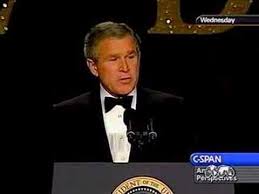
George W. Bush at the 2004 White House Correspondents’ dinner
To Bush, the non-existent WMDs were simply the butt of a joke that night. While an overhead projector displayed photos of a puzzled-looking Bush searching around the Oval Office, Bush recited a comedy routine.
“Those weapons of mass destruction have gotta be somewhere,” Bush laughed, while a photo showed him poking around the corners in the Oval Office.
“Nope—no weapons over there! Maybe they’re under here,” he said, as a photo showed him looking under a desk.
Meanwhile, an assembly of wealthy, pampered men and women—-the elite of America’s media and political classes—laughed heartily during Bush’s performance.
It was a scene from the court of the ancient Caesars, complete with royal flunkies: “Hey! The country we just destroyed wasn’t a threat to us after all! Isn’t that a gas?”
The war that Bush had deliberately provoked:
- Took the lives of 4,484 Americans.
- Cost the United States Treasury at least $2 trillion.
- Created a Middle East power vacumn.
- Allowed Iran—Iraq’s arch enemy—to eagerly fill it.
- Frightened and repelled even America’s closest allies.
- Killed at least 655,000 Iraqis.
- Bush retired from office with a lavish pension and full Secret Service protection.
- He wrote his memoirs and was paid $7 million for the first 1.5 million copies.
- Cheney, Rumsfeld, Rice retired to private business, wrote their own memoirs, and lived in comfort as respected elder statesmen.
History—in the form of a war-hungry President and a compliant Congress—seems about to repeat itself.
9/11, ABC NEWS, AL QAEDA, ALTERNET, AMERICAN CAESARS: THE LIVES OF THE PRESIDENTS FROM FRANKLIN D. ROOSEVELT TO GEORGE W. BUSH, AMERICAN EMPIRE, AP, BARACK OBAMA, BASHAR AL-ASSAD, BEN RHODES, BILL CLINTON, BUREAUCRACY, BUZZFEED, CBS NEWS, CHRIS MATHEWS, CNN, CONDOLEEZA RICE, CROOKS AND LIARS, DAILY KOZ, DONALD TRUMP, DWIGHT EISENHOWER, FACEBOOK, FBI, FRANKLIN D. ROOSEVELT, GEORGE H.W. BUSH, GEORGE W. BUSH, GERALD R. FORD, HARRY S. TRUMAN, IRAN, JIMMY CARTER, JOHN F. KENNEDY, LYNDON B. JOHNSON, MOTHER JONES, MOVEON, MSNBC, NBC NEWS, NEWSWEEK, NIGEL HAMILTON, NPR, NUCLEAR WEAPONS, OSAMA BIN LADEN, POLITICO, RAW STORY, REPUBLICAN PARTY, REUTERS, RICHARD CLARKE, RICHARD NIXON, ROMAN EMPIRE, SALON, SEATTLE TIMES, SEPTEMBER 11, SLATE, SUETONIUS, SYRIA, TERRORISM, THE ATLANTIC, THE CHICAGO SUN-TIMES, THE CHICAGO TRIBUNE, THE DAILY BEAST, THE GUARDIAN, THE HILL, THE HUFFINGTON POST, THE LOS ANGELES TIMES, THE NATION, THE NEW YORK TIMES, THE TWELVE CAESARS, THE WASHINGTON POST, TIME, TWITTER, U.S. NEWS & WORLD REPORT, UPI, USA TODAY
In Bureaucracy, History, Military, Politics, Social commentary on May 24, 2019 at 12:28 am
September 11, 2019, will mark the 18th anniversary of the worst terrorist attack on United States soil. Inevitably, this is a time to remember all those whose lives were so cruelly snuffed out.
But it is also a time to remember those Americans who made this atrocity—and the Iraq war that followed—inevitable.
British historian Nigel Hamilton has chronicled their arrogance and indifference in his 2010 biography: American Caesars: Lives of the Presidents from Franklin D. Roosevelt to George W. Bush.

Hamilton noted that Richard Clarke, the national security adviser on terrorism, was certain that Osama bin Laden had arranged the [USS.] Cole bombing in Aden on October 12, 2000.
For months, Clarke tried to convince others in the Bush Administration that Bin Laden was plotting another attack against the United States—either abroad or at home.
But Clarke could not prevail against the know-it-all arrogance of such higher-ranking Bush officials as Vice President Dick Cheney; Secretary of Defense Donald Rumsfeld; Rumsfeld’s deputy, Paul Wolfowitz; and National Security Advisor Condoleeza Rice.
Rice initially refused to hold a cabinet-level meeting on the subject. Then she “insisted the matter be handled only by a more junior Deputy Principals meeting” in April, 2001, writes Hamilton.
Wolfowitz, the number-two man at the Department of Defense, said: “I don’t understand why we are beginning by talking about this one man, bin Laden.”
Wolfowitz—whose real target was Saddam Hussein—said: “You give bin Laden too much credit.” And he insisted that bin Laden couldn’t conduct his terrorist acts without a state sponsor—namely, Iraq.
Wolfowitz, in fact, blamed Iraq for the 1993 bombing of the World Trade Center. Clarke was stunned, since there was absolutely no evidence of Iraqi involvement in this.
“Al-Qaeda plans major acts of terrorism against the United States,” Clarke warned his colleagues. He pointed out that, like Adolf Hitler, bin Laden had actually published his plans for future destruction.
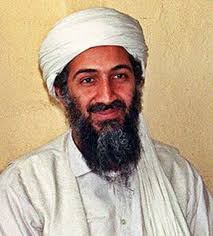
Osama bin Laden
And he added: “Sometimes, as with Hitler in Mein Kampf, you have to believe that these people will actually do what they say they will do.”
Wolfowitz heatedly traded on his Jewish heritage to bring Clarke’s unwelcome arguments to a halt: “I resent any comparison between the Holocaust and this little terrorist in Afghanistan.”
Writing in outraged fury, Hamilton sums up Clarke’s agonizing frustrations:
- Bush’s senior advisors treated their colleagues who had served in the Clinton administration with contempt.
- President Bush, Vice President Dick Cheney, National Security Advisor Condoleeza Rice, Secretary of Defense Donald Rumsfeld and Deputy Defense Secretary Paul Wolfowitz seemed content to ignore the danger signals of an impending al-Qaeda attack.
- This left only Secretary of State Colin Powell, his deputy Richard Armitage, Richard Clarke and a skeptical Treasury Secretary, Paul O’Neill, to wage “a lonely battle to waken a seemingly deranged new administration.”
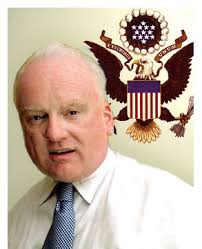
Richard Clarke
Clarke alerted Federal Intelligence agencies that “Al-Qaeda is planning a major attack on us.” He asked the FBI and CIA to report to his office all they could learn about suspicious persons or activities at home and abroad.
Finally, at a meeting with Rice on September 4, 2001, Clarke challenged her to “picture yourself at a moment when in the very near future Al-Qaeda has killed hundreds of Americans, and imagine asking yourself what you wish then that you had already done.”
Seven days later, Al-Qaeda struck, and 3,000 Americans died horrifically—and needlessly.
Neither Bush, Cheney, Rice, Rumsfeld nor Wolowitz ever admitted their negligence. Nor would any of them be brought to account.
Disgustingly, these were the same officials who, afterward, posed as the Nation’s saviors—and branded anyone who disagreed with them as a traitor, practices the Right continues to exploit to this day.
Only Richard Clarke—who had vainly argued for stepped-up security precautions and taking the fight to Al-Qaeda—gave that apology.
On March 24, 2004, Clarke testified at the public 9/11 Commission hearings. Addressing relatives of victims in the audience, he said: “Your government failed you, those entrusted with protecting you failed you, and I failed you.”
Yet even worse was to come.
On the evening after the September 11 attacks, Bush took Clarke aside during a meeting in the White House Situation Room:
“I want you, as soon as you can, to go back over everything, everything. See if Saddam [Hussein, the dictator of Iraq] did this. See if he’s linked in any way.”
Clarke was stunned: “But, Mr. President, Al-Qaeda did this.”
“I know, I know,” said Bush. “But see if Saddam was involved. I want to know.”
Hussein had not plotted the attack–and there was no evidence proving that he did. But the attack gave “W” the excuse he wanted to remove the man he blamed for the 1992 defeat of his father, President George H.W. Bush.
Bush believed that his father would have been re-elected if he had “gone all the way” into Baghdad during the 1991 Gulf War.
He would finish the job that his father had started but failed to compete.
On September 12, 2001, Bush attended a meeting of the National Security Council.
“Why shouldn’t we go against Iraq, not just Al-Qaeda?” demanded Donald Rumsfeld, the Secretary of Defense.
Vice President Dick Cheney enthusiastically agreed.
9/11, ABC NEWS, AL QAEDA, ALTERNET, AMERICAN CAESARS: THE LIVES OF THE PRESIDENTS FROM FRANKLIN D. ROOSEVELT TO GEORGE W. BUSH, AMERICAN EMPIRE, AP, BARACK OBAMA, BASHAR AL-ASSAD, BEN RHODES, BILL CLINTON, BUREAUCRACY, BUZZFEED, CBS NEWS, CHRIS MATHEWS, CNN, CONDOLEEZA RICE, CROOKS AND LIARS, DAILY KOZ, DONALD TRUMP, DWIGHT EISENHOWER, FACEBOOK, FBI, FRANKLIN D. ROOSEVELT, GEORGE H.W. BUSH, GEORGE W. BUSH, GERALD R. FORD, HARRY S. TRUMAN, IRAN, JIMMY CARTER, JOHN F. KENNEDY, LYNDON B. JOHNSON, MOTHER JONES, MOVEON, MSNBC, NBC NEWS, NEWSWEEK, NIGEL HAMILTON, NPR, NUCLEAR WEAPONS, OSAMA BIN LADEN, POLITICO, RAW STORY, REPUBLICAN PARTY, REUTERS, RICHARD CLARKE, RICHARD NIXON, ROMAN EMPIRE, SALON, SEATTLE TIMES, SEPTEMBER 11, SLATE, SUETONIUS, SYRIA, TERRORISM, THE ATLANTIC, THE CHICAGO SUN-TIMES, THE CHICAGO TRIBUNE, THE DAILY BEAST, THE GUARDIAN, THE HILL, THE HUFFINGTON POST, THE LOS ANGELES TIMES, THE NATION, THE NEW YORK TIMES, THE TWELVE CAESARS, THE WASHINGTON POST, TIME, TWITTER, U.S. NEWS & WORLD REPORT, UPI, USA TODAY
In Bureaucracy, History, Military, Politics, Social commentary on May 23, 2019 at 12:07 am
“If Iran wants to fight, that will be the official end of Iran. Never threaten the United States again!”
So threatened President Donald Trump in a tweet on May 19.
Meanwhile, a debate raged among American military and Intelligence officials about the latest intentions of the Iranian government.
Some officials believed that Iran or its militias might be planning to attack American military bases in the Middle East. Others believed that Iran might be acting defensively to counter possible American aggression.
“I just don’t want them to have nuclear weapons, and they can’t be threatening us,” Trump said that same evening in an interview with Fox News.
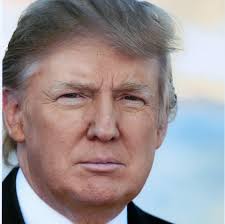
Donald Trump
“And with all of everything that’s going on, and I’m not one that believes—you know, I’m not somebody that wants to go into war, because war hurts economies, war kills people most importantly—by far most importantly.”
That same day, Major-General Hossein Salami, the commander of Iran’s Islamic Revolution Guard Corps, responded: “Iran is not looking for any type of war, but it is fully prepared to defend itself.”
The Trump administration has aggressively tried to effect “regime change” in Iran. Its methods have included diplomatic pressure, economic sanctions, hawkish rhetoric and increasing the number of American soldiers and weaponry deployed in the Middle East.
If this seems familiar to those Americans with a sense of historical perspective, there is good reason for it.
These are precisely the methods used by the George W. Bush administration in its build-up to invading Iraq in March, 2003.
Even as the rubble was being cleared at the Pentagon and World Trade Center, President George W. Bush was preparing to use the attack as an excuse to topple Iraqi dictator Saddam Hussein.
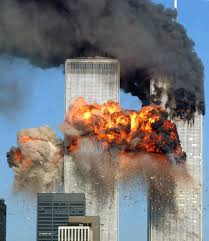
World Trade Center on September 11, 2001
Hussein had not plotted 9/11, and there was no evidence that he did. But that didn’t matter to Bush and those planning the invasion and conquest of Iraq.
British historian Nigel Hamilton has dared to lay bare the facts of this disgrace. Hamilton is the author of several acclaimed political biographies, including JFK: Reckless Youth and Bill Clinton: Mastering the Presidency.
In 2007, he began research on his latest book: American Caesars: The Lives of the Presidents From Franklin D. Roosevelt to George W. Bush.

Nigel Hamilton
By Nigel Hamilton (Nigel Hamilton picture)
The inspiration for this came from a classic work of ancient biography: The Twelve Caesars, by Gaius Suetonius Tranquillus—known as Suetonius.
Suetonius, a Roman citizen and historian, had chronicled the lives of the first twelve Caesars of imperial Rome: Julius Caesar, Augustus, Tiberius, Caligula, Claudius, Nero, Galba, Otho, Vitellius, Vespasian, Titus and Domitian.
Hamilton wanted to examine post-World War II United States history as Suetonius had examined that of ancient Rome: Through the lives of the 12 “emperors” who had held the power of life and death over their fellow citizens—and those of other nations.
For Hamilton, the “greatest of American emperors, the Caesar Augustus of his time,” was Franklin D. Roosevelt, who led his country through the Great Depression and World War II.
His “”great successors” were Harry S. Truman, Dwight D. Eisenhower and John F. Kennedy–who, in turn, contained the Soviet Union abroad and presided over sustained economic prosperity at home.
By contrast, “arguably the worst of all the American Caesars” was “George W. Bush, and his deputy, Dick Cheney, who willfully and recklessly destroyed so much of the moral basis of American leadership in the modern world.”
Among the most lethal of Bush’s offenses: The appointing of officials who refused to take seriously the threat posed by Al-Qaeda.
And this arrogance and indifference continued–right up to September 11, 2001, when the World Trade Center and Pentagon became targets for destruction.
Among the few administration officials who did take Al-Qaeda seriously was Richard Clarke, the chief counter-terrorism adviser on the National Security Council.
Clarke had been thus appointed in 1998 by President Bill Clinton. He continued in the same role under President Bush—but the position was no longer given cabinet-level access.
This put him at a severe disadvantage when dealing with other, higher-ranking Bush officials—such as Vice President Dick Cheney, Secretary of Defense Donald Rumsfeld, Rumsfeld’s deputy, Paul Wolfowitz and National Security Advisor Condoleeza Rice.
These turned out to be the very officials who refused to believe that Al-Qaeda posed a lethal threat to the United States.
“Indeed,” writes Hamilton, “in the entire first eight months of the Bush Presidency, Clarke was not permitted to brief President Bush a single time, despite mounting evidence of plans for a new al-Qaeda outrage.” [Italics added]
Nor did it help that, during his first eight months in office before September 11, Bush was on vacation, according to the Washington Post, 42% of the time.
For months, Clarke tried to convince others in the Bush Administration that Bin Laden was plotting another attack against the United States–either abroad or at home.
But Clarke could not prevail against the know-it-all arrogance of such higher-ranking Bush officials as Vice President Dick Cheney; Secretary of Defense Donald Rumsfeld; Rumsfeld’s deputy, Paul Wolfowitz; and National Security Advisor Condoleeza Rice.
ABC NEWS, ADOLF HITLER, ALT-RIGHT, ALTERNET, AMERICAN NAZI PARTY, ANDREW ANGLIN, ANTI-DEFAMATION LEAGUE, ANTIFA, AP, BENITO MUSSOLINI, BLACK LIVES MATTER, BUZZFEED, CBS NEWS, CHARLOTTESVILLE PROTESTS, CNN, COINTELPRO, COUNTER-TERRORISM, CROOKS AND LIARS, DAILY KOZ, DAVID DUKE, DOMESTIC TERRORISM, DONALD TRUMP, ENGLAND, FACEBOOK, FASCISM, FASCIST ITALY, FBI, ISLAMIC TERRORISM, J. EDGAR HOOVER, KU KLUX KLAN, LYNDON B. JOHNSON, MARJORY STONEMAN DOUGLAS HIGH SCHOOL, MISSISSIPPI BURNING CASE, MOTHER JONES, MOVEON, MSNBC, NAZI GERMANY, NBC NEWS, NEO-NAZIS, NEW AMERICA THINK TANK, NEWSWEEK, NPR, OAKLAHOMA CITY BOMBING, P.W. SINGER, PBS NEWSHOUR, POLITICO, RAW STORY, REUTERS, RIGHT-WING EXTREMISM, SALON, SEATTLE TIMES, SLATE, SOVIET UNION, TERRORISM, THE ATLANTIC, THE CHICAGO SUN-TIMES, THE CHICAGO TRIBUNE, THE DAILY BEAST, THE DAILY STORMER, THE GUARDIAN, THE HILL, THE HUFFINGTON POST, THE LOS ANGELES TIMES, THE NATION, THE NEW YORK TIMES, THE WASHINGTON POST, TIME, TIMOTHY MCVEIGH, TREE OF LIFE SYNAGOGUE, TWITTER, U.S. NEWS & WORLD REPORT, UNITE THE RIGHT RALLY, UNITED STATES HOLOCAUST MUSEUM, UPI, USA TODAY, WAFFLE HOUSE, WHITE SUPREMACY, WILLIAM C. SULLIVAN, WILLIAM FEARS, WORLD WAR 11
In Bureaucracy, History, Law, Law Enforcement, Politics, Social commentary on May 16, 2019 at 12:02 am
On August 11-12, 2017, white supremacists from across the country gathered in Charlottesville, Virginia, for a “Unite the Right” rally. Among the organizations represented:
- The Ku Klux Klan (KKK);
- The Alt-Knights;
- The “Militia Movement”;
- The American Nazi Party;
- The Confederate League of the South.
They marched through the streets carrying flaming tiki torches, screaming racial epithets and frightening the local citizenry. Echoing Nazis in 1930s Germany, they shouted: “Blood and Soil!” and “Jews will not replace us!”
On August 13, a Nazi sympathizer rammed his car into a group of counter-protesters, killing a woman and injuring 19 other demonstrators.
President Donald Trump stated: “We condemn in the strongest possible terms this egregious display of hatred, bigotry and violence on many sides, on many sides.”
But he refused to specifically denounce the Fascistic demonstrators.
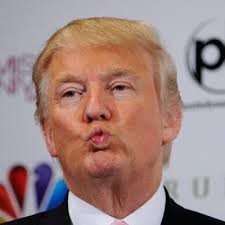
Donald Trump
White supremacists were elated.
“He didn’t attack us. He just said the nation should come together. Nothing specific against us,” wrote Andrew Anglin, founder of the neo-Nazi website, The Daily Stormer.
“No condemnation at all. When asked to condemn, he just walked out of the room. Really, really good. God bless him.”
Another Trump admirer: Former Ku Klux Klan Imperial Wizard David Duke.
“Thank you President Trump for your honesty & courage to tell the truth about #Charlottesville & condemn the leftist terrorists in BLM/Antifa,” Duke tweeted after the news conference.
Fascistic groups make up a pivotal constituency for Trump. Without their support, he might not have become President. He can’t afford to alienate them.
But more than 50 years ago, another President was willing to declare all-out war against white supremacists: Lyndon B. Johnson.
The reason: The murders of three civil rights workers in Philadelphia, Mississippi—Michael “Mickey” Schwerner, Andrew Goodman and James Chaney—-on June 21, 1964.
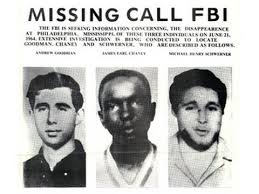
Poster for missing civil rights workers
Johnson ordered the FBI to find the missing activists.
Two hundred FBI agents interrogated 480 Klansmen. After the civil rights workers’ bodies were found buried near a dam, Johnson gave FBI Director J. Edgar Hoover a direct order: “I want you to have the same kind of intelligence [on the Klan] that you have on the communists.”
For decades, Hoover had refused to tackle white hate groups. And, in truth, there had not been any President willing to give him the order to do so.
But now a President had given him such an order. And Hoover was approaching the mandatory retirement age of 70—which could be waived by a sympathetic President. If he wanted to stay on as director of the agency he loved, he had no choice.
So the FBI launched a counterintelligence program—in Bureau-speak, a COINTELPRO—against the Ku Klux Klan.
Klansmen had shot, lynched and bombed their way across the Deep South, especially in Alabama and Mississippi. Many Southern sheriffs and police chiefs were Klan sympathizers, if not outright members and accomplices.

Ku Klux Klansmen in a meeting
The FBI’s covert action program aimed to “expose, disrupt and otherwise neutralize” KKK groups through a wide range of legal and extra-legal methods. Seventeen KKK groups were targeted, So were nine others, including the American Nazi and National States Rights parties.
After the Klan murdered Lemuel Penn, a black army reserve lieutenant, the FBI targeted every major Klan group in Mississippi, Alabama and Georgia.
“My father fought the Klan in Massachusetts,” recalled William C. Sullivan, who headed the FBI’s Domestic Intelligence Division in the 1960s. “I always used to be frightened when I was a kid and I saw the fiery crosses burning in the hillside near our farm.
“When the Klan reached 14,000 in the mid-sixties, I asked to take over the investigation of the Klan. When I left the Bureau in 1971, the Klan was down to a completely disorganized 4,300. It was broken.

William C. Sullivan
“They were dirty, rough fellows. And we went after them with rough, tough methods.”
Among those methods:
- Developing informants within Klans—usually by paying small fortunes for information. (“There would be a meeting of 10 Klansmen, and six of them would be reporting back to us the next day,” recalled an FBI agent.)
- Planting electronic surveillance devices in Klan meeting places.
- Carrying out “black bag jobs”—burglaries—to steal Klan membership lists.
- Contacting the news media to publicize arrests and identify Klan leaders.
- Informing the employers of known Klansmen of their employees’ criminal activity, resulting in the firing of untold numbers of them.
- Illegally obtaining Klansmen’s tax returns.
- Sending anonymous letters/postcards to Klansmen warning: “Someone KNOWS who you are!”
- Falsely accusing other Klansmen of being FBI informants.
- Breaking up the marriages of Klansmen by circulating rumors of their infidelity among their wives.
- Beating and harassing Klansmen who threatened and harassed FBI agents.
The FBI’s counterintelligence war against the Klan ended in 1971.
Over the next 40 years, Klan membership steadily rose again. In 2017, its membership rose sharply.
By June, 2017, an estimated 3,000 Klan members belonged to 42 different Klan groups in 22 states. And the Anti-Defamation League (ADL) tracked Klan activity to 11 other states, including liberal ones like California.
Only when America has a President who’s not beholden to the Fascistic Right can there be another COINTELPRO aimed at white hate groups.
ABC NEWS, ADOLF HITLER, ALT-RIGHT, ALTERNET, AMERICAN NAZI PARTY, ANDREW ANGLIN, ANTI-DEFAMATION LEAGUE, ANTIFA, AP, BENITO MUSSOLINI, BLACK LIVES MATTER, BUZZFEED, CBS NEWS, CHARLOTTESVILLE PROTESTS, CNN, COINTELPRO, COUNTER-TERRORISM, CROOKS AND LIARS, DAILY KOZ, DAVID DUKE, DOMESTIC TERRORISM, DONALD TRUMP, ENGLAND, FACEBOOK, FASCISM, FASCIST ITALY, FBI, ISLAMIC TERRORISM, J. EDGAR HOOVER, KU KLUX KLAN, LYNDON B. JOHNSON, MARJORY STONEMAN DOUGLAS HIGH SCHOOL, MISSISSIPPI BURNING CASE, MOTHER JONES, MOVEON, MSNBC, NAZI GERMANY, NBC NEWS, NEO-NAZIS, NEW AMERICA THINK TANK, NEWSWEEK, NPR, OAKLAHOMA CITY BOMBING, P.W. SINGER, PBS NEWSHOUR, POLITICO, RAW STORY, REUTERS, RIGHT-WING EXTREMISM, SALON, SEATTLE TIMES, SLATE, SOVIET UNION, TERRORISM, THE ATLANTIC, THE CHICAGO SUN-TIMES, THE CHICAGO TRIBUNE, THE DAILY BEAST, THE DAILY STORMER, THE GUARDIAN, THE HILL, THE HUFFINGTON POST, THE LOS ANGELES TIMES, THE NATION, THE NEW YORK TIMES, THE WASHINGTON POST, TIME, TIMOTHY MCVEIGH, TREE OF LIFE SYNAGOGUE, TWITTER, U.S. NEWS & WORLD REPORT, UNITE THE RIGHT RALLY, UNITED STATES HOLOCAUST MUSEUM, UPI, USA TODAY, WAFFLE HOUSE, WHITE SUPREMACY, WILLIAM C. SULLIVAN, WILLIAM FEARS, WORLD WAR 11
In Bureaucracy, History, Law, Law Enforcement, Politics, Social commentary on May 15, 2019 at 12:22 am
At the United States Holocaust Museum in Washington, D.C., the following sign is prominently displayed: WARNING SIGNS OF FASCISM.
Beneath that are listed the signs to beware of an approaching Fascistic dictatorship:
- Powerful and continuing nationalism
- Disdain for human rights
- Identification of enemies as a unifying cause
- Supremacy of the military
- Rampant sexism
- Controlled mass media
- Obsession with national security
- Religion and government intertwined
- Labor power suppressed
- Disdain for intellectuals and the arts
- Obsession with crime and punishment
- Rampant cronyism and corruption
- Fraudulent elections
During the 1930s and 1940s, Fascism was clearly on the rise, and Western democracies seemed unable to cope with it.
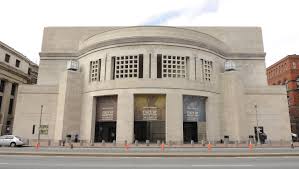
U.S. Holocaust Museum and Memorial
But by April, 1945, Adolf Hitler’s Germany and Benito Mussolini’s Italy were on the ash-heap of history.
After a run of quick victories, they had out-stretched their limited resources—and found themselves overwhelmingly defeated by the combined might of England, the United States and the Soviet Union.
And at the Nuremberg war crimes trials, the infamy of Nazi extermination camps was fully revealed.
And that—believed millions of anti-Fascists throughout the world—was the end of Fascism.
But it wasn’t.
By the time Donald J. Trump took office as President of the United States, Fascism was very much alive and dangerously well.
Specifically: In January, 2019, the Anti-Defamation League (ADL) found that Right-wing extremists were linked to every 2018 extremist murder—at least 50—in the United States.

In 2017, there had been 37 such killings by Right-wing extremists.
That same year, the FBI concluded that white supremacists killed more Americans from 2000 to 2016 than “any other domestic extremist movement.”
In 2018, Right-wing extremists killed more people than in any year since 1995, the year that Timothy McVeigh’s blew up the Oklahoma City federal building.
According to the ADL’s Center on Extremism:
- Every perpetrator had ties to at least one Right-wing extremist movement.
- Firearms were used overwhelmingly in Right-wing attacks.
- Forty-two of the 50 deaths in 2018 were caused by guns. Knives or edged weapons accounted for the rest.
- Five of the 17 incidents involved shooting sprees that caused 38 deaths and injured 33 others.
- Five shooting sprees resulted in 38 deaths and left 33 people injured.
Among the five major Right-wing shooting sprees in 2018:
- Tree of Life Synagogue, Pittsburgh, PA: 11 dead;
- Marjory Stoneman Douglas High School, Parkland, FL: 17 dead;
- Waffle House, Nashville, TN: four dead.
For nearly two decades, United States counter-terrorism strategy has focused almost exclusively on American and foreign-born jihadists, overshadowing Right-wing extremism as a legitimate national-security threat.
Between 2002 and 2017, the United States spent $2.8 trillion—15% of discretionary spending—on counter-terrorism. Between 2008 and 2017, domestic extremists killed 387 people in the United States, according to the 2019 ADL report.
“We’re actually seeing all the same phenomena of what was happening with groups like ISIS, same tactics, but no one talks about it because it’s far-Right extremism,” says P. W. Singer, a national security strategist at the New America think tank.
In 2017, Singer met with senior Trump administration officials to discuss creating a counter-terrorism strategy that encompassed a wider range of threats.
“They only wanted to talk about Muslim extremism,” said Singer. But even before the Trump administration, “we willingly turned the other way on white supremacy because there were real political costs to talking about white supremacy.”

P. W. Singer
Catiline17 [CC BY-SA 4.0 (https://creativecommons.org/licenses/by-sa/4.0)%5D
Among those costs:
- Arousing the ire of Southern states, where Right-wing terrorism organizations like the Ku Klux Klan have long been tolerated, if not outright supported.
- About 22 million Americans say it’s “acceptable” to hold neo-Nazi or white-supremacist views, according to an ABC News/Washington Post poll taken in the wake of the Charlottesville “Unite the Right” rally in August 2017.
- About 10% of Americans said they supported the “alt-right.”
- Many police officers don’t see white supremacist groups as a threat. One domestic-terrorism expert who conducts hate-crimes training for police has often been asked by officers: ‘Why aren’t you calling Black Lives Matter or Antifa a hate group?’ The answer is, because they’re not hate groups! But they didn’t see it that way.”
- According to William Fears, one of the most dedicated foot soldiers of the alt-right: Police were far less forgiving of Antifa, whose members consist of anti-fascists, anarchists, Socialists, animal rights activists, immigration rights activists, members of the local Socialist movement and environmental protesters.
- Another white nationalist activist recalled a rally where police posed for pictures with members of the alt-right: “Very buddy-buddy.”
Since taking office as President, Donald Trump has consistently shown his support for Right-wing terrorist groups.
On August 11-12, 2017, white supremacists from across the country gathered in Charlottesville, Virginia, for a “Unite the Right” rally. Among the organizations represented:
- The Ku Klux Klan (KKK);
- The Alt-Knights;
- The “Militia Movement”;
- The American Nazi Party;
- The Confederate League of the South.
Like the Nazis in 1930s Germany, they marched through the streets carrying flaming torches, screaming racial epithets and frightening the local citizenry.
On August 13, a Nazi sympathizer rammed his car into a group of counter-protesters, killing a woman and injuring 19 other demonstrators.
2016 PRESIDENTIAL CAMPAIGN, ABC NEWS, ALEXANDER SHUSTOROVICH, ALTERNET, ANDREW INTRATER, AP, BARACK OBAMA, BILL CLINTON, BLACKS, BUZZFEED, CBS NEWS, CHUCK GRASSLEY, CIA, CITIZENS UNITED, CNN, COMMUNISM, CROOKS AND LIARS, DAILY KOZ, DEMOCRATIC PARTY, DEPARTMENT OF HOMELAND SECURITY, DONALD TRUMP, DWIGHT D. EISENHOWER, EDWARD R. MURROW, FACEBOOK, FBI, FEDERAL ELECTIONS COMMISSION, FOX NEWS, FRANKLIN D. ROOSEVELT, GEORGE C. MARSHALL, GEORGE H.W. BUSH, GOP, GREAT SOCIETY, H.L. HUNT, HARRY S. TRUMAN, HILLARY CLINTON, HOUSE OF REPRESENTATIVES, HOWARD HUGHES, JAMES COMEY, JOHN BIRCH SOCIETY, JOHN F. KENNEDY, JOHN KASICH, JOHN STEINBECK, JOSEPH R. MCCARTHY, JOSEPH STALIN, KGB, LEN BLAVATNIK, LIBERALS, LINDSEY GRAHAM, LUCILLE BALL, LYNDON B. JOHNSON, MARCO RUBIO, MEDICAL CARE, MITCH MCCONNELL, MITT ROMNEY, MOTHER JONES, MOVEON, NATIONAL SECURITY AGENCY, NBC NEWS, NEWSWEEK, NORTH ATLANTIC TREATY ORGANIZATION (NATO), NPR, OFFICE OF THE DIRECTOR OF NATIONAL INTELLIGENCE, OLIGARCHS, ORRIN HATCH, PAUL RYAN, PETE SEEGER, POLITICAL ACTION COMMITTEES (PACS), POLITICO, PROPAGANDA, RAW STORY, REPUBLICAN PARTY, REPUBLICANS, REUTERS, RICHARD NIXON, ROBERT MUELLER, ROBERT WELCH, ROD ROSENSTEIN, RODNEY KING RIOTS, RUSSIA, SALON, SCAPEGOATING, SCOTT WALKER, SEATTLE TIMES, SENATE LEADERSHIP FUND, SIMON KUKES, SLATE, SOCIALISTS, SOVIET UNION, SUPREME COURT, THE ATLANTIC, THE CHICAGO SUN-TIMES, THE CHICAGO TRIBUNE, THE DAILY BEAST, THE GUARDIAN, THE HILL, THE HUFFINGTON POST, THE LOS ANGELES TIMES, THE NATION, THE NEW YORK TIMES, THE WASHINGTON POST, TIME, TRUMP INAUGURAL COMMITTEE, TWITTER, U.S. NEWS & WORLD REPORT, UNITED STATES SUPREME COURT, UPI, USA TODAY, VLADIMIR PUTIN, WIKILEAKS, WORLD WAR 11
In Bureaucracy, History, Military, Politics, Social commentary on May 13, 2019 at 12:07 am
During the 1970s and 1980s, Republicans continue to accuse Democrats of being acting agents—or at least unwitting pawns—of “the Communist conspiracy.”
As late as 1992, President George H.W. Bush and the Republican establishment charge that Arkansas Governor Bill Clinton might be a KGB plant.
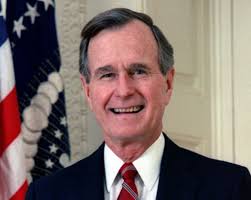
George H.W. Bush
Their “evidence”: During his tenure at Oxford University in 1969-70, Clinton had briefly visited Moscow.
In short: Clinton might have been “programmed” as a real-life “Manchurian candidate” to become, first, Governor of Arkansas—one of America’s poorest states—and then President.
Making this charge even more absurd: The Soviet Union had officially dissolved in December, 1991.
After the Soviet Union’s collapse, Republicans find that accusing Democrats of being “Commies” doesn’t carry the same weight.
So they turn to “domestic enemies” to rail—and run—against: Liberals, blacks, Hispanics, “uppity” women, war protesters, lesbians, gays, and—after 9/11—Muslims.
From 1945 to 1991, it is unthinkable for a Republican Presidential candidate to pay tribute to a Soviet dictator.
But that utterly changes when Donald J. Trump, a “reality TV” host with longstanding financial ties to Russian oligarchs, runs for President of the United States.
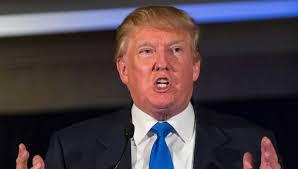
Donald Trump
Trump lavishly praises Russian President Vladimir Putin—and even invites him to directly interfere in the 2016 Presidential race.
The reason for the Trump-Putin bromance is simple: Each has something to offer the other.
Putin wants the United States to ditch the North Atlantic Treaty Organization (NATO) alliance, which has preserved Western Europe from Russian aggression since World War II. And Trump has often attacked America’s funding of NATO as a drain on the American economy.
And Trump wants to be President. For this, Putin can supply monies, Internet trolls to confuse voters with falsified news, and even the hacking of key voting centers.
These Russian monies are officially classified as “campaign contributions”—not bribes.
On July 22, 2016, Wikileaks releases 19,252 emails and 8,034 attachments hacked from computers of the highest-ranking officials of the Democratic National Committee (DNC). Early reports trace the leak to Russian hackers.
“Russia, if you are listening,” Trump says at a press conference in Doral, Florida, “I hope you are able to find the 33,000 emails that are missing [from Democratic Presidential candidate Hillary Clinton’s computer]. I think you will probably be rewarded mightily by our press.”
This is treason—calling upon a foreign power, hostile to the United States, to interfere in its Presidential election.
Hours later, the Main Intelligence Directorate in Moscow targets Clinton’s personal office and hits more than 70 other Clinton campaign accounts.
Nor is Trump the only Republican receiving “help” from Putin. A network of Russian oligarchs—all of them answerable to Putin—has been increasingly contributing to top Republicans.
According to the Federal Election Commission:
One such major contributor is Len Blavatnik, who holds citizenship in both the United States and the United Kingdom. During the 2015-16 election cycle, he proves one of the largest donors to GOP Political Action Committees (PACs).
Blavatnik’s net worth is estimated at $20 billion. Before 2016, he donates to both Democrats and Republicans in meager amounts. But in 2016, he gives $6.35 million to GOP PACs.
Millions of dollars go to top Republican leaders—such as Senators Mitch McConnell, Marco Rubio (Florida) and Lindsey Graham (South Carolina). Specifically, he contributes:
- A total of $1.5 million to PACs associated with Rubio.
- $1 million to Trump’s Inaugural Committee.
- $41,000 to both Republicans and Democrats in 2017.
- $1 million to McConnell’s Senate Leadership Fund.
- $3.5 million to a PAC associated with McConnell.
- $1.1 million to Unintimidated PAC, associated with Wisconsin Governor Scott Walker.
- $200,000 to the Arizona Grassroots Action PAC, associated with Arizona Senator John McCain.
- $250,000 to New Day for America PAC, associated with Ohio Governor John Kasich.
- $800,000 went to the Security is Strength PAC, associated with Senator Lindsey Graham.
Another Russian oligarch, Alexander Shustorovich, contributes $1 million to Trump’s Inaugural Committee.
Altogether, four Russian oligarchs—Blavatnik, Shustorovich, Andrew Intrater and Simon Kukes—–contribute $10.4 million from the start of the 2015-16 election cycle through September 2017. Of this, 99% went to Republicans.
As Senate Majority Leader, Mitch McConnell participates in high-level intelligence briefings in 2016. From agencies such as the FBI, CIA and the code-cracking National Security Agency, he learns that the Russians are trying to subvert the electoral process.

In October, 2016, the Department of Homeland Security (DHS) and the Office of the Director of National Intelligence (DNI) issue a joint statement: The Russian government had directed the effort to subvert the 2016 Presidential election.
Two weeks later, McConnell’s PAC accepts a $1 million donation from Blavatnik.
On March 30, 2017, McConnell’s PAC accepts another $1 million from Blavatnik. This is just 10 days after former FBI Director James Comey testifies before the House Intelligence Committee about Russia’s efforts to subvert the 2016 election.
* * * * * * * * * *
So, what has changed in the Republican Party? Essentially nothing.
Its enemies changed—from Russian Communists to American liberals—but its goal remains the same: The quest for absolute power.
When Americans feared Communism, Republicans depicted themselves as the only ones who could be trusted to protect the United States. Big contributions poured in from Right-wing billionaires like H.L. Hunt and Howard Hughes.
But when Republicans found they could enrich themselves and stay in power via Russian “campaign contributions,” they decided: Better Red than un-elected.


 Bureaucracybuster's Blog
ABC NEWS, ALTERNET, AMERICAN TABLOID, ANTI-CASTRO CUBANS, AP, ASSASSINATION, BUZZFEED, CBS NEWS, CIA, CNN, COMMUNISM, CROOKS AND LIARS, CUBA, CUBA TRAVEL BAN, CUBAN MISSILE CRISIS, DAILY KOZ, DONALD TRUMP, DWIGHT D. EISENHOWER, FACEBOOK, FBI, FIDEL CASTRO, FLORIDA, FULGENCIO BATISTA, GUS RUSSO, JACK RUBY, JAMES ELLROY, JOHN F. KENNEDY, JOHNNY ROSELLI, LEE HARVEY OSWALD, LIVE BY THE SWORD, LYNDON B. JOHNSON, MAFIA, MARCO RUBIO, MOTHER JONES, MOVEON, MSNBC, NBC NEWS, NEWSWEEK, NIKITA KHRUSHCHEV, NPR, PBS NEWSHOUR, POLITICO, RAW STORY, REUTERS, ROBERT F. KENNEDY, SALON, SAM GIANCANA, SEATTLE TIMES, SLATE, THE ATLANTIC, THE CHICAGO SUN-TIMES, THE CHICAGO TRIBUNE, THE DAILY BEAST, THE GUARDIAN, THE HILL, THE HUFFINGTON POST, THE LOS ANGELES TIMES, THE NATION, THE NEW YORK TIMES, THE WASHINGTON POST, TIME, TWITTER, U.S. NEWS & WORLD REPORT, UPI, USA TODAY, WARREN COMMISSION
A LEGACY OF EVIL: AMERICA’S WAR ON CUBA—PART THREE (OF FOUR)
In Bureaucracy, History, Law Enforcement, Military, Politics, Social commentary on June 19, 2019 at 12:22 amOn October 22, 1962, President John F. Kennedy went on nationwide TV to announce that Russian nuclear missiles had been installed in Cuba—and his blockade of that island.
He warned that any nuclear missile launched from Cuba against any nation would be regarded as an attack on the United States by the Soviet Union—and would trigger “a full retaliatory response” upon the U.S.S.R.
President John F. Kennedy addresses the nation
And he demanded that the Soviets remove all of their offensive weapons from Cuba:
“The path we have chosen for the present is full of hazards, as all paths are, but it is the one most consistent with our character and courage as a nation and our commitments around the world.
“The cost of freedom is always high, but Americans have always paid it. And one path we shall never choose, and that is the path of surrender or submission.”
On October 26, the United States raised the readiness level of SAC forces to DEFCON 2—the step just short of war. For the only time in U.S. history, B-52 bombers were dispersed to various locations and made ready to take off, fully equipped, on 15 minutes’ notice.
Other measures taken included:
An invasion date of Cuba was set for October 29. But the Kennedy Administration—and the American military—didn’t know that Russian soldiers guarding the missiles had been armed with tactical nuclear weapons.
Had the Marines gone in, those mini-nukes would have been used. And a fullscale nuclear exchange between the United States and the Soviet Union would have almost certainly followed.
At the height of the crisis, Attorney General Robert F. Kennedy offered a solution.
Khrushchev had sent two teletypes to Kennedy. The first had agreed to remove the missiles, but the second had demanded that the United States remove its own nuclear missiles from Turkey, which bordered the Soviet Union.
Robert Kennedy’s solution: Ignore the second message—and announce that President Kennedy had accepted Khrushchev’s offer to remove the missiles.
After this announcement was made, President Kennedy said: “It can go either way now.”
John F. Kennedy in the Oval Office
The crisis ended on October 28. Under enormous pressure, Khrushchev agreed to remove the missiles from Cuba.
Behind his decision lay a secret promise by the Kennedy administration to remove its obsolete nuclear missiles from Turkey, which bordered the Soviet Union. And a public pledge to not invade Cuba.
On the night the crisis ended, there occurred a prophetic exchange between the two Kennedy brothers.
JFK: “Maybe this is the night I should go to the theater”–a reference to Abraham Lincoln’s fatal attendance of Ford’s Theater at the end of the Civil War.
RFK: “If you go, I want to go with you.”
John F. and Robert F. Kennedy
But the Kennedys continued their campaign of sabotage throughout Cuba. And they were preparing something far bigger: A fullscale American invasion of the island.
On October 4, 1963, the Joint Chiefs of Staff submitted its latest version of the invasion plan, known as OPLAN 380-63. Its timetable went:
During the Cuban Missile Crisis, Robert Kennedy—referring to the 1941 Japanese attack on Pearl Harbor—had resisted demands for a “sneak attack” on Cuba by saying: “I don’t want my brother to be the Tojo of the 1960s.”
Now the Kennedys planned such an attack on Cuba just one month before the November, 1964 Presidential election.
Then fate—in the unlikely figure of Lee Harvey Oswald—intervened.
On November 22, 1963, while the President rode through Dallas in an open-air automobile, a rifle-wielding assassin opened fire. He scored two hits on Kennedy—in the back of the neck and head. The second wound proved instantly fatal.
The nation and the world were shocked—and plunged into deep mourning.
But for some of those who had waged a secret, lethal war against Fidel Castro for the previous two years, Kennedy’s death—at least in retrospect—didn’t come as a surprise.
Robert Kennedy, in particular, spent the remaining years of his life agonizing over the possibility that his highly personal war against Castro had backfired.
That Castro, fed up with the CIA’s assassination plots against him, had retaliated with one of his own.
Robert Kennedy’s fears and guilt were compounded by the fact that, while waging war on Castro, he had waged an equally ruthless crusade against organized crime.
He knew that some of the mobsters he had tried to send to prison had played a major role in the CIA’s efforts to “hit” Castro. Had the Mafia—believing itself the victim of a double-cross—put out a “contract” on JFK instead?
It was a question that haunted him until the day he died.
Share this: