Posts Tagged ‘JOHN F. KENNEDY’
ABC NEWS, AFGHANISTAN, BARACK OBAMA, CBS NEWS, CNN, FACEBOOK, GENERAL STANLEY MCCRYSTAL, HAMID KARZAI, JOHN F. KENNEDY, MICHAEL HASTINGS, NBC NEWS, NGO DINH DIEM, NORTH VIETNAMESE ARMY, ROLLING STONE MAGAZINE, THE CHICAGO SUN-TIMES, THE CHICAGO TRIBUNE, THE LOS ANGELES TIMES, THE NEW YORK TIMES, THE OPERATORS, THE PENTAGON, THE WASHINGTON POST, TWITTER, VIETCONG, VIETNAM
In Bureaucracy, History, Military, Politics, Social commentary on June 22, 2016 at 12:39 am
Michael Hastings was the Rolling Stone reporter whose 2010 article on “The Runaway General” ended the illustrious military career of General Stanley McCrystal.
In 2012, Hastings greatly expanded on his article with a 2012 book: The Operators: The Wild and Terrifying Inside Story of America’s War in Afghanistan.
According to its hardcover dust jacket: “General Stanley McCrystal, the innovative, forward-thinking, commanding general of international and U.S. forces in Afghanistan, was living large. He was better known to some as Big Stan, M4, Stan, and his loyal staff liked to call him a ‘rock star.’
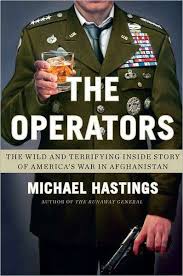
“During a spring 2010 trip across Europe to garner additional allied help for the war effort, McCrystal was accompanied by journalist Michael Hastings of Rolling Stone.
“For days, Hastings looked on as McCrystal and his staff let off steam, partying and openly bashing the Obama administration for what they saw as a lack of leadership.
“When Hastings’ piece appeared a few months later, it set off a poiltical firestorm: McCrystal was ordered to Washington where he was fired unceremoniously.”
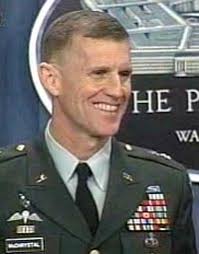
General Stanley A. McCrystal
But there is an even deeper element to be found within Hastings’ book–that is, for anyone with even a general knowledge of the war in Vietnam.
Hastings (who died in a high-speed car accident in 2013) does not make any direct parallels between the almost 11-year conflict in Afghanistan and the 14-year conflict in Vietnam.
But those parallels are definitely there for anyone to see:
- Ngo Dinh Diem, the “president” of South Vietnam (1955 -1963) was a Catholic mandarin who was alienated from an overwhelmingly poor, 95% Buddhist country.
- Hamid Karzai, the “president” of Afghanistan (2004 – 2014) was from a wealthy Pashtun family and is alienated from members of other Afghan tribes.
- Diem’s authority didn’t extend far beyond Saigon.
- Karzai’s authority didn’t extend beyond Kabul.
- Diem didn’t believe in democracy–despite American claims to support his efforts to bring it to Vietnam.
- Ditto for Karzai–despite American claims that he sought to bring democracy to Afghanistan.
- Diem was widely regarded in Vietnam as an illegitimate leader, imposed by the Americans.
- Ditto for Karzai.
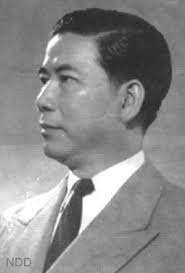
Ngo Dinh Diem
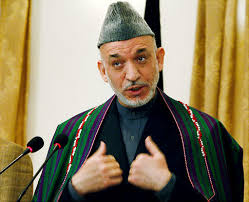
Hamid Karzai
- American soldiers were sent to Vietnam because America feared Communism.
- American soldiers were sent to Afghanistan because America feared terrorism.
- Americans were ordered to train the South Vietnamese to defend themselves against Communism.
- American troops were ordered to train the Afghan army to defend themselves against terrorism.
- Americans quickly determined that the South Vietnamese army was worthless–and decided to fight the Vietcong in its place.
- Americans quickly determined that the Afghan army was worthless–and decided to fight the Taliban in its place.
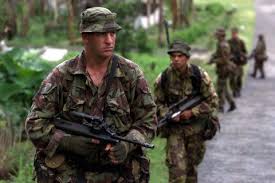
American soldiers in Vietnam
- There was massive distrust between American and South Vietnamese soldiers.
- Ditto for relations between American and Afghan soldiers.
- American soldiers in Vietnam felt surrounded by enemies and hamstrung by unrealistic orders to win “hearts and minds” at the risk of their own lives.
- Ditto for American soldiers stationed in Afghanistan.
- President John F. Kennedy doubted that Americans could win a war in Vietnam and tried to contain the conflict.
- President Barack Obama came into office determined to contain the Afghan conflict and withdraw American troops as soon as possible.
- The Pentagon saw Vietnam as “the only war we’ve got” and pressed to insert greater numbers of men.
- The Pentagon sees Afghanistan as one of several wars “we’ve got” and has pressed to insert greater numbers of men.
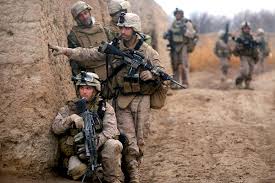
American soldiers in Afghanistan
- The Vietcong and North Vietnamese Army (NVA) posed no threat to the security of the United States.
- The Taliban poses no threat to the security of the United States.
- The far Right embraced the Vietnam war as a way to assert American power in Asia.
- The far Right embraces the Afghan war as a way to assert American power in the Middle East.
- Counterinsurgency was preached as the key to defeating the Vietcong in Vietnam–where it didn’t work.
- Counterinsurgency is now being preached as the key to defeating the Taliban in Afghanistan–where it hasn’t worked.
- Americans entered Vietnam without an exit strategy.
- Americans entered Afghanistan without an exit strategy.
From this, the United States should draw several conclusions:
- Commit forces only when American security is truly threatened.
- Go in with overwhelming force, destroy as much of the enemy as quickly as possible, then get out.
- Occupations are costly in lives and treasure–as Napoleon Bonaparte and Adolf Hitler discovered–and should be avoided.
- Don’t try to remake the cultures of other nations–especially those of a primitive, alien nature such as Afghanistan.
Hastings’ book does not cover the Afghan war to its end. It can’t, since there is no telling when that war will end.
But by the end of its 379 pages, it’s clear what that outcome will be: Another futile exercise in “nation-building” at an exorbitant cost in American lives and treasure.
ABC NEWS, ACADEMY AWARDS, BARACK OBAMA, BEN-HUR, CBS NEWS, CHARLTON HESTON, CNN, EL CID, FACEBOOK, FOX NEWS, GUN CONTROL, JIM CARREY, JOHN F. KENNEDY, KHARTOUM, MAJOR DUNDEE, MOSES, MOVIES, NATIONAL RIFLE ASSOCIATION, NBC NEWS, PLANET OF THE APES, RICHARD M. NIXON, ROBERT F. KENNEDY, SCREEN ACTORS GUILD, THE CHICAGO SUN-TIMES, THE CHICAGO TRIBUNE, THE LOS ANGELES TIMES, THE NEW YORK TIMES, THE TEN COMMANDMENTS, THE WAR LORD, THE WASHINGTONPOST, TWITTER
In Bureaucracy, Entertainment, History, Politics on June 17, 2016 at 12:05 am
In March, 2013, the National Rifle Association (NRA) and its Right-wing allies declared war on comedian Jim Carrey.
The reason: His music parody video: “Cold Dead Hand,” which mocked gun fanatics and the late Charlton Heston, former president of the NRA.
Click here: Jim Carrey’s Pro-Gun Control Stance Angers Conservatives
Among its lyrics:
Charlton Heston movies are no longer in demand
And his immortal soul may lay forever in the sand.
The angels wouldn’t take him up to heaven like he’d planned.
’Cause they couldn’t pry that gun from his cold, dead hand.
The phrase, “cold dead hand,” originated with Heston himself.
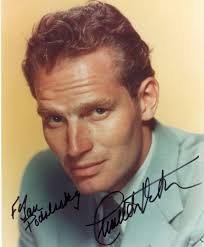
Charlton Heston in his prime
On May 20, 2000, the actor and then-president of the NRA addressed the organization at its 129th convention in Charlotte, North Carolina.
He warned that then-Vice President and Democratic Presidential candidade Al Gore “is going to smear you as the enemy,” and concluded:
“So, as we set out this year to defeat the divisive forces that would take freedom away, I want to say those fighting words for everyone within the sound of my voice to hear and to heed, and especially for you, Mr. Gore: ‘From my cold, dead hands!’”
Carrey’s stance on gun control couldn’t have been more opposite.
In in February, 2013, he outraged Right-wingers by tweeting: “Any1 who would run out to buy an assault rifle after the Newton massacre has very little left in their body or soul worth protecting.”
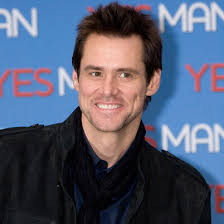
Jim Carrey
Fox Nation referred to the tweet as “nasty.”
Red Alert Politics writer Erin Brown dismissed it as “a careless remark …rooted in the shallow, parroted talking points so commonly espoused by liberal elites.”
But that was nothing compared to the rage that has greeted “Cold Dead Hand.” Reason TV’s Remy offered a parody rebuttal to Carrey’s song. Its lyrics included:
It takes a talking ass
to oppose a vaccination
when your PhD is in
making funny faces.
None of which bothered Carrey. In fact, he exulted in Right-wing outrage, tweeting: “Cold Dead Hand’ is abt u heartless motherf%ckers unwilling 2 bend 4 the safety of our kids. Sorry if you’re offended…”
Among its lyrics:
It takes a cold, dead hand to decide to pull the trigger.
Takes a cold, dead heart and as near as I can figger.
With your cold, dead aim you’re tryin’ to prove your dick is bigger …..
Many psychologists have long theorized that a fascination with firearms can compensate for inadequate sexual performance.
But it’s one thing for an unknown psychologist to write this in an obscure medical journal and another for a famous comedian to splash it across the Internet.
Carrey is especially ruthless in attacking those who–like the NRA–make a lucrative living off gun sales:
Imagine if the Lord were here…
And on the ones
Who sell the guns
He’d sic the vultures and coyotes
Only the devil’s true devotees
Could profiteer
From pain and fear.
Many Rightists attacked Carrey for parodying a man–Heston–who died in 2008 and could not defend himself. But Heston had appeared several times on “Saturday Night Live” to spoof his granite-hard image.
In his video, Carrey dares to attack not simply the masculinity of the Rightist NRA crowd, but even its courage:
You don’t want to get caught
With your trousers down
When the psycho killer
Comes around
So you make your home
Like a Thunderdome
And you’re always packin’
Everywhere you roam.
Perhaps that’s what most outraged the Right–the accusation that its members live in fear and do their best to generate needless fear in others.
Fear that can supposedly be abated by turning America into a society where everyone packs a weapon and every moment holds a potential High Noon.
Carrey was not shy in responding to his Rightist critics. On March 29, 2013, he issued this statement:
“Since I released my “Cold Dead Hand” video on Funny or Die this week, I have watched Fux News rant, rave, bare its fangs and viciously slander me because of my stand against large magazines and assault rifles.
“I would take them to task legally if I felt they were worth my time or that anyone with a brain in their head could actually fall for such irresponsible buffoonery. That would gain them far too much attention which is all they really care about.
“I’ll just say this: in my opinion Fux News is a last resort for kinda-sorta-almost-journalists whose options have been severely limited by their extreme and intolerant views; a media colostomy bag that has begun to burst at the seams and should be emptied before it becomes a public health issue.”
The NRA has spent decades bribing and intimidating its way through Congress. Those members who subscribe to its “guns for everyone” agenda get legalized bribes (i.e., “campaign contributions”).
Those who refuse to do so face the threat–if not the reality–of being ousted.
Bullies are conspicuously vulnerable to ridicule. Their only “defense” is to smash anyone who dares to mock their folly, brutality or pretense to omnipotence.
Or, as Ernest Hemingway once put it: “Fascism is a lie told by bullies.”
ABC NEWS, ACADEMY AWARDS, BARACK OBAMA, BEN-HUR, CBS NEWS, CHARLTON HESTON, CNN, EL CID, FACEBOOK, FOX NEWS, GUN CONTROL, JIM CARREY, JOHN F. KENNEDY, KHARTOUM, MAJOR DUNDEE, MOSES, MOVIES, NATIONAL RIFLE ASSOCIATION, NBC NEWS, PLANET OF THE APES, RICHARD M. NIXON, ROBERT F. KENNEDY, SCREEN ACTORS GUILD, THE CHICAGO SUN-TIMES, THE CHICAGO TRIBUNE, THE LOS ANGELES TIMES, THE NEW YORK TIMES, THE TEN COMMANDMENTS, THE WAR LORD, THE WASHINGTONPOST, TWITTER
In Entertainment, History, Politics, Social commentary on June 16, 2016 at 12:06 am
Bullies do not like to be mocked.
Anyone who doubts this need only examine the Right’s reaction to actor Jim Carrey’s March, 2013 “Cold Dead Hand” music video.
In this, Carrey–a strong advocate of gun control–mocked the National Rifle Association (NRA) and its right-wing allies.
These included rural America and (for the video’s purposes) the late actor Charlton Heston, who served as the NRA’s five-term president (1998-2003).

Jim Carrey as Charlton Heston
The video featured Carrey and alt-rock band Eels as “Lonesome Earl And The Clutterbusters,” a country band on a TV set modeled after the 1960s variety show, “Hee Haw.” Carrey also portrayed Heston as a dim-witted, teeth-clenching champion of the NRA.
“I find the gun problem frustrating,” Carrey said in a press release, “and ‘Cold Dead Hand’ is my fun little way of expressing that frustration.”
Carrey’s frustration triggered NRA outrage.
Click here: Jim Carrey’s Pro-Gun Control Stance Angers Conservatives
Fox News personality Greg Gutfeld ranted: “He is probably the most pathetic tool on the face of the earth and I hope his career is dead and I hope he ends up sleeping in a car.
“This video made me want to go out and buy a gun. He thinks this is biting satire going after rural America and a dead man… He’s a dirty, stinking coward… He’s such a pathetic, sad, little freak. He’s a gibbering mess. He’s a modern bigot.”
Columnist Larry Elder spared no venom in attacking Carrey: “Let’s be charitable–call Carrey ignorant, not stupid.”
Click here: Jim Carrey: Not ‘Dumb & Dumber,’ Just Ignorant
Much of his March 29 column centered on defending Heston, who died at 84 in 2008.
A lyric in Carrey’s song says “Charlton Heston’s movies are no longer in demand.” This prompted Elder to defend the continuing popularity of Heston’s 1956 movie, “The Ten Commandments,” where he played Moses.
Elder felt compelled to defend Heston’s off-screen persona as well, citing his 64-year marriage to his college sweetheart, Lydia.
On the other hand, writes Elder, Carrey, “followed the well-worn Hollywood path: Get famous; get rich; dump the first wife/mother of your kid(s), who stood by you during the tough times; and act out your social life in the tabs to the embarrassment of your kid(s).”
Clearly, Carrey’s video struck a nerve with Right-wing gun fanatics. But why?
Start with Gutfield’s accusation that Carry was “going after rural America.”
Rural America–home of the most superstitious, ignorant and knee-jerk Fascist elements in American society–boastfully refers to itself as “The Heartland.”
In short: a prime NRA and Rightist constituency.
It was rural America to which Senator Barack Obama referred–accurately–during his 2008 Presidential campaign:
“They get bitter, they cling to guns or religion or antipathy to people who aren’t like them or anti-immigrant sentiment or anti-trade sentiment as a way to explain their frustrations.”
Second, there’s Elder’s outrage that Carrey should dare to say that Heston’s movies “are no longer in demand.”
Among these movies: “Major Dundee,” “El Cid,” “Khartoum,” “The War Lord.” And even the hammiest film for which he is best-known: “The Ten Commandments.”
In a film career spanning 62 years, Heston vividly portrayed such historical characters as:
- Rodrigo Diaz de Bivar in “El Cid’:
- Mark Anthony in “Julius Caesar”;
- John the Baptist in “The Greatest Story Ever Told”;
- Andrew Jackson in “The President’s Lady” and “The Buccaneer”;
- Michaelangelo in “The Agony and the Ecstasy”;
- General Charles Gordon in “Khartoun.”
And he played fictitious characters, too:
- Civil War officers (“Major Dundee”);
- Norman knights (“The War Lord”);
- ranchers (“Three Violent People”;
- explorers (“The Naked Jungle”).
- Judah Ben-Hur (“Ben-Hur”);
- astronauts (“Planet of the Apes”)’
Heston was a widely respected actor who won the Academy Award for Best Actor in 1959 for “Ben Hur” and servecd as the president of the Screen Actors Guild from 1965 to 1971.
But it was not Heston’s film career that Carrey focused on–but his role as president of the NRA.
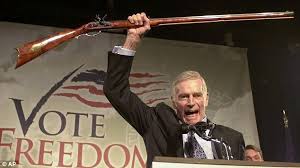
Charlton Heston at the NRA convention
Ironically, Heston had identified himself with liberal causes long before he became the face and voice of the gun lobby.
In 1961, he campaigned for Senator John F. Kennedy for President. In 1963, he took part in Martin Luther King’s March on Washington.
In 1968, after the assassination of Senator Robert F. Kennedy, he joined actors Kirk Douglas, James Stewart and Gregory Peck in issuing a statement supporting President Lyndon Johnson’s Gun Control Act of 1968.
But over the coming decades, Heston became increasingly conservative:
- Reportedly voting for Richard Nixon in 1972;
- Supporting gun rights; and
- Campaigning for Republican Presidential candidates Ronald Reagan, George H.W. Bush and George W. Bush.
When asked why he changed political alliances, Heston replied: “I didn’t change. The Democratic party changed.”
2016 PRESIDENTIAL RACE, ABC NEWS, BLACKS, BOEING, CBS NEWS, CNN, DONALD TRUMP, FACEBOOK, GEORGE C. WALLACE, HILLARY CLINTON, JOHN F. KENNEDY, JOHN MCCAIN, JUSTICE DEPARTMENT, MAFIA, MEXICANS, NBC NEWS, PRISONERS OF WAR, ROBERT F. KENNEDY, SAUDI ARABIA, STATE DEPARTMENT, THE CHICAGO SUN-TIMES, THE CHICAGO TRIBUNE, THE KENNEDYS, THE LOS ANGELES TIMES, THE NEW YORK TIMES, THE WALL STREET JOURNAL, THE WASHINGTON POST, TWITTER, WOMEN
In History, Law Enforcement, Politics, Social commentary, Uncategorized on June 6, 2016 at 12:01 am
Today, America has two major candidates running for President: Donald Trump and Hillary Clinton.
Trump is a billionaire businessman. Clinton is a former First Lady, U.S. Senator and Secretary of State.
Despite the great differences in their backgrounds, they both share one thing in common: Extremely high negatives among voters.
Trump’s hate-filled rhetoric has deliberately or unintentionally offended almost every major American voting group, including:
- Mexicans: “They’re bringing drugs.They’re bringing crime. They’re rapists.” He’s also promised to “build a great, great wall on our southern border and I will have Mexico pay for that wall.”
- Prisoners-of-War: Speaking of Arizona U.S. Senator John McCain, a Vietnam POW for seven years: “He’s not a war hero. He’s a war hero because he was captured. I like people that weren’t captured.”
- Women: “If Hillary Clinton can’t satisfy her husband, what makes her think she can satisfy America?”
These insults delight his white, uneducated followers. But they have alienated millions of other Americans who might have voted for him.
As for Clinton: She continues to be dogged by charges that she used her position as Secretary of State (2009-2013) to enrich herself.
Countries that made large contributions to the Clinton Foundation got an increase in State Department-approved arms sales.
For example: In 2011, the State Department green-lighted a $29 billion arms deal to Saudi Arabia, despite its dismal record on human rights.
Years before Clinton became Secretary of State, Saudi Arabia donated $10 million to the Clinton Foundation. And Boeing, the biggest defense contractor involved, donated $900,000 to the Clinton Foundation just two months before the deal was finalized.
But 48 years ago, Senator Robert Francis Kennedy aroused passions of an altogether different sort.
Kennedy had been a United States Attorney General (1961-1964) and Senator (1964-1968). But it was his connection to his beloved and assassinated brother, President John F. Kennedy, for which he was best known.

Robert F. Kennedy campaigning for President
Millions saw RFK as the only candidate who could make life better for America’s impoverished–while standing firmly against those who threatened the Nation’s safety.
As television correspondent Charles Quinn observed: “I talked to a girl in Hawaii who was for [George] Wallace [the segregationist governor of Alabama]. And I said ‘Really?’ [She said] ‘Yeah, but my real candidate is dead.’
“You know what I think it was? All these whites, all these blue collar people who supported Kennedy…all of these people felt that Kennedy would really do what he thought best for the black people, but, at the same time, would not tolerate lawlessness and violence.
“They were willing to gamble…because they knew in their hearts that the country was not right. They were willing to gamble on this man who would try to keep things within reasonable order; and at the same time do some of the things they knew really should be done.”
Campaigning for the Presidency in 1968, RFK had just won the crucial California primary on June 4–when he was shot in the back of the head. His killer: Sirhan Sirhan, a young Palestinian furious at Kennedy’s support for Israel. He died at 1:44 a.m. on June 6.
On June 8, 1,200 men and women boarded a specially-reserved passenger train at New York’s Pennsylvania Station. They were accompanying Kennedy’s body to its final resting place at Arlington National Cemetery.
As the train slowly moved along 225 miles of track, throngs of men, women and children lined the rails to pay their final respects to a man they considered a genuine hero.
Little Leaguers clutched their baseball caps across their chests. Uniformed firemen and policemen saluted. Burly men in shirtsleeves held hardhats over their hearts. Black men in overalls waved small American flags. Women from all levels of society stood and cried.

A nation says goodbye to Robert Kennedy
Commenting on RFK’s legacy, historian William L. O’Neil wrote in Coming Apart: An Informal History of America in the 1960′s:
“…He aimed so high that he must be judged for what he meant to do, and, through error and tragic accident, failed at….He will also be remembered as an extraordinary human being who, though hated by some, was perhaps more deeply loved by his countrymen than any man of his time.
“That too must be entered into the final account, and it is no small thing. With his death something precious disappeared from public life.”
The Kennedy family never again roused the same passions among voters as it did during RFK’s short-lived run for the Presidency.
And America has never again since seen a Presidential candidate who combined toughness on crime and compassion for the poor.
Republican candidates have waged war on crime–and the poor. And Democratic candidates have moved to the Right in eliminating anti-poverty programs.
RFK had the courage to fight the Mafia–and the compassion to fight poverty. At a time of rising rates of income inequality and corporate crime, his kind of politics are sorely missed.
1984 NOVEL, 9/11, ABC NEWS, ADOLF HITLER, BARACK OBAMA, BILL CLINTON, BIRTH CONTROL, BLACKS, CBS NEWS, CNN, COMMUNISM, DENNIS HASTERT, DISABLED, DISCRIMINATION, DWIGHT D. EISENHOWER, EDWARD R. MURROW, ENVIRONMENTALISTS, FACEBOOK, FAMILY RESEARCH COUNCIL, FRANKLIN D. ROOSEVELT, GAYS, GEORGE C. MARSHALL, GEORGE H.W. BUSH, GEORGE ORWELL, GOP, GREAT SOCIETY, HARRY S. TRUMAN, HISPANICS, HIV MEDICATION, HOUSE OF REPRESENTATIVES, J. ROBERT OPPENHEIMER, JOHN BIRCH SOCIETY, JOHN F. KENNEDY, JOHN STEINBECK, JOSEPH R. MCCARTHY, JOSEPH STALIN, JOSH DUGGAR, KGB, LEE ATWATER, LEON TROTSKY, LESBIANS, LIBERALS, LUCILLE BALL, LYNDON B. JOHNSON, MEDICAL CARE, MEIN KAMPF, MICHAEL DUKAKIS, MICHELLE BACHMANN, MITT ROMNEY, MUSLIMS, NBC NEWS, PETE SEEGER, PROPAGANDA, RELIGION, REPUBLICANS, RICHARD NIXON, RICK SANTORUM, ROBERT WELCH, RODNEY KING RIOTS, SCAPEGOATING, SHARIA LAW, SOCIALISTS, SOVIET UNION, THE LOS ANGELES TIMES, THE NEW YORK TIMES, THE RELIGIOUS FREEDOM RESTORATION ACT, THE WASHINGTON POST, TRANSGENDERS, TWITTER, WILLIAM L. SHIRER, WOMEN, WORLD WAR ii
In Bureaucracy, History, Law, Politics, Social commentary on May 23, 2016 at 12:05 am
Republicans and their Rightist allies have repeatedly compared President Barack Obama to Adolf Hitler. But their propaganda campaign draws heavily on the Nazi leader’s own advice.
In Mein Kampf, Hitler laid out his formula for successful propaganda: “All effective propaganda must be confined to a few bare essentials.
“Those must be expressed as far as possible in stereotypical formulas. These slogans should be persistently repeated until the very last individual has come to grasp the idea that has been put forward.”

Adolf Hitler
Bundesarchiv, Bild 183-H1216-0500-002 / CC-BY-SA, CC BY-SA 3.0 DE <https://creativecommons.org/licenses/by-sa/3.0/de/deed.en>, via Wikimedia Commons
Consider the vocabulary Right-wingers use to describe their political adversaries:
“Liberals,” “radicals, “bankrupting,” “treason,” subversion,” “slander,” “terrorism,” “betrayal,” “catastrophe,” “shattering the American dream,” “leftists,” “Communists,” “government takeover,” “socialism,” “power grab,” “secularism,” “environmentalism.”
In recent years, the GOP has targeted gays and lesbians as America’s subversive enemies.These attacks have come as thinly disguised as efforts to “restore religious freedom.”
In December, 2014, Republicans in the Michgan House of Representatives passed “The Religious Freedom Restoration Act.”
The bill would allow public agencies and private businesses to refuse service to anyone under the claim that their “religious beliefs” had been affronted.
And the State government would be legally prevented from intervening if a person claimed that his/her “deeply-held religious beliefs” was the reason for acting–or not acting–in a certain way.
Thus:
- An emergency room doctor could refuse service to a gay or lesbian needing medical care.
- A pharmacist could refuse to fill a doctor’s prescription for birth control, or HIV medication.
- A DMV clerk could refuse to give a driver’s license to someone who’s divorced.
- An employer could deny equal pay to women.
The bill seems modeled on a proposed law that the Republican House and Senate in Arizona sent to Governor Jan Brewer in 2014.
Under threat of a nationwide boycott of Arizona if the bill became law, Brewer vetoed it.
Republicans have introduced similar “right-to-discriminate” legislation in other states as well:
- On March 26, 2015, its governor, Mike Pence, signed into law the Religious Freedom Restoration Act. This will allow any individual or corporation to cite its religious beliefs as a defense when sued by a private party.
- In Kansas, lawmakers voted to exempt individuals from providing any service that was “contrary to their sincerely held religious beliefs.”
- That bill passed the state’s House chamber on February 11, 2014, triggering national backlash. It stalled in the Senate and didn’t advance beyond that body.
- In January, 2014, South Dakota Republicans introduced a bill to let businesses refuse to serve same-sex couples on the grounds that “businesses are private and that their views on sexual orientation are protected to the same extent as the views of private citizens.”
- The South Dakota bill–which was killed in February, 2014–would have made it illegal for a gay person to file a lawsuit charging discrimination.
Republicans claim they want to “get the government off the backs of the people.” But their fixation on regulating the sexual lives of Americans ensures government intrusions of the most intimate kind.
Since 9/11, Republicans have warned that Muslims are trying to impose Sharia (Islamic law) on America.
Ironically, Right-wing legislators, in elevating religion above the secular law, may have laid the legal foundations for making that possible.
What will happen when some Muslims claim their right–guaranteed in Islamic religious law–to have as many as four wives?
And when they claim that the “religious freedom” laws protect that right?
Republicans have defended such legislation by equating gays with child predators.
In fact, the Child Molestation Research & Prevention Institute states that 90% of child molesters target children in their network of family and friends, and the majority are men married to women.
Yet Republicans and their Rightist allies have refused to condemn such heterosexual–and Right-wing–child molesters as Dennis Hastert and Josh Duggar.
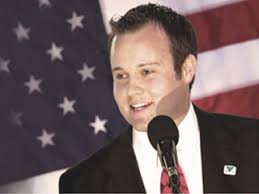
Josh Duggar, the “all-American” child molester
On May 21, 2015, responding to press leaks, Duggar resigned as director of the Family Research Council, a Right-wing organization dedicated to fighting sexually-oriented issues such as same-sex marriage, abortion and pornography.
In 2002-3, as a 14-15 year-old, Duggar had fondled the breasts and vaginas of five underage girls–four of whom were his own sisters.
And on October 28, 2015, Hastert–Speaker of the House of Representatives from 1999 to 2007–pleaded guilty to structuring money transactions in a way to avoid requirements to report where the money was going.

Dennis Hastert
The reason: To conceal the truth about his past as a child molester. Hastert had abused four young boys when he was their high school wrestling coach. One was only 14 years old.
Despite such setbacks, the politics of “smear and fear” have been good to Republicans–and their Right-wing allies.
The Republican “base” refuses to learn that those who portray themselves as morally superior are:
- Hypocrites, who are in effect saying: “Do as I say, not as I do,” or
- Fanatics, who intend to force their version of morality on others.
So long as millions of hate-filled Right-wingers support the endless succession of “two minute hates,” Republicans will continue to target an endless series of victims.
The good news: As blacks, Hispanics, women, gays and others become a significant political force, Republicans will stop attacking them and court them for votes.
The bad news: Republicans will move on to find other still-helpless scapegoats for America’s troubles.
1984 NOVEL, 9/11, ABC NEWS, ADOLF HITLER, BARACK OBAMA, BILL CLINTON, BIRTH CONTROL, BLACKS, CBS NEWS, CNN, COMMUNISM, DENNIS HASTERT, DISABLED, DISCRIMINATION, DWIGHT D. EISENHOWER, EDWARD R. MURROW, ENVIRONMENTALISTS, FACEBOOK, FAMILY RESEARCH COUNCIL, FRANKLIN D. ROOSEVELT, GAYS, GEORGE C. MARSHALL, GEORGE H.W. BUSH, GEORGE ORWELL, GOP, GREAT SOCIETY, HARRY S. TRUMAN, HISPANICS, HIV MEDICATION, HOUSE OF REPRESENTATIVES, J. ROBERT OPPENHEIMER, JOHN BIRCH SOCIETY, JOHN F. KENNEDY, JOHN STEINBECK, JOSEPH R. MCCARTHY, JOSEPH STALIN, JOSH DUGGAR, KGB, LEE ATWATER, LEON TROTSKY, LESBIANS, LIBERALS, LUCILLE BALL, LYNDON B. JOHNSON, MEDICAL CARE, MEIN KAMPF, MICHAEL DUKAKIS, MICHELLE BACHMANN, MITT ROMNEY, MUSLIMS, NBC NEWS, PETE SEEGER, PROPAGANDA, RELIGION, REPUBLICANS, RICHARD NIXON, RICK SANTORUM, ROBERT WELCH, RODNEY KING RIOTS, SCAPEGOATING, SHARIA LAW, SOCIALISTS, SOVIET UNION, THE LOS ANGELES TIMES, THE NEW YORK TIMES, THE RELIGIOUS FREEDOM RESTORATION ACT, THE WASHINGTON POST, TRANSGENDERS, TWITTER, WILLIAM L. SHIRER, WOMEN, WORLD WAR ii
In Bureaucracy, History, Law, Politics, Social commentary on May 20, 2016 at 12:01 am
In 1953, Red-baiting Wisconsin United States Senator Joseph R. McCarthy finally overstepped himself.
He attacked the leadership of the United States Army as “a hotbed of traitors” and convened an inquiry through the Senate Permanent Subcommittee on Investigations.
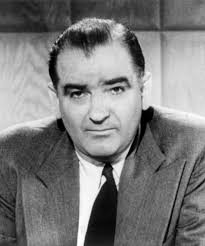
Joseph McCarthy
But the hearings backfired, exposing McCarthy as the bullying demagogue he was. A Senate committee voted to condemn his behavior, charging that he had “acted contrary to senatorial ethics and tended to bring the Senate into dishonor and disrepute.”
Although McCarthy remained in the Senate another two and a half years, his political influence had ended.
Yet even without McCarthy, Republicans rode the issue of anti-Communism to victory from 1948 to 1992.
After holding the White House for eight years under Dwight D. Eisenhower, they lost it in 1960 to John F. Kennedy and again in 1964 to Lyndon B. Johnson.
By 1968, with the nation mired in Vietnam and convulsed by antiwar demonstrations and race riots, Americans turned once more to those who preyed upon their fears and hates.
They elected Richard Nixon, who promised to end the Vietnam war and crack down on “uppity” blacks and antiwar demonstrators.
The same strategy re-elected him in 1972.
After Jimmy Carter won the Presidency in 1976 and lost it in 1980 to Ronald Reagan, Republicans held the White House until 1992.
During the 1970s and 1980s, they continued to accuse their opponents of being devious agents–or at least unwitting pawns–of “the Communist conspiracy.”
Even as late as 1992, President George H.W. Bush and the Republican establishment charged that Arkansas Governor Bill Clinton might be a KGB plant.
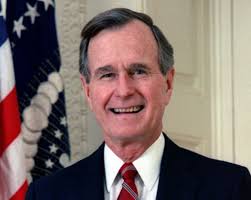
George H.W. Bush
Their evidence: During his tenure at Oxford University in 1969-70, Clinton had briefly visited Moscow.
Thus, the Republican charged that he might have been “programmed” as a real-life “Manchurian candidate” to become, first, Governor of Arkansas–one of America’s poorest states–and then President.
What made this charge all the more absurd: The Soviet Union had officially dissolved in December, 1991.
Republicans continued to accuse their opponents of being “Communists” and “traitors.” But these charges no longer carried the weight they had while the Soviet Union existed.
Right-wingers had to settle for attacking their opponents as “liberals” and “soft on crime.”
When riots flared in 1992 after the acquittal of LAPD officers who had savagely beaten Rodney King, President George H.W. Bush blamed the carnage on the “Great Society” programs of the 1960s.
Then, on September 11, 2001, Republicans–and their right-wing supporters–at last found a suitable replacement for the Red Menace.
Two highjacked jetliners slammed into the World Trade Center in New York and one struck the Pentagon in Washington, D.C.
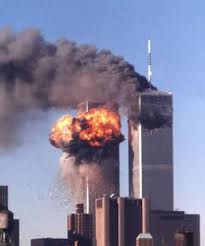
World Trade Center on September 11, 2001
Exit The Red Bogeyman. Enter The Maniacal Muslim.
Consider:
- Rep. Michelle Bachman (R-Minn.): On July 13, 2012, she sent letters to the Inspectors General of the Departments of Defense; State; Justice; and Homeland Security, demanding a “a multi-department investigation into potential Muslim Brotherhood infiltration into the United States Government.”
- Rick Santorum: On supporting the racial profiling of Muslims: “Obviously, Muslims would be someone you look at, absolutely.”
- Mitt Romney: “Based on the numbers of American Muslims in our population, I cannot see that a Cabinet position [for a Muslim] would be justified.
The 2008 election of Barack Obama pushed the Republican “treason chorus” to new heights of infamy.
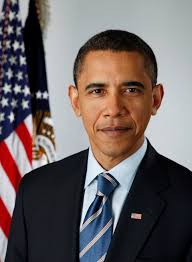
Barack Obama
Almost immediately after Obama took office, he came under attack by an industry of right-wing book authors such as Sean Hannity, Ann Coulter and Rush Limbaugh.
The following titles vividly reveal the hates, fears and ambitions of their authors–and audience:
- Conservative Victory: Defeating Obama’s Radical Agenda by Sean Hannity
- Obama Zombies: How the Liberal Machine Brainwashed My Generation by Jason Mattera
- How Barack Obama is Bankrupting the U.S. Economy by Stephen Moore
- The Manchurian President: Barack Obama’s Ties to Communists, Socialists and Other Anti-American Extremists by Aaron Klein
- The Blueprint: Obama’s Plan to Subvert the Constitution and Build an Imperial Presidency by Ken Blackwell
- Culture of Corruption: Obama and His Team of Tax Cheats, Crooks, and Cronies by Michelle Malkin
- Why Obama’s Government Takeover of Health Care Will Be a Disaster by David Gratzer
- To Save America: Stopping Obama’s Secular-Socialist Machine by Newt Gingrich
- Obama’s Radical Transformation of America: Year One by Joshua Muravchik
- Power Grab: How Obama’s Green Policicies Will Steal Your Freedom and Bankrupt America by Christopher C. Horner
- America’s March to Socialism: Why We’re One Step Closer to Giant Missile Parades by Glenn Beck
- The Obama Nation: Leftist Politics and the Cult of Personality by Jerome R. Corsi
- Censorship: The Threat to Silence Talk Radio by Brian Jennings
- The War On Success: How the Obama Agenda Is Shattering the American Dream by Tommy Newberry
- Green Hell: How Environmentalists Plan to Control Your Life and What You Can Do to Stop Them by Steven Milloy
- Liberalism is a Mental Disorder: Savage Solutions by Michael Savage
- Treason: Liberal Treachery from the Cold War to the War on Terrorism by Ann Coulter
- Slander: Liberal Lies About the American Right by Ann Coulter
- Catastrophe: How Obama, Congress and the Special Interests Are Transforming…a Slump into a Crash, Freedom Into Socialism and a Disaster into a Catastrophe….And How to Fight Back by Dick Morris
1984 NOVEL, 9/11, ABC NEWS, ADOLF HITLER, BARACK OBAMA, BILL CLINTON, BIRTH CONTROL, BLACKS, CBS NEWS, CNN, COMMUNISM, DENNIS HASTERT, DISABLED, DISCRIMINATION, DWIGHT D. EISENHOWER, EDWARD R. MURROW, ENVIRONMENTALISTS, FACEBOOK, FAMILY RESEARCH COUNCIL, FRANKLIN D. ROOSEVELT, GAYS, GEORGE C. MARSHALL, GEORGE H.W. BUSH, GEORGE ORWELL, GOP, GREAT SOCIETY, HARRY S. TRUMAN, HISPANICS, HIV MEDICATION, HOUSE OF REPRESENTATIVES, J. ROBERT OPPENHEIMER, JOHN BIRCH SOCIETY, JOHN F. KENNEDY, JOHN STEINBECK, JOSEPH R. MCCARTHY, JOSEPH STALIN, JOSH DUGGAR, KGB, LEE ATWATER, LEON TROTSKY, LESBIANS, LIBERALS, LUCILLE BALL, LYNDON B. JOHNSON, MEDICAL CARE, MEIN KAMPF, MICHAEL DUKAKIS, MICHELLE BACHMANN, MITT ROMNEY, MUSLIMS, NBC NEWS, PETE SEEGER, PROPAGANDA, RELIGION, REPUBLICANS, RICHARD NIXON, RICK SANTORUM, ROBERT WELCH, RODNEY KING RIOTS, SCAPEGOATING, SHARIA LAW, SOCIALISTS, SOVIET UNION, THE LOS ANGELES TIMES, THE NEW YORK TIMES, THE RELIGIOUS FREEDOM RESTORATION ACT, THE WASHINGTON POST, TRANSGENDERS, TWITTER, WILLIAM L. SHIRER, WOMEN, WORLD WAR ii
In Bureaucracy, History, Politics, Social commentary on May 19, 2016 at 12:01 am
The Right’s fixation on transgender “dangers” is only the latest in a long string of “enemies” painted by the Republican party.
During the 1960s and 1970s, the “enemy” was blacks. The key to winning votes of racist whites without appearing racist lay in what Republicans called “the Southern Strategy.”
It was this that won Richard Nixon the Presidency in 1968 and 1972 and the White House for George H.W. Bush in 1988.
In a now-infamous 1981 interview, Right-wing political consultant Lee Atwater explained how this worked:
“You start out in 1954 by saying, ‘Nigger, nigger, nigger.’ By 1968 you can’t say ‘nigger’—that hurts you, backfires.
“So you say stuff like, uh, forced busing, states’ rights, and all that stuff, and you’re getting so abstract.
“Now, you’re talking about cutting taxes, and all these things you’re talking about are totally economic things and a byproduct of them is, blacks get hurt worse than whites.…
“’We want to cut this,’ is much more abstract than even the busing thing, uh, and a hell of a lot more abstract than ‘Nigger, nigger.’
“So anyway you look at it, race is coming on the back burner.”

Lee Atwater
At the end of his life, Atwater recognized the monster he had helped unleash.
Like Reinhard Heydrich–the designer of the “Final Solution” who, on his deathbed, begged forgiveness for his crimes–Atwater, in a 1991 article for Life, apologized to former Democratic Presidential nominee Michael Dukakis for the “naked cruelty” of the 1988 campaign.
But blacks have by no means been the only targets–and victims–of Republican hate campaigns. A partial list of these would include:
- Liberals
- Women
- Socialists
- Secularists
- Disabled
- Environmentalists
- Hispanics
- Gays
- Lesbians
And now transgenders.
George Orwell’s classic 1949 novel, 1984, serves as a better guide to Republican electioneering than any official statement of the GOP.

1984 is set in a futuristic dictatorship called Oceania, whose constantly alternating mortal enemies are Eurasia and Eastasia.
A daily fixture of life in Oceania is the “Two Minutes Hate.” During this, Party members must watch a film depicting the Party’s enemies and express their hatred for them in exactly two minutes.
Chief among these is Emmanuel Goldstein, who is obviously based on Leon Trotsky, the longtime antagonist of Joseph Stalin, dictator of the Soviet Union for almost 30 years.
The “Two Minutes Hate” serves as a form of brainwashing, whose purpose is to whip ordinary citizens into a frenzy of hatred and loathing for whoever the Party designates as its–and their–mortal enemies.
Since the end of World War II, Republicans have regularly hurled the charge of “treason” against anyone who dared to run against them for office or think other than Republican-approved thoughts.
Republicans had been locked out of the White House from 1933 to 1952, during the administrations of Franklin D. Roosevelt and Harry S. Truman.
Determined to regain the Presidency by any means, they found that attacking the integrity of their fellow Americans a highly effective tactic.
During the 1950s, Wisconsin Senator Joseph R. McCarthy rode a wave of paranoia to national prominence–by attacking the patriotism of anyone who disagreed with him.
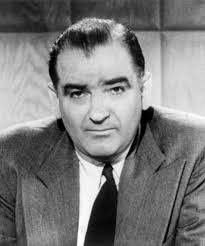
Joseph McCarthy
Elected to the Senate in 1946, he rose to national prominence on February 9, 1950, after giving a fiery speech in Wheeling, West Virginia:
“The State Department is infested with communists. I have here in my hand a list of 205—a list of names that were made known to the Secretary of State as being members of the Communist Party and who nevertheless are still working and shaping policy in the State Department.”
Americans were already growing increasingly fearful of Communism:
- Soviet dictator Joseph Stalin had not withdrawn the Red Army from the countries it had occupied in Eastern Europe during World War II.
- In 1948, the Soviet Union developed–and demonstrated–its own atomic bomb, an achievement U.S. scientists had claimed would not happen for at least a decade.
- In 1949, China fell to the triumphant armies of Mao Tse Tung.
But anti-communism as a lever to political advancement sharply accelerated following McCarthy’s speech. Republicans–resentful at being denied the White House since 1932–seized upon anti-communism as their passport to power.
No American–no matter how prominent–was safe from the accusation of being a Communist or a Communist sympathizer–”a Comsymp” or “fellow traveler” in the style of the era.
Among those accused:
- Secretary of State George C. Marshall, who had overseen America’s strategy for defeating Nazi Germany and Imperial Japan
- President Harry S. Truman
- Playwrights Lillian Hellman and Arthur Miller
- Actors Charlie Chaplin, Zero Mostel, Lloyd Bridges, Howard Da Silva, Edward G. Robinson and John Garfield
- Composers Arron Copland and Elmer Bernstein
- Physicist J. Robert Oppenheimer, who presided over the creation of America’s atomic bomb
- Actresses Lee Grant, Delores del Rio, Ruth Gordon and Lucille Ball
- Journalists Edward R. Murrow and William L. Shirer, who had chronicled the rise of Nazi Germany
- Folksinger Pete Seeger
- Writers Irwin Shaw, Howard Fast, John Steinbeck and Dashiell Hammett
Even “untouchable” Republicans became targets for such slander.
The most prominent of these was President Dwight D. Eisenhower–labeled ”a conscious, dedicated agent of the Communist Conspiracy” by Robert Welch, who founded the John Birch Society in 1958.
ABC NEWS, ALTERNET, AMERICABLOG, AP, ATOMIC BOMB, BABY BOOMER RESISTANCE, BARACK OBAMA, BBC, BEIRUT BOMBING, BILL CLINTON, BLOOMBERG, BUZZFEED, CBS NEWS, CHRIS MATTHEWS, CNN, COMMUNISM, CROOKS AND LIARS, CULTS, DAILY KOS, DAILY KOZ, ECONOMICS, FIVETHIRTYEIGHT, GEORGE H.W. BUSH, HARDBALL, HARPER’S MAGAZINE, HUFFINGTON POST, IRAN, IRAN-CONTRA AFFAIR, JOHN F. KENNEDY, JOSEPH STALIN, MEDIA MATTERS, MEET THE PRESS, MOTHER JONES, MOVEON, MSNBC, NBC NEWS, NEW REPUBLIC, NEWSDAY, NEWSWEEK, NPR, PBS NEWSHOUR, POLITICO, POLITICUSUSA, POLLUTION, RAW STORY, REPUBLICAN PARTY, REUTERS, Ronald Reagan, SALON, SEATTLE TIMES, Secret Service, SLATE, SOVIET NUCLEAR PHYSICS, SOVIET UNION, TALKING POINTS MEMO, TAX CUTS, TERRORISM, THE ATLANTIC, THE CHICAGO SUN-TIMES, THE CHICAGO TRIBUNE, THE DAILY BEAST, THE DAILY BLOG, THE GUARDIAN, THE HILL, THE HUFFINGTON POST, THE INTERCEPT, THE LOS ANGELES TIMES, THE NATION, THE NEW REPUBLIC, THE NEW YORK TIMES, THE NEW YORKER, THE VILLAGE VOICE, THE WASHINGTON POST, THINKPROGRESS, THIS WEEK, TIME, TRUTHDIG, TRUTHOUT, TWO POLITICAL JUNKIES, U.S. NEWS & WORLD REPORT, UPI, USA TODAY, Vladimir Lenin, X
In Bureaucracy, Business, History, Military, Politics, Social commentary on May 11, 2016 at 12:01 am
On February 6, 2011, Ronald Reagan, if he had been alive, would have been 100 years old.
Publishers rushed to put out worshipful tributes to his eight years as President. Network political programs such as “This Week” and “Meet the Press” assembled surviving members of his administration to re-live the “glory days” of Reagan’s—and their—time in power.
This is where it all started going wrong for America—a Right-wing legacy of huge Federal deficits, tax-cuts for the rich, bloated military budgets and cutbacks in government programs to aid the poor and middle-class.
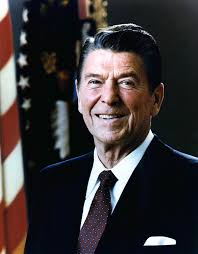
Ronald Reagan
The Republican party, of course, has done the most to create and promote this “cult of Reagan.” And it has done so for the same reason the Communist party of the Soviet Union created and fostered the “cult of Lenin.”
No two men could have been more different than Vladimir Lenin and Ronald Reagan. Lenin created the Soviet Union in 1917 and became its first in a series of absolute dictators. Reagan spent his life fighting Communism, most notably as President.
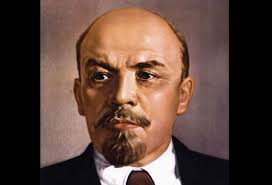
Vladimir Lenin
So it’s ironic that both men, in death, got essentially the same funeral—and for the same reason: To sanctify and legitimize their respective organizations—and the authority of their potential successors.
Lenin died in 1924 and was immediately succeeded by Joseph Stalin. Stalin knew that, despite Communism’s official atheistic stance, most Russians remained loyal to the Russian Orthodox Church.
So in giving Lenin’s funeral oration, Stalin used the language of religion to confer sainthood upon a militant atheist–and upon his successor, Stalin himself.
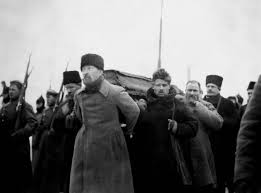
Funeral for Vladimir Lenin
Stalin and his fellow Communists immediately launched the “cult of Lenin,” depicting him as a fatherly, all-wise leader whose genius could only be bestowed upon his closest disciples.
Lenin’s extensive political writings were treated as divine writ, and were used to justify everything Stalin and his own successors wanted to do.
A classic example: Although Lenin died 20 years before the American creation of the atomic bomb, Lenin was hailed by the Soviets as the “father” of “Soviet nuclear physics.”
Similarly, the Republican party wasted no time turning its own former leader, Ronald Reagan, into a modern-day saint of mythical proportions.
They have done so for the same reason that Stalin deliberately forged a cult around the dead Lenin—to create a “holy” figure of whom other Republicans can claim to be true disciples.
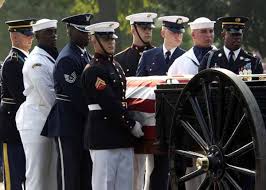
Funeral for Ronald Reagan
These deliberate fictions conveniently ignore a series of ugly truths:
- Reagan was only one of a series of Presidents who held the line against the Soviet Union.
- His budgets were just as stained with red ink as those of all previous Presidents.
- Far from standing up to Iranian terrorists, Reagan sold them our most sophisticated missiles in a weak-kneed exchange for American hostages. Then he went on television and brazenly lied that any such “arms for hostages” deal had ever happened.
- By the end of his term, 138 Reagan administration officials had been investigated, indicted or convicted for official misconduct and/or criminal violations.
- His “trickle-down” Reganomics brought prosperity to only the wealthiest 1% of Americans, proving that “a rising tide lifted some yachts.”
- By drastically shrinking the tax-base, bloating the defense budget and destroying programs to benefit the poor and middle-class, Reagan produced a $1 trillion deficit—which only the Clinton Administration eliminated.
- Reagan believed that government should not help the impoverished. Those who lacked wealth to buy such necessities as housing and medical insurance were written off as unimportant.
- John F. Kennedy had praised government service as an honor. Reagan repeatedly said that “the best and the brightest” could be found only in business.
- This denigration of government service continues among Republicans to this day–defaming the very institutions they lust to control.
- Although he often berated the poor for their “laziness,” Reagan adhered to a “banker’s hours” schedule: During his working hours in the Oval Office, he often had blocks of free time–two to three hours. He would call for his fan mail and answer it.
- Reagan saw no need to protect America’s fragile environment against corporate polluters, eager to enrich themselves at its expense: “Approximately 80% of our air pollution stems from hydrocarbons released by vegetation, so let’s not go overboard in setting and enforcing tough emission standards from man-made sources.”
Reagan famously attacked “welfare queens” and sought to deny government benefits for the poor. But he didn’t hesitate to enrich himself at public expense.
- Before his Presidency ended, 18 wealthy Californians contributed $156,000 apiece to buy him a 7,200 square-foot mansion overlooking Beverly Hills.
- Reagan signed a multi-million dollar deal to write his Presidential memoirs and publish a collection of his speeches.
- He signed an exclusive contract with a Washington lecture bureau, which paid him $50,000 per speech given in the United States and $100,000 overseas. This made him the highest-paid speaker in the country.
- These monies came in addition to his Presidential pension of $99,500 a year for life and his $30,000 annual pension as a former governor of California.
- At a cost to the government of $10 million annually, Reagan—a millionaire who could afford private security—continued to receive lifetime Secret Service protection from 40 fulltime agents.
The “cult of Lenin” died when the Soviet Union collapsed in 1991. The “cult of Reagan” continues to flourish, and will do so for as long as the Republican party finds voters willing to believe in it.
2016 PRESIDENTIAL RACE, ABC NEWS, ABCNEWS, ALTERNET, AMERICABLOG, AP, BABY BOOMER RESISTANCE, BBC, BERNIE SANDERS, BLOOD FEUD, BLOOMBERG NEWS, BROTHERS: THE HIDDEN HISTORY OF THE KENNEDY YEARS, BUZZFEED, CARLOS MARCELLO, CBS NEWS, CIA, CNN, COTTER SMITH, CROOKS AND LIARS, CUBA, DAILY KOS, DAVID TALBOT, DONALD TRUMP, ERNEST BORGNINE, FBI, FIDEL CASTRO, FIVETHIRTYEIGHT, GUS RUSSO, HARPER’S MAGAZINE, HILLARY CLINTON, HUFFINGTON POST, INTERNATIONAL BROTHERHOOD OF TEAMSTERS, J. EDGAR HOOVER, JAMES R. HOFFA, JOHN F. KENNEDY, JUSTICE DEPARTMENT, LIVE BY THE SWORD: THE SECRET WAR AGAINST CASTRO AND THE DEATH OF JFK, MAFIA, MEDIA MATTERS, MOTHER JONES, MOVEON, MSNBC, NBC NEWS, NEW REPUBLIC, NEWSDAY, NEWSWEEK, NPR, PBS NEWSHOUR, POLITICO, POLITICUSUSA, RAFAEL EDWARD CRUZ, RAW STORY, REUTERS, ROBERT BLAKE, ROBERT F. KENNEDY, SALON, SAM GROOM, SEATTLE TIMES, Secret Service, SENATE LABOR RACKETS COMMITTEE, SLATE, TALKING POINTS MEMO, THE ATLANTIC, THE CHICAGO SUN-TIMES, THE CHICAGO TRIBUNE, THE DAILY BEAST, THE DAILY BLOG, THE GUARDIAN, THE HILL, THE HUFFINGTON POST, THE INTERCEPT, THE LOS ANGELES TIMES, THE NATION, THE NEW REPUBLIC, THE NEW YORK TIMES, THE NEW YORKER, THE VILLAGE VOICE, THE WALL STREET JOURNAL, THE WASHINGTON POST, THINKPROGRESS, TIME, TRUTHDIG, TRUTHOUT, TWITTER, U.S. NEWS & WORLD REPORT, UPI
In Bureaucracy, History, Law, Law Enforcement, Politics, Social commentary on April 22, 2016 at 12:10 am
The 1983 TV mini-series, Blood Feud, chronicles the decade-long struggle between Robert F. Kennedy and James R. Hoffa.
Having “helped” Kennedy (Cotter Smith) to oust corrupt Teamsters President Dave Beck, Hoffa (Robert Blake) believes that Kennedy should now be satisfied: “He’s got his scalp. Now he can move on to other things while I run the union.”
But Hoffa has guessed wrong–with fatal results. Realizing that he’s been “played” by Hoffa, a furious Kennedy strikes back.
He orders increased surveillance of Hoffa and his topmost associates. He subpoenas union records and members of both the Teamsters and the Mafia to appear before his committee in public hearings.
And he tries to enlist the aid of legendary FBI Director J. Edgar Hoover (Ernest Borgnine). But Hoover wants no part of a war against organized crime, whose existence he refuses to admit.

Meanwhile, Kennedy’s confrontations with Hoffa grow increasingly fierce. In open hearings, Kennedy accuses Hoffa of receiving kickbacks in the name of his wife. Hoffa damns him for “dirtying my wife’s name.”
Kennedy secures an indictment against Hoffa for hiring a spy to infiltrate the Senate Labor Rackets Committee. He’s so certain of a conviction that he tells the press he’ll “jump off the Capitol building” if Hoffa beats the rap.
But Hoffa’s lawyer, Edward Bennett Williams (Jose Ferrer) puts Kennedy himself on the witness stand. There he portrays Kennedy as a spoiled rich man who’s waging a vendetta against Hoffa.
Hoffa beats the rap, and offers to send Kennedy a parachute. But he jokingly warns reporters: “Hey, Bobby, you better have it checked. I don’t trust myself!”
By 1959, Robert Kennedy’s work as chief counsel for the Senate Labor Rackets Committee is over. But not his determination to send Teamsters President James Hoffa to prison.
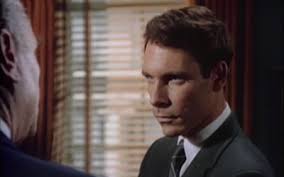
Cotter Smith as Robert Kennedy
Throughout 1960, he manages the Presidential campaign for his brother, John F. Kennedy (Sam Groom). By a margin of only 100,000 votes, JFK wins the election.
Hoffa thinks that his troubles are over, that “Bobby” will move on to other pursuits and forget about the Teamsters.
Hoffa is partly right: Kennedy moves on to another job. But it’s the office of United States Attorney General.
JFK, needing someone in the Cabinet he can trust completely, browbeats Robert into becoming the the nation’s top cop.
For Hoffa, it’s a nightmare come true.
As Attorney General, Kennedy no longer has to beg J. Edgar Hoover to attack organized crime. He can–and does–order him to do so.
Throughout the country, the Mafia feels a new heat as FBI agents plant illegal electronic microphones (“bugs”) in their innermost sanctums. Agents openly tail mobsters–and send them to prison in large numbers.
And Kennedy sets up a special unit, composed of topflight prosecutors and investigators, to go after just one man: James Riddle Hoffa. The press comes to call it the “Get Hoffa” squad.
Hoffa continues to beat federal prosecutors in court. But he believes he’s under constant surveillance by the FBI, and his nerves are starting to crack.
Convinced that the FBI has bugged his office, he literally tears apart the room, hoping to find the bug. But he fails to do so.
What he doesn’t know is he’s facing a more personal danger–from one of his closest associates.
He tells a trusted colleague, Edward Grady Partin (Brian Dennehy) how easy it would be to assassinate Kennedy with a rifle or bomb.
Later, Partin gets into a legal jam–and is abandoned by the Teamsters. Hoping to cut a deal, he relays word to the Justice Department of Hoffa’s threats against the Attorney General.
Now working for the Justice Department, Partin sends in reports on Hoffa’s juror-bribing efforts in yet another trial. Hoffa again beats the rap–but now Kennedy has the insider’s proof he needs to put him away for years.
Meanwhile, the Mafia despairs of the increasing pressure of the Justice Department. At a swanky restaurant, several high-ranking members agree that “something” must be done.
[Although this scene is fictional, it’s clearly based on an infamous outburst of Carlos Marcello, the longtime Mafia boss of New Orleans.
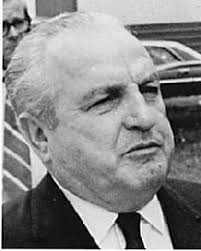
Carlos Marcello
[In 1961, Marcello was deported to his native Guatemala on orders by RFK. After illegally re-entering the country, he swore vengeance against the Attorney General.
[In September, 1962, during a meeting with several mob colleagues, he flew into a rage when someone mentioned Kennedy.
“Take the stone out of my shoe!” he shouted, echoing a Sicilian curse. “Don’t you worry about that little Bobby sonofabitch. He’s going to be taken care of!”
[When one of his colleagues warned that murdering RFK would trigger the wrath of his brother, President John F.Kennedy, Marcello replied: “In Sicily they say if you want to kill a dog you don’t cut off the tail. You go for the head.”
[Marcello believed that the death of President Kennedy would render the Attorney General powerless. And he added that he planned to use a “nut” to do the job.]
On November 22, 1963, President John F. Kennedy is assassinated in Dallas, Texas.
Blood Feud clearly implies that the Mafia was responsible.
2016 PRESIDENTIAL RACE, ABC NEWS, ALTERNET, AMERICABLOG, AP, BABY BOOMER RESISTANCE, BBC, BERNIE SANDERS, BLOOD FEUD, BLOOMBERG NEWS, BROTHERS: THE HIDDEN HISTORY OF THE KENNEDY YEARS, BUZZFEED, CARLOS MARCELLO, CBS NEWS, CIA, CNN, COTTER SMITH, CROOKS AND LIARS, CUBA, DAILY KOS, DAVID TALBOT, DONALD TRUMP, ERNEST BORGNINE, FBI, FIDEL CASTRO, FIVETHIRTYEIGHT, GUS RUSSO, HARPER’S MAGAZINE, HILLARY CLINTON, HUFFINGTON POST, INTERNATIONAL BROTHERHOOD OF TEAMSTERS, J. EDGAR HOOVER, JAMES R. HOFFA, JOHN F. KENNEDY, JUSTICE DEPARTMENT, LIVE BY THE SWORD: THE SECRET WAR AGAINST CASTRO AND THE DEATH OF JFK, MAFIA, MEDIA MATTERS, MOTHER JONES, MOVEON, MSNBC, NBC NEWS, NEW REPUBLIC, NEWSDAY, NEWSWEEK, NPR, PBS NEWSHOUR, POLITICO, POLITICUSUSA, RAFAEL EDWARD CRUZ, RAW STORY, REUTERS, ROBERT BLAKE, ROBERT F. KENNEDY, SALON, SAM GROOM, SEATTLE TIMES, Secret Service, SENATE LABOR RACKETS COMMITTEE, SLATE, TALKING POINTS MEMO, THE ATLANTIC, THE CHICAGO SUN-TIMES, THE CHICAGO TRIBUNE, THE DAILY BEAST, THE DAILY BLOG, THE GUARDIAN, THE HILL, THE HUFFINGTON POST, THE INTERCEPT, THE LOS ANGELES TIMES, THE NATION, THE NEW REPUBLIC, THE NEW YORK TIMES, THE NEW YORKER, THE VILLAGE VOICE, THE WALL STREET JOURNAL, THE WASHINGTON POST, THINKPROGRESS, TIME, TRUTHDIG, TRUTHOUT, TWITTER, U.S. NEWS & WORLD REPORT, UPI
In Bureaucracy, History, Law, Law Enforcement, Politics, Social commentary on April 21, 2016 at 12:37 pm
Today, America has four major candidates running for President: Donald Trump, Rafael Edward Cruz, Hillary Clinton and Bernie Sanders.
Trump is a billionaire businessman; Cruz is a U.S. Senator from Texas; Clinton is a former First Lady, U.S. Senator and Secretary of State; and Sanders is a U.S. Senator from Vermont.
Despite the great differences in their backgrounds, they all share one thing in common: Extremely high negatives among voters.
But 48 years ago, Senator Robert Francis Kennedy aroused passions of an altogether different sort.
Kennedy had been a United States Attorney General (1961-1964) and Senator (1964-1968). But it was his connection to his beloved and assassinated brother, President John F. Kennedy, for which he was best known.
Robert F. Kennedy campaigning for President
Millions saw RFK as the only candidate who could make life better for America’s impoverished–while standing firmly against those who threatened the Nation’s safety.
As television correspondent Charles Quinn observed: “I talked to a girl in Hawaii who was for [George] Wallace [the segregationist governor of Alabama]. And I said ‘Really?’ [She said] ‘Yeah, but my real candidate is dead.’
“You know what I think it was? All these whites, all these blue collar people who supported Kennedy…all of these people felt that Kennedy would really do what he thought best for the black people, but, at the same time, would not tolerate lawlessness and violence.
“They were willing to gamble…because they knew in their hearts that the country was not right. They were willing to gamble on this man who would try to keep things within reasonable order; and at the same time do some of the things they knew really should be done.”
Campaigning for the Presidency in 1968, RFK had just won the crucial California primary on June 4–when he was shot in the back of the head. His killer: Sirhan Sirhan, a young Palestinian furious at Kennedy’s support for Israel.
On June 8, 1,200 men and women boarded a specially-reserved passenger train at New York’s Pennsylvania Station. They were accompanying Kennedy’s body to its final resting place at Arlington National Cemetery.
As the train slowly moved along 225 miles of track, throngs of men, women and children lined the rails to pay their final respects to a man they considered a genuine hero.
Little Leaguers clutched their baseball caps across their chests. Uniformed firemen and policemen saluted. Burly men in shirtsleeves held hardhats over their hearts. Black men in overalls waved small American flags. Women from all levels of society stood and cried.
A nation says goodbye to Robert Kennedy
Commenting on RFK’s legacy, historian William L. O’Neil wrote in Coming Apart: An Informal History of America in the 1960′s:
“…He aimed so high that he must be judged for what he meant to do, and, through error and tragic accident, failed at….He will also be remembered as an extraordinary human being who, though hated by some, was perhaps more deeply loved by his countrymen than any man of his time.
“That too must be entered into the final account, and it is no small thing. With his death something precious disappeared from public life.”
Eleven years earlier, as a young, idealistic attorney, Kennedy had declared war on James Riddle Hoffa, the president of the Mafia-dominated International Brotherhood of Teamsters Union.
As chief counsel for the Senate Labor Rackets Committee, Kennedy was appalled at the corruption he discovered among high-ranking Teamster officials. As he saw it, under Hoffa’s leadership, the union was nothing less than “a conspiracy of evil.”
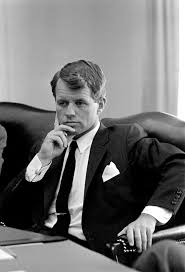
Robert Francis Kennedy as Chief Counsel, Senate Labor Rackets Committee
Hoffa, in turn, held an equally unflattering view of Kennedy. “A rich punk,” said Hoffa, who didn’t know or care about “the average workingman.”
In 1983, Blood Feud, a two-part TV mini-series, depicted the 11-year animosity between Kennedy and Hoffa. Although it took some dramatic liberties, its portrayal of the major events of that period remains essentially accurate.
Today, labor unions are a rapidly-vanishing species, commanding far less political influence than they did 50 years ago. As a result, young viewers of this series may find it hard to believe that labor ever held such sway, or that the Teamsters posed such a threat.
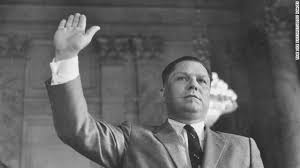
James Riddle Hoffa testifying before the Senate Labor Rackets Committee
And in an age when millions see “Big Government” as the enemy, they may feel strong reservations about the all-out war that Robert F. Kennedy waged against Hoffa.
Blood Feud opens in 1957, when Hoffa (Robert Blake) is a rising figure within the Teamsters. Kennedy (Cotter Smith) is chief counsel for the Senate Labor Rackets Committee.
At first, Hoffa tries to ingratiate himself with Kennedy, telling him: “I know everybody who can help me and anybody who can hurt me.”
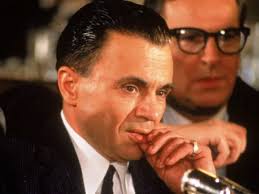
Robert Blake as James R. Hoffa
A wily Hoffa decides to parley Kennedy’s anti-corruption zeal into a path to power for himself. Via his attorney, Eddie Cheyfitz, he feeds Kennedy incriminating evidence against Dave Beck, president of the Teamsters.
Confronted with a Senate subpoena, Beck flees the country–paving the way for Hoffa to assume the top position in the union. Hoffa believes he has solved two problems at once.


&docid=SiluTuHYHtjaZM&tbnid=uLB-PLYDVdkkVM%3A&w=455&h=341&ei=zeN_VI_hKYHjoATGs4Bo&ved=0CAIQxiAwAA&iact=c)


ABC NEWS, AFGHANISTAN, BARACK OBAMA, CBS NEWS, CNN, FACEBOOK, GENERAL STANLEY MCCRYSTAL, HAMID KARZAI, JOHN F. KENNEDY, MICHAEL HASTINGS, NBC NEWS, NGO DINH DIEM, NORTH VIETNAMESE ARMY, ROLLING STONE MAGAZINE, THE CHICAGO SUN-TIMES, THE CHICAGO TRIBUNE, THE LOS ANGELES TIMES, THE NEW YORK TIMES, THE OPERATORS, THE PENTAGON, THE WASHINGTON POST, TWITTER, VIETCONG, VIETNAM
VIETNAM–MIDDLE-EAST STYLE
In Bureaucracy, History, Military, Politics, Social commentary on June 22, 2016 at 12:39 amMichael Hastings was the Rolling Stone reporter whose 2010 article on “The Runaway General” ended the illustrious military career of General Stanley McCrystal.
In 2012, Hastings greatly expanded on his article with a 2012 book: The Operators: The Wild and Terrifying Inside Story of America’s War in Afghanistan.
According to its hardcover dust jacket: “General Stanley McCrystal, the innovative, forward-thinking, commanding general of international and U.S. forces in Afghanistan, was living large. He was better known to some as Big Stan, M4, Stan, and his loyal staff liked to call him a ‘rock star.’
“During a spring 2010 trip across Europe to garner additional allied help for the war effort, McCrystal was accompanied by journalist Michael Hastings of Rolling Stone.
“For days, Hastings looked on as McCrystal and his staff let off steam, partying and openly bashing the Obama administration for what they saw as a lack of leadership.
“When Hastings’ piece appeared a few months later, it set off a poiltical firestorm: McCrystal was ordered to Washington where he was fired unceremoniously.”
General Stanley A. McCrystal
But there is an even deeper element to be found within Hastings’ book–that is, for anyone with even a general knowledge of the war in Vietnam.
Hastings (who died in a high-speed car accident in 2013) does not make any direct parallels between the almost 11-year conflict in Afghanistan and the 14-year conflict in Vietnam.
But those parallels are definitely there for anyone to see:
Ngo Dinh Diem
Hamid Karzai
American soldiers in Vietnam
American soldiers in Afghanistan
From this, the United States should draw several conclusions:
Hastings’ book does not cover the Afghan war to its end. It can’t, since there is no telling when that war will end.
But by the end of its 379 pages, it’s clear what that outcome will be: Another futile exercise in “nation-building” at an exorbitant cost in American lives and treasure.
Share this: