Posts Tagged ‘ISLAM’
2010 OLYMPICS, ABC NEWS, AL QAEDA, BELGIAN MALINOIS, CBS NEWS, CNN, FACEBOOK, ISLAM, ISLAMIC SHARIA COUNCIL, ISRAEL, JOHN FORD, JOHN WAYNE, MUHAMMED, MUSLIMS, NBC NEWS, OSAMA BIN LADEN, TERROR, TERRORISM, TEXAS RANGERS, THE CHICAGO SUN-TIMES, THE CHICAGO TRIBUNE, THE LOS ANGELES TIMES, THE NEW YORK TIMES, THE SEARCHERS, THE WASHINGTON POST, TWITTER, U.S. NAVY SEALS
In Bureaucracy, Entertainment, History, Law Enforcement, Military, Politics, Social commentary on April 1, 2016 at 12:46 am
There’s a scene in the classic 1956 Western, The Searchers, that counterterrorism experts should study closely.
John Wayne–in the role of Indian-hating Ethan Edwards–and a party of Texas Rangers discover the corpse of a Comanche killed during a raid on a nearby farmhouse.
One of the Rangers–a teenager enraged by the Indians’ killing of his family–picks up a rock and bashes in the head of the dead Indian.
Wayne, sitting astride his horse, asks: “Why don’t you finish the job?”
He draws his revolver and fires two shots, taking out the eyes of the dead Comanche–although the mutilation is not depicted onscreen.
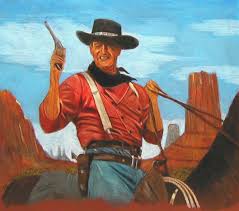
John Wayne as Ethan Edwards in The Searchers
The leader of the Rangers, a part-time minister, asks: ”What good did that do?”
“By what you preach, none,” says Wayne/Edwards. “But by what that Comanche believes–ain’t got no eyes, he can’t enter the Spirit land. Has to wander forever between the winds. You get it, Reverend.”
Now, fast forward to May 1, 2011: U.S. Navy SEALS descend on a compound in Abbottabad, Pakistan, and kill Osama bin Laden, the Al Qaeda chieftain.
Among the details of the raid that most titillates the media and public: The commandos were accompanied by a bomb-sniffing dog, a Belgian Malinois.
The canine was strapped to a member of the SEAL team as he lowered himself and the dog to the ground from a hovering helicopter near the compound.
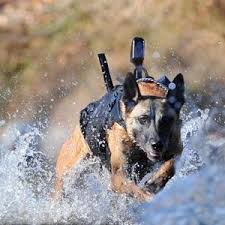
Heavily armored dogs–equipped with infrared night-sight cameras–have been used in the past by the top-secret unit.
The cameras on their heads beam live TV pictures back to the troops, providing them with critical information and warning of ambushes.
The war dogs wear ballistic body armor that is said to withstand damage from single and double-edged knives, as well as protective gear which shields them from shrapnel and gunfire.
Some dogs are trained to silently locate booby traps and concealed enemies such as snipers. The dogs’ keen senses of smell and hearing makes them far more effective at detecting these dangers than humans.
The animals will attack anyone carrying a weapon and have become a pivotal part of special operations as they crawl unnoticed into tunnels or rooms to hunt for enemy combatants.
Which brings us to the ultimate of ironies: Osama bin Laden may have been killed through the aid of an animal Muslims fear and despise.
Muslims generally cast dogs in a negative light because of their ritual impurity. Muhammad did not like dogs according to Sunni tradition, and most practicing Muslims do not have dogs as pets.
It is said that angels do not enter a house which contains a dog. Though dogs are not allowed for pets, they are allowed to be kept if used for work, such as guarding the house or farm, or when used for hunting.
Because Islam considers dogs in general to be unclean, many Muslim taxi drivers and store owners have refused to accommodate customers who have guide dogs.
In 2003, the Islamic Sharia Council, based in the United Kingdom, ruled that the ban on dogs does not apply to those used for guide work.
But many Muslims continue to refuse access, and see the pressure to allow the dogs as an attack upon their religious beliefs.
Counterterror specialists have learned that Muslims’ dread of dogs can be turned into a potent weapon against Islamic suicide bombers.
In Israel, use of bomb-sniffing dogs has proven highly effective—but not simply because of the dogs’ ability to detect explosives through their highly-developed sense of smell.
Muslim suicide-bombers fear that if they blow themselves up near a dog, they might kill the animal—and its unclean blood might be mingled with their own. This would make them unworthy to ascend to Heaven and claim those 72 willing virgins.
Similarly, news in 2009 that bomb-sniffing dogs might soon be patrolling Metro Vancouver’s buses and SkyTrains as a prelude to the 2010 Olympics touched off Muslims’ alarms.
“If I am going to the mosque and pray, and I have this saliva on my body, I have to go and change or clean,” said Shawket Hassan, vice president of the British Columbia Muslim Association.
Hassan said that he wanted the transit police to develop guidelines that would keep the dogs about one foot away from passengers.
What are the lessons to be learned from all this? They are two-fold:
- Only timely tactical intelligence will reveal Islamic terrorists’ latest plans for destruction.
- But no matter how adept such killers prove at concealing their momentary aims, they cannot conceal the attributes and long-term objectives of the religion, history and culture which have scarred and molded them.
American police, Intelligence and military operatives must constantly ask themselves: “How can we turn Islamic religion, Islamic history and islamic culture into weapons against the terrorists we face?”
These institutions must become intimately knowledgeable about the mindset of our Islamic enemies, just as the best frontier Army scouts and officers became knowledgeable about the mindset of the Indians they fought.
And then they must ruthlessly apply that knowledge against the weaknesses of those sworn enemies.
9/11, ABC NEWS, ADOLF HITLER, AL QAEDA, BOSTON MARATHON BOMBING, CBS NEWS, CHRISTIANITY, CNN, COLUMBIA UNIVERSITY, CZECHOSLOVAKIA, FACEBOOK, FRANKLIN ROOSEVELT, HARVARD UNIVERSITY, IRAN, IRANIAN REVOLUTION, ISLAM, JOSEPH STALIN, MUNICH OLYMPICS MASSACRE, NBC NEWS, OSAMA BIN LADEN, POLITICAL CORRECTNESS, RACIAL PROFILING, RELIGION, SAMUEL P. HUNTINGTON, SYRIAN EXODUS, THE CHICAGO SUN-TIMES, THE CHICAGO TRIBUNE, THE CLASH OF CIVILIZATIONS, THE LOS ANGELES TIMES, THE NEW YORK TIMES, THE WASHINGTON POST, THE WORLD TRADE CENTER, TWITTER, USA TODAY, WINSTON CHURCHILL, WORLD WAR ii
In Bureaucracy, History, Military, Politics, Social commentary on March 31, 2016 at 12:11 am
During the 1930s, Winston Churchill, a seemingly failed politician, repeatedly warned his British countrymen against the growing menace of Nazi Germany.
The leaders of Britain and France–the two great victors of World War 1–hoped that if they simply ignored the increasingly aggressive behavior of German Fuehrer Adolf Hitler, they could somehow escape catastrophe.
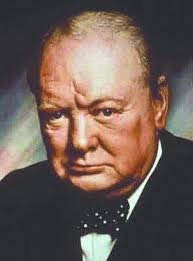
Winston Churchill
This aggressive behavior included:
- In the early 1930s, Hitler began re-building a powerful German army in open defiance of the Versallies Treaty that had ended World War 1.
- Hitler ordered his army to occupy his native Austria in 1938.
- In 1938, Hitler demanded that Czechoslavakia cede the Sudetenland, its northern, southwest and western regions, which were inhabited mostly by ethnic Germans.
- British Prime Minister Nveille Chamberlain surrendered to Hitler’s demands at the infamous “Munich conference.” Believing they had avoided war, his fellow Britons were ecstatic.
- In March, 1939, the German army occupied the rest of Czechoslovakia.
- Hitler next turned his attention to Poland–which he invaded on September 1.
- In doing so, he unintentionally triggered World War II.
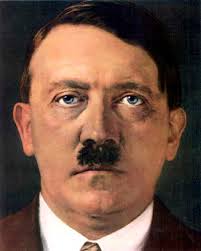
Adolf Hitler
In time, historians and statesmen would agree: Trying to appease dictators is futile–and a guarantee for their further aggression.
It is a lesson that current world leaders have forgotten as Islamic fundamentalists increasingly flex their military and economic muscles–and demand that Western nations bow to their demands.
- In Iran, scientists continue to fashion a nuclear weapons program–while insisting they intend to use the atom only for “peaceful purposes.”
- In Pakistan–which has 90-110 nuclear warheads–Osama bin Laden lived less than a mile from the Pakistan Military Academy, the country’s West Point. So much for America’s “ally” in the “war on terror.”
- On January 7, 2015, the worst terrorist act in France since World War II occurred when three Islamics slaughtered 12 people at a satirical magazine that had published cartoons about the Prophet Muhammed.
- The rising tide of Muslim population growth spells deadly challenges for non-Islamic nations.
Winston Churchill’s warnings were ignored by other world leaders–most notably Franklin Roosevelt and Joseph Stalin–until their countries became victims of unprovoked aggression.
So were the warnings of Harvard political science professor Samuel P. Huntington.
In 1993, he published an essay in Foreign Affairs called “The Clash of Civilizations.” Its thesis: In the post-Cold War world, nationalism would decline and differing cultures and religions would emerge as the primary sources of conflict.
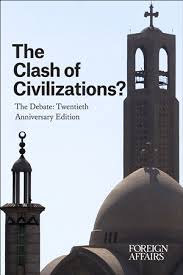
Huntington’s critique of Islamic civilizations ignited a firestorm of controversy–especially his statement: “Islam has bloody borders.”
In 1996, Huntington expanded his thesis into a book–called The Clash of Civilizations and the Remaking of World Order.
Among his assertions:
- People are divided along religious and cultural lines.
- Islamic civilization do not share the general ideals of the Western world–such as individualism and democracy.
- Their primary attachment is to their religion, not to their nation-state.
- When the Muslim world conflicts with other civilizations, tensions and wars result.
- Arab dictatorships are fragile and can be overturned by the masses of unemployed young men. But even if they fall, the new regimes will not modernize along Western lines.
- A fundamental clash of civilizations between Islam and the West is inevitable.
- Relations between Muslims and non-Muslims–such as Catholics, Protestants, Hindus, Buddhists and Jews–have been marked by Islamic antagonism and violence.
- Western nations should distance themselves from Islamic ones. The more both civilizations interact, the greater tensions between them will be.
Huntington cited several reasons for an inevitable war between the West and Islam:
- Western secular vs. Islamic religious values.
- Past historical rivalry between Christianity and Islam.
- Jealousy of Western power by Islamic nations.
- Islamic resentments of Western domination during the post-colonial restructuring of the Middle East.
- Islamic bitterness and humiliation at the achievements of Western civilization over the last 200 years.
A point of Islamic irony:
Islamic terror groups such as Al Qaeda and ISIS damn Western nations as havens of corrupt infidels. But it’s to Europe and the United States that tens of thousands of Syrians and Iraqis are now fleeing.
And they are fleeing to escape the barbaric slaughters of their fellow Islamics.
Following the 1979 Iranian Revolution, a quasi-war developed between some Islamic nations and some Western ones.
On the Islamic side:
- Iran
- Sudan
- Iraq
- Libya
- Syria.
On the Western side:
- The United States
- Great Britain.
“In this quasi war,” wrote Huntington, “each side has capitalized on its own strengths and the other side’s weaknesses.” For example:
- Muslim terrorists exploited the openness of Western societies to plant car bombs at selected targets.
- Western powers used their superior air power to bomb selected targets in Islamic countries.
- Islamics plotted the assassination of Western leaders.
- The United States plotted the overthrow of hostile Islamic regimes.
Writing at a time before the United States directed its full military power at conquering Afghanistan and Iraq, Huntington ominously noted:
“During the 15 years between 1980 and 1995…the United States engaged in 17 military operations in the Middle East, all of them directed against Muslims. No comparable pattern of U.S. military operations occurred against the people of any other civilization.”
And that was before 9/11 plunged the United States into fullscale conflict with Afghanistan and iraq.
The war that Huntington warned was coming and was, in fact, already in progress, has since erupted into full-scale conflict, with no end in sight.
9/11, ABC NEWS, ADOLF HITLER, AL QAEDA, BOSTON MARATHON BOMBING, CBS NEWS, CHRISTIANITY, CNN, COLUMBIA UNIVERSITY, CZECHOSLOVAKIA, FACEBOOK, FRANKLIN ROOSEVELT, HARVARD UNIVERSITY, IRAN, IRANIAN REVOLUTION, ISLAM, JOSEPH STALIN, LEBANON, MUNICH OLYMPICS MASSACRE, NBC NEWS, OSAMA BIN LADEN, POLITICAL CORRECTNESS, RACIAL PROFILING, RELIGION, SAMUEL P. HUNTINGTON, THE CHICAGO SUN-TIMES, THE CHICAGO TRIBUNE, THE CLASH OF CIVILIZATIONS, THE LOS ANGELES TIMES, THE NEW YORK TIMES, THE WALL STREET JOURNAL, THE WASHINGTON POST, THE WORLD TRADE CENTER, TWITTER, USA TODAY, WINSTON CHURCHILL, WORLD WAR ii
In Bureaucracy, History, Military, Politics, Social commentary on March 30, 2016 at 12:01 am
There is a famous joke about racial profiling that’s long made the rounds of the Internet. It appears in the guise of a “history test,” and offers such multiple-choice questions as:
In 1972 at the Munich Olympics, athletes were kidnapped and massacred by:
- Olga Korbut
- Sitting Bull
- Arnold Schwarzenegger
- Muslim male extremists mostly between the ages of 17 and 40

In 1979, the US embassy in Iran was taken over by:
- Lost Norwegians
- Elvis
- A tour bus full of 80-year-old women
- Muslim male extremists mostly between the ages of 17 and 40
During the 1980s a number of Americans were kidnapped in Lebanon by:
- John Dillinger
- The King of Sweden
- The Boy Scouts
- Muslim male extremists mostly between the ages of 17 and 40
In 1983, the US Marine barracks in Beirut was blown up by:
- A pizza delivery boy
- Pee Wee Herman
- Geraldo Rivera
- Muslim male extremists mostly between the ages of 17 and 40
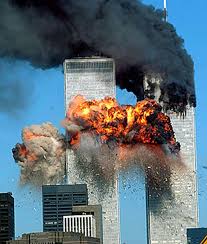
On September 11, 2001, four airliners were hijacked. Two were used as missiles to take out the World Trade Center; one crashed into the Pentagon; and the other was diverted and crashed by the passengers. Thousands of people were killed by:
- Bugs Bunny, Wiley E. Coyote, Daffy Duck and Elmer Fudd
- The Supreme Court of Florida
- Mr. Bean
- Muslim male extremists mostly between the ages of 17 and 40
* * * * *
It’s well to remember the bitter truth behind this joke, especially in light of such Islamic atrocities as:
- On April 15, 2013, two pressure-cooker bombs exploded at the finish line of the Boston Marathon, killing 3 people and injuring 264. The culprits: Two Muslim brothers, Dzhokhar Tsarnaev and Tamerlan Tsarnaev, who had emigrated to the United States from the former Soviet Union.
- On May 22, 2013, two Islamic terrorists, wielding machetes and shouting “Allahu Akbar!” (“God is Great!”) hacked a British soldier to death on a London street.
- On January 7, 2015, 2015, the worst terrorist act in France since World War II occurred when three Islamics slaughtered 12 people at a satirical magazine that had published cartoons about the Prophet Muhammed.
Writing in the British newspaper, The Spectator, Douglas Murray issued a warning to his fellow Britons: “Over recent years, those who have warned that such attacks would come here have been attacked as ‘racists’, ‘fascists’ and, most commonly, ‘Islamophobes.’
“A refusal to recognise the actual threat (a growingly radicalised Islam) has dominated most of our media and nearly all our political class.”
One man who did foresee the present conflicts with stunning clarity–and had the courage to say what has since become Politically Incorrect–was Samuel P. Huntington.

Samuel P. Huntington
A political scientist, Huntington taught government at Harvard University (1950-1959, then at Columbia University (1959-1962). He returned to Harvard in 1963, and remained there until his death in 2008.
The author of nine books, in 1996 he published his most influential one: The Clash of Civilizations and the Remaking of World Order. Its thesis was that, in the post-Cold War world, people’s cultural and religious identities would be the primary sources of conflict.
Among the points he makes:
- Modernization does not mean Westernization.
- Economic progress has come with a revival of religion.
- Post-Cold War politics emphasize ethnic nationalism over ideology.
- Civilizations are fundamentally differentiated from each other by centuries-old history, language, culture, tradition, and, most important, religion.
- As the world becomes smaller, different civilizations increasingly interact. These intensify civilization consciousness and the awareness of differences between civilizations.
- Economic modernization and social change separate people from age-old identities (such as hometowns and familiar neighbors). Religion has replaced this gap, providing a basis for identity, socialization and commitment that transcends national boundaries and unites civilizations.
- The West, at the peak of its power, is confronting non-Western countries that increasingly have the desire, will and resources to shape the world in non-Western ways.
- Cultural characteristics and differences are less mutable and hence less easily compromised and resolved than political and economic ones.
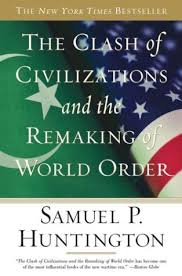
The most controversial part of The Clash of Civilizations focuses on Islam. Huntington points out, for example, that Muslim countries are involved in far more intergroup violence than others.
And he warns that the West’s future conflcts with Islamic nations will be rooted in the Islamic religion:
“Islam’s borders are bloody and so are its innards. The fundamental problem for the West is not Islamic fundamentalism. It is Islam, a different civilisation whose people are convinced of the superiority of their culture and are obsessed with the inferiority of their power.”
Huntington argues that civilisztional conflicts are “particularly prevalent between Muslims and non-Muslims.” Among the reasons for these conflicts: Both Islam and Christianity have similarities which heighten conflicts between their followers:
- Both seek to convert others.
- Both are “all-or-nothing” religions; each side believes that only its faith is the correct one.
- The followers of both Islam and Christianity believe that people who violate the base principles of their religion are idolators and thus damned.
Other reasons for the Western-Islamic clash are:
- The Islamic revival, which began in the 1970s and is manifested in greater religious piety and in a growing adoption of Islamic culture, values, dress, separation of the sexes, speech and media censorship.
- Western universalism–the belief that all civilizations should adopt Western values–infuriates Islamic fundamentalists.
These are not differences that will disappear–overnight or even over the span of several centuries. Nor will they be sweet-talked away by Politically Correct politicians, however well-meaning.
ABC NEWS, ADOLF HITLER, AL QAEDA, ARTHUR M. CUMMINGS, BARACK OBAMA, BOKO HARAM, BOSTON MARATHON BOMBING, CANADA, CBS NEWS, CNN, DAVID CAMERON, DONALD TRUMP, FACEBOOK, FBI, HATE CRIMES, ISLAM, ISLAMIC STATE OF IRAQ AND SYRIA, MOHAMMED, NAZI GERMANY, NBC NEWS, POLITICAL CORRECTNESS, RELIGION, ROBERT MEULLER III, RONALD KESSLER, SAMUEL HUNTINGTON, STEVEN EMERSON, TALIBAN, TERRORISM, THE CLASH OF CIVILIZATIONS, THE INVESTIGATIVE PROJECT ON TERRORISM, THE LOS ANGELES TIMES, THE NEW YORK TIMES, THE SECRETS OF THE FBI, THE WALL STREET JOURNAL, THE WASHINGTON POST, THE WHITE CLIFFS OF DOVER, TWITTER, VERA LYNN, WORLD TRADE CENTER, WORLD WAR ii
In Bureaucracy, History, Military, Politics, Social commentary on March 29, 2016 at 12:08 am
During World War II, British singer Vera Lynn comforted her war-weary fellow citizens with a poignant rendition of “The White Cliffs of Dover.”
The appeal of the song lay in its promise that, once Nazi Germany was defeated, peace and normality would return.
Click here: Vera Lynn: The White Cliffs of Dover – YouTube
And despite being threatened with invasion in 1940 and devastated by massive bombing raids in 1940-41, citizens of Great Britain could take heart in the following:
- Nazi Germany had a capitol–Berlin–and a single, all-powerful leader–Adolf Hitler. Once Berlin was occupied and Hitler dead or captured, the war would be over.
- And, for all their ferocity, German soldiers were easy to recognize: They wore gray uniforms, spoke German and waved flags emblazoned with swastikas or imperial eagles.
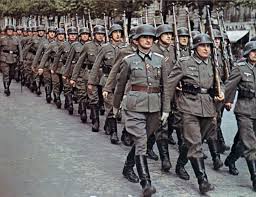
Wehrmacht soldiers marching through conquered France
Today, Western nations under attack by Islamic “holy warriors” face none of those advantages. Islam has no single capitol city–or leader.
Nor do Islam’s jihadist legions wear uniforms. Many of them don’t speak Arabic or wear clothing associated with Arabs, such as flowing robes and headdresses.
More ominously, millions of Islam’s potential “warriors” live within the very Western nations they despise. They can get all the instruction and inspiration they need to wreck havoc simply by going to the Internet.
Or, if they have the money, by traveling overseas to such terrorist-recruiting centers as in Syria or Afghanistan.
And yet, faced with an unprecedented threat to their security, many Western leaders refuse to publicly acknowledge this fundamental truth:
Even if the West isn’t at war with Islam, Islam is at war with the West.
Leaders like President Barack Obama, who insisted, at a White House Summit on Countering Violent Extremism in February, 2015: “We are not at war with Islam. We are at war with people who have perverted Islam.”

David Cameron
And leaders like British Prime Minister David Cameron, who said on August 29, 2014: “Islam is a religion observed peacefully by over a billion people. Islamist extremism is a poisonous ideology observed by a minority.”
It was at this same press conference that Cameron announced that United Kingdom authorities would soon begin revoking the passports of British citizens traveling to Syria.
Arthur M. Cummings, the FBI’s executive assistant director for national security, has no use for such Politically Correct terms as “man-caused disasters” to refer to terrorism. Nor does he shy away from terms such as “jihadists” or “Islamists.”
“Of course Islamists dominate the terrorism of today,” he says bluntly.
In May, 2014, Steven Emerson, a nationally recognized expert on terrorism, posted an ad in The New York Times, warning about the dangers of PC-imposed censorship:
“Our nation’s security and its cherished value of free speech has been endangered by the bullying campaigns of radical Islamic groups, masquerading as ‘civil rights’ organizations, to remove any reference to the Islamist motivation behind Islamic terrorist attacks.
“These groups have pressured or otherwise colluded with Hollywood, the news media, museums, book publishers, law enforcement and the Obama Administration in censoring the words ‘Islamist’, ‘Islamic terrorism’, ‘radical Islam’ and ‘jihad’ in discussing or referencing the threat and danger of Islamic terrorism.
“This is the new form of the jihadist threat we face. It’s an attack on one of our most sacred freedoms—free speech—and it endangers our very national security. How can we win the war against radical Islam if we can’t even name the enemy?”
He has a point–and a highly legitimate one.
Imagine the United States fighting World War II–and President Franklin Roosevelt banning the use of “fascist” in referring to Nazi Germany or “imperialist” in describing Imperial Japan.
Imagine CNN-like coverage of the Nazi extermination camps, with their piles of rotting corpses and smoking gas ovens, while a commentator reminds us that “Nazism is an ideology of peace.”
Then consider these Islamic terrorist outrages of our own time:
- The 9/11 attacks on the World Trade Center in New York City and the Pentagon in Washington, D.C., which snuffed out the lives of 3,000 Americans.
- The 2004 bombing of Madrid’s commuter train system.
- The attack on the London subway in 2005.
- The killing of 13 U.S. Army personnel at Fort Hood, Texas, by a Muslim army major in 2009.
- The bombing of the Boston Marathon in 2013.
- The kidnapping of 300 Nigerian schoolgirls by Boko Haram in 2014.
- The slaughter of 12 people at a Paris satirical magazine that had published cartoons about the Prophet Mohammed in 2015.
- The murders of more than 100 people in ISIS attacks across Paris in 2015.
- A series of deadly terrorist attacks in Brussels, killing 31 and injuring 270 in 2016.
In every one of these attacks, the perpetrators openly announced that their actions had been motivated by their Islamic beliefs.
In his groundbreaking book, The Clash of Civilizations (1996) Samuel Huntington, the late political scientist at Harvard University, noted:
“The fundamental problem for the West is not Islamic fundamentalism. It is Islam, a different civilisation whose people are convinced of the superiority of their culture and are obsessed with the inferiority of their power.”
The West may not be at war with Islam–as countless Western politicians repeatedly assert. But Islamics have no qualms about declaring that they are at war with the West.
ABC NEWS, ADOLF HITLER, AL QAEDA, ARTHUR M. CUMMINGS, BARACK OBAMA, BOKO HARAM, BOSTON MARATHON BOMBING, CANADA, CBS NEWS, CNN, DAVID CAMERON, DENMARK, DONALD TRUMP, FACEBOOK, FBI, HATE CRIMES, INVESTIGATIVE PROJECT ON TERRORISM, ISLAM, ISLAMIC STATE OF IRAQ AND SYRIA, MOHAMMED, NAZI GERMANY, NBC NEWS, NIGER, POLITICAL CORRECTNESS, RELIGION, ROBERT MEULLER III, RONALD KESSLER, SAMUEL HUNTINGTON, STEVEN EMERSON, TALIBAN, TERRORISM, THE CHICAGO SUN-TIMES, THE CHICAGO TRIBUNE, THE CLASH OF CIVILIZATIONS, THE LOS ANGELES TIMES, THE SECRETS OF THE FBI, THE WALL STREET JOURNAL, THE WASHINGTON POST, THE WHITE CLIFFS OF DOVER, TWITTER, VERA LYNN, WORLD TRADE CENTER, WORLD WAR ii
In Bureaucracy, History, Military, Politics, Social commentary on March 27, 2016 at 11:58 pm
The headline on the CNN website said it all–or seemed to: “Religion’s Week From Hell.”
Then came the first paragraph: “Whether you believe that religious violence is fueled by faith or is a symptom of larger factors–political instability, poverty, cultural chaos–one thing seems clear: Last week was hellish for religion.”
The story–published on the CNN website on February 18, 2015–then outlined a series of atrocities committed in the name of religion:
“Across several continents, including North America, Europe, Central Asia and Africa, scores of religious believers suffered and died in brutal attacks over the past seven days.”
Click here: Religion’s week from hell – CNN.com
And here was the day-by-day chronicle of slaughter:
Monday–February 9:
- Boko Haram, the Islamic group based in Nigeria, attacked several towns in Cameroon, kidnapping 20 people. They also exploded a car bomb in Niger. At the time, the death toll was unclear.
Tuesday–February 10:
- Craig Hicks, an athiest who ranted against religion on the Internet, was charged with killing three young Muslim students in Chapel Hill, North Carolina.
Wednesday–February 11:
- The Islamic State of Iraq and Syria (ISIS) attacked Kurdish forces in northern Iraq and Iraqi civilians in Baghdad. At least 31 people were killed in Baghdad by ISIS bombs.
Thursday–February 12:
- Al Qaeda seized a key military base in Baihan, Yemen, killing four Yemeni soldiers. They then took control of the town’s weaponry.
- With the United States’ having already closed its embassy in Yemen, Italy, Germany and Saudi Arabia did the same.
Friday–February 13:
- Boko Haram killed 21 people in attacks on Mbuta and Akida villages in Nigeria.
- The Islamic terror group also killed four civilians and a soldier in neighboring Chad.
- In Peshawar, Pakistan, the Taliban attacked a Shia mosque, killing 19 and wounding dozens.
Saturday–February 14:
- In Copenhagen, Denmark, an Islamic gunman fired at attendees of a free-speech forum, where a Swedish cartoonist was scheduled to speak. His alleged crime: Depicting the Prophet Mohammed. Casualties: Three officers wounded and one 55-year-old man killed.
- Hours later, the same terrorist visited a Copenhagen synagogue. Opening fire, he wounded two officers and killed a private security guard.
Sunday–February 15:
- ISIS released a video showing its members beheading more than a dozen members of Egypt’s Coptic Christian minority on a Libyan beach.
So much for “religion’s week from hell.”
Except that the title of this story was completely misleading. It would have been more accurately entitled: “Islamic Religion’s Week of Hell.”

ISIS member beheading a helpless captive
Of the 13 atrocities detailed above, all but one showcased Islamics as the murderers.
The single exception was that of Craig Hicks, an athiest who was charged with shooting three Muslim college students in Chapel Hill, North Carolina.
It was this case–and not any of the others–that brought Muslims to demand “justice.” Muslims immediately urged the Obama administration to investigate the murders as a hate crime.
Suzanne Barakat, the sister of one of the victims, said the students had been murdered because they were Muslims. She said that the killings should be considered an act of terrorism: “It’s time people call it what it is.”
But getting Islamics to label other Islamics as terrorists is an entirely different matter.
According to author Ronald Kessler, this has caused serious problems for the FBI. In his 2011 book, The Secrets of the FBI, Kessler notes the refusal of the Islamic community to identify known or potential terrorists within its ranks.
Says Arthur M. Cummings, the Bureau’s executive assistant director for national security: “I had this discussion with the director of a very prominent Muslim organization here in [Washington] D.C. And he said, ‘Why are you guys always looking at the Muslim community?’”
“I can name the homegrown cells, all of whom are Muslim, all of whom were seeking to kill Americans,” replied Cummings. “It’s not the Irish, it’s not the French, it’s not the Catholics, it’s not the Protestants. It’s the Muslims.”
Occasionally, Muslims will condemn Al Qaeda. But “rarely do we have them coming to us and saying, ‘There are three guys in the community that we’re very concerned about.’” said Cummings.
“They don’t want anyone to know they have extremists in their community. Well, beautiful. Except do you read the newspapers? Everybody already knows it. The horse has left the barn.
“So there’s a lot of talk about engagement. But, realistically, we’ve got a long, long way to go.”
At one community meeting, an Islamic leader suggested to Cummings that then-FBI director Robert Meuller III should pose for a picture with his group’s members. The reason: To show that Islamics are partners in the “war on terror.”
“When you bring to my attention real extremists who are here to plan and do something, who are here supporting terrorism,” said Cummings, “then I promise you, I will have the director stand up on the stage with you.”
“That could never happen,” replied the Islamic leader. “We would lose our constituency. We could never admit to bringing someone to the FBI.”
Donald Trump–alone of the Republican and Democratic candidates for President–has dared to say the un-sayable: Islam is at war with us.
And this candor–coupled with repeated Islamic atrocities–has propelled him to the front of Republican candidates.
9/11, ABC NEWS, ABORTION, BECKET, CBS NEWS, CHURCH VS. STATE, CNN, DISCRIMINATION, ENGLAND, FACEBOOK, FIRST CHURCH OF CANNABIS, GAYS, HENRY II, HOMOSEXUALITY, INDIANA, ISLAM, ISLAMICS, LESBIANS, MARIJUANA, MIKE PENCE, MOVIES, NBC NEWS, PETER O'TOOLE, PREJUDICE, RELIGION VS. SCIENCE, RELIGIOUS FREEDOM RESTORATION ACT, REPUBLICAN PARTY, REPUBLICANS, RICHARD BURTON, SHARIA LAW, THE CHICAGO SUN-TIMES, THE CHICAGO TRIBUNE, THE LOS ANGELES TIMES, THE NEW YORK TIMES, THE WASHINGTON POST, THOMAS BECKET, TWITTER, WOMEN'S RIGHTS
In Bureaucracy, Business, Entertainment, History, Law, Law Enforcement, Politics, Social commentary on March 15, 2016 at 12:55 am
In 1964, Thomas Becket, archbishop of Canterbury, once again struggled against King Henry II for power over English citizens.
This time, the conflict was fought across thousands of movie screens, with Richard Burton as Becket and Peter O’Toole as Henry, as portrayed in Jean Anouilh’s 1959 play.

A quick summary:
Becket, a brilliant Saxon noble, is the favorite friend of Henry. They hunt, fight and bed women together. Henry even appoints him as Chancellor, the highest law enforcement officer in the country.
But there is a storm on the horizon: The power of the Catholic Church is steadily rising, and Henry needs a highly-placed ally against its power. When the Archbishop of Canterbury dies, Henry appoints Becket in his place.
But suddenly the entirely secular Becket undergoes a religious conversion–and an unexpected change in allegiance. He insists that priests accused of criminal offenses be tried only in the church’s own courts–thus making them immune from Henry’s secular ones.
As a moviegoer, it’s easy to root for conscience-stricken Becket, as played by the charming Burton. Henry, as played by O’Toole, is a brutish adolescent, alternately fearful and enraged at his own incompetence.
But in rooting for Becket/Burton, the audience can overlook the significance of allowing religious doctrine to trump secular law.
The consequences of this are now becoming clear in Indiana.
On March 26, 2015, its governor, Mike Pence, signed into law the Religious Freedom Restoration Act. This will allow any individual or corporation to cite its religious beliefs as a defense when sued by a private party.
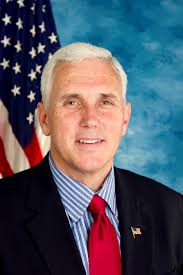
Mike Pence
Officially, its intent is to prevent the government from forcing business owners to act in ways contrary to strongly held religious beliefs. Unofficially, its intent is to appease the hatred of gays and lesbians by the religious Right, a key constituency of the Republican party.
In short, a bakery that doesn’t want to make a cake to be used at a gay wedding or a restaurant that doesn’t want to serve lesbian patrons will have the legal right to refuse to do so.
The same applies for a hospital that doesn’t want to provide care to a gay or lesbian patient.
The bill was passed overwhelmingly by both chambers of the Republican-controlled state legislature. And signed into law by a Republican governor.
“Today I signed the Religious Freedom Restoration Act, because I support the freedom of religion for every Hoosier of every faith,” Mike Pence said in a statement on the day he signed the bill.
“The Constitution of the United States and the Indiana Constitution both provide strong recognition of the freedom of religion but today, many people of faith feel their religious liberty is under attack by government action.”
Bill-signing ceremonies are usually highly public events. Governors–and presidents–normally want their constituents to see them creating new legislation.
Yet for all his praise for the bill, Pence signed it in a ceremony closed to the public and the press. The media were asked to leave even the waiting area of the governor’s office.
It’s almost as if Pence sensed that he was about to push open a door into a danger-filled room. And this may well be the case.
Through that door may soon march the First Church of Cannabis. The day after Pence signed the Act, church founder Bill Levin announced on his Facebook page that he had filed paperwork with the office of the Indiana Secretary of State.
Its registration had been approved–and Levin was ecstatic: “Now we begin to accomplish our goals of Love, Understanding, and Good Health.
“Donate $100 or more and become a GREEN ANGEL. Donate $500 or more and become a GOLD ANGEL. Donate $1000 or more and become a CHURCH POOHBA.”
And Levin had a personal comment for the governor who had made it all possible:
“Dear Mikey Pence…
“DUDE!.. keep crapping all over the state.. and I will plant a seed of LOVE, UNDERSTANDING and COMPASSION in each pile you leave.. and it will grow into a big skunky cannabis tree. Crap away Mikey.. Crap Away…”
No doubt many Indiana legislators are furious that their effort to attack gays may have brought legal marijuana to their highly conservative state. But worse may be to come.
Since 9/11, Right-wingers such as Rush Limbaugh and Sean Hannity have warned that Muslims are trying to impose Sharia (Islamic law) on America. And now Indiana’s legislators, in elevating religion above the law, may have laid the legal foundations for making that possible.
Ironically, this may not be so far removed from the goals of the Republican party as many think. Both the party and adherents of Sharia agree:
- Women should have fewer rights than men.
- Abortion should be illegal.
- There should be no separation between church and state.
- Religion should be taught in school.
- Religious doctrine trumps science.
- Government should be based on religious doctrine.
- Homosexuality should be outlawed.
What will happen when some Muslims in Indiana claim their right–guaranteed in Islamic religious law–to have as many as four wives?
And when they claim that the Religious Freedom Restoration Act protects that right?
Fasten your seatbelts, it’s going to be a bumpy nightmare.
9/11 ATTACKS, ABC NEWS, AFGHANISTAN, AL QAEDA, ALTERNET, AMERICABLOG, AP, BABY BOOMER RESISTANCE, BARACK OBAMA, BLOOMBERG, BOLIVIA, BUZZFEED, CBS NEWS, CIA, CNN, COMMUNISM, CROOKS AND LIARS, CUBA, CUBAN MISSILE CRISIS, DAILY KOZ, DRUDGE REPORT, ERNESTO "CHE" GUEVARA, FACEBOOK, FIDEL CASTRO, FIVETHIRTYEIGHT, GEORGE W. BUSH, GREEN BERETS, HARPER’S MAGAZINE, HUFFINGTON POST, IRAQ, ISLAM, JOHN F. KENNEDY, MEDIA MATTERS, MOTHER JONES, MOVEON, MSNBC, NAVY SEALS, NBC NEWS, NEWSWEEK, NIKITA KHRUSHCHEV, NPR, OSAMA BIN LADEN, PAKISTAN, PBS NEWSHOUR, POLITICO, POLITICUSUSA, RAW STORY, REUTERS, SALON, SEATTLE TIMES, SLATE, SOVIET UNION, TALIBAN, TALKING POINTS MEMO, THE ATLANTIC, THE CHICAGO SUN-TIMES, THE CHICAGO TRIBUNE, THE DAILY BEAST, THE DAILY BLOG, THE GUARDIAN, THE HILL, THE HUFFINGTON POST, THE LOS ANGELES TIMES, THE NATION, THE NEW REPUBLIC, THE NEW YORK TIMES, THE VILLAGE VOICE, THE WASHINGTON POST, THINKPROGRESS, TIME, TRUTHDIG, TRUTHOUT, TWITTER, TWO POLITICAL JUNKIES, U.S. NEWS & WORLD REPORT, UPI, USA TODAY, WONKETTE
In Bureaucracy, History, Military, Politics on February 16, 2016 at 12:10 am
When Osama bin Laden died, two weapons were within easy reach–an AK-47 assault rifle and a Russian-made nine-millimeter Makarov pistol.
But according to his wife, Amal, he was shot by Navy SEALS before he could reach either one.
A SEAL flashed coded news of bin Laden’s death to the Pentagon and the White House Situation Room, where President Barack Obama and the topmost officials of his administration anxiously followed events via a closed-circuit television.
“Geronimo E-KIA” read the message: “Geronimo [bin Laden] E-KIA [Enemy Killed in Action].”
The entire raid–including Intelligence sweeps of the compound–was over in less than 40 minutes. The SEALS moved quickly because they rightly feared that the Pakistani army would intervene to protect bin Laden.
Bin Laden had been living undisturbed at a large compound in Abbottabad for at least five years, just a short distance from Pakistan’s version of West Point.
Furthermore, the ISI–Pakistan’s Intelligence agency–had long been riddled with Al-Qaeda sympathizers, if not agents.
Within 24 hours of his death, Bin Laden’s body was transported to the aircraft carrier USS Carl Vinson for final rites and burial at sea.
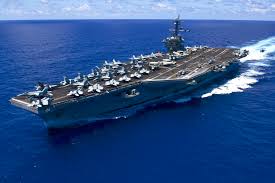
U.S.S. Carl Vinson
President Obama and other U.S. officials feared that his grave site would become a memorial for members of Al-Qaeda and other Islamic terrorist organizations.
In the late evening of May 1, 2011, the White House surprised major television networks by informing them that the President had a major announcement to make.
At 11:35 P.M. Eastern Standard Time, the President appeared at a podium in the East Room of the White House.
“Good evening. Tonight I can report to the American people and to the world that the United States had conducted an operation that killed Osama bin Laden, the leader of Al-Qaeda, and a terrorist who’s responsible for the murder of thousands of innocent men, women and children….
“For over two decades, bin Laden has been Al-Qaeda’s leader and symbol, and has continued to plot attacks against our country and our friends and allies. The death of bin Laden marks the most significant achievement to date in our nation’s efforts to defeat Al-Qaeda.”
He added that “no Americans were harmed” in the raid and that the SEALS had taken care to avoid civilian casualties.

President Barack Obama announcing Osama bin Laden’s death
Like Ernesto “Che” Guevara, bin Laden had become a pale, largely irrelevant figure by the time of his death.
Knowing he was the world’s most wanted man, he imprisoned himself within a fortified compound–which he never left.
Afraid to use a phone or the Internet, he relayed orders–which were often ignored–via the cumbersome use of couriers. All trash generated by the inhabitants of the compound was burned within its walls.
Ironically, the lack of Internet and phone lines to the compound–and the burning of its trash–had led CIA officials to suspect that Osama bin Laden might be hiding there.
Pakistan was outraged. Officially an American ally, its territory had been secretly invaded by American military forces. Even more embarrassing: For years, Pakistani Intelligence had denied knowing bin Laden’s whereabouts.
Meanwhile, leaders of Islamic expansionist groups rallied to praise the dead bin Laden. Among these was his son, Omar, who denounced his father’s killing as a “criminal” act, and his burial at sea as demeaning to the Islamic faith.
In a letter published on the website of Islamic ideologue Abu Walid al-Masri, the younger bin Laden said the former Al-Qaeda leader’s children reserved the right to take legal action in the United States and internationally to “determine the true fate of our vanished father.”
Bin Laden’s death drew protests from hundreds of people in the city of Quetta, in southwestern Pakistan, who burned American flags and paid homage to the late terrorist leader.
On May 13, a pair of Taliban suicide bombers attacked paramilitary police recruits eagerly heading home for a break after months of training, killing 80 people. It was the first act of retaliation for the killing of bin Laden.
Americans reacted differently.
Almost as Obama was addressing the nation, cheering crowds gathered outside the White House and in New York City’s Times Square. Many of them shouted “USA! USA! USA!” and waved American flags in celebration.
Celebration also broke out at the site of the former World Trade Center, the primary victim of the September 11 attacks.
For the next two weeks, Americans continued to rejoice. Much of their feelings were best expressed in grisly humor on websites and late night comedy shows such as “Tonight” and “Late Night With David Letterman.”
Killing Osama bin Laden removed Al-Qaeda’s most important member. But its treasury of secret materials–such as computer hard-drives, DVDs, notebooks, diaries–proved even more important to American military and Intelligence officials.
During the late 1960s and early 1970s, many Vietnam protesters marched carrying blown-up photos of Ernesto “Che” Guevara or tacked them to the walls of their dormitory rooms.
Most of these college students were members of the middle-class which Guevara had so despised.
Going on five years since the death of bin Laden, his poster has been noticeably absent from American college campuses–and everywhere else in the United States.
It remains to be seen whether, decades from now, Osama bin Laden will attain the iconic status of Ernesto “Che” Guevara.
9/11 ATTACKS, ABC NEWS, AFGHANISTAN, AL QAEDA, ALTERNET, AMERICABLOG, AP, BABY BOOMER RESISTANCE, BARACK OBAMA, BLOOMBERG, BOLIVIA, BUZZFEED, CBS NEWS, CIA, CNN, COMMUNISM, CROOKS AND LIARS, CUBA, CUBAN MISSILE CRISIS, DAILY KOZ, DRUDGE REPORT, ERNESTO "CHE" GUEVARA, FACEBOOK, FIDEL CASTRO, FIVETHIRTYEIGHT, GEORGE W. BUSH, GREEN BERETS, HARPER’S MAGAZINE, HUFFINGTON POST, IRAQ, ISLAM, JOHN F. KENNEDY, MEDIA MATTERS, MOTHER JONES, MOVEON, MSNBC, NAVY SEALS, NBC NEWS, NEWSWEEK, NIKITA KHRUSHCHEV, NPR, OSAMA BIN LADEN, PAKISTAN, PBS NEWSHOUR, POLITICO, POLITICUSUSA, RAW STORY, REUTERS, SALON, SEATTLE TIMES, SLATE, SOVIET UNION, TALIBAN, TALKING POINTS MEMO, THE ATLANTIC, THE CHICAGO SUN-TIMES, THE CHICAGO TRIBUNE, THE DAILY BEAST, THE DAILY BLOG, THE GUARDIAN, THE HILL, THE HUFFINGTON POST, THE LOS ANGELES TIMES, THE NATION, THE NEW REPUBLIC, THE NEW YORK TIMES, THE VILLAGE VOICE, THE WASHINGTON POST, THINKPROGRESS, TIME, TRUTHDIG, TRUTHOUT, TWITTER, TWO POLITICAL JUNKIES, U.S. NEWS & WORLD REPORT, UPI, USA TODAY, WONKETTE
In Bureaucracy, History, Military, Politics on February 15, 2016 at 12:00 am
Ernesto “Che” Guevara was dead. But that wasn’t enough for the Bolivian government that had authorized his execution. His corpse was disappear from the face of the earth.
On October 10, 1967, Guavara’s body was flown to nearby Vallegrande, where photographs were taken of him lying on a concrete slab in the laundry room of the Nuestra Senora de Malta.

Che Guevara in death
Several witnesses were called in to confirm that it was indeed Guevara. As hundreds of local residents filed past the corpse, men of them felt Guevara resembled images of a bearded, long-haired Jesus Christ. Some of them even surreptitiously clipped locks of his hair as divine relics.
After a military doctor amputated his hands, Bolivian army officers transferred Guevara’s body to an undisclosed location. The government refused to say whether his remains had been buried or cremated.
Che’s hands were preserved in formaldehyde and sent to Buenos Aires, Argentina, for fingerprint identification. (His prints were on file with the Argentine police)
On October 15, Fidel Castro acknowledged that Guevara was dead and proclaimed three days of public mourning throughout Cuba.
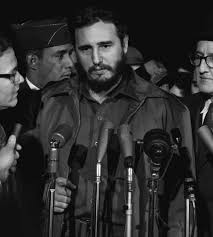
Fidel Castro
Che, in one sense, was lucky to die as he did–and when he did. He was only 39, but he was already running to fat and increasingly troubled by his lifelong asthma.
His Don Quixote-like venture into Bolivia proved a failure from first to last. Peasants didn’t flock to his banner; in fact, some of them betrayed his movements to the Bolivian army.
And 24 years after Guevara’s execution, Communism, his secular religion, died a violent death in its birthplace–the Soviet Union. It wasn’t killed off by invading capitalist forces, but thrown off by the Russian people themselves.
Nor would Che be pleased with the course of “revolutionary” events in Cuba. Until the death of the Soviet Union, the island remained dependent on what amounted to Soviet welfare.
Since then, Cubans have supported themselves by turning their island into a privileged playground for the rich–especially rich Americans.
On October 17, 1997–30 years after their deaths–Guevara and six of his fellow combatants were buried with full military honors in a specially built mausoleum in Santa Clara, Cuba. It was there in 1958 that he had commanded the decisive military victory of the Cuban Revolution.
Having described, in Part One, how Ernesto “Che” Guevara met his end, it’s time to examine how Osama bin Laden earned his 72 willing virgins.
After the September 11, 2001 attacks on the Pentagon and the World Trade Center, the United States quickly established that bin laden had plotted them.
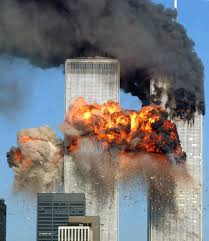
World Trade Center on 9/11/01
But bin Laden was then living in Afghanistan and protected by its Islamic rulers, the Taliban. President George W. Bush gave the Taliban an ultimatum: Surrender bin Laden–or else.
The Taliban refused.
On October 7, 2001, the United States’ new allies, the Northern Alliance, supported by American airstrikes, began a ground campaign against the Taliban.
Taliban resistance quickly vanished. Bin Laden retreated to Tora Bora, a series of bunkers in a mountainous region near the Pakistani border. With the mountains literally shaking under a rain of “bunker-busting” bombs, bin Laden decided to move on.
Suddenly, in December, 2001, he seemed to vanish from the earth.
Reports circulated that he was living in a cave in the no-man’s-land lying between Afghanistan and Pakistan.
Strangely, the Bush administration lost interest in locating him. Increasing numbers of American troops were quietly transferred from Afghanistan to staging areas near Iraq–for Bush’s long-planned overthrow of its dictator, Saddam Hussein.
Only when Barack Obama took office as President in 2009 was the CIA ordered to make finding bin Laden its top priority. Over the next two years, CIA agents sifted through a conflicting series of reports about bin Laden’s possible whereabouts.
Finally, the agency tracked a courier linked to bin Laden to a large, high-walled compound in Abbottabad, Pakistan.
On April 28, 2011, President Obama authorized a U.S. military raid on the compound, dubbed “Operation Neptune Spear.” On May 1, 2011, two teams of 12 U.S. Navy SEALS, working with the CIA, traveled in two helicopters to the compound.
The helicopters were specially outfitted to emit little noise. But an accident resulted when the tail rotor of one helicopter grazed the compound’s stone wall.
The damaged aircraft was “hard-landed” and then destroyed on-site to protect its technological secrets. Back-up forces were immediately available, and another helicopter was brought in to retrieve the commandos and relevant contents.
All combined, a total of 79 commandos and a dog (believed to have explosive-detection training) were involved in the raid.
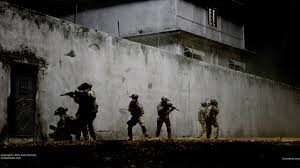
SEALS attacking bin Laden’s compound in the 2012 movie, “Zero Dark Thirty”
Abu Ahmed al-Kuwaiti, bin Laden’s courier, opened fire on the SEALS from the guesthouse with an AK-47 assault rifle. He and his wife were killed by return fire.
A male relative of the courier was shot and killed by the SEALS before he could reach a weapon lying nearby.
Bin Laden’s 22-year-old son rushed toward the SEALS on the staircase of the main house. SEAL gunfire instantly killed him.
Osama bin Laden, standing at the top of a staircase, retreated into his room–where SEALS followed and shot him in the head and chest.
9/11 ATTACKS, ABC NEWS, AFGHANISTAN, AL QAEDA, ALTERNET, AMERICABLOG, AP, BABY BOOMER RESISTANCE, BARACK OBAMA, BLOOMBERG, BOLIVIA, BUZZFEED, CBS NEWS, CIA, CNN, COMMUNISM, CROOKS AND LIARS, CUBA, CUBAN MISSILE CRISIS, DAILY KOZ, DRUDGE REPORT, ERNESTO "CHE" GUEVARA, FACEBOOK, FIDEL CASTRO, FIVETHIRTYEIGHT, GEORGE W. BUSH, GREEN BERETS, HARPER’S MAGAZINE, HUFFINGTON POST, IRAQ, ISLAM, JOHN F. KENNEDY, MEDIA MATTERS, MOTHER JONES, MOVEON, MSNBC, NAVY SEALS, NBC NEWS, NEWSWEEK, NIKITA KHRUSHCHEV, NPR, OSAMA BIN LADEN, PAKISTAN, PBS NEWSHOUR, POLITICO, POLITICUSUSA, RAW STORY, REUTERS, SALON, SEATTLE TIMES, SLATE, SOVIET UNION, TALIBAN, TALKING POINTS MEMO, THE ATLANTIC, THE CHICAGO SUN-TIMES, THE CHICAGO TRIBUNE, THE DAILY BEAST, THE DAILY BLOG, THE GUARDIAN, THE HILL, THE HUFFINGTON POST, THE LOS ANGELES TIMES, THE NATION, THE NEW REPUBLIC, THE NEW YORK TIMES, THE VILLAGE VOICE, THE WASHINGTON POST, THINKPROGRESS, TIME, TRUTHDIG, TRUTHOUT, TWITTER, TWO POLITICAL JUNKIES, U.S. NEWS & WORLD REPORT, UPI, USA TODAY, WONKETTE
In Bureaucracy, History, Military, Politics, Social commentary on February 12, 2016 at 12:12 am
They both had beards. They both saw military action. They both passionately hated the United States.
And they both died in a hail of bullets.
And immediately after their deaths, both seemed to disappear from the face of the earth.
Ernesto “Che” Guevara and Osama bin Laden.
Two men who inspired widespread admiration among their supporters–and fear among their enemies.
Guevara, an Argentinian doctor-turned-Cuban revolutionary, sought to destroy the United States’ power to fight Communism. Bin Laden sought to destroy its power to intervene in the Middle East.
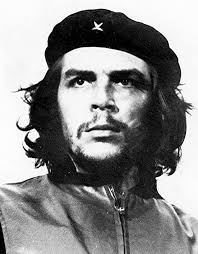
Ernesto “Che” Guevara
Guevara’s most optimistic hope was that Americans would eventually see the error of their capitalistic ways and convert to Communism. His last words were: “Tell Fidel [Castro] that he will soon see a triumphant revolution in America.”
But he was prepared to fight to the death–as indeed he did–to force revolutionary change upon the United States.
For Bin Laden, the cause was Islam, not Communism. His most optimistic hope was that Christian and Jewish Americans would eventually convert to Islam.
But if that didn’t happen, he, too, was prepared to attack Americans anywhere and in any way he could–as his private diary and documents have revealed.
Guevara died on October 9, 1967, at the hands of a CIA-directed operation run by the Bolivian army.
Bin Laden, creator of the Al-Qaeda (“The Base” terrorist network, met his end on May 1, 2011, during a raid by U.S. Navy SEALS on his compound in Pakistan.
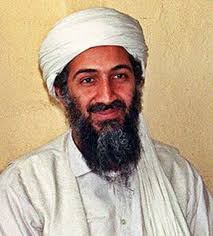
Osama bin Laden
One man–Guevara–has since attained secular sainthood in the eyes of millions of Communists and their sympathizers.
The other–bin Laden–has attained instant “martyr” status in the eyes of untold numbers of Islamic terrorists and their sympathizers.
Both men plotted constantly against the United States and eagerly sought its destruction.
In November, 1962, during an interview with the Communist newspaper, the London Daily Worker, Guevara raged against the Soviet Union’s recent withdrawal of nuclear missiles from Cuba.
Those “thirteen days” of the Cuban Missile Crisis that October had brought the world to the brink of nuclear destruction.
“If the missiles had remained, we would have used them against the very heart of the United States, including New York,” said Guevara.
“We must never establish peaceful coexistence. We must walk the path of victory even if it costs millions of atomic victims.”
Similarly, until the end of his life, bin Laden demanded more attacks like the one on September 11, 2001, that snuffed out the lives of 3,000 Americans.
This brought him into conflict with other Al-Qaeda members who wanted to launch assaults on more vulnerable targets outside the United States.
Guevara died as he had lived–violently.
In late October, 1966, he slipped out of Cuba. On November 3, he secretly arrived in La Paz, Bolivia, intent on re-staging the Cuban revolution among the Bolivian peasantry.

But the peasants showed no interest in his aims and in fact reported his movements to the Bolivian army.
The army, in turn, was being advised by United States Green Berets under the direction of the CIA.
On October 7, 1967, an informant tipped off the Bolivian Special Forces to the location of Guevara’s guerrilla camp in the Yuro ravine.
On October 8, they encircled the area with 1,800 soldiers. In the shootout that followed, Guevara was wounded and taken prisoner while leading a detachment.
His rifle broken by a lucky shot, a twice-wounded Guevara shouted: “Do not shoot! I am Che Guevara and worth more to you alive than dead.”
Quickly informed of Guevara’s capture, the Bolivian government debated his fate: Should he be immediately executed or placed on trial?
On the morning of October 9, Bolivian President Rene Barrientos ordered that Guevara be executed. Barrientos feared that placing him on trial would create an international media circus and/or render Bolivia vulnerable to efforts to free him.
The Bolivian government planned to declare that Guevara had been killed in action during a clash with the nation’s armed forces. Special instructions were thus issued.
These came from Felix Rodrieguez, a CIA agent acting as advisor to the Bolivians.
The executioner would be Mario Teran, a Bolivian army sergeant who had lost three of his friends in an earlier firefight with Guevara’s band of guerrillas.
Rodriguez ordered Teran to aim carefully to make it appear that Guevara had been killed in action.
To his surprise, Rodriguez found himself highly impressed with Guevara’s courage. When informed of his imminent execution, Guevara blanched, then quickly got control of himself.

Felix Rodriguez, left, Che, center
“It is better like this,” he said. “I should never have been captured alive.”
Rodriguez asked if he had any messages for his family. Guevara replied: “Tell Fidel [Castro, the president/dictator of Cuba] that he will soon see a triumphant revolution in America.
“And tell my wife to remarry and try to be happy.”
When Sergeant Teran entered the hut, Guevara told his executioner: “I know you’ve come to kill me. Shoot, coward! You are only going to kill a man!”
Teran hesitated, then opened fire with his semiautomatic rifle, hitting Guevara in his arms and legs.
Guevara writhed on the ground, apparently biting one of his wrists to avoid crying out. Teran then fired several more times, finally killing him with a shot in the chest.
9/11 ATTACKS, ABC NEWS, ADOLF HITLER, AFGHANISTAN, AL QAEDA, BARACK OBAMA, BASHAR AL-ASSAD, CARLOS THE JACKAL, CBS NEWS, CHEMICAL WARFARE, CHINA, CNN, CONGRESS, FACEBOOK, GEORGE H.W. BUSH, GEORGE W. BUSH, HARRY S. TRUMAN, HIZBOLLAH, IRAN, IRAQ, ISLAM, ISRAEL, NAZI GERMANY, NBC NEWS, OSAMA BIN LADEN, RELIGION, RUSSIA, SADDAM UISSEIN, SHIITE MUSLIMS, SUNNI MUSLIMS, SYRIA, SYRIAN OBSERVATORY FOR HUMAN RIGHTS, TERRORISM, THE CHICAGO SUN-TIMES, THE CHICAGO TRIBUNE, THE LOS ANGELES TIMES, THE NEW YORK TIMES, THE SYRIAN OBSERVATORY FOR HUMAN RIGHTS, THE WASHINGTON POST, THE WORLD POST, TWITTER, VLADIMIR PUTIN, WORLD WAR 1
In Bureaucracy, History, Military, Politics on February 11, 2016 at 12:01 am
Sometimes your worst enemies aid you unintentionally–and in ways you could never help yourself. That’s what America’s Islamic enemies are now doing throughout the Middle East.
Contrary to the propaganda of Republican militarists and Democratic do-gooders, Americans should be thrilled at the mutual destruction of their most dedicated enemies.
In the first installment of this series, three reasons were given for why the United States should not intervene in the Syrian conflict. This will offer the remaining seven.
Fourth: Since 1979, Syria has been listed by the U.S. State Department as a sponsor of terrorism.
Among the terrorist groups it supports: Hizbollah and Hamas. For many years, Syria provided a safe-house in Damascus for Illich Ramirez Sanchez–the notorious international terrorist known as Carlos the Jackal.
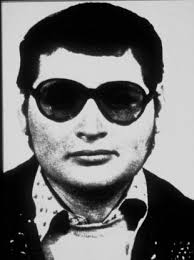
Ilich Ramírez Sánchez–“Carlos the Jackal”
Fifth: The United States had no part in creating or supporting the decades-long dictatorship of the Assad regime–which has long been hostile to America.
After a long series of political maneuverings, Hafez al-Assad seized power in 1970 and was proclaimed “president” next year. With aid from the Soviet Union, he built up the Syrian army. Using arrest, torture and execution, he ruled Syria as a dictator until he died in 2000.
His son, Bashar, then took command of Syria. Like his father, he has supported Palestinian and Lebanese militant groups. And, like his father, he continues to receive financial and military support from the successor to the Soviet Union, the Russian Federation.
Thus, America has no moral obligation of any kind to Syria–or Syrians.
Sixth: Intervening in Syria could lead to Syrian attacks against Israel.
An American military strike on Syrian government forces could lead the country’s dictator, Bashar al-Assad, to attack Israel–perhaps even with chemical weapons. Assad could do this simply because he hates Jews–or to lure Israel into attacking Syria.
If that happened, the Islamic world–which lusts to destroy Israelis even more than “apostate” Muslims–would rally to Syria against the United States, Israel’s chief ally.
Seventh: Committing American ground forces to Syria or just continuing to bomb targets there could lead to Islamic terrorism against the United States–at home or abroad.
This has already happened with Russia, which, on September 30, 2015, began bombing airstrikes on forces trying to overthrow Assad.
On October 31, Airbus A321, a Russian airliner, broke up in mid-air, then crashed in Egypt’s Sinai Peninsula, killing all 224 people on board.
In Egypt, a militant group affiliated to the Islamic State of Iraq and Syria (ISIS) claimed it had brought down the plane “in response to Russian airstrikes that killed hundreds of Muslims on Syrian land.”
The same fate could well befall American civilians and/or soldiers.
Eighth: China and Russia are supporting the Assad dictatorship–and the brutalities it commits against its own citizens.
This reflects badly on them–not the United States. And any move by the United States to directly attack the Assad regime could ignite an all-out war with Russia and/or China.
What happens if Russian and American forces start trading salvos? Or if Russian President Vladimir Putin orders an attack on America’s ally, Israel, in return for America’s attack on Russia’s ally, Syria?
It was exactly that scenario–Great Powers going to war over conflicts between their small-state allies–that triggered World War I.
Ninth: The United States cannot defeat ISIS through air power alone–thus making commitment of ground troops inevitable.
President Barack Obama authorized airstrikes against ISIS in September, 2014. The United States Air Force has since dropped thousands of bombs on ISIS convoys.
This has not destroyed ISIS. And its failure to do so has only led to demands by hawkish Republicans and Democrats for “boots on the ground.”
Tenth–and most importantly: While Islamic nations like Syria, Iraq and Egypt wage war within their own borders, they will lack the resources–and incentive–to attack the United States.
Every dead Hizbollah and Al-Qaeda and ISIS member makes the United States that much safer. So does the death of every sympathizer of Hizbollah, Al-Qaeda and ISIS.
The peoples of the Middle East have long memories for those who commit brutalities against them. In their veins, the cult of the blood feud runs deep.
When Al-Qaeda blows up civilians in Beirut, their relatives will urge Hizbollah to take brutal revenge. And Hizbollah will do so. Similarly, when Hizbollah does, those who support Al-Qaeda will demand even more brutal reprisals against Hizbollah.

Al-Qaeda terrorists–now taking aim at Hezbollah terrorists
No American could instill such hatred in Al-Qaeda for Hizbollah–or vice versa. This is entirely a war of religious and sectarian hatred.
In fact, this conflict could easily become the Islamic equivalent of “the Hundred Years War” that raged from 1337 to 1453 between England and France.
When Adolf Hitler invaded the Soviet Union in 1941, then-Senator Harry S. Truman said: “I hope the Russians kill lots of Nazis–and vice versa.”
That should be America’s position whenever its sworn enemies start killing off each other. Americans should welcome such self-slaughters, not become entrapped in them.


.jpg)


_underway_in_the_Pacific_Ocean_on_31_May_2015.JPG&imgrefurl=https%3A%2F%2Fen.wikipedia.org%2Fwiki%2FUSS_Carl_Vinson&docid=_CVahKI_7obrGM&tbnid=5YNeIda1dVcZQM%3A&w=3451&h=2301&ved=0ahUKEwid67qv7PvKAhVL7WMKHUoVBEUQxiAIAg&iact=c&ictx=1)


 Bureaucracybuster's Blog
2010 OLYMPICS, ABC NEWS, AL QAEDA, BELGIAN MALINOIS, CBS NEWS, CNN, FACEBOOK, ISLAM, ISLAMIC SHARIA COUNCIL, ISRAEL, JOHN FORD, JOHN WAYNE, MUHAMMED, MUSLIMS, NBC NEWS, OSAMA BIN LADEN, TERROR, TERRORISM, TEXAS RANGERS, THE CHICAGO SUN-TIMES, THE CHICAGO TRIBUNE, THE LOS ANGELES TIMES, THE NEW YORK TIMES, THE SEARCHERS, THE WASHINGTON POST, TWITTER, U.S. NAVY SEALS
DOGS NOT BOMBS
In Bureaucracy, Entertainment, History, Law Enforcement, Military, Politics, Social commentary on April 1, 2016 at 12:46 amThere’s a scene in the classic 1956 Western, The Searchers, that counterterrorism experts should study closely.
John Wayne–in the role of Indian-hating Ethan Edwards–and a party of Texas Rangers discover the corpse of a Comanche killed during a raid on a nearby farmhouse.
One of the Rangers–a teenager enraged by the Indians’ killing of his family–picks up a rock and bashes in the head of the dead Indian.
Wayne, sitting astride his horse, asks: “Why don’t you finish the job?”
He draws his revolver and fires two shots, taking out the eyes of the dead Comanche–although the mutilation is not depicted onscreen.
John Wayne as Ethan Edwards in The Searchers
The leader of the Rangers, a part-time minister, asks: ”What good did that do?”
“By what you preach, none,” says Wayne/Edwards. “But by what that Comanche believes–ain’t got no eyes, he can’t enter the Spirit land. Has to wander forever between the winds. You get it, Reverend.”
Now, fast forward to May 1, 2011: U.S. Navy SEALS descend on a compound in Abbottabad, Pakistan, and kill Osama bin Laden, the Al Qaeda chieftain.
Among the details of the raid that most titillates the media and public: The commandos were accompanied by a bomb-sniffing dog, a Belgian Malinois.
The canine was strapped to a member of the SEAL team as he lowered himself and the dog to the ground from a hovering helicopter near the compound.
Heavily armored dogs–equipped with infrared night-sight cameras–have been used in the past by the top-secret unit.
The cameras on their heads beam live TV pictures back to the troops, providing them with critical information and warning of ambushes.
The war dogs wear ballistic body armor that is said to withstand damage from single and double-edged knives, as well as protective gear which shields them from shrapnel and gunfire.
Some dogs are trained to silently locate booby traps and concealed enemies such as snipers. The dogs’ keen senses of smell and hearing makes them far more effective at detecting these dangers than humans.
The animals will attack anyone carrying a weapon and have become a pivotal part of special operations as they crawl unnoticed into tunnels or rooms to hunt for enemy combatants.
Which brings us to the ultimate of ironies: Osama bin Laden may have been killed through the aid of an animal Muslims fear and despise.
Muslims generally cast dogs in a negative light because of their ritual impurity. Muhammad did not like dogs according to Sunni tradition, and most practicing Muslims do not have dogs as pets.
It is said that angels do not enter a house which contains a dog. Though dogs are not allowed for pets, they are allowed to be kept if used for work, such as guarding the house or farm, or when used for hunting.
Because Islam considers dogs in general to be unclean, many Muslim taxi drivers and store owners have refused to accommodate customers who have guide dogs.
In 2003, the Islamic Sharia Council, based in the United Kingdom, ruled that the ban on dogs does not apply to those used for guide work.
But many Muslims continue to refuse access, and see the pressure to allow the dogs as an attack upon their religious beliefs.
Counterterror specialists have learned that Muslims’ dread of dogs can be turned into a potent weapon against Islamic suicide bombers.
In Israel, use of bomb-sniffing dogs has proven highly effective—but not simply because of the dogs’ ability to detect explosives through their highly-developed sense of smell.
Muslim suicide-bombers fear that if they blow themselves up near a dog, they might kill the animal—and its unclean blood might be mingled with their own. This would make them unworthy to ascend to Heaven and claim those 72 willing virgins.
Similarly, news in 2009 that bomb-sniffing dogs might soon be patrolling Metro Vancouver’s buses and SkyTrains as a prelude to the 2010 Olympics touched off Muslims’ alarms.
“If I am going to the mosque and pray, and I have this saliva on my body, I have to go and change or clean,” said Shawket Hassan, vice president of the British Columbia Muslim Association.
Hassan said that he wanted the transit police to develop guidelines that would keep the dogs about one foot away from passengers.
What are the lessons to be learned from all this? They are two-fold:
American police, Intelligence and military operatives must constantly ask themselves: “How can we turn Islamic religion, Islamic history and islamic culture into weapons against the terrorists we face?”
These institutions must become intimately knowledgeable about the mindset of our Islamic enemies, just as the best frontier Army scouts and officers became knowledgeable about the mindset of the Indians they fought.
And then they must ruthlessly apply that knowledge against the weaknesses of those sworn enemies.
Share this: