Posts Tagged ‘HUNTER BIDEN’
2016 PRESIDENTIAL ELECTION, 2020 PRESIDENTIAL ELECTION, ABC NEWS, ABRAHAM LINCOLN, ADAM SCHIFF, ADOLF HITLER, ALEXANDER VINDMAN, ALTERNET, AMERICABLOG, AP, BABY BOOMER RESISTANCE, BLOOMBERG, BUZZFEED, CBS NEWS, CNN, CROOKS AND LIARS, DAILY KOZ, DEMOCRATS, DONALD TRUMP, DRUDGE RETORT, FACEBOOK, FIVETHIRTYEIGHT, FOX NEWS NETWORK, GERRYMANDERING, HARPER’S MAGAZINE, HOUSE INTELLIGENCE COMMITTEE, HOWARD BAKER, HUNTER BIDEN, JOE BIDEN, JOEL MATHIS, KEN PAXTON, LYNDON JOHNSON, MARIA YOVANOVICH, MEDIA MATTERS, MEDICAID, MICK MULVANEY, MOTHER JONES, MOVEON, MSNBC, NATIONAL SECURITY COUNCIL, NBC NEWS, NEWSWEEK, NPR, POLITICO, POLITICUSUSA, RAW STORY, REPUBLICANS, REUTERS, RICHARD NIXON, ROBERT PAYNE, RUDI GIULIANI, RUSSIA, SALON, SEATTLE TIMES, SLATE, TALKING POINTS MEMO, THE ATLANTIC, THE CHICAGO SUN-TIMES, THE CHICAGO TRIBUNE, THE DAILY BEAST, THE DAILY BLOG, THE GUARDIAN, THE HILL, THE HUFFINGTON POST, THE LIFE AND DEATH OF ADOLF HITLER (BOOK), THE LOS ANGELES TIMES, THE NATION, THE NEW REPUBLIC, THE NEW YORK TIMES, THE VILLAGE VOICE, THE WASHINGTON POST, THINKPROGRESS, THIRD REICH, TIME, TRUTHDIG, TRUTHOUT, TWITTER, TWO POLITICAL JUNKIES, U.S. NEWS & WORLD REPORT, UKRAINE, UPI, USA TODAY, VOLODYMYR ZELENSKY, VOTER ID LAWS, WATERGATE, WONKETTE
In Bureaucracy, History, Law, Law Enforcement, Politics, Social commentary on December 10, 2020 at 12:15 am
On November 14, 2019, the CNN website showcased an opinion piece by Jane Carr and Laura Juncadella entitled: “Fractured States of America.”
And it opened:
“Some worry that it’s already too late, that we’ve crossed a threshold of polarization from which there is no return. Others look toward a future where more moderate voices are heeded and heard, and Americans can find better ways to relate to each other.
“Still others look back to history for a guide—perhaps for what not to do, or at the very least for proof that while it’s been bad before, progress is still possible.”
Then followed a series of anecdotes. The sub-headlines summed up many of the comments reported.
- “I was starting to hate people that I have loved for years.”
- “Voting for Trump cost me my friends.”
- “I feel like I’m living in hostile territory.”
- “Our children are watching this bloodsport.”
- “A student’s Nazi-style salute reflects the mate.”
- “Our leaders reflect the worst of us.”
- “I truly believe I will be assaulted over a bumper sticker.”
- “It already feels like a cold war.”
Abraham Lincoln warned: “A house divided against itself cannot stand. I believe this government cannot endure, permanently, half-slave and half-free. It will become all one thing or all the other.”
America now faces such a choice:
- To submit to the tyrannical aggression of a ruthless political party convinced that they are entitled to manipulate and undermine the country’s democratic processes; or
- To fiercely resist that aggression and the destruction of those democratic processes.
Consider the face-off between President Donald J. Trump and Army Lt. Colonel Alexander Vindman.
Vindman is a United States Army officer who served as the Director for European Affairs for the United States National Security Council. He was also a witness to Trump’s efforts to extort “a favor” from the president of Ukraine.
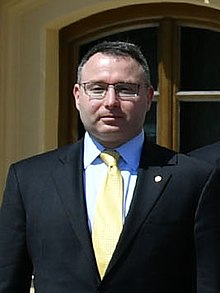
Lt. Colonel Alexander Vindman
Адміністрація Президента України [CC BY 4.0 (https://creativecommons.org/licenses/by/4.0)%5D
In July, 2019, Trump told his acting chief of staff, Mick Mulvaney, to withhold almost $400 million in promised military aid for Ukraine, which faces increasing aggression from Russia.
On July 25, Trump telephoned Ukrainian President Volodymyr Zelensky to “request” a “favor”: Investigate 2020 Democratic Presidential Candidate Joe Biden and his son, Hunter, who has had business dealings in Ukraine.
The reason for such an investigation: To find embarrassing “dirt” on Biden.
“I was concerned by the call,” Vindman, who had heard Trump’s phone call, testified before the House Intelligence Committee. “I did not think it was proper to demand that a foreign government investigate a U.S. citizen, and I was worried about the implications for the U.S. Government’s support of Ukraine.
“I realized that if Ukraine pursued an investigation into the Bidens and Burisma, it would likely be interpreted as a partisan play which would undoubtedly result in Ukraine losing the bipartisan support it has thus far maintained. This would all undermine U.S. national security.”
Trump denounced Vindman as a “Never Trumper”—as if opposing his extortion attempt constituted a blasphemy. Republicans and their shills on the Fox News Network attacked him as well. As a result, he sought physical protection by the Army for himself and his family.
(On February 7, 2020, he was reassigned from the National Security Council at Trump’s order.)
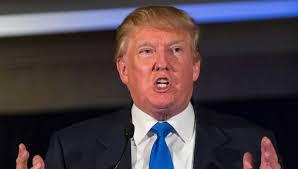
Donald Trump
* * * * *
On November 25, 2019, CNN political correspondent Jake Tapper interviewed Representative Adam Schiff on the coming impeachment trial.
What would it mean if Republicans uniformly oppose any articles of impeachment against Trump? asked Tapper.
“It will have very long-term consequences, if that’s where we end up,” replied Schiff.
“And if not today, I think Republican members in the future, to their children and their grandchildren, will have to explain why they did nothing in the face of this deeply unethical man who did such damage to the country.”
In his bestselling 1973 biography, The Life and Death of Adolf Hitler, British historian Robert Payne harshly condemned the German people for the rise of the Nazi dictator:
“[They] allowed themselves to be seduced by him and came to enjoy the experience….[They] followed him with joy and enthusiasm because he gave them license to pillage and murder to their hearts’ content. They were his servile accomplices, his willing victims.”

Like Hitler, Trump offered his Republican voters and Congressional allies intoxicating dreams: “I will enrich all of you. And I will humiliate and destroy those Americans you most hate.”
For his white, Fascistic, largely elderly audience, those enemies included blacks, atheists, Hispanics, non-Christians, Muslims, liberals, “uppity” women, Asians.
And, again like Hitler, his audience had always possessed these dreams. Trump offered them nothing new. As a lifelong hater, he undoubtedly shared their dreams. But as a lifelong opportunist, he realized that he could use them to catapult himself into a position of supreme power.
He despised his followers—both as voters and Congressional allies—for they were merely the instruments of his will.
For Trump’s supporters in the House and Senate, fear remains their overwhelming motivation. They fear that if they cross him—or simply don’t praise him enough—he will sic his fanatical base on them. And then they will lose their cozy positions—and the power and perks that go with them.
2020 PRESIDENTIAL ELECTION, ABC NEWS, ABUSE OF POWER, ADAM SCHIFF, ADOLF HITLER, ALAN DERSHOWITZ, ALTERNET, AMERICABLOG, AP, ARTICLES OF IMPEACHMENT, BABY BOOMER RESISTANCE, BILL TAYLOR, BUZZFEED, CBS NEWS, CNN, CROOKS AND LIARS, DAILY KOZ, DEMOCRATS, DONALD TRUMP, DRUDGE RETORT, FACEBOOK, FIONA HILL, FIVETHIRTYEIGHT, HARPER’S MAGAZINE, HEINRICH HIMMLER, HUNTER BIDEN, IMPEACHMENT, JEWS, JOE BIDEN, JOHN ROBERTS, JOSEPH BIDEN, LAURA COOPER, MARIE YOVANOVICH, MEDIA MATTERS, MOTHER JONES, MOVEON, MSNBC, NBC NEWS, NEWSWEEK, NPR, OBSTRUCTION OF CONGRESS, PBS NEWSHOUR, POLITICO, POLITICUSUSA, RAND PAUL, RAW STORY, REPUBLICANS, REUTERS, SALON, SCHUTZSTAFFEL, SEATTLE TIMES, SLATE, SS, TALKING POINTS MEMO, THE ATLANTIC, THE CHICAGO SUN-TIMES, THE CHICAGO TRIBUNE, THE DAILY BEAST, THE DAILY BLOG, THE GUARDIAN, THE HILL, THE HOLOCAUST, THE HUFFINGTON POST, THE LOS ANGELES TIMES, THE NATION, THE NEW REPUBLIC, THE NEW YORK TIMES, THE PENTAGON, THE VILLAGE VOICE, THE WASHINGTON POST, THINKPROGRESS, TIME, TRUTHDIG, TRUTHOUT, TWITTER, TWO POLITICAL JUNKIES, U.S. NEWS & WORLD REPORT, UKRAINE, UNITED STATES HOUSE OF REPRESENTATIVES, UNITED STATES SENATE, UPI, USA TODAY, VOLODYMYR ZELENSKY, WHERMACHT, WITNESSES, WONKETTE
In Bureaucracy, History, Law, Law Enforcement, Politics, Social commentary on November 19, 2020 at 12:07 am
On October 4, 1943, SS-Reichsfuhrer Heinrich Himmler addressed SS officers stationed in Posen, Poland, about the ongoing campaign to exterminate the Jews of Europe.
He gave a similar speech two days later to an audience of Reichsleiters (national leaders) and Gauleiters (governors), as well as other government representatives.
Himmler intended to alert Reich officials of the extermination campaign the Schutzstaffel (“Protective Squads”)—otherwise known as the SS—and Wehrmacht (German army) had been waging since June, 1941.
The purpose: To make his listeners accessories to his monumental crimes—and to warn them there was no turning back.

Heinrich Himmler
Either Nazi Germany won the war that its Fuhrer, Adolf Hitler, had unintentionally unleashed on September 1, 1939—or its topmost officials would themselves face extinction as war criminals.
Said Himmler:
“I want to also mention a very difficult subject before you, with complete candor. It should be discussed amongst us, yet nevertheless, we will never speak about it in public. I am talking about the evacuation of the Jews, the extermination of the Jewish people.
“It is one of those things that is easily said: ‘The Jewish people is being exterminated.’…Most of you will know what it means when 100 bodies lie together, when 500 are there or when there are 1000. And to have seen this through and—with the exception of human weakness—to have remained decent, has made us hard and is a page of glory never mentioned and never to be mentioned….
“But altogether we can say: We have carried out this most difficult task for the love of our people. And we have suffered no defect within us, in our soul, in our character.”
Fast forward 76 years—to January, 2020.
On December 18, 2019, the Democratic-controlled House of Representatives approved two Articles of Impeachment against President Donald Trump:
Article 1: Abuse of Power: For pressuring Ukraine to assist him in his re-election campaign by damaging former Vice President Joseph Biden, his possible 2020 Democratic rival; and
Article 2: Obstruction of Congress: For obstructing Congress by blocking testimony of subpoenaed witnesses and refusing to provide documents in response to House subpoenas in the impeachment inquiry.
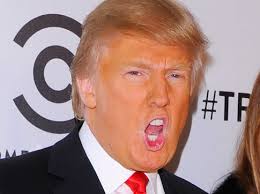
Donald Trump
Trump’s defense in the House had consisted of:
- Refusing to testify himself;
- Refusing to produce witnesses on his behalf;
- Refusing to turn over requested documents;
- Claiming that Democrats were preventing him from testifying or producing witnesses;
- Ordering administration officials to not testify before the six House impeachment committees investigating his behavior.
Those government employees who testified did so voluntarily—and at risk of retaliation. Among these were:
- Ukraine ambassador Bill Taylor;
- Laura Cooper, the top Pentagon official overseeing Ukraine-related U.S. policy;
- Former White House official Fiona Hill; and
- Former U.S. Ambassador to Ukraine Marie Yovanovitch.
They offered damning testimony against Trump.
When the trial began in the United States Senate on January 16, 2020, Trump’s legal team:
- Did not call any witnesses;
- Did not deny that Trump had sought to coerce Ukrainian President Volodymyr Zelensky into interfering with the 2020 election;
- Attacked Joseph and Hunter Biden as if they were on trial;
- Kentucky Republican Senator Rand Paul submitted a written question to presiding Chief Justice John Roberts that included the name of the alleged whistleblower to Trump’s coercion. Roberts refused to read it aloud;
- Paul raced outside the Senate and gave a press conference, where he named the alleged whistleblower—whose identity is protected by law.

Rand Paul
Perhaps even more frightening: One of Trump’s attorneys, Alan Dershowitz, offered Trump—and all future Presidents—a blanket of immunity worthy of a king:
“If a president does something which he believes will help him get elected in the public interest, that cannot be the kind of quid pro quo that results in impeachment. Every public official that I know believes that his election is of the public interest.”
Responding to that argument, House Manager Adam Schiff (D-CA) said: “It’s been a remarkable evolution of the presidential defense. It began with, ‘None of that stuff happened here.’ It began with “Nothing to see here.’ It migrated to, ‘OK, they did seek investigations of the president’s political rival.’ And then it became ‘OK.'”
Meanwhile, the Senate majority of 53 Republicans vigorously supported Trump’s demand that no witnesses to his crimes be allowed to testify.
Fast forward to November 3, 2020: Former Vice President Joe Biden defeats Trump for a second term by winning 79,106,010 votes, or 51% of the vote. Trump received 73,363,734 votes, or 47.3% of the vote.
Trump’s reaction:
- Denying that he lost.
- Accusing Democrats of committing massive voter fraud—without offering any evidence to prove it.
- Blocking cooperation with the incoming Biden administration.
- Ignoring the raging COVID-19 pandemic as it kills about 1,000 Americans each day.
And how are Republicans reacting to all this? By publicly supporting Trump’s stonewalling—or refusing to oppose it.
By following the same strategy as Heinrich Himmler, Donald Trump has entangled Republicans in his own crimes.
His infamy is now theirs.
History has brutally condemned those Germans who, knowing the full extent of Adolf Hitler’s crimes, nevertheless signed on to perpetuate and conceal them.
History will render the same damning verdict against Senate and House Republicans who have provided similar cover for Donald Trump.
2020 PRESIDENTIAL ELECTION, ABC NEWS, ABRAHAM LINCOLN, ADAM SCHIFF, ALEXANDER VINDMAN, ALTERNET, AMERICABLOG, AP, BABY BOOMER RESISTANCE, BLOOMBERG, BUZZFEED, CBS NEWS, CNN, CROOKS AND LIARS, DAILY KOZ, DAVID BROOKS, DEMOCRATS, DONALD TRUMP, DRUDGE RETORT, FACEBOOK, FIVETHIRTYEIGHT, FOX NEWS NETWORK, GERRYMANDERING, HARPER’S MAGAZINE, HOUSE INTELLIGENCE COMMITTEE, HOWARD BAKER, HUNTER BIDEN, IMPEACHMENT, JOE BIDEN, JOEL MATHIS, LYNDON JOHNSON, MARIA YOVANOVICH, MARK SHIELDS, MEDIA MATTERS, MEDICAID, MICK MULVANEY, MOTHER JONES, MOVEON, MSNBC, NATIONAL SECURITY COUNCIL, NBC NEWS, NEWSWEEK, NPR, PBS NEWSHOUR, POLITICO, POLITICUSUSA, RAW STORY, REPUBLICANS, REUTERS, RICHARD NIXON, RUDI GIULIANI, RUSSIA, SALON, SEATTLE TIMES, SLATE, TALKING POINTS MEMO, THE ATLANTIC, THE CHICAGO SUN-TIMES, THE CHICAGO TRIBUNE, THE DAILY BEAST, THE DAILY BLOG, THE GUARDIAN, THE HILL, THE HUFFINGTON POST, THE LOS ANGELES TIMES, THE NATION, THE NEW REPUBLIC, THE NEW YORK TIMES, THE VILLAGE VOICE, THE WASHINGTON POST, THINKPROGRESS, TIME, TRUTHDIG, TRUTHOUT, TWITTER, TWO POLITICAL JUNKIES, U.S. NEWS & WORLD REPORT, UKRAINE, UPI, USA TODAY, VOLODYMYR ZELENSKY, VOTER ID LAWS, WATERGATE, WONKETTE
In Bureaucracy, History, Law, Law Enforcement, Military, Politics, Social commentary on November 4, 2020 at 12:10 am
On November 22, 2019, Mark Shields—a liberal syndicated columnist—and David Brooks—a conservative one for The New York Times—reached disturbingly similar conclusions about the corruption reveled by hearings of the House Intelligence Committee.
DAVID BROOKS: “What strikes me [is] that everyone was in the loop, that this was not something they tried to hide.
“This was just something they thought was the way politics gets done or foreign policy gets done, that there’s no division between personal gain and public service.”
MARK SHIELDS: “What I have underestimated….is the fear that Donald Trump exercises over Republicans.I mean, people talked about Lyndon Johnson being a fearsome political leader. They don’t even approach. I mean, he strikes fear into the hearts of Republicans up and down the line. And I think that….has been eye-opening in its dimensions.”
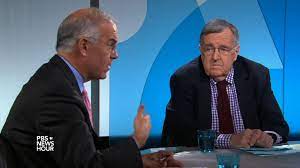
David Brooks and Mark Shields
Nor has the GOP tried to reign Trump in.
In a November 14, 2019 column, “Republicans Can’t Abandon Trump Now Because They’re All Guilty,” freelance journalist Joel Mathis warned: “Trump’s abuses of power mirror those of the GOP as a whole. Republicans can’t turn on him, because doing so would be to indict their party’s entire approach to politics.”
For example:
- At the state level, GOP legislatures have passed numerous voter ID laws over the last decade. Officially, the reason has been to prevent non-citizens from voting. In reality, the motive is to depress turnout among Democratic constituencies.
- When Democrats have won elections, Republicans have tried to block them from carrying out their policies. In Utah, voters approved Medicaid expansion at the ballot box—but Republicans nullified this.
- In North Carolina, Republican legislators prevented voters from choosing their representatives. Instead, Republican representatives chose voters through partisan sorting. In September, the state’s Supreme Court ruled the legislative gerrymandered district map unconstitutional.
The upshot of all this: “The president and his party are united in the belief that their entitlement to power allows them to manipulate and undermine the country’s democratic processes….”


On November 21, 2019, Representative Adam Schiff (D-CA), chairman of the House Intelligence Committee, attacked Republicans’ total rejection of the overwhelming evidence linking Trump with extortion:

Adam Schiff
“But apparently, it’s all hearsay. Even when you actually hear the President….that’s hearsay. We can’t rely on people saying what the President said. Apparently, we can only rely on what the President says, and there, we shouldn’t even rely on that either….
“We should imagine he said something about actually fighting corruption, instead of what he actually said, which was, ‘I want you to do us a favor, though. I want you to look into this 2016 CrowdStrike conspiracy theory, and I want you to look into the Bidens.’
“I guess we’re not even supposed to rely on that because that’s hearsay….That would be like saying you can’t rely on the testimony of the burglars during Watergate because it’s only hearsay, or you can’t consider the fact that they tried to break in because they got caught. They actually didn’t get what they came for, so, you know, kind of no harm, no foul. That’s absurd.
“The difference between [Watergate and Trump’s attempted extortion of Ukraine] is not the difference between [Richard] Nixon and [Donald] Trump. It’s the difference between that Congress and this one. And so, we are asking, where is Howard Baker? Where are the people who are willing to go beyond their party to look to their duty?
“But the other defense besides ‘It failed, the scheme failed, they got caught,’ the other defense is ‘The President denies it.’ Well, I guess that’s case closed, right?
“….This President believes he is above the law, beyond accountability. And in my view, there is nothing more dangerous than an unethical President who believes they are above the law.”
* * * * *
The United States has indeed become a polarized country. But it’s not the polarization between Republicans and Democrats, or between conservatives and liberals.
It’s the polarization between
- Those intent on enslaving everyone who doesn’t subscribe to their Fascistic beliefs and agenda—and those who resist being enslaved.
- Those who believe in reason and science—and those who believe in an infallible “strong man” who rejects both.
- Those who cherish education—and those who celebrate ignorance.
- Those who believe in the rule of law—and those who believe in their right to act as a law unto themselves.
- Those who believe in treating others (especially the less fortunate) with decency—and those who believe in the triumph of intimidation and force.
Those who hoped that Republicans would choose patriotism over partisanship got their answer on February 5, 2021. That was when the Republican-dominated Senate—ignoring the overwhelming evidence against him—acquitted Donald Trump on both impeachment articles: Obstruction of Congress and abuse of power.
It’s natural to regret that the United States has become a sharply divided nation. But those who lament this should realize there is only one choice:
Either non-Fascist Americans will destroy the Republican party and its voters that threaten to enslave them—or they will be enslaved by Republicans and their voters who believe they are entitled to manipulate and undermine the country’s democratic processes.
There is no middle ground.
2020 PRESIDENTIAL ELECTION, ABC NEWS, ABRAHAM LINCOLN, ADAM SCHIFF, ALEXANDER VINDMAN, ALTERNET, AMERICABLOG, AP, BABY BOOMER RESISTANCE, BLOOMBERG, BUZZFEED, CBS NEWS, CNN, CROOKS AND LIARS, DAILY KOZ, DAVID BROOKS, DEMOCRATS, DONALD TRUMP, DRUDGE RETORT, FACEBOOK, FIVETHIRTYEIGHT, FOX NEWS NETWORK, GERRYMANDERING, HARPER’S MAGAZINE, HOUSE INTELLIGENCE COMMITTEE, HOWARD BAKER, HUNTER BIDEN, JOE BIDEN, JOEL MATHIS, LYNDON JOHNSON, MARIA YOVANOVICH, MARK SHIELDS, MEDIA MATTERS, MEDICAID, MICK MULVANEY, MOTHER JONES, MOVEON, MSNBC, NATIONAL SECURITY COUNCIL, NBC NEWS, NEWSWEEK, NPR, PBS NEWSHOUR, POLITICO, POLITICUSUSA, RAW STORY, REPUBLICANS, REUTERS, RICHARD NIXON, RUDI GIULIANI, RUSSIA, SALON, SEATTLE TIMES, SLATE, TALKING POINTS MEMO, THE ATLANTIC, THE CHICAGO SUN-TIMES, THE CHICAGO TRIBUNE, THE DAILY BEAST, THE DAILY BLOG, THE GUARDIAN, THE HILL, THE HUFFINGTON POST, THE LOS ANGELES TIMES, THE NATION, THE NEW REPUBLIC, THE NEW YORK TIMES, THE VILLAGE VOICE, THE WASHINGTON POST, THINKPROGRESS, TIME, TRUTHDIG, TRUTHOUT, TWITTER, TWO POLITICAL JUNKIES, U.S. NEWS & WORLD REPORT, UKRAINE, UPI, USA TODAY, VOLODYMYR ZELENSKY, VOTER ID LAWS, WATERGATE, WONKETTE
In Bureaucracy, History, Law, Law Enforcement, Military, Politics, Social commentary on November 3, 2020 at 12:02 am
On November 14, 2019, the CNN website showcased an opinion piece by Jane Carr and Laura Juncadella entitled: “Fractured States of America.”
And it opened:
“Some worry that it’s already too late, that we’ve crossed a threshold of polarization from which there is no return. Others look toward a future where more moderate voices are heeded and heard, and Americans can find better ways to relate to each other. Still others look back to history for a guide—perhaps for what not to do, or at the very least for proof that while it’s been bad before, progress is still possible.”
A series of sub-headlines summed up many of the comments reported.
- “I was starting to hate people that I have loved for years.”
- “Voting for Trump cost me my friends.”
- “I feel like I’m living in hostile territory.”
- “Our children are watching this bloodsport.”
- “A student’s Nazi-style salute reflects the mate.”
- “Our leaders reflect the worst of us.”
- “I truly believe I will be assaulted over a bumper sticker.”
- “It already feels like a cold war.”
It’s natural to regret that the United States has become so self-destructively polarized. And to wish that its citizens could somehow reach across the chasm that divides them and find common cause with one another.
But that is to ignore the brutal truth that America now faces a choice:
- To submit to the tyrannical aggression of a ruthless political party convinced that they are entitled to power to manipulate and undermine the country’s democratic processes; or
- To fiercely resist that aggression and the destruction of those democratic processes.
Consider the face-off between President Donald J. Trump and Army Lt. Colonel Alexander Vindman.
Vindman is is a United States Army officer who served as the Director for European Affairs for the United States National Security Council. He was also a witness to Trump’s efforts to extort “a favor” from the president of Ukraine.
Lt. Colonel Alexander Vindman
Адміністрація Президента України [CC BY 4.0 (https://creativecommons.org/licenses/by/4.0)%5D
In July, 2019, Trump told his acting chief of staff, Mick Mulvaney, to withhold almost $400 million in promised military aid for Ukraine, which faces increasing aggression from Russia.
On July 25, Trump telephoned Ukrainian President Volodymyr Zelensky to “request” a “favor”: Investigate 2020 Democratic Presidential Candidate Joe Biden and his son, Hunter, who has had business dealings in Ukraine.
The reason for such an investigation: To find embarrassing “dirt” on Biden.
“I was concerned by the call,” Vindman, who had heard Trump’s phone call, testified before the House Intelligence Committee. “I did not think it was proper to demand that a foreign government investigate a U.S. citizen, and I was worried about the implications for the U.S. Government’s support of Ukraine.
“I realized that if Ukraine pursued an investigation into the Bidens and Burisma, it would likely be interpreted as a partisan play which would undoubtedly result in Ukraine losing the bipartisan support it has thus far maintained. This would all undermine U.S. national security.”
Trump denounced Vindman as a “Never Trumper”—as if opposing his extortion attempt constituted a blasphemy. Republicans and their shills on the Fox News Network attacked him as well. As a result, he sought physical protection by the Army for himself and his family.
(On February 7, 2020, he was reassigned from the National Security Council at Trump’s order.)
Donald Trump
On November 15, 2019, conservative New York Times columnist David Brooks and liberal syndicated columnist Mark Shields appeared on The PBS Newshour to offer their reactions by Republicans and Democrats to Trump’s extortion attempt.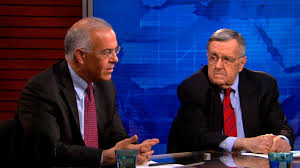
David Brooks and Mark Shields on “The PBS Newshour”
DAVID BROOKS: “The case is very solid and airtight that there was the quid pro quo. All the testimony points to that. And, mostly, you see a contrast. The first two gentlemen that testified on the first day, they were just upstanding, solid public servants.
“I felt like I was looking back in time, because I was looking at two people who are not self-centered. They cared about the country. They were serving. They had no partisan ax to grind. They were just honest men of integrity.
“And I thought we saw that again today with [former Ambassador to Ukraine] Marie Yovanovitch. And in her case, the day was more emotional, because you got to see a case of bullying against a strong, upstanding woman.
“And so I thought she expressed—like, the heavy moments of today where when she expressed her reaction to how badly she was treated. And so that introduces an element of emotion and pathos into what shouldn’t be just a legal proceeding. It should be something where people see the contrast between good people and bad people.”
MARK SHIELDS: “There’s a sense of outrage building. This is a story of corruption, corruption not in Ukraine, corruption in the United States.
“I mean, why? Why did they go to such lengths to denigrate, to attack, to try and destroy and sabotage the career of a dedicated public servant [United States Ambassador to Ukraine Marie Yovanovich], a person who had put her life on the line? Why did they do it? What was it, money? Was it power?”
2020 PRESIDENTIAL ELECTION, ABC NEWS, ABRAHAM LINCOLN, ADAM SCHIFF, ALEXANDER VINDMAN, ALTERNET, AMERICABLOG, AP, BABY BOOMER RESISTANCE, BLOOMBERG, BUZZFEED, CBS NEWS, CNN, CROOKS AND LIARS, DAILY KOZ, DAVID BROOKS, DEMOCRATS, DONALD TRUMP, DRUDGE RETORT, FACEBOOK, FIVETHIRTYEIGHT, FOX NEWS NETWORK, GERRYMANDERING, HARPER’S MAGAZINE, HOUSE INTELLIGENCE COMMITTEE, HOWARD BAKER, HUNTER BIDEN, JOE BIDEN, JOEL MATHIS, LYNDON JOHNSON, MARIA YOVANOVICH, MARK SHIELDS, MEDIA MATTERS, MEDICAID, MICK MULVANEY, MOTHER JONES, MOVEON, MSNBC, NATIONAL SECURITY COUNCIL, NBC NEWS, NEWSWEEK, NPR, PBS NEWSHOUR, POLITICO, POLITICUSUSA, RAW STORY, REPUBLICANS, REUTERS, RICHARD NIXON, RUDI GIULIANI, RUSSIA, SALON, SEATTLE TIMES, SLATE, TALKING POINTS MEMO, THE ATLANTIC, THE CHICAGO SUN-TIMES, THE CHICAGO TRIBUNE, THE DAILY BEAST, THE DAILY BLOG, THE GUARDIAN, THE HILL, THE HUFFINGTON POST, THE LOS ANGELES TIMES, THE NATION, THE NEW REPUBLIC, THE NEW YORK TIMES, THE VILLAGE VOICE, THE WASHINGTON POST, THINKPROGRESS, TIME, TRUTHDIG, TRUTHOUT, TWITTER, TWO POLITICAL JUNKIES, U.S. NEWS & WORLD REPORT, UKRAINE, UPI, USA TODAY, VOLODYMYR ZELENSKY, VOTER ID LAWS, WATERGATE, WONKETTE
In Bureaucracy, History, Military, Politics, Social commentary on June 23, 2020 at 12:07 am
On November 22, 2019, Mark Shields—a liberal syndicated columnist—and David Brooks—a conservative one for The New York Times—reached disturbingly similar conclusions about the corruption reveled by hearings of the House Intelligence Committee.
DAVID BROOKS: “I think Donald Trump and Rudy Giuliani, I don’t think it ever occurred to them that this was unethical. What strikes me [is] that everyone was in the loop, that this was not something they tried to hide.
“This was just something they thought was the way politics gets done or foreign policy gets done, that there’s no division between personal gain and public service.”
MARK SHIELDS: “What I have underestimated….is the fear that Donald Trump exercises over Republicans.I mean, people talked about Lyndon Johnson being a fearsome political leader. They don’t even approach. I mean, he strikes fear into the hearts of Republicans up and down the line. And I think that….has been eye-opening in its dimensions.”
Nor is there any reason to believe that the GOP will reign Trump in.
In a November 14 column, “Republicans Can’t Abandon Trump Now Because They’re All Guilty,” freelance journalist Joel Mathis warned: “Trump’s abuses of power mirror those of the GOP as a whole. Republicans can’t turn on him, because doing so would be to indict their party’s entire approach to politics.”
For example:
- At the state level, GOP legislatures have passed numerous voter ID laws over the last decade. Officially, the reason has been to prevent non-citizens from voting. In reality, the motive is to depress turnout among Democratic constituencies.
- When Democrats have won elections, Republicans have tried to block them from carrying out their policies. In Utah, voters approved Medicaid expansion at the ballot box—but Republicans nullified this.
- In North Carolina, Republican legislators prevented voters from choosing their representatives. Instead, Republican representatives chose voters through partisan sorting. In September, the state’s Supreme Court ruled the legislative gerrymandered district map unconstitutional.
The upshot of all this: “The president and his party are united in the belief that their entitlement to power allows them to manipulate and undermine the country’s democratic processes….
“In the meantime, it is probably best to give up waiting for that impeachment-induced moment—a Watergate—when Republicans realize their duty to country and come around to opposing him. The president and today’s GOP share the same sins. It will be difficult for them to abandon each other.”
On November 21, 2019, Representative Adam Schiff (D-CA), chairman of the House Intelligence Committee, attacked Republicans’ total rejection of the overwhelming evidence linking Trump with extortion:
Adam Schiff
“But apparently, it’s all hearsay. Even when you actually hear the President….that’s hearsay. We can’t rely on people saying what the President said. Apparently, we can only rely on what the President says, and there, we shouldn’t even rely on that either….
“We should imagine he said something about actually fighting corruption, instead of what he actually said, which was, ‘I want you to do us a favor, though. I want you to look into this 2016 CrowdStrike conspiracy theory, and I want you to look into the Bidens.’
“I guess we’re not even supposed to rely on that because that’s hearsay….That would be like saying you can’t rely on the testimony of the burglars during Watergate because it’s only hearsay, or you can’t consider the fact that they tried to break in because they got caught. They actually didn’t get what they came for, so, you know, kind of no harm, no foul. That’s absurd.
“The difference between [Watergate and Trump’s attempted extortion of Ukraine] is not the difference between [Richard] Nixon and [Donald] Trump. It’s the difference between that Congress and this one. And so, we are asking, where is Howard Baker? Where are the people who are willing to go beyond their party to look to their duty?
“But the other defense besides ‘It failed, the scheme failed, they got caught,’ the other defense is ‘The President denies it.’ Well, I guess that’s case closed, right?
“….This President believes he is above the law, beyond accountability. And in my view, there is nothing more dangerous than an unethical President who believes they are above the law.”
* * * * *
The United States has indeed become a polarized country. But it’s not the polarization between Republicans and Democrats, or between conservatives and liberals.
It’s the polarization between Right-wing fanatics intent on enslaving everyone who doesn’t subscribe to their Fascistic beliefs and agenda—and those who resist being enslaved.
Those who hoped that Republicans would choose patriotism over partisanship got their answer on February 5. That was when the Republican-dominated Senate—ignoring the overwhelming evidence against him—acquitted Donald Trump on both impeachment articles.
It’s natural to regret that the United States has become a sharply divided nation. But those who lament this should realize there is only one choice:
Either non-Fascist Americans will destroy the Republican party and its voters that threaten to enslave them—or they will be enslaved by Republicans and their voters who believe they are entitled to manipulate and undermine the country’s democratic processes.
There is no middle ground.
2020 PRESIDENTIAL ELECTION, ABC NEWS, ABRAHAM LINCOLN, ADAM SCHIFF, ALEXANDER VINDMAN, ALTERNET, AMERICABLOG, AP, BABY BOOMER RESISTANCE, BLOOMBERG, BUZZFEED, CBS NEWS, CNN, CROOKS AND LIARS, DAILY KOZ, DAVID BROOKS, DEMOCRATS, DONALD TRUMP, DRUDGE RETORT, FACEBOOK, FIVETHIRTYEIGHT, FOX NEWS NETWORK, GERRYMANDERING, HARPER’S MAGAZINE, HOUSE INTELLIGENCE COMMITTEE, HOWARD BAKER, HUNTER BIDEN, JOE BIDEN, JOEL MATHIS, LYNDON JOHNSON, MARIA YOVANOVICH, MARK SHIELDS, MEDIA MATTERS, MEDICAID, MICK MULVANEY, MOTHER JONES, MOVEON, MSNBC, NATIONAL SECURITY COUNCIL, NBC NEWS, NEWSWEEK, NPR, PBS NEWSHOUR, POLITICO, POLITICUSUSA, RAW STORY, REPUBLICANS, REUTERS, RICHARD NIXON, RUDI GIULIANI, RUSSIA, SALON, SEATTLE TIMES, SLATE, TALKING POINTS MEMO, THE ATLANTIC, THE CHICAGO SUN-TIMES, THE CHICAGO TRIBUNE, THE DAILY BEAST, THE DAILY BLOG, THE GUARDIAN, THE HILL, THE HUFFINGTON POST, THE LOS ANGELES TIMES, THE NATION, THE NEW REPUBLIC, THE NEW YORK TIMES, THE VILLAGE VOICE, THE WASHINGTON POST, THINKPROGRESS, TIME, TRUTHDIG, TRUTHOUT, TWITTER, TWO POLITICAL JUNKIES, U.S. NEWS & WORLD REPORT, UKRAINE, UPI, USA TODAY, VOLODYMYR ZELENSKY, VOTER ID LAWS, WATERGATE, WONKETTE
In Bureaucracy, History, Military, Politics, Social commentary on June 22, 2020 at 12:28 am
On November 14, 2019, the CNN website showcased an opinion piece by Jane Carr and Laura Juncadella entitled: “Fractured States of America.”
And it opened:
“Some worry that it’s already too late, that we’ve crossed a threshold of polarization from which there is no return. Others look toward a future where more moderate voices are heeded and heard, and Americans can find better ways to relate to each other. Still others look back to history for a guide—perhaps for what not to do, or at the very least for proof that while it’s been bad before, progress is still possible.”
Then followed a series of anecdotes. The sub-headlines summed up many of the comments reported.
- “I was starting to hate people that I have loved for years.”
- “Voting for Trump cost me my friends.”
- “I feel like I’m living in hostile territory.”
- “Our children are watching this bloodsport.”
- “A student’s Nazi-style salute reflects the mate.”
- “Our leaders reflect the worst of us.”
- “I truly believe I will be assaulted over a bumper sticker.”
- “It already feels like a cold war.”
Abraham Lincoln warned: “A house divided against itself cannot stand. I believe this government cannot endure, permanently, half-slave and half-free. It will become all one thing or all the other.”
America now faces such a choice:
- To submit to the tyrannical aggression of a ruthless political party convinced that they are entitled to power to manipulate and undermine the country’s democratic processes; or
- To fiercely resist that aggression and the destruction of those democratic processes.
Consider the face-off between President Donald J. Trump and Army Lt. Colonel Alexander Vindman.
Vindman is is a United States Army officer who served as the Director for European Affairs for the United States National Security Council. He was also a witness to Trump’s efforts to extort “a favor” from the president of Ukraine.
Lt. Colonel Alexander Vindman
Адміністрація Президента України [CC BY 4.0 (https://creativecommons.org/licenses/by/4.0)%5D
In July, 2019, Trump told his acting chief of staff, Mick Mulvaney, to withhold almost $400 million in promised military aid for Ukraine, which faces increasing aggression from Russia.
On July 25, Trump telephoned Ukrainian President Volodymyr Zelensky to “request” a “favor”: Investigate 2020 Democratic Presidential Candidate Joe Biden and his son, Hunter, who has had business dealings in Ukraine.
The reason for such an investigation: To find embarrassing “dirt” on Biden.
“I was concerned by the call,” Vindman, who had heard Trump’s phone call, testified before the House Intelligence Committee. “I did not think it was proper to demand that a foreign government investigate a U.S. citizen, and I was worried about the implications for the U.S. Government’s support of Ukraine.
“I realized that if Ukraine pursued an investigation into the Bidens and Burisma, it would likely be interpreted as a partisan play which would undoubtedly result in Ukraine losing the bipartisan support it has thus far maintained. This would all undermine U.S. national security.”
Trump denounced Vindman as a “Never Trumper”—as if opposing his extortion attempt constituted a blasphemy. Republicans and their shills on the Fox News Network attacked him as well. As a result, he sought physical protection by the Army for himself and his family.
(On February 7, 2020, he was reassigned from the National Security Council at Trump’s order.)
Donald Trump
On November 15, conservative New York Times columnist David Brooks and liberal syndicated columnist Mark Shields appeared on The PBS Newshour to offer their reactions by Republicans and Democrats to Trump’s extortion attempt.
David Brooks and Mark Shields on “The PBS Newshour”
DAVID BROOKS: “The case is very solid and airtight that there was the quid pro quo. All the testimony points to that. And, mostly, you see a contrast. The first two gentlemen that testified on the first day, they were just upstanding, solid public servants.
“I felt like I was looking back in time, because I was looking at two people who are not self-centered. They cared about the country. They were serving. They had no partisan ax to grind. They were just honest men of integrity.
“And I thought we saw that again today with [former Ambassador to Ukraine] Marie Yovanovitch. And in her case, the day was more emotional, because you got to see a case of bullying against a strong, upstanding woman.
“And so I thought she expressed—like, the heavy moments of today where when she expressed her reaction to how badly she was treated. And so that introduces an element of emotion and pathos into what shouldn’t be just a legal proceeding. It should be something where people see the contrast between good people and bad people.”
MARK SHIELDS: “There’s a sense of outrage building. This is a story of corruption, corruption not in Ukraine, corruption in the United States.
“I mean, why? Why did they go to such lengths to denigrate, to attack, to try and destroy and sabotage the career of a dedicated public servant [United States Ambassador to Ukraine Marie Yovanovich], a person who had put her life on the line? Why did they do it? What was it, money? Was it power?”
2016 PRESIDENTIAL CAMPAIGN, 2020 PRESIDENTIAL CAMPAIGN, ABC NEWS, ADAM SCHIFF, ADOLF HITLER, ALTERNET, AMERICABLOG, AP, ARTICLES OF IMPEACHMENT, BABY BOOMER RESISTANCE, BORDER WALL, BUZZFEED, CBS NEWS, CHARLES DE GAULLE, CHINA, CHRISTI GRIMM, CHRISTOPHER S. MURPHY, CIA, CNN, CONSERVATIVE POLITICAL ACTION CONFERENCE, CONVERSATION WITH AN AMERICAN WRITER (POEM), CORONAVIRUS RELIEF MONIES, COVID-19, CROOKS AND LIARS, CUBAN MISSILE CRISIS, DAILY KOZ, DAN BOWMAN, DAN SULLIVAN, DAVID BROOKS, DEMOCRATS, DEPARTMENT OF HEALTH AND HUMAN SERVICES, DONALD TRUMP, DONALD TRUMP JUNIOR, DRUDGE RETORT, EXTORTION, FACEBOOK, FBI, FIRST AMENDMENT, FIVETHIRTYEIGHT, GENN FINE, GEORGE FLOYD, GEORGE W. BUSH, GOVERNMENT ACCOUNTABILITY OFFICE, GOVERNMENT SHUTDOWN, HARPER’S MAGAZINE, HILLARY CLINTON, HOUSE FOREIGN AFFAIRS COMMITTEE, HOUSE INTELLIGENCE COMMITTEE, HOUSE OVERSIGHT AND REFORM COMMITTEE, HUNTER BIDEN, IMPEACHMENT, IMPOUNDMENT CONTROL ACT, INSPECTORS GENERAL, INTELLIGENCE COMMUNITY, JAKE SULLIVAN, JAKE TAPPER, JAMAL KHASHOGGI, JAMES COMEY, JAMES ROBART, JARED KUSHNER, JEFF SESSIONS, JOHN CORNYN, JOHN F. KENNEDY, JOHN ROBERTS, JON S. TIGAR, JOSEPH BIDEN, KELLY LOEFFER, KEVIN CRAMER, LAFAYETTE SQUARE, LAMAR ALEXANDER, LEON PANETTA, LINDSEY GRAHAM, MARCO RUBIO, MARTIN GUGINO, MEDIA MATTERS, MEXICO, MICHAEL FLYNN, MICHAEL HAYDEN, MICHAEL K. ATKINSON, MICK MULVANEY, MIKE PENCE, MITCH MCCONNELL, MOHAMMED BIN SALMAN, MOTHER JONES, MOVEON, MSNBC, NANCY PELOSI, NATALIA VESELNITSKAYA, NATIONAL SECURITY AGENCY, NBC NEWS, NEWSWEEK, NPR, PAUL MANAFORT, PBS NEWSHOUR, POLITICO, POLITICUSUSA, RAW STORY, REPUBLICANS, REUTERS, RINAT AKHMETSHIN, ROBERT MUELLER, ROBERT PAYNE, ROD ROSENSTEIN, ROGER STONE, RON JOHNSON, RUSSIA, SALON, SEATTLE TIMES, SERGEY KISLYAK, SERGEY LAVROV, SLATE, ST. JOHN’S CHURCH, STEVE DAINES, TALKING POINTS MEMO, TED CRUZ, THE ATLANTIC, THE CHICAGO SUN-TIMES, THE CHICAGO TRIBUNE, THE DAILY BEAST, THE DAILY BLOG, THE GUARDIAN, THE HILL, THE HUFFINGTON POST, THE JUDICIARY, THE LIFE AND DEATH OF ADOLF HITLER (BOOI), THE LIFE AND DEATH OF ADOLF HITLER (BOOK), THE LOS ANGELES TIMES, THE NATION, THE NEW REPUBLIC, THE NEW YORK TIMES, THE PRESS, THE VILLAGE VOICE, THE WASHINGTON POST, THINKPROGRESS, TIME, TREASON, TRUMP TOWER MEETING, TRUTHDIG, TRUTHOUT, TWITTER, TWO POLITICAL JUNKIES, U.S. NEWS & WORLD REPORT, UKRAINE, UNITED STATES HOUSE OF REPRESENTATIVES, UNITED STATES SENATE, UPI, USA TODAY, VLADIMIR PUTIN, VOLODYMYR ZELENSKY, WHISTLEBLOWER, WHITE HOUSE BUDGET OFFICE, WONKETTE, YEVGENEY YEVTUSHENKO
In Bureaucracy, History, Law, Law Enforcement, Military, Politics, Social commentary, Uncategorized on June 19, 2020 at 12:12 am
Throughout his Presidency, Republicans have continued to support Donald Trump despite a series of actions that would have normally resulted in impeachment.
Forgiven Crime #18: Even while being investigated by Congress for trying to extort Ukraine to investigate his 2020 Presidential rival, Joseph Biden, Trump publicly urged China to investigate Biden and his son, Hunter.
Trump repeatedly denied he had strong-armed Ukrainian President Volodymyr Zelensky to smear former Vice President Joseph Biden. But on October 3, 2019, on the White House lawn, with TV cameras whirring, Trump said: “China should start an investigation into the Bidens.”
And to drive home the message, Trump warned: “I have a lot of options on China, but if they don’t do what we want, we have tremendous power.”
Forgiven Crime #19: Since being acquitted of impeachable offenses by the Senate, Trump fired the Inspectors General (IG) of five cabinet departments in six weeks. Among these:
- Michael K. Atkinson – The IG of the Intelligence Community. The reason: Atkinson had forwarded the whistleblower complaint which led to Trump’s impeachment.
- Glenn Fine – Appointed to oversee funds voted by Congress to deal with the COVID-19 pandemic ravaging the United States. His dismissal ensured that Trump–who had admitted to defrauding students at his notorious “Trump University”–could spend the $2 trillion in relief monies any way he wished.
- Christi Grimm – As IG at the Department of Health and Human Services, she outraged Trump by contradicting him by agreeing—accurately—that the nation’s hospitals were suffering from severe shortages of personal protective equipment and testing supplies for COVID-19.
* * * * *
This list of 19 forgiven crimes is not meant to be all-inclusive. It would literally take a book to catalog all of Donald Trump’s offenses. And more are being committed every week—if not every day. Many of them will become known only in the future.
Why have Republicans almost unanimously stood by Donald Trump despite the wreckage he has made of American foreign and domestic policy?
Fear—that they will lose their privileged positions in Congress if they don’t.
This could happen by:
- Their being voted out of Congress by Trump’s fanatical base; or
- Their being voted out of Congress by anti-Trump voters sensing Republican weakness if Trump is impeached.
As the nation reels from the Coronavirus pandemic and unprecedented racial strife, Republicans’ support for Trump hinges on one question: “Can I hold onto my power and all the privileges that accompany it by sticking—or breaking—with him?”
On November 25, 2019, CNN political correspondent Jake Tapper interviewed Representative Adam Schiff on the coming impeachment trial.
What would it mean if Republicans uniformly oppose any articles of impeachment against Trump? asked Tapper.
“It will have very long-term consequences, if that’s where we end up,” replied Schiff.
“And if not today, I think Republican members in the future, to their children and their grandchildren, will have to explain why they did nothing in the face of this deeply unethical man who did such damage to the country.”
In his bestselling 1973 biography, The Life and Death of Adolf Hitler, British historian Robert Payne harshly condemned the German people for the rise of the Nazi dictator:
“[They] allowed themselves to be seduced by him and came to enjoy the experience….[They] followed him with joy and enthusiasm because he gave them license to pillage and murder to their hearts’ content. They were his servile accomplices, his willing victims.”
Like Hitler, Trump offered his Republican voters and Congressional allies intoxicating dreams: “I will enrich all of you. And I will humiliate and destroy those Americans you most hate.”
For his white, Fascistic, largely elderly audience, those enemies included blacks, atheists, Hispanics, non-Christians, Muslims, liberals, “uppity” women, Asians.
And, again like Hitler, his audience had always possessed these dreams. Trump offered them nothing new. As a lifelong hater, he undoubtedly shared their dreams. But as a lifelong opportunist, he realized that he could use them to catapult himself into a position of supreme power.
He despised his followers—both as voters and Congressional allies—for they were merely the instruments of his will.
For most of the first three years of his Presidency, he faced remarkably little opposition. Until November, 2018, Republicans held both the House and Senate. Democrats won the House in 2018, but remained a minority in the Senate.
Democrats cowered before Trump’s slanders—thereby ensuring more assaults.
Most of the press quailed before Trump. Only a few media outlets—notably the New York Times, CNN and the Washington Post-–dared investigate his crimes and blunders.
In 1960, the Russian poet, Yevgeney Yevtushenko, published “Conversation With an American Writer”—a stinging indictment of the cowardly opportunists who had supported the brutal tyranny of Joseph Stalin:
I was never courageous.
I simply felt it unbecoming to stoop to the cowardice of my colleagues.
Too many Republicans know all-too-well how it feels to stoop to the cowardice of their colleagues for a transitory hold on power and privilege.
2016 PRESIDENTIAL CAMPAIGN, 2020 PRESIDENTIAL CAMPAIGN, ABC NEWS, ADAM SCHIFF, ADOLF HITLER, ALTERNET, AMERICABLOG, AP, ARTICLES OF IMPEACHMENT, BABY BOOMER RESISTANCE, BORDER WALL, BUZZFEED, CBS NEWS, CHARLES DE GAULLE, CHINA, CHRISTI GRIMM, CHRISTOPHER S. MURPHY, CIA, CNN, CONSERVATIVE POLITICAL ACTION CONFERENCE, CONVERSATION WITH AN AMERICAN WRITER (POEM), CORONAVIRUS RELIEF MONIES, COVID-19, CROOKS AND LIARS, CUBAN MISSILE CRISIS, DAILY KOZ, DAN BOWMAN, DAN SULLIVAN, DAVID BROOKS, DEMOCRATS, DEPARTMENT OF HEALTH AND HUMAN SERVICES, DONALD TRUMP, DONALD TRUMP JUNIOR, DRUDGE RETORT, EXTORTION, FACEBOOK, FBI, FIRST AMENDMENT, FIVETHIRTYEIGHT, GENN FINE, GEORGE FLOYD, GEORGE W. BUSH, GOVERNMENT ACCOUNTABILITY OFFICE, GOVERNMENT SHUTDOWN, HARPER’S MAGAZINE, HILLARY CLINTON, HOUSE FOREIGN AFFAIRS COMMITTEE, HOUSE INTELLIGENCE COMMITTEE, HOUSE OVERSIGHT AND REFORM COMMITTEE, HUNTER BIDEN, IMPEACHMENT, IMPOUNDMENT CONTROL ACT, INSPECTORS GENERAL, INTELLIGENCE COMMUNITY, JAKE SULLIVAN, JAKE TAPPER, JAMAL KHASHOGGI, JAMES COMEY, JAMES ROBART, JARED KUSHNER, JEFF SESSIONS, JOHN CORNYN, JOHN F. KENNEDY, JOHN ROBERTS, JON S. TIGAR, JOSEPH BIDEN, KELLY LOEFFER, KEVIN CRAMER, LAFAYETTE SQUARE, LAMAR ALEXANDER, LEON PANETTA, LINDSEY GRAHAM, MARCO RUBIO, MARTIN GUGINO, MEDIA MATTERS, MEXICO, MICHAEL FLYNN, MICHAEL HAYDEN, MICHAEL K. ATKINSON, MICK MULVANEY, MIKE PENCE, MITCH MCCONNELL, MOHAMMED BIN SALMAN, MOTHER JONES, MOVEON, MSNBC, NANCY PELOSI, NATALIA VESELNITSKAYA, NATIONAL SECURITY AGENCY, NBC NEWS, NEWSWEEK, NPR, PAUL MANAFORT, PBS NEWSHOUR, POLITICO, POLITICUSUSA, RAW STORY, REPUBLICANS, REUTERS, RINAT AKHMETSHIN, ROBERT MUELLER, ROBERT PAYNE, ROD ROSENSTEIN, ROGER STONE, RON JOHNSON, RUSSIA, SALON, SEATTLE TIMES, SERGEY KISLYAK, SERGEY LAVROV, SLATE, ST. JOHN’S CHURCH, STEVE DAINES, TALKING POINTS MEMO, TED CRUZ, THE ATLANTIC, THE CHICAGO SUN-TIMES, THE CHICAGO TRIBUNE, THE DAILY BEAST, THE DAILY BLOG, THE GUARDIAN, THE HILL, THE HUFFINGTON POST, THE JUDICIARY, THE LIFE AND DEATH OF ADOLF HITLER (BOOI), THE LIFE AND DEATH OF ADOLF HITLER (BOOK), THE LOS ANGELES TIMES, THE NATION, THE NEW REPUBLIC, THE NEW YORK TIMES, THE PRESS, THE VILLAGE VOICE, THE WASHINGTON POST, THINKPROGRESS, TIME, TREASON, TRUMP TOWER MEETING, TRUTHDIG, TRUTHOUT, TWITTER, TWO POLITICAL JUNKIES, U.S. NEWS & WORLD REPORT, UKRAINE, UNITED STATES HOUSE OF REPRESENTATIVES, UNITED STATES SENATE, UPI, USA TODAY, VLADIMIR PUTIN, VOLODYMYR ZELENSKY, WHISTLEBLOWER, WHITE HOUSE BUDGET OFFICE, WONKETTE, YEVGENEY YEVTUSHENKO
In Bureaucracy, History, Law, Law Enforcement, Military, Politics, Social commentary on June 18, 2020 at 12:30 am
Throughout his Presidency, Republicans have continued to support Donald Trump despite a series of actions that would have normally resulted in impeachment.
Forgiven Crime #9: On July 16, 2018, Trump attended a press conference in Helsinki, Finland, with Russian President Vladimir Putin. There he blamed American Intelligence agencies—such as the FBI, CIA and National Security Agency—instead of Putin for Russia’s subversion of the 2016 Presidential election.
“I have President Putin,” said Trump. “He just said it’s not Russia. I will say this: I don’t see any reason why it would be.”

Donald Trump and Vladimir Putin in Helsinki
Forgiven Crime #10: Blatantly lying about the CIA’s findings in the brutal murder of Washington Post journalist Jamal Khashoggi.
On Thanksgiving Day, 2018, Trump said that the CIA hadn’t concluded that Saudi Crown Prince Mohammed bin Salman had ordered it.
This was a lie—the agency had reached such a conclusion, based on a recording provided by the Turkish government and American Intelligence.
Forgiven Crime #11: Threatening to fire Rod J. Rosenstein, the deputy attorney general, who oversaw Special Counsel Robert Mueller’s investigation into Russian subversion of the 2016 election.
Forgiven Crime #12: Threatening to fire Independent Counsel Robert Mueller during the summer of 2017, but was talked out of it by aides fearful that it would set off calls for his impeachment.
Forgiven Crime #13: Waging all-out war on the First Amendment, which guarantees freedom of the press.
On February 17, 2017, Trump tweeted: “The FAKE NEWS media (failing @nytimes, @NBCNews, @ABC, @CBS, @CNN) is not my enemy, it is the enemy of the American People!”
Seven days later, appearing before the Conservative Political Action Conference on February 24, Trump said: “I want you all to know that we are fighting the fake news. It’s fake, phony, fake….I’m against the people that make up stories and make up sources. They shouldn’t be allowed to use sources unless they use somebody’s name. Let their name be put out there.”
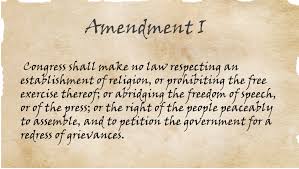
Forgiven Crime #14: Waging all-out war on the independent judiciary
Trump has repeatedly attacked Seattle U.S. District Judge James Robart, who halted Trump’s first anti-Islamic travel ban: “Just cannot believe a judge would put our country in such peril. If something happens blame him and court system. People pouring in. Bad!”
On October 20, 2018, Trump attacked U.S. District Judge Jon S. Tigar as an “Obama judge.” Tigar had ruled that the administration must consider asylum claims no matter where migrants cross the U.S. border.
The next day, Supreme Court Chief Justice John Roberts told the Associated Press: “We do not have Obama judges or Trump judges, Bush judges or Clinton judges. What we have is an extraordinary group of dedicated judges doing their level best to do equal right to those appearing before them.”
On Thanksgiving Day, 2018, Trump attacked Roberts—appointed by Republican President George W. Bush—on Twitter: “Sorry Chief Justice John Roberts, but you do indeed have ‘Obama judges,’ and they have a much different point of view than the people who are charged with the safety of our country.”
Forgiven Crime #15: Threatening members of Congress with treason charges for daring to challenge him.
Furious that Rep. Adam Schiff (D-CA) mocked him during a session of the House Intelligence Committee, Trump tweeted: “I want Schiff questioned at the highest level for Fraud & Treason…..”
“Rep. Adam Schiff illegally made up a FAKE & terrible statement, pretended it to be mine as the most important part of my call to the Ukrainian President, and read it aloud to Congress and the American people. It bore NO relationship to what I said on the call. Arrest for Treason?”
Adam Schiff
He judged House Speaker Nancy Pelosi “every bit as guilty as Liddle’ Adam Schiff for High Crimes and Misdemeanors, and even Treason. I guess that means that they, along with all of those that evilly ‘Colluded’ with them, must all be immediately Impeached!”
Forgiven Crime #16: He has lied so often—18,000 times by April 14, 2020, according to the Washington Post—that he’s universally distrusted, at home and abroad.
During the Cuban Missile Crisis, French President Charles de Gaulle was offered photographs taken by American spy planes of Russian missile emplacements in Cuba. De Gaulle waved them away, saying that, for him, the word of the President of the United States was enough.

Charles de Gaulle and John F. Kennedy
Today, no free world leader would take Trump’s word for anything.
Forgiven Crime #17: On December 22, 2018, Trump shut down the Federal government—because Democrats refused to fund his “border wall” between the United States and Mexico.
An estimated 380,000 government employees were furloughed and another 420,000 were ordered to work without pay.
- For weeks, hundreds of thousands of government workers missed paychecks.
- Increasing numbers of employees of the Transportation Safety Administration (TSA)—which provides security against airline terrorism—began refusing to come to work, claiming to be sick.
- At the Federal Aviation Administration (FAA) many air traffic controllers called in “sick.”
- Due to the shortage of air traffic controllers, many planes weren’t able to land safely at places like New York’s LaGuardia Airport.
- Many Federal employees—such as FBI agents—were forced to rely on soup kitchens to feed their families.
This lasted until January 25, 2019, when Trump caved to public pressure.
2016 PRESIDENTIAL CAMPAIGN, 2020 PRESIDENTIAL CAMPAIGN, ABC NEWS, ADAM SCHIFF, ADOLF HITLER, ALTERNET, AMERICABLOG, AP, ARTICLES OF IMPEACHMENT, BABY BOOMER RESISTANCE, BORDER WALL, BUZZFEED, CBS NEWS, CHARLES DE GAULLE, CHINA, CHRISTI GRIMM, CHRISTOPHER S. MURPHY, CIA, CNN, CONSERVATIVE POLITICAL ACTION CONFERENCE, CONVERSATION WITH AN AMERICAN WRITER (POEM), CORONAVIRUS RELIEF MONIES, COVID-19, CROOKS AND LIARS, CUBAN MISSILE CRISIS, DAILY KOZ, DAN BOWMAN, DAN SULLIVAN, DAVID BROOKS, DEMOCRATS, DEPARTMENT OF HEALTH AND HUMAN SERVICES, DONALD TRUMP, DONALD TRUMP JUNIOR, DRUDGE RETORT, EXTORTION, FACEBOOK, FBI, FIRST AMENDMENT, FIVETHIRTYEIGHT, GENN FINE, GEORGE FLOYD, GEORGE W. BUSH, GOVERNMENT ACCOUNTABILITY OFFICE, GOVERNMENT SHUTDOWN, HARPER’S MAGAZINE, HILLARY CLINTON, HOUSE FOREIGN AFFAIRS COMMITTEE, HOUSE INTELLIGENCE COMMITTEE, HOUSE OVERSIGHT AND REFORM COMMITTEE, HUNTER BIDEN, IMPEACHMENT, IMPOUNDMENT CONTROL ACT, INSPECTORS GENERAL, INTELLIGENCE COMMUNITY, JAKE SULLIVAN, JAKE TAPPER, JAMAL KHASHOGGI, JAMES COMEY, JAMES ROBART, JARED KUSHNER, JEFF SESSIONS, JOHN CORNYN, JOHN F. KENNEDY, JOHN ROBERTS, JON S. TIGAR, JOSEPH BIDEN, KELLY LOEFFER, KEVIN CRAMER, LAFAYETTE SQUARE, LAMAR ALEXANDER, LEON PANETTA, LINDSEY GRAHAM, MARCO RUBIO, MARTIN GUGINO, MEDIA MATTERS, MEXICO, MICHAEL FLYNN, MICHAEL HAYDEN, MICHAEL K. ATKINSON, MICK MULVANEY, MIKE PENCE, MITCH MCCONNELL, MOHAMMED BIN SALMAN, MOTHER JONES, MOVEON, MSNBC, NANCY PELOSI, NATALIA VESELNITSKAYA, NATIONAL SECURITY AGENCY, NBC NEWS, NEWSWEEK, NPR, PAUL MANAFORT, PBS NEWSHOUR, POLITICO, POLITICUSUSA, RAW STORY, REPUBLICANS, REUTERS, RINAT AKHMETSHIN, ROBERT MUELLER, ROBERT PAYNE, ROD ROSENSTEIN, ROGER STONE, RON JOHNSON, RUSSIA, SALON, SEATTLE TIMES, SERGEY KISLYAK, SERGEY LAVROV, SLATE, ST. JOHN’S CHURCH, STEVE DAINES, TALKING POINTS MEMO, TED CRUZ, THE ATLANTIC, THE CHICAGO SUN-TIMES, THE CHICAGO TRIBUNE, THE DAILY BEAST, THE DAILY BLOG, THE GUARDIAN, THE HILL, THE HUFFINGTON POST, THE JUDICIARY, THE LIFE AND DEATH OF ADOLF HITLER (BOOI), THE LIFE AND DEATH OF ADOLF HITLER (BOOK), THE LOS ANGELES TIMES, THE NATION, THE NEW REPUBLIC, THE NEW YORK TIMES, THE PRESS, THE VILLAGE VOICE, THE WASHINGTON POST, THINKPROGRESS, TIME, TREASON, TRUMP TOWER MEETING, TRUTHDIG, TRUTHOUT, TWITTER, TWO POLITICAL JUNKIES, U.S. NEWS & WORLD REPORT, UKRAINE, UNITED STATES HOUSE OF REPRESENTATIVES, UNITED STATES SENATE, UPI, USA TODAY, VLADIMIR PUTIN, VOLODYMYR ZELENSKY, WHISTLEBLOWER, WHITE HOUSE BUDGET OFFICE, WONKETTE, YEVGENEY YEVTUSHENKO
In Bureaucracy, History, Law, Law Enforcement, Military, Politics, Social commentary on June 17, 2020 at 12:59 am
Republicans have a long and shameful history of excusing Donald Trump’s vicious slanders and law-breaking.
Forgiven Crime #4: Republicans refused to condemn Trump’s blatant “bromance” with Russian dictator Vladimir Putin.
Since the end of World War II, no Republican Presidential candidate had repeatedly lavished fulsome praise on a foreign leader hostile to the United States. Yet that is precisely what happened between Donald Trump and Vladimir Putin.
Thus Putin on Trump: “He is a bright personality, a talented person, no doubt about it. It is not up to us to appraise his positive sides, it is up to the U.S. voters. but, as we can see, he is an absolute leader in the presidential race.”
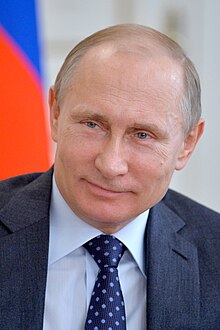
Vladimir Putin
And Trump on Putin: “It is always a great honor to be so nicely complimented by a man so highly respected within his own country and beyond. He’s running his country, and at least he’s a leader. Unlike what we have in this country”—a clear attack on then-President Barack Obama.
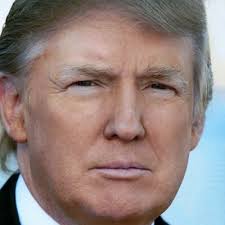
Donald Trump
Forgiven Crime #5: Republicans supported the treasonous meeting between Trump’s campaign managers and Russian Intelligence agents.
On July 9, 2016, high-ranking members of Trump’s Presidential campaign met with lobbyists tied to Putin. The meeting took place at Trump tower and the participants included:
- Trump’s son, Donald Trump Jr.;
- His son-in-law, Jared Kushner;
- His then-campaign manager, Paul Manafort;
- Natalia Veselnitskaya, a Russian lawyer with ties to Putin; and
- Rinat Akhmetshin, a former Soviet counterintelligence officer suspected of having ongoing ties to Russian Intelligence.
The purpose of that meeting: To gain access to any “dirt” Russian Intelligence could supply on Democratic Presidential Nominee Hillary Clinton.
Forgiven Crime #6: Republicans supported Trump’s open—and treasonous—solicitation of Russian interference in the 2016 Presidential election.
On July 22, 2016, at a press conference in Doral, Florida, Trump said: “Russia, if you are listening, I hope you are able to find the 33,000 emails that are missing [from Democratic Presidential candidate Hillary Clinton’s computer]. I think you will probably be rewarded mightily by our press.”
“This has to be the first time that a major presidential candidate has actively encouraged a foreign power to conduct espionage against his political opponent,” Hillary for America policy adviser Jake Sullivan said in a statement. “That’s not hyperbole, those are just the facts. This has gone from being a matter of curiosity, and a matter of politics, to being a national security issue.”
“I find those kinds of statements to be totally outrageous because you’ve got now a presidential candidate who is, in fact, asking the Russians to engage in American politics,” said former CIA Director Leon Panetta, a Clinton surrogate. “I just think that’s beyond the pale.”
Hours later, the Main Intelligence Directorate in Moscow targeted Clinton’s personal office and hit more than 70 other Clinton campaign accounts.
Forgiven Crime #7: On May 9, 2017, Trump fired FBI Director James Comey for investigating Russia’s subversion of the 2016 Presidential race.
There were four reasons for this:
- Comey had refused to pledge his personal loyalty to Trump. Trump had made the “request” during a private dinner at the White House in January.
- Comey told Trump that he would always be honest with him. But that didn’t satisfy Trump’s demand that the head of the FBI act as his personal secret police chief—as was the case in the former Soviet Union.
- Trump had tried to coerce Comey into dropping the FBI’s investigation into former National Security Adviser Michael Flynn, for his secret ties to Russia and Turkey. Comey had similarly resisted that demand.
- Comey had recently asked the Justice Department to fund an expanded FBI investigation into well-documented contacts between Trump’s 2016 Presidential campaign and Russian Intelligence agents. The goal of that collaboration: To elect Trump over Hillary Clinton, a longtime foe of Russian President Putin.

James Comey
Forgiven Crime #8: On May 10, 2017. Trump met with Russian Foreign Minister Sergey Lavrov and Russian Ambassador Sergey Kislyak in the Oval Office—and gave them highly classified Israeli Intelligence about an Islamic State plot to turn laptops into concealable bombs.
Kislyak is reportedly a top recruiter for Russia’s SVR foreign intelligence agency. He has been closely linked with Jeff Sessions, then Attorney General, and fired National Security Adviser Mike Flynn.
“I just fired the head of the FBI,” Trump told the two dignitaries. “He was crazy, a real nut job. I faced great pressure because of Russia. That’s taken off.”
Then, on May 11, Trump gave away his real reason for firing Comey:
Interviewed on NBC News by reporter Lester Holt, Trump said: “And in fact when I decided to just do it, I said to myself, I said ‘you know, this Russia thing with Trump and Russia is a made-up story, it’s an excuse by the Democrats for having lost an election that they should have won.'”
2016 PRESIDENTIAL CAMPAIGN, 2020 PRESIDENTIAL CAMPAIGN, ABC NEWS, ADAM SCHIFF, ADOLF HITLER, ALTERNET, AMERICABLOG, AP, ARTICLES OF IMPEACHMENT, BABY BOOMER RESISTANCE, BORDER WALL, BUZZFEED, CBS NEWS, CHARLES DE GAULLE, CHINA, CHRISTI GRIMM, CHRISTOPHER S. MURPHY, CIA, CNN, CONSERVATIVE POLITICAL ACTION CONFERENCE, CONVERSATION WITH AN AMERICAN WRITER (POEM), CORONAVIRUS RELIEF MONIES, COVID-19, CROOKS AND LIARS, CUBAN MISSILE CRISIS, DAILY KOZ, DAN BOWMAN, DAN SULLIVAN, DAVID BROOKS, DEMOCRATS, DEPARTMENT OF HEALTH AND HUMAN SERVICES, DONALD TRUMP, DONALD TRUMP JUNIOR, DRUDGE RETORT, EXTORTION, FACEBOOK, FBI, FIRST AMENDMENT, FIVETHIRTYEIGHT, GENN FINE, GEORGE FLOYD, GEORGE W. BUSH, GOVERNMENT ACCOUNTABILITY OFFICE, GOVERNMENT SHUTDOWN, HARPER’S MAGAZINE, HILLARY CLINTON, HOUSE FOREIGN AFFAIRS COMMITTEE, HOUSE INTELLIGENCE COMMITTEE, HOUSE OVERSIGHT AND REFORM COMMITTEE, HUNTER BIDEN, IMPEACHMENT, IMPOUNDMENT CONTROL ACT, INSPECTORS GENERAL, INTELLIGENCE COMMUNITY, JAKE SULLIVAN, JAKE TAPPER, JAMAL KHASHOGGI, JAMES COMEY, JAMES ROBART, JARED KUSHNER, JEFF SESSIONS, JOHN CORNYN, JOHN F. KENNEDY, JOHN ROBERTS, JON S. TIGAR, JOSEPH BIDEN, KELLY LOEFFER, KEVIN CRAMER, LAFAYETTE SQUARE, LAMAR ALEXANDER, LEON PANETTA, LINDSEY GRAHAM, MARCO RUBIO, MARTIN GUGINO, MEDIA MATTERS, MEXICO, MICHAEL FLYNN, MICHAEL HAYDEN, MICHAEL K. ATKINSON, MICK MULVANEY, MIKE PENCE, MITCH MCCONNELL, MOHAMMED BIN SALMAN, MOTHER JONES, MOVEON, MSNBC, NANCY PELOSI, NATALIA VESELNITSKAYA, NATIONAL SECURITY AGENCY, NBC NEWS, NEWSWEEK, NPR, PAUL MANAFORT, PBS NEWSHOUR, POLITICO, POLITICUSUSA, RAW STORY, REPUBLICANS, REUTERS, RINAT AKHMETSHIN, ROBERT MUELLER, ROBERT PAYNE, ROD ROSENSTEIN, ROGER STONE, RON JOHNSON, RUSSIA, SALON, SEATTLE TIMES, SERGEY KISLYAK, SERGEY LAVROV, SLATE, ST. JOHN’S CHURCH, STEVE DAINES, TALKING POINTS MEMO, TED CRUZ, THE ATLANTIC, THE CHICAGO SUN-TIMES, THE CHICAGO TRIBUNE, THE DAILY BEAST, THE DAILY BLOG, THE GUARDIAN, THE HILL, THE HUFFINGTON POST, THE JUDICIARY, THE LIFE AND DEATH OF ADOLF HITLER (BOOI), THE LIFE AND DEATH OF ADOLF HITLER (BOOK), THE LOS ANGELES TIMES, THE NATION, THE NEW REPUBLIC, THE NEW YORK TIMES, THE PRESS, THE VILLAGE VOICE, THE WASHINGTON POST, THINKPROGRESS, TIME, TREASON, TRUMP TOWER MEETING, TRUTHDIG, TRUTHOUT, TWITTER, TWO POLITICAL JUNKIES, U.S. NEWS & WORLD REPORT, UKRAINE, UNITED STATES HOUSE OF REPRESENTATIVES, UNITED STATES SENATE, UPI, USA TODAY, VLADIMIR PUTIN, VOLODYMYR ZELENSKY, WHISTLEBLOWER, WHITE HOUSE BUDGET OFFICE, WONKETTE, YEVGENEY YEVTUSHENKO
In Bureaucracy, History, Law, Law Enforcement, Politics, Social commentary on June 16, 2020 at 12:05 am
On February 5, the Republican-dominated Senate—as expected—absolved President Donald Trump from trying to extort Ukraine into smearing a possible rival for the White House. Only one Republican—Utah Senator Mitt Romney—had the moral courage to vote for conviction.
But this was not the first time Republicans sought to excuse Trump’s litany of crimes. Those efforts go back to the 2016 Presidential election.
Forgiven Crime #1: Not demanding that Trump quit the 2016 Presidential race—or demanding that he be indicted—for making a terrorist threat against his own party.
On March 16, 2016, Trump, the front-runner for the Republican Presidential nomination, issued a warning to his fellow Right-wingers: If he didn’t win the GOP nomination at the convention in July, his supporters would literally riot.
“I think we’ll win before getting to the convention. But I can tell you if we didn’t, if we’re 20 votes short or if we’re 100 short and we’re at 1,100 and somebody else is at 500 or 400…I don’t think you can say that we don’t get it automatically. I think you’d have riots.
“I think you would see problems like you’ve never seen before. I think bad things would happen. I really do. I wouldn’t lead it, but I think bad things would happen.”
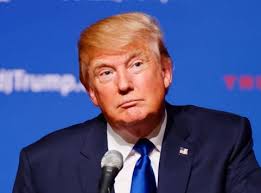
Donald Trump
An NBC reporter summed it up as follows: “As Trump indicated, there is a very real possibility he might lose the nomination if he wins only a plurality of delegates thanks to party rules that allow delegates to support different candidates after the initial ballot.
“In that context, the message to Republicans was clear on [March 16]: ‘Nice convention you got there, shame if something happened to it.’”
Threatening his Republican and Democratic opponents with violence played a major role in Donald Trump’s campaign for President.
Forgiven Crime #2: Supporting his “dog-whistle” call for the assassination of Democratic Nominee Hillary Clinton.
On August 9, 2016, at a rally in Wilmington, North Carolina, Trump said: “Hillary [Clinton] wants to abolish, essentially abolish, the Second Amendment. If she gets to pick her [Supreme Court] judges, nothing you can do folks. Although the Second Amendment people, maybe there is, I don’t know.”
Democrats—and responsible news media—immediately saw this for the “dog-whistle” signal it was.
“Don’t treat this as a political misstep,” Senator Christopher S. Murphy of Connecticut, who has called for stiffer gun laws, wrote on Twitter. “It’s an assassination threat, seriously upping the possibility of a national tragedy & crisis.”
“Well, let me say if someone else said that outside of the hall, he’d be in the back of a police wagon now, with the Secret Service questioning him,” said Michael Hayden, former head of the CIA and National Security Agency (NSA).
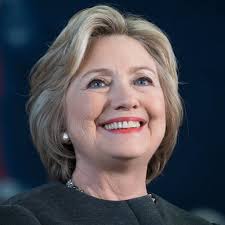
Hillary Clinton
Threats of violence continued to be made by Trump supporters right up to the day of the election.
- On July 29, Roger Stone, a notorious Right-wing political consultant acting as a Trump strategist, told Breitbart News: “The first thing Trump needs to do is begin talking about [voter fraud] constantly. If there’s voter fraud, this election will be illegitimate, the election of the winner will be illegitimate, we will have a constitutional crisis, widespread civil disobedience, and the government will no longer be the government.”
- At a town hall meeting where Trump’s Vice Presidential nominee Mike Pence appeared, a woman named Rhonda said: “For me personally, if Hillary Clinton gets in, I myself am ready for a revolution.”
- In Cincinnati, a Trump supporter threatened to forcibly remove Clinton from the White House if she won the race: “If she’s in office, I hope we can start a coup. She should be in prison or shot. That’s how I feel about it,”
- Dan Bowman, a 50-year-old contractor, said of Hillary Clinton, the Democratic nominee. “We’re going to have a revolution and take them out of office if that’s what it takes. There’s going to be a lot of bloodshed. But that’s what it’s going to take….I would do whatever I can for my country.”
Forgiven Crime #3: Republicans supported Trump’s call for his followers to intimidate Democratic voters at election time.
Trump encouraged his mostly white supporters to sign up online to be “election observers” to stop “Crooked Hillary from rigging this election.” He urged them to act as poll watchers in “other” [non-white] communities to ensure that things are “on the up and up.”
Many of his supporters promised to do so.
“Trump said to watch your precincts. I’m going to go, for sure,” said Steve Webb, a 61-year-old carpenter from Fairfield, Ohio.
“I’ll look for…well, it’s called racial profiling. Mexicans. Syrians. People who can’t speak American,” he said. “I’m going to go right up behind them. I’ll do everything legally. I want to see if they are accountable. I’m not going to do anything illegal. I’m going to make them a little bit nervous.”


 Bureaucracybuster's Blog
2016 PRESIDENTIAL ELECTION, 2020 PRESIDENTIAL ELECTION, ABC NEWS, ABRAHAM LINCOLN, ADAM SCHIFF, ADOLF HITLER, ALEXANDER VINDMAN, ALTERNET, AMERICABLOG, AP, BABY BOOMER RESISTANCE, BLOOMBERG, BUZZFEED, CBS NEWS, CNN, CROOKS AND LIARS, DAILY KOZ, DEMOCRATS, DONALD TRUMP, DRUDGE RETORT, FACEBOOK, FIVETHIRTYEIGHT, FOX NEWS NETWORK, GERRYMANDERING, HARPER’S MAGAZINE, HOUSE INTELLIGENCE COMMITTEE, HOWARD BAKER, HUNTER BIDEN, JOE BIDEN, JOEL MATHIS, KEN PAXTON, LYNDON JOHNSON, MARIA YOVANOVICH, MEDIA MATTERS, MEDICAID, MICK MULVANEY, MOTHER JONES, MOVEON, MSNBC, NATIONAL SECURITY COUNCIL, NBC NEWS, NEWSWEEK, NPR, POLITICO, POLITICUSUSA, RAW STORY, REPUBLICANS, REUTERS, RICHARD NIXON, ROBERT PAYNE, RUDI GIULIANI, RUSSIA, SALON, SEATTLE TIMES, SLATE, TALKING POINTS MEMO, THE ATLANTIC, THE CHICAGO SUN-TIMES, THE CHICAGO TRIBUNE, THE DAILY BEAST, THE DAILY BLOG, THE GUARDIAN, THE HILL, THE HUFFINGTON POST, THE LIFE AND DEATH OF ADOLF HITLER (BOOK), THE LOS ANGELES TIMES, THE NATION, THE NEW REPUBLIC, THE NEW YORK TIMES, THE VILLAGE VOICE, THE WASHINGTON POST, THINKPROGRESS, THIRD REICH, TIME, TRUTHDIG, TRUTHOUT, TWITTER, TWO POLITICAL JUNKIES, U.S. NEWS & WORLD REPORT, UKRAINE, UPI, USA TODAY, VOLODYMYR ZELENSKY, VOTER ID LAWS, WATERGATE, WONKETTE
DEMOCRACY OR DICTATORSHIP: IT’S YOUR CHOICE–PART ONE (OF TWO)
In Bureaucracy, History, Law, Law Enforcement, Politics, Social commentary on December 10, 2020 at 12:15 amOn November 14, 2019, the CNN website showcased an opinion piece by Jane Carr and Laura Juncadella entitled: “Fractured States of America.”
And it opened:
“Some worry that it’s already too late, that we’ve crossed a threshold of polarization from which there is no return. Others look toward a future where more moderate voices are heeded and heard, and Americans can find better ways to relate to each other.
“Still others look back to history for a guide—perhaps for what not to do, or at the very least for proof that while it’s been bad before, progress is still possible.”
Then followed a series of anecdotes. The sub-headlines summed up many of the comments reported.
Abraham Lincoln warned: “A house divided against itself cannot stand. I believe this government cannot endure, permanently, half-slave and half-free. It will become all one thing or all the other.”
America now faces such a choice:
Consider the face-off between President Donald J. Trump and Army Lt. Colonel Alexander Vindman.
Vindman is a United States Army officer who served as the Director for European Affairs for the United States National Security Council. He was also a witness to Trump’s efforts to extort “a favor” from the president of Ukraine.
Lt. Colonel Alexander Vindman
Адміністрація Президента України [CC BY 4.0 (https://creativecommons.org/licenses/by/4.0)%5D
In July, 2019, Trump told his acting chief of staff, Mick Mulvaney, to withhold almost $400 million in promised military aid for Ukraine, which faces increasing aggression from Russia.
On July 25, Trump telephoned Ukrainian President Volodymyr Zelensky to “request” a “favor”: Investigate 2020 Democratic Presidential Candidate Joe Biden and his son, Hunter, who has had business dealings in Ukraine.
The reason for such an investigation: To find embarrassing “dirt” on Biden.
“I was concerned by the call,” Vindman, who had heard Trump’s phone call, testified before the House Intelligence Committee. “I did not think it was proper to demand that a foreign government investigate a U.S. citizen, and I was worried about the implications for the U.S. Government’s support of Ukraine.
“I realized that if Ukraine pursued an investigation into the Bidens and Burisma, it would likely be interpreted as a partisan play which would undoubtedly result in Ukraine losing the bipartisan support it has thus far maintained. This would all undermine U.S. national security.”
Trump denounced Vindman as a “Never Trumper”—as if opposing his extortion attempt constituted a blasphemy. Republicans and their shills on the Fox News Network attacked him as well. As a result, he sought physical protection by the Army for himself and his family.
(On February 7, 2020, he was reassigned from the National Security Council at Trump’s order.)
Donald Trump
* * * * *
On November 25, 2019, CNN political correspondent Jake Tapper interviewed Representative Adam Schiff on the coming impeachment trial.
What would it mean if Republicans uniformly oppose any articles of impeachment against Trump? asked Tapper.
“It will have very long-term consequences, if that’s where we end up,” replied Schiff.
“And if not today, I think Republican members in the future, to their children and their grandchildren, will have to explain why they did nothing in the face of this deeply unethical man who did such damage to the country.”
In his bestselling 1973 biography, The Life and Death of Adolf Hitler, British historian Robert Payne harshly condemned the German people for the rise of the Nazi dictator:
“[They] allowed themselves to be seduced by him and came to enjoy the experience….[They] followed him with joy and enthusiasm because he gave them license to pillage and murder to their hearts’ content. They were his servile accomplices, his willing victims.”
Like Hitler, Trump offered his Republican voters and Congressional allies intoxicating dreams: “I will enrich all of you. And I will humiliate and destroy those Americans you most hate.”
For his white, Fascistic, largely elderly audience, those enemies included blacks, atheists, Hispanics, non-Christians, Muslims, liberals, “uppity” women, Asians.
And, again like Hitler, his audience had always possessed these dreams. Trump offered them nothing new. As a lifelong hater, he undoubtedly shared their dreams. But as a lifelong opportunist, he realized that he could use them to catapult himself into a position of supreme power.
He despised his followers—both as voters and Congressional allies—for they were merely the instruments of his will.
For Trump’s supporters in the House and Senate, fear remains their overwhelming motivation. They fear that if they cross him—or simply don’t praise him enough—he will sic his fanatical base on them. And then they will lose their cozy positions—and the power and perks that go with them.
Share this: