Posts Tagged ‘HERMAN CAIN’
2012 PRESIDENTIAL RACE, ALTERNET, AP, BARACK OBAMA, BAY OF PIGS, BBC, BERLIN WALL, BILL CLINTON, BRUCE GREENWOOD, BUZZFEED, CARLOS MARCELLO, CBS NEWS, CIA, CIVIL RIGHTS, CLIFF ROBERTSON, CNN, CUBAN MISSILE CRISIS, DAILY KOS, DAVID HALBERSTAM, DONALD J. TRUMP, FACEBOOK, FBI, FIDEL CASTRO, FRANK SINATRA, HERMAN CAIN, ICH BEN EIN BERLINNER SPEECH, INTERNET MOVIE DATABASE, J. EDGAR HOOVER, JAMES MARSDEN, JOHN F. KENNEDY, JOSEPH MCCARTHY, JOSEPH P. KENNEDY, LYNDON B. JOHNSON, MAFIA, MALCOM X, MARTIN LUTHER KING, MARTIN SHEEN, MOTHER JONES, MOVEON, MOVIES, NBC NEWS, NEWSWEEK, NEWT GINGRICH, NIKITA KHRUSHCHEV, NPR, NUCLEAR TEST BAN TREATY, POLITICO, PT-109, RAW STORY, REUTERS, RICK PERRY, ROBERT F. KENNEDY, ROBERT S. MCNAMARA, SALON, SAM GIANCANA, SANTOS TRAFFICANTE, Sarah Palin, SATURDAY NIGHT LIVE, SEATTLE TIMES, SLATE, SOVIET UNION, THE ATLANTIC, THE BEST AND THE BRIGHTEST, THE BUTLER, THE CHICAGO SUN-TIMES, THE CHICAGO TRIBUNE, THE DAILY BEAST, THE GUARDIAN, THE HILL, THE HUFFINGTON POST, THE LOS ANGELES TIMES, THE MISSILES OF OCTOBER, THE NEW YORK TIMES, THE RAT PACK, THE WALL STREET JOURNAL, THE WASHINGTON POST, THIRTEEN DAYS, TIME, TWILIGHT ZONE, TWITTER, U.S. NEWS & WORLD REPORT, UPI, USA TODAY, VIETNAM WAR, WILLIAM DEVANE, WILLILAM PETERSON
In Bureaucracy, Business, History, Law, Law Enforcement, Military, Politics, Social commentary on May 10, 2017 at 12:01 am
The Kennedy administration’s unprecedented attack on organized crime has led some law enforcement experts to believe the Mob engineered President Kennedy’s assassination.
One of these is G. Robert Blakey, father of the Racketeer Influenced Corrupt Organizations (RICO) Act. As the former Chief Counsel and Staff Director to the U.S. House Select Committee on Assassinations (1977–1979) he oversaw the second official inquiry into the Kennedy assassination.
As a result, he believes the Mob had ample means, motive and opportunity to arrange for a “nut” to kill the President.
In his 1980 book, The Plot to Kill the President, Blakey asserted:
- Lee Harvey Oswald shot and killed President Kennedy.
- An unknown confederate of Oswald’s, firing from the “grassy knoll,” also shot at Kennedy but missed.
- The conspiracy was rooted in organized crime and involved Mafia boss Santos Trafficante of Miami and/or Mafia boss Carlos Marcello of New Orleans.
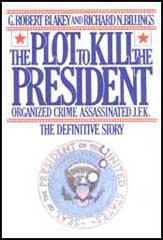
The 1983 TV mini-series, “Blood Feud,” clearly implied that the Mob was responsible. At its heart lay the 10-year conflict between Robert F. Kennedy and James R. Hoffa, then president of the International Brotherhood of Teamsters Union.
This was also the plot of American Tabloid, a 1995 novel by James Ellroy.
But investigative reporter Seymour Hersh wrote that during the five years he researched The Dark Side of Camelot, his expose of the hidden life of President Kennedy, he didn’t uncover any evidence of such a plot.
After Robert Kennedy left the Justice Department in 1964 to run for the post of U.S. Senator from New York, the Justice Department slacked off its push against the crime syndicates.
But the war was resurrected during the Nixon administration and has remained a top priority ever since.
Perhaps the most controversial legacy of the Kennedy administration remains the President’s dealings with the South Vietnamese regime of Ngo Dinh Diem.,
In 1954, the French—who had controlled Vietnam for 80 years—were forced to withdraw their military forces from the country. Their army had suffered a humiliating defeat at Dienbenphu and the French citizenry—still recovering from defeat and Nazi occupation during World War II—demanded an end to the disastrous conflict.
Into this political vacuum stepped the victorious North Vietnamese communist Ho Chi Minh.
Kennedy—then U.S. Senator from Massachusetts—had visited Vietnam while the French were still trying to hold onto one of their last colonial possessions. And he had urged them to withdraw and allow the Vietnamese to govern themselves.
But President Dwight D. Eisenhower was aware of Ho’s overwhelming popularity throughout Vietnam due to his battles against Japanese and French colonialists. In any nationwide election, Ho was certain to win the presidency.
But Eisenhower felt he couldn’t allow an avowed Communist to rule Vietnam. With the North under firm Communist control, America focused its attention on the South.
Searching for an acceptable alternative, Eisenhower found him in Ngo Dinh Diem—a mandarin in a nation swept by revolution, a Catholic in a nation with an 80% Buddhist population.
In 1954, America began backing Diem. Although his first years were marked by social progress, he later became increasingly oppressive toward the Buddhist majority. Corruption openly flourished among government and army officials.
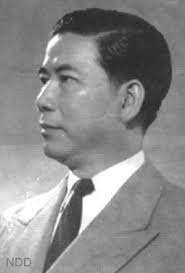
Ngo Dinh Diem
In 1960, North Vietnam launched an aggressive campaign of infiltration and assassination across South Vietnam.
In 1961, President Kennedy sent 400 Green Berets and 100 other military advisers to South Vietnam to offer support.
Diem requested American financing of a 100,000-man increase in his army. Kennedy agreed to an increase of 30,000. Meanwhile, the Joint Chiefs of Staff estimated that 40,000 U.S. troops would be needed to “clean up the Vietcong threat.”
Kennedy underestimated the reaction of North Vietnam, whose forces were fighting what they believed was a crusade. As American troop strength increased, the North escalated its own commitment.
From 1961 to 1963, the number of U.S. troops in Vietnam steadily rose from 685 to 16,732. American minesweepers patrolled the coasts while their aircraft engaged in surveillance.
For the first time, Americans became casualties of the war–especially those in helicopter combat-support missions.
Meanwhile, Diem—urged by his influential brother, Nhu, who ran the secret police—cracked down on the Buddhists.
Government troops fired on a peaceful demonstration in May, 1963. In protest, Buddhist monks burned themselves to death before TV cameras.
Nhu’s beautiful and powerful wife, Madame Nhu, fed growing world outrage by her ridicule of “monk barbecue shows.”
American efforts to stop Diem’s anti-Buddhist campaign failed. On August 21, 1963, Diem’s police shot their way into Buddhist pagodas, killing scores and arresting hundreds.
This finally convinced the Kennedy administration that Diem would never gain the popular support he needed to win the war against the Communist North.
As a result, the administration offered support to South Vietnamese military officers planning a coup against Diem.
On November 1, 1963, South Vietnamese army units stormed the presidential palace. Diem and Nhu fled, but were caught and shot. Madame Nhu, visiting the U.S. at the time, escaped death, accusing Kennedy of supporting the coup.
The administration issued a flat denial.
Diem’s assassination was followed 21 days later by Kennedy’s own.
2012 PRESIDENTIAL RACE, ALTERNET, AP, BARACK OBAMA, BAY OF PIGS, BBC, BERLIN WALL, BILL CLINTON, BRUCE GREENWOOD, BUZZFEED, CARLOS MARCELLO, CBS NEWS, CIA, CIVIL RIGHTS, CLIFF ROBERTSON, CNN, CUBAN MISSILE CRISIS, DAILY KOS, DAVID HALBERSTAM, DONALD J. TRUMP, FACEBOOK, FBI, FIDEL CASTRO, FRANK SINATRA, HERMAN CAIN, ICH BEN EIN BERLINNER SPEECH, INTERNET MOVIE DATABASE, J. EDGAR HOOVER, JAMES MARSDEN, JOHN F. KENNEDY, JOSEPH MCCARTHY, JOSEPH P. KENNEDY, LYNDON B. JOHNSON, MAFIA, MALCOM X, MARTIN LUTHER KING, MARTIN SHEEN, MOTHER JONES, MOVEON, MOVIES, NBC NEWS, NEWSWEEK, NEWT GINGRICH, NIKITA KHRUSHCHEV, NPR, NUCLEAR TEST BAN TREATY, POLITICO, PT-109, RAW STORY, REUTERS, RICK PERRY, ROBERT F. KENNEDY, ROBERT S. MCNAMARA, SALON, SAM GIANCANA, SANTOS TRAFFICANTE, Sarah Palin, SATURDAY NIGHT LIVE, SEATTLE TIMES, SLATE, SOVIET UNION, THE ATLANTIC, THE BEST AND THE BRIGHTEST, THE BUTLER, THE CHICAGO SUN-TIMES, THE CHICAGO TRIBUNE, THE DAILY BEAST, THE GUARDIAN, THE HILL, THE HUFFINGTON POST, THE LOS ANGELES TIMES, THE MISSILES OF OCTOBER, THE NEW YORK TIMES, THE RAT PACK, THE WALL STREET JOURNAL, THE WASHINGTON POST, THIRTEEN DAYS, TIME, TWILIGHT ZONE, TWITTER, U.S. NEWS & WORLD REPORT, UPI, USA TODAY, VIETNAM WAR, WILLIAM DEVANE, WILLIAM PETERSON
In Bureaucracy, Business, History, Law, Law Enforcement, Military, Politics, Social commentary on May 9, 2017 at 12:15 am
John F. Kennedy became President when civil rights suddenly became a burning issue throughout the Nation.
At Kennedy’s request, dozen of law firms sent lawyers South, so civil rights demonstrators would not lack counsel.
Prominent blacks such as Thurgood Marshall, Robert C. Weaver and George L.L. Weaver were appointed, respectively, to the Supreme Court, the Housing and House Finance Agency and the office of Assistant Secretary of Labor.
But Kennedy was highly reluctant to push for a civil rights bill addressing the overall issues of racial discrimination.
The reason: Most of the chairman of House and Senate committees were deeply conservative Southern racists–whether Republican or Democrat. They decided whether Kennedy’s foreign policy initiatives would be approved or opposed–especially his bills for increased foreign aid.
Kennedy believed he could not offend such men without jeopardizing the legacy he wanted to achieve in foreign policy.
This timidity, in turn, led many prominent blacks—such as Martin Luther King and Malcom X—to believe they would see no innovative moves on Kennedy’s part.
But events forced Kennedy’s hand.
On September 30, 1962, the President sent deputy U.S. marshals and National Guardsmen into Mississippi to restore order. Rioting had erupted when, by federal court order, James Meredith, a black, was enrolled at the state university.
Kennedy’s problems in winning support for his civil rights program arose in the folkways of the Nation. When laws run counter to a nation’s folkways, the laws lose.
In backing the admission of Meredith, the President chose an incident which would set off shockwaves for black rights.
Kennedy held mixed emotions about the demand for civil rights by blacks. On one hand, as an Irish Catholic, he grew up with stories about longtime discrimination against his ancestors (such as the “No Irish Need Apply” signs posted by numerous employers).
On the other hand, he had been born into a world of power and wealth, and he had to grope his way toward understanding the problems of the oppressed.
Another major confrontation broke out between Kennedy and the forces of segregation on June 11, 1963. Alabama Governor George C. Wallace personally blocked the entrance of two black pupils to the University of Tuscaloosa.
The President, watching on TV, federalized the Alabama National Guard, which Wallace had used to ring the school. Wallace withdrew and the students were admitted and enrolled.
That same day, Kennedy addressed the nation on the need for genuine equality for all Americans: “The question is whether we are going to treat our fellow Americans as we want to be treated.”
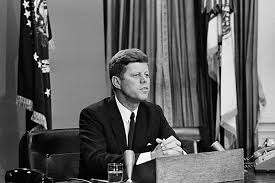
JFK addresses the nation on civil rights
And he called on Congress to pass his civil rights bill, which had been stalled by the legislators.
On August 28, 1963, 200,000 civil rights demonstrators flooded Washington, D.C., for a massive rally.
Fearing that violence would erupt—embarrassing his administration and setting back the cause of civil rights—Kennedy had sought to persuade Dr. Martin Luther King, the march’s chief figure, to cancel the proposed march.
But King and his fellow organizers were determined to go through with it. They had, they said, waited too long for justice to be satisfied with anything less.
The dignity and peacefulness of the rally–and, most especially, King’s soaring “I Have a Dream” speech–won tremendous sympathy throughout the country. Kennedy met with civil rights leaders afterward to offer his support.
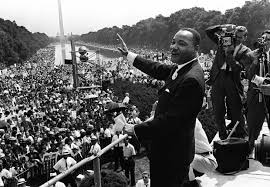
Martin Luther King during the March on Washington
But Kennedy’s civil rights bill remained stalled in Congress until 1964. President Lyndon B. Johnson used the assassinated Kennedy’s new status as a martyr to gain enough support for its passage.
Meanwhile, on yet another front, the Kennedy administration was waging an unprecedented war against organized crime.
This was primarily the work of Attorney General Robert F. Kennedy. As chief counsel for the Senate Permanent Subcommittee on Investigations (1957–59), he had interrogated about 800 mobsters who had been summoned by subpoena.
And he had learned, firsthand, how ineffective the FBI and Justice Department were at bringing such powerful criminals to justice. The FBI had long steered clear of organized crime investigations, largely because its director, J. Edgar Hoover, feared corruption of his agents.
Upon taking office as Attorney General, he greatly expanded the number of attorneys assigned to the Justice Department’s Organized Crime Section. And, more important, he used his status as brother to the President to jawbone FBI Director J. Edgar Hoover into attacking the Mob.
The FBI installed illegal microphones in Mob hangouts throughout the country and started building cases against such mobsters as Sam Giancana, Santos Trafficante and Carlos Marcello.
The administration’s attack on the Mob has led some historians to believe the assassination of President Kennedy was Mob-orchestrated.
The reasons:
- Joseph P. Kennedy, the family patriarch, solicited Mob money and influence for his son’s 1960 Presidential campaign.
- Through singer Frank Sinatra, the elder Kennedy assured Chicago Mafia boss Sam Giancana that the mob would get a free ride if his son were elected President.
- The CIA, seeking any way to topple Fidel Castro, enlisted the Mafia to assassinate him.
- But Robert Kennedy, as Attorney General, ignored the Mob’s “contributions” and pressed his war against the syndicates
- As a result, mobsters felt betrayed and lusted for vengeance.
2012 PRESIDENTIAL RACE, ALTERNET, AP, BARACK OBAMA, BAY OF PIGS, BBC, BERLIN WALL, BILL CLINTON, BRUCE GREENWOOD, BUZZFEED, CARLOS MARCELLO, CBS NEWS, CIA, CIVIL RIGHTS, CLIFF ROBERTSON, CNN, CUBAN MISSILE CRISIS, DAILY KOS, DAVID HALBERSTAM, DONALD J. TRUMP, FACEBOOK, FBI, FIDEL CASTRO, FRANK SINATRA, HERMAN CAIN, ICH BEN EIN BERLINNER SPEECH, INTERNET MOVIE DATABASE, J. EDGAR HOOVER, JAMES MARSDEN, JOHN F. KENNEDY, JOSEPH MCCARTHY, JOSEPH P. KENNEDY, LYNDON B. JOHNSON, MAFIA, MALCOM X, MARTIN LUTHER KING, MARTIN SHEEN, MOTHER JONES, MOVEON, MOVIES, NBC NEWS, NEWSWEEK, NEWT GINGRICH, NIKITA KHRUSHCHEV, NPR, NUCLEAR TEST BAN TREATY, POLITICO, PT-109, RAW STORY, REUTERS, RICK PERRY, ROBERT F. KENNEDY, ROBERT S. MCNAMARA, SALON, SAM GIANCANA, SANTOS TRAFFICANTE, Sarah Palin, SATURDAY NIGHT LIVE, SEATTLE TIMES, SLATE, SOVIET UNION, THE ATLANTIC, THE BEST AND THE BRIGHTEST, THE BUTLER, THE CHICAGO SUN-TIMES, THE CHICAGO TRIBUNE, THE DAILY BEAST, THE GUARDIAN, THE HILL, THE HUFFINGTON POST, THE LOS ANGELES TIMES, THE MISSILES OF OCTOBER, THE NEW YORK TIMES, THE RAT PACK, THE WALL STREET JOURNAL, THE WASHINGTON POST, THIRTEEN DAYS, TIME, TWILIGHT ZONE, TWITTER, U.S. NEWS & WORLD REPORT, UPI, USA TODAY, VIETNAM WAR, WILLIAM DEVANE, WILLIAM PETERSON
In Bureaucracy, Business, History, Law, Law Enforcement, Military, Politics, Social commentary on May 8, 2017 at 12:08 am
By October, 1962, Nikita Khrushchev, premier of the Soviet Union, had supplied Cuba with more than 40,000 soldiers, 1,300 field pieces, 700 anti-aircraft guns, 350 tanks and 150 jets.
The motive: To deter another invasion.
Khrushchev also began supplying Castro with nuclear-tipped ballistic missiles.
Their discovery, in October, 1962, ignited the single most dangerous confrontation of the Cold War.
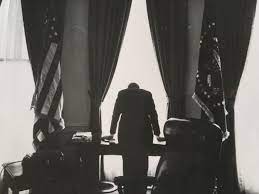

John F. Kennedy during the Cuban Missile Crisis
On October 16, Kennedy was shown photographs of nuclear missile sites under construction on the island. The pictures had been taken on the previous day by a high-altitude U-2 spy plane.
Suddenly, the two most powerful nuclear countries—the United States and the Soviet Union—appeared on the brink of nuclear war.
Kennedy officials claimed they couldn’t understand why Khrushchev had placed nuclear missiles in Cuba. “Maybe Khrushchev’s gone mad” was a typical musing.
The Kennedy administration never admitted that JFK had been waging a no-holds-barred campaign to overthrow the Cuban government and assassinate its leader.
Kennedy convened a group of his 12 most important advisers, which became known as Ex-Comm, for Executive Committee.
For seven days, Kennedy and his advisers intensely and privately debated their options. Some of the participants—such as Air Force General Curtis LeMay—urged an all-out air strike against the missile sites.
Robert Kennedy, the Attorney General (and the President’s brother) opposed initial calls for an air strike.
It would be, he said, “a Pearl Harbor in reverse.” And, he added: “I don’t want my brother to go down in history as the Tojo of the 1960s.”
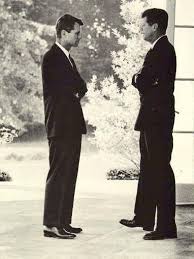
Robert F. and John F. Kennedy
Others—such as Adlai Stevenson, the United States delegate to the United Nations—urged a reliance on quiet diplomacy.
It was Secretary of Defense Robert S. McNamara who suggested a middle course: A naval blockade—a “quarantine” in Kennedy’s softened term—around Cuba. This would hopefully prevent the arrival of more Soviet offensive weapons on the island.
The President insisted that the missiles had to go—by peaceful means, if possible, but by the use of military force if necessary.
Kennedy finally settled on a naval blockade of Cuba. This would prevent additional missiles from coming in and give Khrushchev time to negotiate and save face.
On October 22, President Kennedy appeared on nationwide TV to denounce the presence of Russian nuclear missiles in Cuba.
He demanded their withdrawal, and warned that any missile launched against any nation in the Western hemisphere would be answered with “a full retaliatory response upon the Soviet Union.”
Kennedy ordered American military readiness raised to a level of Defcom-2—the step just short of total war.
The United States had about 27,000 nuclear weapons; the Soviets had about 3,000. In a first nuclear exchange, the United States could have launched about 3,000 nuclear weapons and the Soviets about 250.
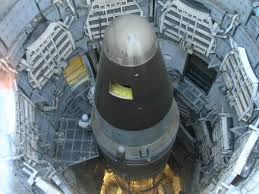
Nuclear missile in silo
On October 28, Khrushchev announced that the missile sites would be destroyed and the missiles crated and shipped back to the Soviet Union.
In return, Kennedy gave his promise—publicly—to lift the blockade and not invade Cuba
Privately, he also promised to remove obsolete Jupiter II nuclear missiles from Turkey, which bordered the Soviet Union. Those missiles were, in effect, the American version of the Russian missiles that had been shipped to Cuba.
The world escaped nuclear disaster by a hair’s-breath.
Khrushchev didn’t know that Kennedy had intended to order a full-scale invasion of Cuba in just another 24 hours if an agreement couldn’t be reached.
And Kennedy and his military advisors didn’t know that Russian soldiers defending Cuba had been armed with tactical nuclear weapons.
If warfare of any type had broken out, the temptation to go nuclear would have been overwhelming.
The Cuban Missile Crisis marked the only time the world came to the brink of nuclear war.
The Right attacked Kennedy for refusing to destroy Castro, thus allowing Cuba to remain a Communist bastion only 90 miles from Florida.
The Left believed it was a needless confrontation that risked the destruction of humanity.
For Kennedy, forcing the Soviets to remove their missiles from Cuba re-won the confidence he had lost among so many Americans following the Bay of Pigs fiasco.
It also made him face the brutal truth that a miscalculation during a nuclear crisis could destroy all life on Earth.
He felt he could now move—cautiously—toward better relations between the United States and the Soviet Union.
Ironically, the crisis had the same effects on Khrushchev—who had witnessed the horrors of Germany’s 1941 invasion of the Soviet Union and the subsequent loss of at least 22 million Soviet citizens.
Slowly and carefully, Kennedy and Khrushchev negotiated the details of what would become the Nuclear Test Ban Treaty, which banned nuclear testing in the atmosphere.
Underground tests would continue, but the amounts of deadly strontium-90 radiation polluting the atmosphere would be vastly reduced.
The treaty was signed between the United States and the Soviet Union on July 25, 1963.
Kennedy considered it his greatest achievement as President, saying in a speech: “According to a Chinese proverb, a journey of a thousand miles begins with a single step. My fellow Americans, let us take that first step.”
2012 PRESIDENTIAL RACE, ALTERNET, AP, BARACK OBAMA, BAY OF PIGS, BBC, BERLIN WALL, BILL CLINTON, BRUCE GREENWOOD, BUZZFEED, CARLOS MARCELLO, CBS NEWS, CIA, CIVIL RIGHTS, CLIFF ROBERTSON, CNN, CUBAN MISSILE CRISIS, DAILY KOS, DAVID HALBERSTAM, DONALD J. TRUMP, FACEBOOK, FBI, FIDEL CASTRO, FRANK SINATRA, HERMAN CAIN, ICH BEN EIN BERLINNER SPEECH, INTERNET MOVIE DATABASE, J. EDGAR HOOVER, JAMES MARSDEN, JOHN F. KENNEDY, JOSEPH MCCARTHY, JOSEPH P. KENNEDY, LYNDON B. JOHNSON, MAFIA, MALCOM X, MARTIN LUTHER KING, MARTIN SHEEN, MOTHER JONES, MOVEON, MOVIES, NBC NEWS, NEWSWEEK, NEWT GINGRICH, NIKITA KHRUSHCHEV, NPR, NUCLEAR TEST BAN TREATY, POLITICO, PT-109, RAW STORY, REUTERS, RICK PERRY, ROBERT F. KENNEDY, ROBERT S. MCNAMARA, SALON, SAM GIANCANA, SANTOS TRAFFICANTE, Sarah Palin, SATURDAY NIGHT LIVE, SEATTLE TIMES, SLATE, SOVIET UNION, THE ATLANTIC, THE BEST AND THE BRIGHTEST, THE BUTLER, THE CHICAGO SUN-TIMES, THE CHICAGO TRIBUNE, THE DAILY BEAST, THE GUARDIAN, THE HILL, THE HUFFINGTON POST, THE LOS ANGELES TIMES, THE MISSILES OF OCTOBER, THE NEW YORK TIMES, THE RAT PACK, THE WALL STREET JOURNAL, THE WASHINGTON POST, THIRTEEN DAYS, TIME, TWILIGHT ZONE, TWITTER, U.S. NEWS & WORLD REPORT, UPI, USA TODAY, VIETNAM WAR, WILLIAM DEVANE, WILLIAM PETERSON
In Bureaucracy, Business, History, Law, Law Enforcement, Military, Politics, Social commentary on May 5, 2017 at 12:10 am
During the 1960 Presidential campaign, then-Senator John F. Kennedy promised to build a Peace Corps to train people in underdeveloped nations to help themselves.
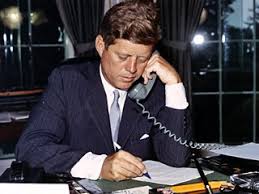
John F. Kennedy
In March, 1961, the program went into effect, with the President’s brother-in-law, Sergent Shriver, as director.
Starvation, illiteracy and disease were the enemies of the Corps. Any nation wanting aid could request it. The first group of volunteers went to the Philippines, the second to Ecuador and the third to Tanganyika.
The problems of the underdeveloped world were too great for any single organization to solve. But the Corps lifted the spirits of many living in those countries. And it captured the imagination of millions of Americans—especially those of thousands of idealistic youths who entered its ranks.
To combat the growing Communist threat to Latin America, Kennedy established the Alliance for Progress. He defined the Alliance’s goal as providing “revolutionary progress through powerful, democratic means.”
Within two years he could report:
“Some 140,000 housing units have been constructed. Slum clearance projects have begun, and 3,000 classrooms have been built. More than 4,000,000 school books have been distributed.
“The Alliance has fired the imagination and kindled the hopes of millions of our good neighbors. Their drive toward modernization is gaining momentum as it unleashes the energies of these millions.
“The United States is becoming increasingly identified in the minds of the people with the goal they move toward: a better life with freedom,” said Kennedy.
Critics of the program, however, charged that the President was trying to “dress up the old policies” of Franklin D. Roosevelt in new rhetoric. Since FDR’s time, the United States has believed in giving economic aid to Latin America.
Much—if not most—of these billions of dollars has wound up in the pockets of various right-wing dictators, such as Anastasio Somoza and Rafael Trujillo.
Meanwhile, Kennedy was urging action on another front—that of outer space.
“This generation does not intend to founder in the backwash of the coming age of space,” declared the President. He committed the United States to putting a man on the moon by the end of the decade.
As indeed it happened less than six years after his death—on July 20, 1969.
Kennedy’s idealistic rhetoric masked his real reason for going to the moon: To score a propaganda victory over the Soviet Union.
Another of his anti-Communist goals: To remove Fidel Castro from power in Cuba at almost any cost.
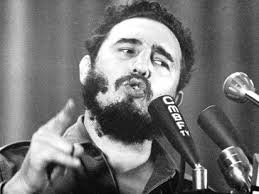
Fidel Castro
Immediately after the failed Bay of Pigs invasion, Kennedy appointed his brother, Robert–who was then the Attorney General—to oversee a CIA program to overthrow Castro.
The CIA and the Mafia entered into an unholy alliance to assassinate Castro—each for its own benefit:
- The CIA wanted to please Kennedy by overthrowing the Communist leader who had nationalized American corporate holdings.
- The Mafia wanted to regain its lucrative casino and brothel holdings that had made Cuba the playground of the rich in pre-Castro times.
The mobsters were authorized to offer $150,000 to anyone who would kill Castro and were promised any support the Agency could yield.
“We were hysterical about Castro at about the time of the Bay of Pigs and thereafter,” then-former Secretary of Defense Robert S. McNamara testified before Congress about these efforts. “And there was pressure from JFK and RFK to do something about Castro.”
Nor was everyone in the CIA enthusiastic about the “get Castro” effort.
“Everyone at CIA was surprised at Kennedy’s obsession with Fidel,” recalled Sam Halpern, who was assigned to the Cuba Project. “They thought it was a waste of time. We all knew [Fidel] couldn’t hurt us. Most of us at CIA initially liked Kennedy, but why go after this little guy?
“One thing is for sure: Kennedy wasn’t doing it out of national security concerns. It was a personal thing. The Kennedy family felt personally burnt by the Bay of Pigs and sought revenge.”
It was all-out war. Among the tactics used:
- Hiring Cuban gangsters to murder Cuban police officials and Soviet technicians.
- Sabotaging mines.
- Paying up to $100,000 per “hit” for the murder or kidnapping of Cuban officials.
- Using biological and chemical warfare against the Cuban sugar industry.
- Planting colorful seashells rigged to explode at a site where Castro liked to go skindiving.
- Trying to arrange for his being presented with a wetsuit impregnated with noxious bacteria and mold spores, or with lethal chemical agents.
- Attempting to infect Castro’s scuba regulator with tuberculous bacilli.
- Trying to douse his handkerchiefs, cigars, tea and coffee with other lethal bacteria.
But all of these efforts failed to assassinate Castro–or overthrow the Cuban Revolution he was heading.
“Bobby (Kennedy) wanted boom and bang all over the island,” recalled Halpern. “It was stupid. The pressure from the White House was very great.”
Americans would rightly label such methods as ”terrorist” if another power used them against the United States today. And the Cuban government saw the situation exactly the same way.
So Castro appealed to Nikita Khrushchev, leader of the Soviet Union, for assistance.
Khrushchev was quick to comply: “We must not allow the Communist infant to be strangled in its crib,” he told members of his inner circle.
2012 PRESIDENTIAL RACE, 2016 PRESIDENTIAL CAMPAIGN, ABC NEWS, AMERICAN UNIVERSITY SPEECH, BARACK OBAMA, BARBARA TUCHMAN, CBS NEWS, CNN, COLD WAR, CUBAN MISSILE CRISIS, DONALD TRUMP, DREAMS OF MY FATHER, FACEBOOK, HERMAN CAIN, JEB BUSH, JOHN F. KENNEDY, NBC NEWS, NUCLEAR TEST BAN TREATY, REPUBLICANS, RICK PERRY, Sarah Palin, SOVIET UNION, THE AUDACITY OF HOPE, THE CHICAGO SUN-TIMES, THE CHICAGO TRIBUNE, THE GUNS OF AUGUST, THE NEW YORK TIMES, THE WASHINGTON POST, TWITTER, USA TODAY, VIETNAM WAR
In Bureaucracy, History, Politics, Social commentary on November 24, 2016 at 12:19 am
November 22 marked 53 years since President John F. Kennedy was assassinated in Dallas, Texas by an embittered Marxist named Lee Harvey Oswald.
Historians generally agree that he left three great legacies to his country:
- The Nuclear Test Ban Treaty;
- The Apollo moon landing; and
- The Vietnam war.
But there was a fourth legacy—and perhaps the most important of all: The belief that mankind could overcome its greatest challenges through rationality and perseverance.
Kennedy demanded timely, reliable information about national and international issues. He speed-read several newspapers every morning. He nourished personal relationships with reporters—and not for entirely altruistic reasons.
These journalistic relationships gave Kennedy additional sources of information and perspectives he felt he could not get through government agencies.
When giving speeches, Kennedy—a 1940 cum laude graduate of Harvard University with a Bachelor of Arts in Government—never tried to hide his education. Nor did he talk down to his audiences.
Republicans, on the other hand, have made appealing to the ignorant and uneducated a centerpiece of their political campaigns.
During the 2016 Presidential campaign, real estate mogul Trump famously said; “I love the poorly educated.”
Trump may love “the poorly educated,” but he didn’t want to join them. He graduated from the University of Pennsylvania in 1968 with a Bachelor of Science degree in Economics.
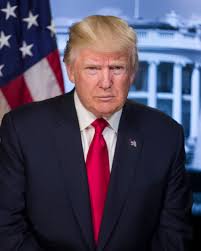
Donald Trump
And for all his notorious bragging about himself, Trump didn’t share this achievement with his audiences.
During the 2012 Presidential race, Republican candidates seemed to value ignorance as a prime requirement for entering the White House.
Former Godfather’s Pizza CEO Herman Cain thus excused his ignorance of the reasons for President Barack Obama’s intervention in Libya: “We need a leader, not a reader.”
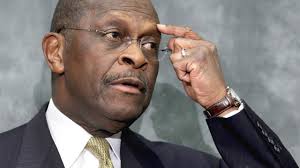
Herman Cain
Texas Governor Rick Perry showed similar pride in not knowing there are nine judges on the United States Supreme Court:
“Well, obviously, I know there are nine Supreme Court judges. I don’t know how eight came out my mouth. But the, uh, the fact is, I can tell you—I don’t have memorized all of those Supreme Court judges. And, uh, ah–
“Here’s what I do know. That when I put an individual on the Supreme Court, just like I done in Texas, ah, we got nine Supreme Court justices in Texas, ah, they will be strict constructionists….”
And former Alaska Governor Sarah Palin rewrote history via “The Midnight Ride of Paul Revere”:
“He warned the British that they weren’t going to be taking away our arms by ringing those bells and, um, making sure as he’s riding his horse through town to send those warning shots and bells that, uh, we were going to be secure and we were going to be free.”
Actually, Revere was warning his fellow Americans about an impending British attack—as his celebrated catchphrase “The British are coming!” made clear.
Republicans have attacked President Obama for his Harvard education and articulate use of language. Among their taunts: “Hitler also gave good speeches.”
And they resent his having earned most of his income as a writer of two books: Dreams From My Father and The Audacity of Hope.
As if being a writer is somehow subversive.
In that sense, Obama is a “throwback” to John F. Kennedy, who was similarly gifted with language as a writer and orator.
Kennedy was perhaps the last President to convince most Americans that they could overcome their problems through reason and open-mindedness.
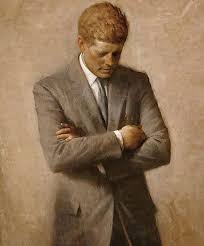
White House painting of JFK
At American University on June 10, 1963, Kennedy called upon his fellow Americans to re-examine the events and attitudes that had led to the Cold War. And he declared that the search for peace was not futile:
“Some say that it is useless to speak of peace or world law or world disarmament….But that is a dangerous, defeatist belief.
“It leads to the conclusion that war is inevitable—that mankind is doomed—that we are gripped by forces we cannot control.
“We need not accept that view. Our problems are man-made; therefore, they can be solved by man. And man can be as big as he wants. No problem of human destiny is beyond human beings.
“Man’s reason and spirit have often solved the seemingly unsolvable, and we believe they can do it again.”
Today, politicians from both parties cannot agree on solutions to even the most vital national problems.
On November 21, 2011, the 12 members of the “Super-Committee” of Congress, tasked with finding $1.2 trillion in cuts in government spending, threw up their hands in defeat.
At the height of the Cuban Missile Crisis, Kennedy spoke with aides about a book he had just finished: Barbara Tuchman’s The Guns of August, on the events leading to World War 1.
For him, the book’s most important revelation was how European leaders had blindly rushed into war, without thought to the possible consequences.
Kennedy said that he did not intend to make the same mistake. Having read his history, he was determined to learn from it.
And he did, for the world escaped all-out nuclear war.
When knowledge and literacy are attacked as “highfalutin’” arrogance, and ignorance and incoherence are embraced as sincerity, national decline and collapse lie just around the corner.
2012 PRESIDENTIAL RACE, ABC NEWS, AFFORDABLE CARE ACT, BARACK OBAMA, CBS NEWS, CNN, EMPLOYERS RESPONSIBILITY ACT, FACEBOOK, FUNDRAISING, GODFATHER'S PIZZA, HERMAN CAIN, LABOR DAY, MITT ROMNEY, NBC NEWS, OBAMACARE, PAPA JOHN'S PIZZA, THE CHICAGO SUN-TIMES, THE CHICAGO TRIBUNE, THE LOS ANGELES TIMES, THE NEW YORK TIMES, THE WASHINGTON POST, TWITTER, USA TODAY
In Bureaucracy, Business, History, Law, Law Enforcement, Politics, Social commentary on September 5, 2016 at 12:00 am
John Schnatter, the CEO of Papa John’s Pizza, doesn’t like the Affordable Care Act (ACA), better known as Obamacare.
And Schnatter bluntly warned his employees: When the Act took effect, Papa John’s Pizza would change in two ways.
First, it would be forced to do something it hadn’t done since its founding in 1984: Offer healthcare coverage to its 16,5000 employees or pay a penalty to the government.
Second, it would raise the prices of its pizzas.
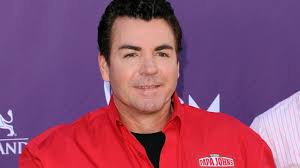
John Schnatter
How high would they go up?
By as much as eleven to fourteen cents price increase per pizza, or fifteen to twenty cents per order!
And Schnatter made it clear: He wasn’t going to take this lying down. He was determined to pass along those costs to his customers.
“If Obamacare is in fact not repealed,” Schnatter told Politico, “we will find tactics to shallow out any Obamacare costs and core strategies to pass that cost onto consumers in order to protect our shareholders’ best interests.”
After all, why should a multi-million-dollar company show any concern for those who make its profits a reality?
Consider:
- Papa John’s is the third-largest pizza takeout and delivery chain in the United States.
- Its full year 2014 revenues were $1.60 billion, an increase of 11.1% from 2013 revenues of $1.44 billion.
- Its full year 2014 net income was $73.3 million, compared to 2013 net income of $69.5 million.
Click here: Papa John’s Announces Fourth Quarter and Full Year 2014 Results (NASDAQ:PZZA)
Nor should anyone expect Schnatter to take a pay cut, just so his employees can obtain medical care when they need it.
Schnatter’s total calculated compensation for 2014 came to $3,456,146.
Click here: John H. Schnatter: Executive Profile & Biography – Businessweek
“We’re not supportive of Obamacare, like most businesses in our industry,” Schnatter–a supporter of Republican Presidential candidate Mitt Romney–admitted in a 2012 interview with Politico.
To demonstrate his opposition to providing medical insurance for all Americans, Schnatter hosted a fundraising event for Mitt Romney at his own Louisville, Kentucky mansion in May, 2012.
The luxurious setting for the fundraiser gave Romney a rush of pure, plutocratic ecstasy.
“What a home this is,” gushed Romney. “What grounds these are, the pool, the golf course.
“You know, if a Democrat were here he’d look around and say no one should live like this. Republicans come here and say everyone should live like this.”

John Schnatter’s estate
Of course, Romney conveniently ignored a brutally ugly fact:
For the vast majority of Papa John’s minimum-wage-earning employees–many of them working only part-time–the odds of their owning a comparable estate are non-existant.
In a typical demonstration of corporate thinking, Judy Nichols, a Papa John’s franchise owner in Beaumont, Texas, said:
“I have two options, I can stop offering coverage and pay the $2,000 fine, or I could keep my number of staff under 50 so the mandate doesn’t apply,” she told Legal Newsline.
In short: Defy the law, and employee healthcare needs be damned.
In fact, that’s exactly what Schnatter announced he would do: Reduce his workers’ hours–since Obamacare mandates that only employees working more than 30 hours per week are covered under their employers’ health insurance plan.
Nichols claimed that the the law might cost her $20,000 to $30,000 in taxes: “Obamacare is making me think about cutting jobs instead,” she said.
Translation: If you force me to behave responsibly, I’ll just have to take it it out on thousands of willing-to-work Americans.
So how can America cope with behavior that destroys not only lives but the economy as well?
By passing–and vigorously enforcing–a nationwide Employers Responsibility Act.
Among its provisions:
Employers would be required to provide full medical and pension benefits for all employees, regardless of their full-time or part-time status.
Increasingly, employers are replacing full-time workers with part-time ones–solely to avoid paying medical and pension benefits.
Requiring employers to act humanely and responsibly toward all their employees would encourage them to provide full-time positions–and hasten the death of this greed-based practice.
The seeking of “economic incentives” by companies in return for moving to or remaining in cities/states would be strictly forbidden.
Such “economic incentives” usually:
- allow employers to ignore existing laws protecting employees from unsafe working conditions;
- allow employers to ignore existing laws protecting the environment;
- allow employers to pay their employees the lowest acceptable wages, in return for the “privilege” of working at these companies; and/or
- allow employers to pay little or no business taxes, at the expense of communities who are required to make up for lost tax revenues.
Employers who continue to make such overtures would be prosecuted for attempted bribery or extortion:
- Bribery, if they offered to move to a city/state in return for “economic incentives,” or
- Extortion, if they threatened to move their companies from a city/state if they did not receive such “economic incentives.”
This would
- protect employees against artificially-depressed wages and unsafe working conditions;
- protect the environment in which these employees live; and
- protect cities/states from being pitted against one another at the expense of their economic prosperity.
It’s past time for America to protect employees who work for a living from CEOs who simply take credit for the work those employees do.
ABC NEWS, ADOLF HITLER, ALTERNET, ANWAR AL-AWLAKI, AP, BARACK OBAMA, BERNIE SANDERS, BILL CLINTON, BUZZFEED, CBS NEWS, CNN, CROOKS AND LIARS, D-DAY, DAILY KOZ, FACEBOOK, GEORGE H.W. BUSH, GEORGE S. PATTON, GEORGE W. BUSH, GREAT BRITAIN, HEINZ GUDERIAN, HERMAN CAIN, HILLARY CLINTON, ISLAM, MOTHER JONES, MOVEON, NAZI GERMANY, NBC NEWS, NEWSWEEK, NICCOLO MACHIAVELLI, NPR, POLITICO, PREDATOR DRONES, RAND PAUL, RAW STORY, RENEGADE: THE MAKING OF A PRESIDENT, REPUBLICANS, REUTERS, RICHARD NIXON, RICHARD WOLFFE, Ronald Reagan, SALON, SEATTLE TIMES, SENATOR RAND PAUL, SLATE, SOVIET UNION, STALINGRAD, TERRORISM, THE ATLANTIC, THE CHICAGO SUN-TIMES, THE CHICAGO TRIBUNE, THE DAILY BEAST, THE GUARDIAN, THE HILL, THE HUFFINGTON POST, THE LOS ANGELES TIMES, THE NATION, THE NEW YORK TIMES, THE PRINCE, THE WASHINGTON POST, TIME, TWITTER, U.S. NEWS & WORLD REPORT, UPI, USA TODAY, WAFFEN-SS, WORLD WAR ii
In Bureaucracy, History, Law, Military, Politics, Social commentary on April 28, 2016 at 12:01 am
Most Americans believe that Nazi Germany was defeated because “we were the Good Guys and they were the Bad Guys.”
Not so.
The United States–and its allies, Great Britain and the Soviet Union–won the war for reasons that had nothing to do with the righteousness of their cause. These included:
- Nazi Germany–i.e, its Fuehrer, Adolf Hitler–made a series of disastrous decisions. Chief among these: Attacking its ally, the Soviet Union, and declaring war on the United States;
- The greater material resources of the Soviet Union and the United States; and
- The Allies waged war as brutally as the Germans.
On this last point:
- From D-Day to the fall of Berlin, captured Waffen-SS soldiers were often shot out of hand.
- When American troops came under fire in the German city of Aachen, Lt. Col. Derrill Daniel brought in a self-propelled 155mm artillery piece and opened up on a theater housing German soldiers. After the city surrendered, a German colonel labeled the use of the 155 “barbarous” and demanded that it be outlawed.
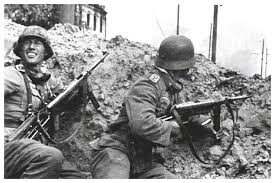
German soldiers at Stalingrad
- During the battle of Stalingrad in 1942, Wilhelm Hoffman, a young German soldier and diarist, was appalled that the Russians refused to surrender. He wrote: “You don’t see them at all, they have established themselves in houses and cellars and are firing on all sides, including from our rear–barbarians, they used gangster methods….”
In short: The Allies won because they dared to meet the brutality of a Heinz Guderian with that of a George S. Patton.
This is a lesson that has been totally lost on the liberals of the Democratic Party.
Which explains why they lost most of the Presidential elections of the 20th century.
It also explains why President Barack Obama has found most of his legislative agenda stymied by Right-wing Republicans.
Consider this example: In 2014, Senator Rand Paul (R-Ky.) warned then-Senate Majority Leader Harry Reid (D-Nev.) that he would place a hold on one of President Obama’s appellate court nominees.
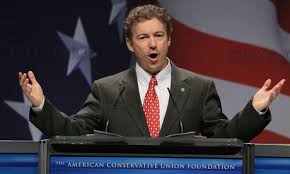
Rand Paul
David Barron had been nominated to the First Circuit Court of Appeals. And Paul objected to this because Barron authored memos justifying the killing of an American citizen by a drone in Yemen.
The September 30, 2011 drone strike killed Anwar al-Awlaki, a radical Muslim cleric notorious on the Internet for encouraging Muslims to attack the United States.
So President Obama authorized a Predator drone stroke against him, thus removing that danger. Paul demanded that the Justice Department release the memos Barron crafted justifying the drone policy.
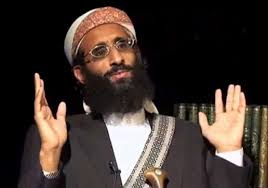
Anwar al-Awlaki
Imagine how Republicans would depict Paul–or a Democratic Senator–if he behaved in a similar manner with a Republican President: “Rand Paul: A traitor who supports terrorists. he sides with America’s sworn enemies against its own lawfully elected President.”
On May 22, 2014, the Senate voted 53–45 to confirm Barron to the First Circuit Court of Appeals.
To Republicans, “lawfully elected” applies only to Republican Presidents. A Democrat who runs against a Republican is automatically considered a traitor.
And a Democrat who defeats a Republican is automatically considered a usurper, and thus deserves to be slandered and obstructed, if not impeached.
Unable to defeat Bill Clinton in 1992 and 1996, Republicans tried in 1998 to impeach him for getting oral sex in the White House.
Similarly, 2012 Presidential candidate Herman Cain, asked in a conference call with bloggers why Republicans couldn’t just impeach President Obama, replied:
“That’s a great question and it is a great–it would be a great thing to do but because the Senate is controlled by Democrats we would never be able to get the Senate first to take up that action.”
In Renegade: The Making of a President, Richard Wolffe chronicled Obama’s successful 2008 bid for the White House. Among his revelations:
Obama, a believer in rationality and decency, felt more comfortable in responding to attacks on his character than in making them on the character of his enemies.
A graduate of Columbia University and Harvard Law School, Obama is easily one of the most academically gifted Presidents in United States history.
But for all this, he failed–from the onset of his Presidency–to grasp and apply this fundamental lesson taught by Niccolo Machiavelli, the father of modern political science.
In The Prince, Machiavelli warns:
From this arises the question whether it is better to be loved than feared, or feared more than loved.
The reply is, that one ought to be both feared and loved, but as it is difficult for the two to go together, it is much safer to be feared than loved….
And men have less scruple in offending one who makes himself loved than one who makes himself feared; for love is held by a chain of obligations which, men being selfish, is broken whenever it serves their purpose; but fear is maintained by a dread of punishment which never fails.
On Facebook and Twitter, liberals are already celebrating the “certain” Presidency of Vermont U.S. Senator Bernie Sanders or former First Lady Hillary Clinton in 2016.
They forget that, in 1968, 1980, 1988 and 2000, liberals couldn’t believe America would elect, respectively, Richard Nixon, Ronald Reagan, George H.W. Bush and George W. Bush.
For Democrats to win elective victories and enact their agenda, they must find their own George Patton to take on the Waffen-SS generals among Republican ranks.
2016 PRESIDENTIAL RACE, ABC NEWS, APOLLO MOON LANDING, BARACK OBAMA, BARBARA TUCHMAN, CBS NEWS, CNN, COLD WAR, DONALD TRUMP, DREAMS FROM MY FATHER, EDUCATION, HERMAN CAIN, IGNORANCE, JOHN F. KENNEDY, LITERACY, NBC NEWS, NEVADA PRIMARY, NUCLEAR TEST BAN TREATY, REPUBLICANS, RICK PERRY, Sarah Palin, SOVIET UNION, THE AUDACITY OF HOPE, THE CHICAGO SUN-TIMES, THE CHICAGO TRIBUNE, THE GUNS OF AUGUST, THE LOS ANGELES TIMES, THE NEW YORK TIMES, THE WASHINGTON POST, VIETNAM WAR
In Bureaucracy, History, Politics, Social commentary on February 25, 2016 at 9:55 am
After winning the Republican Nevada primary with over 44% of the votes on February 23, Republican Presidential candidate Donald Trump gave the expected victory speech.
But it came with an unexpected moment:
“So we won the evangelicals. We won with young. We won with old. We won with highly educated. We won with poorly educated. I love the poorly educated. We’re the smartest people, we’re the most loyal people.”
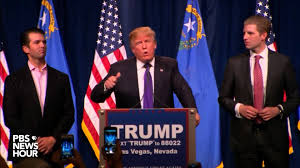
Donald Trump
“I love the poorly educated.”
As well he might: Polls have consistently shown that Trump relies on less-educated adults for his support.
Among Republicans, 71 percent of non-college graduates view Trump favorably, while 46 percent of college graduates support him.
In fact, appealing to the ignorant and uneducated has become a commonplace for politicians on the Right.
President John F. Kennedy speed-read several newspapers every morning. He nourished personal relationships with the press-–and not for altruistic reasons.
These journalistic relationships gave Kennedy additional sources of information and perspective on national and international issues.
But in 2012, Republican Presidential candidates celebrated their ignorance of both.
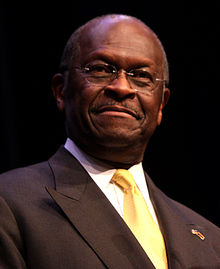
Herman Cain
Former Godfather’s Pizza CEO Herman Cain famously said, “We need a leader, not a reader.” In doing so, he stole this line from the fictionalized “President Schwarzenegger” in The Simpsons Movie.
Thus he excused his ignorance of the reasons for President Barack Obama’s intervention in Libya.
Then-Texas Governor Rick Perry showed similar pride in not knowing there are nine judges on the United States Supreme Court:
“Well, obviously, I know there are nine Supreme Court judges. I don’t know how eight came out my mouth. But the, uh, the fact is, I can tell you–I don’t have memorized all of those Supreme Court judges. And, uh, ah–
“Here’s what I do know. That when I put an individual on the Supreme Court, just like I done in Texas, ah, we got nine Supreme Court justices in Texas, ah, they will be strict constructionists….”
In short, it’s the media’s fault if they ask you a question and your answer reveals your own ignorance, stupidity or criminality.
Then there was Sarah Palin’s rewriting of history via “The Midnight Ride of Paul Revere”:
“He warned the British that they weren’t going to be taking away our arms by ringing those bells and, um, making sure as he’s riding his horse through town to send those warning shots and bells that, uh, we were going to be secure and we were going to be free.”
In fact, Revere wasn’t warning the British about anything. He was warning his fellow Americans about an impending British attack–as his celebrated catchphrase “The British are coming!” made clear.
Republicans have attacked President Obama for his Harvard education and articulate use of language. Among their taunts: “Hitler also gave good speeches.”
And they resent his having earned most of his income as a writer of two books: Dreams From My Father and The Audacity of Hope. As if being a writer is somehow subversive.
When President Kennedy was assassinated on November 22, 1963, it was said that he left three great legacies to his country:
- The Nuclear Test Ban Treaty;
- The Apollo moon landing; and
- The Vietnam War.
But there was a fourth legacy–and perhaps the most important of all: The belief that mankind could overcome its greatest challenges through rationality and perseverance.

White House painting of JFK
At American University on June 10, 1963, Kennedy called upon his fellow Americans to re-examine the events and attitudes that had led to the Cold War. And he declared that the search for peace was by no means absurd:
“Our problems are man-made; therefore, they can be solved by man. And man can be as big as he wants. No problem of human destiny is beyond human beings.
“Man’s reason and spirit have often solved the seemingly unsolvable, and we believe they can do it again.”
Today, politicians from both parties cannot agree on solutions to even the most vital national problems.
On November 21, 2011, the 12 members of the “Super-Committee” of Congress, tasked with finding $1.2 trillion in cuts in government spending, threw up their hands in defeat.
During the height of the Cuban Missile Crisis, Kennedy spoke with aides about a book he had just finished: Barbara Tuchman’s The Guns of August, on the events leading to World War 1.
He said that the book’s most important revelation was how European leaders had blindly rushed into war, without thought to the possible consequences.
Kennedy told his aides he did not intend to make the same mistake-–that, having read his history, he was determined to learn from it.
When knowledge and literacy are attacked as “highfalutin’” arrogance, and ignorance and incoherence are embraced as sincerity, national decline and collapse lie just around the corner.
2012 PRESIDENTIAL RACE, ABC NEWS, AFFORDABLE CARE ACT, BARACK OBAMA, CBS NEWS, CNN, EMPLOYERS RESPONSIBILITY ACT, FACEBOOK, FUNDRAISING, GODFATHER'S PIZZA, HERMAN CAIN, LABOR DAY, MITT ROMNEY, NBC NEWS, OBAMACARE, PAPA JOHN'S PIZZA, THE CHICAGO SUN-TIMES, THE CHICAGO TRIBUNE, THE LOS ANGELES TIMES, THE NEW YORK TIMES, THE WASHINGTON POST, TWITTER, USA TODAY
In Bureaucracy, Business, History, Law, Politics, Social commentary on September 7, 2015 at 12:57 am
John Schnatter, the CEO of Papa John’s Pizza, doesn’t like the Affordable Care Act (ACA), better known as Obamacare.
And Schnatter bluntly warned his employees: When the Act took effect, Papa John’s Pizza would change in two ways.
First, it would be forced to do something it hadn’t done since its founding in 1984: Offer healthcare coverage to its 16,5000 employees or pay a penalty to the government.
Second, it would raise the prices of its pizzas.
John Schnatter
How high would they go up?
By as much as eleven to fourteen cents price increase per pizza, or fifteen to twenty cents per order!
And Schnatter made it clear: He wasn’t going to take this lying down. He was determined to pass along those costs to his customers.
“If Obamacare is in fact not repealed,” Schnatter told Politico, “we will find tactics to shallow out any Obamacare costs and core strategies to pass that cost onto consumers in order to protect our shareholders’ best interests.”
After all, why should a multi-million-dollar company show any concern for those who make its profits a reality?
Consider:
- Papa John’s is the third-largest pizza takeout and delivery chain in the United States.
- Its full year 2014 revenues were $1.60 billion, an increase of 11.1% from 2013 revenues of $1.44 billion.
- Its full year 2014 net income was $73.3 million, compared to 2013 net income of $69.5 million.
Click here: Papa John’s Announces Fourth Quarter and Full Year 2014 Results (NASDAQ:PZZA)
Nor should anyone expect Schnatter to take a pay cut, just so his employees can obtain medical care when they need it.
Schnatter’s total calculated compensation for 2014 came to $3,456,146.
Click here: John H. Schnatter: Executive Profile & Biography – Businessweek
“We’re not supportive of Obamacare, like most businesses in our industry,” Schnatter–a supporter of Republican Presidential candidate Mitt Romney–admitted in a 2012 interview with Politico.
To demonstrate his opposition to providing medical insurance for all Americans, Schnatter hosted a fundraising event for Mitt Romney at his own Louisville, Kentucky mansion in May, 2012.
The luxurious setting for the fundraiser gave Romney a rush of pure, plutocratic ecstasy.
“What a home this is,” gushed Romney. “What grounds these are, the pool, the golf course.
“You know, if a Democrat were here he’d look around and say no one should live like this. Republicans come here and say everyone should live like this.”
John Schnatter’s estate
Of course, Romney conveniently ignored a brutally ugly fact:
For the vast majority of Papa John’s minimum-wage-earning employees–many of them working only part-time–the odds of their owning a comparable estate are non-existent.
In a typical demonstration of corporate thinking, Judy Nichols, a Papa John’s franchise owner in Beaumont, Texas, said:
“I have two options, I can stop offering coverage and pay the $2,000 fine, or I could keep my number of staff under 50 so the mandate doesn’t apply,” she told Legal Newsline.
In short: Defy the law, and employee helathcare needs be damned.
In fact, that’s exactly what Schnatter announced he would do: Reduce his workers’ hours–since Obamacare mandates that only employees working more than 30 hours per week are covered under their employers’ health insurance plan.
Nichols claimed that the the law might cost her $20,000 to $30,000 in taxes: “Obamacare is making me think about cutting jobs instead,” she said.
Translation: If you force me to behave responsibly, I’ll just have to take it out on millions of willing-to-work Americans.
So how can America cope with behavior that destroys not only lives but the economy as well?
By passing–and vigorously enforcing–a nationwide Employers Responsibility Act.
Among its provisions:
Employers would be required to provide full medical and pension benefits for all employees, regardless of their full-time or part-time status.
Increasingly, employers are replacing full-time workers with part-time ones—solely to avoid paying medical and pension benefits.
Requiring employers to act humanely and responsibly toward all their employees would encourage them to provide full-time positions—and hasten the death of this greed-based practice.
The seeking of “economic incentives” by companies in return for moving to or remaining in cities/states would be strictly forbidden.
Such “economic incentives” usually:
- allow employers to ignore existing laws protecting employees from unsafe working conditions;
- allow employers to ignore existing laws protecting the environment;
- allow employers to pay their employees the lowest acceptable wages, in return for the “privilege” of working at these companies; and/or
- allow employers to pay little or no business taxes, at the expense of communities who are required to make up for lost tax revenues.
Employers who continue to make such overtures would be prosecuted for attempted bribery or extortion:
- Bribery, if they offered to move to a city/state in return for “economic incentives,” or
- Extortion, if they threatened to move their companies from a city/state if they did not receive such “economic incentives.”
This would
- protect employees against artificially-depressed wages and unsafe working conditions;
- protect the environment in which these employees live; and
- protect cities/states from being pitted against one another at the expense of their economic prosperity.
It’s past time for America to protect employees who work for a living from CEOs who simply take credit for the work those employees do.
ABC NEWS, CBS NEWS, CNN, DRUG-TESTING, EMPLOYERS RESPONSIBILITY ACT, FACEBOOK, FISHER INVESTMENTS, FORBES MAGAZINE, HERMAN CAIN, KENNETH FISHER, MEDICAL INSURANCE, MITT ROMNEY, NBC NEWS, REPUBLICANS, THE LOS ANGELES TIMES, THE NEW YORK TIMES, THE WASHINGTON POST, TWITTER, UNEMPLOYMENT, WAL-MART, WEALTH GAP
In Bureaucracy, Business, History, Law, Politics, Social commentary on September 2, 2015 at 12:04 am
The last seven provisions of a nationwide Employers Responsibility Act would read as follows:
(9) Employers refusing to hire would be required to pay an additional “crime tax.”
Sociologists and criminologists agree that “the best cure for crime is a job.” Thus, employers who refuse to hire contribute to a growing crime rate in this Nation. Such non-hiring employers would be required to pay an additional tax, which would be earmarked for agencies of the criminal justice system at State and Federal levels.
(10) The seeking of “economic incentives” by companies in return for moving to or remaining in cities/states would be strictly forbidden.
Such “economic incentives” usually:
- allow employers to ignore existing laws protecting employees from unsafe working conditions;
- allow employers to ignore existing laws protecting the environment;
- allow employers to pay their employees the lowest acceptable wages, in return for the “privilege” of working at these companies; and/or
- allow employers to pay little or no business taxes, at the expense of communities who are required to make up for lost tax revenues.
(11) Employers who continue to make such overtures would be prosecuted for attempted bribery or extortion:
- Bribery, if they offered to move to a city/state in return for “economic incentives,” or
- Extortion, if they threatened to move their companies from a city/state if they did not receive such “economic incentives.”
This would protect employees against artificially-depressed wages and unsafe working conditions; protect the environment in which these employees live; and protect cities/states from being pitted against one another at the expense of their economic prosperity.
(12) The U.S. Departments of Justice and Labor would regularly monitor the extent of employer compliance with the provisions of this Act.
Among these measures: Sending undercover agents, posing as highly-qualified job-seekers, to apply at companies—and then vigorously prosecuting those employers who blatantly refused to hire despite their proven economic ability to do so.
This would be comparable to the long-time and legally-validated practice of using undercover agents to determine compliance with fair-housing laws.
(13) The Justice Department and/or the Labor Department would be required to maintain a publicly-accessible database on those companies that had been cited, sued and/or convicted for such offenses as
- discrimination,
- harassment,
- health and/or safety violations or
- violating immigration laws.
Employers would be legally required to regularly provide such information to these agencies, so that it would remain accurate and up-to-date.
Such information would arm job applicants with vital information about the employers they were approaching. They could thus decide in advance if an employer is deserving of their skills and dedication.
As matters now stand, employers can legally demand to learn even the most private details of an applicant’s life without having to disclose even the most basic information about themselves and their history of treating employees.
(14) CEOs whose companies employ illegal aliens would be held directly accountable for the actions of their subordinates. Upon conviction, the CEO would be sentenced to a mandatory prison term of at least ten years.
This would prove a more effective remedy for controlling illegal immigration than stationing tens of thousands of soldiers on the U.S./Mexican border. With CEOs forced to account for their subordinates’ actions, they would take drastic steps to ensure their companies complied with Federal immigration laws.
Without employers eager to hire illegal aliens at a fraction of the money paid to American workers, the invasions of illegal job-seekers would quickly come to an end.
(15) A portion of employers’ existing Federal taxes would be set aside to create a national clearinghouse for placing unemployed but qualified job-seekers.
* * * * *
For thousands of years, otherwise highly intelligent men and women believed that kings ruled by divine right. That kings held absolute power, levied extortionate taxes and sent countless millions of men off to war–all because God wanted it that way.
That lunacy was dealt a deadly blow in 1776 when American Revolutionaries threw off the despotic rule of King George III of England.
But today, millions of Americans remain imprisoned by an equally outrageous and dangerous theory: The Theory of the Divine Right of Employers.
Summing up this employer-as-God attitude, Calvin Coolidge still speaks for the overwhelming majority of employers and their paid shills in government: “The man who builds a factory builds a temple, and the man who works there worships there.”
America can no longer afford such a dangerous fallacy as the Theory of the Divine Right of Employers.
Americans did not win their freedom from Great Britain–-and its enslaving doctrine of “the divine right of kings”-–by begging for their rights.
And Americans will not win their freedom from their corporate masters–-and the equally enslaving doctrine of “the divine right of employers”––by begging for the right to work and support themselves and their families.
Corporations can–and do–spend millions of dollars on TV ads, selling lies–lies such as the “skills gap,” and how if the wealthy are forced to pay their fair share of taxes, jobs will inevitably disappear.
But Americans can choose to reject those lies–and demand that employers behave like patriots instead of predators.


 Bureaucracybuster's Blog
2012 PRESIDENTIAL RACE, ALTERNET, AP, BARACK OBAMA, BAY OF PIGS, BBC, BERLIN WALL, BILL CLINTON, BRUCE GREENWOOD, BUZZFEED, CARLOS MARCELLO, CBS NEWS, CIA, CIVIL RIGHTS, CLIFF ROBERTSON, CNN, CUBAN MISSILE CRISIS, DAILY KOS, DAVID HALBERSTAM, DONALD J. TRUMP, FACEBOOK, FBI, FIDEL CASTRO, FRANK SINATRA, HERMAN CAIN, ICH BEN EIN BERLINNER SPEECH, INTERNET MOVIE DATABASE, J. EDGAR HOOVER, JAMES MARSDEN, JOHN F. KENNEDY, JOSEPH MCCARTHY, JOSEPH P. KENNEDY, LYNDON B. JOHNSON, MAFIA, MALCOM X, MARTIN LUTHER KING, MARTIN SHEEN, MOTHER JONES, MOVEON, MOVIES, NBC NEWS, NEWSWEEK, NEWT GINGRICH, NIKITA KHRUSHCHEV, NPR, NUCLEAR TEST BAN TREATY, POLITICO, PT-109, RAW STORY, REUTERS, RICK PERRY, ROBERT F. KENNEDY, ROBERT S. MCNAMARA, SALON, SAM GIANCANA, SANTOS TRAFFICANTE, Sarah Palin, SATURDAY NIGHT LIVE, SEATTLE TIMES, SLATE, SOVIET UNION, THE ATLANTIC, THE BEST AND THE BRIGHTEST, THE BUTLER, THE CHICAGO SUN-TIMES, THE CHICAGO TRIBUNE, THE DAILY BEAST, THE GUARDIAN, THE HILL, THE HUFFINGTON POST, THE LOS ANGELES TIMES, THE MISSILES OF OCTOBER, THE NEW YORK TIMES, THE RAT PACK, THE WALL STREET JOURNAL, THE WASHINGTON POST, THIRTEEN DAYS, TIME, TWILIGHT ZONE, TWITTER, U.S. NEWS & WORLD REPORT, UPI, USA TODAY, VIETNAM WAR, WILLIAM DEVANE, WILLILAM PETERSON
JFK: ONE HUNDRED YEARS LATER: PART FIVE (OF TEN)
In Bureaucracy, Business, History, Law, Law Enforcement, Military, Politics, Social commentary on May 10, 2017 at 12:01 amThe Kennedy administration’s unprecedented attack on organized crime has led some law enforcement experts to believe the Mob engineered President Kennedy’s assassination.
One of these is G. Robert Blakey, father of the Racketeer Influenced Corrupt Organizations (RICO) Act. As the former Chief Counsel and Staff Director to the U.S. House Select Committee on Assassinations (1977–1979) he oversaw the second official inquiry into the Kennedy assassination.
As a result, he believes the Mob had ample means, motive and opportunity to arrange for a “nut” to kill the President.
In his 1980 book, The Plot to Kill the President, Blakey asserted:
The 1983 TV mini-series, “Blood Feud,” clearly implied that the Mob was responsible. At its heart lay the 10-year conflict between Robert F. Kennedy and James R. Hoffa, then president of the International Brotherhood of Teamsters Union.
This was also the plot of American Tabloid, a 1995 novel by James Ellroy.
But investigative reporter Seymour Hersh wrote that during the five years he researched The Dark Side of Camelot, his expose of the hidden life of President Kennedy, he didn’t uncover any evidence of such a plot.
After Robert Kennedy left the Justice Department in 1964 to run for the post of U.S. Senator from New York, the Justice Department slacked off its push against the crime syndicates.
But the war was resurrected during the Nixon administration and has remained a top priority ever since.
Perhaps the most controversial legacy of the Kennedy administration remains the President’s dealings with the South Vietnamese regime of Ngo Dinh Diem.,
In 1954, the French—who had controlled Vietnam for 80 years—were forced to withdraw their military forces from the country. Their army had suffered a humiliating defeat at Dienbenphu and the French citizenry—still recovering from defeat and Nazi occupation during World War II—demanded an end to the disastrous conflict.
Into this political vacuum stepped the victorious North Vietnamese communist Ho Chi Minh.
Kennedy—then U.S. Senator from Massachusetts—had visited Vietnam while the French were still trying to hold onto one of their last colonial possessions. And he had urged them to withdraw and allow the Vietnamese to govern themselves.
But President Dwight D. Eisenhower was aware of Ho’s overwhelming popularity throughout Vietnam due to his battles against Japanese and French colonialists. In any nationwide election, Ho was certain to win the presidency.
But Eisenhower felt he couldn’t allow an avowed Communist to rule Vietnam. With the North under firm Communist control, America focused its attention on the South.
Searching for an acceptable alternative, Eisenhower found him in Ngo Dinh Diem—a mandarin in a nation swept by revolution, a Catholic in a nation with an 80% Buddhist population.
In 1954, America began backing Diem. Although his first years were marked by social progress, he later became increasingly oppressive toward the Buddhist majority. Corruption openly flourished among government and army officials.
Ngo Dinh Diem
In 1960, North Vietnam launched an aggressive campaign of infiltration and assassination across South Vietnam.
In 1961, President Kennedy sent 400 Green Berets and 100 other military advisers to South Vietnam to offer support.
Diem requested American financing of a 100,000-man increase in his army. Kennedy agreed to an increase of 30,000. Meanwhile, the Joint Chiefs of Staff estimated that 40,000 U.S. troops would be needed to “clean up the Vietcong threat.”
Kennedy underestimated the reaction of North Vietnam, whose forces were fighting what they believed was a crusade. As American troop strength increased, the North escalated its own commitment.
From 1961 to 1963, the number of U.S. troops in Vietnam steadily rose from 685 to 16,732. American minesweepers patrolled the coasts while their aircraft engaged in surveillance.
For the first time, Americans became casualties of the war–especially those in helicopter combat-support missions.
Meanwhile, Diem—urged by his influential brother, Nhu, who ran the secret police—cracked down on the Buddhists.
Government troops fired on a peaceful demonstration in May, 1963. In protest, Buddhist monks burned themselves to death before TV cameras.
Nhu’s beautiful and powerful wife, Madame Nhu, fed growing world outrage by her ridicule of “monk barbecue shows.”
American efforts to stop Diem’s anti-Buddhist campaign failed. On August 21, 1963, Diem’s police shot their way into Buddhist pagodas, killing scores and arresting hundreds.
This finally convinced the Kennedy administration that Diem would never gain the popular support he needed to win the war against the Communist North.
As a result, the administration offered support to South Vietnamese military officers planning a coup against Diem.
On November 1, 1963, South Vietnamese army units stormed the presidential palace. Diem and Nhu fled, but were caught and shot. Madame Nhu, visiting the U.S. at the time, escaped death, accusing Kennedy of supporting the coup.
The administration issued a flat denial.
Diem’s assassination was followed 21 days later by Kennedy’s own.
Share this: