Posts Tagged ‘GEORGE W. BUSH’
9/11, ABC NEWS, AL QAEDA, ALTERNET, AMERICAN CAESARS: THE LIVES OF THE PRESIDENTS FROM FRANKLIN D. ROOSEVELT TO GEORGE W. BUSH, AMERICAN EMPIRE, AP, BASHAR AL-ASSAD, BILL CLINTON, BUREAUCRACY, BUZZFEED, CBS NEWS, CHRIS MATHEWS, CNN, CONDOLEEZA RICE, CROOKS AND LIARS, DAILY KOZ, DONALD TRUMP, DWIGHT EISENHOWER, FACEBOOK, FBI, FRANKLIN D. ROOSEVELT, GEORGE H.W. BUSH, GEORGE W. BUSH, GERALD R. FORD, HARRY S. TRUMAN, JIMMY CARTER, JOHN F. KENNEDY, LYNDON B. JOHNSON, MOTHER JONES, MOVEON, MSNBC, NBC NEWS, NEWSWEEK, NIGEL HAMILTON, NPR, OSAMA BIN LADEN, POLITICO, RAW STORY, REPUBLICAN PARTY, REUTERS, RICHARD CLARKE, RICHARD NIXON, ROMAN EMPIRE, SALON, SEATTLE TIMES, SEPTEMBER 11, SLATE, SUETONIUS, SYRIA, TERRORISM, THE ATLANTIC, THE CHICAGO SUN-TIMES, THE CHICAGO TRIBUNE, THE DAILY BEAST, THE GUARDIAN, THE HILL, THE HUFFINGTON POST, THE LOS ANGELES TIMES, THE NATION, THE NEW YORK TIMES, THE TWELVE CAESARS, THE WASHINGTON POST, TIME, TWITTER, U.S. NEWS & WORLD REPORT, UP, UPI, USA TODAY
In Bureaucracy, History, Military, Politics, Social commentary, Uncategorized on September 15, 2017 at 12:05 am
September 11, 2017, marks the 16th anniversary of the worst terrorist attack on United States soil. Inevitably, this is a time to remember all those whose lives were so cruelly snuffed out.
But it should also be a time to remember those who made this atrocity inevitable—by refusing to acknowledge and address the impending threat from Al-Qaeda.
British historian Nigel Hamilton has chronicled their arrogance and indifference in his 2010 biography: American Caesars: Lives of the Presidents from Franklin D. Roosevelt to George W. Bush.
Hamilton noted that Richard Clarke, the national security advisor on terrorism, was certain that Osama bin Laden had arranged the [USS.] Cole bombing in Aden on October 12, 2000.
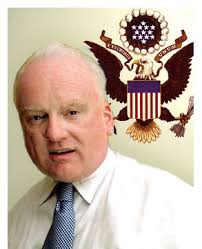
Richard Clarke
For months, Clarke tried to convince others in the Bush Administration that Bin Laden was plotting another attack against the United States—either abroad or at home.
But Clarke could not prevail against the know-it-all arrogance of such higher-ranking Bush officials as Vice President Dick Cheney; Secretary of Defense Donald Rumsfeld; Rumsfeld’s deputy, Paul Wolfowitz; and National Security Advisor Condoleeza Rice.
Rice initially refused to hold a cabinet-level meeting on the subject. Then she “insisted the matter be handled only by a more junior Deputy Principals meeting” in April, 2001, writes Hamilton.
Wolfowitz, the number-two man at the Department of Defense, said: “I don’t understand why we are beginning by talking about this one man, bin Laden.”
Even after Clarke outlined the threat posed by Al-Qaeda, Wolfowitz—whose real target was Saddam Hussein—said: “You give bin Laden too much credit.”
Wolfowitz insisted that bin Laden couldn’t carry out his terrorist acts without the aid of a state sponsor–namely, Iraq.
Wolfowitz, in fact, blamed Iraq for the 1993 bombing of the World Trade Center. Clarke was stunned, since there was absolutely no evidence of Iraqi involvement in this.
“Al-Qaeda plans major acts of terrorism against the United States,” Clarke warned his colleagues. He pointed out that, like Adolf Hitler, bin Laden had actually published his plans for future destruction.
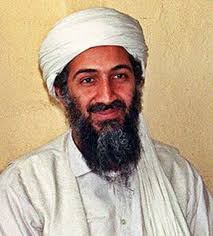
Osama bin Laden
And he added: “Sometimes, as with Hitler in Mein Kampf, you have to believe that these people will actually do what they say they will do.”
Wolfowitz heatedly traded on his Jewish heritage to bring Clarke’s unwelcome arguments to a halt: “I resent any comparison between the Holocaust and this little terrorist in Afghanistan.”
Writing in outraged fury, Hamilton sums up Clarke’s agonizing frustrations:
- Bush’s senior advisors treated their colleagues who had served in the Clinton administration with contempt.
- President Bush, Vice President Dick Cheney, National Security Advisor Condoleeza Rice, Secretary of Defense Donald Rumsfeld and Deputy Defense Secretary Paul Wolfowitz seemed content to ignore the danger signals of an impending al-Qaeda attack.
- This left only Secretary of State Colin Powell, his deputy Richard Armitage, Richard Clarke and a skeptical Treasury Secretary, Paul O’Neill, to wage “a lonely battle to waken a seemingly deranged new administration.”
Clarke alerted Federal Intelligence agencies that “Al-Qaeda is planning a major attack on us.” He asked the FBI and CIA to report to his office all they could learn about suspicious persons or activities at home and abroad.
Finally, at a meeting with Rice on September 4, 2001, Clarke challenged her to “picture yourself at a moment when in the very near future Al-Qaeda has killed hundreds of Americans, and imagine asking yourself what you wish then that you had already done.”
Seven days later, Al-Qaeda struck, and 3,000 Americans died horrifically—and needlessly.
Neither Bush, Cheney, Rice, Rumsfeld nor Wolowitz ever admitted their negligence. Nor would any of them be brought to account.
Disgustingly, these were the same officials who, afterward, posed as the Nation’s saviors—and branded anyone who disagreed with them as a traitor, practices the Right continues to exploit to this day.
Only Richard Clarke—who had vainly argued for stepped-up security precautions and taking the fight to Al-Qaeda—gave that apology.
On March 24, 2004, Clarke testified at the public 9/11 Commission hearings. Addressing relatives of victims in the audience, he said: “Your government failed you, those entrusted with protecting you failed you, and I failed you.”
Yet even worse was to come.
On the evening after the September 11 attacks, Bush took Clarke aside during a meeting in the White House Situation Room:
“I want you, as soon as you can, to go back over everything, everything. See if Saddam [Hussein, the dictator of Iraq] did this. See if he’s linked in any way.”
Clarke was stunned: “But, Mr. President, Al-Qaeda did this.”
“I know, I know,” said Bush. “But see if Saddam was involved. I want to know.”
Hussein had not plotted the attack–and there was no evidence proving that he did. But the attack gave “W” the excuse he wanted to remove the man he blamed for the 1992 defeat of his father, President George H.W. Bush.
Bush believed that his father would have been re-elected if he had “gone all the way” into Baghdad during the 1991 Gulf War.
He would finish the job that his father had started but failed to compete.
On September 12, 2001, Bush attended a meeting of the National Security Council.
“Why shouldn’t we go against Iraq, not just Al-Qaeda?” demanded Donald Rumsfeld, the Secretary of Defense.
Vice President Dick Cheney enthusiastically agreed.
9/11, ABC NEWS, AL QAEDA, ALTERNET, AMERICAN CAESARS: THE LIVES OF THE PRESIDENTS FROM FRANKLIN D. ROOSEVELT TO GEORGE W. BUSH, AMERICAN EMPIRE, AP, BASHAR AL-ASSAD, BILL CLINTON, BUREAUCRACY, BUZZFEED, CBS NEWS, CHRIS MATHEWS, CNN, CONDOLEEZA RICE, CROOKS AND LIARS, DAILY KOZ, DONALD TRUMP, DWIGHT EISENHOWER, FACEBOOK, FBI, FRANKLIN D. ROOSEVELT, GEORGE H.W. BUSH, GEORGE W. BUSH, GERALD R. FORD, HARRY S. TRUMAN, JIMMY CARTER, JOHN F. KENNEDY, LYNDON B. JOHNSON, MOTHER JONES, MOVEON, MSNBC, NBC NEWS, NEWSWEEK, NIGEL HAMILTON, NPR, OSAMA BIN LADEN, POLITICO, RAW STORY, REPUBLICAN PARTY, REUTERS, RICHARD CLARKE, RICHARD NIXON, ROMAN EMPIRE, SALON, SEATTLE TIMES, SEPTEMBER 11, SLATE, SUETONIUS, SYRIA, TERRORISM, THE ATLANTIC, THE CHICAGO SUN-TIMES, THE CHICAGO TRIBUNE, THE DAILY BEAST, THE GUARDIAN, THE HILL, THE HUFFINGTON POST, THE LOS ANGELES TIMES, THE NATION, THE NEW YORK TIMES, THE TWELVE CAESARS, THE WASHINGTON POST, TIME, TWITTER, U.S. NEWS & WORLD REPORT, UP, UPI, USA TODAY
In Bureaucracy, History, Military, Politics, Social commentary on September 14, 2017 at 12:10 am
It’s that time of year again—yet another anniversary celebration of September 11, 2001.
The day when Islamic terrorists slammed two jetliners into the World Trade Center and a third into the Pentagon.
They would have crashed a fourth jetliner into the White House or Capitol Building except for the heroic resistance of passengers aboard United Airlines Flight 93.
In the years immediately following 9/11, politicians of both parties used this anniversary to wave flags and make self-serving patriotic speeches.
This was especially true for officials of the administration of President George W. Bush—which, even as the rubble was being cleared at the Pentagon and World Trade Center, was preparing to use the attack as an excuse to topple Iraqi dictator Saddam Hussein.
Hussein had not plotted 9/11, and there was no evidence that he did. But that didn’t matter to Bush and those planning the invasion and conquest of Iraq.
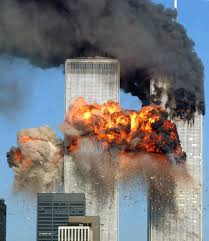
World Trade Center on September 11, 2001
So here it is, 16 years later, and, once again, politicians are using 9/11 as a prop to advance their careers.
President Donald Trump claims that only he can protect America from Al Qaeda, ISIS and any other Islamic terrorist groups. So far, his weapon of choice has been banning Muslims from certain Islamic countries from entering the United States.
Interestingly, Islamic countries where Trump has close business ties—such as Saudi Arabia, the United Arab Emirates, Egypt, and Turkey—are exempt from the ban.
As on past commemorations of 9/11, those who died will be remembered by friends and relatives of those who knew and loved them.
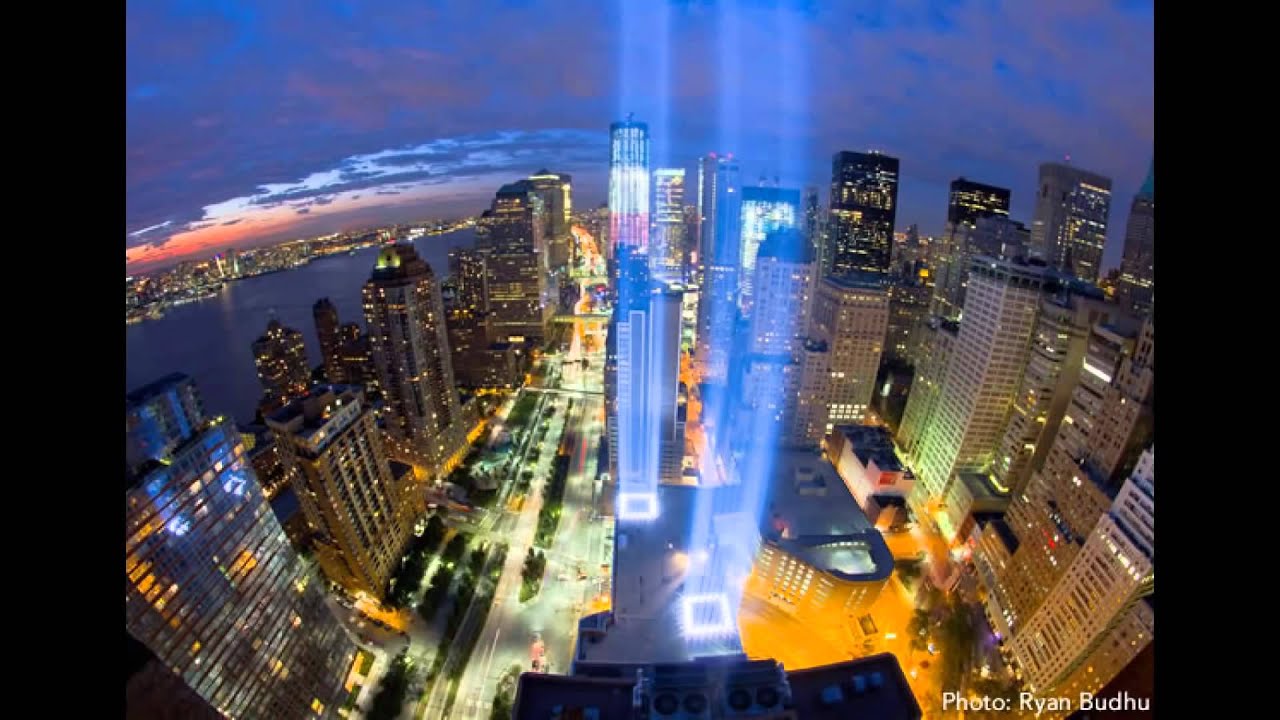
Tribute to 9/11 World Trade Center Victims
It is in fact appropriate to remember the innocents who died on that day—and the heroism of the police and firefighters who died trying to save them.
But it’s equally important to remember those who made 9/11 not simply possible but inevitable.
And that does not mean only the 19 highjackers who turned those planes into fuel-bombs. It means the officials at the highest levels of the administration of President George W. Bush.
Officials who, to this day, have never been held accountable in any way for the resulting death and destruction.
And who have been allowed to blatantly lie that they “kept us safe” from terrorism.
Obviously, such an indictment is not going to be presented by TV commentators today—not even on such liberal networks as CNN and MSNBC. And most definitely not on the right-wing Fox network.
Fortunately, British historian Nigel Hamilton has dared to lay bare the facts of this disgrace. Hamilton is the author of several acclaimed political biographies, including JFK: Reckless Youth and Bill Clinton: Mastering the Presidency.
In 2007, he began research on his latest book: American Caesars: The Lives of the Presidents From Franklin D. Roosevelt to George W. Bush.

The inspiration for this came from a classic work of ancient biography: The Twelve Caesars, by Gaius Suetonius Tranquillus—known as Suetonius.
Suetonius, a Roman citizen and historian, had chronicled the lives of the first twelve Caesars of imperial Rome: Julius Caesar, Augustus, Tiberius, Caligula, Claudius, Nero, Galba, Otho, Vitellius, Vespasian, Titus and Domitian.
Hamilton wanted to examine post-World War II United States history as Suetonius had examined that of ancient Rome: Through the lives of the 12 “emperors” who had held the power of life and death over their fellow citizens—and those of other nations.
For Hamilton, the “greatest of American emperors, the Caesar Augustus of his time,” was Franklin D. Roosevelt, who led his country through the Great Depression and World War II.
His “”great successors” were Harry S. Truman, Dwight D. Eisenhower and John F. Kennedy—who, in turn, contained the Soviet Union abroad and presided over sustained economic prosperity at home.
By contrast, “arguably the worst of all the American Caesars” was “George W. Bush, and his deputy, Dick Cheney, who willfully and recklessly destroyed so much of the moral basis of American leadership in the modern world.”
Among the most lethal of Bush’s offenses: The appointing of officials who refused to take seriously the threat posed by Al-Qaeda.
And this arrogance and indifference continued—right up to September 11, 2001, when the World Trade Center and Pentagon became targets for destruction.
Among the few administration officials who did take Al-Qaeda seriously was Richard Clarke, the chief counter-terrorism adviser on the National Security Council.
Clarke had been thus appointed in 1998 by President Bill Clinton. He continued in the same role under President Bush—but the position was no longer given cabinet-level access.
This put him at a severe disadvantage when dealing with other, higher-ranking Bush officials–such as Vice President Dick Cheney, Secretary of Defense Donald Rumsfeld, Rumsfeld’s deputy, Paul Wolfowitz and National Security Advisor Condoleeza Rice.
These turned out to be the very officials who refused to believe that Al-Qaeda posed a lethal threat to the United States.
“Indeed,” writes Hamilton, “in the entire first eight months of the Bush Presidency, Clarke was not permitted to brief President Bush a single time, despite mounting evidence of plans for a new al-Qaeda outrage.” [Italics added]
Nor did it help that, during his first eight months in office before September 11, Bush was on vacation, according to the Washington Post, 42% of the time.
2016 PRESIDENTIAL RACE, ABC NEWS, ALTERNET, AP, BARACK OBAMA, BASKET OF DEPLORABLES SPEECH, BERNIE SANDERS, BILL CLINTON, BLACKS, BUZZFEED, CBS NEWS, CELINDA LAKE, CLINTON FUNDATION, CNN, COMMUNISM, CONDOLEEZA RICE, CROOKS AND LIARS, DAILY KOZ, DEBBIE WASSERMAN-SCHULTZ, DEMOCRATIC NATIONAL COMMITTEE, DONALD TRUMP, FACEBOOK, GEORGE W. BUSH, HILLARY CLINTON, HISPANICS, HOUSE OF REPRESENTATIVES, JAMES WEBB, MICHELLE OBAMA, MOTHER JONES, MOVEON, NBC NEWS, NEWSWEEK, NPR, POLITICO, POPULISM, RACISM, RAW STORY, REPUBLICAN NATIONAL COMMITTEE, REUTERS, SALON, SEATTLE TIMES, SLATE, SOCIALISM, SUSAN BORDO, THE ATLANTIC, THE CHICAGO SUN-TIMES, THE CHICAGO TRIBUNE, THE DAILY BEAST, THE DESTRUCTION OF HILLARY CLINTON, THE GUARDIAN, THE HILL, THE HUFFINGTON POST, THE LOS ANGELES TIMES, THE NATION, THE NEW YORK TIMES, THE WASHINGTON POST, TIME, TOM BROKAW, TWITTER, U.S. HOUSE OF REPRESENTATIVES, U.S. NEWS & WORLD REPORT, U.S. SENATE, UP, UPI, USA TODAY, WHITES, WHITEWATER, WIKILEAKS, WOMEN, YOUTH
In History, Politics, Social commentary on September 11, 2017 at 12:03 am
In The Destruction of Hillary Clinton, author Susan Bordo indicts a wide range of groups for Clinton’s failure to win the 2016 election.
Yet she refuses to put any blame on Clinton herself for a series of self-inflicted wounds. Four of these have already been mentioned.
Among the otherss:
#5 Democrats and liberals fell prey to hubris. They dismissed Donald Trump as a bad joke: Surely voters would reject a bombastic, thrice-married “reality show” host who had filed for corporate bankruptcy four times.

Many liberals believed Clinton would bury him at the polls: Blacks, women, youth and Hispanics will turn out huge for her. Democrats will retake the Senate, and maybe even retake the House.
They didn’t.
#6 The coalition that twice elected Barack Obama deserted Hillary Clinton.
Clinton did worse-than-expected among all the groups she was counting on to support her: Blacks, women, youth and Hispanics.
- In 2012, Obama got 93% of the black vote; in 2016, Clinton got 88%.
- In 2012, Obama got 55% of the women’s vote; in 2016, Clinton won 54%.
- In 2012, Obama got 60% of the vote of those under 30; in 2016, Clinton got 54%.
- In 2012, Obama got 71% of the Hispanic vote; in 2016, Clinton got 65%.
Clinton proved less popular even among whites than Obama: In 2012, Obama won 39% of their votes; in 2016, Clinton won 37%.
#7 Trump, adopting the role of a populist, appealed to blue-collar voters. Clinton offered a “love-your-CEO” economic plan—and suffered for it.
Trump visited “Rustbelt” states like Michigan and Pennsylvania and vowed to “bring back” jobs that had been lost to China, such as those in coal mining and manufacturing. Clinton didn’t deign to show up, assuming she had those states “locked up.”
Most economists agree that, in a globalized economy, such jobs are not coming back, no matter who becomes President.
Even so, voters backed the man who came to promise them a better future, and shunned the woman who didn’t come to promise them any future at all.
In May, Democratic pollster CeLinda Lake had warned Clinton to revamp her economic platform. Clinton ignored the advice.
“Democrats simply have to come up with a more robust economic frame and message,” Lake said after the election. “We’re never going to win those white, blue-collar voters if we’re not better on the economy. And 27 policy papers and a list of positions is not a frame. We can laugh about it all we want, but Trump had one.”
#8 Hillary Clinton gave only one memorable speech during the campaign.
This was the “basket of deplorables” speech, delivered at a New York fundraiser on September 9. It was the only Clinton speech to be widely quoted by Democrats and Republicans.
She divided Donald Trump’s supporters into two groups. The first group were the “deplorables,” for whom she showed open contempt:
“You know, to just be grossly generalistic, you could put half of Trump’s supporters into what I call the basket of deplorables. Right? The racist, sexist, homophobic, xenophobic, Islamaphobic–you name it. And unfortunately there are people like that. And he has lifted them up.
“He has given voice to their websites that used to only have 11,000 people—now 11 million. He tweets and retweets their offensive hateful mean-spirited rhetoric. Now, some of those folks—they are irredeemable, but thankfully they are not America.”
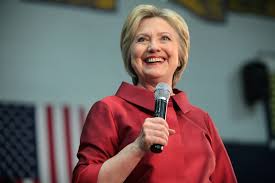
Hillary Clinton (Gage Skidmore photo)
But the second group, she said, consisted of poor, alienated Americans who rightly felt abandoned by their employers and their government:
“But….that other basket of people are people who feel that the government has let them down, the economy has let them down, nobody cares about them, nobody worries about what happens to their lives and their futures, and they’re just desperate for change. It doesn’t really even matter where it comes from.
“They don’t buy everything [Trump] says, but he seems to hold out some hope that their lives will be different. They won’t wake up and see their jobs disappear, lose a kid to heroin, feel like they’re in a dead-end. Those are people we have to understand and empathize with as well.”
#9 After giving this speech, Clinton threw away the good it might well have done her.
First, the day after making the speech, she apologized for it: “Last night I was ‘grossly generalistic,’ and that’s never a good idea. I regret saying ‘half—that was wrong.”
Many of Trump’s followers were racists, sexists and xenophobes—who deserved condemnation, not apologies. By apologizing, she looked weak, indecisive, even cowardly.
Second, having eloquently reached out to many of the men and women who were a prime constituency for Trump, she failed to offer an economic package to quickly and effectively address their vital needs for jobs and medical care.
The reason: She had failed to put one together long ago.
And all she had to offer now was boilerplate rhetoric, such as: “Education is the answer.”
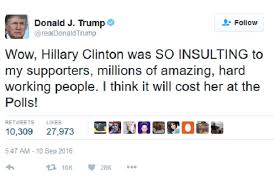
Worst of all, Trump turned her speech against her, tweeting: “Wow, Hillary Clinton was SO INSULTING to my supporters, millions of amazing, hard working people. I think it will cost her at the Polls!”
It did.
As long as liberals like Susan Bordo continue to blame everyone else—and refuse to correct their own weaknesses—they will continue to remain a minority political party.
2016 PRESIDENTIAL RACE, ABC NEWS, ALTERNET, AP, BARACK OBAMA, BASKET OF DEPLORABLES SPEECH, BERNIE SANDERS, BILL CLINTON, BLACKS, BUZZFEED, CBS NEWS, CELINDA LAKE, CLINTON FUNDATION, CNN, COMMUNISM, CONDOLEEZA RICE, CROOKS AND LIARS, DAILY KOZ, DEBBIE WASSERMAN-SCHULTZ, DEMOCRATIC NATIONAL COMMITTEE, DONALD TRUMP, FACEBOOK, GEORGE W. BUSH, HILLARY CLINTON, HISPANICS, HOUSE OF REPRESENTATIVES, JAMES WEBB, MICHELLE OBAMA, MOTHER JONES, MOVEON, NBC NEWS, NEWSWEEK, NPR, POLITICO, POPULISM, RACISM, RAW STORY, REPUBLICAN NATIONAL COMMITTEE, REUTERS, SALON, SEATTLE TIMES, SLATE, SOCIALISM, SUSAN BORDO, THE ATLANTIC, THE CHICAGO SUN-TIMES, THE CHICAGO TRIBUNE, THE DAILY BEAST, THE DESTRUCTION OF HILLARY CLINTON, THE GUARDIAN, THE HILL, THE HUFFINGTON POST, THE LOS ANGELES TIMES, THE NATION, THE NEW YORK TIMES, THE WASHINGTON POST, TIME, TOM BROKAW, TWITTER, U.S. HOUSE OF REPRESENTATIVES, U.S. NEWS & WORLD REPORT, U.S. SENATE, UP, UPI, USA TODAY, WHITES, WHITEWATER, WIKILEAKS, WOMEN, YOUTH
In History, Politics, Social commentary on September 8, 2017 at 12:03 am
Since losing the Presidency to Donald Trump last November, Hillary Clinton has been increasingly on the warpath.
She’s clearly intent on convincing everyone—perhaps most importantly herself—that it she waged a flawless campaign–and it was everyone else’s fault that she didn’t win.
Aiding her in this effort is Susan Bordo, author of The Destruction of Hillary Clinton. In its dust jacket blurb, the book asks:
“How did an extraordinarily well-qualified, experienced, and admired candidate—whose victory would have been as historic as Barack Obama’s—come to be seen as a tool of the establishment, a chronic liar, and a talentless politician?”
And it answers:
“In this masterful narrative of the 2016 campaign year and the events that led up to it, Susan Bordo unpacks the Rights’ assault on Clinton and her reputation, the way the left provoked suspicion and indifference among the youth vote, the inescapable presence of [FBI Director] James Comey, questions about Russian influence, and the media’s malpractice in covering the candidate.”

Others who come in for blame: WikiLeaks; Vermont U.S. Senator Bernie Sanders; younger women; and even Monica Lewinsky.
Yes, it was
- Bernie Sanders’ fault for daring to challenge Clinton for the Democratic nomination—and refusing to accept that it was “Hillary’s turn” to become President.
- WikiLeaks’ fault for publishing emails sent by members of the Democratic National Committee—which proved the supposedly impartial DNC was working to secure the nomination for Clinton.
- Younger women’s fault for not identifying with a woman old enough to be their grandmother—and who has lived an extraordinarily privileged life since she became First Lady in 1993.
- Monica Lewinsky’s fault for being a reminder to voters that Hillary’s husband had disgraced the Presidency in an oral sex scandal.
All of these factors certainly played a part in why Clinton lost the White House for the second time in eight years. But they are not all the factors behind her loss.
There were plenty of others—that are not mentioned in Bordo’s book.
Among these:
#1 Hillary Clinton was an uninspiring candidate. When Barack Obama ran for President in 2008, NBC Anchor Tom Brokaw compared his rallies to Hannah Montana concerts. Audiences were excited by his charisma, eloquence, relative youth (47) and optimism (“Yes We Can!”).
Clinton radiated none of these qualities. She was 67 when she declared her candidacy for President—and looked it. Her speaking voice grated like the proverbial fingernail on a blackboard.
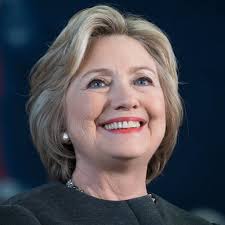
Hillary Clinton
She seemed to have been around forever—as First Lady (1993-2001), as Senator from New York (2001-2009) and as Secretary of State (2009-2013). Those born after 2000 thought of the Clinton Presidency as ancient history. She was offering a resume—and voters wanted an inspiration.
#2 Clinton brought a lot of baggage with her. In contrast to Obama, whose Presidency had been scandal-free, Clinton—rightly or wrongly—has always been dogged by charges of corruption.
During the Clinton Presidency, a failed land deal—Whitewater—while Bill Clinton was Governor of Arkansas triggered a seven-year investigation by a Republican special prosecutor. No criminality was uncovered, and no charge was brought against either Clinton.
After leaving the White House, she and her husband set up the Clinton Foundation, a public charity to bring government, businesses and social groups together to solve problems “faster, better, at lower cost.”
As Secretary of State, more than half of Clinton’s meetings with people outside government were with donors to the Clinton Foundation. If a “pay-to play” system wasn’t at work, one certainly seemed to be.
She cast further suspicion on herself by her unauthorized use of a private email server. This wasn’t revealed until March, 2015—after she was no longer Secretary of State.
She claimed she had used it to avoid carrying two cell-phones. But, as Secretary of State, she traveled with a huge entourage who carried everything she needed. Her critics believed she used a private email system to hide a “pay-for-pay” relationship with Clinton Foundation donors.
#3 As a candidate for President, she “secretly” worked with Debbie Wasserman-Schultz, the chair of the Democratic National Committee, to ensure that she would get the nomination.
As DNC chair, Wasserman-Schultz was expected to be impartial toward all Democratic candidates seeking the prize. This included Vermont U.S. Senator Bernie Sanders, Clinton’s chief competitor.
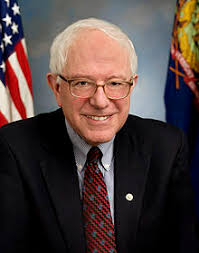
Bernie Sanders
So Sanders and his supporters were outraged when, on July 22, WikiLeaks released 19,252 emails and 8,034 attachments hacked from computers of the highest-ranking officials of the DNC.
The emails revealed a clear bias for Clinton and against Sanders. In one email, Brad Marshall, the chief financial officer of the DNC, suggested that Sanders, who is Jewish, could be portrayed as an atheist.
#4 The Obamas’ support proved a plus/minus for Clinton. Understandably, President Obama wanted to see his legacies continued—and she was the only candidate who could do it.
So he—and his wife, Michelle—stormed the country, giving eloquent, passionate speeches and firing up crowds on Clinton’s behalf.
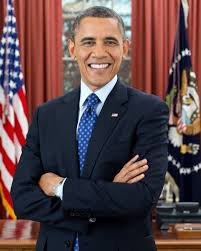
President Barack Obama
So long as either Obama stood before a crowd, the magic lasted. But once the event was over, the excitement vanished. Hillary simply didn’t arouse enough passion to keep it going.
Obama’s supporters found Clinton wanting–in attractiveness, grace, eloquence, trustworthiness and the ability to inspire.
2016 PRESIDENTIAL ELECTION, 9/11, ABC NEWS, ADOLF HITLER, AFGHANISTAN, ALTERNET, AP, ASIANS, BARACK OBAMA, BLACKS, BULLYING, BUZZFEED, CBS NEWS, CNN, COMMUNISM, CROOKS AND LIARS, DAILY KOZ, DONALD TRUMP, FACEBOOK, FASCISM, GEORGE W. BUSH, GREAT DEPRESSION, HILLARY CLINTON, HISPANICS, IRAQ, JEWS, MOTHER JONES, MOVEON, MUSLIMS, NAZI GERMANY, NAZI PARTY, NBC NEWS, NEWSWEEK, NPR, PAUL VON HINDENBURG, POLITICO, RACISM, RAW STORY, REPUBLICANS, REUTERS, ROBERT PAYNE, Ronald Reagan, SALON, SEATTLE TIMES, SLATE, THE ATLANTIC, THE CHICAGO SUN-TIMES, THE CHICAGO TRIBUNE, THE DAILY BEAST, THE GUARDIAN, THE HILL, THE HUFFINGTON POST, THE LIFE AND DEATH OF ADOLF HITLER, THE LOS ANGELES TIMES, THE LOS ANGELS TIMES, THE NATION, THE NEW YORK TIMES, THE WASHINGTON POST, TIME, TRUMP EFFECT, TWITTER, U.S. NEWS & WORLD REPORT, UP, UPI, USA TODAY, WORLD WAR 11
In Bureaucracy, History, Politics, Social commentary on September 7, 2017 at 12:30 am
In his bestselling 1973 biography, The Life and Death of Adolf Hitler, British historian Robert Payne harshly condemned the German people for the rise of the Nazi dictator.
“Ultimately the responsibility for the rise of Hitler lies with the German people, who allowed themselves to be seduced by him and came to enjoy the experience….[They] followed him with joy and enthusiasm because he gave them license to pillage and murder to their hearts’ content.
“They were his servile accomplices, his willing victims: Germany will rule the world; our enemies will be our slaves….
“If he answered their suppressed desires, it was not because he shared them, but because he could make use of them. He despised the German people, for they were merely the instruments of his will.”
On November 8, millions of ignorant, hate-filled, Right-wing Americans elected Donald Trump—a man reflecting their own hate and ignorance—to the Presidency.
Yet, in some ways, Americans had fewer excuses for turning to a Fascistic style of government than the Germans did.
Adolf Hitler joined the National Socialist German Workers (Nazi) Party in 1919—the year after World War 1 ended.
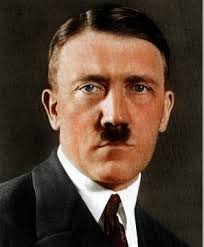
Adolf Hitler
It took him 14 years to win appointment to Chancellor (the equivalent of Attorney General) of Germany in 1933.
In 1923, he staged a coup attempt in Bavaria—which was quickly and brutally put down by police. He was arrested and sentenced to less than a year in prison.
After that, Hitler decided that winning power through violence was no longer an option. He must win it through election—or appointment.
He repeatedly ran for the highest office in Germany—President—but never got a clear majority in a free election.
When the 1929 Depression struck Germany, the fortunes of Hitler’s Nazi party rose as the life savings of ordinary Germans fell. Streets echoed with bloody clashes between members of Hitler’s Nazi Stormtroopers and those of the German Communist Party.
Germany seemed on the verge of collapsing.Germans desperately looked for a leader—a Fuhrer—who could somehow deliver them from the threat of financial ruin and Communist takeover.
In early 1933, members of his own cabinet persuaded aging German president, Paul von Hindenburg, that only Hitler’s appointment as Chancellor could do this.
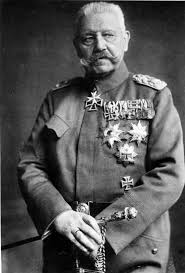
Paul von Hindenburg
Hindenburg was reluctant to do so. He considered Hitler a dangerous radical. But he allowed himself to be convinced that, by putting Hitler in the Cabinet, he could be “boxed in” and thus controlled.
So, on January 30, 1933, he appointed Adolf Hitler Chancellor of Germany.
On August 2, 1934, Hindenberg died, and Hitler immediately assumed the titles–and duties—of the offices of Chancellor and President. His rise to total power was now complete.
It had taken him 14 years to do so.
In 2015, Donald Trump declared his candidacy for President.Now, consider this:
- The United States was technically at war in the Middle East—but the fate of the United States was not truly threatened, as it had been during the Civil War.
- There was no draft; if you didn’t know someone in the military, you didn’t care about the casualties taking place.
- Nor were these conflicts—in Iraq and Afghanistan–imposing domestic shortages on Americans, as World War II had.
- Thanks to government loans from President Barack Obama, American capitalism had been saved from its own excesses during the George W. Bush administration.
- Employment was up. CEOs were doing extremely well.
- In contrast to the corruption that had plagued the administration of Ronald Reagan, whom Republicans idolize, there had been no such scandals during the Obama Presidency.
- Nor had there been any large-scale terrorist attacks on American soil—as there had on 9/11 under President George W. Bush.
- Yet—not 17 months after announcing his candidacy for President–enough Americans fervently embraced Donald Trump to give him the most powerful position in the country and the world.

Donald Trump
The message of Barack Obama’s 2008 campaign had been one of hope—“Yes, We Can!”
That of Donald Trump’s campaign was one of hatred toward everyone who was not an avid Trump supporter: “No, You Can’t!”
Whites comprised the overwhelming majority of the audiences at Trump rallies. Not all were racists, but many of those who were advertised it on T-shirts: “MAKE AMERICA WHITE AGAIN.”
They knew that demographics were steadily working against them. Birthrates among non-whites were rising. By 2045, whites would make up less than 50 percent of the American population.
The 2008 election of the first black President had shocked whites. His 2012 re-election had deprived them of the hope that 2008 had been an accident.
Then came 2016—and the possibility that a black President might actually be followed by a woman: Hillary Clinton. And the idea of a woman dictating to men was strictly too much to bear.
Since Trump’s election, educators have reported a surge in bullying among students of all ages, from elementary- to high-school. Those doing the bullying are mostly whites, and the victims are mostly blacks, Muslims, Jews, Hispanics, Asians.
It even has a name: “The Trump Effect.”
All of this should be remembered the next time an American blames Germans for their embrace of Adolf Hitler.
9/11, ABC NEWS, ALTERNET, AP, BARACK OBAMA, BENGHAZI TERROR ATTACK, BIRTH CERTIFICATE, BUZZFEED, CBS NEWS, CHARLES KOCH, CNN, CROOKS AND LIARS, DAILY KOZ, DAVID KOCH, DR. STANTON GLANTZ, FACEBOOK, FBI, GEORGE W. BUSH, IMPEACHMENT, IRS, MOTHER JONES, MOVEON, NATIONAL CANCER INSTITUTE, NATIONAL SECURITY AGENCY, NAVY SEALS, NBC NEWS, NEWSWEEK, NPR, OSAMA BIN LADEN, POLITICO, RAW STORY, REUTERS, SALON, SEATTLE TIMES, SLATE, TEA PARTY, THE ATLANTIC, THE CHICAGO SUN-TIMES, THE CHICAGO TRIBUNE, THE DAILY BEAST, THE GUARDIAN, THE HILL, THE HUFFINGTON POST, THE LOS ANGELES TIMES, THE NATION, THE NEW YORK TIMES, THE WASHINGTON POST, TIME, TOBACCO INDUSTRY, TWITTER, U.S. NEWS & WORLD REPORT, UP, UPI, USA TODAY
In Bureaucracy, Business, History, Politics, Social commentary on July 27, 2017 at 12:05 am
The Tea Party hated President Barack Obama and believed he should be impeached.
That you could have easily learned by visiting its website.
But there is a great deal about the Tea Party itself that its website won’t tell you.
Such as:
- Despite its propaganda, it is not a “grassroots organization” comprised of “ordinary Americans.”
- It was created with money from the tobacco industry and the billionaire Koch brothers.
- Its purpose is to co-opt Right-wing Americans and channel their votes into legislation that benefits the 1% richest.
That’s the conclusion of a study by the National Cancer Institute of the National Institute of Health.
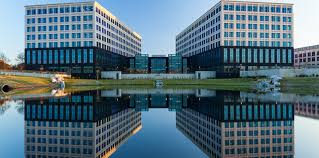
National Cancer Institute
The roots of the Tea Party lie in the early 1980s, when tobacco companies started pouring money into third-party groups.
Their mission was two-fold:
- To fight excise taxes on cigarettes; and
- To combat health studies showing a link between cancer and secondhand smoke.
Stanton Glantz, professor of medicine at the University of California, San Francisco, has been a longtime foe of the tobacco industry.
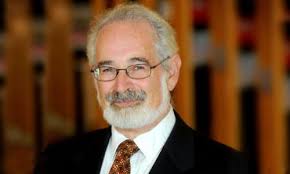
Dr. Stanton Glantz
In 2012, he authored a study for the peer-reviewed academic journal, Tobacco Control. Writing about the ties between the Tea Party and the tobacco industry, Glantz noted:
“The Tea Party, which gained prominence in the USA in 2009, advocates limited government and low taxes. Tea Party organisations, particularly Americans for Prosperity and FreedomWorks, oppose smoke-free laws and tobacco taxes.
“Rather than being a purely grassroots movement that spontaneously developed in 2009, the Tea Party has developed over time, in part through decades of work by the tobacco industry and other corporate interests.”
Click here: ‘To quarterback behind the scenes, third-party efforts’: the tobacco industry and the Tea Party — Fallin et al. –
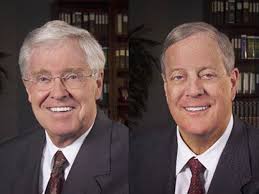
Charles and David Koch, the real founders of the Tea Party
Most people believe the Tea Party originated as a 2009 grassroots uprising to protest taxes. But its origins can be traced to 2002.
That was when the Charles and David Koch and tobacco-backed Citizens for a Sound Economy set up the first Tea Party website.
From the National Cancer Institute’s study of the Tea Party:
- “The Tea Party, a loosely organised network of grassroots coalitions at local and state levels, is a complex social and political movement to the right of the traditional Republican Party that promotes less government regulation and lower taxes.”
- “David Koch was a co-founder of Citizens for a Sound Economy (CSE) and Americans for Prosperity (AFP) Foundation,” both major allies of the tobacco industry.
- “National organisations funded by corporations, particularly Americans for Prosperity (AFP) and FreedomWorks, played an important role in structuring and supporting the Tea Party in the initial stages. They provided training, communication and materials for the earliest Tea Party activities, including the first ‘Tea Party’ on 27 February 2009.”
- “FreedomWorks organised the nationwide Tea Party tax protests in April 2009, the town hall protests about the proposed healthcare reform in August 2009 and the Taxpayers’ March on Washington the following September 2009.”
- “As of 2012, AFP and FreedomWorks were supporting the tobacco companies’ political agenda by mobilising local Tea Party opposition to tobacco taxes and smoke-free laws.”
- “In many ways, the Tea Party of the late 2000s has become the ‘movement’ envisioned by Tim Hyde, RJR director of national field operations in the 1990s, which was grounded in patriotic values of ‘freedom’ and ‘choice’ to change how people see the role of ‘government’ and ‘big business’ in their lives, particularly with regard to taxes and regulation.”
- “Many factors beyond the tobacco industry have contributed to the development of the Tea Party. Anti-tax sentiment has been linked to notions of patriotism since the inception of the USA when the colonies were protesting against taxation by the British.”
- “In addition, the Tea Party has origins in the ultra-right John Birch Society of the 1950s, of which Fred Koch (Charles and David Koch’s father) was a founding member.”
- “Although the Tea Party is a social movement, it has been affiliated closely with, and somewhat incorporated into, the Republican Party. This may be due in part to the increased conservatism of politically active Republicans since 1970s and the increased polarisation of American politics.”
- “….AFP and FreedomWorks…capitalised on the changing political realities following President Barack Obama’s election in 2008.”
- “In particular, they harnessed anti-government sentiment arising from the confluence of the mortgage and banking bailout, President Barack Obama’s stimulus package and the Democratic push for healthcare reform, which provided them with the opportunity for more successful grassroots-level Tea Party organising.”
Since 2008, the Tea Party has played a major role in American politics.
Throughout 2009, its thuggish supporters sought to terrorize members of Congress into opposing passage of the Affordable Care Act (ACA), otherwise known as Obamacare.
This despite the fact that the ACA offered many of them their only chance to obtain access to medical care.
And in 2010 they played a pivotal role in delivering the House of Representatives to the Republican Party. Similarly, they helped Republicans take control of the Senate in 2014.
Yet the vast majority of the Tea Party’s low-level membership probably doesn’t know the origins—or the real purposes—of their organization.
But for those for whom truth is important, “the truth”—as The X-Files tagline once went—“is out there.”
9/11, ABC NEWS, ALTERNET, AP, BARACK OBAMA, BENGHAZI TERROR ATTACK, BIRTH CERTIFICATE, BUZZFEED, CBS NEWS, CHARLES KOCH, CNN, CROOKS AND LIARS, DAILY KOZ, DAVID KOCH, DR. STANTON GLANTZ, FACEBOOK, FBI, GEORGE W. BUSH, IMPEACHMENT, IRS, MOTHER JONES, MOVEON, NATIONAL CANCER INSTITUTE, NATIONAL SECURITY AGENCY, NAVY SEALS, NBC NEWS, NEWSWEEK, NPR, OSAMA BIN LADEN, POLITICO, RAW STORY, REUTERS, SALON, SEATTLE TIMES, SLATE, TEA PARTY, THE ATLANTIC, THE CHICAGO SUN-TIMES, THE CHICAGO TRIBUNE, THE DAILY BEAST, THE GUARDIAN, THE HILL, THE HUFFINGTON POST, THE LOS ANGELES TIMES, THE NATION, THE NEW YORK TIMES, THE WASHINGTON POST, TIME, TOBACCO INDUSTRY, TWITTER, U.S. NEWS & WORLD REPORT, UP, UPI, USA TODAY
In Bureaucracy, Business, History, Politics, Social commentary on July 26, 2017 at 12:41 am
“Should Barack Obama Be Impeached?” shouted the September, 2014 headline on the Right-wing website of TeaParty.org.
“A fake birth certificate, the Benghazi attack, the IRS scandal, National Security invasions on privacy….Many are questioning Obama’s competence. Should Congress initiate impeachment proceedings?
“What do you think?”
Then the site offered this in tribute to its sponsor:
“TeaParty.org, one of America’s leading websites and top online news sources is conducting a poll about an important issue.
“The results of these polls will be published online and are shared with major news networks and policymakers.
“Don’t miss this opportunity to let your voice be heard! Vote today!”
The viewer was then given two questions to answer.
The first was: “Should Barack Obama be impeached?”
The website offered three possible answers for the visitor to choose:
- “Yes, the events are now overwhelming.”
- “No, these do not meet the threshold of high crimes and misdemeanors.”
- “Not sure, still waiting to review the evidence.”
The second question was: “Whom do you believe has better solutions for the nation’s problems?”
It, too, provided three possible answers:
- “Conservatives”
- “Liberals”
- “Neither.”
The website omitted a number of truths—about both President Barack Obama and the Tea Party itself.
Slander #1: “A false birth certificate”
The election of Barack Obama pushed the Right to new heights of infamy. With no political scandal (such as Bill Clinton’s affair with Monica Lewinsky) to fasten on, the Republican Party deliberately promoted the slander that Obama was not an American citizen.
From this there could be only one conclusion: That he was an illegitimate President, and should be removed from office.
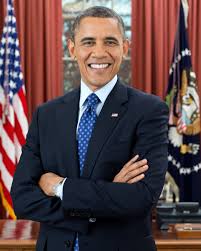
President Barack Obama
During the 2008 Presidential campaign, Republicans charged that Obama was really a Muslim non-citizen who intended to sell out America’s security to his Muslim “masters.”
And this smear campaign continued throughout his Presidency.
To the dismay of his enemies, Obama—in the course of a single week—dramatically proved the falsity of both charges.
On April 27, 2011, he released the long-form of his Hawaii birth certificate.
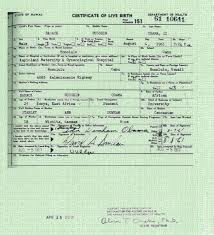
The long-form version of President Obama’s birth certificate
“We do not have time for this kind of silliness,” said Obama at a press conference, speaking as a father might to a roomful of spiteful children. “We have better stuff to do. I have got better stuff to do. We have got big problems to solve.
“We are not going to be able to do it if we are distracted, we are not going to be able to do it if we spend time vilifying each other…if we just make stuff up and pretend that facts are not facts, we are not going to be able to solve our problems if we get distracted by side shows and carnival barkers.”
And on May 1, he announced the solving of one of those “big problems”: Osama bin Laden, mastermind of the September 11, 2001 terrorist attacks, had been tracked down and shot dead by elite U.S. Navy SEALS in Pakistan.
Slander #2: “The Benghazi attack”
A total of four Americans died in a terrorist attack on the American diplomatic consulate in Benghazi, Libya, on September 11, 2012.
Whereas a total of 3,000 Americans died in the Al Qaeda attacks of September 11, 2001. But those occurred on the watch of a white Republican President, so naturally no treason charges were invoked by the Right.
Slander #3: “The IRS scandal”
In 2013, the Internal Revenue Service (IRS) disclosed that it had selected political groups applying for tax-exempt status for intensive scrutiny based on their names or political themes.
Although Right-wingers have claimed that their political organizations were exclusively targeted by the IRS, the agency opened investigations based on such trigger-words as:
- Tea Party
- Patriots
- 9/12 Project
- progressive
- occupy
- Israel
- medical marijuana
“While some of the IRS questions may have been overbroad, you can look at some of these groups and understand why these questions were being asked,” said Ohio State University law professor Donald Tobin.
In January, 2014, the FBI announced that it had found no evidence warranting the filing of federal criminal charges in connection with the scandal.
No evidence has come to light suggesting that President Obama was responsible for the IRS’s actions.
Slander #4: “National Security Agency (NSA) invasions on privacy”
This totally ignores that it was former President George W. Bush who, after 9/11, ordered the NSA to vastly increase its electronic-interception capabilities.
No longer would the agency be confined to spying on calls outside the United States. From now on, it would target Americans who might be linked to international terror cells.
Slander #5: “Many are questioning Obama’s competence”
While this was true—among those on the Right and Left—it missed the essential legal point: Even if true, “incompetence” is not a legitimate impeachable offense.
And no evidence ever came forth to indict President Obama for “high crimes and misdemeanors.”
Meanwhile, there was a great deal about the Tea Party itself that its founders didn’t reveal in their “poll”.
Such as the truth that it was created by the tobacco industry and the billionaire Koch brothers.
ABC NEWS, BARACK OBAMA, CBS NEWS, CNN, DICK CHENEY, DONALD TRUMP, DUTY, FACEBOOK, GEORGE W. BUSH, HOUSE INTELLIGENCE COMMITTEE, JOHN BOLTON, JOHN MCCAIN, KGB, KREMLIN RISING, MALAYSIA AIRLINES FLIGHT 17, NBC NEWS, PETER BAKER, REPUBLICAN PARTY, ROBERT M. GATES, RUSSIA, SOVIET UNION, SUSAN GLASSER, THE CHICAGO TRIBUNE, THE CHICAO SUN-TIMES, THE LOS ANGELES TIMES, THE NEW YORK TIMES, THE WASHINGTON POST, TWITTER, UKRAINE, UNITED STATES, USA TODAY, VLADIMIR PUTIN
In Bureaucracy, History, Military, Politics, Social commentary on July 10, 2017 at 12:30 am
Since the late 1940s, Republicans have hurled the charge of “appeasement” at every Democratic President
Harry S. Truman, John F. Kennedy and Lyndon Johnson found themselves accused of “selling out” to the Soviet Union. The motive for this was usually attributed to cowardice—if not outright treason. It didn’t matter to Republicans that:
- Truman began the policy of “containing” the Soviet Union within its World War II borders;
- Kennedy faced down the Russians during the Cuban Missile Crisis; and
- Johnson waged a bloody, budget-busting war against Soviet proxies in Vietnam.
Most recently, it became the turn of President Barack Obama.
On July 17, 2014, Malaysia Airlines Flight 17 MH 17/MAS17 took off from Amsterdam for Kuala Lumpur International Airport.
But as the flight–and its 283 passengers and 15 crew—cruised above Hrabove in Donetsk Oblast, Ukraine, Russian-backed Ukrainian separatists shot it down. A Buk surface-to-air missile slammed into the aircraft, almost instantly killing everyone on board.
President Barack Obama
“The President is afraid of provoking [Russian President] Vladimir Putin,” United States Senator John McCain told Reuters. “Vladimir Putin is on the move because he has paid no price for his aggression.”
And Texas United State Senator Ted Cruz said: “Putin fears no retribution. [Obama’s] policy has been to alienate and abandon our friends, and to coddle and appease our enemies.”
But now the United States has a Republican President who has cozied up to Putin since he entered the 2016 Presidential race.
In January, the CIA, FBI, NSA and the Office of the Director of National Intelligence concluded that Russian Intelligence agents had meddled in the election via cyber-warfare to secure Donald Trump’s election.
Yet, at the G20 summit, Trump declared it was “an honor” to meet Putin.
After the meeting, Trump tweeted on July 9: “I strongly pressed President Putin twice about Russian meddling in our election. He vehemently denied it. I’ve already given my opinion…..”
Trump’s opinion, as he famously gave it, was: “It could be Russia, but it could also be China. It could also be lots of other people. It also could be somebody sitting on their bed that weighs 400 pounds.”
Even more worrisome to American Intelligence officials was Trump’s accompanying tweet: “Putin & I discussed forming an impenetrable Cyber Security unit so that election hacking, & many other negative things, will be guarded.”
Representative Adam Schiff, the top Democrat on the House Intelligence Committee reacted: “If that’s our best election defense, we might as well just mail our ballot boxes to Moscow.”
Even some Republicans likened the proposal to letting the fox guard the chicken coop. Florida United States Senator Marco Rubio tweeted: “While reality & pragmatism requires that we engage Vladimir Putin, he will never be a trusted ally or a reliable constructive partner.”
Yet America’s frustrations with Russia generally—and Putin in particular—long predate those of Barack Obama.
Nor were relations between the United States and post-Soviet Russia helped by the naivety of President George W. Bush.
In June, 2001, Bush and Putin met in Slovenia. During the meeting a truly startling exchange occurred.

President George W. Bush and Vladimir Putin
Putin, a former KGB Intelligence officer, had clearly done his homework on Bush. When he mentioned that one of the sports Bush had played was rugby, Bush was highly impressed.
“I did play rugby,” gushed Bush. “Very good briefing.”
But more was to come.
BUSH: Let me say something about what caught my attention, Mr. President, was that your mother gave you a cross which you had blessed in Israel, the Holy Land.
PUTIN: It’s true.
BUSH: That amazes me, that here you were a Communist, KGB operative, and yet you were willing to wear a cross. That speaks volumes to me, Mr. President. May I call you Vladimir?
Putin instantly sensed that Bush judged others–even world leaders–through the lens of his own fundamentalist Christian theology.
Falling back on his KGB training, Putin seized on this apparent point of commonality to build a bond. He told Bush that his dacha had once burned to the ground, and the only item that had been saved was that cross.
“Well, that’s the story of the cross as far as I’m concerned,” said Bush, clearly impressed. “Things are meant to be.”
Afterward, Bush and Putin gave an outdoor news conference.
“Is this a man that America can trust?” Associated Press correspondent Ron Foumier asked Bush.
“Yes,” said Bush. “I looked the man in the eye. I found him to be very straightforward and trustworthy. We had a very good dialogue.
“I was able to get a sense of his soul, a man deeply committed to his country and the best interests of his country. I wouldn’t have invited him to my ranch if I didn’t trust him.”
Of course, no one from the Right is now recalling such embarrassing words.
It’s far more politically profitable to pretend that all of America’s tensions with Russia began with the election of Barack Obama.
And to pretend that those tensions have vanished now that another Right-wing President occupies the White House.
ABC NEWS, ALTERNET, AP, BBC, BILL MAULDIN, BUZZFEED, CBS NEWS, CNN, DAILY KOS, DONALD TRUMP, FACEBOOK, GENERAL LUCIAN K. TRUSCOTT, GEORGE W. BUSH, IRAQ WAR, JEB BUSH, MEMORIAL DAY, MOTHER JONES, MOVEON, NATIONAL CONSERVATIVE POLITICAL ACTION CONFERENCE (CPAC), NBC NEWS, NEWSWEEK, NPR, OLD GLORY, POLITICO, RAW STORY, REUTERS, SADDAM HUSSEIN, SALON, SAVING PRIVATE RYAN, SCOTT WALKER, SEATTLE TIMES, SLATE, STEVEN SPIELBERG, THE ATLANTIC, THE CHICAGO SUN-TIMES, THE CHICAGO TRIBUNE, THE DAILY BEAST, THE GUARDIAN, THE HILL, THE HUFFINGTON POST, THE LOS ANGELES TIMES, THE NEW YORK TIMES, THE WALL STREET JOURNAL, THE WASHINGTON POST, TIME, TWITTER, U.S. NEWS & WORLD REPORT, UPI, USA TODAY, WEAPONS OF MASS DESTRUCTION, WHITE HOUSE CORRESPONDENTS DINNER, WORLD WAR ii
In Bureaucracy, History, Military, Politics, Social commentary on May 30, 2017 at 12:23 am
Donald Trump repeatedly boasted that, if elected President, he would “make America great again.”
He would do well to re-watch Saving Private Ryan, Steven Spielberg’s 1998 World War II epic.
This opens with a scene of an American flag snapping in the wind. Except that the brilliant colors of Old Glory have been washed out, leaving only black-and-white stripes and black stars.
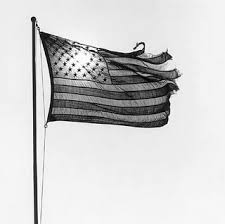
And then the movie opens–not during World war II but the present day.
Did Spielberg know something that his audience could only sense? Such as that the United States, for all its military power, has become a pale shadow of its former glory?
May 30, 1945, marked the first Memorial Day after World War II ended in Europe. On that day, the Sicily-Rome American Cemetery, near the town of Nettuno, held about 20,000 graves.
Most were soldiers who had died in Sicily, at Salerno, or at Anzio. One of the speakers at the ceremony was Lieutenant General Lucian K. Truscott, Jr., the U.S. Fifth Army Commander.
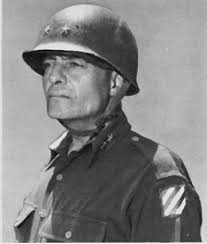
Lieutenant General Lucian K. Truscott, Jr.
Unlike many other generals, Truscott had shared in the dangers of combat, pouring over maps on the hood of his jeep with company commanders as bullets or shells whizzed about him.
When it came his turn to speak, Truscott moved to the podium. Then he turned his back on the assembled visitors–which included several Congressmen.
The audience he now faced were the graves of his fellow soldiers.
Among those who heard Truscott’s speech was Bill Mauldin, the famous cartoonist for the Army newspaper, Stars and Stripes. Mauldin had created Willie and Joe, the unshaven, slovenly-looking “dogfaces” who came to symbolize the GI.
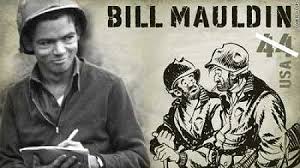
Bill Mauldin and “Willie and Joe,” the characters he made famous
It’s from Mauldin that we have the fullest account of Truscott’s speech that day.
“He apologized to the dead men for their presence there. He said that everybody tells leaders that it is not their fault that men get killed in war, but that every leader knows in his heart that this is not altogether true.
“He said he hoped anybody here through any mistake of his would forgive him, but he realized that he was asking a hell of a lot under the circumstances….
“Truscott said he would not speak of the ‘glorious’ dead because he didn’t see much glory in getting killed in your teens or early twenties.
“He promised that if in the future he ran into anybody, especially old men, who thought death in battle was glorious, he would straighten them out. He said he thought it was the least he could do.
“It was the most moving gesture I ever saw,” wrote Mauldin.
Then Truscott walked away, without acknowledging his audience of celebrities.
Fast forward 61 years later–to March 24, 2004.
At a White House Correspondents dinner in Washington, D.C., President George W. Bush joked publicly about the absence of Weapons of Mass Destruction (WMDs) in Iraq.
One year earlier, he had ordered the invasion of Iraq, claiming that its dictator, Saddam Hussein, possessed WMDs he intended to use against the United States.
To Bush, the non-existent WMDs were simply the butt of a joke that night. While an overhead projector displayed photos of a puzzled-looking Bush searching around the Oval Office, Bush recited a comedy routine.
“Those Weapons of Mass Destruction have gotta be here somewhere,” Bush laughed, while a photo showed him poking around the corners of the Oval Office.
“Nope–no weapons over there! Maybe there’s under here,” he said, as a photo showed him looking under a desk.
In a scene that could have occurred under the Roman emperor Nero, an assembly of wealthy, pampered men and women–the elite of America’s media and political classes–laughed heartily during Bush’s performance.
Only later did the criticism come, from Democrats and Iraqi war veterans–especially those veterans who had lost comrades or suffered horrific wounds to protect America from a threat that had never existed.
Then fast forward another 11 years–to February 27, 2015.
The Republican party’s leading Presidential contenders for 2016 gathered at the Conservative Political Action Conference (CPAC) in National Harbor, Maryland.
Although each candidate tried to stake his own claim to the Oval Office, all of them agreed on two points:
First, President Barack Obama had been dangerously timid in his conduct of foreign policy; and
Second, they would pursue aggressive military action in the Middle East.
Neither Bush nor Walker had seen fit to enter the ranks of the military he wished to plunge into further combat. And Donald Trump, who would win the Republican nomination and the Presidency, was a five-time draft dodger while the Vietnam war raged.
Bush, Walker and Trump are typical of those who make up the United States Congress:
Of those members elected to the House and Senate in November, 2016, only 102–less than 19%–have served in the U.S. military.
Small wonder then, that, for many people, Old Glory has taken on a darker, washed-out appearance, in real-life as in film.
2016 PRESIDENTIAL RACE, ABC NEWS, BARACK OBAMA, BASKET OF DEPLORABLES SPEECH, BERNIE SANDERS, BILL CLINTON, BLACKS, CBS NEWS, CELINDA LAKE, CLINTON FUNDATION, CNN, COMMUNISM, CONDOLEEZA RICE, DEBBIE WASSERMAN-SCHULTZ, DEMOCRATIC NATIONAL COMMITTEE, DONALD TRUMP, FACEBOOK, GEORGE W. BUSH, HILLARY CLINTON, HISPANICS, HOUSE OF REPRESENTATIVES, JAMES WEBB, MICHELLE OBAMA, NBC NEWS, POPULISM, RACISM, REPUBLICAN NATIONAL COMMITTEE, SOCIALISM, SUSAN BORDO, THE CHICAGO SUN-TIMES, THE CHICAGO TRIBUNE, THE DESTRUCTION OF HILLARY CLINTON, THE LOS ANGELES TIMES, THE NEW YORK TIMES, THE WASHINGTON POST, TOM BROKAW, TWITTER, U.S. HOUSE OF REPRESENTATIVES, U.S. SENATE, WHITES, WHITEWATER, WIKILEAKS, WOMEN, YOUTH
In History, Politics, Social commentary on April 24, 2017 at 1:29 am
If author Susan Bordo has her way, Americans will be sopping up tears with handkerchiefs for the next four years–if not longer.
Bordo is the author of a new book, The Destruction of Hillary Clinton. You need not read its full text to discover its thesis. Its dust jacket offers this in a Q and A format.
Question: “How did an extraordinarily well-qualified, experienced, and admired candidate—whose victory would have been as historic as Barack Obama’s—come to be seen as a tool of the establishment, a chronic liar, and a talentless politician?”
Answer: “In this masterful narrative of the 2016 campaign year and the events that led up to it, Susan Bordo unpacks the Rights’ assault on Clinton and her reputation, the way the left provoked suspicion and indifference among the youth vote, the inescapable presence of [FBI Director] James Comey, questions about Russian influence, and the media’s malpractice in covering the candidate.”

Others who come in for blame: WikiLeaks; Vermont U.S. Senator Bernie Sanders; younger women; and even Monica Lewinsky.
Yes, it was
- Bernie Sanders’ fault for daring to challenge Clinton for the Democratic nomination–and refusing to accept that it was “Hillary’s turn” to become President.
- WikiLeaks’ fault for publishing emails sent by members of the Democratic National Commitee–which proved the supposedly impartial DNC was working to secure the nomination for Clinton.
- Younger women’s fault for not identifying with a woman old enough to be their grandmother–and who has lived an extraordinarily privileged life since she became First Lady in 1993.
- Monica Lewinsky’s fault for being a reminder to voters that Hillary’s husband had disgraced the Presidency in an oral sex scandal.
All of these factors certainly played a part in why Clinton lost the White House for the second time in eight years. But they are not all the factors behind her loss.
There were plenty of others–that are not mentioned in Bordo’s book.
Among these:
#1 Hillary Clinton was an uninspiring candidate. When Barack Obama ran for President in 2008, NBC Anchor Tom Brokaw compared his rallies to Hannah Montana concerts. Audiences were excited by his charisma, eloquence, relative youth (47) and optimism (“Yes We Can!”).
Clinton radiated none of these qualities. She was 67 when she declared her candidacy for President–and looked it. Her speaking voice grated like the proverbial fingernail on a blackboard.
Hillary Clinton
She seemed to have been around forever–as First Lady (1993-2001), as Senator from New York (2001-2009) and as Secretary of State (2009-2013). Those born after 2000 thought of the Clinton Presidency as ancient history. She was offering a resume–and voters wanted an inspiration.
#2 Clinton brought a lot of baggage with her. In contrast to Obama, whose Presidency had been scandal-free, Clinton–rightly or wrongly–has always been dogged by charges of corruption.
During the Clinton Presidency, a failed land deal–Whitewater–while Bill Clinton was Governor of Arkansas triggered a seven-year investigation by a Republican special prosecutor. No criminality was uncovered, and no charge was brought against either Clinton.
After leaving the White House, she and her husband set up the Clinton Foundation, a public charity to bring government, businesses and social groups together to solve problems “faster, better, at lower cost.”
As Secretary of State, more than half of Clinton’s meetings with people outside government were with donors to the Clinton Foundation. If a “pay-to play” system wasn’t at work, one certainly seemed to be.
She cast further suspicion on herself by her unauthorized use of a private email server. This wasn’t revealed until March, 2015–after she was no longer Secretary of State.
She claimed she had used it to avoid carrying two cell-phones. But, as Secretary of State, she traveled with a huge entourage who carried everything she needed. Her critics believed she used a private email system to hide a “pay-for-pay” relationship with Clinton Foundation donors.
#3 As a candidate for President, she “secretly” worked with Debbie Wasserman-Schultz, the chair of the Democratic National Committee, to ensure that she would get the nomination.
As DNC chair, Wasserman-Schultz was expected to be impartial toward all Democratic candidates seeking the prize. This included Vermont U.S. Senator Bernie Sanders, Clinton’s chief competitor.
Bernie Sanders
So Sanders and his supporters were outraged when, on July 22, WikiLeaks released 19,252 emails and 8,034 attachments hacked from computers of the highest-ranking officials of the DNC.
The emails revealed a clear bias for Clinton and against Sanders. In one email, Brad Marshall, the chief financial officer of the DNC, suggested that Sanders, who is Jewish, could be portrayed as an atheist.
#4 The Obamas’ support proved a plus/minus for Clinton. Understandably, President Obama wanted to see his legacies continued–and she was the only candidate who could do it.
So he–and his wife, Michelle–stormed the country, giving eloquent, passionate speeches and firing up crowds on Clinton’s behalf.
President Barack Obama
So long as either Obama stood before a crowd, the magic lasted. But once the event was over, the excitement vanished. Hillary simply didn’t arouse enough passion to keep it going.
Obama’s supporters found Clinton wanting–in attractiveness, grace, eloquence, trustworthiness and the ability to inspire.


9/11, ABC NEWS, AL QAEDA, ALTERNET, AMERICAN CAESARS: THE LIVES OF THE PRESIDENTS FROM FRANKLIN D. ROOSEVELT TO GEORGE W. BUSH, AMERICAN EMPIRE, AP, BASHAR AL-ASSAD, BILL CLINTON, BUREAUCRACY, BUZZFEED, CBS NEWS, CHRIS MATHEWS, CNN, CONDOLEEZA RICE, CROOKS AND LIARS, DAILY KOZ, DONALD TRUMP, DWIGHT EISENHOWER, FACEBOOK, FBI, FRANKLIN D. ROOSEVELT, GEORGE H.W. BUSH, GEORGE W. BUSH, GERALD R. FORD, HARRY S. TRUMAN, JIMMY CARTER, JOHN F. KENNEDY, LYNDON B. JOHNSON, MOTHER JONES, MOVEON, MSNBC, NBC NEWS, NEWSWEEK, NIGEL HAMILTON, NPR, OSAMA BIN LADEN, POLITICO, RAW STORY, REPUBLICAN PARTY, REUTERS, RICHARD CLARKE, RICHARD NIXON, ROMAN EMPIRE, SALON, SEATTLE TIMES, SEPTEMBER 11, SLATE, SUETONIUS, SYRIA, TERRORISM, THE ATLANTIC, THE CHICAGO SUN-TIMES, THE CHICAGO TRIBUNE, THE DAILY BEAST, THE GUARDIAN, THE HILL, THE HUFFINGTON POST, THE LOS ANGELES TIMES, THE NATION, THE NEW YORK TIMES, THE TWELVE CAESARS, THE WASHINGTON POST, TIME, TWITTER, U.S. NEWS & WORLD REPORT, UP, UPI, USA TODAY
THE AMERICANS WHO GAVE US 9/11: PART TWO (OF THREE)
In Bureaucracy, History, Military, Politics, Social commentary, Uncategorized on September 15, 2017 at 12:05 amSeptember 11, 2017, marks the 16th anniversary of the worst terrorist attack on United States soil. Inevitably, this is a time to remember all those whose lives were so cruelly snuffed out.
But it should also be a time to remember those who made this atrocity inevitable—by refusing to acknowledge and address the impending threat from Al-Qaeda.
British historian Nigel Hamilton has chronicled their arrogance and indifference in his 2010 biography: American Caesars: Lives of the Presidents from Franklin D. Roosevelt to George W. Bush.
Hamilton noted that Richard Clarke, the national security advisor on terrorism, was certain that Osama bin Laden had arranged the [USS.] Cole bombing in Aden on October 12, 2000.
Richard Clarke
For months, Clarke tried to convince others in the Bush Administration that Bin Laden was plotting another attack against the United States—either abroad or at home.
But Clarke could not prevail against the know-it-all arrogance of such higher-ranking Bush officials as Vice President Dick Cheney; Secretary of Defense Donald Rumsfeld; Rumsfeld’s deputy, Paul Wolfowitz; and National Security Advisor Condoleeza Rice.
Rice initially refused to hold a cabinet-level meeting on the subject. Then she “insisted the matter be handled only by a more junior Deputy Principals meeting” in April, 2001, writes Hamilton.
Wolfowitz, the number-two man at the Department of Defense, said: “I don’t understand why we are beginning by talking about this one man, bin Laden.”
Even after Clarke outlined the threat posed by Al-Qaeda, Wolfowitz—whose real target was Saddam Hussein—said: “You give bin Laden too much credit.”
Wolfowitz insisted that bin Laden couldn’t carry out his terrorist acts without the aid of a state sponsor–namely, Iraq.
Wolfowitz, in fact, blamed Iraq for the 1993 bombing of the World Trade Center. Clarke was stunned, since there was absolutely no evidence of Iraqi involvement in this.
“Al-Qaeda plans major acts of terrorism against the United States,” Clarke warned his colleagues. He pointed out that, like Adolf Hitler, bin Laden had actually published his plans for future destruction.
Osama bin Laden
And he added: “Sometimes, as with Hitler in Mein Kampf, you have to believe that these people will actually do what they say they will do.”
Wolfowitz heatedly traded on his Jewish heritage to bring Clarke’s unwelcome arguments to a halt: “I resent any comparison between the Holocaust and this little terrorist in Afghanistan.”
Writing in outraged fury, Hamilton sums up Clarke’s agonizing frustrations:
Clarke alerted Federal Intelligence agencies that “Al-Qaeda is planning a major attack on us.” He asked the FBI and CIA to report to his office all they could learn about suspicious persons or activities at home and abroad.
Finally, at a meeting with Rice on September 4, 2001, Clarke challenged her to “picture yourself at a moment when in the very near future Al-Qaeda has killed hundreds of Americans, and imagine asking yourself what you wish then that you had already done.”
Seven days later, Al-Qaeda struck, and 3,000 Americans died horrifically—and needlessly.
Neither Bush, Cheney, Rice, Rumsfeld nor Wolowitz ever admitted their negligence. Nor would any of them be brought to account.
Disgustingly, these were the same officials who, afterward, posed as the Nation’s saviors—and branded anyone who disagreed with them as a traitor, practices the Right continues to exploit to this day.
Only Richard Clarke—who had vainly argued for stepped-up security precautions and taking the fight to Al-Qaeda—gave that apology.
On March 24, 2004, Clarke testified at the public 9/11 Commission hearings. Addressing relatives of victims in the audience, he said: “Your government failed you, those entrusted with protecting you failed you, and I failed you.”
Yet even worse was to come.
On the evening after the September 11 attacks, Bush took Clarke aside during a meeting in the White House Situation Room:
“I want you, as soon as you can, to go back over everything, everything. See if Saddam [Hussein, the dictator of Iraq] did this. See if he’s linked in any way.”
Clarke was stunned: “But, Mr. President, Al-Qaeda did this.”
“I know, I know,” said Bush. “But see if Saddam was involved. I want to know.”
Hussein had not plotted the attack–and there was no evidence proving that he did. But the attack gave “W” the excuse he wanted to remove the man he blamed for the 1992 defeat of his father, President George H.W. Bush.
Bush believed that his father would have been re-elected if he had “gone all the way” into Baghdad during the 1991 Gulf War.
He would finish the job that his father had started but failed to compete.
On September 12, 2001, Bush attended a meeting of the National Security Council.
“Why shouldn’t we go against Iraq, not just Al-Qaeda?” demanded Donald Rumsfeld, the Secretary of Defense.
Vice President Dick Cheney enthusiastically agreed.
Share this: