The city: Berlin.
The date: November 12–13, 1940.
The event: A meeting between German Fuhrer Adolf Hitler and Soviet Foreign Minister Vyacheslav Molotov.
The purposes: To discuss:
- Soviet expansion and control over Finland, Bulgaria, and the Turkish Straits; and
- Germany’s desire for the USSR to attack British interests in India and Iran.
Hitler wanted the USSR to join the Axis (Germany, Italy, and Japan) and expand “southward” toward the Indian Ocean to avoid conflict in Europe.
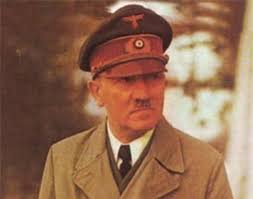
Adolf Hitler
Molotov ignored the talk of India and instead demanded control over Finland, Bulgaria, and the Turkish Straits.
Hitler adamantly opposed Soviet control over Finland, which he considered a strategic ally. He feared a Soviet expansion into Scandinavia would threaten German iron ore supplies from Sweden and northern interests.
And he deeply feared that the Soviet Union would cut off Germany’s vital Romanian oil supplies. Romania provided roughly 75% of German oil in 1941. A late 1940 Soviet attack on the Ploiești oil fields would render Germany helpless and force an end to the war.
On a personal level, Molotov and Hitler grated on each other’s nerves. Molotov was blunt in his remarks and didn’t spare Hitler at all. He seldom smiled and refused to compromises on Russia’s demands for control of Finland, Bulgaria, and the Turkish Straits.
At one point, Molotov asked: “Is last year’s agreement [between Germany and Russia] still valid?”
Hitler replied that it was.
“I asked this question,” said Molotov, “because of the Finns. You are on very friendly relations with the Finns. You invite people from Finland to Germany and you send missions there. And the Finns are very dangerous people. They undermine our security and we’ll have to do something about that and we are going to do something about that.”

Vyacheslav Molotov
“I understand you very well,” exploded Hitler. “You want to wage war against Finland and that is quite out of the question. Do you hear me? It’s impossible because my supplies of iron, nickel and other important raw materials would be cut.”
During the talks, British Royal Air Force (RAF) bombers appeared overhead, forcing the leaders to move to an air raid shelter.
German Foreign Minister Joachim von Ribbentrop had been trying to convince Molotov that Great Britain was “beaten” and that the British Empire was a “gigantic world-wide estate in bankruptcy” ready for partition.
Molotov sarcastically replied: “If England is beaten, why are we in this shelter and whose are the bombs that are falling?”
Even while Molotov was still in Berlin, Hitler ordered his generals to attack the Soviet Union on May 15, 1941.
Within a month they responded with a detailed plan code-named “Operation Barbarossa.”
Less than one year later—on June 22, 1941—with 134 divisions at full fighting strength and 73 more divisions for deployment behind the front, the German Wehrmacht invaded the Soviet Union.
Now the two most ruthless dictators on earth—Adolf Hitler and Joseph Stalin—were locked in a fight to the death.
At the outset, the odds clearly favored the Germans.
The invasion caught the Soviet Union by surprise. Joseph Stalin had received Intelligence reports from Great Britain that Germany was preparing to attack. But Stalin, who believed the British were trying to drive a wedge between him and Hitler, put his faith in Hitler, whose guarantees had long proved worthless.

German army units
From June to September, the Wehrmacht captured vast territories and encircled hundreds of thousands of Red Army troops. German forces quickly advanced toward Leningrad, Moscow, and Kiev, inflicting massive casualties.
The Luftwaffe destroyed much of the Soviet air force on the ground.
In June and July, German panzers quickly advanced, capturing over 300,000 Soviet prisoners in the Minsk-Bialystok pocket. By late September, Army Group South captured Kiev, resulting in the largest encirclement in history, with roughly 600,000 Soviet soldiers trapped.
By the end of 1941, more than three million Soviet soldiers were captured or killed. Still, the Soviet Union did not collapse and continued to commit new field armies to the conflict.
By December, the Wehrmacht, besieging Moscow, were literally freezing to death in their summer uniforms. Then, on December 5-6, the Soviets launched their decisive counter-offensive before Moscow, forcing German forces into a retreat.
It marked the first major land defeat for the Wehrmacht since its September 1, 1939 invasion of Poland, which ignited World War II.
Now, fast-forward 85 years. Substitute President Donald Trump for Fuhrer Adolf Hitler and Mojtaba Khamenei for Joseph Stalin—and Iran for the Soviet Union.

Donald Trump and Adolf Hitler
Just as Hitler launched his attack on the Soviet Union without warning, so did Trump launch his on Iran—on February 28.
Hitler’s attack didn’t kill Joseph Stalin, the all-powerful dictator of the Soviet Union. But Trump’s airstrikes killed Ali Hosseini Khamenei, who had ruled Iran as its supreme leader from 1989.

Ayatollah Ali Khamenei
Still, the Iranians quickly elevated his son, Mojtaba Khamenei, to the same position—and went on fighting.
Hitler—and numerous members of the Wehrmacht—believed that Germany’s mechanized panzers would succeed where Napoleon Bonaparte had failed in 1812. And that they could conquer the Soviet Union in only three months.
They were wrong.
 Bureaucracybuster's Blog
ABC NEWS, ADOLF HITLER, ALI HOSSEINI KHAMENEI, ALTERNET, AMERICABLOG, AP, AYATOLLAH ALI KHAMENEI, BABY BOOMER RESISTANCE, BAHRAIN, BBC, BERLIN, BLOOMBERG, BLOOMBERG NEWS, BLUESKY, BUZZFEED, CBS NEWS, CNN, CROOKS AND LIARS, DAILY KOS, DONALD TRUMP, DRONES, FINLAND, FIVETHIRTYEIGHT, FRANCE, GREAT BRITAIN, HARPER’S MAGAZINE, HUFFINGTON POST, IRAN, ISRAEL, ITALY, JAPAN, JOACHIM VON RIBBENTROP, JOSEPH STALIN, KIEV, KUWAIT, LENINGRAD, LUFTWAFFE, MEDIA MATTERS, MOJTABA KHAMENEI, MOSCOW, MOTHER JONES, MOVEON, MSNBC, NAZI GERMANY, NBC NEWS, NEW REPUBLIC, NEWSDAY, NEWSWEEK, NEWT GINGRICH, NPR, NUCLEAR WEAPONS, OIL FIELDS, OMAN, OPERATION BARBAROSSA, PBS NEWSHOUR, PETE HEGSETH, POLAND, POLITICO, POLITICUSUSA, QATAR, QATER, RAW STORY, REUTERS, SALON, SAUDI ARABIA, SEATTLE TIMES, SLATE, SOVIET UNION, SS, TALKING POINTS MEMO, THE ATLANTIC, THE CHICAGO SUN-TIMES, THE CHICAGO TRIBUNE, THE DAILY BEAST, THE DAILY BLOG, THE GUARDIAN, THE HILL, THE HUFFINGTON POST, THE INTERCEPT, THE LONGEST DAY (MOVIE, THE LOS ANGELES TIMES, THE NATION, THE NEW REPUBLIC, THE NEW YORK TIMES, THE NEW YORKER, THE PENTAGON, THE UNITED ARAB EMIRATES, THE VILLAGE VOICE, THE WASHINGTON POST, THINKPROGRESS, THIRD REICH, TIME, TRUTHDIG, TRUTHOUT, TWO POLITICAL JUNKIES, U.S. NEWS & WORLD REPORT, UKRAINE, UNIFORMS, UPI, USA TODAY, VYACHESLAV MOLOTOV, WEHRMACHT, WONKETTE, WORLD WAR 11, X
THE DICTATORS’ DANCE–PAST AND PRESENT: PART ONE (OF TWO)
In Bureaucracy, History, Military, Politics, Social commentary on March 31, 2026 at 12:48 amThe city: Berlin.
The date: November 12–13, 1940.
The event: A meeting between German Fuhrer Adolf Hitler and Soviet Foreign Minister Vyacheslav Molotov.
The purposes: To discuss:
Hitler wanted the USSR to join the Axis (Germany, Italy, and Japan) and expand “southward” toward the Indian Ocean to avoid conflict in Europe.
Adolf Hitler
Molotov ignored the talk of India and instead demanded control over Finland, Bulgaria, and the Turkish Straits.
Hitler adamantly opposed Soviet control over Finland, which he considered a strategic ally. He feared a Soviet expansion into Scandinavia would threaten German iron ore supplies from Sweden and northern interests.
And he deeply feared that the Soviet Union would cut off Germany’s vital Romanian oil supplies. Romania provided roughly 75% of German oil in 1941. A late 1940 Soviet attack on the Ploiești oil fields would render Germany helpless and force an end to the war.
On a personal level, Molotov and Hitler grated on each other’s nerves. Molotov was blunt in his remarks and didn’t spare Hitler at all. He seldom smiled and refused to compromises on Russia’s demands for control of Finland, Bulgaria, and the Turkish Straits.
At one point, Molotov asked: “Is last year’s agreement [between Germany and Russia] still valid?”
Hitler replied that it was.
“I asked this question,” said Molotov, “because of the Finns. You are on very friendly relations with the Finns. You invite people from Finland to Germany and you send missions there. And the Finns are very dangerous people. They undermine our security and we’ll have to do something about that and we are going to do something about that.”
Vyacheslav Molotov
“I understand you very well,” exploded Hitler. “You want to wage war against Finland and that is quite out of the question. Do you hear me? It’s impossible because my supplies of iron, nickel and other important raw materials would be cut.”
During the talks, British Royal Air Force (RAF) bombers appeared overhead, forcing the leaders to move to an air raid shelter.
German Foreign Minister Joachim von Ribbentrop had been trying to convince Molotov that Great Britain was “beaten” and that the British Empire was a “gigantic world-wide estate in bankruptcy” ready for partition.
Molotov sarcastically replied: “If England is beaten, why are we in this shelter and whose are the bombs that are falling?”
Even while Molotov was still in Berlin, Hitler ordered his generals to attack the Soviet Union on May 15, 1941.
Within a month they responded with a detailed plan code-named “Operation Barbarossa.”
Less than one year later—on June 22, 1941—with 134 divisions at full fighting strength and 73 more divisions for deployment behind the front, the German Wehrmacht invaded the Soviet Union.
Now the two most ruthless dictators on earth—Adolf Hitler and Joseph Stalin—were locked in a fight to the death.
At the outset, the odds clearly favored the Germans.
The invasion caught the Soviet Union by surprise. Joseph Stalin had received Intelligence reports from Great Britain that Germany was preparing to attack. But Stalin, who believed the British were trying to drive a wedge between him and Hitler, put his faith in Hitler, whose guarantees had long proved worthless.
German army units
From June to September, the Wehrmacht captured vast territories and encircled hundreds of thousands of Red Army troops. German forces quickly advanced toward Leningrad, Moscow, and Kiev, inflicting massive casualties.
The Luftwaffe destroyed much of the Soviet air force on the ground.
In June and July, German panzers quickly advanced, capturing over 300,000 Soviet prisoners in the Minsk-Bialystok pocket. By late September, Army Group South captured Kiev, resulting in the largest encirclement in history, with roughly 600,000 Soviet soldiers trapped.
By the end of 1941, more than three million Soviet soldiers were captured or killed. Still, the Soviet Union did not collapse and continued to commit new field armies to the conflict.
By December, the Wehrmacht, besieging Moscow, were literally freezing to death in their summer uniforms. Then, on December 5-6, the Soviets launched their decisive counter-offensive before Moscow, forcing German forces into a retreat.
It marked the first major land defeat for the Wehrmacht since its September 1, 1939 invasion of Poland, which ignited World War II.
Now, fast-forward 85 years. Substitute President Donald Trump for Fuhrer Adolf Hitler and Mojtaba Khamenei for Joseph Stalin—and Iran for the Soviet Union.
Donald Trump and Adolf Hitler
Just as Hitler launched his attack on the Soviet Union without warning, so did Trump launch his on Iran—on February 28.
Hitler’s attack didn’t kill Joseph Stalin, the all-powerful dictator of the Soviet Union. But Trump’s airstrikes killed Ali Hosseini Khamenei, who had ruled Iran as its supreme leader from 1989.
Ayatollah Ali Khamenei
Still, the Iranians quickly elevated his son, Mojtaba Khamenei, to the same position—and went on fighting.
Hitler—and numerous members of the Wehrmacht—believed that Germany’s mechanized panzers would succeed where Napoleon Bonaparte had failed in 1812. And that they could conquer the Soviet Union in only three months.
They were wrong.
Share this: