Posts Tagged ‘FACEBOOK’
ABC NEWS, ADOLF HITLER, ALBERT SPEER, BARACK OBAMA, CBS NEWS, CNN, DEBT CEILING, EXTORTION, FACEBOOK, FASCISM, HOUSE SPEAKER JOHN BOEHNER, NAZI GERMANY, NBC NEWS, NEGOTIATING, PAP SMEARS, PLANNED PARENTHOOD, REPUBLICAN PARTY, REPUBLICANS, THE CHICAGO SUN-TIMES, THE CHICAGO TRIBUNE, THE LOS ANGELES TIMES, THE NEW YORK TIMES, THE WASHINGTON POST, TRICKLE-DOWN ECONOMICS, TWITTER, USA TODAY, WARREN BUFFET, WORLD WAR 11
In Bureaucracy, History, Law, Law Enforcement, Politics, Social commentary on February 12, 2015 at 12:00 am
With more than 240,000 employees, the Department of Homeland Security (DHS) is the third largest Cabinet department, after the Departments of Defense and Veterans Affairs.
The Defense Department is charged with military actions abroad. DHS is responsible for protecting the United States inside and outside its borders.
Its goal is to prepare for, prevent and–if prevention fails–respond to man-made accidents, natural disasters and terrorism.

Among the agencies now operating under its mandate:
- U.S. Citizenship and Immigration Services
- U.S. Customs and Border Protection
- U.S. Coast Guard
- Federal Emergency Management Agency (FEMA)
- Federal Law Enforcement Training Center
- U.S. Immigration and Customs Enforcement (ICE)
- Transportation and Safety Administration (TSA)
- U.S. Secret Service
- Science and Technology Directorate
- Domestic Nuclear Detection Office
- Office of Intelligence and Analysis
- Office of Operations Coordination and Planning
Some of DHS’s agencies–like FEMA and the Secret Service–are well-known. Others–such as the Federal Law Enforcement Training Center and the Domestic Nuclear Detection Office–are not.
Click here: Department Components | Homeland Security
Yet each has a vital role to play in protecting the nation. A nation whose security Republicans are willing to threaten to get their way on a matter of domestic policy.
Consider the implications if there is no
- Secret Service to protect the President;
- TSA to ensure the safety of airline passengers;
- FEMA to respond to national emergencies (such as Hurricanes Katrina and Sandy);
- Domestic Nuclear Detection Office to prevent nuclear terrorism;
- Coast Guard to save those in ocean peril and defend our maritime borders.
Right-wing Republicans argue that even if DHS’s funding were stopped, most of its employees would stay on the job.
That’s because they perform work considered necessary to protect human life and property. But while those employees were safeguarding the country, they wouldn’t be paid until the shutdown ended.
It’s hard to give your full attention to protecting the lives of others when you have to worry about paying a mortgage or feeding your family.
Of course, the Republicans responsible for this shutdown would continue to receive their hefty paychecks.
And there is something else to consider.
DHS is best-known for its mission to prevent terrorist attacks on America. And America may well be in the crosshairs of North Korean terrorism at this very moment.
On November 14, 2014, Sony Pictures came under relentless attack by cyberterrorists, who the FBI has linked to North Korea.
The reasoon? Sony’s production of “The Interview,” a comedy depicting the assassination of North Korean dictator Kim Jong Un.
Calling themselves “Guardians of Peace,” or GOP, they shut down the company’s computer system and revealed employees’ personal information such as salaries, addresses, and Social Security numbers.
(Ironically, “Guardians of Peace” appropriated the same abbreviation–GOP–used by the Republicans for “Grand Old Party.”)

Warning issued by “Guardians of Peace” (GOP)
On December 17, 2014, Sony Pictures cancelled the Christmas Day premier of “The Interview” after the nation’s five largest movie chains refused to show the movie, following a terror threat posted online.
And then on February 5, 2015, Anthem Insurance announced that its database had been hacked–and sensitive medical information on up to 80 million customers and employees accessed.
According to an anonymous source, the hackers used malware that’s been used almost exclusively by Chinese cyberspies.
* * * * *
As the Third Reich came to its fiery end, Adolf Hitler sought to punish the German people for being “unworthy” of his “genius” and losing the war he had started.
His attitude was: “If I can’t rule Germany, then there won’t be a Germany.”
In his infamous “Nero Order,” he decreed the destruction of everything still remaining–industries, ships, harbors, communications, roads, mines, bridges, stores, utility plants, food stuffs.
Fortunately for Germany, one man–Albert Speer–finally broke ranks with his Fuhrer.

Albert Speer
Risking death, he refused to carry out Hitler’s “scorched earth” order. Even more important, he mounted a successful effort to block such destruction or persuade influential military and civilian leaders to disobey the order as well.
As a result, those targets slated for destruction were spared.
Since the election of America’s first black President, Republicans have waged a similar “scorched earth” campaign.
Their avowed goal–as stated openly by Kentucky’s U.S. Senator Mitch McConnell–was “to make Barack Obama a one-term President.”
Literally during his first Inauguration, Republicans, in a secret meeting, agreed to block every effort he made to repair the economy.
Acting as extortionists, they have repeatedly threatened to shut down the government if they didn’t get their way in legislative matters.
And just as repeatedly, they have blocked legislation that would have helped the poor, unemployed, women, elderly, disabled or middle-class.
At the center of their fury has been the Affordable Care Act, providing medical care to all citizens. Even after Congress passed it and the Supreme Court affirmed it, House Republicans shut down the government in October, 2013.
By doing so, they hoped to pressure Obama into killing his signature piece of legislation. The effort failed.
Like Adolf Hitler, their attitude has been: “If I can’t rule America, there won’t be an America.”
It remains to be seen whether a Republican Albert Speer will step forward to save America from the self-destructive excesses of this Nation’s own fanatics.
ABC NEWS, ADOLF HITLER, ALBERT SPEER, BARACK OBAMA, CBS NEWS, CNN, DEBT CEILING, DEPARTMENT OF HOMELAND SECURITY, EXTORTION, FACEBOOK, FASCISM, HOUSE SPEAKER JOHN BOEHNER, NAZI GERMANY, NBC NEWS, NEGOTIATING, PAP SMEARS, PLANNED PARENTHOOD, REPUBLICAN PARTY, REPUBLICANS, THE CHICAGO SUN-TIMES, THE CHICAGO TRIBUNE, THE LOS ANGELES TIMES, THE NEW YORK TIMES, THE WASHINGTON POST, TRICKLE-DOWN ECONOMICS, TWITTER, USA TODAY, WARREN BUFFET, WORLD WAR 11
In Bureaucracy, History, Law, Law Enforcement, Politics, Social commentary on February 11, 2015 at 2:08 am
During the summer of 2011, Republicans refused to raise the debt ceiling unless Democrats agreed to massively cut social programs for the elderly, poor and disabled.
If Congress failed to raise the borrowing limit of the federal government by August 2, the date when the U.S. reached the limit of its borrowing abilities, America would begin defaulting on its loans.
As Warren Buffett, CEO of Berkshire Hathaway, explained the looming economic catastrophe:
“If you don’t send out Social Security checks, I would hate to think about the credit meeting at S&P and Moody’s the next morning.
“If you’re not paying millions and millions and millions of people that range in age from 65 on up, money you promised them, you’re not a AAA,” said Buffett.
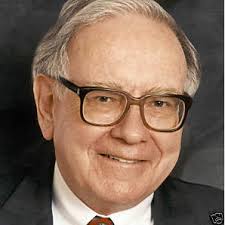
Warren Buffett
A triple-A credit rating is the highest possible rating that can be achieved.
And while Republicans demanded that the disadvantaged tighten their belts, they rejected any raising of taxes on their foremost constituency–the wealthiest 1%.
As the calendar moved ever closer to the fateful date of August 2, Republican leaders continued to insist: Any deal that includes taxes “can’t pass the House.”
To prevent the government from defaulting on its loans, President Barack Obama agreed to sign the Republican-crafted Budget Control Act (BCA) of 2011.
The Act provided for a Joint Select Committee on Deficit Reduction to produce legislation by late November to decrease the deficit by $1.2 trillion over ten years.
When the so-called “Super Committee” failed to reach agreement, the second part of the BCA went into effect.
This directed automatic across-the-board cuts (known as “sequestrations”) split evenly between defense and domestic spending, beginning on January 2, 2013.
A major casualty of sequestration has been the Centers for Disease Control and Prevention (CDC). And this has threatened the safety of the Nation Republicans claim to love:
- In 2013, the CDC was forced to cut 5%, or more than $285 million, from its budget.
- The sequester cut $195 million from the National Centers for Emerging and Zoonotic Infectious Diseases, a CDC program that tries to prevent illness and death from infectious disease.
- For fiscal 2014, CDC’s budget was $5.9 billion, down from the $6.5 billion allotted in 2010.

Centers for Disease Control and Prevention
In October, 2014, for the first time in United States history, the CDC faced an unexpected outbreak of the dreaded Ebola virus. To Americans’ horror, the agency initially seemed unable to deal effectively with the threat.
Moreover, the Nation was confronting the Ebola crisis without a Surgeon General–thanks to NRA-funded Republican Senators.
President Obama had nominated Dr. Vivek Murthy for the spot in November, 2013, when the previous surgeon general left the position.
But the Senate still hadn’t approved Murthy. And support for him declined since he tweeted on October 16, 2002, that “guns are a health care issue.”
At the same time, Republicans rushed to blame President Obama for the continuing Ebola menace in West Africa–and the danger it posed to Americans.
“I think this Ebola outbreak in Africa is a serious problem,” said House Speaker John Boehner. “And I’m a bit surprised the administration hasn’t acted more quickly to address what is a serious threat, not only to Africans but to others around the world.”
“The President made a lot of commitments to combat Ebola, actions which I supported,” said North Carolina U.S. Senator Richard Burr. “But it has become clear that the administration’s capacity to fulfill these promises in a timeline that sufficiently addresses this crisis does not exist.”
But now a new Republican-inspired crisis threatens America.
On December 13, 2014, the U.S. Senate passed a $1.1 trillion spending bill to fund almost the entire government through the September 30 end of the fiscal year.
But one Federal agency was pointedly exempted from full funding: The Department of Homeland Security (DHS).
President George W. Bush had created this agency to safeguard the nation against terrorism. But he didn’t imagine that his fellow Republicans might willingly jeopardize the security of the Nation.
President Obama had requested $38.2 billion to fund DHS through fiscal year 2015. But Republicans ensured that its funding would end on February 27.
Why?
Republicans had gained control of the House of Representatives after the 2010 elections. And then they gained control of the Senate with the 2014 elections.
With their newfound majorities in both houses of Congress, they intend to hold the security of the United States as a hostage. Their goal: To force Obama to rescind the changes he has made in American immigration policy.

It is Homeland Security that’s charged with implementing those changes. And Republicans intend to strip it of funding to do so.
And if that means allowing DHS to “twist slowly, slowly in the wind” (to use a phrase made infamous by the Nixon administration) while Republicans play out their latest power-game, so be it.
This is no small matter.
With more than 240,000 employees, DHS is the third largest Cabinet department, after the Departments of Defense and Veterans Affairs.
The Defense Department is charged with protecting the United States through military action abroad. DHS is responsible for safeguarding the Nation inside and outside its borders.
Its goal is to prepare for, prevent and–if prevention fails–respond to man-made accidents, natural disasters and terrorism.
ABC NEWS, ADOLF HITLER, ALBERT SPEER, BARACK OBAMA, CBS NEWS, CNN, DEBT CEILING, DEPARTMENT OF HOMELAND SECURITY, EXTORTION, FACEBOOK, FASCISM, HOUSE SPEAKER JOHN BOEHNER, NAZI GERMANY, NBC NEWS, NEGOTIATING, PAP SMEARS, PLANNED PARENTHOOD, REPUBLICAN PARTY, REPUBLICANS, THE CHICAGO SUN-TIMES, THE CHICAGO TRIBUNE, THE LOS ANGELES TIMES, THE NEW YORK TIMES, THE WASHINGTON POST, TRICKLE-DOWN ECONOMICS, TWITTER, USA TODAY, WARREN BUFFET, WORLD WAR 11
In Bureaucracy, History, Law, Law Enforcement, Military, Politics, Social commentary on February 10, 2015 at 12:25 am
Albert Speer, Minister of Armaments for the Third Reich, was appalled.
His Fuhrer, Adolf Hitler–the man he had idolized for 14 years–had just passed a death sentence on Germany, the nation he claimed to love above all others.
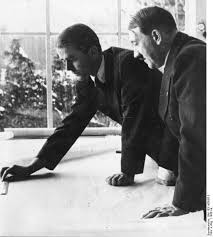
Albert Speer and Adolf Hitler pouring over architectural plans
On March 19, 1945, facing certain defeat, Hitler had ordered a massive “scorched-earth” campaign throughout Germany.
All German agriculture, industry, ships, communications, roads, food stuffs, mines, bridges, stores and utility plants were to be destroyed.
If implemented, it would deprive the entire German population of even the barest necessities after the war.
Click here: Hitler’s “Scorched Earth” Decree and Albert Speer’s Response
Now living in a bunker 50 feet below bomb-shattered Berlin, Hitler gave full vent to his most destructive impulses.
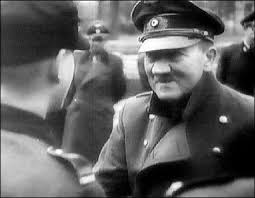
Adolf Hitler addressing boy soldiers as the Third Reich crumbles
“If the war is lost,” Hitler told Speer, “the nation will also perish. This fate is inevitable. There is no necessity to take into consideration the basis which the people will need to continue even a most primitive existence.
“On the contrary, it will be better to destroy these things ourselves, because this nation will have proved to be the weaker one and the future will belong solely to the stronger eastern nation.
“Besides, those who will remain after the battle are only the inferior ones, for the good ones have all been killed.”
Speer argued in vain that there must be a future for the German people. But Hitler refused to back down. He gave Speer 24 hours to reconsider his opposition to the order.
The next day, Speer told Hitler: “My Fuhrer, I stand unconditionally behind you!”
“Then all is well,” said Hitler, suddenly with tears in his eyes.
“If I stand unreservedly behind you,” said Speer, “then you must entrust me rather than the Gauleiters [district Party leaders serving as provincial governors] with the implementation of your decree.”
Filled with gratitude, Hitler signed the decree Speer had thoughtfully prepared before their fateful meeting.
By doing so, Hitler unintentionally gave Speer the power to thwart his “scorched earth” decree.
Speer had been the closest thing to a friend in Hitler’s life. Trained as an architect, he had joined the Nazi Party in 1931.
He met Hitler in 1933, when he presented the Fuhrer with architectural designs for the Nuremberg Rally scheduled for that year.
From then on, Speer became Hitler’s “genius architect” assigned to create buildings meant to last for a thousand years.
In 1943, Hitler appointed him Minister of Armaments, charged with revitalizing the German war effort.
Nevertheless, Speer now crisscrossed Germany, persuading military leaders and district governors to not destroy the vital facilities that wound be needed after the war.
“No other senior National Socialist could have done the job,” writes Randall Hanson, author of Disobeying Hitler: German Resistance After Valkyrie.
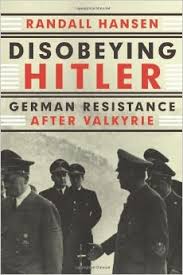
“Speer was one of the very few people in the Reich–perhaps even the only one–with such power to influence actors willingness/unwillingness to destroy.”
Despite his later conviction for war crimes at Nuremberg, Speer never regretted his efforts to save Germany from total destruction at the hands of Adolf Hitler.
Fast-forward to the United States since the 2008 election of President Barack Obama.
Republicans have adopted the same my-way-or-else “negotiating” stance as Adolf Hitler. Like him, they are determined to gain absolute power–or destroy the Nation they claim to love.
Ronald Reagan presided over a tripling of the national debt–and raised the debt limit 17 times–during his eight years in the White House.
President George W. Bush nearly doubled it again.
But that didn’t become an issue for Republicans–so long as one of them held the White House.
Republicans in Congress raised the debt ceiling seven times during the George W. Bush Presidency–when the national debt grew to $10.627 trillion due to tax cuts and wars in Afghanistan and Iraq.
Only when a Democrat–and a black one at that–became President did Congressional Republicans consider this a danger.
Suddenly, “fiscal integrity” became the byword of Republicans. And in its name, they repeatedly threatened to shut down the government if their legislative demands weren’t met.
In April, 2011, the United States government almost shut down over Republican demands about subsidized pap smears.
During a late-night White House meeting with President Barack Obama and key Congressional leaders, Republican House Speaker John Boehner made this threat:
His conference would not approve funding for the government if any money were allowed to flow to Planned Parenthood through Title X legislation.
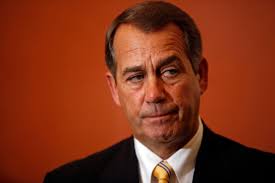
John Boehner
Facing an April 8 deadline, negotiators worked day and night to strike a compromise–and finally reached one.
Three months later–on July 9–Republican extortionists again threatened the Nation with financial ruin and international disgrace unless their demands were met.
By refusing to raise the debt ceiling, they would force the government to default on paying the bills it owed.
President Obama had offered to make historic cuts in the federal government and the social safety net–on which millions of Americans depend for their most basic needs.
But Boehner rejected that offer. He would not agree to the tax increases that Democrats wanted to impose on the wealthiest 1% as part of the bargain.
ABC NEWS, AIRLINES, ANTHEM INC., BUSINESS, CBS NEWS, CHINA, CNN, COMPUTER SECURITY, CREDIT CARDS, CYBERSECURITY, DAIRY QUEEN, FACEBOOK, JOHN HERING, JPMORGAN/CHASE, LILY TOMLIN, LOOKOUT, LUGGAGE THEFTS, MA BELL, NBC NEWS, ROWAN & MARTIN'S LAUGH-IN, SOCIAL SECURITY, STAPLES, TARGET, THE CHICAGO SUN-TIMES, THE CHICAGO TRIBUNE, THE LOS ANGELES TIMES, THE NEW YORK TIMES, THE WALL STREET JOURNAL, THE WASHINGTON POST, TWITTER, USA TODAY
In Bureaucracy, Business, History, Law, Politics, Social commentary on February 9, 2015 at 2:06 am
Comedian Lily Tomlin rose to fame on the 1960s comedy hit, Rowan & Martin’s Laugh-In, as Ernestine, the rude, sarcastic switchboard operator for Ma Bell.
She would tap into customers’ calls, interrupt them, make snide remarks about their personal lives. And her victims included celebrities as much as run-of-the-mill customers.

Lily Tomlin as Ernestine
She introduced herself as working for “the phone company, serving everyone from presidents and kings to the scum of the earth.”
But perhaps the line for which her character is best remembered was: “We don’t care. We don’t have to. We’re the phone company.”
Watching Ernestine on Laugh-In was a blast for millions of TV viewers. But facing such corporate arrogance in real-life is no laughing matter.
Clearly, too many companies take the same attitude as Ernestine: “We don’t care. We don’t have to.”
This is especially true for companies that are supposed to safeguard their customers’ most sensitive information–such as their credit card numbers, addresses, emails and phone numbers.
An October 22, 2014 “commentary” published in Forbes magazine raised the highly disturbing question: “Cybersecurity: Does Corporate America Really Care?”
And the answer is clearly: No.
Its author is John Hering, co-founder and executive director of Lookout, which bills itself as “the world leader in mobile security for consumers and enterprises alike.”
Click here: Cybersecurity: Does corporate America really care?
October, 2014 proved a bad month for credit card-using customers of Kmart, Staples and Dairy Queen.
All these corporations reported data breeches involving the theft of credit card numbers of countless numbers of customers.
Earlier breaches had hit Target, Home Depot and JPMorgan/Chase.
And on February 5, 2015, health insurance giant Anthem Inc. announced that hackers had breached its computer system and accessed the medical records of tens of millions of its customers and employees.

Anthem, the nation’s second-largest health insurer, said the infiltrated database held records on up to 80 million people.
Among the customers’ information accessed:
- Names
- Birthdates
- Social Security numbers
- Member ID numbers
- Addresses
- Phone numbers
- Email addresses and
- Employment information.
Some of the customer data may also include details on their income.
Click here: Anthem hack exposes data on 80 million; experts warn of identity theft – LA Times
Bad as that news was, worse was to come.
A February 5 story by the Wall Street Journal revealed that Anthem stored the Social Security numbers of 80 million customers without encrypting them.
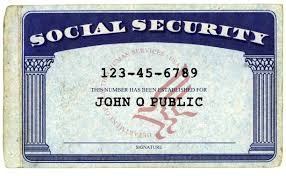
The company believes that hackers used a stolen employee password to access the database
Anthem’s alleged reason for refusing to encrypt such sensitive data: Doing so would have made it harder for the company’s employees to track health care trends or share data with state and health providers.
Anthem spokeswoman Kristin Binns blamed the data breach on employers and government agencies who “require us to maintain a member’s Social Security number in our systems so that their systems can uniquely identify their members.”
She said that Anthem encrypts personal data when it moves in or out of its database–but not where it is stored.
This is a commonplace practice in the healthcare industry.
The FBI is now investigating the hack.
According to an anonymous source, the hackers used malware that has been used almost exclusively by Chinese cyberspies.
Naturally, China has denied any wrongdoing. With a completely straight face, Chinese Foreign Ministry spokesman Hong Lei said:
“We maintain a cooperative, open and secure cyberspace, and we hope that countries around the world will make concerted efforts to that end.”
He also said that the charge that the hackers were Chinese was “groundless.”
Click here: Health Insurer Anthem Didn’t Encrypt Stolen Data – WSJ
Meanwhile, John Herring’s complaints remain as valid today as they did last October.
“One thing is clear,” writes Hering. “CEOs need to put security on their strategic agendas alongside revenue growth and other issues given priority in boardrooms.”
Hering warns that “CEOs don’t seem to be making security a priority.” And he offers several reasons for this:
- The sheer number of data compromises;
- Relatively little consumer outcry;
- Almost no impact on the companies’ standing on Wall Street;
- Executives may consider such breaches part of the cost of doing business.
“There’s a short-term mindset and denial of convenience in board rooms,” writes Hering.
“Top executives don’t realize their systems are vulnerable and don’t understand the risks. Sales figures and new products are top of mind; shoring up IT systems aren’t.”
There are three ways corporations can be forced to start behaving responsibly on this issue.
- Smart attorneys need to start filing class-action lawsuits against companies that refuse to take steps to protect their customers’ private information. There is a name for such behavior: Criminal negligence. And there are laws carrying serious penalties for it.
- There must be Federal legislation to ensure that multi-million-dollar fines are levied against such companies–and especially their CEOs–when such data breaches occur.
- Congress should enact legislation allowing for the prosecution of CEOs whose companies’ negligence leads to such massive data breaches. They should be considered as accessories to crime, and, if convicted, sentenced to lengthy prison terms.
Only then will the CEO mindset of “We don’t care, we don’t have to” be replaced with: “We care, because our heads will roll if we don’t.”
9/11, ABC NEWS, ADOLF HITLER, AMERICANS FOR TAX REFORM, ANDERSON COOPER, ANTI-COMMUNISM, ARTHUR MILLER, BILL CLINTON, CBS NEWS, CENTER FOR SECURITY POLICY, CHINA, CHRIS MATTHEWS, CNN, DICK CHENEY, DWIGHT D. EISENHOWER, EDWARD R. MURROW, FACEBOOK, GEORGE H.W. BUSH, HARRY S. TRUMAN, HEINRICH HIMMLER, HERMAN CAIN, HERMAN GORING, HILLARY CLINTON, HUMA ABEDIN, JEWS, JIMMY CARTER, JOHN BIRCH SOCIETY, JOHN F. KENNEDY, JOHN STEINBECK, JOSEPH GOEBBELS, JOSEPH MCCARTHY, JOSEPH STALIN, KGB, LIZ CHENEY, LUCILLE BALL, LYNDON B. JOHNSON, MARY CHENEY, MICHELLE BACHMANN, MIKE HUCKABEE, MITT ROMNEY, MSNBC, MUSLIM BROTHERHOOD, MUSLIMS, NAZI GERMANY, NAZI PARTY, NBC NEWS, NEWT GINGRICH, PETE SEEGER, RED SCARE, REINHARD HEYDRICH, REPUBLICAN PARTY, RICHARD NIXON, RICK SANTORUM, Ronald Reagan, SAME-SEX MARRIAGE, SENATOR MIKE ENZI, SOVIET UNION, SS, THE AMERICAN CENTER FOR SECURITY POLICY, THE CHICAGO SUN-TIMES, THE CHICAGO TRIBUNE, THE HUFFINGTON POST, THE LOS ANGELES TIMES, THE NEW YORK TIMES, THE WALL STREET JOURNAL, THE WASHINGTON POST, TWITTER, USA TODAY, WYOMING
In Bureaucracy, History, Law, Politics, Social commentary on February 6, 2015 at 12:15 am
With the Soviet Union collapsed in 1991, the Republican Party went into a tailspin of dismay.
For almost 50 years, Republicans had conjured up The Red Bogeyman to scare voters into sending them to Congress and the White House.
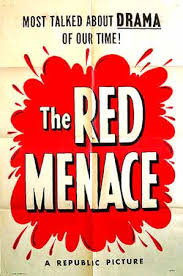
But now that the “workers’ paradise” had disappeared, Americans seemed to lose interest in the Communist Menace.
True, the People’s Republic of China remained, and its increasing economic clout would challenge the United States well into the 21st century. But Americans didn’t seem to fear the Red Chinese as they had the Red Russians.
What was the Republican Party to do to lure voters?
On September 11, 2001, the answer arrived–in two highjacked jetliners that crashed into the World Trade Center in New York and one that struck the Pentagon in Washington, D.C.

Exit The Red Bogeyman. Enter The Maniacal Muslim.
Consider:
- Mike Huckabee – “If the purpose of a church is to push forward the gospel of Jesus Christ, and then you have a Muslim group that says that Jesus Christ and all the people that follow him are a bunch of infidels who should be essentially obliterated, I have a hard time understanding that.”
- Herman Cain – ”I would not” appoint a Muslim in his administration.
- Newt Gingrich – “I am convinced that if we do not decisively win the struggle over the nature of America, by the time they [his grandchildren] are my age they will be in a secular atheist country, potentially one dominated by radical Islamists. …”
- Rick Santorum – On supporting the racial profiling of Muslims: “Obviously, Muslims would be someone you look at, absolutely.”
- Mitt Romney – “Based on the numbers of American Muslims in our population, I cannot see that a Cabinet position [for a Muslim] would be justified.”
And on July 13, Rep. Michelle Bachmann (R-Minn.) sent letters to the Inspectors General of the Departments of
- Defense;
- State;
- Justice; and
- Homeland Security.
“The purpose of these letters,” wrote Bachmann, was to “request a multi-department investigation into potential Muslim Brotherhood infiltration into the United States Government.”

Michelle Bachmann
Bachmann further asserted in her letter to the State Department that Huma Abedin, deputy chief of staff to Secretary of State Hillary Clinton, had ties to the Muslim Brotherhood.
And the evidence for this?
The Center for Security Policy’s claim that Abedin’s father (who died when she was a teenager), mother and brother are “connected” to the organization.
And what is the Center of Security Policy? A private organization subsidized by donors to neo-conservative causes.
In a separate letter, Bachmann demanded to know how Abedin received her security clearance.
Among the co-signers of Bachmann’s letter to the Inspectors General were:
- Rep. Trent Franks of Arizona, who has said abortion has done more harm to blacks than slavery;
- Rep. Lynn Westmoreland of Georgia, who called presidential candidate Barack Obama and his wife, Michelle, ”uppity”; and
- Rep. Louie Gohmert of Texas, who claims that terrorist organizations send pregnant women into the U.S. so that their children will be American citizens–who can enter and leave the country at will as they are trained to be terrorists abroad.
When pressed for their evidence of “a vast Muslim conspiracy,” right-wing accusers usually refuse to provide any.
An example of this occurred during an August 13, 2010 interview between Gohmert and CNN’s Anderson Cooper:
COOPER: What research? Can you tell us about the research?
GOHMERT: You are attacking the messenger, Anderson, you are better than this. You used to be good. You used to find that there was a problem and you would go after it.
COOPER: Sir, I am asking you for evidence of something that you said on the floor of the House.
GOHMERT: I did, and you listen, this is a problem. If you would spend as much time looking into the problem as you would have been trying to come after me and belittle me this week –
COOPER: Sir, do you want to offer any evidence? I’m giving you an opportunity to say what research and evidence you have. You’ve offered none, other than yelling.
Nor did Gohmert offer any evidence that evening.
Of course, the ultimate Republican Muslim slander is that President Barack Obama–a longtime Christian–is himself a Muslim.
No doubt Republicans feel totally safe in making these attacks, since Muslims comprise only 1% of the American population.
This has long been a hallmark of right-wing attacks–to go after a minority that cannot effectively defend itself.
Thus, Adolf Hitler attacked the Jews of Germany.
And Republicans have successively attacked blacks, Hispanics and gays–until each group became politically influential enough to defeat Republican candidates.
Today, most right-wing politicians at least grudgingly court all of these groups.
When Muslims become a significant political force in their own right, the Right will court them, too. And then move on to yet another helpless scapegoat to blame for America’s troubles.
9/11, ABC NEWS, ADOLF HITLER, AMERICANS FOR TAX REFORM, ANDERSON COOPER, ANTI-COMMUNISM, ARTHUR MILLER, BILL CLINTON, CBS NEWS, CENTER FOR SECURITY POLICY, CHINA, CHRIS MATTHEWS, CNN, DICK CHENEY, DWIGHT D. EISENHOWER, EDWARD R. MURROW, FACEBOOK, GEORGE H.W. BUSH, HARRY S. TRUMAN, HEINRICH HIMMLER, HERMAN CAIN, HERMAN GORING, HILLARY CLINTON, HUMA ABEDIN, JEWS, JIMMY CARTER, JOHN BIRCH SOCIETY, JOHN F. KENNEDY, JOHN STEINBECK, JOSEPH GOEBBELS, JOSEPH MCCARTHY, JOSEPH STALIN, KGB, LIZ CHENEY, LUCILLE BALL, LYNDON B. JOHNSON, MARY CHENEY, MICHELLE BACHMANN, MIKE HUCKABEE, MITT ROMNEY, MSNBC, MUSLIM BROTHERHOOD, MUSLIMS, NAZI GERMANY, NAZI PARTY, NBC NEWS, NEWT GINGRICH, PETE SEEGER, RED SCARE, REINHARD HEYDRICH, REPUBLICAN PARTY, RICHARD NIXON, RICK SANTORUM, Ronald Reagan, SAME-SEX MARRIAGE, SENATOR MIKE ENZI, SOVIET UNION, SS, THE AMERICAN CENTER FOR SECURITY POLICY, THE CHICAGO SUN-TIMES, THE CHICAGO TRIBUNE, THE HUFFINGTON POST, THE LOS ANGELES TIMES, THE NEW YORK TIMES, THE WALL STREET JOURNAL, THE WASHINGTON POST, TWITTER, USA TODAY, WYOMING
In Bureaucracy, History, Law, Politics, Social commentary on February 5, 2015 at 12:08 am
“Judge not, that you not be judged. For with what judgment you judged, you shall be judged, and with what measure you mete, it shall be measured to you again.”
So warns the Gospel of St. Matthew, 7:1-2. It’s advice that Right-wingers Joseph McCarthy, Robert Welch and George H.W. Bush would have done well to heed.
Joseph McCarthy, Wisconsin’s gift to the United States Senate, became infamous as the demagogue whose Red-baiting accusations terrified America from 1950 to 1954.
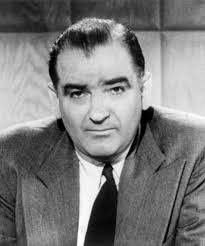
Joseph McCarthy
Elected to the Senate in 1946, he rose to national prominence on February 9, 1950, after giving a fiery speech in Wheeling, West Virginia:
“The State Department is infested with communists. I have here in my hand a list of 205—a list of names that were made known to the Secretary of State as being members of the Communist Party and who nevertheless are still working and shaping policy in the State Department.”
Americans were already growing increasingly fearful of Communism:
- Soviet dictator Joseph Stalin had not withdrawn the Red Army from the countries it had occupied in Eastern Europe during World War II.
- In 1948, the Soviet Union developed–and demonstrated–its own atomic bomb, an achievement U.S. scientists had claimed would not happen for at least a decade.
- In 1949, China fell to the triumphant armies of Mao Tse Tung.
But anti-communism as a lever to political advancement sharply accelerated following McCarthy’s speech. Republicans–resentful at being denied the White House since 1932–seized upon anti-communism as their passport to power.
No American–no matter how prominent–was safe from the accusation of being a Communist or a Communist sympathizer–”a Comsymp” or “fellow traveler” in the style of the era.
Among those accused:
- Secretary of State George C. Marshall, who had overseen America’s strategy for defeating Nazi Germany and Imperial Japan
- President Harry S. Truman
- Playwright Lillian Hellman and Arthur Miller
- Actors Charlie Chaplin, Zero Mostel, Lloyd Bridges, Howard Da Silva, Edward G. Robinson and John Garfield
- Composers Arron Copland and Elmer Bernstein
- Physicist J. Robert Oppenheimer, who presided over the creation of America’s atomic bomb
- Actressses Lee Grant, Delores del Rio, Ruth Gordon and Lucille Ball
- Journalists Edward R. Murrow and William L. Shirer, who had chronicled the rise of Nazi Germany
- Folksinger Pete Seeger
- Writers Irwin Shaw, Howard Fast, John Steinbeck and Dashiell Hammett
Even “untouchable” Republicans became targets for such slander.
The most prominent of these was President Dwight D. Eisenhower–labeled ”a conscious, dedicated agent of the Communist Conspiracy” by Robert Welch, who founded the John Birth Society in 1958.

Robert Welch
Welch, an independently wealthy businessman, used his money to publicize the Society and its views. Welch saw even hardline anti-Communists like Vice President Richard Nixon and actor Ronald Reagan as dangerously liberal.
Meanwhile, McCarthy finally overstepped himself. In 1953, he attacked the leadership of the United States Army as “a hotbed of traitors” and convened an inquiry through the Senate Permanent Subcommittee on Investigations.
But the hearings backfired, exposing McCarthy as the bullying demagogue he was. A Senate committee voted to condemn his behavior, charging that he had “acted contrary to senatorial ethics and tended to bring the Senate into dishonor and disrepute.”
Although McCarthy remained in the Senate another two and a half years, his political influence had ended.
Journalists who had raced to cover his latest slander now avoided him. So did his Republican colleagues–many of whom had once sought his help at election time.
Yet even without McCarthy, Republicans rode the issue of anti-Communism to victory from 1948 to 1960.
After holding the White House for eight years under Eisenhower, they lost it in 1960 to John F. Kennedy and again in 1964 to Lyndon Johnson.
By 1968, with the nation mired in Vietnam and convulsed by antiwar demonstrations, Americans turned once more to those who preyed upon their fears and hates. They elected Richard Nison–and re-elected him in 1972.
After Jimmy Carter won the Presidency in 1976 and lost it in 1980, Republicans held the White House until 1992. Throughout that time, they continued to accuse their opponents of being devious agents–or at least unwitting pawns–of “the Communist conspiracy.”
Even as late as 1992, President George H.W. Bush and the Republican establishment charged that Arkansas Governor Bill Clinton might be a KGB plant.
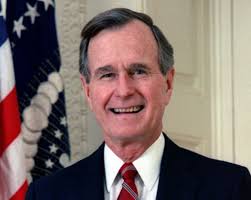
George H.W. Bush
Their evidence: During his tenure at Oxford University in 1969-70, Clinton had briefly visited Moscow.
Thus, the Republican charged that he might have been “programmed” as a real-life “Manchrian candidate” to become, first, Governor of Arkansas–one of America’s poorest states–and then President.
What made this charge all the more absurd: The Soviet Union had officially dissolved in December, 1991.
Although Republicans continued to hurl “Communist!” and “treason!” at their opponents, these charges no longer carried the weight they had while the Soviet Union existed.
Right-wingers had to settle for attacking their opponents as “liberals” and “soft on crime.”
Then, on September 11, 2001, Republicans–and their right-wing supporters–at last found a suitable replacement for the Red Menace.
9/11, ABC NEWS, ADOLF HITLER, AMERICANS FOR TAX REFORM, ANDERSON COOPER, ANTI-COMMUNISM, ARTHUR MILLER, BILL CLINTON, CBS NEWS, CENTER FOR SECURITY POLICY, CHINA, CHRIS MATTHEWS, CNN, DICK CHENEY, DWIGHT D. EISENHOWER, EDWARD R. MURROW, FACEBOOK, GEORGE H.W. BUSH, HARRY S. TRUMAN, HEINRICH HIMMLER, HERMAN CAIN, HERMAN GORING, HILLARY CLINTON, HUMA ABEDIN, JEWS, JIMMY CARTER, JOHN BIRCH SOCIETY, JOHN F. KENNEDY, JOHN STEINBECK, JOSEPH GOEBBELS, JOSEPH MCCARTHY, JOSEPH STALIN, KGB, LIZ CHENEY, LUCILLE BALL, LYNDON B. JOHNSON, MARY CHENEY, MICHELLE BACHMANN, MIKE HUCKABEE, MITT ROMNEY, MSNBC, MUSLIM BROTHERHOOD, MUSLIMS, NAZI GERMANY, NAZI PARTY, NBC NEWS, NEWT GINGRICH, PETE SEEGER, RED SCARE, REINHARD HEYDRICH, REPUBLICAN PARTY, RICHARD NIXON, RICK SANTORUM, Ronald Reagan, SAME-SEX MARRIAGE, SENATOR MIKE ENZI, SOVIET UNION, SS, THE AMERICAN CENTER FOR SECURITY POLICY, THE CHICAGO SUN-TIMES, THE CHICAGO TRIBUNE, THE HUFFINGTON POST, THE LOS ANGELES TIMES, THE NEW YORK TIMES, THE WALL STREET JOURNAL, THE WASHINGTON POST, TWITTER, USA TODAY, WYOMING
In Bureaucracy, History, Law, Politics, Social commentary on February 4, 2015 at 12:02 am
All revolutions,” said Ernst Rohem, leader of Adolf Hitler’s brown-shirted thugs, the S.A., “devour their own children.”
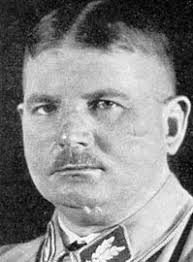
Ernst Rohem
Fittingly, he said this as he sat inside a prison cell awaiting his own execution.
On June 30, 1934, Hitler had ordered a massive purge of his private army, the S.A., or Stormtroopers. The purge was carried out by Hitler’s elite army-within-an-army, the Schutzstaffel, or Protective Squads, better known as the SS.
The S.A. Brownshirts had been instrumental in securing Hitler’s rise to Chancellor of Germany on January 30, 1933. They had intimidated political opponents and organized mass rallies for the Nazi Party.
But after Hitler reached the pinnacle of power, they became a liability.
Ernst Rohem, their commander, urged Hitler to disband the regular German army, theReichswehr, and replace it with his own legions as the nation’s defense force.
Frightened by Rohem’s ambitions, the generals of the Reichswehr gave Hitler an ultimatum: Get rid of Rohem–or they would get rid of him.
So Rohem died in a hail of SS bullets–as did several hundred of his longtime S.A. cronies.
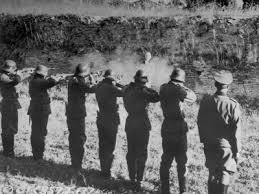
SS firing squad
Among the SS commanders supervising those executions was Reinhard Heydrich–a tall, blond-haired formal naval officer who was both a champion fencer and talented violinist.
Ultimately, he would become the personification of the Nazi ideal–”the man with the iron heart,” as Hitler eulogized at Heydrich’s funeral just eight years later.
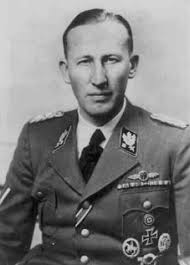
Reinhard Heydrich
Even so, Heydrich had a problem: He could never escape vicious rumors that his family tree contained a Jewish ancestor.
His paternal grandmother had married Reinhold Heydrich, and then Gustav Robert Suss. For unknown reasons, she decided to call herself Suss-Heydrich.
Since “Suss” was widely believed in Germany to indicate Jewish origin, the “stigma” of Jewish heritage attached itself to the Heydrich family.
Heydrich joined the SS in 1931 and quickly became head of its counterintelligence service. But his arrogance and overweening ambition created a great many enemies.
Only a year later, he became the target of an urgent investigation by the SS itself. The charge: That he was part-Jewish, the ultimate sin in Hitler’s “racially pure” Nazi Germany.
The investigation cleared Heydrich, but the rumor of his “tainted” origins persisted, clearly tormenting the second most powerful man in the SS. Even his superior, Heinrich Himmler, the Reichsfuhrer-SS, believed it.
When Heydrich was assassinated in 1942 by Czech assassins in Prague, Himmler attended his funeral. He paid tribute to his former subordinate at the service: ”You, Reinhard Heydrich, were a truly good SS-man.”
But he could not resist saying in private: “He was an unhappy man, completely divided against himself, as often happened with those of mixed race.”
Those who dare to harshly judge others usually find themselves assailed just as harshly.
A modern-day example is Liz Cheney, daughter of former Vice President Dick Cheney and a 2014 candidate for U.S. Senator from Wyoming.
Liz tried to position herself as far more right-wing than her opponent, Republican U.S. Senator Michael Bradley “Mike” Enzi. She found her work cut out for her: In March, 2007, Enzi was ranked by National Journal as the sixth-most conservative U.S. Senator. Among his legislative priorities:
- Supporting partial privatization of Social Security
- Consistently voting against expanding Medicare.
- Voting against enrolling more children or the poor in public healthcare.

Mike Enzi
And Liz had a problem Enzi did not: Her sister, Mary, was not only a lesbian but legally married to another woman: Heather Poe. This led many Wyoming voters to wonder if Liz Cheney was far-Right enough to merit their support.
So Liz went all-out to assure them that even though her sister led a degenerate lifestyle, she, Liz, stood foursquare against legalizing gay marriage: “I do believe it’s an issue that’s got to be left up to states. I do believe in the traditional definition of marriage.”

Liz Cheney
And, in another statement: “I am strongly pro-life and I am not pro-gay marriage.
“I believe the issue of marriage must be decided by the states, and by the people in the states, not by judges and not even by legislators, but by the people themselves.”
This stance led to a heated rift between her and Mary. “For the record, I love my sister, but she is dead wrong on the issue of marriage,” Mary Cheney wrote in a Facebook post in September, 2013.
“Freedom means freedom for everyone,” she continued. “That means that all families–regardless of how they look or how they are made–all families are entitled to the same rights, privileges and protections as every other.”
Adding to the complications: Their father, Dick Cheney—often ridiculed as “Darth Vader” for his own extreme Right-wing views—endorsed same-sex marriage in 2009.
(After a brief run, Cheney, on January 6, 2014, Cheney withdrew from the race.)
But, as was true for officials in Nazi Germany, so is it true for Right-wing Republicans: It’s impossible to be too radical a Right-winger.
In the 1930s and 40s, it was politically—and personally—dangerous to be labeled “pro-Jewish” or “pro-Communist” in Hitler’s Germany.
And today it is equally dangerous—at least politically—to be labeled “pro-liberal” or “pro-gay” in the Republican Party.
ABC NEWS, ADOLF HITLER, ANTISEMITISM, ARIZONA, CBS NEWS, CNN, DISCRIMINATION, FACEBOOK, GAYS, GOVERNOR RICK SNYDER, JEWS, MICHIGAN HOUSE OF REPRESENTATIVES, MUSLIMS, NAZI GERMANY, NBC NEWS, NUREMBERG LAWS, RELIGION, REPUBLICAN PARTY, SHARIA LAW, THE CHICAGO SUN-TIMES, THE CHICAGO TRIBUNE, THE LOS ANGELES TIMES, THE NEW YORK TIMES, THE WALL STREET JOURNAL, THE WASHINGTON POST, TWITTER, USA TODAY
In Business, History, Law, Politics, Social commentary on February 3, 2015 at 12:05 am
Christmas was fast approaching in 2014. So Republicans in the Michgan House of Representatives decided to honor the spirit of “peace on earth, good will toward men” in their own special way.
They passed a bill legalizing religious discrimination.
“The Religious Freedom Restoration Act” passed on partisan lines–59 Republicans to 50 Democrats–on December 4, 2014.
It next goes to the Senate, and, if passed there, to Republican Governor Rick Snyder. It isn’t known if he would sign it.
The bill would allow anyone to refuse service to anyone under the claim that their “religious beliefs” had been affronted.
And the State government would be legally prevented from intervening if a person claimed that his/her “deeply-held religious beliefs” was the reason for acting–or not acting–in a certain way.
Thus:
- An emergency room doctor could refuse service to a gay or lesbian needing medical care.
- A pharmacist could refuse to fill a doctor’s prescription for birth control, or HIV medication.
- A DMV clerk could refuse to give a driver’s license to someone who’s divorced.
- A school teacher could refuse to mentor the children of a same-sex couple.
- An employer could deny equal pay to women.

The bill seems modeled on a proposed law that the Republican House and Senate in Arizona sent to Governor Jan Brewer in 2014.
Under threat of a nationwide boycott of Arizona if the bill became law, Brewer vetoed it.
Supporters of the bill claim they aren’t seeking a license to discriminate, only to live by the tenets of their religious beliefs withouot government interference.
But opponents see it differently. Among these is Lonnie Scott, executive director of Progress Michigan.
“The idea that we need to ‘restore’ religious freedom–rights that are already enshrined in the U.S. Constitution–is a farce created by conservative lawmakers for the sole purpose of appeasing their far-right donors and the religious-right.
“This extreme bill attempts to solve a problem that does not exist, promotes discrimination and does nothing to make Michigan a better place to live,” Scott said in a statement.
This is certainly not the first time Right-wing zealots have sought to enshrine religious discrimination in law.
On September 15, 1935, the Nazis–who had taken power in Germany in 1933–introduced a series of anti-Semetic laws at their annual Nuremberg rally.
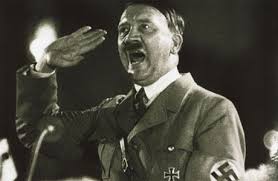
Adolf Hitler addressing a Nuremberg Rally of the Nazi Party
Under the Nuremberg laws:
- Marriages between Jews and German citizens were forbidden.
- Extramarital relations between Jews and German citizens were forbidden.
- Jews were forbidden to employ female German citizens under the age of 45 as domestic workers.
- Jews were banned from employment as attorneys, doctors or journalists.
- Jews were forbidden to use state hospitals.
- Jews could not be educated by the state past the age of 14.
- Jews were forbidden to enter public libraries, parks and beaches.
- The names of Jewish soldiers were to be expunged from war memorials.
With anti-Semitism now codified in German law, the foundations for the coming Holocaust were firmly laid. The “Religious Freedom Act” introduced in 2014 to Arizona would have:
- Expanded the state’s definition of the exercise of religion to include both the practice and observance of religion.
- Allowed someone to assert a legal claim of free exercise of religion regardless of whether the government is a party to the proceedings.
- Expanded those protected under the state’s free-exercise-of-religion law to “any individual, association, partnership, corporation, church, religious assembly or institution or other business organization.”
- Allowed any business, church or person to cite the law as a defense in any action brought by the government or individual claiming discrimination.
- Allowed the business or person to seek an injunction once they show their actions are based on a sincere religious belief and the claim places a burden on the exercise of religion.
Advocates often cited the case of a New Mexico wedding photographer who was sued after refusing to take photos of a same-sex couople’s commitment ceremony due to the photographer’s religious beliefs.
“We are trying to protect people’s religious liberties,” said Representative Steve Montenegro, R-Litchfield Park.
“We don’t want the government coming in and forcing someone to act against their religious sacred faith beliefs or having to sell out if you are a small-business owner.”

Arizona Representative Steve Montenegro
Republicans have introduced similar “right-to-discriminate” legislation in other states as well:
- In Kansas, lawmakers voted to exempt individuals from providing any service that was “contrary to their sincerely held religious beliefs.”
- That bill passed the state’s House chamber on February 11, 2014, triggering national backlash. It stalled in the Senate didn’t advance beyond that body.
- In January, 2014, South Dakota Republicans introduced a bill to allow businesses refuse to serve same-sex couples on the grounds that “businesses are private and that their views on sexual orientation are protected to the same extent as the views of private citizens.”
- The bill–which was killed in February, 2014–would have made it illegal for a gay person to file a lawsuit charging discrimination.
Ironically, many Right-wingers who support the right of Christians to discriminate fear that they will become victims of religious persecution if Islamic Sharia law comes to the United States.
2012 ELECTION, 2016 PRESIDENTIAL RACE, ABC NEWS, ADOLF HITLER, ADULTERY, CBS NEWS, CNN, FACEBOOK, HUMOR, JOSEPH MCCARTHY, LANGUAGE, NBC NEWS, NEWT GINGRICH, OPEN MARRIAGE, REPUBLICANS, SOUTH CROLINA PRIMARY, THE CHICAGO SUN-TIMES, THE CHICAGO TRIBUNE, THE LOS ANGELES TIMES, THE NEW YORK TIMES, THE WASHINGTON POST, TWITTER, USA TODAY
In Bureaucracy, History, Politics, Social commentary on February 2, 2015 at 12:09 am
Even so every good tree bringeth forth good fruit; but a corrupt tree bringeth forth evil fruit. A good tree cannot bring forth evil fruit, neither can a corrupt tree bring forth good fruit.
Every tree that bringeth not forth good fruit is hewn down, and cast into the fire. Wherefore by their fruits ye shall know them.
—Matthew 7: 17-20
Meet the Gingrich Twins: Good Newt and Bad Newt.
Both of them ran–unsuccessfully–for President in 2012. And both of them plan to again seek the Oval Office in 2016.
Both of them also have much to teach America about the effective–and unscrupulous–use of language.as used by ambitious, ruthless politicians.
Here’s how Good Newt responded to a question by CNN Moderator John King during the GOP Presidential debate at Charleston, South Carolina, on January 19, 2012:
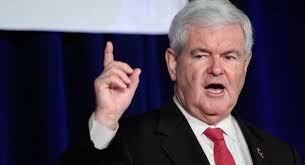
Newt Gingrich, once again giving “the finger” to America
King: As you know, your ex-wife gave an interview to ABC News and another interview with The Washington Post.
And this story has now gone viral on the internet. In it, she says that you came to her in 1999, at a time when you were having an affair. She says you asked her, sir, to enter into an open marriage. Would you like to take some time to respond to that?
Good Newt: No, but I will. I think the destructive, vicious, negative nature of much of the news media makes it harder to govern this country, harder to attract decent people to run for public office. And I am appalled that you would begin a presidential debate on a topic like that….
To take an ex-wife and make it two days before the primary a significant question for a presidential campaign is as close to despicable as anything I can imagine….
Every personal friend I have who knew us in that period said the story was false. We offered several of them to ABC to prove it was false.
They weren’t interested because they would like to attack any Republican. They’re attacking the governor. They’re attacking me. I’m sure they’ll presently get around to Senator Santorum and Congressman Paul.
Good Newt is “appalled” that anyone could stoop so low. He’s concerned not only for himself and his party, but the country.
Unfortunately, for Good Newt, he has an identical evil twin: Bad Newt. And sometimes people–especially Democrats–mistake one for the other.
It was Bad Newt who, as Speaker of the House of Representatives, wrote a 1996 memo that encouraged Republicans to “speak like Newt.”
Entitled “Language: A Key Mechanism of Control,” it urged Republicans to attack Democrats with such words as “corrupt,” “selfish,” “destructive,” “hypocrisy,” “liberal,” “sick,” and “traitors.”
Even worse, Bad Newt encouraged the news media to disseminate such accusations. Among his suggestions:
- “Fights make news.”
- Create a “shield issue” to deflect criticism: “A shield issue is, just, you know, your opponent is going to attack you as lacking compassion. You better…show up in the local paper holding a baby in the neonatal center.”
In the memo, Bad Newt advised:
“….In the video “We are a Majority,” Language is listed as a key mechanism of control used by a majority party, along with Agenda, Rules, Attitude and Learning.
As the tapes have been used in training sessions across the country and mailed to candidates we have heard a plaintive plea: ‘I wish I could speak like Newt.’
“That takes years of practice. But, we believe that you could have a significant impact on your campaign and the way you communicate if we help a little. That is why we have created this list of words and phrases….
“This list is prepared so that you might have a directory of words to use in writing literature and mail, in preparing speeches, and in producing electronic media.
“The words and phrases are powerful. Read them. Memorize as many as possible. And remember that like any tool, these words will not help if they are not used.”
Here is the list of words Bad Newt urged his followers to use in describing “the opponent, their record, proposals and their party”:
- abuse of power
- anti- (issue): flag, family, child, jobs
- betray
- bizarre
- bosses
- bureaucracy
- cheat
- coercion
- “compassion” is not enough
- collapse(ing)
- consequences
- corrupt
- corruption
- criminal rights
- crisis
- cynicism
- decay
- deeper
- destroy
- destructive
- devour
- disgrace
- endanger
- excuses
- failure (fail)
- greed
- hypocrisy
- ideological
- impose
- incompetent
- insecure
- insensitive
|
- intolerant
- liberal
- lie
- limit(s)
- machine
- mandate(s)
- obsolete
- pathetic
- patronage
- permissive attitude
- pessimistic
- punish (poor …)
- radical
- red tape
- self-serving
- selfish
- sensationalists
- shallow
- shame
- sick
- spend(ing)
- stagnation
- status quo
- steal
- taxes
- they/them
- threaten
- traitors
- unionized
- urgent (cy)
- waste
- welfare
|
Yes, speaking like Newt–or Adolf Hitler or Joseph McCarthy–“takes years of practice.”
So you can understand why Good Newt hates being mistaken for his evil twin, Bad Newt.
Unfortunately, they look–and sound–so alike it’s impossible to tell them apart.
But since they’re both 71, perhaps one day soon we’ll find out which one we’re left with–Good Newt or Bad Newt.
Unless, of course, they both drop off at the same time. Then we will never know which was which.
It’s definitely a mystery worth living with.
"AMERICAN SNIPER, 2003 IRAQ WAR, ABC NEWS, ADOLF HITLER, AL QAEDA, ALBERT SPEER, BARACK OBAMA, BRADLEY COOPER, CBS NEWS, CHRIS KYLE, CLINT EASTWOOD, CNN, DICK CHENEY, DONALD RUMSFELD, FACEBOOK, GEORGE W. BUSH, GERMAN ARMY, INSIDE THE THIRD REICH, INVASION OF POLAND, ISLAMIC STATE OF IRAQ AND SYRIA, NAZI GERMANY, NBC NEWS, OSAMA BIN LADEN, PROPAGANDA, SADDAM HUSSEIN, SIENNA MILLER, THE CHICAGO TRIBUNE, THE LOS ANGELES TIMES, THE NEW YORK TIMES, THE WASHINGTON POST, TWITTER, WHITE HOUSE CORRESPONDENTS DINNER, WMDS, WORLD WAR ii
In Entertainment, History, Military, Politics, Social commentary on January 30, 2015 at 12:15 am
Naturally the common people don’t want war, neither in Russia nor in England nor in America, nor for that matter in Germany. That is understood.
But, after all, it’s the leaders of the country who determine the policy, and it’s always a simple matter to drag the people along….
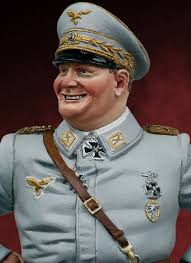
All you have to do is tell them that they are being attacked, and denounce the pacifists for lack of patriotism and exposing the country to greater danger. It works the same way in any country.
–Rcichsmarshall Hermann Goering
Much of the moral basis for American leadership was destroyed by the dark parallels between Adolf Hitler’s invasion of Poland in 1939 and George W. Bush’s invasion of Iraq in 2003.
Among these:
ADOLF HITLER

Adolf Hitler (third from left) with his generals
In 1970, Albert Speer, Adolf Hitler’s former architect and then Minister of Aramaments, published his bestselling postwar memoirs, Inside the Third Reich. In a striking passage, he revealed how the Fuehrer really felt about German soldiers who were suffering and dying in a war he had provoked.
One evening during the middle of the war, Speer was traveling with Hitler on the Fuehrer’s private train. Late at night, they enjoyed a lavish dinner in the elegant rosewood-paneled dining car.
As they ate, Hitler’s train slowed down and passed a freight train halted on a side track.
From their open cattle car, recalled Speer, wounded German soldiers from the Russian Front–starved, their uniforms in rags–stared across the few yards to their Fuehrer’s dining-car window.

Albert Speer
Hitler recoiled at seeing these injured men intently watching him–and he sharply ordered an adjutant to lower the window shades.
Hitler had served as a frontline soldier in World War 1 and had won the Iron Cross for bravery as a dispatch runner.
As Fuehrer, he often boasted of his affinity with the average German soldier. He claimed that “my whole life has been one long struggle for Germany.”
Yet throughout the six years of World War II, he refused to visit German cities ravaged by British and American bombs.
Hitler’s Minister of Propaganda, Joseph Goebbels, despaired at this.

Joseph Goebbels
Winston Churchill, prime minister of Great Britain, often visited cities hit by German bombers, and Goebbels knew these visits greatly boosted British morale.
Goebbels urged Hitler to make similar visits to bombed-out German cities, but the Fuehrer refused.
Albert Speer believed that Hitler couldn’t bear to see the carnage wrought by his decision to provoke a needless war.

George W. Bush “looking” for WMDs in the White House
GEORGE W. BUSH
Similarly, Bush showed his contempt for the soldiers suffering and dying in his own unprovoked war.
On March 24, 2004, at a White House Correspondents dinner, he joked publicly about the absence of Weapons of Mass Destruction (WMDs).
To Bush, the non-existent WMDs were nothing more than the butt of a joke that night. While an overhead projector displayed photos of a puzzled-looking Bush searching around the Oval Office, Bush recited a comedy routine.
“Those weapons of mass destruction have gotta be somewhere,” Bush laughed, while a photo showed him poking around the corners in the Oval Office.
“Nope-–no weapons over there! Maybe they’re under here,” he said, as a photo showed him looking under a desk.
In a scene that could have occurred under the Roman emperor Nero, an assembly of wealthy, pampered men and women–-the elite of America’s media and political classes–-laughed heartily during Bush’s performance.
Only later did the criticism come, from Democrats and Iraqi war veterans–especially those veterans who had suffered grievous wounds to protect America from WMDs.
Click here: Bush laughs at no WMD in Iraq – YouTube
In his Presidential memoirs, Decision Points, Bush failed to mention his joking about the “missing WMDs” at the correspondents dinner.
In writing about discovering insights into the human character, the ancient historian, Plutarch, said it best:
And the most glorious exploits do not always furnish us with the clearest discoveries of virtue or vice in men.
Sometimes a matter of less moment, an expression or a jest, informs us better of their characters and inclinations, than the most famous sieges, the greatest armaments, or the bloodiest battles whatsoever.
* * * * *
So add it all up:
- Two all-powerful leaders.
- Two nations lied into unprovoked wars.
- Adolf Hitler’s war costs the lives of 4.5 million German soldiers.
- George W. Bush’s war costs the lives of 4,486 Americans.
- Germany’s war results in the deaths of millions of Europeans and Russians.
- America’s war results in the deaths of an estimated 655,000 Iraqis, according to a 2006 study in the Lancet medical journal.
- Hitler is literally driven underground by his enemies and commits suicide to avoid capture, trial and certain execution for war crimes.
- Bush retires from office with a lavish pension and full Secret Service protection. He writes his memoirs and is paid $7 million for the first 1.5 million copies.
- Hitler is branded as a symbol of demonic evil.
- Bush becomes a target of ridicule for comics.
Who says history is irrelevant? Or that it doesn’t repeat itself?


ABC NEWS, ADOLF HITLER, ALBERT SPEER, BARACK OBAMA, CBS NEWS, CNN, DEBT CEILING, EXTORTION, FACEBOOK, FASCISM, HOUSE SPEAKER JOHN BOEHNER, NAZI GERMANY, NBC NEWS, NEGOTIATING, PAP SMEARS, PLANNED PARENTHOOD, REPUBLICAN PARTY, REPUBLICANS, THE CHICAGO SUN-TIMES, THE CHICAGO TRIBUNE, THE LOS ANGELES TIMES, THE NEW YORK TIMES, THE WASHINGTON POST, TRICKLE-DOWN ECONOMICS, TWITTER, USA TODAY, WARREN BUFFET, WORLD WAR 11
HITLER, THE GOP AND “SCORCHED EARTH” – PART THREE (END)
In Bureaucracy, History, Law, Law Enforcement, Politics, Social commentary on February 12, 2015 at 12:00 amWith more than 240,000 employees, the Department of Homeland Security (DHS) is the third largest Cabinet department, after the Departments of Defense and Veterans Affairs.
The Defense Department is charged with military actions abroad. DHS is responsible for protecting the United States inside and outside its borders.
Its goal is to prepare for, prevent and–if prevention fails–respond to man-made accidents, natural disasters and terrorism.
Among the agencies now operating under its mandate:
Some of DHS’s agencies–like FEMA and the Secret Service–are well-known. Others–such as the Federal Law Enforcement Training Center and the Domestic Nuclear Detection Office–are not.
Click here: Department Components | Homeland Security
Yet each has a vital role to play in protecting the nation. A nation whose security Republicans are willing to threaten to get their way on a matter of domestic policy.
Consider the implications if there is no
Right-wing Republicans argue that even if DHS’s funding were stopped, most of its employees would stay on the job.
That’s because they perform work considered necessary to protect human life and property. But while those employees were safeguarding the country, they wouldn’t be paid until the shutdown ended.
It’s hard to give your full attention to protecting the lives of others when you have to worry about paying a mortgage or feeding your family.
Of course, the Republicans responsible for this shutdown would continue to receive their hefty paychecks.
And there is something else to consider.
DHS is best-known for its mission to prevent terrorist attacks on America. And America may well be in the crosshairs of North Korean terrorism at this very moment.
On November 14, 2014, Sony Pictures came under relentless attack by cyberterrorists, who the FBI has linked to North Korea.
The reasoon? Sony’s production of “The Interview,” a comedy depicting the assassination of North Korean dictator Kim Jong Un.
Calling themselves “Guardians of Peace,” or GOP, they shut down the company’s computer system and revealed employees’ personal information such as salaries, addresses, and Social Security numbers.
(Ironically, “Guardians of Peace” appropriated the same abbreviation–GOP–used by the Republicans for “Grand Old Party.”)
Warning issued by “Guardians of Peace” (GOP)
On December 17, 2014, Sony Pictures cancelled the Christmas Day premier of “The Interview” after the nation’s five largest movie chains refused to show the movie, following a terror threat posted online.
And then on February 5, 2015, Anthem Insurance announced that its database had been hacked–and sensitive medical information on up to 80 million customers and employees accessed.
According to an anonymous source, the hackers used malware that’s been used almost exclusively by Chinese cyberspies.
* * * * *
As the Third Reich came to its fiery end, Adolf Hitler sought to punish the German people for being “unworthy” of his “genius” and losing the war he had started.
His attitude was: “If I can’t rule Germany, then there won’t be a Germany.”
In his infamous “Nero Order,” he decreed the destruction of everything still remaining–industries, ships, harbors, communications, roads, mines, bridges, stores, utility plants, food stuffs.
Fortunately for Germany, one man–Albert Speer–finally broke ranks with his Fuhrer.
Albert Speer
Risking death, he refused to carry out Hitler’s “scorched earth” order. Even more important, he mounted a successful effort to block such destruction or persuade influential military and civilian leaders to disobey the order as well.
As a result, those targets slated for destruction were spared.
Since the election of America’s first black President, Republicans have waged a similar “scorched earth” campaign.
Their avowed goal–as stated openly by Kentucky’s U.S. Senator Mitch McConnell–was “to make Barack Obama a one-term President.”
Literally during his first Inauguration, Republicans, in a secret meeting, agreed to block every effort he made to repair the economy.
Acting as extortionists, they have repeatedly threatened to shut down the government if they didn’t get their way in legislative matters.
And just as repeatedly, they have blocked legislation that would have helped the poor, unemployed, women, elderly, disabled or middle-class.
At the center of their fury has been the Affordable Care Act, providing medical care to all citizens. Even after Congress passed it and the Supreme Court affirmed it, House Republicans shut down the government in October, 2013.
By doing so, they hoped to pressure Obama into killing his signature piece of legislation. The effort failed.
Like Adolf Hitler, their attitude has been: “If I can’t rule America, there won’t be an America.”
It remains to be seen whether a Republican Albert Speer will step forward to save America from the self-destructive excesses of this Nation’s own fanatics.
Share this: