Posts Tagged ‘FACEBOOK’
ABC NEWS, ALTERNET, AP, BARACK OBAMA, BBC, BP, BUZZFEED, CBS NEWS, CHILDREN'S BOOKS, CLEAN POWER PLAN, CNN, COAL, DAILY KOS, DEMOCRATIC PARTY, DONALD TRUMP, DR. SEUSS, ENERGY POLICY, ENVIRONMENTAL PROTECTION, ENVIRONMENTAL PROTECTION AGENCY, FACEBOOK, GLOBAL WARMING, LOUISIANA, MOTHER JONES, MOVEON, MSNBC, NBC NEWS, NEWSWEEK, NPR, OIL SPILL, POLITICO, POLLUTION, RAW STORY, REUTERS, SALON, Sarah Palin, SEATTLE TIMES, SLATE, SOLAR POWER, THE ATLANTIC, THE CHICAGO SUN-TIMES, THE CHICAGO TRIBUNE, THE DAILY BEAST, THE GUARDIAN, THE HILL, THE HUFFINGTON POST, THE LOS ANGELES TIMES, THE NEW YORK TIMES, THE WALL STREET JOURNAL, THE WASHINGTON POST, TIME, TWITTER, U.S. NEWS & WORLD REPORT, UPI, USA TODAY, WIND POWER, X
In Bureaucracy, Business, History, Politics, Social commentary on March 3, 2026 at 12:13 am
Dr. Seuss (Theodor Geisel) published over 60 children’s books, which were often filled with imaginative characters and rhyme.
Among his most famous books were Green Eggs and Ham, The Cat in the Hat, and One Fish Two Fish Red Fish Blue Fish.
Honored in his lifetime (1904-1991) for the joy he brought to countless children, Dr. Seuss may well prove one of the unsung prophets of our environmentally-threatened age.
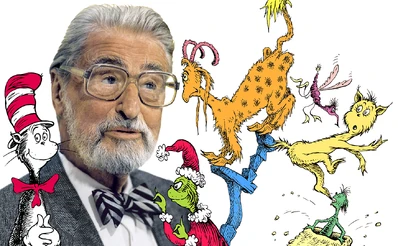
Dr. Seuss
In 1949, he penned Bartholomew and the Oobleck, the story of a young page who must rescue his kingdom from a terrifying, man-made substance called Oobleck.
The story is quickly told:
Derwin, the King of Didd, announces he’s bored with sunshine, rain, fog and snow. So he calls in his black magicians and orders them to create a new kind of weather.
The magicians assure him they can create it.
“What will you call it?” asks the king.
“We’ll call it Oobleck,” says one of the magicians.

“What will it be like?” asks King Didd.
“We don’t know, Sire,” the magician replies. “We’ve never created Oobleck before.”
The next morning, Oobleck—a greenish, glue-like substance—starts raining.
The king orders Bartholomew, the royal page, to tell the Bell Ringer that today will be a holiday. But the bell doesn’t ring—because it’s filled with Oobleck.
The Oobleck rain intensifies.
The falling blobs—now as big as buckets full of broccoli—break into the palace, immobilizing the servants and guards.
Bartholomew warns the Royal Trumpeter about the Oobleck, but the trumpet gets stopped up with the goo.
The Captain of the Guards thinks the Oobleck is pretty and sees no danger in it—until he eats some. Instantly, his mouth is glued shut.

At the climax of the story, Bartholomew confronts King Derwin for giving such a rash order: “If you can’t do anything else,” says Bartholomew, “at least you can say you’re sorry.”
King Derwin refuses, and Bartholomew says, “If you can look at all the horror you’ve caused and not say you’re sorry, you’re no sort of king at all.”
In real-life, such a king would have instantly ordered Bartholomew’s execution. But this is a children’s story.
So, overcome with guilt, King Derwin utters the magic words: “You’re right, this is all my fault, and I am sorry.”
Suddenly the Oobleck stops raining and the sun melts away the rest.
With life returning to normal, King Derwin mounts the bell tower and rings the bell. He proclaims a holiday dedicated not to Oobleck, but to rain, sun, fog, and snow, the four elements of Nature—of which Man is but a part.
* * * * *
Flash forward to the following Donald Trump tweets:
November 6, 2012: “The concept of global warming was created by and for the Chinese in order to make U.S. manufacturing non-competitive.”
December 6, 2013: “Ice storm rolls from Texas to Tennessee – I’m in Los Angeles and it’s freezing. Global warming is a total, and very expensive, hoax!”
January 1, 2014: “This very expensive GLOBAL WARMING bullshit has got to stop. Our planet is freezing, record low temps, and our GW scientists are stuck in ice.”

Donald Trump
Upon taking office in 2017, Trump
- Released a budget proposal to eliminate $100 million in funding for the Environmental Protection Agency’s climate work, including scientific research;
- Ordered his administration to rewrite the Clean Power Plan. His objective: To gut former President Barack Obama’s landmark restrictions on power plant emissions;
- Announced that he would withdraw the United States from the Paris climate-change agreement deal.
Upon taking office again in 2025, Trump:
- Repealed the EPA’s 2009 Endangerment Finding, which officially determines that greenhouse gases threaten public health;
- Increased oil and gas exploration on federal land, rolled back methane emission requirements for oil and gas companies, and directed the Department of Defense to buy coal-fired electricity;
- Halted, paused, or cut funding for offshore/onshore wind and solar projects, and ended federal tax incentives for electric vehicles (EVs);
- Reduced the authority of the EPA to regulate pollutants from power plants, cut climate-preparedness grants, and remoed or altered climate data from federal websites.
There are forces in Nature far more powerful than anything Man and his puny strength can defy—or harness. And we invoke the wrath of those forces at our own peril.
In the world of children’s stories, it’s possible for a king to undo the terrible damage he’s unleashed by finding the courage to say: “I’m sorry.”
In real-life, tyrants almost never say “I’m sorry,” no matter how enormous their mistakes and/or crimes.
From 1936 to 1938, Soviet dictator Joseph Stalin slaughtered the cream of his own Army and Air Force. When Nazi Germany invaded the Soviet Union in 1941, Stalin blamed his remaining generals for the massive defeats inflicted by the Wehrmacht.
And as Soviet forces finally closed on Berlin in April, 1945, and Adolf Hitler prepared to commit suicide in his underground bunker, he blamed the German people for losing the war he had started.
Saying “I’m sorry” cannot reverse decades of rampant environmental abuse. To believe that it can is as ridiculous as believing that self-righteous tyrants will ever take responsibility for their own crimes and follies.
ABC NEWS, ALTERNET, AMERICABLOG, AP, BABY BOOMER RESISTANCE, BBC, BLOOMBERG, BLOOMBERG NEWS, BLUESKY, BUZZFEED, CBS NEWS, CNN, CROOKS AND LIARS, DAILY KOS, DAILY KOZ, DRUG TRAFFICKING, FACEBOOK, FIVETHIRTYEIGHT, HARPER’S MAGAZINE, HUFFINGTON POST, INFORMANTS, MAFIA, MEDIA MATTERS, MOTHER JONES, MOVEON, MSNBC, NARCOTICS TRAFFICKING, NBC NEWS, NEW REPUBLIC, NEW YORK POLICE DEPARTMENT, NEWSDAY, NEWSWEEK, NPR, ORGANIZED CRIME, PBS NEWSHOUR, POLICE CORRUPTION, POLITICO, POLITICUSUSA, PRINCE OF THE CITY, RAW STORY, REUTERS, ROBERT LEUCI, RUDOLPH GUILIANI, SALON, SEATTLE TIMES, SIDNEY LUMET, SLATE, TALKING POINTS MEMO, THE ATLANTIC, THE CHICAGO SUN-TIMES, THE CHICAGO TRIBUNE, THE DAILY BEAST, THE DAILY BLOG, THE GUARDIAN, THE HILL, THE HUFFINGTON POST, THE INTERCEPT, THE LOS ANGELES TIMES, THE NATION, THE NEW REPUBLIC, THE NEW YORK TIMES, THE NEW YORKER, THE VILLAGE VOICE, THE WASHINGTON POST, THINKPROGRESS, TIME, TREAT WILLIAMS, TRUTHDIG, TRUTHOUT, TWO POLITICAL JUNKIES, U.S. DEPARTMENT OF JUSTICE, U.S. NEWS & WORLD REPORT, UPI, USA TODAY, WONKETTE, X
In Bureaucracy, History, Law, Law Enforcement, Social commentary on February 20, 2026 at 12:16 am
It’s a movie that appeared in 1981—making it, for those born in 2000, an oldie.
And it wasn’t a blockbuster, being yanked out of theaters almost as soon as it arrived.
Yet Prince of the City remains that rarity—a movie about big-city police that:
- Tells a dramatic (and true) story; and
- Offers serious truths about how police and prosecutors really operate.
It’s based on the real-life case of NYPD Detective Robert Leuci (“Danny Ciello” in the film).


Robert Leuci (“Danny Ciello” in “Prince of the City”)
A member of the elite Special Investigating Unit (SIU) Ciello (played by Treat Williams) volunteers to work undercover against rampant corruption among narcotics agents, attorneys and bail bondsmen.
His motive appears simple: To redeem himself and the NYPD from the corruption he sees everywhere: “These people we take from own us.”
His only condition: “I will never betray cops who’ve been my partners.”
And Assistant US Attorney Rick Cappalino assures Ciello: “We’ll never make you do something you can’t live with.”
As the almost three-hour movie unfolds, Ciello finds—to his growing dismay—that there are a great many things he will have to live with.


Treat Williams as “Danny Ciello”
Although he doesn’t have a hand in it, he’s appalled to learn that Gino Moscone, a former buddy, is going to be arrested for taking bribes from drug dealers.
Confronted by a high-ranking agent for the Federal Drug Enforcement Agency, Moscone refuses to “rat out” his buddies. Instead, he puts his service revolver to his head and blows out his brains.
Ciello is devastated, but the investigation—and film—must go on.
Along the way, he’s suspected by a corrupt cop and bail bondsman of being a “rat” and threatened with death.
He’s about to be wasted in a back alley when his cousin—a Mafia member—suddenly intervenes. The Mafioso tells Ciello’s would-be killers: “You’d better be sure he’s a rat, because people like him.”
At which point, the grotesquely fat bail bondsman—who has been demanding Ciello’s execution—pats Danny on the arm and says, “No hard feelings.”
It’s director Sidney Lumet’s way of graphically saying: “Sometimes the bad guys can be good guys—and the good guys can be bad guys.”

Lumet makes it clear that police don’t always operate with the Godlike perfection of cops in TV and films. It’s precisely because his Federal backup agents lost him that Ciello almost became a casualty.
In the end, Ciello becomes a victim of the prosecutorial forces he has unleashed. Although he’s vowed to never testify against his former partners, Ciello finds this is a promise he can’t keep.
Too many of the cops he’s responsible for indicting have implicated him of similar—if not worse—behavior. He’s even suspected of being involved in the theft of 450 pounds of heroin (“the French Connection”) from the police property room.
A sympathetic prosecutor—Mario Vincente in the movie, Rudolph Giuliani in real-life—convinces Ciello that he must finally reveal everything he knows.
Ciello’s had originally claimed to have done “three things” as a corrupt narcotics agent. By the time his true confessions are over, he’s admitted to scores of felonies.
Ciello then tries to convince his longtime SIU partners to do the same. One of them commits suicide. Another tells Ciello to screw himself: “I’m not going to shoot myself and I’m not going to become a rat.”
To his surprise, Ciello finds himself admiring his corrupt former partner for being willing to stand up to the Federal case-agents and prosecutors demanding his head.
The movie ends with a double dose of irony.
First: Armed with Ciello’s confessions, an attorney whom Ciello had successfully testified against appeals his conviction. But the judge rules Ciello’s admitted misdeeds to be “collateral,” apart from the main evidence in the case, and affirms the conviction.
Second: Ciello is himself placed on trial—of a sort. A large group of assistant U.S. attorneys gathers to debate whether their prize “canary” should be indicted. If he is, his confessions will ensure his conviction.
Some prosecutors argue forcefully that Ciello is a corrupt law enforcement officer who has admitted to more than 40 cases of perjury—among other crimes. How can the government use him to convict others and not address the criminality in his own past?
Other prosecutors argue that Ciello voluntarily risked his life—physically and professionally—to expose rampant police corruption. He deserves a better deal than to be cast aside by those who have made so many cases through his testimony.
Eventually, the U.S. Attorney for the Southern District of New York makes his decision: “The government declines to prosecute Detective Daniel Ciello.”
It is Lumet’s way of showing that the decision to prosecute is not always an easy or objective one.
The movie ends with Ciello now teaching surveillance classes at the NYPD Academy.
A student asks: “Are you the Detective Ciello?”
“I’m Detective Ciello.”
“I don’t think I have anything to learn from you.” And he walks out.
Is Danny Ciello a hero, a villain, or some combination of the two?
On this ambiguous note that the film ends—an ambiguity that each viewer must resolve for himself.
ABC NEWS, ALTERNET, AMERICABLOG, AP, BABY BOOMER RESISTANCE, BBC, BLOOMBERG, BLOOMBERG NEWS, BLUESKY, BUZZFEED, CBS NEWS, CHRISTOPHER DORNER, CNN, CROOKS AND LIARS, DAILY KOS, DEATH THREATS, FACEBOOK, FIVETHIRTYEIGHT, GEORGE ZIMMERMAN, HARPER’S MAGAZINE, HAWAII FIVE-O, HUFFINGTON POST, JACK LORD, LORI TANKEL, LOS ANGELES POLICE DEPARTMENT, MEDIA MATTERS, MOTHER JONES, MOVEON, MSNBC, NBC NEWS, NEW REPUBLIC, NEWSDAY, NEWSWEEK, NPR, PBS NEWSHOUR, POLICE, POLITICO, POLITICUSUSA, RAW STORY, REUTERS, ROBERT DALEY, SALON, SEATTLE TIMES, SLATE, SWAT TEAMS, TALKING POINTS MEMO, TARGET BLUE, THE ATLANTIC, THE CHICAGO SUN-TIMES, THE CHICAGO TRIBUNE, THE DAILY BEAST, THE DAILY BLOG, THE GUARDIAN, THE HILL, THE HUFFINGTON POST, THE INTERCEPT, THE LOS ANGELES TIMES, THE NATION, THE NEW REPUBLIC, THE NEW YORK TIMES, THE NEW YORKER, THE UNTOUCHABLES, THE VILLAGE VOICE, THE WALL STREET JOURNAL, THE WASHINGTON POST, THINKPROGRESS, TIME, TRAYVON MARTIN, TRUTHDIG, TRUTHOUT, TWO POLITICAL JUNKIES, U.S. NEWS & WORLD REPORT, UPI, USA TODAY, X
In Bureaucracy, History, Law, Law Enforcement, Politics, Social commentary on February 13, 2026 at 12:10 am
Lori Tankel had a problem: A lot of angry people thought she was George Zimmerman.
She began getting death threats on her
Unfortunately for Tankel, her number was one digit away from the number Zimmerman used to make his call to police just before he fatally shot Martin.
That phone number had been shown throughout the trial. And, believing the number was Zimmerman’s, someone posted Tankel’s number online.
Just minutes after the verdict, Tankel began getting death threats. “We’re going to kill you. We’re going to get you. Watch your back,” threatened a typical call.

George Zimmerman
Tankel worked as a sales representative for several horse companies. She had grown used to relying on her phone to keep her business going.
But, almost as soon as the Zimmerman verdict came in, “My phone just started to blow up. Phone call after phone call, multiple phone
So she did what any ordinary citizen, faced with multiple death threats, would do: She called the police.
According to her, the Seminole County Sheriff’s Office told her the department itself receives around 400 death threats a minute on social media sites.
In short: Unless you’re wealthy, a politician or—best of all, a cop—don’t expect the police to protect you if your life is threatened.
First, above everyone else, police look out for each other.
Robert Daley bluntly revealed this truth in his 1971 bestseller, Target Blue: An Insider’s View of the N.Y.P.D. A police reporter for the New York Times, he served for one year as a deputy police commissioner.
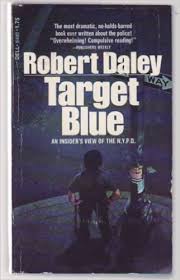
“A great many solvable crimes in the city were never solved, because not enough men were assigned to the case, or because those assigned were lazy or hardly cared or got sidetracked,” wrote Daley.
“But when a cop got killed, no other cop got sidetracked. Detectives worked on the case night and day….
“In effect, the citizen who murdered his wife’s lover was sought by a team of detectives, two men. But he who killed a cop was sought by 32,000.”
That’s why the Mafia tried to bribe cops, but never killed them.
Second, don’t expect the police to do for you what they’ll do for one another.
In February, 2013, Christopher Dorner declared war on his former fellow officers of the Los Angeles Police Department.
The LAPD assigned security and surveillance details to at least 50 threatened officers and their families. A typical detail consists of two to five or more guards. And those guards must be changed every eight to 12 hours.

Those details stayed in place long after Dorner was killed in a firefight on February 12, 2013.
But if your bullying neighbor threatens to kill you, don’t expect the police to send a guard detail over. They’ll claim: ”We can’t do anything until the guy does something. If he does, give us a call.”
Third, the more status and wealth you command, the more likely the police are to address your complaint or solve your case.
If you’re rich, your complaint will likely get top priority and the best service the agency can provide. In Boston, such cases are known as “Red balls.”
But if you’re poor or even middle-class without high-level political or police connections, you’ll be told: “We just don’t have the resources to protect everybody.”
Fourth, don’t expect your police department to operate with the vigor or efficiency of TV police agencies.
“I want this rock [Hawaii] sealed off,” Steve McGarrett (Jack Lord) routinely ordered when pursuing criminals on “Hawaii Five-O.”
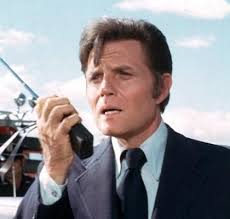
Jack Lord as Steve McGarrett
Real-life police departments, on the other hand:
- Often lack state-of-the-art crime labs to analyze evidence.
- Often lose or accidentally destroy important files.
- Are—like all bureaucracies—staffed by those who are lazy, indifferent or incompetent.
- Are notoriously competitive, generally refusing to share information with other police departments-–thus making it easier for criminals to run amok.
Even when police ”solve” a crime, that simply means making an arrest. After that, there are at least three possible outcomes:
- The District Attorney may decide not to file charges.
- The perpetrator may plead to a lesser offense and serve only a token sentence—or none at all.
- He might be found not guilty by a judge or jury.
Fifth, the result of all this can only be increased disrespect for law enforcement from a deservedly—and increasingly—cynical public.
It is the witnessing of blatant inequities and hypocrisies such as those displayed in the Christopher Dorner case that most damages public support for police at all levels.
When citizens believe police lack the ability—or even the will—to protect them or avenge their victimization, that is a deadly blow to law enforcement.
Police depend on citizens for more than crime tips.
They depend upon them to support hiring more cops and buying state-of-the-art police equipment.
When public support vanishes, so does much of that public funding.
The result can only be a return to the days of the lawless West, where citizens—as individuals or members of vigilante committees—look only to themselves for protection.
ABC NEWS, ALTERNET, AMERICABLOG, AP, BABY BOOMER RESISTANCE, BBC, BLOOMBERG NEWS, BUZZFEED, CBS NEWS, CHICAGO SUN-TIMES, CNN, CROOKS AND LIARS, DAILY KOS, DECEIT, DETECTIVES, FACEBOOK, FIVETHIRTYEIGHT, HARPER’S MAGAZINE, HUFFINGTON POST, INTERROGATION, INTERVIEWING, LIE DETECTORS, MEDIA MATTERS, MIRANDA VS. ARIZONA, MOTHER JONES, MOVEON, MSNBC, NBC NEWS, NEW REPUBLIC, NEWSDAY, NEWSWEEK, NPR, PBS NEWSHOUR, POLICE, POLITICO, POLITICUSUSA, POLYGRAPH, PROSECUTION, RAW STORY, REUTERS, SALON, SEATTLE TIMES, SLATE, SUPREME COURT, TALKING POINTS MEMO, THE ATLANTIC, THE CHICAGO SUN-TIMES, THE CHICAGO TRIBUNE, THE DAILY BEAST, THE DAILY BLOG, THE DENVER POST, THE GUARDIAN, THE HILL, THE HUFFINGTON POST, THE INTERCEPT, THE LOS ANGELES TIMES, THE NATION, THE NEW REPUBLIC, THE NEW YORK TIMES, THE NEW YORKER, THE VILLAGE VOICE, THE WALL STREET JOURNAL, THE WASHINGTON POST, THINKPROGRESS, TIME, TRUTHDIG, TRUTHOUT, U.S. NEWS & WORLD REPORT, UPI, USA TODAY, X
In Bureaucracy, History, Law, Law Enforcement, Politics, Social commentary on February 12, 2026 at 12:10 am
Ever heard of “polygraph by copier”?
If you haven’t, here’s how it works:
A detective loads three sheets of paper into a Xerox machine.
“Truth” has been typed onto the first sheet.
“Truth” has been typed onto the second sheet.
“Lie” has been typed onto the third sheet.

Then a criminal suspect is led into the room and told to put his hand against the side of the machine.
“What is your name?” asks the detective.
The suspect gives it.
The detective hits the copy button, and a page comes out: “Truth.”
“Where do you live?” asks the detective.
The suspect gives an address, the detective again hits the copy button, and a second page appears: “Truth.”
Then comes the important question: “Did you kill Big Jim Tate on the evening of….?”
The suspect answers. The detective presses the copy button one last time, and the sheet appears: “Lie.”
“Well, well, well, you lying little bastard,” says the detective.
Convinced that the police have found some mysterious way to peer into the darkest recesses of his criminality, the suspect “gives it up” and makes a full confession.
Yes, contrary to what many believe, police can legally use deceit to obtain a confession.
In 1973, the Supreme Court ruled, in United States v. Russell: “Nor will the mere fact of deceit defeat a prosecution, for there are circumstances when the use of deceit is the only practicable law enforcement technique available.”
In that case, the Court narrowly upheld a conviction for methamphetamine production even though the defendant had argued entrapment.
So what types of interrogative deceit might a police officer use to develop admissible evidence of a suspect’s guilt?

Police interrogation
The general rule is that deception can be used so long as it’s not likely to cause an innocent person to commit a crime or confess to a crime that s/he didn’t commit.
Consider the following examples:
- A detective is interviewing a suspect in a rape case. “Oh, that girl,” he says, thus implying that the victim was a slut and had it coming. The suspect, thinking he’s dealing with a sympathetic listener, starts bragging about his latest conquest—only to learn, too late, that his listener isn’t so simpatico after all.
- “We found your prints on the gun”—or on any number of other surfaces. Actually, there are few good places on a pistol to leave prints. And those that are left can be smeared. The same goes for other surfaces. But if a suspect can be led to believe the cops have his prints, a confession is often forthcoming.
- A police officer is interrogating a suspect in a murder case. “He came at you, didn’t he?” asks the cop. The suspect, who murdered the victim in cold blood, thinks he has an escape route. “Yeah, he came at me”—this confirming that, yes, he did kill the deceased.
- “Your partner just gave you up” is a favorite police strategy when there is more than one suspect involved. If one suspect can be made to “flip”—turn–-against the other, the case is essentially wrapped up.

- Interrogating a bank robbery suspect, a cop might say: “We know you didn’t do the shooting, that you were only the wheelman.” This implies that the penalty for driving the getaway car is far less than that for killing someone during a robbery. In fact, criminal law allows every member of the conspiracy to be charged as a principal.
- “I don’t give a damn what you did,” says the detective. “Just tell me why you did it.” For some suspects, this offers a cathartic release, a chance to justify their guilt.
- The “good cop/bad cop” routine is known to everyone who has ever seen a police drama. Yet it continues to yield results so often it continues to be routinely used. “Look, I believe you,” says the “good” cop, “but my partner’s a real asshole. Just tell me what happened so we can clear this up and you can go.”
- “So,” says the detective, “why do you think the police believe you did it?” “I have no idea,” says the suspect, confident that he isn’t giving up anything that might come back to haunt him. “Well,” says the cop, “I guess you’ll just have to make something up.” Make something up sounds easy, but it’s actually a trap. The suspect may end up giving away details that could incriminate him—or lying so brazenly that his lies can be used against him.
So is there a best way for a suspect to deal with an invitation to waive his Miranda right to remain silent?
Yes, there is. It’s to refuse to say anything and to ask for permission to call a lawyer.
That’s the preferred method for Mafia hitmen—and accused police officers.
Any cop who finds himself under investigation by his department’s Internal Affairs unit automatically shuts up—and calls his lawyer.
Contrary to popular belief, an arrestee is allowed to make more than one phone call in most states.
Any other reason—no matter how well-intentioned—may well result in a lengthy prison sentence.
ABC NEWS, ADOLF HITLER, ALBERT SPEER, ALTERNET, AMERICABLOG, AMERICAN NAZI PARTY, AP, BABY BOOMER RESISTANCE, BARACK OBAMA, BBC, BILL CLINTON ADMINISTRATION, BIRTHER MOVEMENT, BLOOMBERG, BLUESKY, BUZZFEED, CANADA, CBS NEWS, CHERYL SHAVERS, CNN, CONGRESSIONAL BLACK CAUCUS, CROOKS AND LIARS, DAILY KOS, DONALD TRUMP, ED GORDON, FACEBOOK, FIVETHIRTYEIGHT, GREAT BRITAIN, HARPER’S MAGAZINE, HUFFINGTON POST, JOHN KELLY, KU KLUX KLAN, MEDIA MATTERS, MELANIA TRUMP, MENTAL DISABILITY, MOTHER JONES, MOVEON, MSNBC, NATIONAL ASSOCIATION OF BLACK JOURNALISTS, NAZI GERMANY, NBC NEWS, NEWSDAY, NEWSWEEK, NPR, OMAROSSA MANIGAULT-NEWMAN, PBS NEWSHOUR, POLICE BRUTALITY, POLITICO, POLITICUSUSA, RACISM, RAW STORY, REPORTERS, REUTERS, SALON, SEATTLE TIMES, SLATE, TALKING POINTS MEMO, THE ATLANTIC, THE CHICAGO SUN-TIMES, THE CHICAGO TRIBUNE, THE DAILY BEAST, THE DAILY BLOG, THE GUARDIAN, THE HILL, THE HUFFINGTON POST, THE INTERCEPT, THE LOS ANGELES TIMES, THE NATION, THE NEW REPUBLIC, THE NEW YORK TIMES, THE NEW YORKER, THE VILLAGE VOICE, THE WASHINGTON POST, THINKPROGRESS, THIRD REICH, TIME, TRUTHDIG, TRUTHOUT, TWO POLITICAL JUNKIES, U.S. NEWS & WORLD REPORT, UPI, USA TODAY, VLADIMIR PUTIN, WAR ON THE PRESS, WOMANIZING, X
In Bureaucracy, History, Military, Politics, Social commentary on January 23, 2026 at 12:41 am
“Under the spreading chestnut tree
I sold you and you sold me.”
—“1984,” by George Orwell.
Less than three months after moving into the White House, Omarosa Manigault married John Allen Newman, the senior pastor at The Sanctuary at Mt. Calvary, a church in Jacksonville, Florida.
The wedding, on April 8, 2017, was at Donald Trump’s Washington, DC, hotel. Afterwards, in full bridal attire, Omarosa took her 39-member bridal party to the White House for an extended photo shoot.
According to Politico, White House senior aides and security officials were caught by surprise. Omarosa hadn’t alerted them in advance. Her visitors “loudly wandered around” the Rose Garden and West Wing.
White House officials, citing ethics and security concerns, banned Manigault-Newman from posting the photographs online.

Omarosa Manigault-Newman Gage Skidmore photo
On December 13, Omarosa learned that she would be leaving the White House—and her $180,000-a-year position as director of communications for the Office of Public Liaison. Her last day would be January 20, 2018—one year from the day she had arrived.
She asked Ivanka Trump to intervene on her behalf, but the First Daughter refused.
Deciding to go right to the top, she headed for the Trumps’ private quarters. There she tripped an alarm—which brought guards and White House Chief of Staff John Kelly to the scene.
An enraged Kelly ordered her ejected from the White House.
Multiple sources report that she had to be physically restrained and escorted—cursing and screaming—from the Executive Mansion.
Next day—December 14—Manigault-Newman appeared on “Good Morning America.”
The woman who had been Trump’s ambassador to blacks now sang a different tune:
“I have seen things that made me uncomfortable, that have upset me, that have affected me deeply and emotionally, that has affected my community and my people. And when I can tell my story, it is a profound story that I know the world will want to hear.”
On August 8, 2018, news broke that Omarosa had secretly taped Trump during several phone conversations in the White House. And that she would use these recordings to promote an upcoming—and highly critical—book on the President.
Its title: Unhinged.
It would be released on August 14.
Omarosa has since launched her book tour blasting Trump as a racist, a misogynist and in mental decline.
On Trump as a racist: Interviewed on The PBS Newshour, she said: “One of the most dramatic scenes in Unhinged where I talk about taking him to task for the birther movement.”
Since 2011, Trump slandered President Barack Obama as born in Kenya—instead of his native Hawaii. The purpose: To de-legitimize Obama as a lawful President.
But Omarosa said nothing about this at the time.
On Trump as a misogynist: In an Associated Press interview, she claims she saw Trump behaving “like a dog off the leash” at numerous events he attended without his wife, Melania Trump.
During the 2016 campaign, at least 12 women publicly accused Trump of sexual harassment. A noteworthy moment: The infamous “grab-’em-by-the-pussy” Access Hollywood tape released just before the election.
But this didn’t enrage Omarosa at the time.
On Trump’s mental decline: On the PBS Newshour: “We’re in the White House and Donald Trump couldn’t remember basic words or phrases. He couldn’t read the legislation that was put in front of him.”
During the 2016 campaign, numerous journalists commented on Trump’s short attention span, limited vocabulary and obvious inability to absorb large amounts of information.
But this came as a surprise to Omarosa only in 2017.
* * * * *
As the Third Reich reached its fiery end, Adolf Hitler sought to punish the German people for being “unworthy” of his “genius”—and losing the war he had started.
His attitude was: “If I can’t rule Germany, then there won’t be a Germany.”
In his infamous “Nero Order,” he decreed the destruction of everything still remaining—industries, ships, harbors, communications, roads, mines, bridges, stores, utility plants, food stuffs.
Fortunately for Germany, one man—Albert Speer—finally broke ranks with his Fuehrer.

Albert Speer
Risking death, he refused to carry out Hitler’s “scorched earth” order. Even more important, he mounted a successful effort to block such destruction or persuade influential military and civilian leaders to disobey the order as well.
As a result, those targets slated for destruction were spared.
By the time Omarosa was evicted from the White House, Donald Trump had:
- Fervently embraced America’s most dangerous foe—Russia—and alienated most of its longtime allies, such as Canada and Great Britain.
- Attacked America’s Intelligence agencies—while backing Vladimir Putin’s claim that he didn’t subvert the 2016 election.
- Gutted protections for consumers and the environment.
- Supported racists like the Ku Klux Klan and American Nazi Party—while attacking black football players for kneeling during the National Anthem to protest police brutality.
- Called reporters “the enemy of the people” and encouraged violence against them.
Omarosa Manigault-Newman had a front-row seat to all of this infamy. Yet she didn’t leave or even protest until she was forcibly booted from the White House.
Unlike Albert Speer, she risked nothing by opposing Trump and expects to enrich herself via book sales.
America still awaits its own Albert Speer to come forward and save its liberties from a racist, vindictive and treasonous President installed by American Fascists and KGB computer-hackers.
1984 (BOOK), ABC NEWS, ADOLF HITLER, ALBERT SPEER, ALTERNET, AMERICABLOG, AMERICAN NAZI PARTY, AP, BABY BOOMER RESISTANCE, BARACK OBAMA, BBC, BILL CLINTON ADMINISTRATION, BIRTHER MOVEMENT, BLOOMBERG, BLUESKY, BUZZFEED, CANADA, CBS NEWS, CHERYL SHAVERS, CNN, CONGRESSIONAL BLACK CAUCUS, CROOKS AND LIARS, DAILY KOS, DONALD TRUMP, ED GORDON, FACEBOOK, FIVETHIRTYEIGHT, GEORGE ORWELL, GREAT BRITAIN, HARPER’S MAGAZINE, HUFFINGTON POST, JOHN ALLEN NEWMAN, JOHN KELLY, KU KLUX KLAN, MEDIA MATTERS, MELANIA TRUMP, MENTAL DISABILITY, MOTHER JONES, MOVEON, MSNBC, NATIONAL ASSOCIATION OF BLACK JOURNALISTS, NAZI GERMANY, NBC NEWS, NEWSDAY, NEWSWEEK, NPR, OMAROSSA MANIGAULT-NEWMAN, PBS NEWSHOUR, POLICE BRUTALITY, POLITICO, POLITICUSUSA, RACISM, RAW STORY, REPORTERS, REUTERS, SALON, SEATTLE TIMES, SLATE, TALKING POINTS MEMO, THE ATLANTIC, THE CHICAGO SUN-TIMES, THE CHICAGO TRIBUNE, THE DAILY BEAST, THE DAILY BLOG, THE GUARDIAN, THE HILL, THE HUFFINGTON POST, THE INTERCEPT, THE LOS ANGELES TIMES, THE NATION, THE NEW REPUBLIC, THE NEW YORK TIMES, THE NEW YORKER, THE VILLAGE VOICE, THE WASHINGTON POST, THINKPROGRESS, THIRD REICH, TIME, TRUTHDIG, TRUTHOUT, TWO POLITICAL JUNKIES, U.S. NEWS & WORLD REPORT, UPI, USA TODAY, VLADIMIR PUTIN, WAR ON THE PRESS, WOMANIZING, X
In Bureaucracy, History, Military, Politics, Social commentary on January 22, 2026 at 12:07 am
On March 19, 1945, facing certain defeat, Adolf Hitler ordered a massive “scorched-earth” campaign throughout Germany.
All German agriculture, industry, ships, communications, roads, food stuffs, mines, bridges, stores and utility plants were to be destroyed.
If implemented, it would deprive the entire German population of even the barest necessities after the war.
Now living in a bunker 50 feet below bomb-shattered Berlin, Hitler gave full vent to his most destructive impulses.
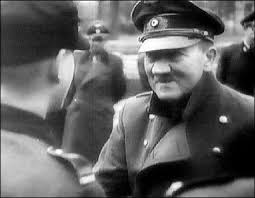
Adolf Hitler addressing boy soldiers as the Third Reich crumbles
“If the war is lost,” Hitler told Albert Speer, his Minister of Armaments, “the nation will also perish. This fate is inevitable. There is no necessity to take into consideration the basis which the people will need to continue even a most primitive existence.
“On the contrary, it will be better to destroy these things ourselves, because this nation will have proved to be the weaker one and the future will belong solely to the stronger eastern nation.
“Besides, those who will remain after the battle are only the inferior ones, for the good ones have all been killed.”
Speer argued in vain that there must be a future for the German people. But Hitler refused to back down. He gave Speer 24 hours to reconsider his opposition to the order.
The next day, Speer told Hitler: “My Fuhrer, I stand unconditionally behind you!”
“Then all is well,” said Hitler, suddenly with tears in his eyes.
“If I stand unreservedly behind you,” said Speer, “then you must entrust me rather than the Gauleiters [district Party leaders serving as provincial governors] with the implementation of your decree.”
Filled with gratitude, Hitler signed the decree Speer had thoughtfully prepared before their fateful meeting.
By doing so, Hitler unintentionally gave Speer the power to thwart his “scorched earth” decree.
Speer had been the closest thing to a friend in Hitler’s life. Trained as an architect, he had joined the Nazi Party in 1931.
He met Hitler in 1933, when he presented the Fuhrer with architectural designs for the Nuremberg Rally scheduled for that year.
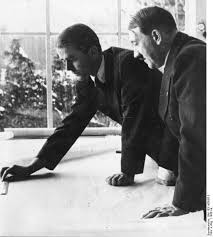
Albert Speer and Adolf Hitler pouring over architectural plans
From then on, Speer became Hitler’s “genius architect” assigned to create buildings meant to last for a thousand years.
In 1943, Hitler appointed him Minister of Armaments, charged with revitalizing the German war effort.
Nevertheless, Speer now crisscrossed Germany, persuading military leaders and district governors to not destroy the vital facilities that would be needed after the war.
“No other senior National Socialist could have done the job,” writes Randall Hanson, author of Disobeying Hitler: German Resistance After Valkyrie.
“Speer was one of the very few people in the Reich—perhaps even the only one—with such power to influence actors’ willingness/unwillingness to destroy.”
Despite his later conviction for war crimes at Nuremberg, Speer never regretted his efforts to save Germany from total destruction at the hands of Adolf Hitler.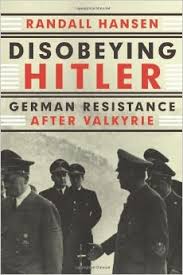
Fast-forward to August, 2018, and the White House of President Donald J. Trump.
Omarosa Manigault furiously defended Donald Trump throughout the 2016 Presidential campaign.
In an interview with Frontline, she boasted: “Every critic, every detractor, will have to bow down to President Trump. It’s everyone who’s ever doubted Donald, who ever disagreed, who ever challenged him.”
Manigault didn’t care that she had no base or credibility within the back community—or that blacks regarded Trump so poorly: “My reality is that I’m surrounded by people who want to see Donald Trump as the next President of the United States who are African-American.”
On January 20, 2017, she entered the White House with Trump as Director of Communications for the Office of Public Liaison.
This wasn’t her first tenure at the Executive Mansion. During the Clinton administration she held four jobs in two years—and was thoroughly disliked in all of them.
“She was asked to leave [her last job] as quickly as possible, she was so disruptive,” said Cheryl Shavers, the former Under Secretary for Technology at the Commerce Department. “One woman wanted to slug her.”
And in her work at the Trump White House, she made herself just as unpopular as she had in the Clinton one.
In her first press interview, she announced that she was a “Trumplican” and had switched her political affiliation to the Republican Party. She said Democrats took black voters for granted and hoped blacks would leave the Democratic party.
In June, 2017, she invited the Congressional Black Caucus (CBC) to visit the White House. And she signed the invitation: “The Honorable Omarosa Manigault.”
This is not a title given to political aides. And it’s not used by those referring to themselves. The arrogance offended some members of the Caucus, which declined the invitation.
In August, she appeared at the National Association of Black Journalists convention in New Orleans. She was a panelist on a discussion about losing loved ones to violence.
When the moderator, Ed Gordon, asked her about Trump’s policies and not her personal history with losing family members through violence, Manigault got into a shouting match with him.
“Omarosa Manigault and Ed Gordon are literally arguing on stage right now. This is insane,” tweeted Yamiche Alcindor, the PBS Newshour White House correspondent.
2020 PRESIDENTIAL ELECTION, ABC NEWS, ADOLF HITLER, ALTERNET, AMERICABLOG, AP, ASHLI BABBITT, BABY BOOMER RESISTANCE, BBC, BLOOMBERG NEWS, BUZZFEED, CBS NEWS, CNN, CROOKS AND LIARS, DAILY KOZ, DONALD TRUMP, ELECTORAL COLLEGE, FACEBOOK, FIVETHIRTYEIGHT, FOX NEWS, HARPER’S MAGAZINE, HORST WESSEL, HORST WESSEL LIED (SONG), HUFFINGTON POST, JOSEPH BIDEN, JOSEPH GOEBBELS, MARIA BARTIROMO, MEDIA MATTERS, MOTHER JONES, MOVEON, MSNBC, NAZI PARTY, NAZIS, NBC NEWS, NEW REPUBLIC, NEWSDAY, NEWSWEEK, NPR, PAUL GOSAR, PBS NEWSHOUR, POLITICO, POLITICUSUSA, RAW STORY, REPUBLICAN PARTY, REPUBLICANS, REUTERS, SALON, SEATTLE TIMES, SLATE, TALKING POINTS MEMO, THE ATLANTIC, THE CHICAGO SUN-TIMES, THE CHICAGO TRIBUNE, THE DAILY BEAST, THE DAILY BLOG, THE GUARDIAN, THE HILL, THE HUFFINGTON POST, THE LOS ANGELES TIMES, THE NATION, THE NEW REPUBLIC, THE NEW YORK TIMES, THE NEW YORKER, THE PBS NEWSHOUR, THE VILLAGE VOICE, THE WASHINGTON POST, THINKPROGRESS, TIME, TRUTHDIG, TRUTHOUT, TUCKER CARLSON, TWITTER, TWO POLITICAL JUNKIES, U.S. NEWS & WORLD REPORT, UNITED STATES CAPITOL BUILDING, UNITED STATES HOUSE OF REPRESENTATIVES, UNITED STATES SENATE, UPI, USA TODAY, WEIMAR REPUBLIC, WONKETTE
In Bureaucracy, History, Law, Law Enforcement, Politics, Social commentary on January 7, 2026 at 12:10 am
Republicans—including those who pursue a Fascistic agenda—are quick to accuse their opponents of being “Nazis.”
Yet similarities abound between the tactics—and often the goals—between yesterday’s Nazis and today’s Republicans.
One of these is the need for martyrs by both parties.
The Nazis found theirs in Horst Wessel.
As a teenager growing up in the Weimar Republic of Germany, he joined the Viking Liga (“Viking League”), a Right-wing paramilitary group. Its goal, wrote Wessel, was “the “establishment of a national dictatorship.”
He soon became a local leader, engaging in street battles with rival Leftist groups such as the Social Democratic Party (SPD) and the Communist Party (KPD). In 1926, he joined the paramilitary Sturmabteilung (“Storm Detachment” or SA) of Adolf Hitler’s National Socialist German Workers Party (Nazi Party).

Horst Wessel
Bundesarchiv, Bild 146-1978-043-14 / Heinrich Hoffmann / CC-BY-SA 3.0, CC BY-SA 3.0 DE <https://creativecommons.org/licenses/by-sa/3.0/de/deed.en>, via Wikimedia Commons
His unit had a reputation as “a band of thugs, a brutal squad.”
In September 1929, Wessel met Erna Jänicke, a 23-year-old ex-prostitute. Some sources claim Wessel acted as Jänicke’s pimp. She soon moved into his room.
Wessel’s landlady, Elisabeth Salm, wanted Jänicke to leave. But Jänicke refused to do so.
Salm asked Communist friends of her late husband to evict Jänicke, They recruited Albrecht Höhler, an armed pimp, perjurer and petty criminal, to handle the evicting.
On February 23, 1930, Höhler knocked at the front door of Wessel and Jänicke’s room. When Wessel, 22, opened the door, Höhler shot him dead.
Nazi propagandist Joseph Goebbels quickly turned Wessel into a Nazi martyr. Wessel had written the lyrics for a new Nazi fight song: “The Unknown SA-Man.” It later became known as “Raise the Flag” and finally the “Horst Wessel Lied.”
Its opening stanza.
Raise the flag! The ranks tightly closed!
The SA marches with calm, steady step.
Comrades shot by the Red Front and reactionaries
March in spirit within our ranks.
“The Horst Wessel Lied” became the official anthem of the Nazi Party from 1930 to 1945.

Fast forward to January 6, 2021—when the Republican Party got its own martyr: Ashli Babbitt.
A veteran of the United States Air Force, she served two tours in Afghanistan and Iraq before later deploying with the National Guard to Kuwait and Qatar.
Originally from San Diego, California, by 2020 she had recently remarried and was working at a pool service company.
On social media, she described herself as a libertarian and a patriot. She often expressed ardent support for President Donald Trump.
On November 3, 2020, Trump lost the Presidential election to former Vice President Joseph Biden.
Biden won the popular vote—81,268,924 to 74,216,154 for Trump—and, more importantly, in the Electoral College: 306 to 232.
But Babbitt accepted wholesale Trump’s lie that the election had been stolen from him by massive voter fraud.
On January 6, 2021, members of the United States Senate and House of Representatives would meet in the United States Capitol Building. They would count the Electoral College votes received by Trump and Biden—and pronounce Biden the President-elect.
Babbitt was determined to “Stop the Steal” by assaulting the Capitol Building on January 6.

Ashli Babbitt
On January 6, she was among hundreds of Right-wing men and women who breached the Capitol. She was also the mob’s only casualty.
As lawmakers were being evacuated by Capitol Police, Babbitt tried to climb through a shattered window in a barricaded door. She was warned to back off several times by a policeman standing on the other side.
Babbitt defied the orders—and was shot in the neck/shoulder. She died of the wound—at age 35.
The shooting was later ruled justified by the Justice Department.
Almost a century ago Nazis extolled Horst Wessel as a virtuous martyr. Today, members of Right-wing groups—and even Congressional Republicans—portray Ashli Babbitt as a fallen Joan of Arc.
During a hearing with former acting Attorney General Jeffrey Rosen in April, 2021, Rep. Paul Gosar (R-AZ.) claimed Babbitt was “executed.”
Fox News host Tucker Carlson has made the same charge.
And, not to be outdone, so has Donald Trump himself.
“Who was the person who shot an innocent, wonderful, incredible woman?” Trump asked Fox Business anchor Maria Bartiromo. “I will tell you, they know who shot Ashley Babbitt. They’re protecting that person. I’ve heard also that it was the head of security for a certain high official—a Democrat.”
Five years later, Republicans continue to revere her as a martyr.
On January 6, a crowd of Trump’s supporters returned to the site of the 2021 insurrection. Liz Landers, White House Correspondent for The PBS Newshour, commented:
“Officially, this was a memorial event for Ashli Babbitt, the Air Force veteran shot dead while trying to enter through a broken window in the Capitol, and four others who were lost that day or in the weeks after, including a police officer.”
Babbitt’s mother, Micki Witthoeft, spoke to the crowd: “So glad that people are not losing sight of the importance of that day. It’s a day Congress let us down and continues to let us down.”
The Nazis found in Horst Wessel a hero to inspire their followers. So, too, have Republicans generally and Trump enthusiasts specifically found the same in Ashli Babbitt.
2016 PRESIDENTIAL CAMPAIGN, ABC NEWS, ALTERNET, AMERICAN FREIGHT MANAGEMENT COMPANY, AMERICAN REVOLUTION, AP, BARACK OBAMA, BUREAU OF LABOR STATISTICS, BUZZFEED, CALVIN COOLIDGE, CBS NEWS, CELINDA LAKE, CHINA, CHRIS MATTHEWS, CHVE-CHING HUANG, CNN, CROOKS AND LIARS, DAILY KOZ, DIVINE RIGHT OF KINGS THEORY, DONALD TRUMP, EMANCIPATION PROCLAMATION, EMPLOYERS RESPONSIBILITY ACT, EMPLOYMENT ACT OF 1946, EQUAL EMPLOYMENT OPPORTUNITY COMMISSION (EEOC), FACEBOOK, GEN Z, HARDBALL, HILLARY CLINTON, JOB CREATORS, JOHN F. KENNEDY, LOS ANGELES TIMES, LYNDON B. JOHNSON, MALES, MOTHER JONES, MOVEON, MSNBC, NBC NEWS, NEW YORK TIMES, NEWSWEEK, NPR, ONE BIG BEAUTIFUL BILL ACT, PBS NEWSHOUR, PETER CAPPELLI, POLITICO, RAW STORY, READERS DIGEST, REPUBLICANS, REUTERS, ROBERT REICH, SALON, SEATTLE TIMES, SENATOR BERNIE SANDERS, SLATE, SLAVERY, STEVE POIZNER, TAX CUTS AND JOBS ACT OF 2017, TAX LAW CENTER AT NEW YORK UNIVERSITY SCHOOL OF LAW, THE ATLANTIC, THE CHICAGO SUN-TIMES, THE CHICAGO TRIBUNE, THE DAILY BEAST, THE GUARDIAN, THE HILL, THE HUFFINGTON POST, THE LOS ANGELES TIMES, THE NATION, THE NEW YORK TIMES, THE RACHEL MADDOW SHOW, THE WASHINGTON POST, TIME, TOMMY G. THOMPSON, U.S. NEWS & WORLD REPORT, UNEMPLOYMENT, UPI, USA TODAY, WALLACE C. PETERSON, WASHINGTON POST, WHY GOOD PEOPLE CAN'T FIND JOBS, WOMEN, X
In Bureaucracy, Business, History, Law, Law Enforcement, Politics, Social commentary on January 5, 2026 at 1:13 am
Another way an Employers Responsibility Act (ERA) could promote fulltime employment: It would nicely dovetail with the 1946 Employment Act.
Codified as 15 U.S.C. § 1021, this is a United States federal law. It states: “It is the continuing policy and responsibility of the Federal government…to promote maximum employment, production, and purchasing power.”
Unfortunately, that act has been seriously neglected, according to the late Wallace C. Peterson, George Holmes Professor of Economics Emeritus at the University of Nebraska-Lincoln.
Peterson, who died in April, 2012, was a proponent of Keynesian economics and authored a textbook on macroeconomics that was widely adopted in colleges and universities through eight editions.
He authored a second economics textbook, five specialized economics books and over 60 articles.
He was elected president of the Association for Evolutionary Economics (AFEE), president of the Association for Social Economics, president of the Midwest Economics Association and was the 1992 recipient of the Veblen-Commons award.
“No administration since the Kennedy-Johnson presidencies in the 1960s has taken the Employment Act seriously,” wrote Peterson in a letter to this columnist.
“President Kennedy established a 4% unemployment rate as an interim target on the road to a full employment economy. But after President Johnson left office in 1969, full employment has not been an important policy objective for any administration, Democrat or Republican.
“The nation needs a modernized full employment policy.”

Wallace C. Peterson
Such a full-employment policy “would not only seek to bring the unemployment rate down to 3% or less, but would also aim at the creation of ‘good jobs’—jobs that carry with them an income appropriate to middle-class hopes and aspirations,” wrote Peterson.
“Too many of the millions who have lost good jobs in the last two decades have not been able to find new, fulltime jobs. or have had to take significant reduction in pay even if they were able to find fulltime work.
“Government through the 1946 Employment Act has a major responsibility to promote conditions that make full employment possible. Workers have a major responsibility to educate and train themselves for the jobs that become available in a society characterized by rapid technical change.
“What of employers? What is their responsibility?
“Such an [Employers Responsibility] Act would require employers to demonstrate as much responsibility for hiring as job-seekers are expected to display in finding work.
”This is certain to be controversial, but it adds yet another dimension to the debate on how an adequate number of good, well-paying jobs can be created….
“An Employers Responsibility Act, in combination with existing legislation such as the 1946 Employment Act and the 1935 National Labor-Relations Act, could be a powerful force in moving labor-management relations in this country away from its current adversarial character, toward a more harmonious and cooperative climate.”
* * * * *
For thousands of years, otherwise highly intelligent men and women believed that kings ruled by divine right. That kings held absolute power, levied extortionate taxes and sent countless millions of men off to war—all because God wanted it that way.
That lunacy was dealt a deadly blow in 1776 when American Revolutionaries threw off the despotic rule of King George III of England.

George Washington crossing the Delaware
But today, millions of Americans remain imprisoned by an equally outrageous and dangerous theory: The Theory of the Divine Right of Employers.
Summing up this employer-as-God attitude, Calvin Coolidge still speaks for the overwhelming majority of employers and their paid shills in government: “The man who builds a factory builds a temple, and the man who works there worships there.”
America can no longer afford such a dangerous fallacy as the Theory of the Divine Right of Employers.
President Donald Trump has repeatedly crowed over the passage of the Tax Cuts and Jobs Act, passed by the Senate on December 19, 2017, and signed into law by him on December 22.
Yet former Secretary of Labor Robert Reich warned before the bill became law:
“What corporations have done [with past tax cuts] is raise executive salaries and also buy back shares of stock, in order to raise stock prices. They don’t invest the money in additional jobs or additional machines or additional equipment or things like that because there is no reason for them to unless they have got more demand for their goods and services. And this bill is not going to create more demand.”
In short: The powerful never voluntarily behave responsibly or surrender their privileges.
Americans did not win their freedom from Great Britain—and its enslaving doctrine of “the divine right of kings”—by begging for their rights.
And Americans will not win their freedom from their corporate masters—and the equally enslaving doctrine of “the divine right of employers”—by begging for the right to work and support themselves and their families.
And they will most certainly never win such freedom by supporting right-wing political candidates whose first and only allegiance is to the corporate interests who bankroll their campaigns.
Corporations can—and do—spend millions of dollars on TV ads, selling lies—lies such as the “skills gap,” and how if the wealthy are forced to pay their fair share of taxes, jobs will inevitably disappear.
But Americans can choose to reject those lies—and demand that employers behave like patriots instead of predators.
2016 PRESIDENTIAL CAMPAIGN, ABC NEWS, ALTERNET, AMERICAN FREIGHT MANAGEMENT COMPANY, AMERICAN REVOLUTION, AP, BARACK OBAMA, BUREAU OF LABOR STATISTICS, BUZZFEED, CALVIN COOLIDGE, CBS NEWS, CELINDA LAKE, CHINA, CHRIS MATTHEWS, CHVE-CHING HUANG, CNN, CROOKS AND LIARS, DAILY KOZ, DIVINE RIGHT OF KINGS THEORY, DONALD TRUMP, EMANCIPATION PROCLAMATION, EMPLOYERS RESPONSIBILITY ACT, EMPLOYMENT ACT OF 1946, EQUAL EMPLOYMENT OPPORTUNITY COMMISSION (EEOC), FACEBOOK, GEN Z, HARDBALL, HILLARY CLINTON, JOB CREATORS, JOHN F. KENNEDY, LOS ANGELES TIMES, LYNDON B. JOHNSON, MALES, MOTHER JONES, MOVEON, MSNBC, NBC NEWS, NEW YORK TIMES, NEWSWEEK, NPR, ONE BIG BEAUTIFUL BILL ACT, PBS NEWSHOUR, PETER CAPPELLI, POLITICO, RAW STORY, READERS DIGEST, REPUBLICANS, REUTERS, ROBERT REICH, SALON, SEATTLE TIMES, SENATOR BERNIE SANDERS, SLATE, SLAVERY, STEVE POIZNER, TAX CUTS AND JOBS ACT OF 2017, TAX LAW CENTER AT NEW YORK UNIVERSITY SCHOOL OF LAW, TED RALL, THE ATLANTIC, THE CHICAGO SUN-TIMES, THE CHICAGO TRIBUNE, THE DAILY BEAST, THE GUARDIAN, THE HILL, THE HUFFINGTON POST, THE LOS ANGELES TIMES, THE NATION, THE NEW YORK TIMES, THE RACHEL MADDOW SHOW, THE WASHINGTON POST, TIME, TOMMY G. THOMPSON, U.S. NEWS & WORLD REPORT, UNEMPLOYMENT, UPI, USA TODAY, WALLACE C. PETERSON, WASHINGTON POST, WHY GOOD PEOPLE CAN'T FIND JOBS, WOMEN, X
In Bureaucracy, Business, History, Law, Politics, Social commentary on January 2, 2026 at 1:05 pm
The last three provisions of an Employers Responsibility Act (ERA) would cover the following:
(12) The Justice Department and/or the Labor Department would be required to maintain a publicly-accessible database on those companies that had been cited, sued and/or convicted for such offenses as
- Discrimination,
- Harassment,
- Health and/or safety violations or
- Violating immigration laws.
Employers would be legally required to regularly provide such information to these agencies, so that it would remain accurate and up-to-date.
Such information would arm job applicants with vital information about the employers they were approaching. They could thus decide in advance if an employer is deserving of their skills and dedication.
As matters now stand, employers can legally demand to learn highly private details of an applicant’s life without having to disclose even the most basic information about themselves and their history of treating employees.

(13) CEOs whose companies employ illegal aliens would be held directly accountable for the actions of their subordinates. Upon conviction, the CEO would be sentenced to a mandatory prison term of at least ten years.
This would prove a more effective remedy for controlling illegal immigration than stationing tens of thousands of soldiers on the U.S.-Mexican border. With CEOs forced to account for their subordinates’ actions, they would take drastic steps to ensure their companies complied with Federal immigration laws.
Without employers eager to hire illegal aliens at a fraction of the money paid to American workers, the invasions of illegal job-seekers would quickly come to an end.
(14) A portion of employers’ existing Federal taxes would be set aside to create a national clearinghouse for placing unemployed but qualified job-seekers.
* * * * *
Right-wing capitalists and their paid shills in Congress would attack such legislation as radically Communist. But an Employers Responsibility Act (ERA) would greatly increase America’s economic strength.
With a fully-employed workforce, far more consumers could afford the wide array of goods and services turned out by American business.
When consumers can’t afford these, companies are forced to cut their employees and produce fewer goods, which creates an ever-downward spiral.
An ERA would allow Democrats to address the needs of blue-collar workers who once served as one of their primary constituencies.
During the 2016 Presidential campaign, Democratic nominee Hillary Clinton voiced the frustrations of millions of poor and middle-class Americans who felt abandoned by their employers and Washington policymakers.

Hillary Clinton
On September 26, 2016, Clinton said:
There “are people who feel that the government has let them down, the economy has let them down. Nobody cares about them. Nobody worries about what happens to their lives and their futures, and they’re just desperate for change. It doesn’t really even matter where it comes from.
“They don’t buy everything [Donald Trump] says, but he seems to hold out some hope that their lives will be different. They won’t wake up and see their jobs disappear, lose a kid to heroin, feel like they’re in a dead-end. Those are people we have to understand and empathize with as well.”
Eloquent words. But Clinton didn’t offer an economic package to quickly and effectively address Americans’ needs for jobs and medical care.
Her “remedy”?
The tired Democratic mantra: “Education is the answer.”
In May, 2016, Democratic pollster CeLinda Lake had warned Clinton to revamp her economic platform.
“Democrats simply have to come up with a more robust economic frame and message,” Lake said after the election.
“We’re never going to win those white, blue-collar voters if we’re not better on the economy. And 27 policy papers and a list of positions is not a frame. We can laugh about it all we want, but Trump had one.”
Corporations are masters at turning disadvantages for others into advantages for themselves.
As countless employers whine about rising inflation during the Coronavirus pandemic, there has been a corresponding rise in corporate profits.
According to Isabella Weber, professor of economics at the University of Massachusetts Amherst, this is no accident.

Isabella Weber
In a February 13, 2022 interview on NPR, she said:
“Companies always want to maximize profits, right? In the current context [of supply chain hardships] they suddenly cannot deliver as much anymore as they used to. And this creates an opening where they can say, ‘Well, we are facing increasing costs. We are facing all these issues. So we can explain to our customers that we are raising our prices.’
“No one knows how much exactly these prices should be increased. And everybody has some sort of an understanding that, oh, yeah, there are issues, so, yes, of course companies are increasing prices in ways in which they could not justify in normal times.
“But this does not mean that the actual amount of price increase is justified by the increase in costs. And as a matter of fact, what we have seen is that profits are skyrocketing, which means that companies have increased prices by more than cost.
“In the earnings reports, companies have bragged about how they have managed to be ahead of the inflation curve, how they have managed to jack up prices more than their costs and as a result have delivered these record profits.”
2016 PRESIDENTIAL CAMPAIGN, ABC NEWS, ALTERNET, AMERICAN FREIGHT MANAGEMENT COMPANY, AMERICAN REVOLUTION, AP, BARACK OBAMA, BUREAU OF LABOR STATISTICS, BUZZFEED, CALVIN COOLIDGE, CBS NEWS, CELINDA LAKE, CHINA, CHRIS MATTHEWS, CHVE-CHING HUANG, CNN, CROOKS AND LIARS, DAILY KOZ, DIVINE RIGHT OF KINGS THEORY, DONALD TRUMP, EMANCIPATION PROCLAMATION, EMPLOYERS RESPONSIBILITY ACT, EMPLOYMENT ACT OF 1946, EQUAL EMPLOYMENT OPPORTUNITY COMMISSION (EEOC), FACEBOOK, GEN Z, HARDBALL, HILLARY CLINTON, JOB CREATORS, JOHN F. KENNEDY, LOS ANGELES TIMES, LYNDON B. JOHNSON, MALES, MOTHER JONES, MOVEON, MSNBC, NBC NEWS, NEW YORK TIMES, NEWSWEEK, NPR, ONE BIG BEAUTIFUL BILL ACT, PBS NEWSHOUR, PETER CAPPELLI, POLITICO, RAW STORY, READERS DIGEST, REPUBLICANS, REUTERS, ROBERT REICH, SALON, SEATTLE TIMES, SENATOR BERNIE SANDERS, SLATE, SLAVERY, STEVE POIZNER, TAX CUTS AND JOBS ACT OF 2017, TAX LAW CENTER AT NEW YORK UNIVERSITY SCHOOL OF LAW, THE ATLANTIC, THE CHICAGO SUN-TIMES, THE CHICAGO TRIBUNE, THE DAILY BEAST, THE GUARDIAN, THE HILL, THE HUFFINGTON POST, THE LOS ANGELES TIMES, THE NATION, THE NEW YORK TIMES, THE RACHEL MADDOW SHOW, THE WASHINGTON POST, TIME, TOMMY G. THOMPSON, U.S. NEWS & WORLD REPORT, UNEMPLOYMENT, UPI, USA TODAY, WALLACE C. PETERSON, WASHINGTON POST, WHY GOOD PEOPLE CAN'T FIND JOBS, WOMEN, X
In Bureaucracy, Business, History, Law, Law Enforcement, Politics, Social commentary on December 31, 2025 at 12:11 am
America can end this national disaster—and disgrace—of willing-to-work Americans being unable to find willing-to-hire employers.
The solution: A nationwide Employers Responsibility Act (ERA).
Such legislation would legally require employers to demonstrate as much initiative for hiring as job-seekers are now expected to show in searching for work.
Two of its provisions have already been offered. Here are another 10.
(3) Employers would receive tax credits for creating professional, well-paying, full-time jobs.
This would encourage the creation of better than the menial, dead-end, low-paying and often part-time jobs which exist in the service industry. Employers found using such tax credits for any other purpose would be prosecuted for tax fraud.

(4) A company that acquired another—through a merger or buyout—would be forbidden to fire en masse the career employees of that acquired company.
This would be comparable to the protection existing for career civil service employees. Such a ban would prevent a return to the predatory “corporate raiding” practices of the 1980s, which left so much human and economic wreckage in their wake.
The wholesale firing of employees would trigger the prosecution of the company’s new owners. Employees could still be fired, but only for provable just cause, and only on a case-by-case basis.
(5) Employers would be required to provide full medical and pension benefits for all employees, regardless of their full-time or part-time status.
Increasingly, employers are replacing full-time workers with part-time ones—solely to avoid paying medical and pension benefits. Requiring employers to act humanely and responsibly toward all their employees would encourage them to provide full-time positions—and hasten the death of this greed-based practice.
(6) Employers would be encouraged to hire to their widest possible limits, through a combination of financial incentives and legal sanctions. Among those incentives: Employers demonstrating a willingness to hire would receive substantial Federal tax credits, based on the number of new, permanent employees hired per year.
Employers claiming eligibility for such credits would be required to make their financial records available to Federal investigators. Employers found making false claims would be prosecuted for perjury and tax fraud, and face heavy fines and imprisonment if convicted.
(7) Among those sanctions: Employers refusing to hire could be required to prove, in court:
- Their economic inability to hire further employees, and/or
- The unfitness of the specific, rejected applicant.
Companies found guilty of unjustifiably refusing to hire would face the same penalties as now applying in cases of discrimination on the basis of age, race, sex and disability. Employers would thus fund it easier to hire than to refuse to do so. Job-seekers would no longer be prevented from even being considered for employment because of arbitrary and interminable “hiring freezes.”
(8) Employers refusing to hire would be required to pay an additional “crime tax.”
Sociologists and criminologists agree that “the best cure for crime is a job.” Thus, employers who refuse to hire contribute to a growing crime rate in this Nation. Such non-hiring employers would be required to pay an additional tax, which would be earmarked for agencies of the criminal justice system at State and Federal levels.
(9) The seeking of “economic incentives” by companies in return for moving to or remaining in cities/states would be strictly forbidden.
Such “economic incentives” usually:
- Allow employers to ignore existing laws protecting employees from unsafe working conditions;
- Allow employers to ignore existing laws protecting the environment;
- Allow employers to pay their employees the lowest acceptable wages, in return for the “privilege” of working at these companies; and/or
- Allow employers to pay little or no business taxes, at the expense of communities who are required to make up for lost tax revenues.
(10) Employers who continue to make such overtures would be prosecuted for attempted bribery or extortion:
- Bribery, if they offered to move to a city/state in return for “economic incentives,” or
- Extortion, if they threatened to move their companies from a city/state if they did not receive such “economic incentives.”
This would protect employees against artificially-depressed wages and unsafe working conditions; protect the environment in which these employees live; and protect cities/states from being pitted against one another at the expense of their economic prosperity.
(11) The U.S. Departments of Justice and Labor would regularly monitor the extent of employer compliance with the provisions of this Act.
Among these measures: Sending undercover agents, posing as highly-qualified job-seekers, to apply at companies—and then vigorously prosecuting those employers who blatantly refused to hire despite their proven economic ability to do so.
This would be comparable to the long-time and legally-validated practice of using undercover agents to determine compliance with fair-housing laws.
(12) The Justice Department and/or the Labor Department would be required to maintain a publicly-accessible database on those companies that had been cited, sued and/or convicted for such offenses as
- discrimination,
- harassment,
- health and/or safety violations or
- violating immigration laws.
Employers would be legally required to regularly provide such information to these agencies, so that it would remain accurate and up-to-date.
Such information would arm job applicants with vital information about the employers they were approaching. They could thus decide in advance if an employer is deserving of their skills and dedication.


 Bureaucracybuster's Blog
ABC NEWS, ALTERNET, AP, BARACK OBAMA, BBC, BP, BUZZFEED, CBS NEWS, CHILDREN'S BOOKS, CLEAN POWER PLAN, CNN, COAL, DAILY KOS, DEMOCRATIC PARTY, DONALD TRUMP, DR. SEUSS, ENERGY POLICY, ENVIRONMENTAL PROTECTION, ENVIRONMENTAL PROTECTION AGENCY, FACEBOOK, GLOBAL WARMING, LOUISIANA, MOTHER JONES, MOVEON, MSNBC, NBC NEWS, NEWSWEEK, NPR, OIL SPILL, POLITICO, POLLUTION, RAW STORY, REUTERS, SALON, Sarah Palin, SEATTLE TIMES, SLATE, SOLAR POWER, THE ATLANTIC, THE CHICAGO SUN-TIMES, THE CHICAGO TRIBUNE, THE DAILY BEAST, THE GUARDIAN, THE HILL, THE HUFFINGTON POST, THE LOS ANGELES TIMES, THE NEW YORK TIMES, THE WALL STREET JOURNAL, THE WASHINGTON POST, TIME, TWITTER, U.S. NEWS & WORLD REPORT, UPI, USA TODAY, WIND POWER, X
DONALD TRUMP AND THE OOBLECK
In Bureaucracy, Business, History, Politics, Social commentary on March 3, 2026 at 12:13 amDr. Seuss (Theodor Geisel) published over 60 children’s books, which were often filled with imaginative characters and rhyme.
Among his most famous books were Green Eggs and Ham, The Cat in the Hat, and One Fish Two Fish Red Fish Blue Fish.
Honored in his lifetime (1904-1991) for the joy he brought to countless children, Dr. Seuss may well prove one of the unsung prophets of our environmentally-threatened age.
Dr. Seuss
In 1949, he penned Bartholomew and the Oobleck, the story of a young page who must rescue his kingdom from a terrifying, man-made substance called Oobleck.
The story is quickly told:
Derwin, the King of Didd, announces he’s bored with sunshine, rain, fog and snow. So he calls in his black magicians and orders them to create a new kind of weather.
The magicians assure him they can create it.
“What will you call it?” asks the king.
“We’ll call it Oobleck,” says one of the magicians.
“What will it be like?” asks King Didd.
“We don’t know, Sire,” the magician replies. “We’ve never created Oobleck before.”
The next morning, Oobleck—a greenish, glue-like substance—starts raining.
The king orders Bartholomew, the royal page, to tell the Bell Ringer that today will be a holiday. But the bell doesn’t ring—because it’s filled with Oobleck.
The Oobleck rain intensifies.
The falling blobs—now as big as buckets full of broccoli—break into the palace, immobilizing the servants and guards.
Bartholomew warns the Royal Trumpeter about the Oobleck, but the trumpet gets stopped up with the goo.
The Captain of the Guards thinks the Oobleck is pretty and sees no danger in it—until he eats some. Instantly, his mouth is glued shut.
At the climax of the story, Bartholomew confronts King Derwin for giving such a rash order: “If you can’t do anything else,” says Bartholomew, “at least you can say you’re sorry.”
King Derwin refuses, and Bartholomew says, “If you can look at all the horror you’ve caused and not say you’re sorry, you’re no sort of king at all.”
In real-life, such a king would have instantly ordered Bartholomew’s execution. But this is a children’s story.
So, overcome with guilt, King Derwin utters the magic words: “You’re right, this is all my fault, and I am sorry.”
Suddenly the Oobleck stops raining and the sun melts away the rest.
With life returning to normal, King Derwin mounts the bell tower and rings the bell. He proclaims a holiday dedicated not to Oobleck, but to rain, sun, fog, and snow, the four elements of Nature—of which Man is but a part.
* * * * *
Flash forward to the following Donald Trump tweets:
November 6, 2012: “The concept of global warming was created by and for the Chinese in order to make U.S. manufacturing non-competitive.”
December 6, 2013: “Ice storm rolls from Texas to Tennessee – I’m in Los Angeles and it’s freezing. Global warming is a total, and very expensive, hoax!”
January 1, 2014: “This very expensive GLOBAL WARMING bullshit has got to stop. Our planet is freezing, record low temps, and our GW scientists are stuck in ice.”
Donald Trump
Upon taking office in 2017, Trump
Upon taking office again in 2025, Trump:
There are forces in Nature far more powerful than anything Man and his puny strength can defy—or harness. And we invoke the wrath of those forces at our own peril.
In the world of children’s stories, it’s possible for a king to undo the terrible damage he’s unleashed by finding the courage to say: “I’m sorry.”
In real-life, tyrants almost never say “I’m sorry,” no matter how enormous their mistakes and/or crimes.
From 1936 to 1938, Soviet dictator Joseph Stalin slaughtered the cream of his own Army and Air Force. When Nazi Germany invaded the Soviet Union in 1941, Stalin blamed his remaining generals for the massive defeats inflicted by the Wehrmacht.
And as Soviet forces finally closed on Berlin in April, 1945, and Adolf Hitler prepared to commit suicide in his underground bunker, he blamed the German people for losing the war he had started.
Saying “I’m sorry” cannot reverse decades of rampant environmental abuse. To believe that it can is as ridiculous as believing that self-righteous tyrants will ever take responsibility for their own crimes and follies.
Share this: