Posts Tagged ‘CBS NEWS’
9/11, ABC NEWS, ABRAHAM LINCOLN, AL QAEDA, ANDREW JACKSON, BARACK OBAMA, BILL CLINTON, CBS NEWS, CNN, CUBAN MISSILE CRISIS, EMANCIPATION PROCLOMATION, EXTORTION, FACEBOOK, FBI, FEDERAL GOVERNMENT SHUTDOWN, FORD'S THEATER, FRANKLIN ROOSEVELT, FURLOUGHS, GEORGE H.W. BUSH, JOHN F. KENNEDY, JOSEPH MCCARTHY, MAFIA, MITT ROMNEY, MSNBC'S "HARDBALL", NBC NEWS, NEGOTIATING, OBAMACARE, PATRIOT ACT, R.I.CO. ACT, REPUBLICAN PARTY, REPUBLICANS, RICHARD NIXON, Secret Service, TED NUGENT, TERRORISM, THE AFFORDABLE CARE ACT, THE LOS ANGELES TIMES, THE NEW YORK TIMES THE WASHINGTON POST, TWITTER, UNITED STATES HOLOCAUST MEMORIAL, VIETNAM WAR MEMORIAL, WHITE HOUSE, WORLD WAR 11
In Bureaucracy, History, Politics on October 4, 2013 at 12:01 am
For a half-century, Republicans have been damning the very government they lust to control.
Consider this choice comment from Mitt Romney supporter Ted Nugent:
“I spoke at the NRA and will stand by my speech. It’s 100 percent positive. It’s about we the people taking back our American dream from the corrupt monsters in the federal government under this administration, the communist czars he [President Barack Obama] has appointed.”
Romney, of course, refused to disavow the slander Nugent cast over every man and woman working on behalf of the American people.
Romney and his fellow Republicans salivate at every vile charge they can hurl at the very government they lust to control.
As in the case of Senator Joseph McCarthy, no slander is too great if it advances their path to power.
But there are others–living or at least working in Washington, D.C.–who simply go about their jobs with quiet dedication. And they leave slanderous, self-glorifying rhetoric to Right-wing politicians.
One of these unsung heroes was Stephen Tyrone Johns, a security guard at the United States Holocaust Memorial Museum.

On June 10, 2009, Johns, 39, was shot and killed by James Wenneker von Brunn, a white supremist and Holocaust denier. Brunn was himself shot and wounded by two other security guards who returned fire.
While in jail awaiting his trial, von Brunn–who was 88–died on January 6, 2010.
To work in Washington, D.C., is to realize that this city ranks–with New York City–at the top of Al Qaeda’s list of targets.
No one knows this better than the agents of the United States Secret Service, who protect the President, Vice President, their families and the White House itself 24 hours a day.

Prior to 9/11, visiting the White House was assumed to be an American right. No longer.
Today, if you want to tour the Executive Mansion, you quickly learn there are only two ways to get in:
- Through a special pass provided by your Congressman; or
- By someone connected with the incumbent administration.
Congressmen, however, have a limited number of passes to give out. And most of these go to people who have put serious money into the Congressman’s re-election campaigns.
And the odds that you’ll know someone who works in the White House–and who’s willing to offer you an invitation–are even smaller than those of knowing a Congressman.
But even that isn’t enough to get you through the White House door.
You’ll have to undergo a Secret Service background check. And that requires you to submit the following information in advance of your visit:
- Name
- Date of birth
- Birthplace
- Social Security Number
And be prepared to leave a great many items at your hotel room. Among these:
- Cameras or video recorders
- Handbags, book bags, backpacks or purses
- Food or beverages, tobacco products, personal grooming items (i.e. makeup, lotion, etc.)
- Strollers
- Cell phones
- Any pointed objects
- Aerosol containers
- Guns, ammunition, fireworks, electric stun guns, mace, martial arts weapons/devices, or knives of any size
Visitors enter the White House–after showing a government-issued ID card such as a driver’s license–from the south side of East Executive Avenue.
After passing through the security screening room, they walk upstairs to the first door and through the East, Green, Blue, Red and State Dining rooms.
Secret Service agents quietly stand post in every room–unless they’re tasked with explaining the illustrious history of each section of the White House.
Like everyone else who lives/works there, the Secret Service fully appreciates the incredible sense of history that radiates throughout the building.
This is where
- Abraham Lincoln signed the Emancipation Proclomation;
- Franklin Roosevelt directed the United States to victory in World War II;
- John F. Kennedy stared down the Soviets during the Cuban Missile Crisis.
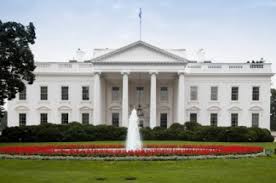
But even the generally unsmiling Secret Service agents have their human side.
While touring the East Wing of the White House, I asked an agent: “Is the East Room where President Nixon gave his farewell speech?” on August 9, 1974.
“I haven’t been programmed for that information,” the agent joked, inviting me to ask a question he could answer.
Another guest asked the same agent if he enjoyed being a Secret Serviceman.
To my surprise, he said that this was simply what he did for a living. His real passion, he said, was counseling youths.
“If you love something,” he advised, “get a job where you can do it. And if you can’t get a job you’re passionate about, get a job so you can pursue your passion.”
Of the more than 2.65 million civilian employees of the executive branch, more than 800,000 have been sent home without pay.
These men and women aren’t faceless “bureaucrats,” as Right-wingers would have people believe. They are hustands and wives, fathers and mothers. They have bills to pay, just like everyone else.
Many of them, such as agents of the FBI and Secret Service, have taken an oath to defend the United States Constitution–with their lives if necessary.
And they now face the dread of going for weeks or even months without a paycheck–as pawns in another Right-wing case of: “My way or no way.”
They deserve a better break–and so do all those who cherish liberty.
9/11, ABC NEWS, ABRAHAM LINCOLN, AL QAEDA, ANDREW JACKSON, BARACK OBAMA, BILL CLINTON, CBS NEWS, CNN, CUBAN MISSILE CRISIS, EMANCIPATION PROCLOMATION, EXTORTION, FACEBOOK, FBI, FEDERAL GOVERNMENT SHUTDOWN, FORD'S THEATER, FRANKLIN ROOSEVELT, FURLOUGHS, GEORGE H.W. BUSH, JOHN F. KENNEDY, JOSEPH MCCARTHY, MAFIA, MITT ROMNEY, MSNBC'S "HARDBALL", NBC NEWS, NEGOTIATING, OBAMACARE, PATRIOT ACT, R.I.CO. ACT, REPUBLICAN PARTY, REPUBLICANS, RICHARD NIXON, Secret Service, TED NUGENT, TERRORISM, THE AFFORDABLE CARE ACT, THE LOS ANGELES TIMES, THE NEW YORK TIMES THE WASHINGTON POST, TWITTER, UNITED STATES HOLOCAUST MEMORIAL, VIETNAM WAR MEMORIAL, WHITE HOUSE, WORLD WAR 11
In Bureaucracy, History, Law, Politics on October 3, 2013 at 12:06 am
Listen to almost any Republican and you’re almost certain to hear how much he hates and despises “Washington.”
To hear Right-wingers tell it, you might believe that “Washington” is:
- The capitol of an enemy nation;
- A cesspool of corrupt, power-hungry men and women slavering to gain dictatorial control over the life of every American;
- A center of lethal contagion which, like ancient Carthage, should be burned to the ground and its inhabitants destroyed or scattered.
All that prevents “Washington” from gaining absolute power–so claim Republicans–is the Republican Party.
But others who live or work in Washington, D.C. take a far different view of their city and the duties they perform.
These men and women will never call a press conference or rake in millions in “political contributions” (i.e., legalized bribes) for promising special privileges to special interests.
Many of them work for the National Park Service. Every national monument–and Washington is speckled with monuments–has several of these employees assigned to it.
Their duties are to protect the monuments and offer historical commentary to the public.
One such employee regularly addresses visitors to Ford’s Theater–known worldwide as the scene of President Abraham Lincoln’s assassination.
George (a pseudonym) opens his lecture by raising the question every member of the audience wants answered: How much of Ford’s Theater remains intact from the night of Lincoln’s murder–April 14, 1865?
And the answer is: Only the exterior of the building.
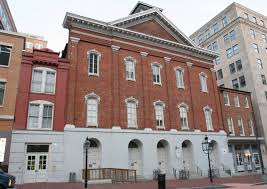
After Lincoln’s assassination, enraged Union soldiers converted the interior of the building into a military command center. That meant ripping out all the seats for spectators and the stage for actors.
The stage and seats–even the “Presidential Box” where Lincoln sat–have all been reproduced for a modern audience.
As George talks, you can tell that, for him, this is no typical day job. He realizes that, renovated or not, Ford’s Theater remains saturated with history. And he clearly feels privileged to share that history with others.
George explains that Presidential assassin John Wilkes Booth did not sneak into the theater. He didn’t have to–as a celebrity actor, he received the sort of favored treatment now accorded Lindsay Lohan.
Another monument where you will find Park Ranger guides is the Vietnam Veterans Memorial.
Completed in 1982, it receives about 3 million visitors a year. Adorning the Wall, in columns that seem to reach endlessly to the sky, are the names of the 58,195 soldiers who gave their lives during the Vietnam War.
That struggle–from 1961 to 1975–proved the most divisive American conflict since the Civil War.
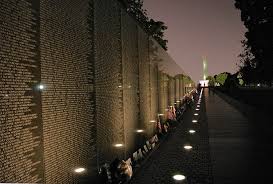
On the day I visited the memorial, groups of elementary schoolchildren passed by. They were jabbering loudly, seemingly oblivious to the terrible sacrifice the Wall was meant to commemorate.
But their adult chaperones realized its significance, and ordered the children to quiet down.
I asked a nearby Park Ranger: “Do you feel people now respond differently to the Wall, as we get further away from the Vietnam war?”
“No,” he answered. He felt that today’s visitors showed the same reverence for the monument and for the losses it had been created to honor as those who had first come in the early 1980s.
And it may well be true: I saw many tiny American flags and wreaths of flowers left at various points along the Wall, which stretches across 250 feet of land on the Mall.
When thinking about “Washington,” it’s essential to remember that this city–along with New York City–remains at the top of Al Qaeda’s target list.
Those who choose to live and/or work here do so in the potential shadow of violent death.
Anytime you enter a Federal building, be prepared to undergo a security check.
In most agencies–such as the Department of Agriculture–you simply place your bags or purses into an X-ray machine similar to those found at airports, and walk through a magnetometer. If no alarms sound, you collect your valuables and pass on through.
Such machines are, of course, nammed by armed security guards. And they stand sentinel at every conceivable Federal building–such as the Supreme Court, the Department of Justice, the Smithsonian Museum, the Pentagon and the U.S. Holocaust Memorial Museum.
These men and women must daily inspect the bodies and handbags of the 15 million people who visit Washington, D.C. annually, generating $5.24 billion dollar in revenues.
This means repeating the same screening gestures countless times–looking through X-ray machines at bags or coats, and running an electronic “wand” up and down those people whose clothing gives off signs of metallic objects.
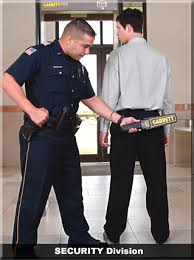
It also means projecting a smiling, friendly demeanor towards those same people–many of whom are in a rush and/or resent being electronically sniffed over.
And every security guard knows this: It’s only a matter of time before the next terrorist shows up.
On June 10, 2009, just that happened at the United States Holocaust Memorial.
9/11, ABC NEWS, ABRAHAM LINCOLN, AL QAEDA, ANDREW JACKSON, BARACK OBAMA, BILL CLINTON, CBS NEWS, CNN, CUBAN MISSILE CRISIS, EMANCIPATION PROCLOMATION, EXTORTION, FACEBOOK, FBI, FEDERAL GOVERNMENT SHUTDOWN, FORD'S THEATER, FRANKLIN ROOSEVELT, FURLOUGHS, GEORGE H.W. BUSH, JOHN F. KENNEDY, JOSEPH MCCARTHY, MAFIA, MITT ROMNEY, MSNBC'S "HARDBALL", NBC NEWS, NEGOTIATING, OBAMACARE, PATRIOT ACT, R.I.CO. ACT, REPUBLICAN PARTY, REPUBLICANS, RICHARD NIXON, Secret Service, TED NUGENT, TERRORISM, THE AFFORDABLE CARE ACT, THE LOS ANGELES TIMES, THE NEW YORK TIMES THE WASHINGTON POST, TWITTER, UNITED STATES HOLOCAUST MEMORIAL, VIETNAM WAR MEMORIAL, WHITE HOUSE, WORLD WAR 11
In Bureaucracy, History, Law, Politics on October 2, 2013 at 2:45 am
To hear many political pundits tell it, the shutdown of the Federal Government is the result of “political dysfunction,” as if everybody in Congress were tripping on LSD.
This is not only untrue but misleading.
The truth is that the shutdown is the result of yet another ruthless attempt by Right-wing Republicans to obtain absolute power.
When they can obtain it at the ballot box, they rule as though by divine right. When they can’t obtain it at election time, they try to obtain it through intimidation.
Thus, in 1992 and 1996, their Presidential candidates–President George H.W. Bush and Senator Bob Dole, respectively–couldn’t defeat Bill Clinton.
So Republicans mounted an inquisition into a failed land deal that occurred before Clinton was first elected President. This investigation spanned the length of the Clinton Presidency and produced no evidence or indictments of criminal activity.
It did, however, turn up the salacious news that Clinton had actually enjoyed several instances of oral sex courtesy of a libidinous White House intern named Monica Lewinsky.
Unable to defeat Clinton at election time, and unable to find any actual criminal wrongdoing on his part, Right-wing Republicans tried to drive him out of office by impeachment.
The effort failed, and Clinton stayed in the White House until his term expired in 2001.
Then, as now, it was members of the House of Representatives who were the driving force.
Now, fast forward to the present: Republicans have made it their mission to deprive millions of Americans of health care. They have voted 42 times to repeal or undermine the Affordable Care Act, better known as Obamacare.
And they have made its elimination the focus of their threats to shut down the government unless they get their way.
Yet, consider this: Whether they like it or not, the Affordable Care Act is now a law that was legally passed by both houses of Congress. It has been certified as Constitutional by no less than a Republican Chief Justice of the United States Supreme Court.
Under our system of government, that’s as legal as it gets.
But Republicans don’t care about legality when they’re pursuing absolute power over the lives of their fellow Americans.
Thus, they have carried out their threat to shut down the Federal Government since they couldn’t coerce Senate Democrats into de-funding “Obamacare.”
As a result:
- More than 800,000 federal workers have been sent home without pay;
- National parks and monuments have been closed;
- Some programs have been temporarily crippled–such as WIC, which provides nutritional food to poor mothers with infants; and
- Some members of “essential services” are still required to be on duty–such as the military and Federal law enforcement agencies–but without receiving paychecks.
Of course, this disgrace didn’t have to happen.
President Obama didn’t have to cave in to the latest Republican extortion demands to prevent such a shutdown.
He could have ordered his Attorney General, Eric Holder, to launch an FBI invesdtigation into terroristic threats made by Right-wingers to shut down the government.
Both the 1970 Racketeer Influenced Corrupt Organizations (RICO) Act and the USA Patriot Act provide remedies for punishing the sort of behavior engaged in by House Republicans.
RICO opens with a series of definitions of “racketeering activity” which can be prosecuted by Justice Department attorneys. Among those crimes: Extortion.

Extortion is defined as “a criminal offense which occurs when a person unlawfully obtains either money, property or services from a person(s), entity, or institution, through coercion.”
And if President Obama believed that RICO was not sufficient to deal with extortionate behavior, he could have relied on the Patriot Act of 2001, passed in the wake of 9/11.
In Section 802, the Act defines domestic terrorism. Among the behavior that is defined as criminal:
“Activities that…appear to be intended…to influence the policy of a government by intimidation or coercion [and]…occur primarily within the territorial jurisdiction of the United States.”
Demanding that the President de-fund Obamacare or face a potentially disastrous government shutdown clearly falls within the legal definition of “activities…intended…to influence the policy of a government by intimidation or coercion.”
If the FBI had determined that Federal laws against extortion and terrorism had been broken, the Justice Department could have convened criminal grand juries to indict those Republicans found as violators.
President Obama should have authorized this investigation as soon as Republicans started making terroristic threats. Thus, he would have served notice on his sworn enemies that he was no one to take lightly.
Knowing that they might well face indictment and prosecution for engaging in domestic terrorism would have frightened many Republicans into backing away from such behavior.
Those who persisted would have found themselves fighting desperately to stay out of prison. They would have had to pay huge fees to top-flight criminal attorneys.
They would have lived with, first, the threat of indictments hanging over their heads, and, once those indictments were returned, with the threat of conviction and imprisonment.
As a result, they would not have had time to make destroying the Presidency of Barack Obama their Number One priority.
But Obama forfeited all those advantages when he accused Republicans of “blackmail” and then refused to legally punish them for it.
9/11, ABC NEWS, CBS NEWS, CNN, CRIME, CYBERCRIME, FACEBOOK, FBI, HAWAII FIVE-O, NBC NEWS, POLICE DEPARTMENTS, SAN FRANCISCO FEDERAL BUILDING, SAN FRANCISCO POLICE DEPARTMENT, SAN JOSE POLICE DEPARTMENT, SECURITY, THE LOS ANGELES TIMES, THE NEW YORK TIMES, THE WASHINGTON POST, TWITTER, WITNESS SECURITY PROGRAM
In Bureaucracy, Law Enforcement on September 27, 2013 at 12:00 am
The Federal Bureau of Investigation has always encouraged Americans to report anything they consider a threat to national security or a violation of Federal law.
But recently the FBI has adopted a practice that is almost certain to sharply decrease the number of people willing to report knowledge of a crime.
Earlier this year, a friend of mine named Jim visited the San Francisco field office of the FBI. He wanted to report a violation of Federal computer fraud and harassment laws.
This meant visiting the San Francisco Federal Building (technically named the Phillip Burton Federal Building, in honor of the late San Francisco Congressman).

At 450 Golden Gate Avenue, located close to the Civic Center and City Hall, it serves as a courthouse of the United States District Court for the Northern District of California.
It also lhouses offices for such Federal law enforcement agencies as the FBI, Bureau of Alcohol, Tobacco and Firearms, Drug Enforcement Administration and U.S. Marshal’s Service.
To enter, you must first show a driver’s license or State ID card. Then you must remove
- Your belt
- Your shoes
- Your watch
- Your wallet
- All other objects from your pants pockets
- Any jacket you’re wearing
- Any cell phone you’re carrying
All of these must be placed in one or more large plastic containers, which are run through an x-ray scanner.
Then, assuming you avoid setting off any alarm system, you’re set for your next big screen test.
This comes when you enter the 13th floor office of the FBI.

According to Jim: You walk into a large room filled with several comfortable chairs that sit close to the floor. Ahead is a window such as you find in a bank–made of thick, presumably bulletproof glass.
A secretary on the opposite side greets you, and asks why you’ve come.
You say that you want to speak with an agent about what you believe is a violation of Federal law.
If you’ve done your homework, you should know at least the general legal area this violation falls under. And you’re even better-off if you know what division of the FBI is assigned to handle it.
For example: Jim knew the acts he wanted to report were a violation of Federal anti-computer hacking and harassment laws. He also knew that these violations are handled by the FBI’s Cybercrime Division.
So he asked to speak with an agent from that division.
The secretary said she would see what she could do. But before he could speak with an agent, he would have to show her his driver’s license or State ID card.
The secretary made a xerox of this, and then handed the card back.
Then, as if that wasn’t enough, he had to fill out a single-page form, where he was required to provide his:
- Name
- Address
- Phone number
- Social Security Number
- The reason he wanted to speak to an agent
Of course, he could refuse to fill out the form. But then the secretary would refuse to let him meet with an FBI agent to gain help in resolving his problem.
In Jim’s case, his request to speak with an agent specializing in Cybercrime was denied. He would up speaking instead with the “duty agent”–whichever luckless person has been assigned to deal with the public that day.
Unofficially, the “duty agent” is the one who takes the “nut calls” from, among others, the mentally disabled who claim they’re picking up KGB transmissions in the fillings of their teeth.
In Jim’s case, the “duty agent” he drew specialized in Gang Violence. While this is definitely a worthy subject for investigation, it had nothing to do with the matter Jim wanted to talk about.
The agent candidly said he knew nothing about cybercrime. Which meant he couldn’t give Jim even the barest information about what he might expect to happen after submitting his report.
Fortunately, Jim had thought ahead enough to write up a detailed, three-page report of the cyber attacks he had recently experienced. He now gave this to the agent.
The agent promised to forward it to the Cybercrime Division.
Jim asked when he might hear from someone there. The agent said this was highly unlikely.
Jim was surprised. The agent was in turn surprised that Jim would expect anyone to get back to him.
“I would think,” said Jim, “they would want to ask me a few questions. And give me some idea as to what was going on in my case.”
The agent said that if the FBI wanted more information, they would contact him. And, no, they wouldn’t give him any hints about what–if anything–was happening in his case.
That was assuming they chose to investigate it.
No one at the FBI ever contacted Jim.
So if you want to report a crime to the FBI, be prepared to give up a lot of your own privacy beforehand.
And don’t expect to receive even the courtesy of a call-back in exchange for all of it.
ABC NEWS, ALVARO OBREGON, ANCHOR BABIES, CBS NEWS, CNN, DREAM ACT, EMILIANO ZAPATA, FACEBOOK, FELIPE CALDERON, FRANCISCO MADERO, illegal immigration, Kamala Harris, LA RAZA, MEXICAN REVOLUTION, MEXICO, MSNBC, NBC NEWS, PANCHO VILLA, RACIAL PROFILING, THE HUFFINGTON POST, THE LOS ANGELES TIMES, THE NEW YORK TIMES, THE WASHINGTON POST, TWITTER, VENUSTIANO CARRANZA
In Bureaucracy, Law, Law Enforcement, Politics, Social commentary, Uncategorized on September 26, 2013 at 12:02 am
If Americans decide they truly want to control access to their own borders, there is a realistic way to accomplish this.
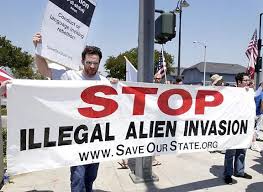
(1) The Justice Department should vigorously attack the “sanctuary movement” that officially thwarts the immigration laws of the United States.
Among the 31 “sanctuary cities” of this country: Washington, D.C.; New York City; Los Angeles; Chicago; San Francisco; Santa Ana; San Diego; Salt Lake City; Phoenix; Dallas; Houston; Austin; Detroit; Jersey City; Minneapolis; Miami; Denver; Baltimore; Seattle; Portland, Oregon; New Haven, Connecticut; and Portland, Maine.
These cities have adopted “sanctuary” ordinances that do not allow municipal funds or resources to be used to enforce federal immigration laws, usually by not allowing police or municipal employees to inquire about one’s immigration status.
(2) The most effective way to combat this movement: Indict the highest-ranking officials of those cities who have actively violated Federal immigration laws.
In San Francisco, for example, former District Attorney Kamala Harris—who is now California’s Attorney General—created a secret program called Back on Track, which provided training for jobs that illegal aliens could not legally hold.
She also prevented Immigration and Customs Enforcement (ICE) from deporting even those illegal aliens convicted of a felony.
(3) Indicting such officials would be comparable to the way President Andrew Jackson dealt with the threat South Carolinians once made to “nullify” any Federal laws they didn’t like.
Jackson quashed that threat by making one of his own: To lead an army into that State and purge all who dared defy the laws of the Federal Government.
(4) Even if some indicted officials escaped conviction, the results would prove worthwhile.
City officials would be forced to spend huge sums of their own money for attorneys and face months or even years of prosecution.
And this, in turn, would send a devastating warning to officials in other “sanctuary cities” that the same fate lies in store for them.
(5) CEOs whose companies–like Wal-Mart–systematically employ illegal aliens should be held directly accountable for the actions of their subordinates.
They should be indicted by the Justice Department under the Racketeer Influenced Corrupt Organizations (RICO) Act, the way Mafia bosses are prosecuted for ordering their own subordinates to commit crimes.
Upon conviction, the CEO should be sentenced to a mandatory prison term of at least twenty years.
This would prove a more effective remedy for combating illegal immigration than stationing tens of thousands of soldiers on the U.S./Mexican border. CEOs forced to account for their subordinates’ actions would take drastic steps to ensure that their companies strictly complied with Federal immigration laws.
Without employers luring illegal aliens at a fraction of the money paid to American workers, the flood of such illegal job-seekers would quickly dry up.
(6) The Government should stop granting automatic citizenship to “anchor babies” born to illegal aliens in the United States.
A comparable practice would be allowing bank robbers who had eluded the FBI to keep their illegally-obtained loot.
A person who violates the bank robbery laws of the United States is legally prosecutable for bank robbery, whether he’s immediately arrested or remains uncaught for years. The same should be true for those born illegally within this country.
If they’re not here legally at the time of birth, they should not be considered citizens and should–like their parents–be subject to deportation.
(7) The United States Government–from the President on down–should scrap its apologetic tone on the right to control its national borders.
The Mexican Government doesn’t hesitate to apply strict laws to those immigrating to Mexico. And it feels no need to apologize for this.
Neither should we.
(8) Voting materials and ballots should be published in one language: English.
In Mexico, voting materials are published in one language–Spanish.
Throughout the United States, millions of Mexican illegals refuse to learn English and yet demand that voting materials and ballots be made available to them in Spanish.
(9) Those who are not legal citizens of the United States should not be allowed to vote in its elections.
In Mexico, those who are not Mexican citizens are not allowed to participate in the country’s elections.
The Mexican Government doesn’t consider itself racist for strictly enforcing its immigration laws.
The United States Government should not consider itself racist for insisting on the right to do the same.
(10) The United States should impose economic and even military sanctions against countries–such as China and Mexico–whose citizens make up the bulk of illegal aliens.
Mexico, for example, uses its American border to rid itself of those who might demand major reforms in the country’s political and economic institutions.
Such nations must learn that dumping their unwanteds on the United States now comes at an unaffordably high price. Otherwise those dumpings will continue.
ABC NEWS, BARACK OBAMA, CBS NEWS, CNN, EMILIZNO ZAPATA, FACEBOOK, FELIPE CALDERON, FRANCISCO "PANCHO" VILLA, ILLEGAL ALIENS, illegal immigration, JUSTICE DEPARTMENT, Kamala Harris, MEXICO, NBC NEWS, SERGIO GARCIA, THE LOS ANGELES TIMES, THE NEW YORK TIMES, THE WASHINGTON POST, TWITTER
In History, Law, Law Enforcement, Politics, Social commentary on September 25, 2013 at 12:00 am
Can a known lawbreaker act as a lawyer?
Many California legislators are trying to make this possible.
Assembly Bill 1024, which passed the state Legislature in mid-September, 2013, would allow the state Supreme Court to license lawyers, even if they are illegal aliens.
Specifically, the bill states:
This bill would additionally authorize the Supreme Court to admit to the practice of law an applicant who is not lawfully present in the United States, upon certification by the committee that the applicant has fulfilled those requirements for admission, as specified.
The bill has been sent to the desk of Governor Jerry Brown for his signature.
Fittingly, the bill was introduced by a Hispanic–Assembly member Lorena Gonzales (D-San Diego)–on behalf of another Hispanic, Sergio Garcia.
Garcia was born in Mexico and smuggled into the United States by his parents as an infant. He left at age nine and returned when he was 17. He applied for legal residency in the mid-1990s.
He worked his way through college and law school.
But that argument didn’t cut any ice with the Justice Department of Barack Obama.
Federal law bars the state from issuing an attorney’s license to illegal aliens and prohibits them from working as lawyers, the Justice Department said in an August 1, 2012 filing with the California Supreme Court, which had requested its opinion.
The 1996 law denies “public benefits” to illegal aliens. It was drafted to “preclude undocumented aliens from receiving commercial and professional licenses issued by states and the federal government,” Justice Department lawyers told the court.
The State Bar’s Commitee of Bar Examiners and California Attorney Genera Kamala Harris said that Garcia should be admitted to the bar, arguing that federal law leaves such issues up to the states.
Yet legal scholars say no law firm could legally hire him, and his citizenship status could disqualify him from representing some clients.
Many of those supporting Garcia claim he is the victim of racial prejudice. This is the knee-jerk reaction whenever a Hispanic seeks immunity from American jurisprudence.
On May 20, 2010, Mexico’s then-President Felipe Calderon addressed a joint session of the United States Congress–and attacked the Arizona law that allows law enforcement officials to detain anyone suspected of being in the country illegally.

Felipe Calderon
According to Calderon, the law “introduces a terrible idea: using racial profiling as a basis for law enforcement.”
Racial profiling? Consider the popular Latino phrase, “La Raza.”
This literally means “the race” or “the people.”
In the United States, it’s sometimes used to describe people of Chicano and Mexican descent as well as other Latin American mestizos who share Native American heritage.
It rarely includes entirely European or African descended Hispanic peoples.
So when Latinos say, “The Race,” they’re not talking about “the human race.” They’re talking strictly about their own.
In his lecture, Calderon condemned the United States for doing what Mexico itself has long done: Strictly enforcing control of its borders.
Yet consider the racial profiling situation in sunny Mexico.
Mexico has a single, streamlined law that ensures that foreign visitors and immigrants are:
- in the country legally;
- have the means to sustain themselves economically;
- not destined to be burdens on society;
- of economic and social benefit to society;
- of good character and have no criminal records; and
- contribute to the general well-being of the nation.
The law also ensures that:
- immigration authorities have a record of each foreign visitor;
- foreign visitors do not violate their visa status;
- foreign visitors are banned from interfering in the country’s internal politics;
- foreign visitors who enter under false pretenses are imprisoned or deported;
- foreign visitors violating the terms of their entry are imprisoned or deported;
- those who aid in illegal immigration will be sent to prison.
Calderon also ignored a second well-understood but equally unacknowledged truth: Mexico uses its American border to rid itself of those who might otherwise demand major reforms in the country’s political and economic institutions.
The Mexican Government still remembers the bloody upheaval known as the Mexican Revolution. This lasted ten years (1910-1920) and wiped out an estimated one to two million men, women and children.
Massacres were common on all sides, with men shot by the hundreds in bullrings or hung by the dozen on trees.
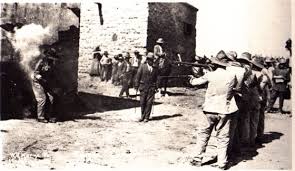
A Mexican Revolution firing squad
All of the major leaders of the Revolution–Francisco Madero, Emiliano Zapata, Venustiano Carranza, Francisco “Pancho” Villa, Alvaro Obregon–died in a hail of bullets.
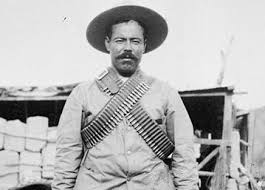
Francisco “Pancho” Villa
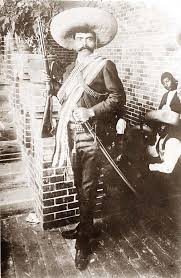
Emiliano Zapata
As a result, every successive Mexican Government has lived in the shadow of another such wholesale bloodletting. These officials have thus quietly decided to turn the United States border into a safety valve.
If potential revolutionaries leave Mexico to find a better life in the United States, the Government doesn’t have to fear the rise of another “Pancho” Villa.
On September 2, 2007, Calderon gave away the game when he said in a speech: “I have said that Mexico does not stop at its border, that wherever there is a Mexican, there is Mexico.”
Apparently Mexico has decided to re-conquer North America, by ensuring that “wherever there is a Mexican, there is Mexico.”
ABC NEWS, ADOLF HITLER, ANDREW JACKSON, BARACK OBAMA, CBS NEWS, CHRIS MATTHEWS, CNN, CNN'S "STARTING POINT", CUBAN MISSILE CRISIS, DEBT CEILING, EXTORTION, FACEBOOK, GEORGE W. BUSH, HOUSE SPEAKER JOHN BOEHNER, JOHN F. KENNEDY, MAFIA, MSNBC'S "HARDBALL", MUNICH CONFERENCE, NBC NEWS, NEGOTIATING, NEVILLE CHAMBERLAIN, NICCOLO MACHIAVELLI, OBAMACARE, PAP SMEARS, PATRIOT ACT, PLANNED PARENTHOOD, R.I.CO. ACT, REPUBLICAN PARTY, REPUBLICANS, THE AFFORDABLE CARE ACT, THE LOS ANGELES TIMES, THE NEW YORK TIMES THE WASHINGTON POST, THE PRINCE, TWITTER, WINSTON CHURCHILL, WORLD WAR 11
In Bureaucracy, History, Law Enforcement, Politics, Social commentary on September 24, 2013 at 12:00 am
The 1938 Munich Conference taught an invaluable lesson in foreign affairs: Caving in to the demands of insatiable thugs leads to only more demands.
That was what British Prime Minister Nveille Chamberlain learned when he sought to appease Adolf Hitler, Germany’s war-intent Fuehrer.
Chamberlain believed that by giving in to Hitler’s demands for “the German part” of Czechoslavakia known as the Sudetenland he could avoid war.
On September 29, Chamberlain and French Prime Minister Edouard Daladier met with Hitler and signed the Munich Agreement, resulting in the immediate German occupation of part of Czechoslavakia.
The Czechoslovakian government had not been a party to the talks. Their “allies” had sold them out.
Chamberlain returned to England a hero. Holding aloft a copy of the worthless agreement he had signed with Hitler, he told cheering crowds in London: “I believe it is peace for our time.”
Winston Churchill knew better, predicting: “Britain and France had to choose between war and dishonor. They chose dishonor. They will have war.”
And so they did.
It is not too late for President Barack Obama to apply this lesson from history.
With the United States facing a disastrous government shutdown unless the President surrenders to the latest Republican extortion threats, Obama can:
- Invoke the Racketeer Influenced Corrupt Organizations Act (RICO) and/or the Patriot Act;
- Rally the American people against this criminal threat to the security of the Nation.
Second Option: Calling upon the American people for their support
President John F. Kennedy did just that–successfully–during the most deadly crisis of his administration.
Addressing the Nation on October 22, 1962, Kennedy shocked his fellow citizens by revealing that the Soviet Union had placed offensive nuclear missiles in Cuba.
After outlining a series of steps he had taken to end the crisis, Kennedy sought to reassure and inspire his audience. His words are worth remembering today:
“The path we have chosen for the present is full of hazards, as all paths are, but it is the one most consistent with our character and courage as a nation and our commitments around the world.
“The cost of freedom is always high, but Americans have always paid it. And one path we shall never choose, and that is the path of surrender or submission.”
Just as President Kennedy called on his fellow Americans for support against a foreign enemy, President Obama can rally his countrymen against an equally ruthless domestic enemy.
During such a national address, President Obama can reveal such blunt truths as:

- Republicans have adopted the same my-way-or-else “negotiating” stance as Adolf Hitler.
- Like the Nazis, they are determined to gain absolute power–or destroy the Nation they claim to love.
- They raised the debt ceiling seven times during the eight-year Presidency of George W. Bush.
- But now that a Democrat holds the White House, raising the debt ceiling is unacceptable.
- Despite Republican lies, we cannot revitalize the economy by slashing taxes on the wealthy and cash-hoarding corporations while cutting benefits for millions of average Americans.
- We will need both tax increases and sensible entitlement cuts to regain our economic strength.
- The Affordable Health Care Act frees Americans from the greed-fueled tyranny of the insurance industry.
- Americans who could never hope to obtain medical coverage–for themselves and their families–can now do so.
Finally, President Obama can end his speech by directly calling for the active support of his fellow Americans. Something like this:
“My fellow Americans, I have taken an oath to ‘preserve, protect and defend the Constitution of the United States.’
“But I cannot do this on my own. As citizens of a Republic, each of us carries that burden. We must each do our part to protect the land and the liberties we love.
“Tonight, I’m asking for your help.
“We stand on the edge of economic and social disaster. Therefore, I am asking each of you to stand up for America tonight–by demanding the recall of the entire membership of the Republican Party.
“As President John F. Kennedy said:
‘In your hands, my fellow citizens, more than mine, will rest the final success or failure of our course. Since this country was founded, each generation of Americans has been summoned to give testimony to its national loyalty.’
“This is the moment when each of us must decide–whether we will survive as a Republic, or allow ruthless political fanatics to destroy what has lasted and thrived for more than 200 years.”
President Obama has taken forceful action against America’s most ruthless foreign enemies—most notably, Osama bin Laden.
If the Nation is to survive, he must now act just as forcefully against America’s most ruthless domestic enemies.
Fortunately, there is still time for him to do so. The fact that he has not done so in the past does not rule out his doing so now.
He needs to only remember–and act on–the words of another American President–Andrew Jackson–who counseled: “One man with courage makes a majority.”
ABC NEWS, ADOLF HITLER, ANDREW JACKSON, BARACK OBAMA, CBS NEWS, CHRIS MATTHEWS, CNN, CNN'S "STARTING POINT", CUBAN MISSILE CRISIS, DEBT CEILING, EXTORTION, FACEBOOK, GEORGE W. BUSH, HOUSE SPEAKER JOHN BOEHNER, JOHN F. KENNEDY, MAFIA, MSNBC'S "HARDBALL", MUNICH CONFERENCE, NBC NEWS, NEGOTIATING, NEVILLE CHAMBERLAIN, NICCOLO MACHIAVELLI, OBAMACARE, PAP SMEARS, PATRIOT ACT, PLANNED PARENTHOOD, R.I.CO. ACT, REPUBLICAN PARTY, REPUBLICANS, THE AFFORDABLE CARE ACT, THE LOS ANGELES TIMES, THE NEW YORK TIMES THE WASHINGTON POST, THE PRINCE, TWITTER, WINSTON CHURCHILL, WORLD WAR 11
In Bureaucracy, History, Law Enforcement, Politics, Social commentary on September 23, 2013 at 12:10 am
Republicans are once again playing extortion politics–threatening to shut down the government unless they get their way.
And their way means abolishing The Affordable Care Act, otherwise known as Obamacare.
But this is a nightmare that doesn’t have to be.
There are, in fact, two ways to avoid it.
Assuming that President Obama doesn’t once again surrender to Republican extortion demands, he has two formidable weapons he can deploy:
First Option: RICO to the rescue
The Racketeer Influenced Corrupt Organizations (RICO) Act is a provision of the Organized Crime Control Act of 1970. It authorizes prosecution for acts performed as part of an ongoing criminal organization.
It has been applied to not only the Mafia but to individuals, businesses, political protest groups, and terrorist organizations. In short, a RICO claim can arise in almost any context.
Such as the one President Barack Obama faced in 2011 when Republicans threatened to destroy the credit rating of the United States unless their budgetary demands were met.
And such as the present case when Republicans are again threatening the security of the Nation with extortionate demands.
RICO opens with a series of definitions of “racketeering activity” which can be prosecuted by Justice Department attorneys. Among those crimes: Extortion.
Extortion is defined as “a criminal offense which occurs when a person unlawfully obtains either money, property or services from a person(s), entity, or institution, through coercion.”
The RICO Act defines “a pattern of racketeering activity” as “at least two acts of racketeering activity, one of which occurred after the effective date of this chapter and the last of which occurred within ten years…after the commission of a prior act of racketeering activity.”
And if President Obama believes that RICO is not sufficient to deal with extortionate behavior, he can rely on the USA Patriot Act of 2001, passed in the wake of 9/11.
In Section 802, the Act defines domestic terrorism. Among the behavior that is defined as criminal:
“Activities that…appear to be intended…to influence the policy of a government by intimidation or coercion [and]…occur primarily within the territorial jurisdiction of the United States.”
Demanding that the President de-fund Obamacare or face a potentially disastrous government shutdown clearly falls within the legal definition of “activities…intended…to influence the policy of a government by intimidation or coercion.”
The remedies for punishing such criminal behavior are now legally in place. President Obama need only direct the Justice Department to apply them.
President Obama can direct Attorney General Eric Holder to investigate whether Republican Congressman—and their Tea Party cohorts—have violated Federal anti-racketeering and/or anti-terrorism laws.
- Holder, in turn, can order the FBI to conduct such an investigation.
- If the FBI finds sufficient evidence that these laws had been violated, Holder can empanel criminal grand juries to indict those violators.
The fact that members of Congress would be criminally investigated and possibly indicted would not violate the separation-of-powers principle. Congressmen have in the past been investigated, indicted and convicted for various criminal offenses.
Such indictments and prosecutions–and especially convictions–would serve notice on current and future members of Congress that the lives and fortunes of American citizens may not be held hostage as part of a negotiated settlement.
On August 1, 2011, Chris Matthews, host of MSNBC’s “Hardball,” wrapped up his program with a search for “options” to avoid another round of Republican extortion tactics.

Chris Matthews
“I want to know what steps the president ‘could’ have taken to avoid this hostage-taking.
“…Is there another way than either buckling to the Republicans or letting the government and the country crash?
“How does he use the power of the presidency, the logic, emotion and basic patriotism of the people to thwart those willing to threaten, disrupt, even possibly destroy to get their way?”
The answer to his questions–then and now–is: Replace the law of fear with the rule of law.
Or, as Niccolo Machiavelli, the father of modern politics, instructed future leaders in The Prince:
“I conclude, therefore, with regard to being loved and feared, that men love at their own free will, but fear at the will of the prince, and that a wise prince must rely on what is in his power and not on what is in the power of others….”
Instead, in 2011, Obama surrendered to Republican extortion demands. As a result, the United States suffered a massive loss to its international credit rating.
But there was another way Obama could have stood up to Republican extortionists. And it remains available to him now–if only he has the courage to act.
ABC NEWS, ADOLF HITLER, ANDREW JACKSON, BARACK OBAMA, CBS NEWS, CHRIS MATTHEWS, CNN, CNN'S "STARTING POINT", CUBAN MISSILE CRISIS, DEBT CEILING, EXTORTION, FACEBOOK, GEORGE W. BUSH, HOUSE SPEAKER JOHN BOEHNER, JOHN F. KENNEDY, MAFIA, MSNBC'S "HARDBALL", MUNICH CONFERENCE, NBC NEWS, NEGOTIATING, NEVILLE CHAMBERLAIN, NICCOLO MACHIAVELLI, OBAMACARE, PAP SMEARS, PATRIOT ACT, PLANNED PARENTHOOD, R.I.CO. ACT, REPUBLICAN PARTY, REPUBLICANS, THE AFFORDABLE CARE ACT, THE LOS ANGELES TIMES, THE NEW YORK TIMES THE WASHINGTON POST, THE PRINCE, TWITTER, WINSTON CHURCHILL, WORLD WAR 11
In Bureaucracy, History, Law Enforcement, Politics, Social commentary on September 20, 2013 at 12:15 am
Republicans are once again playing extortion politics–threatening to shut down the government unless they get their way.
And their way means abolishing The Affordable Care Act, otherwise known as Obamacare.
They’re enraged that millions of uninsured Americans might receive medical care on a par with that given members of the House and Senate.
So on September 20, the House will vote on a short-term government funding bill that will include a provision to defund Obamacare.
That provision is a no-go for Senate Democrats and President Obama. If the House and Senate can’t work out a compromise, many functions of the federal government will be shut down indefinitely on Oct. 1.
Republicans have repeatedly threatened to shut down the government unless their constantly escalating demands were met.
In November, 1995, Newt Gingrich, then Speaker of the House of Representatives, carried out his threat. Gingrich unwisely admitted that he did so because President Bill Clinton had put him in the back of Air Force One during a recent trip to Israel.
The shutdown proved a disaster for Republicans. Clinton was handily re-elected in 1996 and Gingrich suddenly resigned from Congress in 1998.
Still, the Republicans continued their policy of my-way-or-else. In April, 2011, the United States government almost shut down over Republican demands about subsidized pap smears.
During a late-night White House meeting with President Barack Obama and key Congressional leaders, Republican House Speaker John Boehner made this threat:
His conference would not approve funding for the government if any money were allowed to flow to Planned Parenthood through Title X legislation.
Facing an April 8 deadline, negotiators worked day and night to strike a compromise–and finally reached one.
Three months later–on July 9–Republican extortionists again threatened the Nation with financial ruin and international disgrace unless their demands were met.

esident Obama had offered to make historic cuts in the federal government and the social safety net–on which millions of Americans depend for their most basic needs.
But House Speaker John Boehner rejected that offer. He could not agree to the tax increases that Democrats wanted to impose on the wealthiest 1% as part of the bargain.

John Boehner
As the calendar moved ever closer to the fateful date of August 2, Republican leaders continued to insist: Any deal that includes taxes “can’t pass the House.”
President Obama had previously insisted on extending the debt ceiling through 2012. But in mid-July, he simply asked congressional leaders to review three options with their members:
- The “Grand Bargain” choice—favored by Obama–would cut deficits by about $4 trillion, including spending cuts and new tax revenues.
- A medium-range plan would aim to reduce the deficit by about $2 trillion.
- The smallest option would cut between $1 trillion and $1.5 trillion, without increased tax revenue or any Medicare and Medicaid cuts.
And the Republican response?
Said Rep. Darrell Issa, chairman of the Oversight and Government Reform Committee: “Quite frankly, [Republican] members of Congress are getting tired of what the president won’t do and what the president wants.”
Noted political analyst Chris Matthews summed up the sheer criminality of what happened within the House of Representatives.
Speaking on MSNBC’s “Hardball,” on July 28–five days before Congress reached its August 2 deadline to raise the debt-ceiling–Matthews noted:
“The first people to bow to the demands of those threatening to blow up the economy were the Republicans in the House, the leaders. The leaders did what the followers told them to do: meet the demands, hold up the country to get their way.
“Those followers didn’t win the Senate, or the Presidency, just the House.
“But by using the House they were able to hold up the entire United States government. They threatened to blow things up economically and it worked.
“They said they were willing to do that–just to get their way–not by persuasion, not by politics, not by democratic government, but by threatening the destruction of the country’s finances.
“Right. So what’s next? The power grid? Will they next time threaten to close down the country’s electricity and communications systems?”
With the United States teetering on the brink of national bankruptcy, President Obama faced three choices:
- Counter Republican extortion attempts via RICO–the Racketeer Influenced Corrupt Oganizations Act.
- Make a “Cuban Missile Crisis”-style address to the American people, seeking to rally them against a criminal threat to the financial security of the Nation.
- Cave in to Republican demands.
Unfortunately for Obama and the Nation, he chose Number Three.
The results were easily predictable: Emboldened by success, the extortionists continue to make even greater demands.
But this is a nightmare that doesn’t have to be.
There are, in fact, two ways to avoid it:
- The President can order the Justice Department to prosecute Republican extortion attempts via RICO–the Racketeer Influenced Corrupt Organizations Act.
- The President can make a “Cuban Missile Crisis” style address to the American people, seeking to rally them against a criminal threat to the security of the Nation.
ABC NEWS, AL QAEDA, BARACK OBAMA, BASHIR AL-ASSAD, CBS NEWS, CHEMICAL WEAPONS, CNN, FACEBOOK, GEORGE W. BUSH, HAMMAS, HEZBOLLAH, JAY LENO, JOHN KERRY, NBC NEWS, NICCOLO MACHIAVELLI, RUSSIA, SYRIA, THE DISCOURSES, THE LOS ANGELES TIMES, THE NEW Y ORK TIMES, THE PRINCE, THE WASHINGTON POST, TWITTER, VLADIMIR PUTIN
In Bureaucracy, History, Military, Politics on September 19, 2013 at 12:00 am
I was thoroughly glad to see the era of George W. Bush come to an end. He had, I believed, become a terrible liability for America–in both foreign and domestic policy.
In foreign affairs, America had become entrapped in a totally needless war in Iraq. And by authorizing the use of torture, he had turned the United States into a pariah nation in the eyes of much of the civilized world.
Domestically, he had allowed the sheer greed and arrogance of America’s most powerful corporations to push the nation to the brink of bankruptcy.
So during the early weeks of President Barack Obama’s first term, I sent him a gift: My favorite selections from the two major works of Niccolo Machiavelli: The Prince and The Discourses.

Niccolo Machiavelli
I hoped that, on at least some occasions, the new President would find useful advice in the wisdom of the father of political science.
Unfortunately, such has not been the case.
For example:
United Nations officials estimate that more than 6,000 people have died in Syria since fighting erupted in 2011 against the regime of dictator Bashir al-Assad.
During that time, the world made no move to intervene–for a series of excellent reasons. Among these:
- Since 1979, Syria has been listed by the U.S. State Department as a sponsor of terrorism.
- There are no “good Syrians” for the United States to support. There is a civil war between rival terrorist groups.
- Among these: Hezbollah and Hamas (pro-Assad); and Al Qaeda (anti-Assad).
This was the position of the United States as well.
Meanwhile, President Obama said on several occasions that if Assad used chemical weapons against his enemies, that would be “a red line in the sand.”
Then, on August 21, the Assad regime was accused of using chemical weapons in Damascus suburbs to kill more than 1,400 civilians.
On August 30, the Obama administration said it had “high confidence” that Syria’s government carried out the chemical weapons attack.
Having boxed himself in, Obama felt he had to make good on his threat–even if it risked the lives of those flying combat missions over Syria’s formidable air defenses.
He sent Secretary of State John Kerry before TV cameras to express America’s moral outrage at Syria’s use of chemical weapons.
And he positioned six American warships close to the Syrian coast.
On August 31, Obama announced that he would seek Congressional authorization before attacking Syria. Obama said he was “prepared to give that order” to strike Syria because:
- Syria’s use of chemical weapons “risks making a mockery of the global prohibition on the use of chemicals weapons,” and
- It put U.S. regional allies that share a border with Syria in danger.
It looked as though the United States was about to plunge into its third Middle East war in 12 years.
Then Russian President Vladimir Putin offered his own suggestion for averting war: Syria would agree to put its stocks of chemical weapons under United Nations control.
On September 14, the United States and Russia announced in Geneva that they reached a deal that provided a path for Obama to avoid the air strikes he had promised to launch against Syria.
Suddenly, Obama asked congressional leaders to delay votes on authorizing military action in Syria while the diplomatic process worked itself out.
As “Tonight” show host Jay Leno put it: Obama gave a speech calling for war–and then the rebuttal.
So what does Niccolo Machiavelli have to do with any of this?
In Chapter 19 of The Prince, his guide to successful rulership, he outlines “That We Must Avoid Being Despised and Hated.”
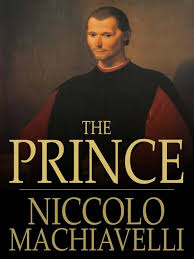
“The prince must…avoid those things which will make him hated or despised. And whenever he succeeds in this, he will have done his part, and will find no danger in other vices….
“He is rendered despicable by being thought changeable, frivolous, effeminate, timid and irresolute—which a prince must guard against as a rock of danger….
“[He] must contrive that his actions show grandeur, spirit, gravity and fortitude. As to the government of his subjects, let his sentence be irrevocable, and let him adhere to his decisions so that no one may think of deceiving or cozening him.”
By making a vigorous case for going to war with Syria, and then suddenly reversing himself, Obama has managed to offend everyone:
- Right-wingers–who hoped to see America plunge into another Middle East war.
- Liberals–who didn’t want to repeat the 2003 Iraqi war disaster.
- Syrian rebels–who expected a full-scale American intervention to bring them to power.
- The Assad regime–which no doubt believes Obama was bluffing.
Unfortunately, history is not a VHS tape that can be rewound. No one–including Obama–gets a second chance to make a first impression.
By repeatedly showing timidity toward Republicans, Obama had forfeited credibility as a leader to be feared by his domestic Right-wing enemies.
President Theodore Roosevelt famously said: “I have always lived by a South African proverb: Speak softly and carry a big stick, and you will go far.”
By speaking loudly and then putting his big stick aside, Obama forfeited credibility among his foreign enemies.


ABC NEWS, ALVARO OBREGON, ANCHOR BABIES, CBS NEWS, CNN, DREAM ACT, EMILIANO ZAPATA, FACEBOOK, FELIPE CALDERON, FRANCISCO MADERO, illegal immigration, Kamala Harris, LA RAZA, MEXICAN REVOLUTION, MEXICO, MSNBC, NBC NEWS, PANCHO VILLA, RACIAL PROFILING, THE HUFFINGTON POST, THE LOS ANGELES TIMES, THE NEW YORK TIMES, THE WASHINGTON POST, TWITTER, VENUSTIANO CARRANZA
REAL IMMIGRATION REFORM
In Bureaucracy, Law, Law Enforcement, Politics, Social commentary, Uncategorized on September 26, 2013 at 12:02 amIf Americans decide they truly want to control access to their own borders, there is a realistic way to accomplish this.
(1) The Justice Department should vigorously attack the “sanctuary movement” that officially thwarts the immigration laws of the United States.
Among the 31 “sanctuary cities” of this country: Washington, D.C.; New York City; Los Angeles; Chicago; San Francisco; Santa Ana; San Diego; Salt Lake City; Phoenix; Dallas; Houston; Austin; Detroit; Jersey City; Minneapolis; Miami; Denver; Baltimore; Seattle; Portland, Oregon; New Haven, Connecticut; and Portland, Maine.
These cities have adopted “sanctuary” ordinances that do not allow municipal funds or resources to be used to enforce federal immigration laws, usually by not allowing police or municipal employees to inquire about one’s immigration status.
(2) The most effective way to combat this movement: Indict the highest-ranking officials of those cities who have actively violated Federal immigration laws.
In San Francisco, for example, former District Attorney Kamala Harris—who is now California’s Attorney General—created a secret program called Back on Track, which provided training for jobs that illegal aliens could not legally hold.
She also prevented Immigration and Customs Enforcement (ICE) from deporting even those illegal aliens convicted of a felony.
(3) Indicting such officials would be comparable to the way President Andrew Jackson dealt with the threat South Carolinians once made to “nullify” any Federal laws they didn’t like.
Jackson quashed that threat by making one of his own: To lead an army into that State and purge all who dared defy the laws of the Federal Government.
(4) Even if some indicted officials escaped conviction, the results would prove worthwhile.
City officials would be forced to spend huge sums of their own money for attorneys and face months or even years of prosecution.
And this, in turn, would send a devastating warning to officials in other “sanctuary cities” that the same fate lies in store for them.
(5) CEOs whose companies–like Wal-Mart–systematically employ illegal aliens should be held directly accountable for the actions of their subordinates.
They should be indicted by the Justice Department under the Racketeer Influenced Corrupt Organizations (RICO) Act, the way Mafia bosses are prosecuted for ordering their own subordinates to commit crimes.
Upon conviction, the CEO should be sentenced to a mandatory prison term of at least twenty years.
This would prove a more effective remedy for combating illegal immigration than stationing tens of thousands of soldiers on the U.S./Mexican border. CEOs forced to account for their subordinates’ actions would take drastic steps to ensure that their companies strictly complied with Federal immigration laws.
Without employers luring illegal aliens at a fraction of the money paid to American workers, the flood of such illegal job-seekers would quickly dry up.
(6) The Government should stop granting automatic citizenship to “anchor babies” born to illegal aliens in the United States.
A comparable practice would be allowing bank robbers who had eluded the FBI to keep their illegally-obtained loot.
A person who violates the bank robbery laws of the United States is legally prosecutable for bank robbery, whether he’s immediately arrested or remains uncaught for years. The same should be true for those born illegally within this country.
If they’re not here legally at the time of birth, they should not be considered citizens and should–like their parents–be subject to deportation.
(7) The United States Government–from the President on down–should scrap its apologetic tone on the right to control its national borders.
The Mexican Government doesn’t hesitate to apply strict laws to those immigrating to Mexico. And it feels no need to apologize for this.
Neither should we.
(8) Voting materials and ballots should be published in one language: English.
In Mexico, voting materials are published in one language–Spanish.
Throughout the United States, millions of Mexican illegals refuse to learn English and yet demand that voting materials and ballots be made available to them in Spanish.
(9) Those who are not legal citizens of the United States should not be allowed to vote in its elections.
In Mexico, those who are not Mexican citizens are not allowed to participate in the country’s elections.
The Mexican Government doesn’t consider itself racist for strictly enforcing its immigration laws.
The United States Government should not consider itself racist for insisting on the right to do the same.
(10) The United States should impose economic and even military sanctions against countries–such as China and Mexico–whose citizens make up the bulk of illegal aliens.
Mexico, for example, uses its American border to rid itself of those who might demand major reforms in the country’s political and economic institutions.
Such nations must learn that dumping their unwanteds on the United States now comes at an unaffordably high price. Otherwise those dumpings will continue.
Share this: