Posts Tagged ‘CBS NEWS’
ABC NEWS, AFGHANISTAN, ANCHOR BABIES, BARACK OBAMA, BERLIN AIRLIFT, CBS NEWS, CNN, DEMOCRATIC PARTY, DEPARTMENT OF HOMELAND SECURITY, EGYPT, FACEBOOK, FRANCISCO SANCHEZ, ILLEGAL ALIENS, illegal immigration, IRAQ, MEXICO, NBC NEWS, OPERATION NICKEL GRASS, RACIAL PROFILING, Racketeer Influenced Corrupt Organizations (RICO) Act, REPUBLICAN PARTY, RICHARD NIXON, SAN FRANCISCO, sanctuary cities, SOVIET UNION, SYRIA, THE CHICAGO SUN-TIMES, THE CHICAGO TRIBUNE, THE LOS ANGELES TIMES, THE NEW YORK TIMES, THE OUTER LIMITS, THE WASHINGTON POST, TWITTER, WAL-MART, YOM KIPPUR WAR
In Bureaucracy, Business, History, Law, Law Enforcement, Military, Politics, Social commentary on May 3, 2016 at 12:08 am
Most of America’s 11 to 20 million illegal aliens come from neighboring Hispanic countries. Which means that as soon as they are deported, most of them cross the Mexican border again.
Case in point: Francisco Sanchez, now accused of shooting a woman on a San Francisco pier. With a history of seven felony convictions, he’s been deported to his native Mexico five times, most recently in 2009.
Click here: Report: Most Illegal Immigrants Come From Mexico – US News
More importantly: The governments of those Central and South American countries use the United States as a dumping ground–of those citizens who might demand reforms in their political and economic institutions.

Among the approaches that could strike a meaningful blow against illegal immigration is one that might well be called “The Zanti Option.”
Viewers of the 1960s sci-fi series,The Outer Limits, will vividly recall its classic 1963 episode, “The Zanti Misfits.”
In this, soldiers at an American Army base in a California ghost town nervously await first-contact with an alien race that has landed a space ship nearby.
The soldiers are warned to steer clear of the ship, and they do. But then an escaped convict (Bruce Dern, in an early role) happens upon the scene–-and the ship.
The Zantis, enraged, emerge–and soon the soldiers at the military base find themselves under attack.

A “Zanti”
The soldiers desperately fight back–-with flamethrowers, machineguns or just rifle butts. Finally the soldiers win, wiping out the Zantis.
But now the base–-and probably America–-faces a wholesale invasion from the planet Zanti to avenge the deaths of their comrades.
So the soldiers wait anxiously for their next transmission from Zanti–-which soon arrives.
To their surprise–-and relief–-it’s a message of thanks: “We will not retaliate. We never intended to. We knew that you could not live with such aliens in your midst.
“It was always our intention that you destroy them…We are incapable of executing our own species, but you are not. You are practiced executioners. We thank you.”
A future Republican President could deal with the tsunami of illegal aliens by launching what might be called “Operation Zanti.”
Rather than deport them to nearby countries–from which they would easily sneak back into the United States–-the Federal Government could ship them off to more distant lands.
Like Afghanistan. Or Iraq. Or Syria.
It’s unlikely they will sneak back across the American border from the Middle East.
Such a policy change would:
- Close the Mexican revolving door, which keeps illegal immigration flowing; and
- Send an unmistakably blunt message to other would-be illegals: “The same fate awaits you.”
Although this might seem a far-fetched proposal, it could be easily carried out by the United States Air Force.
According to this agency’s website: “The C-5 Galaxy is one of the largest aircraft in the world and the largest airlifter in the Air Force inventory.
“The C-5 has a greater capacity than any other airlifter. It [can] carry 36 standard pallets and 81 troops simultaneously.
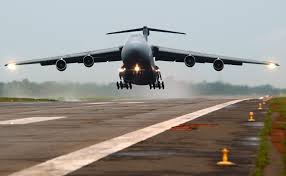
C-5 transport plane
“[It can also carry] any of the Army’s air-transportable combat equipment, including such bulky items as the 74-ton mobile scissors bridge.
“It can also carry outsize and oversize cargo over intercontinental ranges and can take off or land in relatively short distances.”
Click here: C-5 A/B/C Galaxy and C-5M Super Galaxy > U.S. Air Force > Fact Sheet Display
Instead of stuffing these planes with cargo, they could be stuffed wall-to-wall with illegal aliens.
The United States Air Force has a proud history of successfully providing America’s soldiers–-and allies–-with the supplies they need.
From June 24, 1948 to May 12, 1949, only the Berlin Airlift stood between German citizens and starvation.
The Soviet Union had blocked the railway, road, and canal access to the Berlin sectors under allied control. Their goal: Force the western powers to allow the Soviet zone to supply Berlin with food, fuel, and aid.
This would have given the Soviets control over the entire city.
Air forces from the United States, England, Canada, Australia, New Zealand and South Africa flew over 200,000 flights in one year, dropping more than 4,700 tons of necessities daily to the besiged Berliners.
The success of the Berlin Airlift raised American prestige and embarrassed the Soviets, who lifted the blockade.

The Berlin Airlift
A similar triumph came during the Yom Kippur War after Egypt and Syria attacked Israel without warning on October 6, 1973.
A Watergate-embattled President Richard Nixon ordered “Operation Nickel Grass” to deliver urgently-needed weapons and supplies to Israel.
For 32 days, the Air Force shipped 22,325 tons of ammunition, artillery, tanks and other supplies. These proved invaluable in saving Israel from destruction.
So the mass deportation of millions of illegal aliens lies within America’s technological capability. Whether any American President would be willing to give that order is another matter.
ABC NEWS, ANCHOR BABIES, BARACK OBAMA, BERLIN AIRLIFT, CBS NEWS, CNN, DEMOCRATIC PARTY, DEPARTMENT OF HOMELAND SECURITY, EGYPT, FRANCISCO SANCHEZ, ILLEGAL ALIENS, illegal immigration, IRAQ, ISRAEL, MEXICO, MSNBC, OPERATION NICKEL GRASS, RACIAL PROFILING, REPUBLICANS, RICHARD NIXON, SAN FRANCISCO, sanctuary cities, SOVIET UNION, SYRIA, THE CHICAGO SUN-TIMES, THE CHICAGO TRIBUNE, THE LOS ANGELES TIMES, THE NEW YORK TIMES, THE OUTER LIMITS, THE WASHINGTON POST, YOM KIPPUR WAR
In Bureaucracy, Business, History, Law, Law Enforcement, Military, Politics, Social commentary on May 2, 2016 at 11:22 am
Except in times of war, no nation has ever been invaded by so many alien residents as the United States.
Throughout 2014, tens of thousands of unaccompanied Hispanic minors–all of them uninvited–illegally entered the United States through the Mexican border.
They are backed up by an estimated 11 to 20 million illegal aliens now living more or less openly throughout the country.
Just as sheer numbers of Mexicans overwhelmed the defenders of the Alamo, this similar Hispanic tidal wave has overwhelmed immigration officials.
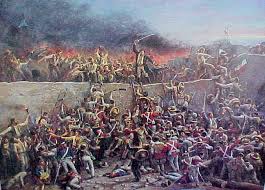
Mexicans storming the Alamo – March 6, 1836
It’s also forced the Obama administration to declare a humanitarian crisis and open three emergency shelters on military bases in California, Oklahoma and Texas.
The invasion is taking its greatest toll in cities that already have large numbers of immigrants–such as New York and Los Angeles.
Newly-arrived alien children and their relatives are flooding into schools and hospitals that are supposedly intended for American citizens. No sooner do they cross the border than they aggressively seek legal aid in converting their illegal arrival into a lifelong legal stay.
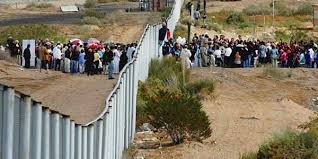
Mexicans storming the United States border – today
For years, Republicans and Democrats have clashed over the subject of illegal immigration. Each side has taken what seems to be an opposing position.
Democrats favor wholesale grants of unearned citizenship to the estimated 11 to 20 million illegal aliens who brazenly violated the law when they sneaked across American borders.
And Republicams favor beefing up security against future waves of such invaders.
But the brutal truth is that neither Democrats nor Republicans truly want to end these invasions. Nor do they want to deport the millions of illegals who have already taken up residence here.
Each party has its own reasons for this.
Democrats, primarily governed by liberal ideology, believe it’s racist for whites to demand control of their own national borders.
They ignore the blunt reality that Mexico–America’s largest source of illegal aliens–strictly enforces control of its own borders.
Mexico has a single, streamlined law that ensures that foreign visitors and immigrants are:
- In the country legally;
- Have the means to sustain themselves economically;
- Not destined to be burdens on society;
- Of economic and social benefit to society;
- Of good character and have no criminal records; and
- Contribute to the general well-being of the nation.
The law also ensures that:
- Immigration authorities have a record of each foreign visitor;
- Foreign visitors do not violate their visa status;
- Foreign visitors are banned from interfering in the country’s internal politics;
- Foreign visitors who enter under false pretenses are imprisoned or deported;
- Foreign visitors violating the terms of their entry are imprisoned or deported;
- Those who aid in illegal immigration are sent to prison.
But there’s another reason why Democrats are keen to grant automatic citizenship to millions of illegal aliens: They see them as a huge constituency.
They don’t care that these illegals’ defiance of American immigration laws:
- Floods the United States with millions of poor non-citizens who don’t speak English;
- Overwhelms the public school system with children–who also don’t speak English–who require bilingual education;
- Overwhelms the public healthcare system–especially emergency rooms–with illegal aliens. As a result, urgently-needed medical care is often denied to American citizens.
Click here: Cost of Unlawful Immigrants to the U.S. Taxpayers
But Republicans are equally guilty of refusing to take a hard stand against deporting those whose presence is a blatant affront to America’s immigration laws.
There are two reasons for this:
- Like Democrats, Republicans want to recruit them as knee-jerk voters.
- Republicans want them as low-skilled, low-wage fodder for their major campaign contributors–such as corporate farms and retail outlets like Wal-Mart.
Unlike Democrats, however, Republicans like to feign outrage at the presence of so many illegal aliens within their midst.
It’s the Republican base that’s demanding an end to illegal immigration.
Those masses of alienated and angry whites who find themselves living in a nation that’s increasingly alien from themselves.
A nation where “Press One for English” is now the norm when contacting government agencies. A nation where illegal aliens can obtain free medical care that’s denied to native-born citizens.

American citizens protesting illegal immigration
It was enraged citizens like this who, on June 10, 2014, cost Virginia Congressman Eric Cantor his bid for re-election. Cantor’s 14-year political career crashed on the fury of Tea Party opposition to illegal immigration.
Still, the question remains: What should be done about the tens of thousands of illegals now swarming into the United States?
Democrats hasten to defend President Barack Obama’s refusal to deport en masse these violators. They claim he is the victim of unpredictable circumstances.
But they don’t offer any solution that involves wholesale deportations of such invaders. It’s as if they believe this onrushing tidal wave will somehow recede on its own momentum.
Meanwhile, Republicans essentially take the position of Mitt Romney, their failed 2012 Presidential candidate: Self-deportation.
This way, the party doesn’t have to actually come out in favor of forcibly returning unwanted foreigners to their respective countries.
But there is a way the United States could deal with this unceasing tsunami of foreign invasions. It might be called “The Zanti Misfits” solution.
ABC NEWS, ADOLF HITLER, BARACK OBAMA, BILL OF RIGHTS, CBS NEWS, CENSORSHIP, CIVIL RIGHTS MOVEMENT, CIVIL WAR, CNN, DECLARATION OF INDEPENDENCE, EMPLOYEES' RIGHTS, FACEBOOK, FIRST AMENDMENT, FRYEBURG ACADEMY, GEORGE ORWELL, ISLAM, JOSEPH MCCARTHY, LACROSSE, MALCOM X, MARTIN LUTHER KING, MUSLIMS, NATION OF ISLAM, NBC NEWS, PILGRIMS, SHARIA LAW, SLAVERY, THE CHICAGO SUN-TIMES, THE CHICAGO TRIBUNE, THE LOS ANGELES TIMES, THE NEW YORK TIMES, THE WASHINGTON POST, TWITTER, UNITED STATES CONSTITUTION, WOMEN'S RIGHTS
In Bureaucracy, Business, History, Law, Politics, Social commentary on April 29, 2016 at 12:08 am
WARNING: Believing that the First Amendment gives you the legal right to express your opinion may be hazardous to your career.
The First Amendment to the United States Constitution states:
“Congress shall make no law respecting an establishment of religion, or prohibiting the free exercise thereof; or abridging the freedom of speech, or of the press; or the right of the people peaceably to assemble, and to petition the Government for a redress of grievances.”
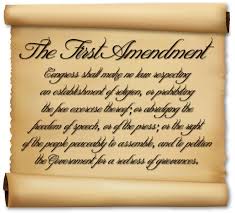
The First Amendment
Of course, that refers only to Congress.
It says nothing about employers–and and especially those self-appointed pseudo-gods who set themselves up as judges of virtue and infallibility.
If you doubt it, just ask Scott Lees, who until March had worked for four years as boys head lacrosse coach at Fryeburg Academy.
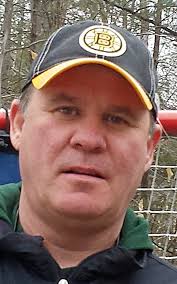
Scott Lees
His crime? Posting to his personal Facebook page an open letter to President Barack Obama that one of his friends had emailed him.
Lees posted the letter on March 17. Two days later, he was ordered to resign from his four-year position as the academy’s lacrosse coach.
The letter had been written in response to a speech Obama gave in Cairo in 2009. In this, Obama said, “I know, too, that Islam has always been a part of America’s history.”
Among the issues the letter raised:
“Were those Muslims that were in America when the Pilgrims first landed? Funny, I thought they were Native American Indians.”
“Were those Muslims that celebrated the first Thanksgiving day? Sorry again, those were Pilgrims and Native American Indians.
“Can you show me one Muslim signature on the United States Constitution? Declaration of Independence? Bill of Rights? Didn’t think so.
“Did Muslims fight for this country’s freedom from England? No. Did Muslims fight during the Civil War to free the slaves of America. No, they did not, in fact, Muslims to this day are still the largest traffickers in human slavery.
“Your own half-brother, a devout Muslim, still advocates slavery himself, even though Muslims of Arabic descent refer to black Muslims as ‘pug nosed slaves.’ Says a lot of what the Muslim world really thinks of your family’s “rich Islamic heritage,” doesn’t it Mr. Obama?
“Where were Muslims during the Civil Rights era of this country? No present. There are no pictures or media accounts of Muslims walking side by side with Martin Luther King, Jr., or helping to advance the cause of Civil Rights.”
(The most prominent Muslim group in America at the time of the civil rights movement was the Nation of Islam. Its onetime spokesman, Malcom X, preached a gospel of separation of the races–and condemned whites as “blue-eyed devils.”)
“Where were Muslims during this country’s Woman’s Suffrage era? Again, not present. In fact, devout Muslims demand that women are subservient to men in the Islamic culture.
“So much so, that often they are beaten for not wearing the ‘hajib’ or for talking to a man who is not a direct family member or their husband. Yep, the Muslims are all for women’s rights, aren’t they?
Click here: Women’s Rights Under Sharia
“Where were Muslims during World War II? They were aligned with Adolf Hitler. The Muslim grand mufti himself met with Adolf Hitler, reviewed the troops and accepted support from the Nazis in killing Jews.”
Click here: Amazon.com: Icon of Evil: Hitler’s Mufti and the Rise of Radical Islam (9781400066537): David G. Dalin, John F. Ro
“Finally, Mr. Obama, where were Muslims on Sept. 11th, 2001? If they weren’t flying planes into the World Trade Center, the Pentagon or a field in Pennsylvania killing nearly 3,000 people on our own soil, they were rejoicing in the Middle East….
“And THAT, Mr. Obama, is the ‘rich heritage’ Muslims have here in America….”
Interviewed by Top Right News, Lees, 48, said he had never before been fired and had been coaching since 1992.
Fryeburg Academy is a private school in Fryeburg, Maine.

Fryeburg Academy
Lees said that he was supposed to meet with Head of Schools Erin Mayo and Dean Charlie Tryder on March 19. But Athletic Director Sue Thurston told him a decision to fire him had already been made.
Mayo told Top Right News that “Scott Lees did post a message on Facebook regarding Muslim people last week that was negative and, of course, public in nature.”
Mayo was right on two counts about the Facebook post: It was negative and public.
What she didn’t say was: It was also entirely historically accurate. It did not urge its readers to violate the law. It did not defame anyone (unless telling the truth about a group’s documented activities counts as defamation).
This is similar to the policies–and atmosphere–of the Joseph McCarthy “smear and fear” era of the 1950s. You didn’t have to actually be proven an actual Communist, or even a Communist sympathizer.
All that was needed to condemn you to permanent unemployment was to become “controversial.” That way, the employer didn’t have to actually prove the employee’s unfitness.
An employee’s right to out-of-work speech should be fully protected unless it crosses the legal line–such as committing libel or urging others to violate the law.
And employers who fire him for embracing his First Amendment right should be criminally prosecuted.
Until this happens, the workplace will continue to resemble George Orwell’s vision of 1984–a world where anyone can become a “non-person” for the most trivial of reasons.
ABC NEWS, ADOLF HITLER, ALTERNET, ANWAR AL-AWLAKI, AP, BARACK OBAMA, BERNIE SANDERS, BILL CLINTON, BUZZFEED, CBS NEWS, CNN, CROOKS AND LIARS, D-DAY, DAILY KOZ, FACEBOOK, GEORGE H.W. BUSH, GEORGE S. PATTON, GEORGE W. BUSH, GREAT BRITAIN, HEINZ GUDERIAN, HERMAN CAIN, HILLARY CLINTON, ISLAM, MOTHER JONES, MOVEON, NAZI GERMANY, NBC NEWS, NEWSWEEK, NICCOLO MACHIAVELLI, NPR, POLITICO, PREDATOR DRONES, RAND PAUL, RAW STORY, RENEGADE: THE MAKING OF A PRESIDENT, REPUBLICANS, REUTERS, RICHARD NIXON, RICHARD WOLFFE, Ronald Reagan, SALON, SEATTLE TIMES, SENATOR RAND PAUL, SLATE, SOVIET UNION, STALINGRAD, TERRORISM, THE ATLANTIC, THE CHICAGO SUN-TIMES, THE CHICAGO TRIBUNE, THE DAILY BEAST, THE GUARDIAN, THE HILL, THE HUFFINGTON POST, THE LOS ANGELES TIMES, THE NATION, THE NEW YORK TIMES, THE PRINCE, THE WASHINGTON POST, TIME, TWITTER, U.S. NEWS & WORLD REPORT, UPI, USA TODAY, WAFFEN-SS, WORLD WAR ii
In Bureaucracy, History, Law, Military, Politics, Social commentary on April 28, 2016 at 12:01 am
Most Americans believe that Nazi Germany was defeated because “we were the Good Guys and they were the Bad Guys.”
Not so.
The United States–and its allies, Great Britain and the Soviet Union–won the war for reasons that had nothing to do with the righteousness of their cause. These included:
- Nazi Germany–i.e, its Fuehrer, Adolf Hitler–made a series of disastrous decisions. Chief among these: Attacking its ally, the Soviet Union, and declaring war on the United States;
- The greater material resources of the Soviet Union and the United States; and
- The Allies waged war as brutally as the Germans.
On this last point:
- From D-Day to the fall of Berlin, captured Waffen-SS soldiers were often shot out of hand.
- When American troops came under fire in the German city of Aachen, Lt. Col. Derrill Daniel brought in a self-propelled 155mm artillery piece and opened up on a theater housing German soldiers. After the city surrendered, a German colonel labeled the use of the 155 “barbarous” and demanded that it be outlawed.
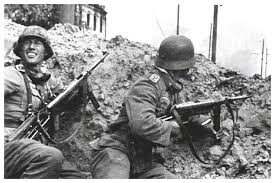
German soldiers at Stalingrad
- During the battle of Stalingrad in 1942, Wilhelm Hoffman, a young German soldier and diarist, was appalled that the Russians refused to surrender. He wrote: “You don’t see them at all, they have established themselves in houses and cellars and are firing on all sides, including from our rear–barbarians, they used gangster methods….”
In short: The Allies won because they dared to meet the brutality of a Heinz Guderian with that of a George S. Patton.
This is a lesson that has been totally lost on the liberals of the Democratic Party.
Which explains why they lost most of the Presidential elections of the 20th century.
It also explains why President Barack Obama has found most of his legislative agenda stymied by Right-wing Republicans.
Consider this example: In 2014, Senator Rand Paul (R-Ky.) warned then-Senate Majority Leader Harry Reid (D-Nev.) that he would place a hold on one of President Obama’s appellate court nominees.
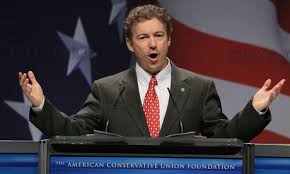
Rand Paul
David Barron had been nominated to the First Circuit Court of Appeals. And Paul objected to this because Barron authored memos justifying the killing of an American citizen by a drone in Yemen.
The September 30, 2011 drone strike killed Anwar al-Awlaki, a radical Muslim cleric notorious on the Internet for encouraging Muslims to attack the United States.
So President Obama authorized a Predator drone stroke against him, thus removing that danger. Paul demanded that the Justice Department release the memos Barron crafted justifying the drone policy.
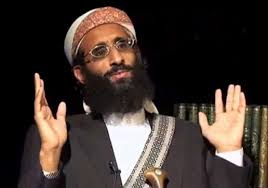
Anwar al-Awlaki
Imagine how Republicans would depict Paul–or a Democratic Senator–if he behaved in a similar manner with a Republican President: “Rand Paul: A traitor who supports terrorists. he sides with America’s sworn enemies against its own lawfully elected President.”
On May 22, 2014, the Senate voted 53–45 to confirm Barron to the First Circuit Court of Appeals.
To Republicans, “lawfully elected” applies only to Republican Presidents. A Democrat who runs against a Republican is automatically considered a traitor.
And a Democrat who defeats a Republican is automatically considered a usurper, and thus deserves to be slandered and obstructed, if not impeached.
Unable to defeat Bill Clinton in 1992 and 1996, Republicans tried in 1998 to impeach him for getting oral sex in the White House.
Similarly, 2012 Presidential candidate Herman Cain, asked in a conference call with bloggers why Republicans couldn’t just impeach President Obama, replied:
“That’s a great question and it is a great–it would be a great thing to do but because the Senate is controlled by Democrats we would never be able to get the Senate first to take up that action.”
In Renegade: The Making of a President, Richard Wolffe chronicled Obama’s successful 2008 bid for the White House. Among his revelations:
Obama, a believer in rationality and decency, felt more comfortable in responding to attacks on his character than in making them on the character of his enemies.
A graduate of Columbia University and Harvard Law School, Obama is easily one of the most academically gifted Presidents in United States history.
But for all this, he failed–from the onset of his Presidency–to grasp and apply this fundamental lesson taught by Niccolo Machiavelli, the father of modern political science.
In The Prince, Machiavelli warns:
From this arises the question whether it is better to be loved than feared, or feared more than loved.
The reply is, that one ought to be both feared and loved, but as it is difficult for the two to go together, it is much safer to be feared than loved….
And men have less scruple in offending one who makes himself loved than one who makes himself feared; for love is held by a chain of obligations which, men being selfish, is broken whenever it serves their purpose; but fear is maintained by a dread of punishment which never fails.
On Facebook and Twitter, liberals are already celebrating the “certain” Presidency of Vermont U.S. Senator Bernie Sanders or former First Lady Hillary Clinton in 2016.
They forget that, in 1968, 1980, 1988 and 2000, liberals couldn’t believe America would elect, respectively, Richard Nixon, Ronald Reagan, George H.W. Bush and George W. Bush.
For Democrats to win elective victories and enact their agenda, they must find their own George Patton to take on the Waffen-SS generals among Republican ranks.
9/11 ATTACKS, ABC NEWS, ARTHUR M. CUMMINGS, BOSTON GLOBE, BOSTON MARATHON, BOSTON MARATHON BOMBING, BOSTON PATCH, BRUSSELS BOMBINGS, CBS NEWS, CNN, FACEBOOK, FBI, FIRST AMENDMENT, FRANKLIN D. ROOSEVELT, ISIS, ISLAM, ISLAMIC TERRORISM, JIHADIST, NAZI GERMANY, NBC NEWS, PARIS TERRORIST ATTACKS, POLITICAL CORRECTNESS, RADICAL ISLAM, SAMUEL P. HUNTINGTON, SAN BERNARDINO MASSACRE, SECURITY, STEVEN EMERSON, THE CHICAGO SUN-TIMES, THE CHICAGO TRIBUNE, THE CLASH OF CIVILIZATIONS AND THE REMAKING OF WORLD ORDER, THE LOS ANGELES TIMES, THE NEW YORK TIMES, THE WASHINGTON POST, TWITTER, US NEWS, USA TODAY, WORLD WAR 11
In Bureaucracy, Entertainment, History, Law Enforcement, Military, Politics, Social commentary on April 27, 2016 at 1:25 am
Since October, 2015, local, State and Federal law enforcement agencies had been planning security for the 2016 Boston Marathon.
With the event scheduled for April 18, authorities wanted to assure the public that the Marathon would be as safe as more than 5,000 law enforcement officers could make it.
Yet, many of the articles written about security for this upcoming event refused to identify the enemy responsible for spending millions of dollars and stationing thousands of local, State and Federal law enforcement officers to protect 30,800 runners and one million spectators.
That enemy: Islamic terrorism.
On April 18, Massive.com carried a story on “Boston Marathon: 2016 security: A look inside the MEMA bunker in Framingham.”
The article noted that on the day of the Marathon–April 18–more than 200 members of 60 Federal, State and local law enforcement agencies gathered at the Massachusetts Emergency Management Agency (MEMA)

Among the agencies represented: The State police, the FBI, the Secret Service and the Bureau of Alcohol, Tobacco, Firearms and Explosives.
Their task: “Keeping 30,800 runners and one million spectators safe.”
But–safe from what? Or who?
The article noted that, owing to the 2013 attack:
-
More ambulances and wheelchairs were positioned near the finish line.
-
Medical tents were also positioned closer to the finish line.
-
Communications were improved with trauma centers and operating rooms.
-
Each community had safe havens where runners could take shelter in an emergency–and could be picked up by buses.
So there could be no doubt that a huge effort–and expense–had been undertaken to protect tens of thousands of people attending this event.
Yet there was absolutely no mention as to what enemy could justify going to such huge expense in effort and money.
Could it be…Islamic terrorists?
During the Cold War, the Government had never hesitated to name the Soviet Union as America’s foremost enemy.
The United States has been the target of Islamic attacks since the 1970s.
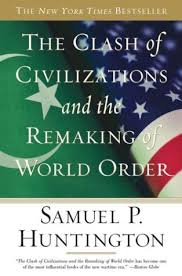
In his groundbreaking work, The Clash of Civilizations and the Remaking of World Order, Harvard political scientist Samuel P. Huntington wrote in 1996:
“During the 15 years between 1980 and 1995…the United States engaged in 17 military operations in the Middle East, all of them directed against Muslims. No comparable pattern of U.S. military operations occurred against the people of any other civilization.

Samuel P. Huntington
On September 11, 2001, Islamics turned four passenger jetliners into flying bombs and slaughtered 3,000 Americans in New York, Washington, D.C. and Pennsylvania.
Since 9/11, the United States has been actively engaged in military operations in Afghanistan, Iraq, Yemen and Syria.
The war that Huntington warned was coming has erupted into fullscale conflict, with no end in sight.
Yet the most important officials in Washington, D.C. refuse to name the enemy they are spending billions of dollars to fight–and protect American citizens against.
As a result, those officials who dare to name that enemy stand out as beacons of honesty and courage.
One of these is Arthur M. Cummings, the FBI’s executive assistant director for national security.
Cummings has no use for such Politically Correct terms as “man-caused disasters” in referring to terrorism. Nor does he shrink from terms such as “jihadists” or “Islamists.”
“Of course Islamists dominate the terrorism of today,” he says bluntly.
“I had this discussion with the director of a very prominent Muslim organization here [Washington, D.C.]. And he said ‘Why are you guys always looking at the Muslim community?’
“I can name the homegrown cells, all of whom are Muslim, all of whom are seeking to kill Americans,” replied Cummings. “It’s not the Irish. It’s not the French. It’s not the Catholics. It’s not the Protestants. It’s the Muslims.”
In May, 2014, Steven Emerson, a nationally recognized expert on terrorism, posted an ad in The New York Times, warning about the dangers of PC-imposed censorship:
“Or nation’s security and its cherished value of free speech has been endangered by the bullying campaigns of radical Islamic groups, masquerading as ‘civil rights’ organizations, to remove any reference to the Islamist motivation behind Islamic terrorist acts.
“These groups have pressured or otherwise colluded with Hollywood, the news media, museums, book publishers, law enforcement and the Obama Administration in censoring the words ‘Islamist,’ ‘Islamic terrorism,’ ‘radical Islam’ and ‘jihad’ in discussing or referencing the threat and danger of Islamic terrorism.
“This is the new form of the jihadist threat we face. It’s an attack on one of our most sacred freedoms–free speech–and it endangers our very national identity.
“How can we win the war against radical Islam if we can’t even name the enemy?”
Emerson has a point–of utmost relevance.
Imagine the United States fighting World War II–and President Franklin D. Roosevelt banning the use of “Fascist” in referring to Nazi Germany or “Imperialist” in describing Imperial Japan.
Imagine CNN-like coverage of the Nazi extermination camps, with their piles of rotting corpses and smoking gas ovens, while a commentator reminds us that “Nazism is an ideology of peace.”
Then try to imagine how the United States could have won that life-and-death struggle under such unrealistic and self-defeating restrictions.
It couldn’t have done so then. And it can’t do so now.
9/11 ATTACKS, ABC NEWS, ARTHUR M. CUMMINGS, BOSTON GLOBE, BOSTON MARATHON, BOSTON MARATHON BOMBING, BOSTON PATCH, BRUSSELS BOMBINGS, CBS NEWS, CNN, FACEBOOK, FBI, FIRST AMENDMENT, FRANKLIN D. ROOSEVELT, ISIS, ISLAM, ISLAMIC TERRORISM, JIHADIST, NAZI GERMANY, NBC NEWS, PARIS TERRORIST ATTACKS, POLITICAL CORRECTNESS, RADICAL ISLAM, SAMUEL P. HUNTINGTON, SAN BERNARDINO MASSACRE, SECURITY, STEVEN EMERSON, THE CHICAGO SUN-TIMES, THE CHICAGO TRIBUNE, THE CLASH OF CIVILIZATIONS AND THE REMAKING OF WORLD ORDER, THE LOS ANGELES TIMES, THE NEW YORK TIMES, THE WASHINGTON POST, TWITTER, US NEWS, USA TODAY, WORLD WAR ii
In Bureaucracy, Entertainment, History, Law Enforcement, Military, Politics, Social commentary on April 26, 2016 at 12:05 am
The 2016 Boston Marathon was scheduled for April 18.
And local, State and Federal law enforcement authorities had been planning security for the event since October, 2015.
So it was only natural that these agencies wanted the public to know the Marathon would be as safe as more than 5,000 law enforcement officers could make it.

The Boston Marathon
“‘Leave the worrying to us’: Security Ramped Up for Boston Marathon,” read the headline of the April 16 issue of USA Today.
And it gave the reason for this: Three years earlier, on April 15, 2013, two bombers had wreaked havoc at the finish line of the race.
It also named the bombers–brothers Dzhokhar and Tamerlan Tsarnaev–whose terrorist act killed three people and injured about 264 others.

Tamerlan and Dzhokhar Tsarnaev
It further noted that Tamerlan had died in a shootout with police three days after the marathon–and police had captured Dzhohkar several hours later. (He was convicted by a jury and sentenced to death.)
The story said nothing, however, about their citing Islam as the reason for their murderous rampage.
Click here: ‘Leave the worrying to us’: Security ramped up for Boston Marathon
The April 16 edition of The Boston Patch carried this headline: “Boston Marathon 2016: Security Changes You Can’t See All Around You.”
The article stated that most of these precautions couldn’t be revealed. Then it added that even though law enforcement officials hadn’t identified a credible threat to this year’s Boston Marathon, “recent events make the world feel less safe today than in 2013.”
But the article said nothing about those “recent events,” such as:
-
In 2013, two Muslims butchered and beheaded a British soldier on a busy London street.
-
In 2014, an axe-wielding Muslim slashed two New York police officers, before being shot by other cops.
-
In 2015, Muslims slaughtered 12 people at a Paris satirical magazine for publishing cartoons about the Prophet Mohammed.
-
In 2015, more than 100 people were murdered in ISIS attacks across Paris.
-
In 2016, a series of Islamic terrorist bombing attacks in Brussels killed 31 and injured more than 300.
Nor did the story say that all of these “recent events” were carried out by followers of the Islamic religion.
Click here: Brussels attacks add urgency to Boston Marathon security | US News
On April 6, The Boston Globe announced: “Tight security planned for upcoming Boston Marathon.”
The story noted that, in drawing up their security arrangements, “authorities analyzed terrorist attacks in Paris, San Bernardino, Calif., and Brussels in recent months.”
The San Bernardino attack had occurred on December 2, 2015.
The story said that Syed Rizwan Farook and Tashfeen Malik, had slaughtered 14 people and wounded 22 at a Department of Public Health training event and birthday party.
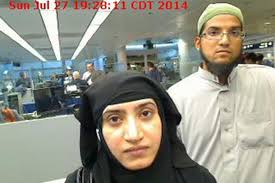
Tashfeen Malik and Syed Rizwan Farook
But the article did not inform readers that Farook and Malik were Muslims acting in the name of Islam.
The story quoted Harold Shaw, special agent in charge of the FBI’s Boston Field Office, as saying: “San Bernardino taught us something very significant. They [the killers] were not on the radar.”
But the article omitted “something very significant”: Farook and Malik had melded perfectly into American society before their outrage. Thus, the only factor that could have put them “on the radar” as potential terrorists was their being Muslims.
And in an America driven by Political Correctness, noting that would have been verboten.
Click here: Tight security planned for upcoming Boston Marathon – The Boston Globe
NBC News carried a story on “How the Boston Marathon is Using Security Technology.”
The story then described how police used a high-tech partner, Esri, to track, in real-time, the progress of the morning’s race.
“When you look [at] security, there’s three legs to the stool: People, process and technology,” said Arnette Heintze, CEO and co-founder of Hillard Heintze, an investigation and security risk management company.
Click here: How the Boston Marathon is Using Security Technology – NBC News
Yet for all the gushing kudos leveled at the new uses of sophisticated technology for keeping people safe, one thing was conspicuously ignored.
The opening paragraph, “Three years after a deadly bombing at the Boston Marathon….” left unnamed those had made the use of this technology necessary–Tamerlan and Dzhokhar Tsarnaev.
Nor did it mention that Dzhokhar had laid out, in a note, his reason for attacking innocent men and women: “We Muslims are one body, you hurt one you hurt us all.
“Well at least that’s how Muhammed wanted it to be forever. The ummah [Islamic community] is beginning to rise.
“Know you are righting men who look into the barrel of your gun and see heaven, how how can you compete with that. We are promised victory and will surely get it.”
Click here: Text from Dzhokhar Tsarnaev’s note left in Watertown boat – The Boston Globe
2016 PRESIDENTIAL RACE, ABC NEWS, ALTERNET, AMERICABLOG, AP, BABY BOOMER RESISTANCE, BBC, BERNIE SANDERS, BLOOD FEUD, BLOOMBERG NEWS, BROTHERS: THE HIDDEN HISTORY OF THE KENNEDY YEARS, BUZZFEED, CARLOS MARCELLO, CBS NEWS, CIA, CNN, COTTER SMITH, CROOKS AND LIARS, CUBA, DAILY KOS, DAVID TALBOT, DONALD TRUMP, ERNEST BORGNINE, FBI, FIDEL CASTRO, FIVETHIRTYEIGHT, GUS RUSSO, HARPER’S MAGAZINE, HILLARY CLINTON, HUFFINGTON POST, INTERNATIONAL BROTHERHOOD OF TEAMSTERS, J. EDGAR HOOVER, JAMES R. HOFFA, JUSTICE DEPARTMENT, LIVE BY THE SWORD: THE SECRET WAR AGAINST CASTRO AND THE DEATH OF JFK, MAFIA, MEDIA MATTERS, MOTHER JONES, MOVEON, MSNBC, NBC NEWS, NEW REPUBLIC, NEWSDAY, NEWSWEEK, NPR, PBS NEWSHOUR, POLITICO, POLITICUSUSA, RAFAEL EDWARD CRUZ, RAW STORY, REUTERS, ROBERT BLAKE, ROBERT F. KENNEDY, SALON, SAM GROOM, SEATTLE TIMES, Secret Service, SENATE LABOR RACKETS COMMITTEE, SLATE, TALKING POINTS MEMO, THE ATLANTIC, THE CHICAGO SUN-TIMES, THE CHICAGO TRIBUNE, THE DAILY BEAST, THE DAILY BLOG, THE GUARDIAN, THE HILL, THE HUFFINGTON POST, THE INTERCEPT, THE LOS ANGELES TIMES, THE NATION, THE NEW REPUBLIC, THE NEW YORK TIMES, THE NEW YORKER, THE VILLAGE VOICE, THE WALL STREET JOURNAL, THE WASHINGTON POST, THINKPROGRESS, TIME, TRUTHDIG, TRUTHOUT, TWITTER, U.S. NEWS & WORLD REPORT, UPI
In Bureaucracy, History, Law, Law Enforcement, Politics, Social commentary on April 25, 2016 at 12:10 am
The 1983 TV mini-series, Blood Feud, chronicles the decade-long struggle between Robert F. Kennedy (Cotter Smith) and James R. Hoffa (Robert Blake), president of the International Brotherhood of Teamsters Union.
With Kennedy as Attorney General and facing relentless pressure from the Justice Department, the Mafia despairs of a solution. At a swanky restaurant, several high-ranking Mafiosi agree that “something” must be done.
On November 22, 1963, President John F. Kennedy is assassinated in Dallas, Texas.
Blood Feud clearly implies that the Mafia was responsible.
[The House Assassinations Committee investigated this possibility in 1978, and determined that Carlos Marcello, the Mafia boss of New Orleans, had the means, motive and opportunity to kill JFK. But it could not find any conclusive evidence of his involvement.]
Even with the President dead, RFK’s Justice Department continues to pursue Hoffa. In 1964, he is finally convicted of jury tampering and sentenced to 13 years’ imprisonment.
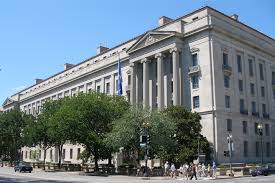
U.S. Department of Justice
Hoping to avoid prison, Hoffa phones Robert Kennedy, offering future Teamsters support if RFK runs for President. To prove he can deliver, he tells Kennedy that the Teamsters have even penetrated the FBI.
[In March, 1964, Kennedy met with Hoffa on an airfield at Dulles International Airport in Washington, D.C. He was accompanied by two Secret Service agents from the detail assigned to ex-First Lady Jacqueline Kennedy.
[FBI Director J. Edgar Hoover, no longer afraid to cross RFK, had withdrawn the agents previously assigned to guard Kennedy.
[Accompanying Hoffa were two muscular bodyguards–at least one of whom was packing two pistols in shoulder holsters.
[While the Secret Service agents watched from a respectful distance, Kennedy spoke quietly with Hoffa. The Attorney General showed a document to Hoffa, and the Teamsters leader at times nodded or shook his head.
[The agents drove Kennedy back to Washington. During the ride, he said nothing about the reason for the meeting.
[David Talbot, in his book, Brothers: The Hidden History of the Kennedy Years, speculates that it could have been to discuss Hoffa’s conviction for jury tampering.
[But Gus Russo–author of Live By the Sword: The Secret War Against Castro and the Death of JFK–writes that the reason might have been Dallas.
[Perhaps, he speculates, RFK had wanted to look into Hoffa’s eyes while asking him: Did you have anything to do with the assassination? RFK had, in fact, done this with CIA Director John McCone almost immediately after his brother’s death.]
In Blood Feud, Kennedy confronts J. Edgar Hoover (Ernest Borgnine) and accuses him of illegally planting wiretaps in Mob hangouts all over the country.
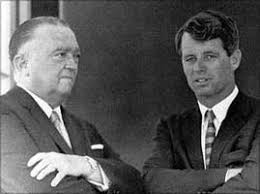
J. Edgar Hoover and Robert F. Kennedy
Hoover retorts that this had been the only way to obtain the prosecution-worthy intelligence Kennedy had demanded: “You loved that flow of information. You didn’t want it to stop.”
Kennedy: Why did you keep the FBI out of the fight against the Mob for decades?
Hoover: “Every agency that came to grips with them got corrupted by their money.”
[So far as is known, Hoover never made any such confession. Historians continue to guess his reason for leaving the Mob alone for decades.]
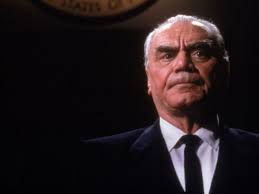

Ernest Borgnine as J. Edgar Hoover
RFK then mentions the CIA’s plots to employ the Mob to assassinate Cuban dictator Fidel Castro
[The agency had wanted to please President Kennedy, and the Mafia had wanted to regain its casinos lost to the Cuban Revolution. The role the Kennedy brothers played in the CIA’s assassination plots remains murky, and has been the subject of endless speculation.]
“The CIA, doing business with the Mob,” says Kennedy. “The FBI, leaking information to its enemies [the Teamsters].” Then, sadly: “I guess it’s true–everyone does business with everyone.”
[So far as is known, the FBI did not pass on secrets to the Teamsters. But during the 1970s, the Mafia penetrated the Cleveland FBI office through bribes to a secretary. Several FBI Mob informants were “clipped” as a result.]
In 1967, Hoffa goes to prison. He stays there until, in 1971, President Richard Nixon commutes his sentence in hopes of gaining Teamsters’ support for his 1972 re-election.
Kennedy leaves the Justice Department in 1964 and is elected U.S. Senator from New York. In 1968 he runs for President. On June 5, after winning the California primary, he’s assassinated.
In Blood Feud, just before his assassination, RFK asks: “How will I ever really know if the Mob killed Jack because of my anti-Mob crusade?”
Hoffa schemes to return to the presidency of the Teamsters–a post now held by his successor, Frank Fitzsimmons. He runs the union in a more relaxed style than Hoffa, thus giving the Mob greater control over its pension fund.
And the Mafia likes it that way.
On July 30, 1975, Hoffa disappears from the parking lot of the Machus Red Fox Restaurant near Detroit. He had gone there to meet with two Mafia leaders.
Almost 41 years after the death of James R. Hoffa, and almost 48 years after that of Robert F. Kennedy:
- Labor unions are a shadow of their former power.
- The threat they once represented to national prosperity has been replaced by that of predatory corporations like Enron and AIG.
- The war RFK began on the Mafia has continued, sending countless mobsters to prison.
- Millions of Americans who once expected the Federal Government to protect them from crime now believe the Government is their biggest threat.
- The idealism that fueled RFK’s life has virtually disappeared from politics.
2016 PRESIDENTIAL RACE, ABC NEWS, ABCNEWS, ALTERNET, AMERICABLOG, AP, BABY BOOMER RESISTANCE, BBC, BERNIE SANDERS, BLOOD FEUD, BLOOMBERG NEWS, BROTHERS: THE HIDDEN HISTORY OF THE KENNEDY YEARS, BUZZFEED, CARLOS MARCELLO, CBS NEWS, CIA, CNN, COTTER SMITH, CROOKS AND LIARS, CUBA, DAILY KOS, DAVID TALBOT, DONALD TRUMP, ERNEST BORGNINE, FBI, FIDEL CASTRO, FIVETHIRTYEIGHT, GUS RUSSO, HARPER’S MAGAZINE, HILLARY CLINTON, HUFFINGTON POST, INTERNATIONAL BROTHERHOOD OF TEAMSTERS, J. EDGAR HOOVER, JAMES R. HOFFA, JOHN F. KENNEDY, JUSTICE DEPARTMENT, LIVE BY THE SWORD: THE SECRET WAR AGAINST CASTRO AND THE DEATH OF JFK, MAFIA, MEDIA MATTERS, MOTHER JONES, MOVEON, MSNBC, NBC NEWS, NEW REPUBLIC, NEWSDAY, NEWSWEEK, NPR, PBS NEWSHOUR, POLITICO, POLITICUSUSA, RAFAEL EDWARD CRUZ, RAW STORY, REUTERS, ROBERT BLAKE, ROBERT F. KENNEDY, SALON, SAM GROOM, SEATTLE TIMES, Secret Service, SENATE LABOR RACKETS COMMITTEE, SLATE, TALKING POINTS MEMO, THE ATLANTIC, THE CHICAGO SUN-TIMES, THE CHICAGO TRIBUNE, THE DAILY BEAST, THE DAILY BLOG, THE GUARDIAN, THE HILL, THE HUFFINGTON POST, THE INTERCEPT, THE LOS ANGELES TIMES, THE NATION, THE NEW REPUBLIC, THE NEW YORK TIMES, THE NEW YORKER, THE VILLAGE VOICE, THE WALL STREET JOURNAL, THE WASHINGTON POST, THINKPROGRESS, TIME, TRUTHDIG, TRUTHOUT, TWITTER, U.S. NEWS & WORLD REPORT, UPI
In Bureaucracy, History, Law, Law Enforcement, Politics, Social commentary on April 22, 2016 at 12:10 am
The 1983 TV mini-series, Blood Feud, chronicles the decade-long struggle between Robert F. Kennedy and James R. Hoffa.
Having “helped” Kennedy (Cotter Smith) to oust corrupt Teamsters President Dave Beck, Hoffa (Robert Blake) believes that Kennedy should now be satisfied: “He’s got his scalp. Now he can move on to other things while I run the union.”
But Hoffa has guessed wrong–with fatal results. Realizing that he’s been “played” by Hoffa, a furious Kennedy strikes back.
He orders increased surveillance of Hoffa and his topmost associates. He subpoenas union records and members of both the Teamsters and the Mafia to appear before his committee in public hearings.
And he tries to enlist the aid of legendary FBI Director J. Edgar Hoover (Ernest Borgnine). But Hoover wants no part of a war against organized crime, whose existence he refuses to admit.

Meanwhile, Kennedy’s confrontations with Hoffa grow increasingly fierce. In open hearings, Kennedy accuses Hoffa of receiving kickbacks in the name of his wife. Hoffa damns him for “dirtying my wife’s name.”
Kennedy secures an indictment against Hoffa for hiring a spy to infiltrate the Senate Labor Rackets Committee. He’s so certain of a conviction that he tells the press he’ll “jump off the Capitol building” if Hoffa beats the rap.
But Hoffa’s lawyer, Edward Bennett Williams (Jose Ferrer) puts Kennedy himself on the witness stand. There he portrays Kennedy as a spoiled rich man who’s waging a vendetta against Hoffa.
Hoffa beats the rap, and offers to send Kennedy a parachute. But he jokingly warns reporters: “Hey, Bobby, you better have it checked. I don’t trust myself!”
By 1959, Robert Kennedy’s work as chief counsel for the Senate Labor Rackets Committee is over. But not his determination to send Teamsters President James Hoffa to prison.
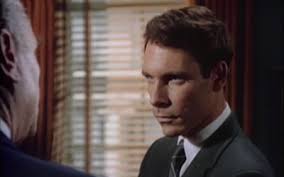
Cotter Smith as Robert Kennedy
Throughout 1960, he manages the Presidential campaign for his brother, John F. Kennedy (Sam Groom). By a margin of only 100,000 votes, JFK wins the election.
Hoffa thinks that his troubles are over, that “Bobby” will move on to other pursuits and forget about the Teamsters.
Hoffa is partly right: Kennedy moves on to another job. But it’s the office of United States Attorney General.
JFK, needing someone in the Cabinet he can trust completely, browbeats Robert into becoming the the nation’s top cop.
For Hoffa, it’s a nightmare come true.
As Attorney General, Kennedy no longer has to beg J. Edgar Hoover to attack organized crime. He can–and does–order him to do so.
Throughout the country, the Mafia feels a new heat as FBI agents plant illegal electronic microphones (“bugs”) in their innermost sanctums. Agents openly tail mobsters–and send them to prison in large numbers.
And Kennedy sets up a special unit, composed of topflight prosecutors and investigators, to go after just one man: James Riddle Hoffa. The press comes to call it the “Get Hoffa” squad.
Hoffa continues to beat federal prosecutors in court. But he believes he’s under constant surveillance by the FBI, and his nerves are starting to crack.
Convinced that the FBI has bugged his office, he literally tears apart the room, hoping to find the bug. But he fails to do so.
What he doesn’t know is he’s facing a more personal danger–from one of his closest associates.
He tells a trusted colleague, Edward Grady Partin (Brian Dennehy) how easy it would be to assassinate Kennedy with a rifle or bomb.
Later, Partin gets into a legal jam–and is abandoned by the Teamsters. Hoping to cut a deal, he relays word to the Justice Department of Hoffa’s threats against the Attorney General.
Now working for the Justice Department, Partin sends in reports on Hoffa’s juror-bribing efforts in yet another trial. Hoffa again beats the rap–but now Kennedy has the insider’s proof he needs to put him away for years.
Meanwhile, the Mafia despairs of the increasing pressure of the Justice Department. At a swanky restaurant, several high-ranking members agree that “something” must be done.
[Although this scene is fictional, it’s clearly based on an infamous outburst of Carlos Marcello, the longtime Mafia boss of New Orleans.
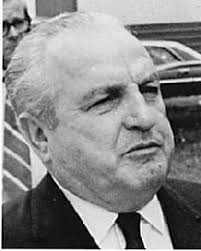
Carlos Marcello
[In 1961, Marcello was deported to his native Guatemala on orders by RFK. After illegally re-entering the country, he swore vengeance against the Attorney General.
[In September, 1962, during a meeting with several mob colleagues, he flew into a rage when someone mentioned Kennedy.
“Take the stone out of my shoe!” he shouted, echoing a Sicilian curse. “Don’t you worry about that little Bobby sonofabitch. He’s going to be taken care of!”
[When one of his colleagues warned that murdering RFK would trigger the wrath of his brother, President John F.Kennedy, Marcello replied: “In Sicily they say if you want to kill a dog you don’t cut off the tail. You go for the head.”
[Marcello believed that the death of President Kennedy would render the Attorney General powerless. And he added that he planned to use a “nut” to do the job.]
On November 22, 1963, President John F. Kennedy is assassinated in Dallas, Texas.
Blood Feud clearly implies that the Mafia was responsible.
2016 PRESIDENTIAL RACE, ABC NEWS, ALTERNET, AMERICABLOG, AP, BABY BOOMER RESISTANCE, BBC, BERNIE SANDERS, BLOOD FEUD, BLOOMBERG NEWS, BROTHERS: THE HIDDEN HISTORY OF THE KENNEDY YEARS, BUZZFEED, CARLOS MARCELLO, CBS NEWS, CIA, CNN, COTTER SMITH, CROOKS AND LIARS, CUBA, DAILY KOS, DAVID TALBOT, DONALD TRUMP, ERNEST BORGNINE, FBI, FIDEL CASTRO, FIVETHIRTYEIGHT, GUS RUSSO, HARPER’S MAGAZINE, HILLARY CLINTON, HUFFINGTON POST, INTERNATIONAL BROTHERHOOD OF TEAMSTERS, J. EDGAR HOOVER, JAMES R. HOFFA, JOHN F. KENNEDY, JUSTICE DEPARTMENT, LIVE BY THE SWORD: THE SECRET WAR AGAINST CASTRO AND THE DEATH OF JFK, MAFIA, MEDIA MATTERS, MOTHER JONES, MOVEON, MSNBC, NBC NEWS, NEW REPUBLIC, NEWSDAY, NEWSWEEK, NPR, PBS NEWSHOUR, POLITICO, POLITICUSUSA, RAFAEL EDWARD CRUZ, RAW STORY, REUTERS, ROBERT BLAKE, ROBERT F. KENNEDY, SALON, SAM GROOM, SEATTLE TIMES, Secret Service, SENATE LABOR RACKETS COMMITTEE, SLATE, TALKING POINTS MEMO, THE ATLANTIC, THE CHICAGO SUN-TIMES, THE CHICAGO TRIBUNE, THE DAILY BEAST, THE DAILY BLOG, THE GUARDIAN, THE HILL, THE HUFFINGTON POST, THE INTERCEPT, THE LOS ANGELES TIMES, THE NATION, THE NEW REPUBLIC, THE NEW YORK TIMES, THE NEW YORKER, THE VILLAGE VOICE, THE WALL STREET JOURNAL, THE WASHINGTON POST, THINKPROGRESS, TIME, TRUTHDIG, TRUTHOUT, TWITTER, U.S. NEWS & WORLD REPORT, UPI
In Bureaucracy, History, Law, Law Enforcement, Politics, Social commentary on April 21, 2016 at 12:37 pm
Today, America has four major candidates running for President: Donald Trump, Rafael Edward Cruz, Hillary Clinton and Bernie Sanders.
Trump is a billionaire businessman; Cruz is a U.S. Senator from Texas; Clinton is a former First Lady, U.S. Senator and Secretary of State; and Sanders is a U.S. Senator from Vermont.
Despite the great differences in their backgrounds, they all share one thing in common: Extremely high negatives among voters.
But 48 years ago, Senator Robert Francis Kennedy aroused passions of an altogether different sort.
Kennedy had been a United States Attorney General (1961-1964) and Senator (1964-1968). But it was his connection to his beloved and assassinated brother, President John F. Kennedy, for which he was best known.

Robert F. Kennedy campaigning for President
Millions saw RFK as the only candidate who could make life better for America’s impoverished–while standing firmly against those who threatened the Nation’s safety.
As television correspondent Charles Quinn observed: “I talked to a girl in Hawaii who was for [George] Wallace [the segregationist governor of Alabama]. And I said ‘Really?’ [She said] ‘Yeah, but my real candidate is dead.’
“You know what I think it was? All these whites, all these blue collar people who supported Kennedy…all of these people felt that Kennedy would really do what he thought best for the black people, but, at the same time, would not tolerate lawlessness and violence.
“They were willing to gamble…because they knew in their hearts that the country was not right. They were willing to gamble on this man who would try to keep things within reasonable order; and at the same time do some of the things they knew really should be done.”
Campaigning for the Presidency in 1968, RFK had just won the crucial California primary on June 4–when he was shot in the back of the head. His killer: Sirhan Sirhan, a young Palestinian furious at Kennedy’s support for Israel.
On June 8, 1,200 men and women boarded a specially-reserved passenger train at New York’s Pennsylvania Station. They were accompanying Kennedy’s body to its final resting place at Arlington National Cemetery.
As the train slowly moved along 225 miles of track, throngs of men, women and children lined the rails to pay their final respects to a man they considered a genuine hero.
Little Leaguers clutched their baseball caps across their chests. Uniformed firemen and policemen saluted. Burly men in shirtsleeves held hardhats over their hearts. Black men in overalls waved small American flags. Women from all levels of society stood and cried.

A nation says goodbye to Robert Kennedy
Commenting on RFK’s legacy, historian William L. O’Neil wrote in Coming Apart: An Informal History of America in the 1960′s:
“…He aimed so high that he must be judged for what he meant to do, and, through error and tragic accident, failed at….He will also be remembered as an extraordinary human being who, though hated by some, was perhaps more deeply loved by his countrymen than any man of his time.
“That too must be entered into the final account, and it is no small thing. With his death something precious disappeared from public life.”
Eleven years earlier, as a young, idealistic attorney, Kennedy had declared war on James Riddle Hoffa, the president of the Mafia-dominated International Brotherhood of Teamsters Union.
As chief counsel for the Senate Labor Rackets Committee, Kennedy was appalled at the corruption he discovered among high-ranking Teamster officials. As he saw it, under Hoffa’s leadership, the union was nothing less than “a conspiracy of evil.”
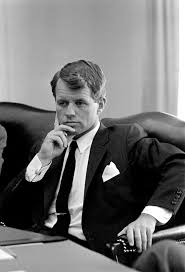
Robert Francis Kennedy as Chief Counsel, Senate Labor Rackets Committee
Hoffa, in turn, held an equally unflattering view of Kennedy. “A rich punk,” said Hoffa, who didn’t know or care about “the average workingman.”
In 1983, Blood Feud, a two-part TV mini-series, depicted the 11-year animosity between Kennedy and Hoffa. Although it took some dramatic liberties, its portrayal of the major events of that period remains essentially accurate.
Today, labor unions are a rapidly-vanishing species, commanding far less political influence than they did 50 years ago. As a result, young viewers of this series may find it hard to believe that labor ever held such sway, or that the Teamsters posed such a threat.
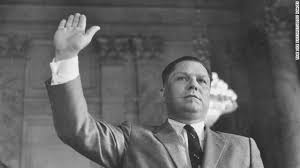
James Riddle Hoffa testifying before the Senate Labor Rackets Committee
And in an age when millions see “Big Government” as the enemy, they may feel strong reservations about the all-out war that Robert F. Kennedy waged against Hoffa.
Blood Feud opens in 1957, when Hoffa (Robert Blake) is a rising figure within the Teamsters. Kennedy (Cotter Smith) is chief counsel for the Senate Labor Rackets Committee.
At first, Hoffa tries to ingratiate himself with Kennedy, telling him: “I know everybody who can help me and anybody who can hurt me.”
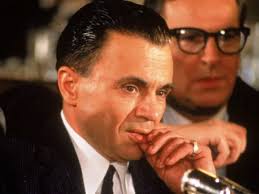
Robert Blake as James R. Hoffa
A wily Hoffa decides to parley Kennedy’s anti-corruption zeal into a path to power for himself. Via his attorney, Eddie Cheyfitz, he feeds Kennedy incriminating evidence against Dave Beck, president of the Teamsters.
Confronted with a Senate subpoena, Beck flees the country–paving the way for Hoffa to assume the top position in the union. Hoffa believes he has solved two problems at once.
2016 PRESIDENTIAL RACE, ABC NEWS, ADOLF HITLER, CBS NEWS, CNN, DAVID BROOKS, DONALD TRUMP, EDUARDO "TED" CRUZ, FACEBOOK, FOX NEWS, HEINZ GUDERIAN, MARK SHIELDS, MEGYN KELLY, PBS NEWSHOUR, REPUBLICANS, ROBERT PAYNE, THE CHICAGO SUN-TIMES, THE CHICAGO TRIBUNE, THE LIFE AND DEATH OF ADOLF HITLER, THE LOS ANGELES TIMES, THE NEW YORK TIMES, THE WASHINGTON POST, TWITTER, WOMEN
In Bureaucracy, History, Politics, Social commentary on April 20, 2016 at 12:05 am
Syndicated columnist Mark Shields and New York Times columnist David Brooks appear every Friday on the PBS Newshour to review the week’s major political events.
On March 25, Shields–a liberal, and Brooks, a conservative–came to some disturbingly similar conclusions about Donald Trump.
Eerily, their conclusions echo those reached by former Panzer General Heinz Guderian about German dictator Adolf Hitler.
Guderian created the concept of motorized blitzkrieg warfare, whereby masses of tanks and planes moved in coordination to strike at the vital nerve centers of an enemy.
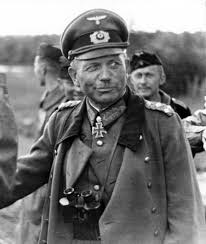
Heinz Guderian
As a result, Guderian enabled Hitler to conquer France in only six weeks in 1940, and to come to the brink of crushing the Soviet Union in 1941.
He recounted his career as the foremost tank commander of the Third Reich in his 1950 autobiography, Panzer Leader.
Moderator Judy Woodruff noted that “polls show Trump’s standing with women voters has worsened in recent months.”
A Washington Post/ABC News poll reveals that 64% of women say they have a strongly unfavorable reaction to Trump. That’s 18 points higher than it was in August, 2015.
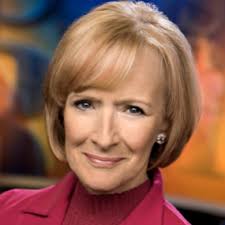
Judy Woddruff
This led David Brooks to declare that Trump has shown “a consistent misogynistic view of women as arm candy, as pieces of meat. It’s a consistent attitude toward women which is the stuff of a diseased adolescent.”
Judy Woodruff noted that Fox News Correspondent Megyn Kelly “has asked him tough questions” in a recent debate.
MARK SHIELDS: “She just asked him tough questions and was totally fair, by everybody else’s standards.
“But there is something really creepy about this that’s beyond locker room. It’s almost like a stalker, and I just–I thought this was–it actually did the impossible. It made Ted Cruz look like an honorable, tough guy on the right side of an issue.”
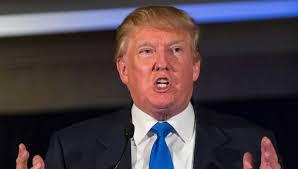
Donald Trump
HEINZ GUDERIAN: Once in power, Hitler quickly–and violently–eliminated his opposition.
He make no attempt to disguise this aspect of his character, because the opposition was weak and divided and soon collapsed after the first violent attack.
This allowed Hitler to pass laws which destroyed the safeguards enacted by the Weimar Republic against the the dangers of dictatorship.
MARK SHIELDS: “And I don’t know at what point it becomes…politically, he’s still leading. And I would have to say he’s the overwhelming favorite for the Republican nomination.”
HEINZ GUDERIAN: Hitler promised to “make Germany great again” both domestically and internationally. And this won him many followers. In time he controlled the largest party in the land and this allowed him, by democratic procedure, to assume power.
DAVID BROOKS: “The odd thing about [Trump’s] whole career and his whole language, his whole world view is there is no room for love in it. You get a sense of a man who received no love, can give no love, so his relationship with women, it has no love in it. It’s trophy.”
HEINZ GUDERIAN: [Hitler] was isolated as a human being. He had no real friend. There was nobody who was really close to him.
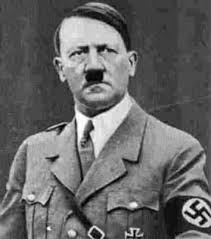
Adolf Hitler
There was nobody he could talk to freely and openly. And just as he never found a true friend, he was denied the ability to deeply love a woman.
DAVID BROOKS: “And [Trump’s] relationship toward the world is one of competition and beating, and as if he’s going to win by competition what other people get by love.”
HEINZ GUDERIAN: Everything on this earth that casts a glow of warmth over our life as mortals–friendship with fine men, the pure love for a wife, affection for one’s own children–all this was and forever remained unknown to him.
DAVID BROOKS: “And so you really are seeing someone who just has an odd psychology unleavened by kindness and charity, but where it’s all winners and losers, beating and being beat. And that’s part of the authoritarian personality, but it comes out in his attitude towards women.”
HEINZ GUDERIAN: He lived alone, cherishing his loneliness, with only his gigantic plans for company.
His relationship with Eva Braun may seem to contradict what I have written. But it is obvious that she could not have had any influence over him. And this is unfortunate, for it could only have been a softening one.
* * * * *
In his bestselling 1973 biography, The Life and Death of Adolf Hitler, British historian Robert Payne harshly condemned the German people for the rise of the Nazi dictator:
“[They] allowed themselves to be seduced by him and came to enjoy the experience….[They] followed him with joy and enthusiasm because he gave them license to pillage and murder to their hearts’ content.”
There is a very real danger that millions of ignorant, hate-filled, Right-wing Americans will catapult Donald Trump–a man with an “odd psychology unleavened by kindness and charity”–into the Presidency.
And that this man–“who received no love, can give no love”–will assume all the awesome power that goes with that office.
If that happens, future historians–if there are any–may similarly condemn those Americans who stood by like “good Germans” and allowed their country to fall into the hands of a ruthless tyrant.


(3)(1)(1).jpg&imgrefurl=http%3A%2F%2Fsilkroadsandsiamesesmiles.com%2F2011%2F01%2F26%2Froot-causes-illegal-immigration%2F&docid=undefined&tbnid=MpAe36i-e_f-BM%3A&w=576&h=421&ei=uJyeVZa6D4PwoAT3_Z2wBg&ved=0CAIQxiAwAA&iact=c "https://www.google.com/imgres?imgurl=http://www.examiner.com/images/blog/wysiwyg/image/StopIllegalAlienInvasionBanner(1)(3)(1)(1).jpg&imgrefurl=http://silkroadsandsiamesesmiles.com/2011/01/26/root-causes-illegal-immigration/&docid=undefined&tbnid=MpAe36i-e_f-BM:&w=576&h=421&ei=uJyeVZa6D4PwoAT3_Z2wBg&ved=0CAIQxiAwAA&iact=c")


.jpg)


-33510-W&docid=hCd9k6PuglvZAM&tbnid=CAo7BRzGtBWa3M%3A&w=500&h=375&bih=469&biw=819&ved=0ahUKEwiissafvJ_MAhUGKWMKHTZZA_MQxiAIAg&iact=c&ictx=1)


&docid=SiluTuHYHtjaZM&tbnid=uLB-PLYDVdkkVM%3A&w=455&h=341&ei=zeN_VI_hKYHjoATGs4Bo&ved=0CAIQxiAwAA&iact=c)


ABC NEWS, AFGHANISTAN, ANCHOR BABIES, BARACK OBAMA, BERLIN AIRLIFT, CBS NEWS, CNN, DEMOCRATIC PARTY, DEPARTMENT OF HOMELAND SECURITY, EGYPT, FACEBOOK, FRANCISCO SANCHEZ, ILLEGAL ALIENS, illegal immigration, IRAQ, MEXICO, NBC NEWS, OPERATION NICKEL GRASS, RACIAL PROFILING, Racketeer Influenced Corrupt Organizations (RICO) Act, REPUBLICAN PARTY, RICHARD NIXON, SAN FRANCISCO, sanctuary cities, SOVIET UNION, SYRIA, THE CHICAGO SUN-TIMES, THE CHICAGO TRIBUNE, THE LOS ANGELES TIMES, THE NEW YORK TIMES, THE OUTER LIMITS, THE WASHINGTON POST, TWITTER, WAL-MART, YOM KIPPUR WAR
CLOSING THE REVOLVING MEXICAN DOOR: PART TWO (END)
In Bureaucracy, Business, History, Law, Law Enforcement, Military, Politics, Social commentary on May 3, 2016 at 12:08 amMost of America’s 11 to 20 million illegal aliens come from neighboring Hispanic countries. Which means that as soon as they are deported, most of them cross the Mexican border again.
Case in point: Francisco Sanchez, now accused of shooting a woman on a San Francisco pier. With a history of seven felony convictions, he’s been deported to his native Mexico five times, most recently in 2009.
Click here: Report: Most Illegal Immigrants Come From Mexico – US News
More importantly: The governments of those Central and South American countries use the United States as a dumping ground–of those citizens who might demand reforms in their political and economic institutions.
Among the approaches that could strike a meaningful blow against illegal immigration is one that might well be called “The Zanti Option.”
Viewers of the 1960s sci-fi series,The Outer Limits, will vividly recall its classic 1963 episode, “The Zanti Misfits.”
In this, soldiers at an American Army base in a California ghost town nervously await first-contact with an alien race that has landed a space ship nearby.
The soldiers are warned to steer clear of the ship, and they do. But then an escaped convict (Bruce Dern, in an early role) happens upon the scene–-and the ship.
The Zantis, enraged, emerge–and soon the soldiers at the military base find themselves under attack.
A “Zanti”
The soldiers desperately fight back–-with flamethrowers, machineguns or just rifle butts. Finally the soldiers win, wiping out the Zantis.
But now the base–-and probably America–-faces a wholesale invasion from the planet Zanti to avenge the deaths of their comrades.
So the soldiers wait anxiously for their next transmission from Zanti–-which soon arrives.
To their surprise–-and relief–-it’s a message of thanks: “We will not retaliate. We never intended to. We knew that you could not live with such aliens in your midst.
“It was always our intention that you destroy them…We are incapable of executing our own species, but you are not. You are practiced executioners. We thank you.”
A future Republican President could deal with the tsunami of illegal aliens by launching what might be called “Operation Zanti.”
Rather than deport them to nearby countries–from which they would easily sneak back into the United States–-the Federal Government could ship them off to more distant lands.
Like Afghanistan. Or Iraq. Or Syria.
It’s unlikely they will sneak back across the American border from the Middle East.
Such a policy change would:
Although this might seem a far-fetched proposal, it could be easily carried out by the United States Air Force.
According to this agency’s website: “The C-5 Galaxy is one of the largest aircraft in the world and the largest airlifter in the Air Force inventory.
“The C-5 has a greater capacity than any other airlifter. It [can] carry 36 standard pallets and 81 troops simultaneously.
C-5 transport plane
“[It can also carry] any of the Army’s air-transportable combat equipment, including such bulky items as the 74-ton mobile scissors bridge.
“It can also carry outsize and oversize cargo over intercontinental ranges and can take off or land in relatively short distances.”
Click here: C-5 A/B/C Galaxy and C-5M Super Galaxy > U.S. Air Force > Fact Sheet Display
Instead of stuffing these planes with cargo, they could be stuffed wall-to-wall with illegal aliens.
The United States Air Force has a proud history of successfully providing America’s soldiers–-and allies–-with the supplies they need.
From June 24, 1948 to May 12, 1949, only the Berlin Airlift stood between German citizens and starvation.
The Soviet Union had blocked the railway, road, and canal access to the Berlin sectors under allied control. Their goal: Force the western powers to allow the Soviet zone to supply Berlin with food, fuel, and aid.
This would have given the Soviets control over the entire city.
Air forces from the United States, England, Canada, Australia, New Zealand and South Africa flew over 200,000 flights in one year, dropping more than 4,700 tons of necessities daily to the besiged Berliners.
The success of the Berlin Airlift raised American prestige and embarrassed the Soviets, who lifted the blockade.
The Berlin Airlift
A similar triumph came during the Yom Kippur War after Egypt and Syria attacked Israel without warning on October 6, 1973.
A Watergate-embattled President Richard Nixon ordered “Operation Nickel Grass” to deliver urgently-needed weapons and supplies to Israel.
For 32 days, the Air Force shipped 22,325 tons of ammunition, artillery, tanks and other supplies. These proved invaluable in saving Israel from destruction.
So the mass deportation of millions of illegal aliens lies within America’s technological capability. Whether any American President would be willing to give that order is another matter.
Share this: